WO2023277187A1 - 液化石油ガス合成用触媒および液化石油ガスの製造方法 - Google Patents
液化石油ガス合成用触媒および液化石油ガスの製造方法 Download PDFInfo
- Publication number
- WO2023277187A1 WO2023277187A1 PCT/JP2022/026507 JP2022026507W WO2023277187A1 WO 2023277187 A1 WO2023277187 A1 WO 2023277187A1 JP 2022026507 W JP2022026507 W JP 2022026507W WO 2023277187 A1 WO2023277187 A1 WO 2023277187A1
- Authority
- WO
- WIPO (PCT)
- Prior art keywords
- catalyst material
- liquefied petroleum
- petroleum gas
- mass
- mfi
- Prior art date
- Legal status (The legal status is an assumption and is not a legal conclusion. Google has not performed a legal analysis and makes no representation as to the accuracy of the status listed.)
- Ceased
Links
Images



Classifications
-
- C—CHEMISTRY; METALLURGY
- C10—PETROLEUM, GAS OR COKE INDUSTRIES; TECHNICAL GASES CONTAINING CARBON MONOXIDE; FUELS; LUBRICANTS; PEAT
- C10L—FUELS NOT OTHERWISE PROVIDED FOR; NATURAL GAS; SYNTHETIC NATURAL GAS OBTAINED BY PROCESSES NOT COVERED BY SUBCLASSES C10G OR C10K; LIQUIFIED PETROLEUM GAS; USE OF ADDITIVES TO FUELS OR FIRES; FIRE-LIGHTERS
- C10L3/00—Gaseous fuels; Natural gas; Synthetic natural gas obtained by processes not covered by subclass C10G, C10K; Liquefied petroleum gas
- C10L3/06—Natural gas; Synthetic natural gas obtained by processes not covered by C10G, C10K3/02 or C10K3/04
- C10L3/08—Production of synthetic natural gas
-
- C—CHEMISTRY; METALLURGY
- C10—PETROLEUM, GAS OR COKE INDUSTRIES; TECHNICAL GASES CONTAINING CARBON MONOXIDE; FUELS; LUBRICANTS; PEAT
- C10L—FUELS NOT OTHERWISE PROVIDED FOR; NATURAL GAS; SYNTHETIC NATURAL GAS OBTAINED BY PROCESSES NOT COVERED BY SUBCLASSES C10G OR C10K; LIQUIFIED PETROLEUM GAS; USE OF ADDITIVES TO FUELS OR FIRES; FIRE-LIGHTERS
- C10L3/00—Gaseous fuels; Natural gas; Synthetic natural gas obtained by processes not covered by subclass C10G, C10K; Liquefied petroleum gas
- C10L3/12—Liquefied petroleum gas
-
- B—PERFORMING OPERATIONS; TRANSPORTING
- B01—PHYSICAL OR CHEMICAL PROCESSES OR APPARATUS IN GENERAL
- B01J—CHEMICAL OR PHYSICAL PROCESSES, e.g. CATALYSIS OR COLLOID CHEMISTRY; THEIR RELEVANT APPARATUS
- B01J23/00—Catalysts comprising metals or metal oxides or hydroxides, not provided for in group B01J21/00
- B01J23/002—Mixed oxides other than spinels, e.g. perovskite
-
- B—PERFORMING OPERATIONS; TRANSPORTING
- B01—PHYSICAL OR CHEMICAL PROCESSES OR APPARATUS IN GENERAL
- B01J—CHEMICAL OR PHYSICAL PROCESSES, e.g. CATALYSIS OR COLLOID CHEMISTRY; THEIR RELEVANT APPARATUS
- B01J23/00—Catalysts comprising metals or metal oxides or hydroxides, not provided for in group B01J21/00
- B01J23/38—Catalysts comprising metals or metal oxides or hydroxides, not provided for in group B01J21/00 of noble metals
- B01J23/40—Catalysts comprising metals or metal oxides or hydroxides, not provided for in group B01J21/00 of noble metals of the platinum group metals
- B01J23/42—Platinum
-
- B—PERFORMING OPERATIONS; TRANSPORTING
- B01—PHYSICAL OR CHEMICAL PROCESSES OR APPARATUS IN GENERAL
- B01J—CHEMICAL OR PHYSICAL PROCESSES, e.g. CATALYSIS OR COLLOID CHEMISTRY; THEIR RELEVANT APPARATUS
- B01J23/00—Catalysts comprising metals or metal oxides or hydroxides, not provided for in group B01J21/00
- B01J23/38—Catalysts comprising metals or metal oxides or hydroxides, not provided for in group B01J21/00 of noble metals
- B01J23/40—Catalysts comprising metals or metal oxides or hydroxides, not provided for in group B01J21/00 of noble metals of the platinum group metals
- B01J23/44—Palladium
-
- B—PERFORMING OPERATIONS; TRANSPORTING
- B01—PHYSICAL OR CHEMICAL PROCESSES OR APPARATUS IN GENERAL
- B01J—CHEMICAL OR PHYSICAL PROCESSES, e.g. CATALYSIS OR COLLOID CHEMISTRY; THEIR RELEVANT APPARATUS
- B01J23/00—Catalysts comprising metals or metal oxides or hydroxides, not provided for in group B01J21/00
- B01J23/70—Catalysts comprising metals or metal oxides or hydroxides, not provided for in group B01J21/00 of the iron group metals or copper
- B01J23/76—Catalysts comprising metals or metal oxides or hydroxides, not provided for in group B01J21/00 of the iron group metals or copper combined with metals, oxides or hydroxides provided for in groups B01J23/02 - B01J23/36
- B01J23/80—Catalysts comprising metals or metal oxides or hydroxides, not provided for in group B01J21/00 of the iron group metals or copper combined with metals, oxides or hydroxides provided for in groups B01J23/02 - B01J23/36 with zinc, cadmium or mercury
-
- B—PERFORMING OPERATIONS; TRANSPORTING
- B01—PHYSICAL OR CHEMICAL PROCESSES OR APPARATUS IN GENERAL
- B01J—CHEMICAL OR PHYSICAL PROCESSES, e.g. CATALYSIS OR COLLOID CHEMISTRY; THEIR RELEVANT APPARATUS
- B01J29/00—Catalysts comprising molecular sieves
- B01J29/04—Catalysts comprising molecular sieves having base-exchange properties, e.g. crystalline zeolites
- B01J29/06—Crystalline aluminosilicate zeolites; Isomorphous compounds thereof
- B01J29/40—Crystalline aluminosilicate zeolites; Isomorphous compounds thereof of the pentasil type, e.g. types ZSM-5, ZSM-8 or ZSM-11, as exemplified by patent documents US3702886, GB1334243 and US3709979, respectively
- B01J29/42—Crystalline aluminosilicate zeolites; Isomorphous compounds thereof of the pentasil type, e.g. types ZSM-5, ZSM-8 or ZSM-11, as exemplified by patent documents US3702886, GB1334243 and US3709979, respectively containing iron group metals, noble metals or copper
- B01J29/44—Noble metals
-
- B—PERFORMING OPERATIONS; TRANSPORTING
- B01—PHYSICAL OR CHEMICAL PROCESSES OR APPARATUS IN GENERAL
- B01J—CHEMICAL OR PHYSICAL PROCESSES, e.g. CATALYSIS OR COLLOID CHEMISTRY; THEIR RELEVANT APPARATUS
- B01J35/00—Catalysts, in general, characterised by their form or physical properties
- B01J35/19—Catalysts containing parts with different compositions
-
- B—PERFORMING OPERATIONS; TRANSPORTING
- B01—PHYSICAL OR CHEMICAL PROCESSES OR APPARATUS IN GENERAL
- B01J—CHEMICAL OR PHYSICAL PROCESSES, e.g. CATALYSIS OR COLLOID CHEMISTRY; THEIR RELEVANT APPARATUS
- B01J35/00—Catalysts, in general, characterised by their form or physical properties
- B01J35/40—Catalysts, in general, characterised by their form or physical properties characterised by dimensions, e.g. grain size
-
- B—PERFORMING OPERATIONS; TRANSPORTING
- B01—PHYSICAL OR CHEMICAL PROCESSES OR APPARATUS IN GENERAL
- B01J—CHEMICAL OR PHYSICAL PROCESSES, e.g. CATALYSIS OR COLLOID CHEMISTRY; THEIR RELEVANT APPARATUS
- B01J37/00—Processes, in general, for preparing catalysts; Processes, in general, for activation of catalysts
- B01J37/0009—Use of binding agents; Moulding; Pressing; Powdering; Granulating; Addition of materials ameliorating the mechanical properties of the product catalyst
-
- B—PERFORMING OPERATIONS; TRANSPORTING
- B01—PHYSICAL OR CHEMICAL PROCESSES OR APPARATUS IN GENERAL
- B01J—CHEMICAL OR PHYSICAL PROCESSES, e.g. CATALYSIS OR COLLOID CHEMISTRY; THEIR RELEVANT APPARATUS
- B01J37/00—Processes, in general, for preparing catalysts; Processes, in general, for activation of catalysts
- B01J37/02—Impregnation, coating or precipitation
- B01J37/0201—Impregnation
- B01J37/0213—Preparation of the impregnating solution
-
- B—PERFORMING OPERATIONS; TRANSPORTING
- B01—PHYSICAL OR CHEMICAL PROCESSES OR APPARATUS IN GENERAL
- B01J—CHEMICAL OR PHYSICAL PROCESSES, e.g. CATALYSIS OR COLLOID CHEMISTRY; THEIR RELEVANT APPARATUS
- B01J37/00—Processes, in general, for preparing catalysts; Processes, in general, for activation of catalysts
- B01J37/02—Impregnation, coating or precipitation
- B01J37/0236—Drying, e.g. preparing a suspension, adding a soluble salt and drying
-
- B—PERFORMING OPERATIONS; TRANSPORTING
- B01—PHYSICAL OR CHEMICAL PROCESSES OR APPARATUS IN GENERAL
- B01J—CHEMICAL OR PHYSICAL PROCESSES, e.g. CATALYSIS OR COLLOID CHEMISTRY; THEIR RELEVANT APPARATUS
- B01J37/00—Processes, in general, for preparing catalysts; Processes, in general, for activation of catalysts
- B01J37/02—Impregnation, coating or precipitation
- B01J37/03—Precipitation; Co-precipitation
- B01J37/031—Precipitation
-
- B—PERFORMING OPERATIONS; TRANSPORTING
- B01—PHYSICAL OR CHEMICAL PROCESSES OR APPARATUS IN GENERAL
- B01J—CHEMICAL OR PHYSICAL PROCESSES, e.g. CATALYSIS OR COLLOID CHEMISTRY; THEIR RELEVANT APPARATUS
- B01J37/00—Processes, in general, for preparing catalysts; Processes, in general, for activation of catalysts
- B01J37/02—Impregnation, coating or precipitation
- B01J37/03—Precipitation; Co-precipitation
- B01J37/031—Precipitation
- B01J37/033—Using Hydrolysis
-
- B—PERFORMING OPERATIONS; TRANSPORTING
- B01—PHYSICAL OR CHEMICAL PROCESSES OR APPARATUS IN GENERAL
- B01J—CHEMICAL OR PHYSICAL PROCESSES, e.g. CATALYSIS OR COLLOID CHEMISTRY; THEIR RELEVANT APPARATUS
- B01J37/00—Processes, in general, for preparing catalysts; Processes, in general, for activation of catalysts
- B01J37/04—Mixing
-
- B—PERFORMING OPERATIONS; TRANSPORTING
- B01—PHYSICAL OR CHEMICAL PROCESSES OR APPARATUS IN GENERAL
- B01J—CHEMICAL OR PHYSICAL PROCESSES, e.g. CATALYSIS OR COLLOID CHEMISTRY; THEIR RELEVANT APPARATUS
- B01J37/00—Processes, in general, for preparing catalysts; Processes, in general, for activation of catalysts
- B01J37/06—Washing
-
- B—PERFORMING OPERATIONS; TRANSPORTING
- B01—PHYSICAL OR CHEMICAL PROCESSES OR APPARATUS IN GENERAL
- B01J—CHEMICAL OR PHYSICAL PROCESSES, e.g. CATALYSIS OR COLLOID CHEMISTRY; THEIR RELEVANT APPARATUS
- B01J37/00—Processes, in general, for preparing catalysts; Processes, in general, for activation of catalysts
- B01J37/08—Heat treatment
-
- B—PERFORMING OPERATIONS; TRANSPORTING
- B01—PHYSICAL OR CHEMICAL PROCESSES OR APPARATUS IN GENERAL
- B01J—CHEMICAL OR PHYSICAL PROCESSES, e.g. CATALYSIS OR COLLOID CHEMISTRY; THEIR RELEVANT APPARATUS
- B01J37/00—Processes, in general, for preparing catalysts; Processes, in general, for activation of catalysts
- B01J37/08—Heat treatment
- B01J37/082—Decomposition and pyrolysis
- B01J37/088—Decomposition of a metal salt
-
- B—PERFORMING OPERATIONS; TRANSPORTING
- B01—PHYSICAL OR CHEMICAL PROCESSES OR APPARATUS IN GENERAL
- B01J—CHEMICAL OR PHYSICAL PROCESSES, e.g. CATALYSIS OR COLLOID CHEMISTRY; THEIR RELEVANT APPARATUS
- B01J37/00—Processes, in general, for preparing catalysts; Processes, in general, for activation of catalysts
- B01J37/16—Reducing
- B01J37/18—Reducing with gases containing free hydrogen
-
- B—PERFORMING OPERATIONS; TRANSPORTING
- B01—PHYSICAL OR CHEMICAL PROCESSES OR APPARATUS IN GENERAL
- B01J—CHEMICAL OR PHYSICAL PROCESSES, e.g. CATALYSIS OR COLLOID CHEMISTRY; THEIR RELEVANT APPARATUS
- B01J37/00—Processes, in general, for preparing catalysts; Processes, in general, for activation of catalysts
- B01J37/28—Phosphorising
-
- C—CHEMISTRY; METALLURGY
- C07—ORGANIC CHEMISTRY
- C07C—ACYCLIC OR CARBOCYCLIC COMPOUNDS
- C07C1/00—Preparation of hydrocarbons from one or more compounds, none of them being a hydrocarbon
- C07C1/02—Preparation of hydrocarbons from one or more compounds, none of them being a hydrocarbon from oxides of a carbon
- C07C1/04—Preparation of hydrocarbons from one or more compounds, none of them being a hydrocarbon from oxides of a carbon from carbon monoxide with hydrogen
- C07C1/0425—Catalysts; their physical properties
- C07C1/043—Catalysts; their physical properties characterised by the composition
-
- B—PERFORMING OPERATIONS; TRANSPORTING
- B01—PHYSICAL OR CHEMICAL PROCESSES OR APPARATUS IN GENERAL
- B01J—CHEMICAL OR PHYSICAL PROCESSES, e.g. CATALYSIS OR COLLOID CHEMISTRY; THEIR RELEVANT APPARATUS
- B01J2229/00—Aspects of molecular sieve catalysts not covered by B01J29/00
- B01J2229/10—After treatment, characterised by the effect to be obtained
- B01J2229/18—After treatment, characterised by the effect to be obtained to introduce other elements into or onto the molecular sieve itself
- B01J2229/186—After treatment, characterised by the effect to be obtained to introduce other elements into or onto the molecular sieve itself not in framework positions
-
- B—PERFORMING OPERATIONS; TRANSPORTING
- B01—PHYSICAL OR CHEMICAL PROCESSES OR APPARATUS IN GENERAL
- B01J—CHEMICAL OR PHYSICAL PROCESSES, e.g. CATALYSIS OR COLLOID CHEMISTRY; THEIR RELEVANT APPARATUS
- B01J2523/00—Constitutive chemical elements of heterogeneous catalysts
-
- C—CHEMISTRY; METALLURGY
- C07—ORGANIC CHEMISTRY
- C07C—ACYCLIC OR CARBOCYCLIC COMPOUNDS
- C07C2521/00—Catalysts comprising the elements, oxides or hydroxides of magnesium, boron, aluminium, carbon, silicon, titanium, zirconium or hafnium
- C07C2521/02—Boron or aluminium; Oxides or hydroxides thereof
- C07C2521/04—Alumina
-
- C—CHEMISTRY; METALLURGY
- C07—ORGANIC CHEMISTRY
- C07C—ACYCLIC OR CARBOCYCLIC COMPOUNDS
- C07C2523/00—Catalysts comprising metals or metal oxides or hydroxides, not provided for in group C07C2521/00
- C07C2523/70—Catalysts comprising metals or metal oxides or hydroxides, not provided for in group C07C2521/00 of the iron group metals or copper
- C07C2523/72—Copper
-
- C—CHEMISTRY; METALLURGY
- C07—ORGANIC CHEMISTRY
- C07C—ACYCLIC OR CARBOCYCLIC COMPOUNDS
- C07C2523/00—Catalysts comprising metals or metal oxides or hydroxides, not provided for in group C07C2521/00
- C07C2523/70—Catalysts comprising metals or metal oxides or hydroxides, not provided for in group C07C2521/00 of the iron group metals or copper
- C07C2523/76—Catalysts comprising metals or metal oxides or hydroxides, not provided for in group C07C2521/00 of the iron group metals or copper combined with metals, oxides or hydroxides provided for in groups C07C2523/02 - C07C2523/36
- C07C2523/80—Catalysts comprising metals or metal oxides or hydroxides, not provided for in group C07C2521/00 of the iron group metals or copper combined with metals, oxides or hydroxides provided for in groups C07C2523/02 - C07C2523/36 with zinc, cadmium or mercury
-
- C—CHEMISTRY; METALLURGY
- C07—ORGANIC CHEMISTRY
- C07C—ACYCLIC OR CARBOCYCLIC COMPOUNDS
- C07C2529/00—Catalysts comprising molecular sieves
- C07C2529/04—Catalysts comprising molecular sieves having base-exchange properties, e.g. crystalline zeolites, pillared clays
- C07C2529/06—Crystalline aluminosilicate zeolites; Isomorphous compounds thereof
- C07C2529/40—Crystalline aluminosilicate zeolites; Isomorphous compounds thereof of the pentasil type, e.g. types ZSM-5, ZSM-8 or ZSM-11
- C07C2529/42—Crystalline aluminosilicate zeolites; Isomorphous compounds thereof of the pentasil type, e.g. types ZSM-5, ZSM-8 or ZSM-11 containing iron group metals, noble metals or copper
- C07C2529/44—Noble metals
-
- C—CHEMISTRY; METALLURGY
- C10—PETROLEUM, GAS OR COKE INDUSTRIES; TECHNICAL GASES CONTAINING CARBON MONOXIDE; FUELS; LUBRICANTS; PEAT
- C10L—FUELS NOT OTHERWISE PROVIDED FOR; NATURAL GAS; SYNTHETIC NATURAL GAS OBTAINED BY PROCESSES NOT COVERED BY SUBCLASSES C10G OR C10K; LIQUIFIED PETROLEUM GAS; USE OF ADDITIVES TO FUELS OR FIRES; FIRE-LIGHTERS
- C10L2290/00—Fuel preparation or upgrading, processes or apparatus therefore, comprising specific process steps or apparatus units
- C10L2290/42—Fischer-Tropsch steps
Definitions
- the present disclosure relates to a catalyst for synthesizing liquefied petroleum gas and a method for producing liquefied petroleum gas.
- LPG Liquefied petroleum gas
- propane and butane exists inside oil and natural gas fields mixed with impurity gases such as methane and ethane. After such gas is transferred to an aboveground facility, propane and butane are separated and recovered from the gas, and impurities such as sulfur and mercury are removed to obtain liquefied petroleum gas.
- liquefied petroleum gas is also contained in crude oil. Therefore, propane and butane can also be separated and extracted to obtain liquefied petroleum gas in the refinery refining process.
- Patent Documents 1 to 4 describe methods for producing liquefied petroleum gas whose main component is butane.
- Non-Patent Documents 1 and 2 disclose a method for producing hydrocarbons whose main component is isobutane from synthesis gas of carbon monoxide and hydrogen.
- liquefied petroleum gas and gasoline are mainly produced using a mixed catalyst of a methanol synthesis catalyst and a palladium-supporting zeolite.
- the yield of liquefied petroleum gas such as propane is reduced when liquefied petroleum gas is synthesized at low temperature using the conventional mixed catalyst such as the above-mentioned patent document. is very low.
- propane is easily vaporized and can be used as a fuel even in cold regions, it is desirable that the yield of propane is particularly high among liquefied petroleum gases.
- An object of the present disclosure is to provide a catalyst for synthesizing liquefied petroleum gas and a method for producing liquefied petroleum gas, which can produce propane at a high yield even if the synthesis temperature of liquefied petroleum gas is low.
- a Cu—Zn-based catalyst material and an MFI-type zeolite catalyst material supporting Pt wherein the mass (M1) of the Cu—Zn-based catalyst material and the mass (M2) of the MFI-type zeolite catalyst material
- a catalyst for synthesizing liquefied petroleum gas wherein the ratio (M1/(M1+M2)) of the mass (M1) of the Cu—Zn-based catalyst material to the total mass of the liquefied petroleum gas synthesis is 0.30 or more and 0.95 or less.
- the ratio (M1/( The catalyst for synthesizing liquefied petroleum gas according to [1] above, wherein M1+M2)) is 0.30 or more and less than 0.70.
- the Cu—Zn-based catalyst material and the MFI zeolite catalyst material exist independently of each other, and both the Cu—Zn-based catalyst material and the MFI zeolite catalyst material are granules or compacts.
- a method for producing liquefied petroleum gas. [10] The method for producing liquefied petroleum gas according to [9] above, wherein in the supply step, a gas hourly space velocity (GHSV) for supplying carbon monoxide and hydrogen is 300/h or more and 20000/h or less.
- GHSV gas hourly space velocity
- a catalyst for synthesizing liquefied petroleum gas and a method for producing liquefied petroleum gas which can produce propane at a high yield even when the synthesis temperature of liquefied petroleum gas is low.
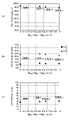
- FIG. 1 is a diagram showing the results of Examples 1 to 3 and Comparative Example 1.
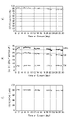
- FIG. 10 shows the results of Examples 3-5.
- FIG. 5 is a diagram showing the results of Comparative Examples 2 to 5;
- FIG. 10 is a diagram showing the results of a medium-term performance test of Example 10;
- FIG. 10 is a diagram showing the results of long-term performance tests of Example 8;
- the present inventors have found that in a catalyst for synthesizing liquefied petroleum gas containing a Cu—Zn-based catalyst material and a zeolite catalyst material, the mass (M1) of the Cu—Zn-based catalyst material and the amount of the zeolite catalyst material are After setting the ratio (M1/(M1+M2)) of the mass (M1) of the Cu—Zn-based catalyst material to the total mass of the mass (M2) within a specific range, the configuration of the zeolite catalyst material and the support material are specified. By doing so, propane can be produced with a high yield even if the synthesis temperature of liquefied petroleum gas is low, and the present disclosure has been completed based on this finding.
- the liquefied petroleum gas synthesis catalyst of the present embodiment includes a Cu—Zn-based catalyst material and an MFI-type zeolite catalyst material supporting Pt (hereinafter also simply referred to as a zeolite catalyst material), and a Cu—Zn-based catalyst material.
- the ratio (M1/(M1+M2)) of the mass (M1) of the Cu—Zn-based catalyst material to the total mass of the mass (M1) and the mass (M2) of the MFI-type zeolite catalyst material is 0.30 or more and 0.95 It is below.
- the catalyst for synthesizing liquefied petroleum gas of the embodiment includes a Cu—Zn-based catalyst material and an MFI-type zeolite catalyst material.
- the liquefied petroleum gas synthesis catalyst can synthesize liquefied petroleum gas from carbon monoxide and hydrogen.
- the liquefied petroleum gas synthesized by the catalyst for synthesizing liquefied petroleum gas of the present embodiment contains propane and butane as main components, and contains more propane than butane.
- the total ratio of propane and butane to the liquefied petroleum gas is, for example, 20 Cmol% or more.
- the ratio of propane to the total of propane and butane is, for example, 55 vol % or more.
- the Cu-Zn-based catalyst material that constitutes the liquefied petroleum gas synthesis catalyst functions as a liquefied petroleum gas precursor synthesis catalyst that synthesizes liquefied petroleum gas precursors such as methanol and dimethyl ether from carbon monoxide and hydrogen.
- the Cu—Zn-based catalyst material constituting the catalyst for synthesizing liquefied petroleum gas is a catalyst containing copper oxide and zinc oxide, and among the catalysts for synthesizing liquefied petroleum gas precursors, it has the ability to synthesize liquefied petroleum gas precursors.
- the Cu—Zn-based catalyst material may further contain aluminum oxide, gallium oxide, zirconium oxide, indium oxide, and the like. By containing aluminum oxide, gallium oxide, zirconium oxide, indium oxide, etc., the dispersibility of copper oxide and zinc oxide can be improved. From the viewpoint of efficiently forming the number of interfaces between copper and zinc, which are presumed to be active sites, the Cu—Zn-based catalyst material is a ternary oxide of copper oxide, zinc oxide, and aluminum oxide. preferable.
- the zeolite catalyst material that constitutes the catalyst for synthesizing liquefied petroleum gas synthesizes liquefied petroleum gas from the liquefied petroleum gas precursor generated by the Cu-Zn-based catalyst material.
- the synthesized liquefied petroleum gas contains propane and butane as main components, with more propane than butane.
- the type of zeolite is MFI type. Since the MFI-type zeolite catalyst material has a smaller pore size than beta-type zeolite, propane can be synthesized more efficiently than butane, etc., among the components constituting liquefied petroleum gas, and the yield of propane is increased. presumed to be possible.
- the MFI-type zeolite catalyst material supports Pt (platinum).
- Pt platinum
- the MFI-type zeolite catalytic material supports only Pt. It is speculated that the Pt-supported MFI-type zeolite catalyst material can efficiently react liquefied petroleum gas precursors, and thus can increase the yield of propane.
- the ratio (M1/(M1+M2 )) (hereinafter simply referred to as the mass ratio of the Cu—Zn-based catalyst material) is 0.30 or more and 0.95 or less.
- the mass ratio of the Cu—Zn-based catalyst material is within the above range, liquefied petroleum gas can be efficiently synthesized from carbon monoxide and hydrogen.
- the ratio (M1/(M1+M2)) is 0.30 or more and less than 0.70, the initial catalytic activity of the catalyst for synthesizing liquefied petroleum gas is high.
- the lower limit is preferably 0.35 or more, more preferably 0.40 or more, and the upper limit is preferably 0.65 or less, more preferably 0.60 or less.
- the catalyst for synthesizing liquefied petroleum gas exhibits excellent long-term stability of catalytic activity.
- the lower limit is preferably 0.50 or more, more preferably 0.60 or more, and still more preferably 0.70 or more
- the upper limit is preferably 0.95 or less, more preferably 0.90. 0.85 or less, more preferably 0.85 or less.
- the reaction for producing liquefied petroleum gas from CO and H2 on a liquefied petroleum gas synthesis catalyst proceeds according to the following reaction mechanism.
- CO and H 2 are converted to methanol, a liquefied petroleum gas precursor, over a Cu—Zn-based catalyst material (eg, CuZnOZrO 2 Al 2 O 3 ).
- the methanol produced is then dehydrated at acid sites on an MFI-type zeolite catalyst (eg Pt/P-ZSM-5) and converted to dimethyl ether.
- dimethyl ether is dehydrated at the acid sites on the MFI type zeolite catalyst, and undergoes repeated carburization and cracking reactions to change into olefins.
- the olefins produced are hydrogenated over precious metals such as Pt over MFI-type zeolite catalysts to produce liquefied petroleum gas and the like.
- the yield of liquefied petroleum gas such as propane can be increased.
- a Cu—Zn-based catalyst which has excellent performance in synthesizing a liquefied petroleum gas precursor, is used, it aggregates at high temperatures, so the Cu—Zn-based catalyst significantly deteriorates over time, and liquefied petroleum gas can be produced over a long period of time. Stable and difficult to synthesize.
- the synthesis temperature is lowered (for example, 330 ° C. or lower) in order to suppress the deterioration of the Cu-Zn-based catalyst due to such high temperature, the deterioration of the Cu-Zn-based catalyst can be suppressed, but liquefied petroleum gas such as propane yield is low.
- propane can be produced at a high yield even if the synthesis temperature of liquefied petroleum gas is low (for example, 330°C or lower). Therefore, by using the catalyst for synthesizing liquefied petroleum gas of the present embodiment and synthesizing at a low temperature (for example, 330° C. or lower), propane can be produced at a high yield, and deterioration of the catalyst due to high temperatures can be suppressed. can.
- the synthesis temperature is the temperature of the liquefied petroleum gas synthesis catalyst.
- the propane yield of the liquefied petroleum gas produced in the present embodiment is, for example, 10 Cmol% or more, even if the synthesis temperature is low (e.g., 330 ° C. or less), and may be 15 Cmol% or more, or even 17 Cmol% or more. can.
- the yield of butane can be increased by using the catalyst for synthesizing liquefied petroleum gas of the present embodiment.
- the yield of butane is, for example, 8 Cmol % or more even at a low synthesis temperature (eg, 330° C. or lower), and can be 10 Cmol % or more, or even 12 Cmol % or more.
- the yield of propane and butane (the sum of the yield of propane and the yield of butane) produced in this embodiment is, for example, 25 Cmol% or more, preferably 30 Cmol% or more.
- the ratio of propane to the total of propane and butane can be increased.
- the ratio of propane to the total of propane and butane in the liquefied petroleum gas produced in the present embodiment (number of moles of propane/(number of moles of propane + number of moles of butane)) x 100 is, for example, 55 vol% or more, preferably is 60 vol% or more, more preferably 65 vol% or more, and still more preferably 70 vol%.
- the zeolite catalyst material may further support platinum group elements such as Pd (palladium), rhodium (Rh), and ruthenium (Ru). 1 type or 2 types or more may be sufficient as a noble metal. When two or more kinds of noble metals are used, the state of the noble metals supported on the zeolite catalyst material is not particularly limited. alloy may be mixed.
- the zeolite catalyst material preferably supports Pd (palladium) in addition to Pt.
- Pd palladium
- Pt as an elemental metal and Pd as an elemental metal may be mixed, Pt and Pd may be alloyed, or at least one of Pt and Pd may be mixed. A single metal and an alloy of Pt and Pd may be mixed.
- the mass of Pd (M Pd ) ratio (M Pd /(M Pt +M Pd )) (hereinafter also referred to as mass ratio (M Pd /(M Pt +M Pd ))
- the upper limit is preferably 0.70 or less, more preferably 0 0.60 or less, more preferably 0.50 or less.
- the lower limit of the mass ratio (M Pd /(M Pt +M Pd )) is, for example, 0.01 or more, preferably 0.15 or more, more preferably 0.20 or more, and still more preferably 0.25. That's it.
- the mass ratio (M Pd /(M Pt +M Pd )) is 0.70 or less, the yield of butane can be further increased.
- the total mass (M Pt +M Pd ) of the mass of Pt (M Pt ) and the mass of Pd (M Pd ) in the zeolite catalyst material has a lower limit with respect to the mass (M2) of the zeolite catalyst material, preferably It is 0.1% by mass or more, more preferably 0.2% by mass or more, and still more preferably 0.3% by mass or more, and the upper limit is preferably 1.0% by mass or less, more preferably 0.8% by mass. 0.7% by mass or less, and more preferably 0.7% by mass or less.
- the content of Pd in the total content is 0 (zero), that is, the total content is the content of Pt.
- the total mass (M Pt +M Pd ) of the mass of Pt (M Pt ) and the mass of Pd (M Pd ) is 0.1% by mass or more with respect to the mass (M2) of the zeolite catalyst material, liquefaction Efficient synthesis of petroleum gas. Further, the total mass (M Pt +M Pd ) of the mass of Pt (M Pt ) and the mass of Pd (M Pd ) is 1.0% by mass or less with respect to the mass (M2) of the zeolite catalyst material. , while maintaining the efficient synthesis of liquefied petroleum gas, the increase in material costs of Pt and Pd can be suppressed.
- the mass ratio (M Pd /(M Pt +M Pd )), the mass of Pt (M Pt ) and the mass of Pd (M Pd ) total mass (M Pt +M Pd ) can be measured by ICP-OES (Inductively Coupled Plasma Optical Emission Spectroscopy).
- the ratio of the number of moles of SiO 2 to the number of moles of Al 2 O 3 contained in the zeolite catalyst material (the number of moles of SiO 2 /the number of moles of Al 2 O 3 ) (hereinafter simply referred to as the molar ratio (SiO 2 /Al 2 O 3 )) is preferably 20 or more and 60 or less.
- Zeolite catalytic materials are aluminosilicates. By replacing some of the silicon atoms in the silicate constituting the zeolite skeleton of the zeolite catalyst material with aluminum atoms, the aluminum atoms become acid sites, so that the zeolite catalyst material exhibits a function as a solid acid.
- the acid sites of the zeolite catalyst material increase, so that the amount of liquefied petroleum gas produced can be increased, and propane can be efficiently synthesized to liquefy
- the amount of propane contained in oil gas can be increased.
- the molar ratio (SiO 2 /Al 2 O 3 ) is 20 or more, a zeolite catalyst material supporting Pt can be easily produced while maintaining a high ability to generate liquefied petroleum gas and a high ability to synthesize propane. can.
- the molar ratio (SiO 2 /Al 2 O 3 ) is preferably 20 or more, more preferably 25 or more, and even more preferably 30 or more. From the viewpoint of high catalytic performance, the molar ratio (SiO 2 /Al 2 O 3 ) is preferably 60 or less, more preferably 50 or less, still more preferably 40 or less.
- the molar ratio (SiO 2 /Al 2 O 3 ) can be measured by ICP-OES (inductively coupled plasma optical emission spectroscopy).
- the solid acid content of the zeolite catalyst material is, for example, 0.6 mmol/g or more, preferably 0.8 mmol/g or more.
- the amount of solid acid is 0.6 mmol/g or more, a zeolite catalyst material supporting a noble metal can be easily produced while maintaining high liquefied petroleum gas generating ability and high propane synthesizing ability.
- the amount of solid acid can be measured by NH 3 -TPD (ammonia temperature programmed desorption method).
- the Cu—Zn based catalyst material and the MFI type zeolite catalyst material exist independently of each other, and both the Cu—Zn based catalyst material and the MFI type zeolite catalyst material are preferably granules or compacts. In the catalyst for synthesizing liquefied petroleum gas, it is preferable that the Cu—Zn-based catalyst material and the MFI-type zeolite catalyst material are not integrated (mixedly integrated).
- the state of the Cu--Zn-based catalyst material and the zeolite catalyst material may be a granular material (powder, for example, a particle size of 10 ⁇ 9 to 10 ⁇ 4 m), or a granule having a larger particle size than the granular material.
- the yield of propane and butane can be further increased if the Cu--Zn-based catalyst material is a molded body containing a Cu--Zn-based catalyst material and the zeolite catalyst material is a molded body containing a zeolite catalyst material.
- the catalyst for synthesizing liquefied petroleum gas is preferably a mixture of a molded body containing a Cu--Zn catalyst material and a molded body containing a zeolite catalyst material.
- the content of the Cu--Zn-based catalyst material contained in the molded body is preferably 80% by mass or more, more preferably 90% by mass or more, and still more preferably 95% by mass or more. is.
- a liquefied petroleum gas precursor can be efficiently synthesized from carbon monoxide and hydrogen.
- the content of the Cu--Zn-based catalyst material contained in the compact may be 100% by mass.
- the above content is preferably 98% by mass or less, more preferably 96% by mass or less, and even more preferably 94% by mass or less. When the content is 98% by mass or less, it is possible to improve the moldability and mechanical strength of the molded product while maintaining efficient synthesis of the liquefied petroleum gas precursor.
- a molded body containing a Cu--Zn-based catalyst material may contain, in addition to the Cu--Zn-based catalyst material, various additives that improve moldability and mechanical strength.
- various additives include molding binders such as graphite and carbon black.
- the content of the zeolite catalyst material in the molded body containing the zeolite catalyst material is preferably 70% by mass or more, more preferably 80% by mass or more, and still more preferably 90% by mass or more.
- the content is 70% by mass or more, liquefied petroleum gas can be efficiently synthesized from the liquefied petroleum gas precursor.
- the content of the molded body containing the zeolite catalyst material contained in the molded body may be 100% by mass.
- the above content is preferably 98% by mass or less, more preferably 96% by mass or less, and even more preferably 94% by mass or less. When the content is 98% by mass or less, it is possible to improve the moldability and mechanical strength of the compact while maintaining efficient synthesis of liquefied petroleum gas.
- the molded body containing the zeolite catalyst material may contain various additives that improve moldability and mechanical strength in addition to the zeolite catalyst material.
- various additives include molding binders such as various clay binders, alumina-based binders, and silica-based binders.
- various clay binders include kaolin-based, bentonite-based, talc-based, pyrophyllite-based, molysite-based, verculolite-based, montmorillonite-based, chlorite-based, and halloysite-based binders.
- the molding binder is preferably a silica-based binder.
- the shape of the Cu--Zn-based catalyst material and zeolite catalyst material is not particularly limited.
- a desired shape such as columnar, clover-shaped, ring-shaped, spherical, or multi-hole-shaped can be selected.
- a columnar or clover-shaped molded article it is preferably an extruded article.
- the lower limit is preferably 200 ⁇ m or more, more preferably 300 ⁇ m or more, and the upper limit is preferably 10 mm or less. , more preferably 5 mm or less, and still more preferably 3 mm or less.
- the upper limit is preferably 10 mm or less. , more preferably 5 mm or less, and still more preferably 3 mm or less.
- Particle size can be determined by the dry sieving test method.
- the lower limit is preferably 0.5 g/cm 3 or more, and the upper limit is preferably 1.5 g. /cm 3 or less, more preferably 1.0 g/cm 3 or less.
- the bulk density can be determined by a sock-filled bulk density measurement method using a graduated cylinder.
- the zeolite catalyst material preferably further contains P (phosphorus).
- P phosphorus
- the acid sites (solid acid sites) of the zeolite catalyst material increase and simultaneously change to weak acid sites, so that the ratio of propane to the total of propane and butane can be increased.
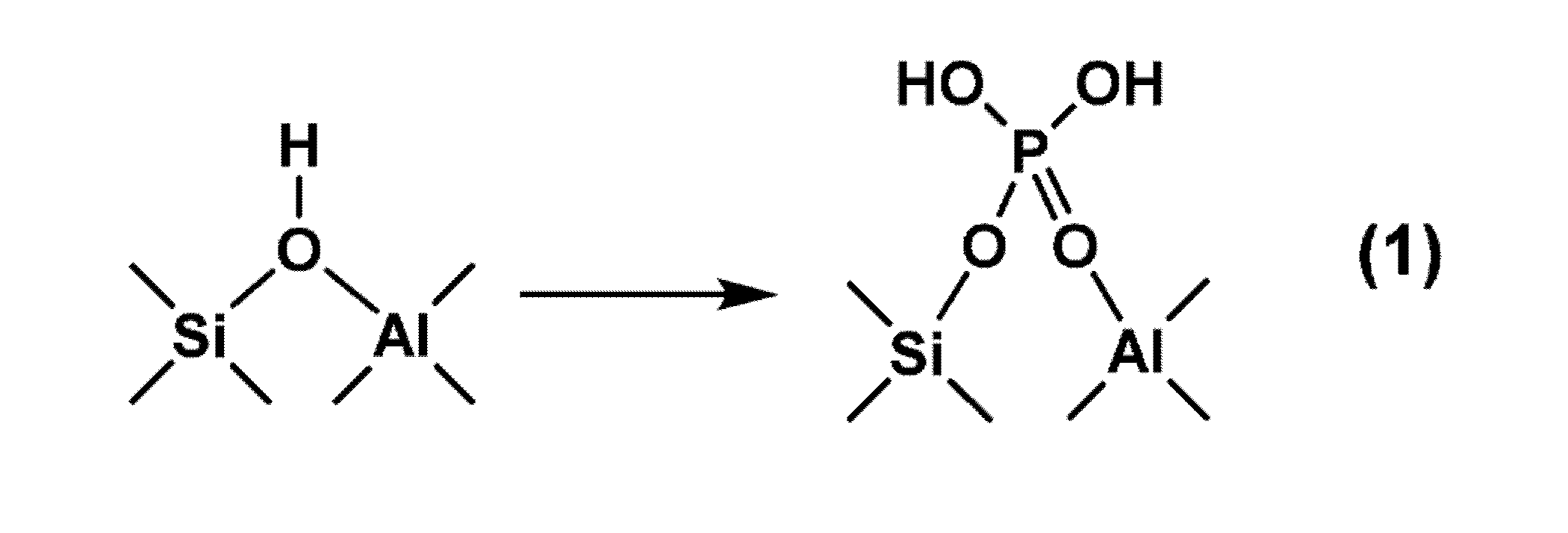
- P binds to O (oxygen) that binds to Si and O that binds to Al, which are present on the surface of the zeolite catalyst material, as shown in the following formula (1). It is assumed that
- the mass of P (M P ) in the zeolite catalyst material has a lower limit, preferably more than 0% by mass, more preferably more than 0% by mass, with respect to the mass (M2) of the zeolite catalyst material. is 0.5% by mass or more, more preferably 1.0% by mass or more, particularly preferably 1.5% by mass, and the upper limit is preferably less than 5.0% by mass, more preferably 4.0% by mass Below, more preferably 3.0% by mass or less, particularly preferably 2.5% by mass.
- the mass of P (M P ) is more than 0% by mass relative to the mass of the zeolite catalyst material (M2), the ratio of propane to the total of propane and butane can be increased. Further, when the mass of P (M P ) is less than 5.0% by mass with respect to the mass (M2) of the zeolite catalyst material, the excessive P content reduces the ratio of propane to the total of propane and butane. Also, the decrease in the yield of propane and butane can be suppressed.
- the presence or absence of P content in the zeolite catalyst material and the content ratio of P can be measured by ICP-OES (Inductively Coupled Plasma Emission Spectroscopy).
- Elements that work similarly to P include B, Mg, Ca, La, and Zr. These elements, like P, can change the acidity of the zeolite catalyst material from strong acid to weak acid. Therefore, if the zeolite catalyst material contains the same amount of B, Mg, Ca, La, Zr as P mentioned above, the ratio of propane to the sum of propane and butane will increase.
- the method for producing liquefied petroleum gas of the embodiment has a reduction treatment process, a supply process, and a synthesis process.
- the catalyst for synthesizing liquefied petroleum gas is reduced.
- the liquefied petroleum gas synthesis catalyst is reduced with hydrogen.
- carbon monoxide and hydrogen are supplied to the liquefied petroleum gas synthesis catalyst reduced in the reduction treatment step.
- Carbon monoxide and hydrogen are gases.
- carbon monoxide and hydrogen may be supplied separately, or a mixed gas containing carbon monoxide and hydrogen, such as synthesis gas, may be supplied.
- the carbon monoxide and hydrogen supplied in the supply process are reacted with the reduced liquefied petroleum gas synthesis catalyst to synthesize liquefied petroleum gas.
- the catalyst for synthesizing liquefied petroleum gas of the present embodiment is resistant to deterioration and has excellent long-term stability, and can exhibit good catalytic performance for a long period of time (for example, 70 hours or longer when the synthesis temperature is 330° C. or lower).
- the lower limit of the gas hourly space velocity (GHSV) for supplying carbon monoxide and hydrogen is preferably 300/h or more, more preferably 500/h or more, and still more preferably 1000/h or more.
- the upper limit is preferably 20000/h or less, more preferably 10000/h or less, and even more preferably 5000/h or less.
- GHSV gas hourly space velocity
- liquefied petroleum gas can be efficiently produced from carbon monoxide and hydrogen.
- the gas hourly space velocity (GHSV) is 20000/h or less, it is possible to suppress an increase in the content of unreacted substances such as carbon monoxide and hydrogen in the gas containing liquefied petroleum gas obtained after synthesis.
- the lower limit of the catalyst temperature (synthesis temperature) in the synthesis step is preferably 260° C. or higher, more preferably 270° C. or higher, and still more preferably 280° C. or higher, and the upper limit is preferably 360° C. or lower. It is preferably 340° C. or lower, more preferably 330° C. or lower, and particularly preferably 320° C. or lower.
- liquefied petroleum gas can be efficiently produced from carbon monoxide and hydrogen. Further, in the synthesis step, if carbon monoxide and hydrogen are reacted at a temperature of 360° C. or less, deterioration of catalytic performance of the catalyst for synthesizing liquefied petroleum gas with temperature can be suppressed. In addition, in the synthesis process, if carbon monoxide and hydrogen are reacted at a temperature of 360 ° C. or less, the resulting liquefied petroleum gas will be overly decomposed (decomposed from propane to ethane, or decomposed from ethane to methane). Decrease can be suppressed.
- the lower limit is preferably 2.0 MPa or more, more preferably 3.0 MPa or more, still more preferably 3.5 MPa or more, and the upper limit is preferably 6.0 MPa or less, more preferably Carbon monoxide and hydrogen are reacted at 5.5 MPa or less, more preferably 5.0 MPa or less.
- a catalyst for synthesizing liquefied petroleum gas can be produced, for example, by mixing a Cu--Zn-based catalyst material and a zeolite catalyst material.
- the composition, ratio, state, etc. of the Cu—Zn-based catalyst material and the zeolite catalyst material are appropriately set according to the desired liquefied petroleum gas.
- the molar ratio (SiO 2 /Al 2 O 3 ) of the zeolite catalyst material can be controlled, for example, by adjusting the amount of aluminum source added during synthesis of the zeolite catalyst material.
- the amount of solid acid in the zeolite catalyst material can be controlled, for example, by the synthesis conditions (such as pH) during synthesis of the zeolite catalyst material.
- the method of supporting precious metals such as platinum and palladium on the zeolite catalyst material is not particularly limited, but examples include an impregnation method, an immersion method, and an ion exchange method.
- platinum and palladium are loaded simultaneously using an impregnation or immersion fluid containing platinum and palladium. is preferred.
- Starting materials for platinum and palladium supported on zeolite catalyst materials include compounds containing platinum and palladium.
- platinum chloroplatinic acid hexahydrate, dinitrodiammineplatinum, dichlorotetraammineplatinum, platinum oxide, platinum chloride, and the like can be used.
- palladium chloride, palladium nitrate, dinitrodiammine palladium, palladium sulfate, palladium oxide and the like can be used.
- the concentration of the compound containing platinum or palladium in the solution of the compound containing platinum or palladium may be set according to the amount of platinum or palladium to be supported.
- the concentration of the chloroplatinic acid hexahydrate solution is preferably 0.15% by mass or more and 3.50% by mass or less.
- the concentration of the palladium chloride solution is preferably 0.1% by mass or more and 2.5% by mass or less.
- the amount of Pt or Pd supported can be controlled by the concentration of the solution.
- the impregnation time and immersion time of the solution are preferably 10 minutes or more and 5 hours or less in order to allow platinum or palladium to sufficiently permeate the zeolite catalyst material.
- the calcination temperature of the zeolite catalyst material is preferably 300° C. or more and 600° C. or less, and the calcination time of the zeolite catalyst material is preferably 30 minutes or more and 300 minutes or less.
- the method of supporting phosphorus on the zeolite catalyst material is not particularly limited, but examples include an impregnation method and an immersion method.
- Orthophosphoric acid, phosphate esters, and the like can be used as starting materials for phosphorus when supporting phosphorus on the zeolite catalyst material.
- an aqueous solution of orthophosphoric acid or phosphate ester can be used as the impregnating liquid or immersion liquid.
- the concentration of the phosphoric acid solution is preferably 2% by mass or more and 20% by mass or less.
- the impregnation time and immersion time of the phosphoric acid solution are preferably 10 minutes or more and 5 hours or less in order to sufficiently permeate the zeolite catalyst material with the phosphoric acid solution.
- the calcination temperature of the zeolite catalyst material is preferably 300°C or higher and 600°C or lower.
- the calcination time of the zeolite catalyst material is preferably 30 minutes or more and 300 minutes or less.
- the content of P can be controlled by the concentration of the phosphoric acid solution and the impregnation or immersion time with the phosphoric acid solution.
- a noble metal such as platinum or palladium
- the impregnated or immersed zeolite catalyst material is calcined, and the calcined zeolite catalyst material contains a noble metal such as platinum or palladium.
- the zeolite catalyst material After being impregnated or immersed in the solution, it is preferable to calcine the zeolite catalyst material impregnated or immersed in the solution containing precious metals such as platinum and palladium.
- the liquefied petroleum gas obtained using the catalyst for synthesizing liquefied petroleum gas contains a large amount of propane as a component, so it is suitable as a fuel that can be used stably even in cold regions.
- Example 1 (Cu—Zn-based catalyst material) A ternary oxide of copper oxide, zinc oxide, and aluminum oxide (product name: 45776 Copper based methanol synthesis catalyst, manufactured by Alpha Acer) was used as the Cu—Zn-based catalyst material.
- the Cu—Zn-based catalyst material was pelletized with a tableting machine at a pressure of 5 MPa to form pellets having a diameter of 20 mm and a thickness of about 1 mm, and the pellets were pulverized in a mortar. was sieved using an overlap of As a result, a molded body made of the Cu--Zn catalyst material having a grain size of 300 to 500 ⁇ m and a bulk density of 0.9 g/cm 3 was obtained.
- this sample was made into pellets with a diameter of 20 mm and a thickness of about 1 mm using a tableting machine, and the pellets were pulverized in a mortar.
- a molded body made of the Pt-supporting MFI-type zeolite catalyst material having a grain size of 300 to 500 ⁇ m and a bulk density of 0.8 g/cm 3 was obtained.
- M2 is the sum of the mass of the supported noble metals (Pt, Pd), the mass of the MFI-type zeolite catalyst material supporting the noble metals, and the mass of P contained when P is contained.
- the catalyst for liquefied petroleum gas synthesis was reduced with hydrogen. Subsequently, carbon monoxide and hydrogen were supplied to the liquefied petroleum gas synthesis catalyst at a gas hourly space velocity (GHSV) of 2000/h. Synthesize liquefied petroleum gas from carbon monoxide and hydrogen by controlling the temperature (synthesis temperature) to 320° C. and the pressure to 5.0 MPa while supplying carbon monoxide and hydrogen to the catalyst for synthesizing liquefied petroleum gas. did.
- GHSV gas hourly space velocity
- a reactor made of stainless steel (inner diameter 6.2 mm, total length 60 cm) was used. The center of the reactor was packed with the catalyst sandwiched between glass wool. The reactor was installed in an electric furnace, and the temperature of the electric furnace was measured by a thermocouple inserted in the center of the furnace and controlled by PID. The catalyst temperature was measured with a thermocouple inserted in the center of the catalyst layer in the reactor. Note that the temperature of the catalyst is the synthesis temperature.
- the reduction treatment of the liquefied petroleum gas synthesis catalyst was performed by supplying H 2 to the catalyst in the reactor at a flow rate of 40 ml/min at 380° C. for 2 hours before the reaction.
- the state of the liquefied petroleum gas synthesizing catalyst filled in the reactor may be a physical mixture of the Cu—Zn based catalyst material and the MFI type zeolite catalyst material at a ratio.
- the outlet side of the reactor may be filled with only the MFI zeolite catalyst material, and the inlet side of the reactor may be filled with a catalyst obtained by physically mixing the Cu—Zn type catalyst material and the MFI type zeolite catalyst material.
- the reactor outlet side is filled with a catalyst obtained by physically mixing a Cu—Zn based catalyst material and an MFI type zeolite catalyst material at a certain ratio
- the reactor inlet side is filled with a Cu—Zn based catalyst material and an MFI type zeolite catalyst material. You may fill the catalyst physically mixed by the ratio.
- the MFI-type zeolite catalyst material is filled on the reactor outlet side, then the catalyst obtained by physically mixing the Cu—Zn-based catalyst material and the MFI-type zeolite catalyst material at a certain ratio is filled, and then the MFI-type zeolite catalyst material is filled.
- MFI-type zeolite catalyst material and Cu--Zn-based catalyst are filled in a reactor such that only the Cu--Zn-based catalyst material and the MFI-type zeolite catalyst material are physically mixed in a different ratio.
- the material and the MFI-type zeolite catalyst material may be packed in multiple stages.
- the reactor exit side is filled with a catalyst obtained by physically mixing a Cu—Zn based catalyst material and an MFI type zeolite catalyst material at a certain ratio, and then the Cu—Zn based catalyst material and MFI type zeolite catalyst material are mixed at another ratio.
- a certain ratio of MFI-type zeolite catalyst material and Cu--Zn-based catalyst material and MFI-type zeolite catalyst material and Cu--Zn-based catalyst material are filled in the reactor, such that the catalyst is physically mixed at a different ratio. and a catalyst having a different ratio may be packed in multiple stages.
- CO conversion rate (%) [(CO flow rate at inlet ( ⁇ mol/min) - CO flow rate at outlet ( ⁇ mol/min))/CO flow rate at inlet ( ⁇ mol/min)] ⁇ 100
- the CO conversion rate indicates the rate at which carbon monoxide (CO) in the raw material gas is converted to hydrocarbons and the like.
- ⁇ LPG yield of initial performance (liquefied petroleum gas (propane + butane) yield Cmol%)>
- C The yield of liquefied petroleum gas (propane + butane) 6 hours after the start of production of liquefied petroleum gas is 20.0 Cmol% or more and less than 25.0 Cmol%.
- Propane yield 6 hours after the start of production of liquefied petroleum gas is 20.0 Cmol% or more.
- B Propane yield 6 hours after the start of production of liquefied petroleum gas is 15.0 Cmol% or more and less than 20.0 Cmol%.
- C Propane yield 6 hours after the start of production of liquefied petroleum gas is 10.0 Cmol% or more and less than 15.0 Cmol%.
- D The propane yield is less than 10.0 Cmol% 6 hours after the start of liquefied petroleum gas production.
- Catalytic activity after 1 week in catalyst for liquefied petroleum gas synthesis (mid-term performance)
- the medium-term performance of catalysts for liquefied petroleum gas synthesis was ranked.
- a rank, B rank, and C rank are pass, D rank is fail.
- B The ratio of the yield of liquefied petroleum gas one week after the start of liquefied petroleum gas production to the liquefied petroleum gas (propane + butane) yield (Cmol%) six hours after the start of liquefied petroleum gas production is 80.0%. It is more than 90.0%.
- C The ratio of the yield of liquefied petroleum gas one week after the start of liquefied petroleum gas production to the liquefied petroleum gas (propane + butane) yield (Cmol%) six hours after the start of liquefied petroleum gas production is 60.0%. It is more than 80.0%.
- Catalytic activity after one month (long-term performance) in catalyst for liquefied petroleum gas synthesis was ranked.
- a rank, B rank, and C rank are pass, D rank is fail.
- B The ratio of the liquefied petroleum gas yield one month after the start of liquefied petroleum gas production to the liquefied petroleum gas yield (Cmol%) six hours after the start of liquefied petroleum gas production is 80.0% or more and 90.0% is less than
- C The ratio of the liquefied petroleum gas yield one month after the start of liquefied petroleum gas production to the liquefied petroleum gas yield (Cmol%) six hours after the start of liquefied petroleum gas production is 60.0% or more and 80.0% is less than
- D The ratio of the liquefied petroleum gas yield one month after the start of liquefied petroleum gas production to the liquefied petroleum gas yield (Cmol%) six hours after the start of liquefied petroleum gas production is less than 60.0%.
- Example 2 Instead of an aqueous solution of 0.1334 g of chloroplatinic acid hexahydrate dissolved in 7.5758 g of 10% hydrochloric acid, 0.0667 g of chloroplatinic acid hexahydrate and 0.0419 g of palladium chloride were dissolved in 7.5758 g of 10% hydrochloric acid. The same operation as in Example 1 was performed except that an aqueous solution was used.
- Example 3 Instead of an aqueous solution of 0.1334 g of chloroplatinic acid hexahydrate dissolved in 7.5758 g of 10% hydrochloric acid, 0.0419 g of chloroplatinic acid hexahydrate and 0.0574 g of palladium chloride were dissolved in 7.5758 g of 10% hydrochloric acid. The same operation as in Example 1 was performed except that an aqueous solution was used.
- Examples 4 and 5 The ratio (M1/(M1+M2)) of the mass (M1) of the Cu--Zn-based catalyst material to the total mass of the mass (M1) of the Cu--Zn-based catalyst material and the mass (M2) of the MFI-type zeolite catalyst material is shown in the table. The same operation as in Example 3 was performed, except that the value was set to 1.
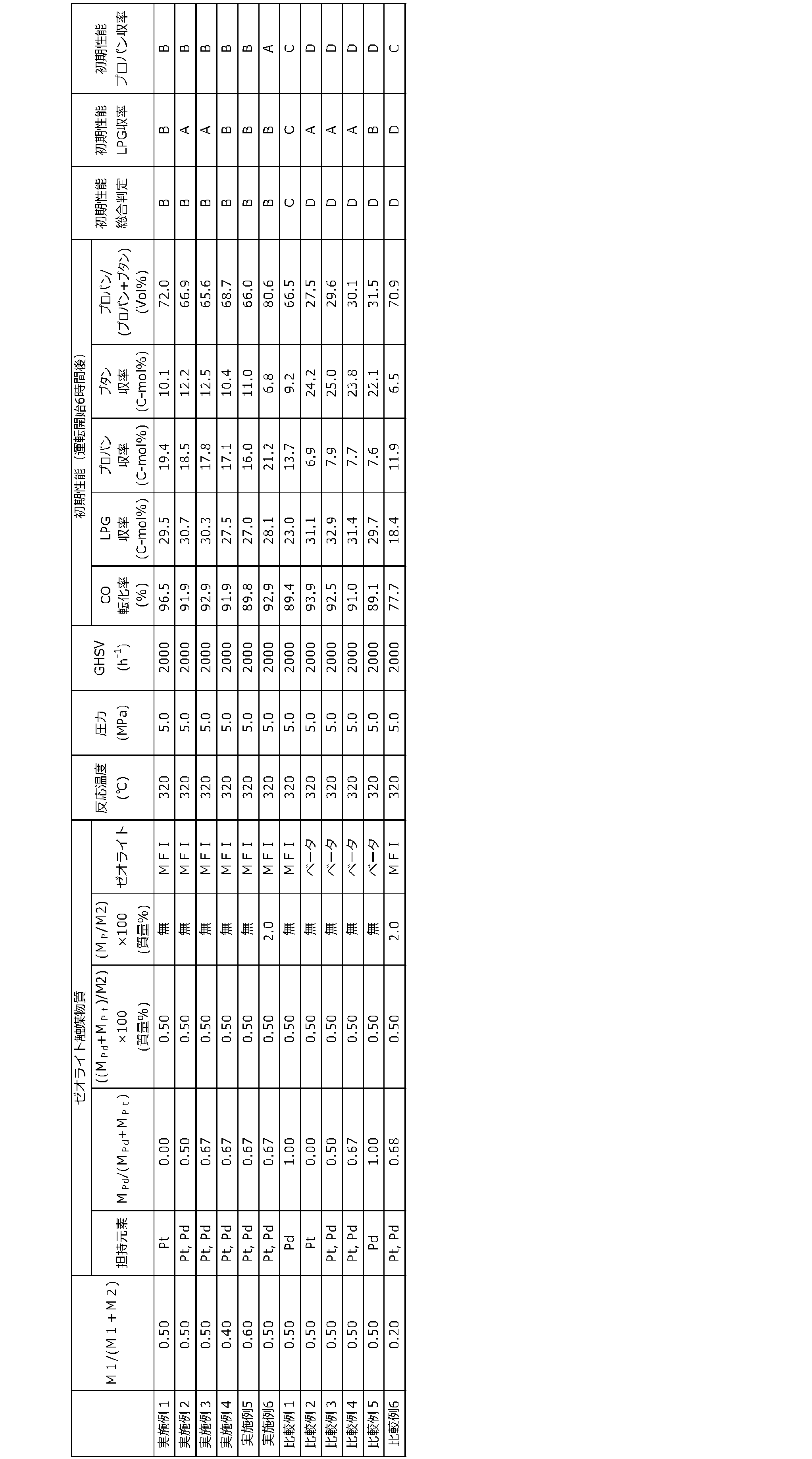
- the Cu--Zn-based catalyst material and the MFI-type zeolite catalyst material supporting Pt are included, and the mass of the Cu--Zn-based catalyst material (M1) and the MFI-type zeolite catalyst material Examples 1 to 6 in which the ratio (M1/(M1+M2)) of the Cu—Zn-based catalyst material (M1) to the total mass of (M2) is in the range of 0.30 or more and 0.95 or less, the synthesis temperature is Despite the low temperature of 320°C, the yield of propane was high. In addition, Examples 1-6 had a higher ratio of propane to the total of propane and butane than Comparative Examples 2-5 using ⁇ zeolite.
- Example 3 Same as Example 3, except that after calcining for 120 minutes, an aqueous solution of 0.0419 g of chloroplatinic acid hexahydrate and 0.0574 g of palladium chloride dissolved in 7.5758 g of 10% hydrochloric acid was added dropwise with a pipette. operation was performed.
- Example 7 (Cu—Zn-based catalyst material) By dissolving 95.13 g of copper nitrate trihydrate, 49.73 g of zinc nitrate hexahydrate, 19.33 g of aluminum nitrate nonahydrate, and 5.31 g of zirconium nitrate dihydrate in 584 g of distilled water. , A solution was prepared. Liquid B was prepared by dissolving 148 g of anhydrous sodium carbonate in 2000 g of distilled water.
- the precipitated slurry was transferred to a suction filtration device and filtered to obtain a precipitated cake.
- the resulting precipitated cake was washed 20 times with 250 ml of distilled water to remove Na ions from the precipitated cake.
- the precipitated cake was transferred to an evaporating dish and dried in a drying oven at 120° C. for 12 hours.
- the temperature was raised to 350° C. at a rate of 10° C./min in a firing furnace and fired at 350° C. for 2 hours.
- This powder was made into pellets with a diameter of 20 mm and a thickness of about 1 mm using a tableting machine at a pressure of 5 MPa, and the pellets were pulverized in a mortar. It was sieved using As a result, a molded body made of the Cu—Zn-based catalyst material having a grain size of 300 to 500 ⁇ m, a bulk density of 0.9 g/cm 3 , was obtained.
- This Cu—Zn-based catalyst material consists of copper oxide (CuO), zinc oxide (ZnO), zirconium oxide (ZrO 2 ) and aluminum oxide (Al 2 O 3 ), and has a chemical composition of 62.7% by mass of copper oxide. , 27.3% by mass of zinc oxide, 5.0% by mass of zirconium oxide, and 5.3% by mass of aluminum oxide.
- this sample was made into pellets with a diameter of 20 mm and a thickness of about 1 mm using a tableting machine, and the pellets were pulverized in a mortar.
- a molded body composed of the P-containing and Pt-supporting MFI-type zeolite catalyst material having a grain size of 300 to 500 ⁇ m and a bulk density of 0.8 g/cm 3 was obtained.
- the chemical composition of this MFI-type zeolite catalyst material is 0.5% by mass of platinum ((M Pt /M2) ⁇ 100 is 0.50% by mass), 2.0% by mass of phosphorus ((M P /M2) ⁇ 100 is 2.0 wt%) and the balance was ZSM-5.
- a catalyst for synthesizing liquefied petroleum gas As a catalyst for synthesizing liquefied petroleum gas, a mixture of a molded body composed of the Cu—Zn catalyst material obtained above and a molded body composed of the MFI-type zeolite catalyst material obtained above was used. The ratio (M1/(M1+M2)) of the mass (M1) of the mixed Cu—Zn-based catalyst material to the total mass of the mass (M1) of the mixed Cu—Zn-based catalyst material and the mass (M2) of the MFI-type zeolite catalyst material is , 0.80. Note that M2 is the sum of the mass of the supported noble metal (Pt), the mass of the MFI-type zeolite catalyst material carrying the noble metal (Pt), and the mass of P.
- liquefied petroleum gas was produced under the following conditions.
- the catalyst for liquefied petroleum gas synthesis was reduced with hydrogen. Subsequently, carbon monoxide and hydrogen were supplied to the liquefied petroleum gas synthesis catalyst at a gas hourly space velocity (GHSV) of 750/h. Synthesize liquefied petroleum gas from carbon monoxide and hydrogen by controlling the temperature (synthesis temperature) to 320° C. and the pressure to 5.0 MPa while supplying carbon monoxide and hydrogen to the catalyst for synthesizing liquefied petroleum gas. did.
- GHSV gas hourly space velocity
- a reactor made of stainless steel (inner diameter 6.2 mm, total length 60 cm) was used. The center of the reactor was packed with the catalyst sandwiched between glass wool. The reactor was installed in an electric furnace, and the temperature of the electric furnace was measured by a thermocouple inserted in the center of the furnace and controlled by PID. The catalyst temperature was measured with a thermocouple inserted in the center of the catalyst layer in the reactor. Note that the temperature of the catalyst is the synthesis temperature.
- the reduction treatment of the liquefied petroleum gas synthesis catalyst was performed by supplying H 2 to the catalyst in the reactor at a flow rate of 40 ml/min at 380° C. for 2 hours before the reaction.
- Example 8> The mass (M1) of the Cu--Zn-based catalyst material mixed using the same molded body of the Cu--Zn-based catalyst material and the molded body of the MFI-type zeolite catalyst material as in Example 7 and the mass (M1) of the MFI-type zeolite catalyst material Using catalysts mixed so that the ratio (M1/(M1+M2)) of the mass (M1) of the Cu—Zn-based catalyst material to the total mass of the mass (M2) is 0.78, the temperature (synthesis temperature) is adjusted. The same operation as in Example 7 was performed except that the temperature was set to 310°C.
- Example 9 The mass (M1) of the Cu--Zn-based catalyst material mixed using the same molded body of the Cu--Zn-based catalyst material and the molded body of the MFI-type zeolite catalyst material as in Example 7 and the mass (M1) of the MFI-type zeolite catalyst material A mixed catalyst (mixed catalyst) and an MFI-type zeolite catalyst so that the ratio (M1/(M1+M2)) of the mass (M1) of the Cu—Zn-based catalyst material to the total mass of the mass (M2) is 0.72 Except that a single catalyst material was used, the lower stage of the reactor was filled with a single MFI type zeolite catalyst material, silica wool was inserted, and the mixed catalyst was filled in the upper stage, and the temperature (synthesis temperature) was set to 300 ° C. The same operation as in Example 7 was performed.
- Example 10 The mass (M1) of the Cu--Zn-based catalyst material mixed using the same molded body of the Cu--Zn-based catalyst material and the molded body of the MFI-type zeolite catalyst material as in Example 7 and the mass (M1) of the MFI-type zeolite catalyst material A mixed catalyst (mixed catalyst) and an MFI-type zeolite catalyst so that the ratio (M1/(M1+M2)) of the mass (M1) of the Cu—Zn-based catalyst material to the total mass of the mass (M2) is 0.64 Except that a single catalyst material was used, the lower stage of the reactor was filled with a single MFI type zeolite catalyst material, silica wool was inserted, and the mixed catalyst was filled in the upper stage, and the temperature (synthesis temperature) was set to 300 ° C. The same operation as in Example 7 was performed.
- Example 11 The mass (M1) of the Cu--Zn-based catalyst material mixed using the same molded body of the Cu--Zn-based catalyst material and the molded body of the MFI-type zeolite catalyst material as in Example 7 and the mass (M1) of the MFI-type zeolite catalyst material Using catalysts mixed so that the ratio (M1/(M1+M2)) of the mass (M1) of the Cu—Zn-based catalyst material to the total mass of the mass (M2) is 0.50, the temperature (synthesis temperature) is adjusted. The same operation as in Example 7 was performed except that the temperature was 280° C. and the GHSV was 1000 h ⁇ 1 .
- Example 12 (Cu—Zn-based catalyst material) A ternary oxide of copper oxide, zinc oxide, and aluminum oxide (product name: 45776 Copper based methanol synthesis catalyst, manufactured by Alpha Acer) was used as the Cu—Zn-based catalyst material.
- the Cu—Zn-based catalyst material was pelletized with a tableting machine at a pressure of 5 MPa to form pellets having a diameter of 20 mm and a thickness of about 1 mm, and the pellets were pulverized in a mortar. was sieved using an overlap of As a result, a molded body made of the Cu--Zn catalyst material having a grain size of 300 to 500 ⁇ m and a bulk density of 0.9 g/cm 3 was obtained.
- This Cu—Zn-based catalyst material consists of copper oxide (CuO), zinc oxide (ZnO), magnesium oxide (MgO) and aluminum oxide (Al 2 O 3 ), and has a chemical composition of 63.5% by mass of copper oxide, It was 25.0% by mass of zinc oxide, 1.5% by mass of magnesium oxide, and 10.0% by mass of aluminum oxide.
- this sample was made into pellets with a diameter of 20 mm and a thickness of about 1 mm using a tableting machine, and the pellets were pulverized in a mortar.
- a shaped body composed of MFI-type zeolite catalyst material containing P and supporting Pt and Pd, having a particle size of 300 to 500 ⁇ m, a bulk density of 0.8 g/cm 3 .
- the chemical composition of this MFI-type zeolite catalyst material is 0.16% by mass of platinum + 0.34% by mass of palladium ((M Pt + M Pd )/M2) ⁇ 100 is 0.50% by mass), 2.0% by mass of phosphorus (( M P /M2) ⁇ 100 was 2.0 mass %) and the rest was ZSM-5.
- a catalyst for synthesizing liquefied petroleum gas As a catalyst for synthesizing liquefied petroleum gas, a mixture of a molded body composed of the Cu—Zn catalyst material obtained above and a molded body composed of the MFI-type zeolite catalyst material obtained above was used.
- the ratio (M1/(M1+M2)) of the mass (M1) of the mixed Cu—Zn-based catalyst material to the total mass of the mass (M1) of the mixed Cu—Zn-based catalyst material and the mass (M2) of the MFI-type zeolite catalyst material is , 0.50, the temperature (synthesis temperature) was set to 320° C., and the GHSV was set to 2000 h ⁇ 1 . Other than that, the same operation as in Example 7 was performed. Evaluation was performed for 25 days.
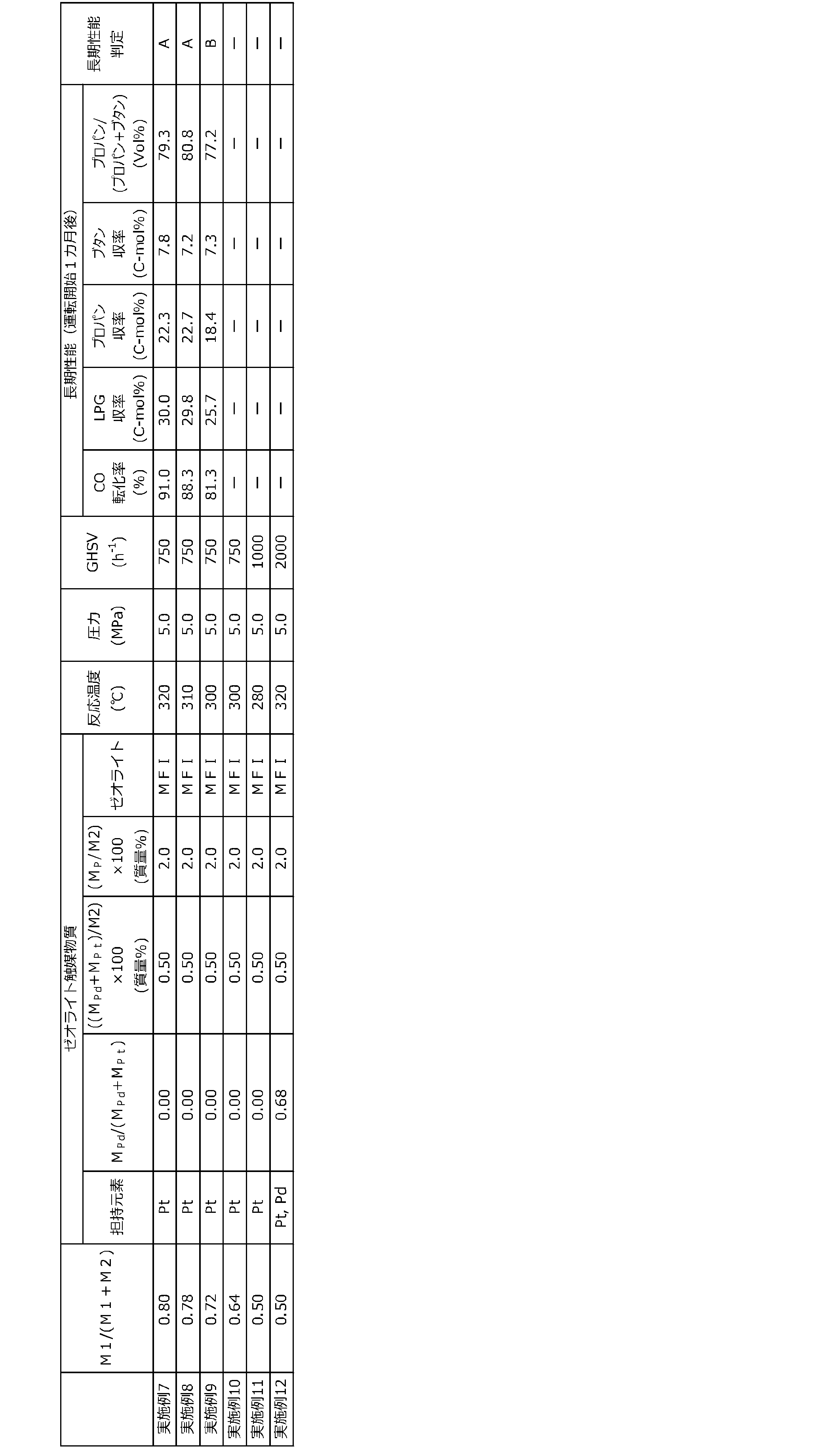
- the medium-term and long-term performance of the catalyst for liquefied petroleum gas synthesis could be improved as the ratio (M1/(M1+M2)) increased.
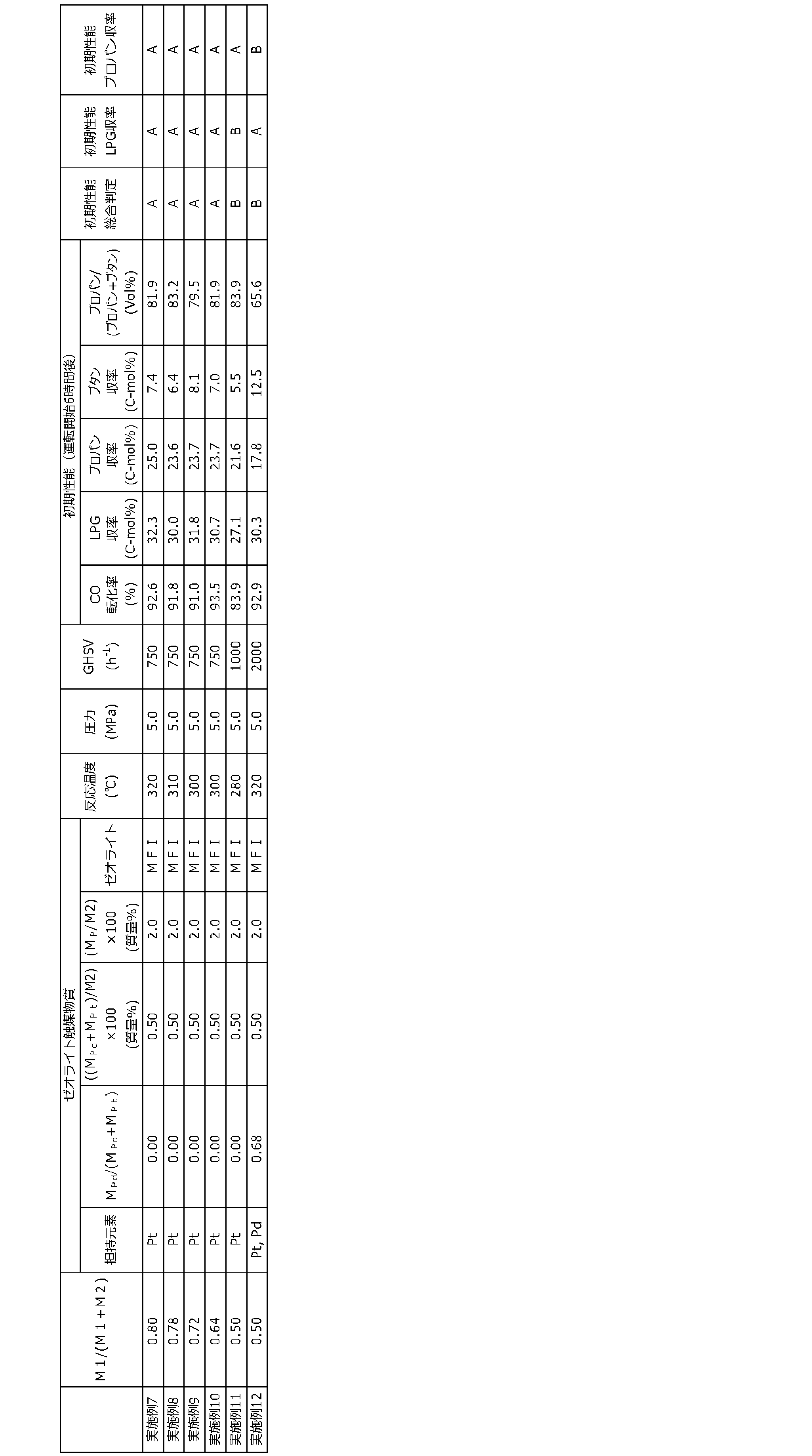
- the catalysts for synthesizing liquefied petroleum gas of Examples 7 to 12 are less likely to deteriorate at a temperature of about 320° C. and can stably produce propane for a long period of time.
Landscapes
- Chemical & Material Sciences (AREA)
- Organic Chemistry (AREA)
- Engineering & Computer Science (AREA)
- Chemical Kinetics & Catalysis (AREA)
- Materials Engineering (AREA)
- Oil, Petroleum & Natural Gas (AREA)
- General Chemical & Material Sciences (AREA)
- Crystallography & Structural Chemistry (AREA)
- Physics & Mathematics (AREA)
- Thermal Sciences (AREA)
- Catalysts (AREA)
- Organic Low-Molecular-Weight Compounds And Preparation Thereof (AREA)
Abstract
Description
[2] 前記Cu-Zn系触媒物質の質量(M1)と前記MFI型ゼオライト触媒物質の質量(M2)との合計質量に対する前記Cu-Zn系触媒物質の質量(M1)の比(M1/(M1+M2))は、0.30以上0.70未満である、上記[1]に記載の液化石油ガス合成用触媒。
[3] 前記Cu-Zn系触媒物質の質量(M1)と前記MFI型ゼオライト触媒物質の質量(M2)との合計質量に対する前記Cu-Zn系触媒物質の質量(M1)の比(M1/(M1+M2))は、0.50以上0.95以下である、上記[1]に記載の液化石油ガス合成用触媒。
[4] 前記MFI型ゼオライト触媒物質は、Ptのみを担持する、上記[1]~[3]のいずれか1つに記載の液化石油ガス合成用触媒。
[5] 前記MFI型ゼオライト触媒物質は、さらにPdを担持する、上記[1]~[3]のいずれか1つに記載の液化石油ガス合成用触媒。
[6] 前記MFI型ゼオライト触媒物質に担持されるPtの質量(MPt)およびPdの質量(MPd)の合計質量(MPt+MPd)に対するPdの質量(MPd)の比(MPd/(MPt+MPd))は、0.70以下である、上記[5]に記載の液化石油ガス合成用触媒。
[7] 前記MFI型ゼオライト触媒物質におけるPtの質量(MPt)およびPdの質量(MPd)の合計質量(MPt+MPd)は、前記MFI型ゼオライト触媒物質の質量(M2)に対して0.1質量%以上1.0質量%以下である、上記[5]または[6]に記載の液化石油ガス合成用触媒。
[8] 前記Cu-Zn系触媒物質と前記MFI型ゼオライト触媒物質とは、互いに独立して存在し、前記Cu-Zn系触媒物質および前記MFI型ゼオライト触媒物質は、ともに粉粒体または成形体である、上記[1]~[7]のいずれか1つに記載の液化石油ガス合成用触媒。
[9] 上記[1]~[8]のいずれか1つに記載の液化石油ガス合成用触媒を還元処理する還元処理工程と、前記還元処理工程で還元処理した液化石油ガス合成用触媒に、一酸化炭素と水素とを供給する供給工程と、前記還元処理した液化石油ガス合成用触媒によって、前記供給工程で供給された一酸化炭素および水素を反応させ、液化石油ガスを合成する合成工程とを有する、液化石油ガスの製造方法。
[10] 前記供給工程において、一酸化炭素と水素とを供給するガス空間速度(GHSV)は、300/h以上20000/h以下である、上記[9]に記載の液化石油ガスの製造方法。
[11] 前記合成工程において、260℃以上360℃以下の温度で、一酸化炭素および水素を反応させる、上記[9]または[10]に記載の液化石油ガスの製造方法。
[12] 前記合成工程において、2.0MPa以上6.0MPa以下の圧力で、一酸化炭素および水素を反応させる、上記[9]~[11]のいずれか1つに記載の液化石油ガスの製造方法。
(Cu-Zn系触媒物質)
Cu-Zn系触媒物質として、酸化銅と酸化亜鉛と酸化アルミニウムとの三元系酸化物(製品名:45776 Copper based methanol synthesis catalyst、アルファ・エイサー社製)を用いた。当該Cu-Zn系触媒物質を、錠剤成形器で圧力5MPaの条件で直径20mm、厚さ約1mmのペレットとし、そのペレットを乳鉢で粉砕した後、砕いた試料を300μmのメッシュと500μmのメッシュとを重ねて用いてふるい分けた。これにより、粒径が300~500μm、粒状で、嵩密度が0.9g/cm3のCu-Zn系触媒物質からなる成形体を得た。
MFI型ゼオライト(ZSM-5、SiO2のモル数/Al2O3のモル数=40)10gをメノウ乳鉢に投入し、そこへ10%塩酸7.5758gに塩化白金酸六水和物0.1334gを溶かした水溶液をピペットで滴加しながら乳棒で均一になるように混ぜて約1時間かけて含浸した。その後、100℃で10時間乾燥し、空気雰囲気下で常温から500℃まで50分で昇温し同温度で120分間焼成することで、Ptを担持するMFI型ゼオライトを得た。続いて、この試料を錠剤成形器で直径20mm、厚さ約1mmのペレットとし、そのペレットを乳鉢で粉砕した後、砕いた試料を300μmのメッシュと500μmのメッシュとを重ねて用いてふるい分けた。これにより、粒径が300~500μm、粒状で、嵩密度が0.8g/cm3の、Ptを担持するMFI型ゼオライト触媒物質からなる成形体を得た。
液化石油ガス合成用触媒として、上記で得られたCu-Zn系触媒物質からなる成形体と、上記で得られたMFI型ゼオライト触媒物質からなる成形体と、の混合物を用いた。混合したCu-Zn系触媒物質の質量(M1)とMFI型ゼオライト触媒物質の質量(M2)との合計質量に対するCu-Zn系触媒物質の質量(M1)の比(M1/(M1+M2))を、表1に記載する。なお、M2は、担持された貴金属の質量(Pt、Pd)と、貴金属を担持するMFI型ゼオライト触媒物質の質量と、Pを含有させた場合の含有されるPの質量との合計である。そして、液化石油ガス合成用触媒を用いて、以下の条件で液化石油ガスを製造した。
リアクターに充填する液化石油ガス合成用触媒の状態は、Cu-Zn系触媒物質とMFI型ゼオライト触媒物質とを比率で物理混合したものでもよい。または、リアクター出口側にMFI型ゼオライト触媒物質のみを充填し、リアクター入口側にCu-Zn系触媒物質とMFI型ゼオライト触媒物質とを物理混合した触媒を充填してもよい。または、リアクター出口側にCu-Zn系触媒物質とMFI型ゼオライト触媒物質とをある比率で物理混合した触媒を充填し、リアクター入口側にCu-Zn系触媒物質とMFI型ゼオライト触媒物質とをある比率で物理混合した触媒を充填してもよい。または、リアクター出口側にMFI型ゼオライト触媒物質のみを充填し、次にCu-Zn系触媒物質とMFI型ゼオライト触媒物質とをある比率で物理混合した触媒を充填し、次にMFI型ゼオライト触媒物質のみを充填し、次にCu-Zn系触媒物質とMFI型ゼオライト触媒物質とを別の比率で物理混合した触媒を充填するような、リアクター内に、MFI型ゼオライト触媒物質とCu-Zn系触媒物質とMFI型ゼオライト触媒物質を多段に充填してもよい。または、リアクター出口側にCu-Zn系触媒物質とMFI型ゼオライト触媒物質とをある比率で物理混合した触媒を充填し、次にCu-Zn系触媒物質とMFI型ゼオライト触媒物質とを別の比率で物理混合した触媒を充填し、次にCu-Zn系触媒物質とMFI型ゼオライト触媒物質とをある比率で物理混合した触媒を充填し、次にCu-Zn系触媒物質とMFI型ゼオライト触媒物質とを別の比率で物理混合した触媒を充填するような、リアクター内に、MFI型ゼオライト触媒物質およびCu-Zn系触媒物質のある比率の触媒とMFI型ゼオライト触媒物質およびCu-Zn系触媒物質の別の比率の触媒とを多段に充填してもよい。
反応開始後の所定の時点(6時間後)で、オンラインに接続したガスクロマトグラフを用いてガスの分析を行った。使用したガスクロマトグラフは、GC-2014(島津製作所製)を用いた。以下に分析対象と分析条件を記す。
カラム:RT-Q-BOND
昇温プログラム:(i)45℃(30minホールド)
(ii)2℃/minで175℃まで昇温
(iii)175℃(40minホールド)
分析時間 135min
実施例および比較例で用いた液化石油ガス合成用触媒、ならびに上記実施例および比較例で得られた液化石油ガスについて、下記の測定および評価を行った。結果を表1~4および図1~3に示す。図面について、実施例1~3および比較例1の結果を図1に示し、実施例3~5の結果を図2に示し、比較例2~5の結果を図3に示す。液化石油ガスについては、一酸化炭素と水素との反応開始から6時間後に測定した結果である。
SiO2/Al2O3比(SiO2のモル数/Al2O3のモル数)は、ICP-OES(誘導結合プラズマ発光分光分析)で測定した。
MFI型ゼオライト触媒物質に対するPdおよびPtの担持の有無、上記割合((MPt+MPd)/M2)×100、ならびに比(MPd/(MPt+MPd))は、ICP-OES(誘導結合プラズマ発光分光分析)で測定した。
MFI型ゼオライト触媒物質に対するPの含有の有無、およびMFI型ゼオライト触媒物質に対するPの含有割合は、ICP-OES(誘導結合プラズマ発光分光分析)で測定した。
CO転化率(%)=[(入口のCO流量(μmol/min)-出口のCO流量(μmol/min))/入口のCO流量(μmol/min)]×100
CO転化率は、反応原料ガス中の一酸化炭素(CO)が炭化水素等に転化された割合を示す。
プロパンの収率(Cmol%)=[(C3生成速度×3)/(入口COの流量)×106/22400]×100
C3生成速度の単位はCμmol/min、入り口COの流量の単位はml(Normal)/minである。C3はプロパンである。
ブタンの収率(Cmol%)=[(C4生成速度×4)/(入口COの流量)×106/22400]×100
C4生成速度の単位はCμmol/min、入り口COの流量の単位はml(Normal)/minである。C4はブタンである。
プロパンおよびブタンの合計に対するプロパンの割合=[プロパンのモル数/(プロパンのモル数+ブタンのモル数)]×100
液化石油ガス合成用触媒の初期性能のランク付けを行った。具体的には、以下の基準で初期性能のLPG収率および初期性能のプロパン収率をランク付けし、初期性能のLPG収率および初期性能のプロパン収率のうちの低いランクを初期性能の総合判定のランクとした。初期性能の総合判定について、Aランク、Bランク、およびCランクは合格であり、Dランクは不合格である。
A:液化石油ガスの製造開始6時間後の液化石油ガス(プロパン+ブタン)収率が30.0Cmol%以上である。
B:液化石油ガスの製造開始6時間後の液化石油ガス(プロパン+ブタン)収率が25.0Cmol%以上30.0Cmol%未満である。
C:液化石油ガスの製造開始6時間後の液化石油ガス(プロパン+ブタン)収率が20.0Cmol%以上25.0Cmol%未満である。
D:液化石油ガスの製造開始6時間後の液化石油ガス(プロパン+ブタン)収率が20.0Cmol%未満である。
A:液化石油ガスの製造開始6時間後のプロパン収率が20.0Cmol%以上である。
B:液化石油ガスの製造開始6時間後のプロパン収率が15.0Cmol%以上20.0Cmol%未満である。
C:液化石油ガスの製造開始6時間後のプロパン収率が10.0Cmol%以上15.0Cmol%未満である。
D:液化石油ガスの製造開始6時間後のプロパン収率が10.0Cmol%未満である。
液化石油ガス合成用触媒の中期性能のランク付けを行った。Aランク、Bランク、およびCランクは合格であり、Dランクは不合格である。
A:液化石油ガスの製造開始6時間後の液化石油ガス(プロパン+ブタン)収率(Cmol%)に対する液化石油ガスの製造開始1週間後の液化石油ガスの収率の割合が90.0%以上である。
B:液化石油ガスの製造開始6時間後の液化石油ガス(プロパン+ブタン)収率(Cmol%)に対する液化石油ガスの製造開始1週間後の液化石油ガスの収率の割合が80.0%以上90.0%未満である。
C:液化石油ガスの製造開始6時間後の液化石油ガス(プロパン+ブタン)収率(Cmol%)に対する液化石油ガスの製造開始1週間後の液化石油ガスの収率の割合が60.0%以上80.0%未満である。
D:液化石油ガスの製造開始6時間後の液化石油ガス(プロパン+ブタン)収率(Cmol%)に対する液化石油ガスの製造開始1週間後の液化石油ガスの収率の割合が60.0%未満である。
液化石油ガス合成用触媒の長期性能のランク付けを行った。Aランク、Bランク、およびCランクは合格であり、Dランクは不合格である。
A:液化石油ガスの製造開始6時間後の液化石油ガス収率(Cmol%)に対する液化石油ガスの製造開始1カ月後の液化石油ガスの収率の割合が90.0%以上である。
B:液化石油ガスの製造開始6時間後の液化石油ガス収率(Cmol%)に対する液化石油ガスの製造開始1カ月後の液化石油ガスの収率の割合が80.0%以上90.0%未満である。
C:液化石油ガスの製造開始6時間後の液化石油ガス収率(Cmol%)に対する液化石油ガスの製造開始1カ月後の液化石油ガスの収率の割合が60.0%以上80.0%未満である。
D:液化石油ガスの製造開始6時間後の液化石油ガス収率(Cmol%)に対する液化石油ガスの製造開始1カ月後の液化石油ガスの収率の割合が60.0%未満である。
10%塩酸7.5758gに塩化白金酸六水和物0.1334gを溶かした水溶液の代わりに、10%塩酸7.5758gに塩化白金酸六水和物0.0667gおよび塩化パラジウム0.0419gを溶かした水溶液を用いたことの他は、実施例1と同様の操作を行った。
10%塩酸7.5758gに塩化白金酸六水和物0.1334gを溶かした水溶液の代わりに、10%塩酸7.5758gに塩化白金酸六水和物0.0419gおよび塩化パラジウム0.0574gを溶かした水溶液を用いたことの他は、実施例1と同様の操作を行った。
10%塩酸7.5758gに塩化白金酸六水和物0.1334gを溶かした水溶液の代わりに、10%塩酸7.5758gに塩化パラジウム0.0837gを溶かした水溶液を用いたことの他は、実施例1と同様の操作を行った。
Cu-Zn系触媒物質の質量(M1)とMFI型ゼオライト触媒物質の質量(M2)との合計質量に対するCu-Zn系触媒物質の質量(M1)の比(M1/(M1+M2))が、表1の値になるようにしたことの他は、実施例3と同様の操作を行った。
MFI型ゼオライトの代わりに、βゼオライト(SiO2のモル数/Al2O3のモル数=40)を用いたことの他は、実施例1~3および比較例1と同様の操作を行った。
MFI型ゼオライト(ZSM-5、SiO2のモル数/Al2O3のモル数=40)10gをメノウ乳鉢に投入し、そこへ純水6.000gにオルトリン酸0.6456gを溶かした水溶液をピペットで滴加しながら乳棒で均一になるように混ぜて約1時間かけて含浸した後、100℃で10時間乾燥し、空気雰囲気下で常温から500℃まで50分で昇温し同温度で120分間焼成し、これに10%塩酸7.5758gに塩化白金酸六水和物0.0419gおよび塩化パラジウム0.0574gを溶かした水溶液をピペットで滴加したことの他は、実施例3と同様の操作を行った。
(Cu-Zn系触媒物質)
硝酸銅三水和物95.13g、硝酸亜鉛六水和物49.73g、硝酸アルミニウム九水和物19.33g、および硝酸ジルコニウム二水和物5.31gを、蒸留水584gに溶解することで、A液を調製した。また、無水炭酸ナトリウム148gを蒸留水2000gに溶解することで、B液を調製した。
MFI型ゼオライト(ZSM-5、SiO2のモル数/Al2O3のモル数=40)36gをメノウ乳鉢に投入し、そこへ純水21.6gにオルトリン酸2.3241gを溶かした水溶液をピペットで滴加しながら乳棒で均一になるように混ぜて約1時間かけて含浸した。その後、100℃で10時間乾燥し、空気雰囲気下で常温から500℃まで50分で昇温し同温度で120分間焼成した。
液化石油ガス合成用触媒として、上記で得られたCu-Zn系触媒物質からなる成形体と、上記で得られたMFI型ゼオライト触媒物質からなる成形体と、の混合物を用いた。混合したCu-Zn系触媒物質の質量(M1)とMFI型ゼオライト触媒物質の質量(M2)との合計質量に対するCu-Zn系触媒物質の質量(M1)の比(M1/(M1+M2))が、0.80となるように混合した。なお、M2は、担持された貴金属(Pt)と、貴金属(Pt)を担持するMFI型ゼオライト触媒物質の質量と、Pの質量との合計である。そして、液化石油ガス合成用触媒を用いて、以下の条件で液化石油ガスを製造した。
反応開始後の所定の時点(6時間後、1週間後、1カ月後)で、オンラインに接続したガスクロマトグラフを用いてガスの分析を行った。使用したガスクロマトグラフは、GC-2014(島津製作所製)を用いた。以下に分析対象と分析条件を記す。
カラム:RT-Q-BOND
昇温プログラム:(i)45℃(30minホールド)
(ii)2℃/minで175℃まで昇温
(iii)175℃(40minホールド)
分析時間 135min
液化石油ガス合成用触媒、ならびに上記実施例および比較例で得られた液化石油ガスについて、上記と同様に性能評価を行った。
実施例7と同一のCu-Zn系触媒物質からなる成形体とMFI型ゼオライト触媒物質の成形体の混合物を用いて混合したCu-Zn系触媒物質の質量(M1)とMFI型ゼオライト触媒物質の質量(M2)との合計質量に対するCu-Zn系触媒物質の質量(M1)の比(M1/(M1+M2))が、0.78となるように混合した触媒を用い、温度(合成温度)を310℃とした以外は、実施例7と同一の操作を行った。
実施例7と同一のCu-Zn系触媒物質からなる成形体とMFI型ゼオライト触媒物質の成形体の混合物を用いて混合したCu-Zn系触媒物質の質量(M1)とMFI型ゼオライト触媒物質の質量(M2)との合計質量に対するCu-Zn系触媒物質の質量(M1)の比(M1/(M1+M2))が、0.72となるように混合した触媒(混合触媒)とMFI型ゼオライト触媒物質単独の触媒を用い、リアクター下段にMFI型ゼオライト触媒物質単独の触媒を充填しシリカウールを挿んで上段に混合触媒を充填したこと、及び、温度(合成温度)を300℃とした以外は、実施例7と同一の操作を行った。
実施例7と同一のCu-Zn系触媒物質からなる成形体とMFI型ゼオライト触媒物質の成形体の混合物を用いて混合したCu-Zn系触媒物質の質量(M1)とMFI型ゼオライト触媒物質の質量(M2)との合計質量に対するCu-Zn系触媒物質の質量(M1)の比(M1/(M1+M2))が、0.64となるように混合した触媒(混合触媒)とMFI型ゼオライト触媒物質単独の触媒を用い、リアクター下段にMFI型ゼオライト触媒物質単独の触媒を充填しシリカウールを挿んで上段に混合触媒を充填したこと、及び、温度(合成温度)を300℃とした以外は、実施例7と同一の操作を行った。
実施例7と同一のCu-Zn系触媒物質からなる成形体とMFI型ゼオライト触媒物質の成形体の混合物を用いて混合したCu-Zn系触媒物質の質量(M1)とMFI型ゼオライト触媒物質の質量(M2)との合計質量に対するCu-Zn系触媒物質の質量(M1)の比(M1/(M1+M2))が、0.50となるように混合した触媒を用い、温度(合成温度)を280℃とし、GHSVを1000h-1とした以外は、実施例7と同一の操作を行った。
(Cu-Zn系触媒物質)
Cu-Zn系触媒物質として、酸化銅と酸化亜鉛と酸化アルミニウムとの三元系酸化物(製品名:45776 Copper based methanol synthesis catalyst、アルファ・エイサー社製)を用いた。当該Cu-Zn系触媒物質を、錠剤成形器で圧力5MPaの条件で直径20mm、厚さ約1mmのペレットとし、そのペレットを乳鉢で粉砕した後、砕いた試料を300μmのメッシュと500μmのメッシュとを重ねて用いてふるい分けた。これにより、粒径が300~500μm、粒状で、嵩密度が0.9g/cm3のCu-Zn系触媒物質からなる成形体を得た。
MFI型ゼオライト(ZSM-5、SiO2のモル数/Al2O3のモル数=40)12gをメノウ乳鉢に投入し、そこへ純水7.2000gにオルトリン酸0.3834gを溶かした水溶液をピペットで滴加しながら乳棒で均一になるように混ぜて約1時間かけて含浸した後、100℃で10時間乾燥し、空気雰囲気下で常温から500℃まで50分で昇温し同温度で120分間焼成した。
液化石油ガス合成用触媒として、上記で得られたCu-Zn系触媒物質からなる成形体と、上記で得られたMFI型ゼオライト触媒物質からなる成形体と、の混合物を用いた。混合したCu-Zn系触媒物質の質量(M1)とMFI型ゼオライト触媒物質の質量(M2)との合計質量に対するCu-Zn系触媒物質の質量(M1)の比(M1/(M1+M2))が、0.50となる触媒を用い、温度(合成温度)を320℃とし、GHSVを2000h-1とした。それ以外は、実施例7と同一の操作を行った。評価は25日間行った。
実施例12と同一のCu-Zn系触媒物質からなる成形体とMFI型ゼオライト触媒物質の成形体の混合物を用いて混合したCu-Zn系触媒物質の質量(M1)とMFI型ゼオライト触媒物質の質量(M2)との合計質量に対するCu-Zn系触媒物質の質量(M1)の比(M1/(M1+M2))が、0.20となるように混合した触媒を用い、温度(合成温度)を320℃とした以外は、実施例12と同一の操作を行った。

Claims (12)
- Cu-Zn系触媒物質と、
Ptを担持するMFI型ゼオライト触媒物質と、
を含み、
前記Cu-Zn系触媒物質の質量(M1)と前記MFI型ゼオライト触媒物質の質量(M2)との合計質量に対する前記Cu-Zn系触媒物質の質量(M1)の比(M1/(M1+M2))は、0.30以上0.95以下である、液化石油ガス合成用触媒。 - 前記Cu-Zn系触媒物質の質量(M1)と前記MFI型ゼオライト触媒物質の質量(M2)との合計質量に対する前記Cu-Zn系触媒物質の質量(M1)の比(M1/(M1+M2))は、0.30以上0.70未満である、請求項1に記載の液化石油ガス合成用触媒。
- 前記Cu-Zn系触媒物質の質量(M1)と前記MFI型ゼオライト触媒物質の質量(M2)との合計質量に対する前記Cu-Zn系触媒物質の質量(M1)の比(M1/(M1+M2))は、0.50以上0.95以下である、請求項1に記載の液化石油ガス合成用触媒。
- 前記MFI型ゼオライト触媒物質は、Ptのみを担持する、請求項1~3のいずれか1項に記載の液化石油ガス合成用触媒。
- 前記MFI型ゼオライト触媒物質は、さらにPdを担持する、請求項1~3のいずれか1項に記載の液化石油ガス合成用触媒。
- 前記MFI型ゼオライト触媒物質に担持されるPtの質量(MPt)およびPdの質量(MPd)の合計質量(MPt+MPd)に対するPdの質量(MPd)の比(MPd/(MPt+MPd))は、0.70以下である、請求項5に記載の液化石油ガス合成用触媒。
- 前記MFI型ゼオライト触媒物質におけるPtの質量(MPt)およびPdの質量(MPd)の合計質量(MPt+MPd)は、前記MFI型ゼオライト触媒物質の質量(M2)に対して0.1質量%以上1.0質量%以下である、請求項5または6に記載の液化石油ガス合成用触媒。
- 前記Cu-Zn系触媒物質と前記MFI型ゼオライト触媒物質とは、互いに独立して存在し、
前記Cu-Zn系触媒物質および前記MFI型ゼオライト触媒物質は、ともに粉粒体または成形体である、請求項1~7のいずれか1項に記載の液化石油ガス合成用触媒。 - 請求項1~8のいずれか1項に記載の液化石油ガス合成用触媒を還元処理する還元処理工程と、
前記還元処理工程で還元処理した液化石油ガス合成用触媒に、一酸化炭素と水素とを供給する供給工程と、
前記還元処理した液化石油ガス合成用触媒によって、前記供給工程で供給された一酸化炭素および水素を反応させ、液化石油ガスを合成する合成工程と
を有する、液化石油ガスの製造方法。 - 前記供給工程において、一酸化炭素と水素とを供給するガス空間速度(GHSV)は、300/h以上20000/h以下である、請求項9に記載の液化石油ガスの製造方法。
- 前記合成工程において、260℃以上360℃以下の温度で、一酸化炭素および水素を反応させる、請求項9または10に記載の液化石油ガスの製造方法。
- 前記合成工程において、2.0MPa以上6.0MPa以下の圧力で、一酸化炭素および水素を反応させる、請求項9~11のいずれか1項に記載の液化石油ガスの製造方法。
Priority Applications (5)
| Application Number | Priority Date | Filing Date | Title |
|---|---|---|---|
| CN202280047374.1A CN117642227A (zh) | 2021-07-02 | 2022-07-01 | 液化石油气合成用催化剂及液化石油气的制造方法 |
| KR1020237045345A KR20240026463A (ko) | 2021-07-02 | 2022-07-01 | 액화 석유 가스 합성용 촉매 및 액화 석유 가스의 제조 방법 |
| JP2023532093A JPWO2023277187A1 (ja) | 2021-07-02 | 2022-07-01 | |
| EP22833332.4A EP4364844A4 (en) | 2021-07-02 | 2022-07-01 | LIQUEFIED PETROLEUM GAS SYNTHESIS CATALYST AND PROCESS FOR PRODUCING LIQUEFIED PETROLEUM GAS |
| US18/575,857 US20240352365A1 (en) | 2021-07-02 | 2022-07-01 | Catalyst for synthesizing liquefied petroleum gas and method for producing liquefied petroleum gas |
Applications Claiming Priority (4)
| Application Number | Priority Date | Filing Date | Title |
|---|---|---|---|
| JP2021-111072 | 2021-07-02 | ||
| JP2021111072 | 2021-07-02 | ||
| JP2022-067955 | 2022-04-15 | ||
| JP2022067955 | 2022-04-15 |
Publications (1)
| Publication Number | Publication Date |
|---|---|
| WO2023277187A1 true WO2023277187A1 (ja) | 2023-01-05 |
Family
ID=84692796
Family Applications (1)
| Application Number | Title | Priority Date | Filing Date |
|---|---|---|---|
| PCT/JP2022/026507 Ceased WO2023277187A1 (ja) | 2021-07-02 | 2022-07-01 | 液化石油ガス合成用触媒および液化石油ガスの製造方法 |
Country Status (6)
| Country | Link |
|---|---|
| US (1) | US20240352365A1 (ja) |
| EP (1) | EP4364844A4 (ja) |
| JP (1) | JPWO2023277187A1 (ja) |
| KR (1) | KR20240026463A (ja) |
| TW (1) | TW202313196A (ja) |
| WO (1) | WO2023277187A1 (ja) |
Cited By (2)
| Publication number | Priority date | Publication date | Assignee | Title |
|---|---|---|---|---|
| WO2024143458A1 (ja) * | 2022-12-28 | 2024-07-04 | 古河電気工業株式会社 | 液化石油ガス製造用反応器および液化石油ガス製造用反応装置 |
| EP4509489A4 (en) * | 2022-04-15 | 2025-07-16 | Furukawa Electric Co Ltd | CATALYST FOR LIQUEFIED PETROLEUM GAS SYNTHESIS AND PROCESS FOR PRODUCING LIQUEFIED PETROLEUM GAS |
Citations (7)
| Publication number | Priority date | Publication date | Assignee | Title |
|---|---|---|---|---|
| JPS6211548A (ja) * | 1985-07-01 | 1987-01-20 | ナシヨナル デイステイラ−ズ アンド ケミカル コ−ポレ−シヨン | 結晶性アルミノシリケ−ト組成物、その製法及び低分子量炭化水素への合成ガス転化反応でのその利用 |
| WO2004076063A1 (ja) * | 2003-02-26 | 2004-09-10 | Japan Gas Synthesize, Ltd. | 液化石油ガス製造用触媒、その製造方法、および、この触媒を用いた液化石油ガスの製造方法 |
| WO2006016444A1 (ja) * | 2004-08-10 | 2006-02-16 | Japan Gas Synthesize, Ltd. | 液化石油ガス製造用触媒、および、この触媒を用いた液化石油ガスの製造方法 |
| JP2006052304A (ja) * | 2004-08-11 | 2006-02-23 | Nippon Gas Gosei Kk | 液化石油ガスの製造方法 |
| JP2008195773A (ja) * | 2007-02-09 | 2008-08-28 | Nippon Gas Gosei Kk | 合成ガスからの液化石油ガス及び/又はガソリンの製造方法 |
| JP5405103B2 (ja) | 2006-02-17 | 2014-02-05 | 日本ガス合成株式会社 | 液化石油ガス製造用触媒 |
| JP2019037939A (ja) | 2017-08-25 | 2019-03-14 | 国立大学法人富山大学 | Lpg合成用触媒 |
Family Cites Families (2)
| Publication number | Priority date | Publication date | Assignee | Title |
|---|---|---|---|---|
| JPS545103B1 (ja) | 1970-10-23 | 1979-03-13 | ||
| CN101016494B (zh) * | 2006-02-10 | 2012-12-26 | 日本气体合成株式会社 | 液化石油气的制造方法 |
-
2022
- 2022-07-01 US US18/575,857 patent/US20240352365A1/en active Pending
- 2022-07-01 JP JP2023532093A patent/JPWO2023277187A1/ja active Pending
- 2022-07-01 KR KR1020237045345A patent/KR20240026463A/ko active Pending
- 2022-07-01 EP EP22833332.4A patent/EP4364844A4/en active Pending
- 2022-07-01 WO PCT/JP2022/026507 patent/WO2023277187A1/ja not_active Ceased
- 2022-07-04 TW TW111124941A patent/TW202313196A/zh unknown
Patent Citations (9)
| Publication number | Priority date | Publication date | Assignee | Title |
|---|---|---|---|---|
| JPS6211548A (ja) * | 1985-07-01 | 1987-01-20 | ナシヨナル デイステイラ−ズ アンド ケミカル コ−ポレ−シヨン | 結晶性アルミノシリケ−ト組成物、その製法及び低分子量炭化水素への合成ガス転化反応でのその利用 |
| WO2004076063A1 (ja) * | 2003-02-26 | 2004-09-10 | Japan Gas Synthesize, Ltd. | 液化石油ガス製造用触媒、その製造方法、および、この触媒を用いた液化石油ガスの製造方法 |
| WO2006016444A1 (ja) * | 2004-08-10 | 2006-02-16 | Japan Gas Synthesize, Ltd. | 液化石油ガス製造用触媒、および、この触媒を用いた液化石油ガスの製造方法 |
| JP4965258B2 (ja) | 2004-08-10 | 2012-07-04 | 日本ガス合成株式会社 | 液化石油ガス製造用触媒、および、この触媒を用いた液化石油ガスの製造方法 |
| JP2006052304A (ja) * | 2004-08-11 | 2006-02-23 | Nippon Gas Gosei Kk | 液化石油ガスの製造方法 |
| JP5405103B2 (ja) | 2006-02-17 | 2014-02-05 | 日本ガス合成株式会社 | 液化石油ガス製造用触媒 |
| JP2008195773A (ja) * | 2007-02-09 | 2008-08-28 | Nippon Gas Gosei Kk | 合成ガスからの液化石油ガス及び/又はガソリンの製造方法 |
| JP4558751B2 (ja) | 2007-02-09 | 2010-10-06 | 日本ガス合成株式会社 | 合成ガスからの液化石油ガス及び/又はガソリンの製造方法 |
| JP2019037939A (ja) | 2017-08-25 | 2019-03-14 | 国立大学法人富山大学 | Lpg合成用触媒 |
Non-Patent Citations (3)
| Title |
|---|
| CONGMING LIHONGYAN BANWEIJIE CAIYU ZHANGZHONG LIKAORU FUJIMOTO: "Direct synthesis of iso- butane from synthesis gas or CO over CuZnZrAl/Pd-β hybrid catalyst", JOURNAL OF SAUDI CHEMICAL SOCIETY, vol. 21, 2017, pages 974 - 982 |
| CONGMING LIKAORU FUJIMOTO: "Synthesis gas conversion to iso-butane-rich hydrocarbons over a hybrid catalyst containing Beta zeolite - role of doped palladium and influence of the Si0 /Al O ratio", CATALYSIS SCIENCE TECHNOLOGY, vol. 5, 2015, pages 4501 - 4510 |
| See also references of EP4364844A4 |
Cited By (2)
| Publication number | Priority date | Publication date | Assignee | Title |
|---|---|---|---|---|
| EP4509489A4 (en) * | 2022-04-15 | 2025-07-16 | Furukawa Electric Co Ltd | CATALYST FOR LIQUEFIED PETROLEUM GAS SYNTHESIS AND PROCESS FOR PRODUCING LIQUEFIED PETROLEUM GAS |
| WO2024143458A1 (ja) * | 2022-12-28 | 2024-07-04 | 古河電気工業株式会社 | 液化石油ガス製造用反応器および液化石油ガス製造用反応装置 |
Also Published As
| Publication number | Publication date |
|---|---|
| KR20240026463A (ko) | 2024-02-28 |
| JPWO2023277187A1 (ja) | 2023-01-05 |
| EP4364844A4 (en) | 2024-10-23 |
| TW202313196A (zh) | 2023-04-01 |
| EP4364844A1 (en) | 2024-05-08 |
| US20240352365A1 (en) | 2024-10-24 |
Similar Documents
| Publication | Publication Date | Title |
|---|---|---|
| CN105188915B (zh) | 碱土金属/金属氧化物负载型催化剂 | |
| CN1121346C (zh) | 制备合成气的方法 | |
| CN101016494B (zh) | 液化石油气的制造方法 | |
| JP4132295B2 (ja) | 炭酸ガスを含む低級炭化水素ガスから液体炭化水素油を製造する方法 | |
| WO2023277188A1 (ja) | 液化石油ガス合成用触媒および液化石油ガスの製造方法 | |
| US7169376B2 (en) | Method for making hydrogen using a gold containing water-gas shift catalyst | |
| US20240352365A1 (en) | Catalyst for synthesizing liquefied petroleum gas and method for producing liquefied petroleum gas | |
| JP6131370B1 (ja) | 合成ガス製造触媒用担体及びその製造方法、合成ガス製造触媒及びその製造方法、並びに合成ガスの製造方法 | |
| WO2023277189A1 (ja) | 液化石油ガス合成用触媒および液化石油ガスの製造方法 | |
| JPWO2005037962A1 (ja) | プロパンまたはブタンを主成分とする液化石油ガスの製造方法 | |
| WO2014182020A1 (ko) | 이산화탄소 개질반응용 모노리스 촉매, 이의 제조방법 및 이를 이용한 합성가스의 제조방법 | |
| DK181815B1 (en) | Method for preparing a steam reforming catalyst, catalyst and related use | |
| WO2023199557A1 (ja) | 液化石油ガス合成用触媒および液化石油ガスの製造方法 | |
| JP2017217630A (ja) | マグネシア系触媒担体及びその製造方法 | |
| CN117642227A (zh) | 液化石油气合成用催化剂及液化石油气的制造方法 | |
| JP2006143752A (ja) | プロパンまたはブタンを主成分とする液化石油ガスの製造方法 | |
| EP4643991A1 (en) | Liquid petroleum gas production reactor and liquid petroleum gas production reaction device | |
| JP2022190737A (ja) | メタン又は一酸化炭素製造用触媒及びメタン又は一酸化炭素製造装置 | |
| JP2024095452A (ja) | 混合触媒およびジメチルエーテルの製造方法 | |
| EP1703979A1 (en) | Catalyst for manufacturing synthesis gas and method of manufacturing synthesis gas using the same | |
| WO2025249514A1 (ja) | 液化石油ガス合成用触媒の再生方法 | |
| WO2025249515A1 (ja) | 液化石油ガスの合成方法 | |
| EP2452916B1 (en) | Method for oxidizing CO using a gold containing catalyst | |
| JPH0440063B2 (ja) | ||
| JPS61138535A (ja) | メタン含有ガス製造用触媒 |
Legal Events
| Date | Code | Title | Description |
|---|---|---|---|
| 121 | Ep: the epo has been informed by wipo that ep was designated in this application |
Ref document number: 22833332 Country of ref document: EP Kind code of ref document: A1 |
|
| WWE | Wipo information: entry into national phase |
Ref document number: 2023532093 Country of ref document: JP |
|
| WWE | Wipo information: entry into national phase |
Ref document number: 18575857 Country of ref document: US |
|
| WWE | Wipo information: entry into national phase |
Ref document number: 202417000159 Country of ref document: IN Ref document number: 202280047374.1 Country of ref document: CN |
|
| REG | Reference to national code |
Ref country code: BR Ref legal event code: B01A Ref document number: 112023027870 Country of ref document: BR |
|
| WWE | Wipo information: entry into national phase |
Ref document number: 2022833332 Country of ref document: EP |
|
| NENP | Non-entry into the national phase |
Ref country code: DE |
|
| ENP | Entry into the national phase |
Ref document number: 2022833332 Country of ref document: EP Effective date: 20240202 |
|
| ENP | Entry into the national phase |
Ref document number: 112023027870 Country of ref document: BR Kind code of ref document: A2 Effective date: 20231229 |