WO2024043153A1 - 因子選択装置、因子選択方法及びプログラム - Google Patents
因子選択装置、因子選択方法及びプログラム Download PDFInfo
- Publication number
- WO2024043153A1 WO2024043153A1 PCT/JP2023/029601 JP2023029601W WO2024043153A1 WO 2024043153 A1 WO2024043153 A1 WO 2024043153A1 JP 2023029601 W JP2023029601 W JP 2023029601W WO 2024043153 A1 WO2024043153 A1 WO 2024043153A1
- Authority
- WO
- WIPO (PCT)
- Prior art keywords
- factor
- evaluation
- candidates
- factors
- state
- Prior art date
- Legal status (The legal status is an assumption and is not a legal conclusion. Google has not performed a legal analysis and makes no representation as to the accuracy of the status listed.)
- Ceased
Links
Images




Classifications
-
- G—PHYSICS
- G06—COMPUTING OR CALCULATING; COUNTING
- G06F—ELECTRIC DIGITAL DATA PROCESSING
- G06F17/00—Digital computing or data processing equipment or methods, specially adapted for specific functions
- G06F17/10—Complex mathematical operations
- G06F17/18—Complex mathematical operations for evaluating statistical data, e.g. average values, frequency distributions, probability functions, regression analysis
-
- G—PHYSICS
- G06—COMPUTING OR CALCULATING; COUNTING
- G06F—ELECTRIC DIGITAL DATA PROCESSING
- G06F18/00—Pattern recognition
- G06F18/20—Analysing
- G06F18/21—Design or setup of recognition systems or techniques; Extraction of features in feature space; Blind source separation
- G06F18/211—Selection of the most significant subset of features
- G06F18/2115—Selection of the most significant subset of features by evaluating different subsets according to an optimisation criterion, e.g. class separability, forward selection or backward elimination
Definitions
- the present disclosure relates to a factor selection device, a factor selection method, and a program.
- This disclosure claims priority based on Japanese Patent Application No. 2022-131699 filed in Japan on August 22, 2022, the contents of which are incorporated herein.
- the Mahalanobis-Taguchi method is known as an anomaly detection method.
- a Mahalanobis distance is calculated from a plurality of factors, and an abnormality in a device or the like is determined by comparing the calculated Mahalanobis distance with a predetermined threshold value.
- Patent Document 1 discloses a method of calculating a combination of "number of adopted variables" and "threshold value” that improves the detection accuracy of the MT method.
- Patent Document 2 discloses a method for quantitatively analyzing which factors influence the Mahalanobis distance (factorial effect analysis).
- the factors to be evaluated are assigned to a two-level orthogonal array, the SN ratio is calculated for each row of the orthogonal array, and the difference in the SN ratio between when that factor is used and when it is not used is calculated for each factor.
- a certain SN ratio gain is determined, and based on the SN ratio gain, factors that have a large influence on abnormality detection are identified.
- Patent Document 2 suggests that a factor exhibiting a larger value of S/N ratio gain is more likely to become a factor of abnormality occurrence.
- Cited Document 2 when the factors are arranged in ascending order of S/N ratio gain, it is common practice to select the factor located at the top as the factor used for calculating the Mahalanobis distance. .
- the present disclosure provides a factor selection device, a factor selection method, and a program that can solve the above problems.
- the factor selection device of the present disclosure includes a data acquisition unit that acquires candidate factors for use in evaluating the condition of an object, an evaluation unit that evaluates the magnitude of influence on the condition evaluation for each of the candidates, and the evaluation unit a factor selection unit that selects the factor having a large influence from among the candidates based on the evaluation result, and the evaluation unit selects one unevaluated factor among the candidates and
- the state evaluation is performed with the factor removed, and if there is a change in the accuracy of the state evaluation before and after the factor is removed, the evaluation process of evaluating the factor as a factor with a large influence is repeated for each of the candidates.
- the factor selection unit selects the factor evaluated to have a large influence.
- the factor selection method of the present disclosure includes a step of acquiring candidate factors for use in evaluating the condition of an object, a step of evaluating the magnitude of influence on the condition evaluation for each of the candidates, and an evaluation by the evaluating step. and selecting the factor having a large influence from among the candidates based on the results, and in the evaluating step, selecting one unevaluated factor from among the candidates and evaluating the factor. If there is a change in the accuracy of the state evaluation before and after removing the factor, the evaluation process of evaluating the factor as a factor having a large influence is repeatedly executed for each of the candidates. In the selecting step, the factor evaluated to have a large influence is selected.
- the program of the present disclosure includes the steps of: acquiring candidate factors for use in evaluating the condition of an object; evaluating the magnitude of influence of each of the candidates on the condition evaluation; and a step of selecting the factor having a large influence from among the candidates based on the evaluation result, and in the evaluating step, selecting one unevaluated factor among the candidates and determining the factor.
- the state evaluation is performed excluding the factor, and if there is a change in the accuracy of the state evaluation before and after removing the factor, the evaluation process of evaluating the factor as a factor having a large influence is repeatedly executed for each of the candidates.
- a process of selecting the factor evaluated to have a large influence is executed.
- the number of factors used for abnormality detection etc. can be reduced.
- FIG. 1 is a block diagram illustrating an example of a factor selection device according to an embodiment. It is a flow chart which shows an example of factor selection processing concerning an embodiment. It is a figure showing an example of an orthogonal array and an SN ratio concerning an embodiment.
- FIG. 3 is a diagram showing an example of a factor-effect diagram according to the embodiment.
- FIG. 1 is a diagram illustrating an example of a hardware configuration of a factor selection device according to an embodiment.
- FIG. 1 is a block diagram illustrating an example of a factor selection device according to an embodiment.
- the factor selection device 10 selects factors that function effectively from candidate factors (also called explanatory variables, feature quantities, etc.) used for monitoring and status evaluation of equipment, plants, etc.
- the selected factors are used in processing such as abnormality detection performed by a monitoring device, a control device, or the like.
- the number of measurement items used to evaluate the condition of a plant, etc. may be several hundred or more, but in order to perform a highly accurate condition evaluation, it is not necessary to use all of them. Alternatively, it is desirable to exclude items that deteriorate evaluation accuracy and select and use only important items. If it is possible to reduce the number of factors used while maintaining high evaluation accuracy, it will not only reduce processing costs for condition evaluation (calculation load, data storage capacity, etc.), but also reduce sensor installation costs by reducing less important sensors. It can be expected to reduce maintenance costs.
- the factor selection device 10 includes a data acquisition section 11, a control section 12, an output section 16, and a storage section 17.
- the data acquisition unit 11 acquires candidate factors for use in evaluating the condition of equipment, plants, etc. (objects).
- Condition evaluation includes, for example, diagnosis of operating conditions such as normal, abnormal, and caution-requiring conditions, abnormality detection to detect the occurrence of an abnormality, and abnormality prediction to predict the occurrence of an abnormality in advance.
- a factor is a physical quantity that is considered to reflect the state of an object, such as a measured value measured by a sensor or a value calculated from a measured value, such as temperature, pressure, flow rate, vibration frequency, rotation speed, current, or voltage. Process data to be monitored.
- the control unit 12 controls the process of selecting important factors from among the factor candidates.
- the control section 12 includes an SN ratio gain calculation section 13 , an evaluation section 14 , and a factor selection section 15 .
- the SN ratio gain calculation unit 13 calculates the SN ratio gain (SN ratio gain) of each candidate factor.
- the method for calculating the SN ratio gain is publicly known (for example, Patent Document 2). Therefore, detailed description will be omitted in this specification.
- the evaluation unit 14 evaluates how important each factor is for condition evaluation, in other words, how much influence it has on condition evaluation. Specifically, the evaluation unit 14 selects one factor from among the candidate factors in descending order of S/N ratio gain, and performs state evaluation excluding this factor.
- the evaluation unit 14 determines whether there is a significant change in the evaluation accuracy before and after removing the factor. For example, if the evaluation accuracy changes by more than a predetermined threshold, the factor is determined to be an important or effective factor that influences the judgment, and if the change is less than the threshold, the factor is determined to be an important or effective factor that influences the judgment. Whether it exists or not, it is determined that it is an invalid factor that does not affect the state evaluation, and this factor is deleted from the candidates. The evaluation unit 14 executes this evaluation process for each factor, leaving only important factors.
- the factor selection unit 15 selects the factors evaluated as important by the evaluation unit 14.
- the output unit 16 outputs the factors selected by the factor selection unit 15 to a display device or an electronic file.
- the storage unit 17 stores factor data acquired by the data acquisition unit 11, various threshold values, various data being processed, and the like.
- FIG. 2 is a flowchart illustrating an example of factor selection processing according to the embodiment.
- the data acquisition unit 11 acquires factor candidates (step S1).
- the data acquisition unit 11 may collect time-series data of various factors such as temperature, pressure, and flow rate collected during a time period when an abnormality occurred in a plant, etc., and time series data collected during a time period when a plant etc. is operating under normal conditions. Multiple sets of collected time series data of similar factors are acquired. These time-series data are acquired in a state in which it is known whether the data is abnormal or normal.
- the data acquisition unit 11 acquires time-series data of each factor over a predetermined period (for example, several weeks, several months, etc.) including the occurrence of the abnormality (the occurrence of the abnormality is known).
- the data acquisition unit 11 records the acquired time series data of various factors (factor candidates) in the storage unit 17.
- the control unit 12 executes the following process.
- the SN ratio gain calculation unit 13 assigns factors to an orthogonal array (step S2).
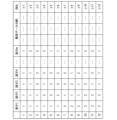
- FIG. 3 shows an example of an orthogonal array for a two-level system. Each column of the orthogonal array illustrated in FIG. 3 is called an item, and each item is assigned one of the candidate factors.
- the values that each item can take are called levels, and in the case of a two-level system, each item can be either "use that item" (first level) or "do not use that item” (second level).
- each row of the orthogonal array is a number (experiment number in the experimental design method) assigned to each candidate combination of factors.
- the first row of the orthogonal array in FIG. 3 shows combinations when all factors 1 to m are used.
- the SN ratio gain calculation unit 13 calculates the SN ratio of the Mahalanobis distance (MD) using the data collected at the time of abnormality of each factor acquired in step S1 (step S3).
- m is the number of abnormal data.
- the SN ratio gain calculation unit 13 calculates the SN ratios ⁇ 1 to ⁇ 12 of each row of the orthogonal array in FIG. 3 using the above equation (1).
- the SN ratio gain calculation unit 13 calculates the SN ratio gain (step S4).
- the SN ratio gain calculation unit 13 calculates the SN ratio gain of a certain factor based on the difference between the average value of the SN ratio of the first level and the average value of the SN ratio of the second level among the SN ratios calculated for the factor. Calculate.
- ⁇ 1 to ⁇ 6 are SN ratios calculated for rows where factor 1 is the first level
- ⁇ 7 to ⁇ 12 are SN ratios calculated for rows where factor 1 is the second level.
- the SN ratio gain calculation unit 13 calculates SN ratio gains for other factors as well.
- the SN ratio gain calculation unit 13 records the calculated SN ratio gain in the storage unit 17.
- Figure 4 shows a factor effect diagram.
- the vertical axis in FIG. 4 is the SN ratio, and the horizontal axis is the factor.
- the factor is 1
- the difference between the average of the SN ratios at the first level and the average of the SN ratios at the second level ( ⁇ 1 in the figure) is the SN ratio gain.
- the line connecting the first level and the second level for factor 1 is represented by L1
- the other factors n are also represented by Ln
- the S/N ratio gain will be positive if it falls to the right like L1, and this slope is steep ( If the absolute value of the SN ratio gain is large), this indicates that this factor 1 is an important factor that influences the condition evaluation.
- FIG. 5 shows the results of arranging candidate factors in ascending order of SN ratio gain.
- the vertical axis in FIG. 5 is the SN ratio gain, and the horizontal axis is the factor. This is a factor in which the value of the SN ratio gain increases as it goes to the right.
- the factorial effect diagram in FIG. 4 it is known that if the SN ratio gain is positive and its absolute value is large, that factor is effective in evaluating the condition.
- a predetermined number of factors are deleted in descending order of the S/N ratio gain value and the remaining factors are selected, or the factors whose S/N ratio gain value is greater than or equal to a predetermined threshold are selected, or the S/N ratio gain is Important factors that are effective in the determination are selected by selecting X% in descending order of value. In either case, higher-ranking factors with larger values of SN ratio gain remain, and for example, factors included in range R1 in FIG. 5 are selected as important factors. However, doubts remain as to whether all of the factors included in the range R1 selected in this way are truly effective factors for condition evaluation.
- the S/N ratio gain value is only the result of an approximate analysis of the influence of each factor due to the purpose of experimental design, which aims to conduct experiments efficiently and comprehensively in a small number of times. This can be mentioned. Another important point is that, for example, if you remove factor 7 with the smallest SN ratio gain in Figure 5, calculate the SN ratio gain again using the remaining factors, and rearrange them in ascending order, the order of magnitude will not necessarily be the same as in Figure 5. (For example, factor 5 in range R1 is in a lower order.) This is because there are correlations and interactions between factors.
- the SN ratio gain has meaning only in the combination of N factors, and if the remaining factor combinations after removing the factor with the small SN ratio gain keep each factor in the same order as before deletion. is not limited. Therefore, this embodiment aims to extract only the factors that are truly useful for condition evaluation, and reduce the number of factors as much as possible while ensuring the accuracy of condition evaluation.
- the evaluation unit 14 individually evaluates the degree of influence and importance of each factor (step S6).
- FIG. 6 shows an example of the processing contents of the evaluation process (step S6) by the evaluation unit 14.
- the evaluation unit 14 performs abnormality detection etc. using all the factors of the time series data acquired in step S11, and calculates the index Y (step S11).
- the index Y is an index related to the accuracy of anomaly detection, and the index Y includes, for example, the false judgment rate of anomaly detection (the rate of missed abnormalities or false alarms) and the number of advance prediction days (how long ago the abnormality was detected). can be detected).
- the evaluation unit 14 has a function of detecting an abnormality and predicting an abnormality, and calculates the index Y by acquiring the time series data of each factor acquired in step S1, performing abnormality detection and prediction.
- the data acquired in step S1 includes data that is known to be normal or abnormal (time-series data of each factor collected when an abnormality occurs or time-series data of each factor collected during normal operation). From this, it is possible to calculate the misjudgment rate. Alternatively, if time-series data of each factor is acquired over a predetermined period including the occurrence of an abnormality for which the time of occurrence of the abnormality is known, it is possible to calculate the number of days for advance prediction.
- the evaluation unit 14 records an index Y in the storage unit 17 when a state evaluation such as abnormality detection is performed using all the factors.
- the evaluation unit 14 selects one unevaluated factor in order of the factor with the smallest SN ratio gain (step S12).
- the evaluation unit 14 first selects factor 7.
- the evaluation unit 14 performs abnormality detection, etc., excluding the selected factor, and calculates the index Y (step S13). For example, the evaluation unit 14 calculates the index Y when abnormality detection is performed without using the factor 7, and records this value in the storage unit 17.
- the evaluation unit 14 compares the index Y calculated without the selected factor with the index Y calculated when all the factors are used, and determines whether there is a change (step S14). For example, the evaluation unit 14 determines that there has been a change if the difference between the two is greater than or equal to a predetermined threshold, and determines that there has been no change if the difference between the two is less than the threshold. If it is determined that there has been a change (step S14; Yes), the evaluation unit 14 regards the removed factor (the factor selected in step S12) as a "change point factor" that influences the determination of abnormality detection, etc., and displays a message to that effect. This factor is left while being recorded in the storage unit 17 (step S15).
- the evaluation unit 14 regards the removed factor (the factor selected in step S12) as a factor that does not affect abnormality detection etc., and stores this information in the storage unit 17. This factor is recorded and deleted from the candidate factors (step S16). The deleted factors are not used in subsequent evaluation processing.
- the evaluation unit 14 calculates the index Y for all the candidate factors acquired in step S1, and evaluates whether the factor is a factor that affects abnormality detection etc. (step S14). Determination is made (step S17). When the index Y has been evaluated for all factors (step S17; Yes), the evaluation process in FIG. 6 is ended.
- step S12 If the index Y has not been evaluated for all factors (step S17; No), the process after step S12 is repeated. For example, after the evaluation of factor 7 is completed, the evaluation unit 14 selects factor 3 next (step S12), and calculates the index Y when factor 3 is excluded (step S13).
- the index Y is calculated by excluding that factor and the factor to be evaluated this time. For example, if factor 7 has been deleted (step S16), abnormality detection etc. will be performed with factor 7 and factor 3 removed, and the index Y in that case will be calculated.
- step S15 abnormality detection is performed by excluding only factor 3 (factor 7 is used for abnormality detection, etc.), and the index Y in that case is calculated.
- the evaluation unit 14 determines whether there is a difference from the index Y when all the factors are used (step S14). If there is a difference, factor 3 is regarded as a "change point factor" and left (step S15); if there is no difference, factor 3 is deleted as a factor that is not necessary for abnormality detection etc. (step S16). . If factor 7 has already been deleted, in the determination in step S14, instead of the index Y when all factors are used, the index Y calculated excluding factor 7, that is, in step S13 of the previous loop, is used.
- the calculated index Y may be compared with the index Y calculated this time excluding factors 7 and 3. After evaluating the influence of each factor on the determination in this way, the evaluation unit 14 ends the process of step S6 in FIG. 2.
- the remaining (unevaluated) factors are factors that have an influence on abnormality determination.
- the factor selection unit 15 selects the factor that was evaluated as having an influence in the evaluation process of step S6 (factor considered to be a "change point factor”) (step S7).
- the output unit 16 outputs the selected factor.
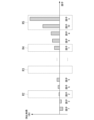
- FIG. 7 shows an example of the factors selected in step S7.
- the factors included in the range R2 to R5 in the figure are the factors selected in step S7. Even a factor with a high SN ratio gain will not be selected if it does not have an effect on the abnormality detection judgment (for example, factor 8, factor m), and even if the SN ratio gain is small, it will not be selected if it has an effect on the judgment. selected (e.g., factor 2).
- the number of factors can be reduced compared to the number of factors selected using the conventional method (FIG. 5). For each factor, processing such as anomaly detection is actually performed to remove factors that have no influence, and the remaining factors are selected, so it is thought that the accuracy of anomaly detection etc. can be maintained.
- the number of factors used in the determination can be reduced while ensuring the accuracy of condition evaluation such as abnormality detection.
- This reduces the processing cost related to condition evaluation for example, in the case of the MT method, calculation of unit space, calculation of Mahalanobis distance, and in case of anomaly detection using a judgment model constructed by machine learning, construction of judgment model, judgment It is possible to suppress the calculation load such as determination based on a model, and it is possible to suppress an increase in data storage area.
- control device installed in equipment such as an air conditioner, water heater, or refrigerator, in addition to controlling the equipment, it also performs abnormality detection.
- the computer resources of these control devices are limited, they are often unable to handle (storage) large amounts of data or perform heavy processing.
- the control device can detect abnormalities by handling only a small number of factors. In this way, this embodiment is suitable for cases where condition evaluation such as anomaly detection must be performed using a relatively small computer with limited computer resources due to cost constraints such as mass-produced products, and constraints such as product size and weight. suitable.
- devices such as air conditioners installed in various places are connected to a monitoring server via a network, and the measured values of each factor are sent to the monitoring server, and the monitoring server performs abnormality detection, etc. If the number of target devices increases, the amount of data sent to the monitoring server and the amount of data stored on the monitoring server side will become enormous. In contrast, by reducing the number of factors using the factor selection method of this embodiment, in addition to reducing the processing load of abnormality detection on the monitoring server as described above, the data sent to the monitoring server The amount of data saved on the monitoring server side can be reduced. As described above, the present embodiment is suitable for remote monitoring and other cases where status evaluation such as abnormality detection must be performed on a computer having a large number of monitoring targets.
- the factor selection device 10 calculates the SN ratio gain, but the factor selection device 10 does not calculate the SN ratio gain, but acquires the SN ratio gain calculated by another device. It may be configured as follows. The processing in this case will be explained with reference to the flowchart of FIG. For example, the data acquisition unit 11 acquires the SN ratio gain of each factor calculated by another device in addition to the factor candidates (step S1'). Without performing steps S2 to S4, the control unit 12 rearranges each factor in ascending order of the acquired SN ratio gain (step S5). Next, the evaluation unit 14 evaluates each factor (step S6), and the factor selection unit 15 selects important factors (step S7). In both the above embodiment and this modification 1, in the evaluation process in step S6, instead of processing the factors in order from the smallest SN ratio gain, the evaluation may be performed in the order from the largest SN ratio gain. .
- the factor selection device 10 calculates the SN ratio gain, but it may evaluate each factor without calculating the SN ratio gain.
- the processing in this case will be explained with reference to the flowchart of FIG.
- the data acquisition unit 11 acquires factor candidates (step S1).
- the evaluation unit 14 evaluates each factor without performing steps S2 to S5 (step S6), and the factor selection unit 15 selects important factors (step S7). For example, if the number of candidate factors is small and there is no need to use an orthogonal array, the process described in FIG. 6 may be performed on all the factors without calculating the SN ratio gain.
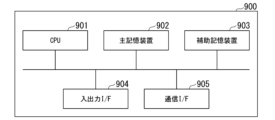
- FIG. 8 is a diagram illustrating an example of the hardware configuration of the factor selection device according to the embodiment.
- the computer 900 includes a CPU 901, a main storage device 902, an auxiliary storage device 903, an input/output interface 904, and a communication interface 905.
- the factor selection device 10 is implemented in a computer 900.
- Each of the above-mentioned functions is stored in the auxiliary storage device 903 in the form of a program.
- the CPU 901 reads the program from the auxiliary storage device 903, expands it to the main storage device 902, and executes the above processing according to the program.
- the CPU 901 reserves a storage area in the main storage device 902 according to the program. According to the program, the CPU 901 reserves a storage area in the auxiliary storage device 903 to store the data being processed.
- a program for realizing all or part of the functions of the factor selection device 10 is recorded on a computer-readable recording medium, and the program recorded on the recording medium is read into a computer system and executed, thereby achieving each function. Processing may also be performed by the department.
- the "computer system” here includes hardware such as an OS and peripheral devices.
- Computer system includes the homepage providing environment (or display environment) if a WWW system is used.
- a "computer-readable recording medium” refers to a portable medium such as a CD, DVD, or USB, or a storage device such as a hard disk built into a computer system.
- the computer 900 that received the distribution may develop the program in the main storage device 902 and execute the above processing.
- the above-mentioned program may be one for realizing a part of the above-mentioned functions, or may be one that can realize the above-mentioned functions in combination with a program already recorded in the computer system.
- the factor selection device includes a data acquisition unit that acquires candidate factors for use in evaluating the condition of an object, and an evaluation unit that evaluates the magnitude of influence of each of the candidates on the condition evaluation. and a factor selection unit that selects the factor having a large influence from among the candidates based on the evaluation result by the evaluation unit, and the evaluation unit selects one of the unevaluated factors among the candidates. Evaluation processing that selects the factor, performs the condition evaluation excluding the factor, and evaluates the factor as a factor having a large influence if there is a change in the accuracy of the condition evaluation before and after removing the factor. is repeatedly executed for each of the candidates, and the factor selection unit selects the factor evaluated to have a large influence. Thereby, the number of factors used for condition evaluation can be reduced without impairing the accuracy of condition evaluation.
- a factor selection device is the factor selection device according to (1), in which the evaluation unit has a case where there is no change in the accuracy of the condition evaluation before and after removing the factor. , delete the factor from the candidates, and perform the evaluation process on the remaining unevaluated factors of the candidates. Since unnecessary factors are deleted and the remaining evaluation processing is performed, the calculation load can be reduced.
- a factor selection device is the factor selection device of (1) to (2), further comprising an SN ratio gain calculation unit that calculates an SN ratio gain for each of the candidates,
- the evaluation unit performs the evaluation process in order of decreasing or increasing S/N ratio gain. This makes it easy to apply the present embodiment to a commonly used method of selecting factors based on the magnitude relationship of SN ratio gain.
- the evaluation process can be performed efficiently.
- the factor selection device is the factor selection device of (1) to (3), wherein the state evaluation includes determining whether or not the object is in a predetermined state.
- the evaluation unit calculates a misjudgment rate of the judgment as an index indicating the accuracy of the state evaluation, and evaluates the factor having a change in the misjudgment rate as a factor having a large influence. This makes it possible to find important factors based on the false positive rate.
- a factor selection device is the factor selection device of (1) to (4), wherein the state evaluation is to predict that the object will be in a predetermined state.
- the evaluation unit calculates how long in advance it was possible to predict the predetermined state as an indicator of the accuracy, and if there is a change in the indicator, the evaluation unit changes the factor to the It is determined that the factor has a large influence. This makes it possible to find important factors based on the number of advance prediction days.
- the factor selection device includes a data acquisition unit that acquires SN ratio gains of candidate factors used for evaluating the state of an object, and a sorting unit that rearranges the factors in ascending order of the SN ratio gains.
- an evaluation unit that evaluates the magnitude of influence on the state evaluation for each of the candidates; and a factor selection that selects the factor having a large influence from among the candidates based on the evaluation result by the evaluation unit. and the evaluation unit selects one of the factors in order of decreasing or increasing S/N ratio gain, performs the state evaluation excluding the factor, and evaluates the condition before removing the factor.
- the evaluation process of evaluating the factor as having a large influence is repeatedly executed, and the factor selection unit selects the factor evaluated as having a large influence. select.
- the evaluation process can be performed efficiently.
- a factor selection method includes the steps of: acquiring candidate factors for use in evaluating the condition of an object; evaluating the magnitude of influence on the condition evaluation for each of the candidates; and a step of selecting the factor having a large influence from among the candidates based on the evaluation result in the evaluating step, and in the evaluating step, one of the unevaluated factors among the candidates is selected. is selected, the state evaluation is performed excluding the factor, and if there is a change in the accuracy of the state evaluation before and after removing the factor, the evaluation process is performed to evaluate the factor as a factor with a large influence. The process is repeated for each candidate, and in the selecting step, the factor evaluated to have a large influence is selected.
- the program according to the eighth aspect includes the steps of: acquiring candidate factors for use in evaluating the condition of the object; and evaluating the magnitude of influence of each of the candidates on the condition evaluation. , a step of selecting the factor having a large influence from among the candidates based on the evaluation result of the evaluating step, and in the evaluating step, one of the unevaluated factors among the candidates is selected. Select a factor, perform the state evaluation excluding the factor, and if there is a change in the accuracy of the state evaluation before and after removing the factor, perform an evaluation process to evaluate the factor as a factor with a large influence. The process is performed repeatedly for each of the candidates, and in the selecting step, a process is performed to select the factor evaluated to have a large influence.
- the number of factors used for abnormality detection etc. can be reduced.
Landscapes
- Engineering & Computer Science (AREA)
- Physics & Mathematics (AREA)
- Data Mining & Analysis (AREA)
- Theoretical Computer Science (AREA)
- General Physics & Mathematics (AREA)
- Pure & Applied Mathematics (AREA)
- Mathematical Analysis (AREA)
- Evolutionary Biology (AREA)
- Mathematical Physics (AREA)
- Bioinformatics & Computational Biology (AREA)
- General Engineering & Computer Science (AREA)
- Bioinformatics & Cheminformatics (AREA)
- Life Sciences & Earth Sciences (AREA)
- Computational Mathematics (AREA)
- Mathematical Optimization (AREA)
- Computer Vision & Pattern Recognition (AREA)
- Operations Research (AREA)
- Probability & Statistics with Applications (AREA)
- Artificial Intelligence (AREA)
- Algebra (AREA)
- Evolutionary Computation (AREA)
- Databases & Information Systems (AREA)
- Software Systems (AREA)
- Testing And Monitoring For Control Systems (AREA)
- Complex Calculations (AREA)
Abstract
Description
図1は、実施形態に係る因子選択装置の一例を示すブロック図である。因子選択装置10は、機器やプラント等の監視や状態評価に用いる因子(説明変数、特徴量などとも呼ばれる。)の候補の中から有効な働きをする因子を選択する。選択された因子は、監視装置や制御装置などで実行される異常検知等の処理で用いられる。プラント等の状態評価に使用される計測項目は数百点以上となることがあるが、精度の高い状態評価を行う為には、それら全てを使用するのではなく、状態評価に関係のない、あるいは評価精度を悪化させる項目を除外し、重要な項目だけを選択して使用することが望ましい。高い評価精度を保ったまま、使用する因子を減らすことができれば、状態評価の処理コスト(計算負荷、データの記憶容量など)だけではなく、重要度が低いセンサを削減することによるセンサの設置コストや保守費用の削減を期待できる。
データ取得部11は、機器やプラント等(対象物)の状態評価に用いる因子の候補を取得する。状態評価とは、例えば、正常、異常、注意が必要な状態などの運転状態の診断や異常が発生していることを検知する異常検知、異常の発生を事前に予測する異常予測などである。因子とは、例えば、温度,圧力,流量,振動数,回転数、電流、電圧などセンサによって計測される計測値又は計測値から算出される値などの対象物の状態を反映すると考えられる物理量、監視対象のプロセスデータである。
SN比利得算出部13は、候補となる各因子のSN比利得(SN比ゲイン)を算出する。SN比利得の算出方法は公知(例えば、特許文献2)である。そのため、本明細書では詳細な説明を省略する。
評価部14は、各因子が状態評価にとってどれぐらい重要か、言い換えれば、状態評価にどれぐらい影響があるかを評価する。具体的には、評価部14は、候補となる因子の中からSN比利得の小さい順に1つの因子を選んで、当該因子を除いて状態評価を行う。そして、評価部14は、その評価精度について、当該因子を除く前と除いた後で有意な変化があるかどうかを判定する。例えば、評価精度に所定の閾値以上の変化があれば、当該因子は判定に影響を及ぼす重要な因子、有効な因子であると判定し、閾値未満の変化しか認められない場合は、当該因子はあっても無くても状態評価に影響しない無効な因子であると判定し、候補の中からこの因子を削除する。評価部14は、この評価処理を各因子について実行し、重要な因子のみを残す。
因子選択部15は、評価部14によって重要と評価された因子を選択する。
記憶部17は、データ取得部11によって取得された因子のデータ、各種の閾値や処理中の各種データなどを記憶する。
次に図2を参照して、因子選択処理の手順について説明する。
図2は、実施形態に係る因子選択処理の一例を示すフローチャートである。
まず、データ取得部11が、因子の候補を取得する(ステップS1)。例えば、データ取得部11は、プラント等で異常が発生した時間帯に採取された温度、圧力、流量などの各種因子の時系列データと、プラント等が正常な状態で運転している時間帯に採取された同様の因子の時系列データとを複数セットずつ取得する。これらの時系列データは、異常時のデータか正常時のデータかが判明した状態で取得される。あるいは、データ取得部11は、異常発生を含む所定期間(例えば、数週間、数カ月など)にわたる各因子の時系列データ(異常発生は判明している。)を取得する。データ取得部11は、取得した各種因子(因子の候補)の時系列データを記憶部17に記録する。
SN比利得算出部13はSN比を以下の式(1)によって算出する。
η=-10・log{(1/D1 2+1/D2 2+・・・+1/Dm 2)/m}・・・(1)
ここで、Dx 2(x=1~m)はマハラノビス距離(MD)の2乗、mは異常データの数である。SN比利得算出部13は、上記の式(1)を用いて、図3の直交表の各行のSN比η1~η12を算出する。
因子1のSN比利得=((η1+η2+η3+η4+η5+η6)÷6)-((η7+η8+η9+η10+η11+η12)÷6)・・・(2)
ここで、η1~η6は因子1が第1水準となっている行について算出したSN比であり、η7~η12は因子1が第2水準となっている行について算出したSN比である。同様にして、SN比利得算出部13は、他の因子についてもSN比利得を算出する。SN比利得算出部13は、算出したSN比利得を記憶部17に記録する。
以上説明したように、本実施形態によれば、異常検知等の状態評価の精度を確保しつつ、その判定に用いる因子数を減らすことができる。これにより、状態評価に係る処理コスト、例えば、MT法であれば、単位空間の算出、マハラノビス距離の算出、機械学習等で構築された判定モデルによる異常検知であれば、判定モデルの構築、判定モデルに基づく判定等の計算負荷を抑えることができ、データの記憶領域の増大を抑えることができる。
上述した実施形態では、因子選択装置10が、SN比利得を計算することとしたが、因子選択装置10ではSN比利得の計算は行わずに他装置で計算されたSN比利得を取得するように構成されていてもよい。この場合の処理を図2のフローチャートを援用して説明する。例えば、データ取得部11が、因子の候補に加え、他装置で計算された各因子のSN比利得を取得する(ステップS1´)。ステップS2~S4は行わずに制御部12が、取得されたSN比利得の昇順に各因子を並べ替える(ステップS5)。次に評価部14が各因子を評価し(ステップS6)、因子選択部15が重要な因子を選択する(ステップS7)。上記の実施形態でもこの変形例1の場合でも、ステップS6の評価処理において、SN比利得が小さい因子から順に処理するのではなく、SN比利得が大きい因子から順に評価を行うようにしてもよい。
上述した実施形態では、因子選択装置10が、SN比利得を計算することとしたが、SN比利得を計算せずに、各因子の評価を行うようにしてもよい。この場合の処理を図2のフローチャートを援用して説明する。まず、データ取得部11が、因子の候補を取得する(ステップS1)。ステップS2~S5は行わずに評価部14が各因子を評価し(ステップS6)、因子選択部15が重要な因子を選択する(ステップS7)。例えば、候補となる因子の数が少なく、直交表を用いるまでもない場合には、SN比利得を算出することなく、全ての因子に対して図6で説明した処理を行ってもよい。
上述した実施形態では、MT法でマハラノビス距離の算出に用いる因子の選択方法を例に説明を行ったが、本実施形態の因子選択方法は、機械学習によって判定モデルを構築し、構築した判定モデルによって異常検知等を行うときの因子、つまり、判定モデルの構築に用いる教師データの選択にも用いることができる。例えば、上記の(変形例2)の方法で因子を選択することができる。
コンピュータ900は、CPU901、主記憶装置902、補助記憶装置903、入出力インタフェース904、通信インタフェース905を備える。
因子選択装置10は、コンピュータ900に実装される。そして、上述した各機能は、プログラムの形式で補助記憶装置903に記憶されている。CPU901は、プログラムを補助記憶装置903から読み出して主記憶装置902に展開し、当該プログラムに従って上記処理を実行する。CPU901は、プログラムに従って、記憶領域を主記憶装置902に確保する。CPU901は、プログラムに従って、処理中のデータを記憶する記憶領域を補助記憶装置903に確保する。
各実施形態に記載の因子選択装置、因子選択方法及びプログラムは、例えば以下のように把握される。
これにより、状態評価の精度を損なうことなく、状態評価に用いられる因子の数を減らすことができる。
不要な因子を削除して残りの評価処理を行うので計算負荷を低減することができる。
これにより、一般的に行われるSN比利得の大小関係に基づいて因子を選択する方法に、本実施形態を適用しやすくなる。SN比利得の値を参考にして(例えば、圧倒的にSN比利得が大きいものは評価対象から除く等)、効率よく評価処理を行うことができる。
これにより、誤判定率によって重要な因子を見つけることができる。
これにより、事前予知日数によって重要な因子を見つけることができる。
これにより、一般的に行われるSN比利得の大小関係に基づいて因子を選択する方法に、本実施形態を適用しやすくなる。SN比利得の値を参考にして(例えば、圧倒的にSN比利得が大きいものは評価対象から除く等)、効率よく評価処理を行うことができる。
11・・・データ取得部
12・・・制御部
13・・・SN比利得算出部
14・・・評価部
15・・・因子選択部
16・・・出力部
17・・・記憶部
900・・・コンピュータ
901・・・CPU
902・・・主記憶装置
903・・・補助記憶装置
904・・・入出力インタフェース
905・・・通信インタフェース
Claims (8)
- 対象物の状態評価に用いる因子の候補を取得するデータ取得部と、
前記候補の各々について前記状態評価への影響の大きさを評価する評価部と、
前記評価部による評価結果に基づいて、前記候補の中から前記影響が大きい前記因子を選択する因子選択部と、
を備え、
前記評価部は、前記候補のうちの未評価の1つの前記因子を選んで、当該因子を除いて前記状態評価を行い、前記因子を除く前と除いた後で前記状態評価の精度に変化があれば当該因子を前記影響が大きい因子と評価する評価処理を前記候補の各々について繰り返し実行し、
前記因子選択部は、前記影響が大きいと評価された前記因子を選択する、
因子選択装置。 - 前記評価部は、前記因子を除く前と除いた後で前記状態評価の精度に変化が無い場合、前記候補の中から当該因子を削除し、残った前記候補の未評価の前記因子について前記評価処理を実行する、
請求項1に記載の因子選択装置。 - 前記候補の各々についてSN比利得を算出するSN比利得算出部、
をさらに備え、
前記評価部は、前記SN比利得が小さいものから順に又は大きいものから順に前記評価処理を行う、
請求項1又は請求項2に記載の因子選択装置。 - 前記状態評価は、前記対象物が所定の状態であるか否かを判定することであって、
前記評価部は、前記状態評価の精度を示す指標として前記判定の誤判定率を算出し、前記誤判定率に変化がある前記因子を前記影響が大きい因子と評価する、
請求項1又は請求項2に記載の因子選択装置。 - 前記状態評価が、前記対象物が所定の状態となることを予測することであって、
前記評価部は、前記状態評価の精度の判定ではどれぐらい前から前記所定の状態となることを予測できたかを前記精度の指標として算出し、当該指標に変化があれば前記因子を前記影響が大きい因子と評価する、
請求項1又は請求項2に記載の因子選択装置。 - 対象物の状態評価に用いる因子の候補のSN比利得を取得するデータ取得部と、
前記SN比利得の昇順に前記候補を並べ替える並べ替え部と、
前記候補の各々について前記状態評価への影響の大きさを評価する評価部と、
前記評価部による評価結果に基づいて、前記候補の中から前記影響が大きい前記因子を選択する因子選択部と、
を備え、
前記評価部は、前記SN比利得の小さい方から順に又は大きい方から順に1つの前記因子を選んで、当該因子を除いて前記状態評価を行い、前記因子を除く前と除いた後で前記状態評価の精度に変化があれば、当該因子を前記影響が大きい因子と評価する評価処理を繰り返し実行し、
前記因子選択部は、前記影響が大きいと評価された前記因子を選択する、
因子選択装置。 - 対象物の状態評価に用いる因子の候補を取得するステップと、
前記候補の各々について前記状態評価への影響の大きさを評価するステップと、
前記評価するステップによる評価結果に基づいて、前記候補の中から前記影響が大きい前記因子を選択するステップと、
を有し、
前記評価するステップでは、前記候補のうちの未評価の1つの前記因子を選んで、当該因子を除いて前記状態評価を行い、前記因子を除く前と除いた後で前記状態評価の精度に変化があれば当該因子を前記影響が大きい因子と評価する評価処理を前記候補の各々について繰り返し実行し、
前記選択するステップでは、前記影響が大きいと評価された前記因子を選択する、
因子選択方法。 - コンピュータに、
対象物の状態評価に用いる因子の候補を取得するステップと、
前記候補の各々について前記状態評価への影響の大きさを評価するステップと、
前記評価するステップによる評価結果に基づいて、前記候補の中から前記影響が大きい前記因子を選択するステップと、
を有し、
前記評価するステップでは、前記候補のうちの未評価の1つの前記因子を選んで、当該因子を除いて前記状態評価を行い、前記因子を除く前と除いた後で前記状態評価の精度に変化があれば当該因子を前記影響が大きい因子と評価する評価処理を前記候補の各々について繰り返し実行し、
前記選択するステップでは、前記影響が大きいと評価された前記因子を選択する処理、
を実行させるプログラム。
Priority Applications (1)
| Application Number | Priority Date | Filing Date | Title |
|---|---|---|---|
| EP23857266.3A EP4571539A4 (en) | 2022-08-22 | 2023-08-16 | FACTOR SELECTION DEVICE, FACTOR SELECTION METHOD, AND PROGRAM |
Applications Claiming Priority (2)
| Application Number | Priority Date | Filing Date | Title |
|---|---|---|---|
| JP2022-131699 | 2022-08-22 | ||
| JP2022131699A JP2024029439A (ja) | 2022-08-22 | 2022-08-22 | 因子選択装置、因子選択方法及びプログラム |
Publications (1)
| Publication Number | Publication Date |
|---|---|
| WO2024043153A1 true WO2024043153A1 (ja) | 2024-02-29 |
Family
ID=90013263
Family Applications (1)
| Application Number | Title | Priority Date | Filing Date |
|---|---|---|---|
| PCT/JP2023/029601 Ceased WO2024043153A1 (ja) | 2022-08-22 | 2023-08-16 | 因子選択装置、因子選択方法及びプログラム |
Country Status (3)
| Country | Link |
|---|---|
| EP (1) | EP4571539A4 (ja) |
| JP (1) | JP2024029439A (ja) |
| WO (1) | WO2024043153A1 (ja) |
Citations (6)
| Publication number | Priority date | Publication date | Assignee | Title |
|---|---|---|---|---|
| JP2008117380A (ja) | 2007-10-09 | 2008-05-22 | Toshiba Corp | 診断プロセス支援方法とそのためのプログラム |
| JP2009086706A (ja) * | 2007-09-27 | 2009-04-23 | Fujitsu Ltd | モデル作成支援システム、モデル作成支援方法、モデル作成支援プログラム |
| JP2009243428A (ja) | 2008-03-31 | 2009-10-22 | Mitsubishi Heavy Ind Ltd | 風車の監視装置及び方法並びにプログラム |
| JP2009274588A (ja) * | 2008-05-14 | 2009-11-26 | Mitsubishi Heavy Ind Ltd | 航空機の健全性診断装置及び方法並びにプログラム |
| JP2019008369A (ja) * | 2017-06-20 | 2019-01-17 | 株式会社リコー | 情報処理装置、認証システム、認証方法およびプログラム |
| JP2022131699A (ja) | 2021-02-26 | 2022-09-07 | キヤノン株式会社 | 染料水溶液の製造方法、水性インクの製造方法、インクカートリッジの製造方法及びインクジェット記録方法 |
Family Cites Families (2)
| Publication number | Priority date | Publication date | Assignee | Title |
|---|---|---|---|---|
| JP2015087973A (ja) * | 2013-10-31 | 2015-05-07 | インターナショナル・ビジネス・マシーンズ・コーポレーションInternational Business Machines Corporation | 生成装置、生成方法、およびプログラム |
| EP3575991A4 (en) * | 2017-01-24 | 2020-02-19 | Nec Corporation | INFORMATION PROCESSING DEVICE, INFORMATION PROCESSING METHOD, AND RECORDING MEDIUM ON WHICH AN INFORMATION PROCESSING PROGRAM IS RECORDED |
-
2022
- 2022-08-22 JP JP2022131699A patent/JP2024029439A/ja active Pending
-
2023
- 2023-08-16 WO PCT/JP2023/029601 patent/WO2024043153A1/ja not_active Ceased
- 2023-08-16 EP EP23857266.3A patent/EP4571539A4/en active Pending
Patent Citations (6)
| Publication number | Priority date | Publication date | Assignee | Title |
|---|---|---|---|---|
| JP2009086706A (ja) * | 2007-09-27 | 2009-04-23 | Fujitsu Ltd | モデル作成支援システム、モデル作成支援方法、モデル作成支援プログラム |
| JP2008117380A (ja) | 2007-10-09 | 2008-05-22 | Toshiba Corp | 診断プロセス支援方法とそのためのプログラム |
| JP2009243428A (ja) | 2008-03-31 | 2009-10-22 | Mitsubishi Heavy Ind Ltd | 風車の監視装置及び方法並びにプログラム |
| JP2009274588A (ja) * | 2008-05-14 | 2009-11-26 | Mitsubishi Heavy Ind Ltd | 航空機の健全性診断装置及び方法並びにプログラム |
| JP2019008369A (ja) * | 2017-06-20 | 2019-01-17 | 株式会社リコー | 情報処理装置、認証システム、認証方法およびプログラム |
| JP2022131699A (ja) | 2021-02-26 | 2022-09-07 | キヤノン株式会社 | 染料水溶液の製造方法、水性インクの製造方法、インクカートリッジの製造方法及びインクジェット記録方法 |
Non-Patent Citations (2)
| Title |
|---|
| NAOYUKI KANDA, KAZUNORI KOMATANI, MIKIO NAKANO, KAZUHIRO NAKADAI, HIROSHI TSUJINO, TETSUYA OGATA, HIROSHI G. OKUNO: "Domain selection that uses dialogue history in multi-domain speech dialogue system. ", INFORMATION PROCESSING SOCIETY OF JAPAN JOURNAL, vol. 48, no. 5, 1 May 2007 (2007-05-01), pages 1980 - 1989, XP093143573 * |
| See also references of EP4571539A4 |
Also Published As
| Publication number | Publication date |
|---|---|
| EP4571539A1 (en) | 2025-06-18 |
| EP4571539A4 (en) | 2026-03-25 |
| JP2024029439A (ja) | 2024-03-06 |
Similar Documents
| Publication | Publication Date | Title |
|---|---|---|
| Yan et al. | Bearing remaining useful life prediction using support vector machine and hybrid degradation tracking model | |
| CN119179598B (zh) | 一种基于人工智能的固态硬盘故障预测方法及系统 | |
| US20170097863A1 (en) | Detection method and information processing device | |
| CN112272763A (zh) | 异常探测装置、异常探测方法以及异常探测程序 | |
| WO2010032701A1 (ja) | 運用管理装置、運用管理方法、および運用管理プログラム | |
| CN118729315B (zh) | 一种智能多参数环境监测方法 | |
| JP2020052740A (ja) | 異常検知装置、異常検知方法及びプログラム | |
| JP2009086896A (ja) | コンピュータの障害予測システムおよび障害予測方法 | |
| CN119494754A (zh) | 一种智慧电厂的环境异常监测告警方法及系统 | |
| CN114386730A (zh) | 一种燃烧稳定性评价方法及系统 | |
| JP2010175446A (ja) | 状態診断装置 | |
| CN114462820A (zh) | 一种轴承状态监测与健康管理系统性能测试及优化方法和系统 | |
| CN120469846B (zh) | 硬盘故障检测方法及电子设备 | |
| JP5889759B2 (ja) | 欠損値予測装置、欠損値予測方法、欠損値予測プログラム | |
| CN120671870B (zh) | 基于人工智能的变频器故障预测方法及系统 | |
| JP7367866B2 (ja) | 情報処理装置、評価方法、および評価プログラム | |
| JP6931615B2 (ja) | センサ選択装置およびセンサ選択方法 | |
| JP2024029439A (ja) | 因子選択装置、因子選択方法及びプログラム | |
| JP7184636B2 (ja) | データ選別装置及び方法、ならびに監視診断装置 | |
| CN117574303A (zh) | 施工状况的监测预警方法、装置、设备及存储介质 | |
| Wang et al. | Impact of mahalanobis space construction on effectiveness of Mahalanobis–Taguchi system | |
| JP7767181B2 (ja) | データ処理システム及びデータ処理方法 | |
| Oakley et al. | Examining the impact of critical attributes on hard drive failure times: Multi‐state models for left‐truncated and right‐censored semi‐competing risks data | |
| CN116259337B (zh) | 磁盘异常检测方法及模型训练方法、相关装置 | |
| JP7222441B1 (ja) | 分析装置、分析方法及びプログラム |
Legal Events
| Date | Code | Title | Description |
|---|---|---|---|
| 121 | Ep: the epo has been informed by wipo that ep was designated in this application |
Ref document number: 23857266 Country of ref document: EP Kind code of ref document: A1 |
|
| WWE | Wipo information: entry into national phase |
Ref document number: 2023857266 Country of ref document: EP |
|
| ENP | Entry into the national phase |
Ref document number: 2023857266 Country of ref document: EP Effective date: 20250311 |
|
| NENP | Non-entry into the national phase |
Ref country code: DE |
|
| WWP | Wipo information: published in national office |
Ref document number: 2023857266 Country of ref document: EP |