WO2024059705A1 - Compositions and methods for treating depression in females - Google Patents
Compositions and methods for treating depression in females Download PDFInfo
- Publication number
- WO2024059705A1 WO2024059705A1 PCT/US2023/074182 US2023074182W WO2024059705A1 WO 2024059705 A1 WO2024059705 A1 WO 2024059705A1 US 2023074182 W US2023074182 W US 2023074182W WO 2024059705 A1 WO2024059705 A1 WO 2024059705A1
- Authority
- WO
- WIPO (PCT)
- Prior art keywords
- group
- methyl
- optionally substituted
- substituents selected
- different
- Prior art date
- Legal status (The legal status is an assumption and is not a legal conclusion. Google has not performed a legal analysis and makes no representation as to the accuracy of the status listed.)
- Ceased
Links
Classifications
-
- A—HUMAN NECESSITIES
- A61—MEDICAL OR VETERINARY SCIENCE; HYGIENE
- A61K—PREPARATIONS FOR MEDICAL, DENTAL OR TOILETRY PURPOSES
- A61K31/00—Medicinal preparations containing organic active ingredients
- A61K31/33—Heterocyclic compounds
- A61K31/395—Heterocyclic compounds having nitrogen as a ring hetero atom, e.g. guanethidine or rifamycins
- A61K31/41—Heterocyclic compounds having nitrogen as a ring hetero atom, e.g. guanethidine or rifamycins having five-membered rings with two or more ring hetero atoms, at least one of which being nitrogen, e.g. tetrazole
- A61K31/4245—Oxadiazoles
-
- A—HUMAN NECESSITIES
- A61—MEDICAL OR VETERINARY SCIENCE; HYGIENE
- A61K—PREPARATIONS FOR MEDICAL, DENTAL OR TOILETRY PURPOSES
- A61K31/00—Medicinal preparations containing organic active ingredients
- A61K31/185—Acids; Anhydrides, halides or salts thereof, e.g. sulfur acids, imidic, hydrazonic or hydroximic acids
- A61K31/19—Carboxylic acids, e.g. valproic acid
- A61K31/20—Carboxylic acids, e.g. valproic acid having a carboxyl group bound to a chain of seven or more carbon atoms, e.g. stearic, palmitic, arachidic acids
- A61K31/201—Carboxylic acids, e.g. valproic acid having a carboxyl group bound to a chain of seven or more carbon atoms, e.g. stearic, palmitic, arachidic acids having one or two double bonds, e.g. oleic, linoleic acids
-
- A—HUMAN NECESSITIES
- A61—MEDICAL OR VETERINARY SCIENCE; HYGIENE
- A61K—PREPARATIONS FOR MEDICAL, DENTAL OR TOILETRY PURPOSES
- A61K31/00—Medicinal preparations containing organic active ingredients
- A61K31/33—Heterocyclic compounds
- A61K31/335—Heterocyclic compounds having oxygen as the only ring hetero atom, e.g. fungichromin
- A61K31/34—Heterocyclic compounds having oxygen as the only ring hetero atom, e.g. fungichromin having five-membered rings with one oxygen as the only ring hetero atom, e.g. isosorbide
- A61K31/343—Heterocyclic compounds having oxygen as the only ring hetero atom, e.g. fungichromin having five-membered rings with one oxygen as the only ring hetero atom, e.g. isosorbide condensed with a carbocyclic ring, e.g. coumaran, bufuralol, befunolol, clobenfurol, amiodarone
-
- A—HUMAN NECESSITIES
- A61—MEDICAL OR VETERINARY SCIENCE; HYGIENE
- A61K—PREPARATIONS FOR MEDICAL, DENTAL OR TOILETRY PURPOSES
- A61K31/00—Medicinal preparations containing organic active ingredients
- A61K31/33—Heterocyclic compounds
- A61K31/335—Heterocyclic compounds having oxygen as the only ring hetero atom, e.g. fungichromin
- A61K31/35—Heterocyclic compounds having oxygen as the only ring hetero atom, e.g. fungichromin having six-membered rings with one oxygen as the only ring hetero atom
- A61K31/352—Heterocyclic compounds having oxygen as the only ring hetero atom, e.g. fungichromin having six-membered rings with one oxygen as the only ring hetero atom condensed with carbocyclic rings, e.g. methantheline
-
- A—HUMAN NECESSITIES
- A61—MEDICAL OR VETERINARY SCIENCE; HYGIENE
- A61K—PREPARATIONS FOR MEDICAL, DENTAL OR TOILETRY PURPOSES
- A61K31/00—Medicinal preparations containing organic active ingredients
- A61K31/70—Carbohydrates; Sugars; Derivatives thereof
- A61K31/7042—Compounds having saccharide radicals and heterocyclic rings
- A61K31/7048—Compounds having saccharide radicals and heterocyclic rings having oxygen as a ring hetero atom, e.g. leucoglucosan, hesperidin, erythromycin, nystatin, digitoxin or digoxin
-
- A—HUMAN NECESSITIES
- A61—MEDICAL OR VETERINARY SCIENCE; HYGIENE
- A61K—PREPARATIONS FOR MEDICAL, DENTAL OR TOILETRY PURPOSES
- A61K31/00—Medicinal preparations containing organic active ingredients
- A61K31/70—Carbohydrates; Sugars; Derivatives thereof
- A61K31/715—Polysaccharides, i.e. having more than five saccharide radicals attached to each other by glycosidic linkages; Derivatives thereof, e.g. ethers, esters
- A61K31/737—Sulfated polysaccharides, e.g. chondroitin sulfate, dermatan sulfate
-
- A—HUMAN NECESSITIES
- A61—MEDICAL OR VETERINARY SCIENCE; HYGIENE
- A61P—SPECIFIC THERAPEUTIC ACTIVITY OF CHEMICAL COMPOUNDS OR MEDICINAL PREPARATIONS
- A61P25/00—Drugs for disorders of the nervous system
- A61P25/24—Antidepressants
Definitions
- the present invention relates to methods of treating depression in human females by administering a SIRT6 activator.
- Mood disorders are some of the most common mental illnesses. Depression is a psychological disorder characterized by dramatic decline in both mental and physical conditions. The toll extracted by clinical depression, characterized by a despondent feeling, loss of interest in pleasurable activities, guilt, worthlessness, and trouble concentrating, is of immense medical concern. In the U.S. alone, approximately 16 million people or 7% of the adults are afflicted with major depressive disorder, which may also include abnormalities in appetite and sleep and loss of productivity and suicidal ideation. The actual suicide rate, estimated at 1 million worldwide, not only affects the afflicted individual but also the family and friends and at times the entire community. [0004] Mood disorders can be treated through psychotherapy and medications, such as anti-depressants.
- the present invention is based on the determination that activators of sirtuin 6 (SIRT6) provide a significant therapeutic effect for depression in human females while being ineffective in human males.
- SIRT6 sirtuin 6
- one possible explanation for the gender distinction is that there are differences in SIRT6 function in females versus males. For example, serum concentrations of SIRT6 enzyme are higher in females than in males (Zhao et al., BMC Geriatrics 21:452 (2021)).
- the present invention advantageously provides gender-specific treatments for depressive disorders.
- one aspect of the invention relates to a method of treating depression in a human female subject in need thereof, comprising administering to the subject a therapeutically effective amount of a SIRT6 activator, thereby treating the depression.
- Another aspect of the invention relates to a method of treating depression in a human female subject in need thereof, comprising identifying the subject as female and administering to the identified female subject a therapeutically effective amount of a SIRT6 activator, thereby treating the depression.
- a further aspect of the invention relates to a method of treating depression in a human subject in need thereof, comprising: a) determining the gender of the subject; and b) administering to the subject a therapeutically effective amount of a SIRT6 activator if the subject is determined to be female, thereby treating the depression, or not administering to the subject a therapeutically effective amount of a SIRT6 activator if the subject is determined to be male.
- any feature or combination of features set forth herein can be excluded or omitted.
- the term “about,” as used herein when referring to a measurable value such as an amount of a compound or agent of this invention, dose, time, temperature, and the like, is meant to encompass variations of ⁇ 10%, ⁇ 5%, ⁇ 1%, ⁇ 0.5%, or even ⁇ 0.1% of the specified amount.
- treat By the term “treat,” “treating,” or “treatment of’ (or grammatically equivalent terms) is meant to reduce or to at least partially improve or ameliorate the severity of the subject’s condition and/or to alleviate, mitigate or decrease in at least one clinical symptom and/or to delay the progression of the condition.
- prevent means to delay or inhibit the onset of a disease.
- the terms are not meant to require complete abolition of disease, and encompass any type of prophylactic treatment to reduce the incidence of the condition or delays the onset of the condition.
- a “treatment effective” amount as used herein is an amount that is sufficient to provide some improvement or benefit to the subject.
- a “treatment effective” amount is an amount that will provide some alleviation, mitigation, decrease or stabilization in at least one clinical symptom in the subject.
- the therapeutic effects need not be complete or curative, as long as some benefit is provided to the subject.
- a “prevention effective” amount as used herein is an amount that is sufficient to prevent and/or delay the onset of a disease, disorder and/or clinical symptoms in a subject and/or to reduce and/or delay the severity of the onset of a disease, disorder and/or clinical symptoms in a subject relative to what would occur in the absence of the methods of the invention.
- the level of prevention need not be complete, as long as some benefit is provided to the subject.
- “Pharmaceutically acceptable,” as used herein, means a material that is not biologically or otherwise undesirable, z.e., the material can be administered to an individual along with the compositions of this invention, without causing substantial deleterious biological effects or interacting in a deleterious manner with any of the other components of the composition in which it is contained. The material would naturally be selected to minimize any degradation of the active ingredient and to minimize any adverse side effects in the subject, as would be well known to one of skill in the art (see, e.g., Remington's Pharmaceutical Science,' 21 st ed. 2005).
- Exemplary pharmaceutically acceptable carriers for the compositions of this invention include, but are not limited to, sterile pyrogen-free water and sterile pyrogen-free physiological saline solution.
- a first aspect of the invention relates to a method of treating depression in a human female subject in need thereof, comprising administering to the subject a therapeutically effective amount of a sirtuin 6 (SIRT6) activator, thereby treating the depression.
- SIRT6 sirtuin 6
- Another aspect of the invention relates to a method of treating depression in a human female subject in need thereof, comprising identifying the subject as female and administering to the identified female subject a therapeutically effective amount of a SIRT6 activator, thereby treating the depression.
- a further aspect of the invention relates to a method of treating depression in a human subject in need thereof, comprising: a) determining the gender of the subject; and b) administering to the subject a therapeutically effective amount of a SIRT6 activator if the subject is determined to be female, thereby treating the depression, or not administering to the subject a therapeutically effective amount of a SIRT6 activator if the subject is determined to be male.
- Identifying a subject as female or determining the gender of the subject may be carried out by any method known in the art.
- the method comprises determining whether the subject has two X chromosomes, i.e., whether the subject is a genetic female.
- the method comprises determining the level of circulating female hormones (e.g., estrogen and progestin) in the subject. If the subject has a level of circulating female hormones that is within the average level in the general population for a female of that age, the subject is considered female.
- the methods of the invention may be used to treat or prevent any type of depression.
- Types of depression include, without limitation, major depressive disorder, persistent depressive disorder, minor depression, treatment-resistant depression, substance/medication-induced depression, depressive disorder secondary to medical illness, perinatal and postpartum depression, premenstrual dysphoric disorder, seasonal affective disorder, psychotic depression, and bipolar disorder.
- treatment of depression using the methods of the invention result in a measurable improvement in depression symptoms, e.g., as measured by standard depression scale questionnaires, e.g., the Montgomery-Asberg Depression Rating Scale (MADRS).
- MADRS Montgomery-Asberg Depression Rating Scale
- the treatment results in improvements in test scores by at least 1%, 2%, 3%, 4%,
- the treatment results in improvements in the MADRS total score of at least 1, 2, 3, 4, 5, 6, 7, 8, 9, 10 or more points, e.g., over a 4-week period.
- SIRT6 activators include, without limitation, quercetin, isoquercetin, kaempferol, luteolin, cyanidin, fisetin, delphinidin, icariin, N-acetylethanolamines, oleic acid, linoleic acid, fucoidan, MDL-800, MDL-811, UBCS038 (You et al., Angew. Chem. Int. Ed.
- the compounds are described in more detail in Fiorentino et al., J. Med. Chem. 64:9732 (2021) and Akter et al., Int. J. Mol. Sci. 22:4180 (2021), each incorporated by reference herein in its entirety.
- SIRT6 activator is a compound of Formula 1 or a pharmaceutically acceptable salt thereof:
- R 1 is a C1-C6 alkyl group optionally substituted with the same or different one to two substituents selected from a substituent group X, a C3-C6 cycloalkyl group optionally substituted with the same or different one to two substituents selected from the substituent group X, or a 4-7 membered saturated heterocyclic group optionally substituted with the same or different one to two substituents selected from the substituent group X,
- R 2 is a C1-C6 alkyl group optionally substituted with the same or different one to two substituents selected from the substituent group X, a C3-C6 cycloalkyl group optionally substituted with the same or different one to two substituents selected from the substituent group X, or a 4-7 membered saturated heterocyclic group optionally substituted with the same or different one to two substituents selected from the substituent group X,
- R 3 and R 3 are each independently a hydrogen atom, a halogen atom, a cyano group, a hydroxy group, an oxo group, a C1-C6 alkyl group optionally substituted with the same or different one to two substituents selected from the substituent group X, a C1-C6 alkoxy group optionally substituted with the same or different one to two substituents selected from the substituent group X, a C2-C6 alkenyl group optionally substituted with the same or different one to two substituents selected from the substituent group X, a C2-C6 alkynyl group optionally substituted with the same or different one to two substituents selected from the substituent group X, a C3-C6 cycloalkyl group optionally substituted with the same or different one to two substituents selected from the substituent group X, an amino group optionally substituted with the same or different one to two substituents selected from the substituent group X, a C1-C
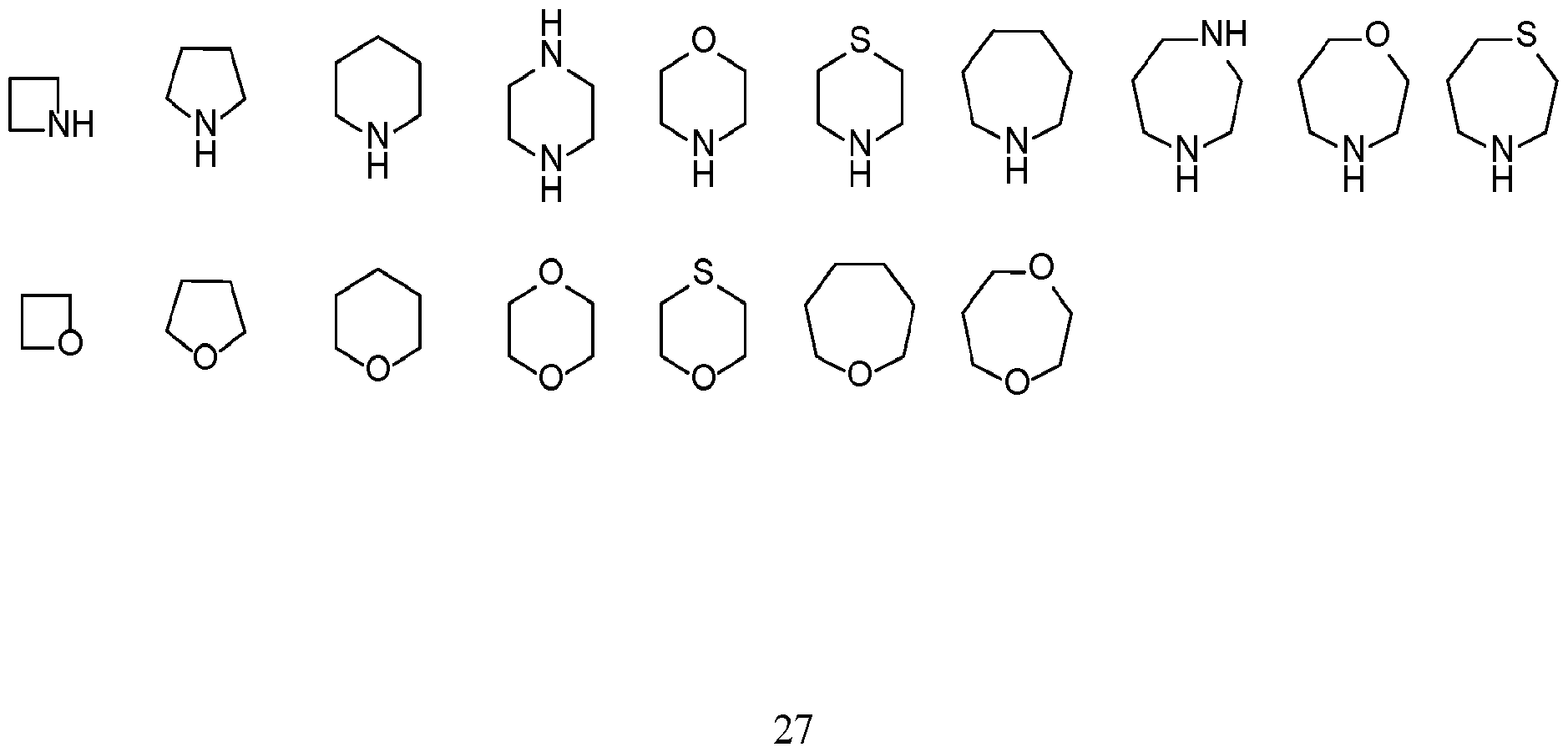
- R 3 and R 3 may form a 5-7 membered unsaturated heterocyclic ring, a 4-7 membered saturated heterocyclic ring, or a C3-C6 cycloalkyl ring as a ring that binds to each other and condenses with A, and the ring is optionally substituted with the same or different one to two substituents selected from the substituent group X,
- substituent group X is a halogen atom, a cyano group, a hydroxy group, an oxo group, a C1-C6 alkyl group, a hydroxy C1-C6 alkyl group, a C1-C6 alkoxy C1-C6 alkyl group, a C1-C6 haloalkyl group, a C3-C6 cycloalkyl group, a C3-C6 halocycloalkyl group, a phenyl group optionally substituted with the same or different one to two substituents selected from
- the compound of Formula 1 is a compound of Formula 1’ or a pharmacologically acceptable salt thereof: wherein: R 1 is a C1-C6 alkyl group optionally substituted with the same or different one to two substituents selected from the substituent group X, a C3-C6 cycloalkyl group optionally substituted with the same or different one to two substituents selected from the substituent group X, or a 4-7 membered saturated heterocyclic group optionally substituted with the same or different one to two substituents selected from the substituent group X
- R 2 is a C1-C6 alkyl group optionally substituted with the same or different one to two substituents selected from the substituent group X, a C3-C6 cycloalkyl group optionally substituted with the same or different one to two substituents selected from the substituent group X, or a 4-7 membered saturated heterocyclic group optionally substituted with the same or different one to two substituents selected from the substituent group X.
- A is a 5-membered aromatic heterocyclic ring, a 6-membered aromatic heterocyclic ring, an 8-10 membered condensed aromatic heterocyclic ring, a 5-7 membered unsaturated heterocyclic ring, a 4-7 membered saturated heterocyclic ring, a benzene ring, or a single bond, wherein when it is a single bond, one or the other of R 3 and R 3 is not present,
- R 3 and R 3 are each independently a hydrogen atom, a halogen atom, a cyano group, a hydroxy group, a C1-C6 alkyl group optionally substituted with the same or different one to two substituents selected from the substituent group X, a C1-C6 alkoxy group optionally substituted with the same or different one to two substituents selected from the substituent group X, a C2-C6 alkenyl group optionally substituted with the same or different one to two substituents selected from the substituent group X, a C2-C6 alkynyl group optionally substituted with the same or different one to two substituents selected from the substituent group X, a C3-C6 cycloalkyl group optionally substituted with the same or different one to two substituents selected from the substituent group X, an amino group optionally substituted with the same or different one to two substituents selected from the substituent group X, a C1-C6 alkoxycarbonyl
- R 3 and R 3 may form a 5-7 membered unsaturated heterocyclic ring, a 4-7 membered saturated heterocyclic ring, or a C3-C6 cycloalkyl ring as a ring that binds to each other and condenses with A, and the ring is optionally substituted with the same or different one to two substituents selected from the substituent group X,
- substituent group X is a halogen atom, a cyano group, a hydroxy group, an oxo group, a C1-C6 alkyl group, a hydroxy C1-C6 alkyl group, a C1-C6 alkoxy C1-C6 alkyl group, a C1-C6 haloalkyl group, a C3-C6 cycloalkyl group, a C3-C6 halocycloalkyl group, a phenyl group optionally substituted with the same or different one to two substituents selected from
- Substituent group Y is a C1-C6 alkyl group, a C1-C6 alkoxy group, a halogen atom, or a hydroxy group.
- R 1 is a C1-C6 alkyl group
- R 2 is a C1-C6 alkyl group
- A is a 5-membered aromatic heterocyclic ring
- R 3 and R 3 are each independently a hydrogen or a C1-C6 alkyl group.
- R 1 is a methyl group, an ethyl group, or a hydroxyethyl group.
- R 2 is a methyl group.
- A is a 5-membered aromatic heterocyclic ring
- R 3 is a methyl group, an ethyl group, a hydroxy C1-C3 alkyl group, or a methoxy C1-C3 alkyl group
- R 3 is a hydrogen atom
- the compound of Formula 1 is a compound of a Formula 1” or a pharmacologically acceptable salt thereof: wherein R 1 is a methyl group or an ethyl group;
- R 2 is a methyl group
- A is any ring selected from the following group:
- R 3 is a methyl group or an ethyl group.
- the compound of Formula 1’ is any compound selected from the following group:
- the compound is (2S,5’R)-7-chloro-6-
- the compound is (2S,5’R)-7-chloro-3’,4-dimethoxy-
- the compound is (2S,5’R)-7-chloro-6-(5-ethyl-l,3,4- oxadiazol-2-yl)-3’,4-dimethoxy-5’ -methyl-spiro [benzofuran-2,4’-cyclohex-2-ene]-l’,3-dione or a pharmacologically acceptable salt thereof.
- the compound is (2S,5’R)-7-chloro-
- the compound is (2S,5’R)-7-chloro-
- the 5-membered aromatic heterocyclic ring for A is the same as described above, but more preferably, it represents the following 5-membered ring. (It should be noted that in this case, R 3 is not present.) wherein * indicates a binding group.
- the “5-membered aromatic heterocyclic ring” is a monocyclic 5-membered aromatic heterocyclic ring containing one to four atoms selected from the group consisting of a nitrogen atom, an oxygen atom, and a sulfur atom.
- rings such as those shown below are included.
- the “6-membered aromatic heterocyclic ring” is a monocyclic 6-membered aromatic heterocyclic ring containing one to four atoms selected from the group consisting of a nitrogen atom, an oxygen atom, and a sulfur atom.
- rings such as those shown below are included.
- the “8-10 membered condensed aromatic heterocyclic ring” is an 8-10 membered condensed aromatic heterocyclic ring containing one to four atoms selected from the group consisting of a nitrogen atom, an oxygen atom, and a sulfur atom.
- rings such as those shown below are included.
- the “5-7 membered unsaturated heterocyclic ring” is a ring in which a monocyclic 5-7 membered saturated heterocyclic ring is partially oxidized or a ring in which an aromatic heterocyclic ring is partially reduced containing one to four atoms selected from the group consisting of a nitrogen atom, an oxygen atom, and a sulfur atom.
- rings such as those shown below are included.
- halogen atom in the present specification is a fluorine atom, a chlorine atom, a bromine atom, or an iodine atom, and is preferably a fluorine atom or a chlorine atom.
- C1-C6 alkyl group in the present specification is a linear or branched alkyl group having one to six carbon atoms. Examples thereof include a methyl group, an ethyl group, a
- the “C2-C6 alkenyl group” in the present specification is a linear or branched alkenyl group having two to six carbon atoms, and it may have one or two or more carbon-carbon double bonds.
- it is a vinyl group, a 2-propenyl (allyl) group, a 2-butenyl group, a 2-pentenyl group, a 3-methyl-2-butenyl group, a 2-hexenyl group, or a 3 -methyl -2-pentenyl group, and preferably, it is a vinyl group or an allyl group.
- the “C2-C6 alkynyl group” in the present specification is a linear or branched alkynyl group having two to six carbon atoms, and it may have one or two or more carbon-carbon triple bonds.
- it is an ethynyl group, a 1-propynyl group, a 2-propynyl group, a 1-butynyl group, a 2-butynyl group, a 1 -pentynyl group, a 2-pentynyl group, or 1 -hexynyl group, and it is preferably an ethynyl group or a 1-propynyl group.
- the “C1-C6 alkoxy group” in the present specification is a group in which an oxygen atom is bonded to a C1-C6 alkyl group.
- Examples thereof include a methoxy group, an ethoxy group, a 1 -propoxy group, a 2-propoxy group, a 1 -butoxy group, a 2-butoxy group, a 2-methyl-l -propoxy group, a 2-methyl-2-propoxy group, a 1-pentyloxy group, a 2-pentyloxy group, a 3-pentyloxy group, a 2-methyl-2-butoxy group, a 3-methyl-2-butoxy group, a
- 3-methyl-l-pentyloxy group Preferably, it is a methoxy group, an ethoxy group, a 1-propoxy group, or a 2-propoxy group.
- C3-C6 cycloalkyl group in the present specification is a cyclic alkyl group having three to six carbon atoms, and it is preferably a cyclopropyl group, a cyclobutyl group, a cyclopentyl group, or a cyclohexyl group.
- hydroxy C1-C6 alkyl group in the present specification is a group in which a hydroxyl group is bonded to a C1-C6 alkyl group.
- a hydroxyl group is bonded to a C1-C6 alkyl group.
- it is a hydroxymethyl group or a hydroxyethyl group.
- the “C1-C6 alkoxy C1-C6 alkyl group” in the present specification is a group in which a C1-C6 alkoxy is bonded to a C1-C6 alkyl group. Examples thereof include a methoxymethyl group, a methoxy ethyl group, an ethoxymethyl group, and an ethoxy ethyl group.
- the “C1-C6 haloalkyl group” in the present specification is a group in which a halogen atom is bonded to a C1-C6 alkyl group.
- Examples thereof include a fluoromethyl group, a difluoromethyl group, a dichloromethyl group, a dibromomethyl group, a trifluoromethyl group, a trichloromethyl group, a 2-fluoroethyl group, a 2-bromoethyl group, a 2-chloroethyl group, a
- 2-iodoethyl group a 2,2-difluoroethyl group, a 2,2,2-trifluoroethyl group, a tri chloroethyl group, a pentafluoroethyl group, a 3-fluoropropyl group, a 3 -chloropropyl group, and a 4-fluorobutyl group. It is preferably a trifluoromethyl group.
- C3-C6 halocycloalkyl group in the present specification is a group in which a halogen atom is bonded to a C3-C6 cycloalkyl group, and examples thereof include a fluorocyclopropyl group, a fluorocyclobutyl group, a fluorocyclopentyl group, and a fluorocyclohexyl group.
- the “C1-C6 haloalkoxy group” in the present specification is a group in which a halogen atom is bonded to a C1-C6 alkoxy group, and examples thereof include a fluoromethoxy group, a difluoromethoxy group, a dichloromethoxy group, a dibromomethoxy group, a trifluoromethoxy group, a trichloromethoxy group, a 2-fluoroethoxy group, a 2-bromoethoxy group, a 2 -chloroethoxy group, a 2-iodoethoxy group, a 2,2-difluoroethoxy group, a 2,2,2-trifluoroethoxy group, a tri chloroethoxy group, a pentafluoroethoxy group, a 3 -fluoropropoxy group, a 3 -chloropropoxy group, and a 4 -fluorobutoxy group. It is preferably
- the “C3-C6 cycloalkoxy group” in the present specification is a group in which a C3-C6 cycloalkyl group is bonded to an oxygen atom, and it is preferably a cyclopropyloxy group, a cyclobutyloxy group, a cyclopentyloxy group, or a cyclohexyloxy group.
- the “C3-C6 halocycloalkoxy group” in the present specification is a group in which a C3-C6 halocycloalkyl group is bonded to an oxygen atom, and examples thereof include a fluorocyclopropoxy group, a fluorocyclobutoxy group, a fluorocyclopentyloxy group, and a fluorocyclohexyloxy group.
- the “5-membered aromatic heterocyclic oxy group” in the present specification is a group in which a 5-membered aromatic heterocyclic ring is bonded to an oxygen atom.
- the “6-membered aromatic heterocyclic oxy group” in the present specification is a group in which a 6-membered aromatic heterocyclic ring is bonded to an oxygen atom.
- the “4-7 membered saturated heterocyclic oxy group” in the present specification is a group in which a 4-7 membered saturated heterocyclic ring is bonded to an oxygen atom.
- the “C1-C6 alkoxy carbonyl group” in the present specification is a group in which a C1-C6 alkoxy group is bonded to a carbonyl group, and examples thereof include a methoxycarbonyl group, an ethoxycarbonyl group, and a propoxycarbonyl group.
- the “C3-C6 cycloalkoxy carbonyl group” in the present specification is a group in which a C3-C6 cycloalkoxy group is bonded to a carbonyl group, and it is preferably a cyclopropyloxycarbonyl group, a cyclobutyloxycarbonyl group, a cyclopentyloxycarbonyl group, or a cyclohexyloxycarbonyl group.
- C1-C6 alkyl carbonyl group in the present specification is a group in which a C1-C6 alkyl group is bonded to a carbonyl group, and examples thereof include a methyl carbonyl group, an ethyl carbonyl group, or a propyl carbonyl group.
- the “mono (C1-C6 alkyl) aminocarbonyl group” in the present specification is a group in which one C1-C6 alkyl group is bonded to the amino group of an aminocarbonyl group, and it is preferably a methylaminocarbonyl group, an ethylaminocarbonyl group, or a propylaminocarbonyl group.
- the “di (C1-C6 alkyl) aminocarbonyl group” in the present specification is a group in which two C1-C6 alkyl groups are bonded to the amino group of an aminocarbonyl group, and it is preferably a dimethylaminocarbonyl group, a diethylaminocarbonyl group, or a dipropylaminocarbonyl group.
- the “mono (C1-C6 alkyl) aminosulfonyl group” in the present specification is a group in which one C1-C6 alkyl group is bonded to the amino group of an aminosulfonyl group, and it is preferably a methylaminosulfonyl group, an ethylaminosulfonyl group, or a propylaminosulfonyl group
- the “di (C1-C6 alkyl) aminosulfonyl group” in the present specification is a group in which two C1-C6 alkyl groups are bonded to the amino group of the aminosulfonyl group, and it is preferably a dimethylaminosulfonyl group, a diethylaminosulfonyl group, or a dipropylaminosulfonyl group.
- the “mono (C1-C6 alkyl) amino group” in the present specification is a group in which one C1-C6 alkyl group is bonded to an amino group, and it is preferably a methylamino group, an ethylamino group, or a propylamino group.
- the “di (C1-C6 alkyl) amino group” in the present specification is a group in which two C1-C6 alkyl groups are bonded to an amino group, and it is preferably a dimethylamino group, a diethylamino group, or a dipropyl amino group.
- C1-C6 alkoxy carbonylamino group in the present specification is a group in which a C1-C6 alkoxy carbonyl group is bonded to an amino group, and for example, it is a methoxycarbonylamino group, an ethoxycarbonylamino group, or a propoxycarbonylamino group.
- the “mono (C1-C6 alkyl) aminocarbonylamino group” in the present specification is a group in which a mono (C1-C6 alkyl) aminocarbonyl group is bonded to an amino group, and it is preferably a methylaminocarbonylamino group, an ethylaminocarbonylamino group, or a propylaminocarbonylamino group.
- the “di (C1-C6 alkyl) aminocarbonylamino group” in the present specification is a group in which a di (C1-C6 alkyl) aminocarbonyl group is bonded to an amino group, and it is preferably a dimethylaminocarbonylamino group, a diethylaminocarbonylamino group, or a dipropylaminocarbonylamino group.
- the “5-membered aromatic heterocyclic carbonylamino group” in the present specification is a group in which a 5-membered aromatic heterocyclic carbonyl group is bonded to an amino group.
- the “6-membered aromatic heterocyclic carbonylamino group” in the present specification is a group in which a 6-membered aromatic heterocyclic carbonyl group is bonded to an amino group.
- the “C1-C6 alkylsulfonylamino group” in the present specification is a group in which a C1-C6 alkyl group is bonded to the sulfonyl group of a sulfonylamino group, and it is preferably a methylsulfonylamino group, an ethylsulfonylamino group, or a propylsulfonylamino group.
- the “pharmaceutically acceptable salt” indicates a salt that can be used as a pharmaceutical.
- the compound has an acidic group or a basic group it can be converted to a basic salt or an acidic salt by reacting with a base or an acid to form a salt thereof.
- the pharmaceutically acceptable “basic salt” of the compound preferably includes an alkali metal salt such as a sodium salt, a potassium salt, and a lithium salt; an alkaline earth metal salt such as a magnesium salt and a calcium salt; organic base salts such as an N-methyl morpholine salt, a triethylamine salt, a tributylamine salt, a diisopropylethylamine salt, a dicyclohexylamine salt, an N-methylpiperidine salt, a pyridine salt, a 4-pyrrolidinopyridine salt, and a picoline salt; and an amino acid salt such as glycine salt, a lysine salt, an arginine salt, an ornithine salt, a glutamate, and an aspartate, and it is preferably an alkali metal salt.
- an alkali metal salt such as a sodium salt, a potassium salt, and a lithium salt
- an alkaline earth metal salt such as a
- the pharmaceutically acceptable “acidic salt” of the compound preferably includes an inorganic acid salt such as a hydrohalide such as a hydrofluoride, a hydrochloride, a hydrobromide, and a hydroiodide, a nitrate, a perchlorate, a sulfate, and a phosphate; an organic salt such as a lower alkanesulfonate such as methanesulfonate, trifluoromethanesulfonate, and ethanesulfonate, an aryl sulfonate such as a benzenesulfonates, and a p-toluene sulfonate, an acetate, a malate, a fumarate, a succinate, a citrate, an ascorbate, a tartrate, an oxalate, a maleate, and the like; and an amino acid salt such as glycine salt, a lycine salt,
- the compound of the present invention or the pharmaceutically acceptable salt thereof may absorb moisture, adhere to adsorbed water, or become a hydrate by leaving in the air or recrystallization.
- the present invention also encompasses compounds of such various hydrates, solvates, and crystalline polymorphs.
- the compounds of the present invention may have various isomers such as geometric isomers such as a cis isomer and a trans isomer, tautomers, or optical isomers such as a d isomer and an 1 isomer, while the compounds include those all isomers, stereoisomers, and mixtures of these isomers and stereoisomers in any ratio unless otherwise specified. Mixtures of these isomers may be resolved by known resolution means.
- the compounds of the present invention also include labels, that is, a compound in which one or more atoms of the compounds are substituted with an isotope (for example, 2H, 3H, 13C, 14C, 35S, and the like).
- the present invention also encompasses a prodrug.
- the prodrug is a compound having a group which can be converted to an amino group, a hydroxyl group, a carboxyl group, or the like of the compound by hydrolysis or under physiological conditions, and as a group forming such a prodrug, it is a group described in Prog. Med., Vol. 5, pp. 2157 to 2161 (1985) or the like.
- a compound in which the amino group is acylated, alkylated, or phosphorylated for example, it is a compound in which the amino group is eicosanoylated, alanylated, pentylaminocarbonylated, (5-methyl-2-oxo-l,3-dioxolen-4-yl) methoxycarbonylated, tetrahydrofuranyl ated, pyrrolidinyl methylated, pivaloyloxymethylatied, or tert-butyl ated, or the like) and the like are included, and when a hydroxyl group is present in the compound, a compound in which the hydroxyl group is acylated, alkylated, phosphorylated, or borated (for example, it is a compound in which the hydroxyl group is acetylated, palmitoylated, propanoylated, pivalo
- a carboxy group when a carboxy group is present in the compound, a compound in which the carboxy group is esterified or amidated (for example, it is a compound in which the carboxy group is ethyl esterified, phenyl esterified, carboxymethyl esterified, dimethylaminomethyl esterified, pivaloyloxymethyl esterified, ethoxycarbonyloxyethyl esterified, amidated, or methylamidated, or the like.), and the like are included.
- the compounds of the present invention may be produced by synthetic methods known in the art and as described in WO 2017/170623 and WO 2019/065928, incorporated by reference herein in their entirety.
- Administration of the compounds of the present invention may be carried out by any form of oral administration by a tablet, a pill, a capsule, a granule, a powder, a solution, or the like, or by any form of parenteral administration by an injection for intra-articular, intravenous, intramuscular, or the like, a suppository, an eye drop, an eye ointment, a transdermal solution, an ointment, a transdermal patch, a transmucosal solution, a transmucosal patch, an inhalant, or the like.
- a solid composition for oral administration a tablet, a powder, a granule, and the like are used.
- a solid composition is composed of one or more active ingredients and at least one inert excipient such as lactose, mannitol, glucose, hydroxypropyl cellulose, microcrystalline cellulose, starch, polyvinyl pyrrolidone, magnesium metasilicate aluminate, and/or the like.
- the solid composition may contain, according to a conventional method, one or more of an inert additive such as a lubricant such as magnesium stearate, a disintegrant such as sodium carboxymethyl starch, a stabilizer, and a solubilizer.
- the tablet or pill may be coated with a sugar coating or a film of a substance soluble in the stomach or intestine, if necessary.
- liquid composition for oral administration a pharmaceutically acceptable emulsion, solution, suspension, syrup, elixir, or the like is used.
- a pharmaceutically acceptable emulsion, solution, suspension, syrup, elixir, or the like is used.
- a generally used inert diluent such as purified water or ethanol.
- the liquid composition may contain, in addition to an inert diluent, one or more of a solubilizer, an adjuvant such as a wetting agent, a sweetening agent, a flavoring agent, a fragrance, and a preservative.
- a sterile aqueous or non-aqueous solution, a suspension or an emulsion, and the like are used.
- the aqueous solvent includes, for example, distilled water for injection, physiological saline, and the like.
- the non-aqueous solvents include, for example, propylene glycol, polyethylene glycol, and vegetable oil such as olive oil, alcohols such as ethanol, Polysorbate 80, and the like.
- Such an injection composition may further contain a one or more of a tonicity agent, a preservative, a wetting agent, an emulsion, a dispersing agent, a stabilizer, or a solubilizer.
- injection compositions can be sterilized by, for example, fdtration through a bacteria retention fdter, application of a bactericide, or irradiation.
- these injection compositions may be used by producing a sterile solid composition and dissolved or suspended in sterile water or a sterile solvent for injection prior to use.
- an ointment As an external preparation, an ointment, a plaster, a cream, a jelly, a cataplasm, a spray, a lotion, an eye drop, an eye ointment, and the like are used. These external preparations include generally used ointment bases, lotion bases, aqueous or non-aqueous solutions, suspensions, emulsions, and the like.
- polyethylene glycol, propylene glycol, white petrolatum, bleached beeswax, polyoxyethylene hydrogenated castor oil, glycerin monostearate, stearyl alcohol, cetyl alcohol, lauromacrogol, sorbitan sesquioleate, and the like are used as an ointment or lotion base.
- a transmucosal agent such as an inhalant and a transnasal agent are used in solid, liquid, or semisolid form, and it may be produced according to a conventionally known method.
- a known excipient and furthermore, one or more of a pH adjuster, a preservative, a surfactant, a lubricant, a stabilizer, a thickener, and the like may be added as appropriate.
- a pH adjuster a preservative, a surfactant, a lubricant, a stabilizer, a thickener, and the like may be added as appropriate.
- devices appropriate for inhalation or insufflation may be used as the method of administration.
- the compound may be administered alone or as a powder of a formulated mixture, or as a solution or suspension in combination with a pharmaceutically acceptable carrier, using known devices and nebulizers, such as metered dose inhalation devices.
- a dry powder inhaler or the like may be for single or multiple administration, and a dry powder or powder containing capsule may be also used.
- an appropriate ejector may be used.
- it may be in the form of a pressurized aerosol spray or the like using a suitable gas such as chlorofluoroalkane, hydrofluoroalkane, or carbon dioxide.
- the appropriate daily dose is about 0.001 to 100 mg/kg, preferably 0.1 to 30 mg/kg, and more preferably 0.1 to 10 mg/kg of body weight. This is administered in one dose or separated into two or more doses.
- the oral dose is about 1 mg to about 100 mg per day, e.g., about 5 mg to about 50 mg per day, e.g., about 10 mg to about 30 mg per day.
- the appropriate daily dose is about 0.0001 to 10 mg/kg of body weight, which is administered once or separated into several times a day.
- a transmucosal agent about 0.001 to 100 mg/kg of body weight is administered once or separated into several times a day. The dose is appropriately determined depending on the individual case in consideration of symptoms, age, sex, and the like.
- the compound may be administered in combination with various therapeutic agents or preventive agents for diseases that are considered to exhibit the efficacy thereof.
- the combination may be administered simultaneously, separately, concurrently, and continuously or at desired time intervals.
- the co-administered agents may be blended or formulated separately.
- the therapeutic agent may be, for example, one that treats depression or one that treats an underlying disorder that is causing depression.
- the methods of the present invention find use in both veterinary and medical applications. Suitable subjects include avians, reptiles, amphibians, fish, and mammals.
- mammal as used herein includes, but is not limited to, humans, primates, non-human primates (e.g., monkeys and baboons), cattle, sheep, goats, pigs, horses, cats, dogs, rabbits, rodents (e.g., rats, mice, hamsters, and the like), etc.
- Human subjects include neonates, infants, juveniles, and adults.
- the subject is “in need of’ the methods of the present invention, e.g., because the subject has or is believed at risk for depression or that would benefit from the delivery of a compound as described herein.
- the subject can be a laboratory animal and/or an animal model of disease.
- the subject is a human.
- MDD major depressive disorder
- DSM-5 Diagnostic and Statistical Manual of Mental Disorders, Fifth Edition
- subjects Prior to initiating the 4-week treatment period, subjects completed a Screening/Baseline period of up to 28 days, during which time all screening assessments were performed, and any current depression medications discontinued. All screening assessments were completed before discontinuing any current depression medications. Subjects returned for a Baseline Visit to complete efficacy and safety assessments. During the treatment period, subjects returned to the investigative site to complete efficacy and safety assessments at the end of Weeks 1, 2, 3, and 4. After the final dose of study drug, subjects completed a follow-up period of two weeks and returned at the end of Weeks 5 and 6. Subjects may be treated with anti -depressant medications according to physician recommendations after completion of the Week 5 Visit.
- Each dose of Compound 1 was supplied as two capsules, each containing 10 mg of active pharmaceutical ingredient (API). Matching placebo capsules identical in shape and color to the active capsules were used.
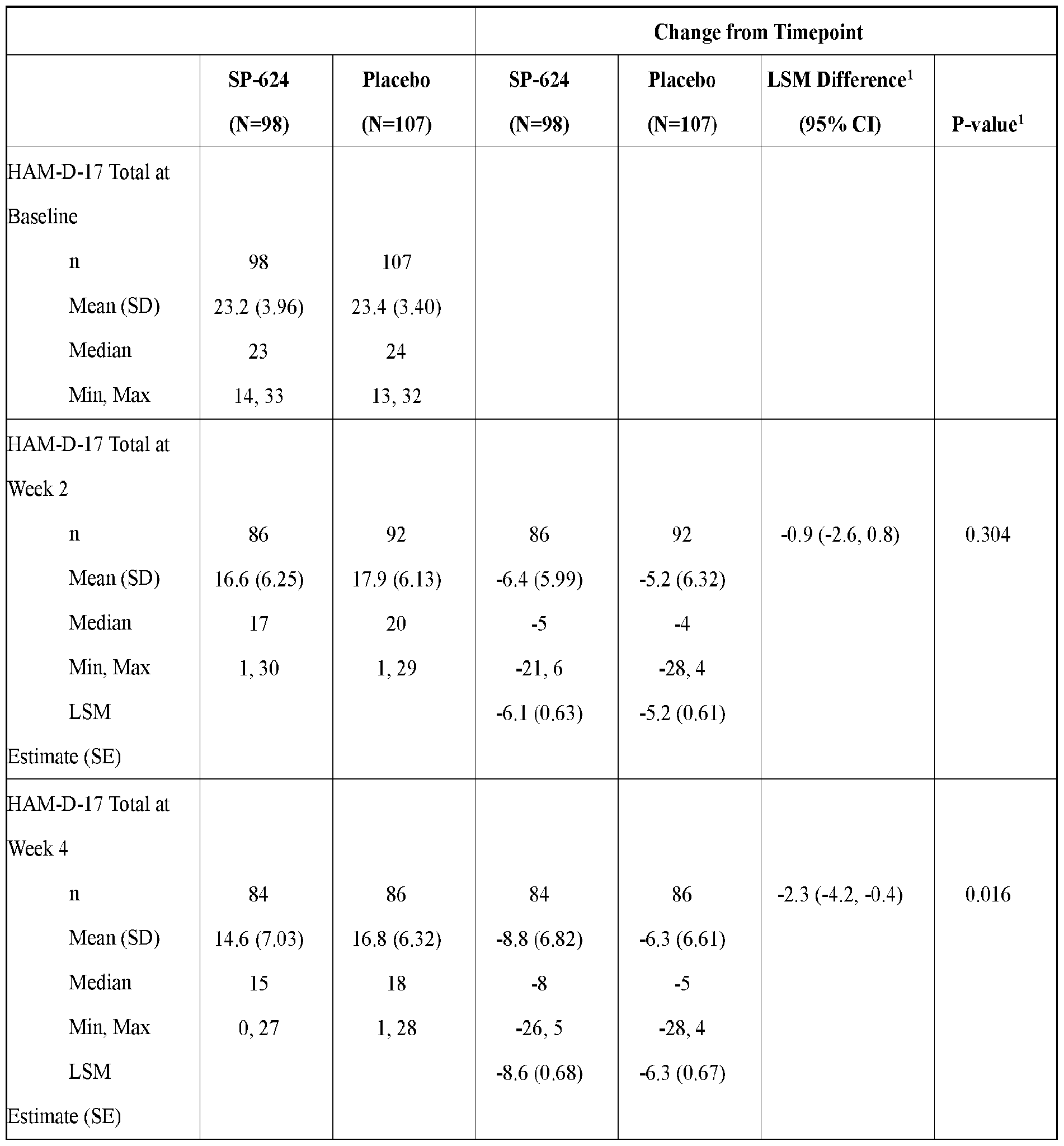
- the primary efficacy endpoint was Change from Baseline to Week 4 in Montgomery-Asberg Depression Rating Scale (MADRS) total score.
- MADRS Montgomery-Asberg Depression Rating Scale
- CGI-S Clinical Global Impression - Severity
Landscapes
- Health & Medical Sciences (AREA)
- Life Sciences & Earth Sciences (AREA)
- Medicinal Chemistry (AREA)
- Veterinary Medicine (AREA)
- Public Health (AREA)
- General Health & Medical Sciences (AREA)
- Animal Behavior & Ethology (AREA)
- Chemical & Material Sciences (AREA)
- Pharmacology & Pharmacy (AREA)
- Epidemiology (AREA)
- Neurology (AREA)
- Bioinformatics & Cheminformatics (AREA)
- Nuclear Medicine, Radiotherapy & Molecular Imaging (AREA)
- Organic Chemistry (AREA)
- Chemical Kinetics & Catalysis (AREA)
- Neurosurgery (AREA)
- Biomedical Technology (AREA)
- General Chemical & Material Sciences (AREA)
- Engineering & Computer Science (AREA)
- Psychiatry (AREA)
- Pain & Pain Management (AREA)
- Molecular Biology (AREA)
- Dermatology (AREA)
- Pharmaceuticals Containing Other Organic And Inorganic Compounds (AREA)
- Acyclic And Carbocyclic Compounds In Medicinal Compositions (AREA)
- Medicines That Contain Protein Lipid Enzymes And Other Medicines (AREA)
Abstract
Description






Claims


Priority Applications (3)
| Application Number | Priority Date | Filing Date | Title |
|---|---|---|---|
| US19/107,324 US20250360109A1 (en) | 2022-09-16 | 2023-09-14 | Compositions and methods for treating depression in females |
| EP23866471.8A EP4587018A4 (en) | 2022-09-16 | 2023-09-14 | Compositions and methods for the treatment of depression in women |
| JP2025515808A JP2025531219A (en) | 2022-09-16 | 2023-09-14 | Compositions and methods for treating depression in women |
Applications Claiming Priority (2)
| Application Number | Priority Date | Filing Date | Title |
|---|---|---|---|
| US202263375872P | 2022-09-16 | 2022-09-16 | |
| US63/375,872 | 2022-09-16 |
Publications (1)
| Publication Number | Publication Date |
|---|---|
| WO2024059705A1 true WO2024059705A1 (en) | 2024-03-21 |
Family
ID=90275910
Family Applications (1)
| Application Number | Title | Priority Date | Filing Date |
|---|---|---|---|
| PCT/US2023/074182 Ceased WO2024059705A1 (en) | 2022-09-16 | 2023-09-14 | Compositions and methods for treating depression in females |
Country Status (4)
| Country | Link |
|---|---|
| US (1) | US20250360109A1 (en) |
| EP (1) | EP4587018A4 (en) |
| JP (1) | JP2025531219A (en) |
| WO (1) | WO2024059705A1 (en) |
Cited By (1)
| Publication number | Priority date | Publication date | Assignee | Title |
|---|---|---|---|---|
| WO2024168215A1 (en) * | 2023-02-10 | 2024-08-15 | Sirtsei Pharaceuticals, Inc. | Compositions and methods for treating anhedonia |
Citations (1)
| Publication number | Priority date | Publication date | Assignee | Title |
|---|---|---|---|---|
| US20080194803A1 (en) * | 2005-06-14 | 2008-08-14 | Sinclair David A | Cognitive Performance With Sirtuin Activators |
Family Cites Families (2)
| Publication number | Priority date | Publication date | Assignee | Title |
|---|---|---|---|---|
| TWI811243B (en) * | 2017-09-29 | 2023-08-11 | 日商第一三共股份有限公司 | Griseofulvin compound and its use |
| AU2021247173A1 (en) * | 2020-04-02 | 2022-09-29 | Sirtsei Pharmaceuticals, Inc. | Compositions and methods for treating age-related diseases and premature aging disorders |
-
2023
- 2023-09-14 EP EP23866471.8A patent/EP4587018A4/en active Pending
- 2023-09-14 US US19/107,324 patent/US20250360109A1/en active Pending
- 2023-09-14 WO PCT/US2023/074182 patent/WO2024059705A1/en not_active Ceased
- 2023-09-14 JP JP2025515808A patent/JP2025531219A/en active Pending
Patent Citations (1)
| Publication number | Priority date | Publication date | Assignee | Title |
|---|---|---|---|---|
| US20080194803A1 (en) * | 2005-06-14 | 2008-08-14 | Sinclair David A | Cognitive Performance With Sirtuin Activators |
Non-Patent Citations (7)
| Title |
|---|
| ARTHUR P. ARNOLD: "Sex Hormones and Sex Chromosomes Cause Sex Differences in the Development of Cardiovascular Diseases", TRANSLATIONAL SCIENCES, vol. 37, no. 5, 1 May 2017 (2017-05-01), pages 746 - 756, XP093153270, ISSN: 1079-5642, DOI: 10.1161/ATVBAHA.116.307301 * |
| HAO-YUAN LI: "Sirtuin 3 Plays a Critical Role in the Antidepressant- and Anxiolytic-like Effects of Kaempferol", ANTIOXIDANTS, vol. 11, no. 10, pages 1 - 18, XP093153255, ISSN: 2076-3921, DOI: 10.3390/antiox11101886 * |
| LI WANG; LIU XIN; QIAO HUI: "Downregulation of hippocampal SIRT6 activates AKT/CRMP2 signaling and ameliorates chronic stress-induced depression-like behavior in mice", ACTA PHARMACOLOGICA SINICA, vol. 41, no. 12, 1 January 1900 (1900-01-01), GB , pages 1557 - 1567, XP037308495, ISSN: 1671-4083, DOI: 10.1038/s41401-020-0387-5 * |
| MARIJA KUNDAKOVIC: "Sex hormone fluctuation and increased female risk for depression and anxiety disorders: From clinical evidence to molecular mechanisms", FRONTIERS IN NEUROENDOCRINOLOGY, vol. 66, 1 July 2022 (2022-07-01), US , pages 1 - 14, XP093153251, ISSN: 0091-3022, DOI: 10.1016/j.yfrne.2022.101010 * |
| See also references of EP4587018A4 * |
| SOO-HYUN PARK: "Antidepressant-like Effect of Kaempferol and Quercitirin, Isolated from Opuntia ficus-indica var. saboten", EXPERIMENTAL NEUROBIOLOGY, vol. 19, no. 1, 30 June 2010 (2010-06-30), pages 30 - 38, XP093153282, ISSN: 1226-2560, DOI: 10.5607/en.2010.19.1.30 * |
| WANG LI: "Phencynonate mediates antidepressant response by activating sirtuin 6-SOD2/Prdx6 pathway", BIOCHEMICAL AND BIOPHYSICAL RESEARCH COMMUNICATIONS, vol. 505, no. 3, 1 November 2018 (2018-11-01), Amsterdam NL , pages 898 - 904, XP093153219, ISSN: 0006-291X, DOI: 10.1016/j.bbrc.2018.10.017 * |
Cited By (1)
| Publication number | Priority date | Publication date | Assignee | Title |
|---|---|---|---|---|
| WO2024168215A1 (en) * | 2023-02-10 | 2024-08-15 | Sirtsei Pharaceuticals, Inc. | Compositions and methods for treating anhedonia |
Also Published As
| Publication number | Publication date |
|---|---|
| EP4587018A1 (en) | 2025-07-23 |
| EP4587018A4 (en) | 2026-03-11 |
| US20250360109A1 (en) | 2025-11-27 |
| JP2025531219A (en) | 2025-09-19 |
Similar Documents
| Publication | Publication Date | Title |
|---|---|---|
| CN106573058B (en) | PPAR compounds for therapeutic use in fibrotic diseases | |
| US20230136792A1 (en) | Compositions and methods for treating age-related diseases and premature aging disorders | |
| JP7102426B2 (en) | Griseofulvin compounds and pharmaceutical applications | |
| EP1358177B1 (en) | Treatment of affective disorders by the combined action of a nicotinic receptor agonist and a monoaminergic substance | |
| WO2024059705A1 (en) | Compositions and methods for treating depression in females | |
| CA2624497C (en) | Antituberculosis drug combination comprising oxazole compounds | |
| JP2010528980A (en) | Use of p38 kinase inhibitors to treat psychiatric disorders | |
| US20260034103A1 (en) | Compositions and methods for improving memory and cognition | |
| EP4637742A1 (en) | Compositions and methods for treating anhedonia | |
| WO2025259632A1 (en) | Compositions and methods for treating retinal diseases or conditions | |
| WO2025221944A1 (en) | Compositions and methods for treating joint and bone diseases | |
| WO2025160321A1 (en) | Compositions and methods for treating neurodegenerative disease | |
| WO2026064338A1 (en) | Compositions and methods for treating diseases or conditions associated with sleep | |
| EP4646195A2 (en) | Compositions and methods for controlling glucose levels | |
| WO2025264887A1 (en) | Compositions and methods for decreasing body weight and treating liver disease | |
| US10420759B2 (en) | Small molecule therapies for pulmonary hypertension | |
| KR102347516B1 (en) | Compound for inhibiting PARP and medical use thereof | |
| RU2774618C2 (en) | Griseofulvin compound and its pharmaceutical application | |
| CN118019530A (en) | Methods of treating viral infections | |
| WO2026046253A1 (en) | Tetrazole compound, preparation method therefor and use thereof | |
| BR112019022383B1 (en) | NEW BICYCLIC PYRAZOLE DERIVATIVES |
Legal Events
| Date | Code | Title | Description |
|---|---|---|---|
| 121 | Ep: the epo has been informed by wipo that ep was designated in this application |
Ref document number: 23866471 Country of ref document: EP Kind code of ref document: A1 |
|
| ENP | Entry into the national phase |
Ref document number: 2025515808 Country of ref document: JP Kind code of ref document: A |
|
| WWE | Wipo information: entry into national phase |
Ref document number: 2025515808 Country of ref document: JP |
|
| WWE | Wipo information: entry into national phase |
Ref document number: 2023866471 Country of ref document: EP |
|
| NENP | Non-entry into the national phase |
Ref country code: DE |
|
| ENP | Entry into the national phase |
Ref document number: 2023866471 Country of ref document: EP Effective date: 20250416 |
|
| WWP | Wipo information: published in national office |
Ref document number: 2023866471 Country of ref document: EP |