WO2024063036A1 - Procédé de détection de méthylation d'adn génomique - Google Patents
Procédé de détection de méthylation d'adn génomique Download PDFInfo
- Publication number
- WO2024063036A1 WO2024063036A1 PCT/JP2023/033826 JP2023033826W WO2024063036A1 WO 2024063036 A1 WO2024063036 A1 WO 2024063036A1 JP 2023033826 W JP2023033826 W JP 2023033826W WO 2024063036 A1 WO2024063036 A1 WO 2024063036A1
- Authority
- WO
- WIPO (PCT)
- Prior art keywords
- dna
- methylation
- region
- target dna
- reaction
- Prior art date
- Legal status (The legal status is an assumption and is not a legal conclusion. Google has not performed a legal analysis and makes no representation as to the accuracy of the status listed.)
- Ceased
Links
Images



Classifications
-
- C—CHEMISTRY; METALLURGY
- C12—BIOCHEMISTRY; BEER; SPIRITS; WINE; VINEGAR; MICROBIOLOGY; ENZYMOLOGY; MUTATION OR GENETIC ENGINEERING
- C12N—MICROORGANISMS OR ENZYMES; COMPOSITIONS THEREOF; PROPAGATING, PRESERVING, OR MAINTAINING MICROORGANISMS; MUTATION OR GENETIC ENGINEERING; CULTURE MEDIA
- C12N15/00—Mutation or genetic engineering; DNA or RNA concerning genetic engineering, vectors, e.g. plasmids, or their isolation, preparation or purification; Use of hosts therefor
- C12N15/09—Recombinant DNA-technology
- C12N15/11—DNA or RNA fragments; Modified forms thereof; Non-coding nucleic acids having a biological activity
-
- C—CHEMISTRY; METALLURGY
- C12—BIOCHEMISTRY; BEER; SPIRITS; WINE; VINEGAR; MICROBIOLOGY; ENZYMOLOGY; MUTATION OR GENETIC ENGINEERING
- C12Q—MEASURING OR TESTING PROCESSES INVOLVING ENZYMES, NUCLEIC ACIDS OR MICROORGANISMS; COMPOSITIONS OR TEST PAPERS THEREFOR; PROCESSES OF PREPARING SUCH COMPOSITIONS; CONDITION-RESPONSIVE CONTROL IN MICROBIOLOGICAL OR ENZYMOLOGICAL PROCESSES
- C12Q1/00—Measuring or testing processes involving enzymes, nucleic acids or microorganisms; Compositions therefor; Processes of preparing such compositions
- C12Q1/68—Measuring or testing processes involving enzymes, nucleic acids or microorganisms; Compositions therefor; Processes of preparing such compositions involving nucleic acids
- C12Q1/6844—Nucleic acid amplification reactions
- C12Q1/6851—Quantitative amplification
-
- C—CHEMISTRY; METALLURGY
- C12—BIOCHEMISTRY; BEER; SPIRITS; WINE; VINEGAR; MICROBIOLOGY; ENZYMOLOGY; MUTATION OR GENETIC ENGINEERING
- C12Q—MEASURING OR TESTING PROCESSES INVOLVING ENZYMES, NUCLEIC ACIDS OR MICROORGANISMS; COMPOSITIONS OR TEST PAPERS THEREFOR; PROCESSES OF PREPARING SUCH COMPOSITIONS; CONDITION-RESPONSIVE CONTROL IN MICROBIOLOGICAL OR ENZYMOLOGICAL PROCESSES
- C12Q1/00—Measuring or testing processes involving enzymes, nucleic acids or microorganisms; Compositions therefor; Processes of preparing such compositions
- C12Q1/68—Measuring or testing processes involving enzymes, nucleic acids or microorganisms; Compositions therefor; Processes of preparing such compositions involving nucleic acids
- C12Q1/6876—Nucleic acid products used in the analysis of nucleic acids, e.g. primers or probes
Definitions
- the present invention relates to a method and kit for detecting methylation of target DNA, which enables presymptomatic diagnosis of various diseases.
- Non-Patent Document 1 is currently the most commonly used methylation detection technique. This method uses bisulfite (bisulfite) treatment, and utilizes a reaction in which unmethylated cytosine is deaminated to uracil, but methylated cytosine is not. After this reaction, the DNA is amplified using polymerase chain reaction (PCR) and sequenced, making it possible to analyze the positions of methylated cytosines in single base units. In recent years, analysis using Whole Genome Bisulfite Sequencing (WGBS), which performs this bisulfite sequencing on the entire genome (Non-Patent Document 2), has also been conducted.
- WGBS Whole Genome Bisulfite Sequencing
- Non-patent Document 3 methylation-specific PCR is performed by designing primers that specifically bind to unmethylated cytosine and methylated cytosine and performing PCR on the sequence after bisulfite treatment. This is what we do.
- methylated DNA immunoprecipitation method (Me-DIP) (Non-Patent Document 4) (Non-Patent Document 4), an antibody specific to methylated cytosine is used to perform immunoprecipitation, and DNA fragments containing methylated cytosine are extracted and sequenced.
- Patent Document 1 there is a method in which DNA is cut using a methylation-sensitive restriction enzyme and the presence or absence of DNA amplification is evaluated by luminescence of a labeling substance on a microarray (Patent Document 1), and a method in which a methylation-binding protein is bound to a methylated sequence and A method of amplifying and sequencing a sequence (Patent Document 2) has been reported.
- Patent No. 4189495 US Patent Application Publication US2007/0161029 A1
- Bisulfite treatment and sequencing which are mainly used in conventional technology, have problems as quick and simple detection methods. For one thing, bisulfite treatment may result in incomplete conversion of all unmethylated cytosines in the sequence if the reaction is insufficient. Another problem is that non-specific DNA cleavage occurs due to the long reaction time with high concentrations of bisulfite, requiring a large number of DNA samples and time. Furthermore, when amplifying genes using PCR or the like for sequencing, there are restrictions on the base sequences that can be applied depending on the primer sequences. Sequencing requires specialized equipment and requires analysis of the results. This requires a lot of money and time.
- bisulfite sequencing it is performed on two samples, one without bisulfite treatment and one with bisulfite treatment, and the two sequences are compared to determine the position of methylated cytosine, so it is possible to increase Sequencing analysis is required. Since WGBS performs the above operations on the entire genome, it is not considered to be a simple detection method.
- CpG methylation rapid detection methods that do not use bisulfite treatment or sequencing also have the problem of low specificity for target genes, limited applicable sequences, and low versatility.
- the present invention aims to provide a method and means for quickly and easily detecting methylation of target DNA.
- the present invention also aims to provide methods and means for diagnosing or monitoring diseases or disorders associated with DNA methylation by detecting methylation of target DNA.
- the present inventors combined the DNA that is the target of methylation with a Padlock type probe (DNA adapter), and the 5' and 3' ends of the target DNA were The present inventors have discovered that when ligation is performed, the efficiency of ligation changes depending on the presence or absence of methylation or the degree of methylation, leading to the completion of the present invention.
- a method for detecting methylation of target DNA comprising: A step of binding to the target DNA an adapter DNA that includes a sequence complementary to the 5' region of the target DNA at the 5' end and a sequence complementary to the 3' region of the target DNA at the 3' end. , ligating the 5' end and 3' end of the target DNA using DNA ligase to obtain circular DNA; A method comprising the step of detecting methylation of the target DNA based on the efficiency of the ligation or the amplification efficiency by a rolling circle amplification (RCA) reaction using the circular DNA as a template.
- RCA rolling circle amplification
- the restriction enzyme includes a restriction enzyme that recognizes 4 to 8 bases and cuts DNA.
- the 5' region and/or the 3' region is a region containing 5 to 30 bases.
- the adapter DNA has a sequence of 10 to 60 bases.
- the adapter DNA is a DNA in which a sequence complementary to the 5' region and a sequence complementary to the 3' region are single-stranded.
- Method. [7] The method according to any one of [1] to [6], which comprises determining the efficiency of the ligation by a rolling circle amplification (RCA) reaction using the circular DNA as a template.
- RCA reaction is an RCA reaction using the adapter DNA as a primer and the circular DNA as a template.
- a kit for detecting methylation of target DNA comprising: an adapter DNA containing a sequence complementary to the 5' region of the target DNA on the 5' end side and a sequence complementary to the 3' region of the target DNA on the 3' end side; A kit containing DNA ligase.
- the restriction enzyme includes a restriction enzyme that recognizes 4 to 8 bases and cleaves DNA.
- [19] Contains a sequence complementary to the 5' region of the target DNA on the 5' end side and a sequence complementary to the 3' region of the target DNA for use in detecting methylation of the target DNA.
- [19-1] The use according to [19], wherein the 5' region and/or the 3' region is a region containing 5 to 30 bases.
- a method comprising the step of detecting methylation of the target DNA by performing the method according to any one of [1] to [12] using the genomic DNA as a sample DNA.
- the method according to [20] wherein the subject is a human.
- the disease or disorder associated with methylation of the target DNA is schizophrenia, a psychiatric disease including depression, or cancer.
- kits for diagnosing or monitoring a disease or disorder associated with target DNA methylation comprising: an adapter DNA containing a sequence complementary to the 5' region of the target DNA on the 5' end side and a sequence complementary to the 3' region of the target DNA on the 3' end side; A kit containing DNA ligase.
- the present invention provides methods and means for simply and quickly detecting DNA methylation. It has been confirmed that the method according to the present invention can be applied to DNA consisting of any base sequence, and can accurately evaluate, for example, the methylation frequency of genomic DNA extracted from cells. Furthermore, since it is very simple, it can be applied to all fields where detection of DNA methylation is desired, such as pre-symptomatic diagnosis of diseases.
- Figure 1 shows an overview of DNA methylation detection using changes in ligation efficiency due to DNA methylation.
- A shows how Padlock DNA is obtained from cell-derived genomic DNA
- B shows an example of a method for determining the ligation efficiency in circular DNA.
- Electrophoretic gel photographs showing the results after adapter DNA binding and ligation reactions using methylated and unmethylated DNA.
- A shows the results for DRD2
- B shows the results for DRD2 comp DNA, which is the complementary strand of DRD2
- C shows the results for BMP3. It is a graph showing the results of performing RCA after binding and ligation reaction of adapter DNA using methylated DNA and unmethylated DNA.
- A shows changes in chemiluminescence intensity over time for BMP3 DNA (SEQ ID NOs: 5 and 6).
- B shows changes in chemiluminescence intensity over time for DRD2 comp DNA (SEQ ID NOs: 3 and 4). It is a graph showing the results of q-PCR performed after binding of adapter DNA and ligation reaction using methylated DNA and unmethylated DNA.
- 2 is a photograph of an electrophoresis gel showing the results of RCA performed for a predetermined period of time after binding and ligation reaction of adapter DNA using methylated DNA and unmethylated DNA of the promoter region of the VEGF gene.
- A is a graph showing the results when using gDNA extracted from cells Du145 and LNCaP, which have different methylation levels in the AR gene promoter region.
- B is a graph showing the results of A relative to the reaction time of 0 minutes.
- the target DNA contains methylation
- the target single-stranded DNA is combined with a padlock-type probe (adapter DNA) to generate the target single-stranded DNA.
- a padlock-type probe adapter DNA
- the degree of methylation can be accurately determined based on the reaction efficiency. can be determined. Furthermore, when the circular single-stranded DNA produced by the ligation reaction is amplified by an RCA reaction (not shown), the degree of methylation can be accurately determined based on the amplification efficiency.
- the present invention can be applied to target DNA having any base sequence, and because it uses a padlock type probe (adapter DNA), it is not affected by other base sequences of genomic DNA (particularly human genomic DNA). It becomes a highly versatile detection means.
- the present invention provides a method for detecting methylation of a target DNA, comprising the steps of: Binding an adaptor DNA, which comprises a sequence complementary to the 5' region of the target DNA on the 5' end side and a sequence complementary to the 3' region of the target DNA on the 3' end side, to the target DNA; ligating the 5' and 3' ends of the target DNA using a DNA ligase to obtain a circular DNA; detecting methylation of the target DNA based on the ligation efficiency or the amplification efficiency by a rolling circle amplification (RCA) reaction using the circular DNA as a template.
- RCA rolling circle amplification
- target DNA refers to DNA that includes a base or region that is the target of methylation detection.
- the target DNA includes bases or regions (genes, promoters, etc.) whose methylation frequency changes in association with the disease or disorder.
- D2 dopamine receptor D2
- cytosine methylation cytosine methylation
- BMP3 bone morphogenetic protein 3
- methylation refers to the addition of a methyl group to a cytosine or adenine base in DNA, particularly a cytosine base in a CpG island, or a state in which a methyl group is added.
- Methodylation detection refers to detecting the presence or absence of methylation of bases in target DNA, detecting the degree of methylation of bases in target DNA, and detecting the presence or absence of methylation of specific bases in target DNA. including detecting.
- Target DNA may be prepared from sample DNA.
- the sample DNA is double-stranded DNA containing the target DNA, and is not particularly limited as long as it contains the sequence to be detected for methylation, and can be genomic DNA, synthesized DNA, etc. . Its origin is not particularly limited either, and double-stranded DNA derived from any biological (eg, cells, tissues, fluids, etc.) or synthetic (eg, DNA libraries, etc.) sources can be used.
- the living donor source the living organism is not particularly limited, and may include vertebrates (e.g., mammals, birds, reptiles, fish, amphibians, etc.), invertebrates (e.g., insects, nematodes, crustaceans, etc.), and protists.
- Sources derived from any living organism can be used, such as plants, fungi, bacteria, viruses, etc.
- the sample DNA is DNA derived from a mammal, especially a human, or a laboratory animal (mouse, rat, monkey, etc.).
- Sample DNA can be prepared by methods known in the art. For example, when preparing sample DNA from cells, use proteolytic enzymes such as Proteinase K, chaotropic salts such as guanidine thiocyanate and guanidine hydrochloride, detergents such as Tween and SDS, or commercially available cell lysis reagents. can be used to lyse cells and elute the nucleic acids, ie, genomic DNA, contained therein. In order to prepare DNA, commercially available kits are available, and it is possible to easily purify the target sample DNA.
- proteolytic enzymes such as Proteinase K
- chaotropic salts such as guanidine thiocyanate and guanidine hydrochloride
- detergents such as Tween and SDS
- commercially available cell lysis reagents can be used to lyse cells and elute the nucleic acids, ie, genomic DNA, contained therein.
- commercially available kits are available, and it is possible to easily
- the method according to the present invention may include the step of cleaving sample DNA with at least one type of restriction enzyme to obtain target DNA.
- Restriction enzymes are preferably selected based on sequence information surrounding the target DNA so as to yield target DNA, ie, DNA containing the region to be detected for methylation. Those skilled in the art can appropriately select such restriction enzymes depending on the purpose of methylation detection (detection of methylation at a specific base or specific region, etc.). Alternatively, appropriate restriction enzymes may be used to simply fragment the sample DNA.
- the restriction enzyme includes a restriction enzyme that recognizes 4 to 8 bases and cuts DNA.
- Restriction enzymes that can be used in the present invention are not particularly limited, and include, for example, BciT130 I (4 base recognition), Msp I (4 base recognition), Alu I (4 base recognition), BamH I (6 base recognition). ), Cla I (6 base recognition), EcoR I (6 base recognition), EcoR V (6 base recognition), Hae III (4 base recognition), Hind III (6 base recognition), Hinf I (5 base recognition), Hpa I (6 base recognition), Kpn I (6 base recognition), Not I (8 base recognition), Pov II (6 base recognition), Pst I (6 base recognition), Sac I (6 base recognition), Sal I (6 base recognition), Sau3A I (4 base recognition), Sma I (6 base recognition), Taq I (4 base recognition), etc.
- the restriction enzyme used is not or does not include a methylation-sensitive restriction enzyme.
- restriction enzyme One type of restriction enzyme or multiple types of restriction enzymes may be used. By cutting both ends of the target DNA with different restriction enzymes, it is possible to avoid self-annealing of the target DNA. When using multiple types of restriction enzymes, these restriction enzymes may be used simultaneously or sequentially in separate reactions.
- a step of selecting DNA having an appropriate length may be performed. For example, by gel filtration, the cut DNA can be sieved to remove DNA exceeding or below an appropriate length.
- adapter DNA is bound to target DNA. It is preferable to make the target DNA into single strands before or at the same time.
- Target DNA can be made single-stranded by methods known in the art, such as heat treatment.
- the adapter DNA is designed so that a padlock-shaped DNA is generated by binding the target DNA and the adapter DNA, as shown in A of Figure 1. Design of such an adapter DNA is known in the art, and is performed by taking into consideration the sequence information of the target DNA, the type of restriction enzyme used, etc.
- the adapter DNA includes a sequence complementary to the 5' region of the target DNA at the 5' end, and a sequence complementary to the 3' region of the target DNA at the 3' end.
- “Complementary” or “complementarity” refers to the correspondence of bases in nucleic acids that base pair, and in the case of DNA, it is the correspondence between adenine (A) and thymine (U), and guanine (G) and cytosine (C). In this specification, it does not have to be perfect complementarity (100% complementarity), but it can be partial complementarity that allows the adapter DNA to bind to the target DNA, for example, an adapter DNA with 90% complementarity, preferably 95% complementarity, may be able to bind to the target DNA.
- the adapter DNA is in the 5' ⁇ 3' orientation, Contains GGCAT at the 5' end and GGCTA at the 3' end.
- the 5' region and/or 3' region of the target DNA is set as a region containing 5 to 30 bases.
- the recognition sequence of the restriction enzyme is also possible to use as the 5' region and/or 3' region of the target DNA.
- the adapter DNA contains the above-mentioned 5' end sequence and 3' end sequence and has a length of 10 bases or more, for example 10 to 100 bases, preferably 10 bases, so as to have the ability to bind to the target DNA.
- the sequence can have a length of ⁇ 60 bases, more preferably 30-60 bases.
- the adapter DNA may include a spacer of one to several bases between the 5' end sequence and the 3' end sequence.
- the adapter DNA is DNA in which at least a portion of the sequence complementary to the 5' region and a sequence complementary to the 3' region is single-stranded (the other portion is double-stranded). good).
- a single-stranded DNA is used as the target DNA, and a DNA in which a sequence complementary to the 5' region and a sequence complementary to the 3' region are single-stranded is used as the adapter DNA.
- the adapter DNA preferably does not include a spacer between the 5' end sequence and the 3' end sequence, and in this case, the entire length of the adapter DNA can be made into a single strand.
- Adapter DNA can be prepared by methods known in the art, for example, synthesized using an oligonucleotide synthesizer.
- a Padlock-type DNA as shown in A in Figure 1 is obtained, and the 5' and 3' ends of the target DNA are close to each other.
- the 5' end and 3' end of this target DNA are ligated using DNA ligase to obtain circular DNA.
- DNA ligase that can be used for ligation, any ligase known in the art can be used as long as it is an enzyme that connects (ligates) the ends of DNA with a phosphodiester bond.
- a representative example of such a DNA ligase is, but is not limited to, T4 DNA ligase.
- the above ligation reaction yields circular DNA as shown in B of Figure 1.
- the target DNA and adapter DNA are set so that the circular DNA has a size of 50 to 500 bases, preferably 50 to 300 bases.
- Binding of target DNA and adapter DNA can be carried out by incubating a reaction solution containing both. Furthermore, binding and ligation of target DNA and adapter DNA can be performed simultaneously, and can be performed by incubating target DNA and adapter DNA in the presence of DNA ligase. Such incubation conditions can be appropriately set depending on the type of enzyme used. After the reaction, it is preferable to wash and remove unnecessary reagents and components.
- the efficiency of ligation thus produced and/or the amplification efficiency of the rolling circle amplification (RCA) reaction using the resulting circular DNA as a template varies depending on the presence or absence of methylation of the target DNA and the degree of methylation. Therefore, the methylation of the target DNA is detected based on the efficiency of ligation or the amplification efficiency of the RCA reaction using the circular DNA as a template.
- ligation efficiency refers to reactions influenced by methylation of the target DNA, such as the binding of adapter DNA to the target DNA and/or the ligation of the 5' and 3' ends of the target DNA. refers to the efficiency of ligation that ultimately occurs as a result of such reactions.
- Methylation detection may be performed by comparing the ligation efficiency obtained using, e.g., unmethylated DNA, methylated DNA (unknown or known degree of methylation) as a control. Can be done.
- methylation may either improve or decrease the ligation efficiency. By confirming in advance whether the ligation efficiency improves or decreases due to methylation of the target DNA, methylation can be detected based on the ligation efficiency of the target DNA to be tested.
- Ligation efficiency can be determined, for example, by rolling circle amplification (RCA) reaction using the obtained circular DNA as a template, or quantitative polymerase chain reaction (q-PCR) using circular DNA as a template, as shown in Figure 1B.
- RCA rolling circle amplification
- q-PCR quantitative polymerase chain reaction
- it can be determined by electrophoresis of a reaction product containing circular DNA after the ligation reaction.
- RCA reactions are known in the art and include polymerases for RCA reactions (e.g., phi29 DNA polymerase, Bst DNA polymerase (large fragment), Bca(exo-) DNA polymerase, Klenow fragment of E. coli DNA polymerase I, Vent (exo-)DNA polymerase (Vent DNA polymerase with exonuclease activity removed), DeepVent(exo-)DNA polymerase (DeepVent DNA polymerase with exonuclease activity removed), KOD DNA polymerase, etc.) This can be done using circular DNA as a template.
- polymerases for RCA reactions e.g., phi29 DNA polymerase, Bst DNA polymerase (large fragment), Bca(exo-) DNA polymerase, Klenow fragment of E. coli DNA polymerase I, Vent (exo-)DNA polymerase (Vent DNA polymerase with exonuclease activity removed), DeepVent(exo-)DNA polymerase (
- the RCA reaction may be carried out using the adapter DNA as a primer serving as the starting point for the amplification reaction, or may be carried out by separately adding a primer designed for another region of the target DNA. If another primer is added, the specificity of detection will be higher.
- Conditions for the RCA reaction are appropriately set depending on the type of polymerase selected. For example, when using phi29 DNA polymerase, it is desirable to conduct the reaction at around 25 to 38°C (approximately 30°C), which is the optimum reaction temperature.
- the RCA reaction will proceed more quickly. Therefore, by evaluating the progress of the RCA reaction, changes in ligation efficiency and, by extension, DNA methylation can be detected. Assessment of the progress of the RCA reaction can be performed using methods or means commonly used in the art. For example, reagents for detecting pyrophosphate (PPi) produced during amplification reactions are commercially available, and the progress of RCA reactions can be easily evaluated using such reagents. Alternatively, it is also possible to evaluate the progress of the RCA reaction by labeling the substrate incorporated during the amplification reaction (for example, with a fluorescent label, radioactive label, enzyme label, etc.) and detecting the incorporation of the label into the amplification product.
- PPi pyrophosphate
- q-PCR is also known in the art and can be carried out using a polymerase and primer set for PCR reactions and using circular DNA as a template.
- q-PCR is preferably performed such that the region of the target DNA to which the adapter DNA binds (ie, the region containing the ligated portion) is amplified. Therefore, the primer set is designed so that the region of the target DNA to which the adapter DNA binds is amplified (eg, B in Figure 1).
- Design of a primer set is known in the art, and can be carried out as appropriate by taking into consideration the sequence information and Tm value of the target DNA (circular DNA).
- the q-PCR reaction proceeds more. Therefore, by evaluating the progress of the q-PCR reaction, it is possible to detect changes in ligation efficiency and, in turn, DNA methylation.
- the progress of the q-PCR reaction can be evaluated using methods or means commonly used in the art. For example, reagents for detecting nucleic acids that become amplified products (e.g., a cyanine dye called SYBR Green) are commercially available, and the progress of the q-PCR reaction can be easily evaluated using such reagents.
- labeling e.g., fluorescent label, radioactive label, enzyme label, etc.
- the substrate that is incorporated during the amplification reaction and detecting the incorporation of the label into the amplified product.
- the efficiency of ligation can also be detected by electrophoresis of the reaction product containing circular DNA after the ligation reaction. If the ligation efficiency changes, the number and molecular weight (size) of reaction products after the ligation reaction will also change, so such changes in ligation efficiency can be detected by performing electrophoresis.
- methylation of the target DNA is detected based on the amplification efficiency of the RCA reaction using the circular DNA as a template.
- the amplification efficiency of the RCA reaction using the circular DNA as a template changes from that of the circular DNA not containing methylated bases (for example, when the circular DNA contains methylated bases, the amplification efficiency of the RCA reaction is higher). This is thought to be because methylation causes changes in the three-dimensional structure and overall bulk of the circular DNA serving as the template.
- the amplification efficiency of the RCA reaction can be determined by evaluating the progress of the RCA reaction as described above.
- methylation may either improve or decrease the amplification efficiency of the RCA reaction.
- methylation can be detected based on the amplification efficiency of the RCA reaction of the target DNA to be examined.
- Methylation of target DNA can be detected as described above.
- the method according to the present invention can in principle be applied to detect methylation of target DNA having any base sequence by appropriately selecting restriction enzymes and adapter DNA. Moreover, since a simple method commonly used in the art is used, a person skilled in the art can easily and quickly carry out the method.
- the method for detecting methylation of target DNA according to the present invention can be applied to diagnosis or monitoring of diseases or disorders related to DNA methylation.
- diseases or disorders related to DNA methylation there are regions (genes, promoters, etc.) whose methylation frequency changes in relation to diseases or disorders, and such "diseases or disorders related to DNA methylation" are Diagnosis or monitoring can be achieved by detecting methylation.
- the invention provides a method for diagnosing or monitoring a disease or disorder associated with target DNA methylation in a subject, or an aid in diagnosing or monitoring a target DNA methylation associated disease or disorder in a subject.
- a method, preparing genomic DNA derived from the subject; The present invention relates to a method including a step of detecting methylation of the target DNA by performing the method of detecting methylation of the target DNA using the genomic DNA as a sample DNA, and a kit therefor.
- Diseases or disorders related to DNA (target DNA) methylation are not particularly limited as long as they are diseases or disorders that have been reported to be associated with DNA methylation in the art, such as schizophrenia. These include mental illnesses such as dementia and depression, and cancer.
- Diagnosis or monitoring of a disease or disorder refers to predicting or determining the onset, progression, recurrence, deterioration, or prognosis of the disease or disorder; evaluating the risk of onset, progression, recurrence, or deterioration of the disease or disorder; It means evaluating the cure, improvement, or remission of the disease or disorder, monitoring the effect of treatment on the disease or disorder, and also includes assisting in the diagnosis or monitoring of the disease or disorder. Note that "diagnosis or monitoring" by the method or kit according to the present invention is intended to be able to diagnose or monitor a statistically significant proportion of subjects.
- diagnosis or monitoring using the method or kit according to the present invention includes cases where correct results cannot always be obtained for all (ie, 100%) of the subjects.
- at least 60%, at least 80% or at least 90% of the subjects can be appropriately diagnosed or monitored by the method or kit according to the invention.
- the subject is not particularly limited as long as it is a subject for whom diagnosis or monitoring of a disease or disorder is desired, but is preferably a human.
- the method or kit according to the present invention can be used in health examinations for the purpose of screening for various diseases or disorders, tests for the purpose of diagnosis or monitoring of specific diseases or disorders, etc. can be done.
- genomic DNA When preparing genomic DNA as sample DNA from a subject, genomic DNA may be prepared from any sample from the subject (e.g., body fluids including blood, cells, tissues, etc.) or depending on the type of disease or disorder. may be prepared from a particular sample (eg, cells, tissues, etc. associated with a disease or disorder). Preparation of genomic DNA from such subjects is well known in the art, and one skilled in the art can prepare suitable genomic DNA by any suitable method.
- the method according to the present invention described above is carried out to detect methylation of the target DNA.
- Diseases or disorders are predicted or monitored depending on the presence or absence of methylation of target DNA and the degree of methylation.
- the presence and progression of diseases or disorders related to DNA methylation can be detected at an early stage, which is useful for deciding on detailed examinations and treatment plans. If it becomes possible to diagnose whether or not someone has a disease or disorder with a simple test, it is expected that it will prevent the invasive risks of excessive testing as well as treatment. Subjects will be able to receive treatment for the disease or disorder at an early stage, and if the risk is high, they will be able to be monitored for the onset of the disease or disorder.
- the present invention provides a kit for detecting methylation of a target DNA, comprising: an adapter DNA containing a sequence complementary to the 5' region of the target DNA on the 5' end side and a sequence complementary to the 3' region of the target DNA on the 3' end side;
- the present invention relates to a kit comprising a DNA ligase.
- the 5' region and/or 3' region is preferably a region containing 5 to 30 bases.
- the adapter DNA is as described above, and is appropriately designed based on the sequence information of the target DNA and the type of restriction enzyme used in some cases.
- suitable ligases such as those mentioned above (eg, T4 DNA ligase) can be used.
- the kit according to the present invention may further include at least one restriction enzyme.
- the restriction enzyme includes a restriction enzyme that recognizes, for example, 4 to 8 bases and cuts DNA.
- the kit according to the present invention may include a means for detecting the efficiency of ligation between the adapter DNA and the circular DNA obtained by DNA ligase.
- the kit according to the invention may further include a polymerase for rolling circle amplification (RCA) reactions, such as phi29 DNA polymerase as described above.
- RCA rolling circle amplification
- the RCA reaction may be performed using the adapter DNA included in the kit as a primer, or the RCA reaction may be performed with a separate primer added. If separate primers are used, such other primers can also be included in the kit.
- the kit may further include a reagent for evaluating the progress of the RCA reaction, such as a reagent for detecting pyrophosphate (PPi) produced by the amplification reaction.
- PPi pyrophosphate
- the kit of the present invention may further include a primer set and/or a polymerase for polymerase chain reaction (PCR).
- the kit may further include a reagent for evaluating the progress of the PCR reaction.
- the kit of the present invention may also include reagents for preparing sample DNA, a buffer constituting the reaction solution, a substrate used in the amplification reaction (a dNTP mixture, which may be labeled), a standard sample for calibration or control, and instructions for use (which describe the procedure for detecting methylation, control data that serves as a judgment standard, etc.).
- a dNTP mixture which may be labeled
- instructions for use which describe the procedure for detecting methylation, control data that serves as a judgment standard, etc.
- kit according to the present invention can also be used as a kit for diagnosing or monitoring diseases or disorders associated with target DNA methylation.
- DRD2 DRD2 DNA: SEQ ID NO: 1
- DRD2 DNA SEQ ID NO: 1
- Cytosine-rich DNA (DRD2 comp DNA: SEQ ID NO: 3), DNA in BMP3, a gene whose DNA methylation has been reported to be associated with rectal cancer (BMP3 DNA: SEQ ID NO: 5), and Experiments were conducted using DNAs in which the CpG sites of these DNAs were methylated (SEQ ID NOs: 2, 4, and 6, respectively).
- DRD2 adapter SEQ ID NO: 7
- DRD2 comp adapter SEQ ID NO: 8
- Padlock type probes that can hybridize a total of 30 bases at the 5' and 3' ends to these DNAs (10 ⁇ M) were used.
- BMP3 adapter SEQ ID NO: 9
- T4 ligase 1-3 U/ ⁇ L
- 10 ⁇ ligation buffer were added to adjust the total volume to 100 ⁇ L. Ligation reaction was performed by incubating at 16°C for 30 minutes. After collecting DNA by ethanol precipitation, it was air-dried and dissolved in 25 ⁇ L of miliQ.
- the DNA solution after the ligation reaction was mixed with an equal volume of 10M urea solution and incubated at 95°C for 5 minutes. After incubation, it was added to a 7M 10% (w/v) urea polyacrylamide gel, and electrophoresis was performed at room temperature and 120V for 45 minutes. After electrophoresis, the gel was stained with SYBR TM Gold Nucleic acid Gel stain for 20 minutes and observed.
- DRD2 comp DNA which is the complementary strand of DRD2
- Figure 2B The results for DRD2 comp DNA, which is the complementary strand of DRD2, are shown in Figure 2B.
- the brightness of the band generated by the ligation reaction decreased due to methylation (Fig. 2B, right side), suggesting that methylation changes the ligation efficiency of Padlock-type DNA.
- BMP3 the results for BMP3 are shown in Figure 2C.
- a band between 100 and 200 bp was observed for unmethylated BMP3 DNA (Fig. 2C, left), but this band was not observed for methylated BMP3 DNA (Fig. 2C, right).
- Example 2 Detection of changes in ligation efficiency using RCA reaction As shown in Example 1, ligation efficiency changes due to methylation, so the amount of pyrophosphate generated by RCA reaction using Padlock type DNA as a template also changes. Then I thought. Therefore, using DRD2 comp DNA (SEQ ID NOS: 3 and 4) and BMP3 DNA (SEQ ID NOs: 5 and 6), an experiment as shown in the RCA reaction in FIG. 1B was conducted.
- DRD2 comp DNA SEQ ID NOS: 3 and 4
- BMP3 DNA SEQ ID NOs: 5 and 6
- Figure 3 shows the results considering the chemiluminescence intensity at a reaction time of 0 minutes as a background value. Error bars indicate standard deviation (SD).
- Figure 3A shows changes in chemiluminescence intensity over time for BMP3 DNA (SEQ ID NOs: 5 and 6). Regardless of the presence or absence of methylation, chemiluminescence intensity increased over time, confirming the progress of the RCA reaction. In addition, the degree of increase in chemiluminescence intensity was reduced by methylation, indicating that changes in the efficiency of ligation reactions due to methylation can be detected using the RCA reaction.
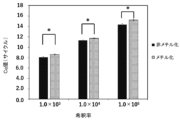
- Example 3 Detection of changes in ligation efficiency using q-PCR Since ligation efficiency changes due to methylation as shown in Example 1, q-PCR in which the ligation region in Padlock type DNA is amplified was used. We thought that by doing so, the Cq value would also change. Therefore, using BMP3 DNA (SEQ ID NOs: 5 and 6), we conducted an experiment as shown in q-PCR in Figure 1B.
- the ligation sample diluted 1.0 ⁇ 10 3 , 10 4 , and 10 5 times was mixed in equal amounts with a PCR reaction solution (TaKaRa Ex Taq HS (5 U/ ⁇ L), 10 ⁇ reaction buffer, dNTPs (each 2.5 mM), forward primer (100 ⁇ M: 5′-CGCACCGCCCCCAGCCCG -3′ (SEQ ID NO: 11)), reverse primer (100 ⁇ M: 5′-AAGGCGCAAGGAGCCGGC -3′ (SEQ ID NO: 10)), and 5000-fold diluted SYBR (registered trademark) Green I Nucleic Acid Gel Stain) in a 96-well plate.
- a PCR reaction solution TaKaRa Ex Taq HS (5 U/ ⁇ L)
- 10 ⁇ reaction buffer 10 ⁇ reaction buffer
- dNTPs each 2.5 mM
- forward primer 100 ⁇ M: 5′-CGCACCGCCCCCAGCCCG -3′
- reverse primer 100 ⁇ M: 5′-AAGG
- the temperature was then raised to 98° C. for 1 minute, and denaturation was performed at 98° C. for 10 seconds, annealing was performed at 59° C. for 30 seconds, and extension reaction was performed at 72° C. for 3 seconds.
- the target sequence was amplified by performing 30 cycles, and the Cq value was detected.
- Example 4 Evaluation of the influence of DNA methylation on RCA reaction efficiency using gel electrophoresis
- DNA methylation affects the efficiency of RCA reaction (amplification efficiency). The results were investigated using gel electrophoresis.
- DNA of the promoter portion of the vascular endothelial growth factor gene whose 5′ end is modified with a phosphate group (VEGF DNA: SEQ ID NO: 12), DNA whose CpG sites are methylated at three sites (SEQ ID NO: 13), and VEGF RCA reaction was performed using a DNA adapter (SEQ ID NO: 14), and gel electrophoresis was performed on the DNA solution after the RCA reaction.
- VEGF DNA SEQ ID NO: 12
- SEQ ID NO: 13 DNA whose CpG sites are methylated at three sites
- SEQ ID NO: 14 DNA adapter
- Example 2 After a ligation reaction was performed in the same manner as in Example 1, an RCA reaction was performed in the same manner as in Example 2. Thereafter, the enzyme was heat-treated on a heat block at 70°C for 15 minutes to inactivate the enzyme. The DNA solution after the RCA reaction was added to an 8% (w/v) acrylamide gel, and electrophoresis was performed at room temperature and 120 V for 60 minutes. After electrophoresis, the gel was stained with silver and observed.
- the sequence of the target VEGF gene promoter region (unmethylated and methylated DNA) and the sequence of the VEGF DNA adapter used are summarized in Table 3 below.
- underlines represent methylated bases.
- Example 5 Evaluation of the influence of DNA methylation on RCA reaction efficiency using pyrophosphate detection
- pyrophosphate detection was used to evaluate whether DNA methylation affects the efficiency of RCA reaction.
- SEQ ID NOs: 12, 13, and 14 The same DNAs as in Example 4 (SEQ ID NOs: 12, 13, and 14), an experiment as shown in the RCA reaction in FIG. 1B was conducted.
- Example 2 After performing the ligation reaction in the same manner as in Example 1, the RCA reaction and pyrophosphate detection were performed in the same manner as in Example 2.
- DNA methylation also affects the efficiency of the RCA reaction, and that changes in this efficiency can be evaluated by detecting pyrophosphate produced by the RCA reaction.
- Example 6 Detection of changes in ligation efficiency by RCA using gDNA in cells
- prostate cancer which is known to have low methylation levels in the promoter region of the androgen receptor (AR) gene.
- AR androgen receptor
- gDNA extracted from the two types of cells was mixed with the restriction enzyme Msp I (10 U/ ⁇ L), BciT 130 I (10 U/ ⁇ L), CutSmart buffer (New England Biolabs), and 0.1% BSA to adjust the total volume to 20 ⁇ L. Restriction enzyme treatment was then performed by incubating at 37°C for 1 hour. The reaction product was recovered by ethanol precipitation, air-dried, and dissolved in 10 ⁇ L of miliQ.
- the dissolved ligation product was mixed with 10x phi29 polymerase buffer, dNTPs (2.5 mM each), and phi29 polymerase (10 U/ ⁇ L) to a total volume of 40 ⁇ L.
- the mixed samples were incubated at 37°C for various times to perform the RCA reaction.
- the RCA reaction product was then heat-treated on a heat block at 70°C for 15 minutes to inactivate the enzyme.
- 10 ⁇ L of the RCA reaction product and 5.0 ⁇ L of PPiLight TM converting reagent (LONZA) (a reagent containing a substrate and an enzyme that converts pyrophosphate to ATP) were added to a 384-well polypropylene plate and incubated at room temperature for 30 minutes.
- LONZA PPiLight TM converting reagent
- PPiLight TM detection reagent (LONZA) (a reagent containing luciferin and luciferase) was then added and incubated at room temperature for 30 minutes. Finally, chemiluminescence was detected.
- the sequence of the target AR gene promoter region (unmethylated and methylated DNA) and the sequence of the AR DNA adapter used are summarized in Table 4 below.
- underlines represent methylated bases.
- FIG. 7A shows the results using gDNA extracted from cells with different methylation levels in the AR gene promoter region.
- adapter DNA SEQ ID NO: 17
- the chemiluminescence intensity increased depending on the reaction time regardless of the cell type of LNCaP and Du145.
- no change in chemiluminescence intensity with reaction time was observed in the absence of adapter DNA. This showed that a circular structure was formed by the adapter DNA and the RCA reaction occurred.
- Figure 7B shows the results relative to a reaction time of 0 minutes.
- the relative chemiluminescence intensity for a reaction time of 0 minutes was calculated, and the slope of the approximation line of the relative chemiluminescence intensity versus reaction time was found.
- the slope when Du145, which has a high level of methylation, was used was 2.2 times that of LNCaP, which has a low level of methylation. This suggests that methylation increases the rate of pyrophosphate production caused by the RCA reaction ( Figure 7B). This shows that even when gDNA extracted from cells is used, it is possible to detect DNA methylation by chemiluminescence from pyrophosphate produced by the RCA reaction, and evaluate changes in ligation efficiency due to methylation.
Landscapes
- Chemical & Material Sciences (AREA)
- Life Sciences & Earth Sciences (AREA)
- Engineering & Computer Science (AREA)
- Health & Medical Sciences (AREA)
- Organic Chemistry (AREA)
- Wood Science & Technology (AREA)
- Genetics & Genomics (AREA)
- Zoology (AREA)
- Proteomics, Peptides & Aminoacids (AREA)
- General Engineering & Computer Science (AREA)
- Biotechnology (AREA)
- Bioinformatics & Cheminformatics (AREA)
- Molecular Biology (AREA)
- Physics & Mathematics (AREA)
- Microbiology (AREA)
- Biochemistry (AREA)
- General Health & Medical Sciences (AREA)
- Biophysics (AREA)
- Analytical Chemistry (AREA)
- Biomedical Technology (AREA)
- Immunology (AREA)
- Plant Pathology (AREA)
- Chemical Kinetics & Catalysis (AREA)
- Measuring Or Testing Involving Enzymes Or Micro-Organisms (AREA)
Abstract
La présente invention concerne un procédé et un kit pour détecter la méthylation d'ADN cible. La présente invention concerne plus particulièrement un procédé de détection de la méthylation de l'ADN cible, le procédé comprenant : une étape dans laquelle l'ADN adaptateur comprenant une séquence complémentaire à la région 5' de l'ADN cible à son extrémité 5' et une séquence complémentaire à la région 3' de l'ADN cible à son extrémité 3' est lié à l'ADN cible ; une étape dans laquelle l'extrémité 5' et l'extrémité 3' de l'ADN cible sont ligaturées à l'aide d'une ADN ligase pour obtenir un ADN circulaire ; et une étape au cours de laquelle la méthylation de l'ADN cible est détectée sur la base de l'efficacité de la ligature ou de l'efficacité de l'amplification d'une réaction d'amplification par cercle roulant (RCA) dans laquelle l'ADN circulaire sert de matrice.
Priority Applications (1)
| Application Number | Priority Date | Filing Date | Title |
|---|---|---|---|
| JP2024548245A JPWO2024063036A1 (fr) | 2022-09-20 | 2023-09-19 |
Applications Claiming Priority (2)
| Application Number | Priority Date | Filing Date | Title |
|---|---|---|---|
| JP2022-149222 | 2022-09-20 | ||
| JP2022149222 | 2022-09-20 |
Publications (1)
| Publication Number | Publication Date |
|---|---|
| WO2024063036A1 true WO2024063036A1 (fr) | 2024-03-28 |
Family
ID=90454541
Family Applications (1)
| Application Number | Title | Priority Date | Filing Date |
|---|---|---|---|
| PCT/JP2023/033826 Ceased WO2024063036A1 (fr) | 2022-09-20 | 2023-09-19 | Procédé de détection de méthylation d'adn génomique |
Country Status (2)
| Country | Link |
|---|---|
| JP (1) | JPWO2024063036A1 (fr) |
| WO (1) | WO2024063036A1 (fr) |
Citations (2)
| Publication number | Priority date | Publication date | Assignee | Title |
|---|---|---|---|---|
| CN103589777A (zh) * | 2012-08-14 | 2014-02-19 | 中国科学院深圳先进技术研究院 | Dna甲基化的检测探针、检测方法及检测试剂盒 |
| WO2022109496A2 (fr) * | 2020-11-23 | 2022-05-27 | Pleno, Inc. | Dosages codés |
-
2023
- 2023-09-19 WO PCT/JP2023/033826 patent/WO2024063036A1/fr not_active Ceased
- 2023-09-19 JP JP2024548245A patent/JPWO2024063036A1/ja active Pending
Patent Citations (2)
| Publication number | Priority date | Publication date | Assignee | Title |
|---|---|---|---|---|
| CN103589777A (zh) * | 2012-08-14 | 2014-02-19 | 中国科学院深圳先进技术研究院 | Dna甲基化的检测探针、检测方法及检测试剂盒 |
| WO2022109496A2 (fr) * | 2020-11-23 | 2022-05-27 | Pleno, Inc. | Dosages codés |
Non-Patent Citations (1)
| Title |
|---|
| NINOMIYA KOSUKE: "Detection of p16 gene promoter region methylation on pathological tissue sections using Padlock probe and hyperbranching rolling circle amplification (H-RCA) method,", JAPANESE SOCIETY OF HISTOCYTOCHEMISTRY GENERAL MEETING/ACADEMIC MEETING LECTURE PROGRAM/PROCEEDINGS, vol. 54, 10 September 2013 (2013-09-10), pages 62, XP093149981 * |
Also Published As
| Publication number | Publication date |
|---|---|
| JPWO2024063036A1 (fr) | 2024-03-28 |
Similar Documents
| Publication | Publication Date | Title |
|---|---|---|
| EP4365305B1 (fr) | Procédé de détection d'un analyte | |
| JP6571895B1 (ja) | 核酸プローブ及びゲノム断片検出方法 | |
| JP7691975B2 (ja) | 単一細胞分析 | |
| CN108138209B (zh) | 通过原位扩增制备细胞游离核酸分子的方法 | |
| EP2825675B1 (fr) | Mesure des variants d'acide nucléique au moyen du séquençage hautement multiplexé, à très haut débit et à suppression d'erreur | |
| CN111183145B (zh) | 高灵敏度dna甲基化分析方法 | |
| AU2017339984B2 (en) | Method for multiplex detection of methylated DNA | |
| EA020593B1 (ru) | Анализ нуклеиновых кислот, полученных из единичных клеток | |
| CN108699553A (zh) | 用于筛选甲状腺癌中突变的组合物和方法 | |
| EP3497242A1 (fr) | Méthodes d'analyse de fragments d'acides nucléiques | |
| EP4570919A2 (fr) | Amplification d'adn simple brin | |
| US11130988B2 (en) | Method for detecting a plurality of short-chain nucleic acid in sample, combinatorial analysis kit, analysis kit supply management method | |
| WO2024063036A1 (fr) | Procédé de détection de méthylation d'adn génomique | |
| US20240316556A1 (en) | High-throughput analysis of biomolecules | |
| US20100173287A1 (en) | Method of analyzing nucleic acid | |
| WO2024073510A2 (fr) | Procédés et compositions pour analyse d'échantillon fixe | |
| JP2024035110A (ja) | 変異核酸の正確な並行定量するための高感度方法 | |
| JP2008182985A (ja) | Dnaメチル化測定方法 | |
| AU2023264552A1 (en) | Primary template-directed amplification and methods thereof | |
| CN113490750B (zh) | 微量dna甲基化高通量测序方法 | |
| CN110612355B (zh) | 用于定量pcr扩增的组合物及其应用 | |
| JP4359497B2 (ja) | 核酸増幅用プライマー、核酸増幅用プライマーセット及びこれを用いた癌の検査方法 | |
| JP3974557B2 (ja) | 変異解析方法及びそのためのシステム | |
| WO2025258291A1 (fr) | Procédé de test génétique et kit de test génétique pour récepteur des lymphocytes t (tcr) ou récepteur des lymphocytes b (bcr) | |
| WO2026085255A1 (fr) | Procédés d'enrichissement de molécules d'acide nucléique méthylé |
Legal Events
| Date | Code | Title | Description |
|---|---|---|---|
| 121 | Ep: the epo has been informed by wipo that ep was designated in this application |
Ref document number: 23868157 Country of ref document: EP Kind code of ref document: A1 |
|
| WWE | Wipo information: entry into national phase |
Ref document number: 2024548245 Country of ref document: JP |
|
| NENP | Non-entry into the national phase |
Ref country code: DE |
|
| 122 | Ep: pct application non-entry in european phase |
Ref document number: 23868157 Country of ref document: EP Kind code of ref document: A1 |