WO2024070103A1 - 無線アクセスネットワークの制御装置 - Google Patents
無線アクセスネットワークの制御装置 Download PDFInfo
- Publication number
- WO2024070103A1 WO2024070103A1 PCT/JP2023/024201 JP2023024201W WO2024070103A1 WO 2024070103 A1 WO2024070103 A1 WO 2024070103A1 JP 2023024201 W JP2023024201 W JP 2023024201W WO 2024070103 A1 WO2024070103 A1 WO 2024070103A1
- Authority
- WO
- WIPO (PCT)
- Prior art keywords
- inference
- learning
- unit
- real
- control unit
- Prior art date
- Legal status (The legal status is an assumption and is not a legal conclusion. Google has not performed a legal analysis and makes no representation as to the accuracy of the status listed.)
- Ceased
Links
Images

Classifications
-
- H—ELECTRICITY
- H04—ELECTRIC COMMUNICATION TECHNIQUE
- H04W—WIRELESS COMMUNICATION NETWORKS
- H04W24/00—Supervisory, monitoring or testing arrangements
- H04W24/02—Arrangements for optimising operational condition
-
- H—ELECTRICITY
- H04—ELECTRIC COMMUNICATION TECHNIQUE
- H04L—TRANSMISSION OF DIGITAL INFORMATION, e.g. TELEGRAPHIC COMMUNICATION
- H04L41/00—Arrangements for maintenance, administration or management of data switching networks, e.g. of packet switching networks
- H04L41/04—Network management architectures or arrangements
-
- H—ELECTRICITY
- H04—ELECTRIC COMMUNICATION TECHNIQUE
- H04L—TRANSMISSION OF DIGITAL INFORMATION, e.g. TELEGRAPHIC COMMUNICATION
- H04L41/00—Arrangements for maintenance, administration or management of data switching networks, e.g. of packet switching networks
- H04L41/16—Arrangements for maintenance, administration or management of data switching networks, e.g. of packet switching networks using machine learning or artificial intelligence
-
- H—ELECTRICITY
- H04—ELECTRIC COMMUNICATION TECHNIQUE
- H04W—WIRELESS COMMUNICATION NETWORKS
- H04W88/00—Devices specially adapted for wireless communication networks, e.g. terminals, base stations or access point devices
- H04W88/08—Access point devices
-
- H—ELECTRICITY
- H04—ELECTRIC COMMUNICATION TECHNIQUE
- H04W—WIRELESS COMMUNICATION NETWORKS
- H04W88/00—Devices specially adapted for wireless communication networks, e.g. terminals, base stations or access point devices
- H04W88/12—Access point controller devices
-
- H—ELECTRICITY
- H04—ELECTRIC COMMUNICATION TECHNIQUE
- H04W—WIRELESS COMMUNICATION NETWORKS
- H04W88/00—Devices specially adapted for wireless communication networks, e.g. terminals, base stations or access point devices
- H04W88/18—Service support devices; Network management devices
-
- H—ELECTRICITY
- H04—ELECTRIC COMMUNICATION TECHNIQUE
- H04W—WIRELESS COMMUNICATION NETWORKS
- H04W92/00—Interfaces specially adapted for wireless communication networks
- H04W92/04—Interfaces between hierarchically different network devices
Definitions
- the present invention relates to a control device for a radio access network, and in particular to a control device for a radio access network that has the function of re-learning a learning model that has been generated by learning data collected from the radio access network.
- RAN Radio Access Network
- CU Centralized Unit
- DU Distributed Unit
- RU Radio Unit
- Non-patent documents 1 and 2 consider the application of AI/ML to various applications, such as beamforming control, radio resource allocation, traffic prediction, and base station function placement, in order to maximize network performance within the limited network resources in RAN.
- Non-Patent Document 3 discloses a technology that performs learning based on data collected from the RAN to generate a learning model, performs inference using the data collected from the RAN and the learning model, and controls the RAN according to the inference results.
- Patent Document 1 a patent application for an AI system that accumulates and monitors data related to AI/ML learning and inference from O-RAN base station equipment, detects concept drift, and performs re-learning.
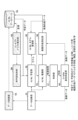
- Figure 5 is a functional block diagram showing the conventional configuration of an AI system that detects concept drift and performs re-learning.
- the data collection unit 11 repeatedly collects the latest data from the O-RAN base station equipment 10, and provides the collected latest data (collected data) to the AI/ML learning unit 12 and the AI/ML inference unit 13, while also storing it in the data accumulation unit 14.
- the collected data stored in the data accumulation unit 14 is managed in the AI/ML database 15.
- the AI/ML learning unit 12 learns the collected data and generates a learning model for controlling the O-RAN base station equipment 10.
- the AI/ML model management unit 16 manages the learning models previously generated by the AI/ML learning unit 12.
- the AI/ML inference unit 13 performs inference based on the learning models and data newly collected by the data collection unit 11, and outputs the inference results to the control unit 17 and the inference performance measurement unit 18.
- the control unit 17 controls the O-RAN base station equipment 10 based on the inference results.
- the inference performance measurement unit 18 determines the inference performance based on the inference result and the latest data collected after the control unit 17 controls the O-RAN base station device 10 based on the inference result, and stores inference performance data indicating the determined inference performance in the AI/ML database 15.
- the concept drift detection unit 19 periodically obtains at least one of the collected data and the inference performance data from the AI/ML database 15 and determines whether or not concept drift is occurring.
- the concept drift detection unit 19 detects the occurrence of concept drift, it instructs the re-learning control unit 20 to generate a new learning model (re-learning).
- the re-learning control unit 20 provides the AI/ML learning unit 12 with data for re-learning and instructs it to re-learn.
- the AI/ML learning unit 12 When re-learning is instructed, the AI/ML learning unit 12 generates a new learning model based on the newly collected data by the data collection unit 11 and outputs it to the AI/ML model management unit 16.
- the AI/ML model management unit 16 compares the current learning model used by the AI/ML inference unit 13 with the new learning model, and if the inference performance of the new learning model is higher than the inference performance of the current learning model, it outputs the new learning model to the AI/ML inference unit 13.
- the AI/ML inference unit 13 will then use the new learning model to perform inference. If the inference performance of the new learning model is lower than that of the current learning model, the AI/ML model management unit 16 can instruct the AI/ML learning unit 12 to re-learn.
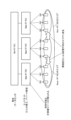
- the RAN Intelligent Controller which is responsible for controlling and optimizing RAN functions, has a hierarchical structure consisting of non-real-time components called “Non-RT (Real Time) RIC” and near-real-time components called “Near-RT RIC,” which have different control periods, as shown in Figure 6.
- Non-RT RICs have a control period of 1 second or more and a wide range of controlled objects
- Near-RT RICs have a control period of 10 msec to 1 second and a narrow range of controlled objects.
- Non-RT RICs are often installed in station buildings (data centers), while Near-RT RICs are often located at edge sites (rooftops of buildings or rented rooms in apartments). Therefore, by placing functions related to AI/ML learning in Non-RT RICs and functions related to AI/ML inference in Near-RT RICs, it is possible to create highly generalizable learning models by learning using a wide range of data that can be accommodated in the station building, and since inference can be performed at each edge site, the processing load at the edge sites can be reduced.
- Non-RT RIC information under Non-RT RIC can be used to detect concept drift, improving the ability to track environmental changes.
- the O1 interface does not specify interface specifications for the performance indicators of the learning model. Although there are specifications for the interface of performance indicators for base stations based on the 3GPP (registered trademark) specifications, these cannot be used as is for the inference performance data of the learning model. Furthermore, the A1 interface does not specify interface specifications for the performance indicators of the learning model.
- the object of the present invention is to provide a radio access network control device that can solve the above technical problems, place all functions related to re-learning of learning models in a Non-RT RIC, and realize re-learning based on concept drift detection.
- the present invention provides a wireless access network control device in which a non-real-time control unit and a quasi-real-time control unit are hierarchically arranged, the control device comprising: a learning unit that generates a learning model based on data collected from the wireless access network; an inference unit that controls the wireless access network based on the results of inference by applying the collected data to the learning model; and a re-learning unit that detects whether or not concept drift has occurred based on the collected data and causes the learning unit to re-learn the learning model when concept drift is detected; the inference unit is disposed in the quasi-real-time control unit, and the learning unit and the re-learning unit are disposed in the non-real-time control unit.
- the AI/ML learning function can learn using a wide range of data within the station's coverage area, making it possible to create a learning model with high generalizability.
- All functions related to re-learning are located in the non-real-time control unit, which reduces the processing load of the quasi-real-time control unit and enables re-learning to be performed even if the edge site has limited computing resources.
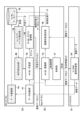
- FIG. 2 is a functional block diagram showing the configuration of a main part of an O-RAN control device according to an embodiment of the present invention.
- FIG. 13 illustrates a method for specifying an index when requesting inference performance data.
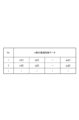
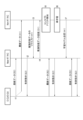
- a figure showing an example of transmitting inference performance data in table format. 1 is a sequence flow showing the operation of the present invention.
- FIG. 1 is a functional block diagram showing a conventional configuration of an AI system that detects concept drift and executes re-learning.
- FIG. 2 is a functional block diagram of the RAN Intelligent Controller (RIC).
- RIC RAN Intelligent Controller
- Figure 1 is a functional block diagram showing the configuration of the main parts of an O-RAN control device according to one embodiment of the present invention, where configuration that is not necessary for explaining the present invention is omitted from the illustration. Also, the same reference numerals as above represent the same or equivalent parts.
- This embodiment is characterized in that functions related to AI/ML inference are placed in the Near-RT RIC, and functions related to AI/ML learning and re-learning of learning models are placed in the Non-RT RIC.
- the O-RAN control device is composed of an O-CU/O-DU, a Near-RT RIC and a Non-RT RIC, and each function can communicate with each other via various interfaces including the O1 interface, A1 interface and E2 interface defined by the O-RAN Alliance.
- the O-RAN base station device 10 is placed in the O-CU/O-DU.
- the Near-RT RIC is equipped with an AI/ML inference unit 13, a control unit 17, and an inference performance measurement unit 18 as its main functions related to AI/ML inference.
- the Non-RT RIC is equipped with a data collection unit 11, an AI/ML learning unit 12, and an AI/ML model management unit 16 as its main functions related to AI/ML learning, and further equipped with a data accumulation unit 14, an AI/ML database 15, a concept drift detection unit 19, and a re-learning control unit 20 as its main functions related to re-learning.
- the data collection unit 11 collects the latest data from the O-RAN base station equipment 10 of the O-CU/O-DU via the O1 interface and provides it to the data storage unit 14 and the AI/ML learning unit 12.
- the latest data is managed in the AI/ML database 15.
- the learning model created by the AI/ML learning unit 12 based on the collected data is registered in the AI/ML management unit 16 and provided to the AI/ML inference unit 13 of the Near-RT RIC via the A1 interface.
- the AI/ML inference unit 13 applies the latest data to the learning model acquired via the A1 interface and provides the inference results obtained to the control unit 17 and the inference performance measurement unit 18.
- the inference performance measurement unit 18 transmits the inference performance data to the AI/ML database 15 and AI/ML management unit 16 of the Non-RT RIC via the A1/O1 interface.
- the re-learning control unit 20 instructs the AI/ML learning unit 12 to re-learn the learning model.
- the re-learned learning model is updated and registered in the AI/ML management unit 16, and provided to the AI/ML inference unit 13 of the Near-RT RIC via the A1 interface.
- the functions related to AI/ML learning, AI/ML inference, and re-learning of the learning model are distributed to the Near-RT RIC and Non-RT RIC, so the following two messages (a) and (b) are added to send and receive information related to re-learning between the Near-RT RIC and Non-RT RIC.
- Inference performance data In O-RAN WG2, the indices shown in Fig. 2 are listed as indices related to AI/ML inference performance, and at least one indices is specified. Indices for binary classification problems, multiclass classification problems, and regression classification problems are specified. In this embodiment, the average value and median value for a specified period can be obtained.
- model performance degrades when dealing with out-of-distribution (OOD) data. Therefore, an OOD score based on a trained model is added as an inference performance indicator when ground truth data cannot be obtained.
- OOD out-of-distribution
- the maximum value when the output of a trained model is normalized in the class direction using Softmax can be specified as Maximum over softmax probabilities (MSP) disclosed in Non-Patent Document 4, Outlier Exposure disclosed in Non-Patent Document 5, or ODIN disclosed in Non-Patent Document 6.
- MSP Maximum over softmax probabilities
- Non-Patent Document 7 it is possible to calculate a Gaussian distribution of features for each class using the penultimate feature and label of a trained model, and specify the negative Mahalanobis distance of the class with the smallest Mahalanobis distance.
- Non-Patent Document 8 it is also possible to specify the free energy with a negative sign when the energy function is the output of a trained model with a negative sign.
- inference performance data (p1 to pm) regarding the m indicators specified in the (1) information request to the AI/ML database is transmitted for each learning model (No.) in table format at specified time intervals.
- Figure 4 is a sequence flow showing the operation of this embodiment, with the explanation focusing on communication between the O-CU/O-DU, Near-RT RIC and Non-RT RIC.
- communication between the O-CU/O-DU and Near-RT RIC is performed via the E2 interface
- communication between the Near-RT RIC and Non-RT RIC is performed via the O1 interface or A1 interface.
- the O-CU/O-DU repeatedly transmits the latest data of the O-RAN base station equipment 10 to the Near-RT RIC and Non-RT RIC at a predetermined period.
- the O-CU/O-DU transmits the latest data to the Near-RT RIC via the E2 interface and to the Non-RT RIC via the O1 interface.
- the latest data is acquired by the data collection unit 11.
- the AI/ML inference unit 13 applies the latest data to the current learning model to execute inference, and notifies the inference result to the control unit 17 and the inference performance measurement unit 18.
- the control unit 17 instructs the O-RAN base station device 10 of the O-CU/O-DU to perform control based on the inference result via the E2 interface.
- the Non-RT RIC requests inference performance data from the Near-RT RIC at a predetermined period.
- the AI/ML model management unit 16 of the Non-RT RIC requests inference performance data from the Near-RT RIC via the O1 interface
- the inference performance measurement unit 18 in the Near-RT RIC responds to the request by transmitting the measurement results of the inference performance data in the table format to the Non-RT RIC via the O1 interface.
- the concept drift detection unit 19 measures concept drift based on the inference performance data and the data stored in the AI/ML database 15.
- the re-learning control unit 20 instructs the AI/ML learning unit 12 to re-learn at time t6.
- the AI/ML learning unit 12 performs re-learning to generate a learning model, and updates and registers this in the AI/ML model management unit 16.
- the re-learned learning model is sent from the AI/ML model management unit 16 of the Non-RT RIC to the AI/ML inference unit 13 of the Near-RT RIC via the A1 interface. Therefore, from this point on, control based on the re-learned learning model is performed each time the latest data is collected.
- functions related to AI/ML inference are placed in the Near-RT RIC, while functions related to AI/ML learning and relearning are placed in the Non-RT RIC, which reduces the processing load on the Near-RT RIC. Therefore, in an environment where the edge site has limited computing resources and concept drift does not occur frequently, it becomes possible to detect concept drift promptly, and it is possible to improve responsiveness to environmental changes.
- Goal 9 Build resilient infrastructure and promote inclusive and sustainable industrialization
- Goal 11 Make cities inclusive, safe, resilient and sustainable” of the United Nations-led Sustainable Development Goals (SDGs).
Landscapes
- Engineering & Computer Science (AREA)
- Computer Networks & Wireless Communication (AREA)
- Signal Processing (AREA)
- Artificial Intelligence (AREA)
- Computer Vision & Pattern Recognition (AREA)
- Databases & Information Systems (AREA)
- Evolutionary Computation (AREA)
- Medical Informatics (AREA)
- Software Systems (AREA)
- Mobile Radio Communication Systems (AREA)
- Management, Administration, Business Operations System, And Electronic Commerce (AREA)
Abstract
Description
本発明のその他の特徴及び利点は、添付図面を参照とした以下の説明により明らかになるであろう。なお、添付図面においては、同じ若しくは同様の構成には、同じ参照番号を付す。
(b) リクエストされた推論性能データの送信
ここで、前記(a)推論性能データのリクエストでは、以下の3つの情報(1)-(3)が指定される。
O-RAN WG2では、図2に例示した指標がAI/MLの推論性能に関する指標として挙げられており、少なくとも一つの指標が指定される。この指標では、二値分類問題(Binary classification problems)向けの指標、多クラス分類問題(Multiclass classification problems)向けの指標及び回帰問題(Regression classification problems)向けの指標が、それぞれ規定されている。本実施形態では、指定した期間の平均値や中央値が取得可能である。
推論性能データを取得する対象の学習モデルが指定される。
推論性能データの取得間隔が指定される。
Claims (5)
- 非リアルタイム系の制御部及び準リアルタイム系の制御部が階層化された無線アクセスネットワークの制御装置において、
無線アクセスネットワークから収集したデータに基づいて学習モデルを生成する学習部と、
前記学習モデルに前記収集したデータを適用して推論した結果に基づいて無線アクセスネットワークを制御する推論部と、
前記収集したデータに基づいてコンセプトドリフトが発生しているか否かを検知し、コンセプトドリフトの発生を検知すると前記学習部に学習モデルを再学習させる再学習部とを具備し、
前記推論部が前記準リアルタイム系の制御部に配置され、前記学習部及び再学習部が前記非リアルタイム系の制御部に配置される、無線アクセスネットワークの制御装置。 - 前記推論部が、前記収集したデータ及び推論の結果に基づいて推論性能を測定する推論性能測定手段とを含み、
前記再学習部が、前記推論性能に基づいてコンセプトドリフトの発生を検知するコンセプトドリフト検知手段及び前記コンセプトドリフトの発生が検知されると前記学習部に学習モデルを再学習させる再学習制御手段とを含み、
前記非リアルタイム系の制御部は、推論性能データを準リアルタイム系の制御部へO1インタフェースを介してリクエストし、
前記準リアルタイム系の制御部は前記リクエストに応答して、推論性能データを前記非リアルタイム系の制御部へO1インタフェースを介して送信し、
前記非リアルタイム系の制御部は、再学習した学習モデルを前記準リアルタイム系の制御部へ、O1インタフェース及びA1インタフェースの一方を介して送信する、請求項1に記載の無線アクセスネットワークの制御装置。 - 前記推論性能データのリクエストが、推論性能の指標、対象の学習モデル及びデータの取得間隔の各指定を含む、請求項2に記載の無線アクセスネットワークの制御装置。
- 前記準リアルタイム系の制御部は、前記リクエストされた推論性能データを、前記指定された学習モデル毎に前記指定された各指標のデータを記述したテーブル形式で送信する、請求項3に記載の無線アクセスネットワークの制御装置。
- 前記推論性能の指標が、学習済みモデルを前提とした分布外スコアを含む、請求項3または4に記載の無線アクセスネットワークの制御装置。
Priority Applications (3)
| Application Number | Priority Date | Filing Date | Title |
|---|---|---|---|
| EP23871348.1A EP4598098A4 (en) | 2022-09-27 | 2023-06-29 | CONTROL DEVICE FOR RADIO ACCESS NETWORK |
| CN202380061876.4A CN119769126A (zh) | 2022-09-27 | 2023-06-29 | 无线接入网络的控制装置 |
| US19/070,955 US20250203407A1 (en) | 2022-09-27 | 2025-03-05 | Control device for radio access network |
Applications Claiming Priority (2)
| Application Number | Priority Date | Filing Date | Title |
|---|---|---|---|
| JP2022-153230 | 2022-09-27 | ||
| JP2022153230A JP7709947B2 (ja) | 2022-09-27 | 2022-09-27 | 無線アクセスネットワークの制御装置 |
Related Child Applications (1)
| Application Number | Title | Priority Date | Filing Date |
|---|---|---|---|
| US19/070,955 Continuation US20250203407A1 (en) | 2022-09-27 | 2025-03-05 | Control device for radio access network |
Publications (1)
| Publication Number | Publication Date |
|---|---|
| WO2024070103A1 true WO2024070103A1 (ja) | 2024-04-04 |
Family
ID=90476906
Family Applications (1)
| Application Number | Title | Priority Date | Filing Date |
|---|---|---|---|
| PCT/JP2023/024201 Ceased WO2024070103A1 (ja) | 2022-09-27 | 2023-06-29 | 無線アクセスネットワークの制御装置 |
Country Status (5)
| Country | Link |
|---|---|
| US (1) | US20250203407A1 (ja) |
| EP (1) | EP4598098A4 (ja) |
| JP (1) | JP7709947B2 (ja) |
| CN (1) | CN119769126A (ja) |
| WO (1) | WO2024070103A1 (ja) |
Cited By (1)
| Publication number | Priority date | Publication date | Assignee | Title |
|---|---|---|---|---|
| WO2026013745A1 (ja) * | 2024-07-08 | 2026-01-15 | Ntt株式会社 | 制御装置、学習方法、通信システム、通信方法及びプログラム |
Citations (3)
| Publication number | Priority date | Publication date | Assignee | Title |
|---|---|---|---|---|
| US20210266781A1 (en) * | 2018-08-29 | 2021-08-26 | Carleton University | Enabling wireless network personalization using zone of tolerance modeling and predictive analytics |
| JP2022046347A (ja) | 2020-09-10 | 2022-03-23 | エドワーズ株式会社 | 真空ポンプ |
| JP2022153230A (ja) | 2021-03-29 | 2022-10-12 | ナイアンティック, インコーポレイテッド | 相互作用可能な拡張仮想現実体験 |
Family Cites Families (3)
| Publication number | Priority date | Publication date | Assignee | Title |
|---|---|---|---|---|
| US11902104B2 (en) * | 2020-03-04 | 2024-02-13 | Intel Corporation | Data-centric service-based network architecture |
| EP4241510A4 (en) | 2020-11-09 | 2024-10-23 | Telefonaktiebolaget LM Ericsson (publ) | METHOD AND SYSTEM FOR PAGING HANDLING OF A DEVICE BASED ON A PREDICTIVE MODEL OF A FUTURE NEED FOR PAGING OF THE DEVICE |
| US12328602B2 (en) * | 2021-09-24 | 2025-06-10 | Intel Corporation | ML model management in O-RAN |
-
2022
- 2022-09-27 JP JP2022153230A patent/JP7709947B2/ja active Active
-
2023
- 2023-06-29 WO PCT/JP2023/024201 patent/WO2024070103A1/ja not_active Ceased
- 2023-06-29 CN CN202380061876.4A patent/CN119769126A/zh active Pending
- 2023-06-29 EP EP23871348.1A patent/EP4598098A4/en active Pending
-
2025
- 2025-03-05 US US19/070,955 patent/US20250203407A1/en active Pending
Patent Citations (3)
| Publication number | Priority date | Publication date | Assignee | Title |
|---|---|---|---|---|
| US20210266781A1 (en) * | 2018-08-29 | 2021-08-26 | Carleton University | Enabling wireless network personalization using zone of tolerance modeling and predictive analytics |
| JP2022046347A (ja) | 2020-09-10 | 2022-03-23 | エドワーズ株式会社 | 真空ポンプ |
| JP2022153230A (ja) | 2021-03-29 | 2022-10-12 | ナイアンティック, インコーポレイテッド | 相互作用可能な拡張仮想現実体験 |
Non-Patent Citations (9)
| Title |
|---|
| HENDRYCKS, D.DIETTERICH, T.: "DEEP ANOMALY DETECTION WITH OUTLIER EXPOSURE", ICLR, 2019 |
| J. KAURM. A. KHANM. IFTIKHARM. IMRANQ. EMAD UL HAQ: "Machine Learning Techniques for 5G and Beyond", IEEE ACCESS, vol. 9, 2021, pages 23472 - 23488 |
| LEE, K.LEE, K.LEE, H.SHIN, J.: "A simple unified framework for detecting out-of-distribution samples and adversarial attacks", NEURIPS, 2018 |
| LIU, W.WANG, X.OWENS, J.D.LI, Y.: "Energy-based Out-of-distribution Detection", NEURIPS, 2020 |
| M. E. MOROCHO-CAYAMCELAH. LEEW. LIM: "Machine Learning for 5G/B5G Mobile and Wireless Communications: Potential, Limitations, and Future Directions", IEEE ACCESS, vol. 7, 2019, pages 137184 - 137206, XP011748413, DOI: 10.1109/ACCESS.2019.2942390 |
| O-RAN ALLIANCE: "AI/ML workflow description and requirements", O-RAN.WG2.AIML-V01, 3 July 2021 (2021-07-03) |
| QUALCOMM INCORPORATED: "NWDAF Decompose Architecture", 3GPP DRAFT; S2-2003862, 3RD GENERATION PARTNERSHIP PROJECT (3GPP), MOBILE COMPETENCE CENTRE ; 650, ROUTE DES LUCIOLES ; F-06921 SOPHIA-ANTIPOLIS CEDEX ; FRANCE, vol. SA WG2, no. Elbonia; 20200601 - 20200612, 22 May 2020 (2020-05-22), Mobile Competence Centre ; 650, route des Lucioles ; F-06921 Sophia-Antipolis Cedex ; France , XP051889870 * |
| See also references of EP4598098A4 |
| TAICHI. KATSURAGAWA: "Initiatives toward Intelligent RAN", NTT DOCOMO TECHNICAL JOURNAL, vol. 30, no. 1, 1 April 2022 (2022-04-01), pages 27 - 36, XP093155210 * |
Cited By (1)
| Publication number | Priority date | Publication date | Assignee | Title |
|---|---|---|---|---|
| WO2026013745A1 (ja) * | 2024-07-08 | 2026-01-15 | Ntt株式会社 | 制御装置、学習方法、通信システム、通信方法及びプログラム |
Also Published As
| Publication number | Publication date |
|---|---|
| EP4598098A4 (en) | 2026-01-07 |
| CN119769126A (zh) | 2025-04-04 |
| US20250203407A1 (en) | 2025-06-19 |
| EP4598098A1 (en) | 2025-08-06 |
| JP2024047633A (ja) | 2024-04-08 |
| JP7709947B2 (ja) | 2025-07-17 |
Similar Documents
| Publication | Publication Date | Title |
|---|---|---|
| JP7710116B2 (ja) | モデル構成方法及び装置 | |
| Thantharate et al. | ADAPTIVE6G: Adaptive resource management for network slicing architectures in current 5G and future 6G systems | |
| Zhang et al. | A survey of computation offloading with task types | |
| Polese et al. | Machine learning at the edge: A data-driven architecture with applications to 5G cellular networks | |
| Lin et al. | Artificial intelligence-empowered resource management for future wireless communications: A survey | |
| Fu et al. | Artificial intelligence to manage network traffic of 5G wireless networks | |
| Kibria et al. | Big data analytics, machine learning, and artificial intelligence in next-generation wireless networks | |
| Huang et al. | Wireless big data: transforming heterogeneous networks to smart networks | |
| Ali et al. | Reinforcement-learning-enabled massive Internet of Things for 6G wireless communications | |
| CN111967605A (zh) | 无线电接入网中的机器学习 | |
| EP4592912A1 (en) | Radio access network control device | |
| Cao et al. | AI agent in software-defined network: Agent-based network service prediction and wireless resource scheduling optimization | |
| Raftopoulos et al. | DRL-based latency-aware network slicing in O-RAN with time-varying SLAs | |
| Hsieh et al. | Deep reinforcement learning-based task assignment for cooperative mobile edge computing | |
| Bhajantri et al. | A comprehensive survey on resource management in internet of things | |
| Shafik et al. | Energy optimization analysis on internet of things | |
| Lin et al. | Fueling the next quantum leap in cellular networks: Embracing AI in 5G evolution towards 6G | |
| US20250203407A1 (en) | Control device for radio access network | |
| Ding et al. | A novel PODMAI framework enhanced by user demand prediction for resource allocation in spectrum sharing UAV networks | |
| US20250234215A1 (en) | Control device for radio access network | |
| Lin et al. | Hypergraph-based autonomous networks: adaptive resource management and dynamic resource scheduling | |
| Sova et al. | Hierarchical model of decision acceptance in intelligent manet control system | |
| Maiti et al. | Deployment of multi-tier fog computing system for IoT services in smart city | |
| CN120513649A (zh) | 用于在无线通信系统中发送和接收能力信息的方法和设备 | |
| Mahesh et al. | AI/ML for next generation wireless networks |
Legal Events
| Date | Code | Title | Description |
|---|---|---|---|
| 121 | Ep: the epo has been informed by wipo that ep was designated in this application |
Ref document number: 23871348 Country of ref document: EP Kind code of ref document: A1 |
|
| WWE | Wipo information: entry into national phase |
Ref document number: 202380061876.4 Country of ref document: CN |
|
| WWP | Wipo information: published in national office |
Ref document number: 202380061876.4 Country of ref document: CN |
|
| WWE | Wipo information: entry into national phase |
Ref document number: 2023871348 Country of ref document: EP |
|
| NENP | Non-entry into the national phase |
Ref country code: DE |
|
| ENP | Entry into the national phase |
Ref document number: 2023871348 Country of ref document: EP Effective date: 20250428 |
|
| WWP | Wipo information: published in national office |
Ref document number: 2023871348 Country of ref document: EP |