WO2024098132A1 - Biomassa micelial, processo de produção da biomassa micelial, uso da biomassa micelial na produção de produto alimentício, produto alimentício à base de biomassa micelial e seu processo de produção - Google Patents
Biomassa micelial, processo de produção da biomassa micelial, uso da biomassa micelial na produção de produto alimentício, produto alimentício à base de biomassa micelial e seu processo de produção Download PDFInfo
- Publication number
- WO2024098132A1 WO2024098132A1 PCT/BR2023/050385 BR2023050385W WO2024098132A1 WO 2024098132 A1 WO2024098132 A1 WO 2024098132A1 BR 2023050385 W BR2023050385 W BR 2023050385W WO 2024098132 A1 WO2024098132 A1 WO 2024098132A1
- Authority
- WO
- WIPO (PCT)
- Prior art keywords
- biomass
- production process
- product
- fungus
- mycelial biomass
- Prior art date
- Legal status (The legal status is an assumption and is not a legal conclusion. Google has not performed a legal analysis and makes no representation as to the accuracy of the status listed.)
- Ceased
Links
Classifications
-
- A—HUMAN NECESSITIES
- A23—FOODS OR FOODSTUFFS; TREATMENT THEREOF, NOT COVERED BY OTHER CLASSES
- A23J—PROTEIN COMPOSITIONS FOR FOODSTUFFS; WORKING-UP PROTEINS FOR FOODSTUFFS; PHOSPHATIDE COMPOSITIONS FOR FOODSTUFFS
- A23J1/00—Obtaining protein compositions for foodstuffs; Bulk opening of eggs and separation of yolks from whites
-
- A—HUMAN NECESSITIES
- A23—FOODS OR FOODSTUFFS; TREATMENT THEREOF, NOT COVERED BY OTHER CLASSES
- A23J—PROTEIN COMPOSITIONS FOR FOODSTUFFS; WORKING-UP PROTEINS FOR FOODSTUFFS; PHOSPHATIDE COMPOSITIONS FOR FOODSTUFFS
- A23J1/00—Obtaining protein compositions for foodstuffs; Bulk opening of eggs and separation of yolks from whites
- A23J1/008—Obtaining protein compositions for foodstuffs; Bulk opening of eggs and separation of yolks from whites from microorganisms
-
- A—HUMAN NECESSITIES
- A01—AGRICULTURE; FORESTRY; ANIMAL HUSBANDRY; HUNTING; TRAPPING; FISHING
- A01G—HORTICULTURE; CULTIVATION OF VEGETABLES, FLOWERS, RICE, FRUIT, VINES, HOPS OR SEAWEED; FORESTRY; WATERING
- A01G18/00—Cultivation of mushrooms
-
- A—HUMAN NECESSITIES
- A23—FOODS OR FOODSTUFFS; TREATMENT THEREOF, NOT COVERED BY OTHER CLASSES
- A23J—PROTEIN COMPOSITIONS FOR FOODSTUFFS; WORKING-UP PROTEINS FOR FOODSTUFFS; PHOSPHATIDE COMPOSITIONS FOR FOODSTUFFS
- A23J3/00—Working-up of proteins for foodstuffs
- A23J3/20—Proteins from microorganisms or unicellular algae
-
- A—HUMAN NECESSITIES
- A23—FOODS OR FOODSTUFFS; TREATMENT THEREOF, NOT COVERED BY OTHER CLASSES
- A23K—FODDER
- A23K10/00—Animal feeding-stuffs
- A23K10/30—Animal feeding-stuffs from material of plant origin, e.g. roots, seeds or hay; from material of fungal origin, e.g. mushrooms
-
- A—HUMAN NECESSITIES
- A23—FOODS OR FOODSTUFFS; TREATMENT THEREOF, NOT COVERED BY OTHER CLASSES
- A23L—FOODS, FOODSTUFFS OR NON-ALCOHOLIC BEVERAGES, NOT OTHERWISE PROVIDED FOR; PREPARATION OR TREATMENT THEREOF
- A23L27/00—Spices; Flavouring agents or condiments; Artificial sweetening agents; Table salts; Dietetic salt substitutes; Preparation or treatment thereof
-
- A—HUMAN NECESSITIES
- A23—FOODS OR FOODSTUFFS; TREATMENT THEREOF, NOT COVERED BY OTHER CLASSES
- A23L—FOODS, FOODSTUFFS OR NON-ALCOHOLIC BEVERAGES, NOT OTHERWISE PROVIDED FOR; PREPARATION OR TREATMENT THEREOF
- A23L29/00—Foods or foodstuffs containing additives; Preparation or treatment thereof
- A23L29/20—Foods or foodstuffs containing additives; Preparation or treatment thereof containing gelling or thickening agents
- A23L29/206—Foods or foodstuffs containing additives; Preparation or treatment thereof containing gelling or thickening agents of vegetable origin
-
- A—HUMAN NECESSITIES
- A23—FOODS OR FOODSTUFFS; TREATMENT THEREOF, NOT COVERED BY OTHER CLASSES
- A23L—FOODS, FOODSTUFFS OR NON-ALCOHOLIC BEVERAGES, NOT OTHERWISE PROVIDED FOR; PREPARATION OR TREATMENT THEREOF
- A23L29/00—Foods or foodstuffs containing additives; Preparation or treatment thereof
- A23L29/20—Foods or foodstuffs containing additives; Preparation or treatment thereof containing gelling or thickening agents
- A23L29/206—Foods or foodstuffs containing additives; Preparation or treatment thereof containing gelling or thickening agents of vegetable origin
- A23L29/238—Foods or foodstuffs containing additives; Preparation or treatment thereof containing gelling or thickening agents of vegetable origin from seeds, e.g. locust bean gum or guar gum
-
- A—HUMAN NECESSITIES
- A23—FOODS OR FOODSTUFFS; TREATMENT THEREOF, NOT COVERED BY OTHER CLASSES
- A23L—FOODS, FOODSTUFFS OR NON-ALCOHOLIC BEVERAGES, NOT OTHERWISE PROVIDED FOR; PREPARATION OR TREATMENT THEREOF
- A23L29/00—Foods or foodstuffs containing additives; Preparation or treatment thereof
- A23L29/20—Foods or foodstuffs containing additives; Preparation or treatment thereof containing gelling or thickening agents
- A23L29/206—Foods or foodstuffs containing additives; Preparation or treatment thereof containing gelling or thickening agents of vegetable origin
- A23L29/25—Exudates, e.g. gum arabic, gum acacia, gum karaya or tragacanth
-
- A—HUMAN NECESSITIES
- A23—FOODS OR FOODSTUFFS; TREATMENT THEREOF, NOT COVERED BY OTHER CLASSES
- A23L—FOODS, FOODSTUFFS OR NON-ALCOHOLIC BEVERAGES, NOT OTHERWISE PROVIDED FOR; PREPARATION OR TREATMENT THEREOF
- A23L29/00—Foods or foodstuffs containing additives; Preparation or treatment thereof
- A23L29/20—Foods or foodstuffs containing additives; Preparation or treatment thereof containing gelling or thickening agents
- A23L29/206—Foods or foodstuffs containing additives; Preparation or treatment thereof containing gelling or thickening agents of vegetable origin
- A23L29/256—Foods or foodstuffs containing additives; Preparation or treatment thereof containing gelling or thickening agents of vegetable origin from seaweeds, e.g. alginates, agar or carrageenan
-
- A—HUMAN NECESSITIES
- A23—FOODS OR FOODSTUFFS; TREATMENT THEREOF, NOT COVERED BY OTHER CLASSES
- A23L—FOODS, FOODSTUFFS OR NON-ALCOHOLIC BEVERAGES, NOT OTHERWISE PROVIDED FOR; PREPARATION OR TREATMENT THEREOF
- A23L31/00—Edible extracts or preparations of fungi; Preparation or treatment thereof
-
- A—HUMAN NECESSITIES
- A23—FOODS OR FOODSTUFFS; TREATMENT THEREOF, NOT COVERED BY OTHER CLASSES
- A23L—FOODS, FOODSTUFFS OR NON-ALCOHOLIC BEVERAGES, NOT OTHERWISE PROVIDED FOR; PREPARATION OR TREATMENT THEREOF
- A23L33/00—Modifying nutritive qualities of foods; Dietetic products; Preparation or treatment thereof
- A23L33/10—Modifying nutritive qualities of foods; Dietetic products; Preparation or treatment thereof using additives
- A23L33/17—Amino acids, peptides or proteins
- A23L33/195—Proteins from microorganisms
-
- C—CHEMISTRY; METALLURGY
- C12—BIOCHEMISTRY; BEER; SPIRITS; WINE; VINEGAR; MICROBIOLOGY; ENZYMOLOGY; MUTATION OR GENETIC ENGINEERING
- C12N—MICROORGANISMS OR ENZYMES; COMPOSITIONS THEREOF; PROPAGATING, PRESERVING, OR MAINTAINING MICROORGANISMS; MUTATION OR GENETIC ENGINEERING; CULTURE MEDIA
- C12N1/00—Microorganisms; Compositions thereof; Processes of propagating, maintaining or preserving microorganisms or compositions thereof; Processes of preparing or isolating a composition containing a microorganism; Culture media therefor
- C12N1/14—Fungi; Culture media therefor
-
- C—CHEMISTRY; METALLURGY
- C12—BIOCHEMISTRY; BEER; SPIRITS; WINE; VINEGAR; MICROBIOLOGY; ENZYMOLOGY; MUTATION OR GENETIC ENGINEERING
- C12R—INDEXING SCHEME ASSOCIATED WITH SUBCLASSES C12C - C12Q, RELATING TO MICROORGANISMS
- C12R2001/00—Microorganisms ; Processes using microorganisms
- C12R2001/645—Fungi ; Processes using fungi
- C12R2001/845—Rhizopus
Definitions
- the present invention relates to a mycelial biomass.
- the present invention also relates to a food product based on mycelial biomass with high nutritional properties and low concentration of additional ingredients.
- the present invention relates to the process of producing mycelial biomass and the process of obtaining the food product.
- textured soy protein has served as a substitute for minced/ground meat products.
- the same technology used to obtain textured soy protein was used to obtain other textured vegetable proteins, such as wheat and pea.
- Fungal-derived protein sources also known as mycoproteins, are affordable alternatives that have gained attention from companies large and small.
- mycoprotein contains less protein than animal meat, mycoprotein has greater quantities than those derived from plants and its composition has a large amount of fiber, providing, on average, around 6 grams of fiber for every 100 grams of food. It is worth mentioning that protein from fungi has excellent nutritional quality; contains little sodium, sugar and fat; is rich in amino acids essentials, vitamin B12, B9, calcium, phosphorus, magnesium and zinc. In addition to having lower carbon emissions and lower water consumption, when compared to the production of beef and chicken.
- the Fungi kingdom has an estimated diversity of 1.5 million species, 117 of which are traditionally used as food.
- the production of fungal/mycelial biomass for use in the food supply can be divided into two categories: (a) mushroom production, which has been practiced for thousands of years, which requires sufficiently long cultivation cycles to produce the fruiting body and is limited in final shape and sizes; and (b) the production of mycoproteins by (I) liquid cultivation (introduced in the 1980s as QuornTM), which results in a fungal cell paste without any fiber alignment and therefore requires processing to create a cohesive texture and acceptable or (II) solid state cultivation, which facilitates obtaining edible fungal/mycelial biomass with cohesive structure and texture. Both ways of obtaining mycoproteins can offer unique nutritional profiles, as well as sensory and texture suitable for meat alternatives.
- fungus To obtain a meat substitute product, composed of fungal mycelium, the fungus must be grown in a process usually called fermentation. This fermentation is somewhat similar to that used to create beer, and uses sugars and other nutrients in the process. Additionally, the filamentous nature of the fungus causes the process to create fibrous bundles, called hyphae, which, if processed in a specific way, resemble the texture of animal meat.
- the most commonly used fungi for the production of protein made from fungi are Fusarium venenatum, Fusarium flavolapis, Neurospora intermedia, Neurospora glabra.
- document PI7800368 describes a process for texturing a fungal mass of mycelium with defined steps and subsequent freezing.
- Document WO2021092051 describes an improved mycelium suitable for use as a food product. While document US20200305486 describes a food comprising particles of a filamentous fungus of the genus Fusarium, agar and an edible hydrocolloid, and document W02020061502 describes a method of producing protein foods based on filamentous fungal mycelium.
- US20190373934 disclose systems for cultivating fungal mycelium and an edible meat substitute product containing fibrous mycelium mass in defined weight %.
- the main objective of the present invention is to provide a mycelial biomass with high nutritional properties and its production process.
- the present invention aims to use mycelial biomass as a basis for the production of a food product. Since mycelial biomass, the object of this invention, allows the obtaining of a food product, a substitute for animal meat, with a high protein content, low caloric value and low amount of fat, in which 95% or more of the product corresponds to mycelial biomass.
- the object of the present invention is still the food product based on mycelial biomass and its production process.
- Figure 1 illustrates the food product containing the mycelial biomass obtained by the cultivation process using cultivation medium 1.
- Figure 2 illustrates the food product containing the mycelial biomass obtained by the cultivation process using cultivation medium 3.
- Figure 3 illustrates a hybrid burger 50:50 beef and mycelial biomass obtained by the process of the present invention (on the left) and 100% beef (on the right).
- Figure 4 illustrates a visual comparison between products: 3 - 100% beef burger, 2 - product in figure 3 on the left without addition of natural coloring, 1 - product in figure 3 on the left with addition of 1% natural beetroot coloring
- the present invention has as its main objective the realization of a mycelial biomass with high nutritional properties and its use as a basis for the production of a food product. Since the mycelial biomass, object of the present invention, allows its pressing in a single step, resulting in the obtaining of cuts that simulate chicken breast, without the need for cuts of the pressed material and new subsequent pressings, such as as described in the prior art.
- the present invention also aims at the process of obtaining mycelial biomass and the process of preparing the food product.
- mycelial biomass is the basis for the production of a food product, a substitute for animal meat, with a high protein content, low caloric value and fat content.
- the present invention aims to realize a food product based on mycelial biomass and its production process.
- Biomass the object of the present invention, is composed of a mass of filamentous fungus without the presence of chemical additives.
- the biomass is made up of 100% filamentous fungus mass and does not contain the addition of chemical additives.
- clean label products are those produced with few ingredients and that do not contain chemical additives such as dyes, preservatives, stabilizers.
- the filamentous fungi used to obtain biomass are: Pleurotus ostreatus, Ganoderma lucidum, Rhizopus oligosporus, Rhizopus microsporus var. oligosporus, Rhizopus oryzae, preferably the fungus Rhizopus oligosporus.
- the biomass production process also the object of the present invention, is easy, quick to execute, easily scaled, in addition to having low production costs.
- Mycelial biomass is obtained from the process containing the stages of filamentous fungus cultivation, filtration, rinsing and fungus inactivation.
- filamentous fungi selected, but not limited, from the group consisting of: Pleurotus ostreatus, Ganoderma lucidum, Rhizopus oligosporus, Rhizopus microsporus var. oligosporus, Rhizopus oryzae, preferably the fungus Rhizopus oligosporus.
- the fungus is cultivated in PDA medium “Potato Dextrose Agar” in slanted agar tubes for a period of 4 to 10 days at a temperature of 25 to 39 Q C in an oven, preferably from 30 Q C to 35 Q C.
- the fungus used is a filamentous fungus selected from the group consisting of: Pleurotus ostreatus, Ganoderma lucidum, Rhizopus oligosporus, Rhizopus microsporus var. oligosporus, Rhizopus oryzae, Neurospora intermedia, Neurospora glabra, preferably the fungus Rhizopous oligosporus.
- the spores are suspended in sterile distilled water and inoculated at a concentration of 10 spores per ml of liquid culture medium. For this step, 500 ml Erlenmeyer flasks are used. The cultivation is maintained at a temperature of 30 to 38 Q C, preferably at 35 Q C, under agitation at 130 rpm for 15 to 24 hours in an incubator with orbital shaking.
- liquid culture media which may comprise (i) carbon sources: mono, di, tri and polysaccharides, preferably corn starch, (ii) Nitrogen sources: yeast extract, malt extract, bran of hydrolyzed grains or not, ammonia and its salts, preferably residual brewer's yeast, (iii) micronutrients such as sources of magnesium, phosphorus and potassium, preferably magnesium sulfate, monobasic potassium phosphate and/or mixtures thereof and are responsible for growth of the fungus with the desired characteristics to obtain the mycelial biomass, object of the present invention.
- the liquid culture media of main interest are composed of the following mixtures:
- Cultivation Medium 1 comprises corn starch, ammonium nitrate, magnesium sulfate, monobasic potassium phosphate and extract of yeast.
- Growing Medium 2 comprises corn starch, malt extract, yeast extract and magnesium sulfate.
- Growing Medium 3 comprises corn starch, malt extract, yeast extract and magnesium sulfate.
- Cultivation medium 4 comprises residual brewer's yeast and corn starch
- liquid culture media are:
- Growing Medium 1 comprises 20 to 60 g/L corn starch, 0.125 g/L ammonium nitrate, 0.2 g/L magnesium sulfate, 0.05 g/L monobasic potassium phosphate and 5 to 20 g/L yeast extract. Preferably 50 g/L of corn starch and 12 g/L of yeast extract.
- Growing Medium 2 comprises 20 to 60 g/L corn starch, 2 to 25 g/L malt extract, 5 to 20 g/L yeast extract and 0.2 g/L magnesium sulfate. Preferably 50 g/L of corn starch, 2g/L of malt extract and 12g/L of yeast extract.
- Growing Medium 3 comprises 20 to 60 g/L corn starch, 2 to 25 g/L malt extract, 5 to 20 g/L yeast extract and 0.2 g/L magnesium sulfate.
- Cultivation medium 4 comprises 50% (v/v) residual brewer's yeast and 20 g/L corn starch.
- the culture is transferred to a bioreactor for the fermentation stage.
- a pre-inoculum suspension is prepared in a proportion of 10% pre-inoculum to 90% fresh sterile culture medium.
- the suspension is transferred to the bioreactor and aeration is adjusted.
- aeration is adjusted from 0.5 to 3 VVM, the bioreactor used contains a set of flat blades next to the air inlet and an elephant ear type with downward flow in the upper part, optimizing transfer of oxygen and the mixing time of the system.
- the pre-inoculum suspension is maintained in the bioreactor for a period of 24 to 48 hours without the need to control the pH throughout the process. The absence of the need for pH control helps make the process easier and cheaper.
- the biomass generated in the above step is separated from the fermentation medium by simple filtration using filter material with porosity of 5 to 17 mesh.
- a filter material with a porosity of 14 mesh is preferred.
- the biomass formed is rinsed/washed in running water until the pH is neutralized. This step aims to remove all residues from the culture media used in the process.
- the mycelial biomass goes through a heating step at 70 Q C for one period of 2 to 45 minutes, preferably 10 to 15 minutes, preferably 15 minutes, and then the mycelial biomass is ready for pressing, freezing and/or use in the production of the food product
- the fungal mycelial biomass formed is rich in fiber, has a high protein content and very low energy value and fat content when compared to similar products of plant origin (known as “plant-based”).
- the mycelial biomass obtained at the end of the pressing process has at least 1% to 10%, that is, 1 g to 10 g of fiber for every 100g of portion. While animal protein does not have any fiber in its composition.
- Fungal mycelial biomass has 60 to 150 kcal, with 78 kcal being preferred and less than 4g of fat per 80 g portion of biomass. Which represents very low energy value and very low fat content when compared to similar plant-based products or traditional chicken meat.
- a similar Plant-based product on the market has around 150 Kcal, practically double the 78 kcal of biomass, and a traditional chicken breast has around 126kcal.
- biomass the object of the present invention, has a high protein content when compared to the calories that the product delivers to the consumer.
- biomass with a moisture content of 78% has, on average, 10.5 g of protein for every 78 Kcal, that is, a ratio of 13.5% of protein in relation to calories.
- the market-leading plant-based product it has 11 g of protein for every 150 Kcal, that is, a ratio of 7% protein to calories.
- Mycelial biomass is composed, on average, of: Aspartic Acid 0.70%; Glutamic Acid 0.86%; Serine 0.30%; Glycine 0.40%; Histidine 0.22%; Taurine ⁇ 0.01 (LQ) %; Arginine 0.42%; Threonine 0.33%; Alanine 0.46%; Proline 0.24%; Tyrosine 0.29%; Valine 0.44%; Methionine 0.10%; Cystine 0.07%; Isoleucine 0.38%; Leucine 0.53%; Phenylalanine 0.32%; Lysine 0.74%; Hydroxyproline ⁇ 0.01 (LQ) %; Sum of Total Amino Acids 6.81% and Carbohydrates 7.00 g/100g.
- the Energy value being 78.12 KCal/100g; Moisture and Volatiles 78.1 1%; Crude Protein 10.46%; Ethereal Extract 0.92%; Dietary Fiber 2.09 g/100g; Insoluble Dietary Fiber 2.09 g/100 g; Soluble Dietary Fiber ⁇ 0.10 g/100 g; Mineral Matter 1.42%. Which gives biomass high nutritional properties.
- Mycelial biomass is the basis for the production of food products with high nutritional properties and which have a visual appearance and texture similar to chicken meat.
- the product can be flavored. [0061]. To obtain a food product based on mycelial biomass, the following steps are necessary:
- the biomass is obtained as described above.
- the biomass obtained is placed in molds in the desired shape (for example, chicken breast) with perforations and pressed at 10 to 100 psi, preferably 20 psi.
- the pressed biomass is submerged in a solution containing the flavoring agent, chickpea flour and gum arabic until the product absorbs 10% of its weight from the solution.
- Final product concentrations may contain 0 to 4% acacia gum, 0.5 to 4% chickpea flour, 0.05 to 0.7% flavoring.
- the product obtained is heated to 70 ° C for 15 minutes and frozen in a common freezer at -12°C and -15°C. This step can be performed as a step before freezing or before pressing.
- the food product obtained simulates a whole cut of chicken breast, has a neutral color similar to the color of chicken breast, and has more than 50% of the hyphae fibers aligned horizontally, as illustrated in figures 1 and 2.
- the product has a texture of 35 to 40 N WBSF (Warner-Bratzler Shear Force).
- the food product object of the present invention, is composed of 90 to 99% of mycelial biomass in relation to the total weight of the product and 1 to 10% of additional compounds in relation to the total weight of the product. More preferably, the food product is composed of 95% or more of mycelial biomass in relation to the total weight of the product, preferably of the fungus Rhizopus oligosporus, and 5% or less of other components in relation to the total weight of the product.
- additional compound is understood as acacia gum, starch, chickpea flour, flavoring, bamboo fiber, oat fiber, xanthan gum, coconut oil, corn oil or any other neutral flavor vegetable oil, olive oil and/or mixtures thereof.
- acacia gum starch, chickpea flour, flavoring, bamboo fiber, oat fiber, xanthan gum, coconut oil, corn oil or any other neutral flavor vegetable oil, olive oil and/or mixtures thereof.
- the preferred additional component is a mixture of acacia gum, chickpea flour, flavoring and/or mixtures thereof.
- the mixture comprises 0 to 4% acacia gum, 0.5 to 4% chickpea flour, 0.05 to 0.7% flavoring. More preferably, the mixture comprises 2% acacia gum, 1.5% chickpea flour and 0.2% flavoring.
- the mixture used can be in the form of a solution or suspension.
- the food product obtained has a humidity of 65 to 90% and can be directly frozen and stored in a common freezer at -12 to -15 Q C.
- the fungus Rhizopus oligosporus is inoculated on solid PDA medium “Potato Dextose Agar” in slanted agar tubes and incubated for 7 days at 30 Q C in an oven. The grown spores are then resuspended in sterile distilled water. A quantity of approximately 105 spores per mL are transferred to 200 mL of liquid medium in an Erlenmeyer flask to form the pre-inoculum and maintained at a temperature of 35°C.
- the liquid medium used is composed of liquefied corn starch (50 g/L); malt extract (2 g/L); yeast extract (12 g/L); MgSO4.7h2Ü (0.2 g/L).
- the pre-inoculum is incubated under shaking at 130 rpm at 35 Q C for 24 hours in an orbital incubator.
- the culture is transferred to a bioreactor for the fermentation stage in an amount of 10% pre-inoculum and 90% fresh culture medium.
- aeration is adjusted to 0.75 VVM until the oxygen dissolved in the medium reaches 50% saturation, and then it is adjusted to 1.5 VVM. using a set of flat blades close to the air inlet and elephant ear type.
- the cultivation is maintained in the bioreactor for 44 hours, the pH is maintained at 5.5.
- the mycelial biomass obtained in example 1 is filtered on a 14 mesh filter.
- the biomass is rinsed in running water to eliminate residues from the cultivation medium.
- the mycelial biomass is heated to 70 Q C for 10 minutes and can be pressed and frozen or used in product production food described in example 3.
- the mycelial biomass obtained in example 2 is submerged in a solution containing acacia gum (2%), chickpea flour (1.5%) and flavoring (0.2%). The biomass remains in contact with the solution for 15 minutes.
- the mycelial mass is then transferred to a chicken breast-shaped stainless steel mold with perforations on the bottom and sides.
- the dough is then pressed until the final moisture content of the product is 80%.
- the final product will have aligned fibers and a texture between 35-40 N (WBSF).
- WBSF 35-40 N
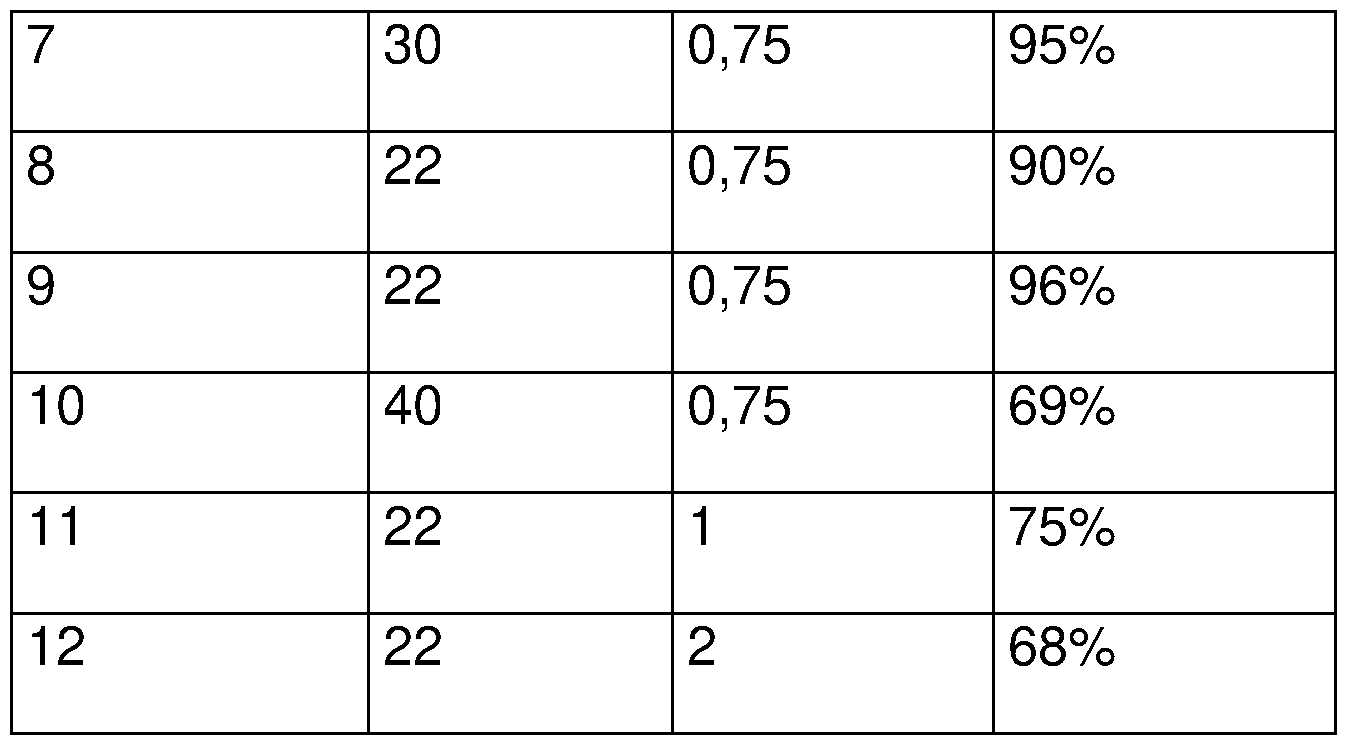
- Test 1 aims to evaluate the addition of components to improve the texture of the product.
- Test 2 aims to evaluate the mixture of components to improve the texture of the product. For each test participants tasted the products and were asked to rate from 1 to 10 how pleasant the products were: chewiness, firmness, texture and taste. The averages are presented in tables 1 and 2.
- Mixture A Acacia Gum 2%, bamboo Fiber 0.2%, Chickpea Flour 1%, natural flavor or identical to natural flavor powder, chicken, garlic and onion, 0.2%.
- Mixture B Acacia Gum 2%, bamboo Fiber 0, Chickpea Flour 1%, natural flavor or identical to natural flavor powder, chicken, garlic and onion, 0.2%.
- Mixture C Acacia Gum 2%, bamboo Fiber 0.2%, Chickpea Flour 0, natural flavor or identical to natural flavor powder, chicken, garlic and onion, 0.2%.
- the pre-inoculum can be made from a spore solution containing 10 A 5 to 10 A 10 spores/mL, preferably 10 A 8, or from a liquid culture in a proportion of 2-10%, preferably 6%.
- Biomass production on a dry basis was quantified at the end of fermentation. With an inoculum rate of 10%, 12g/L of mycelium was produced; while 11.46g/L was obtained using 6% rate of inoculum and 8.33g/L with 2%. The possibility of using low inoculum rates favors the scaling of the technology. In the case of an inoculum rate of 10%, for example, a 200L culture could inoculate 2,000L of medium, while an inoculum rate of 6% would allow inoculating 3,333L.
- the fresh biomass obtained can be processed to remove moisture, resulting in a dry protein concentrate.
- Dehydration can be carried out by different methods such as drying in trays, fluidized bed or spouted bed, spray dryer, freeze drying, natural (solar), rotary dryers, tunnels, conveyors, cyclones, screw advancement, among others.
- the process temperature should preferably be low (preferably between 50 and 60 Q C) when it is desired to preserve the nutritional and sensory properties of the mycelium, avoiding protein hydrolysis, thermal destruction of vitamins and lipid oxidation. Ambient temperatures up to 100°C can be used.
- the biomass obtained can be subsequently processed in a mill to standardize the particle size. [0089].
- 5kg of fresh mycelium biomass was subjected to drying on trays, in an oven with forced air circulation, at 50 Q C for 24 hours.
- the dry material was processed in a disc mill and analyzed for nutritional composition.
- a hybrid product was prepared by mixing red meat with fresh mycelium biomass with 80% moisture illustrated in figures 3 and 4 in comparison with the product comprising only meat and also in the presence and absence of dye. Different proportions of beef and mycelium were evaluated.
- a standard (comparative) product a hamburger was prepared using 100% beef. In the first test, 100g burgers were manually produced, to which 1% natural beetroot coloring was added. A sensory test was then carried out with 12 people (Table 5).
- Agriculture and livestock are currently responsible for 70% of water consumption and 25% of greenhouse gases emitted by human activities.
- Animal production stands out because it depends directly on agricultural production and carries in its life cycle all the environmental impacts caused by it, such as the use of fertile land, chemical products (fertilizers, fertilizers, insecticides, etc.), for example. Furthermore, it contributes massively to methane emissions, consumption of water resources, energy consumption, pollution of water bodies, production of liquid and solid effluents that are difficult to treat and dispose of, and soil degradation.
- Agriculture and livestock are also closely related to deforestation, because their production is horizontal and the expansion of productive areas requires advancement into new territories.
- Cattle, chicken and pork are currently the most consumed sources of animal protein in the world. In the case of cattle, only 40-45% of their weight is meat, of which 25% is protein, on average. A cattle is slaughtered after 24 months and occupies approximately 15m 2 of area when confined. Considering an animal slaughtered weighing 650kg (average in 2021), it will have produced only 0.006kg of protein/day/m 2 . A The water footprint of beef production is estimated at 10.5m3 per kg of meat, or 42m3 per kg of protein.
Landscapes
- Life Sciences & Earth Sciences (AREA)
- Chemical & Material Sciences (AREA)
- Engineering & Computer Science (AREA)
- Health & Medical Sciences (AREA)
- Polymers & Plastics (AREA)
- Food Science & Technology (AREA)
- Nutrition Science (AREA)
- Microbiology (AREA)
- Mycology (AREA)
- Biotechnology (AREA)
- Biochemistry (AREA)
- Zoology (AREA)
- Dispersion Chemistry (AREA)
- Organic Chemistry (AREA)
- Wood Science & Technology (AREA)
- Bioinformatics & Cheminformatics (AREA)
- Genetics & Genomics (AREA)
- Botany (AREA)
- Medicinal Chemistry (AREA)
- General Health & Medical Sciences (AREA)
- Proteomics, Peptides & Aminoacids (AREA)
- Virology (AREA)
- Tropical Medicine & Parasitology (AREA)
- General Engineering & Computer Science (AREA)
- Biomedical Technology (AREA)
- Molecular Biology (AREA)
- Physiology (AREA)
- Animal Husbandry (AREA)
- Environmental Sciences (AREA)
- Cell Biology (AREA)
- Micro-Organisms Or Cultivation Processes Thereof (AREA)
- Coloring Foods And Improving Nutritive Qualities (AREA)
- Preparation Of Fruits And Vegetables (AREA)
- Seeds, Soups, And Other Foods (AREA)
Abstract
Description




Claims
Priority Applications (5)
| Application Number | Priority Date | Filing Date | Title |
|---|---|---|---|
| CN202380078599.8A CN120265749A (zh) | 2022-11-13 | 2023-11-13 | 菌丝体生物质、菌丝体生物质生产方法、菌丝体生物质在食品生产中的应用、基于菌丝体生物质的食品及其生产方法 |
| JP2025528185A JP2025537309A (ja) | 2022-11-13 | 2023-11-13 | 菌糸体バイオマス、菌糸体バイオマス産生プロセス、食品産生における菌糸体バイオマスの使用、菌糸体バイオマスベースの食品及びその産生プロセス |
| GB2509056.4A GB2641162A (en) | 2022-11-13 | 2023-11-13 | Mycelial biomass, mycelial biomass production process, use of mycelial biomass in the production of food products, mycelial biomass-based food products and |
| EP23887225.3A EP4617358A1 (en) | 2022-11-13 | 2023-11-13 | Mycelial biomass, mycelial biomass production process, use of mycelial biomass in the production of food products, mycelial biomass-based food products and process for producing same |
| MX2025005519A MX2025005519A (es) | 2022-11-13 | 2025-05-12 | Biomasa micelial, proceso de produccion de biomasa micelial, uso de biomasa micelial en la produccion de producto alimenticio, producto alimenticio a base de biomasa micelial y su proceso de produccion |
Applications Claiming Priority (2)
| Application Number | Priority Date | Filing Date | Title |
|---|---|---|---|
| BR102022023125 | 2022-11-13 | ||
| BR1020220231257 | 2022-11-13 |
Publications (1)
| Publication Number | Publication Date |
|---|---|
| WO2024098132A1 true WO2024098132A1 (pt) | 2024-05-16 |
Family
ID=91031534
Family Applications (1)
| Application Number | Title | Priority Date | Filing Date |
|---|---|---|---|
| PCT/BR2023/050385 Ceased WO2024098132A1 (pt) | 2022-11-13 | 2023-11-13 | Biomassa micelial, processo de produção da biomassa micelial, uso da biomassa micelial na produção de produto alimentício, produto alimentício à base de biomassa micelial e seu processo de produção |
Country Status (10)
| Country | Link |
|---|---|
| EP (1) | EP4617358A1 (pt) |
| JP (1) | JP2025537309A (pt) |
| CN (1) | CN120265749A (pt) |
| AR (1) | AR131040A1 (pt) |
| CL (1) | CL2025001397A1 (pt) |
| CO (1) | CO2023015276A1 (pt) |
| GB (1) | GB2641162A (pt) |
| MX (1) | MX2025005519A (pt) |
| UY (1) | UY40519A (pt) |
| WO (1) | WO2024098132A1 (pt) |
Cited By (1)
| Publication number | Priority date | Publication date | Assignee | Title |
|---|---|---|---|---|
| WO2025133622A1 (en) * | 2023-12-22 | 2025-06-26 | Adamo Foods Ltd | Biomass, methods and bioreactor systems |
Citations (5)
| Publication number | Priority date | Publication date | Assignee | Title |
|---|---|---|---|---|
| US20190373934A1 (en) | 2018-06-08 | 2019-12-12 | Emergy Inc. | Edible compositions including fungal mycelium protein |
| WO2020061502A1 (en) | 2018-09-20 | 2020-03-26 | The Better Meat Company | Enhanced aerobic fermentation methods for producing edible fungal mycelium blended meats and meat analogue compositions |
| US20200305486A1 (en) | 2017-12-21 | 2020-10-01 | Marlow Foods Limited | Foodstuff |
| WO2021092051A1 (en) | 2019-11-05 | 2021-05-14 | Ecovative Design Llc | Edible mycelia and methods of making the same |
| EP3942937A1 (en) * | 2020-07-03 | 2022-01-26 | Mycorena AB | A food product comprising a pure fungi biomass |
-
2023
- 2023-11-11 CO CONC2023/0015276A patent/CO2023015276A1/es unknown
- 2023-11-13 AR ARP230103041A patent/AR131040A1/es unknown
- 2023-11-13 EP EP23887225.3A patent/EP4617358A1/en active Pending
- 2023-11-13 JP JP2025528185A patent/JP2025537309A/ja active Pending
- 2023-11-13 WO PCT/BR2023/050385 patent/WO2024098132A1/pt not_active Ceased
- 2023-11-13 CN CN202380078599.8A patent/CN120265749A/zh active Pending
- 2023-11-13 UY UY0001040519A patent/UY40519A/es unknown
- 2023-11-13 GB GB2509056.4A patent/GB2641162A/en active Pending
-
2025
- 2025-05-12 CL CL2025001397A patent/CL2025001397A1/es unknown
- 2025-05-12 MX MX2025005519A patent/MX2025005519A/es unknown
Patent Citations (5)
| Publication number | Priority date | Publication date | Assignee | Title |
|---|---|---|---|---|
| US20200305486A1 (en) | 2017-12-21 | 2020-10-01 | Marlow Foods Limited | Foodstuff |
| US20190373934A1 (en) | 2018-06-08 | 2019-12-12 | Emergy Inc. | Edible compositions including fungal mycelium protein |
| WO2020061502A1 (en) | 2018-09-20 | 2020-03-26 | The Better Meat Company | Enhanced aerobic fermentation methods for producing edible fungal mycelium blended meats and meat analogue compositions |
| WO2021092051A1 (en) | 2019-11-05 | 2021-05-14 | Ecovative Design Llc | Edible mycelia and methods of making the same |
| EP3942937A1 (en) * | 2020-07-03 | 2022-01-26 | Mycorena AB | A food product comprising a pure fungi biomass |
Non-Patent Citations (5)
| Title |
|---|
| AHMAD MUHAMMAD IJAZ; FAROOQ SHAHZAD; ALHAMOUD YASMIN; LI CHUNBAO; ZHANG HUI: "A review on mycoprotein: History, nutritional composition, production methods, and health benefits", TRENDS IN FOOD SCIENCE & TECHNOLOGY, ELSEVIER SCIENCE PUBLISHERS, GB, vol. 121, 19 January 2022 (2022-01-19), GB , pages 14 - 29, XP086971024, ISSN: 0924-2244, DOI: 10.1016/j.tifs.2022.01.027 * |
| BENJAMIN M. BOHRER: "An investigation of the formulation and nutritional composition of modern meat analogue products", FOOD SCIENCE AND HUMAN WELLNESS, vol. 8, no. 4, 1 December 2019 (2019-12-01), pages 320 - 329, XP093154129, ISSN: 2213-4530, DOI: 10.1016/j.fshw.2019.11.006 * |
| CHEZAN DANA; FLANNERY ORLA; PATEL AJAY: "Factors affecting consumer attitudes to fungi-based protein: A pilot study", APPETITE, ACADEMIC PRESS, NEW YORK, NY, US, vol. 175, 26 April 2022 (2022-04-26), US , XP087087845, ISSN: 0195-6663, DOI: 10.1016/j.appet.2022.106043 * |
| OLASKY GAMARRA-CASTILLO: "Meat Substitute Development from Fungal Protein (Aspergillus oryzae)", FOODS, M D P I AG, CH, vol. 11, no. 19, 20 October 2022 (2022-10-20), CH , pages 2940, XP093169510, ISSN: 2304-8158, DOI: 10.3390/foods11192940 * |
| See also references of EP4617358A1 |
Cited By (1)
| Publication number | Priority date | Publication date | Assignee | Title |
|---|---|---|---|---|
| WO2025133622A1 (en) * | 2023-12-22 | 2025-06-26 | Adamo Foods Ltd | Biomass, methods and bioreactor systems |
Also Published As
| Publication number | Publication date |
|---|---|
| CO2023015276A1 (es) | 2024-05-20 |
| EP4617358A1 (en) | 2025-09-17 |
| CN120265749A (zh) | 2025-07-04 |
| UY40519A (es) | 2024-05-31 |
| GB2641162A (en) | 2025-11-19 |
| GB202509056D0 (en) | 2025-07-23 |
| JP2025537309A (ja) | 2025-11-14 |
| MX2025005519A (es) | 2025-06-02 |
| AR131040A1 (es) | 2025-02-12 |
| CL2025001397A1 (es) | 2025-08-08 |
Similar Documents
| Publication | Publication Date | Title |
|---|---|---|
| Halász et al. | Use of yeast biomass in food production | |
| Maehre et al. | Heat treatment increases the protein bioaccessibility in the red seaweed dulse (Palmaria palmata), but not in the brown seaweed winged kelp (Alaria esculenta) | |
| US4367240A (en) | Protein-containing food material | |
| EP4501127A2 (en) | IMPROVED AEROBIC FERMENTATION PROCESSES FOR PRODUCING EDIBLE FUNGAL MYCELIUM MIXED MEATS AND MEAT ANALOG COMPOSITIONS | |
| CN113412932A (zh) | 一种食用菌丝蛋白加工方法及应用 | |
| CN105036857A (zh) | 一种香菇培养基质及其制备方法 | |
| Thierry et al. | Effect of pure culture fermentation on biochemical composition of Moringa oleifera Lam leaves powders | |
| WO2023137192A1 (en) | Meat replica fungal food product | |
| Hamdy | Production of mini-food by Aspergillus niger, Rhizopus oryzae and Saccharomyces cerevisiae using orange peels | |
| CN106262591A (zh) | 一种清真香辣虾调味料及其制备方法 | |
| CN109757702B (zh) | 一种增鲜鸡精及其制备方法 | |
| WO2024005625A1 (es) | Proceso de producción y formulación de proteína unicelular a partir de la fermentación de levadura kluyveromyces marxianus | |
| CN116195732A (zh) | 一种食用菌菌丝体发酵素肠及其制备方法 | |
| Souza Filho | Fungal protein | |
| Yusuf et al. | Quality aspects related to meat analogue based on microbiology, plants and insects protein | |
| WO2024098132A1 (pt) | Biomassa micelial, processo de produção da biomassa micelial, uso da biomassa micelial na produção de produto alimentício, produto alimentício à base de biomassa micelial e seu processo de produção | |
| Wang et al. | Yield, polysaccharides content and antioxidant properties of Pleurotus abalonus and Pleurotus geesteranus produced on asparagus straw as substrate | |
| Okechukwu et al. | Suitability of microalgae and fungi in meat analogs: an overview | |
| Kim et al. | An Investigation of the Status of Commercial Meat Analogs and Their Ingredients: Worldwide and South Korea | |
| CN111493292A (zh) | 一种以海洋生物和/或海产品加工废弃物为原料制备精膏的方法 | |
| Song et al. | Nutritional value evaluation of wild edible mushroom (Helvella leucopus) from western China | |
| WO2026012333A1 (zh) | 生产菌丝蛋白的镰孢菌及其应用 | |
| BR102023023705B1 (pt) | Processo de produção da biomassa micelial, uso da biomassa micelial na produção de produto alimentício, processo de produção do produto alimentício à base de biomassa micelial e o produto alimentício à base de biomassa micelial | |
| WO2024136727A1 (en) | Circular production of fungal biomass and algal biomass | |
| Silva et al. | Meat, Fish and Milk Analogues as Future Foods in Sri Lanka |
Legal Events
| Date | Code | Title | Description |
|---|---|---|---|
| 121 | Ep: the epo has been informed by wipo that ep was designated in this application |
Ref document number: 23887225 Country of ref document: EP Kind code of ref document: A1 |
|
| DPE1 | Request for preliminary examination filed after expiration of 19th month from priority date (pct application filed from 20040101) | ||
| WWE | Wipo information: entry into national phase |
Ref document number: 2501003087 Country of ref document: TH |
|
| WWE | Wipo information: entry into national phase |
Ref document number: MX/A/2025/005519 Country of ref document: MX Ref document number: 202380078599.8 Country of ref document: CN |
|
| ENP | Entry into the national phase |
Ref document number: 2025528185 Country of ref document: JP Kind code of ref document: A |
|
| WWE | Wipo information: entry into national phase |
Ref document number: 2025528185 Country of ref document: JP |
|
| WWP | Wipo information: published in national office |
Ref document number: MX/A/2025/005519 Country of ref document: MX |
|
| WWE | Wipo information: entry into national phase |
Ref document number: 202547054722 Country of ref document: IN |
|
| ENP | Entry into the national phase |
Ref document number: 202509056 Country of ref document: GB Kind code of ref document: A Free format text: PCT FILING DATE = 20231113 |
|
| WWE | Wipo information: entry into national phase |
Ref document number: 2509056.4 Country of ref document: GB |
|
| WWE | Wipo information: entry into national phase |
Ref document number: 2023887225 Country of ref document: EP |
|
| WWP | Wipo information: published in national office |
Ref document number: 202547054722 Country of ref document: IN |
|
| NENP | Non-entry into the national phase |
Ref country code: DE |
|
| ENP | Entry into the national phase |
Ref document number: 2023887225 Country of ref document: EP Effective date: 20250613 |
|
| WWE | Wipo information: entry into national phase |
Ref document number: 11202503197P Country of ref document: SG |
|
| WWP | Wipo information: published in national office |
Ref document number: 11202503197P Country of ref document: SG |
|
| WWP | Wipo information: published in national office |
Ref document number: 202380078599.8 Country of ref document: CN |
|
| WWP | Wipo information: published in national office |
Ref document number: 2023887225 Country of ref document: EP |
|
| WWP | Wipo information: published in national office |
Ref document number: 2509056.4 Country of ref document: GB |