WO2024122601A1 - 画像処理装置および方法 - Google Patents
画像処理装置および方法 Download PDFInfo
- Publication number
- WO2024122601A1 WO2024122601A1 PCT/JP2023/043767 JP2023043767W WO2024122601A1 WO 2024122601 A1 WO2024122601 A1 WO 2024122601A1 JP 2023043767 W JP2023043767 W JP 2023043767W WO 2024122601 A1 WO2024122601 A1 WO 2024122601A1
- Authority
- WO
- WIPO (PCT)
- Prior art keywords
- image
- signature
- hash
- metadata
- unit
- Prior art date
- Legal status (The legal status is an assumption and is not a legal conclusion. Google has not performed a legal analysis and makes no representation as to the accuracy of the status listed.)
- Ceased
Links
Images








Classifications
-
- H—ELECTRICITY
- H04—ELECTRIC COMMUNICATION TECHNIQUE
- H04L—TRANSMISSION OF DIGITAL INFORMATION, e.g. TELEGRAPHIC COMMUNICATION
- H04L9/00—Cryptographic mechanisms or cryptographic arrangements for secret or secure communications; Network security protocols
- H04L9/32—Cryptographic mechanisms or cryptographic arrangements for secret or secure communications; Network security protocols including means for verifying the identity or authority of a user of the system or for message authentication, e.g. authorization, entity authentication, data integrity or data verification, non-repudiation, key authentication or verification of credentials
- H04L9/3247—Cryptographic mechanisms or cryptographic arrangements for secret or secure communications; Network security protocols including means for verifying the identity or authority of a user of the system or for message authentication, e.g. authorization, entity authentication, data integrity or data verification, non-repudiation, key authentication or verification of credentials involving digital signatures
-
- G—PHYSICS
- G06—COMPUTING OR CALCULATING; COUNTING
- G06F—ELECTRIC DIGITAL DATA PROCESSING
- G06F21/00—Security arrangements for protecting computers, components thereof, programs or data against unauthorised activity
- G06F21/60—Protecting data
- G06F21/64—Protecting data integrity, e.g. using checksums, certificates or signatures
-
- H—ELECTRICITY
- H04—ELECTRIC COMMUNICATION TECHNIQUE
- H04L—TRANSMISSION OF DIGITAL INFORMATION, e.g. TELEGRAPHIC COMMUNICATION
- H04L9/00—Cryptographic mechanisms or cryptographic arrangements for secret or secure communications; Network security protocols
- H04L9/08—Key distribution or management, e.g. generation, sharing or updating, of cryptographic keys or passwords
- H04L9/088—Usage controlling of secret information, e.g. techniques for restricting cryptographic keys to pre-authorized uses, different access levels, validity of crypto-period, different key- or password length, or different strong and weak cryptographic algorithms
Definitions
- This disclosure relates to an image processing device and method, and in particular to an image processing device and method that can suppress a decrease in the usability of captured images.
- a method has been devised in which the distribution of the public key is limited to a limited number of people, and additional tamper detection is implemented.
- additional tamper detection By implementing additional tamper detection, more powerful tamper detection can be performed.
- the tamper detection method can be kept private (or the scope of disclosure can be limited). This makes it possible to prevent a decrease in the validity of the tamper detection.
- This disclosure has been made in light of these circumstances, and aims to prevent any reduction in the usability of captured images.
- An image processing device includes a hash processing unit that uses a captured image and metadata to generate a first hash corresponding to a first signature and a second hash corresponding to a second signature, a signature generation unit that generates the first signature using a first private key and the first hash and generates the second signature using a second private key and the second hash, and a file generation unit that generates a file that stores the captured image, the metadata, the first signature, and the second signature, and the first private key corresponds to a limited public key that is made public only to a first entity having specific authority other than user authority, and the second private key corresponds to a user public key that is made public to a second entity having the user authority.
- An image processing method uses a captured image and metadata to generate a first hash corresponding to a first signature and a second hash corresponding to a second signature, generates the first signature using a first private key and the first hash, generates the second signature using a second private key and the second hash, and generates a file that stores the captured image, the metadata, the first signature, and the second signature, wherein the first private key corresponds to a limited public key that is made public only to a first entity having specific authority other than user authority, and the second private key corresponds to a user public key that is made public to a second entity having the user authority.
- An image processing device includes a file acquisition unit that acquires a file in which an image, metadata, a first signature, and a second signature are stored, and a verification unit that verifies the authenticity of the image using a limited public key that is disclosed only to a first entity having specific authority other than user authority, the image, the metadata, and the first signature, where the first signature is a signature generated using a first private key corresponding to the limited public key, a captured image corresponding to the image, and metadata of the captured image, and the second signature is a signature generated using a second private key corresponding to a user public key that is also disclosed to a second entity having the user authority, the image, and the metadata.
- An image processing method includes obtaining a file in which an image, metadata, a first signature, and a second signature are stored, and verifying the authenticity of the image using a limited public key that is disclosed only to a first entity having specific authority other than user authority, the image, the metadata, and the first signature, the first signature being a signature generated using a first private key corresponding to the limited public key, a captured image corresponding to the image, and the metadata of the captured image, and the second signature being a signature generated using a second private key corresponding to a user public key that is also disclosed to a second entity having the user authority, the image, and the metadata.
- a first hash corresponding to the first signature and a second hash corresponding to the second signature are generated using a captured image and metadata
- a first signature is generated using a first private key and the first hash
- a second signature is generated using a second private key and the second hash
- a file is generated that stores the captured image, metadata, the first signature, and the second signature.
- the first private key corresponds to a limited public key that is made public only to a first entity having specific authority other than user authority
- the second private key corresponds to a user public key that is also made public to a second entity having the user authority.
- a file in which an image, metadata, a first signature, and a second signature are stored is obtained, and the authenticity of the image is verified using a limited public key that is disclosed only to a first entity having specific authority other than user authority, the image, metadata, and the first signature.
- the first signature is a signature generated using a first private key corresponding to the limited public key, a captured image corresponding to the image, and metadata of the captured image
- the second signature is a signature generated using a second private key corresponding to a user public key that is also disclosed to a second entity having user authority, the image, and metadata.
- FIG. 13 is a diagram illustrating an example of a method for generating an image file.
- FIG. 2 is a diagram showing an example of the main configuration of an image file.
- FIG. 2 is a diagram showing an example of the main configuration of an image file.
- FIG. 13 is a diagram illustrating an example of a target range of hashing.
- FIG. 13 is a diagram illustrating an example of a storage location of a signature.
- FIG. 1 is a diagram illustrating an example of a main configuration of an image processing system. 1 is a block diagram showing an example of a main configuration of an imaging apparatus;
- FIG. 2 is a block diagram showing an example of a main configuration of a verification device.
- FIG. 2 is a block diagram showing an example of a main configuration of a server.
- 11 is a flowchart illustrating an example of the flow of an imaging process.
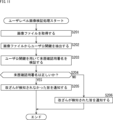
- 13 is a flowchart illustrating an example of the flow of a user-level image verification process.
- 11 is a flowchart illustrating an example of the flow of a high-level image verification process.
- 11 is a flowchart illustrating an example of the flow of a high-level image verification process.
- 11 is a flowchart illustrating an example of the flow of a high-level image verification process.
- 11 is a flowchart illustrating an example of the flow of a high-level image verification process.
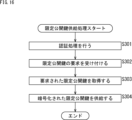
- 13 is a flowchart illustrating an example of the flow of a limited public key supply process.
- FIG. 2 is a block diagram showing an example of a main configuration of a computer.
- Patent Document 1 (mentioned above)
- Non-Patent Document 1 (mentioned above)
- Patent Literature 1 there has been a method for making it possible to detect tampering by adding a digital signature to an image when it is captured. Also, as disclosed in Non-Patent Literature 1, there has been a method for leaving a history with a digital signature when an image is generated or edited, making it possible to trace the history.
- the software or server in charge of editing checks the past history of the image with a public key in the image, and then inherits the signature of the past tool and part of the data to be signed as metadata for the new image, and in addition signs it with a private key and adds the corresponding public key.
- a method has been devised in which the distribution of the public key is limited to a limited number of people, and additional tamper detection is implemented.
- additional tamper detection By implementing additional tamper detection, more powerful tamper detection can be performed.
- the tamper detection method can be kept private (or the scope of disclosure can be limited). This makes it possible to prevent a decrease in the validity of the tamper detection.
- a "verification method that can detect tampering more reliably” is, for example, a verification method that can detect tampering of an image more reliably than a verification method that can be executed by an entity with user authority.
- the verification method may be any method.
- a verification method that uses information stored in a file such as an image and its metadata
- This verification that uses information stored in a file may be any method.
- it may be a method that detects tampering based on the presence or absence of inconsistencies between an image and metadata, or any other method.
- a method that uses information other than the information stored in a file may be applied.
- an entity with specific authority other than user authority refers to an entity that is given authority not given to user authority, such as a system or service provider or administrator, or a computer or application with equivalent authority.
- specific authority may be, for example, an authority with a higher level than user authority. Therefore, in this specification, "a verification method that can detect tampering more powerfully” is also referred to as high-level image verification (processing).
- the authority to perform this high-level image verification is limited to "entities with specific authority other than user authority.”
- the "verification using a signature” included in the high-level image verification uses a public key that is only made public to "entities with specific authority other than user authority.”
- this public key is also referred to as a restricted public key.
- the signature used in this high-level image verification is generated using a hash of the image, metadata, etc., and a private key corresponding to this restricted public key.
- this signature is also referred to as a first signature.
- the hash used to generate this first signature (i.e., the hash corresponding to the first signature) is also referred to as a first hash.
- the private key corresponding to the restricted public key (i.e., the private key used to generate the first signature) is also referred to as a first private key.
- the first signature is also referred to as a tamper detection signature because it is used for verification to detect image tampering as described above.
- an entity with user privileges is not permitted to apply the above-mentioned "verification methods that can more effectively detect tampering," but is permitted to apply general verification methods.
- a "general verification method” is, for example, a verification method that can be executed by an entity with user authority.
- the verification method may be any method.
- it may be a method that uses a signature to detect image tampering.
- an "entity with user authority” is, for example, a user of a system or service, or a computer or application with the same authority as that user. Therefore, in this specification, the "general verification method” is also referred to as user-level image verification (processing).
- An entity with user authority is provided with a public key whose scope of disclosure is not restricted.
- this public key whose scope of disclosure is not restricted is also referred to as a user public key.
- the signature used in this user-level image verification is generated using a hash of the image, metadata, etc., and a private key corresponding to this user public key.
- this signature is also referred to as a second signature.
- the hash used to generate this second signature i.e., the hash corresponding to the second signature
- the private key corresponding to the user public key i.e., the private key used to generate the second signature
- the second signature is also referred to as a signature for verifying history.
- the first signature (signature for detecting tampering) is used in the verification process for detecting tampering, and is therefore generated for the first image (e.g., the captured image).
- the second signature (signature for verifying history) is used in the verification process for verifying history, and is therefore generated for the first image (e.g., the captured image), and is updated (a new signature is generated) every time the image is edited.
- the software or server responsible for editing verifies the image's past history with the public key in the image, and then inherits the signature of the previous tool and part of the data to be signed as metadata for the new image, and in addition signs it with the second private key and assigns the corresponding user public key.
- the first signature (signature for detecting tampering) and the second signature (signature for verifying history) are stored in a file (also called an image file) that stores images, metadata, etc.
- a first image processing device e.g., an imaging device
- a hash processing unit that uses a captured image and metadata to generate a first hash corresponding to a first signature (signature for tamper detection) and a second hash corresponding to a second signature (signature for history verification)
- a signature generation unit that uses a first private key and the first hash to generate a first signature and a second signature using a second private key and the second hash
- a file generation unit that generates a file (image file) that stores the captured image, metadata, first signature, and second signature.
- the first private key corresponds to a limited public key that is made public only to a first entity having specific authority other than user authority.
- the second private key corresponds to a user public key that is made public to a second entity having user authority.
- a first image processing device e.g., an imaging device
- a first hash corresponding to a first signature signature for detecting tampering
- a second hash corresponding to a second signature signature for verifying history
- a first signature is generated using a first private key and the first hash
- a second signature is generated using a second private key and the second hash
- a file image file
- the first private key corresponds to a limited public key that is made public only to a first entity having specific authority other than user authority.
- the second private key corresponds to a user public key that is made public to a second entity having user authority.
- the limited public key used during high-level image verification be provided in a manner that minimizes the risk of leakage.
- the limited public key may be encrypted and supplied in a predetermined manner.
- the encrypted limited public key may be decrypted and used during high-level image verification.
- This limited public key may be provided from anywhere. For example, it may be provided from a server that manages limited public keys, or it may be stored in an encrypted state in the image file.
- the imaging device may already have an encrypted limited public key, and the limited public key may be stored in the image file.
- the user public key may be provided from anywhere. For example, it may be stored in the image file.
- the imaging device may have a user public key in advance, and the user public key may be stored in the image file.
- the imaging device may have in advance a first private key corresponding to the limited public key and a second private key corresponding to the user public key.
- the signature generation unit may hold in advance the first private key and the second private key.
- the tamper detection signature may be generated before the history verification signature is generated.
- the hash processing unit may generate a first hash using the captured image and metadata
- the signature generation unit may generate a first signature using a first private key and the first hash
- the hash processing unit may generate a second hash using the captured image, metadata, and the first signature
- the signature generation unit may generate a second signature using a second private key and the second hash.
- user-level image verification can be performed without performing high-level image verification.
- history verification can be performed using the user public key (without the need for a restricted public key).
- an entity with user authority can verify the history of image editing.
- the tamper detection signature and the history verification signature are generated for the initial image.
- the tamper detection signature and the history verification signature may be generated for a captured image obtained by capturing an image of a subject.
- the imaging device may capture an image of a subject and generate a first hash and a second hash using the captured image and its metadata, etc.
- the first image processing device may further include an imaging unit that captures an image of a subject and generates a captured image. Then, the hash processing unit may generate a first hash and a second hash using the generated captured image and metadata. In this way, it becomes possible to more powerfully detect tampering with a captured image and to confirm the editing history of the captured image.
- the tamper detection signature may be stored anywhere in the image file.
- the tamper detection signature may be stored in an area of the image file that stores metadata.
- the file generation unit may store the first signature (tamper detection signature) in a metadata area of the file that stores metadata.
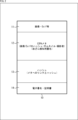
- FIG. 2 is a diagram showing an example of the main configuration of an image file.
- the image file 10 shown in FIG. 2 has an image area 11, a metadata area 12, a hash area 13, and a signature area 14.
- the image area 11 stores, for example, a captured image (image, Exif (Exchangeable Image File Format), etc.).
- the metadata area 12 stores, for example, metadata such as an image/Exif hash, a reduced image (thumbnail, screennail, etc.), the photographer, etc. This metadata may be, for example, metadata defined by the C2PA standard (C2PA meta).
- the hash area 13 stores, for example, a link to metadata and a hash, etc.
- the signature area 14 stores, for example, an electronic signature, a certificate, etc.
- a signature for tamper detection is further stored.
- the signature for tamper detection can be retained as metadata even if the image is edited. This makes it possible to perform high-level image verification even on image files that store edited images.
- FIG. 3 shows an example of the main configuration of an image file when an image is edited.
- the image file 20 shown in FIG. 3 has an image area 21, a metadata area 22-1, a hash area 23-1, a signature area 24-1, a metadata area 22-2, a hash area 23-2, a signature area 24-2, a metadata area 22-3, a hash area 23-3, and a signature area 24-3.
- the metadata area 22-1, the metadata area 22-2, and the metadata area 22-3 are not distinguished from one another, they are also referred to as the metadata area 22.
- the hash area 23-1, the hash area 23-2, and the hash area 23-3 are not distinguished from one another, they are also referred to as the hash area 23.
- the signature area 24-1, the signature area 24-2, and the signature area 24-3 are not distinguished from one another, they are also referred to as the signature area 24.
- the most recent image is stored in the image area.
- the image area 21 stores a secondary edited image (image, Exif, etc.) that has been edited twice from a captured image.
- Information from the captured image is stored in the metadata area 22-3, hash area 23-3, and signature area 24-3. That is, metadata of the captured image (e.g., image/Exif hash, thumbnail image, photographer, etc.) is stored in the metadata area 22-3.
- the metadata area 22-3 also stores a signature for detecting tampering generated using the hash of the image and metadata and a first private key.
- the hash area 23-3 stores a link and hash to the metadata stored in the metadata area 22-3.
- the signature area 24-3 stores information from the hash area 23-3 (hashes of the image and metadata, etc.) and a signature for verifying history generated using the second private key (a signature for verifying history corresponding to the captured image), a user public key, etc.
- the metadata area 22-2 stores metadata of the primary edited image (e.g., image/Exif hash, reduced image, editing information, etc.).
- the hash area 23-2 stores a link and hash to the metadata stored in the metadata area 22-2.
- the signature area 24-2 stores the information in the hash area 23-2 (hashes of the image and metadata, etc.) and a history verification signature (a history verification signature corresponding to the primary edited image) generated using the second private key, a user public key, etc.
- Information from the secondary edited image obtained by editing the primary edited image is stored in the metadata area 22-1, hash area 23-1, and signature area 24-1. That is, metadata of the secondary edited image (e.g., image/Exif hash, reduced image, editing information, etc.) is stored in the metadata area 22-1. Links and hashes to the metadata stored in the metadata area 22-1 are stored in the hash area 23-1.
- the signature area 24-1 stores the information in the hash area 23-1 (hashes of the image and metadata, etc.) and a history verification signature (a history verification signature corresponding to the secondary edited image) generated using the second private key, a user public key, etc.
- a verification device that verifies the authenticity of captured images stored in such image files performs the verification using a limited public key and a signature for tamper detection.
- the second image processing device includes a file acquisition unit that acquires a file (image file) in which an image, metadata, a first signature (signature for detecting tampering), and a second signature (signature for verifying provenance) are stored, and a verification unit that verifies the authenticity of the image using a limited public key that is made public only to a first entity having specific authority other than user authority, the image, metadata, and the first signature.
- a file acquisition unit that acquires a file (image file) in which an image, metadata, a first signature (signature for detecting tampering), and a second signature (signature for verifying provenance) are stored
- a verification unit that verifies the authenticity of the image using a limited public key that is made public only to a first entity having specific authority other than user authority, the image, metadata, and the first signature.
- a file in which the image, metadata, a first signature (signature for detecting tampering), and a second signature (signature for verifying provenance) are stored is acquired, and the authenticity of the image is verified using a limited public key, the image, metadata, and the first signature that are made public only to a first entity having specific authority other than user authority.
- the first signature is a signature generated using a first private key corresponding to the limited public key, a captured image corresponding to the image, and metadata of the captured image.
- the second signature is a signature generated using a second private key corresponding to a user public key that is also made public to a second entity having user authority, the image, and metadata.
- the verification device when performing high-level image verification on the image file 20 shown in FIG. 3, the verification device extracts the necessary parts (information about the captured image) from the image file 20 and performs the verification.
- the verification device can perform high-level image verification (verification that can more effectively detect tampering).
- the limited public key used in this high-level image verification be provided in a manner that reduces the risk of leakage.
- the limited public key may be encrypted in a predetermined manner and supplied.
- the encrypted limited public key may be decrypted and used in high-level image verification.
- the second image processing device may further include a decryption unit that decrypts the encrypted limited public key. The verification unit may then verify the authenticity of the image using the decrypted limited public key, image, metadata, and first signature. In this way, leakage of the limited public key can be suppressed.
- this limited public key may be provided from anywhere. For example, it may be provided from a server that manages limited public keys. It may also be stored in an encrypted state in the image file. Furthermore, high-level image verification may be performed using reduced images and metadata.
- the second image processing device may further include a limited public key acquisition unit that acquires an "encrypted limited public key" supplied from another device. Then, the decryption unit may decrypt the acquired "encrypted limited public key," and the verification unit may verify the authenticity of the image using the decrypted limited public key, the image, the metadata, and the first signature.
- the limited public key may be managed in a dedicated server, thereby preventing the limited public key from being leaked.
- the verification device may perform an authentication process with respect to the server. Any method may be used for this authentication process. By performing the authentication process, it is possible to prevent the limited public key from being provided to an unauthorized device.
- the decryption unit may extract the encrypted limited public key from a file and decrypt it.
- the targets of each signature may be different from each other, as shown in the second row from the top of the table in Fig. 1 (method 1-1).
- the range of data targeted by the history verification signature may be wider than the range of data targeted by the tamper detection signature.
- a hash processing unit may generate a first hash for a first range of the captured image and metadata, and generate a second hash for a second range wider than the first range.
- the history verification signature may cover the entire captured image and metadata, while the tamper detection signature may exclude some of the captured image and metadata.
- the first range described above may be a range that excludes some of the captured image and metadata.
- the second range described above may be the entire captured image and metadata.
- this part of the data may be data regarding a specific processing for the captured image.
- this "data regarding a specific processing” may include at least one of data regarding image rotation, data regarding image ratings (star ratings), IPTC (International Press Telecommunications Council) metadata, etc.
- IPTC metadata is metadata that conforms to the standard specifications for metadata included in digital images established by IPTC.
- IPTC metadata may include information such as details of the image, ownership, and the location where the image was taken.
- IPTC metadata may include information such as a description of the image, a headline of the article, the name of the photographer, the name of the legal entity that holds the copyright to the image, the name of the shooting event, the location where the image was taken, editing instructions for the image, status, contact information for handling the image, image licensing information, and additional information about the model.
- FIG 4 is a diagram showing an example of the target range of hashing.
- the square indicated by the thick line on the right side of the figure is JPEG (Joint Photographic Experts Group) data 30.
- JPEG data 30 is an example of captured image data.
- JPEG data 30 has SOI 31, APP1_32, APP2_33, APP11_34, DQT 35, DHT 36, SOF 37, SOS 38, actual image 39, EOI 40, and screen nail 41.
- SOI (Start of Image) 31 is a start marker indicating the start of the JPEG file.
- APP1_32, APP2_33, and APP11_34 are application data set by the application.
- APP1_32 stores Exif information.
- APP2_33 stores ICC (International Color Consortium) profile information.
- DQT (Define Quantization Table) 35 is a segment that defines the quantization table.
- DHT (Define Huffman Table) 36 is a segment that defines the Huffman table.
- SOF (Start of Frame) 37 is a segment that stores main information about the image, such as the JPEG file type and image size.
- SOS (Start of Scan) 38 is a segment provided at the beginning of the image data, and stores the contents of the image data, such as its components.
- Actual Image 39 is a segment that stores the image data.
- EOI (End of Image) 40 is an end marker indicating the end of the JPEG file.
- ScreenNail 41 is a segment that stores a reduced image (screennail) of the image stored in Actual Image 39.
- the grey squares on the left side of the figure show examples of first hashes (hash 51 to hash 57) corresponding to the tamper detection signature (first signature) generated using the JPEG data 30.
- the parts of the JPEG data 30 adjacent to each grey square are the parts that are the subject of hashing.
- hash 51 mainly corresponds to SOI 31. That is, hash 51 is generated using SOI 31, etc.
- Hash 52 mainly corresponds to APP1_32. That is, hash 52 is generated using APP1_32, etc.
- Hash 53 and hash 54 mainly correspond to APP2_33. That is, hash 53 and hash 54 are generated using APP2_33, etc.
- Hash 55 mainly corresponds to DQT 35 to EOI 40. That is, hash 55 is generated using DQT 35 to EOI 40, etc.
- Hash 56 and hash 57 mainly correspond to screen nail 41. That is, hash 56 and hash 57 are generated using screen nail 41, etc.
- the first hash corresponding to the tamper detection signature (first signature) is generated for the range (first range) of the captured image and metadata excluding data related to image rotation, data related to image rating (star rating), IPTC metadata (IPTC/XML), etc.
- editing processing such as rotating the captured image, rating the captured image, and updating the IPTC metadata is permitted in high-level image verification.
- rotating the captured image is not considered to be tampering with the captured image.
- updating the rating assigned to the captured image is not considered to be tampering with the captured image.
- updating the IPTC metadata is not considered to be tampering with the captured image.
- Image rotation, rating, IPTC metadata updates, etc. are relatively common processes, and in reality, it is possible to consider an operation method in which these simple processing processes (edits) do not need to be considered as tampering.
- certain processing edits
- simple processing such as that described above from the target of tampering detection.
- the target of the second hash may be the entire image and metadata. In this way, it is possible to confirm the history of editing for any part of the image and metadata.
- the target of the first hash and the target of the second hash may be set independently of each other.
- the hash of the tamper detection signature may be a multi-hash (method 1-2), as shown in the third row from the top of the table in Fig. 1.
- the hash of the tamper detection signature may be composed of a plurality of hashes corresponding to different data.
- a hash processing unit may generate the first hash as a multi-hash composed of a plurality of hashes that are independent of each other.
- the first hash is composed of a single hash, it is possible to perform verification on the entire target of the first hash, but it is not possible to perform verification on a part of that target.
- the first hash is composed of multiple hashes that are independent of each other, even if some of the targets of the multiple hashes are deleted, it is possible to verify the targets of the remaining (non-deleted) hashes. In other words, it is possible to perform verification on a part of the target of the first hash.
- hash 51 to hash 57 are independent of each other, even if the target of hash 51 is deleted, verification can be performed on targets from hash 52 to hash 57. Therefore, it is possible to perform high-level image verification (i.e., more powerful verification of the captured image) more reliably (more robustly).
- the second hash corresponding to the history verification signature may be a multi-hash.
- a hash processing unit may generate the second hash as a multi-hash. By doing so, it is possible to perform verification of a portion of the target of the second hash, as in the case of the first hash. In other words, it is possible to perform user-level image verification (i.e., history verification) more reliably (more robustly).
- the division of the hash of the tamper detection signature may be finer than the division of the hash for the history signature (method 1-2-1).
- the first hash corresponding to the tamper detection signature may be composed of more hashes than the second hash.
- a hash processing unit may generate the first hash as a multi-hash composed of more hashes than the second hash.
- the second hash may or may not be a multi-hash.
- the tamper detection signature may be stored in an area propagated by history (method 1-3) as shown in the fifth row from the top of the table in Fig. 1.
- a file generation unit may store a first signature (tamper detection signature) in an area propagated by history within a metadata area.
- the "area propagated by history” refers to an area of an image file that is not erased even if the image is edited.
- This "area propagated by history” may be any area, but may be, for example, a vendor extension area (Vendor Extension) that can be extended by a vendor.
- a file generation unit may store a first signature (signature for tamper detection) in a vendor extension area within a metadata area.
- a first signature signature for tamper detection
- an image file 70 shown in FIG. 5 has an image area (Main image) 71, a metadata (C2PA meta) area 72, and a vendor extension area (Vender Extension) 73 formed therein. Segments such as SOI 81, APP1_82, APP11_83, and screen nail 84 are formed in the vendor extension area 73.
- a tamper detection signature Multi hash for each area and Signature
- APP11_83 a tamper detection signature
- a dedicated area may be created in the image file to store the tamper detection signature so that it can be propagated in the history.
- the hash of the tamper detection signature may be a multihash, and an area that may be removed in the history (or an area that is to be removed) may be hashed independently of other areas (method 1-3-1). In other words, for an area that is removed or may be removed by editing, a hash may be generated independently of other areas.
- a hash processing unit may generate a removal hash of an image and metadata corresponding to an area that is to be removed in the history independently of other areas, and generate a first hash as a multihash composed of a plurality of mutually independent hashes including the removal hash.
- Method 1 may be applied
- each of methods 1-1 to 1-3 can be applied.
- method 1-2-1 can be applied
- method 1-3-1 can also be applied.
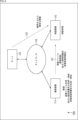
- FIG. 6 is a system diagram showing an example of the configuration of an image processing system to which the present technology is applied.
- the image processing system 100 shown in Fig. 6 is a system that processes captured images.
- FIG. 6 shows the main device configurations and data flows, etc., but does not necessarily include everything.
- image processing system 100 may include devices not shown in FIG. 6, and processes and data flows not shown as arrows, etc. in FIG. 6.
- the image processing system 100 has an imaging device 111, a verification device 112, and a server 113 that are communicatively connected to each other via a network 110.
- FIG. 6 shows one imaging device 111, one verification device 112, and one server 113, there may be any number of each. In other words, there may be two or more imaging devices 111, two or more verification devices 112, and two or more servers 113. Furthermore, the number of imaging devices 111, the number of verification devices 112, and the number of servers 113 do not have to be the same.
- FIG. 6 shows one network as network 110, but the image processing system 100 may have multiple networks.
- the network 110 is a communication network that serves as a communication medium between the devices.
- the network 110 may be a wired communication network, a wireless communication network, or may include both.
- the network 110 may be a wired LAN (Local Area Network), a wireless LAN, a public telephone line network, a wide area communication network for wireless mobile devices such as a so-called 4G line or 5G line, or the Internet, or a combination of these.
- the network 110 may be a single communication network or multiple communication networks.
- the network 110 may be partially or entirely composed of a communication cable of a specified standard, such as a USB (Universal Serial Bus) (registered trademark) cable or an HDMI (High-Definition Multimedia Interface) (registered trademark) cable.
- USB Universal Serial Bus
- HDMI High-Definition Multimedia Interface
- the imaging device 111 performs processing related to capturing an image of a subject, i.e., generating a captured image (image file). For example, the imaging device 111 may capture an image of a subject and generate a captured image. The imaging device 111 may generate an image file that stores the captured image, etc. The imaging device 111 may generate a signature for tamper detection and store it in the image file. The imaging device 111 may generate a signature for history confirmation and store it in the image file. The imaging device 111 may supply the image file via the network 110 or a recording medium.
- the verification device 112 performs processing related to the verification of images, etc.
- the verification device 112 may acquire an image file via the network 110 or a recording medium.
- the verification device 112 may perform a verification process to detect tampering with an image, etc. stored in the image file.
- the verification device 112 may also display the verification results.
- the verification device 112 may acquire an "encrypted limited public key" via the network 110, decrypt it, and use the obtained limited public key in the verification process.
- Server 113 performs processes related to the management of limited public keys. For example, server 113 may manage encrypted limited public keys. Server 113 may also provide the encrypted limited public keys via network 110.
- the imaging device 111, the verification device 112, and the server 113 may also communicate via the network 110 to exchange information. For example, as indicated by the dotted double arrow 121, the imaging device 111 may supply an image file to the verification device 112.
- the verification device 112 may acquire the image file.
- the captured image may be stored in this image file.
- a signature for tamper detection may also be stored in this image file.
- a signature for history confirmation may also be stored in this image file.
- the server 113 may provide the limited public key that it manages to the verification device 112.
- the verification device 112 may obtain the limited public key.
- This limited public key may be encrypted.
- the imaging device 111 is configured by an information processing terminal device having an imaging function, such as a digital camera, a smartphone, a tablet terminal, or a notebook personal computer.
- the imaging device 111 may be configured by one device (electronic device), or may be configured by multiple devices (electronic devices).
- the imaging device 111 may be configured by a digital camera and a smartphone. In that case, for example, the digital camera may generate captured images, and the smartphone may generate signatures for the captured images and supply them to the verification device 112.
- the imaging device 111 will be described as being configured by one device (electronic device).
- FIG. 7 is a block diagram showing an example of the configuration of an imaging device 111, which is one aspect of an image processing device to which this technology is applied.
- FIG. 7 shows the main processing units, data flows, etc., and is not necessarily all that is shown in FIG. 7.
- processing units that are not shown as blocks in FIG. 7, and there may be processing or data flows that are not shown as arrows, etc. in FIG. 7.
- the imaging device 111 has a control unit 201, an imaging processing unit 202, an input unit 203, and an output unit 204.
- the control unit 201 controls each processing unit in the imaging processing unit 202.
- the imaging processing unit 202 is controlled by the control unit 201 to perform processing related to imaging.
- the input unit 203 has an input device such as a button or a switch.
- the input unit 203 accepts instructions input from a user or the like via the input device.
- the input unit 203 supplies the accepted instructions to the control unit 201.
- the control unit 201 may control the imaging processing unit 202 based on the accepted instructions.
- the output unit 204 has an output device such as a monitor or a speaker.
- the output unit 204 outputs information supplied from the control unit 201 via the output device as, for example, an image or sound.
- the control unit 201 may supply any information, such as a control result, to the output unit 204 and cause it to output.
- the imaging processing unit 202 has an optical system 221, a sensor unit 222, a RAW processing unit 223, a YUV processing unit 224, a reduced image generating unit 225, an image information adding unit 226, a 3D information processing unit 227, a hash processing unit 228, a signature control unit 229, a signature generating unit 230, an image file generating unit 231, an image file recording unit 232, and an image file supply unit 233.
- the optical system 221 is composed of optical elements such as lenses, mirrors, filters, and apertures, and exerts a predetermined influence on the light beam from the subject, directing the light beam to the sensor unit 222. In other words, the light beam from the subject enters the sensor unit 222 via the optical system 221.
- the sensor unit 222 performs processing related to photoelectric conversion.
- the sensor unit 222 has an image sensor 241 and a 3D information sensor 242.
- the sensor unit 222 may generate a captured image and 3D information using light rays from a subject that are incident via the optical system 221.
- the image sensor 241 performs processing related to the generation of captured images.
- the image sensor 241 has a pixel array in which pixels having photoelectric conversion elements are arranged in a matrix.
- the image sensor 241 may receive light rays from a subject that enters through the optical system 221 in its pixel array, and perform photoelectric conversion to generate a captured image (a RAW image or a JPEG (Joint Photographic Experts Group) image generated from the RAW image).
- a captured image a RAW image or a JPEG (Joint Photographic Experts Group) image generated from the RAW image.
- the image sensor 241 captures an image of a subject and generates a captured image of the subject, and therefore can also be called a captured image generation unit.
- the image sensor 241 may also supply the generated captured image to the RAW processing unit 223.
- the 3D information sensor 242 detects distance-related information for multiple locations within the captured image obtained by the image sensor 241 on the same optical axis as the captured image, and generates 3D information.
- the 3D information sensor 242 can also be considered a 3D information generation unit.
- the 3D information sensor 242 has a specified sensor device that detects distance-related information.
- the 3D information sensor 242 receives light rays from the subject that are incident via the optical system 221 in the sensor device, detects distance-related information, and generates 3D information.
- the same optical axis means that the light rays from the subject that enter the 3D information sensor 242 pass through the optical system 221 through which the light rays from the subject that enter the image sensor 241 pass. In other words, it means that the paths at least from the subject to the sensor unit 222 of the light rays that enter the image sensor 241 and the light rays that enter the 3D information sensor 242 are the same. In this way, the captured image and distance-related information are detected on the same optical axis, making it difficult to perform trick photography, such as capturing a face photo and detecting the distance to a person other than the subject in the face photo. In other words, there is a high possibility that the subject of the captured image and the subject of the 3D information are the same.
- the “distance-related information” may be information indicating the distance from the imaging device 111 (3D information sensor 242) to the subject, or may be information for deriving that distance.
- the distance-related information may include a depth map, phase difference data, ToF (Time of Flight) data, or a collection of parallax images.
- the 3D information sensor 242 supplies the generated 3D information to the 3D information processing unit 227.
- the image sensor 241 and the 3D information sensor 242 are configured as separate bodies, but the image sensor 241 and the 3D information sensor 242 may be integrated, or the image sensor 241 may also serve as the 3D information sensor 242.
- the 3D information sensor 242 may be configured as a ToF sensor that measures distance using a ToF method, separate from the image sensor 241.
- the 3D information sensor 242 may be configured as an image plane phase difference detection pixel formed in the effective pixel area of the pixel array of the image sensor 241.
- the image plane phase difference detection pixel is a pixel used for a focusing (autofocus) function of the phase difference method, and can detect phase difference data.
- the image sensor 241 and the 3D information sensor 242 are formed as a single body.
- the 3D information sensor 242 may be configured as a phase difference sensor that detects phase difference data, separate from the image sensor 241.
- the image sensor 241 also serves as the 3D information sensor 242. In other words, in this case, the image sensor 241 generates the captured images and 3D information, and the 3D information sensor 242 can be omitted.
- the following description will be given taking as an example a case where the 3D information sensor 242 is configured with image surface phase difference detection pixels. In other words, the description will be given taking as an example a case where the 3D information sensor 242 detects phase difference data as distance-related information.
- the RAW processing unit 223 performs processing related to the RAW image.
- the RAW processing unit 223 may acquire a captured image (RAW image) supplied from the image sensor 241.
- the RAW processing unit 223 may perform a predetermined processing on the RAW image.
- the content of this processing is arbitrary. For example, it may be correction of white balance or the like.
- the RAW processing unit 223 may supply the processed RAW image to the YUV processing unit 224.
- the YUV processing unit 224 performs processing related to the generation of a YUV image.
- the YUV processing unit 224 may acquire a RAW image supplied from the RAW processing unit 223.
- the YUV processing unit 224 may convert the RAW image into a YUV image.
- the YUV processing unit 224 may encode the YUV image and convert it into a JPEG image.
- the YUV processing unit 224 may supply the generated JPEG image to the reduced image generation unit 225. Note that when the image sensor 241 outputs a JPEG image as the captured image, the RAW processing unit 223 and the YUV processing unit 224 may be omitted, and the image sensor 241 may supply the JPEG image to the reduced image generation unit 225.
- the reduced image generating unit 225 performs processing related to the generation of reduced images.
- the reduced image generating unit 225 may obtain a JPEG image supplied from the YUV processing unit 224.
- the reduced image generating unit 225 may generate a reduced image of the JPEG image.
- the original JPEG image is also referred to as the "main image" in comparison with this reduced image.
- the method of generating this reduced image is arbitrary.
- the reduced image generating unit 225 may generate a reduced image by thinning out some of the pixel values of the main image.
- the reduced image generating unit 225 may generate a reduced image by combining pixel values for each predetermined partial area of the main image to reduce the number of pixels.
- the reduced image generating unit 225 may create the reduced image by looking at all the pixels of the main image. If the number of taps is insufficient, the reduced image generating unit 225 may repeat the reduction by a factor that has a sufficient number of taps multiple times to generate a reduced image with the desired reduction factor. The reduced image generating unit 225 supplies the generated reduced image to the image information adding unit 226 together with the main image (JPEG image).
- the image information addition unit 226 performs processing related to the addition of image information. For example, the image information addition unit 226 may acquire the original image and the reduced image supplied from the reduced image generation unit 225. The image information addition unit 226 may generate image information that is information related to the acquired original image. The image information addition unit 226 may associate the generated image information with the original image. In other words, the image information addition unit 226 may generate the image information as metadata for the original image. The image information addition unit 226 may supply the generated image information to the hash processing unit 228 together with the original image and the reduced image.
- the 3D information processing unit 227 performs processing on the 3D information.
- the 3D information processing unit 227 may acquire 3D information supplied from the 3D information sensor 242.
- the 3D information processing unit 227 may perform a predetermined processing on the acquired 3D information.
- the 3D information processing unit 227 may supply the acquired 3D information to the hash processing unit 228.
- the 3D information processing unit 227 may reduce the resolution of the acquired 3D information and supply the low-resolution 3D information to the hash processing unit 228.
- the 3D information processing unit 227 may omit reducing the resolution of the 3D information and supply the acquired 3D information to the hash processing unit 228.
- the 3D information processing unit 227 may also be called a 3D information resolution setting unit.
- the 3D information processing unit 227 may determine whether or not the subject (distance measurement target) of the acquired 3D information is flat, and supply the determination result to the signature control unit 229.
- the 3D information processing unit 227 can also be considered a plane determination unit.
- the hash processing unit 228 performs processing related to hash generation. For example, the hash processing unit 228 may acquire the original image, the reduced image, and image information supplied from the image information addition unit 226. The hash processing unit 228 may acquire 3D information supplied from the 3D information processing unit 227. The hash processing unit 228 may generate a hash using the original image, the image information, and the 3D information. The hash processing unit 228 may supply the generated hash to the signature generation unit 230 together with the original image, the reduced image, the image information, and the 3D information.
- the hash processing unit 228 may be driven under the control of the signature control unit 229. That is, when the signature control unit 229 instructs the hash processing unit 228 to generate a hash as described above, and when the signature control unit 229 does not instruct the hash generation, the hash processing unit 228 may omit the generation of the hash. When the hash generation is omitted, the hash processing unit 228 may supply the acquired information (for example, the original image, the reduced image, the image information, and the 3D information) to the signature generation unit 230.
- the acquired information for example, the original image, the reduced image, the image information, and the 3D information
- the signature control unit 229 performs processing related to signature control. For example, the signature control unit 229 may control whether or not to generate a signature based on an instruction from a user or an application input via the control unit 201. The signature control unit 229 may control whether or not to generate a signature based on a determination result of whether or not the subject (distance measurement target) of the 3D information is flat, which is supplied from the 3D information processing unit 227. For example, the signature control unit 229 may control to omit signature generation when it is determined that the subject (distance measurement target) of the 3D information is flat. The signature control unit 229 may control to generate a signature when it is determined that the subject (distance measurement target) of the 3D information is not flat.
- the signature control unit 229 may control whether or not to generate a signature by controlling the hash processing unit 228 and the signature generation unit 230. For example, when controlling not to generate a signature, the signature control unit 229 may cause the hash processing unit 228 to omit hash generation and the signature generation unit 230 to omit signature generation. When controlling to generate a signature, the signature control unit 229 may cause the hash processing unit 228 to generate a hash and the signature generation unit 230 to generate a signature. The signature control unit 229 may supply control information indicating whether or not to generate a signature to the 3D information processing unit 227.
- the signature generation unit 230 performs processing related to signature generation.
- the signature generation unit 230 may acquire a hash supplied from the hash processing unit 228 and information used to generate the hash (e.g., the original image, the reduced image, image information, and 3D information).
- the signature generation unit 230 may encrypt the acquired hash using a private key to generate a signature (digital signature).
- the signature generation unit 230 may generate a signature for information including at least the original image and 3D information. Therefore, the signature generation unit 230 can also be called a signature generation unit.
- the signature generation unit 230 may supply the generated signature to the image file generation unit 231 together with information corresponding to the signature (e.g., the original image, the reduced image, image information, and 3D information).
- the signature generation unit 230 may be driven under the control of the signature control unit 229. For example, when signature generation is instructed by the signature control unit 229, the signature generation unit 230 may generate a signature as described above. When signature generation is not instructed by the signature control unit 229, the signature generation unit 230 may omit the generation of the signature. When signature generation is omitted, the signature generation unit 230 may supply information supplied from the hash processing unit 228 (for example, the original image, reduced image, image information, and 3D information, etc.) to the image file generation unit 231.
- the hash processing unit 228 for example, the original image, reduced image, image information, and 3D information, etc.
- the image file generation unit 231 performs processing related to the generation of an image file.
- the image file generation unit 231 may acquire information (e.g., the original image, the reduced image, image information, 3D information, and a signature) supplied from the signature generation unit 230.
- the image file generation unit 231 may generate an image file in a predetermined format and store the acquired information (e.g., the original image, the reduced image, image information, 3D information, and a signature) in the image file.
- the image file generation unit 231 may also store an encrypted limited public key in the image file.
- the image file generation unit 231 may supply the image file to the image file recording unit 232.
- the image file generation unit 231 may also supply the image file to the image file supply unit 233.
- the image file recording unit 232 performs processing related to recording of image files.
- the image file recording unit 232 has a drive that drives a removable recording medium such as a magnetic disk, optical disk, magneto-optical disk, or semiconductor memory and performs writing and reading.
- the image file recording unit 232 may acquire an image file supplied from the image file generation unit 231.
- the image file recording unit 232 may record the acquired image file on the removable recording medium via the drive.
- the image file supply unit 233 performs processing related to the supply of image files.
- the image file supply unit 233 has a communication function for communicating with the verification device 112 via the network 110.
- the image file supply unit 233 may acquire an image file supplied from the image file generation unit 231.
- the image file supply unit 233 may use the communication function to supply the acquired image file to the verification device 112.
- the verification device 112 is configured by an information processing device having an image display function, such as a smartphone, a tablet terminal, a notebook personal computer, a desktop personal computer, a dedicated computer, or a server.
- the verification device 112 may be configured by one device (electronic device), or may be configured by multiple devices (electronic devices). In the following, the verification device 112 will be described as being configured by one device (electronic device).
- FIG. 8 is a block diagram showing an example of the configuration of a verification device 112, which is one aspect of an image processing device to which this technology is applied.
- FIG. 8 shows the main processing units, data flows, etc., and is not necessarily all that is shown in FIG. 8.
- the verification device 112 there may be processing units that are not shown as blocks in FIG. 8, and there may be processing or data flows that are not shown as arrows, etc. in FIG. 8.
- the verification device 112 has an image file acquisition unit 311, a user-level image verification unit 312, a limited public key acquisition unit 313, a limited public key decryption unit 314, a high-level image verification unit 315, and a display unit 316.
- the image file acquisition unit 311 performs processing related to the acquisition of image files.
- the image file acquisition unit 311 has a communication function for communicating with the imaging device 111 via the network 110.
- the image file acquisition unit 311 may use the communication function to acquire an image file provided from the imaging device 111.
- the image file acquisition unit 311 may provide the acquired image file to the user level image verification unit 312.
- the image file acquisition unit 311 may provide the image file to the limited public key decryption unit 314.
- the user level image verification unit 312 executes processing related to user level image verification.
- the user level image verification unit 312 may acquire an image file supplied from the image file acquisition unit 311.
- the user level image verification unit 312 may execute a user level image verification process using a history verification signature, a user public key, or the like stored in the acquired image file.
- This user level image verification process is a verification process for verifying the editing history of the image stored in the image file.
- the user level image verification unit 312 may supply information indicating the result of the user level image verification (the history verification result) to the display unit 316.
- the limited public key acquisition unit 313 executes processing related to the acquisition of a limited public key.
- the limited public key acquisition unit 313 has a communication function for communicating with the server 113 via the network 110.
- the limited public key acquisition unit 313 may use the communication function to request a limited public key from the server 113.
- the limited public key acquisition unit 313 may communicate with the server 113 and perform authentication processing for authenticating the verification device 112 to the server 113.
- the limited public key acquisition unit 313 may use the communication function to acquire a limited public key provided by the server 113 in response to the request. This limited public key may be encrypted.
- the limited public key acquisition unit 313 may supply the acquired limited public key (encrypted limited public key) to the limited public key decryption unit 314.
- the limited public key decryption unit 314 performs processing related to the decryption of the encrypted limited public key. For example, when the limited public key is supplied from the limited public key acquisition unit 313, the limited public key decryption unit 314 may acquire the limited public key. The limited public key decryption unit 314 may acquire an image file from the image file acquisition unit 311. When the limited public key acquired from the limited public key acquisition unit 313 is encrypted, the limited public key decryption unit 314 may decrypt the encrypted limited public key. The limited public key decryption unit 314 may supply the limited public key obtained by the decryption to the high-level image verification unit 315 together with the image file.
- the limited public key decryption unit 314 may extract the encrypted limited public key.
- the limited public key decryption unit 314 may then decrypt the extracted "encrypted limited public key.”
- the limited public key decryption unit 314 may supply the limited public key obtained by the decryption to the high-level image verification unit 315 together with the image file.
- the high-level image verification unit 315 executes processing related to high-level image verification.
- the high-level image verification unit 315 may acquire a limited public key and an image file supplied from the limited public key decryption unit 314.
- the high-level image verification unit 315 may execute high-level image verification processing using the acquired limited public key and a signature for tamper detection stored in the image file.
- This high-level image verification processing is a verification processing for detecting tampering of the captured image stored in the image file.
- the high-level image verification unit 315 may supply information indicating the result of the high-level image verification (the result of tamper detection) to the display unit 316.
- the display unit 316 performs processing related to the display of information.
- the display unit 316 has an image display device such as an LCD monitor. This image display device may be any device capable of displaying images.
- the display unit 316 may acquire information indicating the results of user-level image verification supplied from the user-level image verification unit 312.
- the display unit 316 may generate image information for displaying the acquired information, and use the image display device to display the image information.
- the display unit 316 may also acquire information indicating the results of high-level image verification supplied from the high-level image verification unit 315.
- the display unit 316 may generate image information for displaying the acquired information, and use the image display device to display the image information.
- the server 113 may be configured, for example, as a single information processing device or as multiple information processing devices.
- the server 113 may also be implemented as cloud computing (i.e., a cloud server) in which multiple devices share and cooperate with each other to perform processing via a network.
- FIG. 9 is a block diagram showing an example of the configuration of a server 113, which is one aspect of an image processing device to which this technology is applied.
- FIG. 9 shows the main processing units, data flows, etc., and is not necessarily all that is shown in FIG. 9.
- server 113 there may be processing units that are not shown as blocks in FIG. 9, and there may be processes or data flows that are not shown as arrows, etc. in FIG. 9.
- the server 113 has a limited public key management unit 411, a limited public key provision unit 412, and an authentication unit 413.
- the limited public key management unit 411 executes processes related to management of limited public keys.
- the limited public key management unit 411 may have any storage medium, and may store and manage the limited public key corresponding to the first private key used by the imaging device 111 in the storage medium.
- the limited public key management unit 411 When the limited public key management unit 411 is requested for a limited public key by the limited public key provision unit 412, it may read the requested limited public key from the storage medium and supply it to the limited public key provision unit 412 that made the request.
- the limited public key providing unit 412 performs processing related to the provision of limited public keys.
- the limited public key providing unit 412 has a communication function for communicating with the verification device 112 via the network 110.
- the limited public key providing unit 412 may receive a request for a limited public key provided by the verification device 112 through this communication.
- the limited public key providing unit 412 may request the limited public key specified in the request from the limited public key management unit 411.
- the limited public key providing unit 412 may accept a request from the verification device 112 authenticated by the authentication unit 413. That is, the limited public key providing unit 412 may acquire information indicating the authentication result of the verification device 112 supplied from the authentication unit 413. If the verification device 112 is authenticated in the authentication result, the limited public key providing unit 412 may accept a request for a limited public key supplied from the verification device 112. Then, the limited public key providing unit 412 may request the limited public key specified in the request from the limited public key management unit 411.
- the limited public key providing unit 412 may also obtain a limited public key provided from the limited public key management unit 411.
- the limited public key providing unit 412 may provide the obtained limited public key to the verification device 112 via the network 110.
- the limited public key supplied to the verification device 112 may be encrypted. That is, the limited public key providing unit 412 may encrypt the acquired limited public key and supply the encrypted limited public key to the verification device 112.
- the limited public key management unit 411 may manage the encrypted limited public key and supply it to the limited public key providing unit 412. In this case, the limited public key providing unit 412 may acquire the encrypted limited public key and supply it to the verification device 112.
- the authentication unit 413 executes processing related to authentication of the verification device 112.
- the authentication unit 413 has a communication function for communicating with the verification device 112 via the network 110.
- the authentication unit 413 may communicate with the verification device 112 and perform authentication processing of the verification device 112.
- the authentication unit 413 may supply information indicating the authentication result to the limited public key provision unit 412.
- the hash processing unit 228 may use the captured image and metadata to generate a first hash corresponding to the first signature (signature for tamper detection) and a second hash corresponding to the second signature (signature for history verification).
- the signature generation unit 230 may use the first private key and the first hash to generate the first signature.
- the signature generation unit 230 may use the second private key and the second hash to generate the second signature.
- the image file generation unit 231 may generate a file (image file) that stores the captured image, metadata, the first signature, and the second signature.
- the first private key may correspond to a limited public key that is made public only to a first entity having a specific authority other than the user authority.
- the second private key may correspond to a user public key that is also made public to a second entity having the user authority.
- the signature generation unit 230 may also hold a first private key and a second private key in advance.
- the hash processing unit 228 may generate a first hash using the captured image and metadata, and the signature generation unit 230 may generate a first signature (tamper detection signature) using the first private key and the first hash.
- the hash processing unit 228 may then generate a second hash using the captured image, metadata, and the first signature, and the signature generation unit 230 may generate a second signature using the second private key and the second hash.
- the image sensor 241 may capture an image of a subject and generate a captured image.
- the hash processing unit 228 may then generate a first hash and a second hash using the generated captured image and metadata.
- the image file generating unit 231 may also store the first signature (signature for tamper detection) in a metadata area of the file that stores metadata.
- the image file generating unit 231 may also store the encrypted limited public key in the file.
- the image file acquisition unit 311 may acquire a file (image file) in which an image, metadata, a first signature (signature for detecting tampering), and a second signature (signature for verifying history) are stored.
- the high-level image verification unit 315 may verify the authenticity of the image using a limited public key that is made public only to a first entity having specific authority other than user authority, the image, metadata, and the first signature.
- the limited public key decryption unit 314 may decrypt the encrypted limited public key.
- the high-level image verification unit 315 may verify the authenticity of the image using the decrypted limited public key, the image, the metadata, and the first signature.
- the limited public key acquisition unit 313 may acquire an "encrypted limited public key" supplied from another device.
- the limited public key decryption unit 314 may decrypt the acquired "encrypted limited public key.”
- the limited public key decryption unit 314 may also extract and decrypt the "encrypted limited public key" from an image file.
- the high-level image verification unit 315 may verify the authenticity of the image using the decrypted limited public key, the image, the metadata, and the first signature.
- the target of each signature may be a different range.
- the hash processing unit 228 may generate a first hash for a first range of the captured image and metadata.
- the hash processing unit 228 may generate a second hash for a second range that is wider than the first range.
- This first range may be a range that excludes some of the data in the captured image and metadata.
- the above-mentioned second range may be the entire captured image and metadata.
- this part of the data may be data related to a predetermined processing of the captured image.
- this "data related to the predetermined processing" may include at least one of data related to image rotation, data related to image rating (star rating), IPTC metadata, etc.
- the hash of the tamper detection signature may be a multi-hash.
- the hash processing unit 228 may generate the first hash as a multi-hash composed of multiple hashes that are independent of each other. Also, the hash processing unit 228 may generate the second hash as a multi-hash.
- the above-mentioned method 1-2-1 may also be applied. That is, the division of the hash for the tamper detection signature may be finer than the division of the hash for the history signature. That is, the first hash corresponding to the tamper detection signature may be composed of more hashes than the second hash. For example, in the imaging device 111, the hash processing unit 228 may generate the first hash as a multi-hash composed of more hashes than the second hash.
- the tamper detection signature may be stored in an area that is propagated in the history.
- the image file generation unit 231 may store the first signature (tamper detection signature) in an area that is propagated in the history in the metadata area.
- the image file generation unit 231 may store the first signature (tamper detection signature) in a vendor extension area in the metadata area.
- the hash of the tamper detection signature may be a multihash, and the area that may be removed from the history (or the area that is removed) may be hashed independently from other areas.
- a hash may be generated independently from other areas.
- the hash processing unit 228 may generate a removal hash corresponding to an area of the captured image and metadata that is removed from the history independently from other areas, and generate a first hash as a multihash composed of multiple independent hashes including the removal hash.
- each device By configuring each device in this way, it is possible to achieve high-level image verification and user-level image verification. For example, it is possible to accommodate both use cases where signature verification is limited to achieve strong tamper detection, and where signature verification is allowed for other companies to maintain the editing history. In other words, it is possible to prevent a decrease in the usability (ease of use) of captured images.
- step S101 the control unit 201 turns on the power of the imaging processing unit 202 and starts a preview.
- step S102 the control unit 201 turns on the electronic signature mode as the operation mode of the image capture processing unit 202.
- the control unit 201 sets the operation mode of the image capture processing unit 202 to a mode in which an electronic signature is stored in an image file.
- step S103 the sensor unit 222 (image sensor 241 and 3D information sensor 242) captures an image of the subject and obtains a RAW image and 3D information on the same optical axis.
- the RAW processing unit 223 performs correction processing on the RAW image, such as adjusting the white balance.
- the YUV processing unit 224 converts the corrected RAW image into a YUV image.
- the YUV processing unit 224 also encodes the YUV image to generate a JPEG image.
- the reduced image generating unit 225 generates a reduced image by reducing the JPEG image (original image). This reduced image generating method is arbitrary.
- the reduced image may have any size.
- the reduced image may be a so-called thumbnail or a so-called screennail.
- the image information adding unit 226 generates image information related to the original image and the reduced image as metadata.
- the 3D information processing unit 227 performs predetermined processing on the 3D information, such as reducing the resolution of the 3D information.
- step S105 the hash processing unit 228 generates a first hash using the captured image, metadata, etc.
- step S106 the signature generation unit 230 generates a tamper detection signature by encrypting the generated first hash using the first private key.
- step S107 the hash processing unit 228 generates a second hash using the captured image, metadata, etc.
- step S108 the signature generation unit 230 generates a history verification signature by encrypting the generated second hash using the second private key.
- the image file generation unit 231 generates an image file that stores the captured image, a tamper detection signature, a history verification signature, and the like. At that time, the image file generation unit 231 may store metadata and a certificate of the captured image in the image file. The image file generation unit 231 may also store an encrypted limited public key in the image file.
- step S110 the image file recording unit 232 records the image file.
- step S111 the image file supply unit 233 supplies the image file to the verification device 112.
- step S111 the imaging process ends.
- the imaging device 111 can achieve high-level image verification and user-level image verification.
- the imaging device 111 can accommodate both a use case in which signature verification is limited to achieve strong tamper detection, and a use case in which signature verification is permitted for other companies to maintain the editing history.
- the imaging device 111 can suppress any reduction in the usability (ease of use) of the captured image.
- the image file acquisition unit 311 acquires an image file in step S201.
- This image file stores a captured image generated by an imaging device (first image processing device), metadata for the captured image, a first signature (signature for tamper detection), and a second signature (signature for history verification).
- step S202 the user-level image verification unit 312 extracts the user public key from the image file.
- step S203 the user-level image verification unit 312 uses the extracted user public key to verify the history verification signature stored in the image file.
- step S204 the user-level image verification unit 312 determines whether the history verification signature is correct based on the verification result. If it is determined that the history verification signature is valid, the process proceeds to step S205.
- step S205 the display unit 316 notifies the user that no tampering was detected by displaying image information indicating the verification result.
- the user-level image verification processing ends.
- step S204 If it is determined in step S204 that the history verification signature is invalid, the process proceeds to step S206.
- step S206 the display unit 316 notifies the user that tampering has been detected by displaying image information showing the verification result.
- the user-level image verification processing ends.
- the image file acquisition unit 311 acquires an image file in step S221.
- This image file stores the captured image generated by the imaging device (first image processing device), metadata for the captured image, a first signature (signature for tamper detection), and a second signature (signature for history verification).
- step S222 the limited public key acquisition unit 313 acquires the encrypted limited public key from the server 113.
- step S223 the limited public key decryption unit 314 decrypts the encrypted limited public key.
- step S224 the high-level image verification unit 315 uses the limited public key to verify the tamper detection signature stored in the image file.
- step S225 the high-level image verification unit 315 determines whether the tamper detection signature is correct based on the verification result. If the tamper detection signature is determined to be valid, the process proceeds to step S226.
- step S226 the display unit 316 notifies the user that no tampering was detected by displaying image information showing the verification result.
- the high-level image verification processing ends.
- step S225 If it is determined in step S225 that the tamper detection signature is invalid, processing proceeds to step S227.
- step S227 the display unit 316 notifies the user that tampering has been detected by displaying image information showing the verification result.
- the high-level image verification processing ends.
- the image file acquisition unit 311 acquires an image file in step S241.
- This image file stores the captured image generated by the imaging device (first image processing device), metadata for the captured image, a first signature (signature for tamper detection), and a second signature (signature for history verification).
- step S242 the image file acquisition unit 311 extracts the captured image portion from the image file.
- step S243 the limited public key acquisition unit 313 acquires the encrypted limited public key from the server 113.
- step S244 the limited public key decryption unit 314 decrypts the encrypted limited public key.
- step S245 the high-level image verification unit 315 verifies the tamper detection signature using the captured image portion extracted from the image file and its limited public key.
- step S246 the high-level image verification unit 315 determines whether the tamper detection signature is correct based on the verification result. If the tamper detection signature is determined to be valid, the process proceeds to step S247.
- step S247 the display unit 316 notifies the user that no tampering was detected by displaying image information showing the verification result.
- the high-level image verification processing ends.
- step S246 If it is determined in step S246 that the tamper detection signature is invalid, processing proceeds to step S248.
- step S248 the display unit 316 notifies the user that tampering has been detected by displaying image information showing the verification result.
- the high-level image verification processing ends.
- the verification device 112 can realize high-level image verification and user-level image verification.
- the verification device 112 can handle both a use case in which signature verification is limited to realize strong tamper detection, and a use case in which signature verification is allowed for other companies to realize maintenance of the editing history.
- the verification device 112 can suppress a decrease in the usability (ease of use) of the captured image.
- the encrypted limited public key may be stored in an image file and provided to the verification device 112.
- the flow of the high-level image verification process in this case will be described with reference to the flowchart in FIG.
- the image file acquisition unit 311 acquires an image file in step S261.
- This image file stores the captured image generated by the imaging device (first image processing device), metadata for the captured image, a first signature (signature for tamper detection), and a second signature (signature for history verification).
- step S262 the limited public key decryption unit 314 extracts the encrypted limited public key from the image file.
- steps S263 to S267 are executed in the same manner as the processes in steps S223 to S227 (FIG. 12).
- the process in step S266 or S267 is completed, the high-level image verification process is completed.
- the encrypted limited public key may be stored in an image file and provided to the verification device 112.
- the flow of the high-level image verification process in this case will be described with reference to the flowchart in FIG.
- the image file acquisition unit 311 acquires an image file in step S281.
- This image file stores the captured image generated by the imaging device (first image processing device), metadata for the captured image, a first signature (signature for tamper detection), and a second signature (signature for history verification).
- step S282 the image file acquisition unit 311 extracts the captured image portion from the image file.
- step S283 the limited public key decryption unit 314 extracts the encrypted limited public key from the image file.
- steps S284 through S288 are executed in the same manner as the processes in steps S244 through S248 (FIG. 13).
- the process in step S287 or S288 is completed, the high-level image verification process is completed.
- the authentication unit 413 performs authentication processing in step S301.
- step S302 the limited public key providing unit 412 accepts a request for a limited public key from the authenticated verification device 112.
- step S303 the limited public key providing unit 412 obtains the requested limited public key from the limited public key management unit 411.
- step S304 the limited public key providing unit 412 encrypts the acquired limited public key and supplies the encrypted limited public key to the requesting verification device 112.
- step S304 When the processing of step S304 is completed, the limited public key supply processing is completed.
- the server 113 can provide the limited public key to the verification device 112. Therefore, the server 113 can suppress any reduction in the usability (ease of use) of the captured image.
- the above-mentioned series of processes can be executed by hardware or software.
- the programs constituting the software are installed in a computer.
- the computer includes a computer built into dedicated hardware, and a general-purpose personal computer, etc., capable of executing various functions by installing various programs.
- FIG. 17 is a block diagram showing an example of the hardware configuration of a computer that executes the above-mentioned series of processes using a program.
- a CPU Central Processing Unit
- ROM Read Only Memory
- RAM Random Access Memory
- An input/output interface 910 Also connected to the bus 904 is an input/output interface 910.
- An input unit 911, an output unit 912, a memory unit 913, a communication unit 914, and a drive 915 are connected to the input/output interface 910.
- the input unit 911 includes, for example, a keyboard, a mouse, a microphone, a touch panel, an input terminal, etc.
- the output unit 912 includes, for example, a display, a speaker, an output terminal, etc.
- the storage unit 913 includes, for example, a hard disk, a RAM disk, a non-volatile memory, etc.
- the communication unit 914 includes, for example, a network interface.
- the drive 915 drives removable media 921 such as a magnetic disk, an optical disk, a magneto-optical disk, or a semiconductor memory.
- the CPU 901 loads a program stored in the storage unit 913, for example, into the RAM 903 via the input/output interface 910 and the bus 904, and executes the program, thereby carrying out the above-mentioned series of processes.
- the RAM 903 also stores data necessary for the CPU 901 to execute various processes, as appropriate.
- the program executed by the computer can be applied by recording it on removable media 921 such as package media, for example.
- the program can be installed in the storage unit 913 via the input/output interface 910 by inserting the removable media 921 into the drive 915.
- the program can also be provided via a wired or wireless transmission medium, such as a local area network, the Internet, or digital satellite broadcasting. In that case, the program can be received by the communication unit 914 and installed in the storage unit 913.
- a wired or wireless transmission medium such as a local area network, the Internet, or digital satellite broadcasting.
- the program can be received by the communication unit 914 and installed in the storage unit 913.
- this program can also be pre-installed in the ROM 902 or memory unit 913.
- This technology can be applied to any encoding/decoding method.
- this technology can be applied to any configuration.
- this technology can be applied to various electronic devices.
- the present technology can be implemented as part of an apparatus, such as a processor (e.g., a video processor) as a system LSI (Large Scale Integration), a module using multiple processors (e.g., a video module), a unit using multiple modules (e.g., a video unit), or a set in which other functions are added to a unit (e.g., a video set).
- a processor e.g., a video processor
- system LSI Large Scale Integration
- modules using multiple processors e.g., a video module
- a unit using multiple modules e.g., a video unit
- a set in which other functions are added to a unit e.g., a video set.
- the present technology can also be applied to a network system consisting of multiple devices.
- the present technology may be implemented as cloud computing in which multiple devices share and collaborate on processing via a network.
- the present technology may be implemented in a cloud service that provides image (video) related services to any terminal, such as a computer, AV (Audio Visual) equipment, portable information processing terminal, IoT (Internet of Things) device, etc.
- a system refers to a collection of multiple components (devices, modules (parts), etc.), regardless of whether all the components are in the same housing. Therefore, multiple devices housed in separate housings and connected via a network, and a single device in which multiple modules are housed in a single housing, are both systems.
- Systems, devices, processing units, etc. to which the present technology is applied can be used in any field, for example, transportation, medical care, crime prevention, agriculture, livestock farming, mining, beauty, factories, home appliances, weather, nature monitoring, etc.
- the applications thereof are also arbitrary.
- this technology can be applied to systems and devices used to provide ornamental content, etc.
- this technology can be applied to systems and devices used for transportation, such as monitoring traffic conditions and automatic driving control.
- this technology can be applied to systems and devices used for security purposes.
- this technology can be applied to systems and devices used for automatic control of machines, etc.
- this technology can be applied to systems and devices used for agriculture and livestock farming.
- this technology can be applied to systems and devices that monitor natural conditions such as volcanoes, forests, and oceans, and wildlife, etc.
- this technology can be applied to systems and devices used for sports.
- a "flag” refers to information for identifying multiple states, and includes not only information used to identify two states, true (1) or false (0), but also information capable of identifying three or more states.
- the value that this "flag” can take may be, for example, two values, 1/0, or three or more values. That is, the number of bits constituting this "flag” is arbitrary, and may be one bit or multiple bits.
- identification information including flags
- identification information includes flags
- “flag” and “identification information” include not only the information itself, but also difference information with respect to the reference information.
- association means, for example, making one piece of data available (linked) when processing the other piece of data.
- data associated with each other may be combined into one piece of data, or each piece of data may be individual data.
- information associated with encoded data (image) may be transmitted on a transmission path different from that of the encoded data (image).
- information associated with encoded data (image) may be recorded on a recording medium different from that of the encoded data (image) (or on a different recording area of the same recording medium).
- this "association" may be a part of the data, not the entire data.
- an image and information corresponding to that image may be associated with each other in any unit, such as multiple frames, one frame, or a part of a frame.
- the configuration described above as one device (or processing unit) may be divided and configured as multiple devices (or processing units).
- the configurations described above as multiple devices (or processing units) may be combined and configured as one device (or processing unit).
- configurations other than those described above may be added to the configuration of each device (or processing unit).
- part of the configuration of one device (or processing unit) may be included in the configuration of another device (or other processing unit).
- the above-mentioned program may be executed in any device.
- the device has the necessary functions (functional blocks, etc.) and is capable of obtaining the necessary information.
- each step of a single flowchart may be executed by a single device, or may be shared among multiple devices.
- the multiple processes may be executed by a single device, or may be shared among multiple devices.
- multiple processes included in a single step may be executed as multiple step processes.
- processes described as multiple steps may be executed collectively as a single step.
- the processing of the steps describing a program executed by a computer may be executed chronologically in the order described in this specification, or may be executed in parallel, or individually at a required timing such as when a call is made. In other words, as long as no contradiction arises, the processing of each step may be executed in an order different from the order described above. Furthermore, the processing of the steps describing this program may be executed in parallel with the processing of other programs, or may be executed in combination with the processing of other programs.
- the multiple technologies related to the present technology can be implemented independently and individually, so long as no contradictions arise.
- any multiple of the present technologies can also be implemented in combination.
- part or all of the present technology described in any embodiment can be implemented in combination with part or all of the present technology described in another embodiment.
- part or all of any of the present technologies described above can be implemented in combination with other technologies not described above.
- the present technology can also be configured as follows. (1) a hash processing unit that generates a first hash corresponding to a first signature and a second hash corresponding to a second signature by using a captured image and metadata; a signature generation unit that generates the first signature using a first private key and the first hash, and generates the second signature using a second private key and the second hash; a file generating unit that generates a file that stores the captured image, the metadata, the first signature, and the second signature,
- the first private key corresponds to a limited public key that is disclosed only to a first entity having a specific authority other than a user authority;
- the second private key corresponds to a user public key that is also made public to a second entity having the user authority.
- the hash processing unit generates the first hash by using the captured image and the metadata; the signature generation unit generates the first signature using the first private key and the first hash; the hash processing unit generates the second hash using the captured image, the metadata, and the first signature;
- the image processing device according to any one of (1) to (3), wherein the signature generation unit is configured to generate the second signature by using the second private key and the second hash.
- the image processing device according to any one of (1) to (4), wherein the hash processing unit is configured to generate the first hash for a first range of the captured image and the metadata, and to generate the second hash for a second range that is larger than the first range.
- the first range is a range excluding some data of the captured image and the metadata
- IPTC International Press Telecommunications Council
- the image processing device configured to store the first signature in a vendor extension area in the metadata area.
- the hash processing unit generates a removal hash corresponding to an area of the captured image and the metadata that is to be removed in the history, independently of others, and generates the first hash as a multi-hash composed of a plurality of hashes that are independent of each other, including the removal hash.
- the file generation unit is configured to store the encrypted limited public key in the file.
- the first private key corresponds to a limited public key that is disclosed only to a first entity having a specific authority other than a user authority;
- the second private key corresponds to a user public key that is also made public to a second entity having the user authority.
- a file acquisition unit that acquires a file in which an image, metadata, a first signature, and a second signature are stored; a verification unit that verifies authenticity of the image by using a limited public key that is made public only to a first entity having a specific authority other than a user authority, the image, the metadata, and the first signature, the first signature is a signature generated by using a first private key corresponding to the limited public key, a captured image corresponding to the image, and metadata of the captured image;
- the second signature is a signature generated using a second private key corresponding to a user public key that is also made public to a second entity having the user authority, the image, and the metadata.
- the method further includes a decryption unit that decrypts the encrypted limited public key, The image processing device according to any one of claims 18 to 19, wherein the verification unit is configured to verify authenticity of the image by using the decrypted limited public key, the image, the metadata, and the first signature.
- the method further includes: providing a limited public key acquisition unit that acquires the encrypted limited public key provided from another device; The image processing device according to any one of claims 1 to 19, wherein the decryption unit is configured to decrypt the obtained encrypted limited public key.
- (21) The image processing device according to (19), wherein the decryption unit is configured to extract the encrypted limited public key from the file and decrypt the encrypted limited public key.
- the second signature is a signature generated using a second private key corresponding to a user public key that is also made public to a second entity having the user authority, the image, and the metadata.
- Image processing system 110 Network, 111 Imaging device, 112 Verification device, 113 Server, 201 Control unit, 202 Imaging processing unit, 221 Optical system, 222 Sensor unit, 228 Hash processing unit, 229 Signature control unit, 230 Signature generation unit, 231 Image file generation unit, 232 Image file recording unit, 233 Image file supply unit, 311 Image file acquisition unit, 312 User level image verification unit, 313 Limited public key acquisition unit, 314 Limited public key decryption unit, 315 High level image verification unit, 316 Display unit, 411 Limited public key management unit, 412 Limited public key provision unit, 413 Authentication unit, 900 Computer
Landscapes
- Engineering & Computer Science (AREA)
- Computer Security & Cryptography (AREA)
- Signal Processing (AREA)
- Computer Networks & Wireless Communication (AREA)
- Theoretical Computer Science (AREA)
- Software Systems (AREA)
- Computer Hardware Design (AREA)
- Physics & Mathematics (AREA)
- General Engineering & Computer Science (AREA)
- General Physics & Mathematics (AREA)
- General Health & Medical Sciences (AREA)
- Bioethics (AREA)
- Health & Medical Sciences (AREA)
- Editing Of Facsimile Originals (AREA)
Abstract
Description
1.技術内容・技術用語をサポートする文献等
2.改ざんの検知
3.複数の署名の格納
4.第1の実施の形態(画像処理システム)
5.付記
本技術で開示される範囲は、実施の形態に記載されている内容だけではなく、出願当時において公知となっている以下の特許文献および非特許文献等に記載されている内容や以下の特許文献および非特許文献において参照されている他の文献の内容等も含まれる。
非特許文献1:(上述)
<電子署名を用いた改ざんの検知>
従来、例えば、特許文献1に記載のように、撮影時に画像に電子署名を付与することで、改竄検知を可能にする方法があった。また、非特許文献1に開示されているように、画像生成時や編集時に、履歴を電子署名付きで残し、履歴を辿ることができるようにする方法があった。編集時、編集を担当したソフトやサーバは、画像の過去の履歴を画像内の公開鍵で確認後、過去のツールの署名や署名対象のデータの一部を新しい画像のメタデータとして引き継ぎ、加えて秘密鍵で署名し、対応する公開鍵を付与する。
<方法1>
そこで、図1の表の最上段に記載のように、公開範囲が互いに異なる公開鍵に対応する複数の署名をファイルに格納する(方法1)。より具体的には、公開範囲が制限された公開鍵に対応する署名と公開範囲が制限されていない公開鍵に対応する署名とをファイルに格納する。
上述の方法1が適用される場合において、図1の表の上から2段目に示されるように、各署名の対象を互いに異なる範囲にしてもよい(方法1-1)。例えば、来歴確認用署名が対象とするデータの範囲を、改ざん検知用署名が対象とするデータの範囲よりも広くしてもよい。例えば、第1の画像処理装置(例えば撮像装置)において、ハッシュ処理部が、撮像画像およびメタデータの内の、第1の範囲を対象として第1のハッシュを生成し、その第1の範囲よりも広い第2の範囲を対象として第2のハッシュを生成してもよい。
上述の方法1が適用される場合において、図1の表の上から3段目に示されるように、改ざん検知用署名のハッシュをマルチハッシュとしてもよい(方法1-2)。つまり、改ざん検知用署名のハッシュが、互いに異なるデータに対応する複数のハッシュにより構成されてもよい。例えば、第1の画像処理装置(例えば撮像装置)において、ハッシュ処理部が、第1のハッシュを、互いに独立した複数のハッシュにより構成されるマルチハッシュとして生成してもよい。
上述の方法1-2が適用される場合において、図1の表の上から4段目に示されるように、改ざん検知用署名のハッシュの分け方を来歴用署名用のハッシュの分け方よりも細かくしてもよい(方法1-2-1)。つまり、改ざん検知用署名に対応する第1のハッシュが第2のハッシュよりも多くのハッシュにより構成されてもよい。例えば、第1の画像処理装置(例えば撮像装置)において、ハッシュ処理部が、第1のハッシュを、第2のハッシュよりも多くのハッシュにより構成されるマルチハッシュとして生成してもよい。
上述の方法1が適用される場合において、図1の表の上から5段目に示されるように、改ざん検知用署名を来歴で伝搬される領域に格納してもよい(方法1-3)。例えば、第1の画像処理装置(例えば撮像装置)において、ファイル生成部が、メタデータ領域内の、来歴で伝搬される領域に第1の署名(改ざん検知用署名)を格納してもよい。
上述の方法1-3が適用される場合において、図1の表の最下段に示されるように、改ざん検知用署名のハッシュをマルチハッシュとし、かつ、来歴で落とされ得る領域(若しくは落とされる領域)を他と独立にハッシュにしてもよい(方法1-3-1)。つまり、編集により、除去される領域若しくは除去される可能性のある領域については、他の領域とは独立にハッシュを生成するようにしてもよい。例えば、第1の画像処理装置(例えば撮像装置)において、ハッシュ処理部が、撮像画像およびメタデータの、来歴において除去される領域に対応する除去ハッシュを他と独立に生成し、第1のハッシュを、その除去ハッシュを含む互いに独立した複数のハッシュにより構成されるマルチハッシュとして生成してもよい。
<3.複数の署名の格納>において上述した各方法は、矛盾が生じない限り、任意の他の方法と組み合わせて適用してもよい。3以上の方法を組み合わせて適用してもよい。例えば、方法1-1から方法1-3-1までの内のいずれか2つ以上を組み合わせて適用してもよい。また、組み合わせ可能な手法は、「方法」として図1の表に示したものだけでなく、<3.複数の署名の格納>において上述した全ての要素を含み得る。また、上述した各方法は、上述した以外の他の方法と組み合わせて適用してもよい。
<画像処理システム>
本技術は、撮像画像を処理する画像処理システム(またはシステムを構成する各装置)に適用することができる。図6は、本技術を適用した画像処理システムの構成の一例を示すシステム図である。図6に示される画像処理システム100は、撮像画像を処理するシステムである。
撮像装置111は、例えば、デジタルカメラ、スマートフォン、タブレット端末、ノート型パーソナルコンピュータといった、撮像機能を有する情報処理端末装置により構成される。撮像装置111が1つの装置(電子機器)により構成されてもよいし、複数の装置(電子機器)により構成されてもよい。例えば、撮像装置111がデジタルカメラおよびスマートフォンにより構成されてもよい。その場合、例えば、デジタルカメラが撮像画像を生成し、スマートフォンがそれらの署名の生成や、検証装置112への供給を行ってもよい。以下においては、撮像装置111が1つの装置(電子機器)により構成されるものとして説明する。
検証装置112は、例えば、スマートフォン、タブレット端末、ノート型パーソナルコンピュータ、デスクトップ型パーソナルコンピュータ、専用のコンピュータ、サーバといった、画像表示機能を有する情報処理装置により構成される。検証装置112が1つの装置(電子機器)により構成されてもよいし、複数の装置(電子機器)により構成されてもよい。以下においては、検証装置112が1つの装置(電子機器)により構成されるものとして説明する。
サーバ113は、例えば、単数の情報処理装置により構成されてもよいし、複数の情報処理装置に構成されてもよい。また、サーバ113は、ネットワークを介して複数の装置で分担、共同して処理するクラウドコンピューティング(つまり、クラウドサーバ)として実施するようにしてもよい。
このような構成の画像処理システム100(の各装置)において、<3.複数の署名の格納>において上述した各種方法(本技術)を適用してもよい。例えば、上述した方法1を適用してもよい。つまり、公開範囲が互いに異なる公開鍵に対応する複数の署名をファイルに格納してもよい。
図10のフローチャートを参照して、このような撮像装置111により実行される撮像処理の流れの例を説明する。
検証装置112により実行されるユーザレベル画像検証処理の流れの例を、図11のフローチャートを参照して説明する。
また、検証装置112により実行される高レベル画像検証処理の流れの例を、図12のフローチャートを参照して説明する。
なお、撮像画像に対して編集が行われ、その履歴が画像ファイルに格納されている場合、高レベル画像検証処理は、図13のフローチャートのような流れで実行される。
なお、図12の高レベル画像検証処理において、暗号化された限定公開鍵は、画像ファイルに格納されて検証装置112へ提供されてもよい。その場合の、高レベル画像検証処理の流れを、図14のフローチャートを参照して説明する。
なお、図13の高レベル画像検証処理においても同様に、暗号化された限定公開鍵は、画像ファイルに格納されて検証装置112へ提供されてもよい。その場合の、高レベル画像検証処理の流れを、図15のフローチャートを参照して説明する。
サーバ113により実行される限定公開鍵供給処理の流れの例を図16のフローチャートを参照して説明する。
<その他>
上述した本技術の各例(各方法)は、矛盾が生じない限り、他の例(他の方法)と適宜組み合わせて適用してもよい。また、上述した本技術の各例を、上述した以外の他の技術と組み合わせて適用してもよい。
上述した一連の処理は、ハードウエアにより実行させることもできるし、ソフトウエアにより実行させることもできる。一連の処理をソフトウエアにより実行する場合には、そのソフトウエアを構成するプログラムが、コンピュータにインストールされる。ここでコンピュータには、専用のハードウエアに組み込まれているコンピュータや、各種のプログラムをインストールすることで、各種の機能を実行することが可能な、例えば汎用のパーソナルコンピュータ等が含まれる。
本技術は、任意の符号化・復号方式に適用することができる。
本技術を適用したシステム、装置、処理部等は、例えば、交通、医療、防犯、農業、畜産業、鉱業、美容、工場、家電、気象、自然監視等、任意の分野に利用することができる。また、その用途も任意である。
なお、本明細書において「フラグ」とは、複数の状態を識別するための情報であり、真(1)または偽(0)の2状態を識別する際に用いる情報だけでなく、3以上の状態を識別することが可能な情報も含まれる。したがって、この「フラグ」が取り得る値は、例えば1/0の2値であってもよいし、3値以上であってもよい。すなわち、この「フラグ」を構成するbit数は任意であり、1bitでも複数bitでもよい。また、識別情報(フラグも含む)は、その識別情報をビットストリームに含める形だけでなく、ある基準となる情報に対する識別情報の差分情報をビットストリームに含める形も想定されるため、本明細書においては、「フラグ」や「識別情報」は、その情報だけではなく、基準となる情報に対する差分情報も包含する。
(1) 撮像画像およびメタデータを用いて、第1の署名に対応する第1のハッシュと第2の署名に対応する第2のハッシュとを生成するハッシュ処理部と、
第1の秘密鍵と前記第1のハッシュとを用いて前記第1の署名を生成し、第2の秘密鍵と前記第2のハッシュとを用いて前記第2の署名を生成する署名生成部と、
前記撮像画像、前記メタデータ、前記第1の署名、および前記第2の署名を格納するファイルを生成するファイル生成部と
を備え、
前記第1の秘密鍵は、ユーザ権限以外の特定の権限を有する第1の存在にのみ公開される限定公開鍵に対応し、
前記第2の秘密鍵は、前記ユーザ権限を有する第2の存在にも公開されるユーザ公開鍵に対応する
画像処理装置。
(2) 被写体を撮像し、前記撮像画像を生成する撮像部をさらに備え、
前記ハッシュ処理部は、生成された前記撮像画像および前記メタデータを用いて、前記第1のハッシュおよび前記第2のハッシュを生成するように構成される
(1)に記載の画像処理装置。
(3) 前記署名生成部は、前記第1の秘密鍵および前記第2の秘密鍵を予め保持するように構成される
(1)または(2)に記載の画像処理装置。
(4) 前記ハッシュ処理部が、前記撮像画像および前記メタデータを用いて前記第1のハッシュを生成し、
前記署名生成部が、前記第1の秘密鍵と前記第1のハッシュとを用いて前記第1の署名を生成し、
前記ハッシュ処理部が、前記撮像画像、前記メタデータ、および前記第1の署名を用いて前記第2のハッシュを生成し、
前記署名生成部が、前記第2の秘密鍵と前記第2のハッシュとを用いて前記第2の署名を生成する
ように構成される(1)から(3)までのいずれかに記載の画像処理装置。
(5) 前記ハッシュ処理部は、前記撮像画像および前記メタデータの内の、第1の範囲を対象として前記第1のハッシュを生成し、前記第1の範囲よりも広い第2の範囲を対象として前記第2のハッシュを生成するように構成される
(1)から(4)までのいずれかに記載の画像処理装置。
(6) 前記第1の範囲は、前記撮像画像および前記メタデータの内の一部のデータを除く範囲であり、
前記第2の範囲は、前記撮像画像および前記メタデータの全体である
(5)に記載の画像処理装置。
(7) 前記一部のデータは、前記撮像画像に対する所定の加工に関するデータである
(6)に記載の画像処理装置。
(8) 前記所定の加工に関するデータは、ローテーションに関するデータ、レーティングに関するデータ、およびIPTC(International Press Telecommunications Council)メタデータの内の少なくとも1つを含む
(7)に記載の画像処理装置。
(9) 前記ハッシュ処理部は、前記第1のハッシュを、互いに独立した複数のハッシュにより構成されるマルチハッシュとして生成するように構成される
(1)から(8)までのいずれかに記載の画像処理装置。
(10) 前記ハッシュ処理部は、前記第2のハッシュを前記マルチハッシュとして生成するように構成される
(9)に記載の画像処理装置。
(11) 前記ハッシュ処理部は、前記第1のハッシュを、前記第2のハッシュよりも多くのハッシュにより構成される前記マルチハッシュとして生成するように構成される
(9)または(10)に記載の画像処理装置。
(12) 前記ファイル生成部は、前記ファイルの、前記メタデータを格納するメタデータ領域に前記第1の署名を格納するように構成される
(1)から(11)までのいずれかに記載の画像処理装置。
(13) 前記ファイル生成部は、前記メタデータ領域内の、来歴で伝搬される領域に前記第1の署名を格納するように構成される
(12)に記載の画像処理装置。
(14) 前記ファイル生成部は、前記メタデータ領域内の、ベンダー拡張領域に前記第1の署名を格納するように構成される
(13)に記載の画像処理装置。
(15) 前記ハッシュ処理部は、前記撮像画像および前記メタデータの、前記来歴において除去される領域に対応する除去ハッシュを他と独立に生成し、前記第1のハッシュを、前記除去ハッシュを含む互いに独立した複数のハッシュにより構成されるマルチハッシュとして生成する
(14)に記載の画像処理装置。
(16) 前記ファイル生成部は、暗号化された前記限定公開鍵を前記ファイルに格納するように構成される
(1)から(15)までに記載の画像処理装置。
(17) 撮像画像およびメタデータを用いて、第1の署名に対応する第1のハッシュと第2の署名に対応する第2のハッシュとを生成し、
第1の秘密鍵と前記第1のハッシュとを用いて前記第1の署名を生成し、第2の秘密鍵と前記第2のハッシュとを用いて前記第2の署名を生成し、
前記撮像画像、前記メタデータ、前記第1の署名、および前記第2の署名を格納するファイルを生成し、
前記第1の秘密鍵は、ユーザ権限以外の特定の権限を有する第1の存在にのみ公開される限定公開鍵に対応し、
前記第2の秘密鍵は、前記ユーザ権限を有する第2の存在にも公開されるユーザ公開鍵に対応する
画像処理方法。
ユーザ権限以外の特定の権限を有する第1の存在にのみ公開される限定公開鍵、前記画像、前記メタデータ、および前記第1の署名を用いて、前記画像の真贋を検証する検証部と
を備え、
前記第1の署名は、前記限定公開鍵に対応する第1の秘密鍵、前記画像に対応する撮像画像、および前記撮像画像のメタデータを用いて生成された署名であり、
前記第2の署名は、前記ユーザ権限を有する第2の存在にも公開されるユーザ公開鍵に対応する第2の秘密鍵、前記画像、および前記メタデータを用いて生成された署名である
画像処理装置。
(19) 暗号化された前記限定公開鍵を復号する復号部をさらに備え、
前記検証部は、復号された前記限定公開鍵、前記画像、前記メタデータ、および前記第1の署名を用いて、前記画像の真贋を検証するように構成される
(18)に記載の画像処理装置。
(20) 他の装置から供給される、暗号化された前記限定公開鍵を取得する限定公開鍵取得部をさらに備え、
前記復号部は、取得された、暗号化された前記限定公開鍵を復号するように構成される
(19)に記載の画像処理装置。
(21) 前記復号部は、暗号化された前記限定公開鍵を前記ファイルから抽出して復号するように構成される
(19)に記載の画像処理装置。
(22) 画像、メタデータ、第1の署名、および第2の署名が格納されたファイルを取得し、
ユーザ権限以外の特定の権限を有する第1の存在にのみ公開される限定公開鍵、前記画像、前記メタデータ、および前記第1の署名を用いて、前記画像の真贋を検証し、
前記第1の署名は、前記限定公開鍵に対応する第1の秘密鍵、前記画像に対応する撮像画像、および前記撮像画像のメタデータを用いて生成された署名であり、
前記第2の署名は、前記ユーザ権限を有する第2の存在にも公開されるユーザ公開鍵に対応する第2の秘密鍵、前記画像、および前記メタデータを用いて生成された署名である
画像処理方法。
Claims (22)
- 撮像画像およびメタデータを用いて、第1の署名に対応する第1のハッシュと第2の署名に対応する第2のハッシュとを生成するハッシュ処理部と、
第1の秘密鍵と前記第1のハッシュとを用いて前記第1の署名を生成し、第2の秘密鍵と前記第2のハッシュとを用いて前記第2の署名を生成する署名生成部と、
前記撮像画像、前記メタデータ、前記第1の署名、および前記第2の署名を格納するファイルを生成するファイル生成部と
を備え、
前記第1の秘密鍵は、ユーザ権限以外の特定の権限を有する第1の存在にのみ公開される限定公開鍵に対応し、
前記第2の秘密鍵は、前記ユーザ権限を有する第2の存在にも公開されるユーザ公開鍵に対応する
画像処理装置。 - 被写体を撮像し、前記撮像画像を生成する撮像部をさらに備え、
前記ハッシュ処理部は、生成された前記撮像画像および前記メタデータを用いて、前記第1のハッシュおよび前記第2のハッシュを生成するように構成される
請求項1に記載の画像処理装置。 - 前記署名生成部は、前記第1の秘密鍵および前記第2の秘密鍵を予め保持するように構成される
請求項1に記載の画像処理装置。 - 前記ハッシュ処理部が、前記撮像画像および前記メタデータを用いて前記第1のハッシュを生成し、
前記署名生成部が、前記第1の秘密鍵と前記第1のハッシュとを用いて前記第1の署名を生成し、
前記ハッシュ処理部が、前記撮像画像、前記メタデータ、および前記第1の署名を用いて前記第2のハッシュを生成し、
前記署名生成部が、前記第2の秘密鍵と前記第2のハッシュとを用いて前記第2の署名を生成する
ように構成される請求項1に記載の画像処理装置。 - 前記ハッシュ処理部は、前記撮像画像および前記メタデータの内の、第1の範囲を対象として前記第1のハッシュを生成し、前記第1の範囲よりも広い第2の範囲を対象として前記第2のハッシュを生成するように構成される
請求項1に記載の画像処理装置。 - 前記第1の範囲は、前記撮像画像および前記メタデータの内の一部のデータを除く範囲であり、
前記第2の範囲は、前記撮像画像および前記メタデータの全体である
請求項5に記載の画像処理装置。 - 前記一部のデータは、前記撮像画像に対する所定の加工に関するデータである
請求項6に記載の画像処理装置。 - 前記所定の加工に関するデータは、ローテーションに関するデータ、レーティングに関するデータ、およびIPTC(International Press Telecommunications Council)メタデータの内の少なくとも1つを含む
請求項7に記載の画像処理装置。 - 前記ハッシュ処理部は、前記第1のハッシュを、互いに独立した複数のハッシュにより構成されるマルチハッシュとして生成するように構成される
請求項1に記載の画像処理装置。 - 前記ハッシュ処理部は、前記第2のハッシュを前記マルチハッシュとして生成するように構成される
請求項9に記載の画像処理装置。 - 前記ハッシュ処理部は、前記第1のハッシュを、前記第2のハッシュよりも多くのハッシュにより構成される前記マルチハッシュとして生成するように構成される
請求項9に記載の画像処理装置。 - 前記ファイル生成部は、前記ファイルの、前記メタデータを格納するメタデータ領域に前記第1の署名を格納するように構成される
請求項1に記載の画像処理装置。 - 前記ファイル生成部は、前記メタデータ領域内の、来歴で伝搬される領域に前記第1の署名を格納するように構成される
請求項12に記載の画像処理装置。 - 前記ファイル生成部は、前記メタデータ領域内の、ベンダー拡張領域に前記第1の署名を格納するように構成される
請求項13に記載の画像処理装置。 - 前記ハッシュ処理部は、前記撮像画像および前記メタデータの、前記来歴において除去される領域に対応する除去ハッシュを他と独立に生成し、前記第1のハッシュを、前記除去ハッシュを含む互いに独立した複数のハッシュにより構成されるマルチハッシュとして生成する
請求項14に記載の画像処理装置。 - 前記ファイル生成部は、暗号化された前記限定公開鍵を前記ファイルに格納するように構成される
請求項1に記載の画像処理装置。 - 撮像画像およびメタデータを用いて、第1の署名に対応する第1のハッシュと第2の署名に対応する第2のハッシュとを生成し、
第1の秘密鍵と前記第1のハッシュとを用いて前記第1の署名を生成し、第2の秘密鍵と前記第2のハッシュとを用いて前記第2の署名を生成し、
前記撮像画像、前記メタデータ、前記第1の署名、および前記第2の署名を格納するファイルを生成し、
前記第1の秘密鍵は、ユーザ権限以外の特定の権限を有する第1の存在にのみ公開される限定公開鍵に対応し、
前記第2の秘密鍵は、前記ユーザ権限を有する第2の存在にも公開されるユーザ公開鍵に対応する
画像処理方法。 - 画像、メタデータ、第1の署名、および第2の署名が格納されたファイルを取得するファイル取得部と、
ユーザ権限以外の特定の権限を有する第1の存在にのみ公開される限定公開鍵、前記画像、前記メタデータ、および前記第1の署名を用いて、前記画像の真贋を検証する検証部と
を備え、
前記第1の署名は、前記限定公開鍵に対応する第1の秘密鍵、前記画像に対応する撮像画像、および前記撮像画像のメタデータを用いて生成された署名であり、
前記第2の署名は、前記ユーザ権限を有する第2の存在にも公開されるユーザ公開鍵に対応する第2の秘密鍵、前記画像、および前記メタデータを用いて生成された署名である
画像処理装置。 - 暗号化された前記限定公開鍵を復号する復号部をさらに備え、
前記検証部は、復号された前記限定公開鍵、前記画像、前記メタデータ、および前記第1の署名を用いて、前記画像の真贋を検証するように構成される
請求項18に記載の画像処理装置。 - 他の装置から供給される、暗号化された前記限定公開鍵を取得する限定公開鍵取得部をさらに備え、
前記復号部は、取得された、暗号化された前記限定公開鍵を復号するように構成される
請求項19に記載の画像処理装置。 - 前記復号部は、暗号化された前記限定公開鍵を前記ファイルから抽出して復号するように構成される
請求項19に記載の画像処理装置。 - 画像、メタデータ、第1の署名、および第2の署名が格納されたファイルを取得し、
ユーザ権限以外の特定の権限を有する第1の存在にのみ公開される限定公開鍵、前記画像、前記メタデータ、および前記第1の署名を用いて、前記画像の真贋を検証し、
前記第1の署名は、前記限定公開鍵に対応する第1の秘密鍵、前記画像に対応する撮像画像、および前記撮像画像のメタデータを用いて生成された署名であり、
前記第2の署名は、前記ユーザ権限を有する第2の存在にも公開されるユーザ公開鍵に対応する第2の秘密鍵、前記画像、および前記メタデータを用いて生成された署名である
画像処理方法。
Priority Applications (2)
| Application Number | Priority Date | Filing Date | Title |
|---|---|---|---|
| EP23900713.1A EP4632612A4 (en) | 2022-12-07 | 2023-12-07 | IMAGE PROCESSING DEVICE AND METHOD |
| JP2024562983A JPWO2024122601A1 (ja) | 2022-12-07 | 2023-12-07 |
Applications Claiming Priority (2)
| Application Number | Priority Date | Filing Date | Title |
|---|---|---|---|
| US202263430788P | 2022-12-07 | 2022-12-07 | |
| US63/430,788 | 2022-12-07 |
Publications (1)
| Publication Number | Publication Date |
|---|---|
| WO2024122601A1 true WO2024122601A1 (ja) | 2024-06-13 |
Family
ID=91379094
Family Applications (1)
| Application Number | Title | Priority Date | Filing Date |
|---|---|---|---|
| PCT/JP2023/043767 Ceased WO2024122601A1 (ja) | 2022-12-07 | 2023-12-07 | 画像処理装置および方法 |
Country Status (3)
| Country | Link |
|---|---|
| EP (1) | EP4632612A4 (ja) |
| JP (1) | JPWO2024122601A1 (ja) |
| WO (1) | WO2024122601A1 (ja) |
Cited By (1)
| Publication number | Priority date | Publication date | Assignee | Title |
|---|---|---|---|---|
| WO2026079179A1 (ja) * | 2024-10-08 | 2026-04-16 | キヤノン株式会社 | 撮像装置及びその制御方法、プログラム、記憶媒体 |
Citations (3)
| Publication number | Priority date | Publication date | Assignee | Title |
|---|---|---|---|---|
| JP2003242139A (ja) * | 2002-02-18 | 2003-08-29 | Mitsubishi Electric Information Systems Corp | 電子署名装置、電子署名方法、電子署名プログラムおよび電子署名プログラムを記録した記録媒体 |
| JP2005045486A (ja) * | 2003-07-28 | 2005-02-17 | Casio Comput Co Ltd | 撮像装置、撮影画像の認証方法及びプログラム |
| WO2021039055A1 (ja) * | 2019-08-30 | 2021-03-04 | ソニー株式会社 | 撮像装置、画像データ処理方法、プログラム |
Family Cites Families (4)
| Publication number | Priority date | Publication date | Assignee | Title |
|---|---|---|---|---|
| US20060036864A1 (en) * | 1999-12-28 | 2006-02-16 | Parulski Kenneth A | Digital camera with image authentication |
| US20040201751A1 (en) * | 2002-01-03 | 2004-10-14 | Genevieve Bell | Secure digital photography system |
| US7313696B2 (en) * | 2002-07-22 | 2007-12-25 | Xerox Corporation | Method for authentication of JPEG image data |
| KR20230124611A (ko) | 2020-12-21 | 2023-08-25 | 소니그룹주식회사 | 화상 처리 장치 및 방법 |
-
2023
- 2023-12-07 EP EP23900713.1A patent/EP4632612A4/en active Pending
- 2023-12-07 WO PCT/JP2023/043767 patent/WO2024122601A1/ja not_active Ceased
- 2023-12-07 JP JP2024562983A patent/JPWO2024122601A1/ja active Pending
Patent Citations (3)
| Publication number | Priority date | Publication date | Assignee | Title |
|---|---|---|---|---|
| JP2003242139A (ja) * | 2002-02-18 | 2003-08-29 | Mitsubishi Electric Information Systems Corp | 電子署名装置、電子署名方法、電子署名プログラムおよび電子署名プログラムを記録した記録媒体 |
| JP2005045486A (ja) * | 2003-07-28 | 2005-02-17 | Casio Comput Co Ltd | 撮像装置、撮影画像の認証方法及びプログラム |
| WO2021039055A1 (ja) * | 2019-08-30 | 2021-03-04 | ソニー株式会社 | 撮像装置、画像データ処理方法、プログラム |
Non-Patent Citations (1)
| Title |
|---|
| See also references of EP4632612A1 * |
Cited By (1)
| Publication number | Priority date | Publication date | Assignee | Title |
|---|---|---|---|---|
| WO2026079179A1 (ja) * | 2024-10-08 | 2026-04-16 | キヤノン株式会社 | 撮像装置及びその制御方法、プログラム、記憶媒体 |
Also Published As
| Publication number | Publication date |
|---|---|
| EP4632612A1 (en) | 2025-10-15 |
| EP4632612A4 (en) | 2026-01-07 |
| JPWO2024122601A1 (ja) | 2024-06-13 |
Similar Documents
| Publication | Publication Date | Title |
|---|---|---|
| KR102858011B1 (ko) | 강력한 선택적 이미지, 비디오, 및 오디오 콘텐츠 인증 | |
| US11868509B2 (en) | Method and arrangement for detecting digital content tampering | |
| US8121342B2 (en) | Associating metadata with media signals, and searching for media signals using metadata | |
| US7984300B2 (en) | System and method of authenicating a digitally captured image | |
| EP2832102B1 (en) | Methods and systems for cryptographic access control of video | |
| JP2000056681A (ja) | セキュリティ情報付きデジタルデータ記録装置 | |
| JPH11308564A (ja) | デジタル証拠カメラシステム、復号化鍵取得・登録システム、及びデジタル画像編集システム | |
| EP4024372A1 (en) | Information processing device, information processing method, and program | |
| US10339283B2 (en) | System and method for creating, processing, and distributing images that serve as portals enabling communication with persons who have interacted with the images | |
| CN114270776B (zh) | 成像设备、图像数据处理方法以及程序 | |
| EP4192018A1 (en) | Method and device for signing an encoded video sequence | |
| KR101628720B1 (ko) | 진본성 및 무결성을 입증하기 위한 사본영상 증거관리시스템 | |
| Temmermans et al. | JPEG Privacy and Security framework for social networking and GLAM services | |
| TW202433891A (zh) | 用於驗證視訊序列的發射器、接收器及其方法 | |
| EP4632612A1 (en) | Image processing device and method | |
| EP4567642A1 (en) | Content origin verifying system that also allows third party to accurately ascertain authenticity of digital signature, control method for content origin verifying system, and storage medium | |
| US12192332B2 (en) | File processing device and file processing method including file that stores encrypted image | |
| EP4738153A1 (en) | System for verifying original and source of security image | |
| CN117336099B (zh) | 基于区块链技术的智能合约的签署方法和签署系统 | |
| WO2024122602A1 (ja) | 画像処理装置および方法 | |
| WO2022207718A1 (en) | Method and system for managing at least one unique data record | |
| CN121998810A (zh) | 图像处理方法、识别方法、装置及电子设备 | |
| WO2025050987A1 (zh) | 元数据的生成方法及电子设备 | |
| JP2003204512A (ja) | 情報処理装置、情報処理方法、ネットワークシステム、ディジタル情報保証方法、記憶媒体、及びプログラム | |
| WO2024122396A1 (ja) | 画像処理装置および方法 |
Legal Events
| Date | Code | Title | Description |
|---|---|---|---|
| 121 | Ep: the epo has been informed by wipo that ep was designated in this application |
Ref document number: 23900713 Country of ref document: EP Kind code of ref document: A1 |
|
| WWE | Wipo information: entry into national phase |
Ref document number: 2024562983 Country of ref document: JP |
|
| WWE | Wipo information: entry into national phase |
Ref document number: 2023900713 Country of ref document: EP |
|
| NENP | Non-entry into the national phase |
Ref country code: DE |
|
| ENP | Entry into the national phase |
Ref document number: 2023900713 Country of ref document: EP Effective date: 20250707 |
|
| WWP | Wipo information: published in national office |
Ref document number: 2023900713 Country of ref document: EP |