WO2024142701A1 - 情報処理プログラム、情報処理装置及び情報処理方法 - Google Patents
情報処理プログラム、情報処理装置及び情報処理方法 Download PDFInfo
- Publication number
- WO2024142701A1 WO2024142701A1 PCT/JP2023/042251 JP2023042251W WO2024142701A1 WO 2024142701 A1 WO2024142701 A1 WO 2024142701A1 JP 2023042251 W JP2023042251 W JP 2023042251W WO 2024142701 A1 WO2024142701 A1 WO 2024142701A1
- Authority
- WO
- WIPO (PCT)
- Prior art keywords
- fish
- school
- information
- blurred
- region
- Prior art date
- Legal status (The legal status is an assumption and is not a legal conclusion. Google has not performed a legal analysis and makes no representation as to the accuracy of the status listed.)
- Ceased
Links
Images




Classifications
-
- G—PHYSICS
- G06—COMPUTING OR CALCULATING; COUNTING
- G06V—IMAGE OR VIDEO RECOGNITION OR UNDERSTANDING
- G06V20/00—Scenes; Scene-specific elements
- G06V20/05—Underwater scenes
-
- A—HUMAN NECESSITIES
- A01—AGRICULTURE; FORESTRY; ANIMAL HUSBANDRY; HUNTING; TRAPPING; FISHING
- A01K—ANIMAL HUSBANDRY; AVICULTURE; APICULTURE; PISCICULTURE; FISHING; REARING OR BREEDING ANIMALS, NOT OTHERWISE PROVIDED FOR; NEW BREEDS OF ANIMALS
- A01K61/00—Culture of aquatic animals
- A01K61/90—Sorting, grading, counting or marking live aquatic animals, e.g. sex determination
- A01K61/95—Sorting, grading, counting or marking live aquatic animals, e.g. sex determination specially adapted for fish
-
- G—PHYSICS
- G06—COMPUTING OR CALCULATING; COUNTING
- G06V—IMAGE OR VIDEO RECOGNITION OR UNDERSTANDING
- G06V10/00—Arrangements for image or video recognition or understanding
- G06V10/70—Arrangements for image or video recognition or understanding using pattern recognition or machine learning
- G06V10/764—Arrangements for image or video recognition or understanding using pattern recognition or machine learning using classification, e.g. of video objects
-
- G—PHYSICS
- G06—COMPUTING OR CALCULATING; COUNTING
- G06V—IMAGE OR VIDEO RECOGNITION OR UNDERSTANDING
- G06V20/00—Scenes; Scene-specific elements
- G06V20/50—Context or environment of the image
- G06V20/52—Surveillance or monitoring of activities, e.g. for recognising suspicious objects
-
- G—PHYSICS
- G06—COMPUTING OR CALCULATING; COUNTING
- G06V—IMAGE OR VIDEO RECOGNITION OR UNDERSTANDING
- G06V40/00—Recognition of biometric, human-related or animal-related patterns in image or video data
- G06V40/10—Human or animal bodies, e.g. vehicle occupants or pedestrians; Body parts, e.g. hands
- G06V40/103—Static body considered as a whole, e.g. static pedestrian or occupant recognition
Definitions
- the present invention relates to an information processing program, an information processing device, and an information processing method.
- the above conventional technology only estimates the number of fish tails contained in areas of the image where individual fish are visually identifiable using a learning model trained by machine learning, and therefore does not necessarily make it possible to estimate the number of fish tails contained in a school of fish corresponding to an area of the image where individual fish are not visually identifiable.
- the information processing program causes a computer to execute an acquisition step of acquiring an image including a school of fish, the image including blurred regions, which are regions in which individual fish included in the school of fish cannot be visually identified, and shadow regions corresponding to the shadows of the school of fish corresponding to the blurred regions, and an estimation step of estimating information regarding the volume of the space between fish included in the school of fish corresponding to the blurred regions, and estimating the number of fish tails included in the school of fish corresponding to the blurred regions based on the information regarding the volume of the space between the fish.
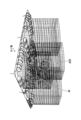
- FIG. 1 is a diagram showing an example of a school of fish in a fish pen.
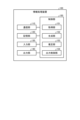
- FIG. 2 is a diagram illustrating an example of the configuration of the information processing apparatus according to the embodiment.
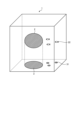
- FIG. 3 is a diagram for explaining a mass of a school of fish corresponding to a blurred region and a shadow of the school of fish corresponding to a blurred region.
- FIG. 4 is a diagram illustrating an example of a CG image according to the embodiment.
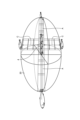
- FIG. 5 is a diagram for explaining the relationship between a mass of fish corresponding to a blurred region and the personal space of the fish.
- FIG. 6 is a diagram for explaining an example of a personal space of a fish.
- FIG. 7 is a diagram for explaining an example of a personal space of a fish.
- FIG. 1 is a diagram showing an example of a school of fish in a fish pen.
- FIG. 2 is a diagram illustrating an example of the configuration of the information processing apparatus according to the embodiment.
- FIG. 3
- FIG. 8 is a diagram for explaining a process of estimating a personal space of a fish based on a red image including a school of fish illuminated with red light.
- FIG. 9 is a flowchart showing an information processing procedure by the information processing device according to the embodiment.
- FIG. 10 is a hardware configuration diagram illustrating an example of a computer that realizes the functions of the information processing device.
- this method trains a machine learning model for image recognition to estimate the number of fish tails in a school of fish from a photographed image. More specifically, a trained machine learning model is used to detect individual fish in the photographed image, and the number of individual fish detected is added up to calculate the number of tails. In other words, in conventional methods, a trained machine learning model is used to estimate the number of fish tails included in areas of the photographed image where individual fish are visually identifiable, within the photographed image where individual fish are visually identifiable.
- the image is a moving image.
- the image may also be a still image.
- the storage unit 120 is realized by, for example, a semiconductor memory element such as a random access memory (RAM) or a flash memory, or a storage device such as a hard disk or an optical disk. Specifically, the storage unit 120 stores various programs (examples of information processing programs).
- the output unit 140 is a display screen realized by, for example, a liquid crystal display or an organic EL (Electro-Luminescence) display, and is a display device for displaying various information.
- the output unit 140 displays various information according to the control of the control unit 150. Note that, when a touch panel is adopted in the information processing device 100, the input unit 130 and the output unit 140 are integrated. In the following description, the output unit 140 may be referred to as a screen.
- the control unit 150 is a controller, and is realized, for example, by a CPU (Central Processing Unit) or an MPU (Micro Processing Unit) executing various programs (corresponding to an example of an information processing program) stored in a storage device inside the information processing device 100 using a RAM as a working area.
- the control unit 150 is also a controller, and is realized, for example, by an integrated circuit such as an ASIC (Application Specific Integrated Circuit) or an FPGA (Field Programmable Gate Array).
- the control unit 150 has an acquisition unit 151, a generation unit 152, an estimation unit 153, and an output control unit 154 as functional units, and may realize or execute the information processing functions described below. Note that the internal configuration of the control unit 150 is not limited to the configuration shown in FIG. 2, and may be other configurations that perform the information processing described below. Also, each functional unit indicates a function of the control unit 150, and does not necessarily have to be physically distinct.
- Figure 3 is a diagram explaining clumps of fish that correspond to blurred regions and the shadows of the schools of fish that correspond to blurred regions.
- a “blurred region” refers to a region in an image that includes a school of fish where the individual fish in the school cannot be visually identified.
- a “blurred region” refers to a region in an image that includes a school of fish where the boundaries between the individual fish are visually unclear.
- a region in an image that corresponds to the shadows of the school of fish that correspond to a blurred region may be referred to as a "shadow region.”
- the generation unit 152 also generates a second machine learning model trained to output, when the CG image, information on the blurred region of the learning target, and information on the shadow region of the learning target are input as input information as information on the CG image, the number of fish tails included in the school of fish corresponding to the blurred region of the learning target is output as output information.
- the estimation unit 153 estimates the number of fish tails included in the school of fish corresponding to the blurred region from the image, information on the blurred region, and information on the shadow region as information on the image.
Landscapes
- Engineering & Computer Science (AREA)
- Theoretical Computer Science (AREA)
- Physics & Mathematics (AREA)
- Life Sciences & Earth Sciences (AREA)
- Multimedia (AREA)
- General Physics & Mathematics (AREA)
- Zoology (AREA)
- Environmental Sciences (AREA)
- Health & Medical Sciences (AREA)
- Evolutionary Computation (AREA)
- Biodiversity & Conservation Biology (AREA)
- Animal Husbandry (AREA)
- Marine Sciences & Fisheries (AREA)
- Artificial Intelligence (AREA)
- Computer Vision & Pattern Recognition (AREA)
- Computing Systems (AREA)
- Databases & Information Systems (AREA)
- Human Computer Interaction (AREA)
- General Health & Medical Sciences (AREA)
- Medical Informatics (AREA)
- Software Systems (AREA)
- Image Analysis (AREA)
- Image Generation (AREA)
- Processing Or Creating Images (AREA)
- Farming Of Fish And Shellfish (AREA)
Abstract
Description
〔1.はじめに〕
近年、魚の養殖は、地球の食糧問題を解決する手段として注目されている。魚の養殖によって高品質な魚を供給するには、給餌(魚に対する餌やり)と関わりが深い魚の尾数を正確に知ることが重要である。
図2は、実施形態に係る情報処理装置100の構成例を示す図である。情報処理装置100は、通信部110と、記憶部120と、入力部130と、出力部140と、制御部150とを有する。
通信部110は、例えば、NIC(Network Interface Card)等によって実現される。そして、通信部110は、ネットワークと有線または無線で接続され、例えば、魚を管理する管理者によって利用される端末装置や撮像装置との間で情報の送受信を行う。
記憶部120は、例えば、RAM(Random Access Memory)、フラッシュメモリ(Flash Memory)等の半導体メモリ素子、または、ハードディスク、光ディスク等の記憶装置によって実現される。具体的には、記憶部120は、各種プログラム(情報処理プログラムの一例)を記憶する。
入力部130は、利用者から各種操作が入力される。例えば、入力部130は、タッチパネル機能により表示面(例えば出力部140)を介して利用者からの各種操作を受け付けてもよい。また、入力部130は、情報処理装置100に設けられたボタンや、情報処理装置100に接続されたキーボードやマウスからの各種操作を受け付けてもよい。
出力部140は、例えば、液晶ディスプレイや有機EL(Electro-Luminescence)ディスプレイ等によって実現される表示画面であり、各種情報を表示するための表示装置である。出力部140は、制御部150の制御に従って、各種情報を表示する。なお、情報処理装置100にタッチパネルが採用される場合には、入力部130と出力部140とは一体化される。また、以下の説明では、出力部140を画面と記載する場合がある。
制御部150は、コントローラ(controller)であり、例えば、CPU(Central Processing Unit)やMPU(Micro Processing Unit)等によって、情報処理装置100内部の記憶装置に記憶されている各種プログラム(情報処理プログラムの一例に相当)がRAMを作業領域として実行されることにより実現される。また、制御部150は、コントローラであり、例えば、ASIC(Application Specific Integrated Circuit)やFPGA(Field Programmable Gate Array)等の集積回路により実現される。
取得部151は、魚群を含む画像であって、魚群に含まれる個々の魚を視覚的に識別不可能な領域である不鮮明領域、および、不鮮明領域に対応する魚群の影に対応する影領域を含む画像を取得する。例えば、取得部151は、通信部110を介して、撮像装置から画像を取得してよい。
生成部152は、コンピュータグラフィックスにより生成された学習対象の魚群を含むCG画像であって、学習対象の魚群に含まれる個々の魚を視覚的に識別不可能な領域である学習対象の不鮮明領域、および、学習対象の不鮮明領域に対応する魚群の影に対応する学習対象の影領域を含むCG画像に関する情報が入力情報として入力された場合に、学習対象の不鮮明領域に対応する魚群に含まれる魚の尾数を推定するよう学習された第1機械学習モデルM1を生成する。具体的には、生成部152は、CG画像に関する情報として、CG画像、学習対象の不鮮明領域に関する情報、および、学習対象の影領域に関する情報が入力情報として入力された場合に、学習対象の不鮮明領域に対応する魚群に含まれる魚の尾数を出力情報として出力するよう学習された第1機械学習モデルM1を生成する。
推定部153は、生成部152によって生成された第1機械学習モデルM1を用いて、画像に関する情報から、不鮮明領域に対応する魚群に含まれる魚の尾数を推定する。具体的には、推定部153は、画像に関する情報として、画像、不鮮明領域に関する情報、および、影領域に関する情報から、不鮮明領域に対応する魚群に含まれる魚の尾数を推定する。より具体的には、推定部153は、不鮮明領域に関する情報として、不鮮明領域に対応する魚群の塊の体積に関する情報、不鮮明領域に対応する魚群に含まれる魚同士の間の空間の体積に関する情報、および、不鮮明領域に対応する魚群に含まれる魚の体積に関する情報から、不鮮明領域に対応する魚群に含まれる魚の尾数を推定する。また、推定部153は、影領域に関する情報として、影領域の色の濃さを示す情報から、不鮮明領域に対応する魚群に含まれる魚の尾数を推定する。
出力制御部154は、推定部153が推定した推定結果を画面に表示するよう制御する。
図9は、実施形態に係る情報処理装置100による情報処理手順を示すフローチャートである。図9では、生成部152は、魚群および魚群の影を含むCG画像に関する情報が入力情報として入力された場合に、CG画像のうち、魚群に含まれる個々の魚を視覚的に識別不可能な領域である不鮮明領域に対応する魚群に含まれる魚の尾数を出力情報として出力するよう学習された第1機械学習モデルを生成する(ステップS101)。
上述の実施形態は一例を示したものであり、種々の変更及び応用が可能である。ここから、実施形態の変形例について説明する。
上述したように、実施形態に係る情報処理装置100は、取得部151と推定部153を備える。取得部151は、魚群を含む画像であって、魚群に含まれる個々の魚を視覚的に識別不可能な領域である不鮮明領域、および、不鮮明領域に対応する魚群の影に対応する影領域を含む画像を取得する。推定部153は、不鮮明領域に対応する魚群に含まれる魚同士の間の空間の体積に関する情報を推定し、魚同士の間の空間の体積に関する情報に基づいて、不鮮明領域に対応する魚群に含まれる魚の尾数を推定する。
また、上述してきた実施形態に係る情報処理装置100は、例えば図10に示すような構成のコンピュータ1000によって実現される。図10は、情報処理装置100の機能を実現するコンピュータの一例を示すハードウェア構成図である。コンピュータ1000は、CPU1100、RAM1200、ROM1300、HDD1400、通信インターフェイス(I/F)1500、入出力インターフェイス(I/F)1600、及びメディアインターフェイス(I/F)1700を備える。
また、上記実施形態及び変形例において説明した各処理のうち、自動的に行われるものとして説明した処理の全部または一部を手動的に行うこともでき、あるいは、手動的に行われるものとして説明した処理の全部または一部を公知の方法で自動的に行うこともできる。この他、上記文書中や図面中で示した処理手順、具体的名称、各種のデータやパラメータを含む情報については、特記する場合を除いて任意に変更することができる。例えば、各図に示した各種情報は、図示した情報に限られない。
110 通信部
120 記憶部
130 入力部
140 出力部
150 制御部
151 取得部
152 生成部
153 推定部
154 出力制御部
Claims (12)
- 魚群を含む画像であって、前記魚群に含まれる個々の魚を視覚的に識別不可能な領域である不鮮明領域、および、前記不鮮明領域に対応する魚群の影に対応する影領域を含む前記画像を取得する取得手順と、
前記不鮮明領域に対応する魚群に含まれる魚同士の間の空間の体積に関する情報を推定し、前記魚同士の間の空間の体積に関する情報に基づいて、前記不鮮明領域に対応する魚群に含まれる魚の尾数を推定する推定手順と、
をコンピュータに実行させる情報処理プログラム。 - 前記推定手順は、
前記不鮮明領域に対応する魚群のうち、赤色の光を照射された魚群である赤色魚群を含む赤色画像に基づいて、前記不鮮明領域に対応する魚群に含まれる魚同士の間の空間の体積に関する情報を推定する、
請求項1に記載の情報処理プログラム。 - 前記推定手順は、
前記赤色の光を照射された水中の参照物体を含む参照画像であって、前記水中の撮像装置により撮像された参照画像のうち、前記参照物体が占める物体領域における輝度値である参照輝度値と、前記撮像装置から前記参照物体までの距離である参照距離との関係性を示す参照情報と、前記赤色画像のうち、前記赤色魚群に含まれる個々の魚が占める魚領域における輝度値である魚輝度値との比較に基づいて、前記撮像装置から前記赤色魚群に含まれる個々の魚までの距離である魚距離を推定し、前記魚距離に基づいて、前記赤色魚群に含まれる魚同士の相対距離を推定し、前記魚同士の相対距離に基づいて、前記不鮮明領域に対応する魚群に含まれる魚同士の間の空間の体積に関する情報を推定する、
請求項2に記載の情報処理プログラム。 - 前記推定手順は、
前記魚同士の相対距離の平均に基づいて、前記不鮮明領域に対応する魚群に含まれる魚同士の間の空間の体積に関する情報を推定する、
請求項3に記載の情報処理プログラム。 - 前記推定手順は、
前記魚同士の相対距離の時間平均に基づいて、前記不鮮明領域に対応する魚群に含まれる魚同士の間の空間の体積に関する情報を推定する、
請求項3に記載の情報処理プログラム。 - コンピュータグラフィックスにより生成された学習対象の魚群を含むCG画像であって、前記学習対象の魚群に含まれる個々の魚を視覚的に識別不可能な領域である学習対象の不鮮明領域、および、前記学習対象の不鮮明領域に対応する魚群の影に対応する学習対象の影領域を含む前記CG画像に関する情報が入力情報として入力された場合に、前記学習対象の不鮮明領域に対応する魚群に含まれる魚同士の間の空間の体積に関する情報を出力情報として出力するよう学習された第1機械学習モデルを生成する生成手順をさらに備え、
前記推定手順は、
前記生成手順によって生成された前記第1機械学習モデルを用いて、前記画像から前記不鮮明領域に対応する魚群に含まれる魚同士の間の空間の体積に関する情報を推定する、
請求項1に記載の情報処理プログラム。 - コンピュータグラフィックスにより生成された学習対象の魚群を含むCG画像であって、前記学習対象の魚群に含まれる個々の魚を視覚的に識別不可能な領域である学習対象の不鮮明領域、および、前記学習対象の不鮮明領域に対応する魚群の影に対応する学習対象の影領域を含む前記CG画像に関する情報が入力情報として入力された場合に、前記学習対象の不鮮明領域に対応する魚群に含まれる魚の尾数を推定するよう学習された第2機械学習モデルを生成する生成手順をさらに備え、
前記推定手順は、
前記生成手順によって生成された前記第2機械学習モデルを用いて、前記画像に関する情報から、前記不鮮明領域に対応する魚群に含まれる魚の尾数を推定する、
請求項1に記載の情報処理プログラム。 - 前記生成手順は、
前記CG画像に関する情報として、前記CG画像、前記学習対象の不鮮明領域に関する情報、および、前記学習対象の影領域に関する情報が入力情報として入力された場合に、前記学習対象の不鮮明領域に対応する魚群に含まれる魚の尾数を出力情報として出力するよう学習された前記第2機械学習モデルを生成し、
前記推定手順は、
前記画像に関する情報として、前記画像、前記不鮮明領域に関する情報、および、前記影領域に関する情報から、前記不鮮明領域に対応する魚群に含まれる魚の尾数を推定する、
請求項7に記載の情報処理プログラム。 - 前記生成手順は、
前記学習対象の不鮮明領域に関する情報として、前記学習対象の不鮮明領域に対応する魚群の塊の体積に関する情報、前記学習対象の不鮮明領域に対応する魚群に含まれる魚同士の間の空間の体積に関する情報、および、前記学習対象の不鮮明領域に対応する魚群に含まれる魚の体積に関する情報が入力情報として入力された場合に、前記学習対象の不鮮明領域に対応する魚群に含まれる魚の尾数を出力情報として出力するよう学習された前記第2機械学習モデルを生成し、
前記推定手順は、
前記不鮮明領域に関する情報として、前記不鮮明領域に対応する魚群の塊の体積に関する情報、前記不鮮明領域に対応する魚群に含まれる魚同士の間の空間の体積に関する情報、および、前記不鮮明領域に対応する魚群に含まれる魚の体積に関する情報から、前記不鮮明領域に対応する魚群に含まれる魚の尾数を推定する、
請求項8に記載の情報処理プログラム。 - 前記生成手順は、
前記学習対象の影領域に関する情報として、前記学習対象の影領域の色の濃さを示す情報が入力情報として入力された場合に、前記学習対象の不鮮明領域に対応する魚群に含まれる魚の尾数を出力情報として出力するよう学習された前記第2機械学習モデルを生成し、
前記推定手順は、
前記影領域に関する情報として、前記影領域の色の濃さを示す情報から、前記不鮮明領域に対応する魚群に含まれる魚の尾数を推定する、
請求項8に記載の情報処理プログラム。 - 魚群を含む画像であって、前記魚群に含まれる個々の魚を視覚的に識別不可能な領域である不鮮明領域、および、前記不鮮明領域に対応する魚群の影に対応する影領域を含む前記画像を取得する取得部と、
前記不鮮明領域に対応する魚群に含まれる魚同士の間の空間の体積に関する情報を推定し、前記魚同士の間の空間の体積に関する情報に基づいて、前記不鮮明領域に対応する魚群に含まれる魚の尾数を推定する推定部と、
を備える情報処理装置。 - 情報処理装置が実行するプログラムにより実現される情報処理方法であって、
魚群を含む画像であって、前記魚群に含まれる個々の魚を視覚的に識別不可能な領域である不鮮明領域、および、前記不鮮明領域に対応する魚群の影に対応する影領域を含む前記画像を取得する取得工程と、
前記不鮮明領域に対応する魚群に含まれる魚同士の間の空間の体積に関する情報を推定し、前記魚同士の間の空間の体積に関する情報に基づいて、前記不鮮明領域に対応する魚群に含まれる魚の尾数を推定する推定工程と、
を含む情報処理方法。
Priority Applications (1)
| Application Number | Priority Date | Filing Date | Title |
|---|---|---|---|
| EP23911483.8A EP4614442A4 (en) | 2022-12-27 | 2023-11-24 | INFORMATION PROCESSING PROGRAM, INFORMATION PROCESSING DEVICE AND INFORMATION PROCESSING METHOD |
Applications Claiming Priority (2)
| Application Number | Priority Date | Filing Date | Title |
|---|---|---|---|
| JP2022-210796 | 2022-12-27 | ||
| JP2022210796A JP7637109B2 (ja) | 2022-12-27 | 2022-12-27 | 情報処理プログラム、情報処理装置及び情報処理方法 |
Publications (1)
| Publication Number | Publication Date |
|---|---|
| WO2024142701A1 true WO2024142701A1 (ja) | 2024-07-04 |
Family
ID=91717179
Family Applications (1)
| Application Number | Title | Priority Date | Filing Date |
|---|---|---|---|
| PCT/JP2023/042251 Ceased WO2024142701A1 (ja) | 2022-12-27 | 2023-11-24 | 情報処理プログラム、情報処理装置及び情報処理方法 |
Country Status (3)
| Country | Link |
|---|---|
| EP (1) | EP4614442A4 (ja) |
| JP (1) | JP7637109B2 (ja) |
| WO (1) | WO2024142701A1 (ja) |
Cited By (1)
| Publication number | Priority date | Publication date | Assignee | Title |
|---|---|---|---|---|
| WO2025115392A1 (ja) * | 2023-11-27 | 2025-06-05 | ソフトバンク株式会社 | 情報処理システム、プログラム、及び情報処理方法 |
Citations (4)
| Publication number | Priority date | Publication date | Assignee | Title |
|---|---|---|---|---|
| JP2006105700A (ja) * | 2004-10-01 | 2006-04-20 | Furuno Electric Co Ltd | 魚群情報、魚群の体積及び単体魚の後方散乱強度を算出可能な水中探知装置、並びにそれらの方法 |
| WO2019045091A1 (ja) | 2017-09-04 | 2019-03-07 | 日本電気株式会社 | 情報処理装置、計数システム、計数方法およびプログラム記憶媒体 |
| CN111406693A (zh) * | 2020-04-23 | 2020-07-14 | 上海海洋大学 | 基于仿生海鳗的海洋牧场渔业资源养护效果评价方法 |
| JP2021152782A (ja) * | 2020-03-24 | 2021-09-30 | 国立大学法人愛媛大学 | 個体検出システム、撮影ユニット、個体検出方法、およびコンピュータプログラム |
Family Cites Families (1)
| Publication number | Priority date | Publication date | Assignee | Title |
|---|---|---|---|---|
| JP2589046B2 (ja) * | 1993-11-01 | 1997-03-12 | 財団法人ダム水源地環境整備センター | 魚数計測方法と装置および移動体計数方法 |
-
2022
- 2022-12-27 JP JP2022210796A patent/JP7637109B2/ja active Active
-
2023
- 2023-11-24 EP EP23911483.8A patent/EP4614442A4/en active Pending
- 2023-11-24 WO PCT/JP2023/042251 patent/WO2024142701A1/ja not_active Ceased
Patent Citations (4)
| Publication number | Priority date | Publication date | Assignee | Title |
|---|---|---|---|---|
| JP2006105700A (ja) * | 2004-10-01 | 2006-04-20 | Furuno Electric Co Ltd | 魚群情報、魚群の体積及び単体魚の後方散乱強度を算出可能な水中探知装置、並びにそれらの方法 |
| WO2019045091A1 (ja) | 2017-09-04 | 2019-03-07 | 日本電気株式会社 | 情報処理装置、計数システム、計数方法およびプログラム記憶媒体 |
| JP2021152782A (ja) * | 2020-03-24 | 2021-09-30 | 国立大学法人愛媛大学 | 個体検出システム、撮影ユニット、個体検出方法、およびコンピュータプログラム |
| CN111406693A (zh) * | 2020-04-23 | 2020-07-14 | 上海海洋大学 | 基于仿生海鳗的海洋牧场渔业资源养护效果评价方法 |
Non-Patent Citations (1)
| Title |
|---|
| See also references of EP4614442A4 |
Cited By (1)
| Publication number | Priority date | Publication date | Assignee | Title |
|---|---|---|---|---|
| WO2025115392A1 (ja) * | 2023-11-27 | 2025-06-05 | ソフトバンク株式会社 | 情報処理システム、プログラム、及び情報処理方法 |
Also Published As
| Publication number | Publication date |
|---|---|
| EP4614442A4 (en) | 2026-02-25 |
| EP4614442A1 (en) | 2025-09-10 |
| JP7637109B2 (ja) | 2025-02-27 |
| JP2024094067A (ja) | 2024-07-09 |
Similar Documents
| Publication | Publication Date | Title |
|---|---|---|
| Garcia et al. | Automatic segmentation of fish using deep learning with application to fish size measurement | |
| Chouinard-Thuly et al. | Technical and conceptual considerations for using animated stimuli in studies of animal behavior | |
| US12106428B2 (en) | Radiance fields for three-dimensional reconstruction and novel view synthesis in large-scale environments | |
| Paulin et al. | Review and analysis of synthetic dataset generation methods and techniques for application in computer vision. | |
| JP7387029B2 (ja) | ソフトレイヤ化および深度認識インペインティングを用いた単画像3d写真技術 | |
| Georgoulis et al. | Reflectance and natural illumination from single-material specular objects using deep learning | |
| Interrante et al. | Elucidating factors that can facilitate veridical spatial perception in immersive virtual environments | |
| Drew et al. | Robust estimation of surface properties and interpolation of shadow/specularity components | |
| JP7638395B2 (ja) | 情報処理装置及び情報処理方法 | |
| CN109711246A (zh) | 一种动态物体识别方法、计算机装置及可读存储介质 | |
| JP7637109B2 (ja) | 情報処理プログラム、情報処理装置及び情報処理方法 | |
| CN114067172B (zh) | 一种仿真图像生成方法、仿真图像生成装置及电子设备 | |
| JP7654108B2 (ja) | 情報処理方法、非一時的なコンピュータ可読記憶媒体及び情報処理装置 | |
| WO2012030975A2 (en) | Method and apparatus for enhancing a white board experience | |
| JP7602509B2 (ja) | 情報処理プログラム、情報処理装置及び情報処理方法 | |
| CN117075782A (zh) | 图像处理方法、装置、计算机设备及存储介质 | |
| JP7686146B2 (ja) | 情報処理方法、非一時的なコンピュータ可読記憶媒体及び情報処理装置 | |
| Bode et al. | Real-Time Multi-Material Reflectance Reconstruction for Large-Scale Scenes Under Uncontrolled Illumination from RGB-D Image Sequences. | |
| Yan et al. | Recording and documenting the chromatic information of architectural heritage | |
| Plum et al. | replicAnt-generating annotated images of animals in complex environments with Unreal Engine | |
| Borg et al. | Perceptual evaluation of photo-realism in real-time 3D augmented reality | |
| Dyrstad et al. | Creating synthetic data sets for training of neural networks for automatic catch analysis in fisheries | |
| JP7608411B2 (ja) | 情報処理プログラム、情報処理装置及び情報処理方法 | |
| Dias et al. | ARTIC: Augmented Reality Tangible Interface by Color Evaluation | |
| JP4831344B2 (ja) | 目の位置の検出方法 |
Legal Events
| Date | Code | Title | Description |
|---|---|---|---|
| 121 | Ep: the epo has been informed by wipo that ep was designated in this application |
Ref document number: 23911483 Country of ref document: EP Kind code of ref document: A1 |
|
| WWE | Wipo information: entry into national phase |
Ref document number: 2023911483 Country of ref document: EP Ref document number: EP23911483.8 Country of ref document: EP |
|
| ENP | Entry into the national phase |
Ref document number: 2023911483 Country of ref document: EP Effective date: 20250605 |
|
| NENP | Non-entry into the national phase |
Ref country code: DE |
|
| WWP | Wipo information: published in national office |
Ref document number: 2023911483 Country of ref document: EP |