WO2024143163A1 - 防食塗料組成物、防食塗膜および防食塗膜の製造方法 - Google Patents
防食塗料組成物、防食塗膜および防食塗膜の製造方法 Download PDFInfo
- Publication number
- WO2024143163A1 WO2024143163A1 PCT/JP2023/045978 JP2023045978W WO2024143163A1 WO 2024143163 A1 WO2024143163 A1 WO 2024143163A1 JP 2023045978 W JP2023045978 W JP 2023045978W WO 2024143163 A1 WO2024143163 A1 WO 2024143163A1
- Authority
- WO
- WIPO (PCT)
- Prior art keywords
- anticorrosive coating
- composition
- coating film
- mass
- curing agent
- Prior art date
- Legal status (The legal status is an assumption and is not a legal conclusion. Google has not performed a legal analysis and makes no representation as to the accuracy of the status listed.)
- Ceased
Links
Images
Classifications
-
- C—CHEMISTRY; METALLURGY
- C09—DYES; PAINTS; POLISHES; NATURAL RESINS; ADHESIVES; COMPOSITIONS NOT OTHERWISE PROVIDED FOR; APPLICATIONS OF MATERIALS NOT OTHERWISE PROVIDED FOR
- C09D—COATING COMPOSITIONS, e.g. PAINTS, VARNISHES OR LACQUERS; FILLING PASTES; CHEMICAL PAINT OR INK REMOVERS; INKS; CORRECTING FLUIDS; WOODSTAINS; PASTES OR SOLIDS FOR COLOURING OR PRINTING; USE OF MATERIALS THEREFOR
- C09D5/00—Coating compositions, e.g. paints, varnishes or lacquers, characterised by their physical nature or the effects produced; Filling pastes
- C09D5/08—Anti-corrosive paints
- C09D5/082—Anti-corrosive paints characterised by the anti-corrosive pigment
- C09D5/086—Organic or non-macromolecular compounds
-
- C—CHEMISTRY; METALLURGY
- C09—DYES; PAINTS; POLISHES; NATURAL RESINS; ADHESIVES; COMPOSITIONS NOT OTHERWISE PROVIDED FOR; APPLICATIONS OF MATERIALS NOT OTHERWISE PROVIDED FOR
- C09D—COATING COMPOSITIONS, e.g. PAINTS, VARNISHES OR LACQUERS; FILLING PASTES; CHEMICAL PAINT OR INK REMOVERS; INKS; CORRECTING FLUIDS; WOODSTAINS; PASTES OR SOLIDS FOR COLOURING OR PRINTING; USE OF MATERIALS THEREFOR
- C09D5/00—Coating compositions, e.g. paints, varnishes or lacquers, characterised by their physical nature or the effects produced; Filling pastes
- C09D5/08—Anti-corrosive paints
-
- B—PERFORMING OPERATIONS; TRANSPORTING
- B05—SPRAYING OR ATOMISING IN GENERAL; APPLYING FLUENT MATERIALS TO SURFACES, IN GENERAL
- B05D—PROCESSES FOR APPLYING FLUENT MATERIALS TO SURFACES, IN GENERAL
- B05D7/00—Processes, other than flocking, specially adapted for applying liquids or other fluent materials to particular surfaces or for applying particular liquids or other fluent materials
- B05D7/24—Processes, other than flocking, specially adapted for applying liquids or other fluent materials to particular surfaces or for applying particular liquids or other fluent materials for applying particular liquids or other fluent materials
-
- C—CHEMISTRY; METALLURGY
- C08—ORGANIC MACROMOLECULAR COMPOUNDS; THEIR PREPARATION OR CHEMICAL WORKING-UP; COMPOSITIONS BASED THEREON
- C08G—MACROMOLECULAR COMPOUNDS OBTAINED OTHERWISE THAN BY REACTIONS ONLY INVOLVING UNSATURATED CARBON-TO-CARBON BONDS
- C08G59/00—Polycondensates containing more than one epoxy group per molecule; Macromolecules obtained by polymerising compounds containing more than one epoxy group per molecule using curing agents or catalysts which react with the epoxy groups
- C08G59/18—Macromolecules obtained by polymerising compounds containing more than one epoxy group per molecule using curing agents or catalysts which react with the epoxy groups ; e.g. general methods of curing
- C08G59/20—Macromolecules obtained by polymerising compounds containing more than one epoxy group per molecule using curing agents or catalysts which react with the epoxy groups ; e.g. general methods of curing characterised by the epoxy compounds used
- C08G59/22—Di-epoxy compounds
- C08G59/24—Di-epoxy compounds carbocyclic
- C08G59/245—Di-epoxy compounds carbocyclic aromatic
-
- C—CHEMISTRY; METALLURGY
- C08—ORGANIC MACROMOLECULAR COMPOUNDS; THEIR PREPARATION OR CHEMICAL WORKING-UP; COMPOSITIONS BASED THEREON
- C08G—MACROMOLECULAR COMPOUNDS OBTAINED OTHERWISE THAN BY REACTIONS ONLY INVOLVING UNSATURATED CARBON-TO-CARBON BONDS
- C08G59/00—Polycondensates containing more than one epoxy group per molecule; Macromolecules obtained by polymerising compounds containing more than one epoxy group per molecule using curing agents or catalysts which react with the epoxy groups
- C08G59/18—Macromolecules obtained by polymerising compounds containing more than one epoxy group per molecule using curing agents or catalysts which react with the epoxy groups ; e.g. general methods of curing
- C08G59/20—Macromolecules obtained by polymerising compounds containing more than one epoxy group per molecule using curing agents or catalysts which react with the epoxy groups ; e.g. general methods of curing characterised by the epoxy compounds used
- C08G59/32—Epoxy compounds containing three or more epoxy groups
- C08G59/3218—Carbocyclic compounds
-
- C—CHEMISTRY; METALLURGY
- C08—ORGANIC MACROMOLECULAR COMPOUNDS; THEIR PREPARATION OR CHEMICAL WORKING-UP; COMPOSITIONS BASED THEREON
- C08G—MACROMOLECULAR COMPOUNDS OBTAINED OTHERWISE THAN BY REACTIONS ONLY INVOLVING UNSATURATED CARBON-TO-CARBON BONDS
- C08G59/00—Polycondensates containing more than one epoxy group per molecule; Macromolecules obtained by polymerising compounds containing more than one epoxy group per molecule using curing agents or catalysts which react with the epoxy groups
- C08G59/18—Macromolecules obtained by polymerising compounds containing more than one epoxy group per molecule using curing agents or catalysts which react with the epoxy groups ; e.g. general methods of curing
- C08G59/40—Macromolecules obtained by polymerising compounds containing more than one epoxy group per molecule using curing agents or catalysts which react with the epoxy groups ; e.g. general methods of curing characterised by the curing agents used
- C08G59/50—Amines
- C08G59/5006—Amines aliphatic
-
- C—CHEMISTRY; METALLURGY
- C08—ORGANIC MACROMOLECULAR COMPOUNDS; THEIR PREPARATION OR CHEMICAL WORKING-UP; COMPOSITIONS BASED THEREON
- C08G—MACROMOLECULAR COMPOUNDS OBTAINED OTHERWISE THAN BY REACTIONS ONLY INVOLVING UNSATURATED CARBON-TO-CARBON BONDS
- C08G59/00—Polycondensates containing more than one epoxy group per molecule; Macromolecules obtained by polymerising compounds containing more than one epoxy group per molecule using curing agents or catalysts which react with the epoxy groups
- C08G59/18—Macromolecules obtained by polymerising compounds containing more than one epoxy group per molecule using curing agents or catalysts which react with the epoxy groups ; e.g. general methods of curing
- C08G59/40—Macromolecules obtained by polymerising compounds containing more than one epoxy group per molecule using curing agents or catalysts which react with the epoxy groups ; e.g. general methods of curing characterised by the curing agents used
- C08G59/50—Amines
- C08G59/5026—Amines cycloaliphatic
-
- C—CHEMISTRY; METALLURGY
- C09—DYES; PAINTS; POLISHES; NATURAL RESINS; ADHESIVES; COMPOSITIONS NOT OTHERWISE PROVIDED FOR; APPLICATIONS OF MATERIALS NOT OTHERWISE PROVIDED FOR
- C09D—COATING COMPOSITIONS, e.g. PAINTS, VARNISHES OR LACQUERS; FILLING PASTES; CHEMICAL PAINT OR INK REMOVERS; INKS; CORRECTING FLUIDS; WOODSTAINS; PASTES OR SOLIDS FOR COLOURING OR PRINTING; USE OF MATERIALS THEREFOR
- C09D163/00—Coating compositions based on epoxy resins; Coating compositions based on derivatives of epoxy resins
- C09D163/04—Epoxynovolacs
-
- C—CHEMISTRY; METALLURGY
- C09—DYES; PAINTS; POLISHES; NATURAL RESINS; ADHESIVES; COMPOSITIONS NOT OTHERWISE PROVIDED FOR; APPLICATIONS OF MATERIALS NOT OTHERWISE PROVIDED FOR
- C09D—COATING COMPOSITIONS, e.g. PAINTS, VARNISHES OR LACQUERS; FILLING PASTES; CHEMICAL PAINT OR INK REMOVERS; INKS; CORRECTING FLUIDS; WOODSTAINS; PASTES OR SOLIDS FOR COLOURING OR PRINTING; USE OF MATERIALS THEREFOR
- C09D7/00—Features of coating compositions, not provided for in group C09D5/00; Processes for incorporating ingredients in coating compositions
- C09D7/40—Additives
- C09D7/60—Additives non-macromolecular
- C09D7/61—Additives non-macromolecular inorganic
- C09D7/62—Additives non-macromolecular inorganic modified by treatment with other compounds
-
- C—CHEMISTRY; METALLURGY
- C09—DYES; PAINTS; POLISHES; NATURAL RESINS; ADHESIVES; COMPOSITIONS NOT OTHERWISE PROVIDED FOR; APPLICATIONS OF MATERIALS NOT OTHERWISE PROVIDED FOR
- C09D—COATING COMPOSITIONS, e.g. PAINTS, VARNISHES OR LACQUERS; FILLING PASTES; CHEMICAL PAINT OR INK REMOVERS; INKS; CORRECTING FLUIDS; WOODSTAINS; PASTES OR SOLIDS FOR COLOURING OR PRINTING; USE OF MATERIALS THEREFOR
- C09D7/00—Features of coating compositions, not provided for in group C09D5/00; Processes for incorporating ingredients in coating compositions
- C09D7/40—Additives
- C09D7/60—Additives non-macromolecular
- C09D7/63—Additives non-macromolecular organic
-
- C—CHEMISTRY; METALLURGY
- C23—COATING METALLIC MATERIAL; COATING MATERIAL WITH METALLIC MATERIAL; CHEMICAL SURFACE TREATMENT; DIFFUSION TREATMENT OF METALLIC MATERIAL; COATING BY VACUUM EVAPORATION, BY SPUTTERING, BY ION IMPLANTATION OR BY CHEMICAL VAPOUR DEPOSITION, IN GENERAL; INHIBITING CORROSION OF METALLIC MATERIAL OR INCRUSTATION IN GENERAL
- C23F—NON-MECHANICAL REMOVAL OF METALLIC MATERIAL FROM SURFACE; INHIBITING CORROSION OF METALLIC MATERIAL OR INCRUSTATION IN GENERAL; MULTI-STEP PROCESSES FOR SURFACE TREATMENT OF METALLIC MATERIAL INVOLVING AT LEAST ONE PROCESS PROVIDED FOR IN CLASS C23 AND AT LEAST ONE PROCESS COVERED BY SUBCLASS C21D OR C22F OR CLASS C25
- C23F11/00—Inhibiting corrosion of metallic material by applying inhibitors to the surface in danger of corrosion or adding them to the corrosive agent
- C23F11/08—Inhibiting corrosion of metallic material by applying inhibitors to the surface in danger of corrosion or adding them to the corrosive agent in other liquids
- C23F11/10—Inhibiting corrosion of metallic material by applying inhibitors to the surface in danger of corrosion or adding them to the corrosive agent in other liquids using organic inhibitors
- C23F11/173—Macromolecular compounds
-
- B—PERFORMING OPERATIONS; TRANSPORTING
- B05—SPRAYING OR ATOMISING IN GENERAL; APPLYING FLUENT MATERIALS TO SURFACES, IN GENERAL
- B05D—PROCESSES FOR APPLYING FLUENT MATERIALS TO SURFACES, IN GENERAL
- B05D2202/00—Metallic substrate
-
- C—CHEMISTRY; METALLURGY
- C08—ORGANIC MACROMOLECULAR COMPOUNDS; THEIR PREPARATION OR CHEMICAL WORKING-UP; COMPOSITIONS BASED THEREON
- C08K—Use of inorganic or non-macromolecular organic substances as compounding ingredients
- C08K5/00—Use of organic ingredients
- C08K5/16—Nitrogen-containing compounds
- C08K5/17—Amines; Quaternary ammonium compounds
Definitions
- an anticorrosive coating composition that is excellent in low-temperature film-forming property and can form an anticorrosive coating film that has high oil resistance, solvent resistance, chemical resistance and corrosion prevention properties.
- a corrosion-resistant coating film having the above-mentioned various excellent properties can be formed, and therefore the coating film can be suitably used for painting various substrates, particularly the inner surfaces of tanks used for transporting or storing chemical substances, etc.
- a coating composition can be obtained that is a high solid type and has excellent workability for coating, particularly for spray coating. Therefore, it is possible to easily form an anticorrosive coating film on a large substrate with little impact on the environment and human body.
- oils such as heavy oil, gasoline, naphtha, and palm oil
- solvents such as methanol, ethanol, xylene, benzene, methyl isobutyl ketone, 1,2-dichloroethane, and ethyl acetate
- chemicals such as sodium hydroxide and sulfuric acid.
- Paint density A value calculated by filling a 100 ml density cup with the composition (e.g., a composition immediately after mixing the base component and hardener component) at a temperature of 23° C. and measuring the mass of the composition.
- the epoxy equivalent of the epoxy compound (A) is preferably 200 or less, more preferably 100 to 200, and even more preferably 100 to 190, since it is possible to form an anticorrosive coating film excellent in oil resistance, solvent resistance, chemical resistance, anticorrosive properties, etc.
- the epoxy equivalent is calculated based on JIS K 7236:2001.
- Epoxy compounds having an epoxy equivalent of more than 200 have an excessively large molecular weight, and therefore, when such epoxy compounds are used, an organic solvent is often required to adjust the viscosity to an appropriate level for coating, and a high-solids type anticorrosive coating composition may not be easily obtained.
- Epoxy compound (A) may be a commercially available product, and examples of such commercially available products include bisphenol A type epoxy resin "E-028” (manufactured by Ohtake Meishin Chemical Co., Ltd., epoxy equivalent 180-190, solid content 100%) and bisphenol F type epoxy resin "jER 807” (manufactured by Mitsubishi Chemical Co., Ltd., epoxy equivalent 160-175, solid content 100%).
- the content of the epoxy compound (A) in the composition is preferably 10% by mass or more, more preferably 15% by mass or more, and preferably 50% by mass or less, more preferably 45% by mass or less, based on 100% by mass of the nonvolatile content of the composition, in order to easily form an anticorrosive coating film that is excellent in adhesion to the substrate, oil resistance, solvent resistance, chemical resistance, and corrosion resistance, etc.
- the amine curing agent (B) is not particularly limited, but is preferably liquid at room temperature from the viewpoint of easily obtaining a high-solid type present composition, etc.
- the amine curing agent (B) is a compound different from the alkylamine (C), and is preferably a polyamine having two or more primary or secondary amino groups in one molecule.
- the amine curing agent (B) is preferably an aliphatic, alicyclic, aromatic, heterocyclic, etc. These amine compounds are classified according to the type of carbon to which the amino group is bonded, and for example, an aliphatic amine curing agent refers to a compound having at least one amino group bonded to an aliphatic carbon.
- the amine curing agent (B) may be used alone or in combination of two or more.
- polyalkylene polyamine examples include compounds represented by the formula: " H2N -- ( CmH2mNH ) nH " (m is an integer of 1 to 10, n is an integer of 2 to 10, and preferably an integer of 2 to 6). Specific examples include diethylenetriamine (DETA), dipropylenetriamine, triethylenetetramine (TETA), tripropylenetetramine, tetraethylenepentamine (TEPA), tetrapropylenepentamine, pentaethylenehexamine, nonaethylenedecamine, and triethylene-bis(trimethylene)hexamine.
- DETA diethylenetriamine
- TETA triethylenetetramine
- TEPA tetraethylenepentamine
- pentaethylenehexamine nonaethylenedecamine
- triethylene-bis(trimethylene)hexamine examples include diethylenetriamine (DETA), dipropylenetriamine, triethylenetetramine (TETA), tripropylenetetramine, tetraethylenepentamine (
- aromatic amine curing agent examples include aromatic polyamine compounds having two or more primary amino groups bonded to an aromatic ring such as a benzene ring or a naphthalene ring.
- aromatic amine curing agent examples include phenylenediamine, naphthalenediamine, diaminodiphenylmethane, 2,2-bis(4-aminophenyl)propane, 4,4'-diaminodiphenyl ether, 4,4'-diaminobenzophenone, 4,4'-diaminodiphenyl sulfone, 3,3'-dimethyl-4,4'-diaminodiphenylmethane, diaminodiethylphenylmethane, 2,4'-diaminobiphenyl, 2,3'-dimethyl-4,4'-diaminobiphenyl, and 3,3'-dimethoxy-4,4'-diaminobiphenyl.
- heterocyclic amine curing agent examples include 1,4-diazacycloheptane, 1,11-diazacycloeicosane, and 1,15-diazacyclooctacosane.
- the content of the amine curing agent (B) in the composition is preferably 5% by mass or more, more preferably 7% by mass or more, and preferably 20% by mass or less, more preferably 15% by mass or less, based on 100% by mass of the nonvolatile content of the composition, in order to easily form an anticorrosive coating film that is excellent in oil resistance, solvent resistance, chemical resistance, and corrosion resistance.
- the content of the Mannich modified compounds of MPCA, PACM and MXDA is preferably 0.5% by mass or more, more preferably 1% by mass or more, and preferably 15% by mass or less, more preferably 10% by mass or less, based on 100% by mass of the non-volatile content of the present composition, in order to easily form a corrosion-resistant coating film having excellent oil resistance, solvent resistance, chemical resistance and corrosion resistance.
- the content of the aliphatic amine curing agent is preferably 1 mass % or more, more preferably 2 mass % or more, and preferably 15 mass % or less, more preferably 12 mass % or less, based on 100 mass % of the nonvolatile content of the present composition, from the viewpoints of easily forming a corrosion-resistant coating film that is excellent in flexibility, corrosion resistance, and topcoat paint compatibility, and of being able to extend the pot life of the present composition.
- the amine curing agent (B) in an amount such that the reaction ratio calculated by the following formula (2) is preferably 0.3 or more, more preferably 0.4 or more, and preferably 1.2 or less, more preferably 1.1 or less.
- examples of the “component reactive to the amine curing agent (B)” in the formula (2) include the components reactive to the amine curing agent (B) in the other components described below, and examples of the “component reactive to the epoxy compound (A)” include alkylamine (C) and the components reactive to the epoxy compound (A) in the other components described below.
- the “functional group equivalent” of each component refers to the mass (g) per 1 mol of functional group obtained by dividing the number of moles of functional groups contained therein by the mass of 1 mol of the component.
- the carbon number of R is preferably 8 or more, and is preferably 18 or less, more preferably 12 or less, and particularly preferably 10 or less, from the viewpoint that the present composition is likely to become a liquid alkylamine at room temperature and has excellent low-temperature film-forming properties, etc.
- the alkyl group represented by R may have a branched chain or may be cyclic such as a cycloalkyl group, but is preferably a chain alkyl group, and more preferably a linear alkyl group.
- R 1 represents an alkyl group having 1 to 6 carbon atoms which may have a hydroxyl group
- R 2 NHCH 2 -- R 2 represents an alkyl group having 1 to 6 carbon atoms
- p is a number from 0 to 2.
- substantially free of benzyl alcohol means that benzyl alcohol is not intentionally blended into the composition, and that raw materials that intentionally contain benzyl alcohol are not used. Specifically, this means that the content of benzyl alcohol in the composition is 0.5% by mass or less.
- the composition may contain a reactive diluent, and preferably contains a reactive diluent, which is preferably an epoxy group-containing reactive diluent.
- the reactive diluent may be used alone or in combination of two or more kinds.
- the composition may, and preferably does, contain a pigment.
- the pigment include extender pigments, coloring pigments, and rust-preventive pigments, and they may be either organic or inorganic.
- One type of pigment may be used, or two or more types of pigments may be used.
- the content of the plasticizer is preferably 0.5 to 5 mass % based on 100 mass % of the non-volatile content of the composition.
Landscapes
- Chemical & Material Sciences (AREA)
- Organic Chemistry (AREA)
- Engineering & Computer Science (AREA)
- Life Sciences & Earth Sciences (AREA)
- Wood Science & Technology (AREA)
- Materials Engineering (AREA)
- Medicinal Chemistry (AREA)
- Health & Medical Sciences (AREA)
- Chemical Kinetics & Catalysis (AREA)
- Polymers & Plastics (AREA)
- Inorganic Chemistry (AREA)
- Mechanical Engineering (AREA)
- Metallurgy (AREA)
- Paints Or Removers (AREA)
- Application Of Or Painting With Fluid Materials (AREA)
Abstract
Description
このような防食塗料組成物としては、近年、特に外国を中心にVOC(揮発性有機化合物)規制が厳しくなっており、よりハイソリッド型の防食塗料組成物が求められている。
[3] 前記アルキルアミン(C)が、R-NH2[Rは炭素数1~20のアルキル基である。]で表される1級アミンである、[1]または[2]に記載の防食塗料組成物。
本発明の一実施形態によれば、前記優れた各種性能を有する防食塗膜を形成することができるため、各種の基材、特に、化学物質等を輸送または貯蔵するために使用されるタンクの内面の塗装用途に好適に用いることができる。
また、本発明の一実施形態によれば、ハイソリッド型でありながら塗装作業性、特にスプレー塗装作業性に優れる塗料組成物も得ることができる。このため、大面積の基材にも、環境や人体への影響が少なく、容易に防食塗膜を形成することができる。
これらの油類、溶剤および薬品は、塗膜への影響が大きいため、これら油類、溶剤および薬品に耐性を有する塗膜は、一般的な油、溶剤および薬品に対しても、耐性を有すると考えられる。
本発明の一実施形態に係る防食塗料組成物(以下「本組成物」ともいう。)は、エポキシ化合物(A)と、アミン硬化剤(B)と、アルキルアミン(C)とを含有する。
不揮発分の含有量が前記範囲にある本組成物は、従来よりもハイソリッドな防食塗料組成物であるといえる。
なお、本発明において、「有機溶剤」は、1気圧での沸点が200℃未満の有機化合物のことをいう。
VOC含量(g/L)=塗料比重×1000×(100-本組成物中の不揮発分の含有量)/100 ・・・(1)
これら主剤成分および硬化剤成分は、通常、それぞれ別個の容器にて保存、貯蔵、運搬等され、使用直前に一緒に混合して用いられる。
エポキシ化合物(A)としては、例えば、2個以上のエポキシ基を含むポリマーまたはオリゴマー、および、そのエポキシ基の開環反応によって生成するポリマーまたはオリゴマーが挙げられる。
エポキシ化合物(A)は、1種を用いてもよく、2種以上を用いてもよい。
エポキシ当量が200を超えるエポキシ化合物は、分子量が過度に大きいため、このようなエポキシ化合物を用いると、塗装適正粘度に調整するために有機溶剤が必要となる場合が多く、ハイソリッド型の防食塗料組成物を容易に得ることができない場合がある。
なお、本明細書における「常温」は、25℃のことをいう。
アミン硬化剤(B)は特に制限されないが、ハイソリッド型の本組成物を容易に得ることができる等の点から、常温で液状であることが好ましい。アミン硬化剤(B)は、アルキルアミン(C)とは異なる化合物であり、1分子中に1級または2級のアミノ基を2つ以上有するポリアミンであることが好ましい。
アミン硬化剤(B)としては、具体的には、脂肪族系、脂環族系、芳香族系、複素環系などのアミン化合物が好ましい。なお、これらアミン化合物は、アミノ基が結合している炭素の種類により区別され、例えば、脂肪族系アミン硬化剤とは、脂肪族炭素に結合したアミノ基を少なくとも1つ有する化合物のことをいう。
アミン硬化剤(B)は、1種を用いてもよく、2種以上を用いてもよい。
このようなアミン硬化剤(B)を用いることで、塗装適正粘度に調整するための有機溶剤を低減することができ、ハイソリッド型でありながら、塗装作業性に優れる本組成物を容易に得ることができる。
なお、造膜性により優れる防食塗膜を容易に形成することができる等の点から、ビス(アミノメチル)シクロヘキサンおよびその変性物を用いないことが好ましい。
この芳香族アミン硬化剤の具体例としては、フェニレンジアミン、ナフタレンジアミン、ジアミノジフェニルメタン、2,2-ビス(4-アミノフェニル)プロパン、4,4'-ジアミノジフェニルエーテル、4,4'-ジアミノベンゾフェノン、4,4'-ジアミノジフェニルスルホン、3,3'-ジメチル-4,4'-ジアミノジフェニルメタン、ジアミノジエチルフェニルメタン、2,4'-ジアミノビフェニル、2,3'-ジメチル-4,4'-ジアミノビフェニル、3,3'-ジメトキシ-4,4'-ジアミノビフェニルが挙げられる。
また、ベンジルアルコールフリーのMPCAおよびPACMを用いた場合、前記しわ(造膜性不良)が発生しやすいことが分かった。これは、ベンジルアルコールフリーのMPCAおよびPACMには、前記低分子のアミン化合物の含有量が多いことによると考えられる。
一方で、本組成物によれば、耐油性、耐溶剤性、耐薬品性および防食性により優れる防食塗膜を容易に形成することを目的として、MPCA、PACMおよびMXDAのマンニッヒ変性物から選択される少なくとも1種を用いた場合であっても、さらには、ベンジルアルコールフリーのこれらのアミン硬化剤を用いた場合であっても、低温での乾燥・硬化(硬化収縮)によりしわ(造膜性不良)が発生し難い。
前記ベンジルアルコールフリーの液状アミン硬化剤の市販品としては、例えば、「Ancamine 2738」、「Ancamine 2264」、「Ancamine 2167」、「Ancamine 2422」、「Ancamine 2089K」、「Ancamide 506」(以上、エボニック・ジャパン(株)製)、「NX-5567」(カードライトジャパン(株)製)が挙げられる。
アルキルアミン(C)は、MPCA、PACMおよびMXDAのマンニッヒ変性物から選択される少なくとも1種を用いた場合であっても、低温造膜性に優れる本組成物を容易に得ることができる等の点から、1級のアルキルアミンであることが好ましく、1級のアルキルモノアミンであることが好ましい。
アルキルアミン(C)は、ハイソリッド型の本組成物を容易に得ることができる等の点から、常温で液状であることが好ましい。
アルキルアミン(C)は、1種を用いてもよく、2種以上を用いてもよい。
前記Rにおけるアルキル基は、分岐鎖を有してもよく、シクロアルキル基のように環状であってもよいが、鎖状のアルキル基が好ましく、直鎖アルキル基がより好ましい。

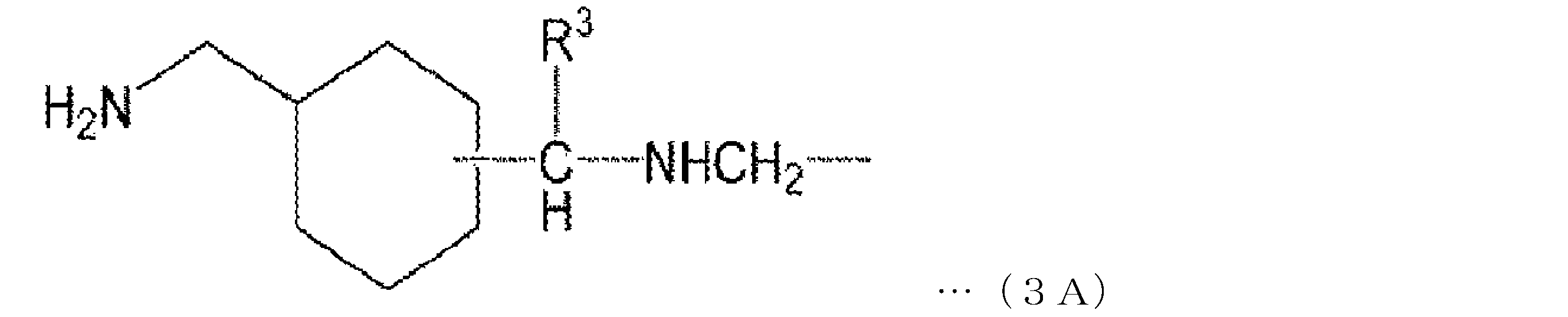
該市販品としては、例えば、「ファーミン08D」(花王(株)製、主成分:炭素数8の1級アルキルアミンを98%含む)、「ファーミンCS」(花王(株)製、主成分:炭素数12の1級アルキルアミンを51%含む、副成分:炭素数8または10の1級アルキルアミンを合計14%含み、炭素数14~18の1級アルキルアミンを合計35%含む)、「ファーミン20D」(花王(株)製、主成分:炭素数12の1級アルキルアミン)、「ファーミンO-V」(花王(株)製、主成分:炭素数18の1級アルキルアミン)、「ファーミンDM0898」(花王(株)製、主成分:炭素数8の3級アルキルアミン)、「ファーミンDM1098」(花王(株)製、主成分:炭素数10の3級アルキルアミン)、「ファーミンDM2098」(花王(株)製、主成分:炭素数12の3級アルキルアミン)、「ファーミンDM2463」(花王(株)製、主成分:炭素数12、14の3級アルキルアミン)、「ファーミンDM4098」(花王(株)製、主成分:炭素数14の3級アルキルアミン)、「ファーミンDM6098」(花王(株)製、主成分:炭素数16の3級アルキルアミン)が挙げられる。
本組成物は、前記(A)~(C)以外に、本発明の効果を損なわない範囲で、反応性希釈剤、シランカップリング剤、顔料、タレ止め剤(沈降防止剤)、可塑剤、分散剤、レベリング剤、表面調整剤、ジオキソラン誘導体、有機溶剤、エポキシ化合物(A)以外のエポキシ化合物、アミン硬化剤(B)以外の硬化剤などの、塗料組成物に用いられてきた従来公知のその他の成分を含有していてもよい。
これらその他の成分はそれぞれ、1種を用いてもよく、2種以上を用いてもよく、主剤成分に配合してもよく、硬化剤成分に配合してもよい。
一方で、ベンジルアルコールは、低揮発性で一般的に他の有機溶剤と比較して有害性が低い化学物質とされているものの、GHS分類によると、急性毒性(経口):区分4、急性毒性(経皮):区分4、急性毒性(吸入:蒸気):区分3に分類されており、健康に対する有害性が指摘されている。
また、ベンジルアルコールは高沸点溶媒であるため、多量に用いた場合(例:組成物中に3質量%以上)は、乾燥塗膜中に残留することがあり、この影響で塗膜性能、特に防食性、耐油性の低下を引き起こす場合がある。
一方で、本組成物によれば、ベンジルアルコールを含まない環状構造を有するアミン硬化剤を用いても、低温造膜性に優れることが分かった。つまり、本組成物によれば、ベンジルアルコールを実質的に含まないにもかかわらず、耐油性、耐溶剤性、耐薬品性および防食性に優れる防食塗膜を形成することができながらも、低温造膜性に優れる防食塗料組成物を容易に得ることができる。
本組成物は、反応性希釈剤を含有していてもよく、反応性希釈剤を含有していることが好ましい。該反応性希釈剤としては、エポキシ基含有反応性希釈剤が好ましい。
反応性希釈剤は、1種を用いてもよく、2種以上を用いてもよい。
本組成物は、シランカップリング剤を含有していてもよく、シランカップリング剤を含有していることが好ましい。
シランカップリング剤としては特に制限されず、従来公知の化合物を用いることができるが、同一分子内に少なくとも2つの官能基を有し、基材への密着性の向上、本組成物の粘度の低下等に寄与できる化合物であることが好ましく、例えば、式:「X-SiMenY3-n」[nは0または1、Xは有機質との反応が可能な反応性基(例:アミノ基、ビニル基、エポキシ基、メルカプト基、ハロゲン基、炭化水素基の一部がこれらの基で置換された基、または炭化水素基の一部がエーテル結合等で置換された基の一部がこれらの基で置換された基。)であり、Meはメチル基であり、Yは加水分解性基(例:メトキシ基、エトキシ基などのアルコキシ基)である。]で表される化合物であることがより好ましい。
シランカップリング剤は、1種を用いてもよく、2種以上を用いてもよい。
本組成物は、顔料を含有していてもよく、顔料を含有していることが好ましい。
該顔料としては、例えば、体質顔料、着色顔料、防錆顔料が挙げられ、有機系、無機系のいずれであってもよい。
顔料は、1種を用いてもよく、2種以上を用いてもよい。
これらの中でも、硬化塗膜の内部応力を緩和させ、基材との密着性を向上させる等の点からは、マイカを用いることが好ましい。
PVC[%]=本組成物中の全ての顔料の体積合計×100/本組成物中の不揮発分の体積
前記顔料の体積は、用いた顔料の質量および真密度から算出することができる。前記顔料の質量および真密度は、測定値でも、用いる原料から算出した値でも構わない。例えば、本組成物の不揮発分より顔料と他の成分とを分離し、分離された顔料の質量および真密度を測定することで算出することができる。
前記タレ止め剤(沈降防止剤)としては、Al、Ca、Znのステアレート塩、レシチン塩、アルキルスルホン酸塩などの有機粘土系ワックス、ポリエチレンワックス、アマイドワックス、水添ヒマシ油ワックス、水添ヒマシ油ワックスおよびアマイドワックスの混合物、合成微粉シリカ、酸化ポリエチレン系ワックス等、従来公知のものを使用できるが、中でも、アマイドワックス、合成微粉シリカ、酸化ポリエチレン系ワックスおよび有機粘土系ワックスが好ましい。
タレ止め剤(沈降防止剤)は、1種を用いてもよく、2種以上を用いてもよい。
前記可塑剤としては、例えば、石油樹脂、キシレン樹脂、テルペンフェノール樹脂、アクリル樹脂が挙げられる。本組成物が可塑剤を含有することで、得られる防食塗膜の防食性、柔軟性、上塗り塗装適合性などを向上させることができる。
可塑剤は、1種を用いてもよく、2種以上を用いてもよい。
このような石油樹脂として、具体的には、「ネシレスEPX-L」(Nevcin Polymers co.製、インデン・スチレン系)、「HILENOL PL-1000S」(Kolon Industries, Inc.製、C9留分石油樹脂)などが挙げられる。
このようなキシレン樹脂として、具体的には、「ニカノールY-51」、「ニカノールY-100」(いずれもフドー(株)製、キシレンホルムアルデヒド樹脂)などが挙げられる。
本組成物は、予めそれぞれ個別に調製しておいた主剤成分と硬化剤成分とを、使用時に混合することで製造することが好ましい。
一方、硬化剤成分は、配合する成分にもよるが、それを構成する各成分を、攪拌機等で均一に混合すればよい。
本組成物によれば、耐油性、耐溶剤性、耐薬品性および防食性等の各種の性能を有する防食塗膜(層)を形成することができる。該防食には、隙間腐食、異種金属接触腐食、応力腐食等も含まれる。
本組成物は、これらの優れた性能の防食塗膜を形成できることから、化学物質を陸上輸送または海上輸送等で輸送するための貨物タンク(例:プロダクトキャリアやケミカルタンカー)や、同様に化学品を貯蔵するための陸上タンクの内面に用いることが好ましく、WBT、COT、FWT(Fresh Water Tank)、DWT(Drinking Water Tank)等のタンクの内面や、船舶等の内外面に用いることが好ましく、また、これらの用途以外にも、海水淡水化装置、海洋構造物等のメンテナンスが困難な箇所、ダムや水門のゲート周り、海水・河川水や工業用水を冷却水として使用するプラントなどの配管、貯水槽、貯水タンク、使用済み核燃料貯蔵用プール等への使用に適している。
特に、本組成物は、化学物質等を輸送または貯蔵するために使用されるタンク(例:プロダクトキャリア、ケミカルタンカー)、WBT、COT、パイプライン等の内面、船舶用等のユニバーサルプライマーとして用いることが好ましい。
また、本組成物は、ステンレスなどの基材の溶接部や隙間がある箇所に本組成物を塗布して、基材の局部腐食を防止するとともに、さらにその塗膜表面にステンレス板を接着させるための接着剤としても作用させることにより、局部腐食を長期間安定して抑制できる。
このように、基材を補修する際には、例えば、溶接部(溶接線)や隙間がある基材表面に本組成物を塗布し、未硬化の塗膜表面に別の基材を接着させる等の方法で行うことができ、さらに、該別の基材上に本組成物を塗布してもよい。
本発明の一実施形態に係る防食塗膜(以下「本塗膜」ともいう。)は、前記本組成物を用いて形成され、具体的には、本組成物を、乾燥(硬化)させることで形成することができ、通常、基材上に形成され、防食塗膜付き基材として使用される。
また、前記基材として、例えば、マイルドスチール(SS400等)を用いる場合、必要により、グリットブラスト等で表面を研磨するなど、素地調整(例:算術平均粗さ(Ra)が30~75μm程度になるよう調整)しておくことが望ましい。
本塗膜の形成方法としては、1回の塗装(1回塗り)で所望の膜厚を形成してもよいし、2回以上の塗装(2回以上塗り)で所望の膜厚の防食塗膜を形成してもよい。膜厚管理の観点、および、防食塗膜中の残留有機溶剤を考慮すると、2回以上の塗装で所望の乾燥膜厚となるように防食塗膜を形成することが好ましい。
工程[1]:本組成物を基材に塗装する工程
工程[2]:塗装された本組成物を乾燥させて防食塗膜を形成する工程
前記工程[1]における塗装方法としては、特に制限されず、例えば、エアレススプレー塗装、エアスプレー塗装、刷毛塗り、ローラー塗りなどの常法に従って、基材表面に塗装すればよいが、タンク等の大型構造物に塗装する場合には、大面積の基材を容易に塗装できる等の点から、スプレー塗装が好ましい。
なお、塗装作業の際には、本組成物をシンナー(有機溶剤)等で適宜希釈して用いてもよい。但し、このように希釈した場合であっても、希釈後の組成物中のVOC含量は、200g/L以下であることが好ましい。
また、得られる防食塗膜の乾燥膜厚が前記範囲となるように塗装すればよい。
前記工程[2]における乾燥条件としては、特に制限されず、防食塗膜の形成方法、基材の種類、用途、塗装環境等に応じて、適宜設定すればよいが、例えば、0~35℃で、12~250時間の条件が挙げられる。また、所望により加熱、送風により強制乾燥し、硬化させてもよいが、通常は自然条件下で乾燥、硬化される。
本組成物は、このような温度下でも乾燥させることができるため、加熱することができないまたは容易ではない基材を塗装する際に好適に用いられ、このような基材に対し、冬季等の低温下で塗装しても、所望の防食塗膜を形成することができる。
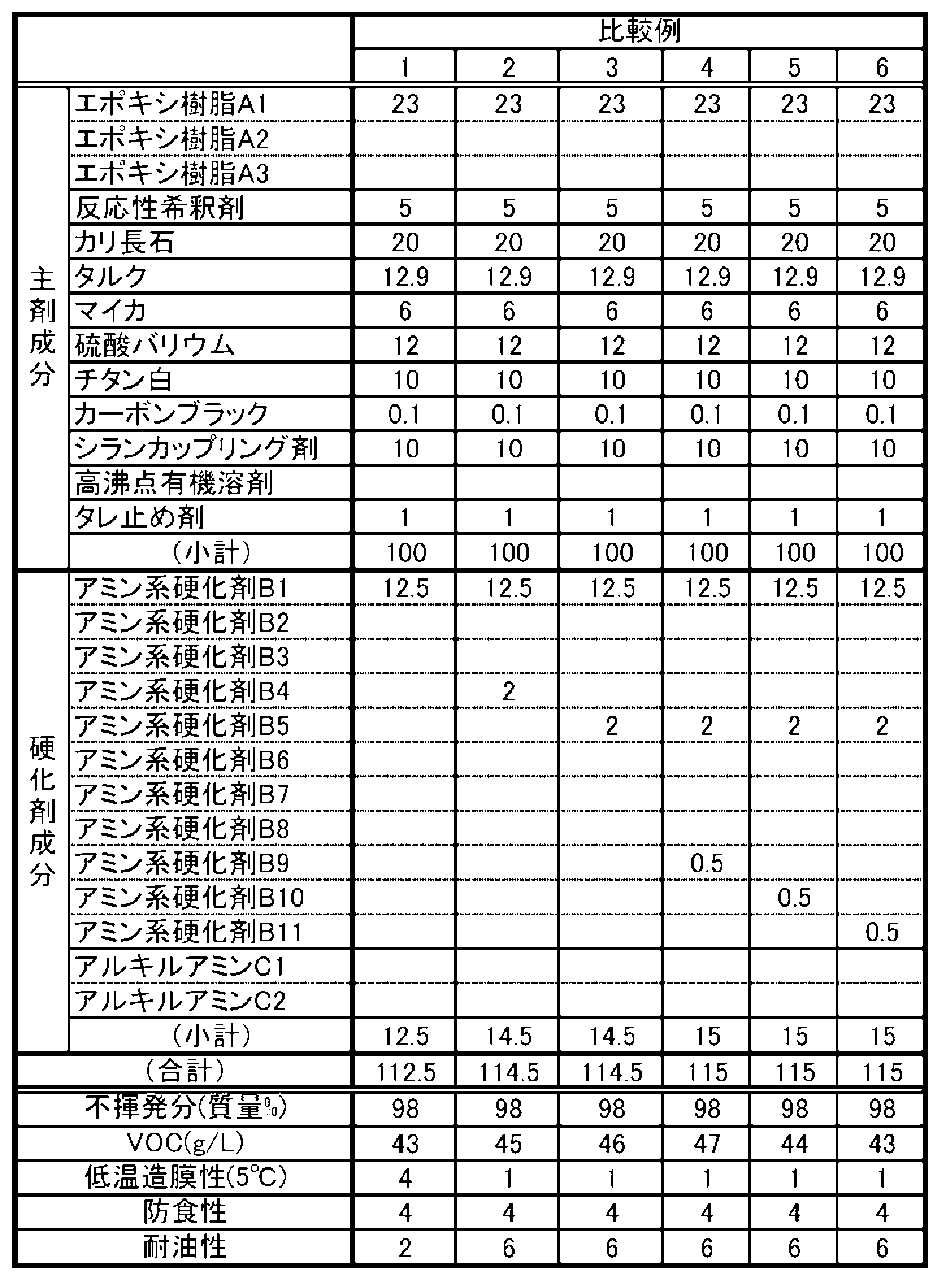
容器に、表1~2の主剤成分の欄に記載の各材料を各欄に記載の数値(質量部)で配合し、ハイスピードディスパーを用いて室温(23℃)で均一になるまで撹拌し、その後56~60℃で30分程度分散させた。その後、30℃以下まで冷却することで、防食塗料組成物の主剤成分を調製した。
また、容器に、表1~2の硬化剤成分の欄に記載の各材料を各欄に記載の数値(質量部)で配合し、ハイスピードディスパーを用い、常温、常圧下でこれらの成分を混合することで、硬化剤成分を調製した。
これらの主剤成分と硬化剤成分とを、塗装前に混合することで防食塗料組成物を調製した。
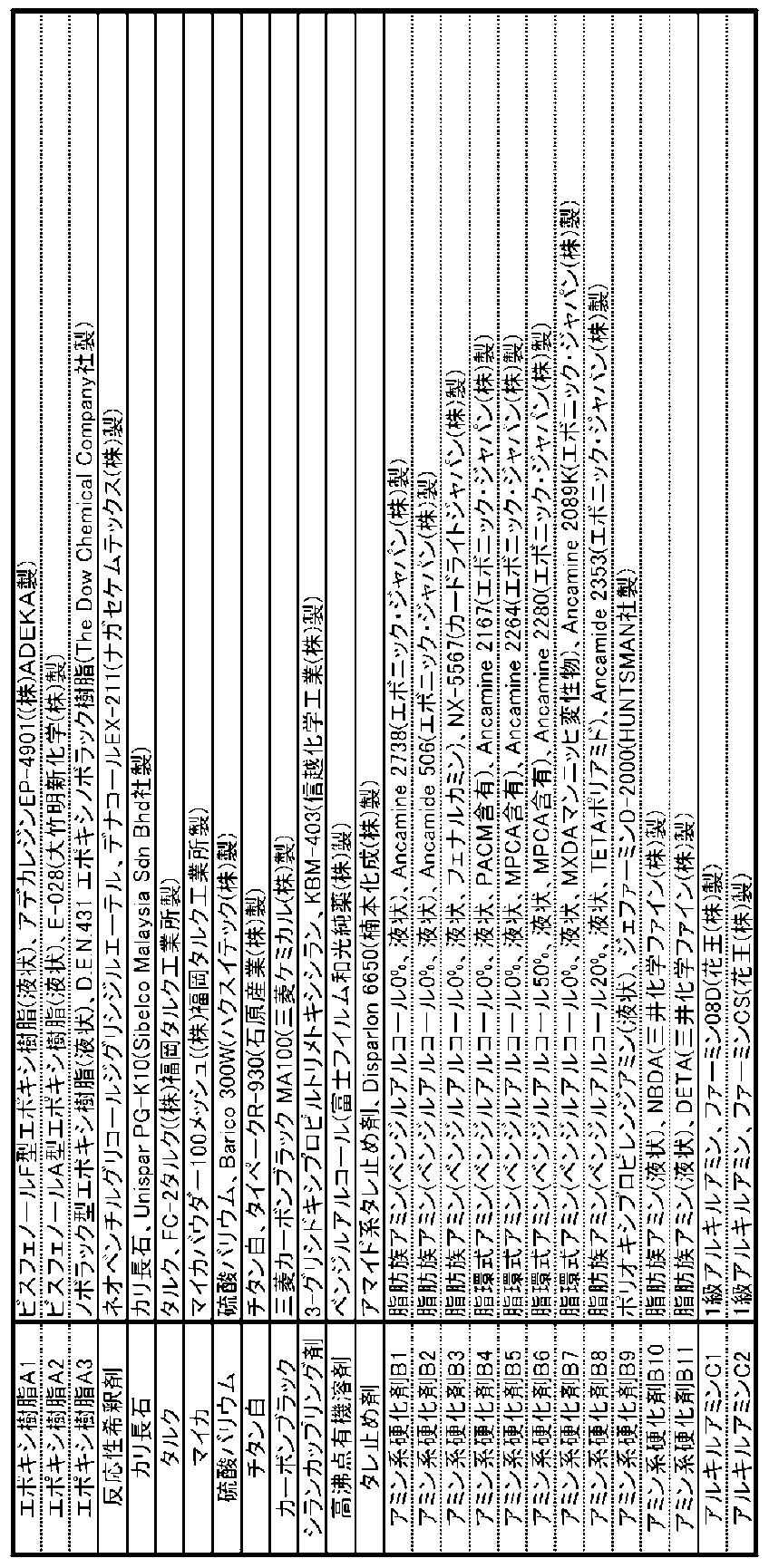
なお、表1~2に記載の各成分の説明を表3に示す。
調製した防食塗料成物(主剤成分と硬化剤成分とを混合した直後の組成物)1gを平底皿に量り採り、質量既知(xg)の針金を使って均一に広げ、23℃で24時間放置後、110℃で1時間乾燥した。その後、加熱残分および針金の質量(yg)を量った。
防食塗料成物の不揮発分(質量%)は、下記式から算出した。
防食塗料成物の不揮発分=(y-x)×100
寸法が150mm×70mm×2.3mm(厚)のSS400のサンドブラスト鋼板(算術平均粗さ(Ra):30~75μm)を用意した。この鋼板の表面に、前述のようにして調製した各防食塗料組成物を、エアレススプレーを用いて、それぞれ乾燥膜厚が300μmになるよう塗装した。その後、5℃、50%RHで1日乾燥した後の防食塗膜の状態を、以下の基準で評価した。低温造膜性の評価が2以上の場合、実用上問題ないといえる。
5:防食塗膜にしわが全く発生していない
4:防食塗膜全面のうち、しわの発生面積が1%未満である
3:防食塗膜全面のうち、しわの発生面積が1%以上5%未満である
2:防食塗膜全面のうち、しわの発生面積が5%以上10%未満である
1:防食塗膜全面のうち、しわの発生面積が10%以上である
前記低温造膜性と同様にして各塗料組成物を塗装し、その後、23℃、50%RHで10日間乾燥させることで、防食塗膜付き鋼板(試験板)を作製した。作製した各試験板を、後述の各試験に供した。結果を表1~2に示す。
JIS K 5600-6-1:2016(耐液体性の試験方法)に準拠して、得られた防食塗膜の防食性を試験した。
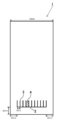
各試験板の図1に示す位置に、防食塗膜側から鋼板に達する切り込み2を入れた。切り込み2を入れた試験板1を、切り込み2側が下になるように(図1に示す向きで)、3%塩水中に40℃で90日間浸漬した。浸漬後、前記切り込み2を5mm間隔で等分するように、該切り込み2の左端から順に上方にカット3を11箇所入れ、各カット3の間の10箇所の測定部4において、鋼板と防食塗膜との剥離長さ(切り込み2からの長さ)を測定した。測定した剥離長さの10点の平均値を以下の基準で評価した。防食性の評価が2以上の場合、実用上問題ないといえる。
4:剥離長さが5mm未満
3:剥離長さが5mm以上10mm未満
2:剥離長さが10mm以上15mm未満
1:剥離長さが15mm以上
JIS K 5600-6-1:2016(耐液体性の試験方法)に準拠して、得られた防食塗膜の耐油性を試験した。
作製した各試験板を、ナフサに常温で180日間浸漬した。浸漬後の試験板を以下の基準で評価した。なお、鉛筆硬度は、JIS K 5600-5-4:1999に基づいて測定した。耐油性の評価が3以上の場合、実用上問題ないといえる。
6:鋼板に錆の発生がなく、塗膜にフクレの発生がなく、塗膜の鉛筆硬度がH以上(H、2H、3H・・・)であった
5:鋼板に錆の発生がなく、塗膜にフクレの発生がなく、塗膜の鉛筆硬度がHB~Fであった
4:鋼板に錆の発生がなく、塗膜にフクレの発生がなく、塗膜の鉛筆硬度がB~4Bであった
3:鋼板に錆の発生がなく、塗膜にフクレの発生がなく、塗膜の鉛筆硬度が5B以下(5B、6B、7B・・・)であった
2:鋼板に僅かな錆が発生しており、塗膜にフクレが発生していた
1:鋼板に錆が発生しており、塗膜にフクレが発生していた

2:切り込み
3:カット
4:測定部
Claims (9)
- エポキシ化合物(A)と、
アミン硬化剤(B)と、
アルキルアミン(C)と
を含有する、防食塗料組成物。 - 前記アルキルアミン(C)が常温で液状である、請求項1に記載の防食塗料組成物。
- 前記アルキルアミン(C)が、R-NH2[Rは炭素数1~20のアルキル基である。]で表される1級アミンである、請求項1に記載の防食塗料組成物。
- 前記アミン硬化剤(B)が環状構造を有するアミン硬化剤を含む、請求項1に記載の防食塗料組成物。
- 前記エポキシ化合物(A)が、エポキシ当量が200以下であり、かつ、常温で液状である、請求項1に記載の防食塗料組成物。
- 前記アミン硬化剤(B)が常温で液状である、請求項1に記載の防食塗料組成物。
- 不揮発分の含有量が90質量%以上である、請求項1に記載の防食塗料組成物。
- 請求項1~7のいずれか1項に記載の防食塗料組成物より形成された防食塗膜。
- 請求項1~7のいずれか1項に記載の防食塗料組成物を、10℃以下の温度で乾燥させて防食塗膜を形成する工程を含む、防食塗膜の製造方法。
Priority Applications (4)
| Application Number | Priority Date | Filing Date | Title |
|---|---|---|---|
| US19/144,114 US20260217986A1 (en) | 2022-12-28 | 2023-12-21 | Anticorrosive coating composition, anticorrosive coating film, and method for producing anticorrosive coating film |
| EP23911943.1A EP4644497A4 (en) | 2022-12-28 | 2023-12-21 | Composition of anti-corrosion coating, anti-corrosion coating film and process for producing anti-corrosion coating film |
| KR1020247011976A KR102778525B1 (ko) | 2022-12-28 | 2023-12-21 | 방식도료 조성물, 방식도막 및 방식도막의 제조방법 |
| CN202380088461.6A CN120418364A (zh) | 2022-12-28 | 2023-12-21 | 防腐蚀涂料组合物、防腐蚀涂膜和防腐蚀涂膜的制造方法 |
Applications Claiming Priority (2)
| Application Number | Priority Date | Filing Date | Title |
|---|---|---|---|
| JP2022-212119 | 2022-12-28 | ||
| JP2022212119A JP7309029B1 (ja) | 2022-12-28 | 2022-12-28 | 防食塗料組成物、防食塗膜および防食塗膜の製造方法 |
Publications (1)
| Publication Number | Publication Date |
|---|---|
| WO2024143163A1 true WO2024143163A1 (ja) | 2024-07-04 |
Family
ID=87103394
Family Applications (1)
| Application Number | Title | Priority Date | Filing Date |
|---|---|---|---|
| PCT/JP2023/045978 Ceased WO2024143163A1 (ja) | 2022-12-28 | 2023-12-21 | 防食塗料組成物、防食塗膜および防食塗膜の製造方法 |
Country Status (6)
| Country | Link |
|---|---|
| US (1) | US20260217986A1 (ja) |
| EP (1) | EP4644497A4 (ja) |
| JP (1) | JP7309029B1 (ja) |
| KR (1) | KR102778525B1 (ja) |
| CN (1) | CN120418364A (ja) |
| WO (1) | WO2024143163A1 (ja) |
Citations (6)
| Publication number | Priority date | Publication date | Assignee | Title |
|---|---|---|---|---|
| US5280091A (en) | 1992-02-07 | 1994-01-18 | Air Products And Chemicals, Inc. | Epoxy resins cured with mixed methylene bridged poly(cyclohexyl-aromatic)amine curing agents |
| JP2003510383A (ja) * | 1999-09-23 | 2003-03-18 | バンティコ ゲーエムベーハー ウント コー.カーゲー | エポキシ樹脂用の硬化剤としてのアルキルジプロピレントリアミン及びその付加物 |
| JP2004528411A (ja) * | 2001-02-21 | 2004-09-16 | アルタナ エレクトリカル インシュレイション ゲゼルシャフト ミット ベシュレンクテル ハフツング | 水性エポキシ樹脂エマルジョン、その製造方法及びその使用 |
| WO2019022218A1 (ja) | 2017-07-28 | 2019-01-31 | 中国塗料株式会社 | 低voc塗料組成物、防食塗膜、塗膜付き基材および塗膜付き基材の製造方法 |
| JP2022040066A (ja) | 2020-08-26 | 2022-03-10 | 中国塗料株式会社 | 塗料組成物 |
| CN115521440A (zh) * | 2022-09-30 | 2022-12-27 | 长沙新德航化工有限公司 | 一种低温施工用的金属重防腐环氧底漆固化剂及其制备方法 |
Family Cites Families (9)
| Publication number | Priority date | Publication date | Assignee | Title |
|---|---|---|---|---|
| JPH02202911A (ja) * | 1987-04-09 | 1990-08-13 | Ashland Oil Inc | 水分硬化性組成物 |
| DE4410785A1 (de) * | 1994-03-28 | 1995-10-05 | Hoechst Ag | Amin-modifizierte Epoxidharz-Zusammensetzung |
| JPH07292069A (ja) * | 1994-04-26 | 1995-11-07 | Shinto Paint Co Ltd | エポキシ樹脂組成物およびそれを含有してなる塗料組成物 |
| JPH083282A (ja) * | 1994-06-22 | 1996-01-09 | Mitsubishi Gas Chem Co Inc | エポキシ樹脂硬化剤 |
| JP2001163955A (ja) * | 1999-12-13 | 2001-06-19 | Mitsubishi Gas Chem Co Inc | エポキシ樹脂硬化剤および組成物 |
| EP1810985A1 (en) * | 2006-01-24 | 2007-07-25 | Huntsman Advanced Materials (Switzerland) GmbH | Curable composition |
| EP2133381A1 (de) * | 2008-06-13 | 2009-12-16 | Sika Technology AG | Wasserverdünnbares Amin und dessen Anwendungen |
| CN116157211B (zh) * | 2020-08-26 | 2024-03-08 | 中国涂料株式会社 | 低voc涂料组合物、涂膜和具有涂膜的基材以及它们的制造方法 |
| CN116034125B (zh) * | 2020-09-15 | 2024-02-09 | 三菱瓦斯化学株式会社 | 环氧树脂固化剂、环氧树脂组合物和胺组合物的用途 |
-
2022
- 2022-12-28 JP JP2022212119A patent/JP7309029B1/ja active Active
-
2023
- 2023-12-21 EP EP23911943.1A patent/EP4644497A4/en active Pending
- 2023-12-21 KR KR1020247011976A patent/KR102778525B1/ko active Active
- 2023-12-21 WO PCT/JP2023/045978 patent/WO2024143163A1/ja not_active Ceased
- 2023-12-21 US US19/144,114 patent/US20260217986A1/en active Pending
- 2023-12-21 CN CN202380088461.6A patent/CN120418364A/zh active Pending
Patent Citations (6)
| Publication number | Priority date | Publication date | Assignee | Title |
|---|---|---|---|---|
| US5280091A (en) | 1992-02-07 | 1994-01-18 | Air Products And Chemicals, Inc. | Epoxy resins cured with mixed methylene bridged poly(cyclohexyl-aromatic)amine curing agents |
| JP2003510383A (ja) * | 1999-09-23 | 2003-03-18 | バンティコ ゲーエムベーハー ウント コー.カーゲー | エポキシ樹脂用の硬化剤としてのアルキルジプロピレントリアミン及びその付加物 |
| JP2004528411A (ja) * | 2001-02-21 | 2004-09-16 | アルタナ エレクトリカル インシュレイション ゲゼルシャフト ミット ベシュレンクテル ハフツング | 水性エポキシ樹脂エマルジョン、その製造方法及びその使用 |
| WO2019022218A1 (ja) | 2017-07-28 | 2019-01-31 | 中国塗料株式会社 | 低voc塗料組成物、防食塗膜、塗膜付き基材および塗膜付き基材の製造方法 |
| JP2022040066A (ja) | 2020-08-26 | 2022-03-10 | 中国塗料株式会社 | 塗料組成物 |
| CN115521440A (zh) * | 2022-09-30 | 2022-12-27 | 长沙新德航化工有限公司 | 一种低温施工用的金属重防腐环氧底漆固化剂及其制备方法 |
Non-Patent Citations (1)
| Title |
|---|
| See also references of EP4644497A1 |
Also Published As
| Publication number | Publication date |
|---|---|
| JP2024095095A (ja) | 2024-07-10 |
| EP4644497A4 (en) | 2026-06-24 |
| CN120418364A (zh) | 2025-08-01 |
| JP7309029B1 (ja) | 2023-07-14 |
| KR20240107100A (ko) | 2024-07-08 |
| US20260217986A1 (en) | 2026-07-30 |
| EP4644497A1 (en) | 2025-11-05 |
| KR102778525B1 (ko) | 2025-03-06 |
Similar Documents
| Publication | Publication Date | Title |
|---|---|---|
| JP7189298B2 (ja) | 低voc防食塗料組成物、防食塗膜、塗膜付き基材および塗膜付き基材の製造方法 | |
| JP7478002B2 (ja) | 防食塗料組成物 | |
| JP7712095B2 (ja) | 防食塗料組成物の製造方法 | |
| JP7128683B2 (ja) | 塗料組成物、塗膜、塗膜付き基材および塗膜付き基材の製造方法 | |
| JP7611366B2 (ja) | 防食組成物1および防食塗料組成物 | |
| KR102796181B1 (ko) | 저 voc 도료 조성물, 도막, 도막 부착 기재 및 이들의 제조방법 | |
| CN116034125B (zh) | 环氧树脂固化剂、环氧树脂组合物和胺组合物的用途 | |
| KR102778525B1 (ko) | 방식도료 조성물, 방식도막 및 방식도막의 제조방법 | |
| JP7605845B2 (ja) | 塗料組成物、塗膜、塗膜付き基材およびその製造方法 | |
| JP2024171577A (ja) | 防食塗料組成物、防食塗膜、防食塗膜付き基材および防食塗膜付き基材の製造方法 | |
| JP7727812B1 (ja) | 塗料組成物、塗膜、塗装品、および塗装品の製造方法 | |
| WO2025121185A1 (ja) | 防食塗料組成物キット、防食塗料組成物の製造方法、防食塗膜、防食塗膜付き基材および防食塗膜付き基材の製造方法 |
Legal Events
| Date | Code | Title | Description |
|---|---|---|---|
| 121 | Ep: the epo has been informed by wipo that ep was designated in this application |
Ref document number: 23911943 Country of ref document: EP Kind code of ref document: A1 |
|
| WWE | Wipo information: entry into national phase |
Ref document number: 202380088461.6 Country of ref document: CN |
|
| WWE | Wipo information: entry into national phase |
Ref document number: 2023911943 Country of ref document: EP |
|
| NENP | Non-entry into the national phase |
Ref country code: DE |
|
| WWP | Wipo information: published in national office |
Ref document number: 202380088461.6 Country of ref document: CN |
|
| ENP | Entry into the national phase |
Ref document number: 2023911943 Country of ref document: EP Effective date: 20250728 |
|
| ENP | Entry into the national phase |
Ref document number: 2023911943 Country of ref document: EP Effective date: 20250728 |
|
| WWP | Wipo information: published in national office |
Ref document number: 2023911943 Country of ref document: EP |