WO2024181330A1 - レジスト下層膜形成用組成物 - Google Patents
レジスト下層膜形成用組成物 Download PDFInfo
- Publication number
- WO2024181330A1 WO2024181330A1 PCT/JP2024/006699 JP2024006699W WO2024181330A1 WO 2024181330 A1 WO2024181330 A1 WO 2024181330A1 JP 2024006699 W JP2024006699 W JP 2024006699W WO 2024181330 A1 WO2024181330 A1 WO 2024181330A1
- Authority
- WO
- WIPO (PCT)
- Prior art keywords
- group
- carbon atoms
- formula
- integer
- underlayer film
- Prior art date
- Legal status (The legal status is an assumption and is not a legal conclusion. Google has not performed a legal analysis and makes no representation as to the accuracy of the status listed.)
- Ceased
Links
Classifications
-
- G—PHYSICS
- G03—PHOTOGRAPHY; CINEMATOGRAPHY; ANALOGOUS TECHNIQUES USING WAVES OTHER THAN OPTICAL WAVES; ELECTROGRAPHY; HOLOGRAPHY
- G03F—PHOTOMECHANICAL PRODUCTION OF TEXTURED OR PATTERNED SURFACES, e.g. FOR PRINTING, FOR PROCESSING OF SEMICONDUCTOR DEVICES; MATERIALS THEREFOR; ORIGINALS THEREFOR; APPARATUS SPECIALLY ADAPTED THEREFOR
- G03F7/00—Photomechanical, e.g. photolithographic, production of textured or patterned surfaces, e.g. printing surfaces; Materials therefor, e.g. comprising photoresists; Apparatus specially adapted therefor
- G03F7/004—Photosensitive materials
- G03F7/09—Photosensitive materials characterised by structural details, e.g. supports, auxiliary layers
- G03F7/11—Photosensitive materials characterised by structural details, e.g. supports, auxiliary layers having cover layers or intermediate layers, e.g. subbing layers
-
- H—ELECTRICITY
- H10—SEMICONDUCTOR DEVICES; ELECTRIC SOLID-STATE DEVICES NOT OTHERWISE PROVIDED FOR
- H10P—GENERIC PROCESSES OR APPARATUS FOR THE MANUFACTURE OR TREATMENT OF DEVICES COVERED BY CLASS H10
- H10P14/00—Formation of materials, e.g. in the shape of layers or pillars
- H10P14/60—Formation of materials, e.g. in the shape of layers or pillars of insulating materials
- H10P14/68—Organic materials, e.g. photoresists
- H10P14/683—Organic materials, e.g. photoresists carbon-based polymeric organic materials, e.g. polyimides, poly cyclobutene or PVC
-
- C—CHEMISTRY; METALLURGY
- C08—ORGANIC MACROMOLECULAR COMPOUNDS; THEIR PREPARATION OR CHEMICAL WORKING-UP; COMPOSITIONS BASED THEREON
- C08G—MACROMOLECULAR COMPOUNDS OBTAINED OTHERWISE THAN BY REACTIONS ONLY INVOLVING UNSATURATED CARBON-TO-CARBON BONDS
- C08G59/00—Polycondensates containing more than one epoxy group per molecule; Macromolecules obtained by polymerising compounds containing more than one epoxy group per molecule using curing agents or catalysts which react with the epoxy groups
- C08G59/18—Macromolecules obtained by polymerising compounds containing more than one epoxy group per molecule using curing agents or catalysts which react with the epoxy groups ; e.g. general methods of curing
- C08G59/40—Macromolecules obtained by polymerising compounds containing more than one epoxy group per molecule using curing agents or catalysts which react with the epoxy groups ; e.g. general methods of curing characterised by the curing agents used
- C08G59/44—Amides
- C08G59/46—Amides together with other curing agents
- C08G59/48—Amides together with other curing agents with polycarboxylic acids, or with anhydrides, halides or low-molecular-weight esters thereof
-
- C—CHEMISTRY; METALLURGY
- C08—ORGANIC MACROMOLECULAR COMPOUNDS; THEIR PREPARATION OR CHEMICAL WORKING-UP; COMPOSITIONS BASED THEREON
- C08G—MACROMOLECULAR COMPOUNDS OBTAINED OTHERWISE THAN BY REACTIONS ONLY INVOLVING UNSATURATED CARBON-TO-CARBON BONDS
- C08G59/00—Polycondensates containing more than one epoxy group per molecule; Macromolecules obtained by polymerising compounds containing more than one epoxy group per molecule using curing agents or catalysts which react with the epoxy groups
- C08G59/18—Macromolecules obtained by polymerising compounds containing more than one epoxy group per molecule using curing agents or catalysts which react with the epoxy groups ; e.g. general methods of curing
- C08G59/40—Macromolecules obtained by polymerising compounds containing more than one epoxy group per molecule using curing agents or catalysts which react with the epoxy groups ; e.g. general methods of curing characterised by the curing agents used
- C08G59/50—Amines
-
- G—PHYSICS
- G03—PHOTOGRAPHY; CINEMATOGRAPHY; ANALOGOUS TECHNIQUES USING WAVES OTHER THAN OPTICAL WAVES; ELECTROGRAPHY; HOLOGRAPHY
- G03F—PHOTOMECHANICAL PRODUCTION OF TEXTURED OR PATTERNED SURFACES, e.g. FOR PRINTING, FOR PROCESSING OF SEMICONDUCTOR DEVICES; MATERIALS THEREFOR; ORIGINALS THEREFOR; APPARATUS SPECIALLY ADAPTED THEREFOR
- G03F7/00—Photomechanical, e.g. photolithographic, production of textured or patterned surfaces, e.g. printing surfaces; Materials therefor, e.g. comprising photoresists; Apparatus specially adapted therefor
- G03F7/20—Exposure; Apparatus therefor
-
- G—PHYSICS
- G03—PHOTOGRAPHY; CINEMATOGRAPHY; ANALOGOUS TECHNIQUES USING WAVES OTHER THAN OPTICAL WAVES; ELECTROGRAPHY; HOLOGRAPHY
- G03F—PHOTOMECHANICAL PRODUCTION OF TEXTURED OR PATTERNED SURFACES, e.g. FOR PRINTING, FOR PROCESSING OF SEMICONDUCTOR DEVICES; MATERIALS THEREFOR; ORIGINALS THEREFOR; APPARATUS SPECIALLY ADAPTED THEREFOR
- G03F7/00—Photomechanical, e.g. photolithographic, production of textured or patterned surfaces, e.g. printing surfaces; Materials therefor, e.g. comprising photoresists; Apparatus specially adapted therefor
- G03F7/26—Processing photosensitive materials; Apparatus therefor
-
- H—ELECTRICITY
- H10—SEMICONDUCTOR DEVICES; ELECTRIC SOLID-STATE DEVICES NOT OTHERWISE PROVIDED FOR
- H10P—GENERIC PROCESSES OR APPARATUS FOR THE MANUFACTURE OR TREATMENT OF DEVICES COVERED BY CLASS H10
- H10P14/00—Formation of materials, e.g. in the shape of layers or pillars
- H10P14/60—Formation of materials, e.g. in the shape of layers or pillars of insulating materials
- H10P14/63—Formation of materials, e.g. in the shape of layers or pillars of insulating materials characterised by the formation processes
- H10P14/6326—Deposition processes
- H10P14/6342—Liquid deposition, e.g. spin-coating, sol-gel techniques or spray coating
-
- H—ELECTRICITY
- H10—SEMICONDUCTOR DEVICES; ELECTRIC SOLID-STATE DEVICES NOT OTHERWISE PROVIDED FOR
- H10P—GENERIC PROCESSES OR APPARATUS FOR THE MANUFACTURE OR TREATMENT OF DEVICES COVERED BY CLASS H10
- H10P76/00—Manufacture or treatment of masks on semiconductor bodies, e.g. by lithography or photolithography
- H10P76/20—Manufacture or treatment of masks on semiconductor bodies, e.g. by lithography or photolithography of masks comprising organic materials
-
- H—ELECTRICITY
- H10—SEMICONDUCTOR DEVICES; ELECTRIC SOLID-STATE DEVICES NOT OTHERWISE PROVIDED FOR
- H10P—GENERIC PROCESSES OR APPARATUS FOR THE MANUFACTURE OR TREATMENT OF DEVICES COVERED BY CLASS H10
- H10P76/00—Manufacture or treatment of masks on semiconductor bodies, e.g. by lithography or photolithography
- H10P76/20—Manufacture or treatment of masks on semiconductor bodies, e.g. by lithography or photolithography of masks comprising organic materials
- H10P76/204—Manufacture or treatment of masks on semiconductor bodies, e.g. by lithography or photolithography of masks comprising organic materials of organic photoresist masks
- H10P76/2041—Photolithographic processes
-
- H—ELECTRICITY
- H10—SEMICONDUCTOR DEVICES; ELECTRIC SOLID-STATE DEVICES NOT OTHERWISE PROVIDED FOR
- H10P—GENERIC PROCESSES OR APPARATUS FOR THE MANUFACTURE OR TREATMENT OF DEVICES COVERED BY CLASS H10
- H10P76/00—Manufacture or treatment of masks on semiconductor bodies, e.g. by lithography or photolithography
- H10P76/40—Manufacture or treatment of masks on semiconductor bodies, e.g. by lithography or photolithography of masks comprising inorganic materials
- H10P76/405—Manufacture or treatment of masks on semiconductor bodies, e.g. by lithography or photolithography of masks comprising inorganic materials characterised by their composition, e.g. multilayer masks
-
- H—ELECTRICITY
- H10—SEMICONDUCTOR DEVICES; ELECTRIC SOLID-STATE DEVICES NOT OTHERWISE PROVIDED FOR
- H10P—GENERIC PROCESSES OR APPARATUS FOR THE MANUFACTURE OR TREATMENT OF DEVICES COVERED BY CLASS H10
- H10P50/00—Etching of wafers, substrates or parts of devices
- H10P50/20—Dry etching; Plasma etching; Reactive-ion etching
- H10P50/28—Dry etching; Plasma etching; Reactive-ion etching of insulating materials
- H10P50/286—Dry etching; Plasma etching; Reactive-ion etching of insulating materials of organic materials
- H10P50/287—Dry etching; Plasma etching; Reactive-ion etching of insulating materials of organic materials by chemical means
Definitions
- the present invention relates to a composition for forming a resist underlayer film, a resist underlayer film, a laminate, a method for manufacturing a semiconductor device, and a method for forming a pattern.
- microfabrication has been performed by lithography using a resist composition.
- the microfabrication is a processing method in which a thin film of a photoresist composition is formed on a semiconductor substrate such as a silicon wafer, and the thin film is irradiated with active light such as ultraviolet light through a mask pattern on which a device pattern is drawn, developed, and the substrate is etched using the obtained photoresist pattern as a protective film, thereby forming fine irregularities on the substrate surface corresponding to the photoresist pattern.
- Patent Document 1 discloses an anti-reflective film-forming composition that contains a polymer having a specific structure.
- Patent Document 2 discloses an underlayer coating composition that contains a polymer that contains repeating units derived from a specific monomer and a crosslinking agent.
- the properties required for the resist underlayer film include, for example, the ability to form a resist pattern with high sensitivity and a high etching rate.
- the present invention has been made in view of the above circumstances, and an object of the present invention is to provide a composition for forming a resist underlayer film that can form a resist underlayer film having a high etching rate without deteriorating lithography properties, and a method for producing a resist underlayer film, a laminate, and a semiconductor element, and a method for forming a pattern, using the composition for forming a resist underlayer film.
- a composition for forming a resist underlayer film comprising: a polymer (A) having a repeating unit represented by the following formula (1); and a solvent (B):
- X1 represents a divalent group having a ring structure and an iodine atom directly bonded to the ring structure.
- X2 represents a divalent group.
- a 1 , A 2 , A 3 , A 4 , A 5 and A 6 each independently represent a hydrogen atom, a methyl group or an ethyl group.
- X 1 in the formula (1) represents any one of a group represented by the following formula (2-1), a group represented by the following formula (2-2), and a group represented by the following formula (2-3):
- Q1 represents a divalent organic group represented by formula (2-1-1) below, a divalent organic group represented by formula (2-1-2) below, a divalent organic group represented by formula (2-1-3) below, or a divalent organic group represented by formula (2-1-4) below.
- n1 and n2 each independently represent 0 or 1. * represents a bond.
- R 1 represents a hydrogen atom, a halogen atom, or an organic group having 1 to 10 carbon atoms.
- R2 represents a hydrogen atom, a halogen atom, or an organic group having 1 to 10 carbon atoms. * represents a bond.
- R 11 to R 16 each independently represent a halogen atom (excluding iodine atom), a hydroxy group, a cyano group, an alkyl group having 1 to 6 carbon atoms, an alkenyl group having 2 to 6 carbon atoms, an alkynyl group having 2 to 6 carbon atoms, an alkoxy group having 1 to 6 carbon atoms, an alkenyloxy group having 2 to 6 carbon atoms, an alkynyloxy group having 2 to 6 carbon atoms, an acyl group having 2 to 6 carbon atoms, an aryloxy group having 6 to 12 carbon atoms, an arylcarbonyl group having 7 to 13 carbon atoms, an aralkyl group having 7 to 13 carbon atoms, or -
- p11 represents an integer of 0 to 2.
- m11 represents an integer of 1 to 4
- n11 represents an integer of 0 to 3
- the sum of m11 and n11 is 4 or less.
- p11 is 1
- m11 represents an integer of 1 to 6
- n11 represents an integer of 0 to 5
- the sum of m11 and n11 is 6 or less.
- p11 is 2
- m11 represents an integer of 1 to 8
- R 11 is 2 or more, the 2 or more R 11 may be the same or different.
- Z 11 represents a single bond, an oxygen atom, a sulfur atom, a carbonyl group, a sulfonyl group, or an alkylene group having 1 to 6 carbon atoms.
- m12 and m13 each independently represent an integer of 0 to 4
- n12 and n13 each independently represent an integer of 0 to 4, the sum of m12 and m13 is 1 or more, the sum of m12 and n12 is 4 or less, and the sum of m13 and n13 is 4 or less.
- R 12 is 2 or more, two or more R 12 may be the same or different.
- R 13 is 2 or more, two or more R 13 may be the same or different.
- Z 12 and Z 13 each independently represent a single bond or a linear or branched alkylene group having 1 to 6 carbon atoms.
- m14 represents an integer of 1 to 4
- n14 represents an integer of 0 to 3
- the sum of m14 and n14 is 4 or less.
- R 14 is 2 or more, the 2 or more R 14 's may be the same or different.
- Z 14 represents a single bond, an oxygen atom, a sulfur atom, a carbonyl group, a sulfonyl group, or an alkylene group having 1 to 6 carbon atoms.
- Z 15 and Z 16 each independently represent a single bond, or a linear or branched alkylene group having 1 to 6 carbon atoms.
- n15 and n16 each independently represent an integer of 0 to 4
- n15 and n16 each independently represent an integer of 0 to 4
- the sum of m15 and m16 is 1 or more
- the sum of m15 and n15 is 4 or less
- the sum of m16 and n16 is 4 or less.
- R 15 is 2 or more, two or more R 15 may be the same or different.
- R 16 When R 16 is 2 or more, two or more R 16 may be the same or different.
- X 2 in the formula (1) represents either a group represented by the following formula (3-1) or a group represented by the following formula (3-2):
- Q11 represents a divalent acyclic hydrocarbon group having 2 to 20 carbon atoms which may be interrupted by an oxygen atom, a divalent organic group represented by formula (3-1-1) below, a divalent organic group represented by formula (3-1-2) below, a divalent organic group represented by formula (3-1-3) below, or a divalent organic group represented by formula (3-1-4) below.
- n1 and n2 each independently represent 0 or 1.
- X11 represents a divalent group represented by any one of the following formulas (3-2-1) to (3-2-3).
- Z1 and Z2 each independently represent a single bond or a divalent group represented by the following formula (2-2-4). * represents a bond.
- R 21 to R 26 each independently represent a halogen atom, a hydroxy group, a cyano group, an alkyl group having 1 to 6 carbon atoms, an alkenyl group having 2 to 6 carbon atoms, an alkynyl group having 2 to 6 carbon atoms, an alkoxy group having 1 to 6 carbon atoms, an alkenyloxy group having 2 to 6 carbon atoms, an alkynyloxy group having 2 to 6 carbon atoms, an acyl group having 2 to 6 carbon atoms, an aryloxy group having 6 to 12 carbon atoms, an arylcarbonyl group having 7 to 13 carbon atoms, or an aralkyl group having 7 to 13 carbon atoms.
- n21 represents an integer of 0 to 2.
- n21 represents an integer of 0 to 4.
- n21 represents an integer of 0 to 6.
- p21 represents an integer of 0 to 8.
- R 21 is 2 or more, the two or more R 21 may be the same or different.
- Z 21 represents a single bond, an oxygen atom, a sulfur atom, a carbonyl group, a sulfonyl group, or an alkylene group having 1 to 6 carbon atoms.
- n22 and n23 each independently represent an integer of 0 to 4.
- R 22 is 2 or more, two or more R 22 may be the same or different.
- R 23 When R 23 is 2 or more, two or more R 23 may be the same or different.
- Z 22 and Z 23 each independently represent a single bond or a linear or branched alkylene group having 1 to 6 carbon atoms.
- n24 represents an integer of 0 to 4.
- R 24 is 2 or more, the two or more R 24 's may be the same or different.
- Z 24 represents a single bond, an oxygen atom, a sulfur atom, a carbonyl group, a sulfonyl group, or an alkylene group having 1 to 6 carbon atoms.
- Z 25 and Z 26 each independently represent a single bond, or a linear or branched alkylene group having 1 to 6 carbon atoms.
- n25 and n26 each independently represent an integer of 0 to 4.
- R 25 is 2 or more, the two or more R 25s may be the same or different.
- R 26 is 2 or more, the two or more R 26s may be the same or different.
- R 1 to R 5 each independently represent a hydrogen atom, an alkyl group having 1 to 10 carbon atoms which may be interrupted by an oxygen atom or a sulfur atom, an alkenyl group having 2 to 10 carbon atoms which may be interrupted by an oxygen atom or a sulfur atom, an alkynyl group having 2 to 10 carbon atoms which may be interrupted by an oxygen atom or a sulfur atom, a benzyl group, or a phenyl group, and the phenyl group may be substituted with at least one monovalent group selected from the group consisting of an alkyl group having 1 to 6 carbon atoms, a halogen atom, an alkoxy group having 1 to 6 carbon atoms,
- R 1 and R 2 may be bonded to each other to form a ring having 3 to 6 carbon atoms.
- R 3 and R 4 may be bonded to each other to form a ring having 3 to 6 carbon atoms.
- * represents a bond.
- *1 represents a bond bonded to a carbon atom in formula (3-2).
- *2 represents a bond bonded to a nitrogen atom in formula (3-2).
- m1 is an integer of 0 to 4
- m2 is 0 or 1
- m3 is 0 or 1
- m4 is an integer of 0 to 2.
- *3 represents a bond bonded to the nitrogen atom in formula (3-2).
- a resist underlayer film which is a cured product of the composition for forming a resist underlayer film according to any one of [1] to [6].
- a semiconductor substrate [7] The resist underlayer film according to the present invention;
- a laminate comprising: [9] A step of forming a resist underlayer film on a semiconductor substrate using the composition for forming a resist underlayer film according to any one of [1] to [6]; forming a resist film on the resist underlayer film;
- a method for manufacturing a semiconductor device comprising: [10] A step of forming a resist underlayer film on a semiconductor substrate using the composition for forming a resist underlayer film according to any one of [1] to [6]; forming a resist film on the resist underlayer film; a step of irradiating the resist film with light or an electron beam and then developing the resist film to obtain a resist pattern; Etching the resist underlayer film using the resist pattern as a mask;
- a pattern forming method comprising:
- the present invention provides a composition for forming a resist underlayer film that can form a resist underlayer film with a high etching rate without degrading lithography properties, as well as a method for producing a resist underlayer film, a laminate, and a semiconductor element, and a method for forming a pattern, using the composition for forming a resist underlayer film.
- composition for forming resist underlayer film contains a polymer (A) having a repeating unit represented by the following formula (1), and a solvent (B).
- the composition for forming a resist underlayer film may contain a crosslinking agent (C), a curing catalyst (D), and the like.
- the polymer (A) has an iodine atom directly bonded to a ring structure.
- the polymer (A) When the polymer (A) has an iodine atom directly bonded to a ring structure, it becomes possible to increase the etching rate of the resist underlayer film without deteriorating lithography properties (e.g., sensitivity, resist pattern) compared to a case in which the polymer (A) does not have an iodine atom directly bonded to a ring structure.
- lithography properties e.g., sensitivity, resist pattern
- the polymer (A) has a repeating unit represented by the following formula (1).
- X1 represents a divalent group having a ring structure and an iodine atom directly bonded to the ring structure.
- X2 represents a divalent group.
- a 1 , A 2 , A 3 , A 4 , A 5 and A 6 each independently represent a hydrogen atom, a methyl group or an ethyl group.
- a 1 , A 2 , A 3 , A 4 , A 5 and A 6 are preferably hydrogen atoms.
- X1 in formula (1) has at least an iodine atom and a carbon atom as atoms constituting a divalent group , and may further have a hydrogen atom, an oxygen atom, a nitrogen atom, or the like as atoms constituting a divalent group.
- the ring structure in X1 may be an aromatic ring or a non-aromatic ring.
- the ring structure may be a hydrocarbon ring or a hetero ring.
- the ring structure is preferably an aromatic ring, more preferably an aromatic hydrocarbon ring, such as a benzene ring, a naphthalene ring, or an anthracene ring.
- An example of the non-aromatic hydrocarbon ring is a cyclohexane ring.
- a uracil ring or a pyrimidinetrione ring is preferable.
- Uracil is a heterocyclic compound represented by the following formula:
- Pyrimidinetrione is a heterocyclic compound represented by the following formula:
- the number of iodine atoms directly bonded to one ring structure may be one or two or more.
- X 1 in formula (1) preferably represents either a group represented by the following formula (2-1) or a group represented by the following formula (2-2).
- Q1 represents a divalent organic group represented by formula (2-1-1) below, a divalent organic group represented by formula (2-1-2) below, a divalent organic group represented by formula (2-1-3) below, or a divalent organic group represented by formula (2-1-4) below.
- n1 and n2 each independently represent 0 or 1. * represents a bond.
- R 1 represents a hydrogen atom, a halogen atom, or an organic group having 1 to 10 carbon atoms. * represents a bond.
- R2 represents a hydrogen atom, a halogen atom, or an organic group having 1 to 10 carbon atoms. * represents a bond.
- "I” in the formulas (2-2) and (2-3) represents an iodine atom.
- R 11 to R 16 each independently represent a halogen atom (excluding iodine atom), a hydroxy group, a cyano group, an alkyl group having 1 to 6 carbon atoms, an alkenyl group having 2 to 6 carbon atoms, an alkynyl group having 2 to 6 carbon atoms, an alkoxy group having 1 to 6 carbon atoms, an alkenyloxy group having 2 to 6 carbon atoms, an alkynyloxy group having 2 to 6 carbon atoms, an acyl group having 2 to 6 carbon atoms, an aryloxy group having 6 to 12 carbon atoms, an arylcarbonyl group having 7 to 13 carbon atoms, an aralkyl group having 7 to 13 carbon atoms, or -N(R a )(R b ) (R a and R b each independently represent a hydrogen atom or an alkyl group having 1 to 6 carbon atoms).
- p11 represents an integer of 0 to 2.
- m11 represents an integer of 1 to 4
- n11 represents an integer of 0 to 3
- the sum of m11 and n11 is 4 or less.
- p11 is 1
- m11 represents an integer of 1 to 6
- n11 represents an integer of 0 to 5
- the sum of m11 and n11 is 6 or less.
- p11 is 2
- m11 represents an integer of 1 to 8
- R 11 is 2 or more, the 2 or more R 11 may be the same or different.
- Z 11 represents a single bond, an oxygen atom, a sulfur atom, a carbonyl group, a sulfonyl group, or an alkylene group having 1 to 6 carbon atoms.
- m12 and m13 each independently represent an integer of 0 to 4
- n12 and n13 each independently represent an integer of 0 to 4, the sum of m12 and m13 is 1 or more, the sum of m12 and n12 is 4 or less, and the sum of m13 and n13 is 4 or less.
- R 12 is 2 or more, two or more R 12 may be the same or different.
- R 13 is 2 or more, two or more R 13 may be the same or different.
- Z 12 and Z 13 each independently represent a single bond or a linear or branched alkylene group having 1 to 6 carbon atoms.
- m14 represents an integer of 1 to 4
- n14 represents an integer of 0 to 3
- the sum of m14 and n14 is 4 or less.
- R 14 is 2 or more, the 2 or more R 14 's may be the same or different.
- Z 14 represents a single bond, an oxygen atom, a sulfur atom, a carbonyl group, a sulfonyl group, or an alkylene group having 1 to 6 carbon atoms.
- Z 15 and Z 16 each independently represent a single bond, or a linear or branched alkylene group having 1 to 6 carbon atoms.
- n15 and n16 each independently represent an integer of 0 to 4
- n15 and n16 each independently represent an integer of 0 to 4
- the sum of m15 and m16 is 1 or more
- the sum of m15 and n15 is 4 or less
- the sum of m16 and n16 is 4 or less.
- R 15 is 2 or more
- two or more R 15 may be the same or different.
- R 16 is 2 or more, two or more R 16 may be the same or different.
- "I" in the formulas (2-1-1) to (2-1-4) represents an iodine atom.
- Examples of the organic group having 1 to 10 carbon atoms in R 1 in formula (2-2) and R 2 in formula (2-3) include an alkyl group having 1 to 6 carbon atoms which may have a substituent, an alkenyl group having 2 to 6 carbon atoms which may have a substituent, etc.
- Examples of the substituent include a halogen atom, an alkoxy group having 1 to 6 carbon atoms, etc.
- Examples of the group represented by formula (2-1) include divalent groups represented by the following formulas: These are only examples, and the group represented by formula (2-1) is not limited to these. (* represents a bond.)
- Examples of the group represented by formula (2-2) include divalent groups represented by the following formulas: These are only examples, and the group represented by formula (2-2) is not limited to these. (* represents a bond.)
- Examples of the group represented by formula (2-3) include divalent groups represented by the following formulas: These are only examples, and the group represented by formula (2-3) is not limited to these. (* represents a bond.)
- X2 in formula (1) is not particularly limited as long as it is a divalent group, and may be the same divalent group as X1 or may be a divalent group different from X1 .
- the number of carbon atoms in X2 is not particularly limited, but may be, for example, 4 to 20.
- X2 has at least a carbon atom as an atom constituting a divalent group.
- X1 may further have a hydrogen atom, an oxygen atom, a nitrogen atom, or the like as an atom constituting a divalent group.
- X2 in formula (1) preferably represents either a group represented by the following formula (3-1) or a group represented by the following formula (3-2).
- Q11 represents a divalent acyclic hydrocarbon group having 2 to 20 carbon atoms which may be interrupted by an oxygen atom, a divalent organic group represented by formula (3-1-1) below, a divalent organic group represented by formula (3-1-2) below, a divalent organic group represented by formula (3-1-3) below, or a divalent organic group represented by formula (3-1-4) below.
- n1 and n2 each independently represent 0 or 1. * represents a bond.
- X11 represents a divalent group represented by any one of the following formulas (3-2-1) to (3-2-3).
- Z1 and Z2 each independently represent a single bond or a divalent group represented by the following formula (2-2-4). * represents a bond.
- R 21 to R 26 each independently represent a halogen atom, a hydroxy group, a cyano group, an alkyl group having 1 to 6 carbon atoms, an alkenyl group having 2 to 6 carbon atoms, an alkynyl group having 2 to 6 carbon atoms, an alkoxy group having 1 to 6 carbon atoms, an alkenyloxy group having 2 to 6 carbon atoms, an alkynyloxy group having 2 to 6 carbon atoms, an acyl group having 2 to 6 carbon atoms, an aryloxy group having 6 to 12 carbon atoms, an arylcarbonyl group having 7 to 13 carbon atoms, or an aralkyl group having 7 to 13 carbon atoms.
- n21 represents an integer of 0 to 2.
- n21 represents an integer of 0 to 4.
- n21 represents an integer of 0 to 6.
- p21 represents an integer of 0 to 8.
- R 21 is 2 or more, the two or more R 21 may be the same or different.
- Z 21 represents a single bond, an oxygen atom, a sulfur atom, a carbonyl group, a sulfonyl group, or an alkylene group having 1 to 6 carbon atoms.
- n22 and n23 each independently represent an integer of 0 to 4.
- R 22 is 2 or more, two or more R 22 may be the same or different.
- R 23 When R 23 is 2 or more, two or more R 23 may be the same or different.
- Z 22 and Z 23 each independently represent a single bond or a linear or branched alkylene group having 1 to 6 carbon atoms.
- n24 represents an integer of 0 to 4.
- R 24 is 2 or more, the two or more R 24 's may be the same or different.
- Z 24 represents a single bond, an oxygen atom, a sulfur atom, a carbonyl group, a sulfonyl group, or an alkylene group having 1 to 6 carbon atoms.
- Z 25 and Z 26 each independently represent a single bond, or a linear or branched alkylene group having 1 to 6 carbon atoms.
- n25 and n26 each independently represent an integer of 0 to 4.
- R 25 is 2 or more, the two or more R 25s may be the same or different.
- R 26 is 2 or more, the two or more R 26s may be the same or different.
- R 1 to R 5 each independently represent a hydrogen atom, an alkyl group having 1 to 10 carbon atoms which may be interrupted by an oxygen atom or a sulfur atom, an alkenyl group having 2 to 10 carbon atoms which may be interrupted by an oxygen atom or a sulfur atom, an alkynyl group having 2 to 10 carbon atoms which may be interrupted by an oxygen atom or a sulfur atom, a benzyl group, or a phenyl group, and the phenyl group may be substituted with at least one monovalent group selected from the group consisting of an alkyl group having 1 to 6 carbon atoms, a halogen atom, an alkoxy group having 1 to 6 carbon atoms,
- R 1 and R 2 may be bonded to each other to form a ring having 3 to 6 carbon atoms.
- R 3 and R 4 may be bonded to each other to form a ring having 3 to 6 carbon atoms.
- * represents a bond.
- *1 represents a bond bonded to a carbon atom in formula (3-2).
- *2 represents a bond bonded to a nitrogen atom in formula (3-2).
- m1 is an integer of 0 to 4
- m2 is 0 or 1
- m3 is 0 or 1
- m4 is an integer of 0 to 2.
- *3 represents a bond bonded to the nitrogen atom in formula (3-2).
- *4 represents a bond.
- examples of a halogen atom include a fluorine atom, a chlorine atom, a bromine atom, and an iodine atom.
- the alkyl group is not limited to being linear, but may be branched or cyclic.
- linear or branched alkyl groups include a methyl group, an ethyl group, an isopropyl group, a tert-butyl group, and an n-hexyl group.
- Examples of cyclic alkyl groups (cycloalkyl groups) include a cyclobutyl group, a cyclopentyl group, and a cyclohexyl group.
- examples of an alkoxy group include a methoxy group, an ethoxy group, an n-pentyloxy group, and an isopropoxy group.
- examples of the alkylthio group include a methylthio group, an ethylthio group, an n-pentylthio group, an isopropylthio group and the like.
- examples of the alkenyl group include an ethenyl group, a 1-propenyl group, a 2-propenyl group, a 1-methyl-1-ethenyl group, a 1-butenyl group, a 2-butenyl group, a 3-butenyl group, a 2-methyl-1-propenyl group, and a 2-methyl-2-propenyl group.
- examples of the alkynyl group include the above-mentioned "alkenyl groups" in which the double bond is replaced with a triple bond.
- examples of the alkenyloxy group include a vinyloxy group, a 1-propenyloxy group, a 2-n-propenyloxy group (allyloxy group), a 1-n-butenyloxy group, and a prenyloxy group.
- examples of the alkynyloxy group include a 2-propynyloxy group, a 1-methyl-2-propynyloxy group, a 2-methyl-2-propynyloxy group, a 2-butynyloxy group, and a 3-butynyloxy group.
- examples of the acyl group include an acetyl group and a propionyl group.
- examples of an aryloxy group include a phenoxy group, naphthyloxy group, and the like.
- examples of the arylcarbonyl group include a phenylcarbonyl group.
- examples of the aralkyl group include a benzyl group and a phenethyl group.
- examples of the alkylene group include a methylene group, an ethylene group, a 1,3-propylene group, a 2,2-propylene group, a 1-methylethylene group, a 1,4-butylene group, a 1-ethylethylene group, a 1-methylpropylene group, a 2-methylpropylene group, a 1,5-pentylene group, a 1-methylbutylene group, a 2-methylbutylene group, a 1,1-dimethylpropylene group, a 1,2-dimethylpropylene group, a 1-ethylpropylene group, a 2-ethylpropylene group, a 1,6-hexylene group, a 1,4-cyclohexylene group, a 1,8-octylene group, a 2-ethyloctylene group, a 1,9-nonylene group, and a 1,10-decylene group.
- Examples of the alkyl group having 1 to 10 carbon atoms which may be interrupted by an oxygen atom or a sulfur atom in R 1 to R 5 of formulas (3-2-1) to (3-2-3) include an alkyl group having 1 to 10 carbon atoms, an alkoxy group having 1 to 10 carbon atoms, an alkoxyalkyl group having 2 to 10 carbon atoms, an alkoxyalkoxyalkyl group having 3 to 10 carbon atoms, an alkylthio group having 1 to 10 carbon atoms, and an alkylthioalkyl group having 2 to 10 carbon atoms.
- the alkyl group having 1 to 10 carbon atoms which may be interrupted by an oxygen atom or a sulfur atom may contain two or more oxygen atoms or sulfur atoms.
- Examples of the divalent acyclic hydrocarbon group having 2 to 20 carbon atoms which may be interrupted by an oxygen atom for Q 11 in formula (3-1) include alkylene groups having 2 to 10 carbon atoms, -CH 2 CH 2 -(OCH 2 CH 2 ) n - (n is an integer of 1 to 9), -CH(CH 3 )CH 2 -(OCH(CH 3 )CH 2 ) n - (n is an integer of 1 to 5), and the like.
- the alkylene group having 2 to 10 carbon atoms may be linear or branched.
- Examples of the group represented by formula (3-1) include the structures exemplified below.
- the above examples are examples of the case where Q 11 in formula (3-1) is a divalent acyclic hydrocarbon group having 2 to 20 carbon atoms which may be interrupted by an oxygen atom. (* represents a bond.)
- Examples of the group represented by formula (3-2) include the structures exemplified below. (* represents a bond.)
- the polymer (A) may have an aliphatic ring at the end, the carbon-carbon bond of which may be interrupted by a heteroatom.
- the aliphatic ring may be substituted with a substituent.
- the polymer (A) is, for example, a linear polymer.
- the linear polymer (A) preferably has the aliphatic ring at both ends.
- substituent in the aliphatic ring which may be substituted with a substituent and whose carbon-carbon bond may be interrupted by a heteroatom include a hydroxy group, a carboxy group, an alkyl group having 1 to 6 carbon atoms, an acyl group having 1 to 6 carbon atoms, an alkoxy group having 1 to 6 carbon atoms, and an alkyloxycarbonyl group having 2 to 6 carbon atoms.
- the number of members of the aliphatic ring may be, for example, 3 to 10.
- the aliphatic ring may be a monocyclic ring or a polycyclic ring.
- the aliphatic ring may be a saturated aliphatic ring or an unsaturated aliphatic ring.
- the total number of carbon atoms in the aliphatic ring, which may be substituted with a substituent and whose carbon-carbon bond may be interrupted with a heteroatom, is, for example, 6 to 15.
- the polymer (A) may have an aromatic ring at the end to which at least one of a halogen atom and a hydroxyl group may be bonded.
- the halogen atom is preferably an iodine atom.
- the aromatic ring include an aromatic hydrocarbon ring and an aromatic heterocycle.
- the aromatic hydrocarbon ring include a benzene ring, a naphthalene ring, and an anthracene ring.
- an aliphatic ring in which a carbon-carbon bond may be interrupted by a heteroatom is represented as a monovalent organic group, it is represented, for example, by the following formula (Z).
- Z represents a monovalent organic group obtained by removing one hydrogen atom from an aliphatic ring which may be substituted with a substituent and whose carbon-carbon bond may be interrupted with a heteroatom. * represents a bond.
- an aromatic ring to which at least one of a halogen atom and a hydroxyl group may be bonded is expressed as a monovalent organic group, it is represented by the above formula (Z), for example (where Z represents a monovalent organic group obtained by removing one hydrogen atom from the aromatic ring to which at least one of a halogen atom and a hydroxyl group may be bonded).
- Z examples include the following structures.
- * represents a bond.
- I in the structure represents an iodine atom.
- the molecular weight of the polymer (A) is not particularly limited.
- the lower limit of the weight average molecular weight of the polymer (A) is, for example, 500, 1,000, 2,000, or 3,000.
- the upper limit of the weight average molecular weight of the polymer (A) is, for example, 30,000, 20,000, or 10,000.
- An example of a method for producing the polymer (A) will be described.
- An example of the polymer (A) can be obtained, for example, by the following reactions (I) and (II).
- other compounds may be used in combination.
- X1 has the same meaning as X1 in formula (1).
- X2 , A1 , A2 , A3 , A4 , A5 , and A6 have the same meanings as X2 , A1 , A2 , A3 , A4 , A5 , and A6 in formula (1), respectively.
- Examples of the compound represented by formula (1A) include a compound represented by the following formula (2-1A), a compound represented by the following formula (2-2A), and a compound represented by the following formula (2-3A).
- Q 1 , n1, and n2 have the same meanings as Q 1 , n1, and n2 in formula (2-1), respectively.
- R 1 has the same meaning as R 1 in formula (2-2).
- R2 has the same meaning as R1 in formula (2-2).
- "I” in the formulas (2-2A) and (2-3A) represents an iodine atom.
- Examples of the compound represented by formula (2-1A) include the following compounds.
- Examples of the compound represented by formula (2-2A) include the following compounds.
- Examples of the compound represented by formula (2-3A) include the following compounds.
- Examples of the compound represented by formula (1B) include the following compounds.
- An example of a monocarboxy compound having one carboxy group is a compound represented by the following formula (D1). (In formula (D1), Z has the same meaning as Z in formula (Z).)
- Examples of the compound represented by the following formula (D1) include the following compounds.
- Reactions (I) and (II) may be carried out in the presence of a catalyst.
- the catalyst is, for example, a quaternary phosphonium salt such as tetrabutylphosphonium bromide or ethyltriphenylphosphonium bromide, or a quaternary ammonium salt such as benzyltriethylammonium chloride.
- the amount of catalyst used may be selected from the range of 0.1 to 10% by mass based on the total mass of the reaction raw materials used in the reaction.
- the optimum reaction temperature and time may be selected from the ranges of, for example, 80 to 160°C and 2 to 50 hours.
- the content of the polymer (A) in the composition for forming a resist underlayer film is not particularly limited, but from the viewpoint of suitably obtaining the effects of the present invention, it is preferably 40% by mass to 99% by mass, more preferably 45% by mass to 95% by mass, and particularly preferably 50% by mass to 90% by mass, based on the film-constituting components.
- the film-constituting components refer to components other than the solvent contained in the composition.
- the solvent (B) is not particularly limited, and may be water or an organic solvent.
- the organic solvent include alkylene glycol monoalkyl ethers and monocarboxylic acid esters of alkylene glycol monoalkyl ethers.
- the alkylene group of the alkylene glycol monoalkyl ether is, for example, an alkylene group having 2 to 4 carbon atoms.
- the alkyl group of the alkylene glycol monoalkyl ether is, for example, an alkyl group having 1 to 4 carbon atoms.
- the alkylene glycol monoalkyl ether may have, for example, 3 to 8 carbon atoms.
- Examples of the alkylene glycol monoalkyl ether include ethylene glycol monomethyl ether, ethylene glycol monoethyl ether, propylene glycol monomethyl ether, and propylene glycol monoethyl ether.
- the alkylene group of the monocarboxylic acid ester of an alkylene glycol monoalkyl ether may, for example, be an alkylene group having 2 to 4 carbon atoms.
- Examples of the alkyl group of the monocarboxylic acid ester of an alkylene glycol monoalkyl ether include alkyl groups having 1 to 4 carbon atoms.
- Examples of the monocarboxylic acid of the monocarboxylic acid ester of an alkylene glycol monoalkyl ether include saturated monocarboxylic acids having 2 to 4 carbon atoms.
- saturated monocarboxylic acids having 2 to 4 carbon atoms include acetic acid, propionic acid, and butyric acid.
- the monocarboxylic acid ester of an alkylene glycol monoalkyl ether may have, for example, 5 to 10 carbon atoms.
- Examples of monocarboxylic acid esters of alkylene glycol monoalkyl ethers include methyl cellosolve acetate, ethyl cellosolve acetate, propylene glycol monomethyl ether acetate, and propylene glycol propyl ether acetate.
- organic solvents include, for example, diethylene glycol monomethyl ether, diethylene glycol monoethyl ether, propylene glycol, toluene, xylene, methyl ethyl ketone, methyl isobutyl ketone, cyclopentanone, cyclohexanone, cycloheptanone, 4-methyl-2-pentanol, methyl 2-hydroxyisobutyrate, ethyl 2-hydroxyisobutyrate, ethyl ethoxyacetate, 2-hydroxyethyl acetate, methyl 3-methoxypropionate, ethyl 3-methoxypropionate, ethyl 3-ethoxypropionate, methyl 3-ethoxypropionate, methyl pyruvate, ethyl pyruvate, ethyl acetate, butyl acetate, ethyl lactate, butyl lactate, 2-heptanone, methoxycyclopentan
- alkylene glycol monoalkyl ethers and monocarboxylic acid esters of alkylene glycol monoalkyl ethers are preferred.
- solvents (B) can be used alone or in combination of two or more.
- the mass ratio of the organic solvent in solvent (B) is not particularly limited, but is preferably 50% by mass to 100% by mass.
- the content of the solvent (B) in the composition for forming the resist underlayer film is not particularly limited, but is preferably 50% by mass to 99.99% by mass, more preferably 75% by mass to 99.95% by mass, and particularly preferably 90% by mass to 99.9% by mass.
- the crosslinking agent (C) is not particularly limited.
- the crosslinking agent (C) has a structure different from that of the polymer (A).
- an aminoplast crosslinking agent or a phenoplast crosslinking agent is preferred.
- Aminoplast crosslinking agents are addition condensation products of a compound having an amino group, such as melamine or guanamine, and formaldehyde.
- the phenoplast crosslinking agent is an addition condensation product of a compound having a phenolic hydroxy group and formaldehyde.
- Examples of the crosslinking agent (C) include compounds having two or more of the following structures.
- R 101 represents a hydrogen atom, an alkyl group having 1 to 4 carbon atoms, or an alkoxyalkyl group having 2 to 6 carbon atoms. * represents a bond.
- the bond is, for example, bonded to a nitrogen atom or a carbon atom constituting an aromatic hydrocarbon ring.
- R 101 is preferably a hydrogen atom, a methyl group, an ethyl group or a group represented by the following structure.
- R 102 represents a hydrogen atom, a methyl group, or an ethyl group. * represents a bond.
- crosslinking agent (C) melamine compounds, guanamine compounds, glycoluril compounds, urea compounds, and compounds having a phenolic hydroxyl group are preferred. These can be used alone or in combination of two or more.
- melamine compounds include hexamethylol melamine, hexamethoxymethyl melamine, compounds in which 1 to 6 methylol groups of hexamethylol melamine are methoxymethylated or mixtures thereof, hexamethoxyethyl melamine, hexaacyloxymethyl melamine, compounds in which 1 to 6 methylol groups of hexamethylol melamine are acyloxymethylated or mixtures thereof, etc.
- guanamine compounds include tetramethylol guanamine, tetramethoxymethyl guanamine, compounds in which one to four methylol groups of tetramethylol guanamine are methoxymethylated or mixtures thereof, tetramethoxyethyl guanamine, tetraacyloxyguanamine, compounds in which one to four methylol groups of tetramethylol guanamine are acyloxymethylated or mixtures thereof, etc.
- glycoluril compounds include tetramethylol glycoluril, tetramethoxy glycoluril, tetramethoxymethyl glycoluril, compounds in which one to four methylol groups of tetramethylol glycoluril are methoxymethylated or mixtures thereof, and compounds in which one to four methylol groups of tetramethylol glycoluril are acyloxymethylated or mixtures thereof.
- the glycoluril compound may be, for example, a glycoluril derivative represented by the following formula (1E).
- the four R 1s each independently represent a methyl group or an ethyl group
- R 2 and R 3 each independently represent a hydrogen atom, an alkyl group having 1 to 4 carbon atoms, or a phenyl group.
- glycoluril derivative represented by formula (1E) examples include compounds represented by formulas (1E-1) to (1E-6) below.
- the glycoluril derivative represented by formula (1E) can be obtained, for example, by reacting a glycoluril derivative represented by the following formula (2E) with at least one compound represented by the following formula (3d).
- R2 and R3 each independently represent a hydrogen atom, an alkyl group having 1 to 4 carbon atoms, or a phenyl group, and R4 each independently represent an alkyl group having 1 to 4 carbon atoms.
- R 1 represents a methyl group or an ethyl group.
- glycoluril derivative represented by formula (2E) examples include compounds represented by the following formulae (2E-1) to (2E-4).
- Examples of the compound represented by formula (3d) include compounds represented by the following formulae (3d-1) and (3d-2).
- urea compounds include tetramethylol urea, tetramethoxymethyl urea, tetramethylol urea in which one to four methylol groups are methoxymethylated or mixtures thereof, tetramethoxyethyl urea, etc.
- Examples of the compound having a phenolic hydroxy group include compounds represented by the following formula (G-1) or (G-2).
- Q1 represents a single bond or an m1-valent organic group.
- R 1 and R 4 each represent an alkyl group having 2 to 10 carbon atoms, or an alkyl group having 2 to 10 carbon atoms and an alkoxy group having 1 to 10 carbon atoms.
- R2 and R5 each represent a hydrogen atom or a methyl group.
- R3 and R6 each represent an alkyl group having 1 to 10 carbon atoms or an aryl group having 6 to 40 carbon atoms.
- n1 is an integer satisfying 1 ⁇ n1 ⁇ 3, n2 is an integer satisfying 2 ⁇ n2 ⁇ 5, n3 is an integer satisfying 0 ⁇ n3 ⁇ 3, n4 is an integer satisfying 0 ⁇ n4 ⁇ 3, and 3 ⁇ ( n1 + n2 + n3 + n4 ) ⁇ 6.
- n5 is an integer satisfying 1 ⁇ n5 ⁇ 3, n6 is an integer satisfying 1 ⁇ n6 ⁇ 4, n7 is an integer satisfying 0 ⁇ n7 ⁇ 3, n8 is an integer satisfying 0 ⁇ n8 ⁇ 3, and 2 ⁇ ( n5 + n6 + n7 + n8 ) ⁇ 5.
- m1 represents an integer from 2 to 10.
- Examples of the compound having a phenolic hydroxy group include the compounds represented by the following formula (G-3) or (G-4).
- the compound represented by formula (G-1) or formula (G-2) may be obtained by reacting a compound represented by the following formula (G-3) or formula (G-4) with a hydroxyl group-containing ether compound or an alcohol having 2 to 10 carbon atoms.
- Q2 represents a single bond or an m2-valent organic group.
- R 8 , R 9 , R 11 and R 12 each represent a hydrogen atom or a methyl group.
- R7 and R10 each represent an alkyl group having 1 to 10 carbon atoms or an aryl group having 6 to 40 carbon atoms.
- n9 is an integer satisfying 1 ⁇ n9 ⁇ 3, n10 is an integer satisfying 2 ⁇ n10 ⁇ 5, n11 is an integer satisfying 0 ⁇ n11 ⁇ 3, n12 is an integer satisfying 0 ⁇ n12 ⁇ 3, and 3 ⁇ ( n9 + n10 + n11 + n12 ) ⁇ 6.
- n13 is an integer satisfying 1 ⁇ n13 ⁇ 3, n14 is an integer satisfying 1 ⁇ n14 ⁇ 4, n15 is an integer satisfying 0 ⁇ n15 ⁇ 3, n16 is an integer satisfying 0 ⁇ n16 ⁇ 3, and 2 ⁇ ( n13 + n14 + n15 + n16 ) ⁇ 5.
- m2 represents an integer from 2 to 10.
- the m2-valent organic group for Q2 includes, for example, an m2-valent organic group having 1 to 4 carbon atoms.
- Examples of the compound represented by formula (G-1) or formula (G-2) include the following compounds.
- Examples of the compound represented by formula (G-3) or formula (G-4) include the following compounds.
- the above compound is available as a product of Asahi Yukizai Kogyo Co., Ltd. and Honshu Chemical Industry Co., Ltd.
- An example of the product is TMOM-BP, a product name of Asahi Yukizai Kogyo Co., Ltd.
- glycoluril compounds are preferred, specifically tetramethylol glycoluril, tetramethoxy glycoluril, tetramethoxymethyl glycoluril, a compound in which one to four methylol groups of tetramethylol glycoluril are methoxymethylated or a mixture thereof, and a compound in which one to four methylol groups of tetramethylol glycoluril are acyloxymethylated or a mixture thereof, with tetramethoxymethyl glycoluril being more preferred.
- the molecular weight of the crosslinking agent (C) is not particularly limited, but is preferably 500 or less.
- the content of the crosslinking agent (C) in the composition for forming the resist underlayer film is not particularly limited, but is, for example, 1% by mass to 70% by mass, and preferably 5% by mass to 60% by mass, relative to the polymer (A).
- the curing catalyst (D) contained as an optional component in the composition for forming a resist underlayer film may be either a thermal acid generator or a photoacid generator, but it is preferable to use a thermal acid generator.
- the thermal acid generator include sulfonic acid compounds and carboxylic acid compounds such as p-toluenesulfonic acid, trifluoromethanesulfonic acid, pyridinium p-toluenesulfonate (pyridinium p-toluenesulfonic acid), pyridinium phenolsulfonic acid, pyridinium p-hydroxybenzenesulfonic acid (pyridinium p-phenolsulfonate salt), pyridinium trifluoromethanesulfonic acid, salicylic acid, camphorsulfonic acid, 5-sulfosalicylic acid, 4-chlorobenzenesulfonic acid, 4-hydroxybenzenesulf
- photoacid generators examples include onium salt compounds, sulfonimide compounds, and disulfonyldiazomethane compounds.
- onium salt compounds include iodonium salt compounds such as diphenyliodonium hexafluorophosphate, diphenyliodonium trifluoromethanesulfonate, diphenyliodonium nonafluoronormal butanesulfonate, diphenyliodonium perfluoronormal octanesulfonate, diphenyliodonium camphorsulfonate, bis(4-tert-butylphenyl)iodonium camphorsulfonate, and bis(4-tert-butylphenyl)iodonium trifluoromethanesulfonate, as well as sulfonium salt compounds such as triphenylsulfonium hexafluoroantimonate, triphenylsulfonium nonafluoronormal butanesulfonate, triphenylsulfonium camphorsulfonate, and triphenylsulfon
- sulfonimide compounds include N-(trifluoromethanesulfonyloxy)succinimide, N-(nonafluoronormalbutanesulfonyloxy)succinimide, N-(camphorsulfonyloxy)succinimide, and N-(trifluoromethanesulfonyloxy)naphthalimide.
- disulfonyldiazomethane compounds include bis(trifluoromethylsulfonyl)diazomethane, bis(cyclohexylsulfonyl)diazomethane, bis(phenylsulfonyl)diazomethane, bis(p-toluenesulfonyl)diazomethane, bis(2,4-dimethylbenzenesulfonyl)diazomethane, and methylsulfonyl-p-toluenesulfonyldiazomethane.
- the content of the curing catalyst (D) relative to the crosslinking agent (C) is, for example, 0.1% by mass to 50% by mass, and preferably 1% by mass to 30% by mass.
- a surfactant may be further added to the composition for forming a resist underlayer film in order to prevent pinholes, striations, and the like, and to further improve the coatability against surface unevenness.
- the surfactant examples include linear or branched alkylbenzenesulfonic acid (e.g., dodecylbenzenesulfonic acid, etc.), polyoxyethylene alkyl ethers such as polyoxyethylene lauryl ether, polyoxyethylene stearyl ether, polyoxyethylene cetyl ether, and polyoxyethylene oleyl ether, polyoxyethylene alkylaryl ethers such as polyoxyethylene octylphenol ether and polyoxyethylene nonylphenol ether, polyoxyethylene-polyoxypropylene block copolymers, sorbitan fatty acid esters such as sorbitan monolaurate, sorbitan monopalmitate, sorbitan monostearate, sorbitan monooleate, sorbitan trioleate, and sorbitan tristearate, and polyoxyethylene sorbitan monolaurate.
- alkylbenzenesulfonic acid e.g., dodecylbenzenesulfonic
- nonionic surfactants such as polyoxyethylene sorbitan fatty acid esters, such as polyoxyethylene sorbitan monopalmitate, polyoxyethylene sorbitan monostearate, polyoxyethylene sorbitan trioleate, and polyoxyethylene sorbitan tristearate; fluorosurfactants such as EFTOP EF301, EF303, and EF352 (manufactured by Tochem Products Co., Ltd., trade names), Megafac F171, F173, and R-30 (manufactured by DIC Corporation, trade names), Fluorad FC430 and FC431 (manufactured by Sumitomo 3M Limited, trade names), Asahi Guard AG710, Surflon S-382, SC101, SC102, SC103, SC104, SC105, and SC106 (manufactured by AGC Corporation, trade names); and organosiloxane polymer KP341 (manufactured by Shin-Etsu Chemical Co., Ltd.).
- the amount of these surfactants to be added is usually 2.0% by mass or less, and preferably 1.0% by mass or less, based on the total solid content of the composition for forming a resist underlayer film.
- These surfactants may be added alone or in combination of two or more kinds.
- the solid content of the composition for forming a resist underlayer film of the present invention i.e., the components excluding the solvent, is, for example, 0.01% by mass to 10% by mass.
- the resist underlayer of the present invention is a cured product of the above-mentioned composition for forming a resist underlayer film.
- the resist underlayer film can be produced, for example, by applying the above-mentioned composition for forming a resist underlayer film onto a semiconductor substrate and baking the applied composition.
- Semiconductor substrates onto which the resist underlayer film forming composition is applied include, for example, silicon wafers, germanium wafers, and compound semiconductor wafers such as gallium arsenide, indium phosphide, gallium nitride, indium nitride, and aluminum nitride.
- the inorganic film is formed by, for example, ALD (atomic layer deposition), CVD (chemical vapor deposition), reactive sputtering, ion plating, vacuum deposition, or spin coating (spin-on glass: SOG).
- ALD atomic layer deposition
- CVD chemical vapor deposition
- reactive sputtering ion plating
- vacuum deposition vacuum deposition
- spin coating spin-on glass: SOG.
- the inorganic film include polysilicon film, silicon oxide film, silicon nitride film, BPSG (Boro-Phospho Silicate Glass) film, titanium nitride film, titanium nitride oxide film, tungsten film, gallium nitride film, and gallium arsenide film.
- the resist underlayer film forming composition of the present invention is applied onto such a semiconductor substrate by a suitable application method such as a spinner or coater.
- the resist underlayer film is then formed by baking using a heating means such as a hot plate.
- the baking conditions are appropriately selected from a baking temperature of 100°C to 400°C and a baking time of 0.3 minutes to 60 minutes.
- the baking temperature is 120°C to 350°C
- the baking time is 0.5 minutes to 30 minutes
- the baking temperature is 150°C to 300°C
- the baking time is 0.8 minutes to 10 minutes.
- the film thickness of the resist underlayer film may be, for example, 0.001 ⁇ m (1 nm) to 10 ⁇ m, 0.002 ⁇ m (2 nm) to 1 ⁇ m, 0.005 ⁇ m (5 nm) to 0.5 ⁇ m (500 nm), 0.001 ⁇ m (1 nm) to 0.05 ⁇ m (50 nm), 0.002 ⁇ m (2 nm) to 0.05 ⁇ m (50 nm), 0.003 ⁇ m (3 nm) to 0.05 ⁇ m (50 nm), 0.004 ⁇ m (4 nm) to 0.05 ⁇ m (50 nm), 0.005 ⁇ m (5 nm) to 0.05 ⁇ m ( 50 nm), 0.003 ⁇ m (3 nm) to 0.03 ⁇ m (30 nm), 0.003 ⁇ m (3 nm) to 0.02 ⁇ m (20 nm), 0.005 ⁇ m (5 nm) to 0.02 ⁇ m (20 nm),
- the lower limit of the film thickness is, for example, 0.5 nm, 1 nm, 2 nm, 3 nm, 4 nm, or 5 nm.
- the upper limit is, for example, 20 nm, 19 nm, 18 nm, 17 nm, 16 nm, 15 nm, 14 nm, 13 nm, 12 nm, 11 nm, 10 nm, 9 nm, 8 nm, 7 nm, 6 nm, 5 nm, 4 nm, 3 nm, and 2 nm.
- the method for measuring the film thickness of the resist underlayer film is as follows.
- the laminate of the present invention comprises a semiconductor substrate and the resist underlayer film of the present invention.
- the semiconductor substrate may be, for example, the semiconductor substrate described above.
- the resist underlayer film is disposed, for example, on a semiconductor substrate.
- the method for manufacturing a semiconductor device of the present invention includes at least the following steps. - forming a resist underlayer film on a semiconductor substrate using the composition for forming a resist underlayer film of the present invention; and - forming a resist film on the resist underlayer film.
- the pattern forming method of the present invention includes at least the following steps.
- a step of etching the resist underlayer film using the resist pattern as a mask includes at least the following steps.
- a resist layer is formed on the resist underlayer film.
- the thickness of the resist layer is, for example, 3,000 nm or less, 2,000 nm or less, 1,800 nm or less, 1,500 nm or less, or 1,000 nm or less.
- the lower limit is 100 nm, 80 nm, 50 nm, 30 nm, 20 nm, or 10 nm.
- the resist film formed on the resist underlayer film by a known method is not particularly limited as long as it responds to light or electron beam (EB) used for irradiation.
- EB electron beam
- a resist that responds to EB is also called a photoresist.
- photoresists include positive photoresists made of novolac resins and 1,2-naphthoquinone diazide sulfonic acid esters, chemically amplified photoresists made of a binder having a group that decomposes with acid to increase the alkaline dissolution rate and a photoacid generator, chemically amplified photoresists made of a low molecular compound that decomposes with acid to increase the alkaline dissolution rate of the photoresist, an alkali-soluble binder, and a photoacid generator, chemically amplified photoresists made of a binder having a group that decomposes with acid to increase the alkaline dissolution rate of the photoresist, a low molecular compound that decomposes with acid to increase the alkaline dissolution rate of the photoresist, and a photoacid generator, and resists containing metal elements.
- V146G (trade name) manufactured by JSR Corporation, APEX-E (trade name) manufactured by Shipley, PAR710 (trade name) manufactured by Sumitomo Chemical Co., Ltd., and AR2772 and SEPR430 (trade names) manufactured by Shin-Etsu Chemical Co., Ltd. may be mentioned.
- resist compositions include the following compositions:
- An actinic ray-sensitive or radiation-sensitive resin composition comprising: resin A having a repeating unit having an acid-decomposable group in which a polar group is protected with a protecting group that is cleaved by the action of an acid; and a compound represented by the following general formula (121).
- m represents an integer of 1 to 6.
- R 1 and R 2 each independently represent a fluorine atom or a perfluoroalkyl group.
- L 1 represents —O—, —S—, —COO—, —SO 2 — or —SO 3 —.
- L2 represents an alkylene group which may have a substituent or a single bond.
- W 1 represents a cyclic organic group which may have a substituent.
- M + represents a cation.
- a metal-containing film-forming composition for extreme ultraviolet or electron beam lithography comprising a compound having a metal-oxygen covalent bond and a solvent, the metal element constituting the compound belonging to Periods 3 to 7 of Groups 3 to 15 of the periodic table.
- a radiation-sensitive resin composition comprising a polymer having a first structural unit represented by the following formula (31) and a second structural unit represented by the following formula (32) containing an acid-dissociable group, and an acid generator.
- Ar is a group obtained by removing (n+1) hydrogen atoms from an arene having 6 to 20 carbon atoms.
- R 1 is a hydroxy group, a sulfanyl group, or a monovalent organic group having 1 to 20 carbon atoms.
- n is an integer from 0 to 11. When n is 2 or more, multiple R 1s are the same or different.
- R 2 is a hydrogen atom, a fluorine atom, a methyl group, or a trifluoromethyl group.
- R 3 is a monovalent group having 1 to 20 carbon atoms containing the above-mentioned acid dissociable group.
- Z is a single bond, an oxygen atom, or a sulfur atom.
- R 4 is a hydrogen atom, a fluorine atom, a methyl group, or a trifluoromethyl group.
- R 2 represents an alkyl group having 1 to 6 carbon atoms which may have a halogen atom, a hydrogen atom or a halogen atom
- X 1 represents a single bond, -CO-O-* or -CO-NR 4 -*
- * represents a bond to -Ar
- R 4 represents a hydrogen atom or an alkyl group having 1 to 4 carbon atoms
- Ar represents an aromatic hydrocarbon group having 6 to 20 carbon atoms which may have one or more groups selected from the group consisting of a hydroxyl group and a carboxyl group.
- resist films examples include:
- a resist film comprising a base resin containing a repeating unit represented by the following formula (a1) and/or a repeating unit represented by the following formula (a2) and a repeating unit that generates an acid bonded to the polymer main chain upon exposure.
- R A is each independently a hydrogen atom or a methyl group.
- R 1 and R 2 are each independently a tertiary alkyl group having 4 to 6 carbon atoms.
- R 3 is each independently a fluorine atom or a methyl group.
- m is an integer of 0 to 4.
- X 1 is a single bond, a phenylene group or a naphthylene group, or a linking group having 1 to 12 carbon atoms containing at least one selected from an ester bond, a lactone ring, a phenylene group, and a naphthylene group.
- X 2 is a single bond, an ester bond, or an amide bond.
- resist materials examples include:
- R A is a hydrogen atom or a methyl group.
- X 1 is a single bond or an ester group.
- X 2 is a linear, branched or cyclic alkylene group having 1 to 12 carbon atoms or an arylene group having 6 to 10 carbon atoms, a part of the methylene groups constituting the alkylene group may be substituted with an ether group, an ester group or a lactone ring-containing group, and at least one hydrogen atom contained in X 2 is substituted with a bromine atom.
- X 3 is a single bond, an ether group, an ester group, or a linear, branched or cyclic alkylene group having 1 to 12 carbon atoms, a part of the methylene groups constituting the alkylene group may be substituted with an ether group or an ester group.
- Rf 1 to Rf 4 are each independently a hydrogen atom, a fluorine atom or a trifluoromethyl group, and at least one of them is a fluorine atom or a trifluoromethyl group. 2 may combine to form a carbonyl group.
- R 1 to R 5 are each independently a linear, branched or cyclic alkyl group having 1 to 12 carbon atoms, a linear, branched or cyclic alkenyl group having 2 to 12 carbon atoms, an alkynyl group having 2 to 12 carbon atoms, an aryl group having 6 to 20 carbon atoms, an aralkyl group having 7 to 12 carbon atoms, or an aryloxyalkyl group having 7 to 12 carbon atoms, some or all of the hydrogen atoms of these groups may be substituted with a hydroxy group, a carboxy group, a halogen atom, an oxo group, a cyano group, an amide group, a nitro group, a sultone group, a sulfone group, or a sulfonium salt-containing group, and some of the methylene groups constituting these groups may be substituted with an ether group, an ester group, a carbonyl group, a carbonate group
- a resist material comprising a base resin containing a polymer containing a repeating unit represented by the following formula (a):
- R A is a hydrogen atom or a methyl group.
- R 1 is a hydrogen atom or an acid labile group.
- R 2 is a linear, branched or cyclic alkyl group having 1 to 6 carbon atoms, or a halogen atom other than bromine.
- X 1 is a single bond, a phenylene group, or a linear, branched or cyclic alkylene group having 1 to 12 carbon atoms which may contain an ester group or a lactone ring.
- X 2 is -O-, -O-CH 2 - or -NH-.
- m is an integer of 1 to 4.
- u is an integer of 0 to 3, with the proviso that m+u is an integer of 1 to 4.
- a resist composition which generates an acid upon exposure and changes its solubility in a developer by the action of the acid
- the composition contains a base component (A) whose solubility in a developer changes under the action of an acid, and a fluorine additive component (F) that is decomposable in an alkaline developer
- the fluorine additive component (F) is a resist composition containing a fluorine resin component (F1) having a structural unit (f1) containing a base dissociable group, and a structural unit (f2) containing a group represented by the following general formula (f2-r-1):
- Rf 21 each independently represents a hydrogen atom, an alkyl group, an alkoxy group, a hydroxy group, a hydroxyalkyl group, or a cyano group.
- n′′ is an integer of 0 to 2. * represents a bond.
- the structural unit (f1) includes a structural unit represented by the following general formula (f1-1) or a structural unit represented by the following general formula (f1-2).
- R is each independently a hydrogen atom, an alkyl group having 1 to 5 carbon atoms, or a halogenated alkyl group having 1 to 5 carbon atoms.
- X is a divalent linking group having no acid dissociable site.
- a aryl is a divalent aromatic cyclic group which may have a substituent.
- X 01 is a single bond or a divalent linking group.
- R 2 is each independently an organic group having a fluorine atom.
- coatings examples include the following:
- a coating comprising a metal oxo-hydroxo network with organic ligands via metal carbon bonds and/or metal carboxylate bonds.
- RzSnO (2-(z/2)-(x/2)) (OH) x , where 0 ⁇ z ⁇ 2 and 0 ⁇ (
- a coating solution comprising an organic solvent and a first organometallic compound having the formula RSnO (3/2-x/2) (OH) x , where 0 ⁇ x ⁇ 3, wherein the solution contains from about 0.0025M to about 1.5M tin, and R is an alkyl or cycloalkyl group having 3 to 31 carbon atoms, the alkyl or cycloalkyl group being bonded to the tin at a secondary or tertiary carbon atom.
- An aqueous inorganic pattern forming precursor solution comprising water, a mixture of metal suboxide cations, polyatomic inorganic anions, and a radiation sensitive ligand comprising a peroxide group.
- Irradiation with light or electron beams is performed, for example, through a mask (reticle) for forming a predetermined pattern.
- a mask for example, i-line, KrF excimer laser, ArF excimer laser, EUV (extreme ultraviolet) or EB (electron beam) is used.
- the composition for forming a resist underlayer film of the present invention is preferably applied for EB (electron beam) or EUV (extreme ultraviolet: 13.5 nm) irradiation, and more preferably applied for EUV (extreme ultraviolet) exposure.
- the irradiation energy of the electron beam and the exposure dose of light are not particularly limited.
- baking Post Exposure Bake
- the baking temperature is not particularly limited, but is preferably from 60°C to 150°C, more preferably from 70°C to 120°C, and particularly preferably from 75°C to 110°C.
- the baking time is not particularly limited, but is preferably from 1 second to 10 minutes, more preferably from 10 seconds to 5 minutes, and particularly preferably from 30 seconds to 3 minutes.
- an alkaline developer is used.
- the development temperature is, for example, from 5°C to 50°C.
- the development time may be, for example, from 10 seconds to 300 seconds.
- alkaline developer for example, aqueous solutions of alkalis such as inorganic alkalis such as sodium hydroxide, potassium hydroxide, sodium carbonate, sodium silicate, sodium metasilicate, and ammonia water, primary amines such as ethylamine and n-propylamine, secondary amines such as diethylamine and di-n-butylamine, tertiary amines such as triethylamine and methyldiethylamine, alcohol amines such as dimethylethanolamine and triethanolamine, quaternary ammonium salts such as tetramethylammonium hydroxide, tetraethylammonium hydroxide, and choline, and cyclic amines such as pyrrole and piperidine can be used.
- alkalis
- an appropriate amount of alcohols such as isopropyl alcohol and a nonionic surfactant can be added to the aqueous solution of the above-mentioned alkalis.
- preferred developers are aqueous solutions of quaternary ammonium salts, more preferably aqueous solutions of tetramethylammonium hydroxide and aqueous solutions of choline.
- surfactants and the like can be added to these developers.
- a method can also be used in which development is performed with an organic solvent such as butyl acetate instead of an alkaline developer to develop the parts of the photoresist where the alkaline dissolution rate is not improved.
- the resist underlayer film is etched using the formed resist pattern as a mask.
- the etching may be dry etching or wet etching, but is preferably dry etching.
- the inorganic film is formed on the surface of the semiconductor substrate used, the surface of the inorganic film is exposed, and when the inorganic film is not formed on the surface of the semiconductor substrate used, the surface of the semiconductor substrate is exposed.
- the semiconductor substrate is then processed by a known method (e.g., dry etching) to produce a semiconductor element.
- the weight average molecular weight (Mw) of the polymers shown in the following synthesis examples was measured by gel permeation chromatography (GPC) using a GPC device manufactured by Tosoh Corporation under the following measurement conditions.
- GPC gel permeation chromatography
- Measuring device HLC-8020GPC [product name] (manufactured by Tosoh Corporation)
- GPC columns TSKgel G2000HXL; 2, G3000HXL: 1, G4000HXL; 1 [product name] (all manufactured by Tosoh Corporation)
- Solvent Tetrahydrofuran (THF)
- Flow rate 1.0 ml/min.
- Standard sample polystyrene (manufactured by Tosoh Corporation)
- Synthesis Example 1 Synthesis of Polymer 1 4.54 g of monoallyl diglycidyl isocyanuric acid, 5.19 g of 2-iodoisophthalic acid, and 0.27 g of tetrabutylphosphonium bromide were added to 40.00 g of propylene glycol monomethyl ether in a reaction vessel and dissolved therein. After replacing the atmosphere in the reaction vessel with nitrogen, the mixture was reacted for 24 hours under reflux heating to obtain a solution of polymer 1. When GPC analysis was performed, the weight average molecular weight of polymer 1 in the obtained solution was 4700 in terms of standard polystyrene. The repeating units of the obtained polymer 1 are shown below, in which n is the number of repeating units (hereinafter the same).
- Synthesis Example 2 Synthesis of Polymer 2 4.68 g of monoallyl diglycidyl isocyanuric acid, 4.14 g of 2-iodoisophthalic acid, 0.90 g of adamantanecarboxylic acid, and 0.28 g of tetrabutylphosphonium bromide were added to 40.00 g of propylene glycol monomethyl ether in a reaction vessel and dissolved therein. After replacing the atmosphere in the reaction vessel with nitrogen, the mixture was reacted for 24 hours by reflux heating to obtain a solution of polymer 2. When GPC analysis was performed, polymer 2 in the obtained solution had a weight average molecular weight of 8000 in terms of standard polystyrene. The repeating unit of the obtained polymer 2 is shown below. In the following structure, the terminal structure is also shown.
- Synthesis Example 3 Synthesis of Polymer 3 4.23 g of monoallyl diglycidyl isocyanuric acid, 3.75 g of 2-iodoisophthalic acid, 1.76 g of 3,5-diiodosalicylic acid, and 0.26 g of tetrabutylphosphonium bromide were added to 40.00 g of propylene glycol monomethyl ether in a reaction vessel and dissolved therein. After replacing the atmosphere in the reaction vessel with nitrogen, the mixture was reacted for 24 hours by reflux heating to obtain a solution of polymer 3. When GPC analysis was performed, the weight average molecular weight of polymer 3 in the obtained solution was 7,300 in terms of standard polystyrene.
- the repeating unit of the obtained polymer 3 is shown below: In the following structure, the terminal structure is also shown.
- Synthesis Example 4 Synthesis of Polymer 4 3.99 g of monomethyldiglycidylisocyanuric acid, 5.74 g of 2-iodoisophthalic acid, and 0.28 g of tetrabutylphosphonium bromide were added to 40.00 g of propylene glycol monomethyl ether in a reaction vessel and dissolved therein. After replacing the atmosphere in the reaction vessel with nitrogen, the mixture was reacted for 24 hours under reflux heating to obtain a solution of Polymer 4. When GPC analysis was performed, the weight average molecular weight of Polymer 4 in the obtained solution was 3,500 in terms of standard polystyrene. The repeating units of the obtained polymer 4 are shown below.
- Synthesis Example 5 Synthesis of Polymer 5 4.41 g of terephthalic acid diglycidyl ester (manufactured by Nagase ChemteX Corporation, product name: Denacol (registered trademark) Ex711), 5.33 g of 2-iodoisophthalic acid, and 0.26 g of tetrabutylphosphonium bromide were added to 40.00 g of propylene glycol monomethyl ether in a reaction vessel and dissolved. After replacing the atmosphere in the reaction vessel with nitrogen, the mixture was reacted for 24 hours by reflux heating to obtain a solution of polymer 5. When GPC analysis was performed, the weight average molecular weight of polymer 5 in the obtained solution was 3700 in terms of standard polystyrene. The repeating units of the obtained polymer 5 are shown below.
- Synthesis Example 6 Synthesis of Polymer 6 4.89 g of monoallyl diglycidyl isocyanuric acid, 4.96 g of 5-iodouracil, and 0.15 g of tetrabutylphosphonium bromide were added to 40.00 g of cyclohexanone in a reaction vessel and dissolved therein. After replacing the atmosphere in the reaction vessel with nitrogen, the reaction was carried out at 120° C. for 24 hours to obtain a solution of polymer 6. When GPC analysis was performed, the weight average molecular weight of polymer 6 in the obtained solution was 2,300 in terms of standard polystyrene. The repeating units of the obtained polymer 6 are shown below.
- Comparative Synthesis Example 1 Synthesis of Comparative Polymer 1 8.00 g of monoallyl diglycidyl isocyanuric acid, 5.45 g of barbital, and 0.48 g of tetrabutylphosphonium bromide were added to 56.00 g of propylene glycol monomethyl ether in a reaction vessel and dissolved. After replacing the atmosphere in the reaction vessel with nitrogen, the mixture was reacted for 24 hours under reflux heating to obtain a solution of Comparative Polymer 1. When GPC analysis was performed, the Comparative Polymer 1 in the obtained solution had a weight average molecular weight of 6800 in terms of standard polystyrene. The repeating units of the obtained Comparative Polymer 1 are shown below.
- Comparative Synthesis Example 2 Synthesis of Comparative Polymer 2 5.65 g of monoallyl diglycidyl isocyanuric acid, 4.07 g of isophthalic acid, and 0.34 g of tetrabutylphosphonium bromide were added to 40.00 g of propylene glycol monomethyl ether in a reaction vessel and dissolved. After replacing the atmosphere in the reaction vessel with nitrogen, the mixture was reacted for 24 hours under reflux heating to obtain a solution of Comparative Polymer 2. When GPC analysis was performed, Comparative Polymer 2 in the obtained solution had a weight average molecular weight of 5,300 in terms of standard polystyrene. The repeating units of the obtained comparative polymer 2 are shown below.
- composition for forming resist underlayer film (Preparation of composition for forming resist underlayer film)
- the polymer obtained in the above Synthesis Example was mixed with an additive and a solvent in the ratio shown in Table 1-1 or Table 1-2, and the mixture was filtered using a polyethylene microfilter having a pore size of 0.05 ⁇ m to prepare compositions for forming a resist underlayer film.
- 1.600 parts by mass of Component 1 means that Polymer 1 is 1.600 parts by mass.
- the resist film was baked (PEB) at 90°C for 60 seconds, cooled to room temperature on a cooling plate, and paddle developed for 30 seconds using a 2.38% aqueous solution of tetramethylammonium hydroxide (manufactured by Tokyo Ohka Kogyo Co., Ltd., product name NMD-3) as a photoresist developer.
- a resist pattern with a line size of 16 nm to 28 nm was formed.
- a scanning electron microscope manufactured by Hitachi High-Technologies Corporation, CG4100 was used to measure the length of the resist pattern.
- LWR is expressed as three times the standard deviation ( ⁇ ) (3 ⁇ ) (unit: nm) obtained from the measurement results of measuring 400 line positions in the longitudinal direction of the line using a scanning electron microscope (CG4100, manufactured by Hitachi High-Technologies Corporation). The smaller the LWR value, the better the pattern that can be formed. The results are shown in Table 3.
Landscapes
- Chemical & Material Sciences (AREA)
- General Physics & Mathematics (AREA)
- Physics & Mathematics (AREA)
- Polymers & Plastics (AREA)
- Chemical Kinetics & Catalysis (AREA)
- Medicinal Chemistry (AREA)
- Health & Medical Sciences (AREA)
- Organic Chemistry (AREA)
- Engineering & Computer Science (AREA)
- Architecture (AREA)
- Structural Engineering (AREA)
- Materials For Photolithography (AREA)
- Macromolecular Compounds Obtained By Forming Nitrogen-Containing Linkages In General (AREA)
- Addition Polymer Or Copolymer, Post-Treatments, Or Chemical Modifications (AREA)
Abstract
Description
本発明は、上記事情に鑑みてなされたものであって、リソグラフィー特性を低下させることなく、エッチング速度が速いレジスト下層膜を形成可能なレジスト下層膜形成用組成物、並びに当該レジスト下層膜形成用組成物を用いた、レジスト下層膜、積層体、半導体素子の製造方法、及びパターン形成方法を提供することを目的とする。
[1] 下記式(1)で表される繰り返し単位を有するポリマー(A)、及び溶剤(B)を含む、レジスト下層膜形成用組成物。
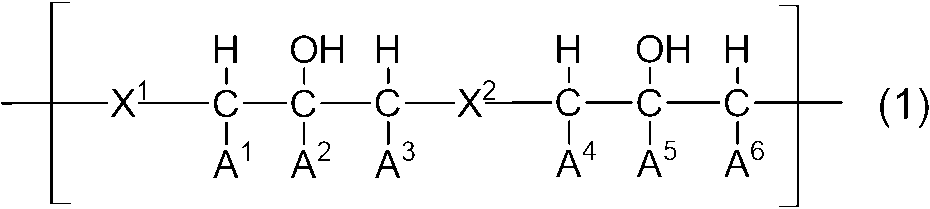
X2は、2価の基を表す。
A1、A2、A3、A4、A5及びA6は、それぞれ独立して、水素原子、メチル基又はエチル基を表す。)
[2] 前記式(1)中のX1が、下記式(2-1)で表される基、下記式(2-2)で表される基、及び下記式(2-3)で表される基のいずれかを表す、[1]に記載のレジスト下層膜形成用組成物。

式(2-2)中、R1は、水素原子、ハロゲン原子、又は炭素原子数1~10の有機基を表す。*は、結合手を表す。
式(2-3)中、R2は、水素原子、ハロゲン原子、又は炭素原子数1~10の有機基を表す。*は、結合手を表す。)

式(2-1-1)中、p11は0~2の整数を表す。p11が0のとき、m11は1~4の整数を表し、n11は0~3の整数を表し、m11とn11との合計は4以下である。p11が1のとき、m11は1~6の整数を表し、n11は0~5の整数を表し、m11とn11との合計は6以下である。p11が2のとき、m11は1~8の整数を表し、n11は0~7の整数を表し、m11とn11との合計は8以下である。R11が2以上のとき、2以上のR11は、同じであってもよいし、異なっていてもよい。
式(2-1-2)中、Z11は、単結合、酸素原子、硫黄原子、カルボニル基、スルホニル基、又は炭素原子数1~6のアルキレン基を表す。m12及びm13は、それぞれ独立して、0~4の整数を表し、n12及びn13は、それぞれ独立して、0~4の整数を表し、m12とm13との合計は1以上であり、m12とn12との合計は4以下であり、m13とn13との合計は4以下である。R12が2以上のとき、2以上のR12は、同じであってもよいし、異なっていてもよい。R13が2以上のとき、2以上のR13は、同じであってもよいし、異なっていてもよい。
式(2-1-3)中、Z12及びZ13は、それぞれ独立して、単結合、又は炭素原子数1~6の直鎖状若しくは分岐状のアルキレン基を表す。m14は1~4の整数を表し、n14は0~3の整数を表し、m14とn14との合計は4以下である。R14が2以上のとき、2以上のR14は、同じであってもよいし、異なっていてもよい。
式(2-1-4)中、Z14は、単結合、酸素原子、硫黄原子、カルボニル基、スルホニル基、又は炭素原子数1~6のアルキレン基を表す。Z15及びZ16は、それぞれ独立して、単結合、又は炭素原子数1~6の直鎖状若しくは分岐状のアルキレン基を表す。m15及びm16は、それぞれ独立して、0~4の整数を表し、n15及びn16は、それぞれ独立して、0~4の整数を表し、m15とm16との合計は1以上であり、m15とn15との合計は4以下であり、m16とn16との合計は4以下である。R15が2以上のとき、2以上のR15は、同じであってもよいし、異なっていてもよい。R16が2以上のとき、2以上のR16は、同じであってもよいし、異なっていてもよい。)
[3] 前記式(1)中のX2が、下記式(3-1)で表される基及び下記式(3-2)で表される基のいずれかを表す、[1]又は[2]に記載のレジスト下層膜形成用組成物。

式(3-2)中、X11は、下記式(3-2-1)~(3-2-3)のいずれかで表される2価の基を表す。Z1及びZ2は、それぞれ独立して、単結合又は下記式(2-2-4)で表される2価の基を表す。*は、結合手を表す。)
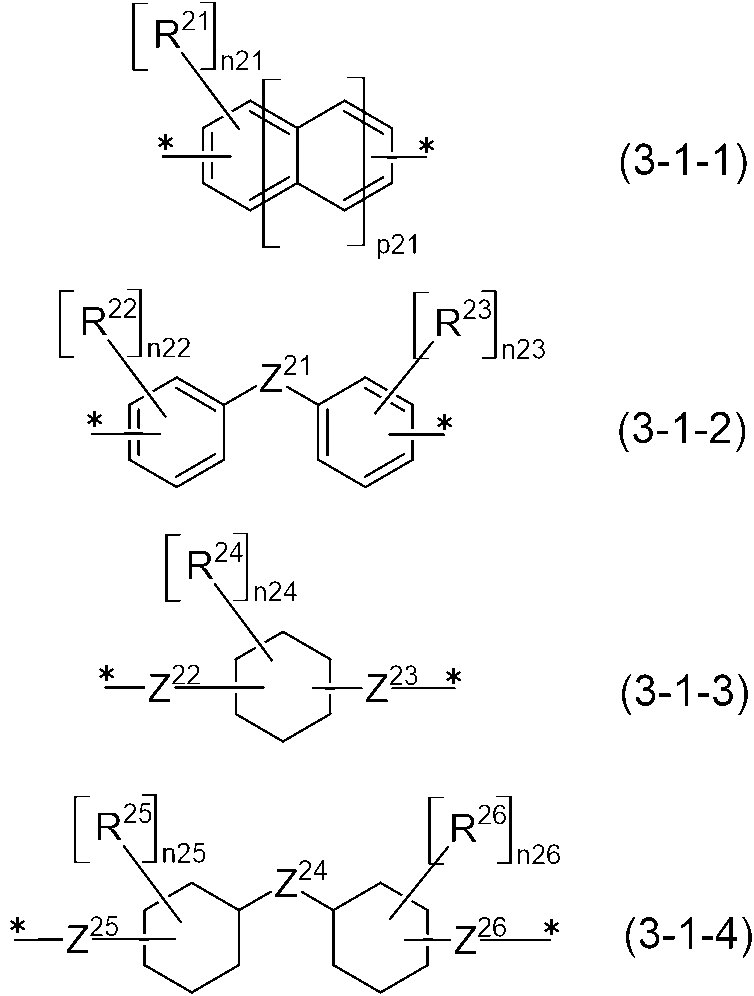
式(3-1-1)中、p21は0~2の整数を表す。p21が0のとき、n21は0~4の整数を表す。p21が1のとき、n21は0~6の整数を表す。p21が2のとき、n21は0~8の整数を表す。R21が2以上のとき、2以上のR21は、同じであってもよいし、異なっていてもよい。
式(3-1-2)中、Z21は、単結合、酸素原子、硫黄原子、カルボニル基、スルホニル基、又は炭素原子数1~6のアルキレン基を表す。n22及びn23は、それぞれ独立して、0~4の整数を表す。R22が2以上のとき、2以上のR22は、同じであってもよいし、異なっていてもよい。R23が2以上のとき、2以上のR23は、同じであってもよいし、異なっていてもよい。
式(3-1-3)中、Z22及びZ23は、それぞれ独立して、単結合、又は炭素原子数1~6の直鎖状若しくは分岐状のアルキレン基を表す。n24は0~4の整数を表す。R24が2以上のとき、2以上のR24は、同じであってもよいし、異なっていてもよい。
式(3-1-4)中、Z24は、単結合、酸素原子、硫黄原子、カルボニル基、スルホニル基、又は炭素原子数1~6のアルキレン基を表す。Z25及びZ26は、それぞれ独立して、単結合、又は炭素原子数1~6の直鎖状若しくは分岐状のアルキレン基を表す。n25及びn26は、それぞれ独立して、0~4の整数を表す。R25が2以上のとき、2以上のR25は、同じであってもよいし、異なっていてもよい。R26が2以上のとき、2以上のR26は、同じであってもよいし、異なっていてもよい。)

*は結合手を表す。*1は式(3-2)中の炭素原子に結合する結合手を表す。*2は式(3-2)中の窒素原子に結合する結合手を表す。)

[4] 前記溶剤(B)が、アルキレングリコールモノアルキルエーテル及びアルキレングリコールモノアルキルエーテルのモノカルボン酸エステルからなる群より選択される少なくとも一種を含む、[1]から[3]のいずれかに記載のレジスト下層膜形成用組成物。
[5] 架橋剤(C)を更に含む、[1]から[4]のいずれかに記載のレジスト下層膜形成用組成物。
[6] 硬化触媒(D)を更に含む、[1]から[5]のいずれかに記載のレジスト下層膜形成用組成物。
[7] [1]から[6]のいずれかに記載のレジスト下層膜形成用組成物の硬化物である、レジスト下層膜。
[8] 半導体基板と、
[7]に記載のレジスト下層膜と、
を備える積層体。
[9] 半導体基板の上に、[1]から[6]のいずれかに記載のレジスト下層膜形成用組成物を用いて、レジスト下層膜を形成する工程と、
前記レジスト下層膜の上に、レジスト膜を形成する工程と、
を含む、半導体素子の製造方法。
[10] 半導体基板の上に、[1]から[6]のいずれかに記載のレジスト下層膜形成用組成物を用いて、レジスト下層膜を形成する工程と、
前記レジスト下層膜の上に、レジスト膜を形成する工程と、
前記レジスト膜に光又は電子線を照射し、次いで、前記レジスト膜を現像し、レジストパターンを得る工程と、
前記レジストパターンをマスクに用い、前記レジスト下層膜をエッチングする工程と、
を含む、パターン形成方法。
本発明のレジスト下層膜形成用組成物は、下記式(1)で表される繰り返し単位を有するポリマー(A)、及び溶剤(B)を含む。
レジスト下層膜形成用組成物は、架橋剤(C)、硬化触媒(D)などを含んでいてもよい。
ポリマー(A)は、環構造に直接結合したヨウ素原子を有する。
ポリマー(A)が環構造に直接結合したヨウ素原子を有することにより、ポリマー(A)が環構造に直接結合したヨウ素原子を有しない場合と比べて、リソグラフィー特性(例えば、感度、レジストパターン)を低下させることなく、レジスト下層膜のエッチング速度を早くすることが可能となる。
ポリマー(A)は、下記式(1)で表される繰り返し単位を有する。

X2は、2価の基を表す。
A1、A2、A3、A4、A5及びA6は、それぞれ独立して、水素原子、メチル基又はエチル基を表す。)
式(1)中のX1の炭素原子数としては、特に制限されないが、例えば、4~20が挙げられる。
X1は、2価の基を構成する原子として、ヨウ素原子、及び炭素原子を少なくとも有する。X1は、更に、2価の基を構成する原子として、水素原子、酸素原子、窒素原子などを有していてもよい。
環構造としては、炭化水素環であってもよいし、ヘテロ環であってもよい。
環構造としては、芳香族環が好ましく、芳香族炭化水素環がより好ましい。芳香族炭化水素環としては、例えば、ベンゼン環、ナフタレン環、アントラセン環などが挙げられる。
非芳香族の炭化水素環としては、例えば、シクロヘキサン環が挙げられる。
また、環構造としては、ウラシル環、ピリミジントリオン環が好ましい。
ウラシルとは、下記式で表されるヘテロ環化合物である。


式(2-2)中、R1は、水素原子、ハロゲン原子、又は炭素原子数1~10の有機基を表す。*は、結合手を表す。
式(2-3)中、R2は、水素原子、ハロゲン原子、又は炭素原子数1~10の有機基を表す。*は、結合手を表す。)
なお、式(2-2)及び式(2-3)中の「I」は、ヨウ素原子を表す。

式(2-1-1)中、p11は0~2の整数を表す。p11が0のとき、m11は1~4の整数を表し、n11は0~3の整数を表し、m11とn11との合計は4以下である。p11が1のとき、m11は1~6の整数を表し、n11は0~5の整数を表し、m11とn11との合計は6以下である。p11が2のとき、m11は1~8の整数を表し、n11は0~7の整数を表し、m11とn11との合計は8以下である。R11が2以上のとき、2以上のR11は、同じであってもよいし、異なっていてもよい。
式(2-1-2)中、Z11は、単結合、酸素原子、硫黄原子、カルボニル基、スルホニル基、又は炭素原子数1~6のアルキレン基を表す。m12及びm13は、それぞれ独立して、0~4の整数を表し、n12及びn13は、それぞれ独立して、0~4の整数を表し、m12とm13との合計は1以上であり、m12とn12との合計は4以下であり、m13とn13との合計は4以下である。R12が2以上のとき、2以上のR12は、同じであってもよいし、異なっていてもよい。R13が2以上のとき、2以上のR13は、同じであってもよいし、異なっていてもよい。
式(2-1-3)中、Z12及びZ13は、それぞれ独立して、単結合、又は炭素原子数1~6の直鎖状若しくは分岐状のアルキレン基を表す。m14は1~4の整数を表し、n14は0~3の整数を表し、m14とn14との合計は4以下である。R14が2以上のとき、2以上のR14は、同じであってもよいし、異なっていてもよい。
式(2-1-4)中、Z14は、単結合、酸素原子、硫黄原子、カルボニル基、スルホニル基、又は炭素原子数1~6のアルキレン基を表す。Z15及びZ16は、それぞれ独立して、単結合、又は炭素原子数1~6の直鎖状若しくは分岐状のアルキレン基を表す。m15及びm16は、それぞれ独立して、0~4の整数を表し、n15及びn16は、それぞれ独立して、0~4の整数を表し、m15とm16との合計は1以上であり、m15とn15との合計は4以下であり、m16とn16との合計は4以下である。R15が2以上のとき、2以上のR15は、同じであってもよいし、異なっていてもよい。R16が2以上のとき、2以上のR16は、同じであってもよいし、異なっていてもよい。)
なお、式(2-1-1)~式(2-1-4)中の「I」は、ヨウ素原子を表す。


式(1)中のX2は、2価の基であれば、特に制限されず、X1と同じ2価の基であってもよいし、X1とは異なる2価の基であってもよい。
X2は、2価の基を構成する原子として、炭素原子を少なくとも有する。X1は、更に、2価の基を構成する原子として、水素原子、酸素原子、窒素原子などを有していてもよい。

式(3-2)中、X11は、下記式(3-2-1)~(3-2-3)のいずれかで表される2価の基を表す。Z1及びZ2は、それぞれ独立して、単結合又は下記式(2-2-4)で表される2価の基を表す。*は、結合手を表す。)

式(3-1-1)中、p21は0~2の整数を表す。p21が0のとき、n21は0~4の整数を表す。p21が1のとき、n21は0~6の整数を表す。p21が2のとき、n21は0~8の整数を表す。R21が2以上のとき、2以上のR21は、同じであってもよいし、異なっていてもよい。
式(3-1-2)中、Z21は、単結合、酸素原子、硫黄原子、カルボニル基、スルホニル基、又は炭素原子数1~6のアルキレン基を表す。n22及びn23は、それぞれ独立して、0~4の整数を表す。R22が2以上のとき、2以上のR22は、同じであってもよいし、異なっていてもよい。R23が2以上のとき、2以上のR23は、同じであってもよいし、異なっていてもよい。
式(3-1-3)中、Z22及びZ23は、それぞれ独立して、単結合、又は炭素原子数1~6の直鎖状若しくは分岐状のアルキレン基を表す。n24は0~4の整数を表す。R24が2以上のとき、2以上のR24は、同じであってもよいし、異なっていてもよい。
式(3-1-4)中、Z24は、単結合、酸素原子、硫黄原子、カルボニル基、スルホニル基、又は炭素原子数1~6のアルキレン基を表す。Z25及びZ26は、それぞれ独立して、単結合、又は炭素原子数1~6の直鎖状若しくは分岐状のアルキレン基を表す。n25及びn26は、それぞれ独立して、0~4の整数を表す。R25が2以上のとき、2以上のR25は、同じであってもよいし、異なっていてもよい。R26が2以上のとき、2以上のR26は、同じであってもよいし、異なっていてもよい。)

*は結合手を表す。*1は式(3-2)中の炭素原子に結合する結合手を表す。*2は式(3-2)中の窒素原子に結合する結合手を表す。)

本明細書において、アルキル基としては、直鎖状に限らず分岐状でもよく環状でもよい。直鎖状又は分岐状のアルキル基としては、例えば、メチル基、エチル基、イソプロピル基、tert-ブチル基、n-ヘキシル基などが挙げられる。環状のアルキル基(シクロアルキル基)としては、例えば、シクロブチル基、シクロペンチル基、シクロヘキシル基などが挙げられる。
本明細書において、アルコキシ基としては、例えば、メトキシ基、エトキシ基、n-ペンチルオキシ基、イソプロポキシ基などが挙げられる。
本明細書において、アルキルチオ基としては、例えば、メチルチオ基、エチルチオ基、n-ペンチルチオ基、イソプロピルチオ基などが挙げられる。
本明細書において、アルケニル基としては、例えば、エテニル基、1-プロペニル基、2-プロペニル基、1-メチル-1-エテニル基、1-ブテニル基、2-ブテニル基、3-ブテニル基、2-メチル-1-プロペニル基、2-メチル-2-プロペニル基などが挙げられる。
本明細書において、アルキニル基としては、上記「アルケニル基」に挙げられたアルケニル基の2重結合が3重結合に置き換えられている基が挙げられる。
本明細書において、アルケニルオキシ基としては、例えば、ビニルオキシ基、1-プロペニルオキシ基、2-n-プロペニルオキシ基(アリルオキシ基)、1-n-ブテニルオキシ基、プレニルオキシ基などが挙げられる。
本明細書において、アルキニルオキシ基としては、例えば、2-プロピニルオキシ基、1-メチル-2-プロピニルオキシ基、2-メチル-2-プロピニルオキシ基、2-ブチニルオキシ基、3-ブチニルオキシ基などが挙げられる。
本明細書において、アシル基としては、例えば、アセチル基、プロピオニル基などが挙げられる。
本明細書において、アリールオキシ基としては、例えば、フェノキシ基、ナフチルオキシなどが挙げられる。
本明細書において、アリールカルボニル基としては、例えば、フェニルカルボニル基などが挙げられる。
本明細書において、アラルキル基としては、例えば、ベンジル基、フェネチル基などが挙げられる。
本明細書において、アルキレン基としては、例えば、メチレン基、エチレン基、1,3-プロピレン基、2,2-プロピレン基、1-メチルエチレン基、1,4-ブチレン基、1-エチルエチレン基、1-メチルプロピレン基、2-メチルプロピレン基、1,5-ペンチレン基、1-メチルブチレン基、2-メチルブチレン基、1,1-ジメチルプロピレン基、1,2-ジメチルプロピレン基、1-エチルプロピレン基、2-エチルプロピレン基、1,6-ヘキシレン基、1,4-シクロヘキシレン基、1,8-オクチレン基、2-エチルオクチレン基、1,9-ノニレン基及び1,10-デシレン基等が挙げられる。
また、酸素原子若しくは硫黄原子で中断されていてもよい炭素原子数1~10のアルキル基には、酸素原子若しくは硫黄原子が2以上含まれていてもよい。
炭素原子数2~10のアルキレン基は、直鎖状であってもよいし、分岐状であってもよい。
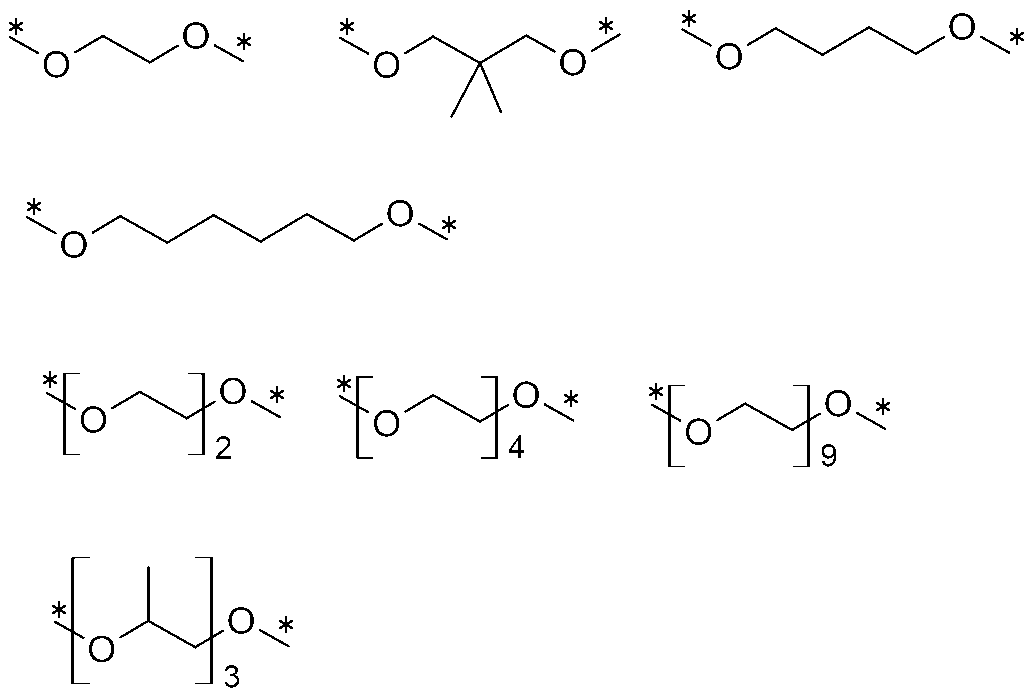


置換基で置換されていてもよくかつ炭素-炭素結合がヘテロ原子で中断されていてもよい脂肪族環における置換基としては、例えば、ヒドロキシ基、カルボキシ基、炭素原子数1~6のアルキル基、炭素原子数1~6のアシル基、炭素原子数1~6のアルコキシ基、炭素原子数2~6のアルキルオキシカルボニル基などが挙げられる。
脂肪族環の員環数としては、例えば、3員環~10員環が挙げられる。
脂肪族環は、単環であってもよいし、多環であってもよい。
脂肪族環は、飽和脂肪族環であってもよいし、不飽和脂肪族環であってもよい。
置換基で置換されていてもよくかつ炭素-炭素結合がヘテロ原子で中断されていてもよい脂肪族環の総炭素原子数としては、例えば、6~15が挙げられる。


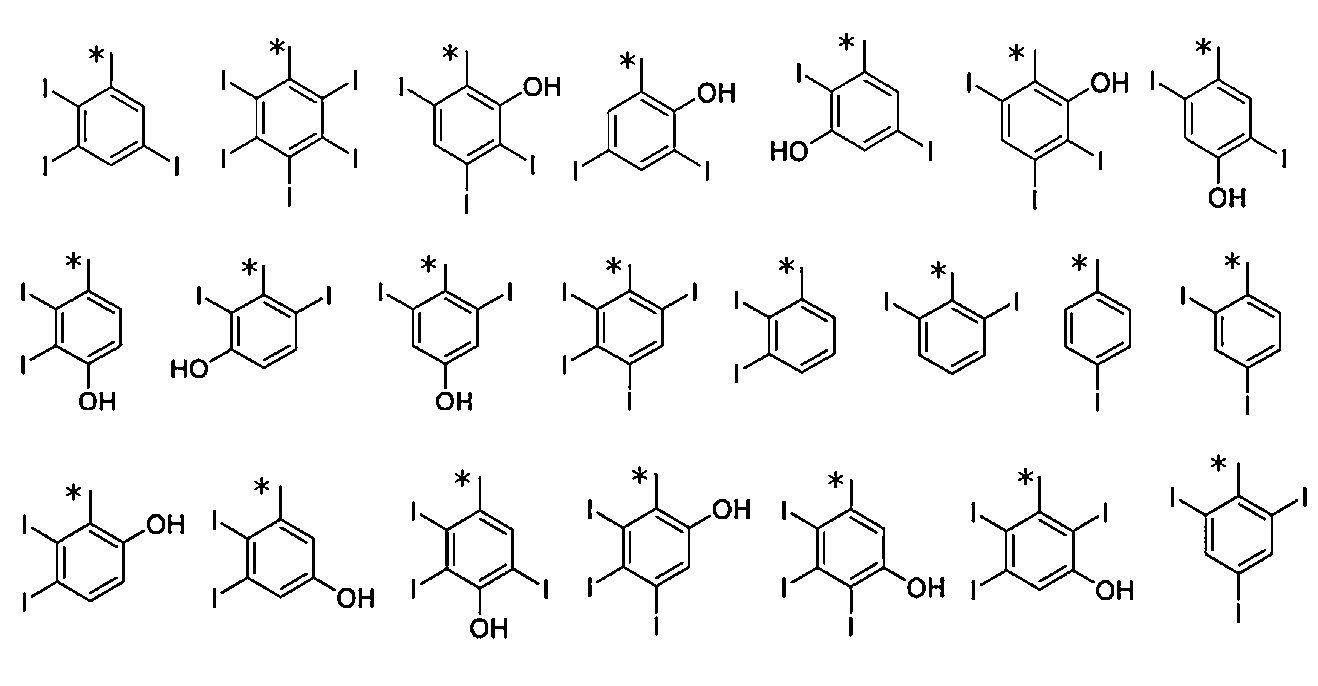
なお、構造中の「I」は、ヨウ素原子を表す。
ポリマー(A)の重量平均分子量の下限は、例えば、500、1,000、2,000、又は3,000である。
ポリマー(A)の重量平均分子量の上限は、例えば、30,000、20,000、又は10,000である。
ポリマー(A)の一例は、例えば、以下の反応(I)~(II)により得られる。
(II):下記式(1A)で表される化合物と、下記式(1B)で表される化合物と、カルボキシ基を1つ有するモノカルボキシ化合物との反応。
反応(I)及び(II)においては、その他の化合物が併用されてもよい。

式(1B)中、X2、A1、A2、A3、A4、A5及びA6は、それぞれ、式(1)中のX2、A1、A2、A3、A4、A5及びA6と同義である。)

式(2-2A)中、R1は、式(2-2)中のR1と同義である。
式(2-3A)中、R2は、式(2-2)中のR1と同義である。)
なお、式(2-2A)及び式(2-3A)中の「I」は、ヨウ素原子を表す。
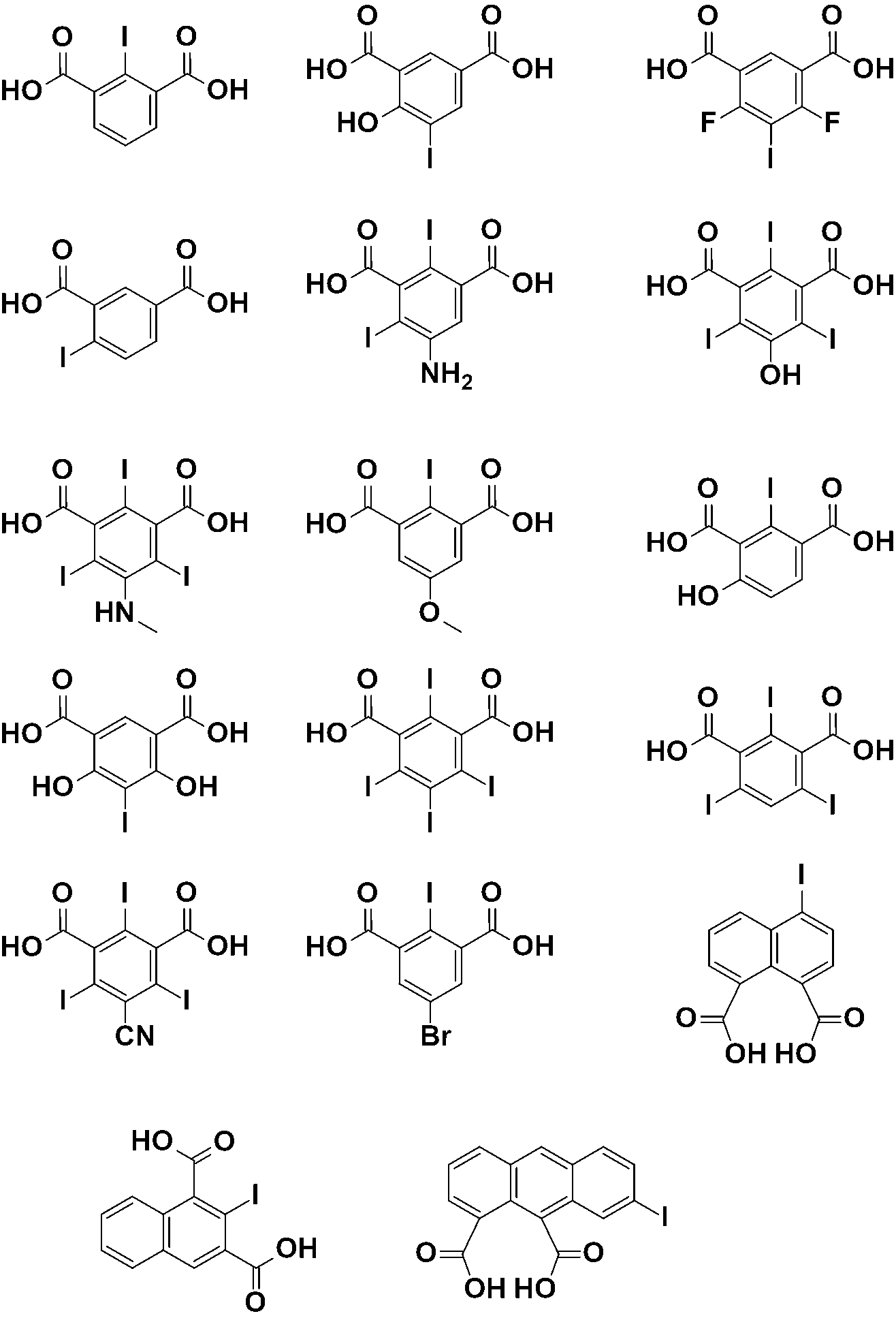


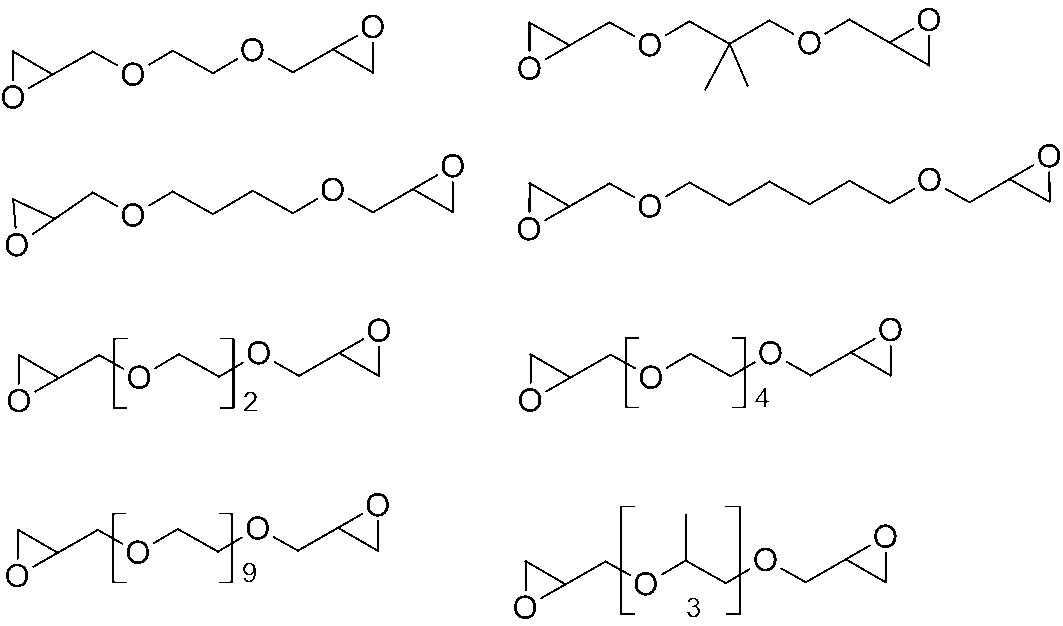


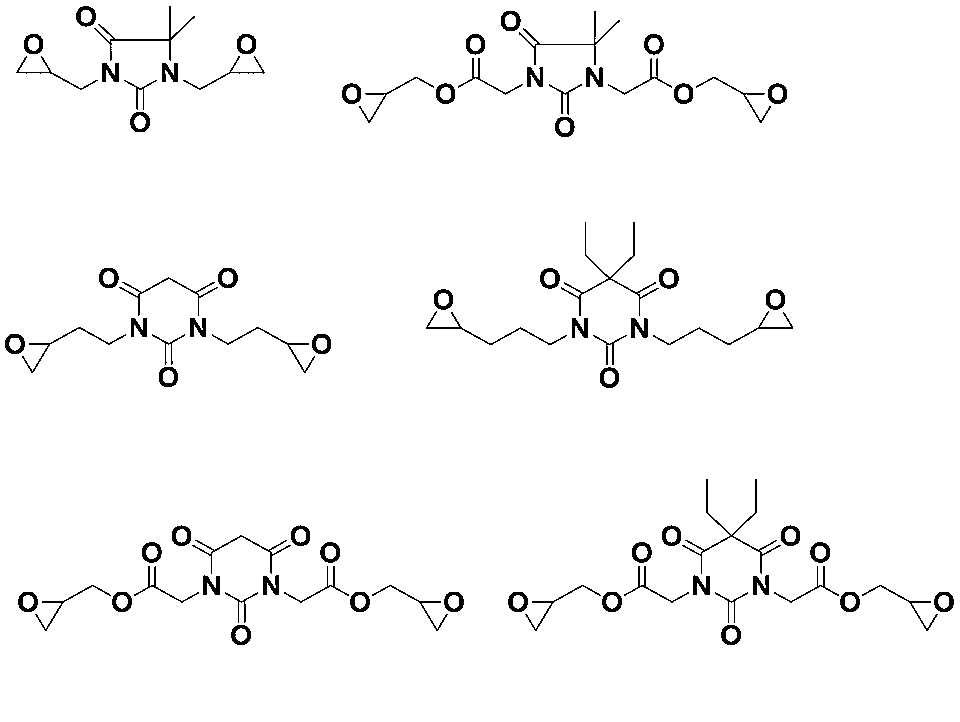
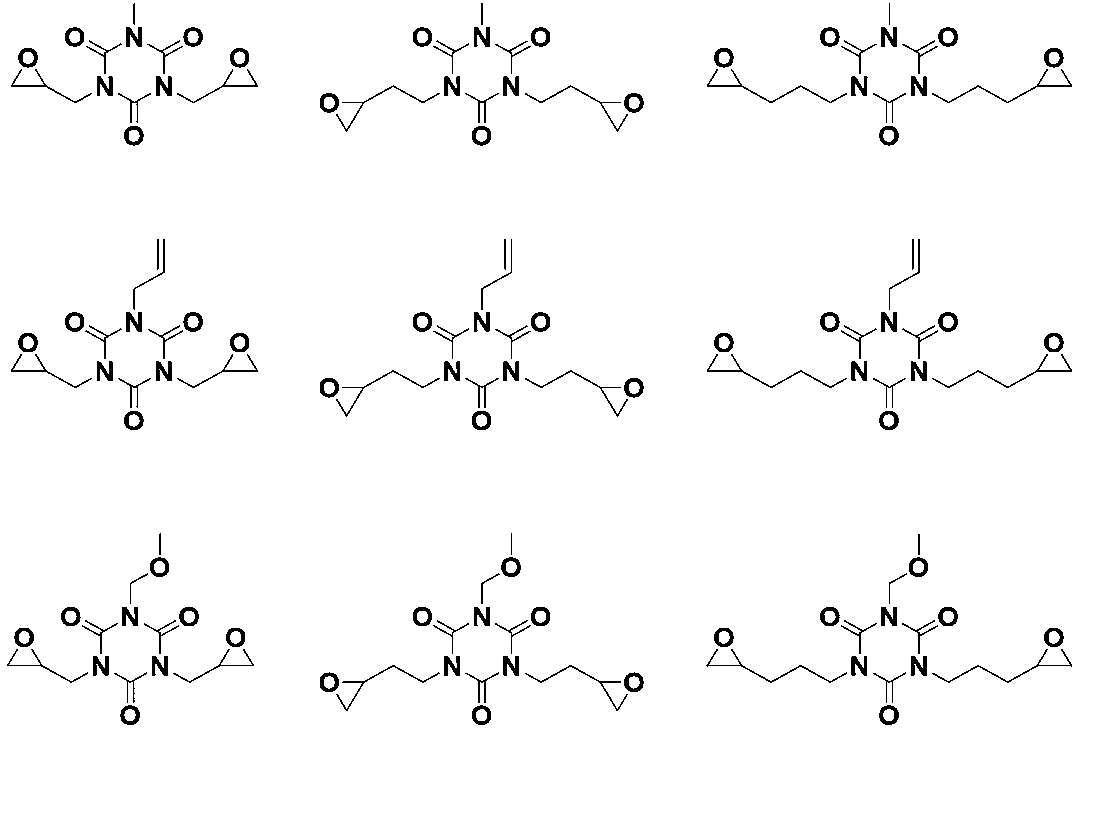


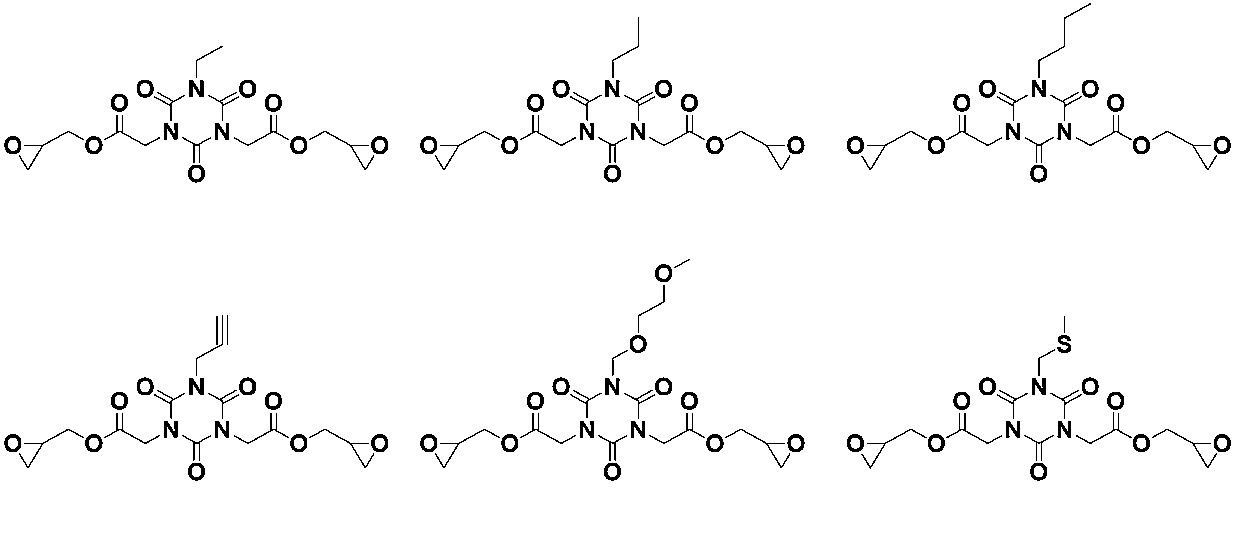


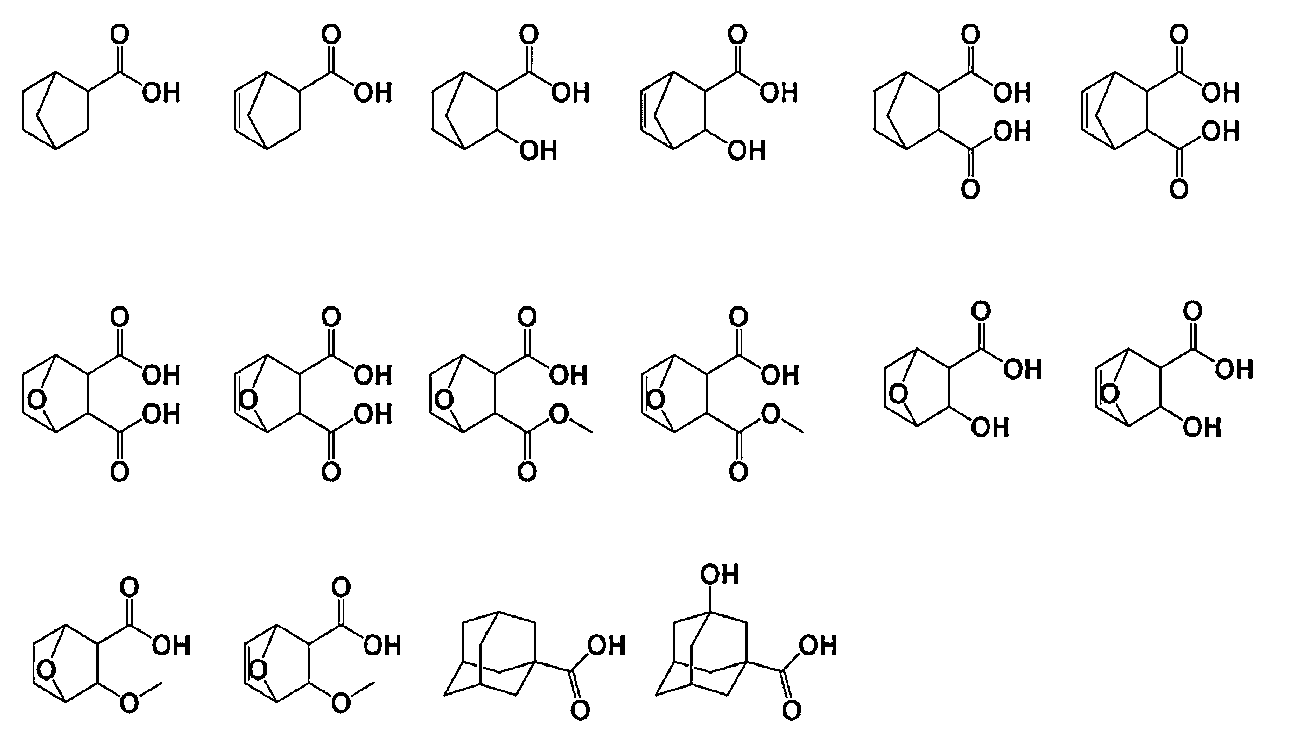

なお、本発明において、膜構成成分とは、組成物に含まれる溶剤以外の成分を意味する。
溶剤(B)としては、特に制限されず、水であってもよいし、有機溶剤であってもよい。
有機溶剤としては、例えば、アルキレングリコールモノアルキルエーテル、アルキレングリコールモノアルキルエーテルのモノカルボン酸エステルなどが挙げられる。
アルキレングリコールモノアルキルエーテルのアルキル基としては、例えば、炭素原子数1~4のアルキル基が挙げられる。
アルキレングリコールモノアルキルエーテルの炭素原子数としては、例えば、3~8が挙げられる。
アルキレングリコールモノアルキルエーテルとしては、例えば、エチレングリコールモノメチルエーテル、エチレングリコールモノエチルエーテル、プロピレングリコールモノメチルエーテル、プロピレングリコールモノエチルエーテルなどが挙げられる。
アルキレングリコールモノアルキルエーテルのモノカルボン酸エステルのアルキル基としては、例えば、炭素原子数1~4のアルキル基が挙げられる。
アルキレングリコールモノアルキルエーテルのモノカルボン酸エステルのモノカルボン酸としては、炭素原子数2~4の飽和モノカルボン酸が挙げられる。
炭素原子数2~4の飽和モノカルボン酸としては、例えば、酢酸、プロピオン酸、酪酸が挙げられる。
アルキレングリコールモノアルキルエーテルのモノカルボン酸エステルの炭素原子数としては、例えば、5~10が挙げられる。
アルキレングリコールモノアルキルエーテルのモノカルボン酸エステルとしては、例えば、メチルセロソルブアセテート、エチルセロソルブアセテート、プロピレングリコールモノメチルエーテルアセテート、プロピレングリコールプロピルエーテルアセテートなどが挙げられる。
架橋剤(C)としては、特に制限されない。
架橋剤(C)は、ポリマー(A)とは異なる構造である。
アミノプラスト架橋剤は、メラミンやグアナミン等のアミノ基を有する化合物とホルムアルデヒドとの付加縮合物である。
フェノプラスト架橋剤とは、フェノール性ヒドロキシ基を有する化合物とホルムアルデヒドとの付加縮合物である。

結合手は、例えば、窒素原子、芳香族炭化水素環を構成する炭素原子などに結合している。


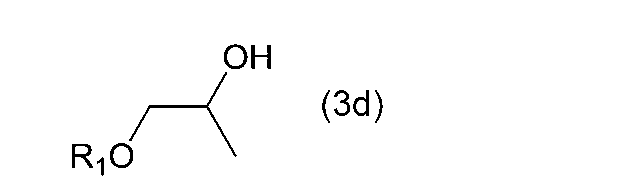


R1及びR4はそれぞれ炭素原子数2乃至10のアルキル基、又は炭素原子数1乃至10のアルコキシ基を有する炭素原子数2乃至10のアルキル基を示す。
R2及びR5はそれぞれ水素原子又はメチル基を示す。
R3及びR6はそれぞれ炭素原子数1乃至10のアルキル基、又は炭素原子数6乃至40のアリール基を示す。
n1は1≦n1≦3の整数、n2は2≦n2≦5の整数、n3は0≦n3≦3の整数、n4は0≦n4≦3の整数、3≦(n1+n2+n3+n4)≦6の整数を示す。
n5は1≦n5≦3の整数、n6は1≦n6≦4の整数、n7は0≦n7≦3の整数、n8は0≦n8≦3の整数、2≦(n5+n6+n7+n8)≦5の整数を示す。
m1は2乃至10の整数を示す。)
式(G-1)又は式(G-2)で示される化合物は、下記式(G-3)又は式(G-4)で示される化合物と、ヒドロキシル基含有エーテル化合物又は炭素原子数2乃至10のアルコールとの反応によって得られるものであってよい。

R8、R9、R11及びR12はそれぞれ水素原子又はメチル基を示す。
R7及びR10はそれぞれ炭素原子数1乃至10のアルキル基、又は炭素原子数6乃至40のアリール基を示す。
n9は1≦n9≦3の整数、n10は2≦n10≦5の整数、n11は0≦n11≦3の整数、n12は0≦n12≦3の整数、3≦(n9+n10+n11+n12)≦6の整数を示す。
n13は1≦n13≦3の整数、n14は1≦n14≦4の整数、n15は0≦n15≦3の整数、n16は0≦n16≦3の整数、2≦(n13+n14+n15+n16)≦5の整数を示す。
m2は2乃至10の整数を示す。)
Q2におけるm2価の有機基としては、例えば、炭素原子数1~4のm2価の有機基が挙げられる。


レジスト下層膜形成用組成物に任意成分として含まれる硬化触媒(D)は、熱酸発生剤、光酸発生剤何れも使用することができるが、熱酸発生剤を使用することが好ましい。
熱酸発生剤としては、例えば、p-トルエンスルホン酸、トリフルオロメタンスルホン酸、ピリジニウム-p-トルエンスルホネート(ピリジニウム-p-トルエンスルホン酸)、ピリジニウムフェノールスルホン酸、ピリジニウム-p-ヒドロキシベンゼンスルホン酸(p-フェノールスルホン酸ピリジニウム塩)、ピリジニウム-トリフルオロメタンスルホン酸、サリチル酸、カンファースルホン酸、5-スルホサリチル酸、4-クロロベンゼンスルホン酸、4-ヒドロキシベンゼンスルホン酸、ベンゼンジスルホン酸、1-ナフタレンスルホン酸、クエン酸、安息香酸、ヒドロキシ安息香酸、N-メチルモルホリン-p-トルエンスルホン酸、N-メチルモルホリン-p-ヒドロキシベンゼンスルホン酸、N-メチルモルホリン-5-スルホサリチル酸等のスルホン酸化合物及びカルボン酸化合物が挙げられる。
レジスト下層膜形成用組成物には、ピンホールやストリエーション等の発生がなく、表面むらに対する塗布性をさらに向上させるために、さらに界面活性剤を添加することができる。
これらの界面活性剤の配合量は、レジスト下層膜形成用組成物の全固形分に対して通常2.0質量%以下、好ましくは1.0質量%以下である。
これらの界面活性剤は単独で添加してもよいし、また2種以上の組合せで添加することもできる。
本発明のレジスト下層は、前述したレジスト下層膜形成用組成物の硬化物である。
レジスト下層膜は、例えば、前述したレジスト下層膜形成用組成物を半導体基板上に塗布し、焼成することにより製造することができる。
・測定装置名:エリプソ式膜厚測定装置RE-3100 ((株)SCREEN)
・SWE(単波長エリプソメータ)モード
・8点の算術平均(例えば、ウエハX方向に1cm間隔で8点測定)
本発明の積層体は、半導体基板と、本発明のレジスト下層膜とを備える。
半導体基板としては、例えば、前述の半導体基板が挙げられる。
レジスト下層膜は、例えば、半導体基板の上に配される。
本発明の半導体素子の製造方法は、少なくとも以下の工程を含む。
・半導体基板の上に、本発明のレジスト下層膜形成用組成物を用いて、レジスト下層膜を形成する工程、及び
・レジスト下層膜の上に、レジスト膜を形成する工程
・半導体基板の上に、本発明のレジスト下層膜形成用組成物を用いて、レジスト下層膜を形成する工程、
・レジスト下層膜の上に、レジスト膜を形成する工程
・レジスト膜に光又は電子線を照射し、次いで、レジスト膜を現像し、レジストパターンを得る工程、及び
・レジストパターンをマスクに用い、レジスト下層膜をエッチングする工程
レジスト層の膜厚としては、例えば、3,000nm以下であり、2,000nm以下であり、1,800nm以下であり、1,500nm以下であり、1,000nm以下である。下限は100nmであり、80nmであり、50nmであり、30nmであり、20nmであり、10nmである。
なお、本明細書においてはEBに応答するレジストもフォトレジストと称する。
フォトレジストとしては、ノボラック樹脂と1,2-ナフトキノンジアジドスルホン酸エステルとからなるポジ型フォトレジスト、酸により分解してアルカリ溶解速度を上昇させる基を有するバインダーと光酸発生剤からなる化学増幅型フォトレジスト、酸により分解してフォトレジストのアルカリ溶解速度を上昇させる低分子化合物とアルカリ可溶性バインダーと光酸発生剤とからなる化学増幅型フォトレジスト、及び酸により分解してアルカリ溶解速度を上昇させる基を有するバインダーと酸により分解してフォトレジストのアルカリ溶解速度を上昇させる低分子化合物と光酸発生剤からなる化学増幅型フォトレジスト、メタル元素を含有するレジストなどがある。例えば、JSR(株)製商品名V146G、シプレー社製商品名APEX-E、住友化学(株)製商品名PAR710、及び信越化学工業(株)製商品名AR2772、SEPR430等が挙げられる。また、例えば、Proc.SPIE,Vol.3999,330-334(2000)、Proc.SPIE,Vol.3999,357-364(2000)、やProc.SPIE,Vol.3999,365-374(2000)に記載されているような、含フッ素原子ポリマー系フォトレジストを挙げることができる。
R1及びR2は、それぞれ独立に、フッ素原子又はパーフルオロアルキル基を表す。
L1は、-O-、-S-、-COO-、-SO2-、又は、-SO3-を表す。
L2は、置換基を有していてもよいアルキレン基又は単結合を表す。
W1は、置換基を有していてもよい環状有機基を表す。
M+は、カチオンを表す。
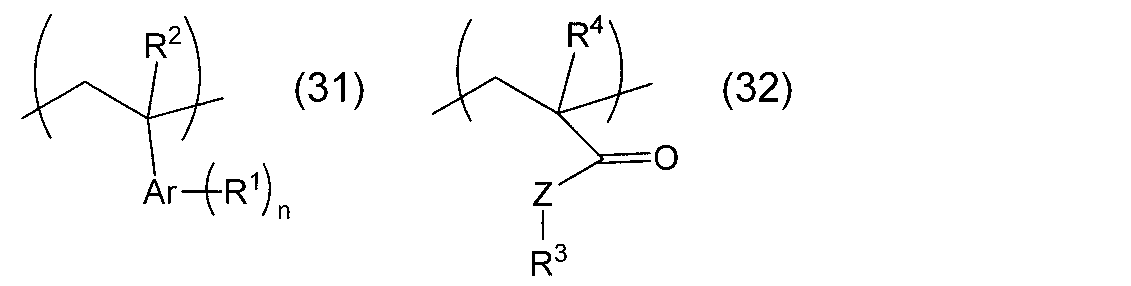
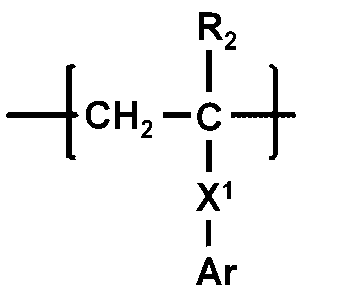
R2は、ハロゲン原子を有してもよい炭素原子数1~6のアルキル基、水素原子又はハロゲン原子を表し、X1は、単結合、-CO-O-*又は-CO-NR4-*を表し、*は-Arとの結合手を表し、R4は、水素原子又は炭素原子数1~4のアルキル基を表し、Arは、ヒドロキシ基及びカルボキシル基からなる群から選ばれる1以上の基を有していてもよい炭素原子数6~20の芳香族炭化水素基を表す。]


酸の作用により現像液に対する溶解性が変化する基材成分(A)及びアルカリ現像液に対して分解性を示すフッ素添加剤成分(F)を含有し、
前記フッ素添加剤成分(F)は、塩基解離性基を含む構成単位(f1)と、下記一般式(f2-r-1)で表される基を含む構成単位(f2)と、を有するフッ素樹脂成分(F1)を含有する、レジスト組成物。


電子線の照射エネルギー及び光の露光量としては、特に制限されない。
ベーク温度としては、特に制限されないが、60℃~150℃が好ましく、70℃~120℃がより好ましく、75℃~110℃が特に好ましい。
ベーク時間としては、特に制限されないが、1秒間~10分間が好ましく、10秒間~5分間がより好ましく、30秒間~3分間が特に好ましい。
現像温度としては、例えば、5℃~50℃が挙げられる。
現像時間としては、例えば、10秒間~300秒間が挙げられる。
アルカリ現像液としては、例えば、水酸化ナトリウム、水酸化カリウム、炭酸ナトリウム、ケイ酸ナトリウム、メタケイ酸ナトリウム、アンモニア水等の無機アルカリ類、エチルアミン、n-プロピルアミン等の第一アミン類、ジエチルアミン、ジーn-ブチルアミン等の第二アミン類、トリエチルアミン、メチルジエチルアミン等の第三アミン類、ジメチルエタノールアミン、トリエタノールアミン等のアルコールアミン類、テトラメチルアンモニウムヒドロキシド、テトラエチルアンモニウムヒドロキシド、コリン等の第4級アンモニウム塩、ピロール、ピペリジン等の環状アミン類、等のアルカリ類の水溶液を使用することができる。さらに、上記アルカリ類の水溶液にイソプロピルアルコール等のアルコール類、ノニオン系等の界面活性剤を適当量添加して使用することもできる。これらの中で好ましい現像液は第四級アンモニウム塩の水溶液、さらに好ましくはテトラメチルアンモニウムヒドロキシドの水溶液及びコリンの水溶液である。さらに、これらの現像液に界面活性剤などを加えることもできる。アルカリ現像液に代えて、酢酸ブチル等の有機溶媒で現像を行い、フォトレジストのアルカリ溶解速度が向上していない部分を現像する方法を用いることもできる。
用いた半導体基板の表面に前記無機膜が形成されている場合、その無機膜の表面を露出させ、用いた半導体基板の表面に前記無機膜が形成されていない場合、その半導体基板の表面を露出させる。その後半導体基板を公知の方法(ドライエッチング法等)により半導体基板を加工する工程を経て、半導体素子が製造できる。
・測定装置:HLC-8020GPC〔商品名〕(東ソー株式会社製)
・GPCカラム:TSKgel G2000HXL;2本、 G3000HXL:1本、G4000HXL;1本〔商品名〕(全て東ソー株式会社製)
・カラム温度:40°C
・溶媒:テトラヒドロフラン(THF)
・流量:1.0ml/分
・標準試料:ポリスチレン(東ソー株式会社製)
モノアリルジグリシジルイソシアヌル酸4.54g、2-ヨードイソフタル酸5.19g、及びテトラブチルホスホニウムブロマイド0.27gを、反応容器中のプロピレングリコールモノメチルエーテル40.00gに加え溶解させた。反応容器を窒素置換後、還流加熱で24時間反応させ、ポリマー1の溶液を得た。GPC分析を行ったところ、得られた溶液中のポリマー1は標準ポリスチレン換算にて重量平均分子量4700であった。
得られたポリマー1の繰り返し単位を以下に示す。図中のnは繰り返し単位数である(以下同様)。

モノアリルジグリシジルイソシアヌル酸4.68g、2-ヨードイソフタル酸4.14g、アダマンタンカルボン酸0.90g、及びテトラブチルホスホニウムブロマイド0.28gを、反応容器中のプロピレングリコールモノメチルエーテル40.00gに加え溶解させた。反応容器を窒素置換後、還流加熱で24時間反応させ、ポリマー2の溶液を得た。GPC分析を行ったところ、得られた溶液中のポリマー2は標準ポリスチレン換算にて重量平均分子量8000であった。
得られたポリマー2の繰り返し単位を以下に示す。以下の構造には、末端構造も記載されている。

モノアリルジグリシジルイソシアヌル酸4.23g、2-ヨードイソフタル酸3.75g、3,5-ジヨードサリチル酸1.76g、及びテトラブチルホスホニウムブロマイド0.26gを、反応容器中のプロピレングリコールモノメチルエーテル40.00gに加え溶解させた。反応容器を窒素置換後、還流加熱で24時間反応させ、ポリマー3の溶液を得た。GPC分析を行ったところ、得られた溶液中のポリマー3は標準ポリスチレン換算にて重量平均分子量7300であった。
得られたポリマー3の繰り返し単位を以下に示す。以下の構造には、末端構造も記載されている。

モノメチルジグリシジルイソシアヌル酸3.99g、2-ヨードイソフタル酸5.74g、及びテトラブチルホスホニウムブロマイド0.28gを、反応容器中のプロピレングリコールモノメチルエーテル40.00gに加え溶解させた。反応容器を窒素置換後、還流加熱で24時間反応させ、ポリマー4の溶液を得た。GPC分析を行ったところ、得られた溶液中のポリマー4は標準ポリスチレン換算にて重量平均分子量3500であった。
得られたポリマー4の繰り返し単位を以下に示す。

テレフタル酸ジグリシジルエステル(ナガセケムテックス株式会社製、商品名:デナコール〔登録商標〕Ex711)4.41g、2-ヨードイソフタル酸5.33g、及びテトラブチルホスホニウムブロマイド0.26gを、反応容器中のプロピレングリコールモノメチルエーテル40.00gに加え溶解させた。反応容器を窒素置換後、還流加熱で24時間反応させ、ポリマー5の溶液を得た。GPC分析を行ったところ、得られた溶液中のポリマー5は標準ポリスチレン換算にて重量平均分子量3700であった。
得られたポリマー5の繰り返し単位を以下に示す。

モノアリルジグリシジルイソシアヌル酸4.89g、5-ヨードウラシル4.96g、及びテトラブチルホスホニウムブロマイド0.15gを、反応容器中のシクロヘキサノン40.00gに加え溶解させた。反応容器を窒素置換後、120℃で24時間反応させ、ポリマー6の溶液を得た。GPC分析を行ったところ、得られた溶液中のポリマー6は標準ポリスチレン換算にて重量平均分子量2300であった。
得られたポリマー6の繰り返し単位を以下に示す。

モノアリルジグリシジルイソシアヌル酸8.00g、バルビタール5.45、及びテトラブチルホスホニウムブロマイド0.48gを、反応容器中のプロピレングリコールモノメチルエーテル56.00gに加え溶解させた。反応容器を窒素置換後、還流加熱で24時間反応させ、比較ポリマー1の溶液を得た。GPC分析を行ったところ、得られた溶液中の比較ポリマー1は標準ポリスチレン換算にて重量平均分子量6800であった。
得られた比較ポリマー1の繰り返し単位を以下に示す。

モノアリルジグリシジルイソシアヌル酸5.65g、イソフタル酸4.07g、及びテトラブチルホスホニウムブロマイド0.34gを、反応容器中のプロピレングリコールモノメチルエーテル40.00gに加え溶解させた。反応容器を窒素置換後、還流加熱で24時間反応させ、比較ポリマー2の溶液を得た。GPC分析を行ったところ、得られた溶液中の比較ポリマー2は標準ポリスチレン換算にて重量平均分子量5300であった。
得られた比較ポリマー2の繰り返し単位を以下に示す。
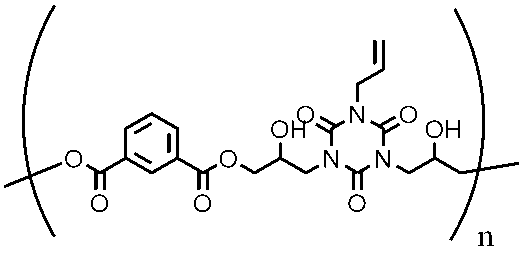
上記合成例で得られたポリマーに対し、添加剤、及び溶剤を、表1-1又は表1-2に示す割合になるように混合し、孔径0.05μmのポリエチレン製ミクロフィルターを用いて濾過することによって、レジスト下層膜形成用組成物をそれぞれ調製した。
なお表1-1の実施例1-1において、成分1が1.600質量部とあるのは、ポリマー1が1.600質量部との意味である。
・PL-LI:テトラメトキシメチルグリコールウリル
・PyPTS:ピリジニウム-トルエンスルホン酸
・PGMEA:プロピレングリコールモノメチルエーテルアセテート
・PGME:プロピレングリコールモノメチルエーテル
・CY:シクロヘキサノン

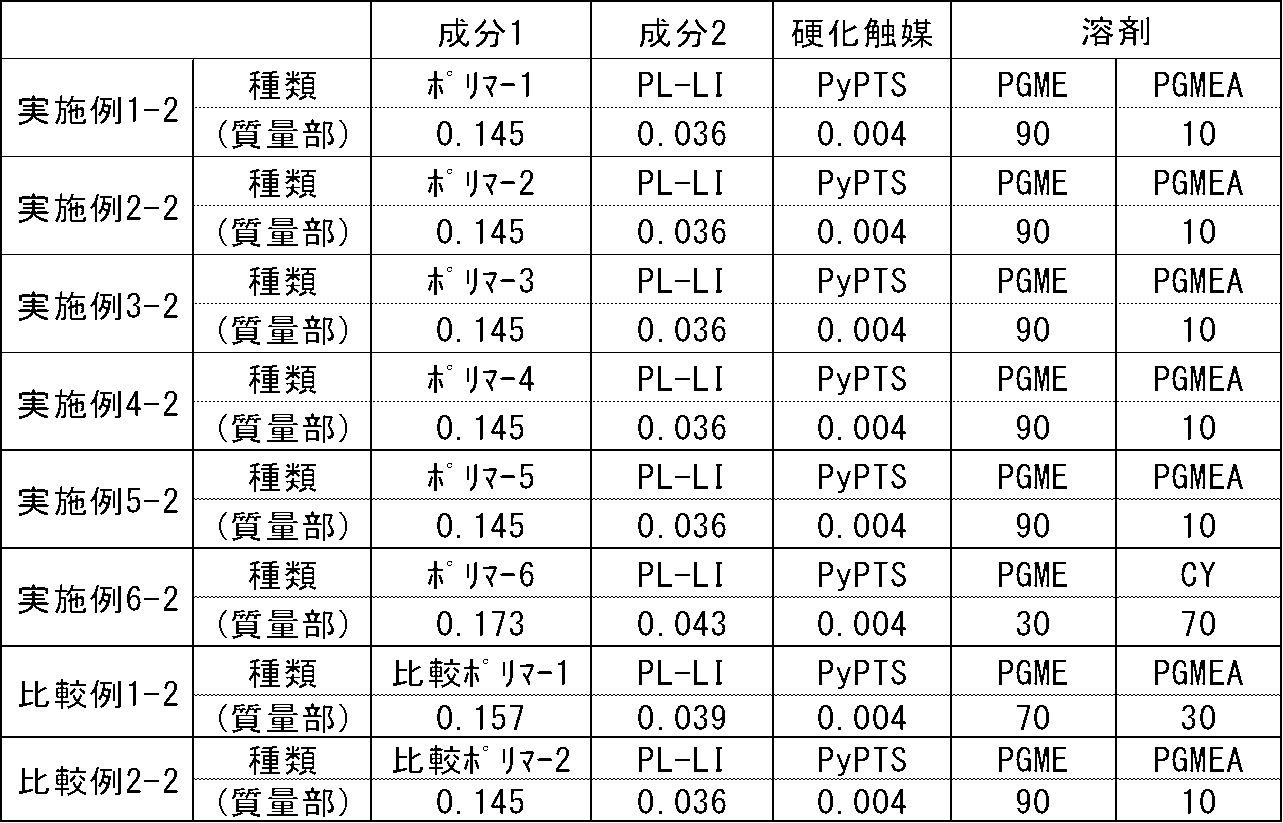
ドライエッチング速度の測定に用いたエッチャー及びエッチングガスは以下のものを用いた。
・RIE-10NR(サムコ製):CF4
実施例1-1~6-1及び比較例1-1~2-1のレジスト下層膜形成用組成物の各々を、スピナーを用いてシリコンウェハー上に塗布した。そのシリコンウェハーを、ホットプレート上で215℃、60秒間ベークし、レジスト下層膜(膜厚500nm)を形成した。膜厚は、エリプソ式膜厚測定装置RE-3100((株)SCREEN)を用いて測定した。
これらのレジスト下層膜について、エッチングガスとしてCF4ガスを使用してドライエッチング速度を測定した。比較例1-1のレジスト下層膜のエッチング速度を1.0としたときのエッチング速度比を表2に示す。

<電子線描画装置によるレジストパターンの形成試験>
実施例1-2~6-2及び比較例1-2~2-2のレジスト下層膜形成用組成物の各々を、スピナーを用いてシリコンウェハー上に塗布した。そのシリコンウェハーを、ホットプレート上で215℃、60秒間ベークし、レジスト下層膜(膜厚500nm)を形成した。
シリコンウェハー上に形成された各レジスト下層膜上に、EUV用ポジ型レジスト溶液をスピンコートし、130℃で60秒間加熱し、膜厚が35nmのEUVレジスト膜を形成した。そのレジスト膜に対し、電子線描画装置(ELS-G130)を用い、所定の条件で露光した。露光後、90℃で60秒間ベーク(PEB)を行い、クーリングプレート上で室温まで冷却し、フォトレジスト用現像液として2.38%テトラメチルアンモニウムヒドロキシド水溶液(東京応化工業(株)製、商品名NMD-3)を用いて30秒間パドル現像を行った。ラインサイズが16nm~28nmのレジストパターンを形成した。レジストパターンの測長には走査型電子顕微鏡((株)日立ハイテクノロジーズ製、CG4100)を用いた。
このようにして得られたフォトレジストパターンについて、パターン上部からの観察を行い、22nmライン/44nmピッチ(ラインアンドスペース(L/S=1/1)を形成した電荷量を最適照射エネルギーとし、その時の照射エネルギー(μC/cm2)、及びパターン形状の粗さを示す値であるLWR(Line Width Roughness)を確認した。LWRは、走査型電子顕微鏡((株)日立ハイテクノロジーズ製、CG4100)により、ラインの長手方向にラインポジションを400箇所測定し、その測定結果から求めた標準偏差(σ)の3倍値(3σ)(単位:nm)を示す。LWRの値が小さいほど、良好なパターンを形成できるパターンが形成できていることを示している。結果を表3に示す。

Claims (10)
- 下記式(1)で表される繰り返し単位を有するポリマー(A)、及び溶剤(B)を含む、レジスト下層膜形成用組成物。
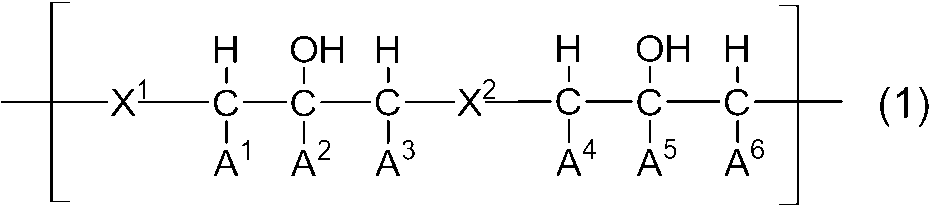
X2は、2価の基を表す。
A1、A2、A3、A4、A5及びA6は、それぞれ独立して、水素原子、メチル基又はエチル基を表す。) - 前記式(1)中のX1が、下記式(2-1)で表される基、下記式(2-2)で表される基、及び下記式(2-3)で表される基のいずれかを表す、請求項1に記載のレジスト下層膜形成用組成物。
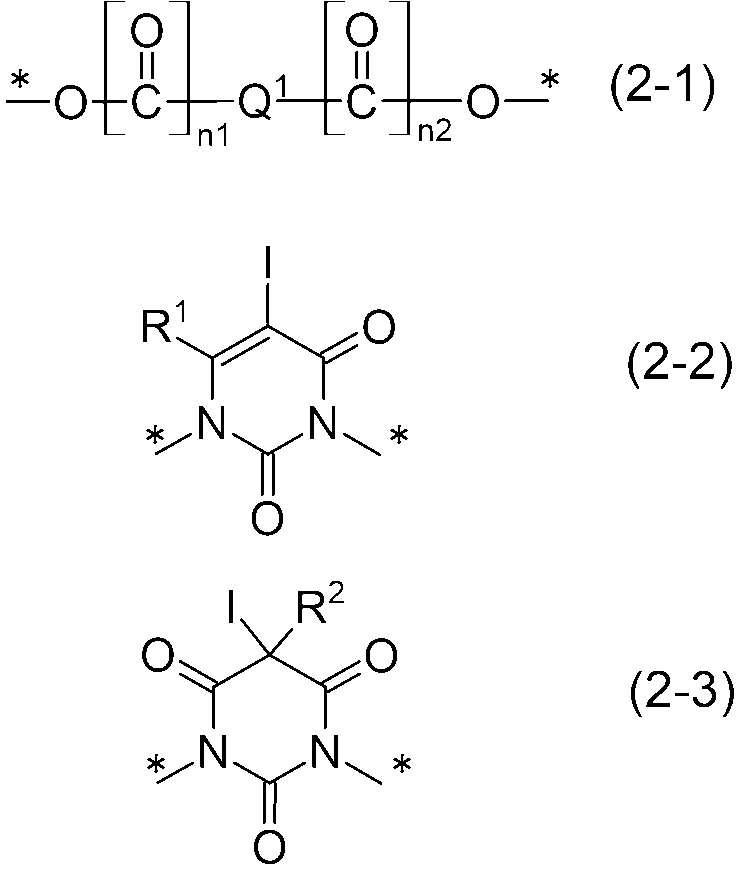
式(2-2)中、R1は、水素原子、ハロゲン原子、又は炭素原子数1~10の有機基を表す。*は、結合手を表す。
式(2-3)中、R2は、水素原子、ハロゲン原子、又は炭素原子数1~10の有機基を表す。*は、結合手を表す。)

式(2-1-1)中、p11は0~2の整数を表す。p11が0のとき、m11は1~4の整数を表し、n11は0~3の整数を表し、m11とn11との合計は4以下である。p11が1のとき、m11は1~6の整数を表し、n11は0~5の整数を表し、m11とn11との合計は6以下である。p11が2のとき、m11は1~8の整数を表し、n11は0~7の整数を表し、m11とn11との合計は8以下である。R11が2以上のとき、2以上のR11は、同じであってもよいし、異なっていてもよい。
式(2-1-2)中、Z11は、単結合、酸素原子、硫黄原子、カルボニル基、スルホニル基、又は炭素原子数1~6のアルキレン基を表す。m12及びm13は、それぞれ独立して、0~4の整数を表し、n12及びn13は、それぞれ独立して、0~4の整数を表し、m12とm13との合計は1以上であり、m12とn12との合計は4以下であり、m13とn13との合計は4以下である。R12が2以上のとき、2以上のR12は、同じであってもよいし、異なっていてもよい。R13が2以上のとき、2以上のR13は、同じであってもよいし、異なっていてもよい。
式(2-1-3)中、Z12及びZ13は、それぞれ独立して、単結合、又は炭素原子数1~6の直鎖状若しくは分岐状のアルキレン基を表す。m14は1~4の整数を表し、n14は0~3の整数を表し、m14とn14との合計は4以下である。R14が2以上のとき、2以上のR14は、同じであってもよいし、異なっていてもよい。
式(2-1-4)中、Z14は、単結合、酸素原子、硫黄原子、カルボニル基、スルホニル基、又は炭素原子数1~6のアルキレン基を表す。Z15及びZ16は、それぞれ独立して、単結合、又は炭素原子数1~6の直鎖状若しくは分岐状のアルキレン基を表す。m15及びm16は、それぞれ独立して、0~4の整数を表し、n15及びn16は、それぞれ独立して、0~4の整数を表し、m15とm16との合計は1以上であり、m15とn15との合計は4以下であり、m16とn16との合計は4以下である。R15が2以上のとき、2以上のR15は、同じであってもよいし、異なっていてもよい。R16が2以上のとき、2以上のR16は、同じであってもよいし、異なっていてもよい。) - 前記式(1)中のX2が、下記式(3-1)で表される基及び下記式(3-2)で表される基のいずれかを表す、請求項1に記載のレジスト下層膜形成用組成物。

式(3-2)中、X11は、下記式(3-2-1)~(3-2-3)のいずれかで表される2価の基を表す。Z1及びZ2は、それぞれ独立して、単結合又は下記式(2-2-4)で表される2価の基を表す。*は、結合手を表す。)

式(3-1-1)中、p21は0~2の整数を表す。p21が0のとき、n21は0~4の整数を表す。p21が1のとき、n21は0~6の整数を表す。p21が2のとき、n21は0~8の整数を表す。R21が2以上のとき、2以上のR21は、同じであってもよいし、異なっていてもよい。
式(3-1-2)中、Z21は、単結合、酸素原子、硫黄原子、カルボニル基、スルホニル基、又は炭素原子数1~6のアルキレン基を表す。n22及びn23は、それぞれ独立して、0~4の整数を表す。R22が2以上のとき、2以上のR22は、同じであってもよいし、異なっていてもよい。R23が2以上のとき、2以上のR23は、同じであってもよいし、異なっていてもよい。
式(3-1-3)中、Z22及びZ23は、それぞれ独立して、単結合、又は炭素原子数1~6の直鎖状若しくは分岐状のアルキレン基を表す。n24は0~4の整数を表す。R24が2以上のとき、2以上のR24は、同じであってもよいし、異なっていてもよい。
式(3-1-4)中、Z24は、単結合、酸素原子、硫黄原子、カルボニル基、スルホニル基、又は炭素原子数1~6のアルキレン基を表す。Z25及びZ26は、それぞれ独立して、単結合、又は炭素原子数1~6の直鎖状若しくは分岐状のアルキレン基を表す。n25及びn26は、それぞれ独立して、0~4の整数を表す。R25が2以上のとき、2以上のR25は、同じであってもよいし、異なっていてもよい。R26が2以上のとき、2以上のR26は、同じであってもよいし、異なっていてもよい。)

*は結合手を表す。*1は式(3-2)中の炭素原子に結合する結合手を表す。*2は式(3-2)中の窒素原子に結合する結合手を表す。)

- 前記溶剤(B)が、アルキレングリコールモノアルキルエーテル及びアルキレングリコールモノアルキルエーテルのモノカルボン酸エステルからなる群より選択される少なくとも一種を含む、請求項1に記載のレジスト下層膜形成用組成物。
- 架橋剤(C)を更に含む、請求項1に記載のレジスト下層膜形成用組成物。
- 硬化触媒(D)を更に含む、請求項1に記載のレジスト下層膜形成用組成物。
- 請求項1から6のいずれかに記載のレジスト下層膜形成用組成物の硬化物である、レジスト下層膜。
- 半導体基板と、
請求項7に記載のレジスト下層膜と、
を備える積層体。 - 半導体基板の上に、請求項1から6のいずれかに記載のレジスト下層膜形成用組成物を用いて、レジスト下層膜を形成する工程と、
前記レジスト下層膜の上に、レジスト膜を形成する工程と、
を含む、半導体素子の製造方法。 - 半導体基板の上に、請求項1から6のいずれかに記載のレジスト下層膜形成用組成物を用いて、レジスト下層膜を形成する工程と、
前記レジスト下層膜の上に、レジスト膜を形成する工程と、
前記レジスト膜に光又は電子線を照射し、次いで、前記レジスト膜を現像し、レジストパターンを得る工程と、
前記レジストパターンをマスクに用い、前記レジスト下層膜をエッチングする工程と、
を含む、パターン形成方法。
Priority Applications (4)
| Application Number | Priority Date | Filing Date | Title |
|---|---|---|---|
| CN202480014230.5A CN120677437A (zh) | 2023-02-27 | 2024-02-26 | 抗蚀剂下层膜形成用组合物 |
| JP2025503854A JPWO2024181330A1 (ja) | 2023-02-27 | 2024-02-26 | |
| KR1020257028986A KR20250160135A (ko) | 2023-02-27 | 2024-02-26 | 레지스트 하층막 형성용 조성물 |
| EP24763810.9A EP4657158A4 (en) | 2023-02-27 | 2024-02-26 | Resist underlayer film formation composition |
Applications Claiming Priority (2)
| Application Number | Priority Date | Filing Date | Title |
|---|---|---|---|
| JP2023028213 | 2023-02-27 | ||
| JP2023-028213 | 2023-02-27 |
Publications (1)
| Publication Number | Publication Date |
|---|---|
| WO2024181330A1 true WO2024181330A1 (ja) | 2024-09-06 |
Family
ID=92590558
Family Applications (1)
| Application Number | Title | Priority Date | Filing Date |
|---|---|---|---|
| PCT/JP2024/006699 Ceased WO2024181330A1 (ja) | 2023-02-27 | 2024-02-26 | レジスト下層膜形成用組成物 |
Country Status (6)
| Country | Link |
|---|---|
| EP (1) | EP4657158A4 (ja) |
| JP (1) | JPWO2024181330A1 (ja) |
| KR (1) | KR20250160135A (ja) |
| CN (1) | CN120677437A (ja) |
| TW (1) | TW202502879A (ja) |
| WO (1) | WO2024181330A1 (ja) |
Citations (5)
| Publication number | Priority date | Publication date | Assignee | Title |
|---|---|---|---|---|
| JPS53104683A (en) * | 1977-02-23 | 1978-09-12 | Hitachi Ltd | Irradiation sensitive organic polymer film |
| JP2807641B2 (ja) * | 1994-05-30 | 1998-10-08 | イフォクレール アクチェンゲゼルシャフト | X線不透過性歯科用材料 |
| JP2014513312A (ja) * | 2011-02-08 | 2014-05-29 | エイゼット・エレクトロニック・マテリアルズ・ユーエスエイ・コーポレイション | 下層コーティング組成物および微細電子デバイスを製造するための方法 |
| US20140295349A1 (en) * | 2013-03-28 | 2014-10-02 | Az Electronic Materials (Luxembourg) S.A.R.L. | Bottom antireflective materials and compositions |
| WO2021029395A1 (ja) * | 2019-08-09 | 2021-02-18 | 三菱瓦斯化学株式会社 | 化合物、重合体、組成物、膜形成用組成物、パターン形成方法、絶縁膜の形成方法及び化合物の製造方法、並びにヨウ素含有ビニルポリマーおよびそのアセチル化誘導体の製造方法 |
Family Cites Families (59)
| Publication number | Priority date | Publication date | Assignee | Title |
|---|---|---|---|---|
| US7790356B2 (en) | 2004-04-09 | 2010-09-07 | Nissan Chemical Industries, Ltd. | Condensation type polymer-containing anti-reflective coating for semiconductor |
| JP5518394B2 (ja) | 2008-08-13 | 2014-06-11 | 東京応化工業株式会社 | ポジ型レジスト組成物及びレジストパターン形成方法 |
| JP5297775B2 (ja) | 2008-11-28 | 2013-09-25 | 東京応化工業株式会社 | ポジ型レジスト組成物及びレジストパターン形成方法 |
| JP5572345B2 (ja) | 2009-08-24 | 2014-08-13 | 東京応化工業株式会社 | ポジ型レジスト組成物、レジストパターン形成方法 |
| US9176377B2 (en) | 2010-06-01 | 2015-11-03 | Inpria Corporation | Patterned inorganic layers, radiation based patterning compositions and corresponding methods |
| JP2012022261A (ja) | 2010-06-15 | 2012-02-02 | Tokyo Ohka Kogyo Co Ltd | ポジ型レジスト組成物、レジストパターン形成方法 |
| JP2012022258A (ja) | 2010-07-16 | 2012-02-02 | Tokyo Ohka Kogyo Co Ltd | ポジ型レジスト組成物、レジストパターン形成方法 |
| JP5953670B2 (ja) | 2010-08-27 | 2016-07-20 | 住友化学株式会社 | 塩、レジスト組成物及びレジストパターンの製造方法 |
| JP2012168279A (ja) | 2011-02-10 | 2012-09-06 | Tokyo Ohka Kogyo Co Ltd | Euv用レジスト組成物、euv用レジスト組成物の製造方法、およびレジストパターン形成方法 |
| JP6232812B2 (ja) | 2012-08-08 | 2017-11-22 | 住友化学株式会社 | 塩、レジスト組成物及びレジストパターンの製造方法 |
| JP2015010878A (ja) | 2013-06-27 | 2015-01-19 | 日本精機株式会社 | 液面位置検出装置及び液面位置検出方法 |
| US9310684B2 (en) | 2013-08-22 | 2016-04-12 | Inpria Corporation | Organometallic solution based high resolution patterning compositions |
| JP6601041B2 (ja) | 2014-07-31 | 2019-11-06 | 住友化学株式会社 | レジスト組成物 |
| JP6617459B2 (ja) | 2014-07-31 | 2019-12-11 | 住友化学株式会社 | レジスト組成物 |
| JP6601039B2 (ja) | 2014-07-31 | 2019-11-06 | 住友化学株式会社 | レジスト組成物 |
| JP6541508B2 (ja) | 2014-08-25 | 2019-07-10 | 住友化学株式会社 | 塩、樹脂、レジスト組成物及びレジストパターンの製造方法 |
| KR102696070B1 (ko) | 2014-10-23 | 2024-08-16 | 인프리아 코포레이션 | 유기 금속 용액 기반의 고해상도 패터닝 조성물 및 상응하는 방법 |
| JP2016090441A (ja) | 2014-11-06 | 2016-05-23 | 東京応化工業株式会社 | 電子銃の電子線照射量の安定化方法、及びアウトガス評価方法 |
| JP6585477B2 (ja) | 2014-11-26 | 2019-10-02 | 住友化学株式会社 | 塩、樹脂、レジスト組成物及びレジストパターンの製造方法 |
| US9580402B2 (en) | 2015-01-08 | 2017-02-28 | Sumitomo Chemical Company, Limited | Salt, acid generator, photoresist composition, and method for producing photoresist pattern |
| EP4273625A3 (en) | 2015-10-13 | 2024-02-28 | Inpria Corporation | Organotin oxide hydroxide patterning compositions, precursors, and patterning |
| CN108780739B (zh) | 2016-03-11 | 2023-09-15 | 因普里亚公司 | 预图案化光刻模板、基于使用该模板的辐射图案化的工艺及形成该模板的工艺 |
| JP6726559B2 (ja) | 2016-08-03 | 2020-07-22 | 東京応化工業株式会社 | レジスト組成物及びレジストパターン形成方法 |
| KR102791311B1 (ko) | 2016-08-12 | 2025-04-04 | 인프리아 코포레이션 | 금속 함유 레지스트로부터의 에지 비드 영역의 금속 잔류물 저감방법 |
| JP7061834B2 (ja) | 2016-09-15 | 2022-05-16 | 東京応化工業株式会社 | レジスト組成物及びレジストパターン形成方法 |
| JP6963960B2 (ja) | 2016-10-21 | 2021-11-10 | 住友化学株式会社 | 塩、酸発生剤、レジスト組成物及びレジストパターンの製造方法 |
| KR20190129916A (ko) | 2017-04-11 | 2019-11-20 | 제이에스알 가부시끼가이샤 | 감방사선성 조성물 및 레지스트 패턴 형성 방법 |
| JP7091762B2 (ja) | 2017-04-17 | 2022-06-28 | Jsr株式会社 | 感放射線性樹脂組成物及びレジストパターンの形成方法 |
| WO2018194123A1 (ja) | 2017-04-20 | 2018-10-25 | Jsr株式会社 | 感放射線性樹脂組成物及びレジストパターン形成方法 |
| IL270030B2 (en) | 2017-04-21 | 2023-12-01 | Fujifilm Corp | A photosensitive composition for EUV light, a method for patterning and a method for producing an electronic device |
| JP6973274B2 (ja) | 2017-05-22 | 2021-11-24 | 信越化学工業株式会社 | レジスト材料及びパターン形成方法 |
| JP6904302B2 (ja) | 2017-06-14 | 2021-07-14 | 信越化学工業株式会社 | レジスト材料及びパターン形成方法 |
| JP6973279B2 (ja) | 2017-06-14 | 2021-11-24 | 信越化学工業株式会社 | レジスト材料及びパターン形成方法 |
| JP7127643B2 (ja) | 2017-06-15 | 2022-08-30 | Jsr株式会社 | 感放射線性樹脂組成物及びレジストパターン形成方法 |
| JP6939702B2 (ja) | 2017-06-21 | 2021-09-22 | 信越化学工業株式会社 | レジスト材料及びパターン形成方法 |
| JP6922841B2 (ja) | 2017-06-21 | 2021-08-18 | 信越化学工業株式会社 | レジスト材料及びパターン形成方法 |
| WO2019021975A1 (ja) | 2017-07-24 | 2019-01-31 | Jsr株式会社 | 極端紫外線又は電子線リソグラフィー用金属含有膜形成組成物、極端紫外線又は電子線リソグラフィー用金属含有膜及びパターン形成方法 |
| JP7053625B2 (ja) | 2017-07-31 | 2022-04-12 | 富士フイルム株式会社 | 感活性光線性または感放射線性樹脂組成物、レジスト膜、パターン形成方法、電子デバイスの製造方法 |
| WO2019039290A1 (ja) | 2017-08-24 | 2019-02-28 | 富士フイルム株式会社 | 感活性光線性又は感放射線性樹脂組成物、レジスト膜、パターン形成方法、電子デバイスの製造方法、レジスト膜付きマスクブランクス、レジスト膜付きマスクブランクスのパターン形成方法 |
| WO2019044231A1 (ja) | 2017-08-31 | 2019-03-07 | 富士フイルム株式会社 | 感活性光線性又は感放射線性樹脂組成物、レジスト膜、パターン形成方法、電子デバイスの製造方法 |
| KR102285016B1 (ko) | 2017-08-31 | 2021-08-03 | 후지필름 가부시키가이샤 | 감활성광선성 또는 감방사선성 수지 조성물, 레지스트막, 패턴 형성 방법, 전자 디바이스의 제조 방법 |
| JP7044011B2 (ja) | 2017-09-13 | 2022-03-30 | 信越化学工業株式会社 | 重合性単量体、重合体、レジスト材料、及びパターン形成方法 |
| WO2019054282A1 (ja) | 2017-09-15 | 2019-03-21 | 富士フイルム株式会社 | 感活性光線性又は感放射線性樹脂組成物、レジスト膜、パターン形成方法、電子デバイスの製造方法 |
| JP6937834B2 (ja) | 2017-09-20 | 2021-09-22 | 富士フイルム株式会社 | 感活性光線性又は感放射線性樹脂組成物、レジスト膜、パターン形成方法、及び、電子デバイスの製造方法 |
| TWI778122B (zh) | 2017-09-20 | 2022-09-21 | 日商富士軟片股份有限公司 | 感光化射線性或感放射線性樹脂組成物、抗蝕劑膜、圖案形成方法及電子器件的製造方法 |
| JP6866866B2 (ja) | 2017-09-25 | 2021-04-28 | 信越化学工業株式会社 | レジスト材料及びパターン形成方法 |
| JP7010195B2 (ja) | 2017-11-29 | 2022-01-26 | 信越化学工業株式会社 | パターン形成方法 |
| CN111512229B (zh) | 2017-12-22 | 2023-11-21 | 富士胶片株式会社 | 感光化射线性或感放射线性树脂组合物、抗蚀剂膜、图案形成方法、带抗蚀剂膜的空白掩模 |
| JP6988760B2 (ja) | 2017-12-27 | 2022-01-05 | 信越化学工業株式会社 | レジスト材料及びパターン形成方法 |
| KR102476090B1 (ko) | 2018-02-28 | 2022-12-09 | 후지필름 가부시키가이샤 | 감활성광선성 또는 감방사선성 수지 조성물, 레지스트막, 패턴 형성 방법, 전자 디바이스의 제조 방법 |
| EP3761114A4 (en) | 2018-02-28 | 2021-04-07 | FUJIFILM Corporation | Active light sensitive or radiation sensitive resin composition, resist film, pattern forming method, method for producing electronic device, and resin |
| KR102361263B1 (ko) | 2018-02-28 | 2022-02-14 | 후지필름 가부시키가이샤 | 감활성광선성 또는 감방사선성 수지 조성물, 감활성광선성 또는 감방사선성 수지 조성물용 수지의 제조 방법, 감활성광선성 또는 감방사선성막, 패턴 형성 방법, 및 전자 디바이스의 제조 방법 |
| WO2019172054A1 (ja) | 2018-03-08 | 2019-09-12 | Jsr株式会社 | 感放射線性樹脂組成物及びその製造方法並びにレジストパターン形成方法 |
| EP3757676A4 (en) | 2018-03-26 | 2021-04-07 | FUJIFILM Corporation | LIGHT SENSITIVE RESIN COMPOSITION, METHOD OF MANUFACTURING THEREFORE, RESIST FILM, METHOD OF MANUFACTURING A PATTERN, AND METHOD OF MANUFACTURING ELECTRONIC DEVICE |
| JP7185684B2 (ja) | 2018-03-27 | 2022-12-07 | 富士フイルム株式会社 | 感活性光線性又は感放射線性樹脂組成物、レジスト膜、パターン形成方法、及び、電子デバイスの製造方法 |
| JP6992166B2 (ja) | 2018-03-30 | 2022-01-13 | 富士フイルム株式会社 | 感活性光線性又は感放射線性樹脂組成物、レジスト膜、パターン形成方法、電子デバイスの製造方法 |
| WO2019187881A1 (ja) | 2018-03-30 | 2019-10-03 | 富士フイルム株式会社 | Euv光用ネガ型感光性組成物、パターン形成方法、電子デバイスの製造方法 |
| JP6973265B2 (ja) | 2018-04-20 | 2021-11-24 | 信越化学工業株式会社 | レジスト材料及びパターン形成方法 |
| US12228858B2 (en) | 2018-10-31 | 2025-02-18 | Dupont Specialty Materials Korea Ltd | Coating composition for forming resist underlayer film for EUV lithography process |
-
2024
- 2024-02-26 EP EP24763810.9A patent/EP4657158A4/en active Pending
- 2024-02-26 TW TW113106835A patent/TW202502879A/zh unknown
- 2024-02-26 CN CN202480014230.5A patent/CN120677437A/zh active Pending
- 2024-02-26 KR KR1020257028986A patent/KR20250160135A/ko active Pending
- 2024-02-26 WO PCT/JP2024/006699 patent/WO2024181330A1/ja not_active Ceased
- 2024-02-26 JP JP2025503854A patent/JPWO2024181330A1/ja active Pending
Patent Citations (5)
| Publication number | Priority date | Publication date | Assignee | Title |
|---|---|---|---|---|
| JPS53104683A (en) * | 1977-02-23 | 1978-09-12 | Hitachi Ltd | Irradiation sensitive organic polymer film |
| JP2807641B2 (ja) * | 1994-05-30 | 1998-10-08 | イフォクレール アクチェンゲゼルシャフト | X線不透過性歯科用材料 |
| JP2014513312A (ja) * | 2011-02-08 | 2014-05-29 | エイゼット・エレクトロニック・マテリアルズ・ユーエスエイ・コーポレイション | 下層コーティング組成物および微細電子デバイスを製造するための方法 |
| US20140295349A1 (en) * | 2013-03-28 | 2014-10-02 | Az Electronic Materials (Luxembourg) S.A.R.L. | Bottom antireflective materials and compositions |
| WO2021029395A1 (ja) * | 2019-08-09 | 2021-02-18 | 三菱瓦斯化学株式会社 | 化合物、重合体、組成物、膜形成用組成物、パターン形成方法、絶縁膜の形成方法及び化合物の製造方法、並びにヨウ素含有ビニルポリマーおよびそのアセチル化誘導体の製造方法 |
Non-Patent Citations (1)
| Title |
|---|
| See also references of EP4657158A1 * |
Also Published As
| Publication number | Publication date |
|---|---|
| EP4657158A4 (en) | 2026-04-29 |
| TW202502879A (zh) | 2025-01-16 |
| EP4657158A1 (en) | 2025-12-03 |
| JPWO2024181330A1 (ja) | 2024-09-06 |
| CN120677437A (zh) | 2025-09-19 |
| KR20250160135A (ko) | 2025-11-11 |
Similar Documents
| Publication | Publication Date | Title |
|---|---|---|
| CN103649835B (zh) | 具有缩合系聚合物的形成euv光刻用抗蚀剂下层膜的组合物 | |
| JP7556423B2 (ja) | レジスト下層膜形成組成物及びそれを用いたレジストパターンの形成方法 | |
| US8962234B2 (en) | Resist underlayer film forming composition and method for forming resist pattern using the same | |
| JP2025156614A (ja) | Euvレジスト下層膜形成組成物 | |
| WO2023037949A1 (ja) | レジスト下層膜形成組成物 | |
| WO2024204764A1 (ja) | レジスト下層膜形成用組成物 | |
| WO2023238920A1 (ja) | 環境負荷を低減するためのレジスト下層膜形成用組成物 | |
| TW202416056A (zh) | 阻劑下層膜形成用組成物 | |
| WO2024181330A1 (ja) | レジスト下層膜形成用組成物 | |
| WO2024128190A1 (ja) | レジスト下層膜形成用組成物 | |
| WO2024204780A1 (ja) | レジスト下層膜形成用組成物 | |
| WO2025173744A1 (ja) | レジスト下層膜形成用組成物 | |
| JP2024004449A (ja) | レジスト下層膜形成用組成物 | |
| WO2025173766A1 (ja) | レジスト下層膜形成用組成物 | |
| WO2025187721A1 (ja) | レジスト下層膜形成用組成物 | |
| US20250199407A1 (en) | Resist underlayer film-forming composition containing fluorene skeleton | |
| WO2025150548A1 (ja) | レジスト下層膜形成用組成物 | |
| WO2024024490A1 (ja) | レジスト下層膜形成用組成物 | |
| WO2026071021A1 (ja) | レジスト下層膜形成用組成物 | |
| WO2024128157A1 (ja) | レジスト下層膜形成用組成物 | |
| WO2025164708A1 (ja) | レジスト下層膜形成用組成物 | |
| WO2025192513A1 (ja) | レジスト下層膜形成用組成物 | |
| WO2025127018A1 (ja) | レジスト下層膜形成用組成物 | |
| WO2024232380A1 (ja) | レジスト下層膜形成用組成物 | |
| WO2025173662A1 (ja) | レジスト下層膜形成用組成物及びレジスト下層膜 |
Legal Events
| Date | Code | Title | Description |
|---|---|---|---|
| 121 | Ep: the epo has been informed by wipo that ep was designated in this application |
Ref document number: 24763810 Country of ref document: EP Kind code of ref document: A1 |
|
| ENP | Entry into the national phase |
Ref document number: 2025503854 Country of ref document: JP Kind code of ref document: A |
|
| WWE | Wipo information: entry into national phase |
Ref document number: 2025503854 Country of ref document: JP |
|
| WWE | Wipo information: entry into national phase |
Ref document number: 202480014230.5 Country of ref document: CN |
|
| ENP | Entry into the national phase |
Ref document number: 1020257028986 Country of ref document: KR Free format text: ST27 STATUS EVENT CODE: A-0-1-A10-A15-NAP-PA0105 (AS PROVIDED BY THE NATIONAL OFFICE) |
|
| WWP | Wipo information: published in national office |
Ref document number: 202480014230.5 Country of ref document: CN |
|
| NENP | Non-entry into the national phase |
Ref country code: DE |
|
| WWP | Wipo information: published in national office |
Ref document number: 2024763810 Country of ref document: EP |