WO2024190324A1 - 情報処理装置、および情報処理システム、並びに情報処理方法 - Google Patents
情報処理装置、および情報処理システム、並びに情報処理方法 Download PDFInfo
- Publication number
- WO2024190324A1 WO2024190324A1 PCT/JP2024/006064 JP2024006064W WO2024190324A1 WO 2024190324 A1 WO2024190324 A1 WO 2024190324A1 JP 2024006064 W JP2024006064 W JP 2024006064W WO 2024190324 A1 WO2024190324 A1 WO 2024190324A1
- Authority
- WO
- WIPO (PCT)
- Prior art keywords
- user
- action
- information processing
- terminal
- behavior data
- Prior art date
- Legal status (The legal status is an assumption and is not a legal conclusion. Google has not performed a legal analysis and makes no representation as to the accuracy of the status listed.)
- Ceased
Links
Images












Classifications
-
- G—PHYSICS
- G06—COMPUTING OR CALCULATING; COUNTING
- G06Q—INFORMATION AND COMMUNICATION TECHNOLOGY [ICT] SPECIALLY ADAPTED FOR ADMINISTRATIVE, COMMERCIAL, FINANCIAL, MANAGERIAL OR SUPERVISORY PURPOSES; SYSTEMS OR METHODS SPECIALLY ADAPTED FOR ADMINISTRATIVE, COMMERCIAL, FINANCIAL, MANAGERIAL OR SUPERVISORY PURPOSES, NOT OTHERWISE PROVIDED FOR
- G06Q10/00—Administration; Management
- G06Q10/40—Business processes related to social networking or social networking services
-
- G—PHYSICS
- G06—COMPUTING OR CALCULATING; COUNTING
- G06F—ELECTRIC DIGITAL DATA PROCESSING
- G06F3/00—Input arrangements for transferring data to be processed into a form capable of being handled by the computer; Output arrangements for transferring data from processing unit to output unit, e.g. interface arrangements
- G06F3/01—Input arrangements or combined input and output arrangements for interaction between user and computer
Definitions
- the present disclosure relates to an information processing device, an information processing system, and an information processing method. More specifically, the present disclosure relates to an information processing device, an information processing system, and an information processing method that provide various suggestions and reports to a user who is a terminal user from a user terminal such as a smartphone.
- AI Artificial Intelligence
- various information processing devices such as smartphones
- external devices such as various servers accessible via a network, operating network-connected devices, device operations such as music playback, and even ordering products such as detergents and food.
- devices use cameras, microphones, and other sensors attached to devices such as smartphones to observe user behavior and output suggestions and advice based on the user behavior.
- Patent Document 1 JP 2021-192131 A. This document discloses a configuration in which, for example, when a user mentions plans to eat out at a certain restaurant, the system warns the user that the user will gain weight and recommends other restaurants.
- the technologies disclosed thus far are configured to provide advice based on the behavior of a smartphone user that can be acquired from a certain device, for example, a single smartphone.
- a smartphone can obtain information on the behavior of not only the user using that smartphone, but also other users' behavior from other devices, and provide optimal advice while taking into account the behavior of those other users.
- the present disclosure has been made in consideration of the above-mentioned problems, for example, and aims to provide an information processing device, information processing system, and information processing method that acquires not only the behavior of a user of an information processing device such as a smartphone, but also information on other users from outside, comprehensively considers this information, and executes optimal actions such as making suggestions.
- one embodiment of the present disclosure provides an information processing device, information processing system, and information processing method that take into account the character of the user to whom advice is being given, and executes various actions in action modes (tastes) that take into account the user character.
- a first aspect of the present disclosure is a method for manufacturing a semiconductor device comprising: A user behavior data acquisition unit that acquires behavior data of a user who uses an information processing device; an execution action determination unit that determines an action to be executed for the user; an action execution unit that executes the action determined by the execution action determination unit; The execution action determination unit The information processing device determines an action to be executed based on the user behavior data of the user acquired by the user behavior data acquisition unit and behavior data of an external terminal user acquired from an external terminal.
- a second aspect of the present disclosure is An information processing system having a plurality of communication terminals that communicate via a network, Each of the plurality of communication terminals, Analyzing behavioral data of a plurality of users who use the plurality of communication terminals; The information processing system determines and executes an action to be taken for each user who uses the plurality of communication terminals.
- a third aspect of the present disclosure is An information processing method executed in an information processing device, a user behavior data acquisition step in which a user behavior data acquisition unit acquires behavior data of a user who uses the information processing device; an execution action determination step in which an execution action determination unit determines an action to be executed for the user; an action execution unit executes an action execution step of executing the action determined by the execution action determination unit;
- the execution action determination step includes:
- the information processing method includes a step of determining an action to be executed based on the user behavior data of the user acquired by the user behavior data acquisition unit and behavior data of an external terminal user acquired from an external terminal.
- a system refers to a logical collective configuration of multiple devices, and each of the devices is not limited to being located within the same housing.
- the system includes a user behavior data acquisition unit that acquires behavior data of a user who uses a user terminal such as a smartphone, an execution action determination unit that determines an action to be executed for the user, and an action execution unit that executes the action determined by the execution action determination unit.
- the execution action determination unit determines and executes the optimal action to be executed based on the user behavior data of the user acquired by the user behavior data acquisition unit and the behavior data of the user using the external terminal acquired from the external terminal.
- This configuration realizes an apparatus and method for determining and executing an optimal action, such as advice, for each user by comprehensively considering the behavioral data of each user at a plurality of user terminals. It should be noted that the effects described in this specification are merely examples and are not limiting, and additional effects may also be provided.
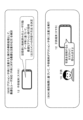
- FIG. 1 is a diagram illustrating an overview of a process executed by an information processing device according to the present disclosure.
- 1 is a diagram illustrating an overview of a process executed by an information processing device according to the present disclosure.
- 1 is a diagram illustrating an overview of a process executed by an information processing device according to the present disclosure.
- 1 is a diagram illustrating an overview of a process executed by an information processing device according to the present disclosure.
- 1 is a diagram illustrating an overview of a process executed by an information processing device according to the present disclosure.
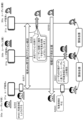
- FIG. 1 is a diagram illustrating an example configuration of an information processing system according to the present disclosure.
- FIG. 2 is a diagram illustrating a configuration example of a user terminal corresponding to an information processing device of the present disclosure.
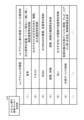
- FIG. 11 is a diagram illustrating an example of data stored in a user/machine character matching database.
- FIG. 11 is a diagram illustrating an example of data stored in a user/machine character matching database.
- 11 is a diagram illustrating an example of a process for determining an execution mode (tist) of an action executed by an action execution mode (tist) determination unit;
- FIG. 2 is a diagram illustrating a flowchart illustrating a sequence of processing executed by an information processing device of the present disclosure.
- 11 is a diagram illustrating an example of a process for determining a machine role and an action to be executed by using data stored in both terminals through communication between multiple terminals.
- FIG. 11 is a diagram illustrating a flowchart for explaining an example of a process for determining a machine role and an action to be executed by using data stored in both terminals through communication processing between a plurality of terminals.
- 13 is a diagram illustrating a UI for setting a process for recording user behavior data and a process for providing the data to other user terminals.
- FIG. 13 is a diagram illustrating a UI for setting a process for recording user behavior data and a process for providing the data to other user terminals.
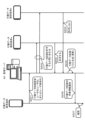
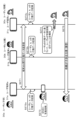
- FIG. 11 is a sequence diagram illustrating an example of a sequence of a process of providing user behavior data to another user terminal and a process of recording the data.
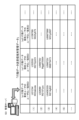
- FIG. 11 is a diagram illustrating a specific example of "behavioral data transmission/reception terminal management data" generated or updated by the management server.
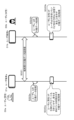
- FIG. 11 is a diagram illustrating an example of a specific processing sequence when an action to be executed is determined between a plurality of user terminals that transmit and receive behavioral data to and from each other.
- FIG. 11 is a diagram illustrating an example of a specific processing sequence when an action to be executed is determined between a plurality of user terminals that transmit and receive behavioral data to and from each other.
- FIG. 11 is a diagram illustrating an example of a specific processing sequence when an action to be executed is determined between a plurality of user terminals that transmit and receive behavioral data to and from each other.
- FIG. 11 is a diagram illustrating an example of a specific processing sequence when an action to be executed is determined between a plurality of user terminals that transmit and receive behavioral data to and from each other.
- FIG. 11 is a diagram illustrating an example of a specific processing sequence when an action to be executed is determined between a plurality of user terminals that transmit and receive behavioral data to and from each other.
- FIG. 11 is a diagram illustrating an example of a specific processing sequence when an action to be executed is determined between a plurality of user terminals that transmit and receive behavioral data to and from each other.
- FIG. 11 is a diagram illustrating an example of a specific processing sequence when an action to be executed is determined between a plurality of user terminals that transmit and receive behavioral data to and from each other.
- FIG. 11 is a diagram illustrating an example of a specific processing sequence when an action to be executed is determined between a plurality of user terminals that transmit and receive behavioral data to and from each other.
- FIG. 11 is a diagram illustrating an example of a specific processing sequence when an action to be executed is determined between a plurality of user terminals that transmit and receive behavioral data to and from each other.
- FIG. 11 is a diagram illustrating an example of a specific processing sequence when an action to be executed is determined between a plurality of user terminals that transmit and receive behavioral data to and from each other.
- FIG. FIG. 2 is a diagram illustrating an example of a hardware configuration of a user terminal and a server which are information processing devices according to the present disclosure.
- FIG. 1 to 3 are diagrams illustrating an example sequence of a process executed by an information processing device according to the present disclosure. The processes from step S01 shown in FIG. 1 to step S06 shown in FIG. 3 are executed in sequence.
- the information processing device according to the present disclosure is not limited to smartphones, and may include various devices such as PCs, tablet terminals, smart speakers, and agent devices.
- An information processing device such as a smartphone disclosed herein not only acquires the behavior of the user of the information processing device, but also information on other users from other devices, and comprehensively considers this information to perform optimal actions such as making suggestions. These processes are executed under the control of an application (program) stored in the information processing device.
- an application program stored in the information processing device.
- Step S01 First, as shown in step S01 of FIG. 1, a child 10 posts a photo on an SNS site using a child terminal (smartphone) 12, which is his or her own smartphone.
- a child terminal smarttphone 12
- Step S02 Next, in step S02, the father 20 of the child 10 takes notice that the child 10 has posted a photo on the SNS site.
- the child terminal (smartphone) 12 and the father terminal (smartphone) 22 owned by the father 20 are observing the situation in which the father 20 is scolding the child 10. That is, the conversation in which the father 20 scolds the child 10 is inputted by the microphone of the terminal (smartphone) and stored in the memory of each terminal.
- the data recorded in the memory of each terminal does not have to be the conversation itself, and may be, for example, data indicating that the father scolded the child.
- the configuration may be such that images or sensor detection information using a camera or other sensor, for example, a position sensor such as a GPS, is recorded.
- Step S03 Next, despite being warned by the father 20, the child 10 again attempts to post a photo to the SNS site using his/her own smartphone, the child terminal (smartphone) 12, as shown in step S03 of FIG. 2 .
- Step S04 When the child 10 is about to post a photo in step S03, the child terminal 12 and the father terminal 22 communicate with each other, analyze the behavioral data of each user stored in each terminal, and consider the action (response) to be taken.
- This process can be performed, for example, by using AI functions such as a pre-generated learning model.
- the optimal action is considered based on the behavioral information of each user stored in each terminal and the accumulated data in a knowledge database accessible via a network.
- AI functions such as learning models may be configured within each terminal, or may be configured to use the AI functions of an external device that each terminal can access.
- communication between the child terminal 12 and the father terminal 22 may be direct communication or communication via a communication management server.
- step S04 of FIG. 2 As shown in step S04 of FIG. 2, as a result of the review process carried out between the child terminal 12 and the father terminal 22, i.e., the review process of the action (response) to be taken, it is concluded that the optimal action is to "pay attention to the child.”
- Step S05 the child terminal 12 considers the optimal action execution mode as a pre-processing for executing an action (warning the child), that is, considers the optimal way to warn the child.
- the child's character is analyzed based on past user behavior data stored in the memory unit of the child's terminal 12, and the optimal action execution mode (content and method of output comment) according to the analyzed character is determined. For example, the most appropriate method of warning is determined according to the user's character, such as "gently teaching” or “strictly ordering.”
- Step S06 Finally, the child terminal 12 executes an action for the child 10 in step S06.
- step S04 the action consideration result generated in step S04, "Watch out for the child” is executed according to the optimal action execution mode considered in step S05.
- the child terminal 12 notifies the child 10, "Your dad will get mad if you post the picture.” Such speech is output via the speaker of the child terminal 12.
- This type of processing can discourage child 10 from posting photos on SNS sites.
- step S06 may be configured to be performed by displaying an animated image on the display unit as shown in FIG. 4 (step S06b), for example, as if the animated image is speaking to the child.
- step S06c the same text as the spoken content, i.e., "Your dad will get mad if you post the picture.”
- the text of the speech sentence may be displayed while being spoken.
- the action to be taken by the child terminal 12 with respect to the child 10 is executed in an optimal manner determined based on past user behavior data and the like in step S05. That is, as described above, the most appropriate warning method is executed according to the user's character, such as "gently teaching” or “strictly ordering.”
- step S06d is an example of processing with caution when set to "strict command".
- the child terminal 12 "Don't post the picture, your dad will get mad at you.” Execute such an utterance.
- step S06e is a processing example in which a caution is given in the "gently teach" setting.
- the child terminal 12 "You'd better not post pictures. Your dad will get mad if he finds them.” Execute such an utterance.
- background music is also output in conjunction with this speech.
- a user device such as a smartphone analyzes the user's character with whom the action will be performed, and executes various actions in the most appropriate action format according to the analysis results.
- an information processing device such as a smartphone disclosed herein not only acquires the behavior of the user of the information processing device, but also information on other users from other devices, and comprehensively considers this information to determine and execute optimal actions such as suggestions.
- the information processing device disclosed herein such as a smartphone, analyzes the user's character with which the action will be performed, and executes various actions in the optimal action format according to the analysis results.
- processing examples described with reference to Figures 1 to 5 are examples of processing executed by the information processing device of the present disclosure. Various other processing examples will be described later.
- FIG. 6 illustrates an example of the configuration of an information processing system according to the present disclosure.
- Figure 6 shows users a, 30a to e, 30e, user terminals a, 31a to e, 31e such as smartphones used by each user, a management server 50 which is a server that performs communication control processing between each terminal, and a communication network 40 used for communication between each of these devices.
- FIG. 6 shows only five users and five user terminals, this is only a partial illustration, and in reality there are many more users and user terminals in addition to these.
- User terminals a, 31a to e, 31e are composed of information processing devices capable of communication, such as smartphones, tablet terminals, and PCs.
- FIG. 7 shows an example of the configuration of a user terminal 100.
- the user terminal 100 shown in FIG. 7 corresponds to the user terminals a, 31a to e, 31e shown in FIG. 6.
- the user terminal 100 has a communication unit 101, a sensor group 102, a data acquisition unit 110, a data storage unit 120, a data analysis unit 130, an action control unit 140, an action execution unit 150, a user response analysis unit 160, and a user/machine character matching database 170.
- the communication unit 101 executes communication with other user terminals and a management server via a communication network 40 shown in FIG.
- the sensor group 102 is configured with various sensors, for example, a camera, a microphone, a position sensor such as a GPS, an acceleration sensor such as a gyro, and a sensor that detects operations performed by the user on the user terminal 100 .
- the data acquisition unit 110 includes an external data acquisition unit 111 , a user behavior data acquisition unit 112 , and a user relationship data acquisition unit 113 .
- the data storage unit 120 also includes an external data storage unit 121 , a user behavior data storage unit 122 , and a user relationship data storage unit 123 .
- the external data acquisition unit 111 performs processing to acquire sensor detection information such as images, sounds, and user operations detected by the sensor group 102 described above, and to acquire data from various databases such as a knowledge database accessible via the communication unit 101.
- the data acquired by the external data acquisition unit 111 is stored in the external data storage unit 121 of the data storage unit 120.
- the user behavior data acquisition unit 112 analyzes user behavior based on sensor detection information such as images, sounds, and user operations detected by the sensor group 102 described above.
- the system analyzes user behavior such as the user walking, running, or about to go out. Furthermore, as explained above with reference to Figures 1 to 5, various user behaviors such as the user trying to post a photo on a SNS site or being scolded by their father are analyzed.
- This user behavior analysis process can be performed, for example, by using AI functions such as a pre-generated learning model.
- the AI functions such as the learning model may be configured within the terminal, or may be configured to use the AI functions of an external device accessible via a network.
- the user behavior data analyzed by the user behavior data acquisition unit 112 is stored in the user behavior data storage unit 122 of the data storage unit 120.
- the user relationship data acquisition unit 113 analyzes sensor detection information such as images, sounds, and user operations detected by the sensor group 102 described above, as well as information obtainable from other user terminals connected via the communication network 40 shown in FIG. 6, estimates the relationship between the user using the user terminal 100 and other users, and generates user relationship data as an estimation result.
- the user relationship data acquiring unit 113 can also receive behavior data of other users acquired in other user terminals from the other user terminals via the communication network. However, in order to receive behavioral data of other users, it is necessary that the provision of behavioral data is permitted on the user terminal used by the user from whom the behavioral data is to be obtained. In other words, it is necessary to register in advance users and user terminals to which behavioral data may be transmitted. Details of this behavioral data transmission setting process will be described later.
- the user relationship data generated by the user relationship data acquisition unit 113 is stored in the user relationship data storage unit 122 of the data storage unit 120.
- the data analysis unit 130 has a user character analysis unit 131, a machine character analysis unit 132, and a machine role determination unit 133.
- the user character analysis unit 131 uses the data stored in the data storage unit 120 to analyze the character of the user who uses the user terminal 100. For example, it analyzes the user's character to determine whether the user is self-centered, polite, etc.
- the user character analysis unit 131 analyzes what kind of character (personality) the user has, based on, for example, the user's past behavioral data stored in the user behavior data storage unit 122 in the data storage unit 120, and data showing the relationship with the user stored in the user relationship data storage unit 123, etc.
- This user character analysis process can be performed, for example, by using AI functions such as a pre-generated learning model.
- AI functions such as a pre-generated learning model.
- the AI functions such as the learning model may be configured within the terminal, or may be configured to use the AI functions of an external device accessible via a network.
- the machine character determination unit 132 determines the subject of action execution for the user who uses the user terminal 100, specifically, the character of the user terminal itself. Note that the "machine” here corresponds to the user terminal 100. In the processing example described with reference to FIGS. 1 to 5, advice to the child 10, i.e. "Your dad will get mad if you post the picture.” The child terminal 12 which is the entity that executes such advice corresponds to the "machine.”
- the information processing device disclosed herein such as a smartphone, analyzes the user's character against whom an action will be performed, and executes various actions in the most appropriate action format according to the analysis results.
- the machine character determination unit 132 performs a process of determining the machine character that is optimal for executing the action in this optimal action mode. That is, the machine character determination unit 132 determines the optimum machine character according to the user's character analyzed by the user character analysis unit 131 .
- the machine character determination unit 132 refers to the user/machine character matching database 170 shown in FIG. 7 to determine the optimal machine character for the user character.
- the user/machine character matching database 170 is configured within the user terminal 100, but this user/machine character matching database 170 may not be configured within the user terminal 100, but may be an external database accessible via the communication unit 101.
- FIG. 8 is a diagram showing an example of data stored in the user/machine character matching database 170. As shown in FIG.
- the user/machine character matching database 170 stores correspondence data between user characters and machine characters that are compatible with the user characters.
- the machine i.e., an information-type device 100 such as a smartphone, provides various suggestions and advice to the user.
- an information-type device 100 such as a smartphone
- the machine provides various suggestions and advice to the user.
- the user/machine character matching database 170 is a database that records machine characters that are compatible with various user characters. In the example shown in FIG. 8, the following various characters are recorded as user characters.
- User character a self-centered character
- User character a polite character
- User character a character who likes to analyze events
- User character an idealistic character
- the database contains machine characters that are compatible with these various user characters.
- the machine character determination unit 132 thus refers to the user/machine character matching database 170, which records and associates user characters with machine characters that are compatible with each other, to determine the optimal machine character for the user character.
- FIG. 8 is an example of data stored in the user/machine character matching database 170, and databases with other data structures may also be used.
- a user/machine character matching database 170 storing data as shown in FIG. 9 may be used.
- the database shown in FIG. (a) a user character; (b) user status; (c) Machine Character This is a database in which each of the data (a) to (c) is associated with each other.
- the user/machine character matching database 170 shown in FIG. 9 is a database that is set up to change the machine characters that are compatible with a single user character depending on the current user situation.
- the user/machine character matching database 170 shown in FIG. 9 is a database that is set up so that the machine characters that are compatible with a single user character change depending on the current user situation.
- the machine character determination unit 132 may perform a process of determining a machine character that is compatible with the user character, taking into consideration the current user situation.
- the current user situation can be determined based on the data stored in the user behavior data storage unit 122 of the data storage unit 120.
- the machine role determination section 133 of the data analysis section 130 determines the role that the machine should perform. Specifically, the role that the machine should perform is determined, for example, to give advice to the user, comfort the user, report to the user, or listen to the user's troubles.
- the machine role determination unit 133 inputs the data stored in the data storage unit 123, i.e., the external data stored in the external data storage unit 121, the user behavior data stored in the user behavior data storage unit 122, and the data indicating the relationship with other users stored in the user relationship data storage unit 123, and determines the role that the machine should perform for the user.
- the role of the machine is to stop a child (user) from posting photos.
- the machine-role determination process executed by the machine-role determination unit 133 can be executed by using, for example, an AI function such as a learning model generated in advance.
- the AI function such as the learning model may be configured in the terminal, or may be configured to use the AI function of an external device accessible via a network.
- the action control unit 140 includes an execution action determining unit 141 and an action execution mode (mode) determining unit 142 .
- the execution action determining unit 141 determines the action to be executed by the machine, that is, the user terminal 100 . That is, the machine role determination unit 133 determines a specific action to be executed to fulfill the role of the determined machine. For example, various actions to be taken, such as warning the user, providing advice, making a suggestion, or reporting, may be determined.
- the role of the machine determined by the machine-role determination unit 133 is "the role of giving advice to the user," the specific content of the advice to be given is determined. Moreover, if the role of the machine determined by the machine role determination unit 133 is “the role of comforting the user,” words and music for comforting the user are determined. If the role of the machine determined by the machine-role determination unit 133 is "the role of listening to the user's troubles,” the unit performs processing such as determining words of comfort and questions to elicit the user's troubles.
- the execution action determination unit 141 determines the specific action to be taken by the child (user) to "output a comment to stop the child (user) from posting photos.”
- the processing performed by the execution action decision unit 141 can also be performed by using AI functions such as a learning model that has been generated in advance.
- AI functions such as a learning model that has been generated in advance.
- the AI functions such as the learning model may be configured within the terminal, or may be configured to use the AI functions of an external device that can be accessed via a network.
- the action execution mode (type) determining unit 142 determines the execution mode (type) of the action determined by the execution action determining unit 141 .
- the process of determining the action execution mode (taste) is performed so as to reflect the machine character determined by the machine character determination unit 132 and the machine role determined by the machine role determination unit 133.
- the user terminal 100 which is a machine, can execute various actions for the user. Specifically, it can execute various actions such as outputting audio such as comments and background music, outputting images, or controlling other network-connected devices such as lighting, televisions, and air conditioners.
- the execution action determination unit 141 determines which action to execute.
- the action execution mode (type) determination unit 142 determines the execution mode (type) of the action determined by the execution action determination unit 141.
- FIG. 10 shows the correspondence between "(a) the type of action to be executed” determined by the action execution determination unit 141 and "(b) a specific example of the action execution mode” determined by the action execution mode determination unit 142 for that action to be executed.
- the action execution mode (tone) determination unit 142 determines the volume, tone (bright/dark, etc.), speaking speed, etc. of the output voice.
- the action execution mode determination unit 142 determines the character size, type, output speed, etc. of the output text.
- the action execution mode (taste) determining unit 142 determines the type, volume, etc. of the output BGM.
- the action execution mode (video) determining section 142 determines the type of output image or video, etc.
- the action execution mode (taste) determination unit 142 determines the type, intensity, etc. of the smell to be output.
- the action execution mode determination unit 142 determines the external device to be controlled, the control mode, etc.
- the action execution mode (tist) determination unit 142 determines the execution mode (tist) of the action to be executed determined by the execution action determination unit 141.
- the execution action determination unit 141 of the action control unit 140 determines the action to be executed by the machine, i.e., the user terminal 100. That is, the execution action determination unit 141 determines a specific action to be executed to fulfill the role of the machine determined by the machine role determination unit 133. Furthermore, the action execution mode (type) determining unit 142 determines the execution mode (type) of the action determined by the execution action determining unit 141 .
- the action execution unit 150 executes the execution action determined by the execution action determination unit 141 of the action control unit 140 according to the execution mode (mode) determined by the action execution mode (mode) determination unit 142.
- the action execution unit 150 is composed of a speaker that outputs sound and background music, a display unit that displays images and videos, a command generation unit that generates and outputs commands to control other devices, an odor generation unit that outputs odors, etc.
- the user reaction analysis unit 160 analyzes the user's reaction to the action executed by the action execution unit 150 . For example, the user's reactions, such as whether or not the user followed the advice presented by the machine (user terminal 100) and whether or not the user smiled in response to the machine's (user terminal 100) consolation, are analyzed.
- the user reaction analysis process performed by the user reaction analysis unit 160 can also be performed by using AI functions such as a learning model that has been generated in advance.
- AI functions such as a learning model that has been generated in advance.
- the AI functions such as the learning model may be configured within the terminal, or may be configured to use the AI functions of an external device that can be accessed via a network.
- the user reaction analysis results generated by the user reaction analysis unit 160 are fed back and input to the data analysis unit 130 and the action control unit 140 . For example, if it is analyzed that the user's reaction is insufficient, for example, if it is confirmed that the user is ignoring the machine's advice, processing such as changing the action to be executed and executing a different action again is performed.
- the flowchart shown in FIG. 11 is a flowchart explaining the sequence of processing executed by an information processing device of the present disclosure, for example, a user terminal 100 such as a smartphone described with reference to FIG. 7.
- the flow shown in FIG. 11 is a flow for explaining the processes executed by the data analysis unit 130, the action control unit 140, the action execution unit 150, and the user response analysis unit 160 of the user terminal 100 shown in FIG.
- the flow shown in Fig. 11 is executed under the control of a control unit (data processing unit) of a user terminal according to a program stored in a storage unit of the user terminal, which is an information processing device of the present disclosure.
- the control unit (data processing unit) has a processor such as a CPU having a program execution function, and can perform processing according to the flow by program execution processing using the processor.
- Step S101 First, in step S101, the user behavior data and user relationship data stored in the data storage unit 120 are analyzed to estimate the user character.
- the user character analysis unit 131 of the data analysis unit 130 analyzes what kind of character (personality) the user has based on the user's past behavioral data stored in the user behavior data storage unit 122 in the data storage unit 120, data indicating the relationship with the user stored in the user relationship data storage unit 123, and the like.
- the user character analysis process can be performed using AI functions such as a pre-generated learning model.
- Step S102 Next, in step S102, a user/machine character matching database is referenced to determine the optimal machine character that matches the user character estimated in step S101.
- This process is executed by the machine character determination section 132 of the data analysis section 130 shown in FIG. As mentioned above, the “machine” corresponds to the user terminal 100 .
- the user/machine character matching database 170 is a database that records machine characters that have good compatibility with various user characters.
- the machine character determination unit 132 refers to the user/machine character matching database 170 to determine the optimal machine character that matches the user character estimated in step S101.
- Step S103 Next, in step S103, the user behavior data, other user relationship data, and external data stored in the data storage unit 120 are analyzed to determine the machine role (advising the user, making suggestions, reporting, praising, approving, rejecting, etc.).
- This process is executed by the machine role determination unit 133 .
- the role that the machine should perform is determined, for example, to give advice to the user, comfort the user, report to the user, or listen to the user's troubles.
- Step S104 Next, in step S104, the user behavior data, user relationship data, and external data stored in the data storage unit 120 are analyzed to determine an action to be executed.
- This process is executed by the execution action determination unit 141 in the action control unit 140 shown in FIG. 7.
- the execution action determination unit 141 determines the action to be executed by the machine, i.e., the user terminal 100. Specifically, it determines the specific action to be executed to fulfill the role of the machine determined by the machine role determination unit 133 in step S103.
- step S105 the execution mode (tact) of the action determined in step S104 is determined.
- the process of determining the action execution mode (taste) is performed so as to reflect the machine character determined by the machine character determination unit 132 and the machine role determined by the machine role determination unit 133.
- the process of determining the action execution mode (text) is performed according to the type of action determined by the action execution determination unit 141, as described above with reference to FIG. 10. For example, if the action determined by the action execution determination unit 141 is audio output, the action execution mode (text) determination unit 142 determines the volume, tone (bright/dark, etc.), speaking speed, etc. of the output audio.
- Step S106 Next, in step S106, the action to be executed determined in step S104 is executed in accordance with the action execution mode (type) determined in step S105.
- the action execution unit 150 is specifically composed of a speaker that outputs audio and background music, a display unit that displays images and videos, a command generation unit that generates and outputs commands to control other devices, an odor generation unit for outputting odors, and the like.
- Step S107 Next, in step S107, the user reaction is analyzed, and depending on the analysis result, it is determined whether or not the action needs to be executed again.
- the user reaction analysis unit 160 analyzes the user's reaction to the action executed by the action execution unit 150 .
- the user's reactions are analyzed, for example, whether or not the user followed the advice presented by the machine (user terminal 100), and whether or not the user smiled in response to the machine's (user terminal 100) consolation.
- Step S108 Furthermore, in step S108, it is determined whether or not the action needs to be executed again. This process is also executed by the user reaction analysis unit 160 shown in FIG.
- the user reaction analysis unit 160 analyzes the user's reaction to the action executed by the action execution unit 150, and if the user reaction is insufficient, for example if it is confirmed that the user is ignoring the machine's advice, it determines that it is necessary to change the action to be executed and execute a different action again, and repeats the processing from step S101 onwards.
- the information processing device such as a smartphone disclosed herein analyzes the character of the user who will be the opponent of the action, and determines the optimal character and role of the machine according to the analysis result. Furthermore, it determines the action to be performed on the user and the execution mode (text) of the action, and executes the determined action. By carrying out such processing, it becomes possible to provide the user with the most effective advice or other action.
- step S04 of Figure 2 the child terminal 12 communicates with the father terminal 22 to determine the action to be executed.
- processing is performed within one user terminal that executes an action, but for example, the process of determining the machine role and the process of determining the action to be executed in steps S103 to S104 of the flow shown in FIG. 11 may be configured to communicate with other user terminals and perform processing taking into account data stored in the other user terminals, for example, behavioral data of users of other terminals stored in the other user terminals.
- FIG. 12 is a diagram illustrating an example of communication between terminals when determining the machine role and the action to be executed.
- User terminal a, 31a of user a, 30a shown in FIG. 12 is a terminal that performs the process of determining the machine role and the process of determining the action to be executed.
- This user terminal a, 31a communicates with other user terminals, for example, user terminal b, 31b of user b, 30b shown in FIG. 12, and user terminal c, 31c of user c, 30c, to perform the process of determining the machine role and the action to be executed of user terminal a, 31a.
- user terminal a, 31a sends an information request to user terminal b, 31b and user terminal c, 31c, and in response to this information request, user terminal b, 31b and user terminal c, 31c refer to the user behavior data and other user relationship data of each user stored in their own terminal, generate a response, and send the response to user terminal a, 31a.
- the user terminal a, 31a considers the answer data acquired from the other terminals and performs a process of determining the machine role of the user terminal a, 31a and the action to be executed.
- This series of processes can be executed, for example, by using AI functions such as a pre-generated learning model.
- AI functions such as a pre-generated learning model.
- the AI functions such as the learning model may be configured within the terminal, or may be configured to use the AI functions of an external device accessible via a network.
- the flowchart in FIG. 13 explains the specific sequence for determining the machine role and the action to be executed by communicating with other user terminals.
- the flowchart shown in FIG. 13 is a flow that explains the specific sequence of the machine role determination process and execution action determination process in steps S103 to S104 of the flow shown in FIG. 11, when communication is performed with another user terminal and data stored in the other user terminal, for example, behavioral data of users of other terminals stored in the other user terminal, is taken into consideration.
- Steps S103a to S103d in the flow chart shown in Fig. 13 correspond to the process of step S103 in the flow chart shown in Fig. 11, i.e., the process of determining the role of the machine.
- Step S104 in the flow chart shown in Fig. 13 corresponds to the process of step S104 in the flow chart shown in Fig. 11, i.e., the process of determining the action to be executed by the machine. The process of each step in the flow chart shown in Fig. 13 will be described.
- Step S103a The process of step S103a in the flow shown in FIG. 13 is executed after the process of step S102 in the flow shown in FIG. That is, in step S102, the user/machine character matching database is referenced, and this is executed after the process of determining the optimal machine character that matches the user character estimated in step S101.
- step S103a the user terminal performs a verification process to determine whether or not it should refer to stored data of other user terminals (such as behavioral data of other users) when determining the machine role (warning the user, making suggestions, reporting, praising, approving, denying, etc.).
- This process is executed by the machine role determination unit 133.
- the machine role is, for example, to give advice to the user, to comfort the user, to report to the user, to listen to the user's troubles, etc., which is a role that the machine should perform. During this process, it is verified whether it is necessary to refer to data stored in other user terminals.
- AI functions such as a learning model generated in advance can be used.
- the AI functions such as the learning model may be configured within the terminal, or may be configured to use the AI functions of an external device accessible via a network.
- Step S103b is a process branching step according to the result of the verification process in step S103a. If it is determined as a result of the verification process in step S103a that it is better to refer to the data stored in another user terminal, the process proceeds to step S103c.
- step S103a determines whether it is necessary to refer to the data stored in other user terminals. If it is determined as a result of the verification process in step S103a that it is not necessary to refer to the data stored in other user terminals, the process proceeds to step S105 in the flow shown in FIG. 11. In this case, processing is executed using only the data stored in the own terminal according to the flow chart shown in FIG. 11 described above.
- Step S103c If it is determined in step S103b that it is better to refer to the data stored in another user terminal, the process proceeds to step S103c.
- the user terminal obtains data (such as other users' behavioral data) from other user terminals.
- the user terminal makes inquiries of other user terminals regarding the machine role of the user terminal or the actions that should be performed.
- the other user terminal When an inquiry is made to another user terminal regarding the machine role or execution action of the user's own terminal, the other user terminal will, for example, refer to user relationship data within the terminal, analyze the relationship between the user of the other user terminal and the user of the user terminal that made the inquiry, and then send a response regarding the machine role and execution action.
- This process can be performed using AI functions such as learning models.
- Step S103d the user terminal that has acquired data or made an inquiry from another user terminal analyzes the user behavior data, user relationship data, and external data stored in its own terminal, as well as the data received from the other user terminal, and determines the machine role (to warn the user, make a suggestion, report, praise, agree, deny, etc.).
- This process is executed by the machine role determination unit 133 .
- the role that the machine should perform is determined, for example, to give advice to the user, comfort the user, report to the user, or listen to the user's troubles.
- Step S104a Next, in step S104a, the user action data, user relationship data, and external data stored in the data storage unit 120, and data received from other user terminals are analyzed to determine an action to be executed.
- This process is executed by the execution action determination unit 141 in the action control unit 140 shown in FIG. 7.
- the execution action determination unit 141 determines the action to be executed by the machine, i.e., the user terminal 100. Specifically, it determines the specific action to be executed to fulfill the role of the machine determined by the machine role determination unit 133 in step S103.
- a configuration may be adopted in which suggestions regarding actions to be executed are received from other user terminals and processing is performed taking those suggestions into consideration.
- step S105 in the flow shown in FIG. 11, where the execution mode (tact) of the action determined in step S104 is determined. Thereafter, the action is executed in step S106.
- the final machine role and execution actions are determined not only by analyzing stored data in one user terminal, but also by using stored data in other user terminals and proposals based on analysis results in other user terminals. By performing such processing, it becomes possible to perform more accurate machine role and action determination processing based on the results of more detailed analysis of the actions and relationships of multiple users.
- the process described with reference to Figs. 12 and 13 is a process in which one user terminal communicates with another user terminal to determine the role of the machine and the action to be executed. In order to carry out these processes, it may be necessary to acquire user behavior data, etc. stored in another user terminal from that user terminal.
- the user relationship data acquisition unit 113 of the user terminal 100 may receive behavioral data of other users acquired in other user terminals via a communication network.
- the provision of behavioral data is permitted on the user terminal used by the user from whom the behavioral data is to be obtained.
- the UI shown in FIG. 14 is an example of a UI for setting whether or not one's own behavior data is recorded in one's own terminal.
- FIG. (A) Recording of User's Behavior Data The user can set this setting item by touching either "Yes” or “No.” By touching “Yes”, user behavior information acquired by the camera, microphone, and other sensors of the user terminal is acquired by the user behavior data acquisition unit 112 and stored in the user behavior data storage unit 122 .
- the UI shown in FIG. 15 is an example of a UI for setting whether or not to record behavior data of other users other than the user himself/herself in the user's own terminal.
- FIG. (B) Recording Other User's Action Data the user inputs the user ID of the other user for whom he/she wishes to record action data, or the user terminal ID of the other user, and when input is complete, touches "Input Complete.”
- the data entered by the user is sent to the management server 50 .
- the management server 50 inquires of the user terminal of the target user whose behavior data is to be recorded whether or not to permit a behavior data recording request from another user terminal.
- the management server 50 transmits the response result of "permitted” or “not permitted” to the terminal that requested the behavioral data recording.
- the storage unit within the management server 50 records and holds information about the terminal that transmits and receives the behavioral data as management data.
- FIG. 16 shows, from the left, the following devices: (1) "Behavior data request terminal” that requests behavior data of other users (2) Management Server 50 (3) "Behavior data providing terminal a” that provides its own behavior data to the “behavior data request terminal” (4) "Behavior data providing terminal b” that provides its own behavior data to the "behavior data request terminal”
- steps S201 to S207 are executed sequentially between these devices. These processes will be explained below in order.
- step S201 First, in step S201, the behavior data request terminal transmits to the management server 50 the user ID of the user for whom behavior data is to be recorded, or the user terminal ID.
- This process is executed using the UI previously described with reference to FIG. 15.
- Step S202 the management server 50, which has received the data from the behavioral data requesting terminal, inquires of the user terminal of the specified user whether or not to permit the request to record behavioral data, based on the user ID or user terminal ID received from the behavioral data requesting terminal.
- Step S03 is a response from the "behavioral data providing terminal a.”
- the "behavior data providing terminal a” transmits a response to the management server 50 indicating that the behavior data recording request from the "behavior data request terminal" is permitted.
- Step S04 is a response from the "behavioral data providing terminal b."
- the "behavior data providing terminal b" transmits a response to the management server 50 to the effect that the behavior data recording request from the "behavior data request terminal" is not permitted.
- Step S05 The management server 50 generates or updates "behavior data transmitting/receiving terminal management data" in response to the "behavior data providing terminal a" and the response from the "behavior data providing terminal a” and stores the data in a memory unit within the server 50.
- the "behavioral data transmission/reception terminal management data" shown in FIG. 17 is management data in which the following data are associated and registered.
- the management server 50 manages the transmission and reception of user behavior data acquired by each user terminal based on this "behavior data transmission/reception terminal management data.” That is, the user behavior data acquired in the user terminal of the behavior data providing user is acquired, and the processing of transmitting the acquired user behavior data to the user terminal of the behavior data requesting user is executed.
- Step S206 The management server 50, which has stored in its memory the "behavioral data transmission/reception terminal management data" having the data structure described with reference to Figure 17, then in step S206 transmits to the "behavioral data requesting terminal" a response from the terminal that inquired as to whether or not to permit the request to record the behavioral data, i.e., whether or not the "behavioral data” can be provided.
- step S207 the user of the "behavioral data request terminal" confirms the response from the other terminal received from the management server 50, that is, the information on whether or not "behavioral data” can be provided.
- the "behavior data request terminal” and “behavior data transmission/reception terminal management data” that associates the "behavior data request terminal” are registered in the management server 50.
- the management server 50 manages the transmission and reception of user behavior data acquired by each user terminal based on this "behavior data transmission/reception terminal management data.” That is, the user behavior data acquired in the user terminal of the behavior data providing user is acquired, and the processing of transmitting the acquired user behavior data to the user terminal of the behavior data requesting user is executed.
- the user terminal can perform processes such as machine role determination and execution action determination, taking into account not only the data stored in the terminal itself, but also the user actions of other users received from other terminals.
- Process Example 1 A basic processing example for determining an action to be executed between two user terminals that mutually transmit and receive behavioral data.
- Process Example 2 A processing example for determining an action to be executed between two user terminals that mutually transmit and receive behavioral data.
- Process Example 3 A processing example a for determining an action to be executed between three user terminals that mutually transmit and receive behavioral data.
- Processing Example 4 Processing Example B for Determining Actions to be Executed Among Three User Terminals That Exchange Behavioral Data with Each Other (Processing Example 5) Processing Example a in which an action determined between two user terminals that transmit and receive behavioral data to each other is used as optimal advice for a user (Processing Example 6) Processing Example B in which an action determined between two user terminals that transmit and receive behavioral data to each other is used as optimal advice for a user
- FIG. 18 is a sequence diagram showing this (Processing Example 1), which explains the processing executed between user terminal a, 31a used by user a, 30a, and user terminal b, 31b used by user b, 30b.
- user a, 30a and user b, 30b are permitted to transmit and receive their respective behavioral data between their user terminals a, b.
- the terminal has already been registered as a transmission/reception permitted terminal in the "behavior data transmission/reception terminal management data" held by the management server 50 described above with reference to FIG.
- the process steps (from step S221) shown in FIG. 18 will be described below in order.
- Step S221 First, in step S221, the user terminal a, 31a transmits the behavior data of the user a, 30a to the user terminal b, 31b.
- the user terminal a, 31a also records the behavioral data of the user a, 30a in the user terminal a, 31a.
- the behavioral data is stored in the user behavior data storage unit 121 in the data storage unit 120 described above with reference to FIG. 7.
- Step S222 the user terminal b, 31b stores the behavior data of the user a, 30a received from the user terminal a, 31a in a memory unit in the user terminal b, 31b, or in the user relationship data storage unit 123 in the data storage unit 120 described above with reference to FIG.
- Step S223 Furthermore, in step S223, the user terminal b, 31b transmits the behavior data of the user b, 30b to the user terminal a, 31a.
- user terminal b, 31b also records the behavioral data of user b, 30b in user terminal b, 31b.
- the behavioral data is stored in the user behavioral data storage unit 121 in the data storage unit 120 described above with reference to FIG. 7.
- Step S224 the user terminal a, 31a stores the behavior data of the user b, 30b received from the user terminal b, 31b in the memory unit in the user terminal a, 31a, or in the user relationship data storage unit 123 in the data storage unit 120 described above with reference to FIG.
- Step S225 the user terminals a, 31a and b, 31b communicate with each other and determine actions to be executed for the users a and b based on the behavior data of the users a and b stored in each terminal. For example, various actions to be taken, such as warning, advising, suggesting, or reporting to the user, may be determined.
- Step S226 Next, in step S226, the user terminal a, 31a executes the execution action determined in step S225.
- actions such as warning, advice, suggestions, and reports are performed on user a, 30a.
- Step S227 the user terminal b, 31b, executes the execution action determined in step S225.
- actions such as warning, advice, suggestions, and reports are performed on user b, 30b.
- FIGS. 19 and 20 are sequence diagrams showing this (Processing Example 2), which explain the processing executed between user terminal a, 31a used by user a (child), 30a, and user terminal b, 31b used by user b (father), 30b.
- Steps S231 to S232 are processes in which the user terminals a and 31a and the user terminals b and 31b transmit and receive their respective user action data to each other and record it in each terminal. This process corresponds to the processes in steps S221 to S114 in the sequence diagram previously described with reference to FIG. 18, and is shown in a simplified form.
- User terminal a, 31a and user terminal b, 31b each record behavioral data of users a and b.
- Step S233 Next, in step S233, the user a (child) 30a operates the user terminal a 31a to post a photo on the SNS.
- Step S234 Next, in step S234, user b (father), 30b, warns user a (child), 30a.
- This attention process is a process that is actually performed orally by user b (father), 30b and user a (child), 30a, facing each other in the same space.
- Step S235a and S235b Next, in steps S235a and S235b, user terminal a, 31a and user terminal b, 31b record in each terminal the behavioral data of user a (child), 30a and user b (father), 30b performed in step S234, i.e., the behavioral data that user b (father), 30b warned user a (child), 30a.
- Step S236 Next, in step S236, the user a (child) 30a operates the user terminal a 31a to post a photo on the SNS.
- Step S237) the user terminal a, 31a and the user terminal b, 31b communicate with each other and determine an action to be executed for the users based on the behavior data of the users a and b stored in each terminal.
- Step S238 Next, in step S238, the user terminal a, 31a executes the execution action determined in step S237.
- step S239 the user a (child) 30a stops posting photos in response to the warning from the user terminal a 31a.
- step S240 user terminal b, 31b receives behavioral data of user a (child), 30a indicating that user a (child), 30a has stopped posting photos, and based on this behavioral data, reports to user b (father), 31b that user a (child), 30a has stopped posting photos.
- FIGS. 21 and 22 are sequence diagrams showing this (Processing Example 3), and explain the processing executed between user terminal a, 31a used by user a (child), 30a, user terminal b, 31b used by user b (father), 30b, and user terminal c, 31c used by user c (mother), 30c.
- Steps S251 to S252 are processes in which the user terminals a and 31a, the user terminals b and 31b, and the user terminals c and 31c transmit and receive their respective user action data to each other and record it in each terminal.
- User terminal a, 31a, user terminal b, 31b, and user terminal c, 31c each record behavioral data of users a, b, and c.
- Step S253 Next, in step S253, the user a (child) 30a operates the user terminal a 31a to post a photo on the SNS.
- Step S254 Next, in step S254, user b (father), 30b, warns user a (child), 30a.
- This attention process is a process that is actually performed orally by user b (father), 30b and user a (child), 30a, facing each other in the same space.
- Steps S255a, S255b, S255c Next, in steps S235a, S235b, and S255c, user terminal a, 31a, user terminal b, 31b, and user terminal c, 31c record in each terminal the behavioral data of user a (child), 30a and user b (father), 30b performed in step S254, i.e., the behavioral data that user b (father), 30b warned user a (child), 30a.
- Step S256 Next, in step S256, the user a (child) 30a operates the user terminal a 31a to post a photo on the SNS.
- Step S257 Next, in step S257, user terminals a, 31a, user terminals b, 31b, and user terminals c, 31c communicate with each other and determine actions to be performed on the users based on the behavioral data of users a, b, and c stored in each terminal.
- the execution action decision unit of each terminal confirms, based on the behavioral data of each user a, b, c, that user b (father), 30b, is at work and cannot directly warn user a (child), 30a, and further that user c (mother), 30c, is near user a (child), 30a. Based on these checks, a decision is made as to what action to take.
- the action to be executed is determined to be an action to inform user c (mother), 30c, that user a (child), 30a, is about to post a photo.
- Step S258 Next, in step S258, the user terminal c, 31c executes the execution action determined in step S257.
- Step S259 Next, in step S259, user c (mother), 30c, directly or verbally warns user a (child), 30a.
- Step S260 Next, in step S260, user a (child), 30a, stops posting photos in response to the warning from user c (mother), 30c.
- step S261 user terminal b, 31b receives behavioral data of user a (child), 30a indicating that user a (child), 30a has stopped posting photos, and based on this behavioral data, reports to user b (father), 31b that user a (child), 30a has stopped posting photos.
- FIGS. 23 and 24 are sequence diagrams showing this (Processing Example 4), and explain the processing executed between user terminal a, 31a used by user a (child), 30a, user terminal b, 31b used by user b (father), 30b, and user terminal c, 31c used by user c (mother), 30c.
- Steps S271 to S272 are processes in which the user terminals a and 31a, the user terminals b and 31b, and the user terminals c and 31c transmit and receive their respective user action data to each other and record it in each terminal.
- User terminal a, 31a, user terminal b, 31b, and user terminal c, 31c each record behavioral data of users a, b, and c.
- Step S273 Next, in step S253, the user a (child) 30a operates the user terminal a 31a to post a photo on the SNS.
- Step S274 Next, in step S274, the user terminal c, 31c of the user c (mother), 30c reports to the user c (mother), 30c that the user a (child), 30a has posted a photo.
- Step S275 Next, in step S275, user c (mother), 30c, becomes enraged and warns user a (child), 30a.
- This attention process is a process that is actually performed orally by user c (mother), 30c and user a (child), 30a, facing each other in the same space.
- the data on this behavior i.e., the behavior of user c (mother), 30c, becoming angry and scolding user a (child), 30a, is stored in user terminals a, b, and c.
- Step S276 user terminals a, 31a, user terminals b, 31b, and user terminals c, 31c communicate with each other and determine actions to be performed on the users based on the behavioral data of users a, b, and c stored in each terminal.
- the execution action decision unit of each terminal decides on the optimal execution action, taking into consideration the behavior of user c (mother), 30c, who became angry and scolded user a (child), 30a.
- the action to be executed is determined to be an action to report to user a (father), 30b that user a (child), 30a, is feeling depressed after being reprimanded by user c (mother), 30c for posting photos.
- Step S277 the user terminal b, 31b, executes the execution action determined in step S277.
- Step S278 Next, in step S278, user b (father), 30b, directly and verbally comforts user a (child), 30a.
- the child might say to user A (30a), "What's wrong? Let's play a game together without telling mom.”
- FIG. 25 is a sequence diagram showing this (Processing Example 5), which explains the processing executed between user terminal a, 31a used by user a (male), 30a, and user terminal b, 31b used by user b (female), 30b.
- Steps S301 and S302 are processes in which the user terminals a and 31a and the user terminals b and 31b transmit and receive their respective user action data to each other and record it in each terminal.
- User terminal a, 31a and user terminal b, 31b each record behavioral data of users a and b.
- Step S303 Next, in step S303, the user terminal a, 31a acquires behavioral data indicating that the user a (male), 30a, is stressed out because of trouble at work.
- Step S304 the user terminal a, 31a and the user terminal b, 31b communicate with each other and determine an action to be executed for the users based on the behavior data of the users a and b stored in each terminal.
- the action to be executed is determined to be to give advice to user b (female), 30b, on how to treat user a (male), 30a.
- Step S305 Next, in step S305, the user terminal b, 31b, executes the execution action determined in step S304.
- FIGS. 26 and 27 are sequence diagrams showing this (Processing Example 6), which explain the processing executed between user terminal a, 31a used by user a (male), 30a, and user terminal b, 31b used by user b (female), 30b.
- Steps S321 to S322 are processes in which the user terminals a and 31a and the user terminals b and 31b transmit and receive their respective user action data to each other and record it in each terminal.
- User terminal a, 31a and user terminal b, 31b each record behavioral data of users a and b.
- Step S323a and S323b Next, in step S323, the user terminal a, 31a acquires behavioral data indicating that the user a (male) is not doing well at work or in his private life and is seeking change.
- user terminal b, 31b acquires behavioral data indicating that user b (female) wants to date user a but is unable to speak her feelings.
- Step S324 the user terminal a, 31a and the user terminal b, 31b communicate with each other and determine an action to be executed for the users based on the behavior data of the users a and b stored in each terminal.
- the action to be executed is determined to be to advise user b (female), 30b, about the action that user a (male), 30a, should take.
- Step S325 Next, in step S325, the user terminal b, 31b, executes the execution action determined in step S324.
- Step S326 Next, in step S326, user b (female), 30b, arguees her feelings to user a (male), 30a, following advice from user terminal b, 31b.
- the information processing device (user terminal) disclosed herein performs the process of determining the role (machine role) that the device should perform and the process of determining the action to be executed, taking into account the data stored in the own terminal and the data stored in other terminals. By carrying out these processes, it becomes possible to maintain good relationships among a plurality of users.
- FIG. 28 is a diagram showing an example of the hardware configuration of the user terminal 100, which is an information processing device according to the present disclosure, and the management server 50. As shown in FIG. The hardware configuration shown in FIG. 28 will now be described.
- CPU (Central Processing Unit) 301 functions as a control unit or data processing unit that executes various processes according to programs stored in ROM (Read Only Memory) 302 or storage unit 308. For example, it executes processes according to the sequences described in the above-mentioned embodiments.
- RAM (Random Access Memory) 303 stores programs and data executed by CPU 301.
- CPU 301, ROM 302, and RAM 303 are interconnected by bus 304.
- the CPU 301 is connected to an input/output interface 305 via a bus 304, and the input/output interface 305 is connected to an input unit 306 consisting of various switches, a keyboard, a mouse, a microphone, a sensor, etc., and an output unit 307 consisting of a display, a speaker, etc.
- the CPU 301 executes various processes in response to commands input from the input unit 306, and outputs the process results to, for example, the output unit 307.
- the storage unit 308 connected to the input/output interface 305 is, for example, a hard disk, and stores the programs executed by the CPU 301 and various data.
- the communication unit 309 functions as a transmitter/receiver for Wi-Fi communication, Bluetooth (registered trademark) (BT) communication, and other data communication via networks such as the Internet or a local area network, and communicates with external devices.
- the drive 310 connected to the input/output interface 305 drives removable media 311, such as a magnetic disk, optical disk, magneto-optical disk, or semiconductor memory such as a memory card, and records or reads data.
- removable media 311 such as a magnetic disk, optical disk, magneto-optical disk, or semiconductor memory such as a memory card
- the technology disclosed in this specification can have the following configurations.
- a user behavior data acquisition unit that acquires behavior data of a user who uses an information processing device; an execution action determination unit that determines an action to be executed for the user; an action execution unit that executes the action determined by the execution action determination unit;
- the execution action determination unit The information processing device determines an action to be executed based on the user behavior data of the user acquired by the user behavior data acquisition unit and behavior data of a user using an external terminal acquired from an external terminal.
- the user behavior data acquisition unit The information processing device according to (1), wherein at least one of an image or a voice acquired by a sensor of the information processing device, or user operation information on the information processing device is input, and the user's behavior is analyzed to acquire user behavior data.
- the information processing device further comprises: a user relationship data acquisition unit that acquires user relationship data indicating a relationship between the user and a user using the external terminal by utilizing information acquired from the external terminal;
- the execution action determination unit The information processing device according to (1) or (2), wherein an action to be executed is determined by utilizing the user relationship data acquired by the user relationship data acquisition unit.
- the user relationship data acquisition unit An information processing device as described in (3), which analyzes images or audio acquired by a sensor of the information processing device, or user operation information on the information processing device, and information acquired from the external terminal, and generates user relationship data indicating the relationship between the user and a user using the external terminal.
- the user relationship data acquisition unit Acquire behavioral data of a user of the external terminal stored in the external terminal;
- the execution action determination unit The information processing device according to (3) or (4), wherein the action to be executed is determined by utilizing the behavioral data of the user using the external terminal acquired by the user relationship data acquisition unit.
- the user relationship data acquisition unit The information processing device according to any one of (3) to (5) acquires behavior data of a user using an external terminal, the behavior data being stored in the external terminal from which acquisition of user behavior data is permitted.
- the permission information for acquiring user behavior data from an external terminal is registered in the management server;
- the information processing device according to any one of (3) to (6), wherein the information processing device is configured to execute a process of acquiring user behavior data from an external terminal under the control of the management server.
- the execution action determination unit The information processing device according to any one of (1) to (7), which determines an action to be executed by utilizing external information acquired by a sensor of the information processing device.
- the execution action determination unit The information processing device according to any one of (1) to (9), wherein at least one of the following actions is determined as an action to be performed on the user: issuing a warning to the user, providing advice to the user, making a suggestion to the user, or reporting to the user.
- the information processing device further comprises: A user character analysis unit that analyzes the user's character,
- the action execution unit is The information processing device according to any one of (1) to (10), which executes an action controlled according to the user character analyzed by the user character analysis unit.
- the information processing device further comprises: a user character analysis unit that analyzes the user's character; a machine character determination unit that determines a machine character that is an action execution subject in accordance with the user character analyzed by the user character analysis unit; an action execution mode determination unit that determines an execution mode of an action in accordance with the machine character determined by the machine character determination unit;
- the action execution unit is The information processing device according to any one of (1) to (11), wherein the action determined by the execution action determination unit is executed in the action execution mode determined by the action execution mode determination unit.
- the machine character determination unit determines a machine character by referring to a database in which a machine character having good compatibility with each of a plurality of different user characters is associated.
- the information processing device further comprises: a machine role determination unit that determines a role of the machine that is an action execution subject; The machine role determination unit, An information processing device described in any of (1) to (13) that executes a process of determining the role of the machine based on the user behavior data of the user acquired by the user behavior data acquisition unit and behavior data of an external device user acquired from an external device.
- the machine role determination unit The information processing device according to (14), which determines a machine role to be at least any one of giving advice to a user, comforting a user, reporting to a user, and listening to a user's concerns.
- the action execution unit 15. An information processing device according to any one of (1) to (14), which executes at least one of the following actions: outputting audio from a speaker, outputting text or an image to a display unit, or controlling an external device.
- An information processing system having a plurality of communication terminals that communicate via a network, Each of the plurality of communication terminals, Analyzing behavioral data of a plurality of users who use the plurality of communication terminals; An information processing system that determines and executes an action to be taken for each user who uses the plurality of communication terminals.
- An information processing method executed in an information processing device a user behavior data acquisition step in which a user behavior data acquisition unit acquires behavior data of a user who uses the information processing device; an execution action determination step in which an execution action determination unit determines an action to be executed for the user; an action execution unit executes an action execution step of executing the action determined by the execution action determination unit;
- the execution action determination step includes: An information processing method comprising the step of determining an action to be executed based on the user behavior data of the user acquired by the user behavior data acquisition unit and behavior data of an external terminal user acquired from an external terminal.
- a program recording the processing sequence can be installed and executed in memory within a computer built into dedicated hardware, or the program can be installed and executed in a general-purpose computer capable of executing various processes.
- the program can be pre-recorded on a recording medium.
- the program can be received via a network such as a LAN (Local Area Network) or the Internet, and installed on a recording medium such as an internal hard disk.
- a system refers to a logical collective configuration of multiple devices, and is not limited to devices in the same housing.
- the system includes a user behavior data acquisition unit that acquires behavior data of a user who uses a user terminal such as a smartphone, an execution action determination unit that determines an action to be executed for the user, and an action execution unit that executes the action determined by the execution action determination unit.
- the execution action determination unit determines and executes the optimal action to be executed based on the user behavior data of the user acquired by the user behavior data acquisition unit and the behavior data of the user using the external terminal acquired from the external terminal.
Landscapes
- Engineering & Computer Science (AREA)
- Theoretical Computer Science (AREA)
- Business, Economics & Management (AREA)
- General Engineering & Computer Science (AREA)
- Physics & Mathematics (AREA)
- General Physics & Mathematics (AREA)
- Entrepreneurship & Innovation (AREA)
- Economics (AREA)
- Human Computer Interaction (AREA)
- Human Resources & Organizations (AREA)
- Marketing (AREA)
- Operations Research (AREA)
- Quality & Reliability (AREA)
- Strategic Management (AREA)
- Tourism & Hospitality (AREA)
- General Business, Economics & Management (AREA)
- Management, Administration, Business Operations System, And Electronic Commerce (AREA)
Abstract
Description
システム応答=「明日の天気は晴れです。ただし、夕方、雷雨があるかもしれません」
このようなシステム応答を出力する。
さらに、スマホ等の機器に装着されたカメラやマイク、その他のセンサ等を用いてユーザの行動を観察し、ユーザ行動に応じた提案やアドバイスを出力する装置もある。
この文献は、例えばユーザがあるレストランでの外食予定を話した場合、システムがユーザの体重が増加する警告を行い、他のレストランを勧める構成を開示している。
情報処理装置を利用するユーザの行動データを取得するユーザ行動データ取得部と、
前記ユーザに対して実行するアクションを決定する実行アクション決定部と、
前記実行アクション決定部が決定したアクションを実行するアクション実行部を有し、
前記実行アクション決定部は、
前記ユーザ行動データ取得部が取得した前記ユーザのユーザ行動データと、外部端末から取得した外部端末利用ユーザの行動データに基づいて実行アクションを決定する情報処理装置にある。
ネットワークを介して通信を行う複数の通信端末を有する情報処理システムであり、
前記複数の通信端末各々が、
前記複数の通信端末を利用する複数ユーザの行動データを解析し、
前記複数の通信端末を利用する各ユーザに対して実行するアクションを決定して実行する情報処理システムにある。
情報処理装置において実行する情報処理方法であり、
ユーザ行動データ取得部が、前記情報処理装置を利用するユーザの行動データを取得するユーザ行動データ取得ステップと、
実行アクション決定部が、前記ユーザに対して実行するアクションを決定する実行アクション決定ステップと、
アクション実行部が、前記実行アクション決定部が決定したアクションを実行するアクション実行ステップを実行し、
前記実行アクション決定ステップは、
前記ユーザ行動データ取得部が取得した前記ユーザのユーザ行動データと、外部端末から取得した外部端末利用ユーザの行動データに基づいて実行アクションを決定するステップである情報処理方法にある。
具体的には、例えば、スマホ等のユーザ端末を利用するユーザの行動データを取得するユーザ行動データ取得部と、ユーザに対して実行するアクションを決定する実行アクション決定部と、実行アクション決定部が決定したアクションを実行するアクション実行部を有する。実行アクション決定部は、ユーザ行動データ取得部が取得したユーザのユーザ行動データと、外部端末から取得した外部端末利用ユーザの行動データに基づいて実行すべき最適なアクションを決定して実行する。
本構成により、複数のユーザ端末各々の利用者の行動データを総合的に考慮して各ユーザに対して最適なアドバイス等のアクションを決定して実行する装置、方法が実現される。
なお、本明細書に記載された効果はあくまで例示であって限定されるものではなく、また付加的な効果があってもよい。
1.本開示の情報処理装置が実行する処理の概要について
2.本開示の情報処理システム、および情報処理装置の具体的構成例について
3.本開示の情報処理装置が実行する処理のシーケンスについて
4.ユーザ行動データの記録処理、および他ユーザ端末への提供処理の設定用UIについて
5.本開示の情報処理装置を利用した処理の具体例について
6.ユーザ端末、およびサーバのハードウェア構成例について
7.本開示の構成のまとめ
まず、図1以下を参照して本開示の情報処理装置が実行する処理の概要について説明する。
図1に示すステップS01から、図3に示すステップS06までの各処理が、順次、実行される。
なお、これらの処理は、情報処理装置に格納されたアプリケーション(プログラム)の制御の下で実行される。
以下、図1に示すステップS01から、図3に示すステップS06までの各処理について、順次、説明する。
まず、図1のステップS01に示すように、子供10が、自分のスマホである子供端末(スマホ)12を利用して、SNSサイトに写真を投稿する。
次に、ステップS02において、子供10の父親20が、子供10がSNSサイトに写真を投稿したことを注意する。
すなわち、端末(スマホ)のマイクによって、父親20が子供10を注意している会話を入力し、各端末の記憶部に格納する。各端末の記憶部に記録するデータは会話そのものでなくてもよく、例えば父親が子供を注意したということを示すデータでもよい。また、カメラやその他のセンサ、例えばGPS等の位置センサ等を利用した画像やセンサ検出情報を記録する構成としてもよい。
次に、子供10は、父親20に注意されたにも関わらず、図2のステップS03に示すように、また、自分のスマホである子供端末(スマホ)12を利用して、SNSサイトに写真を投稿しようとしている。
子供10が、ステップS03で写真を投稿しようとしている状態において、子供端末12と、父親端末22は相互通信を実行し、各端末に格納された、各ユーザの行動データを解析して、実行すべきアクション(対応)を検討する。
次に、ステップS05において、子供端末12は、アクション(子供に注意する)実行の事前処理として、最適なアクション実行態様を検討する。すなわち子供に対する最適な注意の仕方を検討する。
例えば「優しく教える」、あるいは「きつく命令する」等、ユーザのキャラクタに応じた最適な注意の方法を決定する。
最後に、子供端末12は、ステップS06において、子供10に対するアクションを実行する。
「写真を投稿するとお父さんに怒られますよ」
このような発話を、子供端末12のスピーカを介して出力する。
「写真を投稿するとお父さんに怒られますよ」
上記発話文のテキストを表示しながら、発話する設定としてもよい。
すなわち、前述したように、「優しく教える」、あるいは「きつく命令する」等、ユーザのキャラクタに応じた最適な注意の方法で実行される。
図5の(ステップS06d)の例は、「きつく命令する」設定で注意する処理例である。
この場合、子供端末12は、図5(S06d)に示すように、
「写真を投稿しちゃダメ、お父さんに怒られるぞ」
このような発話を実行する。
この場合、子供端末12は、図5(S06e)に示すように、
「写真の投稿はやめた方がいいよ。お父さんに見つかると怒られるよ」
このような発話を実行する。
さらに、この発話に併せて、BGMも出力する。
例えば、図2の(ステップS04)において説明したように、本開示のスマホ等の情報処理装置は、情報処理装置の利用ユーザの行動のみならず、その他のユーザの情報を他機器から取得し、これらの情報を総合的に検討して最適な提案等のアクションを決定して実行する。
次に、本開示の情報処理システム、および情報処理装置の具体的構成例について説明する。
図6には、ユーザa,30a~ユーザe,30eと各ユーザが利用するスマホ等のユーザ端末a,31a~ユーザ端末e,31eと、各端末間の通信制御処理等を実行するサーバである管理サーバ50、およびこれら各装置間の通信に利用される通信ネットワーク40を示している。
なお、図6には5人のユーザと5つのユーザ端末のみ示しているが、これは一部を示しているものであり、実際にはこれらの他にも多数のユーザ、ユーザ端末が存在する。
センサ群102は、例えば、カメラ、マイク、GPS等の位置センサ、ジャイロ等の加速度センサ、さらにユーザのユーザ端末100に対する操作を検出するセンサ等、様々なセンサによって構成される。
また、データ格納部120は、外部データ格納部121、ユーザ行動データ格納部122、ユーザ関係データ格納部123を有する。
ただし、他のユーザの行動データを受信するためには、行動データ取得対象ユーザが利用するユーザ端末において、行動データの提供を許可していることが必要である。
すなわち、行動データを送信してもよいユーザやユーザ端末を予め登録することが必要である。この行動データ送信設定処理の詳細については後段で説明する。
図1~図5を参照して説明した処理例では、子供10に対するアドバイス、すなわち、
「写真を投稿するとお父さんに怒られますよ」
このようなアドバイスの実行主体である子供端末12が「マシン」に相当する。
すなわち、マシンキャラクタ決定部132は、ユーザキャラクタ解析部131が解析したユーザのキャラクタに応じた最適なマシンのキャラクタを決定する。
ユーザ/マシンキャラクタ・マッチングデータベース170には、ユーザキャラクタと、そのユーザキャラクタと相性がよいマシンキャラクタの対応データが格納される。
すなわちユーザのキャラクタに最も相性が良いキャラクタをマシンが有することがベストである。
図8に示す例では、ユーザキャラクタとして、以下の様々なキャラクタが記録されている。
ユーザキャラクタ=自己中心的なキャラクタ
ユーザキャラクタ=礼儀正しいキャラクタ
ユーザキャラクタ=事象解析好きなキャラクタ
ユーザキャラクタ=理想追求型キャラクタ
「ユーザキャラクタ=自己中心的なキャラクタ」である場合、相性の良いマシンキャラクタは、「マシンキャラクタ=自己中心的なキャラクタ」である。
「ユーザキャラクタ=礼儀正しいキャラクタ」である場合、相性の良いマシンキャラクタは、「マシンキャラクタ=礼儀正しいキャラクタ」である。
ユーザキャラクタ=理想追求型キャラクタ」である場合、相性の良いマシンキャラクタは、「マシンキャラクタ=理想追求型キャラクタ」である。
図9に示すデータベースは、
(a)ユーザキャラクタ、
(b)ユーザ状況、
(c)マシンキャラクタ
これら(a)~(c)の各データを対応付けて設定したデータベースである。
現在のユーザ状況が「焦っている」状態である場合は、
相性の良いマシンキャラクタは、「マシンキャラクタ=やや自己中心的なキャラクタ」である。
現在のユーザ状況が「焦っていない」状態である場合は、
相性の良いマシンキャラクタは、「マシンキャラクタ=とても礼儀正しいキャラクタ」となる。
なお、現在のユーザ状況は、データ格納部120のユーザ行動データ格納部122に格納されたデータに基づいて判定することができる。
データ解析部130のマシン役割決定部133は、マシンが実行すべき役割を決定する。
具体的には、例えば、ユーザにアドバイスする。あるいはユーザを慰める、ユーザに報告する。ユーザの悩みを聞いてあげる等、マシンが実行すべき役割を決定する。
マシン役割決定部133が実行するマシン役割決定処理は、例えば予め生成した学習モデル等のAI機能を利用して実行することが可能である。なお、前述したように学習モデル等のAI機能は端末内に構成されたものを利用してもよいし、ネットワークを介してアクセス可能な外部装置のAI機能を利用する構成としてもよい。
図7に示すように、アクション制御部140は、実行アクション決定部141と、アクション実行態様(ティスト)決定部142を有する。
すなわち、マシン役割決定部133が決定したマシンの役割を果たすために実行する具体的なアクションを決定する。
例えば、ユーザに対して注意する、アドバイスを行う、提案する、報告するなどの様々な実行アクションを決定する。
また、マシン役割決定部133が決定したマシンの役割が「ユーザを慰める役割」であれば、慰めるための言葉や音楽を決定する。
マシン役割決定部133が決定したマシンの役割が「ユーザの悩みを聞いてあげる役割」であれば、慰めるための言葉やユーザの悩みを聞き出すための質問を決定する等の処理を行う。
なお、アクション実行態様(ティスト)の決定処理は、マシンキャラクタ決定部132が決定したマシンキャラクタや、マシン役割決定部133が決定したマシン役割を反映するように実行する。
実行アクション決定部141が決定したアクションが表示部に対する画像、映像の出力である場合、アクション実行態様(ティスト)決定部142は、出力画像や映像の種類等を決定する。
上述したように、アクション制御部140の実行アクション決定部141は、マシン、すなわちユーザ端末100が実行するアクションを決定する。すなわち、マシン役割決定部133が決定したマシンの役割を果たすために実行する具体的なアクションを決定する。
さらに、アクション実行態様(ティスト)決定部142は、実行アクション決定部141が決定した実行アクションの実行態様(ティスト)を決定する。
例えばマシン(ユーザ端末100)が提示したアドバイスに従ったか、従っていないか、またマシン(ユーザ端末100)の慰めに対して微笑んだか否か等、ユーザの反応を解析する。
例えば、ユーザ反応が不十分であると解析された場合、例えばマシンのアドバイスを無視していることが確認された場合などの場合は、実行アクションを変更して、再度、異なるアクションを実行する等の処理が実行される。
次に、本開示の情報処理装置が実行する処理のシーケンスについて説明する。
図11に示すフローは、本開示の情報処理装置であるユーザ端末の記憶部に格納されたプログラムに従って、ユーザ端末の制御部(データ処理部)の制御の下で実行される。制御部(データ処理部)は、例えばプログラム実行機能を有するCPU等のプロセッサを有し、プロセッサを利用したプログラム実行処理により、フローに従った処理を行うことができる。
まず、ステップS101において、データ格納部120に格納されたユーザ行動データや、ユーザ関係データを解析して、ユーザキャラクタを推定する。
データ解析部130のユーザキャラクタ解析部131は、データ格納部120内のユーザ行動データ格納部122に格納されたユーザの過去の行動データや、ユーザ関係データ格納部123に格納された詫―ザとの関係を示すデータ等に基づいて、ユーザがどのようなキャラクタ(性格)であるかを解析する。
次に、ステップS102において、ユーザ/マシンキャラクタ・マッチングデータベースを参照して、ステップS101で推定したユーザキャラクタにマッチする最適なマシンキャラクタを決定する。
なお、前述したように「マシン」とはユーザ端末100に相当する。
マシンキャラクタ決定部132は、ユーザ/マシンキャラクタ・マッチングデータベース170を参照してステップS101で推定したユーザキャラクタにマッチする最適なマシンキャラクタを決定する。
次に、ステップS103において、データ格納部120に格納されたユーザ行動データ、他ユーザ関係データ、外部データを解析して、マシン役割(ユーザに注意する、提案する、報告する、ほめる、賛同する、否定する等)を決定する。
具体的には、例えば、ユーザにアドバイスする。あるいはユーザを慰める、ユーザに報告する。ユーザの悩みを聞いてあげる等、マシンが実行すべき役割を決定する。
次に、ステップS104において、データ格納部120に格納されているユーザ行動データ、ユーザ関係データ、外部データを解析して、実行アクションを決定する。
次に、ステップS105において、ステップS104で決定したアクションの実行態様(ティスト)を決定する。
次に、ステップS106において、ステップS104で決定した実行アクションを、ステップS105で決定したアクション実行態様(ティスト)に従って実行する。
前述したようにアクション実行部150は、具体的には、音声やBGMを出力するスピーカ、画像、映像を表示する表示部(ディスプレイ)、他デバイスを制御するためのコマンドを生成してする出力するコマンド生成部、匂い出力のための匂い生成部等によって構成される。
次に、ステップS107において、ユーザ反応を解析し、解析結果に応じて、アクションの再実行が必要か否かを判定する。
ユーザ反応解析部160は、アクション実行部150が実行したアクションに対するユーザの反応を解析する。
さらに、ステップS108において、アクションの再実行が必要か否かを判定する。
この処理も、図7に示すユーザ反応解析部160が実行する。
このような処理を行うことで、ユーザに対して最も効果的なアドバイス等のアクションを行うことが可能となる。
ユーザ端末a,31aはこれら、他端末から取得する回答データを考慮してユーザ端末a,31aのマシン役割や、実行アクションの決定処理を行う。
図13に示すフローの各ステップの処理について説明する。
図13に示すフローのステップS103aの処理は、図11に示すフローのステップS102の処理の後に実行される。
すなわち、ステップS102において、ユーザ/マシンキャラクタ・マッチングデータベースを参照して、ステップS101で推定したユーザキャラクタにマッチする最適なマシンキャラクタの決定処理の後に実行される。
ユーザ端末は、ステップS103aにおいて、マシン役割(ユーザに注意する、提案する、報告する、ほめる、賛同する、否定する等)を決定する処理に際して、他のユーザ端末の格納データ(他のユーザの行動データ等)を参照すべきであるか否かの検証処理を実行する。
この処理に際して、他のユーザ端末の格納データを参照したほうがよいかを検証する。
ステップS103bは、ステップS103aの検証処理の結果に応じた処理分岐ステップである。
ステップS103aの検証処理の結果として、他のユーザ端末の格納データを参照したほうがよいと判定した場合は、ステップS103cに進む。
ステップS103bにおいて、他のユーザ端末の格納データを参照したほうがよいと判定した場合は、ステップS103cに進む。
この処理は例えば学習モデル等のAI機能を利用して実行することが可能である。
次に、他のユーザ端末からデータ取得や問い合わせを行ったユーザ端末は、ステップS103dにおいて、自端末に格納されたユーザ行動データ、ユーザ関係データ、外部データと、他のユーザ端末からの受信データを解析して、マシン役割(ユーザに注意する、提案する、報告する、ほめる、賛同する、否定する等)を決定する。
具体的には、例えば、ユーザにアドバイスする。あるいはユーザを慰める、ユーザに報告する。ユーザの悩みを聞いてあげる等、マシンが実行すべき役割を決定する。
次に、ステップS104aにおいて、データ格納部120に格納されているユーザ行動データ、ユーザ関係データ、外部データと、他のユーザ端末からの受信データを解析して、実行アクションを決定する。
その後、ステップS106でアクションを実行する。
このような処理を行うことで、複数のユーザの行動や関係のより詳細な解析結果に基づいて、より精度の高いマシン役割やアクションの決定処理を行うことが可能となる。
次に、ユーザ行動データの記録処理、および他ユーザ端末への提供処理の設定用UI(ユーザインタフェース)について説明する。
これらの処理を行うためには、他のユーザ端末からそのユーザ端末に格納されたユーザ行動データ等を取得することが必要になる場合がある。
ただし、他のユーザの行動データを受信するためには、行動データ取得対象ユーザが利用するユーザ端末において、行動データの提供を許可していることが必要である。
すなわち、行動データを送信してもよいユーザやユーザ端末を予め登録することが必要である。
図14に示すように、
(A)ご本人様行動データ記録
この設定項目に対してユーザは、「はい」、「いいえ」のいずれかをタッチして設定することができる。
「はい」をタッチすることで、ユーザ端末のカメラやマイク、その他のセンサによって取得されるユーザ行動情報が、ユーザ行動データ取得部112によって取得され、ユーザ行動データ格納部122に格納される。
図15に示すように、
(B)他ユーザ行動データ記録
この設定項目に対してユーザは、行動データの記録を行おうとする他ユーザのユーザID、または他ユーザのユーザ端末IDを入力し、入力が完了すると、「入力完了」をタッチする。
管理サーバ50は、ユーザの入力データに基づいて、行動データの記録対象ユーザのユーザ端末に対して、他のユーザ端末からの行動データ記録要求を許可するか否かを問い合わせる。
図16には、左から以下の各装置を示している。
(1)他のユーザの行動データを要求する「行動データ要求端末」
(2)管理サーバ50
(3)自身の行動データを「行動データ要求端末」に提供する「行動データ提供端末a」
(4)自身の行動データを「行動データ要求端末」に提供する「行動データ提供端末b」
以下、これらの処理について、順次、説明する。
まず、ステップS201において、行動データ要求端末が、行動データを記録したいユーザのユーザID、またはユーザ端末IDを管理サーバ50に送信する。
次に、行動データ要求端末からのデータを受信した管理サーバ50は、ステップS202において、行動データ要求端末から受信したユーザID、またはユーザ端末IDに基づいて、指定ユーザのユーザ端末に対して、行動データの記録要求を許可するか否かを問い合わせる。
ステップS03は、「行動データ提供端末a」からの応答である。
「行動データ提供端末a」は、「行動データ要求端末」からの行動データ記録要求を許可する旨の回答を管理サーバ50に送信する。
ステップS04は、「行動データ提供端末b」からの応答である。
「行動データ提供端末b」は、「行動データ要求端末」からの行動データ記録要求を許可しない旨の回答を管理サーバ50に送信する。
管理サーバ50は、「行動データ提供端末a」と、「行動データ提供端末a」からの応答に応じて、「行動データ送受信端末管理データ」を生成、または更新してサーバ50内の記憶部に格納する。
(p)行動データ要求ユーザのユーザID/端末ID
(q1~)行動データ提供ユーザのユーザID/端末ID
すなわち、行動データ提供ユーザのユーザ端末において取得されたユーザ行動データを取得し、これを行動データ要求ユーザのユーザ端末に送信する処理を実行する。
(ステップS206)
図17を参照して説明したデータ構成を有する「行動データ送受信端末管理データ」を記憶部に格納した管理サーバ50は、次に、ステップS206において、「行動データ要求端末」に対して、行動データの記録要求を許可するか否かを問い合わせた端末からの回答、すなわち、「行動データ」提供の可否を送信する。
「行動データ要求端末」のユーザは、ステップS207において、管理サーバ50から受信した他端末からの回答、すなわち、「行動データ」提供の可否情報を確認する。
すなわち、行動データ提供ユーザのユーザ端末において取得されたユーザ行動データを取得し、これを行動データ要求ユーザのユーザ端末に送信する処理を実行する。
次に、本開示の情報処理装置を利用した処理の具体例について説明する。
(処理例1)相互に行動データを送受信する2つのユーザ端末間で実行アクションを決定する基本処理例
(処理例2)相互に行動データを送受信する2つのユーザ端末間で実行アクションを決定する処理例
(処理例3)相互に行動データを送受信する3つのユーザ端末間で実行アクションを決定する処理例a
(処理例4)相互に行動データを送受信する3つのユーザ端末間で実行アクションを決定する処理例b
(処理例5)相互に行動データを送受信する2つのユーザ端末間で決定するアクションをユーザに対する最適アドバイスとした処理例a
(処理例6)相互に行動データを送受信する2つのユーザ端末間で決定するアクションをユーザに対する最適アドバイスとした処理例b
まず、(処理例1)として、相互に行動データを送受信する2つのユーザ端末間で実行アクションを決定する基本処理例について説明する。
すなわち、先に図17を参照して説明した管理サーバ50が保持する「行動データ送受信端末管理データ」に送受信許可端末として登録済みであるものとする。
以下、図18に示す処理ステップ(ステップS221~)について順次、説明する。
まず、ステップS221において、ユーザ端末a,31aがユーザa,30aの行動データをユーザ端末b,31bに送信する。
次に、ステップS222において、ユーザ端末b,31bは、ユーザ端末a,31aから受信したユーザa,30aの行動データをユーザ端末b,31b内の記憶部に格納する。先に図7を参照して説明したデータ格納部120内のユーザ関係データ格納部123に格納する。
さらに、ステップS223において、ユーザ端末b,31bがユーザb,30bの行動データをユーザ端末a,31aに送信する。
次に、ステップS224において、ユーザ端末a,31aは、ユーザ端末b,31bから受信したユーザb,30bの行動データをユーザ端末a,31a内の記憶部に格納する。先に図7を参照して説明したデータ格納部120内のユーザ関係データ格納部123に格納する。
次に、ステップS225において、ユーザ端末a,31aとユーザ端末b,31bは、相互に通信を行い、各端末に格納されたユーザa,bの行動データに基づいて、ユーザa,bに対して実行するアクションを決定する。
例えば、ユーザに対して注意する、アドバイスを行う、提案する、報告するなどの様々な実行アクションを決定する。
次に、ステップS226において、ユーザ端末a,31aは、ステップS225で決定した実行アクションを実行する。
次に、ステップS227において、ユーザ端末b,31bは、ステップS225で決定した実行アクションを実行する。
次に、(処理例2)として、相互に行動データを送受信する2つのユーザ端末間で実行アクションを決定する処理例について説明する。
すなわち、先に図17を参照して説明した管理サーバ50が保持する「行動データ送受信端末管理データ」に送受信許可端末として登録済みであるものとする。
以下、図19、図20に示す処理ステップ(ステップS231~)について順次、説明する。
ステップS231~S232は、ユーザ端末a,31aと、ユーザ端末b,31bが相互に各々のユーザ行動データを送受信し、それぞれの端末に記録する処理である。
この処理は、先に図18を参照して説明したシーケンス図のステップS221~S114の処理に相当し、これらの処理を簡略化して示している。
次に、ステップS233において、ユーザa(子供),30aが、ユーザ端末a,31aを操作してSNSに写真を投稿する。
次に、ステップS234において、ユーザb(父親),30bが、ユーザa(子供),30aを注意する。
この注意処理は、ユーザb(父親),30bとユーザa(子供),30aが実際に同じ空間で相対して、口頭で実行される処理である。
次に、ステップS235a,S235bにおいて、ユーザ端末a,31aとユーザ端末b,31bは、ステップS234で行われたユーザa(子供),30aと、ユーザb(父親),30bの行動、すなわち、ユーザb(父親),30bがユーザa(子供),30aに注意したという行動データを、各端末に記録する。
次に、ステップS236において、ユーザa(子供),30aが、ユーザ端末a,31aを操作してSNSに写真を投稿しようとする。
次に、ステップS237において、ユーザ端末a,31aとユーザ端末b,31bは、相互に通信を行い、各端末に格納されたユーザa,bの行動データに基づいて、ユーザに対して実行するアクションを決定する。
次に、ステップS238において、ユーザ端末a,31aは、ステップS237で決定した実行アクションを実行する。
「お父さんに怒られるよ」
このような注意を実行する。
次に、ステップS239において、ユーザa(子供),30aは、ユーザ端末a,31aからの注意に応じて、写真投稿を中止する。
次に、ステップS240において、ユーザ端末b,31bは、ユーザa(子供),30aが写真投稿を中止したこと示すユーザa(子供),30aの行動データを受信し、この行動データに基づいて、ユーザb(父親),31bに対して、ユーザa(子供),30aが写真投稿を中止したことを報告する。
次に、(処理例3)として、相互に行動データを送受信する3つのユーザ端末間で実行アクションを決定する処理例aについて説明する。
すなわち、先に図17を参照して説明した管理サーバ50が保持する「行動データ送受信端末管理データ」に送受信許可端末として登録済みであるものとする。
以下、図21~図22に示す処理ステップ(ステップS251~)について順次、説明する。
ステップS251~S252は、ユーザ端末a,31aと、ユーザ端末b,31bとユーザ端末c,31cが相互に各々のユーザ行動データを送受信し、それぞれの端末に記録する処理である。
次に、ステップS253において、ユーザa(子供),30aが、ユーザ端末a,31aを操作してSNSに写真を投稿する。
次に、ステップS254において、ユーザb(父親),30bが、ユーザa(子供),30aを注意する。
この注意処理は、ユーザb(父親),30bとユーザa(子供),30aが実際に同じ空間で相対して、口頭で実行される処理である。
次に、ステップS235a,S235b,S255cにおいて、ユーザ端末a,31aとユーザ端末b,31bと、ユーザ端末c,31cは、ステップS254で行われたユーザa(子供),30aと、ユーザb(父親),30bの行動、すなわち、ユーザb(父親),30bがユーザa(子供),30aに注意したという行動データを、各端末に記録する。
次に、ステップS256において、ユーザa(子供),30aが、ユーザ端末a,31aを操作してSNSに写真を投稿しようとする。
次に、ステップS257において、ユーザ端末a,31aとユーザ端末b,31bと、ユーザ端末c,31cは、相互に通信を行い、各端末に格納されたユーザa,b,cの行動データに基づいて、ユーザに対して実行するアクションを決定する。
これらの確認に基づいて、実行すべきアクションを決定する。
次に、ステップS258において、ユーザ端末c,31cは、ステップS257で決定した実行アクションを実行する。
「子供が写真を投稿しようとしています」
このような報告を実行する。
次に、ステップS259において、ユーザc(母親),30cが、ユーザa(子供),30aに対して、直接、口頭で注意する。
次に、ステップS260において、ユーザa(子供),30aは、ユーザc(母親),30cからの注意に応じて、写真投稿を中止する。
次に、ステップS261において、ユーザ端末b,31bは、ユーザa(子供),30aが写真投稿を中止したこと示すユーザa(子供),30aの行動データを受信し、この行動データに基づいて、ユーザb(父親),31bに対して、ユーザa(子供),30aが写真投稿を中止したことを報告する。
次に、(処理例4)として、相互に行動データを送受信する3つのユーザ端末間で実行アクションを決定する処理例bについて説明する。
すなわち、先に図17を参照して説明した管理サーバ50が保持する「行動データ送受信端末管理データ」に送受信許可端末として登録済みであるものとする。
以下、図23~図24に示す処理ステップ(ステップS271~)について順次、説明する。
ステップS271~S272は、ユーザ端末a,31aと、ユーザ端末b,31bとユーザ端末c,31cが相互に各々のユーザ行動データを送受信し、それぞれの端末に記録する処理である。
次に、ステップS253において、ユーザa(子供),30aが、ユーザ端末a,31aを操作してSNSに写真を投稿する。
次に、ステップS274において、ユーザc(母親),30cのユーザ端末c,31cが、ユーザc(母親),30cに、ユーザa(子供),30aが写真投稿を行ったことを報告する。
次に、ステップS275において、ユーザc(母親),30cが、ユーザa(子供),30aに対して激怒して注意する。
この注意処理は、ユーザc(母親),30cとユーザa(子供),30aが実際に同じ空間で相対して、口頭で実行される処理である。
次に、ステップS276において、ユーザ端末a,31aとユーザ端末b,31bと、ユーザ端末c,31cは、相互に通信を行い、各端末に格納されたユーザa,b,cの行動データに基づいて、ユーザに対して実行するアクションを決定する。
次に、ステップS277において、ユーザ端末b,31bは、ステップS277で決定した実行アクションを実行する。
「子供が母親に怒られて落ち込んでいます。母親に気づかれないように慰めてあげましょう」
このようなアドバイスを実行する。
次に、ステップS278において、ユーザb(父親),30bが、ユーザa(子供),30aに対して、直接、口頭で慰める。
次に、(処理例5)として、相互に行動データを送受信する2つのユーザ端末間で決定するアクションをユーザに対する最適アドバイスとした処理例aについて説明する。
すなわち、先に図17を参照して説明した管理サーバ50が保持する「行動データ送受信端末管理データ」に送受信許可端末として登録済みであるものとする。
以下、図25に示す処理ステップ(ステップS301~)について順次、説明する。
ステップS301~S302は、ユーザ端末a,31aと、ユーザ端末b,31bが相互に各々のユーザ行動データを送受信し、それぞれの端末に記録する処理である。
次に、ステップS303において、ユーザ端末a,31aが、ユーザa(男性),30aが仕事のトラブルでかりかりしていることを示す行動データを取得する。
次に、ステップS304において、ユーザ端末a,31aとユーザ端末b,31bは、相互に通信を行い、各端末に格納されたユーザa,bの行動データに基づいて、ユーザに対して実行するアクションを決定する。
次に、ステップS305において、ユーザ端末b,31bは、ステップS304で決定した実行アクションを実行する。
「ユーザaは仕事のトラブルでかりかりしています。今日はマイルドに接したほうがよさそうです」
このようなアドバイスを実行する。
次に、(処理例6)として、相互に行動データを送受信する2つのユーザ端末間で決定するアクションをユーザに対する最適アドバイスとした処理例bについて説明する。
すなわち、先に図17を参照して説明した管理サーバ50が保持する「行動データ送受信端末管理データ」に送受信許可端末として登録済みであるものとする。
以下、図25に示す処理ステップ(ステップS301~)について順次、説明する。
ステップS321~S322は、ユーザ端末a,31aと、ユーザ端末b,31bが相互に各々のユーザ行動データを送受信し、それぞれの端末に記録する処理である。
次に、ステップS323において、ユーザ端末a,31aが、ユーザa(男性)が
仕事もプライベートもうまくいかず、変化を求めている状態を示す行動データを取得する。
次に、ステップS324において、ユーザ端末a,31aとユーザ端末b,31bは、相互に通信を行い、各端末に格納されたユーザa,bの行動データに基づいて、ユーザに対して実行するアクションを決定する。
次に、ステップS325において、ユーザ端末b,31bは、ステップS324で決定した実行アクションを実行する。
「ユーザaは変化を求めています。行動を起こすなら今が絶好のタイミングです」
このようなアドバイスを実行する。
次に、ステップS326において、ユーザb(女性),30bは、ユーザ端末b,31bからのフドバイスに従って、ユーザa(男性),30aに対して告白する。
これらの処理を行うことで、複数のユーザ間の関係を良好に維持することが可能となる。
次に、例えば図7を参照して説明した構成を有するスマホ等のユーザ端末100や、管理サーバ50のハードウェア構成例について説明する。
以下、図28に示すハードウェア構成について説明する。
以上、特定の実施例を参照しながら、本開示の実施例について詳解してきた。しかしながら、本開示の要旨を逸脱しない範囲で当業者が実施例の修正や代用を成し得ることは自明である。すなわち、例示という形態で本発明を開示してきたのであり、限定的に解釈されるべきではない。本開示の要旨を判断するためには、特許請求の範囲の欄を参酌すべきである。
(1) 情報処理装置を利用するユーザの行動データを取得するユーザ行動データ取得部と、
前記ユーザに対して実行するアクションを決定する実行アクション決定部と、
前記実行アクション決定部が決定したアクションを実行するアクション実行部を有し、
前記実行アクション決定部は、
前記ユーザ行動データ取得部が取得した前記ユーザのユーザ行動データと、外部端末から取得した外部端末利用ユーザの行動データに基づいて実行アクションを決定する情報処理装置。
前記情報処理装置のセンサが取得する画像、または音声、または前記情報処理装置に対するユーザ操作情報の少なくともいずれかを入力して、前記ユーザの行動を解析してユーザ行動データを取得する(1)に記載の情報処理装置。
前記外部端末からの取得情報を利用して前記ユーザと前記外部端末利用ユーザの関係を示すユーザ関係データを取得するユーザ関係データ取得部を有し、
前記実行アクション決定部は、
前記ユーザ関係データ取得部が取得した前記ユーザ関係データを利用して実行アクションを決定する(1)または(2)に記載の情報処理装置。
前記情報処理装置のセンサが取得する画像、または音声、または前記情報処理装置に対するユーザ操作情報、および前記外部端末からの取得情報を解析し、前記ユーザと前記外部端末利用ユーザの関係を示すユーザ関係データを生成する(3)に記載の情報処理装置。
前記外部端末に格納された前記外部端末利用ユーザの行動データを取得し、
前記実行アクション決定部は、
前記ユーザ関係データ取得部が取得した前記外部端末利用ユーザの行動データを利用して実行アクションを決定する(3)または(4)に記載の情報処理装置。
ユーザ行動データの取得が許可された外部端末に格納された外部端末利用ユーザの行動データを取得する(3)~(5)いずれかに記載の情報処理装置。
前記情報処理装置による外部端末からのユーザ行動データの取得処理は、前記管理サーバの制御の下で実行する構成である(3)~(6)いずれかに記載の情報処理装置。
前記情報処理装置のセンサが取得する外部情報を利用して実行アクションを決定する(1)~(7)いずれかに記載の情報処理装置。
前記ユーザに対して実行するアクションとして、ユーザに対して注意する、またはアドバイスを行う、または提案する、または報告する、これら少なくともいずれかのアクションを決定する(1)~(9)いずれかに記載の情報処理装置。
前記ユーザのキャラクタを解析するユーザキャラクタ解析部を有し、
前記アクション実行部は、
前記ユーザキャラクタ解析部が解析したユーザキャラクタに応じて制御されたアクションを実行する(1)~(10)いずれかに記載の情報処理装置。
前記ユーザのキャラクタを解析するユーザキャラクタ解析部と、
前記ユーザキャラクタ解析部が解析したユーザキャラクタに応じて、アクション実行主体であるマシンのキャラクタを決定するマシンキャラクタ決定部と、
前記マシンキャラクタ決定部が決定したマシンキャラクタに応じてアクションの実行態様を決定するアクション実行態様決定部を有し、
前記アクション実行部は、
前記実行アクション決定部が決定したアクションを、前記アクション実行態様決定部が決定したアクション実行態様で実行する(1)~(11)いずれかに記載の情報処理装置。
異なる複数のユーザキャラクタ各々に対する相性の良いマシンキャラクタを対応付けたデータベースを参照して、マシンキャラクタを決定する(12)に記載の情報処理装置。
アクション実行主体である前記マシンの役割を決定するマシン役割決定部を有し、
前記マシン役割決定部は、
前記ユーザ行動データ取得部が取得した前記ユーザのユーザ行動データと、外部機器から取得した外部機器利用ユーザの行動データに基づいて、前記マシンの役割を決定する処理を実行する(1)~(13)いずれかに記載の情報処理装置。
ユーザにアドバイスする、またはユーザを慰める、またはユーザに報告する、またはユーザの悩みを聞く、これら少なくともいずれかのマシン役割を決定する(14)に記載の情報処理装置。
スピーカからの音声出力、または表示部へのテキストまたは画像出力、または、外部機器の制御の少なくともいずれかのアクションを実行する(1)~(14)いずれかに記載の情報処理装置。
前記複数の通信端末各々が、
前記複数の通信端末を利用する複数ユーザの行動データを解析し、
前記複数の通信端末を利用する各ユーザに対して実行するアクションを決定して実行する情報処理システム。
ユーザ行動データ取得部が、前記情報処理装置を利用するユーザの行動データを取得するユーザ行動データ取得ステップと、
実行アクション決定部が、前記ユーザに対して実行するアクションを決定する実行アクション決定ステップと、
アクション実行部が、前記実行アクション決定部が決定したアクションを実行するアクション実行ステップを実行し、
前記実行アクション決定ステップは、
前記ユーザ行動データ取得部が取得した前記ユーザのユーザ行動データと、外部端末から取得した外部端末利用ユーザの行動データに基づいて実行アクションを決定するステップである情報処理方法。
具体的には、例えば、スマホ等のユーザ端末を利用するユーザの行動データを取得するユーザ行動データ取得部と、ユーザに対して実行するアクションを決定する実行アクション決定部と、実行アクション決定部が決定したアクションを実行するアクション実行部を有する。実行アクション決定部は、ユーザ行動データ取得部が取得したユーザのユーザ行動データと、外部端末から取得した外部端末利用ユーザの行動データに基づいて実行すべき最適なアクションを決定して実行する。
本構成により、複数のユーザ端末各々の利用者の行動データを総合的に考慮して各ユーザに対して最適なアドバイス等のアクションを決定して実行する装置、方法が実現される。
12 子供端末
20 父親
22 父親端末
100 ユーザ端末
101 通信部
102 センサ群
110 データ取得部
111 外部データ取得部
112 ユーザ行動データ取得部
113 ユーザ関係データ取得部
120 データ格納部
121 外部データ格納部
122 ユーザ行動データ格納部
123 ユーザ関係データ格納部
130 データ解析部
131 ユーザキャラクタ解析部
132 マシンキャラクタ解析部
133 マシン役割決定部
140 アクション制御部
141 実行アクション決定部
142 アクション実行態様(ティスト)決定部
150 アクション実行部
160 ユーザ反応解析部
170 ユーザ/マシンキャラクタ・マッチングデータベース
301 CPU
302 ROM
303 RAM
304 バス
305 入出力インタフェース
306 入力部
307 出力部
308 記憶部
309 通信部
310 ドライブ
311 リムーバブルメディア
Claims (18)
- 情報処理装置を利用するユーザの行動データを取得するユーザ行動データ取得部と、
前記ユーザに対して実行するアクションを決定する実行アクション決定部と、
前記実行アクション決定部が決定したアクションを実行するアクション実行部を有し、
前記実行アクション決定部は、
前記ユーザ行動データ取得部が取得した前記ユーザのユーザ行動データと、外部端末から取得した外部端末利用ユーザの行動データに基づいて実行アクションを決定する情報処理装置。 - 前記ユーザ行動データ取得部は、
前記情報処理装置のセンサが取得する画像、または音声、または前記情報処理装置に対するユーザ操作情報の少なくともいずれかを入力して、前記ユーザの行動を解析してユーザ行動データを取得する請求項1に記載の情報処理装置。 - 前記情報処理装置は、さらに、
前記外部端末からの取得情報を利用して前記ユーザと前記外部端末利用ユーザの関係を示すユーザ関係データを取得するユーザ関係データ取得部を有し、
前記実行アクション決定部は、
前記ユーザ関係データ取得部が取得した前記ユーザ関係データを利用して実行アクションを決定する請求項1に記載の情報処理装置。 - 前記ユーザ関係データ取得部は、
前記情報処理装置のセンサが取得する画像、または音声、または前記情報処理装置に対するユーザ操作情報、および前記外部端末からの取得情報を解析し、前記ユーザと前記外部端末利用ユーザの関係を示すユーザ関係データを生成する請求項3に記載の情報処理装置。 - 前記ユーザ関係データ取得部は、
前記外部端末に格納された前記外部端末利用ユーザの行動データを取得し、
前記実行アクション決定部は、
前記ユーザ関係データ取得部が取得した前記外部端末利用ユーザの行動データを利用して実行アクションを決定する請求項3に記載の情報処理装置。 - 前記ユーザ関係データ取得部は、
ユーザ行動データの取得が許可された外部端末に格納された外部端末利用ユーザの行動データを取得する請求項3に記載の情報処理装置。 - 外部端末からのユーザ行動データの取得許可情報は管理サーバに登録されており、
前記情報処理装置による外部端末からのユーザ行動データの取得処理は、前記管理サーバの制御の下で実行する構成である請求項3に記載の情報処理装置。 - 前記実行アクション決定部は、
前記情報処理装置のセンサが取得する外部情報を利用して実行アクションを決定する請求項1に記載の情報処理装置。 - 前記センサは、カメラ、マイク、位置センサの少なくともいずれかのセンサを含む請求項8に記載の情報処理装置。
- 前記実行アクション決定部は、
前記ユーザに対して実行するアクションとして、ユーザに対して注意する、またはアドバイスを行う、または提案する、または報告する、これら少なくともいずれかのアクションを決定する請求項1に記載の情報処理装置。 - 前記情報処理装置は、さらに、
前記ユーザのキャラクタを解析するユーザキャラクタ解析部を有し、
前記アクション実行部は、
前記ユーザキャラクタ解析部が解析したユーザキャラクタに応じて制御されたアクションを実行する請求項1に記載の情報処理装置。 - 前記情報処理装置は、さらに、
前記ユーザのキャラクタを解析するユーザキャラクタ解析部と、
前記ユーザキャラクタ解析部が解析したユーザキャラクタに応じて、アクション実行主体であるマシンのキャラクタを決定するマシンキャラクタ決定部と、
前記マシンキャラクタ決定部が決定したマシンキャラクタに応じてアクションの実行態様を決定するアクション実行態様決定部を有し、
前記アクション実行部は、
前記実行アクション決定部が決定したアクションを、前記アクション実行態様決定部が決定したアクション実行態様で実行する請求項1に記載の情報処理装置。 - 前記マシンキャラクタ決定部は、
異なる複数のユーザキャラクタ各々に対する相性の良いマシンキャラクタを対応付けたデータベースを参照して、マシンキャラクタを決定する請求項12に記載の情報処理装置。 - 前記情報処理装置は、さらに、
アクション実行主体である前記マシンの役割を決定するマシン役割決定部を有し、
前記マシン役割決定部は、
前記ユーザ行動データ取得部が取得した前記ユーザのユーザ行動データと、外部機器から取得した外部機器利用ユーザの行動データに基づいて、前記マシンの役割を決定する処理を実行する請求項1に記載の情報処理装置。 - 前記マシン役割決定部は、
ユーザにアドバイスする、またはユーザを慰める、またはユーザに報告する、またはユーザの悩みを聞く、これら少なくともいずれかのマシン役割を決定する請求項14に記載の情報処理装置。 - 前記アクション実行部は、
スピーカからの音声出力、または表示部へのテキストまたは画像出力、または、外部機器の制御の少なくともいずれかのアクションを実行する請求項1に記載の情報処理装置。 - ネットワークを介して通信を行う複数の通信端末を有する情報処理システムであり、
前記複数の通信端末各々が、
前記複数の通信端末を利用する複数ユーザの行動データを解析し、
前記複数の通信端末を利用する各ユーザに対して実行するアクションを決定して実行する情報処理システム。 - 情報処理装置において実行する情報処理方法であり、
ユーザ行動データ取得部が、前記情報処理装置を利用するユーザの行動データを取得するユーザ行動データ取得ステップと、
実行アクション決定部が、前記ユーザに対して実行するアクションを決定する実行アクション決定ステップと、
アクション実行部が、前記実行アクション決定部が決定したアクションを実行するアクション実行ステップを実行し、
前記実行アクション決定ステップは、
前記ユーザ行動データ取得部が取得した前記ユーザのユーザ行動データと、外部端末から取得した外部端末利用ユーザの行動データに基づいて実行アクションを決定するステップである情報処理方法。
Priority Applications (3)
| Application Number | Priority Date | Filing Date | Title |
|---|---|---|---|
| EP24770437.2A EP4682811A4 (en) | 2023-03-14 | 2024-02-20 | INFORMATION PROCESSING DEVICE, INFORMATION PROCESSING SYSTEM AND INFORMATION PROCESSING METHOD |
| JP2025506634A JPWO2024190324A1 (ja) | 2023-03-14 | 2024-02-20 | |
| CN202480017036.2A CN120858370A (zh) | 2023-03-14 | 2024-02-20 | 信息处理装置、信息处理系统以及信息处理方法 |
Applications Claiming Priority (2)
| Application Number | Priority Date | Filing Date | Title |
|---|---|---|---|
| JP2023039317 | 2023-03-14 | ||
| JP2023-039317 | 2023-03-14 |
Publications (1)
| Publication Number | Publication Date |
|---|---|
| WO2024190324A1 true WO2024190324A1 (ja) | 2024-09-19 |
Family
ID=92755451
Family Applications (1)
| Application Number | Title | Priority Date | Filing Date |
|---|---|---|---|
| PCT/JP2024/006064 Ceased WO2024190324A1 (ja) | 2023-03-14 | 2024-02-20 | 情報処理装置、および情報処理システム、並びに情報処理方法 |
Country Status (4)
| Country | Link |
|---|---|
| EP (1) | EP4682811A4 (ja) |
| JP (1) | JPWO2024190324A1 (ja) |
| CN (1) | CN120858370A (ja) |
| WO (1) | WO2024190324A1 (ja) |
Citations (6)
| Publication number | Priority date | Publication date | Assignee | Title |
|---|---|---|---|---|
| JP2002177640A (ja) * | 2000-12-13 | 2002-06-25 | Nintendo Co Ltd | 対戦ゲーム機およびシステム |
| JP2008077311A (ja) * | 2006-09-20 | 2008-04-03 | Sony Ericsson Mobilecommunications Japan Inc | 行動案内装置、行動予定処理方法、行動案内システム、及び行動予定処理プログラム |
| WO2017018015A1 (ja) * | 2015-07-28 | 2017-02-02 | ソニー株式会社 | 通信装置、情報処理システム、記録媒体、および情報処理方法 |
| WO2019049491A1 (ja) * | 2017-09-08 | 2019-03-14 | ソニー株式会社 | 情報処理装置および情報処理方法 |
| WO2020022294A1 (ja) * | 2018-07-27 | 2020-01-30 | ソニー株式会社 | 情報処理システム、情報処理方法、および、記録媒体 |
| JP2021192131A (ja) | 2018-08-30 | 2021-12-16 | ソニーグループ株式会社 | 情報処理装置、および情報処理方法 |
Family Cites Families (5)
| Publication number | Priority date | Publication date | Assignee | Title |
|---|---|---|---|---|
| US20050165785A1 (en) * | 2004-01-23 | 2005-07-28 | Ibm Corporation | Social network surfing |
| CN106910513A (zh) * | 2015-12-22 | 2017-06-30 | 微软技术许可有限责任公司 | 情绪智能聊天引擎 |
| CN113436622A (zh) * | 2020-03-04 | 2021-09-24 | 腾讯科技(深圳)有限公司 | 一种智能语音助手的处理方法及装置 |
| US20220036251A1 (en) * | 2020-07-30 | 2022-02-03 | Intuition Robotics, Ltd | Compiling a customized persuasive action for presenting a recommendation for a user of an input/output device |
| US20220301250A1 (en) * | 2021-03-17 | 2022-09-22 | DMLab. CO., LTD | Avatar-based interaction service method and apparatus |
-
2024
- 2024-02-20 CN CN202480017036.2A patent/CN120858370A/zh active Pending
- 2024-02-20 EP EP24770437.2A patent/EP4682811A4/en active Pending
- 2024-02-20 JP JP2025506634A patent/JPWO2024190324A1/ja active Pending
- 2024-02-20 WO PCT/JP2024/006064 patent/WO2024190324A1/ja not_active Ceased
Patent Citations (6)
| Publication number | Priority date | Publication date | Assignee | Title |
|---|---|---|---|---|
| JP2002177640A (ja) * | 2000-12-13 | 2002-06-25 | Nintendo Co Ltd | 対戦ゲーム機およびシステム |
| JP2008077311A (ja) * | 2006-09-20 | 2008-04-03 | Sony Ericsson Mobilecommunications Japan Inc | 行動案内装置、行動予定処理方法、行動案内システム、及び行動予定処理プログラム |
| WO2017018015A1 (ja) * | 2015-07-28 | 2017-02-02 | ソニー株式会社 | 通信装置、情報処理システム、記録媒体、および情報処理方法 |
| WO2019049491A1 (ja) * | 2017-09-08 | 2019-03-14 | ソニー株式会社 | 情報処理装置および情報処理方法 |
| WO2020022294A1 (ja) * | 2018-07-27 | 2020-01-30 | ソニー株式会社 | 情報処理システム、情報処理方法、および、記録媒体 |
| JP2021192131A (ja) | 2018-08-30 | 2021-12-16 | ソニーグループ株式会社 | 情報処理装置、および情報処理方法 |
Non-Patent Citations (1)
| Title |
|---|
| See also references of EP4682811A1 |
Also Published As
| Publication number | Publication date |
|---|---|
| CN120858370A (zh) | 2025-10-28 |
| EP4682811A1 (en) | 2026-01-21 |
| EP4682811A4 (en) | 2026-02-18 |
| JPWO2024190324A1 (ja) | 2024-09-19 |
Similar Documents
| Publication | Publication Date | Title |
|---|---|---|
| JP7216751B2 (ja) | デバイス間ハンドオフ | |
| US11658906B2 (en) | Observation platform query response | |
| EP4027614A1 (en) | Automated messaging reply-to | |
| CN112152903B (zh) | 通过即时通信应用进行的信息提供方法及系统 | |
| US20170277993A1 (en) | Virtual assistant escalation | |
| EP3468227B1 (en) | A system with a computing program and a server for hearing device service requests | |
| JP7292780B2 (ja) | 認知システムのためのコミュニケーション・モデル | |
| CN113067952B (zh) | 用于多台机器人的人机协同无感控制方法和装置 | |
| JP2019159880A (ja) | 応答装置、応答方法、応答プログラム及び応答システム | |
| WO2021176795A1 (ja) | マッチングシステム、マッチング方法およびマッチングプログラム | |
| CN118760414A (zh) | 音效调节方法、车辆、电子设备和存储介质 | |
| JP2023109464A (ja) | 面談支援装置、面談支援方法及びコンピュータプログラム | |
| JP2021026261A (ja) | 情報処理システム、方法およびプログラム | |
| CN114821815B (zh) | 一种宠物在线交互系统运行方法、装置、设备及介质 | |
| WO2024190324A1 (ja) | 情報処理装置、および情報処理システム、並びに情報処理方法 | |
| CN120030118A (zh) | 交互陪伴方法、装置、电子设备及存储介质 | |
| JP7290977B2 (ja) | プログラム及び情報処理装置 | |
| WO2021075288A1 (ja) | 情報処理装置、情報処理方法 | |
| JP2024068624A (ja) | 情報処理装置、情報入力支援システム、情報入力支援方法、及びプログラム | |
| JP7256325B1 (ja) | 情報処理装置、情報処理方法及びプログラム | |
| JP7658151B2 (ja) | 会議管理装置、方法、プログラムおよび会議管理システム | |
| US11936718B2 (en) | Information processing device and information processing method | |
| JP7307576B2 (ja) | プログラム及び情報処理装置 | |
| CN118101742A (zh) | 服务流转方法及相关产品 | |
| US20260075143A1 (en) | Systems and methods for providing a virtual communication center |
Legal Events
| Date | Code | Title | Description |
|---|---|---|---|
| 121 | Ep: the epo has been informed by wipo that ep was designated in this application |
Ref document number: 24770437 Country of ref document: EP Kind code of ref document: A1 |
|
| ENP | Entry into the national phase |
Ref document number: 2025506634 Country of ref document: JP Kind code of ref document: A |
|
| WWE | Wipo information: entry into national phase |
Ref document number: 2025506634 Country of ref document: JP |
|
| WWE | Wipo information: entry into national phase |
Ref document number: 202480017036.2 Country of ref document: CN |
|
| WWE | Wipo information: entry into national phase |
Ref document number: 2024770437 Country of ref document: EP |
|
| NENP | Non-entry into the national phase |
Ref country code: DE |
|
| WWP | Wipo information: published in national office |
Ref document number: 202480017036.2 Country of ref document: CN |
|
| ENP | Entry into the national phase |
Ref document number: 2024770437 Country of ref document: EP Effective date: 20251014 |
|
| ENP | Entry into the national phase |
Ref document number: 2024770437 Country of ref document: EP Effective date: 20251014 |
|
| ENP | Entry into the national phase |
Ref document number: 2024770437 Country of ref document: EP Effective date: 20251014 |
|
| ENP | Entry into the national phase |
Ref document number: 2024770437 Country of ref document: EP Effective date: 20251014 |
|
| ENP | Entry into the national phase |
Ref document number: 2024770437 Country of ref document: EP Effective date: 20251014 |
|
| WWP | Wipo information: published in national office |
Ref document number: 2024770437 Country of ref document: EP |