WO2024190776A1 - セメント再生材の製造方法 - Google Patents
セメント再生材の製造方法 Download PDFInfo
- Publication number
- WO2024190776A1 WO2024190776A1 PCT/JP2024/009558 JP2024009558W WO2024190776A1 WO 2024190776 A1 WO2024190776 A1 WO 2024190776A1 JP 2024009558 W JP2024009558 W JP 2024009558W WO 2024190776 A1 WO2024190776 A1 WO 2024190776A1
- Authority
- WO
- WIPO (PCT)
- Prior art keywords
- slurry
- cement
- stirring
- exhaust gas
- recycled
- Prior art date
- Legal status (The legal status is an assumption and is not a legal conclusion. Google has not performed a legal analysis and makes no representation as to the accuracy of the status listed.)
- Ceased
Links
Images


Classifications
-
- C—CHEMISTRY; METALLURGY
- C04—CEMENTS; CONCRETE; ARTIFICIAL STONE; CERAMICS; REFRACTORIES
- C04B—LIME, MAGNESIA; SLAG; CEMENTS; COMPOSITIONS THEREOF, e.g. MORTARS, CONCRETE OR LIKE BUILDING MATERIALS; ARTIFICIAL STONE; CERAMICS; REFRACTORIES; TREATMENT OF NATURAL STONE
- C04B14/00—Use of inorganic materials as fillers, e.g. pigments, for mortars, concrete or artificial stone; Treatment of inorganic materials specially adapted to enhance their filling properties in mortars, concrete or artificial stone
- C04B14/02—Granular materials, e.g. microballoons
- C04B14/26—Carbonates
- C04B14/28—Carbonates of calcium
-
- C—CHEMISTRY; METALLURGY
- C04—CEMENTS; CONCRETE; ARTIFICIAL STONE; CERAMICS; REFRACTORIES
- C04B—LIME, MAGNESIA; SLAG; CEMENTS; COMPOSITIONS THEREOF, e.g. MORTARS, CONCRETE OR LIKE BUILDING MATERIALS; ARTIFICIAL STONE; CERAMICS; REFRACTORIES; TREATMENT OF NATURAL STONE
- C04B20/00—Use of materials as fillers for mortars, concrete or artificial stone according to more than one of groups C04B14/00 - C04B18/00 and characterised by shape or grain distribution; Treatment of materials according to more than one of the groups C04B14/00 - C04B18/00 specially adapted to enhance their filling properties in mortars, concrete or artificial stone; Expanding or defibrillating materials
- C04B20/02—Treatment
- C04B20/023—Chemical treatment
- C04B20/0232—Chemical treatment with carbon dioxide
-
- C—CHEMISTRY; METALLURGY
- C04—CEMENTS; CONCRETE; ARTIFICIAL STONE; CERAMICS; REFRACTORIES
- C04B—LIME, MAGNESIA; SLAG; CEMENTS; COMPOSITIONS THEREOF, e.g. MORTARS, CONCRETE OR LIKE BUILDING MATERIALS; ARTIFICIAL STONE; CERAMICS; REFRACTORIES; TREATMENT OF NATURAL STONE
- C04B22/00—Use of inorganic materials as active ingredients for mortars, concrete or artificial stone, e.g. accelerators or shrinkage compensating agents
- C04B22/08—Acids or salts thereof
- C04B22/10—Acids or salts thereof containing carbon in the anion, e.g. carbonates
-
- C—CHEMISTRY; METALLURGY
- C04—CEMENTS; CONCRETE; ARTIFICIAL STONE; CERAMICS; REFRACTORIES
- C04B—LIME, MAGNESIA; SLAG; CEMENTS; COMPOSITIONS THEREOF, e.g. MORTARS, CONCRETE OR LIKE BUILDING MATERIALS; ARTIFICIAL STONE; CERAMICS; REFRACTORIES; TREATMENT OF NATURAL STONE
- C04B2111/00—Mortars, concrete or artificial stone or mixtures to prepare them, characterised by specific function, property or use
- C04B2111/00017—Aspects relating to the protection of the environment
- C04B2111/00019—Carbon dioxide sequestration
Definitions
- the present invention relates to a method for producing recycled cement materials.
- Patent Document 2 discloses a method for producing a cement admixture, which includes a slurrying step in which fresh concrete sludge or fine waste concrete powder is heat-treated and then mixed with water to form a slurry, and a carbonation step in which carbon dioxide gas is passed through the slurry to carbonate it.
- Patent Document 1 discloses data on the amount of calcium carbonate produced by carbonation with carbon dioxide (i.e., the amount of fixed carbon dioxide), and sufficient consideration has not been given to increasing the amount of calcium carbonate.
- the slurry before passing carbon dioxide gas is subjected to a heat treatment at, for example, 100° C. or higher and 300° C. or lower. This heat treatment results in the emission of carbon dioxide gas, and there is a problem in that the net amount of carbon dioxide fixation (the amount of carbon dioxide supplied minus the amount of carbon dioxide emitted by the fixation treatment) decreases.
- the object of the present invention is to provide a method for producing recycled cement material that can increase the calcium carbonate content.
- a method for producing a cement recycled material comprising the steps of: mixing cement-containing waste with water to produce a first slurry; stirring the first slurry for at least two hours; supplying exhaust gas containing carbon dioxide into the first slurry while stirring the first slurry, thereby immobilizing the carbon dioxide contained in the exhaust gas as calcium carbonate; and obtaining a second slurry produced in the immobilization step and containing the calcium carbonate.
- the first slurry is stirred for 5 hours or more.
- the method for producing cement recycled material according to any one of [1] to [3].
- the supply rate of the exhaust gas into the first slurry is 1 L/min or more per 1 kg of solid content (bone dry basis) in the cement-containing waste, and the supply time of the exhaust gas into the first slurry is 2 hours or more.
- the method for producing cement recycled material according to any one of [1] to [4].
- the exhaust gas is supplied into the first slurry by bubbling.
- the method for producing cement recycled material according to any one of [1] to [5].
- the ratio of the solid content (on an oven-dry basis) in the cement-containing waste to the water (the solid content (on an oven-dry basis) in the cement-containing waste/the water) is 0.01 or more and 0.43 or less in mass ratio.
- the exhaust gas is a combustion exhaust gas.
- the method for producing cement recycled material according to any one of [1] to [7].
- the recycled cement material is used for any one of concrete products, road materials, embankment materials, blocks, mine drainage neutralizers, disinfectants for livestock farming, fillers for additives to plastics, fillers for additives to rubber, and fillers for additives to paints.
- the method for producing cement recycled material according to any one of [1] to [8].
- a method for producing recycled cement material that can increase the calcium carbonate content can be provided.
- a numerical range expressed using “to” means a range including the numerical value before “to” as the lower limit and the numerical value after “to” as the upper limit.
- mass percent concentration unit: mass % (mass %)
- weight percent concentration unit: weight % (wt %)
- the manufacturing method of the cement recycled material according to the first embodiment includes a step of mixing cement-containing waste with water to generate a first slurry (hereinafter also referred to as a first slurry generation step), a step of stirring the first slurry for two hours or more (hereinafter also referred to as a stirring step), a step of supplying exhaust gas containing carbon dioxide into the first slurry while stirring the first slurry, and immobilizing the carbon dioxide contained in the exhaust gas as the calcium carbonate (hereinafter also referred to as an immobilization step), and a step of obtaining a second slurry generated in the immobilization step and containing the calcium carbonate.
- Carbon dioxide in the exhaust gas dissolves and ionizes when it comes into contact with the water in the first slurry.
- the ionized carbon dioxide combines with calcium ions dissolved from the cement-containing waste to produce calcium carbonate (CaO+ CO2 ⁇ CaCO3 ).
- the formation of calcium carbonate reduces the calcium ions in the water, lowering the pH of the slurry.
- calcium hydroxide produced by the hydration reaction of cement with water dissolves in water within its solubility range.
- calcium carbonate is continuously produced by continuously supplying carbon dioxide to the first slurry.
- the pH of the slurry is considered to be determined mainly by "the calcium ion concentration in water determined by the dissolution rate of calcium hydroxide” and "the contact efficiency between carbon dioxide and calcium ions, which is determined by the supply rate of carbon dioxide, the bubble diameter, etc. as parameters.”
- the inventors have discovered that in a carbon dioxide fixation technology, after mixing cement-containing waste with water to produce a first slurry, the first slurry is stirred for two hours or more, and then exhaust gas is supplied into the first slurry, thereby obtaining a second slurry having an increased calcium carbonate content, compared to when the first slurry is not stirred or when the first slurry is stirred for less than two hours (e.g., one hour). It has been confirmed that the solid matter separated from the second slurry and the substance obtained by drying the solid matter (solid matter after drying) contain a large amount of calcium carbonate. At least one of the second slurry, the solid matter separated from the second slurry, and the substance obtained by drying the solid matter (solid matter after drying) can be suitably used as a cement regenerator.
- the calcium hydroxide produced in the stirring step serves to supply calcium ions in the immobilization step.
- a stirring step in which the first slurry is stirred for a certain period of time or more is required.
- the present inventors have found that the amount of calcium carbonate produced increases when the stirring time of the first slurry is set to 2 hours or more. It is presumed that the reaction of producing calcium hydroxide proceeds sufficiently with a stirring time of 2 hours or more. On the other hand, when the stirring time is less than 2 hours, the amount of calcium hydroxide produced is small, which suggests that the reaction to produce calcium hydroxide does not proceed sufficiently.
- a cement recycled material with an increased calcium carbonate content can be obtained.
- the manufacturing method of this embodiment contributes to reducing carbon dioxide emissions, and enables cement-containing waste, which was previously treated at high cost, to be recycled as cement recycled material.
- This cement recycled material can be used for concrete products, road materials, and civil engineering and building materials (e.g., embankment materials, etc.).
- the cement-containing waste used in the manufacturing method of this embodiment includes concrete sludge, residual concrete, returned concrete, coal ash, carbide slag, and the like discharged during the manufacturing process of concrete products, and is not limited as long as it is a substance that causes calcium to dissolve into water.
- the calcium content of the solid content (bone dry basis) contained in the cement-containing waste is preferably 10 wt % or more calculated as CaO.
- the bone dry basis refers to the mass of the solid content in a state without moisture.
- Cement-containing waste usually contains aggregate. However, even if the cement-containing waste contains aggregate, calcium carbonate is generated by supplying carbon dioxide to the first slurry.
- the cement-containing waste used in the manufacturing method of this embodiment is preferably one from which aggregate has been removed as much as possible.
- Examples of a method for removing aggregate include a specific gravity separation method.
- the first slurry producing step is a step of mixing the cement-containing waste with water to produce the first slurry.
- the method of mixing the cement-containing waste with the water is not particularly limited.
- the water content of the first slurry to be obtained is determined taking into consideration both the amount of water (water content) contained in the cement-containing waste itself and the amount of water to be mixed with the cement-containing waste.
- concrete sludge discharged during the concrete manufacturing process usually has a solid content (on an absolute dry basis) of 5% by mass or more. In the case of leftover concrete and returned concrete, they are often squeezed using a filter press and discharged with a solid content (on an absolute dry basis) of around 50% by mass.
- the step of producing the first slurry is preferably a step of mixing the cement-containing waste with water so that the water content of the first slurry is 70% by mass or more and 99% by mass or less.
- the water content of the first slurry is more preferably 75% by mass or more and 98% by mass or less, and even more preferably 80% by mass or more and 95% by mass or less.
- the ratio of the solid content (on an oven-dry basis) in the cement-containing waste to the water (solid content (on an oven-dry basis) in the cement-containing waste/the water) is, in mass ratio, preferably 0.01 or more and 0.43 or less, more preferably 0.02 or more and 0.33 or less, and even more preferably 0.05 or more and 0.25 or less.
- the water in the ratio (solids in the cement-containing waste (on an absolute dry basis)/the water) is the sum of the amount of water contained in the cement-containing waste itself and the amount of water mixed with the cement-containing waste.
- the stirring step is a step of stirring the first slurry for at least 2 hours.
- the time for stirring the first slurry is preferably 2.5 hours or more, more preferably 3 hours or more, even more preferably 4 hours or more, even more preferably 5 hours or more, even more preferably 6 hours or more, even more preferably 8 hours or more, and even more preferably 12 hours or more.
- the upper limit of the time for stirring the first slurry is preferably 36 hours or less, and more preferably 24 hours or less, from the viewpoint of sufficiently suppressing solidification of the cement.
- the stirring means used in the stirring step (hereinafter also referred to as the first stirring means) is not particularly limited, and examples thereof include mechanical stirring using a stirring blade.
- the first slurry is preferably stirred so that the solid content in the cement-containing waste does not precipitate.
- the first slurry is preferably stirred so that at least a portion of the solid content in the cement-containing waste can be maintained in a suspended and dispersed state.
- the rotation speed of the first stirring means depends on the size and shape of the stirring tank and the size and shape of the stirring blade, but is, for example, 10 rpm to 500 rpm, preferably 15 rpm to 250 rpm.
- the first slurry is preferably stirred at room temperature from the viewpoint of suppressing the release of carbon dioxide due to the operation of the apparatus.
- Room temperature is a temperature at which no particular heating or cooling is performed, specifically, 5° C. or higher and 35° C. or lower.
- the temperature of the first slurry during stirring is 5° C. or higher and 35° C. or lower, preferably 10° C. or higher and 35° C. or lower.
- the temperature of the first slurry during stirring may be less than 5° C. as long as the first slurry does not freeze due to stirring.
- the first slurry is preferably not heated.
- the first slurry is preferably stirred without being heated.
- the stirring means used in the immobilization step may be the same as the first stirring means.
- the second stirring means and the first stirring means may be the same or different from each other.
- the rotation speed of the second stirring means depends on the size and shape of the stirring tank and the size and shape of the stirring blade, but is, for example, 10 rpm to 500 rpm, preferably 15 rpm to 450 rpm. When the rotation speed of the second stirring means is 15 rpm to 450 rpm, the exhaust gas can be more efficiently contacted with the calcium dissolved in the first slurry.
- the present inventors have found that by continuing to supply exhaust gas even after the pH of the first slurry becomes constant or drops to a neutral range (specifically, pH 9 or less), the amount of calcium carbonate produced gradually increases, and as a result, the content ratio of calcium carbonate in the second slurry can be increased.
- the preferred ranges for the supply rate and supply time of the exhaust gas into the first slurry are as follows:
- the supply rate of the waste gas into the first slurry is 1 L/min or more, and preferably 1.5 L/min or more, per kg of solids (bone dry basis) in the cement-containing waste in the first slurry, from the viewpoint of reacting calcium with carbon dioxide in the first slurry efficiently in a short time.
- the upper limit of the supply rate of the waste gas into the first slurry varies depending on the specifications of the apparatus, but is, for example, 10 L/min or less.
- the longer the supply time of the exhaust gas into the first slurry, the better, and the supply time is preferably 50 minutes or more, more preferably 2 hours or more, further preferably 3 hours or more, further preferably 4 hours or more, and further preferably 5 hours or more.
- the upper limit of the supply time of the exhaust gas into the first slurry is, for example, 36 hours or less.
- the supply rate of the exhaust gas into the first slurry is 1 L/min or more per 1 kg of solids (bone dry basis) in the cement-containing waste, and the supply time of the exhaust gas into the first slurry is 2 hours or more.
- the exhaust gas it is preferable to control the exhaust gas to be supplied into the first slurry until the pH of the first slurry becomes 6 or more and 9 or less, and it is more preferable to control the exhaust gas to be supplied into the first slurry until the pH of the first slurry becomes 6 or more and 8 or less.
- the pH of the first slurry can be controlled by adjusting, for example, the supply rate and supply time of the exhaust gas, the temperature of the first slurry, and the like.
- the immobilization step it is preferable to supply the exhaust gas into the first slurry until the pH of the first slurry becomes constant.
- Constant pH means that, when the change (difference) in pH is ⁇ pH, ⁇ pH ⁇ 0.5 for at least 120 minutes.
- the exhaust gas is preferably supplied to the first slurry by bubbling.
- the exhaust gas is preferably a combustion exhaust gas.
- combustion exhaust gas include combustion exhaust gas generated from the combustion of liquid fuels (heavy oil, kerosene, light oil, etc.), gases (liquefied petroleum gas, liquefied natural gas, solid fuel gasification gas, etc.), and solids (coal, biomass, garbage, etc.).
- Step of obtaining second slurry A second slurry is produced in a fixing step.
- the step of obtaining a second slurry provides a second slurry containing calcium carbonate. Examples of materials other than calcium carbonate contained in the second slurry include fine aggregate, coarse aggregate, and crushed stone.
- the production method of the present embodiment preferably further includes a step of separating the second slurry into a solid component containing calcium carbonate and a liquid.
- the separation method is not particularly limited, but examples thereof include filtration, centrifugation, and decantation.
- the production method of the present embodiment preferably further includes a step of drying the separated solid content.
- the drying method is not particularly limited, and any known drying device can be used.
- the solids include calcium carbonate, water, aggregates, and the like.
- the content of calcium carbonate in the solid content (after drying) is preferably 20% by mass or more, more preferably 30% by mass or more, and even more preferably 40% by mass or more.
- the recycled cement material obtained by the manufacturing method of the first embodiment can be used for any of the following applications: concrete products, road materials, embankment materials, blocks, tunnel drainage neutralizers, disinfectants for the livestock industry, fillers for additives to plastics, fillers for additives to rubber, and fillers for additives to paints.
- the recycled cement material of this embodiment can be used in building and civil engineering materials (for example, concrete products, road materials, embankment materials, etc.) to reduce the release of carbon dioxide back into the atmosphere.
- the cement recycled material of this embodiment can be used as a substitute for natural limestone, thereby reducing the amount of carbon dioxide emitted during the mining of natural limestone, the production of cement using natural limestone, and the production of synthetic calcium carbonate.
- Example 1 A first slurry was produced by mixing 45 g of ordinary Portland cement with 450 g of water (first slurry production step). Next, the first slurry was stirred with a stirrer at 20° C. for 3 hours (stirring step). The stirrer rotation speed was set to 800 rpm. Next, the first slurry was transferred to a separable flask (500 mL), and while stirring the first slurry with a stirrer (rotation speed 800 rpm), carbon dioxide was supplied into the first slurry at a flow rate of 500 mL/min to be bubbled. A kerami filter (cylindrical gas injection tube) was used for bubbling carbon dioxide.
- the pH of the first slurry was monitored, and the flow rate of carbon dioxide at the inlet and outlet of the separable flask was monitored, and carbon dioxide was immobilized as calcium carbonate (immobilization process).
- the pH of the first slurry decreased from 13 to 6.4 and remained almost constant until the bubbling was stopped.
- the slurry was immediately filtered to separate it into a solid matter and a liquid matter (separation step), and the solid matter was dried (drying step). In this manner, the cement recycled material (solid content after drying) of Example 1 was obtained.
- Example 2 to 4 The recycled cement materials of Examples 2 to 4 were produced in the same manner as in Example 1, except that the stirring time of the first slurry in the stirring step was changed to the stirring times shown in Table 1.
- Comparative Example 1 The recycled cement material of Comparative Example 1 was produced in the same manner as in Example 1, except that the first slurry was not stirred in the stirring step.
- Comparative Example 2 The cement recycled material of Comparative Example 2 was produced in the same manner as in Example 1, except that the stirring time of the first slurry in the stirring step was changed to the stirring time shown in Table 1.
- Example 5 The cement recycled material of Example 5 was produced in the same manner as Example 1, except that the stirring time of the first slurry in the stirring step, and the bubbling time and bubbling rate of carbon dioxide in the fixation step were changed to the stirring time, bubbling time and bubbling rate shown in Table 1.
- the pH of the first slurry became constant 40 minutes after the start of bubbling, but bubbling was continued for another 80 minutes, so that bubbling was performed for a total of 120 minutes.
- Comparative Example 3 The recycled cement material of Comparative Example 3 was produced in the same manner as in Example 5, except that the first slurry was not stirred in the stirring step.
- Example 6 The cement recycled material of Example 6 was produced in the same manner as in Example 5, except that the stirring time of the first slurry in the stirring step was changed to the stirring time shown in Table 1. In the case of bubbling carbon dioxide in Example 6, the pH of the first slurry became constant 40 minutes after the start of bubbling, but bubbling was continued for another 320 minutes, so that the bubbling was continued for a total of 360 minutes.
- Example 7 to 8 The cement recycled materials of Examples 7 and 8 were produced in the same manner as in Example 1, except that the raw materials, the stirring time of the first slurry in the stirring step, and the bubbling time of carbon dioxide in the fixation step of Example 1 were changed to the raw materials, stirring times, and bubbling times shown in Table 1, respectively.
- concrete sludge discharged from a cement product manufacturing plant was used as the raw material.
- the ratio (weight ratio) of solids to water in the concrete sludge was adjusted to be the same as that of ordinary Portland cement.
- the cement component of the solids in the concrete sludge was approximately 88 mass% as a result of elemental analysis, and the remainder was estimated to be aggregate. Elemental analysis values were measured by X-ray fluorescence analysis.
- Comparative Example 4 The recycled cement material of Comparative Example 4 was produced in the same manner as in Example 7, except that the first slurry was not stirred in the stirring step.
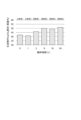
- Examples 1 to 4 are compared with Comparative Examples 1 and 2 (FIG. 1).
- the amount of calcium carbonate produced in the cement recycled material was increased compared to Comparative Example 1, in which the first slurry was not stirred, and Comparative Example 2, in which the first slurry was stirred for 1 hour.
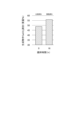
- Example 5 and Comparative Example 3 were used in which the bubbling speed was slowed down and bubbling was performed for a long time (FIG. 2). Similar to the results shown in FIG. 1, Example 5, in which the first slurry was stirred for 2 hours or more, showed a higher amount of calcium carbonate produced in the cement recycled material than Comparative Example 3, in which the first slurry was not stirred.
- Example 6 The test conditions are compared with those of Example 3, except that the bubbling speed was slowed down and the bubbling time was long (FIG. 3). It was found that, in the case of continuing the bubbling of carbon dioxide even after the pH of the first slurry became constant, the amount of calcium carbonate produced in the recycled cement material increased as the bubbling of carbon dioxide was continued for a longer period of time. In the case of Example 6, the ratio of calcium carbonate in the recycled cement material was 60 mass %. This means that 36 mass of carbon dioxide was fixed in the cement, assuming that the original cement mass was 100. The cement contains about 46 mass % of calcium, of which the amount of calcium that contributed to the production of calcium carbonate was calculated to be about 72 mass %, which is very large.
- Examples 7-8 and Comparative Example 4 used concrete sludge as the raw material and were bubbled for a long time (FIG. 4). Similar to the results shown in FIG. 1, in Examples 7 and 8 in which the first slurry was stirred for 2 hours or more, the amount of calcium carbonate produced in the cement recycled material was increased compared to Comparative Example 4 in which the first slurry was not stirred.
- the method for producing recycled cement material of the present invention allows the produced recycled cement material to be used in concrete products, road materials, civil engineering and building materials, etc. Therefore, the method for producing recycled cement material of the present invention has industrial applicability.
Landscapes
- Chemical & Material Sciences (AREA)
- Engineering & Computer Science (AREA)
- Ceramic Engineering (AREA)
- Organic Chemistry (AREA)
- Materials Engineering (AREA)
- Structural Engineering (AREA)
- Chemical Kinetics & Catalysis (AREA)
- General Chemical & Material Sciences (AREA)
- Civil Engineering (AREA)
- Inorganic Chemistry (AREA)
- Processing Of Solid Wastes (AREA)
- Compounds Of Alkaline-Earth Elements, Aluminum Or Rare-Earth Metals (AREA)
- Devices For Post-Treatments, Processing, Supply, Discharge, And Other Processes (AREA)
- Curing Cements, Concrete, And Artificial Stone (AREA)
Abstract
Description
例えば、特許文献1には、セメントを含有する廃棄物が水に浸漬されてスラリー状に形成された廃棄物スラリー中に、セメント製造設備から排出される二酸化炭素を含有する排ガスを供給することで、廃棄物スラリー中に溶出したカルシウム成分と排ガス中の二酸化炭素とを反応させて二酸化炭素を炭酸カルシウムとして固定化する炭素固定化工程と、該炭素固定化工程で処理された廃棄物スラリーから固体分を分離してセメント原料として使用する再原料化工程とを備えることを特徴とするセメント含有廃棄物の利用方法が開示されている。
また、特許文献2には、セメント混合材の製造方法であって、生コンクリートスラッジまたは廃コンクリート微粉を加熱処理した後に、水と混合してスラリーとするスラリー化工程、前記スラリーに対して炭酸ガスを通過させて炭酸化する炭酸化工程を含むセメント混合材の製造方法が開示されている。
また、特許文献2に記載の方法では、炭酸ガス(二酸化炭素)を通過させる前のスラリーに、例えば100℃以上300℃以下の加熱処理を行うため、この加熱処理によって炭酸ガスの排出がもたらされ、正味の二酸化炭素固定化量(二酸化炭素供給量から、固定化処理による二酸化炭素排出量を減じた値)が低下するという課題がある。
前記[2]に記載のセメント再生材の製造方法。
前記[1]から[3]のいずれか一項に記載のセメント再生材の製造方法。
前記[1]から[4]のいずれか一項に記載のセメント再生材の製造方法。
前記[1]から[5]のいずれか一項に記載のセメント再生材の製造方法。
前記[1]から[6]のいずれか一項に記載のセメント再生材の製造方法。
前記[1]から[7]のいずれか一項に記載のセメント再生材の製造方法。
前記[1]から[8]のいずれか一項に記載のセメント再生材の製造方法。
本明細書において、質量パーセント濃度(単位:質量%(mass%))と、重量パーセント濃度(単位:重量%(wt%))とは同じ値である。
第1実施形態に係るセメント再生材の製造方法(以下、第1実施形態の製造方法とも称する)は、セメント含有廃棄物と、水とを混合して第1のスラリーを生成する工程(以下、第1のスラリー生成工程とも称する)と、前記第1のスラリーを2時間以上攪拌する工程(以下、攪拌工程とも称する)と、前記第1のスラリーを攪拌しながら、二酸化炭素を含む排ガスを前記第1のスラリー中に供給して、前記排ガス中に含まれる二酸化炭素を前記炭酸カルシウムとして固定化する工程(以下、固定化工程とも称する)と、前記固定化する工程で生成され、前記炭酸カルシウムを含む第2のスラリーを得る工程と、を有する。
排ガス中の二酸化炭素は、第1のスラリー中の水と接触することで溶解してイオン化する。イオン化した二酸化炭素は、セメント含有廃棄物から溶解したカルシウムイオンと結合して炭酸カルシウムを生成する(CaO+CO2→CaCO3)。
この炭酸カルシウムの生成によって、水中のカルシウムイオンが減少し、スラリーのpHが下がる。一方、セメントと水との水和反応によってできた水酸化カルシウムは、その溶解度の範囲内で水に溶解する。すなわち、炭酸カルシウムの生成で水中にカルシウムイオンがなくなった分を補う形で水酸化カルシウムの溶解度を上限として、セメント含有廃棄物からカルシウムが溶け出す。
したがって、理論上は、二酸化炭素を第1のスラリーへ供給し続けることで、炭酸カルシウムが継続的に生成することになる。スラリーのpHは、主として「水酸化カルシウムの溶解速度によって決定される水中カルシウムイオン濃度」と「二酸化炭素の供給速度や気泡径等をパラメーターとする二酸化炭素とカルシウムイオンとの接触効率」によって決まるものと考えられる。
攪拌工程で生成する水酸化カルシウムは、前記固定化工程において、カルシウムイオンを供給する役目を果たす。炭酸カルシウムの生成量を多くするには、水酸化カルシウム生成量を多くする必要があり、そのためには、一定時間以上、第1のスラリーを攪拌する攪拌工程が必要である。
本発明者らは、第1のスラリーの攪拌時間を2時間以上とすると、炭酸カルシウムの生成量が上昇することを見出した。2時間以上の攪拌時間で、水酸化カルシウムが生成する反応が十分進行することが推察される。
一方、2時間未満の攪拌時間の場合は、水酸化カルシウムの生成量が少なくなることから、水酸化カルシウムが生成する反応が十分進行しないことが推察される。
本実施形態の製造方法によれば、二酸化炭素の排出削減に寄与するとともに、従来コストをかけて処理されていたセメント含有廃棄物を、セメント再生材として再生することができる。このセメント再生材は、例えば、コンクリート製品、道路材、及び土木・建築材料(例えば盛り土材等)等に利用することが可能となる。
本実施形態の製造方法に用いるセメント含有廃棄物は、コンクリート製品の製造過程において排出されるコンクリートスラッジ、残コン、戻りコン、石炭灰、及びカーバイドスラグなどがあり、カルシウムの水への溶出が起こる物質であれば限定されない。
セメント含有廃棄物に含まれる固形分(絶乾ベース)中のカルシウムはCaO換算で10wt%以上含むことが好ましい。絶乾ベースとは、水分がない状態の固形分の質量をいう。
セメント含有廃棄物には、通常、骨材が含まれる。しかし、セメント含有廃棄物に骨材が含まれても、第1のスラリーに二酸化炭素を供給することで、炭酸カルシウムが生成する。骨材の量が多いほど、セメント含有廃棄物中のカルシウム含有量は低くなるため、二酸化炭素の固定化により生成する炭酸カルシウム量は少なくなる。
よって、本実施形態の製造方法に用いるセメント含有廃棄物としては、できる限り骨材が除去されたものが好ましい。骨材の除去方法としては、例えば比重分離法等が挙げられる。
第1のスラリー生成工程は、セメント含有廃棄物と、水とを混合して第1のスラリーを生成する工程である。セメント含有廃棄物と水との混合方法は、特に限定されない。
得られる第1のスラリーの含水率は、セメント含有廃棄物自体に含まれる水分量(含水率)と、セメント含有廃棄物に混合する水の量の両方を考慮して決定される。
例えば、コンクリート製造過程で排出されるコンクリートスラッジの場合、コンクリートスラッジに含まれる固形分(絶乾ベース)の含有率は、通常、5質量%以上である。残コン・戻りコンの場合は、フィルタープレスで絞られ、固形分(絶乾ベース)の含有率が50質量%程度になって排出されることが多い。
このように、セメント含有廃棄物によって排出された状態の水分量(含水率)が異なるとともに、同じ「コンクリートスラッジ」の場合でも、水分量は日によって若干変動する。
そのため、本明細書では、第1のスラリーの含水率を、以下のように算出する。
例えば、水分量(含水率)が40質量%であるセメント含有廃棄物100質量部に対して、水50質量部を混合したときの、第1のスラリーの水分量(含水率)は、60質量%({(40+50)/(100+50)}×100=60)と算出される。
前記比率(前記セメント含有廃棄物中の固形分(絶乾ベース)/前記水)中における水とは、セメント含有廃棄物自体に含まれる水分量と、セメント含有廃棄物に混合する水の量とを合算した量である。
攪拌工程は、第1のスラリーを2時間以上、攪拌する工程である。
攪拌工程において、第1のスラリーを攪拌する時間は、2.5時間以上であることが好ましく、3時間以上であることがより好ましく、4時間以上であることがさらに好ましく、5時間以上であることがさらに好ましく、6時間以上であることがさらに好ましく、8時間以上であることがさらに好ましく、12時間以上であることがさらに好ましい。
第1のスラリーを攪拌する時間の上限値は、セメントの固化を十分抑制する観点から、36時間以下であることが好ましく、24時間以下であることがより好ましい。
攪拌工程で用いる攪拌手段(以下、第1の攪拌手段とも称する)としては特に限定されず、例えば、攪拌翼による機械攪拌等が挙げられる。
撹拌工程においては、セメント含有廃棄物中の固形分が沈殿しないように第1のスラリーを撹拌することが好ましい。撹拌工程においては、セメント含有廃棄物中の固形分の少なくとも一部が、懸濁分散状態を維持できるように、第1のスラリーを撹拌することが好ましい。
撹拌工程で用いる攪拌槽内においては、第1のスラリー中の固形分が沈殿せず、かつ攪拌槽の壁面に固形分が付着し難くなるような、第1のスラリーの流れを得ることが必要である。
第1の攪拌手段の回転数は、攪拌槽の大きさ及び形状、並びに攪拌翼の大きさ及び形状によるが、例えば、10rpm以上500rpm以下であり、好ましくは、15rpm以上250rpm以下である。第1の攪拌手段の回転数が、15rpm以上250rpm以下であると、前記第1のスラリーの流れがより得られ易くなる。
攪拌工程は、装置運転による二酸化炭素の放出を抑制する観点から、第1のスラリーの攪拌を常温で行うことが好ましい。常温とは、特段の加熱又は冷却を行わない温度であり、具体的には、5℃以上35℃以下である。攪拌時の第1のスラリーの温度は、5℃以上35℃以下であり、好ましくは10℃以上35℃以下である。なお、攪拌により第1のスラリーが凍らなければ、攪拌時の第1のスラリーの温度は、5℃未満であってもよい。
攪拌工程において、第1のスラリーは加熱されないことが好ましい。
固定化工程は、第1のスラリーを攪拌しながら、二酸化炭素を含む排ガスを前記第1のスラリー中に供給して、排ガス中に含まれる二酸化炭素を炭酸カルシウムとして固定化する工程である。
固定化工程における第1のスラリーの攪拌は、前記撹拌工程において2時間以上の撹拌を行った後に、二酸化炭素を含む排ガスを供給しながら実施される撹拌である。
本実施形態の製造方法は、第1のスラリーを攪拌しながら、固定化工程を実施することにより、水酸化カルシウムを第1のスラリー中に効率よく生成させることができる。
固定化工程における第1のスラリーの攪拌は、常温で行うことが好ましい。攪拌により第1のスラリーが凍らなければ、攪拌時の第1のスラリーの温度は、5℃未満であってもよい。
固定化工程は、第1のスラリーを加熱しないで攪拌することが好ましい。
固定化工程で用いる攪拌槽内においては、排ガスと、第1のスラリー中に溶出したカルシウムとを効率良く接触させるように第1のスラリーを撹拌することが求められる。
固定化工程で用いる攪拌手段(以下、第2の攪拌手段とも称する)としては、第1の攪拌手段と同様の攪拌手段を用いることができる。第2の攪拌手段と、第1の攪拌手段とは、互いに同一であっても、異なっていてもよい。
第2の攪拌手段の回転数は、攪拌槽の大きさ及び形状、並びに攪拌翼の大きさ及び形状によるが、例えば、10rpm以上500rpm以下であり、好ましくは、15rpm以上450rpm以下である。第2の攪拌手段の回転数が、15rpm以上450rpm以下であると、排ガスと、第1のスラリー中に溶出したカルシウムとをより効率良く接触させることができる。
第1のスラリーのpHが一定になった後、排ガスの供給を止めると、pHは徐々に上昇する。これは、炭酸カルシウムの再溶解か、セメント含有廃棄物からのカルシウムの継続的な溶解のどちらかが原因と考えられる。
本発明者らは、第1のスラリーのpHが一定になった後、又は中性域(具体的にはpH9以下)にまで低下した後も、排ガスを供給し続けることで、生成する炭酸カルシウムが徐々に増加することを見出し、結果、第2のスラリー中における炭酸カルシウムの含有割合を増加できることを見出した。
本実施形態の固定化工程において、前記第1のスラリー中への前記排ガスの供給速度は、前記セメント含有廃棄物中の固形分(絶乾ベース)1kgに対し、1L/分以上であり、かつ前記第1のスラリー中への前記排ガスの供給時間は、2時間以上であることが好ましい。
第1のスラリーのpHは、例えば、排ガスの供給速度及び供給時間、並びに第1スラリーの温度等を調整することにより制御できる。
pHが一定とは、pHの変動値(差分)をΔpHとしたとき、少なくとも120分間の間、ΔpH≦0.5であることを言う。
固定化工程の一態様において、第1のスラリーのpHが一定になった後も、排ガスを第1のスラリー中に供給することが好ましい。
燃焼排ガスとして、液体燃料(重油、灯油、軽油等)の燃焼、ガス(液化石油ガス、液化天然ガス、固体燃料ガス化ガス等)、及び固体(石炭、バイオマス、ごみ等)の燃焼等から発生した燃焼排ガスが挙げられる。
第2のスラリーは固定化する工程で生成される。
第2のスラリーを得る工程により、炭酸カルシウムを含む第2のスラリーが得られる。
第2のスラリーに含まれる、炭酸カルシウム以外の材料としては、例えば、細骨材、粗骨材及び砕石等が挙げられる。
本実施形態の製造方法は、第2のスラリーを、炭酸カルシウムを含む固形分と、液体とに分離する工程をさらに有することが好ましい。
分離方法としては特に限定されないが、例えば、濾過、遠心分離、及びデカンテーション等が挙げられる。
本実施形態の製造方法は、分離された固形分を乾燥する工程をさらに有することが好ましい。
乾燥方法としては特に限定されず、公知の乾燥装置を用いることができる。
固形分は、炭酸カルシウム、水、及び骨材等を含む。
固形分(乾燥後)中における炭酸カルシウムの含有割合は、20質量%以上であることが好ましく、30質量%以上であることがより好ましく、40質量%以上であることがさらに好ましい。
第1実施形態の製造方法で得られるセメント再生材は、例えば、コンクリート製品、道路材、盛り土材、ブロック、坑排水中和剤、畜産分野向け消毒剤、プラスチックへの添加剤用フィラー、ゴムへの添加用フィラー、及び塗料への添加用フィラーのいずれかの用途に用いることができる。
本実施形態のセメント再生材は、建築・土木材料(例えば、コンクリート製品、道路材、盛り土材等)に用いることで、二酸化炭素が再度大気中に放出されることを低減し得る。
本実施形態のセメント再生材は、天然の石灰石の代替として用いることで、天然石灰石の採掘、天然石灰石を用いたセメント製造、及び合成炭酸カルシウムの製造で排出される二酸化炭素の排出量を抑えることができる。
本発明は、前記実施形態に限定されない。本発明は、本発明の目的を達成できる範囲での変形及び改良等を含むことができる。
普通ポルトランドセメント45gに対し、水450gを混合して第1のスラリーを生成した(第1のスラリー生成工程)。
次に、第1のスラリーを20℃で3時間、スターラーで攪拌した(攪拌工程)。スターラーの回転数は800rpmとした。
次に、第1のスラリーをセパラブルフラスコ(500mL)に移し、第1のスラリーをスターラーで攪拌しながら(回転数800rpm)、第1のスラリー中へ二酸化炭素を500mL/minの流量で供給してバブリングした。二酸化炭素のバブリングは、ケラミフィルター(円筒ガス噴射管)を用いた。バブリングの際、第1のスラリーのpHをモニタリングするとともに、セパラブルフラスコの入口と出口の二酸化炭素の流量をモニタリングし、二酸化炭素を炭酸カルシウムとして固定化させた(固定化工程)。二酸化炭素のバブリング中、第1のスラリーのpHは13から6.4に低下し、バブリングを止めるまでほぼ一定であった。
以上のようにして、実施例1のセメント再生材(乾燥後の固形分)を得た。
実施例2~4のセメント再生材は、攪拌工程における第1のスラリーの攪拌時間を、表1に記載の攪拌時間にそれぞれ変更した以外、実施例1と同様の方法で作製した。
比較例1のセメント再生材は、攪拌工程における第1のスラリーの攪拌を行わなかった以外、実施例1と同様の方法で作製した。
比較例2のセメント再生材は、攪拌工程における第1のスラリーの攪拌時間を、表1に記載の攪拌時間に変更した以外、実施例1と同様の方法で作製した。
実施例5のセメント再生材は、攪拌工程における第1のスラリーの攪拌時間、固定化工程における二酸化炭素のバブリング時間及びバブリング速度を、表1に記載の攪拌時間、バブリング時間及びバブリング速度に変更した以外、実施例1と同様の方法で作製した。
なお、実施例5の二酸化炭素のバブリングでは、第1のスラリーのpHがバブリングを開始後、40分で一定になったが、その後、80分バブリングを継続した。そのため、バブリングを合計120分行った。
比較例3のセメント再生材は、攪拌工程における第1のスラリーの攪拌を行わなかった以外、実施例5と同様の方法で作製した。
実施例6のセメント再生材は、攪拌工程における第1のスラリーの攪拌時間を、表1に記載の攪拌時間に変更した以外、実施例5と同様の方法で作製した。
なお、実施例6の二酸化炭素のバブリングでは、第1のスラリーのpHがバブリングを開始後、40分で一定になったが、その後、320分バブリングを継続した。そのため、バブリングを合計360分行った。
実施例7~8のセメント再生材は、実施例1の原料、攪拌工程における第1のスラリーの攪拌時間、及び固定化工程における二酸化炭素のバブリング時間を、表1に記載の原料、攪拌時間、及びバブリング時間にそれぞれ変更した以外、実施例1と同様の方法で作製した。
なお、実施例7~8では、原料として、セメント製品製造工場から排出されたコンクリートスラッジを用いた。
コンクリートスラッジ中の固形分と水との割合(重量比)は、普通ポルトランドセメントの場合と同様になるように調整した。コンクリートスラッジ中の固形分のセメント成分は、元素分析の結果、約88質量%であり、残りは骨材と推測された。
元素分析値は、蛍光X線分析法によって測定した。
比較例4のセメント再生材は、攪拌工程における第1のスラリーの攪拌を行わなかった以外、実施例7と同様の方法で作製した。
(炭酸カルシウムの含有割合)
各例で作製したセメント再生材中の炭酸カルシウムの含有割合(質量%)を熱重量分析によって測定した。測定条件は以下の通りである。評価結果を表1及び図1~4に示す。
-測定条件-
・装置 :熱重量分析装置(島津製作所社製、モデル:TGA-50)
・加熱温度:室温(25℃)から900℃
・昇温速度:15℃/分
・測定資料:10mg
第1のスラリーの攪拌を2時間以上行った実施例1~4は、第1のスラリーの攪拌を行わなかった比較例1、及び攪拌を1時間行った比較例2に比べ、セメント再生材中における炭酸カルシウムの生成量が増加した。
図1の結果と同様に、第1のスラリーの攪拌を2時間以上行った実施例5は、第1のスラリーの攪拌を行わなかった比較例3に比べ、セメント再生材中における炭酸カルシウムの生成量が増加した。
二酸化炭素のバブリングにおいて、第1のスラリーのpHが一定になった後も、二酸化炭素のバブリングを続け、その時間を長くするほどセメント再生材中における炭酸カルシウムの生成量が増加することがわかった。
実施例6の場合、セメント再生材中の炭酸カルシウムの割合が、60質量%となった。これは元のセメント質量を100とした場合、36の質量の二酸化炭素がセメントに固定化されたことになる。セメント中には、約46質量%のカルシウムが含まれているが、そのうち炭酸カルシウムの生成に寄与したカルシウムは、約72質量%と算出され、非常に多いことがわかる。
図1の結果と同様に、第1のスラリーの攪拌を2時間以上行った実施例7~8は、第1のスラリーの攪拌を行わなかった比較例4に比べ、セメント再生材中における炭酸カルシウムの生成量が増加した。
Claims (9)
- セメント含有廃棄物と、水とを混合して第1のスラリーを生成する工程と、
前記第1のスラリーを2時間以上攪拌する工程と、
前記第1のスラリーを攪拌しながら、二酸化炭素を含む排ガスを前記第1のスラリー中に供給して、前記排ガス中に含まれる二酸化炭素を炭酸カルシウムとして固定化する工程と、
前記固定化する工程で生成され、前記炭酸カルシウムを含む第2のスラリーを得る工程と、を有する、
セメント再生材の製造方法。 - 前記第2のスラリーを、前記炭酸カルシウムを含む固形分と、液体とに分離する工程をさらに有する、
請求項1に記載のセメント再生材の製造方法。 - 分離された前記固形分を乾燥する工程をさらに有する、
請求項2に記載のセメント再生材の製造方法。 - 前記攪拌する工程において、前記第1のスラリーを攪拌する時間は、5時間以上である、
請求項1から請求項3のいずれか一項に記載のセメント再生材の製造方法。 - 前記固定化する工程において、
前記第1のスラリー中への前記排ガスの供給速度は、前記セメント含有廃棄物中の固形分(絶乾ベース)1kgに対し、1L/分以上であり、かつ前記第1のスラリー中への前記排ガスの供給時間は、2時間以上である、
請求項1から請求項4のいずれか一項に記載のセメント再生材の製造方法。 - 前記固定化する工程において、前記第1のスラリー中への前記排ガスの供給は、バブリングにより行われる、
請求項1から請求項5のいずれか一項に記載のセメント再生材の製造方法。 - 前記第1のスラリーを生成する工程において、前記水に対する前記セメント含有廃棄物中の固形分(絶乾ベース)の比率(前記セメント含有廃棄物中の固形分(絶乾ベース)/前記水)は、質量比で、0.01以上0.43以下である、
請求項1から請求項6のいずれか一項に記載のセメント再生材の製造方法。 - 前記排ガスは、燃焼排ガスである、
請求項1から請求項7のいずれか一項に記載のセメント再生材の製造方法。 - 前記セメント再生材は、コンクリート製品、道路材、盛り土材、ブロック、坑排水中和剤、畜産分野向け消毒剤、プラスチックへの添加剤用フィラー、ゴムへの添加用フィラー、及び塗料への添加用フィラーのいずれかの用途に用いられる、
請求項1から請求項8のいずれか一項に記載のセメント再生材の製造方法。
Priority Applications (2)
| Application Number | Priority Date | Filing Date | Title |
|---|---|---|---|
| EP24770881.1A EP4682128A1 (en) | 2023-03-14 | 2024-03-12 | Cement recycled material manufacturing method |
| CN202480018512.2A CN120882673A (zh) | 2023-03-14 | 2024-03-12 | 水泥再生材料的制造方法 |
Applications Claiming Priority (2)
| Application Number | Priority Date | Filing Date | Title |
|---|---|---|---|
| JP2023-039988 | 2023-03-14 | ||
| JP2023039988A JP2024130324A (ja) | 2023-03-14 | 2023-03-14 | セメント再生材の製造方法 |
Publications (1)
| Publication Number | Publication Date |
|---|---|
| WO2024190776A1 true WO2024190776A1 (ja) | 2024-09-19 |
Family
ID=92755160
Family Applications (1)
| Application Number | Title | Priority Date | Filing Date |
|---|---|---|---|
| PCT/JP2024/009558 Ceased WO2024190776A1 (ja) | 2023-03-14 | 2024-03-12 | セメント再生材の製造方法 |
Country Status (5)
| Country | Link |
|---|---|
| EP (1) | EP4682128A1 (ja) |
| JP (1) | JP2024130324A (ja) |
| CN (1) | CN120882673A (ja) |
| TW (1) | TW202502691A (ja) |
| WO (1) | WO2024190776A1 (ja) |
Citations (3)
| Publication number | Priority date | Publication date | Assignee | Title |
|---|---|---|---|---|
| JP2006076825A (ja) * | 2004-09-09 | 2006-03-23 | Nippon Steel Corp | 炭酸ガスの利用方法 |
| JP2014117636A (ja) | 2012-12-13 | 2014-06-30 | Sumitomo Osaka Cement Co Ltd | セメント含有廃棄物の利用方法 |
| JP2021138574A (ja) | 2020-03-05 | 2021-09-16 | 太平洋セメント株式会社 | セメント混合材、混合セメントおよび炭酸ガス吸着材の製造方法 |
-
2023
- 2023-03-14 JP JP2023039988A patent/JP2024130324A/ja active Pending
-
2024
- 2024-03-12 CN CN202480018512.2A patent/CN120882673A/zh active Pending
- 2024-03-12 EP EP24770881.1A patent/EP4682128A1/en active Pending
- 2024-03-12 WO PCT/JP2024/009558 patent/WO2024190776A1/ja not_active Ceased
- 2024-03-13 TW TW113109199A patent/TW202502691A/zh unknown
Patent Citations (3)
| Publication number | Priority date | Publication date | Assignee | Title |
|---|---|---|---|---|
| JP2006076825A (ja) * | 2004-09-09 | 2006-03-23 | Nippon Steel Corp | 炭酸ガスの利用方法 |
| JP2014117636A (ja) | 2012-12-13 | 2014-06-30 | Sumitomo Osaka Cement Co Ltd | セメント含有廃棄物の利用方法 |
| JP2021138574A (ja) | 2020-03-05 | 2021-09-16 | 太平洋セメント株式会社 | セメント混合材、混合セメントおよび炭酸ガス吸着材の製造方法 |
Non-Patent Citations (1)
| Title |
|---|
| See also references of EP4682128A1 |
Also Published As
| Publication number | Publication date |
|---|---|
| CN120882673A (zh) | 2025-10-31 |
| TW202502691A (zh) | 2025-01-16 |
| JP2024130324A (ja) | 2024-09-30 |
| EP4682128A1 (en) | 2026-01-21 |
Similar Documents
| Publication | Publication Date | Title |
|---|---|---|
| US6077494A (en) | Method for removing ammonia from ammonia contaminated fly ash | |
| US20260055324A1 (en) | Calcined clay tailings and/or calcined mine waste, and associated systems and methods | |
| US12351493B2 (en) | Geotechnical characteristics of tailings via lime addition | |
| JPH01127091A (ja) | 廃液を固化して化学的に定着させる方法 | |
| US20220227665A1 (en) | A Method and Apparatus for Processing Water Treatment Residuals | |
| JP2023127647A (ja) | 炭酸カルシウムの製造方法および二酸化炭素の固定化方法 | |
| CN116768536B (zh) | 由金属采矿和生产废物制备冷熔混凝土和水泥组合物的方法 | |
| JPH0651590B2 (ja) | 炭化水素廃棄物と硫酸廃棄物及び/又は酸性の硫酸誘導体廃棄物との同時処理方法 | |
| JP2001172060A (ja) | セメント原料組成物 | |
| JP2024130324A (ja) | セメント再生材の製造方法 | |
| EP4265580A1 (en) | Process for producing calcined mineral binder material with reduced carbon footprint | |
| JP4694434B2 (ja) | 副生物の処理方法 | |
| JP3242674B2 (ja) | 泥水・泥土類の廃棄処理装置 | |
| JP2023096668A (ja) | 炭酸ガス固定化コンクリートの製造方法 | |
| JP5748418B2 (ja) | 焼却灰の脱水性向上方法 | |
| JP2022045008A (ja) | セメント又はセメント硬化物の製造方法及びその製造システム | |
| KR102741011B1 (ko) | 소각장 폐기물 비산재 염소화합물 회수장치 및 회수방법 | |
| US20250382226A1 (en) | Sustainable concrete | |
| CN111068535B (zh) | 改性沥青喷淋污水净化渣的干化回收利用方法 | |
| US12522540B2 (en) | Method of producing sulfur concrete using carbonated salts | |
| KR102821997B1 (ko) | 염소 함유 클링커 및 시멘트 | |
| JP2025181223A (ja) | CaCO3を含む懸濁液の製造方法およびCaCO3を含む粉体の製造方法 | |
| JP7643904B2 (ja) | 硫黄含有組成物、セメント組成物及び地盤改良材の製造方法 | |
| JP2007204726A (ja) | アスファルト混合物中温化用添加材、アスファルト混合物および舗装工法 | |
| Mkhize | Improving Local Class a to Oil Well Cement Using Pet Plastic Waste |
Legal Events
| Date | Code | Title | Description |
|---|---|---|---|
| 121 | Ep: the epo has been informed by wipo that ep was designated in this application |
Ref document number: 24770881 Country of ref document: EP Kind code of ref document: A1 |
|
| WWE | Wipo information: entry into national phase |
Ref document number: 202480018512.2 Country of ref document: CN |
|
| WWE | Wipo information: entry into national phase |
Ref document number: 2024770881 Country of ref document: EP |
|
| NENP | Non-entry into the national phase |
Ref country code: DE |
|
| WWP | Wipo information: published in national office |
Ref document number: 202480018512.2 Country of ref document: CN |
|
| ENP | Entry into the national phase |
Ref document number: 2024770881 Country of ref document: EP Effective date: 20251014 |
|
| ENP | Entry into the national phase |
Ref document number: 2024770881 Country of ref document: EP Effective date: 20251014 |
|
| ENP | Entry into the national phase |
Ref document number: 2024770881 Country of ref document: EP Effective date: 20251014 |
|
| ENP | Entry into the national phase |
Ref document number: 2024770881 Country of ref document: EP Effective date: 20251014 |
|
| ENP | Entry into the national phase |
Ref document number: 2024770881 Country of ref document: EP Effective date: 20251014 |