WO2024209715A1 - たばこ充填物および非燃焼加熱型香味吸引器 - Google Patents
たばこ充填物および非燃焼加熱型香味吸引器 Download PDFInfo
- Publication number
- WO2024209715A1 WO2024209715A1 PCT/JP2023/030518 JP2023030518W WO2024209715A1 WO 2024209715 A1 WO2024209715 A1 WO 2024209715A1 JP 2023030518 W JP2023030518 W JP 2023030518W WO 2024209715 A1 WO2024209715 A1 WO 2024209715A1
- Authority
- WO
- WIPO (PCT)
- Prior art keywords
- tobacco
- organic acid
- acid
- molded body
- range
- Prior art date
- Legal status (The legal status is an assumption and is not a legal conclusion. Google has not performed a legal analysis and makes no representation as to the accuracy of the status listed.)
- Ceased
Links
Images






Classifications
-
- A—HUMAN NECESSITIES
- A24—TOBACCO; CIGARS; CIGARETTES; SIMULATED SMOKING DEVICES; SMOKERS' REQUISITES
- A24B—MANUFACTURE OR PREPARATION OF TOBACCO FOR SMOKING OR CHEWING; TOBACCO; SNUFF
- A24B15/00—Chemical features or treatment of tobacco; Tobacco substitutes, e.g. in liquid form
- A24B15/18—Treatment of tobacco products or tobacco substitutes
- A24B15/28—Treatment of tobacco products or tobacco substitutes by chemical substances
- A24B15/30—Treatment of tobacco products or tobacco substitutes by chemical substances by organic substances
- A24B15/32—Treatment of tobacco products or tobacco substitutes by chemical substances by organic substances by acyclic compounds
-
- A—HUMAN NECESSITIES
- A24—TOBACCO; CIGARS; CIGARETTES; SIMULATED SMOKING DEVICES; SMOKERS' REQUISITES
- A24B—MANUFACTURE OR PREPARATION OF TOBACCO FOR SMOKING OR CHEWING; TOBACCO; SNUFF
- A24B15/00—Chemical features or treatment of tobacco; Tobacco substitutes, e.g. in liquid form
- A24B15/10—Chemical features of tobacco products or tobacco substitutes
-
- A—HUMAN NECESSITIES
- A24—TOBACCO; CIGARS; CIGARETTES; SIMULATED SMOKING DEVICES; SMOKERS' REQUISITES
- A24B—MANUFACTURE OR PREPARATION OF TOBACCO FOR SMOKING OR CHEWING; TOBACCO; SNUFF
- A24B15/00—Chemical features or treatment of tobacco; Tobacco substitutes, e.g. in liquid form
- A24B15/10—Chemical features of tobacco products or tobacco substitutes
- A24B15/12—Chemical features of tobacco products or tobacco substitutes of reconstituted tobacco
-
- A—HUMAN NECESSITIES
- A24—TOBACCO; CIGARS; CIGARETTES; SIMULATED SMOKING DEVICES; SMOKERS' REQUISITES
- A24B—MANUFACTURE OR PREPARATION OF TOBACCO FOR SMOKING OR CHEWING; TOBACCO; SNUFF
- A24B15/00—Chemical features or treatment of tobacco; Tobacco substitutes, e.g. in liquid form
- A24B15/10—Chemical features of tobacco products or tobacco substitutes
- A24B15/16—Chemical features of tobacco products or tobacco substitutes of tobacco substitutes
-
- A—HUMAN NECESSITIES
- A24—TOBACCO; CIGARS; CIGARETTES; SIMULATED SMOKING DEVICES; SMOKERS' REQUISITES
- A24B—MANUFACTURE OR PREPARATION OF TOBACCO FOR SMOKING OR CHEWING; TOBACCO; SNUFF
- A24B15/00—Chemical features or treatment of tobacco; Tobacco substitutes, e.g. in liquid form
- A24B15/18—Treatment of tobacco products or tobacco substitutes
- A24B15/24—Treatment of tobacco products or tobacco substitutes by extraction; Tobacco extracts
- A24B15/241—Extraction of specific substances
-
- A—HUMAN NECESSITIES
- A24—TOBACCO; CIGARS; CIGARETTES; SIMULATED SMOKING DEVICES; SMOKERS' REQUISITES
- A24B—MANUFACTURE OR PREPARATION OF TOBACCO FOR SMOKING OR CHEWING; TOBACCO; SNUFF
- A24B15/00—Chemical features or treatment of tobacco; Tobacco substitutes, e.g. in liquid form
- A24B15/18—Treatment of tobacco products or tobacco substitutes
- A24B15/28—Treatment of tobacco products or tobacco substitutes by chemical substances
- A24B15/287—Treatment of tobacco products or tobacco substitutes by chemical substances by inorganic substances only
-
- A—HUMAN NECESSITIES
- A24—TOBACCO; CIGARS; CIGARETTES; SIMULATED SMOKING DEVICES; SMOKERS' REQUISITES
- A24B—MANUFACTURE OR PREPARATION OF TOBACCO FOR SMOKING OR CHEWING; TOBACCO; SNUFF
- A24B15/00—Chemical features or treatment of tobacco; Tobacco substitutes, e.g. in liquid form
- A24B15/18—Treatment of tobacco products or tobacco substitutes
- A24B15/28—Treatment of tobacco products or tobacco substitutes by chemical substances
- A24B15/30—Treatment of tobacco products or tobacco substitutes by chemical substances by organic substances
- A24B15/36—Treatment of tobacco products or tobacco substitutes by chemical substances by organic substances containing a heterocyclic ring
- A24B15/40—Treatment of tobacco products or tobacco substitutes by chemical substances by organic substances containing a heterocyclic ring having only oxygen or sulfur as hetero atoms
- A24B15/403—Treatment of tobacco products or tobacco substitutes by chemical substances by organic substances containing a heterocyclic ring having only oxygen or sulfur as hetero atoms having only oxygen as hetero atoms
-
- A—HUMAN NECESSITIES
- A24—TOBACCO; CIGARS; CIGARETTES; SIMULATED SMOKING DEVICES; SMOKERS' REQUISITES
- A24D—CIGARS; CIGARETTES; TOBACCO SMOKE FILTERS; MOUTHPIECES OF CIGARS OR CIGARETTES; MANUFACTURE OF TOBACCO SMOKE FILTERS OR MOUTHPIECES
- A24D1/00—Cigars; Cigarettes
- A24D1/20—Cigarettes specially adapted for simulated smoking devices
-
- A—HUMAN NECESSITIES
- A24—TOBACCO; CIGARS; CIGARETTES; SIMULATED SMOKING DEVICES; SMOKERS' REQUISITES
- A24F—SMOKERS' REQUISITES; MATCH BOXES; SIMULATED SMOKING DEVICES
- A24F40/00—Electrically operated smoking devices; Component parts thereof; Manufacture thereof; Maintenance or testing thereof; Charging means specially adapted therefor
- A24F40/20—Devices using solid inhalable precursors
-
- A—HUMAN NECESSITIES
- A24—TOBACCO; CIGARS; CIGARETTES; SIMULATED SMOKING DEVICES; SMOKERS' REQUISITES
- A24F—SMOKERS' REQUISITES; MATCH BOXES; SIMULATED SMOKING DEVICES
- A24F40/00—Electrically operated smoking devices; Component parts thereof; Manufacture thereof; Maintenance or testing thereof; Charging means specially adapted therefor
- A24F40/40—Constructional details, e.g. connection of cartridges and battery parts
- A24F40/46—Shape or structure of electric heating means
Definitions
- the present invention relates to a tobacco filler and a non-combustion heating type flavor inhaler.
- heating flavor inhalers non-combustion heating flavor inhalers
- heating flavor inhalers have been developed to replace combustion flavor inhalers used for cigarettes and the like, which provide users with tobacco flavor by heating the tobacco filler without burning it.
- the tobacco filler contains, in addition to the tobacco material, an aerosol source that generates vapor when heated.
- an aerosol source that generates vapor when heated.
- the tobacco filler is heated in the heated flavor inhaler, the aerosol source becomes vapor, and the tobacco flavor components are transferred into this vapor, resulting in the generation of an aerosol (tobacco vapor).
- an acid such as an organic acid can be added to such a tobacco filler (see, for example, Patent Document 1).
- the present invention aims to provide a tobacco filler for a non-combustion heating type flavor inhaler that provides an excellent tobacco flavor.
- a tobacco filling for use in a non-combustion heating type flavor inhaler, comprising: A tobacco material and an organic acid salt,
- the organic acid salt is a salt of an organic acid having an acid dissociation exponent pKa in the range of 3.5 to 5.0 and a boiling point in the range of 100 to 220° C. with a base selected from the group consisting of alkali metal hydroxides and alkaline earth metal hydroxides;
- the tobacco filler is provided, in which the organic acid salt is contained in an amount within a range of 0.5 to 15 parts by mass per 100 parts by mass of the tobacco material.
- a non-combustion heating type flavor inhaler in another aspect, includes the tobacco filling and a heater that heats the tobacco filling.
- the present invention provides a tobacco filler for a non-combustion heating type flavor inhaler that provides an excellent tobacco flavor.
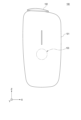
- FIG. 1A is a schematic front view showing an example of an aerosol generating device.
- FIG. 1B is a schematic top view of the aerosol generating device shown in FIG. 1A.
- FIG. 1C is a schematic bottom view of the aerosol generating device shown in FIG. 1A.
- FIG. 2 is a schematic cross-sectional side view showing an example of a tobacco stick.
- FIG. 3 is a cross-sectional view taken along line III-III of the aerosol generating device shown in FIG. 1B.
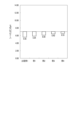
- FIG. 4 is a graph showing the pH of sheet tobacco.
- FIG. 5 is a graph showing the pH of tobacco vapor.
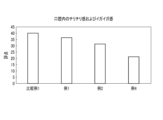
- FIG. 6 is a graph showing the results of the sensory evaluation.
- FIG. 7 is a graph showing the results of the sensory evaluation.
- FIG. 8 is a graph showing the results of the sensory evaluation.
- FIG. 9 is a graph showing the results of the sensory evaluation.
- Tobacco filling material The present inventors have newly discovered that by incorporating a specific organic acid salt into a tobacco filler and heating the resulting tobacco filler in a heated flavor inhaler, it is possible to reduce the negative sensations experienced when inhaling without reducing the satisfying draw of the heated flavor inhaler, and have thus completed the present invention.
- the tobacco filler for use in a non-combustion heating type flavor inhaler is A tobacco material and an organic acid salt
- the organic acid salt is a salt of an organic acid having an acid dissociation exponent pKa in the range of 3.5 to 5.0 and a boiling point in the range of 100 to 220° C. with a base selected from the group consisting of alkali metal hydroxides and alkaline earth metal hydroxides;
- the organic acid salt is contained in an amount within a range of 0.5 to 15 parts by mass per 100 parts by mass of the tobacco material.
- the tobacco filler comprises a tobacco material-containing molded body, and the tobacco material and the organic acid salt are contained in the tobacco material-containing molded body.
- the tobacco filler for use in a non-combustion heating type flavor inhaler is A tobacco material-containing molded article containing a tobacco material and an organic acid salt
- the organic acid salt is a salt of an organic acid having an acid dissociation exponent pKa in the range of 3.5 to 5.0 and a boiling point in the range of 100 to 220° C. with a base selected from the group consisting of alkali metal hydroxides and alkaline earth metal hydroxides;
- the organic acid salt is contained in an amount within a range of 0.5 to 15 parts by mass per 100 parts by mass of the tobacco material.
- the tobacco filler comprises a tobacco material-containing molded body and a cellulose molded body, the tobacco material is contained in the tobacco material-containing molded body, and the organic acid salt is contained in the cellulose molded body together with the cellulose base material.
- the tobacco filler for use in a non-combustion heating type flavor inhaler is The present invention provides a tobacco material-containing molded article comprising a tobacco material, and a cellulose molded article comprising a cellulose base material and an organic acid salt
- the organic acid salt is a salt of an organic acid having an acid dissociation exponent pKa in the range of 3.5 to 5.0 and a boiling point in the range of 100 to 220° C. with a base selected from the group consisting of alkali metal hydroxides and alkaline earth metal hydroxides;
- the organic acid salt is contained in an amount within a range of 0.5 to 15 parts by mass per 100 parts by mass of the tobacco material.
- the tobacco filler according to the first embodiment comprises a tobacco material-containing molded product that contains a tobacco material and the organic acid salt described above.
- tobacco material contained in the tobacco material-containing molded product can be tobacco shreds that are ready to be blended into tobacco products such as combustion-type flavor inhalers and heating-type flavor inhalers.
- tobacco shreds ready to be blended into tobacco products refers to tobacco shreds that have been through a drying process on the farm, a long-term aging process of one to several years at a raw material factory, and various other processing steps such as blending and cutting at a manufacturing factory, and are ready to be blended into tobacco products.
- Tobacco shreds are cut tobacco leaves. They may be shredded leaves, shredded backbones, shredded reconstituted tobacco (i.e., tobacco material made by processing leaf waste, shredded waste, backbone waste, fine powder, etc. generated during factory operations into a reusable form), or a mixture of these. Tobacco shreds may be crushed, and the resulting crushed material may be used as tobacco material.
- the tobacco shreds may be of any variety, such as flue-cured, burley, or oriental, etc.
- the tobacco shreds may be of a single variety or a mixture of different varieties.
- the "organic acid salt” contained in the tobacco material-containing molded product is a salt of an organic acid having an acid dissociation exponent pKa in the range of 3.5 to 5.0 and a boiling point in the range of 100 to 220° C., and a base selected from the group consisting of alkali metal hydroxides and alkaline earth metal hydroxides.
- the "organic acid salt" contained in the tobacco material-containing molded product is a salt consisting of an ion of an organic acid having an acid dissociation exponent pKa in the range of 3.5 to 5.0 and a boiling point in the range of 100 to 220° C., and a metal ion selected from the group consisting of alkali metal ions and alkaline earth metal ions.
- the term "acid dissociation exponent pKa” refers to the negative common logarithm of the acid dissociation constant Ka, -logKa.
- the acid dissociation exponent pKa is the acid dissociation exponent in water at 25°C, and in the case of multiple dissociation stages, it means the acid dissociation exponent of the first stage.
- the values listed in the Chemistry Handbook, Basic Edition (Revised 5th Edition, edited by the Chemical Society of Japan, Maruzen Co., Ltd.) can be referenced.
- the acid dissociation exponent pKa of an organic acid not listed in the literature can be determined using a commercially available pH meter (Horiba Ltd.
- the acid dissociation index pKa of the organic acid constituting the organic acid salt is in the range of 3.5 to 5.0, preferably in the range of 4.0 to 5.0, and more preferably in the range of 4.5 to 5.0.
- the boiling point of the organic acid constituting the organic acid salt is in the range of 100 to 220°C, preferably in the range of 110 to 220°C, and more preferably in the range of 110 to 200°C.
- the organic acid salt is likely to become free (organic acid) and volatilize even under low-temperature conditions during storage.
- the acid dissociation index pKa of the organic acid constituting the organic acid salt is greater than 5.0, the organic acid salt is unlikely to become free (organic acid) and volatilize even when heated in a heated flavor inhaler.
- the acid dissociation index pKa of the organic acid constituting the organic acid salt is within the range of 3.5 to 5.0, the organic acid salt is unlikely to volatilize and is stably maintained under low-temperature conditions during storage, and is likely to volatilize when heated in a heated flavor inhaler.
- the organic acid salt is likely to volatilize even under low-temperature conditions during storage.
- the organic acid salt is higher than 220°C, the organic acid salt is unlikely to volatilize even when heated in a heated flavor inhaler. Therefore, if the boiling point of the organic acid constituting the organic acid salt is within the range of 100-220°C, the organic acid salt is unlikely to volatilize and is kept stable under low-temperature conditions during storage, and is likely to volatilize when heated in a heated flavor inhaler.
- the "organic acid having an acid dissociation index pKa in the range of 3.5 to 5.0 and a boiling point in the range of 100 to 220°C” is preferably a monovalent organic acid.
- the "organic acid having an acid dissociation index pKa in the range of 3.5 to 5.0 and a boiling point in the range of 100 to 220°C” is preferably an organic acid having a carboxyl group.
- organic acids having an acid dissociation index pKa in the range of 3.5 to 5.0 and a boiling point in the range of 100 to 220°C include lactic acid, glycolic acid, acetic acid, propionic acid, 2-methylpropionic acid, butanoic acid, 2-methylbutanoic acid, 3-methylbutanoic acid, valeric acid, 2-methylvaleric acid, 3-methylvaleric acid, 4-methylvaleric acid, 2,3-dimethylbutanoic acid, and 3,3-dimethylbutanoic acid.
- the acid dissociation index pKa and boiling point of the above organic acids are listed below. Lactic acid: acid dissociation index pKa 3.86, boiling point 216.6°C Glycolic acid: acid dissociation index pKa 3.83, boiling point 100°C (decomposition) Acetic acid: acid dissociation constant pKa 4.76, boiling point 118°C Propionic acid: acid dissociation index pKa 4.87, boiling point 141.1°C 2-Methylpropionic acid: acid dissociation index pKa 4.84, boiling point 154.4°C Butanoic acid: acid dissociation constant pKa 4.82, boiling point 163.7°C 2-Methylbutanoic acid: acid dissociation index pKa 4.97, boiling point 176°C 3-Methylbutanoic acid: acid dissociation index pKa 4.77, boiling point 176°C Valeric acid: acid dissociation constant pKa 4.84, boiling point 186.1°C 2-Methyl
- organic acids having an acid dissociation index pKa in the range of 4.0 to 5.0 and a boiling point in the range of 110 to 220°C include acetic acid, propionic acid, 2-methylpropionic acid, butanoic acid, 2-methylbutanoic acid, 3-methylbutanoic acid, valeric acid, 2-methylvaleric acid, 3-methylvaleric acid, 4-methylvaleric acid, 2,3-dimethylbutanoic acid, and 3,3-dimethylbutanoic acid.
- the "organic acid having an acid dissociation index pKa in the range of 3.5 to 5.0 and a boiling point in the range of 100 to 220°C" is preferably acetic acid.
- the “base” that constitutes the organic acid salt is selected from the group consisting of hydroxides of alkali metals and hydroxides of alkaline earth metals.
- Examples of the base include potassium hydroxide, sodium hydroxide, and calcium hydroxide.
- organic acid salts include potassium salts, sodium salts, and calcium salts of the organic acids exemplified above.
- the organic acid salt is preferably potassium acetate, sodium acetate, or calcium acetate, and more preferably potassium acetate.
- One type of organic acid salt may be used, or multiple types may be used in combination.
- the organic acid salt is contained in the tobacco material-containing molded product in an amount within the range of 0.5 to 15 parts by mass, preferably 1 to 15 parts by mass, more preferably 3 to 15 parts by mass, even more preferably 4 to 15 parts by mass, and even more preferably 5 to 15 parts by mass, relative to 100 parts by mass of the tobacco material.
- the organic acid salt is contained in the tobacco material-containing molded product in an amount within the above range relative to the tobacco material, it can have a positive effect on the tobacco flavor that the user feels when inhaling with a heated flavor inhaler.
- the organic acid salt when contained in the tobacco material-containing molded product in an amount within the above range relative to the tobacco material, it can reduce negative sensations during inhalation (i.e., irritation, and a tingling and itchy feeling in the mouth) without reducing the drawing response of the heated flavor inhaler.
- the organic acid salt is described as a component parallel to the tobacco material.
- the “amount of organic acid salt” described in this specification does not include the amount of organic acid salt contained in the tobacco material, even if the tobacco material contains an organic acid salt.
- the “amount of organic acid salt” described in this specification represents the amount of organic acid salt added to the tobacco material when preparing the tobacco material-containing molded product.
- the tobacco material does not contain the specific organic acid salt used in the present invention (i.e., a salt of an organic acid having an acid dissociation index pKa in the range of 3.5 to 5.0 and a boiling point in the range of 100 to 220°C with a base selected from the group consisting of alkali metal hydroxides and alkaline earth metal hydroxides), or if it does contain any, the amount is small.
- a specific organic acid salt used in the present invention i.e., a salt of an organic acid having an acid dissociation index pKa in the range of 3.5 to 5.0 and a boiling point in the range of 100 to 220°C with a base selected from the group consisting of alkali metal hydroxides and alkaline earth metal hydroxides
- the above amount of organic acid salt can be said to be much less than the amount of organic acid salt added when the organic acid salt is used as a flavoring substance.
- the organic acid salt when preparing the tobacco material-containing molded product, can be added in such a small amount that the user does not notice the flavor.
- the tobacco material-containing molded product may further include an aerosol source in addition to the tobacco material and the organic acid salt.
- the aerosol source refers to a liquid that is heated in a heated flavor inhaler to become vapor (gas).
- the aerosol source refers to a source (liquid) for generating a dispersion medium (gas) of an aerosol (tobacco vapor), and does not include fine particles (flavor components, etc.) in the aerosol.
- an aerosol source used in a conventional heated flavor inhaler can be used.
- the aerosol source include glycerin, propylene glycol, triacetin, 1,3-butanediol, and mixtures thereof.
- the aerosol source is preferably glycerin, propylene glycol, or a mixture of propylene glycol and glycerin.
- the aerosol source can be incorporated into the heated flavor inhaler separately from the tobacco material-containing molded body.
- the tobacco material-containing molded product may further contain a binder, if necessary, in addition to the tobacco material and the organic acid salt.
- a binder used when molding tobacco sheets or tobacco granules can be used, for example, guar gum can be used.
- the tobacco material-containing molded product may further contain additives such as a pH adjuster, a preservative, and an antioxidant, if necessary.
- the "tobacco material-containing molded body” is a molded body obtained by molding a raw material containing a tobacco material and the above-mentioned organic acid salt into a specific shape. As described above, the raw material may further contain an aerosol source, a binder, or an additive.
- the shape of the tobacco material-containing molded body is not particularly limited.
- the tobacco material-containing molded body is, for example, a tobacco sheet or tobacco granules.
- Sheet tobacco refers to a molded product obtained by molding raw materials containing tobacco materials and organic acid salts into a sheet shape.
- Sheet tobacco can have a thickness of, for example, 0.05 to 0.30 mm.
- sheet tobacco can be cut into a size suitable for tobacco filler (for example, a size equivalent to that of regular tobacco shreds), and the resulting cut product is also included in sheet tobacco.
- sheet tobacco can be cut into a size of, for example, 1 mm x 10 mm.
- Sheet tobacco can be formed by known methods such as paper-making, casting, and rolling.
- sheet tobacco is called “paper-made sheet tobacco”
- sheet tobacco is called “slurry sheet tobacco”
- sheet tobacco is called “rolled sheet tobacco”.
- Tobacco granules refers to a molded product obtained by molding raw materials containing tobacco materials and organic acid salts into a granular shape.
- Tobacco granules can be of any shape, such as spherical or short cylinder. If the tobacco granules are spherical, they can have an average particle size (D50) of, for example, 0.2 to 1.0 mm, and if they are short cylinder, they can have an equivalent sphere diameter of, for example, 0.2 to 2.0 mm.
- Tobacco granules can be molded by known methods, such as extrusion granulation, fluidized bed granulation, and spray drying.
- the tobacco material-containing molded product may be used as is as a tobacco filler.
- flavorings and necessary additives may be added to the tobacco material-containing molded product, and the resultant product may be used as a tobacco filler.
- sheet tobacco may be used as a tobacco filler in a state where multiple sheets of sheet tobacco are stacked, or in a state where a single sheet tobacco is rolled up in a spiral shape, or in a state where a single sheet tobacco is folded in an accordion-like shape.
- sheet tobacco may be cut into fibers to obtain fibrous cut pieces, or may be cut into rectangles to obtain rectangular cut pieces to be used as a tobacco filler.
- the pH of the tobacco filling is, for example, in the range of 5.0 to 8.0. If the pH of the tobacco filling is too low, the organic acid salts contained in the tobacco filling tend to become free (organic acid) and volatilize easily even under low-temperature conditions during storage. On the other hand, if the pH of the tobacco filling is too high, the organic acid salts contained in the tobacco filling tend not to become free (organic acid) and volatilize easily even when heated with a heated flavor inhaler.
- the pH of the tobacco filling is in the range of 5.0 to 8.0, the organic acid salts contained in the tobacco filling tend not to volatilize and are stably maintained under low-temperature conditions during storage, and tend to volatilize easily when heated with a heated flavor inhaler. Furthermore, if the pH of the tobacco filling is within this pH range, it is less likely to produce the unpleasant odors that are easily emitted by tobacco fillings with a basic pH.
- the pH of the tobacco filler refers to a value measured by the following measurement method. 2.0 g of tobacco filler is weighed into a vial, 20 mL of distilled water is added, and the mixture is shaken at 200 rpm for 10 minutes for extraction. The resulting extract is allowed to stand for 5 minutes, and then the pH of the extract is measured using a pH meter (LAQUA F-72, manufactured by Horiba, Ltd.). The measured pH is regarded as the pH of the tobacco filler.
- the tobacco filler according to the second embodiment is A tobacco material-containing molded product;
- the present invention includes a cellulose molded body containing a cellulose base material and the above-mentioned organic acid salt.
- the tobacco filling material according to the second embodiment is a mixture of a tobacco material-containing molded body and a cellulose molded body.
- the organic acid salt is contained in the tobacco material-containing molded body, but in the tobacco filling material according to the second embodiment, the organic acid salt is contained in the cellulose molded body.
- the tobacco filling material according to the second embodiment is described below, but in the following description, differences from the tobacco filling material according to the first embodiment are described, and overlapping points are not described.
- the "tobacco material-containing molded body” is similar to the "tobacco material-containing molded body" described in the first embodiment, except that it does not contain the above-mentioned organic acid salt. That is, in the second embodiment, the "tobacco material-containing molded body” is a molded body obtained by molding a raw material containing tobacco material into a specific shape. The raw material does not contain the above-mentioned organic acid salt in addition to the tobacco material. As described above, the raw material may further contain an aerosol source, a binder, or an additive.
- the tobacco material-containing molded body is, for example, a tobacco sheet or tobacco granules.
- the "tobacco material-containing molded body" can be prepared by molding a raw material containing tobacco material without adding the organic acid salt.
- the cellulose molded body is a molded body obtained by molding a raw material containing a cellulose base material and the above-mentioned organic acid salt into a specific shape.
- the raw material does not contain a tobacco material.
- the raw material may further contain an aerosol source, a binder, or an additive.
- the shape of the cellulose molded body is not particularly limited.
- the cellulose molded body has, for example, a sheet shape or a granular shape.
- the "cellulose base material" contained in the cellulose molded body can be, for example, a commercially available cellulose powder.
- the cellulose powder has an average particle size (D50) of, for example, 30 to 100 ⁇ m.
- Examples of cellulose powder that can be used include cellulose powder (passes 38 ⁇ m (400 mesh)) (FUJIFILM Wako Pure Chemical Industries, Ltd., product code: 036-22225), KC Flock W-100GK (average particle size 37 ⁇ m) (Nippon Paper Industries Co., Ltd.), etc.
- the "organic acid salt” contained in the cellulose molded body is the same as the organic acid salt described in the first embodiment. That is, the "organic acid salt” contained in the cellulose molded body is a salt of an organic acid having an acid dissociation index pKa in the range of 3.5 to 5.0 and a boiling point in the range of 100 to 220°C, and a base selected from the group consisting of alkali metal hydroxides and alkaline earth metal hydroxides.
- the organic acid salt is contained in the cellulose molded body in an amount within the range of 0.5 to 15 parts by mass, preferably 1 to 15 parts by mass, more preferably 3 to 15 parts by mass, even more preferably 4 to 15 parts by mass, and even more preferably 5 to 15 parts by mass, relative to 100 parts by mass of the tobacco material contained in the tobacco material-containing molded body.
- the organic acid salt is contained in the cellulose molded body in an amount within the above range relative to the tobacco material, it can have a positive effect on the tobacco flavor that the user feels when inhaling with a heated flavor inhaler.
- the organic acid salt when contained in the cellulose molded body in an amount within the above range relative to the tobacco material, it can reduce negative sensations (i.e., irritation, and a tingling and itchy feeling in the mouth) without reducing the drawing response of the heated flavor inhaler.
- the amount of organic acid salt does not include the amount of organic acid salt contained in the tobacco material, even if the tobacco material contains an organic acid salt.
- the amount of organic acid salt represents the amount of organic acid salt added to the cellulose base material when preparing the cellulose molded body.
- the tobacco material does not contain organic acid salts, or if it does, the amount is small.
- the above amount of organic acid salt is much less than the amount of organic acid salt added when the organic acid salt is used as a flavoring substance.
- the organic acid salt when preparing the cellulose molded body, can be added in such a small amount that the user does not notice the taste.
- the cellulose molded body may further contain an aerosol source, a binder, or an additive.
- these optional components are the same as the optional components contained in the "tobacco material-containing molded body.”
- the "cellulose molded body” can be prepared by molding a raw material containing a cellulose base material and the above-mentioned organic acid salt.
- the "cellulose molded body” can be molded according to the same method as that used to mold the "tobacco material-containing molded body.”
- the cellulose molded body preferably has the same shape as the tobacco material-containing molded body.
- the tobacco material-containing molded body is a tobacco sheet
- the cellulose molded body preferably has a sheet shape.
- the cellulose molded body has the same shape as the tobacco material-containing molded body, it preferably has the same size as the tobacco material-containing molded body. This allows the tobacco filler to be composed of molded bodies of uniform size overall.
- the cellulose molded body When the cellulose molded body is in sheet form, it can have a thickness of, for example, 0.05 to 0.30 mm.
- the sheet-shaped cellulose molded body may be cut into a size suitable for use as a tobacco filler (for example, a size equivalent to that of regular tobacco shreds). In this case, the sheet-shaped cellulose molded body can be cut into a size of, for example, 1 mm x 10 mm.
- the cellulose molded body When the cellulose molded body is in the form of spherical granules, it can have an average particle size (D50) of, for example, 0.2 to 1.0 mm, and when it is in the form of short columnar granules, it can have an equivalent sphere diameter of, for example, 0.2 to 2.0 mm.
- D50 average particle size
- D50 average particle size
- the tobacco filler according to the second embodiment is a mixture of a tobacco material-containing molded body and a cellulose molded body.
- the mixture ratio (mass ratio) of the tobacco material-containing molded body and the cellulose molded body is not particularly limited, but is, for example, 9.5:0.5 to 0.5:9.5, and preferably 9:1 to 7:3.
- the pH of the tobacco filling according to the second embodiment is, for example, in the range of 5.0 to 8.0, similar to that of the tobacco filling according to the first embodiment.
- the pH of the tobacco filling is in the range of 5.0 to 8.0, the organic acid salts contained in the tobacco filling are unlikely to volatilize under low temperature conditions during storage and are stably maintained, and are likely to volatilize when heated in a heated flavor inhaler.
- the pH of the tobacco filling is within this pH range, it is unlikely to produce the unpleasant odors that are easily emitted by tobacco fillings with a basic pH.
- the organic acid salt is contained in the "cellulose molded body” but not in the "tobacco material-containing molded body".
- the organic acid salt is contained in the "tobacco material-containing molded body".
- the pH of the "tobacco material-containing molded body” rises (see FIG. 4), but in the second embodiment, the organic acid salt is not contained in the "tobacco material-containing molded body", so the pH of the "tobacco material-containing molded body" does not rise.
- the nicotine contained in the "tobacco material-containing molded body" is likely to exist in an ionized state, and volatilization is suppressed during storage and the nicotine is stably maintained.
- nicotine is stably maintained during storage compared to the tobacco filling according to the first embodiment, and a greater amount of nicotine can be volatilized when heated by a heated flavor inhaler.
- the tobacco filler of the present invention contains a specific organic acid salt in a predetermined amount.
- a tobacco filler When such a tobacco filler is used in a heated flavor inhaler, it is possible to reduce negative sensations during inhalation (i.e., irritation, and a tingling and itchy feeling in the oral cavity) without reducing the smoking sensation.
- negative sensations during inhalation i.e., irritation, and a tingling and itchy feeling in the oral cavity
- This is thought to be because, when the tobacco filler of the present invention is used in a heated flavor inhaler, the organic acid salt is stably maintained without volatilizing during storage, and the organic acid salt is dissociated when heated, releasing the organic acid.
- the tobacco filler of the present invention contains a specific amount of a specific organic acid salt, and also has the following characteristics:
- the tobacco filler of the present invention can contain approximately the same amount of hemicellulose as the "amount of hemicellulose contained in the tobacco material used to prepare the tobacco material-containing molded product.”
- Hemicellulose is a polysaccharide contained in the cell walls of plant cells, and is therefore also contained in the tobacco material.
- the "amount of hemicellulose contained in the tobacco material used to prepare the tobacco material-containing molded product” is usually approximately 5% by mass, regardless of the type of tobacco material. Therefore, the hemicellulose content in the tobacco filler of the present invention is approximately 5% by mass based on the tobacco material. In other words, the hemicellulose content in the tobacco filler of the present invention is approximately 5% by mass when the mass of the tobacco material is taken as 100% by mass.
- the tobacco filler of the present invention can contain approximately the same amount of pectin as the "amount of pectin contained in the tobacco material used to prepare the tobacco material-containing molded product.”
- Pectin is a polysaccharide contained in the cell walls of plant cells, and is therefore also contained in the tobacco material. It is known that the pectin contained in the tobacco material is more easily decomposed than hemicellulose, and is decomposed by heat treatment at a heating temperature of about 80°C.
- the tobacco material-containing molded product is obtained by molding a raw material containing tobacco material and a specific organic acid salt into a specific shape, and can be prepared without being exposed to a heat treatment process. For this reason, it is believed that in the tobacco filler of the present invention, the pectin contained in the tobacco material, the raw material, remains intact without being decomposed.
- Non-combustion heating type flavor inhaler including the tobacco filling described above and a heater for heating the tobacco filling.
- the non-combustion heating type flavor inhaler is described below.
- the non-combustion heating type flavor inhaler is a flavor inhaler that provides the user with tobacco flavor by heating a tobacco flavor source without burning it. Hereinafter, it will also be referred to simply as a "heated type flavor inhaler.”
- the heated type flavor inhaler of the present invention has the same configuration as a normal heated type flavor inhaler, except that the tobacco flavor source is replaced with the tobacco filler described above.
- the heated flavor inhaler is composed of an aerosol generating device 100 and a tobacco stick 200.
- Figure 1A is a schematic front view of an example of an aerosol generating device.
- Figure 1B is a schematic top view of the aerosol generating device shown in Figure 1A.
- Figure 1C is a schematic bottom view of the aerosol generating device shown in Figure 1A.
- Figure 2 is a schematic side cross-sectional view of an example of a tobacco stick.
- Figure 3 is a cross-sectional view taken along line III-III of the aerosol generating device shown in Figure 1B.
- the drawings may include an X-Y-Z Cartesian coordinate system.
- the Z axis faces vertically upward
- the X-Y plane is arranged to cut the aerosol generating device 100 horizontally
- the Y axis is arranged to extend from the front to the back of the aerosol generating device 100.
- the Z axis can also be referred to as the insertion direction of the tobacco stick contained in the chamber 150 of the atomizing unit 130 described below, or the axial direction of the chamber 150.
- the X axis is a direction perpendicular to the Y axis and the Z axis, and the X axis and the Y axis can also be referred to as the radial direction perpendicular to the axial direction of the chamber 150, or the radial direction of the chamber 150.
- the aerosol generating device 100 is configured to generate an aerosol containing tobacco flavor components by heating a tobacco stick 200 containing the above-mentioned tobacco filling.
- the aerosol generating device 100 has an outer housing 101 (corresponding to an example of a housing), a slide cover 102, and a switch unit 103.
- the outer housing 101 constitutes the outermost housing of the aerosol generating device 100 and has a size that fits in the user's hand. When the user uses the flavor inhaler, the user can hold the aerosol generating device 100 in his/her hand and inhale the aerosol.
- the outer housing 101 may be formed by assembling multiple members.
- the outer housing 101 is made of resin, for example, and in particular, may be formed of polycarbonate (PC), ABS (Acrylonitrile-Butadiene-Styrene) resin, PEEK (Polyetheretherketone) or a polymer alloy containing multiple types of polymers, or a metal such as aluminum.
- PC polycarbonate
- ABS Acrylonitrile-Butadiene-Styrene
- PEEK Polyetheretherketone
- a polymer alloy containing multiple types of polymers or a metal such as aluminum.
- the outer housing 101 has an opening (not shown) for receiving a tobacco stick, and the sliding cover 102 is slidably attached to the outer housing 101 to close this opening.
- the sliding cover 102 is configured to be movable along the outer surface of the outer housing 101 between a closed position (position shown in Figures 1A and 1B) in which the opening of the outer housing 101 is closed, and an open position (position shown in Figure 3) in which the opening is open.
- a user can manually operate the sliding cover 102 to move the sliding cover 102 between the closed position and the open position. This makes it possible to permit or restrict access of tobacco sticks to the inside of the aerosol generating device 100.
- the switch unit 103 is used to switch the operation of the aerosol generating device 100 on and off.
- a user can insert a tobacco stick into the aerosol generating device 100 and operate the switch unit 103 to supply power from a power source (see reference numeral 121 in FIG. 3) to a heater (see reference numeral 140 in FIG. 3), thereby heating the tobacco stick without burning it.
- the switch unit 103 may be a switch provided outside the outer housing 101, or may be a switch located inside the outer housing 101. When the switch is located inside the outer housing 101, the switch is indirectly pressed by pressing the switch unit 103 on the surface of the outer housing 101. In this example, an example in which the switch of the switch unit 103 is located inside the outer housing 101 will be described.
- the aerosol generating device 100 may further have a terminal (not shown).
- the terminal may be an interface that connects the aerosol generating device 100 to, for example, an external power source. If the power source provided in the aerosol generating device 100 is a rechargeable battery, connecting the external power source to the terminal allows the external power source to pass current through the power source and charge the power source. Also, connecting a data transmission cable to the terminal may enable data related to the operation of the aerosol generating device 100 to be transmitted to an external device.
- FIG. 2 is a schematic side cross-sectional view of an example of a tobacco stick 200.
- the aerosol generating device 100 and the tobacco stick 200 form a flavor inhaler.
- the tobacco stick 200 has a smokable article 201, a tubular member 204, a hollow filter portion 206, and a filter portion 205.
- the smokable article 201 is wrapped in a first wrapping paper 202.
- the tubular member 204, hollow filter portion 206, and filter portion 205 are wrapped in a second wrapping paper 203 that is different from the first wrapping paper 202.
- the second wrapping paper 203 also wraps a portion of the first wrapping paper 202 that wraps the smokable article 201. This connects the tubular member 204, hollow filter portion 206, and filter portion 205 to the smokable article 201.
- the second wrapping paper 203 may be omitted, and the tubular member 204, hollow filter portion 206, and filter portion 205 may be connected to the smokable article 201 using the first wrapping paper 202.
- a lip release agent 207 is applied to the outer surface of the second wrapping paper 203 near the end on the filter portion 205 side to make it easier for the user to release their lips from the second wrapping paper 203.
- the portion of the tobacco stick 200 to which the lip release agent 207 is applied functions as the mouthpiece of the tobacco stick 200.
- the smokable article 201 contains the tobacco filler described above as a tobacco flavor source. As described above, when used in a heated flavor inhaler, the tobacco filler described above can reduce the negative sensations experienced during inhalation (i.e., irritation, and the tingling and itchy sensations in the mouth) without reducing the smoking experience.
- the first wrapping paper 202 that wraps the smokable article 201 may be a breathable sheet member.
- the tubular member 204 may be a paper tube or a hollow filter.
- the tobacco stick 200 includes the smokable article 201, the tubular member 204, the hollow filter portion 206, and the filter portion 205, but the configuration of the tobacco stick 200 is not limited to this.
- the hollow filter portion 206 may be omitted, and the tubular member 204 and the filter portion 205 may be disposed adjacent to each other.
- FIG. 3 is a cross-sectional view taken along line III-III of the aerosol generating device 100 shown in FIG. 1B.
- an inner housing 110 (corresponding to an example of a housing) is provided inside the outer housing 101 of the aerosol generating device 100.
- the inner housing 110 is made of resin, for example, and may be formed of polycarbonate (PC), ABS (Acrylonitrile-Butadiene-Styrene) resin, PEEK (Polyetheretherketone), or a polymer alloy containing multiple types of polymers, or a metal such as aluminum. From the viewpoint of heat resistance and strength, the inner housing 110 is preferably made of PEEK.
- a power supply unit 120 and an atomization unit 130 are provided in the internal space of the inner housing 110.
- the power supply unit 120 has a power supply 121.
- the power supply 121 may be, for example, a rechargeable battery or a non-rechargeable battery.
- the power supply 121 is electrically connected to the atomization unit 130. This allows the power supply 121 to supply power to the atomization unit 130 so as to appropriately heat the tobacco stick 200.
- the atomization section 130 has a metallic chamber 150 (corresponding to an example of a cylindrical section) that extends in the insertion direction (Z-axis direction) of the tobacco stick 200, a heater 140 that covers part of the chamber 150, a heat insulating section 132, and a substantially cylindrical insertion guide member 134 (corresponding to an example of a guide section) that abuts against the opening of the chamber 150.
- the chamber 150 is configured to surround the periphery of the tobacco stick 200.
- the heater 140 is configured to include a heating section that contacts the outer peripheral surface of the chamber 150 and heats the tobacco stick 200 inserted into the chamber 150.
- a bottom member 136 (corresponding to an example of an abutment portion) is provided at the bottom of the chamber 150.
- the bottom member 136 abuts against the tobacco stick 200 inserted into the chamber 150 in the insertion direction of the tobacco stick 200, and can function as a stopper to position the tobacco stick 200.
- the chamber 150 and the bottom member 136 form a storage portion that stores at least a portion of the tobacco stick 200.
- the bottom member 136 can be formed from a resin material, for example.
- the bottom member 136 has an uneven surface with which the tobacco stick 200 abuts, and can define a first air flow path that can supply air to the air intake of the tobacco stick 200 (i.e., communicates with the tobacco stick 200 stored in the storage portion).
- the bottom member 136 is made of resin, for example, and may be made of polycarbonate (PC), ABS (Acrylonitrile-Butadiene-Styrene) resin, PEEK (Polyether Ether Ketone), a polymer alloy containing multiple types of polymers, or a metal such as aluminum. Note that the bottom member 136 is preferably made of a material with low thermal conductivity to prevent heat from being transferred to the insulating portion 132, etc.
- the insulating section 132 is generally cylindrical and is arranged to cover the chamber 150.
- the insulating section 132 may include, for example, an aerogel sheet.
- the insertion guide member 134 is provided between the slide cover 102 in the closed position and the chamber 150.
- the insertion guide member 134 may be made of, for example, a resin, and may be formed in particular from polycarbonate (PC), ABS (Acrylonitrile-Butadiene-Styrene) resin, PEEK (Polyether Ether Ketone), or a polymer alloy containing multiple types of polymers.
- the insertion guide member 134 may be formed from metal, glass, ceramic, or the like. From the viewpoint of heat resistance, it is preferable that the insertion guide member 134 is PEEK.
- the insertion guide member 134 communicates with the outside of the aerosol generating device 100, and guides the insertion of the tobacco stick 200 into the chamber 150 by inserting the tobacco stick 200 into the insertion guide member 134.
- the tobacco stick 200 can be easily inserted into the chamber 150.
- the aerosol generating device 100 further has a first holding part 137 and a second holding part 138 that hold both ends of the chamber 150 and the insulating part 132.
- the first holding part 137 is positioned so as to hold the ends of the chamber 150 and the insulating part 132 on the negative Z-axis side.
- the second holding part 138 is positioned so as to hold the ends of the chamber 150 and the insulating part 132 on the slide cover 102 side (positive Z-axis side).
- a tobacco filler for use in a non-combustion heating type flavor inhaler comprising: A tobacco material and an organic acid salt,
- the organic acid salt is a salt of an organic acid having an acid dissociation exponent pKa in the range of 3.5 to 5.0 and a boiling point in the range of 100 to 220° C. with a base selected from the group consisting of alkali metal hydroxides and alkaline earth metal hydroxides;
- the tobacco filler contains the organic acid salt in an amount within a range of 0.5 to 15 parts by mass per 100 parts by mass of the tobacco material.
- a tobacco filler for use in a non-combustion heating type flavor inhaler comprising: A tobacco material-containing molded article containing a tobacco material and an organic acid salt,
- the organic acid salt is a salt of an organic acid having an acid dissociation exponent pKa in the range of 3.5 to 5.0 and a boiling point in the range of 100 to 220° C. with a base selected from the group consisting of alkali metal hydroxides and alkaline earth metal hydroxides;
- the tobacco filler contains the organic acid salt in an amount within a range of 0.5 to 15 parts by mass per 100 parts by mass of the tobacco material.
- the tobacco filler comprises a tobacco material-containing molded body and a cellulose molded body, the tobacco material is contained in the tobacco material-containing molded body, and the organic acid salt is contained in the cellulose molded body together with a cellulose base material.
- a tobacco filler for use in a non-combustion heating type flavor inhaler comprising:
- the present invention provides a tobacco material-containing molded article comprising a tobacco material, and a cellulose molded article comprising a cellulose base material and an organic acid salt
- the organic acid salt is a salt of an organic acid having an acid dissociation exponent pKa in the range of 3.5 to 5.0 and a boiling point in the range of 100 to 220° C. with a base selected from the group consisting of alkali metal hydroxides and alkaline earth metal hydroxides;
- the tobacco filler contains the organic acid salt in an amount within a range of 0.5 to 15 parts by mass per 100 parts by mass of the tobacco material.
- [A7] The tobacco filling material according to [A5] or [A6], wherein the tobacco material-containing molded product does not contain the organic acid salt in addition to the tobacco material.
- [A13] The tobacco filling material according to any one of [A1] to [A12], further comprising an aerosol source.
- [A14] The tobacco filling material according to any one of [A2] to [A13], wherein the tobacco material-containing molded product further contains an aerosol source.
- [A15] The tobacco filler according to [A13] or [A14], wherein the aerosol source is glycerin, propylene glycol, triacetin, 1,3-butanediol, or a mixture thereof; preferably, the aerosol source is glycerin, propylene glycol, or a mixture of propylene glycol and glycerin.
- [A16] The tobacco filling material according to any one of [A1] to [A15], wherein the acid dissociation constant pKa of the organic acid is in the range of 4.0 to 5.0; preferably in the range of 4.5 to 5.0.
- [A17] The tobacco filling material according to any one of [A1] to [A16], wherein the boiling point of the organic acid is in the range of 110 to 220°C; preferably in the range of 110 to 200°C.
- [A18] The tobacco filling material according to any one of [A1] to [A17], wherein the organic acid is a monovalent organic acid.
- [A19] The tobacco filler according to any one of [A1] to [A18], wherein the organic acid is an organic acid having a carboxyl group.
- [A21] The tobacco filling material according to any one of [A1] to [A20], wherein the organic acid is at least one selected from the group consisting of acetic acid, propionic acid, 2-methylpropionic acid, butanoic acid, 2-methylbutanoic acid, 3-methylbutanoic acid, valeric acid, 2-methylvaleric acid, 3-methylvaleric acid, 4-methylvaleric acid, 2,3-dimethylbutanoic acid, and 3,3-dimethylbutanoic acid.
- the organic acid is at least one selected from the group consisting of acetic acid, propionic acid, 2-methylpropionic acid, butanoic acid, 2-methylbutanoic acid, 3-methylbutanoic acid, valeric acid, 2-methylvaleric acid, 3-methylvaleric acid, 4-methylvaleric acid, 2,3-dimethylbutanoic acid, and 3,3-dimethylbutanoic acid.
- the tobacco filling material according to any one of [A1] to [A23], wherein the organic acid salt is a potassium salt, a sodium salt, or a calcium salt of an organic acid selected from the group consisting of lactic acid, glycolic acid, acetic acid, propionic acid, 2-methylpropionic acid, butanoic acid, 2-methylbutanoic acid, 3-methylbutanoic acid, valeric acid, 2-methylvaleric acid, 3-methylvaleric acid, 4-methylvaleric acid, 2,3-dimethylbutanoic acid, and 3,3-dimethylbutanoic acid.
- the organic acid salt is a potassium salt, a sodium salt, or a calcium salt of an organic acid selected from the group consisting of lactic acid, glycolic acid, acetic acid, propionic acid, 2-methylpropionic acid, butanoic acid, 2-methylbutanoic acid, 3-methylbutanoic acid, valeric acid, 2-methylvaleric acid, 3-methylvaleric acid, 4-methylvaleric
- [A25] The tobacco filling material according to any one of [A1] to [A24], wherein the organic acid salt is a potassium salt, a sodium salt, or a calcium salt of an organic acid selected from the group consisting of acetic acid, propionic acid, 2-methylpropionic acid, butanoic acid, 2-methylbutanoic acid, 3-methylbutanoic acid, valeric acid, 2-methylvaleric acid, 3-methylvaleric acid, 4-methylvaleric acid, 2,3-dimethylbutanoic acid, and 3,3-dimethylbutanoic acid.
- [A26] The tobacco filling material according to any one of [A1] to [A25], wherein the organic acid salt is potassium acetate, sodium acetate, or calcium acetate.
- [A27] The tobacco filling material according to any one of [A1] to [A26], wherein the organic acid salt is potassium acetate.
- [A28] The tobacco filling material according to any one of [A1] to [A27], wherein the organic acid salt is contained in an amount within the range of 1 to 15 parts by mass, preferably 3 to 15 parts by mass, more preferably 4 to 15 parts by mass, and even more preferably 5 to 15 parts by mass, per 100 parts by mass of the tobacco material.
- [A29] A tobacco filler according to any one of [A1] to [A28], wherein the tobacco material is tobacco shreds.
- [A30] The tobacco filler according to any one of [A1] to [A29], wherein the tobacco filler has a pH in the range of 5.0 to 8.0.
- [B1] A tobacco filling material according to any one of [A1] to [A30], and a heater for heating the tobacco filler.
- [B2] A tobacco filling material according to any one of [A1] to [A30], A tobacco stick comprising a cigarette paper wrapped around the tobacco filler.
- [B3] The tobacco stick according to [B2], and a heater for heating the tobacco filler contained in the tobacco stick.
- Tobacco filler according to the first embodiment A sheet tobacco containing potassium acetate was prepared as a tobacco filler. The pH of the sheet tobacco and the pH of the tobacco vapor were measured. In addition, the sheet tobacco was used as a tobacco filler in a heated flavor inhaler and subjected to a sensory evaluation.
- sheet tobacco was prepared with the composition shown in Table 1 below. Specifically, the components shown in Table 1 below were mixed, water was added, and the mixture was kneaded, and the resulting kneaded mixture was spread into a sheet (thickness 0.2 mm). It was then cut into pieces measuring 1 mm x 10 mm. In this way, the sheet tobaccos of Comparative Example 1 and Examples 1 to 4 were prepared.
- the values in Table 1 represent mass %.
- the amount of potassium acetate, expressed in parts by mass per 100 parts by mass of tobacco shreds, is 1.9 parts by mass for the sheet tobacco of Example 1, 3.9 parts by mass for the sheet tobacco of Example 2, 8.1 parts by mass for the sheet tobacco of Example 3, and 12.5 parts by mass for the sheet tobacco of Example 4.
- Tobacco vapor was collected using an impinger filled with 10 mL of ultrapure water.
- the pH of the resulting tobacco vapor collection liquid was measured using a pH meter (LAQUA F-72, manufactured by Horiba, Ltd.). The measured pH was taken as the pH of the tobacco vapor.
- the sensory evaluation was carried out by a panel of four experts. Specifically, they assessed three items: "overall irritation,” “tingling and prickling sensation in the mouth,” and “drinkability.” Each item was rated using a scale method to assign a score between 0 and 100. The expert panel gave a high score if they felt an item was strong. The expert panel adjusted the evaluation criteria in advance so that a commercially available tobacco stick (Mevius Rich for Ploom X, Japan Tobacco Inc.) would be rated on a scale of 50 points. The average score of the four experts was used as the evaluation result.
- Tobacco filler according to the second embodiment A sheet-shaped cellulose molded product containing potassium acetate (hereinafter referred to as cellulose sheet) and a sheet tobacco not containing potassium acetate were prepared and mixed. The resulting mixture was used as a tobacco filler for a heated flavor inhaler and subjected to a sensory evaluation.
- cellulose sheet a sheet-shaped cellulose molded product containing potassium acetate
- a sheet tobacco not containing potassium acetate were prepared and mixed.
- the resulting mixture was used as a tobacco filler for a heated flavor inhaler and subjected to a sensory evaluation.
- the sheet tobacco of Comparative Example 1 above i.e., sheet tobacco without potassium acetate
- the cellulose sheet of Example 5 and the sheet tobacco of Comparative Example 1 were mixed in a mass ratio of 1:9, and the resulting mixture was designated "tobacco filler of Example 5.”
- the cellulose sheet of Example 6 and the sheet tobacco of Comparative Example 1 were mixed in a mass ratio of 1:9, and the resulting mixture was designated "tobacco filler of Example 6.”
- the amount of potassium acetate, expressed in parts by mass per 100 parts by mass of tobacco shreds, is 8.5 parts by mass for the tobacco filling of Example 5 and 4.3 parts by mass for the tobacco filling of Example 6.
- Tobacco sticks as shown in FIG. 2 were prepared using each of the tobacco fillings of Examples 5 and 6.
- tobacco sticks as shown in FIG. 2 were prepared using the sheet tobacco of Comparative Example 1 as a tobacco filling.
- Each tobacco stick was smoked by a specialist panel using an aerosol generating device (product name: Ploom X (Japan Tobacco Inc.)) shown in FIGS. 1A to 1C and 3, and a sensory evaluation was performed.
- the sensory evaluation was performed according to the procedure described above, and three evaluation items, "overall irritation,”"tingling and itching sensation in the oral cavity,” and “smoking sensation,” were evaluated.
- 100...aerosol generating device 101...outer housing, 102...slide cover, 103...switch section, 110...inner housing, 120...power supply section, 121...power supply, 130...atomization section, 132...insulation section, 134...insertion guide member, 136...bottom member, 137...first holding section, 138...second holding section, 140...heater, 150...chamber, 200...tobacco stick, 201...smokable article, 202...first cigarette paper, 203...second cigarette paper, 204...cylindrical member, 205...filter section, 206...hollow filter section, 207...lip release agent.
Landscapes
- Chemical & Material Sciences (AREA)
- Chemical Kinetics & Catalysis (AREA)
- General Chemical & Material Sciences (AREA)
- Health & Medical Sciences (AREA)
- General Health & Medical Sciences (AREA)
- Toxicology (AREA)
- Inorganic Chemistry (AREA)
- Manufacture Of Tobacco Products (AREA)
- Life Sciences & Earth Sciences (AREA)
- Engineering & Computer Science (AREA)
- Oil, Petroleum & Natural Gas (AREA)
- Wood Science & Technology (AREA)
- Organic Chemistry (AREA)
Abstract
Description
たばこ材料と、有機酸塩とを含み、
前記有機酸塩は、3.5~5.0の範囲内の酸解離指数pKaおよび100~220℃の範囲内の沸点を有する有機酸と、アルカリ金属の水酸化物およびアルカリ土類金属の水酸化物からなる群より選択される塩基との塩であり、
前記有機酸塩は、前記たばこ材料100質量部に対して0.5~15質量部の範囲内の量で含まれるたばこ充填物が提供される。
本発明者らは、特定の有機酸塩をたばこ充填物に組み込んで、得られたたばこ充填物を加熱型香味吸引器で加熱すると、加熱型香味吸引器の吸いごたえを低下させることなく、吸引時のネガティブな感覚を低減させることができることを新たに見出し、本発明を完成させるに至った。
たばこ材料と、有機酸塩とを含み、
前記有機酸塩は、3.5~5.0の範囲内の酸解離指数pKaおよび100~220℃の範囲内の沸点を有する有機酸と、アルカリ金属の水酸化物およびアルカリ土類金属の水酸化物からなる群より選択される塩基との塩であり、
前記有機酸塩は、前記たばこ材料100質量部に対して0.5~15質量部の範囲内の量で含まれる。
たばこ材料と有機酸塩とを含むたばこ材料含有成形体を備え、
前記有機酸塩は、3.5~5.0の範囲内の酸解離指数pKaおよび100~220℃の範囲内の沸点を有する有機酸と、アルカリ金属の水酸化物およびアルカリ土類金属の水酸化物からなる群より選択される塩基との塩であり、
前記有機酸塩は、前記たばこ材料100質量部に対して0.5~15質量部の範囲内の量で含まれる。
たばこ材料を含むたばこ材料含有成形体と、セルロース基材と有機酸塩とを含むセルロース成形体とを備え、
前記有機酸塩は、3.5~5.0の範囲内の酸解離指数pKaおよび100~220℃の範囲内の沸点を有する有機酸と、アルカリ金属の水酸化物およびアルカリ土類金属の水酸化物からなる群より選択される塩基との塩であり、
前記有機酸塩は、前記たばこ材料100質量部に対して0.5~15質量部の範囲内の量で含まれる。
第1実施形態に係るたばこ充填物は、たばこ材料と上記の有機酸塩とを含むたばこ材料含有成形体を備える。
たばこ材料含有成形体に含まれる「たばこ材料」は、燃焼型香味吸引器や加熱型香味吸引器などのたばこ製品に配合される準備が整ったたばこ刻を使用することができる。「たばこ製品に配合される準備が整ったたばこ刻」とは、農家での乾燥工程、その後の原料工場での1年ないし数年の長期熟成工程、およびその後の製造工場でのブレンドおよび裁刻など種々の加工処理を経て、たばこ製品に配合される準備が整ったたばこ刻を指す。
たばこ材料含有成形体に含まれる「有機酸塩」は、3.5~5.0の範囲内の酸解離指数pKaおよび100~220℃の範囲内の沸点を有する有機酸と、アルカリ金属の水酸化物およびアルカリ土類金属の水酸化物からなる群より選択される塩基との塩である。すなわち、たばこ材料含有成形体に含まれる「有機酸塩」は、3.5~5.0の範囲内の酸解離指数pKaおよび100~220℃の範囲内の沸点を有する有機酸のイオンと、アルカリ金属イオンおよびアルカリ土類金属イオンからなる群よる選択される金属イオンとからなる塩である。
乳酸 :酸解離指数pKa 3.86,沸点 216.6℃
グリコール酸 :酸解離指数pKa 3.83,沸点 100℃(分解)
酢酸 :酸解離指数pKa 4.76,沸点 118℃
プロピオン酸 :酸解離指数pKa 4.87,沸点 141.1℃
2-メチルプロピオン酸:酸解離指数pKa 4.84,沸点 154.4℃
ブタン酸 :酸解離指数pKa 4.82,沸点 163.7℃
2-メチルブタン酸:酸解離指数pKa 4.97,沸点 176℃
3-メチルブタン酸:酸解離指数pKa 4.77,沸点 176℃
吉草酸 :酸解離指数pKa 4.84,沸点 186.1℃
2-メチル吉草酸 :酸解離指数pKa 4.78,沸点 195℃
3-メチル吉草酸 :酸解離指数pKa 4.77,沸点 196℃
4-メチル吉草酸 :酸解離指数pKa 4.84,沸点 199℃
2,3-ジメチルブタン酸:酸解離指数pKa 4.81,沸点 190℃
3,3-ジメチルブタン酸:酸解離指数pKa 4.81,沸点 187℃
たばこ材料含有成形体は、たばこ材料および有機酸塩に加えて、エアロゾル源を更に含んでいてもよい。エアロゾル源は、加熱型香味吸引器において加熱されて蒸気(気体)になる液体を指す。エアロゾル源は、エアロゾル(たばこベイパー)の分散媒(気体)を発生させるための源(液体)を指し、エアロゾル中の微粒子(香味成分など)は含まない。エアロゾル源として、従来の加熱型香味吸引器で使用されるエアロゾル源を使用することができる。エアロゾル源として、例えば、グリセリン、プロピレングリコール、トリアセチン、1,3-ブタンジオール、およびこれらの混合物を挙げることができる。エアロゾル源は、好ましくは、グリセリン、プロピレングリコール、またはプロピレングリコールとグリセリンとの混合液である。
「たばこ材料含有成形体」は、たばこ材料と上記の有機酸塩とを含む原料を特定の形状に成形することにより得られる成形体である。上述のとおり、原料は、エアロゾル源、バインダー、または添加剤を更に含んでいてもよい。たばこ材料含有成形体は、その形状は特に限定されない。たばこ材料含有成形体は、例えば、シートたばこまたはたばこ顆粒である。
たばこ充填物2.0gをバイアルに量り入れ、20mLの蒸留水を加えて、その混合物を200rpmで10分間振盪して抽出処理に供する。得られた抽出液を5分間静置した後、抽出液のpHをpHメーター(株式会社堀場製作所製、LAQUA F-72)を用いて測定する。測定されたpHを、たばこ充填物のpHとする。
第2実施形態に係るたばこ充填物は、
たばこ材料含有成形体と、
セルロース基材と上記の有機酸塩とを含むセルロース成形体と
を備える。
第2実施形態において、「たばこ材料含有成形体」は、上記の有機酸塩を含んでいないこと以外は、第1実施形態で説明した「たばこ材料含有成形体」と同様である。すなわち、第2実施形態において、「たばこ材料含有成形体」は、たばこ材料を含む原料を特定の形状に成形することにより得られる成形体である。原料は、たばこ材料の他に、上記の有機酸塩を含んでいない。上述のとおり、原料は、エアロゾル源、バインダー、または添加剤を更に含んでいてもよい。たばこ材料含有成形体は、例えば、シートたばこまたはたばこ顆粒である。
セルロース成形体は、セルロース基材と上記の有機酸塩とを含む原料を特定の形状に成形することにより得られる成形体である。原料は、たばこ材料を含んでいない。原料は、エアロゾル源、バインダー、または添加剤を更に含んでいてもよい。セルロース成形体は、その形状は特に限定されない。セルロース成形体は、例えば、シート形状または顆粒形状を有する。
本発明のたばこ充填物は、特定の有機酸塩を所定の量で含んでいる。かかるたばこ充填物を加熱型香味吸引器で使用すると、吸いごたえを低下させることなく、吸引時のネガティブな感覚(すなわち、刺激、並びに口腔内のチリチリ感およびイガイガ感)を低減させることができる。これは、本発明のたばこ充填物を加熱型香味吸引器で使用すると、有機酸塩が蔵置中に揮発し難く安定に保持され、加熱時に有機酸塩が解離して有機酸がリリースされたためと考えられる。
別の側面によれば、上述のたばこ充填物と、たばこ充填物を加熱するヒータとを含む非燃焼加熱型香味吸引器が提供される。
以下に、好ましい実施形態をまとめて示す。
たばこ材料と、有機酸塩とを含み、
前記有機酸塩は、3.5~5.0の範囲内の酸解離指数pKaおよび100~220℃の範囲内の沸点を有する有機酸と、アルカリ金属の水酸化物およびアルカリ土類金属の水酸化物からなる群より選択される塩基との塩であり、
前記有機酸塩は、前記たばこ材料100質量部に対して0.5~15質量部の範囲内の量で含まれるたばこ充填物。
[A2] 前記たばこ充填物は、たばこ材料含有成形体を備え、前記たばこ材料と前記有機酸塩とは前記たばこ材料含有成形体に含まれている[A1]に記載のたばこ充填物。
たばこ材料と有機酸塩とを含むたばこ材料含有成形体を備え、
前記有機酸塩は、3.5~5.0の範囲内の酸解離指数pKaおよび100~220℃の範囲内の沸点を有する有機酸と、アルカリ金属の水酸化物およびアルカリ土類金属の水酸化物からなる群より選択される塩基との塩であり、
前記有機酸塩は、前記たばこ材料100質量部に対して0.5~15質量部の範囲内の量で含まれるたばこ充填物。
[A4] 前記たばこ材料含有成形体は、シートたばこまたはたばこ顆粒である[A2]または[A3]に記載のたばこ充填物。
[A6] 非燃焼加熱型香味吸引器で使用するためのたばこ充填物であって、
たばこ材料を含むたばこ材料含有成形体と、セルロース基材と有機酸塩とを含むセルロース成形体とを備え、
前記有機酸塩は、3.5~5.0の範囲内の酸解離指数pKaおよび100~220℃の範囲内の沸点を有する有機酸と、アルカリ金属の水酸化物およびアルカリ土類金属の水酸化物からなる群より選択される塩基との塩であり、
前記有機酸塩は、前記たばこ材料100質量部に対して0.5~15質量部の範囲内の量で含まれるたばこ充填物。
[A8] 前記たばこ材料含有成形体は、シートたばこまたはたばこ顆粒である[A5]~[A7]の何れか1に記載のたばこ充填物。
[A9] 前記セルロース成形体は、たばこ材料を含んでいない[A5]~[A8]の何れか1に記載のたばこ充填物。
[A11] 前記セルロース基材はセルロースパウダーである[A5]~[A10]の何れか1に記載のたばこ充填物。
[A12] 前記たばこ材料含有成形体と前記セルロース成形体との質量比は、9.5:0.5~0.5:9.5、好ましくは9:1~7:3である[A5]~[A11]の何れか1に記載のたばこ充填物。
[A14] 前記たばこ材料含有成形体は、エアロゾル源を更に含んだ[A2]~[A13]の何れか1に記載のたばこ充填物。
[A15] 前記エアロゾル源は、グリセリン、プロピレングリコール、トリアセチン、1,3-ブタンジオール、またはこれらの混合物であり;好ましくは、グリセリン、プロピレングリコール、またはプロピレングリコールとグリセリンとの混合液である[A13]または[A14]に記載のたばこ充填物。
[A17] 前記有機酸の前記沸点は、110~220℃の範囲内にあり;好ましくは110~200℃の範囲内にある[A1]~[A16]の何れか1に記載のたばこ充填物。
[A18] 前記有機酸は一価の有機酸である[A1]~[A17]の何れか1に記載のたばこ充填物。
[A20] 前記有機酸は、乳酸、グリコール酸、酢酸、プロピオン酸、2-メチルプロピオン酸、ブタン酸、2-メチルブタン酸、3-メチルブタン酸、吉草酸、2-メチル吉草酸、3-メチル吉草酸、4-メチル吉草酸、2,3-ジメチルブタン酸、および3,3-ジメチルブタン酸からなる群より選択される少なくとも1つである[A1]~[A19]の何れか1に記載のたばこ充填物。
[A21] 前記有機酸は、酢酸、プロピオン酸、2-メチルプロピオン酸、ブタン酸、2-メチルブタン酸、3-メチルブタン酸、吉草酸、2-メチル吉草酸、3-メチル吉草酸、4-メチル吉草酸、2,3-ジメチルブタン酸、および3,3-ジメチルブタン酸からなる群より選択される少なくとも1つである[A1]~[A20]の何れか1に記載のたばこ充填物。
[A23] 前記塩基は、水酸化カリウム、水酸化ナトリウムおよび水酸化カルシウムからなる群より選択される少なくとも1つである[A1]~[A22]の何れか1に記載のたばこ充填物。
[A24] 前記有機酸塩は、乳酸、グリコール酸、酢酸、プロピオン酸、2-メチルプロピオン酸、ブタン酸、2-メチルブタン酸、3-メチルブタン酸、吉草酸、2-メチル吉草酸、3-メチル吉草酸、4-メチル吉草酸、2,3-ジメチルブタン酸、および3,3-ジメチルブタン酸からなる群より選択される有機酸の、カリウム塩、ナトリウム塩、またはカルシウム塩である[A1]~[A23]の何れか1に記載のたばこ充填物。
[A26] 前記有機酸塩は、酢酸カリウム、酢酸ナトリウム、または酢酸カルシウムである[A1]~[A25]の何れか1に記載のたばこ充填物。
[A27] 前記有機酸塩は、酢酸カリウムである[A1]~[A26]の何れか1に記載のたばこ充填物。
[A29] 前記たばこ材料はたばこ刻である[A1]~[A28]の何れか1に記載のたばこ充填物。
[A30] 前記たばこ充填物は、pHが5.0~8.0の範囲内にある[A1]~[A29]の何れか1に記載のたばこ充填物。
前記たばこ充填物を加熱するヒータと
を含む非燃焼加熱型香味吸引器。
[B2] [A1]~[A30]の何れか1に記載のたばこ充填物と、
前記たばこ充填物の周囲に巻かれた巻紙と
を備えたたばこスティック。
[B3] [B2]に記載のたばこスティックと、
前記たばこスティックに含まれる前記たばこ充填物を加熱するヒータと
を含む非燃焼加熱型香味吸引器。
たばこ充填物として、酢酸カリウムを配合したシートたばこを調製した。シートたばこのpHおよびたばこベイパーのpHを測定した。また、シートたばこを加熱型香味吸引器のたばこ充填物として用いて官能評価を行った。
たばこ材料としてバーレー種のたばこ刻を用いて、以下の表1に記載の組成でシートたばこを調製した。具体的には、以下の表1に記載の成分を混合し、水を添加した後に混錬し、得られた混錬物をシート状(厚さ0.2mm)に延展した。その後、1mm×10mmのサイズに裁刻した。これにより、比較例1および例1~4のシートたばこを調製した。

(シートたばこのpHの測定)
比較例1および例1~4のシートたばこのpHを測定した。シートたばこのpHは、詳細な説明で記載した手順に従って測定した。
比較例1および例1~4のシートたばこの各々をたばこ充填物として用いて、図2に示すたばこスティックを作製した。各たばこスティックを、喫煙機(ケルバー社製、LM1)を用いて以下の喫煙条件で喫煙して、エアロゾル(たばこベイパー)発生させた。
吸煙容量: 55mL/2秒
吸煙時間: 2秒/パフ
吸煙頻度: 1パフ/30秒
パフ回数: 10回。
比較例1および例1~4のシートたばこの各々をたばこ充填物として用いて、図2に示すたばこスティックを作製した。各たばこスティックを、図1A~1Cおよび図3に示すエアロゾル生成装置(商品名:Ploom X(日本たばこ産業株式会社))で専門パネルが喫煙し、官能評価を行った。
シートたばこのpHの測定結果を図4に示す。たばこベイパーのpHの測定結果を図5に示す。官能評価の結果を図6~8に示す。図6は、全体的な刺激の評価結果を示し、図7は、口腔内のチリチリ感およびイガイガ感の評価結果を示し、図8は、吸いごたえの評価結果を示す。
酢酸カリウムを配合したシート状のセルロース成形体(以下、セルロースシートという)と、酢酸カリウムを配合していないシートたばことを調製し、これらを混合した。得られた混合物を加熱型香味吸引器のたばこ充填物として用いて官能評価を行った。
以下の表2に記載の組成でセルロースシートを調製した。具体的には、以下の表2に記載の成分を混合し、水を添加した後に混錬し、得られた混錬物をシート状(厚さ0.15mm)に延展し、これを1mm×10mmのサイズに裁刻した。これにより、例5および例6のセルロースシートを調製した。

例5および例6のたばこ充填物の各々を用いて、図2に示すたばこスティックを作製した。コントロールとして、比較例1のシートたばこをたばこ充填物として用いて、図2に示すたばこスティックを作製した。各たばこスティックを、図1A~1Cおよび図3に示すエアロゾル生成装置(商品名:Ploom X(日本たばこ産業株式会社))で専門パネルが喫煙し、官能評価を行った。官能評価は、上述した手順で行い、「全体的な刺激」、「口腔内のチリチリ感およびイガイガ感」、および「吸いごたえ」の3つの評価項目を評価した。
官能評価の結果を図9に示す。
酢酸カリウムを配合したセルロースシートを通常のシートたばこと組み合わせて加熱型香味吸引器のたばこ充填物として使用すると、通常のシートたばこの場合(比較例1)と比べて、吸引時のネガティブな感覚(すなわち、刺激、並びに口腔内のチリチリ感およびイガイガ感)を低減させることができた。また、酢酸カリウムを配合したセルロースシートを通常のシートたばこと組み合わせて加熱型香味吸引器のたばこ充填物として使用すると、通常のシートたばこの場合(比較例1)と同等の吸いごたえ(ユーザの満足感につながる感覚)を得ることができた。
Claims (14)
- 非燃焼加熱型香味吸引器で使用するためのたばこ充填物であって、
たばこ材料と、有機酸塩とを含み、
前記有機酸塩は、3.5~5.0の範囲内の酸解離指数pKaおよび100~220℃の範囲内の沸点を有する有機酸と、アルカリ金属の水酸化物およびアルカリ土類金属の水酸化物からなる群より選択される塩基との塩であり、
前記有機酸塩は、前記たばこ材料100質量部に対して0.5~15質量部の範囲内の量で含まれるたばこ充填物。 - 前記たばこ充填物は、たばこ材料含有成形体を備え、前記たばこ材料と前記有機酸塩とは前記たばこ材料含有成形体に含まれている請求項1に記載のたばこ充填物。
- 前記たばこ充填物は、たばこ材料含有成形体と、セルロース成形体とを備え、前記たばこ材料は前記たばこ材料含有成形体に含まれ、前記有機酸塩はセルロース基材とともに前記セルロース成形体に含まれている請求項1に記載のたばこ充填物。
- 前記たばこ充填物は、エアロゾル源を更に含んだ請求項1~3の何れか1項に記載のたばこ充填物。
- 前記有機酸の前記酸解離指数pKaは4.0~5.0の範囲内にある請求項1~4の何れか1項に記載のたばこ充填物。
- 前記有機酸の前記沸点は110~220℃の範囲内にある請求項1~5の何れか1項に記載のたばこ充填物。
- 前記有機酸は一価の有機酸である請求項1~6の何れか1項に記載のたばこ充填物。
- 前記有機酸は、カルボキシル基を有する有機酸である請求項1~7の何れか1項に記載のたばこ充填物。
- 前記有機酸は、乳酸、グリコール酸、酢酸、プロピオン酸、2-メチルプロピオン酸、ブタン酸、2-メチルブタン酸、3-メチルブタン酸、吉草酸、2-メチル吉草酸、3-メチル吉草酸、4-メチル吉草酸、2,3-ジメチルブタン酸、および3,3-ジメチルブタン酸からなる群より選択される少なくとも1つである請求項1~8の何れか1項に記載のたばこ充填物。
- 前記有機酸は酢酸である請求項1~9の何れか1項に記載のたばこ充填物。
- 前記塩基は、水酸化カリウム、水酸化ナトリウムおよび水酸化カルシウムからなる群より選択される少なくとも1つである請求項1~10の何れか1項に記載のたばこ充填物。
- 前記有機酸塩は、前記たばこ材料100質量部に対して1~15質量部の範囲内の量で含まれる請求項1~11の何れか1項に記載のたばこ充填物。
- 前記たばこ充填物は、pHが5.0~8.0の範囲内にある請求項1~12の何れか1項に記載のたばこ充填物。
- 請求項1~13の何れか1項に記載のたばこ充填物と、
前記たばこ充填物を加熱するヒータと
を含む非燃焼加熱型香味吸引器。
Priority Applications (5)
| Application Number | Priority Date | Filing Date | Title |
|---|---|---|---|
| EP23932125.0A EP4691268A1 (en) | 2023-04-07 | 2023-08-24 | Tobacco filler and non-combustion heating flavor inhaler |
| JP2025512400A JPWO2024209715A1 (ja) | 2023-04-07 | 2023-08-24 | |
| US19/470,850 US20260101922A1 (en) | 2023-04-07 | 2023-08-24 | Tobacco filler and heat-not-burn flavor inhaler |
| KR1020257032338A KR20250161577A (ko) | 2023-04-07 | 2023-08-24 | 담배 충전제 및 비연소 가열식 향미 흡인기 |
| CN202380096128.XA CN120826167A (zh) | 2023-04-07 | 2023-08-24 | 烟草填料和加热不灼烧式风味吸入器 |
Applications Claiming Priority (2)
| Application Number | Priority Date | Filing Date | Title |
|---|---|---|---|
| JPPCT/JP2023/014404 | 2023-04-07 | ||
| PCT/JP2023/014404 WO2024209684A1 (ja) | 2023-04-07 | 2023-04-07 | 安定化されたたばこ香味成分の回収方法および再生たばこ材料の製造方法 |
Publications (1)
| Publication Number | Publication Date |
|---|---|
| WO2024209715A1 true WO2024209715A1 (ja) | 2024-10-10 |
Family
ID=92971625
Family Applications (2)
| Application Number | Title | Priority Date | Filing Date |
|---|---|---|---|
| PCT/JP2023/014404 Ceased WO2024209684A1 (ja) | 2023-04-07 | 2023-04-07 | 安定化されたたばこ香味成分の回収方法および再生たばこ材料の製造方法 |
| PCT/JP2023/030518 Ceased WO2024209715A1 (ja) | 2023-04-07 | 2023-08-24 | たばこ充填物および非燃焼加熱型香味吸引器 |
Family Applications Before (1)
| Application Number | Title | Priority Date | Filing Date |
|---|---|---|---|
| PCT/JP2023/014404 Ceased WO2024209684A1 (ja) | 2023-04-07 | 2023-04-07 | 安定化されたたばこ香味成分の回収方法および再生たばこ材料の製造方法 |
Country Status (6)
| Country | Link |
|---|---|
| US (1) | US20260101922A1 (ja) |
| EP (2) | EP4691269A1 (ja) |
| JP (2) | JPWO2024209684A1 (ja) |
| KR (2) | KR20250161576A (ja) |
| CN (2) | CN120826168A (ja) |
| WO (2) | WO2024209684A1 (ja) |
Citations (5)
| Publication number | Priority date | Publication date | Assignee | Title |
|---|---|---|---|---|
| WO2010084792A1 (ja) * | 2009-01-23 | 2010-07-29 | 日本たばこ産業株式会社 | シガレット |
| WO2014190079A2 (en) | 2013-05-22 | 2014-11-27 | Njoy, Inc. | Compositions, devices, and methods for nicotine aerosol delivery |
| WO2019049207A1 (ja) | 2017-09-05 | 2019-03-14 | 日本たばこ産業株式会社 | たばこ材料 |
| WO2022003125A1 (en) * | 2020-07-01 | 2022-01-06 | Jt International Sa | Aerosol-generating substrate comprising granulated flavoured particles |
| WO2022138262A1 (ja) * | 2020-12-24 | 2022-06-30 | 日本たばこ産業株式会社 | たばこ組成物、たばこ含有セグメント、非燃焼加熱型香味吸引器具、及び非燃焼加熱型香味吸引システム |
Family Cites Families (3)
| Publication number | Priority date | Publication date | Assignee | Title |
|---|---|---|---|---|
| SE535587C2 (sv) * | 2011-03-29 | 2012-10-02 | Chill Of Sweden Ab | Produkt innehållande ett fritt nikotinsalt och en ej vattenlöslig påse |
| US20170245543A1 (en) | 2016-02-25 | 2017-08-31 | Altria Client Services Llc | Method of manufacturing a pre-vapor formulation including volatiles |
| GB201810729D0 (en) * | 2018-06-29 | 2018-08-15 | Nerudia Ltd | A method for manufacturing reconstituted plant material |
-
2023
- 2023-04-07 JP JP2025512377A patent/JPWO2024209684A1/ja active Pending
- 2023-04-07 KR KR1020257032304A patent/KR20250161576A/ko active Pending
- 2023-04-07 WO PCT/JP2023/014404 patent/WO2024209684A1/ja not_active Ceased
- 2023-04-07 EP EP23932094.8A patent/EP4691269A1/en active Pending
- 2023-04-07 CN CN202380096050.1A patent/CN120826168A/zh active Pending
- 2023-08-24 WO PCT/JP2023/030518 patent/WO2024209715A1/ja not_active Ceased
- 2023-08-24 CN CN202380096128.XA patent/CN120826167A/zh active Pending
- 2023-08-24 EP EP23932125.0A patent/EP4691268A1/en active Pending
- 2023-08-24 KR KR1020257032338A patent/KR20250161577A/ko active Pending
- 2023-08-24 JP JP2025512400A patent/JPWO2024209715A1/ja active Pending
- 2023-08-24 US US19/470,850 patent/US20260101922A1/en active Pending
Patent Citations (5)
| Publication number | Priority date | Publication date | Assignee | Title |
|---|---|---|---|---|
| WO2010084792A1 (ja) * | 2009-01-23 | 2010-07-29 | 日本たばこ産業株式会社 | シガレット |
| WO2014190079A2 (en) | 2013-05-22 | 2014-11-27 | Njoy, Inc. | Compositions, devices, and methods for nicotine aerosol delivery |
| WO2019049207A1 (ja) | 2017-09-05 | 2019-03-14 | 日本たばこ産業株式会社 | たばこ材料 |
| WO2022003125A1 (en) * | 2020-07-01 | 2022-01-06 | Jt International Sa | Aerosol-generating substrate comprising granulated flavoured particles |
| WO2022138262A1 (ja) * | 2020-12-24 | 2022-06-30 | 日本たばこ産業株式会社 | たばこ組成物、たばこ含有セグメント、非燃焼加熱型香味吸引器具、及び非燃焼加熱型香味吸引システム |
Non-Patent Citations (2)
| Title |
|---|
| F. R. HARTLEYC. BURGESSR. M. ALCOCK: "Solution Equilibria", 1980, CHEMICAL SOCIETY OF JAPAN, MARUZEN CO., LTD |
| See also references of EP4691268A1 |
Also Published As
| Publication number | Publication date |
|---|---|
| WO2024209684A1 (ja) | 2024-10-10 |
| JPWO2024209684A1 (ja) | 2024-10-10 |
| KR20250161577A (ko) | 2025-11-17 |
| CN120826167A (zh) | 2025-10-21 |
| CN120826168A (zh) | 2025-10-21 |
| JPWO2024209715A1 (ja) | 2024-10-10 |
| US20260101922A1 (en) | 2026-04-16 |
| EP4691269A1 (en) | 2026-02-11 |
| KR20250161576A (ko) | 2025-11-17 |
| EP4691268A1 (en) | 2026-02-11 |
Similar Documents
| Publication | Publication Date | Title |
|---|---|---|
| RU2766077C1 (ru) | Составы табачного продукта и система доставки | |
| RU2743216C2 (ru) | Генерирующий аэрозоль материал и устройства, включающие в себя такой генерирующий аэрозоль материал | |
| JP7682870B2 (ja) | 高温圧縮タバコ基材 | |
| KR102197593B1 (ko) | 흡연물품용 에어로졸-발생 기재 | |
| JP7039562B2 (ja) | 新型たばこ基体を有するエアロゾル発生物品 | |
| EP0520231A2 (en) | Tobacco smoking article with electrochemical heat source | |
| EA039093B1 (ru) | Табачный мусс | |
| TW201043157A (en) | Sheet for non-burning type smoking article, non-burning type smoking article and method for making same | |
| EP4340643B1 (en) | Tobacco medium and aerosol-generating article comprising the same | |
| UA129841C2 (uk) | Курильний виріб та спосіб зменшення надлишкового нагрівання у курильному виробі | |
| WO2024209715A1 (ja) | たばこ充填物および非燃焼加熱型香味吸引器 | |
| KR20230064016A (ko) | 서셉터를 포함하는 과립 및 이의 제형화 방법 | |
| JP7419548B2 (ja) | たばこ充填材、非燃焼加熱型香味吸引器、およびたばこ充填材の製造方法 | |
| WO2023145009A1 (ja) | たばこ充填材および非燃焼加熱型香味吸引器 | |
| KR102789942B1 (ko) | 발열성분을 함유하는 필터를 포함하는 흡연물품 | |
| JP7849508B2 (ja) | 香味発生物品の香料担持構成部材およびその製造方法、香味発生物品、並びに塗工液およびその製造方法 | |
| WO2025027700A1 (ja) | 香味成分含有液の製造方法およびたばこ香味液の製造方法 | |
| JP7665795B2 (ja) | 有煙又は口腔混用が可能な喫煙物質及びその製造方法 | |
| CN109152418B (zh) | 非燃烧型加热吸烟物品用的烟草填充物 | |
| KR102789997B1 (ko) | 멘솔과 향미제가 첨가된 카트리지 및 이를 포함하는 에어로졸 생성 시스템 | |
| EP4573936A1 (en) | Smoking article having lyocell filter | |
| KR102716768B1 (ko) | 에어로졸 발생 물품 | |
| JP7681726B2 (ja) | 漂白されたたばこ残渣およびその製造方法、再生たばこ材料およびその製造方法、並びにたばこ製品 | |
| EP4640078A1 (en) | Aerosol-generating materials, consumables and aerosol provision systems | |
| KR20240129622A (ko) | 담배 향미액의 제조 방법, 담배 향미액, 재생 담배 재료, 및 향미 흡인기 |
Legal Events
| Date | Code | Title | Description |
|---|---|---|---|
| 121 | Ep: the epo has been informed by wipo that ep was designated in this application |
Ref document number: 23932125 Country of ref document: EP Kind code of ref document: A1 |
|
| ENP | Entry into the national phase |
Ref document number: 2025512400 Country of ref document: JP Kind code of ref document: A |
|
| WWE | Wipo information: entry into national phase |
Ref document number: 2025512400 Country of ref document: JP |
|
| WWE | Wipo information: entry into national phase |
Ref document number: 202380096128.X Country of ref document: CN |
|
| ENP | Entry into the national phase |
Ref document number: 1020257032338 Country of ref document: KR Free format text: ST27 STATUS EVENT CODE: A-0-1-A10-A15-NAP-PA0105 (AS PROVIDED BY THE NATIONAL OFFICE) |
|
| WWE | Wipo information: entry into national phase |
Ref document number: KR1020257032338 Country of ref document: KR |
|
| WWP | Wipo information: published in national office |
Ref document number: 202380096128.X Country of ref document: CN |
|
| WWE | Wipo information: entry into national phase |
Ref document number: 2023932125 Country of ref document: EP |
|
| NENP | Non-entry into the national phase |
Ref country code: DE |
|
| ENP | Entry into the national phase |
Ref document number: 2023932125 Country of ref document: EP Effective date: 20251107 |
|
| ENP | Entry into the national phase |
Ref document number: 2023932125 Country of ref document: EP Effective date: 20251107 |
|
| ENP | Entry into the national phase |
Ref document number: 2023932125 Country of ref document: EP Effective date: 20251107 |
|
| ENP | Entry into the national phase |
Ref document number: 2023932125 Country of ref document: EP Effective date: 20251107 |
|
| ENP | Entry into the national phase |
Ref document number: 2023932125 Country of ref document: EP Effective date: 20251107 |
|
| ENP | Entry into the national phase |
Ref document number: 2023932125 Country of ref document: EP Effective date: 20251107 |
|
| ENP | Entry into the national phase |
Ref document number: 2023932125 Country of ref document: EP Effective date: 20251107 |
|
| ENP | Entry into the national phase |
Ref document number: 2023932125 Country of ref document: EP Effective date: 20251107 |
|
| WWP | Wipo information: published in national office |
Ref document number: 2023932125 Country of ref document: EP |