WO2024237245A1 - ペプチドフラグメント及びその利用 - Google Patents
ペプチドフラグメント及びその利用 Download PDFInfo
- Publication number
- WO2024237245A1 WO2024237245A1 PCT/JP2024/017702 JP2024017702W WO2024237245A1 WO 2024237245 A1 WO2024237245 A1 WO 2024237245A1 JP 2024017702 W JP2024017702 W JP 2024017702W WO 2024237245 A1 WO2024237245 A1 WO 2024237245A1
- Authority
- WO
- WIPO (PCT)
- Prior art keywords
- construct
- cell
- amino acid
- peptide fragment
- cells
- Prior art date
- Legal status (The legal status is an assumption and is not a legal conclusion. Google has not performed a legal analysis and makes no representation as to the accuracy of the status listed.)
- Ceased
Links
Images
Classifications
-
- C—CHEMISTRY; METALLURGY
- C07—ORGANIC CHEMISTRY
- C07K—PEPTIDES
- C07K7/00—Peptides having 5 to 20 amino acids in a fully defined sequence; Derivatives thereof
- C07K7/04—Linear peptides containing only normal peptide links
- C07K7/08—Linear peptides containing only normal peptide links having 12 to 20 amino acids
-
- C—CHEMISTRY; METALLURGY
- C12—BIOCHEMISTRY; BEER; SPIRITS; WINE; VINEGAR; MICROBIOLOGY; ENZYMOLOGY; MUTATION OR GENETIC ENGINEERING
- C12N—MICROORGANISMS OR ENZYMES; COMPOSITIONS THEREOF; PROPAGATING, PRESERVING, OR MAINTAINING MICROORGANISMS; MUTATION OR GENETIC ENGINEERING; CULTURE MEDIA
- C12N15/00—Mutation or genetic engineering; DNA or RNA concerning genetic engineering, vectors, e.g. plasmids, or their isolation, preparation or purification; Use of hosts therefor
- C12N15/09—Recombinant DNA-technology
- C12N15/87—Introduction of foreign genetic material using processes not otherwise provided for, e.g. co-transformation
Definitions
- foreign substances such as polypeptides have been introduced into the cells (eukaryotic cells) of humans and other mammals to change the characteristics of those cells (and even tissues and organs made up of those cells) or to improve or enhance the functions of those cells.
- a peptide fragment (cell membrane-permeable peptide) that has cell membrane permeability and can pass through the cell membrane from outside the cell to introduce a foreign substance into the cytoplasm.
- Japanese Patent Application Publication No. 2022-014707 discloses an example of a construct that includes a cell membrane-permeable peptide and a foreign substance bound to the peptide.
- the present disclosure provides a peptide fragment (synthetic peptide) having cell membrane permeability.
- One embodiment of the peptide fragment disclosed herein has the following amino acid sequence: VLSRVVQLLREKLTRKK (SEQ ID NO: 1); and VLSRVQLREKLTR (SEQ ID NO: 2); It consists of either A peptide fragment having such a structure has cell membrane permeability, and therefore a construct containing the peptide fragment is introduced from the outside of a cell to the inside of the cell (at least into the cytoplasm).
- the present disclosure also provides a construct for introducing an exogenous substance (hereinafter, simply referred to as a "construct") that can introduce a desired exogenous substance from the outside of a eukaryotic cell into the inside of the cell.
- a construct for introducing an exogenous substance (hereinafter, simply referred to as a "construct") that can introduce a desired exogenous substance from the outside of a eukaryotic cell into the inside of the cell.
- One embodiment of the construct disclosed herein comprises a peptide fragment and an exogenous substance bound to the N-terminus and/or C-terminus of the peptide fragment, wherein the peptide fragment has the following amino acid sequence: VLSRVVQLLREKLTRKK (SEQ ID NO: 1); and VLSRVQLREKLTR (SEQ ID NO: 2);
- VLSRVQLLREKLTRKK SEQ ID NO: 1
- VLSRVQLREKLTR SEQ ID NO: 2
- the foreign substance is placed on the C-terminus side of the peptide fragment. This allows the construct to be efficiently introduced into eukaryotic cells.
- the present disclosure also provides a method for introducing a foreign substance of interest into at least the cytoplasm of a eukaryotic cell from outside the cell in vitro or in vivo.
- One aspect of the method disclosed herein includes the steps of (1) preparing a construct disclosed herein, and (2) supplying the construct into a sample containing the eukaryotic cell of interest. This allows the foreign substance of interest to be introduced into the eukaryotic cell.
- the eukaryotic cell into which the construct is introduced is a mammalian cell. This allows the introduction of a desired foreign substance into the mammalian cell.
- Matters necessary for carrying out the technology e.g., general matters such as chemical synthesis of peptides, cell culture techniques, and preparation of constructs containing peptides or nucleic acids as components
- Matters necessary for carrying out the technology can be understood as design matters for those skilled in the art based on conventional techniques in the fields of cell engineering, physiology, medicine, pharmacology, organic chemistry, biochemistry, genetic engineering, protein engineering, molecular biology, genetics, etc.
- the technology disclosed herein can be implemented based on the contents disclosed herein and the common general technical knowledge in the field.
- amino acids may be represented by one-letter symbols in accordance with the nomenclature for amino acids set forth in the IUPAC-IUB guidelines.
- amino acid residue includes the N-terminal amino acid and the C-terminal amino acid of a peptide chain, unless otherwise specified.
- amino acid residues constituting a peptide or protein may be of either the L-form or the D-form, unless otherwise specified.
- the left side always represents the N-terminus and the right side represents the C-terminus.
- the number of amino acid residues in the peptide fragments disclosed herein is not limited as long as cell membrane permeability is not impaired.
- the number of amino acid residues in the peptide fragments can be, for example, 30 or less, 25 or less, or 20 or less.
- the peptide fragment disclosed herein may contain a modified sequence of the amino acid sequence shown in SEQ ID NO: 1 or 2, so long as the cell membrane permeability is not impaired.
- the "modified sequence” refers to an amino acid sequence (modified amino acid sequence) formed by substituting, deleting and/or adding (inserting) one or several (typically two or three) amino acid residues.
- modified sequences in this specification include sequences resulting from conservative substitution of one, two or three amino acid residues (so-called conservative amino acid replacement), sequences in which one, two or three amino acid residues are added (inserted) or deleted from a given amino acid sequence, etc.
- conservative substitutions include sequences in which a basic amino acid residue is replaced with another basic amino acid residue (e.g., mutual replacement of a lysine residue with an arginine residue), etc.
- the amino acid sequence shown in SEQ ID NO:1 consists of 17 amino acid residues.
- the amino acid sequence shown in SEQ ID NO:2 consists of 13 amino acid residues.
- the amino acid sequence shown in SEQ ID NO:2 is an amino acid sequence obtained as a result of extensive research conducted by the present inventors to shorten the amino acid sequence shown in SEQ ID NO:1.
- the amino acid sequence shown in SEQ ID NO:2 is composed of an amino acid sequence in which 4 amino acid residues have been deleted from the amino acid sequence shown in SEQ ID NO:1.
- the construct disclosed herein comprises a peptide fragment disclosed herein and a foreign substance.
- the foreign substance is bound to the N-terminus and/or C-terminus of the peptide fragment.
- the construct is designed and constructed by directly or indirectly binding (linking) a foreign substance to the N-terminus and/or C-terminus of the peptide fragment.
- a linker is disposed between the peptide fragment and the foreign substance.
- the linker is not particularly limited, and may be a peptidic linker or a non-peptidic linker. A combination of a peptidic linker and a non-peptidic linker may also be used.
- the method for directly or indirectly binding the peptide fragment and the foreign substance is not particularly limited, and may be carried out according to various scientific methods known in the art.
- the peptidic linker may be composed of one or more amino acid residues.
- the number of amino acid residues constituting the peptidic linker is not particularly limited.
- the number of amino acid residues constituting the peptidic linker is, for example, one or more or two or more.
- the number of amino acid residues constituting the peptidic linker is, for example, 10 or less or 5 or less.
- the amino acid sequence constituting the peptidic linker is an amino acid sequence that does not cause steric hindrance and is flexible.
- Such a peptidic linker may include, for example, glycine, alanine, and/or serine.
- the peptidic linker may include ⁇ -alanine.
- Non-peptide linkers include, but are not limited to, alkyl linkers, PEG (polyethylene glycol) linkers, aminohexanoyl spacers, and the like.
- crosslinkers having homobifunctional or heterobifunctional groups may be used as non-peptide linkers.
- Examples of common functional groups that crosslinkers have include N-hydroxysuccinimide activated esters (NHS esters), maleimides, azides, and iodoacetamides.
- NHS esters can react and bond efficiently with amines at a neutral pH or higher.
- maleimides can selectively react and bond with SH groups.
- a cysteine residue when using a crosslinker containing maleimide, can be added as a linker to the N-terminus or C-terminus of the peptide fragment, or a peptide fragment having a cysteine residue at the N-terminus or C-terminus can be prepared to easily bond the peptide fragment to the crosslinker.
- Suitable crosslinking agents having homobifunctional groups include N-hydroxysuccinimide (NHS), disuccinimidyl suberate (DSS), bis(sulfosuccinimidyl)suberate (BS 3 ), dithiobis(succinimidyl propionate) (DSP), dithiobis(sulfosuccinimidyl propionate) (DTSSP), ethylene glycol bis(succinimidyl succinate) (EGS), ethylene glycol bis(sulfosuccinimidyl succinate) (sulfo-EGS), disuccinimidyl tartrate (DST), disulfosuccinimidyl tartrate (sulfo-DST), etc.
- bis(sulfosuccinimidyl)suberate (BS 3 ) can be preferably used.
- crosslinking agents having heterobifunctional groups include N-(6-maleimidocaproyloxy)succinimide (EMCS), m-maleimidobenzoyl-N-hydroxysuccinimide ester (MBS), succinimidyl 4-[maleimidophenyl]butyrate (SMPB), succinimidyl 4-(maleimidomethyl)cyclohexane-1-carboxylate (SMCC), N-( ⁇ -maleimidobutyloxy)succinimide ester (GMBS), m-maleimidopropionic acid-N-hydroxysuccinimide ester (MPS), and N-succinimidyl (4-iodoacetyl)aminobenzoate (SIAB).
- EMCS and MBS having NHS ester and maleimide as reactive functional groups can be preferably used.
- the foreign substance is not particularly limited as long as it has a molecular size and chemical properties that allow it to be introduced into eukaryotic cells, and may be, for example, an organic compound or an inorganic compound.
- Organic substances include, for example, amino acids, polypeptides, nucleic acids, dyes, drugs, etc.
- the foreign substance may contain one type alone, or may contain two or more types. When two or more types of foreign substances are contained, two or more types of foreign substances may be bound to the N-terminus or C-terminus of the peptide fragment. In addition, one or more types of foreign substances may be bound to each of the N-terminus and C-terminus of the peptide fragment.
- the polypeptide (amino acid sequence) to be adopted is not particularly limited.
- the term "polypeptide” refers to a polymer (including dimers, trimers, and oligomers) having a structure in which a plurality of amino acids are bound by peptide bonds. It is not limited by the number of peptide bonds (i.e., the number of amino acid residues).
- a polypeptide for example, a peptide having about 2 to 100 amino acid residues, a polypeptide having about 100 to 300 amino acid residues, or a protein (a polymeric compound typically consisting of 300 or more amino acid residues) having a relatively large number of amino acid residues may also be adopted as a foreign substance.
- polypeptides and proteins are not strictly distinguished from each other.
- the upper limit of the number of amino acid residues constituting the polypeptide is not particularly limited, but from the viewpoint of ease of synthesis (biosynthesis, chemical synthesis), it is preferable that the number is, for example, 1,000 or less, 600 or less, 500 or less, 400 or less, or 300 or less.
- the polypeptide may be a mature or precursor (including pro- and prepro-) polypeptide involved in functions such as the development, differentiation, proliferation, canceration, homeostasis, and metabolic regulation of various cells and tissues (organs).
- the polypeptide may also be a polypeptide whose function has not been previously known. The technology disclosed herein makes it possible to clarify the function of a polypeptide whose function is unknown within a cell (in a living tissue).
- the eukaryotic cells to which a foreign substance is introduced are mammalian (human or other mammalian) stem cells
- stem cells include somatic stem cells, embryonic stem cells, and induced pluripotent stem cells (iPS cells).
- iPS cells induced pluripotent stem cells
- polypeptides that can inhibit the suppression of the immune surveillance mechanism of the cancer cells are bacteria-infected cells or virus-infected cells
- various polypeptides involved in the induction of apoptosis of the infected cells polypeptides that can suppress the proliferation of bacteria or viruses in the infected cells
- polypeptides that can suppress the spread of infection of bacteria or viruses from the infected cells may contain a modified amino acid sequence formed by the substitution, deletion and/or addition (insertion) of one or several amino acid residues, so long as it retains its function.
- a peptide chain can be designed to contain the amino acid sequence constituting the polypeptide and the amino acid sequence constituting the peptide fragment, and the peptide chain can be biosynthesized or chemically synthesized to produce a construct in which the polypeptide is directly linked to the peptide fragment.
- nucleic acid employed as the foreign substance is not particularly limited, and may include, for example, so-called nucleic acid drugs.
- nucleic acid refers to a polymer of nucleotides, and includes DNA, RNA, and DNA/RNA hybrids (also called DNA-RNA chimeras) that contain both DNA and RNA.
- nucleic acid is not limited by the number of bases. Nucleic acid may be single-stranded (including hairpin-type single-stranded) or double-stranded.
- the nucleotides that make up the nucleic acid may contain modified groups in the phosphate moiety, sugar moiety, or base moiety.
- the type of nucleic acid drug is not particularly limited, and examples include siRNA, miRNA, antisense, aptamer, decoy, ribozyme, CpG oligo, etc.
- the type of dye used as the foreign substance is not particularly limited.
- the dye may include various fluorescent dye compounds such as FAM and FITC.
- FAM fluorescent dye compounds
- FITC fluorescent dye compounds
- the construct contains a dye, it becomes easier to evaluate the introduction of the construct. For example, the efficiency of introduction into eukaryotic cells can be evaluated using introduction microscopy (e.g., fluorescence microscopy), flow cytometry, immunochemical techniques (e.g., Western blot, immunocytostaining, etc.).
- Drugs may include various organic compounds, such as antitumor agents including nucleic acid-based antitumor agents such as 5-fluorouracil (5FU) and antiviral agents such as azidothymidine (AZT).
- antitumor agents including nucleic acid-based antitumor agents such as 5-fluorouracil (5FU) and antiviral agents such as azidothymidine (AZT).
- nucleic acid-based antitumor agents such as 5-fluorouracil (5FU)
- antiviral agents such as azidothymidine (AZT).
- the ⁇ -amino group of the amino acid residue on the N-terminus of the peptide fragment is acetylated.
- the ⁇ -amino group of the amino acid on the N-terminus of many proteins in eukaryotic cells is acetylated, so this type of configuration can improve the stability of the construct within the cell.
- the construct is preferably amidated at the C-terminal amino acid residue.
- Amidation of the carboxyl group of an amino acid residue can improve the structural stability (e.g., protease resistance) of the construct in the cytoplasm or nucleus.
- Amidation of the carboxyl group can also improve the hydrophilicity of the construct, thereby improving the solubility of the construct in aqueous solvents.
- aqueous solvents include water, various buffer solutions, physiological saline (e.g., PBS), cell culture medium, and the like.
- the carboxyl group of the amino acid residue at the C-terminus of the peptide fragment is amidated.
- the carboxyl group of the C-terminal amino acid residue of the polypeptide is amidated.
- the peptide fragment or the peptide portion of the construct can be easily produced, for example, according to a general chemical synthesis method.
- a general chemical synthesis method for example, any of the conventionally known solid-phase synthesis method or liquid-phase synthesis method may be adopted.
- a solid-phase synthesis method using Boc (t-butyloxycarbonyl) or Fmoc (9-fluorenylmethoxycarbonyl) as a protecting group for the amino group is preferable.
- the above-mentioned peptide portion having the desired amino acid sequence and modified portion can be synthesized by a solid-phase synthesis method using a commercially available peptide synthesizer. Note that only a part of the peptide chain may be synthesized by the above method, for example, only the peptide fragment, or a peptide chain including the peptide fragment and the peptidic linker portion may be synthesized.
- the peptide fragment or the peptide portion of the construct may be biosynthesized based on genetic engineering techniques. That is, a polynucleotide (typically DNA) of a nucleotide sequence (including an ATG start codon) encoding the desired amino acid sequence is synthesized. Then, a recombinant vector having an expression gene construct consisting of the synthesized polynucleotide (DNA) and various regulatory elements (including promoters, ribosome binding sites, terminators, enhancers, and various cis elements that control the expression level) for expressing the amino acid sequence in a host cell is constructed according to the host cell.
- DNA synthesized polynucleotide
- various regulatory elements including promoters, ribosome binding sites, terminators, enhancers, and various cis elements that control the expression level
- This recombinant vector is introduced into a given host cell (e.g., yeast, insect cell, or plant cell) using a common technique, and the host cell or a tissue or individual containing the cell is cultured under given conditions. This allows the target peptide to be produced within the cell. The peptide portion is then isolated from the host cell (or from the medium if secreted), and the target peptide portion can be obtained by refolding, purification, etc. as necessary.
- the method of constructing a recombinant vector and the method of introducing the constructed recombinant vector into a host cell may be any method conventionally used in the field, and since such methods themselves do not particularly characterize the present technology, detailed explanations thereof will be omitted.
- a fusion protein expression system can be used to efficiently produce a large amount of the construct in a host cell.
- a gene (DNA) encoding the amino acid sequence of the target polypeptide is chemically synthesized, and the synthetic gene is introduced into a suitable site of a suitable fusion protein expression vector (for example, a GST (Glutathione S-transferase) fusion protein expression vector such as the pET series provided by Novagen and the pGEX series provided by Amersham Biosciences).
- a host cell typically Escherichia coli
- the obtained transformant is cultured to prepare the target fusion protein.
- the protein is extracted and purified.
- the obtained purified fusion protein is cleaved with a specific enzyme (protease), and the released target peptide fragment (i.e., the designed artificial polypeptide) is recovered by a method such as affinity chromatography.
- a specific enzyme protease
- affinity chromatography a method such as affinity chromatography.
- a template DNA for a cell-free protein synthesis system i.e., a synthetic gene fragment containing a nucleotide sequence encoding the amino acid sequence of the peptide portion of the construct
- various compounds ATP, RNA polymerase, amino acids, etc.
- ATP ATP, RNA polymerase, amino acids, etc.
- cell-free protein synthesis systems for example, Shimizu et al.'s paper (Shimizu et al., Nature Biotechnology, 19, 751-755(2001)) and Madin et al.'s paper (Madin et al., Proc. Natl.
- a single-stranded or double-stranded polynucleotide containing a nucleotide sequence encoding the peptide portion of the construct and/or a nucleotide sequence complementary thereto can be easily produced (synthesized) by a conventional method. For example, by selecting a codon corresponding to the amino acid residue constituting the peptide portion, a nucleotide sequence corresponding to the amino acid sequence can be easily determined and provided. Once the nucleotide sequence is determined, a polynucleotide (single-stranded) corresponding to the desired nucleotide sequence can be easily obtained using a DNA synthesizer or the like.
- the desired double-stranded DNA can be obtained by employing various enzymatic synthesis means (typically PCR) using the obtained single-stranded DNA as a template.
- the polynucleotide may be in the form of DNA or in the form of RNA (mRNA, etc.).
- the DNA may be provided in a double-stranded or single-stranded form. When provided in a single-stranded form, it may be a coding strand (sense strand) or a non-coding strand (antisense strand) of a sequence complementary thereto.
- the polynucleotide thus obtained can be used as a material for constructing a recombinant gene (expression cassette) for peptide production in various host cells or in a cell-free protein synthesis system, as described above.
- the nucleic acid as the foreign substance can also be prepared in the same manner as in the above-mentioned production method.
- constructs disclosed herein may be suitably used as active ingredients in compositions for applications based on the function of the foreign substance.
- the constructs may be in the form of a salt, so long as the function of the foreign substance is not lost.
- acid addition salts that can be obtained by addition reaction of commonly used inorganic or organic acids according to standard methods can be used. Therefore, the "constructs" described in this specification and claims may include those in such salt form.
- the construct can be used as an active ingredient of a composition which can contain various medicamentally (pharmacologically) acceptable carriers depending on the form of use.
- the above-mentioned carrier is preferably a carrier generally used in peptide medicines as a diluent, excipient, etc.
- the carrier may vary depending on the purpose and form of the construct for introducing a foreign substance, but typically includes water, physiological buffer solutions, and various organic solvents.
- the carrier may be an aqueous solution of alcohol (such as ethanol) at an appropriate concentration, glycerol, a non-drying oil such as olive oil, or a liposome.
- secondary components that may be contained in the pharmaceutical composition include various fillers, bulking agents, binders, wetting agents, surfactants, dyes, fragrances, etc.
- compositions may be in the form of a liquid, suspension, emulsion, aerosol, foam, granule, powder, tablet, capsule, ointment, etc.
- the composition may be in the form of a freeze-dried product or granules that are dissolved in physiological saline or a suitable buffer solution (e.g., PBS) immediately before use to prepare a drug solution for injection or the like.
- physiological saline e.g., PBS
- PBS physiological saline
- the process of preparing various forms of drugs (compositions) using constructs (main components) and various carriers (secondary components) may be in accordance with conventionally known methods, and detailed explanations of such formulation methods are omitted since they do not characterize the present technology.
- Comprehensive Medicinal Chemistry edited by Corwin Hansch, published by Pergamon Press (1990) is an example of a detailed information source regarding formulations.
- the present disclosure provides a method for introducing a foreign substance of interest from the outside of a eukaryotic cell to the inside of the cell in vivo or in vitro using the construct disclosed herein.
- inside a eukaryotic cell refers to the inside of a eukaryotic cell surrounded by a cell membrane, and includes, for example, the cytoplasm, cytosol, and intracellular organelles (e.g., nucleus, mitochondria, endoplasmic reticulum, microtubules, lysosomes, Golgi, etc.).
- a construct can be introduced into at least the cytoplasm (and even intracellular organelles) of a eukaryotic cell.
- the method disclosed herein roughly comprises the following steps (1) and (2): (1) providing a construct as disclosed herein; and (2) supplying the construct into a sample containing a target eukaryotic cell.
- the method disclosed herein may further include, after the step (2), a step (3) of incubating the sample to which the construct has been supplied, thereby introducing the construct into the eukaryotic cell in the sample.
- eukaryotic cells include, for example, various tissues, organs, blood, and lymph fluids in vivo.
- the above-mentioned “eukaryotic cells” include, for example, various cell masses, tissues, organs, blood, and lymph fluids, as well as cell lines, etc., extracted from living organisms in vitro.
- Examples of eukaryotic cells include cells from the animal kingdom, such as mammals, birds, fish, amphibians, reptiles, and insects, cells from the fungus kingdom, and cells from the plant kingdom, but are preferably cells of humans or mammals other than humans (mammalian cells).
- the method disclosed herein includes, for example, preparing a composition containing the construct disclosed herein and supplying it to a sample containing eukaryotic cells.
- a composition can be used in a manner and dosage depending on its form and purpose.
- a liquid agent it can be administered in a desired amount to an affected area (e.g., malignant tumor tissue, virus-infected tissue, inflammatory tissue, etc.) of a patient (i.e., a living body) by intravenous, intramuscular, subcutaneous, intradermal, or intraperitoneal injection.
- a solid form such as a tablet or a gel or aqueous jelly such as an ointment can be administered directly to a predetermined tissue (i.e., an affected area such as a tissue or organ containing, for example, tumor cells, virus-infected cells, inflammatory cells, etc.).
- a solid form such as a tablet can be administered orally.
- an appropriate amount of the construct or composition may be supplied to the culture medium of the eukaryotic cells being cultured at least once.
- the amount and number of times of supply per time are not particularly limited because they may vary depending on the type of eukaryotic cells to be cultured, cell density (cell density at the start of culture), number of passages, culture conditions, type of medium, and other conditions.
- it is preferable to add once, twice, or more times so that the peptide fragment concentration in the culture medium is generally within the range of 0.05 ⁇ M to 100 ⁇ M, for example, within the range of 0.5 ⁇ M to 50 ⁇ M, and for example, within the range of 1 ⁇ M to 30 ⁇ M.
- the incubation time after addition of the construct is also not particularly limited because it may vary depending on the type of eukaryotic cells and various conditions. For example, it may be 0.5 hours or more, 1 hour or more, 4 hours or more, 8 hours or more, or 20 hours or more.
- the incubation conditions are not particularly limited because they may vary depending on the type of eukaryotic cells, but for example, it can be incubated in a 5% CO 2 atmosphere at 37°C. An example of an in vitro introduction method is shown in the test example described below.
- Item 1 The following amino acid sequence: VLSRVVQLLREKLTRKK (SEQ ID NO: 1); and VLSRVQLREKLTR (SEQ ID NO: 2); A peptide fragment consisting of either Item 2: A peptide fragment, A construct comprising a foreign substance bound to the N-terminus and/or C-terminus of the peptide fragment, The peptide fragment has the following amino acid sequence: VLSRVVQLLREKLTRKK (SEQ ID NO: 1); and VLSRVQLREKLTR (SEQ ID NO: 2); A structure consisting of either Item 3: The construct according to Item 2, wherein the foreign substance is at least one organic compound selected from the group consisting of a polypeptide, a nucleic acid, a dye, and a drug.
- the foreign substance is at least one organic compound selected from the group consisting of a polypeptide, a nucleic acid, a dye, and a drug.
- Item 4 The construct according to Item 2 or 3, wherein the foreign substance is bound to the C-terminus of the peptide fragment.
- Item 5 A method for introducing a foreign substance of interest from the outside of a eukaryotic cell to the inside of the cell in vitro, comprising the steps of: (1) A step of preparing a construct according to any one of items 2 to 4; (2) providing the construct into a sample containing a target eukaryotic cell.
- Item 6 The method according to Item 5, wherein the eukaryotic cell into which the construct is to be introduced is a mammalian cell.
- construct 1 was prepared, which was composed of a peptide fragment (synthetic peptide) consisting of the amino acid sequence shown in SEQ ID NO: 1 in which the amino group of the N-terminal valine residue was acetylated, and FAM (C 21 H 12 O 7 : 5(6)-Carboxyfluorescein, molecular weight 376.3, excitation wavelength 495 nm, fluorescence wavelength 520 nm), which is a fluorescent dye bound to the C-terminal side of the peptide fragment.
- synthetic peptide synthetic peptide
- FAM C 21 H 12 O 7 : 5(6)-Carboxyfluorescein, molecular weight 376.3, excitation wavelength 495 nm, fluorescence wavelength 520 nm
- construct 2 was prepared, which was composed of a synthetic peptide consisting of the amino acid sequence shown in SEQ ID NO: 2 in which the amino group of the N-terminal valine residue was acetylated, and FAM, which is a fluorescent dye bound to the C-terminal side of the synthetic peptide.
- Construct 1 was diluted with dimethyl sulfoxide (DMSO) to prepare sample solution 1 in which construct 1 had a concentration of 2 mM.
- construct 2 was diluted with DMSO to prepare sample solution 2 in which construct 2 had a concentration of 2 mM.
- a fluorescent dye, FAM was dissolved in DMSO to prepare a 2 mM FAM solution.
- NSC-34 cells were cultured in a culture medium, DMEM (Dulbecco's modified Eagle's medium (Fujifilm Wako Pure Chemical Industries, Ltd., Cat No. 044-29765)) containing 10% FBS (fetal bovine serum). After washing the NSC-34 cells attached to the culture plate with PBS, 0.25% trypsin/EDTA solution was added and incubated at 37°C for 3 minutes. After the incubation, the above-mentioned 10% FBS-containing DMEM was added, trypsin was inactivated, and the cells were precipitated by centrifugation at 150 x g for 5 minutes.
- DMEM Dulbecco's modified Eagle's medium (Fujifilm Wako Pure Chemical Industries, Ltd., Cat No. 044-29765)
- FBS fetal bovine serum
- the above-mentioned 10% FBS-containing DMEM was added to the precipitate (cell pellet) to prepare a cell suspension of approximately 2 x 10 5 cells/mL. 1 mL of the cell suspension was added to a well of a commercially available 6-well plate (manufactured by AGC Technoglass Co., Ltd.), cells were seeded (approximately 2 x 10 5 cells/well), and the plate was incubated for approximately 2 to 3 hours until the cells adhered to the bottom of the well. Thereafter, the above-prepared 2 mM sample solution 1 was diluted with the above-prepared 10% FBS-containing DMEM to prepare sample solution 1 with a sample concentration of 20 ⁇ M.
- the concentration of construct 1 in the culture solution in the well was 10 ⁇ M, and the DMSO concentration was 0.5%).
- the cells were incubated at 37° C. for 20 hours under 5% CO2 conditions.
- the culture supernatant was removed from the wells, and the cells in the wells were washed twice with 1 mL of PBS.
- 100 ⁇ L of 0.25% trypsin/EDTA solution was added to the wells, and the wells were incubated at 37°C for 3 minutes.
- 900 ⁇ L of the above 10% FBS-containing DMEM was added to the wells to inactivate trypsin, and the cell suspension in the wells was transferred to a tube to recover the cells. After that, the cells remaining in the wells were further washed and recovered into the tube. This tube was centrifuged for 5 minutes at 4°C and 210 ⁇ g.
- the obtained cells were subjected to analysis of cell membrane permeability using a flow cytometer, On-Chip Flowcytometer (manufactured by On-Chip Biotechnologies Co., LTD.).
- the cell pellet obtained above was suspended in 50 ⁇ L of On-chip T buffer to prepare a cell suspension for analysis.
- the above flow cytometer was used to perform gating based on forward scatter (FSC) and side scatter (SSC), set a gate for the cell population to be analyzed, and measured the fluorescence intensity of the cell population within the gate.
- the number of cells in the cell population to be analyzed was set to 10,000 or more, and analysis was performed.
- the fluorescence intensity was measured using the fluorescence detector FL2 (optimum detection wavelength: approximately 543 nm) of the above flow cytometer, which is capable of detecting the fluorescence wavelength of FAM.
- the measurement results were analyzed using the commercially available analysis software "FlowJo" (manufactured by TreeStar), and the median fluorescence intensity (MFI) of the cell population to be measured was obtained (see Table 1).
- Example 2 Example 2 was carried out in the same manner as Example 1, except that sample solution 2 was used instead of sample solution 1.
- Example 3 was carried out in the same manner as Example 1, except that a FAM solution was used instead of sample solution 1.
- the concentration of the FAM solution was the same as that of sample solution 1 (i.e., the FAM concentration of the culture solution in the well was 10 ⁇ M, and the DMSO concentration was 0.5%).
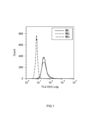
- Figure 1 shows a histogram measured by the above-mentioned flow cytometer.
- the vertical axis of Figure 1 shows the cell number, and the horizontal axis shows the fluorescence intensity.
- Examples 1 and 2 had a higher MFI than Example 3.
- a greater amount of FAM was introduced into the cells by the peptide fragment consisting of the amino acid sequence shown in SEQ ID NO: 1 or SEQ ID NO: 2. Therefore, it can be seen that the peptide fragment containing the amino acid sequence shown in SEQ ID NO: 1 or SEQ ID NO: 2 exhibits cell membrane permeability and can introduce foreign substances from the outside to the inside of the cells.
- a peptide fragment and a construct having the peptide fragment are provided that can introduce a foreign substance of interest from the outside of a eukaryotic cell (particularly various animal cells such as humans and other mammals that do not have a cell wall) to the inside of the cell.
- a eukaryotic cell particularly various animal cells such as humans and other mammals that do not have a cell wall
- the foreign substance of interest can be effectively introduced into the target cell, and biological tissues such as cells and organs into which the foreign substance has been introduced can be obtained.
- the peptide fragments or constructs disclosed herein can be used in drug delivery technology to provide therapeutic agents for various diseases.
Landscapes
- Chemical & Material Sciences (AREA)
- Organic Chemistry (AREA)
- Genetics & Genomics (AREA)
- Biochemistry (AREA)
- Biophysics (AREA)
- General Health & Medical Sciences (AREA)
- Health & Medical Sciences (AREA)
- Medicinal Chemistry (AREA)
- Molecular Biology (AREA)
- Proteomics, Peptides & Aminoacids (AREA)
- Life Sciences & Earth Sciences (AREA)
- Micro-Organisms Or Cultivation Processes Thereof (AREA)
- Peptides Or Proteins (AREA)
Abstract
Description
VLSRVVQLLREKLTRKK(配列番号1);および
VLSRVQLREKLTR(配列番号2);
のいずれかから成る。
かかる構成のペプチドフラグメントは、細胞膜透過性を有している。そのため、当該ペプチドフラグメントを含む構築物は、細胞外部から細胞内部(少なくとも細胞質内)へと導入される。
VLSRVVQLLREKLTRKK(配列番号1);および
VLSRVQLREKLTR(配列番号2);
のいずれかから成る。かかる構築物によれば、上記外来物質を真核細胞の外部から当該細胞の内部(例えば、少なくとも細胞質)に導入することができる。
また、ここで開示される技術は、本明細書に開示されている内容と当該分野における技術常識とに基づいて実施することができる。なお、本明細書において、アミノ酸をIUPAC-IUBガイドラインで示されたアミノ酸に関する命名法に準拠した1文字表記で表す場合がある。なお、本明細書において「アミノ酸残基」とは、特に言及する場合を除いて、ペプチド鎖のN末端アミノ酸及びC末端アミノ酸を包含する用語である。
なお、本明細書中に記載されるアミノ酸配列は、常に左側がN末端側であり右側がC末端側を表す。
本明細書における改変配列の典型例としては、例えば、1個、2個または3個のアミノ酸残基が保守的に置換したいわゆる同類置換(conservative amino acid replacement)によって生じた配列や、所定のアミノ酸配列について1個、2個または3個のアミノ酸残基が付加(挿入)した若しくは欠失した配列等が挙げられる。同類置換の典型例としては、例えば、塩基性アミノ酸残基が別の塩基性アミノ酸残基に置換した配列(例えばリジン残基とアルギニン残基との相互置換)等が挙げられる。
ポリペプチドを構成するアミノ酸残基数の上限は特に限定されないが、合成(生合成、化学合成)の容易性の観点から、例えば、1000以下、600以下、500以下、400以下、または300以下であることが好ましい。
なお、ペプチドフラグメントと同様、外来物質としてのポリペプチドは、その機能を保持する限りにおいて、1個または数個のアミノ酸残基が置換、欠失及び/又は付加(挿入)されて形成される改変アミノ酸配列を含んでいてもよい。
例えば、ペプチドフラグメントのN末端側に外来物質が結合している構築物の場合、ペプチドフラグメントのC末端側のアミノ酸残基のカルボキシル基がアミド化されていることが好ましい。また、例えば外来物質がポリペプチドであり、かかるポリペプチドがペプチドフラグメントのC末端側に結合している場合は、当該ポリペプチドのC末端アミノ酸残基のカルボキシル基をアミド化することが好ましい。
一般的な技法によって、この組換えベクターを所定の宿主細胞(例えばイースト、昆虫細胞、植物細胞)に導入し、所定の条件で当該宿主細胞又は該細胞を含む組織や個体を培養する。このことにより、目的とするペプチドを細胞内で生産させることができる。そして、宿主細胞(分泌された場合は培地中)からペプチド部分を単離し、必要に応じてリフォールディング、精製等を行うことによって、目的のペプチド部分を得ることができる。
なお、組換えベクターの構築方法及び構築した組換えベクターの宿主細胞への導入方法等は、当該分野で従来から行われている方法をそのまま採用すればよく、かかる方法自体は特に本技術を特徴付けるものではないため、詳細な説明は省略する。
或いは、無細胞タンパク質合成システム用の鋳型DNA(即ち、構築物のペプチド部分のアミノ酸配列をコードするヌクレオチド配列を含む合成遺伝子断片)を構築し、ペプチド部分の合成に必要な種々の化合物(ATP、RNAポリメラーゼ、アミノ酸類等)を使用し、いわゆる無細胞タンパク質合成システムを採用して目的のペプチド部分をインビトロで合成することができる。無細胞タンパク質合成システムについては、例えばShimizuらの論文(Shimizu et al., Nature Biotechnology, 19, 751-755(2001))、Madinらの論文(Madin et al., Proc. Natl. Acad. Sci. USA, 97(2), 559-564(2000))が参考になる。これら論文に記載された技術に基づいて、本願出願時点において既に多くの企業がポリペプチドの受託生産を行っており、また、無細胞タンパク質合成用キット(例えば、日本の(株)セルフリーサイエンスから入手可能)が市販されている。
なお、外来物質としての核酸についても、上述した製造方法と同様に準備することができる。
上記担体としては、例えば、希釈剤、賦形剤等としてペプチド医薬において一般的に使用される担体が好ましい。かかる担体としては、外来物質導入用構築物の用途や形態に応じて適宜異なり得るが、典型的には、水、生理学的緩衝液、種々の有機溶媒が挙げられる。また、かかる担体は、適当な濃度のアルコール(エタノール等)水溶液、グリセロール、オリーブ油のような不乾性油であり得、或いはリポソームであってもよい。また、医薬用組成物に含有させ得る副次的成分としては、種々の充填剤、増量剤、結合剤、付湿剤、表面活性剤、色素、香料等が挙げられる。
構築物(主成分)および種々の担体(副成分)を材料にして種々の形態の薬剤(組成物)を調製するプロセス自体は従来公知の方法に準じればよく、かかる製剤方法自体は本技術を特徴付けるものでもないため詳細な説明は省略する。処方に関する詳細な情報源として、例えばComprehensive Medicinal Chemistry, Corwin Hansch監修,Pergamon Press刊(1990)が挙げられる。
(1)ここで開示される構築物を用意する工程と、
(2)上記構築物を、目的とする真核細胞を含む試料中に供給する工程と
を包含する。また、ここで開示される方法では、さらに、上記(2)の工程の後、(3)の工程として、上記構築物が供給された試料をインキュベートして、該試料中の真核細胞の内部にかかる構築物を導入する工程を含み得る。
、真核細胞を含む試料中に供給する。インビボにおいて、かかる組成物は、その形態および目的に応じた方法や用量で使用することができる。例えば、液剤として、静脈内、筋肉内、皮下、皮内若しくは腹腔内への注射によって患者(即ち生体)の患部(例えば悪性腫瘍組織、ウイルス感染組織、炎症組織等)に所望する量だけ投与することができる。あるいは、錠剤等の固体形態のものや軟膏等のゲル状若しくは水性ジェリー状のものを、直接所定の組織(即ち、例えば腫瘍細胞、ウイルス感染細胞、炎症細胞等を含む組織や器官等の患部)に投与することができる。あるいは、錠剤等の固体形態のものは経口投与することができる。経口投与の場合は、消化管内での消化酵素分解を抑止すべくカプセル化や保護(コーティング)材の適用が好ましい。
なお、インビトロにおける導入方法について、一例を後述の試験例において示している。
項1:以下のアミノ酸配列:
VLSRVVQLLREKLTRKK(配列番号1);および
VLSRVQLREKLTR(配列番号2);
のいずれかから成る、ペプチドフラグメント。
項2:
ペプチドフラグメントと、
上記ペプチドフラグメントのN末端側及び/又はC末端側に結合した外来物質と
を含む構築物であって、
上記ペプチドフラグメントが、以下のアミノ酸配列:
VLSRVVQLLREKLTRKK(配列番号1);および
VLSRVQLREKLTR(配列番号2);
のいずれかから成る、構築物。
項3:上記外来物質が、ポリペプチド、核酸、色素および薬剤から成る群より選択される少なくとも1種の有機化合物である、項2に記載の構築物。
項4:上記外来物質が、上記ペプチドフラグメントのC末端側に結合している、項2または3に記載の構築物。
項5:
真核細胞の外部から該細胞の内部に目的とする外来物質をインビトロにおいて導入する方法であって、
(1)項2~4のいずれか一項に記載の構築物を用意する工程と、
(2)上記構築物を、目的とする真核細胞を含む試料中に供給する工程と
を含む方法。
項6:上記構築物を導入する対象の上記真核細胞が哺乳類細胞である、項5に記載の方法。
例1~2において、それぞれ表1に示す構築物を準備した。例1では、N末端のバリン残基のアミノ基がアセチル化されている配列番号1に示すアミノ酸配列から成るペプチドフラグメント(合成ペプチド)と、該ペプチドフラグメントのC末端側に結合された蛍光色素であるFAM(C21H12O7:5(6)-Carboxyfluorescein、分子量376.3、励起波長495nm、蛍光波長520nm)とから構成される構築物1を準備した。例2では、N末端のバリン残基のアミノ基がアセチル化されている配列番号2に示すアミノ酸配列から成る合成ペプチドと、該合成ペプチドのC末端側に結合された蛍光色素であるFAMとから構成される構築物2を準備した。構築物1をジメチルスルホキシド(DMSO)で希釈し、構築物1の濃度が2mMのサンプル溶液1を調製した。同様に、構築物2をDMSOで希釈し、構築物2の濃度が2mMのサンプル溶液2を調製した。また、蛍光色素のFAMをDMSOで溶解した2mMのFAM溶液を調製した。
真核細胞としてNSC-34細胞(mouse motor neuron-like hybrid cell line)を使用し、上記調製した構築物の細胞膜透過性を評価した。
NSC-34細胞を培養培地である10%FBS(fetal bovine serum)含有DMEM(Dulbecco’s modified Eagle’s medium(富士フィルム和光純薬株式会社製、Cat No. 044-29765))で培養した。
培養プレートに接着したNSC-34細胞をPBSで洗浄後、0.25%トリプシン/EDTA溶液を添加し、37℃中で3分間インキュベートを行った。該インキュベート後、上記10%FBS含有DMEMを加え、トリプシンを不活性化させた後、150×gで5分間の遠心分離を行い細胞を沈殿させた。遠心分離によって生じた上清を取り除いた後、沈殿(細胞ペレット)に上記10%FBS含有DMEMを加え、凡そ2×105cells/mLの細胞懸濁液を調製した。該細胞懸濁液を市販の6穴(ウェル)プレート(AGCテクノグラス株式会社製)のウェルに1mL加え、細胞を播種し(凡そ2×105cells/ウェル)、細胞がウェルの底面に接着するまで凡そ2~3時間インキュベートした。その後、上記調製した2mMサンプル溶液1を上記10%FBS含有DMEMで希釈し、サンプル濃度が20μMのサンプル溶液1を準備した。そして、該ウェルに上記20μMサンプル溶液1を1mL添加した(即ち、ウェル中の培養液の構築物1の濃度が10μM、DMSO濃度が0.5%となるようにした)。細胞を5%CO2条件下で、37℃で20時間インキュベートを行った。
かかる解析のために、上記得られた細胞ペレットを50μLのOn-chip T bufferで懸濁し、解析用の細胞懸濁液を用意した。
例2では、サンプル溶液1の代わりにサンプル溶液2を用いた以外は例1と同様に実施した。
例3では、サンプル溶液1の代わりにFAM溶液を使用した以外は例1と同様に実施した。なお、かかるFAM溶液の濃度はサンプル溶液1の濃度(即ち、ウェル中の培養液のFAM濃度が10μM、DMSO濃度が0.5%)と同じになるように用いた。

Claims (6)
- 以下のアミノ酸配列:
VLSRVVQLLREKLTRKK(配列番号1);および
VLSRVQLREKLTR(配列番号2);
のいずれかから成る、ペプチドフラグメント。 - ペプチドフラグメントと、
前記ペプチドフラグメントのN末端側及び/又はC末端側に結合した外来物質と
を含む構築物であって、
前記ペプチドフラグメントが、以下のアミノ酸配列:
VLSRVVQLLREKLTRKK(配列番号1);および
VLSRVQLREKLTR(配列番号2);
のいずれかから成る、
構築物。 - 前記外来物質が、ポリペプチド、核酸、色素および薬剤から成る群より選択される少なくとも1種の有機化合物である、請求項2に記載の構築物。
- 前記外来物質が、前記ペプチドフラグメントのC末端側に結合している、請求項2に記載の構築物。
- 真核細胞の外部から該細胞の内部に目的とする外来物質をインビトロにおいて導入する方法であって、
(1)請求項2~4のいずれか一項に記載の構築物を用意する工程と、
(2)前記構築物を、目的とする真核細胞を含む試料中に供給する工程と
を含む方法。 - 前記構築物を導入する対象の前記真核細胞が哺乳類細胞である、請求項5に記載の方法。
Priority Applications (2)
| Application Number | Priority Date | Filing Date | Title |
|---|---|---|---|
| JP2025520594A JPWO2024237245A1 (ja) | 2023-05-17 | 2024-05-13 | |
| EP24807197.9A EP4714964A1 (en) | 2023-05-17 | 2024-05-13 | Peptide fragment and use thereof |
Applications Claiming Priority (2)
| Application Number | Priority Date | Filing Date | Title |
|---|---|---|---|
| JP2023081452 | 2023-05-17 | ||
| JP2023-081452 | 2023-05-17 |
Publications (1)
| Publication Number | Publication Date |
|---|---|
| WO2024237245A1 true WO2024237245A1 (ja) | 2024-11-21 |
Family
ID=93519677
Family Applications (1)
| Application Number | Title | Priority Date | Filing Date |
|---|---|---|---|
| PCT/JP2024/017702 Ceased WO2024237245A1 (ja) | 2023-05-17 | 2024-05-13 | ペプチドフラグメント及びその利用 |
Country Status (3)
| Country | Link |
|---|---|
| EP (1) | EP4714964A1 (ja) |
| JP (1) | JPWO2024237245A1 (ja) |
| WO (1) | WO2024237245A1 (ja) |
Citations (6)
| Publication number | Priority date | Publication date | Assignee | Title |
|---|---|---|---|---|
| WO2014152391A1 (en) * | 2013-03-15 | 2014-09-25 | Apellis Pharmaceuticals, Inc. | Cell-penetrating compstatin analogs and uses thereof |
| JP2021508503A (ja) * | 2018-01-03 | 2021-03-11 | サピエンス・セラピューティクス・インコーポレーテッド | Atf5ペプチド多様体及びそれらの使用 |
| JP2022014707A (ja) | 2020-07-07 | 2022-01-20 | 東亞合成株式会社 | キャリアペプチドフラグメントおよびその利用 |
| JP2022047613A (ja) * | 2020-09-14 | 2022-03-25 | 東亞合成株式会社 | キャリアペプチドフラグメントおよびその利用 |
| JP2022079874A (ja) * | 2020-11-17 | 2022-05-27 | 東亞合成株式会社 | キャリアペプチドフラグメントおよびその利用 |
| JP2023081452A (ja) | 2021-12-01 | 2023-06-13 | 株式会社ショウワ | 洗浄装置 |
-
2024
- 2024-05-13 EP EP24807197.9A patent/EP4714964A1/en active Pending
- 2024-05-13 WO PCT/JP2024/017702 patent/WO2024237245A1/ja not_active Ceased
- 2024-05-13 JP JP2025520594A patent/JPWO2024237245A1/ja active Pending
Patent Citations (6)
| Publication number | Priority date | Publication date | Assignee | Title |
|---|---|---|---|---|
| WO2014152391A1 (en) * | 2013-03-15 | 2014-09-25 | Apellis Pharmaceuticals, Inc. | Cell-penetrating compstatin analogs and uses thereof |
| JP2021508503A (ja) * | 2018-01-03 | 2021-03-11 | サピエンス・セラピューティクス・インコーポレーテッド | Atf5ペプチド多様体及びそれらの使用 |
| JP2022014707A (ja) | 2020-07-07 | 2022-01-20 | 東亞合成株式会社 | キャリアペプチドフラグメントおよびその利用 |
| JP2022047613A (ja) * | 2020-09-14 | 2022-03-25 | 東亞合成株式会社 | キャリアペプチドフラグメントおよびその利用 |
| JP2022079874A (ja) * | 2020-11-17 | 2022-05-27 | 東亞合成株式会社 | キャリアペプチドフラグメントおよびその利用 |
| JP2023081452A (ja) | 2021-12-01 | 2023-06-13 | 株式会社ショウワ | 洗浄装置 |
Non-Patent Citations (4)
| Title |
|---|
| "Comprehensive Medicinal Chemistry", 1990, PERGAMON PRESS |
| MADIN ET AL., PROC. NATL. ACAD. SCI. USA, vol. 97, no. 2, 2000, pages 559 - 564 |
| See also references of EP4714964A1 |
| SHIMIZU ET AL., NATURE BIOTECHNOLOGY, vol. 19, 2001, pages 751 - 755 |
Also Published As
| Publication number | Publication date |
|---|---|
| JPWO2024237245A1 (ja) | 2024-11-21 |
| EP4714964A1 (en) | 2026-03-25 |
Similar Documents
| Publication | Publication Date | Title |
|---|---|---|
| JP7041853B1 (ja) | キャリアペプチドフラグメントおよびその利用 | |
| JP7675328B2 (ja) | 核小体移行性キャリアペプチドフラグメントおよびその利用 | |
| JP7634153B2 (ja) | キャリアペプチドフラグメントおよびその利用 | |
| US20250262333A1 (en) | Construct for Transferring Foreign Substance, and Use Thereof | |
| US12392770B2 (en) | Foreign substance introduction construct and use thereof | |
| JP7792068B2 (ja) | ペプチドフラグメントおよびその利用 | |
| JP7523012B1 (ja) | ペプチドフラグメント及びその利用 | |
| WO2024237245A1 (ja) | ペプチドフラグメント及びその利用 | |
| WO2025033255A1 (ja) | ペプチドフラグメント及びその利用 | |
| WO2025033256A1 (ja) | ペプチドフラグメント及びその利用 | |
| WO2025063100A1 (ja) | ペプチドフラグメント及びその利用 | |
| WO2026034435A1 (ja) | ペプチドフラグメント及びその利用 | |
| US20260055138A1 (en) | Carrier peptide fragment and use thereof | |
| US20260125425A1 (en) | Carrier Peptide Fragment and Use Thereof | |
| WO2024084932A1 (ja) | キャリアペプチドフラグメント及びその利用 | |
| EP4585608A1 (en) | Carrier peptide fragment and use thereof | |
| EP4545552A1 (en) | Carrier peptide fragment and use thereof | |
| WO2024128081A1 (ja) | 合成ペプチド及び構築物 | |
| WO2024004599A1 (ja) | キャリアペプチドフラグメント及びその利用 | |
| WO2024128080A1 (ja) | 合成ペプチド及び構築物 | |
| WO2024128079A1 (ja) | 合成ペプチド及び構築物 | |
| WO2024018865A1 (ja) | キャリアペプチドフラグメント及びその利用 | |
| WO2022085547A1 (ja) | キャリアペプチドフラグメントおよびその利用 |
Legal Events
| Date | Code | Title | Description |
|---|---|---|---|
| 121 | Ep: the epo has been informed by wipo that ep was designated in this application |
Ref document number: 24807197 Country of ref document: EP Kind code of ref document: A1 |
|
| ENP | Entry into the national phase |
Ref document number: 2025520594 Country of ref document: JP Kind code of ref document: A |
|
| WWE | Wipo information: entry into national phase |
Ref document number: 2025520594 Country of ref document: JP |
|
| WWE | Wipo information: entry into national phase |
Ref document number: 2024807197 Country of ref document: EP |
|
| NENP | Non-entry into the national phase |
Ref country code: DE |
|
| ENP | Entry into the national phase |
Ref document number: 2024807197 Country of ref document: EP Effective date: 20251217 |
|
| ENP | Entry into the national phase |
Ref document number: 2024807197 Country of ref document: EP Effective date: 20251217 |
|
| ENP | Entry into the national phase |
Ref document number: 2024807197 Country of ref document: EP Effective date: 20251217 |
|
| ENP | Entry into the national phase |
Ref document number: 2024807197 Country of ref document: EP Effective date: 20251217 |
|
| ENP | Entry into the national phase |
Ref document number: 2024807197 Country of ref document: EP Effective date: 20251217 |
|
| ENP | Entry into the national phase |
Ref document number: 2024807197 Country of ref document: EP Effective date: 20251217 |
|
| ENP | Entry into the national phase |
Ref document number: 2024807197 Country of ref document: EP Effective date: 20251217 |
|
| ENP | Entry into the national phase |
Ref document number: 2024807197 Country of ref document: EP Effective date: 20251217 |
|
| WWP | Wipo information: published in national office |
Ref document number: 2024807197 Country of ref document: EP |