CN100344105C - Smooth restart method of carrier control level - Google Patents
Smooth restart method of carrier control level Download PDFInfo
- Publication number
- CN100344105C CN100344105C CNB031571425A CN03157142A CN100344105C CN 100344105 C CN100344105 C CN 100344105C CN B031571425 A CNB031571425 A CN B031571425A CN 03157142 A CN03157142 A CN 03157142A CN 100344105 C CN100344105 C CN 100344105C
- Authority
- CN
- China
- Prior art keywords
- resource manager
- network resource
- link information
- restarting
- request
- Prior art date
- Legal status (The legal status is an assumption and is not a legal conclusion. Google has not performed a legal analysis and makes no representation as to the accuracy of the status listed.)
- Expired - Fee Related
Links
Images


Landscapes
- Data Exchanges In Wide-Area Networks (AREA)
Abstract
本发明公开了一种承载控制层的平滑重启方法,该方法包括:重启的承载网资源管理器向与其直接连接的网络设备发送资源同步请求;网络设备如果不能识别收到的资源同步请求,则向当前重启的承载网资源管理器发送同步拒绝响应,并结束同步处理;如果能识别,则向当前重启的承载网资源管理器发送本网络设备中所有与当前重启的承载网资源管理器相关的连接信息,当前重启的承载网资源管理器保存收到的连接信息。本发明方案使重启后的承载网资源管理器可以从相邻设备获取丢失的连接信息,因此可以保证该承载网资源管理器在重启后能继续重启前的工作,从而提高了承载控制层的鲁棒性,且增强了网络运行的稳定性。
The invention discloses a smooth restart method of a bearer control layer. The method comprises: the restarted bearer network resource manager sends a resource synchronization request to a network device directly connected to it; if the network device cannot recognize the received resource synchronization request, then Send a synchronization rejection response to the currently restarted bearer network resource manager, and end the synchronization process; if it can be identified, send all the information related to the currently restarted bearer network resource manager in the network device to the currently restarted bearer network resource manager Connection information, the currently restarted bearer network resource manager saves the received connection information. The solution of the present invention enables the restarted bearer network resource manager to obtain lost connection information from adjacent devices, thus ensuring that the bearer network resource manager can continue the work before restarting after restarting, thereby improving the robustness of the bearer control layer. Stickiness, and enhance the stability of network operation.
Description
技术领域technical field
本发明涉及设备重启技术,更确切地说是涉及承载控制层的平滑重启方法。The invention relates to a device restart technology, more specifically, to a smooth restart method of a bearer control layer.
背景技术Background technique
随着Internet网络规模的不断增大,各种各样的网络服务争相涌现,各种先进的多媒体系统层出不穷,这导致Internet网络需要经常发送突发性高的文件传输协议(FTP)或含有图像文件的超文本传输协议(HTTP)等多媒体业务。对于网络中的实时业务来说,由于其对网络的传输时延、延时抖动等特性较为敏感,因此网络在发送FTP或HTTP等业务时,对实时业务的影响比较大。而且,多媒体业务还占去了大量的网络带宽,使现有网络中需要保证带宽的关键业务很难被可靠地传输。With the continuous increase of the scale of the Internet network, various network services emerge one after another, and various advanced multimedia systems emerge in an endless stream, which leads to the need for the Internet network to frequently send high-burst File Transfer Protocol (FTP) or images containing images. Hypertext Transfer Protocol (HTTP) and other multimedia services for files. For real-time services on the network, since they are sensitive to characteristics such as network transmission delay and delay jitter, when the network sends services such as FTP or HTTP, it has a relatively large impact on real-time services. Moreover, multimedia services also occupy a large amount of network bandwidth, making it difficult to reliably transmit key services that require guaranteed bandwidth in existing networks.
针对上述问题,业界提出了各种服务质量(QoS)技术,比如,因特网工程任务组(IETF)就建立了很多的服务模型和机制以满足网络的需求。在这些QoS技术中,业界比较认可的是IETF提出的在网络的接入和边缘使用综合业务模型(Int-Serv)、在网络的核心使用区分业务模型(Diff-Serv)的技术方案。由于该方案中的Diff-Serv仅设定了优先登记保障QoS,因此使用该方案的网络虽然具有线路利用率高的特点,但是整个网络的传输可靠性和传输效果很难保证。为解决这个问题,业界提出了为Diff-Serv引入一个独立的承载控制层的方案,即在原有Diff-Serv的基础上提出了有独立承载控制层的Diff-Serv模型。该解决方案是在Diff-Serv的业务控制层和承载网络层之间设置承载控制层,所设置的承载控制层由多个承载网资源管理器组成,承载网资源管理器可以是带宽代理器(BB,Bandwidth Broker),也可以是QoS服务器、承载网资源管理器(CM)或其他网络设备,Diff-Serv中的每个承载网络对应一个承载网资源管理器,由承载网资源管理器配置该承载网络的管理规则和网络拓扑,并为用户申请的业务分配带宽资源,各个承载网资源管理器之间通过信令传递用户申请业务带宽的请求和结果,以及承载网资源管理器为用户的业务申请分配的路径信息。In response to the above problems, various quality of service (QoS) technologies have been proposed in the industry. For example, the Internet Engineering Task Force (IETF) has established many service models and mechanisms to meet the requirements of the network. Among these QoS technologies, the technical scheme proposed by the IETF to use the integrated service model (Int-Serv) at the access and edge of the network and the differentiated service model (Diff-Serv) at the core of the network is more recognized by the industry. Since Diff-Serv in this scheme only sets priority registration guarantee QoS, although the network using this scheme has the characteristics of high line utilization, it is difficult to guarantee the transmission reliability and transmission effect of the entire network. To solve this problem, the industry proposes a solution to introduce an independent bearer control layer for Diff-Serv, that is, a Diff-Serv model with an independent bearer control layer is proposed on the basis of the original Diff-Serv. The solution is to set a bearer control layer between the service control layer and the bearer network layer of Diff-Serv. The set bearer control layer is composed of a plurality of bearer network resource managers, and the bearer network resource managers can be bandwidth agents ( BB, Bandwidth Broker), or it can be a QoS server, a bearer network resource manager (CM) or other network devices. Each bearer network in Diff-Serv corresponds to a bearer network resource manager, which is configured by the bearer network resource manager. The management rules and network topology of the bearer network, and allocate bandwidth resources for the services applied by users. Each bearer network resource manager transmits the request and result of the user's application for service bandwidth through signaling, and the bearer network resource manager provides the service for the user. Path information for the application assignment.
下面结合附图对该具有独立承载控制层的Diff-Serv模型进行说明。The Diff-Serv model with an independent bearer control layer will be described below with reference to the accompanying drawings.
Diff-Serv模型中的每个承载网资源管理器管理承载网络中的部分区域,该区域为它的管理域。在图1所示的Diff-Serv模型中,管理域101对应承载网资源管理器102,承载网资源管理器102与管理域101中的边缘路由器(ER)103连接,由承载网资源管理器102对管理域101进行网络资源和拓扑管理等处理;类似地,管理域112对应承载网资源管理器111,承载网资源管理器111与管理域112中的路由器113连接;管理域109对应承载网资源管理器108,承载网资源管理器108与管理域109中的ER 110连接。承载网资源管理器102和承载网资源管理器108通过承载网资源管理器111连接。用户(UE)104与呼叫代理(CA)105连接,该CA 105与承载网资源管理器102连接,由用户UE104发来的请求经承载网资源管理器102对应的管理域101进入该承载网络,因此,如果UE 104为主叫用户,则承载网资源管理器102为UE 104的源承载网资源管理器;UE 106与CA107连接,该CA 107与承载网资源管理器108连接,由用户UE 106发来的请求经承载网资源管理器108对应的管理域109进入该承载网络,因此,如果UE 106为主叫用户,则承载网资源管理器108为UE 106的源承载网资源管理器。Each bearer network resource manager in the Diff-Serv model manages a part of the bearer network, which is its management domain. In the Diff-Serv model shown in Figure 1, the
承载控制层可以为用户、CA或网络维护人员的业务请求分配资源。如果以图1中的UE 104为主叫UE,UE 106为被叫UE,则承载网资源管理器102为UE 104的源承载网资源管理器,承载网资源管理器108为目的承载网资源管理器。The bearer control layer can allocate resources for the service requests of users, CAs or network maintenance personnel. If UE 104 in FIG. 1 is the calling UE and UE 106 is the called UE, the bearer network resource manager 102 is the source bearer network resource manager of UE 104, and the bearer
如果承载控制层中的承载网资源管理器是CM,则承载控制层为业务请求分配资源是通过在源CM和目的CM之间建立连接实现的。在建立连接时,源CM逐跳向下游CM发送资源请求,直至目的CM;目的CM再返回资源响应,直至源CM。在承载控制层建立完连接后,源CM将本次呼叫的呼叫信息、QoS参数,以及本次连接建立过程中确定的路径信息发送给本次业务请求的入口ER。在上述建立过程中,每个CM为该次业务请求分配本管理域内和其与下游CM对应管理域之间的域间的路径,并为该次业务请求预留带宽信息。If the bearer network resource manager in the bearer control layer is a CM, then the bearer control layer allocates resources for service requests by establishing a connection between the source CM and the destination CM. When establishing a connection, the source CM sends a resource request to the downstream CM hop by hop until the destination CM; the destination CM returns a resource response until the source CM. After the connection is established at the bearer control layer, the source CM sends the call information, QoS parameters of this call, and the path information determined during the connection establishment process to the ingress ER of this service request. In the above establishment process, each CM allocates an inter-domain path within its own management domain and the management domain corresponding to the downstream CM for the service request, and reserves bandwidth information for the service request.
上述源CM可以直接由CA确定,也可以在承载控制层中通过代理方式确定,如果是后者,则该源CM还应该以发送代理资源请求的路径返回代理资源响应,直至与CA直接连接的CM,该CM收到代理资源响应后,向CA返回连接资源响应。The above-mentioned source CM can be directly determined by the CA, or can be determined through a proxy in the bearer control layer. If it is the latter, the source CM should also return the proxy resource response through the path that sends the proxy resource request, until it is directly connected to the CA. The CM returns the connection resource response to the CA after receiving the proxy resource response.
不管承载控制层中的承载网资源管理器具体是哪种设备,在建立完当前连接后,承载网资源管理器都需要根据自身保存的连接信息对已建立的连接进行维护和管理。比如,承载网资源管理器对当前连接的状态进行维护,或修改已设置的带宽信息等。No matter what kind of equipment the bearer network resource manager in the bearer control layer is, after the current connection is established, the bearer network resource manager needs to maintain and manage the established connection according to the connection information saved by itself. For example, the resource manager of the bearer network maintains the state of the current connection, or modifies the set bandwidth information.
因此,在上述建立连接的过程中,每个承载网资源管理器都需要保存本次连接过程中与连接相关的信息。如果某个承载网资源管理器突然掉电或出现其他故障,则其所保存的连接信息会因故障而全部丢失,而目前并没有在承载网资源管理器恢复后重新获取自身保存的连接信息的方法,这样,即使该承载网资源管理器重新恢复正常,也无法继续建立当前的连接,且无法维护和管理已经建立的连接,对新的资源请求由于丢失现有资源使用情况,所以无法准确分配资源,这必然会影响承载网资源管理器及网络运行的稳定性。Therefore, during the above connection establishment process, each bearer network resource manager needs to save connection-related information during this connection process. If a bearer network resource manager suddenly loses power or other failures occur, all the connection information saved by it will be lost due to the failure, and currently there is no way to retrieve the connection information saved by the bearer network resource manager after recovery In this way, even if the bearer network resource manager returns to normal, it cannot continue to establish the current connection, and cannot maintain and manage the established connection, and the new resource request cannot be allocated accurately due to the loss of the existing resource usage. resources, which will inevitably affect the stability of bearer network resource managers and network operations.
发明内容Contents of the invention
有鉴于此,本发明的主要目的在于提供一种承载网资源管理器在重启后获取当前网络信息的方法,使本承载网资源管理器在重启后能尽力恢复原有的信息,并能更好地处理新的资源请求。In view of this, the main purpose of the present invention is to provide a method for the resource manager of the bearer network to obtain current network information after restarting, so that the resource manager of the bearer network can try its best to restore the original information after restarting, and can better Handle new resource requests efficiently.
为达到以上目的,本发明的技术方案是这样实现的:一种承载控制层的平滑重启方法,该方法包括以下步骤:In order to achieve the above object, the technical solution of the present invention is implemented in the following way: a method for smooth restart of the bearer control layer, the method includes the following steps:
a.重启的承载网资源管理器向与其直接连接的网络设备发送资源同步请求;a. The restarted bearer network resource manager sends a resource synchronization request to the network device directly connected to it;
b.网络设备收到资源同步请求后,判断自身是否能识别该资源同步请求,如果能识别,则向当前重启的承载网资源管理器发送本网络设备中所有与当前重启的承载网资源管理器相关的连接信息,并进入步骤c,否则,向当前重启的承载网资源管理器发送同步拒绝响应,并结束同步处理;b. After the network device receives the resource synchronization request, it judges whether it can recognize the resource synchronization request. If it can recognize it, it sends all the current restarted bearer network resource managers in this network device to the currently restarted bearer network resource manager. Relevant connection information, and enter step c, otherwise, send a synchronization rejection response to the currently restarted bearer network resource manager, and end the synchronization process;
c.当前重启的承载网资源管理器保存步骤b中发送的连接信息。c. The currently restarted bearer network resource manager saves the connection information sent in step b.
所述步骤a中,重启的承载网资源管理器在发送的资源同步请求中设置用于标识客户端类型的请求标识;In the step a, the restarted bearer network resource manager sets a request identifier for identifying the client type in the resource synchronization request sent;
则所述步骤b中,网络设备判断自身是否能识别资源同步请求中的请求标识。Then in the step b, the network device judges whether it can recognize the request identifier in the resource synchronization request.
步骤b所述网络设备在发送所有的连接信息之后,可以进一步包括,向当前重启的承载网资源管理器返回同步完成响应。After sending all the connection information, the network device in step b may further include returning a synchronization completion response to the currently restarted bearer network resource manager.
所述步骤b中,所述网络设备在发送的连接信息中设置用于标识本消息是否为最后一条连接信息消息的标识位。In the step b, the network device sets an identification bit for identifying whether this message is the last connection information message in the sent connection information.
该方法还可以进一步包括:所述网络设备判断发送的连接信息是否为最后一条连接信息消息,如果是,则将该重发消息中的标识位设置为特定值,否则,将该重发消息中的标识位设置为与该特定值不同的值。The method may further include: the network device judging whether the sent connection information is the last connection information message, if yes, setting the identification bit in the retransmission message to a specific value, otherwise, setting The flag for is set to a value different from that specific value.
所述与重启的承载网资源管理器直接连接的网络设备是当前重启的承载网资源管理器对应管理域内的边缘路由器,则所述发送连接信息为:发送呼叫信息、QoS参数和已建立的连接的路径信息。The network device directly connected to the restarted bearer network resource manager is an edge router in the management domain corresponding to the restarted bearer network resource manager, and the sending connection information is: sending call information, QoS parameters and established connections path information.
所述与重启的承载网资源管理器直接连接的设备是承载网资源管理器,则所述发送连接信息为:发送资源请求、或代理资源请求、或已建立的连接的路径信息,或三者任意组合。The device directly connected to the restarted bearer network resource manager is a bearer network resource manager, and the sending connection information is: sending a resource request, or a proxy resource request, or path information of an established connection, or the three random combination.
所述发送连接信息可以进一步包括:发送资源响应,和/或代理资源响应。The sending connection information may further include: sending a resource response, and/or a proxy resource response.
与重启的承载网资源管理器直接连接的网络设备是呼叫代理,则所述发送连接信息为:发送其曾向当前重启的承载网资源管理器发送的连接资源请求。The network device directly connected to the restarted bearer network resource manager is a call proxy, and the sending of the connection information is: sending the connection resource request that it once sent to the currently restarted bearer network resource manager.
所述步骤c中,所述重启的承载网资源管理器针对每次呼叫对连接信息进行保存时,首先判断已收到的连接信息是否存在与当前收到的连接信息冲突的连接信息,如果有,则删除与本次呼叫对应的所有连接信息,否则,保存当前收到的连接信息。In the step c, when the restarted bearer network resource manager saves the connection information for each call, it first judges whether the received connection information conflicts with the currently received connection information, and if there is , then delete all connection information corresponding to this call, otherwise, save the currently received connection information.
该方法还可以进一步包括:所述重启的承载网资源管理器在删除与本次呼叫对应的所有连接信息时,向与本次呼叫相关的网络设备发送重新获取本次呼叫的连接信息的请求消息,收到该请求消息的网络设备重发自身保存的、且与本次呼叫对应的连接信息。The method may further include: when the restarted bearer network resource manager deletes all the connection information corresponding to the current call, send a request message for reacquiring the connection information of the current call to the network device related to the current call , the network device receiving the request message resends the connection information stored by itself and corresponding to this call.
本发明方案通过重启后的承载网资源管理器向与其直接连接的其他网络设备发送资源同步请求,并保存其他网络设备收到资源同步请求后反馈的连接信息,使承载网资源管理器在因掉电或其他故障导致重启后,可以从相邻的网络设备中获取重启之前的连接信息,从而保证了该承载网资源管理器在重启后能继续故障前的连接建立及维护管理等工作。并且,由于重启后的承载网资源管理器获取了现有的资源分配情况,因此可以为新的资源请求准确地分配资源。可见,本发明方案提高了承载控制层的鲁棒性,增强了网络运行的稳定性,且本发明方案实现简单、易于维护管理。The scheme of the present invention sends a resource synchronization request to other network devices directly connected to it through the restarted bearer network resource manager, and saves the connection information fed back by other network devices after receiving the resource synchronization request, so that the bearer network resource manager After restarting due to power or other faults, the connection information before restarting can be obtained from adjacent network devices, thus ensuring that the resource manager of the bearer network can continue the connection establishment, maintenance and management work before the fault after restarting. Moreover, since the restarted bearer network resource manager obtains the existing resource allocation situation, it can accurately allocate resources for new resource requests. It can be seen that the solution of the present invention improves the robustness of the bearer control layer and enhances the stability of network operation, and the solution of the present invention is simple to implement and easy to maintain and manage.
附图说明Description of drawings
图1为目前的具有独立承载控制层的Diff-Serv模型的示意图;FIG. 1 is a schematic diagram of a current Diff-Serv model with an independent bearer control layer;
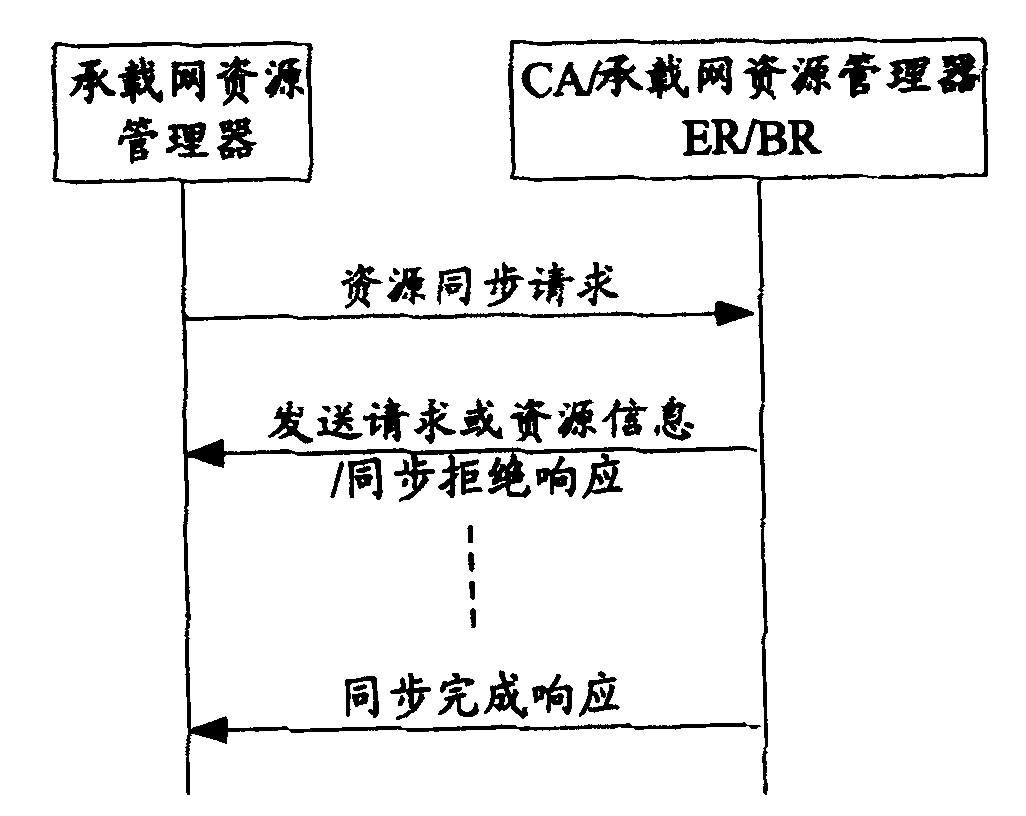
图2为本发明方案实现资源同步的消息流时序图;Fig. 2 is a message flow sequence diagram for implementing resource synchronization in the scheme of the present invention;
图3为本发明方案实现资源同步的流程图。Fig. 3 is a flow chart of resource synchronization implemented by the solution of the present invention.
具体实施方式Detailed ways
下面结合附图及具体实施例对本发明方案作进一步详细的说明。The scheme of the present invention will be further described in detail below in conjunction with the accompanying drawings and specific embodiments.
如果某个承载网资源管理器在掉电或出现故障后重启,则向与自身直接连接的网络设备发送用于获取连接信息的资源同步请求,收到该资源同步请求的网络设备将自身保存的与连接相关的信息发送给该承载网资源管理器,承载网资源管理器根据收到的与连接相关的信息恢复自身的连接信息。If a bearer network resource manager restarts after power failure or failure, it will send a resource synchronization request for obtaining connection information to the network device directly connected to itself, and the network device that receives the resource synchronization request will save the The connection-related information is sent to the bearer network resource manager, and the bearer network resource manager restores its own connection information according to the received connection-related information.
该实现资源同步的消息流时序参见图2,对应的流程参见图3,通过以下步骤实现:Refer to Figure 2 for the message flow sequence to realize resource synchronization, and refer to Figure 3 for the corresponding process, which is realized through the following steps:
步骤301、承载网资源管理器重启后,向与其直接连接的网络设备发送用于获取连接信息的资源同步请求,所发送的资源同步请求中应包括用于标识客户端类型的请求标识。
如果重启的承载网资源管理器只与自身管理域内的ER及一些承载网资源管理器直接连接,则该重启的承载网资源管理器向与其直接连接的ER及承载网资源管理器分别发送资源同步请求。如果重启的承载网资源管理器还与CA连接,则其还应向CA发送资源同步请求。If the restarted bearer network resource manager is only directly connected to ERs and some bearer network resource managers in its own management domain, the restarted bearer network resource manager sends resource synchronization ask. If the restarted bearer network resource manager is still connected to the CA, it should also send a resource synchronization request to the CA.
步骤302~304、收到资源同步请求的网络设备判断自身是否能识别该资源同步请求中的请求标识,如果可以识别,则向当前重启的承载网资源管理器发送本网络设备中与该重启的承载网资源管理器相关的连接信息,并进入步骤305,否则,向当前重启的承载网资源管理器返回同步拒绝响应,并结束当前同步流程。Steps 302-304, the network device receiving the resource synchronization request judges whether it can recognize the request identifier in the resource synchronization request, and if it can recognize it, sends the resource manager of the currently restarted bearer network to the resource manager of the restarted network device. connection information related to the bearer network resource manager, and go to step 305; otherwise, return a synchronization rejection response to the currently restarted bearer network resource manager, and end the current synchronization process.
与当前重启的承载网资源管理器直接连接的网络设备可能是ER、承载网资源管理器或CA,因此各种网络设备重发的连接信息有所不同。The network device directly connected to the currently restarted bearer network resource manager may be ER, bearer network resource manager or CA, so the connection information resent by various network devices is different.
以承载控制层由CM组成为例,则重启的承载网资源管理器是CM。对于ER来说,其发送的连接信息为自身保存的呼叫信息、QoS参数,以及已建立的连接的路径信息,这些连接信息都是当前重启的CM曾发送到该ER的。如果其收到过当前重启的CM下发的路径信息,则还将该路径信息再发送给当前重启的CM。对于CM来说,是将自身所保存的所有与当前重启的CM相关的连接信息发送给该当前重启的CM,该连接信息可能是自身曾收到的资源请求和响应,也可能是代理资源请求和响应,还可能是已经建立的路径信息等。对于CA来说,其发送的连接信息为自身曾发送给该重启的CM的所有连接资源请求。Taking the bearer control layer composed of CMs as an example, the restarted bearer network resource manager is the CM. For the ER, the connection information it sends is the call information saved by itself, QoS parameters, and the path information of the established connection. These connection information are sent to the ER by the currently restarted CM. If it has received the path information delivered by the currently restarted CM, it will also send the path information to the currently restarted CM. For the CM, it sends all the connection information related to the currently restarted CM saved by itself to the currently restarted CM. The connection information may be the resource request and response it has received, or it may be a proxy resource request. and response, and may also be established path information, etc. For the CA, the connection information it sends is all the connection resource requests it has sent to the restarted CM.
本步骤中的网络设备发送完自身保存的所有连接信息后,还应发送表示本网络设备中所有连接信息重发完毕的同步完成响应。为简化流程,这些网络设备也可以不发送同步完成响应,而是在上述发送的连接信息消息中增设一个用于标识本消息是否是最后一条连接信息消息的标识位,比如,如果本消息是最后一条连接信息消息,则将该消息中的标识位设置为某一个特定值,如果不是最后一条连接信息消息,则将该消息中的标识位设置为与前一特定值不同的值。比如,将最后一条消息中的标识位设置为1,其他消息中的标识位统一设置为0;或者,将最后一条消息中的标识位设置为0,其他消息中的标识位统一设置为1;或者,只设置最后一条消息的标识位为某个特定值,比如0xFF,其他消息中的标识位可以任意设置。After the network device in this step has sent all the connection information saved by itself, it should also send a synchronization completion response indicating that all connection information in the network device has been resent. In order to simplify the process, these network devices may not send a synchronization completion response, but add an identification bit to identify whether this message is the last connection information message in the connection information message sent above, for example, if this message is the last If it is a connection information message, the identification bit in the message is set to a specific value, and if it is not the last connection information message, the identification bit in the message is set to a value different from the previous specific value. For example, set the identification bit in the last message to 1, and set the identification bits in other messages to 0; or, set the identification bit in the last message to 0, and set the identification bits in other messages to 1; Or, only set the identification bit of the last message to a specific value, such as 0xFF, and the identification bits in other messages can be set arbitrarily.
步骤305、重启的承载网资源管理器保存收到的连接信息。
重启的承载网资源管理器往往从多个设备发送来的连接信息中获取针对某次呼叫的连接信息,如果不同设备发送来的针对同一次呼叫的连接信息之间有冲突,则重启的承载网资源管理器需要删除所有与该次呼叫相关的连接信息。为重新获取与该次呼叫对应的连接信息,重启的承载网资源管理器还可以向与该次呼叫相关的所有网络设备发送包含该次呼叫的呼叫标识的请求消息,请求网络设备重发与该次呼叫对应的连接信息。收到该请求消息的网络设备再次向该重启的承载网资源管理器发送与该次呼叫对应的连接信息。通过上述过程,该重启的承载网资源管理器可以恢复到故障前的状态。The restarted bearer network resource manager often obtains the connection information for a certain call from the connection information sent by multiple devices. If there is a conflict between the connection information for the same call sent by different devices, the restarted bearer network The resource manager needs to delete all connection information related to this call. In order to reacquire the connection information corresponding to the call, the restarted bearer network resource manager can also send a request message containing the call identifier of the call to all network devices related to the call, requesting the network device to resend the connection information related to the call. The connection information corresponding to the call. The network device that receives the request message sends the connection information corresponding to the call to the restarted bearer network resource manager again. Through the above process, the restarted bearer network resource manager can recover to the state before the failure.
以上所述仅为本发明方案的较佳实施例,并不用以限定本发明的保护范围。The above descriptions are only preferred embodiments of the solutions of the present invention, and are not intended to limit the protection scope of the present invention.
Claims (11)
Priority Applications (1)
| Application Number | Priority Date | Filing Date | Title |
|---|---|---|---|
| CNB031571425A CN100344105C (en) | 2003-09-16 | 2003-09-16 | Smooth restart method of carrier control level |
Applications Claiming Priority (1)
| Application Number | Priority Date | Filing Date | Title |
|---|---|---|---|
| CNB031571425A CN100344105C (en) | 2003-09-16 | 2003-09-16 | Smooth restart method of carrier control level |
Publications (2)
| Publication Number | Publication Date |
|---|---|
| CN1599325A CN1599325A (en) | 2005-03-23 |
| CN100344105C true CN100344105C (en) | 2007-10-17 |
Family
ID=34660216
Family Applications (1)
| Application Number | Title | Priority Date | Filing Date |
|---|---|---|---|
| CNB031571425A Expired - Fee Related CN100344105C (en) | 2003-09-16 | 2003-09-16 | Smooth restart method of carrier control level |
Country Status (1)
| Country | Link |
|---|---|
| CN (1) | CN100344105C (en) |
Families Citing this family (5)
| Publication number | Priority date | Publication date | Assignee | Title |
|---|---|---|---|---|
| CN100413254C (en) * | 2005-09-02 | 2008-08-20 | 华为技术有限公司 | Method for Realizing Resource State Synchronization in Network with Independent Bearer Control Layer |
| CN100396005C (en) * | 2005-10-24 | 2008-06-18 | 华为技术有限公司 | Method for synchronizing flows between bearer control layer and bearer layer equipment |
| CN100558055C (en) | 2006-11-10 | 2009-11-04 | 华为技术有限公司 | Method and router for reducing duration of error graceful restart state |
| CN101459573B (en) * | 2007-12-13 | 2012-05-23 | 华为技术有限公司 | Method, router and communication network for router smoothly restarting |
| CN105429777B (en) * | 2015-10-20 | 2019-02-19 | 北京小鸟听听科技有限公司 | Working condition restoration methods and device |
Citations (4)
| Publication number | Priority date | Publication date | Assignee | Title |
|---|---|---|---|---|
| WO2002011461A2 (en) * | 2000-07-31 | 2002-02-07 | Telefonaktiebolaget L M Ericsson (Publ) | DYNAMIC QoS MANAGEMENT IN DIFFERENTIATED SERVICES USING BANDWIDTH BROKERS, RSVP AGGREGATION AND LOAD CONTROL PROTOCOLS |
| CN1345148A (en) * | 2000-09-18 | 2002-04-17 | 阿尔卡塔尔加拿大公司 | Method and device for implementation of resynchronization of topological data base in communication network having topological state routing protocol |
| CN1360801A (en) * | 1999-04-12 | 2002-07-24 | 艾利森电话股份有限公司 | Gateway Location register fault recovery |
| US6498779B1 (en) * | 1998-05-22 | 2002-12-24 | Alcatel Canada Inc. | Multiple endpoint paths |
-
2003
- 2003-09-16 CN CNB031571425A patent/CN100344105C/en not_active Expired - Fee Related
Patent Citations (4)
| Publication number | Priority date | Publication date | Assignee | Title |
|---|---|---|---|---|
| US6498779B1 (en) * | 1998-05-22 | 2002-12-24 | Alcatel Canada Inc. | Multiple endpoint paths |
| CN1360801A (en) * | 1999-04-12 | 2002-07-24 | 艾利森电话股份有限公司 | Gateway Location register fault recovery |
| WO2002011461A2 (en) * | 2000-07-31 | 2002-02-07 | Telefonaktiebolaget L M Ericsson (Publ) | DYNAMIC QoS MANAGEMENT IN DIFFERENTIATED SERVICES USING BANDWIDTH BROKERS, RSVP AGGREGATION AND LOAD CONTROL PROTOCOLS |
| CN1345148A (en) * | 2000-09-18 | 2002-04-17 | 阿尔卡塔尔加拿大公司 | Method and device for implementation of resynchronization of topological data base in communication network having topological state routing protocol |
Also Published As
| Publication number | Publication date |
|---|---|
| CN1599325A (en) | 2005-03-23 |
Similar Documents
| Publication | Publication Date | Title |
|---|---|---|
| KR101371908B1 (en) | Intelligent media gateway selection for multimedia communication sessions | |
| US8891521B2 (en) | Triggering bandwidth reservation and priority remarking | |
| US8601138B2 (en) | Method for processing request for network address/port translation in communication network | |
| US20090327455A1 (en) | Resource configuration method, server, network equipment and network system | |
| US7506050B2 (en) | Method for checking transmission resources of a packet-oriented communication network when there are topology changes | |
| JP4090999B2 (en) | Correlating service quality requirements | |
| CN101188554B (en) | A method for dynamically establishing label switching path tunnel and allocating resource | |
| CN100344105C (en) | Smooth restart method of carrier control level | |
| CN100349419C (en) | Method of implementing resource allocation in bearer network | |
| KR20060065391A (en) | Apparatus and method for managing resources in a network | |
| EP1843537A1 (en) | A process method for dealing with device overload in the communication network | |
| CN100352215C (en) | Automatic detecting and processing method of label exchange path condition | |
| CN1599335A (en) | Method for detecting abnormal breaking of user talking | |
| US20030026291A1 (en) | Method and apparatus for the dynamic regulation of resource splitting over a plurality of data streams competing for these resources in a communications network | |
| CN1601965A (en) | Route path fault repairing method | |
| CN1735073A (en) | Method for distributing service mass resource according to signing service level | |
| CN100365992C (en) | Method for managing resource consistency among telecommunication equipment | |
| CN1897537A (en) | Method and device for realizing resource-request process between per-to-per entity in network | |
| CN100344107C (en) | Method for confirming fountainhead bearing network resource manager | |
| CN1874259A (en) | Implementation method for entity of carrying control function in network to send down control strategy | |
| CN1805364A (en) | Method for implementing resource allocation in bearer network | |
| CN1874344A (en) | Method for recognizing traffic flow in network with independent load supporting control layer | |
| CN100413254C (en) | Method for Realizing Resource State Synchronization in Network with Independent Bearer Control Layer | |
| CN1764151A (en) | Method for realizing service connection resource management | |
| CN1592254A (en) | Method for bearing step selecting route in controlling layer |
Legal Events
| Date | Code | Title | Description |
|---|---|---|---|
| C06 | Publication | ||
| PB01 | Publication | ||
| C10 | Entry into substantive examination | ||
| SE01 | Entry into force of request for substantive examination | ||
| C14 | Grant of patent or utility model | ||
| GR01 | Patent grant | ||
| CF01 | Termination of patent right due to non-payment of annual fee | ||
| CF01 | Termination of patent right due to non-payment of annual fee |
Granted publication date: 20071017 Termination date: 20180916 |