CN100369732C - Method for rotational molding of parts including a layer of thermoplastic foam - Google Patents
Method for rotational molding of parts including a layer of thermoplastic foam Download PDFInfo
- Publication number
- CN100369732C CN100369732C CNB038230704A CN03823070A CN100369732C CN 100369732 C CN100369732 C CN 100369732C CN B038230704 A CNB038230704 A CN B038230704A CN 03823070 A CN03823070 A CN 03823070A CN 100369732 C CN100369732 C CN 100369732C
- Authority
- CN
- China
- Prior art keywords
- layer
- mold
- temperature
- rotational molding
- heating
- Prior art date
- Legal status (The legal status is an assumption and is not a legal conclusion. Google has not performed a legal analysis and makes no representation as to the accuracy of the status listed.)
- Expired - Fee Related
Links
Images

Classifications
-
- B—PERFORMING OPERATIONS; TRANSPORTING
- B29—WORKING OF PLASTICS; WORKING OF SUBSTANCES IN A PLASTIC STATE IN GENERAL
- B29C—SHAPING OR JOINING OF PLASTICS; SHAPING OF MATERIAL IN A PLASTIC STATE, NOT OTHERWISE PROVIDED FOR; AFTER-TREATMENT OF THE SHAPED PRODUCTS, e.g. REPAIRING
- B29C41/00—Shaping by coating a mould, core or other substrate, i.e. by depositing material and stripping-off the shaped article; Apparatus therefor
- B29C41/02—Shaping by coating a mould, core or other substrate, i.e. by depositing material and stripping-off the shaped article; Apparatus therefor for making articles of definite length, i.e. discrete articles
- B29C41/22—Making multilayered or multicoloured articles
-
- B—PERFORMING OPERATIONS; TRANSPORTING
- B29—WORKING OF PLASTICS; WORKING OF SUBSTANCES IN A PLASTIC STATE IN GENERAL
- B29C—SHAPING OR JOINING OF PLASTICS; SHAPING OF MATERIAL IN A PLASTIC STATE, NOT OTHERWISE PROVIDED FOR; AFTER-TREATMENT OF THE SHAPED PRODUCTS, e.g. REPAIRING
- B29C41/00—Shaping by coating a mould, core or other substrate, i.e. by depositing material and stripping-off the shaped article; Apparatus therefor
- B29C41/34—Component parts, details or accessories; Auxiliary operations
- B29C41/46—Heating or cooling
-
- B—PERFORMING OPERATIONS; TRANSPORTING
- B29—WORKING OF PLASTICS; WORKING OF SUBSTANCES IN A PLASTIC STATE IN GENERAL
- B29C—SHAPING OR JOINING OF PLASTICS; SHAPING OF MATERIAL IN A PLASTIC STATE, NOT OTHERWISE PROVIDED FOR; AFTER-TREATMENT OF THE SHAPED PRODUCTS, e.g. REPAIRING
- B29C41/00—Shaping by coating a mould, core or other substrate, i.e. by depositing material and stripping-off the shaped article; Apparatus therefor
- B29C41/02—Shaping by coating a mould, core or other substrate, i.e. by depositing material and stripping-off the shaped article; Apparatus therefor for making articles of definite length, i.e. discrete articles
- B29C41/04—Rotational or centrifugal casting, i.e. coating the inside of a mould by rotating the mould
- B29C41/06—Rotational or centrifugal casting, i.e. coating the inside of a mould by rotating the mould about two or more axes
Landscapes
- Engineering & Computer Science (AREA)
- Mechanical Engineering (AREA)
- Moulding By Coating Moulds (AREA)
- Crushing And Grinding (AREA)
- Perforating, Stamping-Out Or Severing By Means Other Than Cutting (AREA)
- Laminated Bodies (AREA)
- Application Of Or Painting With Fluid Materials (AREA)
- Manufacture Of Porous Articles, And Recovery And Treatment Of Waste Products (AREA)
- Rolls And Other Rotary Bodies (AREA)
Abstract
Description
技术领域technical field
本发明涉及一种包括一层热塑性泡沫的零件的旋转成型方法。The invention relates to a method of rotational molding of parts comprising a layer of thermoplastic foam.
背景技术Background technique
旋转成型技术经常用于制造中空体如鼓、皮艇(kayaks)、玩具、罐子或垃圾筒、箱、以及道路设备。其包括以下步骤:在具有与零件外形相应的空腔的模具中,沉积要成型为零件的一定量的待模制材料,将此模具连接到绕两个轴开始旋转的装置上,从而重力通过将待模制材料绕着模具内表面分配来形成零件。然后模具被加热以熔化聚合物,当加热被切断时,接下来的冷却使聚合物固化成零件的形状。此方法最后的步骤包括:停止模具移动,并打开模具,从而可以取出零件。Rotational molding techniques are often used to manufacture hollow bodies such as drums, kayaks, toys, cans or trash cans, boxes, and road equipment. It consists of the steps of depositing, in a mold with cavities corresponding to the shape of the part, a quantity of material to be molded to be shaped into the part, connecting this mold to a device that begins to rotate about two axes so that gravity passes through The part is formed by dispensing the material to be molded around the inner surface of the mold. The mold is then heated to melt the polymer, and when the heat is switched off, subsequent cooling causes the polymer to solidify into the shape of the part. The final steps in this method include stopping the mold movement and opening the mold so that the part can be removed.
当零件包括几层时,每层重复该步骤一次,形成各连续层的材料量在前一层被成型后加入到模具中,或者它们已经在刚开始就处于模具中的绝热盒中,其被设定为在适当时候打开,以释放出模具中的内容物。When the part consists of several layers, this step is repeated once for each layer, the amount of material forming each successive layer being added to the mold after the previous layer has been formed, or they are already in a thermally insulated box that was in the mold at the beginning, which is drawn Set to open at the right moment to release the contents of the mold.
包括一层热塑性塑料聚合物泡沫的结构经常适于改善绝缘性、抗振动和减轻零件重量。聚合物可以通过加入加热时可分解为气体的添加剂制成泡沫。但是,在使用旋转成型方法时其制造难度增加,因为很难控制发泡程度,用现有的没有特殊防范的方法产生的泡沫层通常是不可预知的,且厚度不均匀,所以其质量和与相邻各层的粘结性也是不确定的。Structures including a layer of thermoplastic polymer foam are often suitable for improved insulation, vibration resistance and reduced part weight. Polymers can be made into foams by adding additives that decompose into gas when heated. However, its manufacturing difficulty increases when using the rotational molding method, because it is difficult to control the degree of foaming, and the foam layer produced by the existing method without special precautions is usually unpredictable and uneven in thickness, so its quality and Adhesion of adjacent layers is also uncertain.
美国专利3976821公开了一种适用于上述材料的方法的变化例,其包括:使用特殊模具,其具有与零件曲面相应的凹面,从而不仅限定出零件的外表面,而且限定出零件的内表面。形成零件内壳和外壳的材料层单独注入,且与常规方法中一样以同样的方式旋转,其再一次被分配到模具的内表面上,形成两个壳。壳的形成再通过熔化和随后的固化来实现,在此之后,发泡材料通过壳中的孔口加入到模具中。因此,发泡材料流入由壳体限定出的中空容积中,并在发泡过程中整个占满它,因为孔口已经关闭。这保证发泡层的形状和厚度不会不均匀,但是这种方法主要的缺点在于,模具形状复杂且壳体必须具有同样的厚度和组成。US Patent 3976821 discloses a variant of the method applicable to the above-mentioned materials, which consists in using special molds with concavities corresponding to the curved surfaces of the part, so as to define not only the external surface of the part, but also the internal surface of the part. The layers of material forming the inner and outer shells of the part are injected separately and rotated in the same manner as in conventional methods, which are again dispensed onto the inner surface of the mold to form the two shells. Formation of the shell is then achieved by melting and subsequent solidification, after which the foamed material is fed into the mold through orifices in the shell. The foaming material thus flows into the hollow volume delimited by the housing and completely fills it up during foaming, since the orifices are closed. This ensures that the shape and thickness of the foamed layer will not be uneven, but the main disadvantage of this method is that the shape of the mold is complex and the shell must have the same thickness and composition.
在此例中的方法的一个变化例还包括:将用于形成壳体的材料和发泡材料同时放入模具中,发泡材料放在一个盒子或袋子中,该盒子或袋子在壳体已经形成之后打开。另一个方法包括:将两个数量的材料(壳体和发泡材料)同时注入到模具中,以粉末状和丸粒状进行混合。这两类聚合物由于尺寸级别、粘性、熔化温度不同而单独形成。但是因为这些过程并没有控制发泡,还是有必要使用一种模具,其要与待制零件的凹面相匹配,且内壳和外壳必须具有同样的厚度和同伴的成分。A variation of the method in this example also includes: simultaneously placing the material for forming the shell and the foamed material into the mold, the foamed material being placed in a box or bag, the box or bag being formed after the shell has been Open after forming. Another method involves simultaneously injecting two quantities of material (shell and foam) into the mold, mixing in powder and pellet form. These two classes of polymers form independently due to differences in size class, viscosity, and melting temperature. But because these processes do not control foaming, it is still necessary to use a mold that matches the concavity of the part to be made, and the inner and outer shells must be of the same thickness and companion composition.
发明内容Contents of the invention
本发明消除了上述缺陷,且可以用于通过一种模具制造这样的零件,该零件包括至少一个由致密聚合物制成的第一层,其围绕着由泡沫制成的第二层,也可能包括其他层,该模具只与零件外形相匹配。其也可以制造这样的零件,该零件包括一个完全闭合或基本闭合的空腔,换句话说,该凹面处具有反拔模斜度(back draft),使得不能够抽出与空腔表面相匹配的模具,这是对先前方法的一个限制。层,特别是壳,可以彼此具有不同的特性和厚度。The present invention eliminates the above-mentioned drawbacks and can be used to manufacture, by means of a mould, a part comprising at least one first layer made of dense polymer surrounding a second layer made of foam, possibly also Including other layers, the mold only matches the shape of the part. It is also possible to manufacture parts that include a cavity that is completely or substantially closed, in other words, where the concave surface has a back draft such that it cannot be drawn to match the surface of the cavity. mold, which is a limitation of previous methods. Layers, especially shells, can have different properties and thicknesses from one another.
可以看出,本发明的创造性在于一个泡沫层成型步骤的特定实施例,从而其可以受到控制。更精确地,或更概括地来说,本发明涉及一种旋转成型至少零件的方法,该零件包括至少一个由致密聚合物制成的第一层(13),以及由泡沫聚合物制成的第二层(14),第二层(14)的一个表面被所述第一层(13)包围,该方法包括以下步骤:在模具(1)中放入制造第一层的第一数量的材料,旋转模具,以形成第一层,并加热所述第一数量的材料以熔化它,然后在模具中放入制造第二层的第二数量的材料,再次开始旋转模具,其特征在于,在第二数量的材料达到其发泡温度之前(经常但并不是必须,在第二数量的材料超过其熔化温度之后),加热被中断,但是模具仍保持旋转,直到第二数量的材料达到发泡温度,且只要它保持此温度或超过此温度,就可以形成第二层。It can be seen that the inventiveness of the present invention resides in a specific embodiment of the step of shaping the foam layer so that it can be controlled. More precisely, or more generally, the invention relates to a method of rotationally forming at least a part comprising at least one first layer (13) made of a dense polymer, and a layer (13) made of a foamed polymer A second layer (14), one surface of the second layer (14) is surrounded by said first layer (13), the method comprises the steps of: placing in the mold (1) a first quantity of material, rotating the mold to form the first layer, and heating said first quantity of material to melt it, then placing in the mold a second quantity of material for making the second layer, starting to rotate the mold again, characterized in that, Before the second quantity of material reaches its foaming temperature (often, but not necessarily, after the second quantity of material exceeds its melting temperature), heating is interrupted, but the mold remains rotated until the second quantity of material reaches its foaming temperature. bubble temperature, and as long as it remains at or above this temperature, a second layer can form.
附图说明Description of drawings
下面参照附图完整地描述本发明的这些基本特征以及其他方面,其中:These essential features and other aspects of the invention are fully described below with reference to the accompanying drawings, in which:
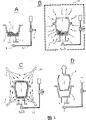
图1A到1D示出了旋转成型法的细节,Figures 1A to 1D show details of the rotational molding process,
图2示出了使用本发明方法制成的零件,Figure 2 shows a part made using the method of the present invention,
图3为温度随时间变化的图。Figure 3 is a graph of temperature versus time.
具体实施方式Detailed ways
第一幅图图1A到1D首先示出了任一旋转成型法的基本步骤。此处所考虑的零件4是一个中空双锥体,其在模具1中制成,模具1包括组装到与零件4最大直径相对应的连接平面上的两个壳体2和3。一个壳体2安装在可绕轴6旋转的弯臂5的端部。另外,壳体2在弯臂5上的支撑件7可以绕与第一轴垂直的第二轴8旋转。First Figures Figures 1A through 1D first illustrate the basic steps of any rotational molding process. The
要形成零件4的材料9首先被注入到壳体2中(A),随后壳体3组装到壳体2上,模具1绕着轴6和轴8进行双旋,且通过将模具1放入炉10中或用其他方法进行加热(B)。材料9在重力作用下涂满整个模具1的壁,并在加热作用下熔化。模具1然后被冷却或有意用空气或流体喷射来进行冷却(C),在零件4被固化后,卸下壳体3,取出零件4(D)。The
我们可以看到,这一过程可以重复进行,以制出由多层形成的零件。本发明的用途可延伸到包括泡沫层的零件,即使其具有如图2所示的复杂形状(12),即带槽的箱,其中环形的宽部和窄部相互交替。壁包括外壳13、中间层14和内壳15。两个壳13和15为致密的热塑性聚合物,如单一的或混合的聚烯烃,其可以带有颜色也可以不带颜色,可以具有填充物也可以没有,且通常以粉末状被添加。中间层14为泡沫聚合物,由已含有最初为粉末状的泡沫或吹泡剂和可能的成核剂热塑性塑料基体组成,这些聚合物可以是上述类型中的一种。We can see that this process can be repeated to produce parts formed from multiple layers. The use of the invention can be extended to parts comprising foam layers, even if they have a complex shape (12) as shown in Figure 2, ie a box with grooves in which the wide and narrow portions of the rings alternate with each other. The wall comprises an
下面参考图3描述本发明的一个特定实施例,图3为温度图,其中,曲线16表示围绕模具的炉10中所达到的温度,曲线17表示随着时间的变化模具1中所达到的温度。所考虑的零件为零件4,其制成具有三层,类似于前面所述的层13、14、15。A particular embodiment of the invention is described below with reference to FIG. 3, which is a temperature diagram in which
5kg的聚合物(由BOREALIS Company制造的聚乙烯商业评级RM 8403)粉末被添加到模具1中,其以每分钟4转的速度绕着轴6和每分钟1转的速度绕着轴8进行双转。炉10的温度为250℃。当模具中的温度达到145℃时,将模具1从炉中移走并打开,将3kg的泡沫聚合物(由MATRIX POLYMERS Company制造的评级M 532的聚乙烯)粉末加入到模具中,然后关闭模具,再开始旋转,并放回到炉10中,然后将炉10的温度固定到240℃。当材料的温度达到150℃时,模具1从炉中移出。但是,模具1还保持在炉子外面自由旋转,由于其热惯性,直到温度超过发泡温度(在此例中为170℃)。发泡持续一段足够的时间,且可以由冷却装置来中断。当材料温度降到发泡温度以下时,模具1的旋转停止,然后打开模具,将2kg的聚合物(BOREALIS Company制造的金属茂合物聚乙烯商业评级RM 8343)粉末加入到模具1中。然后又关闭模具,再旋转,且放回到炉中,炉的温度固定在240℃。当材料温度达到120℃时,将模具1从炉10中移走,在自然冷却状态下保持自由旋转,通过热惯性,直到材料达到足以位于其熔化温度以上的温度,从而适当地成型出最终的聚合物。当此成型温度达到时,模具被冷却,直到零件固化。然后模具停下,打开,以从模具上取出零件4。此实施例中层13、14、15的厚度为5、8、2mm。5 kg of polymer (polyethylene commercial grade RM 8403 manufactured by BOREALIS Company) powder was added to mold 1, which was double rotated at 4 revolutions per minute about
这三个聚合物的熔化温度分别为132℃、130℃、129℃。加热显然是足够的,从而所有的熔化温度都可以达到,因此可形成各层。泡沫层14质量很好、均匀、且可以很好地与其他层粘结。The melting temperatures of these three polymers are 132°C, 130°C, and 129°C, respectively. The heating is obviously sufficient so that all melting temperatures are reached and thus the layers can be formed. The
Claims (6)
Applications Claiming Priority (2)
| Application Number | Priority Date | Filing Date | Title |
|---|---|---|---|
| FR02/11994 | 2002-09-27 | ||
| FR0211994A FR2845028B1 (en) | 2002-09-27 | 2002-09-27 | METHOD FOR ROTOMULATING A WORKPIECE COMPRISING A THERMOPLASTIC FOAM LAYER |
Publications (2)
| Publication Number | Publication Date |
|---|---|
| CN1684807A CN1684807A (en) | 2005-10-19 |
| CN100369732C true CN100369732C (en) | 2008-02-20 |
Family
ID=31985295
Family Applications (1)
| Application Number | Title | Priority Date | Filing Date |
|---|---|---|---|
| CNB038230704A Expired - Fee Related CN100369732C (en) | 2002-09-27 | 2003-09-24 | Method for rotational molding of parts including a layer of thermoplastic foam |
Country Status (12)
| Country | Link |
|---|---|
| US (1) | US7785506B2 (en) |
| EP (1) | EP1545854B1 (en) |
| JP (1) | JP4434957B2 (en) |
| CN (1) | CN100369732C (en) |
| AT (1) | ATE325694T1 (en) |
| AU (1) | AU2003276369B2 (en) |
| BR (1) | BR0314477B1 (en) |
| CA (1) | CA2500204C (en) |
| DE (1) | DE60305196T2 (en) |
| FR (1) | FR2845028B1 (en) |
| NZ (1) | NZ538607A (en) |
| WO (1) | WO2004028773A1 (en) |
Cited By (1)
| Publication number | Priority date | Publication date | Assignee | Title |
|---|---|---|---|---|
| CN102099189A (en) * | 2008-07-16 | 2011-06-15 | 道达尔石油化学产品研究弗吕公司 | Three-layer rotomoulded motorboats |
Families Citing this family (17)
| Publication number | Priority date | Publication date | Assignee | Title |
|---|---|---|---|---|
| FR2902364B1 (en) * | 2006-06-16 | 2012-04-27 | Commissariat Energie Atomique | METHOD FOR MANUFACTURING A THERMOSETTING POLYMER SEALANT FOR A RESERVOIR CONTAINING A PRESSURIZED FLUID, SUCH AS A COMPOSITE TANK, AND TANK |
| CN101678568A (en) * | 2007-04-30 | 2010-03-24 | 查尔斯·考尔德·布雷 | Rotational molded product and mold |
| EP2111961A1 (en) * | 2008-04-21 | 2009-10-28 | Total Petrochemicals Research Feluy | Leisure articles and cars prepared by multilayer rotational moulding. |
| CN102066108B (en) * | 2008-04-21 | 2014-09-17 | 道达尔研究技术弗吕公司 | Leisure articles and automobiles produced by multilayer rotomolding |
| EP2123419A1 (en) * | 2008-05-21 | 2009-11-25 | Total Petrochemicals Research Feluy | Leisure boats prepared from foamed polyethylene. |
| EP2172322A1 (en) | 2008-10-02 | 2010-04-07 | Total Petrochemicals Research Feluy | Rotomoulded structural parts having asymmetrical layering |
| AU2013298237B2 (en) * | 2012-08-02 | 2017-11-02 | Gary Wayne FERGUSON | Moulded plastic articles with contact between two dissimilar plastics |
| CN103612710A (en) * | 2013-11-13 | 2014-03-05 | 宁波市鄞州科启动漫工业技术有限公司 | Three-layer rotationally molded motorboat |
| CN105936100A (en) * | 2016-04-30 | 2016-09-14 | 安徽志诚机电零部件有限公司 | Air-cooling device for automobile urea box molding and air-cooling method of air-cooling device |
| CN107472664B (en) * | 2017-08-18 | 2019-05-24 | 河北金后盾塑胶有限公司 | Fluid reservoir and preparation method thereof for drop free |
| CN108044859B (en) * | 2017-12-12 | 2019-11-08 | 温岭市旭日滚塑科技有限公司 | A kind of rotational foaming moulding process |
| CN111113753B (en) * | 2019-12-25 | 2022-04-22 | 福建飞扬鞋材有限公司 | Manufacturing mold and production device for inflatable shoe sole |
| IT202000009556A1 (en) * | 2020-04-30 | 2021-10-30 | Persico Spa | THREE-AXIS ROTATIONAL MOLDING MACHINE |
| WO2021239883A2 (en) * | 2020-05-28 | 2021-12-02 | Total Research & Technology Feluy | Process for producing skin/foam/skin structure with high surface finish |
| CN112895261B (en) * | 2021-01-05 | 2023-02-03 | 安徽省宁国天亿滚塑有限公司 | Device and process for one-step forming of solid reinforcing ribs on rotational molding container |
| IT202100014591A1 (en) * | 2021-06-04 | 2022-12-04 | Persico Spa | ROTATIONAL MOLD PROCESS AND RELATED ROTATIONAL MOLD INCLUDING A VENT |
| EP4488027A1 (en) * | 2023-07-07 | 2025-01-08 | Softcar SA | Reinforced rotomolded body |
Citations (3)
| Publication number | Priority date | Publication date | Assignee | Title |
|---|---|---|---|---|
| DE2350763A1 (en) * | 1973-10-10 | 1975-04-17 | Bayer Ag | Rotational moulding of polycarbonates - with reduction of heat input in later stages |
| EP0160298A2 (en) * | 1984-05-01 | 1985-11-06 | Old Town Canoe | Improved rotational molding method |
| GB2288359A (en) * | 1994-04-08 | 1995-10-18 | Martin Spencer | Rotational moulding of multicoloured articles |
Family Cites Families (4)
| Publication number | Priority date | Publication date | Assignee | Title |
|---|---|---|---|---|
| US3976821A (en) * | 1973-05-14 | 1976-08-24 | Phillips Petroleum Company | Rotationally molding a multilayered article |
| US4836963A (en) * | 1984-05-01 | 1989-06-06 | Old Town Canoe Company | Rotational molding method |
| US5922778A (en) * | 1996-05-24 | 1999-07-13 | Equistar Chemicals, Lp | Rotational molding compositions and process for producing foamed articles therefrom |
| US6261490B1 (en) * | 1998-09-15 | 2001-07-17 | Rotec Chemicals Limited | Rotational moulding |
-
2002
- 2002-09-27 FR FR0211994A patent/FR2845028B1/en not_active Expired - Lifetime
-
2003
- 2003-09-24 NZ NZ538607A patent/NZ538607A/en not_active IP Right Cessation
- 2003-09-24 EP EP03798220A patent/EP1545854B1/en not_active Expired - Lifetime
- 2003-09-24 BR BRPI0314477-1B1A patent/BR0314477B1/en not_active IP Right Cessation
- 2003-09-24 CN CNB038230704A patent/CN100369732C/en not_active Expired - Fee Related
- 2003-09-24 DE DE60305196T patent/DE60305196T2/en not_active Expired - Lifetime
- 2003-09-24 AT AT03798220T patent/ATE325694T1/en not_active IP Right Cessation
- 2003-09-24 WO PCT/FR2003/002803 patent/WO2004028773A1/en not_active Ceased
- 2003-09-24 JP JP2004539131A patent/JP4434957B2/en not_active Expired - Fee Related
- 2003-09-24 CA CA2500204A patent/CA2500204C/en not_active Expired - Fee Related
- 2003-09-24 US US10/527,685 patent/US7785506B2/en not_active Expired - Fee Related
- 2003-09-24 AU AU2003276369A patent/AU2003276369B2/en not_active Ceased
Patent Citations (3)
| Publication number | Priority date | Publication date | Assignee | Title |
|---|---|---|---|---|
| DE2350763A1 (en) * | 1973-10-10 | 1975-04-17 | Bayer Ag | Rotational moulding of polycarbonates - with reduction of heat input in later stages |
| EP0160298A2 (en) * | 1984-05-01 | 1985-11-06 | Old Town Canoe | Improved rotational molding method |
| GB2288359A (en) * | 1994-04-08 | 1995-10-18 | Martin Spencer | Rotational moulding of multicoloured articles |
Cited By (2)
| Publication number | Priority date | Publication date | Assignee | Title |
|---|---|---|---|---|
| CN102099189A (en) * | 2008-07-16 | 2011-06-15 | 道达尔石油化学产品研究弗吕公司 | Three-layer rotomoulded motorboats |
| CN102099189B (en) * | 2008-07-16 | 2013-09-11 | 道达尔石油化学产品研究弗吕公司 | Three-layer rotomoulded motorboats |
Also Published As
| Publication number | Publication date |
|---|---|
| ATE325694T1 (en) | 2006-06-15 |
| CN1684807A (en) | 2005-10-19 |
| AU2003276369B2 (en) | 2008-11-20 |
| NZ538607A (en) | 2006-10-27 |
| JP4434957B2 (en) | 2010-03-17 |
| WO2004028773A1 (en) | 2004-04-08 |
| EP1545854B1 (en) | 2006-05-10 |
| EP1545854A1 (en) | 2005-06-29 |
| BR0314477B1 (en) | 2013-07-23 |
| AU2003276369A1 (en) | 2004-04-19 |
| US20060022365A1 (en) | 2006-02-02 |
| JP2006500251A (en) | 2006-01-05 |
| FR2845028B1 (en) | 2004-10-29 |
| CA2500204C (en) | 2011-08-02 |
| DE60305196T2 (en) | 2007-03-08 |
| FR2845028A1 (en) | 2004-04-02 |
| US7785506B2 (en) | 2010-08-31 |
| CA2500204A1 (en) | 2004-04-08 |
| BR0314477A (en) | 2005-07-26 |
| DE60305196D1 (en) | 2006-06-14 |
Similar Documents
| Publication | Publication Date | Title |
|---|---|---|
| CN100369732C (en) | Method for rotational molding of parts including a layer of thermoplastic foam | |
| US6982057B2 (en) | Multi-layer rotational plastic molding | |
| JPH0688119B2 (en) | Die casting | |
| JPS61202827A (en) | Manufacture of hollow resin molding | |
| WO2000003856A1 (en) | Rotational molding process | |
| JP4059937B2 (en) | Investment casting to produce castings with enhanced surface finish | |
| JPH0212733B2 (en) | ||
| US3970736A (en) | Method of manufacturing hollow elements from thermoplastic materials | |
| ATE502750T1 (en) | METHOD FOR PRODUCING A DOUBLE-WALLED CONTAINER BY ROTARY MOLDING AND CONTAINERS PRODUCED BY THE METHOD. | |
| EP1281499A1 (en) | Method and set of moulds for rotational moulding of a container | |
| JPH07195147A (en) | Molding method using special core for molding | |
| US20170013938A1 (en) | Roll-on dispenser balls | |
| JPH0511529B2 (en) | ||
| JPH0428211B2 (en) | ||
| GB2121345A (en) | Method of rotary moulding a plastics article | |
| JPH0586730B2 (en) | ||
| JPH02292026A (en) | Molding method of foam casting model | |
| CN100434252C (en) | plastic forming method | |
| CN116198162A (en) | Injection molding shell, hollow injection molding method and hollow structural member | |
| JPS6013514A (en) | Manufacture of hollow product | |
| JPH0248219B2 (en) | ||
| JPH07137055A (en) | Applying method of hot-melt resin by rotational molding and manufacture of rotationally molded hollow body of hot-melt resin | |
| JPH0739997A (en) | Special core for forming | |
| JPS61159242A (en) | Production of mold for precision casting | |
| JPS5910898B2 (en) | Manufacturing method for synthetic resin molded products |
Legal Events
| Date | Code | Title | Description |
|---|---|---|---|
| C06 | Publication | ||
| PB01 | Publication | ||
| C10 | Entry into substantive examination | ||
| SE01 | Entry into force of request for substantive examination | ||
| C14 | Grant of patent or utility model | ||
| GR01 | Patent grant | ||
| CI01 | Publication of corrected invention patent application |
Correction item: Third inventor Correct: Sanchez Andre False: Andre San|Si Number: 8 Page: 1058 Volume: 24 |
|
| CI03 | Correction of invention patent |
Correction item: Third inventor Correct: Sanchez Andre False: Andre San|Si Number: 8 Page: The title page Volume: 24 |
|
| COR | Change of bibliographic data |
Free format text: CORRECT: THE THIRD INVENTOR; FROM: BILL GENENCOR BROTHER SI TO: SANCHEZ ANDRE |
|
| ERR | Gazette correction |
Free format text: CORRECT: THE THIRD INVENTOR; FROM: BILL GENENCOR BROTHER SI TO: SANCHEZ ANDRE |
|
| CF01 | Termination of patent right due to non-payment of annual fee |
Granted publication date: 20080220 Termination date: 20180924 |
|
| CF01 | Termination of patent right due to non-payment of annual fee |