Data service network management method for urban area network
Technical Field
The invention relates to a metropolitan area network technology, in particular to a metropolitan area network end-to-end data service network management method based on an optical network.
Background
Communication technologies are rapidly developed, and equipment operators actively research how to complement the advantages of various technologies to meet market demands. And each operator also selects a networking technology and a networking structure suitable for enterprise development aiming at different parts of the telecommunication value chain. As the transmission network is gradually changed from a basic network to a core operation network provided by the integrated service, the metropolitan area network as the nerve ending of the large-scale backbone optical network is also improved day by day, and finally, the omnibearing network service is provided for the user.
The metropolitan area network is a network covering the city and suburb areas and providing a comprehensive transmission platform for metropolitan area multi-services, and is mainly applied to large and medium-sized urban areas, and the metropolitan area network realizes access of voice, data, images, multimedia, Internet Protocol (IP for short) and the like on the basis of a multi-service optical transmission network. It mainly completes the all-round protocol intercommunication between the enterprise and the individual user in the access network and the operator on the backbone network, and uses the broadband optical transmission network as the open platform to provide the comprehensive solution of multi-service transmission for the metropolitan area application.
The network management system of the metropolitan area transmission network requires mature network element and network management function, and has higher requirements for large-scale, fast and intelligent end-to-end circuit configuration and realization of unified configuration and management of various services aiming at the characteristics of large scale and multiple service types of the metropolitan area transmission network. In addition, it is also required to provide a management interface to a network management system for incorporation into a transport integrated network management platform, so as to provide a solution for collectively managing a large-scale network to provide complete service support.
At present, a metropolitan area network is a Multi-Service transmission platform (MSTP) based on a Synchronous Digital Hierarchy (SDH) of an optical network, which fully utilizes a mature SDH technology, has approved performance monitoring, protection switching and network management capabilities, and can be evolved into a Multi-Service transmission platform by modifying the SDH technology. The basic idea is to map a plurality of different services into different SDH time slots by means of Virtual Channel (VC) concatenation, etc., and the SDH devices are physically integrated with layer 2, layer 3, or even layer 4 packet devices into one entity.
The MSTP based on SDH has the following characteristics: the method can provide various physical interfaces while ensuring compatibility of the services based on the traditional SDH network, thereby greatly reducing the cost of upgrading the existing SDH equipment; the MSTP system adopts a simplified network structure, and an interface is separated from a protocol, so that flexible and efficient transmission of various data services is realized; the advantages of SDH are kept, the functions of the traditional SDH network can be integrated, and the bandwidth management can be effectively carried out, so that the operation cost is reduced.
As the business body facing the metropolitan area network changes, various broadband services are gradually introduced by the traditional Time Division Multiplexing (TDM) voice service. Meanwhile, customer signals facing the metro transmission network are also changed, and many customers require that a Virtual Local Area Network (VLAN) or a Virtual Private Network (VPN) is constructed by using a layer 2, so as to implement resource sharing of each node of an enterprise. Therefore, data services such as Ethernet Private Line (EPL) and Ethernet Virtual Private Line (EVPL) need to be supported. Meanwhile, the types of service interfaces are increasing, from Fast ethernet (abbreviated as "FE"), gigabit ethernet (abbreviated as "GE"), to Enterprise System Connection (abbreviated as "ESCON"), and so on.
The traditional MAN network management can only manage SDH service, and for the change of the main body of the transport network service, the network management is urgently needed to support the management of the data service, thereby being convenient for providing data service in the MAN and realizing the comprehensive compatibility of voice service and data service in the system.
The current MAN network management method can only manage SDH service, and the service model only comprises a VC channel model of SDH and consists of a channel path and path termination points at two ends.
In practical applications, the above scheme has the following problems: network management of data traffic cannot be achieved.
The main reason for this is that there is only a VC path model for SDH and no model for other data traffic.
Disclosure of Invention
In view of the above, the main objective of the present invention is to provide a method for managing a metro network end-to-end data service network based on an optical network, so that the metro network data service implements network management and is integrated with the conventional SDH service.
In order to achieve the above object, the present invention provides a method for managing a metro network end-to-end data service network based on an optical network, comprising the following steps,
a, binding at least two virtual channels into a relay through relay binding;
b, one or more relays are connected into a data service path through Ethernet crossing;
wherein,
the virtual channel consists of a sub-channel path and virtual channel path termination points at two ends;
the relay consists of a relay path and relay path end nodes at two ends;
the relay path termination point is bound with the corresponding virtual channel path termination point to realize the relay binding;
the data service path comprises media access control layer path termination points at two ends;
the Ethernet cross is used for connecting the path termination point of the media access control layer and the relay path termination point and connecting the relay path termination point.
Wherein the step A comprises the following sub-steps,
respectively binding and adapting the virtual channel path termination points at two ends of at least two virtual channels to form the relay path termination points at two ends;
and carrying the relay path of the relay by the sub-channel path of the virtual channel.
In addition, when the data traffic path is an ethernet private line, the step B includes the following sub-steps,
connecting the relay path termination points at two ends of the relay to the media access control layer path termination points at two ends of the Ethernet private line respectively through the Ethernet crossing;
and carrying the data service of the Ethernet private line by the relay path of the relay.
Furthermore, when the data traffic path is an ethernet virtual private line, the step B comprises the substeps of,
connecting the relay path termination points of at least one relay end to end through the Ethernet crossing, and respectively connecting the two ends of the relay path termination points with the media access control layer path termination points at the two ends of the Ethernet virtual private line;
and carrying the data service of the Ethernet virtual private line by the relay path of the relay.
In addition, the Ethernet cross-bar contains,
an ingress label switching cross-connect for effecting a connection from said media access control layer path termination to said trunk path termination;
an egress label switching cross-connect for effecting a connection from said trunk path termination to said media access control layer path termination;
and the connection label switching cross connection is used for realizing the connection between the relay path termination points.
The media access control layer path termination point and the relay path termination point respectively correspond to a media access control layer port and a relay port in a network management model of the equipment; wherein,
the network management model of the equipment comprises a network element, a subrack, a single board and ports, wherein the network element comprises a plurality of subracks, the subrack comprises a plurality of single boards, the single boards comprise a plurality of ports, and the ports are divided into media access control layer ports and relay ports.
When searching the data service, the method comprises the following steps:
searching the subchannel path;
searching the relay path;
and searching the metropolitan area network end-to-end data service path.
In addition, the relay path searching process includes the steps of,
starting from the local relay path termination point, searching for local relay binding connected with the relay path termination point;
searching all sub-channel paths related to the local relay binding by the local relay binding;
searching relay binding of the opposite end of the sub-channel path;
and searching the opposite-end relay path terminal point related to the opposite-end relay binding.
In addition, the relay path searching process includes the steps of,
starting from the local Ethernet intersection, searching a local media access control layer path termination point and a local relay path termination point which are connected with the local Ethernet intersection;
searching the corresponding relay path by the local relay path termination point;
searching a relay path termination point of an opposite terminal by the relay path;
and searching the opposite-end Ethernet crossing and the opposite-end media access control layer path termination node connected with the opposite-end relay path termination node by the opposite-end relay path termination node.
In addition, the relay path searching process includes the steps of,
starting from the local Ethernet intersection, searching a local media access control layer path termination point and a local relay path termination point which are connected with the local Ethernet intersection;
searching the corresponding relay path by the local relay path termination point;
searching a relay path termination point of an opposite terminal by the relay path;
continuing to search the next section of the relay path and the relay path termination point of the opposite end until the last section of the relay path;
and searching the opposite terminal Ethernet crossing and the opposite terminal media access control layer path termination point connected with the opposite terminal relay path termination point by the opposite terminal relay path termination point of the last section of relay path.
Through comparison, the technical scheme of the invention is mainly different from the prior art in that an equipment model and a service model are established in a network management system to describe a data service system of the metropolitan area network;
binding a plurality of VCs through Trunk for bearing EPL, EVPL and the like, and completing the transition from SDH traditional service to EPL/EVPL and other services;
the Ethernet is used for realizing the connection between the TrunkTTP and the MACTTP and the TrunkTTP, and realizing that the Trunk carries services such as EPL/EVPL and the like and layer 2 ports.
The difference of the technical scheme brings obvious beneficial effects, namely, the network management of the data service of the urban area network is easier to realize by establishing the network management model;
the transition from the traditional SDH service to the services such as EPL/EVPL and the like is completed by using Trunk, the data service is well integrated into the original SDH service, and the compatibility of a network system and the service management efficiency are improved;
the Ethernet is used for realizing the bearing of the Trunk to the data service and the layer 2 port in a crossed manner, so that the transmission efficiency and the reliability of the data service of the urban area network are enhanced.
Drawings
Fig. 1 is a schematic diagram of a Trunk path model according to a second embodiment of the present invention;
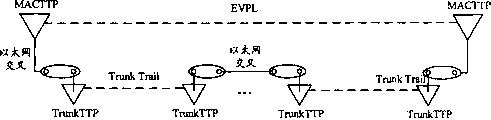
FIG. 2 is a schematic diagram of an EPL path model according to a third embodiment of the present invention;
FIG. 3 is a schematic diagram of an EVPL path model in accordance with a third embodiment of the present invention;
fig. 4 is an ethernet crossover schematic according to a third embodiment of the present invention;
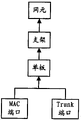
fig. 5 is a schematic view of a device network management model according to a fourth embodiment of the present invention;
fig. 6 is a flow chart of the Trunk path search according to the fifth embodiment of the present invention;
FIG. 7 is a flow chart of an EPL path search according to a fifth embodiment of the present invention;
fig. 8 is an EVPL path search flowchart according to a fifth embodiment of the present invention.
Detailed Description
In order to make the objects, technical solutions and advantages of the present invention more apparent, the present invention will be described in further detail with reference to the accompanying drawings.
The invention realizes the network management of the data service of the urban area network based on the following information paths: and introducing a relay (Trunk) as a VC channel for a transition SDH link to a data service link, and modeling the data service link to ensure that the data service link can be fused with the traditional SDH service. Wherein, Trunk is described by virtual concatenation mode, and does not relate to data service link. The cross network consisting of trunks implements data traffic links. Fusion is in fact accomplished by two ligation steps: binding a VC subchannel Path (Path Trail) to a Trunk Path (Trunk Trail) first; and then the Ethernet cross connection completes the bearing of the relay to the data service link and provides service interfaces such as a layer 2 port, a Trunk port and the like.
In the first embodiment of the present invention, Trunk is introduced as a transition from SDH to a data service link, and one Trunk binds a plurality of VC channels of SDH, so each VC channel is also called a subchannel (Path) and a subchannel Path (Path Trail), and is composed of a Connection (Connection) and virtual channel Path Termination points (VC Trail Termination points, abbreviated as "VCTTP") at both ends thereof, and a Trunk is composed of a relay Path (Trunk) and relay Path Termination points (Trunk Termination points, abbreviated as "Trunk ttp") at both ends thereof. The method for managing the metropolitan area network end-to-end data service network based on the optical network is realized by the following steps:
binding at least two VC channels into Trunk through relay binding (TrunkBind), wherein the TrunkBind is to bind TrunkTTP at each end with VCTTP of a plurality of corresponding sub-channels, so that the Trunk Trail is borne by the PathTrail;
one or more Trunk are connected to a data service path, such as EPL/EVPL, through ethernet intersection, where the data service path is located in a Media Access Control (MAC) layer 2 of the network, and both ends of the data service path include MAC Termination points (MACTTP), and the ethernet intersection connects MACTTP with Trunk ttp and Trunk ttp.
Where EPL is a fixed end-to-end connection, only one Trunk bearer is needed. Since EVPL is a virtual, non-fixed connection and is generally implemented by Multi Protocol Label Switching (MPLS), EVPL may be formed by connecting multiple Trunk links.
The second embodiment of the present invention introduces the concept of sub-tunnel and Trunk path for merging the data service with the conventional service based on the first embodiment. The sub-channel is basically the same as the circuit in the SDH except that its source/sink end is terminated by a data-specific board. The Trunk path is the client layer of the subchannel. The Trunk path is formed by binding a plurality of sub-channels by a source Trunk port and a destination Trunk port. The relationship between the Trunk port and the subchannel is described by Trunk binding.
The method for realizing the Trunk binding comprises the following two steps: binding and adapting VCTTPs at two ends of at least two VCs respectively to form TrunkTTPs at two ends; the Trunk Trail is carried by the Path Trail. Trunk binding describes the relationship between Trunk ttp and VCTTP, and each rate level VC includes: VC12/VC3/VC4 and the like. One Trunk port can bind several Trunk ttps of the same level. The attributes of the Trunk binding include: network element identification, subframe identification, plate position, Trunk port number, cascade mode, bound channel level, direction and bound channel number list. Trunk bindings are all unidirectional, and two Trunk bindings in opposite directions realize bidirectional functions. Fig. 1 shows a schematic diagram of the Trunk Path model, a plurality of VCTTP bindings are adapted to one Trunk ttp, and one Trunk Trail is carried by a plurality of Path Trail, which solves the problem of how to form a data channel by using SDH bearer.
In the third embodiment of the present invention, on the basis of the first embodiment, in order to implement data service tunnels such as EPL and EVPL on the basis of Trunk tunnels, ethernet cross-connects Trunk ttp and MacTTP are used to establish a data service model.
Fig. 2 shows an EPL model, in which TrunkTTP on both ends of Trunk are connected to MACTTP on both ends of EPL through ethernet crossover, and data traffic of EPL is carried by Trunk rail. TrunkTrail is a bridge connecting SDH traffic and data traffic, the service layer of TrunkTrail is a subchannel, and the client layer thereof is data traffic. The service layer of the EPL has only one Trunk path. The traffic relationship between MAC ports and Trunk ports is described by ethernet cross-connects.
Fig. 3 shows an EVPL model, wherein multiple Trunk ttps of Trunk are connected end to end through ethernet crossover, and are connected with MACTTPs at both ends of EVPL, respectively, and Trunk Trail carries the data traffic of EVPL. The service layer of EVPL is also Trunk Trail. The service layer of EVPL may consist of multiple Trunk paths. Traffic between MAC ports and Trunk ports, and between Trunk ports and Trunk ports, is described by ethernet crossovers. The EVPL is formed by connecting a plurality of non-fixed Trunk rails, is realized by an MPLS protocol and logically comprises a plurality of sub-channels.
Ethernet crossovers contain three types: an Ingress label switched cross-connect (referred to as "INGRESSLSP") is a service in a direction from a MAC port to a Trunk port, and is used for implementing a connection from a MAC ttp to a Trunk ttp; an egress label switched cross-connect (abbreviated as "ENGRESSLSP"), which is a traffic from a Trunk port to a MAC port, is a traffic between Trunk ports, and is used to implement a connection from a MAC ttp to a Trunk ttp; a Transit Labeled Switch Path (abbreviated as "TRANSITLSP") is used to implement the connection of the TrunkTTP. The relationship of the three ethernet crossovers to MACTTP and TrunkTTP is shown in fig. 4.
In fact, the whole network comprises internal nodes and edge nodes, each node has a trunk ttp, the edge nodes are connected to the network from INGRESSLSP and ENGRESSLSP to realize the connection from the trunk ttp to the MACTTP, and the internal nodes are connected with each other by TRANSITLSP to realize the connection from the trunk ttp to the trunk ttp.
The attributes of the ethernet crossbar include: network element identification, sub-frame identification, type, service source single board identification, service source port identification, service source type, service source Virtual Local Area Network (VLAN) number (VLAN ID), service source Tunnel (Tunnel), service source VC, service destination single board identification, service destination port identification, service destination type, service destination VLAN ID, service destination Tunnel (Tunnel), service destination VC, service level, activation state and service direction.
A fourth embodiment of the present invention is based on the first embodiment, and in order to facilitate description of the network management on the device, a network management model of the device is designed, as shown in fig. 5, the network management model includes a network Element (Net Element, abbreviated as "NE"), a subrack, a board, and ports, where the network Element includes a plurality of subracks, the subrack includes a plurality of boards, the board includes a plurality of ports, and the ports are divided into MAC ports and Trunk ports, and respectively correspond to MACTTP and Trunk ttp.
The device model adds MAC port and Trunk port objects on the basis of the traditional SDH. The MAC port attributes include: working mode, enabling state, flow control attribute, maximum packet length, Tag (Tag) attribute, ingress detection function, default VLAN priority, encapsulation form. The Trunk port attributes include: enabling state, maximum packet length, tag attribute, entry detection function, default VLAN priority, encapsulation form, and encapsulation protocol.
In order to obtain model related information of equipment and services, a network manager searches out end-to-end services from a model; after the equipment works and starts the service, the network management obtains the information of the running service; services established by other network managers are reported, and under the conditions of obtaining the information of the services and the like, a network management service searching method needs to be provided. The fifth embodiment of the present invention provides a service search method for realizing the search of the network management system for respective data services on the device on the basis of the first embodiment, wherein the service search process of the network management generally comprises three steps of searching a sub-channel path; searching a Trunk path; a data traffic path is searched. The searching of the sub-channel is the same as the searching method of the VC channel service of the existing metropolitan area network SDH network management system.
Fig. 6 shows the search flow of Trunk path:
step 601, starting from the local Trunk ttp, searching for the local Trunk binding connected with the local Trunk ttp. The network manager starts searching by taking the TrunkTTP object as an entry point. Firstly, the Trunk binding connected with the Trunk TTP is inquired, and the Trunk binding is divided into upstream and downstream and respectively traversed.
Then, step 602 is entered, and all the subchannel paths related thereto are searched by the local Trunk binding. Firstly, obtaining the VCTTPs contained in the Trunk binding by the Trunk binding, searching the subchannel path of each VCTTP, and if the subchannel path is not found, processing the next VCTTP until all the VCTTPs are processed.
Then, step 603 is entered, and for the found subchannel path, the Trunk binding of the opposite end of the subchannel path is continuously searched. This step should first search for VCTTP of the opposite end according to the subchannel, and obtain its Trunk binding, note that the direction of the Trunk binding should be opposite to the local Trunk binding in step 601, that is: and if the local Trunk is bound as an uplink, the opposite terminal Trunk is bound as a downlink, otherwise, the opposite is true. All the opposite end VCTTPs are processed in the same way.
Then, step 604 is entered to search for the correspondent terminal Trunk ttp related to the correspondent terminal Trunk binding. And obtaining a subchannel after finding the TrunkTTP at the opposite end, wherein all the obtained subchannels form the searched Trunk.
For the uplink Trunk binding and the downlink Trunk binding, separate search can be performed, the uplink Trunk binding is searched firstly, the opposite end is downlink, then unidirectional Trunk is formed, the downlink Trunk binding is searched, the opposite end is uplink, and finally a bidirectional Trunk path is formed.
FIG. 7 shows the search flow of the EPL path:
step 701, starting from local ethernet crossover, searches for local MACTTP and local TrunkTTP connected thereto. The network manager searches by taking local Ethernet crossing as an access point, the Ethernet crossing is InGRESS/ENGRESS, and the difference between the local Ethernet crossing and the InGRESS is that the local Ethernet crossing and the InGRESS are different in direction. For bi-directional EPL, both directions should be searched.
Then, in step 702, the local TrunkTTP searches for the corresponding Trunk path. The search process of Trunk path is performed according to the flow shown in fig. 6. If the TrunkTTP has no associated Trunk path, the search fails.
Then, in step 703, the Trunk path searches for the Trunk ttp of the opposite end. The EPL only needs one Trunk path to carry, so the Trunk ttp at the opposite end of the Trunk path is the destination.
Then, step 704 is entered, and the peer-to-peer ethernet cross and the peer-to-peer MACTTP connected to the peer-to-peer TrunkTTP are searched. Finding the matching ethernet cross according to the TrunkTTP at the other end, the direction of the ethernet cross should be opposite to the local ethernet cross in step 701, if the local is INGRESSLSP, the opposite end is ENGRESSLSP, and vice versa. And forming a unidirectional EPL after finding the MACTTP, then searching the unidirectional EPL with the opposite direction, and if finding, combining to form a bidirectional EPL service.
Fig. 8 shows a search flow of the EVPL path, which is basically similar to the EPL path except that the EVPL path may be formed by connecting multiple Trunk paths, and therefore, the search is required from the first Trunk path to the last Trunk path.
Step 801, starting from local ethernet crossover, searches for local MACTTP and local TrunkTTP connected to it. This step is the same as the search process of the EPL path.
Then, step 802 is entered, and the local Trunk ttp searches for the corresponding Trunk path. This is the first Trunk path to start locally.
Then, step 803 is entered, and the Trunk path searches for the Trunk ttp of the opposite end to obtain the terminal Trunk ttp of the first Trunk path. Then, it is determined whether the TrunkTTP is the last fragment of TrunkTTP, if so, step 805 is performed, otherwise, its corresponding relation is obtained TRANSITLSP, and the opposite end of the ethernet cross connect is the starting point TrunkTTP of the next Trunk path.
Then, step 804 is entered, and the next Trunk path and its Trunk ttp are searched continuously until the last Trunk path.
Then, step 805 is entered, and the opposite terminal Trunk ttp of the last Trunk path searches for the opposite terminal ethernet intersection and the opposite terminal MACTTP connected to it. Similarly, after obtaining the unidirectional EVPL, searching the unidirectional EVPL with the opposite direction, and if finding, combining to form the bidirectional EVPL service.
While the invention has been shown and described with reference to certain preferred embodiments thereof, it will be understood by those skilled in the art that various changes in form and details may be made therein without departing from the spirit and scope of the invention.