Disclosure of Invention
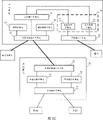
The embodiment of the invention provides a base station controller system to realize flexible networking, wherein the base station controller system comprises at least one central unit and a remote unit; the central unit and the remote are connected through a transmission network;
the central unit is used for receiving signaling and service data sent by a core network node, carrying out protocol conversion and then sending the signaling and service data to the remote unit; receiving signaling and service data sent by the remote unit, performing protocol conversion and sending the signaling and service data to a core network node; and performing operation processing weakly related to service processing;
the remote unit is used for receiving the signaling and the service data sent by the central unit, processing the service and the signaling, performing protocol conversion on the processed service data and the signaling, and sending the converted service data and the signaling to the base station; receiving and processing the service data sent by the base station, and sending the processed service data to the central unit after protocol conversion; and receiving the signaling sent by the base station, processing the signaling, performing protocol conversion on the processed signaling, and sending the signaling to the central unit.
An embodiment of the present invention provides a center unit, including: the system comprises an uplink interface subunit, an internal interconnection interface subunit, a clock subunit and an operation maintenance subunit;
the uplink interface subunit is configured to receive a signaling or service data sent by a core network node, perform protocol conversion, and send the signaling or service data to the internal interconnection interface subunit; receiving signaling or service data sent by the internal interconnection interface subunit, performing protocol conversion, and sending the signaling or service data to a core network node;
the internal interconnection interface subunit is configured to receive the signaling or the service data sent by the uplink interface subunit, and send the signaling or the service data to the remote unit; receiving signaling or service data sent by a remote unit and sending the signaling or service data to the uplink interface subunit;
the clock subunit is configured to perform clock synchronization according to the information received by the internal interconnection interface subunit, and send a synchronization signaling to the internal interconnection interface subunit;
and the operation maintenance subunit is used for performing operation maintenance processing according to the information received by the internal interconnection interface subunit.
An embodiment of the present invention provides a remote unit, including: the internal interconnection interface subunit, the service processing subunit, the signaling processing subunit and the downlink interface subunit;
the internal interconnection interface subunit is used for receiving the signaling and the service data sent by the central unit and respectively sending the signaling and the service data to the service processing subunit and the signaling processing subunit;
the service processing subunit is configured to receive the service data sent by the internal interconnection interface subunit, perform service processing, and send the service data to the downlink interface subunit; receiving the service data sent by the downlink interface subunit, and sending the service data to the internal interconnection interface subunit after service processing;
the signaling processing subunit is configured to receive the signaling sent by the internal interconnection interface subunit, perform signaling processing, and send the signaling to the downlink interface subunit; receiving the signaling sent by the downlink interface subunit, and sending the signaling to the internal interconnection interface subunit after the signaling is processed;
the downlink interface subunit is used for receiving the service data sent by the service processing subunit, receiving the signaling sent by the signaling processing subunit, performing protocol conversion, and sending the signaling to the base station; and receiving signaling and service data sent by the base station, performing protocol conversion, and then sending the signaling and service data to the signaling processing subunit and the service processing subunit respectively.
An embodiment of the present invention provides a wireless access network, including: at least one base station, further comprising: a base station controller system; the base station controller system comprises at least one central unit and at least one remote unit, wherein the central unit is connected with the remote unit through a transmission network; the remote unit is connected with at least one base station;
the central unit is used for receiving signaling and service data sent by a core network node, carrying out protocol conversion and then sending the signaling and service data to the remote unit; receiving signaling and service data sent by the remote unit, performing protocol conversion and sending the signaling and service data to a core network node; and providing a clock and system maintenance for the wireless access network;
the remote unit is used for receiving the signaling and the service data sent by the central unit, processing the service and the signaling, performing protocol conversion on the processed service data and the signaling, and sending the converted service data and the signaling to the base station; receiving and processing the service data sent by the base station, and sending the processed service data and signaling to the central unit after protocol conversion; and receiving the signaling sent by the base station, processing the signaling, converting the protocol and sending the signaling to the central unit.
The embodiment of the invention provides a data transmission method in a wireless access network, which comprises the following steps:
sending the multi-branch data sent by the base station to a remote unit positioned at a transmission aggregation node; the remote unit is an SDU unit for realizing multi-branch combination; the remote unit combines the multi-branch data and sends the combined data to a central unit or a base station controller; and the central unit or the base station controller sends the data to a core network node for processing.
In the embodiment of the invention, the distributed base station controller system is adopted, and the central unit and the remote units are flexibly deployed, so that a flexible networking mode is realized. When networking is carried out, the remote units with the multi-branch merging function can be deployed in the transmission aggregation node, so that higher transmission aggregation is realized.
Detailed Description
Embodiments of the present invention will be described in detail below with reference to the accompanying drawings.
Example one
The present embodiment describes the structure of a distributed base station controller system, and the structure of a central unit and a remote unit.
The components of a base station controller of a current mobile communication system, such as a WCDMA/CDMA system, are usually composed of the following necessary logical parts:
the interface unit is used for providing uplink and downlink physical interfaces, the uplink interface interacts with a core network node, and the downlink interface interacts with a base station;
a signaling processing unit for providing signaling processing capability;
the service processing unit is used for providing service processing capacity;
the operation maintenance unit is used for providing system management functions, such as configuration, alarm, maintenance, performance statistics and the like;
and the clock unit is used for providing a clock for the system.
The clock unit and the operation maintenance unit in the above units may be considered as irrelevant or weakly relevant to service processing, while the service processing unit and the signaling unit are relevant to specific services, so in order to improve the scalability of the system, the present embodiment divides the base station controller into a central unit irrelevant (or weakly relevant) to services and a remote unit relevant to services.
The central unit includes the shareable part of the base station controller, and the key part of the unit is composed of sub-units which are not related (or are weakly related) to the system capacity, such as: clock subunit, operation maintenance subunit etc. under the condition of system expansion, the central unit need not increase the configuration in addition.
The remote unit includes the service processing part of the base station controller, and the unit is related to the service processing, including the signaling processing subunit, the service processing subunit, etc. The remote unit may have various types such as an SDU (selective distribution unit) unit in the 3G mobile communication system according to the service being processed. The remote unit is closely related to the number of sector carrier frequencies to be carried and the processing flow, and when the sector carrier frequency number to be supported by the system exceeds a certain specification, the corresponding remote unit needs to be added.
Referring to fig. 3A, which is a schematic structural diagram of a central unit of a distributed base station controller system according to a first embodiment of the present invention, the central unit 10 includes: an upstream interface subunit 11, an internal interconnection interface subunit 12, a clock subunit 13, and an operation maintenance subunit 14, where:
and the uplink interface subunit 11 is configured to interact with a core network node. In the WCDMA system, the uplink interface subunit 11 may be an IuCS or IuPS interface unit, at this time, on the signaling plane, the uplink interface subunit 11 converts the internal interface protocol signaling of the base station controller system into the signaling of the IuCS or IuPS interface protocol, and forwards the signaling to the core network node, or receives the signaling of the IuCS or IuPS interface protocol sent by the core network node, converts the signaling into the signaling of the internal interface protocol of the base station controller system, and sends the signaling to the internal interconnection interface subunit 12; in the service plane, the uplink interface subunit 11 converts the data packet of the internal interface protocol of the base station controller system into the data packet of the IuCS or IuPS interface protocol, and forwards the data packet to the core network node, or receives the data packet of the IuCS or IuPS interface protocol sent by the core network node, converts the data packet into the data packet of the internal interface protocol of the base station controller system, and sends the data packet to the internal interconnection interface subunit 12. In the CDMA system, the uplink interface subunit 11 may be an A1/a2/a5 interface, or an A8/a9/a10/a11A interface unit, at this time, on the signaling plane, the uplink interface subunit 11 converts the internal interface protocol signaling of the base station controller system into the signaling of the A1/A1p or a9/a11 interface protocol, and forwards the signaling to the core network node, or converts the signaling of the A1/A1p or a9/a11 interface protocol received from the core network node into the signaling of the internal interface protocol of the base station controller system, and sends the signaling to the internal interconnection interface subunit 12; on the service plane, the uplink interface subunit 11 converts the data packet of the base station controller system internal interface protocol into the data packet of the A2/A2p/A8/a10 interface protocol and forwards the data packet to the core network node, or converts the data packet of the A2/A2p/A8/a10 interface protocol received from the core network node into the data packet of the base station controller system internal interface protocol and sends the data packet to the internal interconnection interface subunit 12.
And the internal interconnection interface subunit 12 is used for carrying out information interaction with the remote unit. The internal interconnection interface subunit 12 communicates using the internal interface protocol of the base station controller system. The internal interconnection interface subunit 12 may receive the signaling and data packet sent by the remote unit, and forward the signaling and data packet to the operation and maintenance subunit 14 or send the signaling and data packet to the core network node through the uplink interface subunit 11. The internal interconnection interface sub-unit 12 may further send an operation instruction or information generated by the clock sub-unit 13 or the operation maintenance sub-unit 14 to the remote unit, or send signaling or information of the core network node forwarded by the uplink interface sub-unit 11 to the remote unit.
And a clock subunit 13, configured to provide a clock for the system. In a WCDMA system or a CDMA system, the clock subunit 13 may include a transmission clock synchronization subunit, and the clock subunit is configured to send a synchronization signal to the base station according to the information reported by the base station, so as to synchronize the transmission clock of the base station. The clock subunit 13 sends synchronization signals and other clock information to the internal interconnect interface subunit 12.
An operation maintenance subunit 14, configured to receive information about configuration, alarm, maintenance, or performance statistics reported by the remote unit of the base station controller system forwarded by the internal interconnection interface subunit 12, send the information to the network management center through the interface with the network management center for corresponding operation maintenance processing, receive a processing result and configuration data of the network management center from the interface with the network management center if necessary, and send the processing result and configuration data to the remote unit in the base station controller system through the internal interconnection interface subunit 12. The operation and maintenance subunit 14 typically also includes a near-end maintenance subunit for near-end maintenance of the system.
The central unit may be expanded as desired. The central unit may also be combined with a remote unit, which may include one or more remote units. Fig. 3B shows a schematic structure of the central unit including a remote unit. As shown in fig. 3B, the central unit further includes at least one remote unit 30, where the remote unit 30 includes a service processing subunit 33 and a signaling processing subunit 34;
a service processing unit 33, configured to receive service data sent by the uplink interface subunit 11 of the central unit 10, perform service processing, and send the service data to the internal interconnection interface subunit 12; receiving service data sent by the internal interconnection interface subunit 12, performing service processing, and sending the service data to the uplink interface subunit 11;
a signaling processing subunit 34, configured to receive a signaling sent by the uplink interface subunit 11 of the central unit 10, perform signaling processing, and send the signaling to the internal interconnection interface subunit 12; and receiving the signaling sent by the internal interconnection interface subunit 12, performing signaling processing, and sending the signaling to the uplink interface subunit 11.
The central unit may also be directly connected to the base station, and the remote unit in the central unit is used to process the data of the base station, so that the central unit needs to include a downlink interface subunit to receive and transmit the data of the base station, and fig. 3C shows a schematic structural diagram of the central unit capable of directly communicating with the base station. As shown in fig. 3C, a downstream interface subunit 15 is included in the central unit 10.
And a downlink interface subunit 15, connected to the base station, and configured to receive the signaling and the service data sent by the base station, and perform protocol conversion processing on the signaling. In the WCDMA system, on the signaling plane, the downlink interface subunit 15 receives the signaling sent by the signaling processing subunit 34, and converts the signaling into the signaling of the Iub interface protocol, and sends the signaling to the base station, or receives the signaling of the Iub interface protocol sent by the base station, converts the signaling into the signaling of the interface protocol inside the base station controller system, and sends the signaling to the signaling processing subunit 34; in the service plane, the downlink interface subunit 15 receives the service data sent by the service processing subunit 33, converts the service data into service data of the Iub interface protocol, and sends the service data to the base station, or receives the service data of the Iub interface protocol sent by the base station, converts the service data into service data of the interface protocol inside the base station controller system, and sends the service data to the service processing subunit 33. In the CDMA system, on the signaling plane, the downlink interface subunit 15 receives the signaling sent by the signaling processing subunit 34, converts the signaling into the protocol signaling of the Abis interface, and sends the protocol signaling of the Abis interface to the base station, or receives the protocol signaling of the Abis interface sent by the base station, converts the protocol signaling of the Abis interface into the signaling of the interface protocol in the base station controller system, and sends the signaling to the signaling interface subunit 34; in the service plane, the downlink interface subunit 15 receives the service data sent by the service processing subunit 33, converts the service data into service data of the Abis interface protocol, and sends the service data to the base station, or receives the service data of the Abis interface protocol sent by the base station, converts the service data into service data of the interface protocol inside the base station controller system, and sends the service data to the service processing subunit 33.
A service processing subunit 33, configured to receive the service data sent by the downlink interface subunit 15, perform service processing, and send the service data to the uplink interface subunit 11; and receiving the service data sent by the uplink interface subunit 11, performing service processing, and sending the service data to the downlink interface subunit 15.
A signaling processing subunit 34, configured to receive the signaling sent by the downlink interface subunit 15, perform signaling processing, and send the processed signaling to the uplink interface subunit 11; and receiving the signaling sent by the uplink interface subunit 11, performing signaling processing, and sending the processed signaling to the downlink interface subunit 15.
Referring to fig. 4, which is a schematic structural diagram of a remote unit of a distributed base station controller system according to a first embodiment of the present invention, the remote unit 20 includes: a downlink interface subunit 21, an internal interconnection interface subunit 22, a service processing subunit 23, and a signaling processing subunit 24, where:
an internal interconnection interface subunit 22 for connection to the central unit. Internal interconnection sub-unit 22 communicates using the internal interface protocol of the base station controller system. The internal interconnection interface subunit can receive the service data sent by the central unit, send the service data to the service processing subunit 23, receive the signaling sent by the central unit, and send the signaling to the signaling processing subunit 24. The internal interconnection interface subunit 22 may also send service data or signaling sent by the service processing subunit 23 and the signaling processing subunit 24 to the central unit.
A service processing subunit 23, configured to receive the service data sent by the downlink interface subunit 21, perform corresponding service processing, and send the service data to the internal interconnection interface subunit 22; the service processing subunit 23 further receives the service data sent by the internal interconnection interface subunit 22, performs corresponding service processing, and sends the service data to the downlink interface subunit 21. For example, the service processing subunit 23 may implement that the service data forwarded by the internal interconnection interface subunit 22 is sent on multiple branches, or implement multi-branch combination on the service data received by the downlink interface subunit 21 by using macro diversity, combine the service data sent on multiple branches, and send the combined service data to the internal interconnection interface subunit 22.
A signaling processing subunit 24, configured to receive the signaling sent by the downlink interface subunit 21, perform signaling processing, and send the processed signaling to the internal interconnection interface subunit 22; or, receive the signaling sent by the internal interconnection interface subunit 22, perform signaling processing, and send the signaling to the downlink interface subunit 21.
And a downlink interface subunit 21, connected to the base station, and configured to receive the signaling and the service data sent by the base station and perform protocol conversion processing. In the WCDMA system, on the signaling plane, the downlink interface subunit 21 receives the signaling sent by the signaling processing subunit 24, and converts the signaling into the signaling of the Iub interface protocol to be sent to the base station, or receives the signaling of the Iub interface protocol sent by the base station, converts the signaling into the signaling of the interface protocol inside the base station controller system, and sends the signaling to the signaling processing subunit 24; in the service plane, the downlink interface subunit 21 receives the service data sent by the service processing subunit 23, converts the service data into service data of the Iub interface protocol, and sends the service data to the base station, or receives the service data of the Iub interface protocol sent by the base station, converts the service data into service data of the interface protocol inside the base station controller system, and sends the service data to the service processing subunit 23. In the CDMA system, on the signaling plane, the downlink interface subunit 21 receives the signaling sent by the signaling processing subunit 24, and converts the signaling into the protocol signaling of the Abis interface, and sends the protocol signaling to the base station, or receives the protocol signaling of the Abis interface sent by the base station, converts the protocol signaling of the Abis interface into the signaling of the interface protocol inside the base station controller system, and sends the signaling to the signaling interface subunit 24; in the service plane, the downlink interface subunit 21 receives the service data sent by the service processing subunit 23, converts the service data into service data of the Abis interface protocol, and sends the service data to the base station, or receives the service data of the Abis interface protocol sent by the base station, converts the service data into service data of the interface protocol inside the base station controller system, and sends the service data to the service processing subunit 23.
The remote unit may be many according to different implemented specific services, for example, a remote unit implementing multi-branch combination is implemented, where the service processing sub-unit may include:
a multi-branch merging subunit, configured to merge the received multi-branch service data;
and the data packet recombination subunit is used for repackaging the service data merged by the multi-branch merging subunit, packetizing a plurality of service data packets into one service data packet, and sending the service data packet to the internal interconnection interface subunit.
The remote unit may also include an uplink interface subunit for communicating with other network entities, such as other base station controllers. For example, the remote unit with multi-branch combining function includes an uplink interface subunit. The interface and protocol adopted by the uplink interface subunit can be the standard interface and protocol of the communication system.
The central unit and the remote units form a distributed base station controller system.
Fig. 5A is a schematic structural diagram of a distributed base station controller system according to a first embodiment of the present invention. The distributed base station controller system comprises at least one central unit and at least one remote unit. The central unit and the remote units can be directly connected through cables or optical cables and can also be interconnected through a transmission network.
Depending on the extension of the central unit, the distributed bsc system may be as shown in fig. 5A, 5B and 5C. The internal interconnection interface subunit of the central unit and the internal interconnection interface subunit of the remote unit can be connected through a transmission network, and an internal interface protocol of a distributed base station controller system is adopted for communication.
The central unit and the remote units in the base station controller system can be deployed independently, one central unit can be connected with a plurality of remote units, and the central unit and the remote units can be connected through a transmission network.
The central unit can be combined with the remote units to form a mixture, and in this way, not only can the existing base station controller architecture (namely, the central unit and all the remote units are placed together) be realized, but also a novel freely-expanded system architecture can be provided. The distributed base station controller architecture can bring convenience to the capacity expansion of a mobile communication system, and when the capacity of the system is increased, the capacity expansion of the remote unit at the base station controller side can be flexibly increased.
Example two
The embodiment describes a wireless access network networking structure based on a distributed base station controller system and a processing flow of the distributed base station controller system.
Referring to fig. 6, a schematic diagram of an access network based on a distributed base station controller according to a second embodiment of the present invention is shown, where the access network includes a C _ BSC, the C _ BSC may be directly connected to a BTS or connected to one or more R _ BSCs, and one R _ BSC may converge several base stations and implement call processing of the base stations. Wherein,
the C _ BSC is a central base station controller and comprises a central unit, and mainly provides a common function of the base station controller. One or more C _ BSCs may be included in the access network. The C _ BSC may also select some remote units as needed. In general, according to the principle of maintenance convenience, the C _ BSC may be deployed in a central city, for example, in the same machine room as MGW (Media GateWay)/MSCe (mobile soft handover center).
The R _ BSC is a remote station controller, and the R _ BSC comprises one or more remote units and mainly provides a service processing function of the base station controller. The R _ BSC may be deployed in the same room as the BTS or the transmission aggregation equipment.
The C _ BSC and the R _ BSC constitute a base station controller system, and the structure thereof can be as described in the first embodiment. In this embodiment, the C _ BSC includes only one central unit for description.
In the access network shown in fig. 6, for the WCDMA system, the processing flow of C _ BSC is:
on a signaling surface in a downlink direction, an uplink interface subunit of the C _ BSC performs protocol conversion on a signaling received from an IuCS or IuPS interface, and forwards the signaling to the corresponding R _ BSC for processing through an internal interconnection interface subunit; on the service surface, an uplink interface subunit of the C _ BSC converts the service data received by the IuCS or IuPS interface into a format of an internal interface protocol of the C _ BSC and the R _ BSC, and forwards the format to the corresponding R _ BSC for processing through an internal interconnection interface subunit;
on the signaling surface in the uplink direction, the uplink interface subunit of the C _ BSC converts the signaling of the internal interface protocol sent by the R _ BSC, which is received by the internal interconnection interface subunit, into the signaling of the IuCS or IuPS interface protocol, and forwards the signaling to the core network equipment; on the service surface, the uplink interface subunit of the C _ BSC converts the service data of the internal interface protocol sent by the R _ BSC, which is received by the internal interconnection interface subunit, into the service data of the IuCS or IuPS interface protocol, and forwards the service data to the core network equipment;
on the operation maintenance surface, the internal interconnection interface subunit of the C _ BSC sends the information of alarm, performance statistics and the like collected from the R _ BSC to the operation maintenance subunit, and the information is sent to the network management center by the operation maintenance subunit, and meanwhile, the configuration data is sent to each R _ BSC through the operation maintenance subunit and the internal interconnection interface subunit.
In the access network shown in fig. 6, for the CDMA system, the processing flow of C _ BSC is basically the same as that in the WCDMA system described above, except that:
since the uplink interface subunit of the C _ BSC is connected to the core network device through the A1/A1p or a9/a11 interface on the signaling plane, the uplink interface subunit converts the protocol format of the A1/A1p or a9/a11 interface and the protocol format of the base station controller internal interface to each other during signaling. Since the uplink interface subunit of the C _ BSC is connected to the core network device through the A2/A2p/A8/a10 interface on the service plane, when the uplink interface subunit receives and transmits service data, the protocol format of the A2/A2p/A8/a10 interface is converted to the protocol format of the base station controller system internal interface.
In the access network shown in fig. 6, for the WCDMA system, the processing flow of R _ BSC is:
on a signaling plane in a downlink direction, an internal interconnection interface subunit of the R _ BSC sends a signaling from the C _ BSC to a signaling processing subunit for processing, then sends the signaling to the downlink interface subunit, converts the processed signaling into an Iub interface signaling format and sends the Iub interface signaling format to the NodeB; meanwhile, the signaling processing subunit of the R _ BSC also realizes wireless resource management; on the service plane, the internal interconnection interface subunit of the R _ BSC sends the service data from the C _ BSC to the service processing subunit for processing, and then sends the service data to the downlink interface subunit, where the processed service data is converted into an Iub interface data format and sent to the NodeB. For the case of soft handover branch, the service data can be sent on multiple branches simultaneously through the service processing subunit in the remote unit of the corresponding R _ BSC.
On the signaling surface in the uplink direction, the downlink interface subunit of the R _ BSC converts the signaling sent by the Iub interface into an internal message format, and forwards the signaling to the C _ BSC by the internal interconnection interface subunit after the signaling processing subunit processes the signaling; on the service surface, the downlink interface subunit of the R _ BSC converts the service data sent by the Iub interface into an internal message format, and after the service data is processed by the service processing subunit, the internal interconnection interface subunit forwards the internal interconnection interface to the C _ BSC;
on the operation maintenance surface, the R _ BSC collects information of alarm, performance statistics and the like, sends the information to the C _ BSC through an interface between the C _ BSC and the R _ BSC, and receives configuration data sent by the C _ BSC;
in the access network shown in fig. 6, for the CDMA system, the processing flow of R _ BSC is basically the same as that in the WCDMA system described above, except that:
because the downlink interface subunit of the R _ BSC is connected to the base station through the Abis interface on the signaling plane and the service plane, the downlink interface subunit converts between the Abis interface protocol format and the internal interface protocol format of the base station controller when receiving and transmitting signaling and service data.
In this embodiment, the C _ BSC may independently expand capacity, and the number of R _ BSCs may also be increased as needed, so that the access network system architecture based on the distributed base station controller is very flexible. The R _ BSC has simplified capacity and function, so the volume can be reduced, and the network distribution is more flexible.
After the base station controller realizes distribution, the remote unit can be flexibly deployed and can be deployed to any position according to the network performance requirement and the transmission network structure requirement. In order to reduce the cost of the operator for renting the transmission network, the remote units with the convergence function in the base station controller system, such as SDU units, can be deployed on the convergence nodes in the transmission network, so as to achieve the purpose of reducing the resource occupation and the cost.
In the current mobile communication (such as CDMA/WCDMA/GSM system) transmission networking, the transmission network is often divided into an access part of the last kilometer and a metropolitan backbone transmission network; the access mode of the last kilometer is diversified, and the microwave transmission is mainly used at present. Under the condition of microwave transmission networking, a transmission aggregation node basically exists, and the setting of the transmission aggregation node can reduce the resource requirement of a transmission network.
EXAMPLE III
The embodiment describes the wireless access network structure for transferring the SDU unit of the distributed base station controller system to the transmission aggregation node, and the data processing procedure.
Fig. 7 is a schematic diagram of an access network using a remote unit (SDU unit) in a distributed base station controller system as a transmission aggregation node according to a third embodiment of the present invention. In the access network, a plurality of BTSs are included, wherein a part of the BTSs are converged to the R _ BSC1, a part of the BSTs are converged to the R _ BSC2, and the R _ BSC1 and the R _ BSC2 are connected to the S _ BSC through a transmission network (such as a synchronous digital transmission network SDN transmission network). Wherein, the S _ BSC is a central base station controller and comprises a central unit; the R _ BSC1 and the R _ BSC2 are remote station controllers, respectively, the R _ BSC2 includes one SDU unit, and the R _ BSC2 is located at the transmission aggregation node. The base station may be 1 × S222, supporting 168TCE, configured as 2E 1.
WCDMA systems, as well as CDMA2000 communication systems, have a unit called SDU in the base station controller since soft handover is supported. The SDU unit selects a path with the best quality from two soft switching branches of MS/UE (user terminal) at the SDU position, and then the path is uploaded to a core network. Due to the soft handover merging function of the SDU, the resource requirements on both sides of the SDU are different, and more transmission resources are required in the downlink direction (towards the base station side) of the SDU than in the uplink direction (towards the core network side).
In this embodiment, the R _ BSC2 is a distributed base station controller mainly including an SDU processing unit, and the R _ BSC2 is placed at the transmission aggregation node, so that multiple branches can be combined and then transmitted to the transmission network by using the macro diversity combining function of the SDU itself.
The process of aggregating data by the R _ BSC2 is as follows:
the downlink interface subunit of the R _ BSC2 receives the service data and signaling, converts the service data and signaling into the service data and signaling format of the internal interface protocol of the distributed base station controller system, sends the service data after protocol conversion to the service processing subunit of the R _ BSC2, and sends the signaling after protocol conversion to the signaling processing subunit; the service data received by the downlink interface subunit comprises multi-branch data;
the service processing subunit of the R _ BSC2 may include a multi-branch combining subunit and a data reassembly subunit, where the multi-branch combining subunit selects a path of data with the best quality for the multi-branch data in the service data by using its own macro diversity combining function, performs combining processing on the multi-branch data, and then sends the combined data to the data reassembly subunit; the data reassembly sub-unit may repack the service data, and when the uplink frame is reorganized after the air interface frame, may adopt a long packet mode, that is, a plurality of service data packets are packed into one uplink service data packet, and then the processed service data packet is sent to the internal interconnection interface sub-unit of the R _ BSC 2;
after receiving the service data, the signaling processing subunit of the R _ BSC2 performs signaling processing, and sends the processed signaling to the internal interconnection interface subunit of the R _ BSC 2;
and after receiving the processed service data and signaling, the internal interconnection interface subunit of the R _ BSC2 sends the processed service data and signaling to the S _ BSC.
In the process, because the SDU terminates the branch, when the SDU is sent to a core network, the service data can be packaged again, and a plurality of service data packets are packaged into an uplink service data packet by adopting a long packet mode, so that the proportion of overhead bits of each service data packet is greatly reduced; in addition, because a plurality of data packets are combined into one data packet, the number of uplink packets is greatly reduced, and thus, the number of packets on the SDH transmission network is greatly reduced. Thereby, the resources of the leased or self-established SDH transmission network can be greatly reduced.
In this embodiment, the R _ BSC having the SDU processing unit may be placed on an appropriate transmission aggregation node according to a network topology. At present, in a mobile communication network, there are tree type networking and chain type networking. For tree networking, such R _ BSCs can be placed at the branch to trunk, close to the trunk transmission network, e.g., in the "last kilometer" access section; for chain type networking, such an R _ BSC may be placed in a place between the chain and the backbone transport network.
The R _ BSC with the SDU unit can also be arranged at the transmission convergent node of the existing network, so that the multi-branch combination function is realized, and the convergence capability of the transmission convergent node is enhanced. In this case, the SDU unit includes an uplink interface subunit, and is connected to a network entity in the uplink direction, such as a base station controller in the previous stage, via a transmission network, so as to upload data subjected to multi-branch combining to the network entity in the previous stage for processing.
In the embodiment of the invention, the combination of R _ BSC and the arrangement of the transmission aggregation node in the traditional wireless access network enables the transmission network and the mobile communication network to be fused to a certain degree, thereby saving system resources and improving the performance of the wireless network in the mobile network construction.
It will be apparent to those skilled in the art that various changes and modifications may be made in the present invention without departing from the spirit and scope of the invention. Thus, if such modifications and variations of the present invention fall within the scope of the claims of the present invention and their equivalents, the present invention is also intended to include such modifications and variations.