CN101336830B - Orthogonal Doppler signal gap filling method and device for ultrasonic dignosis imaging - Google Patents
Orthogonal Doppler signal gap filling method and device for ultrasonic dignosis imaging Download PDFInfo
- Publication number
- CN101336830B CN101336830B CN2007101287121A CN200710128712A CN101336830B CN 101336830 B CN101336830 B CN 101336830B CN 2007101287121 A CN2007101287121 A CN 2007101287121A CN 200710128712 A CN200710128712 A CN 200710128712A CN 101336830 B CN101336830 B CN 101336830B
- Authority
- CN
- China
- Prior art keywords
- gap
- doppler signal
- signal
- filled
- frequency
- Prior art date
- Legal status (The legal status is an assumption and is not a legal conclusion. Google has not performed a legal analysis and makes no representation as to the accuracy of the status listed.)
- Active
Links
Images


Classifications
-
- G—PHYSICS
- G01—MEASURING; TESTING
- G01S—RADIO DIRECTION-FINDING; RADIO NAVIGATION; DETERMINING DISTANCE OR VELOCITY BY USE OF RADIO WAVES; LOCATING OR PRESENCE-DETECTING BY USE OF THE REFLECTION OR RERADIATION OF RADIO WAVES; ANALOGOUS ARRANGEMENTS USING OTHER WAVES
- G01S7/00—Details of systems according to groups G01S13/00, G01S15/00, G01S17/00
- G01S7/52—Details of systems according to groups G01S13/00, G01S15/00, G01S17/00 of systems according to group G01S15/00
- G01S7/52017—Details of systems according to groups G01S13/00, G01S15/00, G01S17/00 of systems according to group G01S15/00 particularly adapted to short-range imaging
- G01S7/52077—Details of systems according to groups G01S13/00, G01S15/00, G01S17/00 of systems according to group G01S15/00 particularly adapted to short-range imaging with means for elimination of unwanted signals, e.g. noise or interference
-
- G—PHYSICS
- G01—MEASURING; TESTING
- G01S—RADIO DIRECTION-FINDING; RADIO NAVIGATION; DETERMINING DISTANCE OR VELOCITY BY USE OF RADIO WAVES; LOCATING OR PRESENCE-DETECTING BY USE OF THE REFLECTION OR RERADIATION OF RADIO WAVES; ANALOGOUS ARRANGEMENTS USING OTHER WAVES
- G01S15/00—Systems using the reflection or reradiation of acoustic waves, e.g. sonar systems
- G01S15/88—Sonar systems specially adapted for specific applications
- G01S15/89—Sonar systems specially adapted for specific applications for mapping or imaging
- G01S15/8906—Short-range imaging systems; Acoustic microscope systems using pulse-echo techniques
- G01S15/8979—Combined Doppler and pulse-echo imaging systems
-
- G—PHYSICS
- G01—MEASURING; TESTING
- G01S—RADIO DIRECTION-FINDING; RADIO NAVIGATION; DETERMINING DISTANCE OR VELOCITY BY USE OF RADIO WAVES; LOCATING OR PRESENCE-DETECTING BY USE OF THE REFLECTION OR RERADIATION OF RADIO WAVES; ANALOGOUS ARRANGEMENTS USING OTHER WAVES
- G01S15/00—Systems using the reflection or reradiation of acoustic waves, e.g. sonar systems
- G01S15/02—Systems using the reflection or reradiation of acoustic waves, e.g. sonar systems using reflection of acoustic waves
- G01S15/50—Systems of measurement, based on relative movement of the target
- G01S15/58—Velocity or trajectory determination systems; Sense-of-movement determination systems
- G01S15/582—Velocity or trajectory determination systems; Sense-of-movement determination systems using transmission of interrupted pulse-modulated waves and based upon the Doppler effect resulting from movement of targets
-
- G—PHYSICS
- G01—MEASURING; TESTING
- G01S—RADIO DIRECTION-FINDING; RADIO NAVIGATION; DETERMINING DISTANCE OR VELOCITY BY USE OF RADIO WAVES; LOCATING OR PRESENCE-DETECTING BY USE OF THE REFLECTION OR RERADIATION OF RADIO WAVES; ANALOGOUS ARRANGEMENTS USING OTHER WAVES
- G01S7/00—Details of systems according to groups G01S13/00, G01S15/00, G01S17/00
- G01S7/52—Details of systems according to groups G01S13/00, G01S15/00, G01S17/00 of systems according to group G01S15/00
- G01S7/52017—Details of systems according to groups G01S13/00, G01S15/00, G01S17/00 of systems according to group G01S15/00 particularly adapted to short-range imaging
- G01S7/52023—Details of receivers
- G01S7/52034—Data rate converters
-
- G—PHYSICS
- G01—MEASURING; TESTING
- G01S—RADIO DIRECTION-FINDING; RADIO NAVIGATION; DETERMINING DISTANCE OR VELOCITY BY USE OF RADIO WAVES; LOCATING OR PRESENCE-DETECTING BY USE OF THE REFLECTION OR RERADIATION OF RADIO WAVES; ANALOGOUS ARRANGEMENTS USING OTHER WAVES
- G01S7/00—Details of systems according to groups G01S13/00, G01S15/00, G01S17/00
- G01S7/52—Details of systems according to groups G01S13/00, G01S15/00, G01S17/00 of systems according to group G01S15/00
- G01S7/52017—Details of systems according to groups G01S13/00, G01S15/00, G01S17/00 of systems according to group G01S15/00 particularly adapted to short-range imaging
- G01S7/52053—Display arrangements
- G01S7/52057—Cathode ray tube displays
- G01S7/5206—Two-dimensional coordinated display of distance and direction; B-scan display
- G01S7/52066—Time-position or time-motion displays
Landscapes
- Engineering & Computer Science (AREA)
- Physics & Mathematics (AREA)
- Radar, Positioning & Navigation (AREA)
- Remote Sensing (AREA)
- Computer Networks & Wireless Communication (AREA)
- General Physics & Mathematics (AREA)
- Acoustics & Sound (AREA)
- Ultra Sonic Daignosis Equipment (AREA)
Abstract
本发明公开了一种用于超声诊断成像的正交多普勒信号间隙填充方法与装置,该方法包括:存储步骤,用于存储间隙前和/或间隙后的多普勒信号;分析步骤,用于分析待填充多普勒信号的频谱特性;判断步骤,用于根据频谱参数来判断是否对待填充多普勒信号进行频率补偿;补偿步骤,用于对待填充多普勒信号进行频率补偿;以及填充步骤,用于根据判断结果对待填充多普勒信号与原始的间隙前和/或间隙后的多普勒信号进行加权叠加以实现间隙填充。本发明的方法在对多普勒间隙前和/或间隙后的信号经过频率补偿处理后,再利用窗函数对该信号以及采集到的多普勒信号进行加权并叠加,从而获得连续的谱图和声音输出,并很好的保留了多普勒信号原始的频谱特性。
The invention discloses a method and device for filling an orthogonal Doppler signal gap for ultrasonic diagnostic imaging. The method includes: a storage step for storing Doppler signals before and/or after the gap; an analysis step, It is used to analyze the spectral characteristics of the Doppler signal to be filled; the judging step is used to judge whether to perform frequency compensation on the Doppler signal to be filled according to the spectral parameters; the compensation step is used to perform frequency compensation on the Doppler signal to be filled; and The filling step is used to perform weighted superposition of the Doppler signal to be filled and the original Doppler signal before and/or after the gap according to the judgment result to realize gap filling. In the method of the present invention, after frequency compensation processing is performed on the signal before and/or after the Doppler gap, the signal and the collected Doppler signal are weighted and superimposed using a window function, thereby obtaining a continuous spectrogram And sound output, and well preserved the original spectrum characteristics of the Doppler signal.
Description
技术领域 technical field
本发明涉及一种超声诊断成像方法与装置,具体涉及一种多普勒信号间隙填充方法与装置。The invention relates to an ultrasonic diagnostic imaging method and device, in particular to a Doppler signal gap filling method and device.
背景技术 Background technique
超声诊断成像系统实时显示两维图像(B模式成像、彩色血流成像等)和频谱多普勒信息具有重要的临床诊断意义。临床医生可以在实时观察人体组织解剖结构的同时,获得某多普勒采样容积内的血流状况。该血流状况信息的获得有两种途径:显示器上实时显示的声谱图和扬声器上实时播放的多普勒声音信号。为了实现上述两种(甚至三种)不同成像模式的实时显示,超声成像系统利用时分复用技术,为不同的成像模式分配不同的时间段,而且系统周期地在不同模式下快速切换。以临床上常用的B+D模式(B模式+脉冲频谱多普勒模式)为例,系统通过控制发射脉冲的时序,实现两种模式的轮换扫描。最简单的一种方法就是单个B脉冲和单个多普勒脉冲交替发射,该方法最大的缺点是多普勒脉冲的重复发射频率(PRF)降低,导致可检测的最大流速大大降低。另外一种相似的实现方法是单个B脉冲和多个多普勒脉冲交替发射,该方法虽然改善了多普勒检测最大流速的问题,但单帧B型图像的成像时间加长,两维图像的实时性受到影响。考虑到两维图像的成像质量,本发明关注的是另一种扫描方式,即成像系统在扫描完一帧两维图像后启动多普勒脉冲的发射,且多普勒脉冲的发射次数足够多,保证获得至少一条完整的多普勒功率谱谱线。由于多普勒信号在2-40ms内可以认为是准平稳的,因此要求间隙的长度尽量小于40ms。由于在B模式成像的时间段,无法采集到多普勒信号,导致多普勒信号的不连续。该不连续现象(称为间隙,即Gap)在声谱图上表现为断裂的频谱,如图1所示,可能导致计算机自动提取多普勒频谱参数失效,而在声音输出上更是出现周期性的突然静音,使得声音输出失去临床诊断参考意义。因此,多普勒信号间隙填充技术已经成为超声诊断成像设备必备的一项重要技术。The real-time display of two-dimensional images (B-mode imaging, color blood flow imaging, etc.) and spectral Doppler information by an ultrasonic diagnostic imaging system has important clinical diagnostic significance. Clinicians can obtain the blood flow status in a certain Doppler sampling volume while observing the anatomical structure of human tissue in real time. There are two ways to obtain the blood flow status information: the acoustic spectrogram displayed in real time on the monitor and the Doppler sound signal played in real time on the loudspeaker. In order to realize the real-time display of the above two (or even three) different imaging modes, the ultrasound imaging system uses time-division multiplexing technology to allocate different time periods for different imaging modes, and the system switches between different modes periodically and quickly. Taking the clinically commonly used B+D mode (B mode + Pulse Spectrum Doppler mode) as an example, the system realizes the alternate scanning of the two modes by controlling the timing of the transmitted pulses. The simplest method is to alternately transmit a single B pulse and a single Doppler pulse. The biggest disadvantage of this method is that the repetition frequency (PRF) of the Doppler pulse is reduced, resulting in a significant decrease in the maximum detectable flow velocity. Another similar implementation method is to alternately transmit a single B pulse and multiple Doppler pulses. Although this method improves the problem of Doppler detection of the maximum flow velocity, the imaging time of a single frame B-mode image is prolonged, and the two-dimensional image Real-time performance is affected. Considering the imaging quality of two-dimensional images, the present invention focuses on another scanning method, that is, the imaging system starts the emission of Doppler pulses after scanning a frame of two-dimensional images, and the number of emission of Doppler pulses is sufficient , to ensure that at least one complete Doppler power spectrum line is obtained. Since the Doppler signal can be considered quasi-stationary within 2-40ms, the length of the gap is required to be less than 40ms as much as possible. Since the Doppler signal cannot be collected during the B-mode imaging period, the Doppler signal is discontinuous. This discontinuity phenomenon (called gap, that is, Gap) appears as a broken spectrum on the spectrogram, as shown in Figure 1, which may cause the computer to automatically extract the Doppler spectrum parameters to fail, and the sound output is even more periodic Sudden sudden silence makes the sound output lose the reference value of clinical diagnosis. Therefore, Doppler signal gap filling technology has become an important technology necessary for ultrasonic diagnostic imaging equipment.
多普勒信号间隙填充技术用于提高超声诊断成像设备中频谱多普勒信号质量,尤其是用于超声诊断成像设备同时工作在两维图像成像模式(B模式、彩色血流成像模式等)和频谱多普勒模式的情况下。超声诊断成像设备利用时分复用技术实现不同模式的同时成像,系统为不同的成像模式分配不同的时间段。当系统同时工作在两维图像成像模式和频谱多普勒模式的时候,音频多普勒信号和声谱图会产生明显的不连续现象(称为间隙,gap),该不连续会对诊断信息的提取带来很大的不便;另外,两维图像的成像帧频率会有所降低,但对诊断性能的影响相对较小。多普勒信号间隙填充技术利用信号处理的方法对该间隙进行填充,使得填充后的信号在声音和频谱上都能保持很好的连续性,减小多普勒信号采集的不连续性对诊断准确性的影响。然而,如何有效地填充多普勒信号间隙一直是频谱多普勒技术应用中的一个难点。随着数字计算机技术的高速发展,研究者提出了许多方法来解决这一问题。根据声谱图的输出方式,目前填充间隙的方法大体上可以分成两大类:一类是直接对二维的声谱图进行插值填充,另外一类则是对正交多普勒信号进行填充后计算出填充后信号的声谱图。Doppler signal gap filling technology is used to improve the quality of spectral Doppler signals in ultrasonic diagnostic imaging equipment, especially for ultrasonic diagnostic imaging equipment working in two-dimensional image imaging modes (B mode, color blood flow imaging mode, etc.) and case of Spectral Doppler mode. Ultrasonic diagnostic imaging equipment uses time-division multiplexing technology to realize simultaneous imaging of different modes, and the system allocates different time periods for different imaging modes. When the system works in the two-dimensional image imaging mode and the spectral Doppler mode at the same time, the audio Doppler signal and the spectrogram will produce an obvious discontinuity phenomenon (called gap, gap), which will affect the diagnostic information. The extraction of the two-dimensional image brings great inconvenience; in addition, the imaging frame frequency of the two-dimensional image will be reduced, but the impact on diagnostic performance is relatively small. Doppler signal gap filling technology uses signal processing methods to fill the gap, so that the filled signal can maintain good continuity in sound and frequency spectrum, reducing the impact of discontinuity in Doppler signal acquisition on diagnosis impact on accuracy. However, how to effectively fill the Doppler signal gap has always been a difficult point in the application of spectral Doppler technology. With the rapid development of digital computer technology, researchers have proposed many methods to solve this problem. According to the output mode of the spectrogram, the current gap filling methods can be roughly divided into two categories: one is to directly interpolate and fill the two-dimensional spectrogram, and the other is to fill the orthogonal Doppler signal Then calculate the spectrogram of the filled signal.
1991年5月,给予G.Schwartz的、名称“Spectral Interpolation ofUltrasound Doppler Signal”的专利US 5,016,641公开了一种填充方法,其是利用间隙产生前的功率谱填充间隙阶段的功率谱,产生一个具有一定随机性的相位,根据填充的功率谱和产生的随机相位,由逆快速傅里叶变换(IFFT)得到时域信号,该时域信号经窗函数加权,部分重叠相加后得到没有跳变的填充信号。该方法需要每次谱线更新的时候进行IFFT计算,增加了计算量。In May 1991, the patent US 5,016,641 of the name "Spectral Interpolation of Ultrasound Doppler Signal" to G.Schwartz disclosed a filling method, which is to use the power spectrum before the gap is generated to fill the power spectrum of the gap stage, and generate a power spectrum with a certain Random phase, according to the filled power spectrum and the generated random phase, the time domain signal is obtained by inverse fast Fourier transform (IFFT). fill signal. This method requires IFFT calculation every time the spectral line is updated, which increases the amount of calculation.
1995年12月,给予M.T.Robinson的、名称为“Simultaneous UltrasonicImaging and Doppler Display System”的专利US 5,476,097公开了一种频谱和声音分开填充的方法。其中声音信号直接用间隙两端的信号反序拼接,保证间隙两端的连续,但拼接中间存在跳变,通过数模转换后再进行低通滤波可以消除该不连续引起的噪声。由于对正交多普勒信号反序后,信号的正负频谱发生了翻转,因此方向分离后输出的声音会有反向错误。而谱线则用声谱图间隙两端的谱线从间隙中间开始分别向两边填充,且每根谱线填充多次(如两次),直到填充的谱线与填充区域的原始谱线相等为止,其中中间不连续谱线可以通过插值或者平均的方式平滑输出。In December 1995, the patent US 5,476,097 entitled "Simultaneous Ultrasonic Imaging and Doppler Display System" issued to M.T.Robinson disclosed a method for separately filling the frequency spectrum and sound. The sound signal is directly spliced in reverse sequence with the signals at both ends of the gap to ensure continuity at both ends of the gap, but there is a jump in the middle of the splicing, and the noise caused by the discontinuity can be eliminated by low-pass filtering after digital-to-analog conversion. Since the positive and negative spectrum of the signal is reversed after the quadrature Doppler signal is reversed, the output sound after direction separation will have a reverse error. The spectral lines are filled with the spectral lines at both ends of the spectrogram gap from the middle of the gap to both sides, and each spectral line is filled multiple times (such as twice) until the filled spectral line is equal to the original spectral line in the filled area. , where the intermediate discontinuous spectral lines can be smoothed by interpolation or averaging.
1995年,由H.Klebak,J.A.Jensen和L.K.Hansen在Proceedings ofIEEE International Ultrasonics Symposium,vol.2:1553-1556上发表的、名称为“Neural Network for Sonogram Gap Filling”的文献公开了一种利用人工神经网络来估计间隙期间的声谱图,但这种方法的计算量比较大,无法满足超声诊断成像系统的实时性要求。In 1995, a document titled "Neural Network for Sonogram Gap Filling" published by H.Klebak, J.A.Jensen and L.K.Hansen in Proceedings ofIEEE International Ultrasonics Symposium, vol.2: 1553-1556 disclosed a method using artificial neural Network to estimate the spectrogram during the interval, but this method has a large amount of calculation and cannot meet the real-time requirements of the ultrasonic diagnostic imaging system.
间隙时间足够短的情况下,根据多普勒信号的准平稳特性,间隙附近的信号具有相似的统计特性,因此,可以利用间隙前、后的信号估计间隙内的多普勒信号。1988年,由K.Kristoffersen和B.A.J.Angelsen在IEEE Trans.Biomed.Eng.,vol.35:285-295上发表的、名称为“ATime-shared Ultrasound Doppler Measurement and 2-D Imaging System”的文献公开了一种利用间隙产生前的信号通过线性预测估算出间隙内信号的方法,线性预测是通过最小均方误差的方法估计出间隙部分的多普勒信号。When the gap time is short enough, according to the quasi-stationary characteristics of the Doppler signal, the signals near the gap have similar statistical characteristics. Therefore, the Doppler signal in the gap can be estimated by using the signals before and after the gap. In 1988, the document titled "ATime-shared Ultrasound Doppler Measurement and 2-D Imaging System" published by K.Kristoffersen and B.A.J.Angelsen in IEEE Trans.Biomed.Eng., vol.35:285-295 was published A method for estimating the signal in the gap by using the signal before the gap is generated through linear prediction, and the linear prediction is to estimate the Doppler signal of the gap part through the method of minimum mean square error.
1997年1月,给予J.S.Wang的、名称为“Apparatus and Method forEstimating Missing Doppler Signals and Spectra”的专利US 5,642,732公开了一种基于模型估计的多普勒信号间隙填充方法。首先估计间隙前的多普勒信号的AR模型系数和激励噪声的方差,并由这些AR系数估计出模型的反射系数。同理,估计出间隙后的多普勒信号的AR系数、反射系数、噪声方差。然后,内插间隙时间段的反射系数(直接内插AR系数可能导致系统的不稳定,系统稳定的必要充分条件是反射系数的幅度小于1,Burg估计方法可以保证反射系数幅度小于1)。最后,利用估计的反射系数求出AR系数,该AR系数构造一个IIR滤波器。用白噪声激励该IIR滤波器,滤波后的数据加窗后与实际采集到的信号叠加拼接。填充的信号经快速傅立叶变换后可得到填充段的频谱。另外,由于可以从AR系数经快速傅立叶变换直接估计信号功率谱,将插值的噪声的方差归一化后也可直接输出估计的功率谱。该方法可以获得连续的声音和谱图输出,但是当信号带宽较宽时,需要用较高阶次的AR模型进行频谱逼近,尤其是当检测到的血流信号中同时存在正反向血流的情况下,容易导致AR模型参数估计误差偏大,从而影响了填充后谱图和声音的质量。另外,高阶AR模型的估计具有较大的计算复杂度,增加了该技术的实现成本。In January 1997, the patent US 5,642,732 entitled "Apparatus and Method for Estimating Missing Doppler Signals and Spectra" to J.S.Wang disclosed a Doppler signal gap filling method based on model estimation. First estimate the AR model coefficients of the Doppler signal before the gap and the variance of the excitation noise, and estimate the reflection coefficient of the model from these AR coefficients. Similarly, the AR coefficient, reflection coefficient, and noise variance of the Doppler signal after the gap are estimated. Then, interpolate the reflection coefficient of the gap time period (directly interpolating the AR coefficient may lead to system instability, the necessary and sufficient condition for system stability is that the magnitude of the reflection coefficient is less than 1, and the Burg estimation method can ensure that the magnitude of the reflection coefficient is less than 1). Finally, the estimated reflection coefficients are used to find the AR coefficients, which construct an IIR filter. The IIR filter is excited by white noise, and the filtered data is windowed and superimposed and spliced with the actual collected signal. The filled signal is subjected to fast Fourier transform to obtain the spectrum of the filled segment. In addition, since the signal power spectrum can be directly estimated from the AR coefficients through fast Fourier transform, the estimated power spectrum can also be directly output after normalizing the variance of the interpolated noise. This method can obtain continuous sound and spectrogram output, but when the signal bandwidth is wide, it needs to use a higher-order AR model for spectrum approximation, especially when there is both forward and reverse blood flow in the detected blood flow signal In the case of , it is easy to cause the estimation error of the AR model parameters to be too large, which affects the quality of the spectrogram and sound after filling. In addition, the estimation of high-order AR models has a large computational complexity, which increases the implementation cost of this technique.
1985年12月,给予B.A.J.Angelsen和K.Kristoffersen的、名称为“Method of Ultrasounically Measuring Blood Flow Velocity”的专利US4,559,952公开了用来产生间隙填充信号的两种方法:1.将宽带噪声经过一个滤波器以产生待填充的信号,滤波器的系数可控制,用于产生需要的频谱特性;2.直接读取最后存储部分的多普勒信号。为了保证连续性,产生的信号和采集到的信号可以经过一个窗函数加权,且两者之间可以有重叠部分。该方法对准平稳的多普勒信号有效,但是一些大动脉血流在心脏收缩期会产生快速的流速增大或者减小的情况,此时当间隙长度较长时,容易产生谱图的不连续性。In December 1985, the patent US4,559,952 entitled "Method of Ultrasounically Measuring Blood Flow Velocity" to B.A.J.Angelsen and K.Kristoffersen disclosed two methods for generating gap filling signals: 1. Passing broadband noise through a The filter is used to generate the signal to be filled, and the coefficient of the filter can be controlled to generate the required spectral characteristics; 2. Directly read the Doppler signal of the last stored part. In order to ensure continuity, the generated signal and the collected signal can be weighted by a window function, and there can be overlap between the two. This method is effective for stable Doppler signals, but some large arterial blood flow will produce rapid flow velocity increase or decrease during systole. At this time, when the gap length is long, the discontinuity of the spectrum is easy to occur. sex.
1990年7月,给予B.A.J.Angelsen和K.Kristoffersen的、名称为“Method and Apparatus for Synthesizing a Continuous Estimate Signal Providedby Ultrasonic Doppler Measurement on a Fluid Flow”的专利US 4,934,373公开了一种详细的利用宽带噪声经过滤波器来产生填充信号的方法。其主要思想是直接利用采集到的信号加窗后作为FIR滤波器的系数,宽带噪声经过该滤波器后获得相同的功率谱,但具有随机相位。具体实现的时候,考虑到信号带宽变化缓慢,信号利用平均频率解调到基频0频率附近,解调后的信号加窗作为滤波器的系数。估计填充点的平均频率,滤波后的基带信号利用估计的平均频率调制到较高频率上,获得填充点的信号。为了保证估计信号的连续,估计的填充信号用窗加权后叠加输出。该方法直接用滤波器滤波后的结果代替原先采集到的多普勒信号以及间隙内的多普勒信号,较好地解决了声音和谱图的不连续的问题,但是多普勒信号的非平稳性和滤波器加窗处理会导致产生信号的频谱带宽偏宽。In July 1990, the patent US 4,934,373 entitled "Method and Apparatus for Synthesizing a Continuous Estimate Signal Provided by Ultrasonic Doppler Measurement on a Fluid Flow" to B.A.J.Angelsen and K.Kristoffersen disclosed a detailed broadband noise filtering method device to generate a filling signal method. The main idea is to directly use the collected signal as the coefficient of the FIR filter after windowing. After the broadband noise passes through the filter, the same power spectrum is obtained, but with a random phase. During the specific implementation, considering the slow change of the signal bandwidth, the signal is demodulated to the frequency near the fundamental frequency 0 by using the average frequency, and the demodulated signal is windowed as the coefficient of the filter. The average frequency of the filling point is estimated, and the filtered baseband signal is modulated to a higher frequency by the estimated average frequency to obtain the signal of the filling point. In order to ensure the continuity of the estimated signal, the estimated filling signal is weighted by the window and then superimposed and output. This method directly replaces the original collected Doppler signal and the Doppler signal in the gap with the filtered result of the filter. Stationarity and filter windowing can result in a wider spectral bandwidth of the resulting signal.
2007年3月,Y.Li提出的、名称为“Method for Processing Doppler SignalGaps”专利申请US 2007/0049823公开了一种利用间隙前、后多普勒数据填充间隙的方法,对间隙前、后的数据首先进行高通滤波处理,然后正序读出并填入间隙中。间隙前段用间隙前面的数据填充,间隙后端利用间隙后面的数据填充。对于接口处的不连续段,利用加窗的方式使得数据收敛到零来保证数据连续。该方法无法处理流速快速增大或者减小阶段的谱图不连续的问题,而且对接口处信号加窗收敛到零使得信号能量周期性变化,导致谱图出现周期性的亮暗变化,而声音则会出现强弱周期性变化。In March 2007, the patent application US 2007/0049823 proposed by Y.Li and named "Method for Processing Doppler SignalGaps" discloses a method for filling gaps using Doppler data before and after the gap. The data is first processed by high-pass filtering, and then read out in positive sequence and filled in the gap. The front end of the gap is filled with the data in front of the gap, and the back end of the gap is filled with the data behind the gap. For the discontinuous section at the interface, the windowing method is used to make the data converge to zero to ensure the data continuity. This method cannot deal with the discontinuity of the spectrogram during the rapid increase or decrease of the flow rate, and the windowing of the signal at the interface converges to zero, which makes the signal energy change periodically, resulting in periodic bright and dark changes in the spectrogram, while the sound There will be periodic changes in strength and weakness.
1999年4月,给予M.Izumi的、名称为“Ultrasonic wave Dopplerdiagnosing apparatus”的专利US 5,891,036公开了一种利用间隙前(或者间隙前、后)多普勒数据进行平滑填充间隙内数据的方法。在第一种实现中,首先对间隙前的数据反序读出,取共轭(或者实部和虚部交换)后存入间隙位置。由于取共轭后间隙起始点产生相位不连续,求解该相位偏差量,对间隙内数据补偿该相位偏差。该方法可以实现间隙起始点的完全平滑拼接,但间隙结束点可能会有不连续。第二种实现中不仅利用间隙前数据,对间隙后的数据进行同样的操作,然后将处理后的两段数据加权叠加,保证间隙两端都连续平滑过渡。该方法同样无法处理流速快速增大或者减小阶段的谱图不连续的问题In April 1999, the patent US 5,891,036 entitled "Ultrasonic wave Dopplerdiagnosing apparatus" issued to M.Izumi disclosed a method of using Doppler data before the gap (or before and after the gap) to smooth fill the data in the gap. In the first implementation, firstly, the data before the gap is read out in reverse order, and the conjugate (or real part and imaginary part are exchanged) is stored in the gap position. Since the phase discontinuity occurs at the starting point of the gap after taking the conjugate, the phase deviation amount is calculated, and the phase deviation is compensated for the data in the gap. This method can achieve a completely smooth stitching of the start point of the gap, but there may be discontinuity at the end point of the gap. In the second implementation, not only the data before the gap is used, the same operation is performed on the data after the gap, and then the processed two pieces of data are weighted and superimposed to ensure a continuous and smooth transition at both ends of the gap. This method is also unable to deal with the problem of discontinuous spectra during the rapid increase or decrease of the flow rate.
本发明提供一种多普勒信号间隙填充处理的新方法,利用多普勒间隙前和/或间隙后的信号进行间隙填充。与现有技术不同,该方法在对多普勒间隙前和/或间隙后的信号经过频率调制处理后,再利用窗函数对该信号以及采集到的多普勒信号进行加权并叠加,从而获得连续的谱图和声音输出,并很好的保留了多普勒信号原始的频谱特性。The invention provides a new method for gap filling processing of Doppler signals, which uses signals before and/or after the Doppler gap to fill the gap. Different from the prior art, this method uses a window function to weight and superpose the signal before and/or after the Doppler gap after frequency modulation processing, so as to obtain Continuous spectrogram and sound output, and well retain the original spectral characteristics of the Doppler signal.
发明内容 Contents of the invention
为了实现本发明的目的,所采取的技术方案如下。In order to realize the object of the present invention, the technical scheme adopted is as follows.
按照本发明的第一方面,提供一种用于超声诊断成像的正交多普勒信号间隙填充方法,包括以下步骤:存储步骤,用于存储间隙前和/或间隙后的多普勒信号;分析步骤,用于读取间隙前和/或间隙后的多普勒信号作为待填充多普勒信号,并分析所述待填充多普勒信号的频谱特性,以获得该信号的频谱参数;判断步骤,用于根据所述频谱参数来判断是否对所述待填充多普勒信号进行频率补偿;补偿步骤,用于根据所述频谱参数对所述待填充多普勒信号进行频率补偿;以及填充步骤,对于满足频率补偿条件的待填充多普勒信号,利用所述频率补偿后的待填充多普勒信号与原始的间隙前和/或间隙后的多普勒信号进行加权叠加,以实现间隙填充;对于不满足频率补偿条件的待填充多普勒信号,直接利用原始的间隙前和/或后的多普勒信号进行加权叠加,以实现间隙填充。According to a first aspect of the present invention, there is provided a method for filling a gap of an orthogonal Doppler signal for ultrasonic diagnostic imaging, comprising the following steps: a storing step for storing Doppler signals before and/or after the gap; The analysis step is used to read the Doppler signal before and/or after the gap as the Doppler signal to be filled, and analyze the spectral characteristics of the Doppler signal to be filled to obtain the spectral parameters of the signal; judging step, for judging whether to perform frequency compensation on the Doppler signal to be filled according to the spectral parameters; compensation step, for performing frequency compensation on the Doppler signal to be filled according to the spectral parameters; and filling Step, for the Doppler signal to be filled that satisfies the frequency compensation condition, use the Doppler signal to be filled after the frequency compensation and the original Doppler signal before and/or after the gap to carry out weighted superposition to realize the gap Filling: For the Doppler signal to be filled that does not satisfy the frequency compensation condition, the original Doppler signal before and/or after the gap is directly used for weighted superposition to realize gap filling.
优选地是,在所述分析步骤中,利用自相关法估计所述待填充多普勒信号的频谱参数。或者,在所述分析步骤中,通过傅立叶变换获得所述待填充多普勒信号的频谱,然后从频谱中估计出所述信号的频谱参数。Preferably, in the analyzing step, an autocorrelation method is used to estimate the spectral parameters of the Doppler signal to be filled. Alternatively, in the analyzing step, the frequency spectrum of the Doppler signal to be filled is obtained by Fourier transform, and then the frequency spectrum parameters of the signal are estimated from the frequency spectrum.
其中在所述判断步骤中,当断定间隙前和/或间隙后的多普勒信号的带宽小于预定阈值时,对待填充的多普勒信号进行频率补偿。或者,在所述判断步骤中,当断定间隙前和间隙后的多普勒信号的平均频率大于预定阈值并且间隙前和间隙后的多普勒信号的平均频率之差也大于另一预定阈值时,对待填充的多普勒信号进行频率补偿。再或者,在所述判断步骤中,当断定间隙前和/或间隙后的多普勒信号的功率大于预定阈值时,对待填充的多普勒信号进行频率补偿。Wherein in the judging step, when it is determined that the bandwidth of the Doppler signal before and/or after the gap is smaller than a predetermined threshold, frequency compensation is performed on the Doppler signal to be filled. Or, in the judging step, when it is determined that the average frequency of the Doppler signals before and after the gap is greater than a predetermined threshold and the difference between the average frequencies of the Doppler signals before and after the gap is also greater than another predetermined threshold , to perform frequency compensation on the Doppler signal to be filled. Alternatively, in the judging step, when it is determined that the power of the Doppler signal before and/or after the gap is greater than a predetermined threshold, frequency compensation is performed on the Doppler signal to be filled.
所述补偿步骤进一步包括:根据所述待填充多普勒信号的平均频率利用插值估计间隙内多普勒信号的平均频率;利用所估计的间隙内多普勒信号的平均频率与间隙前和/或间隙后多普勒信号的平均频率的差值来确定用于频率调制的复正弦信号的频率;以及将所述频率的复正弦信号乘以所述待填充多普勒信号以实现频率补偿。其中,利用插值估计间隙内多普勒信号的平均频率包括频谱混叠的补偿处理。其中,用于与所述频率的复正弦信号相乘的所述待填充多普勒信号可以是间隙前和间隙后的多普勒信号,也可以根据间隙前和间隙后多普勒信号的频谱参数判断选择间隙前或者间隙后的信号进行相乘。The compensating step further includes: using interpolation to estimate the average frequency of the Doppler signal in the gap according to the average frequency of the Doppler signal to be filled; or the difference of the average frequency of the Doppler signal after the gap to determine the frequency of the complex sinusoidal signal used for frequency modulation; and multiplying the complex sinusoidal signal of the frequency by the Doppler signal to be filled to achieve frequency compensation. Wherein, estimating the average frequency of the Doppler signal in the gap by interpolation includes compensation processing of spectrum aliasing. Wherein, the Doppler signal to be filled for multiplying the complex sinusoidal signal of the frequency may be the Doppler signal before and after the gap, or may be based on the frequency spectrum of the Doppler signal before and after the gap The parameter judgment selects the signals before or after the gap to be multiplied.
所述填充步骤进一步包括:利用两端逐渐衰减到0的窗函数对频率补偿后的所述待填充多普勒信号进行加权,并利用从1逐渐衰减到0的窗函数对原始的间隙前多普勒信号进行加权,以及利用从0逐渐增加到1的窗函数对原始的间隙后多普勒信号进行加权。其中,所述窗函数的叠加结果为1。The filling step further includes: weighting the frequency-compensated Doppler signal to be filled by using a window function that gradually decays to 0 at both ends, and using a window function that gradually decays from 1 to 0 to weight the original multiplicity before the gap. The Doppler signal is weighted, and the original post-gap Doppler signal is weighted using a window function that gradually increases from 0 to 1. Wherein, the superposition result of the window function is 1.
按照本发明的第二方面,提供一种用于超声诊断成像的正交多普勒信号间隙填充装置,包括以下模块:存储模块,用于存储间隙前和/或间隙后的多普勒信号;分析模块,用于读取间隙前和/或间隙后的多普勒信号作为待填充多普勒信号,并分析所述待填充多普勒信号的频谱特性,以获得该信号的频谱参数;判断模块,用于根据所述频谱参数来判断是否对所述待填充多普勒信号进行频率补偿;补偿模块,用于根据所述频谱参数对所述待填充多普勒信号进行频率补偿;以及填充模块,对于满足频率补偿条件的待填充多普勒信号,利用经频率补偿模块补偿后的待填充多普勒信号与原始的间隙前和/或间隙后的多普勒信号进行加权叠加,以实现间隙填充;对于不满足频率补偿条件的待填充多普勒信号,直接利用原始的间隙前和/或后的多普勒信号进行加权叠加,以实现间隙填充。According to a second aspect of the present invention, there is provided an orthogonal Doppler signal gap filling device for ultrasonic diagnostic imaging, comprising the following modules: a storage module for storing Doppler signals before and/or after the gap; The analysis module is used to read the Doppler signal before and/or after the gap as the Doppler signal to be filled, and analyze the spectral characteristics of the Doppler signal to be filled to obtain the spectral parameters of the signal; judge A module for judging whether to perform frequency compensation on the Doppler signal to be filled according to the spectral parameters; a compensation module for performing frequency compensation on the Doppler signal to be filled according to the spectral parameters; and filling module, for the Doppler signal to be filled that satisfies the frequency compensation condition, the Doppler signal to be filled after being compensated by the frequency compensation module is used for weighted superposition with the original Doppler signal before and/or after the gap, so as to realize Gap filling: For the Doppler signal to be filled that does not meet the frequency compensation condition, the original Doppler signal before and/or after the gap is directly used for weighted superposition to realize gap filling.
优选地是,所述分析模块利用自相关法估计所述待填充多普勒信号的频谱参数。或者,所述分析模块通过傅立叶变换获得所述待填充多普勒信号的频谱,然后从频谱中估计所述信号的频谱参数。Preferably, the analysis module uses an autocorrelation method to estimate the spectral parameters of the Doppler signal to be filled. Alternatively, the analysis module obtains the frequency spectrum of the Doppler signal to be filled through Fourier transform, and then estimates the frequency spectrum parameters of the signal from the frequency spectrum.
其中,当所述判断模块断定间隙前和/或间隙后的多普勒信号的带宽小于预定阈值时,对待填充的多普勒信号进行频率补偿。或者,当所述判断模块断定间隙前和间隙后的多普勒信号的平均频率大于预定阈值并且间隙前和间隙后的多普勒信号的平均频率之差也大于另一预定阈值时,对待填充的多普勒信号进行频率补偿。再或者,当所述判断模块断定间隙前和/或间隙后的多普勒信号的功率大于预定阈值时,对待填充的多普勒信号进行频率补偿。Wherein, when the judging module judges that the bandwidth of the Doppler signal before and/or after the gap is smaller than a predetermined threshold, frequency compensation is performed on the Doppler signal to be filled. Or, when the judging module judges that the average frequency of the Doppler signals before and after the gap is greater than a predetermined threshold and the difference between the average frequencies of the Doppler signals before and after the gap is also greater than another predetermined threshold, the filling Doppler signal for frequency compensation. Alternatively, when the judging module determines that the power of the Doppler signal before and/or after the gap is greater than a predetermined threshold, frequency compensation is performed on the Doppler signal to be filled.
所述补偿模块根据所述待填充多普勒信号的平均频率利用插值估计间隙内多普勒信号的平均频率;然后,利用所估计的间隙内多普勒信号的平均频率与间隙前和/或间隙后多普勒信号的平均频率的差值来确定用于频率调制的复正弦信号的频率;最后,将所述频率的复正弦信号乘以所述待填充多普勒信号以实现频率补偿。其中,所述补偿模块利用插值估计间隙内多普勒信号的平均频率包括频谱混叠的补偿处理。其中,用于与所述频率的复正弦信号相乘的所述待填充多普勒信号可以是间隙前和间隙后的多普勒信号,也可以根据间隙前和间隙后多普勒信号的频谱参数判断选择间隙前或者间隙后的信号进行相乘。The compensation module uses interpolation to estimate the average frequency of the Doppler signal in the gap according to the average frequency of the Doppler signal to be filled; The difference of the average frequency of the Doppler signal after the gap is used to determine the frequency of the complex sinusoidal signal used for frequency modulation; finally, the complex sinusoidal signal of the frequency is multiplied by the Doppler signal to be filled to achieve frequency compensation. Wherein, the compensation module uses interpolation to estimate the average frequency of the Doppler signal in the gap, including compensation processing of spectrum aliasing. Wherein, the Doppler signal to be filled for multiplying the complex sinusoidal signal of the frequency may be the Doppler signal before and after the gap, or may be based on the frequency spectrum of the Doppler signal before and after the gap The parameter judgment selects the signals before or after the gap to be multiplied.
所述填充模块利用两端逐渐衰减到0的窗函数对频率补偿后的所述待填充多普勒信号进行加权,并利用从1逐渐衰减到0的窗函数对原始的间隙前多普勒信号进行加权,以及利用从0逐渐增加到1的窗函数对原始的间隙后多普勒信号进行加权。The filling module weights the frequency-compensated Doppler signal to be filled using a window function that gradually decays to 0 at both ends, and uses a window function that gradually decays from 1 to 0 to weight the original pre-gap Doppler signal Weighting is performed, and the original post-gap Doppler signal is weighted using a window function that gradually increases from 0 to 1.
采用本发明技术方案的用于超声诊断成像的正交多普勒信号间隙填充方法与装置解决了现有技术中流速快速变化阶段间隙填充导致谱图不连续的问题,即便在间隙长度很大的情况下,声谱图和声音的连续性都得到了很好的保证。The orthogonal Doppler signal gap filling method and device for ultrasonic diagnostic imaging using the technical solution of the present invention solves the problem in the prior art that the gap filling in the rapid change stage of the flow velocity causes the discontinuity of the spectrum, even if the gap length is large In this case, both the spectrogram and the continuity of the sound are well guaranteed.
附图说明 Description of drawings
图1是未进行间隙填充的声谱图;Figure 1 is a spectrogram without gap filling;
图2是超声诊断成像系统框图;Fig. 2 is a block diagram of an ultrasonic diagnostic imaging system;
图3是多普勒处理单元框图;Fig. 3 is a block diagram of a Doppler processing unit;
图4是按照现有技术的方法进行间隙填充后的谱图示意图;FIG. 4 is a schematic diagram of a spectrogram after gap filling according to a method in the prior art;
图5是按照本发明的方法进行间隙填充后的谱图示意图;Fig. 5 is a schematic diagram of a spectrogram after gap filling according to the method of the present invention;
图6是实现间隙填充的框图;Figure 6 is a block diagram for implementing gap filling;
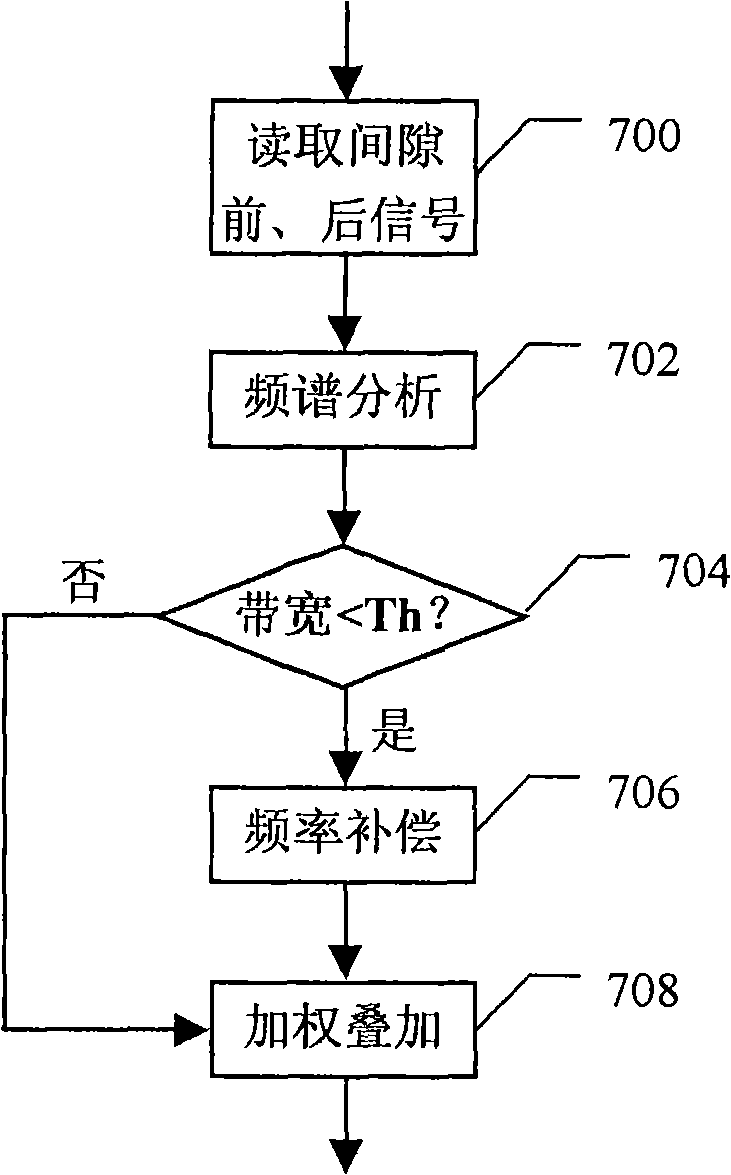
图7是按照本发明的方法进行间隙填充的流程图;Fig. 7 is a flowchart of gap filling according to the method of the present invention;
图8是按照本发明的方法的进行混叠补偿处理的示意图;Fig. 8 is a schematic diagram of performing aliasing compensation processing according to the method of the present invention;
图9是按照本发明的方法的进行加权叠加的示意图;Fig. 9 is a schematic diagram of weighted superposition according to the method of the present invention;
图10是按照本发明的方法进行间隙填充后的声谱图;Fig. 10 is the spectrogram after gap filling according to the method of the present invention;
图11是按照本发明的正交多普勒信号间隙填充装置的结构框图。Fig. 11 is a block diagram showing the structure of a quadrature Doppler signal gap filling device according to the present invention.
具体实施方式 Detailed ways
正交多普勒信号间隙填充方法Orthogonal Doppler Signal Gap Filling Method
典型的超声诊断成像系统的功能框图如图2所示。系统具有B型成像处理单元200,彩色血流成像(CFI)处理单元202和频谱多普勒处理单元204。每个处理单元产生的发射信号经发射波束合成单元206后,传送到探头208中的发射换能器转变为超声信号,通过探头208入射到人体组织内。超声信号遇到人体组织细胞产生散射回波,部分散射回波由接收换能器接收并经过波束合成后,进入相应的处理单元进行成像处理,处理的结果经扫描转换器(DSC)210后输出到显示器212以供显示。其中B型成像单元200通过在不同扫描方向上发射单个脉冲波束,并对接收到的回波的幅度进行灰度编码显示,从而获得人体组织的两维解剖结构图像。CFI处理单元202与频谱多普勒处理单元204均用于处理多普勒血流信号。CFI处理单元202在不同扫描方向上重复发射多个(一般为8~16个)脉冲波束,并计算接收到的多个采样容积内的多普勒血流信号的平均频率、带宽和平均功率,计算的结果叠加到B型图像上进行彩色编码显示。另外,处理单元处理的音频信号经过数/模转换器(DAC)214转换为模拟信号之后,输出到扬声器216。频谱多普勒技术用于获得固定扫描方向上单个采样容积内的血流信息,该技术从不同的发射波形又可分为连续波(CW)多普勒技术和脉冲波(PW)多普勒技术,前者发射的为连续波,后者则不断重复发射脉冲波。The functional block diagram of a typical ultrasonic diagnostic imaging system is shown in Figure 2. The system has a B-mode
频谱多普勒技术的典型处理框图如图3所示。接收到的射频多普勒回波信号经正交解调(块300)后变为以0频率为中心的基频信号。由于解调后的多普勒信号的带宽一般为几千Hz,该频率范围为音频范围,因此该信号又称为音频多普勒信号。由于静止和缓慢运动的组织产生的多普勒信号具有很大的幅度和较低的频率,该组织信号的存在将影响微弱血流信息的准确提取,故多普勒处理单元通过一个高通滤波器(壁滤波器)(块302)提取出有效的多普勒血流信号。血管内血流速度随心脏的收缩和舒张不断变化,通常认为在较短的时间内(2-40ms)血流速度基本保持不变。根据多普勒效应,多普勒信号的频率与血流速度成正比。多普勒处理单元对较短时间内的多普勒信号进行频谱分析(块306),获得多普勒信号的功率谱,该功率谱即反映了该时刻血管内血流的速度分布情况。不同时刻的多普勒信号功率谱组成一个两维显示图像即获得了信号的声谱图(sonogram,spectrogram)。在声谱图上可以提取出最大频率曲线,平均频率曲线以及搏动指数等重要临床诊断参数(块308),用于表征血管内的血流状况。频谱分析的结果经DSC后输出到显示器。另外,正交多普勒血流信号经方向分离处理(块310)后可以获得正向和反向的血流信号,该正、反向血流信号经数模转换(块312)后送到两个扬声器进行声音输出。多普勒信号的声音输出是声谱图输出的重要补充,而且是调节声谱图输出的重要依据。A typical processing block diagram of the spectral Doppler technique is shown in Fig. 3 . The received RF Doppler echo signal is quadrature demodulated (block 300 ) and converted into a fundamental frequency signal centered at zero frequency. Since the bandwidth of the demodulated Doppler signal is generally several thousand Hz, and the frequency range is the audio frequency range, the signal is also called an audio Doppler signal. Since the Doppler signal generated by static and slow-moving tissues has a large amplitude and low frequency, the existence of the tissue signal will affect the accurate extraction of weak blood flow information, so the Doppler processing unit passes a high-pass filter (Wall Filter) (block 302) extracts a valid Doppler flow signal. The blood flow velocity in the blood vessel changes continuously with the contraction and relaxation of the heart, and it is generally believed that the blood flow velocity remains basically unchanged in a short period of time (2-40ms). According to the Doppler effect, the frequency of the Doppler signal is proportional to the blood flow velocity. The Doppler processing unit performs frequency spectrum analysis on the Doppler signal within a short period of time (block 306 ) to obtain the power spectrum of the Doppler signal, which reflects the velocity distribution of the blood flow in the blood vessel at that moment. The power spectrum of the Doppler signal at different times forms a two-dimensional display image, that is, a sonogram (spectrogram) of the signal is obtained. Important clinical diagnostic parameters such as the maximum frequency curve, the average frequency curve and the pulsatility index can be extracted from the spectrogram (block 308 ), which are used to characterize the blood flow condition in the blood vessel. The results of spectrum analysis are output to the monitor after DSC. In addition, after the orthogonal Doppler blood flow signal is subjected to direction separation processing (block 310), forward and reverse blood flow signals can be obtained, and the forward and reverse blood flow signals are sent to Two speakers for sound output. The sound output of the Doppler signal is an important supplement to the output of the spectrogram, and is an important basis for adjusting the output of the spectrogram.
频谱多普勒成像模式(以PW为例)与两维图像模式(B模式、CFI模式等,以B模式为例)同时工作的时候,超声成像系统在两种模式之间不停地切换。当系统切换到B模式成像的时候,系统无法采集到多普勒信号,即产生多普勒信号间隙。按照本发明的间隙填充方法,利用间隙前和/或间隙后的数据对间隙内的声音和频谱进行平滑填充。When the spectral Doppler imaging mode (take PW as an example) and the two-dimensional image mode (B mode, CFI mode, etc., take B mode as an example) work at the same time, the ultrasound imaging system constantly switches between the two modes. When the system switches to B-mode imaging, the system cannot collect Doppler signals, that is, a Doppler signal gap occurs. According to the gap filling method of the present invention, the sound and spectrum in the gap are smoothly filled using the data before and/or after the gap.
现有的间隙填充的方法在处理较长时间的间隙的时候通常会出现谱图不连续的情况,例如以一个线性调频信号的谱图来仿真心脏收缩前期流速的快速增大情况,图4给出了现有的间隙填充方法导致频谱不连续的示意图。其中图4(a)表示分别用间隙前、后的信号(或频谱)直接填充间隙前半段和后半段的信号(或频谱),图4(b)则表示间隙前、后的信号(和频谱)在时域上反序(复信号还包括取共轭)后填充间隙前半段和后半段的信号(和频谱)。显然两种处理方法在这种情况下都会导致谱图的不连续。The existing gap filling method usually has a discontinuous spectrogram when dealing with a long-term gap. For example, a chirp signal spectrogram is used to simulate the rapid increase of the pre-systolic flow velocity, as shown in Figure 4 A schematic diagram of the spectral discontinuity caused by existing gap-filling methods is shown. Figure 4(a) shows that the signals (or spectrum) before and after the gap are used to directly fill the signal (or spectrum) of the first half and the second half of the gap, respectively, and Figure 4(b) shows the signal (or spectrum) before and after the gap. Spectrum) is reversed in the time domain (the complex signal also includes taking the conjugate) and fills the signal (and spectrum) of the first half and the second half of the gap. Obviously both processing methods will lead to spectral discontinuity in this case.
按照本发明的方法则是在对间隙前和/或间隙后的信号经过频率补偿后再进行间隙填充,其填充结果的示意图如图5所示。According to the method of the present invention, the gap filling is performed after frequency compensation is performed on the signals before and/or after the gap. The schematic diagram of the filling result is shown in FIG. 5 .
间隙填充方法的一种实施例如图6所示。系统根据B模式和PW模式的发射时序确定间隙的长度,多普勒处理单元根据接收到的多普勒信号长度判断是否存在信号间隙。若系统未检测到信号间隙,则将采集到的正交解调后的多普勒信号保存在存储模块(块600)中,并对采集到的信号进行壁滤波、频谱分析等处理。若系统检测到间隙,则读取内存中间隙前、后的多普勒信号(块602),并判断该信号是否是壁滤波后的多普勒信号。若读取的是壁滤波前的信号则在进行填充处理前需要进行壁滤波处理,以滤除低频的组织和管壁回波对血流信号参数估计的影响。其中壁滤波处理可以采用常用的IIR(infinite impluse response)数字滤波器。对于间隙后的多普勒信号,由于初始状态不确定,因此也可以通过阶跃初始化或者投影初始化处理后的IIR滤波器实现。壁滤波作为多普勒信号处理的一项公知技术,不在此做详细解释。滤波后的信号经过填充处理(块604)后,为了保证间隙前、后信号的连续性,需对待填充的信号和原始的间隙前、后的多普勒信号进行加权叠加(块606)。加权叠加后的信号可以直接输入后续的多普勒信号处理环节。One embodiment of the gap filling method is shown in FIG. 6 . The system determines the length of the gap according to the transmission timing of the B mode and the PW mode, and the Doppler processing unit judges whether there is a signal gap according to the length of the received Doppler signal. If the system does not detect a signal gap, the collected Doppler signals after quadrature demodulation are stored in the storage module (block 600 ), and the collected signals are processed by wall filtering and spectrum analysis. If the system detects a gap, it reads the Doppler signals before and after the gap in memory (block 602), and determines whether the signal is a wall-filtered Doppler signal. If the signal before wall filtering is read, wall filtering processing is required before filling processing to filter out the influence of low-frequency tissue and vessel wall echoes on blood flow signal parameter estimation. The wall filtering process can use the commonly used IIR (infinite impluse response) digital filter. For the Doppler signal after the gap, since the initial state is uncertain, it can also be realized by an IIR filter after step initialization or projection initialization. Wall filtering is a well-known technology of Doppler signal processing, and will not be explained in detail here. After the filtered signal is filled (block 604 ), in order to ensure the continuity of the signal before and after the gap, the signal to be filled and the original Doppler signal before and after the gap need to be weighted and superimposed (block 606 ). The weighted and superimposed signals can be directly input into the subsequent Doppler signal processing link.
间隙填充处理的流程图如图7所示。系统读取间隙前、后的多普勒信号(步骤700)作为待填充的多普勒信号,对读取的信号进行频谱分析(步骤702)。本实施例中采用了自相关法进行频谱分析,即直接利用时域的自相关估计来估计多普勒信号的平均频率、带宽和平均功率等参数。对长度为M的正交多普勒信号xi=Ii+jQi,其中j为(-1)的平方根,利用自相关估计获得:A flowchart of the gap filling process is shown in FIG. 7 . The system reads the Doppler signal before and after the gap (step 700) as the Doppler signal to be filled, and performs spectrum analysis on the read signal (step 702). In this embodiment, the autocorrelation method is used for spectrum analysis, that is, the parameters such as the average frequency, bandwidth, and average power of the Doppler signal are estimated directly by using the autocorrelation estimation in the time domain. For an Orthogonal Doppler signal x i =I i +jQ i of length M, where j is the square root of (-1), it is obtained by using autocorrelation estimation:
其中R(0)表示信号的功率,根据参量N和D可进一步获得:Where R(0) represents the power of the signal, which can be further obtained according to the parameters N and D:
其中Phase为信号的平均角频率,除以2π即获得归一化的数字频率。Among them, Phase is the average angular frequency of the signal, which is divided by 2π to obtain the normalized digital frequency.
根据Magn和R(0)可以估计出信号的方差:According to Magn and R(0), the variance of the signal can be estimated:
信号的带宽可以表示为上述方差的平方根。The bandwidth of a signal can be expressed as the square root of the above variance.
显然,间隙前、后信号的频谱分析还可以利用傅立叶变换获得信号的频谱,在频域进行估计,这属于公知技术,不在此做详细解释。Obviously, the spectrum analysis of the signal before and after the gap can also use Fourier transform to obtain the spectrum of the signal and estimate it in the frequency domain. This is a known technology and will not be explained in detail here.
利用谱分析获得频谱参数后,可以利用这些参数判断(步骤704)是否在间隙填充前对待填充的多普勒信号进行频率补偿处理。本实施例中直接利用带宽进行判别,即当间隙前、后的多普勒信号的带宽均小于预定阈值Th时,才对待填充的多普勒信号进行频率补偿处理。当间隙前、后分别为多普勒血流信号和噪声的情况下,噪声的平均频率具有较大的估计误差,而频率补偿则需要使用间隙前、后信号的平均频率,因此,若无条件对待填充的信号进行频率补偿,则可能导致频谱较大的畸变。但是,噪声通常具有比血流信号大得多的带宽。因此,通过判断带宽是否小于预定阈值,可以在一定程度上避免上述频谱畸变的风险。另外,还可用平均频率进行判断,即当间隙前、后的多普勒信号的平均频率均大于预定阈值,并且间隙前、后的多普勒信号的平均频率的差值也大于预定阈值的情况下,才对待填充的多普勒信号进行频率补偿处理。除此之外,还可以通过功率信息来判断间隙前、后的多普勒信号是否为有效信号,即功率小于预定阈值时,认为是噪声,不进行频率补偿;反之,才认为是有效的多普勒信号,进行频率补偿。对上述频谱参数的条件判断可以组合或单独使用。After spectrum parameters are obtained by spectral analysis, these parameters can be used to determine (step 704 ) whether to perform frequency compensation processing on the Doppler signal to be filled before gap filling. In this embodiment, the bandwidth is directly used for discrimination, that is, when the bandwidths of the Doppler signals before and after the gap are both smaller than the predetermined threshold Th, the frequency compensation processing is performed on the Doppler signal to be filled. When the Doppler blood flow signal and noise are respectively before and after the gap, the average frequency of the noise has a large estimation error, and the frequency compensation needs to use the average frequency of the signal before and after the gap. Therefore, if the unconditional treatment If the filled signal is used for frequency compensation, it may cause large distortion of the spectrum. However, noise typically has a much larger bandwidth than blood flow signals. Therefore, by judging whether the bandwidth is smaller than a predetermined threshold, the above-mentioned risk of spectrum distortion can be avoided to a certain extent. In addition, the average frequency can also be used to judge, that is, when the average frequency of the Doppler signal before and after the gap is greater than the predetermined threshold, and the difference between the average frequency of the Doppler signal before and after the gap is also greater than the predetermined threshold Then, the frequency compensation processing is performed on the Doppler signal to be filled. In addition, the power information can also be used to judge whether the Doppler signal before and after the gap is a valid signal, that is, when the power is less than a predetermined threshold, it is considered as noise and no frequency compensation is performed; otherwise, it is considered to be an effective Doppler signal. Puller signal for frequency compensation. Conditional judgments on the above spectrum parameters can be used in combination or alone.
频率补偿处理(步骤706)通过对待填充的多普勒信号乘以不同频率的复正弦波实现频率的调制,其中复正弦波的频率通过对间隙前、后多普勒信号的平均频率进行插值处理后获得。如图5所示,fs1和fs2分别为间隙前、后多普勒信号的平均频率,若将间隙分成前、后两段,则前、后两段中心点的频率fg1和fg2可以通过插值处理获得,插值处理可以是线性插值处理也可以是非线性的插值处理。本实施例中采用了线性插值,即Frequency compensation processing (step 706) realizes frequency modulation by multiplying the Doppler signal to be filled by complex sine waves of different frequencies, wherein the frequency of the complex sine wave is processed by interpolating the average frequency of the Doppler signal before and after the gap obtained after. As shown in Figure 5, fs1 and fs2 are the average frequencies of Doppler signals before and after the gap, respectively. If the gap is divided into two sections, the frequencies fg1 and fg2 of the center points of the two sections before and after can be processed by interpolation Obtained, the interpolation processing can be linear interpolation processing or non-linear interpolation processing. In this embodiment, linear interpolation is adopted, namely
当间隙前、后的多普勒信号发生频谱混叠时,直接采用线性插值将会产生0频率附近的频率估计,从而导致填充后频谱的不连续。因此,在频率插值之前需要进行混叠的补偿处理。一种频谱混叠的补偿处理方法如图8所示。图中两个实心圆点分别表示fs1和fs2,当|fs1-fs2|大于预定阈值的时候就判断为发生了频谱混叠。若直接对fs1和fs2进行插值将获得错误的平均频率估计,如图中虚线方框所示。为了对混叠的频率进行插值,首先判断fs2的符号,根据fs2的符号估计未混叠的频率fs2′。若fs2符号为负,则令fs2′=(fs2+1)代替fs2进行插值;若fs2符号为正,则令fs2′=(fs2-1)代替fs2进行插值。经过上述处理后fs2’如图中空心圆点所示。然后利用fs1和fs2′进行线性插值,若插值后的频率绝对值大于0.5,则通过上述类似的方法获得[-0.5,0.5]频率范围内的对应频率点,插值后的频率点如图中实心方框所示。When the spectrum aliasing occurs in the Doppler signal before and after the gap, directly using linear interpolation will generate a frequency estimate near 0 frequency, which will lead to the discontinuity of the filled spectrum. Therefore, aliasing compensation processing is required before frequency interpolation. A compensation processing method for spectrum aliasing is shown in FIG. 8 . The two solid circles in the figure represent fs1 and fs2 respectively, and when |fs1-fs2| is greater than a predetermined threshold, it is determined that spectrum aliasing has occurred. If fs1 and fs2 are directly interpolated, a wrong average frequency estimate will be obtained, as shown by the dotted box in the figure. In order to interpolate the aliased frequencies, the sign of fs2 is judged first, and the non-aliased frequency fs2' is estimated according to the sign of fs2. If the sign of fs2 is negative, let fs2'=(fs2+1) replace fs2 for interpolation; if the sign of fs2 is positive, let fs2'=(fs2-1) replace fs2 for interpolation. After the above processing, fs2' is shown as a hollow circle in the figure. Then use fs1 and fs2' to perform linear interpolation. If the absolute value of the frequency after interpolation is greater than 0.5, then obtain the corresponding frequency point in the frequency range [-0.5, 0.5] through the above-mentioned similar method. The frequency point after interpolation is solid in the figure shown in the box.
经过上述处理后,选择来自间隙前的待填充多普勒信号乘以频率为(fg1-fs1)的复正弦波进行频率调制,作为间隙前半段的待填充信号;选择来自间隙后的待填充多普勒信号乘以频率为(fg2-fs2)的复正弦波进行频率调制,作为间隙后半段的待填充信号。另外,本发明也不局限于同时采用来自间隙前、后的待填充多普勒信号进行填充处理,也可以根据间隙前、后多普勒信号的频谱特性,只选择其中一段多普勒信号进行填充,例如只选择来自间隙前的待填充信号进行填充处理。此时,来自间隙前的待填充多普勒信号乘以频率为(fg1-fs1)的复正弦波进行频率调制,作为间隙前半段的待填充信号;同一个信号乘以频率为(fg2-fs1)的复正弦波进行频率调制,作为间隙后半段的待填充信号。After the above processing, the Doppler signal to be filled before the gap is selected to be multiplied by a complex sine wave with a frequency of (fg1-fs1) for frequency modulation, as the signal to be filled in the first half of the gap; the Doppler signal to be filled after the gap is selected The Puller signal is multiplied by a complex sine wave with a frequency of (fg2-fs2) for frequency modulation, which is used as the signal to be filled in the second half of the gap. In addition, the present invention is not limited to using the Doppler signals to be filled before and after the gap to perform filling processing at the same time, and only one section of the Doppler signal can be selected according to the spectral characteristics of the Doppler signals before and after the gap. Filling, for example, only select the signal to be filled from before the gap for filling processing. At this time, the Doppler signal to be filled from before the gap is multiplied by a complex sine wave with a frequency of (fg1-fs1) for frequency modulation, as the signal to be filled in the first half of the gap; the same signal multiplied by a frequency of (fg2-fs1 ) complex sine wave for frequency modulation, as the signal to be filled in the second half of the gap.
经过上述处理获得待填充的多普勒信号后,对待填充的多普勒信号和原始的间隙前、后的多普勒信号(即未进行频率补偿的多普勒信号)进行加权叠加(步骤708),加权叠加示意图如图9所示。其中图中上部的“多普勒1”和“多普勒2”分别表示相邻两个多普勒扫描时间段,两者之间的“B成像”表示两个多普勒扫描时间段之间的B成像扫描时间段,即对应多普勒信号的间隙时间段。间隙起始时刻为Tgs,直到Tge时刻间隙结束,此时系统重新采集到有效的正交多普勒信号。为了保证填充信号的连续性,填充的信号与实际采集到的多普勒信号有重叠,即填充信号段的实际起始时刻为Tfs,终止时刻为Tfe。图9中[Tfs,Tgs]和[Tge,Tfe]分别为重叠的两段信号,简单起见,该两段信号的长度可取相等。由于填充需要间隙后的数据,因此实际填充计算必须等间隙后采集到足够多的正交多普勒信号后才开始启动,如图9中Tsf时刻所示。可见该方法并不是一种实时填充间隙的方法,而是一种准实时的方法。可以认为Tsf时刻输出的为Tfs的信号,即系统延迟为(Tfs-Tsf)。由于间隙的长度一般较小,系统延迟也非常短,因此不会影响到多普勒声谱图,以及多普勒声音和二维B超图像的同步性。间隙内信号分两段进行填充,两段之间也有重叠,同样,重叠的长度也可以跟[Tfs,Tgs]和[Tge,Tfe]的长度相等。图9中下半部分给出了待填充多普勒信号和原始间隙前、后多普勒信号加权使用的窗函数,不失一般性加权窗函数的取值范围为[0,1]。由图9可见,[Tfs,Tgs]时间段内原始间隙前多普勒信号的加权函数Ws1由1逐渐减小到0(图中粗实线所示),而[Tfs,T1e]时间段内的间隙前半段待填充信号的加权函数Wg1中间为1向两端逐渐减小为0(图中粗短划线所示)。同理,[T2s,Tfe]时间段内的间隙后半段待填充信号的加权函数Wg2也与Wg1类似(图中粗点虚线所示)。最后,[Tge,Tfe]时间段内原始间隙后多普勒信号的加权函数Ws2由0逐渐增大到1(图中粗点划线所示)。为了保证间隙内信号功率与间隙前、后信号功率的相似,可以要求权函数之和为1,即After the Doppler signal to be filled is obtained through the above processing, the Doppler signal to be filled and the Doppler signal before and after the original gap (ie, the Doppler signal without frequency compensation) are weighted and superimposed (step 708 ), the schematic diagram of weighted superposition is shown in Figure 9. The "
Ws1+Ws2+Wg1+Wg2=1W s1 +W s2 +W g1 +W g2 =1
经过使用上述加权函数对待填充的多普勒信号和原始的间隙前、后的多普勒信号进行加权后进行叠加,即实现多普勒信号的间隙填充。经过上述间隙填充处理后,间隙两端以及填充的两段信号的两端都能保证时域波形和频域频谱的连续性。如图10所示,是按照本发明的方法间隙填充后的声谱图。填充后的信号输入频谱分析、方向分离等模块进行其它多普勒信号处理。By using the above weighting function, the Doppler signal to be filled and the original Doppler signal before and after the gap are weighted and superimposed, that is, the gap filling of the Doppler signal is realized. After the above gap filling process, both ends of the gap and both ends of the filled two-segment signals can ensure the continuity of the time-domain waveform and the frequency-domain spectrum. As shown in FIG. 10 , it is a spectrogram after gap filling according to the method of the present invention. The filled signal is input into modules such as spectrum analysis and direction separation for other Doppler signal processing.
在以上参考图7描述的正交多普勒信号间隙填充方法中,还包括存储步骤,以存储间隙前和/或间隙后的多普勒信号。In the quadrature Doppler signal gap filling method described above with reference to FIG. 7 , a storage step is further included to store the Doppler signal before and/or after the gap.
对熟悉多普勒信号处理的人而言,直接利用频率补偿后的间隙前、后的多普勒信号进行间隙填充并不局限于本发明提出的实施例,更改本技术方案的一些处理流程,仍应该在本技术方案的保护范围之内。例如间隙填充可以在壁滤波前进行,此时需要对间隙前、后的多普勒信号经过壁滤波之后作为待填充的多普勒信号,并在对待填充信号经过频率补偿后叠加一个合适的低频信号使得待填充的信号具有与原始间隙前、后多普勒信号相似的频谱特性。然后,对待填充的多普勒信号与原始的间隙前、后多普勒信号进行加权叠加,叠加后的信号统一进行壁滤波、频谱分析等其他多普勒信号处理。For those who are familiar with Doppler signal processing, directly using the frequency-compensated Doppler signal before and after the gap to fill the gap is not limited to the embodiment proposed by the present invention, and some processing procedures of the technical solution are changed. Still should be within the protection scope of this technical scheme. For example, gap filling can be performed before wall filtering. At this time, the Doppler signal before and after the gap needs to be filtered as the Doppler signal to be filled, and a suitable low frequency is superimposed after frequency compensation of the signal to be filled. The signal is such that the signal to be filled has similar spectral characteristics to the Doppler signal before and after the original gap. Then, weighted superposition is performed on the Doppler signal to be filled and the original Doppler signal before and after the gap, and the superimposed signal is uniformly processed by wall filtering, spectrum analysis and other Doppler signal processing.
正交多普勒信号间隙填充装置Quadrature Doppler signal gap filling device
如图11所示,是按照本发明的正交多普勒信号间隙填充装置的结构框图,包括存储模块110、分析模块112、判断模块114、补偿模块116和填充模块118。其中存储模块110用于存储间隙前和/或间隙后的多普勒信号;分析模块112读取间隙前和/或间隙后的多普勒信号作为待填充多普勒信号,并分析所述待填充多普勒信号的频谱特性,以获得该信号的频谱参数;判断模块114根据所述频谱参数来判断是否对所述待填充多普勒信号进行频率补偿;补偿模块116根据所述频谱参数对所述待填充多普勒信号进行频率补偿;以及填充模块118根据判断模块114输出的判断结果进行选择,如果满足条件,则利用频率补偿后的待填充多普勒信号与原始的间隙前和/或间隙后的多普勒信号进行加权叠加以实现间隙填充;否则,直接利用原始的间隙前和/或后的多普勒信号进行加权叠加填充。As shown in FIG. 11 , it is a structural block diagram of a quadrature Doppler signal gap filling device according to the present invention, including a
Claims (21)
Priority Applications (2)
| Application Number | Priority Date | Filing Date | Title |
|---|---|---|---|
| CN2007101287121A CN101336830B (en) | 2007-07-03 | 2007-07-03 | Orthogonal Doppler signal gap filling method and device for ultrasonic dignosis imaging |
| US11/870,296 US8206302B2 (en) | 2007-07-03 | 2007-10-10 | Method and apparatus for filling doppler signal gaps in ultrasound diagnostic imaging |
Applications Claiming Priority (1)
| Application Number | Priority Date | Filing Date | Title |
|---|---|---|---|
| CN2007101287121A CN101336830B (en) | 2007-07-03 | 2007-07-03 | Orthogonal Doppler signal gap filling method and device for ultrasonic dignosis imaging |
Publications (2)
| Publication Number | Publication Date |
|---|---|
| CN101336830A CN101336830A (en) | 2009-01-07 |
| CN101336830B true CN101336830B (en) | 2012-07-04 |
Family
ID=40211108
Family Applications (1)
| Application Number | Title | Priority Date | Filing Date |
|---|---|---|---|
| CN2007101287121A Active CN101336830B (en) | 2007-07-03 | 2007-07-03 | Orthogonal Doppler signal gap filling method and device for ultrasonic dignosis imaging |
Country Status (2)
| Country | Link |
|---|---|
| US (1) | US8206302B2 (en) |
| CN (1) | CN101336830B (en) |
Families Citing this family (34)
| Publication number | Priority date | Publication date | Assignee | Title |
|---|---|---|---|---|
| EP1821427B1 (en) * | 2006-02-20 | 2008-05-28 | Alcatel Lucent | Doppler compensation control for radio transmission |
| CN101167656B (en) * | 2006-10-23 | 2012-10-03 | 深圳迈瑞生物医疗电子股份有限公司 | Tissue Doppler imaging method and device |
| US8142361B2 (en) * | 2007-08-28 | 2012-03-27 | Shenzhen Mindray Bio-Medical Electronics Co., Ltd. | Method and apparatus for automatic optimization of doppler imaging parameters |
| US9377990B2 (en) * | 2007-09-06 | 2016-06-28 | Adobe Systems Incorporated | Image edited audio data |
| US9052409B2 (en) * | 2008-07-11 | 2015-06-09 | Schlumberger Technology Corporation | Monte Carlo method for laplace inversion of NMR data |
| JP5472914B2 (en) * | 2010-05-19 | 2014-04-16 | 株式会社東芝 | Ultrasonic diagnostic equipment |
| US8576082B2 (en) | 2010-07-15 | 2013-11-05 | Jones Group Forensic Engineers | Busway joint parameter detection system |
| CN102370499B (en) * | 2010-08-26 | 2014-05-07 | 深圳迈瑞生物医疗电子股份有限公司 | Method and system for simultaneously displaying Doppler image, B-type image and colored blood flow image |
| CN102551791B (en) * | 2010-12-17 | 2016-04-27 | 深圳迈瑞生物医疗电子股份有限公司 | A kind of ultrasonic imaging method and device |
| KR102052123B1 (en) * | 2011-06-10 | 2019-12-17 | 삼성전자주식회사 | Ultrasound diagnostic apparatus and method for reducing interference and restoring missed signals |
| US9354301B2 (en) * | 2011-06-10 | 2016-05-31 | Samsung Electronics Co., Ltd. | Method and apparatus for ultrasound diagnosis that reduces interference and restores missed signals |
| US20130178743A1 (en) * | 2012-01-09 | 2013-07-11 | Industry-University Cooperation Foundation Sogang University | Ultrasonic device and method of generating ultrasonic image using vector doppler |
| US20130184580A1 (en) * | 2012-01-13 | 2013-07-18 | General Electric Company | Color flow image and spectrogram ultrasound signal sharing |
| KR101495527B1 (en) | 2012-02-17 | 2015-02-26 | 삼성메디슨 주식회사 | Diagnosis image apparatus |
| JP5838383B2 (en) * | 2012-06-29 | 2016-01-06 | ジーイー・メディカル・システムズ・グローバル・テクノロジー・カンパニー・エルエルシー | Ultrasonic diagnostic apparatus and control program therefor |
| US9011338B2 (en) * | 2012-07-12 | 2015-04-21 | Siemens Medical Solutions Usa, Inc. | Gap filling for spectral doppler ultrasound |
| CN104434198B (en) * | 2013-09-17 | 2017-09-22 | 深圳市理邦精密仪器股份有限公司 | A kind of dual mode ultrasound main frame and applied to the ultrasonic probe on the ultrasonic main frame |
| CN104783836B (en) * | 2015-03-27 | 2017-06-23 | 飞依诺科技(苏州)有限公司 | Ultrasonic system Doppler signal gap interpolation method and system |
| US10709421B2 (en) * | 2016-02-10 | 2020-07-14 | Canon Medical Systems Corporation | Ultrasound diagnostic apparatus |
| CN107041763B (en) * | 2016-12-14 | 2020-07-10 | 惠尔图像公司 | Ultrasound Spectral Doppler Imaging |
| CN106772369B (en) * | 2016-12-16 | 2019-04-30 | 北京华航无线电测量研究所 | A kind of three-D imaging method based on multi-angle of view imaging |
| CN108186050B (en) * | 2018-01-03 | 2021-02-23 | 声泰特(成都)科技有限公司 | Doppler blood flow velocity imaging method and system based on ultrasonic channel data |
| EP3847480B1 (en) * | 2018-09-07 | 2023-07-19 | Bioprober Corporation | Method and apparatus for detecting flow instability |
| US11779311B2 (en) * | 2018-09-14 | 2023-10-10 | Fujifilm Sonosite, Inc. | Method and apparatus for performing spectral doppler imaging |
| CN109350122B (en) * | 2018-09-29 | 2021-10-22 | 北京智影技术有限公司 | Automatic flow estimation method |
| JP7359850B2 (en) * | 2018-10-25 | 2023-10-11 | コーニンクレッカ フィリップス エヌ ヴェ | Method and system for adaptive beamforming of ultrasound signals |
| US11287310B2 (en) * | 2019-04-23 | 2022-03-29 | Computational Systems, Inc. | Waveform gap filling |
| CN110575201B (en) * | 2019-10-09 | 2021-12-24 | 珠海医凯电子科技有限公司 | Ultrasonic microbubble cavitation imaging method and device based on reverse Golay code |
| CN113768542B (en) * | 2020-06-10 | 2022-11-08 | 无锡祥生医疗科技股份有限公司 | Ultrasonic blood flow imaging device and ultrasonic equipment |
| WO2023138483A1 (en) * | 2022-01-18 | 2023-07-27 | 武汉联影医疗科技有限公司 | Signal processing method and system |
| CN116973923A (en) * | 2022-04-24 | 2023-10-31 | 武汉联影医疗科技有限公司 | Signal processing methods, devices, computer equipment and ultrasonic instruments |
| US12446863B2 (en) | 2022-04-24 | 2025-10-21 | Wuhan United Imaging Healthcare Co., Ltd. | Methods and devices for splicing ultrasound signal |
| US20240230841A9 (en) * | 2022-10-21 | 2024-07-11 | Texas Instruments Incorporated | Frequency modulated continuous wave radar system with object classifier |
| US20250152141A1 (en) * | 2023-11-13 | 2025-05-15 | GE Precision Healthcare LLC | Enhanced sequential image data generation techniques |
Citations (4)
| Publication number | Priority date | Publication date | Assignee | Title |
|---|---|---|---|---|
| US5476097A (en) * | 1994-10-13 | 1995-12-19 | Advanced Technology Laboratories, Inc. | Simultaneous ultrasonic imaging and Doppler display system |
| US5642732A (en) * | 1995-05-03 | 1997-07-01 | Acuson Corporation | Apparatus and method for estimating missing doppler signals and spectra |
| US5860928A (en) * | 1997-08-07 | 1999-01-19 | Siemens Medical Systems, Inc. | Method and system for selectively smoothing color flow images in an ultrasound system |
| US6110113A (en) * | 1998-12-15 | 2000-08-29 | Siemens Medical Systems, Inc. | Method and apparatus for removing transients and gaps from ultrasound echo signals |
Family Cites Families (12)
| Publication number | Priority date | Publication date | Assignee | Title |
|---|---|---|---|---|
| JPH07508185A (en) * | 1992-04-03 | 1995-09-14 | マイクロメディカル・インダストリーズ・リミテッド | Sensors and systems for physiological monitoring |
| JP4056069B2 (en) | 1994-12-27 | 2008-03-05 | 東芝医用システムエンジニアリング株式会社 | Ultrasonic diagnostic equipment |
| JP3418652B2 (en) | 1995-07-19 | 2003-06-23 | 株式会社日立製作所 | Ultrasonic device |
| JP3657706B2 (en) | 1996-09-11 | 2005-06-08 | 株式会社日立メディコ | Ultrasonic Doppler diagnostic device |
| JP3746122B2 (en) | 1996-12-06 | 2006-02-15 | 株式会社東芝 | Two-dimensional Doppler type ultrasonic diagnostic equipment |
| US5876341A (en) * | 1997-06-30 | 1999-03-02 | Siemens Medical Systems, Inc. | Removing beam interleave effect on doppler spectrum in ultrasound imaging |
| JP4279921B2 (en) | 1998-10-01 | 2009-06-17 | 株式会社東芝 | Ultrasonic diagnostic equipment |
| US6364838B1 (en) * | 2000-01-11 | 2002-04-02 | Siemens Medical Soulutions, Usa, Inc. | Pulsed wave doppler processing using aliased spectral data |
| US6450959B1 (en) * | 2000-03-23 | 2002-09-17 | Ge Medical Systems Global Technology Company | Ultrasound B-mode and doppler flow imaging |
| JP4528529B2 (en) * | 2004-01-20 | 2010-08-18 | 株式会社東芝 | Ultrasonic diagnostic apparatus and ultrasonic image data processing method |
| JP4583118B2 (en) | 2004-09-10 | 2010-11-17 | 株式会社東芝 | Ultrasonic diagnostic apparatus and control method of ultrasonic diagnostic apparatus |
| KR100716289B1 (en) * | 2005-07-15 | 2007-05-09 | 삼성전자주식회사 | Digital broadcasting receiver and automatic channel changing method |
-
2007
- 2007-07-03 CN CN2007101287121A patent/CN101336830B/en active Active
- 2007-10-10 US US11/870,296 patent/US8206302B2/en active Active
Patent Citations (4)
| Publication number | Priority date | Publication date | Assignee | Title |
|---|---|---|---|---|
| US5476097A (en) * | 1994-10-13 | 1995-12-19 | Advanced Technology Laboratories, Inc. | Simultaneous ultrasonic imaging and Doppler display system |
| US5642732A (en) * | 1995-05-03 | 1997-07-01 | Acuson Corporation | Apparatus and method for estimating missing doppler signals and spectra |
| US5860928A (en) * | 1997-08-07 | 1999-01-19 | Siemens Medical Systems, Inc. | Method and system for selectively smoothing color flow images in an ultrasound system |
| US6110113A (en) * | 1998-12-15 | 2000-08-29 | Siemens Medical Systems, Inc. | Method and apparatus for removing transients and gaps from ultrasound echo signals |
Also Published As
| Publication number | Publication date |
|---|---|
| CN101336830A (en) | 2009-01-07 |
| US20090012398A1 (en) | 2009-01-08 |
| US8206302B2 (en) | 2012-06-26 |
Similar Documents
| Publication | Publication Date | Title |
|---|---|---|
| CN101336830A (en) | Orthogonal Doppler signal gap filling method and device for ultrasonic diagnostic imaging | |
| US7981036B2 (en) | Method and system for processing doppler signal gaps | |
| JP4567842B2 (en) | Ultrasonic diagnostic equipment | |
| JP4365909B2 (en) | Pulse inversion Doppler ultrasonic diagnostic image processing method and apparatus | |
| JP4722283B2 (en) | Method and apparatus for motion visualization in ultrasonic flow imaging using continuous data acquisition | |
| US6458084B2 (en) | Ultrasonic diagnosis apparatus | |
| EP1826587A2 (en) | Ultrasonic diagnostic apparatus and ultrasonic diagnostic method | |
| US8864671B2 (en) | Methods and systems for color flow imaging | |
| US6773403B2 (en) | Ultrasonic apparatus and method for measuring the velocities of human tissues using the doppler effects | |
| US20050054931A1 (en) | Tracking clutter filter for spectral & audio doppler | |
| CN102283681A (en) | Ultrasonic diagnostic apparatus and ultrasonic diagnostic apparatus control method | |
| EP2458401B1 (en) | Performing adaptive frame average process in ultrasound system | |
| CN101342083B (en) | Method and apparatus for calculating Doppler signal frequency spectrum | |
| US6758815B2 (en) | Apparatus and method for indicating mechanical stiffness properties of body tissue | |
| JP4297699B2 (en) | Method and apparatus for rendering spectral distortion | |
| JPH057588A (en) | Ultrasonic Doppler diagnostic device | |
| KR101809358B1 (en) | Ultrasonic doppler imaging apparatus using new plane wave synthesis method and controlling method thereof | |
| US12510642B2 (en) | Signal processing methods and systems | |
| CN102871689B (en) | Method and device for filling gap of Doppler signal and ultrasonic imaging system thereof | |
| JP4911636B2 (en) | Ultrasound contrast device | |
| JP2022154977A (en) | Ultrasonic diagnostic apparatus | |
| JP2563656B2 (en) | Ultrasonic Doppler imaging device | |
| Gran et al. | Adaptive blood velocity estimation in medical ultrasound | |
| Jensen | Spectral velocity estimation using the autocorrelation function and sparse data sequences | |
| JP2008148794A (en) | Image generation method and ultrasonic diagnostic apparatus |
Legal Events
| Date | Code | Title | Description |
|---|---|---|---|
| C06 | Publication | ||
| PB01 | Publication | ||
| C10 | Entry into substantive examination | ||
| SE01 | Entry into force of request for substantive examination | ||
| C14 | Grant of patent or utility model | ||
| GR01 | Patent grant | ||
| EE01 | Entry into force of recordation of patent licensing contract | ||
| EE01 | Entry into force of recordation of patent licensing contract |
Application publication date: 20090107 Assignee: Shenzhen Mindray Animal Medical Technology Co.,Ltd. Assignor: SHENZHEN MINDRAY BIO-MEDICAL ELECTRONICS Co.,Ltd. Contract record no.: X2022440020009 Denomination of invention: Orthogonal Doppler Signal Gap Filling Method and Device for Ultrasound Diagnostic Imaging Granted publication date: 20120704 License type: Common License Record date: 20220804 |