CN101606406A - Disabled tracking area optimization for private/home networks - Google Patents
Disabled tracking area optimization for private/home networks Download PDFInfo
- Publication number
- CN101606406A CN101606406A CN200880004471.2A CN200880004471A CN101606406A CN 101606406 A CN101606406 A CN 101606406A CN 200880004471 A CN200880004471 A CN 200880004471A CN 101606406 A CN101606406 A CN 101606406A
- Authority
- CN
- China
- Prior art keywords
- identifier
- length
- node
- list
- access
- Prior art date
- Legal status (The legal status is an assumption and is not a legal conclusion. Google has not performed a legal analysis and makes no representation as to the accuracy of the status listed.)
- Granted
Links
Images


Classifications
-
- H—ELECTRICITY
- H04—ELECTRIC COMMUNICATION TECHNIQUE
- H04W—WIRELESS COMMUNICATION NETWORKS
- H04W48/00—Access restriction; Network selection; Access point selection
- H04W48/02—Access restriction performed under specific conditions
- H04W48/04—Access restriction performed under specific conditions based on user or terminal location or mobility data, e.g. moving direction, speed
-
- H—ELECTRICITY
- H04—ELECTRIC COMMUNICATION TECHNIQUE
- H04J—MULTIPLEX COMMUNICATION
- H04J11/00—Orthogonal multiplex systems, e.g. using WALSH codes
- H04J11/0069—Cell search, i.e. determining cell identity [cell-ID]
- H04J11/0086—Search parameters, e.g. search strategy, accumulation length, range of search, thresholds
-
- H—ELECTRICITY
- H04—ELECTRIC COMMUNICATION TECHNIQUE
- H04W—WIRELESS COMMUNICATION NETWORKS
- H04W48/00—Access restriction; Network selection; Access point selection
- H04W48/08—Access restriction or access information delivery, e.g. discovery data delivery
- H04W48/12—Access restriction or access information delivery, e.g. discovery data delivery using downlink control channel
-
- H—ELECTRICITY
- H04—ELECTRIC COMMUNICATION TECHNIQUE
- H04W—WIRELESS COMMUNICATION NETWORKS
- H04W8/00—Network data management
- H04W8/26—Network addressing or numbering for mobility support
-
- H—ELECTRICITY
- H04—ELECTRIC COMMUNICATION TECHNIQUE
- H04W—WIRELESS COMMUNICATION NETWORKS
- H04W84/00—Network topologies
- H04W84/02—Hierarchically pre-organised networks, e.g. paging networks, cellular networks, WLAN [Wireless Local Area Network] or WLL [Wireless Local Loop]
- H04W84/04—Large scale networks; Deep hierarchical networks
- H04W84/042—Public Land Mobile systems, e.g. cellular systems
- H04W84/045—Public Land Mobile systems, e.g. cellular systems using private Base Stations, e.g. femto Base Stations, home Node B
Landscapes
- Engineering & Computer Science (AREA)
- Computer Networks & Wireless Communication (AREA)
- Signal Processing (AREA)
- Computer Security & Cryptography (AREA)
- Databases & Information Systems (AREA)
- Mobile Radio Communication Systems (AREA)
- Radio Relay Systems (AREA)
- Burglar Alarm Systems (AREA)
- Alarm Systems (AREA)
- Ultra Sonic Daignosis Equipment (AREA)
Abstract
Description
技术领域 technical field
本发明涉及具有使接入限于某些用户设备的节点的无线通信网络。具体而言,本发明涉及高效操作用户设备和控制信令以跟踪和标识这样的使接入限于各特定用户设备的节点。The invention relates to a wireless communication network with nodes restricting access to certain user equipments. In particular, the invention relates to the efficient operation of user equipment and control signaling to track and identify such nodes that restrict access to each specific user equipment.
背景技术 Background technique
以下是在本说明书中使用的一些首字母缩写词:The following are some acronyms used in this manual:
LTE 长期演进LTE Long Term Evolution
UTRAN UMTS陆上无线电接入网络(3G)UTRAN UMTS Terrestrial Radio Access Network (3G)
E-UTRAN 演进UTRAN(3.9G或者LTE)E-UTRAN Evolution UTRAN (3.9G or LTE)
UE 用户设备UE User Equipment
LA 位置区域LA Location Area
TA 跟踪区域(类似于LA)TA Tracking Area (similar to LA)
LAU LA更新LAU LA update
TAU TA更新TAU TA update
eNB 演进节点B(LTE的基站或者接入节点)eNB Evolved Node B (LTE base station or access node)
BCH 广播信道BCH broadcast channel
GSM 全球移动通信系统GSM Global System for Mobile Communications
CDMA 码分多址CDMA code division multiple access
PLMN 公共陆地移动网络PLMN public land mobile network
WLAN 无线局域网WLAN Wireless Local Area Network
GERAN GSM EDGE无线电接入网络GERAN GSM EDGE Radio Access Network
移动用户设备穿越各种地理区域并且在该过程中从一个网络小区的控制移动到另一网络小区的控制以维持它与核心网络的无线链路,其中数据和呼叫通过核心网络被路由到其他实体和从其他实体路由。一般而言,UE将在主控小区知道不寻呼UE时(例如空闲模式),在某些指定时间检验相邻小区、在UE认为合适时请求切换到特定相邻小区并且执行如由网络指引的切换过程。即使在不同网络运营商控制不同小区的情况下,一般在传统系统中,向UE给予可接受信号的任何相邻小区都被考虑作为用于切换的候选。存在过例外并且当特定小区从技术观点来看与UE的能力不兼容(例如GSM与CDMA)时仍然存在例外,但是由于UE与那些其他小区所使用的协议不兼容,所以UE从未将它们考虑作为用于切换的候选。Mobile user equipment traverses various geographical areas and in the process moves from control of one network cell to another to maintain its radio link with the core network through which data and calls are routed to other entities and routes from other entities. In general, the UE will check the neighbor cell at some specified time when the master cell knows not to page the UE (e.g. idle mode), request handover to a specific neighbor cell when the UE deems it appropriate and perform as directed by the network switching process. Even in cases where different network operators control different cells, generally in conventional systems any neighboring cell giving an acceptable signal to the UE is considered as a candidate for handover. There have been exceptions and there are still exceptions when specific cells are not compatible with UE's capabilities from a technical point of view (eg GSM vs. CDMA), but UEs never take them into account since the UE is not compatible with the protocols used by those other cells as a candidate for handover.
若干网络层/网络/技术可以在相同覆盖区域中共存。一些订户/用户设备可以在相同地理位置中对这些网络层/网络/技术的若干个具有接入权限。网络运营商寻求覆盖新的市场分割,并且3G移动性过程有利于大的小区尺寸(例如与WLAN相比为大)。在当前蜂窝系统中,即使对于分级小区结构而言,移动性管理也仍然主要基于覆盖。一般而言,通过由服务小区提供的相邻小区信息来实现用于UE的无缝移动性。若干网络运营商已经表示有兴趣创建接入受限的诸如公司网络、家用基站等无线网络层。追随将传统核心网络功能转变成无线电网络的这一趋势,来自无线电接入网络工作组WGRAN3的一份近期技术报告(TR R3.018 V0.1.0(2006-01))在e节点B中分配预订信息处理功能。由于这些专用网络变得更普遍,所以出现如下问题:任何特定UE都必须区分它可以切换到的那些小区与限制它接入的那些小区。Several network layers/networks/technologies can coexist in the same coverage area. Some subscribers/user devices may have access rights to several of these network layers/networks/technologies in the same geographic location. Network operators seek to cover new market segments, and 3G mobility procedures favor large cell sizes (eg large compared to WLAN). In current cellular systems, even for hierarchical cell structures, mobility management is still mainly based on coverage. In general, seamless mobility for UEs is achieved through neighbor cell information provided by the serving cell. Several network operators have expressed interest in creating wireless network layers such as corporate networks, femtocells, etc. with limited access. Following this trend of transforming legacy core network functions into radio networks, a recent technical report (TR R3.018 V0.1.0(2006-01)) from Radio Access Network Working Group WGRAN3 allocates reservations in eNodeB Information processing function. As these private networks become more common, the problem arises that any particular UE must distinguish between those cells to which it can handover and those cells to which its access is restricted.
在传统空闲模式的基于覆盖的方法之下,运营商由于其他原因而不能例如基于预订类别以高效方式控制UE订户向它们的网络部分的可接入性。理论上可以在核心网络处(例如经由定位区域LA)处理基于预订的移动性控制,但是这一方法引起不必要的信令并且造成更多网络维护。漫游针对这一点来说不是高效的选项,因为漫游是基于仅有少数位的PLMN代码,并且其看起来表现得难以实施(例如漫游合约)。Under the coverage-based approach of traditional idle mode, operators cannot control the accessibility of UE subscribers to their network part in an efficient way for other reasons, eg based on subscription class. It is theoretically possible to handle subscription-based mobility control at the core network (eg via a location area LA), but this approach causes unnecessary signaling and more network maintenance. Roaming is not an efficient option for this because roaming is based on PLMN codes with only a few digits and it appears to be difficult to implement (eg roaming contracts).
WLAN系统看起来没有使用相邻小区信息,它只是安装接入点并且设置载波频率。就小的小区尺寸(微微(Pico)小区、家用(Femto)小区)而言,构造相邻小区关系是一项繁重的任务。即使相邻小区已知,在3G中频率间小区的最大数目仍然为32。如果希望在宏小区与多于32个的其他小区如家用小区之间的移动性,则仅扩展现有技术的3G移动性概念往往指示将需要运用过度的扰频码重用。The WLAN system does not seem to use neighbor cell information, it just installs access points and sets the carrier frequency. For small cell sizes (Pico cells, Femto cells), constructing neighbor cell relationships is a burdensome task. Even if the neighbor cells are known, the maximum number of inter-frequency cells is still 32 in 3G. If mobility between a macro cell and more than 32 other cells, such as home cells, is desired, simply extending the prior art 3G mobility concepts often indicates that excessive scrambling code reuse will need to be employed.
在E-UTRAN中,要求之一是支持例如家用eNB。这突出了在旧式(legacy)系统(GSM和UTRAN)中也相关的如下问题,该问题涉及使用最少数量的信令来高效地限制一些UE向某些小区的接入,同时从UE和网络观点来看仍然提供高效功能性。在LTE中一个认同的问题已经在于如何让UE标识哪些小区允许该UE接入而哪些小区不允许该UE接入,例如专用网络/家用基站可以使接入仅限于某些UE。另一问题在于如何保证未准予接入一个或者多个特定小区的UE将不把这些小区考虑作为用于该UE的小区选择/重选的可行候选。In E-UTRAN, one of the requirements is to support e.g. home eNBs. This highlights the problem, also relevant in legacy systems (GSM and UTRAN), of efficiently restricting the access of some UEs to certain cells using a minimum amount of signaling, while simultaneously It still provides efficient functionality. A recognized problem in LTE has been how to let the UE identify which cells the UE is allowed to access and which cells the UE is not allowed to access, e.g. a private network/home base station can restrict access to only certain UEs. Another problem is how to ensure that a UE not granted access to one or more particular cells will not consider these cells as viable candidates for cell selection/reselection for that UE.
已经考虑将禁用位置区域概念用于这些目的。当有大量(例如数以百计)专用网络并且UE在它接收到关于特定TA被禁用的指示(通过读取TA代码或者TA更新)之前试图接入那些专用网络中的各专用网络时出现问题。使用UE在将各网络/小区置于它的禁用列表中之前必须先尝试接入该网络/小区的这一方法给网络和UE均带来若干问题。具体而言:The forbidden location area concept has been considered for these purposes. The problem arises when there are a large number (e.g. hundreds) of private networks and the UE tries to access each of those private networks before it receives an indication that a particular TA is disabled (either by reading a TA code or a TA update) . Using this approach where the UE has to first try to access each network/cell before putting that network/cell in its barred list presents several problems for both the network and the UE. in particular:
·针对各专用网络或者家用eNB需要信令并且增加信令。• Signaling is required and added for each private network or home eNB.
·这一信令所致的UE功耗增加。• Increased UE power consumption due to this signaling.
·当UE对于寻呼不可达时的时间可能增加。• The time when the UE is unreachable for paging may increase.
·UE存储器消耗:随着时间流逝,禁用TA的数目可能升至很大数目。UE将需要记忆被禁用的TA的整个列表或者代之以UE可能必须将列表限于最大数目(这然后可能进一步增加信令)。• UE memory consumption: Over time, the number of disabled TAs may rise to a large number. The UE will need to memorize the entire list of disabled TAs or instead the UE may have to limit the list to a maximum number (which then may further increase signaling).
比如在2G与3G无线系统之间的互通场景这样的旧式系统尝试通过使用位置区域、位置更新过程并且甚至使用针对位置更新拒绝的具体原因来处理这些类型的接入限制。Legacy systems such as interworking scenarios between 2G and 3G wireless systems try to handle these types of access restrictions by using location areas, location update procedures and even using specific reasons for location update rejection.
发明人在上文引用的PCT/IB2007/004139中已经公开一种用于生成和使用禁用相邻列表来区分允许小区与受限小区的方法。该公开内容被视为最有利于其中考虑的小区数量不大的环境。然而,优选进一步适配以处理大量专用小区(例如家用eNB)而不明显地扩张所需信令,从而UE可以区分允许小区与受限小区。The inventors have disclosed in PCT/IB2007/004139 referenced above a method for generating and using a forbidden neighbor list to distinguish allowed cells from restricted cells. This disclosure is considered most beneficial in environments where the number of cells under consideration is not large. However, it is preferable to further adapt to handle a large number of private cells (eg home eNBs) without significantly spreading the required signaling, so that the UE can distinguish between allowed and restricted cells.
可以出于各种原因中的任何原因而允许或者限制特定小区或者网络。最适用于这些教导的是如下情况,其中限制特定UE接入的小区完全地可操作、但是不允许该UE接入,比如专用网络和家用eNB。这是在限制UE接入的小区数目最可能积累到更大数目的那些环境中,尽管这里的教导不受任何特定原因限定,但是认为小区对于特定UE而言为受限或者允许。某些小区限制UE接入可能归因于由网络施加的临时措施,比如维护,并且可以根据下文的具体教导以相同的方式向UE标识任何小区以指示它对于UE而言为允许或者受限。Particular cells or networks may be allowed or restricted for any of a variety of reasons. These teachings are most applicable in situations where cells that restrict access to a specific UE are fully operational, but do not allow access to that UE, such as private networks and home eNBs. This is in those environments where the number of cells restricting UE access is most likely to accumulate to a larger number, although the teachings herein are not limited by any particular reason, a cell is considered restricted or allowed for a particular UE. Certain cells restricting UE access may be due to temporary measures imposed by the network, such as maintenance, and any cell may be identified to the UE in the same way to indicate that it is allowed or restricted for the UE according to the specific teachings below.
发明内容 Contents of the invention
根据本发明的一个实施例是一种方法,该方法包括:确定将使用第一长度的标识符或者第二长度的标识符来完成接入验证;接收节点地址;并且通过将接收的节点地址中具有确定的第一或者第二长度的字段与本地存储的接入列表进行比较来执行接入验证。对于接入列表包括允许标识符列表的情况,至少将节点地址的比较字段添加到本地存储的小区选择候选节点列表,或者对于接入列表包括受限标识符列表的情况,从本地存储的小区选择候选节点列表排除节点地址的比较字段。One embodiment according to the present invention is a method comprising: determining that an identifier of a first length or an identifier of a second length will be used to complete access verification; receiving a node address; The field having the determined first or second length is compared with a locally stored access list to perform access verification. Add at least a comparison field of the node address to the locally stored cell selection candidate node list for the case where the access list includes a list of allowed identifiers, or select from a locally stored cell selection list for the case where the access list includes a list of restricted identifiers. Candidate node list excludes comparison fields for node addresses.
根据本发明的另一实施例是一种装置,该装置包括处理器和接收器以及本地存储器。接收器配置成接收节点地址。处理器配置成确定将使用第一长度的标识符或者第二长度的标识符来完成接入验证并且配置成通过将接收的节点地址中具有确定的第一或者第二长度的字段与本地存储的接入列表进行比较来执行接入验证。对于接入列表包括允许标识符列表的情况,至少将节点地址的比较字段添加到本地存储器中的小区选择候选节点列表,或者对于接入列表包括受限标识符列表的情况,从存储器中的小区选择候选节点列表排除节点地址的比较字段。Another embodiment according to the present invention is an apparatus comprising a processor and a receiver and a local memory. The receiver is configured to receive the node address. The processor is configured to determine that an identifier of the first length or an identifier of the second length will be used to complete the access verification and is configured to combine the field of the received node address with the determined first or second length with the locally stored The access list is compared to perform access authentication. For the case where the access list includes a list of allowed identifiers, at least a comparison field for the node address is added to the list of candidate nodes for cell selection in local memory, or for the case where the access list includes a list of restricted identifiers, from the cell selection list in memory Select the Candidate Node List to exclude the comparison field for node addresses.
根据本发明的另一实施例是一种计算机可读存储器,该存储器实施可由数字数据处理器执行以执行与执行接入验证有关的动作的机器可读指令程序。在这一实施例中,动作包括:确定将使用第一长度的标识符或者第二长度的标识符来完成接入验证;接收节点地址;并且进行用于将接收的节点地址中具有确定的第一或者第二长度的字段与本地存储的接入列表进行比较的接入验证。动作还包括:对于接入列表包括允许标识符列表的情况,至少将节点地址的比较字段添加到本地存储的小区选择候选节点列表,或者对于接入列表包括受限标识符列表的情况,从本地存储的小区选择候选节点列表排除节点地址的比较字段。Another embodiment in accordance with the present invention is a computer readable memory embodying a program of machine readable instructions executable by a digital data processor to perform actions related to performing access authentication. In this embodiment, the actions include: determining that access verification will be accomplished using either an identifier of a first length or an identifier of a second length; receiving a node address; Access verification by comparing a field of one or second length with a locally stored access list. The actions also include adding at least a comparison field of node addresses to a locally stored list of cell selection candidate nodes, for cases where the access list includes a list of allowed identifiers, or, for cases where the access list includes a list of restricted identifiers, from the locally The stored cell selection candidate node list excludes the comparison field of node addresses.
根据本发明的另一实施例是一种装置,该装置包括接收装置和处理装置以及存储器装置。接收装置用于接收节点地址。处理装置用于确定将使用第一长度的标识符或者第二长度的标识符来完成接入验证并且用于通过将接收的节点地址中具有确定的第一或者第二长度的字段与本地存储的接入列表进行比较来执行接入验证。并且存储器装置用于对于接入列表包括允许标识符列表的情况,至少将节点地址的比较字段添加到小区选择候选节点列表,或者对于接入列表包括受限标识符列表的情况,从小区选择候选节点列表排除节点地址的比较字段。在一个特定实施例中,接收装置为接收器,处理器装置为数字处理器,并且存储器装置为本地存储器。Another embodiment according to the invention is an apparatus comprising receiving means and processing means and memory means. The receiving means is used for receiving the node address. The processing means is used to determine that the access verification will be completed using an identifier of the first length or an identifier of the second length and is used to combine the field of the received node address with the determined first or second length with the locally stored The access list is compared to perform access authentication. and memory means for adding at least a comparison field of the node address to the cell selection candidate node list for the case where the access list includes a list of allowed identifiers, or for selecting from the list of cell selection candidates for the case where the access list includes a list of restricted identifiers The node list excludes the comparison field for node addresses. In a particular embodiment, the receiving means is a receiver, the processor means is a digital processor, and the memory means is a local memory.
根据本发明的又一实施例是一种方法,该方法包括:确定是第一长度的标识符还是第二长度的标识符将用于用户设备的接入验证,并且发送关于将使用第一长度的标识符或者第二长度的标识符来完成接入验证的指示;并且发送用于接入验证的节点地址。Yet another embodiment according to the present invention is a method comprising: determining whether an identifier of a first length or an identifier of a second length will be used for access authentication of a user equipment, and sending information about whether the identifier of the first length will be used The identifier or the identifier of the second length is used to complete the indication of the access verification; and send the node address used for the access verification.
根据本发明的又一实施例是一种装置,该装置包括发送器和处理器。处理器配置成确定是第一长度的标识符还是第二长度的标识符将用于用户设备的接入验证。发送器配置成发送关于将使用第一长度的标识符或者第二长度的标识符来完成接入验证的指示并且配置成发送用于接入验证的节点地址。Yet another embodiment according to the present invention is an apparatus comprising a transmitter and a processor. The processor is configured to determine whether an identifier of the first length or an identifier of the second length is to be used for access verification of the user equipment. The transmitter is configured to send an indication that the access verification is to be done using an identifier of the first length or an identifier of the second length and to send a node address for the access verification.
下文具体地进一步详述这些和其他方面。These and other aspects are detailed further below.
附图说明 Description of drawings
参照以下附图最清楚地理解下文详细描述。The following detailed description is best understood with reference to the following drawings.
图1是可以用来实现本发明各种方面的各种设备的示意框图。Figure 1 is a schematic block diagram of various devices that may be used to implement various aspects of the invention.
图2是如下文根据本发明一个特定实施例详述的节点地址的不同组成的图。Figure 2 is a diagram of the different components of a node address as detailed below in accordance with a particular embodiment of the invention.
图3是示出了在各种小区的环境中的两个UE的图,该图图示了图2的小区地址如何由不同UE用来确定是允许还是限制特定小区。Figure 3 is a diagram showing two UEs in the context of various cells, illustrating how the cell address of Figure 2 is used by different UEs to determine whether to allow or restrict a particular cell.
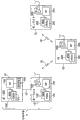
图4,作为图5-图7的概况图,是结合两个不同子网络的一个UE的图示。Figure 4, as an overview of Figures 5-7, is an illustration of a UE incorporating two different sub-networks.
图5-图7图示了其中UE在不同子网络之间移动的三个不同示例场景。Figures 5-7 illustrate three different example scenarios where a UE moves between different sub-networks.
图8是在本发明一个实施例中使用的过程步骤的流程图。Figure 8 is a flowchart of process steps used in one embodiment of the invention.
具体实施方式 Detailed ways
本发明涉及使接入限于某些UE(类似于UTRAN/GERAN中使用的禁用位置区域概念,但是本发明并非仅限于UTRAN/GERAN)的无线节点或者涉及小区接入限制和如何处理具有许多如下小型小区或者小区群集的问题,这些小区或者小区群集可以具有针对某些UE的受限接入准予。一般而言,本发明的实施例使用服务区域标识符(类似于位置区域LA或者跟踪区域TA的标识符)这一分层概念。服务区域标识符分为标识服务区域本身的共同部分和标识服务区域内特定小区的小区标识ID部分这两个部分。对服务区域这一术语的使用是广义的并且将不理解为仅限于在各种无线协议如UTRAN中具体限定的LA和TA术语。The invention relates to wireless nodes that restrict access to certain UEs (similar to the forbidden location area concept used in UTRAN/GERAN, but the invention is not limited to UTRAN/GERAN) or to cell access restrictions and how to deal with many small A problem with cells or clusters of cells that may have restricted access grants for certain UEs. In general, embodiments of the invention use the hierarchical concept of service area identifiers (similar to identifiers for location areas LA or tracking areas TA). The service area identifier is divided into two parts: a common part identifying the service area itself and a cell identification ID part identifying a specific cell within the service area. The use of the term service area is broad and should not be construed as limited to LA and TA terms specifically defined in various radio protocols such as UTRAN.
进一步就这里所用术语而言,“空闲模式”指代如下情况,其中没有在网络与UE之间传送的用户平面数据。即3G CELL_PCH、URA_PCH和CELL_FACH等状态属于“空闲模式”(PCH=寻呼信道;FACH=前向接入信道)。然而,本发明的实施例不限于UE的空闲模式。“小区选择”意味着包括小区选择和小区重选,在3G中这指代截然不同的概念。子网络是运营商的网络中向具体服务和/或逻辑和/或地理范围分配的一部分。一个子网络也可以由与拥有频率许可的运营商有合约的第三方来运营。一份预订可以具有对许多子网络的接入权限。Further as the term is used herein, "idle mode" refers to a situation in which no user plane data is transmitted between the network and the UE. That is, the states of 3G CELL_PCH, URA_PCH and CELL_FACH belong to the "idle mode" (PCH=paging channel; FACH=forward access channel). However, embodiments of the invention are not limited to idle mode of the UE. "Cell selection" is meant to include cell selection and cell reselection, which refer to distinct concepts in 3G. A sub-network is a part of an operator's network allocated to a specific service and/or logical and/or geographical area. A subnetwork can also be operated by a third party that has a contract with the operator that owns the frequency license. A subscription can have access to many subnetworks.
在详述特定实施例之前,首先对图1进行参照,该图用于图示适合于在实现本发明的示例实施例时使用的各种电子设备的简化框图。在图1中,第一无线网络9适合于通过第一无线链路18经由第一节点B15(接入节点)与UE 30通信,并且第二无线网络也适合于通过第二无线链路28经由第二节点B25与UE 30通信。无线链路18、28一般仅在不同的时间活跃。尽管仅针对第一网络9示出了一个RNC,但是两个网络均可以运用RNC,并且RNC中的任一个或者二者可以控制多个节点B。术语RNC广义地用来代表除了节点B之外的从UE 30进一步移开的网元、接入节点的控制器并且在各种网络中可以称为其他术语,例如,诸如网关或者移动性管理实体之类。节点B可以是如在E-UTRAN之下设想的E-节点B(演进节点B)。网络9包括通过第一lub接口12控制第一节点B15的RNC10。lub接口12可以是有线或者无线的,并且中继节点也可以存在于任一节点B与UE之间,比如其中任一网络是具有固定和/或移动中继节点(未示出)的网状网络。RNC 10如本领域中所知通过lu接口耦合到核心网络CN(未示出,比如移动交换中心MSC或者服务GPRS支持节点SGSN)。如果在每个网络中都有RNC,则它们可以通过lur接口相互耦合。其他类型的网络可以不同地命名这些接口。Before detailing specific embodiments, reference is first made to Figure 1, which illustrates a simplified block diagram of various electronic devices suitable for use in implementing example embodiments of the present invention. In FIG. 1 , the
RNC 10包括数据处理器(DP)10A、存储程序(PROG)10C的存储器(MEM)10B以及用于调制和解调通过各种双向接口发送和接收的消息的调制解调器10D。类似地,各节点B15和25包括DP15A和25A以及存储PROG 15C和25C的MEM 15B和25B。节点B15和25各自也包括用于通过lur 12与它们的相应RNC 10通信的调制解调器,但是在图1中仅示出了用于比如通过链路18和28与UE30在适当RF的无线双向通信的适当射频RF收发器15D和25D。UE 30也包括DP 30A、用于存储PROG 30C的MEM 30B和无线收发器30D。假设至少PROG 10C和20C并且在一些实施例中也假设15C、25C和/或30C包括在由相关联的DP执行时使电子设备能够根据如下文将更详细讨论的本发明示例实施例来操作的程序指令。The
可以至少部分地通过可由RNC 10的DP 10A和UE 30的DP 30A执行的计算机软件、或者通过硬件、或者通过软件和硬件的组合来实施本发明的某些示例实施例。Certain exemplary embodiments of the present invention may be implemented at least in part by computer software executable by the
UE 30的各种实施例可以包括但不限于蜂窝电话、具有无线通信能力的个人数字助理(PDA)、具有无线通信能力的便携计算机、具有无线通信能力的图像捕获设备如数字相机、具有无线通信能力的游戏设备、具有无线通信能力的音乐存储和回放装置、允许无线因特网接入和浏览的因特网装置以及并入此类功能的组合的便携式单元或者终端。Various embodiments of
MEM 10B、15B、25B和30B可以是适合于本地技术环境的任何类型并且可以使用任何适当数据存储技术来实施,该数据存储技术比如是基于半导体的存储器设备、磁存储器设备和系统、光存储器设备和系统、固定存储器和可拆卸存储器。DP 10A、15A、25A和30A可以是适合于本地技术环境的任何类型并且可以包括作为非限制例子的通用计算机、专用计算机、微处理器、数字信号处理器(DSP)和基于多核处理器架构的处理器中的一个或者多个。The
现在描述分成三个主要方面的本发明的特定实施例。通用术语节点或者接入节点将用来描述允许或者限制讨论的特定UE 30接入的网元,比如节点B15、25(eNB)。A specific embodiment of the invention divided into three main aspects is now described. The general term node or access node will be used to describe a network element, such as a Node B 15, 25 (eNB), which allows or restricts access to the
首先,在长度上扩展现有技术的LA/TA概念。考虑图2,该图图示了这一扩展的LA/TA标识符200的一个实施例。第一部分202或者位字段代表如下服务标识符,该服务标识符指示由服务区域/LA/TA内的节点或者节点组提供的服务类型。第二部分204或者位字段指示概念上与现有技术的LA/TA类似的服务区域标识符,该标识符标识分组节点的具体地理区域并且区别它们与其他节点组。这些第一和第二部分202、204类似于现有技术中使用的部分并且可以被认为是旧式代码ID。第三部分206或者位流是节点标识符并且代表对现有技术的LA/TA的扩展,因为它标识由第二段204标识的服务区域内的特定节点。图3的三个位字段一起称为节点地址208。这些位字段的顺序可以在各种实施例中改变而不脱离这些教导,只要UE 30和节点15、25使用那些位字段的预先安排的顺序。第一部分202没有用来标识区域或者节点,并且这里没有进一步加以详述。以下例子假设服务ID指示服务类型与UE 30的兼容性,并且UE 30使用服务区域ID 204和/或节点ID 206向UE 30区分允许节点与受限节点。First, the prior art LA/TA concept is extended in length. Consider FIG. 2 , which illustrates one embodiment of this extended LA/
根据该第一方面,网络比如在广播系统信息中向UE 30指示UE30是否将仅使用(第一部分202和)第二部分204来检验是允许还是限制接入(接入验证),或者UE 30是否应当包括第三部分206用于接入验证。如果指示第三部分206应当用于接入有效性控制,则UE 30组合标识服务区域的第二部分204与标识特定节点的第三部分206,并且将所得ID用于接入准入检验。可以根据下文详述的第二主要方面来完成该接入准入检验。According to this first aspect, the network indicates to the
为了使由现有技术的方法跟踪的过多受限/禁用小区所致的信令和UE存储器消耗最少,网络可以(通过节点B15)向UE指示受限和/或允许节点或者节点组。例如,网络可以指示对于UE 30而言为禁用服务区域的服务区域(由服务区域ID 204表示)的范围或者组。为求简洁,这在下文中称为禁用操作列表或者FOL。以这一方式,UE 30无需记忆/存储受限的或者允许的每个个体节点地址208。这一点在下文进一步详述。同样,网络也可以选择指示允许UE 30接入的一个或者多个服务区域ID 204(例如服务区域ID指示专用网络/家用基站)。这里与UE本地存储的并且网络用信号通知或者UE递增式构建的允许/受限接入列表(服务区域)有关的教导可以与上述不同长度的ID方面一起使用,或者可以独立于本发明的该第一方面来实施。To minimize signaling and UE memory consumption caused by too many restricted/banned cells tracked by prior art methods, the network may indicate (via Node B 15 ) restricted and/or allowed nodes or groups of nodes to the UE. For example, the network may indicate a range or group of service areas (represented by service area ID 204) that are prohibited service areas for the
根据第三主要方面,由网络作为禁用而给出的服务区域ID 204(在FOL上的服务区域ID)的值由UE 30保留大于24小时的一段延长时间,并且优选地a)直至网络指示特定服务区域ID 204被允许并且因此不再被禁用(或者相反),或者b)直至比如被分配用于存储禁用(或者允许)ID的UE的存储器变满并且网络用信号通知新的禁用(或者允许)ID这样的时间。在后一种情况b)下,优选地,从UE 30的本地存储器(先入后出型寄存器)丢弃最旧的禁用(或者允许)ID,以便为最近用信号通知的禁用(或者允许)ID腾出空间。两个选项a)和b)均可以由特定UE 30使用,其中仅在较早的任一事件后从受限(或者允许)列表丢弃特定服务小区ID。According to a third main aspect, the value of the service area ID 204 (service area ID on the FOL) given by the network as disabled is retained by the
有应用上述方面的若干方式,下文给出了其中一些例子。一般而言,使用图2的第三部分206允许将LA/TA的概念扩展至如一个节点那样小的服务区域从而极大地增加它的灵活性。在无需这样的分辨率的区域中,网络可以向UE 30发信号通知仅使用节点地址208的第二部分204来区分该服务区域中的节点是被允许还是被限制。There are several ways of applying the above aspects, some examples of which are given below. In general, using the third part 206 of FIG. 2 allows extending the concept of LA/TA to a service area as small as one node thereby greatly increasing its flexibility. In areas where such resolution is not required, the network may signal to the
在一种实施中,网络在小区的广播系统信息中指示UE是否应当仅使用节点地址208的第二段204(例如旧式LA/TA标识长度)用于接入准入控制适当性检验或者UE是否应当(还)使用第三段206用于适当性检验。如果来自网络的指示没有指示使用第三部分206,则UE 30使用第二部分204(例如常规/现有)用于它的有效性检验过程(可以在旧式系统协议中定义使用的具体检验过程)。如果来自网络的指示指示使用第三部分206,则UE组合它正在检验接入/限制的节点的第二部分204与第三部分206,并且使用组合结果用于它的适当性检验。以这一方式,网络自适应地设置标识符的如下长度,UE 30需要该长度以检验它们关于特定节点或者节点组的接入/限制的确定。如果与旧式LA/TA ID相似地考虑服务ID,则第三部分代表对该旧式ID的扩展和用于让UE检验允许/限制的更长位字段(在网络发信号通知将使用两个部分的那些实例中组合的第二和第三部分)。关于是将长ID还是短ID用于接入验证的网络信令可以是明确的、或者如在使用任一长度的ID都是可能的时候一个长度ID比另一长度ID优先使用时那样为固有的、或者比如在节点B与UE之间的协议规定没有广播更长ID应当指示接入验证将使用更短ID长度时为固有的。In one implementation, the network indicates in the cell's broadcast system information whether the UE should only use the second segment 204 of the node address 208 (eg, legacy LA/TA identifier length) for access admission control suitability checks or whether the UE The third segment 206 should (also) be used for adequacy checks. If the indication from the network does not indicate the use of the third part 206, the
在实践中,这可以使用数量很有限的新信息来实施。为了实现这一点,以下信息应当可为UE 30所用并且由网络9分发/用信号通知:In practice, this can be implemented with a very limited amount of new information. In order to achieve this, the following information should be available to the
·指示,该指示指示UE应当使用常规(第二部分)还是扩展的(第二和第三部分)长度ID用于它对节点的适当性检验。- An indication that the UE should use the regular (second part) or extended (second and third part) length ID for its suitability check for the node.
·在ID中的实际标识扩展(第三部分)。• The actual identification extension in the ID (Part 3).
·所用扩展部分的可能长度(见下文)。• The possible length of the extension used (see below).
对于标识扩展/第三部分,这在一个实施例中定义为与小区标识相同。小区标识的使用在LTE中处于讨论之中并且也使用于旧式系统中。在LTE中也在讨论将测量标识(或者它的简略版本——例如随机数)用于层3标识以便消除UE能够‘听到’具有相同层1(低于MAC层)标识的两个小区的可能性。在LTE中可以在主要BCH(P-BCH)中或者在辅助BCH(S-BCH)中包括此小区或者测量标识。如果放置于S-BCH中,则应当优选地完成这一点,从而UE 30能够用很有限的预先知识对S-BCH实例进行定位。然而按照定义,节点地址208的第三部分206将第二部分204标识的服务区域的节点相对于该相同服务区域内的所有其他节点来唯一地标识。For the identity extension/third part, this is defined in one embodiment to be the same as the cell identity. The use of cell identities is under discussion in LTE and is also used in legacy systems. There is also discussion in LTE of using the measurement identity (or a shortened version of it - e.g. a random number) for the layer 3 identity in order to eliminate the possibility that the UE can 'hear' two cells with the same layer 1 (below MAC layer) identity possibility. This cell or measurement identity can be included in the primary BCH (P-BCH) or in the secondary BCH (S-BCH) in LTE. If placed in the S-BCH, this should preferably be done so that the
现在考虑实际例子。考虑由以下各项组成的网络/无线环境:Now consider practical examples. Consider a network/wireless environment consisting of:
·公共部分(让所有用户接入)· Public part (for all users to access)
·专用公司部分(接入限于例如公司雇员)· Dedicated company section (access limited to e.g. company employees)
·专用eNB-家用eNB(例如仅让家庭用户接入)· Dedicated eNB-home eNB (for example, only for home users to access)
网络可以对相同服务区域(例如地理区域或者频率层或者PLMN)内的所有节点进行定位。这使得它例如与旧式系统如GSM和/或UTRAN的运营商相比,在运营商可以将LTE网络置于它自己的服务区域中这一意义上是简易的。将对属于网络不同部分(例如如上文列举的部分)的节点进行分组并且相应地向这些节点给予节点标识。假设节点标识长度为8位,作为例子可以将节点分组为:The network can locate all nodes within the same service area (eg geographic area or frequency layer or PLMN). This makes it simple in the sense that an operator can place an LTE network in its own service area, eg compared to operators of legacy systems like GSM and/or UTRAN. Nodes belonging to different parts of the network (such as those listed above) will be grouped and given node identities accordingly. Assuming that the length of the node identifier is 8 bits, as an example, the nodes can be grouped into:
·公共小区(公共部分):节点ID=不重要/随机· Public cell (public part): node ID = unimportant/random
·专用公司1:节点ID=111111xx· Dedicated company 1: Node ID = 111111xx
·专用eNB:节点ID=11111011· Dedicated eNB: node ID = 11111011
节点将指示是使用扩展ID(将第二和第三扩展一起)用于执行它的适当性检验还是使用非扩展ID(第二部分)。使用图3中所示例子,UE1和UE2这两个UE在表示为A到I的多个节点的环境中。针对这一例子考虑图3中所示用于这些节点的ID代表服务ID,第二部分204。网络用信号通知仅使用第二部分用于UE的允许/限制判决(或者代之以不用信号通知是使用旧式还是扩展长度,而默认为仅使用旧式长度)。UE 1是公司网络302的成员而UE 2不是。针对UE 1的FOL指示允许服务ID=111111xx(或者UE 2忽略针对该服务区域的限制,因为它知道它是该公司网络302的成员),因而它将公司网络302内的每一个节点的旧式长度的服务区域ID视为允许而无需检验针对节点A到D的那些8位服务区域ID的末两位。UE2不是公司网络的成员,因而它的FOL指示服务区域ID=111111xx被限制。UE2将各节点A到D的旧式长度的服务区域ID视为受限,因为各节点带有服务区域ID-111111xx。UE2无需检验针对节点A到D的那些8位服务区域ID的末两位;它已经知道整个服务区域受限。The node will indicate whether to use the extension ID (with the second and third extensions together) for performing its suitability check or to use the non-extension ID (second part). Using the example shown in Figure 3, two UEs, UE1 and UE2, are in the context of a number of nodes denoted A to I. Consider for this example that the IDs shown in FIG. 3 for these nodes represent service IDs, second part 204 . The network signals to use only the second part for the UE's allow/restrict decision (or instead does not signal whether to use the legacy or extended length, and defaults to using only the legacy length).
关于具有ID=1111011的专用节点E,它可以基于实际ID号广播与UE的本地存储列表的完全比较而对于任一个或者两个UE而言为允许或者受限。节点E没有自动地限于UE2,因为ID字段的前六位没有如公司网络302的节点那样与受限ID=111111xx匹配。注意:针对节点E示出的ID也可以代表服务区域ID 204而不是节点ID206,因为服务区域可以仅具有一个节点。下文讨论其余节点F到I。Regarding the dedicated node E with ID = 1111011, it may be allowed or restricted for either or both UEs based on a full comparison of the actual ID number broadcast with the UE's locally stored list. Node E is not automatically restricted to UE2 because the first six digits of the ID field do not match Restricted ID = 111111xx as nodes of
当UE 30输入或者读取小区系统信息时,它变得了解UE 30是应当使用非扩展还是扩展ID用于它的适当性检验。基于这一点,UE30将按照UE 30的存储器30B中的可能存储列表来检验非扩展或者扩展ID。这里所指的列表将是包括例如与针对漫游的禁用定位区域有关的信息(参阅3GPP TR 24.008)的列表或者在本公开内容中提出的新列表。下文详述处理和比较扩展ID与本地存储的列表。When the
现在示出了用于使用这些教导来实施禁用或者允许ID列表的若干可选例子。应当认识到这些仅为例子而不限制本发明的更广泛方面。Several alternative examples for implementing banned or allowed ID lists using these teachings are now shown. It should be realized that these are examples only and do not limit the broader aspects of the invention.
范围指示:网络可以指示用于UE 30在确定是允许还是限制节点时使用的(扩展ID或者旧式长度ID中)、比相关段204、206的全长更少的ID长度。可以与服务区域ID 204一起广播用以在各小区中使用的长度。该广播将包括服务区域ID 204并且可能包括节点ID206(对于使用扩展长度ID的情况)。以这一方式,范围指示使UE30能够仅比较由范围指示所指示的那些位与它的一个或者多个本地存储的受限或者允许列表,以发现是限制还是允许特定服务区域或者节点。Range Indication: The network may indicate an ID length less than the full length of the associated segment 204, 206 for use by the
考虑这一灵活的长度ID,其中任一个或者两个部分204、206的一些或者所有位由UE 30使用,其中网络广播用以与范围指示一起使用的具体长度。在一个例子中,网络在它的禁用列表中指示服务区域ID 204中指示禁用服务区域的那一部分(整个字段的那些位)。该部分的大小可变并且可以按照需要由网络调整以区别于其他附近服务区域,并且可以在与网络用来发送FOL相同的消息中指示该部分的大小。再次参照图3考虑一个例子。网络通过发送如下FOL来用信号向UE1通知允许的服务区域,该FOL指示:相关服务区域ID长度=4位;FOL=01;允许=00。这向UE指示允许四位序列0100、但是限制序列0101、0110和0111。假设惯例是这四位代表图3中所示ID的尾部四位,那么(仅考虑节点E到I,因为节点A到D如上所述通过ID=111111xx而区域受限)仅允许节点F而限制节点E和G到I。相同的灵活长度范围指示也可以同样用于广播ID的第三部分206(小区ID)。Consider this flexible length ID, where some or all bits of either or both parts 204, 206 are used by the
网络也可以相对于第一个或者最后一个禁用服务区域ID用信号通知FOL内的允许服务区域。例如,考虑网络用信号通知(也对于相关服务区域ID长度=4位):FOL=01;指示数2。这指示允许0100+2(0110,比0100高两个二进制计数)而禁用0100、0101和0111。再次参照图3并且运用相关位代表所示ID的尾部四位的这一惯例,那么限制节点E到H而允许节点I。The network may also signal the allowed service areas within the FOL with respect to the first or last forbidden service area ID. For example, consider that the network signals (also for relevant service area ID length = 4 bits): FOL = 01; number of
现在描述一种类似概念,但是使用扩展或者非扩展ID的方面。网络支持例如24位和32位这两个长度的服务区域ID。在各小区中使用哪个长度由网络给出或者由UE本身推断。用于TA/SA的旧式标准长度为24,而如果UE 30读取32位的服务区域ID,则UE 30将必须按照它的禁用或者允许ID列表来检验额外的(例如如图2中所示尾部的)8位。假设使用允许ID列表(尽管可以代之以使用禁用/受限列表),UE 30将检验代表节点ID 204的8个扩展位是否与节点地址在允许列表中的任何节点的对应8位匹配。如果是,则UE30可以使用该节点(假设服务区域ID段也匹配或者被允许)。否则UE 30不可以使用该节点。因而UE 30无需LAU/TAU也将知道它不能进入该节点的小区。通过使用允许列表,可支持许多家用eNB而无需扩展式禁用列表。如果UE 30不具有列表,则在一个实施例中将默认条件定义为:UE 30不可以使用更长节点地址(服务区域ID加上节点ID)来接入任何节点。An aspect of a similar concept but using extended or non-extended IDs is now described. The network supports service area IDs of two lengths such as 24 bits and 32 bits. Which length to use in each cell is given by the network or inferred by the UE itself. The legacy standard length for TA/SA is 24, and if the
再次考虑图3。假设所有节点在它们的节点地址208中带有相同服务区域ID 204,因而前24位相同。所有这些节点具有关于允许哪个UE的一些限制,因而它们都广播它们的扩展ID(32位)。图3的ID中所示8位在这一例子中代表小区ID,扩展ID的尾部8位。用于UE1的FOL指示允许节点ID=111111xx,因而UE1知道它可以获得对节点A到D中的任何节点的接入。用于UE2的FOL指示限制节点ID=111111xx,因而UE在检验那些节点的广播ID的这些前六位之后知道它们对于UE2而言各自均为受限。节点E是专用网络,因而UE 1和UE2均需要按照它们的存储列表来检验整个32位ID以查看它们对于节点E而言为受限还是允许。对于节点F到I,网络可以发送如上文详述的范围指示消息,或者UE可能需要按照它们存储的允许/受限ID列表来检验整个32位ID以确定它们是被允许还是被限制接入。Consider Figure 3 again. It is assumed that all nodes have the same service area ID 204 in their node address 208, thus the first 24 bits are the same. All these nodes have some restrictions on which UEs are allowed, so they all broadcast their Extended ID (32 bits). The 8 bits shown in the ID of FIG. 3 represent the cell ID in this example, and the last 8 bits of the extended ID. The FOL for UE1 indicates that node ID = 111111xx is allowed, so UE1 knows that it can gain access to any of nodes A to D. The FOL for UE2 indicates Restricted Node ID = 111111xx, so the UE knows after checking these first six digits of the broadcast IDs of those nodes that they are each restricted for UE2. Node E is a private network, so both UE1 and UE2 need to check the entire 32-bit ID against their stored lists to see if they are restricted or allowed for Node E. For nodes F to I, the network may send a range indication message as detailed above, or the UE may need to check the entire 32-bit ID against their stored list of allowed/restricted IDs to determine whether they are allowed or restricted access.
网络可以指示两个服务区域ID,而在这两个服务区域ID之间的所有服务区域ID为禁用。可以相对于第一个和/或最后一个禁用服务区域ID用信号通知FOL内的允许服务区域(例如指示数5指示允许用信号通知的服务区域ID+5)。The network may indicate two service area IDs, and all service area IDs between the two service area IDs are disabled. Allowed service areas within the FOL may be signaled relative to the first and/or last forbidden service area ID (eg indicator number 5 indicates allowed signaled service area ID+5).
将理解:尽管例子涉及仅使用节点地址的服务区域ID段,但是组合的第二和第三部分(服务区域ID和节点ID)也可以用类似的方式用于让网络指示FOL中的允许或者受限ID。It will be appreciated that although the examples relate to using only the service area ID segment of the node address, the combined second and third parts (service area ID and node ID) can also be used in a similar manner to let the network indicate the allowed or allowed ID only.
可以在UE 30的注册期间或者经由网络与UE之间的更新信令来完成从网络递送禁用或者允许列表。与当前标准中可能的列表生命期相比(最多为24小时),这样的列表的生命期如上文参照第三方面详述的那样可以视为扩展。列表的生命期也可以跨越无线电接入技术RAT的改变。Delivery of the disable or allow list from the network may be done during registration of the
由上文可见,本发明提供一种用以处理多个专用/家用网络和节点而不扩张在UE中本地存储的禁用或者允许节点列表超出合理数目的技术。在UE中用于这一目的的存储器使用因此有限,并且为了实施本发明实施例而需要的信令与扩展现有技术以覆盖更多禁用/允许节点相比视为有限。From the above it can be seen that the present invention provides a technique to handle multiple private/home networks and nodes without expanding the list of disabled or allowed nodes stored locally in the UE beyond a reasonable number. The memory usage for this purpose in the UE is therefore limited, and the signaling required to implement embodiments of the invention is seen to be limited compared to extending existing techniques to cover more disabled/enabled nodes.
由上文可见,本发明提供一种根据订户/UE的优选的和允许的子网络来分布订户/UE而无过量信令或者UE电池消耗的、基于预订的空闲模式移动性(SBM)过程。它通过以分布的方式在无线电网络内执行加速空闲模式移动性流程来加速这些过程。同时,减少在UE30、无线电网络9与核心网络之间的过量业务。除了覆盖之外,节点选择还基于UE的预订。本发明使得使用3.9G网络的UE能够具有类似WLAN的移动性(无需相邻列表)但是针对小区选择来搜寻有效节点的功耗减少。From the above it can be seen that the present invention provides a subscription based idle mode mobility (SBM) procedure that distributes subscribers/UEs according to their preferred and allowed subnetworks without excessive signaling or UE battery consumption. It accelerates these processes by performing accelerated idle-mode mobility procedures in a distributed manner within the radio network. At the same time, excess traffic between
图5-图7图示了图4的三个相异情况,其中UE 30从一个子网络移动到可以或者可以不允许它接入的另一子网络(可以根据上文详述的ID体制来限制一个子网络)。这些图和描述详述了UE在那些子网络之间的移动性,并且也考虑了一个子网络对于UE而言可以比另一子网络有更高优先级的情形。这些图和描述示出了如何可以通过将上文详述的ID体制用于确定哪些节点/服务区域/子网络对于UE 30而言为允许或者受限来节省信令和电池消耗。Figures 5-7 illustrate three different cases of Figure 4, where the
在图5中,UE接入子网络A和B;在图6中,UE接入子网络A但是没有接入子网络B;而在图7中,UE接入子网络B而没有接入子网络A。这些子网络可以通过不同服务区域ID来相互区别。在所有情况下,UE的移动性在UE接近或者离开子网络管辖和/或覆盖区域时一致地起作用。子网络可以属于相同或者不同的无线电接入技术(RAT)。在相同技术的情况下,它们可以部署于重叠或者分离的频带上。在重叠频率的情况下应当有明显的管辖区域。UE应当了解它的优选的或者允许的子网络以便能够驻扎于优选子网络上而不引起过量信令业务或者电池消耗。在一个实施例中,至少在子网络之间还使用关于相邻小区的相邻小区信息,因为不同子网络可能部分地未协调。In Figure 5, the UE accesses subnetworks A and B; in Figure 6, the UE accesses subnetwork A but not subnetwork B; and in Figure 7, the UE accesses subnetwork B but does not access subnetwork B; Network A. These sub-networks can be distinguished from each other by different service area IDs. In all cases, the UE's mobility functions consistently as the UE approaches or leaves the subnetwork jurisdiction and/or coverage area. The subnetworks may belong to the same or different radio access technologies (RATs). In the case of the same technology, they can be deployed on overlapping or separate frequency bands. In case of overlapping frequencies there should be distinct jurisdictions. The UE should know its preferred or allowed subnetworks in order to be able to camp on the preferred subnetworks without causing excessive signaling traffic or battery consumption. In one embodiment, neighbor cell information about neighbor cells is also used at least between subnetworks, since different subnetworks may be partially uncoordinated.
如图5中所见,子网络的覆盖区域完全地重叠。在第一种情况下,UE接入子网络A和B,并且正在进入B的覆盖区域。在有子网络A广播信道中包括的相邻子网络B信息(如当前3G中那样)的情况下,基于预订的偏好/优先级将增强UE对子网络B中的小区的最优选择。在没有该相邻子网络信息的情况下,如果子网络B可以是更高优先级,则UE仍然可以搜寻(例如定期)子网络B中的节点。如果子网络A已经是最高优先级,则UE将无需搜索另一子网络。As seen in Figure 5, the coverage areas of the sub-networks completely overlap. In the first case, the UE has access to subnetworks A and B, and is entering B's coverage area. With adjacent subnetwork B information included in the subnetwork A broadcast channel (as in current 3G), subscription based preference/priority will enhance UE's optimal selection of cells in subnetwork B. Without this neighboring subnetwork information, the UE may still search (eg periodically) for nodes in subnetwork B if subnetwork B may be a higher priority. If subnetwork A is already the highest priority, the UE will not need to search for another subnetwork.
另外在图5的第二种情况下,UE接入子网络A、但是没有接入子网络B,并且正在进入B的覆盖区域。在从其他子网络获得针对子网络B中的节点的相邻小区信息的情况下(一些UE可以接入两个网络),UE可以注意子网络B不是使用上述ID协议的允许子网络。这将减少信令和电池消耗。在UE没有针对子网络B中的节点的相邻信息的情况下,如果UE同时失去子网络A的覆盖,则它仍然可以发现子网络B、读取系统信息并且放弃尝试在子网络B上建立它本身,因为这是不允许的。In addition, in the second case in FIG. 5 , the UE accesses subnetwork A, but does not access subnetwork B, and is entering the coverage area of B. In case neighbor cell information for nodes in subnetwork B is obtained from other subnetworks (some UEs may have access to both networks), the UE may note that subnetwork B is not an allowed subnetwork using the ID protocol described above. This will reduce signaling and battery consumption. In case the UE has no neighbor information for nodes in subnetwork B, if the UE loses coverage of subnetwork A at the same time, it can still discover subnetwork B, read system information and give up trying to establish itself, as this is not allowed.
如图6中所见,子网络的覆盖区域使用相同频率/接入技术,但是由于地理分离而在它们之间有明显的管辖。在第一种情况下,UE接入子网络A和B,并且正在离开A的管辖区域而进入B的覆盖区域。利用子网络A的广播信道中包括的相邻子网络B信息,UE容易移动到子网络B。如果没有从子网络A接收的关于子网络B的相邻子网络信息,则仍然有可能的是UE将由于它们明显的管辖区域中固有的质量原因(干扰、覆盖)而发现子网络B。如果子网络B基于UE预订而具有高于子网络A的优先级,则即使子网络A的覆盖仍然充分,UE仍然可以试图选择子网络B。As seen in Figure 6, the coverage areas of the sub-networks use the same frequency/access technology, but there is clear jurisdiction between them due to geographical separation. In the first case, the UE has access to sub-networks A and B, and is leaving A's jurisdiction and entering B's coverage area. Using the neighboring subnetwork B information included in the broadcast channel of the subnetwork A, the UE moves to the subnetwork B easily. If there is no neighboring subnetwork information on subnetwork B received from subnetwork A, it is still possible that UEs will discover subnetwork B for quality reasons (interference, coverage) inherent in their apparent jurisdiction. If subnetwork B has priority over subnetwork A based on UE subscription, the UE may still attempt to select subnetwork B even though subnetwork A's coverage is still sufficient.
在图6的第二种情况下,UE接入子网络A、但是没有接入子网络B,并且UE正在离开子网络的覆盖区域。在包括关于其他子网络的相邻信息(一些UE可以接入两个网络)的情况下,UE将注意到子网络B不是允许的子网络并且通过不尝试在子网络B上建立它本身来减少信令和电池消耗。在没有相邻子网络信息的情况下,如果UE失去子网络A的覆盖,则它仍然可以发现子网络B、但是将放弃在该子网络建立它本身的努力,因为这是不允许的。In the second case of Fig. 6, the UE is accessing subnetwork A, but not subnetwork B, and the UE is leaving the coverage area of the subnetwork. Including neighbor information about other subnetworks (some UEs may have access to both networks), the UE will notice that subnetwork B is not an allowed subnetwork and reduce Signaling and battery consumption. In the absence of neighboring subnetwork information, if the UE loses coverage of subnetwork A, it can still discover subnetwork B, but will give up trying to establish itself in that subnetwork, as this is not allowed.
如图7中所见,子网络在覆盖上重叠、但是使用不同的无线电接入技术。在第一种情况下,UE具有到子网络A和B的接入能力,并且正在进入子网络B的覆盖区域。在有子网络A的广播信道中包括的相邻子网络B信息的情况下,用于UE的移动性照常起作用,但是基于预订的优先级将增强最优选择。在没有相邻子网络信息的情况下,如果子网络B优先级更高,则UE仍然可以搜索子网络B。如果子网络A优先级最高,则UE将无需搜索其他技术上的另一子网络。As seen in Figure 7, the sub-networks overlap in coverage but use different radio access technologies. In the first case, the UE has access capabilities to subnetworks A and B, and is entering the coverage area of subnetwork B. With neighboring subnetwork B information included in the broadcast channel of subnetwork A, mobility for UEs works as usual, but subscription based priority will enhance optimal selection. In the absence of adjacent subnetwork information, the UE can still search for subnetwork B if subnetwork B has a higher priority. If subnetwork A has the highest priority, the UE will not need to search for another technically other subnetwork.
在图7的第二种情况下,UE接入子网络A、但是没有接入子网络B(例如失去UE能力),并且正在进入子网络B的覆盖区域。在包括关于其他子网络的相邻信息(一些UE可以接入两个网络)的情况下,UE可以注意到B不是使用上文阐述的ID协议的允许子网络。这与尝试接入不允许它接入的子网络相比,将减少信令和电池消耗。在没有相邻信息的情况下,如果UE同时失去子网络A的覆盖,则它仍然可以发现子网络B、读取系统信息并且放弃在子网络B上建立它本身的任何努力,因为这是不允许的。In the second case of FIG. 7 , the UE accesses subnetwork A, but does not access subnetwork B (eg loses UE capability), and is entering the coverage area of subnetwork B. In the case of including neighbor information about other subnetworks (some UEs may access both networks), the UE may notice that B is not an allowed subnetwork using the ID protocol set forth above. This will reduce signaling and battery consumption compared to trying to access a subnet that it is not allowed to access. In the absence of neighbor information, if UE loses coverage of subnetwork A at the same time, it can still discover subnetwork B, read system information and abandon any efforts to establish itself on subnetwork B, because it is not Allowed.
由上文可见,本发明的实施例提供一种用于利用是将短还是长标识符用于UE接入验证的这一指示来用信号通知用户设备的方法、装置和包含于存储器中并且可由处理器执行的计算机程序产品。在一个实施例中,不存在明示信号在这里可以默认指示将使用更短ID,或者节点对短或者长ID的使用充当明示信号,其中节点被配置成用任一长度ID来发信号进行通知。这在图8的步骤802处可见。可选地在步骤804,网络也可以用信号通知短或者长ID内用于让UE用于验证的位范围。UE在步骤806从节点接收ID(该ID可以在与块802中发送的信息相同的广播消息中),并且在步骤808按照它本地存储的允许或者受限标识符列表(在图8中通称为接入列表)来检验节点标识符的该相关部分(如可以由块804进一步限制的、在块802的消息中指示的相关部分)。理解接入列表可以列举受限ID或者允许ID。如果通过该比较发现匹配,则UE在块810考虑与广播标识符关联的节点对于UE而言为受限或者允许,这可以视与用于比较的具体接入列表类型的情况而定。对于受限节点,UE从用于小区选择的任何候选节点列表中排除该节点。对于允许节点,UE在它用于小区选择(例如切换)的候选节点列表中包括该节点。As can be seen from the above, embodiments of the present invention provide a method, apparatus and method for signaling a user equipment with this indication of whether a short or long identifier is used for UE access authentication, contained in a memory and operable by A computer program product executed by a processor. In one embodiment, the absence of an explicit signal here may default to indicate that a shorter ID will be used, or the use of a short or long ID by a node acts as an explicit signal, where the node is configured to signal with either length ID. This is seen at step 802 of FIG. 8 . Optionally at step 804, the network may also signal the bit range within the short or long ID for the UE to use for authentication. The UE receives the ID from the node in step 806 (this ID may be in the same broadcast message as the information sent in block 802), and in step 808, according to its locally stored list of allowed or restricted identifiers (commonly referred to as access list) to check the relevant part of the node identifier (as indicated in the message of block 802 as may be further restricted by block 804). It is understood that the access list can list restricted IDs or allowed IDs. If a match is found by this comparison, the UE considers, at block 810, that the node associated with the broadcast identifier is either restricted or allowed for the UE, which may be the case with the particular type of access list used for the comparison. For a restricted node, the UE excludes the node from any list of candidate nodes for cell selection. For an allowed node, the UE includes this node in its list of candidate nodes for cell selection (eg handover).
一般而言,可以用硬件或者专用电路、软件、逻辑或者其任何组合来实施各种实施例。例如,可以用硬件实施一些方面,而可以用可以由控制器、微处理器或者其他计算设备执行的固件或者软件实施其他方面,尽管本发明不限于此。尽管本发明的各种方面可以图示和描述为块图、流程图或者使用某一其他图表示来图示和描述,但是有理由理解可以用作为非限制例子的硬件、软件、固件、专用电路或者逻辑、通用硬件或者控制器或者其他计算设备或者其某一组合来实施这里描述的这些块、装置、系统、技术或者方法。In general, the various embodiments may be implemented in hardware or in special purpose circuits, software, logic or any combination thereof. For example, some aspects may be implemented in hardware, while other aspects may be implemented in firmware or software, which may be executed by a controller, microprocessor or other computing device, although the invention is not limited thereto. While various aspects of the invention may be illustrated and described as block diagrams, flow diagrams, or using some other diagrammatic representation, it is understood that hardware, software, firmware, special purpose circuitry may be used as non-limiting examples or logic, general-purpose hardware or a controller or other computing device, or some combination thereof, to implement the blocks, means, systems, techniques or methods described herein.
可以用各种部件如集成电路模块实现本发明的实施例。集成电路的设计主要是高度自动化的过程。复杂而强大的软件工具可用于将逻辑级的设计转换成准备好将在半导体衬底上蚀刻和形成的半导体电路设计。Embodiments of the invention may be implemented in various components such as integrated circuit modules. The design of integrated circuits is primarily a highly automated process. Sophisticated and powerful software tools are available to convert a logic-level design into a semiconductor circuit design ready to be etched and formed on a semiconductor substrate.
比如由加利福尼亚州芒廷维尤市Synopsys公司和加利福尼亚州旧金山市Cadence Design提供的程序这样的程序使用建立好的设计规则以及预存的设计模块库在半导体芯片上自动地对导体进行布线和对部件进行定位。一旦已经完成用于半导体电路的设计,可以将标准化电子格式(例如Opus、GSDII等)的所得设计发送到半导体制作工厂或者“制作厂(fab)”进行制作。Programs such as those offered by Synopsys, Inc., Mountain View, Calif., and Cadence Design, San Francisco, Calif., use established design rules and pre-stored design block libraries to automatically route conductors and map components on semiconductor chips. position. Once a design for a semiconductor circuit has been completed, the resulting design in a standardized electronic format (eg, Opus, GSDII, etc.) can be sent to a semiconductor fabrication facility, or "fab," for fabrication.
相关领域的技术人员按照结合附图来阅读时的前文描述可以清楚各种修改和适配。然而,对本发明的教导的任何和所有修改仍然将落入本发明的非限制实施例的范围内。Various modifications and adaptations will become apparent to those skilled in the relevant arts from the foregoing description, when read in conjunction with the accompanying drawings. However, any and all modifications of the teachings of this invention will still fall within the scope of the non-limiting embodiments of this invention.
另外,本发明各种非限制实施例的一些特征在没有对应运用其他特征的情况下仍然可以有利地加以运用。这样,前文描述应当仅视为举例说明本发明的原理、教导和示例实施例而不是对其的限制。Additionally, some of the features of the various non-limiting embodiments of this invention may be used to advantage without the corresponding use of other features. As such, the foregoing description should be considered as illustrative only of the principles, teachings and example embodiments of this invention, and not in limitation thereof.
Claims (35)
Applications Claiming Priority (3)
| Application Number | Priority Date | Filing Date | Title |
|---|---|---|---|
| US90065607P | 2007-02-09 | 2007-02-09 | |
| US60/900,656 | 2007-02-09 | ||
| PCT/IB2008/000285 WO2008096254A2 (en) | 2007-02-09 | 2008-02-08 | Forbidden tracking area optimization for private/home networks |
Publications (2)
| Publication Number | Publication Date |
|---|---|
| CN101606406A true CN101606406A (en) | 2009-12-16 |
| CN101606406B CN101606406B (en) | 2013-04-17 |
Family
ID=39592135
Family Applications (1)
| Application Number | Title | Priority Date | Filing Date |
|---|---|---|---|
| CN200880004471.2A Expired - Fee Related CN101606406B (en) | 2007-02-09 | 2008-02-08 | Disable tracking area optimization for private/home networks |
Country Status (6)
| Country | Link |
|---|---|
| US (2) | US8116736B2 (en) |
| EP (1) | EP2119253B1 (en) |
| CN (1) | CN101606406B (en) |
| AT (1) | ATE505049T1 (en) |
| DE (1) | DE602008006037D1 (en) |
| WO (1) | WO2008096254A2 (en) |
Cited By (3)
| Publication number | Priority date | Publication date | Assignee | Title |
|---|---|---|---|---|
| CN103053186A (en) * | 2010-07-30 | 2013-04-17 | 高丽大学校产学协力团 | Network system |
| US9148373B2 (en) | 2010-07-30 | 2015-09-29 | Intellectual Discovery Co., Ltd. | Network system |
| CN106465258A (en) * | 2014-05-08 | 2017-02-22 | 英特尔Ip公司 | System, method and apparatus for cell selection based on prioritized nodes |
Families Citing this family (30)
| Publication number | Priority date | Publication date | Assignee | Title |
|---|---|---|---|---|
| MX2007012208A (en) | 2005-04-08 | 2008-03-14 | Seeker Wireless Pty Lilmited | Enhanced terrestrial mobile location. |
| EP1941749A4 (en) * | 2005-10-24 | 2012-04-18 | Wavemarket Inc D B A Location Labs | Mobile service maintenance management |
| KR100735664B1 (en) * | 2006-08-18 | 2007-07-04 | 삼성전자주식회사 | Apparatus and method for providing service status using access level restriction list in mobile communication system |
| WO2009036497A1 (en) * | 2007-09-17 | 2009-03-26 | Seeker Wireless Pty Limited | Systems and methods for triggering location based voice and/or data communications to or from mobile radio terminals |
| WO2009045149A1 (en) * | 2007-10-03 | 2009-04-09 | Telefonaktiebolaget L M Ericsson (Publ) | Access control during relocation of a user equipment into a femto base station |
| WO2009067766A1 (en) | 2007-11-26 | 2009-06-04 | Seeker Wireless Pty Limited | Methods and systems for zone creation and adaption |
| JP5383068B2 (en) * | 2008-03-24 | 2014-01-08 | 株式会社Nttドコモ | Mobile communication method and network device |
| EP2269390A4 (en) * | 2008-04-07 | 2012-04-04 | Wavemarket Inc D B A Location Labs | Location of wireless mobile terminals |
| US8442069B2 (en) * | 2008-04-14 | 2013-05-14 | Qualcomm Incorporated | System and method to enable uplink control for restricted association networks |
| EP2272291A4 (en) * | 2008-04-29 | 2014-09-10 | Ericsson Telefon Ab L M | Radio fingerprinting using e-utran measurements |
| JP5104949B2 (en) * | 2008-07-07 | 2012-12-19 | 富士通株式会社 | Wireless network control device and wireless network control method |
| WO2010049573A1 (en) * | 2008-10-29 | 2010-05-06 | Nokia Corporation | Cell change |
| US8571550B2 (en) | 2009-02-09 | 2013-10-29 | Qualcomm Incorporated | Managing access control to closed subscriber groups |
| US9402193B2 (en) * | 2009-03-19 | 2016-07-26 | Qualcomm Incorporated | Systems, apparatus and methods for interference management in wireless networks |
| CA2760834C (en) * | 2009-05-04 | 2015-11-24 | Research In Motion Limited | System and method for communications radio access technology informationto mobile stations |
| US8254981B2 (en) * | 2009-05-04 | 2012-08-28 | Research In Motion Limited | Identifying radio access technology characteristics to mobile stations system and method |
| US8842633B2 (en) | 2009-05-04 | 2014-09-23 | Blackberry Limited | Systems and methods for mobile stations to identify radio access technologies |
| US8559387B2 (en) * | 2009-05-04 | 2013-10-15 | Blackberry Limited | Indicating radio access technology information to mobile stations system and method |
| CN101931996A (en) * | 2009-06-22 | 2010-12-29 | 宏达国际电子股份有限公司 | Method for processing positioning measurements and related communication device |
| US20110237250A1 (en) * | 2009-06-25 | 2011-09-29 | Qualcomm Incorporated | Management of allowed csg list and vplmn-autonomous csg roaming |
| US8682328B2 (en) | 2009-06-26 | 2014-03-25 | Nokia Corporation | Systems, methods, and apparatuses for facilitating handover to closed subscriber group cells |
| US8379619B2 (en) * | 2009-11-06 | 2013-02-19 | Intel Corporation | Subcarrier permutation to achieve high frequency diversity of OFDMA systems |
| KR101682930B1 (en) * | 2009-11-26 | 2016-12-07 | 삼성전자 주식회사 | Method and apparatus for generating allowed list of wireless terminal based on region in communication system |
| CN103220816B (en) | 2012-01-19 | 2018-05-15 | 北京三星通信技术研究有限公司 | A kind of interface between RN and core net is established and communication means |
| US10219205B2 (en) * | 2012-07-27 | 2019-02-26 | Calamp Corp. | Multiple network mode selection devices |
| US9852644B2 (en) * | 2013-03-24 | 2017-12-26 | Bee Robotics Corporation | Hybrid airship-drone farm robot system for crop dusting, planting, fertilizing and other field jobs |
| EP3530065B1 (en) | 2016-10-24 | 2020-12-02 | Qualcomm Incorporated | Paging area procedures and connection signaling |
| US11659563B2 (en) * | 2017-01-04 | 2023-05-23 | Huawei Technologies Co., Ltd. | System and method for user equipment identifier configuration |
| US20190059045A1 (en) * | 2017-08-16 | 2019-02-21 | Mediatek Inc. | Cell indication for core network connectivity |
| TWI748633B (en) * | 2020-09-07 | 2021-12-01 | 神雲科技股份有限公司 | Server device and server system |
Family Cites Families (14)
| Publication number | Priority date | Publication date | Assignee | Title |
|---|---|---|---|---|
| US7089212B2 (en) * | 1992-12-15 | 2006-08-08 | Sl Patent Holdings Llc | System and method for controlling access to protected information |
| US5717947A (en) * | 1993-03-31 | 1998-02-10 | Motorola, Inc. | Data processing system and method thereof |
| US6920559B1 (en) * | 2000-04-28 | 2005-07-19 | 3Com Corporation | Using a key lease in a secondary authentication protocol after a primary authentication protocol has been performed |
| US7181212B2 (en) | 2001-08-21 | 2007-02-20 | Telefonaktiebolaget Lm Ericsson (Publ) | Method and apparatus for location area updating in cellular communications |
| US20030040314A1 (en) * | 2001-08-21 | 2003-02-27 | Telefonaktiebolaget Lm Ericsson | Method and apparatus for location area updating in cellular communications |
| US7454785B2 (en) * | 2002-12-19 | 2008-11-18 | Avocent Huntsville Corporation | Proxy method and system for secure wireless administration of managed entities |
| DE10308012A1 (en) * | 2003-02-25 | 2004-09-09 | Siemens Ag | Method for operating terminals of a mobile radio communication system |
| US7542451B2 (en) * | 2003-05-19 | 2009-06-02 | Qualcomm Incorporated | Network operator identification for CDMA communication networks |
| GB2403108A (en) * | 2003-06-20 | 2004-12-22 | Sharp Kk | Remote access via a holding area |
| US7970429B2 (en) * | 2003-10-24 | 2011-06-28 | Research In Motion Limited | Methods and apparatus for selecting a base station transceiver system based on service communication type |
| GB2411317B (en) * | 2004-02-20 | 2007-06-13 | Toshiba Res Europ Ltd | Network addressing scheme |
| GB2415855B (en) | 2004-07-02 | 2007-09-19 | Toshiba Res Europ Ltd | Communications apparatus providing local addressing |
| US7483702B2 (en) * | 2004-10-20 | 2009-01-27 | Nokia Corporation | Cell reselection for improving network interconnection |
| US8176327B2 (en) * | 2006-12-27 | 2012-05-08 | Airvana, Corp. | Authentication protocol |
-
2008
- 2008-02-08 EP EP08709786A patent/EP2119253B1/en not_active Not-in-force
- 2008-02-08 US US12/069,240 patent/US8116736B2/en active Active
- 2008-02-08 WO PCT/IB2008/000285 patent/WO2008096254A2/en not_active Ceased
- 2008-02-08 DE DE602008006037T patent/DE602008006037D1/en active Active
- 2008-02-08 AT AT08709786T patent/ATE505049T1/en not_active IP Right Cessation
- 2008-02-08 CN CN200880004471.2A patent/CN101606406B/en not_active Expired - Fee Related
-
2011
- 2011-12-20 US US13/330,787 patent/US20120190335A1/en not_active Abandoned
Cited By (3)
| Publication number | Priority date | Publication date | Assignee | Title |
|---|---|---|---|---|
| CN103053186A (en) * | 2010-07-30 | 2013-04-17 | 高丽大学校产学协力团 | Network system |
| US9148373B2 (en) | 2010-07-30 | 2015-09-29 | Intellectual Discovery Co., Ltd. | Network system |
| CN106465258A (en) * | 2014-05-08 | 2017-02-22 | 英特尔Ip公司 | System, method and apparatus for cell selection based on prioritized nodes |
Also Published As
| Publication number | Publication date |
|---|---|
| CN101606406B (en) | 2013-04-17 |
| US8116736B2 (en) | 2012-02-14 |
| EP2119253A2 (en) | 2009-11-18 |
| EP2119253B1 (en) | 2011-04-06 |
| DE602008006037D1 (en) | 2011-05-19 |
| WO2008096254A8 (en) | 2010-01-14 |
| WO2008096254A3 (en) | 2008-10-30 |
| ATE505049T1 (en) | 2011-04-15 |
| US20080194235A1 (en) | 2008-08-14 |
| US20120190335A1 (en) | 2012-07-26 |
| WO2008096254A2 (en) | 2008-08-14 |
Similar Documents
| Publication | Publication Date | Title |
|---|---|---|
| CN101606406B (en) | Disable tracking area optimization for private/home networks | |
| CN101861747B (en) | Closed subscriber group measurement reporting | |
| US9980209B2 (en) | Efficient frequency assignment for mobile devices in coexisting wireless communication systems | |
| CN103281775B (en) | Method and WTRU for WTRU mark tracing area | |
| US8948749B2 (en) | System and method to facilitate acquisition of access point base stations | |
| RU2446598C2 (en) | Method and wireless communication device for to perform identification of home "node b" and restrict access to it | |
| CN101299870B (en) | Control method, system and apparatus for accessing private base station | |
| JP2011523308A (en) | Registration and access control in femtocell deployment | |
| KR20120034217A (en) | Wireless communication paging and registration utilizing multiple types of node identifiers | |
| KR20100113119A (en) | Wireless communication paging utilizing multiple types of node identifiers | |
| US11956748B2 (en) | Private network tracking area collision avoidance | |
| CN101800930A (en) | Terminal redirecting method and wireless communication method | |
| HK1154457B (en) | Power efficient small base station scanning and acquisition | |
| HK1153603A (en) | Efficient frequency assignment for mobile devices in coexisting wireless communication systems | |
| HK1154457A1 (en) | Power efficient small base station scanning and acquisition |
Legal Events
| Date | Code | Title | Description |
|---|---|---|---|
| C06 | Publication | ||
| PB01 | Publication | ||
| C10 | Entry into substantive examination | ||
| SE01 | Entry into force of request for substantive examination | ||
| C14 | Grant of patent or utility model | ||
| GR01 | Patent grant | ||
| C41 | Transfer of patent application or patent right or utility model | ||
| TR01 | Transfer of patent right |
Effective date of registration: 20160121 Address after: Espoo, Finland Patentee after: Technology Co., Ltd. of Nokia Address before: Espoo, Finland Patentee before: Nokia Oyj |
|
| CF01 | Termination of patent right due to non-payment of annual fee | ||
| CF01 | Termination of patent right due to non-payment of annual fee |
Granted publication date: 20130417 Termination date: 20200208 |