CN101977905B - 4-pyridinone compounds and their use for cancer - Google Patents
4-pyridinone compounds and their use for cancer Download PDFInfo
- Publication number
- CN101977905B CN101977905B CN200980110025.4A CN200980110025A CN101977905B CN 101977905 B CN101977905 B CN 101977905B CN 200980110025 A CN200980110025 A CN 200980110025A CN 101977905 B CN101977905 B CN 101977905B
- Authority
- CN
- China
- Prior art keywords
- formula
- compound
- carboxylic acid
- alkyl
- iii
- Prior art date
- Legal status (The legal status is an assumption and is not a legal conclusion. Google has not performed a legal analysis and makes no representation as to the accuracy of the status listed.)
- Active
Links
- 0 *c(nccc1Oc(ccc(N)c2)c2F)c1Cl Chemical compound *c(nccc1Oc(ccc(N)c2)c2F)c1Cl 0.000 description 6
- CKTIVXCUXUFKSO-UHFFFAOYSA-N CCOC(C(C(NC=C1)=O)=C1OCC)=O Chemical compound CCOC(C(C(NC=C1)=O)=C1OCC)=O CKTIVXCUXUFKSO-UHFFFAOYSA-N 0.000 description 1
- PDYXPCKITKHFOZ-UHFFFAOYSA-N Nc(nccc1Oc(ccc(NC(C2=CNC=C(c(cc3)ccc3F)C2=O)=O)c2)c2F)c1Cl Chemical compound Nc(nccc1Oc(ccc(NC(C2=CNC=C(c(cc3)ccc3F)C2=O)=O)c2)c2F)c1Cl PDYXPCKITKHFOZ-UHFFFAOYSA-N 0.000 description 1
- SMQAYADVUGGRBW-UHFFFAOYSA-N O=CC(C(N(C=C1)c(cc2)ccc2F)=O)=C1I Chemical compound O=CC(C(N(C=C1)c(cc2)ccc2F)=O)=C1I SMQAYADVUGGRBW-UHFFFAOYSA-N 0.000 description 1
- RUBQQRMAWLSCCJ-UHFFFAOYSA-N [O-][N+](c(cc1)cc(F)c1F)=O Chemical compound [O-][N+](c(cc1)cc(F)c1F)=O RUBQQRMAWLSCCJ-UHFFFAOYSA-N 0.000 description 1
Classifications
-
- C—CHEMISTRY; METALLURGY
- C07—ORGANIC CHEMISTRY
- C07D—HETEROCYCLIC COMPOUNDS
- C07D213/00—Heterocyclic compounds containing six-membered rings, not condensed with other rings, with one nitrogen atom as the only ring hetero atom and three or more double bonds between ring members or between ring members and non-ring members
- C07D213/02—Heterocyclic compounds containing six-membered rings, not condensed with other rings, with one nitrogen atom as the only ring hetero atom and three or more double bonds between ring members or between ring members and non-ring members having three double bonds between ring members or between ring members and non-ring members
- C07D213/04—Heterocyclic compounds containing six-membered rings, not condensed with other rings, with one nitrogen atom as the only ring hetero atom and three or more double bonds between ring members or between ring members and non-ring members having three double bonds between ring members or between ring members and non-ring members having no bond between the ring nitrogen atom and a non-ring member or having only hydrogen or carbon atoms directly attached to the ring nitrogen atom
- C07D213/60—Heterocyclic compounds containing six-membered rings, not condensed with other rings, with one nitrogen atom as the only ring hetero atom and three or more double bonds between ring members or between ring members and non-ring members having three double bonds between ring members or between ring members and non-ring members having no bond between the ring nitrogen atom and a non-ring member or having only hydrogen or carbon atoms directly attached to the ring nitrogen atom with hetero atoms or with carbon atoms having three bonds to hetero atoms with at the most one bond to halogen, e.g. ester or nitrile radicals, directly attached to ring carbon atoms
- C07D213/72—Nitrogen atoms
- C07D213/74—Amino or imino radicals substituted by hydrocarbon or substituted hydrocarbon radicals
-
- A—HUMAN NECESSITIES
- A61—MEDICAL OR VETERINARY SCIENCE; HYGIENE
- A61P—SPECIFIC THERAPEUTIC ACTIVITY OF CHEMICAL COMPOUNDS OR MEDICINAL PREPARATIONS
- A61P35/00—Antineoplastic agents
-
- A—HUMAN NECESSITIES
- A61—MEDICAL OR VETERINARY SCIENCE; HYGIENE
- A61P—SPECIFIC THERAPEUTIC ACTIVITY OF CHEMICAL COMPOUNDS OR MEDICINAL PREPARATIONS
- A61P35/00—Antineoplastic agents
- A61P35/02—Antineoplastic agents specific for leukemia
-
- A—HUMAN NECESSITIES
- A61—MEDICAL OR VETERINARY SCIENCE; HYGIENE
- A61P—SPECIFIC THERAPEUTIC ACTIVITY OF CHEMICAL COMPOUNDS OR MEDICINAL PREPARATIONS
- A61P35/00—Antineoplastic agents
- A61P35/04—Antineoplastic agents specific for metastasis
-
- C—CHEMISTRY; METALLURGY
- C07—ORGANIC CHEMISTRY
- C07D—HETEROCYCLIC COMPOUNDS
- C07D213/00—Heterocyclic compounds containing six-membered rings, not condensed with other rings, with one nitrogen atom as the only ring hetero atom and three or more double bonds between ring members or between ring members and non-ring members
- C07D213/02—Heterocyclic compounds containing six-membered rings, not condensed with other rings, with one nitrogen atom as the only ring hetero atom and three or more double bonds between ring members or between ring members and non-ring members having three double bonds between ring members or between ring members and non-ring members
- C07D213/04—Heterocyclic compounds containing six-membered rings, not condensed with other rings, with one nitrogen atom as the only ring hetero atom and three or more double bonds between ring members or between ring members and non-ring members having three double bonds between ring members or between ring members and non-ring members having no bond between the ring nitrogen atom and a non-ring member or having only hydrogen or carbon atoms directly attached to the ring nitrogen atom
- C07D213/60—Heterocyclic compounds containing six-membered rings, not condensed with other rings, with one nitrogen atom as the only ring hetero atom and three or more double bonds between ring members or between ring members and non-ring members having three double bonds between ring members or between ring members and non-ring members having no bond between the ring nitrogen atom and a non-ring member or having only hydrogen or carbon atoms directly attached to the ring nitrogen atom with hetero atoms or with carbon atoms having three bonds to hetero atoms with at the most one bond to halogen, e.g. ester or nitrile radicals, directly attached to ring carbon atoms
- C07D213/62—Oxygen or sulfur atoms
- C07D213/63—One oxygen atom
-
- C—CHEMISTRY; METALLURGY
- C07—ORGANIC CHEMISTRY
- C07D—HETEROCYCLIC COMPOUNDS
- C07D401/00—Heterocyclic compounds containing two or more hetero rings, having nitrogen atoms as the only ring hetero atoms, at least one ring being a six-membered ring with only one nitrogen atom
- C07D401/02—Heterocyclic compounds containing two or more hetero rings, having nitrogen atoms as the only ring hetero atoms, at least one ring being a six-membered ring with only one nitrogen atom containing two hetero rings
- C07D401/12—Heterocyclic compounds containing two or more hetero rings, having nitrogen atoms as the only ring hetero atoms, at least one ring being a six-membered ring with only one nitrogen atom containing two hetero rings linked by a chain containing hetero atoms as chain links
Landscapes
- Organic Chemistry (AREA)
- Chemical & Material Sciences (AREA)
- Health & Medical Sciences (AREA)
- Life Sciences & Earth Sciences (AREA)
- General Health & Medical Sciences (AREA)
- Nuclear Medicine, Radiotherapy & Molecular Imaging (AREA)
- General Chemical & Material Sciences (AREA)
- Pharmacology & Pharmacy (AREA)
- Chemical Kinetics & Catalysis (AREA)
- Animal Behavior & Ethology (AREA)
- Medicinal Chemistry (AREA)
- Public Health (AREA)
- Veterinary Medicine (AREA)
- Oncology (AREA)
- Hematology (AREA)
- Pyridine Compounds (AREA)
- Pharmaceuticals Containing Other Organic And Inorganic Compounds (AREA)
- Low-Molecular Organic Synthesis Reactions Using Catalysts (AREA)
Abstract
本发明申请披露了制备式(I)化合物的方法,包含以下步骤:(a)使式(II)的苯胺化合物和式(III)的羧酸化合物或其活化的羧酸化合物反应,得到式(IV)化合物;和(b)使与所述式(IV)化合物连接的所述受保护的氨基转化为氨基,得到所述式(I)化合物;其中PAm是受保护的氨基。本发明也披露了制备式(II)、(III)和(IV)的化合物的方法。 This invention application discloses a method for preparing a compound of formula (I), comprising the steps of: (a) reacting an aniline compound of formula (II) with a carboxylic acid compound of formula (III) or an activated carboxylic acid compound thereof to obtain a compound of formula (IV); and (b) converting the protected amino group attached to the compound of formula (IV) to an amino group to obtain the compound of formula (I); wherein PAm is a protected amino group. This invention also discloses methods for preparing compounds of formulas (II), (III), and (IV).
Description
技术领域 technical field
本发明主要涉及制备吡啶酮(pyridinone)化合物的方法。The present invention generally relates to processes for the preparation of pyridinone compounds.
背景技术 Background technique
Met(也称为肝细胞生长因子受体(HGFR))主导性地表达在上皮细胞中,但也已在内皮细胞、成肌细胞、造血细胞和运动神经元中得以确定。肝细胞生长因子的过表达和Met的激活作用已经与多种不同类型的肿瘤的发作和进展以及对肿瘤转移性疾病(metastatic disease)的促进关联。Met (also known as hepatocyte growth factor receptor (HGFR)) is predominantly expressed in epithelial cells, but has also been identified in endothelial cells, myoblasts, hematopoietic cells and motor neurons. Hepatocyte growth factor overexpression and Met activation have been associated with the onset and progression of many different types of tumors and the promotion of metastatic disease.
美国专利申请公开文本2008/0114033 A1披露了用于治疗Met相关的癌症的吡啶酮化合物。所披露的吡啶酮化合物包含酰胺键和胺取代的吡啶基,具有式(Ia)的结构:US Patent Application Publication 2008/0114033 Al discloses pyridone compounds for the treatment of Met-related cancers. The disclosed pyridone compounds comprise an amide bond and an amine-substituted pyridyl group having the structure of formula (Ia):
该参考文献也披露了用于制备吡啶酮化合物的多步骤合成方法。该方法包括使苯胺化合物和羧酸化合物的反应以在式(Ia)的化合物中形成酰胺键。所披露的方法也包括霍夫曼重排反应(Hofmann Rearrangement reaction)以将酰胺取代基转化为氨基,以在式(Ia)的结构中得到胺取代的吡啶基。This reference also discloses a multi-step synthetic method for the preparation of pyridone compounds. The method comprises reacting an aniline compound and a carboxylic acid compound to form an amide bond in a compound of formula (Ia). The disclosed method also includes a Hofmann rearrangement reaction to convert an amide substituent to an amino group to give an amine-substituted pyridyl group in the structure of formula (Ia).
当将美国专利申请公开文本2008/0114033 A1中披露的多步骤合成运用至更大规模的合成(诸如在试验工厂中生产或按制造业规模生产)时,存在相关的困难。一个困难是霍夫曼重排反应步骤不容易适应商业规模的合成。另外,为了改善生产的经济效果和/或减少浪费,对发现一种提供更高产率的方法,存在持续的需求。优选地,一种新的方法所使用的昂贵原料更少。There are associated difficulties when applying the multi-step syntheses disclosed in US Patent Application Publication 2008/0114033 A1 to larger scale syntheses, such as production in pilot plants or production on a manufacturing scale. One difficulty is that the Hofmann rearrangement reaction step is not readily adaptable to commercial-scale synthesis. Additionally, there is a continuing need to find a method that provides higher yields in order to improve the economics of production and/or reduce waste. Preferably, a new method uses fewer expensive raw materials.
理想的方法是适合制备更大量的式(I)的吡啶酮化合物,而不是通过典型的实验室规模方法来制备。理想的方法也提供较高产率的式(I)的吡啶酮化合物,而不是先前披露的方法。Ideally the process would be suitable for the preparation of larger quantities of pyridone compounds of formula (I) than can be prepared by typical laboratory scale processes. The ideal method also provides higher yields of pyridone compounds of formula (I) than previously disclosed methods.
本发明涉及这些方法中的一种或两种,也涉及其它重要的方面。The present invention relates to one or both of these methods, as well as other important aspects.
发明内容 Contents of the invention
本申请描述了制备式(I)化合物的方法:The application describes processes for the preparation of compounds of formula (I):

包含以下步骤:Contains the following steps:
(a)使式(III)的羧酸化合物或其活化的羧酸化合物和式(II)的苯胺化合物反应,得到式(IV)化合物,其中PAm是受保护的氨基,(a) reacting the carboxylic acid compound of formula (III) or its activated carboxylic acid compound and the aniline compound of formula (II) to obtain the compound of formula (IV), wherein PAm is a protected amino group,
式(III)的羧酸化合物如下:The carboxylic acid compound of formula (III) is as follows:

式(II)的苯胺化合物如下:The aniline compound of formula (II) is as follows:

式(IV)化合物如下:The compound of formula (IV) is as follows:

(b)使与所述式(IV)化合物连接的所述受保护的氨基转化为氨基,得到所述式(I)化合物;(b) converting the protected amino group connected to the compound of formula (IV) into an amino group to obtain the compound of formula (I);
其中:in:
G为
每个R1独立地为烷基、卤代烷基、卤素或氰基;each R is independently alkyl, haloalkyl, halogen or cyano;
每个R2独立地为烷基、卤代烷基、卤素或氰基;each R is independently alkyl, haloalkyl, halogen or cyano;
R3为取代有烷基、卤代烷基、卤素或氰基的苯基;R 3 is phenyl substituted with alkyl, haloalkyl, halogen or cyano;
每个R4独立地为烷基、卤代烷基、烷氧基、卤素或氰基;each R is independently alkyl, haloalkyl, alkoxy, halogen or cyano;
m为0、1、2、3或4;m is 0, 1, 2, 3 or 4;
n为0、1、2或3;n is 0, 1, 2 or 3;
p为0、1或2;和p is 0, 1 or 2; and
q为0、1、2或3。q is 0, 1, 2 or 3.
也披露了在上述方法中有用的化合物和制备这些化合物的方法。Compounds useful in the above methods and methods of making these compounds are also disclosed.
具体实施方式 Detailed ways
下面所列的是用于描述本发明的各种术语的定义。这些定义应用到的术语是在整个说明中个别地或作为较大基团的部分使用的(除非它们另外限制在特殊实例中)。Listed below are definitions of various terms used to describe the present invention. These definitions apply to terms that are used throughout the specification either individually or as part of a larger group (unless they are otherwise limited to a specific instance).
术语“烷基”和“烷基(alk)”是指直链或支链烷烃(碳氢化合物)基,其含有1至12个碳原子,优选地是1至6个碳原子,且更优选地是1至4个碳原子。代表性的“烷基”和/或“alk”基团包括,但不限于,例如甲基、乙基、丙基、异丙基、正丁基、叔丁基、戊基、己基、异己基、庚基、辛基、壬基、癸基和十二烷基。The terms "alkyl" and "alk" refer to straight or branched chain alkane (hydrocarbon) groups containing 1 to 12 carbon atoms, preferably 1 to 6 carbon atoms, and more preferably Earth is 1 to 4 carbon atoms. Representative "alkyl" and/or "alk" groups include, but are not limited to, for example, methyl, ethyl, propyl, isopropyl, n-butyl, t-butyl, pentyl, hexyl, isohexyl , heptyl, octyl, nonyl, decyl and dodecyl.
术语“低级烷基”是指“烷基”和/或“alk”基团,其含有1至4个碳原子和优选地是1至2个碳原子。当下标在烷基或其它基团中使用时,下标是指该基团可含有的碳原子数。例如,术语“C0-C4烷基”包括化学键和含有1至4个碳原子的烷基,且术语“C1-C4烷基”是指含有1至4个碳原子的烷基。代表性的低级烷基基团包括,但不限于,例如甲基、乙基、丙基、异丙基、正丁基、叔丁基和异丁基。The term "lower alkyl" refers to "alkyl" and/or "alk" groups containing 1 to 4 carbon atoms and preferably 1 to 2 carbon atoms. When a subscript is used in an alkyl or other group, the subscript refers to the number of carbon atoms that the group may contain. For example, the term "C 0 -C 4 alkyl" includes chemical bonds and alkyl groups containing 1 to 4 carbon atoms, and the term "C 1 -C 4 alkyl" refers to alkyl groups containing 1 to 4 carbon atoms. Representative lower alkyl groups include, but are not limited to, for example, methyl, ethyl, propyl, isopropyl, n-butyl, tert-butyl and isobutyl.
术语“卤素”和“卤素(halo)”是指氟、氯、溴和碘。The terms "halogen" and "halo" refer to fluorine, chlorine, bromine and iodine.
术语“卤代烷基”是指在一个或多个位置取代有卤素取代基的烷基基团。代表性的卤代烷基基团包括,但不限于,具有单卤素取代基的卤代烷基和具有多卤素取代基的卤代烷基,所述单卤素取代基诸如-CH2F、-CH2Cl和-CH2Br,所述多卤素取代基诸如-CHF2、-CF3、-CHCl2和-CCl3。The term "haloalkyl" refers to an alkyl group substituted at one or more positions with a halogen substituent. Representative haloalkyl groups include, but are not limited to, haloalkyl groups having a single halo substituent such as -CH2F , -CH2Cl , and -CH 2 Br, the polyhalogen substituents such as -CHF 2 , -CF 3 , -CHCl 2 and -CCl 3 .
术语“氰基(cyano)”是指-氰基。The term "cyano" refers to -cyano.
术语“胺(amine)”是指-NH2。The term "amine" refers to -NH2 .
术语“羧酸(carboxylic acid)”是指-C(O)OH,其可如下描述:The term "carboxylic acid" refers to -C(O)OH, which can be described as follows:
术语“烷氧基(alkoxy)”是指-O-烷基。烷氧基基团的实例包括,但不限于,甲氧基、乙氧基、正丙氧基、正丁氧基和叔丁氧基。The term "alkoxy" refers to -O-alkyl. Examples of alkoxy groups include, but are not limited to, methoxy, ethoxy, n-propoxy, n-butoxy, and t-butoxy.
术语“酰胺键(amide linkage)”是指-NHC(O)-,其可如下描述:The term "amide linkage" refers to -NHC(O)-, which can be described as follows:

式(V)的吡啶酮化合物可以烯醇式存在,通过下式代表:The pyridone compound of formula (V) may exist in enol form, represented by the following formula:

如本申请使用的,术语“式(V)的化合物”和“式(V-烯醇)的化合物”是指以酮式、烯醇式或任意的含有酮式和烯醇式的混合物的形式存在的式(V)的化合物。As used in this application, the terms "compound of formula (V)" and "compound of formula (V-enol)" refer to the form of keto form, enol form or any mixture containing keto form and enol form A compound of formula (V) is present.
本发明的一个方面涉及制备式(I)化合物的方法,其中式(I)化合物包含酰胺键和取代有胺的吡啶基基团。One aspect of the present invention pertains to a process for the preparation of compounds of formula (I), wherein the compound of formula (I) comprises an amide bond and a pyridyl group substituted with an amine.

在式(I)化合物中的酰胺键可通过以下方法制备:使式(III)的羧酸化合物或其活化的羧酸化合物与式(II)的苯胺化合物反应,其中式(II)的苯胺化合物包含具有受保护的氨基(PAm)的吡啶基基团。酰胺键通过与苯环连接的氨基(式(II)的化合物的苯氨基)和式(III)的化合物的羧酸基团或其活化的羧酸基团之间的反应来形成。受保护的氨基最小化和/或消除了与式(II)的化合物的吡啶基基团连接的胺官能团和式(III)的羧酸化合物或其活化的羧酸化合物之间的竞争性副反应。The amide bond in a compound of formula (I) can be prepared by reacting a carboxylic acid compound of formula (III) or an activated carboxylic acid compound thereof with an aniline compound of formula (II), wherein the aniline compound of formula (II) Contains a pyridyl group with a protected amino group (PAm). The amide bond is formed by a reaction between an amino group attached to a benzene ring (anilino group of a compound of formula (II)) and a carboxylic acid group of a compound of formula (III) or an activated carboxylic acid group thereof. The protected amino group minimizes and/or eliminates competing side reactions between the amine functionality attached to the pyridyl group of the compound of formula (II) and the carboxylic acid compound of formula (III) or an activated carboxylic acid compound thereof .
在酰胺键形成之后,将与式(IV)化合物连接的受保护的氨基(PAm)转化为氨基,得到式(I)化合物:After amide bond formation, the protected amino group (PAm) attached to the compound of formula (IV) is converted to an amino group to give the compound of formula (I):

受保护的氨基(PAm)包含氮原子且还包含一个或两个与该氮原子连接的封端基团(blocking group),所述氮原子直接与吡啶环结合。所述封端基团最小化或消除了在苯胺化合物和羧酸化合物之间形成酰胺键的过程中与吡啶环结合的氮原子的反应。受保护的氨基在酰胺键的形成过程中是非反应性的或基本上是非反应性的。在酰胺键的形成之后,脱去封端基团,以提供式(I)化合物的胺取代的吡啶基基团。受保护的氨基具体排除氮原子不直接与吡啶环连接的基团,诸如-C(O)NH2。A protected amino group (PAm) contains a nitrogen atom that is directly bonded to the pyridine ring and also contains one or two blocking groups attached to the nitrogen atom. The capping group minimizes or eliminates the reaction of the nitrogen atom bound to the pyridine ring during the formation of the amide bond between the aniline compound and the carboxylic acid compound. Protected amino groups are non-reactive or substantially non-reactive during amide bond formation. Following formation of the amide bond, the capping group is removed to provide the amine-substituted pyridyl group of the compound of formula (I). Protected amino groups specifically exclude groups whose nitrogen atom is not directly attached to the pyridine ring, such as -C(O) NH2 .
可在本发明的方法中使用各种受保护的氨基。适当的受保护的氨基的实例包括,但不限于,亚氨基、烷基氨基、芳基氨基、氨基甲酸酯基、酰氨基、酰亚氨基、苄基氨基、烯丙基氨基、甲硅烷基氨基、磷酰氨基、磺酰氨基和三嗪酮基(triazinanones)。A variety of protected amino groups can be used in the methods of the invention. Examples of suitable protected amino groups include, but are not limited to, imino, alkylamino, arylamino, carbamate, amido, imido, benzylamino, allylamino, silylamino Amino, phosphoramido, sulfonylamino and triazinanones.
表1Table 1
受保护的氨基protected amino


优选的受保护的氨基包括亚氨基、酰氨基、氨基甲酸酯基、酰亚氨基、磺酰氨基、甲硅烷基氨基、苄基氨基、烯丙基氨基、磷酰氨基和三嗪酮。更优选的受保护的氨基包括亚氨基、酰氨基、氨基甲酸酯基、酰亚氨基和磺酰氨基。Preferred protected amino groups include imino, amido, carbamate, imido, sulfonylamino, silylamino, benzylamino, allylamino, phosphoramido and triazone. More preferred protected amino groups include imino, amido, carbamate, imido and sulfonylamino groups.
步骤I:酰胺键的形成Step I: Amide Bond Formation
可使用各种合成途径,形成酰胺键,其通过使式(III)的羧酸化合物和式(II)的苯胺化合物反应。一种途径是使式(III)的羧酸化合物和式(II)的苯胺化合物任选在合适的催化剂的存在下反应,所述催化剂诸如酸催化剂或碱催化剂。另一种途径是使活化的式(III)的羧酸化合物和式(II)的苯胺化合物反应。活化的式(III)的羧酸化合物可通过使式(III)的羧酸化合物与一种活化剂接触来制备得到活化的式(III)的羧酸化合物,所述反应是在与式(II)的苯胺化合物反应之前进行。如本申请使用的,使式(III)的羧酸化合物和式(II)的苯胺化合物反应的步骤包括式(III)的羧酸化合物和/或其活化的羧酸化合物和式(II)的苯胺化合物之间的两个反应。Various synthetic routes can be used to form an amide bond by reacting a carboxylic acid compound of formula (III) with an aniline compound of formula (II). One approach is to react a carboxylic acid compound of formula (III) and an aniline compound of formula (II), optionally in the presence of a suitable catalyst, such as an acid catalyst or a base catalyst. Another approach is to react activated carboxylic acid compounds of formula (III) with aniline compounds of formula (II). The activated carboxylic acid compound of formula (III) can be prepared by contacting the carboxylic acid compound of formula (III) with an activating agent, said reaction being with the carboxylic acid compound of formula (II ) before the reaction of the aniline compound. As used herein, the step of reacting a carboxylic acid compound of formula (III) and an aniline compound of formula (II) comprises a carboxylic acid compound of formula (III) and/or an activated carboxylic acid compound thereof and an aniline compound of formula (II) Two reactions between aniline compounds.
在一种实施方案中,本发明的方法包含通过以下过程制备式(I)化合物:a)使活化的式(III)的羧酸化合物和式(II)的苯胺化合物反应,得到式(IV)化合物;和b)将与所述式(IV)化合物连接的受保护的氨基转化为氨基,得到所述式(I)化合物。例如,活化的式(IIIc)的羧酸化合物,诸如式(IIIc)的酰卤化合物,可与式(II)的苯胺化合物反应,得到式(IV)化合物。In one embodiment, the process of the invention comprises the preparation of a compound of formula (I) by a) reacting an activated carboxylic acid compound of formula (III) with an aniline compound of formula (II) to give formula (IV) compound; and b) converting the protected amino group attached to said compound of formula (IV) to an amino group to obtain said compound of formula (I). For example, activated carboxylic acid compounds of formula (IIIc), such as acid halide compounds of formula (IIIc), can be reacted with aniline compounds of formula (II) to give compounds of formula (IV).

其中X为活性基团诸如,例如,氯。wherein X is a reactive group such as, for example, chlorine.
活化羧酸基团以制备酰胺键的方法(包括活化剂、溶剂和反应条件在内)描述于Han,S.-Y.等的Tetrahedron 60(2004)2447-2467中。Methods for activating carboxylic acid groups to prepare amide bonds, including activators, solvents and reaction conditions, are described in Han, S.-Y. et al., Tetrahedron 60 (2004) 2447-2467.
活化的式(IIIc)的羧酸化合物可通过使式(III)的羧酸化合物与各种助剂接触来制备,所述助剂包括,但不限于,酰卤包括酰氯诸如草酰氯(COCl)2、磺酰氯(SO2Cl)、Vilsmeier试剂(N-氯亚甲基-N,N-二甲基氯化铵)、磷酰氯(POCl3)、PO(OEt)2Cl和三甲基乙酰氯(t-BuCOCl);脲阳离子盐(uronium salts)诸如O-苯并三唑-1-基-1,1,3,3-四甲基脲阳离子四氟硼酸盐(TBTU)和O-(7-氮杂苯并三唑-1-基)-1,1,3,3-四甲基脲阳离子六氟磷酸盐(HATU);二碳二亚胺(dicarbodiimides)诸如二环己基碳二亚胺和N-(3-二甲基氨基丙基)-N′-乙基二碳二亚胺,含有或不含有1-羟基苯并三唑(HOBt)或1-羟基-7-氮杂苯并三唑(HOAt);2-羟基吡啶-1-氧化物;4-(4,6-二甲氧基[1,3,5]三嗪-2-基)-4-甲基吗啉氯化物(DMTMM);氯甲酸酯(通式ROCOCl)诸如氯甲酸叔丁酯、氯甲酸异丁酯和氯甲酸异丙酯;丙基磷酸酐(propylphosphonic acid);氯磷酸二乙基酯(diethyl chlorophosphate);Mitsunobu试剂包括偶氮二羧酸二乙酯和三苯基膦;和三甲基甲硅烷基-异硫氰酸酯(TMS-ITC)。优选的试剂包括二环己基碳二亚胺、N-(3-二甲基氨基丙基)-N′-乙基碳二亚胺、Vilsmeier试剂、草酰氯、亚硫酰氯、丙基磷酸酐、氯磷酸二乙基酯、三甲基乙酰氯,氯甲酸酯包括氯甲酸叔丁酯、氯甲酸异丁酯、氯甲酸异丙酯,三甲基甲硅烷基-异硫氰酸酯和Mitsunobu试剂(偶氮二羧酸二乙酯和三苯基膦)。更优选的试剂包括Vilsmeier试剂、草酰氯和亚硫酰氯。Activated carboxylic acid compounds of formula (IIIc) can be prepared by contacting carboxylic acid compounds of formula (III) with various auxiliaries including, but not limited to, acid halides including acid chlorides such as oxalyl chloride (COCl) 2. Sulfonyl chloride (SO 2 Cl), Vilsmeier reagent (N-chloromethylene-N,N-dimethylammonium chloride), phosphorus oxychloride (POCl 3 ), PO(OEt) 2 Cl and trimethylethyl acid chloride (t-BuCOCl); uronium salts such as O-benzotriazol-1-yl-1,1,3,3-tetramethylurea cation tetrafluoroborate (TBTU) and O- (7-Azabenzotriazol-1-yl)-1,1,3,3-tetramethylurea cation hexafluorophosphate (HATU); dicarbodiimides such as dicyclohexylcarbodi imine and N-(3-dimethylaminopropyl)-N′-ethyldicarbodiimide, with or without 1-hydroxybenzotriazole (HOBt) or 1-hydroxy-7-aza Benzotriazole (HOAt); 2-hydroxypyridine-1-oxide; 4-(4,6-dimethoxy[1,3,5]triazin-2-yl)-4-methylmorpholine Chloride (DMTMM); chloroformate (general formula ROCOCl) such as tert-butyl chloroformate, isobutyl chloroformate and isopropyl chloroformate; propylphosphonic acid; diethyl chlorophosphate ( diethyl chlorophosphate); Mitsunobu reagents including diethyl azodicarboxylate and triphenylphosphine; and trimethylsilyl-isothiocyanate (TMS-ITC). Preferred reagents include dicyclohexylcarbodiimide, N-(3-dimethylaminopropyl)-N'-ethylcarbodiimide, Vilsmeier reagent, oxalyl chloride, thionyl chloride, propyl phosphoric anhydride, Diethyl chlorophosphate, trimethylacetyl chloride, chloroformates including t-butyl chloroformate, isobutyl chloroformate, isopropyl chloroformate, trimethylsilyl-isothiocyanate and Mitsunobu Reagents (diethyl azodicarboxylate and triphenylphosphine). More preferred reagents include Vilsmeier reagent, oxalyl chloride and thionyl chloride.
式(III)的羧酸化合物或活化的式(IIIc)的羧酸化合物与式(II)的苯胺化合物的反应可在各种合成助剂的存在下进行,所述合成助剂包括,例如,有机碱诸如三乙胺、叔丁醇钾、2-乙基己酸钠和N,N-二异丙基乙基胺(DIPEA);和无机碱诸如碳酸钠和碳酸铯。其它合适的助剂包括酰化催化剂诸如4-二甲基氨基吡啶(DMAP)、1-羟基苯并三唑、2-吡啶酮、1,4-二氮杂二环[2.2.2]辛烷(DABCO)、1,8-二氮杂二环[5.4.0]十一碳-7-烯(DBU)和2,6-二甲基吡啶。优选的合成助剂包括有机碱诸如三乙胺、叔丁醇钾和2-乙基己酸钠;和酰化催化剂诸如2-吡啶酮、4-二甲基氨基吡啶、1-羟基苯并三唑、1,4-二氮杂二环[2.2.2]辛烷(DABCO)、1,8-二氮杂二环[5.4.0]十一碳-7-烯和2,6-二甲基吡啶。最优选的合成助剂包括2-乙基己酸钠。The reaction of the carboxylic acid compound of formula (III) or activated carboxylic acid compound of formula (IIIc) with the aniline compound of formula (II) can be carried out in the presence of various synthetic auxiliary agents including, for example, organic bases such as triethylamine, potassium t-butoxide, sodium 2-ethylhexanoate, and N,N-diisopropylethylamine (DIPEA); and inorganic bases such as sodium carbonate and cesium carbonate. Other suitable coagents include acylation catalysts such as 4-dimethylaminopyridine (DMAP), 1-hydroxybenzotriazole, 2-pyridone, 1,4-diazabicyclo[2.2.2]octane (DABCO), 1,8-diazabicyclo[5.4.0]undec-7-ene (DBU) and 2,6-lutidine. Preferred synthesis aids include organic bases such as triethylamine, potassium tert-butoxide, and sodium 2-ethylhexanoate; and acylation catalysts such as 2-pyridone, 4-dimethylaminopyridine, 1-hydroxybenzotri Azole, 1,4-diazabicyclo[2.2.2]octane (DABCO), 1,8-diazabicyclo[5.4.0]undec-7-ene and 2,6-dimethyl base pyridine. The most preferred synthesis aids include sodium 2-ethylhexanoate.
式(III)的羧酸化合物或活化的式(IIIc)的羧酸化合物和式(II)的苯胺化合物之间的反应可在不同的溶剂或其混合物中进行。合适的溶剂的实例包括,但不限于,极性非质子溶剂(polar aprotic solvents)诸如二甲基甲酰胺、二甲基亚砜和N-甲基吡咯烷酮;含醚溶剂(etheral solvents)诸如四氢呋喃、2-甲基四氢呋喃、甲基叔丁基醚和二乙氧基甲烷;碳氢化合物诸如苯、甲苯、己烷和庚烷;卤化溶剂诸如二氯甲烷和1,2-二氯乙烷;乙酸酯诸如乙酸乙酯、乙酸异丙酯、和乙酸丁酯,和其他溶剂诸如乙腈、甲基乙烯基酮、N,N-二甲基乙酰胺;和它们的混合物。优选的溶剂包括含醚溶剂诸如四氢呋喃、2-甲基四氢呋喃和二乙氧基甲烷;碳氢化合物诸如甲苯和庚烷;和卤化溶剂诸如二氯甲烷和1,2-二氯乙烷。更优选的溶剂包括卤化溶剂诸如二氯甲烷和1,2-二氯乙烷。The reaction between the carboxylic acid compound of the formula (III) or the activated carboxylic acid compound of the formula (IIIc) and the aniline compound of the formula (II) can be carried out in different solvents or mixtures thereof. Examples of suitable solvents include, but are not limited to, polar aprotic solvents such as dimethylformamide, dimethylsulfoxide, and N-methylpyrrolidone; etheral solvents such as tetrahydrofuran, 2-Methyltetrahydrofuran, methyl tert-butyl ether and diethoxymethane; hydrocarbons such as benzene, toluene, hexane and heptane; halogenated solvents such as methylene chloride and 1,2-dichloroethane; acid esters such as ethyl acetate, isopropyl acetate, and butyl acetate, and other solvents such as acetonitrile, methyl vinyl ketone, N,N-dimethylacetamide; and mixtures thereof. Preferred solvents include ethereal solvents such as tetrahydrofuran, 2-methyltetrahydrofuran, and diethoxymethane; hydrocarbons such as toluene and heptane; and halogenated solvents such as dichloromethane and 1,2-dichloroethane. More preferred solvents include halogenated solvents such as methylene chloride and 1,2-dichloroethane.
对于在式(III)的羧酸化合物或其活化的羧酸化合物和式(II)的苯胺化合物之间的反应的合适的反应温度包括在范围为约-50℃至约150℃的温度,优选地是在范围为-25℃至约100℃的温度,和更优选地是在范围为0℃至50℃的温度。Suitable reaction temperatures for the reaction between the carboxylic acid compound of formula (III) or an activated carboxylic acid compound thereof and the aniline compound of formula (II) include temperatures ranging from about -50°C to about 150°C, preferably Preferably at a temperature in the range of -25°C to about 100°C, and more preferably at a temperature in the range of 0°C to 50°C.
在一种实施方案中,活化的式(IIIa)的羧酸化合物通过以下过程制备:使式(III)的羧酸化合物和草酰氯在卤化溶剂中在范围为-20℃至-40℃的温度条件下反应,所述卤化溶剂诸如二氯甲烷、和/或二甲基甲酰胺。In one embodiment, the activated carboxylic acid compound of formula (IIIa) is prepared by bringing a carboxylic acid compound of formula (III) and oxalyl chloride in a halogenated solvent at a temperature ranging from -20°C to -40°C conditions, the halogenated solvent such as dichloromethane, and/or dimethylformamide.
步骤II:脱去保护基团生成胺Step II: Removal of the protecting group to generate the amine
在形成式(IV)化合物后,将与所述化合物的吡啶基基团连接的受保护的氨基转化为氨基,得到式(I)化合物。可使用不同的方法将受保护的氨基转化为氨基,而不影响酰胺键。合适的方法的实例包括:After formation of the compound of formula (IV), the protected amino group attached to the pyridyl group of the compound is converted to an amino group to give the compound of formula (I). A protected amino group can be converted to an amino group using different methods without affecting the amide bond. Examples of suitable methods include:
a)在水的存在下用有机酸、无机酸或路易斯酸(Lewis acids)处理。合适的酸包括,例如,甲酸、乙酸、甲磺酸、三氟乙酸、柠檬酸、盐酸、硫酸、磷酸、三氟甲磺酸镁和溴化锂。a) Treatment with organic, inorganic or Lewis acids in the presence of water. Suitable acids include, for example, formic acid, acetic acid, methanesulfonic acid, trifluoroacetic acid, citric acid, hydrochloric acid, sulfuric acid, phosphoric acid, magnesium triflate and lithium bromide.
b)在不添加水的条件下用有机酸、无机酸或路易斯酸处理。合适的酸包括,例如,甲酸、乙酸、三氟甲磺酸镁和溴化锂。b) Treatment with organic, mineral or Lewis acids without addition of water. Suitable acids include, for example, formic acid, acetic acid, magnesium triflate and lithium bromide.
c)用有机碱或无机碱处理,所述有机碱或无机碱包括,例如,碳酸盐(MmCO3)n)诸如K2CO3、Na2CO3和Cs2CO3;氢氧化物(Mm(OH)n)诸如KOH、NaOH和LiOH;醇化物(Mm(OR)n)诸如NaOCH3、叔丁醇钾和乙醇钠;磷酸盐(Mm(PO4)n)诸如K2HPO4和K3PO4;和胺诸如三乙胺、N,N-二异丙基乙基胺、N-甲基吗啉、1,4-二氮杂二环[2.2.2]辛烷(DABCO)和1,8-二氮杂二环[5.4.0]十一碳-7-烯。c) treatment with an organic or inorganic base including, for example, carbonates (M m CO 3 )n) such as K 2 CO 3 , Na 2 CO 3 and Cs 2 CO 3 ; hydrogen oxidation compounds (M m (OH) n ) such as KOH, NaOH and LiOH; alcoholates (M m (OR) n ) such as NaOCH 3 , potassium tert-butoxide and sodium ethoxide; phosphates (M m (PO 4 ) n ) such as K 2 HPO 4 and K 3 PO 4 ; and amines such as triethylamine, N,N-diisopropylethylamine, N-methylmorpholine, 1,4-diazabicyclo[2.2.2] Octane (DABCO) and 1,8-diazabicyclo[5.4.0]undec-7-ene.
d)在水的存在下通过加热处理。d) Treatment by heat in the presence of water.
e)用氟化物处理。e) Treatment with fluoride.
f)用氧化剂处理,所述氧化剂诸如硝酸高铈铵(ceric ammonium nitrate,CAN)和2,3-二氯-5,6-二氰基对苯醌(DDQ)。f) Treatment with an oxidizing agent such as ceric ammonium nitrate (CAN) and 2,3-dichloro-5,6-dicyano-p-benzoquinone (DDQ).
用于转化受保护的氨基的合适溶剂包括,例如,极性非质子溶剂诸如二甲基甲酰胺、二甲基亚砜和N-甲基吡咯烷酮;含醚溶剂诸如四氢呋喃、2-甲基四氢呋喃、甲基叔丁基醚和二乙氧基甲烷;碳氢化合物诸如甲苯、庚烷、苯和己烷;卤化溶剂诸如二氯甲烷和1,2-二氯乙烷;乙酸酯诸如乙酸乙酯、乙酸异丙酯和乙酸丁酯;醇诸如甲醇、乙醇和异丙醇;和其它溶剂诸如乙腈、甲基乙烯基酮和N,N-二甲基乙酰胺;和它们的混合物。优选的溶剂包括四氢呋喃、2-甲基四氢呋喃、甲基叔丁基醚、甲苯、N-甲基吡咯烷酮、二甲基甲酰胺、N,N-二甲基乙酰胺和乙醇。Suitable solvents for conversion of protected amino groups include, for example, polar aprotic solvents such as dimethylformamide, dimethylsulfoxide, and N-methylpyrrolidone; ethereal solvents such as tetrahydrofuran, 2-methyltetrahydrofuran, Methyl tert-butyl ether and diethoxymethane; hydrocarbons such as toluene, heptane, benzene and hexane; halogenated solvents such as methylene chloride and 1,2-dichloroethane; acetates such as ethyl acetate, Isopropyl acetate and butyl acetate; alcohols such as methanol, ethanol, and isopropanol; and other solvents such as acetonitrile, methyl vinyl ketone, and N,N-dimethylacetamide; and mixtures thereof. Preferred solvents include tetrahydrofuran, 2-methyltetrahydrofuran, methyl t-butyl ether, toluene, N-methylpyrrolidone, dimethylformamide, N,N-dimethylacetamide and ethanol.
用于将受保护的氨基转化为氨基的合适反应温度包括范围在约-78℃至约200℃的温度,优选地是范围在-25℃至约150℃的温度,和更优选地是范围在0℃至100℃的温度。Suitable reaction temperatures for converting protected amino groups to amino groups include temperatures in the range of about -78°C to about 200°C, preferably in the range of -25°C to about 150°C, and more preferably in the range of Temperatures from 0°C to 100°C.
式(I)化合物和式(IV)化合物可通过在本领域的技术人员所知的各种方法来分离和/或纯化。合适的方法包括色谱法、结晶作用、滤过和蒸馏。Compounds of formula (I) and formula (IV) can be isolated and/or purified by various methods known to those skilled in the art. Suitable methods include chromatography, crystallization, filtration and distillation.
在一种实施方案中,用于制备式(I)化合物的方法使用式(II)的苯胺化合物和/或式(IV)化合物,其中受保护的氨基PAm为-NH-Rb、-NHC(O)ORa、-NHC(=O)Ra、-NH(CH2Rc)、-NHSi(Rd)3、-NH(PO(ORd)2)、-NHSO2Re、-N(Rb)2、-N(C(O)ORa)2、-N(C(O)Ra)2、-N(CH2Rc)2、-N(Si(Rd)3)2、-N=C(Ra)2或其中:每个Ra独立地为H、烷基、卤代烷基、苄基和/或芳基;每个Rb独立地为烷基、卤代烷基、苄基、甲氧基苄基和/或芳基;每个Rc独立地为烯丙基或烷氧基;每个Rd独立地为烷基;Re为烷基,取代有-Si(烷基)3的烷基、苯基或硝基苯基;和每个Rf独立地为烷基或苄基。优选地,PAm为亚氨基、酰亚氨基、氨基甲酸酯基、酰氨基或磺酰氨基。更优选地,PAm为亚氨基或酰亚氨基。In one embodiment, the method for preparing the compound of formula (I) uses an aniline compound of formula (II) and/or a compound of formula (IV), wherein the protected amino group PAm is -NH-R b , -NHC( O)OR a , -NHC(=O)R a , -NH(CH 2 R c ), -NHSi(R d ) 3 , -NH(PO(OR d ) 2 ), -NHSO 2 R e , -N (R b ) 2 , -N(C(O)OR a ) 2 , -N(C(O)R a ) 2 , -N(CH 2 R c ) 2 , -N(Si(R d ) 3 ) 2 , -N=C(R a ) 2 or Wherein: each R a is independently H, alkyl, haloalkyl, benzyl and/or aryl; each R b is independently alkyl, haloalkyl, benzyl, methoxybenzyl and/or aryl Each R c is independently an allyl or alkoxy group; each R d is independently an alkyl group; R e is an alkyl group, substituted with -Si(alkyl) 3 alkyl, phenyl or nitrate and each R is independently alkyl or benzyl. Preferably, PAm is imino, imido, carbamate, amido or sulfonylamino. More preferably, PAm is imino or imido.
在一种实施方案中,使用用于制备式(I)化合物的方法以制备以下三位式(I)化合物,其中R1为卤素且m为0、1或2。优选地,m为1。优选地,R1为F或Cl,且更优选地为F。更优选地,R1为F且m为1。In one embodiment, the methods used to prepare compounds of formula (I) are used to prepare compounds of ternary formula (I) wherein R 1 is halogen and m is 0, 1 or 2. Preferably, m is 1. Preferably, R 1 is F or Cl, and more preferably F. More preferably, R 1 is F and m is 1.
在一种实施方案中,使用用于制备式(I)化合物的方法来制备以下的式(I)化合物,其中R2为卤素且n为0、1或2。优选地,n为1。优选地,R2为F或Cl,且更优选地为F。更优选地,R2为F且n为1。In one embodiment, compounds of formula (I) wherein R 2 is halogen and n is 0, 1 or 2 are prepared using the methods used to prepare compounds of formula (I). Preferably, n is 1. Preferably, R2 is F or Cl, and more preferably F. More preferably, R 2 is F and n is 1.
在一种实施方案中,使用用于制备式(I)化合物的方法以制备以下三位式(I)化合物,其中R3为取代有C1-C4烷基、C1-C3卤代烷基、卤素或氰基的苯基;优选地,R3为甲基、乙基、三氟甲基、五氟乙基、卤素或氰基;且更优选地,R3为甲基、三氟甲基、F、Cl或氰基。In one embodiment, the method used to prepare the compound of formula (I) is used to prepare the following three-position compound of formula (I), wherein R is substituted with C 1 -C 4 alkyl, C 1 -C 3 haloalkyl , halogen or cyano; preferably, R is methyl, ethyl, trifluoromethyl, pentafluoroethyl, halogen or cyano; and more preferably, R is methyl , trifluoromethyl group, F, Cl or cyano.
在一种实施方案中,使用用于制备式(I)化合物的方法以制备以下三位式(I)化合物,其中R3为取代有卤素的苯基;更优选地,R3为取代有F或Cl的苯基;且仍更优选地,R3为氟代苯基,包括,例如,4-氟苯基。In one embodiment, the method used to prepare the compound of formula (I) is used to prepare the following three-position compound of formula (I), wherein R 3 is phenyl substituted with halogen; more preferably, R 3 is substituted with F or Cl; and still more preferably, R is fluorophenyl, including, for example, 4-fluorophenyl.
在一种实施方案中,使用用于制备式(I)化合物的方法以制备以下的吡啶酮化合物N-(4-(2-氨基-3-氯吡啶-4-基氧基)-3-氟苯基)-4-乙氧基-1-(4-氟苯基)-2-氧代-1,2-二氢吡啶-3-甲酰胺,其具有通过式(Ia)表示的结构In one embodiment, the process for the preparation of compounds of formula (I) is used to prepare the following pyridone compound N-(4-(2-amino-3-chloropyridin-4-yloxy)-3-fluoro Phenyl)-4-ethoxy-1-(4-fluorophenyl)-2-oxo-1,2-dihydropyridine-3-carboxamide having a structure represented by formula (Ia)

或吡啶酮化合物N-(4-(2-氨基-3-氯吡啶-4-基氧基)-3-氟苯基)-5-(4-氟苯基)-4-氧代-1,4-二氢吡啶-3-甲酰胺,其具有通过式(Ib)表示的结构or the pyridone compound N-(4-(2-amino-3-chloropyridin-4-yloxy)-3-fluorophenyl)-5-(4-fluorophenyl)-4-oxo-1, 4-dihydropyridine-3-carboxamide having a structure represented by formula (Ib)

美国专利申请公开文本2008/0114033 A1披露了式(Ia)的化合物并将其全部内容并入本文。美国临时专利申请61/022848披露了式(Ib)的化合物和其前体,并将其全部内容并入本文。本申请要求美国临时专利申请61/022848的优先权。这些化合物为Met激酶抑制剂且在治疗下述癌症中有效,诸如,例如,膀胱癌、乳腺癌、结肠直肠癌、胃癌、头和颈癌、肾癌、肝癌、肺癌、卵巢癌、胰腺/胆囊癌、前列腺癌、甲状腺癌、骨肉瘤、横纹肌肉瘤、恶性纤维组织细胞瘤(MFH)、纤维肉瘤、成胶质细胞瘤/星形细胞瘤、黑素瘤和间皮瘤。U.S. Patent Application Publication 2008/0114033 A1 discloses compounds of formula (Ia) and is incorporated herein in its entirety. Compounds of formula (Ib) and precursors thereof are disclosed in US Provisional Patent Application 61/022848, which is incorporated herein in its entirety. This application claims priority from US Provisional Patent Application 61/022848. These compounds are Met kinase inhibitors and are effective in the treatment of cancers such as, for example, bladder cancer, breast cancer, colorectal cancer, gastric cancer, head and neck cancer, kidney cancer, liver cancer, lung cancer, ovarian cancer, pancreas/gallbladder carcinoma, prostate cancer, thyroid cancer, osteosarcoma, rhabdomyosarcoma, malignant fibrous histiocytoma (MFH), fibrosarcoma, glioblastoma/astrocytoma, melanoma, and mesothelioma.
在一种实施方案中,提供用于制备式(Ia)的化合物N-(4-(2-氨基-3-氯吡啶-4-基氧基)-3-氟苯基)-4-乙氧基-1-(4-氟苯基)-2-氧代-1,2-二氢吡啶-3-甲酰胺的方法In one embodiment, there is provided the compound N-(4-(2-amino-3-chloropyridin-4-yloxy)-3-fluorophenyl)-4-ethoxy The method of base-1-(4-fluorophenyl)-2-oxo-1,2-dihydropyridine-3-carboxamide
在该实施方案中,所述方法包含以下步骤:(a)使式(IIb)的苯胺化合物和式(IIIa)的羧酸化合物或其活化的羧酸化合物反应,得到式(IVa)的化合物,所述式(IIb)的苯胺化合物如下所示:In this embodiment, the process comprises the steps of: (a) reacting an aniline compound of formula (IIb) with a carboxylic acid compound of formula (IIIa) or an activated carboxylic acid compound thereof to give a compound of formula (IVa), The aniline compound of the formula (IIb) is as follows:
所述式(IIIa)的羧酸化合物如下所示:The carboxylic acid compound of the formula (IIIa) is as follows:

所述式(IVa)的化合物如下所示:The compound of the formula (IVa) is as follows:

其中PAm为受保护的氨基;和wherein PAm is a protected amino group; and
(b)将与所述式(IVa)的化合物连接的所述受保护的氨基转化为氨基,得到所述式(Ia)的化合物。(b) converting said protected amino group attached to said compound of formula (IVa) to an amino group to obtain said compound of formula (Ia).
在一种实施方案中,提供用于制备式(Ib)的化合物的方法:In one embodiment, there is provided a process for the preparation of a compound of formula (Ib):

在该实施方案中,所述方法包含以下步骤:a)使式(IIb)的苯胺化合物与式(IIIb)的羧酸化合物或其活化的羧酸化合物反应,得到式(IVb)的化合物,所述式(IIb)的苯胺化合物如下所示:In this embodiment, the process comprises the step of: a) reacting an aniline compound of formula (IIb) with a carboxylic acid compound of formula (IIIb) or an activated carboxylic acid compound thereof to obtain a compound of formula (IVb), wherein The aniline compound of formula (IIb) is as follows:

所述式(IIIb)的羧酸化合物如下所示:The carboxylic acid compound of the formula (IIIb) is as follows:
所述式(IVb)的化合物如下所示:The compound of the formula (IVb) is as follows:

其中PAm为受保护的氨基;和wherein PAm is a protected amino group; and
b)将与所述式(IVb)的化合物连接的所述受保护的氨基转化为氨基,得到所述式(Ib)的化合物。b) converting said protected amino group attached to said compound of formula (IVb) to an amino group to obtain said compound of formula (Ib).
如在美国临时申请61/022848中所披露,可将式(Ib)的化合物提供为前体。Compounds of formula (Ib) may be provided as precursors as disclosed in US provisional application 61/022848.
一种实施方案提供了具有下述结构的式(VIIIa)的化合物:One embodiment provides a compound of formula (VIIIa) having the structure:

其中Pam如上文所定义。本发明的化合物的一种实例为3-氯-2-(二苯基亚甲基氨基)吡啶-4(1H)-酮,其具有式(3A)的结构:wherein Pam is as defined above. One example of a compound of the invention is 3-chloro-2-(diphenylmethyleneamino)pyridin-4(1H)-one, which has the structure of formula (3A):

在另一种实施方案中,提供包括以下步骤的方法:使2,3-二氯吡啶和二苯甲酮亚胺(benzophenone imine)反应,得到3-氯-2-(二苯基亚甲基氨基)吡啶-4(1H)-酮。In another embodiment, there is provided a process comprising the step of reacting 2,3-dichloropyridine with benzophenone imine to give 3-chloro-2-(diphenylmethylene amino)pyridin-4(1H)-one.

在该实施方案的方法中,可使用各种溶剂、合成助剂和反应条件。合适的溶剂的实例包括,但不限于,极性非质子溶剂诸如二甲基甲酰胺、二甲基亚砜和N-甲基吡咯烷酮;含醚溶剂诸如四氢呋喃、2-甲基四氢呋喃、和二乙氧基甲烷;碳氢化合物诸如甲苯、庚烷、苯和己烷;卤化溶剂诸如二氯甲烷和1,2-二氯乙烷;乙酸酯诸如乙酸乙酯、乙酸异丙酯和乙酸丁酯;其它溶剂诸如乙腈和甲基乙烯基酮;或它们的混合物。该反应可在各种合成助剂的存在下进行,所述合成助剂诸如催化剂、碱和/或配体。合适的催化剂的实例包括,但不限于,钯催化剂诸如乙酸钯和四(三苯基膦)钯;铜催化剂诸如卤化亚铜(I)和三氟甲烷磺酸铜(II);和镍催化剂诸如二(1,5-环辛二烯)镍(0);其可在范围为0.0001至1.5的当量下存在。合适的配体的实例包括,但不限于,膦配体诸如2,2′-二(二苯基膦基)-1,1′-联萘(2,2′-bis(diphenylphosphino)-1,1′-binaphthylene)、P(烷基)2(苯基)、P(烷基)(苯基)2和P(苯基)3;和氮杂环诸如咪唑和羟基吡啶,其可在范围为0.0001至1.5的当量下存在。合适的碱的实例包括,但不限于,无机碱诸如碳酸钠和碳酸铯;和有机碱诸如三乙胺和丁醇钾;其可在范围为1至10的当量下存在。优选地,该实施方案的反应可在至少一种溶剂中进行,所述溶剂选自四氢呋喃、2-甲基四氢呋喃、二乙氧基甲烷、甲苯和/或庚烷;和更优选地为四氢呋喃、2-甲基四氢呋喃和/或二乙氧基甲烷。优选地,该实施方案的反应可在至少一种碱的存在下进行,所述碱选自碳酸钠和/或碳酸铯。优选地,该实施方案的反应可在至少一种钯催化剂的存在下进行,所述钯催化剂例如,乙酸钯和/或四(三苯基膦)钯。优选地,该实施方案的反应可在至少一种膦配体的存在下进行,所述膦配体选自2,2′-二(二苯基膦基)-1,1′-联萘、P(烷基)2(苯基)、P(烷基)(苯基)2和P(苯基)3。例如,该实施方案的反应可在碳酸铯、乙酸钯和2,2′-二(二苯基膦基)-1,1′-联萘的存在下在至少一种溶剂中进行,所述溶剂选自四氢呋喃、2-甲基四氢呋喃和/或二乙氧基甲烷。在该实施方案中,制备3-氯-2-(二苯基亚甲基氨基)吡啶-4(1H)-酮的反应可在范围为约-78℃至约200℃的温度进行,优选地是范围为-25℃至约150℃的温度,且更优选地是范围为0℃至100℃的温度。反应产物可通过在本领域的技术人员所知的方法分离和纯化。In the method of this embodiment, various solvents, synthesis auxiliaries and reaction conditions can be used. Examples of suitable solvents include, but are not limited to, polar aprotic solvents such as dimethylformamide, dimethyl sulfoxide, and N-methylpyrrolidone; ethereal solvents such as tetrahydrofuran, 2-methyltetrahydrofuran, and diethyl Oxymethane; Hydrocarbons such as toluene, heptane, benzene and hexane; Halogenated solvents such as methylene chloride and 1,2-dichloroethane; Acetates such as ethyl acetate, isopropyl acetate and butyl acetate; Other solvents such as acetonitrile and methyl vinyl ketone; or mixtures thereof. This reaction can be carried out in the presence of various synthetic aids such as catalysts, bases and/or ligands. Examples of suitable catalysts include, but are not limited to, palladium catalysts such as palladium acetate and tetrakis(triphenylphosphine)palladium; copper catalysts such as copper(I) halides and copper(II) trifluoromethanesulfonate; and nickel catalysts such as Bis(1,5-cyclooctadiene)nickel(0); it may be present in an equivalent weight ranging from 0.0001 to 1.5. Examples of suitable ligands include, but are not limited to, phosphine ligands such as 2,2'-bis(diphenylphosphino)-1,1'-binaphthyl (2,2'-bis(diphenylphosphino)-1, 1′-binaphthylene), P(alkyl) 2 (phenyl), P(alkyl)(phenyl) 2 and P(phenyl) 3 ; and nitrogen heterocycles such as imidazole and hydroxypyridine, which can range from 0.0001 to 1.5 equivalent exists. Examples of suitable bases include, but are not limited to, inorganic bases such as sodium carbonate and cesium carbonate; and organic bases such as triethylamine and potassium butoxide; which may be present in the range of 1 to 10 equivalents. Preferably, the reaction of this embodiment can be carried out in at least one solvent selected from tetrahydrofuran, 2-methyltetrahydrofuran, diethoxymethane, toluene and/or heptane; and more preferably tetrahydrofuran, 2-Methyltetrahydrofuran and/or diethoxymethane. Preferably, the reaction of this embodiment can be carried out in the presence of at least one base selected from sodium carbonate and/or cesium carbonate. Preferably, the reaction of this embodiment can be carried out in the presence of at least one palladium catalyst such as palladium acetate and/or tetrakis(triphenylphosphine)palladium. Preferably, the reaction of this embodiment can be carried out in the presence of at least one phosphine ligand selected from 2,2'-bis(diphenylphosphino)-1,1'-binaphthyl, P(alkyl) 2 (phenyl), P(alkyl)(phenyl) 2 and P(phenyl) 3 . For example, the reaction of this embodiment can be carried out in the presence of cesium carbonate, palladium acetate, and 2,2'-bis(diphenylphosphino)-1,1'-binaphthyl in at least one solvent which selected from tetrahydrofuran, 2-methyltetrahydrofuran and/or diethoxymethane. In this embodiment, the reaction to prepare 3-chloro-2-(diphenylmethyleneamino)pyridin-4(1H)-one can be carried out at a temperature ranging from about -78°C to about 200°C, preferably is a temperature in the range of -25°C to about 150°C, and more preferably a temperature in the range of 0°C to 100°C. The reaction product can be isolated and purified by methods known to those skilled in the art.
一种实施方案提供具有下述结构的式(Vb)的化合物:One embodiment provides a compound of formula (Vb) having the following structure:

其中PAm如上文所定义。该实施方案的化合物的一种实例为3-氯-2-(二苯基亚甲基氨基)吡啶-4(1H)-酮,其具有式(3B)的结构:wherein PAm is as defined above. An example of a compound of this embodiment is 3-chloro-2-(diphenylmethyleneamino)pyridin-4(1H)-one, which has the structure of formula (3B):

一种实施方案提供了式(VIIa)的化合物One embodiment provides compounds of formula (VIIa)

其中每个R1独立地为烷基、卤代烷基、卤素或氰基;每个R2独立地为烷基、卤代烷基、卤素或氰基;m为0、1、2、3或4;n为0、1、2或3;和PAm为受保护的氨基。优选地,R1为卤素,m为1,R2为卤素,且n为1。优选地,PAm为亚氨基、酰亚氨基、氨基甲酸酯基、酰氨基或磺酰氨基。更优选地,PAm为亚氨基或酰亚氨基。wherein each R is independently alkyl, haloalkyl, halogen or cyano; each R is independently alkyl, haloalkyl, halogen or cyano; m is 0, 1, 2, 3 or 4; n is 0, 1, 2 or 3; and PAm is a protected amino group. Preferably, R 1 is halogen, m is 1, R 2 is halogen, and n is 1. Preferably, PAm is imino, imido, carbamate, amido or sulfonylamino. More preferably, PAm is imino or imido.
在一种实施方案中,提供了式(VIIb)的化合物:In one embodiment, a compound of formula (VIIb) is provided:
其中PAm如上文所定义。优选地,PAm为亚氨基、酰亚氨基、氨基甲酸酯基、酰氨基或磺酰氨基。更优选地,PAm为亚氨基或酰亚氨基。wherein PAm is as defined above. Preferably, PAm is imino, imido, carbamate, amido or sulfonylamino. More preferably, PAm is imino or imido.
一种实施方案提供了式(II)的苯胺化合物One embodiment provides aniline compounds of formula (II)

或其盐;和/或式(IIa)的苯胺化合物or a salt thereof; and/or an aniline compound of formula (IIa)

或其盐,其中每个R1独立地为烷基、卤代烷基、卤素或氰基;每个R2独立地为烷基、卤代烷基、卤素或氰基;m为0、1、2、3或4;n为0、1、2或3;和PAm为受保护的氨基。优选地,R1为卤素,m为1,R2为卤素,和n为1。优选地,PAm为亚氨基、酰亚氨基、氨基甲酸酯基、酰氨基或磺酰氨基。更优选地,Pam为亚氨基或酰亚氨基。or a salt thereof, wherein each R is independently alkyl, haloalkyl, halogen or cyano; each R is independently alkyl, haloalkyl, halogen or cyano; m is 0, 1, 2 , 3 or 4; n is 0, 1, 2 or 3; and PAm is a protected amino group. Preferably, R 1 is halogen, m is 1, R 2 is halogen, and n is 1. Preferably, PAm is imino, imido, carbamate, amido or sulfonylamino. More preferably, Pam is imino or imido.
在一种实施方案中,提供了式(IIc)化合物或其盐。In one embodiment, there is provided a compound of formula (IIc) or a salt thereof.

其中PAm如上文所定义。优选地,PAm为亚氨基、酰亚氨基、氨基甲酸酯基、酰氨基或磺酰氨基。更优选地,PAm为亚氨基或酰亚氨基。wherein PAm is as defined above. Preferably, PAm is imino, imido, carbamate, amido or sulfonylamino. More preferably, PAm is imino or imido.
式(II)的苯胺化合物的制备The preparation of the aniline compound of formula (II)
下述反应方案显示了各种用于制备式(VIIb)的化合物的一般合成途径,其用作式(IIc)的化合物的前体。The following reaction schemes show various general synthetic routes for the preparation of compounds of formula (VIIb), which are used as precursors for compounds of formula (IIc).

在一种实施方案中,提供了用于制备式(V)的化合物的方法,其包含氧化式(VIII)的化合物的步骤。In one embodiment, there is provided a process for the preparation of a compound of formula (V) comprising the step of oxidizing a compound of formula (VIII).

式(VII)的化合物通过去质子化(deprotonation)、接着直接氧化转化为式(V)的化合物;或可替换的,通过去质子化、接着硼烷化(boralation)然后氧化进行转化。例如,可使用该实施方案的方法通过对3-氯-2-(二苯基亚甲基氨基)吡啶进行氧化以制备3-氯-2-(二苯基亚甲基氨基)吡啶-4(1H)-酮。Compounds of formula (VII) are converted to compounds of formula (V) by deprotonation followed by direct oxidation; or alternatively, by deprotonation followed by boralation followed by oxidation. For example, the method of this embodiment can be used to prepare 3-chloro-2-(diphenylmethyleneamino)pyridine by oxidation of 3-chloro-2-(diphenylmethyleneamino)pyridine-4( 1H)-ketone.

在该实施方案的方法中可使用各种溶剂、合成助剂和反应条件。合适的溶剂的实例包括,但不限于,极性非质子溶剂诸如二甲基甲酰胺、二甲基亚砜和N-甲基吡咯烷酮;含醚溶剂诸如四氢呋喃、2-甲基四氢呋喃、和二乙氧基甲烷;碳氢化合物诸如甲苯、庚烷、苯和己烷;和卤化溶剂诸如二氯甲烷和1,2-二氯乙烷,或它们的混合物。该反应可在各种合成助剂的存在下进行,所述合成助剂包括氧化剂诸如过氧化氢、过碳酸钠、过一硫酸钾(OxoneTM化合物)和四氟硼酸钠;过氧化物诸如叔丁基过氧化氢和间氯过氧苯甲酸;三烷氧基硼酸盐;和/或氨基锂诸如二异丙基氨基锂。过氧化物、三烷氧基硼酸盐和氨基锂的合适量包括每种为1至4当量。优选的溶剂包括四氢呋喃、2-甲基四氢呋喃、二乙氧基甲烷、甲苯和庚烷,或它们的混合物。优选的氧化剂包括过氧化氢、过碳酸钠和过一硫酸钾。例如,可使用该实施方案的方法以制备3-氯-2-(二苯基亚甲基氨基)吡啶-4(1H)-酮,其通过使3-氯-2-(二苯基亚甲基氨基)吡啶在1-3当量的二异丙基氨基锂、1-4当量的硼酸三异丙酯和氧化剂(选自过碳酸钠和/或过一硫酸钾)在溶剂(选自四氢呋喃、2-甲基四氢呋喃、二乙氧基甲烷、甲苯和庚烷或它们的混合物)中反应得到。Various solvents, synthesis auxiliaries and reaction conditions can be used in the method of this embodiment. Examples of suitable solvents include, but are not limited to, polar aprotic solvents such as dimethylformamide, dimethyl sulfoxide, and N-methylpyrrolidone; ethereal solvents such as tetrahydrofuran, 2-methyltetrahydrofuran, and diethyl oxymethane; hydrocarbons such as toluene, heptane, benzene, and hexane; and halogenated solvents such as methylene chloride and 1,2-dichloroethane, or mixtures thereof. The reaction can be carried out in the presence of various synthetic aids including oxidizing agents such as hydrogen peroxide, sodium percarbonate, potassium peroxymonosulfate (Oxone ™ compound) and sodium tetrafluoroborate; peroxides such as t- butyl hydroperoxide and m-chloroperbenzoic acid; trialkoxy borates; and/or lithium amide such as lithium diisopropylamide. Suitable amounts of peroxide, trialkoxy borate and lithium amide include 1 to 4 equivalents each. Preferred solvents include tetrahydrofuran, 2-methyltetrahydrofuran, diethoxymethane, toluene and heptane, or mixtures thereof. Preferred oxidizing agents include hydrogen peroxide, sodium percarbonate and potassium peroxymonosulfate. For example, the method of this embodiment can be used to prepare 3-chloro-2-(diphenylmethyleneamino)pyridin-4(1H)-one by making 3-chloro-2-(diphenylmethylene Baseamino) pyridine in 1-3 equivalents of lithium diisopropylamide, 1-4 equivalents of triisopropyl borate and oxidizing agent (selected from sodium percarbonate and/or potassium persulfate) in a solvent (selected from tetrahydrofuran, 2-Methyltetrahydrofuran, diethoxymethane, toluene and heptane or their mixtures).
在另一种实施方案中,提供了制备式(VIIb)的化合物的方法,其包含使式(Vb)的化合物与1,2-二氟-4-硝基苯反应的步骤。In another embodiment, there is provided a process for the preparation of a compound of formula (VIIb) comprising the step of reacting a compound of formula (Vb) with 1,2-difluoro-4-nitrobenzene.

在该实施方案的方法中,可使用各种溶剂、合成助剂和反应条件。合适的溶剂的实例包括,但不限于,极性非质子溶剂诸如二甲基甲酰胺、二甲基亚砜和N-甲基吡咯烷酮;含醚溶剂诸如四氢呋喃、2-甲基四氢呋喃、和二乙氧基甲烷;碳氢化合物诸如甲苯、庚烷、苯和己烷;卤化溶剂诸如二氯甲烷和1,2-二氯乙烷;乙酸酯诸如乙酸乙酯、乙酸异丙酯和乙酸丁酯;其它溶剂诸如乙腈和甲基乙烯基酮;或它们的混合物。该反应可在各种合成助剂的存在下进行,所述合成助剂包括碱。合适的碱的实例包括,但不限于,无机碱诸如碳酸钠、碳酸锂和碳酸铯;和有机碱诸如三乙胺和丁醇钾。该实施方案的方法可在范围为约-78℃至约200℃的温度进行,优选地是范围为-25℃至约150℃的温度,且更优选地是范围为0℃至100℃的温度。反应产物可通过在本领域中的技术人员所知的方法分离和纯化。优选地,该实施方案的反应在选自二甲基甲酰胺、二甲基亚砜和N-甲基吡咯烷酮或它们的混合物的溶剂中进行。优选地,该实施方案的反应在至少一种无机碱的存在下进行,所述无机碱诸如碳酸钠、碳酸锂和/或碳酸铯。例如,该实施方案的可在碳酸锂和/或碳酸铯的存在下在选自二甲基甲酰胺、N-甲基吡咯烷酮和它们的混合物的溶剂中进行。In the method of this embodiment, various solvents, synthesis auxiliaries and reaction conditions can be used. Examples of suitable solvents include, but are not limited to, polar aprotic solvents such as dimethylformamide, dimethyl sulfoxide, and N-methylpyrrolidone; ethereal solvents such as tetrahydrofuran, 2-methyltetrahydrofuran, and diethyl Oxymethane; Hydrocarbons such as toluene, heptane, benzene and hexane; Halogenated solvents such as methylene chloride and 1,2-dichloroethane; Acetates such as ethyl acetate, isopropyl acetate and butyl acetate; Other solvents such as acetonitrile and methyl vinyl ketone; or mixtures thereof. This reaction can be carried out in the presence of various synthetic aids including bases. Examples of suitable bases include, but are not limited to, inorganic bases such as sodium carbonate, lithium carbonate, and cesium carbonate; and organic bases such as triethylamine and potassium butoxide. The method of this embodiment may be carried out at a temperature ranging from about -78°C to about 200°C, preferably at a temperature ranging from -25°C to about 150°C, and more preferably at a temperature ranging from 0°C to 100°C . The reaction product can be isolated and purified by methods known to those skilled in the art. Preferably, the reaction of this embodiment is carried out in a solvent selected from dimethylformamide, dimethylsulfoxide and N-methylpyrrolidone or mixtures thereof. Preferably, the reaction of this embodiment is carried out in the presence of at least one inorganic base, such as sodium carbonate, lithium carbonate and/or cesium carbonate. For example, this embodiment can be carried out in the presence of lithium carbonate and/or cesium carbonate in a solvent selected from dimethylformamide, N-methylpyrrolidone and mixtures thereof.
在另一种是实施方案中,提供了用于制备式(II)的苯胺化合物的方法,其包含将式(VII)的化合物转化为式(II)的化合物的步骤。In another embodiment, there is provided a process for the preparation of aniline compounds of formula (II) comprising the step of converting a compound of formula (VII) to a compound of formula (II).

例如,该实施方案的方法可用于由式(VIIb)的化合物来制备式(IIb)的苯胺化合物。For example, the method of this embodiment can be used to prepare aniline compounds of formula (IIb) from compounds of formula (VIIb).

在该实施方案的方法中,可使用各种溶剂、合成助剂和反应条件。合适的溶剂的实例包括,但不限于,极性非质子溶剂诸如二甲基甲酰胺、二甲基亚砜和N-甲基吡咯烷酮;含醚溶剂诸如四氢呋喃、2-甲基四氢呋喃、和二乙氧基甲烷;醇诸如乙醇和异丙醇;碳氢化合物诸如甲苯、庚烷、苯和己烷;卤化溶剂诸如二氯甲烷和1,2-二氯乙烷;乙酸酯诸如乙酸乙酯、乙酸异丙酯和乙酸丁酯;其它溶剂诸如乙腈和甲基乙烯基酮;或它们的混合物。该反应可在各种合成助剂的存在下进行,所述合成助剂包括,但不限于,碱、还原剂、过渡金属、催化剂和氢源。合适的还原剂的实例包括,但不限于,连二亚硫酸钠(sodium dithionite)、硫化钠、硫化铵、FeSO4和硼氢化钠。合适的过渡金属的实例包括,但不限于,Fe、Pd、Rh和Ir。合适的氢源包括氢气和甲酸。合适的碱的实例包括,但不限于,有机碱诸如碳酸钠、碳酸锂和碳酸铯;和有机碱诸如三乙胺和丁醇钾。该实施方案的方法可在范围为约-78℃至约200℃的温度进行,优选地是范围为-25℃至约150℃的温度,且更优选地是范围为0℃至100℃的温度。反应产物即式(II)的化合物可通过在本领域的技术人员所知的方法分离和纯化。优选地,该实施方案的反应可在选自下述的溶剂中进行:二甲基甲酰胺、二甲基亚砜、N-甲基吡咯烷酮、四氢呋喃、2-甲基四氢呋喃、二乙氧基甲烷、乙醇、异丙醇或它们的混合物。优选地,该实施方案的反应可在还原剂的存在下进行,所述还原剂选自硫化钠、硫化铵和FeSO4。优选地,该实施方案的反应可在过渡金属的存在下进行,所述过渡金属选自Pd或Ni。例如,该实施方案的方法可在硫化铵、镍诸如兰尼镍(Raney-Ni)、氢源和碱的存在下在选自下述的溶剂中进行:异丙醇、乙醇、四氢呋喃、2-甲基四氢呋喃和它们的混合物。In the method of this embodiment, various solvents, synthesis auxiliaries and reaction conditions can be used. Examples of suitable solvents include, but are not limited to, polar aprotic solvents such as dimethylformamide, dimethyl sulfoxide, and N-methylpyrrolidone; ethereal solvents such as tetrahydrofuran, 2-methyltetrahydrofuran, and diethyl Oxymethane; alcohols such as ethanol and isopropanol; hydrocarbons such as toluene, heptane, benzene and hexane; halogenated solvents such as methylene chloride and 1,2-dichloroethane; acetates such as ethyl acetate, acetic acid Isopropyl and butyl acetate; other solvents such as acetonitrile and methyl vinyl ketone; or mixtures thereof. This reaction can be carried out in the presence of various synthetic auxiliaries including, but not limited to, bases, reducing agents, transition metals, catalysts, and hydrogen sources. Examples of suitable reducing agents include, but are not limited to, sodium dithionite, sodium sulfide, ammonium sulfide, FeSO4 , and sodium borohydride. Examples of suitable transition metals include, but are not limited to, Fe, Pd, Rh, and Ir. Suitable sources of hydrogen include hydrogen gas and formic acid. Examples of suitable bases include, but are not limited to, organic bases such as sodium carbonate, lithium carbonate, and cesium carbonate; and organic bases such as triethylamine and potassium butoxide. The method of this embodiment may be carried out at a temperature ranging from about -78°C to about 200°C, preferably at a temperature ranging from -25°C to about 150°C, and more preferably at a temperature ranging from 0°C to 100°C . The reaction product, the compound of formula (II), can be isolated and purified by methods known to those skilled in the art. Preferably, the reaction of this embodiment can be carried out in a solvent selected from the group consisting of dimethylformamide, dimethylsulfoxide, N-methylpyrrolidone, tetrahydrofuran, 2-methyltetrahydrofuran, diethoxymethane , ethanol, isopropanol, or mixtures thereof. Preferably, the reaction of this embodiment may be carried out in the presence of a reducing agent selected from sodium sulphide, ammonium sulphide and FeSO4 . Preferably, the reaction of this embodiment may be carried out in the presence of a transition metal selected from Pd or Ni. For example, the method of this embodiment can be carried out in the presence of ammonium sulfide, nickel such as Raney-Ni, a source of hydrogen, and a base in a solvent selected from the group consisting of isopropanol, ethanol, tetrahydrofuran, 2- Methyltetrahydrofuran and their mixtures.
在一种实施方案中,提供用于制备式(VIIb)的化合物的方法,包含以下步骤:使2,3-二氯-1,4-二氢吡啶-4-醇和1,2-二氟-4-硝基苯反应,得到式(IX)的化合物,In one embodiment, there is provided a process for the preparation of a compound of formula (VIIb), comprising the step of combining 2,3-dichloro-1,4-dihydropyridin-4-ol with 1,2-difluoro- 4-nitrobenzene reaction, obtains the compound of formula (IX),
以及 as well as
将式(IX)的化合物转化为式(II)的化合物。合适的溶剂、合成助剂和反应条件如上文所述。Compounds of formula (IX) are converted to compounds of formula (II). Suitable solvents, synthetic auxiliaries and reaction conditions are described above.
在一种实施方案中,提供用于制备式(II)的苯胺化合物的方法,其包含以下步骤:In one embodiment, there is provided a process for the preparation of aniline compounds of formula (II), comprising the steps of:
a)使式(V)的吡啶酮化合物与式(VI)的4-卤代-硝基苯化合物反应,得到式(VII)的化合物,所述式(V)的吡啶酮化合物如下所示:a) reacting the pyridone compound of formula (V) with the 4-halo-nitrobenzene compound of formula (VI) to obtain the compound of formula (VII), the pyridone compound of the formula (V) is as follows:
所述式(VI)的4-卤代-硝基苯化合物如下所示:The 4-halo-nitrobenzene compound of the formula (VI) is as follows:

所述式(VII)的化合物如下所示:The compound of the formula (VII) is as follows:

其中X为卤素和PAm为受保护的氨基;Wherein X is a halogen and PAm is a protected amino group;
和b)将所述式(VII)的化合物转化为式(II)的苯胺化合物:and b) converting said compound of formula (VII) into an aniline compound of formula (II):

优选地,在该实施方案的方法中,X优选地为F或Cl。溶剂、合成助剂和反应条件如上文所述。Preferably, in the method of this embodiment, X is preferably F or Cl. Solvents, synthesis auxiliaries and reaction conditions are as described above.
在一种实施方案中,提供用于制备式(IIa)的苯胺化合物的方法,包含以下步骤:In one embodiment, there is provided a process for the preparation of aniline compounds of formula (IIa), comprising the steps of:
a)使式(Va)的吡啶酮化合物与式(VI)的4-卤代-硝基苯化合物反应,得到式(VIIa)的化合物,所述式(Va)的吡啶酮化合物如下所示:a) reacting the pyridone compound of formula (Va) with the 4-halo-nitrobenzene compound of formula (VI) to obtain the compound of formula (VIIa), the pyridone compound of formula (Va) is as follows:

所述式(VIIa)的化合物如下所示:The compound of the formula (VIIa) is as follows:

其中PAm为受保护的氨基;Wherein PAm is protected amino;
和b)将所述式(VIIa)的化合物转化为式(IIa)的苯胺化合物:and b) converting said compound of formula (VIIa) into an aniline compound of formula (IIa):

优选地,在该实施方案的方法中,X优选地为F或Cl。Preferably, in the method of this embodiment, X is preferably F or Cl.
在一种实施方案中,提供用于制备式(IIb)的苯胺化合物的方法,包含以下步骤:In one embodiment, there is provided a process for the preparation of aniline compounds of formula (IIb), comprising the steps of:
a)使式(Vb)的吡啶酮化合物与式(VI)的4-卤代-硝基苯化合物反应,得到式(VIIb)的化合物,所述式(Vb)的吡啶酮化合物如下所示:a) reacting the pyridone compound of formula (Vb) with the 4-halo-nitrobenzene compound of formula (VI) to obtain the compound of formula (VIIb), the pyridone compound of formula (Vb) is as follows:

所述式(VIIb)的化合物如下所示:The compound of the formula (VIIb) is as follows:

其中PAm为受保护的氨基;Wherein PAm is protected amino;
和b)将所述式(VIIb)的化合物转化为式(IIb)的苯胺化合物:and b) converting said compound of formula (VIIb) into an aniline compound of formula (IIb):

对于步骤(a)和步骤(b)的合适的溶剂、合成助剂和反应条件在上文中和在实施例中披露。Suitable solvents, synthesis auxiliaries and reaction conditions for step (a) and step (b) are disclosed above and in the examples.
实施例Example
缩写abbreviation
BuOAc 乙酸丁酯BuOAc Butyl Acetate
DCM 二氯甲烷DCM dichloromethane
DMF 二甲基甲酰胺DMF Dimethylformamide
EtOH 乙醇EtOH ethanol
Et 乙基Et Ethyl
EtOAc 乙酸乙酯EtOAc Ethyl acetate
HPLC 高压液相色谱HPLC High Pressure Liquid Chromatography
Hrs 小时Hrs hours
LDA 二异丙基氨基锂LDA Lithium diisopropylamide
LOD 干燥失重LOD Loss on Drying
Me 甲基Me methyl
MeCN 乙腈MeCN Acetonitrile
MeOH 甲醇MeOH Methanol
MeTHF 2-甲基四氢呋喃MeTHF 2-Methyltetrahydrofuran
Min 分钟Min minutes
MTBE 甲基叔丁基醚MTBE Methyl tert-butyl ether
NaOEt 乙醇钠NaOEt Sodium ethoxide
Ph 苯基Ph phenyl
rac-BINAP 2,2′-二(二苯基膦基)-1,1′-联萘rac-BINAP 2,2′-bis(diphenylphosphino)-1,1′-binaphthyl
THF 四氢呋喃THF Tetrahydrofuran
实施例1Example 1
N-(4-(2-氨基-3-氯吡啶-4-基氧基)-3-氟苯基)-4-乙氧基-1-(4-氟苯基)-2-氧代-1,2-二氢吡啶-3-甲酰胺的制备N-(4-(2-amino-3-chloropyridin-4-yloxy)-3-fluorophenyl)-4-ethoxy-1-(4-fluorophenyl)-2-oxo- Preparation of 1,2-dihydropyridine-3-carboxamide

步骤1.3-氯-2-(二苯基亚甲基氨基)吡啶-4(1H)-酮的制备Step 1. Preparation of 3-chloro-2-(diphenylmethyleneamino)pyridin-4(1H)-one

向反应器中加入35L MeTHF和5.0kg 2,3-二氯吡啶,开始搅拌。然后,将0.155kg乙酸钯、0.64kg rac-BINAP和23.0kg碳酸铯加至上述反应混合物中,接着加入6.2kg二苯甲酮亚胺,同时将温度保持在25和28℃之间。将反应混合物加热至80-85℃并搅拌24小时。在反应完成之后,将反应混合物冷却至25-30℃。将沉淀物滤出并将固体用20L THF洗涤两次。将滤液加回至装置中并浓缩至最小体积。Add 35L MeTHF and 5.0kg 2,3-dichloropyridine to the reactor and start stirring. Then, 0.155 kg of palladium acetate, 0.64 kg of rac-BINAP and 23.0 kg of cesium carbonate were added to the above reaction mixture, followed by 6.2 kg of benzophenoneimine while maintaining the temperature between 25 and 28°C. The reaction mixture was heated to 80-85°C and stirred for 24 hours. After the reaction was complete, the reaction mixture was cooled to 25-30°C. The precipitate was filtered off and the solid was washed twice with 20 L THF. The filtrate was added back to the apparatus and concentrated to a minimum volume.
在分离反应器中,在氮气气氛下加入35L THF和10L二异丙基胺。将混合物冷却至-20至-25℃,然后历时30分钟,加入13.3kg正丁基锂以制备二异丙基氨基锂(LDA)溶液。然后将混合物冷却至-75至-80℃,将在25LTHF中溶解的浓缩滤液缓慢加至LDA溶液中,同时将温度保持在-75至-80℃。将反应混合物搅拌2小时。然后加入10.0L硼酸三异丙酯并将温度缓慢升至20℃。将反应混合物在20℃搅拌2小时。然后,将反应混合物冷却至0℃并将50L水加至反应混合物中,接着加入30kg OXONETM化合物(过一硫酸钾),同时将温度保持在20-25℃之间。将反应混合物搅拌一小时直到反应完成。然后,加入270L水并将反应混合物搅拌12小时。然后,将淤浆滤过并将固体用40L水洗涤。将固体加回至反应器中并在25L乙酸乙酯中重新浆化30分钟。在滤过后,将固体用10L石油醚洗涤。将所得物质从过滤器中移去并在35-40℃干燥12小时。得到3-氯-2-(二苯基亚甲基氨基)吡啶-4(1H)-酮:灰白色固体(6.1kg;产率为60%)。In a separate reactor, 35 L of THF and 10 L of diisopropylamine were charged under a nitrogen atmosphere. The mixture was cooled to -20 to -25°C, and then, over 30 minutes, 13.3 kg of n-butyllithium was added to prepare a lithium diisopropylamide (LDA) solution. The mixture was then cooled to -75 to -80°C and the concentrated filtrate dissolved in 25 LTHF was slowly added to the LDA solution while maintaining the temperature at -75 to -80°C. The reaction mixture was stirred for 2 hours. Then 10.0 L of triisopropyl borate was added and the temperature was slowly raised to 20°C. The reaction mixture was stirred at 20°C for 2 hours. The reaction mixture was then cooled to 0°C and 50 L of water was added to the reaction mixture followed by 30 kg of OXONE ™ compound (potassium peroxymonosulfate) while maintaining the temperature between 20-25°C. The reaction mixture was stirred for one hour until the reaction was complete. Then, 270 L of water were added and the reaction mixture was stirred for 12 hours. Then, the slurry was filtered and the solid was washed with 40 L of water. The solids were added back to the reactor and reslurried in 25 L of ethyl acetate for 30 minutes. After filtration, the solid was washed with 10 L of petroleum ether. The resulting material was removed from the filter and dried at 35-40°C for 12 hours. 3-Chloro-2-(diphenylmethyleneamino)pyridin-4(1H)-one was obtained as an off-white solid (6.1 kg; 60% yield).
步骤2.3-氯-N-(二苯基亚甲基)-4-(2-氟-4-硝基苯氧基)吡啶-2-胺的制备Step 2. Preparation of 3-chloro-N-(diphenylmethylene)-4-(2-fluoro-4-nitrophenoxy)pyridin-2-amine

向反应器中加入24g 3-氯-2-(二苯基亚甲基氨基)吡啶-4(1H)-酮、DMF(100mL)、碳酸铯(12.7g;0.5当量)和二氟硝基苯(9.3mL;1.1当量)。将反应混合物加热至95℃并搅拌三小时。在反应完成后,将反应混合物倒入在碎冰上并将固体滤出且用水洗涤。将粗固体加回至反应器中并在THF(200mL)中溶解。加入甲醇并将混合物在350mL的恒定体积蒸馏,直到THF已共沸移去。加入另外的甲醇(100mL)并将混悬液冷却至室温。将固体滤过并真空干燥得到3-氯-N-(二苯基亚甲基)-4-(2-氟-4-硝基苯氧基)吡啶-2-胺(23.3g;产率为67%)。To the reactor was added 24 g of 3-chloro-2-(diphenylmethyleneamino)pyridin-4(1H)-one, DMF (100 mL), cesium carbonate (12.7 g; 0.5 equiv) and difluoronitrobenzene (9.3 mL; 1.1 equiv). The reaction mixture was heated to 95°C and stirred for three hours. After the reaction was complete, the reaction mixture was poured on crushed ice and the solid was filtered off and washed with water. The crude solid was added back to the reactor and dissolved in THF (200 mL). Methanol was added and the mixture was distilled at a constant volume of 350 mL until THF had been azeotroped off. Additional methanol (100 mL) was added and the suspension was cooled to room temperature. The solid was filtered and dried under vacuum to give 3-chloro-N-(diphenylmethylene)-4-(2-fluoro-4-nitrophenoxy)pyridin-2-amine (23.3 g; yield was 67%).
步骤3.4-(4-氨基-2-氟苯氧基)-3-氯-N-(二苯基亚甲基)吡啶-2-胺的制备Step 3. Preparation of 4-(4-amino-2-fluorophenoxy)-3-chloro-N-(diphenylmethylene)pyridin-2-amine
向反应器中加入10g 3-氯-N-(二苯基亚甲基)-4-(2-氟-4-硝基苯氧基)吡啶-2-胺、1.4g Ra-镍(Ra-Nickel)(来自Johnson Matthay的型A-5001)和100mLMe-THF。反应器通过三次氮气/氢气循环(nitrogen/hydrogen swings)惰化,然后用氢气加压至25psig。将反应混合物在25psig的氢气气氛下在25℃搅拌直到氢气吸收中止(消耗1.6L)并通过HPLC判断反应是否完成。将BuOAc(50mL)加至反应混合物中并将MeTHF在大气压条件下馏出直到通过GC检测的Me-THF<1%。保持批次温度(batch temperature)为90℃,历时20分钟加入庚烷(50mL)。然后将溶液历时8小时冷却至室温。将固体滤出并将滤饼用50mL庚烷洗涤。将固体在真空烘箱中在60℃干燥12小时得到4-(4-氨基-2-氟苯氧基)-3-氯-N-(二苯基亚甲基)吡啶-2-胺(8.88g;产率为95%),其为淡黄色结晶固体。Add 10g 3-chloro-N-(diphenylmethylene)-4-(2-fluoro-4-nitrophenoxy)pyridin-2-amine, 1.4g Ra-nickel (Ra- Nickel) (type A-5001 from Johnson Matthay) and 100 mL of Me-THF. The reactor was inerted by three nitrogen/hydrogen swings and then pressurized to 25 psig with hydrogen. The reaction mixture was stirred at 25° C. under a hydrogen atmosphere of 25 psig until hydrogen uptake ceased (1.6 L consumed) and was judged complete by HPLC. BuOAc (50 mL) was added to the reaction mixture and MeTHF was distilled off at atmospheric pressure until Me-THF by GC was <1%. Keeping the batch temperature at 90°C, heptane (50 mL) was added over 20 minutes. The solution was then cooled to room temperature over 8 hours. The solid was filtered off and the filter cake was washed with 50 mL of heptane. The solid was dried in a vacuum oven at 60 °C for 12 hours to give 4-(4-amino-2-fluorophenoxy)-3-chloro-N-(diphenylmethylene)pyridin-2-amine (8.88 g ; 95% yield) as a pale yellow crystalline solid.
步骤4.(4E)-2-氰基-5-(二甲基氨基)-3-乙氧基戊-2,4-二烯酸乙酯的制备Step 4. Preparation of (4E)-2-cyano-5-(dimethylamino)-3-ethoxypenta-2,4-dienoic acid ethyl ester

将乙酸(0.43kg)、氰基乙酸乙酯(16kg)和原乙酸三乙酯(7.5kg)加至配备有蒸馏头的反应器中。将反应混合物加热至110-115℃直到EtOH从反应混合物中蒸馏出。加入另外的原乙酸三乙酯(4.8kg)和乙酸(0.43kg)并继续蒸馏EtOH。重复本操作直到通过GC检测的在反应混合物中的氰基乙酸乙酯<2%。然后对反应混合物在110-115℃应用高真空将残留的EtOH和原乙酸三乙酯移去。将反应混合物质冷却至50℃并加入N,N′二甲基甲酰胺二乙基乙缩醛(25.3kg)、DMF和EtOH。将混合物加热至70℃且保持2小时直到通过HPLC判断反应完成。在冷却至室温后,加入DMF(5.6L)和EtOH(200proof,16L)。将混合物加热至40℃,直到所有固体溶解。温度保持在范围为35-40℃,加入水。将所得淤浆冷却至15-20℃。在2小时后,将固体滤过并将滤饼先后用30L水、64L石油醚洗涤。在真空干燥后,得到(4E)-2-氰基-5-(二甲基氨基)-3-乙氧基戊-2,4-二烯酸乙酯(31.5kg;产率为93%),其为棕色固体。Acetic acid (0.43 kg), ethyl cyanoacetate (16 kg) and triethyl orthoacetate (7.5 kg) were charged to the reactor equipped with a distillation head. The reaction mixture was heated to 110-115 °C until EtOH distilled from the reaction mixture. Additional triethyl orthoacetate (4.8 kg) and acetic acid (0.43 kg) were added and distillation of EtOH continued. This was repeated until ethyl cyanoacetate in the reaction mixture was <2% by GC. Residual EtOH and triethyl orthoacetate were then removed by applying high vacuum to the reaction mixture at 110-115°C. The reaction mixture was cooled to 50°C and N,N'dimethylformamide diethyl acetal (25.3 kg), DMF and EtOH were added. The mixture was heated to 70 °C for 2 hours until complete as judged by HPLC. After cooling to room temperature, DMF (5.6 L) and EtOH (200 proof, 16 L) were added. The mixture was heated to 40°C until all solids dissolved. The temperature was maintained in the range of 35-40°C and water was added. The resulting slurry was cooled to 15-20°C. After 2 hours, the solid was filtered and the filter cake was washed with 30 L of water followed by 64 L of petroleum ether. After drying in vacuo, ethyl (4E)-2-cyano-5-(dimethylamino)-3-ethoxypenta-2,4-dienoate was obtained (31.5 kg; 93% yield) , which is a brown solid.
步骤5.4-乙氧基-2-氧代-1,2-二氢吡啶-3-羧酸乙酯的制备Step 5. Preparation of ethyl 4-ethoxy-2-oxo-1,2-dihydropyridine-3-carboxylate

将(4E)-2-氰基-5-(二甲基氨基)-3-乙氧基戊-2,4-二烯酸乙酯(20kg)和乙酸(126L)加至反应器中并加热至100℃且保持3小时直到通过HPLC表征反应完成。将反应混合物质冷却至55℃并将乙酸在65-75℃通过真空蒸馏移去。在蒸馏后,将混合物冷却至室温并加入水(3L)。将混合物的pH通过加入100L 30%碳酸钠溶液调节至8。将固体滤出并用10L水洗涤。将合并的水层用DCM(100L)萃取三次。将合并的DCM层用盐水洗涤,然后经硫酸钠干燥并浓缩至干燥。将乙酸乙酯加至浓缩液中。将混合物加热至40℃然后冷却至25℃。将固体滤出,用石油醚洗涤并在室温干燥12小时得到4-乙氧基-2-氧代-1,2-二氢吡啶-3-羧酸乙酯(10.3kg;产率为58.5%)。Add ethyl (4E)-2-cyano-5-(dimethylamino)-3-ethoxypenta-2,4-dienoate (20 kg) and acetic acid (126 L) to the reactor and heat to 100 °C and hold for 3 hours until completion of the reaction as characterized by HPLC. The reaction mixture was cooled to 55°C and the acetic acid was removed by vacuum distillation at 65-75°C. After distillation, the mixture was cooled to room temperature and water (3 L) was added. The pH of the mixture was adjusted to 8 by adding 100 L of 30% sodium carbonate solution. The solid was filtered off and washed with 10 L of water. The combined aqueous layers were extracted three times with DCM (100 L). The combined DCM layers were washed with brine, then dried over sodium sulfate and concentrated to dryness. Ethyl acetate was added to the concentrate. The mixture was heated to 40°C and then cooled to 25°C. The solid was filtered off, washed with petroleum ether and dried at room temperature for 12 hours to give ethyl 4-ethoxy-2-oxo-1,2-dihydropyridine-3-carboxylate (10.3 kg; 58.5% yield ).
步骤6.4-乙氧基-1-(4-氟苯基)-2-氧代-1,2-二氢吡啶-3-羧酸乙酯的制备Step 6. Preparation of ethyl 4-ethoxy-1-(4-fluorophenyl)-2-oxo-1,2-dihydropyridine-3-carboxylate
将DMF(9L)和碳酸铯(3.1kg)在氮气气氛下加至反应器中并在室温搅拌10分钟。在氮气气氛下向该混合物中加入8-羟基喹啉(0.275kg)在DMF(1L)中的溶液、碘化亚铜(0.27kg)和1-氟-4-碘化苯(1.576kg)。然后,加入4-乙氧基-2-氧代-1,2-二氢吡啶-3-羧酸乙酯(1kg)并将反应混合物在氮气气氛下加热至100℃且保持20小时。在反应完成后,将混合物经硅藻土滤过。向滤液中加入水(100L)并将混合物用DCM(25L)萃取三次。将合并的DCM层先后用水(20L)洗涤两次,用1.5N HCl(5L)洗涤两次并用盐水(10L)洗涤一次,然后经硫酸钠干燥并浓缩至干燥。将石油醚(5L)加至浓缩液中并将所得淤浆搅拌30分钟。将固体滤过并在室温真空干燥,得到1.1kg粗品4-乙氧基-1-(4-氟苯基)-2-氧代-1,2-二氢吡啶-3-羧酸乙酯。DMF (9 L) and cesium carbonate (3.1 kg) were added to the reactor under nitrogen atmosphere and stirred at room temperature for 10 minutes. To this mixture was added a solution of 8-hydroxyquinoline (0.275 kg) in DMF (1 L), cuprous iodide (0.27 kg) and 1-fluoro-4-iodobenzene (1.576 kg) under nitrogen atmosphere. Then, ethyl 4-ethoxy-2-oxo-1,2-dihydropyridine-3-carboxylate (1 kg) was added and the reaction mixture was heated to 100°C under nitrogen atmosphere for 20 hours. After the reaction was complete, the mixture was filtered through celite. Water (100 L) was added to the filtrate and the mixture was extracted three times with DCM (25 L). The combined DCM layers were washed successively twice with water (20 L), twice with 1.5N HCl (5 L) and once with brine (10 L), then dried over sodium sulfate and concentrated to dryness. Petroleum ether (5 L) was added to the concentrate and the resulting slurry was stirred for 30 minutes. The solid was filtered and dried under vacuum at room temperature to give 1.1 kg of crude ethyl 4-ethoxy-1-(4-fluorophenyl)-2-oxo-1,2-dihydropyridine-3-carboxylate.
步骤7.羧酸化合物:4-乙氧基-1-(4-氟苯基)-2-氧代-1,2-二氢吡啶-3-羧酸的制备Step 7. Preparation of carboxylic acid compound: 4-ethoxy-1-(4-fluorophenyl)-2-oxo-1,2-dihydropyridine-3-carboxylic acid

在室温将2.75N HCl(7.7L)加至粗品4-乙氧基-1-(4-氟苯基)-2-氧代-1,2-二氢吡啶-3-羧酸乙酯(1.1kg)在EtOH(3.85L)中的溶液中。将混合物加热10小时至60-64℃。然后,将混合物冷却至50-54℃并通过真空蒸馏移去甲醇。将混合物冷却至20-25℃并将pH通过加入30%碳酸钠溶液(8.5L)调节到8.0至8.5。进行相分离并将水层用DCM(4L)洗涤三次。然后,将活性炭(0.7kg)加至水层并将水层经硅藻土垫滤过。向滤液中加入1.5N HCl直到pH达到2.0。将所得淤浆在室温搅拌20分钟。将固体滤出,用水(15L)洗涤并在50-55℃真空干燥直到干燥失重小于5wt%。将粗产物在乙酸乙酯(5L)中混悬并在40℃成浆状15分钟。在冷却至室温后,将固体滤出,用乙酸乙酯(1L)洗涤并在40-45℃真空干燥10小时,得到4-乙氧基-1-(4-氟苯基)-2-氧代-1,2-二氢吡啶-3-羧酸(0.76kg;步骤6和7的产率为58%)。2.75N HCl (7.7 L) was added to crude ethyl 4-ethoxy-1-(4-fluorophenyl)-2-oxo-1,2-dihydropyridine-3-carboxylate (1.1 kg) in EtOH (3.85 L). The mixture was heated to 60-64°C for 10 hours. Then, the mixture was cooled to 50-54°C and methanol was removed by vacuum distillation. The mixture was cooled to 20-25°C and the pH was adjusted to 8.0 to 8.5 by adding 30% sodium carbonate solution (8.5 L). The phases were separated and the aqueous layer was washed three times with DCM (4 L). Then, activated charcoal (0.7 kg) was added to the aqueous layer and the aqueous layer was filtered through a pad of celite. 1.5N HCl was added to the filtrate until the pH reached 2.0. The resulting slurry was stirred at room temperature for 20 minutes. The solid was filtered off, washed with water (15 L) and dried under vacuum at 50-55 °C until loss on drying was less than 5 wt%. The crude product was suspended in ethyl acetate (5 L) and slurried at 40 °C for 15 minutes. After cooling to room temperature, the solid was filtered off, washed with ethyl acetate (1 L) and dried under vacuum at 40-45 °C for 10 hours to give 4-ethoxy-1-(4-fluorophenyl)-2-oxo Dai-1,2-dihydropyridine-3-carboxylic acid (0.76 kg; 58% yield from steps 6 and 7).
步骤8.N-(4-(3-氯-2-(二苯基亚甲基氨基)吡啶-4-基氧基)-3-氟苯基)-4-乙氧基-1-(4-氟苯基)-2-氧代-1,2-二氢吡啶-3-甲酰胺的制备Step 8. N-(4-(3-Chloro-2-(diphenylmethyleneamino)pyridin-4-yloxy)-3-fluorophenyl)-4-ethoxy-1-(4 Preparation of -fluorophenyl)-2-oxo-1,2-dihydropyridine-3-carboxamide

将4-乙氧基-1-(4-氟苯基)-2-氧代-1,2-二氢吡啶-3-羧酸(1.20当量;79.62g)、DCM(500.00mL)和草酰氯(23.88mL)在25℃加至ChemGlass反应器中。在历时约20分钟加入DMF(20.00mL)并将溶液在20℃搅拌30分钟。将所得酰氯溶液冷却至-5℃。4-Ethoxy-1-(4-fluorophenyl)-2-oxo-1,2-dihydropyridine-3-carboxylic acid (1.20 equiv; 79.62 g), DCM (500.00 mL) and oxalyl chloride (23.88 mL) was added to the ChemGlass reactor at 25 °C. DMF (20.00 mL) was added over about 20 minutes and the solution was stirred at 20 °C for 30 minutes. The resulting acid chloride solution was cooled to -5°C.
向分离反应器中加入4-(4-氨基-2-氟苯氧基)-3-氯-N-(二苯基亚甲基)吡啶-2-胺(1.00当量;100g)、DCM(500mL)和2-乙基己酸钠(95.45g)并将所得混合物(苯胺溶液)冷却至-5℃。To a separate reactor was added 4-(4-amino-2-fluorophenoxy)-3-chloro-N-(diphenylmethylene)pyridin-2-amine (1.00 equiv; 100 g), DCM (500 mL ) and sodium 2-ethylhexanoate (95.45 g) and the resulting mixture (aniline solution) was cooled to -5°C.
然后将保持批次温度低于5℃的预冷的酰氯溶液加至苯胺溶液中。将混合物在-5℃搅拌3小时。在HPLC表明反应完成后,将反应用甲醇(29.06mL)淬灭。将DCM(500mL)、碳酸氢钠水溶液(500mL)和水(500mL)加至溶液中并将溶液经搅拌升温至25℃。分离各层并将水层弃去。将DCM层用碳酸氢钠(500mL)和水(500mL)洗涤。将二乙氧基甲烷(总体积为1500mL)加至DCM层并将DCM馏出直到批次温度达到85℃,保持体积恒定在10L/kg。在反应混合物的GC分析显示二乙氧基甲烷/DCM的比率≥99∶1后,停止蒸馏并将混合物冷却至25℃。将沉淀物滤出并将滤饼先后用二乙氧基甲烷(1.00L)、甲基叔丁基醚(500mL)洗涤。将固体在真空烘箱中在60℃干燥12h,得到N-(4-(3-氯-2-(二苯基亚甲基氨基)吡啶-4-基氧基)-3-氟苯基)-4-乙氧基-1-(4-氟苯基)-2-氧代-1,2-二氢吡啶-3-甲酰胺(0.97当量;157.02g;产率为96.90%),其为白色固体。The pre-cooled acid chloride solution, keeping the batch temperature below 5°C, was then added to the aniline solution. The mixture was stirred at -5°C for 3 hours. After HPLC indicated the reaction was complete, the reaction was quenched with methanol (29.06 mL). DCM (500 mL), aqueous sodium bicarbonate (500 mL) and water (500 mL) were added to the solution and the solution was warmed to 25 °C with stirring. The layers were separated and the aqueous layer was discarded. The DCM layer was washed with sodium bicarbonate (500 mL) and water (500 mL). Diethoxymethane (total volume 1500 mL) was added to the DCM layer and the DCM was distilled off until the batch temperature reached 85°C, keeping the volume constant at 10 L/kg. After GC analysis of the reaction mixture showed a diethoxymethane/DCM ratio >99:1, the distillation was stopped and the mixture was cooled to 25°C. The precipitate was filtered off and the filter cake was washed with diethoxymethane (1.00 L), then methyl tert-butyl ether (500 mL). The solid was dried in a vacuum oven at 60 °C for 12 h to give N-(4-(3-chloro-2-(diphenylmethyleneamino)pyridin-4-yloxy)-3-fluorophenyl)- 4-Ethoxy-1-(4-fluorophenyl)-2-oxo-1,2-dihydropyridine-3-carboxamide (0.97 equiv; 157.02 g; 96.90% yield), white solid.
步骤9.N-(4-(2-氨基-3-氯吡啶-4-基氧基)-3-氟苯基)-4-乙氧基-1-(4-氟苯基)-2-氧代-1,2-二氢吡啶-3-甲酰胺的制备Step 9. N-(4-(2-Amino-3-chloropyridin-4-yloxy)-3-fluorophenyl)-4-ethoxy-1-(4-fluorophenyl)-2- Preparation of Oxo-1,2-dihydropyridine-3-carboxamide

向250mL容器中加入N-(4-(3-氯-2-(二苯基亚甲基氨基)吡啶-4-基氧基)-3-氟苯基)-4-乙氧基-1-(4-氟苯基)-2-氧代-1,2-二氢吡啶-3-甲酰胺(100.0g,147.7毫摩尔,1.0当量)和甲醇(900mL)。将白色淤浆冷却至10℃并加入浓HCl(16.3g,163.3毫摩尔,1.105当量),保持反应温度低于10℃。将反应混合物保持在10℃约2.5h,直到HPLC表明起始材料的相对面积百分率≤0.5。加入水(500mL)和MTBE(500mL)并将反应混合物升温至20℃。然后历时20分钟逐滴加入1N NaOH(184.08g,177.0mL,177毫摩尔,1.20当量),同时将温度保持在15和20℃之间。将所得淤浆冷却至10℃并老化(aged)至少10分钟。将沉淀物滤出,并将滤饼先后用水(2x350mL)、甲醇∶MTBE(体积比为10∶90)(1x300mL)的混合物洗涤。然后,将滤饼在真空烘箱中在50-60℃干燥直到LOD分析表明挥发物小于1wt%。得到N-(4-(2-氨基-3-氯吡啶-4-基氧基)-3-氟苯基)-4-乙氧基-1-(4-氟苯基)-2-氧代-1,2-二氢吡啶-3-甲酰胺79.5g(产率为95%,且有98.1AP和99.4wt%的效能)。接着将所得产物(35.0g)由THF(367.2mL)/EtOH(200proof,244.8mL)/正庚烷(350mL)重结晶得到N-(4-(2-氨基-3-氯吡啶-4-基氧基)-3-氟苯基)-4-乙氧基-1-(4-氟苯基)-2-氧代-1,2-二氢吡啶-3-甲酰胺(30.8g),产率为88%且有AP>99.9和99.7wt%的效能。To a 250 mL container was added N-(4-(3-chloro-2-(diphenylmethyleneamino)pyridin-4-yloxy)-3-fluorophenyl)-4-ethoxy-1- (4-Fluorophenyl)-2-oxo-1,2-dihydropyridine-3-carboxamide (100.0 g, 147.7 mmol, 1.0 equiv) and methanol (900 mL). The white slurry was cooled to 10°C and concentrated HCl (16.3 g, 163.3 mmol, 1.105 equiv) was added keeping the reaction temperature below 10°C. The reaction mixture was maintained at 10 °C for about 2.5 h until HPLC indicated that the relative area percentage of starting material was ≤ 0.5. Water (500 mL) and MTBE (500 mL) were added and the reaction mixture was warmed to 20 °C. 1 N NaOH (184.08 g, 177.0 mL, 177 mmol, 1.20 equiv) was then added dropwise over 20 minutes while maintaining the temperature between 15 and 20 °C. The resulting slurry was cooled to 10°C and aged for at least 10 minutes. The precipitate was filtered off, and the filter cake was washed with water (2x350 mL), followed by a mixture of methanol:MTBE (10:90 by volume) (1x300 mL). Then, the filter cake was dried in a vacuum oven at 50-60°C until LOD analysis showed less than 1 wt% volatiles. N-(4-(2-amino-3-chloropyridin-4-yloxy)-3-fluorophenyl)-4-ethoxy-1-(4-fluorophenyl)-2-oxo - 1,2-dihydropyridine-3-carboxamide 79.5 g (95% yield with 98.1 AP and 99.4 wt% potency). The resulting product (35.0 g) was then recrystallized from THF (367.2 mL)/EtOH (200proof, 244.8 mL)/n-heptane (350 mL) to give N-(4-(2-amino-3-chloropyridin-4-yl Oxy)-3-fluorophenyl)-4-ethoxy-1-(4-fluorophenyl)-2-oxo-1,2-dihydropyridine-3-carboxamide (30.8g), yielding The yield was 88% with an AP>99.9 and a potency of 99.7 wt%.
比较实施例2Comparative Example 2
N-(4-(2-氨基-3-氯吡啶-4-基氧基)-3-氟苯基)-4-乙氧基-1-(4-氟苯基)-2-氧代-1,2-二氢吡啶-3-甲酰胺通过在美国专利申请2008/0114033 A1中披露的方法制备。N-(4-(2-amino-3-chloropyridin-4-yloxy)-3-fluorophenyl)-4-ethoxy-1-(4-fluorophenyl)-2-oxo- 1,2-Dihydropyridine-3-carboxamide was prepared by the method disclosed in US Patent Application 2008/0114033 A1.

步骤1.3,4-二氯吡啶-2-甲酸的制备Step 1.3, Preparation of 4-dichloropyridine-2-carboxylic acid
如前述的Marzi,E.等(Eur.J.Org.Chem.2001,)所述,在0℃在2,2,6,6-四甲基哌啶(8.84mL,52mmol,Aldrich)在50mL乙醚中的溶液中加入正丁基锂(33mL,52mmol,Aldrich,1.6M己烷)。在0℃搅拌30分钟后,将溶液冷却至-78℃并加入3,4-二氯吡啶(7.0g,47mmol,Matrix)在5mL乙醚中的溶液。在-78℃搅拌2小时后,将二氧化碳(干冰)经套管鼓泡至反应混合物中,此时溶液变为不均匀的。在-78℃将二氧化碳鼓泡至反应混合物中10分钟后,移去冷却浴并将反应混合物温热至室温,此时继续将CO2鼓泡至溶液中。将反应用饱和氯化铵水溶液(~50mL)淬灭并在室温在空气气氛下搅拌5分钟。将反应混合物用水(~150mL)稀释并用乙酸乙酯(2×75mL)萃取以除去任何残留的起始材料。将水层用1N HCl水溶液酸化至pH为1-2并用乙酸乙酯(2×100mL)萃取。将有机相经无水硫酸镁干燥并真空浓缩得到3,4-二氯吡啶-2-甲酸(3.5g,39%),其为黄色固体。1H NMR(DMSO-d6)δ8.53(d,1H,J=5.2Hz),7.90(d,1H,J=5.2Hz);MS(ESI+)m/z192.08(M+H)+.As aforementioned Marzi, E. et al. (Eur.J.Org.Chem.2001, ), add n-butyllithium (33mL, 52mmol, Aldrich, 1.6M hexane). After stirring at 0°C for 30 minutes, the solution was cooled to -78°C and a solution of 3,4-dichloropyridine (7.0 g, 47 mmol, Matrix) in 5 mL of ether was added. After stirring at -78°C for 2 hours, carbon dioxide (dry ice) was cannula bubbled into the reaction mixture, at which point the solution became heterogeneous. After bubbling carbon dioxide into the reaction mixture at -78 °C for 10 min, the cooling bath was removed and the reaction mixture was allowed to warm to room temperature, at which point CO2 was continued to be bubbled into the solution. The reaction was quenched with saturated aqueous ammonium chloride (-50 mL) and stirred at room temperature under air atmosphere for 5 minutes. The reaction mixture was diluted with water (-150 mL) and extracted with ethyl acetate (2 x 75 mL) to remove any residual starting material. The aqueous layer was acidified with 1N aqueous HCl to pH 1-2 and extracted with ethyl acetate (2 x 100 mL). The organic phase was dried over anhydrous magnesium sulfate and concentrated in vacuo to give 3,4-dichloropyridine-2-carboxylic acid (3.5 g, 39%) as a yellow solid. 1 H NMR (DMSO-d 6 ) δ8.53 (d, 1H, J=5.2Hz), 7.90 (d, 1H, J=5.2Hz); MS (ESI + ) m/z 192.08 (M+H) + .
步骤2.3,4-二氯吡啶-2-甲酰胺的制备Step 2.3, Preparation of 4-dichloropyridine-2-carboxamide

将3,4-二氯吡啶-2-甲酸(3.5g,18mmol)在过量的亚硫酰氯(10mL,Aldrich试剂Plus 99.5%)中的溶液在80℃搅拌1小时。在冷却至室温后,将反应混合物真空浓缩以除去过量的亚硫酰氯,然后在乙醚(50mL)中混悬。将含醚酰氯溶液在0℃加至氢氧化铝(50mL)中。产物通过真空滤过收集,用水洗涤,然后用乙醚研磨得到3,4-二氯吡啶-2-甲酰胺(2.6g,76%),其为浅褐色固体。熔点为174-175℃;1H NMR(400MHz,DMSO-d6)δ8.50(d,1H,J=5.2Hz),8.12(宽单峰,1H),7.83(d,1H,J=5.2Hz),7.82(宽单峰,1H);13C NMR(100MHz,DMSO-d6)δ166.2,154.2,147.9,142.3,126.1,126.0;MS(ESI+)m/z 191.10(M+H)+.A solution of 3,4-dichloropyridine-2-carboxylic acid (3.5 g, 18 mmol) in excess thionyl chloride (10 mL, Aldrich reagent Plus 99.5%) was stirred at 80°C for 1 hour. After cooling to room temperature, the reaction mixture was concentrated in vacuo to remove excess thionyl chloride, then suspended in diethyl ether (50 mL). The etheroyl chloride-containing solution was added to aluminum hydroxide (50 mL) at 0°C. The product was collected by vacuum filtration, washed with water, and triturated with diethyl ether to give 3,4-dichloropyridine-2-carboxamide (2.6 g, 76%) as a beige solid. The melting point is 174-175°C; 1 H NMR (400MHz, DMSO-d 6 ) δ8.50 (d, 1H, J=5.2Hz), 8.12 (broad singlet, 1H), 7.83 (d, 1H, J=5.2 Hz), 7.82 (broad singlet, 1H); 13 C NMR (100MHz, DMSO-d 6 ) δ166.2, 154.2, 147.9, 142.3, 126.1, 126.0; MS (ESI + ) m/z 191.10 (M+H ) + .
步骤3.4-(4-氨基-2-氟苯氧基)-3-氯吡啶-2-甲酰胺的制备Step 3. Preparation of 4-(4-amino-2-fluorophenoxy)-3-chloropyridine-2-carboxamide
向4-氨基-2-氟苯酚(9.3g,73mmol,3B Medical Systems,3B3290)在DMF(100mL)中的溶液中加入叔丁醇钾(8.8g,79mmol)。在室温搅拌30分钟后,加入3,4-二氯吡啶-2-甲酰胺(10g,52mmol)。将反应混合物在50℃搅拌2.5小时。在将反应混合物冷却至室温后,将混合物用400mL乙酸乙酯稀释并用饱和碳酸氢钠水溶液(400mL)洗涤。将水层用300mL乙酸乙酯反萃取。将合并的有机相用10%氯化锂水溶液洗涤,经无水硫酸钠干燥,并真空浓缩。将所得棕色固体在乙酸乙酯中混悬,滤过并用乙醚洗涤得到产物,其为黄褐色固体(7.4g)。将滤液真空浓缩然后在硅胶柱上经快速色谱法进行纯化(用体积比为2%的甲醇/乙酸乙酯洗脱)。将所得棕色固体用乙醚研磨得到额外的4.3g 4-(4-氨基-2-氟苯氧基)-3-氯吡啶-2-甲酰胺(合并的产率为79%),其为淡黄褐色固体。熔点为217-218℃;1H NMR(400MHz,CD3OD)δ8.29(d,1H,J=5.6Hz),7.00(t,1H,J=8.8Hz),6.79(d,1H,J=5.6Hz),6.63-6.55(m,2H);MS(ESI+)m/z 282.21(M+H)+.To a solution of 4-amino-2-fluorophenol (9.3 g, 73 mmol, 3B Medical Systems, 3B3290) in DMF (100 mL) was added potassium tert-butoxide (8.8 g, 79 mmol). After stirring at room temperature for 30 minutes, 3,4-dichloropyridine-2-carboxamide (10 g, 52 mmol) was added. The reaction mixture was stirred at 50°C for 2.5 hours. After cooling the reaction mixture to room temperature, the mixture was diluted with 400 mL of ethyl acetate and washed with saturated aqueous sodium bicarbonate (400 mL). The aqueous layer was back extracted with 300 mL of ethyl acetate. The combined organic phases were washed with 10% aqueous lithium chloride, dried over anhydrous sodium sulfate, and concentrated in vacuo. The resulting brown solid was suspended in ethyl acetate, filtered and washed with ether to give the product as a tan solid (7.4g). The filtrate was concentrated in vacuo and purified by flash chromatography on a silica gel column (eluting with 2% by volume methanol/ethyl acetate). The resulting brown solid was triturated with diethyl ether to afford an additional 4.3 g of 4-(4-amino-2-fluorophenoxy)-3-chloropyridine-2-carboxamide (79% combined yield) as a pale yellow brown solid. Melting point 217-218°C; 1 H NMR (400MHz, CD 3 OD) δ8.29(d, 1H, J=5.6Hz), 7.00(t, 1H, J=8.8Hz), 6.79(d, 1H, J =5.6Hz), 6.63-6.55 (m, 2H); MS (ESI + ) m/z 282.21 (M+H) + .
步骤4.4-碘-2-甲氧基吡啶-3-甲醛的制备Step 4. Preparation of 4-iodo-2-methoxypyridine-3-carbaldehyde

在-30至-40℃在氮气层下向二异丙基胺(260g,2.57mol)在无水THF(6.5L)中的溶液中经套管逐滴加入正丁基锂(156g,2.45mol)。将所得溶液升温至0℃并于此温度搅拌35分钟。然后将溶液冷却至-78℃并逐滴加入2-氟吡啶(250g,2.57mol,Alfa)。将反应混合物在-78℃搅拌2小时。然后将该混合物在-20℃在氮气气氛下经套管加至碘(654g,2.57mol)在无水THF(1.96L)中的溶液中。在反应完成后,将混合物用冰水淬灭并用EtOAc萃取。将有机层先后用硫代硫酸钠、水和盐水洗涤。然后将有机层干燥(Na2SO4)并真空浓缩得到2-氟-3-碘吡啶(450g,78%),其为固体。To a solution of diisopropylamine (260 g, 2.57 mol) in anhydrous THF (6.5 L) was added n-butyllithium (156 g, 2.45 mol) dropwise via cannula under a nitrogen blanket at -30 to -40 °C. ). The resulting solution was warmed to 0°C and stirred at this temperature for 35 minutes. The solution was then cooled to -78°C and 2-fluoropyridine (250 g, 2.57 mol, Alfa) was added dropwise. The reaction mixture was stirred at -78°C for 2 hours. This mixture was then cannulated to a solution of iodine (654 g, 2.57 mol) in anhydrous THF (1.96 L) at -20 °C under nitrogen atmosphere. After the reaction was complete, the mixture was quenched with ice water and extracted with EtOAc. The organic layer was washed successively with sodium thiosulfate, water and brine. The organic layer was then dried ( Na2SO4 ) and concentrated in vacuo to give 2-fluoro-3-iodopyridine (450 g, 78%) as a solid.
在-8至-10℃在氮气层下向二异丙基胺(345mL,249g,2.46mol)在无水THF(5L)中的溶液中经套管逐滴加入正丁基锂(880mL,158g,2.46mol)。将混合物在-10℃搅拌30分钟,冷却至-78℃并用2-氟-3-碘吡啶(500g,2.24mol)在无水THF(2L)中的溶液逐滴处理。在加入后,将反应混合物升温至-60℃并于此温度保持2小时。然后将混合物冷却至-78℃,先后用甲酸乙酯(183g,2.47mol)、甲醇钠(149g,2.75mol)在MeOH(1.5L)中的溶液逐滴处理,并温热至环境温度。将反应混合物用冰水淬灭并用EtOAc萃取。分离各层并将有机相用水和盐水洗涤,干燥(Na2SO4)并真空浓缩。将残留物在硅胶柱上经快速色谱法进行纯化,得到4-碘-2-甲氧基吡啶-3-甲醛(380g,64%),其为固体。To a solution of diisopropylamine (345 mL, 249 g, 2.46 mol) in anhydrous THF (5 L) was added n-butyllithium (880 mL, 158 g , 2.46mol). The mixture was stirred at -10°C for 30 minutes, cooled to -78°C and treated dropwise with a solution of 2-fluoro-3-iodopyridine (500 g, 2.24 mol) in anhydrous THF (2 L). After the addition, the reaction mixture was warmed to -60°C and held at this temperature for 2 hours. The mixture was then cooled to -78 °C, treated dropwise with ethyl formate (183 g, 2.47 mol), followed by sodium methoxide (149 g, 2.75 mol) in MeOH (1.5 L) and warmed to ambient temperature. The reaction mixture was quenched with ice water and extracted with EtOAc. The layers were separated and the organic phase was washed with water and brine, dried ( Na2SO4 ) and concentrated in vacuo. The residue was purified by flash chromatography on a silica gel column to give 4-iodo-2-methoxypyridine-3-carbaldehyde (380 g, 64%) as a solid.
步骤5.4-碘-2-氧代-1,2-二氢吡啶-3-甲醛的制备Step 5. Preparation of 4-iodo-2-oxo-1,2-dihydropyridine-3-carbaldehyde

将4-碘-2-甲氧基吡啶-3-甲醛(25g,95mmol)和碘化钠(31.0g,285mmol,Aldrich)在500mL乙腈中一起搅拌。历时15分钟,向该溶液中逐滴加入氯三甲基甲硅烷(36.0mL,285mmol,Aldrich≥99%)。将反应混合物在室温搅拌2小时然后真空浓缩。将产物在乙酸乙酯、水和饱和碳酸氢钠水溶液中混悬,然后滤过得到暗褐色固体。将该固体用乙腈研磨得到4-碘-2-氧代-1,2-二氢吡啶-3-甲醛(21.3g,90%),其为黄色固体(互变异构体混合物)。MS(ESI+)m/z 250.04(M+H)+.4-Iodo-2-methoxypyridine-3-carbaldehyde (25 g, 95 mmol) and sodium iodide (31.0 g, 285 mmol, Aldrich) were stirred together in 500 mL of acetonitrile. To this solution was added dropwise chlorotrimethylsilane (36.0 mL, 285 mmol, Aldrich > 99%) over 15 minutes. The reaction mixture was stirred at room temperature for 2 hours then concentrated in vacuo. The product was suspended in ethyl acetate, water and saturated aqueous sodium bicarbonate solution, then filtered to give a dark brown solid. This solid was triturated with acetonitrile to afford 4-iodo-2-oxo-1,2-dihydropyridine-3-carbaldehyde (21.3 g, 90%) as a yellow solid (mixture of tautomers). MS(ESI + ) m/z 250.04(M+H) + .
步骤6.1-(4-氟苯基)-4-碘-2-氧代-1,2-二氢吡啶-3-甲醛的制备Step 6. Preparation of 1-(4-fluorophenyl)-4-iodo-2-oxo-1,2-dihydropyridine-3-carbaldehyde

将4-碘-2-氧代-1,2-二氢吡啶-3-甲醛(16.0g,64.3mmol)、4-氟苯基硼酸(26.8g,193mmol,Aldrich)、乙酸铜(II)(23.4g,129mmol,Aldrich)和肉豆蔻酸(58.7g,257mmol,Aldrich)在800mL甲苯中一起搅拌。向该溶液中加入2,6-二甲基吡啶(60mL,514mmol,Aldrich)并将反应混合物剧烈搅拌1天。加入另外的5g 4-氟苯基硼酸并将反应混合物再剧烈搅拌3天。将反应混合物真空浓缩并将所得物质在10%甲醇/乙酸乙酯中混悬。加入


步骤7.1-(4-氟苯基)-4-碘-2-氧代-1,2-二氢吡啶-3-羧酸的制备Step 7. Preparation of 1-(4-fluorophenyl)-4-iodo-2-oxo-1,2-dihydropyridine-3-carboxylic acid

在0℃将1-(4-氟苯基)-4-碘-2-氧代-1,2-二氢吡啶-3-甲醛(10.0g,29.2mmol)和磷酸二氢钠(10.1g,73mmol,Aldrich)在每个35mL的THF、叔丁醇和水中的溶液中剧烈搅拌。将2-甲基-2-丁烯(45.2mL,2.0M的THF溶液,Aldrich)加至反应混合物中,接着加入亚氯酸钠(6.06g,67.1mmol,Aldrich)。移去冰浴并将反应混合物温热至室温,剧烈搅拌。在几分钟后预期产物开始从溶液中沉淀出。继续搅拌1小时,然后加入20mL 1N HCl水溶液,并再继续搅拌5分钟。将预期产物滤出,然后用水、乙酸乙酯和乙醚洗涤。得到滤液并分离各层。将水层用乙酸乙酯萃取。将合并的有机层经硫酸镁干燥,滤过,并真空浓缩。将所得固体在乙酸乙酯中混悬,滤过,并用乙酸乙酯和乙醚洗涤得到额外的预期产物。将淡黄色固体合并得到8.22g(78%)1-(4-氟苯基)-4-碘-2-氧代-1,2-二氢吡啶-3-羧酸(92%纯品,8%残留的起始材料)。将该物质在最少量的1N NaOH水溶液中溶解。加入乙酸乙酯并将混合物剧烈搅拌5分钟。分离各层,并将水层用乙酸乙酯萃取。将水层使用浓盐酸搅拌酸化至pH为1。收集从溶液中沉淀出的淡黄色固体,用水、乙酸乙酯、二乙醚洗涤然后在真空干燥得到7.33g(70%)1-(4-氟苯基)-4-碘-2-氧代-1,2-二氢吡啶-3-羧酸(95.4%经HPLC的纯品)。1H NMR(DMSO-d6δ13.53(s,1H),7.52-7.49(m,3H),7.38(t,2H,J=8.8Hz),6.81(d,1H,J=7.2Hz);MS(ESI+)m/z 360.14(M+H)+.1-(4-fluorophenyl)-4-iodo-2-oxo-1,2-dihydropyridine-3-carbaldehyde (10.0 g, 29.2 mmol) and sodium dihydrogen phosphate (10.1 g, 73mmol, Aldrich) in each 35mL solution of THF, tert-butanol and water with vigorous stirring. 2-Methyl-2-butene (45.2 mL, 2.0 M in THF, Aldrich) was added to the reaction mixture, followed by sodium chlorite (6.06 g, 67.1 mmol, Aldrich). The ice bath was removed and the reaction mixture was allowed to warm to room temperature with vigorous stirring. The expected product started to precipitate out of solution after a few minutes. Stirring was continued for 1 hour, then 20 mL of 1N aqueous HCl was added and stirring was continued for an additional 5 minutes. The expected product was filtered off and washed with water, ethyl acetate and ether. A filtrate was obtained and the layers were separated. The aqueous layer was extracted with ethyl acetate. The combined organic layers were dried over magnesium sulfate, filtered, and concentrated in vacuo. The resulting solid was suspended in ethyl acetate, filtered, and washed with ethyl acetate and ether to give additional expected product. The light yellow solids were combined to give 8.22 g (78%) of 1-(4-fluorophenyl)-4-iodo-2-oxo-1,2-dihydropyridine-3-carboxylic acid (92% pure, 8 % residual starting material). This material was dissolved in a minimal amount of 1 N aqueous NaOH. Ethyl acetate was added and the mixture was stirred vigorously for 5 minutes. The layers were separated, and the aqueous layer was extracted with ethyl acetate. The aqueous layer was acidified to pH 1 using concentrated hydrochloric acid with stirring. The pale yellow solid which precipitated out of solution was collected, washed with water, ethyl acetate, diethyl ether and dried in vacuo to give 7.33 g (70%) of 1-(4-fluorophenyl)-4-iodo-2-oxo- 1,2-Dihydropyridine-3-carboxylic acid (95.4% pure by HPLC). 1 H NMR (DMSO-d 6 δ13.53 (s, 1H), 7.52-7.49 (m, 3H), 7.38 (t, 2H, J=8.8Hz), 6.81 (d, 1H, J=7.2Hz); MS(ESI + ) m/z 360.14(M+H) + .
步骤8.3-氯-4-(2-氟-4-(1-(4-氟苯基)-4-碘-2-氧代-1,2-二氢吡啶-3-甲酰胺基)苯氧基)吡啶-2-甲酰胺的制备Step 8. 3-Chloro-4-(2-fluoro-4-(1-(4-fluorophenyl)-4-iodo-2-oxo-1,2-dihydropyridine-3-carboxamido)phenoxy Base) the preparation of pyridine-2-carboxamide

在0℃历时0.5小时向1-(4-氟苯基)-4-碘-2-氧代-1,2-二氢吡啶-3-羧酸(36.3g,101mmol)在500mL DCM和0.25mL DMF的混合物中的混悬液中,逐滴加入草酰氯(38.5g,26.5ml,303mmol)。在室温搅拌2小时后反应混合物变为不均匀的,然后真空浓缩。将所得残留物在DCM(200ml)中重新混悬并将混合物再次真空浓缩以除去任何残留的草酰氯(进行两次)。然后将粗品酰氯化合物在高真空干燥0.5小时。当羧酸氯化物进行干燥时,将4-(4-氨基-2-氟苯氧基)-3-氯吡啶-2-甲酰胺(22.8g,81mmol)在THF(200mL)和DMF(50mL)中溶解。将溶液冷却至0℃并加入吡啶(12.8g,162mmol)。然后将羧酸氯化物在250mL DCM中的溶液历时40分钟逐滴加至反应混合物中。移去冷却浴并在用水(50mL)淬灭前将反应混合物在室温搅拌0.5小时。将挥发物减压除去直到体积减小至约100mL。将烧瓶中的内容物在EtOAc(1L)中溶解并将溶液先后用1N HCl(2x200mL)、饱和NaHCO3水溶液(2x200mL)、10%LiCl水溶液(3x200mL)和饱和NaCl水溶液(200mL)洗涤。将有机相经无水硫酸钠干燥,经硅胶垫滤过(用500mL EtOAc洗涤)并将滤液真空浓缩。将粗产物用MeOH(100mL)研磨并将固体滤过,用MeOH(10mL)洗涤并收集。将滤液真空浓缩并重复进行研磨操作。将两批固体合并,在EtOH(100mL)中混悬并真空浓缩。将固体再在EtOH(50mL)中混悬并真空浓缩。将所得固体在高真空过夜干燥得到3-氯-4-(2-氟-4-(1-(4-氟苯基)-4-碘-2-氧代-1,2-二氢吡啶-3-甲酰胺基)苯氧基)吡啶-2-甲酰胺(40.3g,80%),其为灰白色固体。1H NMR(400MHz,CD3OD)δ8.34(d,1H,J=5.6Hz),7.92(dd,1H,J=12.4,2.4Hz),7.51-7.47(m,4H),7.37-7.29(m,3H),6.99(d,1H,J=7.2Hz),6.86(d,1H,J=5.6Hz);MS(ESI+)m/z 623.08(M+H)+.1-(4-Fluorophenyl)-4-iodo-2-oxo-1,2-dihydropyridine-3-carboxylic acid (36.3 g, 101 mmol) in 500 mL DCM and 0.25 mL To the suspension in the mixture of DMF, oxalyl chloride (38.5 g, 26.5 ml, 303 mmol) was added dropwise. The reaction mixture became heterogeneous after stirring at room temperature for 2 hours, then concentrated in vacuo. The resulting residue was resuspended in DCM (200ml) and the mixture was again concentrated in vacuo to remove any residual oxalyl chloride (twice). The crude acid chloride compound was then dried under high vacuum for 0.5 hours. When the carboxylic acid chloride was dried, 4-(4-amino-2-fluorophenoxy)-3-chloropyridine-2-carboxamide (22.8 g, 81 mmol) was dissolved in THF (200 mL) and DMF (50 mL) dissolved in. The solution was cooled to 0 °C and pyridine (12.8 g, 162 mmol) was added. A solution of carboxylic acid chloride in 250 mL of DCM was then added dropwise to the reaction mixture over 40 minutes. The cooling bath was removed and the reaction mixture was stirred at room temperature for 0.5 h before being quenched with water (50 mL). The volatiles were removed under reduced pressure until the volume was reduced to about 100 mL. The contents of the flask were dissolved in EtOAc (1 L) and the solution was washed sequentially with 1N HCl (2x200 mL), saturated aqueous NaHCO 3 (2x200 mL), 10% aqueous LiCl (3x200 mL) and saturated aqueous NaCl (200 mL). The organic phase was dried over anhydrous sodium sulfate, filtered through a pad of silica gel (washing with 500 mL EtOAc) and the filtrate was concentrated in vacuo. The crude product was triturated with MeOH (100 mL) and the solid was filtered, washed with MeOH (10 mL) and collected. The filtrate was concentrated in vacuo and the trituration was repeated. The two batches of solid were combined, suspended in EtOH (100 mL) and concentrated in vacuo. The solid was resuspended in EtOH (50 mL) and concentrated in vacuo. The resulting solid was dried overnight under high vacuum to yield 3-chloro-4-(2-fluoro-4-(1-(4-fluorophenyl)-4-iodo-2-oxo-1,2-dihydropyridine- 3-Carboxamido)phenoxy)pyridine-2-carboxamide (40.3 g, 80%) as an off-white solid. 1 H NMR (400MHz, CD 3 OD) δ8.34 (d, 1H, J=5.6Hz), 7.92 (dd, 1H, J=12.4, 2.4Hz), 7.51-7.47 (m, 4H), 7.37-7.29 (m, 3H), 6.99(d, 1H, J=7.2Hz), 6.86(d, 1H, J=5.6Hz); MS(ESI + ) m/z 623.08(M+H) + .
步骤9.3-氯-4-(4-(4-乙氧基-1-(4-氟苯基)-2-氧代-1,2-二氢吡啶-3-甲酰胺基)-2-氟苯氧基)吡啶-2-甲酰胺的制备Step 9. 3-Chloro-4-(4-(4-ethoxy-1-(4-fluorophenyl)-2-oxo-1,2-dihydropyridine-3-carboxamido)-2-fluoro Preparation of phenoxy)pyridine-2-carboxamide

在氮气气氛下向NaH(1.87g,77.9mmol)在THF(26mL)中的混悬液中缓慢加入EtOH(80mL,Aldrich>99.5%,200proof)并将所得均匀溶液搅拌10分钟。然后将乙醇钠溶液加至3-氯-4-(2-氟-4-(1-(4-氟苯基)-4-碘-2-氧代-1,2-二氢吡啶-3-甲酰胺基)苯氧基)吡啶-2-甲酰胺(37.3g,59.9mmol)在THF(100mL)和EtOH(46mL)中的混合物中,并将所得混合物真空浓缩前在室温搅拌1小时。将残留物在水(500mL)中混悬并对混合物进行超声处理且在室温搅拌约1小时直到残留的固体变为可滤过的粉末。收集所得粉末,用乙醚(50mL)研磨并在高真空干燥48小时,得到3-氯-4-(4-(4-乙氧基-1-(4-氟苯基)-2-氧代-1,2-二氢吡啶-3-甲酰胺基)-2-氟苯氧基)吡啶-2-甲酰胺(30.8g,95%),其为淡黄色固体。1H NMR(400MHz,CD3OD)δ8.34(d,1H,J=5.6Hz),7.94(dd,1H,J=12.4,2.4Hz),7.80(d,1H,J=8Hz),7.48-7.46(m,3H),7.31-7.28(m,3H),6.86(d,1H,J=5.6Hz),6.61(d,1H,J=7.2Hz),4.34(q,2H,J=7.2Hz),1.45(t,3H,J=7.2Hz);MS(ESI+)m/z 541.11(M+H)+.To a suspension of NaH (1.87 g, 77.9 mmol) in THF (26 mL) was slowly added EtOH (80 mL, Aldrich >99.5%, 200 proof) under nitrogen atmosphere and the resulting homogeneous solution was stirred for 10 min. The sodium ethoxide solution was then added to 3-chloro-4-(2-fluoro-4-(1-(4-fluorophenyl)-4-iodo-2-oxo-1,2-dihydropyridine-3- Formamido)phenoxy)pyridine-2-carboxamide (37.3 g, 59.9 mmol) was in a mixture of THF (100 mL) and EtOH (46 mL), and the resulting mixture was stirred at room temperature for 1 h before being concentrated in vacuo. The residue was suspended in water (500 mL) and the mixture was sonicated and stirred at room temperature for about 1 hour until the residual solid became a filterable powder. The resulting powder was collected, triturated with diethyl ether (50 mL) and dried under high vacuum for 48 hours to give 3-chloro-4-(4-(4-ethoxy-1-(4-fluorophenyl)-2-oxo- 1,2-Dihydropyridine-3-carboxamido)-2-fluorophenoxy)pyridine-2-carboxamide (30.8 g, 95%) as a pale yellow solid. 1 H NMR (400MHz, CD 3 OD) δ8.34 (d, 1H, J=5.6Hz), 7.94 (dd, 1H, J=12.4, 2.4Hz), 7.80 (d, 1H, J=8Hz), 7.48 -7.46(m, 3H), 7.31-7.28(m, 3H), 6.86(d, 1H, J=5.6Hz), 6.61(d, 1H, J=7.2Hz), 4.34(q, 2H, J=7.2 Hz), 1.45(t, 3H, J=7.2Hz); MS(ESI + ) m/z 541.11(M+H) + .
步骤10.N-(4-(2-氨基-3-氯吡啶-4-基氧基)-3-氟苯基)-4-乙氧基-1-(4-氟苯基)-2-氧代-1,2-二氢吡啶-3-甲酰胺的制备Step 10. N-(4-(2-Amino-3-chloropyridin-4-yloxy)-3-fluorophenyl)-4-ethoxy-1-(4-fluorophenyl)-2- Preparation of Oxo-1,2-dihydropyridine-3-carboxamide
在0℃向3-氯-4-(4-(4-乙氧基-1-(4-氟苯基)-2-氧代-1,2-二氢吡啶-3-甲酰胺基)-2-氟苯氧基)吡啶-2-甲酰胺(13.9g,25.7mmol)在EtOAc(200mL)、MeCN(200mL)和水(100mL)中的混合物中加入二乙酰碘苯(9.93g,30.8mmol)。将反应混合物缓慢温热至室温并搅拌1小时。将所得沉淀物滤过并用乙酸乙酯洗涤。将合并的滤液用饱和碳酸氢钠水溶液洗涤并将有机相经无水硫酸钠干燥且真空浓缩。将这些残留物和原沉淀物合并并经快速色谱法进行纯化(用SiO2、体积比为0-2%的甲醇/氯形成梯度洗脱),得到N-(4-(2-氨基-3-氯吡啶-4-基氧基)-3-氟苯基)-4-乙氧基-1-(4-氟苯基)-2-氧代-1,2-二氢吡啶-3-甲酰胺(9.8g,74%),其为灰白色固体。1H NMR(DMSO-d6)δ10.57(s,1H),7.83-7.79(m,2H),7.67(d,1H,J=5.6Hz),7.41-7.38(m,3H),7.36-7.22(m,3H),6.44(d,1H,J=7.6Hz),6.36(宽单峰,2H),5.86(d,1H,J=6.0Hz),4.18(q,2H,J=7.2Hz),1.23(t,3H,J=7.2Hz);MS(ESI+)m/z 513.09(M+H)+.To 3-chloro-4-(4-(4-ethoxy-1-(4-fluorophenyl)-2-oxo-1,2-dihydropyridine-3-carboxamido)- To a mixture of 2-fluorophenoxy)pyridine-2-carboxamide (13.9 g, 25.7 mmol) in EtOAc (200 mL), MeCN (200 mL) and water (100 mL) was added diacetyliodobenzene (9.93 g, 30.8 mmol ). The reaction mixture was slowly warmed to room temperature and stirred for 1 hour. The resulting precipitate was filtered and washed with ethyl acetate. The combined filtrates were washed with saturated aqueous sodium bicarbonate and the organic phase was dried over anhydrous sodium sulfate and concentrated in vacuo. These residues were combined with the crude precipitate and purified by flash chromatography (eluting with SiO2 gradient 0-2% by volume methanol/chlorine) to give N-(4-(2-amino-3 -Chloropyridin-4-yloxy)-3-fluorophenyl)-4-ethoxy-1-(4-fluorophenyl)-2-oxo-1,2-dihydropyridine-3-methyl Amide (9.8 g, 74%) as an off-white solid. 1 H NMR (DMSO-d 6 ) δ10.57 (s, 1H), 7.83-7.79 (m, 2H), 7.67 (d, 1H, J=5.6Hz), 7.41-7.38 (m, 3H), 7.36- 7.22(m, 3H), 6.44(d, 1H, J=7.6Hz), 6.36(broad singlet, 2H), 5.86(d, 1H, J=6.0Hz), 4.18(q, 2H, J=7.2Hz ), 1.23(t, 3H, J=7.2Hz); MS(ESI + ) m/z 513.09(M+H) + .
表2Table 2
实施例1和比较实施例2的方法比较The method comparison of embodiment 1 and comparative example 2

实施例3Example 3
N-(4-(2-氨基-3-氯吡啶-4-基氧基)-3-氟苯基)-5-(4-氟苯基)-4-氧代-1,4-二氢吡啶-3-甲酰胺N-(4-(2-amino-3-chloropyridin-4-yloxy)-3-fluorophenyl)-5-(4-fluorophenyl)-4-oxo-1,4-dihydro Pyridine-3-carboxamide

制备3A:3-氯-N-(二苯基亚甲基)吡啶-2-胺Preparation 3A: 3-Chloro-N-(diphenylmethylene)pyridin-2-amine

将2,3-二氯吡啶(105.00g,710mmol)、Pd(OAc)2(3.98g,17.74mmol)、rac-BINAP(16.57g,26.61mmol)、碳酸铯(346.76g,1065mmol)、THF(1.05L)和二苯甲酮亚胺(124.67mL,745mmol)加至2L配备有机械搅拌器和回流冷凝器的Chem-Glass反应器中。将混合物在搅拌中加热至回流18小时。将物质滤过,用THF(100mL)洗涤。将所得滤液真空浓缩至1/3体积并无需进一步纯化即使用。1H NMR(CDCl3)δ6.79(dd,1H,J=4.6,7.6Hz),7.19-7.60(m,9H),7.79-7.95(m,2H),8.16(dd,1H,J=1.5,5.1Hz);MS(ESI+)m/z 293.1(M+H)+.2,3-Dichloropyridine (105.00 g, 710 mmol), Pd(OAc) 2 (3.98 g, 17.74 mmol), rac-BINAP (16.57 g, 26.61 mmol), cesium carbonate (346.76 g, 1065 mmol), THF ( 1.05 L) and benzophenoneimine (124.67 mL, 745 mmol) were added to a 2 L Chem-Glass reactor equipped with a mechanical stirrer and reflux condenser. The mixture was heated to reflux with stirring for 18 hours. The material was filtered, washing with THF (100 mL). The resulting filtrate was concentrated in vacuo to 1/3 volume and used without further purification. 1 H NMR (CDCl 3 ) δ6.79 (dd, 1H, J=4.6, 7.6Hz), 7.19-7.60 (m, 9H), 7.79-7.95 (m, 2H), 8.16 (dd, 1H, J=1.5 , 5.1Hz); MS(ESI + )m/z 293.1(M+H) + .
制备3B:3-氯-2-(二苯基亚甲基氨基)吡啶-4(1H)-酮Preparation 3B: 3-Chloro-2-(diphenylmethyleneamino)pyridin-4(1H)-one
向4-L Chemglass反应器(配备有额外的漏斗、氮气层)中加入:粗品3-氯-N-(二苯基亚甲基)吡啶-2-胺和硼酸三异丙酯(196.38mL,852mmol)。将所得溶液冷却至0℃。在分离反应器中加入二异丙基胺(169.78mL,1207mmol)和THF(1.05L)。将该溶液冷却至0℃并缓慢加入正丁基锂(683.22mL,923mmol)。在0℃搅拌后,将该溶液缓慢加至第一溶液中。将反应混合物在无冷却浴的情况下搅拌30分钟(HPLC表明起始材料的消耗量)。将水(1.05L)加至混合物中,接着加入一份过碳酸钠(336.34g,1065mmol)。将该混合物在20℃搅拌1小时。缓慢加入饱和NaHSO3溶液(~1L)加入。移去水层并将DMF(840.00mL)加至有机层中并将THF馏出(溶剂由THF替换为DMF)。DMF无需进一步纯化即使用。1H NMR(CDCl3)δ6.02(d,1H,J=7.1Hz),7.10(d,1H,J=7.1Hz),7.20-7.80(m,10H);MS(ESI+)m/z 309.07(M+H)+.To a 4-L Chemglass reactor (equipped with additional funnel, nitrogen blanket) was charged: crude 3-chloro-N-(diphenylmethylene)pyridin-2-amine and triisopropyl borate (196.38 mL, 852 mmol). The resulting solution was cooled to 0 °C. In a separate reactor was added diisopropylamine (169.78 mL, 1207 mmol) and THF (1.05 L). The solution was cooled to 0 °C and n-butyllithium (683.22 mL, 923 mmol) was added slowly. After stirring at 0°C, this solution was slowly added to the first solution. The reaction mixture was stirred without cooling bath for 30 minutes (HPLC indicated consumption of starting material). Water (1.05 L) was added to the mixture, followed by a portion of sodium percarbonate (336.34 g, 1065 mmol). The mixture was stirred at 20°C for 1 hour. A saturated NaHSO 3 solution (~1 L) was added slowly. The aqueous layer was removed and DMF (840.00 mL) was added to the organic layer and THF was distilled off (solvent was replaced by DMF from THF). DMF was used without further purification. 1 H NMR (CDCl 3 ) δ6.02 (d, 1H, J=7.1Hz), 7.10 (d, 1H, J=7.1Hz), 7.20-7.80 (m, 10H); MS (ESI + ) m/z 309.07(M+H) + .
制备3C:3-氯-N-(二苯基亚甲基)-4-(2-氟-4-硝基苯氧基)吡啶-2-胺Preparation 3C: 3-Chloro-N-(diphenylmethylene)-4-(2-fluoro-4-nitrophenoxy)pyridin-2-amine

向2-L Chem-Glass反应器中加入粗品3-氯-2-(二苯基亚甲基氨基)吡啶-4(1H)-酮(由上面得到,在该步中为DMF的溶液)和碳酸铯(300.52g,923mmol),接着加入3,4-二氟硝基苯(118.15mL,1065mmol)。将混合物在搅拌中加热至约90℃且保持2小时。将混合物在搅拌中冷却至25℃且保持10分钟。向该溶液中加入水(1L)。将混合物用EtOAc(1L)萃取并弃去水相。将有机层浓缩至得到油状物。将油状物溶解在EtOH(200mL)中(有时视需要进行加热)。在溶液保持在25℃4小时后,通过滤过收集固体得到3-氯-N-(二苯基亚甲基)-4-(2-氟-4-硝基苯氧基)吡啶-2-胺(104.00g;产率为32.73%),其为黄色固体。1H NMR(CDCl3)δ6.52(d,1H,J=5.6Hz),6.80(dd,1H,J=8.1,9.1Hz),7.21-7.60(m,8H),7.78-7.95(m,2H),8.00(m,1H),8.11(dd,1H,J=2.5,9.6Hz),8.17(d,1H,J=5.6Hz);MS(ESI+)m/z 448.01(M+H)+.A 2-L Chem-Glass reactor was charged with crude 3-chloro-2-(diphenylmethyleneamino)pyridin-4(1H)-one (obtained above, in this step as a solution in DMF) and Cesium carbonate (300.52 g, 923 mmol) followed by 3,4-difluoronitrobenzene (118.15 mL, 1065 mmol). The mixture was heated to about 90°C with stirring for 2 hours. The mixture was cooled to 25°C with stirring for 10 minutes. To this solution was added water (1 L). The mixture was extracted with EtOAc (1 L) and the aqueous phase was discarded. The organic layer was concentrated to an oil. The oil was dissolved in EtOH (200 mL) (sometimes with heating as needed). After the solution was kept at 25 °C for 4 hours, the solid was collected by filtration to give 3-chloro-N-(diphenylmethylene)-4-(2-fluoro-4-nitrophenoxy)pyridine-2- Amine (104.00 g; 32.73% yield) as a yellow solid. 1 H NMR (CDCl 3 ) δ6.52(d, 1H, J=5.6Hz), 6.80(dd, 1H, J=8.1, 9.1Hz), 7.21-7.60(m, 8H), 7.78-7.95(m, 2H), 8.00(m, 1H), 8.11(dd, 1H, J=2.5, 9.6Hz), 8.17(d, 1H, J=5.6Hz); MS(ESI + ) m/z 448.01(M+H) + .
制备3D:4-(4-氨基-2-氟苯氧基)-3-氯-N-(二苯基亚甲基)吡啶-2-胺Preparation 3D: 4-(4-Amino-2-fluorophenoxy)-3-chloro-N-(diphenylmethylene)pyridin-2-amine

将下述物质加至2-L Chem-Glass反应器中:3-氯-N-(二苯基亚甲基)-4-(2-氟-4-硝基苯氧基)吡啶-2-胺(110.00g,221mmol)、异丙基醇(990.00mL)和硫化铵(在水中~40%,297.00mL,2324mmol)。将混合物在20℃搅拌3-4小时。HPLC分析没有检测到3-氯-N-(二苯基亚甲基)-4-(2-氟-4-硝基苯氧基)吡啶-2-胺。将反应混合物加热至70℃并搅拌3-4小时。一旦反应完成,加入水(14mL/g·LR)。将反应混合物历时1小时冷却至20℃(反应温度)。接着冷却沉淀的固体并滤出且先后用水(12.5mL/g·LR)、庚烷∶MTBE(4∶1;5mL/g·LR)洗涤。在LOD(~25%)后,得到95.3g粗品4-(4-氨基-2-氟苯氧基)-3-氯-N-(二苯基亚甲基)吡啶-2-胺(90AP)。将粗品4-(4-氨基-2-氟苯氧基)-3-氯-N-(二苯基亚甲基)吡啶-2-胺通过加热至约85℃以在n-BuOAc(7mL/g·LR)中溶解。在85℃,逐滴加入庚烷(7mL/g·LR)直到溶液变浑。然后将溶液在搅拌中冷却至20℃。一旦达到20℃,将淤浆进行老化8小时。将固体滤过,用庚烷(5mL/g·LR)洗涤,然后在真空烘箱中在60℃干燥过夜,得到4-(4-氨基-2-氟苯氧基)-3-氯-N-(二苯基亚甲基)吡啶-2-胺(62.53g;产率为67.69%),其为淡黄色固体。1H NMR(CDCl3)δ6.23(dd,1H,J=1.0,5.6Hz),6.43(m,1H),6.49(dd,1H,J=2.5,12.1Hz),6.92(t,1H,J=8.6Hz),7.25-7.60(m,8H),7.87(m,2H),7.95(d,1H,J=6.1Hz);MS(ESI+)m/z 418.6(M+H)+.Add the following to a 2-L Chem-Glass reactor: 3-Chloro-N-(diphenylmethylene)-4-(2-fluoro-4-nitrophenoxy)pyridine-2- Amine (110.00 g, 221 mmol), isopropyl alcohol (990.00 mL) and ammonium sulfide (-40% in water, 297.00 mL, 2324 mmol). The mixture was stirred at 20°C for 3-4 hours. 3-Chloro-N-(diphenylmethylene)-4-(2-fluoro-4-nitrophenoxy)pyridin-2-amine was not detected by HPLC analysis. The reaction mixture was heated to 70°C and stirred for 3-4 hours. Once the reaction was complete, water (14 mL/g·LR) was added. The reaction mixture was cooled to 20°C (reaction temperature) over 1 hour. The precipitated solid was then cooled and filtered off and washed successively with water (12.5 mL/g·LR), then heptane:MTBE (4:1; 5 mL/g·LR). After LOD (~25%), 95.3 g of crude 4-(4-amino-2-fluorophenoxy)-3-chloro-N-(diphenylmethylene)pyridin-2-amine (90AP) was obtained . The crude 4-(4-amino-2-fluorophenoxy)-3-chloro-N-(diphenylmethylene)pyridin-2-amine was dissolved in n-BuOAc (7 mL/ g·LR). At 85°C, heptane (7 mL/g·LR) was added dropwise until the solution became cloudy. The solution was then cooled to 20°C with stirring. Once at 20°C, the slurry was aged for 8 hours. The solid was filtered, washed with heptane (5 mL/g·LR), then dried in a vacuum oven at 60 °C overnight to give 4-(4-amino-2-fluorophenoxy)-3-chloro-N- (Diphenylmethylene)pyridin-2-amine (62.53 g; 67.69% yield) as a light yellow solid. 1 H NMR (CDCl 3 ) δ6.23(dd, 1H, J=1.0, 5.6Hz), 6.43(m, 1H), 6.49(dd, 1H, J=2.5, 12.1Hz), 6.92(t, 1H, J=8.6Hz), 7.25-7.60(m, 8H), 7.87(m, 2H), 7.95(d, 1H, J=6.1Hz); MS(ESI + ) m/z 418.6(M+H) + .
制备3E:4-(4-氟苯基)-3-氧代丁酸乙酯Preparation 3E: Ethyl 4-(4-fluorophenyl)-3-oxobutanoate
在0℃在氮气气氛下向2,2-二甲基-1,3-二噁烷-4,6-二酮(Meldrum’s酸,8.0g,56mmol)在无水二氯甲烷(100mL)和吡啶(11mL)中溶解的溶液中,缓慢加入2-(4-氟苯基)乙酰氯(7.6mL,9.6g,56mmol)。将红色溶液在0℃搅拌1.5小时。将反应混合物用1N HCl(13mL)处理并用二氯甲烷(200mL)稀释。分离各层并将有机层用饱和氯化钠水溶液洗涤,干燥并真空浓缩得到5-(2-(4-氟苯基)乙酰基)-2,2-二甲基-1,3-二噁烷-4,6-二酮。将粗品中间体在无水EtOH(150mL)中混悬并将所得混合物回流4小时。然后将溶剂在真空中移去并将残留物经快速色谱法进行纯化(用SiO2、230-400目筛、体积比为8∶1的己烷-乙酸乙酯进行梯度洗脱),得到预期产物(4.6g,37%)。1HNMR(CDCl3)δ7.23-7.15(m,2H),7.05-6.98(m,2H),4.18(q,2H,J=7.0Hz),3.81(s,2H),3.46(s,2H),1.26(t,3H,J=7.0Hz);MS(ESI+)m/z 225(M+H)+.2,2-Dimethyl-1,3-dioxane-4,6-dione (Meldrum's acid, 8.0 g, 56 mmol) was dissolved in anhydrous dichloromethane (100 mL) and pyridine at 0 °C under nitrogen atmosphere (11 mL), 2-(4-fluorophenyl)acetyl chloride (7.6 mL, 9.6 g, 56 mmol) was added slowly. The red solution was stirred at 0 °C for 1.5 hours. The reaction mixture was treated with 1N HCl (13 mL) and diluted with dichloromethane (200 mL). The layers were separated and the organic layer was washed with saturated aqueous sodium chloride, dried and concentrated in vacuo to give 5-(2-(4-fluorophenyl)acetyl)-2,2-dimethyl-1,3-diox Alkane-4,6-dione. The crude intermediate was suspended in anhydrous EtOH (150 mL) and the resulting mixture was refluxed for 4 hours. The solvent was then removed in vacuo and the residue was purified by flash chromatography (gradient elution with SiO2, 230-400 mesh, 8:1 volume ratio of hexane-ethyl acetate) to give the desired product (4.6 g, 37%). 1HNMR (CDCl 3 ) δ7.23-7.15(m, 2H), 7.05-6.98(m, 2H), 4.18(q, 2H, J=7.0Hz), 3.81(s, 2H), 3.46(s, 2H) , 1.26 (t, 3H, J=7.0Hz); MS (ESI+) m/z 225 (M+H)+.
制备3F:5-(4-氟苯基)-4-氧代-1,4-二氢吡啶-3-羧酸Preparation 3F: 5-(4-Fluorophenyl)-4-oxo-1,4-dihydropyridine-3-carboxylic acid

向4-(4-氟苯基)-3-氧代丁酸乙酯(4.6g,21mmol)在无水EtOH(45mL)中的溶液中加入NaOEt溶液(21%在EtOH中的NaOEt溶液,7.7mL)和三嗪(1.67g,21mmol)。将所得混合物加热至85℃且保持1.5小时,冷却至室温并用另外一份三嗪(0.08g,1mmol)和NaOEt溶液(21%在EtOH中的NaOEt溶液,0.4mL)处理。将反应混合物再加热一小时并真空浓缩。将残留物用1NHCl处理直到反应混合物的pH约为2。收集沉淀物得到预期的酯中间体5-(4-氟苯基)-4-氧代-1,4-二氢吡啶-3-羧酸乙酯(4.5g,83%),其为黄色固体。MS(ESI+)m/z 262(M+H)+.To a solution of ethyl 4-(4-fluorophenyl)-3-oxobutanoate (4.6 g, 21 mmol) in anhydrous EtOH (45 mL) was added NaOEt solution (21% NaOEt in EtOH, 7.7 mL) and triazine (1.67 g, 21 mmol). The resulting mixture was heated to 85 °C for 1.5 h, cooled to room temperature and treated with an additional portion of triazine (0.08 g, 1 mmol) and NaOEt solution (21% NaOEt in EtOH, 0.4 mL). The reaction mixture was heated for an additional hour and concentrated in vacuo. The residue was treated with 1N HCl until the pH of the reaction mixture was about 2. The precipitate was collected to give the expected ester intermediate ethyl 5-(4-fluorophenyl)-4-oxo-1,4-dihydropyridine-3-carboxylate (4.5 g, 83%) as a yellow solid . MS(ESI + ) m/z 262(M+H) + .
将上述酯(1.0g,3.8mmol)在2N NaOH(20mL)中溶解并加热至65℃且保持2小时。将所得澄清的混合物冷却至环境温度并将固体滤出。然后将滤液用1N HCl酸化至pH=1并将所得黄色沉淀物收集作为预期产物(0.73g,82%)。1H NMR(DMSO-d6)δ13.52(宽单峰,1H),8.86(s,1H),8.51(s,1H),7.99-7.96(m,2H),7.55-7.51(m,2H);MS(ESI+)m/z 234(M+H)+.The above ester (1.0 g, 3.8 mmol) was dissolved in 2N NaOH (20 mL) and heated to 65 °C for 2 h. The resulting clear mixture was cooled to ambient temperature and the solid was filtered off. The filtrate was then acidified with 1 N HCl to pH = 1 and the resulting yellow precipitate was collected as the expected product (0.73 g, 82%). 1 H NMR (DMSO-d 6 ) δ13.52 (broad singlet, 1H), 8.86(s, 1H), 8.51(s, 1H), 7.99-7.96(m, 2H), 7.55-7.51(m, 2H ); MS(ESI + ) m/z 234(M+H) + .
制备3G:N-(4-(3-氯-2-(二苯基亚甲基氨基)吡啶-4-基氧基)-3-氟苯基)-5-(4-氟苯基)-4-氧代-1,4-二氢吡啶-3-甲酰胺Preparation 3G: N-(4-(3-Chloro-2-(diphenylmethyleneamino)pyridin-4-yloxy)-3-fluorophenyl)-5-(4-fluorophenyl)- 4-oxo-1,4-dihydropyridine-3-carboxamide

在室温向4-(4-氨基-2-氟苯氧基)-3-氯-N-(二苯基亚甲基)吡啶-2-胺(836mg,2.0mmol)和5-(4-氟苯基)-4-氧代-1,4-二氢吡啶-3-羧酸(490mg,2.0mmol)在DMF(10mL)中的溶液中加入HATU(913mg,2.4mmol)和DIPEA(1.05ml,6.0mmol)。在通过加入冷水(50mL)进行淬灭前,将所得反应混合物在室温搅拌3小时。通过滤过收集形成的固体,并用水和酯洗涤。将固体在DCM中溶解并经快速色谱法进行纯化(用SiO2、DCM至10%在DCM中的MeOH洗脱)得到预期产物(987mg,78%),其为淡黄色固体。MS(ESI+)m/z 633(M+H)+.To 4-(4-amino-2-fluorophenoxy)-3-chloro-N-(diphenylmethylene)pyridin-2-amine (836mg, 2.0mmol) and 5-(4-fluoro To a solution of phenyl)-4-oxo-1,4-dihydropyridine-3-carboxylic acid (490mg, 2.0mmol) in DMF (10mL) was added HATU (913mg, 2.4mmol) and DIPEA (1.05ml, 6.0 mmol). The resulting reaction mixture was stirred at room temperature for 3 hours before being quenched by the addition of cold water (50 mL). The solid formed was collected by filtration and washed with water and ester. The solid was dissolved in DCM and purified by flash chromatography (eluting with SiO2 , DCM to 10% MeOH in DCM) to give the expected product (987 mg, 78%) as a light yellow solid. MS(ESI + ) m/z 633(M+H) + .
实施例3Example 3
在室温向N-(4-(3-氯-2-(二苯基亚甲基氨基)吡啶-4-基氧基)-3-氟苯基)-5-(4-氟苯基)-4-氧代-1,4-二氢吡啶-3-甲酰胺(410mg,0.65mmol)在THF(10mL)中的溶液中加入HCl水溶液(2M,0.81mL,1.62mmol)。将反应混合物在室温搅拌1小时然后真空浓缩。然后将5%NaHCO3水溶液(5mL)加至残留物中。通过滤过收集形成的固体,先后用水和酯洗涤,并在真空干燥得到预期产物(275mg,90%)。1H NMR(DMSO-d6)δ13.31(s,1H),12.70(宽单峰,1H),8.63(d,1H,J=1.30Hz),8.09(d,1H,J=1.50Hz),8.02(dd,1H,J=2.50,13.10Hz),7.76(d,1H,J=5.50Hz),7.71(m,2H),7.44(dd,1H,J=1.50,8.80Hz),7.31(t,1H,J=8.80Hz),7.27(t,2H,J=8.80Hz),6.43(宽单峰,2H),5.96(d,1H,J=5.60Hz);MS(ESI+)m/z 469(M+H)+.To N-(4-(3-chloro-2-(diphenylmethyleneamino)pyridin-4-yloxy)-3-fluorophenyl)-5-(4-fluorophenyl)- To a solution of 4-oxo-1,4-dihydropyridine-3-carboxamide (410 mg, 0.65 mmol) in THF (10 mL) was added aqueous HCl (2M, 0.81 mL, 1.62 mmol). The reaction mixture was stirred at room temperature for 1 hour then concentrated in vacuo. Then 5% aqueous NaHCO 3 (5 mL) was added to the residue. The solid formed was collected by filtration, washed with water then ester, and dried in vacuo to give the expected product (275mg, 90%). 1 H NMR (DMSO-d 6 ) δ13.31 (s, 1H), 12.70 (broad singlet, 1H), 8.63 (d, 1H, J=1.30Hz), 8.09 (d, 1H, J=1.50Hz) , 8.02(dd, 1H, J=2.50, 13.10Hz), 7.76(d, 1H, J=5.50Hz), 7.71(m, 2H), 7.44(dd, 1H, J=1.50, 8.80Hz), 7.31( t, 1H, J=8.80Hz), 7.27 (t, 2H, J=8.80Hz), 6.43 (broad singlet, 2H), 5.96 (d, 1H, J=5.60Hz); MS (ESI + ) m/ z 469(M+H) + .
N-(4-(2-氨基-3-氯吡啶-4-基氧基)-3-氟苯基)-5-(4-氟苯基)-4-氧代-1,4-二氢吡啶-3-甲酰胺盐酸盐N-(4-(2-amino-3-chloropyridin-4-yloxy)-3-fluorophenyl)-5-(4-fluorophenyl)-4-oxo-1,4-dihydro Pyridine-3-carboxamide hydrochloride
N-(4-(2-氨基-3-氯吡啶-4-基氧基)-3-氟苯基)-5-(4-氟苯基)-4-氧代-1,4-二氢吡啶-3-甲酰胺(实施例3)的盐酸盐通过如下方法得到:在室温将N-(4-(3-氯-2-(二苯基亚甲基氨基)吡啶-4-基氧基)-3-氟苯基)-5-(4-氟苯基)-4-氧代-1,4-二氢吡啶-3-甲酰胺(制备3G)在THF中的溶液用过量的HCl水溶液处理。真空除去挥发物,得到预期的化合物。N-(4-(2-amino-3-chloropyridin-4-yloxy)-3-fluorophenyl)-5-(4-fluorophenyl)-4-oxo-1,4-dihydro The hydrochloride salt of pyridine-3-carboxamide (Example 3) was obtained by adding N-(4-(3-chloro-2-(diphenylmethyleneamino)pyridin-4-yloxy yl)-3-fluorophenyl)-5-(4-fluorophenyl)-4-oxo-1,4-dihydropyridine-3-carboxamide (Preparation 3G) in THF was treated with excess HCl Aqueous treatment. Volatiles were removed in vacuo to afford the expected compound.
实施例4Example 4
3-氯-N-(二苯基亚甲基)-4-(2-氟-4-硝基苯氧基)吡啶-2-胺的替代合成Alternative Synthesis of 3-chloro-N-(diphenylmethylene)-4-(2-fluoro-4-nitrophenoxy)pyridin-2-amine
制备4A:2,3-二氯吡啶-4-醇Preparation 4A: 2,3-Dichloropyridin-4-ol

通过将2,3-二氯吡啶(100g,0.68mol)和硼酸三异丙酯(315mL,1.37mol)在THF(150mL)中溶解来制备第一溶液。将所得溶液冷却至-10℃。在分离反应器中,通过将二异丙基胺(150mL,1.07mol)在THF(500mL)中溶解来制备第二溶液。将第二溶液冷却至-10℃并在氮气气氛下,历时20分钟加入正丁基锂(420mL,1.05mol)。在搅拌10分钟后,经真空转移将第二溶液缓慢加至第一溶液中。A first solution was prepared by dissolving 2,3-dichloropyridine (100 g, 0.68 mol) and triisopropyl borate (315 mL, 1.37 mol) in THF (150 mL). The resulting solution was cooled to -10°C. In a separate reactor, a second solution was prepared by dissolving diisopropylamine (150 mL, 1.07 mol) in THF (500 mL). The second solution was cooled to -10°C and n-butyllithium (420 mL, 1.05 mol) was added under nitrogen atmosphere over 20 minutes. After stirring for 10 minutes, the second solution was slowly added to the first solution via vacuum transfer.
将反应混合物在22℃搅拌3小时直到HPLC分析表明反应完成。将水(1.00L)加至混合物中,接着加入两份过碳酸钠(238g)。将所得混合物在20℃搅拌1小时。通过加入浓HCl(300mL)将混合物的pH调节至2-3。然后,加入固体NaHSO3(85g)。分离水层并用甲苯(150mL)萃取。将合并的有机层用水(两次100mL)洗涤并通过大气蒸馏(蒸馏温度达到90℃)浓缩至约500mL。将所得淤浆冷却至20℃并在Buechner漏斗滤过。将滤饼用庚烷(两次100mL)洗涤,并接着干燥得到100.9g(91%)2,3-二氯吡啶-4-醇,其为白色固体。The reaction mixture was stirred at 22°C for 3 hours until HPLC analysis indicated the reaction was complete. Water (1.00 L) was added to the mixture, followed by two portions of sodium percarbonate (238 g). The resulting mixture was stirred at 20°C for 1 hour. The pH of the mixture was adjusted to 2-3 by adding concentrated HCl (300 mL). Then, solid NaHSO 3 (85 g) was added. The aqueous layer was separated and extracted with toluene (150 mL). The combined organic layers were washed with water (twice 100 mL) and concentrated to about 500 mL by atmospheric distillation (distillation temperature reached 90 °C). The resulting slurry was cooled to 20°C and filtered on a Buechner funnel. The filter cake was washed with heptane (twice 100 mL) and then dried to give 100.9 g (91%) of 2,3-dichloropyridin-4-ol as a white solid.
制备4B:2,3-二氯-4-(2-氟-4-硝基苯氧基)吡啶Preparation 4B: 2,3-Dichloro-4-(2-fluoro-4-nitrophenoxy)pyridine

向2-L Chem-Glass反应器中加入2,3-二氯吡啶醇(90g,0.55mol)、3,4-二氟硝基苯(100g,0.63mol)、碳酸锂(59.4g,0.80mol)和二甲基亚砜(360mL)。将混合物加热至115℃且保持21小时,直到通过HPLC分析表明反应完成。将混合物冷却至25℃并加入甲醇(180mL),接着加入水(960mL)。通过加入浓HCl(60g)将混合物中和并将所得淤浆在35℃搅拌1小时。在冷却至28℃后,将淤浆在Buechner漏斗上滤过并将滤饼用水(四次250mL)洗涤。然后将粗品滤饼在甲醇(20mL)和水(250mL)中混悬,并将所得混合物在45℃搅拌20分钟。在冷却至25℃后,将淤浆滤过。将所得滤饼用庚烷(两次75mL)洗涤并在真空干燥,得到164.68g(99%)2,3-二氯-4-(2-氟-4-硝基苯氧基)吡啶,其为黄色固体。Add 2,3-dichloropyridinol (90 g, 0.55 mol), 3,4-difluoronitrobenzene (100 g, 0.63 mol), lithium carbonate (59.4 g, 0.80 mol) into a 2-L Chem-Glass reactor ) and dimethyl sulfoxide (360 mL). The mixture was heated to 115 °C for 21 hours until analysis by HPLC indicated the reaction was complete. The mixture was cooled to 25°C and methanol (180 mL) was added followed by water (960 mL). The mixture was neutralized by the addition of concentrated HCl (60 g) and the resulting slurry was stirred at 35°C for 1 hour. After cooling to 28°C, the slurry was filtered on a Buechner funnel and the filter cake was washed with water (four times 250 mL). The crude filter cake was then suspended in methanol (20 mL) and water (250 mL), and the resulting mixture was stirred at 45°C for 20 minutes. After cooling to 25°C, the slurry was filtered. The resulting filter cake was washed with heptane (twice 75 mL) and dried in vacuo to afford 164.68 g (99%) of 2,3-dichloro-4-(2-fluoro-4-nitrophenoxy)pyridine, which It is a yellow solid.
制备4C:3-氯-N-(二苯基亚甲基)-4-(2-氟-4-硝基苯氧基)吡啶-2-胺Preparation 4C: 3-Chloro-N-(diphenylmethylene)-4-(2-fluoro-4-nitrophenoxy)pyridin-2-amine

向2.5-L Chem-Glass反应器中加入2,3-二氯-4-(2-氟-4-硝基苯氧基)吡啶(50g,0.165mol)、苯并亚胺(benzoimine)(30g,0.165mol)、碳酸铯(110g,0.321mol)、乙酸钯(0.9g,4.0mmol)、外消旋的2,2’-二(二苯基膦基)1,1’-联萘(3.25g,5.1mmol)和二甲苯(300mL)。将混合物加热至125℃且保持11小时。将混合物冷却至50℃并加入硅胶(20g)和二甲苯(300mL)。将混悬液在50-55℃搅拌30分钟并在Buechner漏斗上滤过。将滤饼用二甲苯(两次100mL)洗涤。合并滤液,用水(两次150mL)洗涤并通过在旋转蒸发器上蒸馏浓缩至约150mL。在冷却至25℃后,将庚烷(300mL)加至混合物中。将所得淤浆在25℃搅拌16小时。将额外的庚烷(150mL)加至淤浆中并将淤浆在Buechner漏斗上滤过。将滤饼先后用二甲苯1∶10庚烷(100mL)的混合物、正庚烷(两次100mL)洗涤。在真空干燥后,得到47.41g(64%)3-氯-N-(二苯基亚甲基)-4-(2-氟-4-硝基苯氧基)吡啶-2-胺。1H NMR(CDCl3)δ;MS(ESI+)m/z(M+H)+.Into a 2.5-L Chem-Glass reactor was added 2,3-dichloro-4-(2-fluoro-4-nitrophenoxy)pyridine (50 g, 0.165 mol), benzoimine (30 g , 0.165mol), cesium carbonate (110g, 0.321mol), palladium acetate (0.9g, 4.0mmol), racemic 2,2'-bis(diphenylphosphino)1,1'-binaphthyl (3.25 g, 5.1 mmol) and xylene (300 mL). The mixture was heated to 125°C for 11 hours. The mixture was cooled to 50 °C and silica gel (20 g) and xylene (300 mL) were added. The suspension was stirred at 50-55°C for 30 minutes and filtered on a Buechner funnel. The filter cake was washed with xylene (twice 100 mL). The combined filtrates were washed with water (twice 150 mL) and concentrated to about 150 mL by distillation on a rotary evaporator. After cooling to 25°C, heptane (300 mL) was added to the mixture. The resulting slurry was stirred at 25°C for 16 hours. Additional heptane (150 mL) was added to the slurry and the slurry was filtered on a Buechner funnel. The filter cake was washed successively with a mixture of xylene 1:10 heptane (100 mL), n-heptane (twice 100 mL). After drying in vacuo, 47.41 g (64%) of 3-chloro-N-(diphenylmethylene)-4-(2-fluoro-4-nitrophenoxy)pyridin-2-amine were obtained. 1 H NMR (CDCl 3 ) δ; MS (ESI + ) m/z (M+H) + .
Claims (8)


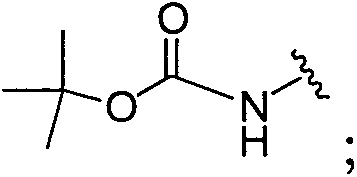
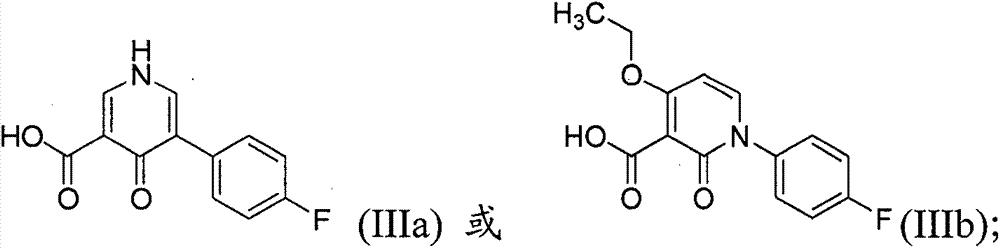


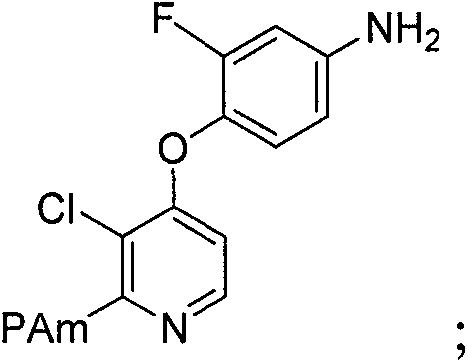


Applications Claiming Priority (5)
| Application Number | Priority Date | Filing Date | Title |
|---|---|---|---|
| US2284808P | 2008-01-23 | 2008-01-23 | |
| US61/022,848 | 2008-01-23 | ||
| US12193108P | 2008-12-12 | 2008-12-12 | |
| US61/121,931 | 2008-12-12 | ||
| PCT/US2009/031665 WO2009094427A1 (en) | 2008-01-23 | 2009-01-22 | 4-pyridinone compounds and their use for cancer |
Publications (2)
| Publication Number | Publication Date |
|---|---|
| CN101977905A CN101977905A (en) | 2011-02-16 |
| CN101977905B true CN101977905B (en) | 2014-07-02 |
Family
ID=40668147
Family Applications (1)
| Application Number | Title | Priority Date | Filing Date |
|---|---|---|---|
| CN200980110025.4A Active CN101977905B (en) | 2008-01-23 | 2009-01-22 | 4-pyridinone compounds and their use for cancer |
Country Status (7)
| Country | Link |
|---|---|
| US (2) | US8558000B2 (en) |
| EP (1) | EP2235001B1 (en) |
| JP (1) | JP5693239B2 (en) |
| KR (1) | KR101608096B1 (en) |
| CN (1) | CN101977905B (en) |
| ES (1) | ES2531396T3 (en) |
| WO (1) | WO2009094427A1 (en) |
Families Citing this family (18)
| Publication number | Priority date | Publication date | Assignee | Title |
|---|---|---|---|---|
| BRPI0906444B8 (en) | 2008-01-23 | 2021-05-25 | Bristol Myers Squibb Co | 4-pyridinone compounds, pharmaceutical composition comprising them, as well as their use |
| CN102099036B (en) | 2008-06-03 | 2015-05-27 | 英特芒尼公司 | Compounds and methods for treating inflammatory and fibrotic disorders |
| CA2800998A1 (en) | 2010-04-29 | 2011-11-10 | Deciphera Pharmaceuticals, Llc | Pyridone amides and analogs exhibiting anti-cancer and anti-proliferative activities |
| SG184891A1 (en) | 2010-04-30 | 2012-11-29 | Bristol Myers Squibb Co | Pharmaceutical compositions comprising n-(4-(2-amino-3-chloropyridin-4-yloxy)-3-fluorophenyl)-4-ethoxy-l-(4-fluorophenyl)-2-oxo- 1,2-dihydropyridine-3 -carboxamide |
| JO3363B1 (en) | 2011-04-13 | 2019-03-13 | Epizyme Inc | Heterocyclic benzene compounds with aryl or aryl |
| TW201733984A (en) * | 2011-04-13 | 2017-10-01 | 雅酶股份有限公司 | Substituted benzene compounds |
| JP2015507606A (en) | 2011-11-22 | 2015-03-12 | デシフェラ ファーマシューティカルズ,エルエルシー | Pyridone amides and analogs with anticancer and antiproliferative effects |
| DK2810937T3 (en) | 2012-01-31 | 2017-03-13 | Daiichi Sankyo Co Ltd | PYRIDONE DERIVATIVES |
| US8975282B2 (en) | 2012-07-28 | 2015-03-10 | Sunshine Lake Pharma Co., Ltd. | Substituted pyrazolone compounds and methods of use |
| JP6342392B2 (en) | 2012-07-28 | 2018-06-13 | カリター・サイエンシーズ・エルエルシー | Substituted pyrazolone compounds and methods of use |
| AR092742A1 (en) | 2012-10-02 | 2015-04-29 | Intermune Inc | ANTIFIBROTIC PYRIDINONES |
| PE20150887A1 (en) | 2012-10-15 | 2015-06-04 | Epizyme Inc | SUBSTITUTE BENZENE COMPOUNDS |
| MX382781B (en) | 2014-04-02 | 2025-03-13 | Intermune Inc | ANTI-FIBROTIC PYRIDINONES. |
| TWI723572B (en) | 2014-07-07 | 2021-04-01 | 日商第一三共股份有限公司 | Pyridone derivatives containing tetrahydropyranylmethyl group and use thereof |
| CN105153026B (en) * | 2015-08-21 | 2018-02-02 | 江西科技师范大学 | Sorafenib derivative of the amide structure containing biaryl and its preparation method and application |
| CN105924389A (en) * | 2015-12-18 | 2016-09-07 | 重庆两江药物研发中心有限公司 | Preparation method of regorafenib intermediate |
| WO2019186429A1 (en) * | 2018-03-30 | 2019-10-03 | Sun Pharmaceutical Industries Limited | A process for the preparation of bosutinib |
| CN110330479A (en) * | 2019-07-19 | 2019-10-15 | 南京华威医药科技集团有限公司 | A kind of antitumoral compounds and application thereof as AXL inhibitor |
Citations (2)
| Publication number | Priority date | Publication date | Assignee | Title |
|---|---|---|---|---|
| US5132428A (en) * | 1989-11-09 | 1992-07-21 | Bp Chemicals Limited | Process for preparing enantiomerically pure alpha-amino acids |
| WO2005117867A2 (en) * | 2004-04-23 | 2005-12-15 | Bristol-Myers Squibb Company | Monocyclic heterocycles as kinase inhibitors |
Family Cites Families (39)
| Publication number | Priority date | Publication date | Assignee | Title |
|---|---|---|---|---|
| US3646202A (en) | 1967-11-22 | 1972-02-29 | Merck & Co Inc | Liver fluke compositions containing salicylic acid derivatives |
| US4547218A (en) | 1982-10-18 | 1985-10-15 | The Dow Chemical Company | Certain 3-nitro-6-phenoxy-2-pyridyl-oxy-propionates having herbicidal activity |
| ZA988967B (en) | 1997-10-03 | 2000-04-03 | Du Pont Pharm Co | Lactam metalloprotease inhibitors. |
| WO1999032444A1 (en) | 1997-12-22 | 1999-07-01 | Eli Lilly And Company | Catalyst and method for amide formation |
| CA2333554A1 (en) | 1998-06-17 | 1999-12-23 | Chu-Baio Xue | Cyclic hydroxamic acids as metalloproteinase inhibitors |
| AU9598601A (en) | 2000-10-20 | 2002-04-29 | Eisai Co Ltd | Nitrogenous aromatic ring compounds |
| US6867300B2 (en) | 2000-11-17 | 2005-03-15 | Bristol-Myers Squibb Company | Methods for the preparation of pyrrolotriazine compounds useful as kinase inhibitors |
| US7132546B2 (en) | 2000-12-22 | 2006-11-07 | Ishihara Sangyo Kaisha, Ltd. | Aniline derivatives or salts thereof and cytokine production inhibitors containing the same |
| US20050038035A1 (en) | 2001-11-28 | 2005-02-17 | Hisashi Takasugi | Heterocyclic amide compounds as apolipoprotein b inhibitors |
| FR2836915B1 (en) | 2002-03-11 | 2008-01-11 | Aventis Pharma Sa | AMINOINDAZOLE DERIVATIVES, PREPARATION METHOD AND INTERMEDIATES THEREOF AS MEDICAMENTS AND PHARMACEUTICAL COMPOSITIONS COMPRISING THE SAME |
| US6806221B2 (en) | 2002-07-15 | 2004-10-19 | Dow Global Technologies Inc. | Method for preparing a spray-dried composition for use as a polymerization catalyst |
| JP5001650B2 (en) | 2003-07-11 | 2012-08-15 | メルク パテント ゲゼルシャフト ミット ベシュレンクテル ハフツング | Benzimidazole carboxamide |
| EP2210607B1 (en) | 2003-09-26 | 2011-08-17 | Exelixis Inc. | N-[3-fluoro-4-({6-(methyloxy)-7-[(3-morpholin-4-ylpropyl)oxy]quinolin-4-yl}oxy)phenyl]-N'-(4-fluorophenyl)cyclopropane-1,1-dicarboxamide for the treatment of cancer |
| DE10357510A1 (en) | 2003-12-09 | 2005-07-07 | Bayer Healthcare Ag | Heteroaryl-substituted benzenes |
| TW200538453A (en) | 2004-04-26 | 2005-12-01 | Bristol Myers Squibb Co | Bicyclic heterocycles as kinase inhibitors |
| CA2564355C (en) | 2004-05-07 | 2012-07-03 | Amgen Inc. | Protein kinase modulators and method of use |
| US7432373B2 (en) | 2004-06-28 | 2008-10-07 | Bristol-Meyers Squibb Company | Processes and intermediates useful for preparing fused heterocyclic kinase inhibitors |
| US7439246B2 (en) | 2004-06-28 | 2008-10-21 | Bristol-Myers Squibb Company | Fused heterocyclic kinase inhibitors |
| US7173031B2 (en) | 2004-06-28 | 2007-02-06 | Bristol-Myers Squibb Company | Pyrrolotriazine kinase inhibitors |
| US7223786B2 (en) | 2004-11-15 | 2007-05-29 | Bristol-Myers Squibb Company | 2-aminonaphthalene derivatives and related glycogen phosphorylase inhibitors |
| US7449586B2 (en) | 2004-12-03 | 2008-11-11 | Bristol-Myers Squibb Company | Processes for the preparation of CGRP-receptor antagonists and intermediates thereof |
| ES2382068T3 (en) | 2004-12-28 | 2012-06-05 | Kinex Pharmaceuticals, Llc | Compositions and methods to treat cell proliferation disorders |
| US7470693B2 (en) | 2005-04-21 | 2008-12-30 | Bristol-Myers Squibb Company | Oxalamide derivatives as kinase inhibitors |
| JO2787B1 (en) | 2005-04-27 | 2014-03-15 | امجين إنك, | Substituted Amid derivatives & methods of use |
| WO2006128129A2 (en) | 2005-05-26 | 2006-11-30 | Synta Pharmaceuticals Corp. | Method for treating cancer |
| CN101198590B (en) | 2005-08-24 | 2012-05-09 | 卫材R&D管理有限公司 | pyridine derivative and pyrimidine derivative (3) |
| ATE510823T1 (en) | 2005-09-13 | 2011-06-15 | Bayer Cropscience Ag | FUNGICIDAL PYRIDINYLOXY-SUBSTITUTED PHENYLAMIDE DERIVATIVES |
| WO2007033196A1 (en) | 2005-09-14 | 2007-03-22 | Bristol-Myers Squibb Company | Met kinase inhibitors |
| US7880004B2 (en) | 2005-09-15 | 2011-02-01 | Bristol-Myers Squibb Company | Met kinase inhibitors |
| US20070078136A1 (en) * | 2005-09-22 | 2007-04-05 | Bristol-Myers Squibb Company | Fused heterocyclic compounds useful as kinase modulators |
| US7547782B2 (en) | 2005-09-30 | 2009-06-16 | Bristol-Myers Squibb Company | Met kinase inhibitors |
| US7348325B2 (en) | 2005-11-30 | 2008-03-25 | Bristol-Myers Squibb Company | Pyrrolotriazine kinase inhibitors |
| CN101437512A (en) | 2006-01-27 | 2009-05-20 | 阿雷生物药品公司 | glucokinase activator |
| JP2009526761A (en) | 2006-01-30 | 2009-07-23 | アレイ バイオファーマ、インコーポレイテッド | Heterobicyclic thiophene compounds and methods of use |
| WO2007103308A2 (en) * | 2006-03-07 | 2007-09-13 | Array Biopharma Inc. | Heterobicyclic pyrazole compounds and methods of use |
| AR060061A1 (en) | 2006-03-22 | 2008-05-21 | Methylgene Inc | INHIBITORS OF THE ACTIVITY OF PROTEIN TIROSINA QUINASA |
| US20080004273A1 (en) | 2006-05-30 | 2008-01-03 | Stephane Raeppel | Inhibitors of protein tyrosine kinase activity |
| EP2061761A1 (en) | 2006-09-07 | 2009-05-27 | Millennium Pharmaceuticals, Inc. | Phenethylamide derivatives with kinase inhibitory activity |
| SI2089364T1 (en) * | 2006-11-08 | 2013-10-30 | Bristol-Myers Squibb Company | Pyridinone compounds |
-
2009
- 2009-01-22 JP JP2010544406A patent/JP5693239B2/en active Active
- 2009-01-22 ES ES09703743T patent/ES2531396T3/en active Active
- 2009-01-22 EP EP09703743.6A patent/EP2235001B1/en active Active
- 2009-01-22 KR KR1020107018581A patent/KR101608096B1/en active Active
- 2009-01-22 US US12/863,713 patent/US8558000B2/en active Active
- 2009-01-22 WO PCT/US2009/031665 patent/WO2009094427A1/en not_active Ceased
- 2009-01-22 CN CN200980110025.4A patent/CN101977905B/en active Active
-
2013
- 2013-09-13 US US14/026,628 patent/US8754230B2/en active Active
Patent Citations (2)
| Publication number | Priority date | Publication date | Assignee | Title |
|---|---|---|---|---|
| US5132428A (en) * | 1989-11-09 | 1992-07-21 | Bp Chemicals Limited | Process for preparing enantiomerically pure alpha-amino acids |
| WO2005117867A2 (en) * | 2004-04-23 | 2005-12-15 | Bristol-Myers Squibb Company | Monocyclic heterocycles as kinase inhibitors |
Also Published As
| Publication number | Publication date |
|---|---|
| US20110295015A1 (en) | 2011-12-01 |
| ES2531396T3 (en) | 2015-03-13 |
| US20140012007A1 (en) | 2014-01-09 |
| WO2009094427A1 (en) | 2009-07-30 |
| US8754230B2 (en) | 2014-06-17 |
| EP2235001A1 (en) | 2010-10-06 |
| CN101977905A (en) | 2011-02-16 |
| JP2011510089A (en) | 2011-03-31 |
| JP5693239B2 (en) | 2015-04-01 |
| KR101608096B1 (en) | 2016-03-31 |
| KR20100118581A (en) | 2010-11-05 |
| US8558000B2 (en) | 2013-10-15 |
| EP2235001B1 (en) | 2014-12-24 |
Similar Documents
| Publication | Publication Date | Title |
|---|---|---|
| CN101977905B (en) | 4-pyridinone compounds and their use for cancer | |
| JP4675318B2 (en) | Process for the preparation of N-heteroaryl-N-aryl-amines by reacting N-arylcarbamates with halo-heteroaryls and similar processes | |
| TWI510451B (en) | Manufacturing method for compounds having hiv integrase inhibitory activities | |
| JP2006517235A5 (en) | ||
| JP2002528543A (en) | Thrombin inhibitor | |
| CA2664579A1 (en) | 2-aminocarbonyl-pyridine derivatives | |
| EP3265455B1 (en) | Process for preparing ceritinib and intermediates thereof | |
| CA2403558A1 (en) | Thrombin inhibitors | |
| CN110606842B (en) | Process for producing pyridylamino pyrimidine derivative and intermediate thereof | |
| CN101965334A (en) | Novel precursors | |
| RU2261861C1 (en) | Method for preparing 4-amino-2,5-bis-heterocyclylquinazolines | |
| JP2008088172A (en) | Manufacturing method of phenyltetrazole compound | |
| CA2603320A1 (en) | Pyridylmethylsulfone derivative | |
| KR100571690B1 (en) | [1S- [1a, 2b, 3b, 4a (S *)]]-4-[[3-amino-4-[[1- [3-chloro-2-thienyl) methyl] propyl] amino] -2 -Pyridinyl] amino] -N-ethyl-2,3-dihydroxycyclopentanecarboxamide, preparation method thereof and preparation method of dihydrochloride salt thereof | |
| HK40016154B (en) | Preparation method of pyridylaminopyrimidine derivative and intermediate thereof | |
| HK40016154A (en) | Preparation method of pyridylaminopyrimidine derivative and intermediate thereof | |
| CN118355008A (en) | A method for preparing 1,3,5-triazine derivatives | |
| JP2019196359A (en) | Chemical process for preparing pyrimidine derivatives and intermediates thereof |
Legal Events
| Date | Code | Title | Description |
|---|---|---|---|
| C06 | Publication | ||
| PB01 | Publication | ||
| C10 | Entry into substantive examination | ||
| SE01 | Entry into force of request for substantive examination | ||
| C14 | Grant of patent or utility model | ||
| GR01 | Patent grant |