CN102123710B - Bicyclic triazole derivatives for treating tumors - Google Patents
Bicyclic triazole derivatives for treating tumors Download PDFInfo
- Publication number
- CN102123710B CN102123710B CN2009801314380A CN200980131438A CN102123710B CN 102123710 B CN102123710 B CN 102123710B CN 2009801314380 A CN2009801314380 A CN 2009801314380A CN 200980131438 A CN200980131438 A CN 200980131438A CN 102123710 B CN102123710 B CN 102123710B
- Authority
- CN
- China
- Prior art keywords
- het
- formula
- compounds
- mmol
- expression
- Prior art date
- Legal status (The legal status is an assumption and is not a legal conclusion. Google has not performed a legal analysis and makes no representation as to the accuracy of the status listed.)
- Expired - Fee Related
Links
- 0 COCc1cc(C(*C2)=*C=C2C=CC(OC)=O)ccc1 Chemical compound COCc1cc(C(*C2)=*C=C2C=CC(OC)=O)ccc1 0.000 description 3
- FOQJHZPURACERJ-UHFFFAOYSA-N CB1OC(C)(C)C(C)(C)O1 Chemical compound CB1OC(C)(C)C(C)(C)O1 FOQJHZPURACERJ-UHFFFAOYSA-N 0.000 description 1
- KNWSUDUIUZKISA-PYAUPWOWSA-N CN/C=C(\C=N/Nc1nc(Cl)ccc1[N+]([O-])=O)/OCCN1CCOCC1 Chemical compound CN/C=C(\C=N/Nc1nc(Cl)ccc1[N+]([O-])=O)/OCCN1CCOCC1 KNWSUDUIUZKISA-PYAUPWOWSA-N 0.000 description 1
- DUENYEDKUCQZOQ-UHFFFAOYSA-N Fc1cc(Oc2cnc3nn[n](Cc4cc(-c(nc5)ncc5Br)ccc4)c3n2)cc(F)c1 Chemical compound Fc1cc(Oc2cnc3nn[n](Cc4cc(-c(nc5)ncc5Br)ccc4)c3n2)cc(F)c1 DUENYEDKUCQZOQ-UHFFFAOYSA-N 0.000 description 1
- XQYPJXZEBDBJKA-UHFFFAOYSA-N NCc1cccc(-c(nc2)ncc2Br)c1 Chemical compound NCc1cccc(-c(nc2)ncc2Br)c1 XQYPJXZEBDBJKA-UHFFFAOYSA-N 0.000 description 1
- CKKCWCNEMCDJDN-JPAJTGICSA-N NCc1cccc(/C(/CCC/C=C2)=N/C=C2/OCCN2CCOCC2)c1 Chemical compound NCc1cccc(/C(/CCC/C=C2)=N/C=C2/OCCN2CCOCC2)c1 CKKCWCNEMCDJDN-JPAJTGICSA-N 0.000 description 1
- OOSLZCCLJORTAO-UHFFFAOYSA-N Nc(cc1)c(NCc2cc(-c(nc3)ncc3OCCN3CCOCC3)ccc2)nc1Cl Chemical compound Nc(cc1)c(NCc2cc(-c(nc3)ncc3OCCN3CCOCC3)ccc2)nc1Cl OOSLZCCLJORTAO-UHFFFAOYSA-N 0.000 description 1
- OPPGEMXNPKBQHD-KQPILHIUSA-N OCc1cccc(/C(/N=C2)=C\CCC/C=C2/Br)c1 Chemical compound OCc1cccc(/C(/N=C2)=C\CCC/C=C2/Br)c1 OPPGEMXNPKBQHD-KQPILHIUSA-N 0.000 description 1
- OFGOWOFZYLUAJS-UHFFFAOYSA-N Oc1cnc(-c2cc(C[n]3nnc4ncc(-c5cc(F)cc(F)c5)nc34)ccc2)nc1 Chemical compound Oc1cnc(-c2cc(C[n]3nnc4ncc(-c5cc(F)cc(F)c5)nc34)ccc2)nc1 OFGOWOFZYLUAJS-UHFFFAOYSA-N 0.000 description 1
- SHCWQWRTKPNTEM-UHFFFAOYSA-N [O-][N+](c(ccc(Cl)n1)c1Cl)=O Chemical compound [O-][N+](c(ccc(Cl)n1)c1Cl)=O SHCWQWRTKPNTEM-UHFFFAOYSA-N 0.000 description 1
Classifications
-
- C—CHEMISTRY; METALLURGY
- C07—ORGANIC CHEMISTRY
- C07D—HETEROCYCLIC COMPOUNDS
- C07D487/00—Heterocyclic compounds containing nitrogen atoms as the only ring hetero atoms in the condensed system, not provided for by groups C07D451/00 - C07D477/00
- C07D487/02—Heterocyclic compounds containing nitrogen atoms as the only ring hetero atoms in the condensed system, not provided for by groups C07D451/00 - C07D477/00 in which the condensed system contains two hetero rings
- C07D487/04—Ortho-condensed systems
-
- A—HUMAN NECESSITIES
- A61—MEDICAL OR VETERINARY SCIENCE; HYGIENE
- A61K—PREPARATIONS FOR MEDICAL, DENTAL OR TOILETRY PURPOSES
- A61K31/00—Medicinal preparations containing organic active ingredients
- A61K31/33—Heterocyclic compounds
- A61K31/395—Heterocyclic compounds having nitrogen as a ring hetero atom, e.g. guanethidine or rifamycins
- A61K31/495—Heterocyclic compounds having nitrogen as a ring hetero atom, e.g. guanethidine or rifamycins having six-membered rings with two or more nitrogen atoms as the only ring heteroatoms, e.g. piperazine or tetrazines
- A61K31/4985—Pyrazines or piperazines ortho- or peri-condensed with heterocyclic ring systems
-
- A—HUMAN NECESSITIES
- A61—MEDICAL OR VETERINARY SCIENCE; HYGIENE
- A61K—PREPARATIONS FOR MEDICAL, DENTAL OR TOILETRY PURPOSES
- A61K31/00—Medicinal preparations containing organic active ingredients
- A61K31/33—Heterocyclic compounds
- A61K31/395—Heterocyclic compounds having nitrogen as a ring hetero atom, e.g. guanethidine or rifamycins
- A61K31/495—Heterocyclic compounds having nitrogen as a ring hetero atom, e.g. guanethidine or rifamycins having six-membered rings with two or more nitrogen atoms as the only ring heteroatoms, e.g. piperazine or tetrazines
- A61K31/505—Pyrimidines; Hydrogenated pyrimidines, e.g. trimethoprim
- A61K31/506—Pyrimidines; Hydrogenated pyrimidines, e.g. trimethoprim not condensed and containing further heterocyclic rings
-
- A—HUMAN NECESSITIES
- A61—MEDICAL OR VETERINARY SCIENCE; HYGIENE
- A61P—SPECIFIC THERAPEUTIC ACTIVITY OF CHEMICAL COMPOUNDS OR MEDICINAL PREPARATIONS
- A61P35/00—Antineoplastic agents
-
- A—HUMAN NECESSITIES
- A61—MEDICAL OR VETERINARY SCIENCE; HYGIENE
- A61P—SPECIFIC THERAPEUTIC ACTIVITY OF CHEMICAL COMPOUNDS OR MEDICINAL PREPARATIONS
- A61P35/00—Antineoplastic agents
- A61P35/02—Antineoplastic agents specific for leukemia
-
- C—CHEMISTRY; METALLURGY
- C07—ORGANIC CHEMISTRY
- C07D—HETEROCYCLIC COMPOUNDS
- C07D403/00—Heterocyclic compounds containing two or more hetero rings, having nitrogen atoms as the only ring hetero atoms, not provided for by group C07D401/00
- C07D403/02—Heterocyclic compounds containing two or more hetero rings, having nitrogen atoms as the only ring hetero atoms, not provided for by group C07D401/00 containing two hetero rings
- C07D403/10—Heterocyclic compounds containing two or more hetero rings, having nitrogen atoms as the only ring hetero atoms, not provided for by group C07D401/00 containing two hetero rings linked by a carbon chain containing aromatic rings
-
- C—CHEMISTRY; METALLURGY
- C07—ORGANIC CHEMISTRY
- C07D—HETEROCYCLIC COMPOUNDS
- C07D403/00—Heterocyclic compounds containing two or more hetero rings, having nitrogen atoms as the only ring hetero atoms, not provided for by group C07D401/00
- C07D403/14—Heterocyclic compounds containing two or more hetero rings, having nitrogen atoms as the only ring hetero atoms, not provided for by group C07D401/00 containing three or more hetero rings
Landscapes
- Chemical & Material Sciences (AREA)
- Organic Chemistry (AREA)
- Health & Medical Sciences (AREA)
- General Health & Medical Sciences (AREA)
- Veterinary Medicine (AREA)
- Medicinal Chemistry (AREA)
- Public Health (AREA)
- Pharmacology & Pharmacy (AREA)
- Life Sciences & Earth Sciences (AREA)
- Animal Behavior & Ethology (AREA)
- Epidemiology (AREA)
- Nuclear Medicine, Radiotherapy & Molecular Imaging (AREA)
- General Chemical & Material Sciences (AREA)
- Chemical Kinetics & Catalysis (AREA)
- Hematology (AREA)
- Oncology (AREA)
- Pharmaceuticals Containing Other Organic And Inorganic Compounds (AREA)
- Nitrogen Condensed Heterocyclic Rings (AREA)
- Plural Heterocyclic Compounds (AREA)
- Medicines That Contain Protein Lipid Enzymes And Other Medicines (AREA)
Abstract
Description
发明背景Background of the invention
本发明的目的在于发现具有有价值的性质的新化合物,特别是可用于制备药物的那些。The object of the present invention was to discover novel compounds having valuable properties, in particular those which can be used for the preparation of medicaments.
本发明涉及化合物和化合物的用途,其中激酶、特别是酪氨酸激酶和/或丝氨酸/苏氨酸激酶的信号转导的抑制、调节和/或调控发挥作用,本发明还涉及包含这些化合物的药物组合物和这些化合物用于治疗激酶诱导的疾病的用途。The present invention relates to compounds and the use of compounds in which the inhibition, regulation and/or regulation of signal transduction of kinases, in particular tyrosine kinases and/or serine/threonine kinases play a role, and to compounds comprising these compounds Pharmaceutical compositions and use of these compounds for the treatment of kinase-induced diseases.
具体而言,本发明涉及化合物和化合物的用途,其中Met激酶的信号转导的抑制、调节和/或调控发挥作用。In particular, the present invention relates to compounds and uses of compounds wherein inhibition, modulation and/or regulation of signal transduction of Met kinase plays a role.
实现细胞调节的主要机制之一是通过跨膜胞外信号转导来进行的,该转导转而调控细胞内的生化通路。蛋白质磷酸化代表了一种过程,通过该过程胞内信号在分子与分子间传播,最终导致细胞应答。这些信号转导级联受到高度调节并且经常重叠,这一点可由存在许多蛋白激酶以及磷酸酶而看出。蛋白质磷酸化主要发生在丝氨酸、苏氨酸或酪氨酸残基上,因此已经按照其磷酸化位点的特异性对蛋白激酶进行了分类,即丝氨酸/苏氨酸激酶和酪氨酸激酶。由于磷酸化是细胞内的这类遍在过程并且由于细胞表型主要受这些通路活性的影响,所以目前认为许多疾病状态和/或疾病可归因于激酶级联分子成分的异常活化或功能突变。因此,已经有大量的关注投入到表征这些蛋白质和能调控其活性的化合物(就综述而言,参见:Weinstein-Oppenheimer等人,Pharma.&.Therap.,2000,88,229-279)。One of the main mechanisms by which cellular regulation is achieved is through transmembrane extracellular signal transduction, which in turn regulates biochemical pathways within the cell. Protein phosphorylation represents the process by which intracellular signals are propagated from molecule to molecule, ultimately resulting in a cellular response. These signal transduction cascades are highly regulated and often overlap, as seen by the presence of many protein kinases as well as phosphatases. Protein phosphorylation mainly occurs on serine, threonine or tyrosine residues, therefore protein kinases have been classified according to the specificity of their phosphorylation sites, namely serine/threonine kinases and tyrosine kinases. Because phosphorylation is such a ubiquitous process in cells and because cellular phenotypes are largely influenced by the activity of these pathways, many disease states and/or diseases are now believed to be attributable to aberrant activation or functional mutations of molecular components of kinase cascades . Accordingly, considerable attention has been devoted to characterizing these proteins and compounds capable of modulating their activity (for a review see: Weinstein-Oppenheimer et al., Pharma. &. Therap., 2000, 88, 229-279).
S.Berthou等人在Oncogene,第23卷,第31期,第5387-5393页(2004)中描述了受体酪氨酸激酶Met在人瘤形成中的作用和抑制HGF(肝细胞生长因子)依赖性Met活化的可能性。其中所述的抑制剂SU11274(一种吡咯-二氢吲哚化合物)可能适合于对抗癌症。J.G.Christensen等人在CancerRes.2003,63(21),7345-55中描述了另一种用于癌症治疗的Met-激酶抑制剂。H.Hov等人在Clinical Cancer Research第10卷,6686-6694(2004)中报导了用于对抗癌症的另一种酪氨酸激酶抑制剂。化合物PHA-665752(一种吲哚衍生物)对抗HGF受体c-Met。其中还报导了HGF和Met对各种形式的癌症如多发性骨髓瘤的恶变过程有很大贡献。S. Berthou et al. in Oncogene, Vol. 23, No. 31, pp. 5387-5393 (2004) describe the role of the receptor tyrosine kinase Met in human neoplasia and inhibition of HGF (hepatocyte growth factor) Possibility of Met-dependent activation. The inhibitor SU11274 described therein, a pyrrole-indoline compound, may be suitable for combating cancer. Another Met-kinase inhibitor for cancer therapy is described by J.G. Christensen et al. in Cancer Res. 2003, 63(21), 7345-55. H. Hov et al. in Clinical Cancer Research Vol. 10, 6686-6694 (2004) reported another tyrosine kinase inhibitor for use against cancer. Compound PHA-665752, an indole derivative, antagonizes the HGF receptor c-Met. It is also reported that HGF and Met contribute significantly to the malignant process of various forms of cancer such as multiple myeloma.
因此,需要合成特异性地抑制、调节和/或调控酪氨酸激酶和/或丝氨酸/苏氨酸激酶、特别是Met激酶的信号转导的小化合物,这是本发明的目的。Therefore, it is the object of the present invention to synthesize small compounds that specifically inhibit, regulate and/or modulate the signal transduction of tyrosine kinases and/or serine/threonine kinases, in particular Met kinases.
已经发现本发明的化合物及其盐具有非常有价值的药理学性质,同时具有良好的耐受性。It has been found that the compounds according to the invention and their salts have very valuable pharmacological properties and at the same time are well tolerated.
本发明特别涉及抑制、调节和/或调控Met激酶的信号转导的式I化合物、包含这些化合物的组合物和其用于在哺乳动物中治疗Met激酶-诱导的疾病和不适(complaint)的使用方法,如血管生成、癌症、肿瘤形成、生长和传播、动脉硬化、眼病如年龄诱发的黄斑变性、脉络膜新血管形成和糖尿病性视网膜病、炎性疾病、关节炎、血栓形成、纤维化、肾小球肾炎、神经变性、银屑病、再狭窄、伤口愈合、移植物排斥、代谢疾病和免疫系统疾病,还有自身免疫性疾病、硬化、糖尿病和血管疾病,还有不稳定性(instability)和渗透性(permeability)等。The present invention relates in particular to compounds of formula I which inhibit, regulate and/or regulate signal transduction of Met kinase, compositions comprising these compounds and their use for the treatment of Met kinase-induced diseases and complaints in mammals Methods such as angiogenesis, cancer, tumor formation, growth and dissemination, arteriosclerosis, eye diseases such as age-induced macular degeneration, choroidal neovascularization and diabetic retinopathy, inflammatory diseases, arthritis, thrombosis, fibrosis, renal Glomerulonephritis, neurodegeneration, psoriasis, restenosis, wound healing, graft rejection, metabolic and immune system diseases, also autoimmune diseases, sclerosis, diabetes and vascular disease, and instability And permeability (permeability), etc.
可用Met激酶抑制剂治疗实体瘤,特别是快速生长的肿瘤。这些实体瘤包括单核细胞白血病、脑癌、泌尿生殖系统癌症、淋巴系统癌症、胃癌、喉癌和肺癌,包括肺腺癌和小细胞肺癌。Solid tumors, especially rapidly growing tumors, can be treated with Met kinase inhibitors. These solid tumors include monocytic leukemia, brain cancer, genitourinary system cancer, lymphatic system cancer, gastric cancer, laryngeal cancer and lung cancer, including lung adenocarcinoma and small cell lung cancer.
本发明涉及用于预防和/或治疗与失调的或紊乱的Met激酶活性相关的疾病的调节、调控或抑制Met激酶的方法。特别地,式I化合物还可用于治疗某些形式的癌症。式I化合物还可用于在某些现有的癌症化疗中提供相加或协同作用,和/或可用于恢复某些现有癌症化疗和放疗的功效。The present invention relates to methods of modulating, modulating or inhibiting Met kinase for the prevention and/or treatment of diseases associated with unregulated or disturbed Met kinase activity. In particular, compounds of formula I are also useful in the treatment of certain forms of cancer. Compounds of formula I can also be used to provide additive or synergistic effects in certain existing cancer chemotherapy and/or can be used to restore the efficacy of certain existing cancer chemotherapy and radiotherapy.
式I化合物还可用于分离和研究Met激酶的活性或表达。此外,它们特别适合用在与失调的或紊乱的Met激酶活性相关的疾病的诊断方法中。Compounds of formula I can also be used to isolate and study the activity or expression of Met kinase. Furthermore, they are particularly suitable for use in diagnostic methods for diseases associated with unregulated or disturbed Met kinase activity.
可以证实本发明的化合物在异种移植物肿瘤模型中具有体内抗增殖作用。对具有过度增殖性疾病的患者施用本发明的化合物,例如以便抑制肿瘤生长、减轻与淋巴组织增殖性疾病相关的炎症、抑制因组织修复导致的移植物排斥或神经损害等。本发明的化合物适合于预防或治疗目的。本文所用的术语“治疗”用于指预防疾病和治疗先前存在的病症。通过在发生明显疾病前施用本发明的化合物来预防增殖,例如预防肿瘤生长、预防转移性生长、减少与心血管手术相关的再狭窄等。或者,所述化合物用于通过稳定或改善患者的临床症状来治疗正在进行中的疾病。Compounds of the invention can be demonstrated to have antiproliferative effects in vivo in xenograft tumor models. Compounds of the invention are administered to patients with hyperproliferative disorders, for example, to inhibit tumor growth, reduce inflammation associated with lymphoproliferative disorders, inhibit graft rejection or neurological damage due to tissue repair, and the like. The compounds of the invention are suitable for prophylactic or therapeutic purposes. As used herein, the term "treating" is used to refer to prophylaxis of disease and treatment of pre-existing conditions. Prevention of proliferation, eg, prevention of tumor growth, prevention of metastatic growth, reduction of restenosis associated with cardiovascular surgery, etc., can be prevented by administering compounds of the invention prior to the onset of overt disease. Alternatively, the compounds are used to treat an ongoing disease by stabilizing or improving the clinical condition of the patient.
宿主或患者可属于任何哺乳动物种类,例如灵长类,特别是人;啮齿类动物,包括小鼠、大鼠和仓鼠;兔;马;牛;狗;猫等。动物模型是实验研究所关注的,为人类疾病的治疗提供了模型。The host or patient may be of any mammalian species, such as primates, especially humans; rodents, including mice, rats, and hamsters; rabbits; horses; cows; dogs; cats, and the like. Animal models are the focus of experimental research and provide models for the treatment of human disease.
可以通过体外试验测定特定细胞对用本发明的化合物进行处理的敏感性。通常,将细胞培养物与不同浓度的本发明的化合物合并足以使活性剂诱导细胞死亡或抑制迁移的一段时间,通常为约1小时至1周。可以使用来自活检样品的培养细胞进行体外测试。然后对处理后剩余的活细胞进行计数。The sensitivity of particular cells to treatment with the compounds of the invention can be determined by in vitro assays. Typically, cell cultures are combined with various concentrations of the compounds of the invention for a period of time sufficient for the active agent to induce cell death or inhibit migration, usually from about 1 hour to 1 week. In vitro testing can be performed using cultured cells from a biopsy sample. Viable cells remaining after treatment were then counted.
剂量根据所用的具体化合物、具体疾病、患者状态等的不同而改变。治疗剂量通常足以显著减少靶组织中不希望的细胞群,同时维持患者的生存力。治疗一般持续至出现明显的减轻,例如细胞负荷(cell burden)减少至少约50%,并且可以持续至在体内基本上不再检测到不希望的细胞。Dosages will vary depending on the particular compound employed, the particular disease, the state of the patient, and the like. Therapeutic doses are usually sufficient to significantly reduce unwanted cell populations in the target tissue while maintaining patient viability. Treatment is generally continued until a significant reduction occurs, eg, at least about 50% reduction in cell burden, and may be continued until substantially no more undesired cells are detected in vivo.
为了鉴定信号转导通路和检测不同信号转导通路之间的相互作用,不同的科学家已经开发了适宜的模型或模型系统,例如细胞培养物模型(例如Khwaja等人,EMBO,1997,16,2783-93)和转基因动物模型(例如White等人,Oncogene,2001,20,7064-7072)。为了确定信号转导级联中的某些阶段,可以使用相互作用的化合物以便对信号进行调控(例如Stephens等人,Biochemical J.,2000,351,95-105)。在动物和/或细胞培养物模型中或在本申请所述的临床疾病中,本发明的化合物还可用作测试激酶依赖性信号转导通路的试剂。To identify signal transduction pathways and to detect interactions between different signal transduction pathways, various scientists have developed suitable models or model systems, such as cell culture models (e.g. Khwaja et al., EMBO, 1997, 16, 2783 -93) and transgenic animal models (eg White et al., Oncogene, 2001, 20, 7064-7072). In order to define certain stages in the signal transduction cascade, interacting compounds can be used in order to modulate the signal (eg Stephens et al., Biochemical J., 2000, 351, 95-105). The compounds of the invention are also useful as reagents for testing kinase-dependent signal transduction pathways in animal and/or cell culture models or in the clinical diseases described herein.
测定激酶活性是本领域技术人员众所周知的技术。在文献(例如Campos-González,R.和Glenney,Jr.,J.R.1992,J.Biol.Chem.267,第14535页)中描述了使用底物如组蛋白(例如Alessi等人,FEBS Lett.1996,399,3,第333-338页)或碱性髓鞘蛋白测定激酶活性的通用试验系统。Measuring kinase activity is a technique well known to those skilled in the art. The use of substrates such as histones is described in the literature (eg Campos-González, R. and Glenney, Jr., J.R. 1992, J. Biol. Chem. 267, p. 14535) (eg Alessi et al., FEBS Lett. , 399, 3, pp. 333-338) or basic myelin protein is a general assay system for measuring kinase activity.
为了鉴定激酶抑制剂,可利用各种测定系统。在亲近闪烁分析法(Sorg等人,J.of.Biomolecular Screening,2002,7,11-19)和闪板测定法中,测定作为底物的蛋白质或肽的放射性磷酸化,其中使用γATP。在抑制性化合物存在下,可检测到减少的放射性信号或根本检测不到放射性信号。此外,均匀时间分辨荧光共振能量转移(HTR-FRET)和荧光偏振(FP)技术也适合用作测定方法(Sills等人,J.of Biomolecular Screening,2002,191-214)。To identify kinase inhibitors, various assay systems are available. In proximity scintillation assays (Sorg et al., J. of. Biomolecular Screening, 2002, 7, 11-19) and flash plate assays, radioactive phosphorylation of proteins or peptides as substrates is determined using γATP. In the presence of an inhibitory compound, a reduced radioactive signal or no radioactive signal at all can be detected. Furthermore, homogeneous time-resolved fluorescence resonance energy transfer (HTR-FRET) and fluorescence polarization (FP) techniques are also suitable as assay methods (Sills et al., J. of Biomolecular Screening, 2002, 191-214).
其它非放射性ELISA测定法使用特异性磷酸-抗体(磷酸-AB)。磷酸-AB仅结合磷酸化底物。可以根据化学发光使用过氧化物酶轭合的抗绵羊第二抗体检测这种结合(Ross等人,2002,Biochem.J.)。Other non-radioactive ELISA assays use specific phospho-antibodies (phospho-ABs). Phospho-AB binds only phosphorylated substrates. This binding can be detected by chemiluminescence using a peroxidase-conjugated anti-sheep secondary antibody (Ross et al., 2002, Biochem. J.).
存在许多与细胞增殖和细胞死亡(细胞凋亡)失调相关的疾病。所关注的病症包括但不限于以下所述。本发明的化合物适合用于治疗其中存在平滑肌细胞和/或炎性细胞增殖和/或迁移入血管内层、导致通过该血管的血流受限的多种病症,例如在新生内膜闭塞性损伤的情况中。所关注的闭塞性移植物血管疾病包括动脉粥样硬化、移植后的冠状动脉血管病、静脉移植物狭窄、吻合人造物周围再狭窄(peri-anastomatic prosthetic restenosis)、血管成形术或支架置入后再狭窄等。There are many diseases associated with dysregulation of cell proliferation and cell death (apoptosis). Conditions of interest include, but are not limited to, those described below. The compounds of the present invention are suitable for use in the treatment of a variety of conditions in which there is proliferation and/or migration of smooth muscle cells and/or inflammatory cells into the lining of a blood vessel, resulting in restriction of blood flow through the vessel, for example in neointimal occlusive lesions in the case. Occlusive graft vascular disease of concern includes atherosclerosis, postgraft coronary vascular disease, venous graft stenosis, peri-anastomatic prosthetic restenosis, post angioplasty or stent placement Restenosis etc.
现有技术 current technology
WO 2005/004607、WO 2007/132308和US 2007/0265272中描述了作为Met激酶抑制剂的其它三唑并吡嗪类化合物。Other triazolopyrazines as Met kinase inhibitors are described in WO 2005/004607, WO 2007/132308 and US 2007/0265272.
WO 2007/064797、WO 2007/075567、WO 2007/138472、WO2008/008539、WO 2008/051805中描述了作为Met激酶抑制剂的三唑并哒嗪衍生物。Triazolopyridazine derivatives as Met kinase inhibitors are described in WO 2007/064797, WO 2007/075567, WO 2007/138472, WO 2008/008539, WO 2008/051805.
发明概述Summary of the invention
本发明涉及式I化合物及其可药用盐、互变异构体和立体异构体、包括其所有比例的混合物:The present invention relates to compounds of formula I and pharmaceutically acceptable salts thereof, tautomers and stereoisomers, including mixtures in all proportions thereof:
其中:in:
X1、X2、X3、X4、X5各自彼此独立地表示CH或N,X 1 , X 2 , X 3 , X 4 , and X 5 each independently represent CH or N,
R1、R2、R7各自彼此独立地表示H、Hal、A、[C(R5)2]nOR5、N=CR5N(R5)2、SR5、NO2、CN、[C(R5)2]nCOOR5、CON(R5)2、NR5COA、NR5SO2A、SO2N(R5)2、S(O)mA、[C(R5)2]nN(R5)2、[C(R5)2]nHet、O[C(R5)2]pOR5、O[C(R5)2]pN(R5)2、O[C(R5)2]pN+O-(R5)2、O[C(R5)2]nHet、S[C(R5)2]pN(R5)2、S[C(R5)2]pHet、NR5[C(R5)2]nN(R5)2、NR5[C(R5)2]nHet、NHCON(R5)2、NHCONH[C(R5)2]pN(R5)2、NHCONH[C(R5)2]nHet、NHCO[C(R5)2]nN(R5)2、NHCO[C(R5)2]nHet、[C(R5)2]nCON(R5)2、CONR5[C(R5)2]nN(R5)2、CONR5[C(R5)2]nNR5COOA、[C(R5)2]nNR5COOA、CONR5[C(R5)2]nOR5、CONR5[C(R5)2]nHet、COHet、COA、CH=CH-COOR5、CH=CH-N(R5)2、CH=CH-CON(R5)2、O-[C(R5)2]n-亚环烷基-[C(R5)2]n-Het、O-[C(R5)2]n-亚环烷基-[C(R5)2]n-N(R5)2、O-[C(R5)2]n-亚环烷基-[C(R5)2]n-OR5、[C(R5)2]nAr、O[C(R5)2]nAr、S[C(R5)2]nAr、NR5[C(R5)2]nAr、NHCONH[C(R5)2]nAr、NHCO[C(R5)2]nAr或CONR5[C(R5)2]nAr或COAr,R 1 , R 2 , and R 7 each independently represent H, Hal, A, [C(R 5 ) 2 ] n OR 5 , N=CR 5 N(R 5 ) 2 , SR 5 , NO 2 , CN, [C(R 5 ) 2 ] n COOR 5 , CON(R 5 ) 2 , NR 5 COA, NR 5 SO 2 A, SO 2 N(R 5 ) 2 , S(O) m A, [C(R 5 ) 2 ] n N(R 5 ) 2 , [C(R 5 ) 2 ] n Het, O[C(R 5 ) 2 ] p OR 5 , O[C(R 5 ) 2 ] p N(R 5 ) 2 , O[C(R 5 ) 2 ] p N + O - (R 5 ) 2 , O[C(R 5 ) 2 ] n Het, S[C(R 5 ) 2 ] p N(R 5 ) 2 , S[C(R 5 ) 2 ] p Het, NR 5 [C(R 5 ) 2 ] n N(R 5 ) 2 , NR 5 [C(R 5 ) 2 ] n Het, NHCON(R 5 ) 2 , NHCONH[C(R 5 ) 2 ] p N(R 5 ) 2 , NHCONH[C(R 5 ) 2 ] n Het, NHCO[C(R 5 ) 2 ] n N(R 5 ) 2 , NHCO[C (R 5 ) 2 ] n Het, [C(R 5 ) 2 ] n CON(R 5 ) 2 , CONR 5 [C(R 5 ) 2 ] n N(R 5 ) 2 , CONR 5 [C(R 5 ) ) 2 ] n NR 5 COOA, [C(R 5 ) 2 ] n NR 5 COOA, CONR 5 [C(R 5 ) 2 ] n OR 5 , CONR 5 [C(R 5 ) 2 ] n Het, COHet, COA, CH=CH-COOR 5 , CH=CH-N(R 5 ) 2 , CH=CH-CON(R 5 ) 2 , O-[C(R 5 ) 2 ] n -cycloalkylene-[C (R 5 ) 2 ] n -Het, O-[C(R 5 ) 2 ] n -cycloalkylene-[C(R 5 ) 2 ] n -N(R 5 ) 2 , O-[C(R 5 ) 2 ] n -cycloalkylene-[C(R 5 ) 2 ] n -OR 5 , [C(R 5 ) 2 ] n Ar, O[C(R 5 ) 2 ] n Ar, S[C (R 5 ) 2 ] n Ar, NR 5 [C(R 5 ) 2 ] n Ar, NHCONH[C(R 5 ) 2 ] n Ar, NHCO[C(R 5 ) 2 ] n Ar or CONR 5 [C(R 5 ) 2 ] n Ar or COAr,
R3、R3′各自彼此独立地表示H、F或R8,R 3 and R 3 ′ each independently represent H, F or R 8 ,
R3和R3′一起还指具有2-5个C原子的亚烷基链,其中1或2个不相邻CH2基团可被O、NH和/或NR5替代, R3 and R3 ' together also refer to an alkylene chain with 2-5 C atoms, wherein 1 or 2 non-adjacent CH2 groups may be replaced by O, NH and/or NR5 ,
R4、R6各自彼此独立地表示H、A或Hal,R 4 and R 6 each independently represent H, A or Hal,
R5表示H或R8,R 5 represents H or R 8 ,
R8表示直链或支链的具有1-6个C原子的烷基,R 8 represents a linear or branched alkyl group with 1-6 C atoms,
A表示直链或支链的具有1-10个C原子的烷基,A represents a linear or branched alkyl group with 1-10 C atoms,
其中1-7个H原子可被OH、F、Cl和/或Br替代,Wherein 1-7 H atoms can be replaced by OH, F, Cl and/or Br,
和/或其中一或两个CH2基团可被O、NR8、NH、S、SO、SO2和/或CH=CH基团替代,and/or wherein one or two CH2 groups may be replaced by O, NR8 , NH, S, SO, SO2 and/or CH=CH groups,
或者or
具有3-7个C原子的环状烷基,其可被OH单取代,A cyclic alkyl group having 3-7 C atoms which may be monosubstituted by OH,
Ar表示苯基、萘基或联苯基,其各自是未被取代的或被Hal、A、OR5、N(R5)2、SR5、NO2、CN、COOR5、CON(R5)2、NR5COA、NR5SO2A、SO2N(R5)2和/或S(O)mA单、二或三取代,Ar represents phenyl, naphthyl or biphenyl, each of which is unsubstituted or replaced by Hal, A, OR 5 , N(R 5 ) 2 , SR 5 , NO 2 , CN, COOR 5 , CON(R 5 ) 2 , NR 5 COA, NR 5 SO 2 A, SO 2 N(R 5 ) 2 and/or S(O) m A mono-, di- or tri-substituted,
Het表示具有1至4个N、O和/或S原子的一、二或三环的饱和的、不饱和的或芳族的杂环,其可以是未被取代的或被Hal、A、OR5、N(R5)2、SR5、NO2、CN、COOR5、CON(R5)2、NR5COA、NR5SO2A、SO2N(R5)2、S(O)mA、CO-Het1、Het1、[C(R5)2]nN(R5)2、[C(R5)2]nOR5、[C(R5)2]nHet1、O[C(R5)2]pN(R5)2、O[C(R5)2]pOR5、O[C(R5)2]nHet1、NHCOOA、NHCON(R5)2、NHCOO[C(R5)2]pN(R5)2、NHCOO[C(R5)2]nHet1、NHCONH[C(R5)2]nN(R5)2、NHCONH[C(R5)2]nHet1、OCONH[C(R5)2]nN(R5)2、OCONH[C(R5)2]nHet1、CO-Het1、CHO、COA、=S、=NH、=NA和/或=O(羰基氧)单、二或三取代,Het represents a mono-, bi- or tricyclic saturated, unsaturated or aromatic heterocycle having 1 to 4 N, O and/or S atoms, which may be unsubstituted or replaced by Hal, A, OR 5. N(R 5 ) 2 , SR 5 , NO 2 , CN, COOR 5 , CON(R 5 ) 2 , NR 5 COA, NR 5 SO 2 A, SO 2 N(R 5 ) 2 , S(O) m A, CO-Het 1 , Het 1 , [C(R 5 ) 2 ] n N(R 5 ) 2 , [C(R 5 ) 2 ] n OR 5 , [C(R 5 ) 2 ] n Het 1 , O[C(R 5 ) 2 ] p N(R 5 ) 2 , O[C(R 5 ) 2 ] p OR 5 , O[C(R 5 ) 2 ] n Het 1 , NHCOOA, NHCON(R 5 ) 2 , NHCOO[C(R 5 ) 2 ] p N(R 5 ) 2 , NHCOO[C(R 5 ) 2 ] n Het 1 , NHCONH[C(R 5 ) 2 ] n N(R 5 ) 2 , NHCONH[C(R 5 ) 2 ] n Het 1 , OCONH[C(R 5 ) 2 ] n N(R 5 ) 2 , OCONH[C(R 5 ) 2 ] n Het 1 , CO-Het 1 , CHO, COA, =S, =NH, =NA and/or =O (carbonyl oxygen) mono-, di- or tri-substituted,
Het1表示具有1至2个N和/或O原子的单环的饱和的杂环,其可被A、COOA、OA、OH、Hal和/或=O(羰基氧)单或二取代,Het 1 denotes a monocyclic saturated heterocyclic ring having 1 to 2 N and/or O atoms, which may be mono- or disubstituted by A, COOA, OA, OH, Hal and/or =O (carbonyl oxygen),
Hal表示F、Cl、Br或I,Hal represents F, Cl, Br or I,
m表示0、1或2,m means 0, 1 or 2,
n表示0、1、2、3或4,n represents 0, 1, 2, 3 or 4,
p表示1、2、3或4。p means 1, 2, 3 or 4.
式I化合物还表示这些化合物的水合物和溶剂合物以及可药用衍生物。Compounds of formula I also represent hydrates and solvates and pharmaceutically acceptable derivatives of these compounds.
本发明还涉及这些化合物的旋光体(立体异构体)、对映异构体、外消旋物、非对映异构体以及水合物和溶剂合物。化合物的溶剂合物用于指惰性溶剂分子在化合物上的加合物,其因它们的相互吸引力而形成。溶剂合物是例如一-或二-水合物或醇合物。The present invention also relates to the optical forms (stereoisomers), enantiomers, racemates, diastereomers and hydrates and solvates of these compounds. A solvate of a compound is used to refer to an adduct of inert solvent molecules on a compound, which is formed as a result of their mutual attraction. Solvates are, for example, mono- or di-hydrates or alcoholates.
可药用的衍生物用于指例如本发明化合物的盐,还指所谓的前体药物化合物。Pharmaceutically acceptable derivatives are used to refer, for example, to salts of the compounds according to the invention, and also to so-called prodrug compounds.
前体药物衍生物用于指利用例如烷基或酰基、糖或寡肽修饰的并且在生物体内快速裂解成本发明的有效化合物的式I化合物。它们还包括本发明化合物的生物可降解的聚合物衍生物,例如如Int.J.Pharm.115,61-67(1995)中所述。Prodrug derivatives are used to refer to compounds of formula I which are modified with, for example, alkyl or acyl groups, sugars or oligopeptides and which are rapidly cleaved in vivo to form effective compounds of the invention. They also include biodegradable polymer derivatives of the compounds of the invention, eg as described in Int. J. Pharm. 115 , 61-67 (1995).
表述“有效量”表示在组织、系统、动物或人中导致例如研究人员或医师所寻求或期望的生物学或医学响应的药物或药学活性成分的量。此外,表述“治疗有效量”表示与相应的未接受该量的个体相比具有如下结果的量:疾病、综合征、病症、不适、障碍或副作用的改善的治疗、愈合、预防或消除,或者还有疾病、不适或障碍的进展的减少。术语“治疗有效量”还包括有效增加正常生理功能的量。The expression "effective amount" denotes the amount of drug or pharmaceutically active ingredient which causes, in a tissue, system, animal or human, the biological or medical response sought or desired, eg by a researcher or physician. Furthermore, the expression "therapeutically effective amount" means an amount which has the result of improved treatment, healing, prevention or elimination of a disease, syndrome, condition, disorder, disorder or side effect, compared to a corresponding individual not receiving that amount, or Also a reduction in the progression of a disease, disorder or disorder. The term "therapeutically effective amount" also includes an amount effective to increase normal physiological function.
本发明还涉及式I化合物的混合物、例如两种非对映异构体的混合物、例如比例为1∶1、1∶2、1∶3、1∶4、1∶5、1∶10、1∶100或1∶1000的两种非对映异构体的混合物的用途。The invention also relates to mixtures of compounds of formula I, for example mixtures of two diastereoisomers, for example in ratios 1:1, 1:2, 1:3, 1:4, 1:5, 1:10, 1 :100 or 1:1000 mixture of two diastereoisomers.
这些特别优选是立体异构体化合物的混合物。These are particularly preferably mixtures of stereoisomeric compounds.
本发明涉及式I化合物及其盐,和用于制备权利要求1-14的式I化合物及其可药用的盐、互变异构体和立体异构体的方法,其特征在于:The present invention relates to compounds of formula I and salts thereof, and methods for preparing compounds of formula I of claims 1-14 and pharmaceutically acceptable salts, tautomers and stereoisomers thereof, characterized in that:
a)将式II化合物a) compound of formula II

其中X1、X2、X3、X4、R1、R3、R3′、R4和R7具有权利要求1中所示的含义,且L表示硼酸(boronic acid)或硼酸酯基团,Wherein X 1 , X 2 , X 3 , X 4 , R 1 , R 3 , R 3 ′, R 4 and R 7 have the meanings shown in claim 1, and L represents boronic acid or borate ester group,
与式III化合物反应Reaction with compound of formula III

其中X5、R2和R6具有权利要求1中所示的含义,wherein X 5 , R 2 and R 6 have the meanings shown in claim 1,
或者or
b)通过用具有权利要求1中所示的含义的Het和/或Ar替代卤原子将R1、R2和/或R7基团用另外的R1、R2和/或R7基团替代,b) Replacing the R 1 , R 2 and/or R 7 groups with additional R 1 , R 2 and/or R 7 groups by replacing the halogen atoms with Het and / or Ar having the meanings indicated in claim 1 substitute,
或者or
c)将式IV化合物c) compound of formula IV

其中X1、X2、X3、X4、X5、R1、R2、R3、R3′、R4、R6和R7具有权利要求1中所示的含义,Wherein X 1 , X 2 , X 3 , X 4 , X 5 , R 1 , R 2 , R 3 , R 3 ′, R 4 , R 6 and R 7 have the meanings shown in claim 1,
与NaNO2反应,react with NaNO2 ,
和/或and / or
将式I的碱或酸转化为其盐之一。A base or acid of formula I is converted into one of its salts.
除非另有明确说明,否则上下文中的基团X1、X2、X3、X4、X5、R1、R2、R3、R3′、R4、R6和R7具有针对式I所给出的含义。Unless expressly stated otherwise, the groups X 1 , X 2 , X 3 , X 4 , X 5 , R 1 , R 2 , R 3 , R 3 ′, R 4 , R 6 and R 7 in the context of The meaning given by formula I.
对于所有出现超过一次的基团,例如R5,其含义是彼此独立的。For all radicals which occur more than once, eg R 5 , the meanings are independent of one another.
A表示烷基,其是非支链(直链)或支链的,具有1、2、3、4、5、6、7、8、9或10个C原子。A优选地表示甲基,还有乙基、丙基、异丙基、丁基、异丁基、仲丁基或叔丁基,此外还有戊基、1-、2-或3-甲基丁基、1,1-、1,2-或2,2-二甲基丙基、1-乙基丙基、己基、1-、2-、3-或4-甲基戊基、1,1-、1,2-、1,3-、2,2-、2,3-或3,3-二甲基丁基、1-或2-乙基丁基、1-乙基-1-甲基丙基、1-乙基-2-甲基丙基、1,1,2-或1,2,2-三甲基丙基,此外还优选例如,三氟甲基。A denotes alkyl, which is unbranched (linear) or branched and has 1, 2, 3, 4, 5, 6, 7, 8, 9 or 10 C atoms. A preferably denotes methyl, also ethyl, propyl, isopropyl, butyl, isobutyl, sec-butyl or tert-butyl, furthermore pentyl, 1-, 2- or 3-methyl Butyl, 1,1-, 1,2- or 2,2-dimethylpropyl, 1-ethylpropyl, hexyl, 1-, 2-, 3- or 4-methylpentyl, 1, 1-, 1,2-, 1,3-, 2,2-, 2,3- or 3,3-dimethylbutyl, 1- or 2-ethylbutyl, 1-ethyl-1- Methylpropyl, 1-ethyl-2-methylpropyl, 1,1,2- or 1,2,2-trimethylpropyl, furthermore preferred, for example, trifluoromethyl.
A特别优选地表示具有1-10个C原子的直链或支链的烷基,其中1-7个H原子可被OH、F、Cl和/或Br替代,A particularly preferably represents a straight-chain or branched alkyl group having 1-10 C atoms, wherein 1-7 H atoms can be replaced by OH, F, Cl and/or Br,
或者or
具有3-7个C原子的环状烷基,其可被OH单取代。Cyclic alkyl having 3-7 C atoms which may be monosubstituted by OH.
A非常特别优选地表示具有1、2、3、4、5或6个C原子的烷基,优选甲基、乙基、丙基、异丙基、丁基、异丁基、仲丁基、叔丁基、戊基、己基、三氟甲基、五氟乙基或1,1,1-三氟乙基。A very particularly preferably denotes an alkyl group having 1, 2, 3, 4, 5 or 6 C atoms, preferably methyl, ethyl, propyl, isopropyl, butyl, isobutyl, sec-butyl, tert-butyl, pentyl, hexyl, trifluoromethyl, pentafluoroethyl or 1,1,1-trifluoroethyl.
环状烷基(环烷基)优选地表示环丙基、环丁基、环戊基、环己基或环庚基。Cyclic alkyl (cycloalkyl) preferably denotes cyclopropyl, cyclobutyl, cyclopentyl, cyclohexyl or cycloheptyl.
亚环烷基优选地表示亚环丙基、亚环丁基、亚环戊基、亚环己基或亚环庚基。Cycloalkylene preferably denotes cyclopropylene, cyclobutylene, cyclopentylene, cyclohexylene or cycloheptylene.
X1、X4优选地表示CH或N。X 1 , X 4 preferably represent CH or N.
X2、X3优选地表示CH。X 2 , X 3 preferably represent CH.
X5优选地表示N,还有CH。X 5 preferably represents N, also CH.
R1优选地表示H、Hal、A、S(O)mA、Ar、Het、O[C(R5)2]nAr、O[C(R5)2]nHet或OR5。R 1 preferably represents H, Hal, A, S(O) m A, Ar, Het, O[C(R 5 ) 2 ] n Ar, O[C(R 5 ) 2 ] n Het or OR 5 .
R1特别优选地表示H、Hal、A、OR5、S(O)mA或噻唑基、噻吩基、呋喃基、吡咯基、


其中杂环还可被Hal、A和/或O[C(R5)2]pOR5单-、二-或三取代,Wherein the heterocycle can also be mono-, di- or trisubstituted by Hal, A and/or O[C(R 5 ) 2 ] p OR 5 ,
或者or
苯基或苯氧基,其各自被Hal和/或CN单-、二-或三取代。Phenyl or phenoxy, each mono-, di- or trisubstituted by Hal and/or CN.
R2优选地表示A、Hal、[C(R5)2]nN(R5)2、[C(R5)2]nHet、O[C(R5)2]pN(R5)2、O[C(R5)2]nHet、[C(R5)2]nOR5、O[C(R5)2]pOR5、O-[C(R5)2]n-亚环烷基-[C(R5)2]n-N(R5)2、[C(R5)2]nNR5COOA或CH=CH-COOR5。R 2 preferably represents A, Hal, [C(R 5 ) 2 ] n N(R 5 ) 2 , [C(R 5 ) 2 ] n Het, O[C(R 5 ) 2 ] p N(R 5 ) 2 , O[C(R 5 ) 2 ] n Het, [C(R 5 ) 2 ] n OR 5 , O[C(R 5 ) 2 ] p OR 5 , O-[C(R 5 ) 2 ] n -Cycloalkylene-[C(R 5 ) 2 ] n -N(R 5 ) 2 , [C(R 5 ) 2 ] n NR 5 COOA or CH═CH—COOR 5 .
R3、R3′优选地在各种情况彼此独立地表示H或R8、特别优选H、甲基、乙基或丙基、非常特别优选H或甲基。R 3 , R 3 ′ preferably independently of each other represent H or R 8 , particularly preferably H, methyl, ethyl or propyl, very particularly preferably H or methyl.
R4、R6优选地表示H。R 4 , R 6 preferably represent H.
R7优选地表示H或Hal。R 7 preferably represents H or Hal.
R5优选地表示H、甲基、乙基或丙基、非常特别优选H或甲基。R 5 preferably represents H, methyl, ethyl or propyl, very particularly preferably H or methyl.
R8优选地表示具有1、2、3、4、5或6个C原子的烷基,优选甲基、乙基、丙基、异丙基、丁基、异丁基、仲丁基、叔丁基、戊基或己基。 R preferably represents an alkyl group having 1, 2, 3, 4, 5 or 6 C atoms, preferably methyl, ethyl, propyl, isopropyl, butyl, isobutyl, sec-butyl, tert Butyl, pentyl or hexyl.
Ar例如表示苯基,o-、m-或p-甲苯基,o-、m-或p-乙基苯基,o-、m-或p-丙基苯基,o-、m-或p-异丙基苯基,o-、m-或p-叔丁基苯基,o-、m-或p-羟基苯基,o-、m-或p-硝基苯基,o-、m-或p-氨基苯基,o-、m-或p-(N-甲基氨基)-苯基,o-、m-或p-(N-甲基氨基羰基)-苯基,o-、m-或p-乙酰氨基苯基,o-、m-或p-甲氧基苯基,o-、m-或p-乙氧基苯基,o-、m-或p-乙氧基羰基-苯基,o-、m-或p-(N,N-二甲基氨基)-苯基,o-、m-或p-(N,N-二甲基氨基羰基)-苯基,o-、m-或p-(N-乙基氨基)-苯基,o-、m-或p-(N,N-二乙基氨基)-苯基,o-、m-或p-氟苯基,o-、m-或p-溴苯基,o-、m-或p-氯苯基,o-、m-或p-(甲基磺酰氨基)-苯基,o-、m-或p-(甲磺酰基)-苯基,o-、m-或p-甲基硫基苯基,o-、m-或p-氰基苯基,o-、m-或p-羧基苯基,o-、m-或p-甲氧基羰基苯基,o-、m-或p-氨基磺酰基苯基,还优选2,3-、2,4-、2,5-、2,6-、3,4-或3,5-二氟苯基,2,3-、2,4-、2,5-、2,6-、3,4-或3,5-二氯苯基,2,3-、2,4-、2,5-、2,6-、3,4-或3,5-二溴苯基,2,4-或2,5-二硝基苯基,2,5-或3,4-二甲氧基苯基,3-硝基-4-氯苯基,3-氨基-4-氯-、2-氨基-3-氯-、2-氨基-4-氯-、2-氨基-5-氯-或2-氨基-6-氯苯基,2-硝基-4-N,N-二甲基氨基-或3-硝基-4-N,N-二甲基氨基苯基,2,3-二氨基苯基,2,3,4-、2,3,5-、2,3,6-、2,4,6-或3,4,5-三氯苯基,2,4,6-三甲氧基苯基,2-羟基-3,5-二氯苯基,p-碘苯基,3,6-二氯-4-氨基苯基,4-氟-3-氯苯基,2-氟-4-溴苯基,2,5-二氟-4-溴苯基,3-溴-6-甲氧基苯基,3-氯-6-甲氧基苯基,3-氯-4-乙酰氨基苯基,3-氟-4-甲氧基苯基,3-氨基-6-甲基苯基,3-氯-4-乙酰氨基苯基或2,5-二甲基-4-氯苯基。Ar represents, for example, phenyl, o-, m- or p-tolyl, o-, m- or p-ethylphenyl, o-, m- or p-propylphenyl, o-, m- or p -isopropylphenyl, o-, m- or p-tert-butylphenyl, o-, m- or p-hydroxyphenyl, o-, m- or p-nitrophenyl, o-, m - or p-aminophenyl, o-, m- or p-(N-methylamino)-phenyl, o-, m- or p-(N-methylaminocarbonyl)-phenyl, o-, m- or p-acetylaminophenyl, o-, m- or p-methoxyphenyl, o-, m- or p-ethoxyphenyl, o-, m- or p-ethoxycarbonyl -Phenyl, o-, m- or p-(N,N-dimethylamino)-phenyl, o-, m- or p-(N,N-dimethylaminocarbonyl)-phenyl, o -, m- or p-(N-ethylamino)-phenyl, o-, m- or p-(N,N-diethylamino)-phenyl, o-, m- or p-fluorobenzene Base, o-, m- or p-bromophenyl, o-, m- or p-chlorophenyl, o-, m- or p-(methylsulfonylamino)-phenyl, o-, m- or p-(methylsulfonyl)-phenyl, o-, m-, or p-methylthiophenyl, o-, m-, or p-cyanophenyl, o-, m-, or p-carboxyphenyl Base, o-, m- or p-methoxycarbonylphenyl, o-, m- or p-aminosulfonylphenyl, also preferably 2,3-, 2,4-, 2,5-, 2, 6-, 3,4- or 3,5-difluorophenyl, 2,3-, 2,4-, 2,5-, 2,6-, 3,4- or 3,5-dichlorophenyl , 2,3-, 2,4-, 2,5-, 2,6-, 3,4- or 3,5-dibromophenyl, 2,4- or 2,5-dinitrophenyl, 2,5- or 3,4-dimethoxyphenyl, 3-nitro-4-chlorophenyl, 3-amino-4-chloro-, 2-amino-3-chloro-, 2-amino-4 -chloro-, 2-amino-5-chloro- or 2-amino-6-chlorophenyl, 2-nitro-4-N, N-dimethylamino- or 3-nitro-4-N,N -Dimethylaminophenyl, 2,3-diaminophenyl, 2,3,4-, 2,3,5-, 2,3,6-, 2,4,6- or 3,4,5 -trichlorophenyl, 2,4,6-trimethoxyphenyl, 2-hydroxy-3,5-dichlorophenyl, p-iodophenyl, 3,6-dichloro-4-aminophenyl, 4-fluoro-3-chlorophenyl, 2-fluoro-4-bromophenyl, 2,5-difluoro-4-bromophenyl, 3-bromo-6-methoxyphenyl, 3-chloro-6 -Methoxyphenyl, 3-chloro-4-acetylaminophenyl, 3-fluoro-4-methoxyphenyl, 3-amino-6-methylphenyl, 3-chloro-4-acetylaminophenyl base or 2,5-dimethyl-4-chlorophenyl.
Ar特别优选表示未被取代或被Hal、A和/或CN单、二或三取代的苯基。Ar particularly preferably denotes phenyl which is unsubstituted or mono-, di- or trisubstituted by Hal, A and/or CN.
不考虑进一步的取代如何,Het表示例如2-或3-呋喃基,2-或3-噻吩基,1-、2-或3-吡咯基,1-、2-、4-或5-咪唑基,1-、3-、4-或5-吡唑基,2-、4-或5-


杂环基还可以是部分或完全氢化的。A heterocyclyl group can also be partially or fully hydrogenated.
因此,不考虑进一步的取代如何,Het还可以表示例如2,3-二氢-2-、-3-、-4-或-5-呋喃基,2,5-二氢-2-、-3-、-4-或-5-呋喃基,四氢-2-或-3-呋喃基,1,3-二氧戊环-4-基,四氢-2-或-3-噻吩基,2,3-二氢-1-、-2-、-3-、-4-或-5-吡咯基,2,5-二氢-1-、-2-、-3-、-4-或-5-吡咯基,1-、2-或3-吡咯烷基,四氢-1-、-2-或-4-咪唑基,2,3-二氢-1-、-2-、-3-、-4-或-5-吡唑基,四氢-1-、-3-或-4-吡唑基,1,4-二氢-1-、-2-、-3-或-4-吡啶基,1,2,3,4-四氢-1-、-2-、-3-、-4-、-5-或-6-吡啶基,1-、2-、3-或4-哌啶基,2-、3-或4-吗啉基,四氢-2-、-3-或-4-吡喃基,1,4-二


Het特别优选表示具有1至4个N、O和/或S原子的单环饱和、不饱和或芳族杂环,其可以是未被取代的或被Hal、A、COOR5、O[C(R5)2]pOR5、[C(R5)2]nHet1、O[C(R5)2]nHet1和/或=O单、二或三取代。Het particularly preferably denotes a monocyclic saturated, unsaturated or aromatic heterocyclic ring with 1 to 4 N, O and/or S atoms, which may be unsubstituted or replaced by Hal, A, COOR 5 , O[C( R 5 ) 2 ] p OR 5 , [C(R 5 ) 2 ] n Het 1 , O[C(R 5 ) 2 ] n Het 1 and/or =O mono-, di- or tri-substituted.
Het非常特别优选地表示哌啶基、吡咯烷基、吗啉基、哌嗪基、


Het1优选表示哌啶基、吡咯烷基、吗啉基、哌嗪基、
Hal优选表示F、Cl或Br,但也可以是I,特别优选是F或Cl。Hal preferably denotes F, Cl or Br, but also I, particularly preferably F or Cl.
在本发明通篇中,所有出现超过一次的基团可以相同或不同,即它们是彼此独立的。Throughout the present invention, all radicals which occur more than once may be identical or different, ie they are independent of each other.
式I化合物可以具有一个或多个手性中心,因此可以以多种立体异构体形式出现。式I包括所有这些形式。Compounds of formula I may possess one or more chiral centers and thus occur in various stereoisomeric forms. Formula I includes all such forms.
因此,本发明特别涉及其中所述基团中至少一个具有上述优选含义之一的式I化合物。化合物的一些优选的集合可以由以下的亚式Ia至Il表示,它们符合式I并且其中未更详细指定的基团具有针对式I所示的含义,但其中:The invention therefore relates in particular to compounds of the formula I in which at least one of the radicals mentioned has one of the abovementioned preferred meanings. Some preferred groups of compounds can be represented by the following subformulas Ia to Il, which correspond to formula I and in which radicals not specified in more detail have the meanings indicated for formula I, but in which:
在Ia中,R1表示H、Hal、A、S(O)mA、Ar、Het、O[C(R5)2]nAr、O[C(R5)2]nHet或OR5;In Ia, R 1 represents H, Hal, A, S(O) m A, Ar, Het, O[C(R 5 ) 2 ] n Ar, O[C(R 5 ) 2 ] n Het or OR 5 ;
在Ib中,R7表示H或Hal;In Ib, R 7 represents H or Hal;
在Ic中,R2表示A、Hal、[C(R5)2]nN(R5)2、[C(R5)2]nHet、O[C(R5)2]pN(R5)2、O[C(R5)2]nHet、[C(R5)2]nOR5、O[C(R5)2]pOR5、O-[C(R5)2]n-亚环烷基-[C(R5)2]n-N(R5)2、[C(R5)2]nNR5COOA或CH=CH-COOR5;In Ic, R 2 represents A, Hal, [C(R 5 ) 2 ] n N(R 5 ) 2 , [C(R 5 ) 2 ] n Het, O[C(R 5 ) 2 ] p N( R 5 ) 2 , O[C(R 5 ) 2 ] n Het, [C(R 5 ) 2 ] n OR 5 , O[C(R 5 ) 2 ] p OR 5 , O-[C(R 5 ) 2 ] n -Cycloalkylene-[C(R 5 ) 2 ] n -N(R 5 ) 2 , [C(R 5 ) 2 ] n NR 5 COOA or CH=CH-COOR 5 ;
在Id中,R3、R3′各自彼此独立地表示H或R8;In Id, R 3 , R 3 ' each independently represent H or R 8 ;
在Ie中,R4、R6表示H;In Ie, R 4 and R 6 represent H;
在If中,R1表示H、Hal、A、S(O)mA或噻唑基、噻吩基、呋喃基、吡咯基、


或者or
苯基或苯氧基,其各自被Hal和/或CN单-、二-或三取代;在Ig中,Het表示具有1至4个N、O和/或S原子的单环的饱和的、不饱和的或芳族的杂环,其可以是未被取代的或被Hal、A、COOR5、O[C(R5)2]pOR5、[C(R5)2]nHet1、O[C(R5)2]nHet1和/或=O单、二或三取代;Phenyl or phenoxy, each mono-, di- or trisubstituted by Hal and/or CN; in Ig, Het represents a monocyclic saturated, Unsaturated or aromatic heterocycle, which may be unsubstituted or replaced by Hal, A, COOR 5 , O[C(R 5 ) 2 ] p OR 5 , [C(R 5 ) 2 ] n Het 1 , O[C(R 5 ) 2 ] n Het 1 and/or =O mono-, di- or tri-substituted;
在Ih中,Het表示哌啶基、吡咯烷基、吗啉基、哌嗪基、唑烷基、吡唑基、吡啶基、嘧啶基、呋喃基、噻吩基、唑基、
在Ii中,Het1表示哌啶基、吡咯烷基、吗啉基、哌嗪基、
在Ij中,Ar表示未被取代的或被Hal、A和/或CN单-、二-或三取代的苯基;In Ij, Ar represents unsubstituted or mono-, di- or trisubstituted phenyl by Hal, A and/or CN;
在Ik中,A 表示具有1-10个C原子的直链或支链的烷基,其中1-7个H原子可被OH、F、Cl和/或Br替代,或者In Ik, A represents a linear or branched alkyl group having 1-10 C atoms, wherein 1-7 H atoms may be replaced by OH, F, Cl and/or Br, or
具有3-7个C原子的环状烷基,其可被OH单取代;A cyclic alkyl group having 3-7 C atoms, which may be monosubstituted by OH;
在Il中,X1、X2、X3、X4、X5各自彼此独立地表示CH或N,In I1, X 1 , X 2 , X 3 , X 4 , and X 5 each independently represent CH or N,
R1表示H、Hal、A、S(O)mA、Ar、Het、O[C(R5)2]nAr、O[C(R5)2]nHet或OR5,R 1 represents H, Hal, A, S(O) m A, Ar, Het, O[C(R 5 ) 2 ] n Ar, O[C(R 5 ) 2 ] n Het or OR 5 ,
R7表示H或Hal,R 7 means H or Hal,
R2表示A、Hal、[C(R5)2]nN(R5)2、[C(R5)2]nHet、O[C(R5)2]pN(R5)2、O[C(R5)2]nHet、[C(R5)2]nOR5、O[C(R5)2]pOR5、O-[C(R5)2]n-亚环烷基-[C(R5)2]n-N(R5)2、[C(R5)2]nNR5COOA或CH=CH-COOR5,R 2 represents A, Hal, [C(R 5 ) 2 ] n N(R 5 ) 2 , [C(R 5 ) 2 ] n Het, O[C(R 5 ) 2 ] p N(R 5 ) 2 , O[C(R 5 ) 2 ] n Het, [C(R 5 ) 2 ] n OR 5 , O[C(R 5 ) 2 ] p OR 5 , O-[C(R 5 ) 2 ] n - Cycloalkylene-[C(R 5 ) 2 ] n -N(R 5 ) 2 , [C(R 5 ) 2 ] n NR 5 COOA or CH=CH-COOR 5 ,
R3、R3′各自彼此独立地表示H或R8,R 3 and R 3 ′ each independently represent H or R 8 ,
R4、R6表示H,R 4 and R 6 represent H,
R5表示H或R8,R 5 represents H or R 8 ,
R8表示具有1-6个C原子的直链或支链的烷基,R 8 represents a linear or branched alkyl group with 1-6 C atoms,
A表示具有1-10个C原子的直链或支链的烷基,A represents a linear or branched alkyl group with 1-10 C atoms,
其中1-7个H原子可被OH、F、Cl和/或Br替代,Wherein 1-7 H atoms can be replaced by OH, F, Cl and/or Br,
或者or
具有3-7个C原子的环状烷基,其可被OH单取代,A cyclic alkyl group having 3-7 C atoms which may be monosubstituted by OH,
Ar表示未被取代的或被Hal、A和/或CN单-、二-或三取代的苯基,Ar represents unsubstituted or mono-, di- or trisubstituted phenyl by Hal, A and/or CN,
Het表示具有1至4个N、O和/或S原子的单环的饱和的、不饱和的或芳族的杂环,其可以是未被取代的或被Hal、A、COOR5、O[C(R5)2]pOR5、[C(R5)2]nHet1、O[C(R5)2]nHet1和/或=O单、二或三取代,Het represents a monocyclic saturated, unsaturated or aromatic heterocyclic ring having 1 to 4 N, O and/or S atoms, which may be unsubstituted or replaced by Hal, A, COOR 5 , O[ C(R 5 ) 2 ] p OR 5 , [C(R 5 ) 2 ] n Het 1 , O[C(R 5 ) 2 ] n Het 1 and/or =O mono-, di- or tri-substituted,
Het1表示哌啶基、吡咯烷基、吗啉基、哌嗪基、
Hal表示F、Cl、Br或I,Hal represents F, Cl, Br or I,
m表示0、1或2,m means 0, 1 or 2,
n表示0、1、2、3或4,n represents 0, 1, 2, 3 or 4,
p表示1、2、3或4;p represents 1, 2, 3 or 4;
及其可药用盐、互变异构体和立体异构体,包括其所有比例的混合物。and pharmaceutically acceptable salts, tautomers and stereoisomers thereof, including mixtures thereof in all proportions.
此外,还通过本身已知的方法如文献(例如在标准著作如Houben-Weyl,Methoden der organischen Chemie[有机化学方法],Georg-Thieme-Verlag,Stuttgart)中所述的那些、准确而言在已知的且适合于所述反应的反应条件下制备式I化合物以及用于制备它们的原料。在此也可以使用在此未更详细提及的本身已知的变通方式。Furthermore, by methods known per se, such as those described in the literature (for example in standard works such as Houben-Weyl, Methoden der organischen Chemie [Methods in Organic Chemistry], Georg-Thieme-Verlag, Stuttgart), precisely in the The compounds of formula I and the starting materials used for their preparation are prepared under reaction conditions known and suitable for the described reactions. It is also possible to use variants known per se which are not mentioned here in greater detail.
优选式I化合物可以通过使式II化合物与式III化合物反应而获得。该反应在如对于铃木(Suzuki)反应而言本领域技术人员已知的条件下进行。Preferred compounds of formula I can be obtained by reacting compounds of formula II with compounds of formula III. The reaction is carried out under conditions known to those skilled in the art as for the Suzuki reaction.
式II和III的起始化合物通常是已知的。然而,如果它们是新的,那么可以通过本身已知的方法制备它们。在式II化合物中,L优选表示The starting compounds of the formulas II and III are generally known. However, if they are new, they can be prepared by methods known per se. In compounds of formula II, L preferably represents
该反应在铃木(Suzuki)偶联的标准条件下进行。根据所用的条件,反应时间为数分钟至14天,反应温度为约-30°至140°、通常为0°至100°、特别是约60°至约90°。The reaction was performed under standard conditions for Suzuki coupling. Depending on the conditions used, the reaction time is from a few minutes to 14 days, and the reaction temperature is from about -30° to 140°, usually from 0° to 100°, especially from about 60° to about 90°.
适宜的惰性溶剂例如有:烃类,如己烷、石油醚、苯、甲苯或二甲苯;氯化烃类,如三氯乙烯、1,2-二氯乙烷、四氯化碳、氯仿或二氯甲烷;醇类,如甲醇、乙醇、异丙醇、正-丙醇、正-丁醇或叔丁醇;醚类,如乙醚、二异丙基醚、四氢呋喃(THF)或二烷;二醇醚类,如乙二醇单甲醚或单乙醚、乙二醇二甲醚(二甘醇二甲醚);酮类,如丙酮或丁酮;酰胺类,如乙酰胺、二甲基乙酰胺或二甲基甲酰胺(DMF);腈类,如乙腈;亚砜类,如二甲亚砜(DMSO);二硫化碳;羧酸类,如甲酸或乙酸;硝基化合物,如硝基甲烷或硝基苯;酯类,如乙酸乙酯,或所述溶剂的混合物。特别优选乙醇、甲苯、二甲氧基乙烷。Suitable inert solvents are, for example: hydrocarbons such as hexane, petroleum ether, benzene, toluene or xylene; chlorinated hydrocarbons such as trichloroethylene, 1,2-dichloroethane, carbon tetrachloride, chloroform or Dichloromethane; alcohols such as methanol, ethanol, isopropanol, n-propanol, n-butanol or tert-butanol; ethers such as diethyl ether, diisopropyl ether, tetrahydrofuran (THF) or di alkanes; glycol ethers, such as ethylene glycol monomethyl ether or monoethyl ether, ethylene glycol dimethyl ether (diglyme); ketones, such as acetone or butanone; amides, such as acetamide, di Methylacetamide or dimethylformamide (DMF); nitriles, such as acetonitrile; sulfoxides, such as dimethyl sulfoxide (DMSO); carbon disulfide; carboxylic acids, such as formic acid or acetic acid; methyl methane or nitrobenzene; esters such as ethyl acetate, or mixtures of said solvents. Particular preference is given to ethanol, toluene, dimethoxyethane.
此外,式I化合物能优选地通过用其它的R1和/或R7基团替换R1和/或R7基团而获得。优选地,卤素原子被具有权利要求1中所示的含义的Het和/或Ar所替代。该反应优选地在铃木(Suzuki)偶联反应条件下进行。Furthermore, compounds of the formula I can preferably be obtained by replacing the R 1 and/or R 7 radicals by other R 1 and/or R 7 radicals. Preferably, the halogen atoms are replaced by Het and/or Ar having the meanings indicated in claim 1 . The reaction is preferably performed under Suzuki coupling reaction conditions.
此外,式I化合物能优选地通过式IV化合物优选地与NaNO2反应而获得。该反应在标准条件下进行。Furthermore, compounds of formula I can preferably be obtained by reacting compounds of formula IV, preferably with NaNO 2 . The reaction is carried out under standard conditions.
根据所用的条件,反应时间为数分钟至14天,反应温度为约-30°至140°、通常为0°至100°、特别是约60°至约90°。Depending on the conditions used, the reaction time is from a few minutes to 14 days, and the reaction temperature is from about -30° to 140°, usually from 0° to 100°, especially from about 60° to about 90°.
适合的惰性溶剂为上文所提及的那些。Suitable inert solvents are those mentioned above.
而且,可以按照常规方式,使用酰氯或酸酐使游离氨基酰化或者使用未被取代或被取代的烷基卤使其烷基化,上述反应有利地在惰性溶剂如二氯甲烷或THF中和/或在碱如三乙胺或吡啶的存在下、在-60°至+30°的温度下进行。Moreover, free amino groups can be acylated using acid chlorides or anhydrides or alkylated using unsubstituted or substituted alkyl halides, advantageously in an inert solvent such as dichloromethane or THF, in a conventional manner. Or in the presence of a base such as triethylamine or pyridine at a temperature of -60° to +30°.
而且,可以按照常规方式使用酰氯或酸酐使游离氨基酰化,或者使用未被取代或被取代的烷基卤使其烷基化,上述反应有利地在惰性溶剂如二氯甲烷或THF中和/或在碱如三乙胺或吡啶的存在下、在-60°至+30°的温度下进行。Furthermore, free amino groups can be acylated with acid chlorides or anhydrides or alkylated with unsubstituted or substituted alkyl halides in a conventional manner, advantageously in an inert solvent such as methylene chloride or THF and/or Or in the presence of a base such as triethylamine or pyridine at a temperature of -60° to +30°.
式I化合物还可以通过经溶剂解、特别是水解或经氢解从其官能衍生物中释放出而获得。Compounds of formula I can also be obtained by liberation from their functional derivatives by solvolysis, especially hydrolysis or by hydrogenolysis.
优选的用于溶剂解或氢解的原料是含有相应的被保护的氨基和/或羟基而非一个或多个游离氨基和/或羟基的那些,优选是携带氨基保护基而非H原子与N原子键合的那些,例如符合式I、但是含有NHR’基团(其中R’为氨基保护基例如BOC或CBZ)而非NH2基团的那些。Preferred starting materials for solvolysis or hydrogenolysis are those containing corresponding protected amino and/or hydroxyl groups instead of one or more free amino and/or hydroxyl groups, preferably carrying amino protecting groups other than H atoms with N Atomically bonded, eg those conforming to formula I, but containing an NHR' group (wherein R' is an amino protecting group such as BOC or CBZ) instead of an NH2 group.
还优选携带羟基保护基而非羟基的H原子的那些,例如符合式I、但含有R”O-苯基(其中R”为羟基保护基)而非羟基苯基的那些。Preference is also given to those carrying a hydroxy protecting group instead of the H atom of the hydroxy group, for example those according to formula I but containing R"O-phenyl (wherein R" is a hydroxy protecting group) instead of hydroxyphenyl.
在原料分子中还有可能存在多个相同或不同的被保护的氨基和/或羟基。如果所存在的保护基彼此不同,那么它们在许多情况中可以被选择性地裂解出。It is also possible for a plurality of identical or different protected amino and/or hydroxyl groups to be present in the starting material molecule. If the protecting groups present are different from one another, they can in many cases be cleaved off selectively.
术语“氨基保护基”在通用术语中是已知的,其涉及适于保护(阻断)氨基避免发生化学反应、但是在预期化学反应在分子的其它处进行后易于除去的基团。典型的这类基团特别是未被取代或被取代的酰基、芳基、芳烷氧基甲基或芳烷基。由于氨基保护基在预期反应(或反应序列)后被除去,所以其类型和大小并不是关键的;然而,优选具有1-20个、特别是1-8个碳原子的那些。应当在本发明的方法的最广泛意义上理解术语“酰基”。它包括衍生自脂族、芳脂族、芳族和杂环羧酸或磺酸的酰基以及特别是烷氧羰基、芳氧羰基且尤其是芳烷氧羰基。这类酰基的实例有:烷酰基,如乙酰基、丙酰基和丁酰基;芳烷酰基,如苯基乙酰基;芳酰基,如苯甲酰基和甲苯基;芳氧基烷酰基,如POA;烷氧羰基,如甲氧羰基、乙氧羰基、2,2,2-三氯乙氧羰基、BOC、2-碘乙氧羰基;芳烷氧羰基,如CBZ(“苄氧羰基”)、4-甲氧基苄氧羰基和FMOC;芳基磺酰基,如Mtr、Pbf和Pmc。优选的氨基保护基为BOC和Mtr,还有CBZ、Fmoc、苄基和乙酰基。The term "amino-protecting group" is known in general terms and refers to a group suitable for protecting (blocking) an amino group from a chemical reaction, but which is easily removed after the desired chemical reaction elsewhere in the molecule. Typical of such groups are especially unsubstituted or substituted acyl, aryl, aralkoxymethyl or aralkyl groups. Since the amino protecting group is removed after the intended reaction (or sequence of reactions), its type and size are not critical; however, those with 1-20, especially 1-8 carbon atoms are preferred. The term "acyl" should be understood in the broadest sense of the method of the present invention. It includes acyl groups derived from aliphatic, araliphatic, aromatic and heterocyclic carboxylic or sulfonic acids and especially alkoxycarbonyl, aryloxycarbonyl and especially aralkoxycarbonyl groups. Examples of such acyl groups are: alkanoyl such as acetyl, propionyl and butyryl; aralkanoyl such as phenylacetyl; aroyl such as benzoyl and tolyl; aryloxyalkanoyl such as POA; Alkoxycarbonyl, such as methoxycarbonyl, ethoxycarbonyl, 2,2,2-trichloroethoxycarbonyl, BOC, 2-iodoethoxycarbonyl; aralkoxycarbonyl, such as CBZ (“benzyloxycarbonyl”), 4 - Methoxybenzyloxycarbonyl and FMOC; arylsulfonyl such as Mtr, Pbf and Pmc. Preferred amino protecting groups are BOC and Mtr, also CBZ, Fmoc, benzyl and acetyl.
术语“羟基保护基”同样在通用术语中是已知的,其涉及适于保护羟基避免发生化学反应、但是在预期化学反应在分子的其它处进行后易于除去的基团。典型的这类基团有上文述及的未被取代或被取代的芳基、芳烷基或酰基,此外还有烷基。由于羟基保护基在预期反应或反应序列后再被除去,所以其性质和大小并不是关键的;优选具有1-20个、特别是1-10个碳原子的那些。羟基保护基的实例尤其有叔丁氧羰基、苄基、对硝基苯甲酰基、对甲苯磺酰基、叔丁基和乙酰基,其中特别优选苄基和叔丁基。天冬氨酸和谷氨酸中的COOH基团优选以其叔丁酯的形式被保护(例如Asp(OBut))。The term "hydroxyl protecting group" is also known in general terms and refers to a group which is suitable for protecting a hydroxyl group from chemical reactions, but which is easily removed after the intended chemical reaction elsewhere in the molecule. Typical of such groups are the unsubstituted or substituted aryl, aralkyl or acyl groups mentioned above, furthermore also alkyl groups. The nature and size of the hydroxy protecting groups are not critical since they are removed after the intended reaction or reaction sequence; preference is given to those with 1-20, especially 1-10, carbon atoms. Examples of hydroxy-protecting groups are inter alia tert-butoxycarbonyl, benzyl, p-nitrobenzoyl, p-toluenesulfonyl, tert-butyl and acetyl, with benzyl and tert-butyl being particularly preferred. The COOH groups in aspartic acid and glutamic acid are preferably protected in the form of their tert-butyl esters (eg Asp(OBut)).
例如采用强酸、有利地采用TFA或高氯酸,但是还可以采用其它无机强酸如盐酸或硫酸、强的有机羧酸如三氯乙酸或磺酸如苯磺酸或对甲苯磺酸,使式I化合物从其官能衍生物中释放出(取决于所用的保护基)。存在另外的惰性溶剂是可能的,但并非始终是必需的。适宜的惰性溶剂优选是有机溶剂,例如:羧酸,如乙酸;醚类,如四氢呋喃或二烷;酰胺类,如DMF;卤代烃类,如二氯甲烷;还有醇类,如甲醇、乙醇或异丙醇;和水。上述溶剂的混合物也是适宜的。优选使用过量的TFA并且不添加另外的溶剂,高氯酸优选以乙酸与70%高氯酸的比例为9∶1的混合物形式使用。用于裂解的反应温度有利地为约0°至约50°、优选15°至30°(室温)。For example with strong acids, advantageously TFA or perchloric acid, but also other strong inorganic acids such as hydrochloric acid or sulfuric acid, strong organic carboxylic acids such as trichloroacetic acid or sulfonic acids such as benzenesulfonic acid or p-toluenesulfonic acid, the formula I The compound is released from its functional derivative (depending on the protecting group used). The presence of additional inert solvents is possible but not always necessary. Suitable inert solvents are preferably organic solvents, for example: carboxylic acids, such as acetic acid; ethers, such as tetrahydrofuran or dihydrofuran alkanes; amides, such as DMF; halogenated hydrocarbons, such as methylene chloride; and alcohols, such as methanol, ethanol, or isopropanol; and water. Mixtures of the aforementioned solvents are also suitable. Preferably an excess of TFA is used and no further solvent is added, and the perchloric acid is preferably used in the form of a 9:1 mixture of acetic acid and 70% perchloric acid. The reaction temperature for the cleavage is advantageously from about 0° to about 50°, preferably from 15° to 30° (room temperature).
BOC、OBut、Pbf、Pmc和Mtr基团可以例如优选使用TFA在二氯甲烷中或使用约3-5N HCl在二烷中的溶液在15-30°裂解出,FMOC基团可以在15-30°使用二甲胺、二乙胺或哌啶在DMF中的约5-50%溶液裂解出。BOC, OBut, Pbf, Pmc and Mtr groups can be for example preferably using TFA in dichloromethane or using about 3-5N HCl in dichloromethane Solutions in alkanes are cleaved at 15-30°, FMOC groups can be cleaved at 15-30° using about 5-50% solutions of dimethylamine, diethylamine or piperidine in DMF.
例如,可通过氢解除去的保护基(如CBZ或苄基)可以例如通过用氢在催化剂(例如贵金属催化剂如钯,其有利地在载体如碳上)存在下处理来裂解出。此处适宜的溶剂为上述的那些,特别是例如醇类,如甲醇或乙醇;或酰胺类,如DMF。氢解通常在约0-100°的温度和约1-200巴的压力下、优选20-30°和1-10巴下进行。CBZ基团的氢解非常成功,例如在5-10%Pd/C上在甲醇中或者采用甲酸铵(而非氢)在Pd/C上在甲醇/DMF中于20-30°下非常成功。For example, protecting groups removable by hydrogenolysis (eg CBZ or benzyl) can be cleaved eg by treatment with hydrogen in the presence of a catalyst (eg a noble metal catalyst such as palladium, advantageously on a support such as carbon). Suitable solvents here are those mentioned above, in particular, for example, alcohols, such as methanol or ethanol; or amides, such as DMF. The hydrogenolysis is generally carried out at a temperature of about 0-100° and a pressure of about 1-200 bar, preferably at 20-30° and 1-10 bar. Hydrogenolysis of the CBZ group was very successful eg on 5-10% Pd/C in methanol or with ammonium formate (instead of hydrogen) on Pd/C in methanol/DMF at 20-30°.
药用盐和其它形式Medicinal salts and other forms
本发明所述的化合物可以以其最终的非盐形式使用。另一方面,本发明还包括这些化合物的可药用盐形式的使用,所述可药用盐可以通过本领域已知的操作步骤由各种有机和无机酸和碱衍生得到。式I化合物的可药用盐形式大部分是通过常规方法制备的。如果式I化合物含有羧基,则其适宜的盐之一可通过使该化合物与适宜的碱反应从而产生相应的碱加成盐来形成。这类碱有例如碱金属氢氧化物,包括氢氧化钾、氢氧化钠和氢氧化锂;碱土金属氢氧化物,如氢氧化钡和氢氧化钙;碱金属醇盐,例如乙醇钾和丙醇钠;和各种有机碱,如哌啶、二乙醇胺和N-甲基-谷氨酰胺。也包括式I化合物的铝盐。就某些式I化合物而言,可以通过用可药用有机和无机酸处理这些化合物来形成酸加成盐,例如卤化氢,如氯化氢、溴化氢或碘化氢;其它无机酸及其相应的盐,如硫酸盐、硝酸盐或磷酸盐等;和烷基-和单芳基-磺酸盐,如乙磺酸盐、甲苯磺酸盐和苯磺酸盐;和其它有机酸及其相应的盐,如乙酸盐、三氟乙酸盐、酒石酸盐、马来酸盐、琥珀酸盐、柠檬酸盐、苯甲酸盐、水杨酸盐、抗坏血酸盐等。因此,式I化合物的可药用酸加成盐包括以下盐:乙酸盐、己二酸盐、藻酸盐、精氨酸盐、天冬氨酸盐、苯甲酸盐、苯磺酸盐(苯基磺酸盐)、硫酸氢盐、亚硫酸氢盐、溴化物、丁酸盐、樟脑酸盐、樟脑磺酸盐、辛酸盐、氯化物、氯苯甲酸盐、柠檬酸盐、环戊烷丙酸盐、二葡糖酸盐、磷酸二氢盐、二硝基苯甲酸盐、十二烷基硫酸盐、乙磺酸盐、富马酸盐、半乳糖二酸盐(得自粘酸)、半乳糖醛酸盐、葡庚糖酸盐、葡糖酸盐、谷氨酸盐、甘油磷酸盐、半琥珀酸盐、半硫酸盐、庚酸盐、己酸盐、马尿酸盐、盐酸盐、氢溴酸盐、氢碘酸盐、2-羟基乙磺酸盐、碘化物、羟乙基磺酸盐、异丁酸盐、乳酸盐、乳糖酸盐、苹果酸盐、马来酸盐、丙二酸盐、扁桃酸盐、偏磷酸盐、甲磺酸盐、甲基苯甲酸盐、磷酸一氢盐、2-萘磺酸盐、烟酸盐、硝酸盐、草酸盐、油酸盐、扑姆酸盐(palmoate)、果胶酸盐、过硫酸盐、苯基乙酸盐、3-苯基丙酸盐、磷酸盐、膦酸盐、邻苯二甲酸盐,但这并不代表限于此。The compounds described in the present invention can be used in their final non-salt form. On the other hand, the present invention also includes the use of these compounds in the form of their pharmaceutically acceptable salts, which can be derived from various organic and inorganic acids and bases by procedures known in the art. The pharmaceutically acceptable salt forms of the compounds of formula I are mostly prepared by conventional methods. If the compound of formula I contains a carboxyl group, one of the suitable salts thereof can be formed by reacting the compound with a suitable base to give the corresponding base addition salt. Such bases are, for example, alkali metal hydroxides, including potassium hydroxide, sodium hydroxide and lithium hydroxide; alkaline earth metal hydroxides, such as barium hydroxide and calcium hydroxide; alkali metal alkoxides, such as potassium ethoxide and propanol sodium; and various organic bases such as piperidine, diethanolamine, and N-methyl-glutamine. Aluminum salts of compounds of formula I are also included. For certain compounds of formula I, acid addition salts can be formed by treating these compounds with pharmaceutically acceptable organic and inorganic acids, such as hydrogen halides, such as hydrogen chloride, hydrogen bromide or hydrogen iodide; other inorganic acids and their corresponding salts, such as sulfate, nitrate or phosphate, etc.; and alkyl- and monoaryl-sulfonates, such as ethanesulfonate, toluenesulfonate and benzenesulfonate; and other organic acids and their corresponding salts, such as acetate, trifluoroacetate, tartrate, maleate, succinate, citrate, benzoate, salicylate, ascorbate, etc. Accordingly, pharmaceutically acceptable acid addition salts of compounds of formula I include the following salts: acetate, adipate, alginate, arginate, aspartate, benzoate, besylate (phenylsulfonate), bisulfate, bisulfite, bromide, butyrate, camphorate, camphorsulfonate, octanoate, chloride, chlorobenzoate, citrate, Cyclopentane propionate, digluconate, dihydrogen phosphate, dinitrobenzoate, lauryl sulfate, ethanesulfonate, fumarate, galactarate (from Self-adhesive acid), galacturonate, glucoheptonate, gluconate, glutamate, glycerophosphate, hemisuccinate, hemisulfate, heptanoate, hexanoate, horse urine salt, hydrochloride, hydrobromide, hydroiodide, 2-hydroxyethanesulfonate, iodide, isethionate, isobutyrate, lactate, lactobionate, malic acid Salt, maleate, malonate, mandelate, metaphosphate, methanesulfonate, methylbenzoate, monohydrogen phosphate, 2-naphthalenesulfonate, nicotinate, nitrate , oxalate, oleate, palmoate, pectate, persulfate, phenylacetate, 3-phenylpropionate, phosphate, phosphonate, phthalate Formate, but by no means limited thereto.
此外,本发明化合物的碱盐包括铝盐、铵盐、钙盐、铜盐、铁(III)盐、铁(II)盐、锂盐、镁盐、锰(III)盐、锰(II)盐、钾盐、钠盐和锌盐,但这并不代表限于此。在上述盐中,优选铵盐;碱金属盐钠盐和钾盐,以及碱土金属盐钙盐和镁盐。衍生自可药用有机无毒碱的式I化合物的盐包括以下物质的盐:伯、仲和叔胺、被取代的胺,还包括天然存在的被取代的胺、环状胺和碱性离子交换树脂,例如精氨酸、甜菜碱、咖啡因、氯普鲁卡因、胆碱、N,N′-二苄基乙二胺(苄星(benzathine))、二环己基胺、二乙醇胺、二乙胺、2-二乙基氨基乙醇、2-二甲基氨基乙醇、乙醇胺、乙二胺、N-乙基吗啉、N-乙基哌啶、葡糖胺、氨基葡糖、组氨酸、哈胺(hydrabamine)、异丙胺、利多卡因、赖氨酸、葡甲胺、N-甲基-D-葡糖胺、吗啉、哌嗪、哌啶、聚胺树脂、普鲁卡因、嘌呤、可可碱、三乙醇胺、三乙胺、三甲胺、三丙胺和三(羟基甲基)甲基胺(氨基丁三醇),但这不代表限于此。In addition, base salts of the compounds of the present invention include aluminum salts, ammonium salts, calcium salts, copper salts, iron (III) salts, iron (II) salts, lithium salts, magnesium salts, manganese (III) salts, manganese (II) salts , potassium salt, sodium salt and zinc salt, but this does not mean that they are limited thereto. Among the above salts, ammonium salts; alkali metal salts, sodium and potassium, and alkaline earth metal salts, calcium and magnesium, are preferred. Salts of compounds of formula I derived from pharmaceutically acceptable organic non-toxic bases include salts of primary, secondary and tertiary amines, substituted amines, and also naturally occurring substituted amines, cyclic amines and basic ions Exchange resins such as arginine, betaine, caffeine, chloroprocaine, choline, N,N'-dibenzylethylenediamine (benzathine), dicyclohexylamine, diethanolamine, Diethylamine, 2-Diethylaminoethanol, 2-Dimethylaminoethanol, Ethanolamine, Ethylenediamine, N-Ethylmorpholine, N-Ethylpiperidine, Glucosamine, Glucosamine, Histamine acid, hydrabamine, isopropylamine, lidocaine, lysine, meglumine, N-methyl-D-glucosamine, morpholine, piperazine, piperidine, polyamine resin, procaine Gene, purine, theobromine, triethanolamine, triethylamine, trimethylamine, tripropylamine, and tris(hydroxymethyl)methylamine (tromethamine), but this is not meant to be limiting.
可以用诸如以下的物质将含有碱性含氮基团的本发明的化合物季铵化:(C1-C4)烷基卤化物,例如甲基、乙基、异丙基和叔丁基氯化物、溴化物和碘化物;硫酸二(C1-C4)烷基酯,例如硫酸二甲基、二乙基和二戊基酯;(C10-C18)烷基卤化物,例如癸基、十二烷基、月桂基、肉豆蔻基和硬脂基氯化物、溴化物和碘化物;以及芳基(C1-C4)烷基卤化物,例如苄基氯和苯乙基溴。可以用该类盐来制备水溶性和油溶性的本发明的化合物。Compounds of the invention containing basic nitrogen-containing groups can be quaternized with such as: (C 1 -C 4 )alkyl halides such as methyl, ethyl, isopropyl and tert-butyl chloride di(C 1 -C 4 )alkyl sulfates, such as dimethyl, diethyl, and dipentyl sulfates; (C 10 -C 18 )alkyl halides, such as decane yl, dodecyl, lauryl, myristyl, and stearyl chlorides, bromides, and iodides; and aryl (C 1 -C 4 )alkyl halides such as benzyl chloride and phenethyl bromide . Such salts can be used to prepare water-soluble and oil-soluble compounds of the invention.
优选的上述药用盐包括乙酸盐、三氟乙酸盐、苯磺酸盐、柠檬酸盐、富马酸盐、葡糖酸盐、半琥珀酸盐、马尿酸盐、盐酸盐、氢溴酸盐、羟乙基磺酸盐、扁桃酸盐、葡甲胺、硝酸盐、油酸盐、膦酸盐、新戊酸盐、磷酸钠、硬脂酸盐、硫酸盐、磺基水杨酸盐、酒石酸盐、硫代苹果酸盐、甲苯磺酸盐和氨基丁三醇,但这并不代表限于此。Preferred pharmaceutically acceptable salts of the above include acetate, trifluoroacetate, besylate, citrate, fumarate, gluconate, hemisuccinate, hippurate, hydrochloride, Hydrobromide, Isethionate, Mandelate, Meglumine, Nitrate, Oleate, Phosphonate, Pivalate, Sodium Phosphate, Stearate, Sulfate, Sulfonate Salylates, tartrates, thiomalates, tosylate, and trometamol, but by no means limited thereto.
特别优选盐酸盐、二盐酸盐、氢溴酸盐、马来酸盐、甲磺酸盐、磷酸盐、硫酸盐和琥珀酸盐。Particular preference is given to the hydrochloride, dihydrochloride, hydrobromide, maleate, methanesulfonate, phosphate, sulfate and succinate salts.
碱性式I化合物的酸加成盐是通过将游离碱形式与足够量的所需酸接触、从而以常规方式形成盐来制备的。可以通过将盐形式与碱接触并以常规方式分离出游离碱而再生游离碱。就某些物理性质而言,游离碱形式在某些方面与其相应的盐形式不同,例如在极性溶剂中的溶解度方面;然而,对于本发明的目的而言,盐在其它方面与其各自的游离碱形式相当。The acid addition salts of basic compounds of formula I are prepared by bringing the free base form into contact with a sufficient amount of the desired acid, whereby the salt is formed in a conventional manner. The free base can be regenerated by contacting the salt form with a base and isolating the free base in a conventional manner. The free base forms differ from their corresponding salt forms in certain physical properties, such as solubility in polar solvents; however, for the purposes of the present invention, the salts differ in other respects from their respective free base forms. The base form is equivalent.
如上所述,式I化合物的可药用碱加成盐是用金属或胺如碱金属和碱土金属或有机胺形成的。优选的金属有钠、钾、镁和钙。优选的有机胺有N,N’-二苄基乙二胺、氯普鲁卡因、胆碱、二乙醇胺、乙二胺、N-甲基-D-葡糖胺和普鲁卡因。As mentioned above, the pharmaceutically acceptable base addition salts of the compounds of formula I are formed with metals or amines such as alkali metals and alkaline earth metals or organic amines. Preferred metals are sodium, potassium, magnesium and calcium. Preferred organic amines are N,N'-dibenzylethylenediamine, chloroprocaine, choline, diethanolamine, ethylenediamine, N-methyl-D-glucamine and procaine.
本发明的酸性化合物的碱加成盐是通过将游离酸形式与足够量的所需碱进行接触、从而以常规方式形成盐来制备的。可以通过将盐形式与酸接触并以常规方式分离出游离酸而再生游离酸。就某些物理性质而言,游离酸形式在某些方面与其相应的盐形式不同,例如在极性溶剂中的溶解度方面;然而,对于本发明的目的而言,盐在其它方面与其各自的游离酸形式相当。The base addition salts of acidic compounds of the invention are prepared by bringing the free acid form into contact with a sufficient amount of the desired base, whereby the salt is formed in a conventional manner. The free acid can be regenerated by contacting the salt form with an acid and isolating the free acid in a conventional manner. The free acid forms differ from their corresponding salt forms in certain physical properties, such as solubility in polar solvents; however, for the purposes of the present invention, the salts differ in other respects from their respective free acid forms. The acid form is comparable.
如果本发明的化合物含有一个以上能形成这类可药用盐的基团,则本发明还包括多重盐。典型的多重盐形式包括例如酒石酸氢盐、二乙酸盐、二富马酸盐、二葡甲胺、二磷酸盐、二钠盐和三盐酸盐,但这并不代表限于此。If the compounds of the invention contain more than one group capable of forming such pharmaceutically acceptable salts, the invention also includes multiple salts. Typical multiple salt forms include, for example, bitartrate, diacetate, difumarate, dimeglumine, diphosphate, disodium and trihydrochloride, but this is not meant to be limiting.
就上述内容而言,可以看出,本文中的表述“可药用盐”指包括其盐之一的形式的式I化合物的活性成分,特别是如果与活性成分的游离形式或早期使用的活性成分的任何其它盐形式相比该盐形式赋予了活性成分改进的药动学性质的话。活性成分的可药用盐形式也可以首次为该活性成分提供了之前其不具有的所需的药动学性质,甚至能在其体内治疗效果方面对该活性成分的药效学具有积极影响。In view of the above, it can be seen that the expression "pharmaceutically acceptable salt" herein refers to the active ingredient of the compound of formula I including the form of one of its salts, especially if combined with the free form of the active ingredient or the active ingredient used earlier. Any other salt form of the ingredient confers improved pharmacokinetic properties to the active ingredient compared to the salt form. Pharmaceutically acceptable salt forms of active ingredients can also for the first time provide the active ingredient with desired pharmacokinetic properties which it did not have before and can even have a positive influence on the pharmacodynamics of the active ingredient with regard to its therapeutic effect in vivo.
本发明还涉及包含至少一种式I化合物和/或其可药用盐和立体异构体(包括其所有比例的混合物)以及任选地包含赋形剂和/或辅助剂的药物。The invention also relates to medicaments comprising at least one compound of formula I and/or pharmaceutically acceptable salts and stereoisomers thereof, including mixtures thereof in all proportions, and optionally excipients and/or auxiliaries.
药物制剂可以以每个剂量单位包含预定量的活性成分的剂量单位形式进行施用。该类单位可包含例如0.5mg至1g、优选1mg至700mg、特别优选5mg至100mg本发明的化合物,这取决于所治疗的病症、施用方法以及患者的年龄、体重和情况,或者药物制剂可以以每个剂量单位包含预定量的活性成分的剂量单位形式进行施用。优选的剂量单位制剂是包含上述日剂量或部分剂量或其相应分数的活性成分的那些。此外,这类药物制剂可以用药学领域广泛已知的方法来制备。Pharmaceutical formulations may be administered in dosage unit forms containing a predetermined amount of active ingredient per dosage unit. Such units may contain, for example, from 0.5 mg to 1 g, preferably from 1 mg to 700 mg, particularly preferably from 5 mg to 100 mg, of a compound of the invention, depending on the condition to be treated, the method of administration and the age, weight and condition of the patient, or the pharmaceutical preparation may be presented in the form of Dosage unit forms are administered in which each dosage unit contains a predetermined amount of active ingredient. Preferred dosage unit formulations are those containing the above-mentioned daily doses or partial doses or corresponding fractions thereof of the active ingredient. Furthermore, such pharmaceutical preparations can be prepared by methods widely known in the field of pharmacy.
药物制剂可适用于经由任何所需的适宜方法进行的施用,例如经口服(包括口含或舌下)、直肠、鼻、局部(包括口含、舌下或透皮)、阴道或胃肠外(包括皮下、肌内、静脉内或真皮内)方法。该类制剂可以用药学领域中已知的所有方法来制备,例如通过将活性成分与赋形剂或辅助剂合并来制备。The pharmaceutical formulations may be adapted for administration via any desired suitable method, such as oral (including buccal or sublingual), rectal, nasal, topical (including buccal, sublingual or transdermal), vaginal or parenteral (including subcutaneous, intramuscular, intravenous or intradermal) methods. Such preparations can be prepared by all methods known in the field of pharmacy, for example by combining the active ingredient with excipients or adjuvants.
适于口服施用的药物制剂可以以独立单位的形式进行施用,所述的独立单位例如有胶囊剂或片剂;粉剂或颗粒剂;在水性或非水性液体中的溶液剂或混悬剂;可食用的泡沫或泡沫食物;或水包油型液体乳剂或油包水型液体乳剂。Pharmaceutical formulations suitable for oral administration may be administered in the form of discrete units such as capsules or tablets; powders or granules; solutions or suspensions in aqueous or non-aqueous liquids; edible foam or food foam; or oil-in-water liquid emulsion or water-in-oil liquid emulsion.
因此,例如,就以片剂或胶囊剂形式口服施用而言,可以将活性成分组分与无毒的可药用口服惰性赋形剂例如乙醇、甘油、水等合并。粉剂可以通过将化合物粉碎至适当细的尺寸并将其与以相似方式粉碎的药用赋形剂例如可食用的碳水化合物例如淀粉或甘露醇混合来制备。也可以存在矫味剂、防腐剂、分散剂和染料。Thus, for example, for oral administration in tablet or capsule form, the active ingredient component can be combined with non-toxic pharmaceutically acceptable orally inert excipients such as ethanol, glycerol, water and the like. Powders can be prepared by comminuting the compound to a suitably fine size and mixing it with a similarly comminuted pharmaceutical excipient such as an edible carbohydrate such as starch or mannitol. Flavoring, preservative, dispersing agents and dyes may also be present.
胶囊剂是通过如上所述制备粉末混合物并填充到成型的明胶胶囊壳中来制备的。在进行填充操作前,可以向粉末混合物中加入助流剂和润滑剂,如高度分散的硅酸、滑石粉、硬脂酸镁、硬脂酸钙或固体形式的聚乙二醇。也可以加入崩解剂或增溶剂如琼脂、碳酸钙或碳酸钠以提高胶囊被使用后的药物的利用度。Capsules are prepared by preparing the powder mixture as above and filling shaped gelatin capsule shells. Glidants and lubricants, such as highly dispersed silicic acid, talc, magnesium stearate, calcium stearate or polyethylene glycol in solid form, may be added to the powder mixture prior to the filling operation. A disintegrating or solubilizing agent such as agar-agar, calcium carbonate or sodium carbonate may also be added to improve the availability of the drug after the capsule is used.
此外,如果需要或必要,也可以向混合物中掺入适宜的粘合剂、润滑剂和崩解剂以及染料。适宜的粘合剂包括淀粉、明胶、天然糖类如葡萄糖或β-乳糖、由玉米制得的甜味剂、天然和合成橡胶如阿拉伯胶、西黄蓍胶或藻酸钠、羧甲基纤维素、聚乙二醇、蜡类等。这些剂型中所用的润滑剂包括油酸钠、硬脂酸钠、硬脂酸镁、苯甲酸钠、乙酸钠、氯化钠等。崩解剂非限制性地包括淀粉、甲基纤维素、琼脂、膨润土、黄原胶等。片剂是通过例如制备粉末混合物、将该混合物制粒或干压、加入润滑剂和崩解剂并将整个混合物压成片剂来制备的。粉末混合物是通过将以适当方式粉碎的化合物与上述稀释剂或基质混合并任选地与粘合剂如羧甲基纤维素、藻酸盐、明胶或聚乙烯吡咯烷酮、溶出阻滞剂如石蜡、吸收促进剂如季盐和/或吸收剂如膨润土、高岭土或磷酸二钙混合来制备的。可以通过用粘合剂如糖浆、淀粉糊、阿卡迪亚(acadia)胶浆或者纤维素或聚合物材料的溶液润湿并将其过筛而将粉末混合物制粒。作为制粒的一种替换选择,可以使粉末混合物通过压片机,得到形状不均匀的块状物,将其破碎从而形成颗粒。通过加入硬脂酸、硬脂酸盐、滑石粉或矿物油可对颗粒进行润滑以防止粘附在片剂铸模上。然后,将被润滑的混合物压成片剂。也可以将本发明的化合物与自由流动的惰性赋形剂合并,然后在不进行制粒或干压步骤的情况下直接压成片剂。可以存在由虫胶隔离层、糖或聚合物物质层和蜡的光泽层组成的透明或不透明的保护层。可以向这些包衣中加入染料以便能区别不同的剂量单位。In addition, suitable binders, lubricants and disintegrants as well as dyes may also be incorporated into the mixture if desired or necessary. Suitable binders include starch, gelatin, natural sugars such as glucose or beta-lactose, sweeteners derived from corn, natural and synthetic rubbers such as acacia, tragacanth or sodium alginate, carboxymethyl cellulose Factors such as polyethylene glycol, waxes, etc. Lubricants used in these dosage forms include sodium oleate, sodium stearate, magnesium stearate, sodium benzoate, sodium acetate, sodium chloride, and the like. Disintegrants include, but are not limited to, starch, methylcellulose, agar, bentonite, xanthan gum, and the like. Tablets are prepared by, for example, preparing a powder mixture, granulating or dry pressing the mixture, adding lubricants and disintegrants, and compressing the whole mixture into tablets. Powder mixtures are obtained by mixing the compound pulverized in a suitable manner with the above-mentioned diluents or bases and optionally with binders such as carboxymethylcellulose, alginates, gelatin or polyvinylpyrrolidone, dissolution retardants such as paraffin, Prepared by mixing absorption enhancers such as quaternary salts and/or absorbents such as bentonite, kaolin or dicalcium phosphate. The powder mixture can be granulated by wetting with a binder such as syrup, starch paste, acadia mucilage, or a solution of cellulosic or polymeric material and sieving it. As an alternative to granulation, the powder mixture can be run through a tablet machine, resulting in unevenly shaped lumps, which are broken up to form granules. The granules can be lubricated by the addition of stearic acid, stearates, talc or mineral oil to prevent sticking to the tablet molds. The lubricated mixture is then compressed into tablets. The compound of the invention can also be combined with free-flowing inert excipients and compressed directly into tablets without the granulation or dry compression steps. There may be a transparent or opaque protective layer consisting of a barrier layer of shellac, a layer of sugar or polymeric substance and a glossy layer of wax. Dyestuffs can be added to these coatings for the purpose of distinguishing different dosage units.
口服液体如溶液、糖浆和酏剂可以被制备为剂量单位形式以便给定量包含预定量的化合物。糖浆可以通过将化合物溶解于具有适宜矫味剂的水性溶液中来制备,而酏剂是用无毒的醇性媒介物制备的。混悬液可以通过将化合物分散于无毒媒介物中来制备。也可以加入增溶剂和乳化剂如乙氧基化的异硬脂醇和聚氧乙烯山梨醇醚类、防腐剂、矫味添加剂如薄荷油或天然甜味剂或糖精或其它人工甜味剂等。Oral fluids such as solution, syrups, and elixirs can be prepared in dosage unit form so that a given quantity contains a predetermined amount of the compound. Syrups can be prepared by dissolving the compound in an aqueous solution with a suitable flavour, while elixirs are prepared using a non-toxic alcoholic vehicle. Suspensions can be prepared by dispersing the compound in a non-toxic vehicle. Solubilizers and emulsifiers such as ethoxylated isostearyl alcohol and polyoxyethylene sorbitol ethers, preservatives, flavoring additives such as peppermint oil or natural sweeteners or saccharin or other artificial sweeteners, etc. may also be added.
如果需要,可以将用于口服施用的剂量单位制剂包封于微囊中。也可以以释放被延长或延迟的形式来制备制剂,如通过将粒状材料用聚合物、蜡等进行包衣或者将其包埋于聚合物、蜡等中来制备制剂。The dosage unit formulations for oral administration can, if desired, be enclosed in microcapsules. The preparation can also be prepared in a form in which the release is prolonged or delayed, such as by coating the granular material with a polymer, wax or the like or embedding it in a polymer, wax or the like.
式I化合物及其盐也可以以脂质体递送系统如单层小囊泡、单层大囊泡和多层囊泡的形式进行施用。可以由各种磷脂如胆固醇、硬脂胺或磷脂酰胆碱来形成脂质体。Compounds of formula I and salts thereof may also be administered in the form of liposomal delivery systems such as unilamellar vesicles, unilamellar vesicles, and multilamellar vesicles. Liposomes can be formed from a variety of phospholipids, such as cholesterol, stearylamine or phosphatidylcholines.
式I化合物以及其盐可以用单克隆抗体作为独立载体而被递送,其中所述化合物分子与所述单克隆抗体偶联。也可以将化合物偶联到作为靶向药物载体的可溶性聚合物上。该类聚合物可包括聚乙烯吡咯烷酮、吡喃共聚物、聚羟丙基甲基丙烯酰氨基苯酚、聚羟乙基天冬酰氨基苯酚或聚氧化乙烯聚赖氨酸,其被棕榈酰基取代。还可以将化合物偶联到一类适于实现药物控释的生物可降解聚合物上,例如聚乳酸、聚-ε-己内酯、聚羟基丁酸、聚原酸酯类、聚缩醛类、聚二羟基吡喃、聚氰基丙烯酸酯和水凝胶的交联或两亲性嵌段共聚物。Compounds of formula I and salts thereof can be delivered using monoclonal antibodies as separate carriers to which the compound molecule is coupled. Compounds can also be coupled to soluble polymers as targeted drug carriers. Such polymers may include polyvinylpyrrolidone, pyran copolymer, polyhydroxypropylmethacrylamidophenol, polyhydroxyethylaspartamidophenol or polyethylene oxide polylysine, substituted with palmitoyl groups. Compounds can also be coupled to a class of biodegradable polymers suitable for controlled drug release, such as polylactic acid, poly-ε-caprolactone, polyhydroxybutyric acid, polyorthoesters, polyacetals , polydihydroxypyran, polycyanoacrylate, and cross-linked or amphiphilic block copolymers of hydrogels.
适于透皮施用的药物制剂可以作为与接受者的表皮长期紧密接触的独立硬膏剂施用。因此,例如,可以用离子电渗疗法使活性成分从硬膏剂中递送,如Pharmaceutical Research,3(6),318(1986)中的通用术语所述。Pharmaceutical formulations adapted for transdermal administration may be administered as independent plasters for prolonged close contact with the epidermis of the recipient. Thus, for example, iontophoresis may be used to deliver the active ingredient from the plaster, as described in general terms in Pharmaceutical Research, 3(6), 318 (1986).
适于局部施用的药用化合物可以被配制成软膏剂、霜剂、混悬剂、洗剂、粉剂、溶液剂、糊剂、凝胶剂、喷雾剂、气雾剂或油。Pharmaceutical compounds adapted for topical administration can be formulated as ointments, creams, suspensions, lotions, powders, solutions, pastes, gels, sprays, aerosols or oils.
对于眼或其它外部组织例如口和皮肤的治疗,制剂优选地以局部用软膏剂或霜剂的形式被应用。在配制软膏剂的情况中,可以将活性成分与石蜡的或水可混溶的乳膏基质一起应用。或者,可以用水包油型乳膏基质或油包水型基质将活性成分配制成霜剂。For treatment of the eye or other external tissues such as the mouth and skin, the formulations are preferably applied in the form of a topical ointment or cream. In the case of formulation in an ointment, the active ingredient may be employed with a paraffinic or a water-miscible cream base. Alternatively, the active ingredients may be formulated in a cream with an oil-in-water cream base or a water-in-oil base.
适于局部应用于眼的药物制剂包括滴眼剂,其中活性成分被溶解或混悬于适宜的载体、特别是水性溶剂中。Pharmaceutical formulations adapted for topical application to the eye include eye drops wherein the active ingredient is dissolved or suspended in a suitable carrier, especially an aqueous solvent.
适于在口中局部应用的药物制剂包括锭剂、软锭剂和漱口剂。Pharmaceutical formulations adapted for topical application in the mouth include lozenges, pastilles and mouthwashes.
适于直肠施用的药物制剂可以以栓剂或灌肠剂的形式施用。Pharmaceutical formulations adapted for rectal administration may be administered as suppositories or enemas.
其中载体物质是固体的适于经鼻施用的药物制剂包含具有例如20-500微米粒度的粗粉末,其可以以嗅的方式施用,即经由鼻道从靠近鼻的含粉末容器中迅速吸入。以液体作为载体物质、用于以鼻喷雾剂或滴鼻剂施用的适宜制剂包含活性成分在水或油中的溶液。Pharmaceutical formulations suitable for nasal administration in which the carrier substance is a solid comprise coarse powders having a particle size of eg 20-500 microns, which can be administered olfactory, ie rapidly inhaled via the nasal passages from a powder-containing container close to the nose. Suitable formulations for administration as nasal spray or nasal drops comprise solutions of the active ingredient in water or oil, with a liquid as carrier substance.
适于通过吸入施用的药物制剂包含细颗粒粉或雾,所述细颗粒粉或雾可通过各种类型的含气雾剂的加压分配器、喷雾器或吹入器来产生。Pharmaceutical formulations suitable for administration by inhalation comprise finely divided powders or mists which may be produced by various types of pressurized dispensers, nebulisers or insufflators containing aerosols.
适于阴道施用的药物制剂可以以阴道栓、卫生栓、霜剂、凝胶剂、糊剂、泡沫或喷雾制剂的形式施用。Pharmaceutical formulations adapted for vaginal administration can be administered as pessaries, tampons, creams, gels, pastes, foams or spray formulations.
适于胃肠外施用的药物制剂包括:水性和非水性无菌注射溶液,其包含抗氧化剂、缓冲剂、抑菌剂和溶质,由此使得制剂与被治疗接受者的血液等张;以及水性和非水性的无菌混悬剂,其可以包含混悬介质和增稠剂。制剂可以位于单剂量或多剂量容器、例如密封的安瓿和小瓶中施用,以冷冻干燥(冻干)状态储存,以便仅需在临用前加入无菌载体液体例如注射用水。按照处方制备的注射溶液剂和混悬剂可以由无菌粉末、颗粒和片剂制备。Pharmaceutical formulations suitable for parenteral administration include: aqueous and non-aqueous sterile injection solutions, which contain antioxidants, buffers, bacteriostats, and solutes, thereby rendering the formulation isotonic with the blood of the recipient being treated; and aqueous And non-aqueous sterile suspensions, which may contain a suspending medium and a thickening agent. The formulations can be administered in unit-dose or multi-dose containers, such as sealed ampoules and vials, stored in a freeze-dried (lyophilized) state so that the addition of a sterile carrier liquid, such as water for injection, is required only immediately before use. Injection solutions and suspensions prepared according to prescription can be prepared from sterile powders, granules and tablets.
不言而喻的是,除了上面特定提及的组份外,制剂还可以包含本领域中所述特定类型制剂中常用的其它物质;因此,例如,适于口服施用的制剂可以包含矫味剂。It is self-evident that, in addition to the components specifically mentioned above, the formulations may contain other substances customary in the art for the particular type of formulation in question; thus, for example, formulations suitable for oral administration may contain flavoring agents. .
式I化合物的治疗有效量取决于许多因素,包括例如动物的年龄和体重、需要治疗的准确病症及其严重程度、制剂的性质和施用方法,最终由主治医生或兽医来决定。然而,本发明化合物用于治疗肿瘤生长例如结肠或乳腺癌的有效量一般为0.1至100mg/kg接受者(哺乳动物)体重/天,特别是通常为1至10mg/kg体重/天。因此,对于体重为70kg的成年哺乳动物而言,每天的实际量通常为70至700mg,其中该量可以作为每天单次剂量或者通常以每天一系列部分剂量(如二、三、四、五或六个部分剂量)被施用,从而使得总日剂量相同。可以以本发明化合物本身的有效量分数来确定其盐或溶剂合物或生理学功能衍生物的有效量。可认为相似剂量适用于治疗上述其它病症。A therapeutically effective amount of a compound of formula I will depend upon a number of factors including, for example, the age and weight of the animal, the precise condition to be treated and its severity, the nature of the formulation and the method of administration, and is ultimately at the discretion of the attending physician or veterinarian. However, an effective amount of the compounds of the invention for the treatment of neoplastic growths such as colon or breast cancer is generally 0.1 to 100 mg/kg body weight of the recipient (mammal) per day, in particular usually 1 to 10 mg/kg body weight/day. Thus, for an adult mammal weighing 70 kg, the actual amount per day will generally be from 70 to 700 mg, where this amount may be given as a single daily dose or usually in a series of daily partial doses (such as two, three, four, five or Six partial doses) were administered so that the total daily dose was the same. The effective amount of a salt or solvate or a physiologically functional derivative thereof can be determined as a fraction of the effective amount of the compound of the present invention itself. Similar doses are believed to be suitable for the treatment of the other conditions mentioned above.
本发明还涉及包含至少一种式I化合物和/或其可药用盐和立体异构体、包括其所有比例的混合物以及至少一种其它药物活性成分的药物。The invention also relates to medicaments comprising at least one compound of formula I and/or pharmaceutically acceptable salts and stereoisomers thereof, including mixtures thereof in all proportions, and at least one other pharmaceutically active ingredient.
本发明还涉及由如下的单独药包组成的套盒(药盒):The invention also relates to a kit (kit) consisting of the following individual packs:
(a)有效量的式I化合物和/或其可药用盐和立体异构体、包括其所有比例的混合物;和(a) an effective amount of a compound of formula I and/or pharmaceutically acceptable salts and stereoisomers thereof, including mixtures in all proportions thereof; and
(b)有效量的其它药物活性成分。(b) an effective amount of other pharmaceutically active ingredients.
该套盒包含适宜的容器,如盒、单个瓶、袋或安瓿。该套盒可以包含例如单独的安瓿,每个安瓿各自包含有效量式I化合物和/或其可药用盐和立体异构体、包括其所有比例的混合物;和有效量的溶解或冷冻干燥形式的其它药物活性成分。The kit comprises suitable containers, such as boxes, individual bottles, bags or ampoules. The kit may comprise, for example, individual ampoules each comprising an effective amount of a compound of formula I and/or pharmaceutically acceptable salts and stereoisomers thereof, including mixtures thereof in all proportions; and an effective amount of a dissolved or lyophilized form of other active pharmaceutical ingredients.
应用application
本发明的化合物适合于作为哺乳动物、尤其是人用药物活性成分,以治疗酪氨酸激酶诱导的疾病。这些疾病包括肿瘤细胞增殖、促进实体瘤生长的病理性新生血管形成(或血管生成)、眼新生血管形成(糖尿病性视网膜病、年龄诱导的黄斑变性等)和炎症(银屑病、类风湿性关节炎等)。The compounds of the present invention are suitable as active pharmaceutical ingredients for mammals, especially humans, to treat diseases induced by tyrosine kinases. These diseases include tumor cell proliferation, pathological neovascularization (or angiogenesis) that promotes the growth of solid tumors, ocular neovascularization (diabetic retinopathy, age-induced macular degeneration, etc.), and inflammation (psoriasis, rheumatoid arthritis, etc.).
本发明包括式I化合物和/或其生理学可接受的盐在制备用于治疗或预防癌症的药物中的应用。优选治疗的癌症来源于脑癌、泌尿生殖道癌、淋巴系统癌、胃癌、喉癌和肺癌。另一组癌症的优选形式为单核细胞性白血病、肺腺癌、小细胞肺癌、胰腺癌、成胶质细胞瘤和乳腺癌。The present invention includes the use of the compound of formula I and/or its physiologically acceptable salt in the preparation of medicines for treating or preventing cancer. Preferred cancers for treatment are derived from brain, genitourinary tract, lymphatic system, stomach, laryngeal and lung cancers. Preferred forms of another group of cancers are monocytic leukemia, lung adenocarcinoma, small cell lung cancer, pancreatic cancer, glioblastoma and breast cancer.
还包括本发明的权利要求1的化合物和/或其生理学可接受的盐在制备用于治疗或预防其中涉及血管生成的疾病的药物中的应用。Also included are the compounds of claim 1 according to the invention and/or their physiologically acceptable salts for the preparation of medicaments for the treatment or prevention of diseases in which angiogenesis is involved.
这类其中涉及血管生成的疾病为眼病,如视网膜血管化、糖尿病性视网膜病、年龄诱导的黄斑变性等。Such diseases in which angiogenesis is involved are eye diseases such as retinal vascularization, diabetic retinopathy, age-induced macular degeneration, and the like.
式I化合物和/或其生理学可接受的盐和溶剂合物在制备用于治疗或预防炎性疾病的药物中的应用也属于本发明的范围。这类炎性疾病的实例包括类风湿性关节炎、银屑病、接触性皮炎、迟发型超敏反应等。The use of the compound of formula I and/or its physiologically acceptable salts and solvates in the preparation of medicaments for treating or preventing inflammatory diseases also falls within the scope of the present invention. Examples of such inflammatory diseases include rheumatoid arthritis, psoriasis, contact dermatitis, delayed type hypersensitivity, and the like.
还包括式I化合物和/或其生理学可接受的盐在制备用于在哺乳动物中治疗或预防酪氨酸激酶诱导的疾病或酪氨酸激酶诱导的病症的药物中的应用,其中就该方法而言,对需要这类治疗的患病哺乳动物施用治疗有效量的本发明化合物。治疗量根据具体疾病而改变,可以由本领域技术人员不经过度尝试确定。It also includes the use of the compound of formula I and/or its physiologically acceptable salt in the preparation of a medicament for treating or preventing tyrosine kinase-induced diseases or tyrosine kinase-induced disorders in mammals, wherein the method For this purpose, a therapeutically effective amount of a compound of the invention is administered to a diseased mammal in need of such treatment. Therapeutic amounts vary according to the particular disease and can be determined by those skilled in the art without undue experimentation.
本发明还包括式I化合物和/或其生理学可接受的盐和溶剂合物在制备用于治疗或预防视网膜血管化的药物中的应用。The present invention also includes the use of the compound of formula I and/or its physiologically acceptable salts and solvates in the preparation of medicaments for treating or preventing retinal vascularization.
用于治疗或预防眼病如糖尿病性视网膜病和年龄诱导的黄斑变性的方法同样为本发明的一部分。治疗或预防炎性疾病如类风湿性关节炎、银屑病、接触性皮炎和迟发型超敏反应的应用以及治疗或预防来自骨肉瘤、骨关节炎和佝偻病的骨病的应用同样属于本发明的范围。Methods for treating or preventing eye diseases such as diabetic retinopathy and age-induced macular degeneration are also part of the invention. Use in the treatment or prevention of inflammatory diseases such as rheumatoid arthritis, psoriasis, contact dermatitis and delayed type hypersensitivity and use in the treatment or prevention of bone diseases from osteosarcoma, osteoarthritis and rickets also belong to the invention range.
表述“酪氨酸激酶诱导的疾病或病症”指依赖于一种或多种酪氨酸激酶的活性的病理情况。酪氨酸激酶直接或间接参与各种细胞活动、包括增殖、粘着和迁移以及分化的信号转导通路。与酪氨酸激酶活性相关的疾病包括肿瘤细胞增殖、促进实体瘤生长的病理性新生血管形成、眼新生血管形成(糖尿病性视网膜病、年龄诱导的黄斑变性等)和炎症(银屑病、类风湿性关节炎等)。The expression "tyrosine kinase-induced disease or condition" refers to a pathological condition that is dependent on the activity of one or more tyrosine kinases. Tyrosine kinases are directly or indirectly involved in signal transduction pathways for various cellular activities, including proliferation, adhesion and migration, and differentiation. Diseases associated with tyrosine kinase activity include tumor cell proliferation, pathological neovascularization that promotes the growth of solid tumors, ocular neovascularization (diabetic retinopathy, age-induced macular degeneration, etc.), and inflammation (psoriasis, rheumatoid arthritis, etc.).
式I化合物可以施用于患者以便治疗癌症,特别是快速生长的肿瘤。Compounds of formula I may be administered to patients for the treatment of cancer, especially rapidly growing tumors.
本发明由此涉及式I化合物及其可药用盐和立体异构体、包括其所有比例的混合物在制备用于治疗激酶信号转导的抑制、调节和/或调控在其中发挥作用的疾病的药物中的应用。The present invention thus relates to the use of compounds of formula I and their pharmaceutically acceptable salts and stereoisomers, including mixtures thereof in all proportions, for the preparation of diseases in which the inhibition, regulation and/or regulation of kinase signal transduction plays a role application in medicine.
本文优选涉及Met激酶。Preferably Met kinase is involved herein.
优选式I化合物及其可药用盐和立体异构体、包括其所有比例的混合物在制备药物中的应用,所述药物用于治疗由于权利要求1的化合物抑制酪氨酸激酶而受到影响的疾病。Preference is given to the use of compounds of formula I and their pharmaceutically acceptable salts and stereoisomers, including mixtures thereof in all proportions, for the preparation of medicaments for the treatment of tyrosine kinase affected by the compound of claim 1 disease.
特别优选制备用于治疗由于权利要求1的化合物抑制Met激酶而受到影响的疾病的药物中的应用。尤其优选治疗疾病的应用,其中所述疾病为实体瘤。Particular preference is given to the use in the manufacture of medicaments for the treatment of diseases which are affected by the inhibition of Met kinase by the compounds of claim 1 . Especially preferred is the use in the treatment of a disease, wherein the disease is a solid tumor.
实体瘤优选选自肺、鳞状上皮、膀胱、胃、肾、头颈、食道、宫颈、甲状腺、肠、肝、脑、前列腺、泌尿生殖道、淋巴系统、胃和/或喉的肿瘤。Solid tumors are preferably selected from tumors of the lung, squamous epithelium, bladder, stomach, kidney, head and neck, esophagus, cervix, thyroid, intestine, liver, brain, prostate, genitourinary tract, lymphatic system, stomach and/or larynx.
实体瘤还优选选自肺腺癌、小细胞肺癌、胰腺癌、成胶质细胞瘤、结肠癌和乳腺癌。The solid tumor is also preferably selected from lung adenocarcinoma, small cell lung cancer, pancreatic cancer, glioblastoma, colon cancer and breast cancer.
还优选治疗血液和免疫系统肿瘤的用途,优选治疗选自急性髓性白血病、慢性髓性白血病、急性淋巴白血病和/或慢性淋巴白血病的肿瘤。Also preferred is the use for the treatment of tumors of the blood and immune system, preferably for the treatment of tumors selected from acute myeloid leukemia, chronic myelogenous leukemia, acute lymphoid leukemia and/or chronic lymphoid leukemia.
可以将所公开的式I化合物与其它已知治疗剂、包括抗癌药联用。本文所用的术语“抗癌药”涉及施用于癌症患者、旨在治疗癌症的任意物质。The disclosed compounds of formula I may be used in combination with other known therapeutic agents, including anticancer agents. The term "anticancer drug" as used herein relates to any substance administered to a cancer patient for the purpose of treating cancer.
本文定义的抗癌疗法可以作为单一疗法施用,或除本发明的化合物外,还可以包括常规的手术或放疗或化疗。这类化疗可以包括如下类别抗肿瘤药中的一种或多种:Anticancer therapy as defined herein may be administered as monotherapy or may include conventional surgery or radiotherapy or chemotherapy in addition to the compounds of the invention. Such chemotherapy may include one or more of the following classes of antineoplastic agents:
(i)如用于医学肿瘤学的抗增殖/抗肿瘤/DNA-损伤剂及其组合,如烷化剂(例如顺铂、卡铂、环磷酰胺、氮芥、美法仑、苯丁酸氮芥、白消安和亚硝基脲);抗代谢物(例如抗叶酸剂,如氟嘧啶类如5-氟尿嘧啶和替加氟、雷替曲塞、甲氨蝶呤、阿糖胞苷、羟基脲和吉西他滨);抗肿瘤抗生素(例如蒽环类抗生素,如阿霉素、博来霉素、多柔比星、道诺霉素、表柔比星、伊达比星、丝裂霉素-C、放线菌素D和光辉霉素);抗有丝分裂剂(例如长春花生物碱,如长春新碱、长春碱、长春地辛和长春瑞滨和紫杉烷类如泰素(taxol)和泰素帝(taxotere));拓扑异构酶抑制剂(例如表鬼臼毒素如依托泊苷和替尼泊苷、安吖啶、托泊替康、伊立替康和喜树碱)和细胞分化剂(例如全反式视黄酸、13-顺式-视黄酸和芬维A胺);(i) Antiproliferative/antineoplastic/DNA-damaging agents and combinations thereof as used in medical oncology, such as alkylating agents (e.g. cisplatin, carboplatin, cyclophosphamide, mechlorethamine, melphalan, phenylbutyric acid nitrogen mustards, busulfan, and nitrosoureas); antimetabolites (eg, antifolates, such as fluoropyrimidines such as 5-fluorouracil and tegafur, raltitrexed, methotrexate, cytarabine, hydroxyurea and gemcitabine); antineoplastic antibiotics (eg, anthracyclines such as adriamycin, bleomycin, doxorubicin, daunorubicin, epirubicin, idarubicin, mitomycin -C, actinomycin D, and mithromycin); antimitotic agents (e.g., vinca alkaloids such as vincristine, vinblastine, vindesine, and vinorelbine and taxanes such as taxol and taxotere); topoisomerase inhibitors (such as epipodophyllotoxins such as etoposide and teniposide, amsacrine, topotecan, irinotecan, and camptothecin) and cellular Differentiation agents (such as all-trans retinoic acid, 13-cis-retinoic acid, and fenretinide);
(ii)细胞抑制剂,如抗雌激素药(例如他莫昔芬、托瑞米芬、雷洛昔芬、屈洛昔芬和艾多昔芬(iodoxyfene))、雌激素受体减量调节剂(例如氟维司群)、抗雄激素药(例如比卡鲁胺、氟他胺、尼鲁米特和醋酸环丙孕酮)、LHRH拮抗剂或LHRH激动剂(例如戈舍瑞林、亮丙瑞林和布舍瑞林)、孕酮类(例如醋酸甲地孕酮)、芳香酶抑制剂(例如阿那曲唑、来曲唑、伏氯唑(vorazole)和依西美坦)和5α-还原酶抑制剂如非那雄胺;(ii) Cytostatics, such as antiestrogens (eg, tamoxifen, toremifene, raloxifene, droloxifene, and iodoxyfene), estrogen receptor downregulation (e.g. fulvestrant), antiandrogens (e.g. bicalutamide, flutamide, nilutamide, and cyproterone acetate), LHRH antagonists or LHRH agonists (e.g. goserelin, leuprolide and buserelin), progestins (such as megestrol acetate), aromatase inhibitors (such as anastrozole, letrozole, vorazole, and exemestane), and 5α - reductase inhibitors such as finasteride;
(iii)抑制癌细胞侵入的物质(例如金属蛋白酶抑制剂如马立马司他和尿激酶-纤溶酶原激活物受体功能抑制剂);(iii) Substances that inhibit the invasion of cancer cells (such as metalloproteinase inhibitors such as marimastat and inhibitors of urokinase-plasminogen activator receptor function);
(iv)生长因子功能抑制剂,例如这类抑制剂包括生长因子抗体、生长因子受体抗体(例如抗-erbb2抗体曲妥单抗[HerceptinTM]和抗-erbbl抗体西妥昔单抗[C225])、法尼基转移酶抑制剂、酪氨酸激酶抑制剂和丝氨酸/苏氨酸激酶抑制剂,例如表皮生长因子家族抑制剂(例如EGFR家族酪氨酸激酶抑制剂,如N-(3-氯-4-氟苯基)-7-甲氧基-6-(3-吗啉代基丙氧基)喹唑啉-4-胺(吉非替尼,AZD1839)、N-(3-乙炔基苯基)-6,7-双(2-甲氧基乙氧基)喹唑啉-4-胺(厄洛替尼,OSI-774)和6-丙烯酰氨基-N-(3-氯-4-氟苯基)-7-(3-吗啉代基丙氧基)喹唑啉-4-胺(Cl 1033));例如血小板衍生生长因子家族抑制剂和例如肝细胞生长因子家族抑制剂;(iv) inhibitors of growth factor function, examples of such inhibitors include growth factor antibodies, growth factor receptor antibodies (eg anti-erbb2 antibody trastuzumab [Herceptin ™ ] and anti-erbbl antibody cetuximab [C225 ]), farnesyltransferase inhibitors, tyrosine kinase inhibitors and serine/threonine kinase inhibitors, such as epidermal growth factor family inhibitors (eg EGFR family tyrosine kinase inhibitors, such as N- (3 -Chloro-4-fluorophenyl)-7-methoxy-6-(3-morpholinopropoxy)quinazolin-4-amine (gefitinib, AZD1839), N- (3- Ethynylphenyl)-6,7-bis(2-methoxyethoxy)quinazolin-4-amine (erlotinib, OSI-774) and 6-acrylamido- N- (3- Chloro-4-fluorophenyl)-7-(3-morpholinopropoxy)quinazolin-4-amine (Cl 1033)); e.g. platelet-derived growth factor family inhibitors and e.g. hepatocyte growth factor family Inhibitors;
(v)抗血管生成剂,如抑制血管内皮生长因子的那些(例如抗血管内皮细胞生长因子抗体贝伐单抗[AvastinTM]、如披露在公布的国际专利申请WO 97/22596、WO 97/30035、WO 97/32856和WO 98/13354中的那些化合物)和通过其它机制起作用的化合物(例如利诺胺、整联蛋白-αvβ3功能抑制剂和血管抑素(angiostatin));(v) Anti-angiogenic agents, such as those that inhibit vascular endothelial growth factor (eg, the anti-vascular endothelial growth factor antibody bevacizumab [Avastin ™ ], as disclosed in published international patent applications WO 97/22596, WO 97/ 30035, those in WO 97/32856 and WO 98/13354) and compounds acting by other mechanisms (such as linoamine, inhibitors of integrin-αvβ3 function and angiostatin);
(vi)血管损伤剂,如考布他汀A4和披露在国际专利申请WO99/02166、WO 00/40529、WO 00/41669、WO 01/92224、WO 02/04434和WO 02/08213中的化合物;(vi) vascular injury agents, such as combretastatin A4 and compounds disclosed in international patent applications WO99/02166, WO 00/40529, WO 00/41669, WO 01/92224, WO 02/04434 and WO 02/08213;
(vii)反义疗法,例如涉及上述靶标的那些,如lSlS 2503、抗-Ras反义物;(vii) antisense therapies, such as those involving the above-mentioned targets, such as lSlS 2503, anti-Ras antisense;
(viii)基因治疗手段,包括例如替换异常基因如异常p53或异常BRCA1或BRCA2的手段;GDEPT(基因导向性酶前药疗法)手段,如使用胞嘧啶脱氨酶、胸苷激酶或细菌硝基还原酶的那些;和增加患者对化疗或放疗耐受性的手段,如多药抗药性基因疗法;和(viii) Gene therapy means, including, for example, means of replacing abnormal genes such as abnormal p53 or abnormal BRCA1 or BRCA2; GDEPT (Gene-Directed Enzyme Prodrug Therapy) means, such as the use of cytosine deaminase, thymidine kinase or bacterial nitro reductase; and means of increasing a patient's resistance to chemotherapy or radiotherapy, such as multidrug resistance gene therapy; and
(ix)免疫治疗手段,包括例如增加患者肿瘤细胞免疫原性的离体和体内手段,如使用细胞因子如白细胞介素2、白细胞介素4或粒细胞巨噬细胞集落刺激因子的转染;减少T-细胞无反应性的手段;使用转染的免疫细胞如细胞因子转染的树突细胞的手段;使用细胞因子转染的肿瘤细胞系的手段;和使用抗独特型抗体的手段。(ix) Immunotherapeutic means, including, for example, ex vivo and in vivo means to increase the immunogenicity of a patient's tumor cells, such as transfection with cytokines such as interleukin 2, interleukin 4, or granulocyte-macrophage colony-stimulating factor; means to reduce T-cell anergy; means to use transfected immune cells such as cytokine-transfected dendritic cells; means to use cytokine-transfected tumor cell lines; and means to use anti-idiotypic antibodies.
来自下表1的药物优选但非排他性地与式I化合物联用。Drugs from Table 1 below are preferably, but not exclusively, used in combination with compounds of formula I.


该类联合治疗可以借助于同时、连续或单独分配治疗中的各组分来实现。这种类型的组合产品使用了本发明的化合物。Such combination therapy can be achieved by means of simultaneous, sequential or separate distribution of the components of the therapy. Combination products of this type employ the compounds of the present invention.
测定法Assay
通过下文所述的测定法测试实施例中所述的式I化合物,发现它们具有激酶抑制活性。其它测定法由文献已知,且可容易地由本领域技术人员进行(例如参见Dhanabal等人,Cancer Res.59:189-197;Xin等人,J.Biol.Chem.274:9116-9121;Sheu等人,Anticancer Res.18:4435-4441;Ausprunk等人,Dev.Biol.38:237-248;Gimbrone等人,J.Natl.Cancer lnst.52:413-427;Nicosia等人,ln Vitro 18:538-549)。The compounds of formula I described in the examples were tested by the assay described hereinafter and found to have kinase inhibitory activity. Other assays are known from the literature and can be readily performed by those skilled in the art (see, for example, Dhanabal et al., Cancer Res. 59:189-197; Xin et al., J. Biol. Chem. 274:9116-9121; Sheu et al. et al., Anticancer Res.18:4435-4441; Ausprunk et al., Dev.Biol.38:237-248; Gimbrone et al., J.Natl.Cancer Inst.52:413-427; Nicosia et al., ln Vitro 18 :538-549).
Met激酶活性的测定Met Kinase Activity Assay
根据制造商的数据(Met,活性,Upstate,目录号14-526)表达Met激酶,目的在于在昆虫细胞(Sf21;草地夜蛾(S.frugiperda))中生成蛋白质,随后以杆状病毒表达载体中的“N-末端6His-标记的”重组人蛋白质形式进行亲和色谱纯化。Met kinase was expressed according to the manufacturer's data (Met, Active, Upstate, Cat# 14-526) for protein production in insect cells (Sf21; S. frugiperda) followed by baculovirus expression vectors The "N-terminal 6His-tagged" form of the recombinant human protein was purified by affinity chromatography.
可以使用各种可利用的测定系统测定激酶活性。在亲近闪烁分析法(Sorg等人,J.of.Biomolecular Screening,2002,7,11-19)、闪板法或过滤结合试验中,使用放射性标记的ATP(32P-ATP,33P-ATP)测定作为底物的蛋白质或肽的放射性磷酸化。在存在抑制性化合物的情况下,可以检测到减少的放射性信号或完全没有信号。此外,均匀时间分辨荧光共振能量转移(HTR-FRET)和荧光偏振(FP)技术可以用作测定方法(Sills等人,J.ofBiomolecular Screening,2002,191-214)。Kinase activity can be assayed using a variety of assay systems available. Radiolabeled ATP ( 32 P-ATP, 33 P-ATP ) measures the radioactive phosphorylation of a protein or peptide as a substrate. In the presence of inhibitory compounds, reduced radioactive signal or no signal at all can be detected. Furthermore, homogeneous time-resolved fluorescence resonance energy transfer (HTR-FRET) and fluorescence polarization (FP) techniques can be used as assay methods (Sills et al., J. of Biomolecular Screening, 2002, 191-214).
其它非放射性ELISA测定方法使用特异性磷酸-抗体(Phospho-AB)。该磷酸-抗体仅结合磷酸化底物。可以根据化学发光、使用过氧化物酶缀合的二级抗体检测这种结合(Ross等人,2002,Biochem.J.)。Other non-radioactive ELISA assays use specific phospho-antibodies (Phospho-AB). This phospho-antibody binds only phosphorylated substrates. This binding can be detected by chemiluminescence using a peroxidase-conjugated secondary antibody (Ross et al., 2002, Biochem. J.).
闪板法(Met激酶)Flash plate method (Met kinase)
所用的测试平板为来自珀金埃尔默公司(Perkin Eimer)的96-孔FlashplateR微量培养板(目录号SMP200)。将下述激酶反应组分吸移入测定平板。将Met激酶和底物聚Ala-Glu-Lys-Tyr(pAGLT,6∶2∶5∶1)与放射性标记的33P-ATP一起在有和无测试物质存在下、在100μl总体积中于室温孵育3小时。使用150μl 60mM EDTA溶液终止反应。在室温进一步孵育30分钟后,抽滤上清液,每次用200μl 0.9%NaCl溶液将各孔洗涤三次。用闪烁测定仪(Topcount NXT,珀金埃尔默公司(Perkin Eimer))测定所结合的放射性。The test plate used was a 96-well Flashplate R microplate from Perkin Eimer (Cat# SMP200). The kinase reaction components described below were pipetted into the assay plate. Met kinase and substrate poly-Ala-Glu-Lys-Tyr (pAGLT, 6:2:5:1) were combined with radiolabeled 33 P-ATP in the presence and absence of test substances in a total volume of 100 μl at room temperature. Incubate for 3 hours. The reaction was stopped with 150 μl of 60 mM EDTA solution. After further incubation at room temperature for 30 minutes, the supernatant was suction filtered and the wells were washed three times with 200 μl each of 0.9% NaCl solution. Incorporated radioactivity was measured with a scintillation meter (Topcount NXT, Perkin Eimer).
所用的全值(full value)为不含抑制剂的激酶反应。它应大约在6000-9000cpm范围。所用的药理学零值为0.1mM终浓度的星形孢菌素。使用RS1_MTS程序测定抑制值(IC50)。Full values used are kinase reactions without inhibitors. It should be approximately in the 6000-9000cpm range. The pharmacological zero value used was staurosporine at a final concentration of 0.1 mM. Inhibition values (IC50) were determined using the RS1_MTS program.
每个孔中的激酶反应条件:Kinase reaction conditions in each well:
30μl测定缓冲液30 μl assay buffer
10μl含有10%DMSO的待测底物在测定缓冲液中的溶液10 μl of a solution of the substrate to be tested in assay buffer containing 10% DMSO
10μl ATP(终浓度1μM无放射性,0.35μCi33P-ATP)10 μl ATP (final concentration 1 μM non-radioactive, 0.35 μCi 33 P-ATP)
50μl Met激酶/底物混合物在测定缓冲液中的溶液;50 μl of Met kinase/substrate mix in assay buffer;
(10ng酶/孔,50ng pAGLT/孔)(10ng enzyme/well, 50ng pAGLT/well)
所用的溶液:Solution used:
-测定缓冲液:- Assay buffer:
50mM HEPES50mM HEPES
3mM氯化镁3mM MgCl
3μM正钒酸钠3 μM sodium orthovanadate
3mM氯化锰(II)3mM manganese(II) chloride
1mM二硫苏糖醇(DTT)1mM Dithiothreitol (DTT)
pH=7.5(使用氢氧化钠设定)pH=7.5 (set with NaOH)
-终止溶液:-Stop solution:
60mM Titriplex III(EDTA)60mM Titriplex III (EDTA)
-33P-ATP:珀金埃尔默公司(Perkin Eimer);- 33 P-ATP: Perkin Eimer;
-Met激酶:Upstate,目录号14-526,储备液1μg/10μl;比活性954U/mg;- Met kinase: Upstate, catalog number 14-526, stock solution 1 μg/10 μl; specific activity 954U/mg;
-聚-Ala-Glu-Lys-Tyr,6∶2∶5∶1:西格玛(Sigma)公司目录号P1152- Poly-Ala-Glu-Lys-Tyr, 6:2:5:1: Sigma Cat. No. P1152
体内测试in vivo test
实验操作:雌性Balb/C小鼠(饲养者:Charles River Wiga)在到达时5周龄。使它们适应我们的饲养环境达7天。随后给每只小鼠在肾区域皮下注射在100μl PBS中的4百万TPR-Met/NIH3T3细胞(不含Ca++和Mg++)。5天后,将动物随机分为3组,每组9只小鼠,从而使得每组的平均肿瘤体积为110μl(范围为55-165)。给对照组每天施用100μl溶媒(0.25%甲基纤维素/100mM醋酸盐缓冲液(pH5.5)),给治疗组每天施用200mg/kg溶于溶媒中的“A56”或“A91”(体积同样为100μl/只动物),每种情况均通过胃管进行。9天后,对照组具有1530μl的平均体积,终止实验。 Experimental procedure : Female Balb/C mice (breeder: Charles River Wiga) were 5 weeks old on arrival. Acclimate them to our housing environment for 7 days. Each mouse was then injected subcutaneously with 4 million TPR-Met/NIH3T3 cells (without Ca++ and Mg++) in 100 μl PBS in the renal region. After 5 days, the animals were randomized into 3 groups of 9 mice each, resulting in a mean tumor volume of 110 [mu]l per group (range 55-165). Apply 100 μ l vehicle (0.25% methylcellulose/100mM acetate buffer (pH5.5)) to the control group every day, apply 200mg/kg " A56 " or " A91 " that dissolves in the vehicle every day to the treatment group (volume Also 100 μl/animal), in each case via gastric tube. After 9 days, the control group had an average volume of 1530 μl and the experiment was terminated.
肿瘤体积的测定:采用游标卡尺测定长度(L)和宽度(B),由公式L×B×B/2计算肿瘤体积。 Measurement of tumor volume : the length (L) and width (B) were measured with a vernier caliper, and the tumor volume was calculated by the formula L×B×B/2.
饲养条件:每只笼子4或5只动物,用市售小鼠粮(Sniff)喂养。 Feeding conditions : 4 or 5 animals per cage, fed with commercially available mouse chow (Sniff).
在上下文中,所有温度均以℃表示。在下列实施例中,“常规后处理”指:如果必要的话,加入水;如果必要的话,将pH调整至2-10,这取决于终产物的构成,用乙酸乙酯或二氯甲烷萃取混合物,分离各相,有机相经硫酸钠干燥并蒸发,残余物通过硅胶色谱法和/或通过结晶纯化。硅胶上的Rf;洗脱剂:乙酸乙酯/甲醇9∶1。In this context, all temperatures are expressed in °C. In the following examples, "conventional work-up" means: if necessary, adding water; if necessary, adjusting the pH to 2-10, depending on the composition of the final product, extracting the mixture with ethyl acetate or dichloromethane , the phases are separated, the organic phase is dried over sodium sulfate and evaporated, the residue is purified by silica gel chromatography and/or by crystallization. Rf on silica gel; eluent: ethyl acetate/methanol 9:1.
质谱(MS):El(电子碰撞离子化)M+ Mass Spectrometry (MS): El (Electron Impact Ionization) M +
FAB(快速原子轰击)(M+H)+ FAB (Fast Atomic Bombardment) (M+H) +
ESI(电喷射离子化)(M+H)+ ESI (Electrospray Ionization) (M+H) +
APCI-MS(大气压化学电离-质谱)(M+H)+。APCI-MS (Atmospheric Pressure Chemical Ionization-Mass Spectrometry) (M+H) + .
HPLC方法:HPLC method:
方法A:Method A:
流速:2ml/minFlow rate: 2ml/min
99∶01-0∶100水+0.1%(体积)TFA∶乙腈+0.1%(体积)TFA99:01-0:100 water + 0.1% (volume) TFA: acetonitrile + 0.1% (volume) TFA
0.0至0.2分钟:99∶010.0 to 0.2 minutes: 99:01
0.2至3.8分钟:99∶01--->0∶1000.2 to 3.8 minutes: 99:01--->0:100
3.8至4.2分钟:0∶1003.8 to 4.2 minutes: 0:100
柱:Chromolith Performance RP18e;100mm长,内径3mm,Column: Chromolith Performance RP18e; 100mm long, 3mm inner diameter,
波长:220nmWavelength: 220nm
保留时间Rt以分钟[min]表示。The retention time R t is expressed in minutes [min].
方法B:Method B:
梯度:4.2分钟/流速:2ml/minGradient: 4.2 minutes / flow rate: 2ml/min
99%(A)∶1%(B)-0∶10099%(A):1%(B)-0:100
水+0.01%(体积)AS(A)∶乙腈+0.01%(体积)AS(B)Water + 0.01% (volume) AS (A): Acetonitrile + 0.01% (volume) AS (B)
0.0至0.2分钟:99∶010.0 to 0.2 minutes: 99:01
0.2至3.8分钟:99∶01-0∶1000.2 to 3.8 minutes: 99:01-0:100
3.8至4.2分钟:0∶1003.8 to 4.2 minutes: 0:100
方法C:Method C:
梯度:4.2分钟/流速:2ml/minGradient: 4.2 minutes / flow rate: 2ml/min
99%(A):1%(B)-0∶10099%(A):1%(B)-0:100
水+0.05%(体积)AS(A)∶乙腈+0.04%(体积)AS(B)Water + 0.05% (volume) AS (A): Acetonitrile + 0.04% (volume) AS (B)
0.0至0.2分钟:99∶010.0 to 0.2 minutes: 99:01
0.2至3.8分钟:99∶01-0∶1000.2 to 3.8 minutes: 99:01-0:100
3.8至4.2分钟:0∶1003.8 to 4.2 minutes: 0:100
实施例Example
苄醇类的制备Preparation of benzyl alcohols
{3-[5-(3-二甲基氨基丙氧基)嘧啶-2-基]苯基}甲醇的制备Preparation of {3-[5-(3-Dimethylaminopropoxy)pyrimidin-2-yl]phenyl}methanol

步骤1:step 1:
将1382g(10.0mol)碳酸钾在搅拌下分批加入维持在30℃的500g(3.40mol)3-氰基-苯甲酸在8升甲醇中的混悬液中。随后分小批在40-45℃的内温下加入695g(10.0mol)羟基氯化铵。然后将该反应混合液在沸腾下加热15小时。将该反应混合液真空蒸发,将残余物溶于水中,用37%盐酸水溶液酸化。抽滤出所得沉淀,用水洗涤,真空干燥:3-(N-羟基脒基)苯甲酸,无色结晶;LCMS 181。1382 g (10.0 mol) of potassium carbonate were added portionwise with stirring to a suspension of 500 g (3.40 mol) of 3-cyano-benzoic acid in 8 liters of methanol maintained at 30°C. Then 695 g (10.0 mol) of hydroxyammonium chloride were added in small portions at an internal temperature of 40-45°C. The reaction mixture was then heated at the boil for 15 hours. The reaction mixture was evaporated in vacuo, the residue was dissolved in water and acidified with 37% aqueous hydrochloric acid. The resulting precipitate was filtered off with suction, washed with water, and dried in vacuo: 3-(N-hydroxyamidino)benzoic acid, colorless crystals; LCMS 181.
步骤2:Step 2:
将614g(3.41mol)3-(N-羟基脒基)苯甲酸、756ml(8.0mol)乙酸酐和2升乙酸的混合物在118℃的温度下加热14小时。将该反应混合液冷却至6℃,抽滤。将残余物加入2升水中,抽滤,用水充分洗涤。将残余物从乙醇/水中重结晶:3-(5-甲基-1,2,4-二唑-3-基)苯甲酸,无色结晶;m.p.225℃;LCMS 205。A mixture of 614 g (3.41 mol) of 3-(N-hydroxyamidino)benzoic acid, 756 ml (8.0 mol) of acetic anhydride and 2 liters of acetic acid was heated at a temperature of 118° C. for 14 hours. The reaction mixture was cooled to 6 °C and filtered with suction. The residue was added to 2 liters of water, filtered with suction, and washed thoroughly with water. The residue was recrystallized from ethanol/water: 3-(5-Methyl-1,2,4- Oxadiazol-3-yl)benzoic acid, colorless crystals; mp225°C; LCMS 205.
步骤3:Step 3:
将7.83ml(147mmol)浓硫酸加入30.0g(147mmol)3-(5-甲基-1,2,4-

步骤4:Step 4:
将150ml乙酸、150ml水和50g水-润湿的阮内镍加入327g(1.47mol)3-(5-甲基-1,2,4-二唑-3-基)苯甲酸甲酯在3升甲醇中的溶液中,将该混合物于室温和大气压下氢化18小时。滤除催化剂,蒸发滤液。将残余物加入叔丁基甲基醚中,加热至沸,抽滤。将残余物真空干燥:3-甲氧基羰基苄脒
步骤5:Step 5:
将2.2升新鲜制备的1.5M甲醇钠溶液在搅拌下滴加至259g(1.09mol)3-甲氧基羰基苄脒乙酸盐和528g(1.08mol)({2-二甲基氨基-1-[二甲基亚铵基甲基]乙烯基氨基}亚甲基)二甲基-铵六氟磷酸盐(通过C.B.Dousson等人,Synthesis 2005,1817的方法制备)在1升甲醇中的混悬液中。然后将该反应混合液历经40分钟温热至60℃,在此温度下维持30分钟。然后将该反应混合液冷却至室温,用10升二氯甲烷稀释,用水洗涤三次、每次5升。有机相经硫酸钠干燥,蒸发。残余物从乙酸乙酯中重结晶:3-[5-(二甲基氨基亚甲基氨基)嘧啶-2-基]苯甲酸甲酯,为浅褐色结晶;m.p.140℃,LCMS 285。Add 2.2 liters of freshly prepared 1.5M sodium methoxide solution dropwise to 259 g (1.09 mol) of 3-methoxycarbonylbenzamidine with stirring Acetate and 528 g (1.08 mol) ({2-dimethylamino-1-[dimethyliminomethyl]vinylamino}methylene) dimethyl-ammonium hexafluorophosphate (via CBDousson et al., Synthesis 2005, 1817) in suspension in 1 liter of methanol. The reaction mixture was then warmed to 60° C. over 40 minutes and maintained at this temperature for 30 minutes. The reaction mixture was then cooled to room temperature, diluted with 10 L of dichloromethane and washed three times with 5 L each. The organic phase was dried over sodium sulfate and evaporated. The residue was recrystallized from ethyl acetate: methyl 3-[5-(dimethylaminomethyleneamino)pyrimidin-2-yl]benzoate as beige crystals; mp 140°C, LCMS 285.
步骤6:Step 6:
将160ml(2.88mol)浓硫酸加入103.5g(364mmol)3-[5-(二甲基氨基亚甲基氨基)嘧啶-2-基]苯甲酸甲酯在1.3升水中的混悬液中,将该混合物在沸腾下加热4小时。将该反应混合液冷却至室温,用水稀释,抽滤。将残余物用水洗涤,真空干燥:3-(5-羟基嘧啶-2-基)苯甲酸,为褐色结晶;LCMS217。Add 160ml (2.88mol) of concentrated sulfuric acid into the suspension of 103.5g (364mmol) 3-[5-(dimethylaminomethyleneamino)pyrimidin-2-yl] methyl benzoate in 1.3 liters of water, and The mixture was heated at the boil for 4 hours. The reaction mixture was cooled to room temperature, diluted with water, and filtered with suction. The residue was washed with water and dried in vacuo: 3-(5-hydroxypyrimidin-2-yl)benzoic acid as brown crystals; LCMS217.
步骤7:Step 7:
将32.7ml(445mmol)亚硫酰氯加入88.0g(366mmol)3-(5-羟基嘧啶-2-基)苯甲酸在1.4升甲醇中的混悬液中,将该混合物于80℃加热2小时。然后加入20ml(276mmol)亚硫酰氯,2小时后再加入10ml(138mmol)亚硫酰氯。每次添加后,将该反应混合液于80℃搅拌2小时。将该反应混合液真空下蒸发至约300ml的体积。滤出所得沉淀,真空干燥:3-(5-羟基嘧啶-2-基)苯甲酸甲酯,为褐色结晶;LCMS 231。32.7 ml (445 mmol) of thionyl chloride are added to a suspension of 88.0 g (366 mmol) of 3-(5-hydroxypyrimidin-2-yl)benzoic acid in 1.4 liters of methanol, and the mixture is heated at 80° C. for 2 hours. Then 20 ml (276 mmol) of thionyl chloride were added, followed by another 10 ml (138 mmol) of thionyl chloride after 2 hours. After each addition, the reaction mixture was stirred at 80°C for 2 hours. The reaction mixture was evaporated under vacuum to a volume of about 300 ml. The resulting precipitate was filtered off and dried in vacuo: methyl 3-(5-hydroxypyrimidin-2-yl)benzoate as brown crystals; LCMS 231.
步骤8:Step 8:
将在氮气下保持的6.1g(26.5mmol)3-(5-羟基嘧啶-2-基)苯甲酸甲酯、10.5g(39.8mmol)三苯膦和4.76ml(39.8mmol)3-(二甲基氨基)-1-丙醇在200ml THF中的溶液在冰浴下冷却,在搅拌下缓慢滴加8.21ml(39.8mmol)偶氮二甲酸二异丙酯。在室温搅拌2小时后,将该反应混合液在真空下蒸发。将残余物在二氯甲烷和饱和硫酸氢钾水溶液之间分配。分离出水相,采用饱和氢氧化钠水溶液调节pH为12,用二氯甲烷萃取两次。有机相经硫酸钠干燥,蒸发。将残余物经硅胶柱用二氯甲烷/甲醇作为洗脱剂进行色谱纯化:3-[5-(3-二甲基氨基丙氧基)嘧啶-2-基]苯甲酸甲酯,无色结晶;LCMS 316。6.1 g (26.5 mmol) of 3-(5-hydroxypyrimidin-2-yl) methyl benzoate, 10.5 g (39.8 mmol) of triphenylphosphine and 4.76 ml (39.8 mmol) of 3-(dimethyl The solution of (amino)-1-propanol in 200ml THF was cooled in an ice bath, and 8.21ml (39.8mmol) diisopropyl azodicarboxylate was slowly added dropwise under stirring. After stirring at room temperature for 2 hours, the reaction mixture was evaporated under vacuum. The residue was partitioned between dichloromethane and saturated aqueous potassium hydrogensulfate. The aqueous phase was separated, adjusted to pH 12 with saturated aqueous sodium hydroxide solution, and extracted twice with dichloromethane. The organic phase was dried over sodium sulfate and evaporated. The residue was chromatographed on silica gel with dichloromethane/methanol as eluent: methyl 3-[5-(3-dimethylaminopropoxy)pyrimidin-2-yl]benzoate, colorless crystals ; LCMS 316.
步骤9:Step 9:
将200ml 1M二异丁基氢化铝在THF中的溶液在搅拌下滴加至在氮气下保持的12.6g(40.0mmol)3-[5-(3-二甲基氨基丙氧基)嘧啶-2-基]苯甲酸甲酯在200ml THF中的溶液。在室温搅拌1小时后,滴加10ml饱和硫酸钠水溶液。抽滤出所得沉淀,用二氯甲烷洗涤。将滤液经硫酸钠干燥,蒸发。将残余物溶于乙醚和石油醚的混合物中。抽滤出所得沉淀,用石油醚洗涤,真空干燥:{3-[5-(3-二甲基氨基丙氧基)嘧啶-2-基]苯基}甲醇,白色结晶;m.p.103-104℃;LCMS 288;Rt.=1.76分钟(方法A)。A solution of 200ml of 1M diisobutylaluminum hydride in THF was added dropwise under stirring to 12.6g (40.0mmol) of 3-[5-(3-dimethylaminopropoxy)pyrimidine-2 maintained under nitrogen. A solution of -yl]methylbenzoate in 200ml THF. After stirring at room temperature for 1 hour, 10 ml of saturated aqueous sodium sulfate solution was added dropwise. The resulting precipitate was filtered off with suction and washed with dichloromethane. The filtrate was dried over sodium sulfate and evaporated. The residue was dissolved in a mixture of ether and petroleum ether. The resulting precipitate was filtered off with suction, washed with petroleum ether, and dried in vacuo: {3-[5-(3-Dimethylaminopropoxy)pyrimidin-2-yl]phenyl}methanol, white crystal; m.p.103-104°C ; LCMS 288; Rt. = 1.76 min (Method A).
类似地制备如下化合物:The following compounds were prepared analogously:

制备3-(5-羟基-嘧啶-2-基)苯甲酸甲酯的供选合成路径An Alternative Synthetic Route to Methyl 3-(5-Hydroxy-pyrimidin-2-yl)benzoate
步骤1:step 1:
将10.6g(100mmol)碳酸钠在50ml水中的溶液加入14.5g(50.5mmol)5-溴-2-碘嘧啶在50ml甲苯中的溶液中,并在氮气下将该混合液温至80℃。然后加入351mg(0.50mmol)双(三苯膦)氯化钯(II)和9.18g(50.0mmol)(3-甲氧基羰基苯基)硼酸在75ml乙醇中的溶液,并将得到的混悬液在80℃搅拌24小时。将该反应混合液在真空下蒸发,并将残余物在水和乙酸乙酯之间分配。经硫酸钠干燥有机相,并蒸发。将残余物溶于100ml甲醇中,并加入5.30g(50mmol)碳酸钠。将得到的混悬液在回流下加热32小时。冷却至室温后,抽滤出残余物。用甲醇和水洗涤残余物,并在真空下干燥:3-(5-溴嘧啶-2-基)苯甲酸甲酯,为沙土色结晶;LCMS 293/295;1H-NMR(d6-DMSO):δ[ppm]=3.91(s,3H),7.71(t,J=7.8Hz,1H),8.14(dt,J=7.5Hz,J=1.5Hz,1H),8.61(dt,J=7.9Hz,J=1.4Hz,1H),8.96(t,J=1.7Hz,1H),9.13(s,2H)。A solution of 10.6 g (100 mmol) of sodium carbonate in 50 ml of water was added to a solution of 14.5 g (50.5 mmol) of 5-bromo-2-iodopyrimidine in 50 ml of toluene and the mixture was warmed to 80° C. under nitrogen. Then a solution of 351 mg (0.50 mmol) of bis(triphenylphosphine)palladium(II) chloride and 9.18 g (50.0 mmol) of (3-methoxycarbonylphenyl)boronic acid in 75 ml of ethanol was added, and the obtained suspension The solution was stirred at 80°C for 24 hours. The reaction mixture was evaporated under vacuum and the residue was partitioned between water and ethyl acetate. The organic phase was dried over sodium sulfate and evaporated. The residue was dissolved in 100 ml of methanol, and 5.30 g (50 mmol) of sodium carbonate were added. The resulting suspension was heated at reflux for 32 hours. After cooling to room temperature, the residue is filtered off with suction. The residue was washed with methanol and water and dried under vacuum: methyl 3-(5-bromopyrimidin-2-yl)benzoate as sandy crystals; LCMS 293/295; 1 H-NMR (d 6 -DMSO ): δ[ppm]=3.91(s, 3H), 7.71(t, J=7.8Hz, 1H), 8.14(dt, J=7.5Hz, J=1.5Hz, 1H), 8.61(dt, J=7.9 Hz, J=1.4Hz, 1H), 8.96(t, J=1.7Hz, 1H), 9.13(s, 2H).
步骤2:Step 2:
将7.47g(76.2mmol)醋酸钾加入7.44g(25.4mmol)3-(5-溴嘧啶-2-基)苯甲酸甲酯和7.26g(27.9mmol)双戊酰二硼(bis(pinacolato)diboron)在50ml DMF中的溶液中,并将该混合液在氮气下加热至80℃。然后加入535mg(0.76mmol)双(三苯膦)氯化钯(II),并将该混合液在80℃搅拌18小时。将该反应混合液在水和二氯甲烷之间分配。经硫酸钠干燥有机相,并蒸发。将残余物与叔丁基甲醚加热,使其冷却,抽滤,并用叔丁基甲醚洗涤,并在真空下干燥:3-[5-(4,4,5,5-四甲基-1,3,2-二氧杂硼杂环戊烷-2-基)嘧啶-2-基]苯甲酸甲酯,为浅褐色结晶;Add 7.47g (76.2mmol) potassium acetate to 7.44g (25.4mmol) 3-(5-bromopyrimidin-2-yl) methyl benzoate and 7.26g (27.9mmol) bis(pinacolato) diboron ) in a solution in 50ml of DMF, and the mixture was heated to 80°C under nitrogen. Then 535 mg (0.76 mmol) of bis(triphenylphosphine)palladium(II) chloride were added, and the mixture was stirred at 80° C. for 18 hours. The reaction mixture was partitioned between water and dichloromethane. The organic phase was dried over sodium sulfate and evaporated. The residue was heated with tert-butyl methyl ether, allowed to cool, filtered off with suction, washed with tert-butyl methyl ether and dried under vacuum: 3-[5-(4,4,5,5-Tetramethyl-1,3, 2-Dioxaborolan-2-yl)pyrimidin-2-yl]benzoic acid methyl ester, light brown crystals;
1H-NMR(d6-DMSO):δ[ppm]=1.35(s,12H),3.92(s,3H),7.72(t,J=7.8Hz,1H),8.15(dt,J=7.5Hz,J=1.5Hz,1H),8.69(dt,J=7.9Hz,1.4Hz,1H),9.04(t,J=1.7Hz,1H),9.07(s,2H)。 1 H-NMR (d 6 -DMSO): δ[ppm]=1.35(s, 12H), 3.92(s, 3H), 7.72(t, J=7.8Hz, 1H), 8.15(dt, J=7.5Hz , J=1.5Hz, 1H), 8.69(dt, J=7.9Hz, 1.4Hz, 1H), 9.04(t, J=1.7Hz, 1H), 9.07(s, 2H).
步骤3:Step 3:
将1.24g(8.09mmol)四水合高硼酸钠在13ml水中的混悬液加入1.93g(5.39mmol)3-[5-(4,4,5,5-四甲基-1,3,2-二氧杂硼杂环戊烷-2-基)嘧啶-2-基]苯甲酸甲酯在13ml THF中的溶液中,并将得到的两相混合液在室温搅拌18小时。过滤该反应混合液,并将滤液在真空下蒸发至约原体积的一半。再过滤该混合液,并使用10ml1N盐酸酸化滤液。抽滤出得到的沉淀物,用水洗涤,并在真空下干燥:3-(5-羟基嘧啶-2-基)苯甲酸甲酯,为浅黄色结晶;LCMS 231;Add 1.93g (5.39mmol) 3-[5-(4,4,5,5-tetramethyl-1,3,2- Dioxaborolan-2-yl)pyrimidin-2-yl]benzoic acid methyl ester in 13 ml THF, and the resulting biphasic mixture was stirred at room temperature for 18 hours. The reaction mixture was filtered and the filtrate was evaporated to about half its original volume under vacuum. The mixture was filtered again, and the filtrate was acidified with 10 ml of 1N hydrochloric acid. The resulting precipitate was filtered off with suction, washed with water, and dried under vacuum: methyl 3-(5-hydroxypyrimidin-2-yl)benzoate as pale yellow crystals; LCMS 231;
1H-NMR(d6-DMSO):δ[ppm]=3.91(s,3H),7.64(t,J=7.8Hz,1H),8.02(dt,J=7.5Hz,1.5Hz,1H),8.49(s,2H)8.52(dt,J=7.9Hz,1.4Hz,1H),8.89(t,J=1.7Hz,1H),10.7(bs,1H)。1H-NMR (d 6 -DMSO): δ[ppm]=3.91(s, 3H), 7.64(t, J=7.8Hz, 1H), 8.02(dt, J=7.5Hz, 1.5Hz, 1H), 8.49 (s, 2H) 8.52 (dt, J = 7.9Hz, 1.4Hz, 1H), 8.89 (t, J = 1.7Hz, 1H), 10.7 (bs, 1H).
[3-(5-甲基吡啶-2-基)苯基]甲醇的制备Preparation of [3-(5-methylpyridin-2-yl)phenyl]methanol
将92mg(0.08mmol)四(三苯基膦)钯加入保持在氮气下的849mg(4.0mmol)磷酸三钾、344mg(2.0mmol)2-溴-5-甲基吡啶和304mg(2.0mmol)3-羟基甲基苯基硼酸在12ml二烷和1ml水中的混悬液中,并将该混合液搅拌着在沸腾下加热18小时。将该反应混合液冷却至室温,并在水和乙酸乙酯之间分配。经硫酸钠干燥有机相,蒸发,并将残余物经硅胶柱用二氯甲烷/甲醇作为洗脱剂进行色谱纯化:[3-(5-甲基吡啶-2-基)苯基]甲醇,为淡黄色油状物;LCMS 200。92 mg (0.08 mmol) tetrakis(triphenylphosphine) palladium was added to 849 mg (4.0 mmol) tripotassium phosphate, 344 mg (2.0 mmol) 2-bromo-5-picoline and 304 mg (2.0 mmol) 3 -Hydroxymethylphenylboronic acid in 12ml di Alkanes and 1ml of water suspension, and the mixture was stirred and heated at the boil for 18 hours. The reaction mixture was cooled to room temperature and partitioned between water and ethyl acetate. The organic phase was dried over sodium sulfate, evaporated and the residue was chromatographed on a silica gel column with dichloromethane/methanol as eluent: [3-(5-methylpyridin-2-yl)phenyl]methanol as Pale yellow oil; LCMS 200.
[3-(5-甲基嘧啶-2-基)苯基]甲醇的制备Preparation of [3-(5-methylpyrimidin-2-yl)phenyl]methanol
步骤1:step 1:
将1.31ml(11.0mmol)3-乙氧基异丁烯醛和2.04ml(11.0mmol)30%的乙醇钠在甲醇中的溶液加入2.41g(10.0mmol)3-脒基苯甲酸甲酯乙酸盐在40ml甲醇中的混悬液中,并将得到的溶液在50℃搅拌18小时。将该反应混合液在真空下蒸发,并加入水。抽滤出得到的沉淀物,用水洗涤,并在真空下干燥:3-(5-甲基嘧啶-2-基)苯甲酸甲酯,为无色结晶;LCMS229。1.31 ml (11.0 mmol) of 3-ethoxymethacryl and 2.04 ml (11.0 mmol) of a 30% solution of sodium ethoxide in methanol were added to 2.41 g (10.0 mmol) of methyl 3-amidinobenzoate acetate in 40 ml of methanol, and the resulting solution was stirred at 50 °C for 18 hours. The reaction mixture was evaporated under vacuum and water was added. The resulting precipitate was filtered off with suction, washed with water and dried under vacuum: methyl 3-(5-methylpyrimidin-2-yl)benzoate as colorless crystals; LCMS229.
步骤2:Step 2:
将600mg(5.41mmol)粉末状氯化钙加入400mg(10.6mmol)硼氢化钠在20ml THF中的混悬液中,并将该混合液在室温搅拌1.5小时。在搅拌下将751mg(3.29mmol)3-(5-甲基嘧啶-2-基)苯甲酸甲酯在10ml THF中的溶液滴加至该混悬液中,将该混合液在室温搅拌18小时。将10ml 1NNaOH、水和二氯甲烷加入该反应混合液中,然后将其过滤。分离滤液的有机相,经硫酸钠干燥,并蒸发。将残余物经硅胶柱用二氯甲烷/甲醇作为洗脱剂进行色谱纯化:[3-(5-甲基嘧啶-2-基)苯基]甲醇,为无色固体;LCMS201。600 mg (5.41 mmol) of powdered calcium chloride was added to a suspension of 400 mg (10.6 mmol) of sodium borohydride in 20 ml of THF, and the mixture was stirred at room temperature for 1.5 hours. A solution of 751 mg (3.29 mmol) of methyl 3-(5-methylpyrimidin-2-yl)benzoate in 10 ml of THF was added dropwise to the suspension under stirring, and the mixture was stirred at room temperature for 18 hours . 10 ml of 1N NaOH, water and dichloromethane were added to the reaction mixture, which was then filtered. The organic phase of the filtrate was separated, dried over sodium sulfate and evaporated. The residue was chromatographed on a silica gel column with dichloromethane/methanol as eluent: [3-(5-methylpyrimidin-2-yl)phenyl]methanol as a colorless solid; LCMS201.
[3-(5-溴嘧啶-2-基)苯基]甲醇的制备Preparation of [3-(5-bromopyrimidin-2-yl)phenyl]methanol

将70.0g(660mmol)碳酸钠在325ml水中的溶液加入保持在氮气下的95.0g(332mmol)5-溴-2-碘嘧啶在325ml甲苯中的溶液中,并将该混合液加热至80℃。加入2.3g(3.3mmol)双(三苯膦)氯化钯(II),接着滴加50.0g(329mmol)3-(羟基甲基)苯基硼酸在650ml乙醇中的溶液。将该反应混合液在80℃搅拌18小时。将该反应混合液冷却至室温,并过滤。将1l乙酸乙酯和1l水加入滤液中。分离有机相,将其经硫酸钠干燥,并蒸发。将残余物由2-丙醇中重结晶:[3-(5-溴嘧啶-2-基)苯基]甲醇,为浅黄色结晶;m.p.115-116℃;LCMS 265,267。A solution of 70.0 g (660 mmol) of sodium carbonate in 325 ml of water was added to a solution of 95.0 g (332 mmol) of 5-bromo-2-iodopyrimidine in 325 ml of toluene kept under nitrogen, and the mixture was heated to 80°C. 2.3 g (3.3 mmol) of bis(triphenylphosphine)palladium(II) chloride were added, followed by dropwise addition of a solution of 50.0 g (329 mmol) of 3-(hydroxymethyl)phenylboronic acid in 650 ml of ethanol. The reaction mixture was stirred at 80°C for 18 hours. The reaction mixture was cooled to room temperature and filtered. 1 l of ethyl acetate and 1 l of water were added to the filtrate. The organic phase was separated, dried over sodium sulfate and evaporated. The residue was recrystallized from 2-propanol: [3-(5-Bromopyrimidin-2-yl)phenyl]methanol as pale yellow crystals; m.p. 115-116°C; LCMS 265,267.
(E)-3-[2-(3-羟基甲基苯基)嘧啶-5-基]丙烯酸甲酯的制备Preparation of (E)-methyl 3-[2-(3-hydroxymethylphenyl)pyrimidin-5-yl]acrylate

将100mg(0.38mmol)[3-(5-溴嘧啶-2-基)苯基]甲醇和51μl(0.56mmol)丙烯酸甲酯混悬于2ml DMF中,并加入20mg(0.075mmol)三苯基膦、222mg(2.26mmol)醋酸钾和157mg(0.57mmol)四正丁基氯化铵。将该反应混合液脱气,通入氩气,在氩气氛围下加入17mg(0.075mmol)乙酸钯(II)。将混合物于80℃加热2小时。冷却后,加入水,在此期间形成淡-灰色沉淀。将其抽滤出,用水洗涤,真空干燥。产物未经进一步纯化进行反应;产量:111mg;HPLC:Rt.=2.42分钟(方法A);LC-MS:271(M+H)。Suspend 100mg (0.38mmol) [3-(5-bromopyrimidin-2-yl)phenyl]methanol and 51μl (0.56mmol) methyl acrylate in 2ml DMF, and add 20mg (0.075mmol) triphenylphosphine , 222 mg (2.26 mmol) of potassium acetate and 157 mg (0.57 mmol) of tetra-n-butylammonium chloride. The reaction mixture was degassed, flushed with argon, and 17 mg (0.075 mmol) of palladium(II) acetate was added under an argon atmosphere. The mixture was heated at 80°C for 2 hours. After cooling, water was added, during which time a light-gray precipitate formed. It was filtered off with suction, washed with water and dried in vacuo. The product was reacted without further purification; yield: 111 mg; HPLC: Rt. = 2.42 min (method A); LC-MS: 271 (M+H).
{(E)-3-[2-(3-羟基甲基苯基)嘧啶-5-基]烯丙基}氨基甲酸叔丁基的制备Preparation of tert-butyl {(E)-3-[2-(3-hydroxymethylphenyl)pyrimidin-5-yl]allyl}carbamate

将812mg(3.06mmol)[3-(5-溴嘧啶-2-基)苯基]甲醇和722mg(4.59mmol)N-烯丙基氨甲酸叔丁基酯混悬于16ml DMF中,加入160mg(0.61mmol)三苯膦、1.8g(4.6mmol)乙酸钾和1.28g(4.59mmol)四正丁基氯化铵。将反应混合物脱气,充入氩气,在氩气氛围下加入137mg(0.0.61mmol)乙酸钯(II)。将该混合液在80℃加热2小时。冷却后,将混合物经硅藻土抽滤,将滤液加入水中,用2×100ml乙酸乙酯萃取,经硫酸钠干燥,蒸发。产物未经进一步纯化进行反应。812mg (3.06mmol) [3-(5-bromopyrimidin-2-yl) phenyl] methanol and 722mg (4.59mmol) tert-butyl N-allylcarbamate were suspended in 16ml DMF, and 160mg ( 0.61 mmol) triphenylphosphine, 1.8 g (4.6 mmol) potassium acetate and 1.28 g (4.59 mmol) tetra-n-butylammonium chloride. The reaction mixture was degassed, filled with argon, and 137 mg (0.0.61 mmol) of palladium(II) acetate was added under argon atmosphere. The mixture was heated at 80°C for 2 hours. After cooling, the mixture was suction filtered through celite, the filtrate was added to water, extracted with 2 x 100 ml ethyl acetate, dried over sodium sulfate and evaporated. The product was reacted without further purification.
产量:380mg;HPLC:Rt=2.66分钟(方法C);LC-MS:342(M+H)。Yield: 380 mg; HPLC: Rt = 2.66 min (method C); LC-MS: 342 (M+H).
{3-[2-(3-羟基甲基苯基)嘧啶-5-基]丙基}氨基甲酸叔丁基酯的制备Preparation of tert-butyl {3-[2-(3-hydroxymethylphenyl)pyrimidin-5-yl]propyl}carbamate
将280mg(0.82mmol){(E)-3-[2-(3-羟基甲基苯基)嘧啶-5-基]烯丙基}氨甲酸叔丁基酯溶于10ml THF中,与300mg铂/活性炭(5%,含有56%水)一起在氢气氛围下于室温振摇17小时。抽滤出催化剂,将滤液蒸发至干。Dissolve 280mg (0.82mmol) {(E)-3-[2-(3-hydroxymethylphenyl)pyrimidin-5-yl]allyl}carbamate tert-butyl ester in 10ml THF, with 300mg platinum /activated carbon (5%, containing 56% water) were shaken at room temperature for 17 hours under hydrogen atmosphere. The catalyst was filtered off with suction and the filtrate was evaporated to dryness.
产量:289mg;HPLC:Rt.=2.60分钟(方法A),LC-MS:344(M+H)。Yield: 289 mg; HPLC: Rt. = 2.60 min (method A), LC-MS: 344 (M+H).
{3-[5-(4-甲基哌嗪-1-基)嘧啶-2-基]苯基}甲醇的制备Preparation of {3-[5-(4-methylpiperazin-1-yl)pyrimidin-2-yl]phenyl}methanol

步骤1:step 1:
将10.2g(35.9mmol)3-[5-(二甲基氨基亚甲基氨基)嘧啶-2-基]苯甲酸甲酯混悬于1升甲醇中。在轻微冷却下(约5-10℃)滴加5.3ml(107.3mmol)发烟硫酸(注意,强烈放热反应)。当完全加入后,将该混合液首先在室温搅拌30分钟,随后在88℃的油浴中搅拌。通过HPLC监测反应。20小时后,将澄清的暗黄色溶液蒸发至干。将残余物溶于600ml乙酸乙酯中,用2×150ml 1N NaOH和2×1N HCl洗涤,经硫酸钠干燥,并蒸发。10.2 g (35.9 mmol) of methyl 3-[5-(dimethylaminomethyleneamino)pyrimidin-2-yl]benzoate were suspended in 1 liter of methanol. 5.3ml (107.3mmol) of oleum was added dropwise under slight cooling (about 5-10°C) (caution, strongly exothermic reaction). When the addition was complete, the mixture was first stirred at room temperature for 30 minutes and then in an oil bath at 88°C. The reaction was monitored by HPLC. After 20 hours, the clear dark yellow solution was evaporated to dryness. The residue was dissolved in 600 ml ethyl acetate, washed with 2 x 150 ml 1N NaOH and 2 x 1N HCl, dried over sodium sulfate and evaporated.
产量:3g;HPLC:Rt.=2.17分钟(方法A);LC-MS:300(M+H)。Yield: 3 g; HPLC: Rt. = 2.17 min (method A); LC-MS: 300 (M+H).
步骤2:Step 2:
将2.5g(10.9mmol)3-(5-氨基嘧啶-2-基)苯甲酸甲酯溶于10ml NMP中,加入2.59g(18.5mmol)碳酸钾和3.6g(18.5mmol)双(2-氯乙基)乙基胺盐酸盐。将混悬液在氩气氛围中于120℃搅拌15小时。随后将混合物于140℃再搅拌12小时。冷却至室温后,将该反应混合液搅拌入150ml水中。经硅藻土(kieselguhr)抽滤出所得沉淀,弃去。用32%NaOH调节滤液至pH=14。将微浑浊的溶液用2×200ml乙酸乙酯萃取。将所合并的有机相用饱和氯化钠溶液洗涤,经硫酸钠干燥,蒸发至干,真空干燥。产物未经进一步纯化进行进一步反应。Dissolve 2.5g (10.9mmol) of 3-(5-aminopyrimidin-2-yl)methyl benzoate in 10ml of NMP, add 2.59g (18.5mmol) of potassium carbonate and 3.6g (18.5mmol) of bis(2-chloro Ethyl) ethylamine hydrochloride. The suspension was stirred at 120° C. for 15 hours under argon atmosphere. The mixture was subsequently stirred for a further 12 hours at 140°C. After cooling to room temperature, the reaction mixture was stirred into 150 ml of water. The resulting precipitate was filtered off with suction through diatomaceous earth (kieselguhr) and discarded. The filtrate was adjusted to pH=14 with 32% NaOH. The slightly cloudy solution was extracted with 2 x 200 ml ethyl acetate. The combined organic phases are washed with saturated sodium chloride solution, dried over sodium sulfate, evaporated to dryness and dried in vacuo. The product was reacted further without further purification.
产量:860mg;HPLC:Rt.=2.11分钟(方法A);LC-MS:313(M+H)。Yield: 860 mg; HPLC: Rt. = 2.11 min (method A); LC-MS: 313 (M+H).
步骤3:Step 3:
将860mg(2.75mmol)3-[5-(4-甲基哌嗪-1-基)嘧啶-2-基]苯甲酸甲酯溶于16ml THF中,于室温滴加13.8ml(13.8mmol)1M二异丁基氢化铝在THF中的溶液,将该反应混合液于室温搅拌1小时。滴加另外13.8ml(13.8mmol)1M二异丁基氢化铝在THF中的溶液,将该反应混合液于室温搅拌1小时。在冰冷却下将3ml饱和硫酸钠溶液加入反应混合物中。将二氯甲烷加入凝胶状的混合物中,然后将其搅拌30分钟,过滤。滤液经硫酸钠干燥,蒸发。Dissolve 860mg (2.75mmol) 3-[5-(4-methylpiperazin-1-yl)pyrimidin-2-yl]methyl benzoate in 16ml THF, add 13.8ml (13.8mmol) 1M dropwise at room temperature diisobutylaluminum hydride in THF, and the reaction mixture was stirred at room temperature for 1 hour. A further 13.8 ml (13.8 mmol) of 1M diisobutylaluminum hydride in THF were added dropwise and the reaction mixture was stirred at room temperature for 1 hour. 3 ml of saturated sodium sulfate solution was added to the reaction mixture under ice-cooling. Dichloromethane was added to the gelled mixture which was then stirred for 30 minutes and filtered. The filtrate was dried over sodium sulfate and evaporated.
产量:300mg,黄色固体。产物未经进一步纯化进行进一步反应;HPLC:1.68分钟(方法A);LC-MS:285(M+H)。Yield: 300 mg, yellow solid. The product was reacted further without further purification; HPLC: 1.68 min (Method A); LC-MS: 285 (M+H).
4-[2-(3-羟基甲基苯基)嘧啶-5-基]哌嗪-1-甲酸叔丁基酯的制备Preparation of tert-butyl 4-[2-(3-hydroxymethylphenyl)pyrimidin-5-yl]piperazine-1-carboxylate

步骤1:step 1:
将3.2g(13.95mmol)3-(5-氨基嘧啶-2-基)苯甲酸甲酯溶于80ml NMP中,加入4.73g(25.96mmol)双(2-氯乙基)氯化铵和3.13g(23.73mmol)碳酸钾。将混悬液在氩气氛围下于130℃搅拌7天。将该反应混合液过滤,将滤液搅拌入1升乙醚中。在此过程中沉积出油状残余物。分离出有机相并弃去。向残余物中加入500ml乙酸乙酯和200ml饱和碳酸氢钠溶液,分离出有机相,将水相再次用500ml乙酸乙酯萃取。合并有机相,经硫酸钠干燥,蒸发。残余物未经进一步后处理进行反应。3.2g (13.95mmol) 3-(5-aminopyrimidin-2-yl) methyl benzoate was dissolved in 80ml of NMP, 4.73g (25.96mmol) of two (2-chloroethyl) ammonium chloride and 3.13g (23.73 mmol) Potassium carbonate. The suspension was stirred at 130° C. for 7 days under an atmosphere of argon. The reaction mixture was filtered and the filtrate was stirred into 1 L of ether. An oily residue was deposited during this process. The organic phase was separated and discarded. 500 ml of ethyl acetate and 200 ml of saturated sodium bicarbonate solution were added to the residue, the organic phase was separated off and the aqueous phase was extracted again with 500 ml of ethyl acetate. The combined organic phases were dried over sodium sulfate and evaporated. The residue was reacted without further workup.
产量:2.4g;HPLC:Rt.=2.07分钟(方法A);LC-MS:299(M+H)。Yield: 2.4 g; HPLC: Rt. = 2.07 min (method A); LC-MS: 299 (M+H).
步骤2:Step 2:
将2.4g(5.4mmol)3-(5-哌嗪-1-基嘧啶-2-基)苯甲酸甲酯溶于15mlDMF中,加入2.98g(21.6mmol)碳酸钾和1.5ml(7.0mmol)二碳酸二叔丁酯,将混合物于室温搅拌30分钟。将该反应混合液过滤,蒸发滤液。将残余物溶于200ml乙酸乙酯和50ml饱和碳酸氢钠溶液中,分离出有机相,用50ml 1N HCl洗涤,经硫酸钠干燥,蒸发。产物未经进一步纯化进行进一步反应。Dissolve 2.4g (5.4mmol) of 3-(5-piperazin-1-ylpyrimidin-2-yl)methyl benzoate in 15ml of DMF, add 2.98g (21.6mmol) of potassium carbonate and 1.5ml (7.0mmol) of di Di-tert-butyl carbonate was added, and the mixture was stirred at room temperature for 30 minutes. The reaction mixture was filtered and the filtrate was evaporated. The residue was dissolved in 200 ml ethyl acetate and 50 ml saturated sodium bicarbonate solution, the organic phase was separated off, washed with 50 ml 1N HCl, dried over sodium sulfate and evaporated. The product was reacted further without further purification.
产量:1.1g;HPLC:3.18分钟(方法A);LC-MS:399(M+H)。Yield: 1.1 g; HPLC: 3.18 min (Method A); LC-MS: 399 (M+H).
步骤3:Step 3:
将862mg(2.16mmol)4-[2-(3-甲氧基羰基苯基)嘧啶-5-基]哌嗪-1-甲酸叔丁酯溶于15ml THF中,于室温加入10.8ml(10.8mmol)1M二异丁基氢化铝在THF中的溶液。将该反应混合液于室温搅拌1小时。将3ml饱和硫酸钠溶液在冰冷却下加入反应混合物中。将30ml二氯甲烷和5ml甲醇加入凝胶状混合物中,然后将其搅拌10分钟,经硅藻土(kieselguhr)抽滤。将滤液经硫酸钠干燥,蒸发。将残余物溶于二氯甲烷中,过滤,蒸发滤液。产物未经进一步纯化进行进一步反应;产量:677mg;HPLC:2.66分钟(方法A);LC-MS:371(M+H)。Dissolve 862mg (2.16mmol) of tert-butyl 4-[2-(3-methoxycarbonylphenyl)pyrimidin-5-yl]piperazine-1-carboxylate in 15ml THF, and add 10.8ml (10.8mmol ) 1M solution of diisobutylaluminum hydride in THF. The reaction mixture was stirred at room temperature for 1 hour. 3 ml of saturated sodium sulfate solution was added to the reaction mixture under ice cooling. 30 ml of dichloromethane and 5 ml of methanol are added to the gel-like mixture, which is then stirred for 10 minutes and filtered with suction through diatomaceous earth (kieselguhr). The filtrate was dried over sodium sulfate and evaporated. The residue was dissolved in dichloromethane, filtered and the filtrate was evaporated. The product was reacted further without further purification; yield: 677 mg; HPLC: 2.66 min (method A); LC-MS: 371 (M+H).
(3-{5-[1-(2-吗啉-4-基乙基)-1H-吡唑-4-基]嘧啶-2-基}苯基)甲醇的制备Preparation of (3-{5-[1-(2-morpholin-4-ylethyl)-1H-pyrazol-4-yl]pyrimidin-2-yl}phenyl)methanol

在氩气气氛下,将2.82g(10mmol)[3-(5-溴嘧啶-2-基)苯基]甲醇溶于100ml乙二醇二甲醚中,加入3.38g(10mmol)4-{2-[4-(4,4,5,5-四甲基-1,3,2-二氧杂硼杂环戊烷-2-基)吡唑-1-基]乙基}吗啉和4.25g(20mmol)磷酸三钾三水合物。将该反应混合液抽真空两次,并通入氩气。加入840mg(1.2mmol)双(三苯膦)氯化钯(II),将该混合液再次抽真空,并通入氩气。将该反应混合液在80℃搅拌16小时。将该反应混合液用二氯甲烷和水稀释,并经由硅藻土过滤。分离有机相,再次用水洗涤,经硫酸钠干燥有机相和蒸发至干燥。将残余物由异丙醇中重结晶;产量:2.74g,LCMS:366(M+H)。Under an argon atmosphere, 2.82g (10mmol) of [3-(5-bromopyrimidin-2-yl)phenyl]methanol was dissolved in 100ml of ethylene glycol dimethyl ether, and 3.38g (10mmol) of 4-{2 -[4-(4,4,5,5-tetramethyl-1,3,2-dioxaborolan-2-yl)pyrazol-1-yl]ethyl}morpholine and 4.25 g (20 mmol) tripotassium phosphate trihydrate. The reaction mixture was evacuated twice and flushed with argon. 840 mg (1.2 mmol) of bis(triphenylphosphine)palladium(II) chloride were added, and the mixture was again evacuated and flushed with argon. The reaction mixture was stirred at 80°C for 16 hours. The reaction mixture was diluted with dichloromethane and water and filtered through celite. The organic phase is separated off, washed again with water, dried over sodium sulfate and evaporated to dryness. The residue was recrystallized from isopropanol; yield: 2.74 g, LCMS: 366 (M+H).
类似地制备如下化合物。在一些情况中,经硅胶柱色谱纯化粗制产物。The following compounds were prepared analogously. In some cases, the crude product was purified by silica gel column chromatography.

由苄醇类制备苄胺类Preparation of Benzylamines from Benzyl Alcohols

步骤1:step 1:
将16.5ml(227mmol)亚硫酰氯加入3.66g(11.6mmol){3-[5-(2-吗啉-4-基乙氧基)嘧啶-2-基]苯基}甲醇中,并将该混合液在室温搅拌30分钟。将乙醚加入该反应混合液中,形成沉淀物。倾出上清液,将残余物与50ml乙腈搅拌,并抽滤出形成的结晶,用乙腈和乙醚洗涤,并干燥。16.5ml (227mmol) of thionyl chloride was added in 3.66g (11.6mmol) of {3-[5-(2-morpholin-4-ylethoxy)pyrimidin-2-yl]phenyl}methanol, and the The mixture was stirred at room temperature for 30 minutes. Diethyl ether was added to the reaction mixture and a precipitate formed. The supernatant was decanted, the residue was stirred with 50 ml of acetonitrile, and the crystals formed were filtered off with suction, washed with acetonitrile and diethyl ether and dried.
产量:4.0g;淡-浅褐色结晶;Rt.2.24分钟(方法A);LCMS:334(M+H)。Yield: 4.0 g; pale-beige crystals; Rt. 2.24 min (method A); LCMS: 334 (M+H).
步骤2:Step 2:
将587mg(2.70mmol)亚氨基二甲酸二-叔丁基酯溶于10ml乙基甲基酮中,加入2.64g(8.10mmol)碳酸铯,并将该混合液搅拌90分钟。接着加入1.0g(2.70mmol)4-{2-[2-(3-氯甲基苯基)嘧啶-5-基氧基]乙基}吗啉和29mg(0.22mmol)碘化锂。将该反应混合液在室温搅拌16小时,并在70℃搅拌6小时。过滤该反应混合液,并用乙酸乙酯洗涤残余物,蒸发滤液,并溶于乙酸乙酯中。用饱和的碳酸氢钠溶液和水洗涤有机相,经硫酸钠干燥,并蒸发。将5ml二

产量:510mg;Rt.=1.52分钟;LCMS 315(M+H)。Yield: 510 mg; Rt. = 1.52 min; LCMS 315 (M+H).
备选合成途径Alternative synthetic route
将5.20g(14.0mmol)4-{2-[2-(3-氯甲基苯基)嘧啶-5-基氧基]乙基}吗啉溶于36ml 25%氨溶液和36ml正丁醇中。将该反应混合液在微波下在120℃辐照20分钟。分离有机相,并用丁醇再次萃取水相。经硫酸钠干燥合并的有机相,并减压蒸馏掉丁醇,接着在高真空下干燥产物。产物未经进一步纯化地反应;产量:2.26g。Dissolve 5.20 g (14.0 mmol) of 4-{2-[2-(3-chloromethylphenyl)pyrimidin-5-yloxy]ethyl}morpholine in 36 ml of 25% ammonia solution and 36 ml of n-butanol . The reaction mixture was irradiated under microwave at 120°C for 20 minutes. The organic phase was separated and the aqueous phase was extracted again with butanol. The combined organic phases were dried over sodium sulfate and the butanol was distilled off under reduced pressure, followed by drying the product under high vacuum. The product was reacted without further purification; yield: 2.26 g.
由苄醇类制备苄胺类的备选合成Alternative Synthesis of Benzylamines from Benzyl Alcohols

步骤1:step 1:
将5.0g(18.9mmol)[3-(5-溴嘧啶-2-基)苯基]甲醇和3.05g(20.7mmol)苯邻二甲酰亚胺溶于150ml THF中,加入6.9g(20.7mmol)连接聚合物的三苯膦(3mol/g),并将该混合液在室温振摇15分钟。接着加入4.78g(20.7mmol)偶氮二甲酸二叔丁基酯,并在氮气气氛下在室温振摇18小时。过滤该反应混合液,用DMF和DMF/甲醇彻底洗涤残余物,并蒸发滤液。将残余物溶于乙酸乙酯中,并用水洗涤,干燥,并蒸发。经硅胶柱色谱纯化残余物;HPLC:Rt.=3.41分钟(方法A),LCMS:394/396(M+H)。Dissolve 5.0g (18.9mmol) [3-(5-bromopyrimidin-2-yl) phenyl] methanol and 3.05g (20.7mmol) phthalimide in 150ml THF, add 6.9g (20.7mmol ) polymer-linked triphenylphosphine (3 mol/g), and the mixture was shaken at room temperature for 15 minutes. Then 4.78 g (20.7 mmol) of di-tert-butyl azodicarboxylate were added and shaken at room temperature for 18 hours under a nitrogen atmosphere. The reaction mixture was filtered, the residue was washed thoroughly with DMF and DMF/methanol, and the filtrate was evaporated. The residue was dissolved in ethyl acetate and washed with water, dried and evaporated. The residue was purified by column chromatography on silica gel; HPLC: Rt. = 3.41 min (method A), LCMS: 394/396 (M+H).
步骤2:Step 2:
将60ml乙醇加入步骤1的产物中,并加入5当量的水合肼。将该反应混合液在70℃搅拌18小时,蒸发,并将其溶于乙酸乙酯和饱和的碳酸氢钠溶液中。分离有机相,干燥,并经硅胶柱色谱纯化;HPLC:Rt.=2.11分钟(方法A),LCMS:264/266(M+H)。Add 60ml of ethanol to the product of step 1, and add 5 equivalents of hydrazine hydrate. The reaction mixture was stirred at 70°C for 18 hours, evaporated and dissolved in ethyl acetate and saturated sodium bicarbonate solution. The organic phase is separated, dried and purified by column chromatography on silica gel; HPLC: Rt. = 2.11 min (method A), LCMS: 264/266 (M+H).
与上述方法类似地制备以下苄胺类:The following benzylamines were prepared analogously to the above method:


6-(1-甲基-1H-吡唑-4-基)-1-{3-[5-(2-吗啉-4-基乙氧基)嘧啶-2-基]苄6-(1-Methyl-1H-pyrazol-4-yl)-1-{3-[5-(2-morpholin-4-ylethoxy)pyrimidin-2-yl]benzyl 基}-1H-1,2,3-三唑并[4,5-b]吡嗪(″A2″)的制备Preparation of base}-1H-1,2,3-triazolo[4,5-b]pyrazine ("A2")

步骤1:step 1:
将800μl二异丙基乙胺加入400mg(1.27mmol)3-[5-(2-吗啉-4-基乙氧基)嘧啶-2-基]苄胺中。将319mg(1.26mmol)2-氨基-3,5-二溴吡嗪加入该混悬液中,并将该反应混合液在130℃搅拌5小时。将二氯甲烷和水加入该褐色反应溶液中,经硫酸钠干燥有机相,并蒸发。将粗制产物经硅胶柱色谱纯化。800 μl of diisopropylethylamine were added to 400 mg (1.27 mmol) of 3-[5-(2-morpholin-4-ylethoxy)pyrimidin-2-yl]benzylamine. 319 mg (1.26 mmol) of 2-amino-3,5-dibromopyrazine were added to the suspension, and the reaction mixture was stirred at 130° C. for 5 hours. Dichloromethane and water were added to the brown reaction solution, the organic phase was dried over sodium sulfate and evaporated. The crude product was purified by silica gel column chromatography.
产量:396mg褐色油状物;Rt.=2.20分钟(方法A),LC-MS:487(M+H)。Yield: 396 mg brown oil; Rt. = 2.20 min (method A), LC-MS: 487 (M+H).
步骤2:Step 2:
将396mg(0.81mmol)5-溴-N*3*-{3-[5-(2-吗啉-4-基乙氧基)嘧啶-2-基]苄基}吡嗪-2,3-二胺溶于7ml水/乙酸(1∶1)中。将562mg(8.14mmol)亚硝酸钠在3.5ml水中的溶液缓慢滴加至该橙色溶液中。添加期间,温度由22℃升至26℃。将该混合液在室温搅拌1小时。接着将该混合液在65℃的内部温度搅拌4小时。396 mg (0.81 mmol) of 5-bromo-N*3*-{3-[5-(2-morpholin-4-ylethoxy)pyrimidin-2-yl]benzyl}pyrazine-2,3- The diamine was dissolved in 7 ml of water/acetic acid (1:1). A solution of 562 mg (8.14 mmol) sodium nitrite in 3.5 ml water was slowly added dropwise to the orange solution. During the addition, the temperature rose from 22°C to 26°C. The mixture was stirred at room temperature for 1 hour. The mixture was then stirred at an internal temperature of 65° C. for 4 hours.
蒸发该反应混合液,将残余物溶于水中,并使用固体碳酸氢钠中和。沉淀出褐色油状物。用乙酸乙酯和少量甲醇的混合液萃取后者。将有机相干燥,并蒸发。The reaction mixture was evaporated, the residue was dissolved in water and neutralized with solid sodium bicarbonate. A brown oil precipitated out. The latter was extracted with a mixture of ethyl acetate and a little methanol. The organic phase was dried and evaporated.
将一些粗制产物经制备型HPLC纯化,其余的未经进一步纯化地进行进一步反应,得到6-溴-1-{3-[5-(2-吗啉-4-基乙氧基)嘧啶-2-基]苄基}-1H-1,2,3-三唑并[4,5-b]吡嗪(″A1″);产物为TFA盐;Some of the crude product was purified by preparative HPLC, the rest was further reacted without further purification to give 6-bromo-1-{3-[5-(2-morpholin-4-ylethoxy)pyrimidine- 2-yl]benzyl}-1H-1,2,3-triazolo[4,5-b]pyrazine ("A1"); the product is the TFA salt;
1H-NMR(500MHz,DMSO-d6)δ[ppm]10.05(b,1H),9.00(s,1H),8.70(s,2H),8.38(s,1H),8.28(m,1H),7.48-7.54(m,2H),6.08(s,2H),4.58(b,2H),3.98(b,2H),3.1-3.8(b,8H)。 1 H-NMR (500MHz, DMSO-d 6 ) δ[ppm] 10.05(b, 1H), 9.00(s, 1H), 8.70(s, 2H), 8.38(s, 1H), 8.28(m, 1H) , 7.48-7.54 (m, 2H), 6.08 (s, 2H), 4.58 (b, 2H), 3.98 (b, 2H), 3.1-3.8 (b, 8H).
步骤3:Step 3:
在氩气气氛下,将225mg(0.24mmol)6-溴-1-{3-[5-(2-吗啉-4-基乙氧基)嘧啶-2-基]苄基}-1H-1,2,3-三唑并[4,5-b]吡嗪溶于5ml乙二醇二甲醚中,并加入102mg(0.48mmol)磷酸三钾三水合物和55mg(0.26mmol)1-甲基-4-(4,4,5,5-四甲基-1,3,2-二氧杂硼杂环戊烷-2-基)-1H-吡唑。将该反应混合液抽真空并通入氩气,进行两次。加入14mg(0.02mmol)双(三苯膦)氯化钯(II),将该混合液再次抽真空,并充入氩气。将该反应混合液在80℃搅拌16小时。将10ml水加入该反应混合液中在此过程中沉积出油状残余物。将其用二氯甲烷和包含约10%MeOH的二氯甲烷萃取,使用32%NaOH将水相调节至pH 14,并用二氯甲烷再次萃取。经硫酸钠干燥合并的有机相,并经制备型HPLC纯化,得到42mg 6-(1-甲基-1H-吡唑-4-基)-1-{3-[5-(2-吗啉-4-基乙氧基)嘧啶-2-基]苄基}-1H-1,2,3-三唑并[4,5-b]吡嗪(″A2″);产物为TFA盐形式;Rt.=2.26(方法A),LCMS:499(M+H);Under an argon atmosphere, 225 mg (0.24 mmol) of 6-bromo-1-{3-[5-(2-morpholin-4-ylethoxy)pyrimidin-2-yl]benzyl}-1H-1 , 2,3-triazolo[4,5-b]pyrazine was dissolved in 5ml of ethylene glycol dimethyl ether, and 102mg (0.48mmol) of tripotassium phosphate trihydrate and 55mg (0.26mmol) of 1-methyl yl-4-(4,4,5,5-tetramethyl-1,3,2-dioxaborolan-2-yl)-1H-pyrazole. The reaction mixture was evacuated and flushed with argon twice. 14 mg (0.02 mmol) of bis(triphenylphosphine)palladium(II) chloride were added and the mixture was evacuated again and filled with argon. The reaction mixture was stirred at 80°C for 16 hours. 10 ml of water were added to the reaction mixture during which time an oily residue was deposited. It was extracted with dichloromethane and dichloromethane containing about 10% MeOH, the aqueous phase was adjusted to pH 14 with 32% NaOH and extracted again with dichloromethane. The combined organic phases were dried over sodium sulfate and purified by preparative HPLC to give 42 mg of 6-(1-methyl-1H-pyrazol-4-yl)-1-{3-[5-(2-morpholine- 4-ylethoxy)pyrimidin-2-yl]benzyl}-1H-1,2,3-triazolo[4,5-b]pyrazine ("A2"); product as TFA salt; Rt .=2.26 (Method A), LCMS: 499 (M+H);
1H-NMR(500MHz,DMSO-d6)δ[ppm]10.01(b,1H),9.20(s,1H),8.69(s,2H),8.64(s,1H),8.44(s,1H),8.31(s,1H),8.27(d,1H),7.59(d,1H),7.52(t,1H),6.04(s,2H),4.57(b,2H),3.98(b,2H),3.95(s,3H),3.1-3.8(b,8H)。 1 H-NMR (500MHz, DMSO-d 6 )δ[ppm] 10.01(b, 1H), 9.20(s, 1H), 8.69(s, 2H), 8.64(s, 1H), 8.44(s, 1H) , 8.31(s, 1H), 8.27(d, 1H), 7.59(d, 1H), 7.52(t, 1H), 6.04(s, 2H), 4.57(b, 2H), 3.98(b, 2H), 3.95(s, 3H), 3.1-3.8(b, 8H).
6-溴-1-[3-(5-溴嘧啶-2-基)苄基]-1H-1,2,3-三唑并[4,5-b]吡嗪(″B1″)的6-Bromo-1-[3-(5-bromopyrimidin-2-yl)benzyl]-1H-1,2,3-triazolo[4,5-b]pyrazine ("B1") 制备preparation

步骤1:step 1:
将50ml(294mmol)N-乙基-N,N-二异丙基胺加入17.2g(55.3mmol)3-(5-溴嘧啶-2-基)苄胺和14.3g(55.3mmol)2-氨基-3,5-二溴吡嗪中。将该反应混合液在130℃搅拌4小时。过滤该溶液,将残余物溶于乙酸乙酯中,并用水洗涤两次。经硫酸钠干燥有机相,并蒸发。Add 50ml (294mmol) N-ethyl-N, N-diisopropylamine to 17.2g (55.3mmol) 3-(5-bromopyrimidin-2-yl) benzylamine and 14.3g (55.3mmol) 2-amino -3,5-Dibromopyrazine. The reaction mixture was stirred at 130°C for 4 hours. The solution was filtered and the residue was dissolved in ethyl acetate and washed twice with water. The organic phase was dried over sodium sulfate and evaporated.
产量:24.85g,HPLC:Rt=3.14分钟(方法B),LC-MS:[M+H]+=437。Yield: 24.85 g, HPLC: Rt = 3.14 min (method B), LC-MS: [M+H] + = 437.
步骤2:Step 2:
将23.9g(43.7mmol)5-溴-N’3’-[3-(5-溴嘧啶-2-基)苄基]吡嗪-2,3-二胺溶于240ml水和240ml乙酸(96%)中,并加入溶于240ml水中的30.1g(437mmol)亚硝酸钠。将该混合液在室温搅拌1小时,并在65℃搅拌4小时。冷却该反应混合液,并抽滤出残余物。将残余物与醚搅拌,并进一步不经纯化地反应。23.9g (43.7mmol) of 5-bromo-N'3'-[3-(5-bromopyrimidin-2-yl)benzyl]pyrazine-2,3-diamine was dissolved in 240ml of water and 240ml of acetic acid (96 %), and added 30.1 g (437 mmol) of sodium nitrite dissolved in 240 ml of water. The mixture was stirred at room temperature for 1 hour and at 65°C for 4 hours. The reaction mixture is cooled and the residue is filtered off with suction. The residue was stirred with ether and reacted further without purification.
产量:15.5g,HPLC:Rt=3.28分钟(方法C),LC-MS:[M+H]+=448。Yield: 15.5 g, HPLC: Rt = 3.28 min (method C), LC-MS: [M+H] + = 448.
1-[3-(5-溴嘧啶-2-基)苄基]-6-(1-甲基-1H-吡唑-4-基)-1H-1,2,3-三唑并1-[3-(5-bromopyrimidin-2-yl)benzyl]-6-(1-methyl-1H-pyrazol-4-yl)-1H-1,2,3-triazolo [4,5-b]吡嗪(″B2″)的制备Preparation of [4,5-b]pyrazine ("B2")

将2.00g(3.67mmol)6-溴-1-[3-(5-溴嘧啶-2-基)苄基]-1H-1,2,3-三唑并[4,5-b]吡嗪、840mg(4.04mmol)1-甲基-4-(4,4,5,5-四甲基-1,3,2-二氧杂硼杂环戊烷-2-基)-1H-吡唑和778mg(7.34mmol)碳酸钠混悬于3.7ml(204mmol)水和15ml N,N-二甲基甲酰胺中,脱气,抽真空,并充入氮气(数次)。加入257mg(0.367mmol)双(三苯膦)氯化钯(II),并将该混合液再次抽真空,并充入氮气。将该反应混合液在80℃搅拌24小时。过滤该反应混合液,并用乙酸乙酯洗涤,并蒸发。将残余物与异丙醇搅拌,并不经再次纯化地进行进一步反应。2.00g (3.67mmol) 6-bromo-1-[3-(5-bromopyrimidin-2-yl)benzyl]-1H-1,2,3-triazolo[4,5-b]pyrazine , 840mg (4.04mmol) 1-methyl-4-(4,4,5,5-tetramethyl-1,3,2-dioxaborolane-2-yl)-1H-pyrazole and 778mg (7.34mmol) of sodium carbonate were suspended in 3.7ml (204mmol) of water and 15ml of N,N-dimethylformamide, degassed, evacuated, and filled with nitrogen (several times). 257 mg (0.367 mmol) of bis(triphenylphosphine)palladium(II) chloride were added and the mixture was evacuated again and flushed with nitrogen. The reaction mixture was stirred at 80°C for 24 hours. The reaction mixture was filtered, washed with ethyl acetate, and evaporated. The residue was stirred with isopropanol and reacted further without further purification.
HPLC:Rt=2.96分钟(方法A),LC-MS:[M+H]+=448/450,Rt=2.36分钟(方法C);HPLC: Rt = 2.96 minutes (method A), LC-MS: [M+H] + = 448/450, Rt = 2.36 minutes (method C);
1H-NMR(500MHz,DMSO-d6)δ[ppm]9.19(s,1H),9.07(s,2H),8.62(s,1H),8.52(s,1H),8.33(s,1H),8.32(d,J=5.9,1H),7.64(d,J=7.7,1H),7.55(t,J=7.7,1H),6.06(s,2H),3.95(s,3H)。 1 H-NMR (500MHz, DMSO-d 6 )δ[ppm] 9.19(s, 1H), 9.07(s, 2H), 8.62(s, 1H), 8.52(s, 1H), 8.33(s, 1H) , 8.32 (d, J=5.9, 1H), 7.64 (d, J=7.7, 1H), 7.55 (t, J=7.7, 1H), 6.06 (s, 2H), 3.95 (s, 3H).
类似地制备如下化合物The following compounds were prepared similarly
3-{3-[3-(5-溴嘧啶-2-基)苄基]-3H-1,2,3-三唑并[4,5-b]吡嗪-5-基}苄腈3-{3-[3-(5-Bromopyrimidin-2-yl)benzyl]-3H-1,2,3-triazolo[4,5-b]pyrazin-5-yl}benzonitrile (″B3″)("B3")

HPLC:Rt=3.34分钟(方法A),LC-MS:[M+H]+=469/471;HPLC: Rt = 3.34 minutes (method A), LC-MS: [M+H] + = 469/471;
1H-NMR(500MHz,DMSO-d6)δ[ppm]9.07(s,2H),8.73(s,1H),8.37(s,1H),8.33(m,1H),7.89(s,1H),7.76(m,1H),7.72-7.64(m,2H),7.51(m,1H),7.47(m,1H),2.54(s,2H)。 1 H-NMR (500MHz, DMSO-d 6 ) δ[ppm] 9.07(s, 2H), 8.73(s, 1H), 8.37(s, 1H), 8.33(m, 1H), 7.89(s, 1H) , 7.76 (m, 1H), 7.72-7.64 (m, 2H), 7.51 (m, 1H), 7.47 (m, 1H), 2.54 (s, 2H).
1-[3-(5-溴嘧啶-2-基)苄基]-6-(3,5-二氟苯基)-1H-1,2,3-三唑并[4,5-b]吡1-[3-(5-Bromopyrimidin-2-yl)benzyl]-6-(3,5-difluorophenyl)-1H-1,2,3-triazolo[4,5-b] Pyril 嗪(″B4″)Azine ("B4")

HPLC:Rt=3.56分钟(方法A),LC-MS:[M+H]+=480/482。HPLC: Rt = 3.56 min (method A), LC-MS: [M+H] + = 480/482.
1-[3-(5-溴嘧啶-2-基)苄基]-6-(1-甲基-1H-吡唑-4-基氧基)-1H-1,2,3-三唑1-[3-(5-Bromopyrimidin-2-yl)benzyl]-6-(1-methyl-1H-pyrazol-4-yloxy)-1H-1,2,3-triazole 并[4,5-b]吡嗪(″B5″)的制备Preparation of a[4,5-b]pyrazine ("B5")

将500mg(0.932mmol)6-溴-1-[3-(5-溴嘧啶-2-基)苄基]-1H-1,2,3-三唑并[4,5-b]吡嗪、213mg(1.03mmol)1-甲基-4-(4,4,5,5-四甲基-1,3,2-二氧杂硼杂环戊烷-2-基)-1H-吡唑和396mg(1.86mmol)磷酸三钾三水合物混悬于20ml乙二醇二甲醚中,脱气,抽真空,并充入氮气(数次)。加入65.4mg(0.093mmol)双(三苯膦)氯化钯(II)(15.2%的Pd),并将该混合液再次抽真空,并充入氮气。将该反应混合液在80℃搅拌24小时。过滤该反应混合液,将水加入滤液中,并用乙酸乙酯萃取该混合液。经硫酸钠干燥有机相,使用旋转蒸发器减压蒸发,并经硅胶柱色谱纯化。500 mg (0.932 mmol) of 6-bromo-1-[3-(5-bromopyrimidin-2-yl)benzyl]-1H-1,2,3-triazolo[4,5-b]pyrazine, 213mg (1.03mmol) 1-methyl-4-(4,4,5,5-tetramethyl-1,3,2-dioxaborolan-2-yl)-1H-pyrazole and 396 mg (1.86 mmol) of tripotassium phosphate trihydrate were suspended in 20 ml of ethylene glycol dimethyl ether, degassed, evacuated, and filled with nitrogen (several times). 65.4 mg (0.093 mmol) of bis(triphenylphosphine)palladium(II) chloride (15.2% Pd) were added and the mixture was evacuated again and flushed with nitrogen. The reaction mixture was stirred at 80°C for 24 hours. The reaction mixture was filtered, water was added to the filtrate, and the mixture was extracted with ethyl acetate. The organic phase was dried over sodium sulfate, evaporated under reduced pressure using a rotary evaporator and purified by column chromatography on silica gel.
产量:38mg,HPLC:Rt=2.96分钟(方法C),LC-MS:[M+H]+=464/466;Yield: 38 mg, HPLC: Rt = 2.96 min (method C), LC-MS: [M+H] + = 464/466;
1H-NMR(500MHz,DMSO-d6)δ[ppm]9.06(s,2H),8.65(s,1H),8.43(s,1H),8.32(d,J=7.4,1H),8.11(s,1H),7.67(s,1H),7.58(d,J=7.6,1H),7.54(t,J=7.6,1H),6.01(s,2H),3.85(s,3H)。 1 H-NMR (500 MHz, DMSO-d 6 ) δ [ppm] 9.06 (s, 2H), 8.65 (s, 1H), 8.43 (s, 1H), 8.32 (d, J=7.4, 1H), 8.11 ( s, 1H), 7.67 (s, 1H), 7.58 (d, J = 7.6, 1H), 7.54 (t, J = 7.6, 1H), 6.01 (s, 2H), 3.85 (s, 3H).
类似地制备如下化合物:The following compounds were prepared analogously:
3-{3-[3-(5-溴嘧啶-2-基)苄基]-3H-1,2,3-三唑并[4,5-b]吡嗪-5-基氧基}苄3-{3-[3-(5-bromopyrimidin-2-yl)benzyl]-3H-1,2,3-triazolo[4,5-b]pyrazin-5-yloxy}benzyl 腈(″B6″)Nitrile ("B6")

将粗制产物经制备型HPLC纯化。The crude product was purified by preparative HPLC.
HPLC:Rt=3.25分钟(方法A),LC-MS:[M+H]+=485/487;HPLC: Rt = 3.25 minutes (method A), LC-MS: [M+H] + = 485/487;
1H-NMR(500MHz,DMSO-d6)δ[ppm]9.06(s,2H),8.73(s,1H),8.33(s,1H),8.29(d,J=7.8,1H),7.89(s,1H),7.75(dd,J=1.5,7.2,1H),7.68(m,1H),7.51-7.41(m,3H),5.82(s,2H)。 1 H-NMR (500 MHz, DMSO-d 6 ) δ [ppm] 9.06 (s, 2H), 8.73 (s, 1H), 8.33 (s, 1H), 8.29 (d, J=7.8, 1H), 7.89 ( s, 1H), 7.75 (dd, J = 1.5, 7.2, 1H), 7.68 (m, 1H), 7.51-7.41 (m, 3H), 5.82 (s, 2H).
1-[3-(5-溴嘧啶-2-基)苄基]-6-(3,5-二氟苯氧基)-1H-1,2,3-三唑并[4,5-b]1-[3-(5-bromopyrimidin-2-yl)benzyl]-6-(3,5-difluorophenoxy)-1H-1,2,3-triazolo[4,5-b ] 吡嗪(″B7″)Pyrazine ("B7")

HPLC:Rt=3.52分钟(方法A),LC-MS:[M+H]+=495/497;HPLC: Rt = 3.52 minutes (method A), LC-MS: [M+H] + = 495/497;
1H-NMR(500MHz,DMSO-d6)δ[ppm]9.06(s,2H),8.72(s,1H),8.36(s,1H),8.32-8.28(m,1H),7.50-7.44(m,2H),7.20(m,2H),7.18(m,1H),5.87(s,2H)。 1 H-NMR (500 MHz, DMSO-d 6 ) δ [ppm] 9.06 (s, 2H), 8.72 (s, 1H), 8.36 (s, 1H), 8.32-8.28 (m, 1H), 7.50-7.44 ( m, 2H), 7.20 (m, 2H), 7.18 (m, 1H), 5.87 (s, 2H).
6-(1-甲基-1H-吡唑-4-基)-1-(3-{5-[1-(2-吡咯烷-1-基乙基)-1H-吡唑-4-基]6-(1-methyl-1H-pyrazol-4-yl)-1-(3-{5-[1-(2-pyrrolidin-1-ylethyl)-1H-pyrazol-4-yl ] 嘧啶-2-基}苄基)-1H-1,2,3-三唑并[4,5-b]吡嗪盐酸盐(″A24″)的制备Preparation of pyrimidin-2-yl}benzyl)-1H-1,2,3-triazolo[4,5-b]pyrazine hydrochloride ("A24")

将50mg(0.104mmol)1-[3-(5-溴嘧啶-2-基)苄基]-6-(1-甲基-1H-吡唑-4-基)-1H-1,2,3-三唑并[4,5-b]吡嗪、51.5mg 1-(2-吡咯烷-1-基乙基)-4-(4,4,5,5-四甲基-1,2,3-二氧杂硼杂环戊烷-2-基)-1H-吡唑和44.0mg(0.207mmol)磷酸三钾三水合物混悬于2ml乙二醇二甲醚中,脱气,抽真空,并充入氮气(数次)。加入7.3mg(0.010mmol)双(三苯膦)氯化钯(II)(15.2%的Pd)和1.5μl三乙胺,并将该混合液再次抽真空,并充入氮气。将该反应混合液在80℃搅拌24小时。冷却该反应混合液,并加入乙酸乙酯和水。分离有机相,用乙酸乙酯萃取水相。接着经硫酸钠干燥合并的有机相,并减压蒸馏掉溶剂。用二氯甲烷再次萃取水相,经硫酸钠干燥和减压蒸发。经制备型HPLC一起纯化两份残余物。将残余物溶于甲醇中,加入甲醇HCl,并在Genevac中蒸发该混合液。产物为盐酸盐形式。50mg (0.104mmol) 1-[3-(5-bromopyrimidin-2-yl)benzyl]-6-(1-methyl-1H-pyrazol-4-yl)-1H-1,2,3 -Triazolo[4,5-b]pyrazine, 51.5mg 1-(2-pyrrolidin-1-ylethyl)-4-(4,4,5,5-tetramethyl-1,2, Suspend 3-dioxaborolan-2-yl)-1H-pyrazole and 44.0 mg (0.207 mmol) tripotassium phosphate trihydrate in 2 ml of ethylene glycol dimethyl ether, degas and vacuumize , and filled with nitrogen (several times). 7.3 mg (0.010 mmol) of bis(triphenylphosphine)palladium(II) chloride (15.2% of Pd) and 1.5 μl of triethylamine were added and the mixture was evacuated again and flushed with nitrogen. The reaction mixture was stirred at 80°C for 24 hours. The reaction mixture was cooled, and ethyl acetate and water were added. The organic phase was separated and the aqueous phase was extracted with ethyl acetate. The combined organic phases are then dried over sodium sulfate and the solvent is distilled off under reduced pressure. The aqueous phase was extracted again with dichloromethane, dried over sodium sulfate and evaporated under reduced pressure. The two residues were purified together by preparative HPLC. The residue was dissolved in methanol, methanolic HCl was added, and the mixture was evaporated in Genevac. The product is in the form of the hydrochloride salt.
HPLC:Rt=2.36分钟(方法A),LC-MS:[M+H]+=533;HPLC: Rt = 2.36 minutes (method A), LC-MS: [M+H] + = 533;
1H-NMR(500MHz,DMSO-d6)δ[ppm]10.13(s,1H),9.20(s,1H),9.16(s,2H),8.64(s,1H),8.52(s,1H),8.50(s,1H),8.35(d,J=7.8,1H),8.31(s,1H),8.23(s,1H),7.61(d,J=7.8,1H),7.55(t,J=7.7,1H),6.06(s,2H),4.60(t,J=6.2,2H),3.95(s,3H),3.69(t,J=6.1,2H),3.52-1.19(m,8H)。 1 H-NMR (500MHz, DMSO-d 6 )δ[ppm] 10.13(s, 1H), 9.20(s, 1H), 9.16(s, 2H), 8.64(s, 1H), 8.52(s, 1H) , 8.50(s, 1H), 8.35(d, J=7.8, 1H), 8.31(s, 1H), 8.23(s, 1H), 7.61(d, J=7.8, 1H), 7.55(t, J= 7.7, 1H), 6.06 (s, 2H), 4.60 (t, J = 6.2, 2H), 3.95 (s, 3H), 3.69 (t, J = 6.1, 2H), 3.52-1.19 (m, 8H).
2-{3-[6-(1-甲基-1H-吡唑-4-基)-1,2,3-三唑并[4,5-b]吡嗪-1-基甲基]苯基}2-{3-[6-(1-methyl-1H-pyrazol-4-yl)-1,2,3-triazolo[4,5-b]pyrazin-1-ylmethyl]benzene base} 嘧啶-5-醇(″B8″)的制备Preparation of pyrimidin-5-ol ("B8")

将800mg(1.66mmol)1-[3-(5-溴嘧啶-2-基)苄基]-6-(1-甲基-1H-吡唑-4-基)-1H-1,2,3-三唑并[4,5-b]吡嗪混悬于10ml THF和1ml DMF中,并加入515mg(1.99mmol)双戊酰二硼和488mg(4.97mmol)醋酸钾。将该反应混合液抽真空,并通入氩气(数次)。加入16.3mg(0.023mmol)双(三苯膦)氯化钯(II),并将该混合液再次抽真空,并通入氩气。将该反应混合液在80℃搅拌24小时。当原料反应完成,将255mg(1.656mmol)三水合高硼酸钠和2ml水加入该反应混合液中,然后将其在室温搅拌24小时。抽滤该反应混合液,并用乙酸乙酯洗涤。接着使用NaOH溶液将滤液调节至pH 12,并用乙酸乙酯萃取。使用盐酸中和水相,并用乙酸乙酯萃取两次。然后经硫酸钠干燥合并的有机相,并减压蒸发。800mg (1.66mmol) 1-[3-(5-bromopyrimidin-2-yl)benzyl]-6-(1-methyl-1H-pyrazol-4-yl)-1H-1,2,3 - Triazolo[4,5-b]pyrazine was suspended in 10ml THF and 1ml DMF, and 515mg (1.99mmol) of dipivaloyl diboron and 488mg (4.97mmol) of potassium acetate were added. The reaction mixture was evacuated and flushed with argon (several times). 16.3 mg (0.023 mmol) of bis(triphenylphosphine)palladium(II) chloride were added and the mixture was again evacuated and flushed with argon. The reaction mixture was stirred at 80°C for 24 hours. When the reaction of the raw materials was complete, 255 mg (1.656 mmol) of sodium perborate trihydrate and 2 ml of water were added to the reaction mixture, which was then stirred at room temperature for 24 hours. The reaction mixture was filtered off with suction and washed with ethyl acetate. The filtrate was then adjusted to pH 12 using NaOH solution and extracted with ethyl acetate. The aqueous phase was neutralized with hydrochloric acid and extracted twice with ethyl acetate. The combined organic phases were then dried over sodium sulfate and evaporated under reduced pressure.
产量:320mg,HPLC:Rt=2.42分钟,LC-MS:[M+H]+=385。Yield: 320 mg, HPLC: Rt = 2.42 min, LC-MS: [M+H] + = 385.
类似地制备如下化合物:The following compounds were prepared analogously:
2-{3-[3-(3-羟基嘧啶-2-基)苄基]-3H-1,2,3-三唑并[4,5-b]吡嗪-5-基}苄腈2-{3-[3-(3-Hydroxypyrimidin-2-yl)benzyl]-3H-1,2,3-triazolo[4,5-b]pyrazin-5-yl}benzonitrile (″B9″)("B9")
HPLC:Rt=2.81分钟(方法A),LC-MS:[M+H]+=407;HPLC: Rt = 2.81 min (method A), LC-MS: [M+H] + = 407;
1H-NMR(500MHz,DMSO-d6)δ[ppm]10.95s,1H),9.59(s,1H),8.81(s,1H),8.68(d,J=8.1,1H),8.54(s,1H),8.44(s,2H),8.24(d,J=7.8,1H),8.09(d,J=7.7,1H),7.84(t,J=7.9,1H),7.58(d,J=7.7,1H),7.49(t,J=7.7,1H),6.17(s,2H)。 1 H-NMR (500MHz, DMSO-d 6 )δ[ppm] 10.95s, 1H), 9.59(s, 1H), 8.81(s, 1H), 8.68(d, J=8.1, 1H), 8.54(s , 1H), 8.44(s, 2H), 8.24(d, J=7.8, 1H), 8.09(d, J=7.7, 1H), 7.84(t, J=7.9, 1H), 7.58(d, J= 7.7, 1H), 7.49 (t, J=7.7, 1H), 6.17 (s, 2H).
2-{3-[6-(3,5-二氟苯基)-1,2,3-三唑并[4,5-b]吡嗪-1-基甲基]苯基}嘧啶-5-2-{3-[6-(3,5-difluorophenyl)-1,2,3-triazolo[4,5-b]pyrazin-1-ylmethyl]phenyl}pyrimidine-5 - 醇(″B10″)Alcohol ("B10")

HPLC:Rt=2.97分钟(方法A),LC-MS:[M+H]+=418;HPLC: Rt = 2.97 min (method A), LC-MS: [M+H] + = 418;
1HNMR(500MHz,DMSO-d6)δ[ppm]10.59(s,1H),9.55(s,1H),8.60(s,1H),8.43(s,2H),8.23(d,J=7.8,1H),8.11(d,J=6.7,2H),7.58(d,J=7.7,1H),7.53(d,J=9.1,1H),7.49(m,1H),6.16(s,2H)。 1 HNMR (500MHz, DMSO-d 6 ) δ[ppm] 10.59(s, 1H), 9.55(s, 1H), 8.60(s, 1H), 8.43(s, 2H), 8.23(d, J=7.8, 1H), 8.11 (d, J=6.7, 2H), 7.58 (d, J=7.7, 1H), 7.53 (d, J=9.1, 1H), 7.49 (m, 1H), 6.16 (s, 2H).
2-{3-[6-(1-甲基-1H-吡唑-4-基氧基)-1,2,3-三唑并[4,5-b]吡嗪-1-基甲基]2-{3-[6-(1-methyl-1H-pyrazol-4-yloxy)-1,2,3-triazolo[4,5-b]pyrazin-1-ylmethyl ] 苯基}嘧啶-5-醇(″B11″)Phenyl}pyrimidin-5-ol ("B11")

LC-MS:[M+H]+=402。LC-MS: [M+H] + =402.
3-{3-[3-(5-羟基嘧啶-2-基)苄基]-3H-1,2,3-三唑并[4,5-b]吡嗪-5-基氧基}3-{3-[3-(5-Hydroxypyrimidin-2-yl)benzyl]-3H-1,2,3-triazolo[4,5-b]pyrazin-5-yloxy} 苄腈(″B12″)Benzonitrile ("B12")

LC-MS:[M+H]+=423。LC-MS: [M+H] + = 423.
2-{3-[6-(3,5-二氟苯氧基)-1,2,3-三唑并[4,5-b]吡嗪-1-基甲基]苯基}嘧啶2-{3-[6-(3,5-difluorophenoxy)-1,2,3-triazolo[4,5-b]pyrazin-1-ylmethyl]phenyl}pyrimidine -5-醇(″B13″)-5-ol ("B13")

LC-MS:[M+H]+=434。LC-MS: [M+H] + = 434.
二甲基-[2-(2-{3-[6-(1-甲基-1H-吡唑-4-基)-1,2,3-三唑并[4,5-b]吡嗪-1-Dimethyl-[2-(2-{3-[6-(1-methyl-1H-pyrazol-4-yl)-1,2,3-triazolo[4,5-b]pyrazine -1- 基甲基]苯基}嘧啶-5-基氧基)乙基]胺盐酸盐(″B14″)的制备Preparation of phenylmethyl]phenyl}pyrimidin-5-yloxy)ethyl]amine hydrochloride ("B14")

将77.9mg(.0.234mmol)连接聚合物的三苯基膦加入在5ml四氢呋喃和1ml N,N-二甲基甲酰胺中的60.00mg(0.156mmol)2-{3-[6-(1-甲基-1H-吡唑-4-基)-1,2,3-三唑并[4,5-b]吡嗪-1-基甲基]苯基}嘧啶-5-醇和15.6μl(0.156mmol)2-(二甲基氨基)乙醇中。接着将该反应混合液抽真空,充入氮气,并振摇5分钟。将53.8mg(0.234mmol)偶氮二甲酸二叔丁基酯加入该反应混合液中,然后将其再次抽真空,并充入氮气。将该混合液在室温振摇4小时。接着再加入15.6μl(0.156mmol)2-(二甲基氨基)乙醇、77.9mg(0.234mmol)连接聚合物的三苯膦和53.8mg(0.234mmol)偶氮二甲酸二叔丁基酯,并将该混合液振摇24小时。经由硅藻土抽滤该反应混合液,并用DMF洗涤。接着减压蒸发滤液,并经制备型HPLC纯化。将残余物溶于甲醇中,加入甲醇HCl,并将该混合液在Genevac中蒸发。产物为盐酸盐形式。77.9 mg (.0.234 mmol) of triphenylphosphine linked to the polymer was added to 60.00 mg (0.156 mmol) of 2-{3-[6-(1- Methyl-1H-pyrazol-4-yl)-1,2,3-triazolo[4,5-b]pyrazin-1-ylmethyl]phenyl}pyrimidin-5-ol and 15.6 μl (0.156 mmol) in 2-(dimethylamino)ethanol. The reaction mixture was then evacuated, flushed with nitrogen, and shaken for 5 minutes. 53.8 mg (0.234 mmol) of di-tert-butyl azodicarboxylate were added to the reaction mixture, which was then evacuated again and filled with nitrogen. The mixture was shaken at room temperature for 4 hours. Then add 15.6 μ l (0.156 mmol) of 2-(dimethylamino) ethanol, 77.9 mg (0.234 mmol) of triphenylphosphine and 53.8 mg (0.234 mmol) of di-tert-butyl azodicarboxylate, and The mixture was shaken for 24 hours. The reaction mixture was suction filtered through celite and washed with DMF. The filtrate was then evaporated under reduced pressure and purified by preparative HPLC. The residue was dissolved in methanol, methanolic HCl was added and the mixture was evaporated in Genevac. The product is in the form of the hydrochloride salt.
产量:20mg,HPLC:Rt=2.20分钟(方法A),LC-MS:[M+H]+=457;1H-NMR(500MHz,DMSO-d6)δ[ppm]10.31(s,1H),9.19(s,1H),8.69(s,2H),8.64(s,1H),8.45(s,1H),8.31(s,1H),8.27(d,J=7.8,1H),7.57(d,J=7.7,1H),7.52(t,J=7.7,1H),6.04(s,2H),4.60-4.56(m,2H),3.95(s,3H),3.56(t,J=4.7,2H),2.86(d,J=4.8,6H)。Yield: 20 mg, HPLC: R t =2.20 minutes (method A), LC-MS: [M+H] + =457; 1 H-NMR (500 MHz, DMSO-d 6 ) δ [ppm] 10.31 (s, 1H ), 9.19(s, 1H), 8.69(s, 2H), 8.64(s, 1H), 8.45(s, 1H), 8.31(s, 1H), 8.27(d, J=7.8, 1H), 7.57( d, J=7.7, 1H), 7.52(t, J=7.7, 1H), 6.04(s, 2H), 4.60-4.56(m, 2H), 3.95(s, 3H), 3.56(t, J=4.7 , 2H), 2.86 (d, J=4.8, 6H).
类似地制备如下化合物:The following compounds were prepared analogously:


1-{3-[5-(2-吗啉-4-基乙氧基)嘧啶-2-基]苄基}-1H-苯并三唑(″A3″)的制Preparation of 1-{3-[5-(2-morpholin-4-ylethoxy)pyrimidin-2-yl]benzyl}-1H-benzotriazole ("A3") 备:Prepare:
将49mg(0.41mmol)1H-苯并三唑、150mg(0.41mmol)4-{2-[2-(3-氯甲基苯基)嘧啶-5-基氧基]乙基}吗啉盐酸盐和136mg(1.62mmol)碳酸氢钠混悬于4ml乙腈中,并在90℃搅拌18小时。将水加入该反应混合液中,然后将其用乙酸乙酯萃取。经硫酸钠干燥有机相,蒸发,并经硅胶柱色谱纯化。49mg (0.41mmol) 1H-benzotriazole, 150mg (0.41mmol) 4-{2-[2-(3-chloromethylphenyl)pyrimidin-5-yloxy]ethyl}morpholine hydrochloride Salt and 136 mg (1.62 mmol) of sodium bicarbonate were suspended in 4 ml of acetonitrile and stirred at 90°C for 18 hours. Water was added to the reaction mixture, which was then extracted with ethyl acetate. The organic phase was dried over sodium sulfate, evaporated and purified by column chromatography on silica gel.
产量:14mg;Rt.=2.27分钟;LCMS:417(M+H);Yield: 14 mg; Rt. = 2.27 min; LCMS: 417 (M+H);
1H-NMR(500MHz,DMSO-d6)δ[ppm]8.63(s,2H),8.27(b,1H),8.23(td,1H),8.06(d,1H),7.86(d,1H),7.38-7.56(m,4H),6.09(s,2H),4.29(2,1H),3.57(t,4H),2.72(t,2H),2.45-2.49(b,4H)。 1 H-NMR (500MHz, DMSO-d 6 )δ[ppm] 8.63(s, 2H), 8.27(b, 1H), 8.23(td, 1H), 8.06(d, 1H), 7.86(d, 1H) , 7.38-7.56 (m, 4H), 6.09 (s, 2H), 4.29 (2, 1H), 3.57 (t, 4H), 2.72 (t, 2H), 2.45-2.49 (b, 4H).
类似地获得5-氯-1-{3-[5-(2-吗啉-4-基乙氧基)嘧啶-2-基]苄基}-1H-苯并三唑(″B35″)5-Chloro-1-{3-[5-(2-morpholin-4-ylethoxy)pyrimidin-2-yl]benzyl}-1H-benzotriazole ("B35") is obtained analogously
HPLC:Rt=2.23分钟(方法B),LC-MS:[M+H]+=451;HPLC: Rt = 2.23 min (method B), LC-MS: [M+H] + = 451;
1H NMR(500MHz,DMSO-d6)δ[ppm]8.63(s,2H),8.29-8.21(m,3H),7.94(d,J=8.8,1H),7.59(dd,J=8.8,1.8,1H),7.53-7.37(m,2H),6.09(d,J=12.7,2H),4.30(t,J=5.6,2H),3.61-3.55(m,4H),2.72(t,J=5.6,2H),2.49-2.41(m,4H)。 1 H NMR (500 MHz, DMSO-d 6 ) δ [ppm] 8.63 (s, 2H), 8.29-8.21 (m, 3H), 7.94 (d, J=8.8, 1H), 7.59 (dd, J=8.8, 1.8, 1H), 7.53-7.37(m, 2H), 6.09(d, J=12.7, 2H), 4.30(t, J=5.6, 2H), 3.61-3.55(m, 4H), 2.72(t, J =5.6, 2H), 2.49-2.41 (m, 4H).
5-氯-3-{3-[5-(2-吗啉-4-基乙氧基)嘧啶-2-基]苄基}-3H-1,2,3-三唑并5-Chloro-3-{3-[5-(2-morpholin-4-ylethoxy)pyrimidin-2-yl]benzyl}-3H-1,2,3-triazolo [4,5-b]吡啶(″A48″)的制备Preparation of [4,5-b]pyridine ("A48")

步骤1:step 1:
将87.8mg(0.442mmol)2,6-二氯-3-硝基吡啶溶于3ml乙腈中,并加入144mg(0.442mmol)碳酸钾。接着将该混合液冷却至0℃,并滴加200mg(0.442mmol)3-[5-(2-吗啉-4-基乙氧基)嘧啶-2-基]苄胺在3ml乙腈中的溶液。将该反应混合液在室温搅拌3.5小时。接着将水和乙酸乙酯加入该反应混合液中。经硫酸钠干燥有机相,减压蒸发,并经硅胶柱色谱纯化。87.8 mg (0.442 mmol) of 2,6-dichloro-3-nitropyridine were dissolved in 3 ml of acetonitrile, and 144 mg (0.442 mmol) of potassium carbonate were added. Then the mixture was cooled to 0° C., and a solution of 200 mg (0.442 mmol) 3-[5-(2-morpholin-4-ylethoxy) pyrimidin-2-yl] benzylamine in 3 ml of acetonitrile was added dropwise . The reaction mixture was stirred at room temperature for 3.5 hours. Water and ethyl acetate were then added to the reaction mixture. The organic phase was dried over sodium sulfate, evaporated under reduced pressure and purified by column chromatography on silica gel.
产量:115mg,HPLC:Rt=2.50分钟(方法B),LC-MS:[M+H]+=471。Yield: 115 mg, HPLC: Rt = 2.50 min (method B), LC-MS: [M+H] + = 471.
步骤2:Step 2:
将115mg(0.244mmol)(6-氯-3-硝基吡啶-2-基)-{3-[5-(2-吗啉-4-基乙氧基)嘧啶-2-基]苄基}胺溶于7ml乙酸乙酯和3ml乙醇中。加入275mg(1.22mmol)氯化锡(II)二水合物,并将该反应混合液在55℃搅拌24小时。使用32%NaOH将该反应混合液调节至pH 7。经由硅藻土抽滤出得到的沉淀物,并用EA洗涤。萃取滤液。接着用水洗涤有机相,经硫酸钠干燥,并减压蒸发。115mg (0.244mmol) (6-chloro-3-nitropyridin-2-yl)-{3-[5-(2-morpholin-4-ylethoxy)pyrimidin-2-yl]benzyl} The amine was dissolved in 7 ml ethyl acetate and 3 ml ethanol. 275 mg (1.22 mmol) of tin(II) chloride dihydrate were added and the reaction mixture was stirred at 55° C. for 24 hours. The reaction mixture was adjusted to pH 7 using 32% NaOH. The resulting precipitate was filtered off with suction through celite and washed with EA. Extract the filtrate. The organic phase is then washed with water, dried over sodium sulfate and evaporated under reduced pressure.
产量:95.5mg,HPLC:Rt=2.22分钟(方法C),LC-MS:[M+H]+=441。Yield: 95.5 mg, HPLC: Rt = 2.22 min (method C), LC-MS: [M+H] + = 441.
步骤3:Step 3:
将95.5mg(0.217mmol)6-氯-N’2’-{3-[5-(2-吗啉-4-基乙氧基)嘧啶-2-基]苄基}吡啶-2,3-二胺溶于2.4ml水和2.4ml乙酸中。加入149.4mg(2.166mmol)亚硝酸钠在2.4ml水中的溶液,并在室温搅拌1小时。将该溶液在65℃接着搅拌4小时。使用NaOH中和该反应混合液,并加入乙酸乙酯和水。分离有机相,用乙酸乙酯萃取水相,并经硫酸钠干燥合并的有机相。减压蒸发溶剂,并经硅胶柱色谱纯化。95.5 mg (0.217 mmol) of 6-chloro-N'2'-{3-[5-(2-morpholin-4-ylethoxy)pyrimidin-2-yl]benzyl}pyridine-2,3- The diamine was dissolved in 2.4ml water and 2.4ml acetic acid. A solution of 149.4 mg (2.166 mmol) sodium nitrite in 2.4 ml water was added and stirred at room temperature for 1 hour. The solution was then stirred at 65°C for 4 hours. The reaction mixture was neutralized with NaOH, and ethyl acetate and water were added. The organic phase was separated, the aqueous phase was extracted with ethyl acetate and the combined organic phases were dried over sodium sulfate. The solvent was evaporated under reduced pressure, and purified by silica gel column chromatography.
产量:45mg,HPLC:Rt=2.18分钟(方法C),LC-MS:[M+H]+=452;1H-NMR(500MHz,DMSO-d6)δ[ppm]8.67(d,J=8.6,1H),8.64(s,2H),8.31(s,1H),8.26(d,1H),7.61(d,J=8.6,1H),7.50(t,J=7.6,1H),7.45(d,J=7.7,1H),6.02(s,2H),4.30(t,J=5.6,2H),3.59-3.54(m,4H),2.73(t,J=5.6,2H),2.49(ddd,J=3.1,6.2,12.6,4H)。Yield: 45 mg, HPLC: Rt = 2.18 min (method C), LC-MS: [M+H] + = 452; 1 H-NMR (500 MHz, DMSO-d 6 ) δ [ppm] 8.67 (d, J =8.6,1H), 8.64(s,2H), 8.31(s,1H), 8.26(d,1H), 7.61(d,J=8.6,1H), 7.50(t,J=7.6,1H), 7.45 (d, J=7.7, 1H), 6.02(s, 2H), 4.30(t, J=5.6, 2H), 3.59-3.54(m, 4H), 2.73(t, J=5.6, 2H), 2.49( ddd, J=3.1, 6.2, 12.6, 4H).
(5-溴-2-硝基苯基)-{3-[5-(2-吗啉-4-基乙氧基)嘧啶-2-基]苄基}胺(″B36″)的制备Preparation of (5-bromo-2-nitrophenyl)-{3-[5-(2-morpholin-4-ylethoxy)pyrimidin-2-yl]benzyl}amine ("B36")

步骤1:step 1:
将496mg(0.208mmol)4-溴-2-氟-1-硝基苯溶于10ml乙腈中,并加入0.305g(0.208mmol)碳酸钾。接着将该混合液冷却至0℃,并滴加1.00g(0.208mmol)3-[5-吗啉-4-基乙氧基)嘧啶-2-基]苄胺在10ml乙腈中的溶液。将该反应混合液在室温搅拌3.5小时。496mg (0.208mmol) of 4-bromo-2-fluoro-1-nitrobenzene was dissolved in 10ml of acetonitrile, and 0.305g (0.208mmol) of potassium carbonate was added. The mixture was then cooled to 0° C. and a solution of 1.00 g (0.208 mmol) 3-[5-morpholin-4-ylethoxy)pyrimidin-2-yl]benzylamine in 10 ml acetonitrile was added dropwise. The reaction mixture was stirred at room temperature for 3.5 hours.
接着将水和乙酸乙酯加入该反应混合液中。经硫酸钠干燥有机相,减压蒸发,并经硅胶柱色谱纯化;产量:1.29g,HPLC:Rt=2.61分钟(方法B),LC-MS:[M+H]+=514/516。Water and ethyl acetate were then added to the reaction mixture. The organic phase was dried over sodium sulfate, evaporated under reduced pressure and purified by column chromatography on silica gel; yield: 1.29 g, HPLC: R t =2.61 min (method B), LC-MS: [M+H] + =514/516.
步骤2:Step 2:
将763mg(1.35mmol)(5-溴-2-硝基苯基)-{3-[5-(2-吗啉-4-基乙氧基)嘧啶-2-基]苄基}胺溶于14ml乙酸乙酯和6ml乙醇中。加入1.53g(6.75mmol)氯化锡(II)二水合物,并将该反应混合液在55℃搅拌24小时。使用32%NaOH将该反应混合液调节至pH 7。经由硅藻土抽滤出得到的沉淀物,并用EA洗涤。萃取滤液。接着用水洗涤有机相,经硫酸钠干燥,并减压蒸发;Dissolve 763 mg (1.35 mmol) of (5-bromo-2-nitrophenyl)-{3-[5-(2-morpholin-4-ylethoxy)pyrimidin-2-yl]benzyl}amine in 14ml ethyl acetate and 6ml ethanol. 1.53 g (6.75 mmol) of tin(II) chloride dihydrate were added and the reaction mixture was stirred at 55° C. for 24 hours. The reaction mixture was adjusted to pH 7 using 32% NaOH. The resulting precipitate was filtered off with suction through celite and washed with EA. Extract the filtrate. The organic phase is then washed with water, dried over sodium sulfate and evaporated under reduced pressure;
产量:617mg,HPLC:Rt=2.28分钟(方法C),LC-MS:[M+H]+=484/486。Yield: 617 mg, HPLC: Rt = 2.28 min (method C), LC-MS: [M+H] + = 484/486.
步骤3:Step 3:
将617mg(1.11mmol)4-溴-N’-2’-{3-[5-(2-吗啉-4-基乙氧基)嘧啶-2-基]苄基}苯-1,2-二胺溶于7.2ml水和7.2ml乙酸中。加入776mg(11.1mmol)亚硝酸钠在7.2ml水中的溶液,并在室温搅拌1小时。接着将该溶液在65℃搅拌4小时。使用NaOH中和该反应混合液,并加入乙酸乙酯和水。分离有机相,用乙酸乙酯萃取水相,并经硫酸钠干燥合并的有机相。减压蒸发溶剂,并经硅胶柱色谱纯化;产量:484mg,HPLC:Rt=2.27分钟(方法C),LC-MS:[M+H]+=495/497。617 mg (1.11 mmol) of 4-bromo-N'-2'-{3-[5-(2-morpholin-4-ylethoxy)pyrimidin-2-yl]benzyl}benzene-1,2- The diamine was dissolved in 7.2 ml of water and 7.2 ml of acetic acid. A solution of 776 mg (11.1 mmol) of sodium nitrite in 7.2 ml of water was added and stirred at room temperature for 1 hour. The solution was then stirred at 65°C for 4 hours. The reaction mixture was neutralized with NaOH, and ethyl acetate and water were added. The organic phase was separated, the aqueous phase was extracted with ethyl acetate and the combined organic phases were dried over sodium sulfate. The solvent was evaporated under reduced pressure and purified by silica gel column chromatography; yield: 484 mg, HPLC: Rt = 2.27 min (method C), LC-MS: [M+H] + = 495/497.
6-(1-甲基-1H-吡唑-4-基)-1-{3-[5-(2-吗啉-4-基乙氧基)嘧啶-2-基]苄6-(1-Methyl-1H-pyrazol-4-yl)-1-{3-[5-(2-morpholin-4-ylethoxy)pyrimidin-2-yl]benzyl 基}-1H-苯并三唑(″A50″)的制备Preparation of base}-1H-benzotriazole ("A50")

将200mg(0.352mmol)6-溴-1-{3-[5-(2-吗啉-4-基乙氧基)嘧啶-2-基]苄基}-1H-苯并三唑、80.6mg(0.387mmol)1-甲基-4-(4,4,5,5-四甲基-1,3,2-二氧杂硼杂环戊烷-2-基)-1H-吡唑和150mg(0.704mmol)磷酸三钾三水合物混悬于6ml乙二醇二甲醚中,脱气,抽真空,并充入氮气(数次)。加入24.7mg(0.035mmol)双(三苯膦)氯化钯(II),并将该混合液再次抽真空,并充入氮气。将该反应混合液在80℃搅拌24小时。将水加入该反应混合液中,然后使用32%NaOH使其呈碱性,并用DCM萃取。经硫酸钠干燥有机相,使用旋转蒸发器减压蒸发,并经硅胶柱色谱纯化;产量:41mg,HPLC:Rt=2.08分钟(方法C),LC-MS:[M+H]+=497;200mg (0.352mmol) 6-bromo-1-{3-[5-(2-morpholin-4-ylethoxy)pyrimidin-2-yl]benzyl}-1H-benzotriazole, 80.6mg (0.387mmol) 1-methyl-4-(4,4,5,5-tetramethyl-1,3,2-dioxaborolan-2-yl)-1H-pyrazole and 150mg (0.704 mmol) tripotassium phosphate trihydrate was suspended in 6 ml of ethylene glycol dimethyl ether, degassed, evacuated, and filled with nitrogen (several times). 24.7 mg (0.035 mmol) of bis(triphenylphosphine)palladium(II) chloride were added and the mixture was evacuated again and flushed with nitrogen. The reaction mixture was stirred at 80°C for 24 hours. Water was added to the reaction mixture, which was then made basic with 32% NaOH and extracted with DCM. The organic phase was dried over sodium sulfate, evaporated under reduced pressure using a rotary evaporator, and purified by column chromatography on silica gel; yield: 41 mg, HPLC: Rt = 2.08 min (method C), LC-MS: [M+H] + = 497 ;
1H-NMR(500MHz,DMSO-d6)δ[ppm]8.63(s,2H),8.29(s,1H),8.26-8.20(m,2H),8.10(s,1H),8.02(d,J=8.7,1H),7.96(s,1H),7.63(dd,J=1.4,8.7,1H),7.49(dd,J=1.7,4.9,2H),6.05(s,2H),4.29(t,J=5.6,2H),3.88(s,3H),3.61-3.51(m,4H),2.72(t,J=5.6,2H),2.53-2.44(m,4H)。 1 H-NMR (500MHz, DMSO-d 6 ) δ[ppm] 8.63(s, 2H), 8.29(s, 1H), 8.26-8.20(m, 2H), 8.10(s, 1H), 8.02(d, J=8.7, 1H), 7.96(s, 1H), 7.63(dd, J=1.4, 8.7, 1H), 7.49(dd, J=1.7, 4.9, 2H), 6.05(s, 2H), 4.29(t , J=5.6, 2H), 3.88 (s, 3H), 3.61-3.51 (m, 4H), 2.72 (t, J=5.6, 2H), 2.53-2.44 (m, 4H).
3-{3-[5-(2-吗啉-4-基乙氧基)嘧啶-2-基]苄基}-3H-1,2,3-三唑并[4,5-b]吡3-{3-[5-(2-morpholin-4-ylethoxy)pyrimidin-2-yl]benzyl}-3H-1,2,3-triazolo[4,5-b]pyridine 啶(″A44″)的制备:Preparation of pyridine ("A44"):

类似地制备如下化合物The following compounds were prepared similarly


5-(1-甲基-1H-吡唑-4-基)-3-{3-[5-(2-吗啉-4-基乙氧基)嘧啶-2-基]苄5-(1-Methyl-1H-pyrazol-4-yl)-3-{3-[5-(2-morpholin-4-ylethoxy)pyrimidin-2-yl]benzyl 基}-3H-1,2,3-三唑并[4,5-d]嘧啶(″A51″)的制备:Preparation of base}-3H-1,2,3-triazolo[4,5-d]pyrimidine ("A51"):

类似地获得如下化合物:The following compounds are similarly obtained:

1-{3-[5-(2-吗啉-4-基乙氧基)嘧啶-2-基]苄基}-6-(丙-1-磺酰基)-1H-苯并1-{3-[5-(2-morpholin-4-ylethoxy)pyrimidin-2-yl]benzyl}-6-(propane-1-sulfonyl)-1H-benzo 三唑(″A55″)的制备:Preparation of Triazole ("A55"):

药理学数据pharmacological data
表1:Met激酶抑制Table 1: Met Kinase Inhibition

IC50:1nM-0.1μM=AIC 50 : 1nM-0.1μM=A
0.1μM-10μM=B0.1μM-10μM=B
>10μM=C>10μM=C
下列实施例涉及药物:The following examples relate to drugs:
实施例A:注射小瓶剂Example A: Injection vials
使用2N盐酸将100g式I的活性成分和5g磷酸氢二钠在3升双蒸水中的溶液调节至pH 6.5,无菌过滤,转入注射小瓶中,在无菌条件下冷冻干燥,在无菌条件下密封。每支注射小瓶剂含有5mg活性成分。A solution of 100 g of the active ingredient of formula I and 5 g of disodium hydrogen phosphate in 3 liters of double distilled water was adjusted to pH 6.5 using 2N hydrochloric acid, sterile filtered, transferred into injection vials, freeze-dried under sterile conditions, and sealed under conditions. Each injection vial contains 5 mg of active ingredient.
实施例B:栓剂Embodiment B: Suppository
将20g式I的活性成分与100g大豆卵磷脂和1400g可可脂的混合物熔化,倾入模具中,使其冷却。每粒栓剂含有20mg活性成分。A mixture of 20 g of active ingredient of formula I was melted with 100 g of soy lecithin and 1400 g of cocoa butter, poured into molds and allowed to cool. Each suppository contains 20 mg of active ingredient.
实施例C:溶液剂Example C: Solution
由1g式I的活性成分、9.38g NaH2PO4·2H2O、28.48g Na2HPO4·12H2O和0.1g苯扎氯铵在940ml双蒸水中制备溶液剂。将pH调节至6.8,将该溶液补足至1升,通过辐照灭菌。该溶液剂可以以滴眼液形式使用。A solution is prepared from 1 g of active ingredient of formula I, 9.38 g of NaH 2 PO 4 .2H 2 O, 28.48 g of Na 2 HPO 4 .12H 2 O and 0.1 g of benzalkonium chloride in 940 ml of double distilled water. The pH was adjusted to 6.8, the solution was made up to 1 L and sterilized by irradiation. This solution can be used in the form of eye drops.
实施例D:软膏剂Embodiment D: ointment
将500mg式I的活性成分与99.5g凡士林在无菌条件下混合。500 mg of the active ingredient of formula I is mixed with 99.5 g of petrolatum under aseptic conditions.
实施例E:片剂Example E: Tablets
按照常规方式将1kg式I的活性成分、4kg乳糖、1.2kg马铃薯淀粉、0.2kg滑石粉和0.1kg硬脂酸镁的混合物压制成片剂,使得每片含有10mg活性成分。A mixture of 1 kg of active ingredient of formula I, 4 kg of lactose, 1.2 kg of potato starch, 0.2 kg of talc and 0.1 kg of magnesium stearate is compressed into tablets in a conventional manner such that each tablet contains 10 mg of active ingredient.
实施例F:糖锭剂Example F: Dragees
按照与实施例E类似的方式压制片剂,随后按照常规方式用蔗糖、马铃薯淀粉、滑石粉、西黄蓍胶和染料的包衣料包衣。Tablets are compressed in a manner similar to Example E and subsequently coated in a conventional manner with a coating of sucrose, potato starch, talc, tragacanth and dye.
实施例G:胶囊剂Embodiment G: Capsules
按照常规方式将2kg式I的活性成分导入硬明胶胶囊,使得每粒胶囊含有20mg活性成分。2 kg of active ingredient of formula I are introduced into hard gelatine capsules in a conventional manner, so that each capsule contains 20 mg of active ingredient.
实施例H:安瓿剂Example H: Ampoules
将1kg式I的活性成分在60升双蒸水中的溶液过滤灭菌,转入安瓿中,在无菌条件下冷冻干燥,在无菌条件下密封。每支安瓿剂含有10mg活性成分。A solution of 1 kg of the active ingredient of formula I in 60 liters of double distilled water was sterilized by filtration, transferred into ampoules, freeze-dried under aseptic conditions, and sealed under aseptic conditions. Each ampule contains 10 mg of active ingredient.
Claims (10)


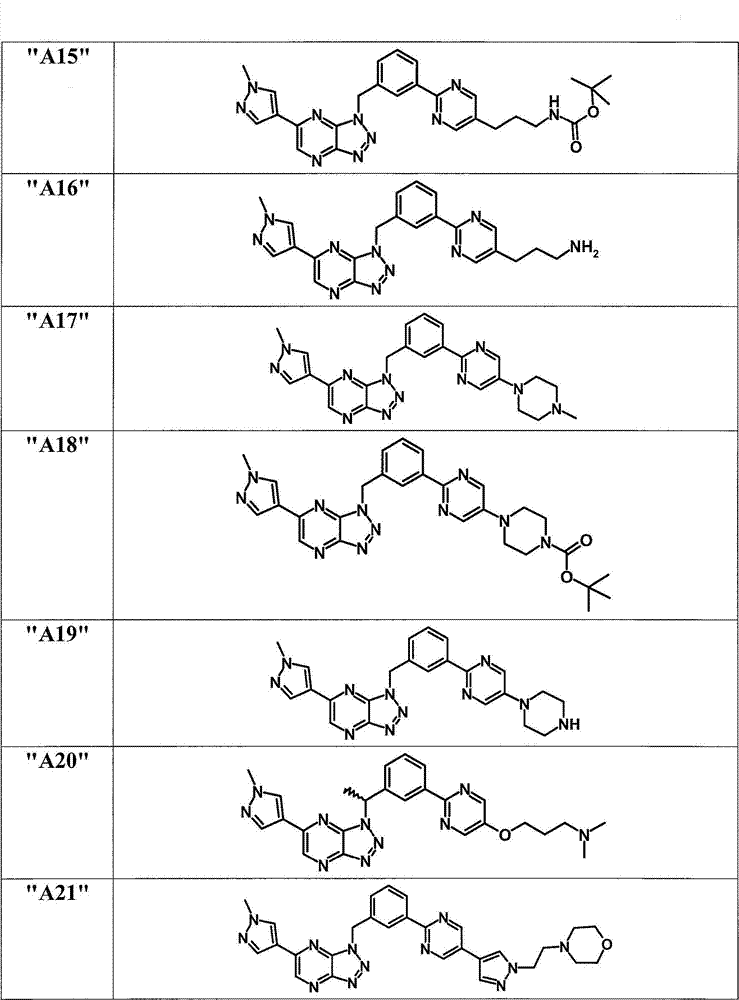


Applications Claiming Priority (3)
| Application Number | Priority Date | Filing Date | Title |
|---|---|---|---|
| DE102008037790A DE102008037790A1 (en) | 2008-08-14 | 2008-08-14 | Bicyclic triazole derivatives |
| DE102008037790.2 | 2008-08-14 | ||
| PCT/EP2009/005172 WO2010017870A1 (en) | 2008-08-14 | 2009-07-16 | Bicyclic triazole derivatives for treating tumors |
Publications (2)
| Publication Number | Publication Date |
|---|---|
| CN102123710A CN102123710A (en) | 2011-07-13 |
| CN102123710B true CN102123710B (en) | 2012-11-07 |
Family
ID=41138729
Family Applications (1)
| Application Number | Title | Priority Date | Filing Date |
|---|---|---|---|
| CN2009801314380A Expired - Fee Related CN102123710B (en) | 2008-08-14 | 2009-07-16 | Bicyclic triazole derivatives for treating tumors |
Country Status (16)
| Country | Link |
|---|---|
| US (1) | US8435986B2 (en) |
| EP (1) | EP2310013B1 (en) |
| JP (1) | JP5475778B2 (en) |
| KR (1) | KR20110051243A (en) |
| CN (1) | CN102123710B (en) |
| AR (1) | AR073055A1 (en) |
| AU (1) | AU2009281491B2 (en) |
| BR (1) | BRPI0914555A2 (en) |
| CA (1) | CA2733941C (en) |
| DE (1) | DE102008037790A1 (en) |
| EA (1) | EA201100334A1 (en) |
| ES (1) | ES2648233T3 (en) |
| IL (1) | IL211193A0 (en) |
| MX (1) | MX2011001511A (en) |
| WO (1) | WO2010017870A1 (en) |
| ZA (1) | ZA201101899B (en) |
Families Citing this family (19)
| Publication number | Priority date | Publication date | Assignee | Title |
|---|---|---|---|---|
| US8598184B2 (en) * | 2008-03-03 | 2013-12-03 | Tiger Pharmatech | Protein kinase inhibitors |
| PT3511330T (en) * | 2009-12-31 | 2020-12-24 | Hutchison Medipharma Ltd | Synthetic intermediate useful in the preparation of triazolopyridine c-met inhibitors |
| JP5960688B2 (en) | 2010-05-17 | 2016-08-02 | インコゼン セラピューティクス プライベート リミテッド | Novel 3,5-disubstituted-3H- [1,2,3] triazolo [4,5-B] pyridine compounds as protein kinase modulators |
| EA201300389A1 (en) * | 2010-09-23 | 2013-09-30 | Бёрингер Ингельхайм Интернациональ Гмбх | OXADIAZOL INHIBITORS OF LEUKOTRIEN PRODUCTION |
| AU2013402175B2 (en) * | 2013-09-30 | 2017-09-07 | Handok Inc. | Novel triazolopyrazine derivative and use thereof |
| EP3722277A3 (en) * | 2013-10-04 | 2021-01-20 | Novartis AG | 3'end caps for rna-interferring agents for use in rna |
| WO2015050871A2 (en) | 2013-10-04 | 2015-04-09 | Novartis Ag | Organic compounds to treat hepatitis b virus |
| GB201321740D0 (en) * | 2013-12-09 | 2014-01-22 | Ucb Pharma Sa | Therapeutic agents |
| KR102379517B1 (en) * | 2013-12-30 | 2022-03-25 | 제넨테크, 인크. | Serine/threonine kinase inhibitors |
| US9815850B2 (en) | 2016-02-05 | 2017-11-14 | Denali Therapeutics Inc. | Compounds, compositions and methods |
| LT3552017T (en) | 2016-12-09 | 2022-05-10 | Denali Therapeutics Inc. | COMPOUNDS TO BE USED AS RIPK1 INHIBITORS |
| KR20180092096A (en) | 2017-02-08 | 2018-08-17 | 에이비온 주식회사 | Novel Polymorphic Forms of Triazolopyrazine Derivatives and Processes of Manufacturing Thereof |
| CN108570053A (en) * | 2017-03-13 | 2018-09-25 | 中国科学院上海药物研究所 | Five yuan and 6-membered heterocyclic compound, preparation method, intermediate, combination and application |
| BR102018007822A2 (en) | 2017-04-20 | 2018-11-06 | Gilead Sciences, Inc. | compound, methods for inhibiting pd-1, pd-11 and / or interaction of pd-1 / pd-11 and for cancer treatment, pharmaceutical composition, and kit for treating or preventing cancer or a disease or condition |
| WO2019160882A1 (en) | 2018-02-13 | 2019-08-22 | Gilead Sciences, Inc. | Pd-1/pd-l1 inhibitors |
| KR102591947B1 (en) | 2018-04-19 | 2023-10-25 | 길리애드 사이언시즈, 인코포레이티드 | PD-1/PD-L1 inhibitors |
| PE20210642A1 (en) | 2018-07-13 | 2021-03-23 | Gilead Sciences Inc | PD-1 / PD-L1 INHIBITORS |
| US11236085B2 (en) | 2018-10-24 | 2022-02-01 | Gilead Sciences, Inc. | PD-1/PD-L1 inhibitors |
| EP4463229A1 (en) | 2022-01-12 | 2024-11-20 | Denali Therapeutics Inc. | Crystalline forms of (s)-5-benzyl-n-(5-methyl-4-oxo-2, 3,4,5- tetrahydropyrido [3,2-b] [l,4]oxazepin-3-yl)-4h-l,2,4-triazole-3-carboxamide |
Citations (1)
| Publication number | Priority date | Publication date | Assignee | Title |
|---|---|---|---|---|
| WO2007132308A1 (en) * | 2006-05-11 | 2007-11-22 | Pfizer Products Inc. | Triazolopyrazine derivatives useful as anti-cancer agents |
Family Cites Families (45)
| Publication number | Priority date | Publication date | Assignee | Title |
|---|---|---|---|---|
| GB9624482D0 (en) | 1995-12-18 | 1997-01-15 | Zeneca Phaema S A | Chemical compounds |
| DE19604388A1 (en) | 1996-02-07 | 1997-08-14 | Merck Patent Gmbh | New aryl-alkyl diazinone derivatives |
| CA2242425C (en) | 1996-02-13 | 2006-07-18 | Zeneca Limited | Quinazoline derivatives as vegf inhibitors |
| NZ331191A (en) | 1996-03-05 | 2000-03-27 | Zeneca Ltd | 4-anilinoquinazoline derivatives and pharmaceutical compositions thereof |
| GB9718972D0 (en) | 1996-09-25 | 1997-11-12 | Zeneca Ltd | Chemical compounds |
| JPH10259176A (en) | 1997-03-17 | 1998-09-29 | Japan Tobacco Inc | New amide derivative having vascularization inhibiting action and its use |
| GB9714249D0 (en) | 1997-07-08 | 1997-09-10 | Angiogene Pharm Ltd | Vascular damaging agents |
| TWI241295B (en) | 1998-03-02 | 2005-10-11 | Kowa Co | Pyridazine derivative and medicine containing the same as effect component |
| GB9900334D0 (en) | 1999-01-07 | 1999-02-24 | Angiogene Pharm Ltd | Tricylic vascular damaging agents |
| GB9900752D0 (en) | 1999-01-15 | 1999-03-03 | Angiogene Pharm Ltd | Benzimidazole vascular damaging agents |
| AUPQ462299A0 (en) | 1999-12-13 | 2000-01-13 | Fujisawa Pharmaceutical Co., Ltd. | Pyrazolopyridine compound and pharmaceutical use thereof |
| US6242461B1 (en) | 2000-01-25 | 2001-06-05 | Pfizer Inc. | Use of aryl substituted azabenzimidazoles in the treatment of HIV and AIDS related diseases |
| BR0111230A (en) | 2000-05-31 | 2003-06-10 | Astrazeneca Ab | Compound, and, use and process for the preparation thereof |
| EE200300015A (en) | 2000-07-07 | 2004-10-15 | Angiogene Pharmaceuticals Limited | Colchinol derivatives as inhibitors of angiogenesis |
| KR20030014425A (en) | 2000-07-07 | 2003-02-17 | 앤지오젠 파마슈티칼스 리미티드 | Colchinol derivatives as vascular damaging agents |
| MXPA04003668A (en) | 2001-10-31 | 2004-07-22 | Merck Patent Gmbh | Type 4 phosphodiesterase inhibitors and uses thereof. |
| DE10228103A1 (en) | 2002-06-24 | 2004-01-15 | Bayer Cropscience Ag | Fungicidal active ingredient combinations |
| BR0317430A (en) | 2002-12-20 | 2005-10-25 | Pharmacia Corp | Mitogen-activated protein kinase-activated protein kinase-2 inhibitor compounds |
| US7563748B2 (en) | 2003-06-23 | 2009-07-21 | Cognis Ip Management Gmbh | Alcohol alkoxylate carriers for pesticide active ingredients |
| JP2007516180A (en) * | 2003-07-02 | 2007-06-21 | スゲン,インコーポレイティド | Arylmethyltriazolo and imidazopyrazines as c-Met inhibitors |
| US7959919B2 (en) * | 2003-11-19 | 2011-06-14 | Novelmed Therapeutics, Inc. | Method of inhibiting factor B-mediated complement activation |
| EP1769092A4 (en) | 2004-06-29 | 2008-08-06 | Europ Nickel Plc | Improved leaching of base metals |
| US20070015771A1 (en) * | 2004-07-29 | 2007-01-18 | Threshold Pharmaceuticals, Inc. | Lonidamine analogs |
| US20070043057A1 (en) * | 2005-02-09 | 2007-02-22 | Threshold Pharmaceuticals, Inc. | Lonidamine analogs |
| TW200612918A (en) * | 2004-07-29 | 2006-05-01 | Threshold Pharmaceuticals Inc | Lonidamine analogs |
| ATE498358T1 (en) | 2005-06-29 | 2011-03-15 | Compumedics Ltd | SENSOR ARRANGEMENT WITH CONDUCTIVE BRIDGE |
| US7728017B2 (en) | 2005-11-30 | 2010-06-01 | Vertex Pharmaceuticals Incorporated | Inhibitors of c-Met and uses thereof |
| DE102005057924A1 (en) | 2005-12-05 | 2007-06-06 | Merck Patent Gmbh | pyridazinone derivatives |
| RS55630B1 (en) | 2005-12-21 | 2017-06-30 | Janssen Pharmaceutica Nv | TRIAZOLOPYRIDASINES AS TYROSINE KINASE MODULATORS |
| CA2651979A1 (en) | 2006-05-30 | 2007-12-06 | Pfizer Products Inc. | Triazolopyridazine derivatives |
| TW200801513A (en) | 2006-06-29 | 2008-01-01 | Fermiscan Australia Pty Ltd | Improved process |
| PE20121506A1 (en) | 2006-07-14 | 2012-11-26 | Amgen Inc | TRIAZOLOPYRIDINE COMPOUNDS AS C-MET INHIBITORS |
| WO2008033455A2 (en) * | 2006-09-13 | 2008-03-20 | The Institutes For Pharmaceutical Discovery, Llc | Biphenyl and heteroaryl phenyl derivatives as protein tyrosine phosphatases inhibitors |
| EA016527B1 (en) | 2006-10-23 | 2012-05-30 | ЭсДжиЭкс ФАРМАСЬЮТИКАЛЗ, ИНК. | Triazolopyridazine protein kinase modulators |
| DE102007026341A1 (en) | 2007-06-06 | 2008-12-11 | Merck Patent Gmbh | Benzoxazolonderivate |
| DE102007032507A1 (en) | 2007-07-12 | 2009-04-02 | Merck Patent Gmbh | pyridazinone derivatives |
| JP5423679B2 (en) | 2007-10-31 | 2014-02-19 | 日産化学工業株式会社 | Pyridazinone compounds and P2X7 receptor inhibitors |
| DE102007061963A1 (en) | 2007-12-21 | 2009-06-25 | Merck Patent Gmbh | pyridazinone derivatives |
| CN101538245B (en) | 2008-03-18 | 2011-02-16 | 中国科学院上海药物研究所 | One-class pyridazinone compounds and preparation method and application thereof |
| DE102008019907A1 (en) | 2008-04-21 | 2009-10-22 | Merck Patent Gmbh | pyridazinone derivatives |
| EP2328586A2 (en) | 2008-05-20 | 2011-06-08 | Cephalon, Inc. | Substituted pyridazinone derivatives as histamine-3 (h3) receptor ligands |
| DE102008028905A1 (en) | 2008-06-18 | 2009-12-24 | Merck Patent Gmbh | 3- (3-pyrimidin-2-yl-benzyl) - [1,2,4] triazolo [4,3-b] pyridazine derivatives |
| CA2729993A1 (en) | 2008-07-25 | 2010-01-28 | Boehringer Ingelheim International Gmbh | Synthesis of inhibitors of 11beta-hydroxysteroid dehydrogenase type 1 |
| BRPI1013159A2 (en) | 2009-03-30 | 2015-09-15 | Sumitomo Chemical Co | USE OF PYRIDAZINONE COMPOUND FOR ARTHROPOD PEST CONTROL |
| AR082590A1 (en) | 2010-08-12 | 2012-12-19 | Hoffmann La Roche | INHIBITORS OF THE TIROSINA-QUINASA DE BRUTON |
-
2008
- 2008-08-14 DE DE102008037790A patent/DE102008037790A1/en not_active Withdrawn
-
2009
- 2009-07-16 MX MX2011001511A patent/MX2011001511A/en not_active Application Discontinuation
- 2009-07-16 EP EP09777234.7A patent/EP2310013B1/en active Active
- 2009-07-16 AU AU2009281491A patent/AU2009281491B2/en not_active Ceased
- 2009-07-16 KR KR1020117005525A patent/KR20110051243A/en not_active Withdrawn
- 2009-07-16 CA CA2733941A patent/CA2733941C/en active Active
- 2009-07-16 US US13/059,016 patent/US8435986B2/en not_active Expired - Fee Related
- 2009-07-16 CN CN2009801314380A patent/CN102123710B/en not_active Expired - Fee Related
- 2009-07-16 WO PCT/EP2009/005172 patent/WO2010017870A1/en not_active Ceased
- 2009-07-16 ES ES09777234.7T patent/ES2648233T3/en active Active
- 2009-07-16 EA EA201100334A patent/EA201100334A1/en unknown
- 2009-07-16 JP JP2011522392A patent/JP5475778B2/en not_active Expired - Fee Related
- 2009-07-16 BR BRPI0914555A patent/BRPI0914555A2/en not_active IP Right Cessation
- 2009-08-14 AR ARP090103142A patent/AR073055A1/en unknown
-
2011
- 2011-02-10 IL IL211193A patent/IL211193A0/en active IP Right Grant
- 2011-03-11 ZA ZA2011/01899A patent/ZA201101899B/en unknown
Patent Citations (1)
| Publication number | Priority date | Publication date | Assignee | Title |
|---|---|---|---|---|
| WO2007132308A1 (en) * | 2006-05-11 | 2007-11-22 | Pfizer Products Inc. | Triazolopyrazine derivatives useful as anti-cancer agents |
Also Published As
| Publication number | Publication date |
|---|---|
| MX2011001511A (en) | 2011-03-15 |
| CA2733941C (en) | 2016-10-04 |
| AU2009281491A1 (en) | 2010-02-18 |
| JP2011530545A (en) | 2011-12-22 |
| IL211193A0 (en) | 2011-04-28 |
| CN102123710A (en) | 2011-07-13 |
| BRPI0914555A2 (en) | 2015-12-15 |
| DE102008037790A1 (en) | 2010-02-18 |
| JP5475778B2 (en) | 2014-04-16 |
| AR073055A1 (en) | 2010-10-13 |
| US8435986B2 (en) | 2013-05-07 |
| ZA201101899B (en) | 2011-11-30 |
| HK1159989A1 (en) | 2012-08-10 |
| EP2310013A1 (en) | 2011-04-20 |
| US20110135600A1 (en) | 2011-06-09 |
| ES2648233T3 (en) | 2017-12-29 |
| AU2009281491B2 (en) | 2014-02-20 |
| KR20110051243A (en) | 2011-05-17 |
| EA201100334A1 (en) | 2011-08-30 |
| CA2733941A1 (en) | 2010-02-18 |
| EP2310013B1 (en) | 2017-08-23 |
| WO2010017870A1 (en) | 2010-02-18 |
Similar Documents
| Publication | Publication Date | Title |
|---|---|---|
| CN101903374B (en) | 2-benzylpyridazinone derivatives as MET kinase inhibitors | |
| CN102123710A (en) | Bicyclic triazole derivatives for treating tumors | |
| CN102066378B (en) | 3-(3-Pyrimidin-2-ylbenzyl)-1,2,4-triazolo[4,3-b]pyridazine derivatives as MET kinase inhibitors | |
| CN101743241B (en) | Pyridazinone Derivatives | |
| CN101679303B (en) | Pyridazinone derivatives | |
| CN101678214B (en) | Aryl ether pyridazinone derivatives | |
| CN102264727B (en) | Pyridazinone derivatives | |
| CN102272125B (en) | Pyridazinone Derivatives | |
| CN102015694A (en) | Pyridazinone derivatives | |
| KR20110099742A (en) | 3- (3-pyrimidin-2-yl-benzyl)-[1,2,4] triazolo [4,3-k] pyrimidine derivative | |
| CN102264742B (en) | 3-(3-pyrimidine-2-yl-benzyl)-[1,2,4] triazolo [4,3-b] pyridazine derivatives | |
| CN102046605A (en) | Dihydropyrazole derivatives as tyrosine kinase modulators for the treatment of tumors | |
| KR101669696B1 (en) | Pyridazinone derivatives | |
| HK1159989B (en) | Bicyclic triazole derivatives for treating tumors | |
| HK1164853B (en) | Pyridazinone derivatives | |
| HK1151291B (en) | 2-benzylpyridazinone derivatives as met kinase inhibitors | |
| HK1157782A (en) | 3-(3-pyrimidin-2-yl-benzyl)-[1,2,4]triazolo[4,3-b]pyridazine derivatives as met kinase inhibitors | |
| HK1157782B (en) | 3-(3-pyrimidin-2-yl-benzyl)-[1,2,4]triazolo[4,3-b]pyridazine derivatives as met kinase inhibitors | |
| HK1157345B (en) | Dihydropyrazole derivatives as tyrosine kinase modulators for the treatment of tumors | |
| HK1156312A (en) | Pyridazinone derivatives | |
| HK1164852A (en) | Pyridazinone derivatives | |
| HK1164838A (en) | 3-(3-pyrimidine-2-yl-benzyl)-[1,2,4] triazolo [4,3-b] pyridazine derivatives | |
| HK1164314A (en) | 3-(3-pyrimidin-2-yl-benzyl)-[1,2,4]triazolo[4,3-b]pyrimidine derivatives |
Legal Events
| Date | Code | Title | Description |
|---|---|---|---|
| C06 | Publication | ||
| PB01 | Publication | ||
| C10 | Entry into substantive examination | ||
| SE01 | Entry into force of request for substantive examination | ||
| REG | Reference to a national code |
Ref country code: HK Ref legal event code: DE Ref document number: 1159989 Country of ref document: HK |
|
| C14 | Grant of patent or utility model | ||
| GR01 | Patent grant | ||
| REG | Reference to a national code |
Ref country code: HK Ref legal event code: GR Ref document number: 1159989 Country of ref document: HK |
|
| CF01 | Termination of patent right due to non-payment of annual fee | ||
| CF01 | Termination of patent right due to non-payment of annual fee |
Granted publication date: 20121107 |