CN102159126A - Devices, methods and kits for forming tracts in tissue - Google Patents
Devices, methods and kits for forming tracts in tissue Download PDFInfo
- Publication number
- CN102159126A CN102159126A CN2009801358853A CN200980135885A CN102159126A CN 102159126 A CN102159126 A CN 102159126A CN 2009801358853 A CN2009801358853 A CN 2009801358853A CN 200980135885 A CN200980135885 A CN 200980135885A CN 102159126 A CN102159126 A CN 102159126A
- Authority
- CN
- China
- Prior art keywords
- tissue
- pipeline
- puncture member
- suction
- organ
- Prior art date
- Legal status (The legal status is an assumption and is not a legal conclusion. Google has not performed a legal analysis and makes no representation as to the accuracy of the status listed.)
- Pending
Links
Images






Classifications
-
- A—HUMAN NECESSITIES
- A61—MEDICAL OR VETERINARY SCIENCE; HYGIENE
- A61B—DIAGNOSIS; SURGERY; IDENTIFICATION
- A61B17/00—Surgical instruments, devices or methods
- A61B17/34—Trocars; Puncturing needles
- A61B17/3415—Trocars; Puncturing needles for introducing tubes or catheters, e.g. gastrostomy tubes, drain catheters
-
- A—HUMAN NECESSITIES
- A61—MEDICAL OR VETERINARY SCIENCE; HYGIENE
- A61B—DIAGNOSIS; SURGERY; IDENTIFICATION
- A61B17/00—Surgical instruments, devices or methods
- A61B17/34—Trocars; Puncturing needles
- A61B17/3478—Endoscopic needles, e.g. for infusion
-
- A—HUMAN NECESSITIES
- A61—MEDICAL OR VETERINARY SCIENCE; HYGIENE
- A61B—DIAGNOSIS; SURGERY; IDENTIFICATION
- A61B17/00—Surgical instruments, devices or methods
- A61B17/00234—Surgical instruments, devices or methods for minimally invasive surgery
- A61B2017/00238—Type of minimally invasive operation
- A61B2017/00243—Type of minimally invasive operation cardiac
- A61B2017/00247—Making holes in the wall of the heart, e.g. laser Myocardial revascularization
-
- A—HUMAN NECESSITIES
- A61—MEDICAL OR VETERINARY SCIENCE; HYGIENE
- A61B—DIAGNOSIS; SURGERY; IDENTIFICATION
- A61B17/00—Surgical instruments, devices or methods
- A61B17/00234—Surgical instruments, devices or methods for minimally invasive surgery
- A61B2017/00238—Type of minimally invasive operation
- A61B2017/00278—Transorgan operations, e.g. transgastric
-
- A—HUMAN NECESSITIES
- A61—MEDICAL OR VETERINARY SCIENCE; HYGIENE
- A61B—DIAGNOSIS; SURGERY; IDENTIFICATION
- A61B17/00—Surgical instruments, devices or methods
- A61B17/00234—Surgical instruments, devices or methods for minimally invasive surgery
- A61B2017/00292—Surgical instruments, devices or methods for minimally invasive surgery mounted on or guided by flexible, e.g. catheter-like, means
- A61B2017/003—Steerable
-
- A—HUMAN NECESSITIES
- A61—MEDICAL OR VETERINARY SCIENCE; HYGIENE
- A61B—DIAGNOSIS; SURGERY; IDENTIFICATION
- A61B17/00—Surgical instruments, devices or methods
- A61B17/28—Surgical forceps
- A61B17/29—Forceps for use in minimally invasive surgery
- A61B2017/2926—Details of heads or jaws
- A61B2017/2927—Details of heads or jaws the angular position of the head being adjustable with respect to the shaft
-
- A—HUMAN NECESSITIES
- A61—MEDICAL OR VETERINARY SCIENCE; HYGIENE
- A61B—DIAGNOSIS; SURGERY; IDENTIFICATION
- A61B17/00—Surgical instruments, devices or methods
- A61B17/30—Surgical pincettes, i.e. surgical tweezers without pivotal connections
- A61B2017/306—Surgical pincettes, i.e. surgical tweezers without pivotal connections holding by means of suction
- A61B2017/308—Surgical pincettes, i.e. surgical tweezers without pivotal connections holding by means of suction with suction cups
-
- A—HUMAN NECESSITIES
- A61—MEDICAL OR VETERINARY SCIENCE; HYGIENE
- A61B—DIAGNOSIS; SURGERY; IDENTIFICATION
- A61B17/00—Surgical instruments, devices or methods
- A61B17/34—Trocars; Puncturing needles
- A61B2017/348—Means for supporting the trocar against the body or retaining the trocar inside the body
- A61B2017/3482—Means for supporting the trocar against the body or retaining the trocar inside the body inside
- A61B2017/3484—Anchoring means, e.g. spreading-out umbrella-like structure
- A61B2017/3488—Fixation to inner organ or inner body tissue
-
- A—HUMAN NECESSITIES
- A61—MEDICAL OR VETERINARY SCIENCE; HYGIENE
- A61B—DIAGNOSIS; SURGERY; IDENTIFICATION
- A61B18/00—Surgical instruments, devices or methods for transferring non-mechanical forms of energy to or from the body
- A61B2018/00315—Surgical instruments, devices or methods for transferring non-mechanical forms of energy to or from the body for treatment of particular body parts
- A61B2018/00345—Vascular system
- A61B2018/00351—Heart
- A61B2018/00392—Transmyocardial revascularisation
-
- A—HUMAN NECESSITIES
- A61—MEDICAL OR VETERINARY SCIENCE; HYGIENE
- A61B—DIAGNOSIS; SURGERY; IDENTIFICATION
- A61B90/00—Instruments, implements or accessories specially adapted for surgery or diagnosis and not covered by any of the groups A61B1/00 - A61B50/00, e.g. for luxation treatment or for protecting wound edges
- A61B90/06—Measuring instruments not otherwise provided for
- A61B2090/064—Measuring instruments not otherwise provided for for measuring force, pressure or mechanical tension
-
- A—HUMAN NECESSITIES
- A61—MEDICAL OR VETERINARY SCIENCE; HYGIENE
- A61B—DIAGNOSIS; SURGERY; IDENTIFICATION
- A61B2217/00—General characteristics of surgical instruments
- A61B2217/002—Auxiliary appliance
- A61B2217/005—Auxiliary appliance with suction drainage system
-
- A—HUMAN NECESSITIES
- A61—MEDICAL OR VETERINARY SCIENCE; HYGIENE
- A61M—DEVICES FOR INTRODUCING MEDIA INTO, OR ONTO, THE BODY; DEVICES FOR TRANSDUCING BODY MEDIA OR FOR TAKING MEDIA FROM THE BODY; DEVICES FOR PRODUCING OR ENDING SLEEP OR STUPOR
- A61M1/00—Suction or pumping devices for medical purposes; Devices for carrying-off, for treatment of, or for carrying-over, body-liquids; Drainage systems
- A61M1/84—Drainage tubes; Aspiration tips
Landscapes
- Health & Medical Sciences (AREA)
- Surgery (AREA)
- Life Sciences & Earth Sciences (AREA)
- Heart & Thoracic Surgery (AREA)
- Molecular Biology (AREA)
- Pathology (AREA)
- Engineering & Computer Science (AREA)
- Biomedical Technology (AREA)
- Gastroenterology & Hepatology (AREA)
- Medical Informatics (AREA)
- Nuclear Medicine, Radiotherapy & Molecular Imaging (AREA)
- Animal Behavior & Ethology (AREA)
- General Health & Medical Sciences (AREA)
- Public Health (AREA)
- Veterinary Medicine (AREA)
- Surgical Instruments (AREA)
- External Artificial Organs (AREA)
- Infusion, Injection, And Reservoir Apparatuses (AREA)
Abstract
Description
对相关申请的交叉引用Cross References to Related Applications
本申请要求2008年7月21日提交的序列号为61/082,449的美国临时申请的优先权,该申请整体引用在此作为参考。This application claims priority to US Provisional Application Serial No. 61/082,449, filed July 21, 2008, which is hereby incorporated by reference in its entirety.
技术领域technical field
一般而言,本文描述的方法、装置和成套用具用于在组织中形成管道(tract)。更具体地,本文描述的方法、装置和成套用具利用一个或多个抽吸构件在组织中形成管道。In general, the methods, devices, and kits described herein are used to form tracts in tissue. More specifically, the methods, devices, and kits described herein utilize one or more suction members to create tracts in tissue.
背景技术Background technique
之前描述过许多用于在组织中或穿过组织形成管道的装置和方法。例如,美国专利申请No.10/844,247、11/544,196、11/545,272、11/544,365、11/544,177、11/544,149、10/888,682、11/432,982、11/544,317、11/788,509、11/873,957描述了用于在组织中形成管道的装置和方法,所有这些专利申请的全文引用在此作为参考。一般而言,这些专利申请中描述的管道可自密封、或者可利用最少的或不需要附加封闭装置或技术来密封。这些管道在提供到达组织位置(例如器官的腔)的通道时非常有用,使得一个或多个工具可以前进穿过管道并可执行手术。希望在组织中形成管道的这些方法以及附加的装置和方法可得到非常广泛的应用。A number of devices and methods for forming tracts in or through tissue have been described previously. For example, U.S. Patent Application Nos. 10/844,247, 11/544,196, 11/545,272, 11/544,365, 11/544,177, 11/544,149, 10/888,682, 11/432,982, 11/544,317, 11/788,509, 11/873,957 Devices and methods for forming tracts in tissue are described, all of which patent applications are incorporated herein by reference in their entirety. In general, the conduits described in these patent applications can be self-sealing, or can be sealed with minimal or no additional closure devices or techniques. These conduits are very useful in providing access to a tissue location, such as a lumen of an organ, so that one or more tools can be advanced through the conduit and a procedure can be performed. These methods of forming tracts in tissue, as well as additional devices and methods, are expected to find very wide application.
发明内容Contents of the invention
本文描述了在组织中形成管道的方法和装置。在一些变型中,所述装置包括:长形构件、联接到长形构件远侧/远端部分的抽吸构件、以及可滑动地容纳在长形构件中以在组织中形成管道的组织刺穿构件。长形构件可以是柔性的或可以不是柔性的。在一些变型中,抽吸构件经由柔性部分例如铰接件或类似物联接到长形构件。Methods and devices for forming tracts in tissue are described herein. In some variations, the device includes an elongate member, a suction member coupled to a distal/end portion of the elongate member, and a tissue-piercing member slidably received in the elongate member to form a tract in tissue member. An elongate member may or may not be flexible. In some variations, the suction member is coupled to the elongate member via a flexible portion, such as a hinge or the like.
长形构件可以是可关节式转动的(可铰接式接合的/可联成活节的,articulatable),组织刺穿构件可以是可关节式转动的,抽吸构件可以是可关节式转动的,或者上述构件的任意组合可以是可关节式转动的。这些构件可以例如利用一个或多个拉线、一个或多个铰接件或类似物而实现可关节式转动。The elongated member may be articulatable (articulated/articulated), the tissue-piercing member may be articulatable, the suction member may be articulatable, or Any combination of the above components may be articulable. These members may be articulated, for example, using one or more pull wires, one or more hinges, or the like.
在一些变型中,组织刺穿构件是针状件。该针状件可以是空心的或实心的,并具有任何合适的梢端。也就是说,该梢端可以具有任何合适的形状(锥形、偏锥形等),可以是粗钝的、锐利的或尖的,并可以是有斜面的或没有斜面的。In some variations, the tissue-piercing member is a needle. The needle may be hollow or solid and have any suitable tip. That is, the tip can have any suitable shape (tapered, tapered, etc.), can be blunt, sharp, or pointed, and can be beveled or unbeveled.
抽吸构件可以连接到一个或多个真空源。例如,长形构件可具有一个或多个腔、槽、孔、开口等,以利于抽吸构件连接到真空源。在一些变型中,抽吸构件上具有一个或多个组织附着构件。组织附着构件可以是例如成形表面/具有特定断面形状的表面(比如肋)。可以按需要或适当地使用任何数量的组织附着构件。类似地,抽吸构件可包括:一个或多个加热元件、一个或多个电极、或一个或多个传感器(例如多普勒传感器、压力传感器、神经传感器、超声波传感器,等)、沿抽吸构件表面的一个或多个药物输送孔口、一个或多个牵引构件,等等。抽吸构件可以具有任何合适的几何形状。在一些变型中,抽吸构件的基部表面为大致椭圆形。在一些变型中,抽吸构件的基部表面为大致圆形。在一些变型中,抽吸构件的基部表面具有不规则的几何形状。The suction member may be connected to one or more vacuum sources. For example, the elongate member may have one or more lumens, slots, holes, openings, etc. to facilitate connection of the suction member to a vacuum source. In some variations, the suction member has one or more tissue attachment members thereon. The tissue attachment member may be, for example, a shaped surface/surface with a specific cross-sectional shape (such as ribs). Any number of tissue attachment members may be used as desired or appropriate. Similarly, the suction member may include: one or more heating elements, one or more electrodes, or one or more sensors (such as Doppler sensors, pressure sensors, neural sensors, ultrasonic sensors, etc.), along the suction One or more drug delivery orifices on the surface of the member, one or more pull members, etc. The suction member may have any suitable geometry. In some variations, the base surface of the suction member is generally elliptical. In some variations, the base surface of the suction member is generally circular. In some variations, the base surface of the suction member has an irregular geometry.
用于在组织中形成管道的其它装置包括:长形构件、联接到长形构件的远侧/远端部分并可抵靠着组织定位的第一抽吸构件、与第一抽吸构件相对的第二抽吸构件、以及用于在组织中形成管道的组织刺穿构件。组织刺穿构件可以可滑动地容纳在长形构件中、可滑动地容纳在第一或第二抽吸构件中、或可滑动地容纳在长形构件中且可滑动地容纳在第一或第二抽吸构件中。第一抽吸构件可以经由柔性部分(例如铰接部)联接到长形构件的远侧部分。类似地,例如经由柔性部分(如铰接部),第二抽吸构件可以联接到长形构件的远侧部分,或者第一和第二抽吸构件可以联接在一起。一个或多个抽吸构件可以相对于长形构件、相对于其它抽吸构件、或既相对于长形构件又相对于其它抽吸构件运动。Other devices for forming a tract in tissue include an elongate member, a first suction member coupled to a distal/end portion of the elongate member and positionable against tissue, a suction member opposite the first suction member A second suction member, and a tissue-piercing member for forming a tract in tissue. The tissue-piercing member may be slidably received in the elongate member, slidably received in the first or second suction member, or slidably received in the elongate member and slidably received in the first or second suction member. Two suction components. The first suction member may be coupled to the distal portion of the elongate member via a flexible portion (eg, a hinge). Similarly, the second suction member may be coupled to the distal portion of the elongate member, or the first and second suction members may be coupled together, for example via a flexible portion such as a hinge. One or more suction members may be movable relative to the elongate member, relative to other suction members, or both.
在这些变型中,长形的轴可以是可关节式转动的、柔性的、或者既可关节式转动又是柔性的。当然,长形的轴也可以是不可关节式转动的和/或刚性的。第一和第二抽吸构件可以连接到真空源、可以是相对于彼此可动的、并且可以具有任何合适的几何形状(例如,大致椭圆形、大致圆形、大致半圆形,等)。在第一或第二抽吸构件上可具有一个或多个组织附着构件,例如成形表面或肋。类似地,第一或第二抽吸构件可以包括一个或多个加热元件、一个或多个电极、或一个或多个传感器(例如多普勒传感器、压力传感器,等)、一个或多个牵引构件、一个或多个孔口,等等。在一些变型中,组织刺穿构件是针状件。如上述装置一样,所述针状件可以是空心的或实心的,并可以具有任何合适的梢端。也就是说,该梢端可以具有任何合适的形状(锥形、偏锥形等)、可以是粗钝的、尖锐的或锐利的、并且可以是有斜面的或没有斜面的。In these variations, the elongated shaft may be articulable, flexible, or both articulable and flexible. Of course, the elongate shaft can also be non-articulated and/or rigid. The first and second suction members may be connected to a vacuum source, may be movable relative to each other, and may have any suitable geometric shape (eg, generally oval, generally circular, generally semicircular, etc.). There may be one or more tissue attachment members, such as shaping surfaces or ribs, on the first or second suction member. Similarly, the first or second suction member may include one or more heating elements, one or more electrodes, or one or more sensors (e.g., Doppler sensors, pressure sensors, etc.), one or more traction member, one or more openings, and so on. In some variations, the tissue-piercing member is a needle. As with the above devices, the needle may be hollow or solid and may have any suitable tip. That is, the tip may have any suitable shape (tapered, partial taper, etc.), may be blunt, pointed, or sharpened, and may be beveled or unbeveled.
在一些变型中,所述装置还包括一个或多个能量施加装置,所述方法还包括向组织施加能量。能量可来自合适的能量源(例如选自由超声波、RF、光、磁或其组合所组成的组的能量)。在一些变型中,所述装置包括一个或多个传感器,所述方法还包括感测至少一个有用的参数,例如温度、压力、组织识别或位置(例如神经或各种解剖学结构)、脉管中的血液流、以及这些参数的组合。例如,在一些变型中,所述参数是脉管中的血液流,所述方法还包括:如果检测到脉管中的血液流,则改变所述装置的位置。本文还描述了包括一个或多个本文描述的装置以及一个或多个工具或类似物的成套用具。In some variations, the device further includes one or more energy applying devices, and the method further includes applying energy to the tissue. Energy may be from a suitable energy source (eg, energy selected from the group consisting of ultrasonic, RF, optical, magnetic, or combinations thereof). In some variations, the device includes one or more sensors, and the method further includes sensing at least one useful parameter, such as temperature, pressure, tissue identification or location (e.g., nerves or various anatomical structures), vascular The blood flow in , and combinations of these parameters. For example, in some variations the parameter is blood flow in the vessel, the method further comprising changing the position of the device if blood flow in the vessel is detected. Also described herein are kits comprising one or more of the devices described herein and one or more tools or the like.
本文也描述了用于在组织中形成管道的方法。根据一些方法,使装置前进到组织附近,其中所述装置包括一个或多个抽吸构件以及组织刺穿构件。施加抽吸作用使得组织被拉引抵靠在一个或多个抽吸构件上,使组织刺穿构件沿第一方向前进穿过被拉引的组织,以在组织内或穿过组织形成管道。所述方法还包括:使组织刺穿构件关节式转动并使组织刺穿构件沿第二方向前进。在一些变型中,所述方法还包括使一个或多个抽吸构件关节式转动以改变组织的位置,其中,使组织刺穿构件前进穿过改变位置的组织或不使组织刺穿构件前进穿过改变位置的组织。所述方法还包括使装置旋转以使组织旋转,并使组织刺穿构件前进穿过旋转后的组织。当然,所述方法还包括:使组织显像/可见;使一个或多个工具前进穿过组织管道;在组织附近、穿过组织或者在组织上进行手术;确定装置相对于组织的位置;这些方法步骤的组合;等等。Also described herein are methods for forming tracts in tissue. According to some methods, a device is advanced near tissue, wherein the device includes one or more suction members and a tissue-piercing member. Applying suction causes tissue to be drawn against the one or more suction members, advancing the tissue-piercing member in a first direction through the drawn tissue to form a tract in or through the tissue. The method also includes articulating the tissue-piercing member and advancing the tissue-piercing member in a second direction. In some variations, the method further includes articulating the one or more suction members to reposition the tissue, wherein advancing the tissue-piercing member through the relocated tissue or not advancing the tissue-piercing member organization through a change of location. The method also includes rotating the device to rotate the tissue and advancing the tissue-piercing member through the rotated tissue. Of course, the method also includes: imaging/visualizing the tissue; advancing one or more tools through the tissue tract; performing the procedure near, through, or on the tissue; determining the position of the device relative to the tissue; Combinations of method steps; etc.
本文描述的方法还可包括向组织输送一种或多种流体或制剂。流体可用于例如对组织进行冲洗、消毒、处理(治疗等),等等。流体可包括任何合适的制剂或制剂的组合。例如,制剂可选自抗生素、抗菌剂、消毒剂、化疗药物、非甾类抗炎药(NSAIDs)、环氧合酶-1(COX-1)抑制剂、环氧合酶-2(COX-2)抑制剂、阿片类药物、或任何其它药物或制剂、以及这些制剂的混合物或组合物。所述流体还可包括一种或多种低温制剂,例如用以冷却组织、减少炎症、产生局部细胞坏死、上述作用的一些组合,等等。低温制剂可以是例如液态氮或一些其它的低温制剂。此外,金属或聚合物管状导管可以位于抽吸构件内部、外侧、周围或附近,并可联接到位于长形构件内、周围或附近的导管,使得低温制剂可从一个导管传送到下一个导管而始终不直接接触组织。这样,产生各种各样的热交换器,以便将热量从抽吸构件中去除并将组织的温度降低到治疗水平。在下文将要更详细地描述的一些变型中,组织刺穿构件构造用于提供制剂的注入。The methods described herein may also include delivering one or more fluids or agents to tissue. The fluid can be used, for example, to irrigate, disinfect, treat (therapeutic, etc.), etc. the tissue. A fluid may comprise any suitable formulation or combination of formulations. For example, the agent may be selected from antibiotics, antibacterials, disinfectants, chemotherapeutics, non-steroidal anti-inflammatory drugs (NSAIDs), cyclooxygenase-1 (COX-1) inhibitors, cyclooxygenase-2 (COX- 2) Inhibitors, opioids, or any other drug or agent, and mixtures or combinations of these agents. The fluid may also include one or more cryogenic agents, eg, to cool tissue, reduce inflammation, produce localized cell death, some combination of the above, and the like. The cryogenic agent may be, for example, liquid nitrogen or some other cryogenic agent. Additionally, metal or polymeric tubular conduits may be located inside, outside, around, or adjacent to the suction member and may be coupled to conduits located within, around, or adjacent to the elongate member such that the cryogenic agent may be passed from one conduit to the next Never touch the tissue directly. In this way, various heat exchangers are created in order to remove heat from the suction members and reduce the temperature of the tissue to therapeutic levels. In some variations, described in more detail below, the tissue-piercing member is configured to provide for infusion of an agent.
所述方法可用于任何合适的组织。在一些变型中,所述组织是器官,例如心血管系统的器官、消化系统的器官、呼吸系统的器官、排泄系统的器官、生殖系统的器官、或神经系统的器官。在一些变型中,所述器官是心血管系统的器官例如动脉。当使用本文描述的方法时,管道可以在相对较短的时间内密封,并且可以利用或不利用附加的辅助手段密封。在一些变型中,管道在15分钟或更短的时间内、在12分钟或更短的时间内、在10分钟或更短的时间内、在5分钟或更短的时间内、在3分钟或更短的时间内、或者在1分钟或更短的时间内密封。当然,可以在形成管道后向管道施加压力或抽吸,以辅助密封。另外,也可以使用一个或多个封闭装置。The methods can be used on any suitable tissue. In some variations, the tissue is an organ, such as an organ of the cardiovascular system, an organ of the digestive system, an organ of the respiratory system, an organ of the excretory system, an organ of the reproductive system, or an organ of the nervous system. In some variations, the organ is an organ of the cardiovascular system such as an artery. When using the methods described herein, the conduit can be sealed in a relatively short period of time, and can be sealed with or without additional aids. In some variations, the conduit runs in 15 minutes or less, in 12 minutes or less, in 10 minutes or less, in 5 minutes or less, in 3 minutes or less Seal in less time, or in 1 minute or less. Of course, pressure or suction may be applied to the tubing after it has been formed to assist in sealing. Additionally, one or more closure devices may also be used.
根据本文描述的方法,组织刺穿构件可以波状起伏的形式前进,或可以在前进的过程中旋转。在一些变型中,组织刺穿构件在第一位置进入组织,在第二位置离开组织,第一位置和第二位置之间的长度大于组织的厚度。在一些变型中,管道的长度大于组织的厚度。在一些变型中,所述方法还包括增大管道的横截面面积。According to the methods described herein, the tissue-piercing member may be advanced in an undulating fashion, or may be rotated during advancement. In some variations, the tissue-piercing member enters the tissue at a first location and exits the tissue at a second location, the length between the first location and the second location being greater than the thickness of the tissue. In some variations, the length of the tract is greater than the thickness of the tissue. In some variations, the method also includes increasing the cross-sectional area of the conduit.
本文描述的方法的一些变型可以用于在组织中形成单个自密封/自封闭管道,或可以用于通过使单个组织刺穿构件前进到组织中而在组织中形成一个或多个自密封管道。这可以例如产生对组织的最小应力。此外,组织可相对快速地痊愈,由此产生相对短的手术时间。Some variations of the methods described herein may be used to form a single self-sealing/self-sealing tract in tissue, or may be used to form one or more self-sealing tracts in tissue by advancing a single tissue-piercing member into tissue. This can, for example, create minimal stress on the tissue. In addition, tissue can heal relatively quickly, resulting in relatively short operative times.
本文描述的方法的某些变型可包括:通过使第一组织刺穿构件(例如针状件,如空心的针状件)沿第一方向前进穿过组织而在组织中形成管道,其中管道的形成仅需要第一组织刺穿构件前进穿过组织,并且管道是自密封/自封闭的。该方法也可包括:在使第一组织刺穿构件前进穿过组织之前,使包括第一组织刺穿构件的装置前进到组织附近。在一些变型中,所述方法可包括对组织施加抽吸作用以定位该组织。例如,该装置还可包括一个或多个抽吸构件,所述方法可以包括对组织施加抽吸作用以将组织拉引至抵靠抽吸构件。在某些变型中,第一组织刺穿构件可沿第一方向前进穿过被拉引的组织。在一些变型中,可以在通过施加抽吸作用定位组织以后在组织中形成管道。该管道可以例如是动脉切口(动脉切开术,arteriotomy)。Certain variations of the methods described herein may include forming a tract in tissue by advancing a first tissue-piercing member (e.g., a needle, such as a hollow needle) in a first direction through the tissue, wherein the tract's Formation requires only advancement of the first tissue-piercing member through tissue, and the tract is self-sealing/self-closing. The method may also include advancing a device including the first tissue-piercing member adjacent to the tissue prior to advancing the first tissue-piercing member through the tissue. In some variations, the method may include applying suction to the tissue to locate the tissue. For example, the device may also include one or more suction members, and the method may include applying suction to the tissue to draw the tissue against the suction members. In some variations, the first tissue-piercing member can be advanced in a first direction through the pulled tissue. In some variations, the tract may be formed in the tissue after positioning the tissue by applying suction. The conduit can be, for example, an arteriotomy (arteriotomy).
本文描述的方法的一些变型可包括:使组织刺穿构件沿第一方向前进穿过组织以在组织中形成单个管道,其中,该单个管道是自密封的。本文描述的方法的某些变型可包括使装置前进到组织附近,其中该装置包括至少一个组织刺穿构件。该方法还包括通过使组织刺穿构件前进穿过组织而在组织中形成管道。管道的形成可仅需要组织刺穿构件前进穿过组织。该管道可以是自密封的。Some variations of the methods described herein may include advancing the tissue-piercing member in a first direction through tissue to form a single tract in the tissue, wherein the single tract is self-sealing. Certain variations of the methods described herein may include advancing a device adjacent tissue, where the device includes at least one tissue-piercing member. The method also includes forming a tract in the tissue by advancing the tissue-piercing member through the tissue. Formation of the tract may only require advancement of the tissue-piercing member through tissue. The conduit may be self-sealing.
附图说明Description of drawings
图1是如本文所述可用于在组织中形成管道的示例性装置的远端的说明性示图;Figure 1 is an illustrative view of the distal end of an exemplary device that can be used to form a tract in tissue as described herein;
图2A-2F示出长形构件与抽吸构件可以如何彼此联接的各种合适的构型,包括与这些构型相关联的腔构型的示图;Figures 2A-2F illustrate various suitable configurations of how an elongate member and a suction member may be coupled to each other, including illustrations of cavity configurations associated with these configurations;
图3A和3B提供本文描述的示例性装置分别处于未折曲状态和折曲状态的示图;Figures 3A and 3B provide illustrations of an exemplary device described herein in an unflexed and flexed state, respectively;
图4A示出具有一个或多个组织附着构件的示例性抽吸构件,在该示例中,组织附着构件的形式为四个肋和一个周边肋(形成为大致十字形状的构型);图4B是图4A的装置的细部C的特写;Figure 4A illustrates an exemplary suction member having one or more tissue attachment members, in this example in the form of four ribs and one peripheral rib (formed into a generally cross-shaped configuration); Figure 4B is a close-up of detail C of the device of FIG. 4A;
图5示出具有一个或多个组织附着构件的示例性抽吸构件,在该示例中,组织附着构件的形式为八个肋和一个周边肋(形成大致星形的构型)的形式;5 illustrates an exemplary suction member having one or more tissue attachment members, in this example in the form of eight ribs and one peripheral rib (forming a generally star-shaped configuration);
图6提供具有覆盖抽吸孔口的网或筛的抽吸构件的视图;Figure 6 provides a view of the suction member with a mesh or screen covering the suction aperture;
图7A示出除了四个结合肋和一个周边肋之外还具有圆形中央肋的示例性抽吸构件;Figure 7A shows an exemplary suction member having a circular central rib in addition to four bonding ribs and one peripheral rib;
图7B和7C示出分别处于非折叠状态和折叠状态的抽吸构件,其中周边肋可折叠或可向内变形/变形;Figures 7B and 7C show the suction member in an unfolded state and a folded state, respectively, wherein the peripheral ribs are collapsible or inwardly deformable/deformable;
图7D示出抽吸构件的变型,该抽吸构件具有夹钳,以在夹钳之间捕获组织;Figure 7D shows a variation of the suction member having jaws to capture tissue between the jaws;
图7E示出抽吸构件的变型,该抽吸构件具有针状件,以刺破组织;Figure 7E shows a variation of the suction member having a needle to puncture tissue;
图8A和8B提供当组织刺穿构件退到抽吸构件内或穿过抽吸构件离开时组织刺穿构件的部署的示图;8A and 8B provide illustrations of the deployment of the tissue-piercing member as the tissue-piercing member is retracted into or out through the suction member;
图8C示出抽吸构件的变型,其中组织刺穿构件退到抽吸构件内或穿过抽吸构件离开,所述抽吸构件为超环面(toroidal)形或环面(donut)形的形状,该形状限定贯穿其中的一个或多个孔;Figure 8C shows a variation of the suction member in which the tissue-piercing member retreats into or exits through the suction member which is toroidal or donut shaped a shape defining one or more apertures therethrough;
图9A和9B提供当组织刺穿构件退到抽吸构件内或穿过抽吸构件退出时组织刺穿构件的部署的示图,其中组织附着构件上具有一个或多个牵引构件;9A and 9B provide illustrations of the deployment of the tissue-piercing member as it is withdrawn into or through the suction member with one or more traction members on the tissue-attachment member;
图9C-9F示出示例性牵引构件;9C-9F illustrate exemplary traction members;
图9G和9H提供当组织刺穿构件退到抽吸构件内或穿过抽吸构件离开时组织刺穿构件的部署的示图,其中组织抽吸构件包括具有一个或多个齿部的脊部;9G and 9H provide illustrations of the deployment of the tissue-piercing member as it retracts into or exits through the suction member, wherein the tissue suction member includes a spine having one or more teeth ;
图9I是组织如何在图9G和9H中所示的抽吸构件的脊部周围和/或下方叠起的示例性横截面示图;Figure 91 is an exemplary cross-sectional view of how tissue folds around and/or under the spine of the suction member shown in Figures 9G and 9H;
图9J和9K提供组织如何在抽吸构件的示例性可关节式转动或可动脊部的周围和/或下方叠起的示例性横截面示图;9J and 9K provide exemplary cross-sectional illustrations of how tissue folds around and/or under an exemplary articulable or movable spine of a suction member;
图9L示出包括具有齿部的脊部以及用于分配真空的通路的示例性抽吸构件;图9M是图9L的装置沿线A-A截取的剖视图,以更好地示出用于分配真空的通路;9L shows an exemplary suction member including a ridge with teeth and passages for distributing vacuum; FIG. 9M is a cross-sectional view of the device of FIG. 9L taken along line A-A to better illustrate the passages for distributing vacuum ;
图9N示出具有一个或多个可动构件以将组织夹持在可动构件之间的抽吸构件的变型,其中可动构件的形式为具有齿部的脊部;Figure 9N shows a variation of a suction member having one or more movable members in the form of spines with teeth to clamp tissue between the movable members;
图9O示出抽吸构件的基部表面,其中抽吸构件的基部表面限定一组孔或窗口;Figure 90 shows a base surface of the suction member, wherein the base surface of the suction member defines a set of holes or windows;
图9P和9Q是图9O的抽吸构件的横截面视图,示出组织可以如何被捕获而抵靠着限定窗口或孔的一个或多个壁;9P and 9Q are cross-sectional views of the suction member of FIG. 9O showing how tissue may be captured against one or more walls defining a window or aperture;
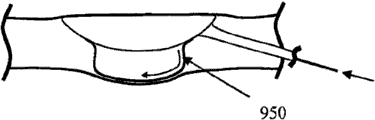
图9R-9U示出可扩展的或其它组织接触构件可以如何用于接触或接合与抽吸构件的基部表面相对的组织,使得可以跨越抽吸构件的基部表面拉伸组织;9R-9U illustrate how an expandable or other tissue contacting member can be used to contact or engage tissue opposite the base surface of the suction member such that the tissue can be stretched across the base surface of the suction member;
图10A-10D示出示例性抽吸构件,其中在抽吸构件之上或者之中具有一个或多个分离的部件(或构造),例如电极、加热元件、传感器、标识器、摄像机等;10A-10D illustrate exemplary suction members with one or more separate components (or configurations) on or in the suction member, such as electrodes, heating elements, sensors, markers, cameras, etc.;
图11A-11D提供长形构件--抽吸构件的附着/连接的示例性变型,详细示出各种合适的附接角;Figures 11A-11D provide an exemplary variation of the attachment/connection of the elongate member-suction member, detailing various suitable attachment angles;
图12A和12B分别以打开和折叠构型示出具有两个抽吸构件的装置的一个变型;Figures 12A and 12B show a variation of a device with two suction members in an open and folded configuration, respectively;
图13A-13M示出用于在组织中或穿过组织形成管道的示例性方法,其中图13G和13H具体示出用于与本文所述方法一起使用的导引线/导引金属丝的适当的远端可扩展特征;13A-13M illustrate an exemplary method for forming a tract in or through tissue, wherein FIGS. 13G and 13H specifically illustrate a suitable guide wire/guide wire for use with the methods described herein. The remote extensibility feature of ;
图13N-13P示出用于检测组织位置或边界的方法的变型;13N-13P illustrate variations of methods for detecting tissue locations or boundaries;
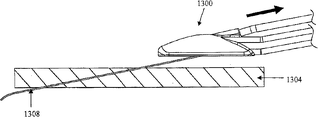
图14A-14C示出用于在组织中或穿过组织形成管道的另一示例性方法,其中所述装置关节式转动以重新导引组织刺穿构件;14A-14C illustrate another exemplary method for forming a tract in or through tissue, wherein the device articulates to redirect a tissue-piercing member;
图15A是本文描述的装置可以如何前进穿过自然的身体腔道并用于在组织中或穿过组织形成管道的总体视图,在该示例中,所述组织是胃;15A is a general view of how a device described herein may be advanced through a natural body orifice and used to form a tract in or through tissue, in this example the stomach;
图15B和15C提供流体输送和收集构型的示例性变型;Figures 15B and 15C provide exemplary variations of fluid delivery and collection configurations;
图15D和15E提供可关节式转动的长形构件的示例性示图;15D and 15E provide exemplary illustrations of articulating elongate members;
图15F和15G示出用于与本文描述的装置一起使用的示例性把手;Figures 15F and 15G illustrate exemplary handles for use with the devices described herein;
图15H和15I示出示例性长形构件的多个部分的示例性横截面视图;15H and 15I illustrate exemplary cross-sectional views of portions of an exemplary elongate member;
图16A-16I示出用于在胃组织中或穿过胃组织形成管道的示例性方法;16A-16I illustrate an exemplary method for forming a tract in or through gastric tissue;
图17A-17D示出根据本文描述的方法接近心脏外围空间的示例性方法;17A-17D illustrate an exemplary method of accessing the peripheral space of the heart according to the methods described herein;
图18A-18K示出用于在心脏组织中或穿过心脏组织形成管道的示例性方法。18A-18K illustrate an exemplary method for forming a tract in or through cardiac tissue.
具体实施方式Detailed ways
这里描述在组织中形成管道的方法和装置。总的来说,这里描述的装置包括一个或多个用于将组织拉引抵靠在其上的抽吸构件,以便于组织刺穿构件前进穿过组织。该装置可具有各种形式并可具有多种附加的或有用的部件,这将在下面详细地描述。该装置可用于形成穿过任何类型的组织的管道。该组织可以是心血管系统、消化系统、呼吸系统、排泄系统、生殖系统、神经系统等的组织。Methods and devices for forming tracts in tissue are described herein. In general, the devices described herein include one or more suction members for drawing tissue against them to facilitate advancement of the tissue-piercing members through the tissue. The device can take various forms and have a variety of additional or useful components, as will be described in detail below. The device can be used to form tracts through any type of tissue. The tissue may be tissue of the cardiovascular system, digestive system, respiratory system, excretory system, reproductive system, nervous system, and the like.
一般来说,当这里描述的装置用于在组织中或穿过组织形成管道时,该管道能够以最少的附加密封作用或没有附加密封作用而自密封,如例如美国专利申请Nos.10/844,247、11/544,196、11/545,272、11/544,365、11/544,177、11/544,149、10/888,682、11/432,982、11/544,317、11/788,509、11/873,957、12/467,251、61/119,316以及61/178,895中所述,这些专利申请中的每一篇都被整体引用在此作为参考。但从本文开头可以理解,通过使用一种或多种附加的封闭机构或技术(例如封闭装置、能量输送、施加压力等),可以对本文描述的装置和方法进行补充。本文还描述了包括一个或多个本文描述的装置连同一个或多个工具的成套用具。现在将描述装置、方法和成套用具的变型。Generally, when the devices described herein are used to form a tract in or through tissue, the tract is capable of self-sealing with minimal or no additional sealing, as described, for example, in U.S. Patent Application Nos. 10/844,247 of /178,895, each of which is hereby incorporated by reference in its entirety. However, it will be understood at the outset that the devices and methods described herein may be supplemented by the use of one or more additional closure mechanisms or techniques (eg, closure devices, energy delivery, application of pressure, etc.). Also described herein are kits comprising one or more devices described herein together with one or more tools. Variations of the devices, methods and kits will now be described.
I.装置I. Device
图1提供用于根据本文描述的方法在组织中形成管道的示例性装置(100)。图中示出联接到长形构件(104)的抽吸构件(102)。长形构件可以是用于将抽吸构件(102)连接到所述装置的近端(未示出)的任何合适的构件。长形构件(104)可以包括用于为所述装置提供附加的部件或控制的一个或多个腔。例如,长形构件(104)可包括用于真空或抽吸的腔(106)、用于在其中容纳组织刺穿构件的腔等。长形构件(104)也可以包括一个或多个腔,以容纳一个或多个拉线(110)、光连接件或电连接件(例如以输送电力、连接传感器、提供显像等)或类似物。Figure 1 provides an exemplary device (100) for forming tracts in tissue according to the methods described herein. Suction member (102) is shown coupled to elongate member (104). The elongate member may be any suitable member for connecting the suction member (102) to the proximal end (not shown) of the device. The elongated member (104) may include one or more lumens for providing additional components or controls for the device. For example, elongated member (104) may include a lumen (106) for vacuum or suction, a lumen for receiving a tissue-piercing member therein, and the like. The elongate member (104) may also include one or more lumens to accommodate one or more pull wires (110), optical or electrical connections (e.g., to deliver power, connect sensors, provide imaging, etc.), or the like .
下面将结合图2A-2F描述合适的腔和长形构件构型的另外的变型。下面将结合方法对近侧控制进行更详细的描述,但应注意,在开头提到近侧控制可包括一个或多个按钮、开关或滑动件,以致动所述装置的一个或多个部件(例如致动组织刺穿构件、致动流体的输送、致动真空、致动能量的输送、致动显像,等)。当然,近侧控制也可以(单独地或与刚才描述的控制相结合地)包括一个或多个阀(例如两通阀或三通阀),以帮助打开或关闭真空、打开或关闭清洗管线,等等。Additional variations of suitable cavity and elongate member configurations are described below in conjunction with FIGS. 2A-2F . The proximal control will be described in more detail below in connection with the method, but it should be noted that the proximal control mentioned at the beginning may include one or more buttons, switches or sliders to actuate one or more components of the device ( For example, actuating a tissue-piercing member, actuating delivery of fluid, actuating vacuum, actuating delivery of energy, actuating visualization, etc.). Of course, the proximal control may also (alone or in combination with the controls just described) include one or more valves (e.g. two-way or three-way valves) to help turn the vacuum on or off, open or close the purge line, etc.
当使用拉线时,该拉线可用于例如帮助有利于所述装置的运动、控制或致动。在图1所示的变型中,拉线(110)用于在区域(112)使抽吸构件(102)关节式转动。区域(112)可包括当与抽吸构件(102)或长形构件(104)的其余部分相比具有减小的厚度或较大柔性的区域。区域(102)可由与抽吸构件或长形构件相同或不同的材料制成。例如,区域(112)可包括与抽吸构件或长形构件相比较软的材料、较薄的材料、柔性更好的材料或其它不同的材料,或者区域(112)可由与抽吸构件或长形构件相同的一般材料制成,其中该材料的一个或多个物理或化学特性变化。区域(112)也可以包括一个或多个接头或铰接件(例如单个或多个柔性接头、回转接头、枢转铰接件、模制塑料活动铰接件、球窝接头、具有相反地对置的挠曲元件的可滑动管件等)。When a pull wire is used, the pull wire may be used, for example, to help facilitate movement, control or actuation of the device. In the variation shown in Figure 1, a pull wire (110) is used to articulate the suction member (102) at region (112). Region (112) may comprise a region of reduced thickness or greater flexibility when compared to the remainder of suction member (102) or elongate member (104). The region (102) may be made of the same or different material as the suction member or elongate member. For example, region (112) may comprise a softer material, a thinner material, a more flexible material, or another different material than the suction member or elongate member, or region (112) may be made of made of the same general material as the shaped member, wherein one or more physical or chemical properties of the material vary. Area (112) may also include one or more joints or hinges (such as single or multiple flexible joints, swivel joints, pivot joints, molded plastic living hinges, ball joints, slidable fittings for curved elements, etc.).
当然,长形构件可由任何合适的生物相容材料制成。例如,长形构件可包括如下材料或由如下材料制成:不锈钢,例如304、304L、316、316L、440C等;钛合金,例如6Al-4V等;镍钛合金(Nitinol);钴铬合金,例如


类似地,抽吸构件可由任何合适的生物相容材料制成。例如,抽吸构件可以包括下列材料或由下列材料制成:不锈钢,例如304、304L、316、316L、440C等;钛合金,例如6Al-4V等;镍钛合金(Nitinol);钴铬合金,例如


抽吸构件或长形构件或抽吸构件与长形构件两者可由一种或多种材料制成,以提供柔性、刚性或任何其它合适的特性。还应该理解,这些构件中的每一个可以使用各种不同的材料,并且可以相应地构造这些构件。例如,抽吸构件(102)可以利用本领域普通技术人员可以理解的包覆成型技术制成具有柔性周边。此外,虽然抽吸构件(102)在图1中被示出为具有大致椭圆形的基部(或组织接触)表面,但应该理解,抽吸构件的基部表面可具有任何合适或想要的几何形状(例如,圆形、矩形、三角形、超环面形等)。当然,所述几何形状不需要对称、一致、规则或可容易地描述。如下面将更详细地描述的一样,抽吸构件(102)也可以包括一个或多个附加的部件(例如,成形表面、电极、传感器、组织附着构件、牵引构件、通路、孔口、摄像机、标识器等)。The suction member or the elongate member or both may be made of one or more materials to provide flexibility, rigidity or any other suitable characteristic. It should also be understood that various materials may be used for each of these components and that the components may be constructed accordingly. For example, the suction member (102) can be made with a flexible perimeter using overmolding techniques that would be understood by those of ordinary skill in the art. Furthermore, while the suction member (102) is shown in FIG. 1 as having a generally elliptical base (or tissue contacting) surface, it should be understood that the base surface of the suction member may have any suitable or desired geometric shape. (eg, circular, rectangular, triangular, toroidal, etc.). Of course, the geometric shapes need not be symmetrical, consistent, regular, or easily describable. As will be described in more detail below, suction member (102) may also include one or more additional components (e.g., shaping surfaces, electrodes, sensors, tissue attachment members, traction members, channels, orifices, cameras, identifier, etc.).
图2A-2D提供合适的装置的示例性示图,详细示出各个合适的抽吸构件--长形构件联结。在图2中示出的是包括抽吸构件(202)和长形部分(204)的装置(200)。在该变型中,长形部分(204)包括各自单独限定一腔的分离的长形体部(206和208)。长形体部(206)可提供用于真空或抽吸的导管,而长形体部(208)可用于将组织刺穿构件可滑动地容纳在其中。在图2A示出的该变型中,长形构件(206和208)(例如通过搭接配合、边缘与边缘配合等)连接或附接到连接器(210),该连接器又连接到抽吸构件(202)。连接器(210)和抽吸构件(202)之间的连接可以任何合适的方式来实现。例如,连接器(210)和抽吸构件(202)可以经由焊接(超声波焊接、热焊接、化学焊接等)、咬合配合、压配合、使用互锁部件、使用一种或多种粘合剂或胶水、使用一种或多种机械部件或固定装置(例如螺钉、夹持件、压接件、铆钉、突出部、螺栓等)而连接。Figures 2A-2D provide exemplary illustrations of suitable devices detailing each suitable suction member-elongate member coupling. Shown in Figure 2 is a device (200) comprising a suction member (202) and an elongate portion (204). In this variation, the elongate portion (204) includes separate elongate bodies (206 and 208) that each individually define a cavity. Elongated body (206) can provide a conduit for vacuum or suction, while elongated body (208) can be used to slidably receive a tissue-piercing member therein. In this variation shown in Figure 2A, the elongate members (206 and 208) are connected or attached (e.g., by a lap fit, edge-to-edge fit, etc.) to a connector (210), which in turn is connected to a suction Component (202). The connection between connector (210) and suction member (202) may be accomplished in any suitable manner. For example, the connector (210) and suction member (202) may be welded (ultrasonic, thermal, chemical, etc.), snap-fit, press-fit, using interlocking components, using one or more adhesives, or Glue, join using one or more mechanical components or fixtures such as screws, clamps, crimps, rivets, tabs, bolts, etc.
图2A中示出的变型可在想要较大柔性的情况下(例如当操纵穿过曲折的解剖组织时)提供特定的效用。应该理解,连接器(210)可以与抽吸构件(202)成一体(即,连接器和抽吸构件可以由单件材料形成),但不是必须如此。还应该理解,虽然图2A中示出的长形体部(206和208)具有大致圆形的横截面,但长形体部可包括具有任何合适几何形状的横截面。The variation shown in Figure 2A may provide particular utility where greater flexibility is desired, such as when maneuvering through tortuous anatomy. It should be understood that the connector (210) may be integral with the suction member (202) (ie, the connector and suction member may be formed from a single piece of material), but need not be. It should also be understood that while the elongated body ( 206 and 208 ) is shown in FIG. 2A as having a generally circular cross-section, the elongated body may include a cross-section having any suitable geometry.
图2B提供用于与本文描述的方法一起使用的装置的可替换的变型。图2B示出的是包括抽吸构件(214)和长形构件(216)的装置(212)。在该变型中,长形构件(216)限定如图2C所示的分离的腔(218,220,222)。在想要附加的柔性的变型中,图2B中的长形构件(216)可具有如上所述的一个或多个波纹形或具有特定断面形状的边缘。Figure 2B provides an alternative variation of a device for use with the methods described herein. Figure 2B shows device (212) comprising suction member (214) and elongate member (216). In this variation, the elongate member (216) defines separate lumens (218, 220, 222) as shown in Figure 2C. In variations where additional flexibility is desired, the elongate member (216) in Figure 2B may have one or more corrugated or profiled edges as described above.
本文描述的任一腔可用于任何合适的目的(例如便于真空或抽吸、输送流体或药物、容纳一个或多个电极、容纳一个或多个拉线、容纳一个或多个组织刺穿构件等)。应该理解,可将多于一个腔用于同一总体目的(例如,两个腔用于容纳两个拉线、两个腔用于输送两种分开的药物等),并且腔可具有任何合适的截面几何形状(相同的或不同的)。还应该理解,单个腔可用于为多于一种功能提供便利(例如,单个腔可容纳拉线(211)并用作用于真空或抽吸的导管,这与上文所述的图2A中示出的变型一样)。所述腔可以是同心的,并可以或可以不限定完整的包围(例如,一个或多个腔可近似为缝或槽)。所述腔也可以在长形构件周围或沿长形构件以各种方式定位。例如,所述腔可以如图2C所示竖直地定位、水平地定位、随机地定位、或沿一平面选择性地定位以帮助为所述装置提供附加的柔性。所述腔可以或可以不根据任何给定的型式定位。Any of the lumens described herein may be used for any suitable purpose (e.g., to facilitate vacuum or suction, to deliver fluids or drugs, to accommodate one or more electrodes, to accommodate one or more pull wires, to accommodate one or more tissue-piercing members, etc.) . It should be understood that more than one lumen may be used for the same general purpose (e.g., two lumens to accommodate two pull wires, two lumens to deliver two separate drugs, etc.), and that the lumens may have any suitable cross-sectional geometry shape (same or different). It should also be understood that a single lumen can be used to facilitate more than one function (e.g., a single lumen can house a pull wire (211) and serve as a conduit for vacuum or suction, unlike that shown in Figure 2A described above same variant). The lumens may be concentric and may or may not define a complete enclosure (eg, one or more lumens may approximate a slot or slot). The cavities may also be positioned in various ways around or along the elongate member. For example, the cavities may be positioned vertically as shown in Figure 2C, positioned horizontally, randomly positioned, or selectively positioned along a plane to help provide additional flexibility to the device. The cavities may or may not be positioned according to any given pattern.
图2D示出与图2B的装置类似的装置(224),不同之处在于长形构件(228)经由连接器(230)连接到抽吸构件(226)。图2E示出沿线B-B截取的装置(224)的横截面示图。图中示出的腔(232,234,236)可具有上文刚描述的任何特点或特性。当想要具有刚性和/或扭转能力的装置时,图2B和2D中示出的变型可具有特定的效用。Figure 2D shows a device (224) similar to that of Figure 2B, except that the elongate member (228) is connected to the suction member (226) via a connector (230). Figure 2E shows a cross-sectional view of the device (224) taken along line B-B. The cavities (232, 234, 236) shown in the figures may have any of the features or characteristics described immediately above. The variations shown in Figures 2B and 2D may be of particular utility when a device with rigidity and/or torsion capability is desired.
图2F提供一种装置的视图,该装置既具有成一体的腔又具有用于真空的分离的连接器。在此示出的是包括抽吸构件(240)、长形构件(242)和真空软管或连接器(244)的装置(238)。在该变型中,组织刺穿构件构造成退到抽吸构件(240)中,这将在下文更详细地讨论。因此,长形构件的基部表面不需要延伸超过抽吸构件的基部表面。这是有用的,例如因为这可以为所述装置提供减小的轮廓,并可以帮助防止与组织的不想要的可能的干涉。Figure 2F provides a view of a device with both an integral lumen and a separate connector for vacuum. Shown here is device (238) comprising suction member (240), elongate member (242) and vacuum hose or connector (244). In this variation, tissue-piercing member is configured to retract into suction member (240), as will be discussed in more detail below. Thus, the base surface of the elongated member need not extend beyond the base surface of the suction member. This is useful, for example, because it can provide the device with a reduced profile and can help prevent unwanted possible interference with tissue.
图3A和3B提供分别处于未折曲状态和折曲状态的示例性装置的示图。所述装置的柔性和关节式转动以及组织刺穿构件的重新定向/改变方向将结合方法在下面更详细地讨论。图3A和3B示出的是包括抽吸构件(302)和长形构件(304)的装置(300)。在两幅图中,沿近侧部分被去除长形构件(304)的一部分,以便于说明。如图中所示,长形构件将组织刺穿构件(306)可滑动地容纳于其中(例如在由长形构件限定的腔中)。在图3A中,所述装置示出为处于已致动但未折曲的样子(即,组织刺穿构件已前进到出口(308)之外,但还没有折曲)。3A and 3B provide illustrations of an exemplary device in an unflexed state and a flexed state, respectively. The flexibility and articulation of the device and the reorientation/redirection of the tissue-piercing member are discussed in more detail below in connection with the method. Figures 3A and 3B illustrate a device (300) comprising a suction member (302) and an elongate member (304). In both figures, a portion of elongate member (304) has been removed along the proximal portion for ease of illustration. As shown, the elongate member slidably receives tissue-piercing member (306) therein (eg, within a lumen defined by the elongate member). In FIG. 3A, the device is shown in an actuated but undeflected state (ie, the tissue-piercing member has advanced beyond the outlet ( 308 ), but has not yet deflected).
由抽吸构件(302)的基部表面和组织刺穿构件(306)限定的起始(即未折曲或未关节式转动的)角(A)可以是任何合适的角。例如,该角可以从约0°至约180°、从约0°至约90°、从约90°至约180°、从约0°至约60°、从约0°至约30°、从约3°至约10°、约5°,等等。The initial (ie, non-flexed or non-articulated) angle (A) defined by the base surface of suction member (302) and tissue-piercing member (306) may be any suitable angle. For example, the angle can be from about 0° to about 180°, from about 0° to about 90°, from about 90° to about 180°, from about 0° to about 60°, from about 0° to about 30°, From about 3° to about 10°, about 5°, etc.
图3B示出已朝近侧拉动拉线(310)使得在区域(312)产生折曲后的装置(300)。在图3B示出的变型中,当组织刺穿构件的腔向下偏转时,所述装置的折曲改变了由抽吸构件(302)的基部表面和组织刺穿构件(306)限定的角(A)(例如增大或减小该角)。图3A和3B中示出的组织刺穿构件是形成有斜面的针状件,但组织刺穿构件并非必须是针状件(例如组织刺穿构件可以是线、能量输送装置等)。在变型中,在组织刺穿构件是针状件时,针状件可以是实心的或空心的,可以具有两个或更多同心的针状件构件,可以具有斜面或不具有斜面,并且可以是尖头的、锋利的或粗钝的。当使用针状件时,针状件梢端可具有任何合适的几何形状,例如锥形、偏锥形、被修圆的形状,等等。组织刺穿构件可以由一个或多个拉线分别地、分离地或单独地铰接。当然,在组织刺穿构件容纳在长形构件等的一个或多个腔中的情况下,组织刺穿构件可以在使用前进行消毒并保持无菌。FIG. 3B shows device ( 300 ) after pull wire ( 310 ) has been pulled proximally, creating a bend at region ( 312 ). In the variation shown in FIG. 3B, flexing of the device changes the angle defined by the base surface of suction member (302) and tissue-piercing member (306) as the lumen of the tissue-piercing member deflects downward. (A) (eg increase or decrease the angle). The tissue-piercing members shown in FIGS. 3A and 3B are beveled needles, although the tissue-piercing members need not be needles (eg, the tissue-piercing members can be wires, energy delivery devices, etc.). In variations, where the tissue-piercing member is a needle, the needle may be solid or hollow, may have two or more concentric needle members, may have a bevel or no bevel, and may Is pointed, sharp or blunt. When a needle is used, the needle tip may have any suitable geometric shape, such as tapered, partial tapered, rounded, etc. shape. The tissue-piercing members may be separately, separately or individually hinged by one or more pull wires. Of course, where the tissue-piercing member is housed in one or more lumens of an elongate member or the like, the tissue-piercing member may be sterilized and kept sterile prior to use.
还应该理解,虽然图3A和3B中示出的组织刺穿构件的腔在邻近抽吸构件(302)的位置离开,但所述腔可以退到抽吸构件(302)中或穿过该抽吸构件离开,这将在下文详细描述。当然,长形构件可包括任何数量的孔口(例如,用于多个组织刺穿构件、用于另外的工具,等),该孔口又可以连接到一个或多个腔。It should also be understood that although the lumen of the tissue-piercing member shown in FIGS. 3A and 3B exits adjacent to the suction member (302), the lumen may be retracted into the suction member (302) or pass through the suction member (302). The suction member leaves, which will be described in detail below. Of course, the elongate member may include any number of apertures (eg, for multiple tissue-piercing members, for additional tools, etc.), which in turn may be connected to one or more lumens.
图4-10示出用于与本文描述的装置和方法一起使用的合适的抽吸构件的示例性变型。这些图提供抽吸构件的下侧的视图。从图4A和4B开始,抽吸构件(400)被示出为具有一个或多个组织附着构件。在该变型中,组织附着构件包括一个或多个连接到周边肋或边界肋(404)的结合肋(402)。应该理解,虽然示出连接到周边肋(404)的四个肋(402),但可使用任何数量的肋(例如,0,1,2,3,4,5,直至很大数量的肋),这可以从下文清楚地看出。事实上,在一些变型中,抽吸构件仅具有周边肋或边界肋,所述周边肋或边界肋未与任何其它肋结合或未连接到任何其它肋。在其它变型中,抽吸构件仅具有周边肋或边界肋以及与其连接的(横向或纵向定位的)单个中央肋。4-10 illustrate exemplary variations of suitable suction members for use with the devices and methods described herein. These figures provide a view of the underside of the suction member. Beginning with Figures 4A and 4B, suction member (400) is shown having one or more tissue attachment members. In this variation, the tissue attachment member includes one or more bonding ribs (402) connected to peripheral or boundary ribs (404). It should be understood that while four ribs (402) connected to peripheral ribs (404) are shown, any number of ribs (e.g., 0, 1, 2, 3, 4, 5, up to a very large number of ribs) may be used , which can be clearly seen below. In fact, in some variations, the suction member has only peripheral or boundary ribs that are not bonded or connected to any other ribs. In other variants, the suction member has only a peripheral or border rib and a single central rib (transversely or longitudinally positioned) connected thereto.
周边肋和结合肋不需要是单独的构件(即,整个组织附着构件可以由单件材料形成)。在一些情况下,如图4A所示并且在图4B中更详细地示出的一样,无论组织附着构件是由单件材料形成还是通过连接超过一个构件而形成,都希望在周边肋和结合肋连接的位置提供一个或多个凹部(406)。这例如可以是希望的,以便通过提供与组织的更大接触表面而沿抽吸构件的基部表面提供更好的真空密封。这又可以使所述密封较不容易被组织运动破坏。The peripheral ribs and bonding ribs need not be separate members (ie, the entire tissue attachment member can be formed from a single piece of material). In some cases, as shown in Figure 4A and shown in more detail in Figure 4B, whether the tissue attachment member is formed from a single piece of material or by joining more than one The location of the connection provides one or more recesses (406). This may be desirable, for example, to provide a better vacuum seal along the base surface of the suction member by providing a greater contact surface with tissue. This in turn can make the seal less susceptible to disruption by tissue movement.
所述肋可例如用于将组织保持成与真空孔口(在图4中示出为(408))相距一定距离,以帮助防止组织堵住那些孔口,并帮助促进真空的均匀分配(这又在组织附着中提供更好的一致性)。所述肋也可以帮助为抽吸构件提供横向牵引,因为所述肋的边界形成组织可以进入的分离的区域。可选择所述肋的数量和几何形状,以根据需要实现较大或较小的牵引。当本文描述的方法和装置与非常软的、顺应的或薄的组织(例如肠组织)一起使用时,可能想要更多数量的肋。The ribs can be used, for example, to hold tissue a distance from the vacuum ports (shown as (408) in FIG. 4 ) to help prevent tissue from plugging those ports and to help promote even distribution of the vacuum (which in turn provides better consistency in tissue attachment). The ribs can also help provide lateral traction to the suction member, as the rib borders form a separate area into which tissue can enter. The number and geometry of the ribs can be selected to achieve greater or lesser traction as desired. Higher numbers of ribs may be desired when the methods and devices described herein are used with very soft, compliant or thin tissue, such as intestinal tissue.
图4A和4B还示出长形构件(412)中的腔(410)。腔(410)例如可用于将组织刺穿构件可滑动地容纳在其中。当然,所述腔也可以用于前文描述的任何目的。Figures 4A and 4B also illustrate cavity (410) in elongate member (412). Lumen (410) may be used, for example, to slidably receive a tissue-piercing member therein. Of course, the cavity can also be used for any of the purposes described above.
图5示出抽吸构件(500)的视图,该抽吸构件具有连接到周边肋(504)的八个肋(502),从而形成大致星形的构型。图6提供抽吸构件(600)的视图,该抽吸构件具有连接到周边肋(604)的四个肋(602)。在此示出的变型中,设有覆盖抽吸孔口的网或筛(606)。这样,可防止组织进入和堵塞孔口。虽然图6所示的筛网(606)定位成紧邻抽吸孔口,但该筛网可以安放在距离孔口任何合适距离的位置。也就是说,筛网(606)可位于抽吸构件内任何深度处,该深度可按需要选择,例如用以实现组织牵引。Figure 5 shows a view of a suction member (500) having eight ribs (502) connected to peripheral ribs (504), forming a generally star-shaped configuration. Figure 6 provides a view of a suction member (600) having four ribs (602) connected to peripheral ribs (604). In the variant shown here, there is a mesh or screen (606) covering the suction aperture. In this way, tissue is prevented from entering and blocking the orifice. Although the screen (606) shown in Figure 6 is positioned proximate to the suction orifice, the screen may be placed at any suitable distance from the orifice. That is, the screen (606) may be located at any depth within the suction member, the depth being selected as desired, eg, to achieve tissue traction.
图7A提供抽吸构件(700)的另一变型,在该变型中,该抽吸构件具有四个结合肋(702)、一个圆形中央肋(706)、以及周边肋(704)。当然,圆形中央肋(706)自身可以由几个肋组成,或者除了整个组织附着构件外,圆形中央肋也可以由单件材料制成。应该清楚,虽然在图7A中示出圆形中央肋(706),但中央肋构件可使用任何肋的几何形状。事实上,应该清楚,可根据需要使用任何数量和几何形状(宽度、长度、深度、形状等)的肋,并且这些肋可以单独或一体形成。Figure 7A provides another variation of the suction member (700) in which the suction member has four binding ribs (702), a circular central rib (706), and peripheral ribs (704). Of course, the circular central rib (706) could itself consist of several ribs, or it could be made from a single piece of material in addition to the entire tissue attachment member. It should be clear that while a circular central rib (706) is shown in Figure 7A, any rib geometry may be used for the central rib member. In fact, it should be clear that any number and geometry (width, length, depth, shape, etc.) of ribs may be used as desired, and that the ribs may be formed individually or integrally.
所述肋可以由任何合适的生物相容材料或材料的组合制成。例如,所述肋可以由如下材料制成:不锈钢,例如304、304L、316、316L、440C等;钛合金,例如6A1-4V等;镍钛合金(Nitinol);钴铬合金,例如(Elgiloy Specialty Metals,Elgin,伊利诺斯州),


所述肋也可以包括或具有位于其上的一个或多个分离的构件或部件,这将在下文更详细地描述。结合肋或周边肋也可以是可折叠的、可动的、或可关节式转动的,以提供抽吸构件沿组织的更大的可操纵性,或使得在已制造真空后能够抓住组织。例如,周边肋可以是可折叠的或可向内变形,以将组织捕获在其边缘之间,如图7B和7C所示。在该变型中,在推动线/金属丝(708)后,周边肋(707)向内折叠或变形。当然,周边肋(707)也可以通过其它机构(例如拉线、形状记忆致动等)变形。另外,虽然图7B和7C示出周边肋(707)变形成细长型式的变型,但周边肋也可以横向方式或沿径向向内的方式变形。The rib may also include or have one or more separate members or components thereon, as will be described in more detail below. The binding or peripheral ribs may also be foldable, movable, or articulating to provide greater maneuverability of the suction member along tissue, or to enable grasping of tissue after a vacuum has been created. For example, the peripheral ribs may be foldable or deformable inwardly to capture tissue between their edges, as shown in Figures 7B and 7C. In this variation, upon pushing the wire/wire (708), the peripheral ribs (707) fold or deform inwardly. Of course, the peripheral rib (707) can also be deformed by other mechanisms (eg, pull wires, shape memory actuation, etc.). Additionally, while Figures 7B and 7C show a variation in which the peripheral rib (707) is deformed into an elongated form, the peripheral rib may also be deformed in a transverse manner or in a radially inward manner.
图7D示出具有夹钳(712)的抽吸构件(710)的变型。一个或两个夹钳可以是可致动的,并且夹钳可以任何合适的方式(例如拉线等)被致动。该变型可用于在真空已将组织拉入抽吸构件的凹穴后捕获或夹持组织。虽然在此示出夹钳,但可使用任何合适类型的夹持或抓持机构。当然,本文描述的任何抽吸构件可具有任何数量的夹持或抓持机构。图7E是与图7D类似的变型,但是这里具有针状件(714)以刺破并保持组织,而不是夹钳(712)。Figure 7D shows a variation of the suction member (710) with a clamp (712). One or both clamps may be actuatable, and the clamps may be actuated in any suitable manner (eg, pull wire, etc.). This variation can be used to capture or clamp tissue after the vacuum has drawn the tissue into the pocket of the suction member. While clamps are shown here, any suitable type of clamping or gripping mechanism may be used. Of course, any suction member described herein may have any number of gripping or gripping mechanisms. Figure 7E is a similar variation to Figure 7D, but here instead of clamps (712) there is a needle (714) to pierce and hold tissue.
图8A和8B提供当组织刺穿构件退到抽吸构件中或穿过抽吸构件离开时组织刺穿构件的部署的视图。也就是说,与上文描述的组织刺穿构件退到紧邻抽吸构件的装置相比,图8A和8B中示出的组织刺穿构件退到抽吸构件自身中。当然,应该理解(虽然在图8A和8B中未示出),长形构件可在紧邻抽吸构件的位置包括或限定一个或多个孔口,所述孔口用于与组织刺穿构件不相关的一个或多个目的,如上文所述。图8A所示的是包括抽吸构件(802)和长形构件(804)的装置(800)。如上所述,在该变型中,组织刺穿构件(806)退到抽吸构件(802)中。图8B示出被进一步地展开的组织刺穿构件(806)。这例如可以通过使用一个或多个拉线或其它控制装置来实现,或由使用者使组织刺穿构件(806)朝远侧前进而手动地实现。8A and 8B provide views of the deployment of the tissue-piercing member as it retracts into or exits through the suction member. That is, the tissue-piercing member shown in FIGS. 8A and 8B retracts into the suction member itself, as compared to the devices described above in which the tissue-piercing member retracts into close proximity to the suction member. Of course, it should be understood (although not shown in FIGS. 8A and 8B ) that the elongate member may include or define one or more apertures in close proximity to the suction member for incompatibility with the tissue-piercing member. Relevant one or more purposes, as described above. Shown in Figure 8A is a device (800) comprising a suction member (802) and an elongate member (804). As noted above, in this variation, tissue-piercing member (806) is retracted into suction member (802). Figure 8B shows tissue-piercing member (806) being further deployed. This can be accomplished, for example, through the use of one or more pull wires or other control devices, or manually by the user advancing tissue-piercing member (806) distally.
图8C示出抽吸构件(810)的另一变型,其中组织刺穿构件(812)退到抽吸构件的凹穴内。具有该构型的装置可在该装置沿组织运动时帮助促进组织牵引。在该构型中,抽吸构件(810)为大致环面形或大致超环面形并限定中央开口或孔(814)。该变型的抽吸构件(810)包括两个超环面形的凹穴(816,818),这两个凹穴可具有相同或不同的高度或深度,并可独立地构造,以允许一定体积的组织容纳于其中。该变型的装置还包括经由开口或导管连接到内真空孔口(822)的主真空孔口(820)。这样,可便于在两个超环面形凹穴(816,818)附近进行抽吸。当然,抽吸构件(810)可包括安放在任何合适的位置的任何数量的合适的真空或抽吸孔口,如前所述。重要的是,抽吸构件的超环面形状仅仅是可与本文描述的装置一起使用的形状中的一种。如本文全文所述,抽吸构件可具有任何合适的几何形状。Fig. 8C shows another variation of suction member (810) in which tissue-piercing member (812) is retracted into a pocket of the suction member. A device having this configuration can help facilitate tissue traction as the device is moved along tissue. In this configuration, suction member (810) is generally toroidal or generally toroidal in shape and defines a central opening or bore (814). This variant of the suction member (810) includes two toroidal shaped pockets (816, 818) which may be of the same or different height or depth and which may be independently configured to allow volume organization contained in it. The device of this variation also includes a main vacuum port (820) connected to an inner vacuum port (822) via an opening or conduit. In this way, suction near the two toroidal pockets (816, 818) is facilitated. Of course, the suction member (810) may include any number of suitable vacuum or suction orifices disposed in any suitable location, as previously described. Importantly, the toroidal shape of the suction member is only one of the shapes that may be used with the devices described herein. As described throughout, the suction member may have any suitable geometry.
图9A和9B类似于图8A和8B,不同之处在于图9A和9B的装置(900)包括具有位于其上的一个或多个牵引构件(904)的组织附着构件(902)。这可用于例如增加组织附着和牵引而不需要改变肋的数量或特别地选择肋的几何形状,并且在组织刺穿构件的展开过程中特别有用和有帮助。牵引构件本身可具有任何合适的几何形状、尺寸或构型,并可由任何合适的材料制成或被任何合适的材料包覆。在例如图9C-9F中示出了示例性的牵引构件。任何牵引构件可具有一个或多个孔口、腔或孔,以将制剂或流体输送通过所述孔口、腔或孔。这样,牵引构件可附加地用于局部输送药物(例如用于局部消毒目的的抗生素等),或用于清洗邻近牵引构件和/或抽吸构件的组织。应理解,虽然图9A和9B中示出的抽吸构件仅具有位于结合肋上的牵引构件,但应理解,牵引构件也可以任何合适的定位或式样沿周边肋安放或安放在周边肋附近。Figures 9A and 9B are similar to Figures 8A and 8B, except that the device (900) of Figures 9A and 9B includes a tissue attachment member (902) having one or more traction members (904) thereon. This can be used, for example, to increase tissue attachment and traction without changing the number of ribs or specifically selecting the geometry of the ribs, and is particularly useful and helpful during deployment of the tissue-piercing member. The traction member itself may have any suitable geometry, size or configuration, and may be made of or sheathed by any suitable material. Exemplary traction members are shown, for example, in Figures 9C-9F. Any traction member may have one or more orifices, lumens or holes through which to deliver formulation or fluid. In this way, the pulling member may additionally be used for local delivery of medicaments (such as antibiotics for local disinfection purposes, etc.), or for washing tissue adjacent to the pulling member and/or the suction member. It should be understood that while the suction members shown in Figures 9A and 9B have only traction members on the joining ribs, it should be understood that the traction members may also be positioned along or near the peripheral ribs in any suitable location or pattern.
图9G和9H示出组织抽吸构件(910)的替代变型,在该变型中,该组织抽吸构件具有带齿部(913)的脊部(912)。在该变型中还示出组织刺穿构件出口(914,图9G)和前进到组织刺穿构件出口(914)以外的组织刺穿构件(916,图9H)。在该变型中,当施加抽吸作用时,组织可在脊部(912)周围和/或下方叠起,如图9I所示(这里示出为具有两个组织层920、922)。这样,可提高对组织的牵引和抓持,因为齿部(913)的边缘提供曲折路径以便于组织越过,同时可减小对抽吸孔口的阻塞,如上所述。该变型在所述装置用于易滑脱、无定形、粘液性、或其它难以操纵的组织时特别有用。另外,与本文全文描述的具有齿部的所有变型一样,齿部(913)可以任何合适的方式取向。例如,齿部(913)可以沿与组织刺穿构件前进进入组织的方向相反的方向取向。在抽吸构件的外缘边和脊部(912)之间具有间隔(918)可帮助进一步增加组织在脊部(912)周围折叠的能力,并通过在正常量的操纵(或处理)期间减小对组织的破坏而进一步增加真空密封的牢固性,否则这种破坏可能导致真空泄漏。Figures 9G and 9H show an alternative variation of the tissue suction member (910) in which the tissue suction member has a spine (912) with teeth (913). Also shown in this variation is tissue-piercing member outlet (914, FIG. 9G) and tissue-piercing member (916, FIG. 9H) advanced beyond tissue-piercing member outlet (914). In this variation, when suction is applied, tissue may fold around and/or under spine (912), as shown in Figure 9I (shown here with two
可改变脊部(912)的取向和/或几何形状,以在抽吸构件的凹穴中实现较多或较少的组织捕获。类似地,可根据需要改变齿部的数量和几何形状(长度、宽度、形状等),以影响组织捕获。例如,脊部可包括一个齿部、两个齿部、四个齿部、六个齿部、或甚至更多齿部,这些齿部可向内或向外偏置/偏移,并可具有任何合适的形状。齿部(913)不需要由与脊部(912)相同的材料制成,并且齿部可以或可以不与脊部(912)在同一平面上。脊部(912)可以如图9G和9H中总的示出的一样由材料的单件模制材料制成,或者可以由单独的材料块制成,然后夹持、焊接、粘合、或以其它方式紧固或固定到抽吸构件。当然,脊部可以由任何生物相容的材料(例如不锈钢、塑料、材料的组合等)制成。The orientation and/or geometry of ridges (912) can be varied to achieve more or less tissue capture in the pockets of the suction member. Similarly, the number and geometry (length, width, shape, etc.) of the teeth can be varied as desired to affect tissue capture. For example, the spine may include one tooth, two teeth, four teeth, six teeth, or even more teeth, which may be biased/offset inwardly or outwardly, and may have any suitable shape. The teeth (913) need not be made of the same material as the spine (912), and the teeth may or may not be on the same plane as the spine (912). The spine (912) can be made from a single piece of molded material as generally shown in FIGS. Fastened or secured to the suction member by other means. Of course, the spine can be made of any biocompatible material (eg, stainless steel, plastic, combinations of materials, etc.).
当然,当脊部与本文描述的抽吸构件结合使用时,它们可以是可关节式转动的、可控的、可倾斜的、可脱离接合的、或以其它方式可动的。例如,图9J和图9K示出在抽吸构件凹穴中可关节式转动或可旋转的脊部(912′)的一个变型。这样,齿部(913′)与组织脱离接合(图9K中示出),这可帮助抽吸构件释放已被捕获到其中的组织。这在例如试图去除、收回或重新定位所述装置时是有用的。例如,在一些变型中,在脊部(912′)已旋转到抽吸构件的凹穴中后可保持真空或抽吸,使得所述装置可以近似沿组织表面转移。一旦所述装置已前进到第二位置,脊部(912′)可以被重新部署或往回旋转到其原始位置,以“锁定”到捕获的组织上或组织中、或以其它方式接合捕获的组织。脊部(912′)可以任何合适的方式被致动、被驱动旋转或以其它方式被控制。例如,一个或多个推--拉线、与拉线联合的在铰接轴线附近作用的弹性件(弹簧)、气动或液力致动等。当然,本文描述的可旋转脊部仅是合适的脊部的一个变型。如本文全文所述,具有本文描述的任何特点的任何可动脊部可用于本文描述的装置和方法。在下面的图9N中描述了可动脊部的一个特殊的替代变型。Of course, when spines are used in conjunction with the suction members described herein, they may be articulable, controllable, tiltable, disengageable, or otherwise movable. For example, Figures 9J and 9K illustrate one variation of an articulatable or rotatable spine (912') in the suction member pocket. In this way, the teeth (913') are disengaged from the tissue (shown in Figure 9K), which can assist the suction member to release tissue that has become trapped therein. This is useful, for example, when attempting to remove, retrieve or reposition the device. For example, in some variations, vacuum or suction may be maintained after the spine (912') has been rotated into the pocket of the suction member so that the device may be transferred approximately along the tissue surface. Once the device has been advanced to the second position, the spine (912') can be redeployed or rotated back to its original position to "lock" onto or into the captured tissue, or otherwise engage the captured tissue. organize. Spine (912') may be actuated, driven to rotate, or otherwise controlled in any suitable manner. For example, one or more push-pull wires, elastic members (springs) acting near the axis of articulation associated with pull wires, pneumatic or hydraulic actuation, etc. Of course, the rotatable spine described herein is only one variation of a suitable spine. As described throughout, any movable spine having any of the features described herein may be used in the devices and methods described herein. A particular alternative variation of the movable ridge is depicted in Figure 9N below.
图9L示出具有脊部(926)的抽吸构件(924)的另一变型,该脊部上具有一个或多个齿部(928),抽吸构件(924)中具有一个或多个通路(930)。图9M提供图9L的装置沿线A-A截取的横截面视图。该变型与上文刚描述的图9G的变型类似地起作用,另外还具有通路。该通路可例如用于促进(或输送和/或分配)真空或抽吸、或者流体的输送或收集,这将在下文结合图15B和15C进行描述。当然,所述通路(930)可与沿抽吸构件定位或定位在抽吸构件中的一个或多个孔口结合使用,以提供对一种或多种有用的(例如治疗、消毒、清洗等)流体的输送,如本文全文描述的一样。图9N示出抽吸构件(932)的又一变型,在该变型中该抽吸构件具有一个或多个可动脊部构件(934)以助于捕获组织。与上文刚描述的装置一样,构件(934)可具有任何数量的齿部(936)、可具有任何合适的几何形状、并且可以由任何合适的材料制成。Figure 9L shows another variation of a suction member (924) having a ridge (926) with one or more teeth (928) thereon and one or more channels in the suction member (924) (930). Figure 9M provides a cross-sectional view of the device of Figure 9L taken along line A-A. This variation functions similarly to the variation of Figure 9G described immediately above, with the addition of vias. This pathway can be used, for example, to facilitate (or deliver and/or distribute) vacuum or suction, or delivery or collection of fluids, as will be described below in connection with Figures 15B and 15C. Of course, the passageway (930) may be used in conjunction with one or more apertures positioned along or in the suction member to provide one or more useful (e.g., treatment, disinfection, cleaning, etc.) ) delivery of the fluid, as described throughout. Figure 9N shows yet another variation of the suction member (932) in which the suction member has one or more movable spine members (934) to assist in capturing tissue. As with the device described immediately above, member (934) may have any number of teeth (936), may have any suitable geometry, and may be made of any suitable material.
图9O-9Q示出合适的抽吸构件的另一变型,在该变型中,该抽吸构件具有一个或多个孔或窗口,以将组织捕获成靠着该孔或窗口。具体而言,图9O示出抽吸构件(940)的基部表面,其中该基部表面限定一系列孔或窗口(942)。在该变型中设有四个孔,但可使用任何合适数量的孔,并且这些孔可具有任何几何形状并在基部表面附近以任何方式取向。图9O还示出臂件(944),该臂件在铰接时会将组织拉引抵靠在一个或多个孔的壁(945)上,由此捕获组织。该变型在希望捕获或接纳额外的组织时特别有用。该变型在与薄的组织或管状器官的组织等一起使用时也特别有用。图9P和9Q是图9O的抽吸构件沿线A-A截取的横截面视图,其中臂件分别处于初始状态和致动状态。如这些附图所示,当朝近侧收回推--拉线(946)时,臂件(944)朝近侧运动并将组织拉引抵靠在孔(942)的一个或多个壁(945)上。当然,推--拉线(946)仅是致动臂件(944)的一种方式。可使用任何合适的致动机构。一旦以这种方式捕获组织,可使组织刺穿构件(未示出)沿与施加在被捕获的组织上的牵拉力相同或相反的方向前进穿过组织。Figures 9O-9Q illustrate another variation of a suitable suction member in which the suction member has one or more holes or windows to capture tissue against. In particular, Figure 90 shows the base surface of the suction member (940), where the base surface defines a series of holes or windows (942). In this variation there are four holes, but any suitable number of holes may be used, and the holes may have any geometry and be oriented in any way about the surface of the base. FIG. 9O also shows arm (944) which, when articulated, will draw tissue against the walls (945) of one or more holes, thereby capturing the tissue. This variant is particularly useful when it is desired to capture or accommodate additional tissue. This variant is also particularly useful when used with thin tissue or tissue of tubular organs and the like. Figures 9P and 9Q are cross-sectional views of the suction member of Figure 9O taken along line A-A with the arms in an initial state and an actuated state, respectively. As shown in these figures, when push-pull wire (946) is withdrawn proximally, arm (944) moves proximally and draws tissue against one or more walls (945) of aperture (942) )superior. Of course, the push-pull wire (946) is only one way of actuating the arm (944). Any suitable actuation mechanism may be used. Once tissue is captured in this manner, a tissue-piercing member (not shown) can be advanced through the tissue in the same or opposite direction as the pulling force applied to the captured tissue.
图9R-9U示出接纳额外组织的各种可选方法,与上文刚描述的变型一样,这些变型在处理薄的组织、管状或小几何形状的器官的组织等时特别有用。通常,在这些变型中,致动或触发可扩展/可膨胀构件或其它组织接触构件,使得这些构件在与抽吸构件的基部表面相对的位置靠接组织、接触组织、或置于组织附近/与组织并列。这样,额外的组织被移位,目标组织跨越抽吸构件的基部表面被抓住并张紧,从而产生更好的组织捕获。图9R和9S所示的变型是分别处于未扩展状态和扩展状态的可扩展构件(948)。可扩展构件(948)可以是任何合适的可扩展构件。例如,该可扩展构件可以是可以任何合适的方式(例如加压的生理盐水、水、空气等)膨胀的囊、可扩展的聚合物构件等。图9T示出可扩展的或可关节式转动的构件的另一变型,在该变型中,该可扩展的或可关节式转动的构件被示出为可扩展的线/金属丝或支撑件(950)。该线可由任何合适的材料制成。图9U示出可关节式转动构件的又一变型,在该变型中,该可关节式转动构件是可旋转的或可关节式转动的臂件(952)。同样,该臂件(952)可由任何合适的材料制成。Figures 9R-9U illustrate various alternative methods of admitting additional tissue, which, like the variants described immediately above, are particularly useful when dealing with thin tissue, tissue of tubular or small geometry organs, and the like. Typically, in these variations, an expandable/expandable member or other tissue contacting member is actuated or triggered such that the member abuts, contacts, or is placed near/near tissue at a location opposite the base surface of the suction member. aligned with the organization. In this way, additional tissue is displaced and target tissue is grasped and tensioned across the base surface of the suction member, resulting in better tissue capture. The variant shown in Figures 9R and 9S is an expandable member (948) in an unexpanded and expanded state, respectively. Expandable member (948) may be any suitable expandable member. For example, the expandable member may be a balloon expandable in any suitable manner (eg, pressurized saline, water, air, etc.), an expandable polymeric member, or the like. Figure 9T shows another variation of an expandable or articulating member, in which the expandable or articulating member is shown as an expandable wire/wire or support ( 950). The wire can be made of any suitable material. Figure 9U shows yet another variation of an articulatable member in which the articulable member is a rotatable or articulating arm (952). Likewise, the arm (952) may be made of any suitable material.
图10A-10D提供抽吸构件的另外的变型。图10A示出抽吸构件(1000)的内侧,其中抽吸构件示出为具有许多分离的部件(1002)。部件(1002)可以是一个或多个加热元件、一个或多个电极(例如用以输送能量如RF、超声波、光、磁、上述能量形式的组合等)、一个或多个传感器(例如多普勒仪传感器、压力传感器、温度传感器等)、有助于显像的不透辐射的一个或多个标识器、有助于直接显像的摄像机、一个或多个孔口等。所述部件可以根据预定型式安放、或者沿着或围绕抽吸构件或其组织附着构件随机安放。所述部件之间的间隔可以一致,如图10A所示,但不是必须如此。类似地,所述部件不必具有一致的尺寸或形状。可以使用这些部件的任何数量和组合。Figures 10A-10D provide additional variations of suction members. Figure 10A shows the inside of a suction member (1000) shown with a number of separate components (1002). Component (1002) may be one or more heating elements, one or more electrodes (e.g., to deliver energy such as RF, ultrasonic, optical, magnetic, combinations of the above, etc.), one or more sensors (e.g., Doppler sensor, pressure sensor, temperature sensor, etc.), one or more radiopaque markers to facilitate visualization, a camera to facilitate direct visualization, one or more apertures, etc. The components may be placed according to a predetermined pattern, or placed randomly along or around the suction member or its tissue attachment member. The spacing between the components can be uniform, as shown in Figure 10A, but need not be. Similarly, the components need not be of uniform size or shape. Any number and combination of these components can be used.
当然,虽然在该变型中将摄像机描述成可使用的部件,但应理解,具有或不具有相应的光源或照明源的摄像机可以安放在所述装置的任何合适的位置,以便于组织的直接显像(例如位于沿长形构件的位置)。这在所述装置用作独立的装置、并且该装置不通过对工作区域进行显像的内窥镜、胃窥镜或其它类似的带外壳结构引入时特别有用。下面对本文描述的装置单独地或与带外壳的结构相结合的使用方法进行更详细的描述。Of course, while a camera is described as a usable component in this variation, it should be understood that a camera, with or without a corresponding light source or illumination source, could be placed at any suitable location on the device to facilitate direct visualization of tissue. Like (for example, located along the position of the elongated member). This is particularly useful when the device is used as a stand-alone device and the device is not introduced through an endoscope, gastroscope or other similar housing structure that visualizes the working area. Methods of using the devices described herein alone or in combination with housing structures are described in more detail below.
图10B示出装置(1004),除了图10B的装置(1004)具有附加的周边部件(1008)之外,该装置(1004)与图10A的装置(1000)类似。周边部件(1008)可以是上文刚刚描述的部件中的任一种,例如加热元件、电极、传感器、孔口、照明装置等,或者是这些部件的一些组合。在一些变型中,部件(1008)是用于输送能量以进行切除或密封的电极,而部件(1006)包括一个或多个用于感测有用的参数(例如温度、压力、运动如血液流动等)的一个或多个传感器。当然,所述部件无需彼此不同。例如,部件(1008)可以与部件(1006)具有相同的总体性质(例如,两个部件都可以用于感测)。类似地,部件(1008)可以与部件(1006)具有相同的总体性质,其中两个部件协同用于完成特定的任务。例如,部件(1008)和部件(1006)可以都是电极,这两个电极可以单独或协同用于检测、感测、或测量特定组织的参数或特性(例如电阻、阻抗、传导率、电容等)。所述部件可按任何合适或想要的方式取向,以对任何合适或想要的组织参数或特性进行图谱绘制(map)、传感、检测、测量等。当然,这些只是一些示例性例子。应理解,可使用想要的部件的任何组合。Figure 10B shows a device (1004) that is similar to the device (1000) of Figure 10A, except that the device (1004) of Figure 10B has an additional peripheral component (1008). Perimeter components (1008) may be any of the components described immediately above, such as heating elements, electrodes, sensors, apertures, lighting, etc., or some combination of these components. In some variations, component (1008) is an electrode for delivering energy for ablation or sealing, while component (1006) includes one or more electrodes for sensing useful parameters (e.g., temperature, pressure, motion such as blood flow, etc.) ) of one or more sensors. Of course, the components need not be different from each other. For example, component (1008) may have the same general properties as component (1006) (eg, both components may be used for sensing). Similarly, component (1008) may be of the same general nature as component (1006), where the two components cooperate to accomplish a specific task. For example, component (1008) and component (1006) can both be electrodes that can be used alone or in combination to detect, sense, or measure a specific tissue parameter or property (e.g., resistance, impedance, conductivity, capacitance, etc. ). The components may be oriented in any suitable or desired manner to map, sense, detect, measure, etc., any suitable or desired tissue parameter or property. Of course, these are just some illustrative examples. It should be understood that any desired combination of components may be used.
图10C和10D提供抽吸构件中或附近的部件定位和构型的附加示图。图10C示出包括抽吸构件(1012)和长形构件(1014)的装置(1010)。抽吸构件(1012)包括形式为肋的组织附着构件,并且具有位于该组织附着构件上的部件。周边肋(1015)具有四个分离定位的部件(1016),结合肋(1017)具有位于其上的多个分离定位的部件(1018)。在图10D中,装置(1020)的抽吸构件(1022)包括形式为肋的组织附着构件,具有位于该组织附着构件上的部件,并且具有沿着抽吸构件(1022)的内表面的部件。具体而言,图中示出其上具有多个分离定位的部件(1026)的结合肋(1024),以及沿抽吸构件(1022)的内表面定位的部件(1028)。同样,所述部件可以是上文描述的部件中的任一部件,并可具有任何合适的数量、尺寸、形状或构型。Figures 10C and 10D provide additional illustrations of the positioning and configuration of components in or near the suction member. Figure 10C shows a device (1010) comprising a suction member (1012) and an elongate member (1014). The suction member (1012) includes a tissue-attachment member in the form of ribs and has a feature on the tissue-attachment member. The peripheral rib (1015) has four separately positioned components (1016) and the bonding rib (1017) has a plurality of separately positioned components (1018) thereon. In FIG. 10D, the suction member (1022) of the device (1020) includes a tissue attachment member in the form of a rib, has features located on the tissue attachment member, and has features along the inner surface of the suction member (1022) . In particular, shown is a bonding rib (1024) having a plurality of separately positioned components (1026) thereon, and a component (1028) positioned along the inner surface of the suction member (1022). Likewise, the components may be any of those described above and may be of any suitable number, size, shape or configuration.
图11A-11D提供长形构件和抽吸构件之间的附接角的示例性变型。图中示出的是各种连接角或附接角,从如图11A所示的基本上锐角到图11D所示的直角。附接角可根据指示或用途来选择。例如,在一些情况下,可能非常希望将抽吸构件定位成使得抽吸构件与长形构件以及附接部位有一定的分隔。这样,抽吸构件可以自由地到处运动或横穿组织,而不会与长形构件或附接位置干涉,例如如图11C和11D所示。当然,应认识到,可(例如基于组织位置)选择附接角以实现特定的或想要的接近角、可选择附接角以帮助促进所述装置的人机工程学应用、可选择附接角以帮助促进对所述装置的控制、或可基于这些因素的一些组合来选择附接角。另外,应该理解,长形不必须附接成垂直于或基本垂直于抽吸构件的表面。事实上,附接本身可以是成角度的或成直线的,与所述装置的基部表面形成任意量的横向位移。11A-11D provide exemplary variations of the attachment angle between the elongate member and the suction member. Shown are various connection or attachment angles ranging from a substantially acute angle as shown in FIG. 11A to a right angle as shown in FIG. 11D. The attachment angle can be selected according to the indication or application. For example, in some circumstances it may be highly desirable to position the suction member such that the suction member is spaced from the elongate member and the attachment site. In this way, the suction member is free to move around or traverse tissue without interfering with the elongate member or attachment location, such as shown in Figures 11C and 11D. Of course, it should be appreciated that the angle of attachment can be selected (e.g., based on tissue location) to achieve a particular or desired approach angle, the angle of attachment can be selected to help facilitate ergonomic application of the device, the attachment angle can be selected The angle of attachment may be chosen to help facilitate control of the device, or based on some combination of these factors. Additionally, it should be understood that the elongate need not be attached perpendicular or substantially perpendicular to the surface of the suction member. In fact, the attachment itself may be angled or linear, creating any amount of lateral displacement from the base surface of the device.
也可以设想具有多于一个抽吸构件的装置。例如,该装置可包括两个、三个、四个、五个或甚至更多抽吸构件。在一些变型中,所述装置包括两个抽吸构件,例如如图12A和12B所示。通常,抽吸构件中的至少一个可相对于另一抽吸构件运动,在一些变型中,两个抽吸构件可相对于彼此运动。在将组织夹持在两个表面之间是有帮助的或是所需的时,这些变型是特别有用的,例如用于薄的、软的或柔性组织(例如胃或肠壁组织)。Devices with more than one suction member are also conceivable. For example, the device may comprise two, three, four, five or even more suction members. In some variations, the device includes two suction members, such as shown in Figures 12A and 12B. Typically, at least one of the suction members is movable relative to the other suction member, and in some variations both suction members are movable relative to each other. These variations are particularly useful when clamping tissue between two surfaces is helpful or desired, such as for thin, soft or flexible tissue (such as stomach or intestinal wall tissue).
各个抽吸构件可连接到长形构件,或者仅有一个抽吸构件可联接到长形构件,并且抽吸构件可以任何合适的方式联接到长形构件。在一些变型中,一个或多个抽吸构件经由柔性部分联接到长形构件,该柔性部分在一些情况下可以是铰接件。这些变型的抽吸构件可具有任何合适的几何形状,并可包括或包含上文描述的任何部件或部件(牵引构件、附着构件、电极、传感器、摄像机、光源等)的任意组合。Each suction member may be connected to the elongate member, or only one suction member may be coupled to the elongate member, and the suction member may be coupled to the elongate member in any suitable manner. In some variations, one or more suction members are coupled to the elongate member via a flexible portion, which in some cases may be a hinge. The suction members of these variations may have any suitable geometry and may include or comprise any of the components or combinations of components described above (traction members, attachment members, electrodes, sensors, cameras, light sources, etc.).
现在参见附图,图12A和12B示出具有两个抽吸构件(1202,1204)的装置(1200)的一个变型,在该变型中,该装置被示出为分别处于打开和折叠构型。抽吸构件可通过具有任何特定几何形状(例如螺旋形凸轮结构(1207a,1207b),楔形凸轮结构、推--拉线等)的可滑动致动器的运动而在它们的折叠和展开构型之间转变。在该变型中,抽吸构件(1202,1204)具有大致半椭圆形的基部表面,但抽吸构件可具有如上文所述的任何合适的几何形状。还示出了组织附着构件,在该变型中,组织附着构件的形式为肋(1203,1205)。Referring now to the drawings, Figures 12A and 12B illustrate a variation of a device (1200) having two suction members (1202, 1204), in which variation the device is shown in an open and collapsed configuration, respectively. The suction members can be moved between their folded and unfolded configurations by the movement of a slidable actuator having any particular geometry (e.g., helical cam structures (1207a, 1207b), wedge cam structures, push-pull wires, etc.) between transitions. In this variation, the suction member (1202, 1204) has a generally semi-elliptical base surface, although the suction member may have any suitable geometric shape as described above. Also shown are tissue attachment members, which in this variation are in the form of ribs (1203, 1205).
在该变型中,各个抽吸构件经由铰接机构连接到长形体部。具体而言,通过保持突出部(1208a和1208b)而保持固持用销或轴(1209),从而使得抽吸构件(1202)可绕销(1209)自由旋转。抽吸构件(1202)因此可相对于长形构件(1201)和抽吸构件(1204)运动。在该变型中,抽吸构件(1204)也可相对于长形构件(1201)和抽吸构件(1202)运动。在与抽吸构件(1202)相应的方式中,这里,通过保持突出部(1210a和1210b)对销或轴(1211)进行固持。当然,也可以使用其它铰接机构,例如单个或多个柔性接头、回转接头、模制塑料活动铰接件、球窝接头、具有相反地对置的柔性元件的可滑动管件等。在这些附图中还示出组织刺穿构件出口(1206)。同样,应理解,图12A和12B仅仅是示例性的。最后,应理解,本文描述的任何装置或工具可由机器人操作或与机器人装置或系统结合使用。In this variant, each suction member is connected to the elongated body via a hinge mechanism. Specifically, the holding pin or shaft (1209) is held by holding the protrusions (1208a and 1208b), such that the suction member (1202) is free to rotate about the pin (1209). The suction member (1202) is thus movable relative to the elongate member (1201) and the suction member (1204). In this variation, the suction member (1204) is also movable relative to the elongate member (1201) and the suction member (1202). In a corresponding manner to the suction member (1202), here the pin or shaft (1211) is retained by the retaining projections (1210a and 1210b). Of course, other articulation mechanisms may be used, such as single or multiple flexible joints, swivel joints, molded plastic living hinges, ball joints, slidable tubing with oppositely opposed flexible elements, and the like. Tissue-piercing member outlet (1206) is also shown in these figures. Again, it should be understood that Figures 12A and 12B are merely exemplary. Finally, it should be understood that any device or implement described herein may be operated by a robot or used in conjunction with a robotic device or system.
II.方法II. Method
这里也描述使用装置以在组织中形成管道的方法。根据一些方法,使具有一个或多个抽吸构件的装置前进到组织附近,施加抽吸作用以将组织拉引抵靠在一个或多个抽吸构件上,然后使组织刺穿构件前进穿过被拉引的组织,以在组织中或穿过组织形成管道。所述装置可利用任何合适的装置和/或方法前进到目标组织位置。作为示例,在一些变型中,所述装置可布置在套管针(trocar)的腔中,套管针可前进到目标组织位置。一旦处于目标组织位置,所述装置可从套管针展开并用于形成管道。作为另一示例,在一些变型中,所述装置可相对较小并容易操控,并可以前进穿过组织而不定位在任何其它装置中。在一些这样的变型中,所述装置可包括一个或多个区域(例如边缘),这些区域是尖锐的、为锯齿形,等等,使得所述装置可相对容易地围绕目标位置切割出穿过组织的路径。在某些这样的变型中,所述装置可包括一个或多个相对刚性的部分(例如以提供增强的可推性)。在一些情况下可利用一种或多种成像技术(例如超声波)和/或利用一种或多种定位技术(例如通过利用脉管多普勒仪测量血液流动)将装置引导到目标组织。Methods of using the devices to form tracts in tissue are also described herein. According to some methods, a device having one or more suction members is advanced near the tissue, suction is applied to draw the tissue against the one or more suction members, and the tissue-piercing member is then advanced through The tissue is pulled to form a tract in or through the tissue. The device may be advanced to the target tissue location using any suitable device and/or method. As an example, in some variations, the device may be disposed within a lumen of a trocar that may be advanced to a target tissue site. Once at the target tissue location, the device can be deployed from the trocar and used to form a tract. As another example, in some variations, the device may be relatively small and easily manipulated, and may be advanced through tissue without being positioned within any other device. In some such variations, the device may include one or more regions (eg, edges) that are sharpened, serrated, etc., such that the device can be relatively easily cut through organization path. In some such variations, the device may include one or more relatively rigid portions (eg, to provide enhanced pushability). In some cases the device may be guided to the target tissue using one or more imaging techniques (eg, ultrasound) and/or using one or more localization techniques (eg, by measuring blood flow with vascular Doppler).
所述装置可以是例如上文所述装置中的任一种。例如,所述装置可包括一个或多个抽吸构件、一个或多个能量施加装置(例如超声波、RF、光、磁、这些能量形式的组合等)、一个或多个传感器(例如以感测温度、压力、血液流动、这些目的的组合等)、多于一个组织刺穿构件等。抽吸构件可具有任何上述部件。当使用具有多于一个抽吸构件的装置时,该装置可在抽吸构件处于它们的打开构型、折叠构型、或打开构型与折叠构型之间的一些中间构型时前进。应注意,装置的一些变型可以不包括任何抽吸构件,和/或方法的一些变型可以不包括对组织施加抽吸作用。例如,可通过仅使组织刺穿构件前进穿过组织并且不对组织施加任何抽吸,而使用装置在组织中形成单个自密封管道。The device may be, for example, any of the devices described above. For example, the device may include one or more suction members, one or more energy application devices (e.g., ultrasonic, RF, optical, magnetic, combinations of these energy forms, etc.), one or more sensors (e.g., to sense temperature, pressure, blood flow, combinations of these purposes, etc.), more than one tissue-piercing member, etc. The suction member may have any of the components described above. When using a device with more than one suction member, the device may be advanced with the suction members in their open configuration, folded configuration, or some intermediate configuration between the open and folded configurations. It should be noted that some variations of the device may not include any suction member, and/or some variations of the method may not include applying suction to the tissue. For example, the device may be used to form a single self-sealing tract in tissue by merely advancing the tissue-piercing member through the tissue without applying any suction to the tissue.
本文描述的方法可用于与任何技术或手术相结合在任何组织中形成管道。该组织可以是希望穿过其中形成管道的任何组织。例如,所述组织可以是心血管系统、消化系统、呼吸系统、排泄系统、生殖系统、神经系统等的组织。在一些变型中,所述组织是心血管系统的组织例如动脉或心脏。在其它变型中,所述组织是穿过自然的腔道而接近的组织(例如用以执行用内镜通过人体自然腔道为入路开展的微创手术/经自然腔道内镜手术“NOTES”),例如生殖系统、排泄系统、消化系统等的组织。当然,应理解,也可以设想在组织中无论是穿过类似的还是不同的组织形成多个管道的方法。The methods described herein can be used in combination with any technique or procedure to create tracts in any tissue. The tissue may be any tissue through which it is desired to form a tract. For example, the tissue may be tissue of the cardiovascular system, digestive system, respiratory system, excretory system, reproductive system, nervous system, and the like. In some variations, the tissue is tissue of the cardiovascular system such as an artery or heart. In other variations, the tissue is tissue accessed through a natural orifice (e.g., for minimally invasive surgery/natural orifice endoscopic surgery "NOTES ”), such as tissues of the reproductive system, excretory system, digestive system, etc. Of course, it should be understood that methods of forming multiple tracts in tissue, whether through similar or different tissues, are also contemplated.
如下文更详细地描述的一样,所述方法可包括产生在一段时间(例如15分钟或更短、12分钟或更短、10分钟或更短、5分钟或更短、3分钟或更短、1分钟或更短等)内自密封的管道。当然,或者也可以在一段时间后自密封的管道也可通过其它机制(例如施加机械压力、施加抽吸作用、施加一种或多种密封剂)使密封加速。所述方法也可以包括施加能量、输送一种或多种流体或有用的制剂、输送一种或多种有用的工具到组织位置、进行手术、显像、确定所述装置相对于组织的位置、这些方法步骤的组合等。在这些方法中可以对所述装置进行旋转、改变位置或其它方式的操纵,这将在下文描述。As described in more detail below, the method may comprise generating a time period (e.g., 15 minutes or less, 12 minutes or less, 10 minutes or less, 5 minutes or less, 3 minutes or less, 1 minute or less, etc.) self-sealing pipes. Of course, alternatively, conduits that self-seal after a period of time may also have their sealing accelerated by other mechanisms (eg, application of mechanical pressure, application of suction, application of one or more sealants). The method may also include applying energy, delivering one or more fluids or useful agents, delivering one or more useful tools to the tissue site, performing surgery, imaging, determining the position of the device relative to the tissue, Combinations of these method steps and the like. The device may be rotated, repositioned, or otherwise manipulated during these methods, as described below.
现在参见具体的附图,图13A-13M示出一个用于在组织中形成管道的示例性方法。如图13A所示,使包括一个或多个抽吸构件(1302)的装置(1300)前进到组织(1304)附近。然后对抽吸构件施加抽吸作用,使得朝组织拉动抽吸构件,直到抽吸构件如图13B所示接触组织,并且(组织)如图13C中箭头所示抵靠着抽吸构件。当然,可以在所述方法的任何阶段施加抽吸作用。例如,可以总是保持抽吸,并且可以在保持抽吸的同时使所述装置前进。相反,可将所述装置前进到组织附近然后施加抽吸作用,如图中所示。或者,可断续地触发、调节或以其它方式调整抽吸,以利用例如本文全文描述的任何近侧控制装置控制真空强度或流量。Referring now to the specific figures, Figures 13A-13M illustrate an exemplary method for forming a tract in tissue. As shown in FIG. 13A, device (1300) including one or more suction members (1302) is advanced adjacent tissue (1304). Suction is then applied to the suction member such that the suction member is pulled towards the tissue until the suction member contacts the tissue as shown in Figure 13B, and (the tissue) abuts against the suction member as shown by the arrow in Figure 13C. Of course, suction may be applied at any stage of the method. For example, suction may be maintained at all times, and the device may be advanced while maintaining suction. Instead, the device can be advanced near tissue and then apply suction, as shown in the figure. Alternatively, suction may be intermittently triggered, modulated, or otherwise adjusted to control vacuum strength or flow using, for example, any proximal control device described throughout herein.
回到附图,一旦将组织拉引抵靠到抽吸构件上,可使组织刺穿构件前进穿过被拉引的组织,以在组织中形成管道,如图13D所示。该管道可具有任何长度,并且可以横穿过组织,如图13E所示。一旦形成管道,可使一个或多个工具前进通过管道。例如,在图13F中,导引线(1308)可前进通过组织刺穿构件,并通过管道。Returning to the figures, once the tissue is drawn against the suction member, the tissue-piercing member may be advanced through the drawn tissue to form a tract in the tissue, as shown in Figure 13D. The tract can be of any length and can traverse tissue as shown in Figure 13E. Once the conduit is formed, one or more tools may be advanced through the conduit. For example, in Figure 13F, guidewire (1308) may be advanced through tissue-piercing member, and through the tract.
导引线(1308)可以是具有适用于相应的组织刺穿构件(1306)的直径的任何导引线。导引线(1308)也可以具有位于其远端(1310)上的一个或多个可扩展的构件(例如如图13G所示的可扩展的囊、如图13H所示的可扩展的骨架结构或花状线形式、可扩展的臂件等)或类似的这些部件。这样,导引线的远端可用于帮助相对于组织定位或安置所述装置,并用于在一部分手术中保持所述装置的位置。例如,可使导引线(1308)前进穿过组织(1304),并且使远侧可扩展部件展开。然后可以朝近侧(即沿组织的方向)轻轻地拉动导引线(1308)。一旦可扩展构件靠接组织(例如通过触觉反馈来确定),就已确定了组织的位置,并且该信息可用作对手术剩余部分的引导。当然,当使用可用于本文描述的任何方法的间接(例如荧光引导、超声波等)或直接(例如摄像机、观测仪器等)显像时,这些组织定位方法不是必要的。在确定组织位置或装置相对于组织的位置时,真空检查也可以是有用的。下面结合附图13N-13P更详细地描述确定组织位置的其它有用的方法。Guide wire (1308) may be any guide wire having a diameter suitable for a corresponding tissue-piercing member (1306). Guidewire (1308) may also have one or more expandable members (e.g., an expandable balloon as shown in FIG. 13G, an expandable scaffolding as shown in FIG. 13H) on its distal end (1310). or rosette forms, expandable arms, etc.) or similar of these components. In this way, the distal end of the guide wire can be used to help position or position the device relative to tissue and to maintain the device in position during a portion of the procedure. For example, guide wire (1308) may be advanced through tissue (1304) and distal expandable member deployed. The guidewire can then be gently pulled proximally (ie, in the direction of the tissue) (1308). Once the expandable member is in abutment against the tissue (as determined, for example, by tactile feedback), the location of the tissue has been determined and this information can be used as a guide for the remainder of the procedure. Of course, these methods of tissue localization are not necessary when using indirect (eg, fluorescence guidance, ultrasound, etc.) or direct (eg, video cameras, scopes, etc.) imaging that can be used with any of the methods described herein. Vacuum inspection may also be useful in determining tissue location or the location of the device relative to tissue. Other useful methods of determining tissue location are described in more detail below in connection with Figures 13N-13P.
现在回过去参见图13I,在导引线(1308)已前进穿过组织(例如经由组织刺穿构件中的腔)后,可收回组织刺穿构件(1306)。如果需要,可关闭抽吸,可朝近侧收回所述装置,如图13J所示。然后,如果需要,可使一个或多个扩张器(或单个逐步增加的扩张器)或导引器(1312)在导引线(1308)上前进,以使组织管道膨胀。一旦获得对目标位置的足够接近,可收回导引线(1308),如图13K-13M所示。然后可导引一个或多个另外的工具通过导引器,以执行任何合适的手术。在一些变型中,本文刚描述的方法用于执行动脉切开术,以提供到达脉管系统的通道。一旦所有手术都已执行,可取出工具和导引器,从而允许管道自密封。当然,如上所述,可通过机械加压、输送能量(RF、超声波、微波等)、或使用一种或多种制剂或封闭装置、上述方式的组合等来促进或加快管道的密封。Referring back now to FIG. 131 , after guide wire ( 1308 ) has been advanced through tissue (eg, via a lumen in tissue-piercing member), tissue-piercing member ( 1306 ) can be retracted. If desired, the suction can be turned off and the device can be retracted proximally, as shown in Figure 13J. One or more dilators (or a single step-up dilator) or introducer (1312) may then be advanced over guide wire (1308) to dilate the tissue tract, if desired. Once sufficient proximity to the target location is obtained, the guide wire can be retracted (1308), as shown in Figures 13K-13M. One or more additional tools may then be introduced through the introducer to perform any suitable procedure. In some variations, the methods immediately described herein are used to perform an arteriotomy to provide access to the vasculature. Once all procedures have been performed, the tools and introducer can be removed, allowing the tract to self seal. Of course, as noted above, sealing of the conduit may be facilitated or accelerated by mechanical pressure, delivery of energy (RF, ultrasound, microwave, etc.), or use of one or more agents or closure devices, combinations of the above, and the like.
如上文简要提及的一样,在一些情况下,在使用本文描述的装置或方法时,可能希望识别、检测或以其它方式定位一个或多个组织表面或边界。图13N提供一个用于检测组织(1322)的边界等的示例性系统(1320)的变型。图中示出的是加压流体(1324),在此,该加压流体是连接到组织刺穿构件(1330)的IV号挂袋中的流体的形式。在该变型中,阀(1328)控制加压流体(1324)的释放,该加压流体可以是生理盐水、抗生素、消毒制剂或任何(其它)制剂。当组织刺穿构件(1330)前进到组织(1322)中时,并且在组织刺穿构件(1330)位于组织中的同时,压力应该较高或高于初始压力,如图13O所示。一旦组织刺穿构件前进穿过组织的边界,流体可更自由地流动通过组织刺穿构件,并且压力应该再次下降,如图13P所示。另外,当所述装置与荧光检查一起使用时,不透辐射的标识器或条带(例如位于远侧区域或组织刺穿构件的梢端)可用于进一步验证组织边界。当然,除了其它因素之外,可选择流体的粘度,以适应针状件的尺寸和长度。类似地,虽然在该变型中示出在系统的近端测量压力,但可在距组织刺穿构件的梢端任何想要的距离处测量压力。在一些变型中,例如,可能希望在靠近组织刺穿构件的梢端的位置测量流体压力。As mentioned briefly above, in some circumstances it may be desirable to identify, detect, or otherwise locate one or more tissue surfaces or boundaries when using the devices or methods described herein. Figure 13N provides a variation of an exemplary system (1320) for detecting boundaries of tissue (1322), etc. Shown is pressurized fluid (1324), here in the form of fluid in a peg IV attached to tissue-piercing member (1330). In this variation, valve (1328) controls the release of pressurized fluid (1324), which may be saline, antibiotics, antiseptic agents, or any (other) agent. As tissue-piercing member (1330) is advanced into tissue (1322), and while tissue-piercing member (1330) is seated in tissue, the pressure should be higher or higher than the initial pressure, as shown in FIG. 13O. Once the tissue-piercing member is advanced past the boundaries of the tissue, fluid can flow more freely through the tissue-piercing member and the pressure should drop again, as shown in Figure 13P. Additionally, when the device is used with fluoroscopy, radiopaque markers or strips (eg, located at the distal region or the tip of the tissue-piercing member) may be used to further verify tissue boundaries. Of course, the viscosity of the fluid can be chosen to suit the size and length of the needle, among other factors. Similarly, although shown in this variation to measure pressure at the proximal end of the system, pressure may be measured at any desired distance from the tip of the tissue-piercing member. In some variations, for example, it may be desirable to measure fluid pressure near the tip of the tissue-piercing member.
图14A-14C示出用于在组织中形成管道的另一方法。在该变型中,一旦组织刺穿构件(1402)已经前进到组织(1404)中,装置(1400)可以是可关节式转动的,以重新引导组织刺穿构件(1402)。然后,组织刺穿构件(1402)可沿重新定位的方向前进穿过组织(1404)。与上文刚描述的方法类似,然后可使导引线(1406)前进通过组织管道(例如经由组织刺穿构件中的腔),然后在导引线(1406)上使一个或多个导引器前进,以便于使工具通过导引器。14A-14C illustrate another method for forming tracts in tissue. In this variation, device ( 1400 ) may be articulateable to redirect tissue-piercing member ( 1402 ) once tissue-piercing member ( 1402 ) has been advanced into tissue ( 1404 ). Tissue-piercing member (1402) may then be advanced through tissue (1404) in a repositioned direction. Similar to the method described immediately above, guide wire (1406) can then be advanced through the tissue tract (e.g., via a lumen in a tissue-piercing member), and one or more guide wires (1406) can then be placed over guide wire (1406). advance the guide to facilitate passing the tool through the guide.
当然,应理解,抽吸构件可以关节式转动,长形构件可以关节式转动,抽吸构件可旋转以在组织刺穿构件前进穿过组织前使组织旋转,等。事实上,在此可使用美国专利申请No.11/873,957中描述的任何操纵组织的方法,该专利申请的全文引用在此作为参考。Of course, it should be understood that the suction member can articulate, the elongate member can articulate, the suction member can rotate to rotate the tissue before the tissue-piercing member is advanced through the tissue, and the like. In fact, any of the methods of manipulating tissue described in US Patent Application No. 11/873,957, which is hereby incorporated by reference in its entirety, may be used herein.
图15A是本文描述的装置可如何用于在胃部或胃部组织中或者穿过胃部或胃部组织形成管道的总体示图。在该变型中,所述装置不与单独的胃窥镜一起使用,而是通过一系列摄像机或其它显像装置(1502)结合光源或照明源(1504)进行显像。该特定的方法例如在经自然腔道内镜手术中非常有用。图15A还详细示出装置(1500)的示例性近侧控制装置,在该示例中,该控制装置为滑动式致动器(1506)的形式。该滑动式致动器(1506)可用于例如使组织刺穿构件前进和退回,可用于打开和关闭一个或多个显像装置(1502),可用于打开和关闭照明源(1504),或用于这些用途的一些组合。当然,所述装置(1500)可包括任何数量和类型的近侧控制装置(滑动件、开关、按钮等),以控制任何数量的功能(例如真空、显像、组织刺穿构件的致动、照明、流体清洗等)或这些功能的组合。15A is a general illustration of how the devices described herein may be used to form a tract in or through the stomach or stomach tissue. In this variation, the device is not used with a stand-alone gastroscope, but instead is visualized by a series of cameras or other visualization devices (1502) in combination with a light source or illumination source (1504). This particular method is very useful, for example, in natural orifice endoscopic surgery. Figure 15A also details exemplary proximal controls of device (1500), which in this example are in the form of slide actuators (1506). The slide actuator (1506) can be used, for example, to advance and retract a tissue-piercing member, can be used to turn on and off one or more imaging devices (1502), can be used to turn an illumination source (1504) on and off, or use for some combination of these uses. Of course, the device (1500) may include any number and type of proximal control devices (sliders, switches, buttons, etc.) to control any number of functions (e.g., vacuum, visualization, actuation of tissue-piercing members, lighting, fluid cleaning, etc.) or a combination of these functions.
图15A还示出抽吸、流体注入等的示例性使用。这里,示出三通阀(1508),该三通阀连接到并帮助控制真空(1510)、袋注入器(1512)以及洗涤注射器(1514)的使用。也就是说,三通阀(1508)可在其各个位置之间触发,以(经由袋注入器或洗涤注射器)关闭或打开真空或流体。在所述装置变得粘在或靠着一个或多个组织表面的情况下,能够打开和关闭真空例如可以特别有用。当希望清洗、冲洗、清除阻塞、或向组织输送一种或多种物质时,打开和关闭流体注入或输送例如可特别有用。当然,图15A中所示的控制装置仅仅是控制或操作想要的功能的一种方式。应理解,可使用任何合适的构型(具有两通阀以控制某些部件而不控制其它部件、具有另外的近侧控制装置、上述构型的组合等)。FIG. 15A also illustrates exemplary use of suction, fluid injection, and the like. Here, a three-way valve (1508) is shown that connects to and helps control the use of vacuum (1510), bag injector (1512), and wash syringe (1514). That is, the three-way valve (1508) can be toggled between its various positions to turn vacuum or fluid off or on (via bag injector or wash syringe). Being able to turn the vacuum on and off may be particularly useful, for example, in the event the device becomes stuck to or against one or more tissue surfaces. Turning fluid injection or delivery on and off may be particularly useful, for example, when it is desired to wash, irrigate, clear obstructions, or deliver one or more substances to tissue. Of course, the controls shown in Figure 15A are only one way of controlling or operating the desired function. It should be understood that any suitable configuration may be used (having two-way valves to control certain components but not others, having additional proximal control devices, combinations of the above, etc.).
图15B和15C示意性示出其中在抽吸构件(1520)仍处于真空时将一种或多种流体(治疗、清洗、消毒等)输送到组织的变型。例如,图15B示出抽吸构件(1520),在该抽吸构件上或沿着该抽吸构件具有一个或多个周边孔口(1522),以通过孔口(由箭头1523所示)输送或使一种或多种流体流通。在该变型中,可将流体注入或输送通过一个或多个周边孔口(1522)或其它孔口(例如针状件的孔口、牵引构件的孔口等),然后在组织(1524)仍被抽吸捕获时通过真空孔口(1526)收集流体。例如图9J的抽吸构件可用于执行该方法。图15C示出其中不通过真空孔口(1536)收集流体的替代变型。图中示出抽吸构件(1530),在该抽吸构件上或沿着该抽吸构件具有一个或多个用于将一种或多种流体(例如治疗、清洗、消毒等)输送到组织(1538)的周边孔口(1532)。在该变型中,通过第一注入器(1540)或其它输送系统将流体注入,并通过分开的第二注入器(1542)或其它合适的收集系统收集流体,从而真空孔口(1536)不需要用于收集流体。该变型的推拉式注入器可例如帮助防止真空导致注入器内容物被清空。Figures 15B and 15C schematically illustrate variations in which one or more fluids (treatment, cleansing, disinfection, etc.) are delivered to tissue while suction member (1520) is still under vacuum. For example, Figure 15B shows a suction member (1520) having one or more peripheral orifices (1522) on or along the suction member to deliver Or to circulate one or more fluids. In this variation, fluid may be injected or delivered through one or more peripheral orifices (1522) or other orifices (e.g., needle orifice, traction member orifice, etc.) Fluid is collected through vacuum orifice (1526) when captured by suction. A suction member such as that of Figure 9J may be used to perform the method. FIG. 15C shows an alternative variation in which fluid is not collected through the vacuum orifice (1536). Shown is a suction member (1530) on or along which there are one or more fluids for delivering one or more fluids (e.g., treatment, cleansing, disinfection, etc.) to tissue. Perimeter orifice (1532) of (1538). In this variation, fluid is injected through a first injector (1540) or other delivery system and collected through a separate second injector (1542) or other suitable collection system so that the vacuum orifice (1536) does not require Used to collect fluids. This variant of the push-pull injector may, for example, help prevent a vacuum from causing the injector contents to be emptied.
图15D和15E提供分别以未关节式转动状态和关节式转动状态示出的可与本文描述的任一装置和方法一起使用的可关节式转动的长形构件的示图。在这些变型中,长形构件(1560)可包括经由一系列线或缆索(1564)连接的一系列链节(1562)。在这些附图中还示出包括两个分离的部件组(1568,1570)的最远侧链节(1566)。该部件可以是上文描述的任一部件,在一个变型中,部件(1568)是摄像机,而部件(1570)是照明源。如上文所述,可使用部件的任何组合、定位和数量。在最远侧链节(1566)上或附近设置部件仅仅是合适的定位的一个示例性变型。还应理解,长形构件(1560)的单个链节无需露出。长形构件(1560)可以带外壳或以其它方式覆盖。另外,这些变型的长形构件与所描述的装置变型一样可由机器人或远程控制。15D and 15E provide illustrations of an articulable elongate member usable with any of the devices and methods described herein, shown in an un-articulated state and an articulated state, respectively. In these variations, elongate member (1560) may include a series of links (1562) connected via a series of wires or cables (1564). Also shown in these figures is the distal-most link (1566) comprising two separate sets of components (1568, 1570). The component may be any of the components described above, in one variation the component (1568) is a camera and the component (1570) is an illumination source. As noted above, any combination, location and number of components may be used. Placing components on or near distal-most link (1566) is but one example variation of suitable positioning. It should also be understood that individual links of elongate member (1560) need not be exposed. Elongate member (1560) may be shelled or otherwise covered. Additionally, the elongate members of these variations may be robotically or remotely controlled as with the described device variations.
图15F和15G示出用于任一所述装置的各种把手或近侧控制装置。具体而言,图15F示出具有操纵杆型控制装置(1574)的把手(1572)。在该变型中,操纵杆型控制装置(1574)可用于以对应于控制装置(1574)自身运动的方式控制长形构件的运动。例如,控制装置(1574)沿向前方向的运动可实现长形构件沿向前方向的运动。类似地,控制装置(1574)向右的运动可实现长形构件向右的运动,以此类推。当希望对装置进行直观控制时,这种类型的控制装置特别有用,可帮助使用者采纳和容易地使用。图15G示出另一把手(1576),其中所有控制装置都被包在该把手中。例如,把手(1576)可容纳一个或多个马达、线性致动器、气缸、或其它电子部件。该类型的把手(1576)可特别有用地用作机器人接口。Figures 15F and 15G illustrate various handles or proximal controls for either of the described devices. In particular, Figure 15F shows a handle (1572) with a joystick-type control (1574). In this variation, a joystick-type control device (1574) may be used to control the movement of the elongate member in a manner that corresponds to the movement of the control device (1574) itself. For example, movement of control device (1574) in a forward direction may effect movement of the elongate member in a forward direction. Similarly, movement of the control device (1574) to the right effects movement of the elongate member to the right, and so on. This type of control is particularly useful when intuitive control of the device is desired, facilitating user adoption and ease of use. Figure 15G shows another handle (1576) in which all controls are housed. For example, handle (1576) may house one or more motors, linear actuators, cylinders, or other electronic components. This type of handle (1576) may be particularly useful as a robotic interface.
图15H和15I示出上文所述的示例性的结合有可关节式转动装置的最远侧链节的横截面视图和透视图。图15H的链节被示出为不包括其它的部件。图中示出用于一个或多个线或缆索从中穿过的贯穿的腔或孔(1578)。图15I的链节示出为具有一个或多个另外的部件,例如上文刚结合图15D和15E描述的最远侧链节(1566)。在该变型中示出的是分开的部件(1582)和(1584),该部件可以是如上文刚描述的摄像机和照明源,或是任何其它描述过的部件。横截面视图中还示出用于连接缆索或线通过的贯穿的腔(1580)。15H and 15I show cross-sectional and perspective views of the exemplary distal-most link incorporating an articulatable rotatable device described above. The link of Figure 15H is shown without other components. Shown is a through lumen or hole (1578) for the passage of one or more wires or cables therethrough. The link of Figure 15I is shown with one or more additional components, such as the distal-most link (1566) described immediately above in connection with Figures 15D and 15E. Shown in this variation are separate components ( 1582 ) and ( 1584 ), which could be a camera and illumination source as described immediately above, or any of the other components described. Also shown in the cross-sectional view is a through lumen (1580) for the passage of connecting cables or wires.
图16A-16I示出在胃部组织中或穿过胃部组织形成管道的方法。应理解,在这些附图中仅示出了所述装置的远侧部分,无论所述装置是孤立的装置还是与胃窥镜一起使用或前进通过一些其它的带外壳的结构(包括:所述装置反装在任何类型胃窥镜、内窥镜、腹腔镜等的工作通路中的情况,其中具有或不具有转向、显像、照明等(功能)),所述方法都可用于形成如图所示的管道。现在参见图16A,包括抽吸构件(1602)的装置(1600)示出为前进到组织附近,在该示例中,该组织是胃部组织。在图16B中,已打开真空或抽吸,组织被拉引抵靠着或被拉入抽吸构件(1602),如该图中的箭头所示。接着,使组织刺穿构件(1604)(例如针状件或其它组织刺穿套管)从所述装置前进并穿过被拉引的组织,以在组织中形成管道,如图16C所示。16A-16I illustrate a method of forming a tract in or through gastric tissue. It should be understood that only the distal portion of the device is shown in these figures, whether the device is a stand-alone device or used with a gastroscope or advanced through some other housing structure (including: the In the case where the device is reverse installed in the working channel of any type of gastroscope, endoscope, laparoscope, etc., with or without steering, imaging, lighting, etc. (functions)), the method described can be used to form pipeline shown. Referring now to FIG. 16A , device ( 1600 ) including suction member ( 1602 ) is shown advanced adjacent tissue, which in this example is gastric tissue. In Figure 16B, the vacuum or suction has been turned on and tissue is drawn against or into the suction member (1602), as indicated by the arrows in this figure. Next, a tissue-piercing member (1604), such as a needle or other tissue-piercing cannula, is advanced from the device and through the drawn tissue to form a tract in the tissue, as shown in Figure 16C.
一旦形成管道,可使导引线(1606)、引导构件等前进通过管道(例如通过前进通过组织刺穿构件中的腔),如图16D所示,并收回组织刺穿构件(1604),如图16E所示。然后可使一逐步增加的扩张器(1608)或一系列扩张器(未示出)在导引线(1606)上前进,如图16F所示。这样,例如,可扩展或增大管道的横截面面积。在已使管道膨胀后,可以是扩张器(1608)的一部分的导引器(1610)可留在合适的位置并用作将另外的工具引导通过管道的导管,如图16G所示。图16H示出一个示例性方法,其中,使具有端部受动器(例如抓持件(1614))的工具(1612)前进通过导引器(1610),以用于手术。可以这种方式使任何数量或类型的工具前进通过导引器。在执行完手术后,可取出所述工具和导引器,从而使得管道(1616)可自密封。当然,可通过任何合适的附加机制(例如经由机械加压、经由超声波、经由一个或多个封闭装置等)促进密封。Once the tract is formed, a guide wire (1606), guide member, etc. may be advanced through the tract (e.g., by advancing through a lumen in the tissue-piercing member), as shown in FIG. 16D, and the tissue-piercing member (1604) retracted, as Figure 16E shows. A step-up dilator (1608) or series of dilators (not shown) may then be advanced over guide wire (1606), as shown in Figure 16F. In this way, for example, the cross-sectional area of the duct can be expanded or increased. After the tract has been expanded, introducer (1610), which may be part of dilator (1608), may be left in place and used as a catheter to guide additional tools through the tract, as shown in Figure 16G. FIG. 16H illustrates an exemplary method in which tool (1612) with an end effector (eg, gripper (1614)) is advanced through introducer (1610) for surgery. Any number or type of tools may be advanced through the introducer in this manner. After the procedure has been performed, the tool and introducer can be removed, thereby allowing the tract (1616) to self-seal. Of course, sealing may be facilitated by any suitable additional mechanism (eg, via mechanical pressure, via ultrasound, via one or more closure devices, etc.).
图17A-17D示出使本文描述的装置前进到心脏周围的空间以形成穿过心脏(H)组织的管道的一个方法。如这些附图所示,可(例如在剑突下等位置)形成切口(1700)并穿过该切口安放孔口(1702),以通过该孔口提供工具的合适的输送或更换。一旦已安放孔口(1702),可通过孔口(1702)安放本文描述的任何装置(1704),以在心脏(H)的组织中或穿过该组织形成管道,这将结合附图18A-18K更详细地描述。17A-17D illustrate one method of advancing a device described herein into the space surrounding the heart to form a tract through heart (H) tissue. As shown in these figures, an incision (1700) may be made (eg, subxiphoid, etc.) and an orifice (1702) placed through the incision to provide for proper delivery or replacement of tools through the orifice. Once the orifice (1702) has been placed, any of the devices described herein (1704) may be placed through the orifice (1702) to form a tract in or through the tissue of the heart (H), which will be discussed in conjunction with Figures 18A- 18K is described in more detail.
参见附图18A,包括抽吸构件(1802)的装置(1800)前进到心脏组织附近。该装置可以任何合适的方式(例如通过上文描述的孔口(1702))前进到心脏组织附近。然后可施加真空或抽吸,以将心脏组织拉引抵靠着或拉入抽吸构件(1802),如图18B所示。然后,组织刺穿构件(1804)可从所述装置(例如穿过抽吸构件)前进并穿过被拉引的组织,以形成组织管道,如图18C所示。然后,导引线(1806)或其它合适的引导构件可例如通过前进通过组织刺穿构件(1804)中的腔而通过管道,如图18D所示。然后,可取出组织刺穿构件(1804)和装置(1800),分别如图18E和18F所示。Referring to Figure 18A, device (1800) including suction member (1802) is advanced adjacent cardiac tissue. The device may be advanced into the vicinity of cardiac tissue in any suitable manner, such as through the port (1702) described above. Vacuum or suction may then be applied to draw the cardiac tissue against or into the suction member (1802), as shown in Figure 18B. A tissue-piercing member (1804) may then be advanced from the device (eg, through a suction member) and through the drawn tissue to form a tissue tract, as shown in Figure 18C. A guide wire (1806) or other suitable guiding member may then be passed through the tract, such as by advancing through a lumen in tissue-piercing member (1804), as shown in Figure 18D. Tissue-piercing member (1804) and device (1800) may then be removed, as shown in Figures 18E and 18F, respectively.
然后,可以使一增强式扩张器(1808)或一系列扩张器(未示出)在导引线(1806)上前进,如图18G所示。这样,例如可以扩张或扩大管道的横截面面积。在已扩大管道后,可以是扩张器(1808)的一部分的导引器(1810)可留在合适的位置并用作将另外的工具引导通过管道的导管,如图18H所示。附图18I示出一个示例性方法,其中,工具(1812)已前进通过导引器(1810)以用于手术。这里已完成左心室通道,因此在修护或更换主动脉瓣或二尖瓣/僧帽瓣时使用这些方法可提供特定的效用。可以这种方式使任何数量或类型的工具前进通过导引器。在执行手术后,可取出工具和导引器,从而使得管道(1814)可自密封,如图18J和18K所示。当然,可通过任何合适的附加机制(例如经由机械加压、经由超声波、经由一个或多个封闭装置等)促进密封。An augmented dilator (1808) or series of dilators (not shown) may then be advanced over guide wire (1806), as shown in Figure 18G. In this way, for example, the cross-sectional area of the duct can be expanded or enlarged. After the tract has been dilated, introducer (1810), which may be part of dilator (1808), may be left in place and used as a catheter to guide additional tools through the tract, as shown in Figure 18H. Figure 181 shows an exemplary method wherein tool (1812) has been advanced through introducer (1810) for surgery. Left ventricular access has been done here, so use of these methods offers particular utility when repairing or replacing the aortic or mitral/mitral valves. Any number or type of tools may be advanced through the introducer in this manner. After the procedure is performed, the tools and introducer can be removed, thereby allowing the tract (1814) to self-seal, as shown in Figures 18J and 18K. Of course, sealing may be facilitated by any suitable additional mechanism (eg, via mechanical pressure, via ultrasound, via one or more closure devices, etc.).
III.成套用具III. Kits
本文还描述了成套用具。在一些变型中,成套用具包括用于形成穿过组织的管道的装置,其中,该装置包括如上所述的一个或多个抽吸构件以及一个或多个附加工具。例如,该工具可以是在执行手术的过程中前进通过管道的工具(例如,导引线、剪刀、抓持件、结扎器械等)、用于辅助封闭的一个或多个补充工具(例如能量输送装置、封闭装置等)、一个或多个用于辅助手术的工具(例如,胃窥镜、内窥镜、摄像机、光源等)、这些工具的组合等。当然,也可以在成套用具中提供使用说明。Kits are also described herein. In some variations, a kit includes a device for forming a tract through tissue, wherein the device includes one or more suction members as described above and one or more additional tools. For example, the tool may be a tool that is advanced through the tract during the performance of the procedure (eg, guide wire, scissors, gripper, ligation instrument, etc.), one or more supplementary tools for assisting closure (eg, energy delivery devices, closure devices, etc.), one or more tools used to assist surgery (eg, gastroscope, endoscope, video camera, light source, etc.), combinations of these tools, etc. Of course, instructions for use may also be provided in the kit.
Claims (72)
Applications Claiming Priority (3)
| Application Number | Priority Date | Filing Date | Title |
|---|---|---|---|
| US8244908P | 2008-07-21 | 2008-07-21 | |
| US61/082,449 | 2008-07-21 | ||
| PCT/US2009/051317 WO2010011695A1 (en) | 2008-07-21 | 2009-07-21 | Devices, methods, and kits for forming tracts in tissue |
Publications (1)
| Publication Number | Publication Date |
|---|---|
| CN102159126A true CN102159126A (en) | 2011-08-17 |
Family
ID=41530938
Family Applications (1)
| Application Number | Title | Priority Date | Filing Date |
|---|---|---|---|
| CN2009801358853A Pending CN102159126A (en) | 2008-07-21 | 2009-07-21 | Devices, methods and kits for forming tracts in tissue |
Country Status (8)
| Country | Link |
|---|---|
| US (1) | US8979882B2 (en) |
| EP (1) | EP2312993A4 (en) |
| JP (1) | JP2011528605A (en) |
| CN (1) | CN102159126A (en) |
| AU (1) | AU2009274127A1 (en) |
| CA (1) | CA2731435A1 (en) |
| IL (1) | IL210754A0 (en) |
| WO (1) | WO2010011695A1 (en) |
Cited By (6)
| Publication number | Priority date | Publication date | Assignee | Title |
|---|---|---|---|---|
| CN107970059A (en) * | 2017-12-20 | 2018-05-01 | 北京云峰智联医疗科技开发有限公司 | Myocardial ablation device |
| CN107981929A (en) * | 2017-12-20 | 2018-05-04 | 北京云峰智联医疗科技开发有限公司 | Myocardial ablation device |
| CN109171832A (en) * | 2018-09-20 | 2019-01-11 | 联合微创医疗器械(深圳)有限公司 | A kind of suction washer |
| CN112120741A (en) * | 2019-06-25 | 2020-12-25 | 杭州德柯医疗科技有限公司 | Adsorption head and adsorption device |
| CN112120742A (en) * | 2019-06-25 | 2020-12-25 | 杭州德柯医疗科技有限公司 | Puncture device |
| CN112244948A (en) * | 2020-09-10 | 2021-01-22 | 杭州德柯医疗科技有限公司 | Interventional instrument and adsorption head thereof |
Families Citing this family (57)
| Publication number | Priority date | Publication date | Assignee | Title |
|---|---|---|---|---|
| US7052493B2 (en) * | 1996-10-22 | 2006-05-30 | Epicor Medical, Inc. | Methods and devices for ablation |
| US20050267520A1 (en) * | 2004-05-12 | 2005-12-01 | Modesitt D B | Access and closure device and method |
| CN101217916B (en) * | 2005-05-12 | 2013-04-10 | 阿尔斯塔西斯公司 | Piercing and closing device and method |
| US10548659B2 (en) | 2006-01-17 | 2020-02-04 | Ulthera, Inc. | High pressure pre-burst for improved fluid delivery |
| US9358033B2 (en) | 2005-09-07 | 2016-06-07 | Ulthera, Inc. | Fluid-jet dissection system and method for reducing the appearance of cellulite |
| US9486274B2 (en) | 2005-09-07 | 2016-11-08 | Ulthera, Inc. | Dissection handpiece and method for reducing the appearance of cellulite |
| US8518069B2 (en) * | 2005-09-07 | 2013-08-27 | Cabochon Aesthetics, Inc. | Dissection handpiece and method for reducing the appearance of cellulite |
| US9011473B2 (en) | 2005-09-07 | 2015-04-21 | Ulthera, Inc. | Dissection handpiece and method for reducing the appearance of cellulite |
| US7885793B2 (en) | 2007-05-22 | 2011-02-08 | International Business Machines Corporation | Method and system for developing a conceptual model to facilitate generating a business-aligned information technology solution |
| US8597288B2 (en) * | 2008-10-01 | 2013-12-03 | St. Jude Medical, Artial Fibrillation Division, Inc. | Vacuum-stabilized ablation system |
| US9314298B2 (en) * | 2007-04-17 | 2016-04-19 | St. Jude Medical, Atrial Fibrillation Divisions, Inc. | Vacuum-stabilized ablation system |
| US8439940B2 (en) | 2010-12-22 | 2013-05-14 | Cabochon Aesthetics, Inc. | Dissection handpiece with aspiration means for reducing the appearance of cellulite |
| US20090105744A1 (en) * | 2007-10-17 | 2009-04-23 | Modesitt D Bruce | Methods for forming tracts in tissue |
| WO2010011696A1 (en) * | 2008-07-21 | 2010-01-28 | Arstasis, Inc. | Devices and methods for forming tracts in tissue |
| CN102159126A (en) | 2008-07-21 | 2011-08-17 | 阿尔斯塔西斯公司 | Devices, methods and kits for forming tracts in tissue |
| US9622765B2 (en) * | 2008-10-23 | 2017-04-18 | Covidien Lp | Vacuum assisted surgical dissection tools |
| US8623395B2 (en) | 2010-01-29 | 2014-01-07 | Forsight Vision4, Inc. | Implantable therapeutic device |
| CN104887389B (en) | 2009-01-29 | 2017-06-23 | 弗赛特影像4股份有限公司 | Posterior segment drug delivery |
| US20110125178A1 (en) * | 2009-05-15 | 2011-05-26 | Michael Drews | Devices, methods and kits for forming tracts in tissue |
| EP2459049B1 (en) * | 2009-07-29 | 2019-08-28 | TransEnterix Surgical, Inc. | Deflectable instrument ports |
| US11096708B2 (en) | 2009-08-07 | 2021-08-24 | Ulthera, Inc. | Devices and methods for performing subcutaneous surgery |
| US9358064B2 (en) | 2009-08-07 | 2016-06-07 | Ulthera, Inc. | Handpiece and methods for performing subcutaneous surgery |
| CN102665573B (en) * | 2009-09-22 | 2015-09-16 | 阿尔斯塔西斯公司 | For forming the device of pipeline in the tissue |
| WO2013022801A1 (en) | 2011-08-05 | 2013-02-14 | Forsight Vision4, Inc. | Small molecule delivery with implantable therapeutic device |
| NZ601223A (en) * | 2010-05-13 | 2014-11-28 | Livac Pty Ltd | Suction retractor |
| CN105688291B (en) * | 2010-07-16 | 2018-01-26 | 凯希特许有限公司 | The system and method that the deposited part of a decompression is connected for interface |
| WO2012019136A2 (en) | 2010-08-05 | 2012-02-09 | Forsight Vision 4, Inc. | Injector apparatus and method for drug delivery |
| AU2011285548B2 (en) | 2010-08-05 | 2014-02-06 | Forsight Vision4, Inc. | Combined drug delivery methods and apparatus |
| CA2807554C (en) | 2010-08-05 | 2021-10-26 | Forsight Vision4 Inc. | Implantable therapeutic device |
| CA2818612C (en) | 2010-11-19 | 2020-12-29 | Forsight Vision4, Inc. | Therapeutic agent formulations for implanted devices |
| EP4249059B1 (en) | 2011-06-28 | 2025-07-30 | ForSight Vision4, Inc. | An apparatus for collecting a sample of fluid from a reservoir chamber of a therapeutic device for the eye |
| EP4643921A3 (en) | 2011-09-16 | 2026-01-07 | ForSight Vision4, Inc. | Fluid exchange apparatus |
| US10010448B2 (en) | 2012-02-03 | 2018-07-03 | Forsight Vision4, Inc. | Insertion and removal methods and apparatus for therapeutic devices |
| US20130317438A1 (en) | 2012-05-25 | 2013-11-28 | Arstasis, Inc. | Vascular access configuration |
| US20130317481A1 (en) | 2012-05-25 | 2013-11-28 | Arstasis, Inc. | Vascular access configuration |
| EP2968113B8 (en) | 2013-03-14 | 2020-10-28 | Forsight Vision4, Inc. | Systems for sustained intraocular delivery of low solubility compounds from a port delivery system implant |
| WO2014160884A1 (en) | 2013-03-28 | 2014-10-02 | Forsight Vision4, Inc. | Ophthalmic implant for delivering therapeutic substances |
| JP2016529032A (en) | 2013-09-26 | 2016-09-23 | ジャイラス エーシーエムアイ インク | Endoscope sheath arm |
| US9913655B2 (en) * | 2013-11-18 | 2018-03-13 | Ethicon Llc | Surgical instrument with active element and suction cage |
| JP6618912B2 (en) | 2013-12-20 | 2019-12-11 | エフ.ホフマン−ラ ロシュ アーゲーF. Hoffmann−La Roche Aktiengesellschaft | Improved recombinant polypeptide production method |
| ES2992100T3 (en) | 2014-07-15 | 2024-12-09 | Forsight Vision4 Inc | Ocular implant delivery device |
| EP2982302B1 (en) * | 2014-08-05 | 2018-05-23 | Roche Diabetes Care GmbH | Medical applicator |
| MX2017001818A (en) | 2014-08-08 | 2017-05-30 | Forsight Vision4 Inc | Stable and soluble formulations of receptor tyrosine kinase inhibitors, and methods of preparation thereof. |
| SG11201703726XA (en) | 2014-11-10 | 2017-06-29 | Forsight Vision4 Inc | Expandable drug delivery devices and method of use |
| PE20221007A1 (en) | 2015-06-24 | 2022-06-15 | Hoffmann La Roche | ANTI-TRANSFERRIN RECEPTOR ANTIBODIES WITH ENGINEERED AFFINITY |
| AR106189A1 (en) | 2015-10-02 | 2017-12-20 | Hoffmann La Roche | BIESPECTIFIC ANTIBODIES AGAINST HUMAN A-b AND THE HUMAN TRANSFERRINE RECEIVER AND METHODS OF USE |
| WO2017055542A1 (en) | 2015-10-02 | 2017-04-06 | F. Hoffmann-La Roche Ag | Bispecific anti-human cd20/human transferrin receptor antibodies and methods of use |
| CN113069681B (en) | 2015-11-20 | 2022-12-23 | 弗赛特影像4股份有限公司 | Method of manufacturing therapeutic device for sustained release drug delivery |
| CN109195556B (en) | 2016-04-05 | 2021-03-26 | 弗赛特影像4股份有限公司 | Implantable ocular drug delivery device |
| WO2018078628A2 (en) * | 2016-10-27 | 2018-05-03 | Metra Medical Solutions Ltd. | Vascular access apparatus and method |
| FR3062799B1 (en) | 2017-02-10 | 2021-09-10 | Starklab | DEVICE FOR THE PRODUCTION AND TREATMENT OF GAS FLOWS THROUGH A VOLUME OF AUTOMATICALLY REGULATED LIQUID |
| MX2020001390A (en) | 2017-08-04 | 2020-03-20 | Becton Dickinson Co | Needle and catheter insertion device. |
| NZ802511A (en) * | 2017-08-04 | 2025-11-28 | Becton Dickinson Co | Method and apparatus for introducing a needle for catheter placement |
| BR112020010053A2 (en) | 2017-11-21 | 2020-11-03 | Forsight Vision4, Inc. | fluid change device for expandable door release system and methods of using it |
| USD905853S1 (en) * | 2018-02-27 | 2020-12-22 | Medical Components, Inc. | Catheter tip |
| CN109171900A (en) * | 2018-09-08 | 2019-01-11 | 杜学军 | A kind of certainty vascular puncture method of intubation and device |
| USD1033637S1 (en) | 2022-01-24 | 2024-07-02 | Forsight Vision4, Inc. | Fluid exchange device |
Citations (5)
| Publication number | Priority date | Publication date | Assignee | Title |
|---|---|---|---|---|
| US2857925A (en) * | 1954-10-01 | 1958-10-28 | Higginbotham Richard Stopford | Ground gripping ferrule for use on walking sticks, crutches and the like |
| US6152918A (en) * | 1996-04-05 | 2000-11-28 | Eclipse Surgical Technologies, Inc. | Laser device with auto-piercing tip for myocardial revascularization procedures |
| US20040138522A1 (en) * | 2002-08-21 | 2004-07-15 | Haarstad Philip J. | Methods and apparatus providing suction-assisted tissue engagement through a minimally invasive incision |
| US20050209564A1 (en) * | 2001-01-13 | 2005-09-22 | Medtronic, Inc. | Devices and methods for interstitial injection of biologic agents into tissue |
| CN101217916A (en) * | 2005-05-12 | 2008-07-09 | 阿尔斯塔西斯公司 | Puncturing and closing device and method |
Family Cites Families (273)
| Publication number | Priority date | Publication date | Assignee | Title |
|---|---|---|---|---|
| US3727614A (en) | 1971-05-13 | 1973-04-17 | Merck & Co Inc | Multiple dosage inoculator |
| US3730185A (en) | 1971-10-29 | 1973-05-01 | Cook Inc | Endarterectomy apparatus |
| US4006747A (en) | 1975-04-23 | 1977-02-08 | Ethicon, Inc. | Surgical method |
| US4774949A (en) | 1983-06-14 | 1988-10-04 | Fogarty Thomas J | Deflector guiding catheter |
| US4744364A (en) | 1987-02-17 | 1988-05-17 | Intravascular Surgical Instruments, Inc. | Device for sealing percutaneous puncture in a vessel |
| US4850960A (en) | 1987-07-08 | 1989-07-25 | Joseph Grayzel | Diagonally tapered, bevelled tip introducing catheter and sheath and method for insertion |
| US4890611A (en) | 1988-04-05 | 1990-01-02 | Thomas J. Fogarty | Endarterectomy apparatus and method |
| US4921484A (en) | 1988-07-25 | 1990-05-01 | Cordis Corporation | Mesh balloon catheter device |
| US4955897A (en) | 1988-08-22 | 1990-09-11 | Ship Arthur G | Tissue forceps |
| US5620461A (en) | 1989-05-29 | 1997-04-15 | Muijs Van De Moer; Wouter M. | Sealing device |
| US4962755A (en) | 1989-07-21 | 1990-10-16 | Heart Tech Of Minnesota, Inc. | Method for performing endarterectomy |
| US5571169A (en) | 1993-06-07 | 1996-11-05 | Endovascular Instruments, Inc. | Anti-stenotic method and product for occluded and partially occluded arteries |
| US5622188A (en) | 1989-08-18 | 1997-04-22 | Endovascular Instruments, Inc. | Method of restoring reduced or absent blood flow capacity in an artery |
| US5391183A (en) | 1990-09-21 | 1995-02-21 | Datascope Investment Corp | Device and method sealing puncture wounds |
| US5183464A (en) | 1991-05-17 | 1993-02-02 | Interventional Thermodynamics, Inc. | Radially expandable dilator |
| US5358507A (en) | 1991-07-26 | 1994-10-25 | Pat O. Daily | Thromboendarterectomy suction dissector |
| US6818008B1 (en) | 1992-01-07 | 2004-11-16 | Cch Associates, Inc. | Percutaneous puncture sealing method |
| US5271415A (en) | 1992-01-28 | 1993-12-21 | Baxter International Inc. | Guidewire extension system |
| AU3727993A (en) | 1992-02-21 | 1993-09-13 | Diasonics Inc. | Ultrasound intracavity system for imaging therapy planning and treatment of focal disease |
| US5993389A (en) | 1995-05-22 | 1999-11-30 | Ths International, Inc. | Devices for providing acoustic hemostasis |
| US5380290A (en) | 1992-04-16 | 1995-01-10 | Pfizer Hospital Products Group, Inc. | Body access device |
| CA2134071C (en) | 1992-04-23 | 1999-04-27 | Sew Wah Tay | Apparatus and method for sealing vascular punctures |
| US5810810A (en) | 1992-04-23 | 1998-09-22 | Scimed Life Systems, Inc. | Apparatus and method for sealing vascular punctures |
| US6063085A (en) | 1992-04-23 | 2000-05-16 | Scimed Life Systems, Inc. | Apparatus and method for sealing vascular punctures |
| US5368601A (en) | 1992-04-30 | 1994-11-29 | Lasersurge, Inc. | Trocar wound closure device |
| US5336252A (en) * | 1992-06-22 | 1994-08-09 | Cohen Donald M | System and method for implanting cardiac electrical leads |
| CA2106127A1 (en) | 1992-09-23 | 1994-03-24 | Peter W.J. Hinchliffe | Instrument for closing trocar puncture wounds |
| US5489288A (en) | 1992-10-09 | 1996-02-06 | Advanced Surgical, Inc. | Device and method for applying large-diameter ligating loop |
| US6398782B1 (en) | 1992-10-13 | 2002-06-04 | Edwards Lifesciences Corporation | Bipolar vascular sealing apparatus and methods |
| US5415657A (en) | 1992-10-13 | 1995-05-16 | Taymor-Luria; Howard | Percutaneous vascular sealing method |
| US5336221A (en) | 1992-10-14 | 1994-08-09 | Premier Laser Systems, Inc. | Method and apparatus for applying thermal energy to tissue using a clamp |
| US5304184A (en) | 1992-10-19 | 1994-04-19 | Indiana University Foundation | Apparatus and method for positive closure of an internal tissue membrane opening |
| US5383897A (en) | 1992-10-19 | 1995-01-24 | Shadyside Hospital | Method and apparatus for closing blood vessel punctures |
| US5364389A (en) | 1992-11-25 | 1994-11-15 | Premier Laser Systems, Inc. | Method and apparatus for sealing and/or grasping luminal tissue |
| US5417699A (en) | 1992-12-10 | 1995-05-23 | Perclose Incorporated | Device and method for the percutaneous suturing of a vascular puncture site |
| US6036699A (en) | 1992-12-10 | 2000-03-14 | Perclose, Inc. | Device and method for suturing tissue |
| US5467786A (en) | 1992-12-10 | 1995-11-21 | William C. Allen | Method for repairing tears and incisions in soft tissue |
| DE4310555C1 (en) | 1993-03-31 | 1993-12-09 | Strobel & Soehne Gmbh & Co J | Surgical machine stitching tissue edges together - has forceps opening and shutting in synchronism with needle to hold edges together before puncturing |
| US5503634A (en) | 1993-04-28 | 1996-04-02 | Christy; William J. | Surgical stab wound closure device and method |
| EP0630617B1 (en) | 1993-06-24 | 1998-09-02 | Schneider (Europe) GmbH | Suction catheter assembly |
| US5527321A (en) | 1993-07-14 | 1996-06-18 | United States Surgical Corporation | Instrument for closing trocar puncture wounds |
| US5391182A (en) | 1993-08-03 | 1995-02-21 | Origin Medsystems, Inc. | Apparatus and method for closing puncture wounds |
| US5462561A (en) | 1993-08-05 | 1995-10-31 | Voda; Jan K. | Suture device |
| US5474568A (en) | 1993-10-08 | 1995-12-12 | United States Surgical Corporation | Instrument for closing trocar puncture wounds |
| US5470338A (en) | 1993-10-08 | 1995-11-28 | United States Surgical Corporation | Instrument for closing trocar puncture wounds |
| US5437665A (en) | 1993-10-12 | 1995-08-01 | Munro; Malcolm G. | Electrosurgical loop electrode instrument for laparoscopic surgery |
| US5439469A (en) | 1993-11-05 | 1995-08-08 | Advanced Surgical, Inc. | Wound closure device |
| US5527322A (en) | 1993-11-08 | 1996-06-18 | Perclose, Inc. | Device and method for suturing of internal puncture sites |
| GB9405790D0 (en) * | 1994-03-23 | 1994-05-11 | Univ London | Sewing device |
| US5476470A (en) | 1994-04-15 | 1995-12-19 | Fitzgibbons, Jr.; Robert J. | Trocar site suturing device |
| WO1995032669A1 (en) | 1994-06-01 | 1995-12-07 | Perclose, Inc. | Apparatus and method for advancing surgical knots |
| WO1995032671A1 (en) | 1994-06-01 | 1995-12-07 | Perclose, Inc. | Method and device for providing vascular hemostasis |
| US6302898B1 (en) | 1994-06-24 | 2001-10-16 | Advanced Closure Systems, Inc. | Devices for sealing punctures in body vessels |
| US6033401A (en) | 1997-03-12 | 2000-03-07 | Advanced Closure Systems, Inc. | Vascular sealing device with microwave antenna |
| US5582616A (en) | 1994-08-05 | 1996-12-10 | Origin Medsystems, Inc. | Surgical helical fastener with applicator |
| US5536255A (en) | 1994-10-03 | 1996-07-16 | Moss; Gerald | Dilator/introducer apparatus for percutaneous gastrostomy |
| US5451230A (en) | 1994-10-11 | 1995-09-19 | Steinert; Roger F. | Cataract disassembly |
| US5496332A (en) | 1994-10-20 | 1996-03-05 | Cordis Corporation | Wound closure apparatus and method for its use |
| US5695504A (en) | 1995-02-24 | 1997-12-09 | Heartport, Inc. | Devices and methods for performing a vascular anastomosis |
| US5837313A (en) | 1995-04-19 | 1998-11-17 | Schneider (Usa) Inc | Drug release stent coating process |
| US5709224A (en) | 1995-06-07 | 1998-01-20 | Radiotherapeutics Corporation | Method and device for permanent vessel occlusion |
| US6132438A (en) | 1995-06-07 | 2000-10-17 | Ep Technologies, Inc. | Devices for installing stasis reducing means in body tissue |
| EP0774922B1 (en) | 1995-06-07 | 2002-08-14 | Medtronic, Inc. | Wound closure device |
| US5902311A (en) | 1995-06-15 | 1999-05-11 | Perclose, Inc. | Low profile intraluminal suturing device and method |
| US5700273A (en) | 1995-07-14 | 1997-12-23 | C.R. Bard, Inc. | Wound closure apparatus and method |
| US5846253A (en) | 1995-07-14 | 1998-12-08 | C. R. Bard, Inc. | Wound closure apparatus and method |
| US6117144A (en) | 1995-08-24 | 2000-09-12 | Sutura, Inc. | Suturing device and method for sealing an opening in a blood vessel or other biological structure |
| AU6858896A (en) | 1995-08-24 | 1997-03-19 | Nobles-Lai Engineering, Inc. | Method and apparatus for suturing |
| US5653717A (en) | 1995-08-28 | 1997-08-05 | Urohealth Systems, Inc. | Wound closure device |
| US6071300A (en) | 1995-09-15 | 2000-06-06 | Sub-Q Inc. | Apparatus and method for percutaneous sealing of blood vessel punctures |
| US5645566A (en) | 1995-09-15 | 1997-07-08 | Sub Q Inc. | Apparatus and method for percutaneous sealing of blood vessel punctures |
| US6302875B1 (en) | 1996-10-11 | 2001-10-16 | Transvascular, Inc. | Catheters and related devices for forming passageways between blood vessels or other anatomical structures |
| ATE440559T1 (en) | 1995-10-13 | 2009-09-15 | Medtronic Vascular Inc | DEVICE FOR INTERSTITIAL TRANSVASCULAR PROCEDURES |
| US6524326B1 (en) | 1995-12-07 | 2003-02-25 | Loma Linda University Medical Center | Tissue opening locator and everter and method |
| US5772673A (en) | 1996-03-07 | 1998-06-30 | United States Surgical Corporation | Apparatus for applying surgical clips |
| US6468228B1 (en) | 1996-06-18 | 2002-10-22 | Vance Products Incorporated | Surgical tissue morcellator |
| US5954713A (en) | 1996-07-12 | 1999-09-21 | Newman; Fredric A. | Endarterectomy surgical instruments and procedure |
| US5766183A (en) | 1996-10-21 | 1998-06-16 | Lasersurge, Inc. | Vascular hole closure |
| US5758665A (en) | 1996-11-14 | 1998-06-02 | Suval; William D. | Method for treating varicose veins |
| US6036721A (en) | 1996-11-16 | 2000-03-14 | Cap Incorporated | Puncture closure |
| US5782861A (en) | 1996-12-23 | 1998-07-21 | Sub Q Inc. | Percutaneous hemostasis device |
| US6733515B1 (en) | 1997-03-12 | 2004-05-11 | Neomend, Inc. | Universal introducer |
| US6371975B2 (en) | 1998-11-06 | 2002-04-16 | Neomend, Inc. | Compositions, systems, and methods for creating in situ, chemically cross-linked, mechanical barriers |
| US6475182B1 (en) | 1997-03-12 | 2002-11-05 | Olexander Hnojewyj | Fluidic media introduction apparatus |
| WO1998046115A2 (en) | 1997-04-11 | 1998-10-22 | Transvascular, Inc. | Methods and apparatus for transmyocardial direct coronary revascularization |
| US5830232A (en) | 1997-04-14 | 1998-11-03 | Hasson; Harrith M. | Device for closing an opening in tissue and method of closing a tissue opening using the device |
| US5984948A (en) | 1997-04-14 | 1999-11-16 | Hasson; Harrith M. | Device for closing an opening in tissue and method of closing a tissue opening using the device |
| US5941897A (en) | 1997-05-09 | 1999-08-24 | Myers; Gene E. | Energy activated fibrin plug |
| US6071292A (en) | 1997-06-28 | 2000-06-06 | Transvascular, Inc. | Transluminal methods and devices for closing, forming attachments to, and/or forming anastomotic junctions in, luminal anatomical structures |
| EP0895753A1 (en) | 1997-07-31 | 1999-02-10 | Academisch Ziekenhuis Utrecht | Temporary vascular seal for anastomosis |
| US5954732A (en) | 1997-09-10 | 1999-09-21 | Hart; Charles C. | Suturing apparatus and method |
| US6179832B1 (en) | 1997-09-11 | 2001-01-30 | Vnus Medical Technologies, Inc. | Expandable catheter having two sets of electrodes |
| US6258084B1 (en) | 1997-09-11 | 2001-07-10 | Vnus Medical Technologies, Inc. | Method for applying energy to biological tissue including the use of tumescent tissue compression |
| US6338712B2 (en) * | 1997-09-17 | 2002-01-15 | Origin Medsystems, Inc. | Device to permit offpump beating heart coronary bypass surgery |
| US5972013A (en) * | 1997-09-19 | 1999-10-26 | Comedicus Incorporated | Direct pericardial access device with deflecting mechanism and method |
| US6592552B1 (en) * | 1997-09-19 | 2003-07-15 | Cecil C. Schmidt | Direct pericardial access device and method |
| US5868762A (en) | 1997-09-25 | 1999-02-09 | Sub-Q, Inc. | Percutaneous hemostatic suturing device and method |
| US5928246A (en) | 1997-10-15 | 1999-07-27 | Bsc Northwest Technology Center, Inc. | Stent securing catheter |
| US6139556A (en) | 1997-10-29 | 2000-10-31 | X-Site, L.L.C. | Device and method for suturing blood vessels and the like |
| US6159232A (en) | 1997-12-16 | 2000-12-12 | Closys Corporation | Clotting cascade initiating apparatus and methods of use and methods of closing wounds |
| US5972005A (en) | 1998-02-17 | 1999-10-26 | Advanced Cardiovascular Systems, Ind. | Wound closure assembly and method of use |
| US6010514A (en) | 1998-03-17 | 2000-01-04 | Burney; Bryan T. | Suturing assembly and method of use |
| US6042601A (en) | 1998-03-18 | 2000-03-28 | United States Surgical Corporation | Apparatus for vascular hole closure |
| US20010045575A1 (en) | 1998-05-01 | 2001-11-29 | Mark Ashby | Device and method for facilitating hemostasis of a biopsy tract |
| US5980539A (en) | 1998-05-06 | 1999-11-09 | X-Site L.L.C. | Device and method for suturing blood vessels and the like |
| US6936053B1 (en) | 1998-07-02 | 2005-08-30 | Jeffrey N. Weiss | Ocular implant needle |
| US6080175A (en) | 1998-07-29 | 2000-06-27 | Corvascular, Inc. | Surgical cutting instrument and method of use |
| US7790192B2 (en) | 1998-08-14 | 2010-09-07 | Accessclosure, Inc. | Apparatus and methods for sealing a vascular puncture |
| US6143004A (en) | 1998-08-18 | 2000-11-07 | Atrion Medical Products, Inc. | Suturing device |
| US6994686B2 (en) | 1998-08-26 | 2006-02-07 | Neomend, Inc. | Systems for applying cross-linked mechanical barriers |
| US6458147B1 (en) | 1998-11-06 | 2002-10-01 | Neomend, Inc. | Compositions, systems, and methods for arresting or controlling bleeding or fluid leakage in body tissue |
| US6093173A (en) | 1998-09-09 | 2000-07-25 | Embol-X, Inc. | Introducer/dilator with balloon protection and methods of use |
| EP1112043B1 (en) | 1998-09-10 | 2006-04-05 | Percardia, Inc. | Tmr shunt |
| US7279001B2 (en) | 1998-11-06 | 2007-10-09 | Neomend, Inc. | Systems, methods, and compositions for achieving closure of vascular puncture sites |
| US6949114B2 (en) | 1998-11-06 | 2005-09-27 | Neomend, Inc. | Systems, methods, and compositions for achieving closure of vascular puncture sites |
| US6371963B1 (en) | 1998-11-17 | 2002-04-16 | Scimed Life Systems, Inc. | Device for controlled endoscopic penetration of injection needle |
| WO2000033909A1 (en) | 1998-12-09 | 2000-06-15 | Cook Incorporated | Hollow, curved, superelastic medical needle |
| JP2000175930A (en) * | 1998-12-18 | 2000-06-27 | Fuji Photo Optical Co Ltd | Paracentesis treating implement |
| US6248124B1 (en) | 1999-02-22 | 2001-06-19 | Tyco Healthcare Group | Arterial hole closure apparatus |
| US6964668B2 (en) | 1999-03-04 | 2005-11-15 | Abbott Laboratories | Articulating suturing device and method |
| US7001400B1 (en) | 1999-03-04 | 2006-02-21 | Abbott Laboratories | Articulating suturing device and method |
| US7235087B2 (en) | 1999-03-04 | 2007-06-26 | Abbott Park | Articulating suturing device and method |
| US6136010A (en) | 1999-03-04 | 2000-10-24 | Perclose, Inc. | Articulating suturing device and method |
| US20040092964A1 (en) | 1999-03-04 | 2004-05-13 | Modesitt D. Bruce | Articulating suturing device and method |
| US6139560A (en) | 1999-03-16 | 2000-10-31 | Kremer; Frederic B. | Cutting device and method for making controlled surgical incisions |
| US6981983B1 (en) | 1999-03-31 | 2006-01-03 | Rosenblatt Peter L | System and methods for soft tissue reconstruction |
| US6146397A (en) | 1999-04-06 | 2000-11-14 | Harkrider, Jr.; William W. | Endarterectomy loop |
| US7226467B2 (en) | 1999-04-09 | 2007-06-05 | Evalve, Inc. | Fixation device delivery catheter, systems and methods of use |
| US20040044350A1 (en) | 1999-04-09 | 2004-03-04 | Evalve, Inc. | Steerable access sheath and methods of use |
| JP2003502097A (en) | 1999-06-18 | 2003-01-21 | ラディ・メディカル・システムズ・アクチェボラーグ | Wound closure device, closure device, device and method |
| US7955340B2 (en) | 1999-06-25 | 2011-06-07 | Usgi Medical, Inc. | Apparatus and methods for forming and securing gastrointestinal tissue folds |
| US6565583B1 (en) | 1999-07-08 | 2003-05-20 | Acumen Vascular, Inc. | Endarterectomy apparatus and method |
| US6206895B1 (en) | 1999-07-13 | 2001-03-27 | Scion Cardio-Vascular, Inc. | Suture with toggle and delivery system |
| US6358197B1 (en) * | 1999-08-13 | 2002-03-19 | Enteric Medical Technologies, Inc. | Apparatus for forming implants in gastrointestinal tract and kit for use therewith |
| US7341595B2 (en) | 1999-09-13 | 2008-03-11 | Rex Medical, L.P | Vascular hole closure device |
| WO2001019256A1 (en) | 1999-09-13 | 2001-03-22 | Rex Medical, Lp | Vascular closure |
| US6171317B1 (en) | 1999-09-14 | 2001-01-09 | Perclose, Inc. | Knot tying device and method |
| US6190396B1 (en) | 1999-09-14 | 2001-02-20 | Perclose, Inc. | Device and method for deploying and organizing sutures for anastomotic and other attachments |
| US6423051B1 (en) | 1999-09-16 | 2002-07-23 | Aaron V. Kaplan | Methods and apparatus for pericardial access |
| US6656136B1 (en) | 1999-10-25 | 2003-12-02 | Therus Corporation | Use of focused ultrasound for vascular sealing |
| AU1464401A (en) | 1999-11-05 | 2001-06-06 | Onux Medical, Inc. | Apparatus and method for approximating and closing the walls of a hole or puncture in a physiological shell structure |
| KR100789162B1 (en) * | 1999-11-12 | 2007-12-28 | 파마셋 인코포레이티드 | Synthesis of 2'-deoxy-L-nucleoside |
| US6641592B1 (en) | 1999-11-19 | 2003-11-04 | Lsi Solutions, Inc. | System for wound closure |
| US6203554B1 (en) | 1999-11-23 | 2001-03-20 | William Roberts | Apparatus, kit and methods for puncture site closure |
| US6626855B1 (en) | 1999-11-26 | 2003-09-30 | Therus Corpoation | Controlled high efficiency lesion formation using high intensity ultrasound |
| EP1241994A4 (en) | 1999-12-23 | 2005-12-14 | Therus Corp | Ultrasound transducers for imaging and therapy |
| US6461383B1 (en) | 1999-12-30 | 2002-10-08 | Advanced Cardiovascular Systems, Inc. | Ultrasonic catheter vascular stent system and method |
| US6942674B2 (en) | 2000-01-05 | 2005-09-13 | Integrated Vascular Systems, Inc. | Apparatus and methods for delivering a closure device |
| US6780197B2 (en) | 2000-01-05 | 2004-08-24 | Integrated Vascular Systems, Inc. | Apparatus and methods for delivering a vascular closure device to a body lumen |
| US6197042B1 (en) | 2000-01-05 | 2001-03-06 | Medical Technology Group, Inc. | Vascular sheath with puncture site closure apparatus and methods of use |
| US7399304B2 (en) * | 2000-03-03 | 2008-07-15 | C.R. Bard, Inc. | Endoscopic tissue apposition device with multiple suction ports |
| US7077848B1 (en) | 2000-03-11 | 2006-07-18 | John Hopkins University | Sutureless occular surgical methods and instruments for use in such methods |
| US6802822B1 (en) | 2000-03-31 | 2004-10-12 | 3M Innovative Properties Company | Dispenser for an adhesive tissue sealant having a flexible link |
| US6533795B1 (en) | 2000-04-11 | 2003-03-18 | Opus Medical, Inc | Dual function suturing apparatus and method |
| US7083628B2 (en) | 2002-09-03 | 2006-08-01 | Edwards Lifesciences Corporation | Single catheter mitral valve repair device and method for use |
| DE10026172A1 (en) | 2000-05-26 | 2001-11-29 | Roche Diagnostics Gmbh | Body fluid withdrawal system |
| US20040215233A1 (en) | 2000-06-16 | 2004-10-28 | Magenta Medical Corporation | Methods and apparatus for forming anastomotic sites |
| US6846321B2 (en) | 2000-06-21 | 2005-01-25 | Cardiodex, Ltd. | Mechanical method and apparatus for enhancing hemostatis following arterial catheterization |
| AU2001273401A1 (en) | 2000-07-14 | 2002-01-30 | Sub-Q Inc. | Sheath-mounted arterial plug delivery device |
| US6890342B2 (en) | 2000-08-02 | 2005-05-10 | Loma Linda University | Method and apparatus for closing vascular puncture using hemostatic material |
| ATE404140T1 (en) | 2000-08-30 | 2008-08-15 | Univ Johns Hopkins | DEVICE FOR INTRAOCULAR ADMINISTRATION OF ACTIVE INGREDIENTS |
| US7074232B2 (en) | 2000-09-01 | 2006-07-11 | Medtronic Angiolink, Inc. | Advanced wound site management systems and methods |
| US6767356B2 (en) | 2000-09-01 | 2004-07-27 | Angiolink Corporation | Advanced wound site management systems and methods |
| US20040093024A1 (en) | 2000-09-01 | 2004-05-13 | James Lousararian | Advanced wound site management systems and methods |
| WO2002019924A1 (en) | 2000-09-01 | 2002-03-14 | Angiolink Corporation | Wound site management and wound closure device |
| US7029481B1 (en) | 2000-11-06 | 2006-04-18 | Abbott Laboratories | Systems, devices and methods for suturing patient tissue |
| EP2932884B1 (en) | 2000-11-28 | 2020-09-09 | Intuitive Surgical Operations, Inc. | Endoscopic beating-heart stabilizer and vessel occlusion fastener |
| US7905900B2 (en) | 2003-01-30 | 2011-03-15 | Integrated Vascular Systems, Inc. | Clip applier and methods of use |
| US6840952B2 (en) | 2000-12-07 | 2005-01-11 | Mark B. Saker | Tissue tract sealing device |
| US6623510B2 (en) | 2000-12-07 | 2003-09-23 | Integrated Vascular Systems, Inc. | Closure device and methods for making and using them |
| US6969397B2 (en) | 2000-12-14 | 2005-11-29 | Ensure Medical, Inc. | Guide wire element for positioning vascular closure devices and methods for use |
| US6890343B2 (en) | 2000-12-14 | 2005-05-10 | Ensure Medical, Inc. | Plug with detachable guidewire element and methods for use |
| US6896692B2 (en) | 2000-12-14 | 2005-05-24 | Ensure Medical, Inc. | Plug with collet and apparatus and method for delivering such plugs |
| US6846319B2 (en) | 2000-12-14 | 2005-01-25 | Core Medical, Inc. | Devices for sealing openings through tissue and apparatus and methods for delivering them |
| US6524321B2 (en) | 2001-01-03 | 2003-02-25 | Nozomu Kanesaka | Closure device for puncture in vessel |
| CN1503951A (en) | 2001-01-09 | 2004-06-09 | 托普科德公司 | System and method for coding contests |
| EP1363700A4 (en) | 2001-01-11 | 2005-11-09 | Rita Medical Systems Inc | Bone-treatment instrument and method |
| EP1222896B1 (en) | 2001-01-12 | 2005-08-31 | Radi Medical Systems Ab | Arterial wall sealing device with positioning indicator |
| US6454777B1 (en) | 2001-02-27 | 2002-09-24 | David T. Green | Apparatus and method for suturing a blood vessel |
| US7041119B2 (en) | 2001-02-27 | 2006-05-09 | Green David T | Apparatus for suturing a blood vessel |
| US6743195B2 (en) | 2001-03-14 | 2004-06-01 | Cardiodex | Balloon method and apparatus for vascular closure following arterial catheterization |
| US7025776B1 (en) | 2001-04-24 | 2006-04-11 | Advanced Catheter Engineering, Inc. | Arteriotomy closure devices and techniques |
| FR2824253B1 (en) | 2001-05-04 | 2005-02-18 | Francis Navarro | INTRUMENT FOR CLOSING BY SUTURE SUBCUTANEOUS AN ORIFICE REALIZED IN THE ABDOMINAL WALL OF A PATIENT |
| JP4838945B2 (en) | 2001-05-10 | 2011-12-14 | オリンパス株式会社 | Endoscopic treatment tool and operation part of endoscope treatment tool |
| US6863680B2 (en) | 2001-11-08 | 2005-03-08 | Sub-Q, Inc. | System and method for delivering hemostasis promoting material to a blood vessel puncture site by fluid pressure |
| US7029489B1 (en) | 2001-05-18 | 2006-04-18 | Sub-Q, Inc. | System and method for delivering hemostasis promoting material to a blood vessel puncture site |
| US7008440B2 (en) | 2001-11-08 | 2006-03-07 | Sub-Q, Inc. | System and method for delivering hemostasis promoting material to a blood vessel puncture site by fluid pressure |
| CA2448900C (en) | 2001-06-08 | 2011-05-17 | Morris Innovative Research, Inc. | Method and apparatus for sealing access |
| US6457182B1 (en) | 2001-06-08 | 2002-10-01 | The United States Of America As Represented By The Secretary Of The Army | Protective glove |
| JP4159805B2 (en) | 2001-06-15 | 2008-10-01 | ラディ・メディカル・システムズ・アクチェボラーグ | Pushing mechanism for closing method |
| RU2206092C2 (en) | 2001-08-24 | 2003-06-10 | Хайрок Холдинг Лимитед | Method for in vitro detecting intolerance to nutrient antigen |
| US6773699B1 (en) | 2001-10-09 | 2004-08-10 | Tissue Adhesive Technologies, Inc. | Light energized tissue adhesive conformal patch |
| US6939364B1 (en) | 2001-10-09 | 2005-09-06 | Tissue Adhesive Technologies, Inc. | Composite tissue adhesive |
| US6893431B2 (en) | 2001-10-15 | 2005-05-17 | Scimed Life Systems, Inc. | Medical device for delivering patches |
| JP2003126024A (en) | 2001-10-23 | 2003-05-07 | Olympus Optical Co Ltd | Endoscope |
| US7037322B1 (en) | 2001-11-08 | 2006-05-02 | Sub-Q, Inc. | System and method for delivering hemostasis promoting material to a blood vessel puncture with a staging tube |
| US7037323B2 (en) | 2001-11-08 | 2006-05-02 | Sub-Q, Inc. | Pledget-handling system and method for delivering hemostasis promoting material to a blood vessel puncture site by fluid pressure |
| US20030093114A1 (en) | 2001-11-13 | 2003-05-15 | Melvin Levinson | Method for effecting hemostasis |
| US7609673B2 (en) | 2002-02-08 | 2009-10-27 | Telefonaktiebolaget Lm Ericsson (Publ) | Packet-based conversational service for a multimedia session in a mobile communications system |
| WO2003057272A2 (en) | 2001-12-26 | 2003-07-17 | Yale University | Vascular access device |
| US7247162B1 (en) | 2002-01-14 | 2007-07-24 | Edwards Lifesciences Corporation | Direct access atherectomy devices |
| ATE451064T1 (en) | 2002-01-25 | 2009-12-15 | Terumo Corp | DEVICE FOR CUTTING BLOOD VESSELS |
| US6749621B2 (en) | 2002-02-21 | 2004-06-15 | Integrated Vascular Systems, Inc. | Sheath apparatus and methods for delivering a closure device |
| US6743463B2 (en) | 2002-03-28 | 2004-06-01 | Scimed Life Systems, Inc. | Method for spray-coating a medical device having a tubular wall such as a stent |
| AU2003234239A1 (en) | 2002-04-24 | 2003-11-10 | Surgical Connections, Inc. | Resection and anastomosis devices and methods |
| US7967839B2 (en) | 2002-05-20 | 2011-06-28 | Rocky Mountain Biosystems, Inc. | Electromagnetic treatment of tissues and cells |
| US6939363B2 (en) | 2002-06-12 | 2005-09-06 | Radi Medical Systems Ab | Closure device |
| WO2004032791A2 (en) | 2002-09-20 | 2004-04-22 | Flowmedica, Inc. | Method and apparatus for selective material delivery via an intra-renal catheter |
| US7662128B2 (en) | 2002-12-23 | 2010-02-16 | Salcudean Septimiu E | Steerable needle |
| US7008442B2 (en) | 2003-01-20 | 2006-03-07 | Medtronic Vascular, Inc. | Vascular sealant delivery device and sheath introducer and method |
| US7322976B2 (en) | 2003-03-04 | 2008-01-29 | Cardiva Medical, Inc. | Apparatus and methods for closing vascular penetrations |
| US7381210B2 (en) | 2003-03-14 | 2008-06-03 | Edwards Lifesciences Corporation | Mitral valve repair system and method for use |
| US6939348B2 (en) | 2003-03-27 | 2005-09-06 | Cierra, Inc. | Energy based devices and methods for treatment of patent foramen ovale |
| US7186251B2 (en) | 2003-03-27 | 2007-03-06 | Cierra, Inc. | Energy based devices and methods for treatment of patent foramen ovale |
| US7850654B2 (en) | 2003-04-24 | 2010-12-14 | St. Jude Medical Puerto Rico B.V. | Device and method for positioning a closure device |
| US20040220604A1 (en) | 2003-04-30 | 2004-11-04 | Fogarty Thomas J. | Tissue separation apparatus and method |
| US20040220594A1 (en) | 2003-05-02 | 2004-11-04 | Cardio Life Research S.A. | Two-part clamping device |
| US7331979B2 (en) | 2003-06-04 | 2008-02-19 | Access Closure, Inc. | Apparatus and methods for sealing a vascular puncture |
| US9289195B2 (en) | 2003-06-04 | 2016-03-22 | Access Closure, Inc. | Auto-retraction apparatus and methods for sealing a vascular puncture |
| US8114102B2 (en) | 2003-06-16 | 2012-02-14 | St. Jude Medical Atg, Inc. | Temporary hemostatic plug apparatus and method of use |
| US20050049634A1 (en) | 2003-08-07 | 2005-03-03 | Scimed Life Systems, Inc. | Medical closure device |
| EP2345371B1 (en) | 2003-08-14 | 2014-07-16 | Loma Linda University Medical Center | Vascular wound closure device |
| US7169115B2 (en) * | 2003-09-29 | 2007-01-30 | Ethicon Endo-Surgery, Inc. | Endoscopic mucosal resection device with overtube and method of use |
| US7762977B2 (en) | 2003-10-08 | 2010-07-27 | Hemosphere, Inc. | Device and method for vascular access |
| US8337522B2 (en) | 2003-10-15 | 2012-12-25 | St. Jude Medical Puerto Rico Llc | Vascular sealing device with locking hub |
| US7931670B2 (en) | 2003-10-15 | 2011-04-26 | St. Jude Medical Puerto Rico Llc | Tissue puncture closure device with automatic tamping |
| US20050085773A1 (en) | 2003-10-15 | 2005-04-21 | Forsberg Andrew T. | Method and apparatus for locating vascular punctures |
| US7361183B2 (en) | 2003-10-17 | 2008-04-22 | Ensure Medical, Inc. | Locator and delivery device and method of use |
| US8007514B2 (en) | 2003-10-17 | 2011-08-30 | St. Jude Medical Puerto Rico Llc | Automatic suture locking device |
| US8852229B2 (en) | 2003-10-17 | 2014-10-07 | Cordis Corporation | Locator and closure device and method of use |
| US20050090860A1 (en) | 2003-10-23 | 2005-04-28 | Paprocki Loran J. | Segmented plug for tissue tracts |
| EP2305155A3 (en) | 2003-10-23 | 2015-01-14 | TRANS1, Inc. | Tools and tool kits for performing minimally invasive procedures on the spine |
| US20050096697A1 (en) | 2003-11-04 | 2005-05-05 | Forsberg Andrew T. | Vascular insertion sheath with stiffened tip |
| US7597705B2 (en) | 2003-12-03 | 2009-10-06 | St. Jude Medical Puerto Rico Llc | Vascular puncture seal anchor nest |
| US7731726B2 (en) | 2003-12-03 | 2010-06-08 | St. Jude Medical Puerto Rico Llc | Suture based vascular closure apparatus and method incorporating a pre-tied knot |
| US7361180B2 (en) | 2004-05-07 | 2008-04-22 | Usgi Medical, Inc. | Apparatus for manipulating and securing tissue |
| US20050251189A1 (en) | 2004-05-07 | 2005-11-10 | Usgi Medical Inc. | Multi-position tissue manipulation assembly |
| US7390328B2 (en) | 2003-12-19 | 2008-06-24 | Abbott Laboratories | Device and method for suturing of internal puncture sites |
| US20060064101A1 (en) | 2004-02-12 | 2006-03-23 | Arthrocare Corporation | Bone access system |
| JP4700384B2 (en) | 2004-04-07 | 2011-06-15 | オリンパス株式会社 | Medical ligature suturing apparatus and medical ligature suturing system |
| US7572274B2 (en) | 2004-05-27 | 2009-08-11 | Cardiva Medical, Inc. | Self-tensioning vascular occlusion device and method for its use |
| US9017374B2 (en) | 2004-04-09 | 2015-04-28 | Cardiva Medical, Inc. | Device and method for sealing blood vessels |
| US7993366B2 (en) | 2004-05-27 | 2011-08-09 | Cardiva Medical, Inc. | Self-tensioning vascular occlusion device and method for its use |
| US20050234507A1 (en) | 2004-04-16 | 2005-10-20 | Jeff Geske | Medical tool for access to internal tissue |
| US7390329B2 (en) | 2004-05-07 | 2008-06-24 | Usgi Medical, Inc. | Methods for grasping and cinching tissue anchors |
| US20050267520A1 (en) | 2004-05-12 | 2005-12-01 | Modesitt D B | Access and closure device and method |
| JP5178194B2 (en) | 2004-06-14 | 2013-04-10 | ロックス メディカル, インコーポレイテッド | Devices, systems, and methods for arterio-venous fistula generation |
| US7678133B2 (en) | 2004-07-10 | 2010-03-16 | Arstasis, Inc. | Biological tissue closure device and method |
| JP4855405B2 (en) | 2004-09-20 | 2012-01-18 | スターテック インコーポレイテッド | Apparatus and method for minimally invasive suturing |
| CA2748617C (en) | 2004-09-27 | 2014-09-23 | Evalve, Inc. | Methods and devices for tissue grasping and assessment |
| US7182763B2 (en) | 2004-11-23 | 2007-02-27 | Instrasurgical, Llc | Wound closure device |
| JP4366306B2 (en) | 2004-12-17 | 2009-11-18 | テルモ株式会社 | In vivo tissue closure device and in vivo tissue closure device |
| US8162905B2 (en) | 2004-12-17 | 2012-04-24 | W. L. Gore & Associates, Inc. | Delivery system |
| US20060136035A1 (en) | 2004-12-20 | 2006-06-22 | Vascular Architects, Inc. A Delaware Corporation | Coiled endoluminal prosthesis system and delivery catheter |
| US7470237B2 (en) | 2005-01-10 | 2008-12-30 | Ethicon Endo-Surgery, Inc. | Biopsy instrument with improved needle penetration |
| US20060235449A1 (en) | 2005-04-19 | 2006-10-19 | Vascular Architects, Inc., A Delaware Corporation | Vascular intimal lining removal assembly |
| US20060259017A1 (en) | 2005-04-27 | 2006-11-16 | Cardiac Pacemakers, Inc. | Adhesive elements and methods for accessing the pericardial space |
| US8038687B2 (en) | 2005-05-17 | 2011-10-18 | St. Jude Medical Puerto Rico Llc | Suture loop closure device |
| US8932208B2 (en) | 2005-05-26 | 2015-01-13 | Maquet Cardiovascular Llc | Apparatus and methods for performing minimally-invasive surgical procedures |
| WO2007033379A2 (en) * | 2005-09-14 | 2007-03-22 | Neoguide Systems, Inc. | Methods and apparatus for performing transluminal and other procedures |
| US8682411B2 (en) * | 2007-01-22 | 2014-03-25 | Cvdevices, Llc | Devices, systems and methods for epicardial cardiac monitoring system |
| US20080065156A1 (en) | 2006-09-08 | 2008-03-13 | Hauser David L | Expandable clip for tissue repair |
| US20080097347A1 (en) | 2006-09-22 | 2008-04-24 | Babak Arvanaghi | Bendable needle assembly |
| US20080114364A1 (en) * | 2006-11-15 | 2008-05-15 | Aoi Medical, Inc. | Tissue cavitation device and method |
| EP2117441A1 (en) | 2007-02-05 | 2009-11-18 | Boston Scientific Scimed, Inc. | Apparatus and method for closing an opening in a blood vessel using a permanent implant |
| US20090105744A1 (en) | 2007-10-17 | 2009-04-23 | Modesitt D Bruce | Methods for forming tracts in tissue |
| US20090312786A1 (en) | 2008-06-12 | 2009-12-17 | Terumo Medical Corporation | Guide Sheath Dilator And Method Of Using The Same |
| WO2010011696A1 (en) | 2008-07-21 | 2010-01-28 | Arstasis, Inc. | Devices and methods for forming tracts in tissue |
| CN102159126A (en) | 2008-07-21 | 2011-08-17 | 阿尔斯塔西斯公司 | Devices, methods and kits for forming tracts in tissue |
| US20110125178A1 (en) | 2009-05-15 | 2011-05-26 | Michael Drews | Devices, methods and kits for forming tracts in tissue |
| CN102665573B (en) | 2009-09-22 | 2015-09-16 | 阿尔斯塔西斯公司 | For forming the device of pipeline in the tissue |
| CN102985019A (en) | 2010-01-11 | 2013-03-20 | 阿尔斯塔西斯公司 | Device for forming tracts in tissue |
| US11596818B1 (en) | 2019-05-31 | 2023-03-07 | United Services Automobile Association (Usaa) | System for dispensing flame retardant foam on exterior of a structure |
-
2009
- 2009-07-21 CN CN2009801358853A patent/CN102159126A/en active Pending
- 2009-07-21 US US12/507,038 patent/US8979882B2/en not_active Expired - Fee Related
- 2009-07-21 EP EP09800907.9A patent/EP2312993A4/en not_active Withdrawn
- 2009-07-21 AU AU2009274127A patent/AU2009274127A1/en not_active Abandoned
- 2009-07-21 CA CA2731435A patent/CA2731435A1/en not_active Abandoned
- 2009-07-21 WO PCT/US2009/051317 patent/WO2010011695A1/en not_active Ceased
- 2009-07-21 JP JP2011520145A patent/JP2011528605A/en active Pending
-
2011
- 2011-01-20 IL IL210754A patent/IL210754A0/en unknown
Patent Citations (5)
| Publication number | Priority date | Publication date | Assignee | Title |
|---|---|---|---|---|
| US2857925A (en) * | 1954-10-01 | 1958-10-28 | Higginbotham Richard Stopford | Ground gripping ferrule for use on walking sticks, crutches and the like |
| US6152918A (en) * | 1996-04-05 | 2000-11-28 | Eclipse Surgical Technologies, Inc. | Laser device with auto-piercing tip for myocardial revascularization procedures |
| US20050209564A1 (en) * | 2001-01-13 | 2005-09-22 | Medtronic, Inc. | Devices and methods for interstitial injection of biologic agents into tissue |
| US20040138522A1 (en) * | 2002-08-21 | 2004-07-15 | Haarstad Philip J. | Methods and apparatus providing suction-assisted tissue engagement through a minimally invasive incision |
| CN101217916A (en) * | 2005-05-12 | 2008-07-09 | 阿尔斯塔西斯公司 | Puncturing and closing device and method |
Cited By (6)
| Publication number | Priority date | Publication date | Assignee | Title |
|---|---|---|---|---|
| CN107970059A (en) * | 2017-12-20 | 2018-05-01 | 北京云峰智联医疗科技开发有限公司 | Myocardial ablation device |
| CN107981929A (en) * | 2017-12-20 | 2018-05-04 | 北京云峰智联医疗科技开发有限公司 | Myocardial ablation device |
| CN109171832A (en) * | 2018-09-20 | 2019-01-11 | 联合微创医疗器械(深圳)有限公司 | A kind of suction washer |
| CN112120741A (en) * | 2019-06-25 | 2020-12-25 | 杭州德柯医疗科技有限公司 | Adsorption head and adsorption device |
| CN112120742A (en) * | 2019-06-25 | 2020-12-25 | 杭州德柯医疗科技有限公司 | Puncture device |
| CN112244948A (en) * | 2020-09-10 | 2021-01-22 | 杭州德柯医疗科技有限公司 | Interventional instrument and adsorption head thereof |
Also Published As
| Publication number | Publication date |
|---|---|
| JP2011528605A (en) | 2011-11-24 |
| WO2010011695A1 (en) | 2010-01-28 |
| EP2312993A4 (en) | 2015-03-11 |
| US20100016786A1 (en) | 2010-01-21 |
| CA2731435A1 (en) | 2010-01-28 |
| US8979882B2 (en) | 2015-03-17 |
| IL210754A0 (en) | 2011-03-31 |
| EP2312993A1 (en) | 2011-04-27 |
| AU2009274127A1 (en) | 2010-01-28 |
Similar Documents
| Publication | Publication Date | Title |
|---|---|---|
| CN102159126A (en) | Devices, methods and kits for forming tracts in tissue | |
| JP2011528605A5 (en) | ||
| JP7472231B2 (en) | Multi-lumen catheter and retractor system for minimally invasive gastrointestinal procedures | |
| US11278199B2 (en) | Endoluminal device with retractor system | |
| CN102802541A (en) | Devices, methods and kits for forming tracts in tissue | |
| USRE48485E1 (en) | Endoluminal device with retractor system | |
| JP6046181B2 (en) | Methods and devices for pericardial access | |
| JP5820271B2 (en) | Retractor cannula system and related methods for spinal access and visualization | |
| US6569085B2 (en) | Methods and apparatus for delivering a medical instrument over an endoscope while the endoscope is in a body lumen | |
| US9539055B2 (en) | Resection device with support mechanism and related methods of use | |
| CN101069633A (en) | Endoscopic translumenal surgical systems | |
| CN102985019A (en) | Device for forming tracts in tissue | |
| CN101888805A (en) | laparoscopic tissue retractor | |
| US11191559B2 (en) | Specimen retrieval device | |
| AU2015227484A1 (en) | Device for forming a tract in tissue | |
| US20210038253A1 (en) | Specimen retrieval device |
Legal Events
| Date | Code | Title | Description |
|---|---|---|---|
| C06 | Publication | ||
| PB01 | Publication | ||
| C10 | Entry into substantive examination | ||
| SE01 | Entry into force of request for substantive examination | ||
| C02 | Deemed withdrawal of patent application after publication (patent law 2001) | ||
| WD01 | Invention patent application deemed withdrawn after publication |
Application publication date: 20110817 |