CN102519829B - Test method for determining beer foam stability - Google Patents
Test method for determining beer foam stability Download PDFInfo
- Publication number
- CN102519829B CN102519829B CN2011103680681A CN201110368068A CN102519829B CN 102519829 B CN102519829 B CN 102519829B CN 2011103680681 A CN2011103680681 A CN 2011103680681A CN 201110368068 A CN201110368068 A CN 201110368068A CN 102519829 B CN102519829 B CN 102519829B
- Authority
- CN
- China
- Prior art keywords
- foam
- defoaming
- thermostat
- gas
- beer
- Prior art date
- Legal status (The legal status is an assumption and is not a legal conclusion. Google has not performed a legal analysis and makes no representation as to the accuracy of the status listed.)
- Expired - Fee Related
Links
Images



Landscapes
- Devices For Dispensing Beverages (AREA)
Abstract
Description
技术领域 technical field
本发明涉及一种测量啤酒泡沫测试技术领域,具体涉及用于用于测定啤酒泡沫稳定性的试验方法。 The invention relates to the technical field of measuring beer foam, in particular to a test method for measuring the stability of beer foam.
背景技术 Background technique
泡沫是啤酒区别于其它酒类的典型特征,也是啤酒质量的重要评价指标,更是决定消费者购买意愿的一项重要特质。从结构上看,泡沫是由气相、液相及稳定泡沫的表面活性成分构成的。传统的啤酒泡沫检测方法中,形成泡沫所需的气相由啤酒自身携带的CO2提供。起泡过程中,啤酒自身的CO2在外力(倾倒)或减压作用下释放出来,同时,啤酒本身固有的表面活性成分(如蛋白、α-酸)游离至气相表面,固结成为泡壁,使泡沫在酒体(液相)中得到稳定,延缓其消泡过程。啤酒泡沫的生成及消逝过程是啤酒泡沫检测所涉及的两大主要过程。传统的啤酒泡沫检测方法(秒表法)借助手倒倾倒起泡,并在敞开的室温环境中自然消泡,记录泡持时间。该测量方法中,起泡力度不均、注流的速度、室温的波动及对露出酒面0.05cm2的观察等等均会降低结果的重复性及可靠性,因此,偶然误差比较大。此外,由于传统啤酒泡沫稳定性检测方法是依赖于啤酒自身携带的CO2,其泡沫形态及起泡量的多少均受制于啤酒CO2含量,不可调;并且,同一批次啤酒CO2含量的不均,直接导致方法的可重复性降低。更为重要的是,过多的CO2将掩盖酒体中表面活性成分对泡持时间的贡献作用。而泡沫表面活性成分的特性及作用往往是啤酒泡沫稳定性研究所要特别关注和了解的。因此,开发一种可以排除酒体自身CO2和环境温度波动影响的、重复性和可信度高的啤酒泡沫稳定性测量装置及方法,对于啤酒泡沫稳定性的评价,过程监测和泡沫活性物质的研究及指导工业实践具有重要意义。 Foam is a typical feature that distinguishes beer from other alcoholic beverages. It is also an important evaluation index of beer quality and an important characteristic that determines consumers' willingness to purchase. Structurally, the foam is composed of a gas phase, a liquid phase, and a surface-active component that stabilizes the foam. In the traditional beer foam detection method, the gas phase required for foam formation is provided by the CO 2 carried by the beer itself. During the foaming process, the CO 2 of the beer itself is released under external force (dumping) or decompression, and at the same time, the inherent surface active components of the beer itself (such as protein, α-acid) dissociate to the surface of the gas phase and consolidate into the bubble wall , to stabilize the foam in the wine body (liquid phase) and delay its defoaming process. The generation and disappearance of beer foam are the two main processes involved in the detection of beer foam. The traditional beer foam detection method (stopwatch method) uses hand pouring to pour the foam, and defoams naturally in an open room temperature environment, and records the foam retention time. In this measurement method, uneven foaming strength, injection speed, fluctuations in room temperature and observation of the 0.05cm2 exposed wine surface will reduce the repeatability and reliability of the results, so the accidental error is relatively large. In addition, because the traditional beer foam stability detection method relies on the CO 2 carried by the beer itself, the foam shape and foaming amount are subject to the CO 2 content of the beer and cannot be adjusted; and the CO 2 content of the same batch of beer Inhomogeneity directly leads to a reduction in the repeatability of the method. More importantly, too much CO 2 will cover the contribution of surface active components in the wine body to the soaking time. The characteristics and functions of the foam surface active ingredients are often the special attention and understanding of the beer foam stability research. Therefore, to develop a beer foam stability measurement device and method that can exclude the influence of the wine body's own CO2 and ambient temperature fluctuations, high repeatability and reliability, for the evaluation of beer foam stability, process monitoring and foam active substances It is of great significance to research and guide industrial practice.
目前,国内外用于啤酒泡沫评价的试验装置和方法主要有以下几种: At present, the test devices and methods used for beer foam evaluation at home and abroad mainly include the following types:
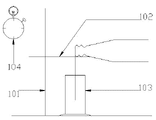
1、秒表法。如图1所示,试验装置主要包括铁架台101,铁架环102,泡沫杯103,秒表104。
1. Stopwatch method. As shown in FIG. 1 , the test device mainly includes an
泡沫杯内径60mm,高120mm。铁架环固定在距离泡沫杯缘1cm处。 The foam cup has an inner diameter of 60mm and a height of 120mm. The iron frame ring is fixed at a distance of 1cm from the edge of the foam cup. the
测量时,迅速将新开盖的啤酒瓶(罐)口置于铁环12,沿杯中心线(如图示),以均匀流速将啤酒注入杯中,直至泡沫高度与杯口相齐时止。同时按秒表开始计时,当液面露出0.05cm2时计时终止,所记录的时间即为泡持时间。时间越长,说明泡沫的稳定性越好。 When measuring, quickly place the mouth of the newly opened beer bottle (can) on the iron ring 12, and pour the beer into the cup at a uniform flow rate along the center line of the cup (as shown in the figure) until the foam height is equal to the mouth of the cup. . Simultaneously start counting by the stopwatch, when the liquid surface is exposed to 0.05cm 2 , the counting is terminated, and the recorded time is the soaking time. The longer the time, the better the stability of the foam.
2、Sigma法。如图2所示,试验装置主要包括sigma特制泡沫漏斗201,量筒202,秒表203。Sigma特制泡沫漏斗附带一条800mL的体积刻度线。测量时,关紧漏斗出口阀,啤酒启盖后立即沿着漏斗中心线匀速注入酒液,直至泡沫达800ml刻度线为止,记时开始。30秒后,打开出样阀放出液体,保留泡沫。秒表重新归零,200秒后,打开出样阀将消泡液分离至100ML量筒筒中,至刚有泡沫流出时,关闭开关,停表,记录时间t及体积b。最后,向漏斗内剩余的泡沫加3ml酒精消泡,使泡沫全部成为液体,用量筒测量总液体积,记录体积c(总液体积减3ml)。根据如下公式计算sigma值:
2. Sigma method. As shown in FIG. 2 , the test device mainly includes a sigma
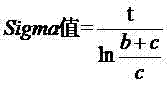
计算所得的sigma值越大,说明泡沫稳定性越好。 The larger the calculated sigma value, the better the foam stability.
3、NIBEM法。如图3所示,试验装置主要包括气体分散头301,压缩杆302,泡沫杯303,CO2供给源304,NIBEM测量仪305。测量时,首先利用压缩杆302将气体分散头301穿透啤酒瓶(罐)盖,插入酒液中,通入CO2鼓泡。并于泡沫杯中收集泡沫,直至与杯缘平齐。然后,将盛满泡沫的泡沫杯放入NIBEM测量仪305中,特制探头将跟踪上泡位的下降过程,上泡位衰减至距杯缘10mm处时,开始计时,以泡沫下落30mm所需的时间作为啤酒的泡持性。时间越长,说明泡沫稳定性越好。
3. NIBEM method. As shown in FIG. 3 , the test device mainly includes a
4、Rudin 改良法。如图4所示,试验装置主要包括发泡管401,CO2供给源402,气体流量计403,恒温水浴404。测量时,先于发泡管底部引人已恒温过的啤酒,将液面调整到100mL刻度线处,从侧臂C处释放掉多余的酒样。然后,恒速缓慢通人CO2尽可能将啤酒全部转变成泡沫,当泡沫升至350mL刻度线时停止充气,于是泡沫开始塌陷,酒液在细管中上升。测定酒液通过细管上两个标记(50mL及75mL两个刻度线)之间的时间间隔,时间越长,则表示泡沫越稳定。
4. Rudin's improved method. As shown in Figure 4, the test device mainly includes a foaming tube 401, a CO2
以上装置及方法存在的共同不足之处是未能实现动态监测泡沫消泡全过程。4种装置和测定方法皆采用累积量(如总消泡时间)来描述及评价消泡这一动态过程,因此可能掩盖过程中诸多的差异性,难以准确阐明泡沫活性成分与泡沫特性间的关系。前两种试验装置均采用手倒倾倒的方式起泡,起泡力度、注流的速度及室温的波动等因素不可控,使得偶然误差大、方法的可信度降低。装置3及装置4虽然改进以鼓泡式起泡方式代替倾倒起泡,但仍在自然环境下消泡,温度等环境因素的波动仍未消除。可见,4种装置都没有对消泡环境进行恒温控制,环境波动直接导致测量方法的可靠性降低。且装置3没有对鼓入的CO2压缩气体进行预先恒温,导致过冷的CO2气体直接通入酒液起泡,使得随后的泡沫塌陷过程受温度波动的影响较大。因此,提供一种能准确揭示啤酒泡沫动态消泡过程的试验装置及方法是啤酒泡沫评价及相关理论深入研究亟待解决的问题。
The common disadvantage of the above devices and methods is that the dynamic monitoring of the whole process of foam defoaming cannot be realized. The four devices and measurement methods all use cumulative quantities (such as total defoaming time) to describe and evaluate the dynamic process of defoaming, so it may cover up many differences in the process, and it is difficult to accurately clarify the relationship between foam active ingredients and foam characteristics . Both the first two test devices use hand pouring to foam, and factors such as foaming strength, injection speed, and room temperature fluctuations are uncontrollable, resulting in large accidental errors and reduced reliability of the method. Although
发明内容 Contents of the invention
针对现有测定泡沫稳定性的试验装置的不足,本发明的目的是提出一种简便、适用、准确,且易操作的用于测定啤酒泡沫稳定性的试验方法,具体技术方案如下。 Aiming at the deficiencies of existing test devices for measuring foam stability, the purpose of the invention is to propose a simple, applicable, accurate and easy-to-operate test method for measuring beer foam stability. The specific technical scheme is as follows.
一种用于测定啤酒泡沫稳定性的试验方法,包括以下步骤: A kind of test method for measuring beer foam stability, comprises the following steps:
(1)鼓入CO2气起泡: (1) Bubble CO 2 gas into the bubble:
(1.1)调节低温恒温箱,使其温度稳定在设定值15~65℃; (1.1) Adjust the low temperature thermostat to stabilize the temperature at the set value of 15~65°C;
(1.2)将脱气后的待测啤酒缓缓倾注入泡沫恒温仪中,预恒温15~30min; (1.2) Slowly pour the degassed beer to be tested into the foam thermostat, and pre-constant for 15-30 minutes;
(1.3)由气体管路通入CO2至气体分散头,调节减压阀及转子流量计旋阀,控制气体流速为0.05~0.12L/h; (1.3) Lead CO2 from the gas pipeline to the gas dispersion head, adjust the pressure reducing valve and the rotary valve of the rotameter, and control the gas flow rate to 0.05~0.12L/h;
(1.4)将气体分散头降至泡沫恒温仪底部固定位置,气体分散头浸入酒体,鼓泡计时开始; (1.4) Lower the gas dispersing head to a fixed position at the bottom of the foam thermostat, immerse the gas dispersing head in the wine body, and start the bubbling timer;
(1.5)将气体分散头拔离酒液及泡层,鼓泡计时停止,控制鼓泡时间在设定值2~15s; (1.5) Pull the gas dispersion head away from the wine liquid and bubble layer, stop the bubbling timer, and control the bubbling time at the set value of 2~15s;
(2)消泡过程的监测与记录: (2) Monitoring and recording of defoaming process:
(2.1)消泡过程是一个上泡位不断下降、下泡位不断上升的过程,每当下泡位上升至一个整刻度线,记录当下时刻:由此可得下泡位随时间变化的整个动态过程; (2.1) The defoaming process is a process in which the upper bubble level continues to decrease and the lower bubble level continues to rise. Whenever the lower bubble level rises to a full scale line, record the current moment: from this, the entire dynamics of the lower bubble level over time can be obtained process;
(2.2)计算得各时刻t对应的泡沫等效体积V,绘制得反映整个消泡动态过程的消泡曲线t-lnV,泡沫等效体积的计算公式如下: (2.2) Calculate the foam equivalent volume V corresponding to each time t, and draw the defoaming curve t-lnV that reflects the entire defoaming dynamic process. The formula for calculating the foam equivalent volume is as follows:
V=V0-V′ V=V 0 -V′
V0——初始酒液量mL V 0 ——Initial liquor volume mL
V′——各时刻点所对应的下泡位所代表的体积; V'——the volume represented by the lower bubble level corresponding to each time point;
(3)计算泡沫稳定性大小 (3) Calculation of foam stability
根据二阶导数的递变规律,将消泡曲线t-lnV分段,计算第二段的斜率,斜率的绝对值越小,啤酒泡沫稳定性越好。 According to the law of gradual change of the second order derivative, the defoaming curve t-lnV is segmented, and the slope of the second segment is calculated. The smaller the absolute value of the slope, the better the beer foam stability.
上述用于测定啤酒泡沫稳定性的试验方法中,步骤(1.2)和(1.3)之间还包括调节气体分散头的松紧档位,来调节产生泡沫的直径大小,控制泡沫的细腻程度。 In the above-mentioned test method for determining the stability of beer foam, between steps (1.2) and (1.3), it also includes adjusting the tightness gear of the gas dispersion head to adjust the diameter of the generated foam and control the fineness of the foam.
上述用于测定啤酒泡沫稳定性的试验方法中,所述气体管路绕过固定于泡沫恒温仪垂直上方的滑轮,能沿着泡沫恒温仪中线作上下位移。 In the above test method for measuring the stability of beer foam, the gas pipeline bypasses the pulley fixed vertically above the foam thermostat, and can move up and down along the center line of the foam thermostat.
上述用于测定啤酒泡沫稳定性的试验方法中,所述的泡沫恒温仪为圆柱型玻璃器皿;泡沫恒温仪末端开有用于收集消泡液取样口,取样口通过旋塞封住;泡沫恒温仪上标有均匀体积刻度线,配合下泡位升至每个体积刻线处时刻点的记录,实现对整个消泡过程泡沫体积变化情况的监测。 In the above-mentioned test method for measuring the stability of beer foam, the foam thermostat is a cylindrical glass vessel; the end of the foam thermostat is provided with a sampling port for collecting defoaming liquid, and the sampling port is sealed by a cock; It is marked with a uniform volume scale line, and with the record of the moment when the lower foam level rises to each volume scale line, the monitoring of the foam volume change during the entire defoaming process is realized.
与现有技术相比,本发明的具有以下优点和技术效果: Compared with the prior art, the present invention has the following advantages and technical effects:
(1)能够利用计算机快速准确记录整个消泡过程,并能根据消泡曲线的特点进行分段,显著提高了自动化程度和数据处理能力。 (1) The computer can be used to quickly and accurately record the entire defoaming process, and can be segmented according to the characteristics of the defoaming curve, which significantly improves the degree of automation and data processing capabilities.
(2)能用于研究表面活性成分的泡沫特性、消泡动态过程、不同啤酒泡沫稳定性的对比等,具有简便、适用、准确,易操作的特点。 (2) It can be used to study the foam characteristics of surface active ingredients, the dynamic process of defoaming, and the comparison of the stability of different beer foams. It is simple, applicable, accurate, and easy to operate.
(3)本发明中,泡沫恒温仪为直筒式圆柱型玻璃器皿,其内径尺寸可以根据标准泡沫杯设计,可以保证测量装置中的泡沫消泡现象与实际消费过程中泡沫杯中的消泡现象相似。泡沫恒温仪附带密集的体积刻度线,配合下泡位升至每个体积刻线处时刻的记录,可记录整个消泡过程中泡沫等效体积的变化情况。通过对整个消泡动态过程的描述,实现基于动态参数全面评价泡沫特性的目的。 (3) In the present invention, the foam thermostat is a straight cylindrical glass vessel, and its inner diameter can be designed according to the standard foam cup, which can ensure the foam defoaming phenomenon in the measuring device and the defoaming phenomenon in the foam cup in the actual consumption process resemblance. The foam thermostat is equipped with dense volume scale lines, and with the recording of the moment when the lower bubble level rises to each volume scale line, it can record the change of foam equivalent volume during the entire defoaming process. Through the description of the entire defoaming dynamic process, the purpose of comprehensively evaluating foam characteristics based on dynamic parameters is realized.
(4)气体分散头为可调式气体分散头,通过旋紧或旋松气体分散头,可以调节产生泡沫的直径大小,即泡沫的细腻程度。 (4) The gas dispersing head is an adjustable gas dispersing head. By tightening or loosening the gas dispersing head, the diameter of the generated foam can be adjusted, that is, the fineness of the foam.
(5)初始酒液量、气流速度、通气时间、泡沫大小均为可调参数,可分别对其进行调节以观察不同试验参数对泡沫特性的影响。 (5) The initial liquor volume, air velocity, aeration time, and foam size are all adjustable parameters, which can be adjusted separately to observe the influence of different test parameters on the foam characteristics.
(6)借助与该测量装置,解决了手倒起泡及自然消泡引发诸多人为、环境干扰的问题,消泡过程的重现性及检测方法的可靠性均显著提高。 (6) With the help of this measuring device, many human and environmental interference problems caused by hand-poured foaming and natural defoaming are solved, and the reproducibility of the defoaming process and the reliability of the detection method are significantly improved.
(7)在通气之前,可以将脱气完毕的待测酒液预先注入泡沫恒温仪中恒温。采用封入CO2气密封恒温的方法,可以在实现待测酒液恒温的同时,避免待测酒液的氧化。 (7) Before aeration, the degassed liquor to be tested can be pre-injected into the foam thermostat to keep the temperature. By adopting the method of enclosing CO2 gas to seal the constant temperature, the oxidation of the wine to be tested can be avoided while realizing the constant temperature of the wine to be tested.
附图说明 Description of drawings
图1-图4是现有几种测量泡沫稳定性试验装置结构示意图。 Figures 1 to 4 are structural schematic diagrams of several existing test devices for measuring foam stability.
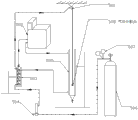
图5是本发明的一种实施方式的结构示意图。 Fig. 5 is a schematic structural diagram of an embodiment of the present invention.
图6是图5中气体分散头508的结构放大示意图。 FIG. 6 is an enlarged schematic view of the structure of the gas dispersion head 508 in FIG. 5 .
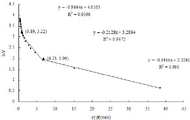
图7是本发明装置测得的典型的啤酒泡沫消泡曲线图。 Fig. 7 is a typical defoaming curve of beer foam measured by the device of the present invention.
具体实施方式 Detailed ways
以下结合附图和实例对本发明的实施作进一步说明,但本发明的实施不限于此。 The implementation of the present invention will be further described below in conjunction with the accompanying drawings and examples, but the implementation of the present invention is not limited thereto.
如图5所示,是用于实现本发明方法的一种试验装置,是在综合上述现有四种试验装置的基础上,根据试验的具体需要而制作而成的。 As shown in Figure 5, it is a test device for realizing the method of the present invention, which is made according to the specific needs of the test on the basis of synthesizing the above four existing test devices.
用于测定啤酒泡沫稳定性的试验装置,包括泡沫恒温仪505、气体分散头508、恒温装置(502、503)、滑轮组501、CO2气瓶506,所述泡沫恒温仪505为圆柱型玻璃器皿,圆柱型玻璃器皿侧壁设有水浴夹层;恒温装置由低温恒温箱502及温度交换器503构成;各部件是按照体系的气体管路及恒温水循环路径来分布和连接的;其中,CO2气瓶的出口端经过减压阀507和转子流量计504后与温度交换器503的气体入口端相连;温度交换器503的气体出口端连接有硅胶管,此硅胶管绕过滑轮组501直伸入到泡沫恒温仪505中,硅胶管末端连有气体分散头508;低温恒温箱502的冷却循环水出水口与温度交换器503的入水口相连,温度交换器503的出水口与泡沫恒温仪505水浴夹层的入水端相接;泡沫恒温仪505的水浴夹层的出水端又连于低温恒温箱502,构成了体系中恒温冷却循环水的回路,实现对整个体系的恒温。
A test device for measuring the stability of beer foam, including a
泡沫恒温仪505的内径与国标(GB 4928-91)要求的泡沫杯的内径一致;泡沫恒温仪505侧壁标有密集且均匀的体积刻度线;泡沫恒温仪505下端设有用于分离气液相、收集消泡液的取样口。
The inner diameter of the
气体分散头508,如图6所示,由两个塑料半球体和夹于两个塑料半球体之间的多孔海绵构成,直径约1cm;两个塑料半球体通过螺纹旋结在一起,可以通过旋紧或旋松调控两个塑料半球体的间距,调节海绵孔道的直径,从而调节控制所起泡沫的细腻程度,即泡沫大小。按照所起泡沫的大小,气体分散头分为多个档位。 Gas dispersing head 508, as shown in Figure 6, is made of two plastic hemispheres and the porous sponge sandwiched between the two plastic hemispheres, about 1cm in diameter; Tighten or loosen the distance between the two plastic hemispheres to adjust the diameter of the sponge channel, thereby adjusting and controlling the fineness of the foam, that is, the size of the foam. According to the size of the foam, the gas dispersion head is divided into several gears.
恒温装置由低温恒温箱502及温度交换器503构成,其中,低温恒温箱502为具有外部循环功能并带有制冷器的恒温箱,为整个体系提供恒温冷却循环水。温度交换器503为蛇管式冷凝管,管程为气路,壳程为冷却循环水。CO2气体流经蛇管时,与恒温冷却循环水换热,实现气体的恒温。
The constant temperature device is composed of a low temperature constant temperature box 502 and a
气体分散头508通过滑轮组实现以位于泡沫恒温仪505正上方的设定位置为起动点到以设定深度浸渍到啤酒中的下点之间的上下往复运动。
The gas dispersing head 508 realizes up and down reciprocating movement between the starting point at the set position directly above the
减压阀507和转子流量计504串联于气路,可以实现对CO2流速的调节。
The
上述装置中,流出低温恒温水浴箱502的低温恒温循环水,流经泡沫恒温仪夹层及温度交换器503恒温整个体系。最后,所起泡沫在泡沫恒温仪505中进行恒温消泡。
In the above device, the low-temperature constant-temperature circulating water flowing out of the low-temperature constant-temperature water bath 502 flows through the interlayer of the foam thermostat and the
各部件的作用进一步说明: The role of each component is further explained:
(1)CO2气体,由CO2气瓶提供,并流经减压阀和转子流量计通入泡沫仪中; (1) CO 2 gas, provided by the CO 2 cylinder, flows through the pressure reducing valve and rotameter into the foam instrument;
(2)泡沫仪是带水浴夹层及体积刻线的直筒式圆柱型玻璃器皿,其内径大小与标准泡沫杯一致。泡沫仪末端开有取样口,结构类似分液漏斗下端的分液旋塞。 (2) The foam meter is a straight cylindrical glass vessel with a water bath interlayer and a volume scale, and its inner diameter is consistent with the standard foam cup. There is a sampling port at the end of the foam meter, which is similar in structure to the separating cock at the lower end of the separating funnel.
(3)低温恒温装置。由于温度对消泡过程有较大的影响,因此用带有外部循环的低温恒温水浴箱来控制体系温度,并可以研究不同温度下消泡情况的差异。 (3) Low temperature constant temperature device. Since temperature has a great influence on the defoaming process, a low-temperature constant temperature water bath with external circulation is used to control the system temperature, and the difference in defoaming conditions at different temperatures can be studied.
(4)温度交换器。结构为类似蛇管式冷凝管。过冷的压缩气体在温度交换器中与流经的低温循环水进行换热恒温后才通入泡沫仪内,避免了过冷压缩气体直接鼓入酒体可能引起的体系温度波动。 (4) Temperature exchanger. The structure is similar to the coil type condenser. The supercooled compressed gas is exchanged with the flowing low-temperature circulating water in the temperature exchanger and then passed into the foam instrument after heat exchange and constant temperature, which avoids the temperature fluctuation of the system that may be caused by the supercooled compressed gas directly blowing into the wine body.
(5)气体分散头。连于气体管路的末端,使泡沫细腻化。调节不同的档位,可以测量不同大小的泡沫的消泡情况的差异。 (5) Gas dispersion head. Connected to the end of the gas pipeline to refine the foam. By adjusting different gears, the difference in defoaming conditions of foams of different sizes can be measured.
(6)滑轮组。固定于泡沫仪中线的垂直上方,气体管路绕过滑轮组导入泡沫仪内。可以实现气体分散头沿泡沫以中线垂直升降。当气体分散头垂直上升,脱离酒体及泡层时,鼓泡结束。 (6) Pulley block. It is fixed vertically above the center line of the foam instrument, and the gas pipeline bypasses the pulley block and leads into the foam instrument. The gas dispersing head can be lifted vertically along the centerline of the foam. When the gas dispersing head rises vertically and breaks away from the wine body and bubble layer, the bubbling ends.
实施例1 Example 1
1.1 试验目的:啤酒泡沫动态消泡过程评价 1.1 Test purpose: evaluation of beer foam dynamic defoaming process
1.2 试验原理:消泡过程是一个上泡位不断下降、下泡位不断上升的过程。记录下泡位每上升一个体积刻度所用的时间,可继续计算得每时刻点对应的泡沫等效体积,观察泡沫量随时间的动态变化情况。消泡过程中泡沫量及消泡速率的波动情况皆可以由与之配套的消泡曲线分析软件获得。 1.2 Test principle: The defoaming process is a process in which the upper bubble level keeps decreasing and the lower bubble level keeps rising. Record the time it takes for the bubble level to rise by one volume scale, and then continue to calculate the foam equivalent volume corresponding to each moment point, and observe the dynamic change of the foam volume over time. The fluctuation of foam volume and defoaming rate during the defoaming process can be obtained by the matching defoaming curve analysis software.
1.3 试验步骤如下: 1.3 The test steps are as follows:
1.3.1 鼓入CO2气起泡: 1.3.1 Bubble CO 2 gas:
(1) 调节低温恒温水浴箱,使其温度稳定在设定值15~65℃; (1) Adjust the low temperature and constant temperature water bath to stabilize the temperature at the set value of 15~65°C;
(2) 将脱气后的待测啤酒缓缓倾注入泡沫恒温仪中,预恒温15~30min; (2) Slowly pour the degassed beer to be tested into the foam thermostat, and pre-constant for 15-30 minutes;
(3) 调节沙头档位到预设值(可以有1~7档); (3) Adjust the sandhead gear to the preset value (1~7 gears are available);
(4)开启气瓶总阀,调节减压阀及转子流量计旋阀,控制气体流速在设定值0.05~0.12L/h; (4) Open the main valve of the gas cylinder, adjust the pressure reducing valve and the rotary valve of the rotameter, and control the gas flow rate at the set value of 0.05~0.12L/h;
(5) 将气体分散头降至泡沫恒温仪底部固定位置,气体分散头浸入酒体,鼓泡计时开始; (5) Lower the gas dispersing head to a fixed position at the bottom of the foam thermostat, immerse the gas dispersing head in the wine body, and start the bubbling timer;
(6) 一定时间后,将气体分散头拔离酒液及泡层,鼓泡计时停止,控制鼓泡时间在设定值2~15s; (6) After a certain period of time, pull the gas dispersion head away from the wine liquid and bubble layer, stop the bubbling timer, and control the bubbling time at the set value of 2~15s;
1.3.2 消泡过程的监测与记录 1.3.2 Monitoring and recording of defoaming process
(1)消泡过程是一个上泡位不断下降、下泡位不断上升的过程。每当下泡位上升至一个整刻度线,记录当下时刻。由此可得下泡位随时间变化的整个动态过程; (1) The defoaming process is a process in which the upper bubble level keeps decreasing and the lower bubble level keeps rising. Whenever the lower bubble level rises to a full scale line, record the current moment. From this, the whole dynamic process of the bubble level changing with time can be obtained;
(2)计算得各时刻t对应的泡沫等效体积V,绘制得反映整个消泡动态过程的消泡曲线t-lnV,泡沫等效体积的计算公式,如下; (2) Calculate the foam equivalent volume V corresponding to each time t, draw the defoaming curve t-lnV reflecting the entire defoaming dynamic process, and calculate the foam equivalent volume as follows;
V=V0-V′ V=V 0 -V′
V0——初始酒液量mL V 0 ——Initial liquor volume mL
V′——各时刻点所对应的下泡位所代表的体积 V'——the volume represented by the lower bubble level corresponding to each time point
由图7可知,啤酒泡沫的完整消泡过程是一个典型的三段曲线,分别代表沥液阶段、起泡物质的消泡阶段、稳定物质的消泡阶段。该消泡曲线各参数可以全面反映啤酒泡沫稳定性,诸如:沥液的时间T1——沥液速度的快慢;起泡物质消泡斜率k2——啤酒中起泡物质的泡持性质;总泡沫物质含量V1——啤酒中总泡沫物质含量;稳定物质消泡斜率k3——啤酒中稳定物质的泡持性质;稳定物质含量V2,稳定物质占总泡沫物质的比例V2/V1——啤酒中稳定物质的多少。 It can be seen from Figure 7 that the complete defoaming process of beer foam is a typical three-segment curve, representing the leachate stage, the defoaming stage of foaming substances, and the defoaming stage of stable substances respectively. The parameters of the defoaming curve can comprehensively reflect the foam stability of beer, such as: time T 1 of leaching—the speed of leaching; defoaming slope k 2 of foaming substances—the retention properties of foaming substances in beer; Total foam substance content V 1 ——total foam substance content in beer; stable substance defoaming slope k 3 ——foam retention property of stable substance in beer; stable substance content V 2 , ratio of stable substance to total foam substance V 2 / V 1 - the amount of stable substances in beer.
实施例2 Example 2
2.1 试验目的:不同品牌啤酒泡沫稳定性的评价 2.1 Purpose of the test: Evaluation of foam stability of different brands of beer
2.2 实验原理:啤酒泡沫的消泡曲线是一个典型的三段曲线,其中第二段曲线的拟合直线的斜率可以反映啤酒中起泡物质的泡持性,并与秒表法测定的泡持时间有显著的相关性,故可用消泡曲线第二段的斜率表征泡沫稳定性的大小。 2.2 Experimental principle: The defoaming curve of beer foam is a typical three-segment curve, and the slope of the fitting line of the second segment curve can reflect the foam retention of foaming substances in beer, and it can be compared with the foam retention time measured by the stopwatch method. There is a significant correlation, so the slope of the second section of the defoaming curve can be used to characterize the size of the foam stability.
2.3 试验步骤如下: 2.3 The test steps are as follows:
2.3.1 鼓入CO2气起泡: 2.3.1 Bubble CO 2 gas:
(1) 调节低温恒温水浴箱,使其温度稳定在设定值15~65℃; (1) Adjust the low temperature and constant temperature water bath to stabilize the temperature at the set value of 15~65°C;
(2) 将脱气后的待测啤酒缓缓倾注入泡沫恒温仪中,预恒温15~30min; (2) Slowly pour the degassed beer to be tested into the foam thermostat, and pre-constant for 15-30 minutes;
(3) 调节沙头档位到预设值(可以有1~7档); (3) Adjust the sandhead gear to the preset value (1~7 gears are available);
(4)开启气瓶总阀,调节减压阀及转子流量计旋阀,控制气体流速在设定值(0.05~0.12L/h); (4) Open the main valve of the gas cylinder, adjust the pressure reducing valve and the rotary valve of the rotameter, and control the gas flow rate at the set value (0.05~0.12L/h);
(5) 将气体分散头降至泡沫恒温仪底部固定位置,气体分散头浸入酒体,鼓泡计时开始; (5) Lower the gas dispersing head to a fixed position at the bottom of the foam thermostat, immerse the gas dispersing head in the wine body, and start the bubbling timer;
(6) 一定时间后,将气体分散头拔离酒液及泡层,鼓泡计时停止,控制鼓泡时间在设定值2~15s; (6) After a certain period of time, pull the gas dispersion head away from the wine liquid and bubble layer, stop the bubbling timer, and control the bubbling time at the set value of 2~15s;
2.3.2 消泡过程的监测与记录 2.3.2 Monitoring and recording of defoaming process
(1)消泡过程是一个上泡位不断下降、下泡位不断上升的过程。每当下泡位上升至一个整刻度线,记录当下时刻。由此可得下泡位随时间变化的整个动态过程; (1) The defoaming process is a process in which the upper bubble level keeps decreasing and the lower bubble level keeps rising. Whenever the lower bubble level rises to a full scale line, record the current moment. From this, the whole dynamic process of the bubble level changing with time can be obtained;
(2)计算得各时刻t对应的泡沫等效体积V,绘制得反映整个消泡动态过程的消泡曲线t-lnV,泡沫等效体积的计算公式,如下; (2) Calculate the foam equivalent volume V corresponding to each time t, draw the defoaming curve t-lnV reflecting the entire defoaming dynamic process, and calculate the foam equivalent volume as follows;
V=V0-V′ V=V 0 -V′
V0——初始酒液量mL V 0 ——Initial liquor volume mL
V′——各时刻点所对应的下泡位所代表的体积 V'——the volume represented by the lower bubble level corresponding to each time point
2.3.3 泡沫稳定性的计算 2.3.3 Calculation of foam stability
根据二阶导数的递变规律,将消泡曲线t-lnV分段,计算第二段的斜率,斜率的绝对值越小,稳定性越好。表1为不同啤酒的泡持时间、消泡曲线的各段斜率及它们之间的相关系数。 According to the law of gradual change of the second order derivative, the defoaming curve t-lnV is divided into sections, and the slope of the second section is calculated. The smaller the absolute value of the slope, the better the stability. Table 1 shows the soaking time of different beers, the slope of each segment of the defoaming curve and the correlation coefficient between them.
表1 Table 1
由表1结果可知,消泡曲线的第一、二段的斜率与泡持性显著相关,尤其是第二段的斜率,即起泡物质消泡阶段的消泡速率,与秒表法所测泡持性高度相关(r=0.984, p < 0.01),故可以用来表征泡沫稳定性的大小。斜率的绝对值越小,啤酒泡沫的稳定性越好。因此,通过本发明,可以对成品啤酒的泡沫稳定性、发酵液的泡沫稳定性、及泡沫表面活性成分形成泡沫的泡持特性进行准确测定,从而指导工业实践,且为进一步探究泡沫表面活性成分的作用机制奠定了基础。 From the results in Table 1, it can be seen that the slopes of the first and second sections of the defoaming curve are significantly related to the foam retention, especially the slope of the second section, that is, the defoaming rate of the foaming material in the defoaming stage, is the same as that measured by the stopwatch method. There is a high correlation between foam stability (r=0.984, p < 0.01), so it can be used to characterize the size of foam stability. The smaller the absolute value of the slope, the better the stability of the beer foam. Therefore, by the present invention, the foam stability of finished beer, the foam stability of fermented liquid and the foam retention characteristic of foam formation of foam surface active ingredient can be accurately measured, thereby guide industrial practice, and for further exploring foam surface active ingredient The mechanism of action has laid the foundation.
Claims (3)
Priority Applications (1)
| Application Number | Priority Date | Filing Date | Title |
|---|---|---|---|
| CN2011103680681A CN102519829B (en) | 2011-11-18 | 2011-11-18 | Test method for determining beer foam stability |
Applications Claiming Priority (1)
| Application Number | Priority Date | Filing Date | Title |
|---|---|---|---|
| CN2011103680681A CN102519829B (en) | 2011-11-18 | 2011-11-18 | Test method for determining beer foam stability |
Publications (2)
| Publication Number | Publication Date |
|---|---|
| CN102519829A CN102519829A (en) | 2012-06-27 |
| CN102519829B true CN102519829B (en) | 2013-11-27 |
Family
ID=46290825
Family Applications (1)
| Application Number | Title | Priority Date | Filing Date |
|---|---|---|---|
| CN2011103680681A Expired - Fee Related CN102519829B (en) | 2011-11-18 | 2011-11-18 | Test method for determining beer foam stability |
Country Status (1)
| Country | Link |
|---|---|
| CN (1) | CN102519829B (en) |
Families Citing this family (6)
| Publication number | Priority date | Publication date | Assignee | Title |
|---|---|---|---|---|
| CN103197034B (en) * | 2013-03-22 | 2015-02-04 | 安徽大学 | Device for rapidly detecting foaming property of water-based latex |
| CN105092800B (en) * | 2015-08-27 | 2016-08-17 | 燕京啤酒(桂林漓泉)股份有限公司 | In the beer product shelf-life, bubble holds decay Pre-Evaluation method |
| CN105044299B (en) * | 2015-09-18 | 2016-09-14 | 江南大学 | A method for determining the foam retention of beer foam |
| CN111398537A (en) * | 2020-04-25 | 2020-07-10 | 燕京啤酒(曲阜三孔)有限责任公司 | Method for predicting and regulating bubble-holding index of finished beer |
| CN111413250A (en) * | 2020-04-26 | 2020-07-14 | 中国大唐集团科学技术研究院有限公司华东电力试验研究院 | A kind of desulfurization slurry foam characteristic measuring device and measuring method |
| CN113484192B (en) * | 2021-09-06 | 2021-12-14 | 广汉市福客科技有限公司 | Evaluation device and evaluation method of sinking type delayed foaming agent |
Citations (2)
| Publication number | Priority date | Publication date | Assignee | Title |
|---|---|---|---|---|
| CN1372139A (en) * | 2001-02-28 | 2002-10-02 | 华东理工大学 | Method for testing foam property of sweetening agent solution |
| CN101760363A (en) * | 2009-12-31 | 2010-06-30 | 青岛啤酒股份有限公司 | Method for controlling beer foam |
Family Cites Families (4)
| Publication number | Priority date | Publication date | Assignee | Title |
|---|---|---|---|---|
| EP0967482A4 (en) * | 1997-12-10 | 2001-01-31 | Sapporo Breweries | Method and apparatus for evaluating retention time of foam of beer |
| JP2002214106A (en) * | 2001-01-18 | 2002-07-31 | Hiromaito Co Ltd | Analytical method of dissolved gas in liquid and device therefor |
| JP2002365277A (en) * | 2001-04-03 | 2002-12-18 | Sapporo Breweries Ltd | Method for evaluating froth stability of alcohol beverage |
| DE60318666T2 (en) * | 2002-10-31 | 2009-01-22 | MAX-PLANCK-Gesellschaft zur Förderung der Wissenschaften e.V. | Method and device for rapid characterization of foamability and foam stability |
-
2011
- 2011-11-18 CN CN2011103680681A patent/CN102519829B/en not_active Expired - Fee Related
Patent Citations (2)
| Publication number | Priority date | Publication date | Assignee | Title |
|---|---|---|---|---|
| CN1372139A (en) * | 2001-02-28 | 2002-10-02 | 华东理工大学 | Method for testing foam property of sweetening agent solution |
| CN101760363A (en) * | 2009-12-31 | 2010-06-30 | 青岛啤酒股份有限公司 | Method for controlling beer foam |
Non-Patent Citations (12)
| Title |
|---|
| A new method to estimate the stability of short-life foam;Edinzo Iglesias et al;《Colloids and Surfaces》;19951231;第98卷;167-174 * |
| Anabela Raymundo et al.Method to Evaluate Foaming Performance.《Journal of Food Engineering》.1998,第36卷(第4期),445-452. |
| Edinzo Iglesias et al.A new method to estimate the stability of short-life foam.《Colloids and Surfaces》.1995,第98卷167-174. |
| Method to Evaluate Foaming Performance;Anabela Raymundo et al;《Journal of Food Engineering》;19981231;第36卷(第4期);445-452 * |
| Pudin改良法在啤酒泡沫稳定性测定中的应用;叶俊华等;《食品工业科技》;20031130(第11期);30-32 * |
| Rudin法测定啤酒泡沫稳定性的研究;董建军等;《啤酒科技》;20061210(第12期);28-30,34 * |
| 叶俊华等.Pudin改良法在啤酒泡沫稳定性测定中的应用.《食品工业科技》.2003,(第11期),30-32. |
| 徐振洪等.浮选起泡剂泡沫稳定性的评价方法研究.《化工学报》.1999,第50卷(第03期),399-403. |
| 泡沫性能的测试和评价方法进展;王莉娟等;《日用化学工业》;20050620;第35卷(第03期);171-173,191 * |
| 浮选起泡剂泡沫稳定性的评价方法研究;徐振洪等;《化工学报》;19990625;第50卷(第03期);399-403 * |
| 王莉娟等.泡沫性能的测试和评价方法进展.《日用化学工业》.2005,第35卷(第03期),171-173,191. |
| 董建军等.Rudin法测定啤酒泡沫稳定性的研究.《啤酒科技》.2006,(第12期),28-30,34. |
Also Published As
| Publication number | Publication date |
|---|---|
| CN102519829A (en) | 2012-06-27 |
Similar Documents
| Publication | Publication Date | Title |
|---|---|---|
| CN108663347B (en) | Multi-parameter interference compensation correction system and method for optical dissolved oxygen sensor | |
| CN102519829A (en) | Test method for determining beer foam stability | |
| CN202661463U (en) | Test device for determining beer foam stability | |
| CN201803998U (en) | Foam performance evaluation device | |
| CN105588922B (en) | CO in a kind of crude oil2Solubility and foam stabilization system safety testing device and method | |
| CN102426151A (en) | Multifunctional soil-water characteristic curve tester | |
| CN102520128B (en) | Test device for measuring stability of beer foam | |
| CN202256109U (en) | Rock core self-absorption experimental apparatus for simulating formation conditions | |
| CN202024991U (en) | Device for determining foaming property of surfactant by adopting airflow method under atmospheric pressure condition | |
| CN204128922U (en) | A kind of Measurement of liquid surface tension coefficient instrument | |
| CN201673107U (en) | Apparatus for Determining Soil Saturated Hydraulic Conductivity by Transforming Head Method | |
| CN201740714U (en) | Device for measuring surface tension of liquid | |
| CN216594688U (en) | Temperature-adjustable unsaturated soil permeameter | |
| CN109030783A (en) | A kind of rock-fluid reciprocation experimental system for simulating and method | |
| CN108489868A (en) | A kind of experimental provision and test method of gaseous diffusion coefficients | |
| CN208091855U (en) | A kind of device for measuring gaseous diffusion coefficients | |
| CN203824875U (en) | Simple and easy soil ventilation speed tester | |
| CN111044601A (en) | In-situ measurement device and measurement method for soil or sediment denitrification in flooded environment | |
| CN202502081U (en) | Active polymer foam evaluation device | |
| CN208636318U (en) | A Rock-Fluid Interaction Simulation Experiment System | |
| CN116448617B (en) | Method and tool for detecting alcoholic strength of white spirit | |
| CN106198671A (en) | Electrode comparison method of testing and multipurpose test system | |
| CN108827850A (en) | Measure rock core specific surface and porosity and the relational approach of rock cross-sectional area and instrument | |
| CN215493267U (en) | Lubricating oil foam detection device | |
| RU2760945C1 (en) | Method for determining sparkling properties of carbon dioxide-saturated beverages |
Legal Events
| Date | Code | Title | Description |
|---|---|---|---|
| C06 | Publication | ||
| PB01 | Publication | ||
| C10 | Entry into substantive examination | ||
| SE01 | Entry into force of request for substantive examination | ||
| C14 | Grant of patent or utility model | ||
| GR01 | Patent grant | ||
| CF01 | Termination of patent right due to non-payment of annual fee |
Granted publication date: 20131127 Termination date: 20211118 |
|
| CF01 | Termination of patent right due to non-payment of annual fee |