CN102625732B - Wrap objects in film and cut film with tape - Google Patents
Wrap objects in film and cut film with tape Download PDFInfo
- Publication number
- CN102625732B CN102625732B CN201080040379.9A CN201080040379A CN102625732B CN 102625732 B CN102625732 B CN 102625732B CN 201080040379 A CN201080040379 A CN 201080040379A CN 102625732 B CN102625732 B CN 102625732B
- Authority
- CN
- China
- Prior art keywords
- tape
- film
- adhesive
- edge
- filaments
- Prior art date
- Legal status (The legal status is an assumption and is not a legal conclusion. Google has not performed a legal analysis and makes no representation as to the accuracy of the status listed.)
- Active
Links
Images




Classifications
-
- B—PERFORMING OPERATIONS; TRANSPORTING
- B44—DECORATIVE ARTS
- B44C—PRODUCING DECORATIVE EFFECTS; MOSAICS; TARSIA WORK; PAPERHANGING
- B44C1/00—Processes, not specifically provided for elsewhere, for producing decorative surface effects
- B44C1/16—Processes, not specifically provided for elsewhere, for producing decorative surface effects for applying transfer pictures or the like
- B44C1/165—Processes, not specifically provided for elsewhere, for producing decorative surface effects for applying transfer pictures or the like for decalcomanias; sheet material therefor
- B44C1/17—Dry transfer
- B44C1/1733—Decalcomanias applied under pressure only, e.g. provided with a pressure sensitive adhesive
-
- B—PERFORMING OPERATIONS; TRANSPORTING
- B44—DECORATIVE ARTS
- B44C—PRODUCING DECORATIVE EFFECTS; MOSAICS; TARSIA WORK; PAPERHANGING
- B44C1/00—Processes, not specifically provided for elsewhere, for producing decorative surface effects
- B44C1/10—Applying flat materials, e.g. leaflets, pieces of fabrics
- B44C1/105—Applying flat materials, e.g. leaflets, pieces of fabrics comprising an adhesive layer
-
- C—CHEMISTRY; METALLURGY
- C09—DYES; PAINTS; POLISHES; NATURAL RESINS; ADHESIVES; COMPOSITIONS NOT OTHERWISE PROVIDED FOR; APPLICATIONS OF MATERIALS NOT OTHERWISE PROVIDED FOR
- C09J—ADHESIVES; NON-MECHANICAL ASPECTS OF ADHESIVE PROCESSES IN GENERAL; ADHESIVE PROCESSES NOT PROVIDED FOR ELSEWHERE; USE OF MATERIALS AS ADHESIVES
- C09J7/00—Adhesives in the form of films or foils
- C09J7/20—Adhesives in the form of films or foils characterised by their carriers
- C09J7/201—Adhesives in the form of films or foils characterised by their carriers characterised by the release coating composition on the carrier layer
-
- C—CHEMISTRY; METALLURGY
- C09—DYES; PAINTS; POLISHES; NATURAL RESINS; ADHESIVES; COMPOSITIONS NOT OTHERWISE PROVIDED FOR; APPLICATIONS OF MATERIALS NOT OTHERWISE PROVIDED FOR
- C09J—ADHESIVES; NON-MECHANICAL ASPECTS OF ADHESIVE PROCESSES IN GENERAL; ADHESIVE PROCESSES NOT PROVIDED FOR ELSEWHERE; USE OF MATERIALS AS ADHESIVES
- C09J7/00—Adhesives in the form of films or foils
- C09J7/20—Adhesives in the form of films or foils characterised by their carriers
- C09J7/22—Plastics; Metallised plastics
-
- Y—GENERAL TAGGING OF NEW TECHNOLOGICAL DEVELOPMENTS; GENERAL TAGGING OF CROSS-SECTIONAL TECHNOLOGIES SPANNING OVER SEVERAL SECTIONS OF THE IPC; TECHNICAL SUBJECTS COVERED BY FORMER USPC CROSS-REFERENCE ART COLLECTIONS [XRACs] AND DIGESTS
- Y10—TECHNICAL SUBJECTS COVERED BY FORMER USPC
- Y10T—TECHNICAL SUBJECTS COVERED BY FORMER US CLASSIFICATION
- Y10T156/00—Adhesive bonding and miscellaneous chemical manufacture
- Y10T156/10—Methods of surface bonding and/or assembly therefor
- Y10T156/1052—Methods of surface bonding and/or assembly therefor with cutting, punching, tearing or severing
- Y10T156/1062—Prior to assembly
- Y10T156/1064—Partial cutting [e.g., grooving or incising]
-
- Y—GENERAL TAGGING OF NEW TECHNOLOGICAL DEVELOPMENTS; GENERAL TAGGING OF CROSS-SECTIONAL TECHNOLOGIES SPANNING OVER SEVERAL SECTIONS OF THE IPC; TECHNICAL SUBJECTS COVERED BY FORMER USPC CROSS-REFERENCE ART COLLECTIONS [XRACs] AND DIGESTS
- Y10—TECHNICAL SUBJECTS COVERED BY FORMER USPC
- Y10T—TECHNICAL SUBJECTS COVERED BY FORMER US CLASSIFICATION
- Y10T156/00—Adhesive bonding and miscellaneous chemical manufacture
- Y10T156/10—Methods of surface bonding and/or assembly therefor
- Y10T156/1052—Methods of surface bonding and/or assembly therefor with cutting, punching, tearing or severing
- Y10T156/1062—Prior to assembly
- Y10T156/1066—Cutting to shape joining edge surfaces only
-
- Y—GENERAL TAGGING OF NEW TECHNOLOGICAL DEVELOPMENTS; GENERAL TAGGING OF CROSS-SECTIONAL TECHNOLOGIES SPANNING OVER SEVERAL SECTIONS OF THE IPC; TECHNICAL SUBJECTS COVERED BY FORMER USPC CROSS-REFERENCE ART COLLECTIONS [XRACs] AND DIGESTS
- Y10—TECHNICAL SUBJECTS COVERED BY FORMER USPC
- Y10T—TECHNICAL SUBJECTS COVERED BY FORMER US CLASSIFICATION
- Y10T156/00—Adhesive bonding and miscellaneous chemical manufacture
- Y10T156/10—Methods of surface bonding and/or assembly therefor
- Y10T156/1052—Methods of surface bonding and/or assembly therefor with cutting, punching, tearing or severing
- Y10T156/1082—Partial cutting bonded sandwich [e.g., grooving or incising]
-
- Y—GENERAL TAGGING OF NEW TECHNOLOGICAL DEVELOPMENTS; GENERAL TAGGING OF CROSS-SECTIONAL TECHNOLOGIES SPANNING OVER SEVERAL SECTIONS OF THE IPC; TECHNICAL SUBJECTS COVERED BY FORMER USPC CROSS-REFERENCE ART COLLECTIONS [XRACs] AND DIGESTS
- Y10—TECHNICAL SUBJECTS COVERED BY FORMER USPC
- Y10T—TECHNICAL SUBJECTS COVERED BY FORMER US CLASSIFICATION
- Y10T156/00—Adhesive bonding and miscellaneous chemical manufacture
- Y10T156/11—Methods of delaminating, per se; i.e., separating at bonding face
- Y10T156/1168—Gripping and pulling work apart during delaminating
-
- Y—GENERAL TAGGING OF NEW TECHNOLOGICAL DEVELOPMENTS; GENERAL TAGGING OF CROSS-SECTIONAL TECHNOLOGIES SPANNING OVER SEVERAL SECTIONS OF THE IPC; TECHNICAL SUBJECTS COVERED BY FORMER USPC CROSS-REFERENCE ART COLLECTIONS [XRACs] AND DIGESTS
- Y10—TECHNICAL SUBJECTS COVERED BY FORMER USPC
- Y10T—TECHNICAL SUBJECTS COVERED BY FORMER US CLASSIFICATION
- Y10T428/00—Stock material or miscellaneous articles
- Y10T428/14—Layer or component removable to expose adhesive
- Y10T428/149—Sectional layer removable
- Y10T428/1495—Adhesive is on removable layer
-
- Y—GENERAL TAGGING OF NEW TECHNOLOGICAL DEVELOPMENTS; GENERAL TAGGING OF CROSS-SECTIONAL TECHNOLOGIES SPANNING OVER SEVERAL SECTIONS OF THE IPC; TECHNICAL SUBJECTS COVERED BY FORMER USPC CROSS-REFERENCE ART COLLECTIONS [XRACs] AND DIGESTS
- Y10—TECHNICAL SUBJECTS COVERED BY FORMER USPC
- Y10T—TECHNICAL SUBJECTS COVERED BY FORMER US CLASSIFICATION
- Y10T428/00—Stock material or miscellaneous articles
- Y10T428/24—Structurally defined web or sheet [e.g., overall dimension, etc.]
- Y10T428/24752—Laterally noncoextensive components
-
- Y—GENERAL TAGGING OF NEW TECHNOLOGICAL DEVELOPMENTS; GENERAL TAGGING OF CROSS-SECTIONAL TECHNOLOGIES SPANNING OVER SEVERAL SECTIONS OF THE IPC; TECHNICAL SUBJECTS COVERED BY FORMER USPC CROSS-REFERENCE ART COLLECTIONS [XRACs] AND DIGESTS
- Y10—TECHNICAL SUBJECTS COVERED BY FORMER USPC
- Y10T—TECHNICAL SUBJECTS COVERED BY FORMER US CLASSIFICATION
- Y10T428/00—Stock material or miscellaneous articles
- Y10T428/28—Web or sheet containing structurally defined element or component and having an adhesive outermost layer
-
- Y—GENERAL TAGGING OF NEW TECHNOLOGICAL DEVELOPMENTS; GENERAL TAGGING OF CROSS-SECTIONAL TECHNOLOGIES SPANNING OVER SEVERAL SECTIONS OF THE IPC; TECHNICAL SUBJECTS COVERED BY FORMER USPC CROSS-REFERENCE ART COLLECTIONS [XRACs] AND DIGESTS
- Y10—TECHNICAL SUBJECTS COVERED BY FORMER USPC
- Y10T—TECHNICAL SUBJECTS COVERED BY FORMER US CLASSIFICATION
- Y10T428/00—Stock material or miscellaneous articles
- Y10T428/28—Web or sheet containing structurally defined element or component and having an adhesive outermost layer
- Y10T428/2848—Three or more layers
Landscapes
- Chemical & Material Sciences (AREA)
- Organic Chemistry (AREA)
- Adhesive Tapes (AREA)
- Decoration By Transfer Pictures (AREA)
- Vehicle Interior And Exterior Ornaments, Soundproofing, And Insulation (AREA)
- Lining Or Joining Of Plastics Or The Like (AREA)
- Adhesives Or Adhesive Processes (AREA)
Abstract
Description
技术领域 technical field
本发明涉及一种使用薄膜包裹诸如车辆的物体的方法。The present invention relates to a method of wrapping an object such as a vehicle with a film.
背景技术 Background technique
在一些实例中,流行的车辆个性化涉及到在车辆的外表面贴附带有印刷图像的粘性薄膜。这种薄膜很容易获得,例如从3M公司,并且以大张薄片的方式提供该薄膜,其载有被脱离层覆盖的压敏粘合剂,使得薄片被印上所需的图像并被贴附到车辆上。In some instances, a popular vehicle personalization involves affixing an adhesive film with a printed image to the exterior surface of the vehicle. Such films are readily available, for example from 3M Company, and are supplied in large sheets carrying a pressure sensitive adhesive covered by a release layer, allowing the sheet to be printed with the desired image and attached to the vehicle.
一个遗留的难题是,在所需的位置切割薄膜以使薄膜在面板的边缘处或车辆上任何其它所需的地方终止。One remaining challenge is cutting the film at the desired location so that the film terminates at the edge of the panel or anywhere else desired on the vehicle.
2006年3月21日公开的美国专利7,014,900和其它Langeman的相关专利提供的配置是,贴附经加工处理过的聚合物涂层到表面并切割。该配置提供了具有细丝的胶带,该细丝被封入胶带的被包裹部分中,其中,细丝被经由涂层拉出,形成切割效果。然而,由于许多原因,该配置不适合上述类型的薄膜,且从未与薄膜一同被使用过。US Patent 7,014,900, published March 21, 2006, and other Langeman related patents provide arrangements for attaching a processed polymer coating to a surface and cutting. This configuration provides an adhesive tape with filaments enclosed in the wrapped portion of the adhesive tape, wherein the filaments are pulled through the coating creating a cutting effect. However, for a number of reasons, this configuration is not suitable for membranes of the type described above, and has never been used with membranes.
1981年3月10日授予Hughes Aircraft的美国专利4,255,469(Mcginness)提供了一种载有附着细丝的胶带,用于遮盖和切割贴附到电路板的防水涂层,其中,电路板的某些部分必须被遮盖以保证不被涂层贴附。胶带是聚四氟乙烯(特氟隆)或聚对苯二甲酸乙二醇酯(聚酯薄膜)及细丝是尼龙。这种胶带被用在非常小的直的件上,以覆盖电路板的边缘,且由于许多原因,该胶带不适合切割上述类型的薄膜。U.S. Patent 4,255,469 (Mcginness), issued March 10, 1981 to Hughes Aircraft, provides an adhesive tape with attached filaments for masking and cutting waterproof coatings attached to circuit boards, wherein some of the circuit boards Parts must be masked to keep the coating from adhering. The tape is polytetrafluoroethylene (Teflon) or polyethylene terephthalate (polyester film) and the filament is nylon. This tape is used on very small straight pieces to cover the edges of circuit boards and for a number of reasons is not suitable for cutting the types of films mentioned above.
1935年6月18日公开的美国专利2,005,665(Saignier)提供了一种载有封闭细丝的纸质胶带,该纸质胶带被附着至盒子,并被作为撕条,用于撕开在盒子上的撕开线。再一次地,这种胶带用在非常小的直的件中,且由于许多原因,不适合切割上述类型的薄膜。U.S. Patent 2,005,665 (Saignier), published June 18, 1935, provides a paper tape carrying a closure filament that is attached to a box and used as a tear strip for tearing on the box rip line. Again, this tape is used in very small straight pieces and is not suitable for cutting films of the type described above for a number of reasons.
发明内容 Contents of the invention
本发明的目的是提供一种使用印刷薄膜包裹诸如车辆之类的物体的方法,该方法可以降低贴附时用刀切割薄膜的需求,用刀切割会对物体造成损伤。It is an object of the present invention to provide a method of wrapping an object such as a vehicle with a printed film which reduces the need for cutting the film with a knife which can damage the object during application.
根据本发明的一个方面,提供了一种使用薄膜包裹物体表面的方法,该薄膜在一个表面上载有压敏粘合剂,以此使该薄膜附着至物体,该方法包括:According to one aspect of the present invention, there is provided a method of wrapping a surface of an object with a film, the film carrying a pressure sensitive adhesive on one surface, whereby the film is attached to the object, the method comprising:
提供具有前表面、后表面、第一纵向侧缘和第二纵向侧缘的胶带;providing an adhesive tape having a front surface, a rear surface, a first longitudinal side edge, and a second longitudinal side edge;
胶带在后表面上具有用以使胶带附着至物体的粘合剂,该粘合剂具有的特性是,可以在不留下粘合剂残留及不损伤表面的情况下,使胶带能从物体的表面被拉开;The tape has an adhesive on the back surface for attaching the tape to the object, the adhesive has properties that allow the tape to be removed from the object without leaving adhesive residue and without damaging the surface. the surface is pulled apart;
胶带的前表面没有粘合剂并且对于在薄膜上的压敏粘合剂具有脱离特性,这样使得薄膜上的压敏粘合剂能够接触到胶带的前表面上并能被拉开以重新定位;The front surface of the tape is adhesive-free and has release properties for the pressure sensitive adhesive on the film, such that the pressure sensitive adhesive on the film can contact the front surface of the tape and be pulled apart for repositioning;
胶带具有至少一个附着至其上的细丝;the tape has at least one filament attached thereto;
将一段胶带贴附到物体的表面,使胶带通过其上的粘合剂附着至物体;attaching a length of tape to the surface of an object so that the tape is attached to the object by the adhesive on it;
将薄膜定位在表面及胶带上,使得薄膜能通过压敏粘合剂附着到具有脱离特性的表面,而脱离特性使薄膜可以重新定位;Locating the film on the surface and on the tape, allowing the film to be attached to the surface with a pressure-sensitive adhesive that has release properties that allow the film to be repositioned;
将细丝从胶带中拉出,穿过所述胶带上的那部分所述薄膜,而薄膜的那部分在胶带的上方,这样便切割薄膜并形成薄膜的切割边缘;pulling the filament from the tape through the portion of the film on the tape that is above the tape, thus cutting the film and forming a cut edge of the film;
从表面移除胶带;remove the tape from the surface;
及将切割边缘附着至物体。and attach the cut edge to the object.
较佳地,胶带是可延展的,以便允许其通过沿着相对侧的延展,弯向至少一侧。Preferably, the tape is extensible so as to allow it to be bent towards at least one side by extension along the opposite side.
较佳地,细丝与两侧缘隔开,以允许细丝可以向两个方向弯曲。Preferably, the filaments are spaced from the side edges to allow bending of the filaments in two directions.
然而也可将细丝定位在边缘处或邻近的边缘处,而使用其它技术实现自带有细丝的边缘的弯曲离开。However, it is also possible to position the filament at or adjacent to the edge and use other techniques to achieve the bend away from the edge with the filament.
较佳地,细丝比胶带的延展性差。Preferably, the filaments are less ductile than the tape.
较佳地,细丝被载在后表面的粘合剂里面或上面。在这种情况下,胶带被贴附到所述表面时,在胶带弯曲的过程中,粘合剂将细丝固定在胶带上,而将细丝拉出时就起到切割薄膜的效果,在这种情况下,当细丝被带到粘合剂上时,细丝会载有能与粘合剂相容的涂层材料,为了在细丝和粘合剂之间产生更好的粘性。Preferably, the filaments are carried in or on the adhesive on the rear surface. In this case, when the tape is attached to the surface, the adhesive holds the filaments to the tape during the flexing of the tape, and pulling the filaments out has the effect of cutting the film, at In this case, when the filaments are brought onto the binder, the filaments are loaded with a coating material that is compatible with the binder, in order to create a better adhesion between the filaments and the binder.
在可替换实例中,粘合剂被涂覆在基材和细丝上,以使细丝保持在基材的表面上。In an alternative example, an adhesive is coated on the substrate and the filaments so that the filaments remain on the surface of the substrate.
较佳地,使细丝与第一和第二侧缘隔开,及使胶带具有宽度,在细丝被牵拉以切割薄膜时,能使细丝经由胶带沿胶带的长边撕开,而不是从胶带的一个侧缘拉出。在这种情况下,胶带的撕开过程会在薄膜边缘的底下沿第一侧缘留下胶带的一部分,在薄膜被切割及边缘在表面上被铺平后,胶带的该部分会被移除。在这种情况下,较佳地,胶带是着色的,以在视觉上将胶带的该部分与薄膜区分开来。Preferably, the filaments are spaced apart from the first and second side edges, and the tape has a width that, when the filaments are pulled to cut the film, enables the filaments to tear through the tape along the long sides of the tape, and Not pulling from one side edge of the tape. In this case, the tearing process of the tape leaves a portion of the tape underneath the edge of the film along the first side edge, which is removed after the film is cut and the edge is laid flat on the surface . In this case, preferably, the tape is colored to visually distinguish that portion of the tape from the film.
在一些情况下,底涂层被设置至表面,至少设置至胶带底下的表面上,用于薄膜边缘更好的附着至表面,并且较佳地,胶带的粘合剂具备的特性是,能在不留下粘合剂残留物及不损伤到底涂层表面的情况下,使胶带能从物体表面的底涂层上被拉开。In some cases, a primer layer is provided to the surface, at least to the surface beneath the tape, for better adhesion of the film edge to the surface, and preferably the adhesive of the tape is of a nature to be able to Allows the tape to be pulled away from the primer on the surface of the object without leaving adhesive residue and without damaging the surface of the primer.
较佳地,胶带由塑性材料制成,使得胶带比细丝的伸展性更佳。较佳地,该胶带由共聚物塑料薄膜制成。较佳地,由于要提供粘着所需的性质及胶带的后续移除,胶带上的压敏粘合剂主要由橡胶制成。Preferably, the tape is made of a plastic material such that the tape is more stretchable than the filaments. Preferably, the tape is made of a copolymer plastic film. Preferably, the pressure sensitive adhesive on the tape is primarily made of rubber due to the properties required to provide adhesion and subsequent removal of the tape.
较佳地,胶带在前表面上载有脱离涂层,或者具有基材性质,该脱离涂层或基材性质具有对于薄膜上的压敏粘合剂的脱离特性,使得薄膜上的压敏粘合剂在胶带不会脱开物体的情况下,能够接触到胶带的前表面上并被拉开以重新定位。Preferably, the tape carries a release coating on the front surface, or has substrate properties that have release properties for the pressure sensitive adhesive on the film such that the pressure sensitive adhesive on the film The agent is able to contact the front surface of the tape and be pulled away for repositioning without the tape being dislodged from the object.
按照另一特征,胶带可以包括由第一基材和第二基材组成的层压物,及位于第一和第二基材之间的细丝,该第一基材在其后表面上载有粘合剂,该第二基材在其前表面上载有脱离涂层。According to another feature, the adhesive tape may comprise a laminate consisting of a first substrate and a second substrate, and filaments positioned between the first and second substrates, the first substrate carrying on its rear surface Adhesive, the second substrate carries a release coating on its front surface.
在许多情况下,物体包含铰接板,该铰接板能从闭合位置起运动,其中,板的边缘邻接物体的邻近的边缘部分,及该方法包括:In many cases, the object comprises a hinged panel movable from a closed position, wherein an edge of the panel abuts an adjacent edge portion of the object, and the method comprises:
将单独一段胶带沿着板的边缘贴附至板,以便使胶带在板的边缘和物体邻近的边缘部分之间桥接,使得胶带附着两者;attaching a single piece of tape to the board along the edge of the board such that the tape bridges between the edge of the board and the adjacent edge portion of the object such that the tape adheres to both;
在板的边缘将薄膜贴附到板及物体上,以便由粘合剂使薄膜附着至表面和车辆上,实现薄膜包裹车辆及将图案施用到车辆上;Attaching the film to the board and the object at the edge of the board, so that the film is attached to the surface and the vehicle by the adhesive, so that the film wraps the vehicle and applies the pattern to the vehicle;
从胶带拉出所述的至少该段胶带的一根细丝,以便沿一条线切割薄膜以形成薄膜的两个切割边缘;pulling said at least one filament of the length of tape from the tape so as to cut the film along a line to form two cut edges of the film;
从板边缘和物体的边缘部分去除胶带所有的剩余部分;remove all remaining parts of the tape from the edge of the board and from the edge of the object;
及将薄膜的切割边缘附着至物体。and attach the cut edge of the film to the object.
较佳地,在这种情况下,胶带已被定位,使得细丝位于板的边缘和物体的边缘部分之间。Preferably, in this case the tape has been positioned such that the filament is between the edge of the plate and the edge portion of the object.
较佳地,在这种情况下,胶带已被定位,使得细丝与板的边缘隔开,及能使板上的薄膜的切割边缘绕板的边缘包裹并附着到板的后表面。Preferably, in this case, the tape has been positioned such that the filaments are spaced from the edge of the panel and enable the cut edge of the film on the panel to wrap around the edge of the panel and adhere to the rear surface of the panel.
较佳地,在这种情况下,沿胶带提供了用以识别细丝位置的鲜明色彩的窄条,以便有助于将细丝定位在板的边缘和物体的边缘部分之间的位置。Preferably, in this case, a brightly colored strip is provided along the tape to identify the position of the filament, so as to assist in locating the filament at a position between the edge of the plate and the edge portion of the object.
较佳地,在这种情况下,沿胶带的中心线提供了鲜明的彩色窄条。Preferably, in this case, a sharp colored strip is provided along the center line of the tape.
所述至少一根的细丝可包括位于两边缘之间的单根细丝。该配置会在边缘之间或邻近边缘之一处进行切割,但是在任何情况下,都会留下至少一个,一般是两个包裹车身边缘的薄片的边缘条。The at least one filament may comprise a single filament located between two edges. This configuration cuts between the edges or adjacent to one of the edges, but in any case leaves at least one, and usually two, edge strips of sheet wrapping the edges of the body.
作为备选方案,胶带能够使用两根并排且平行的细丝。在这种配置中,将第一根细丝定位在板的边缘处或邻近板的边缘处,将第二根细丝定位在物体的邻近边缘部分处或邻近物体的邻近边缘部分处。这种配置能起到的作用是,减少或消除在超过板的边缘或车身的边缘而多出的薄片悬空部分。As an alternative, the tape can use two side-by-side and parallel filaments. In this configuration, the first filament is positioned at or adjacent the edge of the plate and the second filament is positioned at or adjacent the edge portion of the object. The effect of this configuration is to reduce or eliminate the overhanging portion of the sheet beyond the edge of the panel or the edge of the vehicle body.
较佳地,所述物体包含需要包裹的表面,及物体表面上有不需要包裹的区域,该方法包括:Preferably, the object includes a surface that needs to be wrapped, and there are areas on the surface of the object that do not need to be wrapped, and the method includes:
将一段胶带贴附到表面,以环绕区域,而该段的末端是大致对接的;Apply a length of tape to the surface so as to encircle the area with the ends of the length roughly butted;
将薄膜贴附在包含不需要包裹的区域的表面上,以便由粘合剂使薄膜附着至表面和车辆上,实现薄膜包裹车辆及将图案施用到车辆上;Attaching the film to the surface containing the area that does not need to be wrapped, so that the film is attached to the surface and the vehicle by the adhesive, so that the film can wrap the vehicle and apply the pattern to the vehicle;
从胶带中拉出该段胶带的细丝以便绕该区域切割薄膜;Pull the filament of the length of tape from the tape to cut the film around the area;
从表面移除该段胶带的剩余部分;remove the remainder of the length of tape from the surface;
及在该区域上方移除薄膜部分。and remove the portion of film over the area.
该方法可以包含将要包裹到物体上的图案印刷到薄膜的第二相对面,以便将图案贴附到绕物体的局部及板上。The method may include printing a pattern to be wrapped onto the object onto the second, opposite side of the film, so as to attach the pattern to the portion and the plate around the object.
可以把该方法用于将诸如乙烯基之类的不同类型的薄膜贴附到车辆上。这可以包括大张薄片或板用于包裹或可以包含有同样需要切割的窄条包。一些车辆在两侧下方具有反光乙烯基窄条,所以必须绕着轮窝、门把手等部件切割窄条。在汽车、卡车等车辆上的细窄条,也需要切割,并且再一次地,该贴附会减少刀的使用。可以使用不同类型的乙烯基,印好的或是未印好的,完成所有的贴附。This method can be used to attach different types of films, such as vinyl, to vehicles. This can consist of large sheets or boards for wrapping or can contain bales of narrow strips that also need to be cut. Some vehicles have reflective vinyl strips down the sides, so strips must be cut around wheel wells, door handles, etc. The narrow strips on cars, trucks, etc., also need to be cut, and again, the attachment reduces the use of knives. Different types of vinyl, printed or unprinted, can be used for all attachments.
胶带可以包含载有粘合剂的基材,该粘合剂贴附至基材的一个表面,或者胶带可以仅包括粘合材料,该粘合材料上附有细丝或者嵌有细丝。The tape may comprise an adhesive-laden substrate attached to one surface of the substrate, or the tape may comprise only an adhesive material with filaments attached or embedded therein.
细丝可以由任何适合的材料形成,只要该材料能具有足够的强度使其被牵拉时不会发生断裂,及只要能具有足够的切割动作起到切割薄膜而不是撕开薄膜的效果。通常金属线是适合的。也可以使用诸如碳纤维或Kevlar纤维之类的其他材料。较佳是UHMWPE(超高分子量聚乙烯)合成纤维。The filaments may be formed from any suitable material as long as the material is strong enough to be pulled without breaking, and as long as it has enough cutting action to cut the film rather than tear it. Usually metal wires are suitable. Other materials such as carbon fiber or Kevlar fibers can also be used. Preferred are UHMWPE (Ultra High Molecular Weight Polyethylene) synthetic fibers.
为了修剪涂有粘合剂的薄膜的突兀边缘,较佳地,胶带的宽度小于0.25英寸,以便使在板的边缘及在邻近部分的边缘处的暴露的片断或窄条尽可能地窄。为了在铰接板之间修剪,以便在板和邻近表面之间形成横跨间隙的桥,较佳地,胶带的宽度为0.5英寸。To trim sharp edges of the adhesive-coated film, it is preferred that the width of the tape be less than 0.25 inches so that the exposed segments or strips at the edges of the panels and at the edges of adjacent sections are as narrow as possible. For trimming between hinged panels so as to form a bridge between the panels and adjacent surfaces across the gap, the tape is preferably 0.5 inches wide.
可以用胶带的前表面上无粘合剂的特点实现调整薄膜在板和物体上的位置,使得薄膜被恰当地放置并定位而不发生起皱或折叠或气泡,同时又可以如所需地对齐来自不同薄片的图案。由此,可以使用薄膜本身载有的压敏粘合剂将薄膜附着到所有位置,及脱离涂层的特性是,当需要时,薄膜可以被拉回及重新定位而不会使胶带脱开物体。Adjusting the position of the film on boards and objects can be accomplished with the absence of adhesive on the front surface of the tape, allowing the film to be placed and positioned properly without wrinkling or folding or air bubbles while still aligning as desired Patterns from different flakes. Thus, the film can be attached in all locations using the pressure sensitive adhesive carried by the film itself, and the release coating feature is such that, when required, the film can be pulled back and repositioned without the tape coming off the object .
这类载有脱离层的薄膜是可以从诸如3M之类的供应商处得到的,并且这类薄膜可以用客户提供的设计在贴附的位置处被印上图案。Such release layer loaded films are available from suppliers such as 3M and can be patterned in place of attachment with a customer supplied design.
该物体通常是车辆或船只或其它运输设备包括汽车、卡车、公共汽车或同类的东西。在这种情况下,该板通常是门或箱盖。The object is typically a vehicle or boat or other transportation device including a car, truck, bus or the like. In this case, the panel is usually a door or box lid.
余留的不需被覆盖的区域可以是物体表面的任何区域,诸如门把手、加油口盖或同类的东西。在这种情况下,车辆或其它物体的整个表面都需要覆盖,但整个表面中又包含这些一旦覆盖就会影响操作的区域。The remaining area not to be covered can be any area of the surface of an object, such as a door handle, fuel filler cap, or the like. In this case, the entire surface of the vehicle or other object needs to be covered, but the entire surface includes areas that would affect operation if covered.
而其他物体在被覆盖时,门和其他板的问题以及余留不需被覆盖的区域的问题可以通过上述发明解决。薄膜通常至少要绕车辆的铰接板是门的一侧包裹,及绕着具有第二铰接板的车辆的后方包裹,并使用本发明覆盖。While other objects are covered, the problem of doors and other panels and the problem of remaining areas that do not need to be covered can be solved by the above invention. The film is typically wrapped around at least one side of the vehicle where the hinge panels are the doors, and around the rear of the vehicle with the second hinge panel, and covered using the present invention.
根据本发明的第二方面,提供的胶带包括:According to a second aspect of the present invention, the adhesive tape provided comprises:
具有前表面、后表面、第一纵向侧缘和第二纵向侧缘的胶带本体;an adhesive tape body having a front surface, a rear surface, a first longitudinal side edge and a second longitudinal side edge;
该胶带在后表面上具有用以使胶带附着到物体的粘合剂,该粘合剂具有的特性是,可以在不留下粘合剂残留物及不损伤到表面的情况下,使胶带能从物体的表面被拉开;The tape has an adhesive on the back surface to attach the tape to an object, the adhesive has properties that allow the tape to is pulled away from the surface of the object;
该胶带在前表面上没有粘合剂并且对于薄膜上的压敏粘合剂具有脱离特性,使得薄膜上的压敏粘合剂能够接触到胶带的前表面上并能够被拉开用于薄膜的重新定位而不会使胶带从物体上脱开。The tape has no adhesive on the front surface and has release properties for the pressure sensitive adhesive on the film so that the pressure sensitive adhesive on the film can contact the front surface of the tape and can be pulled apart for the film. Reposition without detaching the tape from the object.
该胶带具有附着至其的细丝,以便使细丝可以穿过胶带上的那部分薄膜从胶带中拉出,这样便切割薄膜及形成薄膜的切割边缘。The tape has filaments attached thereto such that the filaments can be pulled out of the tape through the portion of the film on the tape, thus cutting the film and forming cut edges of the film.
根据本发明的第三方面,提供了如上述所界定的胶带,其被设计与薄膜结合地使用。According to a third aspect of the present invention there is provided an adhesive tape as defined above, designed for use in combination with a film.
附图说明 Description of drawings
现在结合附图说明本发明的一实施例,其中:Now illustrate an embodiment of the present invention in conjunction with accompanying drawing, wherein:
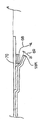
图1到4是使用本发明的胶带的四个实施例的横截面图。1 to 4 are cross-sectional views of four examples of adhesive tapes using the present invention.
图5是物体表面的横截面图,示出了本方法第一步骤过程中胶带和薄膜的贴附。Figure 5 is a cross-sectional view of the surface of an object showing the application of tape and film during the first step of the method.
图6是表面、胶带及薄膜的横截面图,及细丝被拉出胶带起到切割薄膜的效果。Figure 6 is a cross-sectional view of the surface, tape and film, and the filaments being pulled out of the tape to have the effect of cutting the film.
图7是表面及薄膜的横截面图,该薄膜的部分已被切除且胶带的末尾部分已被移除。Figure 7 is a cross-sectional view of the surface and film with portions of the film cut away and the end of the tape removed.
图8是车辆的诸如门的板和车辆的邻近表面之间连接处的物体的横截面图,展示了使用本方法贴附的胶带和薄膜。Figure 8 is a cross-sectional view of an object at a junction between a panel of a vehicle, such as a door, and an adjacent surface of the vehicle, showing tape and film applied using the present method.
图8A是车辆的诸如门的板和车辆的邻近表面之间连接处的物体的横截面图,展示了所贴附的胶带和薄膜的可替换的适用于变型的方法的实例,及胶带载有单独的丝线在边缘之间切割。8A is a cross-sectional view of an object at a junction between a panel of a vehicle, such as a door, and an adjacent surface of the vehicle, illustrating an example of an alternative suitable method of applying tape and film, and the tape carrying Individual silk threads are cut between the edges.
图8B是图8A中的相同部件在细丝被用于切割薄膜后及剩余的胶带部分被移除后的横截面图。Fig. 8B is a cross-sectional view of the same part in Fig. 8A after the filament has been used to cut the film and the remaining tape portion has been removed.
图8C的横截面图类似于图8A的横截面图,是车辆的诸如门的板和车辆的邻近表面之间连接点处的物体的横截面图,展示了另一可替换的实例,适用于变型的方法的所贴附的胶带和薄膜,此时胶带载有两根平行并排的细丝用于在边缘处或邻近边缘处进行切割。The cross-sectional view of Figure 8C is similar to that of Figure 8A and is a cross-sectional view of an object at a junction point between a panel of a vehicle, such as a door, and an adjacent surface of the vehicle, illustrating another alternative example, suitable for A variant of the attached tape and film where the tape carries two parallel side-by-side filaments for cutting at or adjacent to the edge.
图9是车辆表面的正视图,示出了不需被薄膜覆盖的区域。Figure 9 is a front view of a vehicle surface showing areas not to be covered by the film.
图10是沿图9的10-10线的横截面图。FIG. 10 is a cross-sectional view along line 10-10 of FIG. 9 .
图11、12和13示出了被印刷薄膜包裹的车辆的不同视图,视图中示出的门和其它板是要被打开的,及示出不需被薄膜覆盖的区域。Figures 11, 12 and 13 show different views of a vehicle wrapped in a printed film showing the doors and other panels to be opened and showing the areas that do not need to be covered by the film.
在附图中,会在不同的图中使用类似的标记符号来表示相对应的部分。In the drawings, like reference symbols are used to designate corresponding parts in different views.
具体实施方式 Detailed ways
图11中所示出的是诸如厢式货车的车辆10,包括侧板11,侧板11包括门13及后面板12,后面板12包括铰接板14,铰接板14的形式是一对后车门14A和14B。Shown in Figure 11 is a
其目的是,薄膜15要绕车辆包裹以覆盖侧板11和后面板12。可以以单一薄片的形式提供薄膜,但通常薄膜的形式会是较小的多件薄片,该较小的多件薄片边对边对接或稍重叠以按所需的量覆盖车辆。每件薄片或整件薄片会被印上客户选好的、要贴附到车辆上的图案,诸如公司徽标等车主所需的图案。The purpose is that the
车辆包括许多铰接板,诸如门、箱盖及引擎板等,这些铰接板可以从闭合位置起运动,在该闭合位置,板的边缘16邻接车辆的邻近边缘部分17。The vehicle includes a number of hinged panels, such as doors, hoods and engine panels, which are movable from a closed position in which an
薄膜15通常由乙烯基制成,且薄膜15在其前表面被印上图案20及在其后表面载有粘合剂19。通常会用到合片工序,使带有图案的前表面被透明的保护乙烯薄膜所覆盖。把图案包裹到车辆上,以便于绕着车辆的局部及在板上方贴附该图案。The
这种薄膜可以从3M处得到,并可以为此目的而被广泛使用。该薄膜具有的脱离层(未示出)可被剥离以露出压敏粘合剂用于至车辆的附着。Such films are available from 3M and are widely used for this purpose. The film has a release layer (not shown) that can be peeled off to expose the pressure sensitive adhesive for attachment to the vehicle.
通常,由于薄片以平坦的形式被提供,而车辆表面普遍是波状外形,所以很有必要牵拉及拉伸薄膜以配合表面。这个过程通常包括:在极限位置,将来自热风器的热施用至薄片18,并且一般会包含重复多次的牵拉薄片的步骤,将薄片暂时贴附到表面上,移除薄片用于另一次牵拉,及再一次贴附薄片,直到薄片能够以与轮廓配合的状态且没有气泡地贴靠在车辆上。Typically, since the sheet is provided in a flat form and vehicle surfaces are generally contoured, it is necessary to pull and stretch the film to fit the surface. This process usually involves applying heat from an air heater to the
为了在边缘16和17处起到切割薄膜的效果,提供的胶带30在图1到4中被示出具有前表面31,后表面32,第一纵向侧缘33和第二纵向侧缘34。该胶带在在后表面32上具有使胶带附着至车辆的粘合剂层35。胶带30在前表面31上没有粘合剂而是具有脱离特性,该脱离特性使胶带从粘合剂脱离或排斥粘合剂,该粘合剂诸如薄片15上的粘合剂19。这种脱离特性通常由实际涂层31A来提供,但也可以由基材本身的特性或由基材上的复合挤压层来提供。由于不打算移除脱离涂层,所以脱离涂层不是可移除的剥离薄片。胶带30载有细丝36。In order to have the effect of cutting the film at the
可以沿纵向侧缘33或34定位细丝,但是较佳的是,使细丝沿在横跨胶带的方向上偏离第一和第二纵向侧缘33,34或位于其正中线处定位。The filaments may be positioned along the
在图1中,细丝被简单地贴附到粘合剂层35上及被附着至粘合剂层35。由此,细丝可以被简单地附着至已有的胶带。通常胶带基部或基材及粘合剂的厚度规定在0.002到0.005英寸之间,及细丝的直径规定在0.0025到0.010英寸之间,以便使细丝能从粘合剂上立起而不会被埋没或被埋置于胶粘材料中。然而,选择的粘合剂和细丝要能在方法的步骤中保持附着,直到胶带被牵拉用于切割薄膜。In FIG. 1 , the filaments are simply attached to and adhered to the
在图2中,先将细丝铺设在胶带上,之后再贴附粘合剂,由此,粘合剂覆盖在细丝上方,在所需之处提供了增强的附着。In Figure 2, the filaments are laid down on the tape before the adhesive is applied, whereby the adhesive overlies the filaments, providing enhanced attachment where desired.
在图3中,细丝载有已涂覆的粘合剂或底涂层材料36A,该已涂覆的粘合剂或底涂层材料36A与粘合剂35协作,在所需之处提供了增强的附着。In Figure 3, the filaments carry an applied adhesive or
在图4中,提供的可替换的构造包括两个基材层34A和34B,层压粘合剂34C将两个基材层34A和34B与基材层34A和34B之间捉住的细丝36层压在一起,并由此定位。层34A在其后表面上载有粘合剂35及层34B在其前表面上载有脱离涂层31A。层压粘合剂34C必须要能够使细丝从其脱开。如果是交联型的层压粘合剂,那么可以处理细丝以防止其变为固定到粘合剂上。但如果将压敏粘合剂用作层压粘合剂,就不会出现细丝无法从层压粘合剂脱开的问题。In FIG. 4, an alternative configuration is provided comprising two
胶带的宽度范围是从0.060到0.500英寸,较佳地,小于0.25英寸。The tape width ranges from 0.060 to 0.500 inches, preferably less than 0.25 inches.
胶带有一定的可延展性,以便通过沿着相对侧的延展可以使得胶带向至少一侧发生弯曲。由此,胶带可以向各侧弯曲任意角度,以取得规定为0.157英寸的最小弧度内径。这使得胶带可以绕着车辆上的元件弯曲或包裹该元件,这些元件诸如门把手及其它之前描述过的物品,而同时胶带又可以平坦地靠在车辆表面并且通过其粘合剂层附着至车辆表面。The adhesive tape is extensible such that the adhesive tape can be bent to at least one side by stretching along opposite sides. Thus, the tape can be bent at any angle to each side to achieve a specified minimum arc inner diameter of 0.157 inches. This allows the tape to be bent or wrapped around elements on the vehicle, such as door handles and other previously described items, while the tape lies flat against the surface of the vehicle and is attached to the vehicle by its adhesive layer surface.
如图所示,细丝与两侧缘皆隔开,以允许在两个方向上的弯曲。如图所示,当细丝位于中间时,胶带是对称的,并会在各方向上弯曲同样的程度。但细丝可以偏移至一侧或位于一边缘处。在这种情况下,可以让胶带带有弧度地简单贴附在一个方向上,而细丝始终在曲线的内侧。同样用该配置,要做出反向的弯曲,这时细丝在弯曲的外侧,通过沿内侧边缘在隔开位置用合适的角度进行部分切割以允许边缘压缩而在内侧形成弯度。由于在牵拉动作过程中不期望细丝在纵向方向上的纵向延展,所以通常细丝比胶带的延伸性要差。As shown, the filaments are spaced from both sides to allow bending in both directions. As shown, when the filament is in the middle, the tape is symmetrical and bends the same amount in each direction. However, the filaments can be offset to one side or at an edge. In this case, it is possible to simply apply the tape in one direction with a curvature, with the filament always on the inside of the curve. Also with this configuration, a reverse bend is made, with the filament on the outside of the bend, and the bend is formed on the inside by making partial cuts at spaced locations along the inside edge at appropriate angles to allow edge compression. Filaments are generally less extensible than tapes since longitudinal extension of the filaments in the longitudinal direction during the pulling action is undesirable.
胶带被贴附到表面上,在胶带弯曲的过程中,粘合剂由此发挥作用,使四喜定位在胶带上,这样细丝被拉出时就起到切割薄膜的效果。The tape is attached to the surface, and during the flexing of the tape, the adhesive acts to position the Sixi on the tape so that the filaments, when pulled out, have the effect of cutting the film.
胶带由塑料或薄膜材料制成,使得胶带比细丝的伸展性更佳,较佳地,胶带由PVC制成,PVC已被发现能够在强度、与薄膜粘合剂的协作性、延展率及薄膜的光洁切割等方面提供最佳的特性。The tape is made of a plastic or film material such that the tape is more stretchable than filaments, preferably the tape is made of PVC which has been found to be superior in strength, cooperativity with film adhesives, elongation and Provides the best characteristics in terms of clean cutting of thin films, etc.
较佳地,细丝由Dyneema

在如图8所示的使用中,第一段胶带30A被贴附并被粘连附着到板上,以便使第二纵向侧缘34能大致沿着板的边缘16被贴附,及第一纵向侧缘33能与板的边缘16隔开。位于边缘间中线的细丝36因此也被定位在与板的边缘16隔开的位置。In use as shown in Figure 8, the first length of
第二段胶带30B被贴附并在边缘17处被粘连附着到板上,以便第二纵向侧缘34能大致沿着板的边缘17被贴附,及第一纵向侧缘33与板的边缘17隔开。再一次地,细丝36被定位在与边缘36隔开的位置。A second length of
薄膜15通过粘合剂19在板的边缘处附着到板和车辆的上,以便由粘合剂19使薄膜附着至表面和车辆上,实现薄膜包裹车辆及将图案20施用到车辆上。The
为了取得车辆的轮廓,薄膜会在被贴附的时候伸展及运动,因此不能在施用之前对薄膜进行切割。在许多情况下,为了取得需要的位置和形状,有必要多次将薄膜贴附到某区域上方并从该区域处多次移除。在一些情况下,为了达到必须的伸展度用于匹配特别难匹配的车辆的轮廓,有必要对薄膜施加热量。由此,实际上薄膜在被应用的时候才会根据车辆的形状进行裁制,所以不可能预先切割边缘。本发明的整个意图在于可以允许薄膜以尽可能大的薄片的形式进行贴附,以便使在大多数情况下不适合被切割成较小件的薄片能够用于个别的应用中。To capture the contours of the vehicle, the film stretches and moves as it is applied, so the film cannot be cut prior to application. In many cases, it is necessary to apply the film to and remove from an area multiple times in order to achieve the desired position and shape. In some cases, it was necessary to apply heat to the film in order to achieve the necessary stretch for matching the contours of vehicles that were particularly difficult to match. As a result, the film is actually tailored to the shape of the vehicle when it is applied, so it is not possible to pre-cut the edges. The whole intention of the present invention is to allow the film to be attached in the largest possible flakes, so that flakes which in most cases are not suitable to be cut into smaller pieces can be used for individual applications.
可以利用用户的技能在不发生起皱和扭结的情况下适当地贴附薄膜以完成附着,这种情况下必然要从车辆表面拉回薄膜胶带用于调整。当附着完成时,在P1处从胶带起拉出第一段细丝36(图5和6),以便在胶带的第一长边30A处切割薄膜。从胶带起拉出第二段细丝36,以便在第一长边30B处切割薄膜。Attachment can be accomplished using the skill of the user to properly apply the film without wrinkling and kinking, where it is necessary to pull the film tape back from the vehicle surface for adjustment. When attachment is complete, a first length of filament 36 ( FIGS. 5 and 6 ) is pulled from the tape at P1 to cut the film at the first
细丝36与第一和第二侧缘33,34隔开,并且当胶带被牵拉以切割薄膜时,胶带具有的宽度能够使细丝经由胶带30沿胶带30的长边撕开,而不是从胶带的一侧缘33,34拉出。这在图5和6中被示出,其中,细丝36经由胶带30中心的裂缝30R被拉出。这会起到的作用是,在直接位于胶带内裂缝上方的位置处切割薄膜,如18R所示。The
撕开胶带会沿薄膜的第一侧缘在薄膜侧缘底下留下胶带部分30P。撕开胶带会沿薄膜的第一侧缘在薄膜的一部分18P底下留下胶带部分30Q。Peeling the tape leaves a
由于薄膜部分18P及胶带部分30Q会越过切割边缘18R直接地露出在外,所以可以被很容易去除。为了移除胶带30P,如68所示,把薄膜切割后的边缘抬起,如69所示,小心地从切割边缘基本与车辆表面平行地拉开该部分。在移除该部分30P之后,在切割边缘18P处的薄膜边缘部分被平铺到车辆的表面上。为了有助于识别及将胶带部分30P定位,用于确保胶带部分30P已全部移除,较佳地,给胶带着明亮的颜色,以在视觉上将胶带部分与薄膜区分开来。Since the
在一些情况下,为了有助于使薄膜的边缘附着至表面,将底涂层区70应用至表面,至少应用到胶带的底下,用于增强薄膜边缘至表面的附着。胶带的粘合剂具有的特性是,可以在不留下残余物及不损伤表面的情况下,从物体表面上的底涂层70处拉开胶带。应当领会的是,设计底涂层是用于确保薄膜粘合剂19的粘合效果的增加,因此必须要确保胶带的粘合剂35不会过于有力地粘在底涂层上,以免妨碍容易地移除胶带部分的或导致粘合剂残余物留在车辆表面的底涂层上。In some cases, to help adhere the edge of the film to the surface, a
胶带30前表面上的脱离涂层31对于薄膜上的压敏粘合剂19具有脱离特性,使得薄膜上的压敏粘合剂可以接触到胶带的前表面上,并且被拉开以重新定位。The
如图11到13中所示,当薄膜贴附到车辆时,由于薄膜会影响被它覆盖的零件的运作,车辆也会包含一系列不希望被覆盖的区域。其包括门把手41和42,加油口盖43及灯罩44及牌照45。在图9和10中,示出了用于露出这些元件的技术,其中,将胶带30的一段51贴附到表面52,以便通过面向内朝向区域53的胶带长边的一纵向侧缘,面向外远离区域的第二纵向侧缘33,在上文中说明的那些侧缘之间的胶带长边的细丝35,及长边的末端54和55会合而环绕区域53。一般说来,末端不会对接在一起,但是,在例如区域53是加油口盖的情况下,末端还会重叠,使得有足够多可用的细丝用于牵拉以开始切割。可替换地,在例如区域53是凹形门把手的情况下,末端可以横跨入区域53,并且可以通过用刀切入门把手的凹槽来作为切割线的起点,以找到那些末端之一。As shown in Figures 11 to 13, when the film is attached to the vehicle, the vehicle also contains a number of areas that are not desired to be covered because the film can interfere with the operation of the parts it covers. It includes door handles 41 and 42 , a fuel filler cap 43 and a
再一次地,将薄膜贴附到包含区域53的表面52上,以便由粘合剂使薄膜附着至表面和车辆上,实现薄膜包裹车辆及将图案应用到车辆上。Again, the film is attached to the
再一次地,在P6处从胶带中拉出该段胶带51的细丝36,以绕区域53切割薄膜。该段胶带51的剩余部分被从表面移除时带走的还有在区域上方的薄膜的剩余部分53A。脱离涂层在进行此步骤的过程中也会有助于胶带的平滑脱离。胶带底层必须具有足够的强度使其被牵拉时不会发生断裂。边缘下方的胶带部分被移除后,薄膜的绕着区域的边缘会被压平在表面上。Again, the
对于贴附而言,胶带前侧的脱离特性是至关重要的。在包裹薄膜正常拟合至汽车的过程中,如果没有足够大的脱离特性,包裹薄膜粘合剂会在包裹薄膜重新定位过程中粘死在胶带上并且将胶带拉离汽车。For attachment, the release properties of the front side of the tape are critical. Without sufficient release characteristics during the proper fit of the wrap film to the car, the wrap film adhesive will stick to the tape and pull the tape away from the car during the wrap film repositioning process.
脱离特性可以由胶带自身的性状提供,提供该胶带自身性状的可以是基部材料(例如特氟隆)之类与包裹薄膜胶带粘合剂间具有较低的粘合性的胶带的部份。也可以在基部胶带薄膜的表面刻上限制薄膜粘合剂的接触区域的浮雕图案,由此提供好的脱离性。可替换地,在胶带的前表面添加脱离涂层(硅树脂等)以起到同样的作用。大多数胶带的前表面被涂覆,以便你可以从胶带卷中拉出胶带。电工胶带是不适合的,因为其只有很少的脱离涂层或没有脱离涂层,以便在包裹电线时黏住自身。The release properties may be provided by the properties of the tape itself, which may be the portion of the tape that has a low adhesion to the wrap film tape adhesive, such as a base material (eg Teflon). The surface of the base tape film can also be embossed to limit the contact area of the film adhesive, thereby providing good release properties. Alternatively, a release coating (silicone, etc.) is added to the front surface of the tape to serve the same purpose. The front surface of most tapes is coated so that you can pull the tape off the roll. Electrical tape is not suitable because it has little or no release coating to stick to itself when wrapping the wire.
对于经由包裹薄膜产生光洁的切割(类似剃刀)而言,主要成分是塑料薄膜的胶带比主要成分是纸的胶带更佳。主要成分是纸的胶带会产生肉眼显而易见及明显能摸出来的锯齿状的切口。A plastic film-based tape is better than a paper-based tape for producing a clean cut (razor-like) through a wrapping film. Tape whose main component is paper produces jagged cuts that are visible to the naked eye and distinct to the touch.
现在转向图8A和8B,示出的是图8方法的可替换实施例,该实施例公开了位于物体内铰接板之间的连接点处使用两条胶带,该铰接板可以从闭合状态起运动,在闭合状态时,板的边缘与物体邻近的边缘部分对接。Turning now to FIGS. 8A and 8B , shown is an alternative embodiment of the method of FIG. 8 which discloses the use of two tapes at the connection points within the object between hinged panels that can be moved from a closed state. , in the closed state, the edge of the panel abuts against the adjacent edge portion of the object.
由此,图8A示出的是位于车辆的诸如门的板和车辆的邻近表面之间的连接点处的物体的横截面图,其中,提供板的边缘16,及物体或车辆的邻近的边缘17。在图8A中,使用的单根胶带30S具有图3中示出的构造,以便包含细丝36。Thus, shown in FIG. 8A is a cross-sectional view of an object at a junction point between a panel of a vehicle, such as a door, and an adjacent surface of the vehicle, wherein
图8B示出了图8A中的相同部件在细丝36被用于切割薄膜15后及剩余的胶带部分被移除后的状态。Figure 8B shows the same components as in Figure 8A after the
在图8A中,该方法包含的步骤是,将单段胶带30S沿板的边缘16在板的边缘处贴附至物体,以便使胶带30S在板的边缘16及物体邻近的边缘部分17之间桥接,实现胶带30S至边缘16及边缘部分17的附着。In FIG. 8A, the method comprises the step of applying a single length of tape 30S to the object at the edge of the board along the
为了实现这一目的,通常该胶带要比用在物体其他区域内的胶带宽,因此该胶带的宽度要达到0.5英寸甚至1.0英寸。因此可以成套供应用于车辆上的胶带,胶带套件中包含足够长的较窄胶带,用在桥接位置以外的地方,及足够长的桥接胶带。To achieve this, the tape is usually wider than the tape used in other areas of the object, so the tape can be 0.5 inches or even 1.0 inches wide. It is therefore possible to supply the tapes for use on vehicles in kits, the tape kits containing narrower tapes long enough to be used in places other than bridging locations and bridging tapes long enough.
由此,胶带被牢固地粘附到边缘16和边缘17,并且单根细丝36被定位在边缘16和边缘17之间的间隔内。Thereby, the tape is firmly adhered to the
如前所述,薄膜15在板的边缘处被贴附在板及物体的上方,以便由粘合剂使薄膜附着至表面和车辆上,实现薄膜包裹车辆及将图案应用到车辆上。胶带及薄膜及其贴附可以使用如前所述的构造及配置,此处不再重复。As before, the
从胶带中拉出胶带单条长边的细丝,使细丝沿线切割薄膜,以形成薄膜的两切割边缘。The filament on a single long side of the tape is pulled from the tape so that the filament cuts the film along the line to form the two cut edges of the film.
从板的边缘16处及从物体的边缘部分17处拉开胶带的剩余部分。在如图所示的安排中,通过拉出细丝使胶带分成两部分,其中各个侧面上留有一部分。The remainder of the tape is pulled away from the
在工序的最后,如图8B中所示,使薄膜的切割边缘15X和15Y附着至物体。At the end of the process, as shown in FIG. 8B , the cut edges 15X and 15Y of the film are attached to the object.
如图8A中所示,胶带完成了定位,使得单根细丝位于板的边缘及物体的边缘部分之间并与板的边缘及物体的边缘部分皆隔开。这是较佳的配置,但是可以领会的是,几乎没有必要使细丝直接精确地位于边缘之间,因此细丝在手动贴附的过程中是否会偏向一侧或另一侧皆取决于用户的技能。As shown in Figure 8A, the tape is positioned such that the individual filaments are located between and spaced from both the edge of the plate and the edge portion of the object. This is the preferred configuration, but it can be appreciated that there is little need for the filament to be positioned exactly between the edges, so it is up to the user whether the filament will veer to one side or the other during manual application skills.
为了协助对胶带进行定位,沿胶带露出的表面提供了识别细丝位置的着明显不同颜色的窄条,以便有助于将细丝定位在板的边缘与物体的边缘部分之间的位置。在此实施例中,沿胶带的中心线安排可以有明显不同颜色的窄条。To assist in locating the tape, distinctly colored strips identifying the location of the filaments are provided along the exposed surface of the tape to aid in locating the filaments between the edge of the plate and the edge portion of the object. In this embodiment, narrow strips, which may be of distinctly different colors, are arranged along the centerline of the tape.
随着细丝被定位在边缘16与17之间,胶带也完成了定位,使得细丝与板的边缘16及边缘17隔开,因此拉出细丝时,薄膜的边缘部分15X和15Y会分别被留在边缘16及17处。如果细丝更接近某边缘,那个边缘上的切割边缘部分的宽度会较小。但是一旦留有切割边缘,该切割边缘就会绕边缘包裹并附着至表面。包裹是否能充分地整体封上边缘及接合后表面要取决于间隙的尺寸及细丝的位置。这特别有助于保护板的边缘16,及有助于将薄膜的切割边缘15X环绕板的边缘进行适当定位,使得切割边缘15X在更好的保护下及在更不明显的情况下被附着到板的后表面。As the filament is positioned between the
上述配置因此使得用户能够准确无误地将薄膜材料包裹到门或其他板的边缘上。胶带的宽度增加了,以便使胶带宽度可以桥接门、引擎板等之间的间隙。可以像以前一样修剪薄膜包裹,但如果细丝能被准确地定位在两边缘之间,那么这次在修剪后会留下开度相当于薄膜材料宽度的二分之一的间隙。将多余的材料绕门的边缘折叠,在此实例中,由此包裹材料将正好提供到边缘。另一可选项是,把印刷线,即细丝,与门的边缘对准,并将包裹薄膜准确地修剪至该边缘而没有包裹卷绕的部分。多余的部分因此会在边缘17上,并且可以被铺平或者如所需地部分卷起。The above arrangement thus enables a user to accurately wrap film material onto the edge of a door or other panel. The width of the tape has been increased so that the tape width can bridge gaps between doors, engine panels, etc. The film wrap can be trimmed as before, but this time after trimming a gap equal to one-half the width of the film material will be left if the filament can be positioned accurately between the two edges. Fold the excess material around the edge of the door, in this example so that the wrapping material will be provided right up to the edge. Another option is to align the printed line, ie the filament, with the edge of the door and trim the wrapping film exactly to that edge without wrapping the coiled portion. The excess will thus be on the
如图8C的变型中所示,胶带载有两根平行并排的细丝36X和36Y,用于在边缘16和17处或邻近边缘16和17处进行切割。图8A的单根细丝被定位在两边缘之间。此配置会在边缘之间或邻近一边缘进行切割,但是在任何情况下,此配置都会留下需要绕车辆本体的边缘包裹的至少一个,一般是两个薄片边缘条。As shown in a variation of FIG. 8C , the tape carries two parallel side-by-side filaments 36X and 36Y for cutting at or
在图8C的备选方案中,胶带使用了两根并排且平行的细丝。在此配置中,在板的边缘16处或邻近板的边缘16处定位第一根细丝36X,在物体的邻近部分处或邻近物体的邻近部分处定位第二根细丝36Y。这会起到的作用是,减少或消除薄片留下的、悬在超过板或本体的边缘位置的部分。In the alternative of Figure 8C, the tape uses two side-by-side and parallel filaments. In this configuration, a first filament 36X is positioned at or adjacent to the
选定的细丝之间的间隔要非常接近于汽车制造中通常的间隙开度。这通常会是规定的0.5英寸。在两根细丝都被拉出时,各细丝会产生各自的切口,而两根细丝之间的中间部分仍附着至一根或两根细丝。每根细丝都分别带有着色的窄条60,以有助于用户将胶带引入所需的位置。The spacing between the filaments is chosen to be very close to the usual gap openings in automotive manufacturing. This will usually be the specified 0.5 inches. When both filaments are pulled, each filament will have its own incision, while the intermediate portion between the two filaments remains attached to one or both filaments. Each filament is individually colored with a narrow strip 60 to assist the user in directing the tape to the desired location.
由于从如上所述的我的发明中可以作出多种修改,并且许多明显不同的实施例如果同样是基于本权利要求书中的精神及范围作出,则不超出该精神及范围。将预期到的是,所有包含在附随说明书中的内容仅应被视为示例而不是意在限制。Since many modifications can be made from my invention as described above, and many apparently different embodiments can be made without departing from the spirit and scope of the claims if they are also made based on the spirit and scope of the claims. It is to be expected that all matter contained in the accompanying specification should be considered as examples only and not intended to be limiting.
Claims (10)
Priority Applications (1)
| Application Number | Priority Date | Filing Date | Title |
|---|---|---|---|
| CN201410198609.4A CN104231957B (en) | 2009-07-20 | 2010-06-25 | Wrapping objects with film and cutting the film with tape |
Applications Claiming Priority (7)
| Application Number | Priority Date | Filing Date | Title |
|---|---|---|---|
| US22694709P | 2009-07-20 | 2009-07-20 | |
| US61/226,947 | 2009-07-20 | ||
| US12/580,838 | 2009-10-16 | ||
| CA2686003A CA2686003C (en) | 2009-07-20 | 2009-10-16 | Tape with a longitudinally extending filament |
| CA2686003 | 2009-10-16 | ||
| US12/580,838 US8187407B2 (en) | 2009-07-20 | 2009-10-16 | Wrapping an object with a film using a tape for cutting the film |
| PCT/CA2010/000934 WO2011009191A1 (en) | 2009-07-20 | 2010-06-25 | Wrapping an object with a film using a tape for cutting the film |
Related Child Applications (1)
| Application Number | Title | Priority Date | Filing Date |
|---|---|---|---|
| CN201410198609.4A Division CN104231957B (en) | 2009-07-20 | 2010-06-25 | Wrapping objects with film and cutting the film with tape |
Publications (2)
| Publication Number | Publication Date |
|---|---|
| CN102625732A CN102625732A (en) | 2012-08-01 |
| CN102625732B true CN102625732B (en) | 2014-06-18 |
Family
ID=43465514
Family Applications (2)
| Application Number | Title | Priority Date | Filing Date |
|---|---|---|---|
| CN201410198609.4A Active CN104231957B (en) | 2009-07-20 | 2010-06-25 | Wrapping objects with film and cutting the film with tape |
| CN201080040379.9A Active CN102625732B (en) | 2009-07-20 | 2010-06-25 | Wrap objects in film and cut film with tape |
Family Applications Before (1)
| Application Number | Title | Priority Date | Filing Date |
|---|---|---|---|
| CN201410198609.4A Active CN104231957B (en) | 2009-07-20 | 2010-06-25 | Wrapping objects with film and cutting the film with tape |
Country Status (12)
| Country | Link |
|---|---|
| US (3) | US8187407B2 (en) |
| EP (2) | EP2650142B1 (en) |
| JP (1) | JP5451882B2 (en) |
| CN (2) | CN104231957B (en) |
| AU (1) | AU2010276103B2 (en) |
| BR (1) | BR112012001536A2 (en) |
| CA (2) | CA2779624C (en) |
| DK (2) | DK2461914T3 (en) |
| ES (2) | ES2548710T3 (en) |
| PL (2) | PL2650142T3 (en) |
| WO (1) | WO2011009191A1 (en) |
| ZA (1) | ZA201206473B (en) |
Families Citing this family (18)
| Publication number | Priority date | Publication date | Assignee | Title |
|---|---|---|---|---|
| CA2779624C (en) | 2009-07-20 | 2015-12-29 | Garry Cyrille Alfred VANDENBERGHE | Tape with a longitudinally extending filament |
| CN102659308A (en) * | 2012-05-03 | 2012-09-12 | 吴海波 | Thin film cutter and thin film cutting method |
| CA2860576C (en) * | 2012-10-18 | 2015-10-13 | Garry Cyrille Alfred VANDENBERGHE | Wrapping an object with a film using a tape for cutting the film |
| US20150107763A1 (en) | 2013-10-21 | 2015-04-23 | Garry Cyrille Alfred VanDenBerghe | Applying an Adhesive Film to a Surface using a Tape for Cutting the Film |
| US10145075B2 (en) | 2013-11-14 | 2018-12-04 | MedVasis, LLC | Multilayer marine wraps |
| CN106414050B (en) * | 2014-06-06 | 2019-12-13 | 3M创新有限公司 | Articles Based on Conformable Removable Films |
| CA2868169A1 (en) | 2014-10-22 | 2016-04-22 | Gary D. Langeman | Composite edge trimming tape |
| US9751232B2 (en) * | 2015-02-03 | 2017-09-05 | 3M Innovative Properties Company | Tape system with a longitudinal filament for slitting film |
| WO2017182899A1 (en) | 2016-04-19 | 2017-10-26 | 3M Innovative Properties Company | Tape system with a longitudinal filament for slitting film |
| CN106696851A (en) * | 2016-12-07 | 2017-05-24 | 浙江吉利控股集团有限公司 | Automobile decorative film |
| FR3092515A1 (en) * | 2019-02-12 | 2020-08-14 | Uniflow Marine | METHOD OF COVERING AN ELEMENT BY MEANS OF A SELF-CUTTING FILM |
| FR3092514A1 (en) * | 2019-02-12 | 2020-08-14 | Uniflow Marine | SELF-CUTTING FILM |
| US11279856B2 (en) | 2019-05-24 | 2022-03-22 | Langeman Manufacturing Limited | Filament-bearing masking tape |
| US20220380631A1 (en) * | 2019-07-19 | 2022-12-01 | Langeman Manufacturing Limited | Flexible tape with embedded cutting filament |
| CN111547560A (en) * | 2020-06-17 | 2020-08-18 | 嘉兴宏达包装科技有限公司 | Adhesive tape easy to find adhesive tape head |
| CN113353746B (en) * | 2021-06-03 | 2022-09-30 | 山东威高血液净化制品股份有限公司 | Automatic film yarn wrapping device and wrapping method thereof |
| CN115446922B (en) * | 2022-08-22 | 2024-07-12 | 深圳市领略数控设备有限公司 | Graphite wrapping method and device |
| DE102024002551B3 (en) | 2024-08-07 | 2025-06-18 | Mercedes-Benz Group AG | Battery housing and method for closing and opening the battery housing |
Citations (5)
| Publication number | Priority date | Publication date | Assignee | Title |
|---|---|---|---|---|
| US4255469A (en) * | 1979-07-02 | 1981-03-10 | Hughes Aircraft Company | Process for selectively applying a conformal coating with a masking tape having an imbedded wire cutting edge |
| US6235365B1 (en) * | 1998-12-18 | 2001-05-22 | W. R. Grace & Co.-Conn. | Waterproofing membrane having release sheet cutting system |
| US6284319B1 (en) * | 1996-02-28 | 2001-09-04 | Gary D. Langeman | Edge trimming tape and method of manufacture |
| US20060266464A1 (en) * | 2005-05-24 | 2006-11-30 | Mark White | Filament tape system & method thereof |
| CN101247939A (en) * | 2005-08-05 | 2008-08-20 | 蒂萨股份公司 | Use of an adhesive tape with a spunbond liner at least partially coated on one side with a pressure sensitive adhesive |
Family Cites Families (17)
| Publication number | Priority date | Publication date | Assignee | Title |
|---|---|---|---|---|
| US2005665A (en) | 1934-03-01 | 1935-06-18 | Saignier Etienne | Means for opening containers of all kinds |
| US2771385A (en) * | 1954-08-26 | 1956-11-20 | Mid States Gummed Paper Co | Pressure-sensitive and remoistening draw tape |
| US3810813A (en) | 1972-07-20 | 1974-05-14 | Sesame Industries Ltd | Closure-forming strip with an attached tear strip structure |
| JPS6171271U (en) * | 1984-10-15 | 1986-05-15 | ||
| US5054618A (en) * | 1987-07-24 | 1991-10-08 | Kim Myun H | Sealed container with tear opening feature |
| JP2508942B2 (en) * | 1992-02-26 | 1996-06-19 | 関西ペイント株式会社 | How to attach the protective adhesive film |
| JP3169199B2 (en) * | 1994-02-28 | 2001-05-21 | 本田技研工業株式会社 | How to attach a protective film to the top of the vehicle |
| US6017079A (en) * | 1998-01-23 | 2000-01-25 | Warner; Joseph | Vehicle camouflage conversion kit and method of using same |
| SE9904210L (en) | 1999-11-21 | 2000-12-04 | Jan Soederholm | Device for sample bag |
| US6474392B1 (en) * | 2000-09-28 | 2002-11-05 | Ascom Hasler Mailing Systems, Inc. | System for opening sealed packages, tape dispenser, and tape |
| JP2002347117A (en) * | 2001-05-29 | 2002-12-04 | Hitachi Industries Co Ltd | Film sticking apparatus and sticking method |
| GB0204602D0 (en) | 2002-02-27 | 2002-04-10 | Ucb Sa | Packaging methods and packs made thereby |
| US7550187B2 (en) * | 2003-01-30 | 2009-06-23 | W. R. Grace & Co. -Conn. | Moisture barrier membrane with tearable release liner composite |
| DE102004014052B3 (en) * | 2004-03-23 | 2005-04-21 | Daimlerchrysler Ag | Self-adhesive protective foil application system for use in car factory uses pairs of industrial robots at intervals along production line with application tools gripping foil and pulling it off rolls |
| US20090074994A1 (en) * | 2007-09-14 | 2009-03-19 | Mclean Linda L | Kit for Decorating A Car |
| US7914638B2 (en) | 2009-07-20 | 2011-03-29 | Garry Cyrille Alfred Van Den Berghe | Wrapping an object with a film using a tape for cutting the film |
| CA2779624C (en) | 2009-07-20 | 2015-12-29 | Garry Cyrille Alfred VANDENBERGHE | Tape with a longitudinally extending filament |
-
2009
- 2009-10-16 CA CA2779624A patent/CA2779624C/en active Active
- 2009-10-16 US US12/580,838 patent/US8187407B2/en active Active
- 2009-10-16 CA CA2686003A patent/CA2686003C/en active Active
-
2010
- 2010-06-25 AU AU2010276103A patent/AU2010276103B2/en active Active
- 2010-06-25 ES ES13174593.7T patent/ES2548710T3/en active Active
- 2010-06-25 PL PL13174593T patent/PL2650142T3/en unknown
- 2010-06-25 EP EP13174593.7A patent/EP2650142B1/en active Active
- 2010-06-25 ES ES10801812T patent/ES2435496T3/en active Active
- 2010-06-25 WO PCT/CA2010/000934 patent/WO2011009191A1/en not_active Ceased
- 2010-06-25 DK DK10801812.8T patent/DK2461914T3/en active
- 2010-06-25 DK DK13174593.7T patent/DK2650142T3/en active
- 2010-06-25 CN CN201410198609.4A patent/CN104231957B/en active Active
- 2010-06-25 EP EP10801812.8A patent/EP2461914B1/en active Active
- 2010-06-25 BR BR112012001536-2A patent/BR112012001536A2/en not_active Application Discontinuation
- 2010-06-25 CN CN201080040379.9A patent/CN102625732B/en active Active
- 2010-06-25 PL PL10801812T patent/PL2461914T3/en unknown
- 2010-06-25 JP JP2012520869A patent/JP5451882B2/en active Active
-
2011
- 2011-12-15 US US13/327,042 patent/US20120094088A1/en not_active Abandoned
-
2012
- 2012-05-16 US US13/473,152 patent/US8361615B2/en active Active
- 2012-08-28 ZA ZA2012/06473A patent/ZA201206473B/en unknown
Patent Citations (5)
| Publication number | Priority date | Publication date | Assignee | Title |
|---|---|---|---|---|
| US4255469A (en) * | 1979-07-02 | 1981-03-10 | Hughes Aircraft Company | Process for selectively applying a conformal coating with a masking tape having an imbedded wire cutting edge |
| US6284319B1 (en) * | 1996-02-28 | 2001-09-04 | Gary D. Langeman | Edge trimming tape and method of manufacture |
| US6235365B1 (en) * | 1998-12-18 | 2001-05-22 | W. R. Grace & Co.-Conn. | Waterproofing membrane having release sheet cutting system |
| US20060266464A1 (en) * | 2005-05-24 | 2006-11-30 | Mark White | Filament tape system & method thereof |
| CN101247939A (en) * | 2005-08-05 | 2008-08-20 | 蒂萨股份公司 | Use of an adhesive tape with a spunbond liner at least partially coated on one side with a pressure sensitive adhesive |
Also Published As
| Publication number | Publication date |
|---|---|
| US8187407B2 (en) | 2012-05-29 |
| EP2461914B1 (en) | 2013-08-14 |
| CA2686003C (en) | 2012-10-02 |
| CA2779624C (en) | 2015-12-29 |
| CN104231957B (en) | 2015-10-21 |
| BR112012001536A2 (en) | 2020-09-15 |
| US20110014412A1 (en) | 2011-01-20 |
| CN102625732A (en) | 2012-08-01 |
| DK2461914T3 (en) | 2013-11-18 |
| AU2010276103B2 (en) | 2012-09-20 |
| AU2010276103A1 (en) | 2012-02-09 |
| EP2650142B1 (en) | 2015-08-05 |
| EP2461914A4 (en) | 2013-04-03 |
| JP2012533454A (en) | 2012-12-27 |
| ES2435496T3 (en) | 2013-12-19 |
| CA2779624A1 (en) | 2011-01-20 |
| EP2650142A1 (en) | 2013-10-16 |
| US8361615B2 (en) | 2013-01-29 |
| DK2650142T3 (en) | 2015-11-02 |
| PL2461914T3 (en) | 2014-04-30 |
| JP5451882B2 (en) | 2014-03-26 |
| ES2548710T3 (en) | 2015-10-20 |
| PL2650142T3 (en) | 2015-12-31 |
| CA2686003A1 (en) | 2011-01-20 |
| CN104231957A (en) | 2014-12-24 |
| WO2011009191A1 (en) | 2011-01-27 |
| ZA201206473B (en) | 2013-05-29 |
| EP2461914A1 (en) | 2012-06-13 |
| US20120251792A1 (en) | 2012-10-04 |
| US20120094088A1 (en) | 2012-04-19 |
Similar Documents
| Publication | Publication Date | Title |
|---|---|---|
| CN102625732B (en) | Wrap objects in film and cut film with tape | |
| US7914638B2 (en) | Wrapping an object with a film using a tape for cutting the film | |
| CN109072023B (en) | Tape system with longitudinal filaments for cutting films | |
| CA2700471C (en) | Wrapping an object with a film using a tape for cutting the film | |
| US10384362B2 (en) | Tape system with a longitudinal filament for slitting film | |
| CA2860576C (en) | Wrapping an object with a film using a tape for cutting the film |
Legal Events
| Date | Code | Title | Description |
|---|---|---|---|
| C06 | Publication | ||
| PB01 | Publication | ||
| C10 | Entry into substantive examination | ||
| SE01 | Entry into force of request for substantive examination | ||
| C14 | Grant of patent or utility model | ||
| GR01 | Patent grant | ||
| C41 | Transfer of patent application or patent right or utility model | ||
| TR01 | Transfer of patent right |
Effective date of registration: 20160817 Address after: British Columbia Patentee after: South flash technology company system Address before: British Columbia Patentee before: Van Den Berghe Garry Cyrille |
|
| TR01 | Transfer of patent right |
Effective date of registration: 20170406 Address after: American Minnesota Patentee after: 3M INNOVATIVE PROPERTIES Co. Address before: Ontario, Canada Patentee before: 3M Canadian Ex-plosives Ltd. Effective date of registration: 20170406 Address after: Ontario, Canada Patentee after: 3M Canadian Ex-plosives Ltd. Address before: British Columbia Patentee before: South flash technology company system |
|
| TR01 | Transfer of patent right |