CN103165708A - Crosslinkable edge sealant used for photovoltaic module - Google Patents
Crosslinkable edge sealant used for photovoltaic module Download PDFInfo
- Publication number
- CN103165708A CN103165708A CN2011104082204A CN201110408220A CN103165708A CN 103165708 A CN103165708 A CN 103165708A CN 2011104082204 A CN2011104082204 A CN 2011104082204A CN 201110408220 A CN201110408220 A CN 201110408220A CN 103165708 A CN103165708 A CN 103165708A
- Authority
- CN
- China
- Prior art keywords
- solar module
- weight
- ethylene copolymer
- frame
- frame body
- Prior art date
- Legal status (The legal status is an assumption and is not a legal conclusion. Google has not performed a legal analysis and makes no representation as to the accuracy of the status listed.)
- Pending
Links
- 239000000565 sealant Substances 0.000 title abstract description 3
- 239000000203 mixture Substances 0.000 claims abstract description 93
- 239000012812 sealant material Substances 0.000 claims abstract description 36
- VGGSQFUCUMXWEO-UHFFFAOYSA-N Ethene Chemical compound C=C VGGSQFUCUMXWEO-UHFFFAOYSA-N 0.000 claims description 61
- 239000005977 Ethylene Substances 0.000 claims description 51
- 238000007334 copolymerization reaction Methods 0.000 claims description 48
- 238000000034 method Methods 0.000 claims description 40
- 150000001336 alkenes Chemical class 0.000 claims description 27
- 239000000463 material Substances 0.000 claims description 26
- 229920000642 polymer Polymers 0.000 claims description 20
- 238000002360 preparation method Methods 0.000 claims description 20
- 125000000217 alkyl group Chemical group 0.000 claims description 12
- 238000007765 extrusion coating Methods 0.000 claims description 12
- 229920001577 copolymer Polymers 0.000 claims description 10
- 150000005671 trienes Chemical class 0.000 claims description 10
- UFHFLCQGNIYNRP-UHFFFAOYSA-N Hydrogen Chemical compound [H][H] UFHFLCQGNIYNRP-UHFFFAOYSA-N 0.000 claims description 9
- 229910052739 hydrogen Inorganic materials 0.000 claims description 9
- 239000001257 hydrogen Substances 0.000 claims description 9
- 229920003023 plastic Polymers 0.000 claims description 9
- 239000004033 plastic Substances 0.000 claims description 9
- SOGAXMICEFXMKE-UHFFFAOYSA-N Butylmethacrylate Chemical compound CCCCOC(=O)C(C)=C SOGAXMICEFXMKE-UHFFFAOYSA-N 0.000 claims description 8
- 239000004593 Epoxy Substances 0.000 claims description 8
- QHZOMAXECYYXGP-UHFFFAOYSA-N ethene;prop-2-enoic acid Chemical compound C=C.OC(=O)C=C QHZOMAXECYYXGP-UHFFFAOYSA-N 0.000 claims description 8
- DCKVNWZUADLDEH-UHFFFAOYSA-N sec-butyl acetate Chemical compound CCC(C)OC(C)=O DCKVNWZUADLDEH-UHFFFAOYSA-N 0.000 claims description 8
- CQEYYJKEWSMYFG-UHFFFAOYSA-N butyl acrylate Chemical compound CCCCOC(=O)C=C CQEYYJKEWSMYFG-UHFFFAOYSA-N 0.000 claims description 7
- 239000000155 melt Substances 0.000 claims description 7
- BAPJBEWLBFYGME-UHFFFAOYSA-N Methyl acrylate Chemical group COC(=O)C=C BAPJBEWLBFYGME-UHFFFAOYSA-N 0.000 claims description 6
- NIXOWILDQLNWCW-UHFFFAOYSA-N acrylic acid group Chemical group C(C=C)(=O)O NIXOWILDQLNWCW-UHFFFAOYSA-N 0.000 claims description 6
- 150000001991 dicarboxylic acids Chemical class 0.000 claims description 6
- VVQNEPGJFQJSBK-UHFFFAOYSA-N Methyl methacrylate Chemical compound COC(=O)C(C)=C VVQNEPGJFQJSBK-UHFFFAOYSA-N 0.000 claims description 5
- 150000001261 hydroxy acids Chemical group 0.000 claims description 5
- 125000000896 monocarboxylic acid group Chemical group 0.000 claims description 5
- 150000008065 acid anhydrides Chemical class 0.000 claims description 4
- 238000006243 chemical reaction Methods 0.000 claims description 4
- VOZRXNHHFUQHIL-UHFFFAOYSA-N glycidyl methacrylate Chemical compound CC(=C)C(=O)OCC1CO1 VOZRXNHHFUQHIL-UHFFFAOYSA-N 0.000 claims description 4
- GHUXAYLZEGLXDA-UHFFFAOYSA-N 8-azido-5-ethyl-6-phenylphenanthridin-5-ium-3-amine;bromide Chemical compound [Br-].C12=CC(N=[N+]=[N-])=CC=C2C2=CC=C(N)C=C2[N+](CC)=C1C1=CC=CC=C1 GHUXAYLZEGLXDA-UHFFFAOYSA-N 0.000 claims description 3
- 229920002126 Acrylic acid copolymer Polymers 0.000 claims description 3
- JIGUQPWFLRLWPJ-UHFFFAOYSA-N Ethyl acrylate Chemical compound CCOC(=O)C=C JIGUQPWFLRLWPJ-UHFFFAOYSA-N 0.000 claims description 3
- 125000001118 alkylidene group Chemical group 0.000 claims description 3
- 150000005690 diesters Chemical group 0.000 claims description 3
- 125000003055 glycidyl group Chemical group C(C1CO1)* 0.000 claims description 3
- 230000003647 oxidation Effects 0.000 claims description 3
- 238000007254 oxidation reaction Methods 0.000 claims description 3
- 150000002924 oxiranes Chemical group 0.000 claims description 3
- PNJWIWWMYCMZRO-UHFFFAOYSA-N pent‐4‐en‐2‐one Natural products CC(=O)CC=C PNJWIWWMYCMZRO-UHFFFAOYSA-N 0.000 claims description 3
- CERQOIWHTDAKMF-UHFFFAOYSA-N Methacrylic acid Chemical compound CC(=C)C(O)=O CERQOIWHTDAKMF-UHFFFAOYSA-N 0.000 claims description 2
- 238000011049 filling Methods 0.000 claims description 2
- 239000007769 metal material Substances 0.000 claims description 2
- 238000004132 cross linking Methods 0.000 claims 1
- 229920000554 ionomer Polymers 0.000 abstract description 3
- 238000002156 mixing Methods 0.000 abstract description 3
- 229920006163 vinyl copolymer Polymers 0.000 abstract 1
- 239000013464 silicone adhesive Substances 0.000 description 12
- 239000010408 film Substances 0.000 description 11
- 239000004411 aluminium Substances 0.000 description 10
- 229910052782 aluminium Inorganic materials 0.000 description 10
- XAGFODPZIPBFFR-UHFFFAOYSA-N aluminium Chemical compound [Al] XAGFODPZIPBFFR-UHFFFAOYSA-N 0.000 description 10
- -1 polyethylene Polymers 0.000 description 10
- 239000004952 Polyamide Substances 0.000 description 6
- 229920002647 polyamide Polymers 0.000 description 6
- 239000000654 additive Substances 0.000 description 5
- 230000032683 aging Effects 0.000 description 5
- 238000004519 manufacturing process Methods 0.000 description 5
- 229920001707 polybutylene terephthalate Polymers 0.000 description 5
- VTYYLEPIZMXCLO-UHFFFAOYSA-L Calcium carbonate Chemical compound [Ca+2].[O-]C([O-])=O VTYYLEPIZMXCLO-UHFFFAOYSA-L 0.000 description 4
- 229920002313 fluoropolymer Polymers 0.000 description 4
- 239000004811 fluoropolymer Substances 0.000 description 4
- 239000011521 glass Substances 0.000 description 4
- 229920000728 polyester Polymers 0.000 description 4
- 229920001223 polyethylene glycol Polymers 0.000 description 4
- 229920000098 polyolefin Polymers 0.000 description 4
- 229920002620 polyvinyl fluoride Polymers 0.000 description 4
- 238000010248 power generation Methods 0.000 description 4
- 239000004793 Polystyrene Substances 0.000 description 3
- 239000004676 acrylonitrile butadiene styrene Substances 0.000 description 3
- 230000000996 additive effect Effects 0.000 description 3
- 239000003795 chemical substances by application Substances 0.000 description 3
- 239000008393 encapsulating agent Substances 0.000 description 3
- 229920006225 ethylene-methyl acrylate Polymers 0.000 description 3
- 229910052751 metal Inorganic materials 0.000 description 3
- 239000002184 metal Substances 0.000 description 3
- 229920001296 polysiloxane Polymers 0.000 description 3
- 229920002223 polystyrene Polymers 0.000 description 3
- 238000007789 sealing Methods 0.000 description 3
- CFVWNXQPGQOHRJ-UHFFFAOYSA-N 2-methylpropyl prop-2-enoate Chemical compound CC(C)COC(=O)C=C CFVWNXQPGQOHRJ-UHFFFAOYSA-N 0.000 description 2
- MARUHZGHZWCEQU-UHFFFAOYSA-N 5-phenyl-2h-tetrazole Chemical compound C1=CC=CC=C1C1=NNN=N1 MARUHZGHZWCEQU-UHFFFAOYSA-N 0.000 description 2
- 239000004698 Polyethylene Substances 0.000 description 2
- 239000004721 Polyphenylene oxide Substances 0.000 description 2
- BLRPTPMANUNPDV-UHFFFAOYSA-N Silane Chemical compound [SiH4] BLRPTPMANUNPDV-UHFFFAOYSA-N 0.000 description 2
- VYPSYNLAJGMNEJ-UHFFFAOYSA-N Silicium dioxide Chemical compound O=[Si]=O VYPSYNLAJGMNEJ-UHFFFAOYSA-N 0.000 description 2
- XUIMIQQOPSSXEZ-UHFFFAOYSA-N Silicon Chemical compound [Si] XUIMIQQOPSSXEZ-UHFFFAOYSA-N 0.000 description 2
- KTSFMFGEAAANTF-UHFFFAOYSA-N [Cu].[Se].[Se].[In] Chemical compound [Cu].[Se].[Se].[In] KTSFMFGEAAANTF-UHFFFAOYSA-N 0.000 description 2
- 239000002253 acid Substances 0.000 description 2
- 230000001070 adhesive effect Effects 0.000 description 2
- 229910021417 amorphous silicon Inorganic materials 0.000 description 2
- 229910000019 calcium carbonate Inorganic materials 0.000 description 2
- 239000003054 catalyst Substances 0.000 description 2
- 229920002301 cellulose acetate Polymers 0.000 description 2
- 239000004568 cement Substances 0.000 description 2
- 239000000919 ceramic Substances 0.000 description 2
- 238000004140 cleaning Methods 0.000 description 2
- 229910021419 crystalline silicon Inorganic materials 0.000 description 2
- 125000004122 cyclic group Chemical group 0.000 description 2
- 239000000975 dye Substances 0.000 description 2
- 230000007613 environmental effect Effects 0.000 description 2
- 238000001125 extrusion Methods 0.000 description 2
- 239000000945 filler Substances 0.000 description 2
- 239000003292 glue Substances 0.000 description 2
- DNIAPMSPPWPWGF-UHFFFAOYSA-N monopropylene glycol Natural products CC(O)CO DNIAPMSPPWPWGF-UHFFFAOYSA-N 0.000 description 2
- 229920002492 poly(sulfone) Polymers 0.000 description 2
- 229920002037 poly(vinyl butyral) polymer Polymers 0.000 description 2
- 229920000573 polyethylene Polymers 0.000 description 2
- 229920006380 polyphenylene oxide Polymers 0.000 description 2
- 229920002635 polyurethane Polymers 0.000 description 2
- 239000004814 polyurethane Substances 0.000 description 2
- 239000004800 polyvinyl chloride Substances 0.000 description 2
- 229920000915 polyvinyl chloride Polymers 0.000 description 2
- 229920005989 resin Polymers 0.000 description 2
- 239000011347 resin Substances 0.000 description 2
- 229910000077 silane Inorganic materials 0.000 description 2
- 229910052710 silicon Inorganic materials 0.000 description 2
- 239000010703 silicon Substances 0.000 description 2
- SMZOUWXMTYCWNB-UHFFFAOYSA-N 2-(2-methoxy-5-methylphenyl)ethanamine Chemical compound COC1=CC=C(C)C=C1CCN SMZOUWXMTYCWNB-UHFFFAOYSA-N 0.000 description 1
- INYHZQLKOKTDAI-UHFFFAOYSA-N 5-ethenylbicyclo[2.2.1]hept-2-ene Chemical compound C1C2C(C=C)CC1C=C2 INYHZQLKOKTDAI-UHFFFAOYSA-N 0.000 description 1
- OKTJSMMVPCPJKN-UHFFFAOYSA-N Carbon Chemical compound [C] OKTJSMMVPCPJKN-UHFFFAOYSA-N 0.000 description 1
- 229920000049 Carbon (fiber) Polymers 0.000 description 1
- 229920003314 Elvaloy® Polymers 0.000 description 1
- 229910001335 Galvanized steel Inorganic materials 0.000 description 1
- 239000004609 Impact Modifier Substances 0.000 description 1
- 239000006057 Non-nutritive feed additive Substances 0.000 description 1
- 229920003298 Nucrel® Polymers 0.000 description 1
- 229920007019 PC/ABS Polymers 0.000 description 1
- 229920006778 PC/PBT Polymers 0.000 description 1
- 239000004695 Polyether sulfone Substances 0.000 description 1
- 239000004743 Polypropylene Substances 0.000 description 1
- 229920001328 Polyvinylidene chloride Polymers 0.000 description 1
- 229910000831 Steel Inorganic materials 0.000 description 1
- 239000004809 Teflon Substances 0.000 description 1
- 229920006362 Teflon® Polymers 0.000 description 1
- 229920006355 Tefzel Polymers 0.000 description 1
- 239000012963 UV stabilizer Substances 0.000 description 1
- DHKHKXVYLBGOIT-UHFFFAOYSA-N acetaldehyde Diethyl Acetal Natural products CCOC(C)OCC DHKHKXVYLBGOIT-UHFFFAOYSA-N 0.000 description 1
- 150000001241 acetals Chemical class 0.000 description 1
- 150000001242 acetic acid derivatives Chemical class 0.000 description 1
- 229920006243 acrylic copolymer Polymers 0.000 description 1
- XECAHXYUAAWDEL-UHFFFAOYSA-N acrylonitrile butadiene styrene Chemical compound C=CC=C.C=CC#N.C=CC1=CC=CC=C1 XECAHXYUAAWDEL-UHFFFAOYSA-N 0.000 description 1
- 229920000122 acrylonitrile butadiene styrene Polymers 0.000 description 1
- 239000000853 adhesive Substances 0.000 description 1
- AZDRQVAHHNSJOQ-UHFFFAOYSA-N alumane Chemical group [AlH3] AZDRQVAHHNSJOQ-UHFFFAOYSA-N 0.000 description 1
- 239000005030 aluminium foil Substances 0.000 description 1
- 150000001408 amides Chemical class 0.000 description 1
- 150000001412 amines Chemical class 0.000 description 1
- 230000015572 biosynthetic process Effects 0.000 description 1
- 229920001400 block copolymer Polymers 0.000 description 1
- 239000002981 blocking agent Substances 0.000 description 1
- DQXBYHZEEUGOBF-UHFFFAOYSA-N but-3-enoic acid;ethene Chemical compound C=C.OC(=O)CC=C DQXBYHZEEUGOBF-UHFFFAOYSA-N 0.000 description 1
- QYMGIIIPAFAFRX-UHFFFAOYSA-N butyl prop-2-enoate;ethene Chemical compound C=C.CCCCOC(=O)C=C QYMGIIIPAFAFRX-UHFFFAOYSA-N 0.000 description 1
- 229910052799 carbon Inorganic materials 0.000 description 1
- 239000004917 carbon fiber Substances 0.000 description 1
- 150000007942 carboxylates Chemical class 0.000 description 1
- 150000001732 carboxylic acid derivatives Chemical class 0.000 description 1
- 125000002843 carboxylic acid group Chemical group 0.000 description 1
- 239000002738 chelating agent Substances 0.000 description 1
- 230000000052 comparative effect Effects 0.000 description 1
- 239000007822 coupling agent Substances 0.000 description 1
- FSEUPUDHEBLWJY-HWKANZROSA-N diacetylmonoxime Chemical compound CC(=O)C(\C)=N\O FSEUPUDHEBLWJY-HWKANZROSA-N 0.000 description 1
- 239000002270 dispersing agent Substances 0.000 description 1
- 229920001971 elastomer Polymers 0.000 description 1
- 239000000806 elastomer Substances 0.000 description 1
- 238000005516 engineering process Methods 0.000 description 1
- 230000002708 enhancing effect Effects 0.000 description 1
- 239000003822 epoxy resin Substances 0.000 description 1
- 150000002148 esters Chemical class 0.000 description 1
- QHSJIZLJUFMIFP-UHFFFAOYSA-N ethene;1,1,2,2-tetrafluoroethene Chemical compound C=C.FC(F)=C(F)F QHSJIZLJUFMIFP-UHFFFAOYSA-N 0.000 description 1
- UHPJWJRERDJHOJ-UHFFFAOYSA-N ethene;naphthalene-1-carboxylic acid Chemical compound C=C.C1=CC=C2C(C(=O)O)=CC=CC2=C1 UHPJWJRERDJHOJ-UHFFFAOYSA-N 0.000 description 1
- 239000005038 ethylene vinyl acetate Substances 0.000 description 1
- 229920006245 ethylene-butyl acrylate Polymers 0.000 description 1
- 239000000835 fiber Substances 0.000 description 1
- 239000003063 flame retardant Substances 0.000 description 1
- 239000006081 fluorescent whitening agent Substances 0.000 description 1
- 125000001153 fluoro group Chemical group F* 0.000 description 1
- 229910052733 gallium Inorganic materials 0.000 description 1
- 239000008397 galvanized steel Substances 0.000 description 1
- 239000003365 glass fiber Substances 0.000 description 1
- 239000011086 glassine Substances 0.000 description 1
- 239000012760 heat stabilizer Substances 0.000 description 1
- 239000002648 laminated material Substances 0.000 description 1
- 230000031700 light absorption Effects 0.000 description 1
- 239000004611 light stabiliser Substances 0.000 description 1
- 229920000092 linear low density polyethylene Polymers 0.000 description 1
- 239000004707 linear low-density polyethylene Substances 0.000 description 1
- 239000000314 lubricant Substances 0.000 description 1
- 238000002844 melting Methods 0.000 description 1
- 230000008018 melting Effects 0.000 description 1
- 239000012968 metallocene catalyst Substances 0.000 description 1
- 125000005395 methacrylic acid group Chemical group 0.000 description 1
- VNWKTOKETHGBQD-UHFFFAOYSA-N methane Chemical compound C VNWKTOKETHGBQD-UHFFFAOYSA-N 0.000 description 1
- 239000010445 mica Substances 0.000 description 1
- 229910052618 mica group Inorganic materials 0.000 description 1
- 239000013081 microcrystal Substances 0.000 description 1
- 229910021421 monocrystalline silicon Inorganic materials 0.000 description 1
- 239000000178 monomer Substances 0.000 description 1
- 238000006386 neutralization reaction Methods 0.000 description 1
- JFNLZVQOOSMTJK-KNVOCYPGSA-N norbornene Chemical compound C1[C@@H]2CC[C@H]1C=C2 JFNLZVQOOSMTJK-KNVOCYPGSA-N 0.000 description 1
- 230000003287 optical effect Effects 0.000 description 1
- 239000003973 paint Substances 0.000 description 1
- 239000000049 pigment Substances 0.000 description 1
- 239000002985 plastic film Substances 0.000 description 1
- 229920001200 poly(ethylene-vinyl acetate) Polymers 0.000 description 1
- 229920000058 polyacrylate Polymers 0.000 description 1
- 229910021420 polycrystalline silicon Inorganic materials 0.000 description 1
- 229920000647 polyepoxide Polymers 0.000 description 1
- 229920006267 polyester film Polymers 0.000 description 1
- 229920006393 polyether sulfone Polymers 0.000 description 1
- 229920001155 polypropylene Polymers 0.000 description 1
- 229920005591 polysilicon Polymers 0.000 description 1
- 229920001343 polytetrafluoroethylene Polymers 0.000 description 1
- 239000004810 polytetrafluoroethylene Substances 0.000 description 1
- 230000037452 priming Effects 0.000 description 1
- 230000036632 reaction speed Effects 0.000 description 1
- 239000004065 semiconductor Substances 0.000 description 1
- 239000000377 silicon dioxide Substances 0.000 description 1
- 235000012239 silicon dioxide Nutrition 0.000 description 1
- 229920002379 silicone rubber Polymers 0.000 description 1
- 239000004590 silicone sealant Substances 0.000 description 1
- 239000010959 steel Substances 0.000 description 1
- 239000004094 surface-active agent Substances 0.000 description 1
- 239000000454 talc Substances 0.000 description 1
- 235000012222 talc Nutrition 0.000 description 1
- 229910052623 talc Inorganic materials 0.000 description 1
- 229920001169 thermoplastic Polymers 0.000 description 1
- 239000004416 thermosoftening plastic Substances 0.000 description 1
- 239000010409 thin film Substances 0.000 description 1
- BAZVSMNPJJMILC-UHFFFAOYSA-N triadimenol Chemical compound C1=NC=NN1C(C(O)C(C)(C)C)OC1=CC=C(Cl)C=C1 BAZVSMNPJJMILC-UHFFFAOYSA-N 0.000 description 1
- 239000006097 ultraviolet radiation absorber Substances 0.000 description 1
- 229920002554 vinyl polymer Polymers 0.000 description 1
- 239000004711 α-olefin Substances 0.000 description 1
Images



Classifications
-
- H—ELECTRICITY
- H10—SEMICONDUCTOR DEVICES; ELECTRIC SOLID-STATE DEVICES NOT OTHERWISE PROVIDED FOR
- H10F—INORGANIC SEMICONDUCTOR DEVICES SENSITIVE TO INFRARED RADIATION, LIGHT, ELECTROMAGNETIC RADIATION OF SHORTER WAVELENGTH OR CORPUSCULAR RADIATION
- H10F19/00—Integrated devices, or assemblies of multiple devices, comprising at least one photovoltaic cell covered by group H10F10/00, e.g. photovoltaic modules
- H10F19/80—Encapsulations or containers for integrated devices, or assemblies of multiple devices, having photovoltaic cells
- H10F19/804—Materials of encapsulations
-
- B—PERFORMING OPERATIONS; TRANSPORTING
- B32—LAYERED PRODUCTS
- B32B—LAYERED PRODUCTS, i.e. PRODUCTS BUILT-UP OF STRATA OF FLAT OR NON-FLAT, e.g. CELLULAR OR HONEYCOMB, FORM
- B32B17/00—Layered products essentially comprising sheet glass, or glass, slag, or like fibres
- B32B17/06—Layered products essentially comprising sheet glass, or glass, slag, or like fibres comprising glass as the main or only constituent of a layer, next to another layer of a specific material
- B32B17/10—Layered products essentially comprising sheet glass, or glass, slag, or like fibres comprising glass as the main or only constituent of a layer, next to another layer of a specific material of synthetic resin
- B32B17/10005—Layered products essentially comprising sheet glass, or glass, slag, or like fibres comprising glass as the main or only constituent of a layer, next to another layer of a specific material of synthetic resin laminated safety glass or glazing
- B32B17/10009—Layered products essentially comprising sheet glass, or glass, slag, or like fibres comprising glass as the main or only constituent of a layer, next to another layer of a specific material of synthetic resin laminated safety glass or glazing characterized by the number, the constitution or treatment of glass sheets
- B32B17/10018—Layered products essentially comprising sheet glass, or glass, slag, or like fibres comprising glass as the main or only constituent of a layer, next to another layer of a specific material of synthetic resin laminated safety glass or glazing characterized by the number, the constitution or treatment of glass sheets comprising only one glass sheet
-
- B—PERFORMING OPERATIONS; TRANSPORTING
- B32—LAYERED PRODUCTS
- B32B—LAYERED PRODUCTS, i.e. PRODUCTS BUILT-UP OF STRATA OF FLAT OR NON-FLAT, e.g. CELLULAR OR HONEYCOMB, FORM
- B32B17/00—Layered products essentially comprising sheet glass, or glass, slag, or like fibres
- B32B17/06—Layered products essentially comprising sheet glass, or glass, slag, or like fibres comprising glass as the main or only constituent of a layer, next to another layer of a specific material
- B32B17/10—Layered products essentially comprising sheet glass, or glass, slag, or like fibres comprising glass as the main or only constituent of a layer, next to another layer of a specific material of synthetic resin
- B32B17/10005—Layered products essentially comprising sheet glass, or glass, slag, or like fibres comprising glass as the main or only constituent of a layer, next to another layer of a specific material of synthetic resin laminated safety glass or glazing
- B32B17/10165—Functional features of the laminated safety glass or glazing
- B32B17/10293—Edge features, e.g. inserts or holes
- B32B17/10302—Edge sealing
-
- B—PERFORMING OPERATIONS; TRANSPORTING
- B32—LAYERED PRODUCTS
- B32B—LAYERED PRODUCTS, i.e. PRODUCTS BUILT-UP OF STRATA OF FLAT OR NON-FLAT, e.g. CELLULAR OR HONEYCOMB, FORM
- B32B17/00—Layered products essentially comprising sheet glass, or glass, slag, or like fibres
- B32B17/06—Layered products essentially comprising sheet glass, or glass, slag, or like fibres comprising glass as the main or only constituent of a layer, next to another layer of a specific material
- B32B17/10—Layered products essentially comprising sheet glass, or glass, slag, or like fibres comprising glass as the main or only constituent of a layer, next to another layer of a specific material of synthetic resin
- B32B17/10005—Layered products essentially comprising sheet glass, or glass, slag, or like fibres comprising glass as the main or only constituent of a layer, next to another layer of a specific material of synthetic resin laminated safety glass or glazing
- B32B17/1055—Layered products essentially comprising sheet glass, or glass, slag, or like fibres comprising glass as the main or only constituent of a layer, next to another layer of a specific material of synthetic resin laminated safety glass or glazing characterized by the resin layer, i.e. interlayer
- B32B17/10788—Layered products essentially comprising sheet glass, or glass, slag, or like fibres comprising glass as the main or only constituent of a layer, next to another layer of a specific material of synthetic resin laminated safety glass or glazing characterized by the resin layer, i.e. interlayer containing ethylene vinylacetate
-
- H—ELECTRICITY
- H02—GENERATION; CONVERSION OR DISTRIBUTION OF ELECTRIC POWER
- H02S—GENERATION OF ELECTRIC POWER BY CONVERSION OF INFRARED RADIATION, VISIBLE LIGHT OR ULTRAVIOLET LIGHT, e.g. USING PHOTOVOLTAIC [PV] MODULES
- H02S30/00—Structural details of PV modules other than those related to light conversion
- H02S30/10—Frame structures
-
- B—PERFORMING OPERATIONS; TRANSPORTING
- B32—LAYERED PRODUCTS
- B32B—LAYERED PRODUCTS, i.e. PRODUCTS BUILT-UP OF STRATA OF FLAT OR NON-FLAT, e.g. CELLULAR OR HONEYCOMB, FORM
- B32B2266/00—Composition of foam
- B32B2266/02—Organic
- B32B2266/0214—Materials belonging to B32B27/00
- B32B2266/0221—Vinyl resin
- B32B2266/0235—Vinyl halide, e.g. PVC, PVDC, PVF, PVDF
-
- Y—GENERAL TAGGING OF NEW TECHNOLOGICAL DEVELOPMENTS; GENERAL TAGGING OF CROSS-SECTIONAL TECHNOLOGIES SPANNING OVER SEVERAL SECTIONS OF THE IPC; TECHNICAL SUBJECTS COVERED BY FORMER USPC CROSS-REFERENCE ART COLLECTIONS [XRACs] AND DIGESTS
- Y02—TECHNOLOGIES OR APPLICATIONS FOR MITIGATION OR ADAPTATION AGAINST CLIMATE CHANGE
- Y02E—REDUCTION OF GREENHOUSE GAS [GHG] EMISSIONS, RELATED TO ENERGY GENERATION, TRANSMISSION OR DISTRIBUTION
- Y02E10/00—Energy generation through renewable energy sources
- Y02E10/50—Photovoltaic [PV] energy
Landscapes
- Sealing Material Composition (AREA)
- Photovoltaic Devices (AREA)
- Engineering & Computer Science (AREA)
- Manufacturing & Machinery (AREA)
- Compositions Of Macromolecular Compounds (AREA)
Abstract
The invention discloses a crosslinkable edge sealant used for a photovoltaic module. The invention provides a solar cell module with a frame. The solar cell module with the frame comprises a plate-shaped solar cell module, a framework body with a ditch groove part and sealant materials, wherein the plate-shaped solar cell module comprises a solar cell assembly which is formed by one solar cell or more than one solar cells which are mutually connected in an electric mode, the outer edge of the solar cell module is connected in the framework body, the sealant materials are used for being filled in the space between the outer edge of the solar cell module and the ditch groove part of the framework body, and the sealant materials are made of crosslinkable blending compositions of ionomer and vinyl copolymer.
Description
Technical field
The disclosure relates to (framed) solar module that adds frame that uses the new type edge encapsulant.
Background technology
At present, silicone adhesive (silicone glue) is through being commonly used for the bonding solar module of edge seal material aluminium chassis on every side.Use silicone adhesive to have many shortcomings as edge seal material.At first, after applying silicone adhesive, excessive residue is usually stayed on Modular surface and need to be wiped.This not only causes higher manufacturing cost, and causes environmental problem.Secondly, silicone adhesive needs long (at least about 6 hours) curing time, thereby has reduced production efficiency.In addition, when using silicone adhesive, usually have the release of diacetylmonoxime, thereby cause the smell problem.At last, when using silicone adhesive, the too much loss that also can produce causes higher manufacturing cost.Therefore, still need at present to develop a kind of environmental friendliness, more cost efficient, easy operating and the new type edge encapsulant of needs shorter curing times.
Disclosure
This paper provides the solar module that adds frame, comprising:
(a) plate-shaped solar battery module comprises the solar module that the solar cell by one or more electrical interconnections forms;
(b) frame body, it has channel portions, and the outer rim of described solar module is arranged on wherein; With
(c) for the space between the channel portions of the outer rim of filling described solar module and described frame body and the sealant material that provides, the sealing agent material is formed by the crosslinkable blend composition of " ethylene copolymer-2 " of " ethylene copolymer-1 " of containing the 10-90 % by weight and 10-90 % by weight
In described crosslinkable blend composition, the total weight % sum of contained all components is 100 % by weight, and wherein,
(i) described " ethylene copolymer-1 " basically by the copolymerization units of ethene, randomly at the most 40 % by weight have a general formula CH
2=C (R
1) CO
2R
2The copolymerization units of the first alkene, and the 2-30 % by weight has a general formula CH
2=C (R
3) copolymerization units of the second alkene of COOH forms, in wherein said " ethylene copolymer-1 ", the total weight % sum of all contained copolymerization units is 100 % by weight, wherein R
1Be hydrogen or alkyl, R
2Be alkyl, and R
3Be hydrogen or alkyl;
(ii) described " ethylene copolymer-2 " basically by the copolymerization units of ethene, randomly at the most the copolymerization units of described first alkene of 40 % by weight and 3-15 % by weight have a general formula CH
2=C (R
4The copolymerization units of the alkatrienes of)-D forms, and the total weight % sum of being somebody's turn to do all copolymerization units contained in " ethylene copolymer-2 " is 100 % by weight, wherein R
4Be hydrogen or alkyl ,-D is for being selected from-CO
2R
5,-CO
2R
6-R
5,-R
6-R
5,-O-R
5With-R
5Group, and R wherein
5For containing the group of epoxy radicals, R
6Be alkylidene; With
(iii) none in described first, second or alkatrienes is diester, monoesters or the acid anhydrides of dicarboxylic acids or dicarboxylic acids.
In a kind of execution mode of the described solar module that adds frame, described sealant material is formed by the products therefrom of crosslinked above-mentioned crosslinkable blend composition, and in wherein said " ethylene copolymer-1 " contained at least part of hydroxy-acid group and described " ethylene copolymer-2 " thus in contained at least part of epoxide group reaction form crosslinked between " ethylene copolymer-1 " and " ethylene copolymer-2 ".
In the further execution mode of the described solar module that adds frame, in described crosslinkable blend composition, contained described " ethylene copolymer-1 " and the weight ratio of described " ethylene copolymer-2 " are 80:20 to 20:80, or 70:30 to 30:70; Or 60:40 to 40:60.
In the further execution mode of the described solar module that adds frame, described the first alkene is selected from methyl acrylate, methyl methacrylate, ethyl acrylate, EMA, butyl acrylate and butyl methacrylate, or described the first alkene is selected from n-butyl acrylate, isobutyl acrylate, methyl methacrylate and n-BMA.
In the further execution mode of the described solar module that adds frame, described the second alkene is acrylic or methacrylic acid.
In the further execution mode of the described solar module that adds frame, described radicals R
5Be glycidyl, oxidation 1,2-cyclohexenyl group (1,2-cyclohexenyl oxide group) or 1,2-epoxy radicals.
In the further execution mode of the described solar module that adds frame, described " ethylene copolymer-1 " contains the 5-40 % by weight, or 10-35 % by weight, or the copolymerization units of described first alkene of 10-30 % by weight, in wherein said " ethylene copolymer-1 ", the total weight % sum of all contained copolymerization units is 100 % by weight.
In the further execution mode of the described solar module that adds frame, described " ethylene copolymer-1 " contains the copolymerization units of described second alkene of 5-20 % by weight or 5-15 % by weight, and in wherein said " ethylene copolymer-1 ", the total weight % sum of all contained copolymerization units is 100 % by weight.
In the further execution mode of the described solar module that adds frame, " ethylene copolymer-1 " has 5 g/10 min or higher, or 30 g/10 min or higher, or the melt flow rate (MFR) of 30-500 g/10 min, it is to record under the load of 190oC and 2.16 kg according to ASTM D1238.
In the further execution mode of the described solar module that adds frame, described " ethylene copolymer-1 " is the positive butyl ester of ethylene/acrylic acid/acrylic acid copolymer.
In the further execution mode of the described solar module that adds frame, described " ethylene copolymer-2 " contain the copolymerization units of the described alkatrienes of 3-10 % by weight or 4-7 % by weight, and in wherein said " ethylene copolymer-2 ", the total weight % sum of all contained copolymerization units is 100 % by weight.
In the further execution mode of the described solar module that adds frame, described " ethylene copolymer-2 " contain the 5-40 % by weight, or 10-40 % by weight, or 20-40 % by weight, or the copolymerization units of described first alkene of 20-35 % by weight, in wherein said " ethylene copolymer-2 ", the total weight % sum of all contained copolymerization units is 100 % by weight.
In the further execution mode of the described solar module that adds frame, described " ethylene copolymer-2 " have the melt flow rate (MFR) of 5-300 g/10 min or 5-100 g/10 min, and it is to record under the load of 190oC and 2.16 kg according to ASTM D1238.
In the further execution mode of the described solar module that adds frame, described " ethylene copolymer-2 " are the copolymer of the positive butyl ester/glycidyl methacrylate of ethylene/acrylic acid.
In the further execution mode of the described solar module that adds frame, described frame body is formed by metal material or plastic material.
This paper further provides the method for the preparation of the solar module that adds frame, comprises the following steps:
(a) provide the plate-shaped solar battery module, it comprises the solar module that the solar cell by one or more electrical interconnections forms;
(b) provide the frame body with channel portions;
(c) provide the sealant material that is formed by above-mentioned crosslinkable blend composition; With
(d) outer rim of described solar module is connected to the inside of the described channel portions of described frame body, wherein said sealant material is filled the outer rim of described solar module and the space between described frame body, thereby obtains the described solar module that adds frame.
Add in a kind of execution mode of method of solar module of frame in described preparation, step (d) comprising: (i) connect the polymer strip that is formed by described sealant material around the outer rim of described solar module; The outer rim of the described solar module that (ii) will be covered by described polymer strip is connected to the inside of the described channel portions of described frame body.
Add in the further execution mode of method of solar module of frame in described preparation, step (d) comprising: (i) connect the polymer strip that is formed by described sealant material on the inside of the described channel portions of described frame body; (ii) outer rim of described solar module is connected to the inside of the described channel portions of the described frame body that is covered by described polymer strip.
Add in the further execution mode of method of solar module of frame in described preparation, step (d) comprising: (i) the described sealant material of Extrusion Coating around the outer rim of described solar module; (ii) Extrusion Coating there is the outer rim of the solar module of described sealant material be connected to the inside of the described channel portions of described frame body.
Add in the further execution mode of method of solar module of frame in described preparation, step (d) comprising: (i) the described sealant material of Extrusion Coating on the inside of the described channel portions of described frame body; (ii) outer rim of described solar module is connected to the inside of described channel portions that Extrusion Coating has the described frame body of described sealant material.
Add in the further execution mode of method of solar module of frame in described preparation, the method further comprises step (e): make the solar module that adds frame that obtains in step (d) at 135 ℃ or higher, or at the temperature of 140 ℃-180 ℃, experience is solidified.And in step (e), solidifying the duration can be 5-60 minute, or 5-30 minute, or 5-20 minute.
This paper also further provides the method for the preparation of the solar module that adds plastic frame, comprises the following steps:
(a) provide the plate-shaped solar battery module, it comprises the solar module that the solar cell by one or more electrical interconnections forms;
(b) coextrusion polymer composition and described crosslinkable blend composition are to form frame body, and the interior layer that wherein said frame body has channel portions and this channel portions is formed by the crosslinkable blend composition; With
(c) outer rim of described solar module is connected to the inside of the described channel portions of described frame body.
Add in a kind of execution mode of method of solar module of plastic frame in described preparation, the method further comprises step (d): make the solar module that adds frame that obtains in step (c) at 135 ℃ or higher, or be cured at the temperature of 140 ℃-180 ℃.And in step (d), solidifying the duration can be 5-60 minute, or 5-30 minute, or 5-20 minute.
According to the disclosure, when providing the scope with two concrete end points, should be understood to this scope and comprise any value within described two concrete end points and be at or about any value arbitrary in two endpoint values.
Description of drawings
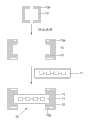
Fig. 1 is the cross-sectional view of not to scale (NTS) of a kind of execution mode of the solar module that adds frame disclosed herein.
Fig. 2 is a kind of execution mode of the method for the solar module for the preparation of adding frame disclosed herein.
Fig. 3 is the further execution mode of the method for the solar module for the preparation of adding frame disclosed herein.
Fig. 4 is the further execution mode of the method for the solar module for the preparation of adding frame disclosed herein.
Fig. 5 is the further execution mode of the method for the solar module for the preparation of adding frame disclosed herein.
Fig. 6 is the further execution mode of the method for the solar module for the preparation of adding frame disclosed herein.
Embodiment
Referring now to Fig. 1, this paper provides the solar module that adds frame (10), and it comprises: (a) plate-shaped solar battery module (11), and it comprises the solar module that the solar cell by one or more electrical interconnections forms; (b) have the frame body (13) of channel portions (13a), the outer rim of solar module (11) is arranged on wherein; (c) for the space between the channel portions (13a) of the outer rim that is filled in solar module (11) and frame body (13) and the sealant material (or edge seal material) (12) that provides, and wherein said sealant material (12) is formed by disclosed crosslinkable blend composition in U.S. Patent Publication US2011/0023943, and the disclosed full content of this application is incorporated this paper by reference into.Within adding the solar module of frame (10), solar module (11) and frame body (13) are bonding by therebetween sealant material (12).In addition, sealant material (12) also serves as the damp-proof layer that adds frame module (10).
More specifically, the crosslinkable blend composition that this paper uses contain the 10-90 % by weight of having an appointment " ethylene copolymer-1 " (ECP-1) and approximately the 10-90 % by weight " ethylene copolymer-2 " (ECP-2), in described blend composition, the total weight % sum of contained all components is 100 % by weight.
ECP-1 used herein is basically by the copolymerization units of ethene, randomly at the most about 40 % by weight have a general formula CH
2=C (R
1) CO
2R
2The first alkene copolymerization units and approximately the 2-30 % by weight have a general formula CH
2=C (R
3) copolymerization units of the second alkene of COOH forms, wherein in ECP-1, the total weight % sum of all contained copolymerization units is 100 % by weight, wherein R
1Represent hydrogen or alkyl, R
2Represent alkyl, and R
3Represent hydrogen or alkyl.
ECP-2 used herein is basically by the copolymerization units of ethene, randomly at the most approximately the copolymerization units of the first alkene of 40 % by weight and approximately the 3-15 % by weight have a general formula CH
2=C (R
4The copolymerization units of the alkatrienes of)-D forms, and wherein in this ECP-2, the total weight % sum of all contained copolymerization units is 100 % by weight, wherein R
4Represent hydrogen or alkyl ,-D representative is selected from-CO
2R
5,-CO
2R
6-R
5,-R
6-R
5,-O-R
5With-R
5Group, and R
5For containing the part of epoxy radicals, R
6Be alkylidene.
In addition, none diester as dicarboxylic acids or dicarboxylic acids, monoesters or acid anhydrides in first, second that should be understood that this paper uses or alkatrienes.
What be fit to has a general formula CH
2=C (R
1) CO
2R
2The first alkene include, but are not limited to methyl acrylate, methyl methacrylate, ethyl acrylate, EMA, butyl acrylate and butyl methacrylate.Preferably, the first alkene is selected from n-butyl acrylate, isobutyl acrylate, methyl methacrylate and n-BMA.What be fit to has a general formula CH
2=C (R
3) the second alkene of COOH includes, but are not limited to acrylic compounds or methacrylic.In addition, be CH at general formula
2=C (R
4In the alkatrienes of)-D, contained radicals R in D
5For containing the group of epoxy radicals, for example glycidyl, oxidation 1,2-cyclohexenyl group or 1,2-epoxy radicals.
According to the disclosure, ECP-1 is not ionomer.Especially, the hydroxy-acid group of ECP-1 exists with protonated form and does not have these carboxylic acid groups that obviously measure to be neutralized the formation carboxylate.
In addition, the ECP-1 that this paper uses optionally further contains other other comonomer that is fit to, and for example has 2-10, or the unsaturated carboxylic acid of preferred 3-8 carbon, or derivatives thereof.The acid derivative that is fit to comprises acid anhydrides, acid amides and ester.Yet ECP-1 does not preferably introduce other other comonomer with any significant quantity.In one embodiment, when containing the first alkene, ECP-1 contains the 5-40 % by weight of having an appointment, or about 10-35 % by weight, or approximately the general formula of 10-30 % by weight is CH
2=C (R
1) CO
2R
2The copolymerization units of the first alkene.ECP-1 further contains the 2-30 % by weight of having an appointment, or about 5-20 % by weight, or approximately the general formula of 5-15 % by weight is CH
2=C (R
3) copolymerization units of the second alkene of COOH.The remainder of ECP-1 contains the copolymerization units of ethene and the about optional other comonomer of 5 % by weight at the most.All wt percentage is based on the gross weight of ECP-1.In addition, ECP-1 can have approximately 5 g/10 min or higher before neutralization, or about 30 g/10 min or higher, or the about melt flow rate (MFR) of 30-500 g/10 min (MFR), it is to record under the load of 190oC and 2.16 kg according to ASTM D1238.
But suitable ECP-1 also business buys.For example, ECP-1 used herein can be the positive butyl ester of ethylene/acrylic acid/acrylic acid copolymer, those that for example can obtain with trade mark Nucrel from U.S. E.I.Du Pont De Nemours and Co. (E. I. du Pont de Nemours and Company) (hereinafter being called " Du Pont ").
ECP-2 also optionally further contains other other comonomer that is fit to, and is as above described with reference to ECP-1.Yet preferably, ECP-2 does not introduce other other comonomer with any significant quantity.In one embodiment, ECP-2 contains the 3-15 % by weight of having an appointment, or about 3-10 % by weight, or approximately the general formula of 4-7 % by weight is CH
2=C (R
4The copolymerization units of the alkatrienes of)-D.It optionally further contains at the most approximately 40 % by weight, or about 5-40 % by weight, or about 10-40 % by weight, or about 20-40 % by weight, or approximately the general formula of 20-35 % by weight is CH
2=C (R
1) CO
2R
2The copolymerization units of the first alkene.The remainder of ECP-2 contains the copolymerization units of ethene and the about optional other comonomer of 5 % by weight at the most.All wt percentage is based on the gross weight of ECP-2.ECP-2 can have approximately 5-300 g/10 min or the approximately melt flow rate (MFR) of 5-100 g/10 min, and it is to record under the load of 190oC and 2.16 kg according to ASTM D1238.But the ECP-2 that is fit to also business buys.For example, ECP-2 used herein can be the copolymer of the positive butyl ester/glycidyl methacrylate of ethylene/acrylic acid, those that for example obtain with trade mark Elvaloy from Du Pont.
In the crosslinkable blend composition, the weight ratio of ECP-1 and ECP-2 be approximately 90:10 to about 10:90, or approximately 80:20 to about 20:80, or approximately 70:30 to about 30:70; Or approximately 60:40 to about 40:60.In addition, in ECP-1 in contained hydroxy-acid group and ECP-2 the mol ratio of contained epoxy radicals be preferably approximately 10:1 to about 1:10, approximately 5:1 is to about 1:5, approximately 3:1 is to about 1:3, or approximately 2:1 to about 1:2.
Except ECP-1 and ECP-2, described crosslinkable blend composition can further comprise one or more suitable additives well known in the art.Examples of such additives comprises, but be not limited to, processing aid, catalyst, mobility (for example strengthens additive, lubricant, pigment, dyestuff, fluorescent whitening agent, fire retardant, impact modifier, nucleator, anti-blocking agent, silicon dioxide), heat stabilizer, hindered amine as light stabilizer (HALS), ultraviolet absorber, UV stabilizer, dispersant, surfactant, chelating agent, coupling agent, adhesive, priming paint, enhancing additive are (for example, calcium carbonate), with and two or more combination.Based on the total amount of crosslinkable blend composition, the additive level that is fit to that can contain in the crosslinkable blend composition is about 0.01-15 % by weight, or about 0.01-10 % by weight, or about 0.01-5 % by weight, or about 0.01-1 % by weight.
As describing in detail in U.S. Patent Publication No. US2011/0023943, the crosslinkable blend composition that contains ECP-1 and ECP-2 can be by any suitable method, for example melt blending or be dry mixed.Preferably, in the process of melt blending technique, technological temperature remains on and is equal to or less than approximately 135oC, or remains on and be equal to or less than approximately 130oC, or remains on and be equal to or less than approximately 125oC, or remains on and be equal to or less than approximately 120oC, and is crosslinked too early to prevent.
The plate-shaped solar battery module (11) that this paper uses comprises the solar module that the solar cell by one or more electrical interconnections forms.The solar cell that this paper uses can be any goods or material that light can be converted into electric energy.This paper can with solar cell comprise, but be not limited to, based on the solar cell of wafer (for example, the solar cell of based single crystal silicon (c-Si) or polysilicon (mc-Si)) and thin-film solar cells (for example, amorphous silicon (a-Si), microcrystal silicon (μ c-Si), cadmium telluride (CdTe), copper indium diselenide (CIS), selenizing copper-indium-gallium (CIGS), light absorption dyestuff or based on the organic semi-conductor solar cell).In solar module, solar cell be electrical interconnection or with floor plan.In addition, solar module can further comprise electric wiring, for example cross strap (cross ribbons) and bus.
Solar module can be two-sided.In this type of execution mode, all laminated materials that are positioned on the solar module either side should be that the fully transparent sunlight to allow enough sunlight or reflection arrives solar cell.Alternatively, solar module can have front day side (it is also referred to as the front side, and when being in real use state, usually towards the sun) and the back of the body non-day side (it is also referred to as dorsal part, when being in real use state, usually deviates from the sun).Solar cell limits the front side of solar module and the border between dorsal part.In this type of execution mode, be arranged in all material that the laminate ply on solar module front day side exists and have sufficient transparency to allow enough sunlight to arrive solar cell.Need not be transparent and be arranged in the material that the laminate ply on the solar module back of the body non-day side exists.
Except solar module, solar module also can further comprise the encapsulated layer (encapsulant layer) of the one or both sides that are laminated to solar module.encapsulated layer can be formed by any suitable polymeric material, acid copolymer for example, ionomer, ethylene/vinyl acetate copolymer (EVA), Pioloform, polyvinyl acetal (for example, polyvinyl butyral resin (PVB)), polyurethane, polyvinyl chloride, polyethylene (for example, LLDPE), the polyolefin block copolymer elastomer, alpha-olefin and α, the copolymer of β-ethylenically unsaturated carboxylic acids ester (for example, ethylene-methyl acrylate copolymer and ethylene-butyl acrylate copolymer), silicone elastomer, epoxy resin and two or more combination in them.In addition, encapsulated layer also can be formed by crosslinkable blend composition disclosed herein.
In addition, solar module can further contain header board and/or backboard, the one or more outermost layers that serve as module in day side and the non-day side of solar module respectively.Header board and backboard can contain any suitable sheet material or film.The sheet material that is fit to comprises, for example, glass or plastic sheet, as Merlon, acrylic compounds, polyacrylate, cyclic polyolefin (for example, vinyl norbornene polymer), polystyrene (being preferably the polystyrene of preparation under metallocene catalyst exists), polyamide, polyester, fluoropolymer or two or more combination in them.In addition, metal sheet also can be used in backboard as aluminium, steel, galvanized steel or ceramic wafer.
the film that is fit to that can be used as header board or backboard can be formed by any suitable polymeric material, for example polyester (for example poly-(ethylene glycol terephthalate) (PET) and poly-((ethylene naphthalate)) (PEN)), Merlon, polyolefin (for example, polypropylene, polyethylene and cyclic polyolefin), norbornene polymer, polystyrene (for example, syndiotactic polytyrene), copolymer in cinnamic acrylic ester, acrylonitritrile-styrene resin, polysulfones (for example, polyether sulfone, polysulfones etc.), polyamide, polyurethane, acrylic compounds, the cellulose acetate class (for example, cellulose acetate, Triafol T etc.), glassine paper, silicone, polyvinyl chloride (for example, poly-(vinylidene chloride)), fluoropolymer (for example, polyvinyl fluoride, Kynoar, polytetrafluoroethylene and ethene-polytetrafluoroethyl-ne alkene copolymer), and two or more combination in them.
(for example can be used for the solar module skin, header board or backboard) the instantiation of film (for example include, but not limited to polyester film, poly-(ethylene glycol terephthalate) film), fluoro-containing copolymer film (for example, from the obtainable Tedlar of Du Pont, Tefzel and Teflon film).Metal film, for example aluminium foil also can be used as backboard.Other film that is used as backboard in solar module can be the form of multilayer film, for example fluoropolymer/polyester/the fluoropolymer multilayer film (for example, Tedlar/PET/Tedlar or TPT laminate backsheet can be buied from Austrian Isovolta AG or U.S. Madico or German Krempel group).
The included frame body (13) of this paper has channel portions (13a), and the outer rim of solar module (11) is installed on wherein.Frame body (13) can be formed by any suitable material.For example, the frame body that this paper uses (13) can be by any suitable metal, and for example aluminium forms.In order to reduce total weight, plastic material also has been used to form frame body (13).The example of the spendable plastic material of this paper comprises, but be not limited to polyester (for example, poly-(ethylene glycol terephthalate) (PET), polybutylene terephthalate (PBT) (PBT) or poly-(propylene glycol ester terephthalate) (PTT)), polyamide (PA), Merlon (PC), polyphenylene oxide (PPO) and blend thereof.The example that can be used for forming the blend polymer of frame body (13) comprises, but be not limited to blend (PC/PBT blend), polyamide and the acrylonitrile-butadiene-styrene (ABS) blend (PA/ABS blend) of blend (PC/PET blend), Merlon and the polybutylene terephthalate (PBT) of the blend of Merlon and acrylonitrile-butadiene-styrene (ABS) (PC/ABS blend), Merlon and poly-(ethylene glycol terephthalate).In addition, can also contain various suitable fillers in plastic material used herein.The example of the filler that this paper is suitable for includes, but not limited to talcum, glass fibre, carbon fiber, ceramic fibre, calcium carbonate, mica and combination thereof.
The solar module (10) that adds frame disclosed herein can prepare by any suitable method.Usually, the method can comprise, (i) solar module (11) of preparation Rimless; The inside that (ii) is connected to the channel portions (13a) of frame body (13) by the outer rim with solar module (11) adds frame to solar module (11), wherein sealant material (12) is filled the outer rim of solar module (11) and the space between frame body (13), and described sealant material is crosslinkable blend composition as above.
In a kind of execution mode (Fig. 2), add frame step (ii) and comprising: (a) connect the polymer strip that is formed by the crosslinkable blend composition around the outer rim of solar module (11); The outer rim of the solar module (11) that (b) will be covered by this polymer strip is connected to channel portions (13a) inside of frame body (13).
In further execution mode (Fig. 3), add frame step (ii) and comprising: the polymer strip that (a) connection is formed by the crosslinkable blend composition on channel portions (13a) inside of frame body (13); (b) outer rim of solar module (11) is connected to channel portions (13a) inside of the frame body (13) that is covered by this polymer strip.
In execution mode (Fig. 4) further, add frame step (ii) and comprising: (a) Extrusion Coating crosslinkable blend composition around the outer rim of solar module (11); (b) Extrusion Coating there is the outer rim of the solar module (11) of this crosslinkable blend composition be connected to channel portions (13a) inside of frame body (13).
In execution mode (Fig. 5) further, add frame step (ii) and comprising: (a) Extrusion Coating crosslinkable blend composition on channel portions (13a) inside of frame body (13); (b) outer rim of solar module (11) is connected to Extrusion Coating there is the channel portions of the frame body of this crosslinkable blend composition (13) (13a) inside.
In execution mode (Fig. 6) further, frame body (13) is formed by plastic material and adds frame step (ii) and comprising: (a) coextrusion frame body (13), and wherein the interior layer of the channel portions of this frame body (13a) is formed by the crosslinkable blend composition; (b) outer rim of solar module (11) is connected to channel portions (13a) inside of frame body (13).
The method can further comprise curing schedule (iii), and the structure that wherein obtains in adding frame step (ii) is at approximately 135 ℃ or higher, or approximately solidifies approximately 5-60 minute at the temperature of 140 ℃-180 ℃, or approximately 5-30 minute, or approximately 5-20 minute.In curing schedule (iii) process, the space between the outer rim of the melting of crosslinkable blend composition crosslinked and fill frame body (13) and solar module (11).By such method, disclosed hereinly add sealant material contained in the solar module (10) of frame and formed by the blend composition through crosslinked that contains ECP-1 and ECP-2.In other words, within crosslinked blend composition, thereby in ECP-1 in contained at least part of hydroxy-acid group and ECP-2 contained at least part of epoxide group reaction form crosslinked between ECP-1 and ECP-2.And, as described in detail in U.S. Patent Publication No. US2011/0023943, crosslinked between ECP-1 and ECP-2 forms in this high-temperature step process, and the reaction speed of carrying out depends on the concentration of the melt flow rate (MFR) of curing temperature, blend, the concentration of catalyst (if any) and/or existing reaction monomers.
Use crosslinkable blend composition as herein described to have many advantages as sealant material with respect to silicone adhesive.Wherein, this crosslinkable blend composition can be made the band with various profiles by the thermoplastic extrusion technique of standard.Then, this class band can be applied between the channel portions (13a) of the outer rim of solar module (11) and frame body (13) at an easy rate, and therefore adding frame technique can be very simple.In addition, be used for this and solidify the required time (approximately about 30 minutes) of crosslinkable blend composition than being used for required time (at least about 6 hours) much shorter of curing silicone glue.Further, when silicone adhesive is used as sealant material, usually stay excessive residue after frame technique on Modular surface adding, therefore need extra cleaning after adding the frame step.Yet, when this type of crosslinkable blend composition is used as sealant material, do not stay or stay considerably less excessive residual thing after frame technique on Modular surface adding, therefore do not need extra cleaning.
Provide the following examples that the disclosure is further described in detail.These embodiment set forth present expection and are used for implementing optimal way of the present disclosure, mean the disclosure is described and unrestricted.
Embodiment
Material:
Crosslinkable blend sheet material-1 (CBS-1):0.5 the polymer sheet that mm is thick, it is prepared as follows.At first, the thing that is dry mixed for preparing ECP-1 and ECP-2 (60:40 by weight) in cement mixer (cement mixer).Then, this is dry mixed thing introduces cast film machine (being made by Davis Standard) and make polymer sheet, wherein extrusion temperature is set in 120 ℃ and linear velocity and is set in 2 m/min.ECP-1 is the positive butyl ester/acrylic copolymer of ethylene/acrylic acid as used herein, and it has the melt flow rate (MFR) of 60 g/10 min and contains the copolymerization units of ethene (65.8 % by weight), n-butyl acrylate (28 % by weight) and acrylic acid (6.2 % by weight).ECP-2 is the positive butyl ester/glycidyl methacrylate copolymer of ethylene/acrylic acid as used herein, and it has the melt flow rate (MFR) of 12 g/10 min and contains the copolymerization units of ethene (66.75 % by weight), n-butyl acrylate (28 % by weight) and glycidyl methacrylate (5.25 % by weight);
Crosslinkable blend sheet material-2 (CBS-2):Except with the silane of 0.25 % by weight (the Dow Corning that obtains from Dow corning company (Dow Corning)
TMZ6040 silane) add and be dry mixed thing China and foreign countries, the thick polymer sheet of this 0.5 mm by with the similar method preparation of CBS-1;
Silicone adhesive:TONSAN 1527 silicone sealants (agent of solar module Special seal), it obtains from Chinese Beijing TONSAN Adhesive Co., Ltd.;
Glass sheet:The glass sheet of 170x150x2 mm, it obtains from Chinese Suzhou optical mirror slip Co., Ltd of Tsing-Hua University;
The EVA sheet material:0.45 the thick Revax ethylene-vinyl acetate of mm (EVA) sheet material, auspicious sunlight volt Materials Co., Ltd obtains from Chinese Wenzhou for it;
Solar cell:Monocrystaline silicon solar cell, it obtains with production code member 125SOR22B from Chinese Jing'ao Solar Energy Co., Ltd.;
The TPT sheet material:0.32 the backboard of mm thick laminate, it is with trade name AKASOL from Krempel group
TMPTL3 obtains;
The aluminium chassis bar:Preformed aluminium chassis material has the length of 172 mm or 152 mm, and its Electronics Co., Ltd. that extensively jumps from Chinese Jiangyin City obtains.
Comparative example CE1 and embodiment E 1-E2:
At first, structure is to prepare in 5 minutes by at 125 ℃, sub-assembly being placed in vacuum laminator (model of being made by Meier Vakuum Technik GMBH is Meier Icolam 10/08) for the solar module of " glass sheet/EVA sheet material/solar cell/EVA sheet material/TPT sheet material ".Each solar module that so prepares has the 172x152 of being of a size of mm.
In E1 and E2, will be placed in around the outer rim of solar module by the wide sealing strip of 1.5 cm of CBS-1 or CBS-2 preparation respectively.After this, the aluminium chassis bar of two 172 mm being grown and two long aluminium chassis bars of 152 mm are locked in around the outer rim of the solar module that is covered by described sealing strip.Then whole sub-assembly is heated 15 minutes to form the final solar module that adds frame in 150 ℃ of baking ovens.Subsequently, make this solar module that adds frame carry out the aging of different length cycle in damp and hot baking oven (85 ℃ and 85% RH).The power generation values (aging before with afterwards) that adds the solar module of frame is according to the method described in IEC61215, uses Spi-Sun Simulator under room temperature and 50% RH
TM3500 simulators (U.S. Spire Solar manufacturing) are measured.The results are shown in table 1.
In CE1, solar module was further processed 15 minutes in 150 ℃ of baking ovens, then was cooled to room temperature.After this, apply silicone adhesive on the channel portions inside of four aluminium chassis bars (two long aluminium chassis bar and two aluminium chassis bars that 152 mm are long of 172 mm).Then, described four aluminium chassis bars lock and are bonded to the outer rim of solar module around the outer rim of solar module.At room temperature solidify approximately after 24 hours, wipe the excessive silicone adhesive that stays on the module front side.And measure so power generation values of the solar module that adds frame of preparation (aging before with afterwards), the results are shown in table 1.
As what prove by result, when crosslinked blend composition was used as adding the sealant material of solar module of framework, its power generation values (after aging 42 or 97 days) was with to adopt silicone adhesive to add the power generation values of solar module of framework as those of sealant material equal or higher when disclosed herein.In addition, thus E1 and technique in E2 be simplified with CE1 in technique specific consumption time still less mutually.
Table 1

Remarks: * ageing time.
Claims (17)
1. add the solar module of frame, comprising:
(a) plate-shaped solar battery module, it comprises the solar module that the solar cell by one or more electrical interconnections forms;
(b) frame body, it has channel portions, and the outer rim of described solar module is arranged on wherein; With
(c) for the space between the channel portions of the outer rim of filling described solar module and described frame body and the sealant material that provides, described sealant material is formed by the crosslinkable blend composition of " ethylene copolymer-2 " of " ethylene copolymer-1 " of containing the 10-90 % by weight and 10-90 % by weight, in wherein said crosslinkable blend composition, the total weight % sum of contained all the components is 100 % by weight, and wherein
(i) described " ethylene copolymer-1 " basically by the copolymerization units of ethene, randomly at the most 40 % by weight have a general formula CH
2=C (R
1) CO
2R
2The copolymerization units of the first alkene and 2-30 amount % have a general formula CH
2=C (R
3) copolymerization units of the second alkene of COOH forms, in wherein said " ethylene copolymer-1 ", the total weight % sum of all contained copolymerization units is 100 % by weight, wherein R
1Be hydrogen or alkyl, R
2Be alkyl, and R
3Be hydrogen or alkyl;
(ii) described " ethylene copolymer-2 " basically by the copolymerization units of ethene, randomly at the most the copolymerization units of described first alkene of 40 % by weight and 3-15 % by weight have a general formula CH
2=C (R
4The copolymerization units of the alkatrienes of)-D forms, and in wherein said " ethylene copolymer-2 ", the total weight % sum of all contained copolymerization units is 100 % by weight, wherein R
4Be hydrogen or alkyl ,-D is for being selected from-CO
2R
5,-CO
2R
6-R
5,-R
6-R
5,-O-R
5With-R
5Group, and R wherein
5For containing the group of epoxy radicals, R
6Be alkylidene; With
(iii) in described first, second or alkatrienes, none is diester, monoesters or the acid anhydrides of dicarboxylic acids or dicarboxylic acids.
2. the solar module that adds frame as claimed in claim 1, wherein said sealant material is formed by the cross-linking products of crosslinkable blend composition as described in claim 1, and in wherein said " ethylene copolymer-1 " contained at least part of hydroxy-acid group and described " ethylene copolymer-2 " thus in contained at least part of epoxide group reaction form crosslinked between described " ethylene copolymer-1 " and described " ethylene copolymer-2 ".
3. the solar module that adds frame as claimed in claim 1 or 2, in wherein said crosslinkable blend composition, contained described " ethylene copolymer-1 " and the weight ratio of described " ethylene copolymer-2 " are 80:20 to 20:80, or 70:30 to 30:70; Or 60:40 to 40:60.
4. the solar module that adds frame as described in arbitrary claim in claim 1-3, wherein said the first alkene is selected from methyl acrylate, methyl methacrylate, ethyl acrylate, EMA, butyl acrylate and butyl methacrylate, and/or wherein said the second alkene is acrylic or methacrylic acid, and/or radicals R wherein
5Be glycidyl, oxidation 1,2-cyclohexenyl group or 1,2-epoxy radicals.
5. the solar module that adds frame as described in arbitrary claim in claim 1-4, wherein said " ethylene copolymer-1 " contains the 5-40 % by weight, or 10-35 % by weight, or the copolymerization units of described first alkene of 10-30 % by weight, in wherein said " ethylene copolymer-1 ", the total weight % sum of all contained copolymerization units is 100 % by weight, and/or wherein said " ethylene copolymer-1 " contains the copolymerization units of described second alkene of 5-20 % by weight or 5-15 % by weight, in wherein said " ethylene copolymer-1 ", the total weight % sum of all contained copolymerization units is 100 % by weight, and/or wherein said " ethylene copolymer-1 " has 5 g/10 min or higher, or 30 g/10 min or higher, or the melt flow rate (MFR) of 30-500 g/10 min, it is to record under the load of 190oC and 2.16 kg according to ASTM D1238.
6. the solar module that adds frame as claimed in claim 5, wherein said " ethylene copolymer-1 " is the positive butyl ester of ethylene/acrylic acid/acrylic acid copolymer.
7. the solar module that adds frame as described in arbitrary claim in claim 1-6, wherein said " ethylene copolymer-2 " contain the copolymerization units of the described alkatrienes of 3-10 % by weight or 4-7 % by weight, in wherein said " ethylene copolymer-2 ", the total weight % sum of all contained copolymerization units is 100 % by weight, and/or wherein said " ethylene copolymer-2 " contain the 5-40 % by weight, or 10-40 % by weight, or 20-40 % by weight, or the copolymerization units of described first alkene of 20-35 % by weight, in wherein said " ethylene copolymer-2 ", the total weight % sum of all contained copolymerization units is 100 % by weight, and/or wherein said " ethylene copolymer-2 " have the melt flow rate (MFR) of 5-300 g/10 min or 5-100 g/10 min, it is to record under the load of 190oC and 2.16 kg according to ASTM D1238.
8. the solar module that adds frame as claimed in claim 7, wherein said " ethylene copolymer-2 " are the copolymer of the positive butyl ester/glycidyl methacrylate of ethylene/acrylic acid.
9. the solar module that adds frame as described in arbitrary claim in claim 1-8, wherein said frame body is formed by metal material or plastic material.
10. for the preparation of the method for the solar module that adds frame, comprise the following steps:
(a) provide the plate-shaped solar battery module, it comprises the solar module that the solar cell by one or more electrical interconnections forms;
(b) provide the frame body with channel portions;
(c) provide the sealant material that is formed by the described crosslinkable blend composition of arbitrary claim in claim 1-8; With
(d) outer rim of described solar module is connected to the inside of the channel portions of described frame body, wherein said sealant material is filled the outer rim of described solar module and the space between described frame body, thereby obtains the described solar module that adds frame.
11. method as claimed in claim 10, wherein step (d) comprising: (i) connect the polymer strip that is formed by described sealant material around the outer rim of described solar module; The outer rim of the described solar module that (ii) will be covered by described polymer strip is connected to the inside of the channel portions of described frame body.
12. method as claimed in claim 10, wherein step (d) comprising: (i) connect the polymer strip that is formed by described sealant material on the channel portions inside of described frame body; (ii) outer rim of described solar module is connected to the channel portions inside of the described frame body that is covered by described polymer strip.
13. method as claimed in claim 10, wherein step (d) comprising: (i) the described sealant material of Extrusion Coating around the outer rim of described solar module; (ii) Extrusion Coating there is the outer rim of the described solar module of described sealant material be connected to the channel portions of described frame body inner.
14. method as claimed in claim 10, wherein step (d) comprising: (i) the described sealant material of Extrusion Coating on the channel portions inside of described frame body; (ii) outer rim with described solar module is connected to the channel portions inside that Extrusion Coating has the described frame body of described sealant material.
15. as the described method of arbitrary claim in claim 10-14, further comprise step (e): make the described solar module of frame that adds that obtains in step (d) at 135 ℃ or higher, or the temperature of 140 ℃-180 ℃ is cured, and it solidifies the duration is 5-60 minute, or 5-30 minute, or 5-20 minute.
16. the method for the preparation of the solar module that adds plastic frame comprises the following steps:
(a) provide the plate-shaped solar battery module, it comprises the solar module that the solar cell by one or more electrical interconnections forms;
(b) in coextrusion polymer composition and claim 1-8, the described crosslinkable blend composition of arbitrary claim is to form frame body, and the interior layer that wherein said frame body has channel portions and this channel portions is formed by described crosslinkable blend composition; With
(c) outer rim of described solar module is connected to the channel portions inside of described frame body.
17. method as claimed in claim 16, further comprise step (d): make the described solar module of frame that adds that obtains in step (c) at 135 ℃ or higher, or be cured at the temperature of 140 ℃-180 ℃, and it solidifies the duration is 5-60 minute, or 5-30 minute, or 5-20 minute.
Priority Applications (2)
| Application Number | Priority Date | Filing Date | Title |
|---|---|---|---|
| CN2011104082204A CN103165708A (en) | 2011-12-09 | 2011-12-09 | Crosslinkable edge sealant used for photovoltaic module |
| US13/709,687 US20130146129A1 (en) | 2011-12-09 | 2012-12-10 | Cross-linkable edge sealant for photovoltaic modules |
Applications Claiming Priority (1)
| Application Number | Priority Date | Filing Date | Title |
|---|---|---|---|
| CN2011104082204A CN103165708A (en) | 2011-12-09 | 2011-12-09 | Crosslinkable edge sealant used for photovoltaic module |
Publications (1)
| Publication Number | Publication Date |
|---|---|
| CN103165708A true CN103165708A (en) | 2013-06-19 |
Family
ID=48570882
Family Applications (1)
| Application Number | Title | Priority Date | Filing Date |
|---|---|---|---|
| CN2011104082204A Pending CN103165708A (en) | 2011-12-09 | 2011-12-09 | Crosslinkable edge sealant used for photovoltaic module |
Country Status (2)
| Country | Link |
|---|---|
| US (1) | US20130146129A1 (en) |
| CN (1) | CN103165708A (en) |
Families Citing this family (1)
| Publication number | Priority date | Publication date | Assignee | Title |
|---|---|---|---|---|
| US20210082634A1 (en) * | 2018-02-14 | 2021-03-18 | Lg Electronics Inc. | Solar cell module comprising perovskite solar cell and manufacturing method thereof |
Citations (7)
| Publication number | Priority date | Publication date | Assignee | Title |
|---|---|---|---|---|
| JP2000349322A (en) * | 1999-06-02 | 2000-12-15 | Shin Etsu Chem Co Ltd | Solar housing |
| JP2005019507A (en) * | 2003-06-24 | 2005-01-20 | Matsushita Electric Works Ltd | Method for manufacturing solar cell module |
| CN1622343A (en) * | 2003-11-28 | 2005-06-01 | 夏普株式会社 | Solar cell module edge face sealing member and solar cell module employing same |
| CN201000893Y (en) * | 2006-12-29 | 2008-01-02 | 万向集团公司 | New solar modules using double-sided tape |
| US20110023943A1 (en) * | 2009-07-31 | 2011-02-03 | E. I. Du Pont De Nemours And Company | Cross-linkable encapsulants for photovoltaic cells |
| CN102165602A (en) * | 2008-07-02 | 2011-08-24 | 圣戈班性能塑料谢纳有限公司 | Framed device, seal, and method for manufacturing same |
| CN102237414A (en) * | 2010-04-26 | 2011-11-09 | 杜邦公司 | Composite frame and manufacturing method thereof as well as solar cell module |
Family Cites Families (4)
| Publication number | Priority date | Publication date | Assignee | Title |
|---|---|---|---|---|
| ES8100843A1 (en) * | 1979-05-08 | 1980-12-16 | Saint Gobain Vitrage | Method of manufacturing solar-cell panels and panels obtained by this method. |
| US4499658A (en) * | 1983-09-06 | 1985-02-19 | Atlantic Richfield Company | Solar cell laminates |
| JPH11289103A (en) * | 1998-02-05 | 1999-10-19 | Canon Inc | Semiconductor device, solar cell module and disassembly method thereof |
| JP2000148959A (en) * | 1998-11-13 | 2000-05-30 | Henkel Japan Ltd | IC card manufacturing method |
-
2011
- 2011-12-09 CN CN2011104082204A patent/CN103165708A/en active Pending
-
2012
- 2012-12-10 US US13/709,687 patent/US20130146129A1/en not_active Abandoned
Patent Citations (7)
| Publication number | Priority date | Publication date | Assignee | Title |
|---|---|---|---|---|
| JP2000349322A (en) * | 1999-06-02 | 2000-12-15 | Shin Etsu Chem Co Ltd | Solar housing |
| JP2005019507A (en) * | 2003-06-24 | 2005-01-20 | Matsushita Electric Works Ltd | Method for manufacturing solar cell module |
| CN1622343A (en) * | 2003-11-28 | 2005-06-01 | 夏普株式会社 | Solar cell module edge face sealing member and solar cell module employing same |
| CN201000893Y (en) * | 2006-12-29 | 2008-01-02 | 万向集团公司 | New solar modules using double-sided tape |
| CN102165602A (en) * | 2008-07-02 | 2011-08-24 | 圣戈班性能塑料谢纳有限公司 | Framed device, seal, and method for manufacturing same |
| US20110023943A1 (en) * | 2009-07-31 | 2011-02-03 | E. I. Du Pont De Nemours And Company | Cross-linkable encapsulants for photovoltaic cells |
| CN102237414A (en) * | 2010-04-26 | 2011-11-09 | 杜邦公司 | Composite frame and manufacturing method thereof as well as solar cell module |
Also Published As
| Publication number | Publication date |
|---|---|
| US20130146129A1 (en) | 2013-06-13 |
Similar Documents
| Publication | Publication Date | Title |
|---|---|---|
| US8609777B2 (en) | Cross-linkable encapsulants for photovoltaic cells | |
| US8609980B2 (en) | Cross-linkable ionomeric encapsulants for photovoltaic cells | |
| CN103895304B (en) | A kind of solar backboard and preparation method thereof | |
| WO2014100301A1 (en) | Cross-linked polymers and their use in photovoltaic modules | |
| US20080178928A1 (en) | Photovoltaic Modules with a Transparent Material Having a Camouflaged Pattern | |
| CN103937418B (en) | A kind of high reflecting rate white EVA adhesive film and preparation technology thereof | |
| JP6306714B2 (en) | Adhesive sealing film for solar cell module | |
| JP2012519967A (en) | Lightweight solar cell module | |
| CN103897322A (en) | Resin composition and solar backboard prepared from same | |
| CN103636003A (en) | Sealing film for solar cell and solar cell using same | |
| US8143361B2 (en) | EVM in solar modules | |
| CN116376469A (en) | A kind of multifunctional composite adhesive film and its preparation method and application | |
| CN103165708A (en) | Crosslinkable edge sealant used for photovoltaic module | |
| CN101979247A (en) | Packaging back sheet for solar photovoltaic cell | |
| CN103165707A (en) | Crosslinkable edge sealant used for photovoltaic module | |
| CN205498231U (en) | Environmental protection enhancement mode solar backplane | |
| CN103722840A (en) | Humidity-resisting solar cell backplate without adhesive and manufacturing method thereof | |
| CN201738511U (en) | Solar ceramic tile capable of generating power | |
| EP3164892B1 (en) | Co-extruded backsheet for solar cell modules | |
| CN102544151A (en) | Novel E film for solar backboard | |
| KR101391522B1 (en) | Method for producing solar modules | |
| EP3164891B1 (en) | Mono-backsheet for solar cell modules | |
| CN102569456A (en) | E-film for solar back panel | |
| CN118027828A (en) | Composite adhesive film for HJT battery assembly, preparation method thereof and photovoltaic assembly | |
| CN203205440U (en) | Anti PID photovoltaic module |
Legal Events
| Date | Code | Title | Description |
|---|---|---|---|
| C06 | Publication | ||
| PB01 | Publication | ||
| C10 | Entry into substantive examination | ||
| SE01 | Entry into force of request for substantive examination | ||
| C02 | Deemed withdrawal of patent application after publication (patent law 2001) | ||
| WD01 | Invention patent application deemed withdrawn after publication |
Application publication date: 20130619 |