CN103221902A - Method and wearable apparatus for user input - Google Patents
Method and wearable apparatus for user input Download PDFInfo
- Publication number
- CN103221902A CN103221902A CN2011800563260A CN201180056326A CN103221902A CN 103221902 A CN103221902 A CN 103221902A CN 2011800563260 A CN2011800563260 A CN 2011800563260A CN 201180056326 A CN201180056326 A CN 201180056326A CN 103221902 A CN103221902 A CN 103221902A
- Authority
- CN
- China
- Prior art keywords
- touch
- function
- user
- touch input
- sensor information
- Prior art date
- Legal status (The legal status is an assumption and is not a legal conclusion. Google has not performed a legal analysis and makes no representation as to the accuracy of the status listed.)
- Granted
Links
Images



Classifications
-
- G—PHYSICS
- G06—COMPUTING OR CALCULATING; COUNTING
- G06F—ELECTRIC DIGITAL DATA PROCESSING
- G06F3/00—Input arrangements for transferring data to be processed into a form capable of being handled by the computer; Output arrangements for transferring data from processing unit to output unit, e.g. interface arrangements
- G06F3/01—Input arrangements or combined input and output arrangements for interaction between user and computer
- G06F3/011—Arrangements for interaction with the human body, e.g. for user immersion in virtual reality
- G06F3/014—Hand-worn input/output arrangements, e.g. data gloves
-
- H—ELECTRICITY
- H04—ELECTRIC COMMUNICATION TECHNIQUE
- H04M—TELEPHONIC COMMUNICATION
- H04M1/00—Substation equipment, e.g. for use by subscribers
- H04M1/02—Constructional features of telephone sets
- H04M1/23—Construction or mounting of dials or of equivalent devices; Means for facilitating the use thereof
- H04M1/233—Construction or mounting of dials or of equivalent devices; Means for facilitating the use thereof including a pointing device, e.g. roller key, track ball, rocker switch or joystick
-
- H—ELECTRICITY
- H04—ELECTRIC COMMUNICATION TECHNIQUE
- H04M—TELEPHONIC COMMUNICATION
- H04M1/00—Substation equipment, e.g. for use by subscribers
- H04M1/72—Mobile telephones; Cordless telephones, i.e. devices for establishing wireless links to base stations without route selection
- H04M1/724—User interfaces specially adapted for cordless or mobile telephones
- H04M1/72403—User interfaces specially adapted for cordless or mobile telephones with means for local support of applications that increase the functionality
- H04M1/72409—User interfaces specially adapted for cordless or mobile telephones with means for local support of applications that increase the functionality by interfacing with external accessories
- H04M1/72412—User interfaces specially adapted for cordless or mobile telephones with means for local support of applications that increase the functionality by interfacing with external accessories using two-way short-range wireless interfaces
-
- H—ELECTRICITY
- H04—ELECTRIC COMMUNICATION TECHNIQUE
- H04M—TELEPHONIC COMMUNICATION
- H04M2250/00—Details of telephonic subscriber devices
- H04M2250/22—Details of telephonic subscriber devices including a touch pad, a touch sensor or a touch detector
Landscapes
- Engineering & Computer Science (AREA)
- Computer Networks & Wireless Communication (AREA)
- Human Computer Interaction (AREA)
- Signal Processing (AREA)
- General Engineering & Computer Science (AREA)
- Theoretical Computer Science (AREA)
- Physics & Mathematics (AREA)
- General Physics & Mathematics (AREA)
- User Interface Of Digital Computer (AREA)
- Position Input By Displaying (AREA)
- Telephone Function (AREA)
Abstract
Description
技术领域technical field
本发明的示例实施例一般涉及通信技术,并且更具体地,涉及由用户佩戴的用户输入设备的装置和方法。Example embodiments of the present invention relate generally to communication technologies and, more particularly, to apparatus and methods for user input devices worn by users.
背景技术Background technique
现代通信时代带来了有线和无线网络的巨大发展。在消费者需求的推动下,计算机网络、电视网络和电话网络正在经历一场前所未有的技术扩张。再加上这些不断扩大的网络能力和通信速度,使用这些网络的设备在能力,特性和用户界面方面已经经历了巨大的技术迈进。这样的设备也可以使用配件,诸如具有有限功能的远程输入设备,蓝牙TM耳机或有线耳机。经由这些网络进行通信的设备可用于广泛多种用途,包括短消息服务(SMS),即时消息(IΜ)服务,电子邮件,语音通话,音乐录制/播放,视频录制/播放,互联网浏览及其他用途。这些能力使得这些设备对于那些希望保持联系并使自己对其他人可用的人们是非常必要的。The modern communication era has brought about tremendous growth in wired and wireless networks. Driven by consumer demand, computer networks, television networks, and telephone networks are undergoing an unprecedented technological expansion. Coupled with these expanding network capabilities and communication speeds, devices using these networks have undergone tremendous technological advances in capabilities, features, and user interfaces. Such devices may also use accessories such as remote input devices with limited functionality, Bluetooth ™ headsets or wired headsets. Devices communicating over these networks can be used for a wide variety of purposes, including Short Message Service (SMS), Instant Messaging (IM) services, email, voice calls, music recording/playback, video recording/playback, Internet browsing, and others . These capabilities make these devices very necessary for those who wish to stay connected and make themselves available to others.
通过当驾驶车辆时禁止使用手持式移动设备法律的出现以及用户希望不单独占用双手进行通信,免提设备越来越受欢迎。这样的设备可以包括物理地连接到移动设备的有线耳机或通过无线个人局域网络连接而连接到移动设备的蓝牙TM耳机。此外,蓝牙TM车辆配件可以让用户使用在车辆内的扬声器和麦克风以在他们的移动设备上通信。这种设备可以使移动设备用户能够在无需手持设备的情况下可以通过他们的移动设备进行语音通话。此外,蓝牙TM耳机或车辆配件可以允许用户在设备位于钱包,口袋,手套箱,或其他附近的不容易存取的位置同时进行语音通话。关于成对或同步的设备,这种蓝牙TM设备或耳机以及使用其他通信协议的车辆配件可以具有有限的功能。例如,蓝牙TM耳机能够调整扬声器的音量,接听来电并结束通话。Hands-free devices have grown in popularity through the advent of laws prohibiting the use of hand-held mobile devices while driving a vehicle and the desire of users to communicate without having their hands alone. Such devices may include wired headsets that are physically connected to the mobile device or Bluetooth ™ headsets that are connected to the mobile device through a wireless personal area network connection. Additionally, Bluetooth ™ vehicle accessories allow users to communicate on their mobile devices using the speaker and microphone in the vehicle. The device enables mobile device users to make voice calls through their mobile devices without the need for a handheld device. Additionally, a Bluetooth ™ headset or vehicle accessory could allow a user to conduct a voice call while the device is in a purse, pocket, glove box, or other nearby location that is not easily accessible. With regard to paired or synchronized devices, such Bluetooth ™ devices or headsets and vehicle accessories using other communication protocols may have limited functionality. For example, a Bluetooth ™ headset can adjust the volume of the speaker, answer incoming calls and end calls.
虽然配件的存在使用户能够进行电话通话,听音乐,或提供语音命令,然而对于与它们配对的设备而言,很少配件能提供比有限量更多的功能。While accessories exist to enable users to make phone calls, listen to music, or provide voice commands, few accessories provide more than a limited amount of functionality to the devices they pair with.
发明内容Contents of the invention
一般来说,本发明的示例实施例提供为用户设备提供输入的改进方法。特别地,该示例实施例的方法提供用于接收被配置为由用户佩戴的设备的传感器信息,确定由所接收到的第一传感器信息指示的第一触摸输入,在其中第一触摸输入与第一触摸类型相关,至少部分基于第一触摸输入确定第一功能,使第一功能被执行,接收被配置为由用户佩戴的设备的第二传感器信息,确定由接收到的第二传感器信息所指示的第二触摸输入,在其中第二触摸输入与不同于第一触摸类型的第二触摸类型相关,至少部分基于第二触摸输入确定第二功能,在其中所述第二功能不同于第一功能,并使第二功能被执行。第一触摸类型包括单点触摸,第二触摸类型包括多点触摸。该方法可以进一步包括:确定所述第一传感器信息与第一对象相关,并确定第二传感器信息与第二对象相关,在其中第一对象具有至少一个与第二对象不同的物理性质。第一触摸输入可以进一步包括:包括触摸序列或触摸持续时间中的至少一个触摸模式。所述第一功能可以包括生成在第一触摸输入和第三功能之间的关联并使在第一触摸输入和第三个功能之间的关联被存储。所述第一功能可以包括使命令被发送到另一设备。该设备可被配置成在手指上佩戴,并且该设备可实质上环绕手指。In general, example embodiments of the present invention provide improved methods of providing input to user equipment. In particular, the method of this example embodiment provides for receiving sensor information of a device configured to be worn by a user, determining a first touch input indicated by the received first sensor information, wherein the first touch input is consistent with the second A touch type is associated, determining a first function based at least in part on the first touch input, causing the first function to be performed, receiving second sensor information of a device configured to be worn by the user, determining that is indicated by the received second sensor information A second touch input, wherein the second touch input is associated with a second touch type different from the first touch type, determining a second function based at least in part on the second touch input, wherein the second function is different from the first function , and causes the second function to be executed. The first touch type includes single touch, and the second touch type includes multi-touch. The method may further include determining that the first sensor information is associated with a first object, and determining that the second sensor information is associated with a second object, wherein the first object has at least one different physical property than the second object. The first touch input may further include: including at least one touch pattern in a touch sequence or a touch duration. The first function may include generating an association between the first touch input and the third function and causing the association between the first touch input and the third function to be stored. The first function may include causing a command to be sent to another device. The device may be configured to be worn on a finger, and the device may substantially surround the finger.
根据本发明的另一实施例,可提供包括至少一个处理器和至少一个包括计算机程序代码的存储器的装置,在其中所述至少一个存储器和所述计算机程序代码被配置为,采用所述至少一个处理器,使装置:接收来自被配置为由用户佩戴的设备的传感器信息,确定由所接收的第一传感器信息所指示的第一触摸输入,在其中第一触摸输入与第一触摸类型相关,至少部分基于第一触摸输入确定第一功能,使得所述第一功能被执行,接收被配置为由用户佩戴的设备的第二传感器信息,确定由所接收到的第二传感器信息指示的第二触摸输入,在其中第二触摸输入与不同于第一触摸类型的第二触摸类型相关,至少部分基于第二触摸输入确定第二功能,在其中所述第二功能不同于第一功能,并使第二功能被执行。第一触摸类型可包括单点触摸,第二触摸类型可包括多点触摸。该装置可以进一步使确定所述第一传感器信息与第一对象相关并确定所述第二传感器信息与第二对象相关,在其中第一对象具有至少一个与第二对象不同的物理特性。第一触摸输入还可以进一步包括:包括触摸序列或触摸持续时间中的至少一个的触摸模式。所述第一功能可包括使装置生成在第一触摸输入和第三功能之间的关联,并使得在第一触摸输入和第三功能之间的关联被存储。所述第一功能可以包括使命令被发送到其它设备。该设备被配置成佩戴在手指上,并且该设备可实质上环绕手指。According to another embodiment of the present invention, there may be provided an apparatus comprising at least one processor and at least one memory comprising computer program code, wherein said at least one memory and said computer program code are configured to employ said at least one a processor, causing means to: receive sensor information from a device configured to be worn by a user, determine a first touch input indicated by the received first sensor information, wherein the first touch input is associated with a first touch type, determining a first function based at least in part on the first touch input such that the first function is performed, receiving second sensor information of a device configured to be worn by the user, determining a second function indicated by the received second sensor information a touch input, wherein the second touch input is associated with a second touch type different from the first touch type, determining a second function based at least in part on the second touch input, wherein the second function is different from the first function, and causes The second function is executed. The first touch type may include a single touch, and the second touch type may include a multi-touch. The apparatus may further cause determining that the first sensor information is related to a first object and determining that the second sensor information is related to a second object, wherein the first object has at least one different physical characteristic than the second object. The first touch input may further include: a touch pattern including at least one of a touch sequence or a touch duration. The first function may include causing the apparatus to generate an association between the first touch input and the third function, and causing the association between the first touch input and the third function to be stored. The first function may include causing the command to be sent to the other device. The device is configured to be worn on a finger, and the device may substantially surround the finger.
根据本发明的又一实施例,提供一种计算机程序产品,其包括至少一个在其中存储有计算机可读程序指令的计算机可读存储介质,该计算机可读程序指令包括用于接收被配置成由用户佩戴的设备的传感器信息的程序代码指令,用于确定由接收到的第一传感器信息所指示的第一触摸输入的程序代码指令,在其中第一触摸输入与第一触摸类型相关,用于至少部分基于第一触摸输入确定第一功能的程序代码指令,用于使所述第一功能被执行的程序代码指令,用于接收设备的第二传感器信息的程序代码指令,用于确定由接收到的第二传感器信息所指示的第二触摸输入的程序代码指令,在其中第二触摸输入与不同于第一触摸类型的第二触摸类型相关,用于至少部分基于第二触摸输入确定第二功能的程序代码指令,在其中所述第二功能不同于第一功能,以及用于使第二功能被执行的程序代码指令。第一触摸类型可包括单点触摸,第二触摸型可包括多点触摸。所述计算机程序产品可进一步包括:用于确定所述第一传感器信息与第一对象相关的程序代码指令,和用于确定第二传感器信息与第二对象相关的程序代码指令,在其中第一对象具有至少一个与第二对象不同的物理性质。第一触摸输入可以进一步包括:包括触摸序列或触摸持续时间中的至少一个的触摸模式。第一功能可以包括:用于产生在第一触摸输入和第三功能之间的关联的程序代码指令,和使在第一触摸输入和第三个功能之间的关联被存储的程序代码指令。第一功能包括用于使命令被发送到另一设备的程序代码指令。According to yet another embodiment of the present invention, a computer program product is provided, which includes at least one computer-readable storage medium having computer-readable program instructions stored therein, the computer-readable program instructions comprising a program code instructions of sensor information of a device worn by a user, program code instructions for determining a first touch input indicated by received first sensor information, wherein the first touch input is associated with a first touch type, for Program code instructions for determining a first function based at least in part on a first touch input, program code instructions for causing said first function to be executed, program code instructions for receiving second sensor information of a device, for determining Program code instructions for a second touch input indicated by received second sensor information, wherein the second touch input is associated with a second touch type different from the first touch type, for determining a second touch input based at least in part on the second touch input Program code instructions for the function, wherein the second function is different from the first function, and program code instructions for causing the second function to be performed. The first touch type may include a single touch, and the second touch type may include a multi-touch. The computer program product may further comprise program code instructions for determining that the first sensor information is associated with a first object, and program code instructions for determining that the second sensor information is associated with a second object, wherein the first The object has at least one different physical property than the second object. The first touch input may further include: a touch pattern including at least one of a touch sequence or a touch duration. The first function may include program code instructions for generating an association between the first touch input and the third function, and program code instructions for causing the association between the first touch input and the third function to be stored. The first function includes program code instructions for causing a command to be sent to another device.
根据又一实施例,示例实施例提供了用于接收被配置为由用户佩戴的设备的传感器信息的部件,用于确定由接收到的第一传感器信息所指示的第一触摸输入的部件,在其中第一触摸输入与第一触摸类型相关,用于至少部分基于第一触摸输入确定第一功能的部件,用于使所述第一功能被执行的部件,用于接收被配置成由用户佩戴的设备的第二传感器信息的部件,用于确定由接收到的第二传感器信息所指示的第二触摸输入的部件,在其中第二触摸输入与不同于第一触摸类型的第二触摸类型相关,用于至少部分基于第二触摸输入确定第二功能的部件,在其中第二功能不同于第一功能,以及用于使第二功能被执行的部件。第一触摸类型可包括单点触摸,第二触摸类型可包括多点触摸。该方法可以进一步包括:用于确定所述第一传感器信息与第一对象相关的部件,以及用于确定所述第二传感器信息与第二对象相关的部件,在其中第一对象具有至少一个与第二对象不同的物理性质。第一触摸输入可以进一步包括:包括触摸序列或触摸持续时间中的至少一个的触摸模式。所述第一功能可以包括用于生成在第一触摸输入和第三功能之间的关联的部件,以及用于使在第一触摸输入和第三功能之间的关联被存储的部件。所述第一功能可以包括用于使命令被发送到另一设备的部件。该设备可被配置成佩戴在手指上,并且该设备实质上环绕手指。According to yet another embodiment, example embodiments provide means for receiving sensor information of a device configured to be worn by a user, means for determining a first touch input indicated by the received first sensor information, in wherein the first touch input is associated with the first touch type, means for determining a first function based at least in part on the first touch input, means for causing said first function to be performed, for receiving a device configured to be worn by a user means for determining a second touch input indicated by the received second sensor information, wherein the second touch input is associated with a second touch type different from the first touch type , means for determining a second function based at least in part on the second touch input, wherein the second function is different from the first function, and means for causing the second function to be performed. The first touch type may include a single touch, and the second touch type may include a multi-touch. The method may further comprise: means for determining that said first sensor information is associated with a first object, and means for determining that said second sensor information is associated with a second object, wherein the first object has at least one object associated with Different physical properties of the second object. The first touch input may further include: a touch pattern including at least one of a touch sequence or a touch duration. The first function may include means for generating an association between the first touch input and the third function, and means for causing the association between the first touch input and the third function to be stored. The first function may include means for causing a command to be sent to another device. The device may be configured to be worn on a finger, with the device substantially encircling the finger.
附图说明Description of drawings
因此已经以一般术语描述了本发明,现在将对附图作出参考,这些附图不必按比例绘制,以及其中:Having thus described the invention in general terms, reference will now be made to the accompanying drawings, which are not necessarily drawn to scale, and in which:
图1是根据本发明的示例实施例的移动设备的原理框图;Figure 1 is a functional block diagram of a mobile device according to an example embodiment of the present invention;
图2是根据本发明的示例实施例的用户输入设备的图示;Figure 2 is a diagram of a user input device according to an example embodiment of the invention;
图3是由用户佩戴的用户输入设备的示例实施例的图示;Figure 3 is an illustration of an example embodiment of a user input device worn by a user;
图4是根据本发明的用户输入设备的示例实施例的横截面视图;Figure 4 is a cross-sectional view of an example embodiment of a user input device according to the present invention;
图5是根据本发明的用户输入设备的另一示例实施例的横截面视图;Figure 5 is a cross-sectional view of another exemplary embodiment of a user input device according to the present invention;
图6是根据本发明的示例实施例的用户的设备支承(bearing)部分的图示;Figure 6 is an illustration of a user's device bearing portion according to an example embodiment of the present invention;
图7是根据本发明的另一示例实施例的用户输入设备的图示;Figure 7 is a diagram of a user input device according to another example embodiment of the present invention;
图8是根据本发明的另一示例实施例的用户输入设备的图示;Figure 8 is a diagram of a user input device according to another example embodiment of the present invention;
图9是根据本发明的又一示例实施例的用户输入设备的图示;Figure 9 is a diagram of a user input device according to yet another example embodiment of the present invention;
图10是根据本发明的用户输入设备的示例实施例的横截面视图;Figure 10 is a cross-sectional view of an example embodiment of a user input device according to the present invention;
图11是用于实现本发明的示例实施例的方法的流程图;Figure 11 is a flowchart of a method for implementing an example embodiment of the invention;
图12是用于实现本发明的示例实施例的另一种方法的流程图。Figure 12 is a flowchart of another method for implementing an example embodiment of the present invention.
具体实施方式Detailed ways
现在将参照附图在下文中更全面地描述本发明的一些示例实施例,其中示出一些,但不是本发明的所有实施例。事实上,本发明的各种实施例可以以许多不同的形式实施并且不应当被解释为限于在此所阐述的示例实施例;相反,提供这些示例实施例以使本公开可以满足适用的法律要求。相同的附图标记始终指代相同的部件。如本文所使用的,术语“数据”,“内容”,“信息”和类似术语可以互换地使用以指代能够根据本发明的实施例被发送,接收和/或存储的数据。Some example embodiments of the present invention will now be described more fully hereinafter with reference to the accompanying drawings, in which some, but not all embodiments of the invention are shown. Indeed, various embodiments of the invention may be embodied in many different forms and should not be construed as limited to example embodiments set forth herein; rather, these example embodiments are provided so that this disclosure will satisfy applicable legal requirements. . Like reference numerals refer to like parts throughout. As used herein, the terms "data," "content," "information" and similar terms are used interchangeably to refer to data capable of being transmitted, received and/or stored in accordance with embodiments of the present invention.
此外,如本文所使用的,术语“电路”是指(a)仅硬件电路实现(例如,以模拟电路和/或数字电路形式的实现);(b)电路和包含软件和/或固件指令的计算机程序产品的组合,所述软件和/或固件指令存储在一个或多个计算机可读存储器中,所述存储器协同工作以使装置执行上述一个或多个在此描述的功能;及(c)电路,例如,微处理器或微处理器的一部分,该电路需要软件或固件操作,即使软件或固件实际并不存在。“电路”的这个定义适用于在此的,包括任意权利要求中的该术语的所有使用。作为另一例子,如在此所使用的,术语“电路”还包括包括一个或多个处理器和/或处理器的一部分/几部分和附属的软件和/或固件的实现。作为另一个例子,在此所使用的术语“电路”例如还包括基带集成电路,或移动电话的应用处理器集成电路,或服务器中的类似集成电路,蜂窝网络设备,其他网络设备和/或其他计算设备。In addition, as used herein, the term "circuitry" refers to (a) only hardware circuit implementations (for example, implementations in the form of analog circuits and/or digital circuits); (b) circuits and circuits containing software and/or firmware instructions; a combination of computer program products, said software and/or firmware instructions stored in one or more computer readable memories, said memories cooperating to cause an apparatus to perform one or more of the functions described herein above; and (c) A circuit, such as a microprocessor or a portion of a microprocessor, that requires software or firmware to operate even if the software or firmware does not actually exist. This definition of 'circuitry' applies to all uses of this term herein, including in any claims. As another example, as used herein, the term 'circuitry' also includes an implementation comprising one or more processors and/or portion/portions of processors and accompanying software and/or firmware. As another example, the term "circuit" as used herein also includes baseband integrated circuits, or application processor integrated circuits in mobile phones, or similar integrated circuits in servers, cellular network equipment, other network equipment and/or other computing device.
虽然用户设备的几个实施例可以示出并在下文中出于示例的目的进行描述,其他类型的用户设备,诸如个人数字助理(PDA),寻呼机,移动电视,游戏设备,所有类型的计算机(如手提电脑或移动计算机),照相机,音频/视频播放器,无线电,全球定位系统(GPS)设备,或上述设备的任意组合,及其他类型的通信设备,可以采用本发明的实施例。如上所述,用户设备可以包括各种用于执行根据本发明实施例的一个或多个功能的部件,包括那些在此更具体地示出和描述的。然而,应当理解的是,在不脱离本发明的精神和范围的情况下,用户设备可以包括用于执行一个或多个类似功能的替代部件。While several embodiments of user equipment may be shown and described below for purposes of example, other types of user equipment such as personal digital assistants (PDAs), pagers, mobile televisions, gaming devices, computers of all types (such as laptop or mobile computer), camera, audio/video player, radio, Global Positioning System (GPS) device, or any combination of the above, and other types of communication devices that may employ embodiments of the present invention. As noted above, user equipment may include various components for performing one or more functions in accordance with embodiments of the present invention, including those more particularly shown and described herein. It should be understood, however, that user equipment may include alternative components for performing one or more similar functions without departing from the spirit and scope of the present invention.
图1示出的用户设备10可以包括与发送器34和接收器36可操作地通信的天线32(或多根天线)。用户设备可以进一步包括分别向发送器提供信号并从接收器接收信号的装置,如处理器40。这些信号可以包括符合适用的蜂窝系统的空中接口标准的信令信息,和/或也可以包括对应于用户语音的数据,接收数据和/或用户产生的数据。在这点上,用户设备能够采用一个或多个空中接口标准,通信协议,调制类型,和接入类型操作。通过图示,用户设备可以依据第一,第二,第三和/或第四代通信协议等中的任一个进行操作。例如,用户设备可以依据第二代(2G)无线通信协议IS-136,GSM和IS-95,或依据第三代(3G)无线通信协议,如UMTS,CDMA2000,宽带CDMA(WCDMA)和时分同步CDMA(TD-SCDMA),依据3.9G的无线通信协议(如E-UTRAN(演进的UMTS地面无线接入)网络),依据第四代(4G)无线通信协议等操作。所述用户设备还可以能够在无线个人局域网络(WPAN),例如IEEE802.15,蓝牙,低功耗版本的蓝牙,红外(IrDA),超宽带(UWB),Wibree技术,Zigbee等上通信。The
应该理解的是,该装置,如处理器40,可包括电路实现,尤其是用户设备10的音频和逻辑功能。处理器也可以以许多不同的方式实现。例如,处理器可以实现为各种处理部件,如处理电路,协处理器,控制器或各种其他包括集成电路的处理设备,例如ASIC(专用集成电路),FPGA(现场可编程门阵列),硬件加速器,和/或其他设备等。在示例实施例中,所述处理器可以被配置为执行存储在存储器设备或所述处理器可访问的设备中的指令。如此,所述处理器可以被配置来执行关于图11在下面更详细讨论的处理,或至少部分处理。该处理器还可以包括在调制和传输之前卷积地编码和交错消息和数据的功能。另外,处理器也可以包括内部语音编码器,并且可以包括内部数据调制解调器。It should be understood that the means, such as the
用户设备10还可以包括包含诸如耳机或扬声器44,振铃器42,麦克风46,显示器48,和用户输入接口的输出设备的用户接口,该用户接口可以耦合到处理器40。允许用户设备接收数据的用户输入接口可包括多个允许用户设备接收数据的设备,如键盘50,触摸显示器(未示出)或其它输入设备。在包括键盘的实施例中,键盘可以包括数字(0-9)和相关键(#,*),以及其他用于操作移动终端10的硬键和软键。或者,键盘可以包括常规的QWERTY键盘排列。键盘也可以包括各种相关功能的软键。此外或可选地,用户设备可以包括接口设备,例如操纵杆或其他用户输入接口。用户设备还可以包括电池54,例如振动电池组,用于为各种电路供电,这些电路用于操作用户设备,以及可选地提供机械振动作为可检测的输出。
用户设备10可以进一步包括用户身份模块(UIM)58,一般可称之为智能卡。UIM可以是具有内置处理器的存储器设备,UIM例如可包括订户身份模块(SIM),通用集成电路卡(UICC),通用订户身份模块(USIM),可移除用户身份模块(R-UIM),或任何其他智能卡。UIM可以存储与移动订户相关的信息元素。除了UIM卡,用户设备可以配备有存储器。例如,用户设备可以包括易失性存储器60,例如包括用于数据临时存储的缓存区域的易失性随机存取存储器(RAM)。用户设备还可以包括可被嵌入和/或可被移除的其他非易失性存储器62。非易失性存储器可以附加地或可选地包括电可擦除可编程只读存储器(EEPROM),闪速存储器等。该存储器可以存储多个信息和数据,由用户设备使用以实现用户设备的功能。例如,存储器可以包括能够唯一识别用户设备的标识符,例如国际移动设备识别(IMEI)码。此外,存储器可以存储用于确定单元ID信息的指令。具体而言,存储器可存储由处理器40执行的应用程序,该应用程序确定当前单元的身份,例如,单元id身份或单元ID信息,用户设备使用这些信息进行通信。The
一般来说,本发明的示例实施例提供了通过附件设备将用户输入输进设备的方法,装置和计算机程序产品。设备,特别是诸如蜂窝电话的移动终端,可以使用各种旨在改善用户界面和更加无缝地基将设备与用户的日常活动集成的配件。所述设备可以包括有线或无线耳机,其使用户能够通过他们的设备进行语音呼叫,而无需将设备放在用户的耳朵或嘴或在其附近处。这些配件包括蓝牙TM耳机,其可使得用户仅仅是靠近设备同时可以主动经由设备进行通话。否者当用户在忙时,诸如当用户在驾车,或执行任何需要使用双手的任务时,这些配件被证明是有价值的。虽然上述有线和无线耳机提供经由设备进行口头通信的改进方法,发起语音呼叫或激活设备的其他功能仍可能需要物理操纵所述设备。In general, example embodiments of the present invention provide methods, apparatus and computer program products for inputting user input into a device via an accessory device. Devices, especially mobile terminals such as cellular phones, are available with various accessories aimed at improving the user interface and more seamlessly integrating the device with the user's daily activities. The device may include a wired or wireless headset that enables a user to make voice calls through their device without having the device placed in or near the user's ear or mouth. These accessories include Bluetooth( TM) headsets, which allow the user to simply be in close proximity to the device while actively talking through the device. Otherwise, these accessories prove valuable when the user is busy, such as when the user is driving a car, or performing any task that requires the use of both hands. While the above-described wired and wireless headsets provide an improved method of verbally communicating via a device, initiating a voice call or activating other functions of the device may still require physical manipulation of the device.
本发明的示例实施例可以允许诸如用户设备10的设备的用户与用户设备进行交互,而无需设备的物理操纵。本发明示例实施例的所述用户输入设备可以允许用户从移动电话拨打电话号码,与设备上可用的服务或应用程序进行交互,或无需手持用户设备本身另外操作设备。当用户正在驾驶车辆,慢跑,或者如果用户只是寻求一种更简单的方式来执行用户设备上的功能时,这样的用户输入设备是很需要的。另外,在物理地处理,查看和操作用户设备是不礼貌或不适合的情况下,在此所描述的用户输入设备对于分离地操作用户设备可能是有用的。这种情况可能包括会议中,正式仪式上,在进餐时,在剧院或其他不适合干扰的场合。本发明的示例实施例可提供一种用户输入设备,该设备可依赖于相对用户的动作提供输入到与移除用户输入设备配对或同步的设备。Example embodiments of the present invention may allow a user of a device such as
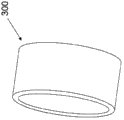
图2示出了根据本发明的示例实施例的用户输入设备。所描述的实施例包括装置300,该装置是被配置成由用户佩戴在手指,拇指,或可能脚趾上的环型设备。虽然所示实施例主要针对可以是环型的实施例,根据本发明的设备可以是被配置为在用户的设备支承部分上佩戴到或附接到用户的各种形状和尺寸。例如,项链型的实施例可以挂在用户的脖子上,耳环型实施例可以夹在或附加在用户的耳朵上,手镯型实施例可以被配置为环绕佩戴在使用者的手腕,胳膊,腿或踝关节上,以及带式实施例可被配置成环绕佩戴在用户的腰部或躯干。由此,本发明的示例实施例可以被配置到任何可能的配置中,这些配置允许它们佩戴或附加到用户上。本发明的实施例可受益于外观,该外观于在本质上并未偏离可作为珠宝或装饰佩戴的常规的环。虽然一些示例实施例可包括清楚地指示该用户输入设备是功能设备而不仅仅是观赏性的元件,但是可以灵活地优选并未清楚地指示它们是功能设备的其它实施例。Fig. 2 shows a user input device according to an example embodiment of the present invention. The depicted embodiment includes
本发明的各种实施例可包括被配置为由用户如图3所示在手指上佩戴的装置300。装置300可包括通信部件,例如被配置成经由无线个人局域网络(WPAN),例如IEEE802.15,蓝牙,低功耗版本的蓝牙,红外(IrDA),超宽带(UWB),Wibree,Zigbee等,进行通信的通信设备。虽然未示出,这样的通信部件可以包括与其通信的处理器,收发器,发送器,接收器,或嵌入装置300内的部件和天线等,其可以设置在装置300的周围。装置300可以进一步包括用于处理数据(例如输入数据,传感器数据等)的部件,诸如处理器或具有本发明的实施例的实施所必需的处理能力的电路。Various embodiments of the invention may include a
图4描述了本发明的一个示例实施例,其图示用户输入设备500的横截面视图,该用户输入设备可包括放置在用户输入设备500中的传感器510,收发器512,天线514,和可为收发器提供信号和从收发器接收信号的处理器520。该收发器512和天线514可被合并入用户输入设备中,该用户输入设备被配置为发送或传输用户输入到与用户输入设备无线配对的设备中;然而,在用户输入设备是经由电连接的物理连接或所述用户输入设备是用户设备的一部分的实施例中,收发器512和天线514并不是必需的。所描述的传感器510图示轨迹球型传感器,当由用户佩戴该设备时,该传感器可以在至少一个相对于用户的方向上接收与用户输入设备500的动作相对应的传感器信息。特别地,传感器510可以接收相对于围绕手指的旋转(例如沿箭头530)的传感器信息,例如,当该环围绕在其佩戴的手指上旋转时。处理设备520可以与传感器510一起工作以将传感器510接收到的传感器信息解释到动作输入中,使得传感器510本身可能只发送动作输入到处理设备520。可选地,所述传感器可以配置有在其中设置的处理设备。此外,传感器510可以接收对应于当所述用户输入设备500沿着手指(例如沿箭头540)的轴移动的传感器信息。传感器510也可以被配置成接收与在方向组合上的动作的相对应的传感器信息,该方向例如以围绕沿用户的设备支承部分(例如手指)的长度延伸的轴的第一方向旋转,然后围绕与在摇摆或振荡动作中的用户的设备支承部分的长度延伸的轴垂直的轴旋转。FIG. 4 depicts an example embodiment of the present invention illustrating a cross-sectional view of a
由传感器510接收的传感器信息可由处理设备520确定为与功能相关确定的动作输入。该功能可包括传输或发送命令到被配置为控制的用户设备的用户输入设备。命令可以是例如提高音量,发出呼叫,应答呼叫,改变电台等的指示。用户输入设备500可确定动作输入与使命令被发送随后使命令被发送或传输到用户设备的功能相关联,但是,用户输入设备也可能仅使动作输入被传送到用户设备,使得用户设备将动作输入与功能相关联。在动作输入和可使用根据本发明示例实施例的用户输入设备执行的功能实施例之间的关联可包括例如通过旋转围绕手指的环来控制音量(例如,振铃器音量,呼叫音量,音乐播放音量等)。一个旋转方向可能会增加音量,而相反的方式可减小音量。另一功能可以包括,当耳机连接到用户设备并且用户没有或不能物理地操作用户设备以应答该呼叫时,应答语音呼叫。很多功能可以通过根据本发明的用户输入设备接收到的输入执行,并且该功能可以是用户可配置的,使得用户规定用户输入设备的何种动作对应于用户设备的何种功能。虽然单级动作的数目(例如,单一方向上的传感器信息)可能有限,但单级动作可被复用(例如,前后的传感器信息)以实现更多数量的功能。在动作输入和功能之间的关联可存储在用户设备或用户输入设备的存储器中,使得用户输入设备或用户设备可至少部分基于接收到的动作输入来确定该功能。The sensor information received by the
图4所示的传感器是轨迹球传感器,该传感器接收与在轨迹球上的表面的动作相对应的传感器信息,并将检测的动作转换成电信号,该电信号然后用于确定已观察到该轨迹球的动作输入。虽然轨迹球是可在本发明的用户输入设备中使用的传感器类型的一个实施例,但是可以使用其他各种传感器来实现类似的最终结果。例如,图4的传感器510可被替换为音频传感器或与音频传感器一起使用。所述音频传感器可以通过检测与特定类型的移动相关联的噪声来解释与用户输入设备的移动对应的传感器信息。然后,处理设备520可以将由音频传感器检测到的信号诠释成动作输入并把它们与功能相关联。类似地,光学传感器可用于接收与相对于被佩戴的手指的用户输入设备的动作对应的传感器信息。在环型用户输入设备围绕手指旋转的情况下,当其穿过该传感器时,该传感器可以接收与皮肤表面的滚动相对应的传感器信息。类似地,通过观察在皮肤表面上发现的振荡模式,光学传感器可接收与摇摆动作对应的传感器信息。例如,在环型实施例中,当用户围绕沿与佩戴有环型用户输入设备的手指长度的轴相垂直的轴振动用户输入设备时,用户可诱导摇摆动作。这种动作可由用户摇摆在环上佩戴环的手的拇指诱发,或者当另一只手抓住或者由对象操纵该环时,可以在摇摆动作中操纵该环(例如,在沿着佩戴环的手指的轴本质上平行的轴的表面上来回移动手指)。又一实施例为可以单独使用或与可以是定向型传感器的其他传感器结合使用的传感器,该定向型传感器接收与传感器的二维平面中的动作输入相对应的传感器信息。在这样的实施例中,在一个方向上的方向传感器的持续按下可在一个方向上表明环绕着佩戴环的手指的稳定旋转。可在本发明实施例中使用的传感器的又一个实施例可以包括每个在单独的轴上跟踪动作或检测动作并且确认由其他传感器观察到的动作的冗余传感器的多个传感器。The sensor shown in FIG. 4 is a trackball sensor that receives sensor information corresponding to motion of the surface on the trackball and converts the detected motion into an electrical signal that is then used to determine that the motion has been observed. Trackball motion input. While a trackball is one example of the type of sensor that may be used in the user input device of the present invention, various other sensors may be used to achieve a similar end result. For example, the
本发明的示例实施例可包括,可被配置为通过接收与在不同轴上或围绕不同轴的移动相关的传感器信息来配合的多个传感器,或接收传感器信息的冗余传感器确认由其他传感器观察到的移动。本发明的一个示例实施例包括配合以确定与图5所图示的用户相关的用户输入设备的移动的多个传感器,图5示出了用户输入设备550的横截面视图。用户输入设备550包括轮传感器560,570和580,每个传感器接收关于围绕单轴的移动(例如每个相应的轮传感器的轮毂)的传感器信息。每个轮传感器560,570和580的轮啮合在用户的设备支承部分的表面。当用户输入设备550相对于在用户的设备支承部分上移动时,传感器560,570和580接收传感器信息并将传感器信息诠释成动作输入。例如,当用户输入设备沿箭头592移动时,传感器570可以接收对应于沿着用户设备支承部分的长度延伸的轴的用户输入设备移动的传感器信息。传感器560可以接收对应于围绕沿着用户的设备支承部分的长度延伸的轴动作的传感器信息,例如在箭头594的方向上。在这两个传感器560,570之间,可沿着或围绕箭头592和594的方向上的两个轴确定动作。合并传感器580可允许用户输入设备在沿箭头592,例如沿手指长度方向的移动,和箭头596的方向上的动作之间区分,该箭头596的方向是围绕沿着手指长度延伸的轴相垂直的轴。传感器570和580的配合允许用户输入设备接收对应于先前描述的摇摆动作的传感器信息。此外,当用户输入设备550沿着箭头592移动时,传感器570或580中的每一个可确认由其他传感器接收到的传感器信息。如通过图5的示例所图示,额外的传感器可以实现与围绕附加轴的动作相对应的传感器信息,并由此增强或提高根据本发明的示例实施例的用户输入设备的能力。Example embodiments of the invention may include multiple sensors that may be configured to cooperate by receiving sensor information related to movement on or about different axes, or redundant sensors receiving sensor information acknowledged by other sensors. The movement observed by the sensor. An example embodiment of the invention includes a plurality of sensors that cooperate to determine movement of a user input device relative to a user as illustrated in FIG. 5 , which shows a cross-sectional view of a
本发明的示例实施例可包括能够接收用于读取用户的指纹的传感器信息的传感器,例如采用设置在环型形式因素的用户输入设备内或其上的光学传感器,超声波传感器,被动电容传感器,或主动电容传感器。这种传感器可以进一步能够确定设备的佩戴者的指纹。示例实施例可包括安全特征,从而用户输入设备被配置为仅当由认可、授权的用户佩戴时才能正常工作。授权用户可以采用使用在用户设备,例如移动终端上呈现的配置程序或向导的用户输入设备注册指纹(或多个指纹),并将一个或多个指纹配置成与用户输入设备以密码或密钥序列可在移动终端上输入以解锁设备的相同的方式共同使用。当该实施例由还没有确认或授权的用户佩戴时,用户输入设备可能无法正常工作,或可能采用有限功能工作。Example embodiments of the invention may include sensors capable of receiving sensor information for reading a user's fingerprint, such as optical sensors, ultrasonic sensors, passive capacitive sensors, disposed within or on a user input device of a ring form factor, or active capacitive sensors. Such a sensor may further be able to determine the fingerprint of the wearer of the device. Example embodiments may include security features whereby user input devices are configured to function properly only when worn by approved, authorized users. An authorized user may enroll a fingerprint (or fingerprints) using a user input device using a configuration program or wizard presented on a user device, such as a mobile terminal, and configure one or more fingerprints to be associated with the user input device as a password or key The sequence can be entered on the mobile terminal to be used together in the same way as unlocking the device. When the embodiment is worn by a user who has not been identified or authorized, the user input device may not function properly, or may function with limited functionality.
可采用指纹读取传感器的另外的实施例可被配置为基于由用户输入设备观察到的指纹来改变它们的功能。这样的功能可以用于,当由不同的用户佩戴时,不同地操作用户输入设备(例如,用户可以按照他们的喜好个性化用户输入设备的功能)。基于设备佩戴在用户手上的位置,指纹识别也可用于改变用户输入设备的功能。如图6中所示,每根手指的近端610,中间620,以及末端630指骨的正面和背面的皮肤表面包括唯一的特征,使得可基于那些特征可以唯一地标识每个指骨的各个表面。所述用户输入设备可通过上述传感器接收对应于这些唯一特征的传感器信息,使得用户输入设备可以基于用户手上的位置来改变功能。Additional embodiments that may employ fingerprint reading sensors may be configured to change their functionality based on fingerprints observed by a user input device. Such functionality may be used to operate the user input device differently when worn by different users (eg, users may personalize the functionality of the user input device to their liking). Fingerprint recognition can also be used to change the functionality of user input devices based on where the device is worn on the user's hand. As shown in FIG. 6, the skin surfaces of the proximal 610, middle 620, and distal 630 phalanges of each finger include unique features such that the respective surfaces of each phalanx can be uniquely identified based on those features. The user input device may receive sensor information corresponding to these unique features through the aforementioned sensors, such that the user input device may change functionality based on the position of the user's hand.
由于每个人的皮肤表面或指纹都不同,并且在个人的手指之间也必然不同,根据本发明的示例实施例的用户输入设备可以使用“学习”模式来学习给定用户的食指,中指,无名指和小指的每个指骨的正面和背面的唯一特征。学习模式可能需要用户输入设备的用户将设备放置在每个指骨上并识别佩戴设备的是哪根手指和指骨。学习应用程序可由设备如移动终端执行,该设备通过学习模式通过指示用户接触的是哪根手指,指骨和表面作为校准形式来引导用户。该学习模式可存储用户的指纹数据信息,使得当获得指纹时,将指纹数据与存储的指纹的指纹数据进行比较以确定哪个手指和哪个指骨对应于所获得的指纹数据。指纹数据信息可以被存储在用户输入设备的存储器中。指纹数据也可以,或者替代地存储在与用户输入设备“配对”的用户设备的存储器中,从而用户输入设备获得指纹并发送指纹数据到用户设备,对于用户设备以确定已读出的是哪根手指和哪根指骨,以确定将执行哪个功能。一旦用户完成这样的“学习”模式,用户能够将功能分配给与用户设备的功能对应的任一指骨表面。Since each person's skin surface or fingerprint is different, and necessarily different between an individual's fingers, a user input device according to an example embodiment of the present invention may use a "learn" mode to learn a given user's index finger, middle finger, ring finger and unique features on the front and back of each phalanx of the little finger. A learning mode may require the user of the user input device to place the device on each phalanx and identify which finger and phalanx the device is worn on. The learning application can be executed by a device such as a mobile terminal that guides the user through the learning mode by indicating which finger, phalanx and surface the user is touching as a form of calibration. The learning mode may store the user's fingerprint data information such that when the fingerprint is obtained, the fingerprint data is compared with that of the stored fingerprint to determine which finger and which phalanx correspond to the obtained fingerprint data. Fingerprint data information may be stored in memory of the user input device. The fingerprint data may also, or alternatively, be stored in the memory of the user device "paired" with the user input device, whereby the user input device obtains the fingerprint and sends the fingerprint data to the user device, for the user device to determine which root has been read Finger and which phalanx to determine which function will be performed. Once the user has completed such a "learning" mode, the user can assign functions to any phalanx surface corresponding to the functions of the user device.
尽管已经参照一个用户输入设备的环型实施例描述了本发明的实施例,但是本发明的实施例并不限于环型设备,还可以其他形式因素实现,比如手镯,按钮,或其它可佩戴的配置,这些配置允许相对于设备佩戴者的设备移动。Although embodiments of the invention have been described with reference to a ring-type embodiment of a user input device, embodiments of the invention are not limited to ring-type devices, and may also be implemented in other form factors, such as bracelets, buttons, or other wearable devices. configurations that allow movement of the device relative to the wearer of the device.
根据本发明实施例的用户输入设备可以与用户设备“配对”或同步,该用户设备诸如移动终端(例如,建立仅在用户输入设备和所述用户设备之间共享的唯一通信路径),例如移动设备,通过无线个人局域网络,例如蓝牙TM连接,其防止用户输入设备与其他用户设备干扰并且防止其他用户设备与配对的用户设备的输入干扰。如果用户设备与根据本发明实施例的用户输入设备一起出售,则“配对”可能发生在制造时,或者当输入装置作为附件单独销售时,“配对”可以实际上由用户执行。A user input device according to an embodiment of the invention may be "paired" or synchronized with a user device, such as a mobile terminal (e.g., establishing a unique communication path shared only between the user input device and said user device), such as a mobile The device, connected via a wireless personal area network, such as Bluetooth ™ , prevents user input devices from interfering with other user devices and prevents input from other user devices from interfering with paired user devices. "Pairing" may occur at the time of manufacture if the user equipment is sold with a user input device according to an embodiment of the invention, or may actually be performed by the user when the input device is sold separately as an accessory.
根据本发明的用户输入设备的示例实施例,无论用户设备是否正在使用,都可以佩戴用户输入设备。在这点上,可能存在能够“唤醒”或解锁输入设备以防止偶然输入的需要。移动或动作序列可被配置成不太可能意外发生的“唤醒”序列。移动或动作序列例如可以被存储在用户设备或用户输入设备的存储器中,从而当检测移动或动作序列时,用户设备或用户输入设备可将移动或动作与这些需要“唤醒”移动设备或用户输入设备的移动或动作相比较。另外,另一移动或动作序列可以被配置为锁定用户输入设备以防止进一步的输入,直到提供“唤醒”序列以解锁用户输入设备。当用户不主动使用用户输入设备和否则将导致要排除的非预期输入的拟用于任何意外输入的用户输入设备时,锁定功能可能是有用的。这样的“唤醒”序列可以包括多次前后摇摆用户输入设备或以完全360度转圈旋转用户输入设备。由于个别用户可以更倾向确定一些非预期的动作,其中这些动作作为其他用户的“唤醒”序列工作得很好,因此“唤醒”序列可以是用户可配置的。According to example embodiments of the user input device of the present invention, the user input device may be worn whether or not the user device is in use. In this regard, there may be a need to be able to "wake up" or unlock the input device to prevent accidental input. Movement or motion sequences can be configured as "wake-up" sequences that are less likely to occur accidentally. Movements or sequences of motions may, for example, be stored in memory of the user device or user input device, so that when a movement or sequence of motions is detected, the user device or user input device can associate the movements or motions with those requiring "wake-up" of the mobile device or user input. The movement or motion of the device is compared. Additionally, another movement or sequence of actions may be configured to lock the user input device from further input until a "wake up" sequence is provided to unlock the user input device. The locking function may be useful when the user is not actively using the user input device and the user input device intended for any accidental input that would otherwise result in an unintended input to be excluded. Such a "wake up" sequence may include rocking the user input device back and forth multiple times or rotating the user input device in a full 360 degree circle. The "wake up" sequence may be user configurable since individual users may prefer to determine some unintended actions that work well as a "wake up" sequence for other users.
图7图示了用户输入设备的另一示例实施例,该用户输入设备可以独立使用,或与上述示例实施例结合使用。图7的用户输入设备700可包括设置在由用户佩戴的设备的外表面上的一个或多个传感器710。传感器可以是在本领域的普通技术人员已知的任何常规类型,包括但并不限于电阻触摸传感器,电容传感器,接近传感器等。在图示的实施例中,用户输入设备是被配置为配戴在用户手指上的环型设备。实施例图示的传感器710对用户可以是清晰可辨的(例如,每个传感器标有不同的符号,数字等),或传感器与设备715的非传感器部分可能无法区分。当每个传感器被分配了唯一功能或需要一定顺序的传感器时,独立区分用户输入设备的传感器可能是有用的。然而,其它实施例可能不需要单个传感器的区分以实现所需输入。这样的实施例可包括,其中在某种模式中,诸如在用户输入设备700的表面周围拖动手指,用户触摸传感器。图7所描述的实施例可以用于如图2所图示的实施例的非常类似的方式;但是,与接收对应于关于佩戴设备的手指或用户的设备支承部分的用户输入设备的动作输入的传感器信息相反的,用户输入设备700可以检测与用户手指,拇指或用户输入设备700的外侧上的其他对象的触摸输入或动作相关的传感器信息。以这样的方式,设备700可以检测传感器的信息,该传感器的信息对应于当用户进行可导致设备旋转,例如围绕手指(例如,感测手指或拇指扫过设备700的周边,如箭头720所示)或设备700可以检测到对应于当用户作出将来回摇摆指环(例如,如箭头730所示)的动作时的传感器信息的动作。FIG. 7 illustrates another example embodiment of a user input device, which may be used independently or in combination with the example embodiments described above. The
图7的示例实施例所描述的由传感器接收到的传感器信息可以被用来确定触摸输入。该触摸输入可能与所述传感器接触或与传感器实质上非常接近相关,例如,1厘米,1毫米和/或类似的长度。触摸输入可能与触摸类型和触摸模式相关。触摸模式可以包括触摸序列(例如当手指或对象绕着在用户输入设备700外周上设置的传感器730拖动或反复轻触传感器730时)和触摸持续时间(例如传感器检测触觉信息的时间长度)。触摸类型可以包括检测到的接触点或同时触摸的数目,多次触摸的位置,与由传感器感测到的对象相关联的物理性质,触摸输入是否与接触相关,触摸输入是否与靠近相关,触摸传感器所用的力,等等。区分触摸类型和触摸模式可能会增加对于与不同的功能相关的可用潜在触摸输入的数目。例如,当图7的用户输入设备700从两个或多个接触点(例如多点触摸)接收传感器信息时,可存在从另一只手或没有佩戴用户输入设备700的手接收到触摸输入的更高的可能性。当用户输入设备700只从单点(如单点触摸)接收传感器信息时,触摸可能来自佩戴用户输入设备的手或另一个来源。这样的触摸类型可以将触摸输入与不同的手区分开,从而使不同的功能被执行。正如上文所指出的,触摸模式可包括单一传感器的多次轻拍,当手指在它们之间拖动时接收对应于触摸的传感器信息的相邻传感器的序列,或其他模式中的单次触摸或多次触摸的长度。每个触摸模式可以与不同的功能相关联并可基于接收到的触摸类型或模式允许使用各种输入。这些不同的触摸类型和触摸模式例如可被存储在用户输入设备或在用户设备上的存储器,使得一旦用户输入设备接收到与触摸模式或触摸类型有关的触摸输入,例如就由处理器将所接收的触摸输入与存储器中的触摸输入相比较以确定他们可与哪个功能相关。结合触摸模式,触摸类型或两者,还可以增加可用输入的数目并进一步增加可采用根据本发明的示例实施例的用户输入设备700来实现的功能级别。The sensor information received by the sensors described in the example embodiment of FIG. 7 may be used to determine touch input. The touch input may be in contact with the sensor or in substantially close proximity to the sensor, for example, 1 centimeter, 1 millimeter and/or similar in length. Touch input may be related to touch type and touch pattern. Touch patterns may include touch sequences (eg, when a finger or object is dragged around or repeatedly tapped on
图7的示例实施例或其变型可被配置为,基于用来辨别与触摸输入相关的触摸类型的传感器的类型,接收对应于表面纹理和/或表面颜色的传感器信息。作为彩色光谱仪的传感器可接收对应于不同颜色表面的传感器信息,并可将传感器所遇到的每种不同颜色诠释为单独和不同的触摸类型。其他的可以用于类似图7所图示的实施例中的传感器可以接收与设备所接触的纹理或表面类型对应的传感器信息。这样的传感器可以包括检测表面纹理的光学传感器,或检测与该传感器接触的表面的导电性能的电阻传感器。其他的传感器类型可以包括频率传感器,当传感器撞击表面时,该传感器可以接收与振动响应的频率对应的传感器信息。检测到的频率可在木材,玻璃,石材等之间区分并从所述表面提供区分触摸类型。各种传感器可以用在单一的用户输入设备以进一步提高这种装置的输入能力。触摸类型可以包括检测到的接触或触摸的点的数目,并且触摸类型还可以包括对象类型或接触传感器的表面(例如诸如颜色,纹理,硬度等的物体或表面的物理特性)。用户输入设备或用户设备可以存储在触摸输入和功能之间的关联,使得处理设备可以至少部分基于触摸输入来确定功能。在基于触摸输入确定适当的功能后,用户设备或用户输入设备可以使该功能被执行。使所述功能被执行可包括使用户输入设备发送命令到用户设备。The example embodiment of FIG. 7 or variations thereof may be configured to receive sensor information corresponding to surface texture and/or surface color based on the type of sensor used to discern the type of touch associated with the touch input. A sensor acting as a color spectrometer can receive sensor information corresponding to different colored surfaces and can interpret each different color encountered by the sensor as a separate and distinct touch type. Other sensors that may be used in embodiments like that illustrated in FIG. 7 may receive sensor information corresponding to the texture or type of surface the device is in contact with. Such sensors may include optical sensors that detect the texture of a surface, or resistive sensors that detect the conductive properties of a surface in contact with the sensor. Other sensor types may include frequency sensors, which may receive sensor information corresponding to the frequency of the vibrational response when the sensor strikes a surface. The detected frequencies can differentiate between wood, glass, stone, etc. and provide differentiation of touch types from said surfaces. Various sensors can be used in a single user input device to further enhance the input capabilities of such devices. The touch type may include the number of detected contacts or touched points, and the touch type may also include the type of object or surface on which the sensor is contacted (eg, physical characteristics of the object or surface such as color, texture, hardness, etc.). A user input device or user device may store an association between a touch input and a function such that the processing device may determine the function based at least in part on the touch input. After determining the appropriate function based on the touch input, the user device or user input device may cause that function to be performed. Causing the function to be performed may comprise causing the user input device to send a command to the user device.
图8,图9和图10描述可在本发明的实施例中实现的三个传感器配置示例实施例。图8至10所图示的配置可以独立于,或结合任意在此公开的实施例使用。图8描述了包括输入传感器810的环型用户输入设备800,该输入传感器810可以被配置为触摸敏感传感器,旋转式拨号盘,按钮,或其任何可能的组合。例如,在传感器输入810是旋转式拨号盘的实施例中,旋转式拨号盘可沿箭头820被旋转作为输入方法。在按钮型的实施例中,传感器810可以沿箭头830被按压。这两个实施例可以一致使用以获得更高级别的功能。图9描述例如当在箭头920和930之间挤压时,包括可变形的环型用户输入设备900的实施例。变形的量和变形的方向可以用来为多模式功能区分输入。类似图9的实施例也可以在箭头940和950之间变形。设备可变形的能力可在于整个设备的材料特性,或设备可以包括基本上不可变形的部分915之间的可变形部分,诸如910。应力或应变传感器可以被设置在设备的可变形部分,使得应力或应变的级别可以被解释为输入。Figures 8, 9 and 10 describe three example embodiments of sensor configurations that may be implemented in embodiments of the present invention. The configurations illustrated in FIGS. 8-10 may be used independently of, or in conjunction with, any of the embodiments disclosed herein. FIG. 8 depicts a ring-shaped
图10描述了可与本发明实施例关联使用的传感器配置的另一示例实施例的横截面视图。所描述的实施例图示了包括内环或内圈1010和外环或外圈1020的环型用户输入设备1000。外圈骑在支承1030上,该支承1030被设置于在内圈1010和外圈1020两者上的支承槽中。传感器可被设置在内圈1010和/或外圈1020中的任一个或两者上以接收对应于沿箭头1050之间的相对动作的传感器信息。该相对动作可以作为关于如上传感器布置所描述的输入来使用。当外圈1020相对于内圈1010沿箭头1060轴向移动时,在内圈1010和外圈1020之间的进一步相对动作可由放置在其间的传感器辨别。Figure 10 depicts a cross-sectional view of another example embodiment of a sensor configuration that may be used in connection with embodiments of the present invention. The described embodiment illustrates a ring-shaped
本发明的示例实施例可以进一步配置成从动作和触摸两者接收传感器信息,使得用户输入设备能够接收触摸输入和动作输入。例如,诸如图4和5的实施例可以结合图7,8,9或10的实施例。为触摸输入和动作输入配置的用户输入设备可配置成感测相对用户的动作,例如沿用户的设备支承部分的长度,并且用户输入设备可以进一步被配置为由用户或对象感测用户输入设备的触摸。将触摸输入能力与动作输入能力相结合可以进一步提高单模式和多模式两者的输入数目,使得可使更多数量的功能被执行。Example embodiments of the present invention may be further configured to receive sensor information from both motion and touch, enabling the user input device to receive both touch input and motion input. For example, embodiments such as FIGS. 4 and 5 may be combined with the embodiments of FIGS. 7 , 8 , 9 or 10 . A user input device configured for touch input and motion input may be configured to sense motion relative to the user, for example along the length of the user's device support portion, and the user input device may be further configured to sense the movement of the user input device by the user or object. touch. Combining touch input capabilities with motion input capabilities can further increase the number of inputs, both single-mode and multi-modal, enabling a greater number of functions to be performed.
根据本发明的示例实施例,与用户输入设备的各个可用触摸输入或动作输入相关联的功能可以是用户可配置的,使得用户可以选择每一个不同输入所执行的期望功能。另外,在复用单模式输入的帮助下,用户可以使用有限数量的可用输入来配置大量的功能。这些功能可以依赖于用户设备,使得用户输入设备可以被配置为与多个用户设备一起操作,并且对每个设备可以使用不同组的功能。例如,如果用户输入设备与移动电话“配对”,则可用的功能可对应于与应答,忽略,或静音电话呼叫有关的输入。如果用户输入与音乐播放器设备“配对”,则另一组功能,包括暂停,播放,音量,快进,倒带及其他输入,是可用的。According to example embodiments of the present invention, the functions associated with each available touch input or motion input of the user input device may be user configurable such that the user may select the desired function performed by each different input. Additionally, with the help of multiplexed single-mode inputs, users can configure a large number of functions using a limited number of available inputs. These functions may be user device dependent such that a user input device may be configured to operate with multiple user devices and a different set of functions may be used for each device. For example, if the user input device is "paired" with a mobile phone, the available functions may correspond to inputs related to answering, ignoring, or muting a phone call. Another set of functions, including pause, play, volume, fast-forward, rewind, and other inputs, are available if the user input is "paired" with the music player device.
由于用户设备通常具有多种功能,诸如也是音乐播放器设备的移动电话,用户输入设备能够基于用户设备的活动应用在功能组之间切换。例如,在移动设备处于音乐播放模式的同时,用户输入设备可与上述音乐播放器控制一起工作。如果用户设备处于电话呼叫模式,例如具有蓝牙TM耳机,则用户输入设备可采用与电话呼叫功能相关的单独组的功能操作。Since user equipment typically has multiple functions, such as a mobile phone that is also a music player device, the user input device can switch between functional groups based on the active application of the user equipment. For example, a user input device may work with the music player controls described above while the mobile device is in music playback mode. If the user equipment is in phone call mode, for example with a Bluetooth ™ headset, the user input device may operate with a separate set of functions related to phone call functions.
根据本发明的示例实施例的用户输入设备可以进一步被配置为,使得用户将每个可用的动作输入或触摸输入与功能相关联。用户可以进入学习或设定模式,在该模式下,用户可以触摸或移动用户输入设备以提供与动作输入或触摸输入对应的传感器信息。然后用户可以选择他们希望产生与动作输入或触摸输入相关联的功能。与功能相关联的动作输入或触摸输入可被存储,使得当用户复制对应于动作输入或触摸输入的动作或触摸时,可以至少部分基于动作输入或触摸输入来确定适当的功能。The user input device according to example embodiments of the present invention may be further configured such that the user associates each available motion input or touch input with a function. The user may enter a learning or setting mode in which the user may touch or move the user input device to provide sensor information corresponding to motion input or touch input. The user can then select the function they wish to have associated with the motion input or touch input. A motion input or touch input associated with a function may be stored such that when a user replicates a motion or touch corresponding to the motion input or touch input, the appropriate function may be determined based at least in part on the motion input or touch input.
此外,例如当用户正在听音乐并且音乐播放器功能是激活的并且由用户设备接收到电话呼叫时,用户输入设备的功能可以由用户设备切换而实际上无需用户输入。用户设备可使该用户输入设备从音乐播放器模式切换到电话功能模式。任选地,在省略功能或电话呼叫指定功能,诸如“回答”,“忽略”及其他可能的功能对于用户可用的音乐播放器模式期间,对应于来电呼叫,可存在单独组的功能。Furthermore, the functionality of the user input device may be switched by the user device without actually requiring user input, for example when the user is listening to music and the music player function is active and a phone call is received by the user device. A user device may cause the user input device to switch from a music player mode to a phone function mode. Optionally, there may be a separate set of functions corresponding to incoming calls during the music player mode in which skip functions or phone call specific functions such as "answer", "ignore" and other possible functions are available to the user.
由于在操作根据本发明实施例的用户输入设备时显示器对用户设备可能是不可见的,所以当用户输入设备接收到输入时,用户输入设备可以被配置为向用户提供不可视反馈以确认接收到指令。这种不可视反馈可以是以来自用户设备,用户输入设备,或诸如由用户佩戴的耳机的其它附件的可听音调或振动响应的形式。Since the display may not be visible to the user device when operating a user input device according to an embodiment of the invention, when the user input device receives an input, the user input device may be configured to provide invisible feedback to the user to confirm receipt instruction. This non-visual feedback may be in the form of an audible tone or vibration response from the user device, user input device, or other accessory such as headphones worn by the user.
图11示出了图示由图2至9的用户输入设备和/或图1的用户设备执行的操作的流程图。应该理解到,流程图的各个块以及流程图中块的组合,可以通过各种部件实现,诸如硬件,固件,处理器,电路和/或与包括一个或多个计算机程序指令的软件执行相关联的其他设备。例如,上述的一个或多个进程可以通过计算机程序指令实现。在这方面,实施上述进程的计算机程序指令可以由采用本发明示例实施例的装置的存储器设备60,62进行存储,并由该装置中的处理器40执行。如将理解的,任意这样的计算机程序指令可以被加载到计算机或其它可编程装置(例如硬件)上,如图1所描述的,以产生机器,使得所得到的计算机或其他可编程装置实施用于实现在流程图的块中所指定的功能的部件。这些计算机程序指令还可以存储在计算机可读存储器中,该存储器可以特定方式引导计算机或其他可编程装置实现功能,使得存储在计算机可读存储器中的指令产生制造品,该制造品的执行实现流程图块中所指定的功能。也可以将计算机程序指令加载到计算机或其他可编程装置上以使在计算机或其它可编程装置上执行一系列操作以产生计算机执行的过程,使得在计算机或其他可编程装置上执行的指令可以实现在流程图块中指定的功能。FIG. 11 shows a flowchart illustrating operations performed by the user input device of FIGS. 2 to 9 and/or the user device of FIG. 1 . It should be understood that individual blocks of the flowcharts, and combinations of blocks in the flowcharts, can be implemented by various means, such as hardware, firmware, processors, circuits and/or in association with the execution of software including one or more computer program instructions other equipment. For example, one or more of the processes described above can be implemented by computer program instructions. In this regard, computer program instructions implementing the processes described above may be stored by the
相应地,流程图的块支持用于执行指定功能的部件组合。还可以理解的是,流程图的一个或多个块,以及流程图中的块的组合,可由执行指定功能的指定用途的基于硬件的计算机系统,或指定用途硬件和计算机指令的组合来实现。在此描述的流程图各个操作的功能可以由处理器执行,所述处理器实现在流程图操作中陈述的操作或转换。以虚线描述的流程图块和流程图元素可以是从本发明的示例实施例中可以省略的可选操作。Accordingly, blocks of the flowchart support combinations of components for performing the specified functions. It will also be understood that one or more blocks of the flowchart, and combinations of blocks in the flowchart, can be implemented by special purpose hardware-based computer systems which perform the specified functions, or combinations of special purpose hardware and computer instructions. The functions of the various operations of the flowcharts described herein may be performed by a processor that implements the operations or transitions stated in the flowchart operations. Flowchart blocks and flowchart elements depicted in dashed lines may be optional operations that may be omitted from example embodiments of the invention.
在图11的流程图中示出了根据本发明的示例实施例的方法,在其中意味着,在1101诸如用户输入设备的至少一个传感器接收传感器信息。所接收到的传感器信息可包括用户的设备支承部分相对于传感器(从而是用户输入设备)的移动指示,该传感器诸如轨迹球传感器,静电传感器,轮传感器,或光学传感器,以及关于示例实施例的上述各种其他传感器。在1102确定由接收的传感器信息所指示的动作输入。用于确定所指示的动作输入的部件可包括处理设备,例如图4的处理器510。在1103作出动作输入是否对应于相关功能的确定。例如,用户输入设备和/或用户设备可以包括用于确定从由所述传感器部件接收到的传感器信息所确定的动作输入是否对应于相关功能的部件,例如处理器510和/或处理器40。在1104,如果没有功能与动作输入相关联,则可提供用于提供听觉,视觉或触觉通知的部件,以表示可由用户设备或用户输入设备提供不正确的动作输入。该部件可以包括用于声音反馈的扬声器44,提供振动响应的振动元件,提供可视化通知的显示器48,或提供听觉,触觉或视觉反馈的任何这样的部件。如果功能与在1102处确定的动作输入相关,则在1105处确定该功能,例如由处理器510或40,并在1106处使该功能被执行。通过通信部件,例如经由在无线通信网络上的无线信号,设备可以执行该功能。该功能可包括使命令被发送到另一设备,诸如与用户输入设备通信的移动终端或其它设备。可在1107以听觉,视觉或触觉信号的形式通过如先前所述的任何这样的部件给出将输入与预先定义的功能相关联的确认。A method according to an example embodiment of the present invention is shown in the flowchart of FIG. 11 , which means that at 1101 at least one sensor, such as a user input device, receives sensor information. Received sensor information may include an indication of movement of a user's device support portion relative to a sensor (and thus a user input device), such as a trackball sensor, electrostatic sensor, wheel sensor, or optical sensor, as well as information about example embodiments. Various other sensors as mentioned above. At 1102 a motion input indicated by received sensor information is determined. The means for determining the indicated motion input may include a processing device, such as
图12的流程图中图示出根据本发明的示例实施例的另一种方法,在其中配置为由用户佩戴的设备的传感器信息在1210处由部件,例如传感器(诸如静电传感器,电容传感器,光学传感器,轨迹球传感器等等)接收。在1220,通过诸如可接收传感器信息的处理设备的部件确定由接收的传感器信息所指示的触摸输入。在1230确定与触摸输入相关的触摸类型。所述触摸类型可以包括多个同时触摸点(例如单点触摸,多点触摸),触摸颜色,触摸硬度(例如,触摸用户输入设备的对象硬度),触摸速度等。可通过诸如可接收传感器信息并确定触摸类型的处理设备来确定触摸类型。在1240,如果所述触摸输入对应于相关功能(例如,确定在触摸输入与存储在存储器中的功能之间存在的关联),在1260由诸如处理设备的部件确定相关的功能。如果在1240确定功能与所述触摸输入不相关,则在1250可提供指示用户触摸输入无效的通知。该通知可以包括如上所述的声音,视觉或触觉反馈。在1260确定与触摸输入相关联的功能之后,可使该功能在1270被执行。使功能被执行可包括提供到用户设备的命令的传送或使命令被执行,诸如在用户设备上的应用的指令。用于使功能被执行的部件可包括与处理设备和/或与处理设备相关联的转发器。在1280可给出成功地使功能被执行的确认,诸如通过听觉,视觉或触觉反馈。1290图示了在1210接收到第二传感器信息时所采取的路径。一旦接收所述第二传感器信息,过程就重复开始在1220通过确定由接收到的第二传感器信息指示的触摸输入。在1230可确定与第二触摸输入相关的第二触摸类型。在1240确定第二触摸输入是否与存储的相关功能相对应。如果与第二触摸类型相关的第二触摸输入与存储的功能相关联,则在1260确定该功能,并在1270执行所述第二功能。至少部分基于与所述第二触摸类型相关的第二触摸输入来确定第二功能。Another method according to an example embodiment of the present invention is illustrated in the flowchart of FIG. 12 , in which sensor information of a device configured to be worn by a user is generated at 1210 by components, such as sensors (such as electrostatic sensors, capacitive sensors, optical sensor, trackball sensor, etc.) to receive. At 1220, a touch input indicated by the received sensor information is determined by a component such as a processing device that may receive the sensor information. At 1230, a touch type associated with the touch input is determined. The touch type may include multiple simultaneous touch points (eg, single touch, multi-touch), touch color, touch hardness (eg, object hardness touching the user input device), touch speed, and the like. The touch type can be determined by, for example, a processing device that can receive sensor information and determine the touch type. At 1240, if the touch input corresponds to a related function (eg, determining that an association exists between the touch input and a function stored in memory), at 1260 the related function is determined by a component such as a processing device. If it is determined at 1240 that a function is not related to the touch input, at 1250 a notification may be provided indicating that the user touch input is invalid. The notification may include audio, visual or tactile feedback as described above. After determining the function associated with the touch input at 1260 , the function can be caused to be executed at 1270 . Causing a function to be performed may include providing for transmission of a command to a user device or causing a command to be performed, such as an instruction of an application on the user device. The means for causing a function to be performed may comprise a processing device and/or a repeater associated with the processing device. Confirmation of successfully causing the function to be performed may be given at 1280, such as through audible, visual or tactile feedback. 1290 illustrates the path taken when the second sensor information is received at 1210 . Once the second sensor information is received, the process repeats beginning at 1220 by determining the touch input indicated by the received second sensor information. At 1230, a second touch type related to the second touch input may be determined. It is determined at 1240 whether the second touch input corresponds to a stored related function. If the second touch input related to the second touch type is associated with the stored function, the function is determined at 1260 and the second function is executed at 1270 . A second function is determined based at least in part on a second touch input associated with the second touch type.
本发明的实施例可以被配置成系统,方法或电子设备。因此,本发明的实施例可以包含整个硬件或任何软件和硬件组合的各种部件。此外,本发明的实施例可以采取计算机程序产品的形式,所述计算机程序产品在具有以有形的,非临时性存储介质实现的计算机可读程序指令(例如,计算机软件)的计算机可读存储介质上。可以利用任意合适的计算机可读存储介质,包括硬盘,CD-ROM,光存储设备或磁存储设备。Embodiments of the present invention can be configured as a system, method or electronic device. Accordingly, embodiments of the present invention may comprise entire hardware or various components of any combination of software and hardware. Furthermore, embodiments of the present invention may take the form of a computer program product embodied on a computer-readable storage medium having computer-readable program instructions (eg, computer software) embodied in a tangible, non-transitory storage medium superior. Any suitable computer readable storage medium may be utilized including hard disks, CD-ROMs, optical or magnetic storage devices.
本领域的技术人员将会想到在此所陈述的本发明的许多修改和其他实施例,对其来说这些发明属于得益于在上述描述和相关附图中展现的教导。因此,可以理解本发明并不局限于所公开的特定实施例,并且旨在在所附权利要求的范围内包括修改和其它实施例。此外,尽管上述描述和相关附图描述在元素和/或功能组合的某个示例的上下文中的示例实施例,应该认识到元素和/或功能的不同组合可由替代实施例提供而不背离所附权利要求的精神和范围。就此而言,例如除了那些明确在上文描述之外,元素和/或功能的不同组合也将考虑为可在一些所附权利要求中阐述。虽然在此采用了具体术语,但它们仅以一般性和描述性的意义使用而不是用于限制的目的。Many modifications and other embodiments of the inventions set forth herein will come to mind to one skilled in the art to which they have the benefit of the teachings presented in the foregoing descriptions and the associated drawings. Therefore, it is to be understood that the inventions are not to be limited to the particular embodiments disclosed and that modifications and other embodiments are intended to cover within the scope of the appended claims. Furthermore, although the above description and associated drawings describe example embodiments in the context of a certain example combination of elements and/or functions, it should be recognized that different combinations of elements and/or functions may be provided by alternative embodiments without departing from the appended spirit and scope of claims. In this regard, for example, different combinations of elements and/or functions than those explicitly described above are also contemplated as may be set forth in some of the appended claims. Although specific terms are employed herein, they are used in a generic and descriptive sense only and not for purposes of limitation.
Claims (20)
Applications Claiming Priority (3)
| Application Number | Priority Date | Filing Date | Title |
|---|---|---|---|
| US12/889,222 US20120075196A1 (en) | 2010-09-23 | 2010-09-23 | Apparatus and method for user input |
| US12/889,222 | 2010-09-23 | ||
| PCT/IB2011/054150 WO2012038909A1 (en) | 2010-09-23 | 2011-09-21 | Method and wearable apparatus for user input |
Publications (2)
| Publication Number | Publication Date |
|---|---|
| CN103221902A true CN103221902A (en) | 2013-07-24 |
| CN103221902B CN103221902B (en) | 2017-02-08 |
Family
ID=45870124
Family Applications (1)
| Application Number | Title | Priority Date | Filing Date |
|---|---|---|---|
| CN201180056326.0A Active CN103221902B (en) | 2010-09-23 | 2011-09-21 | Method and wearable apparatus for user input |
Country Status (6)
| Country | Link |
|---|---|
| US (1) | US20120075196A1 (en) |
| EP (1) | EP2619641A4 (en) |
| JP (1) | JP5661935B2 (en) |
| CN (1) | CN103221902B (en) |
| IL (1) | IL225357A0 (en) |
| WO (1) | WO2012038909A1 (en) |
Cited By (13)
| Publication number | Priority date | Publication date | Assignee | Title |
|---|---|---|---|---|
| CN104340132A (en) * | 2013-08-09 | 2015-02-11 | 本田技研工业株式会社 | Input device |
| CN105278687A (en) * | 2015-10-12 | 2016-01-27 | 中国地质大学(武汉) | Virtual Input Method for Wearable Computing Devices |
| CN105807914A (en) * | 2015-01-16 | 2016-07-27 | 三星电子株式会社 | Virtual input device and method for receiving user input using the same |
| CN105814511A (en) * | 2013-10-14 | 2016-07-27 | 诺基亚技术有限公司 | Deviational plane wrist input |
| CN105934738A (en) * | 2014-01-28 | 2016-09-07 | 索尼公司 | Information processing device, information processing method, and program |
| CN106155272A (en) * | 2015-03-25 | 2016-11-23 | 联想(北京)有限公司 | Input equipment, information processing method and device |
| CN106255946A (en) * | 2014-04-28 | 2016-12-21 | 保力马科技(日本)株式会社 | Touch sensor and wristband type universal serial device |
| CN106462239A (en) * | 2014-05-23 | 2017-02-22 | 微软技术许可有限责任公司 | Finger tracking |
| CN107224327A (en) * | 2017-06-07 | 2017-10-03 | 佛山市蓝瑞欧特信息服务有限公司 | Single tool control system and application method for tele-medicine |
| CN113341564A (en) * | 2020-03-03 | 2021-09-03 | 芬奇科技有限公司 | a computer input device |
| CN113742695A (en) * | 2021-09-17 | 2021-12-03 | 中国银行股份有限公司 | Password input system and password input method |
| CN114281195A (en) * | 2021-12-27 | 2022-04-05 | 广东景龙建设集团有限公司 | Method and system for selecting assembled stone based on virtual touch gloves |
| CN114296569A (en) * | 2020-09-24 | 2022-04-08 | 苹果公司 | Ring input device with pressure sensitive input |
Families Citing this family (60)
| Publication number | Priority date | Publication date | Assignee | Title |
|---|---|---|---|---|
| US9256281B2 (en) * | 2011-01-28 | 2016-02-09 | Empire Technology Development Llc | Remote movement guidance |
| KR101788006B1 (en) * | 2011-07-18 | 2017-10-19 | 엘지전자 주식회사 | Remote Controller and Image Display Device Controllable by Remote Controller |
| EP2661091B1 (en) * | 2012-05-04 | 2015-10-14 | Novabase Digital TV Technologies GmbH | Controlling a graphical user interface |
| US9081542B2 (en) * | 2012-08-28 | 2015-07-14 | Google Technology Holdings LLC | Systems and methods for a wearable touch-sensitive device |
| NO20130125A1 (en) * | 2013-01-23 | 2014-07-24 | Intafin As | Relates to a pointing device for operating interactive screen surfaces |
| US20150035743A1 (en) * | 2013-07-31 | 2015-02-05 | Plantronics, Inc. | Wrist Worn Platform for Sensors |
| US9952704B2 (en) * | 2013-10-04 | 2018-04-24 | Empire Technology Development Llc | Annular user interface |
| US9223451B1 (en) | 2013-10-25 | 2015-12-29 | Google Inc. | Active capacitive sensing on an HMD |
| US10725550B2 (en) | 2014-01-07 | 2020-07-28 | Nod, Inc. | Methods and apparatus for recognition of a plurality of gestures using roll pitch yaw data |
| US10338685B2 (en) * | 2014-01-07 | 2019-07-02 | Nod, Inc. | Methods and apparatus recognition of start and/or stop portions of a gesture using relative coordinate system boundaries |
| US10338678B2 (en) * | 2014-01-07 | 2019-07-02 | Nod, Inc. | Methods and apparatus for recognition of start and/or stop portions of a gesture using an auxiliary sensor |
| US9945818B2 (en) * | 2014-02-23 | 2018-04-17 | Qualcomm Incorporated | Ultrasonic authenticating button |
| JP5777122B2 (en) * | 2014-02-27 | 2015-09-09 | 株式会社ログバー | Gesture input device |
| KR101561770B1 (en) * | 2014-02-27 | 2015-10-22 | 한경대학교 산학협력단 | Ring user interface for controlling electric appliance |
| KR101933289B1 (en) * | 2014-04-01 | 2018-12-27 | 애플 인크. | Devices and methods for a ring computing device |
| JP6310305B2 (en) * | 2014-04-03 | 2018-04-11 | 株式会社Nttドコモ | Terminal device and program |
| WO2015160589A1 (en) * | 2014-04-17 | 2015-10-22 | Tam Fai Koi | Fingerprint based input device |
| US20150302840A1 (en) * | 2014-04-18 | 2015-10-22 | Adam Button | Wearable device system for generating audio |
| WO2015200293A1 (en) * | 2014-06-24 | 2015-12-30 | Carroll David W | Finger-wearable mobile communication device |
| KR20160015050A (en) * | 2014-07-30 | 2016-02-12 | 엘지전자 주식회사 | Mobile terminal |
| US9582076B2 (en) * | 2014-09-17 | 2017-02-28 | Microsoft Technology Licensing, Llc | Smart ring |
| KR102188267B1 (en) * | 2014-10-02 | 2020-12-08 | 엘지전자 주식회사 | Mobile terminal and method for controlling the same |
| CN104407719A (en) * | 2014-12-19 | 2015-03-11 | 天津七一二通信广播有限公司 | Human-computer interaction finger ring and implementing method |
| KR101695940B1 (en) * | 2015-02-11 | 2017-01-13 | 울산과학기술원 | Method for providing user interface according to beats touch based on mobile terminal |
| CN107209560A (en) * | 2015-02-27 | 2017-09-26 | 惠普发展公司,有限责任合伙企业 | Detect finger movement |
| JP2017009573A (en) * | 2015-03-06 | 2017-01-12 | パナソニック インテレクチュアル プロパティ コーポレーション オブ アメリカPanasonic Intellectual Property Corporation of America | Wearing terminal and method of controlling wearing terminal |
| US10043125B2 (en) | 2015-04-06 | 2018-08-07 | Qualcomm Incorporated | Smart ring |
| US10317940B2 (en) | 2015-04-29 | 2019-06-11 | Lg Electronics Inc. | Wearable smart device and control method therefor |
| US10001836B2 (en) * | 2016-06-18 | 2018-06-19 | Xiong Huang | Finger mounted computer input device and method for making the same |
| KR101780546B1 (en) * | 2015-07-24 | 2017-10-11 | 한경대학교 산학협력단 | Method of inputting for ring user interface based on trace of touch input, application and computer recording medium |
| US11609427B2 (en) | 2015-10-16 | 2023-03-21 | Ostendo Technologies, Inc. | Dual-mode augmented/virtual reality (AR/VR) near-eye wearable displays |
| US11106273B2 (en) | 2015-10-30 | 2021-08-31 | Ostendo Technologies, Inc. | System and methods for on-body gestural interfaces and projection displays |
| US10345594B2 (en) | 2015-12-18 | 2019-07-09 | Ostendo Technologies, Inc. | Systems and methods for augmented near-eye wearable displays |
| KR20170076500A (en) * | 2015-12-24 | 2017-07-04 | 삼성전자주식회사 | Method, storage medium and electronic device for performing function based on biometric signal |
| US10578882B2 (en) | 2015-12-28 | 2020-03-03 | Ostendo Technologies, Inc. | Non-telecentric emissive micro-pixel array light modulators and methods of fabrication thereof |
| US11113734B2 (en) * | 2016-01-14 | 2021-09-07 | Adobe Inc. | Generating leads using Internet of Things devices at brick-and-mortar stores |
| US10353203B2 (en) | 2016-04-05 | 2019-07-16 | Ostendo Technologies, Inc. | Augmented/virtual reality near-eye displays with edge imaging lens comprising a plurality of display devices |
| CN105912119A (en) * | 2016-04-13 | 2016-08-31 | 乐视控股(北京)有限公司 | Method for character input and wearable device |
| US10453431B2 (en) | 2016-04-28 | 2019-10-22 | Ostendo Technologies, Inc. | Integrated near-far light field display systems |
| US10522106B2 (en) | 2016-05-05 | 2019-12-31 | Ostendo Technologies, Inc. | Methods and apparatus for active transparency modulation |
| US10635173B2 (en) * | 2016-08-08 | 2020-04-28 | Motorola Solutions, Inc. | Smart ring providing multi-mode control in a personal area network |
| WO2018036636A1 (en) * | 2016-08-26 | 2018-03-01 | Tapdo Technologies Gmbh | System for controlling an electronic device |
| US10620696B2 (en) * | 2017-03-20 | 2020-04-14 | Tactual Labs Co. | Apparatus and method for sensing deformation |
| US11572619B2 (en) | 2019-04-16 | 2023-02-07 | Applied Materials, Inc. | Method of thin film deposition in trenches |
| US12504784B1 (en) * | 2019-07-23 | 2025-12-23 | Quanata, Llc | Smart ring clip and method of manufacture |
| US11462107B1 (en) | 2019-07-23 | 2022-10-04 | BlueOwl, LLC | Light emitting diodes and diode arrays for smart ring visual output |
| US11984742B2 (en) | 2019-07-23 | 2024-05-14 | BlueOwl, LLC | Smart ring power and charging |
| US11909238B1 (en) | 2019-07-23 | 2024-02-20 | BlueOwl, LLC | Environment-integrated smart ring charger |
| US11594128B2 (en) | 2019-07-23 | 2023-02-28 | BlueOwl, LLC | Non-visual outputs for a smart ring |
| US11537917B1 (en) | 2019-07-23 | 2022-12-27 | BlueOwl, LLC | Smart ring system for measuring driver impairment levels and using machine learning techniques to predict high risk driving behavior |
| US11537203B2 (en) | 2019-07-23 | 2022-12-27 | BlueOwl, LLC | Projection system for smart ring visual output |
| CN112764540A (en) * | 2021-01-15 | 2021-05-07 | Oppo广东移动通信有限公司 | Equipment identification method and device, storage medium and electronic equipment |
| KR20220139108A (en) * | 2021-04-07 | 2022-10-14 | 삼성전자주식회사 | Charging and cradling device for wearable device |
| US11861065B2 (en) * | 2021-06-24 | 2024-01-02 | Qualcomm Incorporated | Wearable ring device and user interface processing |
| WO2023228627A1 (en) * | 2022-05-24 | 2023-11-30 | 株式会社Nttドコモ | Input apparatus |
| US12340627B2 (en) | 2022-09-26 | 2025-06-24 | Pison Technology, Inc. | System and methods for gesture inference using computer vision |
| US12366920B2 (en) | 2022-09-26 | 2025-07-22 | Pison Technology, Inc. | Systems and methods for gesture inference using transformations |
| US12366923B2 (en) | 2022-09-26 | 2025-07-22 | Pison Technology, Inc. | Systems and methods for gesture inference using ML model selection |
| CN121420271A (en) | 2023-06-21 | 2026-01-27 | 瑞典爱立信有限公司 | Ring-shaped wearable devices and methods |
| US12502110B2 (en) | 2023-10-24 | 2025-12-23 | Pison Technology, Inc. | Systems and methods for determining physiological state based on surface biopotentials |
Citations (3)
| Publication number | Priority date | Publication date | Assignee | Title |
|---|---|---|---|---|
| US20030142065A1 (en) * | 2002-01-28 | 2003-07-31 | Kourosh Pahlavan | Ring pointer device with inertial sensors |
| CN101165642A (en) * | 2006-10-16 | 2008-04-23 | 三星电子株式会社 | universal input device |
| CN101785046A (en) * | 2007-08-19 | 2010-07-21 | 环弓有限公司 | Finger-worn devices and related methods of use |
Family Cites Families (10)
| Publication number | Priority date | Publication date | Assignee | Title |
|---|---|---|---|---|
| JP3876942B2 (en) * | 1997-06-13 | 2007-02-07 | 株式会社ワコム | Optical digitizer |
| US9292111B2 (en) * | 1998-01-26 | 2016-03-22 | Apple Inc. | Gesturing with a multipoint sensing device |
| JPH11327433A (en) * | 1998-05-18 | 1999-11-26 | Denso Corp | Map display device |
| US7498956B2 (en) * | 2006-01-04 | 2009-03-03 | Iron Will Creations, Inc. | Apparatus and method for inputting information |
| US20100220062A1 (en) * | 2006-04-21 | 2010-09-02 | Mika Antila | Touch sensitive display |
| US8723811B2 (en) * | 2008-03-21 | 2014-05-13 | Lg Electronics Inc. | Mobile terminal and screen displaying method thereof |
| US20090327884A1 (en) * | 2008-06-25 | 2009-12-31 | Microsoft Corporation | Communicating information from auxiliary device |
| JP4853507B2 (en) * | 2008-10-30 | 2012-01-11 | ソニー株式会社 | Information processing apparatus, information processing method, and program |
| SE534411C2 (en) * | 2009-11-02 | 2011-08-09 | Stanley Wissmar | Electronic Finger Ring and manufacture of the same |
| CA2790735A1 (en) * | 2010-02-25 | 2011-09-01 | Vinoth Ranganathan | Apparatus and method for a virtual keypad using phalanges in the finger |
-
2010
- 2010-09-23 US US12/889,222 patent/US20120075196A1/en not_active Abandoned
-
2011
- 2011-09-21 JP JP2013529750A patent/JP5661935B2/en active Active
- 2011-09-21 CN CN201180056326.0A patent/CN103221902B/en active Active
- 2011-09-21 EP EP11826493.6A patent/EP2619641A4/en not_active Withdrawn
- 2011-09-21 WO PCT/IB2011/054150 patent/WO2012038909A1/en not_active Ceased
-
2013
- 2013-03-20 IL IL225357A patent/IL225357A0/en unknown
Patent Citations (3)
| Publication number | Priority date | Publication date | Assignee | Title |
|---|---|---|---|---|
| US20030142065A1 (en) * | 2002-01-28 | 2003-07-31 | Kourosh Pahlavan | Ring pointer device with inertial sensors |
| CN101165642A (en) * | 2006-10-16 | 2008-04-23 | 三星电子株式会社 | universal input device |
| CN101785046A (en) * | 2007-08-19 | 2010-07-21 | 环弓有限公司 | Finger-worn devices and related methods of use |
Cited By (24)
| Publication number | Priority date | Publication date | Assignee | Title |
|---|---|---|---|---|
| CN104340132A (en) * | 2013-08-09 | 2015-02-11 | 本田技研工业株式会社 | Input device |
| CN105814511B (en) * | 2013-10-14 | 2020-01-31 | 诺基亚技术有限公司 | Offset plane wrist input device, method and computer readable medium |
| CN105814511A (en) * | 2013-10-14 | 2016-07-27 | 诺基亚技术有限公司 | Deviational plane wrist input |
| CN105934738A (en) * | 2014-01-28 | 2016-09-07 | 索尼公司 | Information processing device, information processing method, and program |
| CN106255946B (en) * | 2014-04-28 | 2019-06-28 | 积水保力马科技株式会社 | Touch sensor and wristband device |
| CN106255946A (en) * | 2014-04-28 | 2016-12-21 | 保力马科技(日本)株式会社 | Touch sensor and wristband type universal serial device |
| US10754378B2 (en) | 2014-04-28 | 2020-08-25 | Sekisui Polymatech Co., Ltd. | Touch sensor and bracelet-type device |
| CN106462239B (en) * | 2014-05-23 | 2019-11-12 | 微软技术许可有限责任公司 | finger tracking |
| CN106462239A (en) * | 2014-05-23 | 2017-02-22 | 微软技术许可有限责任公司 | Finger tracking |
| US10191543B2 (en) | 2014-05-23 | 2019-01-29 | Microsoft Technology Licensing, Llc | Wearable device touch detection |
| US9933854B2 (en) | 2015-01-16 | 2018-04-03 | Samsung Electronics Co., Ltd. | Virtual input device and method for receiving user input using the same |
| CN105807914A (en) * | 2015-01-16 | 2016-07-27 | 三星电子株式会社 | Virtual input device and method for receiving user input using the same |
| CN106155272A (en) * | 2015-03-25 | 2016-11-23 | 联想(北京)有限公司 | Input equipment, information processing method and device |
| CN105278687B (en) * | 2015-10-12 | 2017-12-29 | 中国地质大学(武汉) | The virtual input method of wearable computing devices |
| CN105278687A (en) * | 2015-10-12 | 2016-01-27 | 中国地质大学(武汉) | Virtual Input Method for Wearable Computing Devices |
| CN107224327A (en) * | 2017-06-07 | 2017-10-03 | 佛山市蓝瑞欧特信息服务有限公司 | Single tool control system and application method for tele-medicine |
| CN113341564A (en) * | 2020-03-03 | 2021-09-03 | 芬奇科技有限公司 | a computer input device |
| CN114296569A (en) * | 2020-09-24 | 2022-04-08 | 苹果公司 | Ring input device with pressure sensitive input |
| CN114327122A (en) * | 2020-09-24 | 2022-04-12 | 苹果公司 | Ring input device with touch-sensitive input |
| CN114327122B (en) * | 2020-09-24 | 2024-11-22 | 苹果公司 | Ring input device with touch-sensitive input |
| US12399582B2 (en) | 2020-09-24 | 2025-08-26 | Apple Inc. | Ring input device with variable rotational resistance |
| CN113742695A (en) * | 2021-09-17 | 2021-12-03 | 中国银行股份有限公司 | Password input system and password input method |
| CN114281195A (en) * | 2021-12-27 | 2022-04-05 | 广东景龙建设集团有限公司 | Method and system for selecting assembled stone based on virtual touch gloves |
| CN114281195B (en) * | 2021-12-27 | 2022-08-05 | 广东景龙建设集团有限公司 | Method and system for selecting assembled stone based on virtual touch gloves |
Also Published As
| Publication number | Publication date |
|---|---|
| EP2619641A1 (en) | 2013-07-31 |
| CN103221902B (en) | 2017-02-08 |
| JP2013541095A (en) | 2013-11-07 |
| JP5661935B2 (en) | 2015-01-28 |
| WO2012038909A1 (en) | 2012-03-29 |
| EP2619641A4 (en) | 2014-07-23 |
| IL225357A0 (en) | 2013-06-27 |
| US20120075196A1 (en) | 2012-03-29 |
Similar Documents
| Publication | Publication Date | Title |
|---|---|---|
| CN103221902B (en) | Method and wearable apparatus for user input | |
| CN103221901A (en) | Apparatus and method for user input | |
| US11115820B2 (en) | Facilitating a secure session between paired devices | |
| US20250047777A1 (en) | Providing remote interactions with host device using a wireless device | |
| US20120321150A1 (en) | Apparatus and Method for a Virtual Keypad Using Phalanges in the Finger | |
| US20160037346A1 (en) | Facilitating a secure session between paired devices | |
| CN106462196B (en) | User wearable device and personal computing system | |
| US9794741B2 (en) | Facilitating access to location-specific information using wireless devices | |
| US9602963B2 (en) | Facilitating access to location-specific information using wireless devices | |
| CN101491067B (en) | Conveying commands to a mobile terminal through body motions | |
| KR20160077070A (en) | Wristband device input using wrist movement | |
| JP5130409B1 (en) | Communication system and communication terminal connection method | |
| US20150002387A1 (en) | Ring accessory | |
| WO2016106774A1 (en) | Pattern lock unlocking method and terminal | |
| CN115795421A (en) | A smart glasses terminal screen unlocking method, device, equipment and storage medium | |
| AU2016100962A4 (en) | Wristband device input using wrist movement | |
| KR20170006460A (en) | Mobile terminal and method for controlling the same | |
| AU2013403419A1 (en) | Wristband device input using wrist movement |
Legal Events
| Date | Code | Title | Description |
|---|---|---|---|
| C06 | Publication | ||
| PB01 | Publication | ||
| C10 | Entry into substantive examination | ||
| SE01 | Entry into force of request for substantive examination | ||
| C41 | Transfer of patent application or patent right or utility model | ||
| TA01 | Transfer of patent application right |
Effective date of registration: 20160105 Address after: Espoo, Finland Applicant after: Technology Co., Ltd. of Nokia Address before: Espoo, Finland Applicant before: Nokia Oyj |
|
| C14 | Grant of patent or utility model | ||
| GR01 | Patent grant |