CN103473751A - CMOS sensor cell image super-resolution reconstruction method based on multiple objects - Google Patents
CMOS sensor cell image super-resolution reconstruction method based on multiple objects Download PDFInfo
- Publication number
- CN103473751A CN103473751A CN2013103546408A CN201310354640A CN103473751A CN 103473751 A CN103473751 A CN 103473751A CN 2013103546408 A CN2013103546408 A CN 2013103546408A CN 201310354640 A CN201310354640 A CN 201310354640A CN 103473751 A CN103473751 A CN 103473751A
- Authority
- CN
- China
- Prior art keywords
- cell
- cells
- super
- resolution
- resolution reconstruction
- Prior art date
- Legal status (The legal status is an assumption and is not a legal conclusion. Google has not performed a legal analysis and makes no representation as to the accuracy of the status listed.)
- Granted
Links
Images



Landscapes
- Image Processing (AREA)
Abstract
本发明公开的基于多目标的CMOS传感器细胞图像超分辨率重构方法,通过CMOS图像传感器获得低分辨率的细胞图像序列;根据细胞的外形特征与背景的差异在当前帧或者相邻几帧图像中搜索到超分辨率重构所需要的n个细胞;根据n个细胞的信息对目标细胞进行超分辨率重构。本发明基于多目标的CMOS传感器细胞图像超分辨率重构方法,相对于基于多帧的超分辨率重构方法,本发明只需要在当前帧或者相邻的几帧图像中便可以采集到需要的n个细胞,能够大大减少存储空间,提高处理速度;相对于已经存在的一些基于单帧的超分辨率重构方法,本发明是利用多个同类细胞的信息来对目标细胞进行放大,采集的信息多,提高了超分辨率重构的效果。
The method for super-resolution reconstruction of cell images based on multi-objective CMOS sensors disclosed in the present invention obtains low-resolution cell image sequences through CMOS image sensors; The n cells required for super-resolution reconstruction are searched in , and the target cells are super-resolution reconstructed according to the information of n cells. Compared with the super-resolution reconstruction method based on multi-frames, the multi-target-based CMOS sensor cell image super-resolution reconstruction method of the present invention only needs to collect the required images in the current frame or a few adjacent frames of images. The n cells can greatly reduce the storage space and improve the processing speed; compared with some existing super-resolution reconstruction methods based on single frames, the present invention uses the information of multiple similar cells to amplify the target cells, collect There is more information, which improves the effect of super-resolution reconstruction.
Description
技术领域technical field
本发明属于细胞图像处理技术领域,涉及一种基于多目标的细胞图像超分辨率重构方法,具体涉及一种基于多目标的CMOS传感器细胞图像超分辨率重构方法。The invention belongs to the technical field of cell image processing, and relates to a multi-target-based cell image super-resolution reconstruction method, in particular to a multi-target-based CMOS sensor cell image super-resolution reconstruction method.
背景技术Background technique
在生物医学研究中,对于细胞的研究处于非常重要的地位。计算机辅助诊断已经成为临床诊断的重要组成部分,通过对细胞运动图像序列的研究,可以观测到细胞的表型变化和动态行为,对细胞进行分类并计数,给医学诊断提供很好的依据。虽然目前人们正在研究高分辨率的采样阵列,但在实用性上,低分辨率的阵列比较便宜,小巧,并且只要较少的电子处理硬件。因此对细胞图像进行超分辨率重构显得尤其重要。In biomedical research, the study of cells plays a very important role. Computer-aided diagnosis has become an important part of clinical diagnosis. Through the study of cell motion image sequences, the phenotypic changes and dynamic behavior of cells can be observed, and the cells can be classified and counted to provide a good basis for medical diagnosis. Although high-resolution sampling arrays are currently being investigated, practically, low-resolution arrays are cheaper, smaller, and require less electronic processing hardware. Therefore, super-resolution reconstruction of cell images is particularly important.
超分辨率重构旨在利用低分辨率图像序列通过信号估计理论来生成高分辨率图像。目前,在细胞图像超分辨率重构算法中,主要分为基于多帧的超分辨率重构和基于单帧的超分辨率重构。基于多帧的超分辨率重构是将相邻的多帧低分辨率图像信息集合起来,把有用的信息进行整合得到一幅单独的超分辨率图像。基于单帧的超分辨率重构是利用原图像中像素点的不同方向的相关信息来实现超分辨率重构。基于多帧的超分辨率重构算法需要大的存储空间来对相邻帧的像素信息进行存储,且不能满足图像处理的实时性要求。基于单帧的超分辨率重构算法能够满足实时性要求,但是在对细胞图像进行放大时,由于只采用了细胞周围相邻一部分像素的信息,因此放大后细胞的表型特征并不能得到很好的体现。Super-resolution reconstruction aims to use low-resolution image sequences to generate high-resolution images through signal estimation theory. At present, in the cell image super-resolution reconstruction algorithm, it is mainly divided into multi-frame-based super-resolution reconstruction and single-frame-based super-resolution reconstruction. Multi-frame-based super-resolution reconstruction is to gather the information of adjacent multi-frame low-resolution images, and integrate useful information to obtain a single super-resolution image. Super-resolution reconstruction based on a single frame is to use the relevant information of different directions of pixels in the original image to achieve super-resolution reconstruction. The super-resolution reconstruction algorithm based on multiple frames needs a large storage space to store the pixel information of adjacent frames, and cannot meet the real-time requirements of image processing. The super-resolution reconstruction algorithm based on a single frame can meet the real-time requirements, but when the cell image is enlarged, the phenotypic characteristics of the enlarged cell cannot be clearly obtained because only the information of a part of adjacent pixels around the cell is used. good performance.
因此,设计一种利用多个同类细胞的相关信息来对目标细胞进行超分辨率重构的算法很有价值,只需要在一帧图像或者相邻的几帧图像中找到多个同类细胞来进行超分辨率重构,而不需要读取许多帧图像,减少了存储空间,提高了处理速度,且可以采集更多的相关信息,使放大后的细胞能体现更多的细节。Therefore, it is very valuable to design an algorithm that uses the relevant information of multiple similar cells to perform super-resolution reconstruction of target cells. It only needs to find multiple similar cells in one frame of images or several adjacent frames of images to perform super-resolution reconstruction. Super-resolution reconstruction does not need to read many frames of images, reduces storage space, improves processing speed, and can collect more relevant information, so that the enlarged cells can reflect more details.
发明内容Contents of the invention
本发明的目的是提供一种基于多目标的CMOS传感器细胞图像超分辨率重构方法,解决了现有基于多帧的超分辨率重构算法需要大的存储空间,且不能满足图像处理的实时性要求;基于单帧的超分辨率重构算法放大后细胞的表型特征不能得到很好的体现的问题。The purpose of the present invention is to provide a method for super-resolution reconstruction of CMOS sensor cell images based on multi-objectives, which solves the problem that the existing multi-frame-based super-resolution reconstruction algorithm requires a large storage space and cannot meet the real-time requirements of image processing. Sexuality requirements; the problem that the phenotype characteristics of cells after amplification based on single-frame super-resolution reconstruction algorithm cannot be well reflected.
本发明所采用的技术方案是:基于多目标的CMOS传感器细胞图像超分辨率重构方法,具体按照以下步骤实施:The technical solution adopted in the present invention is: a multi-objective CMOS sensor cell image super-resolution reconstruction method, specifically implemented according to the following steps:
步骤1:通过CMOS图像传感器获得低分辨率的细胞图像序列;Step 1: Obtain a low-resolution cell image sequence through a CMOS image sensor;
步骤2:根据步骤1得到的细胞的外形特征与背景的差异在当前帧或者相邻几帧图像中搜索到超分辨率重构所需要的n个细胞;Step 2: According to the difference between the appearance characteristics of the cells obtained in step 1 and the background, search for n cells required for super-resolution reconstruction in the current frame or several adjacent frames of images;
步骤3:根据步骤2得到的n个细胞的信息对目标细胞进行超分辨率重构。Step 3: Perform super-resolution reconstruction of the target cell according to the information of n cells obtained in step 2.
本发明的特点还在于,The present invention is also characterized in that,
其中的步骤3对目标细胞进行超分辨率重构,具体按照以下步骤实施:The step 3 performs super-resolution reconstruction on the target cells, which is specifically implemented according to the following steps:
1)将n个细胞分为n/2组,每组两个,用每组的两个细胞经过插值得到n/2个放大两倍的细胞,首先将两个低分辨率细胞的像素交叉映射到高分辨率细胞矩阵中;映射完成后,将像素值未知的这些位置分为3类,A,B和C,A在水平方向上都与同一个细胞的像素值相邻,通过水平平均插值得到,B在垂直方向上都与同一个细胞的像素值相邻,水平只有一个方向与另外一个细胞的像素值相邻,通过相邻3个像素值经过权重加权平均插值得到,C在水平方向与垂直方向上各与一个细胞的像素值相邻,可以通过水平,垂直和对角相邻的3个像素值经过权重加权平均插值得到,所有位置插值完成后,得到n/2个放大2倍的细胞;1) Divide n cells into n/2 groups, two in each group, use the two cells in each group to obtain n/2 double-magnified cells through interpolation, and first cross-map the pixels of two low-resolution cells Into the high-resolution cell matrix; after the mapping is completed, these positions with unknown pixel values are divided into 3 categories, A, B and C, and A is adjacent to the pixel value of the same cell in the horizontal direction, through horizontal average interpolation It is obtained that B is adjacent to the pixel value of the same cell in the vertical direction, and only one direction is adjacent to the pixel value of another cell in the horizontal direction. It is obtained by weighted average interpolation of 3 adjacent pixel values, and C is in the horizontal direction. Adjacent to the pixel value of one cell in the vertical direction, it can be obtained through weighted average interpolation of the horizontal, vertical and diagonal adjacent 3 pixel values. After all position interpolation is completed, n/2 magnifications are obtained by 2 times Cell;
2)对插值得到的n/2个细胞用soble算子进行滤波;2) Filter the n/2 cells obtained by interpolation with the soble operator;
3)将滤波后的n/2个细胞分为n/4组,每组2个,再用每组中的两个放大2倍的细胞进行插值,得到n/4个放大4倍的细胞;3) Divide the filtered n/2 cells into n/4 groups, 2 in each group, and then interpolate with two 2-fold magnified cells in each group to obtain n/4 4-fold magnified cells;
4)将得到的细胞都两两分组,然后用步骤1)所述的插值方法再进行放大,最终得到一个放大n倍的细胞;4) Group the obtained cells in pairs, and then use the interpolation method described in step 1) to enlarge, and finally obtain a cell enlarged by n times;
5)对上步得到的细胞图像进行中值滤波,抑制噪声;5) Perform median filtering on the cell image obtained in the previous step to suppress noise;
6)采用灰级窗方法对中值滤波后的细胞图像进行对比度增强,得到一个经过超分辨率重构后放大n倍的细胞。6) The gray window method is used to enhance the contrast of the median-filtered cell image to obtain a cell enlarged by n times after super-resolution reconstruction.
本发明的有益效果是,本发明从CMOS图像传感器获得低分辨率的细胞图像序列,根据对目标细胞放大的倍数n在当前帧或者当前帧与相邻帧中找到n个同类细胞,通过本发明所述的插值的方法将目标细胞放大n倍。本发明所采用的是基于多目标的细胞图像超分辨率重构方法,相对于基于多帧的超分辨率重构方法,本发明只需要在当前帧或者相邻的几帧图像中便可以采集到需要的n个细胞,能够大大减少存储空间,提高处理速度;相对于已经存在的一些基于单帧的超分辨率重构方法,本发明是利用多个同类细胞的信息来对目标细胞进行放大,采集的信息多,提高了超分辨率重构的效果。The beneficial effects of the present invention are that the present invention obtains a low-resolution cell image sequence from a CMOS image sensor, and finds n similar cells in the current frame or the current frame and adjacent frames according to the multiple n of the target cell magnification, through the present invention The interpolation method magnifies the target cell by n times. The present invention adopts a cell image super-resolution reconstruction method based on multiple targets. Compared with the multi-frame-based super-resolution reconstruction method, the present invention only needs to collect images in the current frame or several adjacent frames. The required n cells can greatly reduce the storage space and improve the processing speed; compared with some existing single-frame-based super-resolution reconstruction methods, the present invention uses the information of multiple similar cells to amplify the target cells , more information is collected, which improves the effect of super-resolution reconstruction.
附图说明Description of drawings
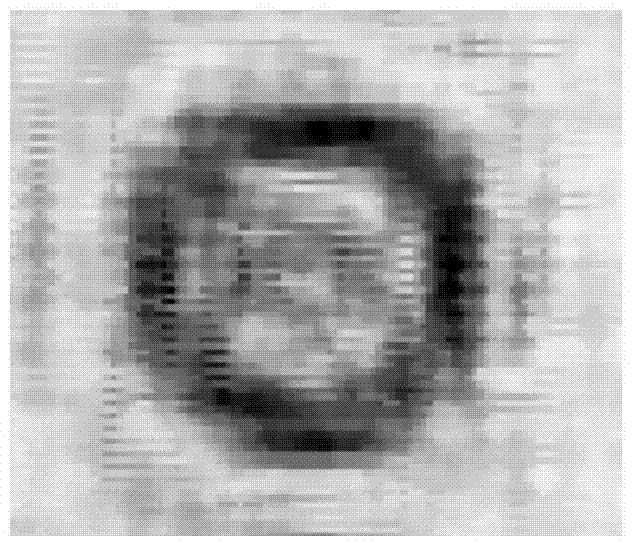
图1为没有经过任何处理的细胞图像的一部分截图;Figure 1 is a screenshot of a part of the cell image without any processing;
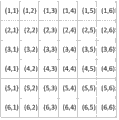
图2为细胞像素矩阵示意图;Figure 2 is a schematic diagram of a cell pixel matrix;
图3为插值方法示意图,其中,a和b分别为两个低分辨率细胞像素示意图,c为插值后放大两倍的细胞像素示意图;Fig. 3 is a schematic diagram of the interpolation method, wherein a and b are two low-resolution cell pixel schematic diagrams, and c is a cell pixel schematic diagram enlarged twice after interpolation;
图4为本发明实施例中用来进行超分辨率重构的8个原始低分辨率细胞;Fig. 4 is the 8 original low-resolution cells used for super-resolution reconstruction in the embodiment of the present invention;
图5为本发明实施例中第二步用sobel算子进行滤波后的4个放大两倍的细胞;Fig. 5 is the 4 double-magnified cells after filtering with the sobel operator in the second step in the embodiment of the present invention;
图6为本发明实施例中第三步插值后的2个放大4倍的细胞;Fig. 6 is the 2 cells enlarged by 4 times after the third step interpolation in the embodiment of the present invention;
图7为本发明实施例中第四步插值后的放大8倍的细胞;Fig. 7 is the cell enlarged 8 times after interpolation in the fourth step in the embodiment of the present invention;
图8为本发明实施例中第五步中值滤波后的放大8倍的细胞;Fig. 8 is the magnified 8-fold cell after the median filter in the fifth step in the embodiment of the present invention;
图9为本发明实施例中第六步中经过灰级窗增强后的放大8倍的细胞;Fig. 9 is an 8-fold magnified cell after grayscale window enhancement in the sixth step in the embodiment of the present invention;
图10为本发明实施例中在显微镜下放大50倍的细胞图像。Fig. 10 is a 50 times magnified cell image under a microscope in the embodiment of the present invention.
具体实施方式Detailed ways
下面结合附图和具体实施方式对本发明进行详细说明。The present invention will be described in detail below in conjunction with the accompanying drawings and specific embodiments.
本发明所提出的技术方案的实施基于一个假设:在CMOS图像传感器中所采集到的图像中的细胞都是同一类细胞。The implementation of the technical solution proposed by the present invention is based on a hypothesis: the cells in the images collected by the CMOS image sensor are all of the same type of cells.
本发明具体按照以下步骤实施:The present invention is specifically implemented according to the following steps:
步骤1:通过CMOS图像传感器获得低分辨率的细胞图像序列;Step 1: Obtain a low-resolution cell image sequence through a CMOS image sensor;
步骤2:在当前帧或者相邻几帧图像中搜索到超分辨率重构所需要的n个细胞。搜素方法可以有很多种,根据不同类型的细胞图像特征可以有不同的搜索方法。在本实施例中采用的是根据细胞的外形特征与背景的差异在当前帧图像中搜索细胞,首先提取出细胞的特征,该特征是背景所不具备的,然后在当前帧中以此特征进行搜索,如果当前块满足该特征,则为细胞,否则为背景。Step 2: Search for n cells required for super-resolution reconstruction in the current frame or several adjacent frames of images. There are many search methods, and there are different search methods according to different types of cell image features. In this embodiment, the cell is searched in the current frame image according to the difference between the shape feature of the cell and the background. Search, if the current block satisfies the feature, then the cell, otherwise the background.
步骤3:搜索到n个细胞后,就可以根据这n个细胞的信息来对目标细胞进行超分辨率重构。Step 3: After n cells are found, super-resolution reconstruction of the target cells can be performed based on the information of the n cells.
本发明采用的是基于插值的超分辨率重构方法,即用n个同类的低分辨率细胞的信息经过插值的方法重构出一个放大n倍的高分辨率细胞,具体分为以下步骤:The present invention adopts a super-resolution reconstruction method based on interpolation, that is, a high-resolution cell enlarged n times is reconstructed by interpolating the information of n similar low-resolution cells, which is specifically divided into the following steps:
(1)将这n个细胞分为n/2组,每组两个,用每组的两个细胞经过插值得到n/2个放大两倍的细胞,插值方法如图3所示,图3a与图3b为两个低分辨率细胞x与y,图3c为放大两倍的细胞,首先将两个低分辨率细胞的像素按照图3c所示方式交叉映射到高分辨率细胞矩阵中。(1) Divide the n cells into n/2 groups, two in each group, and use the two cells in each group to obtain n/2 double-magnified cells through interpolation. The interpolation method is shown in Figure 3, Figure 3a Figure 3b shows the two low-resolution cells x and y, and Figure 3c shows the double-magnified cells. First, the pixels of the two low-resolution cells are cross-mapped into the high-resolution cell matrix in the manner shown in Figure 3c.
映射完成后,还有1/2的像素值为未知的,这些位置的像素值需要经过插值得到。将像素值未知的这些位置分为3类,A,B和C。A在水平方向上都与同一个细胞的像素值相邻,通过水平平均插值得到,如图3c中左上角第一个A可以用如下公式得到:After the mapping is completed, 1/2 of the pixel values are unknown, and the pixel values at these positions need to be obtained through interpolation. These locations where the pixel values are unknown are classified into 3 categories, A, B and C. A is adjacent to the pixel value of the same cell in the horizontal direction, and is obtained by horizontal average interpolation. The first A in the upper left corner of Figure 3c can be obtained by the following formula:
A=(x11+x12)/2 (1)A=(x11+x12)/2 (1)
B在垂直方向上都与同一个细胞的像素值相邻,水平只有一个方向(左或者右)与另外一个细胞的像素值相邻,通过相邻3个像素值经过权重加权平均插值得到,如图3c中左上角第一个B可以用如下公式得到:B is adjacent to the pixel value of the same cell in the vertical direction, and only one direction (left or right) is adjacent to the pixel value of another cell in the horizontal direction. It is obtained by weighted average interpolation of 3 adjacent pixel values, such as The first B in the upper left corner of Figure 3c can be obtained by the following formula:
C在水平方向与垂直方向上各与一个细胞的像素值相邻,可以通过水平,垂直和对角相邻的3个像素值经过权重加权平均插值得到,如左下角的C可以用如下公式得到:C is adjacent to the pixel value of one cell in the horizontal direction and vertical direction, and can be obtained by weighted average interpolation of the three pixel values adjacent to each other horizontally, vertically and diagonally. For example, C in the lower left corner can be obtained by the following formula :
所有位置插值完成后,就得到了n/2个放大2倍的细胞。After the interpolation of all positions is completed, n/2 cells with a magnification of 2 times are obtained.
(2)对插值得到的n/2个细胞用soble算子进行滤波。(2) Filter the n/2 cells obtained by interpolation with the soble operator.
(3)将滤波后的n/2个细胞分为n/4组,每组2个,再用每组中的两个放大2倍的细胞进行插值,这样就得到n/4个放大4倍的细胞。插值方法与第一步相同,首先是交叉映射,然后将像素值不存在的位置分为3类,根据第一步所述公式得到这些位置的像素值。(3) Divide the filtered n/2 cells into n/4 groups, 2 in each group, and then use two magnified cells in each group for interpolation, so as to obtain n/4 magnified 4 times Cell. The interpolation method is the same as the first step, the first is cross mapping, and then the positions where the pixel values do not exist are divided into three categories, and the pixel values of these positions are obtained according to the formula described in the first step.
(4)第三步完成后就得到了n/4个放大4倍的细胞,依此类推,将每一步得到的细胞都两两分组,然后用第一步所述的插值方法再进行放大,最终得到一个放大n倍的细胞。(4) After the third step is completed, n/4 cells enlarged by 4 times are obtained, and so on, the cells obtained in each step are grouped in pairs, and then enlarged by the interpolation method described in the first step, Finally, a cell magnified by n times is obtained.
(5)对第四步得到的细胞图像进行中值滤波,抑制噪声。(5) Perform median filtering on the cell image obtained in the fourth step to suppress noise.
(6)采用灰级窗方法对中值滤波后的细胞图像进行对比度增强。(6) Contrast enhancement was performed on the median-filtered cell image using the gray-level window method.
经过以上6步,就得到一个经过超分辨率重构后放大n倍的细胞。After the above 6 steps, a cell enlarged by n times after super-resolution reconstruction is obtained.
实施例Example
以将细胞放大8倍为例进行说明。Take the magnification of cells 8 times as an example for illustration.
步骤1:通过CMOS图像传感器获得低分辨率的细胞图像序列;Step 1: Obtain a low-resolution cell image sequence through a CMOS image sensor;
步骤2:根据细胞的外形特征与背景的差异在当前帧图像中搜索细胞。由图1可以看出,本实验中的细胞呈现出中间亮,边界暗的特点,而这个特征是背景所不具备的,因此可以用这个外形特征作为判断条件在一帧图像中搜索出细胞。假如图2为一个细胞的像素矩阵A,对矩阵A的3,4行与3,4列进行投影,即:Step 2: Search for cells in the current frame image according to the difference between the appearance characteristics of the cells and the background. It can be seen from Figure 1 that the cells in this experiment are bright in the middle and dark at the border, and this feature is not available in the background, so this shape feature can be used as a judgment condition to search for cells in a frame of image. If Figure 2 is a pixel matrix A of a cell, the 3, 4 rows and 3, 4 columns of the matrix A are projected, namely:
B=[A(3,1)+A(4,1),A(3,2)+A(4,2),A(3,3)+A(4,3),A(3,4)B=[A(3,1)+A(4,1), A(3,2)+A(4,2), A(3,3)+A(4,3), A(3,4 )
+A(4,4),A(3,5)+A(4,5),A(3,6)+A(4,6)]+A(4,4),A(3,5)+A(4,5),A(3,6)+A(4,6)]
(4)(4)
C=[A(1,3)+A(1,4),A(2,3)+A(2,4),A(3,3)+A(3,4),A(4,3)C=[A(1,3)+A(1,4), A(2,3)+A(2,4), A(3,3)+A(3,4), A(4,3 )
+A(4,4),A(5,3)+A(5,4),A(6,3)+A(6,4)]+A(4,4),A(5,3)+A(5,4),A(6,3)+A(6,4)]
(5)(5)
那么,这两个数组满足以下条件:Then, these two arrays satisfy the following conditions:
B(1)<B(2)B(1)<B(2)
B(6)<B(5)B(6)<B(5)
B(3)-B(2)>20B(3)-B(2)>20
B(4)-B(5)>20B(4)-B(5)>20
C(1)<C(2) (6)C(1)<C(2) (6)
C(6)<C(5)C(6)<C(5)
C(3)-C(2)>20C(3)-C(2)>20
C(4)-C(5)>20C(4)-C(5)>20
对当前帧图像以细胞的大小(本实验中细胞为6×6)为块尺寸进行全搜索,对当前块进行如上所述投影,如果满足条件则认为当前块为细胞,否则为背景。搜索到的8个细胞如图4所示。A full search is performed on the current frame image with the size of the cell (in this experiment, the cell is 6×6) as the block size, and the current block is projected as described above. If the conditions are met, the current block is considered to be a cell, otherwise it is the background. The eight cells found are shown in Figure 4.
步骤3:利用搜索到的8个细胞的信息来对目标细胞进行超分辨率重构。Step 3: Use the information of the searched 8 cells to perform super-resolution reconstruction of the target cells.
本发明采用的是基于插值的超分辨率重构方法,即用这8个同类的低分辨率细胞的信息经过插值的方法重构出一个放大8倍的高分辨率细胞,具体分为以下步骤:The present invention adopts a super-resolution reconstruction method based on interpolation, that is, the information of these 8 similar low-resolution cells is interpolated to reconstruct an 8-fold high-resolution cell, which is specifically divided into the following steps :
(1)将这8个细胞分为4组,每组两个,用每组的两个细胞经过插值得到4个放大两倍的细胞,插值方法如图3所示,图3a与图3b为两个低分辨率细胞x与y,图3c为放大两倍的细胞,首先将两个低分辨率细胞的像素按照图3c所示方式交叉映射到高分辨率细胞矩阵中。(1) Divide the 8 cells into 4 groups, two in each group, and use the two cells in each group to obtain 4 double-magnified cells through interpolation. The interpolation method is shown in Figure 3, and Figure 3a and Figure 3b are Two low-resolution cells x and y, Figure 3c is a double-magnified cell, first cross-map the pixels of the two low-resolution cells into the high-resolution cell matrix in the manner shown in Figure 3c.
映射完成后,还有1/2的像素值为未知的,这些位置的像素值需要经过插值得到。将像素值未知的这些位置分为3类,A,B和C。A在水平方向上都与同一个细胞的像素值相邻,通过水平平均插值得到,如图3c中左上角第一个A可以用如下公式得到:After the mapping is completed, 1/2 of the pixel values are unknown, and the pixel values at these positions need to be obtained through interpolation. These locations where the pixel values are unknown are classified into 3 categories, A, B and C. A is adjacent to the pixel value of the same cell in the horizontal direction, and is obtained by horizontal average interpolation. The first A in the upper left corner of Figure 3c can be obtained by the following formula:
A=(x11+x12)/2 (7)A=(x11+x12)/2 (7)
B在垂直方向上都与同一个细胞的像素值相邻,水平只有一个方向(左或者右)与另外一个细胞的像素值相邻,通过相邻3个像素值经过权重加权平均插值得到,如图3c中左上角第一个B可以用如下公式得到:B is adjacent to the pixel value of the same cell in the vertical direction, and only one direction (left or right) is adjacent to the pixel value of another cell in the horizontal direction. It is obtained by weighted average interpolation of 3 adjacent pixel values, such as The first B in the upper left corner of Figure 3c can be obtained by the following formula:
C在水平方向与垂直方向上各与一个细胞的像素值相邻,可以通过水平,垂直和对角相邻的3个像素值经过权重加权平均插值得到,如左下角的C可以用如下公式得到:C is adjacent to the pixel value of one cell in the horizontal direction and vertical direction, and can be obtained by weighted average interpolation of the three pixel values adjacent to each other horizontally, vertically and diagonally. For example, C in the lower left corner can be obtained by the following formula :
所有位置插值完成后,就得到了4个放大2倍的细胞。After the interpolation of all positions is completed, 4 cells with a magnification of 2 times are obtained.
(2)对插值得到的4个细胞用soble算子进行滤波,如图5所示,为实验中放大两倍并用sobel算子滤波后的4个细胞。(2) Filter the 4 cells obtained by interpolation with the sobel operator, as shown in Figure 5, which is the 4 cells that were enlarged twice in the experiment and filtered with the sobel operator.
(3)将滤波后的4个细胞分为两组,每组2个,再用每组中的两个放大2倍的细胞进行插值,这样就得到2个放大4倍的细胞。插值方法与第一步相同,首先是交叉映射,然后将像素值不存在的位置分为3类,根据第一步所述公式得到这些位置的像素值。图6为实验中放大4倍的2个细胞。(3) Divide the filtered 4 cells into two groups, 2 in each group, and then interpolate with two 2-times magnified cells in each group, so as to obtain 2 4-times magnified cells. The interpolation method is the same as the first step, the first is cross mapping, and then the positions where the pixel values do not exist are divided into three categories, and the pixel values of these positions are obtained according to the formula described in the first step. Figure 6 shows the 2 cells magnified 4 times in the experiment.
(4)用第三步得到的这两个细胞再进行插值,插值方法也是与第一步相同,最终得到一个放大8倍的细胞,如图7所示。(4) Use the two cells obtained in the third step to perform interpolation, and the interpolation method is the same as the first step, and finally obtain a cell magnified by 8 times, as shown in Figure 7.
(5)对第四步得到的细胞图像进行中值滤波,抑制噪声。如图8为中值滤波后的细胞图像。(5) Perform median filtering on the cell image obtained in the fourth step to suppress noise. Figure 8 is the cell image after median filtering.
(6)采用灰级窗方法对中值滤波后的细胞图像进行对比度增强。如图9为灰级窗方法进行对比度增强后的图像。(6) Contrast enhancement was performed on the median-filtered cell image using the gray-level window method. Figure 9 shows the image after contrast enhancement by the gray scale window method.
经过以上6步,就得到一个经过超分辨率重构后放大8倍的细胞。由于本发明提出的细胞图像超分辨率重构方法利用的不仅是目标细胞的像素值,还利用了其他同类参考细胞的像素值,充分利用了采集到的信息,提高了目标细胞的清晰度,且本方法并不需要存储大量帧图像的数据,因此可以节省存储空间并满足图像处理的实时性要求。After the above 6 steps, a cell magnified 8 times after super-resolution reconstruction is obtained. Since the cell image super-resolution reconstruction method proposed in the present invention utilizes not only the pixel value of the target cell, but also the pixel value of other similar reference cells, the collected information is fully utilized, and the definition of the target cell is improved. Moreover, the method does not need to store data of a large number of frame images, so it can save storage space and meet the real-time requirements of image processing.
图10为在显微镜下放大50倍的细胞图像。从所得实验结果可以看出,本发明所述超分辨率重构方法效果是非常好的,与显微镜下放大的细胞图像很接近。但是本发明所采用的是图像处理的方法,利用CMOS图像传感器所采集到的低分辨率的细胞图像经过超分辨率重构对细胞进行放大,不需要显微镜,也不需要高分辨率的采样阵列,而且插值的方法计算简单,速度快,只需要较少的电子处理硬件,不仅价格便宜,而且小巧便捷,有着很好的实用性。Figure 10 is a 50 times magnified cell image under a microscope. It can be seen from the obtained experimental results that the effect of the super-resolution reconstruction method of the present invention is very good, which is very close to the enlarged cell image under a microscope. But what the present invention adopts is the method of image processing, utilizes the low-resolution cell image collected by CMOS image sensor to enlarge the cell through super-resolution reconstruction, does not need microscope, also does not need high-resolution sampling array , and the interpolation method is simple in calculation, fast in speed, requires less electronic processing hardware, is not only cheap, but also compact and convenient, and has good practicability.
Claims (2)
Priority Applications (1)
| Application Number | Priority Date | Filing Date | Title |
|---|---|---|---|
| CN201310354640.8A CN103473751B (en) | 2013-08-14 | 2013-08-14 | Based on the cmos sensor cell image ultra-resolution ratio reconstructing method of multiple goal |
Applications Claiming Priority (1)
| Application Number | Priority Date | Filing Date | Title |
|---|---|---|---|
| CN201310354640.8A CN103473751B (en) | 2013-08-14 | 2013-08-14 | Based on the cmos sensor cell image ultra-resolution ratio reconstructing method of multiple goal |
Publications (2)
| Publication Number | Publication Date |
|---|---|
| CN103473751A true CN103473751A (en) | 2013-12-25 |
| CN103473751B CN103473751B (en) | 2016-06-01 |
Family
ID=49798585
Family Applications (1)
| Application Number | Title | Priority Date | Filing Date |
|---|---|---|---|
| CN201310354640.8A Expired - Fee Related CN103473751B (en) | 2013-08-14 | 2013-08-14 | Based on the cmos sensor cell image ultra-resolution ratio reconstructing method of multiple goal |
Country Status (1)
| Country | Link |
|---|---|
| CN (1) | CN103473751B (en) |
Cited By (8)
| Publication number | Priority date | Publication date | Assignee | Title |
|---|---|---|---|---|
| CN103780863A (en) * | 2014-01-17 | 2014-05-07 | Tcl集团股份有限公司 | High-resolution image generation method and device |
| CN103903235A (en) * | 2014-01-27 | 2014-07-02 | 西安理工大学 | Cell image super-resolution reconstruction method |
| CN104266954A (en) * | 2014-09-15 | 2015-01-07 | 浙江大学 | DSP (diarrhetic shellfish poison) detection and analysis method based on cell image sensor |
| CN106231182A (en) * | 2016-07-29 | 2016-12-14 | 维沃移动通信有限公司 | A kind of photographic method and mobile terminal |
| CN106295251A (en) * | 2015-05-25 | 2017-01-04 | 中国科学院青岛生物能源与过程研究所 | Phenotypic data analysis and processing method based on unicellular Phenotype data base |
| CN107209357A (en) * | 2014-12-23 | 2017-09-26 | 法国原子能与替代能源委员会 | Imaging method and system for the super-resolution image that obtains object |
| CN109146790A (en) * | 2018-08-27 | 2019-01-04 | 深圳大学 | A kind of image reconstructing method, device, electronic equipment and storage medium |
| CN112004006A (en) * | 2020-08-13 | 2020-11-27 | 青岛海信移动通信技术股份有限公司 | Mobile medical terminal and brightness adjusting method thereof |
Citations (2)
| Publication number | Priority date | Publication date | Assignee | Title |
|---|---|---|---|---|
| US20070019887A1 (en) * | 2004-06-30 | 2007-01-25 | Oscar Nestares | Computing a higher resolution image from multiple lower resolution images using model-base, robust bayesian estimation |
| CN101794440A (en) * | 2010-03-12 | 2010-08-04 | 东南大学 | Weighted adaptive super-resolution reconstructing method for image sequence |
-
2013
- 2013-08-14 CN CN201310354640.8A patent/CN103473751B/en not_active Expired - Fee Related
Patent Citations (2)
| Publication number | Priority date | Publication date | Assignee | Title |
|---|---|---|---|---|
| US20070019887A1 (en) * | 2004-06-30 | 2007-01-25 | Oscar Nestares | Computing a higher resolution image from multiple lower resolution images using model-base, robust bayesian estimation |
| CN101794440A (en) * | 2010-03-12 | 2010-08-04 | 东南大学 | Weighted adaptive super-resolution reconstructing method for image sequence |
Non-Patent Citations (1)
| Title |
|---|
| 张地 等: "低分辨率人脸序列的超分辨率重构识别", 《韶关学院学报·自然科学》 * |
Cited By (14)
| Publication number | Priority date | Publication date | Assignee | Title |
|---|---|---|---|---|
| CN103780863B (en) * | 2014-01-17 | 2017-08-25 | Tcl集团股份有限公司 | A kind of high-definition picture generation method and device |
| CN103780863A (en) * | 2014-01-17 | 2014-05-07 | Tcl集团股份有限公司 | High-resolution image generation method and device |
| CN103903235B (en) * | 2014-01-27 | 2017-06-06 | 西安理工大学 | Cell image ultra-resolution ratio reconstructing method |
| CN103903235A (en) * | 2014-01-27 | 2014-07-02 | 西安理工大学 | Cell image super-resolution reconstruction method |
| CN104266954B (en) * | 2014-09-15 | 2016-08-17 | 浙江大学 | The diarrhoeal Mycotoxin identification of shellfish based on cell image sensor analyzes method |
| CN104266954A (en) * | 2014-09-15 | 2015-01-07 | 浙江大学 | DSP (diarrhetic shellfish poison) detection and analysis method based on cell image sensor |
| CN107209357A (en) * | 2014-12-23 | 2017-09-26 | 法国原子能与替代能源委员会 | Imaging method and system for the super-resolution image that obtains object |
| US10527837B2 (en) | 2014-12-23 | 2020-01-07 | Commissariat à l'énergie atomique et aux énergies alternatives | Imaging method, and system, for obtaining a super-resolution image of an object |
| CN107209357B (en) * | 2014-12-23 | 2020-01-21 | 法国原子能与替代能源委员会 | Imaging method and system for obtaining super-resolution images of an object |
| CN106295251A (en) * | 2015-05-25 | 2017-01-04 | 中国科学院青岛生物能源与过程研究所 | Phenotypic data analysis and processing method based on unicellular Phenotype data base |
| CN106231182A (en) * | 2016-07-29 | 2016-12-14 | 维沃移动通信有限公司 | A kind of photographic method and mobile terminal |
| CN109146790A (en) * | 2018-08-27 | 2019-01-04 | 深圳大学 | A kind of image reconstructing method, device, electronic equipment and storage medium |
| CN109146790B (en) * | 2018-08-27 | 2022-10-11 | 深圳大学 | Image reconstruction method and device, electronic equipment and storage medium |
| CN112004006A (en) * | 2020-08-13 | 2020-11-27 | 青岛海信移动通信技术股份有限公司 | Mobile medical terminal and brightness adjusting method thereof |
Also Published As
| Publication number | Publication date |
|---|---|
| CN103473751B (en) | 2016-06-01 |
Similar Documents
| Publication | Publication Date | Title |
|---|---|---|
| CN103473751B (en) | Based on the cmos sensor cell image ultra-resolution ratio reconstructing method of multiple goal | |
| CN110310227B (en) | Image super-resolution reconstruction method based on high-low frequency information decomposition | |
| CN103279935B (en) | Based on thermal remote sensing image super resolution ratio reconstruction method and the system of MAP algorithm | |
| Cheon et al. | Generative adversarial network-based image super-resolution using perceptual content losses | |
| CN101794440B (en) | Weighted adaptive super-resolution reconstruction method for image sequences | |
| CN100533480C (en) | Method for reestablishment of single frame image quick super-resolution based on nucleus regression | |
| CN113222825B (en) | Infrared image super-resolution reconstruction method based on visible light image training and application | |
| CN103268599B (en) | Many line array CCDs sub-pixed mapping dislocation imaging ultra-resolution ratio reconstructing method | |
| CN102800071A (en) | Method for reconstructing super resolution of sequence image POCS | |
| CN114549308B (en) | Image super-resolution reconstruction method and system with large receptive field and oriented to perception | |
| CN106657713A (en) | Video motion amplification method | |
| CN110689509B (en) | Video super-resolution reconstruction method based on cyclic multi-column 3D convolution network | |
| CN101807291A (en) | Biquadratic B-spline local interpolation-based image scaling method | |
| CN104574338B (en) | Remote sensing image super-resolution reconstruction method based on multi-angle linear array CCD sensors | |
| Deng et al. | Multiple frame splicing and degradation learning for hyperspectral imagery super-resolution | |
| CN102750668A (en) | Digital image triple interpolation amplification method by combining local direction features | |
| CN108416734A (en) | Text image super-resolution reconstruction method and device based on edge drive | |
| CN103903235B (en) | Cell image ultra-resolution ratio reconstructing method | |
| CN114972033B (en) | Self-supervision method for improving longitudinal resolution of optical coherence tomography image | |
| CN102735347A (en) | Method and device for infrared gaze tomography of target tracking | |
| Tang et al. | Projection onto convex sets super-resolution image reconstruction based on wavelet bi-cubic interpolation | |
| CN113674154A (en) | A method and system for single image super-resolution reconstruction based on generative adversarial network | |
| Liu et al. | SAR image super-resolution based on TV-regularization using gradient profile prior | |
| Chen et al. | Super resolution from a single image based on self similarity | |
| Mhatre et al. | Deepfusion: A novel deep learning technique for enhanced image super-resolution |
Legal Events
| Date | Code | Title | Description |
|---|---|---|---|
| C06 | Publication | ||
| PB01 | Publication | ||
| C10 | Entry into substantive examination | ||
| SE01 | Entry into force of request for substantive examination | ||
| C53 | Correction of patent of invention or patent application | ||
| CB03 | Change of inventor or designer information |
Inventor after: Yu Ningmei Inventor after: Zhang Yang Inventor after: Shi Xiaoyu Inventor after: Ren Ru Inventor before: Yu Ningmei Inventor before: Shi Xiaoyu Inventor before: Ren Ru |
|
| COR | Change of bibliographic data |
Free format text: CORRECT: INVENTOR; FROM: YU NINGMEI SHI XIAOYU REN RU TO: YU NINGMEI ZHANG YANG SHI XIAOYU REN RU |
|
| C14 | Grant of patent or utility model | ||
| GR01 | Patent grant | ||
| CF01 | Termination of patent right due to non-payment of annual fee |
Granted publication date: 20160601 |
|
| CF01 | Termination of patent right due to non-payment of annual fee |