CN1052002C - Ether derivatives of tetrahydropyran and tetrahydrofuran, processes for their preparation and pharmaceutical compositions containing these compounds - Google Patents
Ether derivatives of tetrahydropyran and tetrahydrofuran, processes for their preparation and pharmaceutical compositions containing these compounds Download PDFInfo
- Publication number
- CN1052002C CN1052002C CN94191925A CN94191925A CN1052002C CN 1052002 C CN1052002 C CN 1052002C CN 94191925 A CN94191925 A CN 94191925A CN 94191925 A CN94191925 A CN 94191925A CN 1052002 C CN1052002 C CN 1052002C
- Authority
- CN
- China
- Prior art keywords
- methyl
- bases
- oxos
- tetrahydroquinoline
- hydroxy
- Prior art date
- Legal status (The legal status is an assumption and is not a legal conclusion. Google has not performed a legal analysis and makes no representation as to the accuracy of the status listed.)
- Expired - Fee Related
Links
Classifications
-
- C—CHEMISTRY; METALLURGY
- C07—ORGANIC CHEMISTRY
- C07D—HETEROCYCLIC COMPOUNDS
- C07D405/00—Heterocyclic compounds containing both one or more hetero rings having oxygen atoms as the only ring hetero atoms, and one or more rings having nitrogen as the only ring hetero atom
- C07D405/02—Heterocyclic compounds containing both one or more hetero rings having oxygen atoms as the only ring hetero atoms, and one or more rings having nitrogen as the only ring hetero atom containing two hetero rings
- C07D405/12—Heterocyclic compounds containing both one or more hetero rings having oxygen atoms as the only ring hetero atoms, and one or more rings having nitrogen as the only ring hetero atom containing two hetero rings linked by a chain containing hetero atoms as chain links
-
- A—HUMAN NECESSITIES
- A61—MEDICAL OR VETERINARY SCIENCE; HYGIENE
- A61P—SPECIFIC THERAPEUTIC ACTIVITY OF CHEMICAL COMPOUNDS OR MEDICINAL PREPARATIONS
- A61P11/00—Drugs for disorders of the respiratory system
-
- A—HUMAN NECESSITIES
- A61—MEDICAL OR VETERINARY SCIENCE; HYGIENE
- A61P—SPECIFIC THERAPEUTIC ACTIVITY OF CHEMICAL COMPOUNDS OR MEDICINAL PREPARATIONS
- A61P17/00—Drugs for dermatological disorders
-
- A—HUMAN NECESSITIES
- A61—MEDICAL OR VETERINARY SCIENCE; HYGIENE
- A61P—SPECIFIC THERAPEUTIC ACTIVITY OF CHEMICAL COMPOUNDS OR MEDICINAL PREPARATIONS
- A61P29/00—Non-central analgesic, antipyretic or antiinflammatory agents, e.g. antirheumatic agents; Non-steroidal antiinflammatory drugs [NSAID]
-
- A—HUMAN NECESSITIES
- A61—MEDICAL OR VETERINARY SCIENCE; HYGIENE
- A61P—SPECIFIC THERAPEUTIC ACTIVITY OF CHEMICAL COMPOUNDS OR MEDICINAL PREPARATIONS
- A61P37/00—Drugs for immunological or allergic disorders
-
- A—HUMAN NECESSITIES
- A61—MEDICAL OR VETERINARY SCIENCE; HYGIENE
- A61P—SPECIFIC THERAPEUTIC ACTIVITY OF CHEMICAL COMPOUNDS OR MEDICINAL PREPARATIONS
- A61P37/00—Drugs for immunological or allergic disorders
- A61P37/08—Antiallergic agents
-
- C—CHEMISTRY; METALLURGY
- C07—ORGANIC CHEMISTRY
- C07D—HETEROCYCLIC COMPOUNDS
- C07D409/00—Heterocyclic compounds containing two or more hetero rings, at least one ring having sulfur atoms as the only ring hetero atoms
- C07D409/14—Heterocyclic compounds containing two or more hetero rings, at least one ring having sulfur atoms as the only ring hetero atoms containing three or more hetero rings
-
- C—CHEMISTRY; METALLURGY
- C07—ORGANIC CHEMISTRY
- C07D—HETEROCYCLIC COMPOUNDS
- C07D417/00—Heterocyclic compounds containing two or more hetero rings, at least one ring having nitrogen and sulfur atoms as the only ring hetero atoms, not provided for by group C07D415/00
- C07D417/14—Heterocyclic compounds containing two or more hetero rings, at least one ring having nitrogen and sulfur atoms as the only ring hetero atoms, not provided for by group C07D415/00 containing three or more hetero rings
-
- C—CHEMISTRY; METALLURGY
- C07—ORGANIC CHEMISTRY
- C07D—HETEROCYCLIC COMPOUNDS
- C07D493/00—Heterocyclic compounds containing oxygen atoms as the only ring hetero atoms in the condensed system
- C07D493/02—Heterocyclic compounds containing oxygen atoms as the only ring hetero atoms in the condensed system in which the condensed system contains two hetero rings
- C07D493/08—Bridged systems
Landscapes
- Chemical & Material Sciences (AREA)
- Organic Chemistry (AREA)
- Health & Medical Sciences (AREA)
- Life Sciences & Earth Sciences (AREA)
- General Health & Medical Sciences (AREA)
- Veterinary Medicine (AREA)
- Chemical Kinetics & Catalysis (AREA)
- General Chemical & Material Sciences (AREA)
- Medicinal Chemistry (AREA)
- Nuclear Medicine, Radiotherapy & Molecular Imaging (AREA)
- Public Health (AREA)
- Pharmacology & Pharmacy (AREA)
- Animal Behavior & Ethology (AREA)
- Engineering & Computer Science (AREA)
- Bioinformatics & Cheminformatics (AREA)
- Pulmonology (AREA)
- Immunology (AREA)
- Dermatology (AREA)
- Rheumatology (AREA)
- Pain & Pain Management (AREA)
- Pharmaceuticals Containing Other Organic And Inorganic Compounds (AREA)
- Plural Heterocyclic Compounds (AREA)
- Heterocyclic Carbon Compounds Containing A Hetero Ring Having Nitrogen And Oxygen As The Only Ring Hetero Atoms (AREA)
- Acyclic And Carbocyclic Compounds In Medicinal Compositions (AREA)
- Organic Low-Molecular-Weight Compounds And Preparation Thereof (AREA)
- Nitrogen- Or Sulfur-Containing Heterocyclic Ring Compounds With Rings Of Six Or More Members (AREA)
- Thiazole And Isothizaole Compounds (AREA)
Abstract
Description
本发明涉及醚衍生物,特别是作为5-脂氧合酶抑制剂(下文称作5-LO)的醚衍生物。本发明还涉及制备所述醚衍生物的方法和含有这些醚衍生物的新药物组合物。本发明还包括所述醚衍生物在治疗各种疾病例如炎性疾病和/或变应性疾病(其中涉及了5-LO催化的花生四烯酸的氧化作用的直接或间接产物)中的应用和制备用于这些应用的新的药物。The present invention relates to ether derivatives, especially ether derivatives as 5-lipoxygenase inhibitors (hereinafter referred to as 5-LO). The invention also relates to processes for the preparation of said ether derivatives and novel pharmaceutical compositions containing these ether derivatives. The present invention also includes the use of said ether derivatives in the treatment of various diseases such as inflammatory diseases and/or allergic diseases in which direct or indirect products of the oxidation of arachidonic acid catalyzed by 5-LO are involved and preparation of new drugs for these applications.
如上所述,下文所述的醚衍生物是5-LO抑制剂,已知5-LO参与花生四烯酸的催化氧化作用,从而通过阶式方法升高具有药理学活性的白三烯如白三烯B4(LTB4)和肽基-类脂白三烯如白三烯C4(LTC4)和白三烯D4(LTD4)和各种代谢物。As noted above, the ether derivatives described below are inhibitors of 5-LO, which is known to be involved in the catalytic oxidation of arachidonic acid, thereby elevating pharmacologically active leukotrienes such as leukotrienes by a cascade approach. Triene B 4 (LTB 4 ) and peptidyl-lipid leukotrienes such as leukotriene C 4 (LTC 4 ) and leukotriene D 4 (LTD 4 ) and various metabolites.
G.W.Taylor和S.R.Clarke在Trends in PharmacologicalSciences,1986,7,100-103中总结了白三烯的生物合成关系和药理学性质。白三烯及其代谢物与多种疾病[例如各种炎症和变应性疾病如关节炎(特别是类风湿关节炎、骨关节炎和痛风)、胃肠道炎症(特别是肠炎、溃疡性结肠炎和胃炎)、皮肤病(特别是牛皮癣、湿疹和皮炎)、眼科疾病(特别是变应性结膜炎和眼色素层炎)以及呼吸系统疾病(特别是气喘、支气管炎和变应性鼻炎)]的产生和发展有关,例如与心血管和脑血管疾病(如心肌梗塞、动脉粥样硬化斑的形成、高血压、血小板凝集、咽峡炎、中风、再灌注损伤、血管损伤包括再狭窄和外周血管疾病)的产生和发展有关,例如与休克和损伤(如烧伤、毒血症或外科手术后产生的)疾病的形成有关,例如与各种骨代谢疾病[如骨质疏松(包括老年性骨质疏松和后黄体期骨质疏松)、佩吉特病、骨转移、高钙血、甲状旁腺机能亢进、骨硬化、骨硬化病和牙周炎]有关,以及与伴随有类风湿关节炎和骨关节炎的骨代谢异常变化有关。另外,因白三烯能够调节淋巴细胞和白细胞的功能,所以白三烯是炎性疾病的介体。通过环氧合酶对花生四烯酸的作用,花生四烯酸的其它药理活性代谢物如前列腺素和thromboxanes升高。G.W.Taylor and S.R.Clarke summarized the biosynthesis relationship and pharmacological properties of leukotrienes in Trends in Pharmacological Sciences, 1986, 7, 100-103. Leukotrienes and their metabolites are associated with various diseases [such as various inflammatory and allergic diseases such as arthritis (especially rheumatoid arthritis, osteoarthritis and gout), gastrointestinal inflammation (especially enteritis, ulcerative colitis and gastritis), skin diseases (especially psoriasis, eczema and dermatitis), eye diseases (especially allergic conjunctivitis and uveitis), and respiratory diseases (especially asthma, bronchitis and allergic rhinitis )], such as in cardiovascular and cerebrovascular diseases (such as myocardial infarction, atherosclerotic plaque formation, hypertension, platelet aggregation, angina, stroke, reperfusion injury, vascular injury including restenosis related to the occurrence and development of peripheral vascular disease), for example, related to the formation of shock and injury (such as burns, toxemia or post-surgical operations), for example, related to various bone metabolic diseases [such as osteoporosis (including senile osteoporosis and postluteal phase osteoporosis), Paget's disease, bone metastases, hypercalcemia, hyperparathyroidism, osteosclerosis, osteosclerosis, and periodontitis], and with concomitant rheumatoid Arthritis and osteoarthritis are associated with abnormal changes in bone metabolism. In addition, leukotrienes are mediators of inflammatory diseases due to their ability to regulate the function of lymphocytes and leukocytes. Other pharmacologically active metabolites of arachidonic acid such as prostaglandins and thromboxanes are elevated through the action of cyclooxygenase on arachidonic acid.
在EP 0385662中公开了某些杂环衍生物对5-LO具有抑制活性。EP 0420511、0462812和0462813也涉及了对5-LO具有抑制活性的杂环衍生物。我们发现,某些结构特征与上述申请中所公开的化合物类似、而其它特征(特别是醇基)不同于早期申请的一些醚衍生物是5-LO酶的有效抑制剂,因此也是白三烯生物合成的有效抑制剂。因此,这些化合物在例如单独或者部分由一种或多种白三烯介导的变应性疾病、牛皮癣、气喘、心血管与脑血管疾病、和/或炎性疾病和关节炎、和/或骨代谢疾病的治疗方面是有价值的治疗剂。In EP 0385662 it is disclosed that certain heterocyclic derivatives have inhibitory activity against 5-LO. EP 0420511, 0462812 and 0462813 also relate to heterocyclic derivatives having inhibitory activity against 5-LO. We have found that some ether derivatives with certain structural features similar to the compounds disclosed in the above-mentioned applications, while others (notably the alcohol group) differ from the earlier applications, are potent inhibitors of 5-LO enzymes and thus leukotrienes Potent inhibitor of biosynthesis. Thus, these compounds are useful in, for example, allergic diseases, psoriasis, asthma, cardiovascular and cerebrovascular diseases, and/or inflammatory diseases and arthritis mediated solely or in part by one or more leukotrienes, and/or It is a valuable therapeutic agent in the treatment of bone metabolic diseases.
已发现,在EP 0462812中公开的某些化合物具有不希望的自诱导性质,即由于动物肝脏代谢该化合物,需要给温血动物重复施用该化合物以增加其功效。结果是降低了在动物血液中存在的重复施用的化合物的量,例如通过降低所达到的最大浓度(Cmax)或者,例如减少了动物与该化合物的接触(根据以血液中化合物的浓度对给药后的时间绘制的曲线下面积(AUC)测量)。化合物4-甲氧基-4-[5-(1-甲基-2-氧代-1,2,3,4-四氢喹啉-6-基硫代)噻吩-2-基]四氢吡喃具有不希望的自诱导性质。Certain compounds disclosed in EP 0462812 have been found to have undesired autoinducing properties, ie repeated administration of the compounds to warm-blooded animals is required to increase their efficacy due to metabolism of the compounds by the animal's liver. The result is a reduction in the amount of repeatedly administered compound present in the animal's blood, e.g., by reducing the maximum concentration achieved (Cmax) or, e.g., reducing the animal's exposure to the compound (according to the concentration of the compound in the blood versus the administered dose). The area under the curve (AUC) plotted over time was measured). Compound 4-methoxy-4-[5-(1-methyl-2-oxo-1,2,3,4-tetrahydroquinolin-6-ylthio)thiophen-2-yl]tetrahydro Pyrans have undesired autoinducing properties.
已发现,EP 0462812中所公开的某些化合物是非晶态的,例如它们是油状的或胶态的,或者它们以泡沫的形式分离。当考虑到制备、纯化、分析、加工和大量制备该化合物时,这些非晶形的化合物是不希望的。化合物(2S,4R)-4-甲氧基-2-甲基-4-[5-(1-甲基-2-硫代-1,2,3,4-四氢喹啉-6-基硫代)噻吩-2-基]四氢吡喃具有不希望的粘稠油状特性。It has been found that some of the compounds disclosed in EP 0462812 are amorphous, for example they are oily or gelatinous, or they isolate in the form of foams. These amorphous compounds are undesirable when considering the preparation, purification, analysis, processing and mass production of the compound. Compound (2S,4R)-4-methoxy-2-methyl-4-[5-(1-methyl-2-thio-1,2,3,4-tetrahydroquinolin-6-yl Thio)thiophen-2-yl]tetrahydropyran has an undesirably viscous oily character.
本发明一方面提供了式I的醚衍生物或其可药用的盐One aspect of the present invention provides an ether derivative of formula I or a pharmaceutically acceptable salt thereof
Q1-X-Ar-Q2 I其中Q1是9-、10-或11-元双环杂环部分,该杂环部分含有一个或两个氮杂原子,并且可以任选地含有另一个选自氮、氧和硫的杂原子,并且Q1可以任意地带有至多4个取代基,这些取代基选自卤素、羟基、氰基、甲酰基、氧代、硫代、(1-4C)烷基、(3-4C)链烯基、(3-4C)链炔基、(1-4C)烷氧基、氟-(1-4C)烷基、羟基-(1-4C)烷基、(2-5C)链烷酰基、苯基、苯甲酰基和苄基,其中所述苯基、苯甲酰基和苄基取代基可以任意地带有一个或两个选自卤素、(1-4C)烷基和(1-4C)烷氧基的取代基;X是氧、硫、亚磺酰基或磺酰基;Ar是亚苯基、吡啶二基、嘧啶二基、噻吩二基、呋喃二基、噻唑二基、噁唑二基、噻二唑二基或噁二唑二基,它们可以任意地带有1或2个选自卤素、氰基、三氟甲基、羟基、氨基、(1-4C)烷基、(1-4C)烷氧基、(1-4C)烷氨基和二-(1-4C)烷氨基的取代基;并且Q2是选自式II和III的基团:-
本发明另一方面提供了式I的醚衍生物或其可药用的盐Another aspect of the present invention provides ether derivatives of formula I or pharmaceutically acceptable salts thereof
Q1-X-Ar-Q2 I其中Q1是10-元双环杂环部分,该杂环部分含有一个或两个氮杂原子,并且可以任选地含有另一个选自氮、氧和硫的杂原子,并且Q1可以任意地带有至多4个取代基,这些取代基选自卤素、羟基、氰基、甲酰基、氧代、硫代、(1-4C)烷基、(1-4C)烷氧基、氟-(1-4C)烷基、羟基-(1-4C)烷基、(2-5C)链烷酰基、苯基、苯甲酰基和苄基,其中所述苯基、苯甲酰基和苄基取代基可以任意地带有一个或两个选自卤素、(1-4C)烷基和(1-4C)烷氧基的取代基;X是氧、硫、亚磺酰基或磺酰基;Ar是亚苯基、吡啶二基、嘧啶二基、噻吩二基、呋喃二基、噻唑二基、噁唑二基、噻二唑二基或噁二唑二基,它们可以任意地带有1或2个选自卤素、氰基、三氟甲基、羟基、氨基、(1-4C)烷基、(1-4C)烷氧基、(1-4C)烷氨基和二-(1-4C)烷氨基的取代基;并且Q2是选自式II和III的基团:-
在本说明书中,一般性术语“烷基”包括直链和支链烷基。但是对于单个的烷基如“丙基”则仅仅是特指直链丙基,对于单个的支链烷基如“异丙基”则仅仅是特指支链异丙基。类似的规定适用于其它的一般性术语。In this specification, the general term "alkyl" includes straight chain and branched chain alkyl groups. However, for a single alkyl such as "propyl", it only specifically refers to a straight-chain propyl group, and for a single branched-chain alkyl such as "isopropyl", it only specifically refers to a branched-chain isopropyl group. Similar provisions apply to other general terms.
应该理解,在上述定义的某些式I化合物中可以存在互变异构现象,并且本文图示的任何结构式都仅仅表示了一种可能的互变异构形式,本发明的定义中包括所有具有抑制5-LO性质的式I化合物的任何互变异构形式,而不仅仅限于任何一种图示结构式中所用的互变异构形式。It should be understood that tautomerism may exist in certain formula I compounds defined above, and any structural formula illustrated herein only represents a possible tautomeric form, and the definition of the present invention includes all compounds having Any tautomeric form of a compound of formula I that inhibits the 5-LO property is not limited to the tautomeric form used in any one of the schematic formulas.
还应该理解,在上述定义中的某些式I化合物可以通过一个或多个不对称碳原子以旋光活性形式或外消旋形式存在,本发明的定义中包括具有抑制5-LO性质的任何旋光活性形式或外消旋形式。旋光活性形式的合成可以通过本领域众所周知的有机化学技术进行,例如由旋光活性的原料合成或者拆分外消旋体。It should also be understood that certain compounds of formula I in the above definitions may exist in optically active or racemic forms through one or more asymmetric carbon atoms, and that any optically active compounds having 5-LO inhibiting properties are included in the definition of the present invention. active or racemic form. Synthesis of optically active forms can be carried out by techniques of organic chemistry well known in the art, such as synthesis from optically active starting materials or resolution of racemates.
上述一般性术语的合适基团包括下面所列的那些。Suitable groups for the above general terms include those listed below.
当Q1为含有一或两个氮杂原子、并且任选地含有另一个选自氮、氧和硫的杂原子的9元双环杂环部分时,其合适的基团是例如苯环稠合的杂环部分或其氢化衍生物,例如吲哚基、二氢吲哚基、异吲哚基、异二氢吲哚基、中氮茚基、苯并咪唑基、2,3-二氢苯并咪唑基、1H-吲唑基、2,3-二氢-1H-吲唑基、苯并噁唑基、2,3-二氢苯并噁唑基、苯并[c]异噁唑基、苯并[d]异噁唑基、2,3-二氢苯并[d]异噁唑基、苯并噻唑基、2,3-二氢苯并噻唑基、苯并[c]异噻唑基、苯并[d]异噻唑基和2,3-二氢苯并[d]异噻唑基,或者例如吡啶稠合的杂环部分或其氢化衍生物,例如1H-吡咯并[2,3-b]吡啶基、2,3-二氢-1H-吡咯并[2,3-b]吡啶基、1H-吡咯并[2,3-c]吡啶基、2,3-二氢-1H-吡咯并[2,3-c]吡啶基、1H-咪唑并[4,5-b]吡啶基、2,3-二氢-1H-咪唑并[4,5-b]吡啶基、1H-咪唑并[4,5-c]吡啶基和2,3-二氢-1H-咪唑并[4,5-c]吡啶基。When Q is a 9-membered bicyclic heterocyclic moiety containing one or two nitrogen heteroatoms, and optionally another heteroatom selected from nitrogen, oxygen and sulfur, suitable groups are, for example, benzene ring fused The heterocyclic moiety or its hydrogenated derivatives, such as indolyl, indolinyl, isoindolyl, isoindolinyl, indolizyl, benzimidazolyl, 2,3-dihydrobenzene Imidazolyl, 1H-indazolyl, 2,3-dihydro-1H-indazolyl, benzoxazolyl, 2,3-dihydrobenzoxazolyl, benzo[c]isoxazolyl , benzo[d]isoxazolyl, 2,3-dihydrobenzo[d]isoxazolyl, benzothiazolyl, 2,3-dihydrobenzothiazolyl, benzo[c]isothiazole benzo[d]isothiazolyl and 2,3-dihydrobenzo[d]isothiazolyl, or, for example, pyridine-fused heterocyclic moieties or hydrogenated derivatives thereof, such as 1H-pyrrolo[2,3 -b]pyridyl, 2,3-dihydro-1H-pyrrolo[2,3-b]pyridyl, 1H-pyrrolo[2,3-c]pyridyl, 2,3-dihydro-1H- Pyrrolo[2,3-c]pyridyl, 1H-imidazo[4,5-b]pyridyl, 2,3-dihydro-1H-imidazo[4,5-b]pyridyl, 1H-imidazole a[4,5-c]pyridyl and 2,3-dihydro-1H-imidazo[4,5-c]pyridyl.
当Q1为含有一或两个氮杂原子、并且任选地含有另一个选自氮、氧和硫的杂原子的10元双环杂环部分时,其合适的基团是例如10元苯环稠合的杂环部分,例如喹啉基、异喹啉基、噌啉基、喹唑啉基、喹喔啉基、4H-1,4-苯并噁嗪基或4H-1,4-苯并噻嗪基,或者其氢化衍生物,例如1,2-二氢喹啉基、1,2,3,4-四氢喹啉基、1,2-二氢异喹啉基、1,2,3,4-四氢喹唑啉基、2,3-二氢-4H-1,4-苯并噁嗪基或2,3-二氢-4H-1,4-苯并噻嗪基;或者例如10元吡啶稠合的杂环部分,例如1,7-二氮杂萘基、1,8-二氮杂萘基、吡啶并[2,3-d]嘧啶基、吡啶并[2,3-b]吡嗪基、4H-吡啶并[3,2-b][1,4]噁嗪基和4H-吡啶并[3,2-b][1,4]噻嗪基,或者其氢化衍生物。When Q is a 10-membered bicyclic heterocyclic moiety containing one or two nitrogen heteroatoms, and optionally another heteroatom selected from nitrogen, oxygen and sulfur, a suitable group is, for example, a 10-membered benzene ring Fused heterocyclic moieties such as quinolinyl, isoquinolinyl, cinnolinyl, quinazolinyl, quinoxalinyl, 4H-1,4-benzoxazinyl or 4H-1,4-benzene Thiazinyl, or its hydrogenated derivatives, such as 1,2-dihydroquinolinyl, 1,2,3,4-tetrahydroquinolinyl, 1,2-dihydroisoquinolinyl, 1,2 , 3,4-tetrahydroquinazolinyl, 2,3-dihydro-4H-1,4-benzoxazinyl or 2,3-dihydro-4H-1,4-benzothiazinyl; Or for example 10-membered pyridine fused heterocyclic moieties such as 1,7-naphthyridine, 1,8-naphthyridine, pyrido[2,3-d]pyrimidinyl, pyrido[2, 3-b]pyrazinyl, 4H-pyrido[3,2-b][1,4]oxazinyl and 4H-pyrido[3,2-b][1,4]thiazinyl, or their hydrogenated derivatives.
当Q1为含有一或两个氮杂原子、并且任选地含有另一个选自氮、氧和硫的杂原子的11元双环杂环部分时,其合适的基团是例如11元苯环稠合的杂环部分例如1H-苯并[b]氮杂,或者其氢化衍生物如2,3,4,5-四氢-1H-苯并[b]氮杂。When Q is an 11- membered bicyclic heterocyclic moiety containing one or two nitrogen heteroatoms, and optionally another heteroatom selected from nitrogen, oxygen and sulfur, a suitable group is, for example, an 11-membered benzene ring Fused heterocyclic moieties such as 1H-benzo[b]azepine, or hydrogenated derivatives thereof such as 2,3,4,5-tetrahydro-1H-benzo[b]azepine.
杂环部分可以通过双环杂环的两个环上任何有效的位置连接,包括通过有效的氮原子连接。杂环部分在有效氮原子上可以带有合适的取代基,例如(1-4C)烷基、(3-4C)链烯基、(3-4C)链炔基、氟-(1-4C)烷基、苯基、苯甲酰基或苄基取代基。The heterocyclic moieties can be attached via any available position on the two rings of the bicyclic heterocycle, including via available nitrogen atoms. The heterocyclic moiety can have suitable substituents on the available nitrogen atoms, such as (1-4C) alkyl, (3-4C) alkenyl, (3-4C) alkynyl, fluoro-(1-4C) Alkyl, phenyl, benzoyl or benzyl substituents.
在Q1或Ar上、在Q1的苯基取代基上、在含有苯基的Q1的任何取代基上或者在R1(当R1是苯甲酰基时)上可以存在的合适的取代基包括,例如:-卤素: 氟、氯、溴和碘;(1-4C)烷基: 甲基、乙基、丙基、异丙基、丁基、异丁基、仲丁基和叔丁基;(3-4C)链烯基: 烯丙基、2-丁烯基和3-丁烯基;(3-4C)链炔基: 2-丙炔基和2-丁炔基;(1-4C)烷氧基: 甲氧基、乙氧基、丙氧基、异丙氧基和丁氧基;氟-(1-4C)烷基: 氟甲基、二氟甲基、三氟甲基、2-氟乙基、2,2,2-三氟乙基和五氟乙基;羟基-(1-4C)烷基: 羟甲基、2-羟乙基和3-羟丙基;(2-5C)链烷酰基: 乙酰基、丙酰基和丁酰基;(1-4C)烷氨基: 甲氨基、乙氨基和丙氨基;和二-(1-4C)烷氨基:二甲氨基、二乙氨基和N-乙基-N-甲氨基。Suitable substitutions that may exist on Q or Ar, on a phenyl substituent of Q , on any substituent of Q containing a phenyl group, or on R (when R is benzoyl) The radicals include, for example: -halogen: fluorine, chlorine, bromine and iodine; (1-4C)alkyl: methyl, ethyl, propyl, isopropyl, butyl, isobutyl, sec-butyl and tert-butyl (3-4C)alkenyl: allyl, 2-butenyl and 3-butenyl; (3-4C)alkynyl: 2-propynyl and 2-butynyl; (1 -4C)alkoxy: methoxy, ethoxy, propoxy, isopropoxy and butoxy; fluoro-(1-4C)alkyl: fluoromethyl, difluoromethyl, trifluoromethyl 2-fluoroethyl, 2,2,2-trifluoroethyl and pentafluoroethyl; hydroxy-(1-4C)alkyl: hydroxymethyl, 2-hydroxyethyl and 3-hydroxypropyl; (2-5C)alkanoyl: acetyl, propionyl, and butyryl; (1-4C)alkylamino: methylamino, ethylamino, and propylamino; and di-(1-4C)alkylamino: dimethylamino, Diethylamino and N-ethyl-N-methylamino.
当Ar是亚苯基时,合适的Ar是例如1,3-亚苯基或1,4-亚苯基。When Ar is phenylene, suitable Ar is, for example, 1,3-phenylene or 1,4-phenylene.
当Ar是吡啶二基、嘧啶二基、噻吩二基、呋喃二基、噻唑二基、噁唑二基、噻二唑二基或噁二唑二基时,合适的Ar是例如2,4-、2,5-或3,5-吡啶二基、4,6-嘧啶二基、2,4-或2,5-噻吩二基、2,4-或2,5-呋喃二基、2,4-或2,5-噻唑二基、2,4-或2,5-噁唑二基、2,5-噻二唑二基或2,5-噁二唑二基。When Ar is pyridinediyl, pyrimidinediyl, thienyldiyl, furandiyl, thiazolyldiyl, oxazoldiyl, thiadiazolediyl or oxadiazolediyl, suitable Ar is, for example, 2,4- , 2,5- or 3,5-pyridinediyl, 4,6-pyrimidinediyl, 2,4-or 2,5-thiophenediyl, 2,4-or 2,5-furandiyl, 2, 4- or 2,5-thiazoldiyl, 2,4- or 2,5-oxadiazolediyl, 2,5-thiadiazolediyl or 2,5-oxadiazolediyl.
当R1是(2-5C)链烷酰基时,合适的R1是例如乙酰基、丙酰基或丁酰基。When R 1 is (2-5C)alkanoyl, suitable R 1 is, for example, acetyl, propionyl or butyryl.
当R2或R3是(1-4C)烷基时,合适的R2或R3是例如甲基、乙基、丙基或异丙基。When R 2 or R 3 is (1-4C)alkyl, suitable R 2 or R 3 is, for example, methyl, ethyl, propyl or isopropyl.
取代基R3可以与形成基团Q2的环的任何有效碳原子连接,包括与带有取代基R2的碳原子连接。当R2与R3连接在一起形成亚甲基、亚乙烯基、亚乙基或三亚甲基时,如果取代基R2位于形成基团Q2的环的氧原子的α碳原子上,则取代基R3优选位于另一个α碳原子上。Substituent R3 may be attached to any available carbon atom forming the ring of group Q2 , including to a carbon atom bearing substituent R2 . When R2 and R3 are joined together to form methylene, vinylidene, ethylene or trimethylene, if the substituent R2 is located on the carbon atom alpha to the oxygen atom of the ring forming the group Q2 , then The substituent R3 is preferably located on another alpha carbon atom.
本发明化合物的合适的可药用盐是例如:具有足够碱性的本发明化合物的酸加成盐,例如与例如无机酸或有机酸的酸加成盐,所述酸是例如盐酸、氢溴酸、硫酸、磷酸、三氟乙酸、柠檬酸或马来酸。另外,合适的具有足够酸性的本发明化合物的可药用盐是碱金属盐如钠或钾盐、碱土金属盐如钙或镁盐、铵盐或者与能够提供生理可接受阳离子的有机碱的盐,例如与甲胺、二甲胺、三甲胺、哌啶、吗啉或三-(2-羟乙基)胺的盐。Suitable pharmaceutically acceptable salts of the compounds of the invention are, for example: acid addition salts of the compounds of the invention which are sufficiently basic, for example with inorganic or organic acids such as hydrochloric acid, hydrobromide acid, sulfuric acid, phosphoric acid, trifluoroacetic acid, citric acid, or maleic acid. In addition, suitable pharmaceutically acceptable salts of the compounds of the invention which are sufficiently acidic are alkali metal salts such as sodium or potassium salts, alkaline earth metal salts such as calcium or magnesium salts, ammonium salts or salts with organic bases capable of providing physiologically acceptable cations. , eg salts with methylamine, dimethylamine, trimethylamine, piperidine, morpholine or tris-(2-hydroxyethyl)amine.
本发明的具体化合物包括例如式I的醚衍生物或其可药用的盐,其中:-(a)Q1是含有一或两个氮杂原子、并且任选地含有另一个选自氧和硫的杂原子的10元苯环稠合的杂环部分,该杂环部分可以任选地带有1或2个氧代或硫代取代基以及最多2个其它的取代基,这些其它的取代基选自除氧代或硫代之外的上述对Q1所定义的任何取代基;并且X、Ar和Q2的含义同前或者同有关本发明具体化合物的本节中的含义;(b)Q1是喹啉基、1,2-二氢喹啉基、1,2,3,4-四氢喹啉基或2,3-二氢-4H-1,4-苯并噁嗪基,它可以任选地带有1个氧代或硫代取代基以及最多3个其它的取代基,这些其它的取代基选自氟、氯、甲基、乙基、烯丙基、2-丙炔基、甲氧基、乙氧基、三氟甲基、乙酰基、丙酰基、苯基、苯甲酰基和苄基,并且其中每个苯基、苯甲酰基或苄基取代基可以任意地带有一个选自氟、氯、甲基和甲氧基的取代基;并且X、Ar和Q2的含义同前或者同有关本发明具体化合物的本节中的含义;(c)Q1是2-氧代-1,2-二氢喹啉基、2-硫代-1,2-二氢喹啉基、2-氧代-1,2,3,4-四氢喹啉基、2-硫代-1,2,3,4-四氢喹啉基或3-氧代-2,3-二氢-4H-1,4-苯并噁嗪基,它可以任意地带有最多3个取代基,这些取代基选自氟、氯、甲基、乙基、甲氧基、乙氧基、三氟甲基、乙酰基、丙酰基、苯基、苯甲酰基和苄基,并且其中每个苯基、苯甲酰基或苄基取代基可以任意地带有一个选自氟、氯、甲基和甲氧基的取代基;并且X、Ar和Q2的含义同前或者同有关本发明具体化合物的本节中的含义;(d)Q1是2-氧代-1,2-二氢喹啉-6-基、2-氧代-1,2,3,4-四氢喹啉-6-基或3-氧代-2,3-二氢-4H-1,4-苯并噁嗪-7-基,它可以任意地带有最多3个取代基,这些取代基选自氟、氯、甲基、乙基、甲氧基、乙氧基和三氟甲基;并且X、Ar和Q2的含义同前或者同有关本发明具体化合物的本节中的含义;(e)Q1是2-氧代-1,2-二氢喹啉-6-基或2-氧代-1,2,3,4-四氢喹啉-6-基,它在1-位带有1个选自甲基、乙基、丙基、烯丙基和2-丙炔基的取代基;并且X、Ar和Q2的含义同前或者同有关本发明具体化合物的本节中的含义;(f)Q1是含有一或两个氮杂原子、并且任选地含有另一个选自氧和硫的杂原子的9元苯环稠合的杂环部分,该杂环部分可以任选地带有1个氧代或硫代取代基以及最多3个其它的取代基,这些其它的取代基选自除氧代或硫代之外的上述对Q1所定义的任何取代基;并且X、Ar和Q2的含义同前或者同有关本发明具体化合物的本节中的含义;(g)Q1是吲哚基、二氢吲哚基、苯并咪唑基、2,3-二氢苯并咪唑基、苯并噁唑基、2,3-二氢苯并噁唑基、苯并噻唑基或2,3-二氢苯并噻唑基,它可以任选地带有1个氧代或硫代取代基以及最多3个其它的取代基,这些其它的取代基选自氟、氯、甲基、乙基、烯丙基、2-丙炔基、甲氧基、乙氧基、三氟甲基、乙酰基、丙酰基、苯基、苯甲酰基和苄基,并且其中每个苯基、苯甲酰基或苄基取代基可以任意地带有一个选自氟、氯、甲基和甲氧基的取代基;并且X、Ar和Q2的含义同前或者同有关本发明具体化合物的本节中的含义;(h)Q1是2-氧代二氢吲哚基、2-氧代-2,3-二氢苯并咪唑基、2-氧代-2,3-二氢苯并噁唑基或2-氧代-2,3-二氢苯并噻唑基,它可以任选地带有最多3个取代基,这些取代基选自氟、氯、甲基、乙基、甲氧基、乙氧基、三氟甲基、乙酰基、丙酰基、苯基、苯甲酰基和苄基,并且其中每个苯基、苯甲酰基或苄基取代基可以任意地带有一个选自氟、氯、甲基和甲氧基的取代基;并且X、Ar和Q2的含义同前或者同有关本发明具体化合物的本节中的含义;(i)Q1是2-氧代二氢吲哚-5-基或2-氧代二氢吲哚-6-基,它在1-位带有1个选自甲基、乙基、丙基、烯丙基和2-丙炔基的取代基;并且X、Ar和Q2的含义同前或者同有关本发明具体化合物的本节中的含义;(j)Q1是含有一或两个氮杂原子的11元苯环稠合的杂环部分,其中杂环部分可以任选地带有1个氧代或硫代取代基以及最多3个其它的取代基,这些其它的取代基选自除氧代或硫代之外的上述对Q1所定义的任何取代基;并且X、Ar和Q2的含义同前或者同有关本发明具体化合物的本节中的含义;(k)Q1是1H-苯并[b]氮杂卓或2,3,4,5-四氢-1H-苯并[b]氮杂卓,它可以任选地带有1个氧代或硫代取代基以及最多3个其它的取代基,这些其它的取代基选自氟、氯、甲基、乙基、烯丙基、2-丙炔基、甲氧基、乙氧基、三氟甲基、乙酰基、丙酰基、苯基、苯甲酰基和苄基,并且其中每个苯基、苯甲酰基或苄基取代基可以任意地带有一个选自氟、氯、甲基和甲氧基的取代基;并且X、Ar和Q2的含义同前或者同有关本发明具体化合物的本节中的含义;(1)Q1是2-氧代-2,3,4,5-四氢-1H-苯并[b]氮杂,它可以任选地带有最多3个其它的取代基,这些其它的取代基选自氟、氯、甲基、乙基、甲氧基、乙氧基、三氟甲基、乙酰基、丙酰基、苯基、苯甲酰基和苄基,并且其中每个苯基、苯甲酰基或苄基取代基可以任意地带有一个选自氟、氯、甲基和甲氧基的取代基;并且X、Ar和Q2的含义同前或者同有关本发明具体化合物的本节中的含义;(m)Q1是2-氧代-2,3,4,5-四氢-1H-苯并[b]氮杂卓-7-基,它在1-位带有1个选自甲基、乙基、丙基、烯丙基和2-丙炔基的取代基;并且X、Ar和Q2的含义同前或者同有关本发明具体化合物的本节中的含义;(n)X是硫、亚磺酰基或磺酰基;并且Q1、Ar和Q2的含义同前或者同有关本发明具体化合物的本节中的含义;(o)Ar是亚苯基,它可以任意地带有1或2个选自卤素、三氟甲基、(1-4C)烷基和(1-4C)烷氧基的取代基,Ar是吡啶二基或嘧啶二基,它可以任意地带有一个选自卤素、三氟甲基和氨基的取代基,或者Ar是噻吩二基或噻唑二基;并且Q1、X和Q2的含义同前或者同有关本发明具体化合物的本节中的含义;(p)Ar是1,3-亚苯基或5-氟-1,3-亚苯基;并且Q1、X和Q2的含义同前或者同有关本发明具体化合物的本节中的含义;(q)Ar是2,4-噻吩二基(X基团位于2-位)或2,5-噻吩二基;并且Q1、X和Q2的含义同前或者同有关本发明具体化合物的本节中的含义;(r)Ar是2,4-噻唑二基(X基团位于2-位)或2,5-噻唑二基(X基团位于2-位);并且Q1、X和Q2的含义同前或者同有关本发明具体化合物的本节中的含义;(s)Q2是选自式IV和V的基团:-其中R2是甲基、乙基或丙基;并且Q1、X和Ar的含义同前或者同有关本发明具体化合物的本节中的含义;(t)Q2是式IV基团,其中R2是甲基、乙基或丙基;并且Q1、X和Ar的含义同前或者同有关本发明具体化合物的本节中的含义。Particular compounds of the present invention include, for example, ether derivatives of formula I, or pharmaceutically acceptable salts thereof, wherein: - (a) Q is a compound containing one or two nitrogen heteroatoms, and optionally another compound selected from oxygen and A 10-membered benzene ring fused heterocyclic moiety of a sulfur heteroatom, which may optionally bear 1 or 2 oxo or thio substituents and up to 2 other substituents, these other substituents selected from any substituent defined above for Q1 except oxo or thioxo; and X, Ar and Q2 have the same meanings as before or in this section about specific compounds of the present invention; (b) Q 1 is quinolinyl, 1,2-dihydroquinolyl, 1,2,3,4-tetrahydroquinolyl or 2,3-dihydro-4H-1,4-benzoxazinyl, It can optionally carry 1 oxo or thio substituent and up to 3 other substituents selected from fluorine, chlorine, methyl, ethyl, allyl, 2-propynyl , methoxy, ethoxy, trifluoromethyl, acetyl, propionyl, phenyl, benzoyl and benzyl, and wherein each phenyl, benzoyl or benzyl substituent may optionally carry a A substituent selected from fluorine, chlorine, methyl and methoxy; and X, Ar and Q have the same meanings as before or in this section about specific compounds of the invention; (c) Q is 2 -oxo Generation-1,2-dihydroquinolyl, 2-thio-1,2-dihydroquinolyl, 2-oxo-1,2,3,4-tetrahydroquinolyl, 2-thio -1,2,3,4-tetrahydroquinolinyl or 3-oxo-2,3-dihydro-4H-1,4-benzoxazinyl, which may optionally bear up to 3 substituents, These substituents are selected from fluorine, chlorine, methyl, ethyl, methoxy, ethoxy, trifluoromethyl, acetyl, propionyl, phenyl, benzoyl and benzyl, and wherein each phenyl , benzoyl or benzyl substituents can optionally have a substituent selected from fluorine, chlorine, methyl and methoxy ; Meaning in section; (d) Q 1 is 2-oxo-1,2-dihydroquinolin-6-yl, 2-oxo-1,2,3,4-tetrahydroquinolin-6-yl or 3-oxo-2,3-dihydro-4H-1,4-benzoxazin-7-yl, which may optionally bear up to 3 substituents selected from fluorine, chlorine, methyl , ethyl, methoxy, ethoxy and trifluoromethyl; and X, Ar and Q have the same meanings as before or in this section about specific compounds of the invention; (e) Q is 2- Oxo-1,2-dihydroquinolin-6-yl or 2-oxo-1,2,3,4-tetrahydroquinolin-6-yl, which has 1 selected from methyl at the 1-position and X, Ar and Q have the same meanings as before or in this section about specific compounds of the invention; (f) Q 1 is a 9-membered benzene ring fused heterocyclic moiety containing one or two nitrogen heteroatoms and optionally another heteroatom selected from oxygen and sulfur, the heterocyclic moiety may optionally carry 1 oxygen oxo or thioxo substituents and up to 3 other substituents selected from any substituent defined above for Q1 except oxo or thioxo; and X, Ar and Q2 The meaning is the same as before or with the meaning in this section about the specific compounds of the present invention; (g) Q is indolyl, indolinyl, benzimidazolyl, 2,3-dihydrobenzimidazolyl, benzene Oxazolyl, 2,3-dihydrobenzoxazolyl, benzothiazolyl or 2,3-dihydrobenzothiazolyl, which may optionally carry 1 oxo or thio substituent and a maximum of 3 other substituents selected from fluorine, chlorine, methyl, ethyl, allyl, 2-propynyl, methoxy, ethoxy, trifluoromethyl, acetyl, propionyl, phenyl, benzoyl and benzyl, and wherein each phenyl, benzoyl or benzyl substituent may optionally carry a substituent selected from fluoro, chloro, methyl and methoxy; and X, Ar and Q have the same meanings as before or in this section about specific compounds of the invention; (h) Q is 2 -oxoindolinyl, 2-oxo-2,3-di Hydrobenzoimidazolyl, 2-oxo-2,3-dihydrobenzoxazolyl or 2-oxo-2,3-dihydrobenzothiazolyl, which may optionally bear up to 3 substituents , these substituents are selected from fluorine, chlorine, methyl, ethyl, methoxy, ethoxy, trifluoromethyl, acetyl, propionyl, phenyl, benzoyl and benzyl, and wherein each benzene Base, benzoyl or benzyl substituent can optionally have a substituent selected from fluorine, chlorine, methyl and methoxy ; Meanings in this section; (i) Q 1 is 2-oxoindolin-5-yl or 2-oxoindolin-6-yl, which has 1 selected from methyl at the 1-position and X, Ar and Q have the same meanings as before or in this section about specific compounds of the invention; (j) Q 1 is an 11-membered benzene ring fused heterocyclic moiety containing one or two nitrogen heteroatoms, wherein the heterocyclic moiety may optionally bear 1 oxo or thio substituent and up to 3 other substituents, these Other substituents are selected from any of the substituents defined above for Q1 except oxo or thioxo; and X, Ar and Q2 have the same meanings as before or in this section about specific compounds of the present invention ; (k) Q 1 is 1H-benzo[b]azepine or 2,3,4,5-tetrahydro-1H-benzo[b]azepine, which may optionally carry 1 oxo or thio substituent and up to 3 other substituents selected from fluorine, chlorine, methyl, ethyl, allyl, 2-propynyl, methoxy, ethoxy, tri Fluoromethyl, acetyl, propionyl, phenyl, benzoyl and benzyl, and wherein each phenyl, benzoyl or benzyl substituent can optionally carry a and the meanings of X, Ar and Q are the same as before or in this section about specific compounds of the present invention; (1) Q is 2 -oxo-2,3,4,5- Tetrahydro-1H-benzo[b]azepine, which may optionally carry up to 3 other substituents selected from fluorine, chlorine, methyl, ethyl, methoxy, ethyl Oxygen, trifluoromethyl, acetyl, propionyl, phenyl, benzoyl and benzyl, and wherein each phenyl, benzoyl or benzyl substituent can optionally carry a Substituents of methyl and methoxy groups; and X, Ar and Q have the same meanings as before or in this section about specific compounds of the present invention; (m) Q is 2 -oxo-2,3, 4,5-tetrahydro-1H-benzo[b]azepine-7-yl, which bears a group selected from methyl, ethyl, propyl, allyl and 2-propynyl at the 1-position and X, Ar, and Q have the same meanings as before or in this section for specific compounds of the invention; (n) X is sulfur, sulfinyl or sulfonyl; and Q , Ar, and The meaning of Q2 is the same as before or with the meaning in this section about the specific compounds of the present invention; (o) Ar is phenylene, which can optionally have 1 or 2 selected from the group consisting of halogen, trifluoromethyl, (1- 4C) Substituents of alkyl and (1-4C) alkoxy groups, Ar is pyridinediyl or pyrimidinediyl, which can optionally have a substituent selected from halogen, trifluoromethyl and amino, or Ar is Thiophenediyl or thiazolyldiyl; and Q 1 , X and Q 2 have the same meanings as before or in this section about specific compounds of the invention; (p) Ar is 1,3-phenylene or 5-fluoro -1,3-phenylene; and Q 1 , X and Q 2 have the same meanings as before or in this section about specific compounds of the present invention; (q) Ar is 2,4-thiophenediyl (X group group is in the 2-position) or 2,5-thiophenediyl; and Q 1 , X and Q 2 have the same meanings as before or in this section about specific compounds of the invention; (r) Ar is 2,4- Thiazolediyl (the X group is at the 2-position) or 2,5-thiazoldiyl (the X group is at the 2-position); and Q 1 , X and Q 2 have the same meanings as above or with respect to specific compounds of the invention Meaning in this section; (s) Q is a group selected from formula IV and V:- wherein R 2 is methyl, ethyl or propyl; and Q 1 , X and Ar have the same meanings as before or in this section for specific compounds of the invention; (t) Q 2 is a group of formula IV, wherein R2 is methyl, ethyl or propyl; and Q1 , X and Ar have the meanings given above or in this section for particular compounds of the invention.
优选的本发明化合物包括式I的醚衍生物或其可药用的盐其中Q1是2-氧代-1,2-二氢喹啉基、2-氧代-1,2,3,4-四氢喹啉基或3-氧代-2,3-二氢-4H-1,4-苯并噁嗪基,它可以任意地带有1、2或3个选自甲基和乙基的取代基;X是硫、亚磺酰基或磺酰基;Ar是1,3-亚苯基,它可以任意地带有1或2个氟取代基,或者Ar是3,5-吡啶二基、2-氨基-4,6-嘧啶二基、2,4-或2,5-噻吩二基或者2,4-或2,5-噻唑二基;并且Q2是选自式IV和V基团,其中R2是甲基或乙基。Preferred compounds of the present invention include ether derivatives of formula I or pharmaceutically acceptable salts thereof wherein Q is 2-oxo-1,2-dihydroquinolyl, 2-oxo-1,2,3,4 -tetrahydroquinolinyl or 3-oxo-2,3-dihydro-4H-1,4-benzoxazinyl, which may optionally have 1, 2 or 3 selected from methyl and ethyl Substituent; X is sulfur, sulfinyl or sulfonyl; Ar is 1,3-phenylene, which can optionally have 1 or 2 fluorine substituents, or Ar is 3,5-pyridinediyl, 2- Amino-4,6-pyrimidinediyl, 2,4- or 2,5-thienediyl or 2,4- or 2,5-thiazolyldiyl; and Q is selected from formula IV and V groups, wherein R 2 is methyl or ethyl.
进一步优选的本发明化合物包括式I的醚衍生物或其可药用的盐其中Q1是2-氧代-二氢吲哚基、2-氧代-1,2-二氢喹啉基、2-氧代-1,2,3,4-四氢喹啉基或2-氧代-2,3,4,5-四氢-1H-苯并[b]氮杂基,它可以任意地带有1、2或3个选自氟、氯、甲基、乙基、烯丙基和2-丙炔基的取代基;X是硫、亚磺酰基或磺酰基;Ar是1,3-亚苯基,它可以任意地带有1或2个氟取代基,或者Ar是2,4-或2,5-噻吩二基或者2,4-或2,5-噻唑二基;并且Q2是式II的基团,其中R1是氢;R2是甲基或乙基;和R3是氢或甲基;或者R2和R3连接在一起形成亚乙基。Further preferred compounds of the present invention include ether derivatives of formula I or pharmaceutically acceptable salts thereof wherein Q is 2 -oxo-indolinyl, 2-oxo-1,2-dihydroquinolyl, 2-oxo-1,2,3,4-tetrahydroquinolinyl or 2-oxo-2,3,4,5-tetrahydro-1H-benzo[b]azepinyl, which can be any Z has 1, 2 or 3 substituents selected from fluorine, chlorine, methyl, ethyl, allyl and 2-propynyl; X is sulfur, sulfinyl or sulfonyl; Ar is 1,3- Phenylene, which optionally has 1 or 2 fluorine substituents, or Ar is 2,4- or 2,5-thienediyl or 2,4- or 2,5-thiazolyl; and Q is A group of formula II, wherein R 1 is hydrogen; R 2 is methyl or ethyl; and R 3 is hydrogen or methyl; or R 2 and R 3 are joined together to form ethylene.
进一步优选的本发明化合物包括式I的醚衍生物或其可药用的盐其中Q1是2-氧代二氢吲哚基,它可以任意地带有1、2或3个选自氟、氯、甲基、乙基、烯丙基和2-丙炔基的取代基;X是硫、亚磺酰基或磺酰基;Ar是1,3-亚苯基,它可以任意地带有1或2个氟取代基,或者Ar是2,4-或2,5-噻吩二基或者2,4-或2,5-噻唑二基;并且Q2是式II的基团,其中R1是氢;R2是甲基或乙基;和R3是氢或甲基。Further preferred compounds of the present invention include ether derivatives of formula I or pharmaceutically acceptable salts thereof wherein Q 1 is 2-oxoindolinyl, which may optionally have 1, 2 or 3 selected from fluorine, chlorine , methyl, ethyl, allyl and 2-propynyl substituents; X is sulfur, sulfinyl or sulfonyl; Ar is 1,3-phenylene, which can optionally have 1 or 2 Fluorine substituent, or Ar is 2,4- or 2,5-thienediyl or 2,4- or 2,5-thiazolyl; and Q is a group of formula II, wherein R is hydrogen; R 2 is methyl or ethyl; and R 3 is hydrogen or methyl.
进一步优选的本发明化合物包括式I的醚衍生物或其可药用的盐其中Q1是2-氧代-1,2-二氢喹啉-6-基或2-氧代-1,2,3,4-四氢喹啉-6-基,它在1-位带有一个选自甲基、乙基和丙基的取代基;X是硫、亚磺酰基或磺酰基;Ar是1,3-亚苯基或5-氟-1,3-亚苯基,或者Ar是2,4-噻吩二基(X基团在2-位)、2,5-噻吩二基、2,4-噻唑二基(X基团在2-位)或2,5-噻唑二基(X基团在2-位);并且Q2是式IV的基团其中R2是甲基。Further preferred compounds of the invention include ether derivatives of formula I or pharmaceutically acceptable salts thereof wherein Q is 2-oxo-1,2-dihydroquinolin-6-yl or 2-oxo-1,2 , 3,4-tetrahydroquinolin-6-yl, which has a substituent selected from methyl, ethyl and propyl at the 1-position; X is sulfur, sulfinyl or sulfonyl; Ar is 1 , 3-phenylene or 5-fluoro-1,3-phenylene, or Ar is 2,4-thiophenediyl (X group is at 2-position), 2,5-thiophenediyl, 2,4 - thiazoldiyl (X group at 2-position) or 2,5-thiazoldiyl (X group at 2-position); and Q 2 is a group of formula IV wherein R 2 is methyl.
进一步优选的本发明化合物包括式I的醚衍生物或其可药用的盐其中Q1是2-氧代二氢吲哚-5-基、2-氧代-1,2-二氢喹啉-6-基、2-氧代-1,2,3,4-四氢喹啉-6-基或2-氧代-2,3,4,5-四氢-1H-苯并[b]氮杂卓-7-基,它在1-位带有一个选自甲基、乙基、烯丙基和2-丙炔基的取代基,并且它还任意地带有另一个选自氟、氯和甲基的取代基;X是硫、亚磺酰基或磺酰基;Ar是1,3-亚苯基或5-氟-1,3-亚苯基,或者Ar是2,4-噻吩二基(X基团在2-位)、2,5-噻吩二基、2,4-噻唑二基(X基团在2-位)或2,5-噻唑二基(X基团在2-位);并且Q2是式IV的基团,其中R2是甲基。Further preferred compounds of the present invention include ether derivatives of formula I or pharmaceutically acceptable salts thereof wherein Q is 2-oxoindolin-5-yl, 2-oxo-1,2-dihydroquinoline -6-yl, 2-oxo-1,2,3,4-tetrahydroquinolin-6-yl or 2-oxo-2,3,4,5-tetrahydro-1H-benzo[b] Azepine-7-yl, which bears at the 1-position a substituent selected from methyl, ethyl, allyl and 2-propynyl, and which optionally bears another substituent selected from fluorine, chlorine and methyl; X is sulfur, sulfinyl or sulfonyl; Ar is 1,3-phenylene or 5-fluoro-1,3-phenylene, or Ar is 2,4-thiophenediyl (the X group is at the 2-position), 2,5-thienediyl, 2,4-thiazoldiyl (the X group is at the 2-position) or 2,5-thiazoldiyl (the X group is at the 2-position ); and Q 2 is a group of formula IV, wherein R 2 is methyl.
进一步优选的本发明化合物包括式I的醚衍生物或其可药用的盐其中Q1是1-甲基-2-氧代-1,2-二氢喹啉-6-基或1-甲基-2-氧代-1,2,3,4-四氢喹啉-6-基;X是硫、亚磺酰基或磺酰基;Ar是1,3-亚苯基或5-氟-1,3-亚苯基,或者Ar是2,4-噻吩二基(X基团在2-位)、2,5-噻吩二基、2,4-噻唑二基(X基团在2-位)或2,5-噻唑二基(X基团在2-位);并且Q2是式IV的基团,其中R2是甲基。Further preferred compounds of the invention include ether derivatives of formula I or pharmaceutically acceptable salts thereof wherein Q is 1 -methyl-2-oxo-1,2-dihydroquinolin-6-yl or 1-methyl Base-2-oxo-1,2,3,4-tetrahydroquinolin-6-yl; X is sulfur, sulfinyl or sulfonyl; Ar is 1,3-phenylene or 5-fluoro-1 , 3-phenylene, or Ar is 2,4-thiophenediyl (X group is at 2-position), 2,5-thiophenediyl, 2,4-thiazolyldiyl (X group is at 2-position ) or 2,5-thiazoldiyl (the X group is at the 2-position); and Q 2 is a group of formula IV, wherein R 2 is methyl.
进一步优选的本发明化合物包括式I的醚衍生物或其可药用的盐其中Q1是1-甲基-2-氧代-1,2,3,4-四氢喹啉-6-基或1-乙基-2-氧代-1,2,3,4-四氢喹啉-6-基;X是硫、亚磺酰基或磺酰基;Ar是2,4-噻唑二基(X基团在2-位)或2,5-噻唑二基(X基团在2-位);并且Q2是式IV的基团,其中R2是甲基。Further preferred compounds of the present invention include ether derivatives of formula I or pharmaceutically acceptable salts thereof wherein Q is 1 -methyl-2-oxo-1,2,3,4-tetrahydroquinolin-6-yl Or 1-ethyl-2-oxo-1,2,3,4-tetrahydroquinolin-6-yl; X is sulfur, sulfinyl or sulfonyl; Ar is 2,4-thiazolyl (X group at the 2-position) or 2,5-thiazoldiyl (the X group is at the 2-position); and Q 2 is a group of formula IV, wherein R 2 is methyl.
进一步优选的本发明化合物包括式I的醚衍生物或其可药用的盐其中Q1是1-甲基-2-氧代二氢吲哚-5-基、1-甲基-2-氧代-1,2-二氢喹啉-6-基、1-烯丙基-2-氧代-1,2,3,4-四氢喹啉-6-基、1-乙基-2-氧代-1,2,3,4-四氢喹啉-6-基、1-甲基-2-氧代-1,2,3,4-四氢喹啉-6-基、1-(2-丙炔基)-2-氧代-1,2,3,4-四氢喹啉-6-基、8-氯-1-甲基-2-氧代-1,2,3,4-四氢喹啉-6-基、7-氟-1-甲基-2-氧代-1,2,3,4-四氢喹啉-6-基、8-氟-1-甲基-2-氧代-1,2,3,4-四氢喹啉-6-基、1,8-二甲基-2-氧代-1,2,3,4-四氢喹啉-6-基或1-甲基-2-氧代-2,3,4,5-四氢-1H-苯并[b]氮杂-7-基;X是硫、亚磺酰基或磺酰基;Ar是2,4-噻吩二基(X基团在2-位)、2,5-噻吩二基或2,5-噻唑二基(X基团在2-位);并且Q2是式IV的基团,其中R2是甲基。Further preferred compounds of the invention include ether derivatives of formula I or pharmaceutically acceptable salts thereof wherein Q is 1 -methyl-2-oxoindolin-5-yl, 1-methyl-2-oxo Generation-1,2-dihydroquinolin-6-yl, 1-allyl-2-oxo-1,2,3,4-tetrahydroquinolin-6-yl, 1-ethyl-2- Oxo-1,2,3,4-tetrahydroquinolin-6-yl, 1-methyl-2-oxo-1,2,3,4-tetrahydroquinolin-6-yl, 1-( 2-propynyl)-2-oxo-1,2,3,4-tetrahydroquinolin-6-yl, 8-chloro-1-methyl-2-oxo-1,2,3,4 -Tetrahydroquinolin-6-yl, 7-fluoro-1-methyl-2-oxo-1,2,3,4-tetrahydroquinolin-6-yl, 8-fluoro-1-methyl- 2-oxo-1,2,3,4-tetrahydroquinolin-6-yl, 1,8-dimethyl-2-oxo-1,2,3,4-tetrahydroquinolin-6- Base or 1-methyl-2-oxo-2,3,4,5-tetrahydro-1H-benzo[b]azepin-7-yl; X is sulfur, sulfinyl or sulfonyl; Ar is 2,4-thiophenediyl (X group is at 2-position), 2,5-thiophenediyl or 2,5-thiazoldiyl (X group is at 2-position); and Q is of formula IV group, wherein R 2 is methyl.
进一步优选的本发明化合物包括式I的醚衍生物或其可药用的盐其中Q1是1-甲基-2-氧代-1,2-二氢喹啉-6-基或1-甲基-2-氧代-1,2,3,4-四氢喹啉-6-基;X是硫、亚磺酰基或磺酰基;Ar是1,3-亚苯基或5-氟-1,3-亚苯基;并且Q2是式IV的基团,其中R2是甲基。Further preferred compounds of the invention include ether derivatives of formula I or pharmaceutically acceptable salts thereof wherein Q is 1 -methyl-2-oxo-1,2-dihydroquinolin-6-yl or 1-methyl Base-2-oxo-1,2,3,4-tetrahydroquinolin-6-yl; X is sulfur, sulfinyl or sulfonyl; Ar is 1,3-phenylene or 5-fluoro-1 , 3-phenylene; and Q 2 is a group of formula IV, wherein R 2 is methyl.
进一步优选的本发明化合物包括式I的醚衍生物或其可药用的盐其中Q1是1-甲基-2-氧代二氢吲哚-5-基、1-甲基-2-氧代-1,2-二氢喹啉-6-基、1-烯丙基-2-氧代-1,2,3,4-四氢喹啉-6-基、1-乙基-2-氧代-1,2,3,4-四氢喹啉-6-基、1-甲基-2-氧代-1,2,3,4-四氢喹啉-6-基、1-(2-丙炔基)-2-氧代-1,2,3,4-四氢喹啉-6-基、8-氯-1-甲基-2-氧代-1,2,3,4-四氢喹啉-6-基、7-氟-1-甲基-2-氧代-1,2,3,4-四氢喹啉-6-基、8-氟-1-甲基-2-氧代-1,2,3,4-四氢喹啉-6-基、1,8-二甲基-2-氧代-1,2,3,4-四氢喹啉-6-基或1-甲基-2-氧代-2,3,4,5-四氢-1H-苯并[b]氮杂-7-基;X是硫、亚磺酰基或磺酰基;Ar是1,3-亚苯基或5-氟-1,3-亚苯基;并且Q2是式IV的基团,其中R2是甲基。Further preferred compounds of the invention include ether derivatives of formula I or pharmaceutically acceptable salts thereof wherein Q is 1 -methyl-2-oxoindolin-5-yl, 1-methyl-2-oxo Generation-1,2-dihydroquinolin-6-yl, 1-allyl-2-oxo-1,2,3,4-tetrahydroquinolin-6-yl, 1-ethyl-2- Oxo-1,2,3,4-tetrahydroquinolin-6-yl, 1-methyl-2-oxo-1,2,3,4-tetrahydroquinolin-6-yl, 1-( 2-propynyl)-2-oxo-1,2,3,4-tetrahydroquinolin-6-yl, 8-chloro-1-methyl-2-oxo-1,2,3,4 -Tetrahydroquinolin-6-yl, 7-fluoro-1-methyl-2-oxo-1,2,3,4-tetrahydroquinolin-6-yl, 8-fluoro-1-methyl- 2-oxo-1,2,3,4-tetrahydroquinolin-6-yl, 1,8-dimethyl-2-oxo-1,2,3,4-tetrahydroquinolin-6- Base or 1-methyl-2-oxo-2,3,4,5-tetrahydro-1H-benzo[b]azepin-7-yl; X is sulfur, sulfinyl or sulfonyl; Ar is 1,3-phenylene or 5-fluoro-1,3-phenylene; and Q 2 is a group of formula IV, wherein R 2 is methyl.
特别优选的本发明化合物是下列式I化合物或其可药用的盐:-(2S,4R)-4-[5-氟-3-(1-甲基-2-氧代-1,2,3,4-四氢喹啉-6-基硫代)苯基]-4-羟基-2-甲基四氢吡喃或(2S,4R)-4-[5-氟-3-(1-甲基-2-氧代-1,2,3,4-四氢喹啉-6-基磺酰)苯基]-4-羟基-2-甲基四氢吡喃。Particularly preferred compounds of the present invention are compounds of the following formula I or pharmaceutically acceptable salts thereof: -(2S,4R)-4-[5-fluoro-3-(1-methyl-2-oxo-1,2, 3,4-tetrahydroquinolin-6-ylthio)phenyl]-4-hydroxyl-2-methyltetrahydropyran or (2S,4R)-4-[5-fluoro-3-(1- Methyl-2-oxo-1,2,3,4-tetrahydroquinolin-6-ylsulfonyl)phenyl]-4-hydroxy-2-methyltetrahydropyran.
其它特别优选的本发明化合物是下列式I化合物或其可药用的盐:-(2S,4R)-4-羟基-2-甲基-4-[2-(1-甲基-2-氧代-1,2,3,4-四氢喹啉-6-基硫代)噻唑-5-基]四氢吡喃,(2S,4R)-4-羟基-2-甲基-4-[2-(1-甲基-2-氧代-1,2,3,4-四氢喹啉-6-基磺酰)噻唑-5-基]四氢吡喃,(2S,4R)-4-[2-(7-氟-1-甲基-2-氧代-1,2,3,4-四氢喹啉-6-基硫代)噻唑-5-基]-4-羟基-2-甲基四氢吡喃或(2S,4R)-4-羟基-2-甲基-4-[2-(1-甲基-2-氧代二氢吲哚-5-基硫代)噻唑-5-基]四氢吡喃。Other particularly preferred compounds of the invention are compounds of the following formula I or pharmaceutically acceptable salts thereof: -(2S,4R)-4-hydroxy-2-methyl-4-[2-(1-methyl-2-oxo Substitute-1,2,3,4-tetrahydroquinolin-6-ylthio)thiazol-5-yl]tetrahydropyran, (2S,4R)-4-hydroxyl-2-methyl-4-[ 2-(1-methyl-2-oxo-1,2,3,4-tetrahydroquinolin-6-ylsulfonyl)thiazol-5-yl]tetrahydropyran, (2S,4R)-4 -[2-(7-fluoro-1-methyl-2-oxo-1,2,3,4-tetrahydroquinolin-6-ylthio)thiazol-5-yl]-4-hydroxyl-2 -Methyltetrahydropyran or (2S,4R)-4-hydroxy-2-methyl-4-[2-(1-methyl-2-oxoindolin-5-ylthio)thiazole -5-yl]tetrahydropyran.
其它特别优选的本发明化合物是下列式I化合物或其可药用的盐:-(2S,4R)-4-羟基-2-甲基-4-[2-(1-甲基-2-氧代-1,2,3,4-四氢喹啉-6-基硫代)噻吩-4-基]四氢吡喃,(2S,4R)-4-羟基-2-甲基-4-[2-(1-甲基-2-氧代-1,2,3,4-四氢喹啉-6-基磺酰)噻吩-4-基]四氢吡喃,(2S,4R)-4-羟基-2-甲基-4-[2-(1-甲基-2-氧代-1,2,3,4-四氢喹啉-6-基硫代)噻吩-5-基]四氢吡喃,(2S,4R)-4-羟基-2-甲基-4-[2-(1-甲基-2-氧代-1,2-二氢喹啉-6-基硫代)噻吩-4-基]四氢吡喃,(2S,4R)-4-羟基-2-甲基-4-[2-(1,8-二甲基-2-氧代-1,2,3,4-四氢喹啉-6-基硫代)噻吩-4-基]四氢吡喃,4-[2-(8-氟-1-甲基-2-氧代-1,2,3,4-四氢喹啉-6-基硫代)噻吩-4-基]-4-羟基-2-甲基四氢吡喃,4-[2-(7-氟-1-甲基-2-氧代-1,2,3,4-四氢喹啉-6-基硫代)噻吩-4-基]-4-羟基-2-甲基四氢吡喃或(2S,4R)-4-羟基-2-甲基-4-[2-(1-甲基-2-氧代二氢吲哚-5-基硫代)噻吩-4-基]四氢吡喃。Other particularly preferred compounds of the invention are compounds of the following formula I or pharmaceutically acceptable salts thereof: -(2S,4R)-4-hydroxy-2-methyl-4-[2-(1-methyl-2-oxo Substitute-1,2,3,4-tetrahydroquinolin-6-ylthio)thiophen-4-yl]tetrahydropyran, (2S,4R)-4-hydroxyl-2-methyl-4-[ 2-(1-Methyl-2-oxo-1,2,3,4-tetrahydroquinolin-6-ylsulfonyl)thiophen-4-yl]tetrahydropyran, (2S,4R)-4 -Hydroxy-2-methyl-4-[2-(1-methyl-2-oxo-1,2,3,4-tetrahydroquinolin-6-ylthio)thiophen-5-yl]tetra Hydropyran, (2S, 4R)-4-hydroxy-2-methyl-4-[2-(1-methyl-2-oxo-1,2-dihydroquinolin-6-ylthio) Thiophen-4-yl]tetrahydropyran, (2S,4R)-4-hydroxy-2-methyl-4-[2-(1,8-dimethyl-2-oxo-1,2,3 , 4-tetrahydroquinolin-6-ylthio)thiophen-4-yl]tetrahydropyran, 4-[2-(8-fluoro-1-methyl-2-oxo-1,2,3 , 4-tetrahydroquinolin-6-ylthio)thiophen-4-yl]-4-hydroxyl-2-methyltetrahydropyran, 4-[2-(7-fluoro-1-methyl-2 -Oxo-1,2,3,4-tetrahydroquinolin-6-ylthio)thiophen-4-yl]-4-hydroxy-2-methyltetrahydropyran or (2S,4R)-4 -Hydroxy-2-methyl-4-[2-(1-methyl-2-oxoindolin-5-ylthio)thiophen-4-yl]tetrahydropyran.
其它特别优选的本发明化合物是下列式I化合物或其可药用的盐:-(2S,4R)-4-羟基-2-甲基-4-[3-(1-甲基-2-氧代-1,2,3,4-四氢喹啉-6-基硫代)苯基]四氢吡喃,(2S,4R)-4-羟基-2-甲基-4-[3-(1-甲基-2-氧代-1,2,3,4-四氢喹啉-6-基磺酰)苯基]四氢吡喃,(2S,4R)-4-[3-(1-乙基-2-氧代-1,2,3,4-四氢喹啉-6-基硫代)苯基]-4-羟基-2-甲基四氢吡喃,(2S,4R)-4-[3-(7-氟-1-甲基-2-氧代-1,2,3,4-四氢喹啉-6-基硫代)苯基]-4-羟基-2-甲基四氢吡喃,(2S,4R)-4-羟基-2-甲基-4-[3-(1-甲基-2-氧代-1,2-二氢喹啉-6-基硫代)苯基]四氢吡喃,(2S,4R)-4-[3-(8-氯-1-甲基-2-氧代-1,2,3,4-四氢喹啉-6-基硫代)苯基]-4-羟基-2-甲基四氢吡喃或(2S,4R)-4-羟基-2-甲基-4-[3-(1-甲基-2-氧代二氢吲哚-5-基硫代)苯基]四氢吡喃。Other particularly preferred compounds of the invention are compounds of the following formula I or pharmaceutically acceptable salts thereof: -(2S,4R)-4-hydroxy-2-methyl-4-[3-(1-methyl-2-oxo Substitute-1,2,3,4-tetrahydroquinolin-6-ylthio)phenyl]tetrahydropyran, (2S,4R)-4-hydroxyl-2-methyl-4-[3-( 1-Methyl-2-oxo-1,2,3,4-tetrahydroquinolin-6-ylsulfonyl)phenyl]tetrahydropyran, (2S,4R)-4-[3-(1 -Ethyl-2-oxo-1,2,3,4-tetrahydroquinolin-6-ylthio)phenyl]-4-hydroxy-2-methyltetrahydropyran, (2S, 4R) -4-[3-(7-fluoro-1-methyl-2-oxo-1,2,3,4-tetrahydroquinolin-6-ylthio)phenyl]-4-hydroxyl-2- Methyltetrahydropyran, (2S,4R)-4-hydroxy-2-methyl-4-[3-(1-methyl-2-oxo-1,2-dihydroquinolin-6-yl Thio)phenyl]tetrahydropyran, (2S,4R)-4-[3-(8-chloro-1-methyl-2-oxo-1,2,3,4-tetrahydroquinoline- 6-ylthio)phenyl]-4-hydroxyl-2-methyltetrahydropyran or (2S, 4R)-4-hydroxyl-2-methyl-4-[3-(1-methyl-2 -Oxoindolin-5-ylthio)phenyl]tetrahydropyran.
在本发明的另一方面,我们发现本发明的某些化合物不存在基本程度的不希望的自诱导性质。这对于例如实施例3、9和28中所公开的那些化合物是确定的。这些化合物在各种白三烯依赖性疾病如温血动物的炎性疾病和/或变应性疾病的治疗方面特别有价值,因为它们不具有产生自诱导作用的缺点。因此,例如,如果试验化合物显示出具有明显程度的自诱导作用,则对药理学和毒理学数据的评估更为复杂。另外,自诱导作用预示了一般性的酶诱导作用,这对于测定任何联合施用药物的代谢速度的增加具有不利的影响。In another aspect of the present invention, we have found that certain compounds of the present invention do not exhibit the undesirable autoinducing properties to a substantial extent. This was confirmed for compounds such as those disclosed in Examples 3, 9 and 28. These compounds are particularly valuable in the treatment of various leukotriene-dependent diseases, such as inflammatory and/or allergic diseases of warm-blooded animals, since they do not have the disadvantage of being autoinducible. Thus, for example, if a test compound is shown to have a significant degree of autoinduction, the evaluation of pharmacological and toxicological data is more complicated. In addition, autoinduction predicts general enzyme induction, which has an adverse effect on determining the increase in the rate of metabolism of any co-administered drug.
在本发明的另一方面,我们发现本发明的某些化合物是晶形的。本发明的结晶化合物是在下文的实施例中给出了熔点的那些,例如实施例27和28的化合物。因此,当需要大规模制备时,这些化合物是有价值的。如果它形成结晶,则易于纯化、分析和加工。已知,例如从非结晶的油状物质中除去残留的溶剂是成问题的。另外,制备含有结晶物质的药物组合物是常规方法。该组合物可以是例如适于口服的形式,如片剂或胶囊剂;或者是例如适于吸入法给药的形式,如细磨的粉末或微晶形式。如果这些物质是油状的,那么如此配制这些物质是不可行的。In another aspect of the invention, we have discovered that certain compounds of the invention are crystalline. Crystalline compounds of the invention are those for which the melting points are given in the Examples hereinafter, such as the compounds of Examples 27 and 28. Therefore, these compounds are valuable when large-scale production is required. If it forms crystals, it is easy to purify, analyze and process. It is known, for example, to remove residual solvents from non-crystalline oily substances to be problematic. Additionally, the preparation of pharmaceutical compositions containing crystalline material is routine. The composition may be, for example, in a form suitable for oral administration, such as a tablet or capsule; or in a form suitable for administration, for example by inhalation, such as a finely ground powder or microcrystalline form. It is not feasible to formulate these substances if they are oily.
包括式I的醚衍生物或其可药用盐的本发明化合物可以通过任何已知可用于制备结构相关化合物的方法进行制备。这些方法作为本发明的另一个特征,并通过下列典型的实例进行说明,例如其中除非另外指明,Q1、X、Ar和Q2的含义如前所定义,条件是当Q1、Ar和Q2中存在氨基、烷氨基或羟基时,这些基团可以任意地被常规的保护基保护,当需要时,这些保护基可以通过常规方法除去。(a)通常在合适的碱存在下,将式Q1-X-H化合物与式Z-Ar-Q2化合物偶合,其中Z是可置换的基团。Compounds of the present invention, including ether derivatives of formula I, or pharmaceutically acceptable salts thereof, may be prepared by any known method useful for the preparation of structurally related compounds. These methods are another feature of the present invention and are illustrated by the following typical examples, for example wherein Q1 , X, Ar and Q2 have the meanings as previously defined unless otherwise indicated, provided that when Q1 , Ar and Q When there are amino groups, alkylamino groups or hydroxyl groups in 2 , these groups can be optionally protected by conventional protecting groups, and these protecting groups can be removed by conventional methods when necessary. (a) Coupling a compound of formula Q 1 -XH with a compound of formula Z-Ar-Q 2 , wherein Z is a displaceable group, typically in the presence of a suitable base.
合适的可置换基团Z是例如卤素或磺酰氧基,例如氟、氯、溴、碘、甲磺酰氧基或甲苯-4-磺酰氧基。Suitable displaceable groups Z are, for example, halogen or sulfonyloxy, such as fluorine, chlorine, bromine, iodine, methanesulfonyloxy or toluene-4-sulfonyloxy.
用于偶合反应的合适的碱是例如,碱金属或碱土金属碳酸盐、(1-4C)醇盐、氢氧化物或氢化物,例如碳酸钠、碳酸钾、乙醇钠、丁醇钾、氢氧化锂、氢氧化钠、氢氧化钾、氢化钠或氢化钾,或者有机金属碱如(1-4C)烷基锂,例如正丁基锂。偶合反应通常在合适的惰性溶剂或稀释剂(例如N,N-二甲基甲酰胺、N,N-二甲基乙酰胺、N-甲基吡咯烷-2-酮、二甲基亚砜、丙酮、1,2-二甲氧基乙烷或四氢呋喃)中,在例如10-150℃、通常在100℃或接近100℃的温度下进行。Suitable bases for the coupling reaction are, for example, alkali metal or alkaline earth metal carbonates, (1-4C)alkoxides, hydroxides or hydrides, such as sodium carbonate, potassium carbonate, sodium ethoxide, potassium butoxide, hydrogen Lithium oxide, sodium hydroxide, potassium hydroxide, sodium hydride or potassium hydride, or an organometallic base such as (1-4C)alkyllithium, eg n-butyllithium. The coupling reaction is usually carried out in a suitable inert solvent or diluent (such as N, N-dimethylformamide, N, N-dimethylacetamide, N-methylpyrrolidin-2-one, dimethylsulfoxide, acetone, 1,2-dimethoxyethane or tetrahydrofuran) at a temperature of, for example, 10-150°C, usually at or near 100°C.
通常该反应可以在合适的催化剂例如金属催化剂(例如钯(O)或铜(I)如四(三苯膦)钯、氯化亚铜或溴化亚铜)存在下进行。Typically the reaction can be carried out in the presence of a suitable catalyst such as a metal catalyst such as palladium(0) or copper(I) such as tetrakis(triphenylphosphine)palladium, cuprous chloride or cuprous bromide.
氨基或烷氨基的合适的保护基是例如酰基,如(2-4C)链烷酰基(特别是乙酰基)、(1-4C)烷氧羰基(特别是甲氧羰基、乙氧羰基或叔丁氧羰基)、芳甲氧羰基(特别是苄氧羰基)或芳酰基(特别是苯甲酰基)。上述保护基的脱保护条件需要根据所选择的保护基而变化。因此,例如酰基如链烷酰基或烷氧羰基或芳酰基可以通过例如用合适的碱如碱金属氢氧化物(如氢氧化锂或氢氧化钠)水解除去。或者可以通过例如用合适的酸如盐酸、硫酸或磷酸或三氟乙酸进行处理,除去酰基如叔丁氧羰基,以及例如通过在催化剂如披钯碳上进行氢化,可以除去芳甲氧羰基如苄氧羰基。Suitable protecting groups for amino or alkylamino groups are for example acyl groups such as (2-4C)alkanoyl (especially acetyl), (1-4C)alkoxycarbonyl (especially methoxycarbonyl, ethoxycarbonyl or tert-butyl oxycarbonyl), arylmethoxycarbonyl (especially benzyloxycarbonyl) or aroyl (especially benzoyl). The deprotection conditions for the above protecting groups need to vary depending on the choice of protecting group. Thus, for example, an acyl group such as an alkanoyl or alkoxycarbonyl group or an aroyl group may be removed, for example, by hydrolysis with a suitable base, such as an alkali metal hydroxide, such as lithium or sodium hydroxide. Alternatively, an acyl group such as tert-butoxycarbonyl can be removed by, for example, treatment with a suitable acid such as hydrochloric, sulfuric or phosphoric acid or trifluoroacetic acid, and an arylmethoxycarbonyl group such as benzyl can be removed, for example, by hydrogenation over a catalyst such as palladium on carbon. Oxycarbonyl.
合适的羟基保护基是例如酰基如(2-4C)链烷酰基(特别是乙酰基)、芳酰基(特别是苯甲酰基)、芳甲基(特别是苄基)、三-(1-4C)烷基甲硅烷基(特别是三甲基甲硅烷基或叔丁基二甲基甲硅烷基)或芳基二(1-4C)烷基甲硅烷基(特别是二甲基苯基甲硅烷基)。上述保护基的脱保护条件需要根据所选择的保护基而变化。因此,例如酰基如链烷酰基或芳酰基可以通过例如用合适的碱如碱金属氢氧化物(如氢氧化锂或氢氧化钠)水解除去。或者可以例如在催化剂如披钯碳上进行氢化,除去芳甲基如苄基。或者可以通过例如用合适的酸如盐酸、硫酸、磷酸或三氟乙酸进行处理,或者用碱金属氟化物或氟化铵如氟化钠、或者优选用氟化四丁基铵进行处理,除去三烷基甲硅烷基或芳基二烷基甲硅烷基如叔丁基二甲基甲硅烷基或二甲基苯基甲硅烷基。Suitable hydroxy protecting groups are for example acyl groups such as (2-4C)alkanoyl (especially acetyl), aroyl (especially benzoyl), arylmethyl (especially benzyl), tris-(1-4C ) alkylsilyl (especially trimethylsilyl or tert-butyldimethylsilyl) or aryl di(1-4C)alkylsilyl (especially dimethylphenylsilyl base). The deprotection conditions for the above protecting groups need to vary depending on the choice of protecting group. Thus, for example, an acyl group such as an alkanoyl or an aroyl group may be removed, for example, by hydrolysis with a suitable base such as an alkali metal hydroxide, such as lithium or sodium hydroxide. Alternatively, arylmethyl groups such as benzyl groups may be removed by hydrogenation, eg over a catalyst such as palladium on carbon. Alternatively, the tributylammonium fluoride may be removed by, for example, treatment with a suitable acid such as hydrochloric acid, sulfuric acid, phosphoric acid or trifluoroacetic acid, or with an alkali metal fluoride or ammonium fluoride such as sodium fluoride, or preferably with tetrabutylammonium fluoride. Alkylsilyl or aryldialkylsilyl such as tert-butyldimethylsilyl or dimethylphenylsilyl.
式Q1-X-H与式Z-Ar-Q2的原料可以通过标准有机化学方法得到。原料的制备描述于所附的非限制性实施例中。或者可以按照与有机化学领域普通技术人员所述的类似方法得到所需的原料。EP 0385662、0420551、0462812和0462813的公开内容具体涉及到合适原料的制备。(b)通常在如上定义的合适的碱存在下,将式Q1-Z化合物(其中Z是如上定义的可置换的基团)与式H-X-Ar-Q2化合物偶合。Starting materials of formula Q 1 -XH and formula Z-Ar-Q 2 can be obtained by standard methods of organic chemistry. The preparation of starting materials is described in the accompanying non-limiting Examples. Alternatively, the desired starting materials can be obtained according to methods similar to those described by those of ordinary skill in the field of organic chemistry. The disclosures of EP 0385662, 0420551, 0462812 and 0462813 relate in particular to the preparation of suitable starting materials. (b) Coupling a compound of formula Q 1 -Z (where Z is a displaceable group as defined above) with a compound of formula HX-Ar-Q 2 , usually in the presence of a suitable base as defined above.
偶合反应通常在如上定义的合适的惰性溶剂中,在例如10-150℃、通常在100℃或接近100℃的温度下进行。通常该反应可以在如上定义的合适的催化剂存在下进行。The coupling reaction is generally carried out in a suitable inert solvent as defined above at a temperature of eg 10-150°C, usually at or near 100°C. Generally the reaction can be carried out in the presence of a suitable catalyst as defined above.
式Q1-Z与式H-X-Ar-Q2的原料可以通过标准有机化学方法得到。原料的制备描述于所附的非限制性实施例中。或者可以按照与有机化学领域普通技术人员所述的类似方法得到所需的原料。EP 0385662、0420551、0462812和0462813的公开内容具体涉及到合适原料的制备。(c)将式Q1-X-Z化合物(其中Z是如上定义的可置换基团,或者当X是硫代基团时,Z可以是式Q1-X-基团)与式M-Ar-Q2的有机金属试剂偶合,其中M是碱金属或碱土金属如锂或钙,或者M表示常规格利雅试剂的卤化镁部分。Starting materials of formula Q 1 -Z and formula HX-Ar-Q 2 can be obtained by standard methods of organic chemistry. The preparation of starting materials is described in the accompanying non-limiting Examples. Alternatively, the desired starting materials can be obtained according to methods similar to those described by those of ordinary skill in the field of organic chemistry. The disclosures of EP 0385662, 0420551, 0462812 and 0462813 relate in particular to the preparation of suitable starting materials. (c) combining a compound of formula Q 1 -XZ (wherein Z is a displaceable group as defined above, or when X is a thio group, Z may be a group of formula Q 1 -X-) with formula M-Ar- Organometallic reagent coupling of Q2 , where M is an alkali or alkaline earth metal such as lithium or calcium, or M represents the magnesium halide moiety of a conventional Grignard reagent.
偶合反应通常在如上定义的合适的惰性溶剂或稀释剂中,在例如-80至+50℃、通常在-80℃至室温的温度下进行。The coupling reaction is generally carried out in a suitable inert solvent or diluent as defined above at a temperature of eg -80 to +50°C, typically -80°C to room temperature.
式Q1-X-Z与式M-Ar-Q2的原料可以通过标准有机化学方法制备。原料的制备描述于所附的非限制性实施例中。或者可以按照与有机化学领域普通技术人员所述的类似方法得到所需的原料。上述欧洲专利申请的公开内容具体涉及到合适原料的制备。(d)为了制备其中X是亚磺酰基或磺酰基的式I化合物,将其中X是硫的式I化合物氧化。Starting materials of formula Q 1 -XZ and formula M-Ar-Q 2 can be prepared by standard methods of organic chemistry. The preparation of starting materials is described in the accompanying non-limiting Examples. Alternatively, the desired starting materials can be obtained according to methods similar to those described by those of ordinary skill in the field of organic chemistry. The disclosure of the above-mentioned European patent application relates in particular to the preparation of suitable starting materials. (d) To prepare a compound of formula I wherein X is sulfinyl or sulfonyl, a compound of formula I wherein X is sulfur is oxidized.
合适的氧化剂是例如将硫氧化成亚磺酰基和/或磺酰基领域中任何已知的试剂,例如过氧化氢、过酸(如3-氯过苯甲酸或过乙酸)、碱金属过硫酸盐(如过一硫酸钾)、三氧化铬或在铂存在下的氧气。氧化通常尽可能在中等条件下、在所需的化学计量量的氧化剂存在下进行,以降低氧化过程中的危险和对其它官能基的损伤。通常该反应在合适的溶剂或稀释剂(如二氯甲烷、氯仿、丙酮、四氢呋喃或叔丁基甲基醚)中,在例如接近室温、即15-35℃的温度下进行。当需要带有亚磺酰基的化合物时,也可以使用通常在极性溶剂如乙酸或乙醇中的较温和的氧化剂,例如偏高碘酸钠或偏高碘酸钾。显然,当需要含有磺酰基的式I化合物时,可以通过氧化相应的亚磺酰基化合物和相应的硫代化合物得到。(e)为了制备其中Q2中的R1是(2-5C)链烷酰基或苯甲酰基的式I化合物,将其中Q2中的R1是氢的式I化合物酰化。Suitable oxidizing agents are, for example, any reagent known in the art for the oxidation of sulfur to sulfinyl and/or sulfonyl groups, such as hydrogen peroxide, peracids such as 3-chloroperbenzoic acid or peracetic acid, alkali metal persulfates (such as potassium persulfate), chromium trioxide, or oxygen in the presence of platinum. Oxidation is generally carried out under moderate conditions as much as possible, in the presence of the required stoichiometric amount of oxidizing agent, to reduce hazards and damage to other functional groups during oxidation. Typically the reaction is carried out in a suitable solvent or diluent such as dichloromethane, chloroform, acetone, tetrahydrofuran or tert-butyl methyl ether, eg at a temperature close to room temperature, ie 15-35°C. Milder oxidizing agents such as sodium or potassium metaperiodate, usually in polar solvents such as acetic acid or ethanol, may also be used when compounds bearing a sulfinyl group are desired. Obviously, when a compound of formula I containing a sulfonyl group is desired, it can be obtained by oxidation of the corresponding sulfinyl compound and the corresponding thio compound. (e) To prepare a compound of formula I wherein R in Q2 is (2-5C)alkanoyl or benzoyl, acylate a compound of formula I in which R in Q2 is hydrogen.
合适的酰化剂是例如将醇酰化成酯领域中任何已知的试剂,例如酰卤(如在上述合适的碱存在下的(2-5C)链烷酰氯或链烷酰溴或者苯甲酰氯或苯甲酰溴),链烷酸酐例如(2-5C)链烷酸酐,或者链烷酸的混合酸酐,例如在合适的碱存在下、通过链烷酸与(1-4C)烷氧羰基卤(如(1-4C)烷氧羰基氯)反应形成的混合酸酐。通常该反应在合适的溶剂或稀释剂(如二氯甲烷、丙酮、四氢呋喃、叔丁基甲基醚或冰醋酸)中,在例如接近室温、即15-35℃的温度下进行。如果需要时,合适的碱是例如吡啶、4-二甲氨基吡啶、三乙胺、乙基二异丙基胺、N-甲基吗啉、碱金属碳酸盐如碳酸钾或碱金属羧酸盐如乙酸钠。(f)为了制备其中Q1在有效氮原子上带有一个烷基或取代烷基取代基的式I化合物,将其中Q1在所述有效氮原子上带有氢原子的式I化合物烷基化。Suitable acylating agents are, for example, any reagent known in the art for the acylation of alcohols to esters, such as acid halides (such as (2-5C) alkanoyl chloride or alkanoyl bromide or benzoyl chloride in the presence of a suitable base as described above or benzoyl bromide), alkanoic anhydrides such as (2-5C) alkanoic anhydrides, or mixed anhydrides of alkanoic acids, e.g. (such as (1-4C) alkoxycarbonyl chloride) formed by the reaction of mixed anhydrides. Typically the reaction is carried out in a suitable solvent or diluent such as dichloromethane, acetone, tetrahydrofuran, tert-butyl methyl ether or glacial acetic acid, eg at a temperature close to room temperature, ie 15-35°C. Suitable bases are, if desired, for example pyridine, 4-dimethylaminopyridine, triethylamine, ethyldiisopropylamine, N-methylmorpholine, alkali metal carbonates such as potassium carbonate or alkali metal carboxylic acids Salts such as sodium acetate. (f) In order to prepare a compound of formula I wherein Q has an alkyl or substituted alkyl substituent on an available nitrogen atom, an alkyl group of a compound of formula I having a hydrogen atom on said available nitrogen atom is change.
合适的烷基化试剂是例如有效氮原子烷基化领域中已知的任何试剂,例如烷基卤或取代烷基卤,如在上述的合适碱存在下的(1-4C)烷基氯、(1-4C)烷基溴或(1-4C)烷基碘或者取代的(1-4C)烷基氯、取代的(1-4C)烷基溴或取代的(1-4C)烷基碘。烷基化反应优选在合适的惰性溶剂或稀释剂(如N,N-二甲基甲酰胺、N,N-二甲基乙酰胺、二甲基亚砜、丙酮、1,2-二甲氧基乙烷或四氢呋喃)中,在例如10-150℃、通常在室温或接近室温的温度下进行。(g)为了制备其中Q1带有1或2个硫代取代基的式I化合物,将其中Q1带有1或2个氧代取代基的式I化合物与硫化剂进行反应,由此将各个氧代取代基转化为硫代取代基。Suitable alkylating agents are, for example, any agent known in the art of efficient nitrogen atom alkylation, such as alkyl halides or substituted alkyl halides, such as (1-4C)alkyl chlorides in the presence of a suitable base as described above, (1-4C) alkyl bromide or (1-4C) alkyl iodide or substituted (1-4C) alkyl chloride, substituted (1-4C) alkyl bromide or substituted (1-4C) alkyl iodide . The alkylation reaction is preferably carried out in a suitable inert solvent or diluent (such as N, N-dimethylformamide, N, N-dimethylacetamide, dimethylsulfoxide, acetone, 1,2-dimethoxy ethyl ethane or tetrahydrofuran), for example at 10-150°C, usually at or near room temperature. (g) To prepare a compound of formula I wherein Q has 1 or 2 thio substituents, reacting a compound of formula I wherein Q has 1 or 2 oxo substituents with a sulfurizing agent, whereby Each oxo substituent is converted to a thio substituent.
合适的硫化剂是例如将氧代基团转化为硫代基团领域中任何已知的试剂,例如2,4-二(4-甲氧基苯基)-1,3-二硫杂-2,4-二膦烷-2,4-二硫化物(Lawesson′s试剂)或五硫化磷。硫杂化反应通常用所需化学计量量的硫化剂进行,以降低对其它官能团损伤的危险。该反应通常在合适的溶剂或稀释剂(如甲苯、二甲苯或四氢呋喃)中,在例如溶剂或稀释剂的回流温度或接近该温度、即65-150℃的温度下进行。A suitable vulcanizing agent is, for example, any reagent known in the art to convert an oxo group to a thio group, such as 2,4-bis(4-methoxyphenyl)-1,3-dithia-2 , 4-diphosphonane-2,4-disulfide (Lawesson's reagent) or phosphorus pentasulfide. The thialation reaction is usually carried out with the desired stoichiometric amount of vulcanizing agent to reduce the risk of damage to other functional groups. The reaction is generally carried out in a suitable solvent or diluent, such as toluene, xylene or tetrahydrofuran, eg at or near the reflux temperature of the solvent or diluent, ie 65-150°C.
当需要新的式I化合物的可药用盐时,可以采用常规方法、例如通过所述化合物与合适的酸或碱反应获得。当需要旋光活性的式I化合物时,可以使用旋光活性原料、通过进行上述一种方法获得,或者采用常规方法、通过拆分所述化合物的外消旋体获得。When a new pharmaceutically acceptable salt of a compound of formula I is desired, it can be obtained by conventional methods, for example by reacting the compound with a suitable acid or base. When an optically active compound of formula I is desired, it can be obtained by using an optically active starting material by carrying out one of the above-mentioned methods, or by resolving the racemate of the compound by conventional methods.
如上所述,式I化合物是5-LO抑制剂。这种抑制作用可以采用下列一种或多种标准方法证明:-As stated above, the compounds of formula I are 5-LO inhibitors. This inhibition can be demonstrated using one or more of the following standard methods:-
a)体外分析系统包括用肝素化的人血液(预先用钙离子载体A23187激发)培养试验化合物,然后采用Carey和Forder所述的特异性放射免疫法、通过测定LTB4的量间接测量对5-LO的抑制作用(F.Carey和R.A.Forder,Prostaglandins,Leukotrienes Med.,1986,22,57; Prostaglandins,1984,28,666;Brit.J.Pharmacol.1985,84,34P),该方法包括使用利用Young等的方法制备的蛋白-LTB4共轭物(Prostaglandins,1983,26(4),605-613)。同时可以采用Carey和Forder所述的对thromboxane B2(TxB2)的特异性放射免疫分析(如上)测量试验化合物对环氧合酶的作用(包括在花生四烯酸的替代代谢途径中的作用,以及造成前列腺素、thromboxane和有关代谢物的升高)。该试验表明了在血细胞和蛋白质存在下试验化合物对5-LO和环氧合酶的作用。这样就可以评估对5-LO或环氧合酶的选择性抑制作用。a) An in vitro assay system consisting of incubating test compounds with heparinized human blood (pre-challenged with the calcium ionophore A23187) followed by indirect measurement of the response to 5- Inhibition of LO (F. Carey and RA Forder, Prostaglandins, Leukotrienes Med., 1986, 22, 57; Prostaglandins, 1984, 28, 666; Brit. J. Pharmacol. 1985, 84, 34P), the method includes using Young Protein-LTB 4 conjugates prepared by the method of et al. (Prostaglandins, 1983, 26(4), 605-613). Simultaneously, the effect of the test compound on cyclooxygenase (including in the alternative metabolic pathway of arachidonic acid) can be measured using the specific radioimmunoassay for thromboxane B2 ( TxB2 ) described by Carey and Forder (supra). , and cause an increase in prostaglandins, thromboxane and related metabolites). This assay demonstrates the effect of test compounds on 5-LO and cyclooxygenase in the presence of blood cells and proteins. This allows for the assessment of selective inhibition of 5-LO or cyclooxygenase.
(b)体内分析系统是上述试验(a)的改变,包括给一组试验大鼠施用试验化合物(通常以混悬液的形式口服,是将试验化合物的二甲基亚砜溶液加入羧甲基纤维素中制成的),收集血液,肝素化,用A23187激发并进行LTB4和TxB2的放射免疫分析。该试验表明了试验化合物作为5-LO或环氧合酶抑制剂的生物利用度。(b) The in vivo assay system is a modification of test (a) above and involves administering the test compound (usually in the form of a suspension orally, by adding a solution of the test compound in dimethyl sulfoxide to carboxymethyl sulfoxide) to a group of test rats. cellulose), blood was collected, heparinized, challenged with A23187 and subjected to radioimmunoassays for LTB4 and TxB2 . This assay demonstrates the bioavailability of test compounds as 5-LO or cyclooxygenase inhibitors.
(c)体内分析系统包括测量给雄性大鼠口服试验化合物对由大鼠背部皮下组织产生的气囊中的酵母多糖引起的LTB4释放的影响。将大鼠麻醉,通过注射无菌空气(20ml)形成气囊,3天后同样地注射空气(10ml)。在开始注射空气6天后施用试验化合物(通常以混悬液的形式口服,是将试验化合物的二甲基亚砜溶液加入羧甲基纤维素中制成的),然后在气囊内注射酵母多糖(1ml,在生理盐水中的1%混悬液)。3小时后处死大鼠,用生理盐水灌洗气囊,采用上述特异性放射免疫分析测定洗出物中的LTB4。该试验表明了对炎性环境中5-LO的抑制作用。(c) An in vivo assay system consisting of measuring the effect of oral administration of a test compound to male rats on the release of LTB 4 induced by zymosan in the air sacs produced by the subcutaneous tissue of the rat's back. Rats were anesthetized and air pouches were formed by injecting sterile air (20 ml), followed by the same injection of air (10 ml) 3 days later. Six days after the start of the air injection, the test compound was administered (usually in the form of an oral suspension prepared by adding a solution of the test compound in dimethyl sulfoxide to carboxymethyl cellulose), followed by an intraballoon injection of zymosan ( 1 ml, 1% suspension in saline). Rats were sacrificed 3 hours later, the air sacs were lavaged with saline, and LTB 4 in the eluate was determined by the specific radioimmunoassay described above. This assay demonstrates an inhibitory effect on 5-LO in an inflammatory environment.
尽管如预料的那样,式I化合物的药理学性质随结构的变化而改变,但是总的来说,在至少上述a)-c)的一个试验中下列浓度或剂量的式I化合物具有5-LO抑制作用:-Although, as expected, the pharmacological properties of the compound of formula I vary with the structure, in general, the following concentrations or doses of the compound of formula I have 5-LO Inhibition:-
试验a):IC50(LTB4)在例如0.01-40μM的范围内Assay a): IC 50 (LTB 4 ) in the range of eg 0.01-40 μΜ
IC50(TxB2)在例如40-200μM的范围内;IC 50 (TxB 2 ) in the range of, for example, 40-200 μΜ;
试验b):口服ED50(LTB4)在例如0.1-100mg/kg的范围内;Test b): Oral ED 50 (LTB 4 ) in the range of eg 0.1-100 mg/kg;
试验c):口服ED50(LTB4)在例如0.1-100mg/kg的范围内。Test c): Oral ED 50 (LTB 4 ) in the range of eg 0.1-100 mg/kg.
当以最低抑制剂量或浓度的几倍量施用试验化合物时,在试验b)和/或c)中没有出现明显的毒性和其它不适当的作用。No apparent toxicity and other undesired effects occurred in tests b) and/or c) when the test compound was administered at several times the lowest inhibitory dose or concentration.
因此,例如,化合物(2S,4R)-4-[5-氟-3-(1-甲基-2-氧代-1,2,3,4-四氢喹啉-6-基磺酰)苯基]-4-羟基-2-甲基四氢吡喃在试验a)中对LTB4的IC50值为0.03μM,在试验c)中对LTB4的ED50值约为0.15mg/kg;化合物(2S,4R)-4-羟基-2-甲基-4-[2-(1-甲基-2-氧代-1,2,3,4-四氢喹啉-6-基硫代)噻吩-4-基]四氢吡喃在试验a)中对LTB4的IC50值为0.03μM,在试验c)中对LTB4的ED50值约为0.02mg/kg;化合物(2S,4R)-4-羟基-2-甲基-4-[2-(1-甲基-2-氧代二氢吲哚-5-基硫代)噻吩-4-基]四氢吡喃在试验a)中对LTB4的IC50值为0.02μM,在试验c)中对LTB4的ED50值约为0.05mg/kg;和化合物(2S,4R)-4-羟基-2-甲基-4-[2-(1-甲基-2-氧代-1,2,3,4-四氢喹啉-6-基硫代)噻唑-5-基]四氢吡喃在试验a)中对LTB4的IC50值为0.05μM,在试验c)中对LTB4的ED50值约为0.2mg/kg。Thus, for example, the compound (2S,4R)-4-[5-fluoro-3-(1-methyl-2-oxo-1,2,3,4-tetrahydroquinolin-6-ylsulfonyl) Phenyl]-4-hydroxy-2-methyltetrahydropyran has an IC50 value of 0.03 μM for LTB 4 in test a) and an ED50 value of about 0.15 mg/kg for LTB 4 in test c) ; Compound (2S,4R)-4-hydroxyl-2-methyl-4-[2-(1-methyl-2-oxo-1,2,3,4-tetrahydroquinolin-6-ylsulfur Substitute) thiophen-4-yl] tetrahydropyran has an IC 50 value of 0.03 μM for LTB 4 in test a), and an ED 50 value of about 0.02 mg/kg for LTB 4 in test c); compound (2S , 4R)-4-hydroxyl-2-methyl-4-[2-(1-methyl-2-oxoindolin-5-ylthio)thiophen-4-yl]tetrahydropyran in The IC 50 value for LTB 4 in test a) was 0.02 μM, and the ED 50 value for LTB 4 in test c) was about 0.05 mg/kg; and the compound (2S,4R)-4-hydroxy-2-methyl -4-[2-(1-Methyl-2-oxo-1,2,3,4-tetrahydroquinolin-6-ylthio)thiazol-5-yl]tetrahydropyran in test a) The IC 50 value for LTB 4 is 0.05 μM, and the ED 50 value for LTB 4 in test c) is about 0.2 mg/kg.
这些化合物是本发明化合物的实例,相对于环氧合酶来说,它们对5-LO具有选择性抑制性质,预期这种选择性可以改善治疗性质,例如降低或免除通常与环氧合酶抑制剂有关的胃肠道副作用。These compounds are examples of compounds of the present invention which have selective inhibitory properties for 5-LO relative to cyclooxygenase, and this selectivity is expected to improve therapeutic properties such as reduction or elimination of cyclooxygenase inhibition normally associated with drug-related gastrointestinal side effects.
本发明的另一个特征是提供了一种药物组合物,该组合物含有式I的醚衍生物或其可药用盐以及可药用的稀释剂或载体。Another feature of the present invention is to provide a pharmaceutical composition, which contains the ether derivative of formula I or a pharmaceutically acceptable salt thereof and a pharmaceutically acceptable diluent or carrier.
该组合物可以是适于口服的形式,例如片剂、胶囊、水溶液或油溶液、混悬液或乳液;局部施用的形式,例如乳膏、油膏、凝胶或水溶液或油溶液或混悬液;鼻用的形式,例如嗅剂、鼻喷雾剂或鼻滴剂;阴道或直肠施用的形式,例如栓剂;吸入施用的形式,例如细磨的粉末如干粉剂、微晶形式或液体气雾剂;舌下或颊下施用的形式,例如片剂或胶囊;或者肠道施用的形式(包括静脉内、皮下、肌内、血管内或输注),例如无菌水溶液或油溶液或混悬液。一般来说,上述组合物可以采用常规赋形剂以常规方法制备。The composition may be in a form suitable for oral administration, such as tablets, capsules, aqueous or oily solutions, suspensions or emulsions; for topical application, such as creams, ointments, gels or aqueous or oily solutions or suspensions. liquids; forms for nasal administration, such as snuffs, nasal sprays, or nose drops; forms for vaginal or rectal administration, such as suppositories; forms for inhalation administration, such as finely ground powders such as dry powders, microcrystalline forms, or liquid aerosols forms for sublingual or buccal administration, such as tablets or capsules; or forms for enteral administration (including intravenous, subcutaneous, intramuscular, intravascular or infusion), such as sterile aqueous or oily solutions or suspensions liquid. In general, the above compositions can be prepared in a conventional manner using conventional excipients.
与一种或多种赋形剂结合以制备单一剂型的活性成分(即式I的醚衍生物或其可药用的盐)的用量需要根据接受治疗的对象和具体的给药途径变化。例如,给人口服的制剂一般含有例如0.5mg至2g与适当和常规用量的赋形剂结合的活性成分,赋形剂的含量可以占组合物总重量的约5%至约98%。单位剂量形式一般含有约1mg至约500mg的活性成分。The amount of active ingredient (ie ether derivative of formula I or pharmaceutically acceptable salt thereof) to be combined with one or more excipients to produce a single dosage form will vary depending on the subject being treated and the specific route of administration. For example, formulations for oral administration to humans generally contain, for example, 0.5 mg to 2 g of the active ingredient in combination with suitable and conventional amounts of excipients which may constitute from about 5% to about 98% by weight of the total composition. Unit dosage forms generally contain from about 1 mg to about 500 mg of active ingredient.
本发明的另一个特征是提供了用于治疗人或动物体的方法的式I醚衍生物或其可药用的盐。Another feature of the present invention is to provide an ether derivative of formula I or a pharmaceutically acceptable salt thereof for use in a method of treating the human or animal body.
本发明还包括单独或者部分由一种或多种白三烯介导的疾病的治疗方法,该方法包括给需要这种治疗的温血动物施用有效量的上述活性成分。本发明还提供了这种活性成分在制备用于白三烯介导的疾病或医学疾病的新药物的用途。The present invention also includes a method of treatment of a disease mediated solely or in part by one or more leukotrienes comprising administering to a warm-blooded animal in need of such treatment an effective amount of the above-described active ingredients. The present invention also provides the use of this active ingredient in the preparation of new medicines for leukotriene-mediated diseases or medical diseases.
治疗或预防用的式I化合物的剂量大小自然是根据疾病的性质和严重程度、动物或患者的年龄和性别以及给药途径、根据已知的药学原理而变化。如上所述,式I化合物适用于治疗例如变应性疾病和炎性疾病,以及单独或者部分由于通过线性(5-LO催化的)途径(特别是由5-LO介导产生的白三烯)升高的花生四烯酸的代谢作用造成的骨代谢疾病。如前所述,这些疾病包括例如气喘、变应性反应、变应性鼻炎、变应性休克、牛皮癣、变应性皮炎、心血管疾病和脑血管疾病、关节炎和炎性关节疾病、肠炎、结膜炎、休克或损伤疾病以及各种骨代谢疾病。The dose size of the compound of formula I for treatment or prophylaxis will naturally vary according to the nature and severity of the disease, the age and sex of the animal or patient, and the route of administration, according to known pharmaceutical principles. As mentioned above, the compounds of formula I are useful in the treatment of e.g. allergic and inflammatory diseases, and solely or in part due to the production of leukotrienes via the linear (5-LO catalyzed) pathway (in particular 5-LO mediated production) Bone metabolic disease caused by elevated arachidonic acid metabolism. As already mentioned, these diseases include, for example, asthma, allergic reactions, allergic rhinitis, allergic shock, psoriasis, allergic dermatitis, cardiovascular and cerebrovascular diseases, arthritis and inflammatory joint diseases, enteritis , conjunctivitis, shock or injury diseases and various bone metabolic diseases.
在使用式I化合物进行治疗或预防时,一般是以例如每公斤体重0.5mg-75mg的日剂量施用,如果需要可以以分次剂量给药。当经非肠道途径使用时,一般以较低的剂量施用。因此,例如对于静脉注射来说,一般使用的剂量范围是例如每公斤体重0.5mg-30mg。同样地,对于吸入给药来说,使用的剂量范围是例如每公斤体重0.5mg-25mg。When the compound of formula I is used for treatment or prophylaxis, it is generally administered in a daily dose of, for example, 0.5 mg-75 mg per kilogram of body weight, and can be administered in divided doses if necessary. When used parenterally, lower dosages are generally administered. Thus, eg for intravenous injection, generally used dosage ranges are eg 0.5 mg to 30 mg per kg body weight. Likewise, for administration by inhalation, dosages in the range of, for example, 0.5 mg to 25 mg per kg body weight are used.
尽管式I化合物主要是温血动物(包括人)用的有价值的治疗剂,但是无论何时需要,它们也适用于抑制5-LO酶。因此,它们适合于作为药学标准,用于发展新的生物学试验以及用于研究新的药学试剂。Although the compounds of formula I are primarily valuable therapeutic agents for warm-blooded animals, including humans, they are also suitable for inhibiting the 5-LO enzyme whenever desired. Therefore, they are suitable as pharmaceutical standards, for the development of new biological assays and for the research of new pharmaceutical agents.
由于其对白三烯的作用,式I化合物具有某些细胞保护作用,例如它们适用于降低或抑制某些环氧合酶抑制非甾族抗炎剂(NSAIA)(如消炎痛、乙酰水杨酸、布洛芬、苏灵大、甲苯酰吡酸和炎痛喜康)的胃肠道副作用。再者,式I的5-LO抑制剂与NSAIA联合施用可以降低产生治疗作用所需的后一试剂的用量,因而降低了产生副作用的可能性。本发明的另一特征是提供了一种药物组合物,该组合物含有与环氧合酶抑制非甾族抗炎剂(如上述那些药物)结合或混合的式I的醚衍生物或其可药用的盐,以及可药用的稀释剂或载体。Due to their action on leukotrienes, the compounds of formula I have certain cytoprotective effects, for example they are suitable for reducing or inhibiting certain cyclooxygenase inhibiting non-steroidal anti-inflammatory agents (NSAIA) (such as indomethacin, acetylsalicylic acid , ibuprofen, sulindac, toluylpyrid and piroxicam) gastrointestinal side effects. Furthermore, co-administration of a 5-LO inhibitor of Formula I with an NSAIA reduces the amount of the latter agent required to produce a therapeutic effect, thereby reducing the likelihood of side effects. Another feature of the present invention is to provide a pharmaceutical composition containing an ether derivative of formula I or its equivalent in combination or mixed with a cyclooxygenase inhibitory non-steroidal anti-inflammatory agent (such as those described above). Pharmaceutically acceptable salts, and pharmaceutically acceptable diluents or carriers.
式I化合物的细胞保护作用可以例如采用标准实验模型进行证明,该模型用于评估对在大鼠胃肠道中由消炎痛引起的或由乙醇引起的溃疡形成的保护作用。The cytoprotective effect of compounds of formula I can be demonstrated, for example, using standard experimental models for evaluating protection against indomethacin-induced or ethanol-induced ulceration in the gastrointestinal tract of rats.
另外,本发明的组合物可以含有一种或多种已知治疗这种疾病有价值的治疗剂或预防剂。因此,例如已知的血小板凝集抑制剂、降脂血剂、抗高血压剂、β肾上腺素能阻滞剂或血管舒张药也可以包括在本发明的药物组合物中,用于治疗心脏或血管疾病。同样地,例如抗组胺药、类固醇(例如二丙酸氯地米松)、色甘酸钠、磷酸二酯酶抑制剂或β肾上腺素能兴奋药也可以包括在本发明的药物组合物中,用于治疗肺病。In addition, the compositions of the present invention may contain one or more therapeutic or prophylactic agents known to be valuable in the treatment of such diseases. Thus, for example, known platelet aggregation inhibitors, hypolipidemic agents, antihypertensive agents, beta adrenergic blockers or vasodilators may also be included in the pharmaceutical composition of the present invention for the treatment of heart or blood vessels disease. Likewise, for example antihistamines, steroids (e.g. beclomethasone dipropionate), sodium cromolyn, phosphodiesterase inhibitors or beta adrenergic stimulants may also be included in the pharmaceutical compositions of the present invention for use in for the treatment of lung disease.
本发明将在下列非限制性实施例中进行说明,其中,除非另外指明:-The invention will be illustrated in the following non-limiting examples in which, unless otherwise indicated:-
(i)蒸发通过真空旋转蒸发进行,并且在过滤除去固体残余物后进行处理过程;(i) Evaporation is carried out by vacuum rotary evaporation, and the work-up process is carried out after removal of solid residue by filtration;
(ii)在室温、即18-25℃以及在惰性气氛如氩气氛下进行操作;(ii) operate at room temperature, i.e. 18-25°C, and under an inert atmosphere such as an argon atmosphere;
(iii)在由E.Merck,Darmstadt,Germany得到的MerckKieselgel硅胶(Art.9385)或Merck lichroprep RP-18(Art.9303)反相硅胶上进行柱色谱(闪式方法)和中压液相色谱;(iii) Column chromatography (flash method) and medium pressure liquid chromatography on Merck Kieselgel silica gel (Art. 9385) or Merck lichroprep RP-18 (Art. 9303) reverse phase silica gel obtained from E. Merck, Darmstadt, Germany ;
(iv)产率仅仅是说明性的,而不一定是可以得到的最大产率;(iv) Yields are illustrative only and not necessarily the maximum yields obtainable;
(v)式I的终产物的微量分析是令人满意的,并且其结构通过核磁共振(NMR)和质谱技术得到证实;除非另外指明,采用式I终产物的CDCl3溶液进行NMR谱数据的测定,化学迁移值以δ标度测量;采用下列缩写:s,单峰;d,双峰;t,三峰;q,四峰;m,多峰;(v) microanalysis of the final product of formula I was satisfactory, and its structure was confirmed by nuclear magnetic resonance (NMR) and mass spectrometry techniques; unless otherwise specified, the CDCl3 solution of the final product of formula I was used to carry out the analysis of NMR spectral data Assay, chemical shift values are measured on a δ scale; the following abbreviations are used: s, singlet; d, doublet; t, triplet; q, quadruplet; m, multimodal;
(vi)中间体的特征一般没有完全测定,并且纯度通过薄层色谱、红外(IR)或NMR分析进行评估;(vi) Intermediates are generally not fully characterized and purity is assessed by thin layer chromatography, infrared (IR) or NMR analysis;
(vii)熔点没有校准,采用Mettler SP62自动熔点装置或油浴装置测定;式I终产物的熔点是在从单一的常规有机溶剂如乙醇、甲醇、丙酮、乙醚或己烷中或其混合物中结晶后测定的;和(vii) The melting point is not calibrated, and it is determined by Mettler SP62 automatic melting point device or oil bath device; the melting point of the final product of formula I is crystallized from a single conventional organic solvent such as ethanol, methanol, acetone, ether or hexane or a mixture thereof post-determined; and
(viii)采用下列缩写:-(viii) The following abbreviations are used:-
NMP N-甲基吡咯烷-2-酮;NMP N-methylpyrrolidin-2-one;
DMF N,N-二甲基甲酰胺;DMF N, N-dimethylformamide;
THF 四氢呋喃;THF Tetrahydrofuran;
DMSO 二甲基亚砜。实施例1DMSO Dimethyl sulfoxide. Example 1
将6-巯基-1-甲基-1,2,3,4-四氢喹啉-2-酮(0.19g)、(2S,4R)-4-(3,5-二氟苯基)-4-羟基-2-甲基四氢吡喃(0.23g)、一水合氢氧化锂(0.05g)和NMP(1ml)的混合物搅拌并加热至130℃,保持6小时。将混合物冷却至室温,在乙醚和水之间进行分配。有机相用水洗涤,用硫酸镁干燥并蒸发。用持续增加极性的己烷和乙酸乙酯的混合物作洗脱剂,经柱色谱纯化残余物。由此得到(2S,4R)-4-[5-氟-3-(1-甲基-2-氧代-1,2,3,4-四氢喹啉-6-基硫代)苯基]-4-羟基-2-甲基四氢吡喃(0.065g,16%),熔点181-183℃(从甲醇中重结晶)。NMR Spectrum:1.2(d,3H),1.5-1.75(m,3H),2.05(m,1H),2.65(m,2H),2.9(m,2H),3.38(s,3H),3.85-4.0(m,3H),6.7(m,1H),7.0(m,2H),7.2(m,1H),7.28(m,1H),7.36(m,1H).6-Mercapto-1-methyl-1,2,3,4-tetrahydroquinolin-2-one (0.19g), (2S,4R)-4-(3,5-difluorophenyl)- A mixture of 4-hydroxy-2-methyltetrahydropyran (0.23g), lithium hydroxide monohydrate (0.05g) and NMP (1ml) was stirred and heated to 130°C for 6 hours. The mixture was cooled to room temperature and partitioned between ether and water. The organic phase was washed with water, dried over magnesium sulfate and evaporated. The residue was purified by column chromatography using increasingly polar mixtures of hexane and ethyl acetate as eluent. This gives (2S,4R)-4-[5-fluoro-3-(1-methyl-2-oxo-1,2,3,4-tetrahydroquinolin-6-ylthio)phenyl ]-4-Hydroxy-2-methyltetrahydropyran (0.065 g, 16%), mp 181-183° C. (recrystallized from methanol). NMR Spectrum: 1.2(d, 3H), 1.5-1.75(m, 3H), 2.05(m, 1H), 2.65(m, 2H), 2.9(m, 2H), 3.38(s, 3H), 3.85-4.0 (m, 3H), 6.7(m, 1H), 7.0(m, 2H), 7.2(m, 1H), 7.28(m, 1H), 7.36(m, 1H).
如下制备用作原料的6-巯基-1-甲基-1,2,3,4-四氢喹啉-2-酮:-6-Mercapto-1-methyl-1,2,3,4-tetrahydroquinolin-2-one used as starting material was prepared as follows:-
向搅拌着的二-(1-甲基-2-氧代-1,2,3,4-四氢喹啉-6-基)二硫化物(欧洲专利申请0462812,其中的实施例7;38.4g)、三苯膦(29g)和1,4-二噁烷(300ml)的混合物中加入浓盐酸(5滴)和水(50ml)的混合物。在室温搅拌该混合物30分钟。将该混合物蒸发浓缩,使体积减少约一半。残余物在乙酸乙酯和0.5N氢氧化钠水溶液之间进行分配。水相用乙醚洗涤,然后加入稀盐酸水溶液酸化至pH2。用乙酸乙酯萃取酸性混合物。用硫酸镁干燥有机相并蒸发。将残留的油溶于乙醚中并加入己烷。由此得到固体的6-巯基-1-甲基-1,2,3,4-四氢喹啉-2-酮(35.5g,92%),该产物不需进一步纯化即可使用。To stirred bis-(1-methyl-2-oxo-1,2,3,4-tetrahydroquinolin-6-yl) disulfide (European Patent Application 0462812, Example 7; 38.4 g), a mixture of triphenylphosphine (29g) and 1,4-dioxane (300ml) was added a mixture of concentrated hydrochloric acid (5 drops) and water (50ml). The mixture was stirred at room temperature for 30 minutes. The mixture was concentrated by evaporation to reduce the volume by about half. The residue was partitioned between ethyl acetate and 0.5N aqueous sodium hydroxide. The aqueous phase was washed with ether and acidified to pH 2 by adding dilute aqueous hydrochloric acid. The acidic mixture was extracted with ethyl acetate. The organic phase was dried over magnesium sulfate and evaporated. The residual oil was dissolved in ether and hexane was added. 6-Mercapto-1-methyl-1,2,3,4-tetrahydroquinolin-2-one was thus obtained as a solid (35.5 g, 92%) which was used without further purification.
如下制备用作原料的(2S,4R)-4-(3,5-二氟苯基)-4-羟基-2-甲基四氢吡喃:-(2S,4R)-4-(3,5-Difluorophenyl)-4-hydroxy-2-methyltetrahydropyran used as starting material was prepared as follows:-
采用与EP 0462813实施例9有关原料制备部分的第一段所述类似的方法,将由3,5-二氟溴苯得到的格利雅试剂与(2S)-2-甲基四氢吡喃-4-酮(EP 0385662,其中的实施例20)进行反应,得到油状的(2S,4R)-4-(3,5-二氟苯基)-4-羟基-2-甲基四氢吡喃,产率25%。实施例2Using a method similar to that described in the first paragraph of the raw material preparation section in Example 9 of EP 0462813, the Grignard reagent obtained from 3,5-difluorobromobenzene and (2S)-2-methyltetrahydropyran-4 -ketone (EP 0385662, Example 20 therein) was reacted to give oily (2S,4R)-4-(3,5-difluorophenyl)-4-hydroxyl-2-methyltetrahydropyran, Yield 25%. Example 2
在室温将(2S,4R)-4-[5-氟-3-(1-甲基-2-氧代-1,2,3,4-四氢喹啉-6-基硫代)苯基]-4-羟基-2-甲基四氢吡喃(0.095g)、过一硫酸钾(0.22g)、乙醇(2ml)和水(2ml)的混合物搅拌18小时。将混合物在乙酸乙酯和水之间进行分配。有机相用硫酸镁干燥并蒸发。用持续增加极性的二氯甲烷和乙酸乙酯的混合物作洗脱剂,经柱色谱纯化残余物。由此得到(2S,4R)-4-[5-氟-3-(1-甲基-2-氧代-1,2,3,4-四氢喹啉-6-基磺酰)苯基]-4-羟基-2-甲基四氢吡喃(0.06g,58%),熔点151-154℃(从己烷和乙酸乙酯的混合物中重结晶)。NMR Spectrum:1.22(d,3H),1.55-1.80(m,3H),2.08(m,1H),2.69(m,2H),2.97(m,2H),3.36(s,3H),3.85-4.0(m,3H),7.07(m,1H),7.4(m,1H),7.5(m,1H),7.72(m,1H),7.8-7.9(m,2H).实施例3(2S, 4R)-4-[5-fluoro-3-(1-methyl-2-oxo-1,2,3,4-tetrahydroquinolin-6-ylthio)phenyl A mixture of ]-4-hydroxy-2-methyltetrahydropyran (0.095g), potassium peroxymonosulfate (0.22g), ethanol (2ml) and water (2ml) was stirred for 18 hours. The mixture was partitioned between ethyl acetate and water. The organic phase was dried over magnesium sulfate and evaporated. The residue was purified by column chromatography using increasingly polar mixtures of dichloromethane and ethyl acetate as eluent. This gives (2S,4R)-4-[5-fluoro-3-(1-methyl-2-oxo-1,2,3,4-tetrahydroquinolin-6-ylsulfonyl)phenyl ]-4-Hydroxy-2-methyltetrahydropyran (0.06 g, 58%), mp 151-154°C (recrystallized from a mixture of hexane and ethyl acetate). NMR Spectrum: 1.22(d, 3H), 1.55-1.80(m, 3H), 2.08(m, 1H), 2.69(m, 2H), 2.97(m, 2H), 3.36(s, 3H), 3.85-4.0 (m, 3H), 7.07(m, 1H), 7.4(m, 1H), 7.5(m, 1H), 7.72(m, 1H), 7.8-7.9(m, 2H). Embodiment 3
将6-巯基-1-甲基-1,2,3,4-四氢喹啉-2-酮(0.052g)加入(2S,4R)-4-(2-氯噻唑-5-基)-4-羟基-2-甲基四氢吡喃(0.062g)、碳酸钾(0.04g)和NMP(2ml)的混合物中。将该混合物搅拌并加热至100℃,保持90分钟。将混合物冷却至室温,在乙酸乙酯和水之间进行分配。有机相用盐水洗涤、用硫酸镁干燥并蒸发。用石油醚(沸点40-60℃)和乙酸乙酯的1∶3混合物作洗脱剂,经柱色谱纯化残余物。由此得到泡沫状的(2S,4R)-4-羟基-2-甲基-4-[2-(1-甲基-2-氧代-1,2,3,4-四氢喹啉-6-基硫代)噻唑-5-基]四氢吡喃(0.064g,62%);NMR Spectrum:1.17(d,3H),1.6-1.9(m,4H),2.05(m,1H),2.7(m,2H),2.95(m,2H),3.4(s,3H),3.9(m,3H),7.05(d,1H),7.45(d,1H),7.5(s,1H),7.55(m,1H).6-Mercapto-1-methyl-1,2,3,4-tetrahydroquinolin-2-one (0.052g) was added to (2S,4R)-4-(2-chlorothiazol-5-yl)- In a mixture of 4-hydroxy-2-methyltetrahydropyran (0.062g), potassium carbonate (0.04g) and NMP (2ml). The mixture was stirred and heated to 100°C for 90 minutes. The mixture was cooled to room temperature and partitioned between ethyl acetate and water. The organic phase was washed with brine, dried over magnesium sulfate and evaporated. The residue was purified by column chromatography using a 1:3 mixture of petroleum ether (boiling point 40-60°C) and ethyl acetate as eluent. Thus, (2S,4R)-4-hydroxy-2-methyl-4-[2-(1-methyl-2-oxo-1,2,3,4-tetrahydroquinoline- 6-ylthio)thiazol-5-yl]tetrahydropyran (0.064g, 62%); NMR Spectrum: 1.17(d, 3H), 1.6-1.9(m, 4H), 2.05(m, 1H), 2.7(m, 2H), 2.95(m, 2H), 3.4(s, 3H), 3.9(m, 3H), 7.05(d, 1H), 7.45(d, 1H), 7.5(s, 1H), 7.55 (m, 1H).
如下制备用作原料的(2S,4R)-4-(2-氯噻唑-5-基)-4-羟基-2-甲基四氢吡喃:-(2S,4R)-4-(2-chlorothiazol-5-yl)-4-hydroxy-2-methyltetrahydropyran used as starting material was prepared as follows:-
向冷却至0℃并搅拌着的2-氨基噻唑(10g)在浓盐酸(50ml)中的溶液中滴加饱和亚硝酸钠(6.9g)水溶液。在0℃搅拌该混合物75分钟。分批加入氯化亚铜(9.9g),保持反应温度为0℃,并搅拌该混合物2.5小时。加入10N氢氧化钠水溶液中和该混合物。将该混合物在乙醚和水之间进行分配。有机相用盐水洗涤、用硫酸镁干燥并蒸发。通过蒸馏纯化残余物。由此得到2-氯噻唑(3.95g,在68mmHg的沸点为68℃)。To a stirred solution of 2-aminothiazole (10 g) in concentrated hydrochloric acid (50 ml) cooled to 0°C was added dropwise saturated aqueous sodium nitrite (6.9 g). The mixture was stirred at 0°C for 75 minutes. Cuprous chloride (9.9 g) was added in portions, keeping the reaction temperature at 0°C, and the mixture was stirred for 2.5 hours. 10N aqueous sodium hydroxide solution was added to neutralize the mixture. The mixture was partitioned between ether and water. The organic phase was washed with brine, dried over magnesium sulfate and evaporated. The residue was purified by distillation. 2-Chlorothiazole (3.95 g, boiling point 68° C. at 68 mmHg) was thus obtained.
用10分钟,向冷却至-78℃的乙醚(5ml)中同时加入2-氯噻唑(0.5g)的乙醚(4ml)溶液和正丁基锂(2.5M的己烷溶液,1.8ml)。搅拌该混合物3.5小时并使其温热至-20℃。将混合物再冷却至-78℃,加入(2S)-2-甲基四氢吡喃-4-酮[EP0385662(其中的实施例20);0.43g]的乙醚(4ml)溶液。加入5%氯化铵水溶液,用乙醚萃取该混合物。有机相用盐水洗涤、用硫酸镁干燥并蒸发。用石油醚(沸点40-60℃)和乙酸乙酯的1∶1混合物作洗脱剂,经柱色谱纯化残余物。由此得到油状(2S,4R)-4-(2-氯噻唑-5-基)-4-羟基-2-甲基四氢吡喃(0.11g,13%)。实施例4A solution of 2-chlorothiazole (0.5 g) in ether (4 ml) and n-butyllithium (2.5M in hexane, 1.8 ml) were added simultaneously over 10 minutes to ether (5 ml) cooled to -78°C. The mixture was stirred for 3.5 hours and allowed to warm to -20°C. The mixture was recooled to -78°C and a solution of (2S)-2-methyltetrahydropyran-4-one [EP0385662 (Example 20 therein); 0.43g] in diethyl ether (4ml) was added. Aqueous 5% ammonium chloride solution was added, and the mixture was extracted with ether. The organic phase was washed with brine, dried over magnesium sulfate and evaporated. The residue was purified by column chromatography using a 1:1 mixture of petroleum ether (boiling point 40-60°C) and ethyl acetate as eluent. This gave (2S,4R)-4-(2-chlorothiazol-5-yl)-4-hydroxy-2-methyltetrahydropyran as an oil (0.11 g, 13%). Example 4
向冷却至0℃并搅拌着的(2S,4R)-4-羟基-2-甲基-4-[2-(1-甲基-2-氧代-1,2,3,4-四氢喹啉-6-基硫代)噻唑-5-基]四氢吡喃(0.28g)的二氯甲烷(5ml)溶液中加入3-氯过苯甲酸(0.493g)。将该混合物温热至室温并搅拌16小时。加入饱和碳酸氢钠水溶液,用乙醚萃取该混合物。有机相用盐水洗涤、用硫酸镁干燥并蒸发。用石油醚(沸点40-60℃)和乙酸乙酯的1∶4混合物作洗脱剂,经柱色谱纯化残余物。由此得到油状(2S,4R)-4-羟基-2-甲基-4-[2-(1-甲基-2-氧代-1,2,3,4-四氢喹啉-6-基磺酰)噻唑-5-基]四氢吡喃(0.22g,72%);NMR Spectrum:1.20-1.22(d,3H),1.69-1.75(m,1H),1.80-1.84(m,1H),1.88-1.94(m,1H),2.06-2.09(m,1H),2.31(s,1H),2.67-2.71(m,2H),2.97-3.01(m,2H),3.37(s,3H),3.87-3.95(m,3H),7.10-7.12(d,1H),7.75(s,1H),7.86-7.88(m,1H),7.96-7.99(m,1H).实施例5To the (2S,4R)-4-hydroxy-2-methyl-4-[2-(1-methyl-2-oxo-1,2,3,4-tetrahydro To a solution of quinolin-6-ylthio)thiazol-5-yl]tetrahydropyran (0.28g) in dichloromethane (5ml) was added 3-chloroperbenzoic acid (0.493g). The mixture was warmed to room temperature and stirred for 16 hours. Saturated aqueous sodium bicarbonate solution was added, and the mixture was extracted with ether. The organic phase was washed with brine, dried over magnesium sulfate and evaporated. The residue was purified by column chromatography using a 1:4 mixture of petroleum ether (boiling point 40-60°C) and ethyl acetate as eluent. This gives (2S,4R)-4-hydroxy-2-methyl-4-[2-(1-methyl-2-oxo-1,2,3,4-tetrahydroquinoline-6- sulfonyl)thiazol-5-yl]tetrahydropyran (0.22g, 72%); NMR Spectrum: 1.20-1.22(d, 3H), 1.69-1.75(m, 1H), 1.80-1.84(m, 1H ), 1.88-1.94(m, 1H), 2.06-2.09(m, 1H), 2.31(s, 1H), 2.67-2.71(m, 2H), 2.97-3.01(m, 2H), 3.37(s, 3H ), 3.87-3.95 (m, 3H), 7.10-7.12 (d, 1H), 7.75 (s, 1H), 7.86-7.88 (m, 1H), 7.96-7.99 (m, 1H). Embodiment 5
将6-碘-1-甲基-1,2,3,4-四氢喹啉-2-酮(1.15g)、(2S,4R)-4-羟基-4-(2-巯基噻吩-4-基)-2-甲基四氢吡喃(0.92g)、氯化亚铜(0.12g)、碳酸钾(1.66g)和DMF(40ml)的混合物搅拌并加热至130℃,保持2小时。将该混合物冷却至室温并在乙酸乙酯和水之间分配。有机相用水和盐水洗涤、用硫酸镁干燥并蒸发。用持续增加极性的己烷与乙酸乙酯的混合物作洗脱剂,经柱色谱纯化残余物。由此得到泡沫状(2S,4R)-4-羟基-2-甲基-4-[2-(1-甲基-2-氧代-1,2,3,4-四氢喹啉-6-基硫代)噻吩-4-基]四氢吡喃(0.6g);NMR Spectrum:1.2(d,3H),1.7(m,3H),2.1(m,1H),2.6(m,2H),2.9(m,2H),3.3(s,3H),3.9(m,3H),6.9(d,1H),7.2(m,4H).6-iodo-1-methyl-1,2,3,4-tetrahydroquinolin-2-one (1.15g), (2S,4R)-4-hydroxyl-4-(2-mercaptothiophene-4 A mixture of -yl)-2-methyltetrahydropyran (0.92g), cuprous chloride (0.12g), potassium carbonate (1.66g) and DMF (40ml) was stirred and heated to 130°C for 2 hours. The mixture was cooled to room temperature and partitioned between ethyl acetate and water. The organic phase was washed with water and brine, dried over magnesium sulfate and evaporated. The residue was purified by column chromatography using increasingly polar mixtures of hexane and ethyl acetate as eluent. This gave (2S,4R)-4-hydroxy-2-methyl-4-[2-(1-methyl-2-oxo-1,2,3,4-tetrahydroquinoline-6 -ylthio)thiophen-4-yl]tetrahydropyran (0.6g); NMR Spectrum: 1.2(d, 3H), 1.7(m, 3H), 2.1(m, 1H), 2.6(m, 2H) , 2.9(m, 2H), 3.3(s, 3H), 3.9(m, 3H), 6.9(d, 1H), 7.2(m, 4H).
如下制备用作原料的6-碘-1-甲基-1,2,3,4-四氢喹啉-2-酮:-6-Iodo-1-methyl-1,2,3,4-tetrahydroquinolin-2-one used as starting material was prepared as follows:-
在3.5个大气压的氢气氛下将1-甲基-2-氧代-1,2-二氢喹啉-2-酮(EP 0420511,其中的实施例1;8g)、10%披钯炭催化剂(2g)和乙醇(60ml)的混合物搅拌24小时。过滤并蒸发该混合物。用二氯甲烷和乙醚的9∶1混合物作洗脱剂,经柱色谱纯化残余物。由此得到油状的1-甲基-2-氧代-1,2,3,4-四氢喹啉-2-酮(7.88g,98%)。Under the hydrogen atmosphere of 3.5 atmospheres, 1-methyl-2-oxo-1,2-dihydroquinolin-2-one (EP 0420511, Example 1; 8g), 10% palladium carbon catalyst (2g) and ethanol (60ml) was stirred for 24 hours. Filter and evaporate the mixture. The residue was purified by column chromatography using a 9:1 mixture of dichloromethane and diethyl ether as eluent. 1-Methyl-2-oxo-1,2,3,4-tetrahydroquinolin-2-one was thus obtained as an oil (7.88 g, 98%).
将由此得到的一部分产物(1.2g)、一氯化碘(1.9g)和冰醋酸(25ml)的混合物搅拌并加热至80℃,保持2小时。将混合物冷却至室温并倒入稀硫代硫酸钠水溶液中。加入碳酸氢钠中和该混合物并用乙酸乙酯萃取。有机相用盐水洗涤、用硫酸镁干燥并蒸发。残余物从己烷和乙酸乙酯的混合物中重结晶。由此得到6-碘-1-甲基-1,2,3,4-四氢喹啉-2-酮(1.09g,51%);NMR Spectrum:(CD3SOCD3)2.65(t,2H),2.85(t,2H),3.2(s,3H),6.9(d,1H),7.6(m,2H).A mixture of a portion of the product thus obtained (1.2g), iodine monochloride (1.9g) and glacial acetic acid (25ml) was stirred and heated to 80°C for 2 hours. The mixture was cooled to room temperature and poured into dilute aqueous sodium thiosulfate. Sodium bicarbonate was added to neutralize the mixture and extracted with ethyl acetate. The organic phase was washed with brine, dried over magnesium sulfate and evaporated. The residue was recrystallized from a mixture of hexane and ethyl acetate. This gave 6-iodo-1-methyl-1,2,3,4-tetrahydroquinolin-2-one (1.09 g, 51%); NMR Spectrum: (CD 3 SOCD 3 ) 2.65(t, 2H ), 2.85(t, 2H), 3.2(s, 3H), 6.9(d, 1H), 7.6(m, 2H).
如下制备用作原料的(2S,4R)-4-羟基-4-(2-巯基噻吩-4-基)-2-甲基四氢吡喃:-(2S,4R)-4-Hydroxy-4-(2-mercaptothiophen-4-yl)-2-methyltetrahydropyran used as starting material was prepared as follows:-
向冷却至-75℃并搅拌着的2,4-二溴噻吩(J.Org.Chem.,1988,53,417;10g)和乙醚(150ml)的混合物中加入正丁基锂(1.6M的己烷溶液,28.2ml)。在-75℃搅拌该混合物1小时。加入二甲二硫(3.1g)的乙醚(10ml)溶液,用1小时使该混合物温热至-20℃。将混合物倒入水中。有机相用盐水洗涤、用硫酸镁干燥并蒸发。由此得到4-溴-2-甲基硫代噻吩(8.9g)。Add n-butyllithium (1.6M to a stirred mixture of 2,4-dibromothiophene (J. hexane solution, 28.2ml). The mixture was stirred at -75°C for 1 hour. A solution of dimethyl disulfide (3.1 g) in diethyl ether (10 ml) was added and the mixture was allowed to warm to -20°C over 1 hour. Pour the mixture into the water. The organic phase was washed with brine, dried over magnesium sulfate and evaporated. 4-Bromo-2-methylthiothiophene (8.9 g) was thus obtained.
向冷却至-70℃的、如此得到的一部分物质(4.9g)的乙醚(70ml)溶液中加入正丁基锂(1.6M的己烷溶液,14.7ml)。在-70℃搅拌该混合物30分钟。加入(2S)-2-甲基四氢吡喃-4-酮(2g)的乙醚(5ml)溶液。在-70℃搅拌该混合物30分钟,然后使其温热至室温。将混合物倒入水中。有机相用水和盐水洗涤、用硫酸镁干燥并蒸发。用持续增加极性的己烷与乙酸乙酯的混合物作洗脱剂,经柱色谱纯化残余物。由此得到(2S,4R)-4-羟基-2-甲基-4-(2-甲基硫代噻吩-4-基)四氢吡喃(0.65g);NMR Spectrum:1.2(d,3H),1.7(m,3H),2.0(m,2H),2.5(s,3H),3.9(m,3H),7.1(m,2H),和(2S,4S)-4-羟基-2-甲基-4-(2-甲基硫代噻吩-4-基)四氢吡喃(2.45g);NMR Spectrum:(CDCl3+D2O)1.2(d,3H),1.65(m,1H),1.95(m,1H),2.2(m,2H),2.5(s,3H),3.4(m,2H),3.95(m,1H),7.1(m,2H).To a solution of a portion of the material thus obtained (4.9 g) in diethyl ether (70 ml) cooled to -70°C was added n-butyllithium (1.6M in hexane, 14.7 ml). The mixture was stirred at -70°C for 30 minutes. A solution of (2S)-2-methyltetrahydropyran-4-one (2g) in diethyl ether (5ml) was added. The mixture was stirred at -70°C for 30 minutes, then allowed to warm to room temperature. Pour the mixture into the water. The organic phase was washed with water and brine, dried over magnesium sulfate and evaporated. The residue was purified by column chromatography using increasingly polar mixtures of hexane and ethyl acetate as eluent. (2S,4R)-4-Hydroxy-2-methyl-4-(2-methylthiothiophen-4-yl)tetrahydropyran (0.65 g) was thus obtained; NMR Spectrum: 1.2(d,3H ), 1.7(m, 3H), 2.0(m, 2H), 2.5(s, 3H), 3.9(m, 3H), 7.1(m, 2H), and (2S, 4S)-4-hydroxy-2- Methyl-4-(2-methylthiothiophen-4-yl)tetrahydropyran (2.45 g); NMR Spectrum: (CDCl 3 +D 2 O) 1.2(d, 3H), 1.65(m, 1H ), 1.95(m, 1H), 2.2(m, 2H), 2.5(s, 3H), 3.4(m, 2H), 3.95(m, 1H), 7.1(m, 2H).
重复上述反应后,将所得产物(1.1g)、甲硫醇(methanethiolate)钠(0.42g)和DMF(20ml)的混合物搅拌并加热至130℃,保持90分钟。将混合物冷却至室温,并在乙酸乙酯和水之间分配。有机相用水和盐水洗涤、用硫酸镁干燥并蒸发。由此得到液体的(2S,4R)-4-羟基-4-(2-巯基噻吩-4-基)-2-甲基四氢吡喃(0.92g),该产物不需进一步纯化即可使用。实施例6After repeating the above reaction, a mixture of the obtained product (1.1 g), sodium methanethiolate (0.42 g) and DMF (20 ml) was stirred and heated to 130° C. for 90 minutes. The mixture was cooled to room temperature and partitioned between ethyl acetate and water. The organic phase was washed with water and brine, dried over magnesium sulfate and evaporated. This gave liquid (2S,4R)-4-hydroxy-4-(2-mercaptothiophen-4-yl)-2-methyltetrahydropyran (0.92 g), which was used without further purification . Example 6
将6-巯基-1-甲基-1,2,3,4-四氢喹啉-2-酮(0.23g)、(2S,4R)-4-羟基-4-(3-碘苯基)-2-甲基四氢吡喃(0.35g)、碳酸钾(0.2g)、氯化亚铜(0.05g)和DMF(3ml)的混合物搅拌并加热至120℃,保持2小时。将混合物冷却至室温,并在乙酸乙酯和水之间分配。有机相用硫酸钠干燥并蒸发。用持续增加极性的己烷与乙酸乙酯的混合物作洗脱剂,经柱色谱纯化残余物。由此得到(2S,4R)-4-羟基-2-甲基-4-[3-(1-甲基-2-氧代-1,2,3,4-四氢喹啉-6-基硫代)苯基]四氢吡喃(0.33g),熔点135-137℃(从己烷和乙酸乙酯的混合物中重结晶);NMR Spectrum:1.21(d,3H),1.55-1.8(m,4H),2.1(m,1H),2.66(m,2H),2.86(m,2H),3.35(s,3H),3.85-4.05(m,3H),6.93(d,1H),7.13(m,1H),7.2-7.4(m,4H),7.47(m,1H).6-Mercapto-1-methyl-1,2,3,4-tetrahydroquinolin-2-one (0.23g), (2S,4R)-4-hydroxyl-4-(3-iodophenyl) - A mixture of 2-methyltetrahydropyran (0.35g), potassium carbonate (0.2g), cuprous chloride (0.05g) and DMF (3ml) was stirred and heated to 120°C for 2 hours. The mixture was cooled to room temperature and partitioned between ethyl acetate and water. The organic phase was dried over sodium sulfate and evaporated. The residue was purified by column chromatography using increasingly polar mixtures of hexane and ethyl acetate as eluent. This gives (2S,4R)-4-hydroxy-2-methyl-4-[3-(1-methyl-2-oxo-1,2,3,4-tetrahydroquinolin-6-yl Thio)phenyl]tetrahydropyran (0.33g), melting point 135-137°C (recrystallized from a mixture of hexane and ethyl acetate); NMR Spectrum: 1.21(d, 3H), 1.55-1.8(m , 4H), 2.1(m, 1H), 2.66(m, 2H), 2.86(m, 2H), 3.35(s, 3H), 3.85-4.05(m, 3H), 6.93(d, 1H), 7.13( m, 1H), 7.2-7.4(m, 4H), 7.47(m, 1H).
如下制备用作原料的(2S,4R)-4-羟基-4-(3-碘苯基)-2-甲基四氢吡喃:-(2S,4R)-4-Hydroxy-4-(3-iodophenyl)-2-methyltetrahydropyran used as starting material was prepared as follows:-
向冷却至-70℃并搅拌着的1,3-二碘苯(19.8g)的THF(200ml)溶液中滴加正丁基锂(1.5M的己烷溶液,40ml)。在-70℃搅拌该混合物12分钟。加入(2S)-2-甲基四氢吡喃-4-酮(5.7g)。搅拌该混合物,使其温热至室温并在室温搅拌1小时。通过加入冰醋酸使该混合物酸化,并将其在乙醚和水之间分配。有机相用盐水洗涤、用硫酸钠干燥并蒸发。将在残余物的乙醚(50ml)溶液加到冷却至0℃的浓硫酸(35%v/v,200ml)中。搅拌混合物并使其温热至室温。在室温搅拌该混合物3小时。将混合物倒入碎冰中,并用乙醚萃取。有机相用水、饱和碳酸氢钠水溶液和盐水洗涤,用硫酸钠干燥并蒸发。用持续增加极性的己烷与乙酸乙酯的混合物作洗脱剂,经柱色谱纯化残余物。由此得到(2S,4R)-4-羟基-4-(3-碘苯基)-2-甲基四氢吡喃(12g,75%)。实施例7To a stirred solution of 1,3-diiodobenzene (19.8 g) in THF (200 ml) cooled to -70°C was added dropwise n-butyllithium (1.5M in hexane, 40 ml). The mixture was stirred at -70°C for 12 minutes. (2S)-2-Methyltetrahydropyran-4-one (5.7 g) was added. The mixture was stirred, allowed to warm to room temperature and stirred at room temperature for 1 hour. The mixture was acidified by adding glacial acetic acid and partitioned between ether and water. The organic phase was washed with brine, dried over sodium sulfate and evaporated. A solution of the residue in diethyl ether (50ml) was added to concentrated sulfuric acid (35% v/v, 200ml) cooled to 0°C. The mixture was stirred and allowed to warm to room temperature. The mixture was stirred at room temperature for 3 hours. The mixture was poured into crushed ice and extracted with ether. The organic phase was washed with water, saturated aqueous sodium bicarbonate and brine, dried over sodium sulfate and evaporated. The residue was purified by column chromatography using increasingly polar mixtures of hexane and ethyl acetate as eluent. (2S,4R)-4-Hydroxy-4-(3-iodophenyl)-2-methyltetrahydropyran (12 g, 75%) was thus obtained. Example 7
采用与实施例2所述类似的方法,将(2S,4R)-4-羟基-2-甲基-4-[3-(1-甲基-2-氧代-1,2,3,4-四氢喹啉-6-基硫代)苯基]四氢吡喃氧化,得到(2S,4R)-4-羟基-2-甲基-4-[3-(1-甲基-2-氧代-1,2,3,4-四氢喹啉-6-基磺酰)苯基]四氢吡喃,产率82%;NMR Spectrum:1.22(d,3H),1.5-1.95(m,4H),2.1(m,1H),2.66(m,2H),2.96(m,2H),3.35(s,3H),3.85-4.05(m,3H),7.06(m,1H),7.50(m,1H),7.65-7.75(m,2H),7.8-7.9(m,2H).实施例8Using a method similar to that described in Example 2, (2S,4R)-4-hydroxy-2-methyl-4-[3-(1-methyl-2-oxo-1,2,3,4 -Oxidation of -tetrahydroquinolin-6-ylthio)phenyl]tetrahydropyran to give (2S,4R)-4-hydroxyl-2-methyl-4-[3-(1-methyl-2- Oxo-1,2,3,4-tetrahydroquinolin-6-ylsulfonyl)phenyl]tetrahydropyran, yield 82%; NMR Spectrum: 1.22(d,3H), 1.5-1.95(m , 4H), 2.1(m, 1H), 2.66(m, 2H), 2.96(m, 2H), 3.35(s, 3H), 3.85-4.05(m, 3H), 7.06(m, 1H), 7.50( m, 1H), 7.65-7.75 (m, 2H), 7.8-7.9 (m, 2H). Embodiment 8
采用与实施例6所述类似的方法,将1-乙基-6-巯基-1,2,3,4-四氢喹啉-2-酮与(2S,4R)-4-羟基-4-(3-碘苯基)-2-甲基四氢吡喃进行反应,得到(2S,4R)-4-[3-(1-乙基-2-氧代-1,2,3,4-四氢喹啉-6-基硫代)苯基]-4-羟基-2-甲基四氢吡喃,产率55%,熔点148-149℃(从乙醚中重结晶);NMR Spectrum:1.15-1.3(m,6H),1.55-1.8(m,4H),2.1(m,1H),2.65(m,2H),2.85(m,2H),3.85-4.05(m,5H),6.96(d,1H),7.12(m,1H),7.2-7.4(m,4H),7.48(m,1H).如下制备用作原料的1-乙基-6-巯基-1,2,3,4-四氢喹啉-2-酮:-Using a method similar to that described in Example 6, 1-ethyl-6-mercapto-1,2,3,4-tetrahydroquinolin-2-one was mixed with (2S,4R)-4-hydroxyl-4- (3-iodophenyl)-2-methyltetrahydropyran was reacted to give (2S,4R)-4-[3-(1-ethyl-2-oxo-1,2,3,4- Tetrahydroquinolin-6-ylthio)phenyl]-4-hydroxyl-2-methyltetrahydropyran, yield 55%, melting point 148-149°C (recrystallized from ether); NMR Spectrum: 1.15 -1.3(m, 6H), 1.55-1.8(m, 4H), 2.1(m, 1H), 2.65(m, 2H), 2.85(m, 2H), 3.85-4.05(m, 5H), 6.96(d , 1H), 7.12 (m, 1H), 7.2-7.4 (m, 4H), 7.48 (m, 1H). The 1-ethyl-6-mercapto-1,2,3,4- Tetrahydroquinolin-2-one:-
在5个大气压的氢气氛下将2-羟基喹啉(12g)、10%披钯炭催化剂(5g)和乙醇(150ml)的混合物搅拌36小时。过滤并蒸发该混合物。由此得到1,2,3,4-四氢喹啉-2-酮(9.0g),熔点156-158℃。A mixture of 2-hydroxyquinoline (12 g), 10% palladium on carbon catalyst (5 g) and ethanol (150 ml) was stirred under 5 atm of hydrogen for 36 hours. Filter and evaporate the mixture. 1,2,3,4-Tetrahydroquinolin-2-one (9.0 g) was thus obtained, melting point 156-158°C.
向冷却至0℃并搅拌着的1,2,3,4-四氢喹啉-2-酮(0.64g)、碘乙烷(1.7ml)和DMF(5ml)的混合物中加入氢化钠(在矿物油中的50%分散液,0.23g)。将该混合物温热至室温并搅拌90分钟。通过加入冰醋酸使混合物酸化。将混合物在乙醚和水之间分配。有机相用盐水洗涤、用硫酸钠干燥并蒸发。用持续增加极性的己烷与乙酸乙酯的混合物作洗脱剂,经柱色谱纯化残余物。由此得到油状的1-乙基-1,2,3,4-四氢喹啉-2-酮(0.7g,91%)。Sodium hydride (in 50% dispersion in mineral oil, 0.23 g). The mixture was warmed to room temperature and stirred for 90 minutes. The mixture was acidified by adding glacial acetic acid. The mixture was partitioned between ether and water. The organic phase was washed with brine, dried over sodium sulfate and evaporated. The residue was purified by column chromatography using increasingly polar mixtures of hexane and ethyl acetate as eluent. 1-Ethyl-1,2,3,4-tetrahydroquinolin-2-one was thus obtained as an oil (0.7 g, 91%).
将如此得到的物质与氯磺酸(1.2ml)的混合物搅拌并加热至60℃,保持1小时。将混合物倒入碎冰中,用二氯甲烷萃取。有机相用硫酸钠干燥并蒸发。由此得到1-乙基-2-氧代-1,2,3,4-四氢喹啉-6-基磺酰氯(0.7g,70%),该产物不需进一步纯化即可使用。A mixture of the material thus obtained and chlorosulfonic acid (1.2ml) was stirred and heated to 60°C for 1 hour. The mixture was poured into crushed ice and extracted with dichloromethane. The organic phase was dried over sodium sulfate and evaporated. 1-Ethyl-2-oxo-1,2,3,4-tetrahydroquinolin-6-ylsulfonyl chloride (0.7 g, 70%) was thus obtained which was used without further purification.
将如此得到的物质、三甲基甲硅烷基氯(2.27ml)、碘化钾(3.4g)和乙腈(20ml)的混合物在室温搅拌72小时。加入水,并通过加入碳酸钾使该混合物碱化至pH8。滴加焦亚硫酸钠以除去因碘的存在所导致的棕色颜色反应。混合物用乙酸乙酯萃取。有机相用硫酸钠干燥并蒸发。由此得到胶状的二-(1-乙基-2-氧代-1,2,3,4-四氢喹啉-6-基)二硫化物(0.52g),该产物不需进一步纯化即可使用。A mixture of the material thus obtained, trimethylsilyl chloride (2.27ml), potassium iodide (3.4g) and acetonitrile (20ml) was stirred at room temperature for 72 hours. Water was added and the mixture was basified to pH 8 by adding potassium carbonate. Sodium metabisulfite was added dropwise to remove the brown color reaction caused by the presence of iodine. The mixture was extracted with ethyl acetate. The organic phase was dried over sodium sulfate and evaporated. This gave bis-(1-ethyl-2-oxo-1,2,3,4-tetrahydroquinolin-6-yl)disulfide (0.52 g) as a gum without further purification Ready to use.
采用与实施例1第一段有关原料制备部分所述类似的方法,将二-(1-乙基-2-氧代-1,2,3,4-四氢喹啉-6-基)二硫化物还原,得到胶状的1-乙基-6-巯基-1,2,3,4-四氢喹啉-2-酮,产率70%。实施例9Using a method similar to that described in the first paragraph of Example 1 for the preparation of raw materials, bis-(1-ethyl-2-oxo-1,2,3,4-tetrahydroquinolin-6-yl) di The sulfide was reduced to obtain 1-ethyl-6-mercapto-1,2,3,4-tetrahydroquinolin-2-one in the form of gum, with a yield of 70%. Example 9
采用与实施例4所述类似的方法,将(2S,4R)-4-羟基-2-甲基-4-[2-(1-甲基-2-氧代-1,2,3,4-四氢喹啉-6-基硫代)噻吩-4-基]四氢吡喃氧化,得到(2S,4R)-4-羟基-2-甲基-4-[2-(1-甲基-2-氧代-1,2,3,4-四氢喹啉-6-基磺酰)噻吩-4-基]四氢吡喃,产率52%,熔点64-66℃,从乙醚和二氯甲烷的50∶1混合物中重结晶后熔点为110℃;NMR Spectrum:1.2(d,3H),1.6-1.82(m,3H),1.96-2.05(m,1H),2.68(m,2H),2.96(m,2H),3.36(s,3H),3.83-3.91(m,3H),7.07(d,1H),7.51(s,1H),7.70(s,1H),7.76(m,1H),7.88(m,1H).实施例10Using a method similar to that described in Example 4, (2S,4R)-4-hydroxy-2-methyl-4-[2-(1-methyl-2-oxo-1,2,3,4 -Tetrahydroquinolin-6-ylthio)thiophen-4-yl]tetrahydropyran oxidation to give (2S,4R)-4-hydroxy-2-methyl-4-[2-(1-methyl -2-oxo-1,2,3,4-tetrahydroquinolin-6-ylsulfonyl)thiophen-4-yl]tetrahydropyran, yield 52%, melting point 64-66°C, from diethyl ether and The melting point after recrystallization in a 50:1 mixture of dichloromethane is 110°C; NMR Spectrum: 1.2(d, 3H), 1.6-1.82(m, 3H), 1.96-2.05(m, 1H), 2.68(m, 2H ), 2.96(m, 2H), 3.36(s, 3H), 3.83-3.91(m, 3H), 7.07(d, 1H), 7.51(s, 1H), 7.70(s, 1H), 7.76(m, 1H), 7.88 (m, 1H). Embodiment 10
采用与实施例6所述类似的方法,将6-巯基-1,2,3,4-四氢喹啉-2-酮与(2S,4R)-4-羟基-4-(3-碘苯基)-2-甲基四氢吡喃进行反应,得到(2S,4R)-4-羟基-2-甲基-4-[3-(2-氧代-1,2,3,4-四氢喹啉-6-基硫代)苯基]四氢吡喃,产率25%,熔点180-181℃(从乙酸乙酯中重结晶);NMR Spectrum:1.21(d,3H),1.55-1.8(m,4H),2.1(m,1H),2.64(m,2H),2.90(m,2H),3.85-4.05(m,3H),6.72(d,1H),7.1(m,1H),7.2-7.4(m,4H),7.45(m,1H),7.9(broad s,1H).Using a method similar to that described in Example 6, 6-mercapto-1,2,3,4-tetrahydroquinolin-2-one was mixed with (2S,4R)-4-hydroxyl-4-(3-iodobenzene Base)-2-methyltetrahydropyran was reacted to give (2S,4R)-4-hydroxy-2-methyl-4-[3-(2-oxo-1,2,3,4-tetrahydropyran Hydroquinolin-6-ylthio)phenyl]tetrahydropyran, yield 25%, melting point 180-181°C (recrystallized from ethyl acetate); NMR Spectrum: 1.21(d, 3H), 1.55- 1.8(m, 4H), 2.1(m, 1H), 2.64(m, 2H), 2.90(m, 2H), 3.85-4.05(m, 3H), 6.72(d, 1H), 7.1(m, 1H) , 7.2-7.4(m, 4H), 7.45(m, 1H), 7.9(broad s, 1H).
如下制备用作原料的6-巯基-1,2,3,4-四氢喹啉-2-酮:-6-Mercapto-1,2,3,4-tetrahydroquinolin-2-one used as starting material was prepared as follows:-
采用与实施例8有关原料制备的第3、4和5段所述类似的方法,将1,2,3,4-四氢喹啉-2-酮依次转化为:-2-氧代-1,2,3,4-四氢喹啉-6-基磺酰氯,产率82%,熔点205-208℃;二-(2-氧代-1,2,3,4-四氢喹啉-6-基)二硫化物,产率95%,熔点264-265℃;和6-巯基-1,2,3,4-四氢喹啉-2-酮,产率70%,熔点154-156℃。实施例111,2,3,4-Tetrahydroquinolin-2-one is sequentially converted into: -2-oxo-1 , 2,3,4-tetrahydroquinoline-6-ylsulfonyl chloride, yield 82%, melting point 205-208 ° C; two-(2-oxo-1,2,3,4-tetrahydroquinoline- 6-yl) disulfide, yield 95%, melting point 264-265 ° C; and 6-mercapto-1,2,3,4-tetrahydroquinolin-2-one, yield 70%, melting point 154-156 ℃. Example 11
采用与实施例2所述类似的方法,将(2S,4R)-4-羟基-2-甲基-4-[3-(2-氧代-1,2,3,4-四氢喹啉-6-基硫代)苯基]四氢吡喃氧化,得到(2S,4R)-4-羟基-2-甲基-4-[3-(2-氧代-1,2,3,4-四氢喹啉-6-基磺酰)苯基]四氢吡喃,产率51%,熔点178-180℃(从乙酸乙酯中重结晶);NMR Spectrum:1.2(d,3H),1.55-1.8(m,3H),1.9(s,1H),2.1(m,1H),2.65(m,2H),3.0(m,2H),3.85-4.05(m,3H),6.85(d,1H),7.5(t,1H),7.68(m,1H),7.7-7.9(m,3H),8.1(m,1H),8.4(broad s,1H).实施例12Using a method similar to that described in Example 2, (2S, 4R)-4-hydroxyl-2-methyl-4-[3-(2-oxo-1,2,3,4-tetrahydroquinoline Oxidation of -6-ylthio)phenyl]tetrahydropyran affords (2S,4R)-4-hydroxy-2-methyl-4-[3-(2-oxo-1,2,3,4 -Tetrahydroquinolin-6-ylsulfonyl)phenyl]tetrahydropyran, yield 51%, melting point 178-180°C (recrystallized from ethyl acetate); NMR Spectrum: 1.2(d, 3H), 1.55-1.8(m, 3H), 1.9(s, 1H), 2.1(m, 1H), 2.65(m, 2H), 3.0(m, 2H), 3.85-4.05(m, 3H), 6.85(d, 1H), 7.5(t, 1H), 7.68(m, 1H), 7.7-7.9(m, 3H), 8.1(m, 1H), 8.4(broad s, 1H). Embodiment 12
采用与实施例2所述类似的方法,将(2S,4R)-4-[3-(1-乙基-2-氧代-1,2,3,4-四氢喹啉-6-基硫代)苯基]-4-羟基-2-甲基四氢吡喃氧化,得到(2S,4R)-4-[3-(1-乙基-2-氧代-1,2,3,4-四氢喹啉-6-基磺酰)苯基]-4-羟基-2-甲基四氢吡喃氧化,产率97%,熔点122-124℃(从乙醚中重结晶);NMR Spectrum:1.15-1.3(m,6H),1.55-1.8(m,4H),2.1(m,1H),2.65(m,2H),2.95(m,2H),3.85-4.05(m,5H),7.1(d,1H),7.5(t,1H),7.6-7.75(m,2H),7.9(m,2H),8.12(m,1H).实施例13Using a method similar to that described in Example 2, (2S, 4R)-4-[3-(1-ethyl-2-oxo-1,2,3,4-tetrahydroquinolin-6-yl Thio)phenyl]-4-hydroxy-2-methyltetrahydropyran was oxidized to give (2S,4R)-4-[3-(1-ethyl-2-oxo-1,2,3, Oxidation of 4-tetrahydroquinolin-6-ylsulfonyl)phenyl]-4-hydroxy-2-methyltetrahydropyran, yield 97%, melting point 122-124°C (recrystallized from ether); NMR Spectrum: 1.15-1.3(m, 6H), 1.55-1.8(m, 4H), 2.1(m, 1H), 2.65(m, 2H), 2.95(m, 2H), 3.85-4.05(m, 5H), 7.1(d, 1H), 7.5(t, 1H), 7.6-7.75(m, 2H), 7.9(m, 2H), 8.12(m, 1H). Example 13
采用与实施例6所述类似的方法,将7-氟-6-巯基-1-甲基-1,2,3,4-四氢喹啉-2-酮与(2S,4R)-4-羟基-4-(3-碘苯基)-2-甲基四氢吡喃进行反应,得到(2S,4R)-4-[3-(7-氟-1-甲基-2-氧代-1,2,3,4-四氢喹啉-6-基硫代)苯基]-4-羟基-2-甲基四氢吡喃,产率55%,熔点90-92℃(从乙醚中重结晶);NMR Spectrum:1.2(d,3H),1.55-1.8(m,4H),2.1(m,1H),2.65(m,2H),2.85(m,2H),3.35(s,3H),3.85-4.05(m,3H),6.78(d,1H),7.1(m,1H),7.2-7.35(m,3H),7.45(m,1H).Using a method similar to that described in Example 6, 7-fluoro-6-mercapto-1-methyl-1,2,3,4-tetrahydroquinolin-2-one was mixed with (2S,4R)-4- Hydroxy-4-(3-iodophenyl)-2-methyltetrahydropyran was reacted to give (2S,4R)-4-[3-(7-fluoro-1-methyl-2-oxo- 1,2,3,4-tetrahydroquinolin-6-ylthio)phenyl]-4-hydroxyl-2-methyltetrahydropyran, yield 55%, melting point 90-92°C (from diethyl ether recrystallization); NMR Spectrum: 1.2(d, 3H), 1.55-1.8(m, 4H), 2.1(m, 1H), 2.65(m, 2H), 2.85(m, 2H), 3.35(s, 3H) , 3.85-4.05(m, 3H), 6.78(d, 1H), 7.1(m, 1H), 7.2-7.35(m, 3H), 7.45(m, 1H).
如下制备用作原料的7-氟-6-巯基-1-甲基-1,2,3,4-四氢喹啉-2-酮:-7-Fluoro-6-mercapto-1-methyl-1,2,3,4-tetrahydroquinolin-2-one used as starting material was prepared as follows:-
在室温将2,4-二氟苯甲醛(2.84g)、膦酰乙酸三甲酯(4.5g)、碳酸钾(3.1g)和水(2ml)的混合物剧烈搅拌18小时。加入水(50ml),分离沉淀并干燥。由此得到2,4-二氟肉桂酸甲酯(3.2g,80%),熔点38-40℃。A mixture of 2,4-difluorobenzaldehyde (2.84g), trimethylphosphonoacetate (4.5g), potassium carbonate (3.1g) and water (2ml) was vigorously stirred at room temperature for 18 hours. Water (50ml) was added and the precipitate was separated and dried. This gave methyl 2,4-difluorocinnamate (3.2 g, 80%), melting point 38-40°C.
在室温,将如此得到的一部分物质(3g)与甲胺(16.5g)的乙醇(50ml)溶液搅拌3小时。蒸发该混合物,用持续增加极性的己烷与乙酸乙酯的混合物作洗脱剂,经柱色谱纯化残余物。由此得到2,4-二氟-N-甲基肉桂酰胺(1.57g,45%),熔点142-143℃。A portion (3 g) of the material thus obtained was stirred with a solution of methylamine (16.5 g) in ethanol (50 ml) for 3 hours at room temperature. The mixture was evaporated and the residue was purified by column chromatography using increasingly polar mixtures of hexane and ethyl acetate as eluent. 2,4-Difluoro-N-methylcinnamide (1.57 g, 45%) was thus obtained, melting point 142-143°C.
将如此得到的物质、10%披钯碳催化剂(0.2g)和乙醇(50ml)的混合物在氢气氛下搅拌2小时。将该混合物过滤,蒸发滤液,得到3-(2,4-二氟苯基)-N-甲基丙酰胺(1.46g,95%),熔点90-91℃。A mixture of the material thus obtained, 10% palladium on carbon catalyst (0.2 g) and ethanol (50 ml) was stirred under hydrogen atmosphere for 2 hours. The mixture was filtered and the filtrate was evaporated to give 3-(2,4-difluorophenyl)-N-methylpropanamide (1.46 g, 95%), melting point 90-91°C.
向搅拌着的部分N-甲基丙酰胺(1.3g)的NMP(10ml)溶液中分批加入氢化钠(在矿物油中的60%分散液,0.3g),在室温搅拌该混合物3小时,在60℃搅拌30分钟。将该混合物冷却至室温,在乙酸乙酯和水之间分配。有机相用硫酸钠干燥并蒸发。用持续增加极性的己烷与乙酸乙酯的混合物作洗脱剂,经柱色谱纯化残余物。由此得到胶状的7-氟-1-甲基-1,2,3,4-四氢喹啉-2-酮(0.38g,32%)。Sodium hydride (60% dispersion in mineral oil, 0.3 g) was added portionwise to a stirred solution of N-methylpropanamide (1.3 g) in NMP (10 ml), and the mixture was stirred at room temperature for 3 hours, Stir at 60°C for 30 minutes. The mixture was cooled to room temperature, partitioned between ethyl acetate and water. The organic phase was dried over sodium sulfate and evaporated. The residue was purified by column chromatography using increasingly polar mixtures of hexane and ethyl acetate as eluent. 7-Fluoro-1-methyl-1,2,3,4-tetrahydroquinolin-2-one was thus obtained as a gum (0.38 g, 32%).
采用与实施例8有关原料制备的第3、4和5段所述类似的方法,将7-氟-1-甲基-1,2,3,4-四氢喹啉-2-酮依次转化为:-7-氟-1-甲基-2-氧代-1,2,3,4-四氢喹啉-6-基磺酰氯,产率96%,熔点122-124℃;二-(7-氟-1-甲基-2-氧代-1,2,3,4-四氢喹啉-6-基)二硫化物,产率95%,熔点163-165℃;和7-氟-6-巯基-1-甲基-1,2,3,4-四氢喹啉-2-酮,产率83%,熔点114-115℃。实施例147-Fluoro-1-methyl-1,2,3,4-tetrahydroquinolin-2-one was sequentially transformed using a method similar to that described in paragraphs 3, 4 and 5 of the preparation of starting materials in Example 8 For: -7-fluoro-1-methyl-2-oxo-1,2,3,4-tetrahydroquinolin-6-ylsulfonyl chloride, yield 96%, melting point 122-124 °C; two-( 7-fluoro-1-methyl-2-oxo-1,2,3,4-tetrahydroquinolin-6-yl) disulfide, 95% yield, melting point 163-165°C; and 7-fluoro -6-Mercapto-1-methyl-1,2,3,4-tetrahydroquinolin-2-one, yield 83%, melting point 114-115°C. Example 14
采用与实施例2所述类似的方法,将(2S,4R)-4-[3-(7-氟-1-甲基-2-氧代-1,2,3,4-四氢喹啉-6-基硫代)苯基]-4-羟基-2-甲基四氢吡喃氧化,得到(2S,4R)-4-[3-(7-氟-1-甲基-2-氧代-1,2,3,4-四氢喹啉-6-基磺酰)苯基]-4-羟基-2-甲基四氢吡喃,产率64%,熔点135-138℃(从乙醚中重结晶);NMR Spectrum:1.2(d,3H),1.55-1.8(m,4H),2.1(m,1H),2.65(m,2H),2.95(m,2H),3.32(s,3H),3.85-4.05(m,3H),6.7(d,1H),7.52(t,1H),7.75(m,1H),7.8-8.0(m,2H),8.15(m,1H).实施例15Using a method similar to that described in Example 2, (2S, 4R)-4-[3-(7-fluoro-1-methyl-2-oxo-1,2,3,4-tetrahydroquinoline Oxidation of -6-ylthio)phenyl]-4-hydroxy-2-methyltetrahydropyran affords (2S,4R)-4-[3-(7-fluoro-1-methyl-2-oxo Substitute-1,2,3,4-tetrahydroquinolin-6-ylsulfonyl)phenyl]-4-hydroxyl-2-methyltetrahydropyran, yield 64%, melting point 135-138°C (from recrystallized in diethyl ether); NMR Spectrum: 1.2(d, 3H), 1.55-1.8(m, 4H), 2.1(m, 1H), 2.65(m, 2H), 2.95(m, 2H), 3.32(s, 3H), 3.85-4.05(m, 3H), 6.7(d, 1H), 7.52(t, 1H), 7.75(m, 1H), 7.8-8.0(m, 2H), 8.15(m, 1H). Example 15
采用与实施例6所述类似的方法,将5-氟-6-巯基-1-甲基-1,2,3,4-四氢喹啉-2-酮与(2S,4R)-4-羟基-4-(3-碘苯基)-2-甲基四氢吡喃进行反应,得到(2S,4R)-4-[3-(5-氟-1-甲基-2-氧代-1,2,3,4-四氢喹啉-6-基硫代)苯基]-4-羟基-2-甲基四氢吡喃,产率82%,熔点141-142℃(从己烷和乙酸乙酯的混合物中重结晶);NMR Spectrum:1.2(d,3H),1.55-1.8(m,4H),2.1(m,1H),2.65(m,2H),2.95(m,2H),3.35(s,3H),3.85-4.05(m,3H),6.78(d,1H),7.1(m,1H).Using a method similar to that described in Example 6, 5-fluoro-6-mercapto-1-methyl-1,2,3,4-tetrahydroquinolin-2-one was mixed with (2S,4R)-4- Hydroxy-4-(3-iodophenyl)-2-methyltetrahydropyran was reacted to give (2S,4R)-4-[3-(5-fluoro-1-methyl-2-oxo- 1,2,3,4-tetrahydroquinolin-6-ylthio)phenyl]-4-hydroxyl-2-methyltetrahydropyran, yield 82%, melting point 141-142°C (from hexane and ethyl acetate); NMR Spectrum: 1.2(d, 3H), 1.55-1.8(m, 4H), 2.1(m, 1H), 2.65(m, 2H), 2.95(m, 2H) , 3.35(s, 3H), 3.85-4.05(m, 3H), 6.78(d, 1H), 7.1(m, 1H).
如下制备用作原料的5-氟-6-巯基-1-甲基-1,2,3,4-四氢喹啉-2-酮:-5-Fluoro-6-mercapto-1-methyl-1,2,3,4-tetrahydroquinolin-2-one used as starting material was prepared as follows:-
将2,6-二氟苯甲醛(2.84g)、膦酰乙酸三甲酯(4.5g)、碳酸氢钾(4g)和水(2ml)的混合物剧烈搅拌并加热至100℃,保持1小时。将该混合物冷却至室温。加入水(50ml)和己烷(5ml),搅拌该混合物形成不溶的胶,沉淀形成结晶。由此得到2,6-二氟肉桂酸甲酯(3.2g,81%),熔点48-50℃。A mixture of 2,6-difluorobenzaldehyde (2.84g), trimethylphosphonoacetate (4.5g), potassium bicarbonate (4g) and water (2ml) was vigorously stirred and heated to 100°C for 1 hour. The mixture was cooled to room temperature. Water (50ml) and hexane (5ml) were added and the mixture was stirred to form an insoluble gum which precipitated as crystals. This gave methyl 2,6-difluorocinnamate (3.2 g, 81%), melting point 48-50°C.
采用与实施例13有关原料制备部分的第2-5段所述类似的方法,将2,6-二氟肉桂酸甲酯依次转化为:-2,6-二氟-N-甲基肉桂酰胺,产率67%,熔点143-145℃;3-(2,6-二氟苯基)-N-甲基丙酰胺,产率95%,熔点115-117℃;5-氟-1-甲基-1,2,3,4-四氢喹啉-2-酮,产率74%,熔点55-57℃;5-氟-1-甲基-2-氧代-1,2,3,4-四氢喹啉-6-基磺酰氯,产率79%,熔点129-130℃;二-(5-氟-1-甲基-2-氧代-1,2,3,4-四氢喹啉-6-基)二硫化物,产率91%,熔点173-175℃;和5-氟-6-巯基-1-甲基-1,2,3,4-四氢喹啉-2-酮,产率97%,熔点120-123℃。实施例16Using a method similar to that described in paragraphs 2-5 of the section on the preparation of starting materials in Example 13, methyl 2,6-difluorocinnamate was sequentially converted to: -2,6-difluoro-N-methylcinnamic acid amide , yield 67%, melting point 143-145°C; 3-(2,6-difluorophenyl)-N-methylpropionamide, yield 95%, melting point 115-117°C; 5-fluoro-1-methyl Base-1,2,3,4-tetrahydroquinolin-2-one, yield 74%, melting point 55-57°C; 5-fluoro-1-methyl-2-oxo-1,2,3, 4-Tetrahydroquinolin-6-ylsulfonyl chloride, yield 79%, melting point 129-130°C; two-(5-fluoro-1-methyl-2-oxo-1,2,3,4-tetra Hydroquinolin-6-yl) disulfide, yield 91%, melting point 173-175 ° C; and 5-fluoro-6-mercapto-1-methyl-1,2,3,4-tetrahydroquinoline- 2-Kone, yield 97%, melting point 120-123°C. Example 16
采用与实施例2所述类似的方法,将(2S,4R)-4-[3-(5-氟-1-甲基-2-氧代-1,2,3,4-四氢喹啉-6-基硫代)苯基]-4-羟基-2-甲基四氢吡喃氧化,得到(2S,4R)-4-[3-(5-氟-1-甲基-2-氧代-1,2,3,4-四氢喹啉-6-基磺酰)苯基]-4-羟基-2-甲基四氢吡喃,产率63%,熔点149-151℃(从乙醚和乙酸乙酯的混合物中重结晶);NMR Spectrum:1.2(d,3H),1.55-1.9(m,4H),2.1(m,1H),2.65(m,2H),2.9(m,2H),3.35(s,3H),3.85-4.05(m,3H),6.9(d,1H),7.55(t,1H),7.75(m,1H),7.9-8.05(m,2H),8.15(m,1H).实施例17Using a method similar to that described in Example 2, (2S, 4R)-4-[3-(5-fluoro-1-methyl-2-oxo-1,2,3,4-tetrahydroquinoline Oxidation of -6-ylthio)phenyl]-4-hydroxy-2-methyltetrahydropyran affords (2S,4R)-4-[3-(5-fluoro-1-methyl-2-oxo Substitute-1,2,3,4-tetrahydroquinolin-6-ylsulfonyl)phenyl]-4-hydroxyl-2-methyltetrahydropyran, yield 63%, melting point 149-151°C (from Diethyl ether and ethyl acetate mixture); NMR Spectrum: 1.2 (d, 3H), 1.55-1.9 (m, 4H), 2.1 (m, 1H), 2.65 (m, 2H), 2.9 (m, 2H ), 3.35(s, 3H), 3.85-4.05(m, 3H), 6.9(d, 1H), 7.55(t, 1H), 7.75(m, 1H), 7.9-8.05(m, 2H), 8.15( m, 1H). Example 17
采用与实施例6所述类似的方法,将8-氯-6-巯基-1,2,3,4-四氢喹啉-2-酮与(2S,4R)-4-羟基-4-(3-碘苯基)-2-甲基四氢吡喃进行反应,得到胶状的(2S,4R)-4-[3-(8-氯-2-氧代-1,2,3,4-四氢喹啉-6-基硫代)苯基]-4-羟基-2-甲基四氢吡喃,产率69%;NMR Spectrum:1.21(d,3H),1.55-1.8(m,4H),2.1(m,1H),2.64(m,2H),2.96(m,2H),3.85-4.05(m,3H),7.1-7.2(m,2H),7.25-7.45(m,3H),7.5(m,1H),7.8(broad s,1H).Using a method similar to that described in Example 6, 8-chloro-6-mercapto-1,2,3,4-tetrahydroquinolin-2-one was mixed with (2S,4R)-4-hydroxyl-4-( 3-iodophenyl)-2-methyltetrahydropyran was reacted to give (2S,4R)-4-[3-(8-chloro-2-oxo-1,2,3,4 -tetrahydroquinolin-6-ylthio)phenyl]-4-hydroxyl-2-methyltetrahydropyran, yield 69%; NMR Spectrum: 1.21 (d, 3H), 1.55-1.8 (m, 4H), 2.1(m, 1H), 2.64(m, 2H), 2.96(m, 2H), 3.85-4.05(m, 3H), 7.1-7.2(m, 2H), 7.25-7.45(m, 3H) , 7.5(m, 1H), 7.8(broad s, 1H).
如下制备用作原料的8-氯-6-巯基-1,2,3,4-四氢喹啉-2-酮:-8-Chloro-6-mercapto-1,2,3,4-tetrahydroquinolin-2-one used as starting material was prepared as follows:-
用45分钟,向冷却至0℃并搅拌着的2-氯苯胺(43ml)的二氯甲烷(20ml)溶液中滴加3-氯丙酰氯(19.1ml)的二氯甲烷(80ml)溶液。在0℃搅拌该混合物2小时。加入二氯甲烷(100ml),该混合物用水洗涤、用硫酸钠干燥并蒸发。残余物用己烷研制。由此得到3,2′-二氯丙酰苯胺(39.1g,90%),熔点79-80℃。To a stirred solution of 2-chloroaniline (43 ml) in dichloromethane (20 ml) cooled to 0°C was added dropwise a solution of 3-chloropropionyl chloride (19.1 ml) in dichloromethane (80 ml) over 45 minutes. The mixture was stirred at 0°C for 2 hours. Dichloromethane (100ml) was added and the mixture was washed with water, dried over sodium sulfate and evaporated. The residue was triturated with hexane. 3,2'-Dichloropropionanilide (39.1 g, 90%) was thus obtained, melting point 79-80°C.
将如此得到的物质分批加入氯化铝(71.4g)中,搅拌该混合物并加热至120℃。添加完成后,将混合物加热至120℃,保持4小时。将该混合物冷却至80℃并倒入碎冰中。所得混合物用二氯甲烷萃取。有机溶液用饱和碳酸氢钠水溶液洗涤、用硫酸钠干燥并蒸发。由此得到8-氯-1,2,3,4-四氢喹啉-2-酮(28.1g,86%),熔点107-109℃。The material thus obtained was added portionwise to aluminum chloride (71.4 g), and the mixture was stirred and heated to 120°C. After the addition was complete, the mixture was heated to 120°C for 4 hours. The mixture was cooled to 80°C and poured into crushed ice. The resulting mixture was extracted with dichloromethane. The organic solution was washed with saturated aqueous sodium bicarbonate, dried over sodium sulfate and evaporated. 8-Chloro-1,2,3,4-tetrahydroquinolin-2-one (28.1 g, 86%) was thus obtained, melting point 107-109°C.
采用与实施例8有关原料制备部分的第3、4和5段所述类似的方法,将8-氯-1,2,3,4-四氢喹啉-2-酮依次转化为:-8-氯-2-氧代-1,2,3,4-四氢喹啉-6-基磺酰氯,产率84%,熔点185-189℃;二-(8-氯-2-氧代-1,2,3,4-四氢喹啉-6-基)二硫化物,产率100%,熔点156-160℃;和8-氯-6-巯基-1,2,3,4-四氢喹啉-2-酮,产率74%,熔点163-165℃(从己烷和乙醚的混合物中重结晶)。实施例188-Chloro-1,2,3,4-tetrahydroquinolin-2-one was sequentially converted to: -8 -Chloro-2-oxo-1,2,3,4-tetrahydroquinolin-6-ylsulfonyl chloride, yield 84%, melting point 185-189 ° C; two-(8-chloro-2-oxo- 1,2,3,4-tetrahydroquinolin-6-yl) disulfide, 100% yield, melting point 156-160°C; and 8-chloro-6-mercapto-1,2,3,4-tetra Hydroquinolin-2-one, 74% yield, mp 163-165°C (recrystallized from a mixture of hexane and ether). Example 18
向搅拌着的(2S,4R)-4-(叔丁基二甲基甲硅烷氧基)-4-[3-(8-氯-2-氧代-1,2,3,4-四氢喹啉-6-基硫代)苯基]-2-甲基四氢吡喃(0.25g)、甲基碘(0.015g)和DMF(3ml)的混合物中分批加入氢化钠(在矿物油中的50%分散液,0.05g)。在室温搅拌该混合物30分钟。将混合物在稀氯化铵水溶液和乙醚之间分配。有机相用盐水洗涤、用硫酸钠干燥并蒸发。将所得残余物与氟化四丁铵(0.2M的THF溶液,5ml)的混合物搅拌并加热至70℃,保持2小时。将该混合物蒸发,用持续增加极性的己烷与乙酸乙酯的混合物作洗脱剂,经柱色谱纯化残余物。由此得到胶状的(2S,4R)-4-[3-(8-氯-1-甲基-2-氧代-1,2,3,4-四氢喹啉-6-基硫代)苯基]-4-羟基-2-甲基四氢吡喃(0.18g,89%);NMR Spectrum:1.21(d,3H),1.55-1.8(m,4H),2.1(m,1H),2.58(m,2H),2.8(m,2H),3.45(s,3H),3.85-4.05(m,3H),7.04(m,1H),7.2-7.45(m,4H),7.55(m,1H).To the stirred (2S,4R)-4-(tert-butyldimethylsilyloxy)-4-[3-(8-chloro-2-oxo-1,2,3,4-tetrahydro To a mixture of quinolin-6-ylthio)phenyl]-2-methyltetrahydropyran (0.25 g), methyl iodide (0.015 g) and DMF (3 ml), sodium hydride (in mineral oil 50% dispersion in , 0.05g). The mixture was stirred at room temperature for 30 minutes. The mixture was partitioned between dilute aqueous ammonium chloride and ether. The organic phase was washed with brine, dried over sodium sulfate and evaporated. A mixture of the resulting residue and tetrabutylammonium fluoride (0.2M in THF, 5ml) was stirred and heated to 70°C for 2 hours. The mixture was evaporated and the residue was purified by column chromatography using increasingly polar mixtures of hexane and ethyl acetate as eluent. Thus obtained (2S,4R)-4-[3-(8-chloro-1-methyl-2-oxo-1,2,3,4-tetrahydroquinolin-6-ylthio )phenyl]-4-hydroxy-2-methyltetrahydropyran (0.18g, 89%); NMR Spectrum: 1.21(d, 3H), 1.55-1.8(m, 4H), 2.1(m, 1H) , 2.58(m, 2H), 2.8(m, 2H), 3.45(s, 3H), 3.85-4.05(m, 3H), 7.04(m, 1H), 7.2-7.45(m, 4H), 7.55(m , 1H).
如下制备用作原料的(2S,4R)-4-(叔丁基二甲基甲硅烷氧基)-4-[3-(8-氯-2-氧代-1,2,3,4-四氢喹啉-6-基硫代)苯基]-2-甲基四氢吡喃:-(2S,4R)-4-(tert-butyldimethylsilyloxy)-4-[3-(8-chloro-2-oxo-1,2,3,4- Tetrahydroquinolin-6-ylthio)phenyl]-2-methyltetrahydropyran:-
向搅拌着的(2S,4R)-4-羟基-4-(3-碘苯基)-2-甲基四氢吡喃(1.64g)、1,4,7,10,13-五氧杂环十五烷(下文称作15-冠-5,0.05g)和THF(30ml)的混合物中分批加入氢化钠(在矿物油中的50%分散液,0.3g),在室温搅拌该混合物30分钟。加入叔丁基二甲基甲硅烷基氯(0.9g),将该混合物搅拌并加热至60℃,保持6小时。将混合物冷却至室温并在乙醚与稀氯化铵水溶液之间分配。有机溶液用盐水洗涤、用硫酸钠干燥并蒸发。用持续增加极性的己烷与乙酸乙酯的混合物作洗脱剂,经柱色谱纯化残余物。由此得到油状的(2S,4R)-4-(叔丁基二甲基甲硅烷氧基)-4-(3-碘苯基)-2-甲基四氢吡喃(1.9g,88%)。To stirred (2S,4R)-4-hydroxy-4-(3-iodophenyl)-2-methyltetrahydropyran (1.64g), 1,4,7,10,13-pentoxa Sodium hydride (50% dispersion in mineral oil, 0.3 g) was added in portions to a mixture of cyclopentadecane (hereinafter referred to as 15-crown-5, 0.05 g) and THF (30 ml), and the mixture was stirred at room temperature 30 minutes. Tert-butyldimethylsilyl chloride (0.9 g) was added and the mixture was stirred and heated to 60°C for 6 hours. The mixture was cooled to room temperature and partitioned between diethyl ether and dilute aqueous ammonium chloride. The organic solution was washed with brine, dried over sodium sulfate and evaporated. The residue was purified by column chromatography using increasingly polar mixtures of hexane and ethyl acetate as eluent. Thus obtained (2S,4R)-4-(tert-butyldimethylsilyloxy)-4-(3-iodophenyl)-2-methyltetrahydropyran (1.9 g, 88% ).
采用与实施例6所述类似的方法,将如此得到的物质与8-氯-6-巯基-1,2,3,4-四氢喹啉-2-酮进行反应。由此得到胶状的(2S,4R)-4-(叔丁基二甲基甲硅烷氧基)-4-[3-(8-氯-2-氧代-1,2,3,4-四氢喹啉-6-基硫代)苯基]-2-甲基四氢吡喃,产率77%。实施例19Using a method similar to that described in Example 6, the material thus obtained was reacted with 8-chloro-6-mercapto-1,2,3,4-tetrahydroquinolin-2-one. Thus, (2S,4R)-4-(tert-butyldimethylsilyloxy)-4-[3-(8-chloro-2-oxo-1,2,3,4- Tetrahydroquinolin-6-ylthio)phenyl]-2-methyltetrahydropyran, yield 77%. Example 19
采用与实施例18所述类似的方法,将(2S,4R)-4-(叔丁基二甲基甲硅烷氧基)-2-甲基-4-[3-(2-氧代-1,2,3,4-四氢喹啉-6-基硫代)苯基]四氢吡喃与烯丙基氯进行反应,并用氟化四丁基铵处理所得产物,得到(2S,4R)-4-[3-(1-烯丙基-2-氧代-1,2,3,4-四氢喹啉-6-基硫代)苯基]-4-羟基-2-甲基四氢吡喃,产率86%,熔点107-109℃(从乙醚中重结晶);NMR Spectrum:1.2(d,3H),1.55-1.8(m,4H),2.1(m,1H),2.7(m,2H),2.9(m,2H),3.85-4.05(m,3H),4.55(m,2H),5.1-5.3(m,2H),5.75-6.0(m,1H),6.95(d,1H),7.12(d,1H),7.2-7.4(m,4H),7.5(m,1H).Using a method similar to that described in Example 18, (2S,4R)-4-(tert-butyldimethylsilyloxy)-2-methyl-4-[3-(2-oxo-1 , 2,3,4-Tetrahydroquinolin-6-ylthio)phenyl]tetrahydropyran was reacted with allyl chloride and the resulting product was treated with tetrabutylammonium fluoride to give (2S,4R) -4-[3-(1-allyl-2-oxo-1,2,3,4-tetrahydroquinolin-6-ylthio)phenyl]-4-hydroxyl-2-methyltetra Hydropyran, yield 86%, melting point 107-109 ° C (recrystallized from ether); NMR Spectrum: 1.2 (d, 3H), 1.55-1.8 (m, 4H), 2.1 (m, 1H), 2.7 ( m, 2H), 2.9(m, 2H), 3.85-4.05(m, 3H), 4.55(m, 2H), 5.1-5.3(m, 2H), 5.75-6.0(m, 1H), 6.95(d, 1H), 7.12(d, 1H), 7.2-7.4(m, 4H), 7.5(m, 1H).
采用与实施例6所述类似的方法,通过6-巯基-1,2,3,4-四氢喹啉-2-酮与(2S,4R)-4-(叔丁基二甲基甲硅烷氧基)-4-(3-碘苯基)-2-甲基四氢吡喃进行反应,得到用作原料的(2S,4R)-4-(叔丁基二甲基甲硅烷氧基)-2-甲基-4-[3-(2-氧代-1,2,3,4-四氢喹啉-6-基硫代)苯基]四氢吡喃。由此得到胶状的所需原料,产率36%。实施例20Using a method similar to that described in Example 6, through 6-mercapto-1,2,3,4-tetrahydroquinolin-2-one and (2S, 4R)-4-(tert-butyldimethylsilane Oxy)-4-(3-iodophenyl)-2-methyltetrahydropyran was reacted to give (2S,4R)-4-(tert-butyldimethylsilyloxy) as starting material -2-methyl-4-[3-(2-oxo-1,2,3,4-tetrahydroquinolin-6-ylthio)phenyl]tetrahydropyran. The desired starting material was thus obtained as a gum in 36% yield. Example 20
重复实施例19所述的方法,只是用3-三甲基甲硅烷基丙-2-炔基溴代替烯丙基氯。由此得到(2S,4R)-4-羟基-2-甲基-4-[3-(2-氧代-1-(2-丙炔基)-1,2,3,4-四氢喹啉-6-基硫代)苯基]四氢吡喃,产率22%,熔点110-113℃(从乙醚中重结晶);NMR Spectrum:1.21(d,3H),1.55-1.8(m,4H),2.1(m,1H),2.24(m,1H),2.7(m,2H),2.88(m,2H),3.85-4.05(m,3H),4.7(d,1H),7.1-7.4(m,6H),7.5(m,1H).实施例21The procedure described in Example 19 was repeated, substituting 3-trimethylsilylprop-2-ynyl bromide for allyl chloride. This gives (2S,4R)-4-hydroxy-2-methyl-4-[3-(2-oxo-1-(2-propynyl)-1,2,3,4-tetrahydroquinone Lin-6-ylthio)phenyl]tetrahydropyran, yield 22%, melting point 110-113°C (recrystallized from ether); NMR Spectrum: 1.21(d, 3H), 1.55-1.8(m, 4H), 2.1(m, 1H), 2.24(m, 1H), 2.7(m, 2H), 2.88(m, 2H), 3.85-4.05(m, 3H), 4.7(d, 1H), 7.1-7.4 (m, 6H), 7.5(m, 1H). Example 21
在室温将(2S,4R)-4-羟基-2-甲基-4-[3-(1-甲基-2-氧代-1,2,3,4-四氢喹啉-6-基硫代)苯基]四氢吡喃(0.15g)、过一硫酸钾(0.12g)、水(1ml)和乙醇(2ml)的混合物剧烈搅拌30分钟。加入水(10ml),用乙酸乙酯萃取该混合物。有机溶液用硫酸钠干燥并蒸发。用持续增加极性的己烷与乙酸乙酯的混合物作洗脱剂,经柱色谱纯化残余物。由此得到胶状的(2S,4R)-4-羟基-2-甲基-4-[3-(1-甲基-2-氧代-1,2,3,4-四氢喹啉-6-基亚磺酰)苯基]四氢吡喃(0.06g,38%);NMR Spectrum:(CD3SOCD3+CD3CO2D)1.1(d,3H),1.45-1.7(m,4H),2.5(m,2H),2.9(m,2H),3.22(s,3H),3.7-4.0(m,3H),7.18(m,1H),7.4-7.65(m,5H),7.88(m,1H).实施例22(2S,4R)-4-Hydroxy-2-methyl-4-[3-(1-methyl-2-oxo-1,2,3,4-tetrahydroquinolin-6-yl A mixture of thio)phenyl]tetrahydropyran (0.15g), potassium peroxymonosulfate (0.12g), water (1ml) and ethanol (2ml) was vigorously stirred for 30 minutes. Water (10ml) was added and the mixture was extracted with ethyl acetate. The organic solution was dried over sodium sulfate and evaporated. The residue was purified by column chromatography using increasingly polar mixtures of hexane and ethyl acetate as eluent. Thus, (2S,4R)-4-hydroxy-2-methyl-4-[3-(1-methyl-2-oxo-1,2,3,4-tetrahydroquinoline- 6-ylsulfinyl)phenyl]tetrahydropyran (0.06 g, 38%); NMR Spectrum: (CD 3 SOCD 3 +CD 3 CO 2 D) 1.1 (d, 3H), 1.45-1.7 (m, 4H), 2.5(m, 2H), 2.9(m, 2H), 3.22(s, 3H), 3.7-4.0(m, 3H), 7.18(m, 1H), 7.4-7.65(m, 5H), 7.88 (m, 1H). Example 22
将(2S,4R)-4-羟基-2-甲基-4-[3-(1-甲基-2-氧代-1,2,3,4-四氢喹啉-6-基硫代)苯基]四氢吡喃(0.1g)、乙酸酐(1ml)和冰醋酸(1ml)的混合物搅拌并加热至回流4小时。将混合物冷却至室温并在乙酸乙酯与水之间分配。有机相用硫酸钠干燥并蒸发。用持续增加极性的己烷与乙酸乙酯的混合物作洗脱剂,经柱色谱纯化残余物。由此得到胶状的(2S,4R)-4-乙酸基-2-甲基-4-[3-(1-甲基-2-氧代-1,2,3,4-四氢喹啉-6-基硫代)苯基]四氢吡喃(0.05g,45%);NMR Spectrum:1.21(d,3H),1.65(m,1H),1.9-2.1(m,4H),2.4(m,2H),2.65(m,2H),2.87(m,2H),3.35(s,3H),3.7-4.05(m,3H),6.93(d,1H),7.1-7.4(m,6H).实施例23(2S,4R)-4-Hydroxy-2-methyl-4-[3-(1-methyl-2-oxo-1,2,3,4-tetrahydroquinolin-6-ylthio ) A mixture of phenyl]tetrahydropyran (0.1 g), acetic anhydride (1 ml) and glacial acetic acid (1 ml) was stirred and heated to reflux for 4 hours. The mixture was cooled to room temperature and partitioned between ethyl acetate and water. The organic phase was dried over sodium sulfate and evaporated. The residue was purified by column chromatography using increasingly polar mixtures of hexane and ethyl acetate as eluent. This gives (2S,4R)-4-acetoxy-2-methyl-4-[3-(1-methyl-2-oxo-1,2,3,4-tetrahydroquinoline in the form of a gum -6-ylthio)phenyl]tetrahydropyran (0.05g, 45%); NMR Spectrum: 1.21(d, 3H), 1.65(m, 1H), 1.9-2.1(m, 4H), 2.4( m, 2H), 2.65(m, 2H), 2.87(m, 2H), 3.35(s, 3H), 3.7-4.05(m, 3H), 6.93(d, 1H), 7.1-7.4(m, 6H) .Example 23
将(2S,4R)-4-羟基-2-甲基-4-[3-(1-甲基-2-氧代-1,2,3,4-四氢喹啉-6-基硫代)苯基]四氢吡喃(0.05g)、硫代甲醇钠(0.05g)和NMP(0.5ml)的混合物搅拌并加热至120℃,保持18小时。加入第二份硫代甲醇钠(0.05g),在120℃再搅拌该混合物24小时。将混合物冷却至室温并在乙酸乙酯与水之间分配。有机相用硫酸钠干燥并蒸发。用持续增加极性的己烷与乙酸乙酯的混合物作洗脱剂,经柱色谱纯化残余物。由此得到(2S,4R)-4-羟基-2-甲基-4-[3-(1-甲基-2-氧代-1,2-二氢喹啉-6-基硫代)苯基]四氢吡喃(0.02g,40%),熔点134-137℃(从乙醚中重结晶);NMR Spectrum:1.2(d,3H),1.55-1.8(m,4H),2.1(m,1H),3.72(s,3H),3.85-4.05(m,3H),6.72(d,1H),7.12(m,1H),7.25-7.4(m,3H),7.5(m,1H),7.56-7.64(m,3H).实施例24(2S,4R)-4-Hydroxy-2-methyl-4-[3-(1-methyl-2-oxo-1,2,3,4-tetrahydroquinolin-6-ylthio ) A mixture of phenyl]tetrahydropyran (0.05g), sodium thiomethoxide (0.05g) and NMP (0.5ml) was stirred and heated to 120°C for 18 hours. A second portion of sodium thiomethoxide (0.05 g) was added and the mixture was stirred at 120°C for a further 24 hours. The mixture was cooled to room temperature and partitioned between ethyl acetate and water. The organic phase was dried over sodium sulfate and evaporated. The residue was purified by column chromatography using increasingly polar mixtures of hexane and ethyl acetate as eluent. This gives (2S,4R)-4-hydroxy-2-methyl-4-[3-(1-methyl-2-oxo-1,2-dihydroquinolin-6-ylthio)benzene base]tetrahydropyran (0.02g, 40%), melting point 134-137°C (recrystallized from ether); NMR Spectrum: 1.2(d, 3H), 1.55-1.8(m, 4H), 2.1(m, 1H), 3.72(s, 3H), 3.85-4.05(m, 3H), 6.72(d, 1H), 7.12(m, 1H), 7.25-7.4(m, 3H), 7.5(m, 1H), 7.56 -7.64 (m, 3H). Example 24
采用与实施例6所述类似的方法,将5-巯基-1-甲基二氢吲哚-2-酮与(2S,4R)-4-羟基-4-(3-碘苯基)-2-甲基四氢吡喃进行反应,得到(2S,4R)-4-羟基-2-甲基-4-[3-(1-甲基-2-氧代二氢吲哚-5-基硫代)苯基]四氢吡喃,产率55%,熔点110-111℃(从乙醚和乙酸乙酯的混合物中重结晶);NMR Spectrum:1.2(d,3H),1.55-1.8(m,4H),2.1(m,1H),3.22(s,3H),3.50(m,2H),3.85-4.05(m,3H),6.8(d,1H),7.05(m,1H),7.2-7.35(m,3H),7.4-7.5(m,2H).Using a method similar to that described in Example 6, 5-mercapto-1-methylindolin-2-one was mixed with (2S,4R)-4-hydroxyl-4-(3-iodophenyl)-2 -Methyltetrahydropyran was reacted to give (2S,4R)-4-hydroxy-2-methyl-4-[3-(1-methyl-2-oxoindolin-5-ylthio Substituted) phenyl] tetrahydropyran, yield 55%, melting point 110-111 ° C (recrystallized from a mixture of ether and ethyl acetate); NMR Spectrum: 1.2 (d, 3H), 1.55-1.8 (m, 4H), 2.1(m, 1H), 3.22(s, 3H), 3.50(m, 2H), 3.85-4.05(m, 3H), 6.8(d, 1H), 7.05(m, 1H), 7.2-7.35 (m, 3H), 7.4-7.5(m, 2H).
如下制备用作原料的5-巯基-1-甲基二氢吲哚-2-酮:-5-Mercapto-1-methylindolin-2-one used as starting material was prepared as follows:-
向在冰浴中冷却并搅拌着的2-氧代二氢吲哚(21.8g)和甲醇(40ml)的混合物中加入在水(5ml)和甲醇(55ml)的混合物中的氢氧化钾(46g)溶液。搅拌该混合物20分钟。向在冰浴中冷却并搅拌着的该混合物中滴加硫酸二甲酯(77ml)。使该混合物温热至室温并搅拌3小时。将该混合物过滤并蒸发滤液。残余物在乙酸乙酯与水之间分配。有机相用硫酸镁干燥并蒸发。用石油醚(沸点40-60℃)和乙酸乙酯的7∶3混合物作洗脱剂,经柱色谱纯化残余物。由此得到1-甲基-2-氧代二氢吲哚(18g,75%),熔点83-85℃。To a mixture of 2-oxoindoline (21.8 g) and methanol (40 ml) cooled and stirred in an ice bath was added potassium hydroxide (46 g ) solution. The mixture was stirred for 20 minutes. Dimethyl sulfate (77 ml) was added dropwise to the stirred mixture cooled in an ice bath. The mixture was allowed to warm to room temperature and stirred for 3 hours. The mixture was filtered and the filtrate was evaporated. The residue was partitioned between ethyl acetate and water. The organic phase was dried over magnesium sulfate and evaporated. The residue was purified by column chromatography using a 7:3 mixture of petroleum ether (boiling point 40-60° C.) and ethyl acetate as eluent. 1-Methyl-2-oxoindoline (18 g, 75%) was thus obtained, melting point 83-85°C.
向冷却至0℃并搅拌着的氯磺酸(6.2ml)中分批加入如此得到的一部分物质(1g)。将该混合物在0℃搅拌30分钟,然后加热至60℃,保持2小时。将混合物冷却至室温,倒入冰水混合物中,并用乙醚萃取。有机溶液用盐水洗涤、用硫酸镁干燥并蒸发。用石油醚(沸点40-60℃)和乙酸乙酯的33∶17混合物作洗脱剂,经柱色谱纯化残余物。由此得到1-甲基-2-氧代二氢吲哚-5-基磺酰氯(1.6g,87%),熔点159℃。To stirred chlorosulfonic acid (6.2 ml) cooled to 0°C was added portionwise (1 g) of the material thus obtained. The mixture was stirred at 0°C for 30 minutes, then heated to 60°C for 2 hours. The mixture was cooled to room temperature, poured into a mixture of ice and water, and extracted with ether. The organic solution was washed with brine, dried over magnesium sulfate and evaporated. The residue was purified by column chromatography using a 33:17 mixture of petroleum ether (boiling point 40-60°C) and ethyl acetate as eluent. 1-Methyl-2-oxoindolin-5-ylsulfonyl chloride (1.6 g, 87%) was thus obtained, melting point 159°C.
将一部分如此得到的物质(0.95g)加入氢碘酸水溶液(57%,2.7ml)中,搅拌该混合物并加热至100℃,保持90分钟。将该混合物冷却至室温,并分批加入焦亚硫酸氢钠以除去因碘的存在所导致的棕色颜色反应。将混合物在乙酸乙酯与饱和焦亚硫酸氢钠水溶液之间分配。分离沉淀物并进行干燥。由此得到二-(1-甲基-2-氧代二氢吲哚-5-基)二硫化物(0.6g,44%),熔点155℃。A portion of the material thus obtained (0.95g) was added to aqueous hydroiodic acid (57%, 2.7ml) and the mixture was stirred and heated to 100°C for 90 minutes. The mixture was cooled to room temperature and sodium metabisulfite was added portionwise to remove the brown color reaction caused by the presence of iodine. The mixture was partitioned between ethyl acetate and saturated aqueous sodium metabisulfite. The precipitate was separated and dried. Bis-(1-methyl-2-oxoindolin-5-yl)disulfide (0.6 g, 44%) was thus obtained, melting point 155°C.
向二-(1-甲基-2-氧代二氢吲哚-5-基)二硫化物(1g)、水(1.25ml)和1,4-二噁烷(15ml)的混合物中加入三苯膦(0.865g),搅拌该混合物并加热至100℃,保持16小时。蒸发掉大量的有机溶剂,通过加入2N氢氧化钠水溶液使该混合物碱化至pH12。碱性溶液用二氯甲烷洗涤,并通过加入2N盐酸水溶液使其酸化。用二氯甲烷萃取该含水混合物。所得有机溶液用盐水洗涤、用硫酸镁干燥并蒸发。由此得到5-巯基-1-甲基二氢吲哚-2-酮(0.83g,82%),熔点100-101℃。实施例25To a mixture of bis-(1-methyl-2-oxoindolin-5-yl) disulfide (1 g), water (1.25 ml) and 1,4-dioxane (15 ml) was added tris Phenylphosphine (0.865g) and the mixture was stirred and heated to 100°C for 16 hours. The bulk of the organic solvent was evaporated and the mixture was basified to pH 12 by adding 2N aqueous sodium hydroxide solution. The basic solution was washed with dichloromethane and acidified by the addition of 2N aqueous hydrochloric acid. The aqueous mixture was extracted with dichloromethane. The resulting organic solution was washed with brine, dried over magnesium sulfate and evaporated. 5-Mercapto-1-methylindolin-2-one (0.83 g, 82%) was thus obtained, melting point 100-101°C. Example 25
采用与实施例5所述类似的方法,将7-氟-6-碘-1-甲基-1,2,3,4-四氢喹啉-2-酮与(2S,4R)-4-羟基-4-(2-巯基噻吩-4-基)-2-甲基四氢吡喃进行反应,得到胶状的4-[2-(7-氟-1-甲基-2-氧代-1,2,3,4-四氢喹啉-6-基硫代)噻吩-4-基]-4-羟基-2-甲基四氢吡喃,产率85%;NMR Spectrum:1.2(d,3H),1.55-1.85(m,4H),2.1(m,1H),2.65(m,2H),2.8(m,2H),3.3(s,3H),3.85-4.05(m,3H),6.7(d,1H),7.07(d,1H),7.25(m,2H).Using a method similar to that described in Example 5, 7-fluoro-6-iodo-1-methyl-1,2,3,4-tetrahydroquinolin-2-one was mixed with (2S,4R)-4- Hydroxy-4-(2-mercaptothiophen-4-yl)-2-methyltetrahydropyran was reacted to give 4-[2-(7-fluoro-1-methyl-2-oxo- 1,2,3,4-tetrahydroquinolin-6-ylthio)thiophen-4-yl]-4-hydroxyl-2-methyltetrahydropyran, yield 85%; NMR Spectrum: 1.2(d , 3H), 1.55-1.85(m, 4H), 2.1(m, 1H), 2.65(m, 2H), 2.8(m, 2H), 3.3(s, 3H), 3.85-4.05(m, 3H), 6.7(d, 1H), 7.07(d, 1H), 7.25(m, 2H).
如下制备用作原料的7-氟-6-碘-1-甲基-1,2,3,4-四氢喹啉-2-酮:-7-Fluoro-6-iodo-1-methyl-1,2,3,4-tetrahydroquinolin-2-one used as starting material was prepared as follows:-
将7-氟-1-甲基-1,2,3,4-四氢喹啉-2-酮(0.4g)、一氯化碘(0.6g)和冰醋酸(3ml)的混合物搅拌并加热至80℃,保持1小时。将该混合物冷却至室温,倒入稀焦亚硫酸氢钠水溶液中,并用乙酸乙酯萃取。有机溶液用硫酸钠干燥并蒸发。用持续增加极性的己烷与乙酸乙酯的混合物作洗脱剂,经柱色谱纯化残余物。由此得到7-氟-6-碘-1-甲基-1,2,3,4-四氢喹啉-2-酮(0.45g,66%),熔点125-126℃(从己烷与乙醚的混合物中重结晶)。实施例26A mixture of 7-fluoro-1-methyl-1,2,3,4-tetrahydroquinolin-2-one (0.4g), iodine monochloride (0.6g) and glacial acetic acid (3ml) was stirred and heated to 80°C for 1 hour. The mixture was cooled to room temperature, poured into dilute aqueous sodium metabisulfite, and extracted with ethyl acetate. The organic solution was dried over sodium sulfate and evaporated. The residue was purified by column chromatography using increasingly polar mixtures of hexane and ethyl acetate as eluent. 7-Fluoro-6-iodo-1-methyl-1,2,3,4-tetrahydroquinolin-2-one (0.45 g, 66%) was thus obtained, melting point 125-126° C. (from hexane and recrystallized from a mixture of diethyl ether). Example 26
将7-氟-6-巯基-1-甲基-1,2,3,4-四氢喹啉-2-酮(0.25g)、(2S,4R)-4-(2-氯噻唑-5-基)-4-羟基-2-甲基四氢吡喃(0.22g)、碳酸钾(0.2g)和DMF(2ml)的混合物搅拌并加热至100℃,保持2小时。将该混合物冷却至室温,在乙酸乙酯与水之间分配。有机溶液用硫酸钠干燥并蒸发。用持续增加极性的己烷与乙酸乙酯的混合物作洗脱剂,经柱色谱纯化残余物。由此得到胶状的(2S,4R)-4-[2-(7-氟-1-甲基-2-氧代-1,2,3,4-四氢喹啉-6-基硫代)噻唑-5-基]-4-羟基-2-甲基四氢吡喃(0.25g,61%);NMR Spectrum:1.2(d,3H),1.55-2.1(m,4H),2.2(s,1H),2.65(m,2H),2.9(m,2H),3.35(s,3H),3.8-4.0(m,3H),6.85(d,1H),7.42(d,1H),7.45(s,1H).实施例277-fluoro-6-mercapto-1-methyl-1,2,3,4-tetrahydroquinolin-2-one (0.25g), (2S,4R)-4-(2-chlorothiazole-5 A mixture of -yl)-4-hydroxy-2-methyltetrahydropyran (0.22g), potassium carbonate (0.2g) and DMF (2ml) was stirred and heated to 100°C for 2 hours. The mixture was cooled to room temperature, partitioned between ethyl acetate and water. The organic solution was dried over sodium sulfate and evaporated. The residue was purified by column chromatography using increasingly polar mixtures of hexane and ethyl acetate as eluent. This gives (2S,4R)-4-[2-(7-fluoro-1-methyl-2-oxo-1,2,3,4-tetrahydroquinolin-6-ylthio )thiazol-5-yl]-4-hydroxy-2-methyltetrahydropyran (0.25g, 61%); NMR Spectrum: 1.2(d, 3H), 1.55-2.1(m, 4H), 2.2(s , 1H), 2.65(m, 2H), 2.9(m, 2H), 3.35(s, 3H), 3.8-4.0(m, 3H), 6.85(d, 1H), 7.42(d, 1H), 7.45( s, 1H). Example 27
采用与实施例26所述类似的方法,只是用NMP代替DMF作为反应溶剂,将5-巯基-1-甲基二氢吲哚-2-酮与(2S,4R)-4-(2-氯噻唑-5-基)-4-羟基-2-甲基四氢吡喃进行反应,得到(2S,4R)-4-羟基-2-甲基-4-[2-(1-甲基-2-氧代二氢吲哚-5-基硫代)噻唑-5-基]四氢吡喃,产率27%,熔点140℃;NMR Spectrum:1.17-1.19(d,3H),1.63-1.69(m,1H),1.73-1.78(m,1H),1.82-1.87(m,1H),1.91(s,1H),1.98-2.04(m,1H),3.24(s,3H),3.56(s,2H),3.84-3.89(m,3H),6.86-6.88(d,1H),7.46(s,1H),7.52-7.53(m,1H),7.61-7.63(m,1H).实施例28Using a method similar to that described in Example 26, except that NMP was used instead of DMF as the reaction solvent, 5-mercapto-1-methylindolin-2-one was mixed with (2S, 4R)-4-(2-chloro Thiazol-5-yl)-4-hydroxy-2-methyltetrahydropyran was reacted to give (2S,4R)-4-hydroxy-2-methyl-4-[2-(1-methyl-2 -Oxoindolin-5-ylthio)thiazol-5-yl]tetrahydropyran, yield 27%, melting point 140°C; NMR Spectrum: 1.17-1.19 (d, 3H), 1.63-1.69 ( m, 1H), 1.73-1.78(m, 1H), 1.82-1.87(m, 1H), 1.91(s, 1H), 1.98-2.04(m, 1H), 3.24(s, 3H), 3.56(s, 2H), 3.84-3.89 (m, 3H), 6.86-6.88 (d, 1H), 7.46 (s, 1H), 7.52-7.53 (m, 1H), 7.61-7.63 (m, 1H). Example 28
向搅拌着的(2S,4R)-4-羟基-4-(2-巯基噻吩-4-基)-2-甲基四氢吡喃(3.15g)的DMSO(25ml)溶液中分批加入叔丁醇钾(1.66g),在室温搅拌该混合物5分钟。加入5-溴-1-甲基二氢吲哚-2-酮(3.71g)和四(三苯膦)钯(O)(1.59g),将该混合物加热至100℃,保持75分钟。将混合物冷却至室温并在乙酸乙酯与冰水混合物之间进行分配。有机相用盐水洗涤、用硫酸镁干燥并蒸发。用持续增加极性的石油醚(沸点40-60℃)与乙酸乙酯的混合物作洗脱剂,经柱色谱纯化残余物。用二氯甲烷与丙酮的5∶1混合物作洗脱剂,经柱色谱进一步纯化如此得到的物质。由此得到(2S,4R)-4-羟基-2-甲基-4-[2-(1-甲基-2-氧代二氢吲哚-5-基硫代)噻吩-4-基]四氢吡喃(2.45g,48%),熔点125-127℃(从含有几滴二氯甲烷的乙醚中重结晶),从乙酸乙酯中进一步重结晶后的熔点为129.5-130.5℃;NMR Spectrum:1.15(d,3H),1.70(m,4H),1.95(m,1H),3.12(s,3H),3.40(s,2H),3.85(m,3H),6.68(d,1H),7.18(m,3H),7.27(d,1H).To a stirred solution of (2S,4R)-4-hydroxy-4-(2-mercaptothiophen-4-yl)-2-methyltetrahydropyran (3.15g) in DMSO (25ml) was added t- Potassium butoxide (1.66g), and the mixture was stirred at room temperature for 5 minutes. 5-Bromo-1-methylindolin-2-one (3.71 g) and tetrakis(triphenylphosphine)palladium(0) (1.59 g) were added and the mixture was heated to 100° C. for 75 minutes. The mixture was cooled to room temperature and partitioned between ethyl acetate and ice-water mixture. The organic phase was washed with brine, dried over magnesium sulfate and evaporated. The residue was purified by column chromatography using increasingly polar mixtures of petroleum ether (boiling point 40-60°C) and ethyl acetate as eluent. The material thus obtained was further purified by column chromatography using a 5:1 mixture of dichloromethane and acetone as eluent. This gives (2S,4R)-4-hydroxy-2-methyl-4-[2-(1-methyl-2-oxoindolin-5-ylthio)thiophen-4-yl] Tetrahydropyran (2.45 g, 48%), mp 125-127°C (recrystallized from diethyl ether with a few drops of dichloromethane), mp 129.5-130.5°C after further recrystallization from ethyl acetate; NMR Spectrum: 1.15(d, 3H), 1.70(m, 4H), 1.95(m, 1H), 3.12(s, 3H), 3.40(s, 2H), 3.85(m, 3H), 6.68(d, 1H) , 7.18(m, 3H), 7.27(d, 1H).
如下制备用作原料的5-溴-1-甲基二氢吲哚-2-酮:-5-Bromo-1-methylindolin-2-one used as starting material was prepared as follows:-
向溴化钾(15.55g)的水(57ml)溶液中加入溴(3.36ml)。向加热至80℃并搅拌着的1-甲基-2-氧代二氢吲哚(9.58g)的水(285ml)溶液中滴加上述混合物。当添加完成式,将混合物冷却至室温,并分离沉淀。将如此得到的物质溶于乙酸乙酯中。有机溶液用水和盐水洗涤、用硫酸镁干燥并蒸发。用石油醚(沸点40-60℃)和乙醚的1∶1混合物作洗脱剂,经柱色谱纯化残余物。由此得到5-溴-1-甲基二氢吲哚-2-酮(11.3g,77%),熔点134-135℃。实施例29To a solution of potassium bromide (15.55g) in water (57ml) was added bromine (3.36ml). To a stirred solution of 1-methyl-2-oxoindoline (9.58 g) in water (285 ml) heated to 80°C was added dropwise the above mixture. When the addition was complete, the mixture was cooled to room temperature, and the precipitate was separated. The material thus obtained was dissolved in ethyl acetate. The organic solution was washed with water and brine, dried over magnesium sulfate and evaporated. The residue was purified by column chromatography using a 1:1 mixture of petroleum ether (boiling point 40-60°C) and diethyl ether as eluent. 5-Bromo-1-methylindolin-2-one (11.3 g, 77%) was thus obtained, melting point 134-135°C. Example 29
向冷却至-50℃的(2S,4R)-4-(叔丁基二甲基甲硅烷氧基)-2-甲基-4-(2-噻吩基)四氢吡喃(0.624g)的THF(20ml)溶液中滴加正丁基锂(1.6M的己烷溶液,1.4ml)。在-25℃搅拌反应混合物90分钟。将混合物再冷却至-70℃,加入二-(1-甲基-2-氧代-1,2,3,4-四氢喹啉-6-基)二硫化物(0.8g)的THF(20ml)溶液。在-70℃搅拌该混合物1小时,然后使其温热至0℃。将混合物在乙醚与饱和氯化铵水溶液之间分配。有机相用盐水洗涤、用硫酸镁干燥并蒸发。用己烷和乙酸乙酯的5∶1混合物作洗脱剂,经柱色谱纯化残余物。将所得残余物(0.55g)的THF(20ml)溶液冷却至0℃,加入氟化四丁基铵(1M的THF溶液,1.6ml)。将混合物温热至室温并搅拌2小时。将混合物在乙醚与饱和碳酸氢钠水溶液之间分配。有机相用盐水洗涤、用硫酸镁干燥并蒸发。用己烷和乙酸乙酯的3∶7混合物作洗脱剂,经柱色谱纯化残余物。由此得到(2S,4R)-4-羟基-2-甲基-4-[2-(1-甲基-2-氧代-1,2,3,4-四氢喹啉-6-基硫代)噻吩-5-基]四氢吡喃(0.393g,48%),熔点50-52℃。To (2S,4R)-4-(tert-butyldimethylsilyloxy)-2-methyl-4-(2-thienyl)tetrahydropyran (0.624g) cooled to -50°C To THF (20ml) solution was added dropwise n-butyllithium (1.6M in hexane, 1.4ml). The reaction mixture was stirred at -25°C for 90 minutes. The mixture was recooled to -70°C, and bis-(1-methyl-2-oxo-1,2,3,4-tetrahydroquinolin-6-yl)disulfide (0.8 g) in THF ( 20ml) solution. The mixture was stirred at -70°C for 1 hour, then allowed to warm to 0°C. The mixture was partitioned between diethyl ether and saturated aqueous ammonium chloride. The organic phase was washed with brine, dried over magnesium sulfate and evaporated. The residue was purified by column chromatography using a 5:1 mixture of hexane and ethyl acetate as eluent. A THF (20ml) solution of the obtained residue (0.55g) was cooled to 0°C, and tetrabutylammonium fluoride (1M in THF, 1.6ml) was added. The mixture was warmed to room temperature and stirred for 2 hours. The mixture was partitioned between diethyl ether and saturated aqueous sodium bicarbonate. The organic phase was washed with brine, dried over magnesium sulfate and evaporated. The residue was purified by column chromatography using a 3:7 mixture of hexane and ethyl acetate as eluent. This gives (2S,4R)-4-hydroxy-2-methyl-4-[2-(1-methyl-2-oxo-1,2,3,4-tetrahydroquinolin-6-yl Thio)thiophen-5-yl]tetrahydropyran (0.393 g, 48%), melting point 50-52°C.
如下制备用作原料的(2S,4R)-4-(叔丁基二甲基甲硅烷氧基)-2-甲基-4-(2-噻吩基)四氢吡喃:-(2S,4R)-4-(tert-butyldimethylsilyloxy)-2-methyl-4-(2-thienyl)tetrahydropyran used as starting material was prepared as follows:-
向在乙醚(7ml)中由2-溴噻吩(0.82g)和镁屑(0.15g)制备的格利雅试剂中加入(2S)-2-甲基四氢吡喃-4-酮(0.627g)的甲苯(1ml)溶液。在室温搅拌该混合物90分钟。将混合物在乙醚与饱和氯化铵水溶液之间分配。有机溶液用盐水洗涤、用硫酸镁干燥并蒸发。用己烷和乙酸乙酯的5∶1混合物作洗脱剂,经柱色谱纯化残余物。由此得到:-(2S,4R)-4-羟基-2-甲基-4-(2-噻吩基)四氢吡喃(0.48g,48%)和相应的(2S,4S)-异构体(0.35g,35%)。To a Grignard reagent prepared from 2-bromothiophene (0.82g) and magnesium turnings (0.15g) in ether (7ml) was added (2S)-2-methyltetrahydropyran-4-one (0.627g) solution in toluene (1ml). The mixture was stirred at room temperature for 90 minutes. The mixture was partitioned between diethyl ether and saturated aqueous ammonium chloride. The organic solution was washed with brine, dried over magnesium sulfate and evaporated. The residue was purified by column chromatography using a 5:1 mixture of hexane and ethyl acetate as eluent. This gave: -(2S,4R)-4-Hydroxy-2-methyl-4-(2-thienyl)tetrahydropyran (0.48 g, 48%) and the corresponding (2S,4S)-isomer body (0.35 g, 35%).
重复前述步骤,向在冰浴中冷却并搅拌着的氢化钾(在矿物油中的35%分散液,0.56g)、1,4,7,10,13,16-六氧杂环十八烷(下文称作18-冠-6,0.012g)和THF(4ml)的混合物中加入(2S,4R)-异构体(0.81g)的THF(22ml)溶液。在0℃搅拌该混合物10分钟。加入叔丁基二甲基甲硅烷基氯(0.685g)的THF(4ml)溶液,在室温搅拌该混合物16小时。将混合物在乙醚和饱和碳酸氢钠水溶液之间分配。有机溶液用盐水洗涤、用硫酸镁干燥并蒸发。用己烷和乙酸乙酯的10∶1混合物作洗脱剂,经柱色谱纯化残余物。由此得到油状的(2S,4R)-4-(叔丁基二甲基甲硅烷氧基)-2-甲基-4-(2-噻吩基)四氢吡喃(0.63g,50%);NMR Spectrum:0.3(s,6H),0.85(s,9H),1.18(d,3H),1.6-1.72(m,1H),1.96-2.13(m,3H),3.61-3.95(m,3H),6.7-6.98(m,2H),7.20(m,1H).实施例30Repeat the preceding steps to add potassium hydride (35% dispersion in mineral oil, 0.56 g), 1,4,7,10,13,16-hexaoxacyclooctadecane cooled and stirred in an ice bath (hereinafter referred to as 18-crown-6, 0.012g) and THF (4ml) was added as a solution of the (2S,4R)-isomer (0.81g) in THF (22ml). The mixture was stirred at 0°C for 10 minutes. A solution of tert-butyldimethylsilyl chloride (0.685 g) in THF (4 ml) was added and the mixture was stirred at room temperature for 16 hours. The mixture was partitioned between diethyl ether and saturated aqueous sodium bicarbonate. The organic solution was washed with brine, dried over magnesium sulfate and evaporated. The residue was purified by column chromatography using a 10:1 mixture of hexane and ethyl acetate as eluent. This gave (2S,4R)-4-(tert-butyldimethylsilyloxy)-2-methyl-4-(2-thienyl)tetrahydropyran as an oil (0.63 g, 50%) ; NMR Spectrum: 0.3(s, 6H), 0.85(s, 9H), 1.18(d, 3H), 1.6-1.72(m, 1H), 1.96-2.13(m, 3H), 3.61-3.95(m, 3H ), 6.7-6.98 (m, 2H), 7.20 (m, 1H). Embodiment 30
采用与实施例4所述类似的方法,将(2S,4R)-4-羟基-2-甲基-4-[2-(1-甲基-2-氧代-1,2,3,4-四氢喹啉-6-基硫代)噻吩-5-基]四氢吡喃氧化,得到(2S,4R)-4-羟基-2-甲基-4-[2-(1-甲基-2-氧代-1,2,3,4-四氢喹啉-6-基磺酰)噻吩-5-基]四氢吡喃,产率59%,熔点80-82℃。实施例31Using a method similar to that described in Example 4, (2S,4R)-4-hydroxy-2-methyl-4-[2-(1-methyl-2-oxo-1,2,3,4 -Tetrahydroquinolin-6-ylthio)thiophen-5-yl]tetrahydropyran oxidation to give (2S,4R)-4-hydroxyl-2-methyl-4-[2-(1-methyl -2-Oxo-1,2,3,4-tetrahydroquinolin-6-ylsulfonyl)thiophen-5-yl]tetrahydropyran, yield 59%, melting point 80-82°C. Example 31
采用与实施例5所述类似的方法,将6-碘-1-甲基-1,2,3,4-四氢喹啉-2-酮与4-羟基-4-(2-巯基噻吩-4-基)-2,6-二甲基四氢吡喃进行反应,得到泡沫状的4-羟基-2,6-二甲基-4-[2-(1-甲基-2-氧代-1,2,3,4-四氢喹啉-6-基硫代)噻吩-4-基]四氢吡喃,产率62%;NMR Spectrum:1.2(d,6H),1.6-1.9(m,4H),2.6(m,2H),2.9(m,2H),3.3(s,3H),4.0(m,2H),6.9-7.3(m,5H);羟基和每个甲基都是顺式关系。Using a method similar to that described in Example 5, 6-iodo-1-methyl-1,2,3,4-tetrahydroquinolin-2-one and 4-hydroxyl-4-(2-mercaptothiophene- 4-yl)-2,6-dimethyltetrahydropyran was reacted to give foamy 4-hydroxy-2,6-dimethyl-4-[2-(1-methyl-2-oxo -1,2,3,4-tetrahydroquinolin-6-ylthio)thiophen-4-yl]tetrahydropyran, yield 62%; NMR Spectrum: 1.2(d,6H), 1.6-1.9( m, 4H), 2.6(m, 2H), 2.9(m, 2H), 3.3(s, 3H), 4.0(m, 2H), 6.9-7.3(m, 5H); hydroxyl and each methyl group are cis relationship.
如下制备用作原料的4-羟基-4-(2-巯基噻吩-4-基)-2,6-二甲基四氢吡喃:-4-Hydroxy-4-(2-mercaptothiophen-4-yl)-2,6-dimethyltetrahydropyran used as starting material was prepared as follows:-
重复实施例5有关原料制备部分的最后两段所述方法,只是用2,6-二甲基四氢吡喃-4-酮代替(2S)-2-甲基四氢吡喃-4-酮。由此得到所需的液体原料,该原料应立即使用,因为它会氧化成相应的二硫化物。实施例32Repeat the method described in the last two paragraphs of the part about the preparation of the raw materials in Example 5, but replace (2S)-2-methyltetrahydropyran-4-one with 2,6-dimethyltetrahydropyran-4-one . This gives the desired liquid starting material which should be used immediately since it will be oxidized to the corresponding disulfide. Example 32
采用与实施例5所述类似的方法,将6-碘-1-甲基-1,2-二氢喹啉-2-酮(EP 0420511,其中的实施例1)与(2S,4R)-4-羟基-4-(2-巯基噻吩-4-基)-2-甲基四氢吡喃进行反应,得到泡沫状的(2S,4R)-4-羟基-2-甲基-4-[2-(1-甲基-2-氧代-1,2-二氢喹啉-6-基硫代)噻吩-4-基]四氢吡喃,产率65%;NMR Spectrum:1.2(d,3H),1.6(s,1H),1.7-1.9(m,3H),2.1(m,1H),3.7(s,3H),4.0(m,3H),6.7(d,1H),7.3(d,3H),7.5(m,3H).实施例33Using a method similar to that described in Example 5, 6-iodo-1-methyl-1,2-dihydroquinolin-2-one (EP 0420511, Example 1 thereof) was combined with (2S, 4R)- 4-Hydroxy-4-(2-mercaptothiophen-4-yl)-2-methyltetrahydropyran was reacted to give (2S,4R)-4-hydroxy-2-methyl-4-[ 2-(1-methyl-2-oxo-1,2-dihydroquinolin-6-ylthio)thiophen-4-yl]tetrahydropyran, yield 65%; NMR Spectrum: 1.2(d , 3H), 1.6(s, 1H), 1.7-1.9(m, 3H), 2.1(m, 1H), 3.7(s, 3H), 4.0(m, 3H), 6.7(d, 1H), 7.3( d, 3H), 7.5 (m, 3H). Example 33
采用与实施例5所述类似的方法,将6-碘-1,8-二甲基-1,2,3,4-四氢喹啉-2-酮与(2S,4R)-4-羟基-4-(2-巯基噻吩-4-基)-2-甲基四氢吡喃进行反应,得到泡沫状的(2S,4R)-4-羟基-2-甲基-4-[2-(1,8-二甲基-2-氧代-1,2,3,4-四氢喹啉-6-基硫代)噻吩-4-基]四氢吡喃,产率60%;NMR Spectrum:1.2(d,3H),1.6(s,1H),1.65-1.9(m,4H),2.1(m,1H),2.3(s,3H),2.5(q,2H),2.8(q,2H),3.3(s,3H),3.9(m,3H),7.0(d,2H),7.3(d,2H).Using a method similar to that described in Example 5, 6-iodo-1,8-dimethyl-1,2,3,4-tetrahydroquinolin-2-one and (2S,4R)-4-hydroxy -4-(2-Mercaptothiophen-4-yl)-2-methyltetrahydropyran was reacted to give (2S,4R)-4-hydroxy-2-methyl-4-[2-( 1,8-Dimethyl-2-oxo-1,2,3,4-tetrahydroquinolin-6-ylthio)thiophen-4-yl]tetrahydropyran, yield 60%; NMR Spectrum : 1.2(d, 3H), 1.6(s, 1H), 1.65-1.9(m, 4H), 2.1(m, 1H), 2.3(s, 3H), 2.5(q, 2H), 2.8(q, 2H) ), 3.3(s, 3H), 3.9(m, 3H), 7.0(d, 2H), 7.3(d, 2H).
如下制备用作原料的6-碘-1,8-二甲基-1,2,3,4-四氢喹啉-2-酮:-6-Iodo-1,8-dimethyl-1,2,3,4-tetrahydroquinolin-2-one used as starting material was prepared as follows:-
将8-甲基喹啉(7g)、碘化钾(17ml)和乙腈(30ml)的混合物搅拌并加热至60℃,保持8天。将混合物冷却至室温,加入乙醚(100ml)。分离沉淀,用乙醚洗涤。由此得到碘化1,8-二甲基喹啉鎓(12g)。A mixture of 8-methylquinoline (7g), potassium iodide (17ml) and acetonitrile (30ml) was stirred and heated to 60°C for 8 days. The mixture was cooled to room temperature and diethyl ether (100ml) was added. The precipitate was separated and washed with ether. Thus, 1,8-dimethylquinolinium iodide (12 g) was obtained.
向冷却至5℃并搅拌着的铁氰化钾(51g)在氢氧化钠水溶液(10%重量/体积,120ml)中的溶液中分批加入上述得到的物质。在室温搅拌该混合物4小时。将混合物在乙酸乙酯和水之间分配。有机溶液用水和盐水洗涤、用硫酸镁干燥并蒸发。由此得到1,8-二甲基-1,2-二氢喹啉-2-酮(6g,79%)。NMR Spectrum:(CD3SOCD3)2.7(s,3H),3.8(s,3H),6.6(d,1H),7.1(t,1H),7.4(d,1H),7.5(d,1H),7.8(d,1H).To a stirred solution of potassium ferricyanide (51 g) in aqueous sodium hydroxide solution (10% w/v, 120 ml) cooled to 5°C was added the material obtained above in portions. The mixture was stirred at room temperature for 4 hours. The mixture was partitioned between ethyl acetate and water. The organic solution was washed with water and brine, dried over magnesium sulfate and evaporated. 1,8-Dimethyl-1,2-dihydroquinolin-2-one (6 g, 79%) was thus obtained. NMR Spectrum: (CD 3 SOCD 3 ) 2.7(s, 3H), 3.8(s, 3H), 6.6(d, 1H), 7.1(t, 1H), 7.4(d, 1H), 7.5(d, 1H) , 7.8(d, 1H).
在5个大气压的氢气氛下,将如此得到的物质、10%披钯碳催化剂(2g)和乙醇(200ml)的混合物搅拌36小时。由此得到1,8-二甲基-1,2,3,4-四氢喹啉-2-酮(5.4g,88%)。A mixture of the material thus obtained, 10% palladium on carbon catalyst (2 g) and ethanol (200 ml) was stirred for 36 hours under a hydrogen atmosphere of 5 atm. 1,8-Dimethyl-1,2,3,4-tetrahydroquinolin-2-one (5.4 g, 88%) was thus obtained.
将一部分如此得到的物质(0.28g)、一氯化碘(0.27g)和冰醋酸(3ml)的混合物搅拌并加热至80℃,保持3小时。加入另一份一氯化碘(0.27g),并将混合物加热至80℃,保持16小时。将混合物冷却至室温,倒入饱和碳酸氢钠水溶液中。所得混合物用乙酸乙酯萃取。有机溶液用水和盐水洗涤、用硫酸镁干燥并蒸发。由此得到6-碘-1,8-二甲基-1,2,3,4-四氢喹啉-2-酮(0.38g,79%)。NMR Spectrum:2.3(s,3H),2.5(m,2H),2.8(m,2H),3.3(s,3H),7.3(s,1H),7.4(s,1H).实施例34A mixture of a portion of the material thus obtained (0.28g), iodine monochloride (0.27g) and glacial acetic acid (3ml) was stirred and heated to 80°C for 3 hours. Another portion of iodine monochloride (0.27 g) was added and the mixture was heated to 80°C for 16 hours. The mixture was cooled to room temperature and poured into saturated aqueous sodium bicarbonate solution. The resulting mixture was extracted with ethyl acetate. The organic solution was washed with water and brine, dried over magnesium sulfate and evaporated. 6-Iodo-1,8-dimethyl-1,2,3,4-tetrahydroquinolin-2-one (0.38 g, 79%) was thus obtained. NMR Spectrum: 2.3 (s, 3H), 2.5 (m, 2H), 2.8 (m, 2H), 3.3 (s, 3H), 7.3 (s, 1H), 7.4 (s, 1H). Example 34
采用与实施例4所述类似的方法,将(2S,4R)-4-羟基-2-甲基-4-[2-(1,8-二甲基-2-氧代-1,2,3,4-四氢喹啉-6-基硫代)噻吩-4-基]四氢吡喃氧化,得到(2S,4R)-4-羟基-2-甲基-4-[2-(1,8-二甲基-2-氧代-1,2,3,4-四氢喹啉-6-基磺酰)噻吩-4-基]四氢吡喃,产率77%;NMR Spectrum:1.2(m,3H),1.6-1.9(m,4H),2.0(m,1H),2.4(s,3H),2.6(q,2H),2.9(q,2H),3.4(s,3H),3.9(m,3H),7.5(d,1H),7.6(s,1H),7.7(d,2H).实施例35Using a method similar to that described in Example 4, (2S,4R)-4-hydroxy-2-methyl-4-[2-(1,8-dimethyl-2-oxo-1,2, Oxidation of 3,4-tetrahydroquinolin-6-ylthio)thiophen-4-yl]tetrahydropyran afforded (2S,4R)-4-hydroxy-2-methyl-4-[2-(1 , 8-dimethyl-2-oxo-1,2,3,4-tetrahydroquinolin-6-ylsulfonyl)thiophen-4-yl]tetrahydropyran, yield 77%; NMR Spectrum: 1.2(m, 3H), 1.6-1.9(m, 4H), 2.0(m, 1H), 2.4(s, 3H), 2.6(q, 2H), 2.9(q, 2H), 3.4(s, 3H) , 3.9 (m, 3H), 7.5 (d, 1H), 7.6 (s, 1H), 7.7 (d, 2H). Example 35
采用与实施例5所述类似的方法,将8-氟-6-碘-1-甲基-1,2,3,4-四氢喹啉-2-酮与(2S,4R)-4-羟基-4-(2-巯基噻吩-4-基)-2-甲基四氢吡喃进行反应,得到泡沫状的(2S,4R)-4-[2-(8-氟-1-甲基-2-氧代-1,2,3,4-四氢喹啉-6-基硫代)噻吩-4-基]-4-羟基-2-甲基四氢吡喃,产率40%;NMR Spectrum:1.2(d,3H),1.7(m,6H),2.1(m,2H),2.6(m,2H),2.8(m,2H),3.4(d,3H),3.9(m,3H),6.8(d,2H),7.4(d,2H).Using a method similar to that described in Example 5, 8-fluoro-6-iodo-1-methyl-1,2,3,4-tetrahydroquinolin-2-one was mixed with (2S,4R)-4- Hydroxy-4-(2-mercaptothiophen-4-yl)-2-methyltetrahydropyran was reacted to give (2S,4R)-4-[2-(8-fluoro-1-methyl -2-oxo-1,2,3,4-tetrahydroquinolin-6-ylthio)thiophen-4-yl]-4-hydroxyl-2-methyltetrahydropyran, yield 40%; NMR Spectrum: 1.2(d, 3H), 1.7(m, 6H), 2.1(m, 2H), 2.6(m, 2H), 2.8(m, 2H), 3.4(d, 3H), 3.9(m, 3H ), 6.8(d, 2H), 7.4(d, 2H).
如下制备用作原料的8-氟-6-碘-1-甲基-1,2,3,4-四氢喹啉-2-酮:-8-Fluoro-6-iodo-1-methyl-1,2,3,4-tetrahydroquinolin-2-one used as starting material was prepared as follows:-
向冷却至0℃的乙酸酐(5.4g)中滴加甲酸(3g)。在0℃搅拌该混合物15分钟,然后加热至55℃,保持2小时。将混合物冷却至室温。加入THF(5ml)和2-氟苯胺(2.22g)的THF(15ml)溶液,并在室温搅拌该混合物2小时。将混合物蒸发,得到2′-氟-N-甲酰苯胺(2.8g),该产物不需进一步纯化即可使用。Formic acid (3 g) was added dropwise to acetic anhydride (5.4 g) cooled to 0°C. The mixture was stirred at 0°C for 15 minutes, then heated to 55°C for 2 hours. The mixture was cooled to room temperature. THF (5ml) and a solution of 2-fluoroaniline (2.22g) in THF (15ml) were added, and the mixture was stirred at room temperature for 2 hours. The mixture was evaporated to give 2'-fluoro-N-formanilide (2.8 g), which was used without further purification.
向冷却至0℃并搅拌着的2′-氟-N-甲酰苯胺(2.8g)的THF(12ml)溶液中滴加甲硼烷:二甲二硫复合物(5ml)。将该混合物在0℃搅拌15分钟,然后加热至回流2.5小时。将混合物再冷却至0℃,并滴加甲醇(8ml)。在室温搅拌该混合物1小时。通过引入氯化氢气体将混合物酸化至pH 2,将所得混合物加热至回流1小时。蒸发该混合物,残余物在乙醚和稀氢氧化钠水溶液之间分配。有机溶液用水和盐水洗涤、用硫酸镁干燥并蒸发。由此得到液体的2-氟-N-甲基苯胺(1.59g,59%)。To a stirred solution of 2'-fluoro-N-formanilide (2.8 g) in THF (12 ml) cooled to 0°C was added dropwise borane:dimethyldisulfide complex (5 ml). The mixture was stirred at 0 °C for 15 minutes, then heated to reflux for 2.5 hours. The mixture was recooled to 0°C and methanol (8ml) was added dropwise. The mixture was stirred at room temperature for 1 hour. The mixture was acidified to pH 2 by introducing hydrogen chloride gas, and the resulting mixture was heated to reflux for 1 hour. The mixture was evaporated and the residue partitioned between ether and dilute aqueous sodium hydroxide. The organic solution was washed with water and brine, dried over magnesium sulfate and evaporated. 2-Fluoro-N-methylaniline was thus obtained as a liquid (1.59 g, 59%).
完成上述步骤后,向冷却至0℃并搅拌着的3-氯丙酰氯(1.93g)的二氯甲烷(30ml)溶液中滴加2-氟-N-甲基苯胺(3.8g)。将该混合物在0℃搅拌1小时,并在3℃贮存16小时。该混合物用冷的1N盐酸溶液、水和盐水洗涤,用硫酸镁干燥并蒸发。由此得到3-氯-2′-氟-N-甲基丙酰苯胺(3.74g,57%)。After completion of the above procedure, 2-fluoro-N-methylaniline (3.8 g) was added dropwise to a stirred solution of 3-chloropropionyl chloride (1.93 g) in dichloromethane (30 ml) cooled to 0°C. The mixture was stirred at 0°C for 1 hour and stored at 3°C for 16 hours. The mixture was washed with cold 1N hydrochloric acid solution, water and brine, dried over magnesium sulfate and evaporated. 3-Chloro-2'-fluoro-N-methylpropionanilide (3.74 g, 57%) was thus obtained.
将如此得到的物质分批加入氯化铝(7.46g)中,将该混合物搅拌并加热至100℃,保持1小时。该混合物冷却至约80℃,倒入碎冰中。所得混合物用乙醚萃取。有机溶液用水和盐水洗涤、用硫酸镁干燥并蒸发。用己烷和乙酸乙酯的10∶3混合物作洗脱剂,经柱色谱纯化残余物。由此得到8-氟-1-甲基-1,2,3,4-四氢喹啉-2-酮(1.84g,60%);NMR-Spectrum:2.6(m,2H),2.9(m,2H),3.5(d,3H),7.0(m,3H).The material thus obtained was added portionwise to aluminum chloride (7.46 g), and the mixture was stirred and heated to 100° C. for 1 hour. The mixture was cooled to about 80°C and poured into crushed ice. The resulting mixture was extracted with ether. The organic solution was washed with water and brine, dried over magnesium sulfate and evaporated. The residue was purified by column chromatography using a 10:3 mixture of hexane and ethyl acetate as eluent. 8-Fluoro-1-methyl-1,2,3,4-tetrahydroquinolin-2-one (1.84 g, 60%) was thus obtained; NMR-Spectrum: 2.6 (m, 2H), 2.9 (m , 2H), 3.5(d, 3H), 7.0(m, 3H).
将如此得到的四氢喹啉-2-酮、一氯化碘(2.15g)和冰醋酸(30ml)的混合物搅拌并加热至80℃,保持16小时。加入另一份一氯化碘(1.65g),将混合物加热至80℃,保持3小时。将混合物冷却至室温,缓缓倒入饱和碳酸氢钠水溶液中。用乙酸乙酯萃取该混合物。有机溶液用水和盐水洗涤、用硫酸镁干燥并蒸发。用己烷和乙酸乙酯的10∶3混合物作洗脱剂,经柱色谱纯化残余物。由此得到8-氟-6-碘-1-甲基-1,2,3,4-四氢喹啉-2-酮(1.1g,36%);NMR Spectrum:2.6(m,2H),2.9(m,2H),3.4(s,3H),7.2(m,2H).实施例36A mixture of tetrahydroquinolin-2-one thus obtained, iodine monochloride (2.15g) and glacial acetic acid (30ml) was stirred and heated to 80°C for 16 hours. Another portion of iodine monochloride (1.65 g) was added and the mixture was heated to 80°C for 3 hours. The mixture was cooled to room temperature and poured slowly into saturated aqueous sodium bicarbonate solution. The mixture was extracted with ethyl acetate. The organic solution was washed with water and brine, dried over magnesium sulfate and evaporated. The residue was purified by column chromatography using a 10:3 mixture of hexane and ethyl acetate as eluent. This gave 8-fluoro-6-iodo-1-methyl-1,2,3,4-tetrahydroquinolin-2-one (1.1 g, 36%); NMR Spectrum: 2.6 (m, 2H), 2.9(m, 2H), 3.4(s, 3H), 7.2(m, 2H). Example 36
采用与实施例5所述类似的方法,将6-碘-1-甲基-1,2,3,4-四氢喹啉-2-酮与4-羟基-4-(2-巯基噻吩-4-基)-2,2-二甲基四氢吡喃进行反应,得到泡沫状的4-羟基-2,2-二甲基-4-[2-(1-甲基-2-氧代-1,2,3,4-四氢喹啉-6-基硫代)噻吩-4-基]四氢吡喃,产率72%;NMR Spectrum:1.2(s,3H),1.47(s,3H),1.7-1.8(m,1H),1.85(s,2H),2.0-2.2(m,1H),2.6-2.68(m,2H),2.8-2.9(m,2H),3.3(s,3H),3.7-3.8(m,1H),4.02-4.18(m,1H),6.85-7.2(m,3H),7.28(m,2H).Using a method similar to that described in Example 5, 6-iodo-1-methyl-1,2,3,4-tetrahydroquinolin-2-one and 4-hydroxyl-4-(2-mercaptothiophene- 4-yl)-2,2-dimethyltetrahydropyran was reacted to give foamy 4-hydroxy-2,2-dimethyl-4-[2-(1-methyl-2-oxo -1,2,3,4-tetrahydroquinolin-6-ylthio)thiophen-4-yl]tetrahydropyran, yield 72%; NMR Spectrum: 1.2(s, 3H), 1.47(s, 3H), 1.7-1.8(m, 1H), 1.85(s, 2H), 2.0-2.2(m, 1H), 2.6-2.68(m, 2H), 2.8-2.9(m, 2H), 3.3(s, 3H), 3.7-3.8(m, 1H), 4.02-4.18(m, 1H), 6.85-7.2(m, 3H), 7.28(m, 2H).
如下制备用作原料的4-羟基-4-(2-巯基噻吩-4-基)-2,2-二甲基四氢吡喃:-4-Hydroxy-4-(2-mercaptothiophen-4-yl)-2,2-dimethyltetrahydropyran used as starting material was prepared as follows:-
向冷却至-85℃并搅拌着的4-溴-2-甲基硫代噻吩(1.24g)的乙醚(35ml)溶液中滴加正丁基锂(1.4M的己烷溶液,4.2ml)。在-70℃搅拌该混合物1小时。加入2,2-二甲基四氢吡喃-4-酮(EP 0375404,其中的实施例48;0.75g)的乙醚(5ml)溶液。将该混合物在-70℃搅拌1小时,然后使其温热至-30℃。将该混合物倒入冰和饱和氯化铵水溶液的混合物中。有机溶液用盐水洗涤、用硫酸镁干燥并蒸发。用己烷和乙酸乙酯的10∶3混合物作洗脱剂,经柱色谱纯化残余物。由此得到4-羟基-2,2-二甲基-4-(2-甲基硫代噻吩-4-基)四氢吡喃(1.0g,66%)。NMR Spectrum:1.2(s,3H),1.46(s,3H),1.57-1.85(m,3H),2.0-2.2(m,1H),2.5(s,3H),3.7-3.8(m,1H),4.0-4.2(m,1H),7.08(d,1H),7.12(d,1H).To a stirred solution of 4-bromo-2-methylthiothiophene (1.24g) in diethyl ether (35ml) cooled to -85°C was added n-butyllithium (1.4M in hexane, 4.2ml) dropwise. The mixture was stirred at -70°C for 1 hour. A solution of 2,2-dimethyltetrahydropyran-4-one (EP 0375404, Example 48 therein; 0.75 g) in diethyl ether (5 ml) was added. The mixture was stirred at -70°C for 1 hour, then allowed to warm to -30°C. The mixture was poured into a mixture of ice and saturated aqueous ammonium chloride solution. The organic solution was washed with brine, dried over magnesium sulfate and evaporated. The residue was purified by column chromatography using a 10:3 mixture of hexane and ethyl acetate as eluent. 4-Hydroxy-2,2-dimethyl-4-(2-methylthiothiophen-4-yl)tetrahydropyran (1.0 g, 66%) was thus obtained. NMR Spectrum: 1.2(s, 3H), 1.46(s, 3H), 1.57-1.85(m, 3H), 2.0-2.2(m, 1H), 2.5(s, 3H), 3.7-3.8(m, 1H) , 4.0-4.2(m, 1H), 7.08(d, 1H), 7.12(d, 1H).
将一部分所得物质(0.27g)、甲硫醇钠(0.28g)和DMF(3ml)的混合物搅拌并加热至130℃,保持40分钟。将该混合物冷却至室温,并在乙酸乙酯和稀柠檬酸水溶液之间分配。有机溶液用盐水洗涤、用硫酸镁干燥并蒸发。由此得到4-羟基-4-(2-巯基噻吩-4-基)-2,2-二甲基四氢吡喃,该产物不需进一步纯化即可使用。实施例37A mixture of a portion of the resulting material (0.27g), sodium methylthiolate (0.28g) and DMF (3ml) was stirred and heated to 130°C for 40 minutes. The mixture was cooled to room temperature and partitioned between ethyl acetate and dilute aqueous citric acid. The organic solution was washed with brine, dried over magnesium sulfate and evaporated. 4-Hydroxy-4-(2-mercaptothiophen-4-yl)-2,2-dimethyltetrahydropyran is thus obtained which is used without further purification. Example 37
采用与实施例4所述类似的方法,将4-羟基-2,2-二甲基-4-[2-(1-甲基-2-氧代-1,2,3,4-四氢喹啉-6-基硫代)噻吩-4-基]四氢吡喃氧化,得到4-羟基-2,2-二甲基-4-[2-(1-甲基-2-氧代-1,2,3,4-四氢喹啉-6-基磺酰)噻吩-4-基]四氢吡喃,产率95%;NMR Spectrum:1.2(s,3H),1.45(s,3H),1.65(m,1H),1.8(s,2H),2.02(m,1H),2.65(m,2H),2.95(m,2H),3.75(m,1H),4.05(m,1H),7.07(d,1H),7.5(d,1H),7.7(d,1H),7.76(d,1H),7.88(m,1H).实施例38Using a method similar to that described in Example 4, 4-hydroxy-2,2-dimethyl-4-[2-(1-methyl-2-oxo-1,2,3,4-tetrahydro Oxidation of quinolin-6-ylthio)thiophen-4-yl]tetrahydropyran affords 4-hydroxy-2,2-dimethyl-4-[2-(1-methyl-2-oxo- 1,2,3,4-Tetrahydroquinolin-6-ylsulfonyl)thiophen-4-yl]tetrahydropyran, yield 95%; NMR Spectrum: 1.2(s, 3H), 1.45(s, 3H ), 1.65(m, 1H), 1.8(s, 2H), 2.02(m, 1H), 2.65(m, 2H), 2.95(m, 2H), 3.75(m, 1H), 4.05(m, 1H) , 7.07(d, 1H), 7.5(d, 1H), 7.7(d, 1H), 7.76(d, 1H), 7.88(m, 1H). Example 38
采用与实施例5所述类似的方法,将6-碘-1-甲基-1,2,3,4-四氢喹啉-2-酮与4-羟基-4-(2-巯基噻吩-4-基)-2,6-二甲基四氢吡喃进行反应,得到4-羟基-2,6-二甲基-4-[2-(1-甲基-2-氧代-1,2,3,4-四氢喹啉-6-基硫代)噻吩-4-基]四氢吡喃,产率28%;NMR Spectrum:1.1(s,3H),1.43(s,3H),1.5(broad s,1H),1.7(m,3H),2.09(m,1H),2.55(m,2H),2.79(m,2H),3.25(s,3H),4.15(m,2H),6.8(m,1H),7.05(m,1H),7.15(m,1H),7.2(m,2H).Using a method similar to that described in Example 5, 6-iodo-1-methyl-1,2,3,4-tetrahydroquinolin-2-one and 4-hydroxyl-4-(2-mercaptothiophene- 4-yl)-2,6-dimethyltetrahydropyran is reacted to give 4-hydroxyl-2,6-dimethyl-4-[2-(1-methyl-2-oxo-1, 2,3,4-tetrahydroquinolin-6-ylthio)thiophen-4-yl]tetrahydropyran, yield 28%; NMR Spectrum: 1.1(s, 3H), 1.43(s, 3H), 1.5(broad s, 1H), 1.7(m, 3H), 2.09(m, 1H), 2.55(m, 2H), 2.79(m, 2H), 3.25(s, 3H), 4.15(m, 2H), 6.8(m, 1H), 7.05(m, 1H), 7.15(m, 1H), 7.2(m, 2H).
如下制备用作原料的4-羟基-4-(2-巯基噻吩-4-基)-2,6-二甲基四氢吡喃:-4-Hydroxy-4-(2-mercaptothiophen-4-yl)-2,6-dimethyltetrahydropyran used as starting material was prepared as follows:-
重复实施例36有关原料制备部分所述的方法,只是用2,6-二甲基四氢吡喃-4-酮代替2,2-二甲基四氢吡喃-4-酮。于是得到所需的原料,该原料不需进一步纯化即可使用。实施例39The procedure described in Example 36 for the preparation of starting materials was repeated except that 2,6-dimethyltetrahydropyran-4-one was substituted for 2,2-dimethyltetrahydropyran-4-one. The desired starting material was thus obtained which was used without further purification. Example 39
采用与实施例4所述类似的方法,将4-羟基-2,6-二甲基-4-[2-(1-甲基-2-氧代-1,2,3,4-四氢喹啉-6-基硫代)噻吩-4-基]四氢吡喃氧化,得到4-羟基-2,6-二甲基-4-[2-(1-甲基-2-氧代-1,2,3,4-四氢喹啉-6-基磺酰)噻吩-4-基]四氢吡喃,产率83%;NMR Spectrum:1.2(s,3H),1.5(s,3H),1.5-2.0(m,5H),2.12(m,1H),2.70(m,2H),2.96(m,2H),3.36(s,3H),4.2(m,2H),7.08(m,1H),7.5(d,1H),7.7(d,1H),7.75(m,1H),7.88(m,1H).实施例40Using a method similar to that described in Example 4, 4-hydroxy-2,6-dimethyl-4-[2-(1-methyl-2-oxo-1,2,3,4-tetrahydro Oxidation of quinolin-6-ylthio)thiophen-4-yl]tetrahydropyran affords 4-hydroxy-2,6-dimethyl-4-[2-(1-methyl-2-oxo- 1,2,3,4-tetrahydroquinolin-6-ylsulfonyl)thiophen-4-yl]tetrahydropyran, yield 83%; NMR Spectrum: 1.2(s, 3H), 1.5(s, 3H ), 1.5-2.0(m, 5H), 2.12(m, 1H), 2.70(m, 2H), 2.96(m, 2H), 3.36(s, 3H), 4.2(m, 2H), 7.08(m, 1H), 7.5(d, 1H), 7.7(d, 1H), 7.75(m, 1H), 7.88(m, 1H). Example 40
采用与实施例5所述类似的方法,将6-碘-1-甲基-1,2,3,4-四氢喹啉-2-酮与3-羟基-3-(2-巯基噻吩-4-基)-8-氧杂双环[3,2,1]辛烷进行反应,得到3-羟基-3-[2-(1-甲基-2-氧代-1,2,3,4-四氢喹啉-6-基硫代)噻吩-4-基]-8-氧杂双环[3,2,1]辛烷,产率28%;NMR Spectrum:1.7-1.8(m,4H),2.05(m,2H),2.25(m,2H),2.55(m,2H),2.85(m,2H),3.2(s,3H),4.35(m,2H),7.0-7.2(m,3H),7.25(d,1H),7.4(d,1H).Using a method similar to that described in Example 5, 6-iodo-1-methyl-1,2,3,4-tetrahydroquinolin-2-one and 3-hydroxyl-3-(2-mercaptothiophene- 4-yl)-8-oxabicyclo[3,2,1]octane was reacted to give 3-hydroxy-3-[2-(1-methyl-2-oxo-1,2,3,4 -Tetrahydroquinolin-6-ylthio)thiophen-4-yl]-8-oxabicyclo[3,2,1]octane, yield 28%; NMR Spectrum: 1.7-1.8 (m, 4H) , 2.05(m, 2H), 2.25(m, 2H), 2.55(m, 2H), 2.85(m, 2H), 3.2(s, 3H), 4.35(m, 2H), 7.0-7.2(m, 3H ), 7.25(d, 1H), 7.4(d, 1H).
如下制备用作原料的3-羟基-3-(2-巯基噻吩-4-基)-8-氧杂双环[3,2,1]辛烷:-3-Hydroxy-3-(2-mercaptothiophen-4-yl)-8-oxabicyclo[3,2,1]octane used as starting material was prepared as follows:-
在1个大气压的氢气氛下,将8-氧杂双环[3,2,1]辛-6-烯-3-酮(J.Chem.Res.(S),1981,246;3.2g)、10%披钯碳催化剂(0.45g)、水(2ml)和乙醇(25ml)的混合物搅拌5小时。将该混合物过滤并蒸发滤液。残余物在乙醚和盐水之间分配。有机相用硫酸镁干燥并蒸发。由此得到8-氧杂双环[3,2,1]辛-3-酮(2.84g)。Under a hydrogen atmosphere of 1 atmosphere, 8-oxabicyclo[3,2,1]oct-6-en-3-one (J.Chem.Res.(S), 1981, 246; 3.2g), A mixture of 10% palladium on carbon catalyst (0.45g), water (2ml) and ethanol (25ml) was stirred for 5 hours. The mixture was filtered and the filtrate was evaporated. The residue was partitioned between ether and brine. The organic phase was dried over magnesium sulfate and evaporated. 8-Oxabicyclo[3,2,1]octan-3-one (2.84 g) was thus obtained.
重复实施例36有关原料制备部分所述的方法,只是用8-氧杂双环[3,2,1]辛-3-酮代替2,2-二甲基四氢吡喃-4-酮。由此得到3-羟基-3-(2-巯基噻吩-4-基)-8-氧杂双环[3,2,1]辛烷,产率35%。实施例41The procedure described in Example 36 for the preparation of starting materials was repeated except that 8-oxabicyclo[3,2,1]octan-3-one was used instead of 2,2-dimethyltetrahydropyran-4-one. 3-Hydroxy-3-(2-mercaptothiophen-4-yl)-8-oxabicyclo[3,2,1]octane was thus obtained in a yield of 35%. Example 41
采用与实施例26所述类似的方法,只是向反应混合物中加入催化量(0.01g)的碘化钾,将6-巯基-1-甲基-1,2,3,4-四氢喹啉-2-酮与4-(2-氯噻唑-5-基)-4-羟基-2,2-二甲基四氢吡喃进行反应,得到泡沫状的4-羟基-2,2-二甲基-4-[2-(1-甲基-2-氧代-1,2,3,4-四氢喹啉-6-基硫代)噻唑-5-基]四氢吡喃,产率92%;NMR Spectrum:1.05(s,3H),1.3(s,3H),1.55-1.9(m,4H),2.55(m,2H),2.9(m,2H),3.3(s,3H),3.55(m,1H),3.85(m,1H),5.6(broads,1H),7.0-7.5(m,4H).Using a procedure similar to that described in Example 26, except that a catalytic amount (0.01 g) of potassium iodide was added to the reaction mixture, 6-mercapto-1-methyl-1,2,3,4-tetrahydroquinoline-2 - Ketone reacts with 4-(2-chlorothiazol-5-yl)-4-hydroxy-2,2-dimethyltetrahydropyran to give foamy 4-hydroxy-2,2-dimethyl- 4-[2-(1-Methyl-2-oxo-1,2,3,4-tetrahydroquinolin-6-ylthio)thiazol-5-yl]tetrahydropyran, yield 92% ; NMR Spectrum: 1.05(s, 3H), 1.3(s, 3H), 1.55-1.9(m, 4H), 2.55(m, 2H), 2.9(m, 2H), 3.3(s, 3H), 3.55( m, 1H), 3.85(m, 1H), 5.6(broads, 1H), 7.0-7.5(m, 4H).
如下制备用作原料的4-(2-氯噻唑-5-基)-4-羟基-2,2-二甲基四氢吡喃:-4-(2-Chlorothiazol-5-yl)-4-hydroxy-2,2-dimethyltetrahydropyran used as starting material was prepared as follows:-
将2-氯噻唑(0.75g)的乙醚(8ml)溶液和正丁基锂(1.4M的己烷溶液,4.5ml)同时、但是分别加入冷却至-80℃的乙醚(8ml)中。在-75℃搅拌该混合物10分钟,并使其温热至-30℃。将该混合物再冷却至-80℃,加入2,2-二甲基四氢吡喃-4-酮(0.76g)的乙醚(5ml)溶液。搅拌该混合物,并使其温热至-30℃。将该混合物倒入冰和饱和氯化铵水溶液的混合物中。有机溶液用盐水洗涤、用硫酸镁干燥并蒸发。用己烷和乙酸乙酯的10∶3混合物作洗脱剂,经柱色谱纯化残余物。由此得到油状的4-(2-氯噻唑-5-基)-4-羟基-2,2-二甲基四氢吡喃(0.67g,46%);NMR Spectrum:1.2(s,3H),1.45(s,3H),1.8-2.15(m,4H),3.75(m,1H),4.1(m,1H),7.38(s,1H).实施例42A solution of 2-chlorothiazole (0.75g) in ether (8ml) and n-butyllithium (1.4M in hexane, 4.5ml) were added simultaneously but separately to ether (8ml) cooled to -80°C. The mixture was stirred at -75°C for 10 minutes and allowed to warm to -30°C. The mixture was recooled to -80°C, and a solution of 2,2-dimethyltetrahydropyran-4-one (0.76 g) in diethyl ether (5 ml) was added. The mixture was stirred and allowed to warm to -30°C. The mixture was poured into a mixture of ice and saturated aqueous ammonium chloride solution. The organic solution was washed with brine, dried over magnesium sulfate and evaporated. The residue was purified by column chromatography using a 10:3 mixture of hexane and ethyl acetate as eluent. This gave 4-(2-chlorothiazol-5-yl)-4-hydroxy-2,2-dimethyltetrahydropyran (0.67 g, 46%) as an oil; NMR Spectrum: 1.2 (s, 3H) , 1.45 (s, 3H), 1.8-2.15 (m, 4H), 3.75 (m, 1H), 4.1 (m, 1H), 7.38 (s, 1H). Example 42
采用与实施例26所述类似的方法,只是向反应混合物中加入催化量(0.01g)的碘化钾,将6-巯基-1-甲基-1,2,3,4-四氢喹啉-2-酮与4-(2-氯噻唑-5-基)-4-羟基-2,6-二甲基四氢吡喃进行反应,得到泡沫状的4-羟基-2,6-二甲基-4-[2-(1-甲基-2-氧代-1,2,3,4-四氢喹啉-6-基硫代)噻唑-5-基]四氢吡喃,产率53%;NMR Spectrum:1.2(s,3H),1.5(s,3H),1.7-1.9(m,3H),2.15(m,1H),2.66 (m,2H),2.95(m,2H),3.39(s,3H),4.18(m,2H),7.0(d,1H),7.5(m,2H),7.55(m,1H).Using a procedure similar to that described in Example 26, except that a catalytic amount (0.01 g) of potassium iodide was added to the reaction mixture, 6-mercapto-1-methyl-1,2,3,4-tetrahydroquinoline-2 - Ketone reacts with 4-(2-chlorothiazol-5-yl)-4-hydroxy-2,6-dimethyltetrahydropyran to give foamy 4-hydroxy-2,6-dimethyl- 4-[2-(1-Methyl-2-oxo-1,2,3,4-tetrahydroquinolin-6-ylthio)thiazol-5-yl]tetrahydropyran, yield 53% ; NMR Spectrum: 1.2(s, 3H), 1.5(s, 3H), 1.7-1.9(m, 3H), 2.15(m, 1H), 2.66(m, 2H), 2.95(m, 2H), 3.39( s, 3H), 4.18(m, 2H), 7.0(d, 1H), 7.5(m, 2H), 7.55(m, 1H).
如下制备用作原料的4-(2-氯噻唑-5-基)-4-羟基-2,6-二甲基四氢吡喃:-4-(2-Chlorothiazol-5-yl)-4-hydroxy-2,6-dimethyltetrahydropyran used as starting material was prepared as follows:-
重复实施例41有关原料制备部分所述的方法,只是用2,6-二甲基四氢吡喃-4-酮代替2,2-二甲基四氢吡喃-4-酮。由此得到所需的原料,产率77%。NMR Spectrum:1.2(s,3H),1.5(s,3H),1.7-2.0(m,3H),2.16(m,2H),4.2(m,2H),7.38(s,1H).实施例43The procedure described in Example 41 for the preparation of the starting material was repeated except that 2,6-dimethyltetrahydropyran-4-one was substituted for 2,2-dimethyltetrahydropyran-4-one. The desired starting material was thus obtained in 77% yield. NMR Spectrum: 1.2 (s, 3H), 1.5 (s, 3H), 1.7-2.0 (m, 3H), 2.16 (m, 2H), 4.2 (m, 2H), 7.38 (s, 1H). Example 43
采用与实施例5所述类似的方法,将7-碘-1-甲基-2,3,4,5-四氢-1H-苯并[b]氮杂卓-2-酮与3-羟基-3-(2-巯基噻吩-4-基)-8-氧杂双环[3,2,1]辛烷进行反应,得到油状的3-羟基-3-[2-(1-甲基-2-氧代-2,3,4,5-四氢-1H-苯并[b]氮杂卓-7-基硫代)噻吩-4-基]-8-氧杂双环[3,2,1]辛烷,产率85%;NMR Spectrum:1.75-1.9(m,3H),1.95(m,2H),2.15(m,2H),2.25-2.4(m,6H),2.65(t,2H),3.3(s,3H),4.5(m,2H),7.08(m,3H),7.27(m,2H).Using a method similar to that described in Example 5, 7-iodo-1-methyl-2,3,4,5-tetrahydro-1H-benzo[b]azepine-2-one and 3-hydroxy -3-(2-Mercaptothiophen-4-yl)-8-oxabicyclo[3,2,1]octane was reacted to give 3-hydroxy-3-[2-(1-methyl-2 -Oxo-2,3,4,5-tetrahydro-1H-benzo[b]azepine-7-ylthio)thiophen-4-yl]-8-oxabicyclo[3,2,1 ] Octane, yield 85%; NMR Spectrum: 1.75-1.9 (m, 3H), 1.95 (m, 2H), 2.15 (m, 2H), 2.25-2.4 (m, 6H), 2.65 (t, 2H) , 3.3(s, 3H), 4.5(m, 2H), 7.08(m, 3H), 7.27(m, 2H).
如下制备用作原料的7-碘-1-甲基-2,3,4,5-四氢-1H-苯并[b]氮杂卓-2-酮:-7-Iodo-1-methyl-2,3,4,5-tetrahydro-1H-benzo[b]azepin-2-one used as starting material was prepared as follows:-
用1小时向搅拌着的1,2,3,4-四氢萘-1-酮(8g)和多磷酸(110ml)的混合物中分批加入叠氮化钠(3.9g)。将该混合物缓缓温热至50℃并搅拌5小时。将混合物冷却至室温,倒入冰水混合物中。该混合物通过加入浓氢氧化钠水溶液(40%重量/体积)进行中和,并用二氯甲烷萃取。有机溶液用水洗涤、用硫酸镁干燥并蒸发。残余物用乙醚研制。由此得到2,3,4,5-四氢-1H-苯并[b]氮杂卓-2-酮(5.4g),熔点137-139℃。To a stirred mixture of 1,2,3,4-tetralin-1-one (8g) and polyphosphoric acid (110ml) was added sodium azide (3.9g) in portions over 1 hour. The mixture was slowly warmed to 50°C and stirred for 5 hours. The mixture was cooled to room temperature and poured into a mixture of ice and water. The mixture was neutralized by addition of concentrated aqueous sodium hydroxide (40% w/v) and extracted with dichloromethane. The organic solution was washed with water, dried over magnesium sulfate and evaporated. The residue was triturated with ether. 2,3,4,5-Tetrahydro-1H-benzo[b]azepine-2-one (5.4 g) was thus obtained, melting point 137-139°C.
向冷却至0℃并搅拌着的2,3,4,5-四氢-1H-苯并[b]氮杂卓-2-酮(3g)的DMF(100ml)溶液中分批加入氢化钠(在矿物油中的60%分散液,0.82g)。在10℃搅拌该混合物1小时。滴加碘化钾(2.64g)的THF(8ml)溶液,在室温搅拌该混合物2小时。蒸发混合物,残余物在乙酸乙酯和水之间分配。有机溶液用水洗涤、用硫酸钠干燥并蒸发。用甲苯和乙酸乙酯的1∶1混合物作洗脱剂,经柱色谱纯化残余物。由此得到液体的1-甲基-2,3,4,5-四氢-1H-苯并[b]氮杂卓-2-酮(2.25g,69%)。Sodium hydride ( 60% dispersion in mineral oil, 0.82 g). The mixture was stirred at 10°C for 1 hour. A solution of potassium iodide (2.64 g) in THF (8 ml) was added dropwise, and the mixture was stirred at room temperature for 2 hours. The mixture was evaporated and the residue partitioned between ethyl acetate and water. The organic solution was washed with water, dried over sodium sulfate and evaporated. The residue was purified by column chromatography using a 1:1 mixture of toluene and ethyl acetate as eluent. 1-Methyl-2,3,4,5-tetrahydro-1H-benzo[b]azepin-2-one was thus obtained as a liquid (2.25 g, 69%).
将一部分如此得到的物质(2g)、碘(1.27g)、碘酸(1.86g)、浓硫酸(1.5ml)和乙酸(8.5ml)的混合物搅拌并加热至95℃,保持2小时。将混合物冷却至室温,并在乙酸乙酯和饱和碳酸氢钠水溶液之间分配。有机溶液用饱和硫代硫酸钠水溶液洗涤、用硫酸钠干燥并蒸发。用己烷和乙酸乙酯的3∶2混合物作洗脱剂,经柱色谱纯化残余物。由此得到7-碘-1-甲基-2,3,4,5-四氢-1H-苯并[b]氮杂卓-2-酮(2.1g),熔点124-126℃。实施例44A mixture of a portion of the material thus obtained (2g), iodine (1.27g), iodic acid (1.86g), concentrated sulfuric acid (1.5ml) and acetic acid (8.5ml) was stirred and heated to 95°C for 2 hours. The mixture was cooled to room temperature and partitioned between ethyl acetate and saturated aqueous sodium bicarbonate. The organic solution was washed with saturated aqueous sodium thiosulfate, dried over sodium sulfate and evaporated. The residue was purified by column chromatography using a 3:2 mixture of hexane and ethyl acetate as eluent. 7-Iodo-1-methyl-2,3,4,5-tetrahydro-1H-benzo[b]azepin-2-one (2.1 g) was thus obtained, melting point 124-126°C. Example 44
采用与实施例4所述类似的方法,将3-羟基-3-[2-(1-甲基-2-氧代-2,3,4,5-四氢-1H-苯并[b]氮杂卓-7-基硫代)噻吩-4-基]-8-氧杂双环[3,2,1]辛烷氧化,得到3-羟基-3-[2-(1-甲基-2-氧代-2,3,4,5-四氢-1H-苯并[b]氮杂卓-7-基磺酰)噻吩-4-基]-8-氧杂双环[3,2,1]辛烷,产率73%;NMR Spectrum:(CDCl3+CD3CO2D)1.8-2.0(m,4H),2.2-2.4(m,8H),2.75-2.86(t,2H),3.4(s,3H),4.5-4.6(m,2H),7.35(d,1H),7.55(d,1H),7.7(d,1H),7.85(d,1H),7.95(m,1H).实施例45Using a method similar to that described in Example 4, 3-hydroxy-3-[2-(1-methyl-2-oxo-2,3,4,5-tetrahydro-1H-benzo[b] Oxidation of azepine-7-ylthio)thiophen-4-yl]-8-oxabicyclo[3,2,1]octane affords 3-hydroxy-3-[2-(1-methyl-2 -Oxo-2,3,4,5-tetrahydro-1H-benzo[b]azepine-7-ylsulfonyl)thiophen-4-yl]-8-oxabicyclo[3,2,1 ] Octane, 73% yield; NMR Spectrum: (CDCl 3 +CD 3 CO 2 D) 1.8-2.0 (m, 4H), 2.2-2.4 (m, 8H), 2.75-2.86 (t, 2H), 3.4 (s, 3H), 4.5-4.6(m, 2H), 7.35(d, 1H), 7.55(d, 1H), 7.7(d, 1H), 7.85(d, 1H), 7.95(m, 1H). Example 45
采用与实施例6所述类似的方法,将6-巯基-1-甲基-1,2,3,4-四氢喹啉-2-酮与(2SR,4RS)-2-乙基-4-羟基-4-(3-碘苯基)四氢吡喃进行反应,得到胶状的(2SR,4RS)-2-乙基-4-羟基-4-[3-(1-甲基-2-氧代-1,2,3,4-四氢喹啉-6-基硫代)苯基]四氢吡喃,产率63%;NMR Spectrum:0.95(t,3H),1.4-1.8(m,6H),2.1(m,1H),2.65(m,2H),2.85(m,2H),3.35(s,3H),3.7(m,1H),3.95(m,2H),6.85(d,1H),7.12(m,1H),7.2-7.4(m,4H),7.5(m,1H).Using a method similar to that described in Example 6, 6-mercapto-1-methyl-1,2,3,4-tetrahydroquinolin-2-one was mixed with (2SR, 4RS)-2-ethyl-4 -Hydroxy-4-(3-iodophenyl)tetrahydropyran was reacted to give (2SR,4RS)-2-ethyl-4-hydroxy-4-[3-(1-methyl-2 -Oxo-1,2,3,4-tetrahydroquinolin-6-ylthio)phenyl]tetrahydropyran, yield 63%; NMR Spectrum: 0.95(t, 3H), 1.4-1.8( m, 6H), 2.1(m, 1H), 2.65(m, 2H), 2.85(m, 2H), 3.35(s, 3H), 3.7(m, 1H), 3.95(m, 2H), 6.85(d , 1H), 7.12(m, 1H), 7.2-7.4(m, 4H), 7.5(m, 1H).
通过重复实施例6有关原料制备部分的方法,只是用2-乙基四氢吡喃-4-酮(Chem.Ber.,1955,88,1053)代替(2S)-2-甲基四氢吡喃-4-酮,制备用作原料的(2SR,4RS)-2-乙基-4-羟基-4-(3-碘苯基)四氢吡喃。由此得到油状的所需原料,产率63%。实施例46By repeating the method of the relevant raw material preparation part of Example 6, just replace (2S)-2-methyltetrahydropyridine with 2-ethyltetrahydropyran-4-one (Chem.Ber., 1955,88,1053) Pyran-4-one, preparation of (2SR,4RS)-2-ethyl-4-hydroxy-4-(3-iodophenyl)tetrahydropyran used as starting material. The desired starting material was thus obtained as an oil in 63% yield. Example 46
采用与实施例5所述类似的方法,将6-碘-1-甲基-2-氧代-1,2,3,4-四氢喹唑啉与(2S,4R)-4-(叔丁基二甲基甲硅烷氧基)-4-(3-巯基苯基)-2-甲基四氢吡喃进行反应,得到泡沫状的(2S,4R)-4-(叔丁基二甲基甲硅烷氧基)-2-甲基-4-[3-(1-甲基-2-氧代-1,2,3,4-四氢喹唑啉-6-基硫代)苯基]四氢吡喃,产率41%。将如此得到的物质(0.12g)和氟化四丁基铵(1M的THF溶液,5ml)的混合物搅拌并加热至回流2小时。将混合物冷却至室温,在乙酸乙酯和水之间分配。有机溶液用硫酸钠干燥并蒸发。用持续增加极性的二氯甲烷和甲醇的混合物作洗脱剂,经柱色谱纯化残余物。由此得到胶状的(2S,4R)-4-羟基-2-甲基-4-[3-(1-甲基-2-氧代-1,2,3,4-四氢喹唑啉-6-基硫代)苯基]四氢吡喃(0.07g);NMR Spectrum:1.2(d,3H),1.5-1.8(m,4H),2.05(m,1H),3.3(s,3H),3.8-4.05(m,3H),4.38(s,2H),5.0(broad s,1H),6.82(d,1H),7.05(m,1H),7.12(m,1H),7.2-7.37(m,3H),7.42(m,1H).Using a method similar to that described in Example 5, 6-iodo-1-methyl-2-oxo-1,2,3,4-tetrahydroquinazoline was mixed with (2S,4R)-4-(tert Butyldimethylsilyloxy)-4-(3-mercaptophenyl)-2-methyltetrahydropyran was reacted to give (2S,4R)-4-(tert-butyldimethyl Silyloxy)-2-methyl-4-[3-(1-methyl-2-oxo-1,2,3,4-tetrahydroquinazolin-6-ylthio)phenyl ] Tetrahydropyran, yield 41%. A mixture of the material thus obtained (0.12 g) and tetrabutylammonium fluoride (1 M in THF, 5 ml) was stirred and heated to reflux for 2 hours. The mixture was cooled to room temperature, partitioned between ethyl acetate and water. The organic solution was dried over sodium sulfate and evaporated. The residue was purified by column chromatography using increasingly polar mixtures of dichloromethane and methanol as eluent. This gives (2S,4R)-4-hydroxy-2-methyl-4-[3-(1-methyl-2-oxo-1,2,3,4-tetrahydroquinazoline as a colloid) -6-ylthio)phenyl]tetrahydropyran (0.07g); NMR Spectrum: 1.2(d, 3H), 1.5-1.8(m, 4H), 2.05(m, 1H), 3.3(s, 3H ), 3.8-4.05(m, 3H), 4.38(s, 2H), 5.0(broad s, 1H), 6.82(d, 1H), 7.05(m, 1H), 7.12(m, 1H), 7.2-7.37 (m, 3H), 7.42(m, 1H).
如下制备用作原料的6-碘-1-甲基-2-氧代-1,2,3,4-四氢喹唑啉:-6-Iodo-1-methyl-2-oxo-1,2,3,4-tetrahydroquinazoline used as starting material was prepared as follows:-
在室温将5-碘邻氨基苯甲酸(10.5g)、N-羟基琥珀酰亚胺(4.92g)、N,N′-二环己基碳二亚胺(9g)和乙酸乙酯(200ml)的混合物搅拌2小时。将混合物过滤并蒸发滤液。加入饱和氨的甲醇(200ml)溶液,在室温搅拌该混合物18小时。将混合物蒸发,并在乙酸乙酯和1N氢氧化钠水溶液之间分配。有机溶液用盐水洗涤、用硫酸镁干燥并蒸发。由此得到5-碘邻氨基苯甲酰胺(6.7g),该产物不需进一步纯化即可使用。A solution of 5-iodoanthranilic acid (10.5g), N-hydroxysuccinimide (4.92g), N,N'-dicyclohexylcarbodiimide (9g) and ethyl acetate (200ml) was added at room temperature The mixture was stirred for 2 hours. The mixture was filtered and the filtrate was evaporated. A solution of saturated ammonia in methanol (200ml) was added and the mixture was stirred at room temperature for 18 hours. The mixture was evaporated and partitioned between ethyl acetate and 1N aqueous sodium hydroxide. The organic solution was washed with brine, dried over magnesium sulfate and evaporated. 5-Iodoanthranilic acid amide (6.7 g) was thus obtained which was used without further purification.
在室温将如此得到的一部分物质(1.4g)与甲硼烷:THF复合物(1M的THF溶液,16ml)的混合物搅拌18小时。蒸发该混合物。向残余物中加入甲醇,将该混合物再蒸发。向残余物中加入2N盐酸水溶液(30ml),在室温搅拌该混合物30分钟,通过加入2N氢氧化钠水溶液使该混合物碱化至pH 9,用二氯甲烷萃取。有机溶液用盐水洗涤、用硫酸钠干燥并蒸发。残余物用乙醚研制。由此得到2-氨基-5-碘苯甲胺(0.95g,73%)。A mixture of a portion of the material thus obtained (1.4 g) and borane:THF complex (1M in THF, 16 ml) was stirred at room temperature for 18 hours. The mixture was evaporated. Methanol was added to the residue, and the mixture was evaporated again. To the residue was added 2N aqueous hydrochloric acid solution (30ml), the mixture was stirred at room temperature for 30 minutes, the mixture was basified to pH 9 by adding 2N aqueous sodium hydroxide solution, and extracted with dichloromethane. The organic solution was washed with brine, dried over sodium sulfate and evaporated. The residue was triturated with ether. 2-Amino-5-iodobenzylamine (0.95 g, 73%) was thus obtained.
重复上述反应后,将2-氨基-5-碘苯甲胺(2.1g)、1,1′-羰基二咪唑(1.64g)和THF(20ml)的混合物搅拌并加热至回流30小时。将混合物冷却至室温,分离沉淀。由此得到6-碘-2-氧代-1,2,3,4-四氢喹唑啉(1.88g,91%),熔点242-244℃。After repeating the above reaction, a mixture of 2-amino-5-iodobenzylamine (2.1 g), 1,1'-carbonyldiimidazole (1.64 g) and THF (20 ml) was stirred and heated to reflux for 30 hours. The mixture was cooled to room temperature and the precipitate was separated. 6-Iodo-2-oxo-1,2,3,4-tetrahydroquinazoline (1.88 g, 91%) was thus obtained, melting point 242-244°C.
在室温将一部分如此得到的物质(0.5g)、氢化钠(在矿物油中的60%分散液,0.07g)和DMF(5ml)的混合物搅拌30分钟。加入碘化钾(0.24ml),在室温搅拌该混合物2小时。将混合物在乙酸乙酯和饱和氯化铵水溶液之间分配。有机溶液用盐水洗涤、用硫酸钠干燥并蒸发。由此得到6-碘-1-甲基-2-氧代-1,2,3,4-四氢喹唑啉(0.3g,57%),熔点175-178℃。A mixture of a portion of the material thus obtained (0.5 g), sodium hydride (60% dispersion in mineral oil, 0.07 g) and DMF (5 ml) was stirred at room temperature for 30 minutes. Potassium iodide (0.24ml) was added, and the mixture was stirred at room temperature for 2 hours. The mixture was partitioned between ethyl acetate and saturated aqueous ammonium chloride. The organic solution was washed with brine, dried over sodium sulfate and evaporated. 6-Iodo-1-methyl-2-oxo-1,2,3,4-tetrahydroquinazoline (0.3 g, 57%) was thus obtained, melting point 175-178°C.
如下制备用作原料的(2S,4R)-4-(叔丁基二甲基甲硅烷氧基)-4-(3-巯基苯基)-2-甲基四氢吡喃:-(2S,4R)-4-(tert-butyldimethylsilyloxy)-4-(3-mercaptophenyl)-2-methyltetrahydropyran used as starting material was prepared as follows:-
采用与实施例6有关原料制备部分所述类似的方法,将1,3-二溴苯与(2S)-2-甲基四氢吡喃-4-酮进行反应,得到油状的(2S,4R)-4-羟基-4-(3-溴苯基)-2-甲基四氢吡喃,产率66%。1,3-Dibromobenzene was reacted with (2S)-2-methyltetrahydropyran-4-one in a manner similar to that described in Example 6 for the preparation of raw materials to obtain oily (2S,4R )-4-hydroxy-4-(3-bromophenyl)-2-methyltetrahydropyran, yield 66%.
采用与实施例18有关原料制备部分所述类似的方法,将如此得到的4-(3-溴苯基)-2-甲基四氢吡喃与叔丁基二甲基甲硅烷基氯进行反应,得到油状的(2S,4R)-4-(叔丁基二甲基甲硅烷氧基)-4-(3-溴苯基)-2-甲基四氢吡喃,产率78%。The 4-(3-bromophenyl)-2-methyltetrahydropyran thus obtained was reacted with tert-butyldimethylsilyl chloride in a manner similar to that described in Example 18 for the preparation of starting materials , to obtain oily (2S,4R)-4-(tert-butyldimethylsilyloxy)-4-(3-bromophenyl)-2-methyltetrahydropyran with a yield of 78%.
将如此得到的物质(0.96g)的THF(5ml)溶液冷却到-80℃,滴加正丁基锂(1.6M的己烷溶液,1.6ml)。在-80℃搅拌该混合物30分钟。加入硫(0.08g),并在-80℃搅拌该混合物30分钟。加入2N氢氧化钠水溶液(20ml),将混合物温热至室温。该混合物用乙醚洗涤,通过加入2N盐酸水溶液将其酸化至pH 3,用乙酸乙酯萃取。有机溶液用盐水洗涤、用硫酸钠干燥并蒸发。由此得到油状的(2S,4R)-4-(叔丁基二甲基甲硅烷氧基)-4-(3-巯基苯基)-2-甲基四氢吡喃(0.22g,26%),该产物不需进一步纯化即可使用。实施例47A solution of the thus obtained substance (0.96 g) in THF (5 ml) was cooled to -80°C, and n-butyllithium (1.6 M in hexane, 1.6 ml) was added dropwise. The mixture was stirred at -80°C for 30 minutes. Sulfur (0.08 g) was added, and the mixture was stirred at -80°C for 30 minutes. 2N Aqueous sodium hydroxide solution (20ml) was added, and the mixture was allowed to warm to room temperature. The mixture was washed with ether, acidified to pH 3 by addition of 2N aqueous hydrochloric acid and extracted with ethyl acetate. The organic solution was washed with brine, dried over sodium sulfate and evaporated. Thus oily (2S,4R)-4-(tert-butyldimethylsilyloxy)-4-(3-mercaptophenyl)-2-methyltetrahydropyran (0.22 g, 26% ), the product was used without further purification. Example 47
采用与实施例5所述类似的方法,将6-碘-1,3-二甲基-2-氧代-1,2,3,4-四氢喹唑啉与(2S,4R)-4-羟基-4-(2-巯基噻吩-4-基)-2-甲基四氢吡喃进行反应,得到胶状的(2S,4R)-4-羟基-2-甲基-4-[2-(1,3-二甲基-2-氧代-1,2,3,4-四氢喹唑啉-6-基硫代)噻吩-4-基]四氢吡喃,产率74%;NMR Spectrum:1.2(d,3H),1.5-1.85(m,4H),2.05(m,1H),3.02(s,3H),3.3(s,3H),3.8-4.05(m,3H),4.32(s,2H),6.75(d,1H),7.05(d,1H),7.2-7.3(m,3H).Using a method similar to that described in Example 5, 6-iodo-1,3-dimethyl-2-oxo-1,2,3,4-tetrahydroquinazoline and (2S,4R)-4 -Hydroxy-4-(2-mercaptothiophen-4-yl)-2-methyltetrahydropyran was reacted to give (2S,4R)-4-hydroxy-2-methyl-4-[2 -(1,3-Dimethyl-2-oxo-1,2,3,4-tetrahydroquinazolin-6-ylthio)thiophen-4-yl]tetrahydropyran, yield 74% ; NMR Spectrum: 1.2(d, 3H), 1.5-1.85(m, 4H), 2.05(m, 1H), 3.02(s, 3H), 3.3(s, 3H), 3.8-4.05(m, 3H), 4.32(s, 2H), 6.75(d, 1H), 7.05(d, 1H), 7.2-7.3(m, 3H).
如下制备用作原料的6-碘-1,3-二甲基-2-氧代-1,2,3,4-四氢喹唑啉:-6-Iodo-1,3-dimethyl-2-oxo-1,2,3,4-tetrahydroquinazoline used as starting material was prepared as follows:-
向搅拌着的6-碘-2-氧代-1,2,3,4-四氢喹唑啉(0.55g)、碘化钾(0.71ml)和DMF(5ml)的混合物分批加入氢化钠(在矿物油中的60%分散液,0.24g),在室温搅拌所得混合物30分钟。将该混合物在乙酸乙酯和饱和氯化铵水溶液之间分配。有机溶液用盐水洗涤、用硫酸钠干燥发病蒸发。残余物用乙醚研制,由此得到6-碘-1,3-二甲基-2-氧代-1,2,3,4-四氢喹唑啉(0.38g,63%),该产物不需进一步纯化即可使用。实施例48Sodium hydride (at 60% dispersion in mineral oil, 0.24 g), and the resulting mixture was stirred at room temperature for 30 minutes. The mixture was partitioned between ethyl acetate and saturated aqueous ammonium chloride. The organic solution was washed with brine, dried over sodium sulfate and evaporated. The residue was triturated with ether, thus giving 6-iodo-1,3-dimethyl-2-oxo-1,2,3,4-tetrahydroquinazoline (0.38 g, 63%), which was not It can be used after further purification. Example 48
向搅拌着的(2S,4R)-4-羟基-4-(2-巯基噻吩-4-基)-2-甲基四氢吡喃(0.4g)的DMSO(5ml)溶液中加入叔丁醇钾(0.212g),在室温搅拌该混合物5分钟。依次加入6-碘-1-甲基-2-硫代-1,2,3,4-四氢喹啉(0.526g)和四(三苯膦)钯(O)(0.21g),将该混合物搅拌并加热至90℃,保持2.5小时。加入另一份钯催化剂(0.1g),将该混合物加热至90℃,再保持1小时。将混合物冷却至室温,在乙酸乙酯和水之间分配。有机相用盐水洗涤、用硫酸镁干燥并蒸发。用二氯甲烷和乙醚的1∶1混合物作洗脱剂,经柱色谱纯化残余物。由此得到固体的(2S,4R)-4-羟基-2-甲基-4-[2-(1-甲基-2-硫代-1,2,3,4-四氢喹啉-6-基硫代)噻吩-4-基]四氢吡喃(0.09g,13%);NMR Spectrum:1.2(d,3H),1.7(m,3H),2.05(m,1H),2.72(m,2H),3.16(m,2H),3.87(s,3H),3.92(m,3H),7.02(m,2H),7.13(m,1H),7.30(m,2H).To a stirred solution of (2S,4R)-4-hydroxy-4-(2-mercaptothiophen-4-yl)-2-methyltetrahydropyran (0.4 g) in DMSO (5 ml) was added tert-butanol Potassium (0.212g) and the mixture was stirred at room temperature for 5 minutes. Add 6-iodo-1-methyl-2-thio-1,2,3,4-tetrahydroquinoline (0.526g) and tetrakis(triphenylphosphine)palladium (0) (0.21g) successively, and the The mixture was stirred and heated to 90°C for 2.5 hours. Another portion of palladium catalyst (0.1 g) was added and the mixture was heated to 90°C for a further 1 hour. The mixture was cooled to room temperature, partitioned between ethyl acetate and water. The organic phase was washed with brine, dried over magnesium sulfate and evaporated. The residue was purified by column chromatography using a 1:1 mixture of dichloromethane and ether as eluent. (2S,4R)-4-Hydroxy-2-methyl-4-[2-(1-methyl-2-thio-1,2,3,4-tetrahydroquinoline-6 -ylthio)thiophen-4-yl]tetrahydropyran (0.09g, 13%); NMR Spectrum: 1.2(d, 3H), 1.7(m, 3H), 2.05(m, 1H), 2.72(m , 2H), 3.16(m, 2H), 3.87(s, 3H), 3.92(m, 3H), 7.02(m, 2H), 7.13(m, 1H), 7.30(m, 2H).
如下制备用作原料的6-碘-1-甲基-2-硫代-1,2,3,4-四氢喹啉:-6-Iodo-1-methyl-2-thio-1,2,3,4-tetrahydroquinoline used as starting material was prepared as follows:-
将6-碘-1-甲基-1,2,3,4-四氢喹啉-2-酮(0.6g)、2,4-二(4-甲氧基苯基)-1,3-二硫杂-2,4-二膦(diphosphetane)-2,4-二硫化物(Lawesson′试剂,0.49g)和甲苯(7ml)的混合物搅拌并加热至100℃,保持1小时。将混合物冷却至室温并蒸发。用石油醚(沸点40-60℃)和二氯甲烷的4∶1混合物作洗脱剂,经柱色谱纯化残余物。由此得到6-碘-1-甲基-2-硫代-1,2,3,4-四氢喹啉(0.42g),熔点202-204℃;NMR Spectrum:2.76(m,2H),3.17(m,2H),3.86(s,3H),6.88(d,1H),7.50(d,1H),7.61(m,1H).实施例496-iodo-1-methyl-1,2,3,4-tetrahydroquinolin-2-one (0.6g), 2,4-bis(4-methoxyphenyl)-1,3- A mixture of diphosphetane-2,4-disulfide (Lawesson's reagent, 0.49g) and toluene (7ml) was stirred and heated to 100°C for 1 hour. The mixture was cooled to room temperature and evaporated. The residue was purified by column chromatography using a 4:1 mixture of petroleum ether (boiling point 40-60°C) and dichloromethane as eluent. Thus obtained 6-iodo-1-methyl-2-thio-1,2,3,4-tetrahydroquinoline (0.42 g), melting point 202-204 ° C; NMR Spectrum: 2.76 (m, 2H), 3.17(m, 2H), 3.86(s, 3H), 6.88(d, 1H), 7.50(d, 1H), 7.61(m, 1H). Example 49
采用与实施例3所述类似的方法,将6-巯基-1-甲基-2-硫代-1,2,3,4-四氢喹啉与(2S,4R)-4-(2-氯噻唑-5-基)-4-羟基-2-甲基四氢吡喃进行反应,得到泡沫状的(2S,4R)-4-羟基-2-甲基-4-[2-(1-甲基-2-硫代-1,2,3,4-四氢喹啉-6-基硫代)噻唑-5-基]四氢吡喃(0.365g,45%);NMR Spectrum:1.19(d,3H),1.6-2.1(m,5H),2.83(m,2H),3.22(m,2H),3.86(m,3H),3.90(s,3H),7.17(d,1H),7.44(d,1H),7.52(d,1H),7.55(m,1H).Using a method similar to that described in Example 3, 6-mercapto-1-methyl-2-thioxo-1,2,3,4-tetrahydroquinoline was mixed with (2S,4R)-4-(2- Chlorothiazol-5-yl)-4-hydroxy-2-methyltetrahydropyran was reacted to give (2S,4R)-4-hydroxy-2-methyl-4-[2-(1- Methyl-2-thio-1,2,3,4-tetrahydroquinolin-6-ylthio)thiazol-5-yl]tetrahydropyran (0.365 g, 45%); NMR Spectrum: 1.19 ( d, 3H), 1.6-2.1(m, 5H), 2.83(m, 2H), 3.22(m, 2H), 3.86(m, 3H), 3.90(s, 3H), 7.17(d, 1H), 7.44 (d, 1H), 7.52(d, 1H), 7.55(m, 1H).
如下制备用作原料的6-巯基-1-甲基-2-硫代-1,2,3,4-四氢喹啉:-6-Mercapto-1-methyl-2-thioxo-1,2,3,4-tetrahydroquinoline used as starting material was prepared as follows:-
将二-(1-甲基-2-氧代-1,2,3,4-四氢喹啉-6-基)二硫化物(1g)、2,4-二(4-甲氧基苯基)-1,3-二硫杂-2,4-二膦-2,4-二硫化物(0.65g)和甲苯(10ml)的混合物搅拌并加热至回流1小时。将该混合物蒸发,用二氯甲烷作洗脱剂,经柱色谱纯化残余物。由此得到二-(1-甲基-2-硫代-1,2,3,4-四氢喹啉-6-基)二硫化物(0.86g,79%),熔点180-182℃。Bis-(1-methyl-2-oxo-1,2,3,4-tetrahydroquinolin-6-yl) disulfide (1g), 2,4-bis(4-methoxybenzene A mixture of 1,3-dithia-2,4-diphosphine-2,4-disulfide (0.65g) and toluene (10ml) was stirred and heated to reflux for 1 hour. The mixture was evaporated and the residue was purified by column chromatography using dichloromethane as eluent. Bis-(1-methyl-2-thioxo-1,2,3,4-tetrahydroquinolin-6-yl)disulfide (0.86 g, 79%) was thus obtained, melting point 180-182°C.
采用与实施例1有关原料制备部分所述类似的方法,在浓盐酸存在下将如此得到的物质与三苯膦进行反应。由此得到固体的6-巯基-1-甲基-2-硫代-1,2,3,4-四氢喹啉,产率85%,该产物不需进一步纯化即可使用。实施例50The material thus obtained was reacted with triphenylphosphine in the presence of concentrated hydrochloric acid in a manner similar to that described in Example 1 for the preparation of starting materials. 6-Mercapto-1-methyl-2-thioxo-1,2,3,4-tetrahydroquinoline was thus obtained as a solid in 85% yield, which was used without further purification. Example 50
采用与实施例5所述类似的方法,将6-碘-1-甲基-1,2,3,4-四氢喹啉-2-酮与(2RS,3SR)-3-羟基-3-(2-巯基噻吩-4-基)-2-甲基四氢呋喃进行反应,得到泡沫状的(2RS,3SR)-3-羟基-2-甲基-3-[2-(1-甲基-2-氧代-1,2,3,4-四氢喹啉-6-基硫代)噻吩-4-基)四氢呋喃,产率42%;NMR Spectrum:1.17(d,3H),2.0(broad s,1H),2.2-2.55(m,2H),2.64(m,2H),2.86(m,2H),3.32(s,3H),3.85-4.2(m,3H),6.9(d,1H),7.11(d,1H),7.19(m,1H),7.22(d,1H),7.37(d,1H).Using a method similar to that described in Example 5, 6-iodo-1-methyl-1,2,3,4-tetrahydroquinolin-2-one was mixed with (2RS, 3SR)-3-hydroxyl-3- (2-Mercaptothiophen-4-yl)-2-methyltetrahydrofuran was reacted to give (2RS, 3SR)-3-hydroxy-2-methyl-3-[2-(1-methyl-2 -Oxo-1,2,3,4-tetrahydroquinolin-6-ylthio)thiophen-4-yl)tetrahydrofuran, yield 42%; NMR Spectrum: 1.17 (d, 3H), 2.0 (broad s , 1H), 2.2-2.55(m, 2H), 2.64(m, 2H), 2.86(m, 2H), 3.32(s, 3H), 3.85-4.2(m, 3H), 6.9(d, 1H), 7.11(d, 1H), 7.19(m, 1H), 7.22(d, 1H), 7.37(d, 1H).
如下制备用作原料的(2RS,3SR)-3-羟基-3-(2-巯基噻吩-4-基)-2-甲基四氢呋喃:-(2RS,3SR)-3-Hydroxy-3-(2-mercaptothiophen-4-yl)-2-methyltetrahydrofuran used as starting material was prepared as follows:-
将(2RS,3SR)-3-羟基-2-甲基-3-(2-甲基硫代噻吩-4-基)四氢呋喃(EP 0555068,其中的实施例80;0.44g)、甲硫醇钠(0.21g)和DMF(6.3ml)的混合物搅拌并加热至130℃,保持90分钟。将混合物冷却至室温,在乙酸乙酯和水之间分配。通过加入1M柠檬酸水溶液将混合物酸化。有机溶液用水和盐水洗涤、用硫酸镁干燥并蒸发,由此得到(2RS,3SR)-3-羟基-3-(2-巯基噻吩-4-基)-2-甲基四氢呋喃(0.36g,86%),该产物不需纯化即可使用。实施例51(2RS, 3SR)-3-hydroxyl-2-methyl-3-(2-methylthiothiophen-4-yl)tetrahydrofuran (EP 0555068, Example 80; 0.44g), sodium methylthiolate (0.21g) and DMF (6.3ml) was stirred and heated to 130°C for 90 minutes. The mixture was cooled to room temperature, partitioned between ethyl acetate and water. The mixture was acidified by adding 1M aqueous citric acid. The organic solution was washed with water and brine, dried over magnesium sulfate and evaporated to give (2RS, 3SR)-3-hydroxy-3-(2-mercaptothiophen-4-yl)-2-methyltetrahydrofuran (0.36 g, 86 %), the product was used without purification. Example 51
下面对用于人的治疗或预防的、含有式I化合物或其可药用盐(下文称为化合物X)的典型药物剂型进行说明:(a)片剂I mg/片化合物X 100乳糖(Ph.Eur) 182.75Croscarmellose sodium 12.0玉米淀粉浆(5% w/v浆) 2.25硬脂酸镁 3.0(b)片剂II mg/片化合物X 50乳糖(Ph.Eur) 223.75Croscarmellose sodium 6.0玉米淀粉 15.0聚乙烯吡咯烷酮(5% w/v浆) 2.25硬脂酸镁 3.0(c)片剂III mg/片化合物X 1.0乳糖(Ph.Eur) 93.25Croscarmellose sodium 4.0玉米淀粉浆(5% w/v浆) 0.75硬脂酸镁 1.0(d)胶囊 mg/胶囊化合物X 10乳糖(Ph.Eur) 488.5硬脂酸镁 1.5(e)注射液I (50mg/ml)化合物X 5.0% w/v1M氢氧化钠溶液 15.0% v/v 0.1M盐酸(调节pH至7.6)聚乙二醇 4.5% w/v注射用水 至 100%(f)注射液II (10mg/ml)化合物X 1.0% w/v磷酸钠BP 3.6% w/v1M氢氧化钠溶液 15.0% v/v注射用水 至 100%(g)注射液III (1mg/ml,缓冲至pH6)化合物X 0.1% w/v磷酸钠BP 2.26% w/v柠檬酸 0.38% w/v聚乙二醇400 3.5% v/v注射用水 至 100%(h)气雾剂I mg/ml化合物X 10.0脱水山梨醇三油酸酯 13.5三氯氟甲烷 910.0二氯二氟甲烷 490.0(i)气雾剂II mg/ml 化合物X 0.2脱水山梨醇三油酸酯 0.27三氯氟甲烷 7.0二氯二氟甲烷 280.0二氯四氟乙烷 1094.0(j)气雾剂III mg/ml化合物X 2.5脱水山梨醇三油酸酯 3.38三氯氟甲烷 67.5二氯二氟甲烷 1086.0二氯四氟乙烷 191.6(k)气雾剂IV mg/ml化合物X 2.5大豆卵磷脂 2.7三氯氟甲烷 67.5二氯二氟甲烷 1086.0二氯四氟乙烷 191.6注:A typical pharmaceutical dosage form containing a compound of formula I or a pharmaceutically acceptable salt thereof (hereinafter referred to as compound X) for human treatment or prevention is described below: (a) tablet I mg/tablet compound X 100 lactose ( PH.EUR) 182.75croscarmemellose sodium 12.0 corn starch pulp (5 % W/V pulp) 2.25 Magnesium of Magnesium 3.0 (B) Tablet II Mg/sliced compound x 50 lactose (PH.EUR) 223.75CROSCARMELOSE 6.0 corn starch 15.00.00.00.00.00.0 Polyethylene pyrirol (5 % W/V paste) 2.25 Magnesium 3.0 (C) Tablet III Mg/Tablet X.0 Llacon (PH.EUR) 93.25CROSCARMELLOSE SODIUM 4.0 corn starch pulp (5 % W/V pulp) 0.75 Magnesium of Magnesium 1.0 (D) Capsule Mg/Capsule Compound x 10 Lact sugar (PH.EUR) 488.5 Magnesium Magnesium 1.5 (E) injection I (50 mg/ml) compound X 5.0 % W/V1M sodium hydroxide solution 15.0 % V/V 0.1m hydrochloric acid (regulating pH to 7.6) Polyethylene glycol 4.5 % W/V injection water to 100 % (f) injection of injection II (10 mg/ml) compound X 1.0 % W/V sodium BP 3.6 % W/V1M sodium hydroxide solution 15.0 % V/V injection water for 100 % (g) injection III (1 mg/ml, buffer to PH6) compound X 0.1 % W/V sodium BP 2.26 % W/V citric acid 0.38 % W/V polyethylene glycol 400 3.5 % V/V injection water to 100 % (H) qi mist I mg/ml compound x 10.0 dehydrated soryol trigematate 13.5 trichlorolyl fluorine 910.0 dichlori fluorine Methane 490.0 (i) qi Mg/ML compound X 0.2 Dehydrated Sacrosylinol Trigitate 0.27 coxylloxyl methane 7. ML compound x 2.5 dehydrated sorgeol triturite 3.38 trichlorophyll methane 67.5 dichline fluorine methane 1086.0 dichlorolythe ethylene 191.6 (K) qi fog IV Mg/ml compound X 2.5 Soy lecithin 2.7 triomorph fluorine 2.7 triomorne fluorine Methane 67.5 Dichlorodifluoromethane 1086.0 Dichlorotetrafluoroethane 191.6 Note:
上述制剂可以通过药物领域公知的方法得到。片剂(a)-(c)可以按常规方法进行肠包衣,例如包上乙酸邻苯二甲酸纤维素包衣。气雾剂(h)-(k)可以与标准的计量给药的气雾剂供给器结合使用,并且可以用替代的悬浮剂如脱水山梨醇一油酸酯、脱水山梨醇倍半油酸酯、多乙氧基醚、聚甘油油酸酯或油酸代替悬浮剂脱水山梨醇三油酸酯和大豆卵磷脂。The above-mentioned preparations can be obtained by methods known in the pharmaceutical field. Tablets (a)-(c) may be enteric-coated in a conventional manner, for example with a cellulose acetate phthalate coating. Aerosols (h)-(k) can be used in combination with standard metered dose aerosol dispensers and alternative suspending agents such as sorbitan monooleate, sorbitan sesquioleate , polysorbate, polyglyceryl oleate or oleic acid instead of sorbitan trioleate and soybean lecithin for suspending agents.
Claims (12)
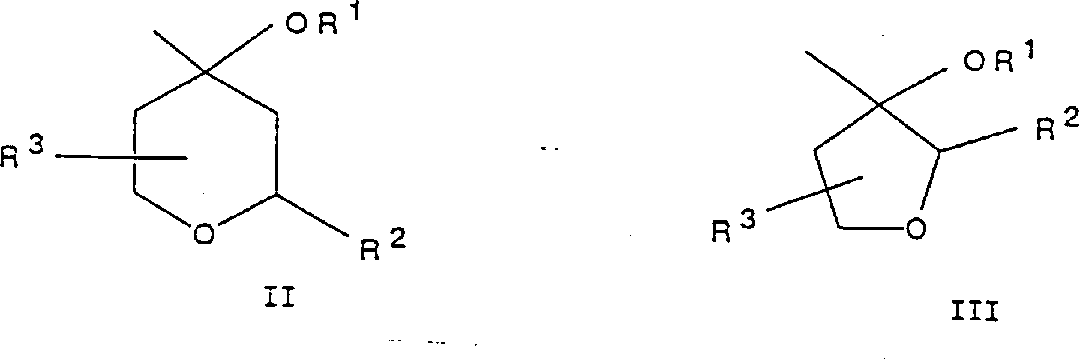

Applications Claiming Priority (6)
| Application Number | Priority Date | Filing Date | Title |
|---|---|---|---|
| EP93401120 | 1993-04-29 | ||
| EP93401120.6 | 1993-04-29 | ||
| EP93401991 | 1993-08-02 | ||
| EP93401991.0 | 1993-08-02 | ||
| EP94400190 | 1994-01-28 | ||
| EP94400190.8 | 1994-01-28 |
Publications (2)
| Publication Number | Publication Date |
|---|---|
| CN1121715A CN1121715A (en) | 1996-05-01 |
| CN1052002C true CN1052002C (en) | 2000-05-03 |
Family
ID=27235558
Family Applications (1)
| Application Number | Title | Priority Date | Filing Date |
|---|---|---|---|
| CN94191925A Expired - Fee Related CN1052002C (en) | 1993-04-29 | 1994-04-25 | Ether derivatives of tetrahydropyran and tetrahydrofuran, processes for their preparation and pharmaceutical compositions containing these compounds |
Country Status (23)
| Country | Link |
|---|---|
| US (2) | US5478842A (en) |
| EP (1) | EP0623614B1 (en) |
| JP (1) | JP3553127B2 (en) |
| KR (1) | KR100358464B1 (en) |
| CN (1) | CN1052002C (en) |
| AP (1) | AP9400632A0 (en) |
| AT (1) | ATE163417T1 (en) |
| AU (1) | AU681886B2 (en) |
| CA (1) | CA2121199C (en) |
| CZ (1) | CZ280695A3 (en) |
| DE (1) | DE69408593T2 (en) |
| DK (1) | DK0623614T3 (en) |
| ES (1) | ES2112483T3 (en) |
| FI (2) | FI109123B (en) |
| GB (1) | GB9408001D0 (en) |
| HU (1) | HU9502968D0 (en) |
| IL (1) | IL109254A (en) |
| NO (1) | NO309191B1 (en) |
| NZ (1) | NZ266139A (en) |
| PL (1) | PL311300A1 (en) |
| SK (1) | SK134995A3 (en) |
| TW (1) | TW252978B (en) |
| WO (1) | WO1994025453A1 (en) |
Families Citing this family (12)
| Publication number | Priority date | Publication date | Assignee | Title |
|---|---|---|---|---|
| JP3990972B2 (en) * | 2001-11-20 | 2007-10-17 | 有限会社 キック | Vascular restenosis preventing agent and intravascular implant device coated with the preventing agent |
| SE0104274D0 (en) * | 2001-12-17 | 2001-12-17 | Astrazeneca Ab | Novel process |
| DE102004002557A1 (en) * | 2004-01-17 | 2005-08-04 | Boehringer Ingelheim Pharma Gmbh & Co. Kg | Use of substituted pyrimido (5,4-d) pyrimidines for the treatment of respiratory diseases |
| US8158362B2 (en) | 2005-03-30 | 2012-04-17 | Decode Genetics Ehf. | Methods of diagnosing susceptibility to myocardial infarction and screening for an LTA4H haplotype |
| CA2636043A1 (en) | 2006-01-23 | 2007-08-02 | Amira Pharmaceuticals, Inc. | Tricyclic inhibitors of 5-lipoxygenase |
| WO2008067566A1 (en) | 2006-11-30 | 2008-06-05 | Amira Pharmaceuticals, Inc. | Compositions and treatments comprising 5-lipoxygenase-activating protein inhibitors and nitric oxide modulators |
| US10793515B2 (en) * | 2008-03-19 | 2020-10-06 | Aurimmed Pharma, Inc. | Compounds advantageous in the treatment of central nervous system diseases and disorders |
| US20210130285A1 (en) | 2008-03-19 | 2021-05-06 | Aurimmed Pharma, Inc. | Novel compounds advantageous in the treatment of central nervous system diseases and disorders |
| CN107233337A (en) | 2009-04-29 | 2017-10-10 | 阿马里纳药物爱尔兰有限公司 | Pharmaceutical composition containing EPA and cardiovascular agents and use its method |
| ES2878405T3 (en) | 2014-02-04 | 2021-11-18 | Bioscience Pharma Partners Llc | Use of flap inhibitors to reduce neuroinflammation-mediated injury in the central nervous system |
| EA032221B1 (en) | 2015-05-04 | 2019-04-30 | Астразенека Аб | Pyrazole derivatives useful as 5-lipoxygenase activating protein (flap) inhibitors |
| CN109890385B (en) | 2016-10-28 | 2022-08-02 | 阿斯利康(瑞典)有限公司 | (1R,2R)-2-[4-(3-Methyl-1H-pyrazol-5-yl)benzoyl]-N-(4-oxo-4,5,6,7-tetrahydropyridine Crystalline form of azolo[1,5-A]pyrazin-3-yl)cyclohexanecarboxamide |
Citations (3)
| Publication number | Priority date | Publication date | Assignee | Title |
|---|---|---|---|---|
| CN1046903A (en) * | 1989-02-28 | 1990-11-14 | 帝国化学工业公司 | Process for preparing heterocyclic ether derivatives |
| EP0420511A2 (en) * | 1989-09-29 | 1991-04-03 | Imperial Chemical Industries Plc | Heterocyclic derivatives |
| EP0462812A2 (en) * | 1990-06-21 | 1991-12-27 | Zeneca Limited | Pyran derivatives as inhibitors of 5-lipoxygenase |
Family Cites Families (22)
| Publication number | Priority date | Publication date | Assignee | Title |
|---|---|---|---|---|
| US4567184A (en) * | 1982-12-01 | 1986-01-28 | Usv Pharmaceutical Corporation | Certain aryl or hetero-aryl derivatives of 1-hydroxy-pentane or 1-hydroxy-hexane which are useful for treating inflammation and allergies |
| US4794188A (en) * | 1982-12-01 | 1988-12-27 | Usv Pharmaceutical Corporation | Certain unsymmetrical quinolinyl ethers having anti-inflammatory and anti-allergic activity |
| US4625034A (en) * | 1985-02-04 | 1986-11-25 | Usv Pharmaceutical Corp. | 1,2-Dihydro; 1,2,3,4-tetrahydro; 5,8 dihydro; and 5,6,7,8-tetrahydroquinoline derivatives |
| US4725619A (en) * | 1985-04-16 | 1988-02-16 | Usv Pharmaceutical Corporation | Aryl and heteroaryl ethers as agents for the treatment of hypersensitive ailments |
| US4839369A (en) * | 1985-04-16 | 1989-06-13 | Rorer Pharmaceutical Corporation | Aryl and heteroaryl ethers as agents for the treatment of hypersensitive ailments |
| US4728668A (en) * | 1985-04-16 | 1988-03-01 | Usv Pharmaceutical Corporation | Aryl and heteroaryl ethers as agents for the treatment of hypersensitive ailments |
| US4631287A (en) * | 1985-04-16 | 1986-12-23 | Usv Pharmaceutical Corp. | Aryl and heteroaryl ethers as agents for the treatment of hypersensitive ailments |
| US4868193A (en) * | 1986-09-24 | 1989-09-19 | Rorer Pharmaceutical Corporation | Styryl tetrazoles and anti-allergic use thereof |
| US5234950A (en) * | 1988-12-23 | 1993-08-10 | Imperial Chemical Industries Plc | Tetrahydrofuran derivatives |
| GB8926981D0 (en) * | 1988-12-23 | 1990-01-17 | Ici Plc | Heterocyclic derivatives |
| US5202326A (en) * | 1989-02-28 | 1993-04-13 | Imperial Chemical Industries Plc | Heterocyclic ethers |
| US5236919A (en) * | 1989-02-28 | 1993-08-17 | Imperial Chemical Industries Plc | Quinoxalinyl derivatives suitable for use in leukotriene mediated disease |
| US5134148A (en) * | 1989-02-28 | 1992-07-28 | Imperial Chemical Industries Plc | Heterocycles for use as inhibitors of leukotrienes |
| IE64358B1 (en) * | 1989-07-18 | 1995-07-26 | Ici Plc | Diaryl ether heterocycles |
| US5088927A (en) * | 1990-06-18 | 1992-02-18 | Lee Howard G | Radio opaque plastics and process of making |
| AU637500B2 (en) * | 1990-06-21 | 1993-05-27 | Zeneca Limited | Bicyclic heterocyclic compounds |
| GB9113137D0 (en) * | 1990-07-13 | 1991-08-07 | Ici Plc | Thioxo heterocycles |
| US5272173A (en) * | 1990-11-28 | 1993-12-21 | Imperial Chemical Industries Plc | 5-lipoxygenase inhibitors |
| IE913866A1 (en) * | 1990-11-28 | 1992-06-03 | Ici Plc | Aryl derivatives |
| EP0501578A1 (en) * | 1991-02-28 | 1992-09-02 | Merck Frosst Canada Inc. | Pyranylphenyl hydroxyalkylnaphthoic acids as inhibitors of leukotriene biosynthesis |
| EP0501579A1 (en) * | 1991-02-28 | 1992-09-02 | Merck Frosst Canada Inc. | Naphthalene lactones as inhibitors of leukotriene biosynthesis |
| US5308852A (en) * | 1992-06-29 | 1994-05-03 | Merck Frosst Canada, Inc. | Heteroarylnaphthalenes as inhibitors of leukotriene biosynthesis |
-
1994
- 1994-04-07 AP APAP/P/1994/000632A patent/AP9400632A0/en unknown
- 1994-04-07 IL IL10925494A patent/IL109254A/en not_active IP Right Cessation
- 1994-04-13 CA CA002121199A patent/CA2121199C/en not_active Expired - Fee Related
- 1994-04-22 GB GB9408001A patent/GB9408001D0/en active Pending
- 1994-04-25 HU HU9502968A patent/HU9502968D0/en unknown
- 1994-04-25 AU AU67212/94A patent/AU681886B2/en not_active Ceased
- 1994-04-25 SK SK1349-95A patent/SK134995A3/en unknown
- 1994-04-25 KR KR1019950704723A patent/KR100358464B1/en not_active Expired - Fee Related
- 1994-04-25 WO PCT/EP1994/001277 patent/WO1994025453A1/en not_active Ceased
- 1994-04-25 CN CN94191925A patent/CN1052002C/en not_active Expired - Fee Related
- 1994-04-25 NZ NZ266139A patent/NZ266139A/en not_active IP Right Cessation
- 1994-04-25 PL PL94311300A patent/PL311300A1/en unknown
- 1994-04-25 CZ CZ952806A patent/CZ280695A3/en unknown
- 1994-04-26 AT AT94303012T patent/ATE163417T1/en not_active IP Right Cessation
- 1994-04-26 DE DE69408593T patent/DE69408593T2/en not_active Expired - Fee Related
- 1994-04-26 ES ES94303012T patent/ES2112483T3/en not_active Expired - Lifetime
- 1994-04-26 DK DK94303012T patent/DK0623614T3/en active
- 1994-04-26 JP JP08882694A patent/JP3553127B2/en not_active Expired - Fee Related
- 1994-04-26 EP EP94303012A patent/EP0623614B1/en not_active Expired - Lifetime
- 1994-04-28 US US08/234,148 patent/US5478842A/en not_active Expired - Lifetime
- 1994-04-30 TW TW083103922A patent/TW252978B/en active
-
1995
- 1995-05-12 US US08/440,132 patent/US5512594A/en not_active Expired - Lifetime
- 1995-10-27 FI FI955165A patent/FI109123B/en active
- 1995-10-27 NO NO954321A patent/NO309191B1/en not_active IP Right Cessation
-
2002
- 2002-02-11 FI FI20020270A patent/FI20020270A7/en unknown
Patent Citations (3)
| Publication number | Priority date | Publication date | Assignee | Title |
|---|---|---|---|---|
| CN1046903A (en) * | 1989-02-28 | 1990-11-14 | 帝国化学工业公司 | Process for preparing heterocyclic ether derivatives |
| EP0420511A2 (en) * | 1989-09-29 | 1991-04-03 | Imperial Chemical Industries Plc | Heterocyclic derivatives |
| EP0462812A2 (en) * | 1990-06-21 | 1991-12-27 | Zeneca Limited | Pyran derivatives as inhibitors of 5-lipoxygenase |
Also Published As
Similar Documents
| Publication | Publication Date | Title |
|---|---|---|
| EP1385845B1 (en) | N-aroyl cyclic amines | |
| CN1035615C (en) | heteroaryl amines as acetylcholinesterase inhitibors | |
| CN1045435C (en) | Naphthalene derivative, its preparation method and its synthetic intermediate | |
| EP0462813B1 (en) | Bicyclic pyran derivatives and their use as inhibitors of 5-lipoxygenase | |
| CN1031266C (en) | Preparation method of nitrogen-containing six-membered or ten-membered heterocyclic ring | |
| AU2002253361A1 (en) | N-aroyl cyclic amines | |
| CS187391A3 (en) | Heterocyclic derivatives, process for their preparation and their use as medicaments | |
| CN1111245A (en) | Galanthamine derivatives, their preparation and their use as medicines | |
| CN1202171A (en) | Pyrido[2,3-d]pyrimidine derivatives and pharmaceutical compositions thereof | |
| CN1675220A (en) | Epothilone derivatives | |
| CN1117965A (en) | Substituted 4-phenyl-pyridones and 4-phenyl-2-alkoxypyridines | |
| JP3553127B2 (en) | Ether derivatives, methods for their preparation and pharmaceutical compositions containing them for use in diseases or conditions mediated by leukotrienes | |
| CN1064360C (en) | Fused imidazo[1,2-a]pyridines | |
| CN1249063C (en) | Novel Immunomodulatory Compounds | |
| JP5201694B2 (en) | Azetidine compound and its pharmaceutical use | |
| CN1130378A (en) | Pyridazinone derivative or its salt, preparation method and anti-shock drug thereof | |
| CN1070192C (en) | Thipyridines for use in control of helicobacter bacteria | |
| CN1128029A (en) | Thiazole derivatives as lipoxygenase inhibitors | |
| CN111848603A (en) | Preparation method of orexin receptor antagonist receptor compound and its intermediate and crystal form | |
| CN1053066A (en) | The 3-deoxy mycaminosyl tylonlide derivatives | |
| CN86104822A (en) | The preparation method of therapeutic agent | |
| HK1004777B (en) | 4-aryl-4-hydroxy-tetrahydropyrans and 3-aryl-3-hydroxy-tetrahydrofurans as 5-lipoxygenase inhibitors | |
| CN85105335A (en) | Preparation process of dihydropyridine derivatives | |
| HU211245A9 (en) | Ether derivatives | |
| HK1066809B (en) | Novel immunomodulating compounds |
Legal Events
| Date | Code | Title | Description |
|---|---|---|---|
| C06 | Publication | ||
| PB01 | Publication | ||
| C10 | Entry into substantive examination | ||
| SE01 | Entry into force of request for substantive examination | ||
| C14 | Grant of patent or utility model | ||
| GR01 | Patent grant | ||
| C17 | Cessation of patent right | ||
| CF01 | Termination of patent right due to non-payment of annual fee |
Granted publication date: 20000503 Termination date: 20100425 |