CN1052668A - The compound of treatment inflammatory bowel disease - Google Patents
The compound of treatment inflammatory bowel disease Download PDFInfo
- Publication number
- CN1052668A CN1052668A CN90109846A CN90109846A CN1052668A CN 1052668 A CN1052668 A CN 1052668A CN 90109846 A CN90109846 A CN 90109846A CN 90109846 A CN90109846 A CN 90109846A CN 1052668 A CN1052668 A CN 1052668A
- Authority
- CN
- China
- Prior art keywords
- compound
- alkyl
- hydrogen
- formula
- preparation
- Prior art date
- Legal status (The legal status is an assumption and is not a legal conclusion. Google has not performed a legal analysis and makes no representation as to the accuracy of the status listed.)
- Granted
Links
Classifications
-
- C—CHEMISTRY; METALLURGY
- C07—ORGANIC CHEMISTRY
- C07D—HETEROCYCLIC COMPOUNDS
- C07D277/00—Heterocyclic compounds containing 1,3-thiazole or hydrogenated 1,3-thiazole rings
- C07D277/02—Heterocyclic compounds containing 1,3-thiazole or hydrogenated 1,3-thiazole rings not condensed with other rings
- C07D277/20—Heterocyclic compounds containing 1,3-thiazole or hydrogenated 1,3-thiazole rings not condensed with other rings having two or three double bonds between ring members or between ring members and non-ring members
-
- A—HUMAN NECESSITIES
- A61—MEDICAL OR VETERINARY SCIENCE; HYGIENE
- A61K—PREPARATIONS FOR MEDICAL, DENTAL OR TOILETRY PURPOSES
- A61K31/00—Medicinal preparations containing organic active ingredients
- A61K31/33—Heterocyclic compounds
- A61K31/395—Heterocyclic compounds having nitrogen as a ring hetero atom, e.g. guanethidine or rifamycins
- A61K31/41—Heterocyclic compounds having nitrogen as a ring hetero atom, e.g. guanethidine or rifamycins having five-membered rings with two or more ring hetero atoms, at least one of which being nitrogen, e.g. tetrazole
- A61K31/425—Thiazoles
-
- A—HUMAN NECESSITIES
- A61—MEDICAL OR VETERINARY SCIENCE; HYGIENE
- A61P—SPECIFIC THERAPEUTIC ACTIVITY OF CHEMICAL COMPOUNDS OR MEDICINAL PREPARATIONS
- A61P1/00—Drugs for disorders of the alimentary tract or the digestive system
-
- A—HUMAN NECESSITIES
- A61—MEDICAL OR VETERINARY SCIENCE; HYGIENE
- A61P—SPECIFIC THERAPEUTIC ACTIVITY OF CHEMICAL COMPOUNDS OR MEDICINAL PREPARATIONS
- A61P29/00—Non-central analgesic, antipyretic or antiinflammatory agents, e.g. antirheumatic agents; Non-steroidal antiinflammatory drugs [NSAID]
-
- C—CHEMISTRY; METALLURGY
- C07—ORGANIC CHEMISTRY
- C07D—HETEROCYCLIC COMPOUNDS
- C07D277/00—Heterocyclic compounds containing 1,3-thiazole or hydrogenated 1,3-thiazole rings
- C07D277/02—Heterocyclic compounds containing 1,3-thiazole or hydrogenated 1,3-thiazole rings not condensed with other rings
- C07D277/08—Heterocyclic compounds containing 1,3-thiazole or hydrogenated 1,3-thiazole rings not condensed with other rings having one double bond between ring members or between a ring member and a non-ring member
- C07D277/12—Heterocyclic compounds containing 1,3-thiazole or hydrogenated 1,3-thiazole rings not condensed with other rings having one double bond between ring members or between a ring member and a non-ring member with hetero atoms or with carbon atoms having three bonds to hetero atoms with at the most one bond to halogen, e.g. ester or nitrile radicals, directly attached to ring carbon atoms
- C07D277/14—Oxygen atoms
-
- C—CHEMISTRY; METALLURGY
- C07—ORGANIC CHEMISTRY
- C07D—HETEROCYCLIC COMPOUNDS
- C07D277/00—Heterocyclic compounds containing 1,3-thiazole or hydrogenated 1,3-thiazole rings
- C07D277/02—Heterocyclic compounds containing 1,3-thiazole or hydrogenated 1,3-thiazole rings not condensed with other rings
- C07D277/20—Heterocyclic compounds containing 1,3-thiazole or hydrogenated 1,3-thiazole rings not condensed with other rings having two or three double bonds between ring members or between ring members and non-ring members
- C07D277/32—Heterocyclic compounds containing 1,3-thiazole or hydrogenated 1,3-thiazole rings not condensed with other rings having two or three double bonds between ring members or between ring members and non-ring members with hetero atoms or with carbon atoms having three bonds to hetero atoms with at the most one bond to halogen, e.g. ester or nitrile radicals, directly attached to ring carbon atoms
- C07D277/34—Oxygen atoms
-
- C—CHEMISTRY; METALLURGY
- C07—ORGANIC CHEMISTRY
- C07D—HETEROCYCLIC COMPOUNDS
- C07D277/00—Heterocyclic compounds containing 1,3-thiazole or hydrogenated 1,3-thiazole rings
- C07D277/02—Heterocyclic compounds containing 1,3-thiazole or hydrogenated 1,3-thiazole rings not condensed with other rings
- C07D277/20—Heterocyclic compounds containing 1,3-thiazole or hydrogenated 1,3-thiazole rings not condensed with other rings having two or three double bonds between ring members or between ring members and non-ring members
- C07D277/32—Heterocyclic compounds containing 1,3-thiazole or hydrogenated 1,3-thiazole rings not condensed with other rings having two or three double bonds between ring members or between ring members and non-ring members with hetero atoms or with carbon atoms having three bonds to hetero atoms with at the most one bond to halogen, e.g. ester or nitrile radicals, directly attached to ring carbon atoms
- C07D277/36—Sulfur atoms
Landscapes
- Chemical & Material Sciences (AREA)
- Organic Chemistry (AREA)
- Health & Medical Sciences (AREA)
- Life Sciences & Earth Sciences (AREA)
- Veterinary Medicine (AREA)
- Public Health (AREA)
- General Health & Medical Sciences (AREA)
- Animal Behavior & Ethology (AREA)
- Medicinal Chemistry (AREA)
- Pharmacology & Pharmacy (AREA)
- Nuclear Medicine, Radiotherapy & Molecular Imaging (AREA)
- General Chemical & Material Sciences (AREA)
- Chemical Kinetics & Catalysis (AREA)
- Epidemiology (AREA)
- Pain & Pain Management (AREA)
- Engineering & Computer Science (AREA)
- Bioinformatics & Cheminformatics (AREA)
- Rheumatology (AREA)
- Pharmaceuticals Containing Other Organic And Inorganic Compounds (AREA)
- Acyclic And Carbocyclic Compounds In Medicinal Compositions (AREA)
- Thiazole And Isothizaole Compounds (AREA)
- Plural Heterocyclic Compounds (AREA)
- Surgical Instruments (AREA)
- Heterocyclic Compounds Containing Sulfur Atoms (AREA)
- Nonmetallic Welding Materials (AREA)
- Nitrogen And Oxygen Or Sulfur-Condensed Heterocyclic Ring Systems (AREA)
- Eye Examination Apparatus (AREA)
- Magnetic Resonance Imaging Apparatus (AREA)
- Organic Low-Molecular-Weight Compounds And Preparation Thereof (AREA)
Abstract
Description
哺乳动物,无论人还是动物,已知都会患各种疾病,其中包括肠炎。这些疾病的典型特点是有一些不适症状,例如腹泻、痉挛和食欲不佳。某些这种疾病,尤其是溃疡性结肠炎,还有出现溃疡斑的特征。因此,目前需要一种安全药物,这种药物能减缓肠炎的严重程度,而且缓解与之相关的症状。Mammals, both humans and animals, are known to suffer from a variety of diseases, including enteritis. These diseases are typically characterized by uncomfortable symptoms such as diarrhoea, cramping and poor appetite. Some of these diseases, especially ulcerative colitis, are also characterized by ulcerated plaques. Therefore, there is a need for a safe drug that can slow down the severity of enteritis and alleviate the symptoms associated therewith.
Teuber等人在<Liebigs Ann.Chem.>,757(1978)上披露了5-(〔3,5-二(1,1-二甲基乙基)-4-羟苯基〕亚甲基)-2-硫代-4-噻唑烷酮作为制备某些化合物用中间体,而制备的那些化合物本身又用于肽类的自旋标记。对于这种中间体化合物未公开其生物活性。Teuber et al. disclosed 5-([3,5-bis(1,1-dimethylethyl)-4-hydroxyphenyl]methylene) on <Liebigs Ann.Chem.>, 757 (1978) -2-Thio-4-thiazolidinones are used as intermediates for the preparation of certain compounds which are themselves used for spin labeling of peptides. No biological activity is disclosed for this intermediate compound.
在第211,670号欧洲专利申请中披露出某些用于治疗哺乳动物炎症、中风和关节炎的、被二叔丁基苯酚取代的绕丹宁衍生物。这些可以用所说化合物治疗的炎症包括皮炎和肿胀性关节炎。这些疾病通常涉及类风湿关节炎、类风湿脊椎炎、骨关节炎、退化性骨关节疾病等疾病。但是,未公开治疗包括肠炎在内的炎性疾病的方法。Certain di-tert-butylphenol-substituted rhodanine derivatives are disclosed in European Patent Application No. 211,670 for the treatment of inflammation, stroke and arthritis in mammals. Inflammations which may be treated with the compounds include dermatitis and swollen arthritis. These diseases usually involve diseases such as rheumatoid arthritis, rheumatoid spondylitis, osteoarthritis, degenerative bone and joint disease. However, methods of treating inflammatory diseases including enteritis are not disclosed.
本发明提出治疗哺乳动物炎性肠疾病的方法,这些哺乳动物身患或容易患所说的疾病,其中包括给所说的哺乳动物服用有效量的式Ⅰ化合物或其药学适用的盐:The present invention proposes a method for treating inflammatory bowel disease in mammals, these mammals suffer from or are susceptible to said disease, which comprises administering to said mammal an effective amount of a compound of formula I or a pharmaceutically acceptable salt thereof:
式中:In the formula:
R1和R2各自独立地是氢、C1-C6烷基、C1-C6烷氧基、C2-C6链烯基、C2-C6炔基、(C1-C4烷基) (C1-C4烷基)或 
R3是氢或C1-C6烷基;R 3 is hydrogen or C 1 -C 6 alkyl;
R4和R5都为氢或共同形成键;Both R4 and R5 are hydrogen or jointly form a bond;
R6和R7都为氢或共同为=S或一个是氢;另一个是-OH或-SCH3;R 6 and R 7 are both hydrogen or jointly =S or one is hydrogen; the other is -OH or -SCH 3 ;
X是 ,其中m为0、1或2;X is , where m is 0, 1 or 2;
Q是-CH2-、-O-或NR8,其中Q is -CH 2 -, -O- or NR 8 , wherein
R8是氢、C1-C6烷基、C2-C6链烯基、C3-C8环烷基、-SO3CH3或-(CH2)n-Y,其中n为0、1、2或3,而且Y是:R 8 is hydrogen, C 1 -C 6 alkyl, C 2 -C 6 alkenyl, C 3 -C 8 cycloalkyl, -SO 3 CH 3 or -(CH 2 ) n -Y, where n is 0 , 1, 2, or 3, and Y is:
氰基、OR9、 
-SH、-S(C1-C4烷基)或-SH, -S (C 1 -C 4 alkyl) or
烷基 alkyl
其中R9是氢、C1-C4烷基或 
R10是C1-C4烷基、C1-C4烷氧基或-NH2;R 10 is C 1 -C 4 alkyl, C 1 -C 4 alkoxy or -NH 2 ;
R11和R12各自独立地是氢、C1-C6烷基、C2-C6链烯基、C2-C6炔基、-(CH2)qOH、-(CH2)q-N(C1-C4烷基)2、-(CH2)q-S(C1-C4烷基)或R 11 and R 12 are each independently hydrogen, C 1 -C 6 alkyl, C 2 -C 6 alkenyl, C 2 -C 6 alkynyl, -(CH 2 ) q OH, -(CH 2 ) q -N(C 1 -C 4 alkyl) 2 , -(CH 2 ) q -S(C 1 -C 4 alkyl) or

其中n定义如上而且q为1至6(包括1、6)间的整数,或者where n is as defined above and q is an integer between 1 and 6 inclusive, or
R11和R12共同形成吗啉环、哌啶环、哌嗪环或N-甲基哌嗪环。R 11 and R 12 jointly form a morpholine ring, a piperidine ring, a piperazine ring or an N-methylpiperazine ring.
本方法能安全而有效地减小肠炎的严重程度,而且能缓解与之相关的不适症状。The method can safely and effectively reduce the severity of enteritis and relieve the uncomfortable symptoms associated therewith.
本发明还提供了一些新的式Ⅱ化合物或其药学适用盐:The present invention also provides some new compounds of formula II or their pharmaceutically acceptable salts:
式中,In the formula,
R1是C2-C6链烯基、C2-C6炔基或R 1 is C 2 -C 6 alkenyl, C 2 -C 6 alkynyl or

其中n=0、1、2或3,where n=0, 1, 2 or 3,
R2是氢、C1-C6烷基、C1-C6烷氧基、C2-C6链烯基、C2-C6炔基、C1-C4烷基 

另一方面,本发明提供了一些药物组合物,其中含有式Ⅱ化合物或其药物适用盐作为活性成分,同时还含有一种或多种药物适用的稀释剂、载体或赋形剂。On the other hand, the present invention provides some pharmaceutical compositions, which contain the compound of formula II or its pharmaceutically acceptable salt as an active ingredient, and also contain one or more pharmaceutically acceptable diluents, carriers or excipients.
本发明还提供了一种以基本纯的对映体形式从式Ⅰ化合物的外消旋混合物中选择性离析一种对映体的方法,其中X是-S-,R4和R5是氢,而且R1、R2、R3、R6、R7和Q定义与式Ⅰ相同,所说的方法包括:The present invention also provides a method for selectively isolating one enantiomer in substantially pure enantiomer form from a racemic mixture of a compound of formula I, wherein X is -S- and R4 and R5 are hydrogen , and the definition of R 1 , R 2 , R 3 , R 6 , R 7 and Q is the same as that of formula I, said method includes:
a)使所说外消旋的硫化合物,与同时使用酒石酸酯配位体、钛的醇盐、氢过氧化物和水制备的试剂反应,直至所不需要的全部所说硫化物作用物的对映体基本上转变成其亚砜类似物为止,并且a) reacting said racemic sulfur compound with reagents prepared simultaneously using tartrate ligands, titanium alkoxides, hydroperoxides and water, until all of said sulfide substrates are undesired until the enantiomer is substantially converted to its sulfoxide analogue, and
b)从所说的反应混合物中分离出来反应的所说硫化物原料,得到基本上由纯的所需对映体组成的产物。b) separating said reacted sulfide starting material from said reaction mixture to obtain a product consisting essentially of the pure desired enantiomer.
本申请中使用的术语“C1-C6烷基”,是指有1~6个碳原子的直链或支链脂族基团,例如甲基、乙基、丙基、异丙基、丁基、异丁基、仲丁基、叔丁基、正戊基、异戊基、正己基和异己基等。所说的术语“C1-C6烷基”定义中包括术语“C1-C4烷基”。The term "C 1 -C 6 alkyl" used in this application refers to a straight chain or branched aliphatic group with 1 to 6 carbon atoms, such as methyl, ethyl, propyl, isopropyl, Butyl, isobutyl, sec-butyl, tert-butyl, n-pentyl, isopentyl, n-hexyl and isohexyl, etc. The term "C 1 -C 6 alkyl" includes within its definition the term "C 1 -C 4 alkyl".
术语“C1-C6烷氧基”是指有1-6个碳原子的通过氧连接到分子其余部分上的烷基,其中包括甲氧基、乙氧基、丙氧基、异丙氧基、丁氧基、异丁氧基、仲丁氧基、叔丁氧基、戊氧基和己氧基等。所说的术语“C1-C6烷氧基”定义中包括术语“C1-C4烷氧基”。The term "C 1 -C 6 alkoxy" refers to an alkyl group having 1-6 carbon atoms attached to the rest of the molecule through an oxygen, including methoxy, ethoxy, propoxy, isopropoxy Butoxy, isobutoxy, sec-butoxy, tert-butoxy, pentyloxy and hexyloxy, etc. The term "C 1 -C 6 alkoxy" includes in its definition the term "C 1 -C 4 alkoxy".
术语“C2-C6链烯基”是指具有一个双键和2-6个碳原子的直链和支链基团,作为这种基团包括乙烯、丙烯、异丙烯、1-丁烯、2-丁烯、2-甲基-1-丙烯、1-戊烯、2-戊烯和2-甲基-2-丁烯等。The term "C 2 -C 6 alkenyl" refers to straight and branched chain groups having one double bond and 2 to 6 carbon atoms, as such groups include ethylene, propylene, isopropylene, 1-butene , 2-butene, 2-methyl-1-propene, 1-pentene, 2-pentene and 2-methyl-2-butene, etc.
术语“C2-C6炔基”是指有一个叁键和2-6个碳原子的直链和支链基团,作为这种基团包括乙炔、丙炔、1-丁炔、2-丁炔、1-戊炔、2-戊炔、3-甲基-1-丁炔、1-己炔、2-己炔和3-己炔。The term "C 2 -C 6 alkynyl" refers to straight and branched chain groups having a triple bond and 2-6 carbon atoms, including acetylene, propyne, 1-butyne, 2- Butyne, 1-pentyne, 2-pentyne, 3-methyl-1-butyne, 1-hexyne, 2-hexyne and 3-hexyne.
在本发明的治疗炎性肠疾病的方法中,优选使用这样的式Ⅰ化合物,其中R1和R2不是(C1-C4烷基) (C1-C4烷基),R8不是C2-C6链烯基,Y不是-SH或-S(C1-C4烷基)而且R11和R12不是C2-C6链烯基或C2-C6炔基。在这组优选的化合物中较优选这样的式Ⅰ化合物,其中R1和R2各为C1-C6烷基、C2-C6链烯基、C1-C6烷氧基或 

在这组具体优选的化合物中,特别优选使用这样的式Ⅰ化合物实施本发明的治疗方法,其中R1和R2独立地是C1-C6烷基,尤其是1,1-二甲基乙基,R3、R4、R5、R6和R7是氢,X是 
优选这样一些式Ⅱ化合物,其中R2不是(C1-C4烷基) 烷基),R8不是C2-C6链烯基,Y不是-SH或-S(C1-C4烷基)而且R11和R12不是C2-C6链烯基或C2-C6炔基。在这组优选化合物中,较优选这样的式Ⅱ化合物,其中R1是C2-C6链烯基,R2是C1-C6烷基或C2-C6链烯基,R3是氢,R4和R5各为氢或共同形成键,R6和R7各为氢或共同是=S,X是 

本发明的化合物以及在本发明治疗方法中使用的化合物中,R4和R5是氢的那些化合物在绕丹宁环或绕丹宁衍生物环5-位碳原子上有一个不对称中心。因此,这些化合物既能以外消旋混合物形式,又可以以单个立体异构体形式存在。本发明的治疗方法和化合物既包括所说的外消旋物,而且又包括单个的立体异构体。本发明的工艺方法还提供了获得某些本发明化合物的立体异构体的方法,以及在本发明的治疗方法中使用的某些化合物的立体异构体的方法。Among the compounds of the present invention and the compounds used in the treatment methods of the present invention, those compounds in which R4 and R5 are hydrogen have an asymmetric center on the carbon atom at the 5-position of the rhodanine ring or the rhodanine derivative ring. Thus, these compounds can exist both as racemic mixtures and as individual stereoisomers. The therapeutic methods and compounds of this invention include both said racemates as well as individual stereoisomers. The processes of the invention also provide methods for obtaining stereoisomers of certain compounds of the invention, as well as methods of stereoisomers of certain compounds for use in the methods of treatment of the invention.
药物适用的盐应当包括在本发明的化合物和治疗方法中。这些盐可以通过式Ⅰ或Ⅱ的化合物,与氢氧化钠等强碱或盐酸等强酸反应制得。Pharmaceutically acceptable salts are intended to be included in the compounds and methods of treatment of this invention. These salts can be prepared by reacting a compound of formula I or II with a strong base such as sodium hydroxide or a strong acid such as hydrochloric acid.
本发明的化合物包括下列物质:Compounds of the present invention include the following:
5-〔〔3,5-二乙烯基-4-羟苯基〕亚甲基〕-3-(3-甲氧丙基)-2-硫代-4-噻唑烷酮5-[[3,5-divinyl-4-hydroxyphenyl]methylene]-3-(3-methoxypropyl)-2-thio-4-thiazolidinone
5-〔〔3,5-二(4-戊烯基)-4-羟苯基〕甲基〕-3-乙胺基-4-噻唑烷酮5-[[3,5-bis(4-pentenyl)-4-hydroxyphenyl]methyl]-3-ethylamino-4-thiazolidinone
5-〔〔3-乙硫苯基-4-羟基-5-甲基苯基〕亚甲基〕-2-硫代-4-噻唑烷酮5-[[3-Ethylthiophenyl-4-hydroxy-5-methylphenyl]methylene]-2-thio-4-thiazolidinone
5-〔〔3-(2-丁烯基)-4-羟基-5-异丙氧基苯基〕甲基〕-3-(3-二乙胺基丙基)-4-噻唑烷酮5-[[3-(2-butenyl)-4-hydroxy-5-isopropoxyphenyl]methyl]-3-(3-diethylaminopropyl)-4-thiazolidinone
5-〔〔3-(2-丙烯基)-4-羟基-5-(1,1-二甲乙基)苯基〕亚甲基〕-3-环己基-4-噻唑烷酮5-[[3-(2-propenyl)-4-hydroxy-5-(1,1-dimethylethyl)phenyl]methylene]-3-cyclohexyl-4-thiazolidinone
5-〔〔3,5-(甲硫苯基)-4-羟苯基〕亚甲基〕-3-丙基-2-硫代-4-噻唑烷酮5-[[3,5-(methylthiophenyl)-4-hydroxyphenyl]methylene]-3-propyl-2-thio-4-thiazolidinone
5-〔〔3,5-二乙炔基-4-羟苯基〕甲基〕-4-噻唑烷酮5-[[3,5-diethynyl-4-hydroxyphenyl]methyl]-4-thiazolidinone
5-〔〔3-(3-甲基-1-丁烯基)-4-羟基-5-丙基苯基〕亚甲基〕-3-乙氰基-4-噻唑烷酮5-[[3-(3-Methyl-1-butenyl)-4-hydroxy-5-propylphenyl]methylene]-3-ethylcyano-4-thiazolidinone
5-〔〔3-(2-丙烯基)-4-羟基-5-甲氧基苯基〕甲基〕-3-乙氧基-4-噻唑烷酮5-[[3-(2-propenyl)-4-hydroxy-5-methoxyphenyl]methyl]-3-ethoxy-4-thiazolidinone
5-〔〔3,5-二-2-丙烯基)-4-羟苯基〕亚甲基〕-3-(甲氨基甲基)-2-硫代-4-噻唑烷酮5-[[3,5-Di-2-propenyl)-4-hydroxyphenyl]methylene]-3-(methylaminomethyl)-2-thio-4-thiazolidinone
除了上面提到的那些之外,下列化合物是适于本发明治疗方法中使用的一些代表性化合物:In addition to those mentioned above, the following compounds are some representative compounds suitable for use in the methods of treatment of the present invention:
5-〔〔3,5-二(1,1-二甲乙基)-4-羟苯基〕亚甲基〕-3-(3-甲氧丙基)-2-硫代-4-噻唑烷酮5-[[3,5-bis(1,1-dimethylethyl)-4-hydroxyphenyl]methylene]-3-(3-methoxypropyl)-2-thio-4-thiazolidine ketone
5-〔〔3,5-二(1,1-二甲乙基)-4-羟苯基〕亚甲基〕-2-硫代-4-噻唑烷酮5-[[3,5-bis(1,1-dimethylethyl)-4-hydroxyphenyl]methylene]-2-thio-4-thiazolidinone
5-〔〔3,5-二(1,1-二甲乙基)-4-羟苯基〕亚甲基〕-4-噻唑烷酮5-[[3,5-bis(1,1-dimethylethyl)-4-hydroxyphenyl]methylene]-4-thiazolidinone
5-〔〔3,5-二(1,1-二甲乙基)-4-羟苯基〕甲基〕-4-噻唑烷酮5-[[3,5-bis(1,1-dimethylethyl)-4-hydroxyphenyl]methyl]-4-thiazolidinone
5-〔〔3,5-二(1,1-二甲乙基)-4-羟苯基〕甲基〕-2-硫代-4-噻唑烷酮5-[[3,5-bis(1,1-dimethylethyl)-4-hydroxyphenyl]methyl]-2-thio-4-thiazolidinone
3-乙酰基-〔〔3,5-二(1,1-二甲乙基)-4-羟苯基〕亚甲基〕-4-噻唑烷酮3-Acetyl-[[3,5-bis(1,1-dimethylethyl)-4-hydroxyphenyl]methylene]-4-thiazolidinone
5-〔〔3,5-二(1,1-二甲乙基)-4-羟苯基〕甲基〕-3-〔甲基(1-甲乙基)氨基〕-4-噻唑烷酮5-[[3,5-bis(1,1-dimethylethyl)-4-hydroxyphenyl]methyl]-3-[methyl(1-methylethyl)amino]-4-thiazolidinone
5-〔4-羟苯亚甲基〕绕丹宁5-[4-Hydroxybenzylidene]rhodanine
5-(4-羟基-3-甲氧苯亚甲基)绕丹宁5-(4-Hydroxy-3-methoxybenzylidene) rhodanine
5-〔〔4-羟基-3,5-二丙苯基)亚甲基〕-3-〔2-(二甲氨基)乙基〕-4-噻唑烷酮5-[[4-Hydroxy-3,5-dipropylphenyl)methylene]-3-[2-(dimethylamino)ethyl]-4-thiazolidinone
5-〔〔3,5-二(1-甲丙基)-4-羟苯基〕甲基〕-3-甲基-4-噻唑烷酮5-[[3,5-bis(1-methylpropyl)-4-hydroxyphenyl]methyl]-3-methyl-4-thiazolidinone
5-〔〔3,5-二甲基-4-羟苯基〕亚甲基〕-3-甲基-4-噻唑烷酮5-[[3,5-Dimethyl-4-hydroxyphenyl]methylene]-3-methyl-4-thiazolidinone
5-〔〔3,5-二(1,1-二甲乙基)-4-羟苯基〕甲基〕-3-(甲基磺酰基)-4-噻唑烷酮5-[[3,5-bis(1,1-dimethylethyl)-4-hydroxyphenyl]methyl]-3-(methylsulfonyl)-4-thiazolidinone
5-〔〔4-羟基-3,5-二(1,1-二甲乙基)苯基〕甲基〕-3-(丙氨基)-4-噻唑烷酮5-[[4-Hydroxy-3,5-bis(1,1-dimethylethyl)phenyl]methyl]-3-(propylamino)-4-thiazolidinone
3-氨基-5-〔〔3,5-二(1,1-二甲乙基)-4-羟苯基〕亚甲基〕-2-硫代-4-噻唑烷酮3-Amino-5-[[3,5-bis(1,1-dimethylethyl)-4-hydroxyphenyl]methylene]-2-thio-4-thiazolidinone
5-〔〔3,5-二(1-甲乙基)-4-羟苯基〕甲基〕-3-甲基-4-噻唑烷酮5-[[3,5-bis(1-methylethyl)-4-hydroxyphenyl]methyl]-3-methyl-4-thiazolidinone
5-〔(4-羟基-3,5-二甲氧苯基)甲基〕-3-甲基-2-硫代-4-噻唑烷酮5-[(4-Hydroxy-3,5-dimethoxyphenyl)methyl]-3-methyl-2-thio-4-thiazolidinone
5-〔(4-羟基-3,5-二甲氧苯基)亚甲基〕-3-甲基-2-硫代-4-噻唑烷酮。5-[(4-Hydroxy-3,5-dimethoxyphenyl)methylene]-3-methyl-2-thio-4-thiazolidinone.
本发明治疗方法中使用的一些化合物,是已知化合物,例如参见第211,670号欧洲专利申请和Teuber等人在<Leibigs Ann.Chem.>,757(1978)上介绍的那些。但是,在本发明治疗方法中采用的大部分化合物以及本发明的化合物都是新物质。这些化合物通常可按如下方法合成。Some of the compounds useful in the methods of treatment of the present invention are known compounds such as those described in European Patent Application No. 211,670 and Teuber et al. in <Leibigs Ann. Chem.>, 757 (1978). However, most of the compounds employed in the methods of treatment of the present invention, as well as the compounds of the present invention, are novel substances. These compounds can generally be synthesized as follows.
Teuber等人介绍了5-〔〔3,5-二(1,1-二甲乙基)-4-羟苯基〕亚甲基〕-2-硫代-4-噻唑烷酮(在以下讨论中叫作化合物A)。化合物A通过3,5-二叔丁基-4-羟基苯甲醛与绕丹宁在冰醋酸中于回流温度下反应制备,反应中以熔融的乙酸钠作催化剂。由化合物A出发,可以制备5-〔〔3,5-二(1,1-二甲乙基)-4-羟苯基〕亚甲基〕-4-噻唑烷酮(化合物B)、5-〔〔3,5-二(1,1-二甲乙基)-4-羟苯基〕甲基〕-4-噻唑烷酮(化合物C)和5-〔〔3,5-二(1,1-二甲乙基)-4-羟苯基〕甲基〕-2-硫代-4-噻唑烷酮(化合物D)。Teuber et al. described 5-[[3,5-bis(1,1-dimethylethyl)-4-hydroxyphenyl]methylene]-2-thio-4-thiazolidinone (discussed below called compound A). Compound A is prepared by reacting 3,5-di-tert-butyl-4-hydroxybenzaldehyde and rhodanine in glacial acetic acid at reflux temperature, using molten sodium acetate as a catalyst in the reaction. Starting from compound A, 5-[[3,5-bis(1,1-dimethylethyl)-4-hydroxyphenyl]methylene]-4-thiazolidinone (compound B), 5-[ [3,5-bis(1,1-dimethylethyl)-4-hydroxyphenyl]methyl]-4-thiazolidinone (compound C) and 5-[[3,5-bis(1,1- Dimethylethyl)-4-hydroxyphenyl]methyl]-2-thio-4-thiazolidinone (Compound D).
例如,在使化合物A催化加氢时,得到纯化合物B和C所得到两种化合物的相对比例,取决于温度、压力、加氢时间、所用的溶剂和所使用的具体催化剂。又如,在乙醇中100℃下用5%钯-炭处理化合物A大约18小时后,化合物B和C间的相对比例大约为60∶40。此外,在锌存在下,在盐酸和醇(如乙醇)的混合物中加热化合物A,也可以完成这些转化。在甲苯之类惰性溶剂中,最好在偶氮双异丁腈之类游离基引发剂存在下,将所说的硫酮与三正丁基钖氢化物之类还原剂加热,可以在不影响所说苄基双键的条件下还原所说的硫酮。但是,为了使这种还原反应进行,必须采用N-取代的绕丹宁作用物(即Q不能是-NH的)。For example, when compound A is catalytically hydrogenated, the relative proportions of the two compounds obtained to obtain pure compounds B and C depend on the temperature, pressure, hydrogenation time, solvent used and the particular catalyst used. As another example, after treating compound A with 5% palladium-carbon in ethanol at 100°C for about 18 hours, the relative ratio between compounds B and C is about 60:40. Furthermore, these transformations can also be accomplished by heating compound A in a mixture of hydrochloric acid and an alcohol such as ethanol in the presence of zinc. In inert solvents such as toluene, preferably in the presence of free radical initiators such as azobisisobutyronitrile, heating said thione and reducing agents such as tri-n-butylsium hydride can be achieved without affecting The thione is reduced under the conditions of the benzyl double bond. However, in order for this reduction to proceed, an N-substituted rhodanine substrate must be used (ie Q cannot be -NH).
可以采用本领域已知的各种方法完成化合物A向化合物D的转化反应。一种优选的方法是由Nakamura等人在<Tetrahedron Letters>,25,3983(1984)上指出的。在此反应中,化合物A是在硅胶存在下用某种二氢吡啶(例如2,6-二甲基-1,4-二氢-3,5-吡啶二甲酸二乙酯)处理的。此反应最好在苯或甲苯之类惰性溶剂存在下,而且优选在惰性气氛中进行。此反应可以在大约25℃~混合物的回流温度之间温度下完成。在大约80℃这一优选温度下,此反应在12-18小时后基本上完全。Conversion of Compound A to Compound D can be accomplished by various methods known in the art. A preferred method is taught by Nakamura et al. in <Tetrahedron Letters>, 25, 3983 (1984). In this reaction, compound A is treated with a dihydropyridine such as diethyl 2,6-dimethyl-1,4-dihydro-3,5-pyridinedicarboxylate in the presence of silica gel. This reaction is best carried out in the presence of an inert solvent such as benzene or toluene, and preferably in an inert atmosphere. The reaction can be carried out at a temperature between about 25°C and the reflux temperature of the mixture. At the preferred temperature of about 80°C, the reaction is essentially complete after 12-18 hours.
根据所选择的各种取代基,可以按类似方式制备其它噻唑烷酮。例如,按照上述由Teuber等人介绍的方法,采用适当的N-取代的绕丹宁和R1、R2-取代的4-羟基苯甲醛,可以制备式Ⅰ和式Ⅱ化合物,其中Q是NR8,而R8是氢、C1-C6烷基、C3-C8环烷基或-(CH2)n-Y,其中n为0、1、2或3,而且Y是氰基或NR11R12(其中R11和R12各自独立地是氢或C1-C6烷基)。或者也可以使用绕丹宁和所说的醛缩合,生成Q为NR8而R8是氢的那些物质,然后用碘化物或溴化物等适当的含R8的卤化物将其烷基化,生成相应的N-取代的衍生物,即下述式Ⅰ或式Ⅱ化合物,其中R8是C1-C6烷基、C2-C6链烯基、C3-C8环烷基或-(CH2)n-Y,而Y是氰基、OR9、-SH、-S(C1-C4烷基)、-NR11R12、或 烷基,其中n、R9、R11和R12与式Ⅰ的定义相同。通常在氢化钠之类强碱存在下,在四氢呋喃(THF)或二甲基甲酰胺(DMF)之类惰性溶剂存在下完成所说的烷基化反应。按类似方式,可以使用绕丹宁与所说的醛缩合,生成Q为NR8而R8是氢的那些物质,然后用含R8的适当卤化物酰化,生成下述式Ⅰ或式ⅡN-取代的衍生物,其中R8是-(CH2)n-Y而Y是 ,其中n和R10与式Ⅰ的定义相同。Depending on the various substituents chosen, other thiazolidinones can be prepared in a similar manner. For example, compounds of formula I and II , wherein Q is NR 8 , and R 8 is hydrogen, C 1 -C 6 alkyl, C 3 -C 8 cycloalkyl or -(CH 2 ) n -Y, where n is 0, 1, 2 or 3, and Y is cyano or NR 11 R 12 (wherein R 11 and R 12 are each independently hydrogen or C 1 -C 6 alkyl). Alternatively rhodanine can be used to condense said aldehydes to form those in which Q is NR and R is hydrogen, which can then be alkylated with an appropriate R containing halide such as iodide or bromide, Generate corresponding N-substituted derivatives, namely the following formula I or formula II compounds, wherein R 8 is C 1 -C 6 alkyl, C 2 -C 6 alkenyl, C 3 -C 8 cycloalkyl or -(CH 2 ) n -Y, and Y is cyano, OR 9 , -SH, -S(C 1 -C 4 alkyl), -NR 11 R 12 , or Alkyl, wherein n, R 9 , R 11 and R 12 are as defined in formula I. Said alkylation is usually carried out in the presence of a strong base such as sodium hydride in the presence of an inert solvent such as tetrahydrofuran (THF) or dimethylformamide (DMF). In a similar manner rhodanines can be used to condense said aldehydes to give those species where Q is NR8 and R8 is hydrogen, which can then be acylated with the appropriate halide containing R8 to give formula I or IIN below - Substituted derivatives where R 8 is -(CH 2 ) n -Y and Y is , wherein n and R 10 are as defined in formula I.
也可以按照下列反应路线制备下述式Ⅰ或式Ⅱ化合物,其中Q是NR8而R8是-(CH2)n-Y(Y是OR9或NR11R12;R9是氢、乙酰基或甲苯磺酰基,而且R11和R12与式Ⅰ的定义相同):Also can prepare following formula I or formula II compound according to following reaction route, wherein Q is NR 8 and R 8 is -(CH 2 ) n -Y (Y is OR 9 or NR 11 R 12 ; R 9 is hydrogen, acetyl group or tosyl, and R 11 and R 12 have the same definition as formula I):

按照标准方法,通过使二硫化碳、一氯乙酸和适当的羟基烷基胺缩合制备羟烷基绕丹宁Ⅲ。按上述方法将所得产物Ⅲ与适当的R1、R2-取代的4-羟基苯甲醛缩合时,生成缩合的2-硫代-4-噻唑烷酮Ⅳ,在该缩合之前先将Ⅲ转化成所说的乙酰基衍生物。可以按上述方法将所说的硫代化合物任意转化为式Ⅴ的亚甲基化合物。在乙腈等溶剂中用氨水处理时,可以除去中间体Ⅴ的乙酰基,生成化合物Ⅵ(即Q为NR8而R8是-(CH2)n-Y,Y是OR9,R9是氢的式Ⅰ和式Ⅱ化合物)。然后在吡啶中,优选在0℃左右温度下用对甲苯磺酰氯处理所说的羟基化合物Ⅵ,使之转化为甲苯磺酰基衍生物Ⅶ。接着用适当的HNR11R12胺(其中R11和R12与上段所说的相同)处理,可以使易变的甲苯磺酰基中间体Ⅶ转变成式Ⅰ和式Ⅱ的其它化合物。最好利用在过量1摩尔所说胺存在下使化合物Ⅶ反应借以完成后一转化。完成此转化反应时也可以使用乙腈等溶剂。Hydroxyalkyl rhodanine III is prepared by condensation of carbon disulfide, monochloroacetic acid and the appropriate hydroxyalkylamine according to standard procedures. Condensation of the resulting product III with an appropriate R 1 , R 2 -substituted 4-hydroxybenzaldehyde as described above yields condensed 2-thio-4-thiazolidinone IV, which is preceded by conversion of III to The said acetyl derivatives. Said thio compounds may optionally be converted to methylene compounds of formula V as described above. When treated with ammonia water in acetonitrile and other solvents, the acetyl group of intermediate V can be removed to generate compound VI (that is, Q is NR 8 and R 8 is -(CH 2 ) n -Y, Y is OR 9 , R 9 is hydrogen compounds of formula I and formula II). The hydroxy compound VI is then converted to the tosyl derivative VII by treatment with p-toluenesulfonyl chloride in pyridine, preferably at about 0°C. Subsequent treatment with the appropriate HNR 11 R 12 amine (wherein R 11 and R 12 are as described in the preceding paragraph) converts the labile tosyl intermediate VII into other compounds of formula I and II. The latter transformation is preferably accomplished by reacting compound VII in the presence of a molar excess of said amine. A solvent such as acetonitrile can also be used to carry out this conversion reaction.
可以用β-(3,5-二叔丁基-4-羟苯基)-α-巯基丙烯酸(Ⅸ)制备相应的式Ⅰ和式Ⅱ1,3-氧硫杂环戊烷-5-酮。可以用二硫化碳处理化合物(Ⅸ)以制备所说硫酮类似物(式Ⅰ和式Ⅱ中,Q是-O-,R6和R7是=S),而化合物Ⅸ与甲酸反应生成相应的脱硫酮(desthione)(式Ⅰ和式Ⅱ中,Q是-O-,R6和R7均是氢)。化合物Ⅸ可以用已知方法(例如参见Campaigne等,<J.Org.Chem.>,26,359(1961);同上26,1326(1961);Chakrabarti等,<Tetrahedron>,25(14),2781(1969))或将化合物A和稀碱水溶液加热的方法制备。The corresponding 1,3-oxathiolan-5-ones of formula I and II can be prepared from β-(3,5-di-tert-butyl-4-hydroxyphenyl)-α-mercaptoacrylic acid (IX). Compound (IX) can be treated with carbon disulfide to prepare said thione analogs (Q is -O-, R6 and R7 are =S in formulas I and II), while compound IX is reacted with formic acid to form the corresponding desulfurized Ketone (desthione) (in formula I and formula II, Q is -O-, R 6 and R 7 are both hydrogen). Compound IX can be obtained by known methods (see, for example, Campaigne et al., <J. Org. Chem.>, 26, 359 (1961); Ibid. 26, 1326 (1961); Chakrabarti et al. (1969)) or by heating compound A and dilute alkaline aqueous solution.
按下列反应路线可以制备这样一些式Ⅰ和Ⅱ化合物,其中Q是NR8而R8是-(CH2)n-Y(n=0),Y是NR11R12,R11和R12与式Ⅰ的定义相同:Compounds of formulas I and II, wherein Q is NR 8 and R 8 is -(CH 2 ) n -Y (n=0), Y is NR 11 R 12 , and R 11 and R 12 are combined with The definition of formula I is the same:

R11-取代的肼在醇(优选甲醇)溶剂中用苯甲醛处理生成中间体X,在三乙胺和乙腈存在下使中间体X与适当的R12-卤化物反应生成中间体Ⅺ,然后使Ⅺ与肼反应生成R11、R12取代的肼Ⅻ。化合物Ⅻ也可以用锌粉和乙酸或者用铝和强碱还原亚硝基-R11、R12胺的方法制。而亚硝基-R11、R12胺本身从<J.Am.Chem.Soc.>,77,790(1955)中所述的某种R11、R12胺,在HCl中用亚硝酸钠处理的方法制备。然后用二硫化碳、一氯乙酸和三乙胺处理化合物Ⅻ,制成中间体ⅩⅢ。中间体ⅩⅢ与适当的R1、R2-取代的-4-羟基苯甲醛(即ArCHO)缩合后生成ⅩⅣ。如前面所说的那样,在甲苯之类惰性溶剂中,优选在偶氮双异丁腈之类游离基引发剂存在下,可以利用三正丁基锡氢化物等还原剂处理所说硫酮使之还原。根据需要,在所说硫酮还原之前或之后,利用在铑之类催化剂存在下将分配在乙醇-水混合物中的化合物加热的方法,可以制备R11和R12中一个是氢的化合物。Treatment of an R11 -substituted hydrazine with benzaldehyde in an alcoholic (preferably methanol) solvent gives intermediate X, which is reacted with the appropriate R12 -halide in the presence of triethylamine and acetonitrile to give intermediate XI, then Reaction of Ⅺ with hydrazine produces hydrazine Ⅻ substituted by R 11 and R 12 . Compound XII can also be prepared by reducing nitroso-R 11 and R 12 amines with zinc powder and acetic acid or aluminum and a strong base. And the nitroso-R 11 , R 12 amine itself is obtained from a certain R 11 , R 12 amine described in <J.Am.Chem.Soc.>, 77, 790 (1955), using sodium nitrite in HCl The method of processing is prepared. Compound XII is then treated with carbon disulfide, monochloroacetic acid and triethylamine to provide intermediate XIII. Condensation of intermediate XIII with the appropriate R 1 , R 2 -substituted-4-hydroxybenzaldehyde (i.e. ArCHO) yields XIV. As mentioned above, in an inert solvent such as toluene, preferably in the presence of a free radical initiator such as azobisisobutyronitrile, the thione can be reduced by treating the thione with a reducing agent such as tri-n-butyltin hydride. . Compounds wherein one of R11 and R12 is hydrogen may be prepared by heating the compound partitioned in an ethanol-water mixture in the presence of a catalyst such as rhodium, before or after reduction of said thione, as desired.
用所说的硫化物(即m=0)作原料,在适当的有机溶剂(如氯仿)中,通过用氧化剂(如间氯过苯甲酸)处理足以进行所需氧化反应所需的一段时间,用这种方法方便地制备式Ⅰ和式Ⅱ中X是 而m是1或2的那些化合物。Starting from said sulfide (i.e. m=0), in a suitable organic solvent (e.g. chloroform), by treatment with an oxidizing agent (e.g. m-chloroperbenzoic acid) for a period of time sufficient to effect the desired oxidation reaction, In this way X is conveniently prepared in formula I and formula II and those compounds in which m is 1 or 2.
其中的R3是C1-C6烷基的式Ⅰ和式Ⅱ化合物制备如下:按传统的弗瑞德-克莱福特烷基化法使适当的R1、R2-取代的苯酚烷基化,然后与本文所述的绕丹宁或所需的N-取代的绕丹宁衍生物缩合,或者采用本文给出的其它反应路线所述的方法。Compounds of formula I and formula II wherein R 3 is C 1 -C 6 alkyl are prepared as follows: according to the conventional Friedel-Crafts alkylation method, appropriate R 1 , R 2 -substituted phenol alkyl and then condensed with the rhodanine or the desired N-substituted rhodanine derivative as described herein, or as described in the other schemes given herein.
本技术领域中普通技术人员会容易地理解到,式Ⅰ和式Ⅱ的本发明化合物中那些芳族化合物既能够在市场上买到,也容易由市售原料按公知方法制出。例如,在弗瑞德-克莱福特反应条件下,可以使对羟基苯甲醛烷基化,生成烷基苯甲醛,此产物本身又可以被烷基化。同样,绕丹宁或N-取代的绕丹宁原料既能够自市场上买到,也容易用公知方法由市售原料制成。Those skilled in the art will easily understand that those aromatic compounds in the compounds of formula I and formula II of the present invention are either commercially available or easily prepared from commercially available raw materials by known methods. For example, p-hydroxybenzaldehyde can be alkylated under Friedel-Crafts reaction conditions to form alkylbenzaldehyde, which itself can be alkylated. Similarly, rhodanine or N-substituted rhodanine raw materials can be purchased from the market, and can also be easily prepared from commercially available raw materials by known methods.
式Ⅰ和式Ⅱ中,R6和R7一个是氢而另一个是-OH,以及X是 ,而m为0的那些化合物,从其式Ⅰ和Ⅱ的前体(其中R6和R7均为氢,X是 ,m为1)出发,在降低的温度下通过在惰性溶剂(优选二氯甲烷)中用例如三氟乙酐处理所说前体而方便地制得。同样,利用所需的卤代脂肪腈处理未氰化的类似物的方法,制备Q的定义中Y是氰基的式Ⅰ和式Ⅱ的化合物。从所说的氰基衍生物出发,例如在乙二醇二甲醚中用三正丁基锡叠氮化物处理,制备四唑衍生物。式Ⅰ和式Ⅱ的其它化合物,可以由上面概述了其合成法的化合物出发按照下面更详细说明的方式制备。In formula I and formula II, one of R6 and R7 is hydrogen and the other is -OH, and X is , and those compounds where m is 0, from their precursors of formulas I and II (where R 6 and R 7 are both hydrogen, X is , m is 1), are conveniently prepared by treating the precursor with, for example, trifluoroacetic anhydride in an inert solvent (preferably dichloromethane) at reduced temperature. Similarly, compounds of formula I and formula II wherein Y is cyano in the definition of Q are prepared by treating the uncyanated analogue with the desired halogenated aliphatic nitrile. Tetrazole derivatives are prepared starting from said cyano derivatives, for example by treatment with tri-n-butyltin azide in ethylene glycol dimethyl ether. Other compounds of formula I and II may be prepared from the compounds whose syntheses are outlined above in the manner described in more detail below.
本发明的方法和化合物包括外消旋物和它的单个立体异构体。这些立体异构体通常可以按本领域中公知的方法获得。然而,对于式Ⅰ和式Ⅱ化合物,其中X是-S-,R4和R5是氢,而且R1、R2、R3、R6、R7和Q与式Ⅰ和Ⅱ中定义相同的化合物,可以采用下述新工艺方法离析出基本异构纯的单个立体异构体。在下面的工艺方法中,可以离析其立体异构体的优选化合物是下述式Ⅰ和式Ⅱ化合物,其中X是-S-,R4和R5是氢,而且R1、R2、R3、R6、R7和Q与在本发明方法的化合物(优选、较优选、具体优选、特别优选和最优选的)中定义的相同。The methods and compounds of the invention include the racemate and its individual stereoisomers. These stereoisomers can generally be obtained by methods known in the art. However, for compounds of formula I and II, wherein X is -S-, R 4 and R 5 are hydrogen, and R 1 , R 2 , R 3 , R 6 , R 7 and Q are as defined in formulas I and II The compound can adopt the following new process to isolate substantially isomerically pure single stereoisomers. In the following process, the preferred compounds whose stereoisomers can be separated are the following compounds of formula I and formula II, wherein X is -S-, R 4 and R 5 are hydrogen, and R 1 , R 2 , R 3 , R 6 , R 7 and Q are the same as defined in the compounds (preferred, more preferred, specifically preferred, particularly preferred and most preferred) of the method of the present invention.
使式Ⅰ或Ⅱ的所说外消旋硫化物,与混合酒石酸酯配位体、钛的醇盐、氢过氧化物以及水而制备的试剂反应。本发明工艺方法中使用的适宜的钛的醇盐包括具有通式为Ti(C1-C4烷氧基)4的钛的醇盐。具体优选的钛的醇盐中所说的C1-C4烷氧基为异丙氧基。同样,适于本发明工艺方法中使用的酒石酸酯配位体,包括酒石酸二(C1-C4烷基酯),具体优选酒石酸二乙酯或二异丙酯。最后,可以用于本工艺方法中的适宜的氢过氧化物,包括氢过氧化枯烯或氢过氧化叔丁烷等。具体优选的氢过氧化物是氢过氧化叔丁烷。Said racemic sulfide of formula I or II is reacted with a reagent prepared by mixing tartrate ligand, titanium alkoxide, hydroperoxide and water. Suitable titanium alkoxides for use in the process of the present invention include titanium alkoxides having the general formula Ti( C₁ - C₄ alkoxy) ₄ . The C 1 -C 4 alkoxy group in the preferred titanium alkoxide is isopropoxy. Likewise, suitable tartrate ligands used in the process of the present invention include bis(C 1 -C 4 alkyl ester) tartrate, specifically diethyl or diisopropyl tartrate. Finally, suitable hydroperoxides that may be used in the process include cumene hydroperoxide or t-butane hydroperoxide and the like. A particularly preferred hydroperoxide is t-butane hydroperoxide.
利用在惰性溶剂中混合上述试剂的方法进行此反应。适用的惰性溶剂包括芳族溶剂(如甲苯等)、卤代烷(如二氯甲烷、1,2-二氯乙烷、氯仿等)、醚(如四氢呋喃、乙醚等)和酮(如丙酮等)。具体优选的惰性溶剂是二氯甲烷。所使用的溶剂量,一般应当足以保证全部化合物在反应期间处于溶剂之中。但是应当避免溶剂过量,否则在产物离析期间可能出现不必要的产物损失。This reaction is carried out by mixing the above reagents in an inert solvent. Suitable inert solvents include aromatic solvents (such as toluene, etc.), halogenated alkanes (such as methylene chloride, 1,2-dichloroethane, chloroform, etc.), ethers (such as tetrahydrofuran, diethyl ether, etc.), and ketones (such as acetone, etc.). A particularly preferred inert solvent is dichloromethane. The amount of solvent used should generally be sufficient to keep all of the compound in solvent during the reaction. However, excess solvent should be avoided, otherwise unnecessary product loss may occur during product isolation.
此反应中使用的钛的醇盐量并不严格,其用量可以为所说外消旋硫化物原料用量的0.4~2.0倍左右。考虑到下面更详细说明的理由,优选使用的钛的醇盐量应当足以使钛的醇盐与硫化物作用物之比达到0.5∶1.0~0.75∶1.0左右。按摩尔计如果使用的钛的醇盐量低于所说硫化物原料的量,则必要时可以加入3 

所用的酒石酸酯配位体、氢过氧化物和水的量,取决于所用的钛的醇盐量,而且也不严格。一般来说,使用的酒石酸酯配位体量应当足以使酒石酸酯配位体与钛的醇盐之比,达到1∶1~5∶1左右,优选达到2∶1左右。同样,可以使用的所说的氢过氧化物量,按摩尔数计为所说钛的醇盐的1~2倍左右。所使用的水量可以从无水反应条件(即不含水)至多达相当于所存在的钛的醇盐量的五倍左右之间变化。采用无水反应条件时,所用的酒石酸酯配位体量应当足以使酒石酸酯配位体与钛的醇盐之比达到相当于上述的酒石酸酯配位体与钛的醇盐之比范围的上限。The amount of tartrate ligand, hydroperoxide and water used is dependent on the amount of titanium alkoxide used and is not critical. Generally speaking, the amount of tartrate ligand used should be sufficient to make the ratio of tartrate ligand to titanium alkoxide reach about 1:1-5:1, preferably about 2:1. Likewise, the amount of the hydroperoxide that can be used is about 1 to 2 times that of the titanium alkoxide in terms of moles. The amount of water used can vary from anhydrous reaction conditions (ie no water) up to about five times the amount of titanium alkoxide present. When adopting anhydrous reaction conditions, the tartrate ligand amount used should be enough to make the ratio of the tartrate ligand and the alkoxide of titanium reach the upper limit corresponding to the ratio range of the above-mentioned tartrate ligand and the alkoxide of titanium .
所说的酒石酸酯配位体的立体化学结构决定着由所说的外消旋硫化物底物能够制得何种立体异构体。例如,在本反应中采用(+)-酒石酸二异丙酯,则所说硫化物原料的(-)对映体将以基本上纯的异构形式被离析出来;反之,使用(-)-酒石酸二乙酯,则会得到所说硫化物基本上纯的(+)对映体。因此,必须选择所说的酒石酸酯配位体,使其立体化学结构与所需的异构形式相反。The stereochemistry of the tartrate ligand determines which stereoisomers can be obtained from the racemic sulfide substrate. For example, using (+)-diisopropyl tartrate in this reaction, the (-) enantiomer of the sulfide starting material will be isolated in essentially pure isomeric form; conversely, using (-)- Diethyl tartrate gives the substantially pure (+) enantiomer of said sulfide. Therefore, the tartrate ligand must be chosen such that its stereochemistry is the opposite of the desired isomeric form.
使本发明工艺方法所说的外消旋硫化物底物,与使用钛的醇盐、酒石酸酯配位体、氢过氧化物和选择性物质水制备的试剂反应,直到所说硫化物原料中所不需要的对映体基本上全部转化成其亚砜类似物为止。生成所说亚砜的转化反应,容易发生在大约-50~50℃温度下,优选的温度为-20℃。一旦所不需要的对映体基本上全部转化成其亚砜类似物,按照本领域中公知的方法使该反应混合物骤冷,依此终止反应。The said racemic sulfide substrate of the process method of the present invention is reacted with reagents prepared using titanium alkoxide, tartrate ligand, hydroperoxide and selective substance water until said sulfide raw material The undesired enantiomer is essentially completely converted to its sulfoxide analog. The conversion reaction to the sulfoxide readily occurs at a temperature of about -50 to 50°C, preferably at a temperature of -20°C. Once substantially all of the undesired enantiomer has been converted to its sulfoxide analog, the reaction is quenched according to methods well known in the art.
为了使所不需要的对映体基本上全部转化成所说的亚砜,同时使所需的对映体转化率最小,应当使仅仅大约50~70%的外消旋硫化物与含钛醇盐的试剂反应。可以至少按两种方式将反应限制在大约50%~70%之间。第一种方式是:可以使用一定量氢过氧化物,使氢过氧化物与硫化物底物之比处于大约0.5∶1.0~0.75∶1.0之间。另一种方式是:可以使用比相当于大约0.75倍所说硫化物底物量更多的氢过氧化物,条件是利用标准分析方法,如薄层色谱法(TLC)或高效液体色谱法(HPLC)监测反应进程。一旦用这些方法证明所说硫化物原料的转化率达到大约50~70%,就淬灭所说反应阻止其进一步转化。In order to convert substantially all of the undesired enantiomer into the sulfoxide while minimizing the conversion of the desired enantiomer, only about 50-70% of the racemic sulfide should be combined with the titanium-containing alcohol Reagent reaction with salt. Response can be limited to between about 50% and 70% in at least two ways. In the first way, an amount of hydroperoxide can be used such that the ratio of hydroperoxide to sulfide substrate is between about 0.5:1.0 to 0.75:1.0. Alternatively, more hydroperoxide than the equivalent of about 0.75 times the amount of said sulfide substrate can be used, provided that standard analytical methods such as thin layer chromatography (TLC) or high performance liquid chromatography ( HPLC) to monitor the progress of the reaction. Once approximately 50-70% conversion of the sulfide feedstock is demonstrated by these methods, the reaction is quenched to prevent further conversion.
所说反应一旦被淬灭后,可以利用本领域中技术人员公知的方法从被淬灭的反应混合物中回收未反应的硫化物底物。这种未反应的物质由基本纯净的对映体形式的所需对映体组成。Once the reaction has been quenched, unreacted sulfide substrate can be recovered from the quenched reaction mixture by methods well known to those skilled in the art. This unreacted material consists of the desired enantiomer in substantially pure enantiomeric form.
本发明的最后一个方面,提供了一种制备式Ⅱ新化合物的方法,其中包括:In the last aspect of the present invention, there is provided a process for the preparation of novel compounds of formula II, comprising:
(A)使下式化合物(A) make the following compound

与下式化合物反应:React with compounds of the formula:
其中,R1、R2、R3和X与式Ⅱ中的定义相同,Q是-CH2-或NR8(而R8与式Ⅱ中的定义相同),而且R6和R7共同形成=S,以便提供下式化合物Wherein, R 1 , R 2 , R 3 and X are as defined in formula II, Q is -CH 2 - or NR 8 (and R 8 is as defined in formula II), and R 6 and R 7 together form =S, so as to provide the compound of formula

式中,R1、R2、R3、R6、R7、X和Q与上述同;In the formula, R 1 , R 2 , R 3 , R 6 , R 7 , X and Q are the same as above;
(B)还原其中R6和R7共同形成=S的式Ⅱ化合物,制备R6和R7均为氢的式Ⅱ化合物;(B) reducing a compound of formula II wherein R6 and R7 together form =S to prepare a compound of formula II in which both R6 and R7 are hydrogen;
(C)还原其中R4和R5共同形成键的式Ⅱ化合物,制备其中R4和R5均为氢的式Ⅱ化合物;(C) reducing a compound of formula II wherein R4 and R5 together form a bond to prepare a compound of formula II wherein R4 and R5 are both hydrogen;
(D)还原其中R4和R5共同形成键而且R6和R7共同形成=S的式Ⅱ化合物,制备其中R4、R5、R6和R7均为氢的式Ⅱ化合物;(D) reducing a compound of formula II wherein R4 and R5 together form a bond and R6 and R7 together form =S to prepare a compound of formula II wherein R4 , R5 , R6 and R7 are all hydrogen;
(E)使其中R8是氢的式Ⅱ化合物烷基化,制备其中R8是C1-C6烷基、C2-C6链烯基、C3-C8环烷基或-(CH2)n-Y〔其中n=0、1、2和3,而且Y是氰基、OR9、-SH、-S(C1-C4)烷基、-NR11R12或 
(F)使其中R8是氢的式Ⅱ化合物酰化,制备其中R8是-(CH2)n-Y而n为0、1、2或3,Y是 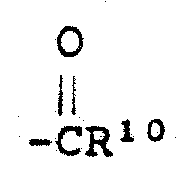
(G)氧化其中X是 ,而m为0的式Ⅱ化合物,制备其中X是 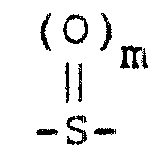
(H)氧化其中X是 
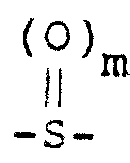
(I)氧化其中X是 
(J)使下式化合物(J) make the following compound

与ⅰ)甲酸反应,制备其中Q为0,R4和R5共同形成键而且R6和R7均为氢的式Ⅱ化合物,或者reacting with i) formic acid to prepare a compound of formula II wherein Q is 0, R 4 and R 5 form a bond together and R 6 and R 7 are hydrogen, or
与ⅱ)二硫化碳反应,制备其中Q是0,R3和R4共同形成键而且R6和R7共同形成=S的式Ⅱ化合物;Reaction with ii) carbon disulfide to prepare wherein Q is 0, R3 and R4 together form a bond and R6 and R7 together form =S compound of formula II;
(K)使下式化合物(K) make the following compound
与下式化合物反应:React with compounds of the formula:
其中R1、R2、R3和X与式Ⅱ中的定义同,R6和R7共同形成=S,而且R8是-(CH2)n-Y(式中n为0、1、2或3,Y是OR9,而R9是氢),制备下式化合物:Wherein R 1 , R 2 , R 3 and X are as defined in formula II, R 6 and R 7 jointly form =S, and R 8 is -(CH 2 ) n -Y (wherein n is 0, 1, 2 or 3, Y is OR 9 , and R 9 is hydrogen), the compound of the following formula is prepared:

其中,R1、R2、R3、R6、R7和X定义如上,而且R8是-(CH2)n-Y(其中n为0、1、2或3,而且Y是OR9,而R9是 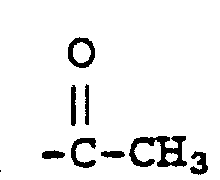
(L)还原其中R8是-(CH2)n-Y,而n是0、1、2或3,Y是OR9,R9是 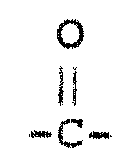
(M)使其中R8是-(CH2)n-Y,而n为0、1、2或3,Y是OR9,R9是氢的式Ⅱ化合物,与甲苯磺酰卤反应,制备其中R8是-(CH2)n-Y,而n为0、1、2或3,Y为OR9,R9是甲苯磺酰基的式Ⅱ化合物;(M) reacting a compound of formula II wherein R 8 is -(CH 2 ) n -Y, and n is 0, 1, 2 or 3, Y is OR 9 , R 9 is hydrogen, with tosyl halide, to prepare A compound of formula II wherein R 8 is -(CH 2 ) n -Y, and n is 0, 1, 2 or 3, Y is OR 9 , and R 9 is tosyl;
(N)使其中R8是-(CH2)n-Y,而n是0、1、2或3,Y是-OR9,R9是甲苯磺酰基的式Ⅱ化合物,与式HNR11R12(其中R11和R12与式Ⅱ中定义同)胺反应,制备其中R8是-(CH2)n-Y,而n为0、1、2或3,Y是-NR11R12的式Ⅱ化合物;(N) wherein R 8 is -(CH 2 ) n -Y, and n is 0, 1, 2 or 3, Y is -OR 9 , and R 9 is tosyl, a compound of formula II, with formula HNR 11 R 12 (wherein R 11 and R 12 are the same as defined in formula II) amine reaction, preparation wherein R 8 is -(CH 2 ) n -Y, and n is 0, 1, 2 or 3, Y is -NR 11 R 12 The compound of formula Ⅱ;
(O)用三正丁基锡叠氮化物处理其中R8是-(CH2)n-Y,而n为0、1、2或3,Y是氰基的式Ⅱ化合物,制备其中R8是-(CH2)n-Y,而n为0、1、2或3,Y是四唑基的式Ⅱ化合物;(O) A compound of formula II wherein R 8 is -(CH 2 ) n -Y, and n is 0, 1, 2 or 3 and Y is cyano is treated with tri-n-butyltin azide to prepare wherein R 8 is - (CH 2 ) n -Y, and n is 0, 1, 2 or 3, and Y is a compound of formula II of tetrazolyl;
(P)使下式化合物:(P) make the following compound:

与下式化合物反应:React with compounds of the formula:
其中,R1、R2、R3、R11和R12与式Ⅱ中的定义同,制备下式化合物:Wherein, R 1 , R 2 , R 3 , R 11 and R 12 are the same as defined in formula II, and the compound of the following formula is prepared:
其中R6和R7共同是=S,而且R1、R2、R3、R11和R12与式Ⅱ中的定义同;wherein R 6 and R 7 are jointly =S, and R 1 , R 2 , R 3 , R 11 and R 12 are as defined in formula II;
(Q)在催化剂存在下,在乙醇-水混合物中加热其中R8是-(CH2)n-Y,而Y是-NR11R12(R11和R12均不是氢)的式Ⅱ化合物,制备其中R8是-(CH2)n-Y,而Y是-NR11R12(R11和R12中一个是氢,另一个不是氢)的式Ⅱ化合物;(Q) A compound of formula II wherein R 8 is -(CH 2 ) n -Y and Y is -NR 11 R 12 (neither R 11 nor R 12 is hydrogen) is heated in an ethanol-water mixture in the presence of a catalyst , preparing a compound of formula II wherein R 8 is -(CH 2 ) n -Y, and Y is -NR 11 R 12 (one of R 11 and R 12 is hydrogen and the other is not hydrogen);
(R)使R6和R7都是氢的式Ⅱ化合物,与三氟乙酐反应,制备R6和R7中一个是氢,另一个是-OH的式Ⅱ化合物;(R) make R 6 and R 7 are all hydrogen compounds of formula II, and react with trifluoroacetic anhydride to prepare R 6 and R 7 in which one is hydrogen and the other is a compound of formula II of -OH;
(S)通过使非盐形式的所说化合物与强酸或强碱反应,使式Ⅱ化合物成盐。(S) Salting the compound of formula II by reacting said compound in its non-salt form with a strong acid or base.
下列实施例进一步详细说明本发明化合物以及本发明方法中使用的化合物的制备。这些实施例还说明本发明提出的选择性离析对映体的工艺方法。但是,这些实施例仅用于说明,而不是要以任何方式限制本发明范围。The following examples further illustrate the preparation of the compounds of the invention and the compounds used in the methods of the invention. These examples also illustrate the process proposed by the present invention for the selective separation of enantiomers. However, these examples are for illustration only and are not intended to limit the scope of the invention in any way.
实施例1Example 1
5-〔〔3,5-二(1,1-二甲乙基)-4-羟苯基〕亚甲基〕-2-硫代-4-噻唑烷酮(化合物A)5-[[3,5-bis(1,1-dimethylethyl)-4-hydroxyphenyl]methylene]-2-thio-4-thiazolidinone (Compound A)
在2500ml冰醋酸中于氮气氛下,将117.2克3,5-二叔丁基-4-羟苯甲醛、66.6克绕丹宁和143.5克熔融的乙酸钠加热回流23小时后,将反应混合物冷却,倒在1升乙醇和1升冰的混合物中,同时搅拌。加入水(500ml)并搅拌30分钟后,过滤收集形成的沉淀。用500ml乙酸乙酯将得到的沉淀制成浆,然后过滤。沉淀溶解在3升乙醇中,加热至沸,加入水至溶液依然混浊(大约450ml水)。冷却到室温,过滤回收99.6克标题产物,熔点约260℃。117.2 g of 3,5-di-tert-butyl-4-hydroxybenzaldehyde, 66.6 g of rhodanine and 143.5 g of molten sodium acetate were heated to reflux in 2500 ml of glacial acetic acid under nitrogen for 23 hours, and the reaction mixture was cooled , poured into a mixture of 1 liter of ethanol and 1 liter of ice while stirring. After adding water (500ml) and stirring for 30 minutes, the precipitate formed was collected by filtration. The resulting precipitate was slurried with 500 mL of ethyl acetate and filtered. The precipitate was dissolved in 3 liters of ethanol, heated to boiling, and water was added until the solution was still cloudy (approximately 450ml of water). After cooling to room temperature, 99.6 g of the title product, melting at about 260°C, were recovered by filtration.
C18H23NO2S2的元素分析结果:Elemental analysis results of C 18 H 23 NO 2 S 2 :
计算值:C 61.86,H 6.63,N 4.01;Calculated values: C 61.86, H 6.63, N 4.01;
测得值:C 62.13,H 6.55,N 4.15。Measured values: C 62.13, H 6.55, N 4.15.
实施例2~3Embodiment 2~3
5-〔〔3,5-二(1,1-二甲乙基)-4-羟苯基〕亚甲基〕-4-噻唑烷酮(化合物B)和5-〔〔3,5-二(1,1-二甲乙基)-4-羟苯基〕甲基〕-4-噻唑烷酮(化合物C)5-[[3,5-bis(1,1-dimethylethyl)-4-hydroxyphenyl]methylene]-4-thiazolidinone (compound B) and 5-[[3,5-bis( 1,1-Dimethylethyl)-4-hydroxyphenyl]methyl]-4-thiazolidinone (Compound C)
在100℃,于200克5%披钯木炭存在下,将69.90克5-〔〔3,5-二(1,1-二甲乙基)-4-羟苯基〕亚甲基-2-硫代-4-噻唑烷酮在4升乙醇中的溶液于500磅/英寸2下氢化过夜。反应混合物过滤后蒸干。分批将此物质溶解在等体积热乙醇中,用2体积己烷稀释,过滤,倒入硅胶色谱柱中。用乙酸乙酯在己烷中的35%溶液洗脱,得到不同级份,按照相应化合物的纯度将其合并。用色谱法分离出总量为4.6克的化合物B。将以化合物B为主成分的诸级份用乙酸乙酯-己烷结晶,得到总量为13.79克化合物B。将含不纯化合物C的各级份于硅胶上再次进行色谱分离,用乙酸乙酯在己烷中的25%溶液洗脱,得到9.82克化合物C。At 100°C, in the presence of 200 grams of 5% palladium charcoal, 69.90 grams of 5-[[3,5-bis(1,1-dimethylethyl)-4-hydroxyphenyl]methylene-2-sulfur A solution of p-4-thiazolidinone in 4 liters of ethanol was hydrogenated overnight at 500 psig. The reaction mixture was filtered and evaporated to dryness. This material was dissolved in portions in an equal volume of hot ethanol, diluted with 2 volumes of hexane, filtered, and poured onto a silica gel chromatography column. Elution with 35% ethyl acetate in hexane gave different fractions which were combined according to the purity of the corresponding compound. A total of 4.6 g of compound B was isolated by chromatography. Fractions containing Compound B as the main component were crystallized from ethyl acetate-hexane to obtain Compound B in a total amount of 13.79 g. Fractions containing impure Compound C were rechromatographed on silica gel eluting with 25% ethyl acetate in hexane to afford Compound C, 9.82 g.
2、5-〔〔3,5-二(1,1-二甲乙基)-4-羟苯基〕亚甲基〕-4-噻唑烷酮,熔点209-213℃。2. 5-[[3,5-bis(1,1-dimethylethyl)-4-hydroxyphenyl]methylene]-4-thiazolidinone, melting point 209-213°C.
C18H25NO2S的元素分析结果:Elemental analysis results of C 18 H 25 NO 2 S:
计算值:C 67.67,H 7.89,N 4.38;Calculated values: C 67.67, H 7.89, N 4.38;
测得值:C 67.44,H 8.11,N 4.65。Measured values: C 67.44, H 8.11, N 4.65.
3、5-〔〔3,5-二(1,1-二甲乙基)-4-羟苯基〕甲基〕-4-噻唑烷酮,熔点149-152℃。3. 5-[[3,5-bis(1,1-dimethylethyl)-4-hydroxyphenyl]methyl]-4-thiazolidinone, melting point 149-152°C.
C18H27NO2S的元素分析结果:Elemental analysis results of C 18 H 27 NO 2 S:
计算值:C 67.25,H 8.47,N 4.36;Calculated values: C 67.25, H 8.47, N 4.36;
测得值:C 67.43,H 8.44,N 4.21。Measured values: C 67.43, H 8.44, N 4.21.
实施例4Example 4
5-〔〔3,5-二(1,1-二甲乙基)-4-羟苯基〕甲基〕-2-硫代-4-噻唑烷酮(化合物D)5-[[3,5-bis(1,1-dimethylethyl)-4-hydroxyphenyl]methyl]-2-thio-4-thiazolidinone (compound D)
在氮气氛下,将13.98克5-〔〔3,5-二(1,1-二甲乙基)-4-羟苯基〕亚甲基〕-2-硫代-4-噻唑烷酮、13.17克2,6-二甲基-1,4-二氢-3,5-吡啶二甲酸二乙酯和600ml甲苯搅拌形成溶液。向反应物中加入事先在50℃真空下干燥过7小时的40克硅胶60(粒度小于230目)。回流下将反应物加热18小时,然后热滤。将滤液蒸干,残渣溶于500ml乙酸乙酯中,每次用400ml 1N盐酸洗涤5次,硫酸钠干燥,过滤,真空蒸发得到黄色固体。经硅胶柱色谱分离,用乙酸乙酯在甲苯中的2.5%溶液洗脱,得到8.0克标题产物,熔点178-179℃。Under a nitrogen atmosphere, 13.98 grams of 5-[[3,5-bis(1,1-dimethylethyl)-4-hydroxyphenyl]methylene]-2-thio-4-thiazolidinone, 13.17 G of diethyl 2,6-dimethyl-1,4-dihydro-3,5-pyridinedicarboxylate was stirred with 600 ml of toluene to form a solution. To the reaction was added 40 g of silica gel 60 (particle size less than 230 mesh) previously dried at 50°C under vacuum for 7 hours. The reaction was heated at reflux for 18 hours, then filtered hot. The filtrate was evaporated to dryness, the residue was dissolved in 500ml ethyl acetate, washed 5 times with 400ml 1N hydrochloric acid each time, dried over sodium sulfate, filtered, and evaporated in vacuo to obtain a yellow solid. Chromatography on a silica gel column eluting with 2.5% ethyl acetate in toluene afforded 8.0 g of the title product, m.p. 178-179°C.
C18H25NO2S2的元素分析结果:Elemental analysis results of C 18 H 25 NO 2 S 2 :
计算值:C 61.50,H 7.17,N 3.98;Calculated values: C 61.50, H 7.17, N 3.98;
测得值:C 61.28,H 7.19,N 3.94。Measured values: C 61.28, H 7.19, N 3.94.
实施例5Example 5
5-〔〔3,5-二(1,1-二甲乙基)-4-羟苯基〕亚甲基〕-3-甲基-2-硫代-4-噻唑烷酮5-[[3,5-bis(1,1-dimethylethyl)-4-hydroxyphenyl]methylene]-3-methyl-2-thio-4-thiazolidinone
按实施例1的操作方法,以76%产率,由3,5-二叔丁基-4-羟基苯甲醛和N-甲基绕丹宁制成了标题化合物。According to the operation method of Example 1, the title compound was prepared from 3,5-di-tert-butyl-4-hydroxybenzaldehyde and N-methylrhodanine in a yield of 76%.
C19H25NO2SO2的元素分析结果:Elemental analysis results of C 19 H 25 NO 2 SO 2 :
计算值:C 62.77,H 6.93,N 3.85,S 17.64;Calculated: C 62.77, H 6.93, N 3.85, S 17.64;
测得值:C 62.54,H 7.05,N 3.66,S 17.82。Measured values: C 62.54, H 7.05, N 3.66, S 17.82.
实施例6Example 6
5-〔〔3,5-二(1,1-二甲乙基)-4-羟苯基〕亚甲基〕-3-甲基-4-噻唑烷酮5-[[3,5-bis(1,1-dimethylethyl)-4-hydroxyphenyl]methylene]-3-methyl-4-thiazolidinone
用实施例5的硫酮(10.31克)作原料,于回流温度下与38.15ml三正丁基锡氢化物和1.16克偶氮双异丁腈(AIBN)在142ml甲苯中一起加热1小时,在71%产率下制得了标题化合物。此产物按下法分离:在所说的冷反应混合物中加水,分层,用1N盐酸和饱和氯化钠溶液洗涤有机层,硫酸钠干燥,真空浓缩,残余物用硅胶色谱法提纯,用10-15%的己烷在乙酸乙酯中的溶液进行梯度洗脱。经提纯的产物熔点为142-144℃。Use the thione (10.31 gram) of embodiment 5 as raw material, under the reflux temperature with 38.15ml tri-n-butyltin hydride and 1.16 gram azobisisobutyronitrile (AIBN) in 142ml toluene, heat together 1 hour, at 71% The title compound was prepared in low yield. This product was isolated as follows: add water to the cold reaction mixture, separate the layers, wash the organic layer with 1N hydrochloric acid and saturated sodium chloride solution, dry over sodium sulfate, concentrate in vacuo, and purify the residue by silica gel chromatography with 10 -15% hexane in ethyl acetate for gradient elution. The purified product has a melting point of 142-144°C.
C19H27NO2S的元素分析结果:Elemental analysis results of C 19 H 27 NO 2 S:
计算值:C 68.43,H 8.16,N 4.20;Calculated values: C 68.43, H 8.16, N 4.20;
测得值:C 68.68,H 8.00,N 3.97。Measured values: C 68.68, H 8.00, N 3.97.
实施例7Example 7
5-〔〔3,5-二(1,1-二甲乙基)-4-羟苯基〕甲基〕-3-甲基-4-噻唑烷酮5-[[3,5-bis(1,1-dimethylethyl)-4-hydroxyphenyl]methyl]-3-methyl-4-thiazolidinone
向100ml THF中加入6.43克实施例3的化合物。加入0.9克氢化钠,结果导致气体逸出。加入碘甲烷(1.25ml,1.0当量),室温下搅拌得到的混合物23小时,然后用等体积的乙酸乙酯和1NHCl稀释。有机层分离出后用硫酸钠干燥,过滤并蒸发。用氯仿反复蒸馏所得固体直到形成橙色泡沫。将5.93克这种材料的样品溶解在14ml乙酸乙酯中用225ml己烷烯释,然后冷却到室温过夜。蒸发溶剂,将得到的固体溶解在40ml乙醚,用大约400ml己烯烷稀释。此混合物冷却到室温过夜,过滤收集形成的沉淀,用己烷洗涤,真空干燥得到3.98克标题化合物,熔点102~105℃。6.43 g of the compound of Example 3 were added to 100 ml of THF. Addition of 0.9 g of sodium hydride resulted in gas evolution. Iodomethane (1.25 mL, 1.0 equiv) was added and the resulting mixture was stirred at room temperature for 23 hours, then diluted with an equal volume of ethyl acetate and 1N HCl. The organic layer was separated, dried over sodium sulfate, filtered and evaporated. The resulting solid was distilled repeatedly with chloroform until an orange foam formed. A 5.93 g sample of this material was dissolved in 14 ml ethyl acetate and diluted with 225 ml hexane, then cooled to room temperature overnight. The solvent was evaporated and the resulting solid was dissolved in 40 ml ether and diluted with approximately 400 ml hexene. The mixture was cooled to room temperature overnight and the precipitate formed was collected by filtration, washed with hexane and dried in vacuo to give 3.98 g of the title compound, m.p. 102-105°C.
C19H29NO2S的元素分析结果:Elemental analysis results of C 19 H 29 NO 2 S:
计算值:C 68.02,H 8.71,N 4.17;Calculated: C 68.02, H 8.71, N 4.17;
测得值:C 68.22,H 8.80,N 4.21。Measured values: C 68.22, H 8.80, N 4.21.
实施例8Example 8
5-〔〔3,5-二(1,1-二甲乙基)-4-羟苯基〕亚甲基〕-3-二甲氨基-2-硫代-4-噻唑烷酮5-[[3,5-bis(1,1-dimethylethyl)-4-hydroxyphenyl]methylene]-3-dimethylamino-2-thio-4-thiazolidinone
按照实施例1的操作,由3,5-二叔丁基-4-羟基苯甲醛和N-二甲氨基绕丹宁出发在65%产率下制得了标题化合物。According to the operation of Example 1, starting from 3,5-di-tert-butyl-4-hydroxybenzaldehyde and N-dimethylaminorhodanine, the title compound was prepared in a yield of 65%.
实施例9Example 9
5-〔〔3,5-二(1,1-二甲乙基)-4-羟苯基〕亚甲基〕-3-二甲氨基-4-噻唑烷酮5-[[3,5-bis(1,1-dimethylethyl)-4-hydroxyphenyl]methylene]-3-dimethylamino-4-thiazolidinone
采用实施例6的操作还原实施例8的化合物,得到标题化合物,产率41%,熔点138-141℃。The compound of Example 8 was reduced by the operation of Example 6 to obtain the title compound with a yield of 41% and a melting point of 138-141°C.
C20H30N2O2S的元素分析结果:Elemental analysis results of C 20 H 30 N 2 O 2 S:
计算值:C 66.26,H 8.34,N 7.73;Calculated values: C 66.26, H 8.34, N 7.73;
测得值:C 66.55,H 8.59,N 7.47。Measured values: C 66.55, H 8.59, N 7.47.
实施例10Example 10
5-〔〔3,5-二(1,1-二甲乙基)-4-羟苯基〕亚甲基〕-3-(甲氨基)-4-噻唑烷酮5-[[3,5-bis(1,1-dimethylethyl)-4-hydroxyphenyl]methylene]-3-(methylamino)-4-thiazolidinone
A.苯甲醛甲腙的制备A. Preparation of benzaldehyde methylhydrazone
将苯甲醛(50.8ml,500mmol)和26.5ml(500mmol)甲肼溶解在1升甲醇中。室温下将此混合物共同搅拌75分钟,然后汽提除溶剂得到67.8克小标题的中间体。Benzaldehyde (50.8 mL, 500 mmol) and 26.5 mL (500 mmol) of methylhydrazine were dissolved in 1 liter of methanol. The mixture was stirred together at room temperature for 75 minutes, then stripped of solvent to yield 67.8 g of the subtitled intermediate.
B.苯甲醛N-甲基,N-2-丙烯基腙的制备B. Preparation of benzaldehyde N-methyl, N-2-propenylhydrazone
将67.8克上化合物、60.5克烯丙基溴和50.5克三乙胺一起溶解在1升乙腈中,将混合物回流加热16小时后,冷却。再加入45克烯丙基溴和38克三乙胺,再将此混合物加热回流7小时,冷却后汽提除去溶剂,得到268克残余物。在此残余物中加入500ml THF,振 
C.N-甲基,N-2-丙烯基肼的制备C. Preparation of N-methyl, N-2-propenylhydrazine
将上化合物(59.9克)、44克肼和137ml乙醇在回流温度下加热21.5小时,然后冷却。用蒸馏头代替回流冷凝管,在1大气压下蒸馏此混合物。将最初的三个馏份收集后合并,加入100ml 1N HCl。再加入100ml浓HCl,同时用冰冷却,形成的混合物经分离后用少量乙酸乙酯洗涤。分离形成的两相,蒸除水直到固体粘住搅拌棒为止。滤出固体,汽提滤液,加到125ml冷NaOH液(50%)中。滤出形成的固体弃去。滤液包含分离的两层。上层含小标题的中间体;而下面的水层经乙醚萃取后再除去溶剂得到额外的产物。The above compound (59.9 g), 44 g of hydrazine and 137 ml of ethanol were heated at reflux temperature for 21.5 hours, then cooled. The mixture was distilled at 1 atmosphere using a distillation head in place of the reflux condenser. The first three fractions were collected and combined, and 100ml of 1N HCl was added. A further 100 ml of concentrated HCl was added while cooling with ice, and the resulting mixture was separated and washed with a small amount of ethyl acetate. The two phases formed were separated and the water was distilled off until the solid stuck to the stir bar. The solid was filtered off and the filtrate was stripped and added to 125 mL of cold NaOH (50%). The solid formed was filtered off and discarded. The filtrate contained two layers that separated. The upper layer contained the subtitled intermediate; while the lower aqueous layer was extracted with ether followed by removal of the solvent to yield additional product.
D.N-甲基,N-3-丙烯基-5-羧甲基二硫代氨基甲酸酯的制备D. Preparation of N-methyl, N-3-propenyl-5-carboxymethyldithiocarbamate
向处于被冷却到0℃的23ml乙醇中的12.67g上化合物中,加入11.18克二硫化碳在26ml乙醚中的溶液。从冰浴中移出所得混合物,在室温下放置大约15.5小时,然后汽提除去溶剂得到约36.5克残余物。向此残余物中加入在29.5ml 5N NaOH中溶解有13.9克一氯乙酸的溶液(在冰浴中冷却的)。室温下将形成的溶液放置3小时。通过加入8ml浓HCl使此溶液的pH降低到大约3。然后加入乙醚50ml,使三相分离。合并水相,用50ml氯仿萃取,然后汽提出溶剂,产出大约40.4克小标题的中间体。To 12.67 g of the above compound in 23 ml of ethanol cooled to 0°C was added a solution of 11.18 g of carbon disulfide in 26 ml of diethyl ether. The resulting mixture was removed from the ice bath, allowed to stand at room temperature for about 15.5 hours, and then stripped of the solvent to give about 36.5 g of a residue. To this residue was added a solution (cooled in an ice bath) of 13.9 g of monochloroacetic acid dissolved in 29.5 ml of 5N NaOH. The resulting solution was left at room temperature for 3 hours. The pH of this solution was lowered to about 3 by adding 8 ml of concentrated HCl. Then 50 ml of diethyl ether was added to separate the three phases. The combined aqueous phases were extracted with 50 mL of chloroform, and the solvent was stripped to yield about 40.4 g of the subtitled intermediate.
E.5-〔〔3,5-二(1,1-二甲乙基)-4-羟苯基〕亚甲基〕-2-硫代-3-(甲基-2-丙烯基氨基)-4-噻唑烷酮的制备E.5-[[3,5-bis(1,1-dimethylethyl)-4-hydroxyphenyl]methylene]-2-thio-3-(methyl-2-propenylamino)- Preparation of 4-thiazolidinone
在810ml乙酸中混合29.3克3.5-二叔丁基-4-羟基苯甲醛、38.8克上述化合物和40.34克乙酸钠,形成的溶液在回流温度下加热24小时。冷却此溶液并在室温再搅拌60小时。然后将溶液倒入2升冰水中,分离后用一些水洗涤,产出约44克小标题的中间体。29.3 g of 3.5-di-tert-butyl-4-hydroxybenzaldehyde, 38.8 g of the above compound and 40.34 g of sodium acetate were mixed in 810 ml of acetic acid, and the resulting solution was heated at reflux temperature for 24 hours. The solution was cooled and stirred at room temperature for an additional 60 hours. The solution was then poured into 2 liters of ice water, separated and washed with some water, yielding about 44 g of the subtitled intermediate.
F.5-〔〔3,5-二(1,1-二甲乙基)-4-羟苯基〕亚甲基〕-3-(甲基-2-丙烯基氨基)-4-噻唑烷酮的制备F.5-[[3,5-bis(1,1-dimethylethyl)-4-hydroxyphenyl]methylene]-3-(methyl-2-propenylamino)-4-thiazolidinone preparation of
采用实施例6所述的操作,还原42.8克上面的硫酮,得到小标题的中间体(8.34克)。Using the procedure described in Example 6, 42.8 g of the above thione were reduced to give the subtitled intermediate (8.34 g).
G.5-〔〔3,5-二(1,1-二甲乙基)-4-羟苯基〕亚甲基〕-3-(甲氨基)-4-噻唑烷酮的制备G. Preparation of 5-[[3,5-bis(1,1-dimethylethyl)-4-hydroxyphenyl]methylene]-3-(methylamino)-4-thiazolidinone
将6.11克上述化合物溶解在135ml乙醇和15.3ml水组成的混合物中,将混合物加热到70℃。加入50mg三(三苯膦)氯化铑(Ⅰ),在回流温度下将混合物加热50分钟,然后加入另外550mg催化剂,在回流温度下再加热2.5小时。冷却混合物,在室温下搅拌过夜,进一步处理后汽提溶剂得出20.5克标题产物,熔点151-153℃。6.11 g of the above compound was dissolved in a mixture of 135 ml of ethanol and 15.3 ml of water, and the mixture was heated to 70°C. 50 mg of tris(triphenylphosphine)rhodium(I) chloride were added and the mixture was heated at reflux temperature for 50 minutes, then a further 550 mg of catalyst was added and heated at reflux temperature for a further 2.5 hours. The mixture was cooled and stirred overnight at room temperature. After further workup the solvent was stripped to give 20.5 g of the title product, mp 151-153°C.
C19H28N2O2S的元素分析结果:Elemental analysis results of C 19 H 28 N 2 O 2 S:
计算值:C 65.86,H 7.56,N 8.09;Calculated values: C 65.86, H 7.56, N 8.09;
测得值:C 65.67,H 7.81,N 8.34。Measured values: C 65.67, H 7.81, N 8.34.
实施例11和12Examples 11 and 12
5-〔(3,5-二-2-丙烯基-4-羟苯基)亚甲基〕-4-噻唑烷酮和5-〔(3,5-二-2-丙烯基-4-羟苯基)甲基〕-4-噻唑烷酮5-[(3,5-Di-2-propenyl-4-hydroxyphenyl)methylene]-4-thiazolidinone and 5-[(3,5-di-2-propenyl-4-hydroxy Phenyl)methyl]-4-thiazolidinone
A.3,5-二-(2-丙烯基)-4-羟基苯甲醛的制备A. Preparation of 3,5-di-(2-propenyl)-4-hydroxybenzaldehyde
在氮气氛和机械搅拌器搅拌下,将250克对羟基苯甲醛、247.6克烯丙基溴、311.7克碳酸氢钾和650ml丙酮在回流温度下加热大约18小时,冷却此混合物,然后加入大约1升水,每次用800ml乙醚,萃取两次。接着蒸馏有机相,得出约299克4-(2-丙烯基)氧化苯甲醛,然后使其与大约300ml二乙基苯胺一起在195-205℃下加热5.5小时。混合物冷却后加入750ml乙酸乙酯。混合物用1N HCl洗涤三次,每次用500ml 1N HCl,接着进一步处理,产出约138克3-(2-丙烯基)-4-羟基苯甲醛。再将将此单取代的醛(159克)与152克碳酸钾和465ml丙酮一起加热回流3小时,然后冷却。将此混合物倒入900ml冰水中,然后用乙醚(每次用430ml)萃取二次,产出约170克3-(2-丙烯基)-4-(2-丙烯氧基)苯甲醛。在氮气氛下,于大约500ml二乙基苯胺中将此二取代的醛加热到195-205℃达6.5小时。冷却此混合物。将其溶解在大约800ml乙酸乙酯中,用1N HCl洗涤三次(每次用1升),然后进一步处理,得出约121.9克小标题的中间体。Under a nitrogen atmosphere and a mechanical stirrer, 250 grams of p-hydroxybenzaldehyde, 247.6 grams of allyl bromide, 311.7 grams of potassium bicarbonate and 650 ml of acetone were heated at reflux temperature for about 18 hours, the mixture was cooled, and then about 1 liters of water, each with 800ml ether, extracted twice. The organic phase was then distilled to give about 299 g of 4-(2-propenyl)benzaldehyde oxide, which was then heated with about 300 ml of diethylaniline at 195-205°C for 5.5 hours. After the mixture was cooled, 750 ml of ethyl acetate were added. The mixture was washed three times with 500 mL of 1N HCl each time, followed by further work-up, yielding about 138 g of 3-(2-propenyl)-4-hydroxybenzaldehyde. The monosubstituted aldehyde (159 g) was heated to reflux for 3 hours with 152 g potassium carbonate and 465 ml acetone, then cooled. The mixture was poured into 900 ml of ice water and extracted twice with diethyl ether (430 ml each), yielding about 170 g of 3-(2-propenyl)-4-(2-propenyloxy)benzaldehyde. The disubstituted aldehyde was heated to 195-205°C for 6.5 hours in about 500 mL of diethylaniline under nitrogen atmosphere. Cool this mixture. This was dissolved in about 800 mL of ethyl acetate, washed three times with 1 N HCl (1 L each), and further worked up to give about 121.9 g of the subtitled intermediate.
B.5-〔(3,5-二-2-丙烯基-4-羟苯基)亚甲基〕-2-硫代-4-噻唑烷酮的制备B. Preparation of 5-[(3,5-di-2-propenyl-4-hydroxyphenyl)methylene]-2-thio-4-thiazolidinone
在1.25升乙酸中将50.5克上述化合物、36.6克绕丹宁和164克乙酸钠一起在回流温度下加热14.5小时。冷却形成的溶液,倒入2升冰水中,(分离后)产出约75克小标题中间体,熔点157-160℃。50.5 g of the above compound, 36.6 g of rhodanine and 164 g of sodium acetate were heated together in 1.25 liters of acetic acid at reflux temperature for 14.5 hours. The resulting solution was cooled and poured into 2 liters of ice water, yielding (after isolation) about 75 g of the subtitled intermediate, m.p. 157-160°C.
C.5-〔(3,5-二-2-丙烯基-4-羟苯基〕亚甲基〕-4-噻唑烷酮和5-〔(3,5-二-2-丙烯基-4-羟苯基)甲基〕-4-噻唑烷酮的制备C.5-[(3,5-di-2-propenyl-4-hydroxyphenyl]methylene]-4-thiazolidinone and 5-[(3,5-di-2-propenyl-4 Preparation of -hydroxyphenyl)methyl]-4-thiazolidinone
在2.1升热(大约82℃)乙醇中,用62克锌粉和950ml浓盐酸还原74.8克上述化合物。各反应物混合后,将溶液冷却到室温,搅拌1小时,然后加到3.75升冰水中。将形成的溶液放置过夜得到一种树胶状物。倾出上层液体,用750ml氯仿萃取;同时将所说的树胶状物溶解在560ml氯仿中,得到的溶液依次用75ml饱和碳酸钠溶液、75ml水和75ml饱和含盐溶液洗涤。合并上面的氯仿溶液,然后用100ml二氯甲烷研制。用硅胶色谱法分离得到标题产物,用乙酸乙酯在己烷中的25-60%溶液进行梯度淋洗,得到的各级份按下法处理。74.8 g of the above compound were reduced with 62 g of zinc powder and 950 ml of concentrated hydrochloric acid in 2.1 liters of hot (approximately 82°C) ethanol. After the reactants were mixed, the solution was cooled to room temperature, stirred for 1 hour, and then added to 3.75 L of ice water. The resulting solution was left overnight to give a gum. The supernatant liquid was decanted and extracted with 750ml of chloroform; at the same time, the gum was dissolved in 560ml of chloroform, and the resulting solution was washed successively with 75ml of saturated sodium carbonate solution, 75ml of water and 75ml of saturated saline solution. The above chloroform solutions were combined and then triturated with 100 ml of dichloromethane. The title product was chromatographed on silica gel eluting with a gradient of 25-60% ethyl acetate in hexane and the resulting fractions worked up as follows.
将级份13-15浓缩后,用乙酸乙酯洗涤,得到2.91克5-〔(3,5-二-2-丙烯基-4-羟苯基)甲基〕-4-噻唑烷酮。将级份16-18浓缩成残渣,用30ml二氯甲烷研制。将级份19-23浓缩成残渣,用35ml二氯甲烷研制。研制后过滤分离残留的不溶物,再用40ml乙酸乙酯研制,得出3.85克5-〔(3,5-二-2-丙烯基-4-羟苯基)亚甲基〕-4-噻唑烷酮。Fractions 13-15 were concentrated and washed with ethyl acetate to obtain 2.91 g of 5-[(3,5-di-2-propenyl-4-hydroxyphenyl)methyl]-4-thiazolidinone. Fractions 16-18 were concentrated to a residue and triturated with 30 mL of dichloromethane. Fractions 19-23 were concentrated to a residue and triturated with 35 mL of dichloromethane. After the trituration, the remaining insoluble matter was separated by filtration, and triturated with 40 ml of ethyl acetate to obtain 3.85 g of 5-[(3,5-di-2-propenyl-4-hydroxyphenyl)methylene]-4-thiazole alkanone.
将级份13-15后的乙酸乙酯洗液、含级份16-18的二氯甲烷溶液及由级份19-23得到的二氯甲烷和乙酸乙酯溶液合并,倒入硅胶色谱柱中,用乙酸乙酯-己烷混合液(1∶1)洗脱,得到各级份,按照相应化合的纯度合并这些级份。用热乙酸乙酯使主要含5-〔(3,5-二-2-丙烯基-4-羟苯基)甲基〕-4-噻唑烷酮的级份重结晶,得到1.24克该化合物(总计产出4.14克5-〔(3,5-二-2-丙烯基-4-羟苯基)甲基〕-4-噻唑烷酮)。用30ml热乙酸乙酯研制主要含5-〔(3,5-二-2-丙烯基-4-羟苯基)亚甲基〕-4-噻唑烷酮的级份,得到1.73克该化合物(总计产出5.58克5-〔(3,5-二-2-丙烯基-4-羟苯基)亚甲基〕-4-噻唑烷酮。Combine the ethyl acetate wash after fractions 13-15, the dichloromethane solution containing fractions 16-18 and the dichloromethane and ethyl acetate solution obtained from fractions 19-23 and pour into a silica gel chromatography column , eluted with ethyl acetate-hexane mixture (1:1) to give fractions which were combined according to the purity of the corresponding compound. The fraction mainly containing 5-[(3,5-di-2-propenyl-4-hydroxyphenyl)methyl]-4-thiazolidinone was recrystallized from hot ethyl acetate to obtain 1.24 g of the compound ( A total of 4.14 g of 5-[(3,5-di-2-propenyl-4-hydroxyphenyl)methyl]-4-thiazolidinone was obtained. The fraction mainly containing 5-[(3,5-di-2-propenyl-4-hydroxyphenyl)methylene]-4-thiazolidinone was triturated with 30 ml of hot ethyl acetate to obtain 1.73 g of the compound ( A total of 5.58 g of 5-[(3,5-di-2-propenyl-4-hydroxyphenyl)methylene]-4-thiazolidinone was yielded.
11、5-〔(3,5-二-2-丙烯基-4-羟苯基)亚甲基〕-4-噻唑烷酮,熔点184-188℃。11. 5-[(3,5-Di-2-propenyl-4-hydroxyphenyl)methylene]-4-thiazolidinone, melting point 184-188°C.
C16H17NO2S的元素分析结果:Elemental analysis results of C 16 H 17 NO 2 S:
计算值:C 66.87,H 5.96,N 4.87;Calculated values: C 66.87, H 5.96, N 4.87;
测得值:C 66.62,H 5.92,N 4.89。Measured values: C 66.62, H 5.92, N 4.89.
12、5-〔(3,5-二-2-丙烯基-4-羟苯基)甲基〕-4-噻唑烷酮,熔点142-144℃12. 5-[(3,5-Di-2-propenyl-4-hydroxyphenyl)methyl]-4-thiazolidinone, melting point 142-144°C
C16H19NO2S的元素分析结果:Elemental analysis results of C 16 H 19 NO 2 S:
计算值:C 66.41,H 6.62,N 4.84;Calculated: C 66.41, H 6.62, N 4.84;
测得值:C 66.18,H 6.69,N 4.60。Measured values: C 66.18, H 6.69, N 4.60.
利用实施例11和12以及本文其它处说明的操作方法,制备了下列一些其它化合物:Using the procedures described in Examples 11 and 12 and elsewhere herein, the following additional compounds were prepared:
实施例13Example 13
5-〔(3,5-二-2-丙烯基-4-羟苯基)亚甲基〕-3-甲基-4-噻唑烷酮,熔点155-159℃。5-[(3,5-Di-2-propenyl-4-hydroxyphenyl)methylene]-3-methyl-4-thiazolidinone, melting point 155-159°C.
C17H19NO2S的元素分析结果:Elemental analysis results of C 17 H 19 NO 2 S:
计算值:C 67.74,H 6.35,N 4.65;Calculated values: C 67.74, H 6.35, N 4.65;
测得值:C 67.53,H 6.09,N 4.45。Measured values: C 67.53, H 6.09, N 4.45.
实施例14Example 14
5-〔(3,5-二丙基-4-羟苯基)亚甲基〕-3-甲基-4-噻唑烷酮,熔点162-165℃。5-[(3,5-Dipropyl-4-hydroxyphenyl)methylene]-3-methyl-4-thiazolidinone, melting point 162-165°C.
C17H23NO2S的元素分析结果:Elemental analysis results of C 17 H 23 NO 2 S:
计算值:C 66.85,H 7.59,N 4.59;Calculated values: C 66.85, H 7.59, N 4.59;
测得值:C 67.12,H 7.37,N 4.52。Measured values: C 67.12, H 7.37, N 4.52.
实施例15Example 15
5-〔(3,5-二丙基-4-羟苯基)亚甲基〕-4-噻唑烷酮,熔点202-205℃。5-[(3,5-Dipropyl-4-hydroxyphenyl)methylene]-4-thiazolidinone, melting point 202-205°C.
C16H21NO2S的元素分析结果:Elemental analysis results of C 16 H 21 NO 2 S:
计算值:C 65.95,H 7.26,N 4.81。Calculated: C 65.95, H 7.26, N 4.81.
测得值:C 66.16,H 7.49,N 4.79。Measured values: C 66.16, H 7.49, N 4.79.
实施例16Example 16
5-〔(3,5-二丙基-4-羟苯基)甲基-4-噻唑烷酮,熔点155-157℃。5-[(3,5-Dipropyl-4-hydroxyphenyl)methyl-4-thiazolidinone, melting point 155-157°C.
C16H23NO2S的元素分析结果:Elemental analysis results of C 16 H 23 NO 2 S:
计算值:C 65.49,H 7.90,N 4.77;Calculated values: C 65.49, H 7.90, N 4.77;
测得值:C 65.71,H 7.73,N 4.99。Measured values: C 65.71, H 7.73, N 4.99.
实施例17Example 17
5-〔〔3-(1,1-二甲乙基)-4-羟基-5-甲基苯基〕亚甲基〕-4-噻唑烷酮5-[[3-(1,1-Dimethylethyl)-4-hydroxy-5-methylphenyl]methylene]-4-thiazolidinone
A.4-羟基-3-甲基-5-(1,1-二甲乙基)苯甲醛的制备A. Preparation of 4-hydroxy-3-methyl-5-(1,1-dimethylethyl)benzaldehyde
氮气氛下,将76.65克2-(1,1-二甲乙基)-6-甲基苯酚(Aldrich)、65.42克六亚甲基四胺和700ml三氟乙酸在回流温度下搅拌大约24小时。冷却此反应溶液,蒸去液体,将形成的残渣移至1500ml水和1000ml氯仿中,然后用固体碳酸钠中和到pH为7。分离形成的两层,水相用氯仿洗涤。将有机相和氯仿洗液合并,用水洗涤此合并的溶液,然后用硫酸钠干燥过夜。除去硫酸钠后蒸除氯仿。将形成的残渣溶解在375ml甲苯中,在蒸汽浴上加热,然后冷却到室温过夜。经后续处理后得到28.3克小标题中间体。Under a nitrogen atmosphere, 76.65 g of 2-(1,1-dimethylethyl)-6-methylphenol (Aldrich), 65.42 g of hexamethylenetetramine and 700 ml of trifluoroacetic acid were stirred at reflux temperature for about 24 hours. The reaction solution was cooled, the liquid was distilled off, and the resulting residue was taken up in 1500 ml of water and 1000 ml of chloroform, and then neutralized to pH 7 with solid sodium carbonate. The two layers formed were separated and the aqueous phase was washed with chloroform. The organic phase and the chloroform washes were combined, and the combined solution was washed with water and dried over sodium sulfate overnight. Chloroform was distilled off after removal of sodium sulfate. The resulting residue was dissolved in 375 ml of toluene, heated on a steam bath, then cooled to room temperature overnight. After subsequent treatment, 28.3 g of the subtitle intermediate were obtained.
B.5-〔〔3-(1,1-二甲乙基)-4-羟基-5-甲基苯基〕亚甲基〕-2-硫代-4-噻唑烷酮的制备B. Preparation of 5-[[3-(1,1-dimethylethyl)-4-hydroxy-5-methylphenyl]methylene]-2-thio-4-thiazolidinone
将上述中间体(28.3克)、24克N-氨基绕丹宁和48.3克乙酸钠在735ml乙酸中在回流温度下加热大约7小时,然后冷却到室温,同时不断搅拌过夜。搅拌下,将形成的混合物倒入1500ml冰水中,然后过滤。将湿滤转入烧杯中,并将其溶解在乙酸乙酯和水的混合物中。分离形成的有机层和水层。有机层经硫酸钠干燥后过滤除去该物质。进一步处理后在热氯仿中研制,随后真空干燥,得到约18克小标题中间体,熔点210-216℃。The above intermediate (28.3 g), 24 g of N-aminorhodanine and 48.3 g of sodium acetate were heated in 735 ml of acetic acid at reflux temperature for about 7 hours and then cooled to room temperature with constant stirring overnight. With stirring, the resulting mixture was poured into 1500 ml of ice water, then filtered. Transfer the wet filter to a beaker and dissolve it in a mixture of ethyl acetate and water. The resulting organic and aqueous layers were separated. The organic layer was dried over sodium sulfate and filtered to remove this material. Further workup followed by trituration in hot chloroform followed by drying in vacuo yielded about 18 g of the subtitled intermediate, mp 210-216°C.
C.5-〔〔3-(1,1-二甲乙基)-4-羟基-5-甲基苯基〕亚甲基〕-4-噻唑烷酮的制备C. Preparation of 5-[[3-(1,1-dimethylethyl)-4-hydroxy-5-methylphenyl]methylene]-4-thiazolidinone
按本文所述的方法还原上面的硫酮,然后进一步处理,得到1.56克标题产物,熔点162-165℃。Reduction of the above thione as described herein, followed by further work-up, yielded 1.56 g of the title product, m.p. 162-165°C.
C15H19NO2S的元素分析结果:Elemental analysis results of C 15 H 19 NO 2 S:
计算值:C 64.95,H 6.90,N 5.05;Calculated values: C 64.95, H 6.90, N 5.05;
测得值:C 65.12,H 7.05,N 4.99。Measured values: C 65.12, H 7.05, N 4.99.
利用实施例17和本文别处说明的操作方法,得到了下列一些其它化合物。Using the procedures described in Example 17 and elsewhere herein, some of the other compounds listed below were obtained.
实施例18Example 18
5-〔〔3,5-二(1-甲乙基)-4-羟苯基〕亚甲基〕-3-甲基-4-噻唑烷酮,熔点200-210℃。5-[[3,5-bis(1-methylethyl)-4-hydroxyphenyl]methylene]-3-methyl-4-thiazolidinone, melting point 200-210°C.
C17H23NO2S的元素分析结果:Elemental analysis results of C 17 H 23 NO 2 S:
计算值:C 66.85,H 7.59,N 4.59;Calculated values: C 66.85, H 7.59, N 4.59;
测得值:C 67.03,H 7.55,N 4.37。Measured values: C 67.03, H 7.55, N 4.37.
实施例19Example 19
5-〔〔3,5-二(1-甲乙基)-4-羟苯基〕甲基〕-2-硫代-4-噻唑烷酮5-[[3,5-bis(1-methylethyl)-4-hydroxyphenyl]methyl]-2-thioxo-4-thiazolidinone
实施例20Example 20
5-〔〔3-(1,1-二甲乙基)-4-羟基-5-甲基苯基〕甲基〕-4-噻唑烷酮5-[[3-(1,1-Dimethylethyl)-4-hydroxy-5-methylphenyl]methyl]-4-thiazolidinone
在1.12克5%钯-炭存在下,于60℃下将0.28克实施例17的化合物在30ml THF中的溶液在60磅/英寸2压力下氢化。过滤反应混合物后蒸发至干。将形成的残渣溶解在3.5ml乙酸乙酯-己烷(1∶1.5)溶液中,将其倒入硅胶色谱柱中,用40%的乙酸乙酯在己烷中的溶液洗脱,得到的级份蒸发至干,得到0.05克标题化合物,熔点64-68℃。A solution of 0.28 g of the compound of Example 17 in 30 mL of THF was hydrogenated at 60°C at 60°C in the presence of 1.12 g of 5% palladium on carbon at 60 psig. The reaction mixture was filtered and evaporated to dryness. The resulting residue was dissolved in 3.5 ml of ethyl acetate-hexane (1:1.5) solution, poured into a silica gel chromatography column, and eluted with 40% ethyl acetate in hexane to obtain grades The portions were evaporated to dryness to give 0.05 g of the title compound, m.p. 64-68°C.
C15H21NO2S的元素分析结果:Elemental analysis results of C 15 H 21 NO 2 S:
计算值:C 64.48,H 7.58,N 5.01;Calculated values: C 64.48, H 7.58, N 5.01;
测得值:C 64.32,H 7.66,N 4.79。Measured values: C 64.32, H 7.66, N 4.79.
实施例21Example 21
5-〔〔3,5-二(1-甲乙基)-4-羟苯基〕甲基〕-4-噻唑烷酮5-[[3,5-bis(1-methylethyl)-4-hydroxyphenyl]methyl]-4-thiazolidinone
采用实施例20中所述的方法,将4.73克实施例19的化合物转变成1.88克标题化合物,熔点136-139℃。Using the procedure described in Example 20, 4.73 g of the compound of Example 19 were converted to 1.88 g of the title compound, m.p. 136-139°C.
C16H23NO2S的元素分析结果:Elemental analysis results of C 16 H 23 NO 2 S:
计算值:C 65.49,H 7.90,N 4.77;Calculated values: C 65.49, H 7.90, N 4.77;
测得值:C 65.79,H 7.90,N 4.81。Measured values: C 65.79, H 7.90, N 4.81.
实施例22Example 22
5-〔〔3-(1,1-二甲乙基)-4-羟基-5-丙基苯基〕甲基〕-4-噻唑烷酮5-[[3-(1,1-Dimethylethyl)-4-hydroxy-5-propylphenyl]methyl]-4-thiazolidinone
A.3-〔2-(1,1-二甲乙基)苯氧基〕丙烯的制备A. Preparation of 3-[2-(1,1-dimethylethyl)phenoxy]propene
在265ml丙酮中将69.2ml烯丙基溴、122.9ml2-叔丁基苯酚和121.6克碳酸钾在回流温度下搅拌50小时,然后冷却到35℃。加入600ml水,分层。水层用600ml乙醚萃取。有机层与水层的乙醚萃取液合并,得到的溶液用硫酸钠干燥过夜。除去硫酸钠后,蒸发溶剂,经进一步处理后得到147克小标题的中间体。In 265 ml of acetone, 69.2 ml of allyl bromide, 122.9 ml of 2-tert-butylphenol and 121.6 g of potassium carbonate were stirred at reflux temperature for 50 hours and then cooled to 35°C. 600ml of water was added, and the layers were separated. The aqueous layer was extracted with 600 ml of ether. The organic layer was combined with the ether extract of the aqueous layer, and the resulting solution was dried over sodium sulfate overnight. After removal of the sodium sulfate, the solvent was evaporated and further work-up afforded 147 g of the subtitled intermediate.
B.2-(1,1-二甲乙基)-6-(2-丙烯基)苯酚的制备。B. Preparation of 2-(1,1-dimethylethyl)-6-(2-propenyl)phenol.
按照实施例11A和12A所述的方法使上述的全部147克化合物重排,得到100.8克小标题的中间体。All 147 g of the above compound were rearranged according to the procedure described in Examples 11A and 12A to yield 100.8 g of the subtitled intermediate.
C.2-(1,1-二甲乙基)-6-丙基苯酚的制备C. Preparation of 2-(1,1-dimethylethyl)-6-propylphenol
在55克阮内镍存在下,在室温使54.9克上述化合物在575ml甲苯中的溶液于60磅/英寸2压力下氢化3小时。过滤此反应混合物,蒸干后得到59.2克小标题的中间体。A solution of 54.9 g of the above compound in 575 ml of toluene was hydrogenated at 60 psig for 3 hours at room temperature in the presence of 55 g of Raney nickel. The reaction mixture was filtered and evaporated to dryness to yield 59.2 g of the subtitled intermediate.
D.3-(1,1-二甲乙基)-4-羟基-5-丙基苯甲醛的制备D. Preparation of 3-(1,1-dimethylethyl)-4-hydroxy-5-propylbenzaldehyde
采用在实施例17A中所述的方法,将55.48克上述化合物转化成23.33克小标题的中间体。Using the procedure described in Example 17A, 55.48 g of the above compound were converted to 23.33 g of the subtitled intermediate.
E.5-〔〔3-(1,1-二甲乙基)-4-羟基-5-丙苯基〕亚甲基〕-2-硫代-4-噻唑烷酮的制备E. Preparation of 5-[[3-(1,1-dimethylethyl)-4-hydroxy-5-propylphenyl]methylene]-2-thio-4-thiazolidinone
采用实施例17B所述的方法,将5.51克上述化合物转化成6.26克小标题的中间体,熔点190.5-192℃。Using the procedure described in Example 17B, 5.51 g of the above compound were converted to 6.26 g of the subtitled intermediate, m.p. 190.5-192°C.
F.5-〔〔3-(1,1-二甲乙基)-4-羟基-5-丙苯基〕甲基〕-2-硫代-4-噻唑烷酮的制备F. Preparation of 5-[[3-(1,1-dimethylethyl)-4-hydroxy-5-propylphenyl]methyl]-2-thio-4-thiazolidinone
利用实施例4中所述的方法,将4.73克上述化合物转化成2.1克小标题的中间体。Using the procedure described in Example 4, 4.73 g of the above compound was converted to 2.1 g of the subtitled intermediate.
G.5-〔〔3-(1,1-二甲乙基-4-羟基-5-丙苯基〕甲基〕-4-噻唑烷酮的制备G. Preparation of 5-[[3-(1,1-dimethylethyl-4-hydroxy-5-propylphenyl]methyl]-4-thiazolidinone
在8.4克5%钯-炭存在下,于100℃将2.1克上述化合物在185ml乙醇中的溶液在500磅/英寸2下氢化20小时。反应混合物过滤后蒸干,将形成的残渣溶解在25ml二氯甲烷中,然后倒入硅胶色谱柱中。用2000ml 10-15%乙酸乙酯在己烷中的溶液进行梯度洗脱,然后用2000ml乙酸乙酯-己烷(1∶1)溶液洗脱,将得到的诸级份蒸干,得到0.75克标题产物,熔点50-55℃。A solution of 2.1 g of the above compound in 185 ml of ethanol was hydrogenated at 500 psig at 100°C for 20 hours in the presence of 8.4 g of 5% palladium on carbon. The reaction mixture was filtered and evaporated to dryness, and the resulting residue was dissolved in 25 ml of dichloromethane and poured onto a silica gel chromatography column. Gradient elution with 2000 ml of 10-15% ethyl acetate in hexane, followed by 2000 ml of ethyl acetate-hexane (1:1) solution, the fractions obtained were evaporated to dryness to give 0.75 g The title product, mp 50-55°C.
C17H25NO2S的元素分析结果:Elemental analysis results of C 17 H 25 NO 2 S:
计算值:C 66.41,H 8.20,N 4.56;Calculated values: C 66.41, H 8.20, N 4.56;
测得值:C 66.61,H 8.22,N 4.55;Measured values: C 66.61, H 8.22, N 4.55;
实施例23Example 23
5-〔〔3-甲硫苯基-4-羟基-5-乙氧苯基〕亚甲基〕-3-二甲氨基-4-噻唑烷酮5-[[3-methylthiophenyl-4-hydroxy-5-ethoxyphenyl]methylene]-3-dimethylamino-4-thiazolidinone
A.5-〔〔3-乙氧基-4-羟苯基〕亚甲基〕-3-二甲氨基-2-硫代-4-噻唑烷酮的制备A. Preparation of 5-[[3-ethoxy-4-hydroxyphenyl]methylene]-3-dimethylamino-2-thio-4-thiazolidinone
按照实施例1所述的方法,使45.7克3-乙氧基-4-羟基苯甲醛、53.35克N-二甲氨基绕丹宁和92.4克熔融乙酸钠反应,得出52.92克小标题的中间体,熔点194-198℃。Following the procedure described in Example 1, 45.7 grams of 3-ethoxy-4-hydroxybenzaldehyde, 53.35 grams of N-dimethylaminorhodanine and 92.4 grams of molten sodium acetate were reacted to give 52.92 grams of subtitled intermediate Body, melting point 194-198 ° C.
B.5-〔〔3-乙氧基-4-羟苯基〕亚甲基〕-3-二甲氨基-4-噻唑烷酮的制备B. Preparation of 5-[[3-ethoxy-4-hydroxyphenyl]methylene]-3-dimethylamino-4-thiazolidinone
利用实施例6中所述的方法,将47.66克上面的化合物转变成14.02克小标题的中间体。Using the procedure described in Example 6, 47.66 g of the above compound were converted to 14.02 g of the subtitled intermediate.
C.5-〔〔3-乙氧基-4-羟基-5-(甲硫苯基)苯基〕亚甲基〕-3-二甲氨基-4-噻唑烷酮的制备C. Preparation of 5-[[3-ethoxy-4-hydroxy-5-(methylthiophenyl)phenyl]methylene]-3-dimethylamino-4-thiazolidinone
将0.95克氢氧化钠和17.3ml40Wt%甲醛溶液溶解在50ml2-乙氧基乙醇中。加入2.62克苯硫酚和7.0克上述化合物,将得到的溶液回流4小时后冷却。在此冷反应混合物中加入50ml乙酸乙酯和25ml水,用浓盐酸将所得两相溶液的pH降低到大约5。将有机相和水相分离,有机相用饱和食盐水洗涤,然后加到硅胶色谱柱中。依次用4升二氯甲烷和4升3%甲醇-97%二氯甲烷溶液洗脱后,得到一些含标题产物的级份;将其合并后再次倒入硅胶色谱柱中,依次用4升二氯甲烷和1升22.5%乙腈在二氯甲烷中溶液洗脱得到一些级份,蒸除溶剂后得到标题化合物。此产物经50ml己烷和30ml乙酸乙酯组成的热溶液研制后,得到6.20克5-〔〔3-甲硫苯基-4-羟基-5-乙氧苯基〕亚甲基〕-3-二甲氨基-4-噻唑烷酮,熔点118-120℃。Dissolve 0.95 g of sodium hydroxide and 17.3 ml of 40 wt% formaldehyde solution in 50 ml of 2-ethoxyethanol. 2.62 g of thiophenol and 7.0 g of the above compound were added, and the resulting solution was refluxed for 4 hours and then cooled. To this cold reaction mixture was added 50 mL of ethyl acetate and 25 mL of water, and the pH of the resulting biphasic solution was lowered to about 5 with concentrated hydrochloric acid. The organic phase and the aqueous phase were separated, and the organic phase was washed with saturated brine, and then added to a silica gel chromatography column. After successively eluting with 4 liters of dichloromethane and 4 liters of 3% methanol-97% dichloromethane solution, some fractions containing the title product were obtained; they were combined and poured into a silica gel chromatography column again, and successively washed with 4 liters of dichloromethane Elution with methyl chloride and 1 liter of 22.5% acetonitrile in dichloromethane gave fractions which, after evaporation of the solvent, gave the title compound. After trituration of this product with a hot solution consisting of 50 ml of hexane and 30 ml of ethyl acetate, 6.20 g of 5-[[3-methylthiophenyl-4-hydroxy-5-ethoxyphenyl]methylene]-3- Dimethylamino-4-thiazolidinone, melting point 118-120°C.
C21H24N2O3S2的元素分析结果:Elemental analysis results of C 21 H 24 N 2 O 3 S 2 :
计算值:C 60.55,H 5.81,N 6.73,S 15.39;Calculated values: C 60.55, H 5.81, N 6.73, S 15.39;
测得值:C 60.75,H 5.76,N 6.76,S 15.58。Measured values: C 60.75, H 5.76, N 6.76, S 15.58.
实施例24Example 24
(-)-5-〔〔3,5-二(1,1-二甲乙基)-4-羟苯基〕甲基〕-4-噻唑烷酮(-)-5-[[3,5-bis(1,1-dimethylethyl)-4-hydroxyphenyl]methyl]-4-thiazolidinone
在加有25ml二氯甲烷的50ml三口园底烧瓶中,加入1.31克4 
6小时后,将此反应溶液倒入用9.9克硫酸亚铁七水合物、3.3克-水合柠檬酸和水制成的50ml溶液中,淬灭该反应。得到的溶液搅拌30分钟后停止搅拌,使有机相和水相分层。倾泻出水层,用二氯甲烷洗涤。将此二氯甲烷洗液与上有机层合并,形成的此溶液用饱和食盐溶液洗涤,然后用硫酸钠干燥。滤除硫酸钠,蒸发残留的液体得到1.81克残渣。After 6 hours, the reaction solution was quenched by pouring the reaction solution into 50 ml of a solution prepared with 9.9 g of ferrous sulfate heptahydrate, 3.3 g of monohydrated citric acid and water. The resulting solution was stirred for 30 minutes before the stirring was stopped and the organic and aqueous phases were separated. The aqueous layer was poured off and washed with dichloromethane. The dichloromethane wash was combined with the upper organic layer, and the resulting solution was washed with a saturated common saline solution, and then dried over sodium sulfate. Sodium sulfate was filtered off and the remaining liquid was evaporated to give 1.81 g of residue.
将所说的残渣溶解在25ml二氯甲烷中,得到的溶液用硅胶柱色谱法分离,用6000ml 10-15%的乙酸乙酯在己烷中的溶液作梯度洗脱,得到含上标题化合物的各级份,将其合并后蒸除液体,得到0.19克标题化合物。〔α〕25=-73.6°(C=1.0,甲醇)。Said residue was dissolved in 25ml of dichloromethane, and the resulting solution was separated by silica gel column chromatography, and used as gradient elution with 6000ml of 10-15% ethyl acetate in hexane to obtain the compound containing the title compound. The fractions were combined and the liquid was evaporated to give 0.19 g of the title compound. [α] 25 = -73.6° (C = 1.0, methanol).
C18H27NO2S的元素分析结果:Elemental analysis results of C 18 H 27 NO 2 S:
计算值:C 67.25,H 8.47,N 4.36;Calculated values: C 67.25, H 8.47, N 4.36;
测得值:C 67.50,H 8.53,N 4.48。Measured values: C 67.50, H 8.53, N 4.48.
实施例25、26和27Examples 25, 26 and 27
(+)-5-〔〔3,5-二(1,1-二甲乙基)-4-羟苯基〕甲基〕-4-噻唑烷酮、(-)-5-〔〔3,5-二(1,1-二甲乙基)-4-羟苯基〕甲基〕-4-噻唑烷酮-1-氧化物和(+)-5-〔〔3,5-二(1,1-二甲乙基)-4-羟苯基〕甲基〕-4-噻唑烷酮-1-氧化物(+)-5-[[3,5-bis(1,1-dimethylethyl)-4-hydroxyphenyl]methyl]-4-thiazolidinone, (-)-5-[[3,5 -bis(1,1-dimethylethyl)-4-hydroxyphenyl]methyl]-4-thiazolidinone-1-oxide and (+)-5-[[3,5-bis(1,1 -Dimethylethyl)-4-hydroxyphenyl]methyl]-4-thiazolidinone-1-oxide
按照实施例24中所述的类似方式,使0.89ml(3.0mmol)异丙醇钛、1.27ml(6.0mmol)(-)-酒石酸二异丙酯、54μl(3.0mmol)去离子水、1.61克(5.0mmol)外消旋的5-〔〔3,5-二(1,1-二甲乙基)-4-羟苯基〕甲基〕-4-噻唑烷酮和2.4ml(6.5mmol)浓度为2.57M的氢过氧化叔丁烷的异辛烷溶液反应,得到一种残渣。将此残渣溶解在75ml二氯甲烷中,将形成的溶液于硅胶色谱柱上进行色谱分离。用6000ml 10-50%的乙酸乙酯在己烷中的溶液进行梯度洗脱,得到含(+)-5-〔〔3,5-二-(1,1-二甲乙基)-4-羟苯基〕甲基〕-4-噻唑烷酮的各级份,合并这些级份,蒸除液体得到0.43克产品化合物。进一步用4000ml 50%的异丙醇在己烷中的溶液洗脱,得到各级份。将经检测含有(-)-5-〔〔3,5-二(1,1-二甲乙基)-4-羟苯基〕甲基〕-4-噻唑烷酮-1-氧化物的级份合并后蒸除液体,得到0.87克产物。将证明含(+)-5-〔〔3,5-二(1,1-二甲乙基)-4-羟苯基〕甲基〕-4-噻唑烷酮的级份合并后,蒸除液体,得到0.27克产物。In a similar manner as described in Example 24, 0.89 ml (3.0 mmol) of titanium isopropoxide, 1.27 ml (6.0 mmol) of (-)-diisopropyl tartrate, 54 μl (3.0 mmol) of deionized water, 1.61 g (5.0mmol) racemic 5-[[3,5-bis(1,1-dimethylethyl)-4-hydroxyphenyl]methyl]-4-thiazolidinone and 2.4ml (6.5mmol) concentration A 2.57M solution of tert-butane hydroperoxide in isooctane was reacted to give a residue. The residue was dissolved in 75 ml of dichloromethane, and the resulting solution was chromatographed on a silica gel column. Gradient elution with 6000ml of 10-50% ethyl acetate in hexane to obtain (+)-5-[[3,5-bis-(1,1-dimethylethyl)-4-hydroxy Fractions of phenyl]methyl]-4-thiazolidinone were combined and the liquid was evaporated to give 0.43 g of the product compound. Further elution with 4000 ml of 50% isopropanol in hexane gave fractions. Fractions containing (-)-5-[[3,5-bis(1,1-dimethylethyl)-4-hydroxyphenyl]methyl]-4-thiazolidinone-1-oxide After combining, the liquid was evaporated to give 0.87 g of product. Fractions which proved to contain (+)-5-[[3,5-bis(1,1-dimethylethyl)-4-hydroxyphenyl]methyl]-4-thiazolidinone were combined and the liquid was distilled off , yielding 0.27 g of product.
25、(+)-5-〔〔3,5-二(1,1-二甲乙基〕-4-羟苯基〕甲基〕-4-噻唑烷酮25. (+)-5-[[3,5-bis(1,1-dimethylethyl]-4-hydroxyphenyl]methyl]-4-thiazolidinone
〔α〕25=+70.41°(C=1.0,甲醇)[α] 25 = +70.41° (C = 1.0, methanol)
C18H27NO2S的元素分析结果:Elemental analysis results of C 18 H 27 NO 2 S:
计算值:C 67.25,H 8.47,N 4.36;Calculated values: C 67.25, H 8.47, N 4.36;
测得值:C 66.95,H 8.22,N 4.26。Measured values: C 66.95, H 8.22, N 4.26.
26、(-)-5-〔〔3,5-二(1,1-二甲乙基)-4-羟苯基〕甲基〕-4-噻唑烷酮-1-氧化物26. (-)-5-[[3,5-bis(1,1-dimethylethyl)-4-hydroxyphenyl]methyl]-4-thiazolidinone-1-oxide
熔点182-184℃Melting point 182-184°C
〔α〕25=-21.84°(C=1.0,甲醇)[α] 25 = -21.84° (C = 1.0, methanol)
C18H27NO3S的元素分析结果:Elemental analysis results of C 18 H 27 NO 3 S:
计算值:C 64.06,H 8.06,N 4.15;Calculated: C 64.06, H 8.06, N 4.15;
测得值:C 63.84,H 8.09,N 4.12。Measured values: C 63.84, H 8.09, N 4.12.
27、(+)-5-〔〔3,5-二(1,1-二甲乙基)-4-羟苯基〕甲基〕-4-噻唑烷酮-1-氧化物27. (+)-5-[[3,5-bis(1,1-dimethylethyl)-4-hydroxyphenyl]methyl]-4-thiazolidinone-1-oxide
熔点177-181℃Melting point 177-181°C
〔α〕25=+163.05°(C=1.0,甲醇)[α] 25 = +163.05° (C = 1.0, methanol)
C18H27NO3S的元素分析结果:Elemental analysis results of C 18 H 27 NO 3 S:
计算值:C 64.06,H 8.06,N 4.15;Calculated: C 64.06, H 8.06, N 4.15;
测得值:C 63.88,H 8.12,N 4.29。Measured values: C 63.88, H 8.12, N 4.29.
实施例28Example 28
(-)-5-〔〔3,5-二(1,1-二甲乙基)-4-羟苯基〕甲基〕-3-甲基-4-噻唑烷酮(-)-5-[[3,5-bis(1,1-dimethylethyl)-4-hydroxyphenyl]methyl]-3-methyl-4-thiazolidinone
按照实施例24中所述的相似方式,使0.45ml(1.5mmol)异丙醇钛、0.63ml(3.0mmol)(+)-酒石酸二异丙酯、27μl(1.5mmol)水、0.84克(2.5mmol)外消旋的5-〔〔3,5-二(1,1-二甲乙基)-4-羟苯基〕甲基〕-3-甲基-4-噻唑烷酮和0.58ml(1.5mmol)氢过氧化叔丁烷在异辛烷中的2.75M溶液反应,得到一种残渣。将此残渣溶解在25ml二氯甲烷中,形成的溶液在硅胶柱色谱柱上进行色谱分离,用1000ml二氯甲烷洗脱后,先后用6000ml0-10%乙酸乙酯在二氯甲烷中的溶液和4000ml20-50%异丙醇在己烷中的溶液进行梯度洗脱,最后用2000ml异丙醇在己烷中的50%溶液洗脱,得到含上述标题化合物的诸级份,合并这些级份,蒸除液体,得到0.35克标题化合物。In a similar manner as described in Example 24, 0.45 ml (1.5 mmol) of titanium isopropoxide, 0.63 ml (3.0 mmol) of (+)-diisopropyl tartrate, 27 µl (1.5 mmol) of water, 0.84 g (2.5 mmol) racemic 5-[[3,5-bis(1,1-dimethylethyl)-4-hydroxyphenyl]methyl]-3-methyl-4-thiazolidinone and 0.58ml (1.5 mmol) of tert-butane hydroperoxide in isooctane at 2.75 M to give a residue. The residue was dissolved in 25ml of dichloromethane, and the resulting solution was chromatographically separated on a silica gel column. After eluting with 1000ml of dichloromethane, the solution was successively washed with 6000ml of 0-10% ethyl acetate in dichloromethane and Gradient elution with 4000 ml of 20-50% isopropanol in hexane, and finally elution with 2000 ml of 50% isopropanol in hexane to obtain fractions containing the above titled compound, these fractions were combined, The liquid was distilled off to obtain 0.35 g of the title compound.
C19H29NO2S的元素分析结果:Elemental analysis results of C 19 H 29 NO 2 S:
计算值:C 68.02,H 8.71,N 4.17;Calculated: C 68.02, H 8.71, N 4.17;
测得值:C 67.95,H 8.55,N 4.18。Measured values: C 67.95, H 8.55, N 4.18.
NMR(300MHz,CDCl3)δ=1.4(S,18H,2.9(S,3H),3.0(dd,1H),3.3(dd,1H),3.8(dd,1H),4.0(d,1H),4.2(d,1H),5.1(S,1H),7.1(S,2H)。NMR (300MHz, CDCl3 ) δ = 1.4 (S, 18H, 2.9 (S, 3H), 3.0 (dd, 1H), 3.3 (dd, 1H), 3.8 (dd, 1H), 4.0 (d, 1H), 4.2 (d, 1H), 5.1 (S, 1H), 7.1 (S, 2H).
实施例29Example 29
5-〔〔3-(1,1-二甲乙基)-4-羟苯基〕甲基〕-4-噻唑烷酮5-[[3-(1,1-Dimethylethyl)-4-hydroxyphenyl]methyl]-4-thiazolidinone
A.3-(1,1-二甲乙基)-4-羟基苯甲醛的制备A. Preparation of 3-(1,1-dimethylethyl)-4-hydroxybenzaldehyde
冷却下,于20分钟内向184.4ml(1.494mol)N-甲基甲酰苯胺中滴加130.9ml(1.404mol)磷酰氯,将此混合物温热至室温下搅拌1小时。然后在25分钟内向反应溶液中滴加邻叔丁基苯酚(138.2ml 0.9mol),滴加毕室温下将此反应混合物再搅拌30分钟,接着加热到大约60℃并于此温度下搅拌5小时。将反应混合物倒入许多碎冰中用氯仿萃取。分出水层再次用氯仿洗涤。合并氯仿层,用2000ml 5%KOH溶液萃取。然后将氢氧化钾萃取水溶液加到1000ml氯仿中。用浓盐酸将形成的两相混合物的pH调节到2.0。分离此混合物的两层,水层再用氯仿萃取。合并两相混合物的有机层和氯仿萃取液,水洗后用硫酸钠干燥。减压除去溶液的挥发成分后得到残渣。将残渣溶于100ml热甲苯中,形成的溶液用100ml己烷稀释。将此溶液缓缓冷却到室温,同时形成沉淀。过滤回收沉淀,己烷洗涤后真空干燥,产出20.0克所需的小标题中间体。Under cooling, 130.9 ml (1.404 mol) of phosphorus oxychloride were added dropwise to 184.4 ml (1.494 mol) of N-methylformanilide over 20 minutes, and the mixture was warmed to room temperature and stirred for 1 hour. Then o-tert-butylphenol (138.2ml 0.9mol) was added dropwise to the reaction solution within 25 minutes. After the addition, the reaction mixture was stirred at room temperature for another 30 minutes, then heated to about 60°C and stirred at this temperature for 5 hours . The reaction mixture was poured into lots of crushed ice and extracted with chloroform. The aqueous layer was separated and washed with chloroform again. The combined chloroform layers were extracted with 2000ml of 5% KOH solution. Then the aqueous potassium hydroxide extract was added to 1000 ml of chloroform. The pH of the resulting biphasic mixture was adjusted to 2.0 with concentrated hydrochloric acid. The two layers of the mixture were separated, and the aqueous layer was extracted with chloroform. The organic layer of the biphasic mixture and the chloroform extract were combined, washed with water and dried over sodium sulfate. The volatile components of the solution were removed under reduced pressure to obtain a residue. The residue was dissolved in 100 ml of hot toluene, and the resulting solution was diluted with 100 ml of hexane. The solution was cooled slowly to room temperature while a precipitate formed. The precipitate was recovered by filtration, washed with hexane and dried in vacuo to yield 20.0 g of the desired subtitle intermediate.
B.5-〔〔3-(1,1-二甲乙基)-4-羟苯基〕亚甲基〕-3-氨基-2-硫代-4-噻唑烷酮的制备B. Preparation of 5-[[3-(1,1-dimethylethyl)-4-hydroxyphenyl]methylene]-3-amino-2-thio-4-thiazolidinone
将实施例29A的苯甲醛中间体(20.0克,112.2mmol)、N-氨基绕丹宁(18.29克,123.4mmol)和乙酸钠(36.8克,448.8mmol)悬浮在560ml乙酸中。将悬浮液加热至回流温度下搅拌7小时(在此温度下形成沉淀),然后在搅拌下冷却到室温。过滤回收沉淀后依次用乙酸乙酯-乙醚溶液(1∶1)和乙醚洗涤。60℃下真空干燥此回收的沉淀2小时,产出14.5克所需的小标题中间体,熔点大于225℃。The benzaldehyde intermediate of Example 29A (20.0 g, 112.2 mmol), N-aminorhodanine (18.29 g, 123.4 mmol) and sodium acetate (36.8 g, 448.8 mmol) were suspended in 560 mL of acetic acid. The suspension was heated to reflux temperature with stirring for 7 hours (a precipitate formed at this temperature) and then cooled to room temperature with stirring. The precipitate was recovered by filtration and washed successively with ethyl acetate-ether solution (1:1) and ether. The recovered precipitate was dried under vacuum at 60°C for 2 hours, yielding 14.5 g of the desired subtitle intermediate, m.p. > 225°C.
C.5-〔〔3-(1,1-二甲乙基)-4-羟苯基〕亚甲基〕-4-噻唑烷酮的制备C. Preparation of 5-[[3-(1,1-dimethylethyl)-4-hydroxyphenyl]methylene]-4-thiazolidinone
将实施例29B的中间体(14.3克,46.4mmol)悬浮在230ml热(60℃)甲苯中。在此悬浮液中加入三正丁基锡氢化物(62.4ml,232mmol)和AIBN(1.14克,6.96mmol)。将形成的悬浮液加热至回流温度下,此时悬浮的固体缓缓溶解。加热开始后,在第30和55分钟时再加入两次AIBN,每次1.14克。加热开始后第80分钟时,将热反应溶液转移到分液漏斗中,加入1N盐酸。用乙酸乙酯稀释形成的两相混合物,然后使两相分离。水层用乙酸乙酯洗涤,将乙酸乙酯洗液与两相混合物中的有机层合并。合并的有机液用饱和氯化钠溶液洗涤后,用硫酸钠干燥,减压除去此溶液的挥发成分后得到87.7克黄色固体。将此固体悬浮在1000ml己烷中,搅拌形成的悬浮液15分钟,然后过滤。将回收的固体溶解在500ml乙醚中。用硅胶柱色谱法提纯此醚溶液,用8000ml 5-20%的异丙醇的己烷溶液进行梯度洗脱,然后依次用2000ml20-30%的和2000ml30-35%的异丙醇的己烷溶液进行梯度洗脱。蒸发经鉴定含有产品的那些级份,然后用二氯甲烷蒸发除水。将得到的残渣溶解在乙酸乙酯中,减压蒸干后用乙醇蒸发除水,产出4.31克所需的小标题中间体,熔点110℃(分解)。The intermediate of Example 29B (14.3 g, 46.4 mmol) was suspended in 230 mL of hot (60°C) toluene. To this suspension were added tri-n-butyltin hydride (62.4ml, 232mmol) and AIBN (1.14g, 6.96mmol). The resulting suspension was heated to reflux temperature whereupon the suspended solids slowly dissolved. After the start of heating, two more AIBN additions, 1.14 g each, were added at 30 and 55 minutes. At 80 minutes after the start of heating, the hot reaction solution was transferred to a separatory funnel, and 1N hydrochloric acid was added. The resulting biphasic mixture was diluted with ethyl acetate and the phases were separated. The aqueous layer was washed with ethyl acetate, and the ethyl acetate washings were combined with the organic layer in the biphasic mixture. The combined organic liquids were washed with saturated sodium chloride solution, dried over sodium sulfate, and the volatile components of the solution were removed under reduced pressure to obtain 87.7 g of a yellow solid. This solid was suspended in 1000 ml of hexane, and the resulting suspension was stirred for 15 minutes, then filtered. The recovered solid was dissolved in 500 mL of ether. Purify the ether solution by silica gel column chromatography, use 8000ml of 5-20% isopropanol in hexane for gradient elution, then use 2000ml of 20-30% and 2000ml of 30-35% isopropanol in hexane Perform gradient elution. Those fractions identified as containing product were evaporated and the water removed by evaporation with dichloromethane. The resulting residue was dissolved in ethyl acetate, evaporated to dryness under reduced pressure and evaporated to remove water with ethanol, yielding 4.31 g of the desired subtitle intermediate, m.p. 110°C (dec.).
C14H17NO2S的元素分析结果:Elemental analysis results of C 14 H 17 NO 2 S:
计算值:C 63.85,H 6.51,N 5.32;Calculated values: C 63.85, H 6.51, N 5.32;
测得值:C 64.15,H 6.73,N 5.60。Measured values: C 64.15, H 6.73, N 5.60.
D.5-〔〔3-(1,1-二甲乙基)-4-羟苯基〕甲基〕-4-噻唑烷酮的制备D. Preparation of 5-[[3-(1,1-dimethylethyl)-4-hydroxyphenyl]methyl]-4-thiazolidinone
将实施例29C的部分中间体(395.1mg,1.5mmol)溶解在9ml甲醇中,然后向其中加入镁(72.9mg,3.0mmol),室温下搅拌形成的反应混合物3小时。3小时后,原先加入的绝大部分镁耗尽,因而再加入182.3mg(7.5mmol)镁。室温下不断搅拌此反应溶液过夜。第二天上午,形成黄色沉淀。将该甲醇反应溶液加到乙酸乙酯和1N盐酸的混合物中,使沉淀溶解。从形成的两相混合物,从中分离出有机相后,用硫酸钠干燥。除去此有机相的挥发性成分,用二氯甲烷蒸馏除水形成的残渣。然后将残渣溶解在25ml二氯甲烷中,在硅胶柱上色谱分离形成的溶液,用异丙醇在己烷中的5-20%溶液进行梯度洗脱。将经分析含基本上纯净产物的那些级份蒸发后产出0.29克标题化合物,熔点65-70℃。A portion of the intermediate of Example 29C (395.1 mg, 1.5 mmol) was dissolved in 9 ml of methanol, to which was added magnesium (72.9 mg, 3.0 mmol), and the resulting reaction mixture was stirred at room temperature for 3 hours. After 3 hours, most of the previously added magnesium had been used up, so an additional 182.3 mg (7.5 mmol) of magnesium was added. The reaction solution was stirred continuously overnight at room temperature. The next morning, a yellow precipitate formed. This methanol reaction solution was added to a mixture of ethyl acetate and 1N hydrochloric acid to dissolve the precipitate. From the biphasic mixture formed, the organic phase was separated off and dried over sodium sulfate. The volatile components of the organic phase were removed, and the residue formed by distilling off the water was distilled off with dichloromethane. The residue was then dissolved in 25 ml of dichloromethane and the resulting solution was chromatographed on a silica gel column eluting with a gradient of 5-20% isopropanol in hexane. Evaporation of those fractions which assayed to contain substantially pure product yielded 0.29 g of the title compound, mp 65-70°C.
C14H19NO2S的元素分析结果:Elemental analysis results of C 14 H 19 NO 2 S:
计算值:C 63.37,H 7.22,N 5.28;Calculated values: C 63.37, H 7.22, N 5.28;
测得值:C 63.08,H 7.30,N 4.99。Measured values: C 63.08, H 7.30, N 4.99.
本发明提出了治疗哺乳动物炎性肠疾病的方法。治疗效果由下列试验体系得到证明。The present invention provides methods of treating inflammatory bowel disease in mammals. The therapeutic effect was demonstrated by the following test system.
使密西西比州波台治查尔斯河实验室的一些Sprague-Dawley鼠(两种性别,重约250克)经口服给予试验化合物(10mg/kg)或载体(对照)三天,每天两次。在第三天,对试验鼠用2%乙酸经由插管作结肠内灌肠,插管头在痔环上方8cm处。此浓度的乙酸在结肠内造成严重的炎症反应,特征是直肠出血、腹泻、上皮糜烂和隐窝及腺细胞的破坏。24小时后,杀死试验和对照鼠,切下远端10cm结肠,沿纵向剖开。由三位独立的、未参与该试验的观察者评估切下和打开段结肠内组织损坏程度,评估标准分为4级(0-4),0级意味正常,4级意味着最严重的炎症。每个试验组用5-7只鼠,试验结果归纳于下表Ⅰ中。Sprague-Dawley rats (both sexes, weighing approximately 250 g) at Charles River Laboratories, Portage, Mississippi were orally dosed with test compound (10 mg/kg) or vehicle (control) twice daily for three days. On the third day, the rats were given colonic enema with 2% acetic acid via a cannula with the tip of the cannula 8 cm above the hemorrhoid ring. Acetic acid at this concentration causes a severe inflammatory response in the colon, characterized by rectal bleeding, diarrhea, epithelial erosion, and destruction of crypt and glandular cells. After 24 hours, the test and control mice were sacrificed, and the distal 10 cm colon was excised and dissected longitudinally. Three independent observers who were not involved in the trial assessed the degree of tissue damage in the resected and opened segments of the colon on a scale of 4 (0-4), with 0 meaning normal and 4 meaning the most severe inflammation . Each test group used 5-7 mice, and the test results are summarized in Table I below.
表 ⅠTable Ⅰ
抑制乙酸所引起结肠炎的情况Inhibition of colitis caused by acetic acid
化合物的实施例号 损伤级别Example number of compound Damage level
对照 3.4±0.3Control 3.4±0.3
1 2.2±0.51 2.2±0.5
2 1.1±0.52 1.1±0.5
3 0.4±0.13 0.4±0.1
4 1.5±0.34 1.5±0.3
6 2.4±0.56 2.4±0.5
7 2.1±0.17 2.1±0.1
9 2.2±0.59 2.2±0.5
10 1.2±0.310 1.2±0.3
11 2.4±0.711 2.4±0.7
12 2.0±0.612 2.0±0.6
16 1.2±0.516 1.2±0.5
18 2.8±0.518 2.8±0.5
表 Ⅰ(续)Table I (continued)
化合物的实施例号 损伤级别Example number of compound Damage level
21 1.5±0.521 1.5±0.5
22 0.8±0.222 0.8±0.2
23 2.7±0.623 2.7±0.6
24 1.0±0.224 1.0±0.2
25 2.5±0.725 2.5±0.7
26 2.4±0.626 2.4±0.6
27 2.2±0.527 2.2±0.5
29 2.2±0.529 2.2±0.5
使密西西比州波台治查尔斯河实验室的Sprague-Dawley鼠(雄性,重约300克)禁食24小时。24小时后,使试验鼠经口服(3ml/kg鼠重)载体(对照)或溶在载体中的试验化合物。30分钟后,对每只鼠服用100%乙醇溶液。服用乙醇后60分钟,杀死试验鼠,切下胃洗净。由三位独立的未参与该实验的评分员评估分切下打开的胃中的组织损伤程度(0-5级),0级为正常,而5级为严重损坏。每个试验组用6只鼠。比较服用溶在载体中试验化合物的那些试验鼠和只服用载体的对照鼠的试验结果,以便确定因试验化合物产生抑制损伤作用的百分数。这些试验结果归纳于表Ⅱ中。Sprague-Dawley rats (male, weighing approximately 300 g) were fasted for 24 hours at the Charles River Laboratory in Bought, Mississippi. After 24 hours, the test mice were orally administered (3 ml/kg rat weight) with the vehicle (control) or the test compound dissolved in the vehicle. After 30 minutes, a 100% ethanol solution was administered to each mouse. 60 minutes after taking ethanol, the test mice were killed, and the stomachs were excised and washed. Three independent raters who were not involved in the experiment assessed the degree of tissue damage in the dissection-opened stomach (0-5 scale), with 0 being normal and 5 being severely damaged. Six mice were used in each test group. The results of those rats administered the test compound dissolved in the vehicle were compared with control rats administered the vehicle alone in order to determine the percent inhibition of injury due to the test compound. The results of these tests are summarized in Table II.
表 ⅡTable II
抑制乙醇造成伤害的效果Suppresses the harmful effects of ethanol
化合物的 剂量 抑制作用Compound Dose Inhibition
实施例号 (mg/kg鼠重) %Example number (mg/kg mouse weight) %
3 0.7 243 0.7 24
表 Ⅱ(续)Table II (continued)
化合物的 剂量 抑制作用Compound Dose Inhibition
实施例号 (mg/kg鼠重) %Example number (mg/kg mouse weight) %
3 1.00 353 1.00 35
3 3.00 473 3.00 47
3 7.00 613 7.00 61
9 0.7 99 0.7 9
9 1.00 139 1.00 13
9 3.00 349 3.00 34
9 7.00 409 7.00 40
9 10.00 249 10.00 24
10 0.07 3410 0.07 34
10 0.3 5710 0.3 57
10 0.7 5510 0.7 55
10 1.00 3210 1.00 32
10 3.00 1110 3.00 11
表Ⅰ和表Ⅱ的数据证明,在本发明方法中使用的化合物能够治疗炎性肠疾病。术语“炎性肠疾病”在本发明中使用时是指以炎症为特点的消化系统中的任何疾病。这种疾病的实例包括:节段性回肠炎、粘液性结肠炎、溃疡性结肠炎、假脱性小肠结肠炎、非特异性结肠溃疡、胶原性结肠炎、导泻性结肠炎、溃疡性直肠炎、辐射性肠炎和结肠炎、自发弥散性和溃疡性非粒状小肠炎、非甾类抗炎药造成的炎症和腹腔口炎性腹泻等等。The data in Tables I and II demonstrate that the compounds used in the methods of this invention are capable of treating inflammatory bowel disease. The term "inflammatory bowel disease" as used herein refers to any disease in the digestive system characterized by inflammation. Examples of such disorders include: Crohn's disease, mucous colitis, ulcerative colitis, pseudoenterocolitis, nonspecific colonic ulcers, collagenous colitis, cathartic colitis, ulcerative proctitis , radiation enteritis and colitis, spontaneous diffuse and ulcerative nongranular enteritis, inflammation caused by non-steroidal anti-inflammatory drugs and celiac stomatitis, etc.
本发明方法包括给患炎性肠疾病的哺乳动物服用有效量的一种或多种式Ⅰ化合物。服用目的既可以是治疗,也可以是预防,而且以药学中公知的方法制成的药物组合物的方式给药。The methods of this invention comprise administering to a mammal suffering from an inflammatory bowel disease an effective amount of one or more compounds of formula I. The purpose of administration may be either treatment or prevention, and it is administered in the form of a pharmaceutical composition prepared by a well-known method in pharmacy.
式Ⅰ化合物用于治疗炎性肠疾病的有效剂量范围很宽。因此,本文中使用的术语“有效量”是指每天每公斤体重大约0.001~200mg这样的剂量范围。治疗成年患者时,优选范围在单剂或分剂中为0.1~50mg/kg(体重)左右。但是,应当知道实际服用的化合物量,要由医生依据有关情况确定,其中包括要治疗的疾病、选择的给药化合物、选择的给药途径、年令、体重和具体病人的反应以及病人症状的严重程度。因此,上面所说的剂量范围并不是要以任何方式限制本发明范围。The effective dosage range of the compound of formula I for the treatment of inflammatory bowel disease is wide. Therefore, the term "effective amount" as used herein refers to a dosage range of about 0.001-200 mg/kg body weight per day. When treating adult patients, the preferred range is about 0.1 to 50 mg/kg (body weight) in single or divided doses. However, it should be understood that the actual amount of compound administered will be determined by the physician based on the circumstances, including the disease to be treated, the compound administered, the route of administration chosen, the age, weight and response of the particular patient and the patient's symptoms. severity. Accordingly, the dosage ranges stated above are not intended to limit the scope of the invention in any way.
虽然优选经口或肠内服用式Ⅰ化合物,但是也可以按各种其它方式给药,例如皮肤下、皮下、鼻内、肌内和静脉内给药等。Although the compounds of formula I are preferably administered orally or enterally, they may be administered in a variety of other ways, such as subcutaneously, subcutaneously, intranasally, intramuscularly and intravenously.
本发明提出了也可以用于治疗炎性肠疾病的式Ⅱ新化合物。因此,本发明还涉及这样一些药物组合物,其中包括至少一种式Ⅱ化合物,而且还包括一种或多种药学上适用的稀释剂、赋形剂或载体。The present invention proposes novel compounds of formula II which can also be used in the treatment of inflammatory bowel diseases. Accordingly, the present invention also relates to pharmaceutical compositions comprising at least one compound of formula II together with one or more pharmaceutically acceptable diluents, excipients or carriers.
制造本发明的药物组合物时,通常将一种或多种式Ⅱ化合物,与载体混合、用载体稀释或者将其包封在能形成胶囊、香囊、纸或其它容器的载体之中。载体作为稀释剂使用时,它可以是固体、半固体或起活性成分的载体、赋形剂或介质作用的液体物质。因此,所说的组合物可以制成片剂、丸剂、粉剂、锭剂、香囊剂、扁形胶囊剂、酏剂、悬浮剂、乳剂、溶液、糖浆、气雾剂(例如固体或在液体介质中的)、含不大于10wt%活性成分的软膏、软质和硬质明胶胶囊、栓剂、天菌注射液和天菌包装粉。To manufacture the pharmaceutical composition of the present invention, one or more compounds of formula II are usually mixed with a carrier, diluted with a carrier or encapsulated in a carrier capable of forming a capsule, sachet, paper or other container. When the carrier serves as a diluent, it can be a solid, semi-solid or liquid material which acts as a carrier, excipient or medium for the active ingredient. Said compositions can thus be formulated as tablets, pills, powders, lozenges, sachets, cachets, elixirs, suspensions, emulsions, solutions, syrups, aerosols (e.g. solid or in a liquid medium) In), ointments, soft and hard gelatin capsules, suppositories, Tianjun injections and Tianzhu packaging powders containing not more than 10wt% active ingredient.
适于作载体、赋形剂和稀释剂使用的一些实物包括:乳糖、葡萄糖、蔗糖、山梨醇、甘露醇、淀粉、阿拉伯胶、磷酸钙、藻朊酸盐、黄蓍胶、明胶、硅酸钙、微晶纤维素、聚乙烯吡咯烷酮、纤维素、水、糖浆、甲基纤维素、甲基-和丙基羟基苯甲酸酯、滑石、硬脂酸镁和矿物油。所说的组合物中还可以包括润滑剂、湿润剂、乳化剂和悬浮剂、防腐剂、甜味剂、或加香剂。还可以采用本领域中公知的方法将本发明组合物制成给病人投药后能快速、持续或延迟释放出活性成分的类型。Some of the substances suitable for use as carriers, excipients and diluents include: lactose, dextrose, sucrose, sorbitol, mannitol, starch, acacia, calcium phosphate, alginate, tragacanth, gelatin, silicic acid Calcium, microcrystalline cellulose, polyvinylpyrrolidone, cellulose, water, syrup, methylcellulose, methyl- and propylhydroxybenzoate, talc, magnesium stearate, and mineral oil. The compositions may also include lubricating agents, wetting agents, emulsifying and suspending agents, preservatives, sweetening agents, or perfuming agents. The compositions of the present invention may also be formulated to provide quick, sustained or delayed release of the active ingredient after administration to the patient by methods well known in the art.
优选将所说的组合物制成单元剂型,使每单元剂量为大约5~500mg,更经常的是25~300mg左右活性成分。术语“单元剂型”是指适于被治疗病人和其它哺乳动物作为单元剂使用的外形互相离散的药位单位,每个单位包含经计算能产生所需治疗作用的预定量活性物质以及一种或多种适用的药物稀释剂、赋形剂或载体。The compositions are preferably presented in unit dosage form such that each unit dose is about 5 to 500 mg, more usually about 25 to 300 mg of active ingredient. The term "unit dosage form" means discrete pharmaceutical units suitable for use as unitary dosages by patients and other mammals to be treated, each unit containing a predetermined quantity of active substance calculated to produce the desired therapeutic effect together with one or Various suitable pharmaceutical diluents, excipients or carriers.
下列的制剂实例,作为活性成分可以使用式Ⅱ的任何化合物。这些实例仅仅是说明性的,而并不会以任何方式限制本发明范围。In the following formulation examples, any compound of formula II may be used as the active ingredient. These examples are illustrative only and do not limit the scope of the invention in any way.
实施例30Example 30
硬质明胶胶囊剂用下列成份制备:Hard gelatin capsules are prepared with the following ingredients:
量(mg/胶囊)Quantity (mg/capsule)
实施例11的化合物 250Compound 250 of Example 11
干燥的淀粉 200Dried starch 200
硬脂酸镁 10Magnesium Stearate 10
混合上列成分,将其填入硬质明胶胶囊中,每粒装入460mg。The ingredients listed above are mixed and filled into hard gelatin capsules, each containing 460mg.
实施例31Example 31
用下列成分制备片剂:Tablets are prepared with the following ingredients:
量(mg/片)Quantity (mg/tablet)
实施例11的化合物 250Compound 250 of Example 11
微晶纤维素 400Microcrystalline Cellulose 400
烘制二氧化硅 10Fumed silica 10
硬脂酸 5Stearic acid 5
上列各成分经混合后压成片,每片重665mg。The ingredients listed above are mixed and pressed into tablets, each weighing 665mg.
实施例32Example 32
制备了含下列成分的气雾剂溶液:An aerosol solution containing the following components was prepared:
重量%weight%
实施例12的化合物 0.25The compound of embodiment 12 0.25
乙醇 29.75Ethanol 29.75
气雾剂基质22(一氯二氟甲烷) 70.00Aerosol base 22 (chlorodifluoromethane) 70.00
混合活性化合物和乙醇,将此混合物加入部分气雾剂基质22中,冷却到-30℃,转入填充装置内;然后在不锈钢容器内装入所需量上混合物,用其余的气雾剂基质22稀释。然后将阀件装在所说容器上。Mix the active compound and ethanol, add this mixture to part of the aerosol base 22, cool to -30°C, and transfer it to the filling device; then fill the required amount of the mixture in a stainless steel container, and use the remaining aerosol base 22 dilution. The valve member is then mounted on the container.
实施例33Example 33
每片含60mg活性成分的片剂制备如下:Tablets each containing 60 mg of active ingredient are prepared as follows:
实施例12的化合物 60mgThe compound of embodiment 12 60mg
淀粉 45mgStarch 45mg
微晶纤维素 35mgMicrocrystalline Cellulose 35mg
聚乙烯吡咯烷酮(10%水溶液) 4mgPolyvinylpyrrolidone (10% aqueous solution) 4mg
羧甲基淀粉钠 4.5mgSodium carboxymethyl starch 4.5mg
硬脂酸镁 0.5mgMagnesium stearate 0.5mg
滑石 1mgTalc 1mg
总计 150mgTotal 150mg
使活性成分、淀粉和纤维素通过45目美国筛后充分混合。得到的粉末与聚乙烯吡咯烷酮溶液混合后使之通过No 14目美国筛。50-60℃下干燥如此制成的药粒,然后使之通过No 18目美国筛。事先使羧甲基淀粉钠、硬脂酸镁和滑石通过No 60目美国筛,然后将其加入到所得到的药粒中,混合后用压片机压成每片重150mg的片剂。The active ingredient, starch and cellulose are passed through a No. 45 mesh U.S. sieve and mixed thoroughly. The resulting powder was mixed with a solution of polyvinylpyrrolidone and passed through a No. 14 mesh U.S. sieve. The granules so produced are dried at 50-60°C and passed through a No. 18 mesh U.S. sieve. The sodium carboxymethyl starch, magnesium stearate and talc, previously passed through a No. 60 mesh U.S. sieve, are then added to the resulting granules which, after mixing, are compressed with a tablet machine to yield tablets each weighing 150 mg.
实施例34Example 34
每粒含80mg药物的胶囊剂制备如下:Capsules each containing 80 mg of the drug are prepared as follows:
实施例12的化合物 80mgThe compound of embodiment 12 80mg
淀粉 59mgStarch 59mg
微晶纤维素 59mgMicrocrystalline Cellulose 59mg
硬脂酸镁 2mgMagnesium Stearate 2mg
总计 200mgTotal 200mg
将活性成分、纤维素、淀粉和硬脂酸镁混合后,使之通过No 45目美国筛,装入硬明胶胶囊中,每粒装药200mg。After the active ingredient, cellulose, starch and magnesium stearate are mixed, it is passed through a No. 45 mesh U.S. sieve, and packed into hard gelatin capsules, each containing 200 mg.
实施例35Example 35
每粒含225mg活性成分的栓剂制备如下:Each suppository containing 225 mg of active ingredient is prepared as follows:
实施例13的化合物 225mgThe compound of embodiment 13 225mg
加饱和脂肪酸甘油酯至 2000mgAdd saturated fatty acid glycerides to 2000mg
使活性成分过No 60目美国筛后,将其悬浮在事先用所需的最小热量熔化的饱和脂肪酸甘油酯中,然后将混合物倒入标称容积为2克的栓剂模中冷却。After passing the active ingredient through a No. 60 mesh U.S. sieve, it is suspended in saturated fatty acid glycerides previously melted with the minimum heat required, and the mixture is poured into suppository molds having a nominal capacity of 2 grams to cool.
实施例36Example 36
每5ml含50mg药物的悬浮剂制备如下:A suspension containing 50 mg of drug per 5 ml is prepared as follows:
实施例11的化合物 50mgThe compound of embodiment 11 50mg
羧甲基纤维素钠 50mgSodium Carboxymethyl Cellulose 50mg
糖浆 1.25mgSyrup 1.25mg
苯甲酸溶液 0.1mlBenzoic acid solution 0.1ml
香料 适量Spice Appropriate amount
着色剂 适量Colorant Appropriate amount
纯水至 5mlPure water up to 5ml
药物通过No 45目美国筛后与羧甲基纤维素钠和糖浆混合,制成光滑的糊状物。苯甲酸溶液、香料和着色剂用一些水稀释后,在搅拌下加到糊状物中。然后加入足量水制成所需的体积。The drug is passed through a No. 45 mesh U.S. sieve and mixed with sodium carboxymethylcellulose and syrup to form a smooth paste. The benzoic acid solution, fragrance and coloring are diluted with some water and added to the paste with stirring. Sufficient water is then added to make the desired volume.
实施例37Example 37
每粒含150mg药物的胶囊剂制备如下:Capsules each containing 150 mg of the drug are prepared as follows:
实施例13的化合物 150mgThe compound of embodiment 13 150mg
淀粉 164mgStarch 164mg
微晶纤维素 164mgMicrocrystalline Cellulose 164mg
硬脂酸镁 22mgMagnesium Stearate 22mg
总计 500mgTotal 500mg
活性成分、纤维素、淀粉和硬脂酸镁混合后过No 45目美国筛,然后装入硬质明胶胶囊中,每粒装500mg。The active ingredient, cellulose, starch and magnesium stearate are mixed and passed through a No. 45 mesh U.S. sieve, then filled into hard gelatin capsules, each containing 500 mg.
实施例38Example 38
用下列成分制备了硬明胶胶囊剂:Hard gelatin capsules were prepared with the following ingredients:
量(mg/胶囊)Quantity (mg/capsule)
实施例3的化合物 250Compound 250 of Example 3
干燥的淀粉 200Dried starch 200
硬脂酸镁 10Magnesium Stearate 10
混合上述诸成分,将其装入硬明胶胶囊中,每粒装460mg。Mix the above-mentioned ingredients and pack them into hard gelatin capsules, 460mg per capsule.
实施例39Example 39
每片含60mg活性成分的片剂制备如下:Tablets each containing 60 mg of active ingredient are prepared as follows:
实施例3的化合物 60mgThe compound of embodiment 3 60mg
淀粉 45mgStarch 45mg
微晶纤维素 35mgMicrocrystalline Cellulose 35mg
聚乙烯吡咯烷酮(10%水溶液) 4mgPolyvinylpyrrolidone (10% aqueous solution) 4mg
羧甲基淀粉钠 4.5mgSodium carboxymethyl starch 4.5mg
硬脂酸镁 0.5mgMagnesium stearate 0.5mg
滑石 1mgTalc 1mg
总计 150mgTotal 150mg
活性成分、淀粉和纤维素过No 45目美国筛后充分混合。使得到的粉末与聚乙烯吡咯烷酮溶液混合后,过No 14目美国筛。50-60℃下干燥制粒后,过No 18目美国筛。将羧甲基淀粉钠、硬脂酸镁和滑石事先过No 60目美国筛后,加入到形成的丸粒中,混合后用压片机压成每片重150mg的片剂。Active ingredients, starch and cellulose are passed through a No. 45 mesh U.S. sieve and mixed thoroughly. The resulting powder was mixed with a solution of polyvinylpyrrolidone and passed through a No. 14 mesh U.S. sieve. After drying and granulating at 50-60°C, pass through a No. 18 mesh U.S. sieve. The sodium carboxymethyl starch, magnesium stearate and talc were passed through a No 60 mesh U.S. sieve in advance, then added to the formed pellets, mixed and compressed into tablets each weighing 150 mg with a tablet machine.
实施例40Example 40
每粒含225mg活性成分的栓剂制备如下:Each suppository containing 225 mg of active ingredient is prepared as follows:
实施例3的化合物 225mgThe compound of embodiment 3 225mg
饱和脂肪酸甘油酯至 2000mgSaturated fatty acid glycerides up to 2000mg
活性成分过No 60目美国筛后悬浮在事先用所需最小热量熔化的饱和脂肪酸甘油酯中,然后倒入标称容积2克的栓剂模中冷却。The active ingredient is passed through a No. 60 mesh U.S. sieve and suspended in saturated fatty acid glycerides previously melted with the minimum heat required, then poured into suppository molds having a nominal capacity of 2 grams and cooled.
Claims (10)


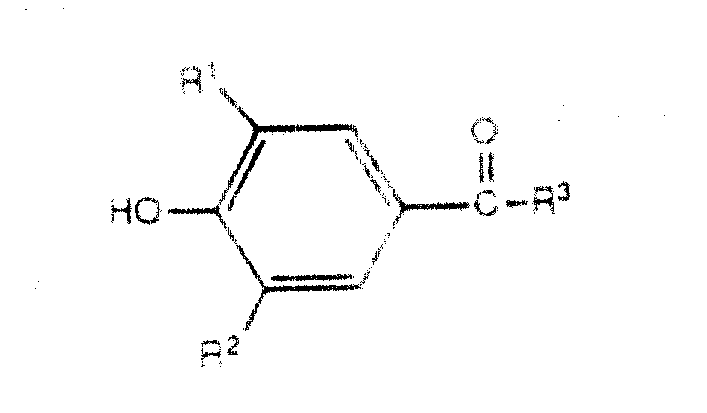

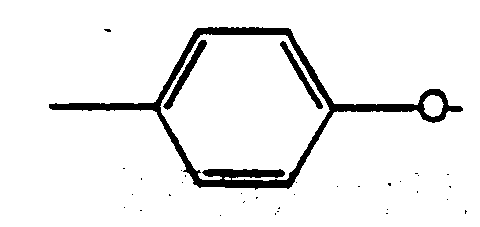


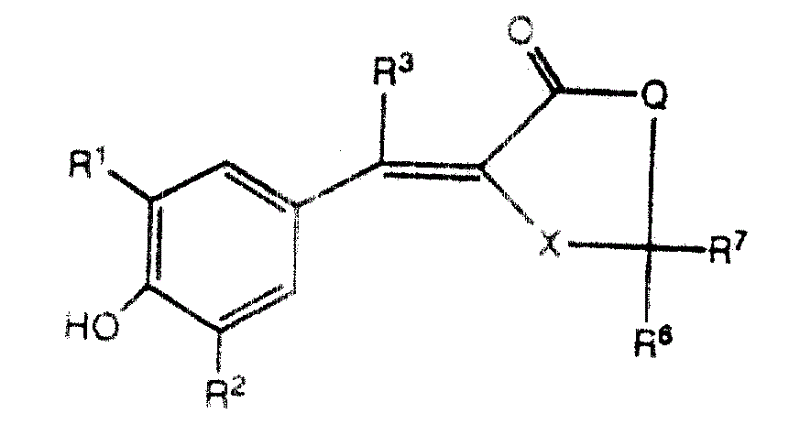


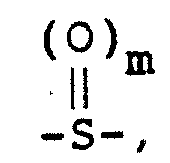


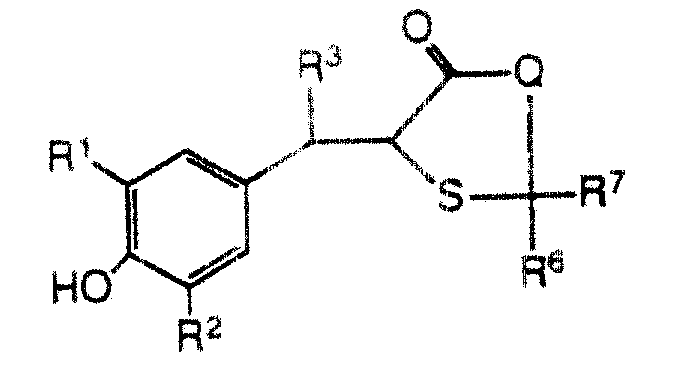


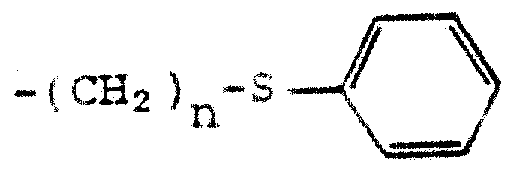


Applications Claiming Priority (2)
| Application Number | Priority Date | Filing Date | Title |
|---|---|---|---|
| US45420389A | 1989-12-21 | 1989-12-21 | |
| US454,203 | 1989-12-21 |
Publications (2)
| Publication Number | Publication Date |
|---|---|
| CN1052668A true CN1052668A (en) | 1991-07-03 |
| CN1029846C CN1029846C (en) | 1995-09-27 |
Family
ID=23803709
Family Applications (1)
| Application Number | Title | Priority Date | Filing Date |
|---|---|---|---|
| CN90109846A Expired - Fee Related CN1029846C (en) | 1989-12-21 | 1990-12-20 | Process for preparing Thiazolidinone derivatives |
Country Status (22)
| Country | Link |
|---|---|
| EP (1) | EP0434394B1 (en) |
| JP (1) | JP3036853B2 (en) |
| KR (1) | KR0176243B1 (en) |
| CN (1) | CN1029846C (en) |
| AT (1) | ATE169294T1 (en) |
| AU (1) | AU639734B2 (en) |
| CA (1) | CA2032330C (en) |
| CY (1) | CY2100B1 (en) |
| DE (1) | DE69032537T2 (en) |
| DK (1) | DK0434394T3 (en) |
| ES (1) | ES2121748T3 (en) |
| FI (2) | FI104251B1 (en) |
| HU (1) | HU216732B (en) |
| IE (1) | IE904633A1 (en) |
| IL (3) | IL108962A (en) |
| MX (1) | MX23803A (en) |
| NO (1) | NO300458B1 (en) |
| NZ (1) | NZ236472A (en) |
| PT (1) | PT96198B (en) |
| RU (2) | RU2036915C1 (en) |
| YU (1) | YU240690A (en) |
| ZA (1) | ZA9010041B (en) |
Cited By (1)
| Publication number | Priority date | Publication date | Assignee | Title |
|---|---|---|---|---|
| CN102844286A (en) * | 2010-04-15 | 2012-12-26 | 默克专利股份有限公司 | Process for the preparation of hydroquinones |
Families Citing this family (19)
| Publication number | Priority date | Publication date | Assignee | Title |
|---|---|---|---|---|
| LU87339A1 (en) * | 1988-09-20 | 1990-04-06 | Oreal | NOVEL BENZYLIDENE-CYCLANONES DERIVATIVES, THEIR PREPARATION PROCESS, THEIR USE AS ANTI-OXIDIZING AGENTS AND AS SOLAR FILTERS, COSMETIC AND PHARMACEUTICAL COMPOSITIONS CONTAINING THEM |
| US5143928A (en) * | 1990-03-27 | 1992-09-01 | Warner-Lambert Company | 3,5-di-tertiarybutyl-4-hydroxyphenylmethylene derivatives of 2-substituted thiazolidinones, oxazolidinones, and imidazolidinones as antiinflammatory agents |
| NZ248573A (en) * | 1992-09-10 | 1996-02-27 | Lilly Co Eli | 5-arylmethyl (and methylidene) thiazolidin-4-one derivatives; their preparation and pharmaceutical compositions |
| EP0595546B1 (en) * | 1992-10-28 | 1996-03-20 | Shionogi & Co., Ltd. | Benzylidene derivatives |
| US6251928B1 (en) * | 1994-03-16 | 2001-06-26 | Eli Lilly And Company | Treatment of alzheimer's disease employing inhibitors of cathepsin D |
| US5563277A (en) * | 1994-12-21 | 1996-10-08 | Eli Lilly And Company | Process for preparing benzyl-substituted rhodanine derivatives |
| ES2146837T3 (en) * | 1995-09-07 | 2000-08-16 | Lilly Co Eli | PROCEDURE FOR PREPARING RODANINE DERIVATIVES REPLACED WITH BENZYL. |
| DK0761656T3 (en) * | 1995-09-07 | 2001-02-05 | Lilly Co Eli | Alternative crystal form of tazofelone ((+, -) - 5 - ((3,5-bis (1,1-dimethylethyl) -4-hydroxyphenyl) methyl) -4-thiazolidinone |
| EP0779282A1 (en) * | 1995-12-14 | 1997-06-18 | Eli Lilly And Company | Thiomorpholinone compounds for treating multiple sclerosis |
| US5981523A (en) * | 1996-02-05 | 1999-11-09 | Eli Lilly And Company | Compounds and methods for treating multiple sclerosis |
| US5773455A (en) * | 1996-06-28 | 1998-06-30 | Biomeasure, Incorporated | Inhibitors of prenyl transferases |
| US6063799A (en) * | 1996-09-03 | 2000-05-16 | Eli Lilly And Company | Alternate crystal form of Tazofelone |
| US6005142A (en) * | 1996-09-03 | 1999-12-21 | Eli Lilly And Company | Process for preparing benzyl-substituted rhodanine derivatives |
| AU6331099A (en) * | 1998-09-30 | 2000-04-17 | Roche Diagnostics Gmbh | Thiazolidine derivatives for the treatment and prevention of metabolic bone disorders |
| US6673816B1 (en) | 1998-09-30 | 2004-01-06 | Angelika Esswein | Rhodanine carboxylic acid derivatives for the treatment and prevention of metabolic bone disorders |
| WO2000018748A1 (en) * | 1998-09-30 | 2000-04-06 | Roche Diagnostics Gmbh | Rhodanine derivatives for the treatment and prevention of metabolic bone disorders |
| US7235573B2 (en) | 2002-09-30 | 2007-06-26 | The Regents Of The University Of California | Methods of treating secretory diarrhea using cystic fibrosis transmembrane conductance regulator protein inhibitors |
| AU2003277162C1 (en) * | 2002-09-30 | 2009-12-24 | The Regents Of The University Of California | Cystic fibrosis transmembrane conductance regulator protein inhibitors and uses thereof |
| AU2002953533A0 (en) | 2002-12-24 | 2003-01-16 | Arthron Limited | Fc receptor modulating compounds and compositions |
Family Cites Families (3)
| Publication number | Priority date | Publication date | Assignee | Title |
|---|---|---|---|---|
| IL79648A (en) * | 1985-08-09 | 1991-12-12 | Lilly Co Eli | Pharmaceutical anti-inflammatory and ischemia preventing compositions containing di-t-butylphenol derivatives,some such novel compounds and process for their preparation |
| IE62214B1 (en) * | 1988-05-25 | 1995-01-11 | Warner Lambert Co | Arylmethylenyl derivatives of thiazolidinones, imidazolidinones and oxazolidinones useful as antiallergy agents and antiinflammatory agents |
| ES2088965T3 (en) * | 1989-04-07 | 1996-10-01 | Lilly Co Eli | ARIL-SUBSTITUTED RHODANINE DERIVATIVES. |
-
1990
- 1990-12-13 IL IL10896290A patent/IL108962A/en not_active IP Right Cessation
- 1990-12-13 ZA ZA9010041A patent/ZA9010041B/en unknown
- 1990-12-13 IL IL9665490A patent/IL96654A/en not_active IP Right Cessation
- 1990-12-14 NZ NZ236472A patent/NZ236472A/en unknown
- 1990-12-14 CA CA002032330A patent/CA2032330C/en not_active Expired - Fee Related
- 1990-12-14 PT PT96198A patent/PT96198B/en active IP Right Grant
- 1990-12-19 ES ES90313923T patent/ES2121748T3/en not_active Expired - Lifetime
- 1990-12-19 NO NO905478A patent/NO300458B1/en not_active IP Right Cessation
- 1990-12-19 FI FI906273A patent/FI104251B1/en not_active IP Right Cessation
- 1990-12-19 AU AU68266/90A patent/AU639734B2/en not_active Ceased
- 1990-12-19 AT AT90313923T patent/ATE169294T1/en not_active IP Right Cessation
- 1990-12-19 KR KR1019900021001A patent/KR0176243B1/en not_active Expired - Fee Related
- 1990-12-19 DE DE69032537T patent/DE69032537T2/en not_active Expired - Fee Related
- 1990-12-19 EP EP90313923A patent/EP0434394B1/en not_active Expired - Lifetime
- 1990-12-19 MX MX2380390A patent/MX23803A/en unknown
- 1990-12-19 DK DK90313923T patent/DK0434394T3/en active
- 1990-12-20 IE IE463390A patent/IE904633A1/en not_active Application Discontinuation
- 1990-12-20 RU SU904894177A patent/RU2036915C1/en active
- 1990-12-20 HU HU908368A patent/HU216732B/en not_active IP Right Cessation
- 1990-12-20 JP JP2413313A patent/JP3036853B2/en not_active Expired - Fee Related
- 1990-12-20 CN CN90109846A patent/CN1029846C/en not_active Expired - Fee Related
- 1990-12-20 YU YU240690A patent/YU240690A/en unknown
-
1991
- 1991-12-24 RU SU915010352A patent/RU2050355C1/en active
-
1994
- 1994-03-14 IL IL10896294A patent/IL108962A0/en unknown
-
1998
- 1998-09-07 CY CY9800024A patent/CY2100B1/en unknown
-
1999
- 1999-08-10 FI FI991698A patent/FI19991698L/en unknown
Cited By (2)
| Publication number | Priority date | Publication date | Assignee | Title |
|---|---|---|---|---|
| CN102844286A (en) * | 2010-04-15 | 2012-12-26 | 默克专利股份有限公司 | Process for the preparation of hydroquinones |
| CN102844286B (en) * | 2010-04-15 | 2014-12-31 | 默克专利股份有限公司 | Process for the preparation of hydroquinones |
Also Published As
Similar Documents
| Publication | Publication Date | Title |
|---|---|---|
| CN1029846C (en) | Process for preparing Thiazolidinone derivatives | |
| CN1184215C (en) | Substituted oxazole and thiazole derivatives as HPPARα activators | |
| CN1059673C (en) | Hypolipidemic 1,4-benzazepine-1,1-dioxide | |
| CN1101813C (en) | 3-pyrazolecarboxamide derivs. having cannabinoid receptor affinity | |
| CN1032751C (en) | thiazolidine compounds, their preparation and their therapeutic use | |
| CN1882555A (en) | 5-(benz- (z) -ylidene) -thiazolidin-4-one derivatives as immunosuppressant agents | |
| CN1019113B (en) | Process for preparing 3-arylhydrido-3-substituted propanamines | |
| CN1993346A (en) | Novel thiophene derivatives | |
| CN1638768A (en) | Thiazole and oxazole derivatives that modulate PPAR activity | |
| CN1085898A (en) | Branched-chain alkylamino derivatives of thiazoles, processes for their preparation, and pharmaceutical compositions containing them | |
| CN1034864C (en) | Process for the preparation of derivatives of imidazolidin-4-ones and thiazolidin-4-ones | |
| CN1043501A (en) | Prepare the method that replaces 2-pyridone and pyridine-2-thioketones | |
| CN1053658C (en) | Aminostilbazole derivative and medicine | |
| CN1127252A (en) | Branched-amino-sbustituted thiazoles, processes for their preparation and the pharmaceutical compositions which contain them | |
| CN1051990C (en) | Ring-substituted 2-amino-1,2,3,4-tetra-hydronaphthalenes and 3-aminochromones | |
| CN1029963C (en) | Process for the preparation of benzo or naphtho derivatives of thiazine or oxazine | |
| CN1028639C (en) | Preparation method of leukotriene antagonist tricyclic derivative | |
| CN1011780B (en) | Process for producing phenoxyacetic acid derivatives | |
| CN1063870A (en) | Ring-substituted 2-amino-1,2,3,4,-tetrahydronaphthalenes and 3-aminochromanes | |
| CN1092059A (en) | Substituted benzoic acid | |
| CN1049662A (en) | Coumarin derivatives and their preparation and application in the treatment of cerebrovascular disorders | |
| CN1261429C (en) | Cholesterol-lowering benzo "b" thiophenes and benzo "d" isothiazoles | |
| CN1048041A (en) | Dibenzo [1,5] dioxocin-5-one derivatives and preparation method thereof and pharmaceutical use | |
| CN1276920C (en) | Thiazolidinedione derivatives and pharmaceutical compositions containing the derivatives | |
| CN1777593A (en) | Acylaminothiazole derivatives, processes for their preparation and their use as inhibitors of beta-amyloid peptide production |
Legal Events
| Date | Code | Title | Description |
|---|---|---|---|
| C06 | Publication | ||
| PB01 | Publication | ||
| C10 | Entry into substantive examination | ||
| SE01 | Entry into force of request for substantive examination | ||
| C14 | Grant of patent or utility model | ||
| GR01 | Patent grant | ||
| C15 | Extension of patent right duration from 15 to 20 years for appl. with date before 31.12.1992 and still valid on 11.12.2001 (patent law change 1993) | ||
| OR01 | Other related matters | ||
| C19 | Lapse of patent right due to non-payment of the annual fee | ||
| CF01 | Termination of patent right due to non-payment of annual fee |