CN1053775A - Easy Open Top Seal - Google Patents
Easy Open Top Seal Download PDFInfo
- Publication number
- CN1053775A CN1053775A CN91100457A CN91100457A CN1053775A CN 1053775 A CN1053775 A CN 1053775A CN 91100457 A CN91100457 A CN 91100457A CN 91100457 A CN91100457 A CN 91100457A CN 1053775 A CN1053775 A CN 1053775A
- Authority
- CN
- China
- Prior art keywords
- container
- layer
- chimb
- ground floor
- wavy thing
- Prior art date
- Legal status (The legal status is an assumption and is not a legal conclusion. Google has not performed a legal analysis and makes no representation as to the accuracy of the status listed.)
- Pending
Links
- 239000000463 material Substances 0.000 claims abstract description 87
- 238000007789 sealing Methods 0.000 claims description 32
- 230000027455 binding Effects 0.000 claims description 14
- 238000009739 binding Methods 0.000 claims description 14
- 238000000034 method Methods 0.000 claims description 13
- 238000010438 heat treatment Methods 0.000 claims description 9
- 230000004927 fusion Effects 0.000 claims description 8
- 230000000717 retained effect Effects 0.000 claims description 5
- 230000008676 import Effects 0.000 claims description 3
- 239000012611 container material Substances 0.000 abstract 1
- 238000010276 construction Methods 0.000 description 7
- 238000012856 packing Methods 0.000 description 6
- 238000010008 shearing Methods 0.000 description 6
- 230000006378 damage Effects 0.000 description 5
- 238000012360 testing method Methods 0.000 description 5
- 238000013461 design Methods 0.000 description 4
- 230000015572 biosynthetic process Effects 0.000 description 3
- 230000015556 catabolic process Effects 0.000 description 3
- 229920001903 high density polyethylene Polymers 0.000 description 3
- 239000004700 high-density polyethylene Substances 0.000 description 3
- 239000004743 Polypropylene Substances 0.000 description 2
- 230000014509 gene expression Effects 0.000 description 2
- 238000004519 manufacturing process Methods 0.000 description 2
- 238000004806 packaging method and process Methods 0.000 description 2
- -1 polypropylene Polymers 0.000 description 2
- 229920001155 polypropylene Polymers 0.000 description 2
- 230000008569 process Effects 0.000 description 2
- 239000012815 thermoplastic material Substances 0.000 description 2
- 229920002367 Polyisobutene Polymers 0.000 description 1
- 229920001328 Polyvinylidene chloride Polymers 0.000 description 1
- 239000000853 adhesive Substances 0.000 description 1
- 239000005030 aluminium foil Substances 0.000 description 1
- 230000008901 benefit Effects 0.000 description 1
- 239000011230 binding agent Substances 0.000 description 1
- 150000001875 compounds Chemical class 0.000 description 1
- 230000006835 compression Effects 0.000 description 1
- 238000007906 compression Methods 0.000 description 1
- 230000002153 concerted effect Effects 0.000 description 1
- 230000032798 delamination Effects 0.000 description 1
- 238000010586 diagram Methods 0.000 description 1
- 238000004821 distillation Methods 0.000 description 1
- 238000005538 encapsulation Methods 0.000 description 1
- 239000012530 fluid Substances 0.000 description 1
- 238000005259 measurement Methods 0.000 description 1
- 239000000155 melt Substances 0.000 description 1
- 230000037361 pathway Effects 0.000 description 1
- 239000005033 polyvinylidene chloride Substances 0.000 description 1
- 238000012545 processing Methods 0.000 description 1
- QQONPFPTGQHPMA-UHFFFAOYSA-N propylene Natural products CC=C QQONPFPTGQHPMA-UHFFFAOYSA-N 0.000 description 1
- 125000004805 propylene group Chemical group [H]C([H])([H])C([H])([*:1])C([H])([H])[*:2] 0.000 description 1
- 239000004575 stone Substances 0.000 description 1
- 230000008719 thickening Effects 0.000 description 1
Images
Classifications
-
- B—PERFORMING OPERATIONS; TRANSPORTING
- B65—CONVEYING; PACKING; STORING; HANDLING THIN OR FILAMENTARY MATERIAL
- B65D—CONTAINERS FOR STORAGE OR TRANSPORT OF ARTICLES OR MATERIALS, e.g. BAGS, BARRELS, BOTTLES, BOXES, CANS, CARTONS, CRATES, DRUMS, JARS, TANKS, HOPPERS, FORWARDING CONTAINERS; ACCESSORIES, CLOSURES, OR FITTINGS THEREFOR; PACKAGING ELEMENTS; PACKAGES
- B65D77/00—Packages formed by enclosing articles or materials in preformed containers, e.g. boxes, cartons, sacks or bags
- B65D77/10—Container closures formed after filling
- B65D77/20—Container closures formed after filling by applying separate lids or covers, i.e. flexible membrane or foil-like covers
- B65D77/2024—Container closures formed after filling by applying separate lids or covers, i.e. flexible membrane or foil-like covers the cover being welded or adhered to the container
- B65D77/2028—Means for opening the cover other than, or in addition to, a pull tab
- B65D77/2032—Means for opening the cover other than, or in addition to, a pull tab by peeling or tearing the cover from the container
-
- B—PERFORMING OPERATIONS; TRANSPORTING
- B65—CONVEYING; PACKING; STORING; HANDLING THIN OR FILAMENTARY MATERIAL
- B65D—CONTAINERS FOR STORAGE OR TRANSPORT OF ARTICLES OR MATERIALS, e.g. BAGS, BARRELS, BOTTLES, BOXES, CANS, CARTONS, CRATES, DRUMS, JARS, TANKS, HOPPERS, FORWARDING CONTAINERS; ACCESSORIES, CLOSURES, OR FITTINGS THEREFOR; PACKAGING ELEMENTS; PACKAGES
- B65D51/00—Closures not otherwise provided for
-
- B—PERFORMING OPERATIONS; TRANSPORTING
- B29—WORKING OF PLASTICS; WORKING OF SUBSTANCES IN A PLASTIC STATE IN GENERAL
- B29C—SHAPING OR JOINING OF PLASTICS; SHAPING OF MATERIAL IN A PLASTIC STATE, NOT OTHERWISE PROVIDED FOR; AFTER-TREATMENT OF THE SHAPED PRODUCTS, e.g. REPAIRING
- B29C65/00—Joining or sealing of preformed parts, e.g. welding of plastics materials; Apparatus therefor
- B29C65/02—Joining or sealing of preformed parts, e.g. welding of plastics materials; Apparatus therefor by heating, with or without pressure
- B29C65/18—Joining or sealing of preformed parts, e.g. welding of plastics materials; Apparatus therefor by heating, with or without pressure using heated tools
-
- B—PERFORMING OPERATIONS; TRANSPORTING
- B29—WORKING OF PLASTICS; WORKING OF SUBSTANCES IN A PLASTIC STATE IN GENERAL
- B29C—SHAPING OR JOINING OF PLASTICS; SHAPING OF MATERIAL IN A PLASTIC STATE, NOT OTHERWISE PROVIDED FOR; AFTER-TREATMENT OF THE SHAPED PRODUCTS, e.g. REPAIRING
- B29C65/00—Joining or sealing of preformed parts, e.g. welding of plastics materials; Apparatus therefor
- B29C65/76—Making non-permanent or releasable joints
-
- B—PERFORMING OPERATIONS; TRANSPORTING
- B29—WORKING OF PLASTICS; WORKING OF SUBSTANCES IN A PLASTIC STATE IN GENERAL
- B29C—SHAPING OR JOINING OF PLASTICS; SHAPING OF MATERIAL IN A PLASTIC STATE, NOT OTHERWISE PROVIDED FOR; AFTER-TREATMENT OF THE SHAPED PRODUCTS, e.g. REPAIRING
- B29C66/00—General aspects of processes or apparatus for joining preformed parts
- B29C66/01—General aspects dealing with the joint area or with the area to be joined
- B29C66/05—Particular design of joint configurations
- B29C66/10—Particular design of joint configurations particular design of the joint cross-sections
- B29C66/11—Joint cross-sections comprising a single joint-segment, i.e. one of the parts to be joined comprising a single joint-segment in the joint cross-section
- B29C66/112—Single lapped joints
-
- B—PERFORMING OPERATIONS; TRANSPORTING
- B29—WORKING OF PLASTICS; WORKING OF SUBSTANCES IN A PLASTIC STATE IN GENERAL
- B29C—SHAPING OR JOINING OF PLASTICS; SHAPING OF MATERIAL IN A PLASTIC STATE, NOT OTHERWISE PROVIDED FOR; AFTER-TREATMENT OF THE SHAPED PRODUCTS, e.g. REPAIRING
- B29C66/00—General aspects of processes or apparatus for joining preformed parts
- B29C66/01—General aspects dealing with the joint area or with the area to be joined
- B29C66/05—Particular design of joint configurations
- B29C66/10—Particular design of joint configurations particular design of the joint cross-sections
- B29C66/13—Single flanged joints; Fin-type joints; Single hem joints; Edge joints; Interpenetrating fingered joints; Other specific particular designs of joint cross-sections not provided for in groups B29C66/11 - B29C66/12
- B29C66/131—Single flanged joints, i.e. one of the parts to be joined being rigid and flanged in the joint area
-
- B—PERFORMING OPERATIONS; TRANSPORTING
- B29—WORKING OF PLASTICS; WORKING OF SUBSTANCES IN A PLASTIC STATE IN GENERAL
- B29C—SHAPING OR JOINING OF PLASTICS; SHAPING OF MATERIAL IN A PLASTIC STATE, NOT OTHERWISE PROVIDED FOR; AFTER-TREATMENT OF THE SHAPED PRODUCTS, e.g. REPAIRING
- B29C66/00—General aspects of processes or apparatus for joining preformed parts
- B29C66/01—General aspects dealing with the joint area or with the area to be joined
- B29C66/32—Measures for keeping the burr form under control; Avoiding burr formation; Shaping the burr
- B29C66/328—Leaving the burrs unchanged for providing particular properties to the joint, e.g. as decorative effect
- B29C66/3284—Leaving the burrs unchanged for providing particular properties to the joint, e.g. as decorative effect for weakening the joint
-
- B—PERFORMING OPERATIONS; TRANSPORTING
- B29—WORKING OF PLASTICS; WORKING OF SUBSTANCES IN A PLASTIC STATE IN GENERAL
- B29C—SHAPING OR JOINING OF PLASTICS; SHAPING OF MATERIAL IN A PLASTIC STATE, NOT OTHERWISE PROVIDED FOR; AFTER-TREATMENT OF THE SHAPED PRODUCTS, e.g. REPAIRING
- B29C66/00—General aspects of processes or apparatus for joining preformed parts
- B29C66/50—General aspects of joining tubular articles; General aspects of joining long products, i.e. bars or profiled elements; General aspects of joining single elements to tubular articles, hollow articles or bars; General aspects of joining several hollow-preforms to form hollow or tubular articles
- B29C66/51—Joining tubular articles, profiled elements or bars; Joining single elements to tubular articles, hollow articles or bars; Joining several hollow-preforms to form hollow or tubular articles
- B29C66/53—Joining single elements to tubular articles, hollow articles or bars
- B29C66/534—Joining single elements to open ends of tubular or hollow articles or to the ends of bars
- B29C66/5346—Joining single elements to open ends of tubular or hollow articles or to the ends of bars said single elements being substantially flat
- B29C66/53461—Joining single elements to open ends of tubular or hollow articles or to the ends of bars said single elements being substantially flat joining substantially flat covers and/or substantially flat bottoms to open ends of container bodies
-
- B—PERFORMING OPERATIONS; TRANSPORTING
- B29—WORKING OF PLASTICS; WORKING OF SUBSTANCES IN A PLASTIC STATE IN GENERAL
- B29C—SHAPING OR JOINING OF PLASTICS; SHAPING OF MATERIAL IN A PLASTIC STATE, NOT OTHERWISE PROVIDED FOR; AFTER-TREATMENT OF THE SHAPED PRODUCTS, e.g. REPAIRING
- B29C66/00—General aspects of processes or apparatus for joining preformed parts
- B29C66/70—General aspects of processes or apparatus for joining preformed parts characterised by the composition, physical properties or the structure of the material of the parts to be joined; Joining with non-plastics material
- B29C66/72—General aspects of processes or apparatus for joining preformed parts characterised by the composition, physical properties or the structure of the material of the parts to be joined; Joining with non-plastics material characterised by the structure of the material of the parts to be joined
- B29C66/723—General aspects of processes or apparatus for joining preformed parts characterised by the composition, physical properties or the structure of the material of the parts to be joined; Joining with non-plastics material characterised by the structure of the material of the parts to be joined being multi-layered
-
- B—PERFORMING OPERATIONS; TRANSPORTING
- B29—WORKING OF PLASTICS; WORKING OF SUBSTANCES IN A PLASTIC STATE IN GENERAL
- B29C—SHAPING OR JOINING OF PLASTICS; SHAPING OF MATERIAL IN A PLASTIC STATE, NOT OTHERWISE PROVIDED FOR; AFTER-TREATMENT OF THE SHAPED PRODUCTS, e.g. REPAIRING
- B29C66/00—General aspects of processes or apparatus for joining preformed parts
- B29C66/80—General aspects of machine operations or constructions and parts thereof
-
- B—PERFORMING OPERATIONS; TRANSPORTING
- B29—WORKING OF PLASTICS; WORKING OF SUBSTANCES IN A PLASTIC STATE IN GENERAL
- B29C—SHAPING OR JOINING OF PLASTICS; SHAPING OF MATERIAL IN A PLASTIC STATE, NOT OTHERWISE PROVIDED FOR; AFTER-TREATMENT OF THE SHAPED PRODUCTS, e.g. REPAIRING
- B29C66/00—General aspects of processes or apparatus for joining preformed parts
- B29C66/80—General aspects of machine operations or constructions and parts thereof
- B29C66/82—Pressure application arrangements, e.g. transmission or actuating mechanisms for joining tools or clamps
- B29C66/824—Actuating mechanisms
- B29C66/8242—Pneumatic or hydraulic drives
-
- B—PERFORMING OPERATIONS; TRANSPORTING
- B29—WORKING OF PLASTICS; WORKING OF SUBSTANCES IN A PLASTIC STATE IN GENERAL
- B29C—SHAPING OR JOINING OF PLASTICS; SHAPING OF MATERIAL IN A PLASTIC STATE, NOT OTHERWISE PROVIDED FOR; AFTER-TREATMENT OF THE SHAPED PRODUCTS, e.g. REPAIRING
- B29C66/00—General aspects of processes or apparatus for joining preformed parts
- B29C66/80—General aspects of machine operations or constructions and parts thereof
- B29C66/83—General aspects of machine operations or constructions and parts thereof characterised by the movement of the joining or pressing tools
- B29C66/832—Reciprocating joining or pressing tools
- B29C66/8322—Joining or pressing tools reciprocating along one axis
-
- B—PERFORMING OPERATIONS; TRANSPORTING
- B29—WORKING OF PLASTICS; WORKING OF SUBSTANCES IN A PLASTIC STATE IN GENERAL
- B29C—SHAPING OR JOINING OF PLASTICS; SHAPING OF MATERIAL IN A PLASTIC STATE, NOT OTHERWISE PROVIDED FOR; AFTER-TREATMENT OF THE SHAPED PRODUCTS, e.g. REPAIRING
- B29C66/00—General aspects of processes or apparatus for joining preformed parts
- B29C66/80—General aspects of machine operations or constructions and parts thereof
- B29C66/84—Specific machine types or machines suitable for specific applications
- B29C66/849—Packaging machines
-
- B—PERFORMING OPERATIONS; TRANSPORTING
- B65—CONVEYING; PACKING; STORING; HANDLING THIN OR FILAMENTARY MATERIAL
- B65B—MACHINES, APPARATUS OR DEVICES FOR, OR METHODS OF, PACKAGING ARTICLES OR MATERIALS; UNPACKING
- B65B7/00—Closing containers or receptacles after filling
- B65B7/16—Closing semi-rigid or rigid containers or receptacles not deformed by, or not taking-up shape of, contents, e.g. boxes or cartons
- B65B7/28—Closing semi-rigid or rigid containers or receptacles not deformed by, or not taking-up shape of, contents, e.g. boxes or cartons by applying separate preformed closures, e.g. lids, covers
- B65B7/2842—Securing closures on containers
- B65B7/2878—Securing closures on containers by heat-sealing
-
- B—PERFORMING OPERATIONS; TRANSPORTING
- B29—WORKING OF PLASTICS; WORKING OF SUBSTANCES IN A PLASTIC STATE IN GENERAL
- B29C—SHAPING OR JOINING OF PLASTICS; SHAPING OF MATERIAL IN A PLASTIC STATE, NOT OTHERWISE PROVIDED FOR; AFTER-TREATMENT OF THE SHAPED PRODUCTS, e.g. REPAIRING
- B29C66/00—General aspects of processes or apparatus for joining preformed parts
- B29C66/70—General aspects of processes or apparatus for joining preformed parts characterised by the composition, physical properties or the structure of the material of the parts to be joined; Joining with non-plastics material
- B29C66/71—General aspects of processes or apparatus for joining preformed parts characterised by the composition, physical properties or the structure of the material of the parts to be joined; Joining with non-plastics material characterised by the composition of the plastics material of the parts to be joined
-
- B—PERFORMING OPERATIONS; TRANSPORTING
- B29—WORKING OF PLASTICS; WORKING OF SUBSTANCES IN A PLASTIC STATE IN GENERAL
- B29C—SHAPING OR JOINING OF PLASTICS; SHAPING OF MATERIAL IN A PLASTIC STATE, NOT OTHERWISE PROVIDED FOR; AFTER-TREATMENT OF THE SHAPED PRODUCTS, e.g. REPAIRING
- B29C66/00—General aspects of processes or apparatus for joining preformed parts
- B29C66/70—General aspects of processes or apparatus for joining preformed parts characterised by the composition, physical properties or the structure of the material of the parts to be joined; Joining with non-plastics material
- B29C66/72—General aspects of processes or apparatus for joining preformed parts characterised by the composition, physical properties or the structure of the material of the parts to be joined; Joining with non-plastics material characterised by the structure of the material of the parts to be joined
- B29C66/723—General aspects of processes or apparatus for joining preformed parts characterised by the composition, physical properties or the structure of the material of the parts to be joined; Joining with non-plastics material characterised by the structure of the material of the parts to be joined being multi-layered
- B29C66/7232—General aspects of processes or apparatus for joining preformed parts characterised by the composition, physical properties or the structure of the material of the parts to be joined; Joining with non-plastics material characterised by the structure of the material of the parts to be joined being multi-layered comprising a non-plastics layer
- B29C66/72321—General aspects of processes or apparatus for joining preformed parts characterised by the composition, physical properties or the structure of the material of the parts to be joined; Joining with non-plastics material characterised by the structure of the material of the parts to be joined being multi-layered comprising a non-plastics layer consisting of metals or their alloys
-
- B—PERFORMING OPERATIONS; TRANSPORTING
- B29—WORKING OF PLASTICS; WORKING OF SUBSTANCES IN A PLASTIC STATE IN GENERAL
- B29L—INDEXING SCHEME ASSOCIATED WITH SUBCLASS B29C, RELATING TO PARTICULAR ARTICLES
- B29L2009/00—Layered products
Landscapes
- Engineering & Computer Science (AREA)
- Mechanical Engineering (AREA)
- Physics & Mathematics (AREA)
- Fluid Mechanics (AREA)
- Packages (AREA)
- Closing Of Containers (AREA)
- Bag Frames (AREA)
- Manufacture Of Switches (AREA)
- Table Devices Or Equipment (AREA)
- Closures For Containers (AREA)
- Package Closures (AREA)
- Cookers (AREA)
- Cartons (AREA)
Abstract
盖材料(48)和容器材料(54)构成的连结波状物 (70、72)的结构将盖(14)封装于容器(12)之上,各波 状物相对于容器内腔呈几何线性排列,以使容器具有 最大抗破裂强度,而将盖从容器上摘下所需的力最 小。
The structure of connecting corrugations (70, 72) formed by the cover material (48) and the container material (54) encapsulates the cover (14) on the container (12), and each corrugation is geometrically linearly arranged relative to the inner cavity of the container, This allows the container to have maximum burst strength while minimizing the force required to remove the lid from the container.
Description
The present invention relates to a kind of method that manufactures a product, this product is the container that has the container/lid sealing system that easily draws back.The invention still further relates to shape with the hermetically-sealed construction that covers airtight container.
For transporting the various materials that flow and can not flow, as US Patent 3,491, the sort of thermoplastic material packing of discussing in 935 has been widely used in various industry.These packings are some leak free containers in various manners, and recently to thin-walled leakproofing material leak free container very big demand being arranged, this container can be punctured or be opened by the customer, to take out wherein entrapped thing.
US3,491,935 have adopted a kind of different container easily to draw back the leak free manufacture method, and on this container, selected have different softening points as making lid with two kinds of thermoplastic materials of container.When these two kinds of materials are in contact with one another, to its heating, so that first kind of material melts and being fixed on second kind of material, so that under the situation that does not melt second kind of material, form the desirable sealing (seeing that the second hurdle 15-22 is capable) of easily drawing back.
US3,491, in 935 the sealing course of processing, heat energy spreads all over whole closed material from the sealed mold that has heated, the sealed mold that has heated is the closed material of extruding part below mould also, thereby on the chimb of container, form a packing ring, but should note, alleged packing ring is not to be located on the interior edge of chimb in this piece document.
Licensed to people's such as Stone US4 on May 28th, 1985,519,499(and US4,496,046, same contriver and cessionary) in a kind of container is disclosed, this container has the panel assembly that selectively breaks a seal potted line and easily draw back.This container is made of two-layer, and a kind of sealing of this two-layer usefulness interfixes, and this leak free draws back end the packing ring district of thickening (seeing Fig. 1,2 and 3, the second hurdles the 46th~48 row).The sealed mold that is used for this two layers of material is sealed is made up of a die head and a mirror image die head, and each die head all has a bossing and becomes the dip plane at 5 degree angles (seeing Fig. 7,8,9 and 10, the six hurdles the 15th~32 row) with horizontal surface.This piece document relates to a kind of use of sealed mold, and this mould has a dip plane and gasket construction.But this piece document does not relate to the gasket construction on the interior edge of container.
British patent specification GB2,213,125A discloses in a kind of chimb that is located at container along last gasket construction, but will cover formed destruction face when taking off from container, with a kind of mode of complexity be formed at cover and container convex edge material in.This design is worthless, the variation of destruction face will cause " ... HDPE layer 12(Fig. 5) tear, and then light delamination on the metallic paper 14, in this case; it is impossible from edge this sealing being opened satisfactorily from B " (see the 9th page, the 23rd walks to the 10th page of the 1st row).
In packaging for foodstuff of the present invention field, importantly when the osed top container being delivered in single customer's hand through various transport pathway, lid will remain fixed on the container.As the standardized a kind of trial of airtight container durability measurement, U.S.D.A has formulated " antiburst test " standard, with this method as a kind of integraty hold facility of testing package.This antiburst test comprises that with the internal pressurization of pressurized air to testing container this airtight container must be able to bear inside and outside side pressure difference 0.35kgCm
-2, and continue at least 60 seconds.
Unfortunately, increase the width of sealing area between container and the lid and intensity so that (as bear 0.7kgCm when increasing the safety of packing as people
-2Difference of pressure), the Kaifeng intensity of device of the prior art also is linearly to be increased, this will make the buyer of this food container will open its capping is very difficult.Therefore the designer of this food containers faces impasse, and promptly or the container of safety is difficult for for customer in the future opens in sending defeated way, or the container of " easily opening " can not transport again safely.The increase of container resistanee to rupture will cause the increase of the Kaifeng power that openable container is required, and this is that people are undesirable.
It is 0.7kgCm that most of packagings for foodstuff commercial city requires minimum burst pressure
-2, and 1kgCm
-2Better, for common seal cover cap, 1kgCm
-2Fracture pressure require its material will have 1.9kgCm
-1Kaifeng power, this for Kaifeng be very the difficulty.
Therefore, need design a kind of hermetically-sealed construction between lid and container, this structure can make sealed container have high fracture pressure, can at an easy rate lid be taken from container again simultaneously.
In addition, also will develop a kind of method of covering airtight container of using, this method makes container have high fracture pressure, does not hinder the customer to cover from container again especially and takes.
In a preferred embodiment of the invention, container cover is heated along desiring sealing area, this zone be in tight ground and fully with the contacted position of part container chimb.The fusion temperature of the material of representative type lid should be lower than container convex edge material.To the pressurization of the cover material that melted, the cover material that has melted until part flows to the interior edge of container with sealing head, and lid contacts at this with the chimb of container.Like this, on the interior edge of container, form the preliminary wavy thing of the cover material that has melted.
Also make that by the pressure that lid reaches on the container chimb chimb material of part is moving to the interior longshore current of container by sealing head.The size of used pressure and temperature and in-service time are selected like this, and the wavy logistics of chimb material is gone in the wavy thing of fusing of cover material.The wavy thing of chimb material is the preliminary wavy thing of lid of separate section effectively, thus make the wavy thing of part cover material move on to the wavy thing of container below.
The size of wavy thing separately just can link mutually, links wavy thing thereby form a mono-, and this links wavy thing seal area of interior edge formation along container, and the sealing district is used to bear higher fracture pressure, as the pressure at the distillation treating process.Usually with overlapping form with wavy thing be arranged on leak free container on the perpendicular position of the internal pressure that produces.But it should be noted that the sealing layer that covers must be enough thick, to form wavy thing.
But, therefore will cover and take off required Kaifeng intensity from container and can remain on significantly within the acceptable scope because Kaifeng power is parallel to and links wavy thing junction and apply.Even resistanee to rupture increases greatly, according to instruction of the present invention, because the geometric arrangement of wavy thing also makes Kaifeng intensity remain on well within the acceptable scope.
The invention particularly relates to a kind of method that first kind of material is heated along the desire seal area, this material forms a part of covering, and seal area then is in tight, the complete position contacting of second kind of material of the part of lid and formation container.First kind of material of representative type has the fusion temperature that is lower than second kind of material, and the time of heating and temperature should be enough to melt the part of two kinds of materials.Along desiring seal area first kind of material and second kind of material are exerted pressure, to form the wavy thing of binding of first kind of material and second kind of material.First kind of material must possess enough thickness, so that link the generation of wavy thing.
Therefore product of the present invention comprises container cover and chimb, operationally will cover with chimb at lid and the wavy thing of the formed one or more bindings of chimb junction to link together mutually.Linking wavy thing partly is made of second kind of material of first kind of material partial sum container chimb of container cover.
Lid has enough tightnesses with the engagement of container, to realize the close encapsulation of lid and container.
It should be noted that the material of lid and/or container can be heated by the heat conduction sealing head, or heat, as use radio heating with other device commonly known in the art.
Therefore, feature of the present invention is exactly to arrange two kinds of materials that link wavy thing in the junction of lid and container, to obtain maximum rupture strength and minimum Kaifeng intensity.
The objective of the invention is to produce and a kind ofly be used to cover/hermetically-sealed construction with high resistanee to rupture and low Kaifeng intensity of containment system.
By detailed description with reference to the accompanying drawings, above-mentioned feature of the present invention and other feature, purpose and advantage will become clearly.
Before Fig. 1 is illustrated in sealing head and the upper surface of lid contacts, place the side-looking semi-sictional view sketch of the lid on the container chimb;
Fig. 2 represents to be sealed in the side diagrammatic cross-sectional view of the lid on the container chimb;
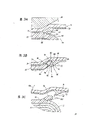
Fig. 3 A is illustrated in the partial side diagrammatic cross-sectional view of the cover material that at first flows below the sealing head contact portion;
Fig. 3 B represents wavy thing of ground floor and the chain side diagrammatic cross-sectional view of the wavy thing of the second layer;
Fig. 3 C represents to cover the side diagrammatic cross-sectional view of throwing off from container;
Fig. 4 represents the side diagrammatic cross-sectional view of a sealing head and a hold mode typical sizes;
Fig. 5 represents the comparison diagram of chain wavy thing wedge-type seal instrument rupture strength and peel strength, this figure be with situation that the rupture strength and the peel strength of a large amount of existing heat seal container/convering systems are compared under draw.
Referring to Fig. 1, represent that wherein food containers product 10 of the present invention comprises container 12 and lid 14.As can be seen, container 12 is included in formed chimb 16 on the upper periphery of wall of container 18, and wall of container 18 extends upward from the end 20 of container typically.As described below, chimb 16 is formed by the second layer 22, and the second layer 22 comprises second kind of material, and this material occurs with mono-or with the form of individual course.Equally, container cover 14 is made of ground floor 24, and ground floor 24 comprises mono-or the first kind of material that occurs with the form of individual course.Lid 14 places on the chimb 16 of container 12, and the sealing head 26 with forming face 28 can be driven by running gear 30 and move downward, and contacts with lid and container.Said running gear 30 can be a controlled cylinder 32 commonly known in the art.
In a preferred embodiment, forming surface 28 has taper angle theta 1,34 and taper angle theta 2,36, and its optimized angle is between 15 ° to 45 °.In a preferred embodiment, the thickness 38 of lid is T1=0.12 to 0.30mm, and the thickness 40 of wall of container 18 is T2=0.75mm.
Referring to Fig. 2, after sealing head 26 has contacted, heats and/or pushed lid and container and needs the leak free position, the figure shows and cover 14 and be meshed with container 12.Therefrom as seen, seal area 42 interior from container along 44 outers 46 that extend to container; And can see that because sealing head 26 moves downward with the upper surface that covers and contacts, with θ angle 36, promptly θ 2, be pressed in the structure of lid and container.
Can find out that also lid controllably is meshed with container now, especially, can successfully lid be sealed on the container by suitably selecting working parameter of the present invention.
In a preferred embodiment, constitute first kind of compound that material 48 is a kind of high density polyethylene (HDPE) and polyisobutene of the bottom of lid, its thickness is about 0.002 English inch, and constitutes tack coat 50 by it.The fusion temperature of first kind of material 48 is approximately 125 to 140 ℃.The same with the superstructure of the food containers of using always, the upper strata of the lid of preferred embodiment is a PET/PVDC/PET layer 52.Certainly, the upper strata also can be an aluminium foil.Layer 52,50 constitutes the structure of ground floor 24.
In a preferred embodiment, second of the second layer 22 kind of material 54 partly is that fusion temperature is about 165 to 175 ℃ polypropylene layer 56.Though the material of various fusion temperatures all can be used in the practice of the present invention, in a preferred embodiment, the fusion temperature of first kind of material is lower than second kind of material.
Other layer of the second layer 22 typically can be by one deck tack coat 58(function polypropylene for example), an evoh layer 60, layer 60 back its with another layer tack coat 58, be another strata propylene layer 56A at last.With the same in the prior art, can contain several layers grinding layer once more in the second layer.
Should be realized that the laminated product of many other thing layers also can be used to make the wavy thing union body of same lid and container.Though it will also be appreciated that in the embodiments of the invention that Fig. 2 represents, an interior edge setting that connects wavy thing near container, and another connects the outer setting of wavy thing near container, the notion that the present invention is not limited to this " double wave shape thing ".Nestle up outer or interior edge, especially nestle up interior edge, be provided with one and connect the row that wavy thing also belongs to design scope of the present invention.
Referring to Fig. 3 A, 3B and 3C, wherein represented lid is sealed in method on the container, also demonstrate lid is taken off from container.Especially referring to Fig. 3 A, represent that wherein sealing head 26 moves down one section enough distance and contacts with ground floor 24, with these upper surface 60 force togethers with the ground floor and the second layer, sealing head at this moment preferably is heated to 212 to 245 ℃.As previously mentioned, can make itself and ground floor contact by moving down the heated surface of sealing head 26 to the ground floor heating, perhaps as is known in the art,, ground floor is heated with before ground floor contacts or at sealing head with radio-frequency energy at period of contact.The second layer 22 also available radio frequencies energy heated its (in advance), or in a preferred embodiment, used the heat energy that passes to the second layer from ground floor that the second layer is heated, and this heat energy is to import ground floor by the sealing head that has heated into contacting of ground floor.
Adding man-hour, beginning lid leak free period, the sealing head that heated on the ground floor 24 that presses down, and is being supplied with enough pressure and heat energy, so that the part of this layer outwards flows, form the wavy thing 62 of preliminary ground floor until fusing tack coat 50 below the sealing head contact zone with this.Compare with Fig. 3 B, can see, wavy thing 62 comprises the wavy object wave of preliminary ground floor peak 64.Heat energy and the pressure supplied with by sealing head are enough to begin to form second layer melt portions 66, and shown in arrow among the figure, melt portions 66 has preferential second layer flow direction 68, flows in the direction in the tack coat 50 of first kind of material 48.
From top description as can be seen, the first step of manufacturing product of the present invention is included in the interior along forming the preliminary wavy thing 62 of ground floor of container.In a preferred embodiment, because the selection of various materials, the bottom of preliminary wavy thing 62 and the 60 bonding engagements of the upper surface of the second layer, thus make the fluid of kind of the material of winning below sealing head, begin to move, be tending towards concentrated along the interior of container along 44.
Referring to Fig. 3 B, the part of the second layer has been heated and/or has pushed time enough, with the part of fusing and/or mobile second kind of material 54.Thus, the fusing of the second layer and/or mobile part flow into preliminary wavy thing 62(Fig. 3 A of ground floor) in, to form the wavy thing 70 of the second layer, simultaneously the part of the preliminary wavy thing of ground floor is moved to the wavy thing 70 of the second layer below, thereby form the wavy thing 72 of ground floor, wavy thing 72 is round the outside in container the interior binding district 88 of wavy thing 70 along interlocking in the second layer.
In other words be exactly, the wavy thing 70 of the second layer makes progress " jet " or flows, and enters in the preliminary wavy thing 62 of ground floor, is divided into two parts up and down, and the wavy thing 72 of ground floor is made by mark in its underpart.As can be seen, wavy thing 72 has along the wavy thing peak face 74 of the ground floor of its outer rim formation, and the wavy thing summit 76 of ground floor that is positioned at peak face 74 ends, and summit 76 also is in the end of the downside 78 of the wavy thing 72 of ground floor.
Equally as seen, the wavy thing 70 of the second layer comprises the wavy thing summit 80 of the second layer that is positioned at the wavy thing of second layer peak face 82 and the wavy thing downside of the second layer 84 ends.Especially as can be seen, wavy thing 70 and 72 overlapping between wavy thing summit of ground floor and the wavy thing summit of the second layer links district 88 thereby form.
The pressure of tearing of container/convering system is the function that the shearing strength value at 90 places is paid in the shearing of the wavy thing of second layer A-A along the line, and the form of destruction is to cut off the second wavy thing.Fail in shear power is much higher than Kaifeng power 100(Fig. 3 C).The internal pressure 92 that distributes is represented by a series of and the wavy thing of ground floor peak face 74 vertical small arrows.The internal pressure 92 of this distribution also can be by center pressure arrow 94 expression, and arrow 94 expressions are distributed in making a concerted effort of internal pressure 92 on the relevant area.As we can see from the figure, shearing is paid 90 and is born center pressure arrow 94, owing to link the design of wave, the intensity that container/lid links is strengthened.
As everyone knows, the pressure 92 of distribution forms circle stress on entire container/lid structure, and these circle stresses are by the shearing force institute balance of traversing the second wave material.Hence one can see that, by basically with perpendicular wavy thing 70, the 72 formed container cover connecting structures of binding of the internal pressure that distributes 92, reach about 18 pounds/inch until pressure
2(referring to Fig. 5), the destruction that still can stop container/lid to link effectively.For graphically illustrating, also has a summit pressure vector 96 among Fig. 3 B, peak face 74 quadratures of this vector and the wavy thing of ground floor and tangentially crossing with the wavy thing summit 80 of the second layer.
Therefore in a preferred embodiment, selection along with container/lid binding, pressure and temperature is also selected, so that behind the sealing head that uses heat, the wavy thing summit of ground floor and the wavy thing summit of the second layer are positioned at the relative both sides of the center pressure 94 of defined, and the internal pressure 92 that the center pressure representative distributes, this internal pressure are in the leak free lid and container, and act on the wavy thing of the ground floor peak face, be between wavy thing summit of ground floor and the summit pressure vector 96.Like this, being provided with of summit 76,80 increased link in actv. link district 88, and reduce the size of the shearing stress that parallels with the bottom of wavy thing 70,72.
In illustrated compression, sealing head will be heated to 219 ℃, and with 3 to 6kgCm
-2Constant pressure value be pressed on the container chimb lid structure 1.2 to 1.35 minutes.
Also will be appreciated that, though the wavy thing summit of ground floor should extend to the left side of summit pressure vector 96 at least in alternative embodiment, but in product of the present invention, the wavy thing summit 76 of ground floor should extend to the left side of center pressure arrow 94 at least, certainly, this depends on material and/or the selection of binder that is used to link.
Referring now to Fig. 3 C,, when the customer wishes to take from container when covering, be used for the edge of the wavy thing of ground floor by arrow 100 represented Kaifeng masterpieces, thereby lid is upwards mentioned, break away from second layer material.It is found that in will covering the process of plucking from container breakdown point 102 occurs in lower side 78 places of the wavy thing 72 of ground floor.
Thereby can imagine that be enough to overcome cohesive force between first kind of material and the second kind of material as long as lid is extractd required Kaifeng power from container,, second kind of material is meant that outer 46 from container is to the part between the breakdown point 102 here.Certainly, Kaifeng power also needs to cut off first kind of material at breakdown point 102 places.Therefore, the Kaifeng adhesive agent resistance of advocating to be used to overcome.But if destroy this container, internal pressure just must be enough big, wants at least and can destroy the wavy thing of the second layer along the A-A line shearing in wavy thing root area 103.
Failure surface location of the present invention is compared with the failure surface location in the aforesaid british patent specification, can see, existing lid makes core ear 16 break away from container chimb (referring to Fig. 3), and in the present invention, this " ear " (being labeled as the wavy thing 70 of the second layer in Fig. 3 C) then is retained on the container chimb.Mention especially in the prior art documents, it is inferior-quality (see and walk to the 10th page of the 3rd row for the 9th page the 11st) that ear is stayed on the container chimb.
Therefore, the operating characteristic that prior art is plucked convering system depends primarily on the thickness of a jar root (34), does not then have this problem among the present invention.Because wavy thing root 103 is not in the destruction face of Kaifeng, therefore, pluck with regard to this point with regard to covering successfully from the container chimb, the builder of cap seal container and buyer all needn't worry for the maximum ga(u)ge of wavy thing root 103.
Referring to Fig. 4, wherein represented with a sealing head 26 and a used in a preferred embodiment size of hold mode 106 that is used for support vessels chimb 16.
The test result (chart among Fig. 5) of the lid of preferred embodiment and container rupture strength and Kaifeng intensity shows that Kaifeng intensity is lower than 1.4kgCm
-1, and rupture strength is 1.3kgCm
-1Therefore, container/lid hermetically-sealed construction is set up a kind of new rupture strength and Kaifeng strength relationship, and it obviously is better than the represented the sort of existing relation of common Trendline among Fig. 5 104.
Equally, the invention still further relates to and a kind of a cap seal is loaded on a method on the container, comprising:
-along needing the leak free zone, first kind of material to the ground floor that constitutes said lid partly heats, simultaneously, said ground floor is along needing the leak free zone directly and closely partly to contact with second kind of material of the second layer, the said second layer constitutes a chimb on the upper periphery of said container, the fusion temperature of said first kind of material is lower than said second kind of material, and the time of heating and temperature are enough to make the part fusing of said first kind of material or soften;
-along the said leak free zone that needs, exert pressure to the said ground floor and the second layer, thus the wavy thing of preliminary ground floor on the interior edge of said container, formed at least;
The part of the said second layer of-heating is until a part that is enough to melt or soften said second kind of material;
-fusing of the said second layer or softening part are flowed in the wavy thing of said preliminary ground floor, to form the wavy thing of the second layer;
-wavy the thing of the said preliminary ground floor of movable part below the wavy thing of the said second layer, thereby form the wavy thing of binding of said first kind of material and second kind of material at least around the interior edge of said container, when covering when said container takes off, the wavy thing of the said second layer is stayed on the said container.
The method for optimizing that the said second layer is heated comprises:
-forming face that has heated of sealing head is moved downward with said ground floor contact, when continuing one section, import in the said second layer so that be enough to that heat energy is passed said ground floor.
Claims (6)
1, a kind of product comprises:
One container cover and
But the container chimb of a shape and said lid operable engagement, the wavy thing of the binding that the junction of lid and chimb forms operationally is meshing with each other lid and chimb, the wavy thing of said binding is made of second kind of material of first kind of material partial sum container chimb of container chimb, when lid during operationally with the container jump out of mesh, the wavy thing of binding that is made of second kind of material part of container chimb is retained on the said container chimb.
2, a kind of product comprises:
The container cover that ground floor constituted of-one first kind of material and
-one container, has the end, have at the end around its periphery the end of from upwardly extending wall, chimb is arranged at the top of said wall, said chimb is made of the second layer that comprises second kind of material, and said lid and chimb operationally are meshing with each other by linking wavy thing, link wavy thing and are made of around the interior edge of enclosing container first kind of material and second kind of material, when lid operationally broke away from from container, the wavy thing of binding that is made of second kind of material was retained on the said container chimb.
3, a kind of product comprises:
-one by the container cover that ground floor constituted that comprises first material layer and
The container at-one band end, have at the end around its periphery the end of from upwardly extending wall, chimb is arranged at the top of said wall, said chimb is made of the second layer that comprises second kind of material layer, said lid and container chimb closely are sealed mutually by the wavy thing of ground floor with the wavy thing binding of the second layer, the wavy thing of said binding is made of around the interior edge of container first kind of material and second kind of material respectively, when lid was extractd from container, the wavy thing of binding that is made of second kind of material was retained on the said container.
4, product as claimed in claim 3, it is characterized in that, the peak face of the wavy thing of said ground floor also comprises the wavy thing summit of the ground floor that is positioned at this peak face end, the wavy thing of the said second layer of band peak face also comprises the wavy thing summit of the second layer that is positioned at its peak face end, said each wavy thing is overlapping between wavy thing summit of said ground floor and the wavy thing summit of the said second layer, links the district to form betwixt.
5, a kind of a cap seal is loaded on a method on the container, comprises:
-along desiring seal area the first kind of material that constitutes the ground floor that covers partly heated, simultaneously, said ground floor is along second kind of direct and closed contact of material part of the said desire seal area and the second layer, the said second layer forms chimb on the upper edge of said container, the fusion temperature of said first kind of material is lower than said second kind of material, and the time of heating and temperature should be enough to melt or soften the part of first kind of material;
-along desiring seal area the said ground floor and the second layer are exerted pressure, with interior at said container at least along forming the preliminary wavy thing of ground floor;
The part of the said second layer of-heating is until a part that is enough to melt or soften said second kind of material;
-fusing of the said second layer or softening part are flowed in the wavy thing of said preliminary ground floor, to form the wavy thing of the second layer;
-wavy the thing of the said preliminary ground floor of movable part below the wavy thing of the said second layer, so that form the wavy thing of binding of first kind of material and second kind of material at least around the interior edge of said container, when lid and container jump out of mesh, the wavy thing of the said second layer is retained on the said container.
6, method as claimed in claim 5 is characterized in that, the step of the heating second layer also comprises:
-forming face that has heated of sealing head is moved down with said ground floor contact, and keep a period of time, should be enough to that during this period of time heat energy is passed said ground floor and import in the said second layer.
Applications Claiming Priority (4)
| Application Number | Priority Date | Filing Date | Title |
|---|---|---|---|
| US47132990A | 1990-01-29 | 1990-01-29 | |
| US471,329 | 1990-01-29 | ||
| US07/471,330 US5034074A (en) | 1990-01-29 | 1990-01-29 | Method for formation of a peelable lid |
| US471,330 | 1990-01-29 |
Publications (1)
| Publication Number | Publication Date |
|---|---|
| CN1053775A true CN1053775A (en) | 1991-08-14 |
Family
ID=27043405
Family Applications (1)
| Application Number | Title | Priority Date | Filing Date |
|---|---|---|---|
| CN91100457A Pending CN1053775A (en) | 1990-01-29 | 1991-01-25 | Easy Open Top Seal |
Country Status (12)
| Country | Link |
|---|---|
| EP (1) | EP0440291B1 (en) |
| JP (1) | JPH04215976A (en) |
| KR (1) | KR910014283A (en) |
| CN (1) | CN1053775A (en) |
| AT (1) | ATE112746T1 (en) |
| AU (1) | AU7000191A (en) |
| BR (1) | BR9100330A (en) |
| CA (1) | CA2035017A1 (en) |
| DE (1) | DE69104510T2 (en) |
| DK (1) | DK0440291T3 (en) |
| ES (1) | ES2062656T3 (en) |
| IE (1) | IE65468B1 (en) |
Cited By (4)
| Publication number | Priority date | Publication date | Assignee | Title |
|---|---|---|---|---|
| CN100448756C (en) * | 2003-02-26 | 2009-01-07 | 出光统一科技株式会社 | Easy-open package and method for producing easy-open package |
| CN102811924A (en) * | 2010-03-18 | 2012-12-05 | 出光统一科技株式会社 | Easy-open container and production method thereof |
| US8608895B2 (en) | 2005-01-31 | 2013-12-17 | Idemitsu Unitech Co. Ltd. | Easy-open container, manufacturing method thereof and manufacturing device thereof |
| CN105683046A (en) * | 2013-10-22 | 2016-06-15 | 富士胶片株式会社 | Bonding method and device |
Families Citing this family (7)
| Publication number | Priority date | Publication date | Assignee | Title |
|---|---|---|---|---|
| EP0509591A1 (en) * | 1991-04-15 | 1992-10-21 | Shell Internationale Researchmaatschappij B.V. | Formation of a clamped wave lid seal structure |
| AU707576B2 (en) * | 1995-01-11 | 1999-07-15 | Cryovac, Inc. | Package with shrink film lidstock |
| US5744181A (en) * | 1995-03-01 | 1998-04-28 | W. R. Grace & Co.-Conn. | Packaging method using thermoplastic materials and package obtained thereby |
| US5979748A (en) * | 1997-02-06 | 1999-11-09 | Sonoco Development, Inc. | Tubular container with a heat seal having an inner and outer bead and method of manufacturing said container |
| US6264098B1 (en) * | 1997-02-06 | 2001-07-24 | Sonoco Development, Inc. | Tubular container with a heat seal having non-symmetrical inner and outer beads |
| EP1556183A4 (en) * | 2002-11-01 | 2006-01-18 | Rieke Corp | WELDING POINT |
| NO20151198A1 (en) * | 2015-09-15 | 2017-03-16 | Petter Martinsen | Improved opening mechanism of packaging for food and other products that makes it easy to open the package |
Family Cites Families (2)
| Publication number | Priority date | Publication date | Assignee | Title |
|---|---|---|---|---|
| US4810541A (en) * | 1987-11-27 | 1989-03-07 | Continental Can Company, Inc. | Plastic container having a surface to which a lid may be peelably sealed |
| GB8729725D0 (en) * | 1987-12-21 | 1988-02-03 | Metal Box Plc | Container with peelable seal & method & apparatus for making same |
-
1991
- 1991-01-24 KR KR1019910001209A patent/KR910014283A/en not_active Withdrawn
- 1991-01-25 ES ES91200150T patent/ES2062656T3/en not_active Expired - Lifetime
- 1991-01-25 CA CA002035017A patent/CA2035017A1/en not_active Abandoned
- 1991-01-25 EP EP91200150A patent/EP0440291B1/en not_active Expired - Lifetime
- 1991-01-25 DK DK91200150.0T patent/DK0440291T3/en active
- 1991-01-25 IE IE27491A patent/IE65468B1/en not_active IP Right Cessation
- 1991-01-25 CN CN91100457A patent/CN1053775A/en active Pending
- 1991-01-25 AU AU70001/91A patent/AU7000191A/en not_active Abandoned
- 1991-01-25 AT AT91200150T patent/ATE112746T1/en not_active IP Right Cessation
- 1991-01-25 JP JP3023862A patent/JPH04215976A/en active Pending
- 1991-01-25 DE DE69104510T patent/DE69104510T2/en not_active Expired - Fee Related
- 1991-01-25 BR BR919100330A patent/BR9100330A/en not_active Application Discontinuation
Cited By (9)
| Publication number | Priority date | Publication date | Assignee | Title |
|---|---|---|---|---|
| CN100448756C (en) * | 2003-02-26 | 2009-01-07 | 出光统一科技株式会社 | Easy-open package and method for producing easy-open package |
| US8608895B2 (en) | 2005-01-31 | 2013-12-17 | Idemitsu Unitech Co. Ltd. | Easy-open container, manufacturing method thereof and manufacturing device thereof |
| CN103935629A (en) * | 2005-01-31 | 2014-07-23 | 出光统一科技株式会社 | Easy-open Container, Manufacturing Method Thereof And Manufacturing Device Thereof |
| US9469444B2 (en) | 2005-01-31 | 2016-10-18 | Idemitsu Unitech Co., Ltd. | Easy-open container, manufacturing method thereof and manufacturing device thereof |
| CN102811924A (en) * | 2010-03-18 | 2012-12-05 | 出光统一科技株式会社 | Easy-open container and production method thereof |
| CN102811924B (en) * | 2010-03-18 | 2015-11-25 | 出光统一科技株式会社 | Easy-open container and manufacture method thereof |
| CN105683046A (en) * | 2013-10-22 | 2016-06-15 | 富士胶片株式会社 | Bonding method and device |
| CN105683046B (en) * | 2013-10-22 | 2017-09-15 | 富士胶片株式会社 | Fitting method |
| US10434720B2 (en) | 2013-10-22 | 2019-10-08 | Fujifilm Corporation | Bonding method and device |
Also Published As
| Publication number | Publication date |
|---|---|
| CA2035017A1 (en) | 1991-07-30 |
| ES2062656T3 (en) | 1994-12-16 |
| DE69104510T2 (en) | 1995-03-02 |
| EP0440291A1 (en) | 1991-08-07 |
| ATE112746T1 (en) | 1994-10-15 |
| DK0440291T3 (en) | 1994-11-14 |
| EP0440291B1 (en) | 1994-10-12 |
| DE69104510D1 (en) | 1994-11-17 |
| AU7000191A (en) | 1991-08-01 |
| IE65468B1 (en) | 1995-11-01 |
| KR910014283A (en) | 1991-08-31 |
| JPH04215976A (en) | 1992-08-06 |
| BR9100330A (en) | 1991-10-22 |
| IE910274A1 (en) | 1991-07-31 |
Similar Documents
| Publication | Publication Date | Title |
|---|---|---|
| AU652265B2 (en) | A plastics tube head provided with a lining having a barrier effect and a member which can be used for this lining | |
| CN1053775A (en) | Easy Open Top Seal | |
| EP0435638B1 (en) | Easily openable sealed container and process for producing the same | |
| CN1030759C (en) | Outlet device for packaging container and its preparation method | |
| CN1074735C (en) | Retortable container | |
| US4355759A (en) | Composite container and method | |
| US3266390A (en) | Plastic lined fiber containers | |
| SU1364232A3 (en) | Flattened container | |
| EP0390816B1 (en) | Plastic closures for containers and cans and methods of and apparatus for producing such closures | |
| JP2012162283A (en) | Tube container and method for manufacturing the same | |
| CN87108346A (en) | Encapsulation | |
| CA1245901A (en) | Method and means for joining and sealing of material parts and use of such means in containers | |
| US7364779B2 (en) | Easy-opening high barrier plastic closure and method therefor | |
| US4225053A (en) | Composite container for storing food | |
| JP5578669B2 (en) | Manufacturing method of spout stopper | |
| JPS5822434B2 (en) | Crushable extruded container and method for manufacturing the same | |
| US4129467A (en) | Method for making packing containers | |
| US3799820A (en) | Process of manufacturing open or closed packagings of foam plastics,preferably foam polystyrene | |
| CA1065753A (en) | Packing containers and a method for their manufacture | |
| US4409053A (en) | Process for making a container for storing food | |
| CA1120874A (en) | Composite container | |
| CA2065878A1 (en) | Formation of a clamped wave lid seal structure | |
| JP2539072B2 (en) | Plastic container | |
| JPH0585412B2 (en) | ||
| JPH02139338A (en) | Can-like container made of plastic |
Legal Events
| Date | Code | Title | Description |
|---|---|---|---|
| C06 | Publication | ||
| PB01 | Publication | ||
| C10 | Entry into substantive examination | ||
| SE01 | Entry into force of request for substantive examination |