CN106572016B - Path calculation method and device - Google Patents
Path calculation method and device Download PDFInfo
- Publication number
- CN106572016B CN106572016B CN201510648552.8A CN201510648552A CN106572016B CN 106572016 B CN106572016 B CN 106572016B CN 201510648552 A CN201510648552 A CN 201510648552A CN 106572016 B CN106572016 B CN 106572016B
- Authority
- CN
- China
- Prior art keywords
- path
- bier
- information
- pcc
- request
- Prior art date
- Legal status (The legal status is an assumption and is not a legal conclusion. Google has not performed a legal analysis and makes no representation as to the accuracy of the status listed.)
- Active
Links
Images


Classifications
-
- H—ELECTRICITY
- H04—ELECTRIC COMMUNICATION TECHNIQUE
- H04L—TRANSMISSION OF DIGITAL INFORMATION, e.g. TELEGRAPHIC COMMUNICATION
- H04L45/00—Routing or path finding of packets in data switching networks
- H04L45/12—Shortest path evaluation
-
- H—ELECTRICITY
- H04—ELECTRIC COMMUNICATION TECHNIQUE
- H04L—TRANSMISSION OF DIGITAL INFORMATION, e.g. TELEGRAPHIC COMMUNICATION
- H04L45/00—Routing or path finding of packets in data switching networks
- H04L45/34—Source routing
-
- H—ELECTRICITY
- H04—ELECTRIC COMMUNICATION TECHNIQUE
- H04L—TRANSMISSION OF DIGITAL INFORMATION, e.g. TELEGRAPHIC COMMUNICATION
- H04L45/00—Routing or path finding of packets in data switching networks
- H04L45/302—Route determination based on requested QoS
Landscapes
- Engineering & Computer Science (AREA)
- Computer Networks & Wireless Communication (AREA)
- Signal Processing (AREA)
- Data Exchanges In Wide-Area Networks (AREA)
Abstract
The invention provides a path calculation method and a path calculation device, wherein the method comprises the following steps: receiving a path calculation request sent by a Path Calculation Client (PCC), wherein the path calculation request is used for requesting to calculate a path with bit index explicit copy BIER-Traffic Engineering (TE); and calculating the path according to the path calculation request. The invention solves the problem that the path of the BIER-TE meeting the service requirement can not be rapidly calculated in the related technology, thereby achieving the effect of rapidly calculating the path of the BIER-TE meeting the service requirement.
Description
Technical Field
The invention relates to the field of communication, in particular to a path calculation method and a path calculation device.
Background
The Internet Protocol (IP) multicast technology enables point-to-multipoint efficient data transfer in IP networks. The method can effectively save network bandwidth and reduce network load, so the method has wide application in various aspects such as real-time data transmission, multimedia conference, data copy, interactive network Television (IPTV), games, simulation and the like. The existing Multicast technology is generally implemented by using a Protocol Independent Multicast (PIM) Protocol (including a Protocol Independent Multicast-broadcast Mode (PIM-SM), a Multicast Source Discovery Protocol (MSDP), etc.), a common feature of these Multicast protocols is that a control plane Multicast tree needs to be constructed, the Multicast tree is used to logically configure a network plane as a tree to implement Multicast forwarding point-to-multipoint data forwarding and loop avoidance, and the intermediate nodes of the Multicast routing Protocol that configures a distribution tree as a core need to maintain a state of complex Multicast forwarding information, as the network scale is larger and larger, and the Multicast data traffic is increasing day by day, such multicast techniques face increasing cost and operation and maintenance challenges.
For this reason, the industry proposes a new technique for constructing a multicast forwarding path, which is called Bit-Indexed Explicit Replication (BIER) and fig. 1 shows a BIER technology networking diagram in the related art, the technique proposes a new multicast technology architecture without constructing a multicast distribution tree, BIER is a Bit-based multicast Replication technique, in the BIER domain, each BFER is allocated a Bit position that is globally unique in the whole BIER sub-domain, each BFER floods its Bit position in the BIER domain using an Internal Gateway Protocol (IGP), all the Bit positions form a Bit string (bitstring), and the transmission and routing of data packets in the BIER domain depend on bitstring. When other Bit Forwarding Routers (BFRs) receive the packet header containing the BIER, Forwarding is performed based on a Bit Forwarding Table according to bitstring carried in the packet header of the BIER. The principle of forwarding based on the BIER bit changes the forwarding based on the construction of a multicast distribution tree into the mode of forwarding the multicast by using a bit identifier to perform unicast searching and forwarding, thereby greatly reducing the forwarding cost of the network.
BIER paths may originate from IGP Shortest Path Trees (SPTs), but BIER Traffic Engineering paths (Traffic Engineering paths) are generally not the result of IGP SPTs, but are the result of selection by appropriate network tools deployed on the source nodes of the BIER-TE paths.
A Path Computation Element (PCE) is an entity capable of computing paths between any nodes that it knows in an Autonomous System (AS), and may be integrated within a router, may exist in a network AS a separate entity, or may be integrated with a network management system. PCEs are particularly useful because they are more aware of network traffic and path selection within their AS and, therefore, can be used for better path computation. The BIER node may operate as a Path Computation Client (PCC) configured to send a Path computation to the PCE and accept a response with the computed Path.
RFC5440 describes a Path Computation Element Protocol (PCEP) for communication between a PCC and a PCE, or between two PCEs. The PCE computes paths for BIER-TE based on various constraints and optimization conditions. As shown in fig. 2, fig. 2 is a PCE-based BIER-TE technology networking diagram in the related art. However, no related technology exists for rapidly calculating the BIER-TE path meeting the service requirement.
Aiming at the problem that the path of BIER-TE which meets the service requirement cannot be rapidly calculated in the related technology, an effective solution is not provided at present.
Disclosure of Invention
The invention provides a path calculation method and a path calculation device, which at least solve the problem that the path of BIER-TE meeting the service requirement cannot be calculated quickly in the related technology.
According to an aspect of the present invention, there is provided a path calculation method including: receiving a path computation request sent by a Path Computation Client (PCC), wherein the path computation request is used for requesting computation of a path with Bit Index Explicit Replication (BIER) -Traffic Engineering (TE); and calculating the path according to the path calculation request.
Optionally, calculating the path according to the path calculation request includes: calculating the path according to the path calculation request and by using at least one of the following information: topology information of the BIER network, constraint information of the path of the BIER-TE, and information of the BIER.
Optionally, the method comprises at least one of: the constraint information of the path of the BIER-TE is carried in the path computation request, wherein the constraint information of the path of the BIER-TE comprises at least one of the following: link bandwidth, reserved bandwidth, link coloring, metric value metric; the BIER information is carried in the path computation request, wherein the BIER information includes at least one of: BIER subdomain information, bit string length BSL information, source bit forwarding router identifier information, one or more destination bit forwarding router identifier information.
Optionally, the path computation request carries at least one of the following information: indication information for indicating that the establishment of the path is using a BIER-TE technique; BIER records route object RRO, where the BIER RRO is used to report the route followed by the path of the BIER-TE for which re-optimization is desired.
Optionally, after the path is calculated according to the path calculation request, the method further includes: judging whether the path is successfully calculated; when the judgment result is that the path is successfully calculated, notifying the calculated path of the BIER-TE to the PCC; and/or returning a failure response message to the PCC after the path is not successfully calculated according to the judgment result.
Optionally, the method comprises at least one of: advertising the computed path of the BIER-TE to the PCC comprises: notifying bit string information and bit string length BSL to the PCC, or notifying bit forwarding router identifier information to the PCC; and the failure response message carries the reason of the path calculation failure of the BIER-TE.
Optionally, advertising the computed path of the BIER-TE to the PCC includes: carrying the calculated BIER-TE path in a path request reply message and notifying the path request reply message to the PCC; wherein, after carrying the computed path of the BIER-TE in the path request reply message and announcing to the PCC, the method further includes: receiving an error notification sent by the PCC, wherein the error notification is used for identifying that the PCC cannot recognize the path request reply message and/or the PCC cannot support the type of the path request reply message.
Optionally, before receiving the path computation request sent by the PCC, the method further includes: negotiating with the PCC a capability to support the BIER-TE.
Optionally, negotiating a capability to support the BIER-TE with the PCC includes: negotiating with the PCC to support the BIER-TE capability by means of an open message in an extended path computation element communication protocol (PCEP).
According to another aspect of the present invention, there is provided a path calculation method including: sending a path computation request to a path computation element, PCE, wherein the path computation request is used for requesting the PCE to compute a path with bit index explicit copy BIER-Traffic Engineering (TE).
Optionally, the path computation request carries at least one of the following information: indicating that the establishment of the path is using a BIER technique, constraint information of the path of the BIER-TE, information of the BIER, and a BIER record routing object RRO, wherein the constraint information of the path of the BIER-TE includes at least one of: link bandwidth, reserved bandwidth, link coloring, metric value metric, and the BIER information includes at least one of: BIER subdomain information, bit string length BSL information, source bit forwarding router identifier information, one or more destination bit forwarding router identifier information, the BIER RRO to report a route followed by a path of the BIER-TE for which re-optimization is desired.
Optionally, after sending the path computation request to the PCE, the method further includes: receiving the path of the BIER-TE sent by the PCE after the path of the BIER-TE is successfully calculated; and/or receiving a failure response message returned by the PCE after the path of the BIER-TE is not successfully calculated.
Optionally, the method comprises at least one of: receiving the path of the BIER-TE comprises: receiving bit string information and bit string length BSL or receiving bit forwarding router identifier information; and the failure response message carries the reason of the path calculation failure of the BIER-TE.
Optionally, the path for receiving the BIER-TE includes: receiving a path request reply message announced by the PCE, wherein the path request reply message carries the path of the BIER-TE calculated by the PCE; and when judging that the path request reply message cannot be identified and/or the type of the path request reply message cannot be supported, sending an error notification to the PCE.
Optionally, before sending the path computation request to the PCE, the method further includes: negotiating with the PCE for a capability of supporting the BIER-TE.
Optionally, negotiating the capability of supporting the BIER-TE with the PCE includes: and negotiating with the PCE by means of an open message in an extended path computation element communication protocol PCEP (primary packet access protocol) to support the BIER-TE.
According to another aspect of the present invention, there is provided a path calculation apparatus including: a first receiving module, configured to receive a path computation request sent by a path computation client PCC, where the path computation request is used to request computation of a path with bit index explicit replication BIER-traffic engineering TE; and the calculation module is used for calculating the path according to the path calculation request.
Optionally, the calculation module comprises: a calculation unit, configured to calculate the path according to the path calculation request and using at least one of the following information: topology information of the BIER network, constraint information of the path of the BIER-TE, and information of the BIER.
Optionally, the apparatus comprises at least one of: the constraint information of the path of the BIER-TE is carried in the path computation request, wherein the constraint information of the path of the BIER-TE comprises at least one of the following: link bandwidth, reserved bandwidth, link coloring, metric value metric; the BIER information is carried in the path computation request, wherein the BIER information includes at least one of: BIER subdomain information, bit string length BSL information, source bit forwarding router identifier information, one or more destination bit forwarding router identifier information.
Optionally, the path computation request carries at least one of the following information: indication information for indicating that the establishment of the path is using a BIER-TE technique; BIER records route object RRO, where the BIER RRO is used to report the route followed by the path of the BIER-TE for which re-optimization is desired.
Optionally, the apparatus further comprises: the judging module is used for judging whether the path is successfully calculated or not after the path is calculated according to the path calculating request; the notification module is used for notifying the calculated BIER-TE path to the PCC after the judgment result shows that the path is successfully calculated; and/or returning a failure response message to the PCC after the path is not successfully calculated according to the judgment result.
Optionally, the apparatus further comprises at least one of: when advertising the computed path of the BIER-TE to the PCC, the advertising module includes: a first notification unit, configured to notify the PCC of bit string information and bit string length BSL, or notify the PCC of bit forwarding router identifier information; and the failure response message carries the reason of the path calculation failure of the BIER-TE.
Optionally, when advertising the computed path of the BIER-TE to the PCC, the advertising module includes: a second notifying unit, configured to notify the PCC of the computed path of the BIER-TE carried in a path request reply message; the apparatus further includes a second receiving module, configured to receive an error notification sent by the PCC after the computed path of the BIER-TE is carried in the path request reply message and notified to the PCC, where the error notification is used to identify that the PCC cannot recognize the path request reply message and/or that the PCC cannot support the type of the path request reply message.
Optionally, the apparatus further comprises: a first negotiation module, configured to negotiate, with the PCC, a capability of supporting the BIER-TE before receiving the path computation request sent by the PCC.
Optionally, the first negotiation module includes: a first negotiation unit, configured to negotiate, with the PCC, a capability of supporting the BIER-TE in a manner of an open message in an extended path computation element communication protocol PCEP protocol.
According to another aspect of the present invention, there is provided a path calculation apparatus including: a first sending module, configured to send a path computation request to a path computation network element PCE, where the path computation request is used to request the PCE to compute a path with bit index explicit copy BIER-traffic engineering TE.
Optionally, the path computation request carries at least one of the following information: indicating that the establishment of the path is using a BIER technique, constraint information of the path of the BIER-TE, information of the BIER, and a BIER record routing object RRO, wherein the constraint information of the path of the BIER-TE includes at least one of: link bandwidth, reserved bandwidth, link coloring, metric value metric, and the BIER information includes at least one of: BIER subdomain information, bit string length BSL information, source bit forwarding router identifier information, one or more destination bit forwarding router identifier information, the BIER RRO to report a route followed by a path of the BIER-TE for which re-optimization is desired.
Optionally, the apparatus further comprises: a third receiving module, configured to receive, after sending the path computation request to the PCE, a path of the BIER-TE sent by the PCE after successfully computing the path of the BIER-TE; and/or receiving a failure response message returned by the PCE after the path of the BIER-TE is not successfully calculated.
Optionally, the apparatus further comprises at least one of: when receiving the path of the BIER-TE, the third receiving module includes: a first receiving unit, configured to receive bit string information and bit string length BSL, or receive bit forwarding router identifier information; and the failure response message carries the reason of the path calculation failure of the BIER-TE.
Optionally, when receiving the path of the BIER-TE, the third receiving module includes: a second receiving unit, configured to receive a path request reply message advertised by the PCE, where the path request reply message carries the path of the BIER-TE computed by the PCE; the apparatus further includes a second sending module, configured to send an error notification to the PCE when it is determined that the path request reply message cannot be identified and/or the type of the path request reply message cannot be supported.
Optionally, the apparatus further comprises: and a second negotiation module, configured to negotiate, with the PCE, a capability of supporting the BIER-TE before sending the path computation request to the PCE.
Optionally, the second negotiation module includes: and the second negotiation unit is used for negotiating the capability of supporting the BIER-TE with the PCE in a mode of an open message in an extended path computation element communication protocol PCEP protocol.
According to the invention, a path calculation request sent by a receiving path calculation client PCC is adopted, wherein the path calculation request is used for requesting to calculate a path with bit index explicit copy BIER-traffic engineering TE; and calculating the path according to the path calculation request. The problem that the path of the BIER-TE meeting the service requirement cannot be rapidly calculated in the related technology is solved, and the effect of rapidly calculating the path of the BIER-TE meeting the service requirement is achieved.
Drawings
The accompanying drawings, which are included to provide a further understanding of the invention and are incorporated in and constitute a part of this application, illustrate embodiment(s) of the invention and together with the description serve to explain the invention without limiting the invention. In the drawings:
fig. 1 is a BIER technology networking diagram in the related art;
fig. 2 is a PCE-based BIER-TE technology networking diagram in the related art;
FIG. 3 is a first flowchart of a path computation method according to an embodiment of the present invention;
FIG. 4 is a flow chart diagram II of a path computation method according to an embodiment of the invention;
fig. 5 is a block diagram of a first path calculation device according to an embodiment of the present invention;
fig. 6 is a block diagram of a calculation module 54 in the first path calculation apparatus according to the embodiment of the present invention;
FIG. 7 is a block diagram of a first preferred structure of a path computation apparatus according to an embodiment of the present invention;
FIG. 8 is a block diagram of a preferred structure of a first path calculating device according to an embodiment of the present invention;
fig. 9 is a block diagram showing the structure of the first negotiation module 82 in the first path calculation apparatus according to the embodiment of the present invention;
fig. 10 is a block diagram of a second path calculation apparatus according to an embodiment of the present invention;
FIG. 11 is a block diagram of a second preferred structure of a path calculating device according to an embodiment of the present invention;
FIG. 12 is a block diagram of a second preferred configuration of a path computation apparatus according to an embodiment of the present invention;
fig. 13 is a block diagram of a second negotiation module 122 in the second path calculation apparatus according to the embodiment of the present invention;
fig. 14 is a schematic diagram of PCEP message interaction between a PCC and a PCE, according to a first embodiment of the present invention;
FIG. 15 is a flow chart of a PCEP message between a PCC and a PCE according to a first embodiment of the present invention;
FIG. 16 is a schematic diagram of PCEP message interaction between a PCC and a PCE according to the second embodiment of the present invention;
FIG. 17 is a flow chart of a PCEP message between a PCC and a PCE according to the second embodiment of the present invention;
FIG. 18 is a schematic diagram of a PCEP message interaction between a PCC and a PCE according to a third embodiment of the present invention;
FIG. 19 is a flow chart of a PCEP message between a PCC and a PCE in accordance with a third embodiment of the present invention;
fig. 20 is a schematic diagram of carrying path establishment type information according to an embodiment of the present invention;
FIG. 21 is a schematic diagram of BIER information carrying according to an embodiment of the present invention;
fig. 22 is a schematic diagram of carrying BIER-TE path information according to an embodiment of the present invention;
fig. 23 is a schematic diagram of carrying RRO according to an embodiment of the present invention.
Detailed Description
The invention will be described in detail hereinafter with reference to the accompanying drawings in conjunction with embodiments. It should be noted that the embodiments and features of the embodiments in the present application may be combined with each other without conflict.
It should be noted that the terms "first," "second," and the like in the description and claims of the present invention and in the drawings described above are used for distinguishing between similar elements and not necessarily for describing a particular sequential or chronological order.
In this embodiment, a path calculation method is provided, and fig. 3 is a first flowchart of the path calculation method according to the embodiment of the present invention, as shown in fig. 3, the flow includes the following steps:
step S302: receiving a path calculation request sent by a Path Calculation Client (PCC), wherein the path calculation request is used for requesting to calculate a path with bit index explicit copy BIER-Traffic Engineering (TE);
step S304, calculating a route according to the route calculation request.
Through the steps, the path of the BIER-TE is calculated according to the path calculation request sent by the PCC, so that the path of the BIER-TE meeting the service requirement can be quickly calculated, the problem that the path of the BIER-TE meeting the service requirement cannot be quickly calculated in the related technology is solved, and the effect of quickly calculating the path of the BIER-TE meeting the service requirement is achieved.
In an optional embodiment, calculating the path according to the path calculation request includes: calculating the path according to the path calculation request and by using at least one of the following information: topology information of the BIER network, constraint information of the path of BIER-TE, and information of BIER.
In an optional embodiment, the divisor information of the BIER-TE path may be carried in multiple ways, where the constraint information of the BIER-TE path may be carried in the path computation request, and the constraint information of the BIER-TE path may include at least one of: link bandwidth, reserved bandwidth, link coloring, metric value metric; in another optional embodiment, the BIER information may also be carried in a plurality of ways, for example, the BIER information may be carried in the path calculation request, and the BIER information includes at least one of the following: BIER subdomain information, bit string length BSL information, source bit forwarding router identifier information, one or more destination bit forwarding router identifier information.
In an optional embodiment, the path computation request may carry at least one of the following information: indication information for indicating that the establishment of the path is using a BIER-TE technique; BIER RECORDs a ROUTE object (RRO) that reports the ROUTE followed by the path of the BIER-TE that is desired to be re-optimized.
In an optional embodiment, after calculating the path according to the path calculation request, the method further includes: judging whether the path is successfully calculated; when the judgment result is that the path is successfully calculated, notifying the calculated BIER-TE path to the PCC; and/or returning a failure response message to the PCC after the path is not successfully calculated according to the judgment result.
In an optional embodiment, the notifying the PCC of the computed path of the BIER-TE includes: informing the PCC of the bit string information and the bit string length BSL, or informing the PCC of the bit forwarding router identifier information; in another optional embodiment, the failure response message carries a reason for the path computation failure of BIER-TE.
In an alternative embodiment, advertising the computed path of the BIER-TE to the PCC comprises: carrying the calculated BIER-TE path in a path request reply message and notifying the path request reply message to the PCC; wherein, after the computed BIER-TE path is carried in the path request reply message and advertised to the PCC, the method further includes: and receiving an error notification sent by the PCC, wherein the error notification is used for identifying the type that the PCC cannot recognize the path request reply message and/or the PCC cannot support the path request reply message.
In an optional embodiment, before receiving the path computation request sent by the PCC, the method further includes: negotiating with the PCC for the capability to support BIER-TE.
In an alternative embodiment, negotiating the capability to support BIER-TE with the PCC includes: and negotiating the capability of supporting BIER-TE between the PCC and the PCC by means of an open message in an extended path computation element communication protocol PCEP protocol.
Fig. 4 is a second flowchart of a path calculation method according to an embodiment of the present invention, as shown in fig. 4, the flowchart includes the following steps:
step S402, sending a path computation request to a path computation network element PCE, wherein the path computation request is used to request the PCE to compute a path with bit index explicit copy BIER-traffic engineering TE.
In an optional embodiment, the path computation request carries at least one of the following information: indicating that the establishment of the path is using BIER technology, constraint information of the path of the BIER-TE, information of the BIER, and a BIER record routing object RRO, wherein the constraint information of the path of the BIER-TE comprises at least one of the following information: link bandwidth, reserved bandwidth, link coloring, metric value metric, and the BIER information includes at least one of: BIER subdomain information, bit string length BSL information, source bit forwarding router identifier information, one or more destination bit forwarding router identifier information, BIER RRO for reporting routes followed by a path for which re-optimization is desired for the BIER-TE.
In an optional embodiment, after sending the path computation request to the PCE, the method further includes: receiving a BIER-TE path sent by the PCE after the path of the BIER-TE is successfully calculated; and/or receiving a failure response message returned by the PCE after the path of the BIER-TE is not successfully calculated.
In an alternative embodiment, the path for receiving the BIER-TE comprises: receiving bit string information and bit string length BSL or receiving bit forwarding router identifier information; in another optional embodiment, the failure response message carries a reason for the path computation failure of BIER-TE.
In an optional embodiment, the path for receiving the BIER-TE includes: receiving a path request reply message announced by the PCE, wherein the path request reply message carries a BIER-TE path calculated by the PCE; and when judging that the path request reply message cannot be identified and/or the type of the path request reply message cannot be supported, sending an error notification to the PCE.
In an optional embodiment, before sending the path computation request to the PCE, the method further includes: negotiate with the PCE the capability to support BIER-TE.
In an alternative embodiment, negotiating the capability of supporting BIER-TE with the PCE described above includes: negotiating with PCE by means of open message in extended path computing element communication protocol PCEP to support BIER-TE capability.
Through the above description of the embodiments, those skilled in the art can clearly understand that the method according to the above embodiments can be implemented by software plus a necessary general hardware platform, and certainly can also be implemented by hardware, but the former is a better implementation mode in many cases. Based on such understanding, the technical solutions of the present invention may be embodied in the form of a software product, which is stored in a storage medium (e.g., ROM/RAM, magnetic disk, optical disk) and includes instructions for enabling a terminal device (e.g., a mobile phone, a computer, a server, or a network device) to execute the method according to the embodiments of the present invention.
In this embodiment, a path calculating device is further provided, and the path calculating device is used for implementing the above embodiments and preferred embodiments, and the description of the path calculating device is omitted for brevity. As used below, the term "module" may be a combination of software and/or hardware that implements a predetermined function. Although the means described in the embodiments below are preferably implemented in software, an implementation in hardware, or a combination of software and hardware is also possible and contemplated.
Fig. 5 is a block diagram of a first path calculating apparatus according to an embodiment of the present invention, and as shown in fig. 5, the apparatus includes a first receiving module 52 and a calculating module 54, which will be described below.
A first receiving module 52, configured to receive a path computation request sent by a path computation client PCC, where the path computation request is used to request computation of a path with bit index explicit copy BIER-traffic engineering TE; and a calculating module 54, configured to calculate a path according to the path calculating request.
Fig. 6 is a block diagram of a computing module 54 in the first path computing device according to the embodiment of the present invention, and as shown in fig. 6, the computing module 54 includes a computing unit 62, and the computing unit 62 is described below.
A calculating unit 62, configured to calculate the path according to the path calculation request and by using at least one of the following information: topology information of the BIER network, constraint information of the path of BIER-TE, and information of BIER.
In an alternative embodiment, the apparatus comprises at least one of: the constraint information of the path of the BIER-TE is carried in the path calculation request, wherein the constraint information of the path of the BIER-TE comprises at least one of the following: link bandwidth, reserved bandwidth, link coloring, metric value metric; the BIER information is carried in the path calculation request, wherein the BIER information includes at least one of the following: BIER subdomain information, bit string length BSL information, source bit forwarding router identifier information, one or more destination bit forwarding router identifier information.
In an optional embodiment, the path computation request carries at least one of the following information: indication information for indicating that the establishment of the path is using a BIER-TE technique; BIER records the route object RRO, where the BIER RRO is used to report the route followed by the path for which re-optimization is desired for the BIER-TE.
Fig. 7 is a block diagram of a first preferred structure of a first path calculation device according to an embodiment of the present invention, and as shown in fig. 7, the device includes a determination module 72 and an announcement module 74 in addition to all the modules shown in fig. 5, and the device is explained below.
A determining module 72, connected to the calculating module 54, for determining whether the path is successfully calculated after determining the path according to the path calculating request; a notification module 74, connected to the determination module 72, configured to notify the PCC of the calculated BIER-TE path after the determination result of the determination module 72 is that the path is successfully calculated; and/or returning a failure response message to the PCC after the path is not successfully calculated according to the judgment result.
In an alternative embodiment, when advertising the computed path of the BIER-TE to the PCC, the advertising module 74 includes: a first notification unit, configured to notify the PCC of the bit string information and the bit string length BSL, or notify the PCC of the bit forwarding router identifier information; in another optional embodiment, the failure response message carries a reason for the path computation failure of BIER-TE.
In an alternative embodiment, when advertising the computed path of BIER-TE to the PCC, the advertising module 74 includes: the second notification unit is used for carrying the calculated BIER-TE path in a path request reply message and notifying the PCC; the apparatus further includes a second receiving module, configured to receive an error notification sent by the PCC after the computed path of the BIER-TE is carried in the path request reply message and notified to the PCC, where the error notification is used to identify that the PCC cannot recognize the path request reply message and/or that the PCC cannot support the type of the path request reply message.
Fig. 8 is a block diagram of a preferred structure of a first path computation apparatus according to an embodiment of the present invention, and as shown in fig. 8, the apparatus includes a first negotiation module 82 in addition to all modules shown in fig. 5, and the apparatus is explained below.
A first negotiation module 82, connected to the first receiving module 52, configured to negotiate, with the PCC, a capability of supporting the BIER-TE before receiving the path computation request sent by the PCC.
Fig. 9 is a block diagram of a first negotiation module 82 in the first path calculation apparatus according to the embodiment of the present invention, and as shown in fig. 9, the first negotiation module 82 includes a first negotiation unit 92, and the first negotiation unit 92 is explained below.
A first negotiation unit 92, configured to negotiate, with the PCC, a capability of supporting BIER-TE in a manner of an open message in an extended path computation element communication protocol PCEP protocol.
Fig. 10 is a block diagram of a second path calculation apparatus according to an embodiment of the present invention, which includes a first transmission module 102, as shown in fig. 10, and is explained below.
A first sending module 102, configured to send a path computation request to a path computation element, PCE, wherein the path computation request is configured to request the PCE to compute a path with a bit index explicit replication BIER-traffic engineering, TE.
In an optional embodiment, the path computation request carries at least one of the following information: indicating that the establishment of the path is using BIER technology, constraint information of the path of the BIER-TE, information of the BIER, and a BIER record routing object RRO, wherein the constraint information of the path of the BIER-TE comprises at least one of the following information: link bandwidth, reserved bandwidth, link coloring, metric value metric, and the BIER information includes at least one of: BIER subdomain information, bit string length BSL information, source bit forwarding router identifier information, one or more destination bit forwarding router identifier information, the BIER RRO for reporting routes followed by a path for which re-optimization is desired.
Fig. 11 is a block diagram showing a preferred structure of a second path calculation apparatus according to an embodiment of the present invention, which includes, as shown in fig. 11, a third receiving module 112 in addition to all the modules shown in fig. 10, and is described below.
A third receiving module 112, connected to the first sending module 102, configured to receive, after sending the path computation request to the PCE, a BIER-TE path sent by the PCE after successfully computing the BIER-TE path; and/or receiving a failure response message returned by the PCE after the path of the BIER-TE is not successfully calculated.
In an optional embodiment, when receiving the path of the BIER-TE, the third receiving module 112 includes: a first receiving unit, configured to receive bit string information and bit string length BSL, or receive bit forwarding router identifier information; in another optional embodiment, the failure response message carries a reason for the path computation failure of BIER-TE.
In an optional embodiment, when receiving the path of the BIER-TE, the third receiving module 112 includes: a second receiving unit, configured to receive a path request reply message advertised by the PCE, where the path request reply message carries a BIER-TE path computed by the PCE; the apparatus further includes a second sending module, configured to send an error notification to the PCE when it is determined that the path request reply message cannot be identified and/or the type of the path request reply message cannot be supported.
Fig. 12 is a block diagram of a second preferred structure of a path calculation apparatus according to an embodiment of the present invention, and as shown in fig. 12, the apparatus includes a second negotiation module 122 in addition to all the modules shown in fig. 10, and the apparatus is explained below.
A second negotiation module 122, connected to the first sending module 102, for negotiating the capability of supporting BIER-TE with the PCE before sending the path computation request to the PCE.
Fig. 13 is a block diagram illustrating a structure of the second negotiation module 122 in the second path calculation apparatus according to the embodiment of the present invention, and as shown in fig. 13, the second negotiation module 122 includes a second negotiation unit 132, and the second negotiation unit 132 is explained below.
A second negotiation unit 132, configured to negotiate, by means of an open message in the PCEP protocol, a capability of supporting BIER-TE with the PCE.
In the embodiment of the invention, a method for path computation with bit index display replication (BIER) is provided by adopting a computation architecture of a PCE. The invention is described in detail below with reference to the figures and specific examples.
Detailed description of the preferred embodiment
Fig. 14 is a schematic diagram of PCEP message interaction between a PCC and a PCE according to a first embodiment of the present invention, and fig. 15 is a flowchart of PCEP message between a PCC and a PCE according to a first embodiment of the present invention, as shown in fig. 14 and 15, an embodiment of the present invention includes the following steps:
step S1502, negotiating between PCC and PCE supports BIER-TE capability.
This may be achieved by carrying BIER information in the PCEP open message (as shown in steps S1402-S1408 of fig. 14).
In step S1504, the path computation client PCC requests the path computation element PCE to compute a path with bit index display copy (BIER) (corresponding to step S1410 in fig. 14).
In the step of the method,
1) the protocol for negotiating BIER-TE path establishment between the PCC and PCE.
The PCC establishes a Label Switched Path (LSP) using signaling according to an Explicit Route Object (ERO) provided by the PCE. Heretofore, the PCEP Protocol and its extensions have assumed that the TE path is label switched and established through Resource ReSerVation Protocol (RSVP-TE) Protocol based on Traffic Engineering extensions. Here we introduce the use of BIER technology to establish the TE path, so the path request message is required to carry: the path establishment uses BIER technology information.
2) The path request message also needs to carry a sub-domain (sub-domain), a Bit string Length (bststring Length, BSL for short), a source Bit Forwarding Router identifier (Bit-Forwarding Router id, BFR-id for short), and a destination Bit Forwarding Router identifier.
In step S1506, the PCE calculates a BIER path (corresponding to 1 in step S1412 in fig. 14) from the topology information of the BIER network, the path constraint, and the BIER information.
In step S1508, the path computation succeeds, and the PCE advertises the computed BIER path to the PCC (corresponding to steps 2,3 and S1414 in step S1412 in fig. 14).
This step may be implemented by carrying one or more BIER ERO subobjects in the path computation reply message. The information carried in the BIER ERO subobject includes information such as a bit string (bitstring).
Step S1510, the source node of the BIER-TE path packages and forwards the message according to the BIER path.
Detailed description of the invention
Fig. 16 is a schematic diagram of PCEP message interaction between a PCC and a PCE according to a second embodiment of the present invention, and fig. 17 is a flowchart of PCEP message between a PCC and a PCE according to the second embodiment of the present invention, as shown in fig. 16 and 17, the second embodiment of the present invention includes the following steps:
step 1702, negotiating between the PCC and the PCE to support BIER-TE capability.
This can be achieved by carrying BIER information in the PCEP open message (as shown in steps S1602-S1608 in fig. 16).
In step S1704, the path computation client PCC requests the path computation element PCE to compute a path with bit index display copy (BIER) (corresponding to step S1610 in fig. 16).
In step S1706, if the PCE cannot calculate the path that satisfies the path constraint, a failure response is returned through the reply message. Constraints that cannot be met may be indicated in the reply message so that the PCC determines whether modification of the constraint re-request calculation is required (corresponding to steps S1612-S1614 in fig. 16).
Detailed description of the preferred embodiment
Fig. 18 is a schematic diagram of PCEP message interaction between a PCC and a PCE according to a third embodiment of the present invention, and fig. 19 is a flowchart of PCEP message between a PCC and a PCE according to the third embodiment of the present invention, as shown in fig. 18 and 19, the third embodiment of the present invention includes the following steps:
steps S1902-S1908 (corresponding to steps S1802-S1814 in FIG. 18) synchronize steps S1502-S1508, and are not described much here.
Step S1910, if the PCC does not recognize the new bier-ERO subject carried in the path computation reply message, the whole PCEP message must be rejected, and an error notification must be sent: the object type is not recognized/supported (corresponding to steps S1816-S1818 in fig. 18).
Detailed description of the invention
As can be seen from the foregoing embodiments, the path computation request message may carry partial information, and in this embodiment, how to carry information in the path computation request message is described as follows:
fig. 20 is a schematic diagram illustrating carrying of path establishment type information according to an embodiment of the present invention, and as shown in fig. 20, a new path establishment type may be defined and carried in a path computation Request message, where the new path establishment type may be specifically carried in a Request Parameter (RP) object.
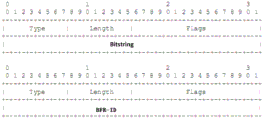
Fig. 21 is a schematic diagram illustrating carrying of BIER information according to an embodiment of the present invention, and as shown in fig. 21, a new BIER END-POINT Object (BIER END-POINT Object) may be defined to carry BIER information, so as to implement that the BIER END-POINT Object is carried in a path request message.
Fig. 22 is a schematic diagram illustrating carrying information of a BIER-TE path according to an embodiment of the present invention, and as shown in fig. 22, information of the BIER-TE path may be carried by using an explicit route object ERO. Specifically, the router can carry bit string information and bit string length BSL, or carry bit forwarding router identification information. The ERO may be carried in the path request message.
Fig. 23 is a schematic diagram of carrying an RRO according to an embodiment of the present invention, and as shown in fig. 23, a Record Route Object (RRO) may be used in the path request message. To report the route followed by the TE path for which re-optimization is desired.
It should be noted that, the above modules may be implemented by software or hardware, and for the latter, the following may be implemented, but not limited to: the modules are all positioned in the same processor; alternatively, the modules are respectively located in a plurality of processors.
The embodiment of the invention also provides a storage medium. Alternatively, in the present embodiment, the storage medium may be configured to store program codes for performing the following steps:
s11, receiving a path calculation request sent by a path calculation client PCC, wherein the path calculation request is used for requesting to calculate a path with bit index explicit copy BIER-traffic engineering TE;
and S12, calculating the path according to the path calculation request.
Optionally, the storage medium is further arranged to store program code for performing the steps of:
s21, sending a path computation request to a path computation element PCE, wherein the path computation request is for requesting the PCE to compute a path with bit index explicit replication BIER-traffic engineering TE.
Optionally, in this embodiment, the storage medium may include, but is not limited to: various media capable of storing program codes, such as a usb disk, a Read-Only Memory (ROM), a Random Access Memory (RAM), a removable hard disk, a magnetic disk, or an optical disk.
Alternatively, in the present embodiment, the processor performs the above-mentioned steps S11-S12 according to program codes already stored in the storage medium.
Alternatively, in the present embodiment, the processor executes the above step S21 according to the program code stored in the storage medium.
Optionally, the specific examples in this embodiment may refer to the examples described in the above embodiments and optional implementation manners, and this embodiment is not described herein again.
It will be apparent to those skilled in the art that the modules or steps of the present invention described above may be implemented by a general purpose computing device, they may be centralized on a single computing device or distributed across a network of multiple computing devices, and alternatively, they may be implemented by program code executable by a computing device, such that they may be stored in a storage device and executed by a computing device, and in some cases, the steps shown or described may be performed in an order different than that described herein, or they may be separately fabricated into individual integrated circuit modules, or multiple ones of them may be fabricated into a single integrated circuit module. Thus, the present invention is not limited to any specific combination of hardware and software.
The above description is only a preferred embodiment of the present invention and is not intended to limit the present invention, and various modifications and changes may be made by those skilled in the art. Any modification, equivalent replacement, or improvement made within the spirit and principle of the present invention should be included in the protection scope of the present invention.
Claims (26)
Priority Applications (3)
| Application Number | Priority Date | Filing Date | Title |
|---|---|---|---|
| CN201510648552.8A CN106572016B (en) | 2015-10-09 | 2015-10-09 | Path calculation method and device |
| EP16853006.1A EP3361683B1 (en) | 2015-10-09 | 2016-06-24 | Path computation method and device |
| PCT/CN2016/087109 WO2017059699A1 (en) | 2015-10-09 | 2016-06-24 | Path computation method and device |
Applications Claiming Priority (1)
| Application Number | Priority Date | Filing Date | Title |
|---|---|---|---|
| CN201510648552.8A CN106572016B (en) | 2015-10-09 | 2015-10-09 | Path calculation method and device |
Publications (2)
| Publication Number | Publication Date |
|---|---|
| CN106572016A CN106572016A (en) | 2017-04-19 |
| CN106572016B true CN106572016B (en) | 2021-01-26 |
Family
ID=58487250
Family Applications (1)
| Application Number | Title | Priority Date | Filing Date |
|---|---|---|---|
| CN201510648552.8A Active CN106572016B (en) | 2015-10-09 | 2015-10-09 | Path calculation method and device |
Country Status (3)
| Country | Link |
|---|---|
| EP (1) | EP3361683B1 (en) |
| CN (1) | CN106572016B (en) |
| WO (1) | WO2017059699A1 (en) |
Families Citing this family (6)
| Publication number | Priority date | Publication date | Assignee | Title |
|---|---|---|---|---|
| CN109246018B (en) * | 2017-07-11 | 2021-11-30 | 中兴通讯股份有限公司 | Message forwarding method based on BIER-TE, node device and storage medium |
| CN110391977B (en) | 2018-04-18 | 2021-11-09 | 中兴通讯股份有限公司 | Method, system and storage medium for network fault protection |
| CN112350936B (en) * | 2019-08-08 | 2023-04-18 | 中兴通讯股份有限公司 | Method and device for optimizing interior gateway protocol flooding and storage medium |
| EP3917093B1 (en) * | 2020-05-30 | 2024-10-23 | Huawei Technologies Co., Ltd. | Bierv6 packet forwarding method and device |
| CN116830544A (en) * | 2021-01-29 | 2023-09-29 | 华为技术有限公司 | PCE for BIER-TE path |
| CN114124778B (en) * | 2021-10-20 | 2023-03-14 | 国电南瑞科技股份有限公司 | Anycast service source routing method and device based on QoS constraint |
Citations (3)
| Publication number | Priority date | Publication date | Assignee | Title |
|---|---|---|---|---|
| US20150078377A1 (en) * | 2013-09-17 | 2015-03-19 | Cisco Technology, Inc. | Bit Indexed Explicit Replication |
| US20150181309A1 (en) * | 2013-09-17 | 2015-06-25 | Cisco Technology, Inc. | Bit Indexed Explicit Replication For Professional Media Networks |
| CN104811387A (en) * | 2014-01-24 | 2015-07-29 | 思科技术公司 | Equal Cost Multi-path With Bit Indexed Explicit Replication |
Family Cites Families (4)
| Publication number | Priority date | Publication date | Assignee | Title |
|---|---|---|---|---|
| US8259612B2 (en) * | 2006-06-09 | 2012-09-04 | Cisco Technologies, Inc. | Method of routing multicast traffic |
| US7512106B2 (en) * | 2006-08-01 | 2009-03-31 | Cisco Technology, Inc. | Techniques for distributing routing information using multicasts |
| US10003494B2 (en) * | 2013-09-17 | 2018-06-19 | Cisco Technology, Inc. | Per-prefix LFA FRR with bit indexed explicit replication |
| US11451474B2 (en) * | 2013-09-17 | 2022-09-20 | Cisco Technology, Inc. | Equal cost multi-path with bit indexed explicit replication |
-
2015
- 2015-10-09 CN CN201510648552.8A patent/CN106572016B/en active Active
-
2016
- 2016-06-24 WO PCT/CN2016/087109 patent/WO2017059699A1/en not_active Ceased
- 2016-06-24 EP EP16853006.1A patent/EP3361683B1/en active Active
Patent Citations (3)
| Publication number | Priority date | Publication date | Assignee | Title |
|---|---|---|---|---|
| US20150078377A1 (en) * | 2013-09-17 | 2015-03-19 | Cisco Technology, Inc. | Bit Indexed Explicit Replication |
| US20150181309A1 (en) * | 2013-09-17 | 2015-06-25 | Cisco Technology, Inc. | Bit Indexed Explicit Replication For Professional Media Networks |
| CN104811387A (en) * | 2014-01-24 | 2015-07-29 | 思科技术公司 | Equal Cost Multi-path With Bit Indexed Explicit Replication |
Also Published As
| Publication number | Publication date |
|---|---|
| EP3361683A4 (en) | 2019-03-20 |
| WO2017059699A1 (en) | 2017-04-13 |
| EP3361683A1 (en) | 2018-08-15 |
| EP3361683B1 (en) | 2020-11-11 |
| CN106572016A (en) | 2017-04-19 |
Similar Documents
| Publication | Publication Date | Title |
|---|---|---|
| CN106572016B (en) | Path calculation method and device | |
| US9172637B2 (en) | System and method for computing a backup ingress of a point-to-multipoint label switched path | |
| USRE47260E1 (en) | System and method for point to multipoint inter-domain MPLS traffic engineering path calculation | |
| US9231851B2 (en) | System and method for computing point-to-point label switched path crossing multiple domains | |
| EP3373530B1 (en) | System and method for computing a backup egress of a point-to-multi-point label switched path | |
| EP2892188B1 (en) | Method for determining packet forwarding path, network device and control device | |
| CN102714621A (en) | Providing feedback to path computation element | |
| WO2009043256A1 (en) | Method, system and device for obtaining label switched path | |
| CN103959716A (en) | A system and method for realizing topology transparent area in network communication | |
| WO2021004277A1 (en) | Routing management method and apparatus, network device, and readable storage medium | |
| WO2018010658A1 (en) | Information transfer method and apparatus in bit indexed explicit replication | |
| CN112217651B (en) | Method and device for determining path label of fusion network | |
| CN106572050A (en) | Capability negotiation method and device | |
| CN104320336B (en) | A kind of MPLS TE Links bandwidth information release processing method and apparatus | |
| CN101141376B (en) | Method for establishing TE path, path calculation device and system | |
| US8798050B1 (en) | Re-optimization of loosely routed P2MP-TE sub-trees | |
| CN108123871B (en) | Equivalent multipath ECMP processing method and device | |
| CN107800547A (en) | A kind of method and its equipment for being used to handle multicast join message | |
| CN119697106A (en) | Traffic transmission method, device, computer equipment and storage medium | |
| CN106470160A (en) | A kind of method of information transfer and network node |
Legal Events
| Date | Code | Title | Description |
|---|---|---|---|
| PB01 | Publication | ||
| PB01 | Publication | ||
| SE01 | Entry into force of request for substantive examination | ||
| SE01 | Entry into force of request for substantive examination | ||
| GR01 | Patent grant | ||
| GR01 | Patent grant |