CN106943351B - Method for preparing nano liposome by applying supergravity technology - Google Patents
Method for preparing nano liposome by applying supergravity technology Download PDFInfo
- Publication number
- CN106943351B CN106943351B CN201610009174.3A CN201610009174A CN106943351B CN 106943351 B CN106943351 B CN 106943351B CN 201610009174 A CN201610009174 A CN 201610009174A CN 106943351 B CN106943351 B CN 106943351B
- Authority
- CN
- China
- Prior art keywords
- freeze
- liposome
- solution
- nano
- nanoliposome
- Prior art date
- Legal status (The legal status is an assumption and is not a legal conclusion. Google has not performed a legal analysis and makes no representation as to the accuracy of the status listed.)
- Active
Links
Images



Classifications
-
- A—HUMAN NECESSITIES
- A61—MEDICAL OR VETERINARY SCIENCE; HYGIENE
- A61K—PREPARATIONS FOR MEDICAL, DENTAL OR TOILETRY PURPOSES
- A61K9/00—Medicinal preparations characterised by special physical form
- A61K9/10—Dispersions; Emulsions
- A61K9/127—Synthetic bilayered vehicles, e.g. liposomes or liposomes with cholesterol as the only non-phosphatidyl surfactant
- A61K9/1277—Preparation processes; Proliposomes
-
- A—HUMAN NECESSITIES
- A61—MEDICAL OR VETERINARY SCIENCE; HYGIENE
- A61K—PREPARATIONS FOR MEDICAL, DENTAL OR TOILETRY PURPOSES
- A61K47/00—Medicinal preparations characterised by the non-active ingredients used, e.g. carriers or inert additives; Targeting or modifying agents chemically bound to the active ingredient
- A61K47/06—Organic compounds, e.g. natural or synthetic hydrocarbons, polyolefins, mineral oil, petrolatum or ozokerite
- A61K47/08—Organic compounds, e.g. natural or synthetic hydrocarbons, polyolefins, mineral oil, petrolatum or ozokerite containing oxygen, e.g. ethers, acetals, ketones, quinones, aldehydes, peroxides
- A61K47/10—Alcohols; Phenols; Salts thereof, e.g. glycerol; Polyethylene glycols [PEG]; Poloxamers; PEG/POE alkyl ethers
-
- A—HUMAN NECESSITIES
- A61—MEDICAL OR VETERINARY SCIENCE; HYGIENE
- A61K—PREPARATIONS FOR MEDICAL, DENTAL OR TOILETRY PURPOSES
- A61K47/00—Medicinal preparations characterised by the non-active ingredients used, e.g. carriers or inert additives; Targeting or modifying agents chemically bound to the active ingredient
- A61K47/06—Organic compounds, e.g. natural or synthetic hydrocarbons, polyolefins, mineral oil, petrolatum or ozokerite
- A61K47/26—Carbohydrates, e.g. sugar alcohols, amino sugars, nucleic acids, mono-, di- or oligo-saccharides; Derivatives thereof, e.g. polysorbates, sorbitan fatty acid esters or glycyrrhizin
-
- A—HUMAN NECESSITIES
- A61—MEDICAL OR VETERINARY SCIENCE; HYGIENE
- A61K—PREPARATIONS FOR MEDICAL, DENTAL OR TOILETRY PURPOSES
- A61K47/00—Medicinal preparations characterised by the non-active ingredients used, e.g. carriers or inert additives; Targeting or modifying agents chemically bound to the active ingredient
- A61K47/30—Macromolecular organic or inorganic compounds, e.g. inorganic polyphosphates
- A61K47/32—Macromolecular compounds obtained by reactions only involving carbon-to-carbon unsaturated bonds, e.g. carbomers, poly(meth)acrylates, or polyvinyl pyrrolidone
-
- A—HUMAN NECESSITIES
- A61—MEDICAL OR VETERINARY SCIENCE; HYGIENE
- A61K—PREPARATIONS FOR MEDICAL, DENTAL OR TOILETRY PURPOSES
- A61K8/00—Cosmetics or similar toiletry preparations
- A61K8/02—Cosmetics or similar toiletry preparations characterised by special physical form
- A61K8/14—Liposomes; Vesicles
-
- A—HUMAN NECESSITIES
- A61—MEDICAL OR VETERINARY SCIENCE; HYGIENE
- A61K—PREPARATIONS FOR MEDICAL, DENTAL OR TOILETRY PURPOSES
- A61K8/00—Cosmetics or similar toiletry preparations
- A61K8/18—Cosmetics or similar toiletry preparations characterised by the composition
- A61K8/30—Cosmetics or similar toiletry preparations characterised by the composition containing organic compounds
- A61K8/33—Cosmetics or similar toiletry preparations characterised by the composition containing organic compounds containing oxygen
- A61K8/34—Alcohols
-
- A—HUMAN NECESSITIES
- A61—MEDICAL OR VETERINARY SCIENCE; HYGIENE
- A61K—PREPARATIONS FOR MEDICAL, DENTAL OR TOILETRY PURPOSES
- A61K8/00—Cosmetics or similar toiletry preparations
- A61K8/18—Cosmetics or similar toiletry preparations characterised by the composition
- A61K8/30—Cosmetics or similar toiletry preparations characterised by the composition containing organic compounds
- A61K8/60—Sugars; Derivatives thereof
-
- A—HUMAN NECESSITIES
- A61—MEDICAL OR VETERINARY SCIENCE; HYGIENE
- A61K—PREPARATIONS FOR MEDICAL, DENTAL OR TOILETRY PURPOSES
- A61K8/00—Cosmetics or similar toiletry preparations
- A61K8/18—Cosmetics or similar toiletry preparations characterised by the composition
- A61K8/72—Cosmetics or similar toiletry preparations characterised by the composition containing organic macromolecular compounds
- A61K8/81—Cosmetics or similar toiletry preparations characterised by the composition containing organic macromolecular compounds obtained by reactions involving only carbon-to-carbon unsaturated bonds
Landscapes
- Health & Medical Sciences (AREA)
- Life Sciences & Earth Sciences (AREA)
- Chemical & Material Sciences (AREA)
- Veterinary Medicine (AREA)
- Epidemiology (AREA)
- Animal Behavior & Ethology (AREA)
- General Health & Medical Sciences (AREA)
- Public Health (AREA)
- Birds (AREA)
- Medicinal Chemistry (AREA)
- Pharmacology & Pharmacy (AREA)
- Chemical Kinetics & Catalysis (AREA)
- Engineering & Computer Science (AREA)
- General Chemical & Material Sciences (AREA)
- Oil, Petroleum & Natural Gas (AREA)
- Emergency Medicine (AREA)
- Biochemistry (AREA)
- Molecular Biology (AREA)
- Dispersion Chemistry (AREA)
- Inorganic Chemistry (AREA)
- Medicinal Preparation (AREA)
- Manufacturing Of Micro-Capsules (AREA)
Abstract
The invention discloses a method for preparing nano liposome by applying a supergravity technology. The method comprises the steps of mixing an organic solution containing lipid materials with an aqueous solution containing a carrier by adopting a super-gravity rotating bed, and then carrying out freeze-drying treatment to obtain the nano-liposome. According to the invention, the excellent mass transfer capacity of the supergravity rotating packed bed is utilized, so that the preparation process of the nano liposome is carried out under the condition of high microscopic uniformity, and nano liposome particles with controllable particle size, narrow distribution and high stability are obtained; meanwhile, by adding the freeze-drying protective agent, the nano-liposome is prevented from being cracked and aggregated in the freeze-drying process, and the process of forming the nano-liposome by hydrating a freeze-dried product is accelerated; the freeze-drying treatment method is adopted to treat the organic solvent, the operation is simple, and the removal effect of the organic solvent is good; the method has the advantages of simple process, low energy consumption, high efficiency and low cost, and is easy to enlarge and achieve the aim of industrial production. The obtained nanoliposome has an average particle diameter of 20-200nm and a PDI value of 0.1-0.3, and is suitable for large-scale production.
Description
Technical Field
The invention relates to the technical field of biological medicines and cosmetics. More particularly, relates to a method for preparing nano liposome by using a supergravity technology in a large scale.
Background
Liposomes are closed vesicle-like structures formed by phospholipid bilayers. They can be classified into unilamellar liposomes (SUV), multilamellar Liposomes (LUV) and multivesicular liposomes (MIV) according to their structure. Liposomes were first discovered by the british, Alec d. bangham in 1965, and since then, liposomes were found to have great application value as carriers of substances, particularly drugs, they have been studied systematically and extensively.
After more than twenty years of research, researchers have proposed a number of valuable liposome preparation methods. Liposomes are currently prepared mainly by dispersion technology (dispersion technique), and the methods can be divided into three major categories: 1) based on mechanical dispersion techniques. For example, in film dispersion, patent CN 103110931a discloses a method for preparing romidepsin liposome, which uses cholesterol as a stabilizer, sucrose as a freeze-drying protective agent, and vitamin E as an antioxidant, and adopts a film dispersion method to prepare the romidepsin liposome, and simultaneously adopts a high-pressure homogenization method to make the particle size of the liposome less than 120 nm. Although the method is the most classical and widely applied method, the method has some disadvantages: the organic solvent used has great toxicity; the industrial production cannot be realized; when the aqueous solution containing the drug is used for hydration, the drug distribution among the layers of the formed multi-layer liposome is not uniform, and repeated freeze-thawing treatment and the like are required. 2) Based on surfactant dispersion technology. In this method, a lipid and a surfactant are stirred together in an aqueous solution to obtain micelles, and the surfactant is removed from the micelles by a dialysis method. Its advantages are uniform liposome, and gentle treating method because the phosphatide is operated at temp lower than its phase-change temp. However, the nano-liposome prepared by the method has low concentration, simultaneously has a small amount of surfactant residues, and is difficult to produce in a large scale because the micelle needs a long time for balancing in the water phase, so that the time is long. 3) Based on solvent or anti-solvent dispersion techniques. Such as reverse phase evaporation (REV), which has a relatively high encapsulation efficiency and drug loading of water-soluble drugs; in patent CN 101912388A, a method for preparing a medium-chain fatty acid-vitamin C compound liposome is disclosed, which adopts a reverse evaporation-high pressure microjet method to prepare the medium-chain fatty acid-vitamin C compound liposome through the processes of dissolution, uniform mixing, reduced pressure evaporation, high pressure microjet and the like. Although the average particle size of the compound liposome can reach 90nm-200nm, the particle size of the liposome prepared by the method still needs to be reduced by high-pressure microjet treatment, and the process is complicated. In addition, the emulsion method can be adopted to prepare the multivesicular liposome, which can realize large-scale production at present, but is limited to the preparation of micron multivesicular liposome with slow release function.
Therefore, in view of the above problems, it is desirable to provide a simple and easy method for preparing nanoscale liposomes on a large scale.
Disclosure of Invention
The invention aims to provide a method for preparing nano liposome by applying a hypergravity technology. The method utilizes the supergravity rotating bed technology, can greatly strengthen mass transfer and micro mixing, is beneficial to amplification, has short production time, is easy for large-scale production, has narrow particle size distribution of the prepared nano liposome, and well solves the problem that the nano liposome is difficult to industrially produce.
The invention also aims to provide the nano liposome prepared by adopting the supergravity technology. The nano liposome has small particle size, narrow distribution, good dispersibility and wide application range.
In order to achieve the first purpose, the invention adopts the following technical scheme:
a method for preparing nano liposome by using a supergravity technology comprises the steps of mixing an organic solution containing lipid materials with an aqueous solution containing a carrier by using a supergravity rotating bed, and then carrying out freeze-drying treatment to obtain the nano liposome.
Preferably, the method comprises the following specific steps:
1) dissolving lipid substances and a membrane softener which form the nanoliposome into an organic solvent to obtain an organic solution, and dissolving a water-soluble carrier into pure water to obtain an aqueous solution;
2) respectively injecting the organic solution and the aqueous solution obtained in the step 1) into a super-gravity rotating bed at the temperature of 20-70 ℃ for fully mixing to obtain a mixed solution;
3) adding a freeze-drying protective agent into the mixed solution prepared in the step 2), and then carrying out freeze-drying treatment to obtain the freeze-dried nano liposome.
Preferably, in step 1), the nanoliposome-forming lipid material is selected from one or more of phosphatidylcholine, phosphatidylethanolamine, phosphatidylserine, phosphatidylinositol, phosphatidylglycerol, diphosphatidylglycerol, sphingomyelin, and hydrogenated lecithin; the membrane softener is cholesterol; the organic solvent is selected from one or more of ethanol, propanol, isopropanol, glycerol, tert-butanol, acetone, N-dimethylacetamide and dimethyl sulfoxide. The preferred purpose of this is to screen out green safe solvents and reduce the toxicity of the solvents. And volatile solvents are screened out, and freeze-drying is easy.
Preferably, in step 1), the water-soluble carrier is selected from one or more of sodium monohydrogen phosphate, potassium monohydrogen phosphate, sodium dihydrogen phosphate, potassium dihydrogen phosphate, phosphoric acid, sodium hydroxide, potassium hydroxide, sodium chloride and potassium chloride; and after the water-soluble carrier is dissolved in pure water, the pH value of the water solution is adjusted to 3-8. The preferable purpose is to prepare a buffer solution, the phospholipid in the liposome is easy to hydrolyze, the pH value of the solution is reduced, the particle size and the shape of the liposome are changed, the buffer solution provides a more stable environment, and the pH value of the solution is not greatly changed.
Preferably, in step 1), the weight ratio of the lipid substance to the membrane softener is 3-10: 1; the concentration of lipid in the organic solution is 5-80 mg/ml. The phospholipid and cholesterol form liposome, the purpose of adding the cholesterol is to adjust the fluidity of the phospholipid, and the addition according to the ratio range defined by the invention can enable the formed liposome structure to be more stable.
Preferably, in step 2), the organic solution and the aqueous solution are respectively injected into the super-gravity rotating bed through a peristaltic pump.
Preferably, in the step 2), the feeding volume ratio of the organic solution to the aqueous solution is 1: 5-30; the injection speed of the organic solution into the super-gravity rotating bed is 1ml/min-8 ml/min; the injection speed of the aqueous solution into the super-gravity rotating bed is 5ml/min-240 ml/min. Furthermore, by varying the ratio of the organic phase to the aqueous phase feed, the particle size of the liposomes ultimately formed can be varied.
Preferably, in the step 2), the rotating speed of the super-gravity rotating bed is 500rmp-2800 rmp.
Preferably, in step 3), the lyoprotectant is selected from one or more of lactose, mannitol, xylitol, sucrose, trehalose, dextran and polyvinyl pyrrolidone; the weight ratio of the addition amount of the freeze-drying protective agent to lipid substances forming the nano-liposome is 2.5-15: 1; the freeze-drying process is carried out by freezing the mixed solution in liquid nitrogen or a low-temperature device and then freeze-drying in a freeze-dryer, or directly freeze-drying the mixed solution in the freeze-dryer.
The freeze-drying protective agent is added to improve the freeze-dried state of the liposome, and freeze-drying is one of effective methods for improving the long-term stability of a liposome preparation, but the processes of pre-freezing, drying and the like involved in freeze-drying are not beneficial to the stability of the structure and the function of the liposome, and the adverse effect of the freeze-drying process on the liposome can be effectively reduced by adopting the types of the freeze-drying protective agent defined in the invention and adding the freeze-drying protective agent according to the amount defined in the invention.
Preferably, the method further comprises the step of hydrating the freeze-dried nanoliposome prepared in the step 3) to obtain a nanoliposome solution; the hydration treatment refers to redissolving the freeze-dried nano liposome to form hydrated nano liposome solution, and the solvent used for redissolving is pure water. Water is the cheapest, environment-friendly and safe solvent, the biocompatibility is good, and the prepared liposome is mainly used in the fields of drug carriers and cosmetics, so that the preferable redissolving solvent is pure water. In addition, the hydration can also be accelerated by using a suitable buffer solution at a suitable temperature, and the hydration can also be accelerated by using mechanical force, such as shaking, stirring or ultrasound.
Furthermore, the invention also protects the nano liposome prepared by the method for preparing the nano liposome by applying the supergravity technology, wherein the average particle size of the nano liposome is 20-200nm, and the PDI value is 0.1-0.3.
Preferably, the average particle size of the nanoliposome is 20-120 nm.
In the prior art, the nano liposome prepared based on the mechanical dispersion technology has high toxicity of the used organic solvent and can not realize industrialization, and when the drug-containing aqueous solution is used for hydration, the formed multi-layer liposome has uneven drug distribution among layers, and repeated freeze thawing treatment and the like are needed; the nano liposome prepared based on the surfactant dispersion technology has low concentration and surfactant residue which is difficult to completely remove; the liposome prepared based on the solvent or anti-solvent dispersion technology has a complex process and is limited to the preparation of micron-sized multi-vesicular liposome with a slow release function. Aiming at the defects in the prior art, the invention firstly proposes the combination of the preparation of the nano liposome and the supergravity technology, selects proper lipid substances and a film softener, matches with corresponding water-soluble carriers, adjusts the proportional relation among all the raw materials, leads the mixture into a supergravity rotating bed at a proper injection speed for mixing, matches with the protection of a proper freeze-drying protective agent for freeze drying, can effectively remove organic solvents and other residues, ensures the purity of the liposome, and is favorable for the storage of the dry liposome. Finally, the hydrated nanoliposome product with uniform particle size and good stability is obtained by simple redissolution hydration and is applied. The invention optimizes all steps and process parameters in the preparation method, and enables the steps and the process parameters to be coordinated and matched with each other, thereby forming the technical scheme of the invention and achieving good technical effects.
The invention has the following beneficial effects:
1. the invention utilizes the excellent mass transfer capacity of the supergravity rotating packed bed to strengthen the transfer and mixing of the solvent and the anti-solvent, so that the preparation process of the nano liposome is carried out under the condition of high microscopic uniformity, and the nano liposome particles with controllable particle size, narrow distribution and high stability are obtained.
2. According to the invention, the freeze-drying protective agent is added, so that the nano-liposome is prevented from being cracked and aggregated in the freeze-drying process, and the process of forming the nano-liposome by hydrating a freeze-dried product is accelerated.
3. The invention adopts a freeze-drying treatment method to treat the organic solvent, has simple operation and good organic solvent removal effect.
4. The method has the advantages of simple process, easy realization, less energy consumption, high efficiency, low cost and easy amplification, and achieves the aim of industrial production.
Drawings
The following describes embodiments of the present invention in further detail with reference to the accompanying drawings.
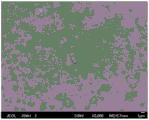
FIG. 1 shows a scanning electron microscope image of nanoliposomes prepared in example 1 of the present invention.
Fig. 2 shows a scanning electron microscope image of the nanoliposome prepared in comparative example 1 of the present invention.
FIG. 3 shows a scanning electron microscope image of the nanoliposome prepared in example 5 of the present invention.
FIG. 4 shows a scanning electron microscope image of the nanoliposome prepared in example 6 of the present invention.
Detailed Description
In order to more clearly illustrate the invention, the invention is further described below with reference to preferred embodiments and the accompanying drawings. Similar parts in the figures are denoted by the same reference numerals. It is to be understood by persons skilled in the art that the following detailed description is illustrative and not restrictive, and is not to be taken as limiting the scope of the invention.
Example 1
Dissolving 80g of phosphatidylcholine and 10g of cholesterol in 2L of ethanol, adding 5g of monopotassium phosphate and 5g of dipotassium phosphate into 20L of water, adjusting the pH to 6.5, starting a super-gravity rotating bed, adjusting the rotating speed to 2000rpm, feeding an ethanol phase at 2ml/min and a water phase at 20ml/min, controlling the system temperature to be 30 ℃, after the ethanol phase is fed, closing the super-gravity rotating bed, adding 300g of sucrose into the obtained mixed solution, and removing the organic solvent after freeze drying to obtain the dried freeze-dried powder. The lyophilized powder can be preserved for a long time, and is redissolved and hydrated by pure water before use to obtain nanometer liposome solution. FIG. 1 shows a scanning electron microscope image of nanoliposomes prepared in example 1 of the present invention. As can be seen from the figure, the average particle size of the nanoliposome is 40nm, and the particle size distribution test is carried out on the nanoliposome, and the nanoliposome has a PDI value of 0.18 and shows good dispersibility. Fig. 2 shows a distribution diagram of the particle size of the nanoliposome prepared in example 1 of the present invention. As can be seen from the figure, the average particle size of the nanoliposome solution is 40nm, which is consistent with the result of an electron microscope image.
Comparative example 1
80mg of phosphatidylcholine and 10mg of cholesterol are dissolved in 2ml of ethanol, 20ml of dipotassium hydrogen phosphate buffer solution with the pH value of 6.5 prepared in the example 1 is taken, the ethanol solution is dropwise added into the water solution under the condition of magnetic stirring at the temperature of 30 ℃, 300mg of sucrose is added into the obtained mixed solution, and the organic solvent is removed after freeze drying, so that the dried nano liposome freeze-dried powder is obtained. The lyophilized powder can be preserved for a long time, and is redissolved and hydrated by pure water before use to obtain nanometer liposome solution. Fig. 2 shows a scanning electron microscope image of the nanoliposome prepared in comparative example 1 of the present invention. The average particle size of the nano liposome is 500nm, and the particle size distribution test of the nano liposome shows that the PDI value is 0.35 and the dispersibility is poor. Therefore, the method adopts common mechanical mixing, which not only can not realize mass production and is time-consuming, but also the obtained product has defects in particle size and uniformity.
Example 2
Dissolving 4g of potassium dihydrogen phosphate and 6g of disodium hydrogen phosphate in 20L of water in 10g of cholesterol 2L of isopropanol solution, adjusting the pH value of a buffer solution to 7.4, starting a super-gravity rotating bed to adjust the rotating speed to 2000rpm, feeding an isopropanol phase at 3ml/min and a water phase at 30ml/min, controlling the system temperature to 30 ℃, closing the super-gravity rotating bed after the feeding of the isopropanol phase is finished, adding 300g of cane sugar into the obtained mixed solution, and removing a solvent after freeze drying to obtain the dried nano liposome freeze-dried powder. The lyophilized powder can be preserved for a long time, and is redissolved and hydrated by pure water before use to obtain nanometer liposome solution. The average particle size of the nanoliposome is 80nm, and the particle size distribution test is carried out on the nanoliposome, so that the nanoliposome has a PDI value of 0.16 and shows good dispersibility.
Example 3
Dissolving 70g of phosphatidylcholine and 15g of cholesterol in 2L of tert-butyl alcohol solution, dissolving 3g of disodium hydrogen phosphate and 2g of phosphoric acid in 10L of water, adjusting the pH value of a buffer solution to 5, starting a super-gravity rotating bed to adjust the rotating speed to 1000rpm, feeding a tert-butyl alcohol phase at 3ml/min and a water phase at 30ml/min, controlling the system temperature to be 30 ℃, after the organic solution is fed, closing the super-gravity rotating bed, adding 300g of trehalose into the obtained mixed solution, removing a solvent after freeze drying, and obtaining the dried nano liposome freeze-dried powder. The lyophilized powder can be preserved for a long time, and is redissolved and hydrated by pure water before use to obtain nanometer liposome solution. The average particle size of the nanoliposome is 65nm, and the particle size distribution test is carried out on the nanoliposome, so that the nanoliposome has a PDI value of 0.2 and shows good dispersion stability.
Example 4
70g of phosphatidylcholine and 10g of cholesterol are dissolved in 3L N, N-dimethylacetamide, 2g of sodium chloride and 2g of phosphoric acid are dissolved in 20L of water, the pH value of a buffer solution is adjusted to be 7, a super-gravity rotating bed is started to adjust the rotating speed to be 1000rpm, the N, N-dimethylacetamide phase is fed in at a rate of 2ml/min, the water phase is fed in at a rate of 15ml/min, the system temperature is controlled to be 40 ℃, after the N, N-dimethylacetamide phase is fed in, the super-gravity rotating bed is closed, 300g of trehalose is added into the obtained mixed solution, and the solvent is removed after freeze drying, so that the dried nano liposome freeze-dried powder is obtained. The lyophilized powder can be preserved for a long time, and is redissolved and hydrated by pure water before use to obtain nanometer liposome solution. The average particle size of the nanoliposome is 75nm, and the particle size distribution test is carried out on the nanoliposome, so that the nanoliposome has a PDI value of 0.19 and shows good dispersion stability.
Example 5
Dissolving 100g of sphingomyelin and 15g of cholesterol in 2L of ethanol solution, dissolving 2g of monopotassium phosphate and 2g of sodium chloride in 20L of water, adjusting the pH value of a buffer solution to be 6, starting a supergravity rotating bed to adjust the rotating speed to be 1500rpm, feeding an ethanol phase at 3ml/min and a water phase at 20ml/min, controlling the temperature of the system to be 50 ℃, closing the supergravity rotating bed after the feeding of the ethanol phase is finished, adding 300g of trehalose into the obtained mixed solution, removing a solvent after freeze drying, and obtaining the dried nano liposome freeze-dried powder. The lyophilized powder can be preserved for a long time, and is redissolved and hydrated by pure water before use to obtain nanometer liposome solution. FIG. 3 shows a scanning electron microscope image of the nanoliposome prepared in example 5 of the present invention. The average particle size of the nanoliposome is 80nm, and the particle size distribution test is carried out on the nanoliposome, so that the nanoliposome has a PDI value of 0.12 and shows good dispersion stability.
Example 6
Dissolving 100g of phosphatidylcholine and 10g of cholesterol in 2L of propanol solution, dissolving 2g of monopotassium phosphate and 2g of monopotassium phosphate in 20L of water, adjusting the pH value of a buffer solution to be 5.5, starting a supergravity rotating bed to adjust the rotating speed to be 1000rpm, feeding a propanol phase at 3ml/min and a water phase at 250ml/min, controlling the system temperature to be 40 ℃, closing the supergravity rotating bed after the feeding of the propanol phase is finished, adding 300g of trehalose into the obtained mixed solution, and removing a solvent after freeze drying to obtain the dried nano liposome freeze-dried powder. The lyophilized powder can be preserved for a long time, and is redissolved and hydrated by pure water before use to obtain nanometer liposome solution. FIG. 4 shows a scanning electron microscope image of the nanoliposome prepared in example 6 of the present invention. The average particle size of the nanoliposome is 90nm, and the particle size distribution test is carried out on the nanoliposome, so that the nanoliposome has a PDI value of 0.22 and shows good dispersion stability.
Example 7
Dissolving 100g of phosphatidylcholine, 20g of cholesterol and 0.02 mu mol/ml of alpha-tocopherol in 2L of isopropanol/ethanol solution (1:1), dissolving 1g of sodium chloride and 2g of sodium dihydrogen phosphate in 20L of water, adjusting the pH value of a buffer solution to 5, starting a supergravity rotating bed to adjust the rotating speed to 2500rpm, feeding an organic solution at 3ml/min and an aqueous solution at 30ml/min, controlling the system temperature to be 30 ℃, closing the supergravity rotating bed after the organic phase is fed, adding 300g of trehalose into the obtained mixed solution, removing a solvent after freeze drying, and obtaining the dried nano liposome freeze-dried powder. The lyophilized powder can be preserved for a long time, and is redissolved and hydrated by pure water before use to obtain nanometer liposome solution. The average particle size of the nanoliposome is 95nm, and the particle size distribution test is carried out on the nanoliposome, so that the nanoliposome has a PDI value of 0.25 and shows good dispersion stability.
Example 8
Dissolving 80g of phosphatidylcholine and 15g of cholesterol in 2L of glycerol solution, dissolving 6g of sodium hydroxide and 2g of phosphoric acid in 20L of water, adjusting the pH value to 4.5, starting a supergravity rotating bed to adjust the rotating speed to 2000rpm, feeding a glycerol phase at 2ml/min and a water phase at 25ml/min, controlling the system temperature to be 60 ℃, after the glycerol phase is fed, closing the supergravity rotating bed, adding 300g of trehalose into the obtained mixed solution, and removing a solvent after freeze drying to obtain the dried nano liposome freeze-dried powder. The lyophilized powder can be preserved for a long time, and is redissolved and hydrated by pure water before use to obtain nanometer liposome solution. The average particle size of the nanoliposome is 70nm, and the particle size distribution test is carried out on the nanoliposome, so that the nanoliposome has a PDI value of 0.23 and shows good dispersion stability.
Example 9
Dissolving 80g of phosphatidylethanolamine and 10g of cholesterol in 2L of ethanol/tert-butyl alcohol (1:1) solution, dissolving 4g of disodium hydrogen phosphate and 3g of sodium dihydrogen phosphate in 15L of water, adjusting the pH value to be 4, starting a super-gravity rotating bed, adjusting the rotating speed to be 1000rpm, feeding an organic solution at 3ml/min and an aqueous solution at 30ml/min, controlling the system temperature to be 30 ℃, closing the super-gravity rotating bed after the organic solution is fed, adding 300g of trehalose into the obtained mixed solution, and removing a solvent after freeze drying to obtain the dried nano liposome freeze-dried powder. The lyophilized powder can be preserved for a long time, and is redissolved and hydrated by pure water before use to obtain nanometer liposome solution. The average particle size of the nanoliposome is 103nm, and the particle size distribution test is carried out on the nanoliposome, so that the nanoliposome has a PDI value of 0.212 and shows good dispersion stability.
Example 10
Dissolving 80g of hydrogenated phospholipid and 10g of cholesterol in 2L of acetone solution, dissolving 2g of dipotassium phosphate and 3g of sodium dihydrogen phosphate in 20L of water, adjusting the pH to 3.5, starting a super-gravity rotating bed, adjusting the rotating speed to 1500rpm, feeding an acetone phase at 3ml/min and a water phase at 30ml/min, controlling the system temperature to be 70 ℃, closing the super-gravity rotating bed after the acetone phase is fed, adding 300g of trehalose into the obtained mixed solution, and removing the solvent after freeze drying to obtain the dried nano liposome freeze-dried powder. The lyophilized powder can be preserved for a long time, and is redissolved and hydrated by pure water before use to obtain nanometer liposome solution. The average particle size of the nanoliposome is 68nm, and the particle size distribution test is carried out on the nanoliposome, so that the nanoliposome has a PDI value of 0.155 and shows good dispersion stability.
It should be understood that the above-mentioned embodiments of the present invention are only examples for clearly illustrating the present invention, and are not intended to limit the embodiments of the present invention, and it will be obvious to those skilled in the art that other variations or modifications may be made on the basis of the above description, and all embodiments may not be exhaustive, and all obvious variations or modifications may be included within the scope of the present invention.
Claims (6)
1. A method for preparing nano liposome by applying a supergravity technology is characterized by comprising the following steps: the method comprises the steps of mixing an organic solution containing lipid with an aqueous solution containing a carrier by adopting a super-gravity rotating bed, and then carrying out freeze-drying treatment to obtain nano-liposomes;
the method comprises the following specific steps:
1) dissolving lipid substances and a membrane softener which form the nanoliposome into an organic solvent to obtain an organic solution, and dissolving a water-soluble carrier into pure water to obtain an aqueous solution;
2) respectively injecting the organic solution and the aqueous solution obtained in the step 1) into a super-gravity rotating bed at the temperature of 20-70 ℃ for fully mixing to obtain a mixed solution;
3) adding a freeze-drying protective agent into the mixed solution prepared in the step 2), and then carrying out freeze-drying treatment to obtain a freeze-dried nano liposome;
in the step 1), the water-soluble carrier is dissolved in pure water, and then the pH value of the water solution is adjusted to 3-8; the weight ratio of the lipid substance to the membrane softener is 3-10: 1; the concentration of lipid substances in the organic solution is 5-80 mg/ml;
in the step 2), the feeding volume ratio of the organic solution to the aqueous solution is 1: 5-30; the injection speed of the organic solution into the super-gravity rotating bed is 1ml/min-8 ml/min; the injection speed of the aqueous solution into the super-gravity rotating bed is 5ml/min-240 ml/min; the rotating speed of the super-gravity rotating bed is 500rmp-2800 rmp;
in the step 3), the weight ratio of the addition amount of the freeze-drying protective agent to lipid substances for forming the nano liposome is 2.5-15: 1.
2. the method for preparing nanoliposomes according to claim 1, wherein the method comprises the following steps: in the step 1), the lipid substance forming the nanoliposome is selected from one or more of phosphatidylcholine, phosphatidylethanolamine, phosphatidylserine, phosphatidylinositol, phosphatidylglycerol, diphosphatidylglycerol, sphingomyelin and hydrogenated lecithin; the membrane softener is cholesterol; the organic solvent is selected from one or more of ethanol, propanol, isopropanol, glycerol, tert-butanol, acetone, N-dimethylacetamide and dimethyl sulfoxide.
3. The method for preparing nanoliposomes according to claim 1, wherein the method comprises the following steps: in the step 1), the water-soluble carrier is selected from one or more of sodium monohydrogen phosphate, potassium monohydrogen phosphate, sodium dihydrogen phosphate, potassium dihydrogen phosphate, phosphoric acid, sodium hydroxide, potassium hydroxide, sodium chloride and potassium chloride.
4. The method for preparing nanoliposomes according to claim 1, wherein the method comprises the following steps: in the step 3), the freeze-drying protective agent is selected from one or more of lactose, mannitol, xylitol, sucrose, trehalose, dextran and polyethylene pyrrolidone; the freeze-drying process is carried out by freezing the mixed solution in liquid nitrogen or a low-temperature device and then freeze-drying in a freeze-dryer, or directly freeze-drying the mixed solution in the freeze-dryer.
5. The method for preparing nanoliposomes according to claim 1, wherein the method comprises the following steps: further comprising the step of hydrating the freeze-dried nanoliposomes prepared in the step 3) to obtain nanoliposome solution; the hydration treatment refers to redissolving the freeze-dried nano liposome to form hydrated nano liposome solution, and the solvent used for redissolving is pure water.
6. The nanoliposome prepared by the method for preparing nanoliposome using the supergravity technology as claimed in any one of claims 1 to 5, wherein: the average particle diameter of the nano liposome is 20-200nm, and the PDI value is 0.1-0.3.
Priority Applications (1)
| Application Number | Priority Date | Filing Date | Title |
|---|---|---|---|
| CN201610009174.3A CN106943351B (en) | 2016-01-07 | 2016-01-07 | Method for preparing nano liposome by applying supergravity technology |
Applications Claiming Priority (1)
| Application Number | Priority Date | Filing Date | Title |
|---|---|---|---|
| CN201610009174.3A CN106943351B (en) | 2016-01-07 | 2016-01-07 | Method for preparing nano liposome by applying supergravity technology |
Publications (2)
| Publication Number | Publication Date |
|---|---|
| CN106943351A CN106943351A (en) | 2017-07-14 |
| CN106943351B true CN106943351B (en) | 2021-01-12 |
Family
ID=59465886
Family Applications (1)
| Application Number | Title | Priority Date | Filing Date |
|---|---|---|---|
| CN201610009174.3A Active CN106943351B (en) | 2016-01-07 | 2016-01-07 | Method for preparing nano liposome by applying supergravity technology |
Country Status (1)
| Country | Link |
|---|---|
| CN (1) | CN106943351B (en) |
Cited By (1)
| Publication number | Priority date | Publication date | Assignee | Title |
|---|---|---|---|---|
| WO2023091879A1 (en) * | 2021-11-17 | 2023-05-25 | Lipella Pharmaceuticals Inc. | Intravesical delivery of hydrophilic therapeutic agents using liposomes |
Families Citing this family (3)
| Publication number | Priority date | Publication date | Assignee | Title |
|---|---|---|---|---|
| CN111848988A (en) * | 2020-05-25 | 2020-10-30 | 北京化工大学 | A kind of preparation method and system of silk fibroin nanoparticles under hypergravity field |
| CN115363982B (en) * | 2021-12-14 | 2023-07-25 | 广州花出见生物科技有限公司 | Modified silicon powder prepared by supergravity acceleration process and application thereof |
| CN115089506A (en) * | 2022-05-16 | 2022-09-23 | 北京化工大学 | Method for preparing retinyl palmitate liposome by applying hypergravity technology and obtained retinyl palmitate liposome |
Citations (3)
| Publication number | Priority date | Publication date | Assignee | Title |
|---|---|---|---|---|
| CN101129361A (en) * | 2007-07-17 | 2008-02-27 | 山东华诺生物科技有限公司 | Sirolimus lipidosome freeze-dried acanthopanax powder and technique of preparing the same |
| CN101199505A (en) * | 2007-12-20 | 2008-06-18 | 沈阳药科大学 | Verapamil liposome and preparation method thereof |
| CN102164582A (en) * | 2008-09-25 | 2011-08-24 | 纳米材料科技有限公司 | A preparation method of drug nanoparticle delivery system |
-
2016
- 2016-01-07 CN CN201610009174.3A patent/CN106943351B/en active Active
Patent Citations (3)
| Publication number | Priority date | Publication date | Assignee | Title |
|---|---|---|---|---|
| CN101129361A (en) * | 2007-07-17 | 2008-02-27 | 山东华诺生物科技有限公司 | Sirolimus lipidosome freeze-dried acanthopanax powder and technique of preparing the same |
| CN101199505A (en) * | 2007-12-20 | 2008-06-18 | 沈阳药科大学 | Verapamil liposome and preparation method thereof |
| CN102164582A (en) * | 2008-09-25 | 2011-08-24 | 纳米材料科技有限公司 | A preparation method of drug nanoparticle delivery system |
Non-Patent Citations (1)
| Title |
|---|
| 超重力法纳米材料的可控制备与应用;王淼,等;《新材料产业》;20150831(第8期);第52页第一节以及第53页第二节 * |
Cited By (1)
| Publication number | Priority date | Publication date | Assignee | Title |
|---|---|---|---|---|
| WO2023091879A1 (en) * | 2021-11-17 | 2023-05-25 | Lipella Pharmaceuticals Inc. | Intravesical delivery of hydrophilic therapeutic agents using liposomes |
Also Published As
| Publication number | Publication date |
|---|---|
| CN106943351A (en) | 2017-07-14 |
Similar Documents
| Publication | Publication Date | Title |
|---|---|---|
| CN101244039B (en) | Novel method for preparing indissoluble medicaments liposome preparations | |
| CN101703471B (en) | Improved method for preparing liposome by using ammonium sulfate gradient method | |
| CN106943351B (en) | Method for preparing nano liposome by applying supergravity technology | |
| JP3267611B2 (en) | Liposome-polyene preliposome powder and method for producing the same | |
| CN102525927B (en) | Octreotide acetate preparation and preparation method thereof | |
| EP3138558A1 (en) | Liposome composition and production method therefor | |
| Li et al. | The properties of bufadienolides-loaded nano-emulsion and submicro-emulsion during lyophilization | |
| Wang et al. | Preparation of submicron liposomes exhibiting efficient entrapment of drugs by freeze-drying water-in-oil emulsions | |
| CN102188378B (en) | Preparation method of liposome for coating and carrying water soluble drugs | |
| CN100427064C (en) | A new method for preparing liposome | |
| US20070122469A1 (en) | Method for producing a vesicle dispersion | |
| CN101411687B (en) | A kind of liposome preparation method | |
| US20160228362A1 (en) | Targetted nano-liposome co-entrapping anti-cancer drugs | |
| CN116421702A (en) | Octreotide-loaded polyethylene glycol modified mesoporous silica slow-release nanoparticle as well as preparation method and application thereof | |
| CN1895223B (en) | Production method of elaioplast | |
| KR101687735B1 (en) | Method for production of liposome powder with novel freeze drying supplement and novel solvent for phosphlipid | |
| CN109077997B (en) | Pemetrexed disodium lipid compound and preparation method thereof | |
| CN115737565B (en) | Schisandrin B liposome and preparation method thereof | |
| WO2017056113A1 (en) | Process for the preparation of unilamellar liposomal composition | |
| LU600721B1 (en) | A preparation method for a targeted delivery typenanoliposome whitening complex | |
| CN115089506A (en) | Method for preparing retinyl palmitate liposome by applying hypergravity technology and obtained retinyl palmitate liposome | |
| CN111787908A (en) | Method for producing lipid carriers | |
| Verma et al. | Liposomes as carrier systems | |
| EP0496824B1 (en) | Reconstitution method | |
| CN113712922A (en) | Fangchinoline derivative lipid nanosuspension and preparation method thereof |
Legal Events
| Date | Code | Title | Description |
|---|---|---|---|
| PB01 | Publication | ||
| PB01 | Publication | ||
| SE01 | Entry into force of request for substantive examination | ||
| SE01 | Entry into force of request for substantive examination | ||
| GR01 | Patent grant | ||
| GR01 | Patent grant |