CN1069576C - Improved particle barrier nonwoven material - Google Patents
Improved particle barrier nonwoven material Download PDFInfo
- Publication number
- CN1069576C CN1069576C CN98107452A CN98107452A CN1069576C CN 1069576 C CN1069576 C CN 1069576C CN 98107452 A CN98107452 A CN 98107452A CN 98107452 A CN98107452 A CN 98107452A CN 1069576 C CN1069576 C CN 1069576C
- Authority
- CN
- China
- Prior art keywords
- particle
- meltblown
- fibers
- fiber
- woven material
- Prior art date
- Legal status (The legal status is an assumption and is not a legal conclusion. Google has not performed a legal analysis and makes no representation as to the accuracy of the status listed.)
- Expired - Fee Related
Links
Images


Classifications
-
- B—PERFORMING OPERATIONS; TRANSPORTING
- B01—PHYSICAL OR CHEMICAL PROCESSES OR APPARATUS IN GENERAL
- B01D—SEPARATION
- B01D39/00—Filtering material for liquid or gaseous fluids
- B01D39/08—Filter cloth, i.e. woven, knitted or interlaced material
-
- D—TEXTILES; PAPER
- D04—BRAIDING; LACE-MAKING; KNITTING; TRIMMINGS; NON-WOVEN FABRICS
- D04H—MAKING TEXTILE FABRICS, e.g. FROM FIBRES OR FILAMENTARY MATERIAL; FABRICS MADE BY SUCH PROCESSES OR APPARATUS, e.g. FELTS, NON-WOVEN FABRICS; COTTON-WOOL; WADDING ; NON-WOVEN FABRICS FROM STAPLE FIBRES, FILAMENTS OR YARNS, BONDED WITH AT LEAST ONE WEB-LIKE MATERIAL DURING THEIR CONSOLIDATION
- D04H1/00—Non-woven fabrics formed wholly or mainly of staple fibres or like relatively short fibres
- D04H1/40—Non-woven fabrics formed wholly or mainly of staple fibres or like relatively short fibres from fleeces or layers composed of fibres without existing or potential cohesive properties
- D04H1/54—Non-woven fabrics formed wholly or mainly of staple fibres or like relatively short fibres from fleeces or layers composed of fibres without existing or potential cohesive properties by welding together the fibres, e.g. by partially melting or dissolving
- D04H1/56—Non-woven fabrics formed wholly or mainly of staple fibres or like relatively short fibres from fleeces or layers composed of fibres without existing or potential cohesive properties by welding together the fibres, e.g. by partially melting or dissolving in association with fibre formation, e.g. immediately following extrusion of staple fibres
-
- D—TEXTILES; PAPER
- D04—BRAIDING; LACE-MAKING; KNITTING; TRIMMINGS; NON-WOVEN FABRICS
- D04H—MAKING TEXTILE FABRICS, e.g. FROM FIBRES OR FILAMENTARY MATERIAL; FABRICS MADE BY SUCH PROCESSES OR APPARATUS, e.g. FELTS, NON-WOVEN FABRICS; COTTON-WOOL; WADDING ; NON-WOVEN FABRICS FROM STAPLE FIBRES, FILAMENTS OR YARNS, BONDED WITH AT LEAST ONE WEB-LIKE MATERIAL DURING THEIR CONSOLIDATION
- D04H1/00—Non-woven fabrics formed wholly or mainly of staple fibres or like relatively short fibres
- D04H1/70—Non-woven fabrics formed wholly or mainly of staple fibres or like relatively short fibres characterised by the method of forming fleeces or layers, e.g. reorientation of fibres
- D04H1/74—Non-woven fabrics formed wholly or mainly of staple fibres or like relatively short fibres characterised by the method of forming fleeces or layers, e.g. reorientation of fibres the fibres being orientated, e.g. in parallel (anisotropic fleeces)
-
- D—TEXTILES; PAPER
- D04—BRAIDING; LACE-MAKING; KNITTING; TRIMMINGS; NON-WOVEN FABRICS
- D04H—MAKING TEXTILE FABRICS, e.g. FROM FIBRES OR FILAMENTARY MATERIAL; FABRICS MADE BY SUCH PROCESSES OR APPARATUS, e.g. FELTS, NON-WOVEN FABRICS; COTTON-WOOL; WADDING ; NON-WOVEN FABRICS FROM STAPLE FIBRES, FILAMENTS OR YARNS, BONDED WITH AT LEAST ONE WEB-LIKE MATERIAL DURING THEIR CONSOLIDATION
- D04H13/00—Other non-woven fabrics
-
- B—PERFORMING OPERATIONS; TRANSPORTING
- B01—PHYSICAL OR CHEMICAL PROCESSES OR APPARATUS IN GENERAL
- B01D—SEPARATION
- B01D2239/00—Aspects relating to filtering material for liquid or gaseous fluids
- B01D2239/02—Types of fibres, filaments or particles, self-supporting or supported materials
- B01D2239/0241—Types of fibres, filaments or particles, self-supporting or supported materials comprising electrically conductive fibres or particles
-
- B—PERFORMING OPERATIONS; TRANSPORTING
- B01—PHYSICAL OR CHEMICAL PROCESSES OR APPARATUS IN GENERAL
- B01D—SEPARATION
- B01D2239/00—Aspects relating to filtering material for liquid or gaseous fluids
- B01D2239/04—Additives and treatments of the filtering material
- B01D2239/0407—Additives and treatments of the filtering material comprising particulate additives, e.g. adsorbents
-
- B—PERFORMING OPERATIONS; TRANSPORTING
- B01—PHYSICAL OR CHEMICAL PROCESSES OR APPARATUS IN GENERAL
- B01D—SEPARATION
- B01D2239/00—Aspects relating to filtering material for liquid or gaseous fluids
- B01D2239/06—Filter cloth, e.g. knitted, woven non-woven; self-supported material
- B01D2239/0604—Arrangement of the fibres in the filtering material
- B01D2239/0622—Melt-blown
-
- B—PERFORMING OPERATIONS; TRANSPORTING
- B01—PHYSICAL OR CHEMICAL PROCESSES OR APPARATUS IN GENERAL
- B01D—SEPARATION
- B01D2239/00—Aspects relating to filtering material for liquid or gaseous fluids
- B01D2239/06—Filter cloth, e.g. knitted, woven non-woven; self-supported material
- B01D2239/0604—Arrangement of the fibres in the filtering material
- B01D2239/0627—Spun-bonded
-
- B—PERFORMING OPERATIONS; TRANSPORTING
- B01—PHYSICAL OR CHEMICAL PROCESSES OR APPARATUS IN GENERAL
- B01D—SEPARATION
- B01D2239/00—Aspects relating to filtering material for liquid or gaseous fluids
- B01D2239/06—Filter cloth, e.g. knitted, woven non-woven; self-supported material
- B01D2239/065—More than one layer present in the filtering material
-
- B—PERFORMING OPERATIONS; TRANSPORTING
- B01—PHYSICAL OR CHEMICAL PROCESSES OR APPARATUS IN GENERAL
- B01D—SEPARATION
- B01D2239/00—Aspects relating to filtering material for liquid or gaseous fluids
- B01D2239/10—Filtering material manufacturing
-
- B—PERFORMING OPERATIONS; TRANSPORTING
- B01—PHYSICAL OR CHEMICAL PROCESSES OR APPARATUS IN GENERAL
- B01D—SEPARATION
- B01D2239/00—Aspects relating to filtering material for liquid or gaseous fluids
- B01D2239/12—Special parameters characterising the filtering material
- B01D2239/1233—Fibre diameter
-
- Y—GENERAL TAGGING OF NEW TECHNOLOGICAL DEVELOPMENTS; GENERAL TAGGING OF CROSS-SECTIONAL TECHNOLOGIES SPANNING OVER SEVERAL SECTIONS OF THE IPC; TECHNICAL SUBJECTS COVERED BY FORMER USPC CROSS-REFERENCE ART COLLECTIONS [XRACs] AND DIGESTS
- Y10—TECHNICAL SUBJECTS COVERED BY FORMER USPC
- Y10S—TECHNICAL SUBJECTS COVERED BY FORMER USPC CROSS-REFERENCE ART COLLECTIONS [XRACs] AND DIGESTS
- Y10S55/00—Gas separation
- Y10S55/05—Methods of making filter
-
- Y—GENERAL TAGGING OF NEW TECHNOLOGICAL DEVELOPMENTS; GENERAL TAGGING OF CROSS-SECTIONAL TECHNOLOGIES SPANNING OVER SEVERAL SECTIONS OF THE IPC; TECHNICAL SUBJECTS COVERED BY FORMER USPC CROSS-REFERENCE ART COLLECTIONS [XRACs] AND DIGESTS
- Y10—TECHNICAL SUBJECTS COVERED BY FORMER USPC
- Y10T—TECHNICAL SUBJECTS COVERED BY FORMER US CLASSIFICATION
- Y10T428/00—Stock material or miscellaneous articles
- Y10T428/24—Structurally defined web or sheet [e.g., overall dimension, etc.]
- Y10T428/24058—Structurally defined web or sheet [e.g., overall dimension, etc.] including grain, strips, or filamentary elements in respective layers or components in angular relation
- Y10T428/24074—Strand or strand-portions
- Y10T428/24083—Nonlinear strands or strand-portions
-
- Y—GENERAL TAGGING OF NEW TECHNOLOGICAL DEVELOPMENTS; GENERAL TAGGING OF CROSS-SECTIONAL TECHNOLOGIES SPANNING OVER SEVERAL SECTIONS OF THE IPC; TECHNICAL SUBJECTS COVERED BY FORMER USPC CROSS-REFERENCE ART COLLECTIONS [XRACs] AND DIGESTS
- Y10—TECHNICAL SUBJECTS COVERED BY FORMER USPC
- Y10T—TECHNICAL SUBJECTS COVERED BY FORMER US CLASSIFICATION
- Y10T428/00—Stock material or miscellaneous articles
- Y10T428/24—Structurally defined web or sheet [e.g., overall dimension, etc.]
- Y10T428/24058—Structurally defined web or sheet [e.g., overall dimension, etc.] including grain, strips, or filamentary elements in respective layers or components in angular relation
- Y10T428/24074—Strand or strand-portions
- Y10T428/24091—Strand or strand-portions with additional layer[s]
-
- Y—GENERAL TAGGING OF NEW TECHNOLOGICAL DEVELOPMENTS; GENERAL TAGGING OF CROSS-SECTIONAL TECHNOLOGIES SPANNING OVER SEVERAL SECTIONS OF THE IPC; TECHNICAL SUBJECTS COVERED BY FORMER USPC CROSS-REFERENCE ART COLLECTIONS [XRACs] AND DIGESTS
- Y10—TECHNICAL SUBJECTS COVERED BY FORMER USPC
- Y10T—TECHNICAL SUBJECTS COVERED BY FORMER US CLASSIFICATION
- Y10T428/00—Stock material or miscellaneous articles
- Y10T428/24—Structurally defined web or sheet [e.g., overall dimension, etc.]
- Y10T428/24058—Structurally defined web or sheet [e.g., overall dimension, etc.] including grain, strips, or filamentary elements in respective layers or components in angular relation
- Y10T428/24074—Strand or strand-portions
- Y10T428/24091—Strand or strand-portions with additional layer[s]
- Y10T428/24099—On each side of strands or strand-portions
-
- Y—GENERAL TAGGING OF NEW TECHNOLOGICAL DEVELOPMENTS; GENERAL TAGGING OF CROSS-SECTIONAL TECHNOLOGIES SPANNING OVER SEVERAL SECTIONS OF THE IPC; TECHNICAL SUBJECTS COVERED BY FORMER USPC CROSS-REFERENCE ART COLLECTIONS [XRACs] AND DIGESTS
- Y10—TECHNICAL SUBJECTS COVERED BY FORMER USPC
- Y10T—TECHNICAL SUBJECTS COVERED BY FORMER US CLASSIFICATION
- Y10T428/00—Stock material or miscellaneous articles
- Y10T428/24—Structurally defined web or sheet [e.g., overall dimension, etc.]
- Y10T428/24058—Structurally defined web or sheet [e.g., overall dimension, etc.] including grain, strips, or filamentary elements in respective layers or components in angular relation
- Y10T428/24124—Fibers
-
- Y—GENERAL TAGGING OF NEW TECHNOLOGICAL DEVELOPMENTS; GENERAL TAGGING OF CROSS-SECTIONAL TECHNOLOGIES SPANNING OVER SEVERAL SECTIONS OF THE IPC; TECHNICAL SUBJECTS COVERED BY FORMER USPC CROSS-REFERENCE ART COLLECTIONS [XRACs] AND DIGESTS
- Y10—TECHNICAL SUBJECTS COVERED BY FORMER USPC
- Y10T—TECHNICAL SUBJECTS COVERED BY FORMER US CLASSIFICATION
- Y10T442/00—Fabric [woven, knitted, or nonwoven textile or cloth, etc.]
- Y10T442/30—Woven fabric [i.e., woven strand or strip material]
- Y10T442/3707—Woven fabric including a nonwoven fabric layer other than paper
- Y10T442/3724—Needled
- Y10T442/3756—Nonwoven fabric layer comprises at least two chemically different fibers
-
- Y—GENERAL TAGGING OF NEW TECHNOLOGICAL DEVELOPMENTS; GENERAL TAGGING OF CROSS-SECTIONAL TECHNOLOGIES SPANNING OVER SEVERAL SECTIONS OF THE IPC; TECHNICAL SUBJECTS COVERED BY FORMER USPC CROSS-REFERENCE ART COLLECTIONS [XRACs] AND DIGESTS
- Y10—TECHNICAL SUBJECTS COVERED BY FORMER USPC
- Y10T—TECHNICAL SUBJECTS COVERED BY FORMER US CLASSIFICATION
- Y10T442/00—Fabric [woven, knitted, or nonwoven textile or cloth, etc.]
- Y10T442/30—Woven fabric [i.e., woven strand or strip material]
- Y10T442/3707—Woven fabric including a nonwoven fabric layer other than paper
- Y10T442/378—Coated, impregnated, or autogenously bonded
- Y10T442/3846—Including particulate material other than fiber
-
- Y—GENERAL TAGGING OF NEW TECHNOLOGICAL DEVELOPMENTS; GENERAL TAGGING OF CROSS-SECTIONAL TECHNOLOGIES SPANNING OVER SEVERAL SECTIONS OF THE IPC; TECHNICAL SUBJECTS COVERED BY FORMER USPC CROSS-REFERENCE ART COLLECTIONS [XRACs] AND DIGESTS
- Y10—TECHNICAL SUBJECTS COVERED BY FORMER USPC
- Y10T—TECHNICAL SUBJECTS COVERED BY FORMER US CLASSIFICATION
- Y10T442/00—Fabric [woven, knitted, or nonwoven textile or cloth, etc.]
- Y10T442/40—Knit fabric [i.e., knit strand or strip material]
- Y10T442/494—Including a nonwoven fabric layer other than paper
-
- Y—GENERAL TAGGING OF NEW TECHNOLOGICAL DEVELOPMENTS; GENERAL TAGGING OF CROSS-SECTIONAL TECHNOLOGIES SPANNING OVER SEVERAL SECTIONS OF THE IPC; TECHNICAL SUBJECTS COVERED BY FORMER USPC CROSS-REFERENCE ART COLLECTIONS [XRACs] AND DIGESTS
- Y10—TECHNICAL SUBJECTS COVERED BY FORMER USPC
- Y10T—TECHNICAL SUBJECTS COVERED BY FORMER US CLASSIFICATION
- Y10T442/00—Fabric [woven, knitted, or nonwoven textile or cloth, etc.]
- Y10T442/60—Nonwoven fabric [i.e., nonwoven strand or fiber material]
- Y10T442/608—Including strand or fiber material which is of specific structural definition
- Y10T442/614—Strand or fiber material specified as having microdimensions [i.e., microfiber]
- Y10T442/626—Microfiber is synthetic polymer
-
- Y—GENERAL TAGGING OF NEW TECHNOLOGICAL DEVELOPMENTS; GENERAL TAGGING OF CROSS-SECTIONAL TECHNOLOGIES SPANNING OVER SEVERAL SECTIONS OF THE IPC; TECHNICAL SUBJECTS COVERED BY FORMER USPC CROSS-REFERENCE ART COLLECTIONS [XRACs] AND DIGESTS
- Y10—TECHNICAL SUBJECTS COVERED BY FORMER USPC
- Y10T—TECHNICAL SUBJECTS COVERED BY FORMER US CLASSIFICATION
- Y10T442/00—Fabric [woven, knitted, or nonwoven textile or cloth, etc.]
- Y10T442/60—Nonwoven fabric [i.e., nonwoven strand or fiber material]
- Y10T442/659—Including an additional nonwoven fabric
-
- Y—GENERAL TAGGING OF NEW TECHNOLOGICAL DEVELOPMENTS; GENERAL TAGGING OF CROSS-SECTIONAL TECHNOLOGIES SPANNING OVER SEVERAL SECTIONS OF THE IPC; TECHNICAL SUBJECTS COVERED BY FORMER USPC CROSS-REFERENCE ART COLLECTIONS [XRACs] AND DIGESTS
- Y10—TECHNICAL SUBJECTS COVERED BY FORMER USPC
- Y10T—TECHNICAL SUBJECTS COVERED BY FORMER US CLASSIFICATION
- Y10T442/00—Fabric [woven, knitted, or nonwoven textile or cloth, etc.]
- Y10T442/60—Nonwoven fabric [i.e., nonwoven strand or fiber material]
- Y10T442/659—Including an additional nonwoven fabric
- Y10T442/66—Additional nonwoven fabric is a spun-bonded fabric
-
- Y—GENERAL TAGGING OF NEW TECHNOLOGICAL DEVELOPMENTS; GENERAL TAGGING OF CROSS-SECTIONAL TECHNOLOGIES SPANNING OVER SEVERAL SECTIONS OF THE IPC; TECHNICAL SUBJECTS COVERED BY FORMER USPC CROSS-REFERENCE ART COLLECTIONS [XRACs] AND DIGESTS
- Y10—TECHNICAL SUBJECTS COVERED BY FORMER USPC
- Y10T—TECHNICAL SUBJECTS COVERED BY FORMER US CLASSIFICATION
- Y10T442/00—Fabric [woven, knitted, or nonwoven textile or cloth, etc.]
- Y10T442/60—Nonwoven fabric [i.e., nonwoven strand or fiber material]
- Y10T442/659—Including an additional nonwoven fabric
- Y10T442/673—Including particulate material other than fiber
Landscapes
- Engineering & Computer Science (AREA)
- Textile Engineering (AREA)
- Chemical & Material Sciences (AREA)
- Chemical Kinetics & Catalysis (AREA)
- Nonwoven Fabrics (AREA)
- Filtering Materials (AREA)
Abstract
本发明公开了一种至少由一层熔喷热塑性聚合物纤维的纤维网组成的非织造材料。这种非织造材料可以是具有所需的阻挡微粒穿透性能的多层材料的一个组成部分。
The present invention discloses a nonwoven material consisting of at least one layer of web of meltblown thermoplastic polymer fibers. The nonwoven material can be an integral part of a multilayer material having the desired particle penetration barrier properties.
Description
本发明涉及防微粒穿透材料和一种制造这些材料的方法。The present invention relates to particle barrier materials and a method of making these materials.
有多种非织造纤维网可用作防微粒穿透材料。A variety of nonwoven webs are available as particle barrier materials.
人们早已知道由很小直径的纤维或微纤组成的非织造纤维网是透气和水蒸汽的,但同时又对微粒和/或液体微滴(如气溶胶)保持相对的不透性。由小直径纤维组成的可用的纤维网可采用纤维成形方法(如熔喷方法)将非弹性体的热塑性聚合物挤出而制得。这种由非弹性体聚合物形成的熔喷纤维的非织造纤维网是相对廉价的,并且在用于有限次使用和用后可弃产品的防微粒穿透材料方面已有很多应用。It has long been known that nonwoven webs composed of very small diameter fibers or microfibrils are breathable and water vapor permeable, while remaining relatively impermeable to particulates and/or liquid droplets such as aerosols. Useful webs composed of small diameter fibers can be produced by extruding non-elastomeric thermoplastic polymers using fiber forming processes such as melt blowing. Such nonwoven webs of meltblown fibers formed from non-elastomeric polymers are relatively inexpensive and have found many applications as particle barrier materials for limited-use and disposable products.
这类材料的重要应用包括(例如)医疗和工业用连身服、过滤材料和面罩。近年来,由于医药环境中产生的微滴可能传播后天性免疫缺陷综合症、结核病及其他传染病而产生的一些问题,以及激光手术中由于组织的汽化而产生的悬空浮尘流而带来的问题,使得人们对手术面罩的过滤效率的关注不断增加。在这类防微粒穿透材料的许多应用中,希望能提供一种防微粒穿透性和多孔性相结合的材料。遗憾的是,在常规方法中,提高一种材料的防微粒穿透性通常会降低它的孔隙度,所以很难同时提供这些性能。Important applications of such materials include, for example, medical and industrial coveralls, filter materials, and face masks. In recent years, some problems have arisen due to the possible transmission of acquired immunodeficiency syndrome, tuberculosis and other infectious diseases by microdroplets generated in the medical environment, and problems caused by the airborne dust flow caused by the vaporization of tissues in laser surgery , leading to increasing concerns about the filtration efficiency of surgical masks. In many applications of such particle resistant materials, it is desirable to provide a material that combines particle resistance and porosity. Unfortunately, increasing a material's particle resistance typically reduces its porosity in conventional approaches, so delivering these properties simultaneously is difficult.
因此,需要一种多孔、透气、且相对地不透微粒和/或液体微滴的廉价材料。Accordingly, there is a need for an inexpensive material that is porous, gas permeable, and relatively impermeable to particles and/or liquid droplets.
本文所用术语“拉伸”和“伸长”是指材料的初始尺寸和对该材料施加一个侧向力以后材料被拉伸或延伸后的同一尺寸的差。拉伸或伸长百分数可以表示为:
本文中所用术语“非织造纤维网”是指一种具有单根纤维或长丝不呈同一重复方式的互层结构的纤维网。以往,非织造纤维网已由本领域技术人员已知的各种加工方法制成,如熔喷法、纺粘法和梳网粘合法等。As used herein, the term "nonwoven web" refers to a web having an interlayer structure in which individual fibers or filaments are not in an identical repeating manner. In the past, nonwoven webs have been made by various processing methods known to those skilled in the art, such as meltblowing, spunbonding, card bonding, and the like.
本文中所用术语“纺粘纤维网”是指通过以长丝形式挤出一种熔融的热塑性材料而形成的细小直径的纤维和/或长丝的纤维网,而长丝从喷丝板的许多细小的、通常为圆形的毛细管挤出后,通过诸如非射流或射流拉伸或其他众所周知的纺粘法机理使其直径迅速减小。纺粘非织造纤维网的生产在以下专利中都有说明:Appel等人的美国专利4,340,563;Dorschner等人的美国专利3,692,618;Kinney的美国专利3,338,992及3,341,394;Levy的美国专利3,276,944;Peterson的美国专利3,502,538;Hartman的美国专利3,502,763;Dobo等人的美国专利3,542,615;以及Harmon的加拿大专利803,714等。The term "spunbond web" as used herein refers to a web of fine diameter fibers and/or filaments formed by extruding a molten thermoplastic material in the form of filaments from a plurality of spinneret The small, usually circular capillaries are extruded and rapidly reduced in diameter by mechanisms such as non-jet or jet drawing or other well-known spunbond processes. The production of spunbond nonwoven webs is described in the following patents: Appel et al., U.S. Patent 4,340,563; Dorschner et al., U.S. Patent 3,692,618; Kinney, U.S. Patents 3,338,992 and 3,341,394; Levy, U.S. Patent 3,276,944; Peterson, U.S. Patent 3,502,538; US Patent 3,502,763 to Hartman; US Patent 3,542,615 to Dobo et al; and Canadian Patent 803,714 to Harmon, among others.
本文中所用术语“熔喷纤维”是指通过许多细小的、通常为圆形的冲模毛细管将熔融热塑性材料以熔融丝或长丝形式挤出,并进入高速气流(如空气)中,使熔融热塑性材料的长丝拉细而减小它们的直径(可能达到微纤直径)而形成的纤维。其后,这种熔喷纤维被高速气流携带并沉积在收集表面上,形成随机分布的熔喷纤维。熔喷方法是众所周知的,并在多种专利及出版物中有所叙述。其中包括V.A Wendt、E.L.Boone和C.D.Fluharty的NRL报告4364,《超细有机纤维的制造》;K.D.Lawrence、R.T.Lukas及J.A.Young等人的NRL报告5265,《形成超细热塑性纤维的改良装置》;1974年11月19日授予Buntin等人的美国专利3,849,241。The term "meltblown fibers" as used herein refers to the extrusion of molten thermoplastic material in the form of molten filaments or filaments through many small, usually circular die capillaries, and into a high velocity gas stream (such as air) to make the molten thermoplastic A fiber formed by drawing filaments of a material to reduce their diameter, possibly to a microfibril diameter. Thereafter, such meltblown fibers are carried by a high velocity air stream and deposited on a collecting surface to form randomly distributed meltblown fibers. Meltblowing processes are well known and described in various patents and publications. These include NRL Report 4364, "Manufacture of Ultrafine Organic Fibers" by V.A Wendt, E.L. Boone, and C.D. Fluharty; NRL Report 5265, "Improved Apparatus for Forming Ultrafine Thermoplastic Fibers" by K.D. Lawrence, R.T. Lukas, and J.A. Young et al.; US Patent 3,849,241 issued November 19, 1974 to Buntin et al.
本文中所用术语“微纤”是指平均直径不大于约100微米的小直径纤维。例如,纤维直径从大约0.5微米到大约50微米。更具体地说,微纤的平均直径可以从大约1微米到大约20微米。平均直径大约为3微米或者更小的微纤通常叫做超细微纤。描述制造超细微纤的一个加工例子可在1991年11月26日提交的美国专利申请、系列号为07/779,929、题目为《具有改进的防透性的非织造纤维网》中找到,该专利在此引入供参考。As used herein, the term "microfibers" refers to small diameter fibers having an average diameter not greater than about 100 microns. For example, the fiber diameter is from about 0.5 microns to about 50 microns. More specifically, the average diameter of the microfibers can be from about 1 micron to about 20 microns. Microfibers with an average diameter of about 3 microns or less are generally called ultrafine microfibers. An example of a process describing the manufacture of ultrafine microfibers can be found in U.S. Patent Application Serial No. 07/779,929, filed November 26, 1991, entitled "Nonwoven Fibrous Web with Improved Barrier Properties". Incorporated here for reference.
本文中所用术语“热塑性材料”是指一种受热时软化,冷到室温时又回复到原来状态的高聚物。显示这种行为的天然物质有生橡胶以及多种蜡。其他热塑性材料的例子包括(但不限于)聚氯乙烯、聚酯类、尼龙类、聚碳氟化合物类、聚乙烯、聚氨酯、聚苯乙烯、聚丙烯、聚乙烯醇、聚己内酰胺,以及纤维质树胶和丙烯酸树脂。The term "thermoplastic" as used herein refers to a polymer that softens when exposed to heat and returns to its original state when cooled to room temperature. Natural substances that exhibit this behavior are caoutchouc and various waxes. Examples of other thermoplastic materials include (but are not limited to) polyvinyl chloride, polyesters, nylons, polyfluorocarbons, polyethylene, polyurethane, polystyrene, polypropylene, polyvinyl alcohol, polycaprolactam, and cellulosic Gum and acrylic resins.
本文所用术语“紧密邻接”是指一种邻接的、毗邻的或紧接的构造方式。例如,紧密邻接纤维区段是指沿连续纤维长度的部分,它们与某一参照点相接。一般来说,紧密邻接纤维区段可以描述为一种纤维长度,这种纤维长度可以在20倍于在此参照点的纤维直径的线性距离内,而且与此参照点相邻接。例如,紧密邻接纤维区段可以是在大约2~15倍于在此参照点的纤维的最大直径的线性距离内的纤维长度,并与此参照点邻接。As used herein, the term "in close abutment" refers to a contiguous, contiguous or immediately adjacent configuration. For example, closely contiguous fiber segments refer to portions along the length of a continuous fiber that meet a reference point. In general, closely contiguous fiber segments can be described as a fiber length that is within a linear distance of 20 times the fiber diameter at that reference point and that is adjacent to that reference point. For example, immediately adjacent fiber segments may be lengths of fibers within a linear distance of about 2 to 15 times the largest diameter of the fiber at that reference point and contiguous with this reference point.
本文中所用术语“用后可弃”,并不限于一次使用制品,也可以指仅使用几次以后,若污损或者不能再使用的可以丢弃的用品。The term "disposable" as used herein is not limited to a single-use product, but may also refer to a product that can be discarded if it is soiled or can no longer be used after only a few uses.
本文中所用术语“微粒穿透性”是指一种材料被某一尺寸范围的微粒透过的性能。一般来说,微粒穿透性可由材料的微粒截留效率算出,用百分数表示时,微粒穿透性可用下式表示:As used herein, the term "particle permeability" refers to the property of a material to be permeable to particles of a certain size range. Generally speaking, the particle penetration can be calculated from the particle retention efficiency of the material. When expressed as a percentage, the particle penetration can be expressed by the following formula:
微粒穿透百分数=100-颗粒截留效率百分数高的微粒截留效率一般和低的微粒穿透性相对应。微粒截留效率可以通过测定空气过滤器对于颗粒的保留量而得到。所用测试方法为(例如)IBR测试方法No.E-217(1991年1月15日修订版G,由密执根州Grass Lake的InterBasic资源公司完成)。一般来说,在这类试验中,采用风扇将微粒吹散到测试织物的迎风面一侧的空气中,风扇在此起着将含有微粒的空气引向测试织物表面的作用,尘粒在测试织物的迎风面一侧空气中的浓度和背面一侧空气中的微粒(也就是透过测试织物的微粒)浓度,用微粒计数器对各种不同尺寸范围的微粒进行测定。微粒截留效率通过测定两个浓度差,然后用此值除以迎风面一侧的浓度算出。% Particle Penetration = 100 - Particle Retention Efficiency Percent High particle retention efficiency generally corresponds to low particle penetration. Particulate retention efficiency can be obtained by measuring the retention of air filters for particles. The test method used is, for example, IBR Test Method No. E-217 (Rev. G, Jan. 15, 1991, completed by InterBasic Resources, Inc., Grass Lake, Michigan). Generally, in this type of test, a fan is used to blow the particles into the air on the windward side of the test fabric. The fan acts here to guide the air containing the particles to the surface of the test fabric. The concentration in the air on the windward side of the fabric and the concentration of particles in the air on the back side (that is, particles passing through the test fabric) were measured with a particle counter for particles of various size ranges. The particle retention efficiency is calculated by measuring the difference between the two concentrations and dividing this value by the concentration on the windward side.
本文所用术语“防微粒穿透材料”是指一种具有可用水平的对微粒和/或液体微滴穿透的阻挡性,同时又能保持所需要水平的孔隙度的材料。对微粒和/或液体微滴穿透的阻挡性可通过测定空气过滤器对干微粒的保留量测得,可用微粒截留效率或微粒穿透百分数表示。一般说来,防微粒穿透材料在通过常规的微粒截留效率测试时,对一种特定直径的微粒的微粒穿透率应小于约50%。例如,一种防微粒穿透材料对直径大于约1微米的微粒应有小于约50%的微粒穿透率。考虑到一些防微粒穿透材料在极严格的微粒截留效率测试下(也就是极端的测试条件下),对某种亚微细尺寸的微粒测得的微粒穿透率大于约50%。As used herein, the term "particle resistant material" refers to a material having a usable level of barrier properties to the penetration of particles and/or liquid droplets while maintaining a desired level of porosity. The resistance to particle and/or liquid droplet penetration can be measured by measuring the air filter's retention of dry particles, which can be expressed as particle retention efficiency or percent particle penetration. In general, particle barrier materials should have a particle penetration rate of less than about 50% for particles of a particular diameter when passing conventional particle retention efficiency tests. For example, a particle barrier material should have a particle penetration rate of less than about 50% for particles greater than about 1 micron in diameter. Consider that some particle penetration barrier materials have a measured particle penetration rate of greater than about 50% for certain submicron-sized particles under extremely stringent particle retention efficiency tests (ie, under extreme test conditions).
本文中所用术语“α-转变”是指一般结晶热塑性聚合物发生的一种现象。α-转变表示在低于熔化转变点(Tm)之前的最高温度转变,通常是指预熔化。α-转变之前,聚合物的结晶是稳定的,α-转变之后,结晶可被退火成改性结构。α-转变是众所周知的,并在一些出版物中有所叙述。例如,Lawrence E.Nielsen所著的《聚合物及复合材料的机械性能》第一卷;H.Moraweitz所编的聚合物专论(第二卷中H.P.Frank所著的聚丙烯)。一般而言,α-转变是利用差示扫描量热技术,用诸如Mettler DSC型差示扫描量热计之类的仪器测定的。典型测量的标准条件如下:升温曲线:以每分钟10℃的速度由30℃开始升至高于聚合物熔点30℃的温度;气氛:流量为60标准立方厘米/分(SCC/min)的氮气;样品量:3至5毫克。The term "alpha-transition" as used herein refers to a phenomenon that occurs in generally crystalline thermoplastic polymers. The α-transition indicates the highest temperature transition below the melting transition point (Tm), usually referred to as pre-melting. Before the α-transition, the crystallization of the polymer is stable, and after the α-transition, the crystallization can be annealed into a modified structure. The alpha-transition is well known and described in several publications. For example, "Mechanical Properties of Polymers and Composites" by Lawrence E. Nielsen, Volume I; Monographs on Polymers, edited by H. Moraweitz (Polypropylene by H.P. Frank in Volume II). In general, the α-transition is determined using differential scanning calorimetry with an instrument such as a Mettler DSC type differential scanning calorimeter. The standard conditions for typical measurements are as follows: heating curve: starting from 30°C at a rate of 10°C per minute to a
“5%液体分数下熔化开始”是指一般结晶聚合物接近其熔化转变时相当于指定量的相变化的温度。熔化开始发生在熔化转变温度之前的温度,其特征在于聚合物中液体分数对固体分数的不同比例。熔化开始利用差示扫描量热技术用Mettler DSC 30型差示扫描量热计之类的仪器测定。典型测量的标准条件如下:升温曲线:以每分钟10℃的升温速度由30℃升到高于聚合物熔点30℃的温度;气氛:流量为60标准立方厘米/分(SCC/min)的氮气;样品量:3至5毫克。"Onset of melting at 5% liquid fraction" refers to the temperature at which a generally crystalline polymer approaches its melting transition corresponding to a phase change of the specified amount. Melting onset occurs at a temperature prior to the melting transition temperature and is characterized by varying ratios of liquid fraction to solid fraction in the polymer. The onset of melting is determined using differential scanning calorimetry with an instrument such as a
本文中所用术语“颈缩的材料”是指采用如拉伸之类的加工方法时至少在一个方向上收缩的任一种材料。As used herein, the term "necked material" refers to any material that shrinks in at least one direction when subjected to a processing method such as stretching.
本文中所用术语“可颈缩材料”是指可以被颈缩的任一种材料。As used herein, the term "neckable material" refers to any material that can be necked.
本文中所用术语“拉伸方向”是指材料被拉伸的方向。As used herein, the term "stretch direction" refers to the direction in which a material is stretched.
本文中所用术语“颈缩百分数”是指可颈缩材料在颈缩前的尺寸和颈缩后的尺寸之差除以可颈缩材料颈缩前的尺寸所得比值再乘以100。例如,颈缩百分数可用下式表示: As used herein, the term "percent necked" refers to the ratio of the difference between the dimensions of the neckable material before and after necking divided by the dimension of the neckable material before necking and multiplied by 100. For example, the percentage of necking can be expressed by:
本文中所用术语“基本由……组成”并不排除不会明显地影响给定复合物或产品的所需性能的其他材料的存在。这类材料的例子包括(但不限于)颜料、抗氧剂、稳定剂、表面活性剂、蜡、流动促进剂和为增进复合材料的加工性能而添加的微粒或材料等。The term "consisting essentially of" as used herein does not exclude the presence of other materials which do not significantly affect the desired properties of a given compound or product. Examples of such materials include (but are not limited to) pigments, antioxidants, stabilizers, surfactants, waxes, flow promoters, and particles or materials added to improve the processability of the composite, etc.
本发明提供一种具有改进的防微粒穿透性的非织造材料的生产方法来达到上述的需要。本发明的方法包括以下步骤;(1)将含熔喷热塑性聚合物纤维的非织造材料加热到某一温度,在此温度下,该纤维网的峰值总吸收能至少比室温下该纤维网所吸收的能量约大250%;(2)施加一个张力使被加热的非织造材料颈缩,以便至少一部分单根熔喷纤维的一些区段的纤维直径明显小于其紧密邻接区段的纤维直径;(3)冷却被颈缩的非织造材料。SUMMARY OF THE INVENTION The present invention provides a method of producing a nonwoven material with improved particle penetration resistance to meet the above needs. The method of the present invention comprises the following steps: (1) heating the nonwoven material containing meltblown thermoplastic polymer fibers to a temperature at which the peak total absorbed energy of the fiber web is at least greater than that of the fiber web at room temperature The absorbed energy is about 250% greater; (2) applying a tension to neck the heated nonwoven material so that at least a portion of the individual meltblown fibers have segments having a fiber diameter significantly smaller than the fiber diameters of their immediately adjacent segments; (3) Cooling of the necked nonwoven material.
一般说来,熔喷热塑性聚合物纤维的非织造纤维网可以被加热到某一温度,在此温度下,纤维网的峰值总吸收能至少比它在室温时吸收的能量约大275%。例如,该纤维网可以被加热到纤维网的峰值总吸收能比它在室温时吸收的能量约大300%到约1000%以上的温度。Generally, the nonwoven web of meltblown thermoplastic polymer fibers can be heated to a temperature at which the peak total absorbed energy of the web is at least about 275% greater than the energy it absorbs at room temperature. For example, the web can be heated to a temperature at which the peak total absorbed energy of the web is about 300% to about 1000% greater than the energy it absorbs at room temperature.
根据本发明提供的方法生产一种包括至少一层熔喷热塑性聚合物纤维的纤维网的非织造材料,该熔喷纤维中至少有一部分单根熔喷纤维的一些区段的纤维直径明显小于其紧密邻接区段的纤维直径,以便使微粒的穿透率比其中熔喷纤维没有这种纤维直径变化的同样的非织造纤维网至少减少约10%。例如,非织造防微粒穿透材料可适应于比其中熔喷纤维没有这种纤维直径变化的同样的非织造纤维网减少微粒穿透率约15~50%或者更多。According to the method provided by the present invention, a nonwoven material comprising at least one layer of a web of melt-blown thermoplastic polymer fibers having at least a portion of individual melt-blown fibers having sections having a fiber diameter significantly smaller than the nonwoven material is produced. The fiber diameters of closely adjoining segments are such that particle penetration is at least about 10% less than the same nonwoven web in which the meltblown fibers do not have such fiber diameter variation. For example, the nonwoven particle barrier material can be adapted to reduce particle penetration by about 15 to 50 percent or more than the same nonwoven web in which the meltblown fibers do not have such fiber diameter variation.
根据本发明的一个方面,具有改进的防微粒穿透性的非织造防微粒穿透材料有和未经处理的同样的非织造材料大约相同的孔隙度。在此所谓“处理”是指使单根熔喷纤维中有一些区段的纤维直径明显小于其紧密邻接区段的纤维直径。一般说来,显示直径减少的单根熔喷纤维区段的纤维直径应比其紧密邻接纤维区段的纤维直径至少小约10%。例如,拉伸或变窄的区段的纤维直径可比其紧密邻接纤维区段的纤维直径小约10~90%。作为进一步的例子,拉伸或变窄的区段的纤维直径比其紧密邻接区段的纤维直径小约20~50%。According to one aspect of the present invention, the nonwoven particle barrier material having improved particle barrier properties has about the same porosity as the untreated same nonwoven material. "Treatment" as used herein means that some segments of a single meltblown fiber have a fiber diameter that is significantly smaller than the fiber diameter of immediately adjacent segments. Generally, the fiber diameter of an individual meltblown fiber segment exhibiting a reduction in diameter should be at least about 10% smaller than the fiber diameter of its immediately adjacent fiber segment. For example, the fiber diameter of a stretched or narrowed segment may be about 10 to 90% smaller than the fiber diameter of its immediately adjacent fiber segment. As a further example, the fiber diameter of the stretched or narrowed segment is about 20-50% smaller than the fiber diameter of its immediately adjacent segment.
根据本发明,该材料可具有超过约6.10(0.0283m3/分)/0.0929m2(即0.028m3/分/0.0929m2)的孔隙度。例如防微粒穿透材料的孔隙度可在7.62~45.72m3/分/m2的范围内。再一个例子,防微粒穿透材料的孔隙度可在约9.14~22.86m3/分/m2的范围内。防微粒穿透材料和/或这种材料的层压制品的基重为每平方米约6克到约400克(gsm)。例如,基重可以在每平方米约20克到约150克的范围内。According to the present invention, the material may have a porosity in excess of about 6.10 (0.0283 m 3 /min)/0.0929 m 2 (ie 0.028 m 3 /min/0.0929 m 2 ). For example, the porosity of the anti-particle penetration material may be in the range of 7.62 to 45.72 m 3 /min/m 2 . As yet another example, the particle barrier material may have a porosity in the range of about 9.14 to 22.86 m3 /min/ m2 . The particle barrier material and/or laminates of such material have a basis weight of from about 6 grams per square meter to about 400 grams per square meter (gsm). For example, the basis weight may range from about 20 grams per square meter to about 150 grams per square meter.
该材料的熔喷纤维可以包括熔喷微纤。根据解析图象所分析测定,最好至少约50%(根据纤维根数)的熔喷微纤的平均直径小于5微米。例如,至少约50的熔喷纤维可以是平均直径约为3微米或更小的超细微纤。再一个例子,约60~100%的熔喷微纤的平均直径可以小于5微米或者可以是超细微纤。熔喷纤维由热塑性聚合物形成,聚合物可以是(例如)聚烯烃、聚酯或聚酰胺。如果聚合物是聚烯烃,那么可以是聚乙烯、聚丙烯、聚丁烯、乙烯共聚物、丙烯共聚物、丁烯共聚物和/或上述聚合物的共混物。非织造纤维网还可以是熔喷纤维和一种或多种辅助材料的混合物,这些材料为(例如)纺织纤维、木浆纤维、微粒和超吸收性材料。当熔喷纤维由聚烯烃形成时,上述热处理一般在高于聚合物的α-转变温度到比熔化开始并达到5%的液体分数时的温度低约10%的温度范围内进行。The meltblown fibers of the material may comprise meltblown microfibers. Preferably, at least about 50% (by fiber count) of the meltblown microfibers have an average diameter of less than 5 microns, as determined by analytical image analysis. For example, at least about 50 of the meltblown fibers can be ultrafine microfibers having an average diameter of about 3 microns or less. As yet another example, about 60-100% of the meltblown microfibers can have an average diameter of less than 5 microns or can be ultrafine microfibers. Meltblown fibers are formed from thermoplastic polymers, which may be, for example, polyolefins, polyesters, or polyamides. If the polymer is a polyolefin, it may be polyethylene, polypropylene, polybutene, ethylene copolymers, propylene copolymers, butene copolymers and/or blends of the above polymers. The nonwoven web can also be a blend of meltblown fibers and one or more secondary materials such as, for example, textile fibers, wood pulp fibers, particulates, and superabsorbent materials. When the meltblown fibers are formed from polyolefins, the above heat treatment is generally carried out at a temperature ranging from above the alpha-transition temperature of the polymer to about 10% below the temperature at which melting begins and a 5% liquid fraction is reached.
本发明的一个方面,一层或多层防微粒穿透材料可以和一层或多层其他材料结合形成多层层压制品。其他材料可以是(例如)机织物、针织物、粘合梳理纤维网、连续长丝纤维网(如纺粘纤维网)、熔喷纤维网和由此而结合的材料。In one aspect of the invention, one or more layers of particle barrier material may be combined with one or more layers of other materials to form a multilayer laminate. Other materials can be, for example, wovens, knitted fabrics, bonded carded webs, continuous filament webs (such as spunbond webs), meltblown webs, and materials bonded thereby.
本发明的另一方面,一层或多层防微粒穿透材料可以和一层或多层其他防微粒穿透材料交叉铺网形成多层层压制品。In another aspect of the invention, one or more layers of particle barrier material may be cross-laid with one or more layers of other particle barrier material to form a multilayer laminate.
图1为采用一系列蒸汽滚筒形成的改进的防微粒穿透非织造材料的加工范例的代表性示意图。Figure 1 is a schematic representation of an example of the processing of an improved particle barrier nonwoven material formed using a series of steam rollers.
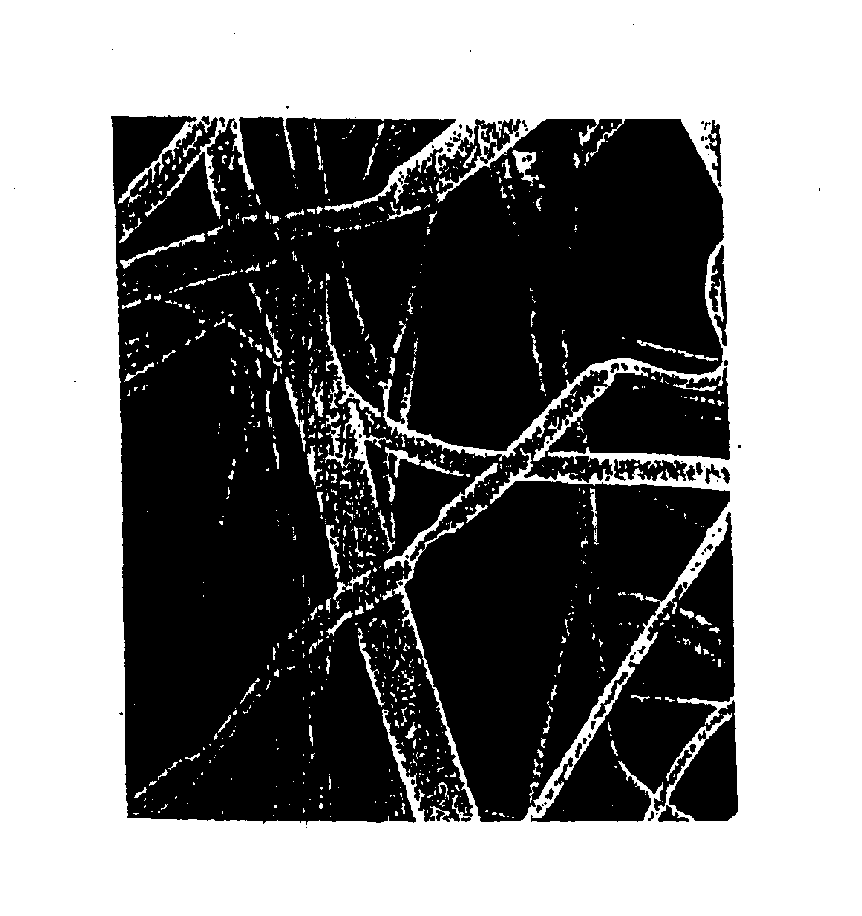
图2及3为处理前的一种可颈缩材料的范例的显微照片。Figures 2 and 3 are photomicrographs of an example of a neckable material prior to processing.
图4及5为处理前的一种可颈缩材料的范例的放大的显微照片。Figures 4 and 5 are enlarged photomicrographs of an example of a neckable material prior to processing.
图6及7为被加热、然后颈缩并在保持其颈缩状态下被冷却的一种可颈缩材料的范例的显微照片。Figures 6 and 7 are photomicrographs of an example of a neckable material that is heated, then necked and cooled while maintaining its necked state.
图8及9为被加热到约30℃然后被拉伸的一种可颈缩材料的放大的显微照片:Figures 8 and 9 are enlarged photomicrographs of a neckable material heated to about 30°C and then stretched:
图10及11为被加热到约80℃然后被拉伸的一种可颈缩材料的放大的显微照片:Figures 10 and 11 are enlarged photomicrographs of a neckable material heated to about 80°C and then stretched:
图12及13为被加热到约105℃然后被拉伸的一种可颈缩材料的放大的显微照片:Figures 12 and 13 are enlarged photomicrographs of a neckable material heated to about 105°C and then stretched:
图14及15为被加热到约130℃然后被拉伸的一种可颈缩材料的放大的显微照片:Figures 14 and 15 are enlarged photomicrographs of a neckable material heated to about 130°C and then stretched:
图16及17为被加热到约150℃然后被拉伸的一种可颈缩材料的放大的显微照片:Figures 16 and 17 are enlarged photomicrographs of a neckable material heated to about 150°C and then stretched:
图18为一种防微粒穿透材料的样品在热处理期间所测得的温度对峰值负荷下所吸收的总能量的图。Figure 18 is a graph of measured temperature versus total energy absorbed at peak load for a sample of a particle barrier material during heat treatment.
参考图1,在此用10来示意说明制造一种改进的防微粒穿透非织造材料(也就是一种具有改进的对微粒穿透的阻挡性的非织造材料)的加工范例。图1描述一个利用一系列加热滚筒或蒸汽滚筒进行热处理的加工过程。Referring to FIG. 1 , there is schematically illustrated at 10 an example of a process for making an improved particle penetration resistant nonwoven material (ie, a nonwoven material having improved barrier properties to particle penetration). Figure 1 depicts a heat treatment process utilizing a series of heated or steam rollers.
依照本发明,一种非织造可颈缩材料12自供给滚筒14退绕,并随沿箭头方面旋转的供给滚筒14沿所示箭头方向移动。In accordance with the present invention, a
非织造可颈缩材料12可由一种或多种熔喷加工过程形成,并不必先贮存在供给滚筒14上而直接通过夹持辊16前进。The
可颈缩材料12通过一系列呈反S回路的加热滚筒(即蒸汽滚筒)16~26。蒸汽滚筒16~26的通常外径是609.6mm,但其他尺寸也可使用。可颈缩材料在蒸汽滚筒上进行热处理的接触或停留时间随着诸如蒸汽滚筒的温度、材料种类和/或基重、材料中熔喷纤维的直径等因素而变化。接触时间应足以将非织造可颈缩材料12加热至可颈缩材料的峰值总吸收能至少比可颈缩材料在室温下所吸收的能量约大250%的温度。例如,接触时间应足以将非织造可颈缩材料12加热至可颈缩材料的峰值总吸收能至少比可颈缩材料在室温下所吸收能量约大275%的温度。再一个例子,可颈缩材料可被加热到可颈缩材料的峰值总吸收能比可颈缩材料在室温下所吸收能量高约300%至1000以上的温度。The
本发明可用如聚烯烃、聚酯及聚酰胺之类的聚合物来进行。聚烯烃的例子包括一种或多种聚乙烯、聚丙烯、聚丁烯、乙烯共聚物、丙烯共聚物及丁烯共聚物。已发现可用的聚丙烯包括(例如)可以从Himont公司购得的商品名为PF-015的聚丙烯和从Exxon化学公司购得的商品名为Exxon 3445G的聚丙烯。这些材料的化学性能可以从他们各自的制造商处得到。The invention can be practiced with polymers such as polyolefins, polyesters and polyamides. Examples of polyolefins include one or more of polyethylene, polypropylene, polybutene, ethylene copolymers, propylene copolymers, and butene copolymers. Polypropylenes that have been found useful include, for example, polypropylene available under the tradename PF-015 from Himont Corporation and Exxon 3445G from Exxon Chemical Company. Chemical properties of these materials can be obtained from their respective manufacturers.
一般来说,当非织造可颈缩材料12是由聚烯烃(例如聚丙烯)形成的熔喷热塑性聚合物纤维的非织造纤维网时,在蒸汽滚筒上的停留时间应足以将熔喷纤维加热到高于聚合物的α-转变温度到比熔化开始并达到5%的液体分数时的温度低约10%的温度范围。Generally, when the
例如,熔喷聚丙烯纤维的非织造纤维网可以在表面温度加热到约90℃至约150℃(194~302°F)的一系列蒸汽滚筒上通过,接触时间约为1至约300秒,以对该纤维网提供所需要的热量。另一方面和/或此外,非织造纤维网可由红外辐射、微波、超声波能、火焰、热气、热液等加热。例如,非织造纤维网可通过热烘箱处理。For example, a nonwoven web of meltblown polypropylene fibers may be passed over a series of steam drums heated to a surface temperature of about 90°C to about 150°C (194 to 302°F) for a contact time of about 1 to about 300 seconds, To provide the required heat to the fiber web. Alternatively and/or additionally, the nonwoven web can be heated by infrared radiation, microwaves, ultrasonic energy, flames, hot air, hydrothermal fluids, and the like. For example, nonwoven webs can be processed through a heated oven.
显然发明人不应局限于特定理论,但是据信在张力施加前,将熔喷热塑性非弹性体的、一般为结晶性的聚合物纤维的非织造纤维网加热到高于聚合物的α-转变温度的温度这一点很重要。高于α-转变温度时,聚合物纤维中的结晶能被退火成改性结构,在冷却时,它在纤维中保持一种拉伸构型,从而增加了由这类纤维形成的非织造纤维网对微粒穿透的阻挡性(也就是防微粒穿透性)。还相信熔喷纤维不应被加热到高于该聚合物熔化开始并达到5%液体分数的温度,此温度最好应比所测得的该聚合物熔化开始并达到5%的液体分数的温度低的10%以上。一个大略估计加热所达到的上限温度的方法是聚合物的熔点(用Kelvin温度表示)乘以0.95。Obviously the inventors should not be bound by a particular theory, but it is believed that prior to application of tension, the nonwoven web of meltblown thermoplastic non-elastomeric, generally crystalline polymer fibers is heated above the α-transition of the polymer. The temperature of the temperature is very important. Above the α-transition temperature, the crystallization in the polymer fiber can be annealed into a modified structure which, on cooling, maintains a stretched configuration in the fiber, thus increasing the strength of the nonwoven fibers formed from such fibers. The barrier properties of the mesh to particle penetration (ie particle penetration resistance). It is also believed that the meltblown fiber should not be heated to a temperature higher than the temperature at which the polymer begins to melt and reaches a 5% liquid fraction, and this temperature should preferably be higher than the measured temperature at which the polymer begins to melt and reaches a 5% liquid fraction Low by more than 10%. A rough estimate of the upper temperature reached by heating is to multiply the melting point of the polymer (expressed in Kelvin temperature) by 0.95.
重要的是,据信在一特定的温度范围内加热熔喷纤维,使纤维在颈缩期间被拉伸,而不是在对张力的响应中只是彼此滑动。这种拉伸力贯穿熔喷纤维分布,以致至少一部分单根熔喷纤维的一些区段的纤维直径明显小于其紧密邻接区段的纤维直径。据信单根熔喷纤维变窄的区段和防微粒穿透性的提高相联系。纤维直径的这种变化可以在非织造防微粒穿透材料的扫描电子显微照片中观察到。一般来说,单根熔喷纤维中显示出直径减小的区段的纤维直径应该比其紧密邻接的纤维部分的纤维直径至少小约10%。例如,被牵伸或变窄的部分的纤维直径可以比其紧密邻接部分的纤维直径约小10~95%。再一个例子,被牵伸或变窄的部分的纤维直径可以比其紧密邻接部分的纤维直径约小10~50%。Importantly, it is believed that heating the meltblown fibers within a specific temperature range causes the fibers to be stretched during necking rather than simply sliding against each other in response to tension. This stretching force is distributed throughout the meltblown fibers such that at least some of the individual meltblown fibers have segments having fiber diameters that are significantly smaller than the fiber diameters of immediately adjacent segments. It is believed that the narrowed segments of the individual meltblown fibers correlate with increased resistance to particle penetration. This change in fiber diameter can be observed in scanning electron micrographs of nonwoven particle barrier materials. Generally, the segment of an individual meltblown fiber exhibiting a reduced diameter should have a fiber diameter that is at least about 10% smaller than the fiber diameter of its immediately adjacent portion of the fiber. For example, the fiber diameter of the drawn or narrowed portion may be about 10-95% smaller than the fiber diameter of its immediately adjacent portion. As yet another example, the fiber diameter of the drawn or narrowed portion may be about 10-50% smaller than the fiber diameter of its immediately adjacent portion.
此外,牵伸力可改变非织造纤维网中熔喷纤维的一般取向,从一种随机构型变为某种程度上取向的或线性构型。据信纤维的这种取向引起非织造纤维网中的孔隙的几何形状的变化。我们认为对照材料所含的孔隙倾向于圆形。在加热处理和拉伸后,这些孔被认为变成具有相同的横截面积但稍微呈椭圆形或拉伸的形状的孔。由于在不改变孔隙的总面积的情况下孔的最窄处的尺寸可以减小,因而变窄的孔对微粒和/或液体微滴的通过的阻挡性提高,但并不减小夹带有微粒的气体或其他流体(如液体)通过的有效面积。In addition, the drafting force can change the general orientation of the meltblown fibers in the nonwoven web from a random configuration to a somewhat oriented or linear configuration. It is believed that this orientation of the fibers causes a change in the geometry of the pores in the nonwoven web. We believe that the pores contained in the control material tend to be circular. After heat treatment and stretching, these pores are considered to become pores with the same cross-sectional area but slightly oval or stretched shape. Since the size of the narrowest part of the pore can be reduced without changing the total area of the pore, the narrowed pore increases the resistance to the passage of particles and/or liquid droplets, but does not reduce the entrainment of particles The effective area through which a gas or other fluid (such as a liquid) passes.
据信处理后的非织造材料的单根熔喷纤维的被牵伸部分和孔的几何形状的改变一起或结合起来是适合被处理的非织造材料的,因而微粒的穿透至少要比末经处理而发生上述纤维直径和/或纤维取向变化的同一非织造纤维网减少10%以上。It is believed that the drawn portion of the individual meltblown fibers of the treated nonwoven is adapted to the nonwoven treated together or in combination with changes in the geometry of the holes so that the penetration of the particles is at least greater than that of an untreated nonwoven. The same nonwoven web treated with the aforementioned changes in fiber diameter and/or fiber orientation was reduced by more than 10%.
熔喷纤维的非织造纤维网可利用常规的熔喷加工方法来制成。最好是非织造纤维网的熔喷纤维包括熔喷微纤以提高防微粒穿透性。例如,由解析图像分析测定,至少约50%的熔喷微纤的平均直径可小于约5微米。另一例子说明,至少约有50%的熔喷微纤可以是平均直径小于3微米的超细纤维。再一个例子说明,约60~100%的熔喷微纤的平均直径可小于5微米或可为超细微纤。Nonwoven webs of meltblown fibers can be formed using conventional meltblown processing methods. Preferably, the meltblown fibers of the nonwoven web include meltblown microfibers for improved particle barrier properties. For example, at least about 50% of the meltblown microfibers can have an average diameter of less than about 5 microns, as determined by analytical image analysis. As another example, at least about 50% of the meltblown microfibers can be microfibers having an average diameter of less than 3 microns. As yet another example, about 60-100% of the meltblown microfibers may have an average diameter of less than 5 microns or may be ultrafine microfibers.
非织造纤维网还可以是熔喷纤维和一种或多种辅助材料的混合物。这类非织造纤维网的例子可参考美国专利4,100,324和4,803,117。其内容在此并入以供参考。在这里,熔喷纤维及其他材料被混合形成纤维随机分布的单一粘结纤维网。这类混合物可以通过将纤维和/或微粒加到携带有熔喷纤维的气流中而形成,从而在熔喷纤维收集在收集装置上之前,熔喷纤维和其他材料可紧密缠结混合,以形成一种熔喷纤维和其他材料随机分布的粘结纤维网。可以用于这类非织造复合纤维网的有用的材料包括(例如)木浆纤维、天然及合成短纤维(例如棉花、羊毛、石棉、人造丝、聚酯、聚酰胺、玻璃、聚烯烃、纤维素衍生物等)、多组分纤维、吸收性纤维、导电纤维、以及微粒,如活性炭/碳、粘土、淀粉、金属氧化物、超吸收材料以及这类材料的混合物。其他种类的非织造复合纤维网也可以使用。例如,可使用一种水力缠结的非织造复合纤维网,如Radwanski等人的美国专利4,931,355及4,950,531所公开。这些专利的内容在此引入以供参考。The nonwoven web can also be a blend of meltblown fibers and one or more auxiliary materials. Examples of such nonwoven webs can be found in US Patent Nos. 4,100,324 and 4,803,117. The contents of which are incorporated herein by reference. Here, meltblown fibers and other materials are mixed to form a single bonded web of randomly distributed fibers. Such mixtures may be formed by adding fibers and/or particulates to an air stream carrying the meltblown fibers so that the meltblown fibers and other materials are intimately intertwined before the meltblown fibers are collected on a collection device to form A bonded web of meltblown fibers and other materials randomly distributed. Useful materials that can be used for such nonwoven composite webs include, for example, wood pulp fibers, natural and synthetic staple fibers (such as cotton, wool, asbestos, rayon, polyester, polyamide, glass, polyolefin, fiber derivatives, etc.), multicomponent fibers, absorbent fibers, conductive fibers, and particulates such as activated carbon/carbon, clay, starch, metal oxides, superabsorbent materials, and mixtures of such materials. Other types of nonwoven composite webs can also be used. For example, a hydroentangled nonwoven composite web can be used, as disclosed in US Pat. Nos. 4,931,355 and 4,950,531 to Radwanski et al. The contents of these patents are incorporated herein by reference.
在蒸汽滚筒上被加热的可颈缩材料12通过一个S形滚筒装置30的夹持点28以如堆叠滚筒32和34处的旋转方向箭头所示的反S路线前进。从S形滚筒装置30出来,被加热的可颈缩材料12从由传动滚筒40和42构成的传动滚筒装置38的夹持点36通过。由于S形滚筒装置30的圆周线速度被控制在低于传动滚筒装置38的圆周线速度,所以被加热的可颈缩材料12在S形滚筒装置30以及传动滚筒装置38的夹持点之间被拉伸。通过调整这些滚筒的速度差,使被加热的可颈缩材料12得到拉伸,从而使其颈缩所需的量,并且在它冷却时,该材料可保持这种拉伸、颈缩状态。其他影响被加热的可颈缩材料的颈缩的因素是施加张力的滚筒间的距离、牵伸段数以及保持在张力状态下的被加热材料的总长度。可以借助冷却流体(如冷空气或水喷雾)加强冷却。The
一般来说,滚筒的速度差足以使被加热的可颈缩材料12颈缩到至少比原宽(即张力施加前的宽度)小约10%的宽度。例如,被加热的可颈缩材料12可被颈缩到比原宽小约15%至约50%的宽度。Generally, the difference in roller speed is sufficient to neck the
本发明考虑使用其他方法来拉伸被加热的可颈缩材料12。例如,可使用拉幅机或其他横机方向拉伸器装置,这样可在其他方向扩张可颈缩材料12,例如横向拉张,从而使成品材料44在冷却后将具有改进的对微粒穿透的阻挡性。The present invention contemplates the use of other methods for stretching the
重要的是,本发明的方法颈缩可在不损害该材料的孔隙度的情况下使非织造材料颈缩,以便部分熔喷纤维被拉伸,使得至少一部分单根熔喷纤维的一些区段的纤维直径明显小于其紧密邻接区段的纤维直径。熔喷纤维纤维网有抗颈缩和拉伸倾向,因为它们具有高度缠结的细纤维网络。同样由于这种高度缠结的网络,使它们能够透气和水汽而相对地不透微粒。这类纤维网络中由于撕破或撕裂而发生的显著变化,可使微粒穿透。Importantly, the method necking of the present invention can neck the nonwoven material without compromising the porosity of the material so that some of the meltblown fibers are stretched so that at least some sections of the individual meltblown fibers The fiber diameter of a is significantly smaller than that of its immediately adjacent segment. Meltblown fiber webs tend to resist necking and stretching because they have a highly entangled network of fine fibers. Also due to this highly entangled network, they are breathable and moisture vapor resistant while being relatively impermeable to particles. Significant changes in such fibrous networks due to tearing or tearing allow particle penetration.
已发现,如上所述加热熔喷纤维网、使被加热的材料颈缩以在单根熔喷纤维中产生纤维取向和/或被拉伸或变窄小的部分,然后冷却该被颈缩的材料,在不牺牲所需的熔喷纤维纤维网的孔隙度的情况下,可以使微粒穿透率比其中熔喷纤维不存在这种纤维取向和/或纤维直径变化的同样的非织造纤维网至少减少10%以上。一般说来,本发明的加工方法并不产生明显减少防微粒穿透材料对微粒穿透的阻挡性的破裂或撕裂。多种在不加热情况下生产包括具有上述直径变化的熔喷纤维的微粒穿透材料的尝试都没有成功。It has been found that heating the meltblown web as described above, necking the heated material to produce fiber orientation and/or stretching or narrowing small portions in individual meltblown fibers, and then cooling the necked Materials that, without sacrificing the desired porosity of the meltblown fiber web, allow for greater particle penetration than the same nonwoven web in which the meltblown fibers do not have such fiber orientation and/or fiber diameter variations At least 10% more reduction. In general, the processing methods of the present invention do not produce cracks or tears that would significantly reduce the barrier properties of the particle barrier material to particle penetration. Attempts to produce particle penetrating materials comprising meltblown fibers having the above-described diameter variation without heating have been unsuccessful.
另外和/或此外,例如基重约为每平方米51克的本发明的防微粒穿透材料可提供的阻挡微粒穿透的作用,若用微粒的穿透率表示,对平均直径范围为约1.5微米到约10微米以上的微粒的微粒穿透率小于约4%。例如,对平均直径范围为约1.5微米到约7微米的微粒,这种防微粒穿透材料的微粒穿透率可小于约2%。对平均直径大于约0.09微米的微粒,这种防微粒穿透材料的微粒穿透率可小于约50%。例如,对平均直径范围为约0.09至约1微米的微粒,这种防微粒穿透材料的微粒穿透率可小于约40%。再一个例子,对平均直径大于约0.1微米的微粒,这种防微粒穿透材料的微粒穿透率小于约50%。例如,一种基重约为51gsm的防微粒穿透材料对平均直径范围为约0.3到1微米的微粒的微粒穿透率可小于约40%。Additionally and/or additionally, for example, the particle barrier material of the present invention having a basis weight of about 51 grams per square meter can provide a barrier to particle penetration, expressed in terms of particle penetration rate, for an average diameter range of about The particle penetration is less than about 4% for particles between 1.5 microns and above about 10 microns. For example, the particle barrier material may have a particle penetration rate of less than about 2% for particles having an average diameter in the range of about 1.5 microns to about 7 microns. Such particle barrier materials may have a particle penetration rate of less than about 50% for particles having an average diameter greater than about 0.09 microns. For example, such particle barrier materials may have a particle penetration rate of less than about 40% for particles having an average diameter in the range of about 0.09 to about 1 micron. In yet another example, the particle barrier material has a particle penetration rate of less than about 50% for particles having an average diameter greater than about 0.1 microns. For example, a particle barrier material having a basis weight of about 51 gsm may have a particle penetration rate of less than about 40% for particles having an average diameter in the range of about 0.3 to 1 micron.
更进一步,本发明的防微粒穿透材料可具有超过约6.10标准0.0283m3/分/0.0929m2的孔隙度。例如,防微粒穿透材料可具有范围为约7.62~30.48m3/分/m2的孔隙度。如另一例子所述,防微粒穿透材料可具有范围为约9.14~22.86m3/分/m2的孔隙度。Still further, the particle barrier material of the present invention may have a porosity in excess of about 6.10 gauge 0.0283 m3 /min/0.0929 m2 . For example, the particle barrier material may have a porosity in the range of about 7.62 to 30.48 m 3 /min/m 2 . As another example, the particle barrier material can have a porosity in the range of about 9.14 to 22.86 m 3 /min/m 2 .
防微粒穿透材料的基重最好约为6~400克/米2。例如,基重范围可为约10至150克/米2。另一例子,基重范围可为约15至90克/米2。防微粒穿透性一般随基重的增加而提高。以往,为了提供令人满意水平的韧性和对微粒穿透的阻挡性,需要较大的基重。本发明的防微粒穿透材料可在相对低的基重(如约10至约30gsm)下提供令人满意的阻挡微粒穿透性能。这是部分由于在张力施加前加热该材料而减少了通常会对薄型防微粒穿透材料所造成的撕破和撕裂,而这种撕破或撕裂会破坏防微粒穿透性。此外,据信经处理的非织造材料的单根熔喷纤维的被拉伸部分以及孔隙的几何形状的改变,一起或结合起来提供了改进的对微粒穿透的阻挡性。虽然颈缩过程倾向于增加非织造材料的基重,这种增加一般很小,特别是同颈缩后材料所提供的微粒穿透率的降低相比是很小的。例如,一些材料的基重可增加约15%或更小,而微粒穿透率的减少则远大于15%(如25%、50%或更多)。The particle barrier material preferably has a basis weight of about 6-400 g/ m2 . For example, the basis weight may range from about 10 to 150 grams per square meter. As another example, the basis weight may range from about 15 to 90 grams per square meter. Particle penetration resistance generally increases with increasing basis weight. Historically, larger basis weights have been required in order to provide a satisfactory level of toughness and barrier to particle penetration. The particle barrier materials of the present invention can provide satisfactory particle barrier properties at relatively low basis weights (eg, from about 10 to about 30 gsm). This is due in part to the fact that heating the material prior to tensioning reduces the tearing and tearing that typically occurs with thin gauge particle barrier materials, which would destroy particle barrier properties. In addition, it is believed that the stretched portion of the individual meltblown fibers of the treated nonwoven, as well as the altered geometry of the pores, together or in combination provide improved barrier to particle penetration. While the necking process tends to increase the basis weight of the nonwoven material, this increase is generally small, especially when compared to the reduction in particle penetration provided by the necked material. For example, some materials may have an increase in basis weight of about 15% or less with a decrease in particle penetration of much greater than 15% (eg, 25%, 50% or more).
因此,本发明提供一种经济实用的防微粒穿透材料的另外一个理由是使薄型非织造防微粒穿透材料能更有效地利用。Thus, another reason for the present invention to provide an economical particle barrier is to enable more efficient use of thin nonwoven particle barriers.
本发明的防微粒穿透材料还可以和一层或多层另一种材料结合形成多层层压制品。其他层可以是(例如)机织物、针织物、粘合梳理网层、连续长丝纤维网、熔喷纤维网以及上述材料的结合。希望其他材料具有和防微粒穿透材料相同程度的或更大程度的孔隙度。例如,若防微粒穿透材料的孔隙度大于6.10m3/分/m2,那末其他层的材料也应该具有至少约6.10m3/分/m2的孔隙度。The particle barrier material of the present invention may also be combined with one or more layers of another material to form a multilayer laminate. Other layers can be, for example, wovens, knitted fabrics, layers of bonded carded webs, continuous filament webs, meltblown webs, and combinations of the foregoing. Other materials are expected to have the same or greater degree of porosity as the particle barrier material. For example, if the particle barrier material has a porosity of greater than 6.10 m 3 /min/m 2 , then the material of the other layers should also have a porosity of at least about 6.10 m 3 /min/m 2 .
在本发明的一个实施方案中,一层或多层防微粒穿透材料可以和一层或多层其他防微粒穿透材料重叠铺网而形成多层层压制品。例如,这些层可以交叉铺网而使每一层织物的纤维取向的一般方向(如机器方向)几乎是互相垂直的。在其他实施方案中,这些层可以重叠铺网使各层间的纤维取向的一般方向成0°到90°之间的角度。In one embodiment of the present invention, one or more layers of particle barrier material may be overlapped with one or more layers of other particle barrier material to form a multilayer laminate. For example, the layers may be cross-laid such that the general direction of fiber orientation (eg, machine direction) of the fabric of each layer is nearly perpendicular to each other. In other embodiments, the layers may be overlapped so that the general direction of fiber orientation between the layers is at an angle between 0° and 90°.
据信,多层层压制品中各层纤维取向的变化应提高层压制品对微粒穿透的阻挡性。如上所述,各层中纤维的取向造成非织造纤维网中孔隙的几何形状的改变。在热处理和拉伸以后,可以认为这些孔既呈稍微椭圆或拉长的形状但保持大致相同的横截面积。因为据信这些孔的最窄的尺寸可在不改变孔的总面积的情况下减小,所以变窄的孔对微粒和/或液体微滴的穿透有更大的阻力,但对并不减少可供夹带有微粒的气体或其他流体通过的有效面积。一般说来,可以认为层压制品的各层中取向的椭圆孔(在非常有限的意义上)类似于一种极化薄膜。通过改变各层间纤维取向的一般方向以使其形成0到90度的角度,认为可改变这种层压制品对微粒穿透的阻挡性,至少在很小的程度上有所改善,从而使得不同的取向角度可以产生不同的阻挡性。It is believed that the variation in fiber orientation of the individual layers in the multilayer laminate should increase the barrier properties of the laminate to particle penetration. As noted above, the orientation of the fibers in each layer results in a change in the geometry of the pores in the nonwoven web. After heat treatment and stretching, the pores can be considered to have both a slightly elliptical or elongated shape but retain approximately the same cross-sectional area. Because it is believed that the narrowest dimensions of these pores can be reduced without changing the total area of the pores, the narrowed pores have greater resistance to the penetration of particles and/or liquid droplets, but do not Reduces the effective area available for passage of particulate-laden gases or other fluids. In general, the oriented elliptical pores in the layers of the laminate can be considered (in a very limited sense) to resemble a polarizing film. By altering the general direction of fiber orientation between the layers so that they form an angle of 0 to 90 degrees, it is believed that the barrier properties of such laminates to particle penetration can be altered, at least to a small extent, such that Different orientation angles can produce different barrier properties.
图2~9为未按本发明的方法处理的熔喷聚丙烯纤维的非织造纤维网的扫描电子显微照片。图2及3所示的材料是用常规熔喷加工设备制成的519sm的熔喷聚丙烯纤维的非织造纤维网。Figures 2-9 are scanning electron micrographs of nonwoven webs of meltblown polypropylene fibers not treated in accordance with the process of the present invention. The material shown in Figures 2 and 3 is a nonwoven web of 519 sm meltblown polypropylene fibers made using conventional meltblown processing equipment.
更具体地说,图2及3为熔喷聚丙烯纤维的非织造纤维网放大50倍(线性放大率)的显微照片。图4为图2及3所示材料的一部分放大5000倍(线性放大率)的显微照片。图5为图2及3所示材料的一部分放大1000倍(线性放大率)的显微照片。More specifically, Figures 2 and 3 are photomicrographs at 50X magnification (linear magnification) of a nonwoven web of meltblown polypropylene fibers. Figure 4 is a photomicrograph at 5000X magnification (linear magnification) of a portion of the material shown in Figures 2 and 3 . Figure 5 is a photomicrograph at 1000X magnification (linear magnification) of a portion of the material shown in Figures 2 and 3 .
图6和7是加热到一个特定温度、在此温度下拉伸并在拉伸状态下冷却的材料的扫描电子显微照片。图6和7所示的织物用常规熔喷加工设备所制成的51gsm的熔喷聚丙烯纤维的未粘合的非织造纤维网所制成。非织造材料通过加热到110℃的一系列蒸汽滚筒,总接触时间约为10秒。施加张力使被加热的非织造材料颈缩约30%(即约30%颈缩),并在保持颈缩状态的条件下将被颈缩的非织造材料冷却到室温。Figures 6 and 7 are scanning electron micrographs of materials heated to a particular temperature, stretched at that temperature, and cooled in the stretched state. The fabrics shown in Figures 6 and 7 were made from an unbonded nonwoven web of 51 gsm meltblown polypropylene fibers produced on conventional meltblown processing equipment. The nonwoven was passed through a series of steam rollers heated to 110°C for a total contact time of approximately 10 seconds. Tension is applied to neck the heated nonwoven by about 30% (ie, about 30% necking), and the necked nonwoven is cooled to room temperature while maintaining the necked state.
更具体地说,图6和7是由熔喷聚丙烯纤维组成并经上述处理的防微粒穿透材料放大50倍(线性放大率)的显微照片。与图2和图3比较,防微粒穿透材料的熔喷纤维中的随机构型较少,并看来沿照片的宽度方向取向。More specifically, Figures 6 and 7 are photomicrographs at 50X magnification (linear magnification) of a particle barrier material composed of meltblown polypropylene fibers and treated as described above. Compared to Figures 2 and 3, there is less random configuration in the meltblown fibers of the particle barrier material and appear to be oriented across the width of the photograph.
图8~17是加热到各种温度、然后在这些温度下拉伸直至断裂的材料的扫描电子显微照片。扫描电子显微照片是在断裂附近的区域拍摄的。形成这种材料所用的特定条件和程序在实例1中给出。图8~17所示材料是一种用常规熔喷加工设备所制成的51gsm的熔喷聚丙烯纤维的末粘合非织造纤维网。Figures 8-17 are scanning electron micrographs of materials heated to various temperatures and then stretched at these temperatures until fracture. Scanning electron micrographs were taken in the area near the fracture. The specific conditions and procedures used to form this material are given in Example 1. The material shown in Figures 8-17 is an unbonded nonwoven web of 51 gsm meltblown polypropylene fibers produced using conventional meltblown processing equipment.
更具体地,图8和9是一种加热到约30℃、然后拉伸的可颈缩材料的放大的显微照片。图8是一部分该材料放大1500倍(线性放大率)的显微照片。图9是一部分该材料放大1000倍(线性放大率)的显微照片。More specifically, Figures 8 and 9 are enlarged photomicrographs of a neckable material heated to about 30°C and then stretched. Figure 8 is a photomicrograph at 1500X magnification (linear magnification) of a portion of this material. Figure 9 is a photomicrograph at 1000X magnification (linear magnification) of a portion of this material.
图10和11是一种加热到约80℃、然后拉伸的可颈缩材料的放大的显微照片。图10和11是一部分该材料放大1000倍(线性放大率)的显微照片。Figures 10 and 11 are enlarged photomicrographs of a neckable material heated to about 80°C and then stretched. Figures 10 and 11 are photomicrographs at 1000X magnification (linear magnification) of a portion of this material.
图12和13是一种加热到约105℃、然后拉伸的可颈缩材料的放大的显微照片。图12是一部分该材料放大1500倍(线性放大率)的显微照片。图13是一部分该材料放大1000倍(线性放大率)的显微照片。Figures 12 and 13 are enlarged photomicrographs of a neckable material heated to about 105°C and then stretched. Figure 12 is a photomicrograph at 1500X magnification (linear magnification) of a portion of this material. Figure 13 is a photomicrograph at 1000X magnification (linear magnification) of a portion of this material.
图14和15是一种加热到约130℃、然后拉伸的可颈缩材料的放大的显微照片。图14是一部分该材料放大700倍(线性放大率)的显微照片。图15是一部分该材料放大3000倍(线性放大率)的显微照片。Figures 14 and 15 are enlarged photomicrographs of a neckable material heated to about 130°C and then stretched. Figure 14 is a photomicrograph at 700X magnification (linear magnification) of a portion of this material. Figure 15 is a photomicrograph at 3000X magnification (linear magnification) of a portion of this material.
图16和17是一种加热到约150℃、然后拉伸的可颈缩材料的放大的显微照片。图16和17是一部分该材料放大1000倍(线性放大率)的显微照片。Figures 16 and 17 are enlarged photomicrographs of a neckable material heated to about 150°C and then stretched. Figures 16 and 17 are photomicrographs at 1000X magnification (linear magnification) of a portion of this material.
当图8、9、16和17所示的熔喷聚丙烯纤维与图10~15所示的熔喷聚丙烯纤维比较时,图10~15的熔喷聚丙烯纤维中有一些小区段的纤维直径小于其周围部分的纤维直径。看来熔喷聚丙烯纤维在张力施加于被加热的纤维时实际上已被牵伸或延伸。虽然发明人不应受特定的生产操作理论局限,但据信单根熔喷聚丙烯纤维中牵伸区段以及非织造纤维网中纤维取向的存在,说明熔喷聚丙烯纤维被加热到高于聚合物的α-转变温度到比熔化开始并达到5%液体分数的温度低约10%的温度范围内,并被拉伸,使得单根熔喷纤维中形成所希望的牵伸区段(和/或纤维取向),然后冷却,从而使得微粒穿透率比其中熔喷纤维中没有纤维取向和/或纤维直径变化的相同非织造纤维网至少减少约10%。When the melt-blown polypropylene fibers shown in Figures 8, 9, 16 and 17 are compared with the melt-blown polypropylene fibers shown in Figures 10-15, there are some small segments of fibers in the melt-blown polypropylene fibers in Figures 10-15 The diameter is smaller than the fiber diameter of its surrounding part. It appears that meltblown polypropylene fibers are actually drawn or elongated when tension is applied to the heated fibers. While the inventors should not be bound by a particular theory of production operation, it is believed that the presence of stretched segments in the individual meltblown polypropylene fibers and fiber orientation in the nonwoven web indicates that the meltblown polypropylene fibers are heated above The α-transition temperature of the polymer is within the temperature range of about 10% lower than the temperature at which melting begins and reaches a 5% liquid fraction, and is stretched so that the desired stretching section (and and/or fiber orientation), followed by cooling such that particle penetration is at least about 10% less than the same nonwoven web in which there is no fiber orientation and/or fiber diameter variation in the meltblown fibers.
实施例1Example 1
施加张力使一个被保持在特定环境条件下的防微粒穿透材料的样品颈缩。低水平颈缩时断裂和/或撕破可说明防微粒穿透性的降低。所有的样品都在相同环境室内用同一设备测试。The application of tension causes the necking of a sample of particle barrier material held under specified environmental conditions. Fractures and/or tears at low levels of necking may indicate reduced particle penetration resistance. All samples were tested in the same environmental chamber with the same equipment.
所测试的非织造防微粒穿透材料是一种熔喷聚丙烯纤维的末粘合非织造纤维网,它的基重为51gsm。将一块76.2mm×152.4mm(152.4mm长度平行于样品的机器方向(MD))的样品夹到英期特朗(Instron)1122型通用测试仪的76.2mm×25.4mm的夹头上(即每个夹头是76.2mm宽,25.4mm寸高)。在测试期间,夹头周围被Instron 3111型808系列环境室(门上有一窗口)包围,使样品在测量时的环境(温度)可以控制。环境室可程控到所需温度并达到平衡。用一根温度计来确保精确的温度读数。The nonwoven particulate barrier material tested was an unbonded nonwoven web of meltblown polypropylene fibers having a basis weight of 51 gsm. Clamp a piece of 76.2mm×152.4mm (152.4mm length parallel to the machine direction (MD) of the sample) on the 76.2mm×25.4mm chuck of the Instron 1122 universal tester (that is, every A collet is 76.2mm wide and 25.4mm high). During testing, the chuck is surrounded by an Instron Model 3111 Series 808 Environmental Chamber (with a window in the door), allowing the environment (temperature) of the sample to be measured while it is being measured. The environmental chamber can be programmed to the desired temperature and equilibrated. Use a thermometer to ensure accurate temperature readings.
在夹头上加负荷后,样品被夹持在环境室中至少3分钟,以使样品加热升温,并使该室重新获得平衡。After loading the chuck, the sample is held in the environmental chamber for at least 3 minutes to allow the sample to heat up and the chamber to re-equilibrate.
把摄象机移到能从环境室的窗口看到样品的位置上。摄象机的透镜到样品的距离约为304.8mm。用一大透镜聚焦以放大样品。摄象机被启动并运行5秒钟以便在Instron十字头启动之前在零张力下提供样品宽度读数。对每个样品进行下列Instron测量:(1)峰值负荷、峰值伸长和峰值总吸收能;(2)断裂负荷、断裂伸长和断裂时总吸收能。张力测试用Instron测试仪基本上按联邦测试标准编号191A的方法5100进行。样品标距长度设为76.2mm,十字头的移动速度设定为每分钟304.8mm。Move the camera to a position where the sample can be seen through the window of the environmental chamber. The distance from the camera lens to the sample is about 304.8 mm. Focus with a large lens to magnify the sample. The video camera was activated and ran for 5 seconds to provide a sample width reading at zero tension before the Instron crosshead was activated. The following Instron measurements were made on each sample: (1) Peak Load, Peak Elongation, and Peak Total Absorbed Energy; (2) Break Load, Break Elongation, and Total Absorbed Energy at Break. Tensile testing was performed using an Instron tester essentially in accordance with Method 5100 of Federal Test Standard No. 191A. The gauge length of the sample is set to 76.2 mm, and the moving speed of the crosshead is set to 304.8 mm per minute.
摄象机录象带在能停格的录相带播放机中重放。利用停格这一特点,样品宽度可以直接从视屏上测出。观看未拉伸样品的录相带(也就是在Instron测试仪启动前的录相带),进行测定。将录相带前进到样品断裂的点,然后再倒退二、三个片格至刚好样品断裂前的点上,直接从视屏上测出最小样品宽度。The video camera tape is played back in a video tape player with stop motion. Utilizing the stop frame feature, the sample width can be measured directly from the video screen. The measurements were made by viewing the videotape of the unstretched sample (ie, before the Instron tester was started). Advance the tape to the point where the sample breaks, then rewind two or three frames to the point just before the sample breaks, and measure the minimum sample width directly from the video screen.
关于张力性质,负荷是指样品拉伸时所受的力或阻力。峰值负荷是指样品拉伸时受到的最大负荷。断裂负荷是指样品断裂或破坏时受到的负荷。本文对76.2mm宽152.4mm长的样品进行测定,负荷用力的单位(即磅力)表示。With regard to tensile properties, load refers to the force or resistance against which a sample is stretched. Peak load refers to the maximum load experienced by the sample when stretched. The breaking load refers to the load that the sample is subjected to when it breaks or fails. In this paper, a sample with a width of 76.2 mm and a length of 152.4 mm is measured, and the load is expressed in units of force (ie, pound force).
总吸收能是指应力一应变(即负荷对伸长)曲线到达某一特定负荷时该曲线下方的总面积。峰值总吸收能是指这一曲线到达峰顶点或最大负荷时该曲线下方的总面积。断裂时总吸收能是指这一曲线到达样品的断裂或破坏负荷时该曲线下方的总面积。总吸收能用功/长度2单位表示,如0.11j/645.16mm2。The total absorbed energy is the total area under the stress-strain (ie, load versus elongation) curve when it reaches a specific load. The peak total absorbed energy is the total area under the curve when the curve reaches the peak apex or maximum load. The total absorbed energy at break is the total area under the curve at which the curve reaches the breaking or failure load of the sample. The total absorbed energy is expressed in work/
伸长或拉伸是指非织造纤维网的初始未拉伸尺寸(即长度)和它在某一特定方向被拉伸后的尺寸的差除以非织造纤维网在同一方向的初始未拉伸尺寸。伸长用百分数表示时,将此值乘以100。峰值伸长是材料被拉伸到峰值负荷时测得的伸长。断裂伸长是当材料被拉伸到断裂或破坏时测得的伸长。Elongation or stretching refers to the difference between the initial unstretched dimension (i.e. length) of the nonwoven web and its dimension after being stretched in a particular direction divided by the initial unstretched dimension of the nonwoven web in the same direction size. When expressing elongation as a percentage, multiply this value by 100. Peak elongation is the elongation measured when a material is stretched to its peak load. Elongation at break is the elongation measured when a material is stretched to break or fail.
表1是未粘合材料(即基重为51gsm的熔喷聚丙烯纤维的非织造纤维网在30℃、55℃、82℃、95℃、105℃、130℃及150℃进行测试时测得的张力性质的总结。表1温度张力性质 30℃ 55℃ 82℃ 95℃ 105℃ 130℃ 150℃断裂颈缩(%) 10.7 21.3 29.4 36.1 39.1 48.5 45.4峰值负荷伸长(%) AVG.1 9.3 22.2 35.0 66.5 95.3 152 112.5Table 1 is unbonded material (i.e. a nonwoven web of meltblown polypropylene fibers with a basis weight of 51 gsm measured at 30°C, 55°C, 82°C, 95°C, 105°C, 130°C and 150°C Summary of tension. Table 1
STD.2 0.8 7.5 7.3 5.4 19 6 12.4断裂伸长(%) AVG. 14.5 26.3 41.3 77.3 105.4 164 132
STD. 2.1 8 7.3 7.7 19 14 25峰值负荷(克) AVG. 4845 4460 3995 3877 3726 2577 1703
STD. 68 283 172 103 183 68 107断裂负荷(克) AVG. 1757 1722 1617 1478 1443 957 649
STD. 96 231 173 147 65 34 112断裂总吸收能 AVG. 1248 2501 3799 7480 9676 10080 5393
STD. 148 760 883 846 1952 1341 1090峰值总吸收能 AVG. 733 2042 3124 6289 8630 9188 4442
STD. 107 716 838 598 2033 336 2831=平均2=标准偏差 time
发现凡是在施加张力前加热样品,几乎对所有的被测变量都有很大的影响。一般来说,通过将聚丙纤维非织造纤维网加热到该熔喷聚丙烯纤维的非织造纤维网的峰值总吸收能至少比它在室温下所吸收能量高约250%的温度;施加一个张力使被加热的非织造纤维网颈缩,以使单根熔喷纤维中产生纤维取向和被拉伸部分;冷却被颈缩非织造纤维网,可在不降低它们的孔隙度的情况下赋予防微粒穿透材料(即熔喷聚丙烯纤维的非织造纤维网)以改进的抗微粒穿透性。发现理想的是将熔喷聚丙烯纤维的非织造纤维网加热到其峰值总吸收能至少比其在室温所吸收能量高约275%的温度。例如,可将熔喷聚丙烯纤维的非织造纤维网加热到它的峰值总吸收能比它在室温所吸收能量高约300%到约1000%以上的温度。It was found that heating the sample before applying tension had a large effect on almost all measured variables. Generally, by heating the nonwoven web of polypropylene fibers to a temperature at which the peak total absorbed energy of the nonwoven web of meltblown polypropylene fibers is at least about 250% greater than the energy it absorbs at room temperature; Heated nonwoven webs are necked to create fiber orientation and stretched portions in individual meltblown fibers; cooling necked nonwoven webs imparts particle resistance without reducing their porosity Penetration material (ie, a nonwoven web of meltblown polypropylene fibers) for improved particle penetration resistance. It has been found desirable to heat the nonwoven web of meltblown polypropylene fibers to a temperature at which the peak total absorbed energy is at least about 275% greater than the energy absorbed at room temperature. For example, a nonwoven web of meltblown polypropylene fibers can be heated to a temperature at which its peak total absorbed energy is about 300% to about 1000% greater than the energy it absorbs at room temperature.
加热明显地降低峰值负荷但明显增大峰值拉伸(足以增加韧性或总吸收能)和颈缩。样品在较高温度时韧性增加表明加工敏感性降低。在室温下只需少量的多余能量纤维网就会断裂,而在温度升高时该纤维网则不易断裂。图18是由表5所示对熔喷聚丙烯的未粘合非织造纤维网所测得的数据以温度对峰值负荷下总吸收能的图,从该图可明显看出加热的作用。在图18中,假定熔喷聚丙烯的非织造纤维网被加热到聚丙烯熔点(即165℃),则没有可观测的峰值总吸收能。Heating significantly reduces peak load but significantly increases peak elongation (enough to increase toughness or total absorbed energy) and necking. The increase in toughness of the samples at higher temperatures indicates a decrease in processing sensitivity. It takes only a small amount of excess energy for the web to break at room temperature, and the web is less prone to breakage at elevated temperatures. Figure 18 is a plot of temperature versus total absorbed energy at peak load from the data obtained in Table 5 for unbonded nonwoven webs of meltblown polypropylene, from which the effect of heating is evident. In Figure 18, assuming that the nonwoven web of meltblown polypropylene is heated to the melting point of polypropylene (ie, 165°C), there is no observable peak total absorbed energy.
一般而言,据信峰值总吸收能增加(即韧性增加)的温度范围大致和下述温度范围相对应,即从大于聚丙烯的α-转变温度到比熔化开始并达到5%液体分数的液固相温度低约10%的温度范围。实施例2In general, it is believed that the temperature range over which the peak total absorbed energy increases (i.e., toughness increases) roughly corresponds to the temperature range from greater than the alpha-transition temperature of polypropylene to the liquid onset of specific melting and up to a 5% liquid fraction. The temperature range where the solidus temperature is about 10% lower. Example 2
对对照样品和经热处理的熔喷防微粒穿透材料的特定的物理性能进行测试。对照防微粒穿透材料是51gsm的熔喷聚丙烯纤维的未粘合非织造纤维网。将该材料加热到230°F(110℃)然后使之颈缩约30%而制得热处理后的防微粒穿透材料。The specific physical properties of the control sample and the heat-treated meltblown particle barrier material were tested. The control particulate barrier material was an unbonded nonwoven web of 51 gsm meltblown polypropylene fibers. Heat treated particle barrier material was produced by heating the material to 230°F (110°C) and then necking it about 30%.
为测定样品的挠性,进行杯压破试验测定。杯压破试验用来评定织物的硬挺度,它通过测定4.5厘米直径的半球形的“脚”压迫一块228.6mm×228.6mm、大致形成直径为6.5厘米、高为6.5厘米的反扣杯子的织物(为保持杯形织物的均一变形,该织物被一个约6.5厘米直径的圆筒围绕)所需的峰值负荷来进行。该“脚”和“杯”成一条直线,以避免脚和杯壁之间的接触而影响峰值负荷。采用FTD-500型负载传感器(500克范围)(该传感器可从新泽西州的Tennsauken的Schaevitz公司得到),脚以每秒6.35mm(381mm/分)的速率下降来测定峰值负荷。To determine the flexibility of the samples, cup crush test measurements were performed. The cup crushing test is used to evaluate the stiffness of the fabric. It compresses a piece of 228.6mm×228.6mm fabric with a diameter of 6.5cm and a height of 6.5cm by measuring a hemispherical "foot" with a diameter of 4.5cm. (To maintain uniform deformation of the cup fabric, the fabric is surrounded by a cylinder about 6.5 cm in diameter) at the desired peak load. The "foot" is aligned with the "cup" to avoid contact between the foot and the cup wall affecting peak loads. Peak load was measured by dropping the foot at a rate of 6.35 mm per second (381 mm/min) using a load cell model FTD-500 (500 gram range) (available from Schaevitz, Tennsauken, NJ).
每块样品的基重基本上按照联邦测试法标准编号191A的方法5041测定。The basis weight of each sample was determined essentially in accordance with Method 5041 of Federal Test Method Standard No. 191A.
孔隙度用购自Frazier精密仪器公司的Frazier透气性测试仪按联邦测试方法5450(标准号191A)测定,但在此样品尺寸为203.2mm×203.2mm而不是177.8mm×177.8mm。孔隙度可用单位面积单位时间的体积为单位表示。例如,每0.0929m2材料每分钟0.0283m3(即0.0283m3/分)/0.0283m3,或0.0283m3/分/0.0929m2)。Porosity was measured using a Frazier Permeability Tester available from Frazier Precision Instruments according to Federal Test Method 5450 (Standard No. 191A), but here the sample size was 203.2 mm x 203.2 mm instead of 177.8 mm x 177.8 mm. Porosity can be expressed in units of volume per unit area per time. For example, 0.0283m 3 per minute per 0.0929m 2 of material (ie 0.0283m 3 /min)/0.0283m 3 , or 0.0283m 3 /min/0.0929m 2 ).
测定防微粒穿透材料的孔隙的有效相当直径。用购自英国Luton的Coulter电子有限公司的“Coulter”测孔仪和“CoulterPOROFIL”测试液,采用液体排量技术测量孔隙尺寸。平均流量孔隙尺寸通过用表面张力非常小的液体(即“Coulter POROFIL”液)湿润测试样品来测定。空气压力施加在样品的一个侧面上,当气压增加时,最后在最大孔中流体的毛细吸力被克服,液体被压出而使空气透过样品。进一步增加空气压力,愈来愈小的孔隙将被清除。这样可建立对经湿润的样品的流量对压力的关系,并可与干样品的结果进行比较,平均流量孔隙尺寸可由代表50%干样流量对压力的曲线与代表湿样流量对压力的曲线的交点测得。在那一特定压力下打开的孔隙的直径(即平均流量孔隙尺寸)可由下面表示式求出:Determining the effective equivalent diameter of the pores of a particle barrier material. Pore size was measured using the liquid displacement technique with a "Coulter" porosimeter and a "Coulter POROFIL" test fluid available from Coulter Electronics Ltd, Luton, UK. The mean flow pore size is determined by wetting the test sample with a liquid of very low surface tension (ie, "Coulter POROFIL" fluid). Air pressure is applied to one side of the sample and as the air pressure increases, eventually the capillary suction of the fluid in the largest pores is overcome and the liquid is forced out allowing air to permeate the sample. Further increasing the air pressure, smaller and smaller pores will be removed. In this way flow versus pressure can be established for the wetted sample and compared with the results for the dry sample, the average flow pore size can be determined from the flow versus pressure curve representing the 50% dry sample versus the flow versus pressure curve representing the wet sample. Intersection is measured. The diameter of the pores that open at that particular pressure (i.e. the mean flow pore size) can be found from the following expression:
孔隙直径(微米)=40τ/压力。在此τ为流体表面张力,单位为毫牛顿/米(mN/M);压力是指所施加的压力,用102Pa表示,可假定用来湿润样品的表面张力非常小的液体与样品的接触角约为零。Pore diameter (micron) = 40τ/pressure. Here τ is the surface tension of the fluid, and the unit is millinewton/meter (mN/M); the pressure refers to the applied pressure, expressed in 10 2 Pa, it can be assumed that the liquid with very small surface tension used to wet the sample and the sample The contact angle is about zero.
微粒截留效率根据IBR测试方法编号E-217(1991年1月15日修订版G)由密执根州的Grass Lake的InterBasic资源公司测定。该试验通过单向竞相通过试验测定悬浮在纯净空气中的干微粒在空气过滤器上的保留量。将一种浓缩的污物悬浮体注入到导向测试样品的喂人气流中。在过滤器的上游和下游气流中均测定微粒尺寸分布。干污物可从通用汽车公司的A.C.Spark Plug分部购得,分细级(0.09~1.0微米)和粗级(1.5~10.0微米以上)。细级微粒的微粒尺寸分布用HIAC/Royco 5109粒子计数系统(可从太平洋科学公司的HIAC/Royco分部得到)测定,粗级微粒的微粒尺寸分布用HIAC/Royco LD 400传感器,S/N 9002-020(可从太平洋科学公司的HIAC/Royco分部得到)测定。试验在室温、每分钟以0.11标准立方米的气流通过一个直径约为90毫米的圆形样品(即约17.68m3/分/m2)的条件下进行。Particulate retention efficiency was determined by InterBasic Resources, Inc. of Grass Lake, Michigan according to IBR Test Method No. E-217 (Rev. G, January 15, 1991). This test measures the retention of dry particulates suspended in purified air on an air filter by a one-way race pass test. A concentrated soil suspension is injected into the feed stream directed at the test sample. The particle size distribution was determined both in the gas stream upstream and downstream of the filter. Dry soils are available from the ACSpark Plug Division of General Motors as fine (0.09 to 1.0 micron) and coarse (1.5 to over 10.0 micron) grades. Particle size distribution for fine particles was determined with a HIAC/Royco 5109 Particle Counting System (available from the HIAC/Royco Division of Pacific Scientific Corporation) and for coarse particles with a HIAC/Royco LD 400 sensor, S/N 9002 -020 (available from the HIAC/Royco Division of Pacific Scientific Corporation) assay. The test is carried out at room temperature with an airflow of 0.11 standard cubic meters per minute passing through a circular sample with a diameter of about 90 mm (ie about 17.68 m 3 /min/m 2 ).
对照防微粒穿材料和经加热处理的防微粒穿透材料的一般性能列于表2。表3和表4是对照防微粒穿透材料和经加热处理和防微粒穿透材料的防微粒穿透试验结果。一般说来,防微粒穿透材料的基重应和对照材料的基重相同,而微粒穿透率则小得多(即防微粒穿透性得到很大改进)。The general properties of the control particle barrier and the heat-treated particle barrier are listed in Table 2. Tables 3 and 4 are the particle penetration test results for the control particle barrier material and the heat treated and particle barrier material. In general, the particle barrier material should have the same basis weight as the control material with much less particle penetration (ie, much improved particle barrier properties).
前面所述涉及本发明的优选实施方案,可在不离开下述权利要求所限定的发明的精神和范围的条件下进行修改或变更。表2The foregoing description relates to preferred embodiments of the invention, and modifications or changes may be made without departing from the spirit and scope of the invention as defined in the following claims. Table 2
对照样品Control sample
未粘合 230°FUnbonded 230°F
51克/米2 表面温度下51 g/ m2 at surface temperature
聚丙烯(熔喷) 颈缩30%胀量(mm) 0.41 0.53杯压破(克) 242 187
(克/毫克) 5223 3664基重(克/米2) 53.2 58.7机器方向张力峰值负荷(0.4535Kg) 3.46 3.42峰值伸长(%) 14.2 6.42峰值总吸收能(11j/645.16mm2) 4.1×10⁻⁴ 15×10-4横向张力峰值负荷(0.4535Kg) 2.16 1.39峰值伸长(%) 27.8 36.1峰值总吸收能(11j/645.16mm2) 4.98×10⁻⁴ 2.86×10⁻⁴Frazier孔隙度 9.45 9.75(0.283mm3/分/0.0929m2)Coulter Profiles(微米)(g/mg) 5223 3664 basis weight (g/m 2 ) 53.2 58.7 machine direction tension peak load (0.4535Kg) 3.46 3.42 peak elongation (%) 14.2 6.42 peak total absorbed energy (11j/645.16mm 2 ) 4.1×10 -4 15×10 -4 Transverse tensile peak load (0.4535Kg) 2.16 1.39 Peak elongation (%) 27.8 36.1 Peak total absorbed energy (11j/645.16mm 2 ) 4.98×10 -4 2.86×10 -4 Frazier porosity 9.45 9.75(0.283mm 3 /min/0.0929m 2 ) Coulter Profiles(micron)
平均流量孔隙尺寸 17.5 17.0孔(%):Average Flow Pore Size 17.5 17.0 Pores (%):
<5微米 3 3
5至10微米 17 14 ,
10至15微米 28 30
15至20微米 39 39
20至25微米 10 10
25至30微米 2 325 to 30
>30微米 <1 <1表3>30 microns <1 <
主气流标准 各尺寸(微米)微粒数/70立方厘米样品 0.0283m3/分 口 1.5-2.0 2.0-3.0 3.0-5.0 5.0-7.0 7.0-10.0 >10.0识别对照样 0.11 上游 3207 4680 4575 1828 1680 8485防微粒穿透材料 下游 87 176 196 140 89 679Main air flow standard The number of particles of each size (micron)/70 cubic centimeter sample 0.0283m 3 /minus 1.5-2.0 2.0-3.0 3.0-5.0 5.0-7.0 7.0-10.0 >10.0 identification control sample 0.11 upstream 3207 4680 4575 1828 1680 8485 prevention Particulate penetrating material downstream 87 176 196 140 89 679
微粒穿透率(%) 2.71 3.76 4.28 7.66 5.30 8.00对照样 0.11 上游 767 1173 1148 484 476 697防微粒穿透材料 下游 25 27 28 6 6 4Graval penetration rate ( %) 2.71 3.76 4.28 7.66 5.30 8.00 Comparison is still 0.11 upstream 767 1173 1148 476 697 Anti -micro -granular penetration material downstream 25 27 28 6 6 4 4 4
微粒穿透率(%) 3.26 2.30 2.44 1.24 1.26 0.57经热处理的 0.11 下游 4117 5284 4536 1850 1674 3895防微粒穿透材料 下游 19 30 32 12 24 106Graval penetration ( %) 3.26 2.30 2.44 1.24 1.26 0.57 downstream of 0.11 downstream 4117 5284 4536 1850 1674 3895 Anti -micro -granular penetration material downstream 19 30 32 12 24 106 106
微粒穿透率(%) 0.46 0.57 0.71 0.65 1.43 2.72经热处理的 0.11 上游 991 1446 1502 711 604 2580防微粒穿透材料 下游 11 17 12 11 15 88Graval penetration ( %) 0.46 0.57 0.71 0.65 1.43 2.72 upstream 0.11 upstream 991 1446 1502 711 604 2580 anti
微粒穿透率(%) 1.11 1.18 0.80 1.55 2.48 3.41表4样品 主气流标准 各尺寸(微米)微粒数/0.00566m3识别 0.0283m3/分 口 0.09-0.1 0.1-0.2 0.2-0.3 0.3-0.5 0.5-1.0对照样 0.11 上游 20510 104946 210265 108400 84144防微粒穿透材料 下游 16997 83461 142438 50937 24183Particle Penetration Rate (%) 1.11 1.18 0.80 1.55 2.48 3.41 Table 4 Sample Main Airflow Standard Number of Particles of Each Size (microns)/0.00566m 3 Identification 0.0283m 3 /Minute 0.09-0.1 0.1-0.2 0.2-0.3 0.3-0.5 0.5 -1.0 Control 0.11 Upstream 20510 104946 210265 108400 84144 Particle barrier downstream 16997 83461 142438 50937 24183
微粒穿透率(%) 82.87 79.53 67.74 46.99 28.74经热处理的 0.11 上游 7728 34796 45316 11165 4241防微粒穿透材料 下游 3702 15620 18459 3792 2016Gravic penetration ( %) 82.87 79.53 67.74 46.99 28.74 upstream 7728 34796 45316 11165 4241 Anti -micro -microphone downstream 3702 15620 18459 3792 2016 2016 2016 2016
微粒穿透率(%) 47.90 44.89 40.73 33.96 23.96 Particle Penetration Rate (%) 47.90 44.89 40.73 33.96 23.96
Claims (13)
Applications Claiming Priority (3)
| Application Number | Priority Date | Filing Date | Title |
|---|---|---|---|
| US999,244 | 1992-12-31 | ||
| US999244 | 1992-12-31 | ||
| US07/999,244 US5320891A (en) | 1992-12-31 | 1992-12-31 | Particle barrier nonwoven material |
Related Parent Applications (1)
| Application Number | Title | Priority Date | Filing Date |
|---|---|---|---|
| CN93121473A Division CN1041700C (en) | 1992-12-31 | 1993-12-30 | Improved method for producing particle-resistant nonwovens |
Publications (2)
| Publication Number | Publication Date |
|---|---|
| CN1215660A CN1215660A (en) | 1999-05-05 |
| CN1069576C true CN1069576C (en) | 2001-08-15 |
Family
ID=25546076
Family Applications (2)
| Application Number | Title | Priority Date | Filing Date |
|---|---|---|---|
| CN93121473A Expired - Fee Related CN1041700C (en) | 1992-12-31 | 1993-12-30 | Improved method for producing particle-resistant nonwovens |
| CN98107452A Expired - Fee Related CN1069576C (en) | 1992-12-31 | 1998-04-24 | Improved particle barrier nonwoven material |
Family Applications Before (1)
| Application Number | Title | Priority Date | Filing Date |
|---|---|---|---|
| CN93121473A Expired - Fee Related CN1041700C (en) | 1992-12-31 | 1993-12-30 | Improved method for producing particle-resistant nonwovens |
Country Status (13)
| Country | Link |
|---|---|
| US (1) | US5320891A (en) |
| EP (1) | EP0604737B1 (en) |
| JP (1) | JP3876004B2 (en) |
| KR (1) | KR100236752B1 (en) |
| CN (2) | CN1041700C (en) |
| AU (1) | AU667581B2 (en) |
| BR (1) | BR9305258A (en) |
| CA (1) | CA2096985A1 (en) |
| DE (1) | DE69319214T2 (en) |
| ES (1) | ES2119847T3 (en) |
| MX (1) | MX9307220A (en) |
| TW (1) | TW251322B (en) |
| ZA (1) | ZA938313B (en) |
Families Citing this family (65)
| Publication number | Priority date | Publication date | Assignee | Title |
|---|---|---|---|---|
| US6406674B1 (en) * | 1993-06-30 | 2002-06-18 | Kimberly-Clark Worldwide, Inc. | Single step sterilization wrap system |
| CA2129210A1 (en) * | 1994-03-31 | 1995-10-01 | Debra Jean Mcdowall | Liquid distribution layer for absorbent articles |
| WO1995029810A1 (en) * | 1994-04-29 | 1995-11-09 | Kimberly-Clark Corporation | Slit elastic fibrous nonwoven laminates |
| US5607491A (en) * | 1994-05-04 | 1997-03-04 | Jackson; Fred L. | Air filtration media |
| US5480466A (en) * | 1994-05-04 | 1996-01-02 | Schuller International, Inc. | Air filtration media |
| US5635290A (en) * | 1994-07-18 | 1997-06-03 | Kimberly-Clark Corporation | Knit like nonwoven fabric composite |
| US5501149A (en) * | 1994-12-02 | 1996-03-26 | Kimberly-Clark Corporation | Dual substrate, single-pass printing process |
| US5680653A (en) * | 1994-12-02 | 1997-10-28 | Kimberly-Clark Worldwide, Inc. | Surgical gown cuff and method for making the same |
| US5562037A (en) * | 1994-12-02 | 1996-10-08 | Kimberly-Clark Corporation | Single substrate, repeat-pass printing process |
| US5594955A (en) * | 1994-12-12 | 1997-01-21 | Kimberly-Clark Corporation | Surgical gown sleeve |
| US6231715B1 (en) * | 1994-12-20 | 2001-05-15 | Kimberly-Clark Worldwide, Inc. | Elongate, semi-tone printing process |
| US5588155A (en) * | 1995-03-31 | 1996-12-31 | Kimberly-Clark Corporation | Liquid impervious surgical gown cuff and method for making the same |
| CN1095644C (en) * | 1995-08-28 | 2002-12-11 | 金伯利-克拉克环球有限公司 | Thermoplastic fibrous nonwoven webs for use as core wraps in absorbent articles |
| US5789065A (en) * | 1996-10-11 | 1998-08-04 | Kimberly-Clark Worldwide, Inc. | Laminated fabric having cross-directional elasticity and method for producing same |
| JPH10204765A (en) * | 1996-10-17 | 1998-08-04 | Corovin Gmbh | Reduced weight waterproof multilayer nonwoven fabric having good vapor permeability and method for producing the same |
| US5914084A (en) * | 1997-04-04 | 1999-06-22 | The Procter & Gamble Company | Method of making a stabilized extensible nonwoven web |
| US6129801A (en) * | 1997-04-23 | 2000-10-10 | The Procter & Gamble Company | Method for making a stable web having enhanced extensibility in multiple directions |
| US5883028A (en) * | 1997-05-30 | 1999-03-16 | Kimberly-Clark Worldwide, Inc. | Breathable elastic film/nonwoven laminate |
| GB9724814D0 (en) * | 1997-11-25 | 1998-01-21 | Rhodes Harry G | Filtration assembly |
| US6231557B1 (en) * | 1999-09-01 | 2001-05-15 | Kimberly-Clark Worldwide, Inc. | Absorbent product containing an elastic absorbent component |
| MXPA02005484A (en) * | 1999-12-21 | 2002-11-29 | Procter & Gamble | Laminate web comprising an apertured layer and method for manufacture thereof. |
| US6808791B2 (en) | 1999-12-21 | 2004-10-26 | The Procter & Gamble Company | Applications for laminate web |
| US6863960B2 (en) | 1999-12-21 | 2005-03-08 | The Procter & Gamble Company | User-activatible substance delivery system |
| US20020022426A1 (en) * | 1999-12-21 | 2002-02-21 | The Procter & Gamble Company | Applications for elastic laminate web |
| US6830800B2 (en) | 1999-12-21 | 2004-12-14 | The Procter & Gamble Company | Elastic laminate web |
| US6884494B1 (en) | 1999-12-21 | 2005-04-26 | The Procter & Gamble Company | Laminate web |
| US6878433B2 (en) | 1999-12-21 | 2005-04-12 | The Procter & Gamble Company | Applications for laminate web |
| US6730622B2 (en) * | 1999-12-21 | 2004-05-04 | The Procter & Gamble Company | Electrical cable |
| US7423003B2 (en) | 2000-08-18 | 2008-09-09 | The Procter & Gamble Company | Fold-resistant cleaning sheet |
| US20020119720A1 (en) * | 2000-10-13 | 2002-08-29 | Arora Kelyn Anne | Abrasion resistant, soft nonwoven |
| US6589267B1 (en) * | 2000-11-10 | 2003-07-08 | Vasomedical, Inc. | High efficiency external counterpulsation apparatus and method for controlling same |
| US6986932B2 (en) * | 2001-07-30 | 2006-01-17 | The Procter & Gamble Company | Multi-layer wiping device |
| US8206366B2 (en) | 2001-03-01 | 2012-06-26 | Kimberly-Clark Worldwide, Inc. | Convertible diaper/pant with ease of application |
| US7473818B2 (en) | 2001-03-01 | 2009-01-06 | Kimberly-Clark Worldwide, Inc. | Product seal of dissimilar materials |
| US20020165517A1 (en) * | 2001-03-01 | 2002-11-07 | Kimberly-Clark Worldwide, Inc. | Prefastened diaper/pant for infants with improved fit range |
| US20040076564A1 (en) * | 2002-10-16 | 2004-04-22 | Schild Lisa A. | Multi-layer products having improved strength attributes |
| US20040074593A1 (en) * | 2002-10-16 | 2004-04-22 | Schild Lisa A. | Methods of making multi-layer products having improved strength attributes |
| US7126228B2 (en) * | 2003-04-23 | 2006-10-24 | Micron Technology, Inc. | Apparatus for processing semiconductor devices in a singulated form |
| US7922983B2 (en) * | 2005-07-28 | 2011-04-12 | Kimberly-Clark Worldwide, Inc. | Sterilization wrap with additional strength sheet |
| EP1838412B1 (en) * | 2004-12-10 | 2013-05-22 | Fresenius Hemocare Italia S.r.l. | A method for the leucocyte depletion of blood or blood components |
| US20060166582A1 (en) * | 2005-01-24 | 2006-07-27 | Turkson Abraham K | Composite higher temperature needlefelts with woven fiberglass scrims |
| US20070141303A1 (en) * | 2005-12-15 | 2007-06-21 | Steindorf Eric C | Sheet materials with zoned machine direction extensibility and methods of making |
| US7432413B2 (en) | 2005-12-16 | 2008-10-07 | The Procter And Gamble Company | Disposable absorbent article having side panels with structurally, functionally and visually different regions |
| CA2671929C (en) | 2006-12-04 | 2013-03-19 | The Procter & Gamble Company | Absorbent articles comprising graphics |
| US8500883B2 (en) * | 2008-07-18 | 2013-08-06 | General Electric Company | Apparatus and system for filtering air |
| US9168718B2 (en) | 2009-04-21 | 2015-10-27 | Exxonmobil Chemical Patents Inc. | Method for producing temperature resistant nonwovens |
| US8664129B2 (en) | 2008-11-14 | 2014-03-04 | Exxonmobil Chemical Patents Inc. | Extensible nonwoven facing layer for elastic multilayer fabrics |
| US9498932B2 (en) | 2008-09-30 | 2016-11-22 | Exxonmobil Chemical Patents Inc. | Multi-layered meltblown composite and methods for making same |
| US10161063B2 (en) | 2008-09-30 | 2018-12-25 | Exxonmobil Chemical Patents Inc. | Polyolefin-based elastic meltblown fabrics |
| US8691340B2 (en) | 2008-12-31 | 2014-04-08 | Apinee, Inc. | Preservation of wood, compositions and methods thereof |
| WO2010098792A1 (en) | 2009-02-27 | 2010-09-02 | Exxonmobil Chemical Patents Inc. | Multi-layer nonwoven in situ laminates and method of producing the same |
| US20110033673A1 (en) * | 2009-08-10 | 2011-02-10 | E.I. Du Pont De Nemours And Company | Durable nonwoven allergen barrier laminates |
| US8668975B2 (en) | 2009-11-24 | 2014-03-11 | Exxonmobil Chemical Patents Inc. | Fabric with discrete elastic and plastic regions and method for making same |
| US10036107B2 (en) * | 2010-08-23 | 2018-07-31 | Fiberweb Holdings Limited | Nonwoven web and fibers with electret properties, manufacturing processes thereof and their use |
| JP5306395B2 (en) * | 2011-03-10 | 2013-10-02 | フレゼニウス・ヘモケア・イタリア・ソシエタ・ア・レスポンサビリタ・リミタータ | Especially porous web for filtering biological fluids |
| US9878464B1 (en) | 2011-06-30 | 2018-01-30 | Apinee, Inc. | Preservation of cellulosic materials, compositions and methods thereof |
| WO2013170433A1 (en) | 2012-05-15 | 2013-11-21 | The Procter & Gamble Company | Absorbent article having characteristic waist end |
| CN103285664B (en) * | 2013-07-02 | 2015-06-17 | 甘肃恒通滤业有限公司 | Plant filter base material |
| CN103845956B (en) * | 2014-03-31 | 2015-07-08 | 江苏科力特环保科技有限公司 | Active carbon fiber air conditioner filter element and preparation method thereof |
| EP3362596A1 (en) * | 2015-10-16 | 2018-08-22 | AVINTIV Specialty Materials Inc. | Nonwovens having aligned segmented fibers |
| CA179333S (en) * | 2017-08-10 | 2019-11-04 | Decathlon Sa | OUTDOOR JACKET |
| EP3810304A1 (en) * | 2018-06-25 | 2021-04-28 | Zephyros, Inc. | Functional insert for nonwoven materials |
| CN112888492A (en) | 2018-08-03 | 2021-06-01 | 3M创新有限公司 | Air filtration media including a re-fluff spunbond web and methods of making and using |
| BR112022021254A2 (en) * | 2020-04-20 | 2022-12-27 | Secours Michelle | AIR FILTERING MEDIA, ADAPTED BARRIER MASK, AIR FILTERING DEVICE, PIECE OF CLOTH, CLOTHING OR CLOTHING ACCESSORY AND METHOD OF MANUFACTURING A FILTERING LAYER |
| CN111645398A (en) * | 2020-06-04 | 2020-09-11 | 苏州海蓝环保科技有限公司 | Overfeeding heat setting process for needled filter felt |
Citations (3)
| Publication number | Priority date | Publication date | Assignee | Title |
|---|---|---|---|---|
| US4781966A (en) * | 1986-10-15 | 1988-11-01 | Kimberly-Clark Corporation | Spunlaced polyester-meltblown polyetherester laminate |
| JPS63310555A (en) * | 1987-06-12 | 1988-12-19 | Asahi Chem Ind Co Ltd | Separator for battery |
| WO1990003258A1 (en) * | 1988-09-23 | 1990-04-05 | Kimberly-Clark Corporation | A method of producing a reversibly necked material, such a material and multilayered material comprising at least one reversibly necked material |
Family Cites Families (60)
| Publication number | Priority date | Publication date | Assignee | Title |
|---|---|---|---|---|
| US1741530A (en) * | 1928-11-02 | 1929-12-31 | Comfolastic Corp | Elasticized fabric |
| US3047444A (en) * | 1955-07-15 | 1962-07-31 | Kimberly Clark Co | Non-woven fabric and method of making the same |
| US2971322A (en) * | 1956-05-04 | 1961-02-14 | American Viscose Corp | Stretch yarn |
| US3059313A (en) * | 1958-03-26 | 1962-10-23 | Chicopee Mfg Corp | Textile fabrics and methods of making the same |
| NL271149A (en) * | 1960-11-08 | 1900-01-01 | ||
| US3256258A (en) * | 1961-05-05 | 1966-06-14 | Du Pont | Fibers |
| US3081519A (en) * | 1962-01-31 | 1963-03-19 | Fibrillated strand | |
| GB993920A (en) * | 1963-03-25 | 1965-06-02 | Ici Ltd | Non-woven fibrous products |
| US3406033A (en) * | 1965-03-01 | 1968-10-15 | Du Pont | Method for treatment of film-fibril sheets |
| US3438844A (en) * | 1965-06-04 | 1969-04-15 | Kendall & Co | Spot-bonded nonwoven fabrics and their preparation |
| DE1460514B2 (en) * | 1965-07-26 | 1977-03-24 | Vepa Ag, Riehen Bei Basel (Schweiz) | PROCESS AND DEVICE FOR HEAT TREATMENT OF RAILWAY GOODS, IN PARTICULAR TEXTILE GOODS |
| GB1217498A (en) * | 1967-04-20 | 1970-12-31 | Dunlop Co Ltd | Method of treating a tape of an organic thermoplastic material |
| US3485695A (en) * | 1968-01-26 | 1969-12-23 | Johnson & Johnson | Method of making a bonded poriferous non-woven textile fabric |
| GB1308904A (en) * | 1969-02-14 | 1973-03-07 | Nova Jersey Knit Ltd | Finishing process |
| US3575784A (en) * | 1969-02-28 | 1971-04-20 | Du Pont | Bonded nonwoven sheet |
| DD81837B1 (en) * | 1970-04-21 | 1986-10-29 | Werner Schwalbe | METHOD FOR HANDLING AND FIXING OF CORDS, ROPES AND NETWORK |
| US3932682A (en) * | 1970-06-04 | 1976-01-13 | Celanese Corporation | Air permeable waterproof products having fabric-like aesthetic properties and methods for making the same |
| US3772417A (en) * | 1970-10-28 | 1973-11-13 | C Vogt | Method for improving physical properties of spray spun fibrous sheet materials |
| BE795189A (en) * | 1972-02-10 | 1973-08-09 | Vepa Ag | INSTALLATION WITH PERFORATED DRUMS FOLLOWED BY A TENSIONING DEVICE |
| US3949128A (en) * | 1972-08-22 | 1976-04-06 | Kimberly-Clark Corporation | Product and process for producing a stretchable nonwoven material from a spot bonded continuous filament web |
| GB1453447A (en) * | 1972-09-06 | 1976-10-20 | Kimberly Clark Co | Nonwoven thermoplastic fabric |
| FR2205407A2 (en) * | 1972-11-09 | 1974-05-31 | Gen Alimentaire | Extruded plastic net with continuous filament base - between which discontinuous extruded filaments are pressed at spaced intervals |
| DE2320480C3 (en) * | 1973-04-21 | 1980-05-14 | Vepa Ag, Riehen B. Basel (Schweiz) | Textile heat treatment device, in particular tenter frames |
| DE2406059A1 (en) * | 1974-02-08 | 1975-08-21 | Lutravil Spinnvlies | PROCESS FOR MANUFACTURING CROSS-ELASTIC NON-WOVEN FABRICS BY STRETCH TREATMENT AND FIXING OF A PRE-BONDED NON-WOVEN FABRIC |
| FR2307631A1 (en) * | 1975-04-14 | 1976-11-12 | Payen & Cie L | PROCESS FOR THE MANUFACTURE OF THREE-DIMENSIONAL ELASTIC TEXTILE ARTICLES AND ARTICLES THEREFORE OBTAINED |
| US4209563A (en) * | 1975-06-06 | 1980-06-24 | The Procter & Gamble Company | Method for making random laid bonded continuous filament cloth |
| US4013816A (en) * | 1975-11-20 | 1977-03-22 | Draper Products, Inc. | Stretchable spun-bonded polyolefin web |
| DE2624029A1 (en) * | 1976-02-02 | 1977-08-04 | Carborundum Co | UNDERLAY MATERIAL |
| DE2632875C2 (en) * | 1976-04-29 | 1982-01-14 | E.I. du Pont de Nemours and Co., 19898 Wilmington, Del. | Process for the production of a needled nonwoven fabric from crystallized poly (m-phenylene isophthalamide) fibers and needled, dimensionally stable nonwovens produced therefrom |
| US4062995A (en) * | 1976-06-23 | 1977-12-13 | Johnson & Johnson | Reticular web |
| JPS6025541B2 (en) * | 1976-09-22 | 1985-06-19 | 日本バイリ−ン株式会社 | High-strength nonwoven fabric made of fine fibers and method for producing the same |
| US4489543A (en) * | 1977-08-17 | 1984-12-25 | Celanese Corporation | Self-crimping yarn |
| US4193899A (en) * | 1977-11-29 | 1980-03-18 | Exxon Research & Engineering Co. | Elastomeric systems having unusual memory characteristics |
| DE2757526A1 (en) * | 1977-12-23 | 1979-06-28 | Krantz H Gmbh & Co | Stenter for thermal treatment of piece goods - is shorter in length but has increased capacity |
| DE2920458C2 (en) * | 1979-05-21 | 1984-02-02 | Dipl.-Ing. Gerhard Ruckh, Maschinenfabrik, 7320 Göppingen | Method and device for guiding, equipping and longitudinally separating a material web composed of pieces of knitted goods |
| EP0030418B1 (en) * | 1979-12-07 | 1983-05-04 | Imperial Chemical Industries Plc | Process for producing a non-woven fabric |
| US4467595A (en) * | 1980-08-18 | 1984-08-28 | Akzona Incorporated | Latent contractable elastomers, composite yarns therefrom and methods of formation and use |
| US4554121A (en) * | 1980-08-18 | 1985-11-19 | Akzona Incorporated | Method of forming latent-contractable elastomeric composite yarns |
| US4443513A (en) * | 1982-02-24 | 1984-04-17 | Kimberly-Clark Corporation | Soft thermoplastic fiber webs and method of making |
| EP0115192B2 (en) * | 1982-12-28 | 1992-07-22 | Mitsui Petrochemical Industries, Ltd. | Process for producing stretched filaments of ultrahigh-molecular-weight polyethylene |
| EP0125494B1 (en) * | 1983-05-13 | 1992-01-02 | Kuraray Co., Ltd. | Entangled fibrous mat having good elasticity and production thereof |
| BR8302903A (en) * | 1983-05-31 | 1985-01-15 | Johnson & Johnson | PROCESS TO PRODUCE AN ELASTIC THERMAL-UNITED NON-WOVEN CLOTH AND ELASTIC THERMAL-UNITED NON-WOVEN CLOTH |
| US4486485A (en) * | 1983-08-24 | 1984-12-04 | Burlington Industries, Inc. | Nonwoven textile structures with reversible stretch |
| US4543154A (en) * | 1983-11-04 | 1985-09-24 | The Procter & Gamble Company | Method for severing a laminated web containing a dimensionally heat unstable layer to produce non-linear shirred edges |
| DE3438859A1 (en) * | 1983-12-30 | 1985-07-11 | VEB Forschung und Entwicklung Betrieb des VEB Kombinat Wolle und Seide, DDR 6600 Greiz | METHOD AND ARRANGEMENT FOR OPTIMIZING THERMAL TREATMENT PROCESSES OF SURFACES |
| DE3586136T3 (en) * | 1984-03-17 | 2001-08-16 | Asahi Kasei Kogyo K.K., Osaka | Heat-resistant, high-tensile, non-woven fabric. |
| US4551378A (en) * | 1984-07-11 | 1985-11-05 | Minnesota Mining And Manufacturing Company | Nonwoven thermal insulating stretch fabric and method for producing same |
| DE3433230A1 (en) * | 1984-09-11 | 1986-03-20 | MTM Obermaier GmbH & Co KG, 6733 Haßloch | METHOD AND DEVICE FOR ELIMINATING THE LENGTH DISTANCE OF HOSE KNITTED GOODS |
| US4554207A (en) * | 1984-12-10 | 1985-11-19 | E. I. Du Pont De Nemours And Company | Stretched-and-bonded polyethylene plexifilamentary nonwoven sheet |
| JPH0762305B2 (en) * | 1985-04-30 | 1995-07-05 | 日本バイリ−ン株式会社 | Non-woven interlining that can be squeezed and its manufacturing method |
| US4720415A (en) * | 1985-07-30 | 1988-01-19 | Kimberly-Clark Corporation | Composite elastomeric material and process for making the same |
| US4657802A (en) * | 1985-07-30 | 1987-04-14 | Kimberly-Clark Corporation | Composite nonwoven elastic web |
| US4652487A (en) * | 1985-07-30 | 1987-03-24 | Kimberly-Clark Corporation | Gathered fibrous nonwoven elastic web |
| US4606964A (en) * | 1985-11-22 | 1986-08-19 | Kimberly-Clark Corporation | Bulked web composite and method of making the same |
| US4652322A (en) * | 1986-02-28 | 1987-03-24 | E. I. Du Pont De Nemours And Company | Process for bonding and stretching nonwoven sheet |
| US4696779A (en) * | 1986-03-17 | 1987-09-29 | Kimberly-Clark Corporation | Method and apparatus for forming an isotropic self-adhering elastomeric ribbon |
| DE3608902A1 (en) * | 1986-03-17 | 1987-09-24 | Brueckner Trockentechnik Gmbh | METHOD FOR THE HEAT TREATMENT OF A MATERIAL IN A TENSING MACHINE |
| US4714647A (en) * | 1986-05-02 | 1987-12-22 | Kimberly-Clark Corporation | Melt-blown material with depth fiber size gradient |
| JP2829147B2 (en) * | 1991-03-12 | 1998-11-25 | 出光石油化学株式会社 | Nonwoven fabric manufacturing method |
| JP3082791B2 (en) * | 1991-09-20 | 2000-08-28 | 三井化学株式会社 | Thermoplastic nonwoven fabric and method for producing the same |
-
1992
- 1992-12-31 US US07/999,244 patent/US5320891A/en not_active Expired - Lifetime
-
1993
- 1993-05-26 CA CA 2096985 patent/CA2096985A1/en not_active Abandoned
- 1993-11-05 ES ES93118005T patent/ES2119847T3/en not_active Expired - Lifetime
- 1993-11-05 EP EP19930118005 patent/EP0604737B1/en not_active Expired - Lifetime
- 1993-11-05 DE DE69319214T patent/DE69319214T2/en not_active Expired - Fee Related
- 1993-11-08 TW TW82109316A patent/TW251322B/zh active
- 1993-11-08 ZA ZA938313A patent/ZA938313B/en unknown
- 1993-11-08 AU AU50521/93A patent/AU667581B2/en not_active Ceased
- 1993-11-18 MX MX9307220A patent/MX9307220A/en not_active IP Right Cessation
- 1993-12-28 BR BR9305258A patent/BR9305258A/en not_active Application Discontinuation
- 1993-12-28 JP JP34895993A patent/JP3876004B2/en not_active Expired - Fee Related
- 1993-12-30 KR KR1019930031232A patent/KR100236752B1/en not_active Expired - Fee Related
- 1993-12-30 CN CN93121473A patent/CN1041700C/en not_active Expired - Fee Related
-
1998
- 1998-04-24 CN CN98107452A patent/CN1069576C/en not_active Expired - Fee Related
Patent Citations (3)
| Publication number | Priority date | Publication date | Assignee | Title |
|---|---|---|---|---|
| US4781966A (en) * | 1986-10-15 | 1988-11-01 | Kimberly-Clark Corporation | Spunlaced polyester-meltblown polyetherester laminate |
| JPS63310555A (en) * | 1987-06-12 | 1988-12-19 | Asahi Chem Ind Co Ltd | Separator for battery |
| WO1990003258A1 (en) * | 1988-09-23 | 1990-04-05 | Kimberly-Clark Corporation | A method of producing a reversibly necked material, such a material and multilayered material comprising at least one reversibly necked material |
Also Published As
| Publication number | Publication date |
|---|---|
| EP0604737B1 (en) | 1998-06-17 |
| MX9307220A (en) | 1994-06-30 |
| ES2119847T3 (en) | 1998-10-16 |
| BR9305258A (en) | 1994-07-05 |
| DE69319214D1 (en) | 1998-07-23 |
| KR100236752B1 (en) | 2000-03-02 |
| US5320891A (en) | 1994-06-14 |
| TW251322B (en) | 1995-07-11 |
| JP3876004B2 (en) | 2007-01-31 |
| KR940015010A (en) | 1994-07-19 |
| JPH06220764A (en) | 1994-08-09 |
| CN1215660A (en) | 1999-05-05 |
| CN1089546A (en) | 1994-07-20 |
| DE69319214T2 (en) | 1998-10-22 |
| EP0604737A1 (en) | 1994-07-06 |
| CA2096985A1 (en) | 1994-07-01 |
| CN1041700C (en) | 1999-01-20 |
| ZA938313B (en) | 1994-06-17 |
| AU667581B2 (en) | 1996-03-28 |
| AU5052193A (en) | 1994-07-14 |
Similar Documents
| Publication | Publication Date | Title |
|---|---|---|
| CN1069576C (en) | Improved particle barrier nonwoven material | |
| CN1161506C (en) | crimped multicomponent filaments and spunbond fabrics made from such filaments | |
| CN1044015C (en) | Wear-resistant fiber non-woven composite structure and its manufacturing method and use | |
| CN1054410C (en) | Nonwoven fabric made with multicomponent polymeric strands including ablend of polyolefin and ethylene alkyl acrylate copolymer | |
| CN1190535C (en) | Meltblown web. | |
| CN1205369C (en) | Perforated nonwoven fabrics | |
| US5804512A (en) | Nonwoven laminate fabrics and processes of making same | |
| EP0864007B1 (en) | Low density microfiber nonwoven fabric | |
| CN1125627C (en) | Matched permeability line/absorbent structure system for absorbent articles and the like | |
| CN1086276A (en) | Compound on-woven and basic manufacture method | |
| CN1711383A (en) | Uniform nonwoven material and laminate and process therefor | |
| CN1233210A (en) | Laminated Fabrics with Transverse Elasticity | |
| US10981095B2 (en) | Nonwoven fabric and air filter including same | |
| JP2002504835A (en) | Absorbable surgical sterile cloth | |
| CN1369027A (en) | Composite nonwoven sheet material | |
| CN1713985A (en) | Extensible laminate with improved elongation properties and method of making the same | |
| CN1205370C (en) | Flexible nonwoven fabrics and their laminates | |
| CN1589345A (en) | Helically crimped, shaped, single polymer fibers and articles made therefrom | |
| CN1139463A (en) | Spunbond loop material for hook and loop fastening systems | |
| CN1711382A (en) | High strength uniformity nonwoven laminate and process therefor | |
| CN1303274C (en) | Meltblown web | |
| JP4069057B2 (en) | High performance air filter | |
| CN115151689B (en) | Laminated non-woven fabrics and hygienic materials | |
| JP2018202295A (en) | Air filter and manufacturing method thereof | |
| CN1223701A (en) | Nonwoven fabric with improved uniformity |
Legal Events
| Date | Code | Title | Description |
|---|---|---|---|
| C10 | Entry into substantive examination | ||
| SE01 | Entry into force of request for substantive examination | ||
| C06 | Publication | ||
| PB01 | Publication | ||
| C14 | Grant of patent or utility model | ||
| GR01 | Patent grant | ||
| C19 | Lapse of patent right due to non-payment of the annual fee | ||
| CF01 | Termination of patent right due to non-payment of annual fee |