CN106967150B - Purification of divalent cation-binding proteins on anion exchange resins - Google Patents
Purification of divalent cation-binding proteins on anion exchange resins Download PDFInfo
- Publication number
- CN106967150B CN106967150B CN201610901187.1A CN201610901187A CN106967150B CN 106967150 B CN106967150 B CN 106967150B CN 201610901187 A CN201610901187 A CN 201610901187A CN 106967150 B CN106967150 B CN 106967150B
- Authority
- CN
- China
- Prior art keywords
- anion exchange
- divalent cation
- buffer
- protein
- eluate
- Prior art date
- Legal status (The legal status is an assumption and is not a legal conclusion. Google has not performed a legal analysis and makes no representation as to the accuracy of the status listed.)
- Active
Links
Images
Classifications
-
- C—CHEMISTRY; METALLURGY
- C07—ORGANIC CHEMISTRY
- C07K—PEPTIDES
- C07K1/00—General methods for the preparation of peptides, i.e. processes for the organic chemical preparation of peptides or proteins of any length
- C07K1/14—Extraction; Separation; Purification
- C07K1/16—Extraction; Separation; Purification by chromatography
- C07K1/18—Ion-exchange chromatography
-
- A—HUMAN NECESSITIES
- A61—MEDICAL OR VETERINARY SCIENCE; HYGIENE
- A61P—SPECIFIC THERAPEUTIC ACTIVITY OF CHEMICAL COMPOUNDS OR MEDICINAL PREPARATIONS
- A61P7/00—Drugs for disorders of the blood or the extracellular fluid
- A61P7/04—Antihaemorrhagics; Procoagulants; Haemostatic agents; Antifibrinolytic agents
-
- C—CHEMISTRY; METALLURGY
- C07—ORGANIC CHEMISTRY
- C07K—PEPTIDES
- C07K1/00—General methods for the preparation of peptides, i.e. processes for the organic chemical preparation of peptides or proteins of any length
- C07K1/14—Extraction; Separation; Purification
-
- C—CHEMISTRY; METALLURGY
- C07—ORGANIC CHEMISTRY
- C07K—PEPTIDES
- C07K14/00—Peptides having more than 20 amino acids; Gastrins; Somatostatins; Melanotropins; Derivatives thereof
- C07K14/435—Peptides having more than 20 amino acids; Gastrins; Somatostatins; Melanotropins; Derivatives thereof from animals; from humans
- C07K14/46—Peptides having more than 20 amino acids; Gastrins; Somatostatins; Melanotropins; Derivatives thereof from animals; from humans from vertebrates
- C07K14/47—Peptides having more than 20 amino acids; Gastrins; Somatostatins; Melanotropins; Derivatives thereof from animals; from humans from vertebrates from mammals
-
- C—CHEMISTRY; METALLURGY
- C07—ORGANIC CHEMISTRY
- C07K—PEPTIDES
- C07K14/00—Peptides having more than 20 amino acids; Gastrins; Somatostatins; Melanotropins; Derivatives thereof
- C07K14/435—Peptides having more than 20 amino acids; Gastrins; Somatostatins; Melanotropins; Derivatives thereof from animals; from humans
- C07K14/46—Peptides having more than 20 amino acids; Gastrins; Somatostatins; Melanotropins; Derivatives thereof from animals; from humans from vertebrates
- C07K14/47—Peptides having more than 20 amino acids; Gastrins; Somatostatins; Melanotropins; Derivatives thereof from animals; from humans from vertebrates from mammals
- C07K14/4701—Peptides having more than 20 amino acids; Gastrins; Somatostatins; Melanotropins; Derivatives thereof from animals; from humans from vertebrates from mammals not used
- C07K14/4721—Lipocortins
-
- C—CHEMISTRY; METALLURGY
- C12—BIOCHEMISTRY; BEER; SPIRITS; WINE; VINEGAR; MICROBIOLOGY; ENZYMOLOGY; MUTATION OR GENETIC ENGINEERING
- C12N—MICROORGANISMS OR ENZYMES; COMPOSITIONS THEREOF; PROPAGATING, PRESERVING, OR MAINTAINING MICROORGANISMS; MUTATION OR GENETIC ENGINEERING; CULTURE MEDIA
- C12N9/00—Enzymes; Proenzymes; Compositions thereof; Processes for preparing, activating, inhibiting, separating or purifying enzymes
- C12N9/14—Hydrolases (3)
- C12N9/48—Hydrolases (3) acting on peptide bonds (3.4)
- C12N9/50—Proteinases, e.g. Endopeptidases (3.4.21-3.4.25)
- C12N9/64—Proteinases, e.g. Endopeptidases (3.4.21-3.4.25) derived from animal tissue
-
- C—CHEMISTRY; METALLURGY
- C12—BIOCHEMISTRY; BEER; SPIRITS; WINE; VINEGAR; MICROBIOLOGY; ENZYMOLOGY; MUTATION OR GENETIC ENGINEERING
- C12N—MICROORGANISMS OR ENZYMES; COMPOSITIONS THEREOF; PROPAGATING, PRESERVING, OR MAINTAINING MICROORGANISMS; MUTATION OR GENETIC ENGINEERING; CULTURE MEDIA
- C12N9/00—Enzymes; Proenzymes; Compositions thereof; Processes for preparing, activating, inhibiting, separating or purifying enzymes
- C12N9/14—Hydrolases (3)
- C12N9/48—Hydrolases (3) acting on peptide bonds (3.4)
- C12N9/50—Proteinases, e.g. Endopeptidases (3.4.21-3.4.25)
- C12N9/64—Proteinases, e.g. Endopeptidases (3.4.21-3.4.25) derived from animal tissue
- C12N9/6421—Proteinases, e.g. Endopeptidases (3.4.21-3.4.25) derived from animal tissue from mammals
- C12N9/6424—Serine endopeptidases (3.4.21)
- C12N9/6437—Coagulation factor VIIa (3.4.21.21)
-
- C—CHEMISTRY; METALLURGY
- C12—BIOCHEMISTRY; BEER; SPIRITS; WINE; VINEGAR; MICROBIOLOGY; ENZYMOLOGY; MUTATION OR GENETIC ENGINEERING
- C12N—MICROORGANISMS OR ENZYMES; COMPOSITIONS THEREOF; PROPAGATING, PRESERVING, OR MAINTAINING MICROORGANISMS; MUTATION OR GENETIC ENGINEERING; CULTURE MEDIA
- C12N9/00—Enzymes; Proenzymes; Compositions thereof; Processes for preparing, activating, inhibiting, separating or purifying enzymes
- C12N9/14—Hydrolases (3)
- C12N9/48—Hydrolases (3) acting on peptide bonds (3.4)
- C12N9/50—Proteinases, e.g. Endopeptidases (3.4.21-3.4.25)
- C12N9/64—Proteinases, e.g. Endopeptidases (3.4.21-3.4.25) derived from animal tissue
- C12N9/6421—Proteinases, e.g. Endopeptidases (3.4.21-3.4.25) derived from animal tissue from mammals
- C12N9/6424—Serine endopeptidases (3.4.21)
- C12N9/644—Coagulation factor IXa (3.4.21.22)
-
- C—CHEMISTRY; METALLURGY
- C12—BIOCHEMISTRY; BEER; SPIRITS; WINE; VINEGAR; MICROBIOLOGY; ENZYMOLOGY; MUTATION OR GENETIC ENGINEERING
- C12N—MICROORGANISMS OR ENZYMES; COMPOSITIONS THEREOF; PROPAGATING, PRESERVING, OR MAINTAINING MICROORGANISMS; MUTATION OR GENETIC ENGINEERING; CULTURE MEDIA
- C12N9/00—Enzymes; Proenzymes; Compositions thereof; Processes for preparing, activating, inhibiting, separating or purifying enzymes
- C12N9/14—Hydrolases (3)
- C12N9/48—Hydrolases (3) acting on peptide bonds (3.4)
- C12N9/50—Proteinases, e.g. Endopeptidases (3.4.21-3.4.25)
- C12N9/64—Proteinases, e.g. Endopeptidases (3.4.21-3.4.25) derived from animal tissue
- C12N9/6421—Proteinases, e.g. Endopeptidases (3.4.21-3.4.25) derived from animal tissue from mammals
- C12N9/6424—Serine endopeptidases (3.4.21)
- C12N9/647—Blood coagulation factors not provided for in a preceding group or according to more than one of the proceeding groups
-
- C—CHEMISTRY; METALLURGY
- C12—BIOCHEMISTRY; BEER; SPIRITS; WINE; VINEGAR; MICROBIOLOGY; ENZYMOLOGY; MUTATION OR GENETIC ENGINEERING
- C12Y—ENZYMES
- C12Y304/00—Hydrolases acting on peptide bonds, i.e. peptidases (3.4)
- C12Y304/21—Serine endopeptidases (3.4.21)
- C12Y304/21021—Coagulation factor VIIa (3.4.21.21)
-
- C—CHEMISTRY; METALLURGY
- C12—BIOCHEMISTRY; BEER; SPIRITS; WINE; VINEGAR; MICROBIOLOGY; ENZYMOLOGY; MUTATION OR GENETIC ENGINEERING
- C12Y—ENZYMES
- C12Y304/00—Hydrolases acting on peptide bonds, i.e. peptidases (3.4)
- C12Y304/21—Serine endopeptidases (3.4.21)
- C12Y304/21022—Coagulation factor IXa (3.4.21.22)
Landscapes
- Chemical & Material Sciences (AREA)
- Health & Medical Sciences (AREA)
- Organic Chemistry (AREA)
- Life Sciences & Earth Sciences (AREA)
- Engineering & Computer Science (AREA)
- Genetics & Genomics (AREA)
- Zoology (AREA)
- Bioinformatics & Cheminformatics (AREA)
- General Health & Medical Sciences (AREA)
- Wood Science & Technology (AREA)
- Biochemistry (AREA)
- Medicinal Chemistry (AREA)
- Biomedical Technology (AREA)
- Molecular Biology (AREA)
- General Engineering & Computer Science (AREA)
- Microbiology (AREA)
- Biotechnology (AREA)
- Proteomics, Peptides & Aminoacids (AREA)
- Biophysics (AREA)
- Analytical Chemistry (AREA)
- Gastroenterology & Hepatology (AREA)
- Toxicology (AREA)
- Hematology (AREA)
- Pharmacology & Pharmacy (AREA)
- Veterinary Medicine (AREA)
- Diabetes (AREA)
- Public Health (AREA)
- Nuclear Medicine, Radiotherapy & Molecular Imaging (AREA)
- Animal Behavior & Ethology (AREA)
- General Chemical & Material Sciences (AREA)
- Chemical Kinetics & Catalysis (AREA)
- Peptides Or Proteins (AREA)
- Manufacture Of Macromolecular Shaped Articles (AREA)
- Enzymes And Modification Thereof (AREA)
- Preparation Of Compounds By Using Micro-Organisms (AREA)
Abstract
本发明涉及在阴离子交换树脂材料上纯化高纯度的二价阳离子结合蛋白的方法、用所述方法得到的二价阳离子结合蛋白和包含实施所述方法所用工具的试剂盒。

The present invention relates to a method for purifying highly pure divalent cation-binding proteins on anion exchange resin material, divalent cation-binding proteins obtained by said methods and kits comprising tools for carrying out said methods.
Description
本申请是国际申请日为2011年4月29日、国家申请号为201180032360.4(国际申请号为PCT/EP2011/056832)、发明名称为“二价阳离子结合蛋白在阴离子交换树脂上的纯化方法”的申请的分案申请。This application is the international application date of April 29, 2011, the national application number is 201180032360.4 (the international application number is PCT/EP2011/056832), and the title of the invention is "the purification method of divalent cation binding protein on anion exchange resin". Divisional application of the application.
发明领域Field of Invention
本发明涉及在阴离子交换树脂材料上高纯度地纯化二价阳离子结合蛋白的方法、涉及可用所述方法得到的二价阳离子结合蛋白和涉及包含实施所述方法所用工具(means)的试剂盒。The present invention relates to a method for high purity purification of divalent cation binding proteins on anion exchange resin material, to divalent cation binding proteins obtainable by said methods and to kits comprising means for carrying out said methods.
发明背景Background of the Invention
到目前为止,许多哺乳动物蛋白如下在宿主细胞中产生:例如,用编码所述蛋白的DNA转染细胞并使重组细胞在有利于所述蛋白表达的条件下生长。由细胞分泌到细胞培养基中或存在于细胞内的蛋白可使用色谱技术,例如离子交换色谱、亲和色谱等,与培养基和其它组分分离。为了进一步的药学应用,纯化尤为重要。然而,目的蛋白完全纯化后,必须保持蛋白的生物学活性。To date, many mammalian proteins have been produced in host cells by, for example, transfecting cells with DNA encoding the protein and growing recombinant cells under conditions favorable for expression of the protein. Proteins secreted by cells into the cell culture medium or present in the cell can be separated from the culture medium and other components using chromatographic techniques, such as ion exchange chromatography, affinity chromatography, and the like. Purification is especially important for further pharmaceutical applications. However, after the protein of interest is completely purified, the biological activity of the protein must be maintained.
通过二价阳离子从阴离子交换树脂洗脱钙结合蛋白的概念在大概三十年前被首次报道。尽管从牛血浆成功分离了牛因子VII,人因子VII的纯化仍是有问题的,即,产生的物质仅为部分纯的或得到的量少使得其被表征为无可检测蛋白情况下的活性。本领域工作者通过将蛋白吸附到二价阳离子(即柠檬酸钡)然后通过阴离子交换色谱分离蛋白的方法成功从人血浆中分离了足够量的人因子VII(得率约为30%)。此外,借助常规的离子交换树脂,例如阴离子交换树脂和使用包含二价阳离子,例如钙离子(Ca2+)、钡离子(Ba2+)和锶离子(Sr2+)的洗脱液从产生具有不同比活的维生素K依赖性蛋白的细胞培养物中回收和纯化维生素K依赖性蛋白的方法是可用的。The concept of elution of calcium-binding proteins from anion exchange resins by divalent cations was first reported about three decades ago. Despite the successful isolation of bovine factor VII from bovine plasma, the purification of human factor VII is problematic, ie, the material produced is only partially pure or obtained in such a small amount that it can be characterized as active in the absence of detectable protein . Workers in the art successfully isolated sufficient amounts of human factor VII (yield about 30%) from human plasma by adsorbing the protein to a divalent cation (ie, barium citrate) and then separating the protein by anion exchange chromatography. Furthermore, by means of conventional ion exchange resins such as anion exchange resins and using eluents containing divalent cations such as calcium ions (Ca 2+ ), barium ions (Ba 2+ ) and strontium ions (Sr 2+ ) Methods are available for the recovery and purification of vitamin K-dependent proteins in cell cultures with different specific activities.
此外,用于在溶液中纯化因子IX (FIX)的方法是可用的,其包括以下步骤:将包含FIX的溶液加样到阴离子交换树脂,用电导率低于从树脂洗脱FIX所需电导率的溶液洗涤阴离子交换树脂,以及用包含二价阳离子的第一洗脱液从阴离子交换树脂洗脱FIX,以形成第一洗出液。然后将第一洗出液加样到肝素或肝素样树脂以形成第二洗出液,将第二洗出液加样到羟磷灰石以形成第三洗出液,在洗涤步骤中利用高电导率洗涤剂。In addition, a method for purifying Factor IX (FIX) in solution is available, comprising the steps of: loading a solution containing FIX onto an anion exchange resin with a conductivity lower than that required to elute FIX from the resin The anion exchange resin is washed with a solution of FIX, and FIX is eluted from the anion exchange resin with a first eluent containing divalent cations to form a first eluent. The first eluate is then loaded onto a heparin or heparin-like resin to form a second eluate, the second eluate is loaded onto hydroxyapatite to form a third eluate, and a high Conductivity detergent.
因子IX (FIX)为凝血系统的维生素K依赖性丝氨酸蛋白酶,属于肽酶家族S1。FIX为无活性的,除非被因子XIa或因子VIIa激活。其激活需要钙、膜磷脂和因子VIII。FIX缺乏导致隐性遗传性出血病症血友病B,其可通过给予翻译后修饰的(即磷酸化和硫酸化的)FIX成功治疗。Factor IX (FIX) is a vitamin K-dependent serine protease of the coagulation system and belongs to the peptidase family S1. FIX is inactive unless activated by factor XIa or factor VIIa. Its activation requires calcium, membrane phospholipids and factor VIII. FIX deficiency results in the recessive hereditary bleeding disorder hemophilia B, which can be successfully treated by administration of post-translationally modified (ie, phosphorylated and sulfated) FIX.
此外,因子VII (FVII)为在凝血级联中发挥重要作用的维生素K依赖性丝氨酸蛋白酶,其中其与组织因子(TF)一起启动凝血过程。当血管损伤时,TF暴露于血液和循环FVII中。一旦与TF结合,FVII被凝血酶、因子Xa、IXa、XIIa和FVIIa-TF复合物(其底物为FX和FIX)活化为FVIIa。此外,膜联蛋白V为膜联蛋白类细胞蛋白,具有以钙依赖的方式结合磷脂酰丝氨酸并形成膜结合二维晶格的能力。其可在凝血、凋亡、吞噬作用和质膜衍生微粒形成中发挥作用。Furthermore, factor VII (FVII) is a vitamin K-dependent serine protease that plays an important role in the coagulation cascade, where it, together with tissue factor (TF), initiates the coagulation process. When blood vessels are damaged, TF is exposed to blood and circulating FVII. Once bound to TF, FVII is activated to FVIIa by thrombin, factors Xa, IXa, XIIa and the FVIIa-TF complex (whose substrates are FX and FIX). Furthermore, annexin V is an annexin-like cellular protein with the ability to bind phosphatidylserine in a calcium-dependent manner and form a membrane-bound two-dimensional lattice. It may play a role in coagulation, apoptosis, phagocytosis and formation of plasma membrane-derived microparticles.
因此,本发明的根本问题为提供高纯度地纯化二价阳离子结合蛋白的改良方法。上述技术问题在权利要求书描述的实施方案中得到解决。Therefore, the underlying problem of the present invention is to provide an improved method for purifying divalent cation-binding proteins with high purity. The above technical problems are solved in the embodiments described in the claims.
发明概述SUMMARY OF THE INVENTION
本发明涉及纯化二价阳离子结合蛋白的方法,其包括以下步骤:The present invention relates to a method for purifying a divalent cation-binding protein comprising the steps of:
(a) 将不存在二价阳离子的加样缓冲液中的二价阳离子结合蛋白加样到阴离子交换树脂材料,任选用不存在二价阳离子的洗涤缓冲液洗涤已加样的阴离子交换树脂材料;和(a) Loading the divalent cation-binding protein in a loading buffer in the absence of divalent cations onto the anion exchange resin material, optionally washing the loaded anion exchange resin material with a wash buffer in the absence of divalent cations ;and
(b) 用包含至少一种二价阳离子的洗脱液洗脱二价阳离子结合蛋白,以形成包含二价阳离子结合蛋白的洗出液;(b) eluting the divalent cation-binding protein with an eluate comprising at least one divalent cation to form an eluate comprising the divalent cation-binding protein;
其中步骤(b)中的洗脱液的pH比步骤(a)中洗涤缓冲液的pH高,或在不实施洗涤步骤的情况下,比步骤(a)中加样缓冲液的pH高。Wherein the pH of the eluate in step (b) is higher than the pH of the washing buffer in step (a), or higher than the pH of the loading buffer in step (a) if no washing step is performed.
此外,本发明涉及可用上述方法得到的纯化的二价阳离子结合蛋白,和包含实施上述方法所用工具的试剂盒。Furthermore, the present invention relates to purified divalent cation-binding proteins obtainable by the methods described above, and kits comprising tools for carrying out the methods described above.
发明详述Detailed description of the invention
在一方面,本发明涉及纯化二价阳离子结合蛋白的方法,其包括以下步骤:In one aspect, the present invention relates to a method of purifying a divalent cation binding protein comprising the steps of:
(a) 将不存在二价阳离子的加样缓冲液中的二价阳离子结合蛋白加样到阴离子交换树脂材料,任选用不存在二价阳离子的洗涤缓冲液洗涤已加样的阴离子交换树脂材料;和(a) Loading the divalent cation-binding protein in a loading buffer in the absence of divalent cations onto the anion exchange resin material, optionally washing the loaded anion exchange resin material with a wash buffer in the absence of divalent cations ;and
(b) 用包含至少一种二价阳离子的洗脱液洗脱二价阳离子结合蛋白,以形成包含二价阳离子结合蛋白的洗出液;(b) eluting the divalent cation-binding protein with an eluate comprising at least one divalent cation to form an eluate comprising the divalent cation-binding protein;
其中步骤(b)中的洗脱液的pH比步骤(a)中洗涤缓冲液的pH高,或在不实施洗涤步骤的情况下,比步骤(a)中加样缓冲液的pH高。Wherein the pH of the eluate in step (b) is higher than the pH of the washing buffer in step (a), or higher than the pH of the loading buffer in step (a) if no washing step is performed.
本文使用的术语“不存在二价阳离子”是指缓冲液中不存在游离二价阳离子和任何蛋白结合的二价阳离子,其中可存在与螯合剂或通过螯合剂例如EDTA络合的二价阳离子。The term "absence of divalent cations" as used herein refers to the absence of free divalent cations and any protein-bound divalent cations in the buffer, where divalent cations complexed with or by chelating agents such as EDTA may be present.
将不存在二价阳离子的加样缓冲液中的二价阳离子结合蛋白加样到阴离子交换树脂材料可通过任何本领域已知的方法实施。特别地,适合将二价阳离子结合蛋白加样到阴离子交换树脂材料的条件是本领域技术人员所熟知的。加样缓冲液电导率的特定条件使得产物的结合依赖于蛋白质和使用的阴离子交换树脂材料的特定性质(例如配体密度和配体呈递等)。二价阳离子结合到通常高度酸性区域的(即带负电的)蛋白。二价阳离子结合时负电荷被掩盖。然而,通过将不存在二价阳离子的二价阳离子结合蛋白加样到阴离子交换材料,例如,通过螯合剂(例如EDTA)脱去结合的二价阳离子,蛋白表面携带高度负电荷的块(patches),使其与阴离子交换配体强结合。将蛋白加样到阴离子交换树脂材料的条件常常进一步需要pH和反荷离子(例如Cl-)浓度的平衡。反荷离子的化学还影响洗脱行为,例如Cl-携带一个负电荷,中性pH时磷酸盐携带两个负电荷。与Cl-相比后者可具有更高的洗脱能力,即使当导电率较低时也如此。Loading the divalent cation-binding protein in a loading buffer in the absence of divalent cations to the anion exchange resin material can be carried out by any method known in the art. In particular, conditions suitable for loading divalent cation-binding proteins to anion exchange resin materials are well known to those skilled in the art. The specific conditions of loading buffer conductivity make product binding dependent on the specific properties of the protein and the anion exchange resin material used (eg, ligand density and ligand presentation, etc.). Divalent cations bind to typically highly acidic regions (ie, negatively charged) proteins. The negative charge is masked when divalent cations bind. However, by loading a divalent cation-binding protein in the absence of divalent cations to anion exchange material, for example, by debonding the bound divalent cation by a chelating agent such as EDTA, the protein surface carries highly negatively charged patches. , making it bind strongly to anion exchange ligands. The conditions for loading proteins to anion exchange resin materials often further require a balance of pH and counter ion (eg, Cl − ) concentration. The chemistry of the counterion also affects the elution behavior, eg Cl- carries one negative charge and phosphate carries two negative charges at neutral pH. The latter can have a higher elution power than Cl - even when the conductivity is lower.
本发明使用的溶液和缓冲液的盐浓度通常在20-200 mM,优选100-150 mM范围内。The salt concentrations of the solutions and buffers used in the present invention are generally in the range of 20-200 mM, preferably 100-150 mM.
此外,用于本发明方法步骤(a)中将二价阳离子结合蛋白加样到阴离子交换材料,提供二价阳离子结合蛋白与阴离子交换材料结合的条件的合适的加样缓冲液是本领域所熟知的。例如,加样缓冲液可具有< pH 7.4,优选< pH 7.0,更优选< pH 6.5,最优选< pH6.0的pH。其可包含适合二价阳离子结合蛋白与阴离子交换树脂材料结合的任何盐浓度,可由本领域技术人员容易地确定。在一个优选的实施方案中,加样缓冲液可包含螯合剂,例如EDTA,优选2 mM EDTA。本发明方法中可加样到阴离子交换树脂材料的包含二价阳离子结合蛋白的加样缓冲液可包含例如20 mM Tris、150 mM NaCl和2 mM EDTA。In addition, suitable loading buffers for loading the divalent cation binding protein to the anion exchange material in step (a) of the method of the invention, providing conditions for the binding of the divalent cation binding protein to the anion exchange material are well known in the art of. For example, the loading buffer may have a pH of < pH 7.4, preferably < pH 7.0, more preferably < pH 6.5, most preferably < pH 6.0. It may contain any salt concentration suitable for binding of the divalent cation binding protein to the anion exchange resin material, which can be readily determined by one skilled in the art. In a preferred embodiment, the loading buffer may contain a chelating agent such as EDTA, preferably 2 mM EDTA. The loading buffer comprising the divalent cation-binding protein that can be loaded onto the anion exchange resin material in the method of the present invention can comprise, for example, 20 mM Tris, 150 mM NaCl, and 2 mM EDTA.
本发明方法任选包括用不存在二价阳离子的洗涤缓冲液洗涤已加样的阴离子交换树脂材料的步骤。该洗涤步骤可通过任何本领域已知的方法实施。用于从阴离子交换材料洗去杂质而基本上不洗脱二价阳离子结合蛋白的合适的洗涤缓冲液是本领域所熟知的。例如,洗涤缓冲液可具有< pH 7.4,优选< pH 7.0,更优选< pH 6.5,最优选< pH 6.0的pH。其可包含适合洗涤阴离子交换树脂材料而不洗脱显著量的二价阳离子结合蛋白的任何盐浓度,可由本领域技术人员容易地确定。例如,洗涤缓冲液可包含合适的缓冲剂,例如Tris或MES,优选20 mM Tris或20 mM MES。此外,其可包含螯合剂,例如EDTA,优选2 mM EDTA。此外,其可包含用于调节洗涤缓冲液电导率的合适的盐,例如NaCl,其可以如下浓度存在:<200 mM,优选100 mM - 200 mM,更优选150 mM - 200 mM,更优选170 mM - 190 mM,最优选175 mM - 185 mM。在本申请的另一个优选的实施方案中,洗涤缓冲液包含100 - 200 mMNaCl。盐浓度的绝对值取决于待纯化的二价阳离子结合蛋白,其中确定何种二价阳离子结合蛋白需要较低或较高的盐浓度以得到最佳纯度在本领域技术人员的知识范畴内。The method of the present invention optionally includes the step of washing the loaded anion exchange resin material with a wash buffer in the absence of divalent cations. This washing step can be carried out by any method known in the art. Suitable wash buffers for washing impurities from anion exchange material without substantially elution of divalent cation-binding proteins are well known in the art. For example, the wash buffer may have a pH of < pH 7.4, preferably < pH 7.0, more preferably < pH 6.5, most preferably < pH 6.0. It may contain any salt concentration suitable for washing the anion exchange resin material without eluting a significant amount of the divalent cation binding protein, and can be readily determined by one skilled in the art. For example, the wash buffer may contain a suitable buffer such as Tris or MES, preferably 20 mM Tris or 20 mM MES. In addition, it may contain a chelating agent such as EDTA, preferably 2 mM EDTA. In addition, it may contain a suitable salt for adjusting the conductivity of the wash buffer, such as NaCl, which may be present at the following concentrations: < 200 mM, preferably 100 mM - 200 mM, more preferably 150 mM - 200 mM, more preferably 170 mM - 190 mM, most preferably 175 mM - 185 mM. In another preferred embodiment of the present application, the wash buffer contains 100-200 mM NaCl. The absolute value of the salt concentration depends on the divalent cation binding protein to be purified, wherein it is within the knowledge of one skilled in the art to determine which divalent cation binding protein requires a lower or higher salt concentration for optimal purity.
此外,本发明方法在步骤(a)之后和步骤(b)之前可进一步包括至少一个额外的洗涤步骤,其中额外的洗涤缓冲液的电导率等于或小于洗脱液的电导率。该额外的洗涤步骤在不存在二价阳离子的情况下实施。在一个实施方案中,额外的洗涤缓冲液具有7.4的pH。额外的洗涤缓冲液可包含任何本领域技术人员已知的合适的盐浓度。此外,额外的洗涤缓冲液可包含缓冲剂,例如Tris (优选20 mM Tris)、HEPES、Tris/醋酸盐、组氨酸、Gly-Gly、MOPS或曲辛(Tricine) (通常浓度为5-50 mM),以及可包含反荷离子,例如Cl-,其浓度提供比洗脱缓冲液低的电导率。在本发明一个优选的实施方案中,额外的洗涤缓冲液具有比洗脱液低的盐浓度。在另一个优选的实施方案中,额外的洗涤缓冲液包含螯合剂,例如EDTA,优选2 mM EDTA。Furthermore, the method of the present invention may further comprise at least one additional washing step after step (a) and before step (b), wherein the conductivity of the additional washing buffer is equal to or less than the conductivity of the eluate. This additional washing step is carried out in the absence of divalent cations. In one embodiment, the additional wash buffer has a pH of 7.4. Additional wash buffers may contain any suitable salt concentration known to those skilled in the art. Additionally, additional wash buffers may contain buffers such as Tris (preferably 20 mM Tris), HEPES, Tris/Acetate, Histidine, Gly-Gly, MOPS or Tricine (usually at a concentration of 5- 50 mM), and may contain counter ions, such as Cl − , at concentrations that provide lower conductivity than the elution buffer. In a preferred embodiment of the invention, the additional wash buffer has a lower salt concentration than the eluent. In another preferred embodiment, the additional wash buffer contains a chelating agent such as EDTA, preferably 2 mM EDTA.
用包含至少一种二价阳离子的洗脱液洗脱二价阳离子结合蛋白以形成包含二价阳离子结合蛋白的洗出液可通过任何本领域已知的方法实施。然而,依照本发明,步骤(b)中的洗脱液具有比步骤(a)中的洗涤缓冲液高的pH,或在不实施洗涤步骤的情况下,比步骤(a)中的加样缓冲液高的pH。洗脱液优选具有≥ 7.4,更优选≥ 8.0的pH,步骤(a)中的洗涤缓冲液,或在不实施洗涤步骤的情况下,步骤(a)中的加样缓冲液具有≤ 7.4,更优选≤7.0,更优选≤ 6.5,最优选≤ 6.0的pH,只要步骤(b)中洗脱液的pH比步骤(a)中的洗涤缓冲液的pH高,或在不实施洗涤步骤的情况下,比步骤(a)中的加样缓冲液的pH高。在优选的实施方案中,步骤(b)中洗脱液的pH比步骤(a)中的洗涤缓冲液的pH(或在不实施洗涤步骤的情况下,比步骤(a)中的加样缓冲液的pH)高至少0.5个pH单位,优选1.0个pH单位,更优选至少1.5个pH单位,最优选至少2.0个pH单位。Elution of the divalent cation-binding protein with the eluate comprising at least one divalent cation to form the eluate comprising the divalent cation-binding protein can be performed by any method known in the art. However, in accordance with the present invention, the eluate in step (b) has a higher pH than the wash buffer in step (a), or, if no wash step is performed, than the loading buffer in step (a) high pH of the liquid. The eluent preferably has a pH of ≥ 7.4, more preferably ≥ 8.0, the wash buffer in step (a), or in the case where no wash step is performed, the loading buffer in step (a) has a pH of ≤ 7.4, more A pH of preferably ≤ 7.0, more preferably ≤ 6.5, most preferably ≤ 6.0, as long as the pH of the eluent in step (b) is higher than the pH of the wash buffer in step (a), or in the absence of a wash step , higher than the pH of the loading buffer in step (a). In a preferred embodiment, the pH of the eluate in step (b) is higher than the pH of the wash buffer in step (a) (or in the case of no wash step, the loading buffer in step (a) The pH of the liquid) is at least 0.5 pH unit higher, preferably 1.0 pH unit, more preferably at least 1.5 pH unit, most preferably at least 2.0 pH unit.
如本文所使用的,洗脱液可包含适合从阴离子交换树脂材料洗脱二价阳离子结合蛋白而不洗脱显著量杂质的任何盐浓度,可由本领域技术人员容易地确定。例如,其可包含合适的缓冲剂,例如Tris (优选20 mM Tris)、HEPES、Tris/醋酸盐、组氨酸、Gly-Gly、MOPS或曲辛(浓度通常为5-50 mM范围)。其可还包含用于调节洗涤缓冲液的电导率的合适盐,例如NaCl,其可以> 150 mM,更优选> 180 mM,最优选> 195 mM的浓度存在。在本发明一个优选的实施方案中,本发明方法使用的所有缓冲液的电导率大致相同。在另一个优选的实施方案中,步骤(a)中的洗涤缓冲液,或在不实施洗涤步骤的情况下,步骤(a)中的加样缓冲液的电导率等于或小于步骤(b)中洗脱液的电导率。As used herein, the eluent may contain any salt concentration suitable for elution of divalent cation-binding protein from anion exchange resin material without elution of significant amounts of impurities, as can be readily determined by one of skill in the art. For example, it may contain a suitable buffer such as Tris (preferably 20 mM Tris), HEPES, Tris/Acetate, Histidine, Gly-Gly, MOPS or Trixine (concentrations typically range from 5-50 mM). It may also contain a suitable salt for adjusting the conductivity of the wash buffer, eg NaCl, which may be present at a concentration of > 150 mM, more preferably > 180 mM, most preferably > 195 mM. In a preferred embodiment of the present invention, the conductivity of all buffers used in the method of the present invention is approximately the same. In another preferred embodiment, the conductivity of the wash buffer in step (a), or in the absence of a wash step, the loading buffer in step (a) is equal to or less than that in step (b) The conductivity of the eluent.
本发明的洗脱液进一步包含至少一种二价阳离子。在一个优选的实施方案中,洗脱液包含选自Ca2+、Be2+、Ba2+、Mg2+、Mn2+、Sr2+、Zn2+、Co2+、Ni2+和Cu2+或其组合的二价阳离子。洗脱液中存在的阳离子浓度优选为1-20 mM,更优选2 mM。阳离子以与阴离子形成的合适的盐的形式存在于洗脱液中。本领域技术人员已知合适的阴离子,包括例如基于硫酸盐、磷酸盐、碳酸盐和硼酸盐的阴离子,或其组合。洗脱液中存在的包含二价阳离子的盐浓度可为1mM – 20 mM,优选2 mM。在一个优选的实施方案中,所述盐为CaCl2。在一个特别优选的实施方案中,洗脱液包含2 mM CaCl2。在进一步优选的实施方案中,洗脱液包含2 mM Ca2+,并且其pH比步骤(a)中的洗涤缓冲液的pH (或在不实施洗涤步骤的情况下,比步骤(a)中的加样缓冲液的pH)高至少0.5个pH单位,优选至少1.0个pH单位,更优选1.5个pH单位,最优选至少2.0个pH单位。The eluent of the present invention further comprises at least one divalent cation. In a preferred embodiment, the eluent comprises Ca 2+ , Be 2+ , Ba 2+ , Mg 2+ , Mn 2+ , Sr 2+ , Zn 2+ , Co 2+ , Ni 2+ and Divalent cations of Cu 2+ or a combination thereof. The cation concentration present in the eluate is preferably 1-20 mM, more preferably 2 mM. The cation is present in the eluent in the form of a suitable salt with the anion. Suitable anions are known to those skilled in the art and include, for example, sulfate, phosphate, carbonate and borate based anions, or combinations thereof. The divalent cation-containing salt may be present in the eluate at a concentration of 1 mM - 20 mM, preferably 2 mM. In a preferred embodiment, the salt is CaCl2 . In a particularly preferred embodiment, the eluate contains 2 mM CaCl2 . In a further preferred embodiment, the eluate contains 2 mM Ca 2+ and its pH is higher than the pH of the wash buffer in step (a) (or in the case of no wash step, than in step (a) The pH of the loading buffer) is at least 0.5 pH units higher, preferably at least 1.0 pH units, more preferably 1.5 pH units, and most preferably at least 2.0 pH units.
如本文所使用的,术语“阴离子交换树脂材料”无特定的限制。依照本发明,所述树脂包括任何本领域已知的适合阴离子交换色谱的材料,例如基于琼脂糖的色谱材料(例如琼脂糖凝胶,如Fast Flow或Capto)、聚合的合成材料(例如聚甲基丙烯酸酯,如Toyopearls)、聚苯乙烯/二乙烯基苯(例如Poros、Source)或纤维素(例如Cellufine)。在本发明一个具体的实施例中,阴离子交换树脂材料为琼脂糖凝胶,其基于改性的琼脂糖,其多糖链交联形成三维网络。在一个优选的实施方案中,阴离子交换树脂材料包括,但不限于,携带伯胺作为配体的树脂,例如氨基己基琼脂糖凝胶、苄脒琼脂糖凝胶、赖氨酸琼脂糖凝胶或精氨酸琼脂糖凝胶。在另一个优选的实施方案中,阴离子交换树脂材料包括,但不限于具有在中性pH时带正电部分的树脂,例如烷基氨基乙烷,如二乙基氨基乙烷(DEAE)、二甲基氨基乙烷(DMAE)或三甲基氨基乙基(TMAE)、聚乙烯亚胺(PEI)、季氨基烷基、季氨基乙烷(QAE)、季铵(Q)等。在一个特别优选的实施方案中,阴离子交换树脂材料为Q-SepharoseFast Flow (Q-Sepharose FF)。As used herein, the term "anion exchange resin material" is not particularly limited. According to the present invention, the resin includes any material known in the art suitable for anion exchange chromatography, such as agarose-based chromatography materials (eg Sepharose such as Fast Flow or Capto), polymeric synthetic materials (eg polymethacrylate) based acrylates such as Toyopearls), polystyrene/divinylbenzene (eg Poros, Source) or cellulose (eg Cellufine). In a specific embodiment of the present invention, the anion exchange resin material is agarose gel, which is based on modified agarose, the polysaccharide chains of which are cross-linked to form a three-dimensional network. In a preferred embodiment, anion exchange resin materials include, but are not limited to, resins that carry primary amines as ligands, such as aminohexyl sepharose, benzamidine sepharose, lysine sepharose, or Arginine Sepharose. In another preferred embodiment, anion exchange resin materials include, but are not limited to, resins having moieties that are positively charged at neutral pH, such as alkylaminoethanes such as diethylaminoethane (DEAE), diethylaminoethane (DEAE), diethylaminoethane Methylaminoethane (DMAE) or trimethylaminoethyl (TMAE), polyethyleneimine (PEI), quaternary aminoalkyl, quaternary aminoethane (QAE), quaternary ammonium (Q), etc. In a particularly preferred embodiment, the anion exchange resin material is Q-Sepharose Fast Flow (Q-Sepharose FF).
本发明的二价阳离子结合蛋白可为任何二价阳离子结合蛋白,例如钙结合蛋白和/或维生素K依赖性蛋白。在一个优选的实施方案中,二价阳离子结合蛋白选自因子IX(FIX)、因子VII (FVII)和膜联蛋白V。The divalent cation-binding protein of the present invention can be any divalent cation-binding protein, such as a calcium-binding protein and/or a vitamin K-dependent protein. In a preferred embodiment, the divalent cation binding protein is selected from factor IX (FIX), factor VII (FVII) and annexin V.
二价阳离子结合蛋白可使用本领域技术人员已知的方法获得,例如血浆衍生蛋白、转基因生产蛋白或重组生产蛋白,例如使用CHO细胞。用于从细胞培养物提取蛋白的分泌和非分泌方法是本领域技术人员所熟知的。其可包括任何本领域已知的用于以下的方法(i) 通过基因工程,例如通过RNA反转录和/或DNA扩增产生重组DNA,(ii) 通过转染,例如通过电穿孔或显微注射将重组DNA引入原核或真核细胞,(iii) 例如以连续或分批方式培养所述转化细胞,(iv) 二价阳离子结合蛋白例如组成型或在诱导时的表达,和 (v) 例如从培养基或通过收获转化细胞分离蛋白以获得粗制的二价阳离子结合蛋白。此外,编码二价阳离子结合蛋白的重组DNA,例如质粒,可还包含编码用于选择已成功转染重组DNA的细胞的选择性标记的DNA序列。Divalent cation binding proteins can be obtained using methods known to those skilled in the art, eg plasma derived proteins, transgenic or recombinantly produced proteins, eg using CHO cells. Secretory and non-secretory methods for extracting proteins from cell cultures are well known to those skilled in the art. It may include any method known in the art for (i) production of recombinant DNA by genetic engineering, such as by reverse transcription of RNA and/or DNA amplification, (ii) by transfection, such as by electroporation or visualization. introduction of recombinant DNA into prokaryotic or eukaryotic cells by microinjection, (iii) culturing the transformed cells, eg, in a continuous or batch mode, (iv) expression of divalent cation binding proteins, eg, constitutively or upon induction, and (v) The protein is isolated, for example, from the culture medium or by harvesting transformed cells to obtain crude divalent cation-binding protein. In addition, recombinant DNA encoding a divalent cation binding protein, eg, a plasmid, may further comprise a DNA sequence encoding a selectable marker for selection of cells that have been successfully transfected with the recombinant DNA.
可预纯化蛋白以减少杂质,例如通过凝胶电泳、色谱、凝胶过滤、离心、过滤、沉淀、结晶和任何其它本领域已知的方法。本文使用的术语“杂质”包括源自于二价阳离子结合蛋白的生产的任何杂质,可包括例如,宿主细胞蛋白杂质、核酸杂质、多肽杂质、缓冲液和盐杂质、源自细胞培养基的杂质、产物相关杂质例如二聚体或片段及其组合。Proteins can be prepurified to reduce impurities, eg, by gel electrophoresis, chromatography, gel filtration, centrifugation, filtration, precipitation, crystallization, and any other method known in the art. The term "impurity" as used herein includes any impurity derived from the production of divalent cation binding proteins, and may include, for example, host cell protein impurities, nucleic acid impurities, polypeptide impurities, buffer and salt impurities, impurities derived from cell culture media , product-related impurities such as dimers or fragments, and combinations thereof.
在一个优选的实施方案中,依照本发明方法纯化的二价阳离子结合蛋白具有相对于宿主细胞蛋白杂质而言至少95% w/w,更优选至少98% w/w,更优选至少99% w/w,最优选至少99.5% w/w二价阳离子结合蛋白/总蛋白的纯度。因此,在一个优选的实施方案中,纯化的二价阳离子结合蛋白中的杂质含量为少于5% w/w,更优选少于2% w/w,更优选少于1% w/w,最优选少于0.5% w/w。杂质的百分比值指产物,即纯化的二价阳离子结合蛋白的w/w,并且可例如通过HPLC或ELISA测量。In a preferred embodiment, the divalent cation binding protein purified according to the method of the present invention has at least 95% w/w, more preferably at least 98% w/w, more preferably at least 99% w relative to host cell protein impurities /w, most preferably at least 99.5% w/w divalent cation binding protein/total protein purity. Thus, in a preferred embodiment, the impurity content of the purified divalent cation binding protein is less than 5% w/w, more preferably less than 2% w/w, more preferably less than 1% w/w, Most preferably less than 0.5% w/w. Percentage values for impurities refer to the product, ie the w/w of purified divalent cation binding protein, and can be measured eg by HPLC or ELISA.
此外,在本发明的另一个方面,提供可通过本发明方法获得的纯化的二价阳离子结合蛋白,和包含实施本发明方法所用工具的试剂盒。特别地,本发明涉及包含包含至少一种二价阳离子的洗脱液的试剂盒,所述洗脱液适合从缓冲液中的阴离子交换树脂材料上洗脱二价阳离子结合蛋白,其中洗脱液的pH比缓冲液的pH高。例如,试剂盒可包含适合用本发明阴离子交换树脂材料纯化二价阳离子结合蛋白的加样缓冲液和/或洗脱液和/或洗涤缓冲液和/或额外的洗涤缓冲液。在一个优选的实施方案中,加样缓冲液、洗涤缓冲液和/或洗脱液如上所定义。此外,本发明试剂盒可包含合适的阴离子交换树脂材料。Furthermore, in another aspect of the present invention, there are provided purified divalent cation-binding proteins obtainable by the methods of the present invention, and kits comprising tools for carrying out the methods of the present invention. In particular, the present invention relates to a kit comprising an eluate comprising at least one divalent cation suitable for elution of divalent cation-binding proteins from anion exchange resin material in buffer, wherein the eluate pH is higher than the pH of the buffer. For example, the kit may comprise loading buffers and/or elution buffers and/or wash buffers and/or additional wash buffers suitable for purification of divalent cation-binding proteins using the anion exchange resin materials of the present invention. In a preferred embodiment, the loading buffer, washing buffer and/or elution buffer are as defined above. In addition, the kits of the present invention may contain suitable anion exchange resin materials.
本发明进一步涉及上文定义的本发明方法和/或上文定义的本发明试剂盒用于纯化二价阳离子结合蛋白的用途。The present invention further relates to the use of the method of the invention as defined above and/or the kit of the invention as defined above for the purification of divalent cation binding proteins.
本发明提供使用阴离子交换树脂材料纯化二价阳离子结合蛋白的有效方法,使得过程相关的蛋白杂质高度减少并伴随高产物得率。The present invention provides an efficient method of purifying divalent cation-binding proteins using anion exchange resin materials with a high reduction in process-related protein impurities with concomitant high product yields.
特别地,本发明方法基于下述原理。一般地,蛋白与阴离子交换树脂材料的结合在较低电导率和较高pH值时增加。反之亦然,蛋白与阴离子交换树脂材料的结合在较高电导率和较低pH值时降低。在本发明方法中,二价阳离子结合蛋白优选在低pH时加样和洗涤,其仍允许二价阳离子结合蛋白与阴离子交换材料的结合,并且不损害二价阳离子结合蛋白的结构完整性或活性。在这种条件下,许多蛋白杂质,特别是等电点(PI)比二价阳离子结合蛋白高的杂质,不与阴离子交换树脂材料结合,因此杂质与阴离子交换树脂材料的结合大大减少。在这些条件下不与阴离子交换树脂材料结合的蛋白杂质,即具有低PI的蛋白杂质,将不与二价阳离子结合蛋白一起洗脱,这是由于洗脱缓冲液pH的增加导致所有蛋白,包括二价阳离子结合蛋白与阴离子交换树脂材料的结合甚至更强。依照本发明方法,在这种洗脱条件下,由于洗脱缓冲液中存在二价阳离子,只有二价阳离子结合蛋白被特异性洗脱。在本文中,应指出的是,在增加的pH值下从阴离子交换树脂材料洗脱是很非典型的,这是因为,如前文所说明的,蛋白通常在较高的pH值下与阴离子交换树脂材料结合的更强。通过在上述条件下用包含至少一种二价阳离子的洗脱液特异性洗脱二价阳离子结合蛋白,本发明方法通过使用阴离子交换色谱的单一纯化步骤出人意料和有利地取得优良纯度的二价阳离子结合蛋白产物。In particular, the method of the present invention is based on the following principles. Generally, protein binding to anion exchange resin material increases at lower conductivity and higher pH. Vice versa, protein binding to the anion exchange resin material decreases at higher conductivity and lower pH. In the methods of the present invention, the divalent cation-binding protein is preferably loaded and washed at low pH, which still allows the binding of the divalent cation-binding protein to the anion exchange material, and does not compromise the structural integrity or activity of the divalent cation-binding protein . Under such conditions, many protein impurities, especially those with a higher isoelectric point (PI) than divalent cation-binding proteins, do not bind to the anion exchange resin material, so the binding of the impurities to the anion exchange resin material is greatly reduced. Protein impurities that do not bind to the anion exchange resin material under these conditions, i.e. those with low PI, will not elute with divalent cation-bound proteins due to the increased pH of the elution buffer causing all proteins, including The binding of the divalent cation-binding protein to the anion exchange resin material is even stronger. According to the method of the present invention, under such elution conditions, only divalent cation-binding proteins are specifically eluted due to the presence of divalent cations in the elution buffer. In this context, it should be noted that elution from anion exchange resin materials at increased pH is quite atypical, since, as explained earlier, proteins typically exchange anions at higher pH The resin material bond is stronger. By specifically eluting a divalent cation-binding protein with an eluent comprising at least one divalent cation under the conditions described above, the method of the present invention unexpectedly and advantageously achieves excellent purity of divalent cation through a single purification step using anion exchange chromatography binding protein product.
特别地,本发明通过增加本发明方法步骤(a)的加样步骤和/或洗涤步骤与洗脱二价阳离子结合蛋白步骤之间的pH有利地修饰了待纯化蛋白的表面电荷。当在高pH用二价阳离子实施待纯化蛋白的特异性洗脱时,洗脱步骤中增加的pH迫使杂质保持吸附在阴离子交换树脂材料上。特别地,对于驱使从阴离子交换树脂材料上洗脱,高pH通常为不利条件,这是因为在较高的pH值下蛋白与阴离子交换树脂材料更强地结合。然而,依照本发明,上述条件导致高纯度和高得率的二价阳离子结合蛋白。本发明方法可提供过程相关多肽杂质的显著减少,例如通过将中性pH的蛋白溶液加样到阴离子交换树脂材料,在降低的pH下施用洗涤步骤和在增加的pH和二价阳离子存在的情况下洗脱产物。代替低pH洗涤,样品可已经在低pH加样,随后在增加的pH和二价阳离子存在的情况下洗脱。In particular, the present invention advantageously modifies the surface charge of the protein to be purified by increasing the pH between the loading step and/or the washing step of step (a) of the method of the present invention and the step of eluting the divalent cation-bound protein. When specific elution of the protein to be purified with divalent cations is performed at high pH, the increased pH during the elution step forces the impurities to remain adsorbed on the anion exchange resin material. In particular, high pH is often a disadvantage for driving elution from anion exchange resin materials because proteins bind more strongly to anion exchange resin materials at higher pH values. However, according to the present invention, the above-mentioned conditions result in high purity and high yield of divalent cation-binding protein. The methods of the present invention can provide significant reductions in process-related polypeptide impurities, such as by dosing a protein solution at neutral pH to an anion exchange resin material, applying wash steps at reduced pH and in the presence of increased pH and divalent cations The product eluted below. Instead of a low pH wash, the sample can already be loaded at low pH and then eluted at increased pH and in the presence of divalent cations.
本发明所述方法和产物的各种修饰和变更在不脱离本发明范围和精神的情况下对本领域技术人员将是显而易见的。尽管已关于具体的优选实施方案描述了本发明,但不应过度受限于这些实施方案。Various modifications and variations of the methods and products described herein will be apparent to those skilled in the art without departing from the scope and spirit of the invention. Although the present invention has been described with respect to specific preferred embodiments, it should not be unduly limited to these embodiments.
附图简述Brief Description of Drawings
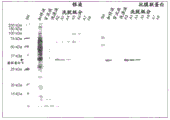
图1:膜联蛋白V在Q-Sepharose Fast Flow上纯化后得到的级分的SDS-PAGE。SDS-PAGE分析于还原条件下在12%的凝胶上实施。通过凝胶电泳方法分析加样、柱、穿流(flowthrough)、洗涤和洗脱级分A2-A8,分离的多肽通过银染(总蛋白染色)或使用抗膜联蛋白特异性抗体的蛋白质印迹显现。膜联蛋白V为约36 kDa的单链多肽,可在三个不同类型的结合位点结合多达10个二价阳离子分子。膜联蛋白V带的位置用箭头指出。 Figure 1: SDS-PAGE of fractions obtained after annexin V purification on Q-Sepharose Fast Flow. SDS-PAGE analysis was performed on a 12% gel under reducing conditions. Load, column, flowthrough, wash and elution fractions A2-A8 were analyzed by gel electrophoresis and the isolated polypeptides were stained by silver (total protein staining) or Western blotting using anti-annexin-specific antibodies appear. Annexin V is a single-chain polypeptide of approximately 36 kDa that can bind up to 10 molecules of divalent cations at three different types of binding sites. The position of the annexin V band is indicated by arrows.
实施例Example
提供下列实施例作为本领域技术人员的指导。实施例不应被解释为限制本发明,实施例仅提供可用于理解和实施本发明实施方案的具体方法。The following examples are provided as a guide for those skilled in the art. The examples should not be construed as limiting the invention, but merely provide specific methods that can be used to understand and practice embodiments of the invention.
实施例1:rFIX在Q-Sepharose FF上的纯化Example 1: Purification of rFIX on Q-Sepharose FF
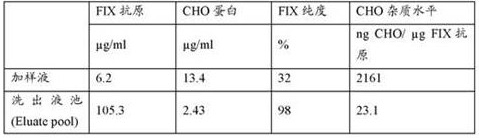
用2个柱体积(CV)的2 M NaCl活化Q-Sepharose Fast Flow树脂并用4 CV平衡缓冲液(20 mM Tris,2 mM EDTA,pH 7.4,电导率约2 mS/cm)平衡。其后,包含FIX的过滤的细胞培养物上清液(其由经基因工程改造的CHO细胞系得到,并添加3 mM EDTA)以约150 cm/h的线性流速加样到柱(电导率约13-15 mS/cm)。然后用2 CV平衡缓冲液洗涤柱子,接着用5CV洗涤缓冲液(20 mM MES,2 mM EDTA,175 mM NaCl,pH 6.0)第二次洗涤,以除去在pH 6.0时不与阴离子交换树脂材料结合的大部分蛋白杂质。洗脱前,通过用平衡缓冲液施用2 CV洗涤再次降低柱中的电导率。结合的FIX用5 CV洗脱液(20 mM Tris,2 mM CaCl2,180 mMNaCl,pH 8.0)洗脱。表1的结果显示通过应用该程序,使用阴离子交换色谱的单一纯化步骤可从细胞培养物上清液基质中得到纯度为98%的二价阳离子结合蛋白产物。The Q-Sepharose Fast Flow resin was activated with 2 column volumes (CV) of 2 M NaCl and equilibrated with 4 CV of equilibration buffer (20 mM Tris, 2 mM EDTA, pH 7.4, conductivity about 2 mS/cm). Thereafter, the filtered cell culture supernatant containing FIX (derived from a genetically engineered CHO cell line and supplemented with 3 mM EDTA) was loaded onto the column at a linear flow rate of approximately 150 cm/h (conductivity approx. 13-15 mS/cm). The column was then washed with 2 CV of equilibration buffer, followed by a second wash with 5 CV of wash buffer (20 mM MES, 2 mM EDTA, 175 mM NaCl, pH 6.0) to remove material that did not bind to the anion exchange resin at pH 6.0 most protein impurities. Before elution, the conductivity in the column was again reduced by applying 2 CV washes with equilibration buffer. Bound FIX was eluted with 5 CV of eluent (20 mM Tris, 2 mM CaCl2 , 180 mM NaCl, pH 8.0). The results in Table 1 show that by applying this procedure, a single purification step using anion exchange chromatography can yield a 98% pure divalent cation-binding protein product from the cell culture supernatant matrix.
表1:rFIX在Q-Sepharose FF上的纯化 Table 1: Purification of rFIX on Q-Sepharose FF
实施例2:FVII在Q-Sepharose FF上的纯化Example 2: Purification of FVII on Q-Sepharose FF
用2 CV 2 M NaCl活化Q-Sepharose Fast Flow树脂,并用5 CV平衡缓冲液(20 mMTris,2 mM EDTA,pH 7.5,电导率约2 mS/cm)平衡。其后,包含FVII的过滤的细胞培养物上清液(由经基因工程改造的CHO细胞系得到,并添加9 mM EDTA)以约46 cm/h的线性流速加样到柱(电导率约16 mS/cm)。然后用4 CV平衡缓冲液洗涤柱子,接着用5 CV洗涤缓冲液(20mM MES,2 mM EDTA,170 mM NaCl,pH 6.0)第二次洗涤,以除去在pH 6.0时不与阴离子交换树脂材料结合的大部分蛋白杂质。洗脱前,通过用平衡缓冲液施用2 CV洗涤再次降低柱中的电导率。结合的FIX用5个柱体积的洗脱液(20 mM Tris,2 mM CaCl2,180 mM NaCl,pH8.0)洗脱。表2的结果显示通过应用该程序,使用阴离子交换色谱的单一纯化步骤可从细胞培养物上清液基质中得到纯度为97%的二价阳离子结合产物。The Q-Sepharose Fast Flow resin was activated with 2 CV of 2 M NaCl and equilibrated with 5 CV of equilibration buffer (20 mM Tris, 2 mM EDTA, pH 7.5, conductivity about 2 mS/cm). Thereafter, FVII-containing filtered cell culture supernatant (obtained from a genetically engineered CHO cell line supplemented with 9 mM EDTA) was loaded onto the column at a linear flow rate of about 46 cm/h (conductivity about 16 mM). mS/cm). The column was then washed with 4 CV of equilibration buffer, followed by a second wash with 5 CV of wash buffer (20 mM MES, 2 mM EDTA, 170 mM NaCl, pH 6.0) to remove material that did not bind to the anion exchange resin at pH 6.0 most protein impurities. Before elution, the conductivity in the column was again reduced by applying 2 CV washes with equilibration buffer. Bound FIX was eluted with 5 column volumes of eluent (20 mM Tris, 2 mM CaCl2 , 180 mM NaCl, pH 8.0). The results in Table 2 show that by applying this procedure, a single purification step using anion exchange chromatography can yield 97% pure divalent cation-bound product from the cell culture supernatant matrix.
表2:rFVII在Q-Sepharose FF上的纯化 Table 2: Purification of rFVII on Q-Sepharose FF

实施例3:人膜联蛋白V在Q-Sepharose FF上的纯化Example 3: Purification of Human Annexin V on Q-Sepharose FF
用4 CV 2 M NaCl活化Q-Sepharose Fast Flow树脂并用15 CV平衡缓冲液(20 mMTris,2 mM EDTA,pH 7.5,电导率约2 mS/cm)平衡。其后,向从人胎盘纯化的膜联蛋白V蛋白制备物中掺入获自CHO细胞系的蛋白原液以产生膜联蛋白纯度低于20%的蛋白加样液。向包含膜联蛋白的蛋白混合物添加1 mM EDTA,以约23 cm/h的线性流速加样到柱(电导率约4mS/cm)。然后用10 CV平衡缓冲液洗涤柱子,接着用10 CV洗涤缓冲液(20 mM MES,2 mMEDTA,155 mM NaCl,pH 6.0)第二次洗涤,以除去在pH 6.0时不与阴离子交换树脂材料结合的大部分蛋白杂质。洗脱前,通过用平衡缓冲液施用10 CV洗涤再次降低柱中的电导率。结合的膜联蛋白用30 CV洗脱液(20 mM Tris,2 mM CaCl2,150 mM NaCl,pH 8.0)洗脱。洗脱缓冲液与洗涤缓冲液具有相同的电导率。得到的级分通过SDS聚丙烯酰胺凝胶电泳于还原条件下在12%的凝胶上分析。图1描绘了含有分离多肽的凝胶的总蛋白染色(银染)和膜联蛋白V染色(抗膜联蛋白蛋白质印迹)。结果显示与加样到柱上的蛋白混合物(加样级分)相比,洗脱级分A2-A4中包含高纯度的膜联蛋白V。该数据表明,通过阴离子交换色谱的单一纯化步骤后,洗脱级分中可得到高纯度的二价阳离子结合蛋白。The Q-Sepharose Fast Flow resin was activated with 4 CV of 2 M NaCl and equilibrated with 15 CV of equilibration buffer (20 mM Tris, 2 mM EDTA, pH 7.5, conductivity about 2 mS/cm). Thereafter, a protein stock solution obtained from a CHO cell line was spiked into the annexin V protein preparation purified from human placenta to produce a protein spike with annexin purity less than 20%. 1 mM EDTA was added to the annexin-containing protein mixture and loaded onto the column at a linear flow rate of about 23 cm/h (conductivity about 4 mS/cm). The column was then washed with 10 CV of equilibration buffer, followed by a second wash with 10 CV of wash buffer (20 mM MES, 2 mM EDTA, 155 mM NaCl, pH 6.0) to remove material that did not bind to the anion exchange resin at pH 6.0 most protein impurities. Before elution, the conductivity in the column was again reduced by applying a 10 CV wash with equilibration buffer. Bound annexin was eluted with 30 CV of eluent (20 mM Tris, 2 mM CaCl2 , 150 mM NaCl, pH 8.0). The elution buffer has the same conductivity as the wash buffer. The resulting fractions were analyzed on a 12% gel by SDS polyacrylamide gel electrophoresis under reducing conditions. Figure 1 depicts total protein staining (silver staining) and annexin V staining (anti-annexin western blot) of gels containing isolated polypeptides. The results show that the eluted fractions A2-A4 contain annexin V of high purity compared to the protein mixture loaded onto the column (loaded fraction). This data demonstrates that high purity divalent cation-binding protein is obtained in the eluted fraction after a single purification step by anion exchange chromatography.
实施例4:Example 4:
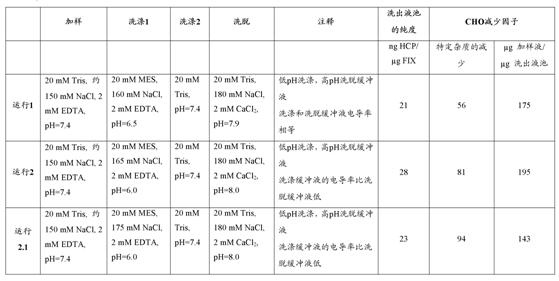
测试了用于使用Q-Sepharose Fast Flow从宿主细胞蛋白(HCP)中纯化FIX的不同条件。具体地,该程序包括以下条件:Different conditions were tested for purification of FIX from host cell proteins (HCP) using Q-Sepharose Fast Flow. Specifically, the program includes the following conditions:
运行1:中性pH加样,低pH 6.5洗涤,高pH 7.9洗脱,洗涤和洗脱缓冲液的电导率相等。Run 1: Neutral pH loading, low pH 6.5 wash, high pH 7.9 elution, wash and elution buffers of equal conductivity.
运行2:中性pH加样,低pH 6.0洗涤,高pH 8.0洗脱,洗涤缓冲液的电导率比洗脱缓冲液低。Run 2: Neutral pH loading, low pH 6.0 wash, high pH 8.0 elution, wash buffer with lower conductivity than elution buffer.
运行2.1:与运行2相同,洗涤的盐浓度增加。Run 2.1: Same as run 2, the salt concentration of the wash is increased.
在所有实验中,恰在用低电导率的缓冲液洗脱前实施第二次洗涤。在所有实验中,洗脱缓冲液的电导率比加样缓冲液的电导率高。结果在表3中示出。In all experiments, a second wash was performed just before elution with the low conductivity buffer. In all experiments, the conductivity of the elution buffer was higher than that of the loading buffer. The results are shown in Table 3.
表3table 3
实施例5:rFIX在Q-Sepharose FF上的比较纯化Example 5: Comparative purification of rFIX on Q-Sepharose FF
为了证实本发明方法的有益效果,实施两个比较色谱运行。特别地,在Q-Sepharose FF上纯化来自澄清的CHO细胞培养物上清液的rFIX,其中运行1依照本发明方法实施,即步骤(b)中洗脱液的pH比步骤(a)中洗涤缓冲液的pH高,运行2以同样的方式实施,但步骤(a)中加样/洗涤与步骤(b)中洗脱之间无任何pH差异。各自的缓冲液条件在表4中简要给出。To demonstrate the beneficial effects of the method of the present invention, two comparative chromatographic runs were performed. In particular, rFIX from clarified CHO cell culture supernatant was purified on Q-Sepharose FF, wherein run 1 was carried out according to the method of the invention, ie the pH of the eluate in step (b) was higher than the wash in step (a). The pH of the buffer was high and run 2 was performed in the same way, but without any pH difference between the loading/washing in step (a) and the elution in step (b). The respective buffer conditions are briefly given in Table 4.
表4:两个色谱rFIX纯化运行的缓冲液条件Table 4: Buffer conditions for two chromatographic rFIX purification runs

分析所获得级分的rFIX活性得率、rFIX抗原得率、CHO宿主细胞蛋白(CHO HCP)减缩因数和rFIX比活。CHO HCP减缩因数计算为加样的总CHO HCO与洗出液中存在的CHO HCP的比率。各数据在表5中简要给出。The obtained fractions were analyzed for rFIX activity yield, rFIX antigen yield, CHO host cell protein (CHO HCP) reduction factor and rFIX specific activity. The CHO HCP reduction factor is calculated as the ratio of the total CHO HCO loaded to the CHO HCP present in the eluate. The respective data are briefly presented in Table 5.
表5:两个色谱rFIX纯化运行的结果Table 5: Results of two chromatographic rFIX purification runs

这些结果说明本发明方法(特别是加样/洗涤和洗脱之间的pH改变)可显著改进污染宿主细胞蛋白的减少和纯化蛋白的比活。These results demonstrate that the methods of the present invention (particularly pH changes between loading/washing and elution) can significantly improve the reduction of contaminating host cell proteins and the specific activity of purified proteins.
Claims (8)
Applications Claiming Priority (3)
| Application Number | Priority Date | Filing Date | Title |
|---|---|---|---|
| US32948710P | 2010-04-29 | 2010-04-29 | |
| US61/329487 | 2010-04-29 | ||
| CN2011800323604A CN103025757A (en) | 2010-04-29 | 2011-04-29 | Purification method of divalent cation binding protein on anion exchange resin |
Related Parent Applications (1)
| Application Number | Title | Priority Date | Filing Date |
|---|---|---|---|
| CN2011800323604A Division CN103025757A (en) | 2010-04-29 | 2011-04-29 | Purification method of divalent cation binding protein on anion exchange resin |
Publications (2)
| Publication Number | Publication Date |
|---|---|
| CN106967150A CN106967150A (en) | 2017-07-21 |
| CN106967150B true CN106967150B (en) | 2020-12-04 |
Family
ID=44625749
Family Applications (2)
| Application Number | Title | Priority Date | Filing Date |
|---|---|---|---|
| CN201610901187.1A Active CN106967150B (en) | 2010-04-29 | 2011-04-29 | Purification of divalent cation-binding proteins on anion exchange resins |
| CN2011800323604A Pending CN103025757A (en) | 2010-04-29 | 2011-04-29 | Purification method of divalent cation binding protein on anion exchange resin |
Family Applications After (1)
| Application Number | Title | Priority Date | Filing Date |
|---|---|---|---|
| CN2011800323604A Pending CN103025757A (en) | 2010-04-29 | 2011-04-29 | Purification method of divalent cation binding protein on anion exchange resin |
Country Status (16)
| Country | Link |
|---|---|
| US (1) | US10202416B2 (en) |
| EP (1) | EP2563805B8 (en) |
| JP (1) | JP5883849B2 (en) |
| KR (1) | KR101780518B1 (en) |
| CN (2) | CN106967150B (en) |
| AU (1) | AU2011247567B2 (en) |
| BR (1) | BR112012027793B1 (en) |
| CA (1) | CA2797614A1 (en) |
| DK (1) | DK2563805T3 (en) |
| ES (1) | ES2790884T3 (en) |
| MX (1) | MX336728B (en) |
| NZ (1) | NZ603289A (en) |
| PL (1) | PL2563805T3 (en) |
| PT (1) | PT2563805T (en) |
| SG (1) | SG185005A1 (en) |
| WO (1) | WO2011135071A1 (en) |
Families Citing this family (10)
| Publication number | Priority date | Publication date | Assignee | Title |
|---|---|---|---|---|
| SG185005A1 (en) | 2010-04-29 | 2012-11-29 | Baxter Int | Purification method for divalent cation binding proteins on anion exchange resin |
| AU2012322948B2 (en) * | 2011-10-14 | 2014-11-06 | Takeda Pharmaceutical Company Limited | Protein purification by anion exchange chromatography |
| ES2700933T3 (en) | 2011-10-14 | 2019-02-20 | Baxalta GmbH | Protein purification by anion exchange chromatography |
| CN103509082B (en) * | 2012-06-15 | 2016-03-02 | 郭怀祖 | The separation method of a kind of glycosylated protein and non-glycosylated protein |
| NZ629845A (en) | 2013-03-15 | 2016-10-28 | Baxalta Inc | Purification method for vitamin k dependent proteins by anion exchange chromatography |
| GB2542391A (en) | 2015-09-17 | 2017-03-22 | Annexin Pharmaceuticals Ab | Process of manufacture |
| GB2552724B (en) * | 2015-09-17 | 2020-05-06 | Annexin Pharmaceuticals Ab | Purification of Annexin A5 by anion exchange and affinity chromatography |
| GB2552853B (en) * | 2015-09-17 | 2018-11-21 | Annexin Pharmaceuticals Ab | Purification of Annexin A5 from a composition that includes a calcium ion chelator |
| WO2021002275A1 (en) * | 2019-07-02 | 2021-01-07 | 日本メジフィジックス株式会社 | METHOD FOR PURIFYING 226Ra-CONTAINING SOLUTION, METHOD FOR PRODUCING 226Ra TARGET AND METHOD FOR PRODUCING 225Ac |
| IL322843A (en) * | 2023-03-14 | 2025-10-01 | Amgen Inc | Anion exchange chromatography processes using a primary amine ligand |
Citations (3)
| Publication number | Priority date | Publication date | Assignee | Title |
|---|---|---|---|---|
| WO1996040883A1 (en) * | 1995-06-07 | 1996-12-19 | Genetics Institute, Inc. | Novel factor ix purification methods |
| WO2006067230A1 (en) * | 2004-12-23 | 2006-06-29 | Novo Nordisk Health Care Ag | Reduction of the content of protein contaminants in compositions comprising a vitamin k-dependent protein of interest |
| WO2007026020A1 (en) * | 2005-09-01 | 2007-03-08 | Novo Nordisk Health Care Ag | Purification of coagulation factor vii polypeptides |
Family Cites Families (18)
| Publication number | Priority date | Publication date | Assignee | Title |
|---|---|---|---|---|
| GB8318754D0 (en) * | 1983-07-11 | 1983-08-10 | Fagerhol M K F | Human proteins anti-sera test kits |
| US4981952A (en) | 1988-10-04 | 1991-01-01 | Eli Lilly And Company | Method for the purification of vitamin K-dependent proteins |
| CA2143125C (en) | 1992-08-27 | 2008-09-23 | Koenraad Mertens | Antibodies specific for a haemostatic protein, their use for isolating intact protein, haemostatic compositions devoid of proteolytic cleavage products of the protein |
| DE4342132C1 (en) * | 1993-12-10 | 1994-11-03 | Octapharma Ag | Process for the preparation of virus-inactivated vitamin K-dependent plasma components, and protein C and protein S-containing compositions by membrane chromatography |
| DE4406515C1 (en) | 1994-02-28 | 1995-10-19 | Immuno Ag | Process for the isolation and purification of vitamin K-dependent proteins |
| JPH10150980A (en) * | 1996-11-20 | 1998-06-09 | Chemo Sero Therapeut Res Inst | Prothrombin purification method |
| US6344596B1 (en) | 1997-02-14 | 2002-02-05 | American Red Cross | Expression of active human factor IX in mammary tissue and of milk non human transgenic mammals |
| GB9902000D0 (en) * | 1999-01-30 | 1999-03-17 | Delta Biotechnology Ltd | Process |
| KR100841599B1 (en) | 2000-07-21 | 2008-06-26 | 자이단호진 가가쿠오요비겟세이료호겐쿠쇼 | Method for Purifying Calcium Ion-Binding Proteins |
| US20040106779A1 (en) * | 2002-12-03 | 2004-06-03 | Bigler Douglas E. | Modified factor IX preparation |
| US20090043080A1 (en) | 2004-09-29 | 2009-02-12 | Novo Nordisk Healthcare A/G | Purification of a Bulk of a Factor VII Polypeptide by Fractionated Elution from an Anion-Exchange Material |
| FR2901796A1 (en) | 2006-05-31 | 2007-12-07 | Lab Francais Du Fractionnement | PROCESS FOR EXTRACTING ONE OR MORE PROTEINS PRESENT IN MILK |
| FR2901707B1 (en) | 2006-05-31 | 2017-09-29 | Lab Francais Du Fractionnement | RECOMBINANT OR TRANSGENIC FACTOR VII COMPOSITION, EACH FACTOR VII MOLECULE HAVING TWO N-GLYCOSYLATION SITES WITH DEFINED GLYCANNIC PATTERNS |
| DK2125866T3 (en) * | 2007-02-28 | 2013-07-29 | Baxter Int | Process for Purification of Recombinant Blood Coagulation Factor IX Enriched with Sulfated and / or Phosphorylated Molecules |
| WO2011073235A1 (en) * | 2009-12-18 | 2011-06-23 | Csl Ltd. | Method of purifying polypeptides |
| SG185005A1 (en) | 2010-04-29 | 2012-11-29 | Baxter Int | Purification method for divalent cation binding proteins on anion exchange resin |
| ES2700933T3 (en) | 2011-10-14 | 2019-02-20 | Baxalta GmbH | Protein purification by anion exchange chromatography |
| AU2012322948B2 (en) | 2011-10-14 | 2014-11-06 | Takeda Pharmaceutical Company Limited | Protein purification by anion exchange chromatography |
-
2011
- 2011-04-29 SG SG2012078663A patent/SG185005A1/en unknown
- 2011-04-29 EP EP11716431.9A patent/EP2563805B8/en active Active
- 2011-04-29 US US13/098,313 patent/US10202416B2/en active Active
- 2011-04-29 CN CN201610901187.1A patent/CN106967150B/en active Active
- 2011-04-29 ES ES11716431T patent/ES2790884T3/en active Active
- 2011-04-29 MX MX2012012621A patent/MX336728B/en unknown
- 2011-04-29 BR BR112012027793-6A patent/BR112012027793B1/en active IP Right Grant
- 2011-04-29 WO PCT/EP2011/056832 patent/WO2011135071A1/en not_active Ceased
- 2011-04-29 KR KR1020127031111A patent/KR101780518B1/en active Active
- 2011-04-29 CN CN2011800323604A patent/CN103025757A/en active Pending
- 2011-04-29 NZ NZ603289A patent/NZ603289A/en unknown
- 2011-04-29 PT PT117164319T patent/PT2563805T/en unknown
- 2011-04-29 JP JP2013506675A patent/JP5883849B2/en active Active
- 2011-04-29 CA CA2797614A patent/CA2797614A1/en not_active Abandoned
- 2011-04-29 DK DK11716431.9T patent/DK2563805T3/en active
- 2011-04-29 AU AU2011247567A patent/AU2011247567B2/en active Active
- 2011-04-29 PL PL11716431T patent/PL2563805T3/en unknown
Patent Citations (4)
| Publication number | Priority date | Publication date | Assignee | Title |
|---|---|---|---|---|
| WO1996040883A1 (en) * | 1995-06-07 | 1996-12-19 | Genetics Institute, Inc. | Novel factor ix purification methods |
| WO2006067230A1 (en) * | 2004-12-23 | 2006-06-29 | Novo Nordisk Health Care Ag | Reduction of the content of protein contaminants in compositions comprising a vitamin k-dependent protein of interest |
| CN101098883A (en) * | 2004-12-23 | 2008-01-02 | 诺和诺德医疗保健公司 | Reducing the Level of Protein Contaminants in Compositions Containing a Vitamin K-Dependent Protein of Interest |
| WO2007026020A1 (en) * | 2005-09-01 | 2007-03-08 | Novo Nordisk Health Care Ag | Purification of coagulation factor vii polypeptides |
Non-Patent Citations (2)
| Title |
|---|
| Identification of human cohn fraction III as a useful source for the simultaneous purification of FIX and FX zymogens;Monahan J B等;《Thrombosis Research》;19801231;第19卷(第6期);第743-755页 * |
| 阴离子交换树脂分离卡那霉素A、B组分的研究;李忠琴等;《福州大学学报:自然科学版》;20010630;第29卷(第3期);第116-118页 * |
Also Published As
| Publication number | Publication date |
|---|---|
| BR112012027793B1 (en) | 2022-10-11 |
| EP2563805B8 (en) | 2020-04-15 |
| EP2563805A1 (en) | 2013-03-06 |
| BR112012027793A8 (en) | 2018-06-05 |
| EP2563805B1 (en) | 2020-02-26 |
| WO2011135071A1 (en) | 2011-11-03 |
| MX2012012621A (en) | 2013-05-06 |
| SG185005A1 (en) | 2012-11-29 |
| JP5883849B2 (en) | 2016-03-15 |
| KR101780518B1 (en) | 2017-09-21 |
| PT2563805T (en) | 2020-05-18 |
| DK2563805T3 (en) | 2020-05-18 |
| AU2011247567B2 (en) | 2014-06-19 |
| US10202416B2 (en) | 2019-02-12 |
| ES2790884T3 (en) | 2020-10-29 |
| CN106967150A (en) | 2017-07-21 |
| KR20130062938A (en) | 2013-06-13 |
| BR112012027793A2 (en) | 2016-08-02 |
| CN103025757A (en) | 2013-04-03 |
| NZ603289A (en) | 2014-07-25 |
| MX336728B (en) | 2016-01-27 |
| JP2013525411A (en) | 2013-06-20 |
| CA2797614A1 (en) | 2011-11-03 |
| PL2563805T3 (en) | 2020-08-10 |
| US20120108513A1 (en) | 2012-05-03 |
Similar Documents
| Publication | Publication Date | Title |
|---|---|---|
| CN106967150B (en) | Purification of divalent cation-binding proteins on anion exchange resins | |
| JP6117219B2 (en) | Protein purification method by anion exchange chromatography | |
| JP6820232B2 (en) | Purification of proteins by anion exchange chromatography | |
| AU2011247567A1 (en) | Purification method for divalent cation binding proteins on anion exchange resin | |
| DK2970376T3 (en) | PURIFICATION PROCEDURE FOR VITAMIN K-DEPENDENT PROTEINS BY ANION EXCHANGE CHROMATOGRAPHY | |
| HK1198653B (en) | Protein purification by anion exchange chromatography | |
| HK1183043A (en) | Purification method for divalent cation binding proteins on anion exchange resin | |
| HK1183043B (en) | Purification method for divalent cation binding proteins on anion exchange resin | |
| HK1219285B (en) | Purification method for vitamin k dependent proteins by anion exchange chromatography |
Legal Events
| Date | Code | Title | Description |
|---|---|---|---|
| PB01 | Publication | ||
| SE01 | Entry into force of request for substantive examination | ||
| SE01 | Entry into force of request for substantive examination | ||
| GR01 | Patent grant | ||
| GR01 | Patent grant | ||
| TR01 | Transfer of patent right |
Effective date of registration: 20210408 Address after: Osaka City, Osaka Prefecture, Japan Patentee after: TAKEDA PHARMACEUTICAL Co.,Ltd. Address before: Illinois, USA Patentee before: Baishen Co. Patentee before: BAXALTA GmbH |
|
| TR01 | Transfer of patent right |