CN107343156B - Adjusting method and device for automatic exposure control of face area - Google Patents
Adjusting method and device for automatic exposure control of face area Download PDFInfo
- Publication number
- CN107343156B CN107343156B CN201710558352.2A CN201710558352A CN107343156B CN 107343156 B CN107343156 B CN 107343156B CN 201710558352 A CN201710558352 A CN 201710558352A CN 107343156 B CN107343156 B CN 107343156B
- Authority
- CN
- China
- Prior art keywords
- brightness
- exposure control
- sub
- automatic exposure
- region
- Prior art date
- Legal status (The legal status is an assumption and is not a legal conclusion. Google has not performed a legal analysis and makes no representation as to the accuracy of the status listed.)
- Expired - Fee Related
Links
Images


Classifications
-
- H—ELECTRICITY
- H04—ELECTRIC COMMUNICATION TECHNIQUE
- H04N—PICTORIAL COMMUNICATION, e.g. TELEVISION
- H04N23/00—Cameras or camera modules comprising electronic image sensors; Control thereof
- H04N23/60—Control of cameras or camera modules
- H04N23/61—Control of cameras or camera modules based on recognised objects
- H04N23/611—Control of cameras or camera modules based on recognised objects where the recognised objects include parts of the human body
-
- H—ELECTRICITY
- H04—ELECTRIC COMMUNICATION TECHNIQUE
- H04N—PICTORIAL COMMUNICATION, e.g. TELEVISION
- H04N23/00—Cameras or camera modules comprising electronic image sensors; Control thereof
- H04N23/70—Circuitry for compensating brightness variation in the scene
-
- G—PHYSICS
- G06—COMPUTING OR CALCULATING; COUNTING
- G06T—IMAGE DATA PROCESSING OR GENERATION, IN GENERAL
- G06T5/00—Image enhancement or restoration
- G06T5/40—Image enhancement or restoration using histogram techniques
-
- G—PHYSICS
- G06—COMPUTING OR CALCULATING; COUNTING
- G06T—IMAGE DATA PROCESSING OR GENERATION, IN GENERAL
- G06T7/00—Image analysis
- G06T7/70—Determining position or orientation of objects or cameras
-
- H—ELECTRICITY
- H04—ELECTRIC COMMUNICATION TECHNIQUE
- H04N—PICTORIAL COMMUNICATION, e.g. TELEVISION
- H04N23/00—Cameras or camera modules comprising electronic image sensors; Control thereof
- H04N23/10—Cameras or camera modules comprising electronic image sensors; Control thereof for generating image signals from different wavelengths
- H04N23/12—Cameras or camera modules comprising electronic image sensors; Control thereof for generating image signals from different wavelengths with one sensor only
-
- H—ELECTRICITY
- H04—ELECTRIC COMMUNICATION TECHNIQUE
- H04N—PICTORIAL COMMUNICATION, e.g. TELEVISION
- H04N23/00—Cameras or camera modules comprising electronic image sensors; Control thereof
- H04N23/70—Circuitry for compensating brightness variation in the scene
- H04N23/71—Circuitry for evaluating the brightness variation
-
- H—ELECTRICITY
- H04—ELECTRIC COMMUNICATION TECHNIQUE
- H04N—PICTORIAL COMMUNICATION, e.g. TELEVISION
- H04N23/00—Cameras or camera modules comprising electronic image sensors; Control thereof
- H04N23/70—Circuitry for compensating brightness variation in the scene
- H04N23/73—Circuitry for compensating brightness variation in the scene by influencing the exposure time
-
- H—ELECTRICITY
- H04—ELECTRIC COMMUNICATION TECHNIQUE
- H04N—PICTORIAL COMMUNICATION, e.g. TELEVISION
- H04N23/00—Cameras or camera modules comprising electronic image sensors; Control thereof
- H04N23/70—Circuitry for compensating brightness variation in the scene
- H04N23/76—Circuitry for compensating brightness variation in the scene by influencing the image signals
Landscapes
- Engineering & Computer Science (AREA)
- Multimedia (AREA)
- Signal Processing (AREA)
- Physics & Mathematics (AREA)
- General Physics & Mathematics (AREA)
- Theoretical Computer Science (AREA)
- Computer Vision & Pattern Recognition (AREA)
- Studio Devices (AREA)
- Image Processing (AREA)
- Facsimile Image Signal Circuits (AREA)
- Exposure Control For Cameras (AREA)
- Image Analysis (AREA)
Abstract
本发明提出一种人脸区域自动曝光控制的调整方法和装置,其中,方法包括:在人脸区域上划分多个子区域块,统计所有子区域块的亮度构建人脸区域中各颜色通道的亮度直方图;按照亮度从高到低的顺序分析各颜色通道的亮度直方图,根据亮度与子区域块数量的对应关系确定各颜色通道满足当前自动曝光控制亮度所对应的最低亮度,进而从所有最低亮度中筛选最大值确定基准亮度,以及与基准亮度对应的基准颜色通道;获取与当前自动曝光控制亮度对应的目标亮度,并根据目标亮度对基准颜色通道进行亮度调整,以使基准颜色通道满足目标亮度时所对应的最低亮度为基准亮度。由此,避免人脸区域出现过曝区域以及由此带来的色斑现象,提高了图像质量。
The present invention provides an adjustment method and device for automatic exposure control of a face region, wherein the method includes: dividing a plurality of sub-region blocks on the face region, and counting the brightness of all the sub-region blocks to construct the brightness of each color channel in the face region Histogram; analyze the brightness histogram of each color channel according to the order of brightness from high to low, and determine the minimum brightness corresponding to the current automatic exposure control brightness of each color channel according to the corresponding relationship between brightness and the number of sub-region blocks, and then start from all the lowest brightness. Determine the reference brightness and the reference color channel corresponding to the reference brightness by screening the maximum value in the brightness; obtain the target brightness corresponding to the current automatic exposure control brightness, and adjust the brightness of the reference color channel according to the target brightness, so that the reference color channel meets the target brightness The minimum brightness corresponding to the brightness is the reference brightness. In this way, the overexposed area and the resulting color spot phenomenon in the face area are avoided, and the image quality is improved.
Description
技术领域technical field
本发明涉及曝光处理技术领域,尤其涉及一种人脸区域自动曝光控制的调整方法和装置。The invention relates to the technical field of exposure processing, in particular to an adjustment method and device for automatic exposure control of a face area.
背景技术Background technique
随着智能手机等终端设备的普及,用户对终端设备的功能需求也越发多样化,比如,终端设备的相机功能由于能给用户的生产和生活带来极大的便利,更是被用户广泛需要,而相机拍摄的图像的质量的关键在于曝光控制,曝光控制的目的在于使当前图像的亮度符合预期的亮度的同时,尽量减少图像中的过曝和欠曝区域。With the popularization of terminal devices such as smart phones, users' functional requirements for terminal devices are becoming more and more diverse. For example, the camera function of terminal devices is widely demanded by users because it can bring great convenience to users' production and life. , and the key to the quality of the image captured by the camera lies in exposure control. The purpose of exposure control is to make the brightness of the current image meet the expected brightness, and at the same time minimize the overexposed and underexposed areas in the image.
相关技术中,通过自动曝光控制(Automatic Exposure Control,AEC)技术来控制摄像头传感器和ISP对图像进行整体的曝光控制,从而自动的得到合理的图像亮度。In the related art, an automatic exposure control (Automatic Exposure Control, AEC) technology is used to control a camera sensor and an ISP to perform overall exposure control of an image, thereby automatically obtaining a reasonable image brightness.
然而,在自动曝光控制技术中,主流AEC算法基于整帧图像的亮度信息来控制图像亮度,当拍摄人像时,如果人脸区域亮度和人脸周围区域的亮度差距较大,这种基于平均亮度进行曝光控制的方式,容易导致人脸区域出现过曝的情况,而图像的过曝会造成信息的不可恢复,导致拍摄的图像质量降低。However, in the automatic exposure control technology, the mainstream AEC algorithm controls the image brightness based on the brightness information of the whole frame image. When shooting a portrait, if the brightness of the face area and the brightness of the surrounding area of the face have a large gap, this method based on the average brightness The way of exposure control can easily lead to over-exposure of the face area, and the over-exposure of the image will cause the information to be unrecoverable, resulting in a decrease in the quality of the captured image.
发明内容SUMMARY OF THE INVENTION
本发明旨在至少在一定程度上解决相关技术中的技术问题之一。The present invention aims to solve one of the technical problems in the related art at least to a certain extent.
为此,本发明的第一个目的在于提出一种人脸区域自动曝光控制的调整方法,以实现对人脸区域的过曝情况的控制,避免因此带来的色斑现象。Therefore, the first objective of the present invention is to propose an adjustment method for automatic exposure control of the face area, so as to realize the control of the overexposure of the face area and avoid the color spot phenomenon caused thereby.
本发明的第二个目的在于提出一种人脸区域自动曝光控制的调整装置。The second object of the present invention is to provide an adjustment device for automatic exposure control of a face area.
本发明的第三个目的在于提出一种终端设备。The third object of the present invention is to provide a terminal device.
本发明的第四个目的在于提出一种非临时性计算机可读存储介质。本发明第一方面实施例提出的一种人脸区域自动曝光控制的调整方法,包括:在人脸区域上划分多个子区域块,统计所有子区域块的亮度构建所述人脸区域中各颜色通道的亮度直方图,其中,所述亮度直方图包括亮度与子区域块数量的对应关系;按照亮度从高到低的顺序分析各颜色通道的亮度直方图,根据所述亮度与子区域块数量的对应关系确定各颜色通道满足当前自动曝光控制亮度所对应的最低亮度,进而从所有最低亮度中筛选最大值确定基准亮度,以及与所述基准亮度对应的基准颜色通道;获取与所述当前自动曝光控制亮度对应的目标亮度,并根据所述目标亮度对所述基准颜色通道进行亮度收敛调整。A fourth object of the present invention is to propose a non-transitory computer-readable storage medium. A method for adjusting automatic exposure control of a face area proposed by an embodiment of the first aspect of the present invention includes: dividing a face area into a plurality of sub-area blocks, and counting the brightness of all the sub-area blocks to construct each color in the face area The brightness histogram of the channel, wherein the brightness histogram includes the corresponding relationship between the brightness and the number of sub-region blocks; analyze the brightness histogram of each color channel according to the order of brightness from high to low, according to the brightness and the number of sub-region blocks The corresponding relationship determines that each color channel satisfies the minimum brightness corresponding to the current automatic exposure control brightness, and then selects the maximum value from all the minimum brightness to determine the reference brightness, and the reference color channel corresponding to the reference brightness; The target brightness corresponding to the exposure control brightness is controlled, and the brightness convergence adjustment is performed on the reference color channel according to the target brightness.
本发明第二方面实施例提出的一种人脸区域自动曝光控制的调整装置,包括:划分模块,用于在人脸区域上划分多个子区域块;统计模块,用于统计所有子区域块的亮度构建所述人脸区域中各颜色通道的亮度直方图,其中,所述亮度直方图包括亮度与子区域块数量的对应关系;确定模块,用于按照亮度从高到低的顺序分析各颜色通道的亮度直方图,根据所述亮度与子区域块数量的对应关系确定各颜色通道满足当前自动曝光控制亮度所对应的最低亮度;筛选模块,用于从所有最低亮度中筛选最大值确定基准亮度,以及与所述基准亮度对应的基准颜色通道;获取模块,用于获取与所述当前自动曝光控制亮度对应的目标亮度;调整模块,用于根据所述目标亮度对所述基准颜色通道进行亮度收敛调整。An apparatus for adjusting automatic exposure control of a face area proposed by an embodiment of the second aspect of the present invention includes: a division module, used for dividing a plurality of sub-area blocks on the face area; a statistics module, used for statistics of all sub-area blocks Brightness constructs a brightness histogram of each color channel in the face area, wherein the brightness histogram includes a correspondence between brightness and the number of sub-region blocks; a determination module is used to analyze each color in order of brightness from high to low The brightness histogram of the channel, according to the corresponding relationship between the brightness and the number of sub-region blocks, to determine that each color channel satisfies the minimum brightness corresponding to the current automatic exposure control brightness; the screening module is used for screening the maximum value from all the minimum brightness to determine the reference brightness. , and a reference color channel corresponding to the reference brightness; an acquisition module, used to obtain a target brightness corresponding to the current automatic exposure control brightness; an adjustment module, used to perform a brightness adjustment on the reference color channel according to the target brightness Convergence adjustment.
本发明第三方面实施例提出的一种终端设备,包括以下一个或多个组件:壳体和位于所述壳体内的处理器、存储器,其中,所述处理器通过读取所述存储器中存储的可执行程序代码来运行与所述可执行程序代码对应的程序,以用于执行如本发明第一方面实施例所述的人脸区域自动曝光控制的调整方法。A terminal device provided by an embodiment of the third aspect of the present invention includes one or more of the following components: a casing, a processor located in the casing, and a memory, wherein the processor reads data stored in the memory by reading The executable program code is used to run the program corresponding to the executable program code, so as to execute the method for adjusting the automatic exposure control of the face area according to the embodiment of the first aspect of the present invention.
本发明第四方面实施例提出的一种非临时性计算机可读存储介质,其上存储有计算机程序,该计算机程序被处理器执行时实现如本发明第一方面实施例所述的人脸区域自动曝光控制的调整方法。A non-transitory computer-readable storage medium provided by an embodiment of the fourth aspect of the present invention stores a computer program thereon, and when the computer program is executed by a processor, implements the face region according to the embodiment of the first aspect of the present invention How to adjust automatic exposure control.
本发明公开的技术方案,具有如下有益效果:The technical scheme disclosed by the present invention has the following beneficial effects:
在人脸区域上划分多个子区域块,统计所有子区域块的亮度构建人脸区域中各颜色通道的亮度直方图,按照亮度从高到低的顺序分析各颜色通道的亮度直方图,根据亮度与子区域块数量的对应关系确定各颜色通道满足当前自动曝光控制亮度所对应的最低亮度,进而从所有最低亮度中筛选最大值确定基准亮度,以及与基准亮度对应的基准颜色通道,进而,获取与当前自动曝光控制亮度对应的目标亮度,并根据目标亮度对基准颜色通道进行亮度收敛调整。由此,实现精确的曝光控制,消除人脸区域的过曝区域以及由此带来的色斑现象,有效提高图像质量,提升用户的满意度。Divide multiple sub-region blocks on the face area, count the brightness of all sub-region blocks to construct the brightness histogram of each color channel in the face area, analyze the brightness histogram of each color channel according to the order of brightness from high to low, according to the brightness The corresponding relationship with the number of sub-region blocks determines that each color channel satisfies the minimum brightness corresponding to the current automatic exposure control brightness, and then selects the maximum value from all the minimum brightness to determine the reference brightness, and the reference color channel corresponding to the reference brightness, and then, obtain The target brightness corresponding to the current automatic exposure control brightness, and the brightness convergence adjustment is performed on the reference color channel according to the target brightness. As a result, accurate exposure control is achieved, the overexposed area of the face area and the resulting color spot phenomenon are eliminated, the image quality is effectively improved, and user satisfaction is improved.
本发明附加的方面和优点将在下面的描述中部分给出,部分将从下面的描述中变得明显,或通过本发明的实践了解到。Additional aspects and advantages of the present invention will be set forth, in part, from the following description, and in part will be apparent from the following description, or may be learned by practice of the invention.
附图说明Description of drawings
本发明上述的和/或附加的方面和优点从下面结合附图对实施例的描述中将变得明显和容易理解,其中:The above and/or additional aspects and advantages of the present invention will become apparent and readily understood from the following description of embodiments taken in conjunction with the accompanying drawings, wherein:
图1是在一个具体应用场景下实际拍摄人脸图像时的亮度分布示意图;Fig. 1 is a schematic diagram of the luminance distribution when actually shooting a face image in a specific application scenario;
图2(a)是根据本发明一个实施例的人脸区域选择的场景示意图;Fig. 2 (a) is a scene schematic diagram of face region selection according to an embodiment of the present invention;
图2(b)是根据本发明另一个实施例的人脸区域选择的场景示意图;Fig. 2 (b) is a scene schematic diagram of face region selection according to another embodiment of the present invention;
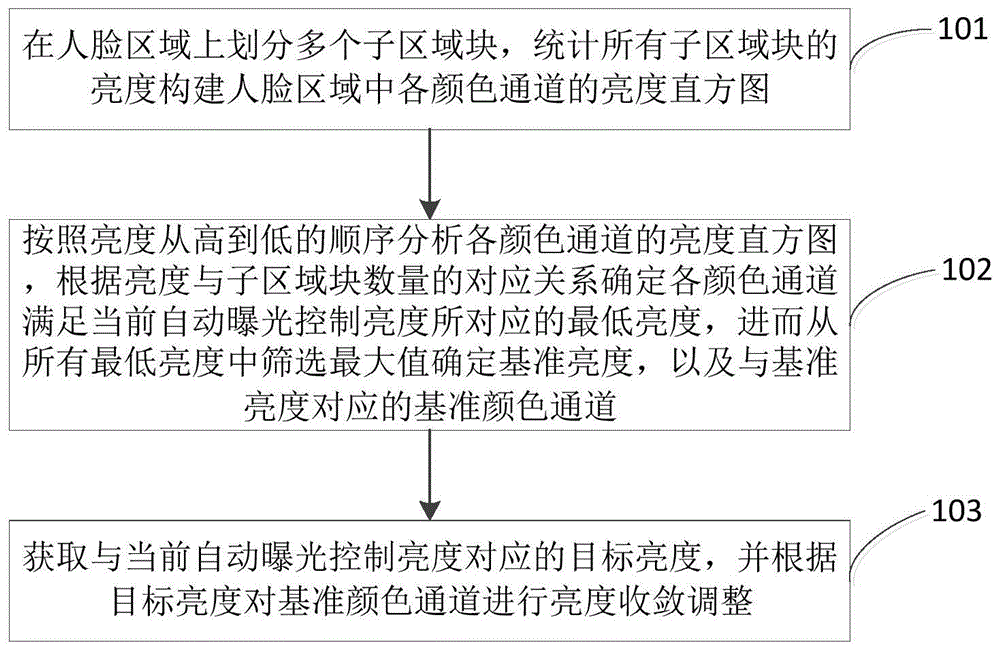
图3是根据本发明一个实施例的人脸区域自动曝光控制的调整方法的流程图;3 is a flowchart of an adjustment method for automatic exposure control of a face region according to an embodiment of the present invention;
图4(a)是根据本发明一个实施例的在人脸区域上划分多个子区域块的场景示意图;Fig. 4 (a) is a scene schematic diagram of dividing a plurality of sub-region blocks on a face region according to an embodiment of the present invention;
图4(b)是根据本发明一个实施例的亮度直方图的图表示意图;Figure 4(b) is a schematic diagram of a luminance histogram according to an embodiment of the present invention;
图5是根据本发明一个具体实施例的人脸区域自动曝光控制的调整方法的流程图;5 is a flowchart of an adjustment method for automatic exposure control of a face area according to a specific embodiment of the present invention;
图6是根据本发明一个实施例的人脸区域自动曝光控制的调整前后的图像效果示意图;6 is a schematic diagram of image effects before and after adjustment of automatic exposure control of the face area according to an embodiment of the present invention;
图7是根据本发明一个实施例的人脸区域自动曝光控制的调整装置的结构示意图;7 is a schematic structural diagram of an adjusting device for automatic exposure control of a face area according to an embodiment of the present invention;
图8是根据本发明另一个实施例的人脸区域自动曝光控制的调整装置的结构示意图;以及8 is a schematic structural diagram of an adjusting device for automatic exposure control of a face area according to another embodiment of the present invention; and
图9是根据本发明一个实施例的终端设备的结构示意图。FIG. 9 is a schematic structural diagram of a terminal device according to an embodiment of the present invention.
具体实施方式Detailed ways
下面详细描述本发明的实施例,所述实施例的示例在附图中示出,其中自始至终相同或类似的标号表示相同或类似的元件或具有相同或类似功能的元件。下面通过参考附图描述的实施例是示例性的,旨在用于解释本发明,而不能理解为对本发明的限制。The following describes in detail the embodiments of the present invention, examples of which are illustrated in the accompanying drawings, wherein the same or similar reference numerals refer to the same or similar elements or elements having the same or similar functions throughout. The embodiments described below with reference to the accompanying drawings are exemplary, and are intended to explain the present invention and should not be construed as limiting the present invention.
由以上分析可知,AEC技术中由于根据整帧画面的平均亮度信息来进行亮度调整,当人脸区域与人脸周围区域的亮度相差较大时,即人脸区域相对于人脸周围区域亮度较高时,极有可能导致人脸出现过曝的情况而产生色斑,从而,导致图像的质量较差,用户对拍摄的图像不满意。It can be seen from the above analysis that in AEC technology, since the brightness adjustment is performed according to the average brightness information of the whole frame, when the brightness difference between the face area and the area around the face is large, that is, the brightness of the face area is higher than that of the area around the face. When it is high, it is very likely to cause the face to be overexposed and cause color spots, thus resulting in poor image quality, and the user is not satisfied with the captured image.
举例而言,当拍摄包含人脸的图像时,可能由于环境光线的影响,比如,打在人脸位置的光线相较于其他区域较强,从而导致拍摄画面中人脸区域相对于其他区域的亮度相差较大,如图1所示,人脸所在区域1大于人脸周围区域2的亮度信息,而基于图1中所示的整帧画面进行亮度调整时,区域1受到区域2的平均化影响,人脸所在区域1的亮度不会收敛太多,从而导致人脸出现过曝的情况。For example, when shooting an image containing a face, it may be affected by ambient light, for example, the light hitting the face position is stronger than other areas, resulting in the face area in the shooting picture relative to other areas. The brightness difference is large. As shown in Figure 1, the area 1 where the face is located is greater than the brightness information of the area 2 around the face, and when the brightness is adjusted based on the entire frame shown in Figure 1, the area 1 is averaged by the area 2 Influence, the brightness of the area 1 where the face is located will not converge too much, resulting in overexposure of the face.
为了解决上述技术问题,本发明提出了一种基于人脸区域的亮度进行亮度调整的技术方案,在该技术方案中,结合人脸区域的亮度情况进行亮度控制,从而实现精确的曝光控制,消除人脸区域的过曝区域以及由此带来的色斑现象,有效提高图像质量,提升用户的满意度。In order to solve the above technical problems, the present invention proposes a technical solution for adjusting the brightness based on the brightness of the face area. The overexposed area of the face area and the resulting color spots can effectively improve the image quality and improve user satisfaction.
下面参考附图描述本发明实施例的人脸区域自动曝光控制的调整方法和装置。The following describes an adjustment method and apparatus for automatic exposure control of a face region according to embodiments of the present invention with reference to the accompanying drawings.
其中,本发明的主要目的是用于消除图像中的过曝区域,避免因为过曝而产生的色斑导致的图像质量较差,实际上,这种过曝区域可以出现在包含任意主体(人脸、天空、建筑物)的图像中,为了便于说明,本发明以下实施例中,主要集中于对人脸区域的过曝区域进行控制来描述。Among them, the main purpose of the present invention is to eliminate the overexposed area in the image and avoid the poor image quality caused by the color spots caused by the overexposure. In fact, this overexposed area can appear in any subject (people For the convenience of description, the following embodiments of the present invention mainly focus on controlling the overexposed area of the face area for description.
需要说明的是,在实际应用中根据具体应用场景的不同,可采用不同的实现方式对人脸区域的确定,举例说明如下:It should be noted that, in practical applications, according to different specific application scenarios, different implementations can be used to determine the face area, and examples are as follows:
第一种示例:First example:
对图像进行主体识别,识别出人脸所在区域。Perform subject recognition on the image to identify the area where the face is located.
第二种示例:Second example:
对图像进行轮廓提取,结合相应的图像深度信息进行深度信息的提取,根据人脸区域与其他区域的深度信息的不同,识别出人脸区域所在的轮廓,从而该轮廓所在位置即为人脸所在区域。Extract the contour of the image, and extract the depth information in combination with the corresponding image depth information. According to the difference between the depth information of the face area and other areas, identify the contour of the face area, so that the position of the contour is the area where the face is located. .
第三种示例:Third example:
当终端设备在图像预览区域显示预览图像给用户时,接收用户对人脸区域的选择,比如,如图2(a)所示,用户在预览区域输入轨迹,从而将该输入轨迹包含的区域作为人脸区域,又比如,如图2(b)所示,提供主体选择框,用户可以通过拖动该选择框,框选出对应的人脸区域,此时,该选择框可以根据需要调整大小。When the terminal device displays the preview image to the user in the image preview area, it receives the user's selection of the face area. For example, as shown in Figure 2(a), the user inputs a trajectory in the preview area, so that the area contained in the input trajectory is used as The face area, for example, as shown in Figure 2(b), provides a subject selection box, and the user can select the corresponding face area by dragging the selection box. At this time, the selection box can be adjusted according to needs. .
图3是根据本发明一个实施例的人脸区域自动曝光控制的调整方法的流程图。FIG. 3 is a flowchart of an adjustment method for automatic exposure control of a face area according to an embodiment of the present invention.
如图3所示,该人脸区域自动曝光控制的调整方法包括以下步骤:As shown in Figure 3, the adjustment method of the automatic exposure control of the face area includes the following steps:
步骤101:在人脸区域上划分多个子区域块,统计所有子区域块的亮度构建人脸区域中各颜色通道的亮度直方图。Step 101: Divide a plurality of sub-region blocks on the face region, and count the brightness of all the sub-region blocks to construct a brightness histogram of each color channel in the face region.
其中,亮度直方图包括亮度与子区域块数量的对应关系。Wherein, the brightness histogram includes the corresponding relationship between the brightness and the number of sub-region blocks.
可以理解,实际上,仅仅对于人脸区域而言,亮度分布差距也可能是很明显的,因此,如果仅仅根据人脸区域的平均亮度进行亮度的调节,可能导致去除过曝区域的效果也不理想,因此,在本发明的实施例中,为了保证统计数据可以有效抓取过曝区域,不受平均化的影响,将人脸区域划分为多个子区域进行亮度信息的统计。It can be understood that, in fact, only for the face area, the brightness distribution gap may also be obvious. Therefore, if the brightness adjustment is only performed according to the average brightness of the face area, the effect of removing the overexposed area may not be effective. Ideally, therefore, in the embodiment of the present invention, in order to ensure that the statistical data can effectively capture the overexposed area and not be affected by averaging, the face area is divided into multiple sub-areas for statistics of brightness information.
其中,需要强调的是,为了真正保证不受平均化的影响,划分的多个子区域的粒度相对于人脸区域的面积要足够小,比如每个子区域占用人脸区域总面积的0.1%。当然,在实际应用中,根据具体应用场景的不同,可以采用不同的方式实现对人脸区域中多个子区域的划分,举例说明如下:Among them, it should be emphasized that, in order to truly ensure that it is not affected by averaging, the granularity of the divided sub-regions should be sufficiently small relative to the area of the face region, for example, each sub-region occupies 0.1% of the total area of the face region. Of course, in practical applications, according to different specific application scenarios, different ways can be used to realize the division of multiple sub-regions in the face region. Examples are as follows:
作为一种可能的实现方式,获取人脸区域的面积,根据预设的颗粒度划分信息确定与面积对应的子区域块总数,根据子区域块总数在人脸区域上划分多个子区域块。As a possible implementation manner, the area of the face region is obtained, the total number of sub-region blocks corresponding to the area is determined according to preset granularity division information, and the face region is divided into multiple sub-region blocks according to the total number of sub-region blocks.
在本示例中,预设的颗粒度信息划分信息可以包括人脸区域面积与子区域块数目的对应关系,比如下表1所示,预先根据大量实验,获取并存储每个人脸面积下(或者一定范围内的人脸面积,表1中仅仅示出具体的一个人脸面积的对应关系),能消除平均化影响时子区域的总数(或者总数的选择范围,表1中仅仅示出具体子区域的总数),从而,根据获取的人脸区域的面积查询上述对应关系,可以确定与面积对应的子区域块总数。In this example, the preset granularity information division information may include the correspondence between the area of the face area and the number of sub-area blocks, as shown in Table 1 below, according to a large number of experiments in advance, obtain and store the area under each face area (or The face area within a certain range, only the corresponding relationship of a specific face area is shown in Table 1), which can eliminate the total number of sub-regions (or the selection range of the total number, only specific sub-regions are shown in Table 1). The total number of regions), thus, according to the acquired area of the face region, by querying the above-mentioned corresponding relationship, the total number of sub-region blocks corresponding to the area can be determined.
表1Table 1
作为另一种可能的实现方式,预先根据大量实验,设置子区域面积与人脸区域总面积的比值s,其中,如果子区域面积与人脸区域总面积的比值s可以有效消除让人脸区域的平均化影响,进而,当获取人脸区域的面积m后,将m*s的乘积值作为子区域块总数,进而,根据子区域块总数在人脸区域上划分多个子区域块。As another possible implementation, according to a large number of experiments in advance, set the ratio s of the area of the sub-region to the total area of the face area, wherein, if the ratio s of the area of the sub-region to the total area of the face area can effectively eliminate the face area Then, when the area m of the face region is obtained, the product value of m*s is taken as the total number of sub-region blocks, and further, multiple sub-region blocks are divided on the face region according to the total number of sub-region blocks.
具体而言,在本示例中,在人脸区域上划分多个子区域块,统计所有子区域块的亮度构建人脸区域中各颜色通道的亮度直方图,其中,亮度直方图包括亮度与子区域块数量的对应关系,比如R通道中每个亮度对应的子区域的数目等,以根据该直方图获知人脸区域的具体亮度分布情况。Specifically, in this example, multiple sub-region blocks are divided on the face area, and the brightness of all sub-region blocks is counted to construct a brightness histogram of each color channel in the face area, wherein the brightness histogram includes brightness and sub-region blocks. The corresponding relationship of the number of blocks, such as the number of sub-regions corresponding to each brightness in the R channel, etc., to know the specific brightness distribution of the face region according to the histogram.
其中,每个子区域块的亮度可以是该子区域块内的平均亮度,也可以是子区域块内中心位置的亮度等,在此不一一列举。Wherein, the brightness of each sub-region block may be the average brightness in the sub-region block, or may be the brightness of the center position in the sub-region block, etc., which are not listed one by one here.
举例而言,如图4(a)所示,当图像中包括R,Gr,Gb,B四个颜色通道时,在人脸区域上划分多个子区域块,统计所有子区域块的亮度构建人脸区域中各颜色通道的亮度直方图,其中,Gr通道的亮度直方图表如图4(b)所示,根据如图4(b)所示的亮度直方图可以获取在0-255亮度范围内,每个亮度下对应的子区域块数量。For example, as shown in Figure 4(a), when the image includes four color channels, R, Gr, Gb, and B, the face area is divided into multiple sub-region blocks, and the brightness of all sub-region blocks is counted to construct the human face. The brightness histogram of each color channel in the face area, in which the brightness histogram of the Gr channel is shown in Figure 4(b). , the number of sub-region blocks corresponding to each brightness.
步骤102,按照亮度从高到低的顺序分析各颜色通道的亮度直方图,根据亮度与子区域块数量的对应关系确定各颜色通道满足当前自动曝光控制亮度所对应的最低亮度,进而从所有最低亮度中筛选最大值确定基准亮度,以及与基准亮度对应的基准颜色通道。Step 102: Analyze the brightness histogram of each color channel according to the order of brightness from high to low, and determine the minimum brightness corresponding to the current automatic exposure control brightness of each color channel according to the corresponding relationship between the brightness and the number of sub-region blocks, and then start from all the lowest brightness. The filtered maximum value in the luminance determines the reference luminance, and the reference color channel corresponding to the reference luminance.
可以理解的是,造成人脸区域出现过曝的情况,可能是由于某个或某些颜色通道过饱和导致的,如果抓取到最先饱和的颜色通道进行亮度控制以使其不过曝,则能最有效的消除过曝区域,而通常情况下,最先饱和的颜色通道中,亮度较高的子区域块数量一定是相对较多的,因此,可以按照亮度从高到低的顺序分析各颜色通道的亮度直方图,以高效确定出最先饱和的颜色通道。It is understandable that the overexposure of the face area may be caused by the oversaturation of one or some color channels. If the first saturated color channel is captured for brightness control to prevent it from being overexposed, It can most effectively eliminate the overexposed area. Usually, in the first saturated color channel, the number of sub-region blocks with higher brightness must be relatively large. Therefore, you can analyze each color in order of brightness from high to low. Luminance histogram of color channels to efficiently determine which color channel is saturated first.
具体而言,按照亮度从高到低的顺序分析各颜色通道的亮度直方图,根据亮度与子区域块数量的对应关系,确定各颜色通道满足当前自动曝光控制亮度所对应的最低亮度。Specifically, the brightness histogram of each color channel is analyzed in order of brightness from high to low, and according to the corresponding relationship between brightness and the number of sub-region blocks, it is determined that each color channel satisfies the minimum brightness corresponding to the current automatic exposure control brightness.
也就是说,根据亮度直方图信息得到各个颜色通道中在一定过曝比例时所处亮度值(从255往下方向进行统计),其中过曝的比例值可通过参数(比如曝光时间等)设置,获取各个颜色通道中,达到在自动曝光控制时采用的过曝比例对应的控制亮度时,各个颜色通道所处的,或者说,叠加计算到的最低亮度。其中,自动曝光控制时采用的过曝比例对应的控制亮度,表示在该过曝比例下,判断颜色亮度是否饱和的参考亮度值。That is to say, according to the brightness histogram information, the brightness value of each color channel at a certain overexposure ratio is obtained (from 255 to the downward direction), and the ratio of overexposure can be set by parameters (such as exposure time, etc.) , to obtain the minimum brightness of each color channel when the control brightness corresponding to the overexposure ratio used in automatic exposure control is reached in each color channel, or in other words, the minimum brightness calculated by superposition. Among them, the control brightness corresponding to the overexposure ratio used in the automatic exposure control represents the reference brightness value for judging whether the color brightness is saturated under the overexposure ratio.
为了使得本领域的技术人员更加清楚的了解,如何确定各颜色通道满足当前自动曝光控制亮度所对应的最低亮度,下面以颜色通道R中满足当前自动曝光控制亮度所对应的最低亮度为例进行举例:In order to make those skilled in the art understand more clearly, how to determine that each color channel satisfies the minimum brightness corresponding to the current automatic exposure control brightness, the following takes the minimum brightness corresponding to the current automatic exposure control brightness in the color channel R as an example for example :
在本示例中,如果自动曝光控制的过曝比例为1%,对应的自动曝光控制亮度是L,则在颜色通道R中从最大亮度255开始统计,255亮度下的子区域块数量为0,此时在颜色通道R中在255的亮度下的亮度值为0,254亮度下的子区域块数量为0,此时在颜色通道R中在255-254的亮度范围的亮度值为0+0=0,253亮度下的子区域块数量为1,且获取子区域的面积为S1,整个图像的面积为S总,像素总量为1300万,则此时在颜色通道R中在255-254的亮度范围的亮度值为

进一步地,从所有最低亮度中筛选最大值确定基准亮度,比如当图像中包含R,Gr,Gb,B四个颜色通道时,每个颜色通道对应的最低亮度分别为240、35、90、125,则将240确定为基准亮度,进而,确定基准亮度对应的基准颜色通道,比如确定240对应的基准颜色通道为R颜色通道。Further, the maximum value is selected from all the lowest luminances to determine the reference luminance. For example, when the image contains four color channels of R, Gr, Gb, and B, the lowest luminance corresponding to each color channel is 240, 35, 90, and 125, respectively. , then 240 is determined as the reference brightness, and further, the reference color channel corresponding to the reference brightness is determined, for example, the reference color channel corresponding to 240 is determined as the R color channel.
步骤103,获取与当前自动曝光控制亮度对应的目标亮度,并根据目标亮度对基准颜色通道进行亮度收敛调整。Step 103: Obtain a target brightness corresponding to the current automatic exposure control brightness, and perform brightness convergence adjustment on the reference color channel according to the target brightness.
可以理解,在确定了导致人脸区域出现过曝现象的基准颜色通道,以及该基准颜色通道中导致该基准颜色通道饱和的基准亮度后,相当于确定了导致人脸区域出现过曝情况的痛点所在,此时针对该痛点进行亮度收敛调整。It can be understood that after determining the reference color channel that causes the overexposure in the face area and the reference brightness in the reference color channel that causes the reference color channel to saturate, it is equivalent to determining the pain point that causes the overexposure in the face area. At this time, the brightness convergence adjustment is performed for this pain point.
具体地,获取与当前自动曝光控制亮度对应的目标亮度,并根据目标亮度对基准颜色通道进行亮度收敛调整,比如,对于基准颜色通道R来讲,其基准亮度是240,确定的目标亮度为210,此时对基准颜色通道进行亮度调整,使得该颜色通道内的亮度根据亮度210进行收敛,此时,人脸区域的亮度降低,进而过曝区域得到控制,从而由于过曝产生的色斑得消除。Specifically, obtain the target brightness corresponding to the current automatic exposure control brightness, and perform brightness convergence adjustment on the reference color channel according to the target brightness. For example, for the reference color channel R, the reference brightness is 240, and the determined target brightness is 210. , at this time, the brightness of the reference color channel is adjusted, so that the brightness in the color channel is converged according to the brightness 210. At this time, the brightness of the face area is reduced, and the overexposure area is controlled, so that the color spot caused by overexposure will be eliminate.
其中,在实际操作中,可以根据应用场景的不同,选择不同的方式确定该目标亮度,作为一种可能的实现方式,预设第一自动曝光控制信息,该第一自动曝光控制信息中包含了目标亮度与基准亮度的上述对应关系,从而,通过查询预设的第一自动曝光控制信息,即可获取与当前自动曝光控制亮度对应的第一亮度。Wherein, in actual operation, different methods can be selected to determine the target brightness according to different application scenarios. As a possible implementation method, first automatic exposure control information is preset, and the first automatic exposure control information includes The above-mentioned corresponding relationship between the target brightness and the reference brightness, thus, by querying the preset first automatic exposure control information, the first brightness corresponding to the current automatic exposure control brightness can be obtained.
作为另一种可能的实现方式,由于目标亮度根据基准亮度到最大亮度之间包含的子区域块中的像素比例有关,当像素比例较低时,表明该基准颜色通道内较低数量的像素即贡献了大量的亮度,则该基准颜色通道对整个人脸区域的亮度贡献较大,此时确定的目标亮度较低一些,以控制基准颜色通道进行较大程度的亮度收敛,当像素比例较高时,表明该基准颜色通道内较多数量的像素才贡献了一定的亮度,此时确定的目标亮度较高一些,以控制基准颜色通道进行相对较低一些程度的亮度收敛。As another possible implementation, since the target brightness is related to the pixel ratio in the sub-region blocks included between the reference brightness and the maximum brightness, when the pixel ratio is low, it indicates that the lower number of pixels in the reference color channel is Contributes a large amount of brightness, then the reference color channel has a greater contribution to the brightness of the entire face area. At this time, the determined target brightness is lower to control the reference color channel to achieve a greater degree of brightness convergence. When the pixel ratio is high When , it indicates that a larger number of pixels in the reference color channel contribute to a certain brightness, and the target brightness is determined to be higher at this time, so as to control the reference color channel to achieve a relatively lower degree of brightness convergence.
具体而言,在本示例中,计算从基准亮度到亮度峰值之间对应的子区域块数量和,计算子区域块数量和与人脸区域上所有子区域块总数的比值,查询预设的第三自动曝光控制信息,获取与比值对应的第三亮度,该第三亮度即为目标亮度。Specifically, in this example, the sum of the number of sub-region blocks corresponding to the range from the reference brightness to the brightness peak is calculated, the ratio of the sum of the sub-region blocks to the total number of all sub-region blocks on the face area is calculated, and the preset number of 3. Automatic exposure control information, obtain a third brightness corresponding to the ratio, and the third brightness is the target brightness.
需要说明的是,在实际应用中,即使根据第一亮度对基准颜色通道进行亮度收敛调整,并不能保证人脸区域的亮度分布就和人眼所看到的保持一致了,事实上人眼对亮度的响应并不是一个线性的比例关系,而各种涉及到光电转换的设备的输入输出特性曲线一般也是非线性的,且表现为幂函数,所以整个图像系统的传递函数是一个幂函数。It should be noted that, in practical applications, even if the brightness convergence adjustment is performed on the reference color channel according to the first brightness, it does not guarantee that the brightness distribution of the face area is consistent with what the human eye sees. The response of , is not a linear proportional relationship, and the input and output characteristic curves of various devices involved in photoelectric conversion are generally non-linear, and behave as a power function, so the transfer function of the entire image system is a power function.
而对于图像传感器来说,其相应是接近线性关系的,对于我们所要渲染的图像来讲,如果不进行校正,而是直接显示在显示屏幕上,即使根据第一亮度进行亮度收敛的图像中人脸区域不过曝,也可有可能在显示屏幕上呈现出的图像中人脸区域是过曝的,因此,为了能在各种设备上正确输出符合人眼对亮度的响应的图像,就需要进行相应的校正操作,该校正的函数即为伽马曲线。For the image sensor, the corresponding relationship is close to a linear relationship. For the image we want to render, if it is not corrected, it is directly displayed on the display screen, even if the brightness converges according to the first brightness. The face area is not overexposed, and it is also possible that the face area in the image displayed on the display screen is overexposed. Therefore, in order to correctly output images that conform to the human eye's response to brightness on various devices, it is necessary to perform The corresponding correction operation, the function of the correction is the gamma curve.
因此,在本发明的一个实施例中,在获取与当前自动曝光控制亮度对应的第一亮度之后,应用与第一亮度对应的伽马曲线获取与第一亮度对应的第二亮度,并根据第二亮度对基准颜色通道进行亮度收敛调整,以保证显示在显示屏幕上的图像中的人脸区域的质量较高。Therefore, in an embodiment of the present invention, after obtaining the first brightness corresponding to the current automatic exposure control brightness, the gamma curve corresponding to the first brightness is applied to obtain the second brightness corresponding to the first brightness, and the second brightness corresponding to the first brightness is obtained according to the first brightness. 2. Brightness Convergence adjustment is performed on the reference color channel to ensure a higher quality of the face area in the image displayed on the display screen.
基于以上处理过程,应当理解的是,在实施上述对人脸区域进行亮度收敛的过程之前,首先对整个图像进行AEC曝光控制,此时,基于整帧图像的平均亮度信息进行亮度调整,使得整帧图像的暗部区域得到了一定的提亮,亮部区域得到了一定的亮度压低,对整帧图像进行了初步的亮度调整处理。Based on the above processing process, it should be understood that, before implementing the above process of performing brightness convergence on the face region, AEC exposure control is first performed on the entire image. The dark area of the frame image is brightened to a certain extent, and the brightness of the bright area is reduced to a certain extent, and a preliminary brightness adjustment process is performed on the entire frame image.
当人像图像中的主体面部区域和其他区域的亮度差距较大,显然根据整帧图像的平均亮度进行图像处理的力度不够,因此,需要对人脸区域进行再次的亮度调节。当然,对人脸区域进行再次的亮度调节后,人脸区域的亮度进一步得到收敛,从而导致整帧图像的平均亮度低于针对整帧图像的目标亮度,当AEC通过主流控制算法对整帧图像的亮度处理结果进行修正时,可能判定当前调整结果相对于针对整帧图像的目标亮较低,可能会进行反向调节,而显然这种反向调节是不必要的,因此,为了避免这种反向调节,在对人脸区域进行亮度调整后,需要确保原本的AEC控制逻辑不作反向控制,以避免震荡产生。When the brightness difference between the subject's face area and other areas in the portrait image is large, it is obvious that the intensity of image processing based on the average brightness of the whole frame image is not enough. Therefore, the brightness of the face area needs to be adjusted again. Of course, after adjusting the brightness of the face area again, the brightness of the face area is further converged, so that the average brightness of the whole frame image is lower than the target brightness for the whole frame image. When AEC uses the mainstream control algorithm to control the whole frame image When correcting the brightness processing result of the image, it may be determined that the current adjustment result is lower than the target brightness for the whole frame image, and reverse adjustment may be performed. Obviously, this reverse adjustment is unnecessary. Therefore, in order to avoid this For reverse adjustment, after adjusting the brightness of the face area, it is necessary to ensure that the original AEC control logic does not perform reverse control to avoid oscillation.
具体而言,在实际处理过程中,如图5所示,首先对整帧图像进行AEC控制,对整帧图像进行亮度统计,进而进行亮度计算以确定与整帧图像对应的目标亮度,根据与整帧图像对应的目标亮度进行亮度收敛控制,此时由于根据整帧图像的亮度进行统计,可能导致较亮的人脸区域收敛程度不够,需要进行人脸区域亮度直方图统计,根据人脸区域亮度直方图的统计结果,进行整帧图像的亮度收敛调整,有效消除人脸区域的色斑。Specifically, in the actual processing process, as shown in Figure 5, firstly, AEC control is performed on the entire frame of image, and brightness statistics are performed on the entire frame of image, and then brightness calculation is performed to determine the target brightness corresponding to the entire frame of image. The brightness of the target brightness corresponding to the whole frame image is controlled by the brightness convergence. At this time, because the statistics are based on the brightness of the whole frame image, the convergence degree of the brighter face area may not be enough. The statistical results of the brightness histogram are used to adjust the brightness convergence of the entire frame image to effectively eliminate the color spots in the face area.
为了更加清楚的表现该处理效果,下面结合具体的处理效果图进行描述,如图6左图所示,在实施上述人脸区域自动曝光控制的调整方法之前,基于传统逻辑的AEC控制后,人脸区域具有强过曝区域以及由此带来的色斑现象,经过上述实施例描述的人脸区域自动曝光控制的调整方法后,如图6右图所示,人脸区域的色斑得到消除,得到的图像较为柔和,质量较高。In order to express the processing effect more clearly, the following description will be combined with the specific processing effect diagram. As shown in the left figure of Figure 6, before implementing the above adjustment method for automatic exposure control of the face area, after the AEC control based on traditional logic, the human The face area has a strong overexposure area and the resulting color spot phenomenon. After the adjustment method for the automatic exposure control of the face area described in the above embodiment, as shown in the right figure of Figure 6, the color spot in the face area is eliminated. , the resulting image is softer and of higher quality.
综上所述,本发明实施例的人脸区域自动曝光控制的调整方法,在人脸区域上划分多个子区域块,统计所有子区域块的亮度构建人脸区域中各颜色通道的亮度直方图,按照亮度从高到低的顺序分析各颜色通道的亮度直方图,根据亮度与子区域块数量的对应关系确定各颜色通道满足当前自动曝光控制亮度所对应的最低亮度,进而从所有最低亮度中筛选最大值确定基准亮度,以及与基准亮度对应的基准颜色通道,进而,获取与当前自动曝光控制亮度对应的目标亮度,并根据目标亮度对基准颜色通道进行亮度收敛调整。由此,实现精确的曝光控制,消除人脸区域的过曝区域以及由此带来的色斑现象,有效提高图像质量,提升用户的满意度。To sum up, the method for adjusting the automatic exposure control of the face area according to the embodiment of the present invention divides the face area into a plurality of sub-area blocks, and counts the brightness of all the sub-area blocks to construct the brightness histogram of each color channel in the face area. , analyze the brightness histogram of each color channel in the order of brightness from high to low, and determine the minimum brightness corresponding to the current automatic exposure control brightness of each color channel according to the corresponding relationship between brightness and the number of sub-region blocks, and then from all the lowest brightness The maximum value is screened to determine the reference brightness and the reference color channel corresponding to the reference brightness, and then the target brightness corresponding to the current automatic exposure control brightness is obtained, and the brightness convergence adjustment is performed on the reference color channel according to the target brightness. As a result, accurate exposure control is achieved, the overexposed area of the face area and the resulting color spot phenomenon are eliminated, the image quality is effectively improved, and user satisfaction is improved.
基于以上实施例,还应当理解的是,由于AEC的控制逻辑是针对整帧图像进行控制,不能仅仅针对局部进行控制,因此,当实施上述实施例描述的人脸区域自动曝光控制的调整方法后,虽然色斑得到了消除,但是其他区域的亮度也伴随降低,因而,在一些场景下,可能会导致一些亮度本来就相对较低的区域的亮度进一步降低,可能或导致失去一些图像细节,因此,为了避免这种损失,在实际操作过程中,可以采用一些补偿操作。Based on the above embodiments, it should also be understood that, since the control logic of AEC is to control the whole frame of image, it cannot be controlled only for the local area. Therefore, when the adjustment method for automatic exposure control of face area described in the above embodiment is implemented, , although the color spots are eliminated, the brightness of other areas is also reduced. Therefore, in some scenes, the brightness of some areas with relatively low brightness may be further reduced, and some image details may be lost. Therefore, , in order to avoid this loss, in the actual operation process, some compensation operations can be used.
举例而言,可以结合其他的ISP的非线性亮度控制模块共同作用,针对一些亮度较低的区域,在根据人脸区域进行亮度收敛后,根据收敛的程度进行反向的亮度恢复操作,使得一些亮度较低的区域不受根据人脸区域进行亮度收敛的影响。For example, the non-linear brightness control modules of other ISPs can be combined to work together. For some areas with low brightness, after the brightness convergence is performed according to the face area, the reverse brightness recovery operation is performed according to the degree of convergence, so that some Areas with lower brightness are not affected by brightness convergence based on the face area.
为了实现上述实施例,本发明还提出了一种人脸区域自动曝光控制的调整装置,图7是根据本发明一个实施例的人脸区域自动曝光控制的调整装置的结构示意图,如图7所示,该人脸区域自动曝光控制的调整装置包括:划分模块100、统计模块200、确定模块300、筛选模块400、获取模块500和调整模块600。In order to realize the above-mentioned embodiment, the present invention also proposes an adjustment device for automatic exposure control of human face area. FIG. 7 is a schematic structural diagram of an adjustment device for automatic exposure control of human face area according to an embodiment of the present invention, as shown in FIG. 7 . As shown, the adjustment device for automatic exposure control of the face area includes: a
其中,划分模块100,在人脸区域上划分多个子区域块,统计模块200统计所有子区域块的亮度构建人脸区域中各颜色通道的亮度直方图,其中,亮度直方图包括亮度与子区域块数量的对应关系。The
进而,确定模块300按照亮度从高到低的顺序分析各颜色通道的亮度直方图,根据亮度与子区域块数量的对应关系确定各颜色通道满足当前自动曝光控制亮度所对应的最低亮度,筛选模块400从所有最低亮度中筛选最大值确定基准亮度,以及与基准亮度对应的基准颜色通道,获取模块500获取与当前自动曝光控制亮度对应的目标亮度,以便于调整模块600根据目标亮度对基准颜色通道进行亮度收敛调整。Further, the
其中,在本发明的一个实施例中,如图8所示,获取模块500可查询预设的第一自动曝光控制信息,获取与当前自动曝光控制亮度对应的第一亮度。Wherein, in an embodiment of the present invention, as shown in FIG. 8 , the obtaining
在本发明的一个实施例中,如图8所示,划分模块100包括获取单元110、确定单元120和划分单元130。In an embodiment of the present invention, as shown in FIG. 8 , the
其中,获取单元110,用于获取人脸区域的面积。Wherein, the obtaining
确定单元120,用于根据预设的颗粒度划分信息确定与面积对应的子区域块总数。The determining
划分单元130,用于根据子区域块总数在人脸区域上划分多个子区域块。The dividing
需要说明的是,前述对人脸区域自动曝光控制的调整方法的解释说明,也适用于本发明实施例的人脸区域自动曝光控制的调整装置,其实现原理类似,在此不再赘述。It should be noted that the foregoing explanation of the adjustment method for automatic exposure control of the face area is also applicable to the adjustment device for automatic exposure control of the face area of the embodiment of the present invention, and its implementation principle is similar, and will not be repeated here.
综上所述,本发明实施例的人脸区域自动曝光控制的调整装置,在人脸区域上划分多个子区域块,统计所有子区域块的亮度构建人脸区域中各颜色通道的亮度直方图,按照亮度从高到低的顺序分析各颜色通道的亮度直方图,根据亮度与子区域块数量的对应关系确定各颜色通道满足当前自动曝光控制亮度所对应的最低亮度,进而从所有最低亮度中筛选最大值确定基准亮度,以及与基准亮度对应的基准颜色通道,进而,获取与当前自动曝光控制亮度对应的目标亮度,并根据目标亮度对基准颜色通道进行亮度收敛调整。由此,实现精确的曝光控制,消除人脸区域的过曝区域以及由此带来的色斑现象,有效提高图像质量,提升用户的满意度。To sum up, the adjusting device for automatic exposure control of a face region according to the embodiment of the present invention divides a plurality of sub-region blocks on the face region, and counts the brightness of all the sub-region blocks to construct a brightness histogram of each color channel in the face region. , analyze the brightness histogram of each color channel in the order of brightness from high to low, and determine the minimum brightness corresponding to the current automatic exposure control brightness of each color channel according to the corresponding relationship between brightness and the number of sub-region blocks, and then from all the lowest brightness The maximum value is screened to determine the reference brightness and the reference color channel corresponding to the reference brightness, and then the target brightness corresponding to the current automatic exposure control brightness is obtained, and the brightness convergence adjustment is performed on the reference color channel according to the target brightness. As a result, accurate exposure control is achieved, the overexposed area of the face area and the resulting color spot phenomenon are eliminated, the image quality is effectively improved, and user satisfaction is improved.
为了实现上述实施例,本发明还提出了一种终端设备,图9是根据本发明一个实施例的终端设备的结构示意图。如图9所示,该终端设备1000包括:壳体1100和位于壳体1100内的处理器1110、存储器1120,其中,处理器1110通过读取存储器1120中存储的可执行程序代码来运行与可执行程序代码对应的程序,以用于执行上述实施例描述的人脸区域自动曝光控制的调整方法。In order to implement the above embodiments, the present invention further provides a terminal device, and FIG. 9 is a schematic structural diagram of a terminal device according to an embodiment of the present invention. As shown in FIG. 9 , the
为了实现上述实施例,本发明还提出一种非临时性计算机可读存储介质,其上存储有计算机程序,当该计算机程序被处理器执行时能够实现如前述实施例所述的人脸区域自动曝光控制的调整方法。In order to realize the above-mentioned embodiments, the present invention also provides a non-transitory computer-readable storage medium, on which a computer program is stored. When the computer program is executed by a processor, the automatic face region automatic method described in the foregoing embodiments can be realized. How to adjust exposure control.
在本说明书的描述中,参考术语“一个实施例”、“一些实施例”、“示例”、“具体示例”、或“一些示例”等的描述意指结合该实施例或示例描述的具体特征、结构、材料或者特点包含于本发明的至少一个实施例或示例中。在本说明书中,对上述术语的示意性表述不必须针对的是相同的实施例或示例。而且,描述的具体特征、结构、材料或者特点可以在任一个或多个实施例或示例中以合适的方式结合。此外,在不相互矛盾的情况下,本领域的技术人员可以将本说明书中描述的不同实施例或示例以及不同实施例或示例的特征进行结合和组合。In the description of this specification, description with reference to the terms "one embodiment," "some embodiments," "example," "specific example," or "some examples", etc., mean specific features described in connection with the embodiment or example , structure, material or feature is included in at least one embodiment or example of the present invention. In this specification, schematic representations of the above terms are not necessarily directed to the same embodiment or example. Furthermore, the particular features, structures, materials or characteristics described may be combined in any suitable manner in any one or more embodiments or examples. Furthermore, those skilled in the art may combine and combine the different embodiments or examples described in this specification, as well as the features of the different embodiments or examples, without conflicting each other.
此外,术语“第一”、“第二”仅用于描述目的,而不能理解为指示或暗示相对重要性或者隐含指明所指示的技术特征的数量。由此,限定有“第一”、“第二”的特征可以明示或者隐含地包括至少一个该特征。在本发明的描述中,“多个”的含义是至少两个,例如两个,三个等,除非另有明确具体的限定。In addition, the terms "first" and "second" are only used for descriptive purposes, and should not be construed as indicating or implying relative importance or implying the number of indicated technical features. Thus, a feature delimited with "first", "second" may expressly or implicitly include at least one of that feature. In the description of the present invention, "plurality" means at least two, such as two, three, etc., unless otherwise expressly and specifically defined.
流程图中或在此以其他方式描述的任何过程或方法描述可以被理解为,表示包括一个或更多个用于实现定制逻辑功能或过程的步骤的可执行指令的代码的模块、片段或部分,并且本发明的优选实施方式的范围包括另外的实现,其中可以不按所示出或讨论的顺序,包括根据所涉及的功能按基本同时的方式或按相反的顺序,来执行功能,这应被本发明的实施例所属技术领域的技术人员所理解。Any process or method description in the flowcharts or otherwise described herein may be understood to represent a module, segment or portion of code comprising one or more executable instructions for implementing custom logical functions or steps of the process , and the scope of the preferred embodiments of the invention includes alternative implementations in which the functions may be performed out of the order shown or discussed, including performing the functions substantially concurrently or in the reverse order depending upon the functions involved, which should It is understood by those skilled in the art to which the embodiments of the present invention belong.
在流程图中表示或在此以其他方式描述的逻辑和/或步骤,例如,可以被认为是用于实现逻辑功能的可执行指令的定序列表,可以具体实现在任何计算机可读介质中,以供指令执行系统、装置或设备(如基于计算机的系统、包括处理器的系统或其他可以从指令执行系统、装置或设备取指令并执行指令的系统)使用,或结合这些指令执行系统、装置或设备而使用。就本说明书而言,"计算机可读介质"可以是任何可以包含、存储、通信、传播或传输程序以供指令执行系统、装置或设备或结合这些指令执行系统、装置或设备而使用的装置。计算机可读介质的更具体的示例(非穷尽性列表)包括以下:具有一个或多个布线的电连接部(电子装置),便携式计算机盘盒(磁装置),随机存取存储器(RAM),只读存储器(ROM),可擦除可编辑只读存储器(EPROM或闪速存储器),光纤装置,以及便携式光盘只读存储器(CDROM)。另外,计算机可读介质甚至可以是可在其上打印所述程序的纸或其他合适的介质,因为可以例如通过对纸或其他介质进行光学扫描,接着进行编辑、解译或必要时以其他合适方式进行处理来以电子方式获得所述程序,然后将其存储在计算机存储器中。The logic and/or steps represented in flowcharts or otherwise described herein, for example, may be considered an ordered listing of executable instructions for implementing the logical functions, may be embodied in any computer-readable medium, For use with, or in conjunction with, an instruction execution system, apparatus, or device (such as a computer-based system, a system including a processor, or other system that can fetch instructions from and execute instructions from an instruction execution system, apparatus, or apparatus) or equipment. For the purposes of this specification, a "computer-readable medium" can be any device that can contain, store, communicate, propagate, or transport the program for use by or in connection with an instruction execution system, apparatus, or apparatus. More specific examples (non-exhaustive list) of computer readable media include the following: electrical connections with one or more wiring (electronic devices), portable computer disk cartridges (magnetic devices), random access memory (RAM), Read Only Memory (ROM), Erasable Editable Read Only Memory (EPROM or Flash Memory), Fiber Optic Devices, and Portable Compact Disc Read Only Memory (CDROM). In addition, the computer readable medium may even be paper or other suitable medium on which the program may be printed, as the paper or other medium may be optically scanned, for example, followed by editing, interpretation, or other suitable medium as necessary process to obtain the program electronically and then store it in computer memory.
应当理解,本发明的各部分可以用硬件、软件、固件或它们的组合来实现。在上述实施方式中,多个步骤或方法可以用存储在存储器中且由合适的指令执行系统执行的软件或固件来实现。如,如果用硬件来实现和在另一实施方式中一样,可用本领域公知的下列技术中的任一项或他们的组合来实现:具有用于对数据信号实现逻辑功能的逻辑门电路的离散逻辑电路,具有合适的组合逻辑门电路的专用集成电路,可编程门阵列(PGA),现场可编程门阵列(FPGA)等。It should be understood that various parts of the present invention may be implemented in hardware, software, firmware or a combination thereof. In the above-described embodiments, various steps or methods may be implemented in software or firmware stored in memory and executed by a suitable instruction execution system. For example, if implemented in hardware as in another embodiment, it can be implemented by any one of the following techniques known in the art, or a combination thereof: discrete with logic gates for implementing logic functions on data signals Logic circuits, application specific integrated circuits with suitable combinational logic gates, Programmable Gate Arrays (PGA), Field Programmable Gate Arrays (FPGA), etc.
本技术领域的普通技术人员可以理解实现上述实施例方法携带的全部或部分步骤是可以通过程序来指令相关的硬件完成,所述的程序可以存储于一种计算机可读存储介质中,该程序在执行时,包括方法实施例的步骤之一或其组合。Those skilled in the art can understand that all or part of the steps carried by the methods of the above embodiments can be completed by instructing the relevant hardware through a program, and the program can be stored in a computer-readable storage medium, and the program can be stored in a computer-readable storage medium. When executed, one or a combination of the steps of the method embodiment is included.
此外,在本发明各个实施例中的各功能单元可以集成在一个处理模块中,也可以是各个单元单独物理存在,也可以两个或两个以上单元集成在一个模块中。上述集成的模块既可以采用硬件的形式实现,也可以采用软件功能模块的形式实现。所述集成的模块如果以软件功能模块的形式实现并作为独立的产品销售或使用时,也可以存储在一个计算机可读取存储介质中。In addition, each functional unit in each embodiment of the present invention may be integrated into one processing module, or each unit may exist physically alone, or two or more units may be integrated into one module. The above-mentioned integrated modules can be implemented in the form of hardware, and can also be implemented in the form of software function modules. If the integrated modules are implemented in the form of software functional modules and sold or used as independent products, they may also be stored in a computer-readable storage medium.
上述提到的存储介质可以是只读存储器,磁盘或光盘等。尽管上面已经示出和描述了本发明的实施例,可以理解的是,上述实施例是示例性的,不能理解为对本发明的限制,本领域的普通技术人员在本发明的范围内可以对上述实施例进行变化、修改、替换和变型。The above-mentioned storage medium may be a read-only memory, a magnetic disk or an optical disk, and the like. Although the embodiments of the present invention have been shown and described above, it should be understood that the above-mentioned embodiments are exemplary and should not be construed as limiting the present invention. Embodiments are subject to variations, modifications, substitutions and variations.
Claims (10)
Priority Applications (6)
| Application Number | Priority Date | Filing Date | Title |
|---|---|---|---|
| CN201710558352.2A CN107343156B (en) | 2017-07-10 | 2017-07-10 | Adjusting method and device for automatic exposure control of face area |
| JP2020500613A JP6922066B2 (en) | 2017-07-10 | 2018-07-06 | Adjustment methods for automatic exposure control of areas of interest, terminal equipment, and non-temporary computer-readable storage media |
| KR1020207000890A KR102302352B1 (en) | 2017-07-10 | 2018-07-06 | Adjustment method for automatic exposure control of region of interest, terminal device and non-transitory computer-readable storage medium |
| PCT/CN2018/094894 WO2019011195A1 (en) | 2017-07-10 | 2018-07-06 | Regulation method, terminal equipment and non-transitory computer-readable storage medium for automatic exposure control of region of interest |
| US16/030,175 US10713767B2 (en) | 2017-07-10 | 2018-07-09 | Regulation method, terminal equipment and non-transitory computer-readable storage medium for automatic exposure control of region of interest |
| EP18182455.8A EP3429188B1 (en) | 2017-07-10 | 2018-07-09 | Regulation method, terminal equipment and non-transitory computer-readable storage medium for automatic exposure control of region of interest |
Applications Claiming Priority (1)
| Application Number | Priority Date | Filing Date | Title |
|---|---|---|---|
| CN201710558352.2A CN107343156B (en) | 2017-07-10 | 2017-07-10 | Adjusting method and device for automatic exposure control of face area |
Publications (2)
| Publication Number | Publication Date |
|---|---|
| CN107343156A CN107343156A (en) | 2017-11-10 |
| CN107343156B true CN107343156B (en) | 2020-03-13 |
Family
ID=60219153
Family Applications (1)
| Application Number | Title | Priority Date | Filing Date |
|---|---|---|---|
| CN201710558352.2A Expired - Fee Related CN107343156B (en) | 2017-07-10 | 2017-07-10 | Adjusting method and device for automatic exposure control of face area |
Country Status (6)
| Country | Link |
|---|---|
| US (1) | US10713767B2 (en) |
| EP (1) | EP3429188B1 (en) |
| JP (1) | JP6922066B2 (en) |
| KR (1) | KR102302352B1 (en) |
| CN (1) | CN107343156B (en) |
| WO (1) | WO2019011195A1 (en) |
Families Citing this family (25)
| Publication number | Priority date | Publication date | Assignee | Title |
|---|---|---|---|---|
| CN107343156B (en) * | 2017-07-10 | 2020-03-13 | Oppo广东移动通信有限公司 | Adjusting method and device for automatic exposure control of face area |
| JP6789904B2 (en) * | 2017-09-20 | 2020-11-25 | 株式会社東芝 | Dynamic range compression device and image processing device |
| TWI645373B (en) * | 2017-11-13 | 2018-12-21 | 瑞昱半導體股份有限公司 | Auto exposure control method and electronic device using the same |
| CN109819155B (en) * | 2017-11-20 | 2021-01-05 | 瑞昱半导体股份有限公司 | Automatic exposure control method and electronic device using same |
| CN107945106B (en) * | 2017-11-30 | 2022-02-15 | Oppo广东移动通信有限公司 | Image processing method, apparatus, electronic device, and computer-readable storage medium |
| CN109191403A (en) * | 2018-09-07 | 2019-01-11 | Oppo广东移动通信有限公司 | Image processing method and apparatus, electronic device, computer-readable storage medium |
| CN109348138A (en) * | 2018-10-12 | 2019-02-15 | 百度在线网络技术(北京)有限公司 | Light irradiation regulating method, device, equipment and storage medium |
| CN109660781B (en) * | 2018-12-12 | 2021-02-02 | 北京时代奥视科技有限公司 | Image auxiliary exposure processing method and device and electronic equipment |
| CN113228621B (en) * | 2018-12-29 | 2022-06-21 | 浙江大华技术股份有限公司 | Imaging control method, system and non-transitory computer readable medium |
| CN109918993B (en) * | 2019-01-09 | 2021-07-02 | 杭州中威电子股份有限公司 | Control method based on face area exposure |
| CN110192843B (en) * | 2019-05-31 | 2022-04-15 | Oppo广东移动通信有限公司 | Information pushing method and related product |
| CN110569822A (en) * | 2019-09-16 | 2019-12-13 | 深圳市商汤科技有限公司 | Image processing method and device, electronic device and storage medium |
| CN110766621B (en) * | 2019-10-09 | 2022-03-25 | Oppo广东移动通信有限公司 | Image processing method, device, storage medium and electronic device |
| US11159737B2 (en) | 2019-10-14 | 2021-10-26 | Google Llc | Exposure change control in low light environments |
| CN110661983B (en) * | 2019-11-12 | 2021-03-19 | 腾讯科技(深圳)有限公司 | Image acquisition method, device, equipment and storage medium |
| CN111770285B (en) * | 2020-07-13 | 2022-02-18 | 浙江大华技术股份有限公司 | Exposure brightness control method and device, electronic equipment and storage medium |
| CN112995525B (en) * | 2021-02-18 | 2022-07-15 | 北京石头创新科技有限公司 | Camera exposure method and device for self-propelled equipment |
| CN113507570B (en) * | 2021-07-26 | 2023-05-26 | 维沃移动通信有限公司 | Exposure compensation method and device and electronic equipment |
| CN114140342B (en) * | 2021-11-01 | 2025-04-15 | 北京达佳互联信息技术有限公司 | Image processing method, device, electronic device and storage medium |
| CN116205841A (en) * | 2021-11-30 | 2023-06-02 | 北京字节跳动网络技术有限公司 | Image illumination estimation method, device, electronic equipment and storage medium |
| CN114374793A (en) * | 2021-12-17 | 2022-04-19 | 深圳云天励飞技术股份有限公司 | Exposure control method, device, equipment and storage medium |
| WO2023146149A1 (en) * | 2022-01-27 | 2023-08-03 | 삼성전자 주식회사 | Method for providing image, and electronic device for supporting same |
| CN115460348B (en) * | 2022-08-25 | 2024-04-23 | Oppo广东移动通信有限公司 | Focus clarity detection method and device, storage medium and electronic device |
| CN116051412B (en) * | 2023-01-19 | 2024-12-27 | 锐芯微电子股份有限公司 | Histogram adjustment and image processing method, readable storage medium and electronic device |
| KR102849733B1 (en) | 2024-10-17 | 2025-08-27 | 주식회사 원우이엔지 | Method and system for improving low-light image in cctv surveillance system |
Citations (4)
| Publication number | Priority date | Publication date | Assignee | Title |
|---|---|---|---|---|
| CN101523888A (en) * | 2006-10-13 | 2009-09-02 | 苹果公司 | Systems and methods for processing images using predetermined tone reproduction curves |
| US8339506B2 (en) * | 2009-04-24 | 2012-12-25 | Qualcomm Incorporated | Image capture parameter adjustment using face brightness information |
| US8483507B2 (en) * | 2009-02-17 | 2013-07-09 | Canon Kabushiki Kaisha | Image sensing apparatus and image processing method |
| CN105608677A (en) * | 2015-12-28 | 2016-05-25 | 成都品果科技有限公司 | Image skin color beautifying method and system under any lighting conditions |
Family Cites Families (14)
| Publication number | Priority date | Publication date | Assignee | Title |
|---|---|---|---|---|
| JP4867365B2 (en) * | 2006-01-30 | 2012-02-01 | ソニー株式会社 | Imaging control apparatus, imaging apparatus, and imaging control method |
| US8107762B2 (en) | 2006-03-17 | 2012-01-31 | Qualcomm Incorporated | Systems, methods, and apparatus for exposure control |
| US7944485B2 (en) * | 2006-08-30 | 2011-05-17 | Micron Technology, Inc. | Method, apparatus and system for dynamic range estimation of imaged scenes |
| JP5191251B2 (en) | 2008-03-06 | 2013-05-08 | 富士フイルム株式会社 | Imaging device |
| CN101304489B (en) * | 2008-06-20 | 2010-12-08 | 北京中星微电子有限公司 | Automatic exposure method and apparatus |
| JP5390943B2 (en) | 2008-07-16 | 2014-01-15 | キヤノン株式会社 | Image processing apparatus and image processing method |
| US9113114B2 (en) * | 2010-05-12 | 2015-08-18 | Samsung Electronics Co., Ltd | Apparatus and method for automatically controlling image brightness in image photographing device |
| CN102495511B (en) | 2011-12-09 | 2013-11-20 | 北京英泰智软件技术发展有限公司 | Automatic exposure regulating method for camera |
| TW201445454A (en) * | 2013-05-22 | 2014-12-01 | Asustek Comp Inc | Image processing system and method of promoting human face recognition |
| JP6090047B2 (en) * | 2013-08-05 | 2017-03-08 | 株式会社島津製作所 | Brightness control device |
| JP5745134B2 (en) * | 2014-04-23 | 2015-07-08 | キヤノン株式会社 | Image output device, display device, image output method, and program |
| CN105227857B (en) | 2015-10-08 | 2018-05-18 | 广东欧珀移动通信有限公司 | A kind of method and apparatus of automatic exposure |
| CN105827995B (en) * | 2016-03-30 | 2018-03-30 | 深圳金三立视频科技股份有限公司 | Automatic explosion method and system based on histogram |
| CN107343156B (en) * | 2017-07-10 | 2020-03-13 | Oppo广东移动通信有限公司 | Adjusting method and device for automatic exposure control of face area |
-
2017
- 2017-07-10 CN CN201710558352.2A patent/CN107343156B/en not_active Expired - Fee Related
-
2018
- 2018-07-06 JP JP2020500613A patent/JP6922066B2/en active Active
- 2018-07-06 WO PCT/CN2018/094894 patent/WO2019011195A1/en not_active Ceased
- 2018-07-06 KR KR1020207000890A patent/KR102302352B1/en active Active
- 2018-07-09 US US16/030,175 patent/US10713767B2/en active Active
- 2018-07-09 EP EP18182455.8A patent/EP3429188B1/en not_active Not-in-force
Patent Citations (4)
| Publication number | Priority date | Publication date | Assignee | Title |
|---|---|---|---|---|
| CN101523888A (en) * | 2006-10-13 | 2009-09-02 | 苹果公司 | Systems and methods for processing images using predetermined tone reproduction curves |
| US8483507B2 (en) * | 2009-02-17 | 2013-07-09 | Canon Kabushiki Kaisha | Image sensing apparatus and image processing method |
| US8339506B2 (en) * | 2009-04-24 | 2012-12-25 | Qualcomm Incorporated | Image capture parameter adjustment using face brightness information |
| CN105608677A (en) * | 2015-12-28 | 2016-05-25 | 成都品果科技有限公司 | Image skin color beautifying method and system under any lighting conditions |
Also Published As
| Publication number | Publication date |
|---|---|
| JP2020526973A (en) | 2020-08-31 |
| JP6922066B2 (en) | 2021-08-18 |
| US20190012776A1 (en) | 2019-01-10 |
| EP3429188B1 (en) | 2021-01-06 |
| EP3429188A1 (en) | 2019-01-16 |
| KR20200017475A (en) | 2020-02-18 |
| US10713767B2 (en) | 2020-07-14 |
| KR102302352B1 (en) | 2021-09-15 |
| WO2019011195A1 (en) | 2019-01-17 |
| CN107343156A (en) | 2017-11-10 |
Similar Documents
| Publication | Publication Date | Title |
|---|---|---|
| CN107343156B (en) | Adjusting method and device for automatic exposure control of face area | |
| US11375128B2 (en) | Method for obtaining exposure compensation values of high dynamic range image, terminal device and non-transitory computer-readable storage medium | |
| CN104301624B (en) | A kind of image taking brightness control method and device | |
| US8380043B2 (en) | Reproducing apparatus and reproducing method | |
| JP6720881B2 (en) | Image processing apparatus and image processing method | |
| KR20150019985A (en) | Method and apparatus for dynamic range enhancement of an image | |
| CN107370960A (en) | image processing method | |
| US9674427B2 (en) | Image processing method and apparatus | |
| CN103905740A (en) | Method and device for improving automatic exposure effect realized through manual adjustment | |
| US8818086B2 (en) | Method for improving the visual perception of a digital image | |
| CN114374793A (en) | Exposure control method, device, equipment and storage medium | |
| CN108337448B (en) | High dynamic range image acquisition method and device, terminal equipment and storage medium | |
| WO2016145678A1 (en) | Automatic exposure method and device | |
| GB2569593A (en) | Exposure ratio control | |
| EP3442218A1 (en) | Imaging apparatus and control method for outputting images with different input/output characteristics in different regions and region information, client apparatus and control method for receiving images with different input/output characteristics in different regions and region information and displaying the regions in a distinguishable manner | |
| JP2023162633A5 (en) | ||
| HK1246547B (en) | Face area automatic exposure control adjustment method and devide | |
| HK1246547A1 (en) | Face area automatic exposure control adjustment method and devide | |
| US8818094B2 (en) | Image processing apparatus, image processing method and recording device recording image processing program | |
| CN111383180B (en) | Image enhancement method, device and computer storage medium | |
| JP5789330B2 (en) | Imaging apparatus and control method thereof | |
| JP5518150B2 (en) | Image processing method, imaging apparatus, control method thereof, and program |
Legal Events
| Date | Code | Title | Description |
|---|---|---|---|
| PB01 | Publication | ||
| PB01 | Publication | ||
| SE01 | Entry into force of request for substantive examination | ||
| SE01 | Entry into force of request for substantive examination | ||
| REG | Reference to a national code |
Ref country code: HK Ref legal event code: DE Ref document number: 1246547 Country of ref document: HK |
|
| CB02 | Change of applicant information | ||
| CB02 | Change of applicant information |
Address after: 523860 No. 18, Wu Sha Beach Road, Changan Town, Dongguan, Guangdong Applicant after: GUANGDONG OPPO MOBILE TELECOMMUNICATIONS Corp.,Ltd. Address before: 523860 No. 18, Wu Sha Beach Road, Changan Town, Dongguan, Guangdong Applicant before: GUANGDONG OPPO MOBILE TELECOMMUNICATIONS Corp.,Ltd. |
|
| GR01 | Patent grant | ||
| CF01 | Termination of patent right due to non-payment of annual fee | ||
| CF01 | Termination of patent right due to non-payment of annual fee |
Granted publication date: 20200313 |