CN1079005A - Submicron carbide powder and its production method and use - Google Patents
Submicron carbide powder and its production method and use Download PDFInfo
- Publication number
- CN1079005A CN1079005A CN 93105032 CN93105032A CN1079005A CN 1079005 A CN1079005 A CN 1079005A CN 93105032 CN93105032 CN 93105032 CN 93105032 A CN93105032 A CN 93105032A CN 1079005 A CN1079005 A CN 1079005A
- Authority
- CN
- China
- Prior art keywords
- powder
- carbonitride
- carbon
- subgroup
- carbonitride powder
- Prior art date
- Legal status (The legal status is an assumption and is not a legal conclusion. Google has not performed a legal analysis and makes no representation as to the accuracy of the status listed.)
- Granted
Links
- 239000000843 powder Substances 0.000 title claims abstract description 59
- 238000004519 manufacturing process Methods 0.000 title claims abstract description 11
- 238000000034 method Methods 0.000 claims abstract description 41
- 239000000203 mixture Substances 0.000 claims abstract description 27
- 239000010936 titanium Substances 0.000 claims abstract description 14
- 229910052723 transition metal Inorganic materials 0.000 claims abstract description 10
- 150000003624 transition metals Chemical class 0.000 claims abstract description 10
- RTAQQCXQSZGOHL-UHFFFAOYSA-N Titanium Chemical compound [Ti] RTAQQCXQSZGOHL-UHFFFAOYSA-N 0.000 claims abstract description 7
- 229910052719 titanium Inorganic materials 0.000 claims abstract description 7
- 239000002245 particle Substances 0.000 claims description 47
- IJGRMHOSHXDMSA-UHFFFAOYSA-N Atomic nitrogen Chemical compound N#N IJGRMHOSHXDMSA-UHFFFAOYSA-N 0.000 claims description 30
- 229910052751 metal Inorganic materials 0.000 claims description 26
- 239000002184 metal Substances 0.000 claims description 25
- OKTJSMMVPCPJKN-UHFFFAOYSA-N Carbon Chemical compound [C] OKTJSMMVPCPJKN-UHFFFAOYSA-N 0.000 claims description 23
- 229910052799 carbon Inorganic materials 0.000 claims description 21
- 238000005245 sintering Methods 0.000 claims description 21
- 229910052757 nitrogen Inorganic materials 0.000 claims description 16
- 239000006229 carbon black Substances 0.000 claims description 14
- 238000001354 calcination Methods 0.000 claims description 10
- 229910052760 oxygen Inorganic materials 0.000 claims description 10
- QVGXLLKOCUKJST-UHFFFAOYSA-N atomic oxygen Chemical compound [O] QVGXLLKOCUKJST-UHFFFAOYSA-N 0.000 claims description 9
- 239000001301 oxygen Substances 0.000 claims description 9
- 230000000737 periodic effect Effects 0.000 claims description 9
- 150000001875 compounds Chemical class 0.000 claims description 8
- 238000009826 distribution Methods 0.000 claims description 8
- 238000004458 analytical method Methods 0.000 claims description 7
- 229910044991 metal oxide Inorganic materials 0.000 claims description 6
- 238000002156 mixing Methods 0.000 claims description 6
- 239000007787 solid Substances 0.000 claims description 6
- 239000012298 atmosphere Substances 0.000 claims description 5
- 239000011230 binding agent Substances 0.000 claims description 5
- 150000004706 metal oxides Chemical class 0.000 claims description 4
- XLYOFNOQVPJJNP-UHFFFAOYSA-N water Substances O XLYOFNOQVPJJNP-UHFFFAOYSA-N 0.000 claims description 4
- XEEYBQQBJWHFJM-UHFFFAOYSA-N Iron Chemical group [Fe] XEEYBQQBJWHFJM-UHFFFAOYSA-N 0.000 claims description 3
- 150000001720 carbohydrates Chemical class 0.000 claims description 3
- 239000011164 primary particle Substances 0.000 claims description 3
- 230000008569 process Effects 0.000 claims description 3
- 238000005119 centrifugation Methods 0.000 claims description 2
- 229910052750 molybdenum Inorganic materials 0.000 claims description 2
- QJGQUHMNIGDVPM-UHFFFAOYSA-N nitrogen group Chemical group [N] QJGQUHMNIGDVPM-UHFFFAOYSA-N 0.000 claims description 2
- 229910052715 tantalum Inorganic materials 0.000 claims description 2
- 229910052721 tungsten Inorganic materials 0.000 claims description 2
- 239000007900 aqueous suspension Substances 0.000 claims 4
- 150000002739 metals Chemical class 0.000 claims 1
- 238000001000 micrograph Methods 0.000 claims 1
- 229910052758 niobium Inorganic materials 0.000 claims 1
- 238000006243 chemical reaction Methods 0.000 description 11
- 239000000463 material Substances 0.000 description 11
- 239000007789 gas Substances 0.000 description 10
- 229910010413 TiO 2 Inorganic materials 0.000 description 6
- GWEVSGVZZGPLCZ-UHFFFAOYSA-N Titan oxide Chemical compound O=[Ti]=O GWEVSGVZZGPLCZ-UHFFFAOYSA-N 0.000 description 6
- 150000001722 carbon compounds Chemical class 0.000 description 6
- 238000009792 diffusion process Methods 0.000 description 6
- 238000000227 grinding Methods 0.000 description 6
- 230000036961 partial effect Effects 0.000 description 5
- 238000002360 preparation method Methods 0.000 description 5
- 239000000725 suspension Substances 0.000 description 5
- CZMRCDWAGMRECN-UGDNZRGBSA-N Sucrose Chemical compound O[C@H]1[C@H](O)[C@@H](CO)O[C@@]1(CO)O[C@@H]1[C@H](O)[C@@H](O)[C@H](O)[C@@H](CO)O1 CZMRCDWAGMRECN-UGDNZRGBSA-N 0.000 description 4
- 229930006000 Sucrose Natural products 0.000 description 4
- 238000005520 cutting process Methods 0.000 description 4
- 238000001035 drying Methods 0.000 description 4
- 239000007788 liquid Substances 0.000 description 4
- 239000012299 nitrogen atmosphere Substances 0.000 description 4
- 238000012545 processing Methods 0.000 description 4
- 239000000376 reactant Substances 0.000 description 4
- 238000002791 soaking Methods 0.000 description 4
- 241000209456 Plumbago Species 0.000 description 3
- 238000005299 abrasion Methods 0.000 description 3
- 239000007864 aqueous solution Substances 0.000 description 3
- 230000015572 biosynthetic process Effects 0.000 description 3
- 238000011161 development Methods 0.000 description 3
- 239000008187 granular material Substances 0.000 description 3
- 239000010439 graphite Substances 0.000 description 3
- 230000009467 reduction Effects 0.000 description 3
- 238000004062 sedimentation Methods 0.000 description 3
- 238000003786 synthesis reaction Methods 0.000 description 3
- 239000004408 titanium dioxide Substances 0.000 description 3
- VEXZGXHMUGYJMC-UHFFFAOYSA-M Chloride anion Chemical compound [Cl-] VEXZGXHMUGYJMC-UHFFFAOYSA-M 0.000 description 2
- 230000008901 benefit Effects 0.000 description 2
- 239000013078 crystal Substances 0.000 description 2
- 239000012153 distilled water Substances 0.000 description 2
- 230000000694 effects Effects 0.000 description 2
- 238000011156 evaluation Methods 0.000 description 2
- 238000001125 extrusion Methods 0.000 description 2
- 238000013467 fragmentation Methods 0.000 description 2
- 238000006062 fragmentation reaction Methods 0.000 description 2
- 230000000670 limiting effect Effects 0.000 description 2
- 238000005259 measurement Methods 0.000 description 2
- 239000002923 metal particle Substances 0.000 description 2
- 150000004767 nitrides Chemical class 0.000 description 2
- 238000005498 polishing Methods 0.000 description 2
- 238000003825 pressing Methods 0.000 description 2
- GCLGEJMYGQKIIW-UHFFFAOYSA-H sodium hexametaphosphate Chemical compound [Na]OP1(=O)OP(=O)(O[Na])OP(=O)(O[Na])OP(=O)(O[Na])OP(=O)(O[Na])OP(=O)(O[Na])O1 GCLGEJMYGQKIIW-UHFFFAOYSA-H 0.000 description 2
- 239000000243 solution Substances 0.000 description 2
- 239000000126 substance Substances 0.000 description 2
- 239000005720 sucrose Substances 0.000 description 2
- 229920002994 synthetic fiber Polymers 0.000 description 2
- OGIDPMRJRNCKJF-UHFFFAOYSA-N titanium oxide Inorganic materials [Ti]=O OGIDPMRJRNCKJF-UHFFFAOYSA-N 0.000 description 2
- 238000005303 weighing Methods 0.000 description 2
- 229910000851 Alloy steel Inorganic materials 0.000 description 1
- 238000004438 BET method Methods 0.000 description 1
- VEXZGXHMUGYJMC-UHFFFAOYSA-N Hydrochloric acid Chemical compound Cl VEXZGXHMUGYJMC-UHFFFAOYSA-N 0.000 description 1
- 244000178870 Lavandula angustifolia Species 0.000 description 1
- 235000010663 Lavandula angustifolia Nutrition 0.000 description 1
- 208000037656 Respiratory Sounds Diseases 0.000 description 1
- ATJFFYVFTNAWJD-UHFFFAOYSA-N Tin Chemical compound [Sn] ATJFFYVFTNAWJD-UHFFFAOYSA-N 0.000 description 1
- 238000009825 accumulation Methods 0.000 description 1
- 230000000274 adsorptive effect Effects 0.000 description 1
- 230000002411 adverse Effects 0.000 description 1
- 229910045601 alloy Inorganic materials 0.000 description 1
- 239000000956 alloy Substances 0.000 description 1
- 230000003466 anti-cipated effect Effects 0.000 description 1
- 238000000498 ball milling Methods 0.000 description 1
- 235000014633 carbohydrates Nutrition 0.000 description 1
- 238000003763 carbonization Methods 0.000 description 1
- 230000008859 change Effects 0.000 description 1
- 239000007795 chemical reaction product Substances 0.000 description 1
- 239000012141 concentrate Substances 0.000 description 1
- 239000000470 constituent Substances 0.000 description 1
- 230000008021 deposition Effects 0.000 description 1
- 238000005137 deposition process Methods 0.000 description 1
- 239000006185 dispersion Substances 0.000 description 1
- 238000009837 dry grinding Methods 0.000 description 1
- 238000005516 engineering process Methods 0.000 description 1
- 239000004744 fabric Substances 0.000 description 1
- 230000002349 favourable effect Effects 0.000 description 1
- 239000008246 gaseous mixture Substances 0.000 description 1
- 239000012535 impurity Substances 0.000 description 1
- 238000009413 insulation Methods 0.000 description 1
- 239000001102 lavandula vera Substances 0.000 description 1
- 235000018219 lavender Nutrition 0.000 description 1
- 238000003754 machining Methods 0.000 description 1
- 235000012054 meals Nutrition 0.000 description 1
- 230000007246 mechanism Effects 0.000 description 1
- 238000005555 metalworking Methods 0.000 description 1
- 230000000877 morphologic effect Effects 0.000 description 1
- 238000005121 nitriding Methods 0.000 description 1
- 235000012149 noodles Nutrition 0.000 description 1
- JMANVNJQNLATNU-UHFFFAOYSA-N oxalonitrile Chemical compound N#CC#N JMANVNJQNLATNU-UHFFFAOYSA-N 0.000 description 1
- 235000011837 pasties Nutrition 0.000 description 1
- 239000000047 product Substances 0.000 description 1
- 239000002994 raw material Substances 0.000 description 1
- 230000035484 reaction time Effects 0.000 description 1
- 238000006722 reduction reaction Methods 0.000 description 1
- 230000002829 reductive effect Effects 0.000 description 1
- 238000011160 research Methods 0.000 description 1
- 238000005204 segregation Methods 0.000 description 1
- 238000000926 separation method Methods 0.000 description 1
- 238000007493 shaping process Methods 0.000 description 1
- 238000004904 shortening Methods 0.000 description 1
- 235000019982 sodium hexametaphosphate Nutrition 0.000 description 1
- 239000002689 soil Substances 0.000 description 1
- 230000003068 static effect Effects 0.000 description 1
- 239000001577 tetrasodium phosphonato phosphate Substances 0.000 description 1
- WFKWXMTUELFFGS-UHFFFAOYSA-N tungsten Chemical compound [W] WFKWXMTUELFFGS-UHFFFAOYSA-N 0.000 description 1
- 238000009827 uniform distribution Methods 0.000 description 1
- 238000013022 venting Methods 0.000 description 1
Images



Classifications
-
- C—CHEMISTRY; METALLURGY
- C01—INORGANIC CHEMISTRY
- C01B—NON-METALLIC ELEMENTS; COMPOUNDS THEREOF; METALLOIDS OR COMPOUNDS THEREOF NOT COVERED BY SUBCLASS C01C
- C01B21/00—Nitrogen; Compounds thereof
- C01B21/082—Compounds containing nitrogen and non-metals and optionally metals
- C01B21/0828—Carbonitrides or oxycarbonitrides of metals, boron or silicon
-
- C—CHEMISTRY; METALLURGY
- C22—METALLURGY; FERROUS OR NON-FERROUS ALLOYS; TREATMENT OF ALLOYS OR NON-FERROUS METALS
- C22C—ALLOYS
- C22C29/00—Alloys based on carbides, oxides, nitrides, borides, or silicides, e.g. cermets, or other metal compounds, e.g. oxynitrides, sulfides
- C22C29/02—Alloys based on carbides, oxides, nitrides, borides, or silicides, e.g. cermets, or other metal compounds, e.g. oxynitrides, sulfides based on carbides or carbonitrides
- C22C29/04—Alloys based on carbides, oxides, nitrides, borides, or silicides, e.g. cermets, or other metal compounds, e.g. oxynitrides, sulfides based on carbides or carbonitrides based on carbonitrides
-
- C—CHEMISTRY; METALLURGY
- C01—INORGANIC CHEMISTRY
- C01P—INDEXING SCHEME RELATING TO STRUCTURAL AND PHYSICAL ASPECTS OF SOLID INORGANIC COMPOUNDS
- C01P2004/00—Particle morphology
- C01P2004/01—Particle morphology depicted by an image
- C01P2004/03—Particle morphology depicted by an image obtained by SEM
-
- C—CHEMISTRY; METALLURGY
- C01—INORGANIC CHEMISTRY
- C01P—INDEXING SCHEME RELATING TO STRUCTURAL AND PHYSICAL ASPECTS OF SOLID INORGANIC COMPOUNDS
- C01P2004/00—Particle morphology
- C01P2004/30—Particle morphology extending in three dimensions
-
- C—CHEMISTRY; METALLURGY
- C01—INORGANIC CHEMISTRY
- C01P—INDEXING SCHEME RELATING TO STRUCTURAL AND PHYSICAL ASPECTS OF SOLID INORGANIC COMPOUNDS
- C01P2004/00—Particle morphology
- C01P2004/51—Particles with a specific particle size distribution
-
- C—CHEMISTRY; METALLURGY
- C01—INORGANIC CHEMISTRY
- C01P—INDEXING SCHEME RELATING TO STRUCTURAL AND PHYSICAL ASPECTS OF SOLID INORGANIC COMPOUNDS
- C01P2004/00—Particle morphology
- C01P2004/60—Particles characterised by their size
- C01P2004/61—Micrometer sized, i.e. from 1-100 micrometer
-
- C—CHEMISTRY; METALLURGY
- C01—INORGANIC CHEMISTRY
- C01P—INDEXING SCHEME RELATING TO STRUCTURAL AND PHYSICAL ASPECTS OF SOLID INORGANIC COMPOUNDS
- C01P2004/00—Particle morphology
- C01P2004/60—Particles characterised by their size
- C01P2004/62—Submicrometer sized, i.e. from 0.1-1 micrometer
-
- C—CHEMISTRY; METALLURGY
- C01—INORGANIC CHEMISTRY
- C01P—INDEXING SCHEME RELATING TO STRUCTURAL AND PHYSICAL ASPECTS OF SOLID INORGANIC COMPOUNDS
- C01P2006/00—Physical properties of inorganic compounds
- C01P2006/12—Surface area
-
- C—CHEMISTRY; METALLURGY
- C01—INORGANIC CHEMISTRY
- C01P—INDEXING SCHEME RELATING TO STRUCTURAL AND PHYSICAL ASPECTS OF SOLID INORGANIC COMPOUNDS
- C01P2006/00—Physical properties of inorganic compounds
- C01P2006/80—Compositional purity
Landscapes
- Chemical & Material Sciences (AREA)
- Organic Chemistry (AREA)
- Engineering & Computer Science (AREA)
- Materials Engineering (AREA)
- Mechanical Engineering (AREA)
- Metallurgy (AREA)
- Inorganic Chemistry (AREA)
- Ceramic Products (AREA)
- Inorganic Compounds Of Heavy Metals (AREA)
- Powder Metallurgy (AREA)
- Compounds Of Alkaline-Earth Elements, Aluminum Or Rare-Earth Metals (AREA)
- Cutting Tools, Boring Holders, And Turrets (AREA)
Abstract
The present invention relates to sub-micron carbonitride powder, its manufacture method and purposes that titanium and optional transition metal are formed.Said optional transition metal is period of element V subgroup (Me
(5)) and VI subgroup (Me
(6)) other transition metal, said carbonitride powder has following by the mole composition:
(Ti
lMe
m (5)Me
1-l-m) (6)) (C
1-yN
y)
zIn the formula: 0.50≤l<1,0<m<0.15,0≤(1-l-m)≤0.50,0.10≤y≤0.95 and z≤0.9.
Description
Sub-micron carbonitride powder and the production method and the purposes of other transition metal that the present invention relates to titanium and choose wantonly, said other optional transition metal is periodic table of elements V subgroup (Me
(5)With VI subgroup (Me
(6)) metal, said carbonitride powder has following general formula mole and forms: (Ti
lMe
m (5)Me
(6) L-l-m) (C
L-yNy) z, 0.50≤1<l wherein, 0<M<0.15,0≤(l-l-m)≤0.50,0.1≤y≤0.95 and Z≤0.90.
Because the modern carbonitride cermets of alloy and technologic updating (for example pressure sintering) is obtaining considerable stable development as Application Areas and the range of application that cutting material, shaping jig and high quality hang down wear member.Such fact is depended in this development, promptly makes it to meet fully the developmental current trends of instrument by ceramic-metallic abrasion resistance, hot hardness and thermostability are combined.
Therefore, modern metalworking technology, precision and the growth of stable operation quantity and the increase of high structural alloy steel purposes, need suitable the cutting edge stability and the high temperature abrasion resistance of processing and forming tool, these character are the performance that the TiCN sintering metal is shown just.
The currently known methods that has the carbonitride of several production titaniums to use now.
Under ℃ temperature of T>1700 and under hour soaking time of t>2, utilize Ti is carried out homogenizing is carried out in carbonization and the synthetic respectively TiC of nitrogenize and TiN then by following formula method,
Remain present prevailing production method.According to DE-A 2420768, produce carbide and nitride at first respectively, under nitrogen atmosphere, calcine the carbide/metal mixture of carbide mixture then, make it to form to revolve and save the isolating rich nitrogen phase of IV a metal and Va and the low nitrogen carbonitride mutually of VI a metal of containing by certain mode.It is said that this joint that revolves separates the sintering behavior that will cause improving said carbonitride, because deflation course reduces, the percentage of wetted soil between binding agent and the low nitrogen stiff materials is enhanced, and grain growth did reduces.Yet, because long-time calcination processing and thoroughly grinding steps be absolutely necessary, so wide size-grade distribution, undesirable particle shape and optionally shortcoming such as particle growth certainly exist.
In addition, the mean particle size of these carbonitrides is significantly higher than 1 μ m, by the crystalline-granular texture of sintering metal of production in granularity greater than 1 μ m, the perhaps standard deviation height (scattered band is wide) of granularity.Temperature that diffusion reaction is required and soaking time cause this serious sintering of primary granule.To mean particle size is the processing of 2.5 μ m and littler powder (as in masher), is accompanied by to form a large amount of ground grains and corresponding a high proportion of by the fissured splitting of primary granule surface.
Introduced among EP-A 447388 and the EP-A 464396 a kind of under nitrogen atmosphere, TiO
2Carbothermic reduction and nitriding, reaction formula is:
Temperature of reaction is T>1600 ℃, and soaking time is t>2 hour.This method is selected suitable nitrogen partial pressure for use simultaneously by reducing synthesis temperature and soaking time, and granularity is reduced.But median size still is 1.3-2.0 μ m, and prose style free from parallelism scope only reaches:
(δ) d=(d
(90)-d
(10)μ m(is centrifugal in)>2).
Though producing the lighter carbonitride powder of sintering degree (also forming the powder of narrower size range when the grinding subsequently) with these methods is possible in principle, mean particle size still is higher than 1 μ m significantly.The ceramic-metallic crystalline-granular texture of producing with this method, the structure that obtains when using the carbonitride of crossing with sintering that thoroughly ground is suitable.The abundant grinding of the carbonitride of producing although it is so or by the sintering metal mixture of production can reduce average crystal grain granularity in the sintering metal crystalline-granular texture, but also can make the corresponding characteristic dimension prose style free from parallelism scope increase of this crystalline-granular texture.
At last, know that also pressing reaction under 700-950 ℃ of temperature carries out vapour deposition:
According to said method can produce the impalpable powder of best primary particle size<0.1 μ m by the gaseous substance reaction.But so this impalpable powder big high activity surface past month of width of cloth ground is the during reaction product of Xing Chenging, for example HCl and NH
4Cl etc., also can be adsorbed on the surface of this powder, adsorptive capacity is up to several percentage ratios at zero point (weight), thereby when sintering, cause adsorbing and the venting problem, these problems can have a negative impact to the development of crystalline-granular texture at last, but also can cause porousness and/or by undesirable grain boundary segregation mechanical property be had disadvantageous effect.In addition, the vapour deposition process of TiCN powder for the sintering metal cutting material owing to the reason on the cost is not a kind of acceptable economically method.
Still limiting another shortcoming that sintering metal is used, be and the tight hard metallographic phase ratio of traditional wolfram varbide (TC), low ductility at normal temperatures.Low ductility and low strength limit it and use as machining tool, and be especially in the purposes that relates to the precision mechanism processing request, all the more so when for example carrying out the discontinuity high speed cutting.
Though relevant prolonging must be improved and can reach by the method that improves cementing metal content by pearl, abrasion resistance and high-temperature stability but affect adversely, so that sintering metal advantage in this respect only has relativity or completely dissolve even.
Yet most of advantage can be anticipated from particulate, homogeneous and uniform crystalline-granular texture.And this point is to be prerequisite at the fine-grained carbon nitride powder that demonstrates the homogeneous grain growth did of defined with lqiuid phase sintering method during in conjunction with Fe family metal.If the said particle fineness with polishing acquisition carbonitride powder particulate then generally can take place concentrates and the selective growth phenomenon, this phenomenon can produce corresponding uneven texture.Classification and sorting only can produce limited help and bring ancillary cost after grinding.
Except particle fineness, the homogeneity of crystalline-granular texture is also very crucial to fracture toughness property, fatigue strength and creep resistance and so on character.Wide size-grade distribution, as uneven cementing metal distribute or sintering during assemble but the hard metal particle that do not separate as yet by the cementing metal, all reduce tired limit and fracture toughness property with the same manner.
Critical static state or circulating load cause splitting in the sintering metal to put expansion and decision fracture toughness property and fatigue strength, and these load depend on again along the weakness zone and the ununiformity in forward position, said crack.Except hole and outside containing (impurity), weak crystal boundary and other ununiformity in the crystalline-granular texture between smart big and accumulative hard metal particle, binding agent pond, stiff materials and stiff materials or stiff materials and binding agent all are the weakest links that crackle begins local expansion.
Therefore, the present invention will address provides a kind of carbonitride stiff materials powder, and this powder does not have the described shortcoming of known powder.
These require to be satisfied by the sub-micron carbonitride powder of titanium and selectivity composition.Said selectivity composition is that periodic system of elements V is by subgroup (Me
(5)) and VI subgroup (Me
(b)) other transition metal, said carbonitride powder has following general formula mole and forms:
In the formula: 0.50≤1<1,0<m<0.15,0≤(l-l-m)≤0.50,0.1≤y≤0.95 and Z≤0.90, it is characterized in that the particle shape factor f(mean value that records with scanning electronic microscope (SEM) image analytical method) be 0.80≤f≤0.90, and relevant accurate partially deviation (δ)≤0.10.
Therefore, carbonitride powder domestic animal of the present invention is the particle spherical in shape substantially that minimum change is arranged on high fineness, narrow size-grade distribution and the particle shape.
Said particle shape factor can be measured according to the SEM Photomicrograph of corresponding powder particle with straight line and particle shape analytical method.Said powder should prepare in such a way, and promptly the sample by SEM research is representational, and its preparation is without fine powder or accumulation of meal particulate or consumption.
Said particle size can be measured with known intercept length method of masurement.The required particle girth u of particle shape and the measurement of particle area A (said particle is in the lip-deep two-dimensional projection of image) are described, can be by using du-U/ π and d
A=(4A/ π)
The particle size of definition is measured.Said particle shape factor f is by formula: f=4 π A/U
2Draw by area A and particle girth U.
Said diameter d
uAnd d
ADefining two different particles of relatively using, its projection in the plane and the particle of straight real (study) have (a) identical girth (u) and (b) area identical A.
Accompanying drawing 5 is to explain shape factor f=4 π A/u
2With illustrate figure, wherein
d
u=girth U=π d
uEqual the diameter in garden of the particle girth of projection;
d
AThe diameter in the garden that=area equates with the particle area of projection, (d
A≤ d
u).
Sub-micron carbonitride powder of the present invention also can be characterized by its size-grade distribution, with certain its particle shape factor.
Therefore, the invention still further relates to the sub-micron carbonitride powder of titanium and selectivity composition, said selectivity composition is periodic system of elements V subgroup (Me
(5)) and VI subgroup (Me
(6)) other transition metal of family.
(Ti
lMe
m (5)Me
(6) 1-1-m)(C
l-yNy)z
In the formula: 0.50≤l<l, 0<m<0.15,0≤(l-l-m)≤0.50,0.1≤y≤0.95 and Z 〉=0.90 is characterized in that its particle size distribution characteristic that records with the SHIMADZU centrifuging (volume) is as follows:
d
c(10)≤0.35μm,
d
c(50)≤0.70μm,
d
c(90)≤1.65μm.
Me in a kind of preferred scheme
(5)=Ta and/or Nb, Me
(b)=Mo and/or W, and 0.80≤1≤1.00,0≤m≤0.1 and 0≤(l-l-m)≤0.20.In addition, said hard material powder of the present invention, its useful feature is extremely pure with regard to the content of oxygen and carbon.Its residual oxygen level is preferred≤0.80Wt%, and its free carbon content≤0.1Wt%.Its Br, Cl and F content sum be preferred≤0.1Wt%.Characteristics of the present invention's particularly preferred carbonitride powder are that this powder only is made up of uncracked primary particle.
The production key and the characteristics of said carbonitride powder are, the favourable granularity characteristics and data chemical characteristic just can obtain in building-up process and needn't utilize subsequently grinding, sorting and other heat-treating methods to obtain, even such data use these treatment processs to obtain simultaneously.The synthetic required mixture of carbonitride of the present invention prepares under wet condition, fully contacts and uniform distribution so that reacted constituent (metal or the metal oxide and carbon of titanium dioxide, periodic system the one V subgroup and VI subgroup) is reached.
Therefore, the invention still further relates to preparation carbonitride powder method of the present invention, comprising with corresponding metal oxide, selectivity composition Me
(5)And Me
(b)Metal and carbon black are pressed stoichiometric quantity and are mixed, this mixture of calcining in nitrogen containing atmosphere, and subsequent grinding, and the said mixture that it is characterized in that calcining usefulness is an aqeous suspension shape mixture.
Fabulous result contains at least except that carbon black in said aqeous suspension under a kind of carbon containing bonded condition and obtains.Except that carbon black, said carbon compound preferably only is grouped into by more such one-tenth, promptly only has the element (as nitrogen and oxygen) that belongs to said system to remain among the synthetic product after the calcining.
The key of the inventive method is: the reaction of the nitrogenize of the carbon subsequently institute foundation of said oxide compound carbothermic reduction and said metal, because of the diffusion path of more all even shortenings of O, C and N in the said powder grain is accelerated, and carry out more evenly.The C grain thing influence that is deposited in the powder of sharp separation and the drying process in the aqueous solution on the oxide compound grain is: the sintering that at first reduces the oxide compound intergranular, solid next be subjected to diffusion control whole solid-and consolidate a solid/liquid/gas reactions and take place sooner or begin at a lower temperature and finish, and the part is carried out more evenly.In a word, this cause being formed on its all chemically with granularity on all minimum powder of variation.
Good especially result is to be to obtain under the situation about existing with the carbohydrate form at carbon compound.The preferred 20-60Wt% of the water-content of this aqeous suspension (pressing solid content meter), more preferably 30-50Wt%, the carbon amount of introducing by carbon compound (by used amounts of carbon black) is in the 5-40wt% scope.
The inventive method is guaranteed can actually obtain said granularity one morphologic characteristic data and characteristic data chemically when said carbonitride is synthetic.
In method (2), to TiO
2-metal oxide/metal one carbon black mixes when carrying out carbothermic reduction and carbon nitrogenize, and the first step prepares TiO
2-metal oxide/carbon black stock is calcined under nitrogen atmosphere in second step then.The concrete preferred measure of this scheme of the present invention is:
(a) prepare mixture under wet (moisture) condition, this moment, a part of carbon was from the aqueous solution or the suspension of carbon compound, rather than only from carbon black;
(b) complete reaction of the carbon compound of dissolving or suspension, and
(c) at low synthesis temperature, N
2/ H
2/ Ar reactant gases high flow rate and low N
2Divide to depress and react.
More particularly, said nitrogen partial pressure significantly is lower than nitrogen equilibrium pressure (at (Ti, Me) C
1-yNy+C
FreeThe equilibrium pressure at phase boundary place).
Thereby make the depolymerization of whole powders, and thorough mixing, best homogeneity, reactant contacts in the mode that helps on the topology reacting, and the short reaction times and the condition of synthetic particulate thing are all guaranteed.
These provide the low temperature calcination that helps carbonitride of the present invention temperature with the mobile synthesis gas containing nitrogen atmosphere of suitably determining, promptly temperature range is 1500-1750 ℃ under preferred calcination time (30 minutes-3 hours).
Said method can be carried out as follows:
In intensive mixer, at first make composition TiO
2(a) (V a, VI be metal oxide and (b) (V a optionally a), VI is the metal dry mixed a), being divided into the several additional proportion then in solid or Powdered dry mixture is the aqueous solution or the dispersion liquid of the carbon compound (as carbohydrate) of 20-60%, then is made into the heavy-gravity pasty state.To be suitable for that mashed prod is dry in drying oven then with the mode of aftertreatment, be squeezed into the bar of 0.5-5.0mm diameter with orifice pressure machine or extrusion machine, send in the plumbago crucible and heat-treat.At N
2/ H
2Under the atmosphere and under 1500 ℃ of temperature with this calcined material 30-180 minute.By one-tenth component, temperature, the nitrogen partial pressure of flowing gas and the throughput of reactant gases of control weighing, set up the required (C: N) ratio of said carbonitride.
The invention still further relates to the agglomerate that uses carbonitride powder of the present invention production to have the sub-micron crystalline-granular texture, method is to periodic system of elements iron group cementing metal (3-25wt%) and carbonitride of the present invention and optionally other carbide and nitride carry out sintering.
The following example is used for describing in detail rather than limiting by any way the present invention.
(the BET specific surface area is 12m to dry blending 2Kg titanium dioxide in intensive mixer
2/ g) restrain carbon black (specific surface area 45m with 679
2/ g), gradation improves the speed of rotation of intensive mixer simultaneously gradually to wherein adding 1.3 liters of sucrose solutions (dissolving 200 gram pure white sugar in 1.2 liters of distilled water) then.After mixing 15 minutes under 2500 rev/mins of axle rotating speeds and the 64 rev/mins of mixing tank rotating speeds, form a kind of uniform viscous pastes, taking-up places drying oven to descend dry about 5 hours at 800 ℃ than mashed prod from mixing machine, and mashed prod is paved into one deck of the about 2cm of thickness in the drying process in stove.In the orifice plate extrusion machine, remain the bar that suitable heavy-gravity mashed prod is squeezed into the 1.5mm diameter then, make it loosely and place plumbago crucible.At mobile N
2/ H
2Under the atmosphere and under 1600 ℃ of temperature, will so prepare and be placed on material isothermal calcining 80 minutes in the plumbago crucible, it be the 5K/ branch that the adding of synthetic materials tied up speed, N
2/ H
2The throughput of gas is 33 liters/minute, and the nitrogen partial pressure in the said gas atmosphere reaches the 10-50% of thermodynamics nitrogen equilibrium pressure, flows through the N of synthetic materials top
2/ H
2About 35 meters/minute of reactant gases flow velocity.In order to strengthen reaction and to improve the diffusion that forms CO,, and suitable gas admittance system is set in stove in the front and back end inlet porting and the outlet slot of synthetic crucible.
After synthetic, still be rope form or noodles shape through the material of carbon nitrogenize, but all be easy to use the hand fragmentation.4 hours (weight ratio is 5: 1 between ball milling element and carbonitride) of dry grinding under 60 rev/mins of rotating speeds is enough to make said powder depolymerization in ball mill.The carbonitride powder that makes like this has the feature (percentage number system weight percentage) among following characteristic and Fig. 1-4:
Total carbon (C
Tot.) 9.79%
Uncombined carbon (C
Free) 0.02%
Nitrogen content 11.30%
Oxygen level 0.51%
Chloride content<0.10%
Fisher granularity (ASTMB330, FSSS) 0.85 μ m
Specific surface area (BET is according to DIN66131) 3.56m
2/ g
SEM granularity d
B0.75 μ m
The standard deviation of granularity (δ) d
B0.29 μ m
Shape factor (mean value) f 0.86
The standard deviation of shape factor (δ) f 0.09
D(10) value (SHIMADZU method
1)0.28 μ m
D(50) value (SHIMADZU method
1)0.61 μ m
D(90) value (SHIMADZU method
1)1.28 μ m
Annotate 1): the fundamental principle of sedimentation analysis
The evaluation equation of quantitative measurment in centrifugal field,
DIN66111 replenishes in February, 1,1989.
This analysis is equivalent to have following fixed than (oxygen) carbonitride of forming:
TiC
0.498N
0.494O
0.023Or Ti(C
0.491N
0.487O
0.022)
1.015.
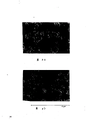
Fig. 1 illustrates this carbonitride powder (E level, figure below) and the SEM Photomicrograph of the carbonitride that fully ground (A level, figure below) of the reference composition of producing through homogenizing.
Fig. 2 illustrates this carbonitride powder (E level, figure below) and utilizes TiO
2The SEM Photomicrograph of the carbonitride (B level, last figure) of the reference composition that/carbon black dry mixture hot reducing method is produced.
Fig. 3 illustrates the size-grade distribution (volume) with the carbonitride powder of the present invention (E level) of SHIMADZU SA-CP2 centrifugal determination, with A level (preparation of diffusion reaction method, see Fig. 1) and B level (TiO
2The preparation of the carbothermic method of/carbon black dry mixture, see Fig. 2) the corresponding size-grade distribution of contrast powder is relatively.
Use aqueous 0.01% Sodium hexametaphosphate 99 (Calgon) liquid as the particle size measurement sedimentation liquid, disperseed 10 minutes.Under 1000 rev/mins of centrifugation, analyzed ultra sonic bath.
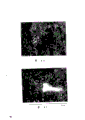
Fig. 4 illustrates (a) carbonitride (A level with the diffusion reaction preparation, last figure) with (b) with carbonitride of the present invention (E level, figure below), the SEM Photomicrograph of the sintering metal crystalline-granular texture that sintering is made under identical Ni/Co binding agent and (W, Ta, Mo) carbide condition.
Embodiment 2
In order to use same raw material (titanium dioxide TiO
2And carbon black) produce the TiCN carbonitride, weighing contains 2Kg TiO
2In intensive mixer, mix the extruding of dry back with 623 gram sooty mixtures with sucrose solution (containing 184.5 gram pure white sugar in 1.3 liters of distilled water).This synthesizes under 1600 ℃ (isothermals insulation 80 minutes) and repeats once again, but has significantly improved N
2/ H
2The total throughput of gaseous mixture (reaching 72 liters/minute) and nitrogen partial pressure in the flowing gas is thermodynamics nitrogen equilibrium pressure (TiC
1-yN
y+ C
FreeThe equilibrium pressure of phase boundary) 5-25%.Grey TiC with embodiment 1
1-yN
yThe powder difference, this routine sintetics is a lavender, and can be enough the nonreinforcement polishing handle, depolymerization fully promptly is broken into primary granule and does not have the fragmentation of particle from X.The powder of making like this has following characteristic:
Total carbon (C
Tot.) 5.91%
Uncombined carbon (C
Free) 0.02%
Nitrogen content 15.90%
Oxygen level 0.60%
Chloride content<0.10%
FISHER granularity (ASTMB330, FSSS) 0.90 μ m
Specific surface area (BET method, DIN66131 method) 3.20m
2/ g
SEM granularity d
B0.72 μ m
The standard deviation of granularity (δ) d
B0.35 μ m
Shape factor (mean value) f 0.87
The standard deviation of shape factor (δ) f 0.10
D(10) value (SHIMADZU method
1)0.29 μ m
D(50) value (SHIMADZU method
1)0.67 μ m
D(90) value (SHIMADZU method
1)1.39 μ m
Annotate 1): the fundamental principle of analysis by sedimentation
The evaluation equation of quantitative measurment in the centrifugal field, DIN66111 replenishes in February, 1,1989
This analyze with have following fixed more identical than (oxygen) carbonitride of forming:
TiC
0.304N
0.701O
0.023Or Ti(C
0.296N
0.682O
0.022)
1.028.
In order to measure shape factor, (magnification is 10 with the SEM Photomicrograph that amplifies
4*) evaluated 200 particles by linear and particle shape analytical method.Particle size is measured with known intercept length method of masurement.In addition, with du=u/ π and d
A=(4A/ π)
 The particle size of definition be by measure to characterize particle shape from particle girth U and particle area (particle is in the lip-deep bidimensional projection of image) determine.Said particle shape factor f presses f=4 π A/U
2Derive by said particle area A and particle girth U.
The particle size of definition be by measure to characterize particle shape from particle girth U and particle area (particle is in the lip-deep bidimensional projection of image) determine.Said particle shape factor f presses f=4 π A/U
2Derive by said particle area A and particle girth U.
Parameter d
uAnd d
ADescribed relatively particle of two different spheries, this two particles projection on said plane is compared with the particle of true (being studied), has (a) identical girth u surface-area A identical with (b).
Fig. 5 explains said shape factor f=4 π A/U
2Schematic illustration.Wherein
d
u=girth U=π d
uEqual to be projected the diameter in the garden of particle girth,
d
A=area equals to be projected the circular diameter of particle area, (d
A≤ d
u).
Claims (15)
Applications Claiming Priority (4)
| Application Number | Priority Date | Filing Date | Title |
|---|---|---|---|
| DEP4214721.2 | 1992-05-04 | ||
| DE4214721 | 1992-05-04 | ||
| DEP4216802.3 | 1992-05-21 | ||
| DE4216802A DE4216802C2 (en) | 1992-05-04 | 1992-05-21 | Submicron carbonitride powder, process for their preparation and their use |
Publications (2)
| Publication Number | Publication Date |
|---|---|
| CN1079005A true CN1079005A (en) | 1993-12-01 |
| CN1040461C CN1040461C (en) | 1998-10-28 |
Family
ID=25914521
Family Applications (1)
| Application Number | Title | Priority Date | Filing Date |
|---|---|---|---|
| CN93105032A Expired - Fee Related CN1040461C (en) | 1992-05-04 | 1993-05-04 | Submicron carbonitride powders, a process for their production and their use |
Country Status (8)
| Country | Link |
|---|---|
| US (1) | US5476530A (en) |
| EP (1) | EP0572788B1 (en) |
| JP (1) | JP3061699B2 (en) |
| KR (1) | KR100262929B1 (en) |
| CN (1) | CN1040461C (en) |
| AT (1) | ATE168357T1 (en) |
| ES (1) | ES2118159T3 (en) |
| IL (1) | IL105590A (en) |
Cited By (1)
| Publication number | Priority date | Publication date | Assignee | Title |
|---|---|---|---|---|
| CN109641806A (en) * | 2016-08-22 | 2019-04-16 | 住友电气工业株式会社 | The manufacturing method of carbon titanium carbonitride powder and carbon titanium carbonitride powder |
Families Citing this family (17)
| Publication number | Priority date | Publication date | Assignee | Title |
|---|---|---|---|---|
| JP3039909B2 (en) * | 1994-05-14 | 2000-05-08 | 住友特殊金属株式会社 | Substrate material for magnetic head |
| JP3039908B2 (en) * | 1994-05-14 | 2000-05-08 | 住友特殊金属株式会社 | Substrate material for magnetic head with low levitation |
| US5966592A (en) * | 1995-11-21 | 1999-10-12 | Tessera, Inc. | Structure and method for making a compliant lead for a microelectronic device |
| DE69613942T2 (en) * | 1995-11-27 | 2001-12-06 | Mitsubishi Materials Corp., Tokio/Tokyo | Wear-resistant carbonitride cermet cutting body |
| DE19704242C1 (en) * | 1997-02-05 | 1998-08-27 | Starck H C Gmbh Co Kg | Carbonitride powder, process for their preparation and their use |
| US5756410A (en) * | 1997-02-27 | 1998-05-26 | The Dow Chemical Company | Method for making submicrometer transition metal carbonitrides |
| RU2133296C1 (en) * | 1998-06-08 | 1999-07-20 | Институт химии твердого тела Уральского Отделения РАН | Solid alloy (variants) and method of preparing thereof |
| WO2002049989A2 (en) * | 2000-12-19 | 2002-06-27 | Honda Giken Kogyo Kabushiki Kaisha | Composite material |
| DE10297020T5 (en) * | 2001-07-03 | 2004-08-12 | Honda Giken Kogyo K.K. | Multi-component ceramic powder, method for producing multi-component ceramic powder, sintered body and method for producing a sintered body |
| NZ513331A (en) | 2001-11-20 | 2005-01-28 | Board & Batten Int Inc | Edge fittings for soft-edged trampolines |
| US7413591B2 (en) * | 2002-12-24 | 2008-08-19 | Kyocera Corporation | Throw-away tip and cutting tool |
| DE102006015538A1 (en) | 2006-03-31 | 2007-10-11 | H. C. Starck Gmbh & Co. Kg | Apparatus and process for the preparation of compounds by precipitation |
| DE102006049098B4 (en) | 2006-10-13 | 2023-11-09 | Toda Kogyo Corp. | Powdered compounds, process for their production and their use in lithium secondary batteries |
| DE102007039471A1 (en) * | 2007-08-21 | 2009-02-26 | H.C. Starck Gmbh | Powdered compounds, process for their preparation and their use in lithium secondary batteries |
| DE102007049108A1 (en) | 2007-10-12 | 2009-04-16 | H.C. Starck Gmbh | Powdered compounds, process for their preparation and their use in batteries |
| US9089732B2 (en) | 2011-06-09 | 2015-07-28 | Vuly Trampolines Pty, Ltd. | Trampolines |
| EP4506308A1 (en) | 2023-08-07 | 2025-02-12 | H.C. Starck Tungsten GmbH | Spherical mixed metal hydroxides and processes for the preparation thereof |
Family Cites Families (9)
| Publication number | Priority date | Publication date | Assignee | Title |
|---|---|---|---|---|
| US3904736A (en) * | 1966-06-01 | 1975-09-09 | Grace W R & Co | Preparing microspheres of actinide nitrides from carbon containing oxide sols |
| US3994692A (en) * | 1974-05-29 | 1976-11-30 | Erwin Rudy | Sintered carbonitride tool materials |
| DE2420768A1 (en) * | 1973-06-18 | 1975-01-09 | Teledyne Ind | CARBONITRIDE ALLOYS FOR CUTTING TOOLS AND WEAR PARTS |
| US4049876A (en) * | 1974-10-18 | 1977-09-20 | Sumitomo Electric Industries, Ltd. | Cemented carbonitride alloys |
| SE392482B (en) * | 1975-05-16 | 1977-03-28 | Sandvik Ab | ON POWDER METALLURGIC ROAD MANUFACTURED ALLOY CONSISTING OF 30-70 VOLUME PERCENT |
| JPS593925B2 (en) * | 1980-06-20 | 1984-01-26 | 宇部興産株式会社 | Manufacturing method of metal carbonitride |
| AT394188B (en) * | 1990-03-14 | 1992-02-10 | Treibacher Chemische Werke Ag | METHOD FOR THE PRODUCTION OF FINE-GRINED, SINTER-ACTIVE NITRIDE AND CARBONITRIDE POWDERS OF TITANIUM |
| DD295400A5 (en) * | 1990-06-20 | 1991-10-31 | ��������@��@����������@��@��@����������@���������k�� | CARBONITRIDE FRACTURES OF TRANSITION METALS TITANIUM, MOLYBDAEN AND / OR TUNGSTEN AND METHOD FOR THE PRODUCTION THEREOF |
| US5314656A (en) * | 1992-11-20 | 1994-05-24 | The Regents Of The University Of California | Synthesis of transition metal carbonitrides |
-
1993
- 1993-04-21 AT AT93106464T patent/ATE168357T1/en not_active IP Right Cessation
- 1993-04-21 EP EP93106464A patent/EP0572788B1/en not_active Expired - Lifetime
- 1993-04-21 ES ES93106464T patent/ES2118159T3/en not_active Expired - Lifetime
- 1993-04-28 JP JP5123130A patent/JP3061699B2/en not_active Expired - Fee Related
- 1993-04-30 US US08/056,322 patent/US5476530A/en not_active Expired - Lifetime
- 1993-04-30 KR KR1019930007407A patent/KR100262929B1/en not_active Expired - Fee Related
- 1993-05-03 IL IL10559093A patent/IL105590A/en not_active IP Right Cessation
- 1993-05-04 CN CN93105032A patent/CN1040461C/en not_active Expired - Fee Related
Cited By (2)
| Publication number | Priority date | Publication date | Assignee | Title |
|---|---|---|---|---|
| CN109641806A (en) * | 2016-08-22 | 2019-04-16 | 住友电气工业株式会社 | The manufacturing method of carbon titanium carbonitride powder and carbon titanium carbonitride powder |
| CN109641806B (en) * | 2016-08-22 | 2022-03-04 | 住友电气工业株式会社 | Titanium carbonitride powder and method for producing titanium carbonitride powder |
Also Published As
| Publication number | Publication date |
|---|---|
| US5476530A (en) | 1995-12-19 |
| IL105590A0 (en) | 1993-09-22 |
| ES2118159T3 (en) | 1998-09-16 |
| ATE168357T1 (en) | 1998-08-15 |
| EP0572788B1 (en) | 1998-07-15 |
| IL105590A (en) | 1996-11-14 |
| CN1040461C (en) | 1998-10-28 |
| JPH06166505A (en) | 1994-06-14 |
| EP0572788A1 (en) | 1993-12-08 |
| JP3061699B2 (en) | 2000-07-10 |
| KR100262929B1 (en) | 2000-08-01 |
Similar Documents
| Publication | Publication Date | Title |
|---|---|---|
| CN1079005A (en) | Submicron carbide powder and its production method and use | |
| CN1293019C (en) | Formation method and sintering method of 312 phase material | |
| CN109641753B (en) | Tungsten carbide powder and preparation thereof | |
| CN1315920A (en) | Synthesis method of metal oxide and metal oxide having perovskite or perovskite-like crystal structure | |
| CN108455614B (en) | A method for preparing nano-WC powder at low temperature and short process | |
| CN1022767C (en) | Method for producing rare earth-containing cemented carbide | |
| CN1016143B (en) | Catalyst and catalyst precusor containing vanadium and antimony | |
| CN1289392C (en) | Production method and powder of particulate tungsten carbide powder | |
| CN108349736A (en) | Compound carbon nitride powder and its manufacturing method | |
| CN1246102A (en) | Carbonitride powder, method for producing same, and use thereof | |
| CN104190913B (en) | WC mixed powder production method used for producing fine-particle alloy | |
| CN107737924A (en) | Enhancement type hard alloy based on tungsten-cobalt and preparation method thereof | |
| US5879078A (en) | Device for producing ceramic sintered body | |
| JP3413625B2 (en) | Method for producing titanium carbonitride powder | |
| CN100457605C (en) | Process for preparing nano vanadium nitride and nano vanadium carbonitride powder | |
| CN106563463B (en) | A kind of preparation method of Cu oxide surface recombination manganese oxide layer materials | |
| CN1900332A (en) | Method for preparing copper base composite material by chemical precipitation method to obtain composite powder | |
| CN1238251C (en) | Process for preparing nm-class superfine vanadium carbide powder | |
| JP6071409B2 (en) | Pre-granulation method for sintering raw materials | |
| CN116081625B (en) | Tungsten carbide powder and its preparation method and application | |
| CN1032431A (en) | Yttrium-stabilized zirconia production process and products obtained therefrom | |
| CN1799995A (en) | Method for synthesizing isotropic silicon nitride powder adopting layer type material-distribution | |
| JP3111709B2 (en) | Production method of fine composite carbide powder for production of tungsten carbide based cemented carbide | |
| JP3610956B2 (en) | Tungsten carbide based alloy raw material powder for the manufacture of cemented carbide products | |
| Andreoli et al. | Characteristics of rice husks for chlorination reaction |
Legal Events
| Date | Code | Title | Description |
|---|---|---|---|
| C06 | Publication | ||
| PB01 | Publication | ||
| C10 | Entry into substantive examination | ||
| SE01 | Entry into force of request for substantive examination | ||
| C14 | Grant of patent or utility model | ||
| GR01 | Patent grant | ||
| C19 | Lapse of patent right due to non-payment of the annual fee | ||
| CF01 | Termination of patent right due to non-payment of annual fee |