CN108069918B - One-pot method for preparing 3-difluoromethylisoxazole compounds - Google Patents

One-pot method for preparing 3-difluoromethylisoxazole compounds Download PDF

Info

Publication number
CN108069918B
CN108069918B CN201810049236.2A CN201810049236A CN108069918B CN 108069918 B CN108069918 B CN 108069918B CN 201810049236 A CN201810049236 A CN 201810049236A CN 108069918 B CN108069918 B CN 108069918B
Authority
CN
China
Prior art keywords
nmr
cdcl
phenyl
376mhz
formula
Prior art date
Legal status (The legal status is an assumption and is not a legal conclusion. Google has not performed a legal analysis and makes no representation as to the accuracy of the status listed.)
Active
Application number
CN201810049236.2A
Other languages
Chinese (zh)
Other versions
CN108069918A (en
Inventor
章晓炜
胡文丽
陈锁
胡祥国
Current Assignee (The listed assignees may be inaccurate. Google has not performed a legal analysis and makes no representation or warranty as to the accuracy of the list.)
Jiangxi Normal University
Original Assignee
Jiangxi Normal University
Priority date (The priority date is an assumption and is not a legal conclusion. Google has not performed a legal analysis and makes no representation as to the accuracy of the date listed.)
Filing date
Publication date
Application filed by Jiangxi Normal University filed Critical Jiangxi Normal University
Priority to CN201810049236.2A priority Critical patent/CN108069918B/en
Publication of CN108069918A publication Critical patent/CN108069918A/en
Application granted granted Critical
Publication of CN108069918B publication Critical patent/CN108069918B/en
Active legal-status Critical Current
Anticipated expiration legal-status Critical

Links

Images

Classifications

    • CCHEMISTRY; METALLURGY
    • C07ORGANIC CHEMISTRY
    • C07DHETEROCYCLIC COMPOUNDS
    • C07D261/00Heterocyclic compounds containing 1,2-oxazole or hydrogenated 1,2-oxazole rings
    • C07D261/02Heterocyclic compounds containing 1,2-oxazole or hydrogenated 1,2-oxazole rings not condensed with other rings
    • C07D261/06Heterocyclic compounds containing 1,2-oxazole or hydrogenated 1,2-oxazole rings not condensed with other rings having two or more double bonds between ring members or between ring members and non-ring members
    • C07D261/08Heterocyclic compounds containing 1,2-oxazole or hydrogenated 1,2-oxazole rings not condensed with other rings having two or more double bonds between ring members or between ring members and non-ring members with only hydrogen atoms, hydrocarbon or substituted hydrocarbon radicals, directly attached to ring carbon atoms
    • CCHEMISTRY; METALLURGY
    • C07ORGANIC CHEMISTRY
    • C07DHETEROCYCLIC COMPOUNDS
    • C07D261/00Heterocyclic compounds containing 1,2-oxazole or hydrogenated 1,2-oxazole rings
    • C07D261/02Heterocyclic compounds containing 1,2-oxazole or hydrogenated 1,2-oxazole rings not condensed with other rings
    • C07D261/06Heterocyclic compounds containing 1,2-oxazole or hydrogenated 1,2-oxazole rings not condensed with other rings having two or more double bonds between ring members or between ring members and non-ring members
    • C07D261/10Heterocyclic compounds containing 1,2-oxazole or hydrogenated 1,2-oxazole rings not condensed with other rings having two or more double bonds between ring members or between ring members and non-ring members with hetero atoms or with carbon atoms having three bonds to hetero atoms with at the most one bond to halogen, e.g. ester or nitrile radicals, directly attached to ring carbon atoms
    • C07D261/18Carbon atoms having three bonds to hetero atoms, with at the most one bond to halogen
    • CCHEMISTRY; METALLURGY
    • C07ORGANIC CHEMISTRY
    • C07DHETEROCYCLIC COMPOUNDS
    • C07D413/00Heterocyclic compounds containing two or more hetero rings, at least one ring having nitrogen and oxygen atoms as the only ring hetero atoms
    • C07D413/02Heterocyclic compounds containing two or more hetero rings, at least one ring having nitrogen and oxygen atoms as the only ring hetero atoms containing two hetero rings
    • C07D413/04Heterocyclic compounds containing two or more hetero rings, at least one ring having nitrogen and oxygen atoms as the only ring hetero atoms containing two hetero rings directly linked by a ring-member-to-ring-member bond
    • CCHEMISTRY; METALLURGY
    • C07ORGANIC CHEMISTRY
    • C07FACYCLIC, CARBOCYCLIC OR HETEROCYCLIC COMPOUNDS CONTAINING ELEMENTS OTHER THAN CARBON, HYDROGEN, HALOGEN, OXYGEN, NITROGEN, SULFUR, SELENIUM OR TELLURIUM
    • C07F7/00Compounds containing elements of Groups 4 or 14 of the Periodic Table
    • C07F7/02Silicon compounds
    • C07F7/08Compounds having one or more C—Si linkages
    • C07F7/18Compounds having one or more C—Si linkages as well as one or more C—O—Si linkages
    • C07F7/1804Compounds having Si-O-C linkages
    • C07F7/1872Preparation; Treatments not provided for in C07F7/20
    • C07F7/188Preparation; Treatments not provided for in C07F7/20 by reactions involving the formation of Si-O linkages

Landscapes

  • Chemical & Material Sciences (AREA)
  • Organic Chemistry (AREA)
  • Chemical Kinetics & Catalysis (AREA)
  • Organic Low-Molecular-Weight Compounds And Preparation Thereof (AREA)
  • Pharmaceuticals Containing Other Organic And Inorganic Compounds (AREA)

Abstract

本发明公开了一种新型的一锅法制备3‑二氟甲基取代的异噁唑化合物的方法,该方法是利用市场中可购买到的二氟乙胺制备成氟代重氮甲烷,再与炔烃类化合物在廉价的铜催化下发生偶联反应得到;该方法操作简单、反应条件温和、成本低、副产物少、收率高、官能团耐受性高,并且可以放大反应。同时做了更深入的机理研究,并提出了该反应中会经过二氟甲基酮肟类化合物中间体的机理。

Figure 201810049236

The invention discloses a novel one-pot method for preparing a 3-difluoromethyl-substituted isoxazole compound. The method is to prepare fluorodiazomethane by using difluoroethylamine that can be purchased in the market, and then It is obtained by coupling reaction with alkynes under the catalysis of cheap copper; the method has simple operation, mild reaction conditions, low cost, few by-products, high yield, high functional group tolerance, and can scale up the reaction. At the same time, a more in-depth mechanism study was done, and the mechanism that the reaction would pass through the intermediates of difluoromethyl ketoximes was proposed.

Figure 201810049236

Description

Method for preparing 3-difluoromethyl isoxazole compound by one-pot method
Technical Field
The invention relates to a novel one-pot method for preparing a 3-difluoromethyl substituted isoxazole compound, in particular to a method for preparing a 3-difluoromethyl substituted isoxazole compound by taking difluoroethylamine and terminal alkyne as raw materials, and belongs to the technical field of green chemistry and synthesis of drug intermediates.
Background
Isoxazole heterocyclic frameworks are not only widely distributed among many active drug molecules, but are also important intermediates in organic synthetic chemistry. And the difluoromethyl is tried to be introduced into the 3-position of the isoxazole skeleton, so that the biological activity of the compound can be changed by influencing the properties of fat solubility, stability, permeability and the like of the compound, and the original active medicament has the characteristics of low dosage, low toxicity, high medicinal effect, strong metabolic capability and the like in performance. Therefore, how to efficiently synthesize the diversified 3-difluoromethyl isoxazoles has been a hot problem for the research of chemists for a long time. Common synthetic methods include:
(1) in 1989, Linderman synthesized 3-difluoromethyl isoxazole from difluoromethyl-substituted alkynone and hydroxylamine hydrochloride, but the synthesis conditions of alkynone are harsh and the yield is low. Most importantly, the last step of the cyclization reaction has poor selectivity (nitrogen atom can be added to carbonyl group, and oxygen atom can be added to carbonyl group), and the substrate limitation is large. (R.J. Linderman et al, Tetrahedron Letters 1989,30,2049-
Figure GDA0003006122890000011
(2) In 2015, e.schmitt and f.r.leroux used a fluoroalkylamine reagent (N, N-dimethyltetrafluoroethylamine) as the difluoromethyl source and converted it to the fluoroamine salt under the action of boron trifluoride diethyl etherate. Then taking enol silyl ether as a nucleophilic reagent to prepare a difluoromethyl substituted ketone ammonium salt compound, and then condensing with hydroxylamine hydrochloride to obtain difluoromethyl isoxazole. The method has the advantages of cheap starting materials, preparation of the silyl enol ether in advance, long steps and environmental and economic unfriendliness. (F.R.Leroux et al, org.Lett.2015,17,4510-
Figure GDA0003006122890000021
(3) In 2017, p.k.mykhaliuk reduced it to difluoroacetaldehyde using ethyl difluoroacetate as difluoromethyl source under lithium aluminium hydride reducing conditions, and condensed the original taste with hydroxylamine hydrochloride to give difluoromethyl substituted oxime. Thereafter, the oxime is converted to a chlorooxime under NCS oxidation conditions and under basic conditions the difluoromethyl nitrile oxide is formed. Finally, the nitrile oxide generated in situ and alkyne generate [3+2] cycloaddition reaction to obtain difluoromethyl isoxazole. Also, the synthesis method has the defects of harsh conditions, long steps, low economy, low synthesis efficiency and the like. (P.K.Mykhaliuk et al, Eur.J.org.chem.2017,3935-3940)
Figure GDA0003006122890000022
Despite these many synthetic routes to 3-difluoromethyl isoxazole, the reaction steps are generally tedious and directly lead to inefficient synthesis. So far, no literature reports a high-efficiency and quick synthesis method.
Disclosure of Invention
Aiming at the problems in the existing synthesis process of 3-difluoromethyl isoxazole, such as the defects of long reaction steps, low utilization rate of raw materials, harsh reaction conditions and the like, the invention aims to provide a synthesis method of a 3-difluoromethyl isoxazole heterocyclic compound, which has the advantages of high efficiency, easily available raw materials, mild reaction conditions, high product yield and few byproducts, and the method designs and synthesizes 3-difluoromethyl isoxazole with a brand-new structure, thereby providing a raw material source for drug screening and new drug synthesis.
The invention adopts the following technical scheme:
a one-pot method for preparing 3-difluoromethyl substituted isoxazole compounds is characterized in that a terminal alkyne compound shown in a formula I is dissolved in chloroform, 2-difluoroethylamine, tert-butyl nitrite and acetic acid are added, cuprous iodide and a zinc bromide reagent are added, and the mixture is stirred for 24 hours at room temperature under the protection of nitrogen. After the reaction time, directly removing the solvent by reduced pressure distillation, and obtaining the 3-difluoromethyl substituted isoxazole compound by using flash column chromatography.
The gram-order 3-difluoromethyl-substituted isoxazole compound is prepared by dissolving a terminal alkyne compound of formula I in chloroform, adding 2, 2-difluoroethylamine and acetic acid, adding cuprous iodide and zinc bromide reagents, and stirring for fifteen minutes under the protection of nitrogen before ice-water bath for full dissolution. Then, tert-butyl nitrite was slowly added under these conditions, at which time it was seen that zinc bromide was dissolved and the solution became bright green, and then the system was transferred to room temperature and stirred. After 24 hours of reaction, filtering the reaction product by using kieselguhr, washing filter residue by using dichloromethane, washing the filtrate by using a sodium thiosulfate solution, separating the solution to obtain an organic phase, drying the organic phase by using anhydrous magnesium sulfate, directly removing the solvent by reduced pressure distillation, and obtaining the gram-order 3-difluoromethyl substituted isoxazole compound by using a flash column chromatography.
Figure GDA0003006122890000031
In a preferred embodiment, the R groups in formula I and formula II are independently selected from phenyl, biphenyl, 4-tolyl, 4-pentylphenyl, 4-methoxyphenyl, 4-chlorophenyl, 4-bromophenyl, 4-fluorophenyl, 4-trifluoromethylphenyl, 4-cyanophenyl, 4-nitrophenyl, 4-carbomethoxy, 4-phenylethyl, 4-methylphenethinyl, 4-methylsulfinylphenyl, 4-methylsulfonylphenyl, 2-methoxyphenyl, 2-chlorophenyl, 2-propenylcarboxylatophenyl, 3-nitrophenyl, 3-fluorophenyl, 3-hydroxyphenyl, 3- (tert-butyldiphenylsilyl) oxyphenyl, 3-carbamoylphenyl, 3-carbamic-tert-butylcarbonylphenyl, tert-amylphenyl, 4-pentylphenyl, 4-methoxyphenyl, 4-chlorophenyl, 4-fluorophenyl, 4-trifluoromethylphenyl, 4-cyanophenyl, 2-propenylcarboxylatophenyl, 3-nitrophenyl, 3-, 3-aminoacetylphenyl, 3-aminobenzoylphenyl, 3-amino- (2, 2-benzyloxy) phenyl, 2-fluoro-3-methoxyphenyl, 2-methoxy-3-fluorophenyl, beta-naphthyl, thiophene, furan, pyridine, 1H-indole-1-carboxylic acid ethyl ester, styryl, ethyl 4-methoxybenzoate, 4-nitrobenzoate ethyl ester, carboxylic acid ethyl ester, N-phenylcarboxamide group.
In a preferable scheme, the molar ratio of the terminal alkyne compound of the formula I to difluoroethylamine is 1: 1-10; the mol ratio of the terminal alkyne compound shown in the formula I to the tert-butyl nitrite is 1: 1-10; the molar ratio of the terminal alkyne compound of the formula I to acetic acid is 1: 0.2-5; the molar ratio of the alkyne compound at the tail end of the formula I to cuprous iodide is 1: 0.05-1; the molar ratio of the alkyne compound at the terminal of the formula I to the zinc bromide is 1: 1-10; the reaction time is 12-48 hours; the reaction conditions were room temperature.
Compared with the prior art, the technical scheme of the invention brings the following technical advantages:
(1) the preparation method of the 3-difluoromethyl substituted isoxazole compound is simple in operation and mild in condition, and the whole reaction process can be carried out at normal temperature and under the air condition.
(2) The invention adopts the commercialized raw materials of difluoroethylamine and terminal alkyne for preparing the 3-difluoromethyl substituted isoxazole compound, can be simply synthesized by adopting the existing mature process, has high safety and avoids the preparation process of complex raw materials.
(3) The preparation method of the 3-difluoromethyl substituted isoxazole compound does not need to adopt expensive metal catalysts, reduces the production cost and is beneficial to environmental protection.
(4) The method for preparing the 3-difluoromethyl substituted isoxazole compound has the characteristics of less side reaction and high yield, and the yield reaches 58-93%.
(5) The method for preparing the 3-difluoromethyl substituted isoxazole compound is not limited by a substrate, so that an aromatic 3-difluoromethyl substituted isoxazole library is established, and a raw material source is provided for drug screening and new drug synthesis.
Drawings
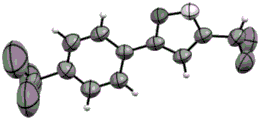
FIG. 1 is a single crystal structural diagram of the product of example 9.
Detailed Description
The following examples are intended to further illustrate the present disclosure, but not to limit the scope of the claims.
The following synthesis method is adopted:
Figure GDA0003006122890000051
the terminal alkyne substrate (0.25mmol,1equiv) was dissolved in chloroform, 2-difluoroethylamine (0.75mmol,3equiv) and tert-butyl nitrite (0.75mmol,3equiv) and acetic acid (0.1mmol,0.4equiv) were added, copper iodide (0.025mmol,0.1equiv) and zinc bromide reagent (0.5mmol,2equiv) were added and stirred at room temperature under nitrogen for 24 hours. After the reaction time, directly removing the solvent by reduced pressure distillation, and obtaining the product 3-difluoromethyl substituted isoxazole compound by using flash column chromatography.
Examples 1 to 41 according to the above method, 3-difluoromethyl-substituted isoxazole compounds represented by the following formulae 1 to 41 can be prepared by changing the kind of the terminal alkyne compound substrate:
Figure GDA0003006122890000052
Figure GDA0003006122890000061
example 1:
substrate: 4-Phenylphenylacetylene product:
Figure GDA0003006122890000071
product characterization data: tile yellow solid (58.8mg, 87% yield); mp is 124.5-124.8;1H NMR(400MHz,CDCl3)δ7.86(d,J=8.0Hz,2H),7.71(d,J=8.0Hz,2H),7.64(d,J=8.0Hz,2H),7.49(t,J=8.0Hz,2H),7.42(t,J=8.0Hz,1H),6.84(t,J=54.0Hz,1H),6.75(s,1H);13C NMR(100MHz,CDCl3)δ171.7,159.7(t,J=30.0Hz),143.9,140.0,129.3,128.4,128.0,127.4,126.7,125.6,109.4(t,J=237.0Hz),96.4;19F NMR(376MHz,CDCl3)δ-115.15(d,J=54.0Hz,2F);19F{1H}NMR(376MHz,CDCl3)δ-115.15(s,2F);HRMS(ESI)m/z calcd for C16H12ONF2 +[M+H]+272.0882,found 272.0880.
example 2:
substrate: phenylacetylene
The product is as follows:
Figure GDA0003006122890000072
product characterization data: colorless oil (44.4mg, 91% yield);1H NMR(400MHz,CDCl3)δ7.81–7.78(m,2H),7.49–7.47(m,3H),6.81(t,J=54.0Hz,1H),6.72(s,1H);13C NMR(100MHz,CDCl3)δ171.9,159.7(t,J=30.0Hz),131.2,129.5,126.8,126.3,109.4(t,J=237.0Hz),96.4;19F NMR(376MHz,CDCl3)δ-115.27(d,J=54.0Hz,2F);19F{1H}NMR(376MHz,CDCl3)δ-115.27(s,2F);HRMS(ESI):m/z calcd for C10H8ONF2 +[M+H]+196.0569,found 196.0572.
example 3:
substrate: 4-methylphenylacetylene
The product is as follows:
Figure GDA0003006122890000081
product characterization data: foamy solid (44.5mg, 85% yield);1H NMR(400MHz,CDCl3)δ7.68(d,J=8.0Hz,2H),7.29(d,J=8.0Hz,2H),6.79(t,J=54.0Hz,1H),6.67(s,1H),2.41(s,3H);13C NMR(100MHz,CDCl3)δ172.2,159.7(t,J=30Hz),141.7,130.2,126.2,124.2,109.5(t,J=237.0Hz),95.8,21.9;19F NMR(376MHz,CDCl3)δ-115.26(d,J=54.0Hz,2F);19F{1H}NMR(376MHz,CDCl3)δ-115.26(s,2F);HRMS(ESI):m/z calcd for C11H10ONF2 +[M+H]+210.0725,found 210.0723.
example 4:
substrate: 4-n-pentylphenylacetylene
The product is as follows:
Figure GDA0003006122890000082
product characterization data: colorless oil (53.2mg, 80% yield);1H NMR(400MHz,CDCl3)δ7.71(d,J=8.0Hz,2H),7.30(d,J=8.0Hz,2H),6.80(t,J=54.0Hz,1H),6.67(s,1H),2.66(t,J=8.0Hz,2H),1.68-1.61(m,2H),1.38–1.31(m,4H),0.90(t,J=7.0Hz,3H);13C NMR(100MHz,CDCl3)δ172.2,159.7(t,J=30Hz),146.7,129.5,126.3,124.4,109.5(t,J=237Hz),95.8,36.2,31.8,31.2,22.8,14.3;19F NMR(376MHz,CDCl3)δ-115.25(d,J=54.0Hz,2F);19F{1H}NMR(376MHz,CDCl3)δ-115.25(s,2F);HRMS(ESI)m/z calcd for C15H18ONF2 +[M+H]+266.1351,found 266.1346.
example 5:
substrate: 4-methoxy phenylacetylene
The product is as follows:
Figure GDA0003006122890000091
product characterization data: tile yellow solid (46.7mg, 83% yield); mp is 72.3-73.1;1H NMR(400MHz,CDCl3)δ7.73(d,J=8.0Hz,2H),6.99(d,J=8.0Hz,2H),6.78(t,J=54.0Hz,1H),6.59(s,1H),3.87(s,3H);13C NMR(100MHz,CDCl3)δ172.0,162.0,159.7(t,J=30Hz),128.0,119.7,114.9,109.5(t,J=235.0Hz),95.0,55.8;19F NMR(376MHz,CDCl3)δ-115.28(d,J=54.0Hz,2F);19F{1H}NMR(376MHz,CDCl3)δ-115.28(s,2F);HRMS(ESI):m/z calcd for C11H10O2NF2 +[M+H]+226.0674,found 226.0672.
example 6:
substrate: 4-Chlorobenzeneacetylenes
The product is as follows:
Figure GDA0003006122890000092
product characterization data: white solid (54.6mg, 95% yield); mp is 82.9-84.3;1H NMR(400MHz,CDCl3)δ7.73(d,J=8.0Hz,2H),7.46(d,J=8.0Hz,2H),7.80(t,J=54.0Hz,1H),6.72(s,1H);13C NMR(100MHz,CDCl3)δ170.8,159.8(t,J=38.0Hz),137.4,129.8,127.6,125.3,109.3(t,J=237Hz),96.8;19F NMR(376MHz,CDCl3)δ-115.29(d,J=54.0Hz,2F);19F{1H}NMR(376MHz,CDCl3)δ-115.29(s,2F);HRMS(ESI):m/z calcd for C10H7ONClF2 +[M+H]+230.0179,found 230.0174.
example 7:
substrate: 4-bromophenylacetylene
The product is as follows:
Figure GDA0003006122890000101
product characterization data: white solid (58.8mg, 86% yield); mp is 103.7-104.5;1H NMR(400MHz,CDCl3)δ7.68–7.62(m,4H),6.80(t,J=54.0Hz,1H),6.73(s,1H);13C NMR(100MHz,CDCl3)δ170.9,159.9(t,J=30.0Hz),132.9,127.8,125.8,109.3(t,J=235.0Hz),96.9;19F NMR(376MHz,CDCl3)δ-115.29(d,J=54.0Hz,2F).19F{1H}NMR(376MHz,CDCl3)δ-115.29(s,2F);HRMS(ESI):m/z calcd for C10H7ONF2Br+[M+H]+273.9674,found 273.9677.
example 8:
substrate: 4-fluorophenylacetylene
The product is as follows:
Figure GDA0003006122890000102
product characterization data: tile yellow foam solid (48.9mg, 92% yield);1H NMR(400MHz,CDCl3)δ7.82–7.78(m,2H),7.21–7.17(m,2H),6.80(t,J=54.0Hz,1H),6.68(s,1H);13C NMR(100MHz,CDCl3)δ171.0,164.5(d,J=252.0Hz),159.8(t,J=30Hz),128.5(d,J=9.0Hz),123.3(d,J=3.0Hz),116.8(d,J=23.0Hz),109.4(t,J=236Hz),96.3;19F NMR(376MHz,CDCl3)δ-108.11–-108.18(m,1F),-115.30(d,J=54.0Hz,2F);19F{1H}NMR(376MHz,CDCl3)δ-108.14(s,1F),-115.30(s,2F);HRMS(ESI):m/z calcd for C10H7 ONF3 +[M+H]+214.0474,found 214.0471.
example 9:
substrate: 4-trifluoromethylphenylacetylene
The product is as follows:
Figure GDA0003006122890000111
product characterization data: white crystal solid (50.9mg, 77% yield); mp is 84.7-86.2;1H NMR(400MHz,CDCl3)δ7.93(d,J=8.0Hz,2H),7.77(d,J=8.0Hz,2H),6.84(s,1H),6.83(t,J=54.0Hz,1H);13C NMR(100MHz,CDCl3)δ170.3,159.9(t,J=30Hz),132.8,128.3(q,J=330Hz),126.7,126.6(q,J=4.0Hz),122.6,109.2(t,J=237.0Hz),98.0;19F NMR(376MHz,CDCl3)δ-63.07(s,1F),-115.31(d,J=54.0Hz,2F);19F{1H}NMR(376MHz,CDCl3)δ-63.07(s,1F),-115.31(s,2F);HRMS(ESI):m/z calcd for C11H7ONF5 +[M+H]+264.0442,found 264.0440.
example 10:
substrate: 4-cyanophenylacetylene
The product is as follows:
Figure GDA0003006122890000112
product characterization data: white solid (41.2mg, 75% yield); mp is 112.7-114.2;1H NMR(400MHz,CDCl3)δ7.92(d,J=8.0Hz,2H),7.80(d,J=8.0Hz,2H),6.87(s,1H),6.82(t,J=52.0Hz,1H);13C NMR(100MHz,CDCl3)δ169.7,160.0(t,J=30Hz),133.3,130.5,126.8,118.2,114.8,109.1(t,J=236Hz),98.7;19F NMR(376MHz,CDCl3)δ-115.34(d,J=52.0Hz,2F);19F{1H}NMR(376MHz,CDCl3)δ-115.34(s,2F);HRMS(ESI):m/z calcd for C11H7ON2F2 +[M+H]+221.0521,found 221.0518.
example 11:
substrate: 4-Nitrophenylacetylene
The product is as follows:
Figure GDA0003006122890000121
product characterization data: yellow solid (44.5mg, 74% yield); mp is 163.6-165.3;1H NMR(400MHz,CDCl3)δ8.38(d,J=8.0Hz,2H),8.00(d,J=8.0Hz,2H),6.93(s,1H),6.84(t,J=54.0Hz,1H);13C NMR(100MHz,CDCl3)δ169.4,160.1(t,J=30Hz),149.3,132.1,127.2,124.9,109.1(t,J=237.0Hz),99.2;19F NMR(376MHz,CDCl3)δ-115.28(d,J=54.0Hz,2F);19F{1H}NMR(376MHz,CDCl3)δ-115.28(s,2F);HRMS(ESI):m/z calcd for C10H7O3N2F2 +[M+H]+241.0419,found 241.0415.
example 12:
substrate: 4-Methylbenzoylphenylacetylene
The product is as follows:
Figure GDA0003006122890000122
product characterization data: white solid (55.1mg, 87% yield); mp is 123.4-124.4;1H NMR(400MHz,CDCl3)δ8.15(d,J=8.0Hz,2H),7.86(d,J=8.0Hz,2H),6.83(s,1H),6.81(t,J=54.0Hz,1H),3.95(s,3H);13C NMR(100MHz,CDCl3)δ170.8,166.4,159.9(t,J=30.0Hz),132.4,130.7,130.5,126.2,109.3(t,J=237Hz),98.0,52.8;19F NMR(376MHz,CDCl3)δ-115.31(d,J=54.0Hz,2F);19F{1H}NMR(376MHz,CDCl3)δ-115.31(s,2F);HRMS(ESI)m/z calcd for C12H10O3NF2 +[M+H]+254.0623,found 254.0619.
example 13:
substrate: 4-acetyleneacetophenones
The product is as follows:
Figure GDA0003006122890000131
product characterization data: white solid (45.6mg, 77% yield); mp is 125.0-126.2;1H NMR(400MHz,CDCl3)δ8.07(d,J=8.0Hz,2H),7.90(d,J=8.0Hz,2H),6.85(s,1H),6.82(t,J=54.0Hz,1H),2.65(s,3H);13C NMR(100MHz,CDCl3)δ197.4,170.6,159.9(t,J=30.0Hz),138.8,130.5,129.4,126.5,109.2(t,J=237.0Hz),98.1,27.1;19F NMR(376MHz,CDCl3)δ-115.27(d,J=54.0Hz,2F);19F{1H}NMR(376MHz,CDCl3)δ-115.27(s,2F);HRMS(ESI)m/z calcd for C12H10O2NF2 +[M+H]+240.0831,found 240.0824.
example 14:
substrate: 4-Methylsulfonylphenylacetylene
The product is as follows:
Figure GDA0003006122890000132
product characterization data: white solid (48.8mg, 81% yield); mp is 87.8 to 88.3;1H NMR(400MHz,CDCl3)δ7.70(d,J=8.0Hz,2H),7.32(d,J=8.0Hz,2H),6.79(t,J=54.0Hz,1H),6.67(s,1H),2.53(s,3H);13C NMR(100MHz,CDCl3)δ171.6,159.7(t,J=30.0Hz),143.2,126.6,126.4,123.2,109.4(t,J=237.0Hz),95.9,15.4;19F NMR(376MHz,CDCl3)δ-115.25(d,J=54.0Hz,2F);19F{1H}NMR(376MHz,CDCl3)δ-115.25(s,2F);HRMS(ESI):m/z calcd for C11H10ONF2S+[M+H]+242.0446,found 242.0440.
example 15:
substrate: 4-methylsulfinylphenylacetylene
The product is as follows:
Figure GDA0003006122890000141
product characterization data: white solid (49.2mg, 77% yield); mp is 111.7-113.3;1H NMR(400MHz,CDCl3)δ7.92(d,J=8.0Hz,2H),7.74(d,J=8.0Hz,2H),6.82(s,1H),6.79(t,J=54.0Hz,1H),2.74(s,3H);13C NMR(100MHz,CDCl3)δ170.3,159.7(t,J=30.0Hz),148.8,129.0,127.0,124.7,109.1(t,J=237Hz),97.7,44.1;19F NMR(376MHz,CDCl3)δ-115.35(d,J=54.0Hz,2F);19F{1H}NMR(376MHz,CDCl3)δ-115.35(s,2F);HRMS(ESI)m/z calcd for C11H10O2NF2S+[M+H]+258.0395,found 258.0392.
example 16:
substrate: 4-methylsulfonylphenylacetylene
The product is as follows:
Figure GDA0003006122890000142
product characterization data: yellow solid (49.2mg, 72% yield); mp is 159.0-160.9;1H NMR(400MHz,CDCl3)δ8.09(d,J=8.0Hz,2H),8.01(d,J=8.0Hz,2H),6.91(s,1H),6.84(t,J=54.0Hz,1H),3.11(s,3H);13C NMR(100MHz,CDCl3)δ169.7,160.0(t,J=30.0Hz),142.7,131.5,128.8,127.2,109.1(t,J=237Hz),98.8,44.8;19F NMR(376MHz,CDCl3)δ-115.28(d,J=54.0Hz,2F);19F{1H}NMR(376MHz,CDCl3)δ-115.28(s,2F);HRMS(ESI):m/z calcd for C11H10O3NF2S+[M+H]+274.0344,found 274.0339.
example 17:
substrate: 2-methoxy phenylacetylene
The product is as follows:
Figure GDA0003006122890000151
product characterization data: white solid (47.8mg, 85% yield); mp is 48.8-49.5;1H NMR(400MHz,CDCl3)δ7.98(dd,J=1.6,8.0Hz,1H),7.47–7.42(m,1H),7.08(t,J=8.0Hz,1H),7.03(d,J=8.5Hz,1H),7.00(s,1H),6.82(t,J=54.0Hz,1H),3.97(s,3H);13C NMR(100MHz,CDCl3)δ168.0,159.7(t,J=30.0Hz),156.7,132.3,128.0,121.3,115.9,111.6,109.7(t,J=237.0Hz),100.4,55.9;19F NMR(376MHz,CDCl3)δ-115.28(d,J=54.0Hz,2F);19F{1H}NMR(376MHz,CDCl3)δ-115.28(s,2F);HRMS(ESI):m/z calcd for C11H10O2NF2 +[M+H]+226.0674,found 226.0671.
example 18:
substrate: 2-Chlorobenzeneacetylenes
The product is as follows:
Figure GDA0003006122890000152
product characterization data: colorless oil (47.1mg, 82% yield);1H NMR(400MHz,CDCl3)δ7.98–7.94(m,1H),7.56–7.52(m,1H),7.44-7.40(m,2H),7.16(s,1H),6.84(t,J=54.0Hz,1H);13C NMR(100MHz,CDCl3)δ168.3,159.6(t,J=30Hz),132.4,131.9,131.4,129.8,127.7,125.7,109.4(t,J=237Hz),101.4;19F NMR(376MHz,CDCl3)δ-115.33(d,J=54.0Hz,2F);19F{1H}NMR(376MHz,CDCl3)δ-115.33(s,2F);HRMS(ESI):m/z calcd for C10H7ONClF2 +[M+H]+230.0179,found 230.0176.
example 19:
substrate: 2-ethynyl-phenylpropanoic acid methyl ester
The product is as follows:
Figure GDA0003006122890000161
product characterization data: colorless oil (53.7mg, 77% yield);1H NMR(400MHz,CDCl3)δ7.95(d,J=16.0Hz,1H),7.76–7.74(m,1H),7.69–7.66(m,1H),7.53–7.51(m,2H),6.83(t,J=54.0Hz,1H),6.60(s,1H),6.43(d,J=16.0Hz,1H),3.82(s,3H);13C NMR(100MHz,CDCl3)δ170.4,166.9,159.5(t,J=30Hz),142.1,133.9,131.4,130.4,129.6,128.2,126.7,122.2,109.3(t,J=237.0Hz),101.3,52.3;19F NMR(376MHz,CDCl3)δ-115.26(d,J=54.0Hz,2F);19F{1H}NMR(376MHz,CDCl3)δ-115.26(s,2F);HRMS(ESI)m/z calcd for C14H12O3NF2 +[M+H]+280.0780,found 280.0774.
example 20:
substrate: 3-Nitrophenylacetylene
The product is as follows:
Figure GDA0003006122890000162
product characterization data: tile yellow solid (49.9mg, 83% yield); mp is 96.1-97.0;1H NMR(400MHz,CDCl3)δ8.64(t,J=1.8Hz,1H),8.36–8.33(m,1H),8.16–8.13(m,1H),7.73(t,J=8.0Hz,1H),6.92(s,1H),6.83(t,J=54.0Hz,1H);13C NMR(100MHz,CDCl3)δ169.3,160.0(t,J=30.0Hz),149.0,131.8,130.9,128.3,125.6,121.3,109.1(q,J=237.0Hz),98.4;19F NMR(376MHz,CDCl3)δ-115.34(d,J=54.0Hz,2F);19F{1H}NMR(376MHz,CDCl3)δ-115.34(s,2F);HRMS(ESI):m/z calcd for C10H7O3N2F2 +[M+H]+241.0419,found 241.0414.
example 21:
substrate: 3-fluorophenylacetylene
The product is as follows:
Figure GDA0003006122890000171
product characterization data: tile yellow foam solid (43.9mg, 82% yield);1H NMR(400MHz,CDCl3)δ7.59–7.58(m,1H),7.52–7.46(m,2H),7.21–7.16(m,1H),6.81(t,J=54.0Hz,1H),6.75(s,1H);13C NMR(100MHz,CDCl3)δ170.6(d,J=2.0Hz),163.3(d,J=247.0Hz),159.8(t,J=30.0Hz),131.3(d,J=9.0Hz),128.7(d,J=9.0Hz),122.1(d,J=3.0Hz),118.2(d,J=21.0Hz),113.4(d,J=23.0Hz),109.3(t,J=237.0Hz),97.3;19F NMR(376MHz,CDCl3)δ-111.08–-111.14(m,1F),-115.32(d,J=54.0Hz,2F);19F{1H}NMR(376MHz,CDCl3)δ-111.11(s,1F),-115.32(s,2F);HRMS(ESI):m/z calcd for C10H7ONF3 +[M+H]+214.0474,found 214.0471.
example 22:
substrate: 3-hydroxyphenylacetylene
The product is as follows:
Figure GDA0003006122890000172
product characterization data: white solid (41.2mg, 78% yield); mp is 134.4-134.9;1H NMR(400MHz,CD3OD)δ7.32–7.30(m,2H),7.27–7.25(m,1H),6.95(s,1H),6.95(t,J=54.0Hz,1H),6.94–6.91(m,1H);13C NMR(100MHz,CD3OD)δ173.1,161.0(t,J=30.0Hz),159.3,131.5,128.9,119.1,118.2,113.4,110.9(t,J=237.0Hz),97.4;19F NMR(376MHz,CD3OD)δ-117.64(d,J=54.0Hz,2F);19F{1H}NMR(376MHz,CD3OD)δ-117.64(s,2F);HRMS(ESI)m/z calcd for C10H8O2NF2 +[M+H]+212.0518,found 212.0513.
example 23:
substrate: 3- (tert-butyldiphenylsilyl) oxyphenylacetylene
The product is as follows:
Figure GDA0003006122890000181
product characterization data: colorless oil (96.0mg, 85% yield);1H NMR(400MHz,CDCl3)δ7.77–7.75(m,4H),7.49–7.45(m,2H),7.43–7.39(m,4H),7.33–7.31(m,1H),7.23(t,J=2.0Hz,1H),7.19(t,J=8.0Hz,1H),6.85(dd,J=2.4,8.0Hz,1H),6.78(t,J=54.0Hz,1H),6.5(s,1H),1.16(s,9H);13C NMR(100MHz,CDCl3)δ171.7,159.6(t,J=30.0Hz),156.5,135.9,132.7,130.5,130.4,128.3,127.8,123.6,119.1,117.6,109.4(t,J=237.0Hz),96.5,26.9,19.8;19F NMR(376MHz,CDCl3)δ-115.25(d,J=54.0Hz,2F);19F{1H}NMR(376MHz,CDCl3)δ-115.25(s,2F);HRMS(ESI)m/z calcd for C26H26O2NF2Si+[M+H]+450.1695,found 450.1686.
example 24:
substrate: 3-Carbamate benzyl phenylacetylene
The product is as follows:
Figure GDA0003006122890000182
product characterization data: yellow solid (80.2mg, 93% yield); mp is 122.1-123.8;1H NMR(400MHz,CDCl3)δ7.92(s,1H),7.54–7.47(m,2H),7.43–7.36(m,6H),7.16(s,1H),6.76(t,J=54.0Hz,1H),6.72(s,1H),5.23(s,2H);13C NMR(100MHz,CDCl3)δ171.6,159.7(t,J=30.0Hz),153.6,139.2,136.1,130.3,129.0,128.8,128.7,127.6,121.2,121.2,116.1,109.3(t,J=237.0Hz),97.0,67.7;19F NMR(376MHz,CDCl3)δ-115.27(d,J=54.0Hz,2F);19F{1H}NMR(376MHz,CDCl3)δ-115.27(s,2F);HRMS(ESI)m/z calcd for C18H15O3N2F2 +[M+H]+345.1045,found 345.1039.
example 25:
substrate: 3-carbamic acid tert-butyl ester group phenylacetylene
The product is as follows:
Figure GDA0003006122890000191
product characterization data: tile brown solid (67.4mg, 87% yield); mp is 100.6-101.9;1H NMR(400MHz,CDCl3)δ7.94(s,1H),7.47–7.44(m,1H),7.43–7.36(m,2H),6.80(t,J=54.0Hz,1H),6.77(s,1H),6.74(s,1H),1.53(s,9H);13C NMR(100MHz,CDCl3)δ171.8,159.7(t,J=30.0Hz),152.9,139.7,130.1,127.6,121.0,120.8,116.0,109.4(t,J=237.0Hz),28.6;19F NMR(376MHz,CDCl3)δ-115.29(d,J=54.0Hz,2F);19F{1H}NMR(376MHz,CDCl3)δ-115.29(s,2F);HRMS(ESI)m/z calcd for C15H17O3N2F2 +[M+H]+311.1202,found 311.1196.
example 26:
substrate: 3-aminoacetylphenylacetylene
The product is as follows:
Figure GDA0003006122890000192
product characterization data: tile yellow solid (52.2mg, 83% yield); mp is 152.0-153.9;1H NMR(400MHz,CD3OD)δ8.15(t,J=1.8Hz,1H),7.65(d,J=8.0Hz,1H),7.59(d,J=8.0Hz,1H),7.45(t,J=8.0Hz,1H),7.02(s,1H),6.97(t,J=54.0Hz,1H),2.16(s,3H);13C NMR(100MHz,CD3OD)δ172.8,171.9,161.1(t,J=30.0Hz),141.0,130.9,128.4,123.2,122.5,118.0,110.9(q,J=237.0Hz),97.8,23.9;19F NMR(376MHz,CD3OD)δ-117.67(d,J=54.0Hz,2F);19F{1H}NMR(376MHz,CD3OD)δ-117.67(s,2F);HRMS(ESI)m/z calcd for C12H11O2N2F2 +[M+H]+253.0783,found 253.0779.
example 27:
substrate: 3-aminobenzoylphenylacetylene
The product is as follows:
Figure GDA0003006122890000201
product characterization data: white solid (58.0mg, 74% yield); mp is 161.8-162.3;1H NMR(400MHz,CDCl3)δ8.17(s,1H),8.09(br s,1H),7.90–7.88(m,2H),7.76–7.74(m,1H),7.59–7.56(m,2H),7.51–7.46(m,2H),6.78(t,J=54.0Hz,1H),6.75(s,1H);13C NMR(100MHz,CDCl3)δ171.5,166.3,159.8(t,J=30.0Hz),139.2,134.8,132.6,130.3,129.6,127.7,127.4,122.8,122.7,122.3,122.3,117.9,117.8,109.4(t,J=237.0Hz),97.1;19F NMR(376MHz,CDCl3)δ-115.31(d,J=54.0Hz,2F);19F{1H}NMR(376MHz,CDCl3)δ-115.31(s,2F);HRMS(ESI)m/z calcd for C17H13O2N2F2 +[M+H]+315.0940,found 315.0937.
example 28:
substrate: 3-amino- (2, 2-benzyloxy) phenylacetylene
The product is as follows:
Figure GDA0003006122890000202
product characterization data: white solid (61.6mg, 63% yield); mp is 108.9-110.4;1H NMR(400MHz,CDCl3)δ7.28–7.25(m,4H),7.21–7.15(m,8H),7.09–7.08(m,1H),7.02(d,J=8.0Hz,1H),6.75(dd,J=2.4,8.4Hz,1H),6.67(t,J=54.0Hz,1H),6.48(s,1H),4.63(s,4H);13C NMR(100MHz,CDCl3)δ172.7,159.6(t,J=30.0Hz),149.9,138.2,130.4,129.2,127.6,126.9,115.3,114.9,109.7,109.5(t,J=237.0Hz),96.3,54.6;19F NMR(376MHz,CDCl3)δ-115.22(d,J=54.0Hz,2F);19F{1H}NMR(376MHz,CDCl3)δ-115.22(s,2F);HRMS(ESI)m/z calcd for C24H21ON2F2 +[M+H]+391.1617,found 391.1610.
example 29:
substrate: 2-fluoro-3-methoxyphenylacetylene
The product is as follows:
Figure GDA0003006122890000211
product characterization data: tile yellow solid (51.1mg, 84% yield); mp is 90.9-91.6;1H NMR(400MHz,CDCl3)δ7.53–7.47(m,2H),7.04(t,J=8.4Hz,1H),6.78(t,J=54.0Hz,1H),6.60(s,1H),3.94(s,3H);13C NMR(100MHz,CDCl3)δ170.7(d,J=2.4Hz),159.8(t,J=30.0Hz),152.7(d,J=247.0Hz),150.2(d,J=10.5Hz),122.8(d,J=4.0Hz),119.8(d,J=7.4Hz),114.1(d,J=20.5Hz),113.9(d,J=2.4Hz),109.4(t,J=237.0Hz),95.8,56.6;19F NMR(376MHz,CDCl3)δ-115.39(d,J=54.0Hz,2F),-133.40–-133.45(m,1F);19F{1H}NMR(376MHz,CDCl3)δ-115.39(s,2F),-133.43(s,1F);HRMS(ESI)m/z calcd for C11H9O2NF3 +[M+H]+244.0580,found 244.0576.
example 30:
substrate: 2-methoxy-3-fluoro phenylacetylene
The product is as follows:
Figure GDA0003006122890000212
product characterization data: white solid (49.8mg, 82% yield); mp is 77.3-78.3;1H NMR(400MHz,CDCl3)δ7.39(dd,J=2.0,8.0Hz,1H),7.33(dq,J=2.0,8.0Hz,1H),7.17(dd,J=8.0,10.0Hz,1H),6.79(t,J=54.0Hz,1H),6.68(s,1H),3.96(s,3H);13C NMR(100MHz,CDCl3)δ171.1,159.8(t,J=30.0Hz),154.3(d,J=253.0Hz),148.7(d,J=11.0Hz),123.4(d,J=4.0Hz),119.5(d,J=7.8Hz),117.2(d,J=20.0Hz),111.2(d,J=2.6Hz),111.3(d,J=19.0Hz),109.3(t,J=237.0Hz),96.4,56.7;19F NMR(376MHz,CDCl3)δ-115.31(d,J=54.0Hz,2F),-130.09–-130.15(m,1F);19F{1H}NMR(376MHz,CDCl3)δ-115.31(s,2F),-130.12(s,1F);HRMS(ESI)m/z calcd for C11H9O2NF3 +[M+H]+244.0580,found 244.0574.
example 31:
substrate: beta-naphthalene phenylacetylene
The product is as follows:
Figure GDA0003006122890000221
product characterization data: tile yellow solid (45.5mg, 74% yield); mp is 75.3-75.9;1H NMR(400MHz,CDCl3)δ8.30(s,1H),7.93–7.90(m,2H),7.88–7.85(m,1H),7.79(dd,J=1.6,8.6Hz,1H),7.59–7.54(m,2H),6.85(t,J=54.0Hz,1H),6.82(s,1H);13C NMR(100MHz,CDCl3)δ172.0,159.8(t,J=30.0Hz),134.5,133.3,129.4,129.1,128.2,128.1,127.5,126.3,124.0,123.0,109.5(t,J=237.0Hz),96.8;19F NMR(376MHz,CDCl3)δ-115.18(d,J=54.0Hz,2F);19F{1H}NMR(376MHz,CDCl3)δ-115.18(s,2F);HRMS(ESI)m/z calcd for C14H10ONF2 +[M+H]+246.0725,found 246.0720.
example 32:
substrate: 2-thiopheneacetylene
The product is as follows:
Figure GDA0003006122890000222
product characterization data: yellow oil (39.8mg, 79% yield);1H NMR(400MHz,CDCl3)δ7.57(dd,J=1.0,3.6Hz,1H),7.51(dd,J=1.0,5.0Hz,1H),7.16(dd,J=3.8,5.0Hz,1H),6.78(t,J=54.0Hz,1H),6.59(s,1H);13C NMR(100MHz,CDCl3)δ167.0,159.7(t,J=30.0Hz),129.3,128.6,128.5,128.2,109.3(t,J=237.0Hz),96.1;19F NMR(376MHz,CDCl3)δ-115.37(d,J=54.0Hz,2F);19F{1H}NMR(376MHz,CDCl3)δ-115.37(s,2F);HRMS(ESI)m/z calcd for C8H6ONF2S+[M+H]+202.0133,found 202.0130.
example 33:
substrate: 2-furan phenylacetylene
The product is as follows:
Figure GDA0003006122890000231
product characterization data: colorless oil (32.9mg, 71% yield);1H NMR(400MHz,CDCl3)δ7.58(d,J=1.4Hz,1H),6.98(d,J=3.4Hz,1H),6.79(t,J=54.0Hz,1H),6.65(s,1H),6.57(dd,J=1.8,3.5Hz,1H);13C NMR(100MHz,CDCl3)δ163.4,159.4(t,J=30.0Hz),145.1,142.7,112.4,111.9,109.2(t,J=237.0Hz),96.1;19F NMR(376MHz,CDCl3)δ-115.41(d,J=54.0Hz,2F);19F{1H}NMR(376MHz,CDCl3)δ-115.41(s,2F);HRMS(ESI)m/z calcd for C8H6O2NF2 +[M+H]+186.0361,found 186.0358.
example 34:
substrate: 3-pyridylphenylacetylene
The product is as follows:
Figure GDA0003006122890000232
product characterization data: brown solid (28.5mg, 58% yield); mp is 51.2-52.1;1H NMR(400MHz,CDCl3)δ9.05(s,1H),8.73(d,J=4.0Hz,1H),8.11(dt,J=2.0,8.0Hz,1H),7.46(dd,J=4.9,8.0Hz,1H),6.84(s,1H),6.82(t,J=54.0Hz,1H);13C NMR(100MHz,CDCl3)δ169.2,159.9(t,J=30.0Hz),152.0,147.5,133.4,124.3,123.2,109.2(t,J=237.0Hz),97.6;19F NMR(376MHz,CDCl3)δ-115.31(d,J=54.0Hz,2F);19F{1H}NMR(376MHz,CDCl3)δ-115.31(s,2F);HRMS(ESI)m/z calcd for C9H7ON2F2 +[M+H]+197.0521,found 197.0516.
example 35:
substrate: 3-vinyl-1H-indole-1-carboxylic acid ethyl ester
The product is as follows:
Figure GDA0003006122890000241
product characterization data: tile yellow solid (54.5mg, 71% yield); mp is 104.1-105.1;1H NMR(400MHz,CDCl3)δ8.25(d,J=8.0Hz,1H),8.13(s,1H),7.91(d,J=8.0Hz,1H),7.46–7.37(m,2H),6.84(t,J=54.0Hz,1H),6.74(s,1H),4.55(q,J=7.2Hz,2H),1.51(t,J=7.2Hz,3H);13C NMR(100MHz,CDCl3)δ166.9,159.5(t,J=30.0Hz),150.7,135.8,126.4,126.1,125.7,124.5,120.5,115.9,109.4(t,J=237.0Hz),109.2,96.7,64.4,14.7;19F NMR(376MHz,CDCl3)δ-115.21(d,J=54.0Hz,2F);19F{1H}NMR(376MHz,CDCl3)δ-115.21(s,2F);HRMS(ESI)m/z calcd for C15H13O3N2F2 +[M+H]+307.0889,found 307.0883.
example 36:
substrate: styryl acetylene
The product is as follows:
Figure GDA0003006122890000242
product characterization data: tile yellow solid (37.4mg, 68% yield); mp is 68.1-71.4;1H NMR(400MHz,CDCl3)δ7.55–7.52(m,2H),7.43–7.41(m,2H),7.39–7.37(m,2H),6.98(d,J=16Hz,1H),6.78(t,J=54.0Hz,1H),6.48(s,1H);13C NMR(100MHz,CDCl3)δ170.5,159.5(t,J=30.0Hz),136.7,135.4,130.0,129.3,127.6,112.6,109.4(t,J=237.0Hz),98.1;19F NMR(376MHz,CDCl3)δ-115.29(d,J=54.0Hz,2F);19F{1H}NMR(376MHz,CDCl3)δ-115.29(s,2F);HRMS(ESI)m/z calcd for C12H10ONF2 +[M+H]+222.0725,found 222.0721.
example 37:
substrate: n-pentyl-1-yne
The product is as follows:
Figure GDA0003006122890000251
product characterization data: colorless oil (30.4mg, 60% yield);1H NMR(400MHz,CDCl3)δ6.72(t,J=54.0Hz,1H),6.20(s,1H),2.79(t,J=7.6Hz,1H),1.75–1.67(m,2H),1.39–1.27(m,6H),0.89(t,J=7.0Hz,3H);13C NMR(100MHz,CDCl3)δ176.0,159.1(t,J=30.0Hz),109.6(t,J=237.0Hz),97.9,31.7,29.0,27.7,27.1,22.8,14.3;19F NMR(376MHz,CDCl3)δ-115.17(d,J=54.0Hz,2F);19F{1H}NMR(376MHz,CDCl3)δ-115.17(s,2F);HRMS(ESI)m/z calcd for C10H16ONF2 +[M+H]+204.1195,found 204.1199.
example 38:
substrate: but-3-yn-1-yl 4-methoxybenzoic acid methyl ester
The product is as follows:
Figure GDA0003006122890000252
product characterization data: tile yellow oil (49.7mg, 67% yield);1H NMR(400MHz,CDCl3)δ7.97–7.93(m,2H),6.92–6.90(m,2H),6.74(t,J=54.0Hz,1H),6.37(s,1H),4.60(t,J=6.4Hz,1H),3.85(s,3H),3.28(t,J=6.4Hz,2H);13C NMR(100MHz,CDCl3)δ172.0,166.2,164.0,159.2(t,J=30.0Hz),132.0,122.2,114.1,109.4(t,J=237.0Hz),99.3,61.4,55.8,27.1;19F NMR(376MHz,CDCl3)δ-115.23(d,J=54.0Hz,2F);19F{1H}NMR(376MHz,CDCl3)δ-115.23(s,2F);HRMS(ESI)m/z calcd for C14H14O4NF2 +[M+H]+298.0885,found 298.0881.
example 39:
substrate: but-3-yn-1-yl 4-nitrobenzoic acid methyl ester
The product is as follows:
Figure GDA0003006122890000261
product characterization data: white solid (54.7mg, 70% yield); mp is 64.3-65.0;1H NMR(400MHz,CDCl3)δ8.29–8.27(m,2H),8.18–8.15(m,2H),6.74(t,J=54.0Hz,1H),6.38(s,1H),4.69(t,J=6.3Hz,1H),3.34(t,J=6.3Hz,2H);13C NMR(100MHz,CDCl3)δ171.3,164.7,159.3(t,J=30.0Hz),151.1,135.2,131.1,124.0,109.3(t,J=237.0Hz),99.5,62.6,27.0;19F NMR(376MHz,CDCl3)δ-115.22(d,J=54.0Hz,2F);19F{1H}NMR(376MHz,CDCl3)δ-115.22(s,2F);HRMS(ESI)m/z calcd for C13H14O5N3F2 +[M+NH4]+330.0896,found 330.0896.
example 40:
substrate: propargonic acid ethyl ester
The product is as follows:
Figure GDA0003006122890000262
product characterization data: colorless oil (27.8mg, 58% yield);1H NMR(400MHz,CDCl3)δ7.14(s,1H),6.82(t,J=54.0Hz,1H),4.46(q,J=7.1Hz,1H),1.42(t,J=7.1Hz,2H);13C NMR(100MHz,CDCl3)δ162.3,159.6(t,J=30.0Hz),156.3,108.8(t,J=237.0Hz),106.5,63.1,14.4;19F NMR(376MHz,CDCl3)δ-115.27(d,J=54.0Hz,2F);19F{1H}NMR(376MHz,CDCl3)δ-115.27(s,2F);HRMS(ESI)m/z calcd for C7H8O3NF2 +[M+H]+192.0467,found 192.0459.
example 41:
substrate: n-phenyl propynamide
The product is as follows:
Figure GDA0003006122890000271
product characterization data: tile yellow solid (38.0mg, 64% yield); mp is 127.9-128.7;1H NMR(400MHz,CDCl3)δ8.29(br s,1H),7.66–7.64(m,2H),7.42–7.38(m,2H),7.25–7.20(m,2H),6.83(t,J=54.0Hz,1H);13C NMR(100MHz,CDCl3)δ165.1,160.3(t,J=30.0Hz),152.9,136.5,129.7,126.2,120.7,108.7(t,J=237.0Hz),105.2;19F NMR(376MHz,CDCl3)δ-115.43(d,J=54.0Hz,2F);19F{1H}NMR(376MHz,CDCl3)δ-115.43(s,2F);HRMS(ESI)m/z calcd for C11H9O2N2F2 +[M+H]+239.0627,found 239.0627.
in addition, we have attempted to use other metal reagent systems:
comparative example 1:
the cuprous iodide in example 1 was removed, the reaction was carried out for 24 hours, and the solvent was directly removed by distillation under reduced pressure, whereby the target product of 3-difluoromethyl-substituted isoxazole could not be obtained.
Comparative example 2:
the zinc bromide in example 1 was removed, reacted for 24 hours, and the solvent was directly removed by distillation under reduced pressure, whereby the target product of 3-difluoromethyl-substituted isoxazole could not be obtained.
Comparative example 3:
the target product of 3-difluoromethyl-substituted isoxazole could not be obtained by replacing the zinc bromide reagent in example 1 with ferric chloride reagent (0.5mmol,2equiv) and reacting for 24 hours.
Comparative example 4:
the zinc bromide reagent in example 1 was replaced with zinc chloride reagent (0.5mmol,2equiv), reacted for 24 hours, and the solvent was directly removed by distillation under reduced pressure, and the product compound 1(19mg,0.07mmol, 28% yield) was obtained by flash column chromatography.
Comparative example 5:
the cuprous iodide of example 1 was replaced with cupric acetate reagent (0.1mmol,0.1equiv), reacted for 24 hours, the solvent was directly removed by distillation under reduced pressure, and the product compound 1(19mg,0.07mmol, yield 28%) was obtained by flash column chromatography.
Claims (10)

1.一锅法制备3-二氟甲基取代的异噁唑化合物的方法,其特征在于:将如式I所示的末端炔烃类化合物溶于有机溶剂中,加入2,2-二氟乙胺、亚硝酸叔丁酯和醋酸,再加入碘化亚铜和溴化锌试剂,并在氮气保护下反应一段时间,之后除去有机溶剂并提纯,即得到如式II所示的3-二氟甲基取代的异噁唑化合物;1. one-pot method prepares the method for the isoxazole compound that 3-difluoromethyl replaces, it is characterized in that: the terminal alkyne compound shown in formula I is dissolved in organic solvent, adds 2,2-difluoro Ethylamine, tert-butyl nitrite and acetic acid, then add cuprous iodide and zinc bromide reagents, and react under nitrogen protection for a period of time, then remove the organic solvent and purify to obtain the 3-diol as shown in formula II Fluoromethyl-substituted isoxazole compounds;
Figure 759060DEST_PATH_IMAGE001
Figure 237053DEST_PATH_IMAGE002
Figure 759060DEST_PATH_IMAGE001
Figure 237053DEST_PATH_IMAGE002
式I和式II中,R独立选自苯基、联苯基、4-甲苯基、4-戊基苯基、4-甲氧基苯基、4-氯苯基、4-溴苯基、4-氟苯基、4-三氟甲基苯基、4-氰基苯基、4-硝基苯基、4-甲酸甲酯基苯基、4-苯乙酮基、4-甲基硫醚苯基、4-甲基亚磺酰基苯基、4-甲基磺酰基苯基、2-甲氧基苯基、2-氯苯基、2-丙烯基甲酸酯基苯基、3-硝基苯基、3-氟苯基、3-羟基苯基、3-(叔丁基二苯基硅烷基)氧基苯基、3-氨基甲酸苄酯基苯基、3-氨基甲酸叔丁酯基苯基、3-氨基乙酰基苯基、3-氨基苯甲酰基苯基、3-氨基-(2,2-苄氧基)基苯基、2-氟-3-甲氧基苯基、2-甲氧基-3-氟苯基、β萘基、噻吩基、呋喃基、吡啶基、1H-吲哚-1-甲酸乙酯基、苯乙烯基、乙基、乙基4-甲氧基苯甲酸酯基、4-硝基苯甲酸乙酯、甲酸乙酯基、N-苯基甲酰胺基。In formula I and II, R is independently selected from phenyl, biphenyl, 4-tolyl, 4-pentylphenyl, 4-methoxyphenyl, 4-chlorophenyl, 4-bromophenyl, 4-Fluorophenyl, 4-trifluoromethylphenyl, 4-cyanophenyl, 4-nitrophenyl, 4-carboxymethylphenyl, 4-acetophenone, 4-methylthio ether phenyl, 4-methylsulfinyl phenyl, 4-methylsulfonyl phenyl, 2-methoxyphenyl, 2-chlorophenyl, 2-propenyl formate phenyl, 3- Nitrophenyl, 3-fluorophenyl, 3-hydroxyphenyl, 3-(tert-butyldiphenylsilyl)oxyphenyl, 3-carbamic acid benzyl phenyl, 3-carbamic acid tert-butyl Esterylphenyl, 3-aminoacetylphenyl, 3-aminobenzoylphenyl, 3-amino-(2,2-benzyloxy)phenyl, 2-fluoro-3-methoxyphenyl , 2-methoxy-3-fluorophenyl, β-naphthyl, thienyl, furyl, pyridyl, 1H-indole-1-carboxylic acid ethyl ester, styryl, ethyl, ethyl 4-methyl Oxybenzoate, ethyl 4-nitrobenzoate, ethyl formate, N-phenylcarboxamide.
2.克量级的3-二氟甲基取代的异噁唑化合物的制备方法,其特征在于:将如式I所示的末端炔烃类化合物溶于有机溶剂中,加入2,2-二氟乙胺和醋酸,再加入碘化亚铜和溴化锌试剂;并在氮气保护下,先于温度为0℃下搅拌至充分溶解,然后缓慢加入亚硝酸叔丁酯,在室温下反应一段时间;之后除去有机溶剂并提纯,即得到克量级3-二氟甲基取代的异噁唑化合物;2. the preparation method of the isoxazole compound substituted by 3-difluoromethyl of gram order, is characterized in that: the terminal alkyne compound shown in formula I is dissolved in organic solvent, adds 2,2-di Fluoroethylamine and acetic acid, then add cuprous iodide and zinc bromide reagents; and under nitrogen protection, first stir at 0 °C until fully dissolved, then slowly add tert-butyl nitrite, and react at room temperature for a period of time time; then remove the organic solvent and purify to obtain a gram-level 3-difluoromethyl-substituted isoxazole compound;
Figure 485631DEST_PATH_IMAGE001
Figure 208737DEST_PATH_IMAGE002
Figure 485631DEST_PATH_IMAGE001
Figure 208737DEST_PATH_IMAGE002
式I和式II中,R独立选自苯基、联苯基、4-甲苯基、4-戊基苯基、4-甲氧基苯基、4-氯苯基、4-溴苯基、4-氟苯基、4-三氟甲基苯基、4-氰基苯基、4-硝基苯基、4-甲酸甲酯基苯基、4-苯乙酮基、4-甲基硫醚苯基、4-甲基亚磺酰基苯基、4-甲基磺酰基苯基、2-甲氧基苯基、2-氯苯基、2-丙烯基甲酸酯基苯基、3-硝基苯基、3-氟苯基、3-羟基苯基、3-(叔丁基二苯基硅烷基)氧基苯基、3-氨基甲酸苄酯基苯基、3-氨基甲酸叔丁酯基苯基、3-氨基乙酰基苯基、3-氨基苯甲酰基苯基、3-氨基-(2,2-苄氧基)基苯基、2-氟-3-甲氧基苯基、2-甲氧基-3-氟苯基、β萘基、噻吩基、呋喃基、吡啶基、1H-吲哚-1-甲酸乙酯基、苯乙烯基、乙基、乙基4-甲氧基苯甲酸酯基、4-硝基苯甲酸乙酯、甲酸乙酯基、N-苯基甲酰胺基。In formula I and II, R is independently selected from phenyl, biphenyl, 4-tolyl, 4-pentylphenyl, 4-methoxyphenyl, 4-chlorophenyl, 4-bromophenyl, 4-Fluorophenyl, 4-trifluoromethylphenyl, 4-cyanophenyl, 4-nitrophenyl, 4-carboxymethylphenyl, 4-acetophenone, 4-methylthio ether phenyl, 4-methylsulfinyl phenyl, 4-methylsulfonyl phenyl, 2-methoxyphenyl, 2-chlorophenyl, 2-propenyl formate phenyl, 3- Nitrophenyl, 3-fluorophenyl, 3-hydroxyphenyl, 3-(tert-butyldiphenylsilyl)oxyphenyl, 3-carbamic acid benzyl phenyl, 3-carbamic acid tert-butyl Esterylphenyl, 3-aminoacetylphenyl, 3-aminobenzoylphenyl, 3-amino-(2,2-benzyloxy)phenyl, 2-fluoro-3-methoxyphenyl , 2-methoxy-3-fluorophenyl, β-naphthyl, thienyl, furyl, pyridyl, 1H-indole-1-carboxylic acid ethyl ester, styryl, ethyl, ethyl 4-methyl Oxybenzoate, ethyl 4-nitrobenzoate, ethyl formate, N-phenylcarboxamide.
3.根据权利要求1或2所述的方法,其特征在于:如式I所示的末端炔烃类化合物与2,2-二氟乙胺的摩尔比为1:1~10。3. method according to claim 1 and 2 is characterized in that: the mol ratio of terminal alkyne compound shown in formula I and 2,2-difluoroethylamine is 1:1~10. 4.根据权利要求1或2所述的方法,其特征在于:如式I所示的末端炔烃类化合物与亚硝酸叔丁酯的摩尔比为1:1~10。4. method according to claim 1 and 2 is characterized in that: the mol ratio of terminal alkynes compound shown in formula I and tert-butyl nitrite is 1:1~10. 5.根据权利要求1或2所述的方法,其特征在于:如式I所示的末端炔烃类化合物与醋酸的摩尔比为1:0.2~5。5. method according to claim 1 and 2 is characterized in that: the mol ratio of terminal alkyne compound shown in formula I and acetic acid is 1:0.2~5. 6.根据权利要求1或2所述的方法,其特征在于:如式I所示的末端炔烃类化合物与碘化亚铜的摩尔比为1:0.05~1。6. method according to claim 1 and 2 is characterized in that: the mol ratio of terminal alkyne compound shown in formula I and cuprous iodide is 1:0.05~1. 7.根据权利要求1或2所述的方法,其特征在于:如式I所示的末端炔烃类化合物与溴化锌的摩尔比为1:1~10。7. method according to claim 1 and 2 is characterized in that: the mol ratio of terminal alkyne compound shown in formula I and zinc bromide is 1:1~10. 8.根据权利要求1或2所述的方法,其特征在于:反应时间为12~48小时。8. method according to claim 1 and 2 is characterized in that: the reaction time is 12~48 hours. 9.根据权利要求1或2所述的方法,其特征在于:反应温度为室温。9. The method according to claim 1 or 2, wherein the reaction temperature is room temperature. 10.根据权利要求1或2所述的方法,其特征在于:有机溶剂为氯仿。10. The method according to claim 1 or 2, wherein the organic solvent is chloroform.
CN201810049236.2A 2018-01-18 2018-01-18 One-pot method for preparing 3-difluoromethylisoxazole compounds Active CN108069918B (en)

Priority Applications (1)

Application Number Priority Date Filing Date Title
CN201810049236.2A CN108069918B (en) 2018-01-18 2018-01-18 One-pot method for preparing 3-difluoromethylisoxazole compounds

Applications Claiming Priority (1)

Application Number Priority Date Filing Date Title
CN201810049236.2A CN108069918B (en) 2018-01-18 2018-01-18 One-pot method for preparing 3-difluoromethylisoxazole compounds

Publications (2)

Publication Number Publication Date
CN108069918A CN108069918A (en) 2018-05-25
CN108069918B true CN108069918B (en) 2021-05-28

Family

ID=62156834

Family Applications (1)

Application Number Title Priority Date Filing Date
CN201810049236.2A Active CN108069918B (en) 2018-01-18 2018-01-18 One-pot method for preparing 3-difluoromethylisoxazole compounds

Country Status (1)

Country Link
CN (1) CN108069918B (en)

Families Citing this family (1)

* Cited by examiner, † Cited by third party
Publication number Priority date Publication date Assignee Title
CN113149926B (en) * 2021-04-30 2023-05-26 华侨大学 Preparation method of 3, 5-disubstituted isoxazole derivative

Citations (3)

* Cited by examiner, † Cited by third party
Publication number Priority date Publication date Assignee Title
CN102584735A (en) * 2011-12-13 2012-07-18 大连理工大学 Preparation method for isoxazole compounds
CN103282345A (en) * 2010-11-03 2013-09-04 巴斯夫欧洲公司 Process for the preparation of substituted isoxazoline compounds and their precursors 4-chloro-, 4-bromo- or 4-iodobenzaldehyde oxime
CN107118171A (en) * 2017-04-01 2017-09-01 苏州大学 A kind of preparation method of isoxazoline derivative

Family Cites Families (1)

* Cited by examiner, † Cited by third party
Publication number Priority date Publication date Assignee Title
US7169797B2 (en) * 2003-02-14 2007-01-30 Abbott Laboratories Protein-tyrosine phosphatase inhibitors and uses thereof

Patent Citations (3)

* Cited by examiner, † Cited by third party
Publication number Priority date Publication date Assignee Title
CN103282345A (en) * 2010-11-03 2013-09-04 巴斯夫欧洲公司 Process for the preparation of substituted isoxazoline compounds and their precursors 4-chloro-, 4-bromo- or 4-iodobenzaldehyde oxime
CN102584735A (en) * 2011-12-13 2012-07-18 大连理工大学 Preparation method for isoxazole compounds
CN107118171A (en) * 2017-04-01 2017-09-01 苏州大学 A kind of preparation method of isoxazoline derivative

Non-Patent Citations (3)

* Cited by examiner, † Cited by third party
Title
Cu-catalyzed synthesis of fluoroalkylated isoxazoles from commercially available amines and alkynes;Xiao-wei Zhang 等;《Organic Letters》;20180123;第20卷;第860-863页 *
In situ generation of difluoromethyl diazomethane for [3+2] cycloadditions with alkynes;Pavel K. Mykhailiuk;《Angew. Chem. Int. Ed.》;20150320;第54卷;第6558-6561页 *
过渡金属催化的五元氮氧杂环化反应研究;王丹俊;《中国优秀硕士学位论文全文数据库 工程科技Ⅰ辑》;20201115(第11期);第B014-7页 *

Also Published As

Publication number Publication date
CN108069918A (en) 2018-05-25

Similar Documents

Publication Publication Date Title
CN107963996B (en) Method for preparing 3-trifluoromethyl isoxazole compound by one-pot method
CN108863969B (en) Synthesis method of 4-allyl-3, 5-disubstituted isoxazole
CN111574444A (en) Preparation method of bedaquiline
CN104945294B (en) Compound containing trifluoromethylthio and preparation method thereof
CN108069918B (en) One-pot method for preparing 3-difluoromethylisoxazole compounds
KR20040002510A (en) A process for (R)-Aryloxypropionic acid ester derivatives
US7767825B2 (en) 2,2′,6,6′-tetraoxazolinyl biphenyl ligand and method for preparing the same
CN115028597B (en) Method for preparing benzoxazole derivative by TEMPO continuous dehydrocyclization and application
CN111909057B (en) Preparation method of cyclopentenyl aryl ketoxime compound
CN113248418A (en) 3-alkynyl-2, 4-diester-based pyrrole compound and preparation method thereof
CN112979602B (en) Preparation method of intermediates of antiviral drugs
CN110724040B (en) Synthetic method of iodo trifluoromethoxy compound
CN110240572B (en) Synthesis method of trans-1, 1-cyclopropane dicarboxylic acid ester
CN102766095B (en) Preparation method of electron-deficient group-containing multi-substituted pyrazole derivative
CN109096139B (en) Preparation method of alpha-carbonyl amide derivative
CN114105775A (en) Preparation method of substituted iodobenzene with terminal double bond
CN108383754B (en) Preparation method and application of aryl oxime ester compound
CN108285415B (en) A kind of preparation method of 1,5-diketone compound
CN108299198B (en) Preparation method of 1, 4-diketone compound
CN110372718B (en) A kind of difluoromethylthiochromothiophene compound and preparation method thereof
CN116396203B (en) A preparation method of 2-hydroxy-indole-3-one compounds
CN110963981A (en) Benzothiazole aryl compound derivatives and preparation method thereof
CN102875548A (en) Oxime-based method for synthesis of pyridine derivative by [2+2+2] cycloaddition
CN107445912B (en) Method for preparing isoxazole compound
ES2426412T3 (en) Procedure to prepare nicotinaldehydes

Legal Events

Date Code Title Description
PB01 Publication
PB01 Publication
SE01 Entry into force of request for substantive examination
GR01 Patent grant
GR01 Patent grant