Disclosure of Invention
The application provides a method for sending and receiving feedback information, which can improve the transmission efficiency of a system.
In a first aspect, the present application provides a method for sending feedback information, including: the terminal equipment receives a Transport Block (TB) sent by the access network equipment in a first Transmission Time Interval (TTI), wherein the TB comprises at least two Code Blocks (CBs), and the at least two CBs comprise a first part of CBs and a second part of CBs; if the terminal device receives the second part of the CBs sent by the access network device and does not receive the first part of the CBs in the second TTI, the terminal device sends first feedback information and second feedback information to the access network device, where the first feedback information is used to feed back whether the terminal device correctly decodes the first part of the CBs, and the second feedback information is used to feed back whether the terminal device correctly decodes the second part of the CBs, and the second TTI is located after the first TTI in time sequence.
Optionally, the duration of the second TTI is less than the duration of the first TTI, or the duration of the second TTI is equal to the duration of the first TTI. For example, the first TTI may be a normal TTI and the second TTI a short TTI.
It can be understood that, in the embodiment of the present application, the access network device initially transmits one TB to the terminal device in the first TTI, and only retransmits a part of CBs in the TB in the second TTI. Therefore, the duration of the second TTI is less than that of the first TTI, which is beneficial to improving the transmission efficiency of the system.
In a possible implementation manner, the sending, by the terminal device, the first feedback information and the second feedback information to the access network device includes: and the terminal equipment sends the first feedback information to the access network equipment in a third TTI, and sends the second feedback information to the access network equipment in a fourth TTI, wherein the third TTI and the fourth TTI are different TTIs in time.
In this embodiment, the terminal device transmits only the first feedback information in the third TTI, and does not transmit the second feedback information. Similarly, in the fourth TTI, the terminal device transmits only the second feedback information, and does not transmit the first feedback information.
In a possible implementation manner, the terminal device sends the first feedback information and the second feedback information to the access network device in a fifth TTI.
In a possible implementation manner, the first feedback information is specifically used for feeding back whether the terminal device correctly decodes the first part of the CBs received in the first TTI, and the second feedback information is specifically used for feeding back whether the terminal device correctly decodes the second part of the CBs received in the second TTI.
In a possible implementation manner, the first feedback information includes a first part of feedback information and a second part of feedback information, the first part of feedback information is used for feeding back whether the terminal device correctly decodes the first part of the CBs received in the first TTI, and the second part of feedback information is used for feeding back whether the terminal device correctly decodes the second part of the CBs received in the first TTI; and the second feedback information is specifically used for feeding back whether the terminal device correctly decodes the second part of the CB received in the second TTI.
In one possible implementation, the method further includes: and if the terminal equipment does not receive the second part of the CB after the first TTI, the terminal equipment sends third feedback information to the access network equipment, wherein the third feedback information is used for feeding back whether the TB received by the terminal equipment in the first TTI is correctly decoded or not to the access network equipment.
Optionally, in this embodiment, the terminal device does not receive the second part of the CBs after the first TTI, including that the terminal device does not receive the second part of the CBs within the receiving time window after the first TTI.
In one possible implementation, the method further includes: the terminal equipment sends fourth feedback information to the access network equipment in a third TTI, wherein the fourth feedback information is used for feeding back whether the terminal equipment correctly decodes the TB to the access network equipment; and/or the terminal equipment sends fifth feedback information to the access network equipment in the fourth TTI, wherein the fifth feedback information is used for feeding back whether the terminal equipment correctly decodes the TB to the access network equipment.
In one possible implementation, the method further includes: and the terminal equipment sends sixth feedback information to the access network equipment in the fifth TTI, wherein the sixth feedback information is used for feeding back whether the terminal equipment correctly decodes the TB to the access network equipment.
In a second aspect, the present application provides a method of receiving feedback information, the method comprising: the access network equipment sends a Transport Block (TB) to the terminal equipment in a first Transmission Time Interval (TTI), wherein the TB comprises at least two Coded Blocks (CB), and the at least two CBs comprise a first part CB and a second part CB; if the access network device sends the second part of the CB to the terminal device in a second TTI and does not send the first part of the CB, the access network device receives first feedback information and second feedback information sent by the terminal device, wherein the first feedback information is used for feeding back whether the terminal device correctly decodes the first part of the CB, and the second feedback information is used for feeding back whether the terminal device correctly decodes the second part of the CB, and the second TTI is positioned behind the first TTI in the time sequence.
In a possible implementation manner, the receiving, by the access network device, the first feedback information and the second feedback information sent by the terminal device includes: the access network device receives first feedback information sent by the terminal device in a third TTI, and receives second feedback information sent by the terminal device in a fourth TTI, wherein the third TTI and the fourth TTI are different TTIs in time.
In a possible implementation manner, the receiving, by the access network device, the first feedback information and the second feedback information sent by the terminal device includes: and the access network equipment receives the first feedback information and the second feedback information sent by the terminal equipment in a fifth TTI.
In a possible implementation manner, the first feedback information is specifically used to feed back whether the terminal device correctly decodes the first part of the CBs received in the first TTI, and the second feedback information is specifically used to feed back whether the terminal device correctly decodes the second part of the CBs received in the second TTI.
In a possible implementation manner, the first feedback information includes a first part of feedback information and a second part of feedback information, the first part of feedback information is used for feeding back whether the terminal device correctly decodes the first part of the CBs received in the first TTI, and the second part of feedback information is used for feeding back whether the terminal device correctly decodes the second part of the CBs received in the first TTI; and the second feedback information is specifically used for feeding back whether the terminal device correctly decodes the second part of the CB received in the second TTI.
In one possible implementation, the method further includes: and the access network equipment receives third feedback information sent by the terminal equipment, the third feedback information is sent to the access network equipment after the terminal equipment does not receive the second part of CB sent by the access network equipment after the first TTI, and the third feedback information is used for feeding back whether the terminal equipment correctly decodes the TB received in the first TTI.
In one possible implementation, the method further includes: the access network equipment receives fourth feedback information sent by the terminal equipment in a third TTI, wherein the fourth feedback information is used for feeding back whether the terminal equipment correctly decodes the TB; and/or the access network equipment receives fifth feedback information sent by the terminal equipment in a fourth TTI, wherein the fifth feedback information is used for feeding back whether the terminal equipment correctly decodes the TB.
In one possible implementation, the method further includes: and the access network equipment receives sixth feedback information sent by the terminal equipment in a fifth TTI, wherein the sixth feedback information is used for feeding back whether the terminal equipment correctly decodes the TB.
In a third aspect, an embodiment of the present application provides a method for sending feedback information, where the method includes: the terminal equipment receives a Transport Block (TB) sent by the access network equipment in a first Transmission Time Interval (TTI), wherein the TB comprises at least two Code Blocks (CBs), and the at least two CBs comprise a first part of CBs and a second part of CBs; if the terminal device receives the second part of the CB sent by the access network device and does not receive the first part of the CB in the second TTI, the terminal device sends first feedback information to the access network device in a third TTI, where the first feedback information is used to feed back whether the terminal device correctly decodes the first part of the CB received in the first TTI and the second part of the CB received in the second TTI, where the second TTI is located in a reception time window after the first TTI, and the reception time window is used for the terminal device to determine a maximum time length for waiting for the access network device to send the second part of the CB after the first TTI.
In one possible implementation, the method further includes: and if the terminal equipment does not receive the second part of the CB in the receiving time window, the terminal equipment sends second feedback information to the access network equipment in a fourth TTI, wherein the second feedback information is used for feeding back whether the terminal equipment correctly decodes the TB received in the first TTI to the access network equipment, and the fourth TTI is the same as the third TTI or is positioned before the third TTI in the time sequence.
In one possible implementation, the method further includes: if the terminal device receives the second part of the CB in a fifth TTI outside the reception time window, the terminal device sends third feedback information to the access network device in a sixth TTI, where the third feedback information is used to feed back, to the access network device, whether the terminal device correctly decodes the TB, and/or the second part of the CB received in the fifth TTI.
Note that, in general, the sixth TTI is located chronologically after the third TTI. However, if the duration of the retransmission of the second part of CB in the second TTI by the access network device is much shorter than the length of one TTI, the decoding processing and feedback time for the second part of CB may be advanced in this case. At this time, the sixth TTI is not strictly limited in time order to have to follow the third TTI.
In a fourth aspect, the present application provides a method for receiving feedback information, the method comprising: the access network equipment sends a Transport Block (TB) to the terminal equipment in a first Transmission Time Interval (TTI), wherein the TB comprises at least two Coded Blocks (CB), and the at least two CBs comprise a first part CB and a second part CB; if the access network device sends the second part of the CB to the terminal device in the second TTI and does not send the first part of the CB, the access network device receives first feedback information sent by the terminal device in a third TTI, wherein the first feedback information is used for feeding back whether the terminal device correctly decodes the first part of the CB received in the first TTI and the second part of the CB received in the second TTI, the second TTI is located in a receiving time window after the first TTI, and the receiving time window is used for the terminal device to determine the maximum time for waiting for the access network device to send the second part of the CB after the first TTI.
In one possible implementation, the method further includes: if the access network device does not send the second part of CBs to the terminal device within the receiving time window, the access network device receives second feedback information sent by the terminal device in a fourth TTI, where the second feedback information is used to feed back whether the terminal device correctly decodes the TB received in the first TTI, and the fourth TTI is the same as the third TTI, or is located before the third TTI in time sequence.
In one possible implementation, the method further includes: if the access network device sends the second part of the CB to the terminal device in a fifth TTI outside the reception time window and does not send the first part of the CB, the access network device receives third feedback information sent by the terminal device in a sixth TTI, where the third feedback information is used to feed back whether the terminal device correctly decodes the TB, and/or the second part of the CB received in the fifth TTI.
Generally, the sixth TTI is chronologically subsequent to the third TTI. However, if the duration of the retransmission of the second part of CBs in the second TTI by the access network device is much shorter than the length of one TTI, the sixth TTI is not strictly limited in time sequence to be after the third TTI.
In a fifth aspect, an embodiment of the present application provides a terminal device, configured to execute the method in the first aspect or any possible implementation manner of the first aspect. In particular, the terminal device comprises means for performing the method of the first aspect or any possible implementation manner of the first aspect.
In a sixth aspect, the present application provides an access network device configured to perform the method of the second aspect or any possible implementation manner of the second aspect. In particular, the access network device comprises means for performing the method of the second aspect or any possible implementation of the second aspect.
In a seventh aspect, an embodiment of the present application provides a terminal device, configured to execute the third aspect or the method in any possible implementation manner of the third aspect. In particular, the terminal device comprises means for performing the method of the third aspect or any possible implementation manner of the third aspect.
In an eighth aspect, the present application provides an access network device configured to perform the method of the fourth aspect or any possible implementation manner of the fourth aspect. In particular, the access network device comprises means for performing the method of the fourth aspect or any possible implementation manner of the fourth aspect.
In a ninth aspect, the present application provides a terminal device comprising a processor and a memory. The memory is used for storing the computer program, and the processor is used for calling and running the computer program from the memory. When the program is run, the processor performs the method of the first aspect described above or any possible implementation of the first aspect.
In a tenth aspect, the present application provides an access network device comprising a processor and a memory. The memory is used for storing the computer program, and the processor is used for calling and running the computer program from the memory. When the program is run, the processor performs the method of the second aspect described above or any possible implementation of the second aspect.
In an eleventh aspect, the present application provides a terminal device comprising a processor and a memory. The memory is used for storing the computer program, and the processor is used for calling and running the computer program from the memory. When the program is run, the processor performs the method of the third aspect described above or any possible implementation of the third aspect.
In a twelfth aspect, the present application provides an access network device comprising a processor and a memory. The memory is used for storing the computer program, and the processor is used for calling and running the computer program from the memory. When the program is run, the processor performs the method of the fourth aspect described above or any possible implementation of the fourth aspect.
In a thirteenth aspect, the present application provides a computer-readable storage medium having stored therein instructions, which, when run on a computer, cause the computer to perform the method of the first aspect or any possible implementation manner of the first aspect.
In a fourteenth aspect, the present application provides a computer-readable storage medium having stored therein instructions, which, when run on a computer, cause the computer to perform the method of the second aspect or any possible implementation of the second aspect.
In a fifteenth aspect, the present application provides a computer-readable storage medium having stored therein instructions, which, when run on a computer, cause the computer to perform the method of the third aspect or any possible implementation of the third aspect.
In a sixteenth aspect, the present application provides a computer-readable storage medium having stored therein instructions, which, when run on a computer, cause the computer to perform the method of the fourth aspect or any possible implementation of the fourth aspect.
In this embodiment, after the access network device sends a transport block TB including multiple CBs to the terminal device, the terminal device performs feedback on the correctly decoded CBs and the incorrectly decoded CBs, so that the access network device only retransmits the incorrectly decoded CBs. In the prior art, a terminal device feeds back a whole TB, and subsequently, an access network device retransmits the whole TB when the terminal device does not correctly decode all CBs. Therefore, even if only part of even a very small number of CBs are not decoded correctly by the terminal device, the access network device needs to retransmit the entire TB. In contrast, the method for sending and receiving feedback information provided by the embodiment of the application avoids repeatedly sending correctly decoded CBs, and improves the transmission efficiency of the system.
Detailed Description
The technical solution in the present application will be described below with reference to the accompanying drawings.
First, a brief explanation will be given of related concepts involved in the embodiments of the present application.
Transport block TB and coding block CB: in the prior art, one TB is split into a plurality of CBs for channel coding and decoding respectively. For example, for Turbo codes, the maximum bit number of one CB is 6144, that is, if the bit number of one TB exceeds 6144, the TB needs to be split into a plurality of CBs for channel coding and decoding respectively. For Low Density Parity Check Code (LDPC), the maximum number of bits of one CB is about 2000, and similarly, if the number of bits of one TB exceeds 2000, the TB needs to be split into more CBs for encoding and decoding respectively.
In addition, each CB has an independent verification function. For example, in Turbo codes, each CB is subjected to a Cyclic Redundancy Check (CRC) before being coded. Correspondingly, after the UE completes decoding of a CB, it can determine whether the CB is decoded correctly through CRC check.
The Access network device in this embodiment may be an evolved Node B (eNB or e-NodeB for short) in a Long Term Evolution (LTE) system, a macro base station, a micro base station (also referred to as a "small base station"), a pico base station, an Access Point (AP) or a Transmission Point (TP), a wireless network controller, or a gNodeB in a New Radio (NR) system.
The Terminal device may also be referred to as a User Equipment (UE), a Mobile Station (MS), a Mobile Terminal (Mobile Terminal), or the like. A terminal device may communicate with one or more core networks via a Radio Access Network (RAN). For example, the terminal device may be a mobile phone (or referred to as a "cellular" phone), a computer with a mobile terminal, or the like. But also portable, pocket, hand-held, computer-included or vehicle-mounted mobile devices, and terminal equipment in future communication systems (e.g., 5G), etc.
In the conventional LTE system, HARQ (Hybrid Automatic Repeat Request) feedback and information retransmission are performed in units of Transport Blocks (TBs). For example, the access network device sends a TB to the terminal device, and the terminal device only decodes all Code Blocks (CBs) in the received TB successfully, and then feeds back an Acknowledgement (ACK) bit to the access network device. However, as long as there is a CB that is not decoded successfully, the terminal device will also feed back a NACK bit to the access network device for the entire TB. Correspondingly, after receiving the NACK feedback sent by the terminal device, the access network device does not know which specific CBs of the CBs that the terminal device successfully decoded and failed to decode, and therefore, even if the terminal device correctly decodes most of the CBs, the access network device subsequently performs HARQ retransmission on all the CBs in the entire TB.
In future Communication technologies (e.g., 5G), two important technical requirements of Enhanced Mobile Broadband Band (EMBB) and Ultra Reliable Low Latency Communication (URLLC) are introduced. For the EMBB, 5G may achieve a higher rate than 4G for data transmission, and therefore, a larger TB may be introduced. Meanwhile, considering that a Low Density Parity Check Code (LDPC) with higher parallelism may be introduced, one TB of 5G may be split into a greater number of CBs than 4G.
Under the condition that one TB may be split into more CBs, if only a small number of the CBs received by the UE are incorrectly decoded, and a large number of the CBs are correctly decoded, then continuing to use the HARQ feedback and retransmission method for the TB in the prior art will have a large impact on the transmission efficiency of the system.
Therefore, the embodiment of the application provides a method for sending and receiving feedback information, which can improve the transmission efficiency of a system. The method for sending and receiving feedback information according to the embodiment of the present application is described in detail below with reference to fig. 1 to 3.
The numbers "first" and "second" appearing in the following embodiments of the present application are used only for distinguishing different objects, for example, for distinguishing different TTIs or information, and the like.
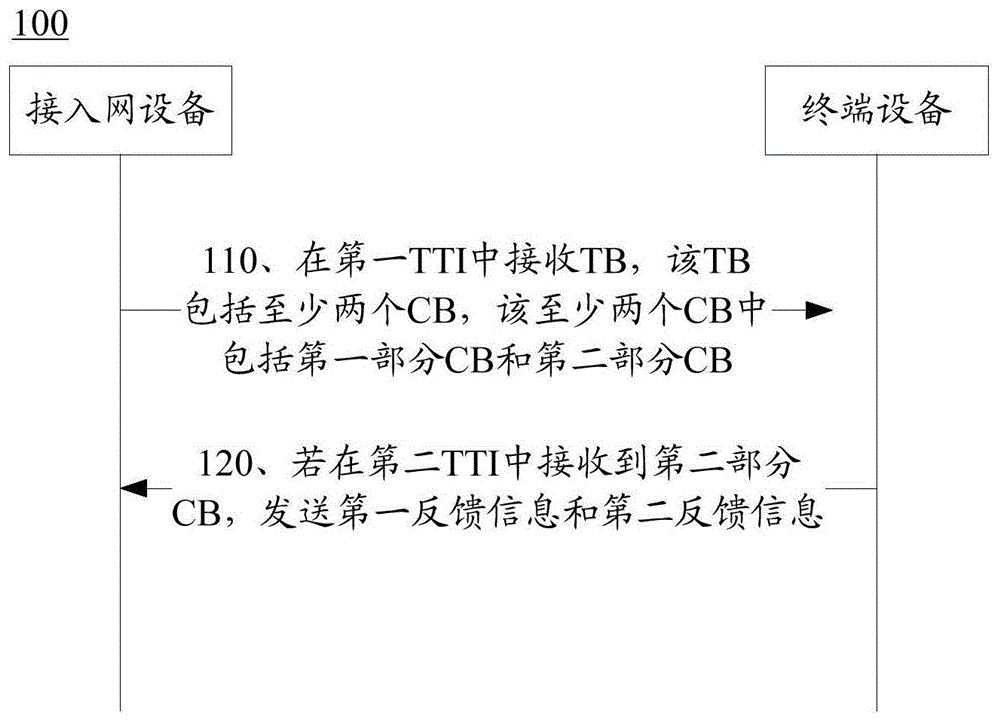
Fig. 1 is a schematic interaction diagram of a method 100 for sending feedback information according to an embodiment of the present application. As shown in fig. 1, method 100 generally includes steps 110 and 120.
110. And the terminal equipment receives the TB sent by the access network equipment in the first TTI. Wherein the TB comprises at least two CBs, and the at least two CBs comprise a first part CB and a second part CB.
120. And if the terminal equipment receives the second part of the CB sent by the access network equipment in the second TTI and does not receive the first part of the CB, the terminal equipment sends the first feedback information and the second feedback information to the access network equipment. And the access network equipment receives the first feedback information and the second feedback information sent by the terminal equipment.
The first feedback information is used for feeding back whether the terminal equipment correctly decodes the first part of the CB or not, the second feedback information is used for feeding back whether the terminal equipment correctly decodes the second part of the CB or not, and the second TTI is positioned after the first TTI in the time sequence.
Note that the second feedback information is used to feed back whether the terminal device correctly decodes the second partial CB, and optionally, in an embodiment, the second partial CB here is not limited to the second partial CB received by the terminal device in the first TTI or the second partial CB retransmitted by the access network device and received in the second TTI.
Or, optionally, in another embodiment, the second part of CBs are retransmission CBs received by the terminal device in the second TTI. A possibility here is that the terminal device finds that the partial CB retransmission is performed, that is, the access network device indicates to the terminal device that the current retransmission includes the second partial CB but does not include the first partial CB, and then the terminal device understands that the second partial CB in the previous initial transmission is an affected CB, for example, is punctured or interfered, and then the terminal device does not perform HARQ combining on the decoding information of the second partial CB in the current retransmission and the second partial CB in the previous initial transmission, and does not consider the second partial CB in the previous initial transmission when decoding; or, the access network device may directly indicate to the terminal device that the second part CB of the current partial retransmission is the part CB that was affected during the previous initial transmission, and then the terminal device does not perform HARQ combining on the decoding information of the second part CB of the current retransmission and the second part CB of the previous initial transmission, and does not consider the second part CB of the previous initial transmission during decoding.
It should be understood that, in the embodiment of the present application, the first part CB and the second part CB are two parts in one TB, or it may be understood that all CBs in one TB are regarded as a complete set, and two subsets included in the complete set are included, where one subset includes the first part CB and the other subset includes the second part CB. Wherein the first part CB and the second part CB may be completely non-overlapping, i.e. not comprising the same CB. Alternatively, the first portion CB and the second portion CB may partially overlap, i.e., include the same CB in both.
The above-mentioned eMBB service and URLLC service are taken as examples. When the access network device occupies some time-frequency resources to send the eMMC service data to the terminal device, a situation that the URLLC service data needs to be sent in a burst mode may occur. Due to the low latency requirement of URLLC traffic and the priority of URLLC traffic is higher than that of eMBB traffic. Therefore, the access network device may puncture the TB for transmitting the eMBB service data for a short time to transmit URLLC service with higher service priority. Alternatively, the access network device may send URLLC service data on a TB that already sends eMBB service data.
It can be understood that the puncturing of the TB by the access network device most likely results in that part of the CBs in the TB cannot be received by the terminal device due to puncturing by the URLLC service data. Alternatively, in the case of superposition transmission, since the transmission of URLLC interferes with the transmission of eMBB, there is a high possibility that the terminal device will not be able to correctly decode CB that superposes the URLLC traffic data and the eMBB traffic data.
In this example, the CB that is not punctured or transmits the URLLC service data and the eMBB service data without superposition is the first partial CB. Conversely, the CB where the service data is punctured or superimposed is the second partial CB.
In the above example, puncturing specifically means that eMBB transmission is overwritten (or rewritten) by URLLC transmission. That is, the access network device does not transmit the eMBB service data any more on part of the time-frequency resources that originally need to transmit (or have transmitted) the eMBB service data, but instead transmits the URLLC service data.
And the superposition sending refers to the simultaneous transmission of URLLC service data on the time-frequency resources for transmitting the eMBB service data.
For the distinction between the first CB portion and the second CB portion, it is mainly considered that the division can be performed based on the decoding probabilities of the two portions being independent from each other. That is, the decoding probability correlation of each CB in the first part of CBs is large, the decoding probability correlation of each CB in the second part of CBs is also large, but the decoding correlation between the first part of CBs and the second part of CBs is not large. Specifically, for example, the second CB part in the TB of the eMBB is punctured or overlapped by the URLLC, and the first CB part is not affected by the URLLC, and at this time, the second CB part is likely not to be decoded correctly, and the probability that the first CB part is decoded correctly is high. For another example, the URLLC service of the neighboring cell causes inter-cell interference to the second CB in the TBs of the eMBB of the cell, but does not cause interference to the first CB. Other similar cases are not limited as long as the decoding probabilities of the first part CB and the second part CB are independent from each other.
Specifically, the terminal device sends the first feedback information and the second feedback information to the access network device, including sending the first feedback information and the second feedback information to the access network device in the same TTI. Alternatively, the terminal device may send the first feedback information and the second feedback information to the access network device in different TTIs.
Fig. 2 is a schematic diagram of sending feedback information according to an embodiment of the present application. As shown in fig. 2, the sending of the feedback information from the terminal device to the access network device mainly includes the following processes:
(1) in TTI n, the access network device transmits a TB including 4 coded blocks CB (referred to as CB #0, CB #1, CB #2, and CB #3 in order as shown in fig. 2) to the terminal device. Each CB carries eMBB service data. The terminal device receives the TB.
Meanwhile, URLLC service data punches or superposes and transmits time-frequency resources occupied by the coding block CB # 1.
Note that only one TB is exemplified in fig. 2. It is apparent that the access network device may send one or more TBs to the terminal device. The process of the terminal device feeding back to the access network device is the same. Here, only one TB is described as an example.
It can be understood that, in the case of the puncturing transmission, because the eMBB service data is no longer transmitted on the punctured CB, the terminal device can receive only a part of the eMBB service data (the unpunctured CB), and the eMBB service data to be transmitted on the punctured CB cannot be received. In the case of superposition transmission, due to strong interference of URLLC service data, there is a great probability that the CB (i.e., CB #1) carrying both the eMBB service data and the URLLC service data cannot be correctly received by the terminal device
In this embodiment, before the terminal device feeds back the decoding result of the TB, the access network device retransmits the CB (i.e., an example of the second part of the CBs) that is transmitted in a puncturing manner or in an overlapping manner, that is, step 202.
(2) And in TTI n +1, the access network equipment retransmits CB #1 to the terminal equipment.
(3) And the terminal equipment feeds back the decoding result (namely whether the decoding is correct or not) to the access network equipment.
It should be noted that the chronological order of (3) and (2) is different in different feedback modes. The following embodiments should be implemented in detail.
Optionally, as an embodiment, the terminal device sends the first feedback information to the access network device in a third TTI, and sends the second feedback information to the access network device in a fourth TTI, where the third TTI and the fourth TTI are different TTIs in time.
In this embodiment, the terminal device feeds back the decoding results of the first part of CBs and the second part of CBs to the access network device in different TTIs through the first feedback information and the second feedback information, respectively.
Optionally, as an embodiment, the terminal device sends the first feedback information and the second feedback information to the access network device in a fifth TTI.
That is, in this embodiment of the application, after receiving the first part of CB and the second part of CB sent by the access network device and receiving the second part of CB retransmitted by the access network device, the terminal device respectively feeds back to the access network device whether to correctly decode the first part of CB and the second part of CB. Specifically, the first feedback information for feeding back whether the first part of CBs are correctly decoded and the second feedback information for feeding back whether the second part of CBs are correctly decoded may be sent to the access network device in the same TTI, or may be sent to the access network device in different TTIs.
After the access network device retransmits the second part of CBs to the terminal device, the feedback modes of the terminal device are different according to whether the terminal device receives the retransmitted second part of CBs within the receiving time window after the first TTI, which is described below.
It should be noted that "whether the second part CB of the retransmission is received" referred to herein means whether the terminal device receives a downlink control channel sent by the access network device, where the downlink control channel is used to schedule a data channel, and the data channel is used to carry a TB to be sent to the terminal device by the access network device, where the TB includes the second part CB.
Case 1
And the terminal equipment receives the second part CB retransmitted by the access network equipment in the receiving time window.
Specifically, in case 1, several alternative feedback methods are included as follows.
Mode 1
Optionally, as an embodiment, the first feedback information is specifically used to feed back whether the terminal device correctly decodes the first part of the CBs received in the first TTI, and the second feedback information is specifically used to feed back whether the terminal device correctly decodes the second part of the CBs received in the second TTI.
In conjunction with the foregoing steps 201 and 202, referring to the feedback manner of fig. 2, the terminal device sends feedback information # a to the access network device in TTI n +4 to feed back to the access network device whether CB #0, CB #2, and CB #3 received in TTI n are correctly decoded. And sending feedback information # B to the access network equipment in the TTI n +5 so as to feed back whether the retransmission CB #1 received in the TTI n +1 is correctly decoded or not to the access network equipment.
Mode 2
Optionally, as an embodiment, the first feedback information includes a first part of feedback information and a second part of feedback information, where the first part of feedback information is used to feed back whether the terminal device correctly decodes the first part of the CBs received in the first TTI, and the second part of feedback information is used to feed back whether the terminal device correctly decodes the second part of the CBs received in the first TTI;
and the second feedback information is specifically used for indicating whether the terminal device correctly decodes the second part of the CB received in the second TTI.
Referring to the feedback manner in fig. 2, the terminal device sends feedback information # a to the access network device in TTI n +4, specifically, the feedback information # a includes two parts of feedback information, where the first part of feedback information is used to indicate whether CB #0, CB #2, and CB #3 received in TTI n are decoded correctly, and the second part of feedback information is used to indicate whether CB #1 received in TTI n is decoded correctly. In TTI n +5, the terminal device sends feedback information # B to the access network device to feed back to the access network device whether CB #1 received in TTI n +1 was decoded correctly.
As can be seen from the foregoing description of the TBs and CBs, the cyclic redundancy check of one TB includes two layers of CRC checks, i.e., a CRC check for each CB included in the TB (i.e., a first layer CRC check) and a CRC check for the entire TB (a second layer CRC check).
It should be understood that the two-layer CRC check is to take into account that all CBs in one TB pass the CRC check, but in practice, part of the CBs that pass the CRC check may not be decoded correctly. Alternatively, a false alarm may exist for the decoding of this portion of the CB. Also, the occurrence of false alarms increases as the TB is divided into a greater number of CBs. Therefore, after the CRC check of each CB passes, the CRC check of the entire TB needs to be performed again. In this way, once a false alarm exists for a partial CB, even if all CBs pass the CRC check, the CRC check for the entire TB does not pass. So that it can be accurately determined whether each CB in the TB is correctly decoded.
In the embodiment of the present application, the idea of two-layer CRC check is applied to independent feedback of the first part CB and the second part CB, considering that a false alarm may exist in CRC check on the part CB.
Optionally, as an embodiment, the terminal device sends fourth feedback information to the access network device in a third TTI, where the fourth feedback information is used to feed back whether the terminal device correctly decodes the TB; and/or
And the terminal equipment sends fifth feedback information to the access network equipment in the fourth TTI, wherein the fifth feedback information is used for feeding back whether the terminal equipment correctly decodes the TB.
In combination with the foregoing, when the terminal device feeds back to the access network device in different TTIs, the terminal device sends the first feedback information to the access network device in the third TTI to feed back whether the terminal device correctly decodes the first part of the CBs, and sends the second feedback information to the access network device in the fourth TTI to feed back whether the terminal device correctly decodes the second part of the CBs. In this embodiment, the terminal device simultaneously sends fourth feedback information in the third TTI to feed back whether the TB is correctly decoded. Or, the terminal device simultaneously sends fifth feedback information in the fourth TTI to feed back whether the TB is correctly decoded.
Optionally, as an embodiment, the terminal device sends sixth feedback information to the access network device in a fifth TTI, where the sixth feedback information is used to feed back whether the terminal device correctly decodes the TB.
Similarly, when the terminal device sends the first feedback information and the second feedback information to the access network device in the same TTI (i.e., a fifth TTI), the sixth feedback information may be sent to the access network device in the fifth TTI at the same time to feed back whether the terminal device correctly decodes the TB. By the mode, false alarms possibly occurring in the decoding process of the CB by the terminal equipment can be prevented.
In the above mode 1 and mode 2, the terminal device receives the second part of CBs sent by the access network device in the second TTI, and the second part of CBs are received by the terminal device within the receiving time window after the first TTI. And the receiving time window is used for determining the maximum time length of the second part of CB retransmission after the terminal equipment waits for the access network equipment to retransmit the first TTI.
It should be noted that, the duration of the receiving time window mainly takes into consideration the processing time of the terminal device for receiving and decoding the TB or CB, and the packet packing time for generating the feedback information after decoding.
Specifically, if the duration of the receiving time window is too long, the terminal device may be too late to transmit the feedback information in the third TTI. For example, the end point of the reception time window is closer to the start point of the third TTI. In order to control the receiving time window and the corresponding processing time, the duration of the second part CB of the retransmission in the second TTI is generally smaller than the duration of the second TTI, and the first TTI may be occupied in time by the whole TB when the whole TB is initially transmitted in the first TTI. Therefore, the terminal equipment does not need to wait until the second TTI is finished and then perform decoding processing and corresponding group package of the feedback information on the second part CB in the second TTI. Correspondingly, the duration determination of the receiving time window may also be reserved in units of the duration occupied by the retransmitted second part CB. For example, if the duration of the second TTI is 4 times the duration of the retransmitted second part of CBs, it may be determined that the termination point of the receiving time window is the end point of the second TTI, that is, the receiving time window includes 4 candidate locations for the access network device to send the retransmitted second part of CBs. Of course, other similar determination methods of the receiving time window and the selection of the time length occupied by the retransmission of the second part of CBs are not excluded as long as the processing time for receiving and decoding the TB or CB and the packet packing time for generating the feedback information after decoding can be considered.
In the above mode 1 and mode 2, when the terminal device receives the second part of CBs sent by the access network device within the receiving time window, the terminal device performs feedback on the first part of CBs and the second part of CBs, respectively. Next, another feedback mode of the terminal device is provided when the terminal device receives the second part CB retransmitted by the access network device within the receiving time window after the first TTI.
Fig. 3 is a schematic interaction diagram of a method 200 for sending feedback information according to another embodiment of the present application. As shown in fig. 3, method 200 generally includes steps 210 and 220.
Mode 3
210. And the terminal equipment receives a Transport Block (TB) sent by the access network equipment in the first TTI, wherein the TB comprises at least two Coded Blocks (CB), and the at least two CBs comprise a first part CB and a second part CB.
220. If the terminal device receives the second part of the CBs sent by the access network device in the second TTI and does not receive the first part of the CBs, the terminal device sends first feedback information to the access network device in a third TTI according to whether the first part of the CBs received in the first TTI and the second part of the CBs received in the second TTI are correctly decoded, where the first feedback information is used to feed back whether the terminal device correctly decodes the first part of the CBs received in the first TTI and the second part of the CBs received in the second TTI, and the second TTI is located in a reception time window after the first TTI.
It can be understood that in the foregoing method 100, the terminal device receives the TB including the first part of CBs and the second part of CBs sent by the access network device in the first TTI, and subsequently, if the terminal device receives the second part of CBs sent by the access network device in the second TTI and does not receive the first part of CBs, the terminal device respectively feeds back to the access network device whether to correctly decode the first part of CBs and the second part of CBs.
In the method 200, the terminal device receives the TB including the first part of CBs and the second part of CBs sent by the access network device in the first TTI, and the terminal device receives the second part of CBs sent by the access network device in the second TTI within the receiving time window after the first TTI, which is the same as the method 100. The difference is that in the mode 1 and the mode 2, the terminal device performs separate decoding on the CBs received in the first TTI and the second TTI, and feeds back a decoding result to the access network device. In the method 3, the terminal device performs joint feedback to the access network device according to whether the first part of the CBs received in the first TTI and the second part of the CBs received in the second TTI are decoded correctly.
That is, in this embodiment of the application, if the terminal device receives a part of CBs (i.e., the second part of CBs) retransmitted by the access network device within the receiving time window of the first TTI of the TB sent by the access network device, the terminal device performs joint decoding on the received CBs.
It should be understood that the joint decoding referred to herein means decoding CBs (including an initial transmission CB and a retransmission CB) belonging to the same TB received in different TTIs. And feeds back the decoding result (i.e. whether the decoding is correct) aiming at the whole TB to the access network equipment in combination with the decoding result.
In this embodiment of the present application, the receiving time window is used by the terminal device to determine a maximum duration for waiting for the access network device to send the second part of CBs after the first TTI.
In other words, after receiving the TB sent by the access network device in the first TTI, the terminal device monitors whether the access network device continues to retransmit data within the receiving time window of the first TTI. If the CB retransmitted by the access network device is received in a second TTI within the reception time window after the first TTI, the terminal device performs joint decoding for the entire TB based on the first part of the CB and the second part of the CB received in the first TTI and the retransmitted CB (i.e., the second part of the CB) received in the second TTI, and then feeds back a result of the joint decoding to the access network device.
The second part CB here is not limited to the second part CB received by the terminal device in the first TTI, or the second part CB retransmitted by the access network device received in the second TTI.
Optionally, in another embodiment, the second part of CBs is retransmission CBs received by the terminal device in the second TTI. At this time, one possibility is for the terminal device to find that the CB received in the second TTI is a retransmission of a partial CB, in which case the access network device needs to indicate to the terminal device that the current retransmission includes the second partial CB but not the first partial CB. Thus, the terminal device determines the second CB portion originally transmitted as an affected CB (e.g., a punctured or interfered CB). Then the terminal device will not perform HARQ combining on the decoding information of the currently retransmitted second part CB and the previously originally transmitted second part CB, and the decoding will not consider the previously originally transmitted second part CB.
Alternatively, the access network device may directly indicate to the terminal device that the currently retransmitted second part CB is the affected CB in the previous initial transmission. Therefore, the terminal device does not perform HARQ combining on the currently retransmitted decoding information of the second part of CBs and the previously originally transmitted second part of CBs, and does not consider the previously originally transmitted second part of CBs during decoding.
Correspondingly, the terminal equipment monitors whether the access network equipment continues to retransmit the CB in a receiving time window after the first TTI. If the CB retransmitted by the access network device is not received in the receiving time window, the terminal device decodes the whole TB based on the first part of CB and the second part of CB received in the first TTI after the receiving time window, and then feeds back a decoding result to the access network device.
With continued reference to fig. 2. As shown in the third embodiment in fig. 2, the access network device sends a TB to the access network device in TTI n, where the TB includes coded blocks CB #0, CB #1, CB #2, and CB # 3. The access network device retransmits CB #1 to the terminal device in TTI n + 1. In this embodiment, it is considered that the terminal device receives CB #1 retransmitted by the access network device within the reception time window of TTI n. In this way, the terminal device sends feedback information # a to the access network device in TTI n +4 to feed back to the access network device whether the terminal device correctly decoded the entire TB. Whether the terminal device correctly decodes the whole TB is fed back after carrying out joint decoding on the CB #0, the CB #1, the CB #2 and the CB #3 which are transmitted in the TTI n by the access network device and the CB #1 retransmitted in the TTI n + 1.
Optionally, as an embodiment, the method further includes:
if the terminal device does not receive the second part of CBs within the receiving time window, the terminal device sends second feedback information to the access network device in a fourth TTI, where the second feedback information is used to feed back whether the terminal device correctly decodes the TB received in the first TTI, and the fourth TTI is the same as the third TTI, or the fourth TTI is before the third TTI in time sequence.
It should be understood that the first feedback information is used to feed back whether the terminal device correctly decodes the TB received in the first TTI, i.e., the terminal device decodes the entire TB using only the first partial CB and the second partial CB received in the first TTI.
Optionally, as an embodiment, the method further includes:
if the terminal device receives the second part of the CB in a fifth TTI within the reception time window, the terminal device sends third feedback information to the access network device in a sixth TTI, where the third feedback information is used to feed back, to the access network device, whether the terminal device correctly decodes the TB, and/or the second part of the CB received in the fifth TTI.
It should be noted that, if the duration of the retransmitted second CB part is much shorter than the length of one TTI, the decoding process and the feedback transmission time for the retransmitted second CB part can be advanced. Therefore, the sixth TTI is also not strictly defined in time order to have to follow the third TTI.
In addition, it should be noted that the third feedback information is independent feedback information from the first feedback information, and/or the third feedback information is independent feedback information from the second feedback information. I.e. the feedback information within the reception time window corresponding to the outside of the reception time window is independent. Further, a sixth TTI for transmitting the third feedback information is independent of a third TTI for transmitting the first feedback information, and/or a sixth TTI for transmitting the third feedback information is independent of a fourth TTI for transmitting the second feedback information.
Specifically, as described above, if the terminal device does not receive the partial CB retransmitted by the access network device (i.e., the second partial CB) within the receiving time window after the first TTI, the terminal device sends, to the access network device in the third TTI, the first feedback information for feeding back whether the terminal device correctly decodes the entire TB based on the first partial CB and the second partial CB received in the first TTI. And subsequently, if the terminal device receives the second part of the CB sent by the access network device in a fifth TTI outside the reception time window, the terminal device sends third feedback information to the access network device on the basis that the first feedback information has been sent to the access network device. Here, the third feedback information includes various forms.
For example, the third feedback information is used to feed back whether the second part CB received in the fifth TTI is correctly decoded.
Alternatively, the third feedback information is used to feed back whether the entire TB is correctly decoded. In this case, the terminal device performs joint decoding for the TB based on the first partial CB and the second partial CB received in the first TTI and the second partial CB received outside the reception time window, and feeds back a result of the decoding to the access network device through the third feedback information.
Or, the third feedback information is used for feeding back whether the second part CB received in the fifth TTI is correctly decoded and whether the TB is correctly decoded.
In this embodiment of the present application, a situation opposite to the above-mentioned situation 1 is that after the access network device retransmits the second part CB to the terminal device, the terminal device does not receive the retransmitted second part CB.
Similarly, the phrase "the second part CB not retransmitted by the access network device is not received by the terminal device, and refers to a downlink control channel for carrying the retransmitted second part CB, which is not received by the access network device.
Case 2
The terminal equipment does not receive the second part CB retransmitted by the access network equipment in the receiving time window.
In other words, in case 2, the terminal device receives the second part CB outside the reception time window.
Optionally, as an embodiment, the method further includes:
and if the terminal equipment does not receive the second part of the CB after the first TTI, the terminal equipment sends third feedback information to the access network equipment, wherein the third feedback information is used for feeding back whether the terminal equipment correctly decodes the TB received in the first TTI.
At some time, the terminal device may miss detection of the control channel sent by the access network device, for example, the terminal device misses detection of a downlink control channel retransmitting the second part CB. At this time, the terminal device does not receive the second part CB retransmitted by the access network device within the receiving time window. In this case, the terminal device feeds back to the access network device whether or not the entire TB is correctly decoded, for CB #0, CB #1, CB #2, and CB #3 transmitted by the access network device in TTI n.
Optionally, the terminal device sends missed detection indication information to the access network device, where the missed detection indication information is used to indicate that the terminal device missed detection of the downlink control channel.
Correspondingly, the access network device may treat missed detection of the terminal device as NACK feedback based on the missed detection indication information.
Fig. 4 is an example of sending feedback information provided by the present application. As shown in fig. 4, the access network device transmits a TB including CB #0, CB #1, CB #2, and CB #3 to the terminal device in TTI n, and retransmits CB #1 in TTI n + 1. The terminal device transmits feedback information #1 to the access network device in TTI n +4 to feed back whether or not CB #0, CB #2, and CB #3 (as an example of the first part of CBs) received in TTI n are correctly decoded, and transmits feedback information #2 to the access network device in TTI n +5 to feed back whether or not CB #1 (as an example of the second part of CBs) received in TTI n +1 are correctly decoded.
In addition, for the condition that the terminal device fails to detect the retransmitted CB, the terminal device sends the missed detection indication information to the access network device so as to indicate the access network device that the terminal device fails to detect the retransmitted CB. The access network device typically treats missed detection as incorrect decoding.
Fig. 5 is another example of sending feedback information provided by the present application. Unlike fig. 4, the terminal device simultaneously feeds back the first partial CB and the second partial CB in one TTI. In this feedback form, the feedback information #3 sent by the terminal device to the access network device may be considered to include two parts of feedback information, for example, 2 indication bits. The 1 st indication bit is used to indicate whether CB #0, CB #2, and CB #3 received in TTI n are correctly decoded. The 2 nd indication bit is used to indicate whether CB #1 received in TTI n +1 is correctly decoded.
Fig. 6 is a further example of sending feedback information provided by the examples of the present application. As shown in fig. 6, the terminal device feeds back to the access network device whether CB #0, CB #2, and CB #3 received in TTI n are correctly decoded, and whether CB #1 received in TTI n +1 is correctly decoded, respectively, in different TTIs. Further, in the feedback scheme shown in fig. 6, the terminal device feeds back to the access network device whether CB #0, CB #2, and CB #3 are correctly decoded in TTI n +4, and at the same time, feeds back to the access network device whether the entire TB can be correctly decoded based on CB #0, CB #1, CB #2, and CB #3 received in TTI n. And/or the terminal equipment feeds back whether the retransmission CB (namely, the CB #1) is correctly decoded or not to the access network equipment in the TTI n +5, and simultaneously feeds back whether the retransmission CB is correctly decoded or not to the access network equipment, and whether the whole TB can be correctly decoded or not based on the CB #0, the CB #1, the CB #2 and the CB #3 received in the TTI n and the TTI n + 1.
Fig. 7 is a further example of sending feedback information provided by the examples of the present application. Unlike fig. 6, in the feedback scheme shown in fig. 6, the terminal device feeds back to the access network device through different TTIs. In fig. 7, the terminal device simultaneously feeds back to the access network device whether CB #0, CB #2, and CB #3 received in TTI n and CB #1 received in TTI n +1 are correctly decoded in one TTI (TTI n + 5). Meanwhile, the terminal device feeds back to the access network device in TTI n +5, and whether the entire TB is correctly decoded is based on CB #0, CB #2, and CB #3 received in TTI and CB #1 received in TTI n + 1.
In the prior art, a terminal device feeds back a whole TB, and subsequently, an access network device retransmits the whole TB when the terminal device does not correctly decode all CBs. Therefore, even if only part of even a very small number of CBs are not decoded correctly by the terminal device, the access network device needs to retransmit the entire TB. In this embodiment, after the access network device sends the transport block TB including multiple CBs to the terminal device, the terminal device performs feedback on the correctly decoded CBs and the incorrectly decoded CBs, so that the access network device only retransmits the incorrectly decoded CBs. In contrast, the method for sending and receiving feedback information provided by the embodiment of the application avoids repeatedly sending correctly decoded CBs, and improves the transmission efficiency of the system.
The method for sending and receiving feedback information provided by the embodiment of the present application is described above with reference to fig. 1 to 7. The access network device and the terminal device provided in the embodiments of the present application are described in detail below with reference to fig. 8 to 11.
Fig. 8 is a schematic block diagram of a terminal device 300 according to an embodiment of the present application. As shown in fig. 8, the terminal device 300 includes:
a receiving unit 310, configured to receive a transport block TB sent by an access network device in a first transmission time interval TTI, where the TB includes at least two coded blocks CB, and the at least two CBs include a first part CB and a second part CB;
a sending unit 320, configured to send, to the access network device, first feedback information and second feedback information when the receiving unit receives the second part of the CBs sent by the access network device in a second TTI and does not receive the first part of the CBs, where the first feedback information is used to feed back whether the terminal device correctly decodes the first part of the CBs, and the second feedback information is used to feed back whether the terminal device correctly decodes the second part of the CBs, where the second TTI is located after the first TTI in time sequence.
Each unit and the other operations or functions in the terminal device 300 provided in the embodiment of the present application are respectively for implementing a corresponding flow executed by the terminal device in the method 100 for sending feedback information provided in the embodiment of the present application. For brevity, no further description is provided herein.
Fig. 9 is a schematic block diagram of an access network device 400 according to an embodiment of the present application. As shown in fig. 9, the access network apparatus 400 includes:
a sending unit 410, configured to send a transport block TB to a terminal device in a first transmission time interval TTI, where the TB includes at least two coded blocks CB, and the at least two CBs include a first part CB and a second part CB;
a receiving unit 420, configured to receive, when the sending unit sends the second part of the CBs to the terminal device in the second TTI and does not send the first part of the CBs, first feedback information and second feedback information sent by the terminal device, where the first feedback information is used to feed back whether the terminal device correctly decodes the first part of the CBs, and the second feedback information is used to feed back whether the terminal device correctly decodes the second part of the CBs, and the second TTI is located after the first TTI in time sequence.
The units and other operations or functions in the access network device 400 provided in the embodiment of the present application are respectively for implementing corresponding processes executed by the access network device in the method 100 for receiving feedback information provided in the embodiment of the present application. For brevity, no further description is provided herein.
Fig. 10 is a schematic block diagram of a terminal device 500 according to an embodiment of the present application. As shown in fig. 8, the terminal device 500 includes:
a receiving unit 510, configured to receive a transport block TB sent by an access network device in a first transmission time interval TTI, where the TB includes at least two coded blocks CB, and the at least two CBs include a first part CB and a second part CB;
the receiving unit 510 is further configured to receive, in a second TTI, a second partial CB sent by the access network device;
a processing unit 520, configured to determine whether to correctly decode the first part of the CBs received by the receiving unit in the first TTI and the second part of the CBs received by the receiving unit in the second TTI, when the receiving unit receives the second part of the CBs sent by the access network device in the second TTI and does not receive the first part of the CBs;
a sending unit 530, configured to send first feedback information to the access network device in a third TTI, where the first feedback information is used to feed back whether the terminal device correctly decodes the first part of the CBs received by the receiving unit in the first TTI and the second part of the CBs received by the receiving unit in the second TTI, where the second TTI is located in a receiving time window after the first TTI, and the receiving time window is used by the processing unit to determine a maximum duration for waiting for the access network device to send the second part of the CBs after the first TTI.
Each unit and the other operations or functions in the terminal device 500 provided in the embodiment of the present application are respectively for implementing a corresponding flow executed by the terminal device in the method 200 for sending feedback information provided in the embodiment of the present application. For brevity, no further description is provided herein.
Fig. 11 is a schematic block diagram of an access network device 600 according to an embodiment of the present application. As shown in fig. 11, the access network apparatus 600 includes:
a sending unit 610, configured to send a transport block TB to a terminal device in a first transmission time interval TTI, where the TB includes at least two coded blocks CB, and the at least two CBs include a first part CB and a second part CB;
a receiving unit 620, configured to receive, in a third TTI, first feedback information sent by the terminal device when the receiving unit sends the second part of the CBs to the terminal device in the second TTI and does not send the first part of the CBs, where the first feedback information is used to feed back whether the processing unit correctly decodes the first part of the CBs received by the receiving unit in the first TTI and the second part of the CBs received by the receiving unit in the second TTI, where the second TTI is located within a receiving time window after the first TTI, and the receiving time window is used for the processing unit to determine a maximum duration for waiting for the access network device to send the second part of the CBs after the first TTI.
Each unit and the other operations or functions in the access network device 600 provided in the embodiment of the present application are respectively for implementing a corresponding process executed by the access network device in the method 200 for receiving feedback information provided in the embodiment of the present application. For brevity, no further description is provided herein.
Fig. 12 is a schematic structural diagram of a terminal device 700 according to an embodiment of the present application. As shown in fig. 12, the terminal device 700 includes: one or more processors 701, one or more memories 702, one or more transceivers (each transceiver comprising a transmitter 703 and a receiver 704). The transmitter 703 or receiver 704 is connected to one or more antennas 705 and transmits and receives signals through the antennas. The memory 702 stores computer program instructions (or code) therein. The processor 701 executes the computer program instructions stored in the memory 702 to implement the corresponding processes and/or operations executed by the terminal device in the method 100 for sending feedback information provided by the embodiment of the present application. For brevity, no further description is provided herein.
It should be noted that the terminal device 300 shown in fig. 8 can be implemented by the terminal device 700 shown in fig. 12. For example, the receiving unit shown in fig. 8 may be implemented by the receiver shown in fig. 12, and the transmitting unit may be implemented by the transmitter.
Fig. 13 is a schematic structural diagram of an access network device 800 according to an embodiment of the present application. As shown in fig. 13, the access network apparatus 800 includes: one or more processors 801, one or more memories 802, one or more transceivers (each transceiver comprising a transmitter 803 and a receiver 804). The transmitter 803 or the receiver 804 is connected to one or more antennas 805 and transmits and receives signals through the antennas. The memory 802 stores computer program instructions (or code). The processor 801 executes computer program instructions stored in the memory 802 to implement corresponding procedures and/or operations executed by the access network device in the method 100 for receiving feedback information provided by the embodiment of the present application. For brevity, no further description is provided herein.
Similarly, the access network device 400 shown in fig. 9 may be implemented by the access network device 800 shown in fig. 13. For example, the transmitting unit shown in fig. 9 may be implemented by the transmitter shown in fig. 13, and the receiving unit may be implemented by the receiver.
Fig. 14 is a schematic structural diagram of a terminal device 900 according to an embodiment of the present application. As shown in fig. 14, the terminal apparatus 900 includes: one or more processors 901, one or more memories 902, one or more transceivers (each transceiver comprising a transmitter 903 and a receiver 904). The transmitter 903 or the receiver 904 is connected to one or more antennas 905 and transmits and receives signals through the antennas. The memory 902 stores computer program instructions (or code). The processor 901 executes the computer program instructions stored in the memory 902 to implement the corresponding procedures and/or operations executed by the terminal device in the method 200 for sending feedback information provided by the embodiment of the present application. For brevity, no further description is provided herein.
Similarly, the terminal device 500 shown in fig. 10 can be implemented by the terminal device 900 shown in fig. 14. For example, the transmitting unit shown in fig. 10 may be implemented by the transmitter shown in fig. 14, the receiving unit may be implemented by a receiver, and the processing unit may be implemented by a processor.
Fig. 15 is a schematic structural diagram of an access network device 1000 according to an embodiment of the present application. As shown in fig. 15, the access network apparatus 1000 includes: one or more processors 1001, one or more memories 1002, one or more transceivers (each including a transmitter 1003 and a receiver 1004). The transmitter 1003 or the receiver 1004 is connected to one or more antennas 1005 and transmits and receives signals through the antennas. The memory 1002 stores computer program instructions (or code). The processor 1001 executes computer program instructions stored in the memory 1002 to implement corresponding procedures and/or operations executed by the access network device in the method 200 for receiving feedback information provided by the embodiment of the present application. For brevity, no further description is provided herein.
Similarly, the access network device 600 shown in fig. 11 may be implemented by the access network device 1000 shown in fig. 15. For example, the transmitting unit shown in fig. 11 may be implemented by the transmitter shown in fig. 15, and the receiving unit may be implemented by the receiver.
In the above embodiments, the processor may be a Central Processing Unit (CPU), a microprocessor, an application-specific integrated circuit (ASIC), or one or more integrated circuits for controlling the execution of the program in the present application. For example, a processor may be comprised of a digital signal processor device, a microprocessor device, an analog to digital converter, a digital to analog converter, and so forth. The processor may distribute the control and signal processing functions of the mobile device between these devices according to their respective functions. Further, the processor may include functionality to operate one or more software programs, which may be stored in the memory.
The memory may be a read-only memory (ROM) or other type of static storage device that may store static information and instructions, a Random Access Memory (RAM) or other type of dynamic storage device that may store information and instructions. But is not limited to, Electrically Erasable Programmable Read-Only Memory (EEPROM), Compact Disc Read-Only Memory (CD-ROM) or other optical disk storage, optical disk storage (including Compact Disc, laser disk, optical disk, digital versatile disk, blu-ray disk, etc.), magnetic disk storage media or other magnetic storage devices, or any other medium that can be used to carry or store desired program code in the form of instructions or data structures and that can be accessed by a computer. The memory may be separate or integrated with the processor.
The transceiver may include, for example, an infrared transceiver, a wireless Universal Serial Bus (USB) transceiver, a bluetooth transceiver, etc. Although not shown, the access network device can transmit signals (or data) via the transmitter and/or receive signals (data) via the receiver using a corresponding communication technique.
Those of ordinary skill in the art will appreciate that the various illustrative elements and algorithm steps described in connection with the embodiments disclosed herein may be implemented as electronic hardware or combinations of computer software and electronic hardware. Whether such functionality is implemented as hardware or software depends upon the particular application and design constraints imposed on the implementation. Skilled artisans may implement the described functionality in varying ways for each particular application, but such implementation decisions should not be interpreted as causing a departure from the scope of the present application.
It is clear to those skilled in the art that, for convenience and brevity of description, the specific working processes of the above-described systems, apparatuses and units may refer to the corresponding processes in the foregoing method embodiments, and are not described herein again.
In the several embodiments provided in the present application, it should be understood that the disclosed system, apparatus and method may be implemented in other ways. For example, the above-described apparatus embodiments are merely illustrative, and for example, the division of the units is only one logical division, and other divisions may be realized in practice, for example, a plurality of units or components may be combined or integrated into another system, or some features may be omitted, or not executed. In addition, the shown or discussed mutual coupling or direct coupling or communication connection may be an indirect coupling or communication connection through some interfaces, devices or units, and may be in an electrical, mechanical or other form.
The units described as separate parts may or may not be physically separate, and parts displayed as units may or may not be physical units, may be located in one place, or may be distributed on a plurality of network units. Some or all of the units can be selected according to actual needs to achieve the purpose of the solution of the embodiment.
In addition, functional units in the embodiments of the present application may be integrated into one processing unit, or each unit may exist alone physically, or two or more units are integrated into one unit.
The functions, if implemented in the form of software functional units and sold or used as a stand-alone product, may be stored in a computer readable storage medium. Based on such understanding, the technical solution of the present application or portions thereof that substantially contribute to the prior art may be embodied in the form of a software product stored in a storage medium and including instructions for causing a computer device (which may be a personal computer, a server, or a network device) to execute all or part of the steps of the method according to the embodiments of the present application. And the aforementioned storage medium includes: a U-disk, a removable hard disk, a Read-Only Memory (ROM), a Random Access Memory (RAM), a magnetic disk or an optical disk, and other various media capable of storing program codes.
The above description is only for the specific embodiments of the present application, but the scope of the present application is not limited thereto, and any person skilled in the art can easily conceive of the changes or substitutions within the technical scope of the present application, and shall be covered by the scope of the present application. Therefore, the protection scope of the present application shall be subject to the protection scope of the claims.