Peptides exhibiting hair growth and/or hair growth promoting activity and use thereof
Technical Field
The present invention relates to a peptide exhibiting a hair growth promoting activity and/or a melanin production promoting activity, a composition for preventing and/or improving hair loss comprising the peptide as an active ingredient, a composition for promoting hair growth and/or hair growth comprising the peptide as an active ingredient, a use of the peptide for preventing and/or improving hair loss, a use of the peptide for promoting hair growth and/or hair growth, a pharmaceutical composition for preventing and/or treating melanin hypofunction comprising the peptide as an active ingredient, a cosmetic composition for preventing and/or improving melanin hypofunction comprising the peptide as an active ingredient, and a use of the peptide for preventing, improving and/or treating melanin hypofunction.
Background
The hair follicle is a unique organ of mammalian skin, an organ in which the lower part of the primary epidermis grows and extends to a further deep skin layer. At the base of the hair follicle there is a plug of cells well known as the cells of the follicle or dermal papilla (Stenn and Paus, physiol. rev.,81:449(2002)) which are essential in the normal circulation of the hair follicle (Oliver, embryol. exp. morph.15:3311 (1966); Oliver, embryol. exp. morph.16:231(1966)) and in the growth of the hair shaft. The hair shaft is a pedal-shaped structure prepared from tightly adhered cells filled with keratin filaments and fibrillar agglutinin.
Human hair repeats periodically the anagen, catagen, telogen phases and goes through a process of hair loss and regrowth. The determination of the hair cycle is made by hormonal regulation or regulation of many growth factors and the like. On the other hand, hair may enter a telogen phase through a catagen phase in advance by severe stress or nutritional deficiency, etc. to induce severe alopecia (American Journal of Pathology 162(3) (2003), (arc, Petra Clara; Handjiski, Bori)).
In male baldness, the hair follicles in the front and upper part of the scalp are sensitive to androgens. Therefore, in the case of male baldness, the hair follicle is miniaturized compared to the destruction of the hair follicle, because androgen, which is a male hormone, is excessively secreted. Excessive androgen secretion activates 5-alpha reductase, which transforms testosterone into Dihydrotestosterone (DHT), and the dihydrotestosterone thus produced shortens the period of hair growth, miniaturizes hair follicles, and reduces the number of thick and strong hair-forming hairs, thereby inducing alopecia.
Alopecia typically spreads with age. For example, various disease states such as scar baldness, burns, or scar formation states associated with pressure injuries can lead to significant hair loss. In order to treat such alopecia, various substances have been used as medicines, but they are expensive and induce various side effects.
Also, there are disadvantages as follows: such a medicine is required to be continuously used, and when the use is stopped, alopecia is induced again, and the difference in efficacy is serious for each person, and the side effect is also different for each person.
In addition, although the cosmetic composition used as a raw material has an advantage of being inexpensive, it has a disadvantage of having a low efficacy because it is composed of components derived from plant extracts. Therefore, also in terms of efficiency, cost, the need in the art for further economical new active ingredients stands out.
The 2 available drugs known so far (minoxidil and finasteride) delay the supplemental hair loss, but do not induce the regeneration of new hair follicles. In hair cosmetics, hair loss prevention products using plant extracts and the like are on the market.
For example, male pattern baldness products containing extracts of sophora flavescens, capsicum, swertia japonica, cortex mori radicis, frost leaves, ginseng, glycyrrhiza, paeonia, rehmannia, fennel, cornus officinalis, garlic and the like have been developed; a product which exhibits a hair growth promoting effect by adding a composition containing xanthine and growth hormone to improve suppression of excessive cell metabolism by dihydrotestosterone and growth hormone to promote hair growth, thereby preventing hair loss and regenerating hair; in order to promote hair growth and hair growth, products for promoting hair growth have been developed which contain minerals and vitamins, green tea, rosemary, wormwood, and an extract solution of licorice, and which supply nutrients to the scalp and hair and are effective in preventing hair loss and promoting hair growth; the 5-alpha reductase in human body is inhibited by mixing substances such as vitamin B, vitamin C, vitamin D, vitamin E, nicotinic acid, pantothenic acid, biotin and folic acid with plant extracts, so that dihydrotestosterone is not formed in the metabolism process of male hormone, and the male hair loss product is helpful for the metabolism of hair.
Skin cells, as a defense mechanism, stimulate ultraviolet rays or environmental pollution and other external factors to produce melanin from melanosomes (melanosomes) of melanocytes (melanosomes) present in the basal layer of the epidermis. Melanin is an important factor in determining the color of the skin, eye drops and hair of animals. It is well known that hypofunction is a risk factor for skin cancer.
The oriental is much more sensitive to the formation of excessive melanin, thereby performing whitening-related studies for inhibiting melanin production. However, recently, the demand related to Vitiligo (Vitiligo) which is manifested by inhibiting melanin production has also increased, and thus studies thereon have been also conducted.
Vitiligo is a acquired depigmentation disease of skin in which white spots of various sizes and shapes are present due to apoptosis or necrosis of melanocytes. As a more common disease occurring in about 1% of the population worldwide, there is no human or regional based difference. The onset age is the greatest among 10-30 years, and in 95% of cases, it occurs before 40 years of age, with 30% of patients having a family history.
The cause of vitiligo has not been reported, but various theories such as autoimmunity, neurohumoral, and melanocyte destruction have been proposed. The theory of autoimmunity is as follows: the destruction or dysfunction of melanocytes or destruction of melanocyte melanocytes, which are lymphokines secreted by cytotoxic lymphocytes or activated lymphocytes, is caused by the expression of autoantibodies associated with melanocyte-like antigens. The theory that abnormal biosynthesis of catecholamines, increase of monoamine oxidase, and the like, which are nerve fluids, cause hydrogen peroxide associated with stress, whereby melanin is destroyed, is that vitiligo may occur depending on ganglia or may also occur after nerve damage or stress. Melanocyte destruction itself is described by the following theory: a phenol complex, which is an intermediate metabolite or a final metabolite generated during melanin formation, accumulates in melanocytes, thereby destroying the cells. In addition, various factors such as intrinsic cellular defect, genetic factor, apoptosis, abnormal calcium metabolism, and the like are also proposed.
Melanin is synthesized from melanin-producing cells (melanocytes), and plays an important role in protecting the skin by irradiating ultraviolet rays or absorbing toxic substances and chemicals. Therefore, in a person who abnormally produces melanin synthesis, the skin becomes white partially as compared with the whole skin, and there is a problem in appearance that spots are generated, and there is a further problem in sensitivity to external stimuli.
Tyrosinase (tyrosinase), tyrosinase-related protein-1 (TRP-1, tyrosinase-related protein-1), and tyrosinase-related protein-2 (TRP-2, tyrosinase-related protein-2), which are important enzymes for melanin synthesis, function as catalysts in oxidation reactions (Pigment Cell Res.14(6): 43744).
Tyrosinase plays a role in oxidizing tyrosine (tyrosine) into DOPA (DOPA, L-3,4-dihydroxyphenylalanine (L-3,4-dihydroxyphenylalanine)), and oxidizing DOPA into dopaquinone (quinone), and tyrosinase-related protein-1 participates in converting 5, 6-dihydroxyindole-2-carboxylic acid (5, 6-dihydroxyindole-2-carboxylic acid; DHICA) into indole-5, 6-quinone-2-carboxylic acid (indole-5, 6-quinone-2-carboxylic acid) as dihydroxyindole carboxylic acid oxidase (dihydroxyindole carboxylic acid).
And tyrosinase-related protein-1 plays a role in stabilizing tyrosinase and regulating activity, and tyrosinase-related protein-2 converts dopa chromium into 5, 6-dihydroxyindole-2-carboxylic acid using dopa chromium tautomerase (tautomerase) to form melanin (eumelan) and phenylalanine (pheomelanon) of melanocytes, and determines the color of skin, hair, eye drops, etc. according to their ratio.
Melanin synthesis is activated by ultraviolet irradiation and Melanocyte Stimulating Hormone (MSH). It is well known that α -melanocyte stimulating hormone (α -MSH) is produced by ultraviolet rays using peptide hormones and is prepared in various cells including pituitary gland and skin.
Alpha-melanocyte-stimulating hormone acts on melanocortin receptor (MCR) OF melanogenesis cells through paracrine (paracrine) to regulate THE activity OF microphthalmia-associated transcription factor (microphthalmia-associated transcription factor) as a transcription factor, thereby regulating THE activity OF tyrosinase, tyrosinase-associated protein-1 (DHICA oxidase), tyrosinase-associated protein-2 (DOPAchrome) and THE like (THE JOURNAL OF BIOLOGICAL CHEMISTRY Vol.273, No.31, Issue OF July 31, pp.195609565,1998), which play an important role in melanin synthesis.
It has been reported that melanin-forming cells are activated by p38 or Protein Kinase A (PKA) tyrosinase, respectively, if stimulated by ultraviolet light (UV) or alpha-melanocyte stimulating hormone. However, it has been reported that in two pathways, in particular, α -melanocyte stimulating hormone → cyclic adenosine monophosphate (cAMP) → protein kinase a process plays an important role in melanin synthesis, that an increase in cyclic adenosine monophosphate promotes phosphorylation of cyclic adenosine monophosphate response element binding protein (cAMP-responsive element binding protein), that phosphorylation of cyclic adenosine monophosphate response element binding protein (cAMP-responsive element binding protein) promotes expression of microphthalmia-associated transcription factor as a transcription factor, that expression of microphthalmia-associated transcription factor as a transcription factor increases tyrosinase activity, and that expression of tyrosinase messenger ribonucleic acid (mRNA) increases (Nucleic Acids res.30(14):3096106, Pigment Cell Melanoma Res 21(6): 66576).
On the other hand, oriental people including korea want to have white skin, and thus many studies are being conducted on whitening components for inhibiting melanin production. However, melanin is synthesized from skin and pigment-producing cells, and plays an important role in protecting the skin by irradiating ultraviolet rays or absorbing toxic substances and chemicals. In the case where normal synthesis of melanin is not exhibited, the skin is sensitive to external stimuli and also looks abnormal in appearance, and thus a treatment for normal synthesis of melanin is required, and studies related thereto have also been conducted. However, the development of technologies for promoting melanin synthesis has not been sufficiently performed so far.
Throughout this specification, reference is made to a number of papers and patent documents, the citations of which are indicated. The disclosures of the cited articles and patent documents are incorporated herein by reference in their entirety to more clearly describe the state of the art to which the present invention pertains and the contents of the present invention.
Disclosure of Invention
Technical problem
The present inventors have made an effort to develop a peptide having a biologically effective activity, and as a result, have confirmed that a peptide comprising an amino acid sequence of seq id No. 1 or seq id No. 2 exhibits excellent hair growth promoting effects and/or melanin production promoting activity, and have clarified that the peptide can be effectively used for preventing or ameliorating hair loss and preventing and treating melanin deficiency, thereby completing the present invention.
Accordingly, an object of the present invention is to provide a peptide consisting of an amino acid sequence of seq id No. 1 or seq id No. 2, which exhibits hair growth promoting activity.
It is still another object of the present invention to provide a composition for preventing and/or improving hair loss, comprising one or more peptides selected from the group consisting of the peptides having the amino acid sequences of seq id nos. 1 and 2 as an active ingredient.
Another object of the present invention is to provide a composition for promoting hair growth and/or hair growth, comprising one or more peptides selected from the group consisting of the peptides having the amino acid sequences of seq id nos. 1 and 2 as an active ingredient.
It is still another object of the present invention to provide a peptide having a melanin production-promoting activity, which comprises the amino acid sequence of SEQ ID No. 1 or SEQ ID No. 2.
It is still another object of the present invention to provide a pharmaceutical composition for preventing and/or treating melanin hypofunction, comprising at least one peptide selected from the group consisting of peptides consisting of amino acid sequences of seq id nos. 1 and 2 as an active ingredient.
It is still another object of the present invention to provide a cosmetic composition for preventing and/or improving melanin hypofunction, comprising a peptide consisting of an amino acid sequence of seq id No. 1 or seq id No. 2 as an active ingredient.
Other objects and advantages of the present invention will become more apparent from the following detailed description of the invention, the appended claims and the accompanying drawings.
Means for solving the problems
The present inventors have made an effort to develop a peptide having a biologically effective activity, and as a result, have confirmed that a peptide comprising an amino acid sequence of seq id No. 1 or seq id No. 2 exhibits excellent hair growth promoting effects and/or melanin production promoting activity, and have clarified that the peptide can be effectively used for preventing or ameliorating hair loss and preventing and treating melanin deficiency.
The peptides of the present invention were screened from a reserved peptide library by cell proliferation experiments by the present inventors for peptides having excellent hair growth promoting effects, and 2 kinds of the peptides of the present invention were provided in total.
One embodiment of the present invention relates to a peptide exhibiting hair growth promoting activity, which comprises an amino acid sequence of seq id No. 1 or seq id No. 2.
The peptide may include an amino acid sequence of SEQ ID NO. 1 or SEQ ID NO. 2, and may be, for example, a peptide consisting of an amino acid sequence of SEQ ID NO. 1 or SEQ ID NO. 2.
A part of the selected amino acid sequence of the peptide of the present invention may be modified at the N-terminal and/or C-terminal of the peptide to increase its activity.
For example, the C-terminal modification may be a modification of the C-terminal of the peptide to a hydroxyl group (-OH), an amino group (-NH)2) (iii) azide compound (-NHNH)2) And the like, but not limited thereto.
The N-terminal modification may be one in which at least one protecting group selected from acetyl, fluorenylmethoxycarbonyl, formyl, palmitoyl, myristyl, stearoyl and polyethylene glycol (PEG) is bonded to the N-terminal of the peptide, but is not limited thereto. The protective group plays a role in protecting the peptide of the present invention from the attack of a protein cleaving enzyme in vivo.
The N-terminal and/or C-terminal modification of the above-mentioned peptide serves to greatly improve the stability of the peptide, and by this modification, the peptide of the present invention can increase the half-life upon administration in vivo, thereby having a high half-life.
According to one embodiment of the present invention, the peptide of the present invention promotes growth of hair follicle cells, promotes expression of β -catenin as a hair growth-related factor, increases expression of Keratinocyte Growth Factor (KGF) and Vascular Endothelial Growth Factor (VEGF) as hair growth-related factors, increases expression of phosphatidylinositol-3 kinase (PI3K, Phosphoinositide 3-kinase) as a hair growth signal molecule, increases phosphorylation of extracellular signal-regulated kinase (ERK), increases expression of MSH homeobox 2(MSX2) and keratin-14 as hair growth-related factors, decreases expression of transforming growth factor- β 1 related to hair growth arrest, and induces increase expression of B-cell lymphoma-2 as a cell apoptosis inhibitor protein and increase of B-cell apoptosis-related protein as a cell apoptosis inhibitor protein Reduction of lymphoma-2 associated X protein expression.
This result means that the peptide of the present invention has very excellent efficacy for hair growth. Therefore, the peptide of the present invention can be utilized as an alopecia prevention and/or improvement, hair growth promotion and/or hair growth improvement use.
Still another embodiment of the present invention relates to a composition for preventing and/or improving hair loss, comprising at least one peptide selected from the group consisting of peptides consisting of amino acid sequences of seq id nos. 1 and 2 as an active ingredient.
The peptide of the present invention can generate a new hair follicle by inducing proliferation of cells of hair oocytes (hair follicle) located in skin tissue capable of generating hair roots. In particular, a germinal promoting gene is expressed by activating a signal of beta-catenin (beta-catenin), and the expression of growth factors involved in germinal growth is increased.
The present peptide plays a role of promoting a anagen phase, which is a phase of hair growth, and exhibits an alopecia inhibitory effect by maintaining a hair growth phase for a period of hair in which a catagen phase is advanced by various environmental factors, and in normal hair, can maintain hair health by supplying nutrients to hair. Therefore, the composition of the present invention is very effective for preventing and/or improving hair loss.
Since the composition of the present invention contains the above-described peptide of the present invention as an active ingredient, common descriptions thereof are omitted in order to avoid over-complicating the present specification.
Another embodiment of the present invention relates to a composition for promoting hair growth and/or hair growth, comprising, as an active ingredient, at least one peptide selected from the group consisting of peptides consisting of the amino acid sequences of seq id nos. 1 and 2.
The composition of the present invention may be prepared as a cosmetic composition, but is not limited thereto.
The cosmetic composition may comprise a cosmetically effective amount (cosmetic effective amount) of the peptide of the present invention.
The cosmetic composition may further contain a cosmetically acceptable carrier, but is not limited thereto.
The cosmetic composition of the present invention may be prepared in any form generally prepared in the art to which the present invention pertains, for example, but not limited thereto, in the form of a solution, a suspension, an emulsion, a paste, a gel, a cream, an emulsion, a powder, a soap, a surfactant-containing cleanser, an oil, a powder foundation, an emulsion foundation, a wax foundation and/or a spray, and the like. For example, it can be prepared into dosage forms of skin softening lotion, nourishing cream, massage cream, essence, eye cream, cleansing cream, face toilet, makeup remover, facial mask, spray and/or powder.
When the cosmetic composition is in the form of a paste, cream or gel, animal oil, vegetable oil, wax, paraffin, starch, tragacanth, cellulose derivative, polyethylene glycol, silicon, bentonite, silica, talc, zinc oxide, or the like can be used as a carrier component, but the cosmetic composition is not limited thereto.
When the cosmetic composition is in the form of powder or spray, lactose, talc, silica, aluminum hydroxide, calcium silicate and/or polyamide powder can be used as a carrier component, but the cosmetic composition is not limited thereto.
When the formulation of the cosmetic composition is a spray, a propellant such as chlorofluorocarbon, propane/butane or dimethyl ether may be contained, but the formulation is not limited thereto.
When the cosmetic composition is in the form of a solution or emulsion, a solvent, solubilizer or emulsifier is used as the carrier component, and examples thereof include, but are not limited to, water, ethanol, isopropanol, ethyl carbonate, ethyl acetate, benzyl alcohol, benzyl benzoate, propylene glycol, 1, 3-butyl glycol oil, glycerin fatty acid ester, polyethylene glycol and fatty acid ester of sorbitol.
In the case where the above cosmetic composition is in the form of a suspension, a liquid diluent such as water, ethanol or propylene glycol; suspending agents, such as ethoxylated isostearyl alcohols, polyoxyethylene sorbitol esters and/or polyoxyethylene sorbitan esters, and the like; microcrystalline cellulose; aluminum metahydroxide; bentonite; agar and/or traganth, and the like, but are not limited thereto.
When the formulation of the cosmetic composition is a surfactant-containing cleansing agent, fatty alcohol sulfate, fatty alcohol ether sulfate, sulfosuccinic acid monoester, isethionate, imidazoline derivative, methyltaurate, sarcosinate, fatty acid amide ether sulfate, alkylamide betaine, fatty alcohol, fatty acid glyceride, fatty acid diethanolamide, vegetable oil, lanolin derivative, ethoxylated glycerin fatty acid ester, or the like can be used as a carrier component, but the formulation is not limited thereto.
The ingredients contained in the cosmetic composition of the present invention may include various ingredients generally used in cosmetic compositions, for example, conventional adjuvants such as antioxidants, stabilizers, solubilizers, vitamins, pigments and/or perfumes, in addition to peptides and carrier ingredients as active ingredients, but are not limited thereto.
Still another embodiment of the present invention relates to a hair loss prevention and/or improvement use of a peptide consisting of the amino acid sequence of seq id No. 1 or seq id No. 2.
Since the above-mentioned peptide is the same as the above-mentioned peptide, common descriptions thereof are omitted in order to avoid over-complicating the present specification.
Still another embodiment of the present invention relates to hair growth and/or hair growth promoting use of a peptide consisting of the amino acid sequence of seq id No. 1 or seq id No. 2.
Since the above-mentioned peptide is the same as the above-mentioned peptide, common descriptions thereof are omitted in order to avoid over-complicating the present specification.
Still another embodiment of the present invention relates to a peptide consisting of an amino acid sequence of seq id No. 1 or seq id No. 2, which exhibits melanin production-promoting activity.
According to one embodiment of the present invention, the peptide of the present invention increases melanin production in melanin-forming cells, increases tyrosinase expression, which is an enzyme regulating melanin synthesis, and increases microphthalmia-associated transcription factor (MITF) and tyrosinase-associated protein 1(TRP1), which are factors involved in melanin formation.
This result means that the peptide of the present invention increases melanin production, thereby having the effect of alleviating melanin hypofunction. Therefore, the peptide of the present invention can be utilized as a prophylactic, ameliorating and/or therapeutic use for melanin hypofunction.
The melanin hypofunction may be vitiligo, albinism, nevus discolor, pityriasis alba, tinea versicolor, post-inflammatory discoloration, peloid scleroderma, partial albinism, idiopathic punctate hypopigmentation and/or punctate albinism, but is not limited thereto.
Still another embodiment of the present invention relates to a pharmaceutical composition for preventing and/or treating melanin hypofunction, comprising at least one peptide selected from the group consisting of peptides consisting of amino acid sequences of seq id nos. 1 and 2 as an active ingredient.
In the case where the composition of the present invention is prepared as a pharmaceutical composition, a pharmaceutically effective amount (pharmaceutical effective amount) of the peptide of the present invention described above may be contained.
The pharmaceutical composition may further include a pharmaceutically acceptable carrier, but is not limited thereto.
The pharmaceutically acceptable carrier included in the pharmaceutical composition of the present invention includes lactose, glucose, sucrose, sorbitol, mannitol, starch, gum arabic, calcium phosphate, alginate, gelatin, calcium silicate, microcrystalline cellulose, polyvinylpyrrolidone, cellulose, water, syrup, methyl cellulose, methyl hydroxybenzoate, propyl hydroxybenzoate, talc, magnesium stearate, mineral oil, and the like, as a material generally used for formulation.
The pharmaceutical composition may further include, but is not limited to, a lubricant, a wetting agent, a sweetener, a flavoring agent, an emulsifier, a suspending agent, and/or a preservative, in addition to the above components.
Preferably, the pharmaceutical composition of the present invention is administered in a non-oral manner, for example, by topical administration to the skin, but is not limited thereto.
The appropriate dose of the pharmaceutical composition is varied depending on the formulation method, the administration method, the age, body weight, sex, pathological state, diet, administration time, administration route, excretion rate, response sensitivity and other factors of the patient, and the dose effective for the desired treatment or prevention can be easily determined and prescribed by an ordinary skilled physician. According to a preferred embodiment of the present invention, the pharmaceutical composition of the present invention is administered in an amount of 0.001 to 1000mg/Kg per 1 day.
The pharmaceutical composition of the present invention can be prepared in a unit volume form or in a multi-volume container by a method easily carried out by one of ordinary skill in the art using a pharmaceutically acceptable carrier and/or excipient.
In this case, the formulation may be in the form of a solution, a suspension and/or an emulsion in an oil or aqueous medium, or may be in the form of a paste, a powder, a granule, a tablet, a gel (e.g., a hydrogel), and may further contain a dispersant and/or a stabilizer, but is not limited thereto.
Another embodiment of the present invention provides a cosmetic composition for preventing and/or improving melanin hypofunction, comprising one or more peptides selected from the group consisting of peptides represented by seq id nos 1 and 2 as an active ingredient.
In case the composition of the present invention is prepared as a cosmetic composition, a cosmetically effective amount (cosmetic effective amount) of the peptide of the present invention as described above may be included.
The pharmaceutical composition may further include a cosmetically acceptable carrier, but is not limited thereto.
In the present specification, the term "peptide" refers to a linear molecule formed by peptide bond amino acid residues bonded to each other. The peptides of the invention may be prepared by chemical Synthesis methods well known in the art, in particular by Solid Phase Synthesis techniques (Solid-Phase Synthesis techniques; Merrifield, J.Amer.chem.Soc.85:2149-54 (1963); Stewart, et al, Solid Phase Peptide Synthesis,2nd.ed., Pierce chem.Co., Rockford,111(1984)) or liquid Phase Synthesis techniques (US granted patent No. 5516891).
The term "stability" in the present specification means not only in vivo stability but also storage stability (e.g., storage stability at ordinary temperature).
In the present invention, "hair loss prevention" means inhibiting or weakening hair loss in hair follicles or scalp.
In the present invention, "hair growth promotion" is used in a broad sense to increase the rate and amount of hair growth by growing hair. And, it also means that the number of hairs growing from hair follicles is increased by enhancing the function of hair roots or shortening the shedding and growing cycle of hairs.
In the present invention, "hair growth" or "hair growth" means that the thickness of the produced hair (hair) is increased or the length and growth rate are affected.
In the present specification, the term "cosmetically effective amount" means an amount sufficient to achieve the efficacy of the composition of the invention as described above.
In the present specification, the term "pharmaceutically effective amount" means an amount sufficient in achieving the efficacy or activity of the above-mentioned peptide.
ADVANTAGEOUS EFFECTS OF INVENTION
The present invention relates to a peptide exhibiting a hair growth promoting activity and/or a melanin production promoting activity, a composition for preventing and/or improving hair loss comprising the peptide as an active ingredient, a composition for promoting hair growth and/or hair growth comprising the peptide as an active ingredient, a use of the peptide for preventing and/or improving hair loss, a use of the peptide for promoting hair growth and/or hair growth, a pharmaceutical composition for preventing and/or treating melanin hypofunction comprising the peptide as an active ingredient, a cosmetic composition for preventing and/or improving melanin hypofunction comprising the peptide as an active ingredient, and a use of the peptide for preventing, improving and/or treating melanin hypofunction. The peptide has an excellent effect on hair growth by promoting the growth of hair follicle cells and increasing the expression of hair growth factors and hair growth factors. The peptide exhibits an excellent effect on melanin production by increasing the activity of tyrosinase and the expression of factors involved in melanin formation. The above-mentioned excellent activity and stability of the peptide of the present invention can be advantageously used in medicines, quasi-medicines and cosmetics.
Drawings
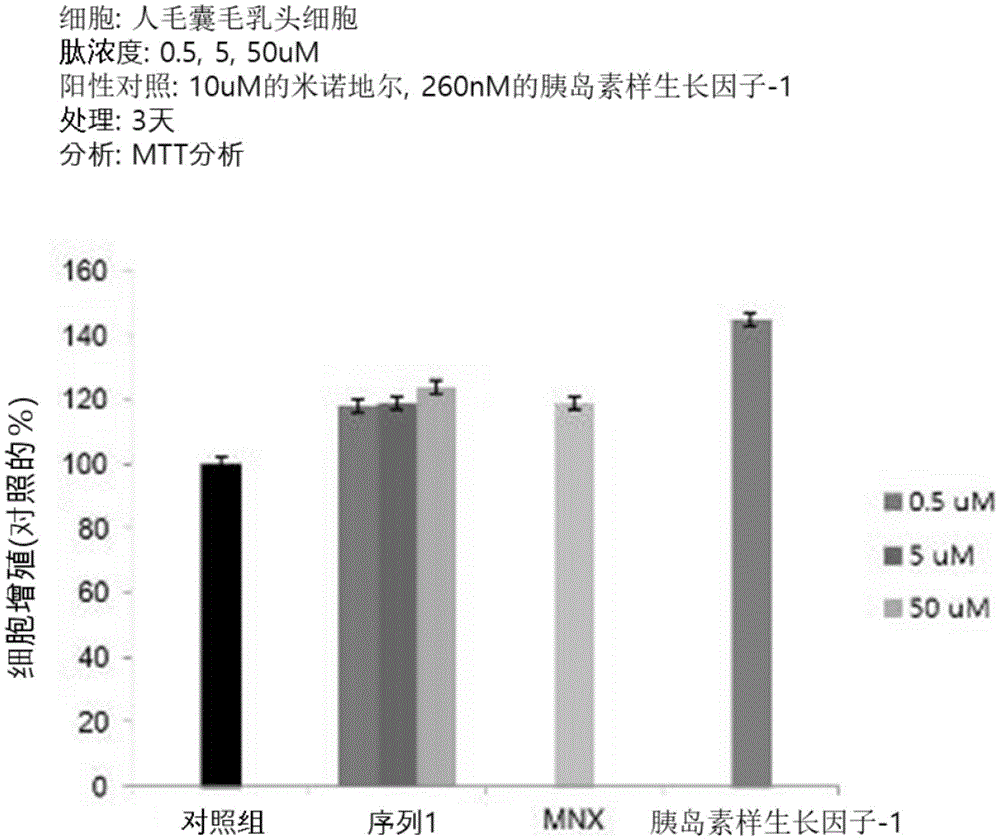
FIG. 1a is a graph showing the growth promoting effect of Human Hair Follicle Dermal Papilla Cells (HHFDPC) of a peptide consisting of the amino acid sequence of SEQ ID No. 1 according to an embodiment of the present invention.
FIG. 1b is a graph showing the growth promoting effect of human hair follicle papilla cells of a peptide consisting of the amino acid sequence of SEQ ID No. 2 according to an embodiment of the present invention.
FIG. 2a is a graph showing the results of confirming the expression of peptide β -catenin and an increase in expression of phosphorylated glycogen synthase kinase 3(P-GSK3 β) by the amino acid sequence of SEQ ID No. 1 according to one embodiment of the present invention.
FIG. 2b is a diagram showing the results of confirming increased expression of peptide β -catenin and phosphorylated glycogen synthase kinase 3, which are composed of the amino acid sequence of SEQ ID No. 2 according to one embodiment of the present invention.
FIG. 3a is a graph showing the results of confirming increased expression of phosphatidylinositol-3 kinase and increased phosphorylation of extracellular signal-regulated kinase based on a peptide consisting of the amino acid sequence of SEQ ID No. 1 according to an embodiment of the present invention.
FIG. 3b is a graph showing the results of confirming an increase in expression of phosphatidylinositol-3 kinase and an increase in phosphorylation of extracellular signal-regulated kinase based on a peptide consisting of the amino acid sequence of SEQ ID No. 2 according to an embodiment of the present invention.
FIG. 4a is a graph showing the results of confirming that the expression of B-cell lymphoma-2 is increased and the expression of B-cell lymphoma-2-associated X protein is decreased based on a peptide consisting of the amino acid sequence of SEQ ID No. 1 according to an embodiment of the present invention.
FIG. 4B is a graph showing the results of confirming that the expression of B-cell lymphoma-2 is increased and the expression of B-cell lymphoma-2-associated X protein is decreased based on a peptide consisting of the amino acid sequence of SEQ ID No. 2 according to an embodiment of the present invention.
FIG. 5a is a graph showing the results of confirming the increased expression of keratin-14 based on a peptide consisting of the amino acid sequence of SEQ ID No. 1 according to one embodiment of the present invention.
FIG. 5b is a graph showing the results of confirming the increased expression of keratin-14 based on a peptide consisting of the amino acid sequence of SEQ ID No. 2 according to one embodiment of the present invention.
FIG. 6 is a photograph showing the results of confirming the increased expression of vascular endothelial growth factor and keratinocyte growth factor based on a peptide consisting of the amino acid sequence of SEQ ID No. 1 according to an embodiment of the present invention.
FIG. 7 is a photograph showing the results of confirming the inhibition of the expression of transforming growth factor-. beta.1 based on a peptide consisting of the amino acid sequence of SEQ ID No. 1 according to an embodiment of the present invention.
Fig. 8 is a graph showing the results of confirming the increased expression of the MSH homology cassette 2 based on the peptide consisting of the amino acid sequence of sequence 1 according to one embodiment of the present invention.
Fig. 9a is a graph showing the result of confirming the melanin formation-increasing effect of a peptide consisting of the amino acid sequence of sequence 1 according to an embodiment of the present invention.
Fig. 9b is a graph showing the results of confirming the melanin formation-increasing effect of a peptide consisting of the amino acid sequence of seq id No. 2 according to an embodiment of the present invention.
FIG. 10 is a graph showing the results of confirming the increased expression of mRNA of the peptide microphthalmia-associated transcription factor, neuraminidase and tyrosinase-associated protein 1 consisting of the amino acid sequence of SEQ ID No. 1 according to one embodiment of the present invention.
FIG. 11 shows the results of confirming an increase in protein expression of a peptide microphthalmia-associated transcription factor and a neuraminidase, each of which comprises the amino acid sequence of SEQ ID No. 1 according to one embodiment of the present invention.
Detailed Description
Relates to a peptide consisting of the amino acid sequence of SEQ ID No. 1 or SEQ ID No. 2, exhibiting hair growth promoting activity and/or melanin production promoting activity.
The present invention will be described in more detail below with reference to examples. It will be apparent to those skilled in the art that such embodiments are merely for illustrating the present invention in more detail, and the scope of the present invention is not limited to these embodiments according to the gist of the present invention.
Examples
Synthesis example 1: synthesis of peptides
700mg of chlorotrityl chloride resin (Chloro trityl chloride resin; CT L resin, Nova biochem Cat No.01-64-0021) was put into a reaction vessel, and 10ml of Methylene Chloride (MC) was added thereto and stirred for 3 minutes. The solution was removed and after stirring for 3 minutes in 10ml of Dimethylformamide (DMF), the solvent was removed again. 10ml of a methylene chloride solution was placed in a reactor, and 200mmole of Fmoc-Cys (Trt) -O H (Bachem, Swiss) and 400mmole of Diisopropylethylamine (DIEA) were added thereto, stirred and dissolved uniformly, stirred for 1 hour and reacted. After the reaction, washing was performed, methanol and diisopropylethylamine (2: 1) were dissolved in dichloromethane (DCM, dechromethane), reacted for 10 minutes, and an excess of dichloromethane was usedAlkane/dimethylformamide (1: 1) was washed. The solution was removed and after stirring for 3 minutes in 10ml of Dimethylformamide (DMF), the solvent was removed again. 10ml of a deprotection solution (20% Piperidine (Piperidine)/dimethylformamide) was put into a reaction vessel and stirred at normal temperature for 10 minutes, and then the solution was removed. After the same amount of the deprotection solution was put in and the reaction was maintained for 10 minutes again, the solution was removed and washed with dimethylformamide 2 times, dichloromethane 1 time and dimethylformamide 1 time for 3 minutes, respectively, to prepare a cys (trt) -CTL Resin. A new reactor was charged with 10ml of dimethylformamide solution, and 200 mmoles of Fmoc-Ser (tBu) -OH (Bachem, Swiss), 200 mmoles of hydroxybenzotriazole (HoBt) and 200 mmoles of benzotriazol-1-yloxytris (dimethylamino) phosphonium hexafluorophosphate (Bop) were added thereto and then stirred to dissolve uniformly. After 2 fractional distillations of 400mmole of N, N-Diisopropylethylamine (DIEA) were placed in the reactor, it was stirred for at least 5 minutes until all solids were dissolved. The dissolved amino acid mixed solution was put into a reaction vessel having a deprotected resin, stirred at room temperature for 1 hour, and reacted. The reaction solution was removed, and the reaction solution was stirred with dimethylformamide for 5 minutes each time and 3 times. A small amount of the reaction resin was taken and the degree of reaction was checked by means of the Kaiser test (Nihydrin test). Using the deprotection solution, 2 deprotection reactions were performed in the same manner as described above to prepare Ser (tBu) -Cys (Trt) -CTL Resin. The following amino acid attachment experiment was performed in the same manner as the above method, after washing well using dimethylformamide and dichloromethane and performing the Caesar test again. According to the selected amino acid sequence, the linkage reaction is performed in the order of Fmoc-Arg (Pbf) -OH, Fmoc-Leu-OH, Fmoc-Gln (Trt) -OH, Fmoc-Ser (tBu) -OH, Fmoc-Thr (tBu) -OH, Fmoc-Cys (Trt) -OH and Fmoc-Ala-OH. After the Fmoc-protecting group was reacted 2 times in 10 minutes using a deprotection solution, it was washed clean and removed. Respectively acetylating acetic anhydride, N-diisopropylethylamine and hydroxybenzotriazole (HoBt) for 1 hour by using dimethylformamide, dichloromethane and methanolWashing 3 times, drying by slowly flowing nitrogen gas, and adding Phosphorus pentoxide (P)2O5) Under the conditions, the mixture was completely dried under reduced pressure in a vacuum, and then 30ml of a leakage solution [ 95% trifluoroacetic acid (TFA), 2.5% distilled water, 2.5% Thioanisole (thionisole)]Then, the reaction was continued for 2 hours with a slight movement at room temperature. The resin was filtered by filtration and mixed with the mother liquor after washing the resin with a small amount of solution. Distilling under reduced pressure to a volume about half of the total volume, adding 50ml of cold ether to induce precipitation, centrifuging to collect the precipitate, and washing with cold ether for 2 times. 0.73g of a peptide consisting of the amino acid sequence of SEQ ID No. 1 before purification (Ala-Cys-Thr-Ser-Ser-Gln-Leu-Arg-Ser-Cys) was synthesized by removing the mother liquor and sufficiently drying under nitrogen (yield: 87.1%). The molecular weight obtainable when determined by means of a molecular weight meter is 1055.2 (theoretical value: 1055.19). The synthesis of a peptide consisting of the amino acid sequence of SEQ ID No. 2 was also carried out in the same manner as described above.
TABLE 1
Example 1: DPC proliferation assay
Human hair follicle dermal papilla cells (Human hair follicle dermal papilla cells) were cultured at 2X 10³Cell/well density was seeded in 96-well plates and cultured overnight. After the replacement with serum-free medium, the cells were cultured for 3 days by treating the peptide, and MTT solution at 4mg/ml was treated in a volume of 100. mu.l per well to react for 4 hours. After the formazan generated was dissolved by treatment with dimethyl sulfoxide (DMSO), the absorbance at 560nm was measured using a microplate reader, and the results thereof are shown in fig. 1a and 1 b.
As can be seen from fig. 1a and 1b, it was confirmed that the growth of human hair follicle papilla cells was promoted in a concentration-dependent manner by treating the peptide consisting of the amino acid sequence of sequence 1 or sequence 2.
Example 2: beta-catenin Activity assay
Human hair follicle dermal papilla cells are divided into 4 × 10⁵Cell/well density was seeded in 6-well plates and cultured overnight. After the replacement with the serum-free medium, nuclear and cytoplasmic proteins were separated by treating the peptide for 15 minutes and 30 minutes, and the cells were recovered, and the expression patterns of β -cyclic proteins were compared by immunoblotting using β -catenin antibody (Santacruz biotechnology, USA), and the results are shown in fig. 2a and 2 b.
As can be confirmed from fig. 2a and 2b, in human hair follicle papilla cells, the activity of β -catenin and the phosphorylation level of glycogen synthesis kinase 3 β were increased by peptide treatment consisting of the amino acid sequence of seq id No. 1 or seq id No. 2. The activity of β -catenin acts as a reaction that is liberated from the complex and presented by decomposition based on oxidation as glycogen synthase kinase β, causing an increase in the expression of the hair-growth related molecule.
Example 3: phosphatidylinositol-3 kinase & p-extracellular signal-regulated kinase immunoblots (WB)
Human hair follicle dermal papilla cells are divided into 4 × 10⁵Cell/well density was seeded in 6-well plates and cultured overnight. After the medium was changed to serum-free medium, the peptide was treated and cultured for 15 minutes and 30 minutes, and the cells were recovered to prepare a cell lysate. Immunoblotting was performed using phosphatidylinositol-3 kinase antibody (santa cruz biotechnology, USA) and phospho-extracellular signal-regulated kinase antibody (phospho-ERK) (Cell Signaling Technology, USA) to compare protein expression patterns, and the results are shown in fig. 3a and 3 b.
As can be seen from fig. 3a and 3b, the expression of phosphatidylinositol-3 kinase and the phosphorylation level of extracellular signal-regulated kinase, which have an effect on the growth of human hair follicle papilla cells, are increased by the peptide treatment consisting of the amino acid sequence of seq id No. 1 or seq id No. 2.
Example 4: immunoblotting of B-cell lymphoma-2/B-cell lymphoma-2 associated X protein
Human hair follicle dermal papilla cells are divided into 4 × 10⁵Cell/well density was seeded in 6-well plates and cultured overnight. After the medium was changed to serum-free medium, the cells were cultured for 24 hours by treating the peptide, and the cells were recovered to prepare a cell lysate. The protein expression patterns were compared by immunoblotting using B-cell lymphoma-2 and B-cell lymphoma-2-associated protein X antibodies (santa cruz biotechnology, usa), and the results are shown in fig. 4a and 4B.
As can be seen from fig. 4a and 4B, it was confirmed that the expression of B-cell lymphoma-2, which is an anti-apoptotic protein, was increased in human hair follicle papilla cells and the expression of B-cell lymphoma-2-associated X protein, which is an apoptosis-related protein, was decreased by the peptide treatment consisting of the amino acid sequence of sequence 1 or sequence 2.
Example 5: reverse transcription-polymerase chain reaction (RT-PCR) of keratin-14
Human hair follicle dermal papilla cells are arranged at 5 × 10⁵Cell/well density was seeded in 6-well plates and cultured overnight. After the medium was changed to serum-free medium, the cells were cultured for 24 hours by treating the peptide, and the ribonucleic acid (RNA) was isolated by recovering the cells. After the quantification of ribonucleic acid, complementary deoxyribonucleic acid (cDNA) was synthesized using a complementary deoxyribonucleic acid (cDNA) synthesis kit (Intron, Korea), polymerase chain reaction was performed using a Polymerase Chain Reaction (PCR) premix (Intron, Korea) and keratin-14 primers, and then electrophoresis was performed in 5% agarose gel to compare the expression levels of messenger ribonucleic acid (mRNA) of the growth factors under the respective sample treatment conditions, and the results thereof are shown in fig. 5a and 5 b.
TABLE 2
As can be seen from FIGS. 5a and 5b, it was confirmed that the expression of mRNA of keratin-14, which is a hair growth factor, was increased in human hair follicle papilla cells by the peptide treatment consisting of the amino acid sequence of SEQ ID NO. 1 or SEQ ID NO. 2.
Example 6: reverse transcription-polymerase chain reaction of keratinocyte growth factor and vascular endothelial growth factor
Human hair follicle dermal papilla cells are divided into 4 × 10⁵Cell/well density was seeded in 6-well plates and cultured overnight. After the medium was changed to serum-free medium, the peptides were cultured for 24 hours, and the cells were recovered to isolate ribonucleic acid. After the quantification of ribonucleic acid, complementary deoxyribonucleic acid was synthesized using a complementary deoxyribonucleic acid synthesis kit (Intron, Korea), polymerase chain reaction was performed using a polymerase chain reaction premix (Intron, Korea), keratinocyte growth factor, and vascular endothelial growth factor, and then electrophoresis was performed on 5% agarose gel to compare the expression levels of messenger ribonucleic acid of the growth factors under the respective sample treatment conditions, and the results are shown in FIG. 6.
TABLE 3
As can be seen from fig. 6, it was confirmed that the expression of keratinocyte growth factor and vascular endothelial growth factor was increased in human hair follicle dermal papilla cells by the peptide treatment consisting of the amino acid sequence of sequence 1.
Example 7: reverse transcription-polymerase chain reaction of transforming growth factor-beta 1
Human hair follicle dermal papilla cells are divided into 4 × 10⁵Cell/well density was seeded in 6-well plates and cultured overnight. After the medium was changed to serum-free medium, the peptides were cultured for 24 hours, and the cells were recovered to isolate ribonucleic acid. After the quantification of ribonucleic acid, complementary deoxyribonucleic acid was synthesized using a complementary deoxyribonucleic acid synthesis kit (Intron, Korea), polymerase chain reaction was performed using a polymerase chain reaction premix (Intron, Korea) and a transforming growth factor-. beta.1 primer, and then electrophoresis was performed in 5% agarose gel to compare the expression levels of messenger ribonucleic acid of the growth factors under the respective sample treatment conditions, and the results are shown in FIG. 7.
TABLE 4
As can be confirmed from fig. 7, it was confirmed that the expression of transforming growth factor- β 1, which is one of hair growth inhibitory factors, was inhibited in human hair follicle papilla cells by the peptide treatment consisting of the amino acid sequence of sequence 1.
Example 8: reverse transcription-polymerase chain reaction of MSH homology box 2
Human hair follicle dermal papilla cells are divided into 4 × 10⁵Cell/well density was seeded in 6-well plates and cultured overnight. After the medium was changed to serum-free medium, the peptides were cultured for 24 hours, and the cells were recovered to isolate ribonucleic acid. After the quantification of ribonucleic acid, complementary deoxyribonucleic acid was synthesized using a complementary deoxyribonucleic acid synthesis kit (Intron, Korea), polymerase chain reaction was performed using a polymerase chain reaction premix (Intron, Korea) and MSH homology cassette 2 primer, and then electrophoresis was performed in 5% agarose gel to compare the expression levels of messenger ribonucleic acid of the growth factors under the respective sample treatment conditions, and the results are shown in FIG. 8.
TABLE 5
| Serial number
|
Nomenclature of primers
|
Sequence listing (5 '-3')
|
| 11
|
MSH homology box 2_ F (MSX2_ F)
|
AACACAAGACCAACCGGAAG
|
| 12
|
MSH homology box 2_ R (MSX2_ R)
|
GCAGCCATTTTCAGCTTTTC |
As can be confirmed from fig. 8, it was confirmed that the expression of MSH homology cassette 2, which is a factor affecting hair shaft (hair shaft) elongation (elongation), was increased in human hair follicle papilla cells by peptide treatment consisting of the amino acid sequence of sequence 1.
Example 9: melanin assay array
After culturing melanocytes (B16F10 cell line) for 24 hours in a 6-well culture plate at 37 ℃ in an incubator, the medium of each plate was removed and replaced with a new medium, and the peptide was treated at a certain concentration. After 72 hours of culture, the culture medium was removed, and after removing the cells, the cells were transferred to a 1.5ml tube to carry out centrifugal analysis at 13000rpm for 3 minutes, and the supernatant was removed, and the melanin was observed by recovering the cell aggregates. For the cell aggregates, 2M NaOH was added in 150. mu.l each time, and intracellular melanin was dissolved at a temperature of 60 ℃ for 30 minutes. The supernatant obtained by dissolving each well in a 96-well plate was put in 100. mu.l to measure absorbance at 490nm, and the results are shown in FIGS. 9a and 9 b.
As can be seen from fig. 9a and 9b, the production of melanin was increased in melanocytes by peptide treatment consisting of the amino acid sequence of seq id No. 1 or seq id No. 2.
Example 10: reverse transcription-polymerase chain reaction of gene related to melanin production
Melanocytes (B16F10 cell line) were cultured in 6-well plates for 24 hours, and then peptides were treated at the concentrations. After extracting ribonucleic acid from cells cultured for 72 hours, complementary deoxyribonucleic acid was prepared. The expression changes of the respective genes were observed by performing polymerase chain reaction using the transcription factors related to microphthalmia and the specific primers related to tyrosinase, which are factors involved in melanin formation, and are shown in fig. 10.
TABLE 6
| Serial number
|
Nomenclature of primers
|
Sequence listing (5 '-3')
|
| 13
|
Ocular abnormality-related transcription factor _ F
|
CCAGCCTGGCGATCATGTCAT
|
| 14
|
Microphthalmia-associated transcription factor _ R
| GGTCTGGACAGGAGTTGCTG |
|
| 15
|
Tyrosinase _ F (tyrosinase _ F)
|
GGCCAGCTTTCAGGCAGAGG
|
| 16
|
Tyrosinase _ R (tyrosinase _ R)
|
TGGTGCTTCATGGGCAAAAT
|
| 17
|
Tyrosinase-related protein 1_ F
|
TCTGTGAAGGTGTGCAGGAG
|
| 18
|
Tyrosinase related enzymesProtein 1_ R
|
CCGAAACAGAGTGGAAGGTT |
As can be confirmed from fig. 10, when the peptide of sequence 1 in the sequence listing was treated with melanocytes, the expression of microphthalmia-associated transcription factor as a transcription factor involved in the process of melanin formation and tyrosinase as an enzyme was increased.
Example 11: western immunoblotting associated with melanogenesis
Melanocytes (B16F10 cell line) were cultured in 6-well plates for 24 hours, and then the peptide was treated at a certain concentration. After 72 hours of culture, the cells were lysed, and the expression of microphthalmia-associated transcription factor and tyrosinase, which are factors involved in melanin formation, was confirmed by immunoblotting using specific antibodies (2 of Santacruz biotechnology, USA), and the results thereof are shown in fig. 11.
As can be confirmed from fig. 11, when the peptide of sequence 1 in the sequence listing was treated with melanocytes, protein expression of microphthalmia-associated transcription factor as a transcription factor involved in melanin formation process and tyrosinase as an enzyme was increased.
While certain features of the invention have been described in detail above, it will be apparent to those skilled in the art that these specific techniques are merely illustrative of preferred embodiments of the invention, and that the scope of the invention is not limited thereto. Accordingly, the substantial scope of the present invention is defined by the appended claims and equivalents thereof.
Industrial applicability
The present invention relates to a peptide exhibiting a hair growth promoting activity and/or a melanin production promoting activity, a composition for preventing and/or improving hair loss comprising the peptide as an active ingredient, a composition for promoting hair growth and/or hair growth comprising the peptide as an active ingredient, a use of the peptide for preventing and/or improving hair loss, a use of the peptide for promoting hair growth and/or hair growth, a pharmaceutical composition for preventing and/or treating melanin hypofunction comprising the peptide as an active ingredient, a cosmetic composition for preventing and/or improving melanin hypofunction comprising the peptide as an active ingredient, and a use of the peptide for preventing, improving and/or treating melanin hypofunction.
Sequence listing
<110> CAREGEN CO., LTD.
<120> peptides exhibiting hair growth and/or hair growth promoting activity and use thereof
<130> PP170018
<160> 18
<170> KopatentIn 2.0
<210> 1
<211> 10
<212> PRT
<213> Artificial sequence
<220>
<223> peptide 1
<400> 1
Ala Cys Thr Ser Ser Gln Leu Arg Ser Cys
1 5 10
<210> 2
<211> 12
<212> PRT
<213> Artificial sequence
<220>
<223> peptide 2
<400> 2
Lys Tyr Leu Leu Val His Arg Pro Tyr Tyr Arg Arg
1 5 10
<210> 3
<211> 24
<212> DNA
<213> Forward primer for Keratin-14
<400> 3
ccacctttca tcttcccaat tctc 24
<210> 4
<211> 18
<212> DNA
<213> keratin-14 reverse primer
<400> 4
gtgcggatct ggcggttg 18
<210> 5
<211> 22
<212> DNA
<213> KGF forward primer
<400> 5
tctgtcgaac acagtggtac ct 22
<210> 6
<211> 23
<212> DNA
<213> KGF reverse primer
<400> 6
gtgtgtccat ttagctgatg cat 23
<210> 7
<211> 21
<212> DNA
<213> VEGF Forward primer
<400> 7
ccatgaactt tctgctgtct t 21
<210> 8
<211> 21
<212> DNA
<213> VEGF reverse primer
<400> 8
tcgatcgttc tgtatcagtc t 21
<210> 9
<211> 21
<212> DNA
<213> TGF-. beta.1 Forward primer
<400> 9
gccctggata ccaactattg c 21
<210> 10
<211> 21
<212> DNA
<213> TGF-. beta.1 reverse primer
<400> 10
tcagcacttg caggagtagc g 21
<210> 11
<211> 20
<212> DNA
<213> MSX2 Forward primer
<400> 11
aacacaagac caaccggaag 20
<210> 12
<211> 20
<212> DNA
<213> MSX2 reverse primer
<400> 12
gcagccattt tcagcttttc 20
<210> 13
<211> 21
<212> DNA
<213> MITF Forward primer
<400> 13
ccagcctggc gatcatgtca t 21
<210> 14
<211> 20
<212> DNA
<213> MITF reverse primer
<400> 14
ggtctggaca ggagttgctg 20
<210> 15
<211> 20
<212> DNA
<213> tyrosinase forward primer
<400> 15
ggccagcttt caggcagagg 20
<210> 16
<211> 20
<212> DNA
<213> tyrosinase reverse primer
<400> 16
tggtgcttca tgggcaaaat 20
<210> 17
<211> 20
<212> DNA
<213> TRP1 Forward primer
<400> 17
tctgtgaagg tgtgcaggag 20
<210> 18
<211> 20
<212> DNA
<213> TRP1 reverse primer
<400> 18
ccgaaacaga gtggaaggtt 20