CN108885196B - Stationary phase for chromatography - Google Patents
Stationary phase for chromatography Download PDFInfo
- Publication number
- CN108885196B CN108885196B CN201780019971.2A CN201780019971A CN108885196B CN 108885196 B CN108885196 B CN 108885196B CN 201780019971 A CN201780019971 A CN 201780019971A CN 108885196 B CN108885196 B CN 108885196B
- Authority
- CN
- China
- Prior art keywords
- group
- carbon atoms
- stationary phase
- formula
- vinyl
- Prior art date
- Legal status (The legal status is an assumption and is not a legal conclusion. Google has not performed a legal analysis and makes no representation as to the accuracy of the status listed.)
- Active
Links
Images



Classifications
-
- B—PERFORMING OPERATIONS; TRANSPORTING
- B01—PHYSICAL OR CHEMICAL PROCESSES OR APPARATUS IN GENERAL
- B01J—CHEMICAL OR PHYSICAL PROCESSES, e.g. CATALYSIS OR COLLOID CHEMISTRY; THEIR RELEVANT APPARATUS
- B01J20/00—Solid sorbent compositions or filter aid compositions; Sorbents for chromatography; Processes for preparing, regenerating or reactivating thereof
- B01J20/281—Sorbents specially adapted for preparative, analytical or investigative chromatography
- B01J20/282—Porous sorbents
- B01J20/285—Porous sorbents based on polymers
-
- B—PERFORMING OPERATIONS; TRANSPORTING
- B01—PHYSICAL OR CHEMICAL PROCESSES OR APPARATUS IN GENERAL
- B01J—CHEMICAL OR PHYSICAL PROCESSES, e.g. CATALYSIS OR COLLOID CHEMISTRY; THEIR RELEVANT APPARATUS
- B01J20/00—Solid sorbent compositions or filter aid compositions; Sorbents for chromatography; Processes for preparing, regenerating or reactivating thereof
- B01J20/22—Solid sorbent compositions or filter aid compositions; Sorbents for chromatography; Processes for preparing, regenerating or reactivating thereof comprising organic material
- B01J20/26—Synthetic macromolecular compounds
- B01J20/261—Synthetic macromolecular compounds obtained by reactions only involving carbon to carbon unsaturated bonds
-
- B—PERFORMING OPERATIONS; TRANSPORTING
- B01—PHYSICAL OR CHEMICAL PROCESSES OR APPARATUS IN GENERAL
- B01J—CHEMICAL OR PHYSICAL PROCESSES, e.g. CATALYSIS OR COLLOID CHEMISTRY; THEIR RELEVANT APPARATUS
- B01J20/00—Solid sorbent compositions or filter aid compositions; Sorbents for chromatography; Processes for preparing, regenerating or reactivating thereof
- B01J20/22—Solid sorbent compositions or filter aid compositions; Sorbents for chromatography; Processes for preparing, regenerating or reactivating thereof comprising organic material
- B01J20/26—Synthetic macromolecular compounds
- B01J20/264—Synthetic macromolecular compounds derived from different types of monomers, e.g. linear or branched copolymers, block copolymers, graft copolymers
-
- B—PERFORMING OPERATIONS; TRANSPORTING
- B01—PHYSICAL OR CHEMICAL PROCESSES OR APPARATUS IN GENERAL
- B01J—CHEMICAL OR PHYSICAL PROCESSES, e.g. CATALYSIS OR COLLOID CHEMISTRY; THEIR RELEVANT APPARATUS
- B01J20/00—Solid sorbent compositions or filter aid compositions; Sorbents for chromatography; Processes for preparing, regenerating or reactivating thereof
- B01J20/28—Solid sorbent compositions or filter aid compositions; Sorbents for chromatography; Processes for preparing, regenerating or reactivating thereof characterised by their form or physical properties
- B01J20/28002—Solid sorbent compositions or filter aid compositions; Sorbents for chromatography; Processes for preparing, regenerating or reactivating thereof characterised by their form or physical properties characterised by their physical properties
- B01J20/28004—Sorbent size or size distribution, e.g. particle size
-
- B—PERFORMING OPERATIONS; TRANSPORTING
- B01—PHYSICAL OR CHEMICAL PROCESSES OR APPARATUS IN GENERAL
- B01J—CHEMICAL OR PHYSICAL PROCESSES, e.g. CATALYSIS OR COLLOID CHEMISTRY; THEIR RELEVANT APPARATUS
- B01J20/00—Solid sorbent compositions or filter aid compositions; Sorbents for chromatography; Processes for preparing, regenerating or reactivating thereof
- B01J20/28—Solid sorbent compositions or filter aid compositions; Sorbents for chromatography; Processes for preparing, regenerating or reactivating thereof characterised by their form or physical properties
- B01J20/28014—Solid sorbent compositions or filter aid compositions; Sorbents for chromatography; Processes for preparing, regenerating or reactivating thereof characterised by their form or physical properties characterised by their form
- B01J20/28016—Particle form
- B01J20/28019—Spherical, ellipsoidal or cylindrical
-
- B—PERFORMING OPERATIONS; TRANSPORTING
- B01—PHYSICAL OR CHEMICAL PROCESSES OR APPARATUS IN GENERAL
- B01J—CHEMICAL OR PHYSICAL PROCESSES, e.g. CATALYSIS OR COLLOID CHEMISTRY; THEIR RELEVANT APPARATUS
- B01J20/00—Solid sorbent compositions or filter aid compositions; Sorbents for chromatography; Processes for preparing, regenerating or reactivating thereof
- B01J20/28—Solid sorbent compositions or filter aid compositions; Sorbents for chromatography; Processes for preparing, regenerating or reactivating thereof characterised by their form or physical properties
- B01J20/28014—Solid sorbent compositions or filter aid compositions; Sorbents for chromatography; Processes for preparing, regenerating or reactivating thereof characterised by their form or physical properties characterised by their form
- B01J20/28042—Shaped bodies; Monolithic structures
-
- B—PERFORMING OPERATIONS; TRANSPORTING
- B01—PHYSICAL OR CHEMICAL PROCESSES OR APPARATUS IN GENERAL
- B01J—CHEMICAL OR PHYSICAL PROCESSES, e.g. CATALYSIS OR COLLOID CHEMISTRY; THEIR RELEVANT APPARATUS
- B01J20/00—Solid sorbent compositions or filter aid compositions; Sorbents for chromatography; Processes for preparing, regenerating or reactivating thereof
- B01J20/281—Sorbents specially adapted for preparative, analytical or investigative chromatography
- B01J20/286—Phases chemically bonded to a substrate, e.g. to silica or to polymers
- B01J20/287—Non-polar phases; Reversed phases
-
- B—PERFORMING OPERATIONS; TRANSPORTING
- B01—PHYSICAL OR CHEMICAL PROCESSES OR APPARATUS IN GENERAL
- B01J—CHEMICAL OR PHYSICAL PROCESSES, e.g. CATALYSIS OR COLLOID CHEMISTRY; THEIR RELEVANT APPARATUS
- B01J20/00—Solid sorbent compositions or filter aid compositions; Sorbents for chromatography; Processes for preparing, regenerating or reactivating thereof
- B01J20/281—Sorbents specially adapted for preparative, analytical or investigative chromatography
- B01J20/286—Phases chemically bonded to a substrate, e.g. to silica or to polymers
- B01J20/288—Polar phases
-
- B—PERFORMING OPERATIONS; TRANSPORTING
- B01—PHYSICAL OR CHEMICAL PROCESSES OR APPARATUS IN GENERAL
- B01J—CHEMICAL OR PHYSICAL PROCESSES, e.g. CATALYSIS OR COLLOID CHEMISTRY; THEIR RELEVANT APPARATUS
- B01J20/00—Solid sorbent compositions or filter aid compositions; Sorbents for chromatography; Processes for preparing, regenerating or reactivating thereof
- B01J20/281—Sorbents specially adapted for preparative, analytical or investigative chromatography
- B01J20/286—Phases chemically bonded to a substrate, e.g. to silica or to polymers
- B01J20/289—Phases chemically bonded to a substrate, e.g. to silica or to polymers bonded via a spacer
-
- B—PERFORMING OPERATIONS; TRANSPORTING
- B01—PHYSICAL OR CHEMICAL PROCESSES OR APPARATUS IN GENERAL
- B01J—CHEMICAL OR PHYSICAL PROCESSES, e.g. CATALYSIS OR COLLOID CHEMISTRY; THEIR RELEVANT APPARATUS
- B01J20/00—Solid sorbent compositions or filter aid compositions; Sorbents for chromatography; Processes for preparing, regenerating or reactivating thereof
- B01J20/30—Processes for preparing, regenerating, or reactivating
- B01J20/3078—Thermal treatment, e.g. calcining or pyrolizing
-
- B—PERFORMING OPERATIONS; TRANSPORTING
- B01—PHYSICAL OR CHEMICAL PROCESSES OR APPARATUS IN GENERAL
- B01J—CHEMICAL OR PHYSICAL PROCESSES, e.g. CATALYSIS OR COLLOID CHEMISTRY; THEIR RELEVANT APPARATUS
- B01J20/00—Solid sorbent compositions or filter aid compositions; Sorbents for chromatography; Processes for preparing, regenerating or reactivating thereof
- B01J20/30—Processes for preparing, regenerating, or reactivating
- B01J20/3085—Chemical treatments not covered by groups B01J20/3007 - B01J20/3078
-
- B—PERFORMING OPERATIONS; TRANSPORTING
- B01—PHYSICAL OR CHEMICAL PROCESSES OR APPARATUS IN GENERAL
- B01J—CHEMICAL OR PHYSICAL PROCESSES, e.g. CATALYSIS OR COLLOID CHEMISTRY; THEIR RELEVANT APPARATUS
- B01J20/00—Solid sorbent compositions or filter aid compositions; Sorbents for chromatography; Processes for preparing, regenerating or reactivating thereof
- B01J20/30—Processes for preparing, regenerating, or reactivating
- B01J20/32—Impregnating or coating ; Solid sorbent compositions obtained from processes involving impregnating or coating
- B01J20/3202—Impregnating or coating ; Solid sorbent compositions obtained from processes involving impregnating or coating characterised by the carrier, support or substrate used for impregnation or coating
- B01J20/3204—Inorganic carriers, supports or substrates
-
- B—PERFORMING OPERATIONS; TRANSPORTING
- B01—PHYSICAL OR CHEMICAL PROCESSES OR APPARATUS IN GENERAL
- B01J—CHEMICAL OR PHYSICAL PROCESSES, e.g. CATALYSIS OR COLLOID CHEMISTRY; THEIR RELEVANT APPARATUS
- B01J20/00—Solid sorbent compositions or filter aid compositions; Sorbents for chromatography; Processes for preparing, regenerating or reactivating thereof
- B01J20/30—Processes for preparing, regenerating, or reactivating
- B01J20/32—Impregnating or coating ; Solid sorbent compositions obtained from processes involving impregnating or coating
- B01J20/3214—Impregnating or coating ; Solid sorbent compositions obtained from processes involving impregnating or coating characterised by the method for obtaining this coating or impregnating
- B01J20/3217—Resulting in a chemical bond between the coating or impregnating layer and the carrier, support or substrate, e.g. a covalent bond
-
- B—PERFORMING OPERATIONS; TRANSPORTING
- B01—PHYSICAL OR CHEMICAL PROCESSES OR APPARATUS IN GENERAL
- B01J—CHEMICAL OR PHYSICAL PROCESSES, e.g. CATALYSIS OR COLLOID CHEMISTRY; THEIR RELEVANT APPARATUS
- B01J20/00—Solid sorbent compositions or filter aid compositions; Sorbents for chromatography; Processes for preparing, regenerating or reactivating thereof
- B01J20/30—Processes for preparing, regenerating, or reactivating
- B01J20/32—Impregnating or coating ; Solid sorbent compositions obtained from processes involving impregnating or coating
- B01J20/3231—Impregnating or coating ; Solid sorbent compositions obtained from processes involving impregnating or coating characterised by the coating or impregnating layer
- B01J20/3242—Layers with a functional group, e.g. an affinity material, a ligand, a reactant or a complexing group
- B01J20/3268—Macromolecular compounds
- B01J20/3276—Copolymers
-
- B—PERFORMING OPERATIONS; TRANSPORTING
- B01—PHYSICAL OR CHEMICAL PROCESSES OR APPARATUS IN GENERAL
- B01J—CHEMICAL OR PHYSICAL PROCESSES, e.g. CATALYSIS OR COLLOID CHEMISTRY; THEIR RELEVANT APPARATUS
- B01J20/00—Solid sorbent compositions or filter aid compositions; Sorbents for chromatography; Processes for preparing, regenerating or reactivating thereof
- B01J20/30—Processes for preparing, regenerating, or reactivating
- B01J20/32—Impregnating or coating ; Solid sorbent compositions obtained from processes involving impregnating or coating
- B01J20/3231—Impregnating or coating ; Solid sorbent compositions obtained from processes involving impregnating or coating characterised by the coating or impregnating layer
- B01J20/3242—Layers with a functional group, e.g. an affinity material, a ligand, a reactant or a complexing group
- B01J20/3268—Macromolecular compounds
- B01J20/328—Polymers on the carrier being further modified
- B01J20/3282—Crosslinked polymers
-
- G—PHYSICS
- G01—MEASURING; TESTING
- G01N—INVESTIGATING OR ANALYSING MATERIALS BY DETERMINING THEIR CHEMICAL OR PHYSICAL PROPERTIES
- G01N30/00—Investigating or analysing materials by separation into components using adsorption, absorption or similar phenomena or using ion-exchange, e.g. chromatography or field flow fractionation
- G01N30/02—Column chromatography
-
- G—PHYSICS
- G01—MEASURING; TESTING
- G01N—INVESTIGATING OR ANALYSING MATERIALS BY DETERMINING THEIR CHEMICAL OR PHYSICAL PROPERTIES
- G01N30/00—Investigating or analysing materials by separation into components using adsorption, absorption or similar phenomena or using ion-exchange, e.g. chromatography or field flow fractionation
- G01N30/02—Column chromatography
- G01N30/50—Conditioning of the sorbent material or stationary liquid
- G01N30/52—Physical parameters
-
- B—PERFORMING OPERATIONS; TRANSPORTING
- B01—PHYSICAL OR CHEMICAL PROCESSES OR APPARATUS IN GENERAL
- B01D—SEPARATION
- B01D15/00—Separating processes involving the treatment of liquids with solid sorbents; Apparatus therefor
- B01D15/08—Selective adsorption, e.g. chromatography
- B01D15/26—Selective adsorption, e.g. chromatography characterised by the separation mechanism
- B01D15/40—Selective adsorption, e.g. chromatography characterised by the separation mechanism using supercritical fluid as mobile phase or eluent
-
- B—PERFORMING OPERATIONS; TRANSPORTING
- B01—PHYSICAL OR CHEMICAL PROCESSES OR APPARATUS IN GENERAL
- B01J—CHEMICAL OR PHYSICAL PROCESSES, e.g. CATALYSIS OR COLLOID CHEMISTRY; THEIR RELEVANT APPARATUS
- B01J2220/00—Aspects relating to sorbent materials
- B01J2220/50—Aspects relating to the use of sorbent or filter aid materials
- B01J2220/52—Sorbents specially adapted for preparative chromatography
-
- B—PERFORMING OPERATIONS; TRANSPORTING
- B01—PHYSICAL OR CHEMICAL PROCESSES OR APPARATUS IN GENERAL
- B01J—CHEMICAL OR PHYSICAL PROCESSES, e.g. CATALYSIS OR COLLOID CHEMISTRY; THEIR RELEVANT APPARATUS
- B01J2220/00—Aspects relating to sorbent materials
- B01J2220/80—Aspects related to sorbents specially adapted for preparative, analytical or investigative chromatography
- B01J2220/82—Shaped bodies, e.g. monoliths, plugs, tubes, continuous beds
Landscapes
- Chemical & Material Sciences (AREA)
- Analytical Chemistry (AREA)
- Chemical Kinetics & Catalysis (AREA)
- Organic Chemistry (AREA)
- Physics & Mathematics (AREA)
- Immunology (AREA)
- General Health & Medical Sciences (AREA)
- General Physics & Mathematics (AREA)
- Biochemistry (AREA)
- Pathology (AREA)
- Life Sciences & Earth Sciences (AREA)
- Health & Medical Sciences (AREA)
- Thermal Sciences (AREA)
- Inorganic Chemistry (AREA)
- Addition Polymer Or Copolymer, Post-Treatments, Or Chemical Modifications (AREA)
- Solid-Sorbent Or Filter-Aiding Compositions (AREA)
- Treatment Of Liquids With Adsorbents In General (AREA)
Abstract
本发明提供具有良好的分子识别能力的色谱用的固定相。具体而言,本发明提供负载有共聚物的载体,所述共聚物的主链的重复单元包含吡咯烷酮骨架或哌啶酮骨架、和酰亚胺骨架。The present invention provides a stationary phase for chromatography having good molecular recognition ability. Specifically, the present invention provides a carrier supporting a copolymer, the repeating unit of the main chain of the copolymer includes a pyrrolidone skeleton or a piperidone skeleton, and an imide skeleton.
Description
Technical Field
The present invention relates to stationary phases for chromatography. And more particularly to stationary phases for liquid chromatography, supercritical fluid chromatography.
Background
Chromatography is the most effective method for analyzing components of a mixture and contents thereof and performing separation and purification. Which separates different substances by their intrinsic partition ratio (which can also be understood as adsorption equilibrium) with respect to a porous solid (stationary phase) that is spatially fixed in a column or a tube called a capillary and a fluid (mobile phase) that moves in the gap between them. As representative examples thereof, gas chromatography and liquid chromatography are included. The former uses a gas as the mobile phase.
However, since a certain vapor pressure or more is required to move the separation target mixed in the gas phase, the method can be applied only to a relatively limited analysis target having a low molecular weight and no charge. On the other hand, liquid chromatography uses liquid as a mobile phase, and is applicable to most substances if an appropriate mobile phase is selected.
As a method for analyzing components of a mixture and contents thereof and performing separation and purification, which is distinguished from liquid chromatography, Supercritical Fluid Chromatography (SFC) is included. It takes advantage of the fact that fluids in supercritical or subcritical state are significantly better able to dissolve other compounds than gases, and have a lower viscosity and a higher diffusion rate than liquids. SFC using carbon dioxide as a supercritical fluid is generally used for safety and device reasons, and its application is gradually expanding.
Among liquid chromatography, normal phase chromatography using a combination of a fixed phase having a high polarity and a mobile phase having a low polarity and reverse phase chromatography having a polarity opposite thereto are typical modes. Recently, further, so-called HILIC, in which both phases are polar, has also been attracting attention.
In contrast, Supercritical Fluid Chromatography (SFC) is considered to have characteristics similar to those of normal phase chromatography. However, there are many aspects whose features and mechanisms have not been fully understood. In addition, the following ideas also exist: by gradually shifting from a mobile phase mainly composed of supercritical or subcritical carbon dioxide to a mobile phase having a strong polarity, that is, to an inverted phase system, it is possible to cover a wider polarity range of separation targets.
As the stationary phase for liquid chromatography, an example using polyvinylpyrrolidone is known.
Specifically, there are the following examples: particles of poly (1-vinyl-2-pyrrolidone) (PVP) that are insoluble in a solvent due to crosslinking are packed in a column and used as a stationary phase (for example, non-patent document 1).
In addition, it has been attempted to bond PVP to the surface of silica gel, which is a hard gel. For example, when silica gel is used as a stationary phase in separation of proteins and microorganisms, the properties of a target substance may be changed or the recovery rate may be significantly reduced due to so-called denaturation, and therefore, in order to prevent this, there is an idea that the surface is coated with a hydrophilic polymer to shield the influence of silica gel (non-patent document 2).
In addition, several attempts have been made to bind PVP. For example, it has been reported that PVP is coated on silica gel and then cross-linking treatment is performed by gamma rays (non-patent document 1). In another report, a method of bonding a silane coupling agent having a vinyl group and a methacryloxy group to a silica gel and copolymerizing a vinylpyrrolidone monomer with the silica gel is disclosed (non-patent document 3). However, these methods may be due to the generally broad peaks and thus are rarely utilized in liquid chromatography such as HPLC.
As the stationary phase which can be used for SFC, as described in, for example, non-patent document 4, silica gel or those in which the surface of silica gel is modified with various atomic groups are included.
As the modifying group, there are included: a modifying group containing saturated alkyl chains with various chain lengths, a modifying group formed by connecting one or two benzene rings and condensed polycyclic aromatic hydrocarbon groups by using an alkyl chain or an alkyl chain containing amido bond and ether bond, a modifying group characterized by replacing the benzene rings by halogen, a modifying group connected with halogenated alkyl, and a modifying group connected with 2, 3-dihydroxypropyl, CN group and NH group2Modifying group of polar group such as base group, cross-linked polystyrene, polyvinyl alcohol, polyethylene glycol, etc. as high molecular modifying group. In addition, carbon having a graphite structure is also a characteristic stationary phase. Among these, a substance having a (2-pyridyl) ethyl group bonded thereto, which is often used particularly in SFC, is preferably used because it not only causes a basic compound, which is a substance having a broad peak and is a substance having a tail in a normal stationary phase, to be eluted as a sharp peak, but also can appropriately retain an acidic compound.
However, as also indicated in non-patent document 3, there are not a few stationary phases that have similar tendencies to retain various compounds without a characteristic difference.
Substances that have been used as stationary phases for SFC so far are mostly silica gel or those in which the surface of silica gel is modified with various low-molecular compounds. On the other hand, there is also a report on a stationary phase obtained by modifying the surface of silica gel with a polymer. For example, patent document 1 discloses that a polymer having an aromatic ring and a bipolar atomic group in a repeating unit of a main chain is used as a stationary phase, and is effective not only in separating various compounds but also in recognizing a molecular shape. However, unlike the above-mentioned 2-ethylpyridine column, there is a problem that a tail is generated when analyzing a basic substance, and a peak having a wide width is obtained.
These stationary phases are prepared by supporting the above-mentioned polymer on a particulate or monolith carrier. Therefore, if a solvent that originally dissolves these substances or a mixed solvent containing them is used as the developing solvent, some or all of the substances may dissolve, and the function as a column may be impaired.
Documents of the prior art
Patent document
Patent document 1: WO2014/017280 publication
Non-patent document
Non-patent document 1: kohler, Chromomatographea, 21(1986)573
Non-patent document 2: krasilnikov et al, J.Chromatogr, 446(1988)211
Non-patent document 3: c.r.kou et al, Fresenius j.anal.chem., 336(1990)409
Non-patent document 4: west et al, J.Chromatogr.A, 1203(2008)105
Disclosure of Invention
Problems to be solved by the invention
The present invention can solve the above-described problems, and an object of the present invention is to provide a stationary phase for chromatography having a good molecular recognition ability.
Means for solving the problems
The present inventors have conducted intensive studies to solve the above problems, and as a result, have found that a stationary phase comprising a support carrying a polymer having a pyrrolidone skeleton or a piperidone skeleton in a repeating unit of a main chain and an imide skeleton can exhibit a good molecular recognition ability in chromatography, thereby completing the present invention.
Namely, the invention is as follows.
[1] A stationary phase for chromatography comprising a support carrying a polymer whose main chain has a repeating unit comprising a pyrrolidone skeleton or a piperidone skeleton and comprising an imide skeleton.
[2] The stationary phase for chromatography according to [1] above, which has a structure represented by the following formula (III-1) or formula (III-2).
[ chemical formula 1]

[ chemical formula 2]

(in the formula III-1 or III-2, W' is a single bond or an optionally branched C1-10 alkylene group, X is an amide group, an ester group, a C1-3N-alkylamide group, an ether group, a sulfoxide group, a sulfone group, a sulfide group, a C6-20 arylene group or a phosphate group, Y is a C1-30 alkylene group, V is an ether group, a C1-5 alkoxy group or a C1-3 alkyl group bonded to the surface of a carrier. p is 1-10, q is 10-1500. R is a group selected from hydrogen, a C1-6 alkyl group, a C3-12 cycloalkyl group, a phenyl group and a hydroxyphenyl group.)
[3] The stationary phase for chromatography according to [1] or [2], which is in the form of spherical particles.
[4] The stationary phase for chromatography according to any one of [1] to [3], which has an average particle diameter of 0.1 to 1000. mu.m.
[5] The stationary phase for chromatography according to any one of [1] to [3], which is a monolith.
[6] The stationary phase for chromatography according to any one of [1] to [5] above, which is a stationary phase for supercritical fluid chromatography.
[7] A method for separating a target substance, comprising: a step of separating a target substance using the stationary phase according to any one of [1] to [5] and a mobile phase containing an eluent or a supercritical fluid.
[8] A method for producing a stationary phase for chromatography, comprising: copolymerizing 1-vinyl-2-pyrrolidone or 1-vinyl-2-piperidone, a compound represented by the following formula (I), and a carrier having a polymerizable functional group bonded thereto.
[ chemical formula 3]

(wherein R is a group selected from the group consisting of hydrogen, an alkyl group having 1 to 6 carbon atoms, a cycloalkyl group having 3 to 12 carbon atoms, a phenyl group and a hydroxyphenyl group.)
[9] The method for producing a stationary phase for chromatography according to item [8], wherein the polymerizable functional group is a vinyl group, an allyl group, an isopropenyl group, or an alkenyl group having 4 to 12 carbon atoms and having a double bond at an ω -position.
[10] The process for producing a stationary phase for chromatography according to [8] or [9], wherein the support to which the polymerizable functional group is bonded is a surface-modified silica gel obtained by silane-coupling a compound represented by the following formula (II) with silica gel.
[ chemical formula 4]
W-X-Y-SiR3-nZn (II)
(in the formula (II), W is vinyl, allyl, isopropenyl or C4-12 alkenyl with double bond at omega position, X is acylamino, ester group, C1-3N-alkyl acylamino, ether group, sulfoxide group, sulfone group, thioether group, C6-20 arylene or phosphate group, Y is C1-30 alkylene, Z is C1-30 alkylene, R is C1-5 alkyl independently, Z is leaving group capable of forming bond between silicon atom and carrier in the formula (I), N is an integer of 1-3.)
[11] The process for producing a stationary phase for chromatography according to [10], wherein W is a vinyl group, X is an amide group or an N-alkylamide group having 1 to 3 carbon atoms, Y is an alkylene group having 1 to 5 carbon atoms, R is independently a methyl group, an ethyl group or a propyl group, and z is an alkoxy group having 1 to 5 carbon atoms, a halogen, an alkylmercapto group having 1 to 20 carbon atoms, a dimethylamino group, a diethylamino group, a pyrrolidinyl group, an imidazolyl group, an allyl group or a 2-methyl-2-propenyl group.
[12] A method for producing a stationary phase for chromatography, comprising: a step of obtaining a polymer by radical polymerization of 1-vinyl-2-pyrrolidone or 1-vinyl-2-piperidone and a compound represented by the formula (I) in the presence of a chain transfer agent having a reactive silyl group at the terminal, and a step of silane-coupling the obtained polymer on the surface of a carrier.
[ chemical formula 5]

(wherein R is a group selected from the group consisting of hydrogen, an alkyl group having 1 to 6 carbon atoms, a cycloalkyl group having 3 to 12 carbon atoms, a phenyl group and a hydroxyphenyl group.)
[13] The process for producing a stationary phase for chromatography according to [12], wherein the chain transfer agent having a reactive silyl group at an end is a compound represented by the following formula (IV).
[ chemical formula 6]
R3-nZnSi-Y-T (IV)
(in the formula (IV), R is independently an alkyl group having 1-5 carbon atoms, z is a leaving group capable of bonding the silicon atom in the formula (IV) to the carrier, Y is an alkylene group having 1-30 carbon atoms, T is a chain transfer functional group, and n is an integer of 1-3.)
[14] The production method according to any one of the above [8] to [13], wherein the stationary phase for chromatography is a stationary phase for supercritical fluid chromatography.
ADVANTAGEOUS EFFECTS OF INVENTION
According to the present invention, a stationary phase for chromatography having excellent molecular recognition ability can be provided.
Drawings
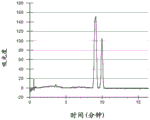
FIG. 1 is a chromatogram obtained by separating caffeine, theophylline, theobromine, and hypoxanthine from SFC using the stationary phase of example 1.
FIG. 2 chromatogram obtained by separation of 2 ' -, 3 ' -, 4 ' -hydroxyflavanone isomers by SFC using the stationary phase of example 1.
FIG. 3 is a chromatogram obtained by separating caffeine, theophylline, theobromine, and hypoxanthine by SFC using the stationary phase of example 3.
FIG. 4 chromatogram obtained by separation of 2 ' -, 3 ' -, 4 ' -hydroxyflavanone isomers by SFC using the stationary phase of comparative example 1.
FIG. 5 is a chromatogram obtained by separating caffeine, theophylline, theobromine, and hypoxanthine from SFC using the stationary phase of comparative example 1.
Detailed Description
The stationary phase for chromatography of the present invention comprises a carrier carrying a copolymer whose main chain repeating unit comprises a pyrrolidone skeleton or a piperidone skeleton and comprises an imide skeleton.
The stationary phase in the present invention refers to a material which is fixed inside an analytical tool (column or capillary) in chromatography and which is separated by distributing a substance to be separated between the material and a fluid flowing through the material while contacting the material, and when the material is a particle, the stationary phase may be an aggregate formed by packing the particle, or may be a single particle.
The repeating unit of the main chain having a pyrrolidone skeleton or a piperidone skeleton and having an imide skeleton means that the pyrrolidone skeleton or piperidone skeleton and the imide skeleton represented by the following formula are bonded to the main chain of the copolymer molecule. In the present invention, from the viewpoint of ensuring the performance as a stationary phase, the proportion of the unit having a pyrrolidone skeleton or a piperidone skeleton in a copolymer molecule is preferably 10 to 90 mol%, the proportion of the unit having an imide skeleton is preferably 90 to 10 mol%, and the proportions are more preferably: 20 to 80 mol% of a unit of a pyrrolidone skeleton or a piperidone skeleton, and 80 to 20 mol% of a unit of an imide skeleton.
[ chemical formula 7]

(wherein an asterisk indicates a position bonded to a main chain of the copolymer.)
[ chemical formula 8]

(wherein an asterisk indicates a position bonded to a main chain of the copolymer.)
[ chemical formula 9]

(wherein R is a group selected from the group consisting of hydrogen, an alkyl group having 1 to 6 carbon atoms, a cycloalkyl group having 3 to 12 carbon atoms, a phenyl group and a hydroxyphenyl group; asterisk denotes a position bonded to a main chain of the copolymer; 2 stereochemistry bonded to the imide skeleton include cis-isomer and trans-isomer, and are not limited to any of them.)
The imide skeleton is preferably one derived from a maleimide compound represented by the following formula (I).
[ chemical formula 10]

(wherein R is a group selected from the group consisting of hydrogen, an alkyl group having 1 to 6 carbon atoms, a cycloalkyl group having 3 to 12 carbon atoms, a phenyl group and a hydroxyphenyl group.)
In the formula (I), R is preferably hydrogen, cyclohexyl, or phenyl.
In the stationary phase of the present invention, from the viewpoint of stability and separation performance, a more preferable embodiment is that the copolymer is supported on the carrier and a chemical bond is formed between the carrier and the copolymer. Specifically, for example, the following manufacturing method can be exemplified.
In the following production methods, according to the production methods (1) to (7), a chemical bond (covalent bond) is formed between the copolymer and the carrier. On the other hand, according to the production methods of (8) and (9), the copolymer does not elute from the surface of the support by being present by crosslinking the polymers with each other on the surface of the support.
In the stationary phase for supercritical fluid chromatography, the copolymer can be coated by physical bonding with the carrier, but in such a case, the copolymer may be eluted due to the presence of the solvent, and therefore, this method is not preferable.
(1) A process for producing a compound, which comprises the step of radically copolymerizing 1-vinyl-2-pyrrolidone or 1-vinyl-2-piperidone, a compound represented by the formula (I), and a carrier having a polymerizable functional group bonded thereto.
(2) A process for producing a copolymer, which comprises a step of radical-polymerizing 1-vinyl-2-pyrrolidone or 1-vinyl-2-piperidone with a compound represented by the formula (I) in the presence of a chain transfer agent having a reactive silyl group at the terminal to obtain a copolymer, and a step of silane-coupling the obtained copolymer on the surface of a carrier.
(3) A method for producing a polymer, which comprises introducing a covalent bond that becomes a dormant species (dormant species) to a carrier surface, and then subjecting the carrier surface to living radical polymerization using 1-vinyl-2-pyrrolidone or 1-vinyl-2-piperidone and a compound represented by the formula (I), thereby introducing a polymer having a pyrrolidone skeleton or a piperidone skeleton in a repeating unit of a main chain and an imide skeleton to the carrier surface.
(4) A method of manufacture, comprising: a step of copolymerizing a silane coupling agent having a polymerizable double bond, 1-vinyl-2-pyrrolidone or 1-vinyl-2-piperidone, and a compound represented by formula (I); and a step of silane-coupling the obtained copolymer to the surface of the carrier.
(5) A process for producing a compound represented by the formula (I), which comprises introducing a chain-transfer functional group onto the surface of a carrier and radically polymerizing 1-vinyl-2-pyrrolidone or 1-vinyl-2-piperidone with a compound represented by the formula (I).
(6) A method of manufacture, comprising: a step in which an anionic initiator having a reactive silyl group at the initial terminal, 1-vinyl-2-pyrrolidone or 1-vinyl-2-piperidone, and a compound represented by the formula (I) are subjected to anionic polymerization to obtain a copolymer; and a step of silane-coupling the obtained copolymer to the surface of the carrier.
(7) A method of manufacture, comprising: a step in which a copolymer is obtained by reacting a terminating agent having a reactive silyl group after anionic polymerization of an anionic initiator, 1-vinyl-2-pyrrolidone or 1-vinyl-2-piperidone, and a compound represented by the formula (I); and a step of silane-coupling the obtained copolymer to the surface of the carrier.
(8) A method of manufacture, comprising: a step of mixing a composition containing 1-vinyl-2-pyrrolidone or 1-vinyl-2-piperidone, a compound represented by the formula (I), a crosslinking agent and an initiator with a carrier and allowing the mixture to undergo a crosslinking reaction.
(9) A process for producing a polymer, which comprises coating the surface of a carrier with a copolymer obtained by copolymerizing 1-vinyl-2-pyrrolidone or 1-vinyl-2-piperidone with a compound represented by the formula (I) and irradiating the copolymer with gamma rays or an electron beam to cause a crosslinking reaction.
In either method, the stereoregularity of the copolymer to be produced can be controlled depending on the polymerization temperature, the polymerization solvent, the additive, and the like at the time of polymerization.
The production method of (1) will be described.
The carrier having the polymerizable functional group bonded thereto used in the method for producing the stationary phase (1) of the present invention can be produced by the following method.
Examples of the polymerizable functional group bonded to the carrier include radical polymerizable functional groups, for example: a vinyl group, an allyl group, an isopropenyl group, or an alkenyl group having 4 to 12 carbon atoms and having a double bond at the ω -position. Among them, vinyl, allyl or isopropenyl is preferable.
The carrier may be a porous organic carrier or a porous inorganic carrier, and preferably a porous inorganic carrier. Suitable porous organic carriers are polymeric substances selected from polystyrene, poly (meth) acrylamide, poly (meth) acrylate, and the like, and suitable porous inorganic carriers are silica gel, alumina, zirconia, titania, magnesia, glass, kaolin, titania, silicates, hydroxyapatite, and the like. Preferred supports are silica gel, alumina or glass.
Further, recent filler particles for chromatography including those using a support called a core shell or a peripheral (peripheral) in which only a surface layer is porous are considered to achieve high column efficiency. These carriers can be used in the present invention, and core-shell type or peripheral type carriers using the above-listed materials can also be used.
When a porous organic carrier is used as the carrier, the polymerizable functional group can be chemically bonded to the carrier by copolymerization with a known crosslinking agent or crosslinking with X-rays, γ -rays, or electron beams.
When silica gel is used as the carrier, the polymerizable functional group may form a chemical bond with the carrier through a silanol group of the silica gel.
In the case of using a carrier other than silica gel, excessive adsorption of the separation target substance to the carrier itself can be suppressed by performing surface treatment of the carrier, and a bond can be formed with the polymerizable functional group via a group introduced by the surface treatment. Examples of the surface treatment agent include silane coupling agents such as aminopropylsilane and titanate-aluminate coupling agents.
The carrier to which the polymerizable functional group is bonded as described above can be obtained, for example, by silane-coupling a compound represented by the following formula (II) with silica gel (in the case of using silica gel as a carrier).
[ chemical formula 11]
W-X-Y-SiR3-nZn (II)
(in the formula (II), W is vinyl, allyl, isopropenyl, or C4-12 alkenyl with double bond at omega position, X is acylamino, ester group, C1-3N-alkyl acylamino, ether group, sulfoxide group, sulfone group, thioether group, C6-20 arylene or phosphate group, Y is C1-30 alkylene, R is C1-3 alkyl independently, z is leaving group capable of forming bond between silicon atom and carrier in the formula (II), N is an integer of 1-3.)
In the above formula (II), W is preferably a vinyl group, an allyl group, or an isopropenyl group.
In the formula (II), X is a part of a connecting part of W and a terminal z group, and is preferably an amide group, an N-alkylamide group having 1 to 3 carbon atoms, an ester group, or a phenylene group.
Y in the formula (II) is preferably an alkylene group having 1 to 5 carbon atoms, and more preferably any of a methylene group, an ethylene group and a trimethylene group.
R in the above formula (II) is preferably a methyl group or an ethyl group.
In the formula (II), when X is an "amido group", embodiments of-N-CO-Y and-CO-N-Y are included, and when X is an "N-alkylamido group", embodiments of-NR-CO-Y and-CO-NR-Y are included.
In the formula (II), from the viewpoint of ease of synthesis and the viewpoint of obtaining a favorable peak shape when the separation target is a basic substance, an embodiment in which W is a vinyl group and X is an amide group or an N-alkylamide group, and an embodiment in which W is an isopropenyl group and X is an amide group or an N-alkylamide group are preferable.
The following embodiments are preferred: in the case where X in the formula (II) is an "amido group", Y is bonded to nitrogen in the structure of-CO-NH-, and in the case of an "N-alkylamido group", Y is bonded to nitrogen in the structure of-CO-NR- (R is an alkyl group having 1 to 3 carbon atoms).
Z in the above formula (II) is a leaving group, and may be any atom group as long as it can bond the silicon atom in the formula (II) to an atom such as oxygen constituting the carrier. In order to achieve a good balance between ease of handling and reactivity, the leaving group generally used includes an alkoxy group having 1 to 5 carbon atoms, particularly preferably a methoxy group or an ethoxy group, and includes a halogen (chlorine, bromine or iodine), an alkylmercapto group having 1 to 20 carbon atoms, a nitrogen-containing group such as a dimethylamino group, diethylamino group, pyrrolidinyl group or imidazolyl group, an allyl group or a 2-methyl-2-propenyl group. The reaction conditions (including addition of a catalyst) may be adjusted depending on the kind of the leaving group.
The compound represented by the formula (II) may be prepared by reacting a compound having a structure represented by W in the formula (II) with-Y-SiR in the formula (II)3-nZnA compound of the structure (1) is reacted.
The reaction of these compounds with each other can produce "-X-" of the above formula (II).
Examples of the compound having a structure represented by W include: an alpha-alkylacrylic acid in which the hydrogen bonded to the 1-position of the vinyl group is optionally substituted with an alkyl group having 1 to 12 carbon atoms, or a halide of an alpha-alkylacrylic acid in which the hydrogen bonded to the 1-position of the vinyl group is optionally substituted with an alkyl group having 1 to 12 carbon atoms.
as-Y-SiR having the above formula (II)3-nznThe compound having the structure (1) includes a silane coupling agent having a group which is a precursor of X described above and having an alkoxy group having 1 to 5 carbon atoms as a leaving group. Specific examples thereof include aminoalkylalkoxysilanes and hydroxyalkylalkoxysilanes.
The carrier to which the polymerizable functional group is bonded, which is used in the present invention, is preferably a surface-modified silica gel obtained by silane-coupling the compound represented by the formula (II) and silica gel.
Instead of using the compound of the formula (II), first, a-Y-SiR of the formula (II) is used3-nznAfter coupling a compound having the structure of (e.g., aminoalkylalkoxysilane, hydroxyalkylalkoxysilane) with silica gel as a carrier, a compound having a structure represented by W (e.g., α -alkylacrylic acid in which hydrogen bonded to a carbon of a vinyl group is optionally substituted with an alkyl group) is used to cause a reaction.
The stationary phase of the present invention is produced by the production method of (1) described above, and is obtained by copolymerizing 1-vinyl-2-pyrrolidone or 1-vinyl-2-piperidone, a compound represented by formula (I), and a carrier having a polymerizable functional group bonded thereto.
An embodiment of the copolymerization includes an embodiment in which all of the vinyl group of 1-vinyl-2-pyrrolidone or 1-vinyl-2-piperidone, the double bond of the compound represented by formula (I), and the polymerizable functional group are copolymerized, and the reaction conditions in this case can be a known method.
It is presumed that the stationary phase of the present invention obtained by using the raw materials and the production method described above has the following structure.
[ chemical formula 12]

[ chemical formula 13]

(in the formula III-1 or III-2, W' is a group derived from W of the formula (II) and formed by addition polymerization, X is an amide group, an ester group, an N-alkylamide group having 1 to 3 carbon atoms, an ether group, a sulfoxide group, a sulfone group, a sulfide group, a phenylene group, or a phosphate group, Y is an alkylene group having 1 to 30 carbon atoms, and V is an ether group bonded to the surface of the support, or an unreacted z group of the formula (II), or an R group; it is noted that in the formula III-1, the pyrrolidone skeleton and the imide skeleton may not necessarily exist alternately; in the formula III-2, the piperidone skeleton and the imide skeleton may not necessarily exist alternately.)
In the above formula (III-1) or (III-2), specific examples of W' include a single bond and an optionally branched alkylene group having 1 to 10 carbon atoms. Preferred examples thereof include a single bond, a methylene group, an ethylene group and a trimethylene group.
Preferred groups for X and Y in the formula (III-1) or (III-2) may employ the same ones as those of the above-mentioned formula (II).
In the formula (III-1) or (III-2), p is 1 or more, and q is about 10 to 1500. p is preferably 1 to 10, q is preferably 15 to 1100, and more preferably 20 to 1000. When p and q are both 2 or more, the block copolymer of the formula (III-1) or (III-2) may be a random copolymer in which the units having a pyrrolidone skeleton or a piperidone skeleton and the units having a bonding between the units having an imide skeleton and the carrier are each continuously contained, but the formula (III-1) or (III-2) shows only the number of the respective residues, and it is actually presumed that the copolymer may have a high alternation.
In the compound represented by the formula (II), V in the formula (III-1) or (III-2) is represented by the formula (II) wherein n is 1 and V is R, n is 2 and the proportion of R groups to the total number of V groups is 50%, the structure in which the unreacted z group or z is substituted on the surface of the support by the reaction is 0 to 50% and 50 to 0%, respectively, and the structure in which the unreacted z group or z is substituted on the surface of the support by the reaction is 0 to 100% and 100 to 0%, respectively, in the case of n is 3.
In the polymerization of the compounds represented by the above formulae (III-1) and (III-2), the carrier having the polymerizable functional group bonded thereto may be dispersed in a mixed solution of a solvent and 1-vinyl-2-pyrrolidone or 1-vinyl-2-piperidone to carry out polymerization, or 1-vinyl-2-pyrrolidone or 1-vinyl-2-piperidone and a polymerization initiator may be absorbed together with a small amount of a solvent into the carrier having the polymerizable functional group bonded thereto, and then the solvent may be removed to carry out polymerization on the surface of the carrier substantially without a solvent. In the latter case, although the solvent may remain to some extent, the polymerization solution may be absorbed in the carrier and the polymerization may be carried out in a state where the particles of the carrier do not flow.
Next, a method for producing (2) for obtaining the stationary phase of the present invention will be described.
(2) The production method of (4) is a production method comprising a step of radical polymerization in the presence of a chain transfer agent having a reactive silyl group at the terminal, and a step of silane-coupling the obtained copolymer on the surface of a carrier.
Examples of the chain transfer agent having a reactive silyl group at an end used in the production method (2) include compounds represented by the following formula (IV). The reactive silyl group in the present invention is a silyl group represented by formula (IV) below to which a leaving group represented by z is bonded, and has a property of forming a bond of Si — O — M (M is a metal atom) form by condensation with a metal hydroxide containing silicon. The same applies to the compounds used in the other preparation methods below.
[ chemical formula 14]
R3-nZnSi-Y-T (IV)
(in the formula (IV), R is independently an alkyl group having 1-5 carbon atoms, z is a leaving group capable of bonding the silicon atom in the formula (IV) to the carrier, Y is an alkylene group having 1-30 carbon atoms, T is a chain transfer functional group, and n is an integer of 1-3.)
In formula (IV), R is preferably a methyl group, an ethyl group, or a propyl group. z is a leaving group, and may be any atom group as long as it can form a bond between the silicon atom in the formula (IV) and oxygen constituting the silica gel.
Since the ease of handling and the reactivity are well balanced, an alkoxy group having 1 to 5 carbon atoms is usually used as the leaving group, and examples thereof include a methoxy group, an ethoxy group, a halogen (chlorine, bromine or iodine), a nitrogen-containing group such as a dimethylamino group, a diethylamino group, a pyrrolidinyl group and an imidazolyl group, and an allyl group and an isopropenyl group may be used, and the reaction conditions (including addition of a catalyst) may be adjusted depending on the kind of the leaving group. Y is more preferably an alkylene group having 1 to 10 carbon atoms. T is a chain transfer functional group. The chain transfer functional group is a functional group which actively causes a chain transfer reaction accompanied by the movement of a growth active species and a reinitiation reaction during a polymerization reaction. By having a chain-transfer functional group, the molecular weight and the terminal structure of the resulting polymer can be controlled to some extent. Specific examples of the chain-transferring functional group include a halogenated alkyl group having 1 to 12 carbon atoms, an alkyl group having 1 to 12 carbon atoms and having a thiol group at an end thereof, and an alkyl group having 1 to 12 carbon atoms and having a disulfide group in the group.
The halogen of the halogenated alkyl group having 1 to 12 carbon atoms includes chlorine, bromine or iodine, and the alkyl group includes an alkyl group having 1 to 3 carbon atoms.
By carrying out radical polymerization of 1-vinyl-2-pyrrolidone or 1-vinyl-2-piperidone in the presence of such a chain transfer agent using a small amount of a radical generator as a catalyst, a compound presumed to have a structure represented by the following formula (V-1) or (V-2) can be obtained. In this case, the molecular weight can be controlled to some extent according to the molar ratio of the chain transfer agent to the monomer. The radical generator may be any known one used in polymerization reactions, and specific examples thereof include azo compounds and peroxides.
[ chemical formula 15]

[ chemical formula 16]

(in the formula V-1 or V-2, T' is a group derived from T of the formula (IV) and generated by a chain transfer reaction Y, R, z represents the same meaning as in the formula (IV), q is an integer of 2 to 1500.)
In the formula (V-1) or (V-2), T 'is an alkylene residue having 1 to 12 carbon atoms and having a halogen substituted therein when T is an alkyl group having 1 to 12 carbon atoms and having a halogen bonded to the terminal thereof, and T' is a thioether when T is an alkyl group having 1 to 12 carbon atoms and having a thiol group at the terminal thereof or an alkyl group having 1 to 12 carbon atoms and having a disulfide group in the group thereof.
The carrier used in the method for producing the stationary phase (2) of the present invention may be the same as that used in the method for producing the stationary phase (1).
As the method for bonding the compound represented by the formula (V-1) or (V-2) to the carrier by a silane coupling reaction, a known silane coupling method can be used.
It is presumed that the stationary phase obtained by bonding the compound represented by the formula (V-1) or (V-2) to a carrier has the following structure.
[ chemical formula 17]

[ chemical formula 18]

(in the formula VI-1 or VI-2, T' is a group derived from T of the formula IV and formed by a chain transfer reaction; q is an integer of 2 to 1500; V is an ether group bonded to the surface of the carrier, or an unreacted z group shown in the formula (IV), or an R group.)
In the compound represented by the formula (IV), V of the formula (VI-1) or (VI-2) is represented by the formula (IV), wherein n is 1, V is R, n is 2, the proportion of R groups to the total number of V groups is 50%, the structure in which unreacted z group or z is substituted on the surface of the support by the reaction is 0 to 50% and 50 to 0%, respectively, and the structure in which unreacted z group or z is substituted on the surface of the support by the reaction is 0 to 100% and 100 to 0%, respectively, in the case of n is 3.
The following describes the production method of (3).
A polymer having a pyrrolidone skeleton or piperidone skeleton and an imide skeleton in a repeating unit of a main chain introduced into the surface of a carrier such as silica gel can be obtained by introducing a stable covalent bond which becomes a dormant species into the surface of the carrier and living radical polymerization from the surface.
In this method, a polymer containing a pyrrolidone skeleton or a piperidone skeleton and an imide skeleton in a repeating unit of a main chain can be introduced at a high density into the surface of a carrier such as silica gel, and a highly orientable brush polymer can be obtained.
Examples of the "introduction of a stable covalent bond to become a dormant species and living radical polymerization" which are frequently used are shown in the following (i) to (iii).
(i) Polymerization of 1-vinyl-2-pyrrolidone or 1-vinyl-2-piperidone and a compound represented by the formula (I) is carried out in an active manner by introducing a carbon-halogen bond which can be activated by a transition metal catalyst such as copper/iron/ruthenium to the surface of a carrier such as silica gel and reversibly carrying out halogen abstraction and withdrawal by a one-electron redox mechanism. By using this technique, a copolymer containing a pyrrolidone skeleton or a piperidone skeleton, and an imide skeleton in a repeating unit that can be introduced into a main chain on the surface of a carrier such as silica gel at a high density can be obtained.
(ii) When alkoxyamine, for example, in which a carbon-oxygen bond is thermally dissociated to generate a carbon radical and a nitroxide radical (nitroxide), is introduced onto the surface of a carrier such as silica gel, polymerization of 1-vinyl-2-pyrrolidone or 1-vinyl-2-piperidone and a compound represented by formula (I) proceeds, and the growing carbon radical is reversibly and rapidly blocked (capped) by the nitroxide radical and returns to a dormant species again, and the polymerization reaction is controlled. By using this technique, a copolymer containing a pyrrolidone skeleton or a piperidone skeleton, and an imide skeleton in a repeating unit that can be introduced into a main chain on the surface of a carrier such as silica gel at a high density can be obtained.
(iii) When a thiocarbonyl compound or an iodine compound is introduced onto the surface of a carrier such as silica gel, reversible chain transfer by an exchange reaction between a radical species and a dormant species between polymer terminals occurs rapidly, and thus all copolymer chains have the same chance of growing and molecular weight can be controlled. By using this technique, a copolymer containing a pyrrolidone skeleton or a piperidone skeleton, and an imide skeleton in a repeating unit that can be introduced into a main chain on the surface of a carrier such as silica gel at a high density can be obtained.
In any of the above (i) to (iii), the same carriers as those used in the above production methods (1) and (2) can be used except for silica gel.
The following describes the production method of (4).
The production method comprises a step of copolymerizing a silane coupling agent having a polymerizable double bond with 1-vinyl-2-pyrrolidone or 1-vinyl-2-piperidone, and a step of silane coupling the resulting polymer on the surface of a carrier.
Examples of the silane coupling agent having a polymerizable double bond include compounds having a structure represented by the above formula (II). The substituents in the above formula (II) and preferred examples thereof may be the same as those described for the above formula (II).
In the production method of the above (4), the same carriers as those used in the production methods of the above (1) and (2) may be used in addition to silica gel as the carrier, and the same carriers as those used in the production methods of the above (1) and (2) may be used for 1-vinyl-2-pyrrolidone, 1-vinyl-2-piperidone, and the compound represented by the formula (I).
In this production method, the molecular weight can be controlled by the living radical polymerization method described above using an appropriate chain transfer agent in the synthesis of the copolymer. As a method for bonding the obtained copolymer to the carrier by a silane coupling reaction, a known silane coupling method can be used.
The method (5) will be described below.
The method comprises a step of introducing a chain-transfer functional group to the surface of a carrier and radically polymerizing 1-vinyl-2-pyrrolidone or 1-vinyl-2-piperidone with a compound represented by the formula (I).
The carrier having the chain transfer functional group bonded thereto as described above can be obtained, for example, by silane-coupling a compound represented by the following formula (VII) with silica gel (in the case of using silica gel as a carrier).
[ chemical formula 19]
T-Y-SiR3-nZn (VII)
(in the formula (VII), T is a chain transfer functional group, Y is an alkylene group having 1-30 carbon atoms, R is independently an alkyl group having 1-5 carbon atoms, z is a leaving group capable of bonding the silicon atom in the formula (VII) to the carrier, and n is an integer of 1-3.)
In formula (VII), R is preferably a methyl group, an ethyl group, or a propyl group. z is a leaving group, and any atom group may be used as long as it can form a bond between the silicon atom in the formula (VII) and (in the case where the support is silica gel) oxygen constituting the silica gel. Even in the case where the carrier is not a silica gel, it is a leaving group which can bond between the silicon atom in the formula (VII) and the atom constituting the carrier.
As T, those same as those used in (2) can be preferably used, and as R, Z, those same as those used in (1), (2), (4) can be preferably used.
The carrier to which the chain transfer functional group is bonded to be used in the present invention is preferably a surface-modified silica gel obtained by silane-coupling a compound represented by the above formula (VII) with a silica gel.
The copolymer can be immobilized on the surface of a carrier by radical polymerization of 1-vinyl-2-pyrrolidone or 1-vinyl-2-piperidone and a compound represented by the formula (I) in the presence of a carrier having a chain-transferring functional group (chemically bonded) introduced into the surface thereof using a small amount of a radical generator as a catalyst. In the production method of the above (5), the same carriers as those used in the production methods of the above (1) and (2) may be used as the carriers other than silica gel. In addition, as the radical generating agent, the same ones as the radical generating agent of (2) used in the production method of (2) can also be used.
The method (6) will be described below.
The production method comprises a step of obtaining a copolymer by anionic polymerization of an anionic initiator having a reactive silyl group at the initial terminal and 1-vinyl-2-pyrrolidone or 1-vinyl-2-piperidone, and a step of silane-coupling the obtained copolymer on the surface of a carrier.
The anionic initiator having a reactive silyl group at the initial end as described above is obtained, for example, by silane-coupling a compound represented by the following formula (VIII) with (in the case of using silica gel as a carrier) the silica gel.
[ chemical formula 20]
R3-nZnSi-Y-M (VIII)
(in the formula (VIII), R is independently an alkyl group having 1 to 5 carbon atoms, z is a leaving group capable of bonding the silicon atom in the formula (VIII) and the carrier, Y is a branched or straight alkylene group having 1 to 30 carbon atoms, any hydrogen of which is optionally substituted by a group having an aromatic ring; M is an alkali metal or an alkaline earth metal; n is an integer of 1 to 3.)
In the formula (VIII), R is preferably a methyl group, an ethyl group or a propyl group, Y, z may preferably be the same as in the above formula (II), and M may preferably be lithium, sodium, potassium or magnesium.
Examples of the aromatic ring-containing group optionally substituted with any hydrogen for Y include an alkyl group having 4 to 20 carbon atoms and having 1 or 2 phenyl groups, and more specifically, 1-diphenylhexyl group and the like.
In the presence of such an anionic initiator, a copolymer containing a pyrrolidone skeleton or piperidone skeleton having a reactive silyl group at the end and an imide skeleton in the repeating unit of the main chain can be synthesized by a known method.
In the case where it is difficult to introduce a silane coupling agent directly into the initiator due to a side reaction during polymerization, it can be obtained by synthesizing a derivative in which the initiator is protected with a protecting group, deprotecting the product after polymerization, and quantitatively converting the product into a silane coupling agent. As a method for bonding the copolymer thus obtained and the carrier by a silane coupling reaction, a known silane coupling method can be used.
The method (7) will be described below.
The manufacturing method comprises the following steps: a step in which an anionic initiator, 1-vinyl-2-pyrrolidone or 1-vinyl-2-piperidone, and a compound represented by the formula (I) are subjected to anionic polymerization to allow a terminator having a reactive silyl group to act, thereby obtaining a copolymer; and a step of silane-coupling the obtained copolymer to the surface of the carrier. When it is difficult to introduce a silane coupling agent directly into the terminal end, it can be obtained by using a derivative protected with a protecting group, deprotecting the derivative after the termination, and quantitatively converting the protected derivative into a silane coupling agent.
The polymerization using an anionic initiator can be carried out by a known method. Examples of the reactive silyl group-containing terminator include compounds represented by the following formula (IX).
[ chemical formula 21]
R3-nZnSi-Y-Z’ (IX)
(in the formula (IX), R is independently an alkyl group having 1 to 5 carbon atoms, Z is a leaving group capable of bonding the silicon atom in the formula (IX) and the carrier, Y is a branched or straight alkylene group having 1 to 30 carbon atoms, any hydrogen of which is optionally substituted by a group containing an aromatic ring, Z' is a group leaving by the reaction of the terminal of the growth anion with a terminator, and n is an integer of 1 to 3.)
Specific examples of z include those listed as specific examples in the above formula (II).
Specific examples of z' include: halogen (chlorine, bromine or iodine), an alkoxy group having 1 to 5 carbon atoms, preferably a nitrogen-containing group such as methoxy group, ethoxy group, alkylmercapto group, dimethylamino group, diethylamino group, pyrrolidinyl group or imidazolyl group, or allyl group or 2-methyl-2-propenyl group. The reaction conditions (including addition of a catalyst) may be adjusted depending on the kind of the leaving group.
Examples of the aromatic ring-containing group optionally substituted with any hydrogen for Y include an alkyl group having 4 to 20 carbon atoms and having 1 or 2 phenyl groups, and more specifically, 1-diphenylhexyl group and the like.
As a method for bonding the thus-obtained copolymer and the carrier by a silane coupling reaction, a known silane coupling method can be used.
The following describes the production method of (8).
The production method comprises a step of mixing a composition containing 1-vinyl-2-pyrrolidone or 1-vinyl-2-piperidone, a compound represented by the formula (I), a crosslinking agent, and an initiator, and a carrier to perform a crosslinking reaction.
In this production method, the monomer is copolymerized with a crosslinking agent to produce an insoluble polymer. Specifically, the carrier may be made to absorb a mixture of 1-vinyl-2-pyrrolidone or 1-vinyl-2-piperidone, the compound represented by the formula (I), and 0.01 to 1 equivalent of a crosslinking agent such as divinylbenzene, methylenebisacrylamide, or ethylene glycol dimethacrylate, an appropriate amount of a radical initiator, and a solvent as necessary, with respect to the monomer, and the conditions for initiating polymerization by the initiator may be set in advance.
As the radical initiator, known ones used in conventional radical polymerization reactions can be used, and specific examples thereof include azo compounds and peroxides.
The following describes the production method of (9).
(9) The production method of (4) is a production method in which the method described in non-patent document 2 is improved.
First, a carrier is dispersed in a solution in which a copolymer obtained by copolymerizing 1-vinyl-2-pyrrolidone or 1-vinyl-2-piperidone and a compound represented by the formula (I) is dissolved, and the solvent is removed. After removing the solvent, the carrier coated with a copolymer obtained by copolymerizing 1-vinyl-2-pyrrolidone or 1-vinyl-2-piperidone and the compound represented by the formula (I) is heated. The temperature at this time is, for example, about 50 to 180 ℃. A copolymer obtained by copolymerizing 1-vinyl-2-pyrrolidone or 1-vinyl-2-piperidone and a compound represented by the formula (I) is fixed on a support by heating, and then a crosslinking reaction is caused by irradiation with gamma rays or an electron beam, whereby the support is bonded to a copolymer obtained by copolymerizing 1-vinyl-2-pyrrolidone or 1-vinyl-2-piperidone and a compound represented by the formula (I).
The stationary phases obtained by any of the above-described methods (1) to (9) have excellent performance as a stationary phase for supercritical fluid chromatography.
The weight average molecular weight of the polymer having a pyrrolidone skeleton or piperidone skeleton and an imide skeleton in the repeating unit of the main chain of the carrier supported on the stationary phase of the present invention obtained by the above-mentioned operation is preferably 1,000 to 5,000,000. For example, in the case of the structure represented by the above formula (III-1), (III-2) or (V-1), (V-2), the weight average molecular weight of the copolymer in the present invention is- (CH) as a repeating unit of the main chain2-CAB)n-weight average molecular weight of the site of (a).
The weight average molecular weight is preferably in the above range from the viewpoints of solubility of the copolymer in a solvent, prevention of aggregation of particles when the copolymer is supported on a carrier, suppression of dissolution in a mobile phase solvent, retention of a bonding amount when a chemical bond is formed with the carrier, and the like. The most suitable amount varies depending on the kind of the copolymer.
In the method (1) for producing a stationary phase of the present invention, since the polymerization of 1-vinyl-2-pyrrolidone or 1-vinyl-2-piperidone and the compound represented by the formula (I) and the immobilization onto silica gel occur simultaneously, the weight average molecular weight can be estimated from the supernatant of the polymerization solution.
In the production methods (2), (4), (6) and (7), the weight average molecular weight of the copolymer containing a pyrrolidone skeleton or a piperidone skeleton in a repeating unit of a main chain and an imide skeleton is measured before the copolymer is bonded to a carrier.
The weight average molecular weight can be measured by a Gel Permeation Chromatography (GPC) method using polystyrene as a standard substance. As the GPC solvent, DMF, NMP, THF can be suitably used depending on the degree of dissolution of the copolymer. In the case of using DMF or NMP, 10 to 100mM of lithium chloride or lithium bromide may be added to avoid abnormal peak shape.
In the stationary phase of the present invention obtained by the production methods (1) to (7), since the copolymer having a pyrrolidone skeleton or a piperidone skeleton and an imide skeleton in the repeating unit of the main chain forms a covalent bond on the surface of the carrier, even when a solvent which originally can dissolve the copolymer or a mixed solvent containing the solvent is used as the developing solvent, dissolution does not occur and the function as the stationary phase is not impaired.
In addition, in those obtained by the production methods (8) and (9) in the stationary phase of the present invention, since the copolymers are crosslinked with each other on the carrier, even if a solvent in which these copolymers are originally soluble or a mixed solvent containing the solvent is used as the developing solvent, dissolution does not occur.
The specific surface area of the stationary phase of the present invention is equivalent to that of the carrier used, and therefore, a carrier having a desired specific surface area may be selected. In the case of a support such as silica gel, this can be adjusted by selecting the appropriate preparation. In general, in the embodiment in which the copolymer is supported on the carrier, since the specific surface area does not vary by more than an error before and after the support, the specific surface area of the stationary phase can be considered to be the same as that of the carrier used.
The average particle diameter of such a carrier usable in the present invention is usually 0.1 to 1000. mu.m, preferably 1 to 50 μm, and the average pore diameter is usually Preferably, it is
 Further preferred is
 In this range, the smaller the micropores, the larger the surface area, and therefore the larger the polymer binding rate, but the influence on adsorption by silica gel as a carrier tends to be large (for example, the retention of an alkaline sample becomes large, and the peak is streaked), and the smaller the surface area, the higher the polymer binding rate tends to be.
In addition, the specific surface area of the carrier is usually 5 to 1000m2A ratio of 10 to 500 m/g2(ii) in terms of/g. In general, when a copolymer is supported on a carrier, since the specific surface area does not vary by more than a tolerance before and after the support, the average particle diameter of the stationary phase can be considered to be the same as the average particle diameter of the carrier used. That is, when the stationary phase of the present invention is in the form of particles, the average particle diameter thereof is in the range of 0.1 to 1000. mu.m, preferably 1 to 50 μm.
The average thickness of the copolymer supported on the carrier (per g of carrier supported amount/specific surface area of the carrier) is usually preferably 0.5 to 5 nm. Within the above range, the peak tends to be sharp, and is therefore preferable.
In the stationary phase in which the copolymer is supported on the carrier, the proportion (%) by mass of the copolymer contained in 100 parts by mass of the stationary phase is preferably 1 to 50% by mass, more preferably 3 to 30% by mass, and still more preferably 5 to 20% by mass. Such a ratio is preferable because the adsorption capacity of the copolymer can be appropriately exhibited, and the retention can be enhanced while avoiding whiteness, and the peak width can be widened.
Note that the proportion (%) of the mass part of the copolymer contained in 100 mass parts of the stationary phase can be measured by elemental analysis, and based on the measurement results of the carbon content of the carrier before supporting the copolymer and the carbon content of the obtained stationary phase, the proportion of the mass part of the copolymer in the stationary phase is calculated assuming that all carbons other than the carbon contained in the carrier before supporting the copolymer come from the copolymer and further assuming that the monomer composition in the polymer is 1: 1 (molar ratio) for convenience.
The average particle diameter of the stationary phase of the present invention in the case of particles is a diameter of a sphere if the stationary phase is spherical, and in the case of irregular particles, the average particle diameter is expressed by a diameter of a sphere having a volume equal to that of the particles. The average particle diameter can be measured by using a device for measuring a microscopic image, for example, Mastersizer 2000E manufactured by Malvern corporation.
When the stationary phase of the present invention is used in the form of particles, the stationary phase is preferably spherical particles having an aspect ratio of 2 or less, more preferably 1.5 or less. The lower limit is not particularly limited as far as 1, because the closer to the positive sphere, the more preferable the lower the value.
The aspect ratio was measured as follows. In any picture in which 10 or more independent primary particles (not in contact with or overlapping any other particles) are observed from directly above with an electron microscope or an optical microscope in a state in which a sample is randomly scattered on an observation stage, the major axis and the minor axis (the length of the longest portion perpendicular to the major axis) are obtained for each independent primary particle in the picture, and the ratio of the major axis and the minor axis is defined as the aspect ratio of a single particle. The aspect ratio of the present invention is defined as a value obtained by arithmetically averaging the aspect ratios of all the individual primary particles in the screen. Primary particles refer to particles in which the interfaces between particles can be clearly observed. In general, the primary particles are appropriately dispersed and observed so as to avoid overlapping on the sample table, but it is difficult to avoid accidental overlapping, and a plurality of agglomerate particles in which the primary particles are aggregated are present, and these are excluded from the observation target.
The stationary phase of the present invention can be used as a stationary phase for High Performance Liquid Chromatography (HPLC), Supercritical Fluid Chromatography (SFC), or thin layer chromatography.
When the stationary phase of the present invention is used for SFC applications, it has excellent separation characteristics for acidic compounds and basic compounds, and further, for example, separation characteristics for isomers of fused aromatic compounds and aromatic compounds.
The stationary phase of the present invention can be used by being packed in a column for general HPLC. The column may be packed with a slurry.
As the eluent for HPLC, any known eluent can be used without limitation depending on the target substance to be separated.
The stationary phase of the present invention can be used by being packed in a known column for supercritical fluid chromatography, as described in, for example, Japanese patent application laid-open No. 2006-058147.
In the supercritical fluid chromatography, a fluid containing a supercritical fluid and a solvent is used as a mobile phase. The supercritical fluid chromatography is a general name for chromatography in which a supercritical fluid is used as a main mobile phase. The supercritical fluid is a substance in a state of a critical pressure or higher and a critical temperature or higher (i.e., a supercritical state). Examples of the substance usable as the supercritical fluid include carbon dioxide, ammonia, sulfur dioxide, hydrogen halide, nitrous oxide, hydrogen sulfide, methane, ethane, propane, butane, ethylene, propylene, halogenated hydrocarbon, and water, but from the viewpoint of appropriate critical conditions, safety, cost, and the like, an embodiment in which carbon dioxide is substantially used can be cited. In addition, the supercritical fluid chromatography is not strictly necessary, and is also referred to as "supercritical fluid chromatography" including use in a subcritical state. Further, a method of increasing the content of a normal liquid in a mobile phase from a "supercritical" condition including subcritical conditions to substantially convert the content to a liquid chromatography condition is also performed (such a method is also referred to as integrated chromatography).
The solvent may be one or two or more selected from known solvents, depending on the type of the target substance, the type of the supercritical fluid, and the like. Examples of the solvent include lower alcohols such as methanol, ethanol and 2-propanol, ketones such as acetone, acetonitrile, ethyl acetate, THF, dichloromethane and chloroform. In addition, in order to improve the peak shape in the separation of a basic, acidic, amphoteric or polar compound, a small amount of water, an acid, an amine base, an ammonium salt or the like may be further added.
The supercritical fluid chromatography is not particularly limited as long as it is a chromatography method in which a fluid containing the supercritical fluid and the solvent is used as a mobile phase.
The high performance liquid chromatography and supercritical fluid chromatography using the stationary phase of the present invention may be used for analysis or fractionation.
The high performance liquid chromatography and supercritical fluid chromatography for separation are not particularly limited as long as they are high performance liquid chromatography or supercritical fluid chromatography comprising a step of separately obtaining a mobile phase after passing through a column by a fraction collector according to a target substance separated by the column.
For the packed column, those having a known size can be used for both HPLC and SFC.
The flow rates may be adjusted as appropriate and used, for example, in the case of a column having an inner diameter of 0.46mm, an embodiment of 0.3 to 10ml/min is exemplified, and an embodiment of 1 to 6ml/min is preferably exemplified.
The column temperature of each column may be about 0 to 50 ℃ and may be about 20 to 40 ℃.
In the case of SFC, the back pressure can be about 120 to 180bar, and about 130 to 160 bar.
In addition, the stationary phase of the invention can also be used in the form of a monolith. When the stationary phase of the present invention is a monolith, it can be obtained by reacting a support having a polymerizable functional group bonded thereto, which has been formed into a monolith shape in advance, or a raw material to be a support formed into a monolith shape, to which a polymerizable functional group is bonded, 1-vinyl-2-pyrrolidone or 1-vinyl-2-piperidone, and a compound represented by formula (I).
The separation performance of a compound such as a substitution position isomer of an aromatic or heteroaromatic ring compound is excellent by high performance liquid chromatography or supercritical fluid chromatography using the stationary phase of the present invention.
Examples
The present invention will be specifically described below with reference to examples. However, the present invention is not limited to the embodiments of the following examples.
< example 1>
(N-methyl-N- [3- (trimethoxysilyl) propyl ] 2-propenamide treatment of silica gel)
Preparation example 1
Into a 300mL three-necked flask were charged 200mL of toluene, 3.91g of trimethoxy [3- (methylamino) propyl ] silane, 2.74g of triethylamine, and about 50mg of 4-pyrrolidinopyridine, and a mixture of 2.10g of acryloyl chloride and 4mL of toluene was added dropwise with stirring. After the end of the dropwise addition, the mixture was warmed to 80 ℃ for about 3 hours to obtain a light brown liquid in which the crystalline product (triethylamine hydrochloride) floated.
On the other hand, a 300mL three-necked flask was charged with the nominal pore size after vacuum drying at 160 ℃ 20.60g of silica gel having a particle size of 5 μm, equipped with a stirring paddle. The pale brown liquid obtained in the above reaction was poured through a glass filter, and the solid remaining on the glass filter was washed with 50mL of toluene. The flask was heated to 90 ℃ for 1 hour and 125 ℃ for 5 hours in an oil bath with stirring. During this time about 100g of toluene were distilled off from the side tube. The silica gel obtained was separated by filtration on a 0.5 μm membrane filter, washed with 50mL of N-methyl-2-pyrrolidone (NMP), 100mL of methanol, and 50mL of acetone, and then dried under vacuum at 60 ℃.
The yield was 21.74g, and the weight gain was 6.5%.
Elemental analysis value is C: 2.65, H: 0.55, N: 0.44 (each%).
Copolymerization of 1-vinyl-2-pyrrolidone (VP) and N-phenylmaleimide with silica gel obtained in preparation example 1
To 2.15g of the silica gel obtained in production example 1, a nitrogen-bubbled solution of a mixture of 510mg of 1-vinyl-2-pyrrolidone, 20.4mg of azobisisobutyronitrile, 784mg of N-phenylmaleimide and NMP4.00mL was injected under a nitrogen atmosphere, and the mixture was heated at 65 ℃ for 2 hours, 80 ℃ for 1 hour and 90 ℃ for 1 hour. The resulting slurry was washed with 40mL each of NMP, THF, and methanol on a glass filter, washed with 20mL of acetone, and dried by a vacuum dryer at 60 ℃. The powder obtained in example 1 was 2.475g, with a 15% weight gain.
It is presumed that the obtained copolymer-bound silica gel has the following structure.
[ chemical formula 22]

The liquid phase after the polymerization reaction and the washing solution were combined, and then concentrated to obtain a polymer component, which was measured by GPC, and the weight average molecular weight was 3822. Assuming an alternating copolymer, it is assumed that 1-vinyl-2-pyrrolidone and N-phenylmaleimide are formed from about 27 monomers in total. The molecular weight of the copolymer bonded to the silica gel could not be measured, but it was assumed that the molecular weight was equivalent.
GPC measurements were performed under the following conditions.
The column was TSKgel α -M + TSKgel guard column- α manufactured by Tosoh corporation, the mobile phase was DMF containing lithium chloride 100mMol/L, the liquid feed was 1.0mL/min, the temperature was 40 ℃, a differential refractometer detector was used for detection, and the molecular weight was converted by polystyrene standards (manufactured by Tosoh corporation).
< example 2>
1-vinyl-2-pyrrolidone (201 mg), N-cyclohexylmaleimide (321 mg), and azobisisobutyronitrile (8.1 mg) were dissolved in 3.00mL of acetone, and the solution was absorbed into 2.08g of the silica gel prepared in preparation example 1, and then the acetone was distilled off under reduced pressure. The remaining powder was subjected to heat treatment in a nitrogen atmosphere at the same temperature and for the same time as in example 1, and washed and dried in the same manner. The powder obtained was 2.48g, with a weight gain of about 19%.
It is presumed that the obtained copolymer-bound silica gel has the following structure.
[ chemical formula 23]

< example 3>
2.15g of the silica gel prepared in preparation example 1 was charged with a nitrogen-bubbled liquid of a mixed solution of 542mg of 1-vinyl-2-pyrrolidone, 19.7mg of azobisisobutyronitrile, 484mg of maleimide and 4.00mL of cyclohexanone in an atmosphere of nitrogen, and heated at 72 ℃ for 4 hours and 20 minutes. After NMP10mL was added to the resulting slurry (which was in the form of a gel due to the polymer) to prepare a solution, silica gel was separated by filtration through a glass filter, washed with NMP30mL, methanol 20mL, and acetone 20mL, and dried in a vacuum dryer at 60 ℃. The powder obtained was 2.62g, with a weight gain of about 23%.
It is presumed that the obtained copolymer-bound silica gel has the following structure.
[ chemical formula 24]

Further, the liquid phase after the polymerization reaction and the washing liquid were combined and evaporated and concentrated to measure GPC of the copolymer component, and the polystyrene-equivalent weight average molecular weight was 191,500. If it is assumed to be an alternating copolymer, it is assumed that the total of the two monomers is 1, 840. The molecular weight of the copolymer bonded to the silica gel could not be measured, but it was assumed that the molecular weight was equivalent.
< comparative example 1>
VP 984mg, NMP4.2mL, and Azobisisobutyronitrile (AIBN)23mg were mixed, and after bubbling nitrogen gas, the mixture was transferred to a flask to which 2.084g of the silica gel obtained in preparation example 1 was added. The liquids were mixed uniformly, the flask was purged with nitrogen, and then connected to a rotary evaporator, and the mixture was kept at 65 ℃ and 80 ℃ and 90 ℃ for 2 hours while being rotated. The resulting liquid was transferred to a 5.5 μm glass filter, and NMP50mL, methanol 50mL, and acetone 50mL were each washed in portions and dried under vacuum (60 ℃ C.). The yield was 2.262g, the weight increase relative to the silica gel obtained in preparation example 1 was 8.5%, and the elemental analysis value of the silica gel was C: 7.91, H: 1.37, N: 1.48 (each%).
It is presumed that the obtained poly (1-vinyl-2-pyrrolidone) -bound silica gel has the following structure.
[ chemical formula 25]

The stationary phases obtained in examples 1 and 3 and comparative example 1 were filled in a wet filling method using ethanol Stainless steel column of (2).
The results of SFC analysis of caffeine and 3 dimethylxanthine isomers (theophylline, theobromine, and para-xanthine) (FIG. 1: example 1, FIG. 3: example 3, FIG. 5: comparative example 1) and SFC analysis of 2 ' -, 3 ' -, 4 ' -hydroxyflavanone isomers (FIG. 2: example 1, FIG. 4: comparative example 1) using these columns are shown.
The mobile phase all uses CO2Methanol 9: 1(v/v), flow rate 4.0mL/min, column temperature 40 ℃, column Back Pressure (BPR) 150bar, and UV detector (254 nm).
Comparing fig. 2 with fig. 4, it can be seen that in the stationary phase of comparative example 1, the separation of the 2 ' -, 3 ' -, 4 ' -hydroxyflavanone isomers was insufficient. Referring to fig. 5 (stationary phase of comparative example 1), theophylline and theobromine overlap at the 2 nd peak.
Industrial applicability
The stationary phase of the present invention has good separation characteristics when used for HPLC applications and SFC applications. In particular, when used as a stationary phase for SFC, the stationary phase has good separation characteristics for a specific compound. In particular, an increase in the number of column stages can be expected. From this point of view, the stationary phase of the present invention is expected to improve convenience of identification and analysis of a separated substance as well as discovery and improvement of new separation conditions for various substances that have been difficult to separate so far.
Claims (9)
1. A stationary phase for chromatography comprising a support carrying a polymer having a repeating unit of a main chain comprising a pyrrolidone skeleton or a piperidone skeleton and comprising an imide skeleton, the stationary phase having a structure represented by the following formula (III-1) or (III-2),

in the formula III-1 or III-2,
w' is a single bond or an optionally branched C1-10 alkylene group,
x is an amide group, an ester group, an N-alkylamide group having 1 to 3 carbon atoms, an ether group, a sulfoxide group, a sulfone group, a sulfide group, an arylene group having 6 to 20 carbon atoms or a phosphate group,
y is an alkylene group having 1 to 30 carbon atoms,
v is an ether group, an alkoxy group having 1 to 5 carbon atoms or an alkyl group having 1 to 3 carbon atoms bonded to the surface of the carrier,
p is 1 to 10, and,
q is 10 to 1500,
r is a group selected from the group consisting of hydrogen, an alkyl group having 1 to 6 carbon atoms, a cycloalkyl group having 3 to 12 carbon atoms, a phenyl group and a hydroxyphenyl group.
2. The stationary phase for chromatography according to claim 1, which is in the form of spherical particles.
3. The stationary phase for chromatography according to claim 2, having an average particle size of 0.1 μm to 1000 μm.
4. The stationary phase for chromatography according to claim 1, which is monolithic.
5. A method for separating a target substance, comprising: a step of separating a target substance using the stationary phase according to any one of claims 1 to 4 and a mobile phase containing an eluent or a supercritical fluid.
6. A method for producing a stationary phase for chromatography, which has a structure represented by the following formula (III-1) or (III-2):

in the formula III-1 or III-2, W' is a single bond or an optionally branched alkylene group having 1 to 10 carbon atoms, X is an amide group, an ester group, an N-alkylamide group having 1 to 3 carbon atoms, an ether group, a sulfoxide group, a sulfone group, a sulfide group, an arylene group having 6 to 20 carbon atoms or a phosphate group, Y is an alkylene group having 1 to 30 carbon atoms, V is an ether group, an alkoxy group having 1 to 5 carbon atoms or an alkyl group having 1 to 3 carbon atoms bonded to the surface of a carrier, p is 1 to 10, q is 10 to 1500, R is a group selected from hydrogen, an alkyl group having 1 to 6 carbon atoms, a cycloalkyl group having 3 to 12 carbon atoms, a phenyl group and a hydroxyphenyl group,
the method comprises the following steps: a step of copolymerizing 1-vinyl-2-pyrrolidone or 1-vinyl-2-piperidone, a compound represented by the following formula (I), and a carrier having a polymerizable functional group bonded thereto,

wherein R is a group selected from the group consisting of hydrogen, an alkyl group having 1 to 6 carbon atoms, a cycloalkyl group having 3 to 12 carbon atoms, a phenyl group and a hydroxyphenyl group.
7. The method for producing a stationary phase for chromatography according to claim 6, wherein the polymerizable functional group is a vinyl group, an allyl group, an isopropenyl group, or an alkenyl group having 4 to 12 carbon atoms and having a double bond at an ω -position.
8. The method for producing a stationary phase for chromatography according to claim 6 or 7, wherein the support to which a polymerizable functional group is bonded is a surface-modified silica gel obtained by silane-coupling a compound represented by the following formula (II) with silica gel,
W-X-Y-SiR3-nZn (II)
in the formula (II), the compound is shown in the specification,
w is vinyl, allyl, isopropenyl, or C4-12 alkenyl having a double bond at the omega position,
x is an amide group, an ester group, an N-alkylamide group having 1 to 3 carbon atoms, an ether group, a sulfoxide group, a sulfone group, a sulfide group, or a phosphate group,
y is an alkylene group having 1 to 30 carbon atoms,
z is an alkylene group having 1 to 30 carbon atoms,
r is independently an alkyl group having 1 to 5 carbon atoms,
z is a leaving group capable of bonding the silicon atom of formula (I) to the support,
n is an integer of 1 to 3.
9. The method for producing a stationary phase for chromatography according to claim 8, wherein,
the W is a vinyl group, and the W is a vinyl group,
x is an amide group or an N-alkylamide group having 1 to 3 carbon atoms,
y is an alkylene group having 1 to 5 carbon atoms,
r is independently methyl, ethyl or propyl,
z is an alkoxy group having 1 to 5 carbon atoms, a halogen, an alkylmercapto group having 1 to 20 carbon atoms, a dimethylamino group, a diethylamino group, a pyrrolidinyl group, an imidazolyl group, an allyl group or a 2-methyl-2-propenyl group.
Applications Claiming Priority (3)
| Application Number | Priority Date | Filing Date | Title |
|---|---|---|---|
| JP2016058225 | 2016-03-23 | ||
| JP2016-058225 | 2016-03-23 | ||
| PCT/JP2017/011655 WO2017164289A1 (en) | 2016-03-23 | 2017-03-23 | Chromatography stationary phase |
Publications (2)
| Publication Number | Publication Date |
|---|---|
| CN108885196A CN108885196A (en) | 2018-11-23 |
| CN108885196B true CN108885196B (en) | 2021-03-30 |
Family
ID=59900300
Family Applications (1)
| Application Number | Title | Priority Date | Filing Date |
|---|---|---|---|
| CN201780019971.2A Active CN108885196B (en) | 2016-03-23 | 2017-03-23 | Stationary phase for chromatography |
Country Status (5)
| Country | Link |
|---|---|
| US (1) | US11040330B2 (en) |
| EP (1) | EP3435079B1 (en) |
| JP (1) | JP6813247B2 (en) |
| CN (1) | CN108885196B (en) |
| WO (1) | WO2017164289A1 (en) |
Families Citing this family (3)
| Publication number | Priority date | Publication date | Assignee | Title |
|---|---|---|---|---|
| CN111108376A (en) * | 2017-10-05 | 2020-05-05 | 株式会社岛津制作所 | Supercritical fluid chromatograph and supercritical fluid chromatographic analysis method |
| CN113332967B (en) * | 2021-06-29 | 2023-04-07 | 常州工程职业技术学院 | Trapezoidal polyether modified and cysteine terminated chromatographic stationary phase, preparation method and application |
| WO2023054507A1 (en) | 2021-09-29 | 2023-04-06 | 株式会社ダイセル | Method for producing stationary phase for column chromatography |
Citations (5)
| Publication number | Priority date | Publication date | Assignee | Title |
|---|---|---|---|---|
| CN1624042A (en) * | 2004-10-15 | 2005-06-08 | 桂林电子工业学院 | Dimaleimide resin microball, its preparation method and application thereof |
| CN101432318A (en) * | 2006-03-10 | 2009-05-13 | 华威效应聚合物有限公司 | Polymer and method of making same |
| CN102858419A (en) * | 2009-12-15 | 2013-01-02 | 沃特世科技公司 | Apparatus and methods for performing size exclusion chromatography |
| WO2014201033A1 (en) * | 2013-06-11 | 2014-12-18 | Waters Technologies Corporation | Chromatographic columns and separation devices comprising a superficially porous material; and use thereof for supercritical fluid chromatography and other chromatography |
| CN104428045A (en) * | 2012-05-15 | 2015-03-18 | 沃特世科技公司 | Chromatographic material |
Family Cites Families (7)
| Publication number | Priority date | Publication date | Assignee | Title |
|---|---|---|---|---|
| US5792331A (en) * | 1996-12-19 | 1998-08-11 | Dionex Corporation | Preformed polymer coating process and product |
| US6465178B2 (en) * | 1997-09-30 | 2002-10-15 | Surmodics, Inc. | Target molecule attachment to surfaces |
| US6410044B1 (en) * | 1998-03-19 | 2002-06-25 | Surmodics, Inc. | Crosslinkable macromers |
| US9334236B2 (en) * | 2009-08-18 | 2016-05-10 | Isp Investments Inc. | Lactam-based compounds with a urethane or urea functional group, and uses thereof |
| CN102883805A (en) | 2010-04-28 | 2013-01-16 | 株式会社日立高新技术 | Adsorbent and method for producing same |
| US20130112605A1 (en) | 2010-07-26 | 2013-05-09 | Waters Technologies Corporation | Superficially porous materials comprising a substantially nonporous core having narrow particle size distribution; process for the preparation thereof; and use thereof for chromatographic separations |
| JP6342328B2 (en) | 2012-07-23 | 2018-06-13 | 株式会社ダイセル | Stationary phase |
-
2017
- 2017-03-23 WO PCT/JP2017/011655 patent/WO2017164289A1/en not_active Ceased
- 2017-03-23 CN CN201780019971.2A patent/CN108885196B/en active Active
- 2017-03-23 EP EP17770329.5A patent/EP3435079B1/en active Active
- 2017-03-23 JP JP2018507399A patent/JP6813247B2/en active Active
- 2017-03-23 US US16/087,178 patent/US11040330B2/en active Active
Patent Citations (5)
| Publication number | Priority date | Publication date | Assignee | Title |
|---|---|---|---|---|
| CN1624042A (en) * | 2004-10-15 | 2005-06-08 | 桂林电子工业学院 | Dimaleimide resin microball, its preparation method and application thereof |
| CN101432318A (en) * | 2006-03-10 | 2009-05-13 | 华威效应聚合物有限公司 | Polymer and method of making same |
| CN102858419A (en) * | 2009-12-15 | 2013-01-02 | 沃特世科技公司 | Apparatus and methods for performing size exclusion chromatography |
| CN104428045A (en) * | 2012-05-15 | 2015-03-18 | 沃特世科技公司 | Chromatographic material |
| WO2014201033A1 (en) * | 2013-06-11 | 2014-12-18 | Waters Technologies Corporation | Chromatographic columns and separation devices comprising a superficially porous material; and use thereof for supercritical fluid chromatography and other chromatography |
Non-Patent Citations (1)
| Title |
|---|
| New N-Allylmaleimid-Based Copolymers: Synthesis and Thermal Properties;M.N.Gorbunova et al.;《Polymer Science》;20151231;第57卷(第4期);第305-306页 * |
Also Published As
| Publication number | Publication date |
|---|---|
| US20190060871A1 (en) | 2019-02-28 |
| EP3435079B1 (en) | 2020-07-29 |
| WO2017164289A1 (en) | 2017-09-28 |
| EP3435079A1 (en) | 2019-01-30 |
| CN108885196A (en) | 2018-11-23 |
| JPWO2017164289A1 (en) | 2019-01-31 |
| US11040330B2 (en) | 2021-06-22 |
| JP6813247B2 (en) | 2021-01-13 |
| EP3435079A4 (en) | 2019-04-10 |
Similar Documents
| Publication | Publication Date | Title |
|---|---|---|
| CN107430100B (en) | Stationary Phases for Supercritical Fluid Chromatography | |
| JP6073608B2 (en) | Chromatographic separation agent | |
| CN108885196B (en) | Stationary phase for chromatography | |
| US20080032116A1 (en) | Organic Polymer Monolith, Process for Preparing the Same, and Uses Thereof | |
| de Oliveira et al. | Evaluation of a new water‐compatible hybrid molecularly imprinted polymer combined with restricted access for the selective recognition of folic acid in binding assays | |
| Guo et al. | Influence of the linking spacer length and type on the enantioseparation ability of β-cyclodextrin functionalized monoliths | |
| CN107923882B (en) | Stationary Phases for Supercritical Fluid Chromatography | |
| JP2022159325A (en) | stationary phase for chromatography | |
| Roohi et al. | Thin thermo-responsive polymer films onto the pore system of chromatographic beads via reversible addition–fragmentation chain transfer polymerization | |
| Qiu et al. | Novel water-compatible surface molecularly imprinted polymer microspheres based on boronate affinity and hydrophilic coating for efficient enrichment and separation of capecitabine from urine samples | |
| US20240082820A1 (en) | Core-shell particles having a non-porous core and a porous shell | |
| Li et al. | A well‐defined block copolymer serving as surfactants in separation of 1, 4‐dihydropyridines by open‐tubular capillary eletrochromatography | |
| CN104428667B (en) | Agent for separating optical isomers | |
| WO2026083547A1 (en) | Chromatography stationary phase, separation method, and method for producing chromatography stationary phase | |
| WO2025089332A1 (en) | Stationary phase for chromatography, method for producing stationary phase for chromatography, and polymer having amine-based side chain |
Legal Events
| Date | Code | Title | Description |
|---|---|---|---|
| PB01 | Publication | ||
| PB01 | Publication | ||
| SE01 | Entry into force of request for substantive examination | ||
| SE01 | Entry into force of request for substantive examination | ||
| GR01 | Patent grant | ||
| GR01 | Patent grant |