CN1095110C - mobile computer - Google Patents
mobile computer Download PDFInfo
- Publication number
- CN1095110C CN1095110C CN97109741A CN97109741A CN1095110C CN 1095110 C CN1095110 C CN 1095110C CN 97109741 A CN97109741 A CN 97109741A CN 97109741 A CN97109741 A CN 97109741A CN 1095110 C CN1095110 C CN 1095110C
- Authority
- CN
- China
- Prior art keywords
- computer
- housing
- worn
- user
- case
- Prior art date
- Legal status (The legal status is an assumption and is not a legal conclusion. Google has not performed a legal analysis and makes no representation as to the accuracy of the status listed.)
- Expired - Fee Related
Links
Images





Classifications
-
- G—PHYSICS
- G06—COMPUTING OR CALCULATING; COUNTING
- G06F—ELECTRIC DIGITAL DATA PROCESSING
- G06F1/00—Details not covered by groups G06F3/00 - G06F13/00 and G06F21/00
- G06F1/16—Constructional details or arrangements
- G06F1/1613—Constructional details or arrangements for portable computers
- G06F1/163—Wearable computers, e.g. on a belt
Landscapes
- Engineering & Computer Science (AREA)
- Computer Hardware Design (AREA)
- Theoretical Computer Science (AREA)
- Human Computer Interaction (AREA)
- Physics & Mathematics (AREA)
- General Engineering & Computer Science (AREA)
- General Physics & Mathematics (AREA)
- Casings For Electric Apparatus (AREA)
- Iron Core Of Rotating Electric Machines (AREA)
- Calculators And Similar Devices (AREA)
- Measuring And Recording Apparatus For Diagnosis (AREA)
- Control Of Motors That Do Not Use Commutators (AREA)
- Vehicle Body Suspensions (AREA)
- Steering Control In Accordance With Driving Conditions (AREA)
- Chair Legs, Seat Parts, And Backrests (AREA)
- Eye Examination Apparatus (AREA)
- Coupling Device And Connection With Printed Circuit (AREA)
- Transceivers (AREA)
Abstract
Description
技术领域technical field
本发明涉及一种计算机,具体地说,是涉及一种用户支持的移动式计算机。本申请是1996年8月15日提交的题为“戴在身体上的计算机”(代理人案号X9607(D))的专利申请的部分继续申请。The present invention relates to a computer, and more particularly, to a user-supported mobile computer. This application is a continuation-in-part of a patent application filed August 15, 1996, entitled "Body Worn Computer," Attorney Docket No. X9607(D).
背景技术Background technique
已经知道已经在使用和公开了一些可戴式计算机和计算机部件。这些现有技术的计算机的特征是这些计算机允许使用者能够自由地使用他或她的手进行修理或进行其他的工作,同时使用一个功能完整的计算机。这些计算机中商业上最成功的众所周知的一种计算机是可从地处美国弗吉尼亚州的Fairfax的Xybernaut公司买到的移动式辅助器。移动式辅助器是Xybernaut公司(以前的“计算机产品和服务有限公司”)的注册商标。A number of wearable computers and computer components are known to be in use and disclosed. A feature of these prior art computers is that they allow the user to freely use his or her hands for repairs or other work while using a fully functional computer. One of the most commercially successful and well-known of these computers is the Mobile Aid available from Xybernaut Corporation of Fairfax, Virginia, USA. Mobility Aid is a registered trademark of Xybernaut Corporation (formerly "Computer Products and Services LLC").
美国专利US 5305244(Newman等人的专利)描述了移动式辅助器的细节并且完全公开了这种用户支持的计算机的部件和功能。而且,共同待批的美国专利申请08/538194对移动式辅助器的进一步的改进和变更作了说明并且要求予以保护。美国专利US 5305244和美国专利申请08/538194都是由本申请的受让人所拥有。US Patent No. 5,305,244 (Newman et al.) describes the details of a mobile aid and fully discloses the components and functions of such a user-supported computer. Furthermore, co-pending US Patent Application Serial No. 08/538,194 describes and claims further improvements and modifications of the ambulatory aid. US Patent US 5,305,244 and US Patent Application 08/538,194 are both owned by the assignee of the present application.
也公开了可戴式计算机的还有美国专利US 5285398(Janik I)和US 5491651(Janik II)。这两个专利公开了一种装有计算机的元件或部件的皮带计算机。在Janik I计算机中,多个计算元件设置在皮带上并且一个可挠曲的信号中继装置将所有的元件连接起来进行计算。用一个保护盖包盖住所述的计算机元件。在Janik II计算机中,描述的和要求保护的是一种类似的皮带计算机,其中信号中继装置的长度介于任何两个计算元件之间,该长度大于任何两个计算元件之间的可戴元件的长度。在Janik I和Janik II两种计算机中,可挠曲的可戴式计算机是皮带形式,它包括绕着其周边顺序地布置的计算机元件。Also disclosed are US Patents US 5,285,398 (Janik I) and US 5,491,651 (Janik II) for wearable computers. These two patents disclose a belt computer incorporating elements or parts of the computer. In the Janik I computer, multiple computing elements are mounted on a belt and a flexible signal relay connects all the elements for computation. Cover said computer components with a protective cover. In the Janik II computer, described and claimed is a similar belt computer in which the length of the signal relay device between any two computing elements is greater than the wearable length between any two computing elements. The length of the element. In both the Janik I and Janik II computers, the flexible wearable computer is in the form of a belt that includes computer elements arranged sequentially around its perimeter.
在Newman等人的计算机和Janik I和II计算机中,公开了一种戴在身体上的计算机,该种计算机具有只作为一个戴在身体上的移动式计算机的通用性。In the computers of Newman et al. and the Janik I and II computers, a body-worn computer is disclosed that has general utility as only a mobile body-worn computer.
而且,在现有技术中,PC卡从计算机机壳的主架上延伸出并且经常会被损坏。这在移动式戴在身体上的计算机中是相当经常的情况,在这种情况下使用者是经常运动的并且有时是剧烈的运动。Also, in the prior art, PC cards extend from the main frame of the computer case and are often damaged. This is quite often the case in mobile body-worn computers, where the user is active and sometimes vigorous.
发明内容Contents of the invention
因此,本发明的目的是提供一种没有上述缺陷的计算机结构。It is therefore an object of the present invention to provide a computer architecture which does not have the aforementioned drawbacks.
本发明的另一目的是提供一种具有机壳的计算机结构,该机壳内装有一个PC卡防风雨腔,在使用时防风雨腔在实际上是包住整个PC卡的。Another object of the present invention is to provide a computer structure having a housing which houses a PC card weatherproof chamber which, in use, actually encloses the entire PC card.
本发明的还一个目的是提供这样一种计算机结构,该结构具有用于将外部设备连接到其上的凹陷的或偏心的连接装置。It is a further object of the present invention to provide such a computer structure having recessed or off-center connection means for connecting external devices thereto.
本发明的又一个目的是在一个可调换的移动式计算机中提供一个用于可拆卸的硬盘驱动器的隔室。Yet another object of the present invention is to provide a compartment for a removable hard drive in an interchangeable mobile computer.
本发明的再一个目的是提供这样一种移动式计算机,该计算机具有使用红外技术与其他装置通信的装置Yet another object of the present invention is to provide such a mobile computer with means to communicate with other devices using infrared technology
本发明的另一个目的是提供这样一种计算机结构,该计算机结构可以被用作移动式计算机和单机或台式计算机。Another object of the present invention is to provide such a computer structure which can be used as a mobile computer and a stand-alone or desktop computer.
本发明的另一个目的是提供这样一种计算机结构,该计算机结构当被戴着时可替换地用在使用者的右侧或左侧。Another object of the present invention is to provide a computer structure which, when worn, can be used alternatively on the right or left side of the user.
本发明的另一目的是提供这样一种移动式计算机结构,该计算机结构可以不用手的方式戴在身体的任何部分上。Another object of the present invention is to provide such a mobile computer structure which can be worn on any part of the body in a hands-free manner.
本发明的另一个目的是提供这样一种移动式计算机,该计算机具有接口或其他装置以便连接到单机,膝上型计算机或台式计算机部件上或与它们相兼容。Another object of the present invention is to provide such a mobile computer having an interface or other means for connecting to or being compatible with stand-alone, laptop or desktop computer components.
本发明的另一个目的是提供这样一种计算机结构,该计算机结构装有一般用途的或常规计算机所需要的基本上所有的部件,包括但是并不仅限于输入/输出装置、处理装置和储存装置。Another object of the present invention is to provide a computer architecture incorporating substantially all of the components required by a general purpose or conventional computer, including but not limited to input/output means, processing means and storage means.
本发明的另一个目的是提供这样一种移动式戴在身体上的计算机,该计算机可以戴着并且由左撇子和右撇子使用者操纵。Another object of the present invention is to provide such a mobile body-worn computer that can be worn and operated by left-handed and right-handed users.
本发明的其他目的可通过阅读此说明书而了解。Other objects of the present invention can be understood by reading this specification.
一般地说,本发明的上述目的和其他目的是这样实现的,即提供一个移动式戴在身体上的计算机,该计算机包括一个计算机机壳,启动装置,用于将所述计算机机壳装接到使用者身上的装置,所述计算机机壳基本上包括常规计算机的所有部件,除了监视器,所述机壳包括下列部件中至少一个:Generally speaking, the foregoing and other objects of the present invention are achieved by providing a mobile body-worn computer comprising a computer housing, actuating means for attaching said computer housing to Apparatus to a user, said computer case including substantially all of the components of a conventional computer, except for a monitor, said case including at least one of the following:
A.一个从所述计算机机壳的后侧接口部件上凹陷下的偏心外部设备接口装置;A. an off-center external device interface device recessed from the rear interface member of said computer enclosure;
B.一个PC卡壳,该壳具有当PC卡装入其内时几乎完全包住整个PC卡的装置;B. A PC card housing having means to almost completely enclose the entire PC card when the PC card is inserted into it;
C.一个用于装纳一个可拆卸的硬盘驱动器的腔室;和C. A compartment for a removable hard drive; and
D.一个用于内连接到一个IrDA读出器上的开口。D. An opening for internal connection to an IrDA reader.
此计算机结构可用作移动式戴在身体上的计算机和用作单机;膝上型计算机或台式计算机或任何其他常规计算机的部件。“常规计算机”意指在目前所用的任何已知的计算机,例如可从IBM,Dell,Apple,Compaq,Tozhiba,Micron,Hewlett-Packard等公司得到的计算机。在一个实施例中的本发明的计算机结构具有一个计算机机壳,该计算机机壳可绕戴在使用者的腰上并且以其内侧(与使用者的腰部接触的那一侧)弯曲地以便其内侧随使用者的腰部的曲率而成形。该计算机的结构尺寸或面积只占据了使用者腰身部分的一部分。因此,与上述Janik I和Janik II计算机不一样,它没有围绕在使用者的整个腰部上。当用作一个戴在腰部上的计算机时,重要的是缆线和其他的电气连接装置从计算机的后部延伸出使得在他或她试图使用他们的手修理物体或机器时这些缆线或装置完全不会与使用者的手发生干扰。该计算机结构是对称的;因此,该计算机对于左撇子的情况可以被作为一个单元将其颠倒。在这样的方式中,缆线输出端总是面朝使用者的后部。相反,鼠标控制器(当转换为一个常规计算机时)总是设置在计算机机壳的前侧以便方便右撇子或左撇子使用者。本发明的计算机机壳具有连接到其他部件,例如电源,监视器,键盘,或任何其他需要的部件上接口。在共同待批的美国专利申请08/538194和美国专利5305244中描述的移动式计算机的所有实施例都包含在这些适用于本发明的这些结构中,本文中对其改进进行了说明并且要求获得专利保护。美国专利申请08/538194的公开内容通过引用结合在本文中。This computer configuration can be used as a mobile body worn computer and as a stand-alone; laptop or desktop computer or part of any other conventional computer. "Conventional computer" means any known computer in current use, such as those available from IBM, Dell, Apple, Compaq, Tozhiba, Micron, Hewlett-Packard, and the like. The computer structure of the present invention in one embodiment has a computer case that can be worn around the waist of the user and is curved on its inside (the side that contacts the waist of the user) so that it The inner side follows the curvature of the user's waist. The structural size or area of the computer only occupies a part of the user's waist. Thus, unlike the Janik I and Janik II computers described above, it does not wrap around the entire waist of the user. When used as a waist-worn computer, it is important that the cables and other electrical connections extend from the rear of the computer so that when he or she is attempting to use their hands to repair objects or machinery It does not interfere with the user's hand at all. The computer structure is symmetrical; therefore, the computer can be reversed as a unit for the left-handed case. In this way, the cable output always faces towards the rear of the user. Instead, the mouse controller (when converted to a conventional computer) is always located on the front side of the computer case for the convenience of right-handed or left-handed users. The computer case of the present invention has interfaces for connection to other components, such as power supplies, monitors, keyboards, or any other desired components. All of the embodiments of mobile computers described in co-pending U.S. Patent Application 08/538,194 and U.S. Patent 5,305,244 are included in these structures suitable for use in the present invention, improvements to which are described herein and patented Protect. The disclosure of US Patent Application 08/538194 is incorporated herein by reference.
当计算机被戴在身体上时包括声控装置的本发明的实施例还包括一个戴在身体上的显示屏幕,象头戴式或臂戴式显示器。本发明中的计算机机壳包括常规计算机所具有的所有部件,象储存装置,处理装置,声音转换器和换能装置以及识别装置,所有这些部件都在美国专利US 5305244中作了详细的说明。本实施例中还包括用于将计算机机壳连接到使用者身上的装置。一般地说,装接是在使用者所佩戴例如绕在腰部上,覆盖在肩膀上或背心上或其他的可佩戴的装置上的皮带上进行的。计算机机壳的侧面设置有肋条或栅格以便使热可从机壳的内部散发掉以使正常的内部温度最适合于计算机的工作。计算机机壳一般是用较轻的然而是刚性的塑料或其他合适的材料制成的。计算机的轮廓或曲线跟随人体的曲线例如腰部部分。计算机机壳接触使用者身体的部分具有一个对折成一个皮带环的可动支柱(当被用作一个戴在身体上的计算机时)和一个提升支柱当被用作一个常规计算机时。在机壳的后部见到的电芯导管接口也平行于腰部的曲线成形。一旦放置在一个平展的支承表面上作为一个常规的计算机,导管会向下以一个角度突出,这会使将缆线连接到监视器,电源或键盘接口变得困难。为了改善这个情况,将一个可动的提升支柱设置在计算机机壳的后底侧。当此提升支柱向下移动时,它会抬起计算机机壳的后部即背部,使得导管处在一个基本上与该支承表面平行的平面上并且直指向外。这样就使得缆线和电气接头易于插入到导管内。机壳的前底侧在较佳实施例中还具有一个环,装接到使用者身上时,一条皮带就穿过该环装好。最好设置在机壳的后侧上的导管被用作连接到戴在身体上或戴在头上的显示器或常规监视器的缆线接头。当被用作一个单机,膝上型计算机或台式计算机时,另一个孔被用来连接到一个电源上并且可以使用一个第三孔连接到键盘上。当本发明的结构被用作一个常规计算机时,在机壳的顶部部分上设置有三个可动的杠杆,操纵手柄或按钮或其他装置,一个用来操纵鼠标,其他两个用来程序的执行或光标的手控。当要求可动功能时,顶部的可动按钮或杠杆总是以同样的方式使用,不管是戴在使用者的右侧或左侧。Embodiments of the invention that include voice control means when the computer is worn on the body also include a display screen worn on the body, like a head-mounted or arm-mounted display. The computer case among the present invention comprises all parts that conventional computer has, as storage device, processing device, sound converter and transducing device and identification device, all these parts have all been described in detail in US Pat. No. 5,305,244. This embodiment also includes means for attaching the computer housing to the user. Generally speaking, the attachment is performed on a belt worn by the user, for example around the waist, over the shoulders or on a vest or other wearable device. The sides of the computer case are provided with ribs or grilles to allow heat to escape from the interior of the case to maintain the normal internal temperature optimum for computer operation. Computer housings are typically made of a lightweight yet rigid plastic or other suitable material. The contour or curve of the computer follows the curve of the human body such as the waist. The portion of the computer case that contacts the user's body has a movable leg that folds in half to form a belt loop (when used as a body-worn computer) and a lifting leg when used as a conventional computer. The cell conduit interface seen at the rear of the case is also shaped parallel to the curve of the waist. Once placed on a flat support surface as a regular computer, the conduit protrudes downward at an angle, which can make it difficult to connect cables to monitor, power or keyboard ports. In order to improve this situation, a movable lifting column is arranged on the rear bottom side of the computer case. As the lifting strut moves downward, it lifts the rear or back of the computer enclosure so that the conduit is in a plane substantially parallel to the support surface and points straight outward. This allows easy insertion of cables and electrical connectors into the conduit. The front bottom side of the casing also has a loop in a preferred embodiment through which a belt passes when attached to the user. A conduit, preferably provided on the rear side of the cabinet, is used as a cable connection to a body-worn or head-worn display or a conventional monitor. When used as a stand-alone, laptop or desktop computer, another hole is used to connect to a power supply and a third hole can be used to connect to a keyboard. When the structure of the present invention is used as a conventional computer, three movable levers, joysticks or buttons or other devices are provided on the top part of the casing, one is used to manipulate the mouse, and the other two are used for program execution or manual control of the cursor. When a movable function is required, the movable button or lever on the top is always used in the same way, whether worn on the right or left side of the user.
附图说明Description of drawings
图1是现有技术的膝上型计算机的侧视透视图,示出了一个用在该计算机内的PC卡接口装置。Figure 1 is a side perspective view of a prior art laptop computer showing a PC card interface device for use within the computer.
图2是现有技术的戴在身体上的计算机的侧视透视图,示出了一个用在该计算机内的PC卡接口装置。Figure 2 is a side perspective view of a prior art body worn computer showing a PC card interface device for use within the computer.
图3是本发明的可转换的戴在身体上的计算机的左侧俯视图,其上带有一个从PC卡腔室中延伸出的PC卡缆线接头。Figure 3 is a top left side view of the convertible body-worn computer of the present invention with a PC card cable connector extending from the PC card compartment.
图4是本发明的可转换的戴在身体上的计算机的左侧俯视图,示出了在维修开口开启时的PC卡腔室。4 is a top left side view of the convertible body-worn computer of the present invention showing the PC card compartment with the service opening open.
图5是该可转换的戴在身体上的计算机的底部透视图,示出了硬盘驱动装置的维修腔室的口盖。Fig. 5 is a bottom perspective view of the convertible body-worn computer showing the access cover of the hard drive service compartment.
图6是该可转换的戴在身体上的计算机的底部透视图,示出了外部设备的接口和该计算机接口装置的凹陷部位。Figure 6 is a bottom perspective view of the convertible body-worn computer showing the interface for external devices and the recessed portion of the computer interface device.
图7是该可转换的戴在身体上的计算机的底部透视图,示出了该凹陷的接口装置,其上没有连接有接头。Figure 7 is a bottom perspective view of the convertible body-worn computer showing the recessed interface device without connectors attached thereto.
图8是该戴在身体上的计算机的顶部前侧透视图,示出了IrDA端口。Figure 8 is a top front perspective view of the body worn computer showing the IrDA port.
具体实施方式Detailed ways
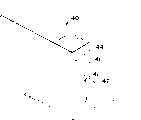
在图1中,示出了一个现有技术领域众所周知的膝上型计算机36。该膝上型计算机36具有一个计算机的常规的部件,包括一个膝上型计算机机壳37和一个监视器38。图中所示出的PCMCIA(PC卡)卡39通常被用来装接到膝上型计算机36上。从图1中可以看出,PC卡39延伸到机壳37的外侧很多,这使得其暴露在外因而在受到任何很大的力作用时会被损坏。在图2中还示出一个带有PC卡槽口41的现有技术移动式计算机40,该槽口41用于接纳PC卡42。在图1和图2所示的两种现有技术装置中,PC卡39和42在使用时都会分别大大地突伸到膝上型计算机36和移动式计算机40的侧面终端部分43和44之外。在这些现有技术装置中,PC卡容易断裂或损坏,特别是在移动式计算机中,因此,使得由PCMCIA(PC)卡提供的计算机能力不能起作用。In FIG. 1, a laptop computer 36 is shown which is well known in the art. The laptop computer 36 has the conventional components of a computer, including a
在图3中,示出了本发明的移动式戴在身体上的计算机1。在此图中,示出了一个提拉盖9,该提拉盖通向一个PC卡腔室26内(如图4所示)。当PC卡28被装在该腔室26内并且盖上该提拉盖9时,从所装的PC卡28上连接出来的缆线31就穿过槽缝23。在本发明的一个实施例中,提拉盖9在打开时暴露出至少一个PCMCIA卡(PC卡)28(一至四个)的接口部分34。这是一个特别重要的改进,因为图1和2所示的延伸出的PCMCIA卡(PC卡)容易断裂或损坏,因此使得由PCMCIA(PC)卡提供的计算机能力不能起作用。PC卡被整个装在该机壳26内(如图4所示),只有缆线或接头27从机壳26和提拉盖9内穿过槽缝23延伸出来。而且,机壳26允许在提拉盖的周边设置密封件30使得该计算机在户外戴在身体上时是防风雨的。此内机壳26就提供了防止使PC卡28损坏的装置和提供了使PC卡28及机壳26防雨、防水、防雪或防其他恶劣环境的影响的装置。在按钮29上的弹出装置要比现有技术的按钮更容易操纵,因为现有技术的按钮是凹陷的并且难于接近。此外,在本实施例中,PC卡28上的按压点减少了,从而进一步将PC卡28的损坏减至最小。使用弹性的防水密封件30来密封提拉盖,并且如所指出的那样,防止机壳26的内侧和卡28受到天气环境导致的损坏。在图3中,示出了在盖9闭合上密封住卡28后,一条连接到机壳26内的卡28上的缆线31。在图3中,在计算机机壳2的前部10上是中央按钮11和操纵手柄或杠杆12。杠杆12被用来在计算机1被用作一个移动式或常规计算机时移动和控制鼠标指针。在计算机1被用作一个常规的计算机时,控制按钮11被用于程序的执行或菜单的选择。这些控制装置11和12清楚地示于图3和4中。在计算机1的侧面上设置有通风口遮板(或散热片)13,该通风遮板使热可从计算机机壳2的内部散发到或通到大气中。这些带肋的通风口或遮板13有助于减少会使计算机的功能失效或效率降低的内热。计算机机壳2是对称的,使得当其被戴在使用者的腰部的右侧或左侧时,后侧部分5,外部设备接口装置3和缆线4总是面朝使用者的后侧。当将该计算机1用于或转换成一个常规计算机和放置在平的台面或其他的表面上时,一个固定的支架14用来支持该计算机的前侧部分10。此前支架14还被用作皮带的穿环(或把手),如图5,6和7所示。在图5中,提升支架8向下运动以便使缆线4与出口3易于连接。可以看出,没有提升支架8,缆线的连接将非常困难,因为出口导管3的极端的角度的缘故。当计算机1被用作或转换成一个常规计算机时,缆线4连接到常规计算机的部件上,例如监视器,键盘,电源或任何其他的希望连接的部件。支架8向下转时,使得比较容易接近导管3并且允许计算机1用在一个平展的表面上,象在使用一个常规的或膝上型的计算机时的习惯情况那样。栅格状的侧面或通风槽13使得热可以在使用时散发出去。In Fig. 3, a mobile body-worn
在图3,4和8中,示出了计算机的前侧顶部10,其中控制按钮11对于左撇子和右撇子都很容易够到。当计算机机壳2被颠倒翻转以便从右手使用情况变换到左手使用情况时,按钮11和鼠标杆12这些控制件总是面朝使用者的前部以便于摸到和使用。相反,当右手侧15在计算机被戴在身体上而面朝上或下时,控制件11和12总是面朝前部,而缆线4和出口3则总是面朝使用者的后部。控制件或软件可以设置来转换或反转控制件或按钮11的功能。Versa Point鼠标定位技术可以用作控制件11和12中的一种合适的装置。Versa Point是地处加利福尼亚、Carnarillo市、Flynn路547号、邮政编码为93012的Interlink Electronics公司的商标。开口22是IrDA端口,可以用作无线通讯。IrDA(英文Infra Red Data Association的缩写,意为红外数据关联)端口例如可从美国专利US 5491651和其他的出版物上了解到。IrDA被用作收发器与区域网络,打印机,其他的计算机联系以便传送信息或数据以及用作其他的希望的用途。在本发明中,端口22的开口用来接近一个IrDA接口。In Figures 3, 4 and 8, the
在图4中,示出了计算机1的顶部后视图,为了清楚起见没有示出提升支架8和前侧支架14。图中示出了稍稍缩进的偏移的或凹陷的底部延伸部分6设置在计算机机壳2的后侧部分5的下面。图4中示出了与使用者的身体贴合的机壳2的曲边17。虽然图4和其他的附图都示出(仅仅是为了清楚的目的)机壳2是矩形构形,但是,如果需要也可以采用其他的形状或构形。例如,如果象所要求的本发明的其他的特例存在的话,可以使用椭圆形或圆形的构形。开口16和17提供了将象软盘驱动器,条形码扫描器,可变增益放大器(VGA)端口或外部监视器接口那样的其他外部设备连接到计算机1上的装置。机壳2最好是用重量轻的结构强度大的塑料构成。可以采用任何合适数量的出口3,并且将它们设置在底部延伸部分6上,在图4中见不到它们。图5-7清楚第示出了这些电气出口或导管3的位置。开口23是一个供与PCMCIA卡槽一起使用的缆线通过的缆线开口。In Fig. 4, a top rear view of the
在图5中,机壳2的底部示出在一个较佳的实施例中,该实施例具有设置在前部10的一个位置上的前部支架14。在底部部分上可以设置一个方便检修的盖板18,该盖板18提供了一个插入到存储装置或非易失性存储装置的机壳2的底部的检修盖。四个螺钉19很容易就可取下以便能够够到里面的元件。在图7中,该计算机的向下面朝侧面20的底部设置有一个盖住可取下的硬盘驱动器腔室的检修盖板18。通过取下螺钉19以便将盖板18取下而露出用于硬盘驱动器的腔室,就可以接近该腔室。在现有技术的移动式计算机中,整个机壳需要卸掉才能够接近硬盘驱动器的腔室。在许多情况下希望硬盘驱动器具有高于PC卡28的容量。本发明的计算机1就提供了使用PC卡28和高容量的硬盘驱动器两者的灵活性。螺钉19能够方便地取下使使用者可以方便地使用任选的驱动器腔室。图中示出可活动的提升支架8被向上折起(戴在身体上的模式)但是在需要时,可以如图2所示那样方便地向下移动(常规计算机模式)。如图5所示的那样,提升支架8和前侧支架14当计算机1被绕着使用者的腰部或其他部位戴在使用者的身体上时,可以作为皮带环或皮带导引装置。图中,支架8和14是以夸大的方式突伸出来的,以便显示结构和功能:但是,为了使使用者舒适和使用方便,可以采用任何舒适的结构布置。出口24被用来将一个头戴式显示器(HMD)连接到用作戴在身体上的计算机的计算机1上。在图5中,示出偏移接口24和3的曲线外形是顺着使用者的身体的(通常是腰部)并且还从计算机机壳的后部5凹陷下去或与其偏心的。这点是很重要的,因为接口32的主要部分是凹陷的和受到保护的以便防止计算机戴在身体上时损坏该接口(或多个接口)32。不仅希望有凹陷的接口24,而且其曲线为了舒适性和耐用性两方面也要是贴合戴机者的腰部。当戴在身体上(或腰部上)时,与使用者的腰部平行戴着的硬的接口受到损坏的可能性就较小,并且如所指出的那样,更加舒适。图6示出了接口32在装接到出口24上时接口32的连接到缆线33上的外侧部分不会过多地突伸出计算机机壳2的后侧部分5之外。接口24和3在此移动式计算机1中被用来连接到头戴装置或显示装置上和电源上,并且当需要时,连接到键盘上。在所有的附图中,计算机1都与无需手动的控制装置一起使用,这些控制装置如美国专利5305244和共同待批的专利申请08/538194中所公开的装置。计算机1可以由右撇子和左撇子使用。这是这样实现的,是因为如前面所提及的那样,计算机机壳是对称的。此处所用的“对称的”意思是指纵向侧面15(顶部)和纵向侧面20(底部)是对称的,即它们在尺寸,形状和位置上是相同的。图7中的左侧20是面朝下的。In FIG. 5 , the bottom of the
在图6和7中,示出计算机1是处在用作绕着使用者的腰部上的移动式戴在身体上的计算机时的位置。一条皮带45与计算机1一起环绕在使用者的腰部上,该计算机1只占据了腰部的一部分,而不象JanikI和Janik II那样基本上环绕和占据着整个腰部。一个常规计算机所需要的所有计算机部件都紧凑地设置在一个机壳,即本发明的机壳2内。注意:如前面所述的那样,缆线31和32总是面朝使用者的背部或后部,使得在使用者使用他或她的手来处理手边的工作,即修理机器等工作时,这些缆线不会成为障碍。当本公开文本使用术语“腰部”或“腰围”时,应该理解到还包括人体上适合于佩戴此种计算机的其他部位。In Figures 6 and 7, the
此处描述了和在附图中示出了本发明的较佳的和最佳的实施例以便说明本发明的基本原理,但是应该理解的是,在不脱离本发明的精神和范围的情况下还可以作出多种变更和分支。Preferred and preferred embodiments of the invention have been described and illustrated in the drawings in order to illustrate the basic principles of the invention, but it should be understood that without departing from the spirit and scope of the invention Various changes and forks can also be made.
Claims (11)
Applications Claiming Priority (2)
| Application Number | Priority Date | Filing Date | Title |
|---|---|---|---|
| US705248 | 1996-08-29 | ||
| US08/705,248 US5719744A (en) | 1996-08-15 | 1996-08-29 | Torso-worn computer without a monitor |
Publications (2)
| Publication Number | Publication Date |
|---|---|
| CN1175737A CN1175737A (en) | 1998-03-11 |
| CN1095110C true CN1095110C (en) | 2002-11-27 |
Family
ID=24832655
Family Applications (1)
| Application Number | Title | Priority Date | Filing Date |
|---|---|---|---|
| CN97109741A Expired - Fee Related CN1095110C (en) | 1996-08-29 | 1997-04-25 | mobile computer |
Country Status (10)
| Country | Link |
|---|---|
| EP (1) | EP0827061B1 (en) |
| JP (1) | JP3765637B2 (en) |
| CN (1) | CN1095110C (en) |
| AT (1) | ATE259511T1 (en) |
| AU (1) | AU720452B2 (en) |
| CA (1) | CA2202104C (en) |
| DE (1) | DE69727522T2 (en) |
| DK (1) | DK0827061T3 (en) |
| ES (1) | ES2213803T3 (en) |
| PT (1) | PT827061E (en) |
Families Citing this family (3)
| Publication number | Priority date | Publication date | Assignee | Title |
|---|---|---|---|---|
| US6304459B1 (en) * | 1997-05-22 | 2001-10-16 | Xybernaut Corp. | Mobile computer |
| JPH11239670A (en) * | 1998-02-25 | 1999-09-07 | Sony Corp | Portable electronic devices |
| IL126912A (en) * | 1998-07-30 | 2002-11-10 | Xybernaut Corp | Personal computer memory card international association (pcmcia) compartment |
Citations (2)
| Publication number | Priority date | Publication date | Assignee | Title |
|---|---|---|---|---|
| US5305244A (en) * | 1992-04-06 | 1994-04-19 | Computer Products & Services, Inc. | Hands-free, user-supported portable computer |
| US5491651A (en) * | 1992-05-15 | 1996-02-13 | Key, Idea Development | Flexible wearable computer |
Family Cites Families (6)
| Publication number | Priority date | Publication date | Assignee | Title |
|---|---|---|---|---|
| US5123064A (en) * | 1989-09-29 | 1992-06-16 | Norand Corporation | Hand-held data entry system and removable signature pad module therefor |
| US5299089A (en) * | 1991-10-28 | 1994-03-29 | E. I. Dupont De Nemours & Co. | Connector device having two storage decks and three contact arrays for one hard disk drive package or two memory cards |
| US5218514A (en) * | 1992-07-10 | 1993-06-08 | International Business Machines Corporation | Compact high power personal computer with improved air cooling system |
| US5432720A (en) * | 1992-11-13 | 1995-07-11 | International Business Machines Corporation | Rotatable pen-based computer |
| JPH0778120A (en) * | 1993-07-29 | 1995-03-20 | Xerox Corp | Hand-held arithmetic unit and processing method of input signal in hand-held arithmetic unit |
| US5719743A (en) * | 1996-08-15 | 1998-02-17 | Xybernaut Corporation | Torso worn computer which can stand alone |
-
1997
- 1997-04-02 AU AU16660/97A patent/AU720452B2/en not_active Ceased
- 1997-04-04 AT AT97302316T patent/ATE259511T1/en not_active IP Right Cessation
- 1997-04-04 PT PT97302316T patent/PT827061E/en unknown
- 1997-04-04 DK DK97302316T patent/DK0827061T3/en active
- 1997-04-04 DE DE69727522T patent/DE69727522T2/en not_active Expired - Fee Related
- 1997-04-04 EP EP97302316A patent/EP0827061B1/en not_active Expired - Lifetime
- 1997-04-04 ES ES97302316T patent/ES2213803T3/en not_active Expired - Lifetime
- 1997-04-08 CA CA002202104A patent/CA2202104C/en not_active Expired - Fee Related
- 1997-04-25 CN CN97109741A patent/CN1095110C/en not_active Expired - Fee Related
- 1997-04-30 JP JP11312897A patent/JP3765637B2/en not_active Expired - Fee Related
Patent Citations (4)
| Publication number | Priority date | Publication date | Assignee | Title |
|---|---|---|---|---|
| US5305244A (en) * | 1992-04-06 | 1994-04-19 | Computer Products & Services, Inc. | Hands-free, user-supported portable computer |
| US5305244B1 (en) * | 1992-04-06 | 1996-07-02 | Computer Products & Services I | Hands-free, user-supported portable computer |
| US5305244B2 (en) * | 1992-04-06 | 1997-09-23 | Computer Products & Services I | Hands-free user-supported portable computer |
| US5491651A (en) * | 1992-05-15 | 1996-02-13 | Key, Idea Development | Flexible wearable computer |
Also Published As
| Publication number | Publication date |
|---|---|
| CA2202104A1 (en) | 1998-02-28 |
| HK1008250A1 (en) | 1999-05-07 |
| JP3765637B2 (en) | 2006-04-12 |
| DE69727522D1 (en) | 2004-03-18 |
| CN1175737A (en) | 1998-03-11 |
| AU720452B2 (en) | 2000-06-01 |
| DE69727522T2 (en) | 2004-08-05 |
| EP0827061A1 (en) | 1998-03-04 |
| AU1666097A (en) | 1998-03-05 |
| PT827061E (en) | 2004-06-30 |
| CA2202104C (en) | 2000-12-26 |
| ATE259511T1 (en) | 2004-02-15 |
| ES2213803T3 (en) | 2004-09-01 |
| EP0827061B1 (en) | 2004-02-11 |
| DK0827061T3 (en) | 2004-06-14 |
| JPH10105280A (en) | 1998-04-24 |
Similar Documents
| Publication | Publication Date | Title |
|---|---|---|
| US5719744A (en) | Torso-worn computer without a monitor | |
| CA2252777C (en) | Mobile computer | |
| US6351388B1 (en) | Mobile computer with PC housing for PC card and dongle | |
| US6552899B2 (en) | Mobile computer | |
| KR20010096497A (en) | Insulated mobile computer | |
| CN1175737A (en) | Mobile computer | |
| HK1008250B (en) | Mobile computer | |
| HK1020220A (en) | Mobile computer | |
| MXPA98008285A (en) | Wearable computer | |
| HK1024319B (en) | Mobile computer |
Legal Events
| Date | Code | Title | Description |
|---|---|---|---|
| C06 | Publication | ||
| PB01 | Publication | ||
| C10 | Entry into substantive examination | ||
| SE01 | Entry into force of request for substantive examination | ||
| C14 | Grant of patent or utility model | ||
| GR01 | Patent grant | ||
| C17 | Cessation of patent right | ||
| CF01 | Termination of patent right due to non-payment of annual fee |
Granted publication date: 20021127 Termination date: 20140425 |