CN109727491B - Method and system for improving aircraft fuel efficiency - Google Patents
Method and system for improving aircraft fuel efficiency Download PDFInfo
- Publication number
- CN109727491B CN109727491B CN201811247699.6A CN201811247699A CN109727491B CN 109727491 B CN109727491 B CN 109727491B CN 201811247699 A CN201811247699 A CN 201811247699A CN 109727491 B CN109727491 B CN 109727491B
- Authority
- CN
- China
- Prior art keywords
- aircraft
- fuel
- flight
- management system
- current
- Prior art date
- Legal status (The legal status is an assumption and is not a legal conclusion. Google has not performed a legal analysis and makes no representation as to the accuracy of the status listed.)
- Active
Links
- 239000000446 fuel Substances 0.000 title claims abstract description 220
- 238000000034 method Methods 0.000 title claims abstract description 51
- 230000005484 gravity Effects 0.000 claims abstract description 52
- 239000002828 fuel tank Substances 0.000 claims abstract description 37
- 238000002485 combustion reaction Methods 0.000 claims abstract description 30
- 239000003381 stabilizer Substances 0.000 claims description 10
- 239000013598 vector Substances 0.000 claims description 5
- RZVHIXYEVGDQDX-UHFFFAOYSA-N 9,10-anthraquinone Chemical compound C1=CC=C2C(=O)C3=CC=CC=C3C(=O)C2=C1 RZVHIXYEVGDQDX-UHFFFAOYSA-N 0.000 abstract description 2
- 239000000295 fuel oil Substances 0.000 abstract 1
- 238000010304 firing Methods 0.000 description 2
- 238000010586 diagram Methods 0.000 description 1
- 238000005457 optimization Methods 0.000 description 1
- 238000005086 pumping Methods 0.000 description 1
- 238000010926 purge Methods 0.000 description 1
- 230000008672 reprogramming Effects 0.000 description 1
- 230000003068 static effect Effects 0.000 description 1
Images



Classifications
-
- B—PERFORMING OPERATIONS; TRANSPORTING
- B64—AIRCRAFT; AVIATION; COSMONAUTICS
- B64D—EQUIPMENT FOR FITTING IN OR TO AIRCRAFT; FLIGHT SUITS; PARACHUTES; ARRANGEMENT OR MOUNTING OF POWER PLANTS OR PROPULSION TRANSMISSIONS IN AIRCRAFT
- B64D43/00—Arrangements or adaptations of instruments
-
- B—PERFORMING OPERATIONS; TRANSPORTING
- B64—AIRCRAFT; AVIATION; COSMONAUTICS
- B64C—AEROPLANES; HELICOPTERS
- B64C17/00—Aircraft stabilisation not otherwise provided for
- B64C17/10—Transferring fuel to adjust trim
-
- B—PERFORMING OPERATIONS; TRANSPORTING
- B64—AIRCRAFT; AVIATION; COSMONAUTICS
- B64D—EQUIPMENT FOR FITTING IN OR TO AIRCRAFT; FLIGHT SUITS; PARACHUTES; ARRANGEMENT OR MOUNTING OF POWER PLANTS OR PROPULSION TRANSMISSIONS IN AIRCRAFT
- B64D37/00—Arrangements in connection with fuel supply for power plant
-
- B—PERFORMING OPERATIONS; TRANSPORTING
- B64—AIRCRAFT; AVIATION; COSMONAUTICS
- B64D—EQUIPMENT FOR FITTING IN OR TO AIRCRAFT; FLIGHT SUITS; PARACHUTES; ARRANGEMENT OR MOUNTING OF POWER PLANTS OR PROPULSION TRANSMISSIONS IN AIRCRAFT
- B64D37/00—Arrangements in connection with fuel supply for power plant
- B64D37/02—Tanks
- B64D37/14—Filling or emptying
- B64D37/20—Emptying systems
- B64D37/28—Control thereof
-
- G—PHYSICS
- G01—MEASURING; TESTING
- G01M—TESTING STATIC OR DYNAMIC BALANCE OF MACHINES OR STRUCTURES; TESTING OF STRUCTURES OR APPARATUS, NOT OTHERWISE PROVIDED FOR
- G01M1/00—Testing static or dynamic balance of machines or structures
- G01M1/12—Static balancing; Determining position of centre of gravity
- G01M1/122—Determining position of centre of gravity
- G01M1/125—Determining position of centre of gravity of aircraft
- G01M1/127—Determining position of centre of gravity of aircraft during the flight
-
- G—PHYSICS
- G05—CONTROLLING; REGULATING
- G05B—CONTROL OR REGULATING SYSTEMS IN GENERAL; FUNCTIONAL ELEMENTS OF SUCH SYSTEMS; MONITORING OR TESTING ARRANGEMENTS FOR SUCH SYSTEMS OR ELEMENTS
- G05B13/00—Adaptive control systems, i.e. systems automatically adjusting themselves to have a performance which is optimum according to some preassigned criterion
- G05B13/02—Adaptive control systems, i.e. systems automatically adjusting themselves to have a performance which is optimum according to some preassigned criterion electric
- G05B13/04—Adaptive control systems, i.e. systems automatically adjusting themselves to have a performance which is optimum according to some preassigned criterion electric involving the use of models or simulators
-
- G—PHYSICS
- G05—CONTROLLING; REGULATING
- G05D—SYSTEMS FOR CONTROLLING OR REGULATING NON-ELECTRIC VARIABLES
- G05D1/00—Control of position, course, altitude or attitude of land, water, air or space vehicles, e.g. using automatic pilots
- G05D1/0005—Control of position, course, altitude or attitude of land, water, air or space vehicles, e.g. using automatic pilots with arrangements to save energy
Landscapes
- Engineering & Computer Science (AREA)
- Aviation & Aerospace Engineering (AREA)
- Physics & Mathematics (AREA)
- General Physics & Mathematics (AREA)
- Automation & Control Theory (AREA)
- Computer Vision & Pattern Recognition (AREA)
- Artificial Intelligence (AREA)
- Evolutionary Computation (AREA)
- Medical Informatics (AREA)
- Software Systems (AREA)
- Health & Medical Sciences (AREA)
- Radar, Positioning & Navigation (AREA)
- Remote Sensing (AREA)
- Navigation (AREA)
- Traffic Control Systems (AREA)
Abstract
The invention relates to a method and a system for improving fuel efficiency of an aircraft. A method for improving in-flight fuel efficiency of an aircraft includes sensing aircraft fuel weight in an aircraft fuel tank during flight of the aircraft, and reading the fuel weight by a flight management system; calculating the current gravity center position according to the weight of the fuel oil; calculating the longitudinal trim resistance coefficient of the airplane according to the current gravity center; and adjusting the fuel combustion predicted value by utilizing the longitudinal trim resistance coefficient. A system for improving in-flight fuel efficiency of an aircraft includes a flight management system programmed to calculate a current center of gravity position from a current aircraft fuel weight, calculate a longitudinal trim drag coefficient from the current center of gravity, adjust a fuel burn prediction value, and display the adjusted fuel burn prediction value for each leg of the aircraft flight in a cockpit for use in adjusting aircraft performance automatically by a flight control system or by a pilot.
Description
Technical Field
The present disclosure relates to flight management systems for aircraft, and more particularly, to flight management systems that use aircraft and aircraft aerodynamic parameters to optimize fuel usage.
Background
Prior to the takeoff of a commercial aircraft, such as a commercial passenger aircraft, the scheduler includes calculating the Center of Gravity (CG) of the aircraft. A pilot, member of the flight crew, or other airline personnel calculates the aircraft CG using data from published weight and balance tables developed specifically for the aircraft to ensure that the CG is within the aircraft's flight envelope throughout the flight.
Most commercial aircraft have a central fuel tank located in the fuselage between the wings, and wing tanks located within the wings. The weight of fuel in these tanks is used to determine the aircraft CG. During flight, the aircraft's CG constantly changes as fuel in each of these tanks burns. Such in-flight CG movement due to fuel burn is calculated by a Flight Management System (FMS) of the aircraft. Aircraft CG movement curves or fuel vectors from aircraft Zero Fuel Weight (ZFW) to aircraft takeoff weight (TOW) are calculated by the FMS. However, this curve is not typically displayed to the pilot or flight crew, and is not in the weight and balance sheet of the aircraft.
During flight, the aircraft FMS calculates predictive fuel burn from takeoff to landing. The flight path of an aircraft is divided into legs separated by waypoints. Waypoints are defined by geographic coordinates and mark the start and end points of each leg. Thus, there is an associated distance, time, magnetic heading, and fuel burn for each flight leg between two waypoints. The FMS is programmed to calculate predictive fuel combustion for each individual leg of the flight path and display it on a Control Display Unit (CDU) located on an instrument panel in the cockpit.
Changes in the aircraft CG caused by the burning of fuel during flight must be compensated by changes in the flight control surfaces on the aircraft, which create aerodynamic drag, known as longitudinal trim (longitudinal trim) drag. This resistance can be somewhat counteracted by choosing which fuel tanks to use first, and if available, by actively pumping fuel between the individual fuel tanks. Thus, changes in CG during a flight segment change trim resistance, which affects the predictive fuel burn calculated for that segment. For example, if the aircraft's CG moves aft during flight, trim drag is reduced, which reduces the required fuel burn.
However, unlike using the current aircraft CG in real time to calculate the predictive fuel burn at each waypoint of the flight path, the FMS utilizes an aircraft performance database that uses the same fixed or reference CG for all waypoints. For example, the reference CG for a particular aircraft may be selected to be fixed at 23.8% of the leading edge aft of the Mean Aerodynamic Chord (MAC) of the wing. Thus, this value for "cruise CG" (CRZ CG) is the default input in the flight computer of the FMS, but may be manually overridden (override) by the flight crew in the flight computer of the FMS during the pre-flight procedure. In either case, the FMS uses this value to calculate the maximum altitude and maneuver margin for each waypoint.
Accordingly, there is a need for a flight management system that more accurately reflects the aircraft's CG during flight in order to calculate accurate predictive fuel burn, and other performance factors such as maximum altitude and maneuver margins.
Disclosure of Invention
The present disclosure is a method and system for improving aircraft fuel efficiency that uses real-time calculation of the aircraft center of gravity during flight to determine predicted fuel burn values for each leg of the flight. These calculated fuel combustion predictions are adjustments from the fuel combustion predictions based on the static center of gravity and are used to tune the performance of the aircraft. This results in a more efficient use of fuel during flight and a more accurate calculation of the maximum altitude and maneuvering margin of the aircraft.
In one example, a method for improving fuel efficiency of an aircraft includes sensing a current aircraft fuel weight in a fuel tank of the aircraft during flight of the aircraft; reading the current aircraft fuel weight through a flight management system; calculating the current gravity center position of the airplane by the current airplane fuel weight through a flight management system; calculating a longitudinal trim drag coefficient of the aircraft from the current center of gravity position by a flight management system; calculating an adjusted fuel combustion predicted value of the aircraft by using the longitudinal trim resistance coefficient through a flight management system; and adjusting the performance of the aircraft in response to the adjusted fuel burn prediction.
In another example, a method for improving in-flight fuel efficiency of an aircraft includes receiving, by an on-board flight management system, data indicative of a current aircraft fuel weight during flight of the aircraft; calculating the current gravity center position of the airplane by the flight management system according to the current airplane fuel weight; calculating the longitudinal trim drag coefficient of the aircraft from the current center of gravity through a flight management system; adjusting the fuel combustion predicted value of the aircraft by using the longitudinal balancing coefficient through a flight management system; and adjusting the performance of the aircraft, either automatically by the flight management system or manually by prompting a pilot of the aircraft, in response to the fuel burn prediction.
In yet another example, a system for improving in-flight fuel efficiency of an aircraft includes a flight management system that may be connected to receive data indicative of a current aircraft fuel weight during flight of the aircraft; the flight management system is programmed to calculate a current center of gravity of the aircraft from the current aircraft fuel weight, calculate a longitudinal trim drag coefficient of the aircraft from the current center of gravity, and adjust a predicted value of fuel burn of the aircraft using the longitudinal trim drag coefficient; and the flight management system includes a display in the cockpit of the aircraft that displays the predicted value of fuel combustion for the aircraft to prompt the pilot to manually adjust the performance of the aircraft; and/or the flight management system is programmed to automatically adjust the performance of the aircraft.
Other objects and advantages of the disclosed method and system for improving aircraft fuel efficiency will become apparent from the following description, the accompanying drawings, and the appended claims.
Drawings
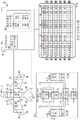
FIG. 1 is a schematic diagram illustrating components of an exemplary embodiment of a system for improving aircraft fuel efficiency in a disclosed aircraft;
FIG. 1A is a more detailed schematic representation of the system of FIG. 1;
FIG. 2 is a flow chart illustrating a disclosed method for improving fuel efficiency of an aircraft; and
FIG. 3 is a schematic illustration of aircraft parameters used to calculate trim drag coefficients for use in the disclosed methods and systems.
Detailed Description
As shown in fig. 1 and 1A, a system, generally designated 10, for improving in-flight fuel efficiency of an aircraft 12 in an exemplary embodiment, includes a Flight Management System (FMS) 14 connected to receive data indicative of a current aircraft fuel weight during aircraft flight. The aircraft 12 may take the form of a passenger aircraft, a cargo aircraft, a military aircraft, a commercial or commercial aircraft, or a spacecraft, and may be piloted, flown through the FMS 14, or remotely piloted.
The aircraft 12 includes a fuselage 16, port and starboard wings 18, 20, which may or may not be tapered or swept, and a tail assembly 22 having port and starboard horizontal stabilizers 24, 26 and a vertical stabilizer (not shown). The aircraft 12 includes a central fuel tank 28 located within the fuselage 16, and wing tanks 30, 32 located within the port and starboard wings 18, 20, respectively. The aircraft optionally includes surge tanks (purge tank) 34, 36, which are integral parts of the wing tanks 30, 32, respectively, located in the wings 18, 20 outside of the wing tanks 24, 26, respectively. The fuel tanks 28-36 include fuel supply pumps 28A, 30A, 32A, 34A, 36A, respectively, that are actuated by the FMS 14 or manually by the flight crew to cause fuel to flow from the fuel tanks to the engines of the aircraft 12 during flight to adjust the aircraft center of gravity.
In the illustrative example, the FMS 14 is programmed to calculate a current Center of Gravity (CG) of the aircraft from the current aircraft fuel weight, calculate a longitudinal trim drag coefficient for the aircraft from the current CG, and adjust a predicted value of fuel burn for the aircraft using the longitudinal trim drag coefficient. The FMS 14 includes a display, which may take the form of a Control Display Unit (CDU) 50 in the cockpit 52 of the aircraft 12. The FMS 14 is programmed to display the adjusted fuel combustion predicted value for the aircraft 12 on the CDU 50. In one illustrative example, the adjusted fuel burn prediction value prompts the pilot to manually adjust the performance of the aircraft. Alternatively or additionally, the FMS 14 is programmed to automatically adjust the performance of the aircraft 14.
In an example, the FMS 14 is programmed to continuously adjust fuel burn predictions during flight of the aircraft 12, and specifically at least once during each leg of the aircraft's flight path. The adjustment may be made at each waypoint in the flight path of the aircraft 12. In other examples, the FMS 14 is programmed to allow the pilot to override the automatic adjustment of the performance of the aircraft 12. Adjusting the performance of the aircraft may include one or more of: adjusting the fuel burn rate, and selectively adjusting the fuel flow from the fuel tanks 28, 30, 32, 34, 36 by actuating the fuel supply pumps 28A, 30A, 32A, 34A, 36A, respectively, the fuel supply pumps 28A, 30A, 32A, 34A, 36A are also shown schematically on a fuel pump control panel 54, which fuel pump control panel 54 is connected to the FMS 14 and located in the cockpit 52. For example, in a typical fuel firing sequence, fuel in the center fuel tank 28 is first fired, and then fuel in one or more of the wing tanks 30-36 is fired. The pilot or other member of the flight crew may instead choose to first burn the fuel in one or more of the wing tanks 30, 32, 34, 26 and then switch to burning the fuel from the center tank 28. In still other examples, the airline may load more fuel in the center fuel tank 28 and direct the pilot and/or FMS to burn it first, or reduce the amount of fuel loaded (dispatched) onto the aircraft 12 for a given flight, which itself reduces the fuel burned and is more economical, than calculating the amount of fuel loaded onto the aircraft using the fixed CG.
A method for improving fuel efficiency of the aircraft 12 is schematically illustrated at 55 in fig. 2. Initially, as part of the pre-flight procedure, the pilot manually enters the values of Zero Fuel Weight (ZFW), zero fuel weight center of gravity (ZFWG), and cruise CG (CRZCG) into the FMS 14, as shown in block 56. These values are standard for a particular aircraft 12.
As shown in block 58, after takeoff of the aircraft 12, when at high altitude, the FMS 14 calculates a current CG location 60 (FIG. 3) of the aircraft 12 by sensing a current aircraft fuel weight in the aircraft's fuel tanks 28-36 during aircraft flight, reading the current aircraft fuel weight through the FMS 14, and then calculating a current center of gravity location of the aircraft from the current aircraft fuel weight through the FMS. The FMS 14 determines the current CG location 60 of the aircraft 12 using the following operations. First, a Zero Fuel Weight Balance Arm (ZFWBA) is determined by the following equation:
ZFWBA=LEMAC+ZFWCG*MAC
where LEMAC is the leading edge mean aerodynamic chord, ZFWCG is the zero fuel weight center of gravity, and MAC is the mean aerodynamic chord ("C" in FIG. 3). The current CG 60 (XCG) of the aircraft 12 is then calculated using the following equation:

wherein WQTYBA is the fuel balance arm of the total fuel mass in the wings 18, 20, obtained from the fuel vector table 62 stored in the FMS 14; WQTY is the volume of fuel sensed in the wing tanks 30, 32 (and optionally the pressure equalization tanks 34, 36) by the sensors 38-46; CQTYBA is the fuel balance arm for the total fuel quantity in the center fuel tank 28; CQTY is the volume of fuel sensed in the central tank. The CG position 60 (CG%) as a function of the percentage of MAC was calculated using the following formula:

next, as indicated in block 64, a longitudinal trim drag coefficient (Dfac) of the aircraft 12 is determined from the current CG location 60 via the FMS 14 using a table 68 stored in the aircraft's FMS 14 and the aerodynamic parameters of the aircraft 12. The FMS 14 calculates Dfac using the following equation, and referring to fig. 3:

where GW is the total weight of the aircraft 12, CG is the current CG location (% c) in terms of MAC, cgref is the reference CG (% c) where the FMS 14 performance table is generated, lh is the location of the Horizontal Stabilizer (HSTAB) 24, c is the wing Mean Aerodynamic Chord (MAC), ch is the horizontal stabilizer MAC, A is the wing main aspect ratio, S is the wing reference area, e is the Oswald factor, CDo is the zero lift drag (a function of Mach number and Reynolds number), l is the distance from the leading edge of the wing 18 to lh, and q is the dynamic pressure (0.5 ρ V) 2 ) And S is the wind area.
As shown in block 66, the FMS 14 then uses the longitudinal trim resistance coefficient Dfac to calculate an adjusted predicted fuel burn value for the aircraft 12 using the following equation:
Wf=Wfref*(1+Dfac)
where Wf is the corrected or adjusted fuel burn between waypoints and Wfref is the fuel burn between waypoints of the flight path of the aircraft 12 using the standard fixed CG location of the aircraft.
Once the corrected or adjusted fuel burn Wf is calculated by the FMS 14, the FMS uses or replaces this value as a predicted value of fuel burn between waypoints in the flight path. The FMS 14 displays the adjusted fuel combustion predictions for the CDU display 50 in the cockpit 52 of the aircraft 12. Accordingly, the FMS 14 prompts the pilot to adjust the performance of the aircraft 12 in response to the displayed adjusted predicted fuel burn value, as indicated in block 70. Optionally, the FMS 14 adjusts the performance of the aircraft 12 as indicated in block 72.
In the exemplary embodiment, as shown in block 74, the pilot manually adjusts the performance of the aircraft 12 including one or both of adjusting the fuel burn rate of the aircraft and adjusting the fuel tank usage of the aircraft. In the exemplary embodiment, adjusting the combustion prediction value includes adjusting a fuel combustion prediction value for a current leg of a flight path of aircraft 12 (FIG. 1A). And adjusting the fuel combustion estimate comprises sequentially adjusting the fuel combustion estimate for each leg of the flight path of the aircraft 12. Adjusting aircraft fuel tank usage includes selectively firing a series of fuel tanks 28, 30, 32, 34, 36 by switching and/or turning off one or more selected fuel supply pumps 28A, 30A, 32A, 34A, 36A on a fuel pump control panel 54. Also in the illustrative example, as shown in block 76, sensing aircraft fuel weight via the FMS 14 includes sensing the amount and density of aircraft fuel in the center fuel tanks 28 and wing fuel tanks 30-36. The step of sensing aircraft fuel weight includes sensing aircraft fuel weight in each individual fuel tank 28, 30, 32, 34, and 36 of aircraft 12. As indicated in block 78, the FMS 14 receives fuel data via the avionics bus 48 and, in block 80, reads the fuel data from the avionics bus.
Also in the illustrative example, the following steps are updated in each cycle of processor operation of the FMS: the process steps of sensing the amount of fuel in the fuel tanks 28, 30, 32, 34 and 36 via sensors 38, 40, 42, 44 and 46, respectively, and the steps of reading the fuel volume in individual fuel tanks, then calculating the current center of gravity position cg, then calculating the longitudinal trim resistance coefficient Dfac, and adjusting the predicted fuel combustion value Wf, as indicated by the dashed lines in fig. 2, are performed by the FMS 14.
In the illustrative example, the step of calculating the current center of gravity position includes reading data contained in the FMS 14 from a fuel vector table 62 from a weight and balance manual specific to the aircraft 12. The step of calculating the current center of gravity position includes reading data from the table in the FMS 14 that includes the zero fuel weight arm, the zero fuel weight, the fuel balance arm for the total fuel in the wings 18, 20, the fuel volume sensed in the wing tanks 30-36, the fuel balance arm for the total fuel in the center tank 28, and the fuel volume sensed in the center tank.
The step of calculating the longitudinal trim drag coefficient Dfac includes the FMS 14 reading data from the aircraft's tables and aerodynamic parameters 68 including gross weight, current CG location 60, reference center of gravity location, horizontal stabilizer leading edge primary aerodynamic chord relative to the wing leading edge aerodynamic chord, wing mean aerodynamic chord, horizontal stabilizer mean aerodynamic chord location, windward aspect ratio, windward reference area, oswald factor, and zero lift drag. The step of adjusting the predicted fuel combustion value includes the FMS 14 calculating a corrected predicted fuel combustion value from the fuel combustion using the aircraft's standard center of gravity position and the longitudinal trim resistance coefficient Dfac. The step of adjusting the fuel burn prediction value includes the FMS 14 sequentially calculating a corrected fuel burn prediction value for each leg of the flight path of the aircraft. In an illustrative example, the FMS 14 automatically adjusts the pitch or trim of the aircraft 12 when an autopilot system, optionally a portion of the FMS 14 of the aircraft 12, engages in response to the aircraft changing CG. Alternatively, if the autopilot system is not engaged, the pilot may manually adjust the trim via a pitch trim button in the control stick of the cockpit 52.
The disclosed system 10 and method 55 provide cost savings and performance optimization for aircraft flight by continuously generating accurate real-time values of predicted fuel combustion. The system uses current aircraft avionics systems and requires minimal reprogramming of the FMS 14, and is therefore inexpensive to implement.
Further, the present disclosure includes examples according to the following clauses:
clause 1. A method for improving fuel efficiency of an aircraft, the method comprising:
sensing a current aircraft fuel weight in a fuel tank of an aircraft during flight of the aircraft;
reading the current aircraft fuel weight through a flight management system;
calculating the current gravity center position of the airplane by the current airplane fuel weight through a flight management system;
calculating the longitudinal trim drag coefficient of the airplane from the current gravity center position through a flight management system;
calculating an adjusted fuel combustion predicted value of the aircraft by using the longitudinal trim resistance coefficient through a flight management system; and
and adjusting the performance of the aircraft in response to the adjusted fuel combustion prediction value.
Clause 8. The method of clause 1, wherein the step of sensing the weight of the aircraft fuel includes sensing the amount and density of the aircraft fuel.
Clause 11. The method of clause 1, wherein the step of calculating the current center of gravity position comprises reading data from a fuel vector table of an aircraft-specific weight and balance manual contained in the flight management system.
Clause 13. The method of clause 12, wherein the step of calculating the longitudinal trim drag coefficient comprises reading data from the aircraft and aerodynamic parameters comprising the following table: the total weight, the current center of gravity position, the reference center of gravity position, the position of the main aerodynamic chord of the leading edge of the horizontal stabilizer relative to the aerodynamic chord of the leading edge of the wing, the average aerodynamic chord of the horizontal stabilizer, the wind-borne main aspect ratio, the wind-borne reference area, the Oswald factor and the zero lift resistance.
receiving, by an onboard flight management system during flight of an aircraft, data indicative of a current aircraft fuel weight;
calculating the current gravity center position of the airplane by the flight management system according to the current airplane fuel weight;
calculating the longitudinal trim drag coefficient of the aircraft from the current center of gravity through a flight management system;
adjusting the fuel combustion predicted value of the aircraft through a flight management system by using the longitudinal balancing coefficient; and
adjusting performance of the aircraft in response to the predicted value of fuel burn.
Clause 17. The method of clause 16, wherein adjusting the performance of the aircraft comprises one or more of: automatically adjusting performance via a flight management system, prompting a pilot of the aircraft to adjust performance, and prompting the pilot to override performance of the aircraft.
a flight management system connectable to receive data indicative of a current aircraft fuel weight during flight of the aircraft;
the flight management system is programmed to calculate a current center of gravity of the aircraft from the current aircraft fuel weight, calculate a longitudinal trim drag coefficient of the aircraft from the current center of gravity, and adjust a predicted value of fuel burn of the aircraft using the longitudinal trim drag coefficient; and is
The flight management system includes a display in a cockpit of the aircraft that displays a predicted value of fuel combustion for the aircraft to prompt a pilot to manually adjust a performance of the aircraft; and/or
The flight management system is programmed to automatically adjust the performance of the aircraft.
Clause 19. The system of clause 18, wherein the flight management system is programmed to continuously adjust the fuel burn prediction value during flight of the aircraft, and in particular at least once during each leg of the flight path of the aircraft.
Although the forms of the method and apparatus disclosed herein are the preferred examples of the disclosed method and system for improving aircraft fuel efficiency, it is to be understood that the invention is not limited to these precise methods and apparatus, and that changes may be made therein without departing from the scope of the invention.
Claims (18)
1. A method for improving fuel efficiency of an aircraft (12), the method comprising:
sensing (76) a current aircraft fuel weight in fuel tanks (28, 30, 32, 34, 36) of the aircraft during flight of the aircraft;
reading (80) a current aircraft fuel weight by a flight management system (14);
calculating (58), by the flight management system, a current center of gravity position (60) of the aircraft from the current aircraft fuel weight;
calculating (64), by the flight management system, a longitudinal trim drag coefficient for the aircraft from the current center of gravity position;
calculating (66), by the flight management system, an adjusted fuel burn prediction value for the aircraft using the longitudinal trim drag coefficient; and
automatically adjusting (72) the pitch angle or trim of the aircraft by the flight management system (14) in response to the adjusted fuel burn prediction value when the autopilot system of the aircraft (12) engages in response to the changing center of gravity, and
manually adjusting (70), by the flight management system (14), a pitch angle or trim of the aircraft in response to the adjusted fuel burn prediction when the autopilot system of the aircraft (12) is not engaged in response to a changing center of gravity.
2. The method of claim 1, further comprising adjusting a performance of the aircraft, including one or both of adjusting a fuel burn rate of the aircraft and adjusting an aircraft fuel tank usage.
3. The method of claim 1 or 2, wherein said sensing, said reading, said calculating a current center of gravity, said calculating a longitudinal trim drag coefficient, and said adjusting said fuel burn prediction value are updated during each cycle of said flight management system.
4. A method according to claim 1 or claim 2 wherein adjusting the fuel burn prediction value comprises adjusting the fuel burn prediction value for a current leg of the flight path of the aircraft.
5. The method of claim 4, wherein adjusting the fuel combustion prediction value comprises sequentially adjusting the fuel combustion prediction value for each leg of a flight path of the aircraft.
6. A method according to claim 1 or claim 2 wherein the step of sensing the weight of aircraft fuel comprises sensing the quantity and density of aircraft fuel.
7. The method of claim 6, wherein sensing aircraft fuel weight comprises sensing aircraft fuel weight in each individual fuel tank of fuel tanks of the aircraft.
8. The method according to claim 1 or 2, wherein the step of calculating the longitudinal trim drag coefficient comprises using an aircraft and aerodynamic parameters (68) of the aircraft.
9. The method of claim 1 or 2, wherein the step of calculating the current barycentric position comprises reading data from a fuel vector table (62) of the aircraft-specific weight and balance manual contained in the flight management system.
10. The method of claim 9, wherein the step of calculating the current center of gravity position comprises reading data from a table comprising: a zero fuel weight balance arm, a zero fuel weight, a fuel balance arm for total fuel in the wing, a sensed fuel volume in the wing tank, a fuel balance arm for total fuel in the center tank, and a sensed fuel volume in the center tank.
11. The method of claim 10, wherein the step of calculating the longitudinal trim drag coefficient comprises reading data from an aircraft and aerodynamic parameters comprising the following table: the total weight, the current center of gravity position, the reference center of gravity position, the position of the horizontal stabilizer leading edge main aerodynamic chord relative to the wing leading edge aerodynamic chord, the wing average aerodynamic chord, the horizontal stabilizer average aerodynamic chord, the wind-borne main aspect ratio, the wind-borne reference area, the Oswald factor and the zero lift resistance.
12. The method of claim 11, wherein the step of adjusting the fuel burn prediction value comprises calculating a corrected fuel burn prediction value from fuel burn using a standard center of gravity position of the aircraft and the longitudinal trim resistance coefficient.
13. The method of claim 1 or 2, wherein adjusting the performance of the aircraft comprises one or more of: automatically adjusting performance via the flight management system, prompting a pilot of the aircraft to adjust performance, and prompting the pilot to override performance of the aircraft.
14. A system (10) for improving in-flight fuel efficiency of an aircraft (12), the system comprising:
an automatic driving system;
a flight management system (14) connectable to receive data indicative of a current aircraft fuel weight during flight of the aircraft;
the flight management system is programmed to calculate a current center of gravity (60) of the aircraft from the current aircraft fuel weight, calculate a longitudinal trim drag coefficient for the aircraft from the current center of gravity, and adjust a fuel burn prediction value for the aircraft using the longitudinal trim drag coefficient; and is provided with
The flight management system includes a display (50) in a cockpit of the aircraft, the display (50) displaying the fuel burn prediction value for the aircraft, wherein
When the autopilot system is not engaged in response to a changing center of gravity, the flight management system is configured to prompt a pilot to manually adjust a pitch angle or trim of the aircraft; and
the flight management system is programmed to automatically adjust the pitch angle or trim of the aircraft in response to the adjusted fuel burn prediction when the autopilot system engages in response to a changing center of gravity.
15. The system of claim 14, wherein the flight management system is programmed to continuously adjust the fuel burn prediction value during flight of the aircraft, and in particular at least once during each leg of the flight path of the aircraft.
16. The system of claim 14, further comprising adjusting performance of the aircraft including one or both of adjusting a fuel burn rate of the aircraft and adjusting aircraft fuel tank usage.
17. A system for improving in-flight fuel efficiency of an aircraft, the system comprising:
receiving, by a flight management system on the aircraft during flight of the aircraft, data indicative of a current aircraft fuel weight;
calculating, by the flight management system, a current center of gravity position of the aircraft from the current aircraft fuel weight;
calculating, by the flight management system, a longitudinal trim drag coefficient for the aircraft from the current center of gravity;
adjusting, by the flight management system, a fuel burn prediction value of the aircraft using the longitudinal trim factor; and
automatically adjusting a pitch angle or trim of the aircraft in response to the fuel burn prediction value by the flight management system when an autopilot system of the aircraft engages in response to a changing center of gravity, an
Prompting, by the flight management system, a pilot to manually adjust a pitch angle or trim of the aircraft in response to the adjusted predicted value of fuel combustion when an autopilot system of the aircraft is not engaged in response to a changing center of gravity.
18. The system of claim 17, wherein adjusting the performance of the aircraft comprises one or more of: automatically adjusting the performance by the flight management system; prompting a pilot of the aircraft to adjust the performance; and prompting the pilot to override the performance of the aircraft.
Applications Claiming Priority (2)
| Application Number | Priority Date | Filing Date | Title |
|---|---|---|---|
| US15/797,118 | 2017-10-30 | ||
| US15/797,118 US20190127078A1 (en) | 2017-10-30 | 2017-10-30 | Method and system for improving aircraft fuel efficiency |
Publications (2)
| Publication Number | Publication Date |
|---|---|
| CN109727491A CN109727491A (en) | 2019-05-07 |
| CN109727491B true CN109727491B (en) | 2022-11-22 |
Family
ID=63685624
Family Applications (1)
| Application Number | Title | Priority Date | Filing Date |
|---|---|---|---|
| CN201811247699.6A Active CN109727491B (en) | 2017-10-30 | 2018-10-25 | Method and system for improving aircraft fuel efficiency |
Country Status (5)
| Country | Link |
|---|---|
| US (1) | US20190127078A1 (en) |
| EP (1) | EP3476726B1 (en) |
| CN (1) | CN109727491B (en) |
| BR (1) | BR102018069958B1 (en) |
| CA (1) | CA3018283C (en) |
Families Citing this family (12)
| Publication number | Priority date | Publication date | Assignee | Title |
|---|---|---|---|---|
| US11352013B1 (en) | 2020-11-13 | 2022-06-07 | Samsara Inc. | Refining event triggers using machine learning model feedback |
| US11341786B1 (en) * | 2020-11-13 | 2022-05-24 | Samsara Inc. | Dynamic delivery of vehicle event data |
| US11643102B1 (en) | 2020-11-23 | 2023-05-09 | Samsara Inc. | Dash cam with artificial intelligence safety event detection |
| CN112591118B (en) * | 2020-12-11 | 2024-04-09 | 陕西千山航空电子有限责任公司 | Display device and method for complex fuel oil way of airplane |
| CN112816133B (en) * | 2020-12-29 | 2023-08-04 | 中国航空工业集团公司西安飞机设计研究所 | A highly safe active center of gravity control system and method |
| CN113501127A (en) * | 2021-04-16 | 2021-10-15 | 上海应用技术大学 | Oil supply control method based on aircraft mass center balance |
| CN114414146B (en) * | 2021-12-17 | 2023-04-18 | 北京航空航天大学 | Flight safety judgment method and system, storage medium and electronic equipment |
| CN114229016B (en) * | 2021-12-17 | 2023-08-25 | 北京航空航天大学 | Aircraft center of gravity adjustment method, system, storage medium and electronic equipment |
| CN117141712A (en) * | 2023-09-21 | 2023-12-01 | 中国航空工业集团公司沈阳飞机设计研究所 | A fuel center of gravity adjustment method and system based on fuel thermal management |
| CN117909694B (en) * | 2024-03-19 | 2024-05-17 | 珠海翔翼航空技术有限公司 | Method and system for predicting center of gravity position in aircraft flight based on deep learning model |
| CN118877219B (en) * | 2024-09-29 | 2024-12-31 | 四川泛华航空仪表电器有限公司 | Digital pressure refueling pre-regulator, aircraft fuel measurement system and method |
| CN119408699A (en) * | 2024-10-15 | 2025-02-11 | 中国直升机设计研究所 | A method for controlling the longitudinal center of gravity of a helicopter |
Family Cites Families (6)
| Publication number | Priority date | Publication date | Assignee | Title |
|---|---|---|---|---|
| GB2190501B (en) * | 1986-05-15 | 1991-01-16 | Mc Donnell Douglas Corp | Multiplexed junction unit for fuel gaging system and system containing same |
| US6913228B2 (en) * | 2003-09-04 | 2005-07-05 | Supersonic Aerospace International, Llc | Aircraft with active center of gravity control |
| FR2872327B1 (en) * | 2004-06-28 | 2006-10-06 | Avions De Transp Regional Grou | METHOD AND DEVICE FOR DETECTING PERFORMANCE DEGRADATION OF AN AIRCRAFT |
| US8226040B2 (en) * | 2008-08-25 | 2012-07-24 | Embraer S.A. | Continuous fuel management system for automatic control of aircraft center of gravity |
| CN102110177A (en) * | 2009-12-25 | 2011-06-29 | 北京航空航天大学 | Active center-of-gravity control computer aided design system |
| US8412392B2 (en) * | 2010-02-24 | 2013-04-02 | Honeywell International Inc. | Methods and systems for displaying predicted downpath parameters in a vertical profile display |
-
2017
- 2017-10-30 US US15/797,118 patent/US20190127078A1/en not_active Abandoned
-
2018
- 2018-09-21 CA CA3018283A patent/CA3018283C/en active Active
- 2018-09-26 EP EP18196728.2A patent/EP3476726B1/en active Active
- 2018-09-28 BR BR102018069958-0A patent/BR102018069958B1/en active IP Right Grant
- 2018-10-25 CN CN201811247699.6A patent/CN109727491B/en active Active
Also Published As
| Publication number | Publication date |
|---|---|
| CA3018283C (en) | 2022-12-13 |
| CN109727491A (en) | 2019-05-07 |
| CA3018283A1 (en) | 2019-04-30 |
| BR102018069958A2 (en) | 2019-09-17 |
| EP3476726B1 (en) | 2022-01-19 |
| BR102018069958B1 (en) | 2023-11-21 |
| EP3476726A1 (en) | 2019-05-01 |
| US20190127078A1 (en) | 2019-05-02 |
Similar Documents
| Publication | Publication Date | Title |
|---|---|---|
| CN109727491B (en) | Method and system for improving aircraft fuel efficiency | |
| US8442707B2 (en) | Implementing continuous descent approaches for maximum predictability in aircraft | |
| JP5292315B2 (en) | Flight management system that generates variable thrust cutback at aircraft departure | |
| CA3028394C (en) | Optimizing climb performance during takeoff using variable initial pitch angle target | |
| US8880247B2 (en) | Method for planning a landing approach of an aircraft, computer program product with a landing approach plan stored thereon, as well as device for planning a landing approach | |
| US9483058B2 (en) | Aircraft control method | |
| JP5292314B2 (en) | Flight management system that generates variable thrust cutback at aircraft departure | |
| US20120078450A1 (en) | Display information to support climb optimization during cruise | |
| US8321072B2 (en) | Method for determining the quantity of fuel taken on board an aircraft making it possible to maintain a time requirement of the RTA type | |
| JP2014019431A (en) | Systems and methods for flight management | |
| US9254909B2 (en) | Optimized flap positioning for go-around operations | |
| US11142337B2 (en) | Method and system for determining a descent profile | |
| CN107797568A (en) | The optimal cruise that fuel consumption is reduced using vertically and laterally navigation is climbed tracking | |
| EP3441739B1 (en) | Enhanced take-off trim indication | |
| EP3037345B1 (en) | A method of automatically controlling the descent phase of an aircraft using aircraft avionics executing a descent algorithm | |
| CN102762451A (en) | Aircraft with an arrangement of flow-influencing devices | |
| EP3121676B1 (en) | Air vehicle navigation system and method of flying an air vehicle | |
| Hanson et al. | Experimental measurements of fuel savings during aircraft wake surfing | |
| CN105912006B (en) | A kind of aircraft go-around control method | |
| US7636617B2 (en) | Flight control indicator displaying the aircraft's thrust information | |
| Hynes et al. | Flight evaluation of pursuit displays for precision approach of powered-lift aircraft | |
| Struett | Empennage sizing and aircraft stability using MATLAB | |
| IL313826B2 (en) | Method and system for improving mission time and fuel consumption of a UAV | |
| EP3855274A1 (en) | Optimum idle descent start point display based on current conditions | |
| CN121586677A (en) | Method for reducing fuel consumption of an aircraft and aircraft |
Legal Events
| Date | Code | Title | Description |
|---|---|---|---|
| PB01 | Publication | ||
| PB01 | Publication | ||
| SE01 | Entry into force of request for substantive examination | ||
| SE01 | Entry into force of request for substantive examination | ||
| GR01 | Patent grant | ||
| GR01 | Patent grant |