Information analysis system and method for identifying hematopoietic stem cell transplantation effect
Technical Field
The invention belongs to the technical field of hematopoietic stem cell transplantation analysis, and particularly relates to an information analysis system and an information analysis method for identifying the effect of hematopoietic stem cell transplantation.
Background
There are various classification methods for hematopoietic stem cell transplantation. The hematopoietic stem cells come from self or other people and become autologous hematopoietic stem cell transplantation and allogeneic (also called allogeneic) hematopoietic stem cell transplantation respectively, wherein the allogeneic hematopoietic stem cell transplantation is divided into the following steps according to whether the donor and the patient have a blood related relationship: hematopoietic stem cell transplantation of a donor of kindred relationship and hematopoietic stem cell transplantation of a donor of non-kindred relationship (i.e., unrelated transplantation); the graft type is classified into peripheral blood hematopoietic stem cell transplantation, bone marrow transplantation and umbilical cord blood hematopoietic stem cell transplantation. The hematopoietic stem cells are derived from the autologous hematopoietic stem cells during the transplantation, so that graft rejection and graft-versus-host disease cannot occur, the transplantation complications are few, the donor source limitation is avoided, the mortality rate related to the transplantation is low, the quality of life after the transplantation is good, but the relapse rate is high because of the lack of the graft-versus-tumor effect and the possibility of mixing residual tumor cells in the graft. When the allogeneic hematopoietic stem cells are transplanted, the hematopoietic stem cells are derived from normal donors, the hematopoietic stem cells are not polluted by tumor cells, and the transplanted cells have an immune anti-tumor effect, so the recurrence rate is low, the long-term disease-free survival rate (which can also be understood as the cure rate) is high, the indications are wide, even the only cure method for certain diseases is provided, but the sources of the donors are limited, graft-versus-host diseases are easy to occur, the transplantation complications are many, the mortality rate related to transplantation is high, patients need to use immunosuppressants for a long time, and the life quality of the long-term survivors is possibly poor. However, the existing hematopoietic stem cell transplantation has long engraftment effect and is easy to cause potential fatal infection; meanwhile, the safety of information analysis data of the effect of the existing hematopoietic stem cell transplantation is low, and the information analysis data is easy to leak.
In summary, the problems of the prior art are as follows:
(1) the existing hematopoietic stem cell transplantation has long engraftment time, is easy to cause potential fatal infection, can cause the rise and the reduction of blood pressure and pulse rate in different degrees during the infection, and has incomplete traditional blood pressure detection and can not detect potential danger.
(2) Meanwhile, the safety of information analysis data of the effect of the existing hematopoietic stem cell transplantation is low, and the information analysis data is easy to leak.
(3) The traditional display can only display a plurality of numerical values, different detection items and detection results are difficult to distinguish, and whether the patient is qualified or not is difficult to judge.
Disclosure of Invention
Aiming at the problems in the prior art, the invention provides an information analysis system and an information analysis method for identifying the effect of hematopoietic stem cell transplantation.
The present invention is achieved in that an information analysis system for identifying an effect of hematopoietic stem cell transplantation includes:
the system comprises an enhanced immigration module, a counting module, a physiological parameter detection module, a central control module, an analysis and evaluation module, an information encryption module, a data storage module and a display module;
the enhanced immigration module is connected with the central control module and is used for enhancing the immigration operation of the hematopoietic stem cells by preprocessing the hematopoietic stem cells in vitro;
the counting module is connected with the central control module and is used for counting the hematopoietic stem cell data by detecting the CD34 molecule specifically expressed on the surface of the hematopoietic stem cells;
the physiological parameter detection module is connected with the central control module and is used for detecting physiological parameters of the transplanted patient, such as blood oxygen, blood pressure, heart rate, body temperature and the like through a medical instrument;
the central control module is connected with the enhanced immigration module, the counting module, the physiological parameter detection module, the analysis and evaluation module, the information encryption module, the data storage module and the display module and is used for controlling each module to normally work through the single chip microcomputer;
the analysis and evaluation module is connected with the central control module and is used for analyzing and evaluating the detected physiological parameters of the transplanted patient and the hematopoietic stem cell data through a data analysis system;
the information encryption module is connected with the central control module and is used for encrypting medical data of patient hematopoietic stem cell transplantation and the like through a data encryption program;
the data storage module is connected with the central control module and is used for storing the physiological parameters of the patient and the hematopoietic stem cell data through the memory;
and the display module is connected with the central control module and used for displaying physiological parameters such as the transplanted hematopoietic stem cell data, the blood oxygen, the blood pressure, the heart rate, the body temperature and the like of the patient and the evaluation result through the display.
An information analysis method for identifying the effect of hematopoietic stem cell transplantation comprises the following steps:
step one, enhancing hematopoietic stem cell engraftment operation according to in vitro pretreatment hematopoietic stem cells through an enhanced engraftment module;
counting hematopoietic stem cell data by a counting module according to CD34 molecules for detecting surface specificity expression of the hematopoietic stem cells;
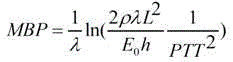
step three, physiological parameters such as blood oxygen, blood pressure, heart rate and body temperature of the transplanted patient are detected by the physiological parameter detection module through a medical instrument, the blood pressure is detected by adopting a pulse velocimetry method, and the determination model is as follows:
wherein λ is a constant with a value of 0.031
E0The elastic modulus of the arterial wall, when the pressure is zero, is constant and has a value of 1.429 mmhg;
MBP-blood pressure value; l-patient arm length; PTT-pulse wave transmission time;
ρ -blood viscosity (g/L).
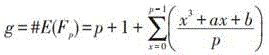
Fourthly, the central control module analyzes and evaluates the detected physiological parameters of the transplanted patient and the hematopoietic stem cell data by utilizing a data analysis system through an analysis and evaluation module; medical data such as patient hematopoietic stem cell transplantation and the like are encrypted by an information encryption module through a data encryption program, the information encryption module is encrypted by an ECC algorithm, and the mathematical model of the ECC algorithm is as follows:
define E as the elliptic curve on FP, the number of which satisfies: # e (fp) ═ p +1+ t, where the error term | t | <2p, then:
wherein: a. b is the coefficient on the elliptic curve; p is constant, and the safety is enhanced with the increase of the p value.
Step five, storing the physiological parameters of the patient and the hematopoietic stem cell data by a data storage module through a memory;
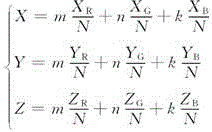
step six, utilize the display to show physiological parameters such as hemopoietic stem cell data after the transplantation, patient's blood oxygen, blood pressure, rhythm of the heart and body temperature and evaluation result through the display module, the display adopts the LDE color display screen, carries out different demonstration through different colors to the project that detects and index, and the mathematical model that the LDE color display screen adopted is:
wherein X, Y, Z is the tristimulus value, t is the light-emitting time, and the light-emitting time t determines the gray scale when the LED generates gray scale by pulse width modulation.
Further, the enhanced immigration module immigration method is as follows:
a. obtaining a sample comprising hematopoietic stem cells;
b. mixing the sample with at least one prostacyclin analogue to obtain a mixture;
c. incubating the mixture for a period of time sufficient to stimulate gas-signaling in the cell, and optionally;
d. isolating the stimulated cells.
Further, the information encryption module encryption method is as follows:
(1) encrypting at least one of the patient identity basic information and the identification information data of the hematopoietic stem cell transplantation effect according to a first encryption algorithm to obtain first encrypted data;
(2) encrypting a part of living environment data and the physiological information data according to a second encryption algorithm to obtain a first secret key and second encrypted data, wherein the living environment data comprises patient position information, environmental temperature and environmental humidity;
(3) encrypting the first encrypted data and the second encrypted data according to a third encryption algorithm according to at least one part of the visit data and the examination and diagnosis result data as a second key to obtain third encrypted data;
(4) and generating a check code according to the second secret key and the rest of the living environment data, and encrypting according to the check code, the first encrypted data and the second encrypted data according to a fourth encryption algorithm to obtain fourth encrypted data.
Further, the physiological parameters include blood oxygen, blood pressure, heart rate and body temperature.
Further, the encrypting at least one of the identification basic information and the identification information data of the hematopoietic stem cell transplantation effect according to the first encryption algorithm includes:
obtaining first data to be encrypted by a first encryption algorithm;
converting each character in the encrypted data into a first HEX code string;
forming 8 digits by the current date according to a format of 'four-digit annual digit' + 'two-digit monthly digit' + 'two-digit daily digit', and dividing the 8 digits by the last 1 digit of the ID card number respectively to obtain a remainder comprising 8 digits;
converting the first four digits of the remainder into a second HEX code string;
converting the last four digits of the remainder into a third HEX code string;
inserting a first HEX code in a second HEX code string between a last HEX code and a penultimate HEX code of the first HEX code string, inserting a second HEX code in the second HEX code string between the penultimate HEX code and a third penultimate HEX code of the first HEX code string, and so on until each HEX code in the second HEX code string is inserted into the first HEX code string;
inserting a first HEX code in a third HEX code string between a first HEX code and a second HEX code of the first HEX code string, inserting a second HEX code in the third HEX code string between the second HEX code and a third HEX code of the first HEX code string, and so on until each HEX code in the third HEX code string is inserted into the first HEX code string; and taking the processed first HEX code string as first encrypted data.
The invention has the advantages and positive effects that:
(1) the present invention is used to enhance engraftment of human HSCs when bone marrow is reconstituted using HSCs through an enhanced engraftment module. Accelerated engraftment shortens the time period in which subjects are susceptible to potentially fatal infections, bleeding, and other serious complications. Thus, prostacyclin analogs should be a useful therapeutic option to pre-treat donor bone marrow to enhance bone marrow engraftment (i.e., by reducing the number of cells required and shortening the duration of myelodysplasia). Continued treatment of subjects with prostacyclin analogs for several days following bone marrow transplantation should lead to improved clinical outcomes by increasing engraftment (i.e., by decreasing the number of cells needed and shortening the duration of myelodysplasia), enabling the detection of pulse conditions through the detection of blood pressure, and more accurate and timely detection and discovery of potentially serious complications.
(2) The information encryption module can encrypt data without using the existing modes of RSA, random seed and the like, so that the medical health information including personal privacy is encrypted with higher intensity.
(3) Different colors can be adopted for different detection items and detection structures through the colorful display to display, the result is more obvious, and the self-monitoring is easy.
Drawings
FIG. 1 is a flowchart of an information analysis method for identifying the effect of hematopoietic stem cell transplantation according to the present invention.
FIG. 2 is a block diagram of an information analysis system for identifying the effect of hematopoietic stem cell transplantation according to the present invention.
In fig. 2: 1. enhancing the immigration module; 2. a counting module; 3. a physiological parameter detection module; 4. a central control module; 5. an analysis evaluation module; 6. an information encryption module; 7. a data storage module; 8. and a display module.
Detailed Description
In order to make the objects, technical solutions and advantages of the present invention more apparent, the present invention is further described in detail with reference to the following embodiments. It should be understood that the specific embodiments described herein are merely illustrative of the invention and are not intended to limit the invention.
The application of the principles of the present invention will be further described with reference to the accompanying drawings and specific embodiments.
As shown in fig. 1, the information analysis system and method for identifying the effect of hematopoietic stem cell transplantation provided by the present invention comprises the following steps:
step S101, enhancing hematopoietic stem cell engraftment operation according to in vitro pretreatment hematopoietic stem cells through an enhanced engraftment module;
step S102, counting hematopoietic stem cell data by a counting module according to CD34 molecules for detecting surface specificity expression of the hematopoietic stem cells;
step S103, detecting physiological parameters such as blood oxygen, blood pressure, heart rate, body temperature and the like of the transplanted patient by using a medical instrument through a physiological parameter detection module;
step S104, the central control module analyzes and evaluates the detected physiological parameters of the transplanted patient and the hematopoietic stem cell data by using a data analysis system through an analysis and evaluation module; medical data such as patient hematopoietic stem cell transplantation and the like are encrypted by an information encryption module through a data encryption program;
step S105, storing the physiological parameters of the patient and the hematopoietic stem cell data by a data storage module through a memory;
and S106, displaying the transplanted hematopoietic stem cell data, the physiological parameters of the patient such as blood oxygen, blood pressure, heart rate and body temperature and the evaluation result by using a display through a display module.
As shown in fig. 2, the information analysis system for identifying the effect of hematopoietic stem cell transplantation according to the present invention includes: the system comprises an enhanced immigration module 1, a counting module 2, a physiological parameter detection module 3, a central control module 4, an analysis evaluation module 5, an information encryption module 6, a data storage module 7 and a display module 8.
The enhanced immigration module 1 is connected with the central control module 4 and is used for enhancing the immigration operation of the hematopoietic stem cells by preprocessing the hematopoietic stem cells in vitro;
a counting module 2 connected with the central control module 4 and used for counting the hematopoietic stem cell data by detecting the CD34 molecule specifically expressed on the surface of the hematopoietic stem cells;
the physiological parameter detection module 3 is connected with the central control module 4 and is used for detecting physiological parameters of the transplanted patient, such as blood oxygen, blood pressure, heart rate, body temperature and the like through a medical instrument;
the central control module 4 is connected with the enhanced immigration module 1, the counting module 2, the physiological parameter detection module 3, the analysis and evaluation module 5, the information encryption module 6, the data storage module 7 and the display module 8 and is used for controlling each module to normally work through a single chip microcomputer;
the analysis and evaluation module 5 is connected with the central control module 4 and is used for analyzing and evaluating the detected physiological parameters of the transplanted patient and the hematopoietic stem cell data through a data analysis system;
an information encryption module 6 connected to the central control module 4 for encrypting medical data such as patient hematopoietic stem cell transplantation by a data encryption program;
the data storage module 7 is connected with the central control module 4 and is used for storing the physiological parameters of the patient and the hematopoietic stem cell data through a memory;
and the display module 8 is connected with the central control module 4 and is used for displaying physiological parameters of transplanted hematopoietic stem cell data, blood oxygen, blood pressure, heart rate, body temperature and the like of a patient and evaluation results through a display.
The method for moving the enhanced moving-in module 1 provided by the invention comprises the following steps:
a. obtaining a sample comprising hematopoietic stem cells;
b. mixing the sample with at least one prostacyclin analogue to obtain a mixture;
c. incubating the mixture for a period of time sufficient to stimulate gas-signaling in the cell, and optionally;
d. isolating the stimulated cells.
The encryption method of the information encryption module 6 provided by the invention is as follows:
(1) encrypting at least one of the patient identity basic information and the identification information data of the hematopoietic stem cell transplantation effect according to a first encryption algorithm to obtain first encrypted data;
(2) encrypting a part of living environment data and the physiological information data according to a second encryption algorithm to obtain a first secret key and second encrypted data, wherein the living environment data comprises patient position information, environmental temperature and environmental humidity;
(3) encrypting the first encrypted data and the second encrypted data according to a third encryption algorithm according to at least one part of the visit data and the examination and diagnosis result data as a second key to obtain third encrypted data;
(4) and generating a check code according to the second secret key and the rest of the living environment data, and encrypting according to the check code, the first encrypted data and the second encrypted data according to a fourth encryption algorithm to obtain fourth encrypted data.
The physiological parameters provided by the invention include blood oxygen, blood pressure, heart rate and body temperature.
The present invention provides a method for encrypting at least one of identification information data of identity basic information and hematopoietic stem cell transplantation effect according to a first encryption algorithm, comprising:
obtaining first data to be encrypted by a first encryption algorithm;
converting each character in the encrypted data into a first HEX code string;
forming 8 digits by the current date according to a format of 'four-digit annual digit' + 'two-digit monthly digit' + 'two-digit daily digit', and dividing the 8 digits by the last 1 digit of the ID card number respectively to obtain a remainder comprising 8 digits;
converting the first four digits of the remainder into a second HEX code string;
converting the last four digits of the remainder into a third HEX code string;
inserting a first HEX code in a second HEX code string between a last HEX code and a penultimate HEX code of the first HEX code string, inserting a second HEX code in the second HEX code string between the penultimate HEX code and a third penultimate HEX code of the first HEX code string, and so on until each HEX code in the second HEX code string is inserted into the first HEX code string;
inserting a first HEX code in a third HEX code string between a first HEX code and a second HEX code of the first HEX code string, inserting a second HEX code in the third HEX code string between the second HEX code and a third HEX code of the first HEX code string, and so on until each HEX code in the third HEX code string is inserted into the first HEX code string; and taking the processed first HEX code string as first encrypted data.
The above description is only for the purpose of illustrating the preferred embodiments of the present invention and is not to be construed as limiting the invention, and any modifications, equivalents and improvements made within the spirit and principle of the present invention are intended to be included within the scope of the present invention.