CN110683030A - A vertical take-off and landing unmanned aerial vehicle - Google Patents
A vertical take-off and landing unmanned aerial vehicle Download PDFInfo
- Publication number
- CN110683030A CN110683030A CN201911024319.7A CN201911024319A CN110683030A CN 110683030 A CN110683030 A CN 110683030A CN 201911024319 A CN201911024319 A CN 201911024319A CN 110683030 A CN110683030 A CN 110683030A
- Authority
- CN
- China
- Prior art keywords
- wing
- fuselage
- aerial vehicle
- unmanned aerial
- landing
- Prior art date
- Legal status (The legal status is an assumption and is not a legal conclusion. Google has not performed a legal analysis and makes no representation as to the accuracy of the status listed.)
- Granted
Links
Images

Classifications
-
- B—PERFORMING OPERATIONS; TRANSPORTING
- B64—AIRCRAFT; AVIATION; COSMONAUTICS
- B64C—AEROPLANES; HELICOPTERS
- B64C1/00—Fuselages; Constructional features common to fuselages, wings, stabilising surfaces or the like
- B64C1/06—Frames; Stringers; Longerons ; Fuselage sections
- B64C1/068—Fuselage sections
-
- B—PERFORMING OPERATIONS; TRANSPORTING
- B64—AIRCRAFT; AVIATION; COSMONAUTICS
- B64C—AEROPLANES; HELICOPTERS
- B64C27/00—Rotorcraft; Rotors peculiar thereto
- B64C27/22—Compound rotorcraft, i.e. aircraft using in flight the features of both aeroplane and rotorcraft
-
- B—PERFORMING OPERATIONS; TRANSPORTING
- B64—AIRCRAFT; AVIATION; COSMONAUTICS
- B64C—AEROPLANES; HELICOPTERS
- B64C29/00—Aircraft capable of landing or taking-off vertically, e.g. vertical take-off and landing [VTOL] aircraft
-
- B—PERFORMING OPERATIONS; TRANSPORTING
- B64—AIRCRAFT; AVIATION; COSMONAUTICS
- B64C—AEROPLANES; HELICOPTERS
- B64C3/00—Wings
-
- B—PERFORMING OPERATIONS; TRANSPORTING
- B64—AIRCRAFT; AVIATION; COSMONAUTICS
- B64C—AEROPLANES; HELICOPTERS
- B64C9/00—Adjustable control surfaces or members, e.g. rudders
-
- B—PERFORMING OPERATIONS; TRANSPORTING
- B64—AIRCRAFT; AVIATION; COSMONAUTICS
- B64D—EQUIPMENT FOR FITTING IN OR TO AIRCRAFT; FLIGHT SUITS; PARACHUTES; ARRANGEMENT OR MOUNTING OF POWER PLANTS OR PROPULSION TRANSMISSIONS IN AIRCRAFT
- B64D27/00—Arrangement or mounting of power plants in aircraft; Aircraft characterised by the type or position of power plants
- B64D27/02—Aircraft characterised by the type or position of power plants
-
- B—PERFORMING OPERATIONS; TRANSPORTING
- B64—AIRCRAFT; AVIATION; COSMONAUTICS
- B64D—EQUIPMENT FOR FITTING IN OR TO AIRCRAFT; FLIGHT SUITS; PARACHUTES; ARRANGEMENT OR MOUNTING OF POWER PLANTS OR PROPULSION TRANSMISSIONS IN AIRCRAFT
- B64D27/00—Arrangement or mounting of power plants in aircraft; Aircraft characterised by the type or position of power plants
- B64D27/02—Aircraft characterised by the type or position of power plants
- B64D27/026—Aircraft characterised by the type or position of power plants comprising different types of power plants, e.g. combination of a piston engine and a gas-turbine
-
- B—PERFORMING OPERATIONS; TRANSPORTING
- B64—AIRCRAFT; AVIATION; COSMONAUTICS
- B64D—EQUIPMENT FOR FITTING IN OR TO AIRCRAFT; FLIGHT SUITS; PARACHUTES; ARRANGEMENT OR MOUNTING OF POWER PLANTS OR PROPULSION TRANSMISSIONS IN AIRCRAFT
- B64D27/00—Arrangement or mounting of power plants in aircraft; Aircraft characterised by the type or position of power plants
- B64D27/40—Arrangements for mounting power plants in aircraft
Landscapes
- Engineering & Computer Science (AREA)
- Aviation & Aerospace Engineering (AREA)
- Mechanical Engineering (AREA)
- Toys (AREA)
Abstract
本发明属于飞行器设计技术,具体涉及一种可垂直起降无人飞行器。为了摆脱旋翼飞行器模式的束缚,本发明综合了旋翼及固定翼飞机的多种飞行特性,所提出的可垂直起降无人飞行器包括机身、机翼、鸭翼、垂尾、电动发动机和燃油发动机,其中所述机身包括左机身和右机身,两者在前端通过鸭翼连接,在后端通过内侧机翼连接,在外端具有机翼,在后端部安装有包括旋翼的燃油发动机,在后端的上、下两侧具有垂尾,在垂尾的梢部安装有包括旋翼的电动发动机;机翼的后缘具有襟翼与副翼,垂尾的后缘具有方向舵。大大降低成本,提供了更大的载重空间,可实现此类飞行器大载重运输的任务需求。油耗更低,在垂直时有效提高抗风能力。
The invention belongs to the aircraft design technology, and particularly relates to an unmanned aircraft that can take off and land vertically. In order to get rid of the constraints of the rotary-wing aircraft mode, the present invention integrates various flight characteristics of rotary-wing and fixed-wing aircraft. an engine, wherein the fuselage includes a left fuselage and a right fuselage, both connected by a canard at the front end, connected by an inner wing at the rear end, having a wing at the outer end, and a fuel including a rotor mounted at the rear end The engine has a vertical tail on the upper and lower sides of the rear end, and an electric motor including a rotor is installed at the tip of the vertical tail; the trailing edge of the wing has flaps and ailerons, and the trailing edge of the vertical tail has a rudder. It greatly reduces the cost, provides a larger load space, and can meet the mission requirements of such aircraft for large-load transportation. The fuel consumption is lower, and the wind resistance is effectively improved when vertical.
Description
技术领域technical field
本发明属于飞行器设计技术,具体涉及一种可垂直起降无人飞行器。The invention belongs to the aircraft design technology, and particularly relates to an unmanned aircraft that can take off and land vertically.
背景技术Background technique
常规旋翼飞行器飞行速度低、航程短,且搭载能力有限,提髙飞行速度、加大飞行航程,增大载重运输能力,一直是旋翼飞行器研究的一个热门领域。尾座式垂直起降飞行器是一种有效的解决方案,与其它构型的旋翼飞行器相比,具有气动特性对称、机动性好、结构紧凑、悬停性能高等特性,更适用于起降场地限制较大、对悬停性能和机动能力要求强的场合。应用空间大、应用前景好,可在多种军事任务如侦察、预警、攻击以及非常规作战条件下发挥显著的作用,在未来军事领域起着不可替代的重要角色,将是未来战争中的主要参与者,亦可在相关重要民用领域如电力巡线、大坝检测、交通事故勘察等任务中发挥独特的作用。Conventional rotorcraft has low flight speed, short range, and limited carrying capacity. Increasing the flight speed, increasing the flight range, and increasing the load and transportation capacity have always been a hot field of rotorcraft research. The tailstock vertical take-off and landing aircraft is an effective solution. Compared with other configurations of rotorcraft, it has the characteristics of symmetrical aerodynamic characteristics, good maneuverability, compact structure and high hovering performance, and is more suitable for take-off and landing site restrictions. Larger occasions with strong requirements for hover performance and maneuverability. It has a large application space and good application prospects. It can play a significant role in a variety of military tasks such as reconnaissance, early warning, attack and unconventional combat conditions. Participants can also play a unique role in related important civil fields such as power line inspection, dam inspection, traffic accident investigation and other tasks.
发明内容SUMMARY OF THE INVENTION
本发明所要解决的技术问题是:提供一种尾座式可垂直起降的高效飞行器,摆脱旋翼飞行器模式的束缚,综合了旋翼及固定翼飞机的多种飞行特性,具有多种飞行控制指令及多种关键飞行任务模态,可实现垂直起降式无人机完成大载重的任务。The technical problem to be solved by the present invention is: to provide a tailstock type high-efficiency aircraft that can take off and land vertically, get rid of the constraints of the rotorcraft mode, integrate the various flight characteristics of the rotor and fixed-wing aircraft, and have a variety of flight control commands and A variety of key flight mission modes can realize vertical take-off and landing UAVs to complete heavy-load tasks.
本发明的技术方案是:一种可垂直起降无人飞行器,该飞行器包括机身、机翼、鸭翼、垂尾、电动发动机和燃油发动机,其中所述机身包括左机身和右机身,两者在前端通过鸭翼连接,在后端通过内侧机翼连接,在外端具有机翼,在后端部安装有包括旋翼的燃油发动机,在后端的上、下两侧具有垂尾,在垂尾的梢部安装有包括旋翼的电动发动机;机翼的后缘具有襟翼与副翼,垂尾的后缘具有方向舵。The technical scheme of the present invention is: an unmanned aerial vehicle capable of taking off and landing vertically, the aerial vehicle includes a fuselage, a wing, a canard, a vertical tail, an electric engine and a fuel engine, wherein the fuselage includes a left fuselage and a right fuselage The two are connected by canards at the front end, connected by the inner wing at the rear end, have wings at the outer end, a fuel engine including a rotor is installed at the rear end, and there are vertical tails on the upper and lower sides of the rear end, An electric motor including a rotor is installed on the tip of the vertical tail; the trailing edge of the wing has flaps and ailerons, and the trailing edge of the vertical tail has a rudder.
进一步地,所述机身与机翼采用翼身融合设计,以飞机纵向对称面对称。Further, the fuselage and the wing adopt a wing-body fusion design, and are symmetrical with the longitudinal symmetry plane of the aircraft.
进一步地,所述左机身和右机身的头部均采用半透明设计,分别为红外光电摄像头舱和可见光光电摄像头舱。Further, the heads of the left fuselage and the right fuselage both adopt a translucent design, and are respectively an infrared photoelectric camera cabin and a visible light photoelectric camera cabin.
进一步地,所述机翼为中单梯形翼,翼梢设计有翼尖小翼,在翼尖小翼下方具有辅助垂直起降的支撑杆,其与翼面光滑过度,所述电动发动机底端具有用于垂直起降的支撑杆。Further, the wing is a single trapezoidal wing, the wing tip is designed with a winglet, and there is a support rod for assisting vertical take-off and landing under the winglet, which is smooth and smooth with the airfoil, and the bottom end of the electric engine is Has struts for vertical take-off and landing.
进一步地,所述鸭翼为平直翼,两侧与机身光滑过渡设计,后缘布置有升降舵。Further, the canard is a straight wing with smooth transition design on both sides and the fuselage, and an elevator is arranged on the trailing edge.
进一步地,所述垂尾在1/4弦线后掠角40度。Further, the vertical tail is swept back by 40 degrees at the 1/4 chord line.
进一步地,机身内部还包括飞行控制系统、电源系统和应急回收装置。Further, the interior of the fuselage also includes a flight control system, a power supply system and an emergency recovery device.
进一步地,在垂直起降阶段时,电动发动机与燃油发动机提供飞机升力,水平姿态通过发动机提供的不对称推力进行控制,飞机的横航向姿态控制通过垂尾后缘的方向舵和不对称推力进行控制。Further, during the vertical take-off and landing stage, the electric engine and the fuel engine provide the lift of the aircraft, the horizontal attitude is controlled by the asymmetric thrust provided by the engine, and the lateral attitude of the aircraft is controlled by the rudder and asymmetric thrust on the trailing edge of the vertical tail. .
进一步地,在过渡阶段时,通过电动发动机提供的非对称推力以及垂尾后缘的方向舵,调整飞行器的姿态,当机体达到一定速度产生有效气动力时,联合各舵面与六个旋翼共同维持系统稳定性。Further, in the transition stage, the asymmetric thrust provided by the electric engine and the rudder on the trailing edge of the vertical tail are used to adjust the attitude of the aircraft. When the body reaches a certain speed to generate effective aerodynamic force, the rudder surfaces and the six rotors are jointly maintained. System stability.
进一步地,在前飞阶段时,航向通过方向舵进行控制,滚转姿态通过副翼进行控制,机体姿态通过自平衡系统调节,升降运动通过升降舵进行控制,所述电动发动机停止工作。Further, in the forward flight stage, the heading is controlled by the rudder, the rolling attitude is controlled by the ailerons, the body attitude is adjusted by the self-balancing system, the lifting motion is controlled by the elevator, and the electric engine stops working.
本发明的有益效果是:本发明可垂直起降的飞行器,其推力方向始终与机体运动方向一致,使得在起飞着陆阶段发动机推力在铅垂方向,在巡航阶段发动机推力在前飞方向,无推力转换结构,仅依靠飞行控制系统进行飞行姿态的变化,以达到从垂直起降模态进入平飞的巡航模态,且结构相对倾转动力的垂直起降无人机更简单,安全性与可靠性更高。The beneficial effects of the present invention are: the direction of the thrust of the aircraft capable of taking off and landing vertically is always consistent with the direction of movement of the body, so that the thrust of the engine is in the vertical direction during the take-off and landing phase, and the thrust of the engine is in the forward flight direction during the cruise phase, and there is no thrust. Converting the structure, only relying on the flight control system to change the flight attitude to achieve the cruise mode from the vertical take-off and landing mode to the level flight, and the structure is simpler, safer and more reliable than the vertical take-off and landing drone with tilting power. Sex is higher.
双机身允许采用可见光和红外这两种不同的透光材质设计吊舱保型外罩,相比相同性能需要的独立吊舱设计所使用的保型材质,大大降低成本,同时,双机身的设计为此飞行器提供了更大的载重空间,可实现此类飞行器大载重运输的任务需求。The dual fuselage allows the use of two different light-transmitting materials, visible light and infrared, to design the pod's conformal cover. Compared with the conformal material used in the design of independent pods that require the same performance, the cost is greatly reduced. The design provides a larger load space for this aircraft, which can meet the mission requirements for large-load transportation of such aircraft.
双油动发动机增加了此类垂直起降无人机起飞时横航向的控制余量,提高抗风能力,且相比提供同样的推力的单发设计,油耗更低,发动机尺寸更小,机身设计的阻力也就相对更小;鸭翼的设计在垂直时有效提高抗风能力。The dual-oil-powered engine increases the control margin of this type of vertical take-off and landing UAV in the lateral direction when it takes off, improves the wind resistance, and has lower fuel consumption, smaller engine size, and better wind resistance than the single-engine design that provides the same thrust. The resistance of the body design is relatively smaller; the design of the canard effectively improves the wind resistance when it is vertical.
附图说明Description of drawings
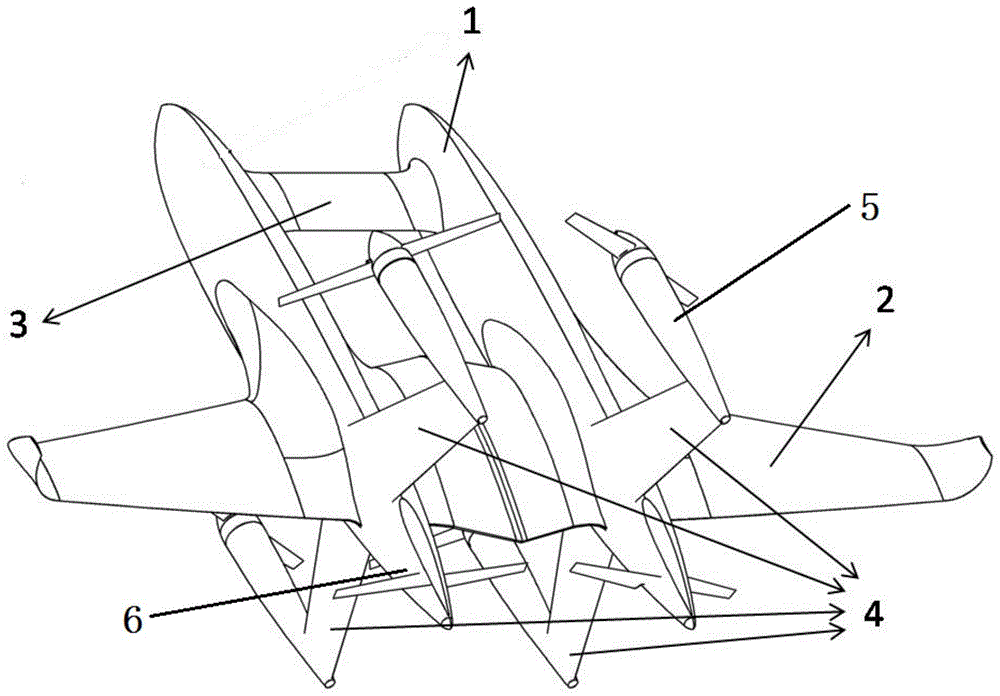
图1是本发明可垂直起降无人飞行器的结构示意图;Fig. 1 is the structural representation of the unmanned aerial vehicle that can take off and land vertically according to the present invention;
图2是本发明可垂直起降无人飞行器的垂直起降阶段示意图;2 is a schematic diagram of the vertical take-off and landing stage of the vertical take-off and landing unmanned aerial vehicle of the present invention;
图3是本发明可垂直起降无人飞行器的前飞阶段的俯视示意图。3 is a schematic top view of the forward flight stage of the vertical take-off and landing unmanned aerial vehicle of the present invention.
其中,1-机身,2-机翼,3-鸭翼,4-垂尾,5-电动发动机,6-燃油发动机Among them, 1-fuselage, 2-wing, 3-canard, 4-vertical tail, 5-electric engine, 6-fuel engine
具体实施方式Detailed ways
请参阅图1,本发明可垂直起降无人飞行器的结构示意图,包括机身1、机翼2、鸭翼3、垂尾4、电动发动机5和燃油发动机6。该可垂直起降无人飞行器,采用鸭式布局、双机身中单翼的气动布局,机身和机翼2、机身与鸭翼3均采用翼身融合设计。Please refer to FIG. 1 , which is a schematic structural diagram of the vertical take-off and landing unmanned aerial vehicle of the present invention, including a fuselage 1 , a wing 2 , a canard 3 , a vertical tail 4 , an electric engine 5 and a fuel engine 6 . The vertical take-off and landing unmanned aerial vehicle adopts the canard layout and the aerodynamic layout of the single wing in the double fuselage.
所述机身1,为双机身设计,包括左机身和右机身,两者关于飞机的纵向对称面对称;在左机身和右机身的尾部上、下两侧分别具有垂尾4,接合部分采用翼身融合设计;左机身和右机身的两个头部为光电摄像头舱,采用半透明设计,分别采用红外和可见光两种不同的透光材质,以用于瞄准发射或侦查;左机身和右机身的尾端部具有燃油发动机6,其具有旋翼;左机身和右机身的中部用于安置电池、油箱、飞行控制系统、电源及电气系统等。The fuselage 1 is a double fuselage design, including a left fuselage and a right fuselage, both of which are symmetrical about the longitudinal symmetry plane of the aircraft; Tail 4, the joint part adopts the wing-body fusion design; the two heads of the left fuselage and the right fuselage are photoelectric camera cabins, which adopt a translucent design, and use two different light-transmitting materials of infrared and visible light respectively for aiming. Launching or reconnaissance; the rear ends of the left and right fuselages have fuel engines 6 with rotors; the middle of the left and right fuselages are used to house batteries, fuel tanks, flight control systems, power supplies, and electrical systems.
所述机翼2,为中单梯形翼,采用低速高升力翼型Naca Ls-0417mod作为机翼根部,benedek 8405A作为机翼梢部翼型,安装角3度,上反角0度,扭转角 3度,梢根比为0.32,后缘布置升降副翼;翼梢处的设计支撑杆与翼面光滑过度。左机身和右机身之间采用benedek10355B翼型。采用双梁式设计机翼部分结构,在翼根和翼梢设计加强肋,其余部分均布肋板,蒙皮采用碳纤维玻璃钢材质,一体成型。The wing 2 is a single trapezoidal wing. The low-speed and high-lift airfoil Naca Ls-0417mod is used as the root of the wing, and the benedek 8405A is used as the wing tip. The installation angle is 3 degrees, the dihedral angle is 0 degrees, and the twist angle is 3 degrees. 3 degrees, the tip-to-root ratio is 0.32, and the elevons are arranged on the trailing edge; the design support rod at the wing tip and the airfoil surface are too smooth. The benedek 10355B airfoil is used between the left fuselage and the right fuselage. The structure of the wing part is designed with double spar type, and reinforcing ribs are designed at the wing root and wing tip, and the rest of the wing is evenly distributed with ribs. The skin is made of carbon fiber glass fiber reinforced plastic, which is integrally formed.
所述鸭翼3,安装在左机身和右机身的中部前端,采用平直翼,中单翼,安装角2°,稍根比1,展长850cm,后缘布置升降舵。The canard 3 is installed at the front end of the middle of the left fuselage and the right fuselage. It adopts a straight wing, a middle single wing, an installation angle of 2°, a slight root ratio of 1, a length of 850cm, and an elevator arranged on the trailing edge.
所述垂尾4,在左机身和右机身的上下两侧对称安装,1/4弦线后掠角40度,展弦比11,尖根比为0.55;在上下两侧垂直尾翼翼梢处,均安装有电动发动机5,其具有旋翼;两侧垂直尾翼的后缘均设有方向舵。The vertical tail 4 is installed symmetrically on the upper and lower sides of the left fuselage and the right fuselage, with a 1/4 chord line sweep angle of 40 degrees, an aspect ratio of 11, and a tip-to-root ratio of 0.55; vertical tail fins on the upper and lower sides At the tip, an electric motor 5 is installed, which has a rotor; the trailing edges of the vertical tails on both sides are provided with rudders.
所述电动发动机5,分两部分,上部剖面呈抛物线型包裹桨叶插盘,下部剖面呈抛物线型,包裹内部电机,形成电发动机舱;尾段设计支撑杆;四组旋翼关于无人飞行器中心轴等距,且两两对称。优化方案为,四组旋翼成正方形分布。The electric motor 5 is divided into two parts, the upper section is a parabolic wrapping blade insert, and the lower section is parabolic, wrapping the internal motor to form an electric engine compartment; the tail section is designed with a support rod; the four sets of rotors are about the center of the unmanned aerial vehicle. The axes are equidistant and symmetrical. The optimal solution is that the four sets of rotors are distributed in a square.
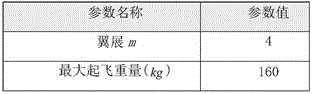
表1是该可垂直起降无人飞行器的主要性能指标。Table 1 is the main performance index of the VTOL UAV.
表1Table 1

垂直起降阶段:如图2所示,四个电动发动机5与机身尾部的燃油发动机6 提供飞机升力,水平姿态通过发动机推力不对称进行控制,飞机的横航向姿态控制通过垂尾后缘的方向舵和两侧机身的动力不对称进行控制。Vertical take-off and landing stage: As shown in Figure 2, the four electric engines 5 and the fuel engine 6 at the tail of the fuselage provide aircraft lift, the horizontal attitude is controlled by the asymmetry of engine thrust, and the lateral heading attitude of the aircraft is controlled by the trailing edge of the vertical tail. The rudder and the power asymmetry of the fuselage on both sides are controlled.
过渡阶段:电动发动机5提供的非对称推力以及垂尾后缘方向舵的转动,实现水平与高度方向的运动,其机体的姿态通过自平衡系统稳定,当机体达到一定速度,产生有效气动力时,接入方向舵、升降舵与外侧机翼后缘的副翼,与四个旋翼共同维持系统稳定性。Transition stage: The asymmetric thrust provided by the electric engine 5 and the rotation of the rudder on the trailing edge of the vertical tail realize the movement in the horizontal and height directions. The posture of the body is stabilized by the self-balancing system. When the body reaches a certain speed and generates effective aerodynamic force, The rudder, elevator and aileron on the trailing edge of the outer wing are connected to maintain the stability of the system together with the four rotors.
前飞阶段:航向通过方向舵进行控制,滚转姿态通过副翼进行控制,机体姿态通过自平衡系统调节,升降运动通过升降舵进行控制。Forward flight stage: the heading is controlled by the rudder, the roll attitude is controlled by the ailerons, the body attitude is adjusted by the self-balancing system, and the lift motion is controlled by the elevator.
Claims (10)
Priority Applications (1)
| Application Number | Priority Date | Filing Date | Title |
|---|---|---|---|
| CN201911024319.7A CN110683030B (en) | 2019-10-25 | 2019-10-25 | An unmanned aerial vehicle capable of vertical take-off and landing |
Applications Claiming Priority (1)
| Application Number | Priority Date | Filing Date | Title |
|---|---|---|---|
| CN201911024319.7A CN110683030B (en) | 2019-10-25 | 2019-10-25 | An unmanned aerial vehicle capable of vertical take-off and landing |
Publications (2)
| Publication Number | Publication Date |
|---|---|
| CN110683030A true CN110683030A (en) | 2020-01-14 |
| CN110683030B CN110683030B (en) | 2024-12-31 |
Family
ID=69114097
Family Applications (1)
| Application Number | Title | Priority Date | Filing Date |
|---|---|---|---|
| CN201911024319.7A Active CN110683030B (en) | 2019-10-25 | 2019-10-25 | An unmanned aerial vehicle capable of vertical take-off and landing |
Country Status (1)
| Country | Link |
|---|---|
| CN (1) | CN110683030B (en) |
Cited By (1)
| Publication number | Priority date | Publication date | Assignee | Title |
|---|---|---|---|---|
| CN112607012A (en) * | 2020-12-24 | 2021-04-06 | 中国航空工业集团公司西安飞机设计研究所 | Vertical take-off and landing fixed wing unmanned aerial vehicle and take-off and landing method |
Citations (8)
| Publication number | Priority date | Publication date | Assignee | Title |
|---|---|---|---|---|
| US20050178879A1 (en) * | 2004-01-15 | 2005-08-18 | Youbin Mao | VTOL tailsitter flying wing |
| CN102897319A (en) * | 2012-08-10 | 2013-01-30 | 江闻杰 | Fuselage variant type vertical take off and landing aircraft |
| CN104290906A (en) * | 2014-11-04 | 2015-01-21 | 中国人民解放军国防科学技术大学 | Vertical take-off and landing aircraft |
| CN205440869U (en) * | 2016-03-31 | 2016-08-10 | 西安东锐航空科技有限公司 | Fixed chord flight time aircraft of canard configuration of VTOL |
| CN106927040A (en) * | 2017-02-21 | 2017-07-07 | 西安爱生技术集团公司 | It is a kind of can VTOL the rotor tailless configuration aircraft of tailstock formula four |
| CN206511122U (en) * | 2017-02-13 | 2017-09-22 | 深圳市龙云创新航空科技有限公司 | A kind of VTOL Fixed Wing AirVehicle |
| US10301016B1 (en) * | 2016-08-09 | 2019-05-28 | Vimana, Inc. | Stabilized VTOL flying apparatus and aircraft |
| CN211223827U (en) * | 2019-10-25 | 2020-08-11 | 中国航空工业集团公司西安飞行自动控制研究所 | A vertical take-off and landing unmanned aerial vehicle |
-
2019
- 2019-10-25 CN CN201911024319.7A patent/CN110683030B/en active Active
Patent Citations (8)
| Publication number | Priority date | Publication date | Assignee | Title |
|---|---|---|---|---|
| US20050178879A1 (en) * | 2004-01-15 | 2005-08-18 | Youbin Mao | VTOL tailsitter flying wing |
| CN102897319A (en) * | 2012-08-10 | 2013-01-30 | 江闻杰 | Fuselage variant type vertical take off and landing aircraft |
| CN104290906A (en) * | 2014-11-04 | 2015-01-21 | 中国人民解放军国防科学技术大学 | Vertical take-off and landing aircraft |
| CN205440869U (en) * | 2016-03-31 | 2016-08-10 | 西安东锐航空科技有限公司 | Fixed chord flight time aircraft of canard configuration of VTOL |
| US10301016B1 (en) * | 2016-08-09 | 2019-05-28 | Vimana, Inc. | Stabilized VTOL flying apparatus and aircraft |
| CN206511122U (en) * | 2017-02-13 | 2017-09-22 | 深圳市龙云创新航空科技有限公司 | A kind of VTOL Fixed Wing AirVehicle |
| CN106927040A (en) * | 2017-02-21 | 2017-07-07 | 西安爱生技术集团公司 | It is a kind of can VTOL the rotor tailless configuration aircraft of tailstock formula four |
| CN211223827U (en) * | 2019-10-25 | 2020-08-11 | 中国航空工业集团公司西安飞行自动控制研究所 | A vertical take-off and landing unmanned aerial vehicle |
Cited By (1)
| Publication number | Priority date | Publication date | Assignee | Title |
|---|---|---|---|---|
| CN112607012A (en) * | 2020-12-24 | 2021-04-06 | 中国航空工业集团公司西安飞机设计研究所 | Vertical take-off and landing fixed wing unmanned aerial vehicle and take-off and landing method |
Also Published As
| Publication number | Publication date |
|---|---|
| CN110683030B (en) | 2024-12-31 |
Similar Documents
| Publication | Publication Date | Title |
|---|---|---|
| CN107176286B (en) | Double-duct fan power system-based foldable fixed wing vertical take-off and landing unmanned aerial vehicle | |
| CN104290907B (en) | Novel hybrid vertical/short take off and landing unmanned vehicle | |
| CN102826215B (en) | Light and small flying-wing manned aircraft with short takeoff and landing capacity | |
| CN106184738B (en) | A kind of dismountable tailstock formula vertical take-off and landing drone | |
| WO2016184358A1 (en) | Fixed structure type vertical take-off and landing aircraft based on dual flying control systems and control method therefor | |
| CN105480416A (en) | Unmanned aerial vehicle with tilted rotors | |
| CN110254720B (en) | Solar unmanned aerial vehicle with flying wing layout | |
| CN110816806B (en) | A swarm bionic solar unmanned aerial vehicle | |
| CN110217391B (en) | Oil-electricity hybrid power vertical take-off and landing forward-swept fixed wing unmanned aerial vehicle | |
| CN106240814A (en) | A kind of power-controlled tail sitting posture mixed layout vertically taking off and landing flyer | |
| CN105366049A (en) | Vertical takeoff and landing unmanned aerial vehicle | |
| CN106218887A (en) | A kind of vertically taking off and landing flyer of distributed-power device layout | |
| CN112896499A (en) | Vertical take-off and landing aircraft with combined layout of tilting duct and fixed propeller | |
| CN108128448A (en) | The coaxial tilting rotor wing unmanned aerial vehicle of double shoe formulas and its control method | |
| CN105818980A (en) | Novel large-lift-force vertical take-off and landing aircraft | |
| CN107878746A (en) | A kind of VTOL fixed-wing long endurance unmanned aircraft of oil electric mixed dynamic | |
| CN107140179A (en) | A kind of tailstock formula tandem chord endurance aerodynamic configuration of aircraft | |
| CN213921485U (en) | Rudder control type vertical take-off and landing unmanned aerial vehicle | |
| CN113830301A (en) | Many rotor crafts of lift wing with control surface | |
| CN111498100A (en) | Thrust vector tilting three-rotor unmanned aerial vehicle and control method thereof | |
| CN110116802A (en) | A kind of big loading small-sized unmanned aircraft of high universalizable | |
| CN214451787U (en) | Double-fuselage compound wing layout multistage propulsion unmanned aerial vehicle | |
| CN213323678U (en) | A power distribution type unmanned aerial vehicle that can take off and land vertically | |
| CN105129097A (en) | A UAV layout capable of vertical take-off and landing | |
| CN206327567U (en) | A kind of compound unmanned vehicle |
Legal Events
| Date | Code | Title | Description |
|---|---|---|---|
| PB01 | Publication | ||
| PB01 | Publication | ||
| SE01 | Entry into force of request for substantive examination | ||
| SE01 | Entry into force of request for substantive examination | ||
| GR01 | Patent grant | ||
| GR01 | Patent grant |