CN110856127A - Short message transmission method, device and storage medium - Google Patents
Short message transmission method, device and storage medium Download PDFInfo
- Publication number
- CN110856127A CN110856127A CN201911202497.4A CN201911202497A CN110856127A CN 110856127 A CN110856127 A CN 110856127A CN 201911202497 A CN201911202497 A CN 201911202497A CN 110856127 A CN110856127 A CN 110856127A
- Authority
- CN
- China
- Prior art keywords
- short message
- cnap
- calling
- information
- calling number
- Prior art date
- Legal status (The legal status is an assumption and is not a legal conclusion. Google has not performed a legal analysis and makes no representation as to the accuracy of the status listed.)
- Pending
Links
- 238000000034 method Methods 0.000 title claims abstract description 49
- 230000005540 biological transmission Effects 0.000 title claims abstract description 22
- 238000004590 computer program Methods 0.000 claims description 10
- 230000000694 effects Effects 0.000 abstract description 4
- 238000005516 engineering process Methods 0.000 abstract description 4
- 238000010295 mobile communication Methods 0.000 abstract description 3
- 238000010586 diagram Methods 0.000 description 18
- 230000006870 function Effects 0.000 description 15
- 238000004891 communication Methods 0.000 description 5
- 230000008569 process Effects 0.000 description 4
- 230000006835 compression Effects 0.000 description 3
- 238000007906 compression Methods 0.000 description 3
- 239000000835 fiber Substances 0.000 description 2
- 230000003287 optical effect Effects 0.000 description 2
- 230000001902 propagating effect Effects 0.000 description 2
- RYGMFSIKBFXOCR-UHFFFAOYSA-N Copper Chemical compound [Cu] RYGMFSIKBFXOCR-UHFFFAOYSA-N 0.000 description 1
- 230000000295 complement effect Effects 0.000 description 1
- 229910052802 copper Inorganic materials 0.000 description 1
- 239000010949 copper Substances 0.000 description 1
- 238000004519 manufacturing process Methods 0.000 description 1
- 238000012986 modification Methods 0.000 description 1
- 230000004048 modification Effects 0.000 description 1
- 239000004065 semiconductor Substances 0.000 description 1
- 230000003068 static effect Effects 0.000 description 1
Images




Classifications
-
- H—ELECTRICITY
- H04—ELECTRIC COMMUNICATION TECHNIQUE
- H04W—WIRELESS COMMUNICATION NETWORKS
- H04W4/00—Services specially adapted for wireless communication networks; Facilities therefor
- H04W4/12—Messaging; Mailboxes; Announcements
- H04W4/14—Short messaging services, e.g. short message services [SMS] or unstructured supplementary service data [USSD]
-
- H—ELECTRICITY
- H04—ELECTRIC COMMUNICATION TECHNIQUE
- H04W—WIRELESS COMMUNICATION NETWORKS
- H04W88/00—Devices specially adapted for wireless communication networks, e.g. terminals, base stations or access point devices
- H04W88/18—Service support devices; Network management devices
- H04W88/184—Messaging devices, e.g. message centre
Landscapes
- Engineering & Computer Science (AREA)
- Computer Networks & Wireless Communication (AREA)
- Signal Processing (AREA)
- Telephonic Communication Services (AREA)
- Mobile Radio Communication Systems (AREA)
Abstract
The present disclosure relates to the field of mobile communications technologies, and in particular, to a short message transmission method, an apparatus, and a storage medium. The method comprises the following steps: the short message gateway receives a first short message sent by a calling number; when the calling number accords with a calling rule of CNAP service, adding CNAP information in the first short message to obtain a second short message, wherein the CNAP information comprises name information of the calling number; and sending the second short message to a called number corresponding to the calling number. The second short message sent to the called number is the short message added with the name information of the calling number, so that the second short message is more regular and is easy to identify, the condition that the called terminal can only know the content text of the short message and the calling number if the calling number of the short message is a strange number in the related technology is avoided, the identification effect of the short message is ensured, and the application of the CNAP service in the SMS service is realized.
Description
Technical Field
The present disclosure relates to the field of mobile communications technologies, and in particular, to a short message transmission method, an apparatus, and a storage medium.
Background
Short Message Services (SMS) is a very popular data service currently provided by mobile operators.
In the related art, a general short message transmission process includes, but is not limited to: the calling terminal A sends a short message sending request to the short message gateway, after the short message gateway receives the short message sending request, the short message gateway analyzes the short message in the short message sending request, the analyzed short message is sent to the called terminal B, and the called terminal B receives the short message. And finishing the transmission flow of the whole short message.
However, in the above method, if the number of the calling terminal a is a strange number for the called terminal B, that is, the called terminal B does not store the name information corresponding to the number of the calling terminal a, the called terminal B can only know the number of the calling terminal while receiving the short message, which results in a poor short message identification effect.
Disclosure of Invention
In view of the above, the present disclosure provides a short message transmission method, apparatus and storage medium. The technical scheme is as follows:
according to an aspect of the present disclosure, there is provided a short message transmission method for use in a short message gateway, the method including:
receiving a first short message sent by a calling number;
when the Calling number accords with a Calling rule of Calling Name Presentation (CNAP) service, adding CNAP information into the first short message to obtain a second short message, wherein the CNAP information comprises Name information of the Calling number;
and sending the second short message to a called number corresponding to the calling number.
In a possible implementation manner, a message structure of the first short message includes a short message content text, and when the calling number conforms to a call rule of a CNAP service, adding CNAP information to the first short message to obtain a second short message includes:
and when the calling number accords with the calling rule of the CNAP service, adding the CNAP information in front of the short message content text of the first short message to obtain the second short message when the calling number accords with the calling rule of the CNAP service.
In another possible implementation manner, the message structure of the first short message further includes a user data header positioned before the content text of the short message,
when the calling number conforms to the call rule of the CNAP service, adding the CNAP information to the first short message before the short message content text to obtain the second short message, including:
and when the calling number accords with the call rule of the CNAP service, adding a user data head information unit comprising the CNAP information in the user data head of the first short message to obtain the second short message.
In another possible implementation manner, the message structure of the first short message does not include a user data header,
when the calling number conforms to the call rule of the CNAP service, adding the CNAP information to the first short message before the short message content text to obtain the second short message, including:
and when the calling number accords with the calling rule of the CNAP service, adding a user data header comprising the CNAP information in front of the short message content text of the first short message to obtain the second short message.
In another possible implementation manner, the CNAP information further includes a CNAP identifier and a CNAP data length, where the CNAP identifier is used to indicate that the CNAP information exists, and the CNAP data length is a byte number of the name information of the calling number.
In another possible implementation manner, the call rule of the CNAP service includes that the calling number is registered with the CNAP service, and calling line identification CLI information, calling name information, and a name database are available.
In another possible implementation manner, before sending the second short message to the called number corresponding to the calling number, the method further includes:
calculating the total message length of the second short message;
when the total message length of the second short message exceeds a preset length threshold, splitting the second short message into a plurality of sub-messages;
the sending the second short message to the called number corresponding to the calling number includes:
and sending the plurality of sub-messages to the called number corresponding to the calling number.
According to another aspect of the present disclosure, there is provided a short message transmission apparatus for use in a short message gateway, the apparatus including:
the receiving module is used for receiving a first short message sent by a calling number;
an adding module, configured to add, when the calling number conforms to a calling rule of a calling name display (CNAP) service, CNAP information to the first short message to obtain a second short message, where the CNAP information includes name information of the calling number;
and the sending module is used for sending the second short message to the called number corresponding to the calling number.
In a possible implementation manner, the message structure of the first short message includes a short message content text, and the adding module is further configured to add the CNAP information before the short message content text of the first short message to obtain the second short message when the calling number conforms to a call rule of the CNAP service when the calling number conforms to the call rule of the CNAP service.
In another possible implementation manner, the message structure of the first short message further includes a user data header positioned before the content text of the short message,
the adding module is further configured to add a user data header information unit including the CNAP information to the user data header of the first short message to obtain the second short message when the calling number conforms to a call rule of the CNAP service.
In another possible implementation manner, the message structure of the first short message does not include a user data header,
the adding module is further configured to add a user data header including the CNAP information in front of the short message content text of the first short message to obtain the second short message when the calling number conforms to a call rule of the CNAP service.
In another possible implementation manner, the CNAP information further includes a CNAP identifier and a CNAP data length, where the CNAP identifier is used to indicate that the CNAP information exists, and the CNAP data length is a byte number of the name information of the calling number.
In another possible implementation manner, the call rule of the CNAP service includes that the calling number is registered with the CNAP service, and calling line identification CLI information, calling name information, and a name database are available.
In another possible implementation manner, the apparatus further includes: and (5) splitting the module. The splitting module is used for calculating the total message length of the second short message; when the total message length of the second short message exceeds a preset length threshold, splitting the second short message into a plurality of sub-messages;
the sending module is further configured to send the plurality of sub-messages to the called number corresponding to the calling number.
According to another aspect of the present disclosure, there is provided a short message gateway comprising:
a processor;
a memory for storing processor-executable instructions;
wherein the processor is configured to:
receiving a first short message sent by a calling number;
when the calling number accords with a calling rule of calling name display (CNAP) service, adding CNAP information into the first short message to obtain a second short message, wherein the CNAP information comprises name information of the calling number;
and sending the second short message to a called number corresponding to the calling number.
According to another aspect of the present disclosure, there is provided a non-transitory computer readable storage medium having stored thereon computer program instructions which, when executed by a processor, implement the above-described method.
The method comprises the steps that a first short message sent by a calling number is received through a short message gateway; when the calling number accords with a calling rule of the CNAP service, adding CNAP information into the first short message to obtain a second short message, wherein the CNAP information comprises name information of the calling number; sending a second short message to a called number corresponding to the calling number; the second short message sent to the called number is the short message added with the name information of the calling number, so that the second short message is more regular and easy to identify, the condition that the called terminal can only know the content text of the short message and the calling number if the calling number of the short message is an unfamiliar number in the related art is avoided, the identification effect of the short message is ensured, and the application of the CNAP service in the SMS service is realized.
Drawings
The accompanying drawings, which are incorporated in and constitute a part of this specification, illustrate exemplary embodiments, features, and aspects of the disclosure and, together with the description, serve to explain the principles of the disclosure.
Fig. 1 shows a schematic diagram of a communication system to which embodiments of the present disclosure relate;
fig. 2 is a flow chart illustrating a method of short message transmission according to an exemplary embodiment;
fig. 3 is a flow chart illustrating a method of short message transmission according to another exemplary embodiment;
fig. 4 is a diagram illustrating a message structure of a first short message in accordance with an exemplary embodiment;
fig. 5 is a diagram illustrating a message structure of a second short message in accordance with an exemplary embodiment;
fig. 6 is a schematic diagram illustrating a message structure of a first short message according to another exemplary embodiment;
fig. 7 is a diagram illustrating a message structure of a second short message according to another exemplary embodiment;
fig. 8 is a schematic structural diagram illustrating a short message transmission apparatus according to an exemplary embodiment.
Detailed Description
Various exemplary embodiments, features and aspects of the present disclosure will be described in detail below with reference to the accompanying drawings. In the drawings, like reference numbers can indicate functionally identical or similar elements. While the various aspects of the embodiments are presented in drawings, the drawings are not necessarily drawn to scale unless specifically indicated.
The word "exemplary" is used exclusively herein to mean "serving as an example, embodiment, or illustration. Any embodiment described herein as "exemplary" is not necessarily to be construed as preferred or advantageous over other embodiments.
Furthermore, in the following detailed description, numerous specific details are set forth in order to provide a better understanding of the present disclosure. It will be understood by those skilled in the art that the present disclosure may be practiced without some of these specific details. In some instances, methods, means, elements and circuits that are well known to those skilled in the art have not been described in detail so as not to obscure the present disclosure.
Before explaining the embodiments of the present disclosure, an application scenario of the embodiments of the present disclosure is explained. Referring to fig. 1, a schematic diagram of a communication system according to an embodiment of the present disclosure is shown. The communication system comprises a terminal device 11 and a short message gateway.
The Short Message gateway includes at least one of a Mobile Services Switching Center (MSC) 12/a Serving GPRS Support Node (SGSN) 13, a Visitor Location Register (VLR) 14, a Mobility Management Node (MME) 15, a Short Message routing device (english: SMS Router)16, a Short Message service interworking Mobile Switching Center (english: SMS-IWMSC)17, a Short Message gateway Mobile Switching Center (english: SMS-GMSC)18, a Home Location Register (Home Location Register, HLR) 19/a Home Subscriber Server (Home Subscriber Server, HSS)20, and a Short Message service Center (Short Message service Center, SMSC) 21.
Optionally, the terminal device 11 is connected to the mobile services switching center 12/serving GPRS support node 13 and the mobility management node 15, the visitor location register 14 is connected to the mobile services switching center 12/serving GPRS support node 13 and the mobility management node 15, the mobile services switching center 12/serving GPRS support node 13 is connected to the short message service interworking mobile switching center 17, and the short message service interworking mobile switching center 17 is connected to the short message service center 21. The connection relationship between the short message gateways may refer to the connection manner shown in fig. 1, and is not described herein again. The embodiment of the present disclosure does not limit the type, number and connection mode of the short message gateway.
The terminal equipment 11 is also called a Mobile Station (MS), and the terminal equipment 11 is a physical equipment with a Subscriber Identity Module (SIM). The SIM of the terminal device has a one-to-one correspondence with the mobile number, which is used to uniquely identify the SIM in the terminal device 11. For example, the terminal device 11 is a mobile phone.
Optionally, the terminal device 11 includes a plurality of terminal devices. In the embodiment of the present disclosure, the calling terminal corresponding to the calling number is any one of the plurality of terminal devices, and the called terminal corresponding to the called number is one of the plurality of terminal devices except for the calling terminal.
Optionally, the visitor location register 14 stores a correspondence between a mobile number of a registered CNAP service and CNAP information.
Illustratively, the CNAP information includes name information of the mobile number. The name information of the mobile number is user-defined information. For example, the name information of the mobile number is information that the user registers at the operator in the process of registering the CNAP service.
Alternatively, the CNAP service is a supplementary service provided by an operator, and is similar to a caller Identification Presentation (CLIP) service, the CLIP server provides a number display function for an incoming call, and the CNAP service provides a function of displaying name information of a Calling number to a called terminal when the incoming call is established.
Optionally, the short message service interworking mobile switching center 17 is configured to receive a Transport Protocol Data Unit (TPDU) from the mobile service switching center 12 or the serving GPRS support node 13, establish a connection with the short message service center 21, and send the TPDU to the short message service center 21.
Optionally, the serving GPRS support node 13 is configured to perform at least one function of routing forwarding, mobility management, session management, logical link management, authentication and encryption, ticket generation and output, and the like of a packet data packet.
During the sending of the short message, the calling terminal is configured to send a first short message to the mobile services switching center 12 and the visitor location register 14 through the calling number. The mobile services switching centre 12 and the visitor location register 14 are used to determine whether to send CNAP information corresponding to the calling number. Optionally, the mobile services switching center 12 and the visitor location register 14 are configured to determine, according to the calling number of the calling terminal, whether the calling number conforms to a call rule of a CNAP service, for example, determine whether CNAP information corresponding to the calling number is stored. If the calling number conforms to the calling rule of the CNAP service, it is determined to send the CNAP information corresponding to the calling number to the short message service center 21.
Correspondingly, the short message service center 21 is configured to receive a first short message and CNAP information corresponding to the calling number, and add the CNAP information to the first short message to obtain a second short message.
The short message service center 21 is further configured to send the second short message to the called terminal corresponding to the called number.
It should be noted that, some related terms related to the embodiments of the present disclosure may refer to corresponding related descriptions in the 3GPP protocol, and are not described herein again.
The network architecture and the service scenario described in the embodiment of the present disclosure are for more clearly illustrating the technical solution of the embodiment of the present disclosure, and do not constitute a limitation to the technical solution provided in the embodiment of the present disclosure, and as the network architecture evolves and a new service scenario appears, a person of ordinary skill in the art may know that the technical solution provided in the embodiment of the present disclosure is also applicable to similar technical problems.
The technical solution of the present disclosure is described below by means of several exemplary embodiments.
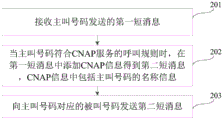
Fig. 2 is a flow chart illustrating a short message transmission method according to an example embodiment. The method can be applied in a short message gateway of the communication system shown in fig. 1. The method may include the following steps.
Optionally, the calling terminal sends the first short message through the calling number, and correspondingly, the short message gateway receives the first short message sent by the calling terminal through the calling number.
The first short message is a short message which is sent by a calling number and is not received by a called number.
Optionally, the short message gateway receives the number identifier of the called number while receiving the first short message sent by the calling number. The number identification of the called number is used to uniquely identify the called number among a plurality of mobile numbers.
The short message gateway judges whether the calling number accords with the calling rule of the CNAP service, if so, the CNAP information is added into the first short message to obtain a second short message. And if the calling number does not accord with the calling rule of the CNAP service, sending a first short message to the called number according to a traditional mode.
Optionally, the short message gateway stores a correspondence between mobile numbers served by multiple registered CNAPs and multiple CNAP information.
Optionally, the CNAP information corresponding to the mobile number includes name information of a calling number that is set by a user when the CNAP service is registered. For example, the name information of the calling number is the name of the holder of the calling number (such as name, nickname or code number, etc.) or the user identification number or other information set by a user. This embodiment is not limited thereto.
Optionally, the name information of the calling number is information that does not exceed a preset name length. For example, the default name length is 10 bytes.
Optionally, the call rule of the CNAP service is preset. Illustratively, the call rules of the CNAP service include that the Calling number is registered with the CNAP service, and Calling Line Identification (CLI) information is available, Calling name information (Calling name information) is available, and a name database is available. The present embodiment does not limit the setting manner of the call rule for CNAP service.
Optionally, the calling line identification information includes number information of a calling number; the calling name information comprises name information of a calling number; the name database is a database for storing name information of calling numbers.
Optionally, the determining, by the short message gateway, whether the calling number is registered with the CNAP service includes: the short message gateway judges whether the CNAP service corresponding to the calling number is stored or not, and if the CNAP service corresponding to the calling number is stored, the CNAP service registered by the calling number is judged; if the CNAP service corresponding to the calling number is not stored, judging that the calling number is not registered in the NAP service.
And the short message gateway sends a second short message to the called terminal corresponding to the called number. The second short message is the first short message added with the CNAP information. Correspondingly, the called terminal receives the second short message.
Optionally, the called terminal is a terminal device supporting the CNAP capability, that is, the called terminal has a capability of analyzing the CNAP information. The called number of the called terminal is a mobile number that conforms to the call rules of the CNAP service or does not conform to the call rules of the CNAP service.
And after receiving the second short message, the called terminal analyzes the second short message to obtain the short message content text of the second short message and the name information of the calling number. The manner of displaying the second short message by the called terminal includes but is not limited to the following possible implementation manners:
in a possible implementation manner, the called terminal displays the name information of the calling number at the same time of displaying the short message content text of the second short message.
In another possible implementation manner, the second short message also carries number information of the calling number. And after the called terminal finishes analyzing the second short message, judging whether the number information of the calling number is stored in the contact list, if the number information of the calling number is stored in the contact list, acquiring the contact identification corresponding to the number information of the calling number, and displaying the contact identification corresponding to the calling number while displaying the short message content text of the second short message. And if the number information of the calling number is not stored in the contact list, the called terminal displays the name information of the calling number while displaying the short message content text of the second short message. The embodiment of the present disclosure does not limit how the called terminal displays the short message after receiving the second short message.
To sum up, the embodiment of the present disclosure provides an implementation manner of a CNAP service in a short message service application, where a first short message sent by a calling number is received through a short message gateway; when the calling number accords with a calling rule of the CNAP service, adding CNAP information into the first short message to obtain a second short message, wherein the CNAP information comprises name information of the calling number; sending a second short message to a called number corresponding to the calling number; the second short message sent to the called number is the short message added with the name information of the calling number, so that the second short message is more regular and easy to identify, the condition that the called terminal can only know the content text of the short message and the calling number if the calling number of the short message is an unfamiliar number in the related art is avoided, the identification effect of the short message is ensured, and the application of the CNAP service in the SMS service is realized.
Fig. 3 is a flowchart illustrating a short message transmission method according to another exemplary embodiment. The method can be applied in a short message gateway of the communication system shown in fig. 1. The method may include the following steps.
Optionally, the calling terminal sends the first short message through the calling number, and correspondingly, the short message gateway receives the first short message sent by the calling terminal through the calling number.
Optionally, the short message gateway includes a mobile services switching center, a visitor location register, and a short message service center.
The mobile service switching center and the visitor location register receive a first short message sent by a calling terminal through a calling number.
Wherein, the message structure of the first short message comprises the content text of the short message. The message structure of the first short message may include a User Data Header (UDH) or may not include a User Data Header in addition to the short message content text. This embodiment is not limited thereto.
Optionally, the coding mode of the first short message includes any one of a non-compression 7-bit coding mode, a non-compression 8-bit coding mode and a non-compression 16-bit UCS2 coding mode. This embodiment is not limited thereto.
In the embodiment of the present disclosure, a message structure in which the first short message adopts a global system for mobile communications (GSM 7bit Default alpha beta) coding manner is only used as an example for description.
Optionally, after receiving the first short message sent by the calling number, the mobile service switching center and the visitor location register determine whether the calling number conforms to a call rule of a CNAP service, so as to determine whether to send CNAP information corresponding to the calling number to the short message service center.
Optionally, the call rule of the CNAP service is preset. Illustratively, the call rules for the CNAP service include that the calling number is registered with the CNAP service, and that calling line identification information is available, calling name information is available, and a name database is available. The present embodiment does not limit the setting manner of the call rule for CNAP service.
Illustratively, the mobile services switching center and the visitor location register determine whether CNAP information corresponding to a calling number is stored according to the calling number of the calling terminal. If the CNAP information corresponding to the calling number is stored, and the calling line identification information, the calling name information and the name database are available, namely the calling number conforms to the calling rule of the CNAP service, the calling number and the corresponding CNAP information are determined to be sent to a short message service center. Correspondingly, the short message service center receives the calling number and the corresponding CNAP information. After receiving the calling number and the corresponding CNAP information, the short message service center adds the CNAP information in front of the short message content text of the first short message to obtain a second short message.
Wherein, the CNAP information includes name information of the calling number. Optionally, the CNAP information further includes a CNAP identifier and a CNAP data length, where the CNAP identifier is used to indicate that the CNAP information exists, and the CNAP data length is a byte number of name information of the calling number.
Optionally, the CNAP identifier is used to indicate that there is CNAP information in the short message, and the CNAP identifier is any one of 26-6F, A0-BF and E0-FF. The specific value of the CNAP identifier is not limited in this embodiment.
In a possible implementation manner, the message structure of the first short message further includes a user data header located before the content text of the short message. And when the calling number accords with the calling rule of the CNAP service, adding a user data head information unit comprising the CNAP information in the user data head of the first short message to obtain a second short message.
Optionally, the Message structure of the first Short Message includes a User Data Length (UDL), a User Data header, and a Short Message (SM) content text. The User Header includes a User Data Header Length (UDHL), a plurality of User Data Header Information Elements (IE), each of the plurality of User Data Header Information elements including an Information Element Identifier (IEI), an Information Element Data Length (IEDL), and Information Element Data (IED). The UDL is the total byte number of the short message content, the UDHL is the byte number of the user data header, and the current section is not included, that is, the length of the user data header is UDHL plus 1. The IEI in each header information element is used to indicate the meaning and/or function of the header information element, for example, when the IEI is 00, it is used to indicate long short messages (english). The IEDL is used to indicate the number of bytes of information element data of the user data header information element, excluding the present byte.
Optionally, the short message service center adds a user data header information unit including CNAP information after a last user data header information unit in a user data header of the first short message and before a complementary bit (english: Fill bits), to obtain the second short message.
It should be noted that, some related terms related to the embodiments of the present disclosure may refer to corresponding related descriptions in the 3GPP protocol, and are not described herein again.
In an illustrative example, as shown in fig. 4, the first short message includes a message structure of a user data header in a GSM 7bit default alpha beta coding manner. The message structure of the first short message includes UDL, UDHL, n IEs, Fill bits, and SM. Wherein the n IEs include IEIa、IEDLa、IEDa、IEIbAnd so on up to IEIn、IEDLn、IEDnN is a positive integer greater than 1Number, SM is 7bit data. As shown in FIG. 5, the SMS center is at the IEDnThen adding a user data head information element IE containing CNAP information before Fillbitsn+1Obtaining a second short message, the user data head information element IEn+1Including IEIn+1、IEDLn+1、IEDn+1. Wherein, IEIn+1A CNAP identification of "26" indicating the presence of CNAP information; IEDLn+1Is the number of bytes of CNAP data length, namely name information of calling number, IEDn+1Name information set for the calling number at the operator.
In another possible implementation, the message structure of the first short message does not include a user data header. And when the calling number accords with the calling rule of the CNAP service, adding a user data header comprising CNAP information in front of the short message content text of the first short message to obtain a second short message.
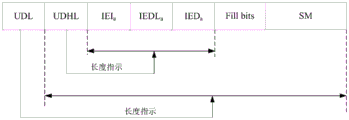
Optionally, the message structure of the first short message includes a user data length and a short message content text.
Optionally, the short message service center adds a user data header including CNAP information after the user data length of the first short message and before the short message content text, to obtain the second short message.
In an illustrative example, as shown in fig. 6, the first short message adopts a message structure that a GSM 7bit defaulttalbett coding mode does not include a user data header. The message structure of the first short message comprises UDL and SM. Wherein, SM is 7bit data. As shown in fig. 7, the short message service center adds a user data header including CNAP information after the UDL and before the SM to obtain a second short message, where the user data header includes UDHL and IEIa、IEDLa、IEDaAnd Fill bits. The UDHL is the byte number of a user data head, and the byte number does not comprise a current subsection, namely the length of the user data head is added by the UDHL by 1; IEIaA CNAP identification of "26" indicating the presence of CNAP information; IEDLaIs the number of bytes of CNAP data length, namely name information of calling number, IEDaName information set for the calling number at the operator.
After the short message service center adds the CNAP information in front of the short message content text of the first short message to obtain the second short message, the total message length of the second short message needs to be calculated. The short message service center determines whether the total message length of the second short message exceeds a preset length threshold, and if the total message length of the second short message does not exceed the preset length threshold, step 304 is executed. If the total message length of the second short message exceeds the preset length threshold, step 305 is executed.
Wherein the preset length threshold is set by default. For example, the preset length threshold is 140 bytes. This embodiment is not limited thereto.
And step 304, when the total message length of the second short message does not exceed the preset length threshold, sending the second short message to the called number corresponding to the calling number.
Optionally, when the total message length of the second short message does not exceed the preset length threshold, the short message service center sends the second short message to the called number. And the called terminal corresponding to the called number receives the second short message. And after receiving and analyzing the second short message, the called terminal displays the short message content text of the second short message and the name information of the calling number.
It should be noted that, the manner of displaying the second short message by the called terminal may refer to the relevant details in the foregoing embodiments, and details are not described herein again.
Optionally, when the total message length of the second short message exceeds the preset length threshold, the short message service center splits the second short message into a plurality of sub-messages according to the preset length threshold.
In a possible implementation manner, since the total message length of the second short message after adding the CNAP information may exceed a preset length threshold, when the calling terminal opens the CNAP service for the SMS service through the calling number, the short message gateway sends first prompt information to the calling terminal, where the first prompt information is used to prompt that there is a short message splitting operation due to adding the CNAP information.
According to the specification of CNAP service, the maximum CNAP information can reach 80 bytes; and the preset length threshold specified by the standard short message service is 140 bytes. In a possible implementation manner, in the process of setting the name information of the calling number by the calling terminal, the short message gateway sends second prompt information to the calling terminal, where the second prompt information is used to indicate that the set name information of the calling number does not exceed a preset name length, for example, the preset name length is 10 bytes, so that a short message splitting operation can be avoided. In another possible implementation manner, the calling terminal presets a preset text length of the input short message content text, so that the length of the short message content text input on the short message editing interface does not exceed the preset text length, and a short message splitting operation caused by subsequent addition of the CNAP information is avoided.
The short message service center splits the second short message into a plurality of sub-messages and then sends the plurality of sub-messages to the called number. And the called terminal corresponding to the called number receives the plurality of sub-messages. After receiving and analyzing the plurality of sub-messages, the called terminal synthesizes the contents of the plurality of sub-messages into a short message content text of a second short message, displays the short message content text of the second short message and simultaneously displays the name information of the calling number.
It should be noted that, the manner of displaying the second short message by the called terminal may refer to the relevant details in the foregoing embodiments, and details are not described herein again.
In an illustrative example, after the user opens the CNAP service at the operator through number 1 of terminal a, the CNAP information is set to name information "TestName" of number 1 at the operator. When a terminal A needs to send a short message to a number 2 of a terminal B through a number 1, the terminal A sends the short message to a short message gateway, the short message gateway adds CNAP information 'TestName' of the number 1 to the short message, and sends the short message added with the CNAP information 'TestName' of the number 1 to the number 2 of the terminal B. If the terminal B supports the CNAP function, the terminal B displays the name information "TestName" of the number 1 while displaying the short message content text of the short message on the incoming call interface.
In summary, the embodiment of the present disclosure further ensures the application of the CNAP service in the SMS service by using the reserved item of the user data header to identify the CNAP information in the current message structure without changing the message structure of the short message.
The method and the device have the advantages that the called terminal receives and analyzes the second short message, displays the short message content text of the second short message and the name information of the calling number, and compared with the condition that the calling number can only be displayed when being an unfamiliar number in the related technology, the method and the device omit the number display of the short message, the name information of the calling number is displayed, the name information is easy to search and identify, and the reading identification efficiency of specific information in a large amount of information is improved. Meanwhile, the flexibility of the text of the short message content is considered, and the name information is displayed more regularly and conveniently.
The following are embodiments of the apparatus of the present application that may be used to perform embodiments of the method of the present application. For details which are not disclosed in the embodiments of the apparatus of the present application, reference is made to the embodiments of the method of the present application.
Referring to fig. 8, fig. 8 is a schematic structural diagram illustrating a short message transmission apparatus according to an exemplary embodiment. The short message transmission device can be implemented by a dedicated hardware circuit, or a combination of hardware and software, as all or a part of the short message gateway shown in fig. 1, and includes: a receiving module 810, an adding module 820, and a sending module 830.
A receiving module 810, configured to receive a first short message sent by a calling number;
an adding module 820, configured to add, when the calling number conforms to a call rule of a CNAP service, CNAP information to the first short message to obtain a second short message, where the CNAP information includes name information of the calling number;
the sending module 830 is configured to send the second short message to the called number corresponding to the calling number.
In a possible implementation manner, the message structure of the first short message includes a short message content text, and the adding module 820 is further configured to, when the calling number conforms to the call rule of the CNAP service, add the CNAP information before the short message content text of the first short message to obtain the second short message when the calling number conforms to the call rule of the CNAP service.
In another possible implementation manner, the message structure of the first short message further includes a user data header positioned before the content text of the short message,
the adding module 820 is further configured to add a user data header information unit including CNAP information in a user data header of the first short message to obtain a second short message when the calling number conforms to a call rule of the CNAP service.
In another possible implementation, the message structure of the first short message does not include a user data header,
the adding module 820 is further configured to add a user data header including CNAP information in front of the short message content text of the first short message to obtain a second short message when the calling number conforms to the call rule of the CNAP service.
In another possible implementation manner, the CNAP information further includes a CNAP identifier and a CNAP data length, where the CNAP identifier is used to indicate that the CNAP information exists, and the CNAP data length is a byte number of name information of the calling number.
In another possible implementation, the call rule of the CNAP service includes that the calling number is registered with the CNAP service, and calling line identification CLI information is available, calling name information is available, and a name database is available.
In another possible implementation manner, the apparatus further includes: and (5) splitting the module. The splitting module is used for calculating the total message length of the second short message; when the total message length of the second short message exceeds a preset length threshold, splitting the second short message into a plurality of sub-messages;
the sending module 830 is further configured to send multiple sub-messages to the called number corresponding to the calling number.
It should be noted that, when the apparatus provided in the foregoing embodiment implements the functions thereof, only the division of the functional modules is illustrated, and in practical applications, the functions may be distributed by different functional modules according to needs, that is, the internal structure of the apparatus may be divided into different functional modules to implement all or part of the functions described above. In addition, the apparatus and method embodiments provided by the above embodiments belong to the same concept, and specific implementation processes thereof are described in the method embodiments for details, which are not described herein again.
The embodiment of the present disclosure further provides a short message gateway, where the short message gateway includes: a processor; a memory for storing processor-executable instructions; wherein the processor is configured to execute the method executed by the short message gateway in the above method embodiments.
The disclosed embodiments also provide a non-volatile computer-readable storage medium on which computer program instructions are stored, and the computer program instructions, when executed by a processor, implement the method performed by the short message gateway in the above-mentioned method embodiments.
The present disclosure may be systems, methods, and/or computer program products. The computer program product may include a computer-readable storage medium having computer-readable program instructions embodied thereon for causing a processor to implement various aspects of the present disclosure.
The computer readable storage medium may be a tangible device that can hold and store the instructions for use by the instruction execution device. The computer readable storage medium may be, for example, but not limited to, an electronic memory device, a magnetic memory device, an optical memory device, an electromagnetic memory device, a semiconductor memory device, or any suitable combination of the foregoing. More specific examples (a non-exhaustive list) of the computer readable storage medium would include the following: a portable computer diskette, a hard disk, a Random Access Memory (RAM), a read-only memory (ROM), an erasable programmable read-only memory (EPROM or flash memory), a Static Random Access Memory (SRAM), a portable compact disc read-only memory (CD-ROM), a Digital Versatile Disc (DVD), a memory stick, a floppy disk, a mechanical coding device, such as punch cards or in-groove projection structures having instructions stored thereon, and any suitable combination of the foregoing. Computer-readable storage media as used herein is not to be construed as transitory signals per se, such as radio waves or other freely propagating electromagnetic waves, electromagnetic waves propagating through a waveguide or other transmission medium (e.g., optical pulses through a fiber optic cable), or electrical signals transmitted through electrical wires.
The computer-readable program instructions described herein may be downloaded from a computer-readable storage medium to a respective computing/processing device, or to an external computer or external storage device via a network, such as the internet, a local area network, a wide area network, and/or a wireless network. The network may include copper transmission cables, fiber optic transmission, wireless transmission, routers, firewalls, switches, gateway computers and/or edge servers. The network adapter card or network interface in each computing/processing device receives computer-readable program instructions from the network and forwards the computer-readable program instructions for storage in a computer-readable storage medium in the respective computing/processing device.
The computer program instructions for carrying out operations of the present disclosure may be assembler instructions, Instruction Set Architecture (ISA) instructions, machine-related instructions, microcode, firmware instructions, state setting data, or source or object code written in any combination of one or more programming languages, including an object oriented programming language such as Smalltalk, C + + or the like and conventional procedural programming languages, such as the "C" programming language or similar programming languages. The computer-readable program instructions may execute entirely on the user's computer, partly on the user's computer, as a stand-alone software package, partly on the user's computer and partly on a remote computer or entirely on the remote computer or server. In the case of a remote computer, the remote computer may be connected to the user's computer through any type of network, including a Local Area Network (LAN) or a Wide Area Network (WAN), or the connection may be made to an external computer (for example, through the Internet using an Internet service provider). In some embodiments, the electronic circuitry that can execute the computer-readable program instructions implements aspects of the present disclosure by utilizing the state information of the computer-readable program instructions to personalize the electronic circuitry, such as a programmable logic circuit, a Field Programmable Gate Array (FPGA), or a Programmable Logic Array (PLA).
Various aspects of the present disclosure are described herein with reference to flowchart illustrations and/or block diagrams of methods, apparatus (systems) and computer program products according to embodiments of the disclosure. It will be understood that each block of the flowchart illustrations and/or block diagrams, and combinations of blocks in the flowchart illustrations and/or block diagrams, can be implemented by computer-readable program instructions.
These computer-readable program instructions may be provided to a processor of a general purpose computer, special purpose computer, or other programmable data processing apparatus to produce a machine, such that the instructions, which execute via the processor of the computer or other programmable data processing apparatus, create means for implementing the functions/acts specified in the flowchart and/or block diagram block or blocks. These computer-readable program instructions may also be stored in a computer-readable storage medium that can direct a computer, programmable data processing apparatus, and/or other devices to function in a particular manner, such that the computer-readable medium storing the instructions comprises an article of manufacture including instructions which implement the function/act specified in the flowchart and/or block diagram block or blocks.
The computer readable program instructions may also be loaded onto a computer, other programmable data processing apparatus, or other devices to cause a series of operational steps to be performed on the computer, other programmable apparatus or other devices to produce a computer implemented process such that the instructions which execute on the computer, other programmable apparatus or other devices implement the functions/acts specified in the flowchart and/or block diagram block or blocks.
The flowchart and block diagrams in the figures illustrate the architecture, functionality, and operation of possible implementations of systems, methods and computer program products according to various embodiments of the present disclosure. In this regard, each block in the flowchart or block diagrams may represent a module, segment, or portion of instructions, which comprises one or more executable instructions for implementing the specified logical function(s). In some alternative implementations, the functions noted in the block may occur out of the order noted in the figures. For example, two blocks shown in succession may, in fact, be executed substantially concurrently, or the blocks may sometimes be executed in the reverse order, depending upon the functionality involved. It will also be noted that each block of the block diagrams and/or flowchart illustration, and combinations of blocks in the block diagrams and/or flowchart illustration, can be implemented by special purpose hardware-based systems which perform the specified functions or acts, or combinations of special purpose hardware and computer instructions.
Having described embodiments of the present disclosure, the foregoing description is intended to be exemplary, not exhaustive, and not limited to the disclosed embodiments. Many modifications and variations will be apparent to those of ordinary skill in the art without departing from the scope and spirit of the described embodiments. The terms used herein were chosen in order to best explain the principles of the embodiments, the practical application, or technical improvements to the techniques in the marketplace, or to enable others of ordinary skill in the art to understand the embodiments disclosed herein.
Claims (10)
1. A short message transmission method, used in a short message gateway, the method comprising:
receiving a first short message sent by a calling number;
when the calling number accords with a calling rule of calling name display (CNAP) service, adding CNAP information into the first short message to obtain a second short message, wherein the CNAP information comprises name information of the calling number;
and sending the second short message to a called number corresponding to the calling number.
2. The method of claim 1, wherein a message structure of the first short message includes a short message content text, and wherein adding CNAP information to the first short message to obtain a second short message when the calling number conforms to a call rule of CNAP service comprises:
and when the calling number accords with the calling rule of the CNAP service, adding the CNAP information in front of the short message content text of the first short message to obtain the second short message when the calling number accords with the calling rule of the CNAP service.
3. The method according to claim 2, wherein the message structure of the first short message further comprises a user data header preceding the content text of the short message,
when the calling number conforms to the call rule of the CNAP service, adding the CNAP information to the first short message before the short message content text to obtain the second short message, including:
and when the calling number accords with the call rule of the CNAP service, adding a user data head information unit comprising the CNAP information in the user data head of the first short message to obtain the second short message.
4. The method of claim 2, wherein a user data header is not included in a message structure of the first short message,
when the calling number conforms to the call rule of the CNAP service, adding the CNAP information to the first short message before the short message content text to obtain the second short message, including:
and when the calling number accords with the calling rule of the CNAP service, adding a user data header comprising the CNAP information in front of the short message content text of the first short message to obtain the second short message.
5. The method according to any one of claims 1 to 4, wherein the CNAP information further includes a CNAP identifier and a CNAP data length, the CNAP identifier is used to indicate that the CNAP information exists, and the CNAP data length is a byte number of name information of the calling number.
6. The method according to any of claims 1 to 4, wherein the call rules of the CNAP service include that the calling number is registered with the CNAP service, and calling line identification CLI information, calling name information and a name database are available.
7. The method according to any one of claims 1 to 4, wherein before sending the second short message to the called number corresponding to the calling number, the method further comprises:
calculating the total message length of the second short message;
when the total message length of the second short message exceeds a preset length threshold, splitting the second short message into a plurality of sub-messages;
the sending the second short message to the called number corresponding to the calling number includes:
and sending the plurality of sub-messages to the called number corresponding to the calling number.
8. A short message transmission apparatus, for use in a short message gateway, the apparatus comprising:
the receiving module is used for receiving a first short message sent by a calling number;
an adding module, configured to add, when the calling number conforms to a calling rule of a calling name display (CNAP) service, CNAP information to the first short message to obtain a second short message, where the CNAP information includes name information of the calling number;
and the sending module is used for sending the second short message to the called number corresponding to the calling number.
9. A short message gateway, characterized in that it comprises:
a processor;
a memory for storing processor-executable instructions;
wherein the processor is configured to:
receiving a first short message sent by a calling number;
when the calling number accords with a calling rule of calling name display (CNAP) service, adding CNAP information into the first short message to obtain a second short message, wherein the CNAP information comprises name information of the calling number;
and sending the second short message to a called number corresponding to the calling number.
10. A non-transitory computer readable storage medium having computer program instructions stored thereon, wherein the computer program instructions, when executed by a processor, implement the method of any of claims 1 to 7.
Priority Applications (1)
| Application Number | Priority Date | Filing Date | Title |
|---|---|---|---|
| CN201911202497.4A CN110856127A (en) | 2019-11-29 | 2019-11-29 | Short message transmission method, device and storage medium |
Applications Claiming Priority (1)
| Application Number | Priority Date | Filing Date | Title |
|---|---|---|---|
| CN201911202497.4A CN110856127A (en) | 2019-11-29 | 2019-11-29 | Short message transmission method, device and storage medium |
Publications (1)
| Publication Number | Publication Date |
|---|---|
| CN110856127A true CN110856127A (en) | 2020-02-28 |
Family
ID=69606442
Family Applications (1)
| Application Number | Title | Priority Date | Filing Date |
|---|---|---|---|
| CN201911202497.4A Pending CN110856127A (en) | 2019-11-29 | 2019-11-29 | Short message transmission method, device and storage medium |
Country Status (1)
| Country | Link |
|---|---|
| CN (1) | CN110856127A (en) |
Citations (9)
| Publication number | Priority date | Publication date | Assignee | Title |
|---|---|---|---|---|
| CN1885967A (en) * | 2006-06-20 | 2006-12-27 | 中国移动通信集团公司 | Method for increasing transmitting party actual name in short message |
| CN1972466A (en) * | 2006-10-23 | 2007-05-30 | 华为技术有限公司 | A method, apparatus and system for implementing individualized signature of short message |
| CN101102551A (en) * | 2007-08-07 | 2008-01-09 | 中兴通讯股份有限公司 | A Realization Method of Short Message Carrying Recipient's Appellation |
| CN101621763A (en) * | 2009-07-31 | 2010-01-06 | 中兴通讯股份有限公司 | Method and corresponding device for displaying sender Chinese name at mobile phone terminal |
| CN101710909A (en) * | 2009-11-24 | 2010-05-19 | 中兴通讯股份有限公司 | Method and system for displaying card information of calling user |
| KR20100136173A (en) * | 2009-06-18 | 2010-12-28 | 주식회사 케이티 | A method, system, and portable terminal for displaying CNAP information transmitted in a separate field while maintaining a user text message field |
| CN107734180A (en) * | 2017-10-30 | 2018-02-23 | 江西博瑞彤芸科技有限公司 | Information processing method |
| CN110140366A (en) * | 2017-10-09 | 2019-08-16 | 华为技术有限公司 | A long short message sending method and terminal |
| CN111600987A (en) * | 2020-05-29 | 2020-08-28 | 展讯通信(上海)有限公司 | Method and device for displaying calling name of short message, storage medium, short message service center and receiving terminal |
-
2019
- 2019-11-29 CN CN201911202497.4A patent/CN110856127A/en active Pending
Patent Citations (9)
| Publication number | Priority date | Publication date | Assignee | Title |
|---|---|---|---|---|
| CN1885967A (en) * | 2006-06-20 | 2006-12-27 | 中国移动通信集团公司 | Method for increasing transmitting party actual name in short message |
| CN1972466A (en) * | 2006-10-23 | 2007-05-30 | 华为技术有限公司 | A method, apparatus and system for implementing individualized signature of short message |
| CN101102551A (en) * | 2007-08-07 | 2008-01-09 | 中兴通讯股份有限公司 | A Realization Method of Short Message Carrying Recipient's Appellation |
| KR20100136173A (en) * | 2009-06-18 | 2010-12-28 | 주식회사 케이티 | A method, system, and portable terminal for displaying CNAP information transmitted in a separate field while maintaining a user text message field |
| CN101621763A (en) * | 2009-07-31 | 2010-01-06 | 中兴通讯股份有限公司 | Method and corresponding device for displaying sender Chinese name at mobile phone terminal |
| CN101710909A (en) * | 2009-11-24 | 2010-05-19 | 中兴通讯股份有限公司 | Method and system for displaying card information of calling user |
| CN110140366A (en) * | 2017-10-09 | 2019-08-16 | 华为技术有限公司 | A long short message sending method and terminal |
| CN107734180A (en) * | 2017-10-30 | 2018-02-23 | 江西博瑞彤芸科技有限公司 | Information processing method |
| CN111600987A (en) * | 2020-05-29 | 2020-08-28 | 展讯通信(上海)有限公司 | Method and device for displaying calling name of short message, storage medium, short message service center and receiving terminal |
Non-Patent Citations (1)
| Title |
|---|
| 朱惠忠: "GSM-R的功能", 《GSM-R通信技术与应用》 * |
Similar Documents
| Publication | Publication Date | Title |
|---|---|---|
| JP5158890B2 (en) | Method and apparatus for parent controlled short message service | |
| KR101434330B1 (en) | A method and apparatus for selective message service blocking | |
| US20120278433A1 (en) | Method for transmitting and receiving multimedia information and terminal | |
| US20170019774A1 (en) | Method and system for off-net message communications | |
| US8792882B2 (en) | Method and apparatus for non-native short message service communications | |
| US8385953B2 (en) | Systems, methods, and computer program products for automatic mapping between parlay-X short messaging service message element XML encoding and native SMPP protocol data coding scheme | |
| US8588827B2 (en) | System and method for providing user names for network addresses | |
| KR101063150B1 (en) | A method, system, and portable terminal for displaying CNAP information transmitted in a separate field while maintaining a user text message field | |
| US11343863B2 (en) | System and method for communicating across multiple network types | |
| ES2273274T3 (en) | SELECTION OF A DATA TRANSFER METHOD. | |
| JP2010529711A (en) | International call roaming service providing method and mobile communication terminal therefor | |
| CN110856127A (en) | Short message transmission method, device and storage medium | |
| CN111600987A (en) | Method and device for displaying calling name of short message, storage medium, short message service center and receiving terminal | |
| KR100521004B1 (en) | Method and system for transmitting call back number of short message service according to mobile number portability | |
| JP5243948B2 (en) | Short message control device and short message control method | |
| CN114554427B (en) | A 5G message processing method, device, equipment and computer storage medium | |
| KR100991552B1 (en) | Apparatus and method for providing voice message service | |
| KR102197881B1 (en) | System and Method for Concatenated Short Message Service | |
| KR101564682B1 (en) | Method for Selective Displaying Message based on Location | |
| KR101717779B1 (en) | Method for Selective Providing Message based on Location | |
| KR101712151B1 (en) | Method for Selective Providing Message based on Location | |
| KR100903301B1 (en) | Information broadcast transmission method and system | |
| KR101493061B1 (en) | Method for Processing Message by using Location | |
| KR101741811B1 (en) | Method for web-to-phone message transfer'control and message gateway device | |
| CN111372208A (en) | Short message connection method, device and computer readable storage medium |
Legal Events
| Date | Code | Title | Description |
|---|---|---|---|
| PB01 | Publication | ||
| PB01 | Publication | ||
| SE01 | Entry into force of request for substantive examination | ||
| SE01 | Entry into force of request for substantive examination | ||
| RJ01 | Rejection of invention patent application after publication |
Application publication date: 20200228 |
|
| RJ01 | Rejection of invention patent application after publication |