CN111151237A - A kind of preparation method of precious metal catalyst - Google Patents

A kind of preparation method of precious metal catalyst Download PDF

Info

Publication number
CN111151237A
CN111151237A CN202010066725.6A CN202010066725A CN111151237A CN 111151237 A CN111151237 A CN 111151237A CN 202010066725 A CN202010066725 A CN 202010066725A CN 111151237 A CN111151237 A CN 111151237A
Authority
CN
China
Prior art keywords
ceo
solution
precious metal
metal catalyst
preparation
Prior art date
Legal status (The legal status is an assumption and is not a legal conclusion. Google has not performed a legal analysis and makes no representation as to the accuracy of the status listed.)
Pending
Application number
CN202010066725.6A
Other languages
Chinese (zh)
Inventor
刘荣海
郑欣
郭新良
李寒煜
和庆钢
邱方程
蔡晓斌
焦宗寒
虞鸿江
何运华
许宏伟
杨雪滢
杨迎春
宋玉峰
孔旭晖
陈国坤
代克顺
Current Assignee (The listed assignees may be inaccurate. Google has not performed a legal analysis and makes no representation or warranty as to the accuracy of the list.)
Electric Power Research Institute of Yunnan Power Grid Co Ltd
Original Assignee
Electric Power Research Institute of Yunnan Power Grid Co Ltd
Priority date (The priority date is an assumption and is not a legal conclusion. Google has not performed a legal analysis and makes no representation as to the accuracy of the date listed.)
Filing date
Publication date
Application filed by Electric Power Research Institute of Yunnan Power Grid Co Ltd filed Critical Electric Power Research Institute of Yunnan Power Grid Co Ltd
Priority to CN202010066725.6A priority Critical patent/CN111151237A/en
Publication of CN111151237A publication Critical patent/CN111151237A/en
Pending legal-status Critical Current

Links

Images

Classifications

    • BPERFORMING OPERATIONS; TRANSPORTING
    • B01PHYSICAL OR CHEMICAL PROCESSES OR APPARATUS IN GENERAL
    • B01JCHEMICAL OR PHYSICAL PROCESSES, e.g. CATALYSIS OR COLLOID CHEMISTRY; THEIR RELEVANT APPARATUS
    • B01J23/00Catalysts comprising metals or metal oxides or hydroxides, not provided for in group B01J21/00
    • B01J23/38Catalysts comprising metals or metal oxides or hydroxides, not provided for in group B01J21/00 of noble metals
    • B01J23/54Catalysts comprising metals or metal oxides or hydroxides, not provided for in group B01J21/00 of noble metals combined with metals, oxides or hydroxides provided for in groups B01J23/02 - B01J23/36
    • B01J23/56Platinum group metals
    • B01J23/63Platinum group metals with rare earths or actinides
    • BPERFORMING OPERATIONS; TRANSPORTING
    • B01PHYSICAL OR CHEMICAL PROCESSES OR APPARATUS IN GENERAL
    • B01JCHEMICAL OR PHYSICAL PROCESSES, e.g. CATALYSIS OR COLLOID CHEMISTRY; THEIR RELEVANT APPARATUS
    • B01J23/00Catalysts comprising metals or metal oxides or hydroxides, not provided for in group B01J21/00
    • B01J23/10Catalysts comprising metals or metal oxides or hydroxides, not provided for in group B01J21/00 of rare earths
    • BPERFORMING OPERATIONS; TRANSPORTING
    • B01PHYSICAL OR CHEMICAL PROCESSES OR APPARATUS IN GENERAL
    • B01JCHEMICAL OR PHYSICAL PROCESSES, e.g. CATALYSIS OR COLLOID CHEMISTRY; THEIR RELEVANT APPARATUS
    • B01J35/00Catalysts, in general, characterised by their form or physical properties
    • B01J35/20Catalysts, in general, characterised by their form or physical properties characterised by their non-solid state
    • B01J35/23Catalysts, in general, characterised by their form or physical properties characterised by their non-solid state in a colloidal state
    • BPERFORMING OPERATIONS; TRANSPORTING
    • B01PHYSICAL OR CHEMICAL PROCESSES OR APPARATUS IN GENERAL
    • B01JCHEMICAL OR PHYSICAL PROCESSES, e.g. CATALYSIS OR COLLOID CHEMISTRY; THEIR RELEVANT APPARATUS
    • B01J35/00Catalysts, in general, characterised by their form or physical properties
    • B01J35/30Catalysts, in general, characterised by their form or physical properties characterised by their physical properties
    • B01J35/33Electric or magnetic properties
    • CCHEMISTRY; METALLURGY
    • C25ELECTROLYTIC OR ELECTROPHORETIC PROCESSES; APPARATUS THEREFOR
    • C25BELECTROLYTIC OR ELECTROPHORETIC PROCESSES FOR THE PRODUCTION OF COMPOUNDS OR NON-METALS; APPARATUS THEREFOR
    • C25B1/00Electrolytic production of inorganic compounds or non-metals
    • C25B1/01Products
    • C25B1/02Hydrogen or oxygen
    • C25B1/04Hydrogen or oxygen by electrolysis of water
    • CCHEMISTRY; METALLURGY
    • C25ELECTROLYTIC OR ELECTROPHORETIC PROCESSES; APPARATUS THEREFOR
    • C25BELECTROLYTIC OR ELECTROPHORETIC PROCESSES FOR THE PRODUCTION OF COMPOUNDS OR NON-METALS; APPARATUS THEREFOR
    • C25B11/00Electrodes; Manufacture thereof not otherwise provided for
    • C25B11/04Electrodes; Manufacture thereof not otherwise provided for characterised by the material
    • C25B11/051Electrodes formed of electrocatalysts on a substrate or carrier
    • C25B11/073Electrodes formed of electrocatalysts on a substrate or carrier characterised by the electrocatalyst material
    • C25B11/091Electrodes formed of electrocatalysts on a substrate or carrier characterised by the electrocatalyst material consisting of at least one catalytic element and at least one catalytic compound; consisting of two or more catalytic elements or catalytic compounds
    • C25B11/093Electrodes formed of electrocatalysts on a substrate or carrier characterised by the electrocatalyst material consisting of at least one catalytic element and at least one catalytic compound; consisting of two or more catalytic elements or catalytic compounds at least one noble metal or noble metal oxide and at least one non-noble metal oxide
    • YGENERAL TAGGING OF NEW TECHNOLOGICAL DEVELOPMENTS; GENERAL TAGGING OF CROSS-SECTIONAL TECHNOLOGIES SPANNING OVER SEVERAL SECTIONS OF THE IPC; TECHNICAL SUBJECTS COVERED BY FORMER USPC CROSS-REFERENCE ART COLLECTIONS [XRACs] AND DIGESTS
    • Y02TECHNOLOGIES OR APPLICATIONS FOR MITIGATION OR ADAPTATION AGAINST CLIMATE CHANGE
    • Y02EREDUCTION OF GREENHOUSE GAS [GHG] EMISSIONS, RELATED TO ENERGY GENERATION, TRANSMISSION OR DISTRIBUTION
    • Y02E60/00Enabling technologies; Technologies with a potential or indirect contribution to GHG emissions mitigation
    • Y02E60/30Hydrogen technology
    • Y02E60/36Hydrogen production from non-carbon containing sources, e.g. by water electrolysis

Landscapes

  • Chemical & Material Sciences (AREA)
  • Engineering & Computer Science (AREA)
  • Chemical Kinetics & Catalysis (AREA)
  • Materials Engineering (AREA)
  • Organic Chemistry (AREA)
  • Electrochemistry (AREA)
  • Metallurgy (AREA)
  • Inorganic Chemistry (AREA)
  • Catalysts (AREA)

Abstract

本发明公开了一种贵金属催化剂的制备方法,以羧甲基纤维素钠和硝酸铈为前驱体,以乙醇和水的混合溶液为溶剂,通过表面活性剂的调控,在N2氛围下煅烧,得到了纳米级的CeO2/C复合载体。然后将得到的CeO2/C载体置于贵金属盐溶液中,通过KOH调节pH,干燥后,在N2氛围下进行煅烧,分别得到了Pd、Pt/负载于纳米CeO2/C载体上的HER催化剂。本发明能将贵金属负载于CeO2/C载体之上,能有效保证HER反应活性同时,降低催化剂生产成本,促进氢能社会迅速发展。

Figure 202010066725

The invention discloses a preparation method of a precious metal catalyst. The sodium carboxymethyl cellulose and cerium nitrate are used as precursors, and the mixed solution of ethanol and water is used as the solvent. The nano-scale CeO 2 /C composite carrier was obtained. Then, the obtained CeO 2 /C support was placed in a noble metal salt solution, the pH was adjusted by KOH, and after drying, it was calcined under N 2 atmosphere to obtain Pd, Pt/HER supported on nano-CeO 2 /C support, respectively. catalyst. The invention can load the precious metal on the CeO 2 /C carrier, can effectively ensure the HER reaction activity, reduce the catalyst production cost, and promote the rapid development of the hydrogen energy society.

Figure 202010066725

Description

Preparation method of noble metal catalyst
Technical Field
The invention belongs to the field of chemical reagents, and particularly relates to nanoscale CeO with high HER catalytic activity2A method for preparing a/C supported noble metal catalyst.
Background
As a novel renewable energy source and a clean energy source, the hydrogen energy has the green characteristics of high energy density, high conversion efficiency, abundant reserves, no pollution to the environment and the like, so that the era of the hydrogen energy is more and more recent, China strengthens the investment on the research and development of the hydrogen energy in recent years, grabs the opportunity and plans to develop the hydrogen energy step by step. In the future, the hydrogen energy and fuel cell industry in China will advance rapidly, a large number of innovation achievements emerge explosively, the sustainable development of hydrogen energy is realized, and a hydrogen energy society taking a fuel cell as a core technology is coming.
In the process of hydrogen energy development, the problem of hydrogen source is the most fundamental problem, and hydrogen production by water electrolysis is considered to be a simple, clean and efficient hydrogen production mode and has been widely concerned by people all the time. The water electrolysis reaction consists of two half reactions, namely Hydrogen Evolution Reaction (HER) at a cathode and Oxygen Evolution Reaction (OER) at an anode, and how to improve the HER reaction activity of the hydrogen evolution catalyst and reduce hydrogen evolution overpotential is a major subject of water electrolysis hydrogen production. In the prior art, when hydrogen is produced by electrolyzing water, a Pt/C catalyst is usually adopted to accelerate the hydrogen evolution reaction speed, but the Pt/carbon has poor earth reserve, large demand of various industries and short supply and demand, so that the price is high, the hydrogen production cost by electrolyzing water is higher, and the development pace of the hydrogen energy society is seriously influenced. Therefore, in order to reduce the cost of hydrogen production by electrolyzing water, the invention of a method which can replace a Pt/catalyst or reduce the Pt/load is particularly key, and can promote the rapid development of a hydrogen energy society.
Disclosure of Invention
The invention aims to invent a noble metal catalyst capable of replacing Pt/catalyst or reducing Pt/load to improve HER reaction activity, and provides a preparation method of the noble metal catalyst.
The invention adopts the following technical scheme:
a preparation method of a noble metal catalyst comprises the following steps:
s1, preparing nano-scale CeO by taking sodium carboxymethylcellulose and cerium nitrate as precursors2a/C composite carrier;
s2, mixing the nano-scale CeO2Dissolving the/C composite carrier in a noble metal salt solution, adding a KOH solution, and precipitating to obtain a catalyst precursor;
s3, roasting the catalyst precursor at high temperature to obtain CeO2a/C supported noble metal catalyst.
Preferably, the CeO2The preparation steps of the/C composite carrier are as follows:
s1.1, sufficiently dissolving a proper amount of sodium carboxymethylcellulose in a proper amount of water, and sequentially adding a proper amount of ethanol and a surfactant to form a dispersion liquid;
s1.2, adding a proper amount of cerium nitrate and dilute nitric acid into the dispersion liquid, and fully stirring until the cerium nitrate and the dilute nitric acid are completely dissolved to obtain the mixed liquid;
s1.3, calcining a solid product obtained by drying the mixed solution under a protective gas atmosphere to obtain nano-scale CeO2a/C composite carrier;
preferably, the concentration of the cerium nitrate and the concentration of the dilute nitric acid are both 0.1-0.2 mol/L, the volume ratio of the ethanol is 3: 2-2: 3, and the mass ratio of the surfactant to the sodium carboxymethyl cellulose is 1: 1-1: 3.
Preferably, the specific steps of preparing the catalyst precursor in step S2 are as follows:
s2.1, firstly, the CeO obtained in the step S1 is obtained2Dispersing the/C composite carrier in deionized water and carrying out ultrasonic stirring for 0.5-1 h;
s2.2, after adding a proper amount of noble metal salt solution, slowly dropwise adding 2-3 mol/L excess KOH solution at a dropwise adding speed of 10-15 drops per minute in CeO2Obtaining a precipitate on the/C composite carrier;
s2.3, adding a proper amount of deionized water again, heating to obtain a hot solution at the temperature of 60-100 ℃, and preserving heat for 1-3 hours;
and S2.4, carrying out vacuum filtration and washing processes on the hot solution while the hot solution is hot, and drying the water washing solution after the water washing solution is neutral to obtain the catalyst precursor.
Preferably, in the step S3, the catalyst precursor is calcined at a high temperature for 1-3 hours under the protection of inert gas, wherein the calcination temperature is 600-1000 ℃.
Preferably, the noble metal salt solution is a Pt/salt solution or a Pd salt solution.
Preferably, in step S1.1, a proper amount of sodium carboxymethylcellulose is fully dissolved in a proper amount of hot water, and the temperature of the hot water is controlled to be between 40 and 100 ℃.
Preferably, the mass ratio of the surfactant to the sodium carboxymethylcellulose is 1: 1-1: 3, the concentration of the cerium nitrate is 0.1-0.2 mol/L, and the concentration of the dilute nitric acid is 1.0-2.0 mol/L.
Preferably, in step S1.1, the ethanol solution is added to completely remove air bubbles from the solution.
Preferably, in step S1.1, the surfactant is added while stirring to ensure that the surfactant is sufficiently dissolved.
Has the advantages that: the scheme can load noble metal on CeO2On the/C carrier, the catalyst can effectively ensure HER reaction activity, reduce the production cost of the catalyst and promote the rapid development of a hydrogen energy society.
Drawings
FIG. 1: Pd/C, CeO2/C,Pd/CeO2XRD pattern of/C.
FIG. 2: Pd/CeO2TEM and particle size distribution of the/C catalyst.
FIG. 3: Pd/CeO2EDS mapping diagram of/C catalyst.
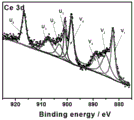
FIG. 4: Pd/CeO 23d orbital XPS plot of Ce for/C catalyst.
FIG. 5: Pd/CeO 23d orbital XPS plot of Pd for the/C catalyst.
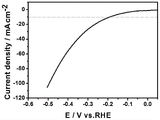
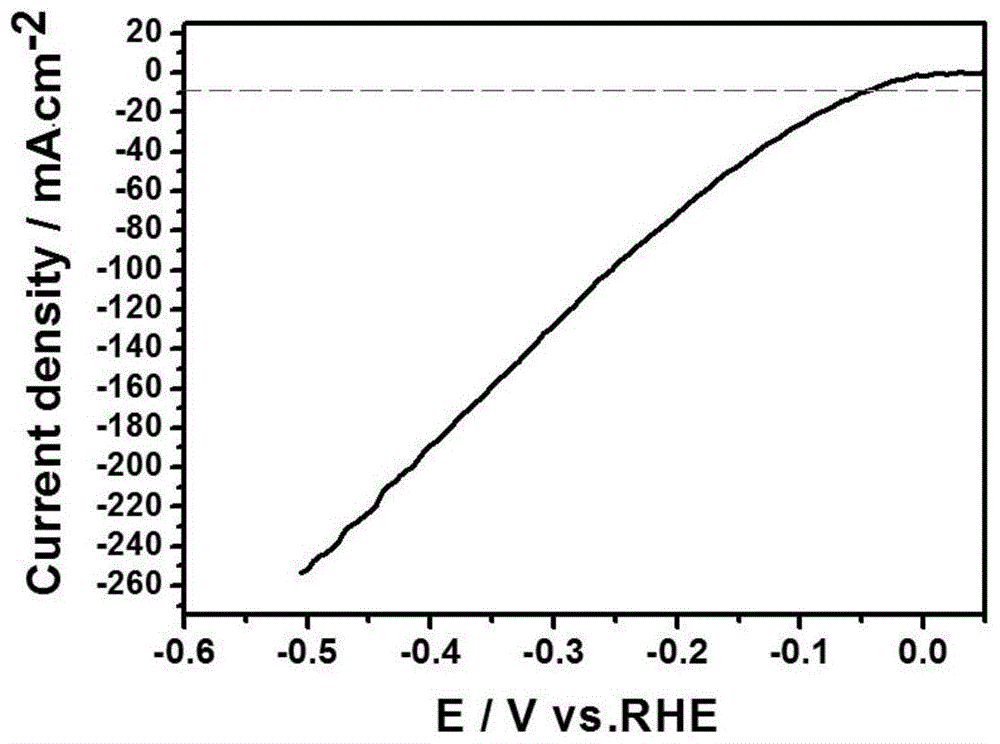
FIG. 6: Pd/CeO2Polarization curve of the/C catalyst in 1.0M Ar-saturated KOH solution.
FIG. 7: CeO (CeO)2TEM and particle size distribution of/C.
FIG. 8: CeO (CeO)2XPS plot of the 3d orbit of Ce for/C.
FIG. 9: CeO (CeO)2Polarization curve of the/C catalyst in 1.0M Ar-saturated KOH solution.
FIG. 10: TEM image of Pd/C.
FIG. 11: 3d orbital XPS plot of Pd for Pd/C.
FIG. 12: polarization curve of Pd/C catalyst in 1.0M Ar saturated KOH solution.
FIG. 13: TEM image of Pt/ECP
FIG. 14: XRD patterns of Pt/ECP, Pt/CeO2/C, CeO 2/C.
FIG. 15: 4f orbital XPS plot of Pt on Pt/ECP.
FIG. 16: polarization curves of Pt/ECP catalyst in 1.0M Ar saturated KOH solution.
FIG. 17: Pt/CeO2TEM image of/C
FIG. 18: Pt/CeO2XPS plot of the 3d orbit of Ce for/C.
FIG. 19: Pt/CeO2XPS plot of 4f orbitals of Pt,/C.
FIG. 20: Pt/CeO2Polarization curve of the/C catalyst in 1.0M Ar saturated KOH solution.
Detailed Description
To facilitate understanding and practice of the invention by those of ordinary skill in the art, the following detailed description of the invention is provided in conjunction with the examples and the accompanying drawings, it being understood that the examples described herein are illustrative and explanatory only and are not restrictive of the invention.
The preparation method of the scheme comprises the following basic steps:
s1, preparing nano-scale CeO by taking sodium carboxymethylcellulose and cerium nitrate as precursors2a/C composite carrier: a certain mass of deionized water is measured and heated until bubbles (85-95 ℃) are just generated. Adding 3-4% of sodium carboxymethylcellulose into hot water, and stirring until the sodium carboxymethylcellulose is uniformly dispersed. And then cooling, slowly dropwise adding absolute ethyl alcohol into the solution, wherein the volume ratio of the ethyl alcohol to the water in the system is 3: 2-2: 3, and stirring until the mixture is uniformly dispersed. Adding a surfactant F127 into the solution, wherein the mass ratio of the surfactant F127 to the sodium carboxymethylcellulose is 1: 1-1: 2, uniformly stirring, preparing a cerium nitrate-dilute nitric acid solution, wherein the concentration of the cerium nitrate is 0.1-0.2 mol/L, the concentration of the dilute nitric acid is 1.0-2.0 mol/L, and the volume ratio of the added cerium nitrate-dilute nitric acid solution to ethanol and waterIs 1:2:3, and is stirred until the dispersion is uniform. Continuously stirring and volatilizing the solvent, and drying in vacuum until the solvent is completely volatilized to obtain the nano-grade CeO2a/C composite carrier.
S2, mixing the nano-scale CeO2Dissolving the/C composite carrier in a noble metal salt solution, adding a KOH solution for precipitation to obtain a catalyst precursor: adding CeO2Grinding the/C precursor into powder, calcining at the high temperature of 600-1000 ℃ for 1-3 hours by using 99.999% high-purity nitrogen as protective gas, and naturally cooling to obtain nanoscale CeO2a/C carrier, and grinding the carrier into powder for standby; weighing noble metal salt powder, adding deionized water, stirring and ultrasonically treating until the noble metal salt powder is completely dissolved, and preparing a noble metal salt solution for later use, wherein the molar concentration of noble metal ions is 0.04 mol/L. Weighing a proper amount of KOH, and preparing 2.5mol/L KOH solution for later use; weighing CeO with a certain mass2the/C carrier is dispersed in the deionized water through stirring and ultrasonic treatment, and the mass fraction is 8 per thousand; adding noble metal salt solution to CeO dropwise2And uniformly stirring the carrier/C dispersion liquid. And (3) dropwise adding a potassium hydroxide solution into the dispersion liquid, wherein the potassium hydroxide is excessive by 4 times compared with the noble metal salt in order to fully precipitate the noble metal ions in the dispersion liquid, and uniformly stirring. And adding deionized water into the dispersion liquid for dilution, uniformly stirring, and reacting for 1-2 hours at 80-90 ℃. Carrying out hot suction filtration on the hot dispersion liquid, washing the hot dispersion liquid with deionized water to be neutral to obtain a filter cake, and drying the filter cake to obtain the noble metal/CeO2A catalyst precursor of/C.
S3, roasting the catalyst precursor at high temperature to obtain CeO2C-Supported noble Metal catalyst: mixing noble metal/CeO2the/C catalyst precursor was ground to a powder using 99.999% high purity N2As protective gas, calcining at 400-600 ℃ for 3-5 hours at high temperature, and naturally cooling to obtain nano-grade CeO with noble metal loading of about 5%2A noble metal catalyst is loaded on the/C.
The following supplementary analytical description is made in connection with a specific experimental control example:
example 1:
1. 30mL of water was poured into a beaker three-neck flask, the magnetic stirring device was turned on, the flask was heated to 90 ℃ with an oil bath, and 1g of sodium carboxymethylcellulose was added to the flask. After the sodium carboxymethylcellulose is completely dissolved, the temperature is adjusted to 65 ℃.
2. Adding 20mL of absolute ethyl alcohol into the solution, adding 1g of F127 after the ethanol is fully dissolved, stirring until the mixture is completely dissolved, and adjusting the temperature to 40 ℃.
3. 434mg of Ce (NO) are taken3) The 3.6H 2O powder was dissolved in about 10mL of dilute nitric acid solution prepared from 1mL of concentrated nitric acid and 9mL of deionized water, the concentration of dilute nitric acid was about 1.5mol/L, the solution was added dropwise to the flask after complete dissolution, the temperature was adjusted to 50 ℃ after stirring for 2H, and the mixture was stirred overnight.
4. And (3) stirring the solution, putting the solution into a vacuum oven, and keeping the vacuum environment at the drying temperature of 60 ℃ for 10-12 h.
5. Taking out and putting into a crucible, and adding 99.999 percent of high-purity N2Under the protection, the CeO is obtained after the temperature is raised to 900 ℃ at the temperature raising rate of 5 ℃/min, the CeO is roasted for 1 hour and naturally cooled2The morphology and particle size distribution diagram of the/C catalyst carrier are shown in the attached figure 7 of the specification, the XRD phase characterization is shown in the attached figure 1 of the specification, and the XPS characterization is shown in the attached figure 8 of the specification.
10mg of the control sample 1 used as a hydrogen evolution reaction catalyst was dispersed in 4mL of ethanol, and 60. mu.L of 5 wt% Nafion solution was added thereto and subjected to ultrasonication for 30 min. Taking 16 mu L, dripping and coating on a glassy carbon electrode with the diameter of 3mm for 8 times, and naturally drying. A standard hydrogen electrode is used as a reference electrode, a carbon rod is used as a counter electrode to form a three-electrode electrochemical system, electrochemical performance test is carried out in a 1mol/L KOH solution under the condition of introducing Ar gas, and the performance of HER is shown in figure 9.
Example 2:
1. weigh 1g of PdCl2Added to 33mL of deionized water due to PdCl2The solubility in water is low, a small amount of 250 mu L concentrated hydrochloric acid solution needs to be added, the mixture is fully stirred for 30min and subjected to ultrasonic treatment for 10min to ensure that PdCl is obtained2Fully dissolving. Then weighing Vulcan XC 72 treated by nitric acid, dispersing in the solution, carrying out ultrasonic treatment for 60min,
heating while stirring to evaporate the solvent slowly to form uniform and smooth slurry, and vacuum drying at 60 deg.C.
Grinding, placing in a clean porcelain boat, placing in a tube furnace, introducing 5% H2/Ar as carrier gas, and introducing air
And (3) discharging air in the tube within 30min, so that the tube is completely in a hydrogen-argon atmosphere, carrying out heat treatment at 300 ℃ for 2 hours to obtain a target product Pd/C, wherein the morphology figure is shown in the attached drawing 10 of the specification, the phase representation of XRD is shown in the attached drawing 1 of the specification, the valence state of Pd is shown in the attached drawing 11 of the specification, and the Pd in the Pd/C prepared by the method mainly has two valence states of 0 valence and 2 valence.
2. 10mg of the control sample 2 used as a hydrogen evolution reaction catalyst was dispersed in 4mL of ethanol, and 60. mu.L of 5 wt% Nafion solution was added thereto and subjected to ultrasonication for 30 min. Taking 16 mu L, dripping and coating on a glassy carbon electrode with the diameter of 3mm for 8 times, and naturally drying. A standard hydrogen electrode is used as a reference electrode, a carbon rod is used as a counter electrode to form a three-electrode electrochemical system, electrochemical performance test is carried out in a 1mol/L KOH solution under the condition of introducing Ar gas, and the performance of HER is shown in figure 12.
Example 3:
1. preparing an aqueous solution of potassium tetrachloroplatinate. A potassium tetrachloroplatinate solution having a concentration of 1g/100mL was prepared in a 100mL volumetric flask and prepared for use.
2. Preparing 2.5mol/L sodium hydroxide glycol solution. Sonication and heating during formulation accelerated dissolution.
3. 50mg of ECP carrier was dispersed in 30mL of ethylene glycol and sonicated for 30 min. Stirring and dropwise adding 2.15mL of potassium tetrachloroplatinate solution, and continuously stirring for 4h at normal temperature. A solution of sodium hydroxide in ethylene glycol was added to adjust the pH to greater than 13. And heating and refluxing the mixed solution at 130 ℃ for 3h, and using nitrogen for protection in the reaction process.
4. After the solution had cooled to room temperature, it was filtered off with suction and washed with a large amount of deionized water. Vacuum drying at 80 deg.C for 8h to obtain target product Pt/ECP, wherein the morphology is shown in figure 13, the XRD phase representation is shown in figure 14, the valence distribution of Pt/is shown in figure 15, and Pt/mainly exists in 0-valent and 2-valent forms.
5. 10mg of the control sample 2 used as a hydrogen evolution reaction catalyst was dispersed in 4mL of ethanol, and 60. mu.L of 5 wt% Nafion solution was added thereto and subjected to ultrasonication for 30 min. Taking 16 mu L, dripping and coating on a glassy carbon electrode with the diameter of 3mm for 8 times, and naturally drying. A standard hydrogen electrode is used as a reference electrode, a carbon rod is used as a counter electrode to form a three-electrode electrochemical system, electrochemical performance test is carried out in a 1.0M KOH solution under the condition of introducing Ar gas, and the performance of HER is shown in figure 16.
Example 4:
CeO2preparation of catalyst support
1. 30mL of water was poured into a beaker three-neck flask, the magnetic stirring device was turned on, the flask was heated to 90 ℃ with an oil bath, and 1g of sodium carboxymethylcellulose was added to the flask. After the sodium carboxymethylcellulose is completely dissolved, the temperature is adjusted to 65 ℃.
2. 20mL of absolute ethanol was added to the above solution, and after the ethanol was sufficiently dissolved, 1g F127 was added thereto and stirred until the solution was completely dissolved, and the temperature was adjusted to 40 ℃.
3. 434mg of Ce (NO) are taken3) The 3.6H 2O powder was dissolved in about 10mL of dilute nitric acid solution prepared from 1mL of concentrated nitric acid and 9mL of deionized water, the concentration of dilute nitric acid was about 1.5mol/L, the solution was added dropwise to the flask after complete dissolution, the temperature was adjusted to 50 ℃ after stirring for 2H, and the mixture was stirred overnight.
4. And (3) stirring the solution, putting the solution into a vacuum oven, and keeping the vacuum environment at the drying temperature of 60 ℃ for 10-12 h.
5. Taking out and putting into a crucible, and adding 99.999 percent of high-purity N2Under the protection, the CeO is obtained after the temperature is raised to 900 ℃ at the temperature raising rate of 5 ℃/min, the CeO is roasted for 1 hour and naturally cooled2a/C catalyst carrier. After the solution was cooled to room temperature, it was filtered with suction and washed with a large amount of deionized water. Vacuum drying at 80 deg.C for 8 hr to obtain target product.
6. Preparing an aqueous solution of potassium tetrachloroplatinate. A potassium tetrachloroplatinate solution having a concentration of 1g/100mL was prepared in a 100mL volumetric flask and prepared for use.
7. Preparing 2.5mol/L sodium hydroxide glycol solution. Sonication and heating during formulation accelerated dissolution.
8. 50mg of ECP carrier was dispersed in 30mL of ethylene glycol and sonicated for 30min is the same as the formula (I). Stirring and dropwise adding 2.15mL of potassium tetrachloroplatinate solution, and continuously stirring for 4h at normal temperature. A solution of sodium hydroxide in ethylene glycol was added to adjust the pH to greater than 13. And heating and refluxing the mixed solution at 130 ℃ for 3h, and using nitrogen for protection in the reaction process. Preparing to obtain Pt/CeO2The morphology of the/C is shown in the specification attached figure 17, the XRD phase is characterized in the specification attached figure 14, the valence distribution of Ce is shown in the specification attached figure 18, wherein V2 corresponds to a 3d 5/2 peak of Ce3+, U2 corresponds to a 3d 3/2 peak of Ce3+, the rest V1, V3 and V4 correspond to a 3d 5/2 peak of Ce4+, U1, U3 and U4 correspond to a 3d 3/2 peak of Ce4+, the valence distribution of Pt/is shown in the specification attached figure 19, and the valence of Pt/is 2.
Taking Pt/CeO2The catalyst/C is used for hydrogen evolution reaction, 10mg is dispersed in 4mL of ethanol, 60 mu L of Nafion solution with the concentration of 5 wt% is added, and the mixture is subjected to ultrasonic treatment for 30 min. Taking 16 mu L, dripping and coating on a glassy carbon electrode with the diameter of 3mm for 8 times, and naturally drying. A standard hydrogen electrode is used as a reference electrode, a carbon rod is used as a counter electrode to form a three-electrode electrochemical system, electrochemical performance test is carried out in a 1.0M KOH solution under the condition of introducing Ar, and the performance of HER is shown in figure 20.
Finally, it should be noted that the above-mentioned description is only a preferred embodiment of the present invention, and those skilled in the art can make various similar representations without departing from the spirit and scope of the present invention.

Claims (10)

1.一种贵金属催化剂的制备方法,其特征在于,包括以下步骤:1. a preparation method of precious metal catalyst, is characterized in that, comprises the following steps: S1.以羧甲基纤维素钠和硝酸铈为前驱体制备纳米级的CeO2/C复合载体;S1. Preparation of nano-scale CeO 2 /C composite carrier with sodium carboxymethyl cellulose and cerium nitrate as precursors; S2.将所述纳米级的CeO2/C复合载体溶于贵金属盐溶液中,加入KOH溶液沉淀得到催化剂前体;S2. Dissolving the nano-scale CeO 2 /C composite carrier in a precious metal salt solution, adding a KOH solution to precipitate to obtain a catalyst precursor; S3.将所述催化剂前体高温焙烧,得到CeO2/C负载的贵金属催化剂。S3. calcining the catalyst precursor at high temperature to obtain a CeO 2 /C supported noble metal catalyst. 2.根据权利要求1所述的一种贵金属催化剂的制备方法,其特征在于,所述CeO2/C复合载体的制备步骤为:2. the preparation method of a kind of precious metal catalyst according to claim 1, is characterized in that, the preparation step of described CeO 2 /C composite carrier is: S1.1.将适量羧甲基纤维素钠充分溶解在适量水中,依次加入适量乙醇和表面活性剂形成分散液;S1.1. Fully dissolve an appropriate amount of sodium carboxymethyl cellulose in an appropriate amount of water, and sequentially add an appropriate amount of ethanol and a surfactant to form a dispersion; S1.2.向所述分散液中加入适量硝酸铈和稀硝酸,充分搅拌待硝酸铈和稀硝酸完全溶解得到所述混合液;S1.2. add an appropriate amount of cerium nitrate and dilute nitric acid to the dispersion, fully stir until the cerium nitrate and dilute nitric acid are completely dissolved to obtain the mixed solution; S1.3.将所述混合液烘干得到的固体产物在保护气下煅烧得到纳米级的CeO2/C复合载体。S1.3. The solid product obtained by drying the mixed solution is calcined under protective gas to obtain a nano-scale CeO 2 /C composite carrier. 3.根据权利要求1所述的一种贵金属催化剂的制备方法,其特征在于:所述硝酸铈的浓度和稀硝酸的浓度均为0.1~0.2mol/L,所述乙醇的体积比为3:2~2:3,表面活性剂和羧甲基纤维素钠的质量比为1:1~1:3。3. the preparation method of a kind of precious metal catalyst according to claim 1, is characterized in that: the concentration of described cerium nitrate and the concentration of dilute nitric acid are 0.1~0.2mol/L, and the volume ratio of described ethanol is 3: 2~2:3, the mass ratio of surfactant and sodium carboxymethyl cellulose is 1:1~1:3. 4.根据权利要求1所述的一种贵金属催化剂的制备方法,其特征在于,步骤S2中制备催化剂前体的具体步骤如下:4. the preparation method of a kind of precious metal catalyst according to claim 1, is characterized in that, the concrete steps of preparing catalyst precursor in step S2 are as follows: S2.1.先将步骤S1得到CeO2/C复合载体分散在去离子水中并进行超声搅拌0.5~1h;S2.1. First, the CeO 2 /C composite carrier obtained in step S1 is dispersed in deionized water and ultrasonically stirred for 0.5 to 1 h; S2.2.加入适量贵金属盐溶液后,缓慢滴加浓度为2~3mol/L的过量KOH溶液,控制滴加速度为每分钟10~15滴,在CeO2/C复合载体上得到沉淀物;S2.2. After adding an appropriate amount of precious metal salt solution, slowly add an excess KOH solution with a concentration of 2 to 3 mol/L dropwise, and control the drop rate to be 10 to 15 drops per minute to obtain a precipitate on the CeO 2 /C composite carrier; S2.3.再次加入适量去离子水后将进行加热为60~100℃的热溶液并保温1~3h;S2.3. After adding an appropriate amount of deionized water again, it will be heated to a hot solution of 60 ~ 100 ° C and kept for 1 ~ 3h; S2.4.所述热溶液趁热进行真空抽滤和洗涤过程,水洗液呈中性后进行干燥操作得到所述催化剂前体。S2.4. The hot solution is subjected to vacuum filtration and washing while hot, and the washing solution is neutralized and then dried to obtain the catalyst precursor. 5.根据权利要求1所述的一种贵金属催化剂的制备方法,其特征在于:步骤S3需在惰性气体保护下将所述催化剂前体高温焙烧1~3h,焙烧温度为600~1000℃。5 . The method for preparing a noble metal catalyst according to claim 1 , wherein in step S3, the catalyst precursor needs to be calcined at high temperature for 1 to 3 hours under the protection of an inert gas, and the calcination temperature is 600 to 1000° C. 6 . 6.根据权利要求3所述的一种贵金属催化剂的制备方法,其特征在于:所述贵金属盐溶液采用Pt/盐溶液或Pd盐溶液。6 . The method for preparing a noble metal catalyst according to claim 3 , wherein the noble metal salt solution adopts a Pt/salt solution or a Pd salt solution. 7 . 7.根据权利要求2所述的一种贵金属催化剂的制备方法,其特征在于:步骤S1.1将适量羧甲基纤维素钠充分溶解在适量热水中,热水温度控制在40~100℃之间。7. the preparation method of a kind of precious metal catalyst according to claim 2, is characterized in that: step S1.1 fully dissolves appropriate amount of sodium carboxymethyl cellulose in appropriate amount of hot water, and the hot water temperature is controlled at 40~100 ℃ between. 8.根据权利要求1所述的一种贵金属催化剂的制备方法,其特征在于:所述表面活性剂和羧甲基纤维素钠的质量比为1:1~1:3,所述硝酸铈的浓度为0.1~0.2mol/L,所述稀硝酸的浓度为1.0~2.0mol/L。8. the preparation method of a kind of precious metal catalyst according to claim 1 is characterized in that: the mass ratio of described surfactant and sodium carboxymethyl cellulose is 1:1~1:3, and the mass ratio of described cerium nitrate is 1:1~1:3. The concentration is 0.1-0.2 mol/L, and the concentration of the dilute nitric acid is 1.0-2.0 mol/L. 9.根据权利要求2所述的一种贵金属催化剂的制备方法,其特征在于:步骤S1.1中在加入乙醇溶液时,要完全赶出溶液中的气泡。9 . The method for preparing a precious metal catalyst according to claim 2 , wherein when adding the ethanol solution in step S1.1, air bubbles in the solution should be completely driven out. 10 . 10.根据权利要求2所述的一种贵金属催化剂的制备方法,其特征在于:步骤S1.1中需要边搅拌边加入表面活性剂,保证表面活性剂充分溶解。10 . The method for preparing a precious metal catalyst according to claim 2 , wherein in step S1.1, a surfactant needs to be added while stirring to ensure that the surfactant is fully dissolved. 11 .
CN202010066725.6A 2020-01-20 2020-01-20 A kind of preparation method of precious metal catalyst Pending CN111151237A (en)

Priority Applications (1)

Application Number Priority Date Filing Date Title
CN202010066725.6A CN111151237A (en) 2020-01-20 2020-01-20 A kind of preparation method of precious metal catalyst

Applications Claiming Priority (1)

Application Number Priority Date Filing Date Title
CN202010066725.6A CN111151237A (en) 2020-01-20 2020-01-20 A kind of preparation method of precious metal catalyst

Publications (1)

Publication Number Publication Date
CN111151237A true CN111151237A (en) 2020-05-15

Family

ID=70564653

Family Applications (1)

Application Number Title Priority Date Filing Date
CN202010066725.6A Pending CN111151237A (en) 2020-01-20 2020-01-20 A kind of preparation method of precious metal catalyst

Country Status (1)

Country Link
CN (1) CN111151237A (en)

Cited By (3)

* Cited by examiner, † Cited by third party
Publication number Priority date Publication date Assignee Title
CN112928290A (en) * 2021-01-20 2021-06-08 中国科学技术大学 Carbon-oxide composite carrier nano material, and synthesis method and application thereof
CN113471456A (en) * 2021-07-02 2021-10-01 北京化工大学 Preparation method of size-controllable Pt-based catalyst
CN118538939A (en) * 2023-04-03 2024-08-23 兰州理工大学 Pd/CNTs-CeO2Preparation method and application of nano electrocatalyst

Citations (9)

* Cited by examiner, † Cited by third party
Publication number Priority date Publication date Assignee Title
CN102489320A (en) * 2011-11-15 2012-06-13 南京云高新型材料有限公司 Nanometer vanadium catalyst for preparing sulfuric acid through oxidizing SO2 and preparation method thereof
CN102593473A (en) * 2012-02-14 2012-07-18 中国科学院长春应用化学研究所 Fuel cell catalyst and preparation method thereof
CN103071492A (en) * 2012-12-07 2013-05-01 内蒙古大学 Preparation method of efficient formaldehyde catalytic conversion catalyst
CN103127931A (en) * 2013-03-01 2013-06-05 北京化工大学常州先进材料研究院 Lithium-air battery catalyst and preparation method
CN103191742A (en) * 2013-04-11 2013-07-10 济南市供排水监测中心 Carbon material loaded nano zero valence metal catalyst and preparation method and application thereof
CN106898785A (en) * 2017-03-07 2017-06-27 福州大学 A kind of preparation method of surfactant-modified fuel battery anode catalyst
CN106935872A (en) * 2017-03-07 2017-07-07 福州大学 A kind of preparation method of the modified fuel battery anode catalyst of precipitating reagent
CN107230559A (en) * 2017-06-28 2017-10-03 陕西科技大学 A kind of preparation method of porous oxidation cerium composite
CN109126760A (en) * 2018-07-12 2019-01-04 浙江大学 A kind of Carbon Materials and its preparation method and application that high-dispersion nano metal oxide is compound

Patent Citations (9)

* Cited by examiner, † Cited by third party
Publication number Priority date Publication date Assignee Title
CN102489320A (en) * 2011-11-15 2012-06-13 南京云高新型材料有限公司 Nanometer vanadium catalyst for preparing sulfuric acid through oxidizing SO2 and preparation method thereof
CN102593473A (en) * 2012-02-14 2012-07-18 中国科学院长春应用化学研究所 Fuel cell catalyst and preparation method thereof
CN103071492A (en) * 2012-12-07 2013-05-01 内蒙古大学 Preparation method of efficient formaldehyde catalytic conversion catalyst
CN103127931A (en) * 2013-03-01 2013-06-05 北京化工大学常州先进材料研究院 Lithium-air battery catalyst and preparation method
CN103191742A (en) * 2013-04-11 2013-07-10 济南市供排水监测中心 Carbon material loaded nano zero valence metal catalyst and preparation method and application thereof
CN106898785A (en) * 2017-03-07 2017-06-27 福州大学 A kind of preparation method of surfactant-modified fuel battery anode catalyst
CN106935872A (en) * 2017-03-07 2017-07-07 福州大学 A kind of preparation method of the modified fuel battery anode catalyst of precipitating reagent
CN107230559A (en) * 2017-06-28 2017-10-03 陕西科技大学 A kind of preparation method of porous oxidation cerium composite
CN109126760A (en) * 2018-07-12 2019-01-04 浙江大学 A kind of Carbon Materials and its preparation method and application that high-dispersion nano metal oxide is compound

Non-Patent Citations (7)

* Cited by examiner, † Cited by third party
Title
J.J. GAO ET AL.: "Platinum single atoms/clusters stabilized in transition metal oxides for enhanced electrocatalysis", 《ELECTROCHIMICA ACTA》 *
R.M. ABDEL HAMEED ET AL.: "Preparation and characterization of Pt–CeO2/C and Pt–TiO2/C electrocatalysts with improved electrocatalytic activity for methanoloxidation", 《APPLIED SURFACE SCIENCE》 *
TENGYANG GAO ET AL.: "Evidence of the Strong Metal Support Interaction in a Palladium-Ceria Hybrid Electrocatalyst for Enhancement of the Hydrogen Evolution Reaction", 《JOURNAL OF THE ELECTROCHEMICAL SOCIETY》 *
付军丽等: "《纳米磁性材料》", 30 September 2018 *
宋小平: "《纺织染整助剂生产工艺与技术》", 30 April 2017 *
戚蕴石: "《固体催化剂设计》", 30 November 1994 *
符颖: "电化学法合成Pd/TiO2/Ti和Pt/CeO2复合型催化剂及其催化性能研究", 《中国优秀硕士学位论文全文数据库 工程科技Ⅰ辑》 *

Cited By (5)

* Cited by examiner, † Cited by third party
Publication number Priority date Publication date Assignee Title
CN112928290A (en) * 2021-01-20 2021-06-08 中国科学技术大学 Carbon-oxide composite carrier nano material, and synthesis method and application thereof
CN113471456A (en) * 2021-07-02 2021-10-01 北京化工大学 Preparation method of size-controllable Pt-based catalyst
CN113471456B (en) * 2021-07-02 2024-08-06 北京化工大学 A method for preparing size-controlled Pt-based catalyst
CN118538939A (en) * 2023-04-03 2024-08-23 兰州理工大学 Pd/CNTs-CeO2Preparation method and application of nano electrocatalyst
CN118538939B (en) * 2023-04-03 2025-03-25 兰州理工大学 Preparation method and application of Pd/CNTs-CeO2 nano-electrocatalyst

Similar Documents

Publication Publication Date Title
CN111420658B (en) Ir/Ru alloy oxygen precipitation catalyst and preparation method and application thereof
CN107959022A (en) A kind of solvent-thermal method prepares tertiary cathode material and preparation method thereof
CN103318978B (en) Preparation method of mesoporous nickel cobaltate fiber and application thereof
CN114452982A (en) A kind of W18O49/CoO/CoWO4/NF self-supporting electrocatalytic material and preparation method thereof
CN114477320B (en) Preparation method of PEM water electrolysis oxygen desorption catalyst iridium oxide
CN111755707B (en) Preparation method of platinum-cobalt alloy catalyst
CN111151237A (en) A kind of preparation method of precious metal catalyst
CN109119646A (en) A kind of high-performance Co3O4-CeO2/ Co-N-C composite catalyst and its preparation method and application
CN119392292B (en) A highly stable ruthenium-based catalyst and its preparation method
CN115558954A (en) Oxygen-doped carbon nanosheet-supported palladium single-atom catalyst and its preparation method and application
CN110911696A (en) Platinum-carbon catalyst, preparation method thereof and application thereof in fuel cell cathode catalyst
CN111916775B (en) A kind of fuel cell platinum-based alloy catalyst and preparation method thereof
CN109638300A (en) The preparation method of special appearance rare earth cerium oxide
CN110902649B (en) Method for preparing iron-nitrogen-carbon catalyst by using template
CN114950502B (en) Preparation method of nanorod-shaped red phosphorescent catalyst with photocatalytic hydrogen evolution activity and stability
CN117187870A (en) Preparation method of low iridium catalyst for hydrogen production by water electrolysis
CN114713237B (en) Preparation and application of a structure-controllable copper-cerium oxide-titania catalyst
CN112853393B (en) Ferroferric oxide catalyst for electrochemically synthesizing ammonia and preparation method and application thereof
CN120443238A (en) Preparation method and application of iridium ruthenium nanoparticle modified ultrafine nanowire titanium oxide acidic water electrolysis catalyst
CN108511767A (en) A kind of elctro-catalyst and preparation method thereof
CN117702176A (en) Preparation method of Nb-based metal doped material and application of Nb-based metal doped material in difunctional oxygen electrochemistry
CN109103469A (en) A kind of Co3O4-CeO2/ N-CNTs oxygen reduction catalyst and its preparation method and application
CN110104649B (en) A method for preparing bimetallic carbide composite material by thermal decomposition
CN116344852A (en) A carbon-supported nano-platinum particle electrocatalyst and its preparation method
CN113903911A (en) A kind of preparation method and application of bowl-shaped carbon/molybdenum disulfide composite material derived from natural agar

Legal Events

Date Code Title Description
PB01 Publication
PB01 Publication
SE01 Entry into force of request for substantive examination
RJ01 Rejection of invention patent application after publication

Application publication date: 20200515