CN1114101C - Sample cooling appts. and method thereof - Google Patents
Sample cooling appts. and method thereof Download PDFInfo
- Publication number
- CN1114101C CN1114101C CN99111113A CN99111113A CN1114101C CN 1114101 C CN1114101 C CN 1114101C CN 99111113 A CN99111113 A CN 99111113A CN 99111113 A CN99111113 A CN 99111113A CN 1114101 C CN1114101 C CN 1114101C
- Authority
- CN
- China
- Prior art keywords
- sample
- cooling body
- constant temperature
- cooling
- temperature
- Prior art date
- Legal status (The legal status is an assumption and is not a legal conclusion. Google has not performed a legal analysis and makes no representation as to the accuracy of the status listed.)
- Expired - Lifetime
Links
Images


Classifications
-
- G—PHYSICS
- G01—MEASURING; TESTING
- G01N—INVESTIGATING OR ANALYSING MATERIALS BY DETERMINING THEIR CHEMICAL OR PHYSICAL PROPERTIES
- G01N30/00—Investigating or analysing materials by separation into components using adsorption, absorption or similar phenomena or using ion-exchange, e.g. chromatography or field flow fractionation
- G01N30/02—Column chromatography
- G01N30/04—Preparation or injection of sample to be analysed
- G01N30/24—Automatic injection systems
-
- B—PERFORMING OPERATIONS; TRANSPORTING
- B01—PHYSICAL OR CHEMICAL PROCESSES OR APPARATUS IN GENERAL
- B01L—CHEMICAL OR PHYSICAL LABORATORY APPARATUS FOR GENERAL USE
- B01L7/00—Heating or cooling apparatus; Heat insulating devices
-
- F—MECHANICAL ENGINEERING; LIGHTING; HEATING; WEAPONS; BLASTING
- F25—REFRIGERATION OR COOLING; COMBINED HEATING AND REFRIGERATION SYSTEMS; HEAT PUMP SYSTEMS; MANUFACTURE OR STORAGE OF ICE; LIQUEFACTION SOLIDIFICATION OF GASES
- F25B—REFRIGERATION MACHINES, PLANTS OR SYSTEMS; COMBINED HEATING AND REFRIGERATION SYSTEMS; HEAT PUMP SYSTEMS
- F25B21/00—Machines, plants or systems, using electric or magnetic effects
- F25B21/02—Machines, plants or systems, using electric or magnetic effects using Peltier effect; using Nernst-Ettinghausen effect
-
- F—MECHANICAL ENGINEERING; LIGHTING; HEATING; WEAPONS; BLASTING
- F25—REFRIGERATION OR COOLING; COMBINED HEATING AND REFRIGERATION SYSTEMS; HEAT PUMP SYSTEMS; MANUFACTURE OR STORAGE OF ICE; LIQUEFACTION SOLIDIFICATION OF GASES
- F25D—REFRIGERATORS; COLD ROOMS; ICE-BOXES; COOLING OR FREEZING APPARATUS NOT OTHERWISE PROVIDED FOR
- F25D31/00—Other cooling or freezing apparatus
- F25D31/006—Other cooling or freezing apparatus specially adapted for cooling receptacles, e.g. tanks
- F25D31/007—Bottles or cans
-
- F—MECHANICAL ENGINEERING; LIGHTING; HEATING; WEAPONS; BLASTING
- F02—COMBUSTION ENGINES; HOT-GAS OR COMBUSTION-PRODUCT ENGINE PLANTS
- F02D—CONTROLLING COMBUSTION ENGINES
- F02D2200/00—Input parameters for engine control
- F02D2200/02—Input parameters for engine control the parameters being related to the engine
- F02D2200/08—Exhaust gas treatment apparatus parameters
- F02D2200/0802—Temperature of the exhaust gas treatment apparatus
- F02D2200/0804—Estimation of the temperature of the exhaust gas treatment apparatus
-
- F—MECHANICAL ENGINEERING; LIGHTING; HEATING; WEAPONS; BLASTING
- F25—REFRIGERATION OR COOLING; COMBINED HEATING AND REFRIGERATION SYSTEMS; HEAT PUMP SYSTEMS; MANUFACTURE OR STORAGE OF ICE; LIQUEFACTION SOLIDIFICATION OF GASES
- F25D—REFRIGERATORS; COLD ROOMS; ICE-BOXES; COOLING OR FREEZING APPARATUS NOT OTHERWISE PROVIDED FOR
- F25D17/00—Arrangements for circulating cooling fluids; Arrangements for circulating gas, e.g. air, within refrigerated spaces
- F25D17/04—Arrangements for circulating cooling fluids; Arrangements for circulating gas, e.g. air, within refrigerated spaces for circulating air, e.g. by convection
-
- F—MECHANICAL ENGINEERING; LIGHTING; HEATING; WEAPONS; BLASTING
- F25—REFRIGERATION OR COOLING; COMBINED HEATING AND REFRIGERATION SYSTEMS; HEAT PUMP SYSTEMS; MANUFACTURE OR STORAGE OF ICE; LIQUEFACTION SOLIDIFICATION OF GASES
- F25D—REFRIGERATORS; COLD ROOMS; ICE-BOXES; COOLING OR FREEZING APPARATUS NOT OTHERWISE PROVIDED FOR
- F25D2400/00—General features of, or devices for refrigerators, cold rooms, ice-boxes, or for cooling or freezing apparatus not covered by any other subclass
- F25D2400/28—Quick cooling
Landscapes
- Engineering & Computer Science (AREA)
- Chemical & Material Sciences (AREA)
- Physics & Mathematics (AREA)
- Health & Medical Sciences (AREA)
- Mechanical Engineering (AREA)
- Thermal Sciences (AREA)
- General Engineering & Computer Science (AREA)
- Life Sciences & Earth Sciences (AREA)
- General Physics & Mathematics (AREA)
- Chemical Kinetics & Catalysis (AREA)
- Combustion & Propulsion (AREA)
- Analytical Chemistry (AREA)
- Biochemistry (AREA)
- General Health & Medical Sciences (AREA)
- Clinical Laboratory Science (AREA)
- Immunology (AREA)
- Pathology (AREA)
- Sampling And Sample Adjustment (AREA)
- Devices That Are Associated With Refrigeration Equipment (AREA)
- Devices For Use In Laboratory Experiments (AREA)
- Automatic Analysis And Handling Materials Therefor (AREA)
Abstract
一种试样冷却器具有一个包括一个具有热传导性的料块的恒温室,装有试样的容器被放置在这个料块上。一个控制装置启动一个空气冷却型的冷却机构来冷却恒温室中的空气。然后,当恒温室内温度或湿度被检测达到某一特定水平时,当在恒温室中检测到水凝结时,或当一个事先确定的时间达到时,这个控制装置启动另一个直冷型的冷却机构以冷却导热料块时,可以在不会发生水凝结的低湿度条件下,快速而直接地冷却试样。
A sample cooler has a constant temperature chamber including a block having thermal conductivity, on which a container containing a sample is placed. A control device activates an air cooling type cooling mechanism to cool the air in the thermostatic chamber. Then, when the temperature or humidity inside the thermostatic chamber is detected to reach a certain level, when water condensation is detected in the thermostatic chamber, or when a predetermined time is reached, this control device activates another cooling mechanism of the direct cooling type When cooling the thermally conductive block, the sample can be cooled quickly and directly under low humidity conditions without water condensation.
Description
技术领域technical field
本发明涉及试样冷却器。它用于在对试样进行自动分析以前,对液体试样进行冷却并使它们保持冷却状态。对液体试样进行分析的仪器可以是诸如一台液体层析仪。本发明还涉及冷却该种液体试样并使它们保持冷却状态的方法。The present invention relates to sample coolers. It is used to cool liquid samples and keep them cold before their automatic analysis. The instrument for analyzing a liquid sample can be, for example, a liquid chromatograph. The invention also relates to methods of cooling such liquid samples and keeping them cooled.
背景技术Background technique
一台液体层析仪进行一次自动分析的过程如下:将事先封装好少量试样的若干容器装于一个支架上;将此支架与一个自动采样注射器相联;然后根据特定的程序,使自动采样注射器有序地从支架上的这些容器吸取试样,再将它们注射到液体层析仪中。在大多数情况下,这些支架上待分析的试样是处于室温的条件下,但是,也存在一些情况,某些试样必须被保存在较低的温度下,以便防止试样的分解或变质。在此种情况下,就需要用一个试样冷却器来保持试样处于冷却的条件下。The process of an automatic analysis of a liquid chromatograph is as follows: a number of containers with a small amount of samples packaged in advance are installed on a rack; this rack is connected to an automatic sampling syringe; then according to a specific program, the automatic sampling A syringe sequentially draws samples from these containers on the rack and injects them into the liquid chromatograph. In most cases, the samples to be analyzed on these racks are at room temperature, however, there are cases where certain samples must be kept at lower temperatures to prevent decomposition or deterioration of the samples . In this case, a sample cooler is required to keep the sample cool.
常规的试样冷却器是直冷型的或者是空气冷却型的。直冷型的试样冷却器是利用一个由高导热性金属材料制成的支架,再把一个诸如帕尔帖(Peltier)元件的冷却器与该支架的底部相联,从而通过固体材料的热传导来控制试样的温度。对于空气冷却型的试样冷却器,包括支架在内的自动采样注射器的主要部件被置于一个封闭的绝热箱体内,而箱体内的空气是被冷却的,因此,试样的温度可以通过空气来控制。Conventional sample coolers are either direct cooling or air cooling. The direct cooling type sample cooler uses a support made of high thermal conductivity metal material, and then connects a cooler such as a Peltier element to the bottom of the support, so that the heat conduction through the solid material to control the temperature of the sample. For the air-cooled sample cooler, the main parts of the automatic sampling syringe including the bracket are placed in a closed heat-insulated box, and the air in the box is cooled, so the temperature of the sample can be passed through the air. to control.
下文将对这两种常规的采样冷却器进行更为详细的解释These two conventional sample coolers are explained in more detail below
图2表示一种常规的直冷型采样冷却器。使用者首先将液体试样4装入容器2(通常是小玻璃瓶)。然后,用隔膜3将每一个容器的开口密封(严格地说,数字3代表一个盖和一个隔膜,但这里简称其为“隔膜”)。这些容器2被装在一个支架1上,该支架1是从自动采样注射器7取出的。支架1由铝制成,其上制有100个孔5,这些孔5用于盛放装有试样的容器2。通过支架1的底部和这些孔5的内表面,热量被传出这些容器2。Figure 2 shows a conventional direct cooling sampling cooler. The user first fills a
将装有试样的容器2置于支架1上之后,再将支架1置于试样注射器7内的一个金属块23的上部。金属块23的下表面与帕尔帖元件21相联接,从而获得冷却,它的上表面与支架1的底部紧密地接触,从而获得它们之间的高效传热。到此为止,并未谈到支架1本身与容器2之间有高效传热。After the
数字25代表一个温度控制电路。它的功能是:对一个目标温度和一个信号进行比较,这个目标温度由一个目标温度设定机构26确定,而这个信号由一个埋在金属块23中的温度传感器24获得。温度控制电路25可以检测金属块23中的温度,并对帕尔帖元件21中的电流进行控制,从而使金属块23的温度和目标温度的差别趋于零,同时液体试样4的温度就将被保持在目标温度的水平。散热片22装于帕尔帖元件21的背面(散热表面),该表面置于一个空气通道27的内侧,因此由金属块23穿出的热量可以散出,并由这些散热片22和风扇28驱动的空气流带走。
这样,支架1、容器2和液体试样4被保持在一个特定的低温水平。支架1由一个热绝缘罩6所覆盖,以便保持在一个适当的低温水平。包围隔膜3的容器2的头部被暴露于罩6外,因此,试样可用采样针13抽取出。In this way, the
根据程序,采样针13可自由地向前、向后、向左、向右、向上、向下移动,这由适当的机构完成(图中未示出)。采样针13可刺穿容器2的隔膜3而抽取液体试样4。它可以将抽取的液体试样4输送到液体层析仪的进口12处。它可以将输送的液体试样4注入到层析仪中从而完成一次分析。由于液体层析仪的每一次分析需耗费几十分钟,所以支架1上的某些液体试样4在得到分析以前可能会等待几十个小时。由于液体试样4被保持在一个适当的低温水平,可避免液体试样的分解和变质。According to the program, the
图3表示一个常规的空气冷却型采样冷却器。图3中的某些部件采用了与图2相同的数字。自动采样注射器7的一个主要部分包含有支架1和置于其上的试样容器2,这个部分被置于一个热绝缘壁11的内部,从而形成一个恒温室10。有一个门置于热绝缘壁11的某处,通过这个门,支架1可以移进和移出恒温室10(但图3中并未示出这个门)。与直冷型的支架不同,空气冷却型的支架1是由多孔金属薄板制成。对空气冷却型,空气是作为热运输介质,因而多孔金属薄板的支架1容许空气循环,还使其热容量下降。这样,环绕支架1上容器2的空间与恒温室10内的空间处于热平衡状态。Figure 3 shows a conventional air-cooled sample cooler. Certain parts in Fig. 3 have been given the same numerals as in Fig. 2 . A main part of the auto-
帕尔帖元件31再次被用做制冷器件。由于这个器件是用于冷却恒温室内的空气,这里使用了一个金属块33,帕尔帖元件31的热吸收表面与其相联,其朝向恒温室10内侧的一面装有散热片,这样可以改进内部空气的热交换效率。The Peltier
类似图2中所描述的,用一个温度控制电路35来比较目标温度和信号。目标温度由目标温度设定装置36来设定。信号由埋装于金属块33的内部的温度传感器34接收,通过它来检测温度,并且温度控制电路35可以控制帕尔帖元件31的电流,这如同对图2的描述。散热片32与帕尔帖元件31的散热表面相联,而该表面与一个空气通道37相联。通过这些散热片以及风扇38驱动的空气流,从金属块33传出的热量可以散发出去。Similar to that described in FIG. 2, a
通过自然对流的方式,低温空气在恒温室10内可以循环起来。也可以用一个风扇来形成空气的强制对流。By way of natural convection, the low-temperature air can circulate in the
由于空气中的水蒸汽会在冷却的金属块33表面上凝结,需要用导流斗14和导流管15通到恒温室10的外部,从而排掉凝结水。随着温度的下降,恒温室10内的空气可以这样被降低湿度,使得绝对湿度较低。因此,支架1上的试样容器2被冷却了的和降低了湿度的空气所包围,它们被保持在适当的低温水平。Since the water vapor in the air will condense on the surface of the cooled
在这两种采样冷却器中,直冷型的具有较高的散热效率,而且冷却速度快,但在冷却过程中,大气中的水分会凝结出来。在采样时,凝结的水会粘在取样针13的针尖上,从而混入到试样中,降低试样的分析精度。还有,当对试样容器2和支架1进行操作时,它们也可能被凝结水污染。Among these two sampling coolers, the direct cooling type has higher heat dissipation efficiency and faster cooling speed, but the moisture in the atmosphere will condense out during the cooling process. During sampling, the condensed water will stick to the needle point of the
对于空气冷却型,由于冷却空气被降低了湿度,不存在试样容器2和支架1上的凝结水问题。由于整个恒温室10的热容量较大,而作为冷却介质的空气的热容量较小,冷却的速度比较低。通过增加冷却器的功率,加装内部风扇以产生恒温室内的强制对流,都会加快冷却速度,但能量的消耗大于冷却速度的增加,因此,在经济上是不可行的。For the air-cooled version, since the cooling air is dehumidified, there is no problem of condensation on the
发明内容Contents of the invention
根据上文所描述的情况,本发明的一个目的是提供一种有所改进的采样冷却器,它具有上述两种冷却方式的优点,同时又避免了它们的缺点。In the light of what has been described, it is an object of the present invention to provide an improved sample cooler which has the advantages of both types of cooling mentioned above while avoiding their disadvantages.
本发明的另一目的是提供一种采样冷却器,它在经济上是可行的。Another object of the present invention is to provide a sample cooler which is economically viable.
本发明的再一目的是提供一种液体采样冷却方法,它具有上述两种冷却类型的优点,同时又不显著地增加所需费用。It is a further object of the present invention to provide a liquid sample cooling method which provides the advantages of both types of cooling described above without significantly increasing the required cost.
作为本发明一个实施例的采样冷却器,它将完成上述的以及其它的目的。其特征在于,它包括两种冷却机构以及一个恒温室,试样容器被置于该恒温室中。冷却机构之一(“第一种冷却机构”它包括排除凝结水的装置并用于冷却恒温室内的空气,而另一种为“第二种冷却机构”)是用于直接冷却一个导热块,试样容器就置于这个导热块上。这样,液体试样的温度可以得到控制。由一个包括探测所述恒温室内的温度,或湿度,或水凝结的传感器的冷却器控制装置来对两种冷却机构的操作进行控制。As a sample cooler of an embodiment of the present invention, it will accomplish the above and other objects. It is characterized in that it includes two cooling mechanisms and a thermostatic chamber in which the sample containers are placed. One of the cooling mechanisms (“the first cooling mechanism” which includes a device for removing condensed water and is used to cool the air in the constant temperature room, and the other is the “second cooling mechanism”) is used to directly cool a heat-conducting block, try The sample container is placed on this thermal block. In this way, the temperature of the liquid sample can be controlled. The operation of both cooling mechanisms is controlled by a cooler control unit including a sensor for detecting the temperature, or humidity, or water condensation inside the thermostatic chamber.
根据本发明的另一方面,提供一种试样冷却器,它包括:包含有试样容器的恒温室;第一种冷却机构,它包括排除凝结水的装置并用于冷却所述恒温室内的空气;除了所述的第一种冷却机构外的第二种冷却机构,它包括一个定时器并通过导热部件控制所述容器温度;以及控制所述第二种冷却机构工作的控制装置,它是以所述第一种冷却机构的操作启动后经过的时间为控制基础的。According to another aspect of the present invention, a sample cooler is provided, which includes: a thermostatic chamber containing a sample container; a first cooling mechanism, which includes a device for removing condensed water and is used for cooling the air in the thermostatic chamber ; the second cooling mechanism except the first cooling mechanism, which includes a timer and controls the temperature of the container through the heat conducting part; and the control device for controlling the work of the second cooling mechanism, which is based on The time elapsed since the start of operation of the first cooling mechanism is control-based.
优选的是,所述的控制装置包括一个探测所述的恒温室内的温度,或湿度,或水凝结的传感器,从而探测恒温室内的温度,湿度或水凝结。Preferably, the control device includes a sensor for detecting the temperature, humidity, or water condensation in the thermostatic chamber, so as to detect the temperature, humidity or water condensation in the thermostatic chamber.
根据本发明的另一方面,提供一种冷却容器中液体试样的方法,所述的方法由以下步骤构成:将所述的容器置于由导热材料制成的料块上;将所述的容器和所述的料块置于恒温室中;在检测特定条件的同时,操纵第一种冷却机构以冷却所述的恒温室内的空气;以及当所述特定条件被检测到时,开始启动第二种冷却机构,通过冷却所述的料块来控制所述试样的温度;其中所述特定条件为恒温室内的温度,或湿度,或水凝结数据或第一种冷却机构启动后已经过去了一段特定的时间。According to another aspect of the present invention, there is provided a method of cooling a liquid sample in a container, said method consisting of the steps of: placing said container on a block made of thermally conductive material; The container and the block are placed in a thermostatic chamber; while detecting a specific condition, operating the first cooling mechanism to cool the air in the thermostatic chamber; and when the specific condition is detected, starting to activate the first cooling mechanism Two kinds of cooling mechanism to control the temperature of the sample by cooling the block; wherein the specific condition is the temperature in the thermostatic chamber, or humidity, or water condensation data or the first cooling mechanism has passed after the start a specific period of time.
作为更简明扼要的说明:具有直冷型冷却机构的一个支架被置于一个恒温室内,这个恒温室装有空气冷却型的冷却机构。这样,试样可以在降低了湿度的条件下被冷却,且试样被快速冷却而又不发生水凝结。As a more succinct illustration: a rack with a direct cooling type cooling mechanism is placed in a thermostatic chamber equipped with an air cooling type cooling mechanism. In this way, the sample can be cooled under reduced humidity conditions, and the sample is cooled rapidly without water condensation.
附图说明Description of drawings
附图是本说明书的一部分,并与说明书一起说明了本发明的实施例及本发明的原理。在这些附图中:The accompanying drawings constitute a part of this specification and, together with the description, illustrate embodiments of the invention and principles of the invention. In these drawings:
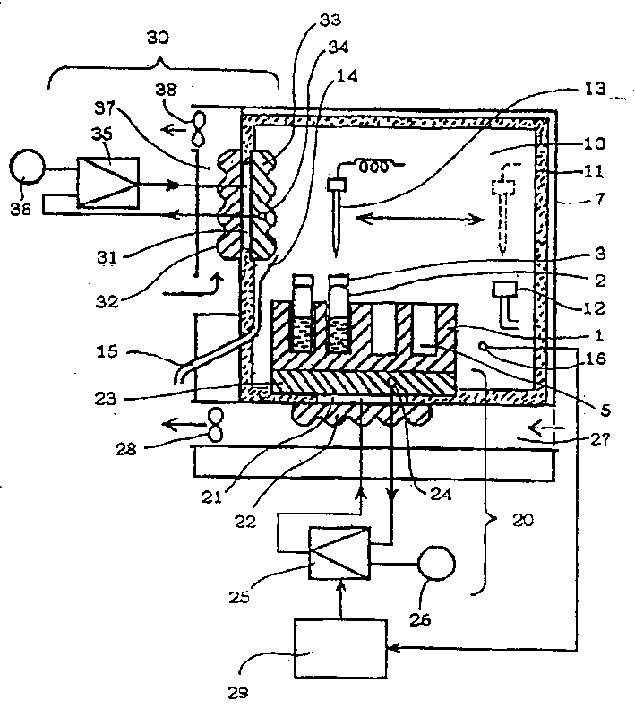
图1是本发明实施例的一个采样冷却器的示意图;Fig. 1 is the schematic diagram of a sampling cooler of the embodiment of the present invention;
图2是一个常规采样冷却器的示意图;Fig. 2 is the schematic diagram of a conventional sampling cooler;
图3又是一个常规采样冷却器的示意图。Figure 3 is yet another schematic diagram of a conventional sample cooler.
具体实施方式Detailed ways
在所有这些附图中,某些类似的或等价的部件由相同的数字代表,即使它们是不同冷却器中的部件,因而可以不必重复对它们进行说明。In all these figures, certain similar or equivalent parts are represented by the same numerals even though they are parts of different coolers, so that their description may not be repeated.
下面,本发明用图1所示的实施例来进行说明。在图1中,某些相同的或基本上等价的部件采用与图2和/或图3中同样的数字来代表。在图1中数字30表示第一种温度控制机构,它包括一个帕尔帖元件31,散热片32,一个金属块33,一个温度传感器34,一个温度调整电路35,一个目标温度设定装置36和一个风扇。第一种温度控制机构30是空气冷却型的,如同图3所示的机构,它用于冷却恒温室10内的空气,该恒温室10由热绝缘壁11所包围。数字20表示第二种温度控制机构,它包括一个帕尔帖元件21,散热片22,一个金属块23,一个温度传感器24,一个温度调节电路25,一个目标温度设定装置26和一个风扇20。第二种温度控制机构20是直冷型的,如同图2所示,它用于冷却试样容器2,这些容器2装于由导热材料制成的支架1上。Hereinafter, the present invention will be described using the embodiment shown in FIG. 1 . In FIG. 1 , certain identical or substantially equivalent parts are designated by the same numerals as in FIG. 2 and/or FIG. 3 .
第一种温度控制机构30首先启动。随着金属块33的表面温度(或者散热片的表面温度)下降以及环绕它周围的空气温度下降到露点,在散热片的表面开始发生凝结。通过扩散和自然对流,恒温室10内的空气与散热片保持接触,因而空气温度下降。同时空气中的水蒸汽被逐渐除掉,其绝对湿度下降。由于空气的热容量较小,空气可以在较短的时间内冷却到目标温度,但支架1和其上的容器2的温度变化有某种程度的滞后。The first
在恒温室10内的空气温度达到目标温度,控制装置29响应温度传感器16的一个信号,以此启动第二种温度控制机构20,从而容器2和支架1开始被冷却。由于这时的空气绝对湿度已经比较低了,快速冷却不会导致水凝结。由于冷却是直冷型的,温度快速下降到设定的低温水平。在原则上,温度控制机构20和30的目标温度被设置成一样,这样,恒温室10内的温度和支架1最终达到了同样的温度。因此,与直冷型的冷却器不同,没有必要用热绝缘罩盖住支架1。当然,这里并不说不可以使用这样的一个罩。When the air temperature in the
上述例子并不是要限制本发明的范围。本发明可以有许多可能的改型和变化。虽然在上述的例子中,控制装置29是以恒温室内的温度信息为基础来工作的,但实际上可以用一个湿度传感器(未示出)来检测湿度,而不是用一个温度传感器16。这是一个更直接的方式,控制装置29将根据湿度传感器的信号来工作,这样可以保证恒温室10内的湿度降到某一特定的水平。The above examples are not intended to limit the scope of the invention. The present invention is susceptible to many possible modifications and variations. Although in the above example, the
在上述这个变型中,由于第一种温度控制机构30开始工作一段已知的时间内,恒温室10内的温度和绝对湿度下降到一定程度,控制装置29有可能用一个定时器(未示出)来代替。这样,第二种温度控制机构20在第一种温度控制机构30开动后,经过这个已知的时间后就启动。In above-mentioned this modification, since the first kind of
作为检测湿度的传感器,可以在支架1或金属块23的表面上设置一个水凝结传感器(未示出)。根据这个变型,当水凝结传感器检测到水的凝结时,第二种温度控制机构就停止工作;当恒温室内的除湿进展充分且水凝结探测器输出水凝结消失的信号时,它就开始工作。这个方法的优越性在于:当除湿过程进行时,支架1的降温过程也就会连续地进行,这样可以在最短的时间内达到目标温度。As a sensor for detecting humidity, a water condensation sensor (not shown) may be provided on the surface of the
同样本发明的应用并不限于在液体层析仪中。应明确指出,本发明同样可以应用到其它类型的液体试样分析仪中。本发明可以应用于各种试样预处理装置、反应装置和试样存储装置。Likewise the application of the invention is not limited to liquid chromatography. It should be expressly pointed out that the present invention is equally applicable to other types of liquid sample analyzers. The present invention can be applied to various sample pretreatment devices, reaction devices and sample storage devices.
虽然上述引用了帕尔帖元件作为冷源,也可以用另一种类型的制冷器件,它可利用绝热膨胀过程的气化吸热性质;也可以利用另一种冷却类型,它利用在本系统外的另一管道系统中冷却下来的液体。换言之,有很多可能的变型、变化和替代方式。其基本的要求是:第一种温度控制机构是由一种冷却元件来冷却恒温室内的空间,从而保持该空间在一个特定的低温水平;第二种温度控制机构是由冷却元件通过导热介质来冷却试样容器,从而控制试样温度。Although the Peltier element is cited above as a cooling source, another type of refrigeration device can be used, which can utilize the gasification endothermic property of the adiabatic expansion process; another type of cooling can also be used, which is used in this system Liquid that cools down in another piping system outside. In other words, there are many possible variations, variations and alternatives. Its basic requirements are: the first temperature control mechanism uses a cooling element to cool the space in the thermostatic chamber, thereby keeping the space at a specific low temperature level; the second temperature control mechanism is controlled by the cooling element through the heat transfer medium Cool the sample container to control the sample temperature.
概括地讲,一个装有直冷型的温度控制机构的支架置于空气冷却型的冷却器的恒温室内。这样,冷却过程在降湿的条件下有效地直接地进行,并且在除湿条件下,直冷型的温度控制机构工作停止,同时恒温室内部被充分除湿。这导致冷却在没有水凝结的条件下高效地进行。而且,与常规冷却器相比,本发明的能耗并没有增加。In summary, a rack equipped with a direct cooling type temperature control mechanism is placed in a constant temperature chamber of an air cooling type cooler. In this way, the cooling process is effectively and directly carried out under the condition of dehumidification, and under the condition of dehumidification, the direct cooling type temperature control mechanism stops working, and at the same time, the inside of the thermostatic chamber is fully dehumidified. This results in efficient cooling without water condensation. Moreover, compared with conventional coolers, the energy consumption of the present invention does not increase.
Claims (5)
Applications Claiming Priority (2)
| Application Number | Priority Date | Filing Date | Title |
|---|---|---|---|
| JP24391898A JP3422262B2 (en) | 1998-08-28 | 1998-08-28 | Sample cooling device |
| JP243918/1998 | 1998-08-28 |
Publications (2)
| Publication Number | Publication Date |
|---|---|
| CN1247309A CN1247309A (en) | 2000-03-15 |
| CN1114101C true CN1114101C (en) | 2003-07-09 |
Family
ID=17110960
Family Applications (1)
| Application Number | Title | Priority Date | Filing Date |
|---|---|---|---|
| CN99111113A Expired - Lifetime CN1114101C (en) | 1998-08-28 | 1999-07-23 | Sample cooling appts. and method thereof |
Country Status (4)
| Country | Link |
|---|---|
| US (1) | US6170267B1 (en) |
| JP (1) | JP3422262B2 (en) |
| CN (1) | CN1114101C (en) |
| DE (1) | DE19937952A1 (en) |
Families Citing this family (34)
| Publication number | Priority date | Publication date | Assignee | Title |
|---|---|---|---|---|
| DE602004007732T2 (en) * | 2003-09-09 | 2008-04-10 | Tosoh Corp., Shunan | A liquid chromatography |
| DE102004037341C5 (en) * | 2004-08-02 | 2008-06-19 | Dionex Softron Gmbh | Apparatus for refrigerated storage and dispensing of samples for an integrated liquid cooling unit |
| TR200703485T1 (en) * | 2004-12-15 | 2007-08-21 | Arçeli̇k Anoni̇m Şi̇rketi̇ | Thermoelectric cooling / heating device. |
| JP2009098006A (en) * | 2007-10-17 | 2009-05-07 | Espec Corp | Volatile matter measuring apparatus |
| US20090113898A1 (en) * | 2007-11-02 | 2009-05-07 | Rocky Research | thermoelectric water chiller and heater apparatus |
| DE102008023299A1 (en) * | 2008-05-08 | 2009-11-19 | Micropelt Gmbh | Recording for a sample |
| US8512430B2 (en) * | 2009-05-05 | 2013-08-20 | Cooper Technologies Company | Explosion-proof enclosures with active thermal management using sintered elements |
| US20100288467A1 (en) * | 2009-05-14 | 2010-11-18 | Cooper Technologies Company | Explosion-proof enclosures with active thermal management by heat exchange |
| JP5103461B2 (en) * | 2009-11-04 | 2012-12-19 | 株式会社日立ハイテクノロジーズ | Sample rack |
| DE102011007768A1 (en) | 2011-04-20 | 2012-10-25 | Agilent Technologies Inc. | Cooling system for cooling sample of sample container in sample injector of sample separation device, comprises primary cooling unit for adjusting primary temperature in sample chamber, which has sample container with sample |
| US8786860B2 (en) * | 2011-10-20 | 2014-07-22 | Schlumberger Technology Corporation | Measurement of liquid fraction dropout using micropatterned surfaces |
| JP5737215B2 (en) | 2012-03-13 | 2015-06-17 | 株式会社島津製作所 | Sample cooling device and sampling device |
| DE102013101176B4 (en) * | 2013-02-06 | 2018-04-05 | Cybio Ag | Cooling box with a rack equipped with tube-shaped vessels for automatic filling with a pipetting machine |
| JP5949603B2 (en) * | 2013-03-08 | 2016-07-06 | 株式会社島津製作所 | Sample cooling device |
| CN105324655A (en) * | 2013-03-18 | 2016-02-10 | 株式会社岛津制作所 | Sample cooling device, autosampler provided with same, and sample cooling method |
| WO2014155674A1 (en) * | 2013-03-29 | 2014-10-02 | 株式会社島津製作所 | Sample cooling device and autosampler with same |
| CN106133499B (en) * | 2014-04-22 | 2019-03-15 | 株式会社岛津制作所 | Sample holder for heating and temperature regulation and sample temperature regulation device using the same |
| US11209449B2 (en) * | 2015-03-11 | 2021-12-28 | Shimadzu Corporation | Autosampler |
| EP3147642B1 (en) * | 2015-09-24 | 2018-12-05 | F. Hoffmann-La Roche AG | Condensed water collector |
| CN109716048B (en) * | 2016-07-21 | 2021-05-28 | 西门子医疗保健诊断公司 | Mechanisms for storing refrigerated calibration and quality control materials |
| US10557810B2 (en) * | 2016-10-06 | 2020-02-11 | The Regents Of The University Of California | Ice nucleating particle spectrometer |
| CN106770776A (en) * | 2016-12-29 | 2017-05-31 | 浙江福立分析仪器股份有限公司 | A kind of liquid chromatograph temperature control device and dehumidifying method |
| JP2017090471A (en) * | 2017-02-22 | 2017-05-25 | 株式会社島津製作所 | Sample cooling device, autosampler equipped with the same, and sample cooling method |
| WO2019142343A1 (en) * | 2018-01-22 | 2019-07-25 | 株式会社島津製作所 | Sample temperature adjustment device |
| JP7070129B2 (en) * | 2018-06-18 | 2022-05-18 | 株式会社島津製作所 | Equipment with sample temperature control function |
| EP3680579B1 (en) * | 2019-01-09 | 2024-10-09 | CTC Analytics AG | Cooling device and corresponding method |
| CN110608565A (en) * | 2019-09-03 | 2019-12-24 | 东软威特曼生物科技(沈阳)有限公司 | Refrigeration cabin of in-vitro diagnosis equipment and refrigeration system thereof |
| GB2592590B (en) * | 2020-03-02 | 2024-02-14 | Agilent Technologies Inc | Sample processing with information detection during transfer of a sample container |
| CN115516308B (en) | 2020-03-17 | 2025-08-19 | 沃特世科技公司 | Needle driver, system and method |
| CN115667908B (en) * | 2020-03-17 | 2026-02-10 | 沃特世科技公司 | Sample Manager, System and Method |
| CN111468206A (en) * | 2020-05-23 | 2020-07-31 | 刘丽华 | Experimental system with heat exchange and cooling functions |
| WO2022265624A1 (en) * | 2021-06-15 | 2022-12-22 | Prp Technologies Inc. | Syringe chiller |
| CN115452633B (en) * | 2022-10-08 | 2025-04-22 | 郑州嵩山硼业科技有限公司 | A processing system and method for high-enrichment boron carbide |
| CN118304955B (en) | 2024-04-30 | 2025-03-14 | 北京理工大学 | Incubator for preparing hydrogel by freeze thawing method and preparation method of incubator |
Citations (8)
| Publication number | Priority date | Publication date | Assignee | Title |
|---|---|---|---|---|
| JPS5087751A (en) * | 1973-12-04 | 1975-07-15 | ||
| JPH03191853A (en) * | 1989-12-21 | 1991-08-21 | Fuji Electric Co Ltd | Constant temperature oven for biosensor |
| CN2098034U (en) * | 1991-05-14 | 1992-03-04 | 海阳县标准计量局 | Host machine of fake pesticide detector |
| CN2113449U (en) * | 1992-01-31 | 1992-08-19 | 中国医学科学院血液学研究所 | Program-controlled fixed-speed cooling machine refrigeration box |
| JPH09153338A (en) * | 1995-11-30 | 1997-06-10 | Jeol Ltd | Sample cooling device |
| JPH1018546A (en) * | 1996-06-28 | 1998-01-20 | Natl House Ind Co Ltd | External wall structure |
| JPH1112145A (en) * | 1997-06-19 | 1999-01-19 | Sunstar Inc | Composition for oral cavity |
| JP3191853B2 (en) * | 1996-02-09 | 2001-07-23 | 三菱マテリアル株式会社 | Punching equipment |
Family Cites Families (8)
| Publication number | Priority date | Publication date | Assignee | Title |
|---|---|---|---|---|
| DE3149624A1 (en) * | 1981-12-15 | 1983-06-23 | Georg 6050 Offenbach May | DEVICE FOR REGULATING THE TEMPERATURE OF SUBSTANCES |
| US5504007A (en) * | 1989-05-19 | 1996-04-02 | Becton, Dickinson And Company | Rapid thermal cycle apparatus |
| KR910005009A (en) * | 1989-08-15 | 1991-03-29 | 도오하라 히로기 | Electronic small refrigerator |
| JP3083922B2 (en) * | 1992-09-30 | 2000-09-04 | 帝国ピストンリング株式会社 | Control method of electronic dehumidifier |
| US5320162A (en) * | 1992-11-05 | 1994-06-14 | Seaman William E | Single pole double throw thermostat for narrow range temperature regulation |
| AT401476B (en) * | 1993-08-20 | 1996-09-25 | Sy Lab Vertriebsges M B H | THERMAL CHAMBER |
| US5881560A (en) * | 1994-03-23 | 1999-03-16 | Bielinski; George | Thermoelectric cooling system |
| EP0819898A3 (en) * | 1996-07-16 | 1998-03-11 | Thermovonics Co., Ltd | Temperature-controlled appliance |
-
1998
- 1998-08-28 JP JP24391898A patent/JP3422262B2/en not_active Expired - Lifetime
-
1999
- 1999-07-15 US US09/354,554 patent/US6170267B1/en not_active Expired - Lifetime
- 1999-07-23 CN CN99111113A patent/CN1114101C/en not_active Expired - Lifetime
- 1999-08-11 DE DE19937952A patent/DE19937952A1/en not_active Withdrawn
Patent Citations (8)
| Publication number | Priority date | Publication date | Assignee | Title |
|---|---|---|---|---|
| JPS5087751A (en) * | 1973-12-04 | 1975-07-15 | ||
| JPH03191853A (en) * | 1989-12-21 | 1991-08-21 | Fuji Electric Co Ltd | Constant temperature oven for biosensor |
| CN2098034U (en) * | 1991-05-14 | 1992-03-04 | 海阳县标准计量局 | Host machine of fake pesticide detector |
| CN2113449U (en) * | 1992-01-31 | 1992-08-19 | 中国医学科学院血液学研究所 | Program-controlled fixed-speed cooling machine refrigeration box |
| JPH09153338A (en) * | 1995-11-30 | 1997-06-10 | Jeol Ltd | Sample cooling device |
| JP3191853B2 (en) * | 1996-02-09 | 2001-07-23 | 三菱マテリアル株式会社 | Punching equipment |
| JPH1018546A (en) * | 1996-06-28 | 1998-01-20 | Natl House Ind Co Ltd | External wall structure |
| JPH1112145A (en) * | 1997-06-19 | 1999-01-19 | Sunstar Inc | Composition for oral cavity |
Also Published As
| Publication number | Publication date |
|---|---|
| US6170267B1 (en) | 2001-01-09 |
| JP2000074802A (en) | 2000-03-14 |
| DE19937952A1 (en) | 2000-03-02 |
| JP3422262B2 (en) | 2003-06-30 |
| CN1247309A (en) | 2000-03-15 |
Similar Documents
| Publication | Publication Date | Title |
|---|---|---|
| CN1114101C (en) | Sample cooling appts. and method thereof | |
| JP5737215B2 (en) | Sample cooling device and sampling device | |
| JP3921845B2 (en) | Sample cooling device | |
| JP5707253B2 (en) | Cold reagent storage and nucleic acid analyzer | |
| US20080038163A1 (en) | Systems and Methods for Cooling in Biological Analysis Instruments | |
| US8201465B2 (en) | Method for automatically sampling tritium in the water vapor in air | |
| JP6213667B2 (en) | Sample rack for heating temperature control and sample temperature control apparatus using the sample rack for heating temperature control | |
| CN1537217A (en) | Apparatus and method for temperature control of an electronic device under test | |
| JPWO2014147696A1 (en) | Sample cooling device, autosampler equipped with the same, and sample cooling method | |
| WO2023249691A1 (en) | Vapor-air transition detection for two-phase liquid immersion cooling | |
| CN205448481U (en) | Blood analysis detector and cold -stored storage device of reagent bottle thereof | |
| JP3757637B2 (en) | Sample cooling device | |
| CN111492237B (en) | Sample temperature adjusting device for analyzer | |
| JP2004212165A (en) | Sample cooling device | |
| CN207502267U (en) | The in-vitro diagnosis equipment of reagent refrigerating device and the application reagent refrigerating device | |
| GB2250581A (en) | Temperature control for sample incubator | |
| CN115141746A (en) | Temperature control system of PCR instrument and PCR instrument | |
| JPH0372948B2 (en) | ||
| CN223535103U (en) | An amplification detection device and nucleic acid integrated machine | |
| CN223986085U (en) | Automatic sampler with constant temperature function | |
| CN223632195U (en) | A smart immunodiagnostic reagent storage and retrieval device | |
| CN102455330B (en) | Head-space liquid-phase microextraction device based on semiconductor refrigeration technology | |
| CN223673156U (en) | Biological medicine detection kit | |
| CN223086594U (en) | Refrigerating reagent bin | |
| JP4254848B2 (en) | Sample cooling device |
Legal Events
| Date | Code | Title | Description |
|---|---|---|---|
| C06 | Publication | ||
| PB01 | Publication | ||
| C14 | Grant of patent or utility model | ||
| GR01 | Patent grant | ||
| CX01 | Expiry of patent term | ||
| CX01 | Expiry of patent term |
Granted publication date: 20030709 |