CN111418902A - Aerosol delivery device using radiant heating - Google Patents
Aerosol delivery device using radiant heating Download PDFInfo
- Publication number
- CN111418902A CN111418902A CN202010471209.1A CN202010471209A CN111418902A CN 111418902 A CN111418902 A CN 111418902A CN 202010471209 A CN202010471209 A CN 202010471209A CN 111418902 A CN111418902 A CN 111418902A
- Authority
- CN
- China
- Prior art keywords
- chamber
- aerosol
- radiation
- delivery device
- heater
- Prior art date
- Legal status (The legal status is an assumption and is not a legal conclusion. Google has not performed a legal analysis and makes no representation as to the accuracy of the status listed.)
- Granted
Links
- 239000000443 aerosol Substances 0.000 title claims abstract description 315
- 238000010438 heat treatment Methods 0.000 title abstract description 98
- 230000005855 radiation Effects 0.000 claims abstract description 101
- 230000005670 electromagnetic radiation Effects 0.000 claims abstract description 39
- 239000006199 nebulizer Substances 0.000 claims description 51
- 239000012530 fluid Substances 0.000 claims description 20
- 238000004891 communication Methods 0.000 claims description 10
- 239000002243 precursor Substances 0.000 abstract description 82
- 239000000203 mixture Substances 0.000 abstract description 41
- 238000000034 method Methods 0.000 abstract description 19
- 239000007788 liquid Substances 0.000 description 121
- 239000003570 air Substances 0.000 description 62
- 239000011162 core material Substances 0.000 description 37
- 241000208125 Nicotiana Species 0.000 description 24
- 235000002637 Nicotiana tabacum Nutrition 0.000 description 24
- 239000000463 material Substances 0.000 description 22
- 229910052770 Uranium Inorganic materials 0.000 description 21
- 239000000758 substrate Substances 0.000 description 17
- 230000000391 smoking effect Effects 0.000 description 11
- 239000007789 gas Substances 0.000 description 9
- 239000000047 product Substances 0.000 description 9
- 238000002161 passivation Methods 0.000 description 8
- OKTJSMMVPCPJKN-UHFFFAOYSA-N Carbon Chemical compound [C] OKTJSMMVPCPJKN-UHFFFAOYSA-N 0.000 description 7
- 238000010521 absorption reaction Methods 0.000 description 7
- 230000009286 beneficial effect Effects 0.000 description 7
- 230000001276 controlling effect Effects 0.000 description 7
- 239000000126 substance Substances 0.000 description 7
- 238000000889 atomisation Methods 0.000 description 6
- 239000000919 ceramic Substances 0.000 description 6
- 235000019504 cigarettes Nutrition 0.000 description 6
- YXTPWUNVHCYOSP-UHFFFAOYSA-N bis($l^{2}-silanylidene)molybdenum Chemical compound [Si]=[Mo]=[Si] YXTPWUNVHCYOSP-UHFFFAOYSA-N 0.000 description 5
- 239000003571 electronic cigarette Substances 0.000 description 5
- 239000000796 flavoring agent Substances 0.000 description 5
- SNICXCGAKADSCV-JTQLQIEISA-N (-)-Nicotine Chemical compound CN1CCC[C@H]1C1=CC=CN=C1 SNICXCGAKADSCV-JTQLQIEISA-N 0.000 description 4
- 238000012387 aerosolization Methods 0.000 description 4
- 239000011324 bead Substances 0.000 description 4
- 230000015572 biosynthetic process Effects 0.000 description 4
- 235000019506 cigar Nutrition 0.000 description 4
- 238000002485 combustion reaction Methods 0.000 description 4
- 239000000284 extract Substances 0.000 description 4
- 235000019634 flavors Nutrition 0.000 description 4
- 229910002804 graphite Inorganic materials 0.000 description 4
- 239000010439 graphite Substances 0.000 description 4
- 229960002715 nicotine Drugs 0.000 description 4
- SNICXCGAKADSCV-UHFFFAOYSA-N nicotine Natural products CN1CCCC1C1=CC=CN=C1 SNICXCGAKADSCV-UHFFFAOYSA-N 0.000 description 4
- 239000011148 porous material Substances 0.000 description 4
- 230000035807 sensation Effects 0.000 description 4
- 235000019615 sensations Nutrition 0.000 description 4
- PEDCQBHIVMGVHV-UHFFFAOYSA-N Glycerine Chemical compound OCC(O)CO PEDCQBHIVMGVHV-UHFFFAOYSA-N 0.000 description 3
- DNIAPMSPPWPWGF-UHFFFAOYSA-N Propylene glycol Chemical compound CC(O)CO DNIAPMSPPWPWGF-UHFFFAOYSA-N 0.000 description 3
- 229910052799 carbon Inorganic materials 0.000 description 3
- 239000000835 fiber Substances 0.000 description 3
- 238000004519 manufacturing process Methods 0.000 description 3
- 238000012986 modification Methods 0.000 description 3
- 230000004048 modification Effects 0.000 description 3
- 229910021344 molybdenum silicide Inorganic materials 0.000 description 3
- 238000005192 partition Methods 0.000 description 3
- 239000005373 porous glass Substances 0.000 description 3
- 238000000197 pyrolysis Methods 0.000 description 3
- 239000000779 smoke Substances 0.000 description 3
- 238000003860 storage Methods 0.000 description 3
- KDLHZDBZIXYQEI-UHFFFAOYSA-N Palladium Chemical compound [Pd] KDLHZDBZIXYQEI-UHFFFAOYSA-N 0.000 description 2
- 230000009471 action Effects 0.000 description 2
- 229910052782 aluminium Inorganic materials 0.000 description 2
- 239000012080 ambient air Substances 0.000 description 2
- 230000008901 benefit Effects 0.000 description 2
- 238000009826 distribution Methods 0.000 description 2
- 230000000694 effects Effects 0.000 description 2
- 238000005516 engineering process Methods 0.000 description 2
- 239000002657 fibrous material Substances 0.000 description 2
- 238000007429 general method Methods 0.000 description 2
- 230000003993 interaction Effects 0.000 description 2
- 239000008263 liquid aerosol Substances 0.000 description 2
- 230000007246 mechanism Effects 0.000 description 2
- 229910021343 molybdenum disilicide Inorganic materials 0.000 description 2
- 230000037361 pathway Effects 0.000 description 2
- BASFCYQUMIYNBI-UHFFFAOYSA-N platinum Chemical compound [Pt] BASFCYQUMIYNBI-UHFFFAOYSA-N 0.000 description 2
- 230000000717 retained effect Effects 0.000 description 2
- 230000000007 visual effect Effects 0.000 description 2
- XLYOFNOQVPJJNP-UHFFFAOYSA-N water Substances O XLYOFNOQVPJJNP-UHFFFAOYSA-N 0.000 description 2
- VYZAMTAEIAYCRO-UHFFFAOYSA-N Chromium Chemical compound [Cr] VYZAMTAEIAYCRO-UHFFFAOYSA-N 0.000 description 1
- 229920000742 Cotton Polymers 0.000 description 1
- BQCADISMDOOEFD-UHFFFAOYSA-N Silver Chemical compound [Ag] BQCADISMDOOEFD-UHFFFAOYSA-N 0.000 description 1
- 229910000831 Steel Inorganic materials 0.000 description 1
- RTAQQCXQSZGOHL-UHFFFAOYSA-N Titanium Chemical compound [Ti] RTAQQCXQSZGOHL-UHFFFAOYSA-N 0.000 description 1
- 239000004480 active ingredient Substances 0.000 description 1
- MDKXFHZSHLHFLN-UHFFFAOYSA-N alumanylidynecobalt Chemical compound [Al].[Co] MDKXFHZSHLHFLN-UHFFFAOYSA-N 0.000 description 1
- XAGFODPZIPBFFR-UHFFFAOYSA-N aluminium Chemical compound [Al] XAGFODPZIPBFFR-UHFFFAOYSA-N 0.000 description 1
- 239000006227 byproduct Substances 0.000 description 1
- 230000015556 catabolic process Effects 0.000 description 1
- 229920002301 cellulose acetate Polymers 0.000 description 1
- 229910010293 ceramic material Inorganic materials 0.000 description 1
- 230000008859 change Effects 0.000 description 1
- 239000003795 chemical substances by application Substances 0.000 description 1
- 238000004590 computer program Methods 0.000 description 1
- 238000005094 computer simulation Methods 0.000 description 1
- 238000010276 construction Methods 0.000 description 1
- 238000006731 degradation reaction Methods 0.000 description 1
- 230000008021 deposition Effects 0.000 description 1
- 238000013461 design Methods 0.000 description 1
- 238000001514 detection method Methods 0.000 description 1
- 238000012377 drug delivery Methods 0.000 description 1
- 230000005611 electricity Effects 0.000 description 1
- 238000010828 elution Methods 0.000 description 1
- 238000005265 energy consumption Methods 0.000 description 1
- 239000004744 fabric Substances 0.000 description 1
- 239000006260 foam Substances 0.000 description 1
- 235000013355 food flavoring agent Nutrition 0.000 description 1
- 238000009472 formulation Methods 0.000 description 1
- 235000011389 fruit/vegetable juice Nutrition 0.000 description 1
- 230000006870 function Effects 0.000 description 1
- 239000011521 glass Substances 0.000 description 1
- 239000003365 glass fiber Substances 0.000 description 1
- 230000020169 heat generation Effects 0.000 description 1
- 230000006872 improvement Effects 0.000 description 1
- 238000003780 insertion Methods 0.000 description 1
- 230000037431 insertion Effects 0.000 description 1
- 239000011810 insulating material Substances 0.000 description 1
- 229910052751 metal Inorganic materials 0.000 description 1
- 239000002184 metal Substances 0.000 description 1
- 238000002156 mixing Methods 0.000 description 1
- 229910000623 nickel–chromium alloy Inorganic materials 0.000 description 1
- 229910052763 palladium Inorganic materials 0.000 description 1
- 239000002245 particle Substances 0.000 description 1
- 229910052697 platinum Inorganic materials 0.000 description 1
- 229920005862 polyol Polymers 0.000 description 1
- 150000003077 polyols Chemical class 0.000 description 1
- 239000004627 regenerated cellulose Substances 0.000 description 1
- 230000001105 regulatory effect Effects 0.000 description 1
- 238000012552 review Methods 0.000 description 1
- 230000001953 sensory effect Effects 0.000 description 1
- 229910052710 silicon Inorganic materials 0.000 description 1
- 239000002210 silicon-based material Substances 0.000 description 1
- 229910052709 silver Inorganic materials 0.000 description 1
- 239000004332 silver Substances 0.000 description 1
- 239000007787 solid Substances 0.000 description 1
- 238000001179 sorption measurement Methods 0.000 description 1
- 238000001228 spectrum Methods 0.000 description 1
- 239000007921 spray Substances 0.000 description 1
- 239000010959 steel Substances 0.000 description 1
- 239000000725 suspension Substances 0.000 description 1
- 235000019640 taste Nutrition 0.000 description 1
- 229910052719 titanium Inorganic materials 0.000 description 1
- 239000010936 titanium Substances 0.000 description 1
- 238000012546 transfer Methods 0.000 description 1
Images






Classifications
-
- A—HUMAN NECESSITIES
- A24—TOBACCO; CIGARS; CIGARETTES; SIMULATED SMOKING DEVICES; SMOKERS' REQUISITES
- A24F—SMOKERS' REQUISITES; MATCH BOXES; SIMULATED SMOKING DEVICES
- A24F40/00—Electrically operated smoking devices; Component parts thereof; Manufacture thereof; Maintenance or testing thereof; Charging means specially adapted therefor
- A24F40/40—Constructional details, e.g. connection of cartridges and battery parts
- A24F40/46—Shape or structure of electric heating means
-
- A—HUMAN NECESSITIES
- A61—MEDICAL OR VETERINARY SCIENCE; HYGIENE
- A61M—DEVICES FOR INTRODUCING MEDIA INTO, OR ONTO, THE BODY; DEVICES FOR TRANSDUCING BODY MEDIA OR FOR TAKING MEDIA FROM THE BODY; DEVICES FOR PRODUCING OR ENDING SLEEP OR STUPOR
- A61M11/00—Sprayers or atomisers specially adapted for therapeutic purposes
- A61M11/04—Sprayers or atomisers specially adapted for therapeutic purposes operated by the vapour pressure of the liquid to be sprayed or atomised
- A61M11/041—Sprayers or atomisers specially adapted for therapeutic purposes operated by the vapour pressure of the liquid to be sprayed or atomised using heaters
-
- A—HUMAN NECESSITIES
- A24—TOBACCO; CIGARS; CIGARETTES; SIMULATED SMOKING DEVICES; SMOKERS' REQUISITES
- A24F—SMOKERS' REQUISITES; MATCH BOXES; SIMULATED SMOKING DEVICES
- A24F15/00—Receptacles or boxes specially adapted for cigars, cigarettes, simulated smoking devices or cigarettes therefor
- A24F15/01—Receptacles or boxes specially adapted for cigars, cigarettes, simulated smoking devices or cigarettes therefor specially adapted for simulated smoking devices or cigarettes therefor
- A24F15/015—Receptacles or boxes specially adapted for cigars, cigarettes, simulated smoking devices or cigarettes therefor specially adapted for simulated smoking devices or cigarettes therefor with means for refilling of liquid inhalable precursors
-
- A—HUMAN NECESSITIES
- A24—TOBACCO; CIGARS; CIGARETTES; SIMULATED SMOKING DEVICES; SMOKERS' REQUISITES
- A24F—SMOKERS' REQUISITES; MATCH BOXES; SIMULATED SMOKING DEVICES
- A24F40/00—Electrically operated smoking devices; Component parts thereof; Manufacture thereof; Maintenance or testing thereof; Charging means specially adapted therefor
- A24F40/10—Devices using liquid inhalable precursors
-
- A—HUMAN NECESSITIES
- A24—TOBACCO; CIGARS; CIGARETTES; SIMULATED SMOKING DEVICES; SMOKERS' REQUISITES
- A24F—SMOKERS' REQUISITES; MATCH BOXES; SIMULATED SMOKING DEVICES
- A24F40/00—Electrically operated smoking devices; Component parts thereof; Manufacture thereof; Maintenance or testing thereof; Charging means specially adapted therefor
- A24F40/40—Constructional details, e.g. connection of cartridges and battery parts
-
- A—HUMAN NECESSITIES
- A24—TOBACCO; CIGARS; CIGARETTES; SIMULATED SMOKING DEVICES; SMOKERS' REQUISITES
- A24F—SMOKERS' REQUISITES; MATCH BOXES; SIMULATED SMOKING DEVICES
- A24F40/00—Electrically operated smoking devices; Component parts thereof; Manufacture thereof; Maintenance or testing thereof; Charging means specially adapted therefor
- A24F40/40—Constructional details, e.g. connection of cartridges and battery parts
- A24F40/42—Cartridges or containers for inhalable precursors
-
- A—HUMAN NECESSITIES
- A24—TOBACCO; CIGARS; CIGARETTES; SIMULATED SMOKING DEVICES; SMOKERS' REQUISITES
- A24F—SMOKERS' REQUISITES; MATCH BOXES; SIMULATED SMOKING DEVICES
- A24F40/00—Electrically operated smoking devices; Component parts thereof; Manufacture thereof; Maintenance or testing thereof; Charging means specially adapted therefor
- A24F40/40—Constructional details, e.g. connection of cartridges and battery parts
- A24F40/48—Fluid transfer means, e.g. pumps
-
- A—HUMAN NECESSITIES
- A24—TOBACCO; CIGARS; CIGARETTES; SIMULATED SMOKING DEVICES; SMOKERS' REQUISITES
- A24F—SMOKERS' REQUISITES; MATCH BOXES; SIMULATED SMOKING DEVICES
- A24F40/00—Electrically operated smoking devices; Component parts thereof; Manufacture thereof; Maintenance or testing thereof; Charging means specially adapted therefor
- A24F40/50—Control or monitoring
-
- A—HUMAN NECESSITIES
- A61—MEDICAL OR VETERINARY SCIENCE; HYGIENE
- A61M—DEVICES FOR INTRODUCING MEDIA INTO, OR ONTO, THE BODY; DEVICES FOR TRANSDUCING BODY MEDIA OR FOR TAKING MEDIA FROM THE BODY; DEVICES FOR PRODUCING OR ENDING SLEEP OR STUPOR
- A61M11/00—Sprayers or atomisers specially adapted for therapeutic purposes
- A61M11/04—Sprayers or atomisers specially adapted for therapeutic purposes operated by the vapour pressure of the liquid to be sprayed or atomised
- A61M11/041—Sprayers or atomisers specially adapted for therapeutic purposes operated by the vapour pressure of the liquid to be sprayed or atomised using heaters
- A61M11/042—Sprayers or atomisers specially adapted for therapeutic purposes operated by the vapour pressure of the liquid to be sprayed or atomised using heaters electrical
-
- A—HUMAN NECESSITIES
- A61—MEDICAL OR VETERINARY SCIENCE; HYGIENE
- A61M—DEVICES FOR INTRODUCING MEDIA INTO, OR ONTO, THE BODY; DEVICES FOR TRANSDUCING BODY MEDIA OR FOR TAKING MEDIA FROM THE BODY; DEVICES FOR PRODUCING OR ENDING SLEEP OR STUPOR
- A61M15/00—Inhalators
- A61M15/06—Inhaling appliances shaped like cigars, cigarettes or pipes
-
- H—ELECTRICITY
- H05—ELECTRIC TECHNIQUES NOT OTHERWISE PROVIDED FOR
- H05B—ELECTRIC HEATING; ELECTRIC LIGHT SOURCES NOT OTHERWISE PROVIDED FOR; CIRCUIT ARRANGEMENTS FOR ELECTRIC LIGHT SOURCES, IN GENERAL
- H05B3/00—Ohmic-resistance heating
- H05B3/02—Details
- H05B3/04—Waterproof or air-tight seals for heaters
-
- H—ELECTRICITY
- H05—ELECTRIC TECHNIQUES NOT OTHERWISE PROVIDED FOR
- H05B—ELECTRIC HEATING; ELECTRIC LIGHT SOURCES NOT OTHERWISE PROVIDED FOR; CIRCUIT ARRANGEMENTS FOR ELECTRIC LIGHT SOURCES, IN GENERAL
- H05B3/00—Ohmic-resistance heating
- H05B3/10—Heating elements characterised by the composition or nature of the materials or by the arrangement of the conductor
- H05B3/12—Heating elements characterised by the composition or nature of the materials or by the arrangement of the conductor characterised by the composition or nature of the conductive material
- H05B3/14—Heating elements characterised by the composition or nature of the materials or by the arrangement of the conductor characterised by the composition or nature of the conductive material the material being non-metallic
- H05B3/145—Carbon only, e.g. carbon black, graphite
-
- H—ELECTRICITY
- H05—ELECTRIC TECHNIQUES NOT OTHERWISE PROVIDED FOR
- H05B—ELECTRIC HEATING; ELECTRIC LIGHT SOURCES NOT OTHERWISE PROVIDED FOR; CIRCUIT ARRANGEMENTS FOR ELECTRIC LIGHT SOURCES, IN GENERAL
- H05B3/00—Ohmic-resistance heating
- H05B3/40—Heating elements having the shape of rods or tubes
- H05B3/42—Heating elements having the shape of rods or tubes non-flexible
- H05B3/44—Heating elements having the shape of rods or tubes non-flexible heating conductor arranged within rods or tubes of insulating material
-
- A—HUMAN NECESSITIES
- A61—MEDICAL OR VETERINARY SCIENCE; HYGIENE
- A61M—DEVICES FOR INTRODUCING MEDIA INTO, OR ONTO, THE BODY; DEVICES FOR TRANSDUCING BODY MEDIA OR FOR TAKING MEDIA FROM THE BODY; DEVICES FOR PRODUCING OR ENDING SLEEP OR STUPOR
- A61M16/00—Devices for influencing the respiratory system of patients by gas treatment, e.g. ventilators; Tracheal tubes
- A61M16/0003—Accessories therefor, e.g. sensors, vibrators, negative pressure
- A61M2016/0015—Accessories therefor, e.g. sensors, vibrators, negative pressure inhalation detectors
- A61M2016/0018—Accessories therefor, e.g. sensors, vibrators, negative pressure inhalation detectors electrical
-
- A—HUMAN NECESSITIES
- A61—MEDICAL OR VETERINARY SCIENCE; HYGIENE
- A61M—DEVICES FOR INTRODUCING MEDIA INTO, OR ONTO, THE BODY; DEVICES FOR TRANSDUCING BODY MEDIA OR FOR TAKING MEDIA FROM THE BODY; DEVICES FOR PRODUCING OR ENDING SLEEP OR STUPOR
- A61M16/00—Devices for influencing the respiratory system of patients by gas treatment, e.g. ventilators; Tracheal tubes
- A61M16/0003—Accessories therefor, e.g. sensors, vibrators, negative pressure
- A61M2016/0015—Accessories therefor, e.g. sensors, vibrators, negative pressure inhalation detectors
- A61M2016/0018—Accessories therefor, e.g. sensors, vibrators, negative pressure inhalation detectors electrical
- A61M2016/0021—Accessories therefor, e.g. sensors, vibrators, negative pressure inhalation detectors electrical with a proportional output signal, e.g. from a thermistor
-
- A—HUMAN NECESSITIES
- A61—MEDICAL OR VETERINARY SCIENCE; HYGIENE
- A61M—DEVICES FOR INTRODUCING MEDIA INTO, OR ONTO, THE BODY; DEVICES FOR TRANSDUCING BODY MEDIA OR FOR TAKING MEDIA FROM THE BODY; DEVICES FOR PRODUCING OR ENDING SLEEP OR STUPOR
- A61M2205/00—General characteristics of the apparatus
- A61M2205/36—General characteristics of the apparatus related to heating or cooling
- A61M2205/3653—General characteristics of the apparatus related to heating or cooling by Joule effect, i.e. electric resistance
-
- A—HUMAN NECESSITIES
- A61—MEDICAL OR VETERINARY SCIENCE; HYGIENE
- A61M—DEVICES FOR INTRODUCING MEDIA INTO, OR ONTO, THE BODY; DEVICES FOR TRANSDUCING BODY MEDIA OR FOR TAKING MEDIA FROM THE BODY; DEVICES FOR PRODUCING OR ENDING SLEEP OR STUPOR
- A61M2205/00—General characteristics of the apparatus
- A61M2205/36—General characteristics of the apparatus related to heating or cooling
- A61M2205/368—General characteristics of the apparatus related to heating or cooling by electromagnetic radiation, e.g. IR waves
-
- A—HUMAN NECESSITIES
- A61—MEDICAL OR VETERINARY SCIENCE; HYGIENE
- A61M—DEVICES FOR INTRODUCING MEDIA INTO, OR ONTO, THE BODY; DEVICES FOR TRANSDUCING BODY MEDIA OR FOR TAKING MEDIA FROM THE BODY; DEVICES FOR PRODUCING OR ENDING SLEEP OR STUPOR
- A61M2205/00—General characteristics of the apparatus
- A61M2205/82—Internal energy supply devices
- A61M2205/8206—Internal energy supply devices battery-operated
-
- H—ELECTRICITY
- H05—ELECTRIC TECHNIQUES NOT OTHERWISE PROVIDED FOR
- H05B—ELECTRIC HEATING; ELECTRIC LIGHT SOURCES NOT OTHERWISE PROVIDED FOR; CIRCUIT ARRANGEMENTS FOR ELECTRIC LIGHT SOURCES, IN GENERAL
- H05B2203/00—Aspects relating to Ohmic resistive heating covered by group H05B3/00
- H05B2203/014—Heaters using resistive wires or cables not provided for in H05B3/54
-
- H—ELECTRICITY
- H05—ELECTRIC TECHNIQUES NOT OTHERWISE PROVIDED FOR
- H05B—ELECTRIC HEATING; ELECTRIC LIGHT SOURCES NOT OTHERWISE PROVIDED FOR; CIRCUIT ARRANGEMENTS FOR ELECTRIC LIGHT SOURCES, IN GENERAL
- H05B2203/00—Aspects relating to Ohmic resistive heating covered by group H05B3/00
- H05B2203/018—Heaters using heating elements comprising mosi2
-
- H—ELECTRICITY
- H05—ELECTRIC TECHNIQUES NOT OTHERWISE PROVIDED FOR
- H05B—ELECTRIC HEATING; ELECTRIC LIGHT SOURCES NOT OTHERWISE PROVIDED FOR; CIRCUIT ARRANGEMENTS FOR ELECTRIC LIGHT SOURCES, IN GENERAL
- H05B2203/00—Aspects relating to Ohmic resistive heating covered by group H05B3/00
- H05B2203/019—Heaters using heating elements having a negative temperature coefficient
-
- H—ELECTRICITY
- H05—ELECTRIC TECHNIQUES NOT OTHERWISE PROVIDED FOR
- H05B—ELECTRIC HEATING; ELECTRIC LIGHT SOURCES NOT OTHERWISE PROVIDED FOR; CIRCUIT ARRANGEMENTS FOR ELECTRIC LIGHT SOURCES, IN GENERAL
- H05B2203/00—Aspects relating to Ohmic resistive heating covered by group H05B3/00
- H05B2203/02—Heaters using heating elements having a positive temperature coefficient
-
- H—ELECTRICITY
- H05—ELECTRIC TECHNIQUES NOT OTHERWISE PROVIDED FOR
- H05B—ELECTRIC HEATING; ELECTRIC LIGHT SOURCES NOT OTHERWISE PROVIDED FOR; CIRCUIT ARRANGEMENTS FOR ELECTRIC LIGHT SOURCES, IN GENERAL
- H05B2203/00—Aspects relating to Ohmic resistive heating covered by group H05B3/00
- H05B2203/021—Heaters specially adapted for heating liquids
-
- H—ELECTRICITY
- H05—ELECTRIC TECHNIQUES NOT OTHERWISE PROVIDED FOR
- H05B—ELECTRIC HEATING; ELECTRIC LIGHT SOURCES NOT OTHERWISE PROVIDED FOR; CIRCUIT ARRANGEMENTS FOR ELECTRIC LIGHT SOURCES, IN GENERAL
- H05B2203/00—Aspects relating to Ohmic resistive heating covered by group H05B3/00
- H05B2203/022—Heaters specially adapted for heating gaseous material
-
- H—ELECTRICITY
- H05—ELECTRIC TECHNIQUES NOT OTHERWISE PROVIDED FOR
- H05B—ELECTRIC HEATING; ELECTRIC LIGHT SOURCES NOT OTHERWISE PROVIDED FOR; CIRCUIT ARRANGEMENTS FOR ELECTRIC LIGHT SOURCES, IN GENERAL
- H05B2203/00—Aspects relating to Ohmic resistive heating covered by group H05B3/00
- H05B2203/032—Heaters specially adapted for heating by radiation heating
Landscapes
- Health & Medical Sciences (AREA)
- Engineering & Computer Science (AREA)
- Veterinary Medicine (AREA)
- Biomedical Technology (AREA)
- Heart & Thoracic Surgery (AREA)
- Hematology (AREA)
- Life Sciences & Earth Sciences (AREA)
- Animal Behavior & Ethology (AREA)
- General Health & Medical Sciences (AREA)
- Public Health (AREA)
- Anesthesiology (AREA)
- Bioinformatics & Cheminformatics (AREA)
- Pulmonology (AREA)
- Disinfection, Sterilisation Or Deodorisation Of Air (AREA)
- Physical Or Chemical Processes And Apparatus (AREA)
- Nozzles (AREA)
- Medicinal Preparation (AREA)
- Physical Vapour Deposition (AREA)
- General Preparation And Processing Of Foods (AREA)
- Catching Or Destruction (AREA)
- Containers And Packaging Bodies Having A Special Means To Remove Contents (AREA)
- Resistance Heating (AREA)
- Feeding, Discharge, Calcimining, Fusing, And Gas-Generation Devices (AREA)
Abstract
The present disclosure relates to aerosol delivery devices, methods of forming such devices, and elements of such devices. In some embodiments, the present disclosure provides an apparatus configured to atomize an aerosol precursor composition via radiant heating. The radiant heat source may be a laser diode or a further element suitable for providing electromagnetic radiation, and the heating may be performed in an optional chamber, which may be a radiation trapping chamber. In some embodiments, the interior of such a chamber may be configured as a black body or a white body.
Description
This application is a divisional application of the invention patent application entitled "aerosol delivery device using radiant heating" filed on 2016, 20/7, and having application number 201680054092.9.
Technical Field
The present disclosure relates to aerosol delivery devices such as smoking articles, and more particularly, to aerosol delivery devices that can utilize electrically generated heat to generate aerosol (e.g., smoking articles commonly referred to as electronic cigarettes). The smoking article may be configured to heat an aerosol precursor, which may comprise a material that may be made from or derived from tobacco or otherwise comprise tobacco, the precursor being capable of forming an inhalable substance for human consumption.
Background
Many smoking devices have been proposed over the years as an improvement or replacement for smoking products that require the combustion of tobacco for use. Many of these devices have been designed to provide the sensations associated with cigarette, cigar or pipe smoking, but do not deliver the large quantities of incomplete combustion and pyrolysis products that result from burning tobacco. For this reason, numerous smoking products, odor generators and medicinal inhalers have been proposed which utilize electrical energy to atomize or heat volatile materials, or which attempt to provide the sensation of smoking a cigarette, cigar or pipe to a significant extent without burning tobacco. See, for example, various alternative smoking articles, aerosol delivery devices, and heat-generating sources set forth in the background of the disclosure described in U.S. Pat. No.7,726,320 to Robinson et al, U.S. patent publication No.2013/0255702 to Griffith Jr. et al, and U.S. patent publication No.2014/0096781 to Sears et al, which are incorporated herein by reference. See also, for example, various types of smoking articles, aerosol delivery devices, and electrically powered heat generating sources, referenced by brand name and commercial source in U.S. patent application serial No.14/170,838, filed by Bless et al on 2/3/2014, which is incorporated herein by reference in its entirety.
It would be desirable to provide a reservoir for an aerosol precursor composition for use in an aerosol delivery device, which is provided in order to improve the formation of the aerosol delivery device. It would also be desirable to provide an aerosol delivery device produced using such a reservoir.
Disclosure of Invention
The present disclosure relates to aerosol delivery devices, methods of forming such devices, and elements of such devices. The aerosol delivery device may provide improved heating of the aerosol precursor composition by using radiant heating and/or by using focused heating. Configurations of aerosol delivery devices utilizing radiant heating may be particularly beneficial because a wick heated to atomize a liquid conveyed thereby may experience little charring. The use of radiant heating can also significantly increase the usable life of the heater and/or wick in the aerosol delivery device. In addition, radiant heating may be beneficial in reducing and/or eliminating any thermal degradation components formed by heating the aerosol precursor liquid. Radiant heating may also reduce or eliminate problems in known aerosol-forming devices, such as pyrolysis and/or char deposition at the interface between the wick and the heating filament wrapped around the wick.
In some embodiments, the device may include a chamber configured to capture electromagnetic radiation that may be delivered therein, the chamber may provide for capture of the radiation due at least in part to the configuration of the inner surface of the wall of the chamber, in some embodiments, the device may include a heater that provides focused heating, such as a laser diode, preferably, a laser diode may be configured to deliver electromagnetic radiation at a particular wavelength or band that may be tuned for atomization of an aerosol precursor composition and/or tuned for heating a wick or similar element via which the aerosol precursor composition may be provided for atomization, the laser diode may be specifically positioned to deliver electromagnetic radiation within the chamber, and the chamber may be configured to radiate capture, although laser diodes may be preferred, other heat sources including resistive heating wires, micro heaters, and the like may be utilized.
In some embodiments, an aerosol delivery device according to the present disclosure may include a housing, a radiation-capture chamber positioned within the housing and including a chamber wall, and a radiation source configured to provide radiation within the radiation-capture chamber. The aerosol delivery device may be defined by one or more further features, the following statements being exemplary and combinable in any way.
The radiation-trapping chamber in the aerosol delivery device may be substantially spherical.
The radiation-capturing chamber in the aerosol delivery device may be substantially elongate (e.g., substantially tubular).
The interior of the radiation-trapping chamber (e.g., the interior surface of a wall forming the chamber or the surface of a wall within the chamber) may be configured to one or more of: absorbing, emitting and reflecting radiation from a radiation source.
The interior of the radiation-trapping chamber may be configured as a black body.
The interior of the radiation-trapping chamber may be configured as a white body.
The radiation-trapping chamber may include an inlet and an outlet in fluid communication.
The radiation source may be positioned on a chamber wall of the radiation capture chamber.
The radiation source may be positioned within the radiation-trapping chamber and spaced apart from the chamber wall.
The radiation source may extend substantially along a longitudinal axis of the aerosol delivery device, in particular so as to be substantially parallel to the longitudinal axis.
The radiation source may comprise a laser diode.
The radiation source may be configured to emit electromagnetic radiation having a wavelength in a range of about 390nm to about 1 mm.
The radiation source may be configured to emit electromagnetic radiation having a wavelength in the visible range.
The radiation source may be configured to emit electromagnetic radiation having a wavelength in the range of violet to far infrared light.
The radiation source can be configured to emit electromagnetic radiation within a wavelength band having a bandwidth of no greater than 1,000nm, no greater than 500nm, no greater than 250nm, no greater than 100nm, no greater than 50nm, no greater than 10nm, no greater than 5nm, or no greater than 2 nm.
The aerosol delivery device may include a wick configured to deliver an aerosol precursor composition within the radiation-trapping chamber.
The core may pass through at least one aperture in a chamber wall of the radiation-trapping chamber such that a first portion of the core is positioned outside of the radiation-trapping chamber and a second portion of the core is positioned inside of the radiation-trapping chamber. The second portion of the wick may be an atomizing portion and the first portion of the wick may be a delivery portion. The first portion of the core may define arms that extend away from the second portion of the core.
The radiation source may be in contact with at least a portion of the second portion of the core.
The second portion of the core may be positioned substantially perpendicular to the longitudinal axis of the housing.
The core may be configured as a layer lining at least a portion of an interior of a chamber wall of the radiation-trapping chamber.
The chamber wall of the radiation-trapping chamber may include a passage extending therethrough, and a portion of the core may be extending through the passage.
The housing may include an air inlet and may include a mouth end having an aerosol port.
The aerosol delivery device may include an air path therethrough defined at one end by an air inlet and at an opposite end by an aerosol port. The air path may extend through the radiation-trapping chamber. The air path may be substantially straight.
The aerosol delivery device may include one or more of an electrical power source, a pressure sensor, and a microcontroller.
One or more of the electrical power source, the pressure sensor, and the microcontroller may be positioned within a control housing connectable with the enclosure.
In some embodiments, an aerosol delivery device according to the present disclosure may include a housing and a heater configured to atomize an aerosol precursor composition, the heater including a laser diode. The aerosol delivery device may be defined by one or more further features, the following statements being exemplary and combinable in any way.
The aerosol delivery device may include one or more of an electrical power source, a pressure sensor, and a microcontroller.
One or more of the electrical power source, the pressure sensor, and the microcontroller may be positioned within a control housing connectable with the enclosure.
The housing may include an air inlet and may include a mouth end having an aerosol port.
The aerosol delivery device may include an air path therethrough defined at one end by an air inlet and at an opposite end by an aerosol port. The air path may be substantially straight.
The aerosol delivery device can include a wick configured to deliver the aerosol precursor composition from the reservoir to be in an atomized arrangement with the heater.
The aerosol delivery device may include a radiation-trapping chamber having a chamber wall, wherein the heater is positioned within the radiation-trapping chamber. The heater may be positioned on or in the chamber wall. The heater may be positioned away from the chamber wall.
The core may pass through at least one aperture in a chamber wall of the radiation-trapping chamber such that a first portion of the core is positioned outside of the radiation-trapping chamber and a second portion of the core is positioned inside of the radiation-trapping chamber.
The core may be configured as a layer lining at least a portion of an interior of a chamber wall of the radiation-trapping chamber.
The radiation-trapping chamber may be substantially spherical.
The radiation-trapping chamber may be substantially elongate (e.g., substantially tubular).
The interior of the radiation-trapping chamber (e.g., the interior surface of a wall forming the chamber or the surface of a wall within the chamber) may be configured to one or more of: absorbing, emitting and reflecting radiation from a radiation source.
The interior of the radiation-trapping chamber may be configured as a black body.
The interior of the radiation-trapping chamber may be configured as a white body.
In one or more embodiments, an aerosol delivery device can include: a housing; an aerosol precursor liquid; a first heater having a heating surface; a second heater having a heating surface; and a liquid transport element having at least one end in a wicking arrangement with the aerosol precursor liquid; and the first heater and the second heater may be aligned in a substantially parallel arrangement with a portion of the fluid transport element positioned therebetween. The aerosol delivery device may be defined by one or more further features, the following statements being exemplary and combinable in any way.
The aerosol precursor liquid may be physically separated from the first heater and the second heater by at least one wall. In particular, the at least one wall may at least partially define a chamber storing an aerosol precursor liquid. In some embodiments, the chamber storing the aerosol precursor liquid may be arranged substantially annularly with respect to the housing.
The chamber storing the aerosol precursor liquid may be refillable.
There may be at least one wall physically separating the aerosol precursor liquid from the first and second heaters, the at least one wall may comprise at least one aperture through which the at least one end of the liquid transport element extends. In particular, the at least one aperture may comprise a leak-proof gasket.
The first heater and the second heater may be arranged to be spaced apart so as to define an aerosol-forming space therebetween.
The first heater and the second heater may be arranged such that the aerosol-forming space is substantially parallel to the longitudinal axis of the housing.
The apparatus may comprise an airflow path through the housing extending through a space defined between the first and second heaters and to the aerosol outlet of the housing.
The apparatus further may include one or more of a controller, a power source, and a flow sensor.
The aerosol delivery device further may comprise a second housing connectable with the housing, and wherein one or more of the controller, the power source, and the flow sensor are positioned in the second housing.
In some embodiments, the present disclosure may provide a nebulizer for an aerosol delivery device. In particular, the atomizer may include a radiation-trapping chamber formed by a chamber wall, a radiation source positioned within the radiation-trapping chamber, and a wick, at least a portion of which is positioned within the radiation-trapping chamber so as to be in an atomizing arrangement with the heater. The atomizer may be defined by one or more further features, the following statements being exemplary and combinable in any way.
The radiation-trapping chamber may be substantially spherical.
The radiation-trapping chamber may be substantially elongate (e.g., may be substantially tubular).
The interior of the radiation-trapping chamber (e.g., the interior surface of a wall forming the chamber or the surface of a wall within the chamber) may be configured to one or more of: absorbing, emitting and reflecting radiation from a radiation source.
The interior of the radiation-trapping chamber may be configured as a black body.
The interior of the radiation-trapping chamber may be configured as a white body.
The radiation source may comprise a laser diode.
The radiation source may comprise a resistance heating wire.
In one or more embodiments, a nebulizer for an aerosol-forming device may comprise: a first heater having a heating surface; a second heater having a heating surface; and a liquid transport element; and the first heater and the second heater may be aligned in a substantially parallel arrangement with the fluid transport element positioned therebetween. The atomizer may be defined by one or more further features, the following statements being exemplary and combinable in any way.
The first heater and the second heater may be spaced apart with respective heating surfaces facing each other.
The liquid transport element may obviously not be in direct contact with either of the first and second heaters.
The first heater and the second heater may have a substantially flat shape.
The first heater and the second heater may each comprise a substrate having heating traces on a surface thereof to define a heating surface. The heating surface of each of the first and second heaters may further include a passivation layer over the heater trace, if desired.
The liquid transport element may comprise a ceramic material.
The liquid transport element may comprise a fibrous material.
The liquid transport element may comprise a rigid porous structure comprising an open-cell network (i.e., porous glass, sintered porous glass beads, sintered porous ceramic beads, porous carbon, or graphite).
The liquid transport element may include opposing ends. In particular, at least one of the opposing ends of the liquid transport element may extend away from the first and second heaters so as not to be in a heating arrangement with the first and second heaters.
The atomizer further may comprise an atomizer housing formed by at least one wall enclosing the first heater element and the second heater element.
The atomizer housing may comprise at least one aperture through which the liquid transport element extends.
The atomizer housing may include a leak-proof gasket at the at least one aperture.
The atomizer housing may include an air inlet and an aerosol outlet.
In some embodiments, the present disclosure may relate to a method of forming an aerosol delivery device. For example, such a method may include inserting a nebulizer into the housing, the nebulizer including a radiation-capturing chamber and a heater configured to provide electromagnetic radiation. The atomizer further may include a wick that may pass through the aperture into the radiation-trapping chamber and/or the wick may substantially line an inner surface of the chamber, such as an inner surface of a wall forming the radiation-trapping chamber. The method may include establishing an electrical connection between the heater and one or more electrical contacts. The electrical contacts may be configured to provide an electrical connection between the heater and a power source, which may be positioned within the housing, or may be positioned within a separate control body, which may be connectable to the housing so as to form an electrical connection. The method can include inserting a reservoir into the housing such that the wick is in fluid communication with an aerosol precursor composition stored within the reservoir.
In one or more embodiments, the present disclosure may be directed to a method of forming a vapor for inhalation. For example, such a method may include: supplying an aerosol precursor liquid along a liquid transport element, a portion of the liquid transport element positioned between a first heater and a second heater aligned in a substantially parallel arrangement; and providing power to the first and second heating elements sufficient to cause the first and second heaters to heat and atomize at least a portion of the aerosol precursor liquid supplied along the liquid delivery element. The method may be defined by one or more further characteristics, the following statements being exemplary and combinable in any way.
The first heater and the second heater may be spaced apart so as to define an aerosolization space therebetween, the liquid delivery element being positioned within the aerosolization space, and wherein the liquid delivery element is not in physical contact with either of the first heater and the second heater.
The heating of the aerosol precursor liquid supplied along the liquid transport element may be substantially only by radiation from the first and second heaters.
The present invention includes, but is not limited to, the following examples:
example 1: an aerosol delivery device comprising: a housing; a radiation-trapping chamber positioned within the housing and comprising a chamber wall; a radiation source configured to provide radiation within the radiation capture chamber.
Example 2: the aerosol delivery device of any preceding or subsequent embodiment, wherein the radiation-trapping chamber is substantially spherical.
Example 3: the aerosol delivery device of any preceding or subsequent embodiment, wherein the radiation-trapping chamber is elongate.
Example 4: the aerosol delivery device of any preceding or subsequent embodiment, wherein an interior of a chamber wall of the radiation-trapping chamber is configured to one or more of: absorbing, emitting and reflecting radiation from a radiation source.
Example 5: the aerosol delivery device of any preceding or subsequent embodiment, wherein an interior of the chamber wall is configured as a black body.
Example 6: the aerosol delivery device of any preceding or subsequent embodiment, wherein an interior of the chamber wall is configured as a white body.
Example 7: the aerosol delivery device of any preceding or subsequent embodiment, wherein the radiation-trapping chamber comprises an inlet and an outlet in fluid communication.
Example 8: the aerosol delivery device of any preceding or subsequent embodiment, wherein the radiation source is positioned on a chamber wall of the radiation-capture chamber.
Example 9: the aerosol delivery device of any preceding or subsequent embodiment, wherein the radiation source is positioned within the radiation-trapping chamber and spaced apart from a wall of the chamber.
Example 10: the aerosol delivery device of any preceding or subsequent embodiment, wherein the radiation source extends substantially along a longitudinal axis of the aerosol delivery device.
Example 11: the aerosol delivery device of any preceding or subsequent embodiment, wherein the radiation source comprises a laser diode.
Example 12: the aerosol delivery device of any preceding or subsequent embodiment, wherein the radiation source is configured to emit radiation having a wavelength in a range of about 390nm to about 1 mm.
Example 13: the aerosol delivery device of any preceding or subsequent embodiment, further comprising a wick configured to deliver an aerosol precursor composition within the radiation-trapping chamber.
Example 14: the aerosol delivery device of any preceding or subsequent embodiment, wherein the wick passes through at least one aperture in a chamber wall of the radiation-capture chamber such that a first portion of the wick is positioned outside of the radiation-capture chamber and a second portion of the wick is positioned inside of the radiation-capture chamber.
Example 15: the aerosol delivery device of any preceding or subsequent embodiment, wherein the radiation source is in contact with at least a portion of the second portion of the wick.
Example 16: the aerosol delivery device of any preceding or subsequent embodiment, wherein the second portion of the wick is positioned substantially perpendicular to the longitudinal axis of the housing.
Example 17: the aerosol delivery device of any preceding or subsequent embodiment, wherein the wick is configured as a layer lining at least a portion of an interior of a chamber wall of the radiation-trapping chamber.
Example 18: the aerosol delivery device of any preceding or subsequent embodiment, wherein the chamber wall of the radiation-capturing chamber comprises a passage extending therethrough, and a portion of the wick is extending through the passage.
Example 19: the aerosol delivery device of any preceding or subsequent embodiment, wherein the housing comprises an air inlet and comprises a mouth end having an aerosol port.
Example 20: the aerosol delivery device of any preceding or subsequent embodiment, wherein the device further comprises one or more of an electrical power source, a pressure sensor, and a microcontroller.
Example 21: the aerosol delivery device of any preceding or subsequent embodiment, wherein one or more of the electrical power source, the pressure sensor, and the microcontroller are positioned within a control housing connectable to the housing.
Example 22: an aerosol delivery device comprising: a housing; and a heater configured to atomize the aerosol precursor composition, the heater comprising a laser diode.
Example 23: the aerosol delivery device of any preceding or subsequent embodiment, wherein the device further comprises one or more of an electrical power source, a pressure sensor, and a microcontroller.
Example 24: the aerosol delivery device of any preceding or subsequent embodiment, wherein one or more of the electrical power source, the pressure sensor, and the microcontroller are positioned within a control housing connectable to the housing.
Example 25: the aerosol delivery device of any preceding or subsequent embodiment, wherein the housing comprises an air inlet and comprises a mouth end having an aerosol port.
Example 26: the aerosol delivery device of any preceding or subsequent embodiment, further comprising a wick configured to deliver the aerosol precursor composition from the reservoir to be in an atomized arrangement with the heater.
Example 27: the aerosol delivery device of any preceding or subsequent embodiment, further comprising a radiation-trapping chamber having a chamber wall, wherein the heater is positioned within the radiation-trapping chamber.
Example 28: the aerosol delivery device of any preceding or subsequent embodiment, wherein the wick passes through at least one aperture in a chamber wall of the radiation-capture chamber such that a first portion of the wick is positioned outside of the radiation-capture chamber and a second portion of the wick is positioned inside of the radiation-capture chamber.
Example 29: the aerosol delivery device of any preceding or subsequent embodiment, wherein the wick is configured as a layer lining at least a portion of an interior of a chamber wall of the radiation-trapping chamber.
Example 30: the aerosol delivery device of any preceding or subsequent embodiment, wherein the radiation-trapping chamber is substantially spherical.
Example 31: the aerosol delivery device of any preceding or subsequent embodiment, wherein the radiation-trapping chamber is elongate.
Example 32: the aerosol delivery device of any preceding or subsequent embodiment, wherein an interior of a chamber wall of the radiation-trapping chamber is configured to one or more of: absorbing, emitting and reflecting radiation from a radiation source.
Example 33: the aerosol delivery device of any preceding or subsequent embodiment, wherein an interior of the chamber wall is configured as a black body.
Example 34: the aerosol delivery device of any preceding or subsequent embodiment, wherein an interior of the chamber wall is configured as a white body.
Example 35: a nebulizer for an aerosol delivery device, the nebulizer comprising: a radiation-trapping chamber formed by a chamber wall; a radiation source positioned within the radiation-capture chamber; and a wick, at least a portion of which is positioned within the radiation-trapping chamber so as to be in an atomized arrangement with the heater.
Example 36: the nebulizer of any preceding or subsequent embodiment, wherein the radiation-trapping chamber is substantially spherical.
Example 37: the nebulizer of any preceding or subsequent embodiment, wherein the radiation-trapping chamber is elongate.
Example 38: the nebulizer of any preceding or subsequent embodiment, wherein an interior of a chamber wall of the radiation trapping chamber is configured to one or more of: absorbing, emitting and reflecting radiation from a radiation source.
Example 39: the nebulizer of any preceding or subsequent embodiment, wherein an interior of the chamber wall is configured as a black body.
Example 40: the nebulizer of any preceding or subsequent embodiment, wherein an interior of the chamber wall is configured as a white body.
Example 41: the nebulizer of any preceding or subsequent embodiment, wherein the radiation source comprises a laser diode.
Example 42: a nebulizer for an aerosol delivery device, the nebulizer comprising: a first heater having a heating surface; a second heater having a heating surface; and a liquid transport element; wherein the first heater and the second heater are aligned in a substantially parallel arrangement with the fluid transport element positioned therebetween.
Example 43: the atomizer of any preceding or subsequent embodiment, wherein the first heater and the second heater are spaced apart with respective heating surfaces facing each other.
Example 44: the atomizer of any preceding or subsequent embodiment, wherein the liquid transport element is not in direct contact with either of the first heater and the second heater.
Example 45: the atomizer of any preceding or subsequent embodiment, wherein the first heater and the second heater are substantially planar.
Example 46: the atomizer of any preceding or subsequent embodiment, wherein the first heater and the second heater each comprise a substrate having a heating trace on a surface thereof to define a heated surface.
Example 47: the atomizer of any preceding or subsequent embodiment, wherein the heating surface of each of the first heater and the second heater further comprises a passivation layer over the heater trace.
Example 48: the nebulizer of any preceding or subsequent embodiment, wherein the liquid transport element comprises a material comprising a network of open pores.
Example 49: the atomizer of any preceding or subsequent embodiment, wherein the liquid transport element includes opposing ends, and at least one of the opposing ends of the liquid transport element extends so as not to be in a heating arrangement with the first heater and the second heater.
Example 50: the atomizer of any preceding or subsequent embodiment, further comprising an atomizer housing formed by at least one wall enclosing the first heater element and the second heater element.
Example 51: the nebulizer of any preceding or subsequent embodiment, wherein the nebulizer housing comprises at least one aperture through which the liquid transport element extends.
Example 52: the atomizer of any preceding or subsequent embodiment, wherein the atomizer housing comprises a leak-proof gasket at the at least one aperture.
Example 53: the atomizer of any preceding or subsequent embodiment, wherein the atomizer housing comprises an air inlet and an aerosol outlet.
Example 54: an aerosol delivery device comprising: a housing; an aerosol precursor liquid; a first heater having a heating surface; a second heater having a heating surface; and a liquid transport element having at least one end in a wicking arrangement with the aerosol precursor liquid; wherein the first heater and the second heater are aligned in a substantially parallel arrangement with a portion of the fluid transport element positioned therebetween.
Example 55: the aerosol delivery device of any preceding or subsequent embodiment, wherein the aerosol precursor liquid is physically separated from the first heater and the second heater by at least one wall.
Example 56: the aerosol delivery device of any preceding or subsequent embodiment, wherein the at least one wall at least partially defines a chamber storing an aerosol precursor liquid.
Example 57: the aerosol delivery device of any preceding or subsequent embodiment, wherein the chamber storing the aerosol precursor liquid is arranged substantially annularly with respect to the housing.
Example 58: the aerosol delivery device of any preceding or subsequent embodiment, wherein the chamber storing the aerosol precursor liquid is refillable.
Example 59: the aerosol delivery device of any preceding or subsequent embodiment, wherein the at least one wall physically separating the aerosol precursor liquid from the first and second heaters comprises at least one aperture through which the at least one end of the liquid transport element extends.
Example 60: the aerosol delivery device of any preceding or subsequent embodiment, wherein the at least one aperture comprises a leak-proof gasket.
Example 61: the aerosol delivery device of any preceding or subsequent embodiment, wherein the first heater and the second heater are arranged to be separated so as to define an aerosol-forming space therebetween.
Example 62: the aerosol delivery device of any preceding or subsequent embodiment, wherein the first heater and the second heater are arranged such that the aerosol-forming space is substantially parallel to the longitudinal axis of the housing.
Example 63: an aerosol delivery device according to any preceding or subsequent embodiment, wherein the device comprises an airflow path through the housing extending through a space defined between the first and second heaters and to the aerosol outlet of the housing.
Example 64: the aerosol delivery device of any preceding or subsequent embodiment, wherein the device further comprises one or more of a controller, a power source, and a flow sensor.
Example 65: the aerosol delivery device of any preceding or subsequent embodiment, wherein the device further comprises a second housing connectable to the housing, and wherein one or more of the controller, the power source, and the flow sensor are positioned in the second housing.
Example 66: a method of forming a vapor for inhalation, the method comprising: supplying an aerosol precursor liquid along a liquid transport element, a portion of the liquid transport element positioned between a first heater and a second heater aligned in a substantially parallel arrangement; and providing power to the first and second heating elements sufficient to cause the first and second heaters to heat and atomize at least a portion of the aerosol precursor liquid supplied along the liquid delivery element.
Example 67: the method of any preceding or subsequent embodiment, wherein the first heater and the second heater are spaced apart to define an aerosolization space therebetween, the liquid delivery element being positioned within the aerosolization space, and wherein the liquid delivery element is not in physical contact with either of the first heater and the second heater.
Example 68: the method of any preceding or subsequent embodiment, wherein the heating of the aerosol precursor liquid supplied along the liquid transport element is substantially only by radiation from the first heater and the second heater.
These and other features, aspects, and advantages of the present disclosure will become apparent from a reading of the following detailed description and a review of the accompanying drawings, which are briefly described below. The present invention includes any combination of two, three, four, or more of the above-described embodiments, as well as any combination of two, three, four, or more features or elements set forth in this disclosure, whether or not such features or elements are explicitly combined in the description of the particular embodiments herein. The disclosure is intended to be read in its entirety such that any separable features or elements of the disclosed invention are to be considered combinable in any of its various aspects and embodiments, unless the context clearly dictates otherwise.
Drawings
Having thus described the disclosure in the foregoing general manner, reference will now be made to the accompanying drawings, which are not necessarily drawn to scale, and wherein:
fig. 1 is a partial cross-sectional view of an aerosol delivery device including a cartridge and a control body including various elements that may be used in the aerosol delivery device according to various embodiments of the present disclosure;
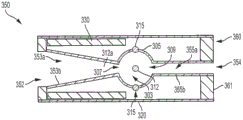
FIG. 2a is a partially transparent view of a radiation-trapping chamber having a core hole for use as a nebulizer according to an example embodiment of the disclosure;
FIG. 2b is a cross-sectional view of a nebulizer according to an example embodiment of the disclosure comprising a radiation capture chamber, a radiation source, and a wick;
FIG. 2c is a partially transparent view of a radiation-trapping chamber having channels therein for use as a nebulizer according to an example embodiment of the disclosure;
FIG. 2d is a cross-sectional view of a nebulizer according to an example embodiment of the disclosure comprising a radiation capture chamber, a radiation source, and a wick;
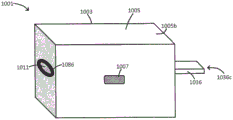
figure 3 is a partially cut-away perspective view of an aerosol delivery device according to an example embodiment of the present disclosure;
figure 3a is a cross-sectional view through the xy plane of the aerosol delivery device illustrated in figure 3;
figure 3b is a cross-sectional view through the xz plane of the aerosol delivery device illustrated in figure 3;
figure 4 is a partially cut-away perspective view of a further aerosol delivery device according to an example embodiment of the present disclosure;
figure 5 is a partially cut-away perspective view of yet another aerosol delivery device according to an example embodiment of the present disclosure;
figure 5a is a cross-sectional view through the yz plane of the aerosol delivery device illustrated in figure 5;
figure 6 is a partially cut-away perspective view of yet another aerosol delivery device according to an example embodiment of the present disclosure;
FIG. 7a is a top view of a micro-heater suitable for use in an apparatus according to an example embodiment of the present disclosure;
FIG. 7b is a side view of a micro-heater suitable for use in an apparatus according to an example embodiment of the present disclosure;
FIG. 8 is an exploded perspective view of a nebulizer according to an example embodiment of the disclosure, the nebulizer comprising a first heater, a second heater, and a liquid transport element therebetween;
fig. 9a is a perspective view of a nebulizer according to an example embodiment of the disclosure, the nebulizer comprising a first heater, a second heater, and a liquid transport element therebetween;
FIG. 9b is a side view of the atomizer of FIG. 9 a;
FIG. 9c is a side view of the atomizer of FIG. 9a with the heater positionally adjusted so as not to be directly aligned;
FIG. 10a is a perspective view of a nebulizer according to an example embodiment of the disclosure, the nebulizer comprising a chamber with two heaters therein and a liquid transport element located between the two heaters and extending out of the chamber;
FIG. 10b is a partial cross-section of the atomizer of FIG. 10 a;
fig. 11 is a partial cross-section of an aerosol delivery device including a fiber reservoir having an aerosol precursor liquid absorbed and/or adsorbed therein according to an example embodiment of the present disclosure;
fig. 12 is a partial cross-section of an aerosol delivery device including a reservoir holding an aerosol precursor liquid according to an example embodiment of the present disclosure.
Detailed Description
The present disclosure now will be described more fully hereinafter with reference to exemplary embodiments thereof. These embodiments are described so that this disclosure will be thorough and complete, and will fully convey the scope of the invention to those skilled in the art. Indeed, this disclosure may be embodied in many different forms and should not be construed as limited to the embodiments set forth herein; rather, these embodiments are provided so that this disclosure will satisfy applicable legal requirements. As used in the specification and the appended claims, the singular forms "a", "an", and "the" include plural referents unless the context clearly dictates otherwise.
As described below, embodiments of the present disclosure relate to aerosol delivery systems. The aerosol delivery system according to the present disclosure uses electrical energy to heat a material (preferably without combusting the material to any significant extent and/or without significant chemical change of the material) to form an inhalable substance; and the components of such a system are in the form of an article that is most preferably compact enough to be considered a handheld device. That is, the use of the components of the preferred aerosol delivery systems does not result in the production of smoke-i.e., from the byproducts of combustion or pyrolysis of tobacco-but, instead, the use of those preferred systems results in the production of vapor products resulting from the volatilization or atomization of certain components incorporated therein. In preferred embodiments, the components of the aerosol delivery system may be characterized as electronic cigarettes, and those electronic cigarettes most preferably contain tobacco and/or components derived from tobacco, and thus deliver the tobacco-derived components in aerosol form.
The aerosol-generating member of certain preferred aerosol delivery systems can provide many of the sensations (e.g., inhalation and exhalation habits, types of tastes or flavors, sensory effects, physical sensations, usage habits, visual cues such as those provided by visible aerosols, etc.) of a cigarette, cigar, or pipe drawn through use to ignite and burn tobacco (and thus inhale tobacco smoke) without any substantial degree of combustion of any of its components. For example, the aerosol-generating article of the present disclosure may be held and used like a smoker using a conventional type of smoking article, drawing on one end to inhale an aerosol generated by the article, drawing or drawing a puff at selected intervals, or the like.
The aerosol delivery devices of the present disclosure may also be characterized as vapor-generating articles or drug delivery articles. Accordingly, such articles or devices may be adapted to provide one or more substances (e.g. flavouring agents and/or pharmaceutically active ingredients) in inhalable form or state. For example, the inhalable substance may be substantially in the form of a vapor (i.e., a substance in the gas phase at a temperature below its critical point). Alternatively, the inhalable substance may be in the form of an aerosol (i.e. a suspension of fine solid particles or liquid droplets in a gas). For simplicity, the term "aerosol" as used herein is meant to include vapors, gases, and aerosols in a form or type suitable for human inhalation, whether visible or not and whether in a form that can be considered smoke-like or not.
The aerosol delivery device of the present disclosure generally comprises several components provided within an outer body or housing (which may be referred to as a casing). The overall design of the outer body or housing may vary, and the form or configuration of the outer body, which may define the overall size and shape of the aerosol delivery device, may vary. Typically, an elongate body of a cigarette or cigar-like shape may be formed from a single unitary housing, or an elongate housing may be formed from two or more separable bodies. For example, the aerosol delivery device may comprise an elongate shell or body which may be substantially tubular in shape and thereby resemble the shape of a conventional cigarette or cigar. In one embodiment, all components of the aerosol delivery device are contained within one housing. Alternatively, the aerosol delivery device may comprise two or more joined and separable housings. For example, the aerosol delivery device may have a control body at one end that includes a housing containing one or more components (e.g., a battery and various electronics for controlling operation of the article) and removably attached at the other end to an outer body or housing containing aerosol-forming components (e.g., one or more aerosol precursor components, such as flavors and aerosol-forming agents, one or more heaters, and/or one or more wicks).
The aerosol delivery device of the present disclosure may be formed from an outer housing or shell that is not substantially tubular in shape, but may be formed to a significantly larger size. The housing or shell may be configured to include a mouthpiece and/or may be configured to receive a separate shell (e.g., a cartridge) that may include a consumable element (such as a liquid aerosol former) and may include a nebulizer or atomizer.
The aerosol delivery device of the present disclosure most preferably comprises a power source (i.e., a source of electrical power), at least one control component (e.g., means for actuating, controlling, regulating and stopping power for heat generation, such as by controlling the flow of electrical current through the power source to other components of the article-e.g., a microcontroller or microprocessor), a heater or heat generating member (e.g., a resistive heating element or other component, which alone or in combination with one or more other components may be generally referred to as an "atomizer"), an aerosol precursor composition (e.g., a liquid that is generally capable of producing an aerosol when sufficient heat is applied, such as components generally referred to as "smoke," "e-liquid," and "e-juice"), and a mouthpiece or mouth region for allowing a generated aerosol to be drawn therefrom upon inhalation on the aerosol delivery device (e.g., by a defined airflow path of the article) some amount of the aerosol that is produced upon inhalation And (4) combination.
More specific forms, configurations, and arrangements of components within the aerosol delivery system of the present disclosure will be apparent in view of the further disclosure provided below. Further, the selection and arrangement of various aerosol delivery system components can be appreciated when considering commercially available electronic aerosol delivery devices (such as those representative products referenced in the background section of the present disclosure).
One exemplary embodiment of an aerosol delivery device 100 illustrating components that may be used in aerosol delivery devices according to the present disclosure is provided in fig. 1. As seen in the cross-sectional view shown therein, the aerosol delivery device 100 may include a control body 102 and a cartridge 104, which may be permanently or removably aligned in an operative relationship. The engagement of the control body 102 and the cartridge 104 may be a press fit (as illustrated), a threaded engagement, an interference fit, a magnetic engagement, or the like. In particular, connecting members such as those described further herein may be used. For example, the control body may comprise a coupler adapted to engage a connector on the cartridge.
In certain embodiments, one or both of the control body 102 and the cartridge 104 may be referred to as being disposable or reusable. For example, the control body may have replaceable or rechargeable batteries, and thus may be combined with any type of recharging technology, including connection to a typical electrical outlet, such as through a Universal Serial Bus (USB) cable, connection to a car charger (i.e., a cigarette lighter socket), and connection to a computer. For example, an adapter including a USB connector at one end and a control body connector at the opposite end is disclosed in U.S. patent publication No.2014/0261495 to Novak et al, which is incorporated herein by reference in its entirety. Further, in some embodiments, the cartridge may comprise a single use cartridge, as disclosed in U.S. patent No.8,910,639 to Chang et al, which is incorporated herein by reference in its entirety.
As illustrated in FIG. 1, the control body 102 may be formed from a control body housing 101, the control body housing 101 may include control components 106 (e.g., a Printed Circuit Board (PCB), an integrated circuit, a memory component, a microcontroller, etc.), a flow sensor 108, batteries 110 and L ED 112, and these components may be variably aligned in addition to L ED or in lieu of L ED, other indicators (e.g., a tactile feedback component, an audio feedback component, etc.) may be included, additional representative types of components that produce a visual cue or indication, such as a light emitting diode (L ED) component, and their configuration and use are described in U.S. patent No.5,154,192 to Sprinkel et al, U.S. patent No.8,499,766 to Newton, and U.S. patent No.8,539,959 to Scatterday, and U.S. patent application Ser. 14/173,266 to Sears et al, filed on 2.5.2014.
The cartridge 104 may be formed by a cartridge shell 103 enclosing a reservoir 144, the reservoir 144 being in fluid communication with a liquid transport element 136, the liquid transport element 136 being adapted to wick or otherwise transport an aerosol precursor composition stored in the reservoir housing to the heater 134. The liquid transport element may be formed from one or more materials configured to transport liquid, such as by capillary action. The liquid transport element may be formed, for example, from fibrous materials (e.g., organic cotton, cellulose acetate, regenerated cellulose fabric, glass fibers), porous ceramics, porous carbon, graphite, porous glass, sintered glass beads, sintered ceramic beads, capillaries, and the like. The liquid transport element may thus be any material comprising an open pore network (i.e. a plurality of interconnected pores such that fluid may flow through the element from one pore to another in multiple directions). Various embodiments of materials configured to generate heat when an electrical current is applied therethrough may be employed to form resistive heating element 134. Example materials from which the coil may be formed include chrome aluminum cobalt heat resistant steel (FeCrAl), nickel chromium alloy, molybdenum disilicide (MoSi)2) Molybdenum silicide (MoSi), molybdenum disilicide doped with aluminum (Mo (Si, Al)2) Titanium, platinum, silver, palladium, graphite and graphite-based materials (e.g., carbon-based foams and yarns) and ceramics (e.g., ceramics with positive or negative temperature coefficients). As further described herein, the heater may include a material configured to provide electromagnetic radiation, including a laser diode.
There may be an opening 128 in the cartridge shell 103 (e.g., at the mouth end) to allow the formed aerosol to be expelled from the cartridge 104. These components represent components that may be present in the cartridge and are not intended to limit the scope of the cartridge components encompassed by the present disclosure.
The cartridge 104 may also include one or more electronic components 150, which may include integrated circuits, memory components, sensors, and the like. The electronic component 150 may be adapted to communicate with the control component 106 and/or with external devices by wired or wireless means. The electronic components 150 may be positioned anywhere within the cartridge 104 or its base 140.
Although the control component 106 and the flow sensor 108 are illustrated separately, it should be understood that the control component and the flow sensor may be combined into an electronic circuit board having the airflow sensor directly attached thereto. Further, the electronic circuit board may be positioned horizontally with respect to the illustration of fig. 1, as the electronic circuit board may be lengthwise parallel to the central axis of the control body. In some embodiments, the air flow sensor may include its own circuit board or other base element to which it may be attached. In some embodiments, a flexible circuit board may be utilized. The flexible circuit board may be configured in various shapes, including a substantially tubular shape.
The control body 102 and the cartridge 104 may include components adapted to facilitate fluid engagement therebetween. As illustrated in fig. 1, the control body 102 may include a coupler 124 having a cavity 125 therein. The cartridge 104 may include a base 140 adapted to engage the coupler 124 and may include a protrusion 141 adapted to fit within the cavity 125. Such engagement may facilitate a stable connection between the control body 102 and the cartridge 104, as well as establishing an electrical connection between the battery 110 and control component 106 in the control body and the heater 134 in the cartridge. Further, the control body housing 101 may comprise an air inlet 118, which air inlet 118 may be a recess in the housing where it is connected to the coupler 124, which allows ambient air surrounding the coupler to pass through and into the housing where it then passes through the cavity 125 of the coupler and into the cartridge through the protrusion 141.
Couplers and bases useful in accordance with the present disclosure are described in U.S. patent publication No.2014/0261495 to Novak et al, the disclosure of which is incorporated herein by reference in its entirety. For example, the coupler as seen in fig. 1 may define an outer perimeter 126 configured to mate with an inner perimeter 142 of the base 140. In one embodiment, the inner perimeter of the base may define a radius that is substantially equal to or slightly greater than the radius of the outer perimeter of the coupler. Further, the coupler 124 may define one or more protrusions 129 at the outer perimeter 126 configured to engage one or more recesses 178 defined at the inner perimeter of the base. However, various other embodiments of structures, shapes, and components may be employed to couple the base to the coupler. In some embodiments, the connection between the base 140 of the cartridge 104 and the coupler 124 of the control body 102 may be substantially permanent, while in other embodiments, the connection therebetween may be releasable so that, for example, the control body may be reused with one or more additional cartridges that may be disposable and/or refillable.
In some embodiments, the aerosol delivery device 100 may be substantially rod-shaped or substantially tubular-shaped or substantially cylindrical. In other embodiments, other shapes and sizes are contemplated-e.g., rectangular or triangular cross-sections, polygonal shapes, etc.
The reservoir 144 illustrated in fig. 1 may be a container or may be a fiber reservoir, as presently described. For example, in this embodiment, the reservoir 144 may comprise one or more layers of non-woven fibers formed substantially in the shape of a tube that surrounds the interior of the cartridge shell 103. The aerosol precursor composition may be retained in the reservoir 144. For example, the liquid component may be retained by the reservoir 144 by adsorption. The reservoir 144 may be fluidly connected with the liquid transport element 136. In this embodiment, the liquid transport element 136 can transport the aerosol precursor composition stored in the reservoir 144 to the heating element 134 in the form of a metal coil via capillary action. As such, the heating element 134 and the liquid transport element 136 are in a heating arrangement.
In use, when a user puffs on the article 100, airflow is detected by the sensor 108, the heating element 134 is activated, and components of the aerosol precursor composition are atomized by the heating element 134. Suction is drawn on the mouth end of the article 100 such that ambient air enters the air inlet 118 and passes through the cavity 125 in the coupler 124 and the central opening in the protrusion 141 of the base 140. In the cartridge 104, the drawn air is composed with vapor to form an aerosol. The aerosol is agitated, sucked or otherwise drawn from the heating element 134 and out of the mouth opening 128 in the mouth end of the article 100.
The input element may be included in an aerosol delivery device. The input may be included to allow a user to control functions of the device and/or for outputting information to the user. Any component or combination of components may be utilized as an input for controlling the functionality of the device. For example, one or more buttons may be used, as described in U.S. patent application serial No.14/193,961 filed on 2014 28 of Worm et al, which is incorporated herein by reference. Also, a touch screen may be used, as described in U.S. patent application serial No.14/643,626 filed 3/10 of Sears et al 2015, which is incorporated herein by reference. As a further example, a component adapted for gesture recognition based on a particular movement of the aerosol delivery device may be used as an input. See U.S. patent application serial No.14/565,137 filed on 9/12/2014 by Henry et al, which is incorporated herein by reference.
In some embodiments, the input may comprise a computer or computing device, such as a smartphone or tablet. In particular, the aerosol delivery device may be wired to a computer or other device, such as via use of a USB cord or similar protocol. The aerosol delivery device may also communicate with a computer or other device acting as an input via wireless communication. See, for example, systems and methods for controlling a device via a read request as described in U.S. patent application serial No.14/327,776, filed 2014, 10, by amplini et al, the disclosure of which is incorporated herein by reference. In such embodiments, the APP or other computer program may be used in connection with a computer or other computing device to input control instructions to the aerosol delivery device, such control instructions including the ability to form an aerosol of a particular composition, for example, by selecting the nicotine content and/or the content of other flavors included.
The various components of the aerosol delivery device according to the present disclosure may be selected from components described in the art and commercially available. Examples of batteries that may be used are described in U.S. patent publication No.2010/0028766 to Peckerar et al, the disclosure of which is incorporated herein by reference in its entirety.
The aerosol delivery device may contain a sensor or detector for controlling the supply of electrical power to the heat-generating element when aerosol generation is required (e.g. when drawn during use). As such, for example, a manner or method is provided for turning off the power supply to the heat generating element when the aerosol delivery device is not being drawn during use and for turning on the power supply during draw to actuate or trigger the generation of heat by the heat generating element. Additional representative types of sensing or detection mechanisms, their structure and configuration, their components, and general methods of operation thereof are described in U.S. patent No.5,261,424 to springel, jr, U.S. patent No.5,372,148 to McCafferty et al, and PCT WO 2010/003480 to Flick, which are incorporated herein by reference.
The aerosol delivery device most preferably comprises a control mechanism for controlling the amount of power supplied to the heat generating element during inhalation. Representative electronic components, their structure and configuration, their features, and general methods of their operation are described in U.S. Pat. nos. 4,735,217 to Gerth et al; U.S. patent nos. 4,947,874 to Brooks et al; McCafferty et al, U.S. Pat. No.5,372,148; U.S. patent nos. 6,040,560 to fleischeuer et al; nguyen et al, U.S. Pat. No.7,040,314 and Pan, U.S. Pat. No.8,205,622; U.S. patent publication nos. 2009/0230117 to Fernando et al; U.S. patent publication nos. 2014/0060554 to Collet et al and 2014/0270727 to Ampolini et al; and U.S. patent application serial No.14/209,191 filed 3/13/2014 by Henry et al, which is hereby incorporated by reference.
Representative types of substrates, reservoirs, or other components for supporting aerosol precursors are disclosed in Newton, U.S. patent No.8,528,569; U.S. patent publication Nos. 2014/0261487 to Chapman et al and 2014/0059780 to Davis et al; and U.S. patent application serial No.14/170,838, filed on 3/2/2014 by Bless et al, which is incorporated herein by reference. Further, the configuration and operation of various wicking materials and those within certain kinds of electronic cigarettes is set forth in U.S. patent No.8,910,640 to sea et al, which is incorporated herein by reference.
For aerosol delivery systems characterized as electronic cigarettes, the aerosol precursor composition most preferably comprises tobacco or a tobacco-derived component. In one aspect, the tobacco may be provided as a portion of tobacco or a tobacco sheet, such as a finely ground, or powdered tobacco lamina. In another aspect, the tobacco may be provided in the form of an extract, such as a spray dried extract containing a plurality of tobacco water soluble components. Alternatively, the tobacco extract may be in the form of a relatively high nicotine content extract that also contains minor amounts of other extracted components derived from tobacco. In another aspect, the tobacco-derived component can be provided in a relatively pure form, such as certain flavors derived from tobacco. In one aspect, the component derived from tobacco and that can be employed in highly purified or essentially pure form is nicotine (e.g., pharmaceutical grade nicotine).
Representative types of aerosol precursor components and formulations are also described and characterized in U.S. Pat. No.7,217,320 to Robinson et al and U.S. Pat. publication No.2013/0008457 to Zheng et al, U.S. Pat. publication No.2013/0213417 to Chong et al, U.S. Pat. publication No.2014/0060554 to Collett et al, U.S. Pat. publication No.2015/0020823 to L ipowicz et al, and U.S. Pat. publication No.2015/0020830 to Koller, and WO 2014/182736 to Bowen et al, the disclosures of which are incorporated herein by reference Product, B L U produced by L orillard technologyTMProducts, Aerosol precursors in MISTIC MEDIHO L product produced by Mistic Ecigs and VYPE product produced by CN Creative Co., Ltd.for Electricity available from Johnson Creek Enterprises LL CSo-called "juice" of sub-cigarettes is also desirable.
The amount of aerosol precursor included in the aerosol delivery system is such that the aerosol-generating member provides an acceptable feel and desired performance characteristics. For example, it is highly preferred that a sufficient amount of aerosol-forming material (e.g. glycerol and/or propylene glycol) is employed so as to provide a visible mainstream aerosol that generates an appearance that is similar in many respects to tobacco smoke. The amount of aerosol precursor within the aerosol-generating system may depend on factors such as the number of puffs required per aerosol-generating component. Typically, the amount of aerosol precursor included in the aerosol delivery system, and in particular in the aerosol generating member, is less than about 2g, typically less than about 1.5g, often less than about 1g and frequently less than about 0.5 g.
Still other features, controls or components that may be incorporated into the aerosol delivery system of the present disclosure are in U.S. patent No.5,967,148 to Harris et al, U.S. patent No.5,934,289 to Watkins et al, U.S. patent No.5,954,979 to Counts et al, U.S. patent No.6,040,560 to fleischauer et al, U.S. patent No.8,365,742 to Hon, U.S. patent No.8,402,976 to Fernando et al, U.S. patent publication No.2010/0163063 to Fernando et al, U.S. patent publication No.2013/0192623 to Tucker et al, U.S. patent publication No.2013/0298905 to L even et al, U.S. patent publication No.2013/0180553 to Kim et al, U.S. patent publication No.2014/0000638 to Sebastian et al, U.S. patent publication No.2014/0261495 to Novak et al, and U.S. patent publication No.2014/0261408 to depiana et al, which are incorporated herein by reference.
The description of the use of the articles described above may be applied to the various embodiments described herein with minor modifications that will be apparent to those skilled in the art in view of the further disclosure provided herein. The above description of use is not intended to limit the use of articles, but rather to provide all the necessary requirements to comply with the disclosure of the present disclosure. Any of the elements shown in the article illustrated in fig. 1 or otherwise described above may be included in the aerosol delivery device of the present disclosure.
In some embodiments, the present disclosure may relate to nebulizers and elements thereof that may be used in aerosol delivery devices. Such an atomizer and its elements may be particularly beneficial for improving energy efficiency in aerosol delivery devices. For example, the energy consumption associated with achieving a desired heating temperature between puffs on the device may be minimized. More particularly, the atomizer and associated elements may achieve a desired heating temperature more quickly and/or reduce heat loss that may impede atomization.
In some embodiments, the heater used in the atomizer may be a source of electromagnetic radiation. In particular, the heater may be configured to emit electromagnetic radiation of a particular wavelength or range of wavelengths (i.e., a defined band of wavelengths). For example, the heater may be configured to emit electromagnetic radiation having a wavelength in a range encompassing violet to far infrared light. More specifically, the wavelength may be in the range of about 390nm to about 1 mm. As another example, the wavelength may be in a range encompassing visible light (i.e., about 400nm to about 700 nm).
The radiation source may be configured to emit radiation having a focal band, and such focal band may be selected based on the substrate to be heated in order to maximize heating of the particular substrate(s). For example, the radiation source may be configured to emit electromagnetic radiation within a wavelength band having a bandwidth of no more than 100 μm, i.e., no more than 10 μm, no more than 1,000nm, i.e., no more than 500nm, i.e., no more than 250nm, i.e., no more than 100nm, i.e., no more than 50nm, i.e., no more than 10nm, i.e., no more than 5nm, or i.e., no more than 2 nm. More specifically, the radiation source may be configured to emit electromagnetic radiation within a range corresponding to a particular absorption wavelength of the core material, the aerosol precursor composition, and/or one or more particular components of the aerosol precursor composition. By way of non-limiting example, many polyols useful in aerosol precursor compositions may exhibit preferential absorption in the wavelength band of about 2 μm to about 12 μm. Accordingly, a heater according to the present disclosure may be configured to emit electromagnetic radiation within a wavelength band of no greater than 10 μm (i.e., having a particular wavelength in the range of 2 μm to 12 μm). However, other ranges are contemplated. For example, a wavelength band of about 700nm to about 1mm may be beneficial for the specific absorption of visible electromagnetic energy by materials that are clear in visible light but opaque relative to infrared light. As yet a further example, a wavelength band of about 390nm to about 790nm may be beneficial for specific absorption by a visibly black substrate.
In some embodiments, a laser diode may be used as the heater. Using radiation of a particular wavelength or very narrow band of wavelengths (such as is common in lasers) can spectrally focus the energy such that less energy is scattered to various wavelengths. The radiation wavelength can be tuned to a particular absorption wavelength (or band) of the substrate, such as the aerosol precursor composition or a component thereof and/or a wick from which the aerosol precursor composition can be aerosolized. The use of a laser-based radiation source may also be advantageous to focus the radiant energy into a smaller spatial domain to minimize radiation losses.
In some embodiments, a nebulizer according to the present disclosure may be defined by a chamber within which radiation is emitted and from which the nebulized aerosol precursor composition may be released. When using in particular a laser radiation source, the chamber can be reduced in size due to the ability to focus the radiation energy and avoid energy losses. Thus, a desired amount of vapor can be produced from a smaller volume since less energy is wasted. In some embodiments, the laser radiation source can provide direct heating of the aerosol precursor composition. For example, the apparatus may be configured such that the aerosol precursor composition is delivered (including via wicking) to a specific location within the chamber (i.e., the atomization target), and the one or more laser radiation sources may be focused directly at that specific location. In this way, less radiation is available for scattering within the chamber, but most of the radiation directly strikes the atomizing target. Such focused heating may be particularly beneficial in embodiments where the band of laser radiation is focused to a preferred absorption wavelength of the target (i.e., the target substrate and/or aerosol precursor material) to increase vapor formation while reducing energy requirements.
The chamber may take on various shapes. For example, the chamber may be substantially spherical. A multi-faceted structure may also be utilized. In some embodiments, the chamber may be substantially elongate (e.g., tubular). The chamber shape (optionally in combination with gas flow paths through and/or around the chamber) may enhance not only energy absorption, but also vapor elution.
In some embodiments, the chamber may be a radiation-trapping chamber. The chamber is preferably configured to maximise the capture and/or release of incident radiation at the chamber walls. As such, the interior of the wall(s) forming the chamber may be configured to one or more of absorb, emit and reflect radiation from the radiation source. For example: the interior of the chamber wall(s) may be configured to absorb at least about 50%, at least about 60%, at least about 70%, or at least about 80% of all incident electromagnetic radiation; the interior of the chamber wall(s) may be configured to reflect at least about 50%, at least about 60%, at least about 70%, or at least about 80% of all incident electromagnetic radiation.
In some embodiments, the interior of the chamber wall may be configured as a black body. In other words, a blackbody configuration may indicate that substantially all incident electromagnetic radiation is absorbed regardless of frequency or angle of incidence. The ability of the black body construction to absorb substantially all incident electromagnetic radiation may mean that at least 98%, at least 99%, at least 99.5%, or at least 99.9% of all incident electromagnetic radiation is absorbed. The blackbody configuration may further indicate that it is an ideal emitter (i.e., at each frequency, it emits as much (or more) energy as any other body emits at the same temperature and/or that it is a diffuse emitter (i.e., energy radiates isotropically, regardless of direction). a blackbody in thermal equilibrium may emit electromagnetic radiation-i.e., blackbody radiation-this radiation emitted has a spectrum determined by the temperature rather than by the shape or composition of the blackbody structure.
In other embodiments, the interior of the chamber wall may be configured as a white body. That is, the interior of the chamber wall may be configured to completely and uniformly reflect substantially all incident electromagnetic radiation in all directions. The ability to reflect substantially all incident electromagnetic radiation may mean that at least 98%, at least 99%, at least 99.5% or at least 99.9% of all incident electromagnetic radiation is reflected. The emissivity of the radiation-trapping chamber, which is substantially configured as a white body, may be less than 0.5, less than 0.4, less than 0.3, less than 0.2, or less than 0.1, such as, for example, in the range of about 0.01 to about 0.4, about 0.02 to about 0.3, or about 0.05 to about 0.25.
The radiation-trapping chamber may be formed of any material that is sufficiently thermally stable at the temperatures achieved within the chamber. The radiation capture chamber may particularly comprise an outer insulating layer such that thermal radiation is substantially prevented or reduced from leaving the chamber. As non-limiting examples, materials that may be used to form the radiation-trapping chamber may include ceramics and silicon-based materials. In some embodiments, a double-walled chamber may be utilized such that insulating material (including air) may be present between the walls.
A radiation source acting as a heater may be configured to provide radiation within a chamber, in particular a radiation capture chamber. In some embodiments, the radiation source may be positioned on a wall of the chamber (i.e., directly attached thereto or included therein) so as to emit radiation directly within the chamber. In other embodiments, the radiation source may be positioned within the chamber and spaced apart from the chamber walls. For example, one or more struts or supports may extend through or from the chamber wall such that the radiation source is substantially suspended within the chamber. The radiation source may be substantially centered within the chamber, or may be offset from an approximate center of the chamber. In some embodiments, the radiation source may extend substantially along the longitudinal axis through the chamber and/or through a housing of the apparatus in which the chamber and radiation source are positioned.
The chamber may include at least one opening (or outlet) through which formed vapor may escape or vent. The chamber may also include an inlet into which air or another gas may enter to entrain or mix with the formed vapor and exit through an outlet. In particular, the inlet and the outlet may be in fluid communication. The chamber may comprise one or more further openings, apertures, etc. through which additional elements of the atomizer and/or aerosol delivery device may pass. The additional openings may also allow the inflow of air. Alternatively, the further opening may be substantially sealed. In some embodiments, for example, a wick or similar liquid transport element may enter and/or exit the chamber through one or more openings. The electrical contacts may further pass through the chamber wall into the chamber to provide power to a heater that may be positioned therein.
Exemplary chamber configurations are illustrated in fig. 2a to 2 d. In the exemplary embodiment of fig. 2a, the nebulizer 201 comprises a substantially spherical (although other shapes are also contemplated) chamber 203 (preferably a radiation trapping chamber). For ease of description, the chamber 203 is illustrated as being partially transparent. The chamber 203 is formed by a chamber wall 205 having an inner surface 205a and an outer surface 205 b. For example, as described further herein, the inner surface 205a may be configured as a black body or a white body so as to be configured as a radiation-trapping chamber. The inlet 207 and outlet 209 are spaced apart to be generally opposite; however, other configurations may be utilized to optimize the movement of the formed vapor out of the chamber 203. The positions of the inlet 207 and outlet 209 may be reversed. The chamber 203 also includes an aperture 211 through which a wick (not shown) may be inserted. Although two holes 211 are illustrated, only a single hole may be used, or more than two holes may be used (i.e., for insertion of multiple cores). A laser diode 215 is also present and is positioned in the wall 205 of the chamber 203 so as to emit electromagnetic radiation into the interior 203a of the chamber 203.
A cross section of the atomizer 201 from fig. 2a is shown in fig. 2 b. In fig. 2b, the wick 212 is shown passing through the aperture 211 such that a portion of the wick is inside the chamber 203 and a portion of the wick is outside the chamber. In use, the wick 212 can deliver the aerosol precursor composition to the interior 203a of the chamber 203 such that electromagnetic radiation from the laser diode 215 can be used to atomize the aerosol precursor composition out of the chamber through the outlet 209 (e.g., as an aerosol), particularly in combination with air entering the chamber through the inlet 207.
Fig. 2c and 2d show further exemplary embodiments of the atomizer 201. Again, a substantially spherical chamber 203 is formed by a chamber wall 205 having an inner surface 205a and an outer surface 205b, and a laser diode 215 is positioned in the chamber wall along with an inlet 207 and an outlet 209. In this embodiment, the core 212 is generally in the form of a sheet lining the inner surface 205a of the chamber wall 205. In particular, the core 212 is in the form of a curved plane. The chamber 203 further comprises a passage 213 from the interior of the chamber to the exterior of the chamber. In the illustrated embodiment, the channel 213 extends substantially at the "equator" of the sphere and around its entire circumference, substantially dividing the chamber 203 into two hemispheres. Core extension 214 protrudes through channel 213 to be in fluid communication with the external environment surrounding chamber 203. As further illustrated herein, the wick extension 214 may contact the reservoir to deliver the aerosol precursor composition therefrom to the interior of the chamber 203 to "wet" the wick. Electromagnetic radiation from laser diode 215 may pass through core liner 212 to facilitate the radiation trapping effects described herein and atomize the aerosol precursor composition in the core.
The chamber may take other configurations, as described further below. For example, the chamber may be substantially elongate. Similarly, the electromagnetic radiation source may take a further configuration. For example, heating wires may be used.
An aerosol delivery device 350 comprising a chamber 303 and a source of electromagnetic radiation 315 is shown in fig. 3. In the illustrated embodiment, the chamber 303 is again substantially spherical; however, as described in more detail below, other chamber configurations are also contemplated. The aerosol delivery device 350 includes a housing 320 in which additional portions of the device are positioned. The chamber 303 includes a chamber wall 305 having an inner surface 305a and an outer surface 305 b. The laser diode 315 is positioned in the chamber wall 305 and is configured to emit radiation within the chamber 303. The inner surface 305a of the chamber wall 305 is configured to capture emitted radiation, as described further herein. The core 312 is positioned such that a portion of the core is inside the chamber 303 and a portion of the core is outside the chamber. In particular, one or more core arms 312a are external to the chamber 303 and in contact with a reservoir 330, as illustrated, the reservoir 330 is a porous substrate, such as a fibrous mat (although other reservoir configurations and materials are also contemplated). As illustrated, the reservoir 330 is wrapped around the interior of the housing 320. The contact between the wick 312 and the reservoir 330 is sufficient so that the aerosol precursor composition held by the reservoir can pass to the wick for delivery to the chamber 303.
The chamber 303 includes an inlet 307 through which air may enter and an outlet 309 through which formed aerosol may exit. The aerosol delivery device 350 includes an air inlet 352 and an aerosol port 354 at an opposite end thereof. Air passing into the aerosol delivery device 350 through the air inlet 352 is directed to the inlet 307 of the chamber through an air passageway 353a defined by an air passageway wall 353b extending between the air inlet and the inlet 307. In the illustrated embodiment, the air pathway wall 353b is configured such that the air pathway 353a is substantially conical to taper toward the inlet 307 of the chamber 303 and improve focusing of the incoming air into the chamber. Although such a configuration may be preferred, this is not required and other configurations are included (including the absence of air passage wall 353 b). Similarly, an aerosol formed in the chamber 303 by mixing air and the atomized aerosol precursor composition passes through the outlet 309 to the aerosol port 354. The aerosol passage 355a is defined by an aerosol passage wall 355b extending between the outlet 309 and the aerosol port 354. As illustrated, the aerosol passage is substantially linear; however, other embodiments are also contemplated. The aerosol port 354 is positioned at the mouth end 360 of the aerosol delivery device 350, and the aerosol port 354 may be particularly defined in the mouth end cap 361.
The aerosol delivery device 350 is shown in fig. 3 with respect to its x-axis, y-axis, and z-axis. To further illustrate the device 350, fig. 3a shows a cross-section thereof through the xy-plane, and fig. 3b shows a cross-section thereof through the xz-plane.
A further exemplary embodiment of an aerosol delivery device 450 is shown in fig. 4. The aerosol delivery device 450 again includes a chamber 403 and a source of electromagnetic radiation 415. In the illustrated embodiment, the chamber 403 is again substantially spherical; however, other chamber configurations are also contemplated. The aerosol delivery device 450 includes a housing 420 in which additional portions of the device are positioned. The chamber 403 includes a chamber wall 405 having an inner surface (which in the illustration is masked by a core 412 that substantially lines the interior of the chamber wall) and an outer surface 405 b. A laser diode 415 is positioned in the chamber wall 405 and is configured to emit radiation within the chamber 403. The core 412 is generally in the form of a sheet lining the inner surface of the chamber wall 405. The chamber 403 is formed so as to include a passage 413, the passage 413 passing through the wall 405 of the chamber from the interior of the chamber to the exterior of the chamber. In the illustrated embodiment, the passage 413 extends substantially at the "equator" of the sphere and around its entire circumference, substantially dividing the chamber 403 into two hemispheres. The core extension 414 protrudes through the passage 413 so as to be in fluid communication with the external environment surrounding the chamber 403. In particular, the wick extension 414 is fluidly connected to a reservoir 430 in which the aerosol precursor composition is stored. The contact between the wick 414 and the reservoir 430 is sufficient so that the aerosol precursor composition held by the reservoir can pass to the wick 412 via the wick extension 414 for distribution around the interior of the chamber 403. The inner surface of the chamber wall 405 is configured to capture emitted radiation, as described further herein. Preferably, the structure of the core 412 is configured such that radiation can pass therethrough for interaction with the inner surface of the chamber wall 405.
In fig. 4, the chamber 403 comprises an inlet 407 through which air may enter and an outlet 409 through which formed aerosol may exit. The aerosol delivery device 450 includes an air inlet 452 and an aerosol port 454 at an opposite end thereof. Air passing into the aerosol delivery device 450 through the air inlet 452 is directed to the inlet 307 of the chamber 403 through an air passage 453a defined by an air passage wall 453b extending between the air inlet and the inlet 307. Aerosol formed in chamber 403 passes through outlet 409 to aerosol port 454. The aerosol passage 455a is defined by an aerosol passage wall 455b extending between the outlet 409 and the aerosol port 454. The aerosol port 454 is positioned at the mouth end 460 of the aerosol delivery device 450, and the aerosol port may be specifically defined in the mouth end cap 461.
Another exemplary embodiment of an aerosol delivery device 550 is shown in fig. 5. The aerosol delivery device 550 includes an elongated (i.e., generally tubular) chamber 503 and includes a source of electromagnetic radiation 515 positioned within the chamber. In the illustrated embodiment, electromagnetic radiation source 515 is a coiled wire that can provide resistive heating; however, the wire may be provided in different configurations and other types of electromagnetic radiation sources may be used. The electromagnetic radiation sources 515 have respective ends connected to electrical connectors 516 that provide electrical connections to the power source.
In fig. 5, the elongated chamber 503 includes an inlet 507 through which air may enter and an outlet 509 through which formed aerosol may exit. Aerosol delivery device 550 includes an air inlet 552 and an aerosol port 554 at an opposite end thereof. Air passing into the aerosol delivery device 550 through the air inlet 552 is directed to the inlet 507 of the chamber 503 through an air passage 553a defined by an air passage wall 553b extending between the air inlet and the inlet 507. The aerosol formed in the chamber 503 passes through the outlet 509 to the aerosol port 554. The aerosol passage 555a is defined by an aerosol passage wall 555b extending between the outlet 509 and the aerosol port 554. The aerosol ports 554 are positioned at the mouth end 560 of the aerosol delivery device 550, and the aerosol ports may be specifically defined in the mouth end cap 561. In this embodiment, the heater is aligned substantially parallel to the longitudinal axis of the aerosol delivery device.
In some embodiments, heating of the wick in the chamber is performed without any direct physical contact between the wick and the heater. As such, the heating may be substantially or completely radiant.
The ability to achieve a sufficient level of heating by radiant heating alone has been validated with a computer model of the heat flow within a substantially tubular chamber (see, e.g., fig. 5) and a heating rod positioned substantially centrally within the tube. Heating rods reaching temperatures up to 1200 ℃ result in radiant heating of the chamber walls in the range of 125 ℃ to 350 ℃. This model suggests that radiant heating alone can achieve suitable temperatures for atomizing typical aerosol precursor materials, as discussed herein. More particularly, in some embodiments, the radiant heating may be sufficient to heat the substrate (e.g., wick) and/or aerosol precursor material to a temperature of about 100 ℃ to about 400 ℃, about 125 ℃ to about 350 ℃, or about 150 ℃ to about 300 ℃. In some embodiments, the radiant heating may be in a range above the atomization temperature of the liquid aerosol precursor material but less than 300 ℃, less than 250 ℃, or less than 200 ℃.
In certain embodiments, heating may be performed using a combination of thermal conduction (i.e., direct contact of the heating source with the core) and radiant heating. The use of combined heating may be particularly useful for improving efficiency. When heat conduction is used alone, a significant portion of the heat radiates away from the heat source, although a portion of the heat from the heat source is conducted to the core. As such, the heat source may need to be heated to a higher temperature sufficient to overcome the radiant heat loss and still heat the wick to the desired vapor forming temperature. However, by enclosing the conductive heating arrangement in a radiation-trapping chamber, heat radiated away from the heat source can be directed back to the core. As such, less power may be required to achieve the desired vapor formation temperature.
For example, as illustrated in fig. 6, the aerosol delivery device 650 may be configured such that the heater 615 in the form of a heater filament is positioned within the chamber 603 and wraps around the wick 612 having a portion within the chamber and having wick arms 612a outside the chamber. The wick arm 612a is in fluid connection with the reservoir 630 so that the aerosol precursor composition stored in the reservoir can pass through the wick into the chamber 603 where it is heated and atomized by heating by conduction by direct contact with the heater 615 and by radiation that receives additional heat radiated away from the heater but returned to the wick (due to the nature of the inner surface 605a of the wall 605 of the chamber 603).
In the embodiment illustrated in fig. 6, the aerosol delivery device 650 includes a housing 620, an air inlet 652, and an aerosol port 654. An air inlet 652 is positioned at a connection end 656 of the aerosol delivery device 650, which may be configured for connection to a control body (see fig. 1). The aerosol port 654 is positioned at the mouth end 660 of the aerosol delivery device 650, and is specifically formed in the mouth end cap 661. Air passing into the aerosol delivery device 650 through the air inlet 652 is directed to the inlet 607 of the chamber 603 through an air passage 653a defined by an air passage wall 653b extending between the air inlet and the inlet. The aerosol formed in chamber 603 passes through outlet 609 to aerosol port 654. Aerosol passage 655a is defined by aerosol passage wall 655b extending between outlet 609 and aerosol port 654. In this embodiment, the wick portion and heater within the chamber are aligned substantially perpendicular to the longitudinal axis of the aerosol delivery device.
In some embodiments, the present disclosure further can provide a method of making an aerosol delivery device. Such methods may include combining a housing with the radiation-trapping chamber and/or combining a housing with the laser diode.
In certain embodiments, a method of assembling an aerosol delivery device may include at least the step of inserting a radiation-trapping chamber into a housing. The assembly method may further comprise one or more of the following steps: combining a heater with a radiation-trapping chamber such that the heater is configured to provide electromagnetic radiation within the chamber; establishing an electrical connection between the heater and one or more electrical connectors in step such that power can be delivered from the power source to the heater; inserting a core into the chamber; placing a reservoir into the housing such that the wick is in fluid connection with the reservoir; and adding an end cap to the mouth end of the housing such that the mouth end is configured for egress of the aerosol from the aerosol delivery device. In such a method, the wick may be inserted into the chamber before or after the chamber is combined with the heater and/or before or after the chamber is inserted into the housing. The reservoir may be placed into the housing before or after the chamber is inserted into the housing.
In one or more embodiments, the heater used in accordance with the present disclosure may be a micro-heater. By way of non-limiting example, the micro-heater 733 as shown in fig. 7 may include a substrate 738, a heater trace 734 on the substrate, and an electrical terminal 735 to which the heater trace is connected for making an electrical connection with a power source. As seen in the side view of the micro-heater 733 in fig. 7b, the micro-heater further can include a passivation layer 739 atop the substrate 738 and substantially or completely covering the heater traces 734 and the electrical connectors 735. As shown, the passivation layer 739 is substantially transparent; however, the passivation layer may be otherwise translucent or opaque. The passivation layer 739 is preferably chemically and thermally stable and does not significantly reduce the heat transfer from the heater trace 734 away from the micro-heater 733.
As can be seen in fig. 7b, the micro-heater 733 may be substantially flat in shape. As will be appreciated, the substantially planar element will have a thickness that is less than the length of the element and less than the width of the element. The substantially planar element may also have a thickness of about 70% or less, about 60% or less, about 50% or less, about 40% or less, about 30% or less, or about 20% or less of one or both of the length and width of the element. For example, the length and width of the microheater can each independently be about 1.5mm to about 20mm, about 2mm to about 15mm, about 2.5mm to about 10mm, or about 3mm to about 8 mm. In some embodiments, the length of the microheater may be greater than the width, and the longitudinal axis of the microheater may be substantially parallel to the longitudinal axis of the aerosol-forming device in which the microheater is used. Alternatively, the longitudinal axis of the microheater may be substantially perpendicular to the longitudinal axis of the aerosol-forming device in which the microheater is used. The substantially planar nature of the micro-heater is further evident in relation to fig. 8, 9a and 9B.
In one or more embodiments, a pair of heaters may be utilized to heat the aerosol precursor liquid. Each of the heaters in the pair may comprise a heating surface, and such a heating surface may in particular be a substantially flat surface. As such, the heating surface may be referred to as a heating surface, and the heating surface or heating surface may have a defined area, such as, for example, about 3mm2To about 400mm2About 4mm2To about 200mm2About 5mm2To about 100mm2About 6mm2To about 50mm2About 7mm2To about 30mm2Or about 8mm2To about 20mm2The area of (a). The heater having a heating surface may in particular be a micro-heater; however, the present disclosure is not limited to such embodiments, and the heater may take on any structure or property configured to provide heating to a liquid transport element as disclosed herein.
When a pair of heaters is utilized, the respective heaters may preferably be aligned in a generally parallel arrangement. In such a parallel arrangement, it may be preferred that the heating surfaces of the respective heaters overlap such that about 25% or more, about 50% or more, about 60% or more, about 70% or more, about 80% or more, about 90% or more, or about 95% or more of the heating surfaces of each heater overlap. In a substantially parallel arrangement, the heating surfaces of the respective heaters face each other. The liquid transport element may be positioned between the heaters in such an arrangement. In this way, heat can be applied to the liquid transport element from two directions. The two heaters in combination with the liquid transport element may be characterized as atomizers.
One embodiment of a nebulizer 801 is shown in fig. 8. The atomizer 801 includes a first micro-heater 833a and a second micro-heater 833 b. Although the heaters in the illustrated embodiments are micro heaters, such a configuration is for illustration purposes only, and it is understood that the heaters may take other forms consistent with the remaining disclosure provided herein in any number of combinations. The first micro-heater 833a includes a substrate 838a having a heater trace 834b and an electrical contact 835a (the heater trace and electrical contact are illustrated in phantom to indicate that they are on the underside of the substrate). The downwardly facing surface of the first micro-heater 833a serves as a heating surface "Ha" having a heater trace 834a thereon. For ease of illustration, a passivation layer is not provided, and it is understood that a passivation layer may be present on one or both of the micro-heaters 833a and 833 b. The second micro-heater 833b likewise comprises a substrate 838b having a heater trace 834b and an electrical contact 835b, and the upwardly facing surface having the heater trace 834b thereon serves as the heating surface "Hb". A liquid delivery element 836 is positioned between the first micro-heater 833a and the second micro-heater 833 b. As illustrated, the liquid transport element 836 is substantially planar. Such a configuration may be particularly beneficial for maximizing the surface area for atomizing the aerosol precursor liquid conveyed therein. The substantially flat configuration may also minimize the spacing between the first and second micro-heaters 833a and 833 b. As illustrated in fig. 8, the respective micro-heaters are not in final placement, and the elements are separated for ease of viewing. Once assembled, one or both of the first and second micro-heaters 833a, 833b can be in physical contact with the liquid delivery element 836. However, in one or more embodiments, the first and second micro-heaters 833a and 833b can be separated to form a heated space therebetween, and the liquid transport element can be positioned within the heated space. As such, the atomizer 801 may be characterized as the liquid delivery element 836 may specifically not be in direct contact with either of the first and second micro-heaters 833a, 833b (or other heaters that may be used in further embodiments).
The atomizer in the assembled configuration is illustrated in fig. 9a and 9 b. In particular, the nebulizer 901 comprises a first heater 933a and a second heater 933b in a substantially parallel arrangement, with the heating surface Ha of the first heater and the heating surface Hb of the second heater being in a facing arrangement. The first heater 933a and the second heater 933b are aligned such that substantially 100% of the heating surface Ha of the first heater overlaps with substantially 100% of the heating surface Hb of the second heater. As can be seen in particular in fig. 9b, the first and second heaters 933a, 933b are spaced apart such that a heating space 931 is present between them. A liquid transport element 936 is positioned within and substantially centrally within the heating volume 931. In this configuration, the liquid transport element 936 is not in physical contact with any of the respective heaters. Rather, heating occurs substantially or entirely via radiant heating. The heating volume 931 allows vapor formation at a top surface 936a and a bottom surface 936b of a substantially planar liquid transport element 936. Liquid delivery element 936 has opposite ends 936c and 936d that extend beyond the dimensions of heaters 933a and 933 b. Opposite ends 936c and 936d of liquid transport element 936 may be configured for contact with a reservoir in which aerosol precursor liquid is stored to achieve the effect of wicking liquid to heaters 933a and 933 b.
An exemplary alternative arrangement of the atomizer is illustrated in fig. 9 c. In the illustrated embodiment, the first and second heaters 933a, 933b remain in a substantially parallel arrangement; however, the overlap of the respective heaters is less than 100% of the respective heating surfaces. More specifically, approximately 50% of the heating surface Ha of the first heater 933a is in an arrangement of overlap with approximately 50% of the heating surface Hb of the second heater 933 b.
Heaters configured for radiant heating of a substrate (such as a liquid transport element having aerosol precursor liquid transported thereby) may be included in aerosol-forming devices in various configurations. For example, as described additionally above, a combination of two heaters with a liquid transport element therebetween may be used in known aerosol-forming devices in combination with, or instead of, the heater and liquid transport element used therein. In one or more embodiments, a combination of a pair of heaters and a liquid transport element may be configured such that one or both ends of the liquid transport element are in a fluid transport arrangement with a reservoir or other storage element that includes aerosol precursor liquid for delivery to the heaters. Accordingly, the heater may be separated from the aerosol precursor liquid in the reservoir by one or more walls. The one or more walls may comprise part of an atomizer comprising a heater, and/or the one or more walls may comprise part of a reservoir or other liquid storage chamber/element, and/or the one or more walls may be a partition provided between a heater and a separate liquid storage chamber/element.
An exemplary embodiment of a nebulizer is illustrated with respect to fig. 10a and 10b, fig. 10a showing an external view of a nebulizer 1001 configured as a self-contained unit suitable for use in combination with various aerosol-forming devices, and fig. 10b showing an internal view of the nebulizer 1001 with one wall cut away. The nebulizer 1001 includes a chamber 1003 formed by a chamber wall 1005 having an inner surface 1005a and an outer surface 1005 b. Although the chamber 1003 is illustrated as having a generally rectangular parallelepiped shape, it is understood that other shapes are contemplated, such as spherical, cylindrical, and the like. The wall 1005 may be a single wall or multiple walls and is configured to completely surround the heater-i.e., the heater is enclosed by the chamber 1003. The inner surface 1005a of the wall 1005 may be configured as a black body, a white body, or neither. The chamber 1003 may include an inlet 1007 through which air may pass into the chamber, and may include an outlet 1009 through which vapor and/or aerosol formed may pass out of the chamber. The inlet 1007 and outlet 1009 may be sized so as to optimize the flow of gas through the chamber 1003. For example, the inlet 1007 may be larger (i.e., encompass a larger area) than the outlet 1009. If desired, the inlet 1007 and/or outlet 1009 may include a mesh, screen, or other covering configured to allow gas (e.g., air and/or aerosol) to pass therethrough while substantially preventing liquid (e.g., water, aerosol precursor liquid, etc., that may condense within the chamber 1003 or leak from the liquid transport element 1036) from passing therethrough. The first and second heaters 1033a, 1033b are provided within the chamber 1003 in a configuration as otherwise described above with a liquid transport element 1036 positioned between the heaters. The ends 1036c and 1036d of the liquid transport element 1036 extend through the apertures 1011 in the wall 1005 of the chamber 1003. The aperture 1011 may include elements configured to substantially prevent fluid from leaking around the liquid transport element 1036. For example, a washer 1086 may be included; however, any suitable element that substantially seals the aperture 1011 around the liquid transport element 1036 may be used. As illustrated, the inlet 1007 and outlet 1009 are configured such that the gas flow path through the chamber 1003 is substantially parallel to the horizontal axis of the first and second heaters 1033a, 1033b and/or the horizontal axis of the liquid transport element 1036. The gas flow path may be in substantially the same plane as the heater and/or the liquid transport element. One or both of the inlet and outlet may be positioned off-axis relative to a horizontal axis of the heater and/or liquid transport element. One or both of the inlet and outlet may be substantially perpendicular to the longitudinal axis of the heater and/or liquid transport element.
An exemplary embodiment relating to a nebulizer positioned within an aerosol-forming device is described with respect to fig. 11. Therein, the cartridge 1104 is formed by a housing 1103 having a base 1140 configured for attaching the cartridge to a control body (see, e.g., control body 102 in fig. 1). Within the cartridge housing 1103 is a reservoir 1144, which in the illustrated embodiment is a fibrous mat that substantially surrounds the interior of the cartridge housing and has aerosol precursor liquid stored therein. The flow tube 1113 is generally centered along the central longitudinal axis of the barrel 1104 and is open at both ends to allow air to flow therethrough. The cartridge 1104 has a mouth end 1127 that includes a mouth opening 1128. The atomizer 1101 is positioned adjacent one end of the flow tube 1113 such that air flowing through the flow tube enters the chamber 1103 substantially directly, the atomizer 1101 comprising a first heater 1133a and a second heater (not visible) with a liquid transport element 1136 positioned between the heaters. The end of the liquid transport element 1136 extends through the aperture (see element 1011 of fig. 10 a) and into contact with the reservoir 1144. As illustrated, the heater and liquid transport element are generally aligned along the longitudinal axis of the cartridge and the air path 119 through the cartridge passes through the protrusion 1141 in the base 1140, through the flow tube 1113, into the chamber 1103 through the inlet 1107, at least partially between the heaters, out of the chamber through the outlet 1109, and out of the mouth end 1127 of the cartridge through the mouth opening 1128.
An exemplary embodiment relating to a nebulizer positioned within an aerosol-forming device is described with respect to fig. 12. Therein, the cartridge box 1204 is formed by a housing 1203 having a base 1240 configured for attaching the cartridge to the control body. The housing 1203 includes a partition 1288, the partition 1288 separating the reservoir 1244 and the vapor forming chamber 1201 as an open box. Within vapor forming chamber 1201 is a first heater 1233a in a substantially parallel arrangement with a second heater 1233b, both spaced apart with a liquid transport element 1236 positioned therebetween. The liquid delivery element 1236 extends beyond the end of the heater and the connecting wick 1237 is in fluid connection with the liquid delivery element and the reservoir 1244. The flow tube 1213 opens through a dividing wall 1288 and a mouth end 1227 of the cartridge 1204. A mouthpiece (mouthpiece)1223 is connected to the mouth end 1227 of the cartridge 1204 and is substantially open to allow aerosol to pass from the cartridge to a user. The aerosol precursor liquid 1245 is stored in the reservoir 1244 and passed along the connecting wick 1237 to the liquid delivery element 1236 for heating by the first and second heaters 1233a, 1233b (such as by radiant heating) to form a vapor. Air enters the base 1240, passes through the protrusion 1241, and mixes with the vapor in the vapor forming chamber 1201 to form an aerosol that passes through the flow tube 1213 to the mouthpiece 1223 and out the mouth opening 1228. Although connecting core 1237 and liquid transport element 1236 are illustrated as separate elements, it is understood that they may together form a single liquid transport element. Further, the heater is illustrated as being substantially perpendicular to the flow of air through the cartridge, but it is understood that the heater may be arranged in any configuration within the vapor forming chamber.
Many modifications and other embodiments of the disclosure will come to mind to one skilled in the art to which this disclosure pertains having the benefit of the teachings presented in the foregoing descriptions and the associated drawings. Therefore, it is to be understood that the inventions are not to be limited to the specific embodiments disclosed and that modifications and other embodiments are intended to be included within the scope of the appended claims. Although specific terms are employed herein, they are used in a generic and descriptive sense only and not for purposes of limitation.
Claims (19)
1. A nebulizer for an aerosol delivery device, the nebulizer comprising:
a chamber formed by a chamber wall and configured to capture electromagnetic radiation delivered therein;
a radiation source configured to provide the electromagnetic radiation within the chamber; and
a wick, at least a portion of which is positioned within the radiation-trapping chamber so as to be in an atomizing arrangement with the radiation source;
wherein an interior of the chamber wall is configured to absorb substantially all of the electromagnetic radiation provided by the radiation source or configured to reflect substantially all of the electromagnetic radiation provided by the radiation source.
2. The nebulizer of claim 1, wherein the chamber is substantially spherical.
3. The nebulizer of claim 1, wherein the chamber is elongated.
4. The atomizer of claim 1, wherein an interior of the chamber wall is configured as a black body.
5. The nebulizer of claim 1, wherein an interior of the chamber wall is configured as a white body.
6. The nebulizer of claim 1, wherein the radiation source comprises a laser diode.
7. The nebulizer of claim 1, wherein the chamber comprises an inlet and an outlet in fluid communication.
8. The nebulizer of claim 1, wherein the radiation source is positioned on the chamber wall of the chamber.
9. The nebulizer of claim 1, wherein the radiation source is positioned within the chamber and spaced apart from the chamber wall.
10. The nebulizer of claim 9, wherein the radiation source extends substantially along a longitudinal axis of the chamber.
11. The nebulizer of claim 1, wherein the radiation source is configured to emit radiation having a wavelength in a range of about 390nm to about 1 mm.
12. The nebulizer of claim 1, wherein the wick is configured as a layer lining at least a portion of an interior of the chamber wall of the chamber.
13. The atomizer of claim 12, wherein the chamber wall of the chamber includes a passage extending therethrough, and a portion of the wick is extending through the passage.
14. The atomizer of claim 1, wherein the wick passes through at least one aperture in the chamber wall of the chamber such that a first portion of the wick is positioned outside of the chamber and a second portion of the wick is positioned inside of the chamber.
15. The nebulizer of claim 14, wherein the radiation source is in contact with at least a portion of the second portion of the wick.
16. An aerosol delivery device comprising:
a housing; and
an atomiser according to any one of claims 1 to 15 positioned within the housing.
17. The aerosol delivery device according to claim 16, wherein the housing comprises an air inlet and comprises a mouth end having an aerosol port.
18. The aerosol delivery device according to claim 16, wherein the device further comprises one or more of an electrical power source, a pressure sensor, and a microcontroller.
19. The aerosol delivery device according to claim 18, wherein one or more of the electrical power source, the pressure sensor, and the microcontroller are positioned within a control housing connectable with the housing.
Priority Applications (1)
| Application Number | Priority Date | Filing Date | Title |
|---|---|---|---|
| CN202010471209.1A CN111418902B (en) | 2015-07-24 | 2016-07-20 | Aerosol delivery device using radiant heating |
Applications Claiming Priority (7)
| Application Number | Priority Date | Filing Date | Title |
|---|---|---|---|
| US14/808,450 | 2015-07-24 | ||
| US14/808,450 US11134544B2 (en) | 2015-07-24 | 2015-07-24 | Aerosol delivery device with radiant heating |
| US14/958,651 | 2015-12-03 | ||
| US14/958,651 US10206429B2 (en) | 2015-07-24 | 2015-12-03 | Aerosol delivery device with radiant heating |
| CN201680054092.9A CN108025149B (en) | 2015-07-24 | 2016-07-20 | Aerosol delivery device using radiant heating |
| CN202010471209.1A CN111418902B (en) | 2015-07-24 | 2016-07-20 | Aerosol delivery device using radiant heating |
| PCT/US2016/043114 WO2017019402A2 (en) | 2015-07-24 | 2016-07-20 | Aerosol delivery device with radiant heating |
Related Parent Applications (1)
| Application Number | Title | Priority Date | Filing Date |
|---|---|---|---|
| CN201680054092.9A Division CN108025149B (en) | 2015-07-24 | 2016-07-20 | Aerosol delivery device using radiant heating |
Publications (2)
| Publication Number | Publication Date |
|---|---|
| CN111418902A true CN111418902A (en) | 2020-07-17 |
| CN111418902B CN111418902B (en) | 2024-06-11 |
Family
ID=56555815
Family Applications (2)
| Application Number | Title | Priority Date | Filing Date |
|---|---|---|---|
| CN201680054092.9A Active CN108025149B (en) | 2015-07-24 | 2016-07-20 | Aerosol delivery device using radiant heating |
| CN202010471209.1A Active CN111418902B (en) | 2015-07-24 | 2016-07-20 | Aerosol delivery device using radiant heating |
Family Applications Before (1)
| Application Number | Title | Priority Date | Filing Date |
|---|---|---|---|
| CN201680054092.9A Active CN108025149B (en) | 2015-07-24 | 2016-07-20 | Aerosol delivery device using radiant heating |
Country Status (16)
| Country | Link |
|---|---|
| US (1) | US10206429B2 (en) |
| EP (2) | EP3325058B1 (en) |
| JP (2) | JP6965236B2 (en) |
| KR (2) | KR102662133B1 (en) |
| CN (2) | CN108025149B (en) |
| BR (2) | BR112018001459B1 (en) |
| CA (2) | CA2993632C (en) |
| ES (1) | ES2846858T3 (en) |
| HK (1) | HK1250954A1 (en) |
| MY (2) | MY206951A (en) |
| PH (2) | PH12020551778B1 (en) |
| PL (1) | PL3325058T3 (en) |
| RU (1) | RU2741928C2 (en) |
| UA (1) | UA122796C2 (en) |
| WO (1) | WO2017019402A2 (en) |
| ZA (1) | ZA201801192B (en) |
Cited By (2)
| Publication number | Priority date | Publication date | Assignee | Title |
|---|---|---|---|---|
| WO2022179395A1 (en) * | 2021-02-24 | 2022-09-01 | 深圳麦克韦尔科技有限公司 | Atomization assembly, atomizer, and electronic atomization device |
| CN115884693A (en) * | 2021-07-27 | 2023-03-31 | 韩国烟草人参公社 | Planar heating element for aerosol generation, method for producing same, and aerosol generation device comprising same |
Families Citing this family (90)
| Publication number | Priority date | Publication date | Assignee | Title |
|---|---|---|---|---|
| US10244793B2 (en) | 2005-07-19 | 2019-04-02 | Juul Labs, Inc. | Devices for vaporization of a substance |
| US10279934B2 (en) | 2013-03-15 | 2019-05-07 | Juul Labs, Inc. | Fillable vaporizer cartridge and method of filling |
| US10159282B2 (en) | 2013-12-23 | 2018-12-25 | Juul Labs, Inc. | Cartridge for use with a vaporizer device |
| USD825102S1 (en) | 2016-07-28 | 2018-08-07 | Juul Labs, Inc. | Vaporizer device with cartridge |
| US20160366947A1 (en) | 2013-12-23 | 2016-12-22 | James Monsees | Vaporizer apparatus |
| US10076139B2 (en) | 2013-12-23 | 2018-09-18 | Juul Labs, Inc. | Vaporizer apparatus |
| US10058129B2 (en) | 2013-12-23 | 2018-08-28 | Juul Labs, Inc. | Vaporization device systems and methods |
| USD842536S1 (en) | 2016-07-28 | 2019-03-05 | Juul Labs, Inc. | Vaporizer cartridge |
| DE202014011261U1 (en) | 2013-12-23 | 2018-11-13 | Juul Labs Uk Holdco Limited | Systems for an evaporation device |
| EP3821735B1 (en) | 2014-12-05 | 2024-11-20 | Juul Labs, Inc. | Calibrated dose control |
| AU2016257164B2 (en) * | 2015-02-25 | 2020-09-17 | Lumenary Inc. | Handheld apparatus for vaporization of plant-based or synthetic compounds by laser |
| US10206429B2 (en) * | 2015-07-24 | 2019-02-19 | Rai Strategic Holdings, Inc. | Aerosol delivery device with radiant heating |
| EP3192381B1 (en) * | 2016-01-15 | 2021-07-14 | Fontem Holdings 1 B.V. | Electronic vaping device with a plurality of heating elements |
| EA039727B1 (en) | 2016-02-11 | 2022-03-04 | Джуул Лэбз, Инк. | Securely attaching cartridges for vaporizer devices |
| EP3413960B1 (en) | 2016-02-11 | 2021-03-31 | Juul Labs, Inc. | Fillable vaporizer cartridge and method of filling |
| US10405582B2 (en) | 2016-03-10 | 2019-09-10 | Pax Labs, Inc. | Vaporization device with lip sensing |
| WO2017160213A1 (en) * | 2016-03-16 | 2017-09-21 | Telefonaktiebolaget Lm Ericsson (Publ) | Grid design for introducing gaps in transmission for dl nb-iot |
| US11357261B2 (en) * | 2016-04-22 | 2022-06-14 | Jt International S.A. | Aerosol generating device with a laser |
| US12201767B2 (en) | 2016-04-22 | 2025-01-21 | Juul Labs, Inc. | Aerosol devices having compartmentalized materials |
| USD849996S1 (en) | 2016-06-16 | 2019-05-28 | Pax Labs, Inc. | Vaporizer cartridge |
| USD851830S1 (en) | 2016-06-23 | 2019-06-18 | Pax Labs, Inc. | Combined vaporizer tamp and pick tool |
| USD836541S1 (en) | 2016-06-23 | 2018-12-25 | Pax Labs, Inc. | Charging device |
| US11660403B2 (en) | 2016-09-22 | 2023-05-30 | Juul Labs, Inc. | Leak-resistant vaporizer device |
| WO2018153732A1 (en) | 2017-02-24 | 2018-08-30 | Philip Morris Products S.A. | Moulded mounting for an aerosol-generating element in an aerosol-generating system |
| US11696368B2 (en) | 2017-02-24 | 2023-07-04 | Altria Client Services Llc | Aerosol-generating system and a cartridge for an aerosol-generating system having a two-part liquid storage compartment |
| CA3047676A1 (en) | 2017-02-24 | 2018-08-30 | Philip Morris Products S.A. | An aerosol-generating system and a cartridge for an aerosol-generating system having a two-part liquid storage compartment |
| US10314340B2 (en) * | 2017-04-21 | 2019-06-11 | Rai Strategic Holdings, Inc. | Refillable aerosol delivery device and related method |
| GB2561867B (en) | 2017-04-25 | 2021-04-07 | Nerudia Ltd | Aerosol delivery system |
| US10285444B2 (en) * | 2017-04-27 | 2019-05-14 | Rai Strategic Holdings, Inc. | Aerosol delivery device including a ceramic wicking element |
| US10701977B2 (en) * | 2017-08-09 | 2020-07-07 | Vuber Technologies, Inc. | Permeable element based vaporization process and device |
| GB201714300D0 (en) * | 2017-09-06 | 2017-10-18 | British American Tobacco Investments Ltd | Vapour provision systems |
| USD887632S1 (en) | 2017-09-14 | 2020-06-16 | Pax Labs, Inc. | Vaporizer cartridge |
| CN116982739A (en) | 2017-09-18 | 2023-11-03 | 菲利普莫里斯生产公司 | Cartridges for aerosol generation systems |
| CN109549253B (en) * | 2017-09-27 | 2024-06-11 | 常州市派腾电子技术服务有限公司 | Atomizer and electronic cigarette |
| GB201720849D0 (en) * | 2017-12-14 | 2018-01-31 | Nicoventures Holdings Ltd | Vapour provision systems |
| DE102017130501B4 (en) * | 2017-12-19 | 2021-07-29 | Hauni Maschinenbau Gmbh | Vaporizer device for an inhaler, in particular for an electronic cigarette product, and manufacturing processes |
| US10555558B2 (en) | 2017-12-29 | 2020-02-11 | Rai Strategic Holdings, Inc. | Aerosol delivery device providing flavor control |
| US11206864B2 (en) | 2018-03-26 | 2021-12-28 | Rai Strategic Holdings, Inc. | Aerosol delivery device providing flavor control |
| WO2019206985A1 (en) * | 2018-04-26 | 2019-10-31 | Philip Morris Products S.A. | Heater assembly having heater element isolated from liquid supply |
| EP3793653B1 (en) | 2018-05-14 | 2023-10-25 | Covidien LP | Systems and methods for ventilation humidification |
| US20190356047A1 (en) * | 2018-05-16 | 2019-11-21 | Intrepid Brands, LLC | Radio-frequency heating medium |
| US10932490B2 (en) * | 2018-05-16 | 2021-03-02 | Rai Strategic Holdings, Inc. | Atomizer and aerosol delivery device |
| CN120226799A (en) | 2018-06-07 | 2025-07-01 | 尤尔实验室有限公司 | Cartridges for evaporator devices |
| CA3104789A1 (en) * | 2018-06-26 | 2020-01-02 | Jt International Sa | Electronic cigarette with optical vaporisation system |
| WO2020008028A1 (en) | 2018-07-06 | 2020-01-09 | Philip Morris Products S.A. | Aerosol-generating device with adaptable haptic feedback |
| ES3057896T3 (en) | 2018-07-23 | 2026-03-05 | Juul Labs Inc | Airflow management for vaporizer device |
| US11413409B2 (en) | 2018-09-12 | 2022-08-16 | Juul Labs, Inc. | Vaporizer including positive temperature coefficient of resistivity (PTCR) heating element |
| EP3853824A4 (en) | 2018-09-18 | 2022-06-15 | Airgraft Inc. | Methods and systems for vaporizer security and traceability management |
| CN109123806B (en) * | 2018-09-21 | 2025-04-11 | 深圳麦克韦尔科技有限公司 | Baking Smoking Utensils |
| US11247005B2 (en) * | 2018-09-26 | 2022-02-15 | Rai Strategic Holdings, Inc. | Aerosol delivery device with conductive inserts |
| US12171261B2 (en) * | 2018-10-12 | 2024-12-24 | Rai Strategic Holdings, Inc. | Vaporization system |
| US12256784B2 (en) | 2018-10-17 | 2025-03-25 | Juul Labs, Inc. | Cartridge for a vaporizer device |
| CN113286528B (en) | 2018-11-05 | 2024-09-27 | 尤尔实验室有限公司 | Cartridges for evaporator units |
| JP7502015B2 (en) | 2018-11-08 | 2024-06-18 | ジュール・ラブズ・インコーポレイテッド | Vaporizer device with one or more heating elements |
| GB201818270D0 (en) | 2018-11-09 | 2018-12-26 | Nicoventures Trading Ltd | Component for a vapour provision system |
| KR102194730B1 (en) * | 2018-11-16 | 2020-12-23 | 주식회사 케이티앤지 | Aerosol generating apparatus comprising the first heater and the second heater, and method for controlling the first heater and the second heater of the aerosol generating apparatus |
| US11156766B2 (en) * | 2018-11-19 | 2021-10-26 | Rai Strategic Holdings, Inc. | Aerosol delivery device |
| CN113226078B (en) | 2018-12-21 | 2024-10-18 | 尤尔实验室有限公司 | Evaporator device |
| US12507732B2 (en) * | 2019-01-14 | 2025-12-30 | Philip Morris Products S.A. | Infrared heated aerosol-generating element |
| KR102635677B1 (en) * | 2019-01-14 | 2024-02-13 | 필립모리스 프로덕츠 에스.에이. | Radiant heated aerosol generating system, cartridge, aerosol generating element and method |
| US11523470B2 (en) | 2019-01-18 | 2022-12-06 | Altria Client Services Llc | Non-combustible aerosol system and pre-aerosol formulation housing |
| US11253001B2 (en) | 2019-02-28 | 2022-02-22 | Juul Labs, Inc. | Vaporizer device with vaporizer cartridge |
| UA128489C2 (en) * | 2019-03-11 | 2024-07-24 | Ніковенчерз Трейдінг Лімітед | AEROSOL GENERATING DEVICE |
| GB201903251D0 (en) * | 2019-03-11 | 2019-04-24 | Nicoventures Trading Ltd | Aerosol provision device |
| US11602164B2 (en) | 2019-03-14 | 2023-03-14 | Rai Strategic Holdings, Inc. | Aerosol delivery device with graded porosity from inner to outer wall surfaces |
| US11140918B2 (en) * | 2019-03-15 | 2021-10-12 | Flair Products Llc | Personal vaporizer |
| US12337100B2 (en) * | 2019-05-06 | 2025-06-24 | Donovan Phillips | Assembly of cartridge and flat heat element for microvaporizer |
| US11517688B2 (en) | 2019-05-10 | 2022-12-06 | Rai Strategic Holdings, Inc. | Flavor article for an aerosol delivery device |
| EP3982775B1 (en) * | 2019-06-14 | 2023-11-01 | Philip Morris Products S.A. | Aerosol-generating device with optical means for state detection |
| PH12021552556B1 (en) * | 2019-06-25 | 2023-11-15 | Philip Morris Products Sa | An aerosol-generating system and a cartridge for an aerosol-generating system having improved heating assembly |
| US12063981B2 (en) | 2019-08-13 | 2024-08-20 | Airgraft Inc. | Methods and systems for heating carrier material using a vaporizer |
| US11259569B2 (en) | 2019-12-10 | 2022-03-01 | Rai Strategic Holdings, Inc. | Aerosol delivery device with downstream flavor cartridge |
| DE102019135176A1 (en) * | 2019-12-19 | 2021-06-24 | Hauni Maschinenbau Gmbh | Modular vaporizer system for vaporizing a composition |
| CN113068866B (en) * | 2020-01-04 | 2025-04-29 | 深圳市合元科技有限公司 | Heater and smoking article including the heater |
| EP4087424B1 (en) | 2020-01-10 | 2026-03-18 | Juul Labs, Inc. | Vaporizer device including organic bifunctional wick-heater assembly |
| JP6886056B1 (en) * | 2020-03-12 | 2021-06-16 | 日本たばこ産業株式会社 | Controller for aspirator |
| WO2021226834A1 (en) * | 2020-05-12 | 2021-11-18 | 深圳麦克韦尔科技有限公司 | Atomization device |
| DE102020115783A1 (en) * | 2020-06-16 | 2021-12-16 | Hauni Maschinenbau Gmbh | Vaporizer cartridge, inhaler and method for vaporizing inhalation media |
| US11877358B2 (en) | 2020-08-25 | 2024-01-16 | Ignik Outdoors, Inc. | Portable electric warming systems and methods |
| US12427282B2 (en) | 2020-09-09 | 2025-09-30 | Covidien Lp | Systems and methods for active humidification in ventilatory support |
| WO2022133065A2 (en) * | 2020-12-16 | 2022-06-23 | Pax Labs, Inc. | Vaporizer device for highly viscous vaporizable materials |
| KR102533113B1 (en) * | 2021-04-16 | 2023-05-15 | 주식회사 케이티앤지 | Aerosol-generating apparatus based on laser and heating control method thereof |
| CN115530437A (en) * | 2021-06-29 | 2022-12-30 | 深圳麦克韦尔科技有限公司 | electronic atomization device |
| WO2023272534A1 (en) * | 2021-06-29 | 2023-01-05 | 深圳麦克韦尔科技有限公司 | Electronic atomization device |
| KR102591464B1 (en) * | 2021-08-25 | 2023-10-18 | 주식회사 케이티앤지 | Cartridge and aerosol generating device containing the same |
| US12279648B2 (en) | 2021-12-20 | 2025-04-22 | Rai Strategic Holdings, Inc. | Aerosol delivery device with improved sealing arrangement |
| CN116487986A (en) * | 2022-01-13 | 2023-07-25 | 深圳麦克韦尔科技有限公司 | Laser module and its preparation method, aerosol generating device |
| CN117297185A (en) * | 2022-06-20 | 2023-12-29 | 深圳市卓力能技术有限公司 | A kind of heater and smoking set |
| US12485246B2 (en) | 2022-07-22 | 2025-12-02 | Covidien Lp | Low-profile humidifier with removable flow channel |
| US20250072510A1 (en) * | 2022-08-08 | 2025-03-06 | Kt & G Corporation | Vaporizer and aerosol generating device including the same |
Citations (6)
| Publication number | Priority date | Publication date | Assignee | Title |
|---|---|---|---|---|
| CN102264251A (en) * | 2008-12-24 | 2011-11-30 | 菲利普莫里斯生产公司 | Article including identification for use in electrically heated smoking system |
| US20130192623A1 (en) * | 2012-01-31 | 2013-08-01 | Altria Client Services Inc. | Electronic cigarette |
| CN103763953A (en) * | 2011-09-06 | 2014-04-30 | 英美烟草(投资)有限公司 | heated smokeable material |
| CN104540406A (en) * | 2012-06-28 | 2015-04-22 | R.J.雷诺兹烟草公司 | Reservoir and heater system for controllable delivery of multiple aerosolizable materials in electronic smoking articles |
| WO2015062983A2 (en) * | 2013-10-29 | 2015-05-07 | British American Tobacco (Investments) Limited | Apparatus for heating smokable material |
| CN104619202A (en) * | 2012-09-25 | 2015-05-13 | 英美烟草(投资)有限公司 | Heating smokable material |
Family Cites Families (217)
| Publication number | Priority date | Publication date | Assignee | Title |
|---|---|---|---|---|
| US2057353A (en) | 1936-10-13 | Vaporizing unit fob therapeutic | ||
| US1771366A (en) | 1926-10-30 | 1930-07-22 | R W Cramer & Company Inc | Medicating apparatus |
| US2104266A (en) | 1935-09-23 | 1938-01-04 | William J Mccormick | Means for the production and inhalation of tobacco fumes |
| US3200819A (en) | 1963-04-17 | 1965-08-17 | Herbert A Gilbert | Smokeless non-tobacco cigarette |
| US3651240A (en) * | 1969-01-31 | 1972-03-21 | Trw Inc | Heat transfer device |
| US4284089A (en) | 1978-10-02 | 1981-08-18 | Ray Jon P | Simulated smoking device |
| US4303083A (en) | 1980-10-10 | 1981-12-01 | Burruss Jr Robert P | Device for evaporation and inhalation of volatile compounds and medications |
| US4640233A (en) * | 1984-07-31 | 1987-02-03 | Westinghouse Electric Corp. | Model steam generator |
| SE8405479D0 (en) | 1984-11-01 | 1984-11-01 | Nilsson Sven Erik | WANT TO ADMINISTER VOCABULARY, PHYSIOLOGY, ACTIVE SUBJECTS AND DEVICE FOR THIS |
| US4735217A (en) | 1986-08-21 | 1988-04-05 | The Procter & Gamble Company | Dosing device to provide vaporized medicament to the lungs as a fine aerosol |
| GB8713645D0 (en) | 1987-06-11 | 1987-07-15 | Imp Tobacco Ltd | Smoking device |
| US5019122A (en) | 1987-08-21 | 1991-05-28 | R. J. Reynolds Tobacco Company | Smoking article with an enclosed heat conductive capsule containing an aerosol forming substance |
| US4947875A (en) | 1988-09-08 | 1990-08-14 | R. J. Reynolds Tobacco Company | Flavor delivery articles utilizing electrical energy |
| US4947874A (en) | 1988-09-08 | 1990-08-14 | R. J. Reynolds Tobacco Company | Smoking articles utilizing electrical energy |
| US4922901A (en) | 1988-09-08 | 1990-05-08 | R. J. Reynolds Tobacco Company | Drug delivery articles utilizing electrical energy |
| US4986286A (en) | 1989-05-02 | 1991-01-22 | R. J. Reynolds Tobacco Company | Tobacco treatment process |
| US4945931A (en) | 1989-07-14 | 1990-08-07 | Brown & Williamson Tobacco Corporation | Simulated smoking device |
| US5154192A (en) | 1989-07-18 | 1992-10-13 | Philip Morris Incorporated | Thermal indicators for smoking articles and the method of application of the thermal indicators to the smoking article |
| US5093894A (en) | 1989-12-01 | 1992-03-03 | Philip Morris Incorporated | Electrically-powered linear heating element |
| US5408574A (en) | 1989-12-01 | 1995-04-18 | Philip Morris Incorporated | Flat ceramic heater having discrete heating zones |
| US5060671A (en) | 1989-12-01 | 1991-10-29 | Philip Morris Incorporated | Flavor generating article |
| US5144962A (en) | 1989-12-01 | 1992-09-08 | Philip Morris Incorporated | Flavor-delivery article |
| US5042510A (en) | 1990-01-08 | 1991-08-27 | Curtiss Philip F | Simulated cigarette |
| US5264681A (en) * | 1991-02-14 | 1993-11-23 | Ngk Spark Plug Co., Ltd. | Ceramic heater |
| US5505214A (en) | 1991-03-11 | 1996-04-09 | Philip Morris Incorporated | Electrical smoking article and method for making same |
| US5530225A (en) | 1991-03-11 | 1996-06-25 | Philip Morris Incorporated | Interdigitated cylindrical heater for use in an electrical smoking article |
| US5726421A (en) | 1991-03-11 | 1998-03-10 | Philip Morris Incorporated | Protective and cigarette ejection system for an electrical smoking system |
| US5249586A (en) | 1991-03-11 | 1993-10-05 | Philip Morris Incorporated | Electrical smoking |
| US5261424A (en) | 1991-05-31 | 1993-11-16 | Philip Morris Incorporated | Control device for flavor-generating article |
| CA2527939C (en) | 1992-03-25 | 2008-07-15 | Japan Tobacco Inc. | Apparatus for manufacturing components for smoking articles |
| US5353813A (en) | 1992-08-19 | 1994-10-11 | Philip Morris Incorporated | Reinforced carbon heater with discrete heating zones |
| US5322075A (en) | 1992-09-10 | 1994-06-21 | Philip Morris Incorporated | Heater for an electric flavor-generating article |
| US5498850A (en) | 1992-09-11 | 1996-03-12 | Philip Morris Incorporated | Semiconductor electrical heater and method for making same |
| US5369723A (en) * | 1992-09-11 | 1994-11-29 | Philip Morris Incorporated | Tobacco flavor unit for electrical smoking article comprising fibrous mat |
| US5441060A (en) | 1993-02-08 | 1995-08-15 | Duke University | Dry powder delivery system |
| US5372148A (en) | 1993-02-24 | 1994-12-13 | Philip Morris Incorporated | Method and apparatus for controlling the supply of energy to a heating load in a smoking article |
| US5468936A (en) | 1993-03-23 | 1995-11-21 | Philip Morris Incorporated | Heater having a multiple-layer ceramic substrate and method of fabrication |
| US5666977A (en) | 1993-06-10 | 1997-09-16 | Philip Morris Incorporated | Electrical smoking article using liquid tobacco flavor medium delivery system |
| JP3553599B2 (en) | 1993-06-29 | 2004-08-11 | インジェット ディジタル エアロソルズ リミテッド | dispenser |
| US5388574A (en) | 1993-07-29 | 1995-02-14 | Ingebrethsen; Bradley J. | Aerosol delivery article |
| CH686872A5 (en) | 1993-08-09 | 1996-07-31 | Disetronic Ag | Medical Inhalationsgeraet. |
| DE4328243C1 (en) | 1993-08-19 | 1995-03-09 | Sven Mielordt | Smoke or inhalation device |
| IE72523B1 (en) | 1994-03-10 | 1997-04-23 | Elan Med Tech | Nicotine oral delivery device |
| US5649554A (en) | 1995-10-16 | 1997-07-22 | Philip Morris Incorporated | Electrical lighter with a rotatable tobacco supply |
| US5564442A (en) | 1995-11-22 | 1996-10-15 | Angus Collingwood MacDonald | Battery powered nicotine vaporizer |
| US5743251A (en) | 1996-05-15 | 1998-04-28 | Philip Morris Incorporated | Aerosol and a method and apparatus for generating an aerosol |
| CN1113621C (en) | 1996-06-17 | 2003-07-09 | 日本烟业产业株式会社 | Flavor generating product and flavor generating tool |
| EP0845220B1 (en) | 1996-06-17 | 2003-09-03 | Japan Tobacco Inc. | Flavor producing article |
| US6089857A (en) | 1996-06-21 | 2000-07-18 | Japan Tobacco, Inc. | Heater for generating flavor and flavor generation appliance |
| US5934289A (en) | 1996-10-22 | 1999-08-10 | Philip Morris Incorporated | Electronic smoking system |
| US6040560A (en) | 1996-10-22 | 2000-03-21 | Philip Morris Incorporated | Power controller and method of operating an electrical smoking system |
| US5878752A (en) | 1996-11-25 | 1999-03-09 | Philip Morris Incorporated | Method and apparatus for using, cleaning, and maintaining electrical heat sources and lighters useful in smoking systems and other apparatuses |
| US5865186A (en) | 1997-05-21 | 1999-02-02 | Volsey, Ii; Jack J | Simulated heated cigarette |
| KR100289448B1 (en) * | 1997-07-23 | 2001-05-02 | 미즈노 마사루 | Flavor generator |
| US5967148A (en) | 1997-10-16 | 1999-10-19 | Philip Morris Incorporated | Lighter actuation system |
| US5954979A (en) | 1997-10-16 | 1999-09-21 | Philip Morris Incorporated | Heater fixture of an electrical smoking system |
| DK0923957T3 (en) | 1997-11-19 | 2002-02-18 | Microflow Eng Sa | Nozzle blank and liquid droplet spray device for an inhaler suitable for respiratory therapy |
| CN1044314C (en) | 1997-12-01 | 1999-07-28 | 蒲邯名 | Healthy cigarette |
| US6164287A (en) | 1998-06-10 | 2000-12-26 | R. J. Reynolds Tobacco Company | Smoking method |
| US6095153A (en) | 1998-06-19 | 2000-08-01 | Kessler; Stephen B. | Vaporization of volatile materials |
| US6234167B1 (en) | 1998-10-14 | 2001-05-22 | Chrysalis Technologies, Incorporated | Aerosol generator and methods of making and using an aerosol generator |
| US6053176A (en) | 1999-02-23 | 2000-04-25 | Philip Morris Incorporated | Heater and method for efficiently generating an aerosol from an indexing substrate |
| US6196218B1 (en) | 1999-02-24 | 2001-03-06 | Ponwell Enterprises Ltd | Piezo inhaler |
| CA2385324C (en) | 1999-09-22 | 2008-03-25 | Miodrag Oljaca | Liquid atomization methods and devices |
| GB2356815A (en) * | 1999-12-04 | 2001-06-06 | Reckitt & Colmann Prod Ltd | Device permitting controlled emission of volatile substances |
| US7194197B1 (en) * | 2000-03-16 | 2007-03-20 | Global Solar Energy, Inc. | Nozzle-based, vapor-phase, plume delivery structure for use in production of thin-film deposition layer |
| DE60139307D1 (en) | 2000-03-23 | 2009-09-03 | Pmpi Llc | ELECTRICAL SMOKE SYSTEM AND METHOD |
| US7559324B2 (en) | 2000-06-21 | 2009-07-14 | Fisher & Paykel Healthcare Limited | Conduit with heated wick |
| US6701921B2 (en) | 2000-12-22 | 2004-03-09 | Chrysalis Technologies Incorporated | Aerosol generator having heater in multilayered composite and method of use thereof |
| CN100348782C (en) | 2001-01-26 | 2007-11-14 | Memc电子材料有限公司 | Low-defect-density silicon with a vacancy-dominated core substantially free of oxidation-induced stacking faults |
| ATE275821T1 (en) | 2001-04-05 | 2004-10-15 | C T R Consultoria Tecnica E Re | DEVICE FOR VAPORIZING VOLATILE SUBSTANCES, IN PARTICULAR INSECTICIDES AND/OR FRAGRANCES |
| DE50111791D1 (en) * | 2001-04-05 | 2007-02-15 | C T R | Apparatus for evaporating volatile substances, in particular insecticides and / or fragrances |
| EP1249163A1 (en) * | 2001-04-09 | 2002-10-16 | Zelnova, S.A. | Thermal vaporizer for a liquid formulation comprising a volatile active |
| US6598607B2 (en) | 2001-10-24 | 2003-07-29 | Brown & Williamson Tobacco Corporation | Non-combustible smoking device and fuel element |
| US6804458B2 (en) | 2001-12-06 | 2004-10-12 | Chrysalis Technologies Incorporated | Aerosol generator having heater arranged to vaporize fluid in fluid passage between bonded layers of laminate |
| WO2003056949A1 (en) | 2001-12-28 | 2003-07-17 | Japan Tobacco Inc. | Smoking implement |
| US6772756B2 (en) | 2002-02-09 | 2004-08-10 | Advanced Inhalation Revolutions Inc. | Method and system for vaporization of a substance |
| US6615840B1 (en) | 2002-02-15 | 2003-09-09 | Philip Morris Incorporated | Electrical smoking system and method |
| AU2003222642A1 (en) | 2002-05-10 | 2003-11-11 | Chrysalis Technologies Incorporated | Aerosol generator for drug formulation and methods of generating aerosol |
| US6803545B2 (en) | 2002-06-05 | 2004-10-12 | Philip Morris Incorporated | Electrically heated smoking system and methods for supplying electrical power from a lithium ion power source |
| CN1700934B (en) | 2002-09-06 | 2011-08-03 | 菲利普莫里斯美国公司 | Liquid aerosol preparation and aerosol generating device and method for preparing aerosol |
| AU2003284199B2 (en) | 2002-10-31 | 2009-12-17 | Philip Morris Products S.A. | Electrically heated cigarette including controlled-release flavoring |
| US6810883B2 (en) | 2002-11-08 | 2004-11-02 | Philip Morris Usa Inc. | Electrically heated cigarette smoking system with internal manifolding for puff detection |
| CN100381082C (en) | 2003-03-14 | 2008-04-16 | 韩力 | Non-combustible electronic atomized cigarette |
| CN100381083C (en) | 2003-04-29 | 2008-04-16 | 韩力 | Non-combustible electronic spray cigarette |
| US7293565B2 (en) | 2003-06-30 | 2007-11-13 | Philip Morris Usa Inc. | Electrically heated cigarette smoking system |
| JP2005034021A (en) | 2003-07-17 | 2005-02-10 | Seiko Epson Corp | Electronic Cigarette |
| JP2007526796A (en) | 2003-12-15 | 2007-09-20 | アレックザ ファーマシューティカルズ, インコーポレイテッド | Treatment of breakthrough pain by drug aerosol inhalation |
| CN2719043Y (en) | 2004-04-14 | 2005-08-24 | 韩力 | Atomized electronic cigarette |
| US7775459B2 (en) | 2004-06-17 | 2010-08-17 | S.C. Johnson & Son, Inc. | Liquid atomizing device with reduced settling of atomized liquid droplets |
| US20060016453A1 (en) | 2004-07-22 | 2006-01-26 | Kim In Y | Cigarette substitute device |
| WO2006013952A1 (en) | 2004-08-02 | 2006-02-09 | Canon Kabushiki Kaisha | Inhaling apparatus |
| DE102004061883A1 (en) | 2004-12-22 | 2006-07-06 | Vishay Electronic Gmbh | Heating device for inhalation device, inhaler and heating method |
| DE102005034169B4 (en) | 2005-07-21 | 2008-05-29 | NjoyNic Ltd., Glen Parva | Smoke-free cigarette |
| US20070215167A1 (en) | 2006-03-16 | 2007-09-20 | Evon Llewellyn Crooks | Smoking article |
| US20070102013A1 (en) | 2005-09-30 | 2007-05-10 | Philip Morris Usa Inc. | Electrical smoking system |
| US20070074734A1 (en) | 2005-09-30 | 2007-04-05 | Philip Morris Usa Inc. | Smokeless cigarette system |
| WO2007078273A1 (en) | 2005-12-22 | 2007-07-12 | Augite Incorporation | No-tar electronic smoking utensils |
| FR2895644B1 (en) | 2006-01-03 | 2008-05-16 | Didier Gerard Martzel | SUBSTITUTE OF CIGARETTE |
| DE102006004484A1 (en) | 2006-01-29 | 2007-08-09 | Karsten Schmidt | Re-usable part for smoke-free cigarette, has filament preheated by attaching filter, where filament is brought to operating temperature, when pulling on entire construction of cigarette |
| CN201067079Y (en) | 2006-05-16 | 2008-06-04 | 韩力 | Simulated aerosol inhaler |
| JP4895388B2 (en) | 2006-07-25 | 2012-03-14 | キヤノン株式会社 | Drug delivery device |
| US7734159B2 (en) | 2006-08-31 | 2010-06-08 | S.C. Johnson & Son, Inc. | Dispersion device for dispersing multiple volatile materials |
| DE102006041042B4 (en) | 2006-09-01 | 2009-06-25 | W + S Wagner + Söhne Mess- und Informationstechnik GmbH & Co.KG | Device for dispensing a nicotine-containing aerosol |
| DE102007026979A1 (en) | 2006-10-06 | 2008-04-10 | Friedrich Siller | inhalator |
| US7726320B2 (en) | 2006-10-18 | 2010-06-01 | R. J. Reynolds Tobacco Company | Tobacco-containing smoking article |
| WO2008069883A1 (en) | 2006-11-06 | 2008-06-12 | Rock Sci Intellectual, L.L.C. | Mechanically regulated vaporization pipe |
| CN200966824Y (en) | 2006-11-10 | 2007-10-31 | 韩力 | Inhalation atomizing device |
| CN100536951C (en) | 2006-11-11 | 2009-09-09 | 达福堡国际有限公司 | Intrapulmonary administration device |
| CN200997909Y (en) | 2006-12-15 | 2008-01-02 | 王玉民 | Disposable electric purified cigarette |
| US7845359B2 (en) | 2007-03-22 | 2010-12-07 | Pierre Denain | Artificial smoke cigarette |
| US20080257367A1 (en) | 2007-04-23 | 2008-10-23 | Greg Paterno | Electronic evaporable substance delivery device and method |
| US20080271732A1 (en) * | 2007-05-01 | 2008-11-06 | Next Safety, Inc. | Pulmonary Drug Delivery Devices Configured to Control the Size of Administered Droplets |
| EP1989946A1 (en) | 2007-05-11 | 2008-11-12 | Rauchless Inc. | Smoking device, charging means and method of using it |
| NZ581141A (en) * | 2007-06-05 | 2012-08-31 | Resmed Ltd | Humidifier including heater having electrically conductive circuit on surface of polymer film |
| PL2162025T3 (en) | 2007-06-25 | 2014-10-31 | Kind Consumer Ltd | A simulated cigarette device |
| CN100593982C (en) | 2007-09-07 | 2010-03-17 | 中国科学院理化技术研究所 | Electronic cigarette with nanoscale ultra-fine space heating atomization function |
| US8123082B2 (en) | 2008-01-22 | 2012-02-28 | McNeil-AB | Hand-held dispensing device |
| US9277768B2 (en) | 2008-02-29 | 2016-03-08 | Yunqiang Xiu | Electronic simulated cigarette and atomizing liquid thereof, smoking set for electronic simulated cigarette and smoking liquid capsule thereof |
| EP2100525A1 (en) | 2008-03-14 | 2009-09-16 | Philip Morris Products S.A. | Electrically heated aerosol generating system and method |
| EP2110034A1 (en) | 2008-04-17 | 2009-10-21 | Philip Morris Products S.A. | An electrically heated smoking system |
| RU2360583C1 (en) | 2008-04-28 | 2009-07-10 | Владимир Николаевич Урцев | Tobacco pipe for smokeless smoking |
| EP2113178A1 (en) | 2008-04-30 | 2009-11-04 | Philip Morris Products S.A. | An electrically heated smoking system having a liquid storage portion |
| US20090283103A1 (en) | 2008-05-13 | 2009-11-19 | Nielsen Michael D | Electronic vaporizing devices and docking stations |
| US8899240B2 (en) | 2008-06-27 | 2014-12-02 | Bernard Karel Mass | Electric substitute cigarette |
| EP2143346A1 (en) | 2008-07-08 | 2010-01-13 | Philip Morris Products S.A. | A flow sensor system |
| EP2304834A4 (en) | 2008-07-18 | 2014-03-19 | Flexel Llc | Thin flexible rechargeable electrochemical energy cell and method of fabrication |
| GB0813686D0 (en) | 2008-07-25 | 2008-09-03 | Gamucci Ltd | A method and apparatus relating to electronic smoking-substitute devices |
| AT507187B1 (en) | 2008-10-23 | 2010-03-15 | Helmut Dr Buchberger | INHALER |
| CA2641869A1 (en) | 2008-11-06 | 2010-05-06 | Hao Ran Xia | Environmental friendly, non-combustible, atomizing electronic cigarette having the function of a cigarette substitute |
| CN201379072Y (en) | 2009-02-11 | 2010-01-13 | 韩力 | An improved atomized electronic cigarette |
| CN101518361B (en) | 2009-03-24 | 2010-10-06 | 北京格林世界科技发展有限公司 | High-simulation electronic cigarette |
| CN101862038A (en) | 2009-04-15 | 2010-10-20 | 中国科学院理化技术研究所 | A heating and atomizing electronic cigarette powered by a capacitor |
| GB2469850A (en) | 2009-04-30 | 2010-11-03 | British American Tobacco Co | Volatilization device |
| EP2253233A1 (en) | 2009-05-21 | 2010-11-24 | Philip Morris Products S.A. | An electrically heated smoking system |
| CN101606758B (en) | 2009-07-14 | 2011-04-13 | 方晓林 | Electronic cigarette |
| ITNA20090023U1 (en) | 2009-07-21 | 2011-01-22 | Rml S R L | ELECTRONIC CIGARETTE WITH ATOMISER INCORPORATED IN THE FAILED FILTER. |
| DE202009010400U1 (en) | 2009-07-31 | 2009-11-12 | Asch, Werner, Dipl.-Biol. | Control and control of electronic inhalation smoke machines |
| US9254002B2 (en) | 2009-08-17 | 2016-02-09 | Chong Corporation | Tobacco solution for vaporized inhalation |
| US20110036365A1 (en) | 2009-08-17 | 2011-02-17 | Chong Alexander Chinhak | Vaporized tobacco product and methods of use |
| NZ599789A (en) | 2009-10-09 | 2014-06-27 | Philip Morris Prod | Aerosol generator including multi-component wick |
| EP2319334A1 (en) | 2009-10-27 | 2011-05-11 | Philip Morris Products S.A. | A smoking system having a liquid storage portion |
| EP2316286A1 (en) | 2009-10-29 | 2011-05-04 | Philip Morris Products S.A. | An electrically heated smoking system with improved heater |
| EP2327318A1 (en) | 2009-11-27 | 2011-06-01 | Philip Morris Products S.A. | An electrically heated smoking system with internal or external heater |
| US9420895B2 (en) | 2009-12-17 | 2016-08-23 | Stryker Corporation | Patient support |
| EP2340730A1 (en) | 2009-12-30 | 2011-07-06 | Philip Morris Products S.A. | A shaped heater for an aerosol generating system |
| EP2340729A1 (en) * | 2009-12-30 | 2011-07-06 | Philip Morris Products S.A. | An improved heater for an electrically heated aerosol generating system |
| WO2011112218A1 (en) * | 2010-03-12 | 2011-09-15 | Xiao Pei Tao | A system and method for providing a laser-based lighting system for smokable material |
| PL2563172T5 (en) | 2010-04-30 | 2022-08-29 | Fontem Holdings 4 B.V. | Electronic device for smoking |
| US20120042885A1 (en) | 2010-08-19 | 2012-02-23 | James Richard Stone | Segmented smoking article with monolithic substrate |
| US8314591B2 (en) | 2010-05-15 | 2012-11-20 | Nathan Andrew Terry | Charging case for a personal vaporizing inhaler |
| US9259035B2 (en) | 2010-05-15 | 2016-02-16 | R. J. Reynolds Tobacco Company | Solderless personal vaporizing inhaler |
| US20110290248A1 (en) | 2010-05-25 | 2011-12-01 | Steven Michael Schennum | Aerosol Generator |
| HUE055910T2 (en) | 2010-08-24 | 2021-12-28 | Jt Int Sa | An inhaler that controls the use of a substance |
| US8499766B1 (en) | 2010-09-15 | 2013-08-06 | Kyle D. Newton | Electronic cigarette with function illuminator |
| RU103062U1 (en) * | 2010-11-16 | 2011-03-27 | Общество с ограниченной ответственностью "КОРОНА" | ELECTRONIC DEVICE FOR PREVENTION OF NICOTINE DEPENDENCE |
| US9301547B2 (en) | 2010-11-19 | 2016-04-05 | Huizhou Kimree Technology Co., Ltd. Shenzhen Branch | Electronic cigarette, electronic cigarette smoke capsule and atomization device thereof |
| KR20120058138A (en) | 2010-11-29 | 2012-06-07 | 삼성전자주식회사 | Micro heater and micro heater array |
| EP2460424A1 (en) | 2010-12-03 | 2012-06-06 | Philip Morris Products S.A. | An aerosol generating system with leakage prevention |
| EP2460423A1 (en) | 2010-12-03 | 2012-06-06 | Philip Morris Products S.A. | An electrically heated aerosol generating system having improved heater control |
| EP2468118A1 (en) | 2010-12-24 | 2012-06-27 | Philip Morris Products S.A. | An aerosol generating system with means for disabling a consumable |
| WO2012100523A1 (en) | 2011-01-27 | 2012-08-02 | Tu Martin | Multi-functional inhalation type electronic smoke generator with memory device |
| EP2672847B1 (en) * | 2011-02-11 | 2015-04-22 | Batmark Limited | Inhaler component |
| US20120231464A1 (en) | 2011-03-10 | 2012-09-13 | Instrument Technology Research Center, National Applied Research Laboratories | Heatable Droplet Device |
| US20120318882A1 (en) | 2011-06-16 | 2012-12-20 | Vapor Corp. | Vapor delivery devices |
| US8528569B1 (en) | 2011-06-28 | 2013-09-10 | Kyle D. Newton | Electronic cigarette with liquid reservoir |
| CN102349699B (en) | 2011-07-04 | 2013-07-03 | 郑俊祥 | Preparation method for electronic cigarette liquid |
| US9078473B2 (en) | 2011-08-09 | 2015-07-14 | R.J. Reynolds Tobacco Company | Smoking articles and use thereof for yielding inhalation materials |
| KR101752639B1 (en) * | 2011-09-06 | 2017-06-30 | 브리티시 아메리칸 토바코 (인베스트먼츠) 리미티드 | Heating smokable material |
| ES2746505T3 (en) * | 2011-09-28 | 2020-03-06 | Philip Morris Products Sa | Vaporizer with permeable electric heat resistant film and vaporizer membrane |
| US9351522B2 (en) | 2011-09-29 | 2016-05-31 | Robert Safari | Cartomizer e-cigarette |
| US9289572B2 (en) | 2011-09-30 | 2016-03-22 | Carefusion 207, Inc. | Humidifying gas for respiratory therapy |
| RU2489948C2 (en) * | 2011-11-17 | 2013-08-20 | Общество с ограниченной ответственностью "Научно-производственное объединение ЗДОРОВЬЕ" ("НПО ЗДОРОВЬЕ") | Smoke-generating composition for electronic devices imitating tobacco smoking, such composition production and application method |
| PT2787848T (en) * | 2011-12-08 | 2018-11-30 | Philip Morris Products Sa | An aerosol generating device with air flow nozzles |
| MY154105A (en) | 2011-12-15 | 2015-04-30 | Foo Kit Seng | An electronic vaporisation cigarette |
| US20130180553A1 (en) | 2012-01-12 | 2013-07-18 | Meiko Maschinenbau Gmbh & Co. Kg | Dishwasher |
| US9427022B2 (en) | 2012-03-12 | 2016-08-30 | UpToke, LLC | Electronic vaporizing device and methods for use |
| WO2013141907A1 (en) | 2012-03-23 | 2013-09-26 | Njoy, Inc. | Electronic cigarette configured to simulate the natural burn of a traditional cigarette |
| US20130255702A1 (en) | 2012-03-28 | 2013-10-03 | R.J. Reynolds Tobacco Company | Smoking article incorporating a conductive substrate |
| US11517042B2 (en) | 2012-04-25 | 2022-12-06 | Altria Client Services Llc | Digital marketing applications for electronic cigarette users |
| US20130340775A1 (en) | 2012-04-25 | 2013-12-26 | Bernard Juster | Application development for a network with an electronic cigarette |
| US8881737B2 (en) | 2012-09-04 | 2014-11-11 | R.J. Reynolds Tobacco Company | Electronic smoking article comprising one or more microheaters |
| US8910639B2 (en) | 2012-09-05 | 2014-12-16 | R. J. Reynolds Tobacco Company | Single-use connector and cartridge for a smoking article and related method |
| CN103960781A (en) | 2013-09-29 | 2014-08-06 | 深圳市麦克韦尔科技有限公司 | Electronic cigarette |
| US10117460B2 (en) | 2012-10-08 | 2018-11-06 | Rai Strategic Holdings, Inc. | Electronic smoking article and associated method |
| US9854841B2 (en) | 2012-10-08 | 2018-01-02 | Rai Strategic Holdings, Inc. | Electronic smoking article and associated method |
| US10058122B2 (en) | 2012-10-25 | 2018-08-28 | Matthew Steingraber | Electronic cigarette |
| US9210738B2 (en) | 2012-12-07 | 2015-12-08 | R.J. Reynolds Tobacco Company | Apparatus and method for winding a substantially continuous heating element about a substantially continuous wick |
| US20150351456A1 (en) | 2013-01-08 | 2015-12-10 | L. Perrigo Company | Electronic cigarette |
| US8910640B2 (en) | 2013-01-30 | 2014-12-16 | R.J. Reynolds Tobacco Company | Wick suitable for use in an electronic smoking article |
| US10031183B2 (en) | 2013-03-07 | 2018-07-24 | Rai Strategic Holdings, Inc. | Spent cartridge detection method and system for an electronic smoking article |
| US20140261486A1 (en) | 2013-03-12 | 2014-09-18 | R.J. Reynolds Tobacco Company | Electronic smoking article having a vapor-enhancing apparatus and associated method |
| US9277770B2 (en) | 2013-03-14 | 2016-03-08 | R. J. Reynolds Tobacco Company | Atomizer for an aerosol delivery device formed from a continuously extending wire and related input, cartridge, and method |
| US20140261487A1 (en) | 2013-03-14 | 2014-09-18 | R. J. Reynolds Tobacco Company | Electronic smoking article with improved storage and transport of aerosol precursor compositions |
| US9423152B2 (en) | 2013-03-15 | 2016-08-23 | R. J. Reynolds Tobacco Company | Heating control arrangement for an electronic smoking article and associated system and method |
| US9609893B2 (en) | 2013-03-15 | 2017-04-04 | Rai Strategic Holdings, Inc. | Cartridge and control body of an aerosol delivery device including anti-rotation mechanism and related method |
| EP2779786A1 (en) * | 2013-03-15 | 2014-09-17 | Philip Morris Products S.A. | A method of manufacture for a heater assembly for use with a liquid filled cartridge |
| US9491974B2 (en) | 2013-03-15 | 2016-11-15 | Rai Strategic Holdings, Inc. | Heating elements formed from a sheet of a material and inputs and methods for the production of atomizers |
| US9220302B2 (en) | 2013-03-15 | 2015-12-29 | R.J. Reynolds Tobacco Company | Cartridge for an aerosol delivery device and method for assembling a cartridge for a smoking article |
| WO2014182736A1 (en) | 2013-05-06 | 2014-11-13 | Ploom, Inc. | Nicotine salt formulations for aerosol devices and methods thereof |
| CN110367592B (en) | 2013-07-19 | 2022-12-02 | 奥驰亚客户服务有限责任公司 | Liquid aerosol formulation for electronic smoking article |
| US10251422B2 (en) | 2013-07-22 | 2019-04-09 | Altria Client Services Llc | Electronic smoking article |
| CN203646497U (en) | 2013-08-02 | 2014-06-18 | 湖北中烟工业有限责任公司 | Smoking system adopting light energy to heat cigarette |
| US20150078735A1 (en) * | 2013-09-16 | 2015-03-19 | Cameron Lanning Cormack | Electronic personal vaporizer |
| CN103932401B (en) | 2013-09-29 | 2015-09-30 | 深圳麦克韦尔股份有限公司 | Electronic cigarette |
| US20150305409A1 (en) * | 2013-11-12 | 2015-10-29 | VMR Products, LLC | Vaporizer |
| HK1222098A1 (en) * | 2013-11-15 | 2017-06-23 | Jj 206, Llc | Systems and methods for a vaporization device and product usage control and documentation |
| CN104643290A (en) * | 2013-11-19 | 2015-05-27 | 王彦宸 | Laser atomization device |
| WO2015095207A1 (en) | 2013-12-16 | 2015-06-25 | VMR Products, LLC | Cartridge for a vaporizer |
| US9744320B2 (en) * | 2014-02-04 | 2017-08-29 | George Wakalopulos | Electric wick and heater for portable vaporizer |
| CA3114677A1 (en) * | 2014-05-12 | 2015-11-19 | Loto Labs, Inc. | Improved vaporizer device |
| US20160089508A1 (en) * | 2014-09-25 | 2016-03-31 | ALTR, Inc. | Vapor inhalation device |
| CN204317492U (en) | 2014-11-14 | 2015-05-13 | 深圳市合元科技有限公司 | Be applicable to atomising device and the electronic cigarette of fluid matrix |
| CN104522892A (en) | 2015-01-14 | 2015-04-22 | 深圳市百康光电有限公司 | Light heating electronic cigarette |
| US10206429B2 (en) * | 2015-07-24 | 2019-02-19 | Rai Strategic Holdings, Inc. | Aerosol delivery device with radiant heating |
| US10028534B2 (en) * | 2016-04-20 | 2018-07-24 | Rai Strategic Holdings, Inc. | Aerosol delivery device, and associated apparatus and method of formation thereof |
| US10292427B2 (en) * | 2016-04-25 | 2019-05-21 | Lunatech, Llc | Electronic vaporizing device having lighting control functionality |
-
2015
- 2015-12-03 US US14/958,651 patent/US10206429B2/en active Active
-
2016
- 2016-07-20 EP EP16745329.9A patent/EP3325058B1/en active Active
- 2016-07-20 BR BR112018001459-1A patent/BR112018001459B1/en active IP Right Grant
- 2016-07-20 CN CN201680054092.9A patent/CN108025149B/en active Active
- 2016-07-20 HK HK18110349.7A patent/HK1250954A1/en unknown
- 2016-07-20 PL PL16745329T patent/PL3325058T3/en unknown
- 2016-07-20 BR BR122022024816-0A patent/BR122022024816B1/en active IP Right Grant
- 2016-07-20 CN CN202010471209.1A patent/CN111418902B/en active Active
- 2016-07-20 KR KR1020187005154A patent/KR102662133B1/en active Active
- 2016-07-20 CA CA2993632A patent/CA2993632C/en active Active
- 2016-07-20 ES ES16745329T patent/ES2846858T3/en active Active
- 2016-07-20 UA UAA201801794A patent/UA122796C2/en unknown
- 2016-07-20 MY MYPI2021005566A patent/MY206951A/en unknown
- 2016-07-20 WO PCT/US2016/043114 patent/WO2017019402A2/en not_active Ceased
- 2016-07-20 CA CA3213670A patent/CA3213670A1/en active Pending
- 2016-07-20 KR KR1020247013749A patent/KR102766272B1/en active Active
- 2016-07-20 PH PH1/2020/551778A patent/PH12020551778B1/en unknown
- 2016-07-20 EP EP19210315.8A patent/EP3628357B1/en active Active
- 2016-07-20 JP JP2018503534A patent/JP6965236B2/en active Active
- 2016-07-20 RU RU2018106123A patent/RU2741928C2/en active
- 2016-07-20 MY MYPI2018700311A patent/MY193823A/en unknown
-
2018
- 2018-01-23 PH PH12018500172A patent/PH12018500172B1/en unknown
- 2018-02-21 ZA ZA2018/01192A patent/ZA201801192B/en unknown
-
2020
- 2020-11-24 JP JP2020194078A patent/JP7039676B2/en active Active
Patent Citations (6)
| Publication number | Priority date | Publication date | Assignee | Title |
|---|---|---|---|---|
| CN102264251A (en) * | 2008-12-24 | 2011-11-30 | 菲利普莫里斯生产公司 | Article including identification for use in electrically heated smoking system |
| CN103763953A (en) * | 2011-09-06 | 2014-04-30 | 英美烟草(投资)有限公司 | heated smokeable material |
| US20130192623A1 (en) * | 2012-01-31 | 2013-08-01 | Altria Client Services Inc. | Electronic cigarette |
| CN104540406A (en) * | 2012-06-28 | 2015-04-22 | R.J.雷诺兹烟草公司 | Reservoir and heater system for controllable delivery of multiple aerosolizable materials in electronic smoking articles |
| CN104619202A (en) * | 2012-09-25 | 2015-05-13 | 英美烟草(投资)有限公司 | Heating smokable material |
| WO2015062983A2 (en) * | 2013-10-29 | 2015-05-07 | British American Tobacco (Investments) Limited | Apparatus for heating smokable material |
Cited By (2)
| Publication number | Priority date | Publication date | Assignee | Title |
|---|---|---|---|---|
| WO2022179395A1 (en) * | 2021-02-24 | 2022-09-01 | 深圳麦克韦尔科技有限公司 | Atomization assembly, atomizer, and electronic atomization device |
| CN115884693A (en) * | 2021-07-27 | 2023-03-31 | 韩国烟草人参公社 | Planar heating element for aerosol generation, method for producing same, and aerosol generation device comprising same |
Also Published As
Similar Documents
| Publication | Publication Date | Title |
|---|---|---|
| JP7039676B2 (en) | Aerosol delivery device by radiant heating | |
| US20210385909A1 (en) | Aerosol delivery device with radiant heating | |
| JP7408757B2 (en) | Aerosol delivery device with improved nebulizer | |
| JP7511043B2 (en) | Removable power source for an aerosol delivery device | |
| KR102810765B1 (en) | Aerosol delivery device with condensing and non-condensing vaporization | |
| KR102665213B1 (en) | Aerosol delivery device with improved fluid transport | |
| KR102450136B1 (en) | Aerosol delivery device and related device and method for forming the same | |
| CN210782908U (en) | Atomizers and Electronic Cigarettes | |
| UA127485C2 (en) | RADIANT HEATED AEROSOL SUPPLY DEVICE |
Legal Events
| Date | Code | Title | Description |
|---|---|---|---|
| PB01 | Publication | ||
| PB01 | Publication | ||
| SE01 | Entry into force of request for substantive examination | ||
| SE01 | Entry into force of request for substantive examination | ||
| GR01 | Patent grant | ||
| GR01 | Patent grant |