CN111508564A - Quantitative quartz H2O-CO2Theoretical model and method for hydrothermal fluid mineralization process of NaCl system - Google Patents
Quantitative quartz H2O-CO2Theoretical model and method for hydrothermal fluid mineralization process of NaCl system Download PDFInfo
- Publication number
- CN111508564A CN111508564A CN202010560360.2A CN202010560360A CN111508564A CN 111508564 A CN111508564 A CN 111508564A CN 202010560360 A CN202010560360 A CN 202010560360A CN 111508564 A CN111508564 A CN 111508564A
- Authority
- CN
- China
- Prior art keywords
- quartz
- solubility
- fluid
- temperature
- nacl
- Prior art date
- Legal status (The legal status is an assumption and is not a legal conclusion. Google has not performed a legal analysis and makes no representation as to the accuracy of the status listed.)
- Granted
Links
Images




Classifications
-
- G—PHYSICS
- G16—INFORMATION AND COMMUNICATION TECHNOLOGY [ICT] SPECIALLY ADAPTED FOR SPECIFIC APPLICATION FIELDS
- G16C—COMPUTATIONAL CHEMISTRY; CHEMOINFORMATICS; COMPUTATIONAL MATERIALS SCIENCE
- G16C10/00—Computational theoretical chemistry, i.e. ICT specially adapted for theoretical aspects of quantum chemistry, molecular mechanics, molecular dynamics or the like
-
- G—PHYSICS
- G06—COMPUTING OR CALCULATING; COUNTING
- G06F—ELECTRIC DIGITAL DATA PROCESSING
- G06F30/00—Computer-aided design [CAD]
- G06F30/20—Design optimisation, verification or simulation
-
- G—PHYSICS
- G16—INFORMATION AND COMMUNICATION TECHNOLOGY [ICT] SPECIALLY ADAPTED FOR SPECIFIC APPLICATION FIELDS
- G16C—COMPUTATIONAL CHEMISTRY; CHEMOINFORMATICS; COMPUTATIONAL MATERIALS SCIENCE
- G16C20/00—Chemoinformatics, i.e. ICT specially adapted for the handling of physicochemical or structural data of chemical particles, elements, compounds or mixtures
- G16C20/10—Analysis or design of chemical reactions, syntheses or processes
-
- G—PHYSICS
- G16—INFORMATION AND COMMUNICATION TECHNOLOGY [ICT] SPECIALLY ADAPTED FOR SPECIFIC APPLICATION FIELDS
- G16C—COMPUTATIONAL CHEMISTRY; CHEMOINFORMATICS; COMPUTATIONAL MATERIALS SCIENCE
- G16C20/00—Chemoinformatics, i.e. ICT specially adapted for the handling of physicochemical or structural data of chemical particles, elements, compounds or mixtures
- G16C20/70—Machine learning, data mining or chemometrics
-
- G—PHYSICS
- G06—COMPUTING OR CALCULATING; COUNTING
- G06F—ELECTRIC DIGITAL DATA PROCESSING
- G06F2111/00—Details relating to CAD techniques
- G06F2111/10—Numerical modelling
-
- G—PHYSICS
- G06—COMPUTING OR CALCULATING; COUNTING
- G06F—ELECTRIC DIGITAL DATA PROCESSING
- G06F2119/00—Details relating to the type or aim of the analysis or the optimisation
- G06F2119/08—Thermal analysis or thermal optimisation
-
- G—PHYSICS
- G06—COMPUTING OR CALCULATING; COUNTING
- G06F—ELECTRIC DIGITAL DATA PROCESSING
- G06F2119/00—Details relating to the type or aim of the analysis or the optimisation
- G06F2119/14—Force analysis or force optimisation, e.g. static or dynamic forces
-
- Y—GENERAL TAGGING OF NEW TECHNOLOGICAL DEVELOPMENTS; GENERAL TAGGING OF CROSS-SECTIONAL TECHNOLOGIES SPANNING OVER SEVERAL SECTIONS OF THE IPC; TECHNICAL SUBJECTS COVERED BY FORMER USPC CROSS-REFERENCE ART COLLECTIONS [XRACs] AND DIGESTS
- Y02—TECHNOLOGIES OR APPLICATIONS FOR MITIGATION OR ADAPTATION AGAINST CLIMATE CHANGE
- Y02P—CLIMATE CHANGE MITIGATION TECHNOLOGIES IN THE PRODUCTION OR PROCESSING OF GOODS
- Y02P10/00—Technologies related to metal processing
- Y02P10/20—Recycling
Landscapes
- Engineering & Computer Science (AREA)
- Theoretical Computer Science (AREA)
- Computing Systems (AREA)
- Bioinformatics & Computational Biology (AREA)
- Life Sciences & Earth Sciences (AREA)
- Chemical & Material Sciences (AREA)
- Physics & Mathematics (AREA)
- Bioinformatics & Cheminformatics (AREA)
- General Health & Medical Sciences (AREA)
- Health & Medical Sciences (AREA)
- Evolutionary Computation (AREA)
- Crystallography & Structural Chemistry (AREA)
- Chemical Kinetics & Catalysis (AREA)
- Data Mining & Analysis (AREA)
- Analytical Chemistry (AREA)
- Computer Hardware Design (AREA)
- General Physics & Mathematics (AREA)
- Artificial Intelligence (AREA)
- Computer Vision & Pattern Recognition (AREA)
- Geometry (AREA)
- Databases & Information Systems (AREA)
- General Engineering & Computer Science (AREA)
- Medical Informatics (AREA)
- Software Systems (AREA)
- Spectroscopy & Molecular Physics (AREA)
- Manufacture And Refinement Of Metals (AREA)
- Investigating Or Analyzing Non-Biological Materials By The Use Of Chemical Means (AREA)
- Investigating Or Analysing Materials By Optical Means (AREA)
Abstract
The invention discloses a quantitative quartz H2O‑CO2A theoretical model and a method for the hydrothermal fluid mineralization process of a NaCl system, wherein the theoretical model is used for researching phase boundary curves, solubility curves of quartz and the like, and solubility curves of quartz and the like of different mineral-forming fluids in the temperature and pressure range of the mining area fluidA domain boundary curve comprising: h2O‑CO2A NaCl system phase boundary calculation module for calculating a boundary curve of a liquid phase and a gas-liquid mixed phase; the quartz equal solubility calculating module is used for calculating a quartz equal solubility curve; the quartz and other solubility curve domain boundary calculation module is used for calculating quartz and other solubility curve domain boundary curves of a temperature sensitive area, a pressure sensitive area and a degenerative area; the curves obtained by the calculation modules are used for combining and constructing quartz equal solubility phase diagrams of different mineral forming fluid components, and quartz H can be quantified based on the quartz equal solubility phase diagrams2O‑CO2The NaCl system hydrothermal fluid dynamic evolution and even mineralization process can provide a new visual angle for understanding the fluid mineralization process based on the quartz hydrothermal process.
Description
Technical Field
The invention relates to the technical field of mineral deposit geochemistry and computational geochemistry intersection, in particular to quantitative quartz H2O-CO2A theoretical model and a method for a NaCl system hydrothermal fluid mineralization process.
Background
Proved by investigation, the current method patents related to the field of mineralization are limited to the aspects of target area delineation of the mineralization, facies band positioning of the mineralization, age prediction of the mineralization, depth estimation of the mineralization, space-time positioning of the mineralization, unit division of the mineralization, modeling of the mineralization space, construction of the mineralization mode, calculation of the mineralization potential and the like (CN104865613B, CN102243628A, CN110187387A, CN105785466A, CN110060173A, CN107211585B, CN108573206A, CN108181669A, CN107765323A, CN109540929A, CN109270589B and CN 107782878A). The patent of the method relating to the mineralizing fluid or the cause of the deposit is only 6 cases, and the main patent is the judgment of the oxidation-reduction property of the porphyry deposit mineralizing fluid (CN107655915B) and the conditions or causes of the mineralizing mode of the uranium deposit (CN107576996A, CN109752443A, CN111044599A, CN109752443A and CN 106324700B).
Therefore, the research on the fluid in the prior art mainly aims to obtain the physicochemical properties of the fluid in different mineralization stages, and a theoretical model and a method related to the quantitative dynamic evolution and mineralization of the fluid are not available, so how to create a new theoretical model and a method for the quantitative dynamic evolution and mineralization of the fluid is one of the important research and development subjects at present.
Disclosure of Invention
The invention aims to provide a quantitative quartz H2O-CO2The theoretical model and the method for the hydrothermal fluid mineralization process of the NaCl system can quantitatively evaluate the dynamic evolution and even mineralization process of the mineralization fluid.
In order to solve the technical problems, the invention firstly provides a quantitative quartz H2O-CO2A theoretical model of the hydrothermal fluid mineralizing process of the NaCl system, the theoretical model being used for studying phase boundary curves, solubility curves of quartz, etc., and solubility curve domain boundary curves of quartz, etc., of different mineralizing fluids within the temperature and pressure range of the mining area fluid, comprising:
H2O-CO2-a NaCl system phase boundary calculation module for calculating to obtain temperature and pressure coordinates (T, P) of a point on the phase boundary at a fixed fluid composition and a specified temperature, and repeating the calculation module at selected temperature intervals to obtain a series of temperature and pressure coordinates within the temperature and pressure range of the mineralizing fluid in the mining area, which is a boundary curve of the liquid phase and the gas-liquid mixed phase;
H2O-CO2-a NaCl system quartz isocratic calculation module for calculating temperature and pressure coordinates (T, P) of a temperature at which fixed fluid components and specified quartz solubility are obtained, and repeating the calculation module at selected temperature intervals to obtain a series of temperature and pressure coordinates within the temperature and pressure range of the mineralizing fluid in the mining area, which is a quartz isocratic curve;
H2O-CO2a NaCl system quartz and other solubility curve domain boundary calculation module for obtaining a series of temperature and pressure coordinates of quartz and other solubility curve domain boundaries under the condition of fixed fluid components, namely quartz and other solubility curve domain temperature sensitive area, pressure sensitive area and degenerative area boundary curves;
the phase boundary curve, the solubility curve of quartz and the like and the solubility curve domain boundary curve of quartz and the like obtained by the calculation modules are used for combining and constructing the solubility phase diagrams of quartz and the like of different mineral fluids, and the quantitative determination can be carried out on the basis of the solubility phase diagrams of quartz and the likeChemical quartz H2O-CO2-hydrothermal fluid mineralizing process with NaCl system.
As a further improvement of the present invention, the sources of the input data of the theoretical model are:
(1) observing the relationship between the hand specimen and the quartz vein under the microscope, analyzing the microscopic structure of the quartz SEM-C L, and taking pictures to determine the mineralization stages of the deposit and the quartz periods of the mineralization stages;
(2) performing laser Raman spectrum research on quartz fluid inclusion to obtain chemical composition of the mineral fluid;
(3) carrying out microscopic temperature measurement of fluid inclusion in quartz of different stages to obtain uniform temperature, uniform pressure and CO of the fluid in quartz of each stage2And NaCl content;
(4) according to the temperature and pressure range of the evolution of the mineral deposit mineral fluid in the research area obtained by consulting the literature, the temperature and pressure range is used as the upper limit range and the lower limit range of the temperature and the pressure of a drawn solubility phase diagram of quartz and the like, and the temperature and pressure range is used as the input value of the temperature and the pressure range of the mineral deposit mineral fluid in the theoretical model;
(5) obtaining the mining area mineral forming fluid CO according to the microscopic temperature measurement of the fluid inclusion in the step (3)2And NaCl content range, and taking the compositions of various fluids as input values of the ingredients of the mineral-forming fluid of a theoretical model.
Further, said H2O-CO2The calculation flow of the NaCl system phase boundary calculation module is as follows:
101. the temperature T (DEG C) is input, and the chemical composition of the mineral forming fluid comprises carbon dioxide CO2And sodium chloride NaCl, in which CO2The content is expressed in mole percent (mol%), the content of NaCl is expressed in mass percent (wt%);
102. chemical component CO of ore-forming fluid2,NaCl,H2O equivalent value converted to mole fraction form and xCO2xNaCl and xH2O represents the component of the fluid, and CO is obtained by conversion based on the component of the fluid2At H2Solubility in O-NaCl System as mCO2(mol/kg);
103. for the pressure P, an initial interval [ P ] is given1,P2]By means of CO2At H2O-NaCl system solubility model, calculated at pressure P1Is free of CO2Solubility mCO2 P1And at a pressure of P2Is free of CO2Solubility mCO2 P2And the interval boundary satisfies the condition: mCO 22 P1<mCO2<mCO2 P2Initial range of pressure [ P ]1,P2]Should be within its model pressure application range;
104. let P be (P)1+P2)/2;
105. Using CO as described in step 1032At H2Obtaining CO by O-NaCl system solubility model2Solubility calculation mCO2 cal;
106. When | mCO2 cal-mCO2|>10-6And mCO is present2 cal<mCO2Then let P1If not, let P2P and jumps to step 104; when | mCO2 cal-mCO2|≤10-6If yes, jumping to step 107;
107. coordinates (T, P) of a point on a boundary line between the liquid phase and the gas-liquid mixed phase, which is designated as a mineral fluid composition condition, are obtained, and the routine is ended.
4. The quantitative quartz H of claim 12O-CO2-theoretical model of hydrothermal fluid mineralizing process of NaCl system, characterized in that H2O-CO2The calculation flow of the solubility calculation module of NaCl system quartz and the like is as follows:
201. the temperature T (DEG C) is input, and the chemical composition of the mineral forming fluid comprises carbon dioxide CO2And sodium chloride NaCl, in which CO2The content is expressed in mol percent (mol%), the content of NaCl is expressed in mass percent (wt%), and SiO2At H2O-CO2mSiO given solubility of the NaCl System2Expressed as molar mass concentration (mol/kg);
202. the ore-forming fluid component CO2,NaCl,H2The value of O is converted into the form of mole fraction,and in xCO2xNaCl and xH2O represents a component of the fluid;
203. for the pressure P, an initial interval [ P ] is given1,P2]By means of SiO2At H2O-CO2NaCl System solubility model, calculated at pressure P1Quartz solubility mSiO2 P1And at a pressure of P2Quartz solubility mSiO2 P2And the interval boundary should satisfy the condition: mSiO2 P1<mSiO2<mSiO2 P2Initial range of pressure [ P ]1,P2]The model pressure application range is included;
204. let P be (P)1+P2)/2;
205. Obtaining a calculated value of quartz solubility mSiO using the solubility model of step 2032 cal;
206. When | mSiO2 cal-mSiO2|>10-9And mSiO2 cal<mSiO2When it is, let P1If not, let P2P, and go to step 204; when | mSiO2 cal-mSiO2|≤10-9If yes, jumping to step 207;
207. the coordinates (T, P) of the points satisfying the specified mineral fluid composition and quartz solubility are obtained, and the routine is ended.
Further, said H2O-CO2The calculation flow of the temperature and pressure sensitive area boundary calculation part in the NaCl system quartz and other solubility curve domain boundary calculation module is as follows:
301. SiO of input research area2At H2O-CO2Solubility maximum of NaCl System mSiO2 maxThe chemical composition of the mineralizing fluid comprises carbon dioxide CO expressed in terms of molar mass concentration (mol/kg)2And sodium chloride NaCl, in which CO2The content is expressed in mole percent (mol%), the content of NaCl is expressed in mass percent (wt%);
302. the ore-forming fluid component CO2,NaCl,H2O and the likeThe values are converted to mole fractions and are reported as xCO2xNaCl and xH2O represents a component of the fluid;
303. setting an initial value mSiO of the solubility of the quartz according to the solubility chart of the quartz2;
304. For the temperature T, an initial interval [ T ] is given1,T2]Calculating the temperature as T by using the module for calculating the solubility of quartz1Pressure P at fixed solubility1And a temperature T2Pressure P at fixed solubility2And the interval boundary should satisfy the condition: p1>P>P2Initial range of temperature [ T1,T2]Should be within its applicable range of calculating module temperature;
305. let T be (T)1+T2) A/2, calculating to obtain pressure P by using a quartz and other solubility calculating module;
306. according to SiO2At H2O-CO2NaCl System solubility model knowing the quartz solubility as a function of temperature and pressure for a given fluid composition, let mSiO2Calculating the partial derivative of the quartz solubility at the point (T, P) to the temperature and the pressure under the current quartz solubility condition by using a numerical differentiation method And
And
307. when in use And is
 When it is, let T1If not, let T2T and jumps to step 305; when in use
 If yes, jumping to step 308;
308. obtaining coordinates (T, P) of points on the boundary that satisfy the condition;
309. order mSiO2=mSiO2+ calculating a step value;
310. when mSiO2<mSiO2 maxJumping to step 304; otherwise, go to step 311;
311. and obtaining the temperature of the equal solubility curve domain and the pressure sensitive area boundary under the condition of appointed mineral forming fluid components, and finishing the program.
Further, said H2O-CO2The calculation flow of the degenerative zone boundary calculation part in the NaCl system quartz and other solubility curve domain boundary calculation module is as follows:
401. SiO of input research area2At H2O-CO2Solubility maximum of NaCl System mSiO2 maxAnd expressed in terms of molar mass concentration (mol/kg), the mineralizing fluid component comprises carbon dioxide CO2And sodium chloride NaCl, in which CO2The content is expressed in mole percent (mol%), the content of NaCl is expressed in mass percent (wt%);
402. the ore-forming fluid component CO2,NaCl,H2O equivalent is converted to mole fraction form and is xCO2xNaCl and xH2O represents a component of the fluid;
403. order mSiO2=mSiO2 max;
404. Setting a temperature T calculation interval [ T ] according to a quartz isocolving degree diagram1,T2];
405. Let T be (T)1+T2) A/2, calculating to obtain pressure P by using a quartz and other solubility calculating module;
406. according to SiO2At H2O-CO2NaCl System solubility model, quartz solubility as a function of temperature and pressure for a given fluid composition, let mSiO2Calculating the partial derivative of the quartz solubility to the temperature at the point (T, P) under the current quartz solubility condition by using a numerical differentiation method
407. If T2-T1|<10-5,mSiO2=mSiO2-calculating a step value, otherwise jumping to step 409;
408. when mSiO2>When 0, jumping to step 404, otherwise, under the condition of the composition of the current mineral fluid, no equal solubility curve domain degenerative region exists, and the procedure is ended;
409. when in use And is
 When it is, let T1If not, let T2T and jumps to step 405; when in use
 At this point, the vertex of the degenerative boundary is obtained, at which point the solubility mSiO2 summit=mSiO2Vertex coordinates are (T, P);
410. initializing mSiO according to quartz isocolubility map2;
411. According to the quartz equal solubility graph, the left end point of the degenerative region under the current solubility condition is pre-calculated, and a temperature T calculation interval [ T ] is set1,T2]The determined temperature T should include the temperature corresponding to the left endpoint;
412. let T be (T)1+T2) A/2, calculating to obtain pressure P by using a quartz and other solubility calculating module;
413. calculating the partial derivative of the quartz solubility with respect to temperature at the point (T, P) under the current quartz solubility conditions using the method of step 406
414. When in use And is
 When, T1T, otherwise2T and jumps to step 412; when in use
 Then, obtaining the left end point of the degenerative region under the current solubility condition;
415. according to the quartz equal solubility graph, the right end point of the degenerative region under the current solubility condition is pre-calculated, and a temperature T calculation interval [ T ] is set1,T2]The determined temperature T should include the temperature corresponding to the right endpoint;
416. let T be (T)1+T2) A/2, calculating to obtain pressure P by using a quartz and other solubility calculating module;
417. calculating the partial derivative of the quartz solubility with respect to temperature at the point (T, P) under the current quartz solubility conditions using the method of step 406
418. When in use And is
 When, T2T, otherwise1T and jumps to step 416; when in use
 Then, obtaining the right end point of the degenerative region under the current solubility condition;
419、mSiO2=mSiO2+ calculating a step value;
420. if mSiO2<mSiO2 summitIf yes, jumping to step 411; otherwise, go to step 421;
421. and obtaining the boundary of the degenerative region of the equal solubility curve domain under the condition of fixing mineralizing and fluidizing components, and finishing the process.
Based on quantification quartz H2O-CO2The invention also provides a theoretical model of the hydrothermal fluid mineralization process of the NaCl system, and the invention also provides a quantitative quartz H2O-CO2-a method of hydrothermal fluid mineralisation of a NaCl system comprising:
the experimental stage:
observing the interpenetration relation of quartz vein systems in ore samples in different mineralization stages in a research area under a hand specimen and an optical microscope, simultaneously researching the scanning electron microscope-cathodoluminescence SEM-C L microscopic structure of quartz, and dividing fine quartz stages corresponding to different mineralization stages;
step (2): performing laser Raman spectrum research on fluid inclusion in quartz of different periods in a research area to obtain chemical components H of the mineral fluid2O-CO2-hydrothermal fluid of NaCl;
and (3): carrying out microscopic temperature measurement on fluid inclusion in quartz of different periods in a research area to obtain gas-phase component CO in the ore-forming fluid2Obtaining the content of salt substance NaCl, and obtaining the uniform temperature and uniform pressure range of the ore-forming fluid in the quartz of different periods;
and (4): obtaining the temperature and pressure range of the evolution of the mineral fluid of the deposit in the research area according to the reference literature as the upper and lower limits of the temperature and pressure of a drawn phase diagram of the solubility of quartz and the like;
and (5): mining fluid CO in research area obtained according to temperature measurement of fluid inclusion2And NaCl content range freely combined into the components of the mineral fluid, and taking the components of a plurality of different fluids as input values of the components of the mineral fluid in the calculation stage;
(II) a calculation stage:
and (6): by means of H2O-CO2NaCl system phase boundary calculation module, calculating H when the composition of the mineral fluid is 1 … n2O-CO2-a point on the boundary of the NaCl fluid system liquid phase and the gas-liquid mixed phase;
and (7): repeating the calculation of the step (6) by any temperature step within the temperature range of the evolution of the mineral deposit fluid in the research area to obtain a series of points (T, P), namely H2O-CO2-a phase boundary of a liquid phase of the NaCl fluid system and a mixed gas-liquid phase;
and (8): by means of H2O-CO2NaCl System Quartz equivalent solubility calculation Module, H when the composition of the mineralizing fluid is 1 … n2O-CO2-points on the quartz etc. solubility curve of the NaCl fluid system;
and (9): repeating the step (8) and calculating in any temperature step within the temperature range of the evolution of the mineral deposit fluid in the research area to obtain a series of points (T, P), namely H2O-CO2-isosolubility curve of NaCl fluid system at a given quartz solubility;
step (10): repeating the steps (8) and (9) according to any quartz solubility step length to obtain H2O-CO2-quartz isosolubility curves for NaCl fluid systems under different solubility conditions;
step (11): respectively calculating the temperature of the solubility curve of quartz and the boundary of the pressure sensitive area when the composition of the mineral fluid is 1 … n by utilizing a temperature and pressure sensitive area boundary calculating part in a quartz and other solubility curve domain boundary calculating module;
step (12): respectively calculating the boundaries of the quartz equal solubility curve degenerative regions when the mineral fluid component is 1 … n by utilizing the degenerative region boundary calculation part in the quartz equal solubility curve domain boundary calculation module;
(III) an analysis stage:
step (13): by means of H2O-CO2-NaCl System phase boundary calculation Module, H2O-CO2A phase boundary curve, a solubility curve of quartz and the like and a solubility curve domain boundary of quartz and the like obtained by a solubility curve domain boundary calculation module of quartz and the like of a NaCl system are used for constructing a solubility phase diagram of quartz and the like under the condition that the composition of an ore deposit mineral fluid is 1 … n;
step (14): putting the uniform temperature and uniform pressure range of the mineral forming fluid in the quartz of different periods obtained in the experimental stage into a quartz equal solubility phase diagram under various fluid components;
step (15): according to a solubility phase diagram of quartz and the like, the hydrothermal fluid mineralization process is analyzed.
By adopting the technical scheme, the invention at least has the following advantages:
the invention constructs a theoretical model of a quartz and other solubility phase diagram which accords with the physicochemical properties of the mineralizing fluid, utilizes the path which is changed by the temperature, pressure, components and phase state of the fluid causing the change of the quartz solubility, and further quantitatively clarifies the dynamic evolution of the temperature, pressure, components and phase of the mineralizing fluid, provides a method for the mineralizing process of the hydrothermal fluid, makes up the description of the traditional deposit science in the research of the quantitative change of the physicochemical conditions of the fluid mineralizing process, and can provide a new visual angle for understanding the fluid mineralizing process based on the quartz hydrothermal process.
Drawings
The foregoing is only an overview of the technical solutions of the present invention, and in order to make the technical solutions of the present invention more clearly understood, the present invention is further described in detail below with reference to the accompanying drawings and the detailed description.
FIG. 1 shows a quantitative quartz H2O-CO2-a method diagram of a NaCl system hydrothermal fluid mineralizing process;
FIG. 2 is a diagram of the quartz stage of the Oryzation period of the Dongfeng gold deposit;
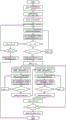
FIG. 3 is H2O-CO2-a calculation flow diagram of a NaCl system phase boundary calculation module;
FIG. 4 is H2O-CO2-phase boundary diagram of NaCl system liquid phase and gas liquid mixed phase; wherein, the solid line is the phase boundary of the liquid phase and the gas-liquid mixed phase when the component is 1, and the dotted line is the phase boundary of the liquid phase and the gas-liquid mixed phase when the component is 2;
FIG. 5 is H2O-CO2-a calculation flow chart of a solubility calculation module of NaCl system quartz and the like;
FIG. 6 is H2O-CO2-a NaCl fluid system quartz isocolvation curve; wherein, the solid line is the solubility curve of quartz and the like when the component is 1, and the dotted line is the solubility curve of quartz and the like when the component is 2;
FIG. 7 is H2O-CO2Temperature and pressure sensitive area of quartz isocratic curve domain boundary calculation module of NaCl systemA calculation flowchart of the boundary calculation section;
FIG. 8 is a graph of the temperature versus pressure sensitive area boundary of a solubility curve domain of quartz or the like; wherein the solid line is the boundary of the temperature-and pressure-sensitive region for component 1, and the dotted line is the boundary of the temperature-and pressure-sensitive region for component 2;
FIG. 9 is a flowchart of the calculation of the boundary of the degenerative change region by the boundary calculation module for the solubility curve domain such as quartz;
FIG. 10 is a graph of the boundary of the degenerative region in the solubility curve region of quartz or the like; wherein the solid line is the boundary of the degenerative region for component 1 and the dashed line is the boundary of the degenerative region for component 2;
FIG. 11 is a diagram of the phase of solubility of Dongfeng gold deposit quartz and the temperature and pressure ranges of different stages of quartz; wherein the solid line is the phase diagram of the equal solubility of quartz in component 1, and the solid line is the phase diagram of the equal solubility of quartz in component 2.
Detailed Description
The invention provides a research method for a hydrothermal fluid mineralization process related to gangue quartz based on a quartz isocratic phase diagram. To facilitate the understanding of the present invention, the following terms are defined:
a. quartz isocratic solubility diagram: in the representation of H2O-CO2-a line connecting states of the same quartz solubility on a state diagram of temperature-pressure states of the NaCl hydrothermal system;
b. solubility curve domains of quartz, etc.: three regions covered by solubility maps such as quartz, including a temperature sensitive region, a pressure sensitive region and a degenerative region;
c. pressure sensitive area: in the solubility diagram of quartz, the change of quartz solubility caused by pressure change is larger than the change of quartz solubility caused by temperature change;
d. temperature sensitive zone: in the solubility diagram of quartz, the change of quartz solubility caused by temperature change is larger than the change of quartz solubility caused by pressure change;
e. a degenerative region: quartz, etc. where the change in quartz solubility is inversely related to the change in temperature.
f. Solubility phase diagram of quartz and the like: in the representation of H2O-CO2On a state diagram of the temperature-pressure state of the NaCl hydrothermal system, lines of the states with the same quartz solubility are connected, the boundary of the liquid phase and the gas-liquid mixed phase is superposed, and meanwhile, a temperature sensitive area, a pressure sensitive area and a degenerative area of equal solubility curve domains are distinguished.
The invention establishes an ore-forming fluid in different CO phases by combining experimental parts such as hydrothermal fluid deposit quartz vein sample slice lithology observation, fluid inclusion laser Raman spectrum test and microscopic temperature measurement with a quartz solubility phase diagram calculation part2Under the condition of NaCl component composition, the temperature and pressure intervals of the quartz in different stages in the solubility phase diagram of the quartz and the like are quantitatively discussed through the evolution of the temperature and pressure corresponding to the temperature sensitive area, the pressure sensitive area, the degenerative area, the fluid different phase area and the areas caused by different fluid compositions and the like of the quartz in the solubility phase diagram of the quartz and the like in each stage, and the evolution paths of the temperature, the pressure and the components possibly experienced by the quartz in different stages and the mineralizing fluid in different mineralizing stages are quantitatively discussed, so that the quantitative evaluation of the quartz H is realized2O-CO2-mineralizing of hydrothermal fluid of NaCl system.
As shown in figure 1, the experimental part of the mineral slice comprises (1) observation of interpenetration relationship between a hand specimen and a quartz vein under a microscope, SEM-C L microstructure analysis of the quartz, and photographing to determine the mineralization stage of an ore deposit and the stage number of the quartz in each mineralization stage, (2) laser Raman spectrum research of quartz fluid inclusion to obtain the chemical composition of the mineralization fluid, (3) microscopic temperature measurement of the fluid inclusion in the quartz of different stages to obtain uniform temperature, uniform pressure and CO of the mineralization fluid in the quartz of each stage2And NaCl content.
The calculation part specifically comprises: (1) by means of H2O-CO2-the NaCl system phase boundary calculation module obtains the temperature pressure coordinates (T, P) of a certain point on the lower phase boundary at the specified temperature, and repeats the calculation module at the selected temperature interval to obtain a series of temperature pressure coordinates, which are the liquid phase and gas-liquid mixed phase boundaries; (2) by means of H2O-CO2-NaCl system quartz isocolysis computing moduleObtaining temperature and pressure coordinates (T, P) of a certain temperature when the solubility of the quartz is appointed, and repeating the calculation module at a selected temperature interval to obtain a series of temperature and pressure coordinates, namely a solubility curve of the quartz and the like; (3) by means of H2O-CO2-a NaCl system quartz etc. solubility curve domain boundary calculation module obtains temperature and pressure coordinates (T, P) of a certain point on the quartz etc. solubility curve domain boundary at a specified temperature, and the calculation module is repeated at a selected temperature interval to obtain a series of temperature and pressure coordinates, namely, the quartz etc. solubility curve domain temperature sensitive area, the pressure sensitive area and the degenerative area boundary. It should be noted that the calculation part should obtain the chemical Composition (CO) of the mineral fluid by quartz laser Raman spectroscopy test and microscopic temperature measurement2NaCl and H2The contents of O are all expressed as mole fraction xiExpressed), and the chemical composition of the mineralizing fluid can be set arbitrarily according to the research requirements, and the fluid components and the temperature and pressure ranges related to the calculation part of the method are set according to the temperature and pressure upper limit of the mineralizing evolution of the hydrothermal fluid deposit.
The analysis part of the mineralization process specifically comprises the following steps: (1) according to the calculation part, a plurality of groups of quartz equal solubility phase diagrams consisting of different fluids are obtained; (2) quantitatively analyzing the temperature, pressure and component evolution of the quartz hydrothermal fluid on mineral precipitation. It is to be noted here that the analysis of the fluid mineralization process requires the experimental section to provide the chemical composition and temperature pressure ranges of the sub-quartz mineralization fluid at each stage.
The technical solution of the present invention is described in detail below by using a specific application example.
Example 1
The Jiaodong ore collection area is the most important primary gold production area in China, and the gold ore output of the Jiaodong ore collection area approximately accounts for 1/4 of the gold output in China. Many gold deposits in a region are typically keatite-type gold deposits, and quartz is the most important gangue mineral of these keatite deposits. The research on hydrothermal deposit quartz fluid inclusion and quartz precipitation-dissolution behavior can provide a new visual angle and knowledge for the hydrothermal fluid mineralization process and the hydrothermal deposit fluid mineralization mechanism. In this embodiment, the Dongfeng deposit of the hydrothermal gold mine in the gold mine collection area of Jiaodong is used as a research object for developing toolsQuartz inclusion microscopic temperature measurement and equal solubility phase diagram experimental simulation research of ore deposit composed of different fluids, and quantitative evaluation of quartz H2O-CO2-mineralizing of hydrothermal fluid of NaCl system.
This example provides a quartz H of different mineralizing fluid composition2O-CO2-a method of hydrothermal fluid mineralisation of a NaCl system, the method comprising:
observing the interpenetration relationship of quartz vein systems in the ore samples of the Dongfeng gold ore at different mineralizing stages under a hand specimen and an optical microscope, simultaneously researching the scanning electron microscope-cathode luminescence (SEM-C L) microstructure of quartz, and dividing fine quartz stages corresponding to the different mineralizing stages;
in the embodiment, the samples of the Dongfeng gold ore are divided into three stages of V1, V2 and V3 before ore formation, ore formation stage and after ore formation, and the quartz stage is refined into three stages of Qz1, Qz2 and Qz3 in detail as shown in FIG. 2.
Among them, the ore sample quartz Qz1 of the present example has strong luminescence of C L, Qz2 has poor luminescence of C L, Qz3 shows a broken "spider-web" structure under C L, and Qz1 is interspersed by Qz2 and Qz 3.
Step (2): performing laser Raman spectrum research on fluid inclusion in the quartz of the Dongfeng gold ore in different periods to obtain chemical component H of the ore forming fluid2O-CO2-hydrothermal fluid of NaCl;
and (3): carrying out microscopic temperature measurement on fluid inclusion in the quartz of the Dongfeng gold ore in different periods to obtain gas phase component CO in the ore-forming fluid2Obtaining the content (expressed in mass percentage) of NaCl as a salt substance, and obtaining the uniform temperature and uniform pressure range of ore-forming fluid in different stages of quartz;
when the fluid inclusion is subjected to microscopic temperature measurement, inclusions with the largest and smallest filling degrees of gas-liquid two-phase inclusions captured by a non-uniform system are selected as much as possible, the obtained uniform temperature is the formation temperature of minerals, and pressure correction is not needed; the fluid enclosure temperature data for the intermediate fill level is pressure corrected.
Dongfeng gold mine different phasesMineralizing stage covered by secondary quartz and CO in fluid2And NaCl content are shown in Table 1.
TABLE 1 quartic stage division of the Gloeostereum gold deposit and corresponding fluid composition

And (4): obtaining an approximate temperature pressure range of the evolution of the formed ore fluid of the keatite type gold deposit according to the reference document as the upper limit and the lower limit of the temperature and the pressure of a phase diagram of the solubility of quartz and the like drawn by the method, wherein the temperature range is 100-600 ℃ and the pressure range is 0-4000 bar;
and (5): dongfeng gold ore fluid CO obtained according to fluid inclusion microscopic temperature measurement2And NaCl content range (10-15% molCO)20.4-11.1% wtNaCl) to free-combine the constituents of the mineral fluid. Here we select CO 210 mol percent, 5 mass percent of NaCl (component 1) and CO2The two fluid compositions with a molar percentage of 15 and a mass percentage of NaCl of 5 (component 2) are used as input values for calculating the composition of the partial mineralizing fluid;
and (6): as shown in FIG. 3, using H2O-CO2NaCl System phase boundary calculation Module, H for component 12O-CO2-point on the boundary of the NaCl fluid system liquid phase and the gas-liquid mixed phase:
① input temperature 100 deg.C, CO2The mol percent is 10, and the mass percent of NaCl is 5;
② conversion of chemical composition of ore-forming fluid to mole fraction form xCO2=0.1, xNaCl=0.0183,xH2O is 0.8817, and converted into CO2Solubility mCO of2=6.30mol/kg;
③ is known from Mao et al (Mao S.D., Zhang D.H., &lTtT translation = L "&gTt L &lTt/T &gTt i Y.Q.et a., and improved model for calculating CO2solubility in aqueous NaCl solutions and the applicationto CO2–H2O-NaCl fluid applications, Chemical Geology,2013) said CO2At H2Solubility of O-NaCl SystemModel, pressure range setting initial section endpoint P1=0,P2As 4000, the condition can be satisfied: mCO 22 P1<mCO2<mCO2 P2;
④ let P ═ P1+P2)/2;
⑤ use of CO2At H2O-NaCl system solubility model, calculating CO at the current pressure P2Solubility mCO2 cal;
⑥ when | mCO2 cal-mCO2|>10-6And mCO is present2 cal<mCO2When it is, let P1If not, let P2P and proceeds to step ④ when the value | mCO2 cal-mCO2|≤10-6When P is 2812.07bar, the pressure is the desired pressure.
Calculation of component 2H2O-CO2-point on the boundary of the NaCl fluid system liquid phase and the gas-liquid mixed phase:
① input temperature 100 deg.C, CO2Mole percent 15, mass percent NaCl 5;
② conversion of chemical composition of ore-forming fluid to mole fraction form xCO2=0.15, xNaCl=0.0194,xH2O is 0.8306, and converted into CO2Solubility mCO of2=10.03mol/kg;
③ is known from Mao et al (Mao S.D., Zhang D.H., &lTtT translation = L "&gTt L &lTt/T &gTt i Y.Q.et a., and improved model for calculating CO2solubility in aqueous NaCl solutions and the applicationto CO2–H2O-NaCl fluid applications, Chemical Geology,2013) said CO2At H2O-NaCl system solubility model, pressure range setting initial interval endpoint P1=0,P2As 4000, the condition can be satisfied: mCO 22 P1<mCO2<mCO2 P2;
④ let P ═ P1+P2)/2;
⑤ use of CO2At H2The solubility model formula of the O-NaCl system is calculatedFront pressure P, CO2Solubility mCO2 cal;
⑥ when | mCO2 cal-mCO2|>10-6And mCO is present2 cal<mCO2When it is, let P1If not, let P2P and proceeds to step ④ when the value | mCO2 cal-mCO2|≤10-6When P is 3040.01bar, the pressure is the desired pressure.
And (7): within the temperature range of 100-600 ℃, repeating the calculation of the step (6) by any temperature step (such as the interval of 1 ℃) to obtain a series of points (T, P), which are H2O-CO2-phase boundary of NaCl fluid system liquid phase and gas-liquid mixture phase (fig. 4);
and (8): as shown in FIG. 5, using H2O-CO2-NaCl system quartz isocolving calculation module, component 1H2O-CO2Points on the solubility curve of the NaCl fluid system quartz etc.:
① input temperature 150 deg.C, CO2Mole percent 10, NaCl mass percent 5, SiO2At H2O-CO2Solubility mSiO of the NaCl System2=0.002mol/kg;
② conversion of chemical composition of ore-forming fluid to mole fraction form xCO2=0.1, xNaCl=0.0183,xH2O=0.8817;
③ is based on the use of Weiqing et al (Weiqing, shouhao, Mao Shide. H)2O-CO2NaCl System Quartz solubility model (suitable for high temperature and high pressure environments up to 1000 ℃ and 1.5 GPa), proceedings of rock, 2012)2At H2O-CO2NaCl system solubility (quartz solubility for short) model, setting initial interval endpoint P1=0,P2As 4000, the condition can be satisfied: mSiO2 P1<mCO2<mSiO2 P2;
④ let P ═ P1+P2)/2;
⑤, using the quartz solubility model, when calculating the current pressure P,SiO2solubility mSiO2 cal;
⑥ when | mSiO2 cal-mSiO2|>10-9And mSiO2 cal<mSiO2When it is, let P1If not, let P2P and go to step ④ when mSiO2 cal-mSiO2|≤10-9When P is 3408.33bar, the pressure is the desired pressure.
Calculation of component 2H2O-CO2Points on the solubility curve of the NaCl fluid system quartz etc.:
① input temperature 160 deg.C, CO2Mole percent 15, NaCl mass percent 5, SiO2At H2O-CO2Solubility mSiO of the NaCl System2=0.002mol/kg;
② conversion of chemical composition of ore-forming fluid to mole fraction form xCO2=0.15, xNaCl=0.0194,xH2O=0.8306;
③ is based on the use of Weiqing et al (Weiqing, shouhao, Mao Shide. H)2O-CO2NaCl System Quartz solubility model (suitable for high temperature and high pressure environments up to 1000 ℃ and 1.5 GPa), proceedings of rock, 2012)2At H2O-CO2NaCl system solubility (quartz solubility for short) model, setting initial interval endpoint P1=0,P2As 4000, the condition can be satisfied: mSiO2 P1<mCO2<mSiO2 P2;
④ let P ═ P1+P2)/2;
⑤ calculation of SiO at the current pressure P using the quartz solubility model2Solubility mSiO2 cal;
⑥ when | mSiO2 cal-mSiO2|>10-9And mSiO2 cal<mSiO2When it is, let P1If not, let P2P and go to step ④ when mSiO2 cal-mSiO2|≤10-9When P is 3831.83bar, that isIs the desired pressure.
And (9): within the temperature range of 100-600 ℃, repeating the calculation of the step (8) by any temperature step (such as the interval of 1 ℃) to obtain a series of points (T, P), which are H2O-CO2-an isosolubility curve for a NaCl fluid system quartz solubility of 0.002 mol/kg;
step (10): repeating the steps (8) and (9) according to any quartz solubility step (such as interval of 0.001mol/kg of solubility) to obtain H2O-CO2-solubility curves of quartz etc. for different solubility conditions of the NaCl fluid system (fig. 6);
step (11): with reference to fig. 7, the calculation module for the boundary of the solubility curve domain of quartz, i.e., the calculation part for the boundary of the temperature-sensitive and pressure-sensitive regions, is utilized to calculate the boundary of the solubility curve of quartz, i.e., the temperature-sensitive and pressure-sensitive regions for component 1:
① inputting SiO in the temperature and pressure range of isocolvus phase diagram2At H2O-CO2Solubility (quartz solubility) maximum mSiO of the NaCl System2 max=0.087mol/kg,CO2The mol percent is 10, and the mass percent of NaCl is 5;
② conversion of chemical composition of ore-forming fluid to mole fraction form xCO2=0.1, xNaCl=0.0183,xH2O=0.8817;
③ order solubility mSiO of quartz2=0.002molg/kg;
④ setting the initial interval end point T according to the solubility chart of quartz1=175,T2=600;
⑤ let T be (T)1+T2) A/2, calculating to obtain pressure P by using a quartz and other solubility calculating module;
⑥ according to Weiqing et al (Weiqing, shouhao, Mao Shide. H)2O-CO2NaCl System Quartz solubility model (suitable for high temperature and high pressure environments up to 1000 ℃ and 1.5 GPa), proceedings of rock, 2012)2At H2O-CO2NaCl System solubility model knowing the quartz solubility as a function of temperature and pressure for a given fluid composition, let mSiO2M (T, P). The partial derivative of the quartz solubility at the point (T, P) to the temperature and the pressure under the current quartz solubility condition is calculated by using a numerical differentiation method And
And
⑦ when And is
 When it is, let T1If not, let T2T and go to step ⑤ when
 When T is 183.00 ℃, P is 14.12bar, i.e. the coordinates (T, P) of the points on the boundary curve that satisfy the condition;
⑧ order mSiO2=mSiO2+10-4;
⑨ if mSiO2<mSiO2 maxOtherwise, the process goes to step ④, otherwise, the process is ended, and the obtained series of points are the boundaries of the temperature and pressure sensitive area of the solubility curve of quartz and the like.
Calculate the temperature of the quartz isosolubility curve at component 2 and the boundary of the pressure sensitive zone:
① inputting SiO in the temperature and pressure range of isocolvus phase diagram2At H2O-CO2Solubility (quartz solubility) maximum mSiO of the NaCl System2 max=0.068mol/kg,CO2Mole percent 15, mass percent NaCl 5;
② conversion of chemical composition of ore-forming fluid to mole fraction form xCO2=0.15, xNaCl=0.0194,xH2O=0.8306;
③ order solubility mSiO of quartz2=0.002molg/kg;
④ setting the initial interval end point T according to the solubility chart of quartz1=190,T2=600;
⑤ let T be (T)1+T2) A/2, calculating to obtain pressure P by using a quartz and other solubility calculating module;
⑥ according to Weiqing et al (Weiqing, shouhao, Mao Shide. H)2O-CO2NaCl System Quartz solubility model (suitable for high temperature and high pressure environments up to 1000 ℃ and 1.5 GPa), proceedings of rock, 2012)2At H2O-CO2NaCl System solubility model knowing the quartz solubility as a function of temperature and pressure for a given fluid composition, let mSiO2M (T, P). The partial derivative of the quartz solubility at the point (T, P) to the temperature and the pressure under the current quartz solubility condition is calculated by using a numerical differentiation method And
And
⑦ when And is
 When it is, let T1If not, let T2T and go to step ⑤ when
 When T is 222.50 ℃, P is 26.76bar, i.e. the coordinates (T, P) of the points on the boundary curve that satisfy the conditions;
⑧ order mSiO2=mSiO2+10-4;
⑨ if mSiO2<mSiO2 maxThen go to step ④, otherwise, the process is ended and the obtained series of points are the boundaries of the temperature and pressure sensitive area of the solubility curve region of quartz, etc. (fig. 8).
Step (12): as shown in fig. 9, the boundary of the solubility curve degenerative region such as quartz in component 1 is calculated by using the solubility curve region boundary calculation module such as quartz-the degenerative region boundary calculation section:
1. inputting SiO in the temperature and pressure range of the isocolvus phase diagram2At H2O-CO2Solubility (quartz solubility) maximum mSiO of the NaCl System2 max=0.02mol/kg,CO2The mol percent is 10, and the mass percent of NaCl is 5;
2. the chemical composition of the mineralizing fluid is converted into a molar fraction representation: xCO2=0.1, xNaCl=0.0183,xH2O=0.8817;
3. Make quartz solubility mSiO2=mSiO2 max
4. Setting an initial interval endpoint T according to a quartz isocolving degree diagram1=450,T2=600;
5. Let T be (T)1+T2) A/2, calculating to obtain pressure P by using a quartz and other solubility calculating module;
6. according to Weiqing et al (Weiqing, shouhao, Maoshide. H)2O-CO2NaCl System Quartz solubility model (suitable for high temperature and high pressure environments up to 1000 ℃ and 1.5 GPa), proceedings of rock, 2012)2At H2O-CO2NaCl System solubility model knowing the quartz solubility as a function of temperature and pressure for a given fluid composition, let mSiO2M (T, P). The partial derivative of the quartz solubility at the point (T, P) to the temperature and the pressure under the current quartz solubility condition is calculated by using a numerical differentiation method
7. If T2-T1|<10-5,mSiO2=mSiO2-10-4(Here 10)-4For calculating the step value, the step value can be adjusted according to the actual calculation condition), otherwise, the step value is jumped to 9;
8. when m isSiO2>When the concentration of the mineral forming fluid is 0, jumping to 4, otherwise, under the condition of the composition of the current mineral forming fluid, no equal-solubility curve degenerative region exists, and ending the program;
9. when in use And is
 When it is, let T1If not, let T2T and go to step ⑤ when
 Then, mSiO2 summit0.0121mol/kg, T is 568.75 ℃, and P is 649.79bar is the coordinate of the vertex on the boundary curve which satisfies the condition;
10. order mSiO2=0.002;
11. Calculating the left end point of the boundary of the degenerative region under the current solubility condition, and setting an initial interval end point T according to a solubility map of quartz and the like1=180,T2=200;
12. Let T be (T)1+T2) A/2, calculating to obtain pressure P by using a quartz and other solubility calculating module;
13. the partial derivative of the quartz solubility at point (T, P) with respect to temperature and pressure at the current quartz solubility conditions was obtained by the method of ⑥
14. When in use And is
 When, T1T, otherwise2Jumping to 12 as T; when in use
 When T is 184.00 deg.C, P is10.98bar is the coordinate of the left end point of the boundary of the degenerative zone under the current mineralizing fluid composition.
15. Calculating the right end point of the boundary of the degenerative region under the current solubility condition, and setting an initial interval end point T according to a solubility chart of quartz and the like1=450,T2=600;
16. Let T be (T)1+T2) A/2, calculating to obtain pressure P by using a quartz and other solubility calculating module;
17. the partial derivative of the quartz solubility at the point (T, P) with respect to the temperature and the pressure under the current quartz solubility condition is calculated by using the method of ⑥
18. When in use And is
 When, T2T, otherwise1Jumping to 16 for T; when in use
 When T is 523.05 ℃, P is 350.65bar is the coordinate of the right endpoint of the boundary of the degenerative zone when the solubility of quartz is 0.002mol/kg under the current composition of the mineral forming fluid;
19、mSiO2=mSiO2+10-4;
20. if mSiO2<mSiO2 maxThen jump to 11 if mSiO2≥mSiO2 maxThen, the process is terminated, and the obtained series of points is the boundary of the solubility curve degenerative region such as quartz (fig. 10).
The boundaries of the degenerative region of the solubility curve of quartz etc. at component 2 were calculated:
1. inputting SiO in the temperature and pressure range of the isocolvus phase diagram2At H2O-CO2Solubility (quartz solubility) maximum mSiO of the NaCl System2 max=0.01mol/kg,CO2Mole percent 15, mass percent NaCl 5;
2. the chemical composition of the mineralizing fluid is converted into a molar fraction representation: xCO2=0.15, xNaCl=0.0194,xH2O=0.8306;
3. Make quartz solubility mSiO2=mSiO2 max;
4. Setting an initial interval endpoint T according to a quartz isocolving degree diagram1=450,T2=600;
5. Let T be (T)1+T2) A/2, calculating to obtain pressure P by using a quartz and other solubility calculating module;
6. according to Weiqing et al (Weiqing, shouhao, Maoshide. H)2O-CO2NaCl System Quartz solubility model (suitable for high temperature and high pressure environments up to 1000 ℃ and 1.5 GPa), proceedings of rock, 2012)2At H2O-CO2NaCl System solubility model knowing the quartz solubility as a function of temperature and pressure for a given fluid composition, let mSiO2M (T, P). The partial derivative of the quartz solubility at the point (T, P) to the temperature and the pressure under the current quartz solubility condition is calculated by using a numerical differentiation method
7. If T2-T1|<10-5,mSiO2=mSiO2-10-4(Here 10)-4For calculating the step value, the step value can be adjusted according to the actual calculation condition), otherwise, the step value is jumped to 9;
8. when mSiO2>When the concentration of the mineral forming fluid is 0, jumping to 4, otherwise, under the condition of the composition of the current mineral forming fluid, no equal-solubility curve degenerative region exists, and ending the program;
9. when in use And is
 When it is, let T1If not, let T2T and jump to 5; when in use
 Then, mSiO20.0057mol/kg, T525.00 ℃ and P548.22 bar, which are the coordinates of the top points on the boundary curve satisfying the conditions;
10. order mSiO2=0.002;
11. Calculating the left end point of the boundary of the degenerative region under the condition of the current solubility, and setting an initial interval end point T according to a quartz isocratic map1=180,T2=200;
12. Let T be (T)1+T2) A/2, calculating to obtain pressure P by using a quartz and other solubility calculating module;
13. the partial derivative of the quartz solubility at point (T, P) with respect to temperature and pressure at the current quartz solubility conditions was obtained by the method of ⑥
14. When in use And is
 When, T1T, otherwise2Jumping to 12 as T; when in use
 When T-223.05 ℃, P-24.58 bar is the coordinate of the left end point of the degenerative zone boundary under the current mineralizing fluid composition.
15. Calculating the right end point of the boundary of the degenerative region under the current solubility condition, and setting an initial interval end point T according to a solubility chart of quartz and the like1=450,T2=550;
16. Let T be (T)1+T2) And/2, calculating by using a solubility calculation module such as quartz and the likeTo a pressure P;
17. the partial derivative of the quartz solubility at the point (T, P) with respect to the temperature and the pressure under the current quartz solubility condition is calculated by using the method of ⑥
18. When in use And is
 When, T2T, otherwise1Jumping to 16 for T; when in use
 When T-528.83 ℃, P-385.25 bar is the right endpoint of the boundary of the degenerative zone under the current mineralizing fluid composition;
19、mSiO2=mSiO2+10-4;
20. if mSiO2<mSiO2 maxThen jump to 11 if mSiO2≥mSiO2 maxWhen the process is finished, the series of points obtained is the boundary of the degenerative region in the solubility curve region of quartz or the like (fig. 10).
Step (13): by means of H2O-CO2A phase boundary curve, a solubility curve of quartz and the like and a solubility curve domain boundary of quartz and the like obtained by a NaCl system phase boundary calculation module, a solubility calculation module of quartz and the like and a solubility curve domain boundary calculation module of quartz and the like construct a solubility phase diagram of quartz and the like under the condition that the composition of the Dongfeng gold deposit fluid is respectively a component 1 and a component 2;
step (14): putting the uniform temperature and uniform pressure range of the ore-forming fluid in the Dongfeng gold ore of different periods of quartz obtained in the experimental part into a solubility phase diagram of quartz and the like under the composition of two fluids, as shown in figure 11;
step (15): according to a solubility phase diagram (figure 11) of Dongfeng gold deposit quartz and the like, the hydrothermal fluid mineralization process is analyzed.
In this example, when the constituent of the Dongfeng gold ore-forming fluid is two types, component 1 and component 2, Qz1 falls in the temperature sensitive region of the liquid phase region of the solubility phase diagram such as quartz; when the mineralizing fluid component is component 1, Qz2 falls in a temperature sensitive area of a liquid phase area of a solubility phase diagram of quartz and the like, but when the mineralizing fluid component is component 2, Qz2 crosses the temperature sensitive area of a liquid phase and a gas-liquid mixed phase of the solubility phase diagram of quartz and the like; when the mineralizing fluid component is component 1, Qz3 crosses three regions of the temperature sensitive region, the pressure sensitive region and the degenerative region of the gas-liquid two-phase region of the solubility phase diagram of quartz and the like, but when the mineralizing fluid component is component 2, Qz3 crosses only the pressure sensitive region and the degenerative region of the gas-liquid mixed phase of the solubility phase diagram of quartz and the like.
In the fluid evolution of the Dongfeng gold ore of the embodiment, for a certain temperature and pressure range (550-; the quartz evolves from Qz1 to Qz2, and the temperature of the fluid in the liquid phase region can be reduced from 370 ℃ to 300 ℃ by mineral forming fluid or CO in the fluid2The mole fraction is increased from ten percent to fifteen percent to cause gas-liquid phase separation, or the mole fraction and the gas-liquid phase separation are formed by the superposition of the two; the evolution of quartz from Qz2 to Qz3 can result from a reduction in pressure of the mineralized fluid from 1600bar to 200bar, or from the retrograde dissolution behavior of quartz, or from a combination of both, resulting from gas-liquid phase separation of the mineralized fluid.
In combination with the above formation processes of Qz1, Qz2 and Qz3, the quartz H is based on the Dongfeng gold ore2O-CO2As can be seen from the solubility phase diagrams of NaCl system and the like, the Dongfeng gold mineralizing fluid is firstly subjected to temperature reduction (from 600 ℃ to 320 ℃) in a liquid phase region, and a small amount of metal substances are unloaded, and the stage is a Dongfeng gold mineralizing pre-stage (V1 stage); further, as the temperature of the mineralizing fluid is further lowered (from about 370 ℃ to 300 ℃) and the nonpolar gas CO in the fluid2The fluid phase separation process caused by the increase of the content (the proportion mole percentage of the system is increased from ten to fifteen percent) unloads a large amount of metal substances from the ore-forming fluid, and the stage is the most main ore-forming stage of the Dongfeng gold oreSection (V2 stage); with further reduction of the temperature and pressure of the mineralizing fluid (from 350 ℃ to 270 ℃ and from 1600bar to about 200bar), the mineralizing fluid undergoes a significant phase separation stage (V3 stage), the sharp release of pressure enables the metal substances to be precipitated out, and in addition, the metal substances are slightly precipitated out with small increase of temperature in a narrow temperature interval (280 ℃ -330 ℃) of a quartz degeneration zone.
The synthesis is that the quantitative quartz H of the Dongfeng gold ore2O-CO2-mineralizing of hydrothermal fluid of NaCl system.
The above description is only for the purpose of illustrating the preferred embodiments of the present invention and is not to be construed as limiting the present invention in any way, and it will be apparent to those skilled in the art that the above description of the present invention can be applied to various modifications, equivalent variations or modifications without departing from the spirit and scope of the present invention.
Claims (7)
1. Quantitative quartz H2O-CO2A theoretical model of the hydrothermal fluid mineralizing process of the NaCl system, wherein the theoretical model is used for studying phase boundary curves, solubility curves of quartz and the like, solubility curve domain boundary curves of quartz and the like of different mineralizing fluids in a temperature and pressure range of a mining area fluid, and comprises:
H2O-CO2-a NaCl system phase boundary calculation module for calculating to obtain temperature and pressure coordinates (T, P) of a point on the phase boundary at a fixed fluid composition and a specified temperature, and repeating the calculation module at selected temperature intervals to obtain a series of temperature and pressure coordinates within the temperature and pressure range of the mineralizing fluid in the mining area, which is a boundary curve of the liquid phase and the gas-liquid mixed phase;
H2O-CO2-a NaCl system quartz isocratic calculation module for calculating temperature and pressure coordinates (T, P) of a temperature at which fixed fluid components and specified quartz solubility are obtained, and repeating the calculation module at selected temperature intervals to obtain a series of temperature and pressure coordinates under specified quartz solubility conditions within a temperature and pressure range of the mineralizing fluid in the mining area, which is a quartz isocratic curve;
H2O-CO2a NaCl system quartz and other solubility curve domain boundary calculation module for obtaining a series of temperature and pressure coordinates of quartz and other solubility curve domain boundaries under the condition of fixed fluid components, namely quartz and other solubility curve domain temperature sensitive area, pressure sensitive area and degenerative area boundary curves;
the phase boundary curve, the solubility curve of quartz and the like and the solubility curve domain boundary curve of quartz and the like obtained by the calculation modules are used for combining and constructing the solubility phase diagrams of quartz and the like of different mineral fluids, and quartz H can be quantified based on the solubility phase diagrams of quartz and the like2O-CO2-hydrothermal fluid mineralizing process with NaCl system.
2. The quantitative quartz H of claim 12O-CO2-a theoretical model of the hydrothermal fluid mineralizing process of the NaCl system, characterized in that the input data of the theoretical model are derived from:
(1) observing the relationship between the hand specimen and the quartz vein under the microscope, analyzing the microscopic structure of the quartz SEM-C L, and taking pictures to determine the mineralization stages of the deposit and the quartz periods of the mineralization stages;
(2) performing laser Raman spectrum research on quartz fluid inclusion to obtain chemical composition of the mineral fluid;
(3) carrying out microscopic temperature measurement of fluid inclusion in quartz of different stages to obtain uniform temperature, uniform pressure and CO of the fluid in quartz of each stage2And NaCl content;
(4) according to the temperature and pressure range of the evolution of the mineral deposit mineral fluid in the research area obtained by consulting the literature, the temperature and pressure range is used as the upper limit range and the lower limit range of the temperature and the pressure of a drawn solubility phase diagram of quartz and the like, and the temperature and pressure range is used as the input value of the temperature and the pressure range of the mineral deposit mineral fluid in the theoretical model;
(5) obtaining the mining area mineral forming fluid CO according to the microscopic temperature measurement of the fluid inclusion in the step (3)2And NaCl content range, and taking the compositions of various fluids as input values of the ingredients of the mineral-forming fluid of a theoretical model.
3. The quantitative quartz H of claim 12O-CO2-theoretical model of hydrothermal fluid mineralizing process of NaCl system, characterized in that H2O-CO2The calculation flow of the NaCl system phase boundary calculation module is as follows:
101. the temperature T (DEG C) is input, and the chemical composition of the mineral forming fluid comprises carbon dioxide CO2And sodium chloride NaCl, in which CO2The content is expressed in mole percent (mol%), the content of NaCl is expressed in mass percent (wt%);
102. chemical component CO of ore-forming fluid2,NaCl,H2O equivalent value converted to mole fraction form and xCO2xNaCl and xH2O represents the component of the fluid, and CO is obtained by conversion based on the component of the fluid2At H2Solubility in O-NaCl System as mCO2(mol/kg);
103. for the pressure P, an initial interval [ P ] is given1,P2]By means of CO2At H2O-NaCl system solubility model, calculated at pressure P1Is free of CO2Solubility mCO2 P1And at a pressure of P2Is free of CO2Solubility mCO2 P2And the interval boundary satisfies the condition: mCO 22 P1<mCO2<mCO2 P2Initial range of pressure [ P ]1,P2]Should be within its model pressure application range;
104. let P be (P)1+P2)/2;
105. Using CO as described in step 1032At H2Obtaining CO by O-NaCl system solubility model2Solubility calculation mCO2 cal;
106. When | mCO2 cal-mCO2|>10-6And mCO is present2 cal<mCO2Then let P1If not, let P2P and jumps to step 104; when | mCO2 cal-mCO2|≤10-6If yes, jumping to step 107;
107. coordinates (T, P) of a point on a boundary line between the liquid phase and the gas-liquid mixed phase, which is designated as a mineral fluid composition condition, are obtained, and the routine is ended.
4. The quantitative quartz H of claim 12O-CO2-theoretical model of hydrothermal fluid mineralizing process of NaCl system, characterized in that H2O-CO2The calculation flow of the solubility calculation module of NaCl system quartz and the like is as follows:
201. the temperature T (DEG C) is input, and the chemical composition of the mineral forming fluid comprises carbon dioxide CO2And sodium chloride NaCl, in which CO2The content is expressed in mol percent (mol%), the content of NaCl is expressed in mass percent (wt%), and SiO2At H2O-CO2mSiO given solubility of the NaCl System2Expressed as molar mass concentration (mol/kg);
202. the ore-forming fluid component CO2,NaCl,H2O equivalent is converted to mole fraction form and is xCO2xNaCl and xH2O represents a component of the fluid;
203. for the pressure P, an initial interval [ P ] is given1,P2]By means of SiO2At H2O-CO2NaCl System solubility model, calculated at pressure P1Quartz solubility mSiO2 P1And at a pressure of P2Quartz solubility mSiO2 P2And the interval boundary should satisfy the condition: mSiO2 P1<mSiO2<mSiO2 P2Initial range of pressure [ P ]1,P2]The model pressure application range is included;
204. let P be (P)1+P2)/2;
205. Obtaining a calculated value of quartz solubility mSiO using the solubility model of step 2032 cal;
206. When | mSiO2 cal-mSiO2|>10-9And mSiO2 cal<mSiO2When it is, let P1If not, let P2P, and go to step 204; when | mSiO2 cal-mSiO2|≤10-9If yes, jumping to step 207;
207. the coordinates (T, P) of the points satisfying the specified mineral fluid composition and quartz solubility are obtained, and the routine is ended.
5. The quantitative quartz H according to any one of claims 1 to 42O-CO2-theoretical model of hydrothermal fluid mineralizing process of NaCl system, characterized in that H2O-CO2The calculation flow of the temperature and pressure sensitive area boundary calculation part in the NaCl system quartz and other solubility curve domain boundary calculation module is as follows:
301. SiO of input research area2At H2O-CO2Solubility maximum of NaCl System mSiO2 maxThe chemical composition of the mineralizing fluid comprises carbon dioxide CO expressed in terms of molar mass concentration (mol/kg)2And sodium chloride NaCl, in which CO2The content is expressed in mole percent (mol%), the content of NaCl is expressed in mass percent (wt%);
302. the ore-forming fluid component CO2,NaCl,H2O equivalent is converted to mole fraction form and is xCO2xNaCl and xH2O represents a component of the fluid;
303. setting an initial value of quartz solubility mSiO2 according to a quartz isocolving solubility chart;
304. for the temperature T, an initial interval [ T ] is given1,T2]Calculating the temperature as T by using the module for calculating the solubility of quartz1Pressure P at fixed solubility1And a temperature T2Pressure P at fixed solubility2And the interval boundary should satisfy the condition: p1>P>P2Initial range of temperature [ T1,T2]Should be within its applicable range of calculating module temperature;
305. let T be (T)1+T2) A/2, calculating to obtain pressure P by using a quartz and other solubility calculating module;
306. according to SiO2At H2O-CO2Solubility model of NaCl SystemAs can be seen, the solubility of quartz as a function of temperature and pressure for a given fluid composition, let mSiO2Calculating the partial derivative of the quartz solubility at the point (T, P) to the temperature and the pressure under the current quartz solubility condition by using a numerical differentiation method And
And
307. when in use And is
 When it is, let T1If not, let T2T and jumps to step 305; when in use
 If yes, jumping to step 308;
308. obtaining coordinates (T, P) of points on the boundary that satisfy the condition;
309. order mSiO2=mSiO2+ calculating a step value;
310. when mSiO2<mSiO2 maxJumping to step 304; otherwise, go to step 311;
311. and obtaining the temperature of the equal solubility curve domain and the pressure sensitive area boundary under the condition of appointed mineral forming fluid components, and finishing the program.
6. The quantitative quartz H according to any one of claims 1 to 42O-CO2-theoretical model of hydrothermal fluid mineralizing process of NaCl system, characterized in that H2O-CO2The calculation flow of the degenerative zone boundary calculation part in the NaCl system quartz and other solubility curve domain boundary calculation module is as follows:
401. input deviceResearch area SiO2At H2O-CO2Solubility maximum of NaCl System mSiO2 maxAnd expressed in terms of molar mass concentration (mol/kg), the mineralizing fluid component comprises carbon dioxide CO2And sodium chloride NaCl, in which CO2The content is expressed in mole percent (mol%), the content of NaCl is expressed in mass percent (wt%);
402. the ore-forming fluid component CO2,NaCl,H2O equivalent is converted to mole fraction form and is xCO2xNaCl and xH2O represents a component of the fluid;
403. order mSiO2=mSiO2 max;
404. Setting a temperature T calculation interval [ T ] according to a quartz isocolving degree diagram1,T2];
405. Let T be (T)1+T2) A/2, calculating to obtain pressure P by using a quartz and other solubility calculating module;
406. according to SiO2At H2O-CO2NaCl System solubility model, quartz solubility as a function of temperature and pressure for a given fluid composition, let mSiO2Calculating the partial derivative of the quartz solubility to the temperature at the point (T, P) under the current quartz solubility condition by using a numerical differentiation method
407. If T2-T1|<10-5,mSiO2=mSiO2-calculating a step value, otherwise jumping to step 409;
408. when mSiO2>When 0, jumping to step 404, otherwise, under the condition of the composition of the current mineral fluid, no equal solubility curve domain degenerative region exists, and the procedure is ended;
409. when in use And is
 When it is, let T1If not, let T2T and jumps to step 405; when in use
 At this point, the vertex of the degenerative boundary is obtained, at which point the solubility mSiO2 summit=mSiO2,Vertex coordinates are (T, P);
410. initializing mSiO according to quartz isocolubility map2;
411. According to the quartz equal solubility graph, the left end point of the degenerative region under the current solubility condition is pre-calculated, and a temperature T calculation interval [ T ] is set1,T2]The determined temperature T should include the temperature corresponding to the left endpoint;
412. let T be (T)1+T2) A/2, calculating to obtain pressure P by using a quartz and other solubility calculating module;
413. calculating the partial derivative of the quartz solubility with respect to temperature at the point (T, P) under the current quartz solubility conditions using the method of step 406
414. When in use And is
 When, T1T, otherwise2T and jumps to step 412 when
 Then, obtaining the left end point of the degenerative region under the current solubility condition;
415. according to the quartz equal solubility graph, the right end point of the degenerative region under the current solubility condition is pre-calculated, and a temperature T calculation interval [ T ] is set1,T2]The determined temperature T should include the temperature corresponding to the right endpoint;
416. let T be (T)1+T2) A/2, calculating to obtain pressure P by using a quartz and other solubility calculating module;
417. calculating the partial derivative of the quartz solubility with respect to temperature at the point (T, P) under the current quartz solubility conditions using the method of step 406
418. When in use And is
 When, T2T, otherwise1T and jumps to step 416; when in use
 Then, obtaining the right end point of the degenerative region under the current solubility condition;
419、mSiO2=mSiO2+ calculating a step value;
420. if mSiO2<mSiO2 summitIf yes, jumping to step 411; otherwise, go to step 421;
421. and obtaining the boundary of the degenerative region of the equal solubility curve domain under the condition of fixing mineralizing and fluidizing components, and finishing the process.
7. Quantitative quartz H2O-CO2Method for hydrothermal fluid mineralization of NaCl systems, characterized in that quantitative quartz H according to any of claims 1-6 is used2O-CO2-theoretical model of hydrothermal fluid mineralizing process of NaCl system, performing computational analysis, comprising:
the experimental stage:
observing the interpenetration relation of quartz vein systems in ore samples in different mineralization stages in a research area under a hand specimen and an optical microscope, simultaneously researching the scanning electron microscope-cathodoluminescence SEM-C L microscopic structure of quartz, and dividing fine quartz stages corresponding to different mineralization stages;
step (2): performing laser Raman spectrum research on fluid inclusion in quartz of different periods in a research area to obtain chemical components H of the mineral fluid2O-CO2-hydrothermal fluid of NaCl;
and (3): carrying out microscopic temperature measurement on fluid inclusion in quartz of different periods in a research area to obtain gas-phase component CO in the ore-forming fluid2Obtaining the content of salt substance NaCl, and obtaining the uniform temperature and uniform pressure range of the ore-forming fluid in the quartz of different periods;
and (4): obtaining the temperature and pressure range of the evolution of the mineral fluid of the deposit in the research area according to the reference literature as the upper and lower limits of the temperature and pressure of a drawn phase diagram of the solubility of quartz and the like;
and (5): mining fluid CO in research area obtained according to temperature measurement of fluid inclusion2And NaCl content range freely combined into the components of the mineral fluid, and taking the components of a plurality of different fluids as input values of the components of the mineral fluid in the calculation stage;
(II) a calculation stage:
and (6): by means of H2O-CO2NaCl system phase boundary calculation module, calculating H when the composition of the mineral fluid is 1 … n2O-CO2-a point on the boundary of the NaCl fluid system liquid phase and the gas-liquid mixed phase;
and (7): repeating the calculation of the step (6) by any temperature step within the temperature range of the evolution of the mineral deposit fluid in the research area to obtain a series of points (T, P), namely H2O-CO2-a phase boundary of a liquid phase of the NaCl fluid system and a mixed gas-liquid phase;
and (8): by means of H2O-CO2NaCl System Quartz equivalent solubility calculation Module, H when the composition of the mineralizing fluid is 1 … n2O-CO2-points on the quartz etc. solubility curve of the NaCl fluid system;
and (9): repeating the step (8) and calculating in any temperature step within the temperature range of the evolution of the mineral deposit fluid in the research area to obtain a series of points (T, P), namely H2O-CO2-isosolubility curve of NaCl fluid system at a given quartz solubility;
step (10): repeating the steps (8) and (9) according to any quartz solubility step length to obtain H2O-CO2-quartz isosolubility curves for NaCl fluid systems under different solubility conditions;
step (11): respectively calculating the temperature of the solubility curve of quartz and the boundary of the pressure sensitive area when the composition of the mineral fluid is 1 … n by utilizing a temperature and pressure sensitive area boundary calculating part in a quartz and other solubility curve domain boundary calculating module;
step (12): respectively calculating the boundaries of the quartz equal solubility curve degenerative regions when the mineral fluid component is 1 … n by utilizing the degenerative region boundary calculation part in the quartz equal solubility curve domain boundary calculation module;
(III) an analysis stage:
step (13): by means of H2O-CO2-NaCl System phase boundary calculation Module, H2O-CO2A phase boundary curve, a solubility curve of quartz and the like and a solubility curve domain boundary of quartz and the like obtained by a solubility curve domain boundary calculation module of quartz and the like of a NaCl system are used for constructing a solubility phase diagram of quartz and the like under the condition that the composition of an ore deposit mineral fluid is 1 … n;
step (14): putting the uniform temperature and uniform pressure range of the mineral forming fluid in the quartz of different periods obtained in the experimental stage into a quartz equal solubility phase diagram under various fluid components;
step (15): according to a solubility phase diagram of quartz and the like, the hydrothermal fluid mineralization process is analyzed.
Priority Applications (2)
| Application Number | Priority Date | Filing Date | Title |
|---|---|---|---|
| CN202010560360.2A CN111508564B (en) | 2020-06-18 | 2020-06-18 | System and method for quantifying the mineralization process of hydrothermal fluid in quartz H2O-CO2-NaCl system |
| JP2020140828A JP2021196336A (en) | 2020-06-18 | 2020-08-24 | THEORETICAL MODEL AND METHOD FOR QUANTIFYING HYDROTHERMAL FLUID MINERALIZATION PROCESS OF QUARTZ H2O-CO2-NaCl SYSTEM |
Applications Claiming Priority (1)
| Application Number | Priority Date | Filing Date | Title |
|---|---|---|---|
| CN202010560360.2A CN111508564B (en) | 2020-06-18 | 2020-06-18 | System and method for quantifying the mineralization process of hydrothermal fluid in quartz H2O-CO2-NaCl system |
Publications (2)
| Publication Number | Publication Date |
|---|---|
| CN111508564A true CN111508564A (en) | 2020-08-07 |
| CN111508564B CN111508564B (en) | 2023-10-03 |
Family
ID=71878825
Family Applications (1)
| Application Number | Title | Priority Date | Filing Date |
|---|---|---|---|
| CN202010560360.2A Active CN111508564B (en) | 2020-06-18 | 2020-06-18 | System and method for quantifying the mineralization process of hydrothermal fluid in quartz H2O-CO2-NaCl system |
Country Status (2)
| Country | Link |
|---|---|
| JP (1) | JP2021196336A (en) |
| CN (1) | CN111508564B (en) |
Cited By (4)
| Publication number | Priority date | Publication date | Assignee | Title |
|---|---|---|---|---|
| CN113539387A (en) * | 2021-07-09 | 2021-10-22 | 西南石油大学 | A Method for Predicting CO2 Solubility in NaCl Aqueous Solution Based on CPA Equation of State |
| CN116359263A (en) * | 2023-03-10 | 2023-06-30 | 昆明理工大学 | A Discrimination Method of Keatite Vein Generation Based on Quartz Cathodoluminescence Characteristics |
| CN121188574A (en) * | 2025-11-07 | 2025-12-23 | 中国地质科学院矿产资源研究所 | A mineralization prediction method, equipment, medium, and product based on fluid parameters and fluid field modeling. |
| CN121188574B (en) * | 2025-11-07 | 2026-05-01 | 中国地质科学院矿产资源研究所 | A mineralization prediction method, equipment, medium, and product based on fluid parameters and fluid field modeling. |
Families Citing this family (3)
| Publication number | Priority date | Publication date | Assignee | Title |
|---|---|---|---|---|
| CN115406880B (en) * | 2022-10-19 | 2023-03-24 | 核工业北京地质研究院 | A method for judging the reducibility of hydrothermal uranium ore-forming fluid |
| CN116665801B (en) * | 2023-04-25 | 2026-02-06 | 东南大学 | MgO-MgSO (magnesium oxide-zinc oxide) determination method4-MgCl2-H2Method for O quaternary system cement phase diagram |
| CN119982470B (en) * | 2024-12-27 | 2025-10-31 | 中国石油化工股份有限公司 | Supercritical CO2Automatic control method for compressor |
Citations (6)
| Publication number | Priority date | Publication date | Assignee | Title |
|---|---|---|---|---|
| CN1045762A (en) * | 1988-12-09 | 1990-10-03 | 巴特尔纪念研究院 | Adopt control stoichiometry and granularity to produce the method for the submicron ceramic powder of uhligite mixture |
| US6393906B1 (en) * | 2001-01-31 | 2002-05-28 | Exxonmobil Upstream Research Company | Method to evaluate the hydrocarbon potential of sedimentary basins from fluid inclusions |
| CN104632158A (en) * | 2013-11-13 | 2015-05-20 | 中国石油化工股份有限公司 | Oil well response stage dividing and distinguishing method under carbon dioxide miscible displacement condition |
| CN108344855A (en) * | 2018-02-06 | 2018-07-31 | 长江大学 | The determination method of Carbonate Reservoir Diagenetic Facies boundary point |
| CN109488261A (en) * | 2018-12-18 | 2019-03-19 | 青岛海洋地质研究所 | A kind of virtual construction method of ocean gas hydrate three phase dynamic |
| CN109752443A (en) * | 2018-12-24 | 2019-05-14 | 核工业北京地质研究院 | A method for determining the metallogenic causes of sandstone-type uranium deposits |
-
2020
- 2020-06-18 CN CN202010560360.2A patent/CN111508564B/en active Active
- 2020-08-24 JP JP2020140828A patent/JP2021196336A/en active Pending
Patent Citations (6)
| Publication number | Priority date | Publication date | Assignee | Title |
|---|---|---|---|---|
| CN1045762A (en) * | 1988-12-09 | 1990-10-03 | 巴特尔纪念研究院 | Adopt control stoichiometry and granularity to produce the method for the submicron ceramic powder of uhligite mixture |
| US6393906B1 (en) * | 2001-01-31 | 2002-05-28 | Exxonmobil Upstream Research Company | Method to evaluate the hydrocarbon potential of sedimentary basins from fluid inclusions |
| CN104632158A (en) * | 2013-11-13 | 2015-05-20 | 中国石油化工股份有限公司 | Oil well response stage dividing and distinguishing method under carbon dioxide miscible displacement condition |
| CN108344855A (en) * | 2018-02-06 | 2018-07-31 | 长江大学 | The determination method of Carbonate Reservoir Diagenetic Facies boundary point |
| CN109488261A (en) * | 2018-12-18 | 2019-03-19 | 青岛海洋地质研究所 | A kind of virtual construction method of ocean gas hydrate three phase dynamic |
| CN109752443A (en) * | 2018-12-24 | 2019-05-14 | 核工业北京地质研究院 | A method for determining the metallogenic causes of sandstone-type uranium deposits |
Non-Patent Citations (2)
| Title |
|---|
| 卫清等: "H2O-CO2-NaCl体系石英溶解度模型(适用于高达1000℃、1.5GPa的高温高压环境)", 岩石学报, vol. 28, no. 08 * |
| 卫清等: "胶东寺庄金矿床成因: 流体包裹体与石英溶解度证据", 岩石学报, vol. 031, no. 04 * |
Cited By (4)
| Publication number | Priority date | Publication date | Assignee | Title |
|---|---|---|---|---|
| CN113539387A (en) * | 2021-07-09 | 2021-10-22 | 西南石油大学 | A Method for Predicting CO2 Solubility in NaCl Aqueous Solution Based on CPA Equation of State |
| CN116359263A (en) * | 2023-03-10 | 2023-06-30 | 昆明理工大学 | A Discrimination Method of Keatite Vein Generation Based on Quartz Cathodoluminescence Characteristics |
| CN121188574A (en) * | 2025-11-07 | 2025-12-23 | 中国地质科学院矿产资源研究所 | A mineralization prediction method, equipment, medium, and product based on fluid parameters and fluid field modeling. |
| CN121188574B (en) * | 2025-11-07 | 2026-05-01 | 中国地质科学院矿产资源研究所 | A mineralization prediction method, equipment, medium, and product based on fluid parameters and fluid field modeling. |
Also Published As
| Publication number | Publication date |
|---|---|
| JP2021196336A (en) | 2021-12-27 |
| CN111508564B (en) | 2023-10-03 |
Similar Documents
| Publication | Publication Date | Title |
|---|---|---|
| CN111508564A (en) | Quantitative quartz H2O-CO2Theoretical model and method for hydrothermal fluid mineralization process of NaCl system | |
| CN106324700B (en) | Metallogenic Model of Sandstone-type Uranium Deposits construction method in sedimentary basin red beds | |
| von Eynatten et al. | Modelling compositional change: the example of chemical weathering of granitoid rocks | |
| Okewale | Applicability of chemical indices to characterize weathering degrees in decomposed volcanic rocks | |
| Liu et al. | Chemo-sedimentary facies analysis of fine-grained sediment formations: An example from the Lucaogou Fm in the Jimusaer sag, Junggar Basin, NW China | |
| Yang et al. | Correlation between mineralization intensity and fluid–rock reaction in the Xinli gold deposit, Jiaodong Peninsula, China: constraints from petrographic and statistical approaches | |
| Jiu et al. | Effect of hydrothermal fluids on the ultra-deep Ordovician carbonate rocks in Tarim Basin, China | |
| Zhu et al. | Hydrogeochemical and isotopic analyses of deep geothermal fluids in the Wumishan formation in Xiong’an new area, China | |
| Zeng et al. | Analysis of the mineral compositions of swell-shrink clays from Guangxi province, China | |
| CN113534285B (en) | Method for constructing ore-forming mode of hydrothermal thorium ore deposit | |
| Lewandowski et al. | Application of Raman spectroscopy to the flotation process of fluorite | |
| Li et al. | In-situ monazite Nd and pyrite S isotopes as fingerprints for the source of ore-forming fluids in the Jiaodong gold province | |
| Nie et al. | Determination of the thickness and fracture toughness of shale interfacial transition zone near various micromineral aggregates using nano-scratch tests | |
| de Oliveira et al. | Understanding regional groundwater flow using water-rock interaction processes and anthropic signatures in a fractured volcanic aquifer | |
| Ren et al. | A novel fracture-cavity reservoir outcrop geological knowledge base construction method considering parameter collection and processing, mutual transformation of data-knowledge, application and update | |
| Bomeni et al. | Application of geostatistical methods to estimate the mineral contents in the alluvial clay deposit, Monoum plain, West Cameroon | |
| Hu et al. | Quantitative characterization of vertical zonation of Mesozoic granite weathering reservoirs in the coastal area of eastern Fujian Province, China | |
| Chen et al. | Fluid inclusion and in situ sulfur isotope studies of the carbonaceous strata-hosted Eryiling gold deposit in the Beishan orogen, NW China | |
| CN116482212A (en) | A method to constrain the metallogenic age of Carlin-type gold deposits by using fault-type paleo-reservoirs | |
| WO2022099397A1 (en) | Method for characterizing the matrix and pedogenesis of soil with indirect geophysical indicator | |
| Liu et al. | Local sulfur sources control the development of Mississippi Valley-type Pb-Zn deposits worldwide | |
| CN120577887B (en) | Determination method for potential of sandstone-type uranium ores produced by construction unit | |
| CN119028468B (en) | Quantitative simulation method for ore-forming element enrichment during metamorphism-anatexis | |
| Chen et al. | Fluid evolution and genesis of the Shipenggou gold deposit in Central Jilin Province, China: Constraints from C–H–O and in–situ sulphur isotopes of pyrite and fluid inclusions | |
| CN119914279B (en) | Carbonate rock distinguishing method and system based on element logging analysis |
Legal Events
| Date | Code | Title | Description |
|---|---|---|---|
| PB01 | Publication | ||
| PB01 | Publication | ||
| SE01 | Entry into force of request for substantive examination | ||
| SE01 | Entry into force of request for substantive examination | ||
| CB02 | Change of applicant information |
Address after: 100085, Anning Road, Beijing, Haidian District, No. 1 Applicant after: National natural disaster prevention and Control Research Institute Ministry of emergency management Address before: 100000 Xisanqi, Haidian District, Beijing Applicant before: THE INSTITUTE OF CRUSTAL DYNAMICS, CHINA EARTHQUAKE ADMINISTRATION |
|
| CB02 | Change of applicant information | ||
| GR01 | Patent grant | ||
| GR01 | Patent grant |